
concerts by the Singapore Symphony with your SG Culture

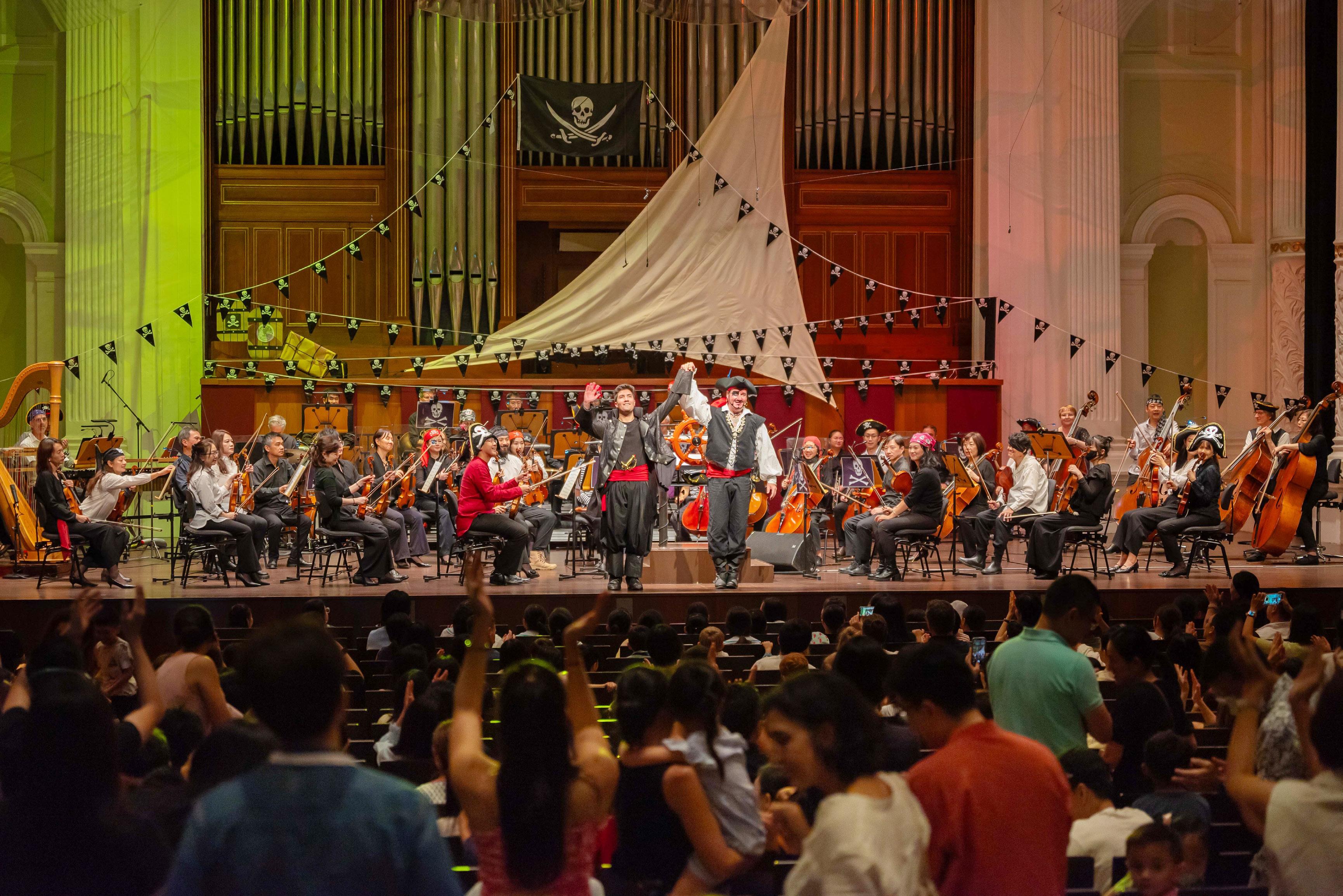

There’s something for everyone, including SSO Concerts for Children, SSO Pops and the SSO Christmas Concert. Scan to find out more information
Gábor Takács-Nagy & Polina Osetinskaya / Bach and Schumann
Fri & Sat, 13 & 14 Feb 2026
Victoria Concert Hall
Temasek Foundation × SSO Pops: A Musical Box of Chocolates
Fri & Sat, 6 & 7 Mar 2026
Victoria Concert Hall
For the enjoyment of all patrons during the concert:
Please switch off or silence all electronic devices.
Please minimise noises during performance. If unavoidable, wait for a loud section in the music.
No photography, video or audio recording is allowed when artists are performing.
Non-flash photography is allowed only during bows and applause when no performance is taking place.
Go green. Digital programme books are available on www.sso.org.sg.
Photographs and videos will be taken at these events, in which you may appear. These may be published on the SSO’s publicity channels and materials. By attending the event, you consent to the use of these photographs and videos for the foregoing purposes.
The orchestra performs over 60 concerts a year, and its versatile repertoire spans alltime favourites and orchestral masterpieces to exciting cutting-edge premieres. Bridging the musical traditions of East and West, Singaporean and Asian musicians and composers are regularly showcased in the concert season. The SSO makes its performing home at the 1,800-seat state-ofthe-art Esplanade Concert Hall. More intimate works, as well as community performances take place at the 673-seat Victoria Concert Hall, the Home of the SSO.
Since its founding in 1979, the Singapore Symphony Orchestra (SSO) has been Singapore’s flagship orchestra, touching lives through classical music and providing the heartbeat of the cultural scene with its 44week calendar of events.
In addition to its subscription series concerts, the orchestra is well-loved for its outdoor and community appearances, and its significant role educating the young people of Singapore through its school programmes. The SSO has also earned an international reputation for its orchestral virtuosity, having garnered sterling reviews for its overseas tours and many successful recordings. In 2021, the SSO clinched third place in the prestigious Orchestra of the Year Award by Gramophone. In 2022, BBC Music Magazine named the SSO as one of the 23 best orchestras in the world.
From the 2026/27 season, the SSO will be led by Finnish conductor Hannu Lintu, the fourth Music Director in the orchestra’s history after Choo Hoey (1979–1996), Lan Shui (1997–2019) and Hans Graf (2020–2026).
Beyond Singapore, the SSO has performed in Europe, Asia, Australia and the United States. In the 2024/25 season, the SSO performed to full houses at Asia Orchestra Week in Kyoto, Japan, and made its “dazzling – and true-blue – Down Under debut” (Limelight) in Sydney, Melbourne and Brisbane. In May 2016, the SSO was invited to perform at the Dresden Music Festival and the Prague Spring International Music Festival. This successful five-city tour of Germany and Prague also included the SSO’s second performance at the Berlin Philharmonie. In 2014, the SSO’s debut at the 120th BBC Proms in London received praise in major UK newspapers The Guardian and The Telegraph. The SSO has also performed in China on multiple occasions.
The SSO has released more than 50 recordings, with over 30 on the BIS label. Recent critically acclaimed albums include A Hero’s Life (OUR Recordings), Symbiosis - Tribute to Bill Evans (Pentatone) and a complete Mozart Violin Concerto cycle with Singaporean violinist Chloe Chua conducted by Hans Graf (Pentatone). The SSO also leads the revival and recording of significant works such as Kozłowski’s Requiem and violin concertos by Robert Russell Bennett and Vernon Duke.
The SSO has collaborated with such great artists as Vladimir Ashkenazy, Gustavo Dudamel, Charles Dutoit, Joe Hisaishi, Neeme Järvi, Lorin Maazel, Martha Argerich, Diana Damrau, Janine Jansen, Leonidas Kavakos, Lang Lang, Yo-Yo Ma, Mischa Maisky, Gil Shaham, Daniil Trifonov and Krystian Zimerman.
The SSO is part of the Singapore Symphony Group, which also manages the Singapore Symphony Choruses, the Singapore National Youth Orchestra, the Singapore International Piano Festival and the biennial National Piano & Violin Competition.
The Group’s vision is to be a leading arts organization that engages, inspires and reflects Singapore through musical excellence. Our mission is to create memorable shared experiences with music. Through the SSO and its affiliated performing groups, we spread the love for music, nurture talent and enrich our diverse communities.
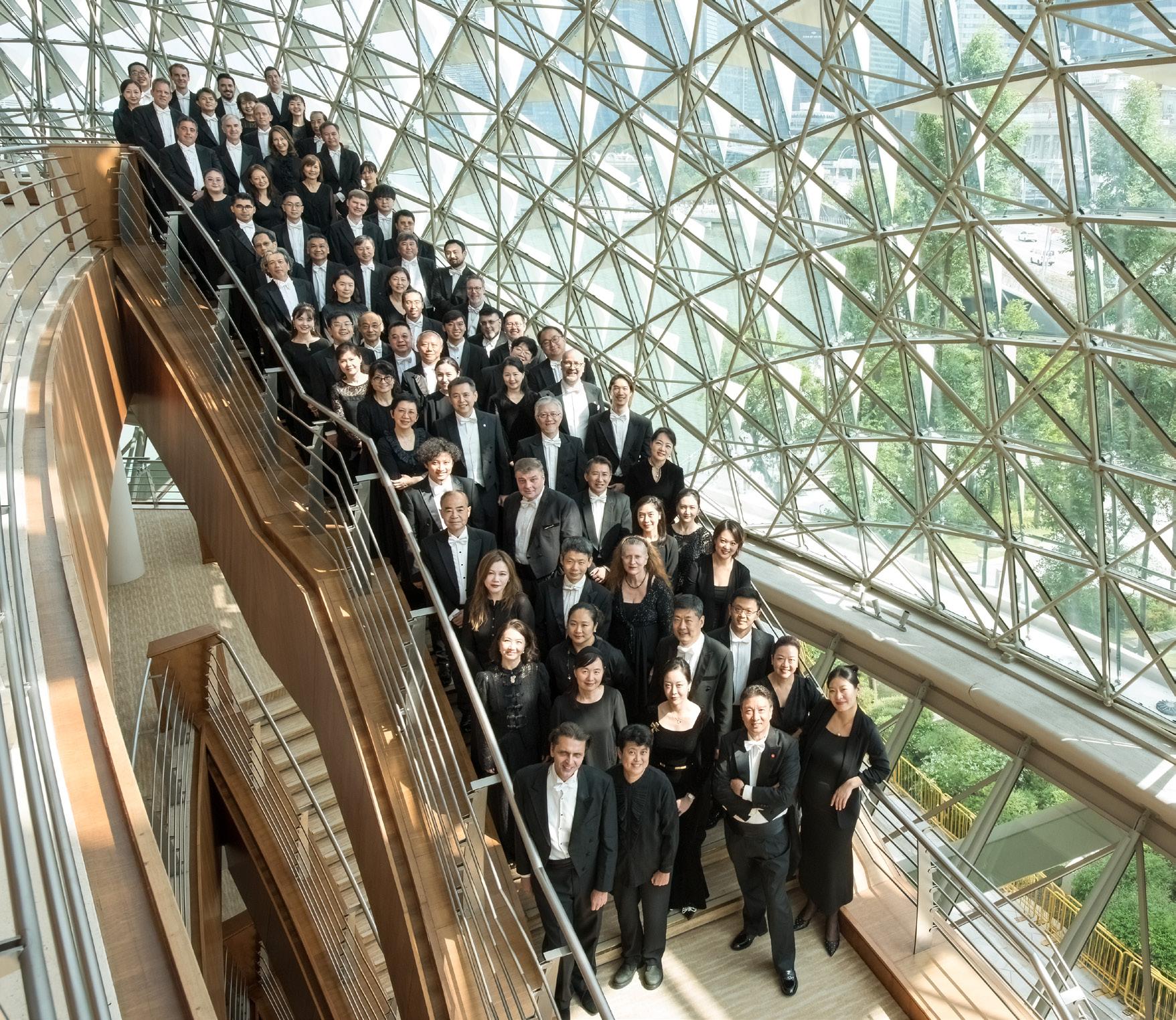
Sayuri Kuru Associate Principal
Nikolai Koval*
Hai-Won Kwok
Renyu Martin Peh^
Margit Saur
Shao Tao Tao
Wu Man Yun*
Xu Jueyi*
Yin Shu Zhan*
Zhao Tian
Hans Graf
Quantedge Music Director
Rodolfo Barráez
Associate Conductor
Lan Shui
Conductor Laureate
Eudenice Palaruan Choral Director
Wong Lai Foon Choirmaster
Ellissa Sayampanathan
Assistant Choral Conductor
(Position vacant) Concertmaster, GK Goh Chair
David Coucheron Co-Principal Guest Concertmaster
Kevin Lin Co-Principal Guest Concertmaster
Chan Yoong-Han1 Assistant Principal
Cao Can*
Duan Yu Ling
Foo Say Ming
Jin Li
Kong Xianlong
Cindy Lee
Karen Tan
William Tan
Wei Zhe
Ye Lin*
Zhang Si Jing
Manchin Zhang Principal, Tan Jiew Cheng Chair
Guan Qi Associate Principal
Gu Bing Jie* Assistant Principal
Chen Li
Marietta Ku
Luo Biao
Julia Park
Shui Bing
Janice Tsai
Dandan Wang
Yang Shi Li
Ng Pei-Sian Principal, The HEAD Foundation Chair
Yu Jing Associate Principal
Guo Hao Assistant Principal
Chan Wei Shing
Christopher Mui
Jamshid Saydikarimov
Song Woon Teng
Wang Yan
Wu Dai Dai
Zhao Yu Er
Yang Zheng Yi Acting Principal
Karen Yeo Assistant Principal
Po-Yu Fang
Victor Lee
Jacek Mirucki
Wang Xu
Jin Ta Principal, Stephen Riady Chair
Evgueni Brokmiller Associate Principal
Roberto Alvarez
Miao Shanshan
Piccolo
Roberto Alvarez Assistant Principal
Oboe
Rachel Walker Principal
Pan Yun Associate Principal
Simon Emes^
Carolyn Hollier
Elaine Yeo
Cor Anglais
Elaine Yeo Associate Principal
Clarinet
Ma Yue Principal
Li Xin Associate Principal
Liu Yoko
Tang Xiao Ping
Bass Clarinet
Tang Xiao Ping Assistant Principal
Bassoon
Guo Siping Principal
Liu Chang Associate Principal
Christoph Wichert
Zhao Ying Xue
Contrabassoon
Zhao Ying Xue Assistant Principal
Horn
Austin Larson Principal
Gao Jian Associate Principal
Jamie Hersch Associate Principal
Marc-Antoine Robillard Associate Principal
Bryan Chong
Hoang Van Hoc
Trumpet
Jon Paul Dante Principal
David Smith Associate Principal
Lau Wen Rong
Nuttakamon Supattranont
Allen Meek Principal
Damian Patti Associate Principal
Samuel Armstrong
Bass Trombone
Wang Wei Assistant Principal
Tomoki Natsume Principal
Christian Schiøler Principal
Mario Choo
Jonathan Fox Principal
Mark Suter Associate Principal
Mario Choo
Lim Meng Keh
Harp
Gulnara Mashurova Principal
With deep appreciation to the Rin Collection for their generous loan of string instruments. Musician on annual contract.
Chan Yoong-Han performs on a David Tecchler, Fecit Roma An. D. 1700, courtesy of Mr G K Goh. Musicians listed alphabetically by family name rotate their seats on a per programme basis.
Gábor Takács-Nagy & Polina Osetinskaya / Bach and Schumann
13 & 14 Feb 2026
First Violin
Sulki Yu Guest Concertmaster
Ikuko Takahashi
Yew Shan
Second Violin
Markus Gundermann Guest Principal
Temasek Foundation × SSO Pops: A Musical Box of Chocolates
6 & 7 Mar 2026
First Violin
Seow Jin Chong
Syu Cheng-Yi
Second Violin
Bobur Eshpulatov
Ikuko Takahashi
Cello
James Ng
Horn
Eric Yen
Percussion
Tan Pei Jie
Julia Tan
Tuba
Tatsuki Yoshino
Piano/Celesta
Aya Sakou
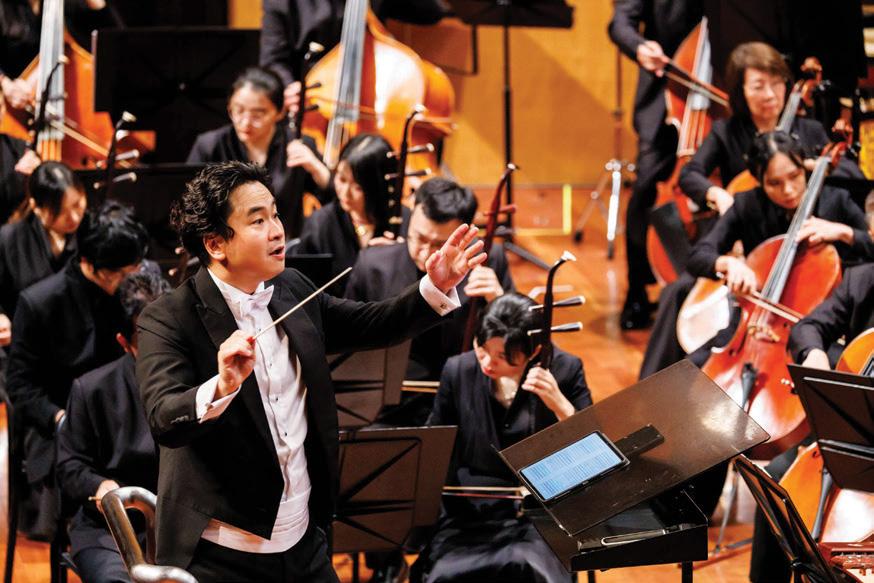


conductor
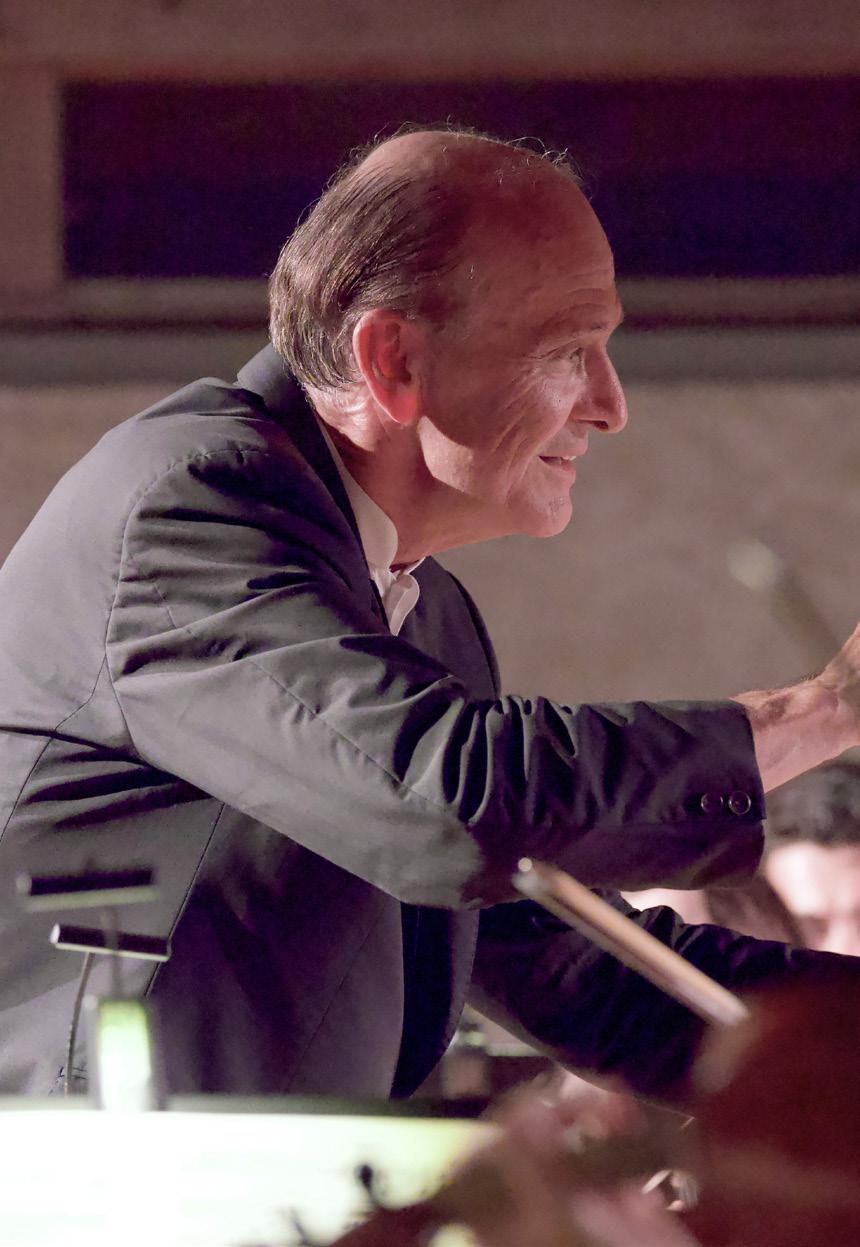
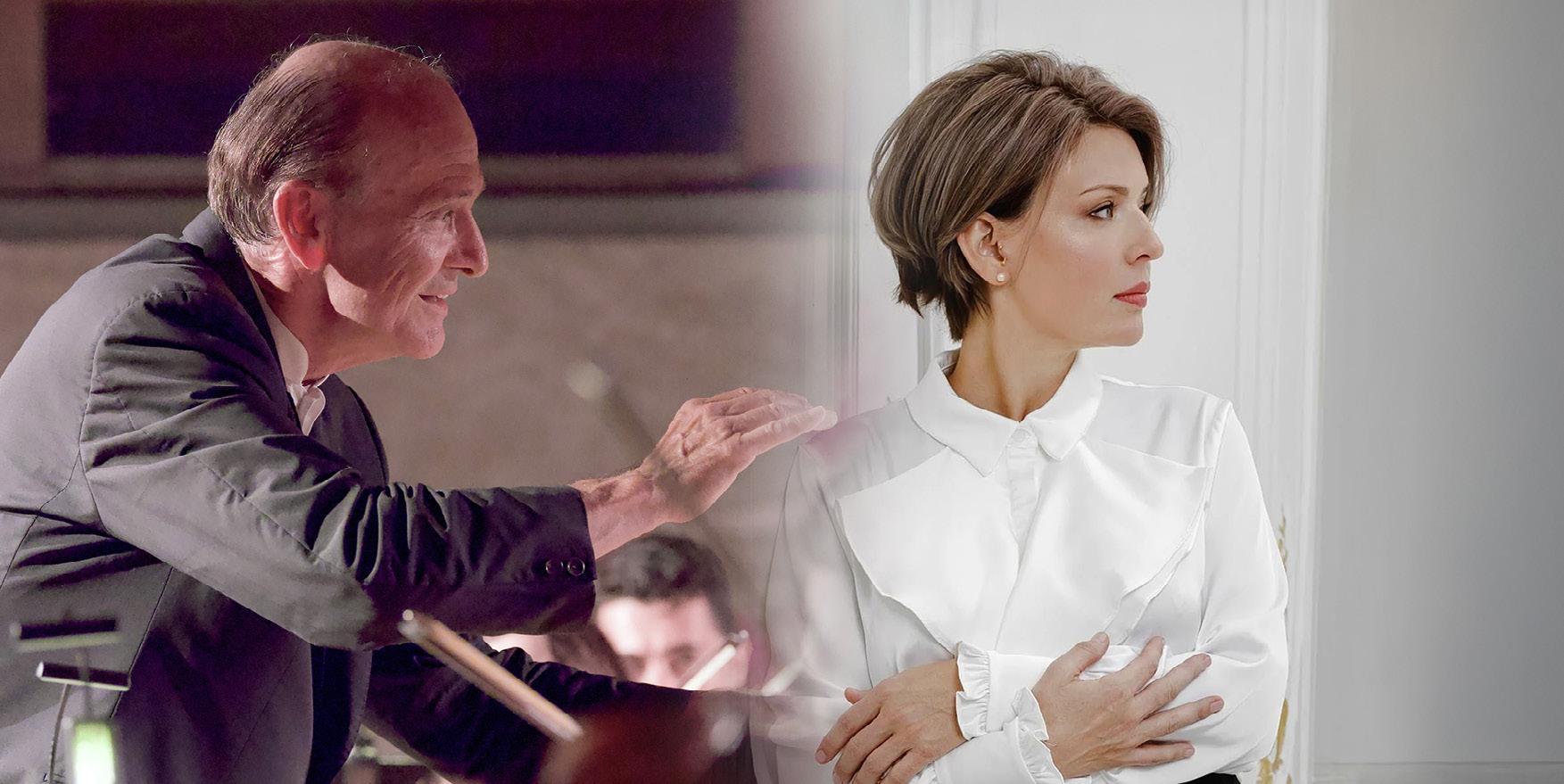
Born in Budapest, Gábor Takács-Nagy is considered one of today’s most authentic exponents of Hungarian music and was awarded the Liszt Prize in 1982, and in 2017, the prestigious Béla Bartók-Ditta Pásztory Prize. In March 2021, he received the Érdemes Művész award for Artist of Merit, presented to artists of long service in Hungarian national culture, and in December 2021, the Prima Primissima Prize, reserved for artists, athletes, and representatives of scientific life. In March 2024, he received the prestigious Kossuth Prize which acknowledges outstanding achievements in the fields of culture and the arts.
From 1975 to 1992, he was founding member and leader of the acclaimed Takács Quartet. In 1996, he founded the Takács Piano Trio and in 1998, established the Mikrokosmos Quartet. In 2003, Gábor Takács-Nagy turned to conducting, and became Music Director of the Verbier Festival Chamber Orchestra in 2007. In September 2011, he was appointed Music Director of the Manchester Camerata, one of the UK’s leading chamber orchestras, and is Principal Guest Conductor of the Budapest Festival Orchestra since September 2012. Since June 2024, he is Artistic Partner of the Saint Paul Chamber Orchestra. He was awarded honorary membership of the Royal Academy of Music in London in June 2012.
In June 2023, the live recordings of the nine Beethoven Symphonies conducted by Gábor Takács-Nagy, with the Verbier Festival Chamber Orchestra, was released by Deutsche Grammophon.
Takács-Nagy & Polina Osetinskaya / Bach and Schumann | 13 & 14 Feb 2026
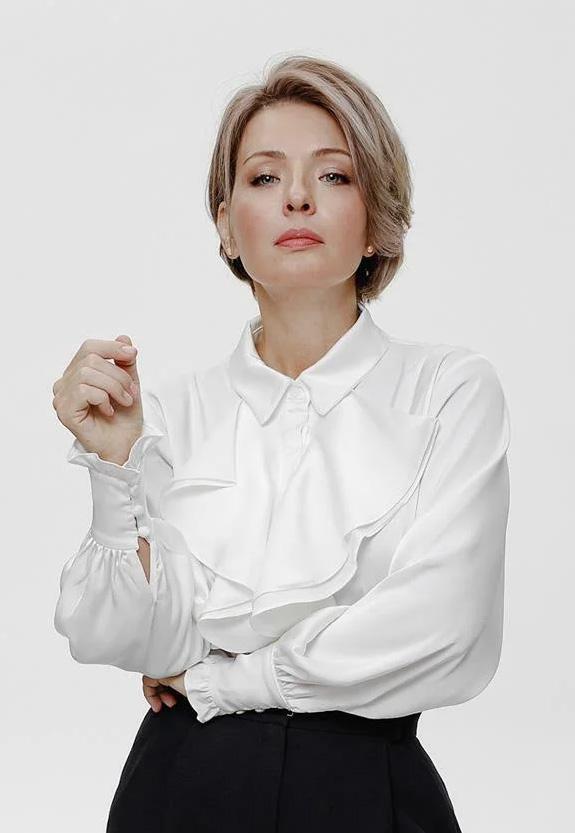
In season 2025/26, Polina Osetinskaya is making a number of her solo debuts in Europe (Danish National Philharmonic Orchestra, conductor Kirill Petrenko) recital, chamber and orchestral appearances in the USA and returns to Singapore with Bach’s concerts, to Madrid with Rachmaninoff and to Baltic countries with the musical performance “An Unknown Friend”.
Osetinskaya has performed at Berlin Philharmonic, Vienna’s Musikverein and Concerthaus, London’s Barbican Centre, Salzburg Festspiele, Carnegie hall, Sydney Opera house, as well as in Italy, Germany, Switzerland, Slovakia, Poland, USA, Russia and Israel.
She has appeared with musicAeterna, Mariinsky Orchestra, Tokyo Philharmonic Orchestra, Brno Philharmonic Orchestra, Slovak Philharmonic Orchestra among others. Onstage partners have included Teodor Currentzis, David Russell Davies, Laurent Petitgirard, Vladimir Spivakov, Andrey Boreyko, Yan Pascal Tortelier.
Osetinskaya released her new album of music of Giya Kancheli, Valentin Silvestrov and Arvo Párt in November 2024 with label Aparte, and has also released a number of recordings with the Quartz, Naxos, Sony Music, Bel Air and Melodiya labels.
She is also an author of a bestseller autobiography book “Farewell, sadness”.
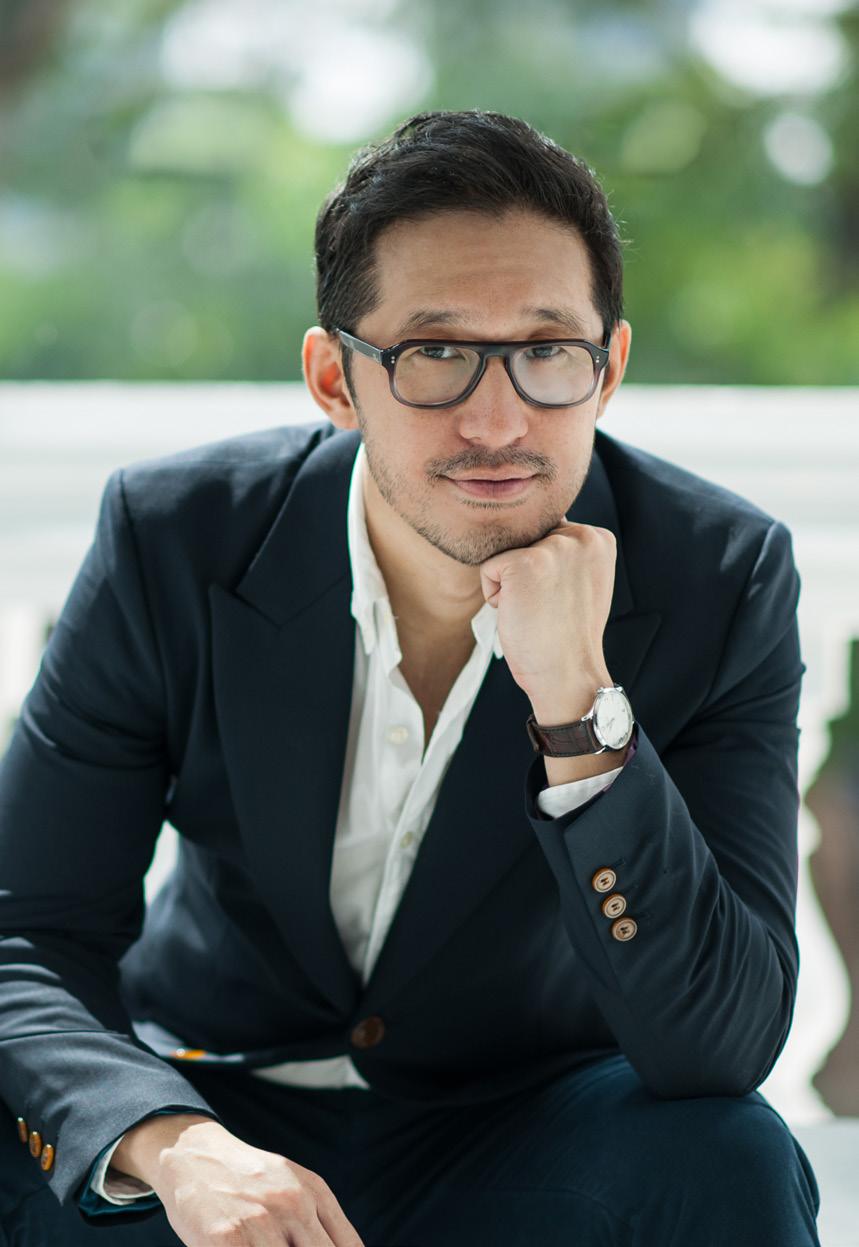
Jason Lai is Principal Conductor at the Yong Siew Toh Conservatory and former Associate Conductor of the Singapore Symphony Orchestra and Hong Kong Sinfonietta. Since arriving in Singapore in 2010, he has been a prominent figure in the local music scene while maintaining an international presence, giving masterclasses in Europe and China and guest-conducting orchestras including the BBC Symphony Orchestra, London Symphony Orchestra, Hong Kong Philharmonic, Adelaide Symphony Orchestra, and Osaka Symphony.
Passionate about broadening classical music’s appeal, Jason has become a renowned communicator through television. His BBC appearances include judging BBC Young Musician of the Year and Classical Star, mentoring celebrities in Maestro, and featuring in How a Choir Works, The Culture Show, and CBBC’s Clash. In Singapore, he has presented and conducted for Mediacorp’s Project Symphony, Sing to Remember, and Nudge, as well as BBC’s Heart of Asia and Tales from Modern China.
Born in the UK and raised in Hong Kong, Jason studied cello at Chetham’s School of Music, then cello and composition at Oxford University, and conducting at Guildhall School of Music and Drama, where he received a Fellowship in Conducting. He toured as a cellist with the Allegri String Quartet and won the BBC Young Conductors Workshop in 2002, later serving as Assistant Conductor to the BBC Philharmonic and Associate Conductor of the Hong Kong Sinfonietta.
In Singapore, Jason champions education and outreach, training the next generation of conductors at Yong Siew Toh Conservatory and leading SSO programs that introduce classical music to new audiences through children’s concerts, school collaborations, and community initiatives.
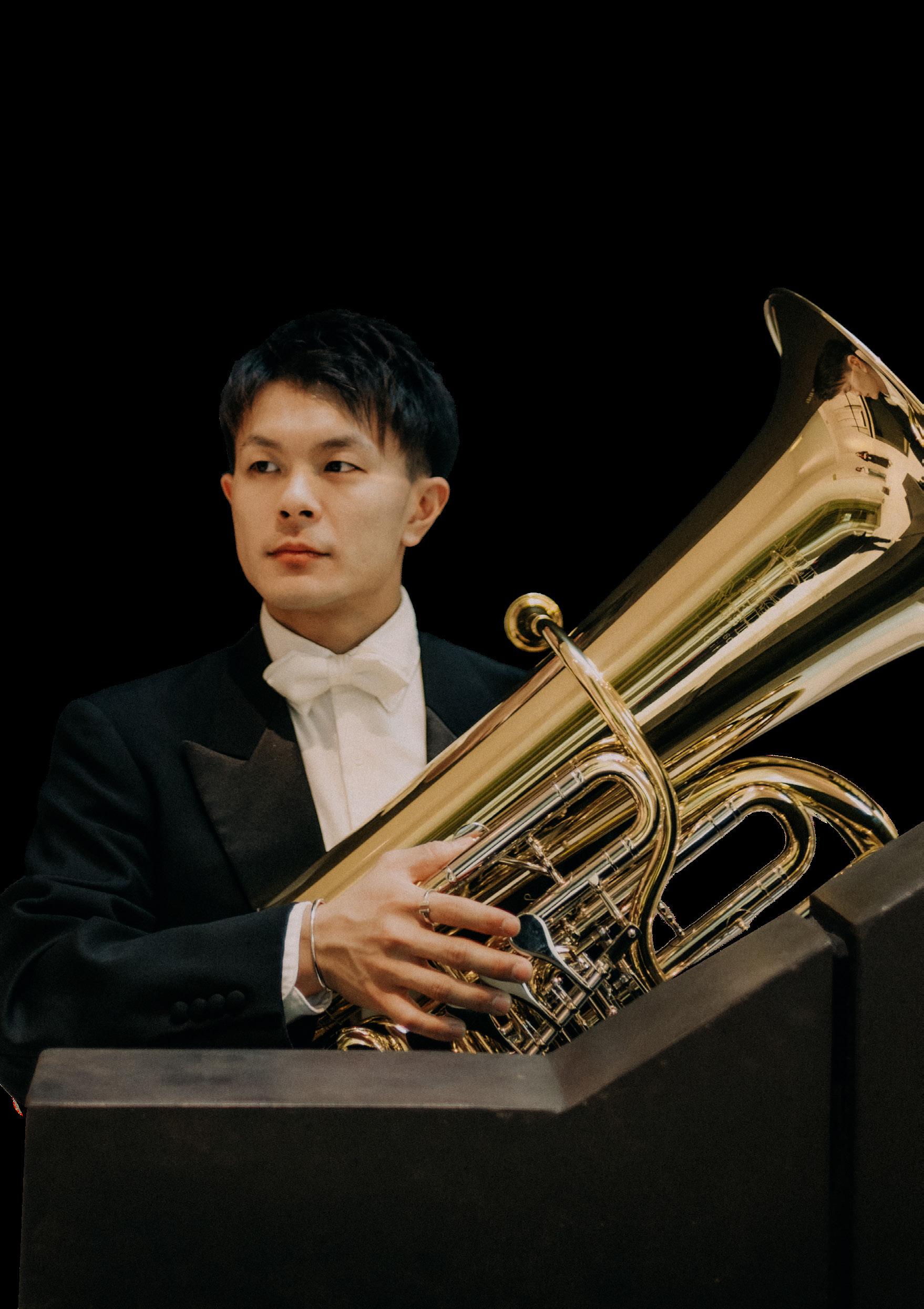
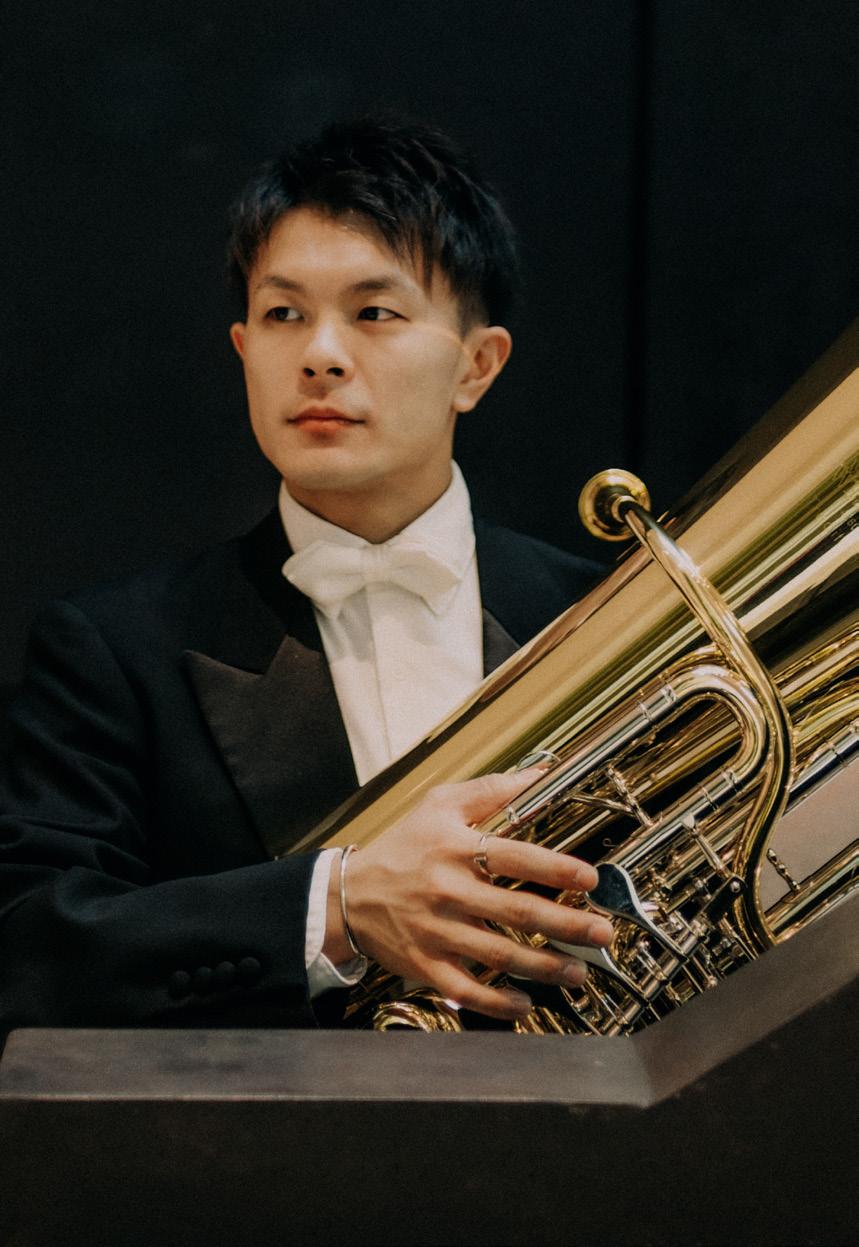
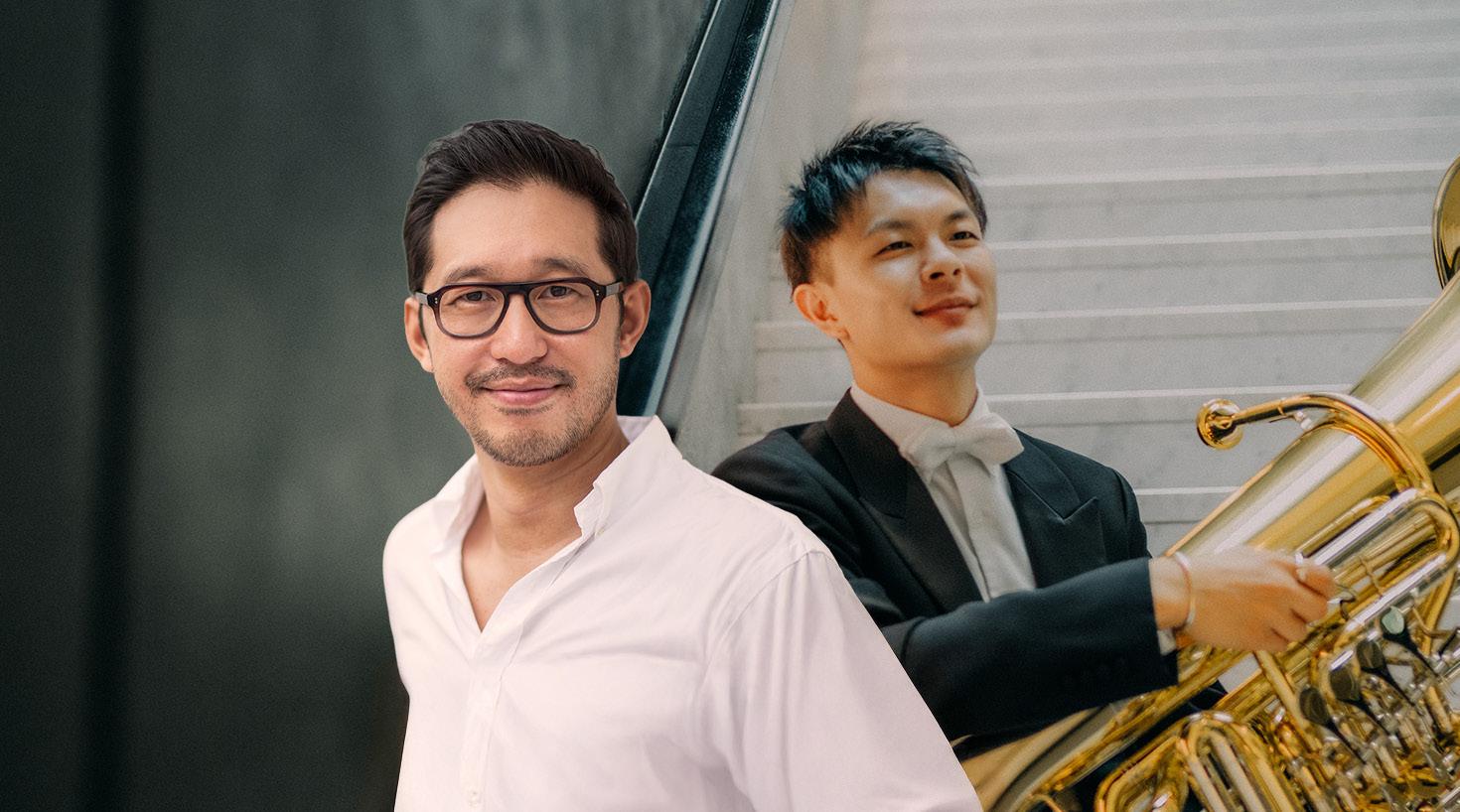
Born in Osaka, Japan, Tomoki Natsume graduated with a Bachelor of Economics from Kwansei Gakuin University in 2015, before beginning his music studies with Anne Jelle Visser at the Zurich University of the Arts in 2016. He completed both Bachelor’s and Master’s degrees in music at the Zurich University of the Arts. From 2018 to 2020, he was a recipient of the Yamaha Music Foundation Scholarship.
During his studies, Natsume participated in several orchestra academies and festivals, including the Asian Youth Orchestra, Lucerne Festival Academy, Verbier Festival Junior Orchestra, Schleswig-Holstein Musik Festival Orchestra, and the Pacific Music Festival.
He joined the Singapore Symphony Orchestra as Principal Tuba in February 2020. He has also appeared as a guest performer with orchestras such as the Tonhalle-Orchester Zürich, National Symphony Orchestra Taiwan, and Collegium Winterthur, among others.
As a soloist, Natsume was a finalist at the Città di Porcia Tuba Competition in 2016, won Second Prize at the Tchaikovsky Conservatory Tuba Competition in 2017, and received Third Prize at the Japan Wind and Percussion Competition in 2019.
In addition to his performing activities, he serves as an Adjunct Lecturer of Tuba at the Nanyang Academy of Fine Arts in Singapore.
Fri & Sat, 13 & 14 Feb 2026
Victoria Concert Hall
Singapore Symphony Orchestra
Gábor Takács-Nagy conductor
Polina Osetinskaya piano*
Sulki Yu concertmaster

J.S. Bach
Concerto No. 5 in F minor, BWV 1056* 10 mins
J.S. Bach
Concerto No. 1 in D minor, BWV 1052* 24 mins
Intermission
20 mins
Schumann
Symphony No. 2 in C major, Op. 61
38 mins
Check-in to tonight’s concert
Scan this QR code with the Singapore Symphony Mobile App.
Dedicated to the late Dr Goh Keng Swee, founding patron of the SSO
Concert Duration: approximately 1 hr 50 mins (including 20 mins intermission)
“The SSO is indeed a fitting legacy of Goh’s efforts which forever transformed the nation’s artistic and cultural scene. All of us who now enjoy the music of the SSO and the vibrant cultural life of Singapore owe an immense debt to Goh Keng Swee, who understood from the very beginning that economic strength must be balanced by cultural wealth for a nation to be truly whole.”
Studying the rich history of the SSO inevitably draws one to the important role played by our founding patron, Dr Goh Keng Swee.
In 1977, when Dr Goh was Deputy Prime Minister, he championed setting up a professional symphony orchestra in Singapore. For a nation to truly be whole, Dr Goh understood from the very beginning that economic power had to be balanced by cultural wealth.1 The Singapore Symphonia Company Limited was formed, and the SSO held its inaugural concert with just over 40 musicians taking the stage in January 1979. One year later, the SSO moved into the Victoria Concert Hall, which was leased to the SSO for 99 years as its home.
Dr Goh did much more than just start an orchestra. He arranged for young, talented Singaporeans to pursue their musical aspirations abroad through scholarships. On their return, many of these students joined the SSO, and a number remain with the orchestra today.
The SSO has achieved much international acclaim and is an integral part of Singapore’s artistic identity and landscape today. For this, and for much else, we have Dr Goh Keng Swee’s vision and determination to thank.
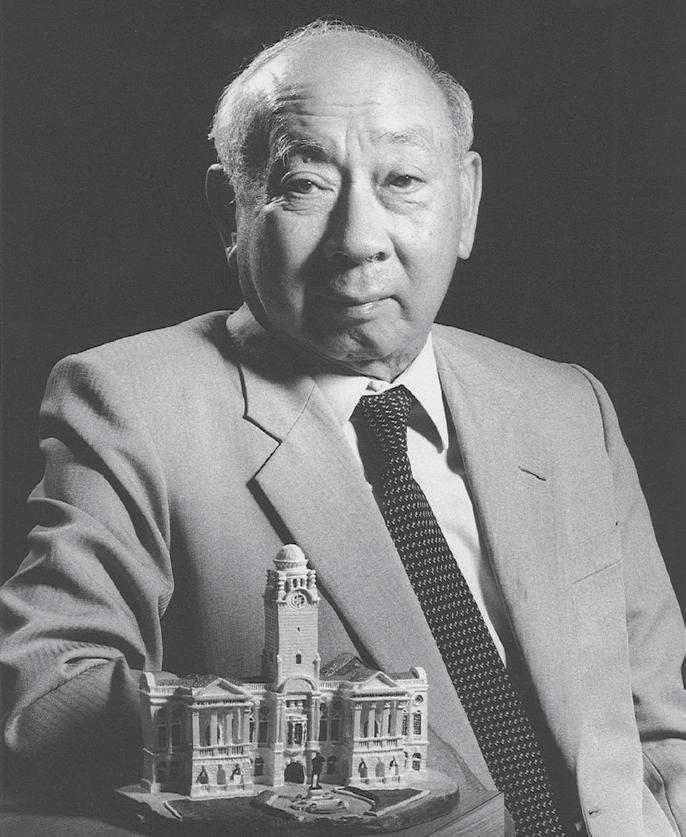
Bernard T G Tan: Goh Keng Swee’s Cultural Contributions and the Making of the Singapore Symphony Orchestra, Goh Keng Swee: A Legacy of Public Service
Concerto No. 5 in F minor, BWV 1056 (c. 1738)
Allegro Largo Presto I II III
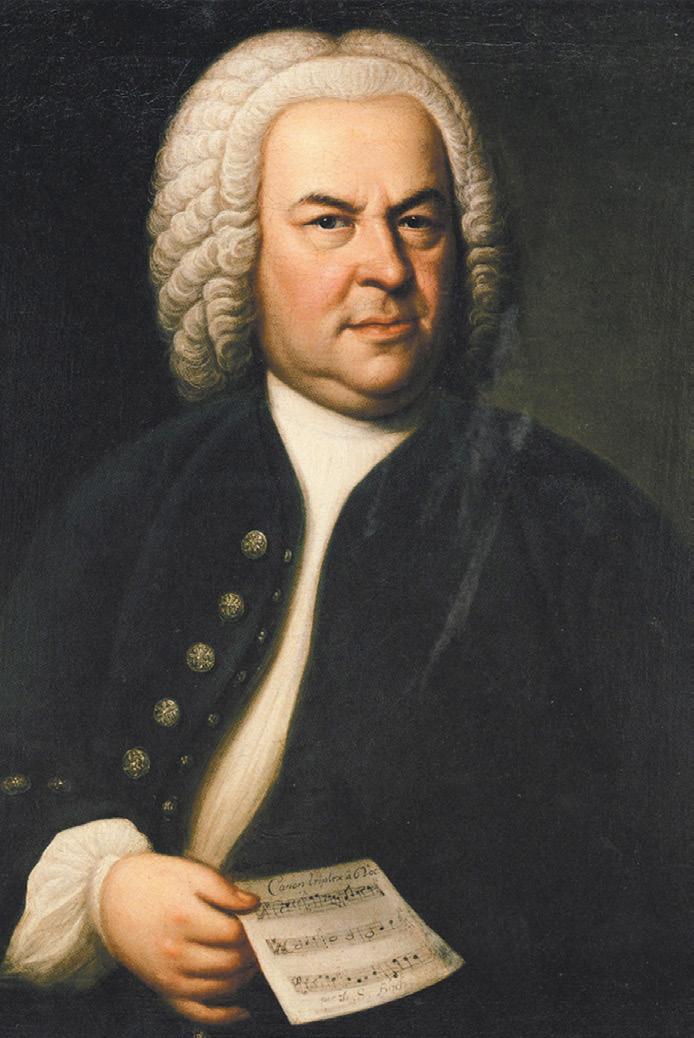
The Concerto in F minor, BWV 1056 originally began life as a violin or oboe concerto (unfortunately now lost), written in the 1737–1739 period either when he was in Cöthen or Leipzig, and is in the Venetian style of Vivaldi.
Bach often arranged concerti by Vivaldi into versions for harpsichord(s) and orchestra. His avid study of Vivaldi’s quirks may be seen in 1685 – 1750
the opening Allegro, where the soloist breaks away for short solos during the tutti ritornelli, and in how the soloist’s line is mostly in triplets set against the ensemble playing in straight two-four time, giving an impression of irrepressible momentum.
The exquisitely serene Largo, with its expressive excursions into minor keys, is a piece that has appeared before for solo oboe and orchestra as the opening sinfonia of his cantata Ich steh mit einem Fuß im Grabe, BWV 156. The opening notes of the movement are virtually identical to those of the Andante from Telemann’s Flute Concerto in G major, TWV 51:G2 – Bach may have intended the quotation as a tribute to his friend Telemann.
A turbulent Presto forms the final movement, flying forward in a wild joyride with Italianate fire in its sharp contours and dramatic sudden pauses. Its energy finds release in occasional echo effects that remind the listener of the “echo chorus” in the fourth part of Bach’s Christmas Oratorio, BWV 248—though here one might imagine a chorus of concerned angels going “oh my” as our vehicle goes through a distinctly bumpy and twisting journey before we arrive at our destination, marvelling at Bach’s wit and humour.
Before Bach, the harpsichord was not much thought of as a solo instrument for concerti— even Vivaldi who wrote concerti for nearly
Gábor Takács-Nagy & Polina Osetinskaya / Bach and Schumann
every conceivable instrument (including 39 for bassoon!) did not. With this set of six concerti, Bach essentially invented and established the keyboard concerto, a genre that the piano will inherit to magnificent results.
Instrumentation
solo piano, strings
First performed by SSO 3 Nov 2023
| 13 & 14 Feb 2026
1685 – 1750
Concerto No. 1 in D minor, BWV 1052 (c. 1738)
Allegro Adagio Allegro I II III
Recycling and upcycling are concepts en vogue now but have always been an important part of sustainability – even J.S. Bach practised it! For centuries, music students have learned composition by imitation—from harmonising melodies in the style of a particular composer, to producing variations on prior themes, to rearrangements of entire works. Just as students now are tasked to complete passages ‘in the style of J.S. Bach’, in Bach’s time students would be made to study the music of Renaissance masters such as Palestrina and then write imitative counterpoint in that style based on one or two lines of music. With this rich primordial soup of musical DNA fragments swimming about their brains, it is hardly surprising that themes and snippets (whether from their own works or someone else’s) were reused, perhaps even subconsciously, in the creation of new pieces.
The Concerto in D minor, BWV 1052 was thought by scholars for a long time to have been a reworking of a now-lost violin concerto, perhaps composed during his Weimar or Cöthen stints, based on the virtuosic figurations in the solo part, which lend themselves to violin performance. However, in the present century, scholars have favoured the theory that the original was an organ concerto composed early in Bach’s Leipzig period. Part of a set of six concerti (BWV 1052—1057) for keyboard, strings, and basso continuo, dating from Bach’s Leipzig years, a good chunk of the concerti
appears to be reworkings of earlier material. At any rate, whatever its origins, its scale is monumental for its time—each movement takes about seven minutes to perform—and the harpsichord concerti was a genre not much explored then. Bach was not only upcycling, but building on a scale unseen before in a newish genre, reminding us that in his time he was an innovator.
The first Allegro starts with a distinctly angular theme, in Vivaldian manner, with the upper strings in unison (as they will be in ritornelli) before the solo keyboard enters and adds to the sense of unease and tension amidst the flowing strings. Directly based on Bach’s opening Sinfonia for his cantata Wir müssen durch viel Trübsal, BWV 146, the movement features bursts of rapid figuration and much drama in its crunchy harmonies above repeated D octaves, before some more sparkly fireworks and a closing ritornello.
The Adagio is also taken from BWV 146 mentioned earlier. The opening theme becomes a bass line once the solo enters, but continues throughout, a very Vivaldian touch. Essentially a movement for a very improvisatory sounding keyboard and bass, apart from the punctuation-like ritornelli, the strings function as little more than a resonator for the melody.
Gábor Takács-Nagy & Polina Osetinskaya / Bach and Schumann
The closing Allegro is directly based on the opening Sinfonia for his cantata Ich habe meine Zuversicht, BWV 188 and Bach leads us on an exploratory adventure around the full compass of the keyboard as he knew it.
Instrumentation solo piano, strings
1810 – 1856
Symphony No. 2 in C major, Op. 61 (1845)
Allegro molto vivace I II III IV
Sostenuto assai. Allegro ma non troppo
Scherzo. Allegro vivace
Adagio expressivo
Behind every successful man there is a strong woman, or so the saying goes. In the German composer Robert Schumann’s case, it was his wife Clara Schumann née Wieck, herself a composer of note and one of the finest pianists of her time. Before marriage in 1840, he had composed only for the piano and voice, but afterwards, encouraged by Clara, he jumped into symphonic creation.
Toward the end of 1845, Schumann had just recovered from a mental breakdown and, on doctor’s orders, moved from Leipzig to Dresden, where it was hoped the drier climate and quieter, more conservative scene would be good for him. In the previous year, he had confided to Mendelssohn that he heard drums and trumpets in his mind, but at Dresden he recovered sufficiently to resume composition. While Schumann sketched the Symphony in C major, Op. 61, in a fortnight, the demons of self-doubt, tinnitus, dementia, and bad health slowed him so much that it took nearly a year to be properly fleshed out.
The symphony opens with a string theme almost like a Bach chorale (no doubt Schumann had been influenced by his time in Leipzig where Bach lived and worked), before the “drums and trumpet” appear — was Schumann perhaps trying to exorcise his demons by giving them musical form? The entire first movement is full of stormy emotion
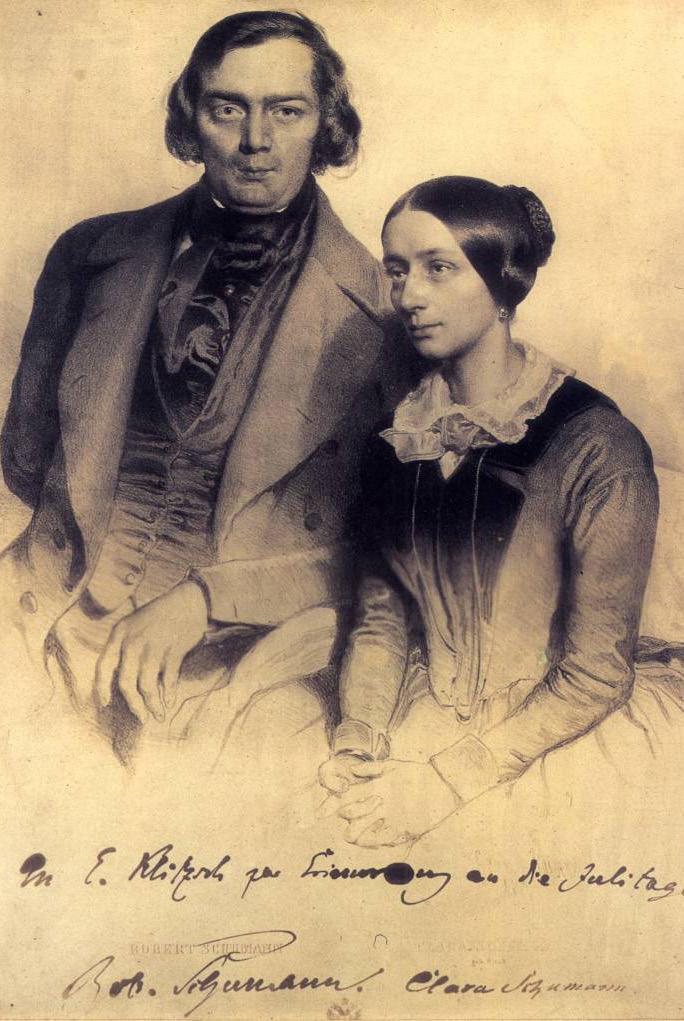
without respite. The scherzo that follows is tight and driven, sprightly as if manically full of busy activity cleaning up after the storm in the previous movement.
Peace and stillness reign in the delicate third movement, with strings and oboe giving us breathtakingly beautiful themes (including a
quotation from Bach). Writing this movement exhausted Schumann such that he had a nervous seizure and took a break, unable to write further, but his strength came back in time for the optimistic finale, affirming his health and determination. Unfortunately, this improvement was temporary — following years were to see the darkness close in and after a number of suicide attempts he entered a mental asylum in 1853, where he remained till his death.
“We are all in the gutter, but some of us are looking at the stars.”
- Lady Windermere’s Fan by Oscar Wilde.
The finale leads us meanderingly from darkness into light, giving us along the way snippets from Mozart’s Magic Flute and even the song Schumann dedicated to Clara on their wedding day. Indeed, the entire symphony is full of coded messages, ciphers (such as B-A-C-H), and short quotations from earlier works by Bach, Beethoven, Mozart, Schubert, and even Schumann himself — he really was using every weapon in his arsenal to fight the inner demons. The result is a heroic and uplifting work that betrays none of the circumstances of its composition. As one of Oscar Wilde’s characters said, “we are all in the gutter, but some of us are looking at the stars.”
Instrumentation
2 flutes, 2 oboes, 2 clarinets, 2 bassoons, 2 horns, 2 trumpets, 3 trombones, timpani, strings
World Premiere
5 Nov 1846, Leipzig
First performed by SSO 26 Oct 1984
Notes by Edward C. Yong | A writer, editor, and teacher of dead languages, Edward plays lute and early guitars, sings bass, and runs an early music group. Like his dog, he is very much food-motivated.







Fri & Sat, 6 & 7 Mar 2026
Victoria Concert Hall
Singapore Symphony Orchestra
Jason Lai conductor
Tomoki Natsume tuba*
Chan Yoong-Han concertmaster


Presented by
Post-Concert Survey (7 Mar only)
To help us improve your concert experience, we invite you to participate in our survey. After the concert, be the first 80 to show proof of survey completion at the atrium, level 1, to receive a gift.
Check-in to tonight’s concert
Scan this QR code with the Singapore Symphony Mobile App.
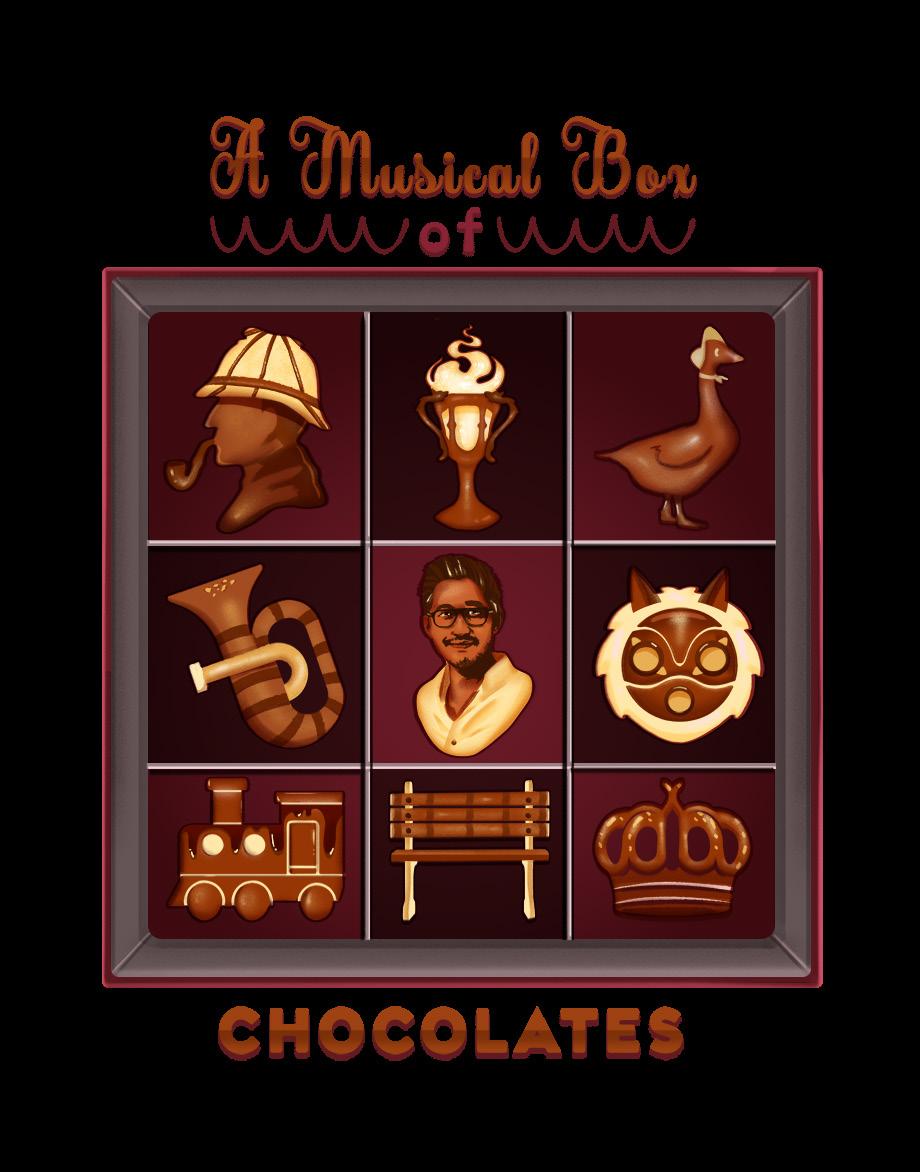
For the numerous film scores that he composed, Alan Silvestri’s first and to date, only Best Score Oscar Nomination is for the 1994 film, Forrest Gump. A kind-hearted and simple-minded protagonist, Forrest himself narrates the story as he sits on a bus stop bench, recounting his incredible life to a series of strangers, blissfully unaware that he was involved in and influenced numerous historical events in 20th Century USA. Silvestri’s score powerfully represents Forrest’s simplistic worldview through direct emotions of love, exhilaration or sadness.
Tim Burton and Danny Elfman, Steven Spielberg and John Williams: Some filmmakers have cultivated enduring, mutually enriching relationships with composers over decades; Japanese animation master Hayao Miyazaki and composer Joe Hisaishi are one such pair, their works going one step further to retain the integrity of Japanese culture that both are from. Hisaishi’s film music blends styles of minimalism, Japanese folk and Western classical to create fully immersive soundscapes around specific emotions. For the period epic Princess Mononoke that embodied the conflict between humanity and nature, Hisaishi said that “an early word Miyazaki-san mentioned was tension, as in an arrow’s tension”, adding that this inspired him to write a piece that “eventually became the title theme”, The Legend of Ashitaka
American composer-conductor Bruce Broughton’s extensive career includes award-winning compositions for films, television, video game scores. Throughout the years he has won 10 Emmys for his television scores, as well as an Oscar nomination and a Grammy nomination for his film scores. He is also credited for conducting the 1994 version of the 20th
Century Fox fanfare and composing the first orchestral video game music (Heart of Darkness) in 1998.
The music of Young Sherlock Holmes, composed and conducted by Broughton in 1985, earned him a Grammy nomination. Using eastern-influenced scales, harmonies, plucked strings and the flute/piccolo solos, Broughton evokes a sense of adventure and oriental mysticism right from the music of the Main Title.
Besides his work with Hollywood, Broughton also composed a distinguished body of concert music ranging from chamber to orchestral works, and seems most comfortable writing for wind and brass instruments. His Tuba Concerto, originally conceived as a sonata, is set in three movements each showcasing a different aspect of virtuosity for the tuba. The concerto was written for the Hollywood studio tubist Tommy Johnson, who was notably the shark in John Williams’s Jaws score, among 2,000 other film soundtracks.
In the first three Harry Potter films, John Williams had set the foundation, composing motifs for characters and weaving these together in a Wagnerian-like tapestry when the characters interacted. When Scottish composer Patrick Doyle took over the reins for The Goblet of Fire, he moved away from Williams’s style, focusing instead on the emotional tone of the scenes. The iconic Hedwig’s Theme was used sparingly and only at pivotal moments. Harry in Winter was a significant track, where Harry’s emotional journey amidst the Triwizard Tournament is matched by the melancholic and romantic melody in the strings. Doyle also brought a distinctly British sensibility to the whole film score, these shine through especially in the
Potter Waltz, the Irish theme of The Quidditch World Cup, and the Hogwarts’ Hymn.
Ravel’s Ma mère l’Oye (Mother Goose) suite was inspired by scenes from tales collected by Charles Perralt in the 1600s; the stories include Tom Thumb, Sleeping Beauty, and Beauty and the Beast. The suite was originally composed as a piano duet work in 19081910 for Mimi and Jean Godebski (whose parents Ravel dedicated Sonatine to) and later orchestrated in 1912. Ravel makes use of various orchestral timbres and exotic scales to create the fantasy worlds for the tales. Pavane de la belle au bois dormant (“Pavane of the Sleeping Beauty in the Woods”) is a stately, slow dance of Spanish origin. Laideronette, impératrice des pagodes (“Laideronette, Empress of the Pagodas”) tells the tale of a beautiful princess cursed to be ugly by a wicked witch. She wanders around with her only companion, a green serpent, and is shipwrecked on a country inhabited by tiny porcelain people called pagodes. The music makes use of the pentatonic scale and oriental harmonies found in Chinese music. Finally, Le Jardin féerique (“The Enchanted Garden”) is not based on any particular fairytale, but seems to be a celebratory conclusion to the suite, depicting a miraculous garden full of wonder, sparkling fireworks and splendour.
In 1847, after several years of planning and building, the Danes had their first railway line from Copenhagen to Roskilde. Having a railway was a gamechanger that drastically cut travel/ freight times, connected markets, boosted trade, facilitated Denmark’s population growth, and marked Denmark’s modernisation and entry into the industrial age. Hans Christian Lumbye’s Copenhagen Steam Railway Galop, written in celebration of the railway opening, features the sounds of a locomotive chugging
out from a station, and finally grinding to a halt at the Roskilde station.
Lumbye was so popular throughout all of Denmark, that the Danes considered Johann Strauss II to be the “Lumbye of the South”. Like Lumbye, Johann Strauss II also composed a polka inspired by the opening of the Austrian Southern Railway in 1864. Strauss II’s life is the stuff of movies: defying his parents to pick a career as a musician, multiple affairs with women before falling in love with the mistress of a baron who was seven years older than him. He elevated the waltz from mere dance music to the concert hall stage, composed works for royalty, and has been the undisputed waltz king ever since. The Emperor Waltz was written for the crowning of Franz Joseph I, Emperor of Austria, as well as to mark his friendship with the German Emperor, Wilhelm II. As such, Strauss combines a Prussian march introduction with a Viennese waltz in the music, resulting in a lilting, march-like waltz filled with memorable tunes.

a music history geek who plays music, dances to music, and tells stories about composers and their
Temasek Foundation supports a diverse range of programmes that uplift lives and communities in Singapore and beyond. Made possible through philanthropic endowments gifted by Temasek, an investment company headquartered in Singapore, Temasek Foundation’s programmes strive towards achieving positive outcomes for individuals and communities now, and for generations to come. Collectively, Temasek Foundation’s programmes strengthen social resilience, foster international exchange and regional capabilities, advance science, and protect the planet.
For more information, visit www.temasekfoundation.org.sg

We would like to express our deepest appreciation to the following individuals and organisations who support our mission to create memorable shared experiences with music in the past year. Without your support, it would be impossible for the SSO to continue to strive for artistic excellence and touch the hearts of audiences.
PATRON SPONSOR
Tote Board Group
(Tote Board, Singapore Pools & Singapore Turf Club)
MAESTRO CIRCLE
Mr & Mrs Goh Yew Lin
Stephen Riady Foundation
Temasek Foundation
The HEAD Foundation
Anonymous
CONCERTMASTER CIRCLE
Andreas & Doris Sohmen-Pao
Bowen Enterprises Pte Ltd
Christopher & Rosy Ho
DBS Bank Ltd
Dr & Mrs Antoine & Christina Firmenich
Mind the Gap 200 Fund
Anonymous (2)
S YMPHONY CIRCLE
Christopher Fussner
De Miguel Solaguren Family
Dr Thomas & Mrs Mary Zuellig
Jacqueline Yeh
Kris Foundation
Madeleine Cheok & Wong Hong Ching
Ms Paige Parker & Mr Jim Rogers
Anonymous (2)
Andy, Raymond, Bubble & Breton Tan
Bernard Ryan & Michael Rowe
Cara & Tamara Chang
Colin Lee
Dr Geh Min
Elaine and Eduardo Saverin Foundation Ltd
Eva & Nilay Patel
Far East Organization
Frans & Marie-Pierre Mol
Geoffrey & Ai Ai Wong
Geraldine Choong & Dennis Au
Holywell Foundation Limited
Kenneth Kwok
Mavis Lim Geck Chin
Miriam & Merle Hinrich
Neo Group Limited
Patek Philippe Southeast Asia
Prof Chan Heng Chee
Robert & Vivian Chandran
UOB
Yong Ying-I
Alan Chan
Anthony & Chloe Tan from ACE Team Foundation
Azeeza Aziz Khan
BinjaiTree
Blossom Hing
Cavazos Tinajero Family
Chloe Lee En Yi & Family
Colin & Janet Leong
Devika & Sanjiv Misra
Dorian Goh & Rathi Ho
Dr Karen Soh
Dr Kevin T Yap
Dr Kieron Lim
Embassy of France in Singapore
Farhana Sharmeen
Geraldine Lim & Lim Him Chuan
Guy Hentsch & Geoffrey Yu
Hastens
Hong Leong Foundation
Indosuez Wealth Management
JCCI Singapore Foundation
John & Eliza Bittleston
Jonathan Stona
Joy & Han Li Toh
Kevin & Carrie Burke
Krishnan Family
Kris Foundation - Ms Lim Kang Ning
Leong Wai Leng
LGT Bank (Singapore) Ltd
Lito & Kim Camacho
LOY Contemporary Art Gallery
Marina Bay Sands
Martin Siah & Wendy Long
Mr & Mrs Choo Chiau Beng
Mr & Mrs Mak Hoe Kit
Mr Xu & Mrs Cairong Ren
Mrs Hemal & Mr Paritosh Thakore
MTM Skincare Pte Ltd
NSL LTD
Paul & Lena Ng
PCS Pte Ltd
Poh Khim Hong
Prima Limited
Priscylla Shaw
Prof Gralf & Silvia Sieghold
Sameer Sain
Tan Meng Cheng Ivan
The Anjuman & Aziz Charitable Trust
Tony & Melanie Chew
Tower Capital Asia
V3 Wellness Pte Ltd
Vanessa & Darren Iloste
Watson Farley & Williams LLP
ZDR Investments
Anonymous (5)
Aadarsh Baijal
Anthony Tay
Bloomberg Singapore Pte Ltd
Chuin Wei Yap
Dr & Mrs Choy Khai Meng
Dr June & Peter Sheren
D-Y Lin
Francoise Mei
G L Wee
Goh Swee Chen
Grace Fu
Hartley & Hong Lynn Clay
Isaiah & Suwei
Jesher Loi
Jocelyn Kum
RHAPSODY PATRONS
Adrian TL Chua
Aileen Tang
Ang Jian Zhong
Belinda Koh
Benedict Teo
Benito Ting
Benjamin Ma
Bettina Lieske
Chan Ah Khim
Charles Robertson
Charmaine Lim
Cheng Eng Aun
Choo Lim
Clara Lim-Tan
Claudia & Henning Figge
David Chan & Sarah Chan
David Leung
Dr Jade Kua
John & Pauline Foo
Kenneth Kan
Keppel
Kim Hae Hyun & Heo Soomin
Kris Wiluan
Lai Siu Chiu
Lau Leok Yee
Lee Ming San
Lee Yeow Wee David
Liwen & Steven Holmes
Lorinne Kon
Madeleine Lee
Maisy Koh
Marcelo V Achoa & Silvia Bordoni Meng
Michael Brenninkmeijer
Mr & Mrs Ong Kong Hong
Nicole & Edoardo Prina
Paterson Lau & Pauline Tan
Pierre Colignon
Prof Arnoud De Meyer
Prof Cham Tao Soon
Tan Wan Chi
Tantallon Capital Advisors
Pte Ltd
The Linh Tinh Family
Wayne & Kim Giap Khoo
Anonymous (4)
Dr Peter Chew
Dr Victor Lim
Evelyn Chin
Faith Chia
Gin & Doug
Hwang Chih Ming
Ian & Freda Rickword
In memory of Timothy Kok Tse En
Jeanne Lee
Jennifer & Alexander Chan
Jennifer Lee
Jenny Zhu Huimin
Jerry Gwee
Jinny Wong
Julian & Jane Tan
Julien Brousseau
Kasch Kimmy Kimberly
Kirk Tay
Kok Leong Lim
Lee Hyunsun
Natalia & Alex Galinovskii
Patricia Lim
Sam & Claire Loh
SC & WY Leong
Singapore Pools (Private) Limited
Suzanne Lim
Tang See Chim
Valerie Thean
Warburg Pincus Singapore Pte Ltd
Winston & Valerie Kwek
Winston Hauw
Wong Yan Lei Grace
Xinyi Ong
Anonymous (7)
A T Teo
A.R.
Adeline Ang
Adi F & Hui Shi
Akihiro Nemoto
Alexey Filimonov
Alwyn Loy Suan Mao
Andrew Cheong
Ang Seow Long
April Mak
Aw Jia Yu
Brenda Ang
Bryan Carmichael
Casey Tan Khai Hee
Chang Chee Pey
Chen H W
Chong David
Chong Mi-Li Pamela
Chong Sien Thye Albert
Chong, Wai Ying Ruby
Christopher Chen Li Hsian
Cindy
Claire & Ian Jones
Clarissa Chow
Colin Lang
Cynthia Chee
D Cheong
D.N.C.H
Daniel Yong
DCP
Debby Lim
Deborah Chee
Deepa Chatrath
Denis Tenchurin
Derek Lim HK
Dr & Mrs Winson Lay
Dr Anne-Marie Schleich
Dr Chong Shin Min
Dr Kong Tze Yean & Cristina Prado
Dr Lien Boon Hua
Dr Norman Lee
Dr Rebecca Dent & Dr Greg Jakubowski
Dr Tan Lay Kok
Dr Teo Kien Boon
Dr Wong Hin Yan
Dr Yap Zhu Li
Edith & Sean Lim
Emma Lexi Ng
Ernest Khoo
Esther Fang
Gan Chee Yen
Ghislain Olagne
Giles Tan Ming Yee
Goh Chiu Gak
Goh Jun Yi
Heinrich Grafe
Henry & Tiffany
Herman Felani MY
Ho Jun Yi & Family
In loving memory of Jasper Irina Piano
Janek Schergen
Jason & Jennifer Chew
Jay Ganapathy
Jeanie Cheah
Jean-Pierre Felenbok
Jessica Cheam
Jiang Wenzhu
Joanne Lim
Johannes Yap & Family
Joseph Wolpin
Joseph Yoong
K Goh & Family
Kadir Satar
Kelvin Ho
Kelvin Wong
Khoo Ken Hui
Khor Cheng Kian
Kianyew
Koh Ruizhi
Lele Chen & Hans Yeh
Leonard Augustine Choo
Li Danqi & Liu Yi
Lily Low
Lim Boon Kong Andrew
Lim Shue Churn
Lim Yin Yin, Jaime
Lim Yuin Wen
Lisa Lee
Low Boon Hon
Maggie Dong
Manski-Nankervis Jo-Anne Elizabeth
Marcel & Melissa Xu
Marcel Smit & Hanneke Verbeek
Marian Goh
Mark Cranfield
Maxim Yanchenko
Michael & Katherin Puhaindran
Michelle & Eric Anziani
Michelle Loh
Michelle Tan & Soo Yixin
Min Tan
Minwei
Mr & Mrs Jeremy Ee
Mr & Mrs Kevin
msm-productions
Naserah Tyebally
Ng Shien
Ngiam Shih Chun
Nguyen Quoc Khanh & Vu Phuong Nhi
Nicolas Pascale Rouveyre
Nicole Ng
Nicole Padilla & Sebastian Sohn
Nishioka Hiroyuki
Nurture With Love Suzuki Music School
Ong Chee Siong
Ong Wee Shiang
Parthesh Gulawani
Patrick Lee
Pauline Ang
Prof Goh Suat Hong
Prof Gungwu Wang
Richard Hartung
Robert Khan & Co Pte Ltd
Ronald & Janet Stride
Sandra Tsao
Sangeeta Razu
See Chai Geok
Serene Yeo
Shamim Chowdhury
Shermin Teh
Siveraman K Pillai
Soh Leng Wan
SY Lee
Sylvie Gleises
Tan Kok Huan
Tan Yi Bin
Teo Eng Chai
Teo Wee Poh
The McCann Family
Tiffany Choong & Shang Thong Kai
Timothy Leong
Ting Tay
Tom Szetu
TseTsean
Tsou Lei Shirley
Victor Huang Kuan Kai
Viktor & Sonja Leendertz
Virna Machado-Ashish Goyal
Vivien Goh
Voon S Leong
Wang Lei & Gao Bo
Wang Pei Zhong
Wendy Leong Marnyi
Wennie Wong
Wicky Wong
Wong Lai Foon
Xiao Li
Xu Yixin
Yang Tian
YC Chen
Yee Deng Tan
Yong Chuk Kwin
Yong Ning & Candice Foo
Yong Seow Kin
Zeng Qiao Jia
Zhai, Yuxiang
Zhu Yulin
Anonymous (40)

DONOR RECOGNITION & PUBLIC ACKNOWLEDGEMENT
Concert booklets and website
Patron of the Arts Nomination
Donors’ Wall at Victoria Concert Hall Subscription/Chamber and
OTHER BENEFITS
Invitation to special events
Donations of $250 and above will entitle you to priority bookings, and discounts2 on SSG Concerts. For tax residents of Singapore, donations may be entitled to a tax deduction of 2.5 times the value of your donation. Donations are non-refundable.
1Complimentary
To find out more, please visit www.sso.org.sg/support-us, or write to Nikki Chuang at nikki@sso.org.sg
4
As a valued patron of the SSO, you will receive many benefits. How can you help?
While SSO is supported partially by funding from the Singapore government, a significant part can only be unlocked as matching grants when we receive donations from the public. If you are in a position to do so, please consider making a donation to support your orchestra – Build the future by giving in the present.
We provide our Corporate Patrons with impressive entertainment and significant branding opportunities. Through our tailored packages, corporates may benefit from:
• Publicity and hospitality opportunities at an SSO concert or your private event,
• Acknowledgement and mentions in SSO’s key publicity channels,
• National Arts Council (NAC) Patron of the Arts nominations,
• Tax benefits.
Packages start at $10,000 and can be tailored to your company’s branding needs.
We partner with various corporates through tailored in-kind sponsorship and exchange of services. Current and recent partnerships include Official Hotel, Official Airline, and we offer other exciting titles.
For more details, please write to Sarah Wee at sarah.wee@sso.org.sg
We recognise major gifts that help sustain the future of the Singapore Symphony Group. The recognition includes naming of a position in the SSO or in our affiliated performance groups such as the Singapore National Youth Orchestra and the Singapore Symphony Choruses.
F or more information, please write to Chelsea Zhao at chelsea.zhao@sso.org.sg
SSO Concertmaster l GK Goh Chair
In July 2017, the SSO established the GK Goh Chair for the Concertmaster. Mr Goh Geok Khim and his family have been long-time supporters of the national orchestra. We are grateful for the donations from his family and friends towards this Chair, especially Mr and Mrs Goh Yew Lin for their most generous contribution.
Mr Igor Yuzefovich was the inaugural GK Goh Concertmaster Chair. The position is currently vacant.
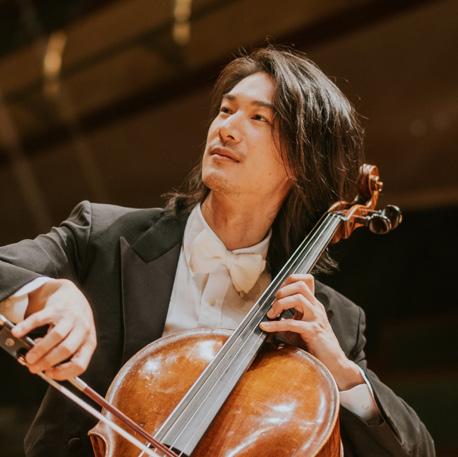
SSO Principal Cello
The Head Foundation Chair
In recognition of a generous gift from The HEAD Foundation, we announced the naming of our Principal Cello, “The HEAD Foundation Chair” in November 2019. The Chair is currently held by Principal Cellist Ng Pei-Sian.
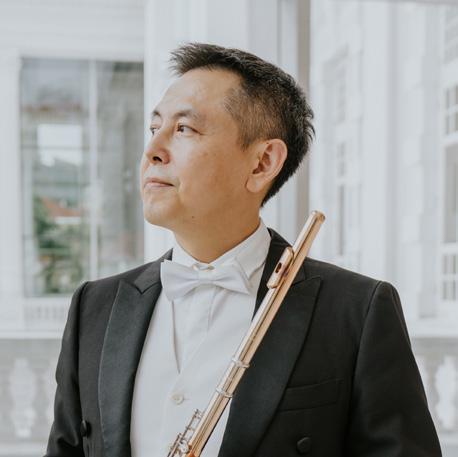
SSO Principal Flute
Stephen Riady Chair
In recognition of a generous gift from Dr Stephen Riady, we announced in May 2022 the naming of our Principal Flute, “Stephen Riady Chair”. The position is currently held by our Principal Flutist Jin Ta.
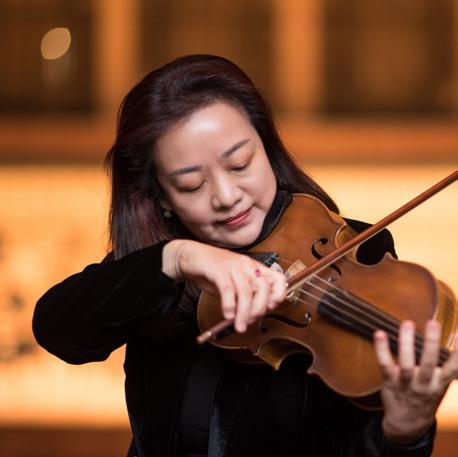
SSO Principal Viola
Tan Jiew Cheng Chair
In recognition of a generous gift from the Estate of Tan Jiew Cheng, we announced in February 2024 the naming of our Principal Viola, “Tan Jiew Cheng Chair”. The position is currently held by our Principal Violist Manchin Zhang.
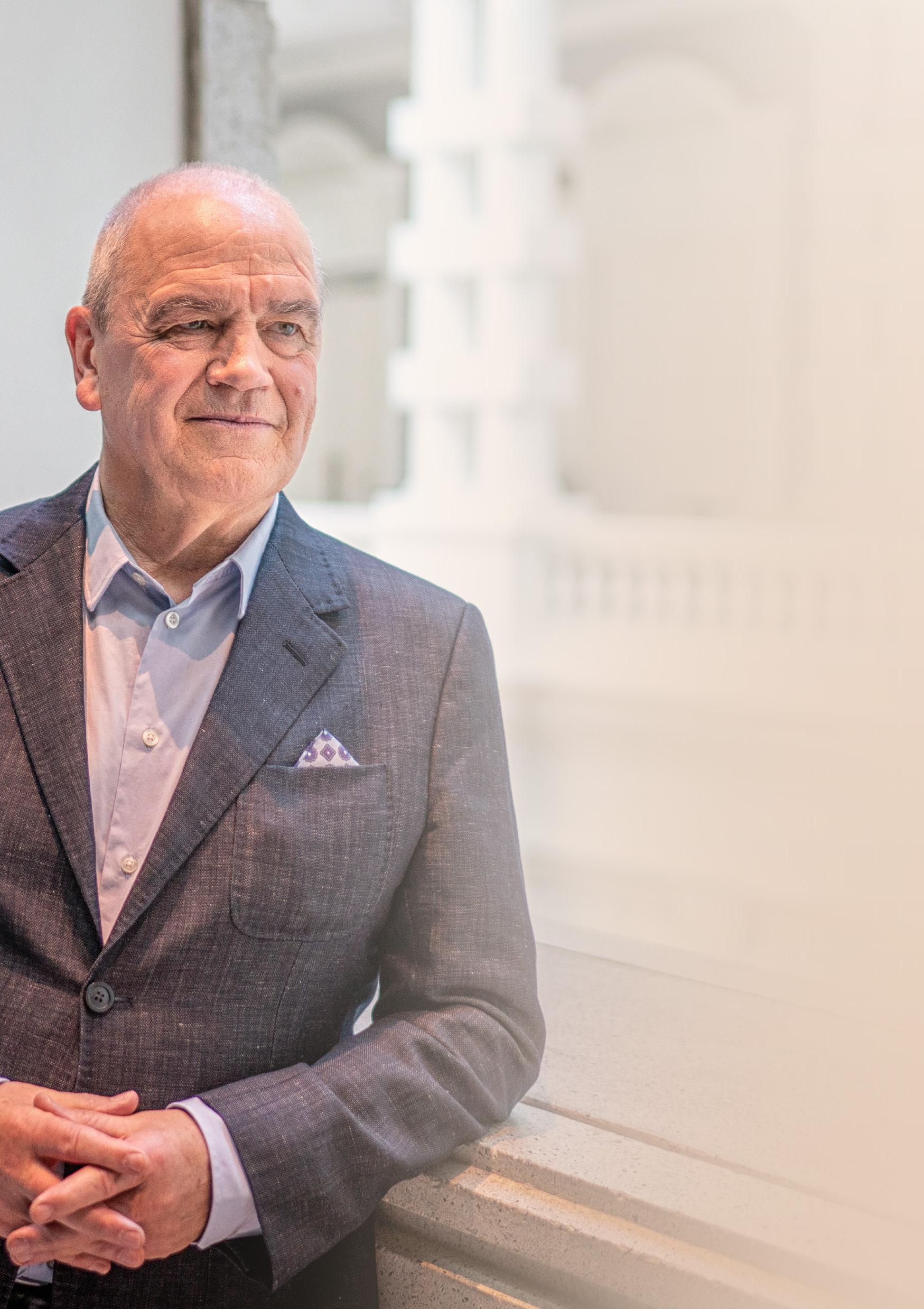
The SSO is delighted to announce the naming of the “Quantedge Music Director” position, currently held by Maestro Hans Graf.
With his spirit of musical exploration, innovative programming, and captivating stage presence, Maestro Graf has consistently inspired audiences and elevated orchestras to new heights. We are deeply grateful for his continued leadership as Chief Conductor in the 2020/21 season and Music Director since the 2022/23 season.
We extend our sincerest gratitude to our anonymous donor for this generous gift of $3 million to mark SG60.

Chair
Goh Yew Lin
Board of Directors
Chang Chee Pey
Chng Kai Fong
Andress Goh
Kenneth Kwok
Clara Lim-Tan
Jesher Loi
Lynette Pang
Prof Qin Li-Wei
Jovi Seet
Farhana Sharmeen
Doris Sohmen-Pao
Prof Peter Tornquist
Geoffrey Wong
Andrew Yeo Khirn Hin
EXECUTIVE & NOMINATING COMMITTEE
Goh Yew Lin (Chair)
Chng Kai Fong
Lynette Pang
Geoffrey Wong
SSO Council
Alan Chan (Chair)
Odile Benjamin
Prof Chan Heng Chee
Prof Arnoud De Meyer
Dr Geh Min
Heinrich Grafe
Khoo Boon Hui
Liew Wei Li
Lim Mei
Sanjiv Misra
Paige Parker
Dr Stephen Riady
Priscylla Shaw
Prof Gralf Sieghold
Prof Bernard Tan
Dr Tan Chin Nam
Wee Ee Cheong
Yong Ying-I
HUMAN RESOURCES COMMITTEE
Doris Sohmen-Pao (Chair)
Jesher Loi
Prof Qin Li-Wei
Heinrich Grafe*
Carmen Wee*
FINANCE & INVESTMENT COMMITTEE
Geoffrey Wong (Chair)
Andress Goh
Chua Keng Hong*
Alex Lee*
DEVELOPMENT COMMITTEE
Prof Chan Heng Chee (Chair)
Dr Geh Min
Heinrich Grafe
Khoo Boon Hui
Paige Parker
Priscylla Shaw
Dr Tan Chin Nam
Odile Benjamin
Lim Mei
AUDIT & RISK COMMITTEE
Jovi Seet (Chair)
Prof Peter Tornquist
Andrew Yeo Khirn Hin
Ryan Siek*
COMMUNITY & YOUTH ENGAGEMENT COMMITTEE
Clara Lim-Tan (Chair)
Chang Chee Pey
Farhana Sharmeen
Asst Prof Kat Agres*
Cecilia Pang*
*co-opted member
Symphony Ball Committee
Paige Parker (Chair)
Celeste Basapa
Geoffrey Wong
Kris Tan
Joy Tan
Dr Karen Soh
Kim Camacho
Lim Kang Ning
Farhana Sharmeen
SSO Musicians’ Committee
Hoang Van Hoc
Austin Larson
Li Xin
Christopher Mui
David Smith
Elaine Yeo
Zhao Tian
Chief Executive Officer
Kenneth Kwok
Deputy CEO
Programmes & Production
Kok Tse Wei
CEO OFFICE
Shirin Foo
Musriah Bte Md Salleh
ORGANISATION DEVELOPMENT
Lillian Yin
A rtistic Planning
Christopher Cheong (Head)
A RTISTIC ADMINISTRATION
Jodie Chiang
Terrence Wong
Jocelyn Cheng
Michelle Yeo
Operations
Ernest Khoo (Head)
L IBRARY
Wong Yi Wen
Cheng Yee Ki
Ng Yi Xiu
ORCHESTRA MANAGEMENT
Chia Jit Min (Head)
Kelvin Chua
P RODUCTION MANAGEMENT
Noraihan Bte Nordin
Nazem Redzuan
Leong Shan Yi
Asyiq Iqmal
Khairi Edzhairee
Benjamin Chiau
Syed Muhammad Idris Bin Ramli
DIGITAL PRODUCTION
Avik Chari
Deputy CEO
Patrons & Corporate Services
Jenny Ang
Community Impact
COMMUNITY ENGAGEMENT
Kua Li Leng (Head)
Whitney Tan
Lynnette Chng
Chua Xu Yang
Darren Siah
C HORAL PROGRAMMES
Kua Li Leng (Head)
Lu Heng
Chang Hai Wen
Mimi Syaahira
SINGAPORE NATIONAL
YOUTH ORCHESTRA
Ramu Thiruyanam (Head)
Tang Ya Yun
Tan Sing Yee
Ridha Ridza
ABRSM
Patricia Yee
Lai Li-Yng
Joong Siow Chong
Freddie Loh
Corporate Services
F INANCE, IT & FACILITIES
Rick Ong (Head)
Alan Ong
Goh Hoey Fen
Loh Chin Huat
Md Zailani Bin Md Said
HUMAN RESOURCES & ADMINISTRATION
Valeria Tan (Head)
Janice Yeo
Fionn Tan
Netty Diyanah Bte Osman
D EVELOPMENT
Chelsea Zhao (Head)
Nikki Chuang
Sarah Wee
Samantha Lim
Eunice Salanga
Kevin Yeoh
C OMMUNICATIONS, DIGITAL & MARKETING
Cindy Lim (Head)
Communications
Ong Shu Chen
Nikki Loke
Elizabeth Low
Tan Li Ying
Data & Digital Projects
Calista Lee
Lim Wen Jie
Marketing & Content
Chia Han-Leon
Hong Shu Hui
Myrtle Lee
Jana Loh
Kashmira Kasmuri
Carrie Woo
CUSTOMER EXPERIENCE
Randy Teo
Dacia Cheang
Joy Tagore
15 Mar 2026
Victoria Concert Hall
SSO ORGAN SERIES
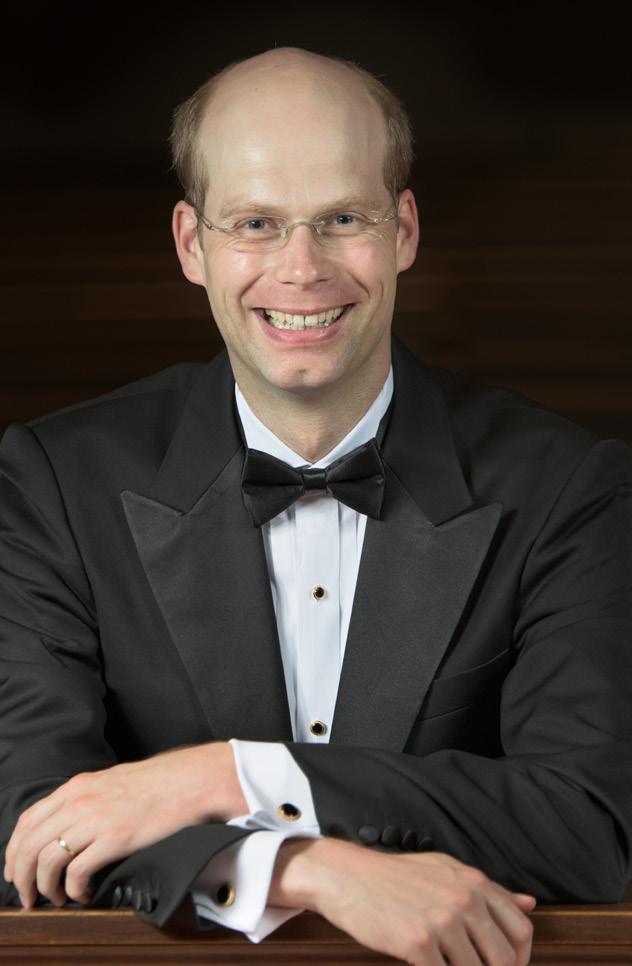
Jens Korndörfer –Organ Music from France and Germany
J.S. Bach
Prelude and Fugue in E-flat major, BWV 552
Franck
Fantasie en la Widor
Allegro from Symphony No. 6
Wagner
Pilgrim’s Chorus from Tannhäuser (arr. Liszt)
Mendelssohn
Overture to St. Paul (arr. Best)
Tickets at $10.
27 & 28 Mar 2026
Esplanade Concert Hall
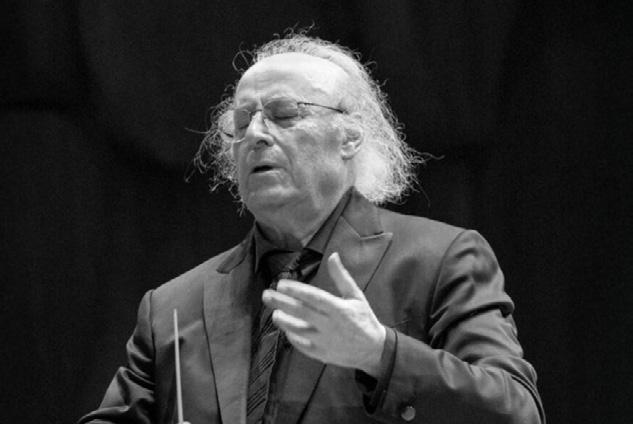
Simon Trpčeski & Eliahu Inbal / Rachmaninoff and Shostakovich
Rachmaninoff
Piano Concerto No. 2 in C minor, Op. 18
Shostakovich
Symphony No. 11 in G minor, Op. 103
“The Year 1905” www.sso.org.sg/whats-on
Tickets from $15.
The Victoria Concert Hall has been a home for music, memories, and meaningful moments for generations.
Adopt a seat and be part of history by donating to the SSO Endowment Fund.
Your gift helps secure the future of our nation’s orchestra, so we can continue creating memorable shared musical experiences for years to come.
Seats are available for adoption in donation tiers of $8,000, $15,000 and $25,000, with various patron benefits.