


Singapore Symphony Orchestra presents
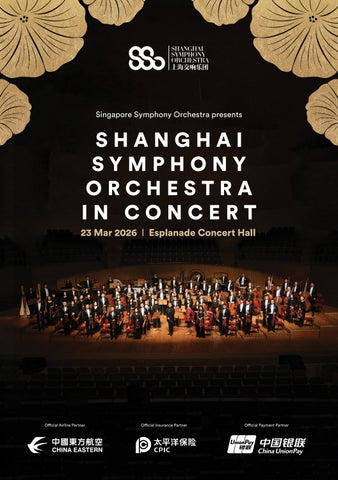
Singapore Symphony Orchestra presents
23 Mar 2026 l Esplanade Concert Hall


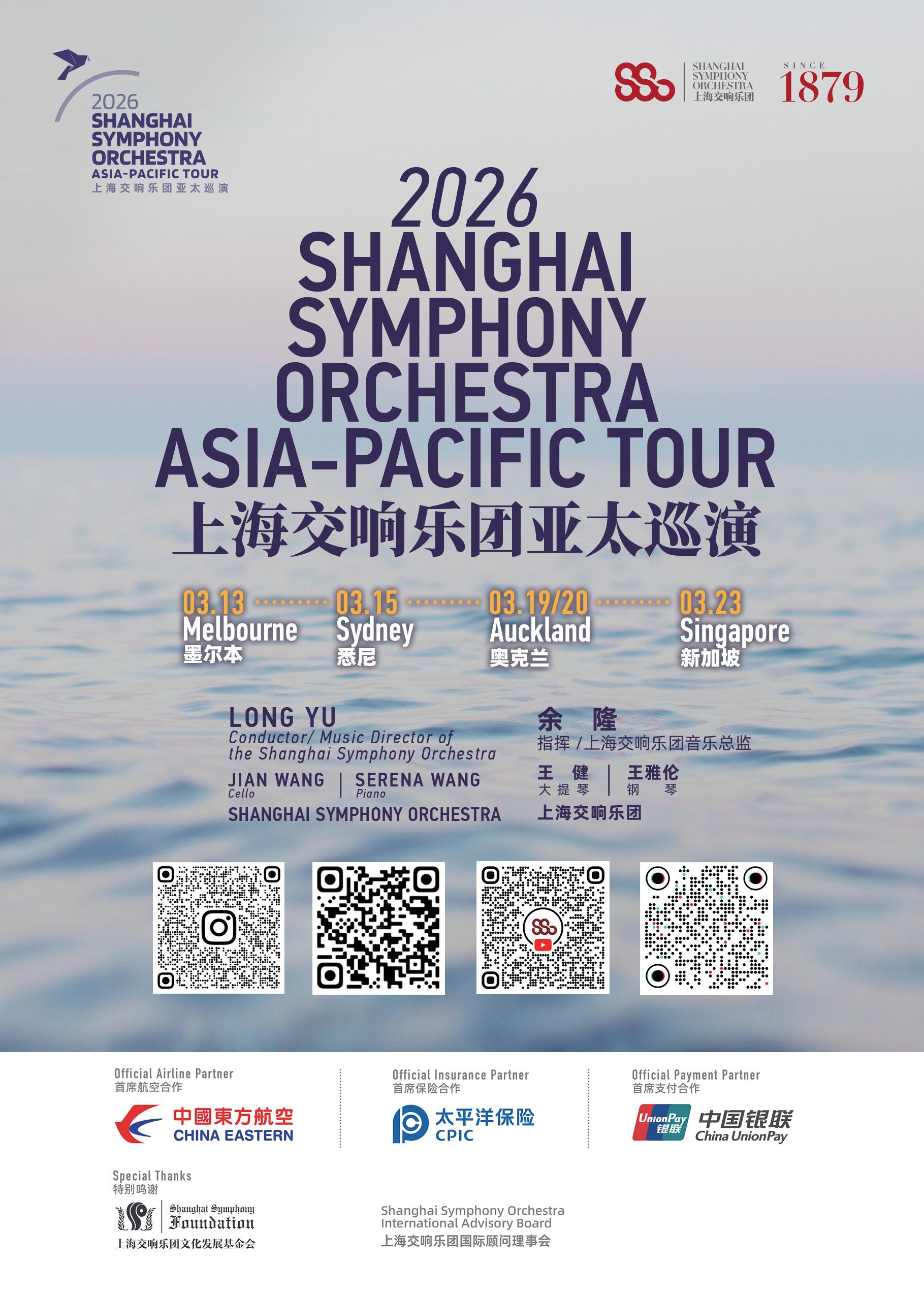

Mon, 23 Mar 2026
Esplanade Concert Hall
Shanghai Symphony Orchestra
Long Yu conductor
Serena Wang piano*
Elliot Leung
Selections from Chinese Kitchen: A Feast of Flavours (Singapore Premiere)
Tchaikovsky
Piano Concerto No. 1 in B-flat minor, Op. 23*
Intermission
Rachmaninov
Symphony No. 2 in E minor, Op. 27
For the enjoyment of all patrons during the concert:
Please switch off or silence all electronic devices.
Please minimise noises during performance. If unavoidable, wait for a loud section in the music.
No photography, video or audio recording is allowed when artists are performing.
Non-flash photography is allowed only during bows and applause when no performance is taking place.
Go green. Digital programme books are available on www.sso.org.sg.
Photographs and videos will be taken at these events, in which you may appear. These may be published on the SSO’s publicity channels and materials. By attending the event, you consent to the use of these photographs and videos for the foregoing purposes.
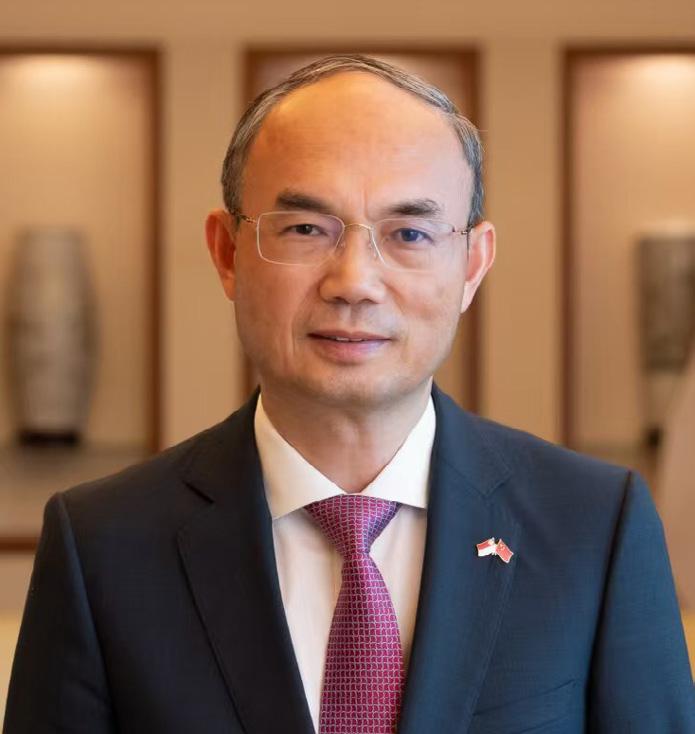
Ambassador Extraordinary and Plenipotentiary of the People’s Republic of China to the Republic of Singapore
曹忠明
中华人民共和国驻新加坡共和国 特命全权大使
Music has the power to transcend cultures and history, and to deepen mutual understanding among people. Tonight’s concert stands as a powerful testament to that strength. As the oldest symphony orchestra in Asia, the Shanghai Symphony Orchestra is making its Singapore Debut, bringing China’s rich musical traditions to local audiences. This October, the Singapore Symphony Orchestra will also perform in Shanghai. In a spirit for harmony and reciprocity, the two orchestras will usher in a new chapter in their collaboration.
China and Singapore have long maintained close and profound ties. These ties are built not only on solid diplomatic and economic exchanges, but are also reflected in vibrant and diverse cultural interactions. As an important bridge for cultural exchange, the arts provide us with a medium for communication and interaction, as well as a space for shared resonance. Tonight, as we enjoy the wonderful performance presented by China’s top musicians, we also celebrate this cross-border friendship expressed through music.
My sincere congratulations on the successful collaboration between the Shanghai Symphony Orchestra and the Singapore Symphony Orchestra!
音乐具有跨越文化与历史、深化人与人 之间相互理解的力量,今晚的音乐会正 是这份力量的有力见证。作为亚洲历史
最悠久的交响乐团,上海交响乐团首次 登上新加坡舞台,将中国丰厚的音乐传 统献给本地观众。今年十月,新加坡交 响乐团也将到上海演出,以和谐互惠的 精神,为这段合作谱写新的篇章。
中国与新加坡长期以来保持着紧密而深 厚的联系,这种联系不仅建立在稳固的 外交与经济往来上,也体现在活跃且多 元的文化交流之中。作为文化交流的重 要桥梁,艺术给予了我们沟通互动的媒 介和共鸣共振的空间。今晚,我们在 欣赏中国顶尖音乐家带来的精彩演出 之际,也共同庆祝这段以音乐诠释的跨 国友谊。
衷心祝贺上海交响乐团与新加坡交响乐 团的合作圆满成功!
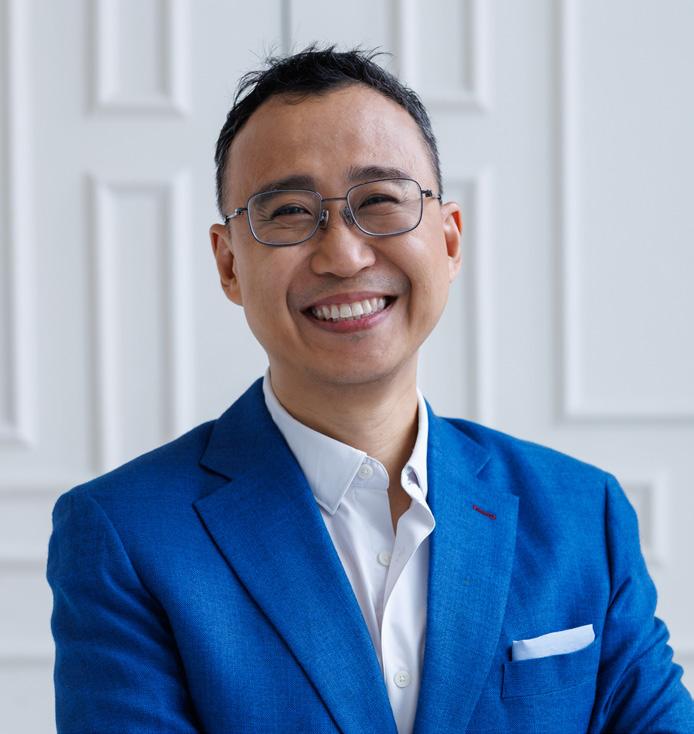
Kenneth Kwok
Chief Executive Officer
Singapore Symphony Group
郭兆龙
新加坡交响集团总裁
This evening, the Singapore Symphony Orchestra is proud to present the Shanghai Symphony Orchestra in its Singapore debut, led by its pre-eminent Music Director Long Yu and spotlighting two exciting young artists: pianist Serena Wang starring in Tchaikovsky’s first Piano Concerto, and composer Elliot Leung in the Singapore premiere of selections of his work Chinese Kitchen: A Feast of Flavours. We look forward to this vibrant showcase of classics and fresh creations; veteran and rising voices alike.
We are also excited to return to Shanghai in October after 19 years and to embark on our China tour, helmed by Maestro Hannu Lintu who assumes his role as Music Director from July and joined by Singapore’s brightest violin star Chloe Chua.
Together, these concerts not only offer us powerful music, but also remind us of what we share, invite us to listen deeply to one another, and deepen the enduring ties between our countries. Thank you for joining us this evening, and we look forward to the resonances that will blossom within and beyond the concert hall.
今晚,新加坡交响乐团欣然呈献上海 交响乐团的新加坡首演。音乐会由上 交著名音乐总监余隆执棒,并聚焦两 位令人瞩目的青年艺术家:钢琴家王 雅伦将演绎柴可夫斯基《第一钢琴协 奏曲》,而作曲家梁皓一的作品《中 国厨房 —— 味觉的盛宴》选段将迎来 新加坡首演。我们期待这一场汇聚经 典与新作、名家与新声的精彩呈现。
与此同时,我们也很高兴在阔别十九 年后,于今年十月重返上海,并展开 中国巡演。此次巡演将由来临七月上 任新加坡交响乐团音乐总监的汉努· 林图带领,并由新加坡小提琴新星蔡 珂宜带来独奏。
这些音乐会不仅为我们带来震撼人心 的艺术体验,也引领着我们用心倾听 音乐中体现出的情谊,从而深化中新 两国之间的联系。感谢各位今晚与我 们相聚,并期待音乐的余韵在音乐厅 内外持续绽放。
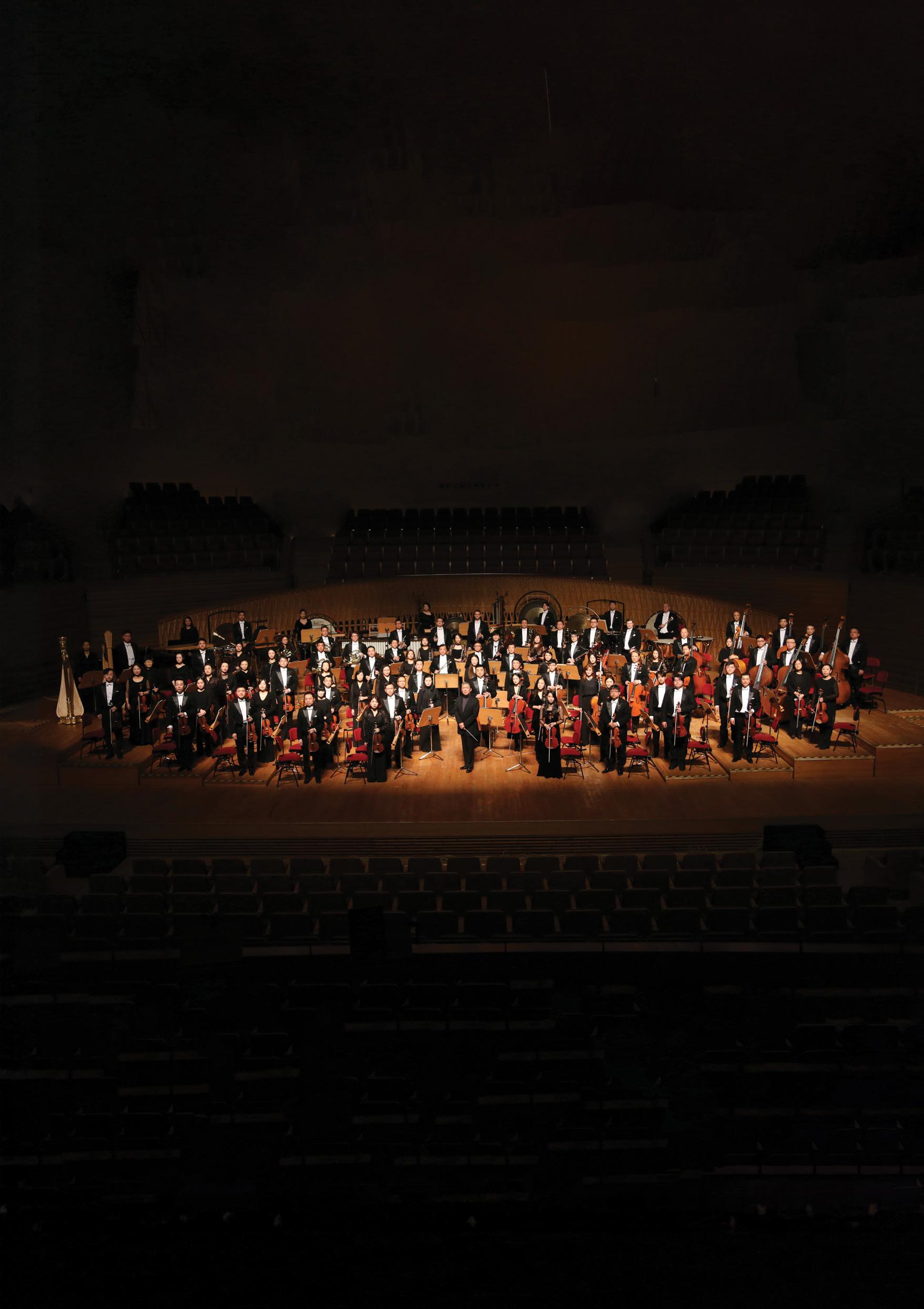
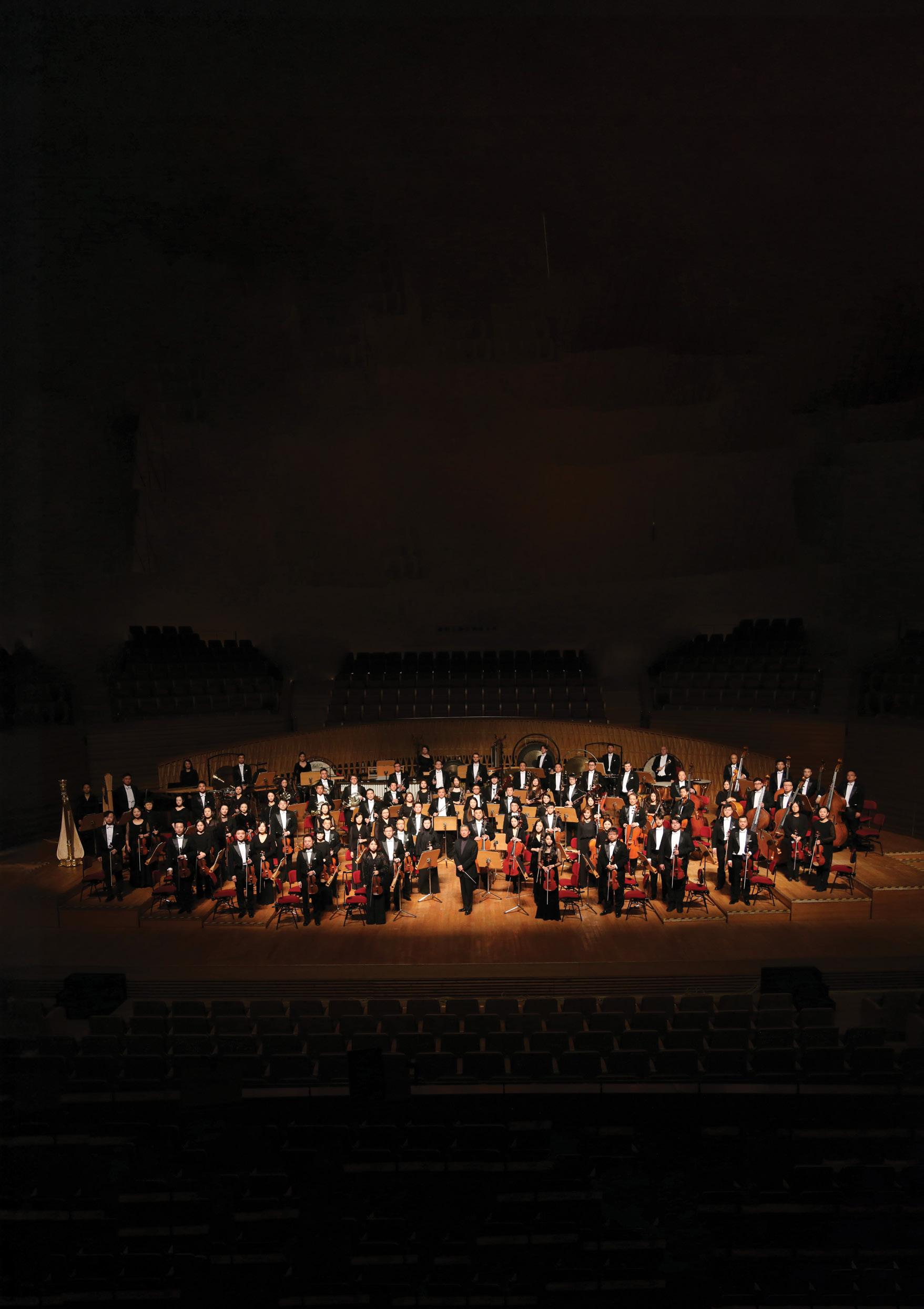
With origins dating to the Shanghai Public Band (1879), the Shanghai Symphony Orchestra (SSO) is Asia’s oldest symphony orchestra. Renamed the Shanghai Municipal Orchestra in 1922 and adopting its present name in 1956, the SSO has long embodied Shanghai’s cosmopolitan character, pioneering Chinese symphonic music and serving as a cultural bridge between East and West.
The SSO has systematically introduced Western repertoire to China while nurturing generations of local musicians. It has championed seminal Chinese works—from Huang Tsu's In Memoriam and the Butterfly Lovers Violin Concerto to Zhu Jian'er's symphonies, Tan Dun's The Map, and his score for Crouching Tiger, Hidden Dragon (Best Original Score, 2001 Academy Awards)—tracing the evolution of Chinese orchestral music onto the world stage.
A leading commissioner of new music, the SSO premieres and performs contemporary works that blend Chinese cultural themes with global perspectives, such as Qigang Chen's Instants d'un Opéra de Pékin, Ye Xiaogang's Dunhuang, Zhao Lin's A Thousand Li of Rivers and Mountains, and other innovative productions. The orchestra engages in groundbreaking international collaborations, including co-commissions with the New York Philharmonic (One Sweet Morning, 2008; The Émigré, 2023).
The 2014 opening of the Shanghai Symphony Hall (renamed Jaguar Shanghai Symphony Hall in 2021) realized an integrated “Orchestra-Hall” model, elevating artistic production and audience experience.
The SSO performs with renowned artists such as Zubin Mehta, Riccardo Muti, Paavo Järvi, Joshua Bell, Lang Lang, and ensembles including Jazz at Lincoln Center Orchestra. It also nurtures future talent through the Shanghai Orchestra Academy, the Shanghai Isaac Stern International Violin Competition, and public education programs.
In 1990, the SSO made its debut at Carnegie Hall and the Berliner Philharmonie. The SSO has continued to perform extensively abroad and made its debut in Lucerne Festival, BBC Proms, Edinburgh Festival in Europe and America.
In recording, the SSO made history as the first Chinese orchestra with an exclusive Deutsche Grammophon partnership, releasing acclaimed albums like Gateways and The Song of the Earth. In 2024, it became Apple Music Classical’s Greater China partner and launched the SSO Digital Hall in 2025, expanding its role from performer to global cultural communicator.
Conductor / Music Director of the Shanghai Symphony Orchestra
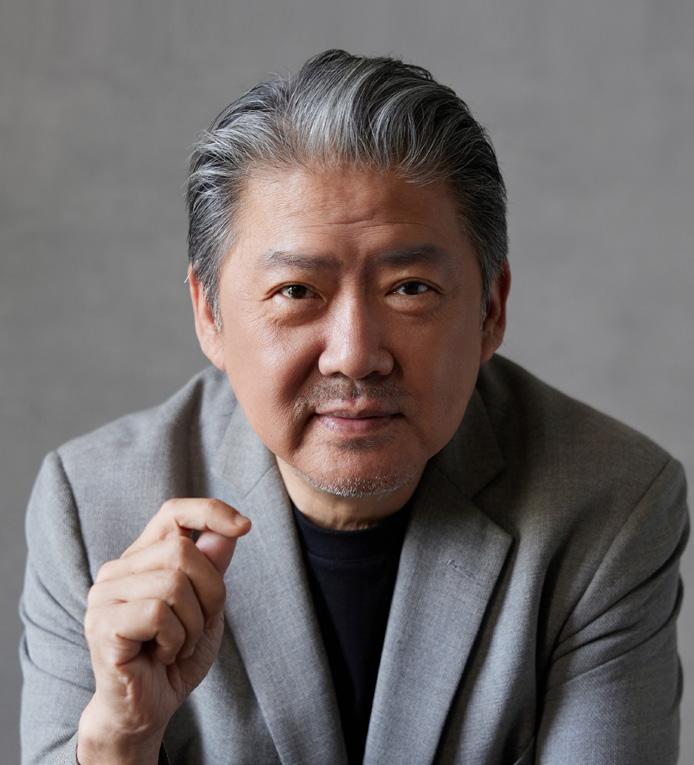
Hailed by The New York Times as “the most powerful figure in China’s classical music scene,” the conductor and impresario Long Yu has devoted his illustrious career to steering China’s growing connection to classical music. Maestro Yu currently holds the top position in the country’s most prominent orchestras: Artistic Director of the China Philharmonic Orchestra in Beijing, and Music Director of the Shanghai Symphony Orchestra. He is also the Principal Guest Conductor of the Hong Kong Philharmonic Orchestra, co-director of Shanghai’s Music in the Summer Air festival, and Chair of the Artistic Committee of the Beijing Music Festival. He is currently Vice President of the China Musicians Association and Chairman of its League of China Orchestras.
Since taking the reins of the Shanghai Symphony Orchestra (SSO) in 2009, Yu has led the orchestra on a tour of
the United States and Europe, with performances at the BBC Proms and Amsterdam’s Concertgebouw as well as the Edinburgh, Lucerne and Ravinia festivals. In 2018, he became the first Chinese conductor to sign an exclusive relationship with Deutsche Grammophon, offering the SSO a global release and distribution partnership, and leading to the recording releases of Orff: Carmina Burana (Live From the Forbidden City) (January 2019), Gateways (June 2019), The Song of the Earth (July 2021), Aaron Zigman: Émigré (June 2024) and LONG YU Complete Recordings on Deutsche Grammophon (December 2024).
Piano of Paganini. In 2026, Serena made her Wigmore Hall debut in concert with violinist Ning Feng. That same year, she played the closing concert of the Hong Kong Chamber Music Festival presented by Premiere Performances.
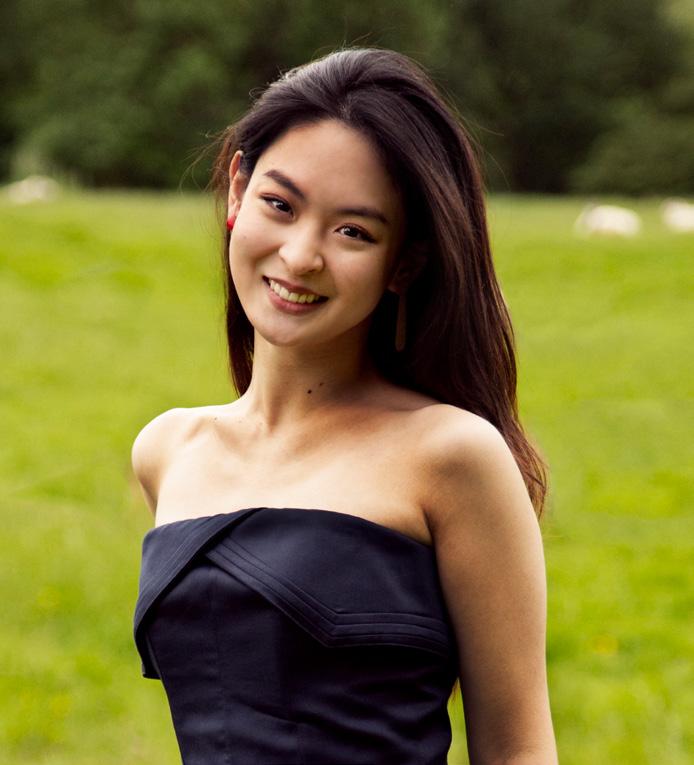
Born in San Francisco, Serena Wang (Wang Yalun) began piano studies at age four. She has performed with major orchestras and conductors throughout China and the United States appearing with the China Philharmonic, Shanghai Symphony Orchestra, New York Philharmonic, London Philharmonia, Israel Philharmonic, Hong Kong Philharmonic and Vancouver Symphony, among others. Conductors she has worked with include Yu Long, Zubin Mehta, Charles Dutoit, Gustavo Riveroeber and Zhang Guoyong.
In recent seasons, Serena has appeared with the New York Philharmonic as part of their 2024 Lunar New Year celebration concert. She was invited back to the Shanghai Symphony to play Shostakovich Concerto No. 1, and reinvited to the Hong Kong Philharmonic playing Rachmaninoff’s Rhapsody on a Theme
Serena made her first recording with Channel Classics at the age of nine featuring works by Mozart, Chopin, Shostakovich and Tan Dun. She is an avid chamber music musician and loves to perform with vocalists.
Serena’s formal training began at age six with the eminent professor, Zhaoyi Dan. She continued her studies under the guidance of Meng-Chieh Liu and Yoheved Kaplinsky. Serena began her undergraduate studies at the Juilliard School with Robert McDonald. In fall 2024, she entered the Curtis Institute of Music to continue her undergraduate studies with Mr. McDonald.
Second Violin
President
Fedina ZHOU
Vice President
QU Yue
Vice President
WANG Ying
Music Director
Long YU
Honorary Director
CHEN Xieyang
Conductor in Residence
SUN Yifan
First Violin
Yoonso CHO
GAO Tianyang
HUANG Na
LI Wenting
LIU Lei
MA Qianyi
PAN Yi
SHI Zhenyu
SU Ting
SUN Lanyue
TIAN Junjun
WANG Chunhao
WANG Wei
XIONG Yu
YU Renchao
ZHANG Yanan
ZHENG Tao
Vice President
WANG Siyu
Vice President
Doug HE
Concertmaster
LIU Ming MA Junyi
Associate Concertmaster
ZHANG Songjie
LEE Hsuehhung
Aside
MIAO Lejun Principal
ZHU Minjia Principal
DU Yi Associate Principal
CHEN Yi
HUANG Hong
HUANG Yilu
LI Xia
LIU Sha
LIU Yingjia
LUO Chang
WANG Nana
WANG Yun
WU Aolie
XU Yujie
YANG Can YEN Tochia
YIN Yuefeng
ZHOU Yanni
Viola
BA Tong Principal
SHI Zhenli Associate Principal
CAO Yibo Associate Principal
CHEN Yue
GUO Weiqi
LI Xiang
MA Ke
QIAO Dan
SUN Zehao
WANG Bochun
WANG Guan
WANG Lin
YU Haifeng
ZHANG Siyuan
Cello
HUANG Beixing Principal
ZHU Lin Principal
CHEN Shaojun Associate Principal
CHEN Xihui
HU Cunyuan
HUANG Yunyan
JHAO Changhong
LIU Yuching
LU Jinhu
XU Jiajia
ZHAO Liyuan
ZHENG Shuyi
ZHOU Runqing
Contrabass
ZHANG Ming Principal
QIAN Bowen Principal
QI Jiandong
QU Xudong
SHEN Yunxuan
WANG Xiaorui
WU Jinrong
YU Han
ZHANG Kaixuan
ZHU Shunhua
Flute
Bartolomeo AUDISIO Principal
HUNG Chienchun Principal
ZHANG Zejing (doubling piccolo)
LIU Lin (doubling piccolo)
Oboe
ZHANG Xin Principal
MAN Jingyi Associate Principal
SUN Zizhuo Associate Principal
CHEN Yiling (doubling English horn)
SHENG Zhongyuan (doubling English horn)
Clarinet
WU Yuru Associate Principal
LI Dake
(doubling clarinet in E♭, bass clarinet)
Minhye JO
(doubling clarinet in E♭, bass clarinet)
Colin LIU (guest)
CHEN Hsinju (guest)
Bassoon
CHAN Tingyuen Principal
CHENG Min Principal
CHEN Juichieh Associate Principal
HU Yu (doubling contrabassoon)
LAN Yingchieh (doubling contrabassoon)
French Horn
GUO Zhongbao Principal
Peter SOLOMON Principal
Eitaro SAKAMOTO Associate Principal
SHI Jieliang
ZHONG Zhuoning
CHU Yiyu
SONG Zijun
Trumpet
XIA Fei Principal
YAO Tianhao Associate Principal
LI Xiaonan
WANG Zhen
Trombone
HAO Jie Principal
LIN Chiahsien Associate Principal
ZHANG Huaming Associate Principal
CAO Chensen (doubling bass trombone)
QIU Jiahui (bass trombone)
Tuba
Alexander FILIPPOV
Timpani
Enrico CALINI Principal
Percussion
GU Kai Associate Principal & Head of Section
ZHENG Wei Associate Principal
FANG Qi (doubling keyboard)
FU Yifei
SHI Chunli
WANG Kang
ZHANG Xinru
Harp
SUN Zhiyang (doubling keyboard)
CHEN Lei (doubling keyboard)
SINGAPORE PREMIERE
b. 1995
Selections from Chinese Kitchen: A Feast of Flavours (2024)
● Deep Fried River Prawns
● Buddha Jumps over the Wall
● Vegetables in Soup
● Deep Fried Sesame Balls
Chinese Kitchen: A Feast of Flavours is a symphonic exploration of iconic traditional Chinese cuisines. Commissioned by the Shanghai Symphony Orchestra and composed by Elliot Leung, the work premiered in November 2024 in celebration of the SSO’s 145th anniversary. It features ten highly characteristic dishes (including one tea beverage), with musical interpretations of their taste, appearance, texture, cooking process, and cultural origins. Transforming “memories of the palate” into “resonance for the ears,” it transcends mere gustatory imagery, offering listeners a multisensory “flavor symphony.”
The cooking process of Deep Fried River Prawns unfolds as a sonic adventure, where brass and percussion sections transform the intensity of “oilblasting” into pulsating rhythms. This vibrant, dance-like movement propels listeners into the heart of the kitchen, positioning them before the sizzling wok. Here, the rhythmic energy mirrors the prawns' lively dance in the oil—their
arcs captured in staccato notes and shimmering cymbals.
Buddha Jumps over the Wall, a luxurious soup symbolizing Fujian’s culinary heritage. Its rich, layered melody mirrors the slow-simmered depth of mountain delicacies and seafood suspended in a viscous, collagen-rich broth. When unsealed, its aroma fills the neighborhood—a scent that evokes the uniqueness of one’s hometown. From the first sip’s fresh-mellow notes to the final sip’s lingering warmth in the stomach, the soup’s complexity leaves an unforgettable impression.
Vegetables are an essential cornerstone of every feast. In the movement Vegetables in Soup, the opening notes rise like steam from a simmering broth, as emerald leaves swirl in the liquid—a vivid tableau of freshness. The music transcends mere flavor, evoking the labor and dedication of those who cultivate these ingredients: each leaf carries the warmth of a farmer’s hands
and the morning dew that clings to the fields.
Deep Fried Sesame Balls revives the “deep-frying” motif in its final movement, resonating with sweettoothed audiences. The creamy, crispy texture and aromatic sesame paste unfurl across the score, as thematic elements surge and evolve. The movement builds to a climactic coda— a triumphant flourish that closes the gastronomic symphony with decadent brilliance.
Chinese Kitchen—A Feast of Flavours is not only a symphony of Chinese cuisine but also a tribute to Chinese cultural memory and the Chinese people’s love for life.
Instrumentation
3 flutes (1 doubling on piccolo, 1 doubling on alto flute), 3 oboes (1 doubling on cor anglais), 3 clarinets (1 doubling on bass clarinet, 1 doubling on E-flat clarinet), 3 bassoons (1 doubling on contrabassoon), 4 horns, 3 trumpets, 4 trombones, tuba, timpani, percussion, harp, piano, celesta, strings
World Premiere 24 Nov 2024, Shanghai
Born in Hong Kong in 1995, Elliot Leung has emerged as a distinctive voice in classical and film music with his “musical storytelling” style. He made history in 2023 as the youngest winner of the Huabiao Award for Outstanding Music for his score to The Battle at Lake Changjin. His accolades also include being named to the Forbes “30 Under 30” list (2022) and receiving four ASCAP Awards. Representative works span orchestral, film, and game music: Lunar Overture (premiered by the New York Philharmonic), Symphony No. 1 “The Metaverse” (Hong Kong Philharmonic; Sony Classical), Wuxia –In Commemoration of Jin Yong’s 100th Birth Anniversary (co-commissioned by the Shanghai Symphony Orchestra, Chengdu Symphony Orchestra, Hangzhou Philharmonic Orchestra), Chinese Kitchen: A Feast of Flavours (Shanghai Symphony Orchestra), and Tree (co-commissioned by Shanghai Symphony Orchestra & Shanghai Botanical Garden). His notable film scores include Operation Red Sea and Freelance, while his game credits include Honor of Kings and Six Days in Fallujah.
1840–1893
Piano Concerto No. 1 in B-flat minor, Op. 23
Allegro non troppo e molto maestoso—Allegro con spirito
Andantino semplice—Prestissimo
Allegro con fuoco
The work was composed between November 1874 and February 1875. It was revised in the summer of 1879 and again in December 1888. It was dedicated to Hans von Bülow. The first version was premiered on October 25, 1875 at Boston with the baton of Benjamin Johnson Lang and Hans von Bülow playing the piano.
It is scored for solo piano and the orchestra of 2 flutes, 2 oboes, 2 clarinets, 2 bassoons, 4 horns, 2 trumpets, 3 trombones, timpani, and strings.
The earliest recorded performance by the Shanghai Symphony Orchestra was on May 1, 1921, conducted by A. de Kryger with the soloist I. Gillersberg. The latest was on December 31, 2025, conducted by Long Yu with the pianist Serena Wang.
When Tchaikovsky began his Piano
Concerto No. 1 in 1874, he was already thirty-four and serving as a professor of composition at the Moscow Conservatory. Although he enjoyed considerable renown in Moscow and had by then produced a substantial body
of work, only a few of his compositions had aroused genuine enthusiasm. He started the concerto after completing the opera Vakula the Smith in November, writing to his brother: “I am now wholly absorbed in a piano concerto; progress is difficult and rather disappointing. I constantly have to drive myself, forcing piano passages into my head.” Contrary to his words, however, the concerto actually took shape quite smoothly: he finished the piano score before Christmas. While composing it in Kiev, he incorporated several Ukrainian folk tunes as principal themes.
Nikolai Rubinstein, director of the Moscow Conservatory and ordinarily an ardent advocate of Tchaikovsky’s music, was also a firstrate pianist. Not being a virtuoso pianist himself, Tchaikovsky sought his colleague’s advice on technical aspects of the solo part just three days after completing the score. Later, Tchaikovsky described to his patroness Nadezhda von Meck one of the most embarrassing episodes of his life: “I played the first movement. Not a word, not a single comment! If you only knew how stupid and unbearable it is when someone prepares a meal for a
friend, and the friend eats it in silence! … He seemed to be saying, ‘My friend, how can I discuss details when the whole thing is repugnant?’ I mustered my patience and played to the end. … According to him, my concerto was worthless and unplayable; the passages were fragmented, clumsy, so poorly written as to be beyond rescue; the work as a whole was cheap, vulgar; in places I had stolen from others; only two or three pages were worth keeping; the rest must be discarded or completely rewritten. … I was not only astounded but deeply offended by the whole scene.”
Undaunted, Tchaikovsky proceeded to orchestrate the concerto, finishing it in February and making only one change: he erased the name of the original dedicatee—Nikolai Rubinstein—and replaced it with that of the virtuoso pianist Hans von Bülow. Bülow responded with enthusiasm, writing: “It may be presumptuous of me, unfamiliar as I am with the full range of your works and your prodigious talent, to say that your Op. 23 strikes me as so brilliant, such a remarkable achievement in your output, that you have undoubtedly enriched the world of music as never before. Its originality, nobility and strength are unsurpassed; there are so many gripping moments in this uniquely conceived work; such maturity of form and style—in its design and execution, and in its harmonious writing—that I would weary you were I to list all the memorable points for which I thank the author, not to mention the pleasure of playing it. In short, this
true jewel will earn you the gratitude of all pianists.” Bülow gave the highly successful premiere in Boston on October 25, 1875. Such success must at first have bewildered Rubinstein, but in time he and Tchaikovsky reconciled, and Rubinstein came to appreciate the work’s worth.
Tchaikovsky later revised his Piano Concerto No. 1 twice, though without altering its overall structure. The music opens distinctively with a slow introduction: over the piano’s thunderous chords, the strings present the celebrated melody, which contrasts with the agitated main body of the movement. This is undoubtedly the most famous tune from the concerto, and perhaps the bestknown of all Tchaikovsky’s themes. Because it never returns later in the work, it has also provoked considerable debate among critics. The second movement is light and charming, while the concerto concludes with a whirlwind finale based on a Ukrainian folk tune.
Instrumentation
solo piano, 2 flutes, 2 oboes, 2 clarinets, 2 bassoons, 4 horns, 2 trumpets, 3 trombones, timpani, strings
World Premiere 25 Oct 1875, Boston
1873–1943
Symphony No. 2
Largo – Allegro moderato
Allegro molto
Symphony No. 2 was composed in 1906-08. The premiere was conducted by the composer himself with Russian Symphony Society Orchestra in Saint Petersburg on 8 February 1908 (26 January O.S.).
The symphony is scored for 3 flutes (the 3rd doubling on piccolo), 3 oboes (the 3rd doubling on cor anglais), 2 clarinets, bass clarinet, 2 bassoons, 4 horns, 3 trumpets, 3 trombones, tuba, timpani, snare drum, bass drum, cymbals, glockenspiel, and strings.
The earliest recorded performance by the Shanghai Symphony Orchestra was on December 22, 1984, conducted by Lin Kechang. The latest was on February 22, 2025, conducted by Long Yu.
Rachmaninov was regarded as the successor of Tchaikovsky. Born in 1873, he successively studied at St. Petersburg Conservatory and Moscow Conservatory, graduating with excellent grades in both composition and piano performing. After that, he dazzled Russia with his duo identity of a pianist and a
composer. After the 1917 revolution, Rachmaninov lived in the United States, mainly as a pianist and a conductor. He amazed the American audience with his super technique and Concerto No. 3, still a touchstone for pianists. His compositions after moving to America remained few, but every one of them is a masterpiece. In the early half of the 20th Century when new music spread the world, Rachmaninov’s music seemed oldfashioned. Indeed, his music is marked by its subtle beauty in melody and strictness in form. In 1943, shortly before his 70th birthday, Rachmaninov passed away.
Rachmaninov composed his Symphony No. 1 in 1895, whose premiere, conducted by Glazunov, was a disaster. The composer was mentally struck, and had to wait for two years before composing a new work, which was the tremendously popular Piano Concerto No. 2. As for the genre of symphony, he waited for more time. Symphony No. 2 was sketched during 1907 and finished only in 1908. It was premiered under the composer himself, and was a great success. The symphony has
now become one of the most loved symphonies.
The symphony is cast in four movements. It has in it an extended structure, memorable melodies and a variety of moods, all unified by an idée fixe – the Dies Irae motif, which often appears in Rachmaninov’s works. The first movement begins with a slow introduction played on low strings. English horn leads the music to its richly substantiated main section. The second movement is a very fast scherzo, with a “molto cantabile” middle section. The third movement is the most popular section of this symphony. With its melancholy melodies and layers of emotions, it is the epitome of romantic feelings. In the fourth movement Rachmaninov uses big intervals, which seldom appear in his works and thus creates a vigorously dancing atmosphere in which the work ends.
Notes provided by Shanghai Symphony Orchestra
Instrumentation
3 flutes (3rd doubling on piccolo), 3 oboes (3rd doubling on cor anglais), 2 clarinets, bass clarinet, 2 bassoons, 4 horns, 3 trumpets, 3 trombones, tuba, timpani, snare drum, bass drum, cymbals, glockenspiel, strings
World Premiere 8 Feb 1908, St. Petersburg
The Shanghai Symphony Orchestra gratefully recognizes the members of the SSO International Advisory Board for their support and contribution to the 2026 SSO Asia-Pacific Tour
Carol & Sunil Chugani
Evelyn & Philip Lu
Mr. and Mrs. Charles C. Y. Chen
Hsiu Ling Lu & Ivan Cheah
Carol Shen & Sam Su
TK & Grace Pen
Edward Fang & Charlene Tang
Dorothy Dong & Stephane Renaud
Featuring Presented by