Rutter’s Mass of the Children - SNYO × Singapore Symphony Choruses
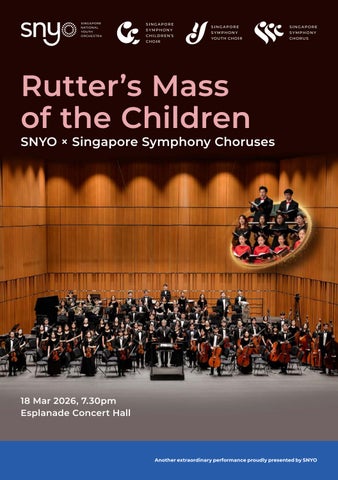
Rutter’s Mass of the Children
SNYO × Singapore Symphony Choruses
18 Mar 2026, 7.30pm
Esplanade Concert Hall
18 Mar 2026
Esplanade Concert Hall
Rutter’s Mass of the Children
Singapore National Youth Orchestra
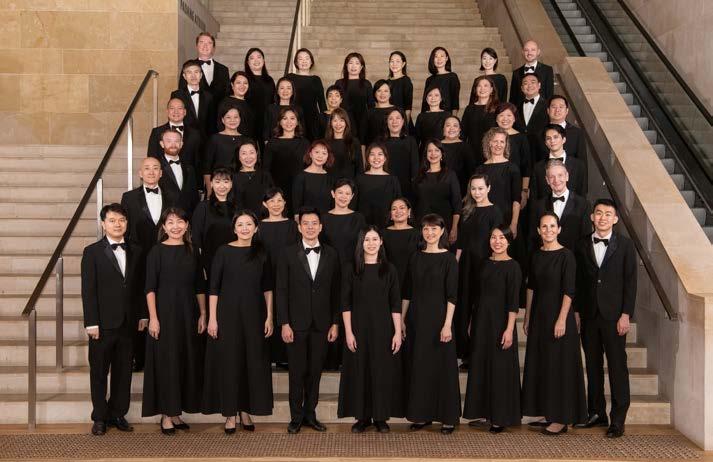
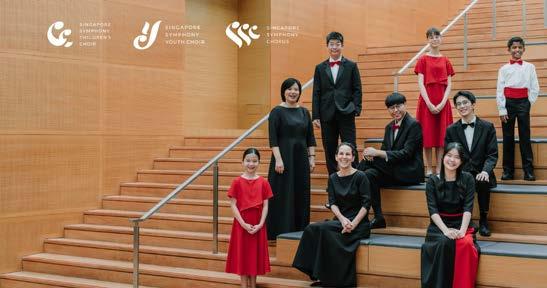
Singapore Symphony Chorus
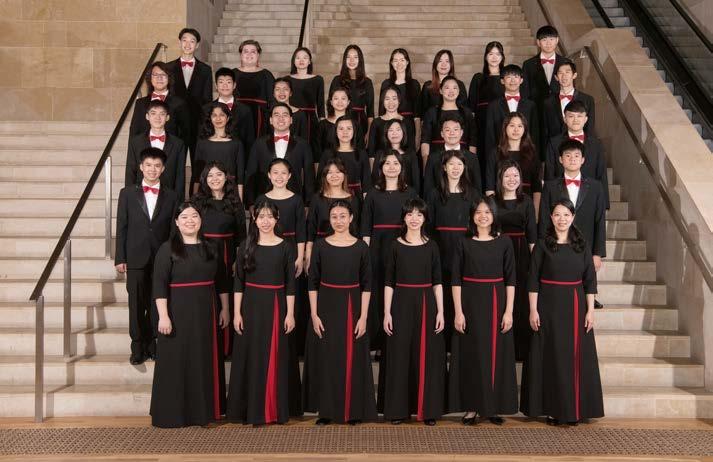
Singapore Symphony Youth Choir
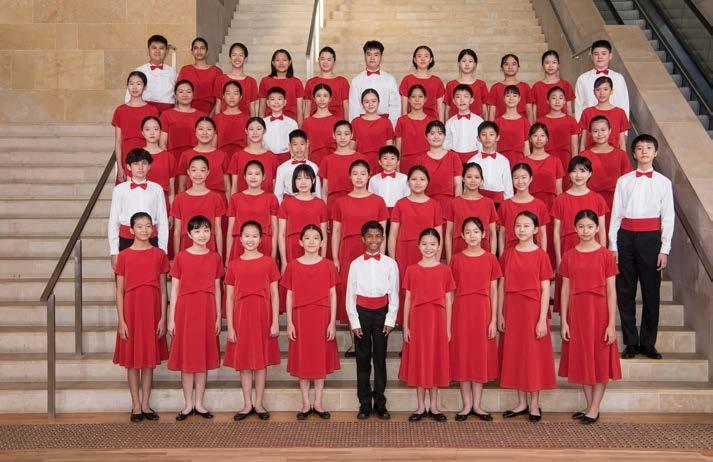
Singapore Symphony Children’s Choir
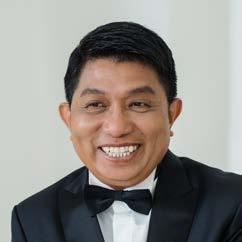
Joshua Tan SNYO Music Director
Eudenice Palaruan Choral Director
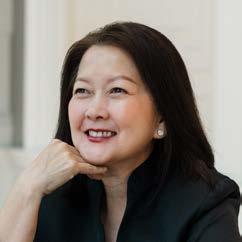
Wong Lai Foon Choirmaster
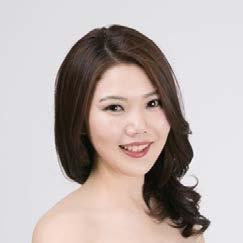
Kaitlyn Kim soprano
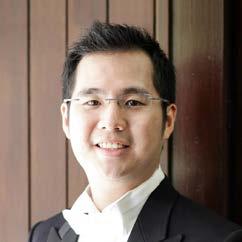
Wong Yang Kai baritone
Concert duration: 2 hrs (including 20 mins intermission)
Singapore National Youth Orchestra
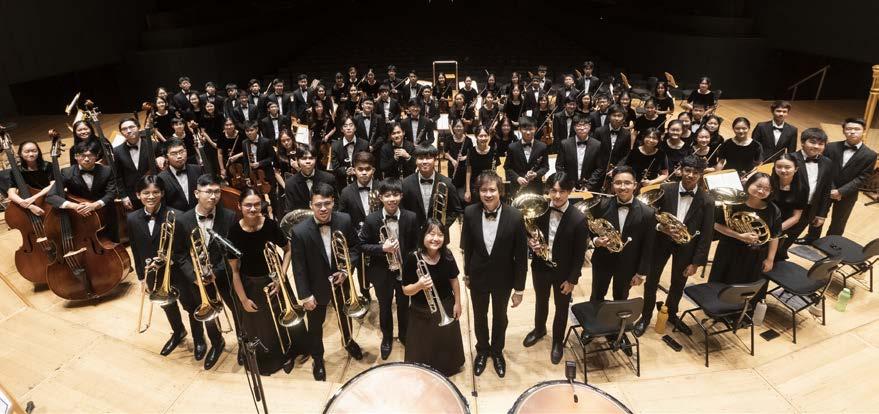
The Singapore National Youth Orchestra showcases the extraordinary capability of our youth. It inspires them towards artistic excellence, nurtures them to reach beyond their potential and develops them through rigorous training within a vibrant, supportive, and diverse environment. Established formally in 1980, the Singapore National Youth Orchestra (SNYO) has welcomed generations of youths into the transformative world of orchestral music, performing locally and representing Singapore on prestigious international stages.
The SNYO family comprises two orchestras: the Singapore National Youth Orchestra and Singapore National Youth Sinfonia, with over 180 members aged 10 to 24 from more than 70 schools across Singapore, guided by professional musicians in rehearsals, sectionals, and masterclasses. Recognised by the Ministry of Education as a National Project of Excellence, members of the SNYO have their participation in the orchestra recognised as a Co-Curricular Activity.
Music Director Joshua Tan has been leading the SNYO since 2018 while Associate Conductor Seow Yibin has been in position since 2022.
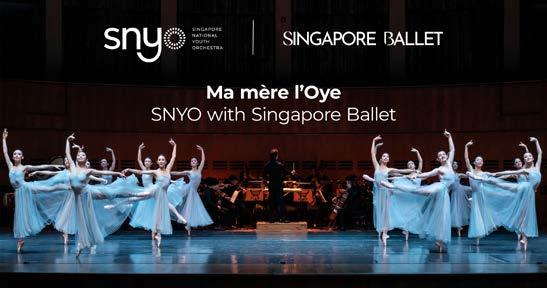
Over the years, the SNYO has performed in concert venues and music festivals across Australia, Austria, China, Germany, Italy, Japan, Malaysia, and the United Kingdom. Other musical endeavours include collaborations with the Singapore Ballet, TwoSet Violin and side-by-side concerts with the Singapore Symphony Orchestra.
The SNYO is part of the Singapore Symphony Group, which also manages the Singapore Symphony Orchestra and Singapore Symphony Choruses, as well as the Singapore International Piano Festival and the biennial National Piano & Violin Competition.
Singapore National Youth Orchestra
Joshua Tan Music Director
Seow Yibin
Associate Conductor
Lim Meng Keh Percussion Tutor
VIOLIN
Aidan Kwek Concertmaster
Samuel Soekarno Concertmaster
Matthew Chiu
Allison Chng
Hannah Chung
Sophia Fang
Isabel Heng
Kaden Khew
Zoe Lam
Lim Jing Rui
Annie Liu
Lum Kai Ying
Ng Zu Ni
Shannon Ong
Amelia Phuah
Aubrey Tan
Xia Ruoting
Liam Young
VIOLA
Chang Zi Yi Principal
Jayden Kwan Principal
Keira Chen
Skyler Goh
Kuah Ying Ching
Chloe Lee
Annabel Ng
Wang Qianhui
Xu Hongmao
CELLO
Shavaun Toh Principal
Charlotte Tseng Principal
Koh Liong Tiek
Li Peilin
Lloyd Loh
Jayden Qin
Christoph Yang
Natalie Yong
Yu Yikang
DOUBLE BASS
Gideon Yen Principal
Samantha Ang
Cao Junwei
Lee Yan Yu
Lim Rui Yi
Ma Ruilin
Tay Si En
Joleigh Tjhin
Zhang Xin
FLUTE
Carolynn Choo Principal
Ian Lee
Chloe Tan
PICCOLO
Ian Lee Principal
OBOE
Cho Dongmin Principal
Lucas Chan
Linus Ng
ENGLISH HORN
Matthew Chen
CLARINET
Qian Wanni Principal
Tim Hiang
Li Xin*
Amelie Peh
BASS CLARINET
Tim Hiang
BASSOON
Li Ruidan Principal
William Jiang
CONTRABASSOON
Dana Cervantes
* Gu est musician
HORN
Marcus Robins Principal
Keak Jing Yi
Gabriel Miguel
Amira Qistina
Van Hoc Hoang*
TRUMPET
Koh Mi Yo Principal
Nuttakamon Supattranont*
Khayri Rayyan
TROMBONE
Reema Chatterjee Principal
Avidan Koh
Calista Lee
Benjamin Lim
BASS TROMBONE
Benjamin Lim Principal
TUBA
Amos Ong Principal
TIMPANI
Kilian Muliady
Isaac Ng
Christian Tan
PERCUSSION
Kanushi Ghuwalewala
Sean Ling
Kilian Muliady
Isaac Ng
Phornpiriya Piriyaporn
Alon Simons
Christian Tan
HARP
Chloe Liow Principal
CELESTA
Linus Ng
Singapore Symphony Chorus
For 45 years, the Singapore Symphony Chorus (SSC) has brought together passionate choristers from varied backgrounds to create stirring symphonic music that transcends language and culture. More than a choir, the SSC is a vibrant community where lasting bonds are forged beyond the stage.
Committed to artistic excellence, its dedicated members rehearse weekly, performing at celebrated venues like the Esplanade and Victoria Concert Halls. Under the baton of world-class conductors such as Okko Kamu, Lan Shui, Lim Yau, Masaaki Suzuki, and Sofi Jeannin, the SSC has built a rich repertoire featuring masterpieces like Tippett’s A Child of Our Time, Arvo Pärt’s Te Deum, Britten’s War Requiem, and Bach’s St John Passion
The chorus’s unwavering dedication to delivering outstanding performances makes the SSC a leading choral ensemble – a shining example of music’s power to unite people across generations and cultures.
Singapore Symphony Youth Choir
Bursting with energy and passion, the Singapore Symphony Youth Choir (SSYC) is a lively group with members aged 17 to 28, who thrive on breaking artistic boundaries and growing as one. Beyond making harmonies, the SSYC is a buzzing community where young voices come together to dive into symphonic choral adventures with the national orchestra.
Performing regularly at the Esplanade and Victoria Concert Halls, the SSYC tackles some of the most exciting and challenging choral works across diverse styles and genres. The SSYC regularly collaborates with visionary conductors including Lan Shui, Hans Graf, and Stephen Layton. Their impressive repertoire features highlights like Scriabin’s Prometheus, Puccini’s La Bohème, Tallis’s Why Fumeth in Fight, and Faure’s Requiem, along with recordings of Borodin’s Polovtsian Dances and Mahler’s Symphony No. 2.
The SSYC offers an unparalleled chance to learn and create memories with the seasoned professionals – setting the stage for the future of symphonic choral music.
Singapore Symphony Children’s Choir
The Singapore Symphony Children’s Choir (SSCC) offers young voices a thrilling gateway into the world of professional music-making. Singing alongside the Singapore Symphony Orchestra and renowned conductors, children discover not only the joy of performance but the discipline, confidence, and creativity that come with it.
Through its nurturing environment, the SSCC develops young children both musically and personally. It’s a space where artistry, friendship, and deep love for music come to life in every rehearsal and performance. Based at the Victoria Concert Hall, the choir has performed under the direction of esteemed conductors like Lim Yau, Sofi Jeannin, François-Xavier Roth, and Stephen Layton, and has shared the stage with The King’s Singers.
The SSCC’s impact extends beyond the concert hall, with appearances at national events and international collaborations in Paris and Kuala Lumpur, championing local music by commissioning works from Singaporean composers including Darius Lim, Zechariah Goh and Kelly Tang. Passionate, polished, and proudly Singaporean, the SSCC is shaping the next generation of choral excellence.
Our Choristers
Singapore Symphony Chorus
Soprano
Karen Aw
Josephine Budiana
Janice Chee
Alexis Chen
Chia Gin Gin
Elizabeth Daniel
Julie Demange
Wodtke
Grace Goh
Vivien Heng
Kaitlyn Kim
Selina Kwek
Rachel Lam
Lee Shei Gee
Sun Lee
Jacqueline Liew
Aidah Lim
Liang Xinyu
Lin Wei
Ng Bee Kay
Ng Wing Kei Tracy
Shireen Sanbhnani
Sarah Santhana
Bessie Segarra
Andrea Yenny Sjah
Nelia Soelistia
Stacey Wang Espera
Vivienne Tan
Sarah Tang
Sachiko Tomimori
Gladys Torrado
Cheyenne Tso
Wang Yu-Ann
Alto
Grace Angel
Chan Mei Yoke
Joy Chen
Chng Xin Bei
Marie Amelie
McKeand
Kelly Cooke
Joanna Deakin
Dieh Xin Xin
Truly Hutapea
Esther Jong
Susan Kurniawati
Dorothy Lee-Teh
Wendy Lim
Shoumin Low
Sharon Low
H. Debbie Min
Sylwia Mirucka
Ng Beng Choo
Ng Sheh Feng *
Natividad Solaguren
Ena Su
Ratna Sutantio
Elsie Tan
Tan Seow Yen
Rina Ushioda
Wang Jiunwen
Nadine Yap
Elizabeth Yeo
Tenor
Jean-Michel Bardin
Chong Wei Sheng
Ivan De Jesus
Jonathan Halliwell
Adrian Lim
Elton Lin
Jeroven Marquez
Ronald Ooi
Samuel Pažický
Rac Roldan
Ian Tan
Ben Wong
Yek Kwan
Bass Ang Jian Zhong
Arthur Davis
Andy Jatmiko
Ethan Jerzak
Paul Kitamura
Justin Lee
Andrew Ng
Yen Phang
Teo Siak Hian
Michael Walsh
Wong Hin Yan
Wong Yang Kai *
* Choral Associate
Our Choristers
Singapore Symphony Youth Choir
Soprano
Cham Li Teng
Halyn Cho
Dylan Francis
Goh Chen Xi
Jocelyne Harefa
Emily Hia
Rachael Jong
Laura Lee
Emma Lee-Goh
Melina Leong
Giselle Lim
Ng Yi Poh
Teryn Rim
Desiree Seng
Samyukta
Sounderamann
Carine Tan
Christabelle Tan
Tan Caewyn
Janelle Tan
Jasmine Towndrow
Raeanne Wong
Chloe Zhou
Alto
Megan Fung
Jolyne Jue Yie Goh
Elizabeth Goh
Trinetra Kumarasan
Zoe Li
Zachary Lim
Ong Sherlyn
Violet Ong
Suri Rao
Ananya Ravi
Emily Tan
Tan Yuqing
Tan Yulin
Tenor
Andre Ang
Hann Lyang
Alfonso Yuji Cortez
Jayden Moktan
Amos Pan
Seifer Ong
Stanley Yuan Chenye
Bass
Leonard Buescher
Chai Chang Kai
Matthew Chiang
Liu Felix
Loy Sheng Rui
Tan Hee
Joshua Tan
Dominic Tang
Wong Zhen Wei
* Choral Associate
Our Choristers
Singapore Symphony Children’s Choir
Laurel Ang
Adele Chan
Lisa Chang
Samuel Chen
Charlize Cheong
Elizabeth Chern
Christian Chew
Choo Yu En
Chua Jia Le
Deng Handing
Graciella Gunawan
Nadia Hajadi
Callie Heng
Cloris Ho
Manya John
Joshika Kandasamy
Ropheka Khoo
Giselle Koh
Kok Xiu Yin
Athena Kong
Lucas Lee
Leong Zee Yen
Liew Ying En
Stephanie Lim
Hebe Lim
Ruth Ling
Lu Yiche
May Ma
Emma Mok
Lei Nakayasu
Claire Neu
Ng Le Xi
Danielle Ng
Joel Ng
Ng Alyssa
Shannette Ng
Riann Ong
Ong Sze Ying
Pan Yueling
Marie Phua
Ayantika Sen
Genevieve Seow
Siew Lok Yan
Allysa Tan
Ashley Tan
Brandon Tan
Caitlin Tan
Michael Tan
Alena Tan
Gwynever Tanan
Tang Yueyi
Yuna Tano
Natalie Tay
Anya Teo
Germaine Teo
Camellia Thng
Natalie Tju
Xavier Tng
Mika Tobita
Rosie Tu
Trisha Vishnuprasad
Wang Luoxin
Julian Werstuik
Caresse Wisantoso
Joylene Wongso
Joyce Wu
Gracie Xie
Jessica Xu
Yan Yichen
Cammi Yeo
Yu Rahee
Zhang Kangni
* Choral Associate
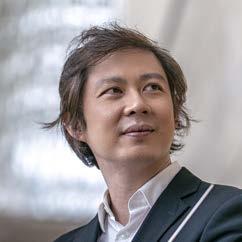
Joshua Tan
SNYO Music Director
Singaporean conductor Joshua Tan, 2nd Prize winner of the 2008 Dimitri Mitropoulos International Competition, has built an international career marked by successful debuts at Carnegie Hall, Philharmonie Berlin, Mariinsky Hall and Bunkamura.
A graduate of The Juilliard School and the Eastman School of Music (High Distinction), he is the recipient of numerous awards including Singapore’s Young Artist Award, the Bruno Walter Memorial Foundation Award, the NACShell Scholarship and the SSO/MOE Scholarship.
Joshua has conducted orchestras worldwide, including the Mariinsky Theatre Orchestra, Sydney Symphony Orchestra, Melbourne Symphony Orchestra, Tokyo Philharmonic Orchestra, Hong Kong Philharmonic Orchestra, Shanghai Symphony Orchestra and China Philharmonic Orchestra. He has studied with James DePreist, Charles Dutoit, David Zinman and Kurt Masur.
Known for his versatility in symphonic, operatic and multimedia repertoire, Joshua currently serves as Music Director of the Singapore National Youth Orchestra and Asia Virtuosi, and previously held posts with the Singapore Symphony Orchestra, Guiyang Symphony Orchestra, and the National Center for the Performing Arts Orchestra in Beijing.
Eudenice Palaruan
Choral Director
Eudenice Palaruan studied composition and choral conducting at the University of the Philippines College of Music and the Berliner Kirchenmusikschule, Germany. He graduated with a Doctor of Musical Arts at St. Paul University Manila.
He was a singer, resident composer, and music arranger of the Philippine Madrigal Singers. He performed with the Berlin Spandauer Kantorei, the World Youth Choir, and sang countertenor with the Berlin Monteverdichor.
In addition, he was the principal conductor of the San Miguel Master Chorale. For years, he has been the resident conductor of the International Bamboo Organ Festival, where he performed and recorded significant selections of LatinAmerican Baroque music. With his active involvement in the choralization of Filipino and other Asian indigenous music, he premiered a substantial volume of new Asian choral works. In addition, he was often invited to give lectures on non-Western vocal aesthetics.
Eudenice also arranges music for the SSO choruses and the SSC community outreach programmes. Under his direction, the Singapore Symphony Choruses have premiered new choral works written by local composers and arrangers in Singapore.
He taught composition and choral conducting in institutions such as the University of the Philippines College of Music, the Asian Institute for Liturgy and Music, and St. Paul University College of Music and the Performing Arts. He is an associate professor at the Singapore Bible College School of Church Music and the choral director of the SBC Chorale and the SBC VOX Community Choir. Eudenice is often invited to conduct choral clinics and to adjudicate in international composition and choral competitions.
Wong Lai Foon
Choirmaster
Armed with a passion and mission to nurture young voices and inspire choral excellence, Wong Lai Foon has been instrumental in developing and growing the Singapore Symphony Children’s Choir (SSCC) and the Singapore Symphony Youth Choir (SSYC) to the ensembles that they are today. As founding conductor of both ensembles, this season marks her 20th year with the SSCC and her 10th with the SSYC, during which time she has inspired generations of singers through the study of the choral art.
With musical styles ranging from Baroque to opera to contemporary and popular music, as well as repertoire that spans diverse cultures and languages, she has directed the SSCC and SSYC in a wide array of concerts, often receiving praise for the choirs’ beautiful tone and sensitivity. She has prepared the choirs for overseas tours, recordings and collaborations with renowned conductors and performers such as Stephen Layton, The King’s Singers, and Sofi Jeanin. The SSCC has also had the distinction of being invited to perform at various state functions.
Wong has commissioned and premiered treble choir works by local composers and has also arranged music for the SSCC and SSYC. Her efforts to educate and inspire singers extend into the community through workshops, talks, as well as adjudicator, chorus-master and guest-conductor roles. Some ensembles that she has worked with include The Philharmonic Chamber Choir, Singapore Symphony Chorus, Singapore Lyric Opera, Hallelujah Singers, and Methodist Festival Choir. She holds a master’s degree in choral conducting from Westminster Choir College, USA.
Kaitlyn Kim
Soprano
Boa Kaitlyn Kim, a lyric soprano, began her musical journey with Seoul Metropolitan Junior Chorus. Boa’s passion for choral music has led her to perform with renowned ensembles worldwide, both as a soloist and chorister. Her repertoire spans from early music to contemporary pieces.
Since moving to Singapore, Boa has actively contributed to the local music scene, singing with Schola Cantorum Singapore, Singapore Symphony Choir, and 5 AM Early Music Singers.
Boa holds a master’s degree in choral conducting from Sungkonghoe University and she won Grand Prize in J&R Music Vocal Competition.
Wong Yang Kai
Baritone Yang Kai’s introduction to the world of choral music began during his time in secondary school, sparking a profound interest in choral conducting and classical singing. Fuelled by his passion for these disciplines, he earned a BA (Hons) in music with a major in vocal performance from LaSalle College of the Arts. Building on this foundation, he pursued a Masters in Choral Conducting at California State University Los Angeles.
Dedicating himself to the local musical community, Yang Kai has been actively directing youth choirs in schools. As a baritone, he contributes his talents to Singapore’s premier professional choir, the ROS (Resonance of Singapore) Singers, and has recently taken on the role of Choral Associate with the Singapore Symphony Orchestra (SSO).
Yang Kai’s musical endeavours have transcended borders. As a versatile multiinstrumentalist, he takes pleasure in using his skills to contribute to and uplift his community.
Programme Notes
RALPH VAUGHAN WILLIAMS (1872 – 1958)
The Solent (1903)
In 1902, when the English composer Ralph Vaughan Williams composed The Solent, he was but thirty years old. He had just been conferred the title Doctor of Music from Cambridge University in 1901, having passed the examination in 1899, and none of his works had yet appeared in print.
A tone poem scored for full orchestra, The Solent is a musical response to the British tradition of the painting of landscapes and seascapes. The work is named after a generally placid stretch of water between the Isle of Wight and the south coast of England, yet The Solent is not a mere musical depiction of a quiet bit of water. Vaughan Williams prefaced his work with the following quotation from a poem by Philip Marston (1850-87):
Passion and sorrow in the deep sea’s voice
A mighty mystery saddening all the wind
Vaughan Williams knew this poem, extracted from To Cicely Nancy Marston, from the Collected Poems edited by Louise Chandler Moulton in 1892. He would have appreciated from the Introduction to this collection that Philip Marston’s life was, indeed, a deeply tragic one. Almost completely blinded at the age of four, he lost his devoted mother at 20, and his fiancée just over a year later. As if this were not bad enough, his dear sister Cicely, a close companion, died a few years later—the cruellest bereavement to a man whose life was eventful only in its sorrows and friendships.
Cicely’s devotion to her brother’s cause was total; they were inseparable. The poet says in lines just before the words that Vaughan Williams used to preface the score of The Solent :
What were I dear, without thee?
Never recapture those sweet days.
We awoke to find passion and sorrow in the deep sea’s voice
A mighty mystery saddening all the wind
As often with Vaughan Williams, this apparently straightforward reference to the “deep sea’s voice” in a work evoking the Solent, has another layer of meaning. This added layer has more to do with Fate, with the fragility of life, with the search for “those sweet days” and with life’s “mighty mystery”. No wonder the haunting opening melody on clarinet, marked ppp, dominates this work. The Solent opens with that evocative melody soon accompanied by strings. Here is the “mighty mystery” of Marston’s poem. A new agitated section, with sea-birds calling in the winds, is more descriptive. Rich brass chords call up the “deep sea’s voice”, and the plaintive melody returns, before a deeply moving, visionary climax. The work ends with the return of the clarinet solo, joined by cellos and basses, fading into the distance.
When English composer Arnold Bax put the finishing touches on his Symphony No. 6 on 10 February 1935, the world was a very queer place indeed. Hitler and the Nazi party had just come to power in Germany, the Japanese had installed a puppet emperor in Manchukuo, as well as renounced the peaceful treaties of previous decades, the Soviet Union had joined the League of Nations, the Communists in China had begun the Long March, Persia had become Iran. In a world still scarred from the aftermath of The Great War and where prescient minds could see the shadow of another world war looming, unease was everywhere, and unsurprisingly some of this finds expression in Bax’s music.
Bax never needed to depend on the tastes of a rich patron, on account of his prosperous family background, enabling him to explore music on his own terms—to go his own way, as it were. Being independently wealthy, he was able, on a whim, to travel, learn, and absorb influences—Celtic, Slavic, Nordic, German—to the point he was described as a musical magpie.
The symphony opens with a sinister march-like theme on horns and winds, accompanied by a menacing repeated figure in the bass, before diving into a turbulent Allegro. Is this Bax depicting the chaotic world around him, a world he sought to escape? A slower theme emerges, as if we are leaving the world behind, but quickly the faster, stormy world comes back, but we press on, slamming the door behind us with exhilaration. As the slow movement begins, we find that we have definitely travelled to a different world. A wistful melody appears on the strings, then a gentle trumpet theme with a scotch snap, a feature of Celtic folk music. Interestingly, the first two movements of Symphony No. 6 were conceived originally as part of a second Viola Sonata, and one wonders how the rich, low-set melody at the start of the second movement might have sounded in such a form.
The third part opens quietly, most unusually, followed by a string-led dreamscape before the winds enter, ushering the music into a faster pace as the tension builds. A slightly slower Trio ensues, but the Scherzo returns with all its nervous energy and sense of unpredictability. A striking moment occurs when the horns blast away and the strings above float a theme taken from Sibelius’ Tapiola. Bax was a great admirer of Sibelius, having dedicated his Fifth Symphony to him, and the sentiment was reciprocated—Sibelius called him “one of the great men of our time”. The brass instruments intone a theme both solemn and serene above rippling harp and strings, a cue for the texture to thin out and unlike most symphonies that end with a big bang, this one ends gently, leaving the listener in surprised awe.
Born and raised in London, Sir John Milford Rutter is a renowned British composer, conductor, and founder of the Cambridge Singers. Rutter attended the Highgate School, and studied music at Cambridge, where he was a member of the Clare College choir. During his time at Highgate, Rutter sang in the choir for Benjamin Britten’s premier recording of the War Requiem under the composer’s own baton.
Mass of the Children was written in 2003 and features both adult and children’s voices in mixed choirs. Intending to bring children and adults together, it also pays homage to Rutter’s early experience singing under Britten. The Mass consists of traditional Greek and Latin texts intertwined with British poems following the missa brevis format in five parts. Despite its conventional titles, the mass is non-liturgical, and the five movements depict moments during the waking hours in a single day.
Woodwind birdsong and bell-like chimes from the orchestra open the work with bustling energy. Leading into the first movement, the Kyrie, the children’s choir is heard singing a section of Thomas Ken’s 17th Century morning hymn “Awake, My soul, and with the sun”, which was written to encourage people to start the day with joy. The repeated chants of “Kyrie eleison, Christe eleison” (“Lord have mercy, Christ have mercy”) by the adult voices follow.
In the Gloria, exuberant brass and woodwind trade parts in persistent major triad arpeggiation that give way to the grand entrances of each voice repeating “Gloria in excelsis deo” (“Glory be to God in the highest”). As the children continue with the main theme, adult voices provide harmony and counter-rhythm resulting in the most vivacious choral sounds of the entire piece.
The Sanctus and Benedictus (“Holy” and “Blessed”) which follows begins with a lilting flute solo. Only adult voices are heard as prayers are repeatedly called out. The centerpiece of the mass, this movement features soprano and baritone soloists in a moving duet.
The Agnus Dei (“Lamb of God”) centres around William Blake’s 18th century poem “The Lamb” from Songs of Innocence, in reference to Christ who is the sacrificial lamb to God that removes all sins from the world. Following solemn chants of the title phrase, a flute solo introduces Blake’s verses sung in sweet and simple melody by the children’s choir.
The Finale includes a 17th-century prayer from Lancelot Andrews for solo baritone, a 5th-century prayer from St. Patrick's Breastplate for solo soprano, and an evening hymn by Thomas Ken set to the melody of Tallis’s Canon and sung by children, echoing the opening morning hymn. All voices join in the concluding “Dona Nobis Pacem” (“Give us peace”), the final phrase cleverly saved for the Finale from the Agnus Dei
Thy daily stage of duty run; Shake off dull sloth, and joyful rise
To pay thy morning sacrifice.
Redeem thy mis-spent time that’s past, Live this day as if ‘twere thy last: Improve thy talent with due care; For the great Day thyself prepare.
Kyrie eleison. Christe eleison. Kyrie eleison.
2. GLORIA
Gloria in excelsis Deo, et in terra pax hominibus bonae voluntatis.
Glory be to God in highest heaven, and peace on earth.
Laudamus te, benedicimus te, adoramus te. Gratias agimus tibi propter magnam gloriam tuam.
Domine Deus, Rex caelestis, Deus Pater omnipotens.
Domine Fili unigenite, Jesu Christe.
Domine Deus, Agnus Dei, Filius Patris.
Qui tollis peccata mundi, miserere nobis.
Qui tollis peccata mundi, suscipe deprecationem nostram.
Qui sedes ad dexteram Patris, miserere nobis.
Quoniam Tu solus sanctus, Tu solus Dominus, Tu solus Altissimus, Jesu Christe, Cum Sancto Spiritu in gloria Dei Patris. Amen.
3. SANCTUS AND BENEDICTUS
Sanctus, Sanctus, Sanctus Dominus Deus Sabaoth, Hosanna!
Pleni sunt caeli et terra gloria tua.
Hosanna in excelsis.
Benedictus qui venit in nomine Domini.
Hosanna!
4. AGNUS DEI
Agnus Dei, qui tollis peccata mundi, miserere nobis.
Little lamb, who made thee?
Dost thou know who made thee?
Gave thee life and bid thee feed, By the stream and o’er the mead;
Gave thee clothing of delight,
Softest clothing, woolly bright;
Gave thee such a tender voice, Making all the vales rejoice:
Little lamb, who made thee?
Dost thou know who made thee?
Little lamb, I’ll tell thee;
Little lamb, I’ll tell thee:
He is called by thy name
For he calls himself a Lamb
He is meek and he is mild
He became a little child:
I a child and thou a lamb,
We are called by his name.
Little lamb, God bless thee.
Little lamb, Gold bless thee.
Miserere nobis.
5. FINALE
Lord, open thou mine eyes that I may see thee; Lord, open thou my lips that I may praise thee; Lord, open thou my heart that I may love thee, Serve thee with joy, fear none above thee.
Christ be my light and my Redeemer.
Lord, be with me this day in each endeavour; Lord, keep my soul with thee now and for ever.
Dona nobis pacem.
Christ, be my guide today, my guide tomorrow; Christ in my days of joy, my days of sorrow; Christ in the silent hours when I lie sleeping, Safe in his holy angels’ keeping Christ be within the hearts of all who love me; Christ all around, and Christ above me.
Christ in my thought and prayer and my confessing; Christ, when I go to rest, grant me your blessing.
Agnus Dei, qui tollis peccata mundi, dona nobis pacem.
Glory to thee, my God, this night
For all the blessings of the light; Keep me, O keep me, King of kings, Beneath thy own almightly wings.
Praise God, from whom all blessings flow, Praise him, all creatures here below, Praise him above, ye heavenly host, Praise Father, Son, and Holy Ghost.
Dona nobis pacem.
Schools represented in the Singapore National Youth Orchestra
Ai Tong School
Anderson Serangoon Junior College
Ang Mo Kio Secondary School
Anglo-Chinese School (Independent) (Junior College)