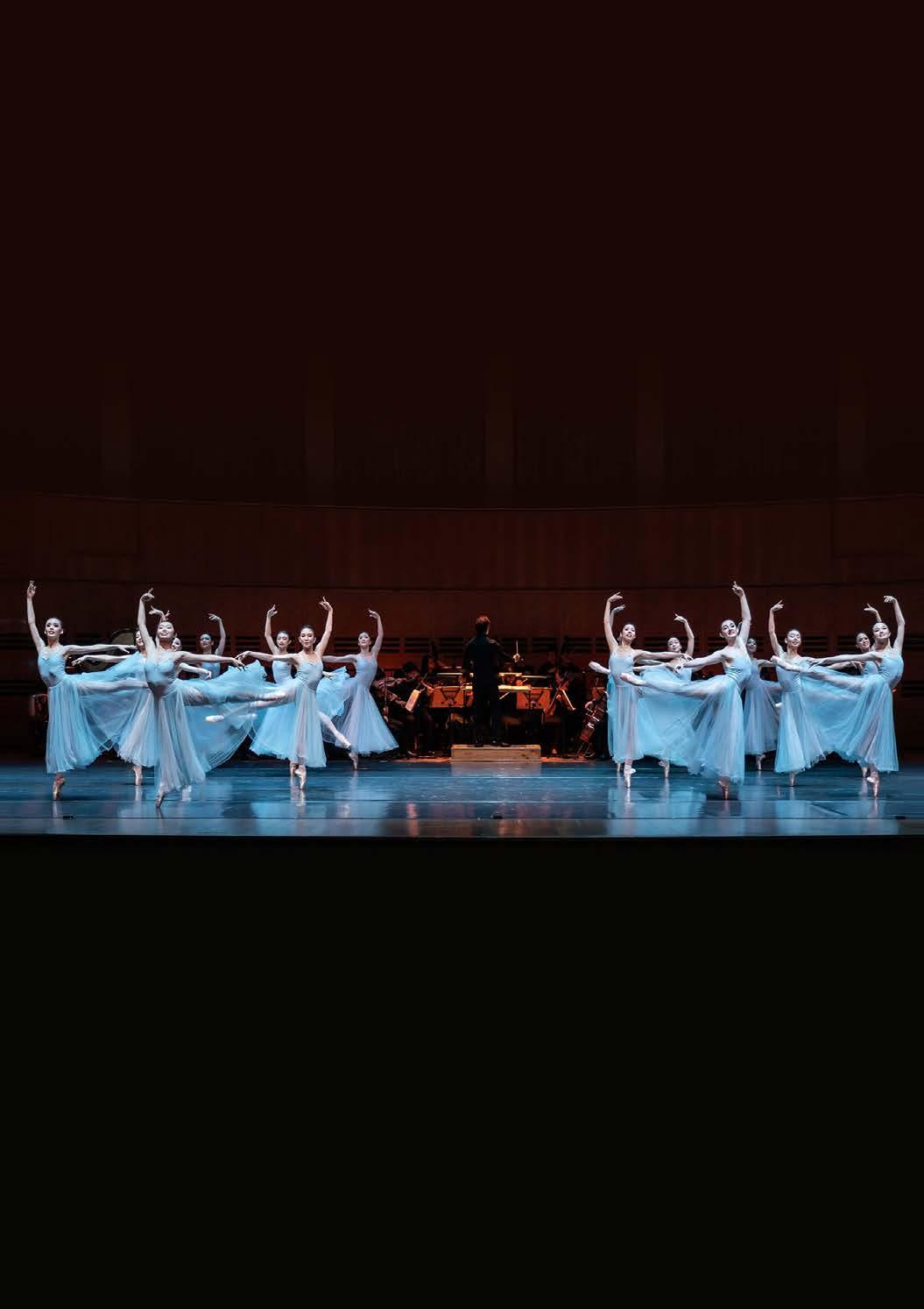
12 & 13 Jun 2026
Esplanade Concert Hall
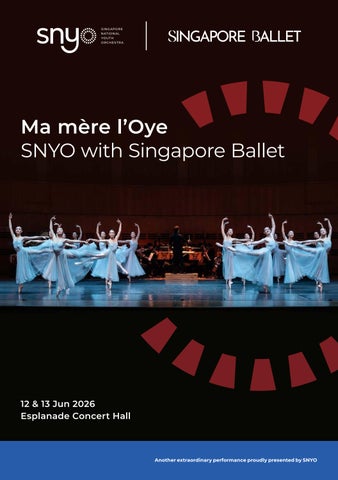
12 & 13 Jun 2026
Esplanade Concert Hall

SNYO × SSO: Jurassic Park In Concert
Fri, 28 Aug 2026
7.30pm
Esplanade Concert Hall
Featuring Singapore National Youth Orchestra
Singapore Symphony Orchestra
Joshua Tan SNYO Music Director
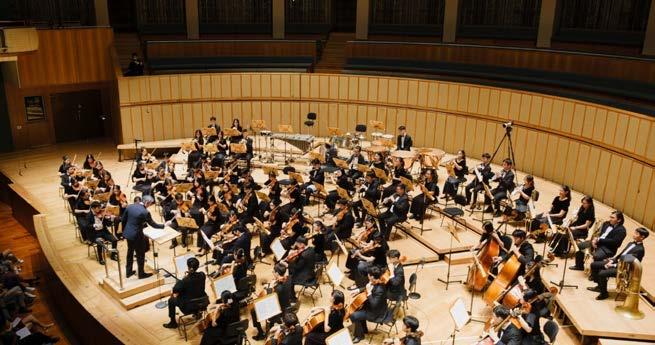
SNYO In Concert: Brahms Symphony No. 3
Wed, 2 Dec 2026
7.30pm
Esplanade Concert Hall
Tickets from SSO.ORG.SG
Featuring
Singapore National Youth Orchestra
Joshua Tan SNYO Music Director
12 & 13 Jun 2026
Esplanade Concert Hall
Singapore National Youth Orchestra
Joshua Tan SNYO Music Director
Singapore Ballet
BRAHMS Academic Festival Overture, Op. 80 10 mins
SCHUBERT Symphony No. 2 (choreographed by Choo-San Goh) 29 mins
Intermission 20 mins
RAVEL Ma mère l’Oye (Mother Goose) 29 mins
Concert duration: 2 hrs (including 20 mins intermission)
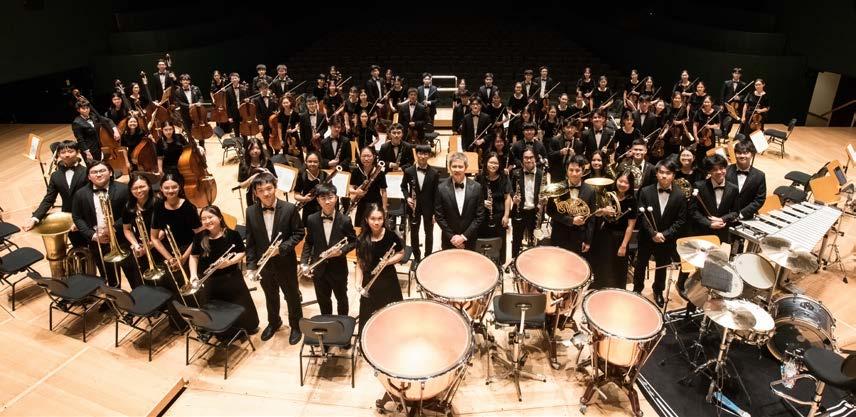
The Singapore National Youth Orchestra showcases the extraordinary capability of our youth. It inspires them towards artistic excellence, nurtures them to reach beyond their potential and develops them through rigorous training within a vibrant, supportive, and diverse environment. Established formally in 1980, the Singapore National Youth Orchestra (SNYO) has welcomed generations of youths into the transformative world of orchestral music, performing locally and representing Singapore on prestigious international stages.
The SNYO family comprises two orchestras: the Singapore National Youth Orchestra and Singapore National Youth Sinfonia, with over 180 members aged 10 to 24 from more than 70 schools across Singapore, guided by professional musicians in rehearsals, sectionals, and masterclasses. Recognised by the Ministry of Education as a National Project of Excellence, members of the SNYO have their participation in the orchestra recognised as a Co-Curricular Activity.
Music Director Joshua Tan has been leading the SNYO since 2018 while Associate Conductor Seow Yibin has been in position since 2022.
Over the years, the SNYO has performed in concert venues and music festivals across Australia, Austria, China, Germany, Italy, Japan, Malaysia, and the United Kingdom. Other musical endeavours include collaborations with the Singapore Ballet, TwoSet Violin and side-by-side concerts with the Singapore Symphony Orchestra.
The SNYO is part of the Singapore Symphony Group, which also manages the Singapore Symphony Orchestra and Singapore Symphony Choruses, as well as the Singapore International Piano Festival and the biennial National Piano & Violin Competition.
Joshua Tan Music Director
Seow Yibin Associate Conductor
Christian Schiøler Percussion Tutor
FIRST VIOLIN
Sophia Fang Concertmaster
Aidan Kwek Concertmaster
Isabel Heng
Kaden Khew
Lim Jing Rui
Annie Liu
Lum Kai Ying
Ng Zu Ni
Amelia Phuah
Aubrey Tan
Xia Ruoting
SECOND VIOLIN
Sophia Fang Principal
Aidan Kwek Principal
Matthew Chiu
Allison Chng
Ethan Gu
Isabel Heng
Kaden Khew
Zoe Lam
Asher Ng
Shannon Ong
Jesper Tai
VIOLA
Chang Zi Yi Principal
Jayden Kwan Principal
Skyler Goh
Kuah Ying Ching
Chloe Lee
Calista Tan
Wang Qianhui
Xu Hongmao
Kaitlyn Yoon
CELLO
Shavaun Toh Principal
Koh Liong Tiek
Li Peilin
Lloyd Loh
Christoph Yang
Natalie Yong
Yu Yikang
DOUBLE BASS
Gideon Yen Principal
Samantha Ang
Cao Junwei
Lee Yan Yu
Ma Ruilin
Tay Si En
Joleigh Tjhin
Zhang Xin
FLUTE
Chloe Tan Principal
Ian Lee
Grace Zhang
PICCOLO
Grace Zhang
OBOE
Linus Ng Principal
Lucas Chan
Matthew Chen
ENGLISH HORN
Lucas Chan Principal
CLARINET
Carson Rafiuly Principal
Tim Hiang
BASSOON
William Jiang Principal
Wang Xintong
CONTRABASSOON
Dana Cervantes Principal
HORN
Marcus Robins Principal
Keak Jing Yi
Kwon Leon
Gabriel Miguel
* Guest musician
TRUMPET
Lau Wen Rong*
Nur Imaan Binte Zulkiffli*
Joshua Woodhead
TROMBONE
Avidan Koh Principal
Noah Tan
BASS TROMBONE
Lucas Kwai*
TUBA
Warren Chang Principal
TIMPANI
Isaac Ng
Christian Tan
Yuan Bo Xu
PERCUSSION
Kanushi Ghuwalewala
Sean Ling
Isaac Ng
Phornpiriya Piriyaporn
Alon Simons
Yuan Bo Xu
HARP
Chloe Liow Principal
CELESTA
Christian Tan
SNYO Music Director
Singaporean conductor Joshua Tan, 2nd Prize winner of the 2008 Dimitri Mitropoulos International Competition, has built an international career marked by successful debuts at Carnegie Hall, Philharmonie Berlin, Mariinsky Hall and Bunkamura.
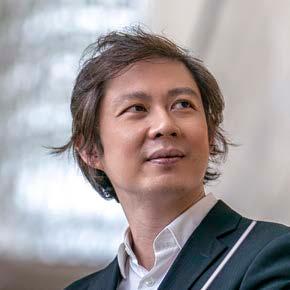
A graduate of The Juilliard School and the Eastman School of Music (High Distinction), he is the recipient of numerous awards including Singapore’s Young Artist Award, the Bruno Walter Memorial Foundation Award, the NACShell Scholarship and the SSO/MOE Scholarship.
Joshua has conducted orchestras worldwide, including the Mariinsky Theatre Orchestra, Sydney Symphony Orchestra, Melbourne Symphony Orchestra, Tokyo Philharmonic Orchestra, Hong Kong Philharmonic Orchestra, Shanghai Symphony Orchestra and China Philharmonic Orchestra. He has studied with James DePreist, Charles Dutoit, David Zinman and Kurt Masur.
Known for his versatility in symphonic, operatic and multimedia repertoire, Joshua currently serves as Music Director of the Singapore National Youth Orchestra and Asia Virtuosi, and previously held posts with the Singapore Symphony Orchestra, Guiyang Symphony Orchestra, and the National Center for the Performing Arts Orchestra in Beijing.
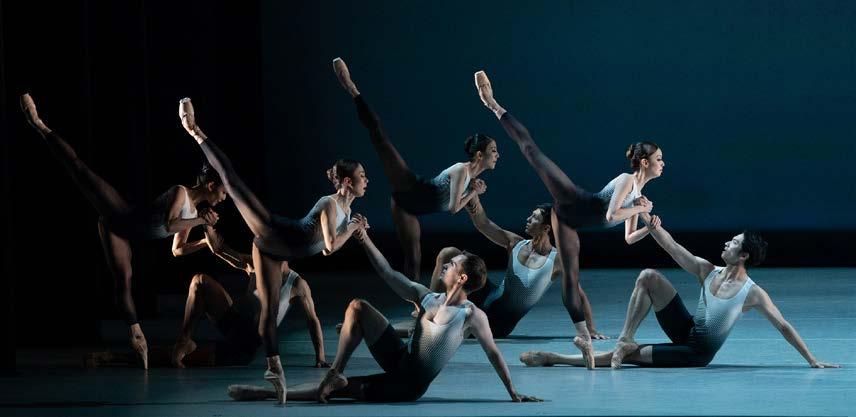
Singapore Ballet was founded as Singapore Dance Theatre in 1988 by Goh Soo Khim and Anthony Then. As Singapore’s premier ballet company, the company presents five seasons annually, including full-length productions at the Esplanade Theatre, as well as signature programmes such as Singapore Ballet Masterpieces and Passages Contemporary Season. The company also nurtures new choreographic voices through its Made in Singapore programme.
As a Major Grant recipient of the National Arts Council, Singapore Ballet remains committed to bringing the finest in dance to the public. Its ongoing education and outreach initiatives include the Dance Appreciation Series, presented with Esplanade Co., and One @ the Ballet, a monthly in-studio presentation offering audiences the opportunity to engage with and appreciate the art of dance up close, with insights into the creative process and live excerpts from performances.
Acclaimed internationally for its blend of classical technique and contemporary flair, the company continues to share the beauty, discipline, and passion of dance with audiences at home and abroad.
Choreographed by Timothy Ng, Jessica Garside & Shan Del Vecchio
Kwok Min Yi
Kana Minegishi
Satoru Agetsuma
Takeaki Miura
Kevin Zong
Leane Lim
Esen Thang
Tamana Watanabe
Gemma Gum Gee
Laura Harwood
Sakura Kawamura
Moyu Sakai
Teo Jun Ning
Sayaka Yamauchi
Akira Wolfie Bischoff
Asuku Fukamizu
Joshua Lee
Stanislas Prieto
Keith Seow
James Willis
Miguel Herrera
Choreographed by Choo-San Goh
Kwok Min Yi
Satoru Agetsuma
Kana Minegishi
Leane Lim
Tamana Watanabe
Jessica Garside
Laura Harwood
My Le
Theresa Tan
Teo Jun Ning
Sayaka Yamauchi
Ye Li-Lin
Takeaki Miura
Timothy Ng
Kevin Zong
Akira Wolfie Bischoff
Merlin Erdelen
Joshua Lee
Singapore Ballet Artistic Director
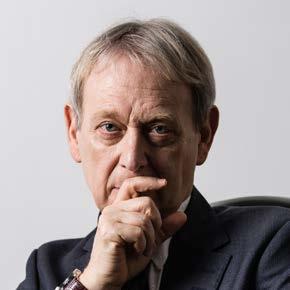
Janek Schergen is from Göteborg, Sweden, and trained with Richard Ellis, Christine Du Boulay, and Benjamin Harkarvy. He danced with the Royal Winnipeg Ballet and Pennsylvania Ballet, and began his teaching career at the School of Pennsylvania Ballet. He was subsequently invited to serve as Ballet Master at The Washington Ballet, Royal Swedish Ballet, Pittsburgh Ballet Theatre, and Norwegian National Ballet.
As Artistic Director and Board Member of the Choo-San Goh & H. Robert Magee Foundation, he has staged over 150 productions of Choo-San Goh’s works worldwide. He was appointed Artistic Director of Singapore Ballet (formerly Singapore Dance Theatre) in 2008.
Since then, Schergen has staged numerous productions for Singapore Ballet, including fan favourites like Paquita, 11 of Choo-San Goh’s works, and classical ballets such as Cinderella, Sleeping Beauty, Giselle, Swan Lake, Coppélia, and The Nutcracker. He also initiated One @ the Ballet, Ballet Associates Course, Scholars’ Programme, the Made in Singapore Choreographic Workshop, and The Artistic Development Fund.
Choreographer and Ballet Dancer
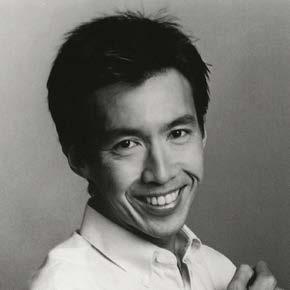
Choo-San Goh was born in Singapore. He was first introduced to dance at the age of ten at the Singapore Ballet Academy under the guidance of Goh Soo Nee. He continued his dance studies through high school and college while completing his studies for his Bachelor of Science degree in Biochemistry, awarded by the University of Singapore in 1969. He decided to pursue his career in dance and in 1970, he joined the Het National Ballet in Amsterdam, Netherlands.
As a dancer, he performed works by George Balanchine as well as Het National Ballet’s three resident choreographers Toer van Schyk, Rudi van Dantzig and Hans van Hanen. The National Ballet Workshop provided him an opportunity to create his first ballets, which were produced in 1973 and 1975. These initial efforts were so successful that he was awarded a grant from the Netherlands Ministry of Culture to further his work in choreography. In 1976, Choo-San went to the United States to join The Washington Ballet as resident choreographer. With The Washington Ballet, he created 14 original works. Many of them became his greatest choreographic pieces, such as Fives, Variations Serieuses, Double Contrasts, In the Glow of The Night, Schubert Symphony and Unknown Territory.
In 1983, he received the choreographic award in the International Ballet competition in Varna, Bulgaria for his pas de deux Momentum. He also received a choreography fellowship from the National Endowment for the Arts in 1978. Other honors included the Mayor’s Award For Excellence In Artistic Discipline in Washington, D.C. in 1986. In 1987, the Cultural Medallion of Singapore, the most prestigious award given by the government of Singapore to a citizen, was presented to Choo-San Goh in recognition of his contribution to the dance world. Today, Choo-San’s ballets are in the repertoire of many companies, including the American Ballet Theatre, Boston Ballet, JoRrey Ballet, Dance Theatre of Harlem, Royal Swedish Ballet, Alvin Ailey Dance Theatre, Hong Kong Ballet, Singapore Ballet, and others. Choo-San established the Choo-San Goh H. Robert Magee Foundation to award grants to dance companies to produce works by young, emerging choreographers.
It is a significant project that helps encourage choreographic talents. His ballets continue to be performed all over the world, and the production of his works is supervised by his long-time ballet master and artistic director of the Choo-San Goh and H. Robert Magee Foundation, Janek Schergen. His ballets remain a testament to his creative powers. To date, Singapore Ballet has acquired 12 of Choo San’s ballets: Beginnings, Ballade, Birds of Paradise, Double Contrasts, Fives, In The Glow Of The Night, Momentum, Schubert Symphony, Unknown Territory, Variations Serieuses, Configurations and Romeo & Juliet
Academic Festival Overture, Op. 80 (1880)
Music lovers think of Brahms as a bearded, serious grey-haired man, often forgetting that he was not always such. Examine his Academic Festival Overture, Op. 80 of 1880, and a younger, dandyish charmer emerges. If we asked this younger Brahms how life was treating him, he might well have said ‘not bad at all’: through the last decade, he had come to be recognised as a major figure in the European music scene. Cambridge had offered him an honorary Doctorate in Music, but Brahms did not like the idea of travelling to England, requesting to be granted the degree in absentia, offering his most recent symphony as a thesis, but unfortunately, this did not satisfy the university’s requirements. In line with his growing reputation as a serious composer, he had to look the part, so despite having been clean-shaven till this point, he began growing a beard and longer hair. This new look was so different that it enabled him to prank various friends and acquaintances.
After the disappointment of the Cambridge doctorate matter, Brahms was chuffed when the University of Breslau (now Wrocław in Poland) offered him a doctorate in 1879. In his usual modest style, he wrote a brief thank-you note on a postcard, but then as now, universities viewed the awarding of honorary doctorates as an exercise in public relations, and they were determined to milk the association with Brahms as much as they could. They asked him for ‘a fine symphony’, but Brahms, still in his jocular mood, gave them something quite unexpected – in his own words, ‘a very boisterous potpourri of student songs à la Suppé’ drawing on beer-hall revelry and the drinking songs of students.
The work starts off with a rather serious march, as if we were viewing centuriesold stone buildings of the university, but before long the clarinets start playing whimsical figures—we have spotted the students, young and full of humour! One early theme is ‘Wir hatten gebauet ’, the theme song of a student organization that advocated the unification of the independent German principalities. It had been banned for decades in many places, but while the ban had been lifted in most places by 1871, it remained in effect in Vienna, leading to the eventual Viennese premiere being delayed by two weeks for fear of reaction from the authorities. Brahms had of course learned the song as a student himself in Göttingen, and he weaved three other such ditties into an unconventional but ingenious sonata-like form. The orchestra used here is the largest he ever employed, including piccolo, contrabassoon, four horns, three trumpets, three trombones with tuba, and three unpitched percussion instruments, two of which (bass drum and cymbals) are only used here. The last theme is that of ‘Gaudeamus igitur ’ (“Therefore let us rejoice”), a late-Mediaeval Latin song from the 13th century about youth and enjoying life (and drinking) that has been a favourite of students for centuries.
The ‘festive’ nature of the piece is clear, and the professors expecting a serious piece must have had quite a surprise when Brahms conducted the piece at a special 1881 convocation, including as it does some melodies more commonly heard rowdily bawled by drunken students at wee hours of the morning. Brahms here shows us that under the beard and serious face, he was still a young prankster at heart.
Instrumentation: 2 flutes, piccolo, 2 oboes, 2 clarinets, 2 bassoons, contrabassoon, 4 horns, 3 trumpets, 3 trombones, tuba, timpani, percussion (triangle, cymbals, bass drum), strings
Symphony No. 2 (1815) choreographed by Choo-San Goh
I. Largo – Allegro vivace
II. Andante
III. Menuetto: Allegro vivace – Trio
IV. Presto
In music history, we are taught that the Baroque period is followed by the Classical, which is followed by the Romantic, and so on. We can name composers who fall neatly into each periods, but in reality, few things in life are so clear cut, and as with all historical matters, the closer one examines the evidence, the murkier things become. The Classical period was roughly 1730–1820, but the Romantic period is thought of as roughly 1780–1910, making for some 40 years of overlap. Composers did not wake up one day thinking, “the Classical period is over, we are now in the Romantic period and will compose in a different style”. Musical styles changed gradually, and like historical periods, defy categorization into neat discrete boxes. While they present objects of terror for music students writing essays, often it is the transitional composers straddling styles that provide the greatest interest, showing how a period dovetails neatly and seamlessly into the next.
One such composer is the Austrian Franz Peter Schubert. His prolific œuvre was admired posthumously by Brahms, Mendelssohn, Schumann, and Liszt. When he composed the Symphony No. 2 in B-flat major, D 125, in an astonishing three months between 1814 and 1815, he was just 18, working full-time as a teaching assistant, taking compositions lessons twice a week with Antonio Salieri (yes, that one!), and playing viola in a student orchestra, surrounded by the music of Haydn, Mozart, and Beethoven. The influences of all these composers is audible in the music of this cheerful early symphony, which nevertheless bears all the marks of a composer who had found his own voice.
The instrumentation of the whole work and largo introduction to the first movement are classic Haydnesque elements, as is when the main theme enters pianissimo on the strings before the full orchestra repeats it fortissimo. Developing in sonata form through various minor keys, the increasing complexity gives way to simplification before the recapitulation, and the vigorous closing coda is underlined by energetic brass. In the ballet, the ladies dance the first and second movements together without a break, requiring considerable stamina.
The Andante is in the form of theme and five variations, full of Schubert’s signature gemütlichkeit (warmth and cosiness). Pastoral and elegant, the movement makes extensive use of the woodwind forces available. Instead of a scherzo, Schubert does the Haydn trick of a menuetto with a trio. The menuetto has moments reminiscent of the Ländler, that Austrian folk dance which was later to develop into the iconic Viennese waltz.
By combining rondo and sonata forms, the final Presto allows repeated returns to the main material, interspersed with contrasting episodes, giving forward momentum while ensuring sufficient developmental interest.
Schubert composed this when he was only 18. Not a note of his music had reached the public yet, and during his entire short life he never managed to secure a single performance of any symphony. He died in 1828, aged just 31. Tragically, Goh Choo San passed away at age 39 in 1987, the same year he received the Cultural Medallion, Singapore’s highest accolade for the arts. Sobering thoughts for us now but heartened by the fact that the symphony lives on as a famous ballet.
Instrumentation: 2 flutes, 2 oboes, 2 clarinets, 2 bassoons, 2 horns, 2 trumpets, timpani, strings
Schubert Symphony was first performed by Singapore Dance Theatre (former name of Singapore Ballet) in 1998. It was for The Washington Ballet that Choo-San Goh choreographed his Schubert Symphony in 1985, based on the composer’s Symphony No. 2. It is a prime example of Choo-San’s hallmarks: “an inimitable sense of propulsion and timing, keen eye for line, extraordinary sensitivity to the music and the intelligent sculpting of dance gestures from Asian and Western classical traditions within a modern sensibility and language.” (Singapore Ballet)
Choreography: Choo-San Goh
Staging: Janek Schergen
Costume Design: Carole Vollet Kingston
Lighting Designer: Adrian Tan
Presented by arrangements with the Choo-San Goh & H Robert Magee Foundation.
Ma Mère l’Oye (Ballet version, 1912)
I. Prélude
II. Danse du Rouet et Scene
III. Pavane de la belle au bois dormant
IV. Les entretriens de la belle et de la bête
V. Petit poucet
VI. Laideronnette, impératrice des pagodes
VII. Le jardin féerique
Originally written by French composer Joseph Maurice Ravel in 1910 as a piano duet for Mimie (aged 6) and Jean (aged 7), the children of his friends Ida and Cipa Godebski, Ma Mère l’Oye (“Mother Goose”) depicts five children’s tales in music. While some composers may have preferred more ‘serious’ and ‘grown-up’ themes of love, heroism, and battles, Ravel, who remained a childless lifetime bachelor, seems to have enjoyed the childlike and whimsical side of life. The Godebski siblings appear to have succumbed to stage fright, so the work was debuted in Apil 1910 by Jeanne Leleu (aged 6) and Geneviève Durony (aged 10), and this went so well that the suite was later arranged by Ravel in 1911 for a reduced symphonic orchestra, with doubled horn and woodwinds, but no trumpets, trombones, or tubas.
While Anglophone readers will know of Mother Goose, relatively few know that these tales have their origin in a French collection of fairy tales, compiled by Charles Perrault in 1695, titled Histories ou contes du temps passé (“Stories” or “Tales from Times Past”), with the subtitle ‘Tales of Mother Goose’. Taking this as his source material, Ravel wrote ‘The idea of conjuring up the poetry of childhood in these pieces has naturally led me to simplify my style and clarify my writing.’. Along with the clear titles, his score is full of brief descriptions that help us understand the music.
The opening Prelude sets a magical scene, with muted brass (‘the horns of Elfland’) and tremolo strings taking us to a world of fairy tales. Danse du Rouet et Scene (“Dance of the Spinning Wheel”) is about the story of Princess Florine who falls asleep after pricking her finger on the spinning wheel. Anglophone readers will know this story as Sleeping Beauty. The Good Fairy comes in a brief Pavane to look over Florine, leaving her in the care of two servants. Les entretriens de la belle et de la bête (“Conversations between Beauty and the Beast”) is, as the title implies, a conversation, with the Beauty represented by the higher woodwinds and the Beast by the contrabassoon, and while Beauty initially rejects him for his ugliness, she begins to see past his appearance, and when she falls in love with him, a spell is broken and his true self appears—a handsome prince, to the sound of harp glissando and harmonics on solo violin. Of course, they then live happily ever after.
Petit poucet (“Hop o’My Thumb”) is better known in English as Tom Thumb, the tiny lad whose trail of breadcrumbs is consumed by birds. His adventures include being swallowed by a cow, swallowed by a fish, and eventually becoming King Arthur’s dwarf, a favourite at the royal court. Ravel’s music vividly depicts the birds twittering and mocking the boy as they gulp down the trail that was meant to lead him home. Laideronnette, impératrice des pagodes (“Little Ugly One, Empress of the Pagodas”) is the tale of a Chinese princess cursed to ugliness by a jealous fairy and forced to live in a distant land on account of her appearance. There, a Green Serpent falls in love with her and makes her Empress of the Pagodas (Chinese Nodding-Dolls). As she bathes, the Pagodas and Pagodinas sing and play on musical instruments as her beauty is restored. Ravel here shows the influence of Chinese music, using shimmering pentatonic scales, exotic instrumentation, and chords built on fourths. The final movement Le jardin féerique (“The Fairy Garden”) rounds off the walk through fairyland, giving us a comforting ‘happily ever after’ glow.
Notes by Edward C. Yong
Instrumentation: 2 flutes (1 doubling on piccolo), 2 oboes (1 doubling on cor anglais), 2 clarinets, 2 bassoons (1 doubling on contrabassoon), 2 horns, timpani, percussion (triangle, cymbals, suspended cymbal, tam-tam, snare drum, bass drum, keyboard glockenspiel, xylophone), harp, celesta, strings
Ravel Vignettes is the title of the choreography set to Ravel’s Ma Mère l'Oye. This choreography has three parts, and offers impressions of familiar fairytales rather than literal retellings. Each scene captures a single moment before turning the page, transporting the audience from one story’s landscape to the next.
Part I – choreographed by Timothy Ng, Soloist at Singapore Ballet
A girl reading a book of fairytales watches the pages come to life around her. As the line between reality and story blurs, the Dance of the Spinning Wheel whirls her from page to page, deeper into the tale.
Part II – choreographed by Jessica Garside, Demi-Soloist at Singapore Ballet
In Sleeping Beauty, the princess is peacefully dreaming through her 100-year sleep. In Beauty and the Beast, we follow Belle from her arrival at the enchanted castle to her gradual realisation that appearances can be deceiving. Tom Thumb leaves a trail of breadcrumbs to guide his way home but finds himself lost in the forest with his brothers and sisters when he discovers that the birds have eaten the breadcrumbs.
Part III – choreographed by Shan Del Vecchio, Soloist at Singapore Ballet
Laidronnette is cast out of her kingdom and welcomed into the land of the Pagodas, where she becomes their Empress. In the Enchanted Garden, fairies dance through swaying trees, before the girl from the prologue reaches the end of the fairytales.
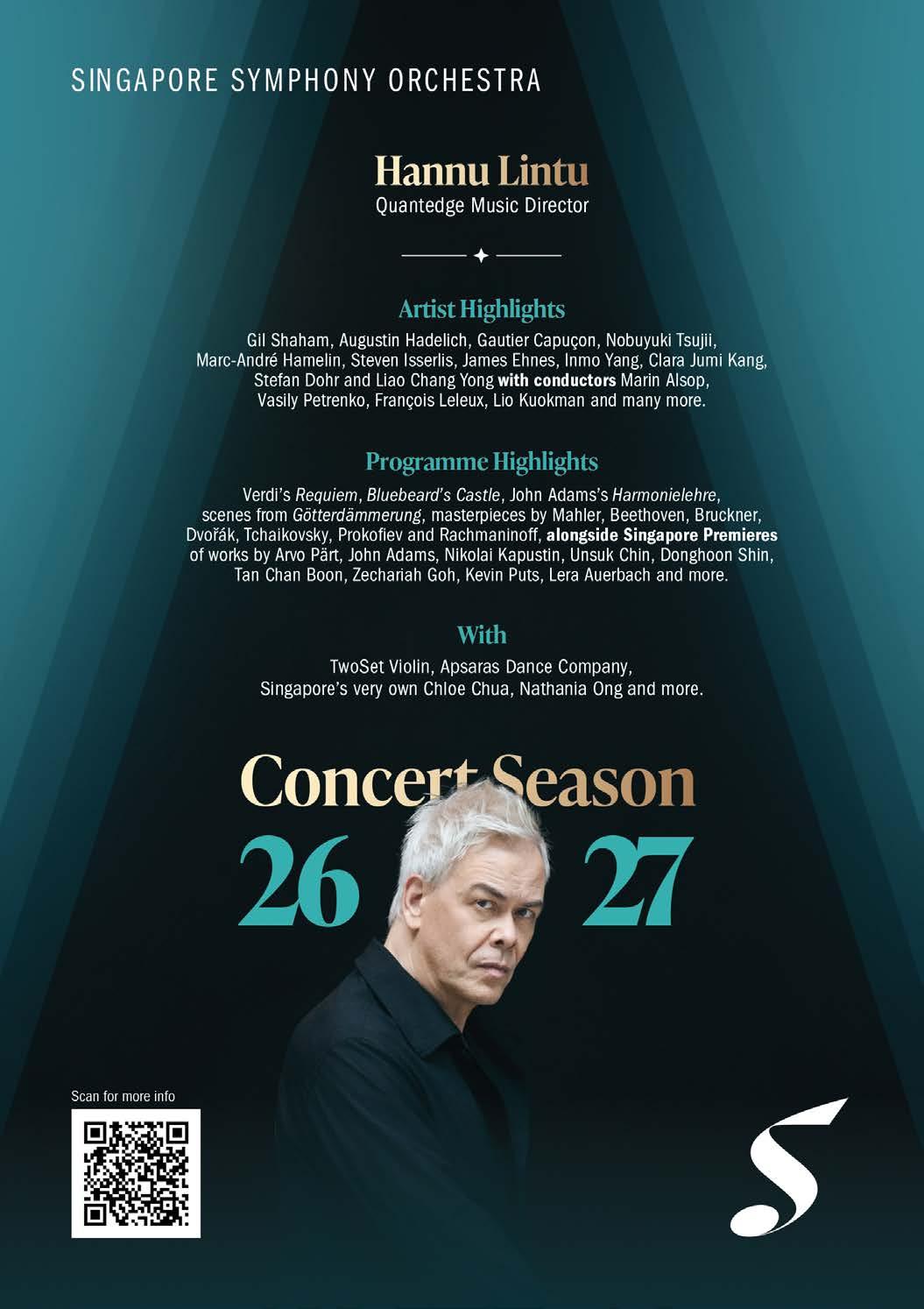
Artistic Director
Janek Schergen
Ballet Master
Mohamed Noor Sarman
Ballet Mistress
Rosa Park
Principals
Kwok Min Yi
Kana Minegishi
Satoru Agetsuma
Soloists
Leane Lim
Esen Thang
Tamana Watanabe
Takeaki Miura
Timothy Ng
Shan Del Vecchio
Kevin Zong
Demi-Soloist
Jessica Garside
Artists
Gemma Gum Gee
Han Xin Yi
Laura Harwood
Sakura Kawamura
Audrey King
Emily Koe
My Le
Lee Yoojin
Joey Lum
Ma Xiaoyu
Moyu Sakai
Theresa Tan
Teo Jun Ning
Sayaka Yamauchi
Ye Li- Lin
Akira Wolfie Bischoff
Merlin Erdelen
EXECUTIVE AND ADMINISTRATIVE TEAM
Senior Finance Manager
Paul Ang
Company Manager
Gan Hui Cheng
Marketing Manager
Callie Chong
Marketing & PR Executive
Zailynn Zaidi
Marketing & Education Executive
Agatha Annabella
Production Manager
Liew Yee Ping
Lighting Designer
Adrian Tan
Asuku Fukamizu
Owen Horsford
Shu Igarashi
Joshua Lee
Stanislas Prieto
Keith Seow
James Willis
Apprentices
Stella Jung
Ashley Kook
Miguel Herrera
Mike Hui
Patrick Nawalowalo McCrory
Noah Sharpe
Company Pianist
Jerryl Lim
Marketing & Design Executive
Natalin Pwee
Marketing & Ticketing Executive
Asnita Amran
Finance Manager
Joanne Koh
Senior HR & Admin Executive
Sherlene Lim
Accounts & Admin Executive
Syuen Loo
Customer Service Officer
Helen Tan
Stage Manager
Fae Tan
Wardrobe Executive
Ng Yi Min
Sound Operator/
Production Coordinator
Lee Zhen Kai
Assistant Stage Manager
Sharlene Lim
Ai Tong School
Anderson Serangoon Junior College
Ang Mo Kio Secondary School
Anglo-Chinese School (Independent) (Junior College)
Anglo-Chinese School (Independent) (Secondary)
Anglo-Chinese School (Primary)
Broadrick Secondary School
Bukit Panjang Government High School
Bukit Timah Primary School
Canadian International School
Catholic High School (Secondary)
CHIJ Secondary (Toa Payoh)
CHIJ St. Nicholas Girls’ School (Primary)
Chung Cheng High School (Main)
Chung Cheng High School (Yishun)
Clementi Town Secondary School
Dover Court International School
Dulwich College (Singapore)
Dunearn Secondary School
Dunman High School (Junior College)
Dunman High School (Secondary)
Dunman Secondary School
Edgefield Secondary School
Eunoia Junior College
Fairfield Methodist School (Primary)
Fairfield Methodist School (Secondary)
Gan Eng Seng Primary School
Hai Sing Catholic School
Hong Wen School
Hwa Chong Institution (Secondary)
Maha Bodhi School
Mayflower Secondary School
Meridian Primary School
Methodist Girls’ School (Primary)
Methodist Girls’ School (Secondary)
Millenia Institute
Nanyang Academy of Fine Arts
Nanyang Girls’ High School
Nanyang Junior College
Nanyang Polytechnic
Nanyang Technological University
National Junior College
National Junior College (Secondary)
National University of Singapore
NUS High School of Mathematics and Science
Pei Chun Public School
Raffles Girls’ Primary School
Raffles Girls’ School (Secondary)
Raffles Institution (Junior College)
Raffles Institution (Secondary)
Raffles Junior College
River Valley High School (Secondary)
River Valley Primary School
School of the Arts, Singapore
Singapore American School
Singapore Chinese Girls’ School
Singapore Management University
Singapore Polytechnic
St Andrew’s School (Secondary)
St. Gabriel’s Secondary School
St. Joseph’s Institution (Secondary)
St. Margaret’s School (Secondary)
Tanglin Trust School
Tanjong Katong Girls’ School
Tao Nan School
Temasek Junior College (Secondary)
Temasek Polytechnic
United World College of South East Asia
Victoria Junior College
Victoria School
Yishun Innova Junior College
Zhonghua Secondary School
CHIEF EXECUTIVE OFFICER
Kenneth Kwok
DEPUTY CEO, PROGRAMMES & PRODUCTION
Kok Tse Wei
DEPUTY CEO, PATRONS & CORPORATE SERVICES
Jenny Ang
CEO Office
Shirin Foo
Musriah Bte Md Salleh
Organisation Development
Lillian Yin
ARTISTIC PLANNING
Christopher Cheong (Head)
Artistic Administration
Jodie Chiang
Terrence Wong
Jocelyn Cheng
Michelle Yeo
OPERATIONS
Ernest Khoo (Head)
Library
Wong Yi Wen
Cheng Yee Ki
Ng Yi Xiu
Orchestra Management
Chia Jit Min (Head)
Kelvin Chua
Production Management
Noraihan Bte Nordin
Nazem Redzuan
Leong Shan Yi
Asyiq Iqmal
Khairi Edzhairee
Benjamin Chiau
Syed Muhammad Idris
Bin Ramli
COMMUNITY IMPACT
Community Engagement
Kua Li Leng (Head)
Whitney Tan
Lynnette Chng
Chua Xu Yang
Darren Siah
Choral Programmes
Kua Li Leng (Head)
Lu Heng
Chang Hai Wen
Mimi Syaahira
Singapore National Youth Orchestra
Ramu Thiruyanam (Head)
Tang Ya Yun
Tan Sing Yee
Ridha Ridza
Lynette Yeo
ABRSM
Patricia Yee
Lai Li-Yng
Joong Siow Chong
Freddie Loh
CORPORATE SERVICES
Finance, IT & Facilities
Rick Ong (Head)
Alan Ong
Goh Hoey Fen
Loh Chin Huat
Md Zailani Bin Md Said
Human Resources & Administration
Valeria Tan (Head)
Janice Yeo
Fionn Tan
Netty Diyanah Bte Osman
PATRONS
Development
Chelsea Zhao (Head)
Nikki Chuang
Sarah Wee
Samantha Lim
Eunice Salanga
Kevin Yeoh
Communications, Digital & Marketing
Cindy Lim (Head)
Communications
Ong Shu Chen
Nikki Loke
Elizabeth Low
Tan Li Ying
Data & Digital Projects
Calista Lee
Lim Wen Jie
Marketing & Content
Chia Han-Leon
Hong Shu Hui
Myrtle Lee
Jana Loh
Kashmira Kasmuri
Carrie Woo
Customer Experience
Randy Teo
Dacia Cheang
Joy Tagore
WITH SUPPORT FROM MINISTRY OF EDUCATION, ARTS EDUCATION BRANCH
Mrs Clara Lim-Tan Director, Arts Education
Ms Lynne Huang Deputy Director (Music & Dance)
Ms Chek Yui Hong Assistant Director, Visual and Performing Arts CCA & Singapore Youth Festival
Mr Lee Ji Heng Arts Education Officer (Music)
THE SINGAPORE NATIONAL YOUTH ORCHESTRA WISHES TO THANK
National Arts Council
Tutors of the Singapore National Youth Orchestra
Parents of the Singapore National Youth Orchestra members
Principals of the participating schools
THE SINGAPORE BALLET WISHES TO THANK Mavis Lim for her generous support.