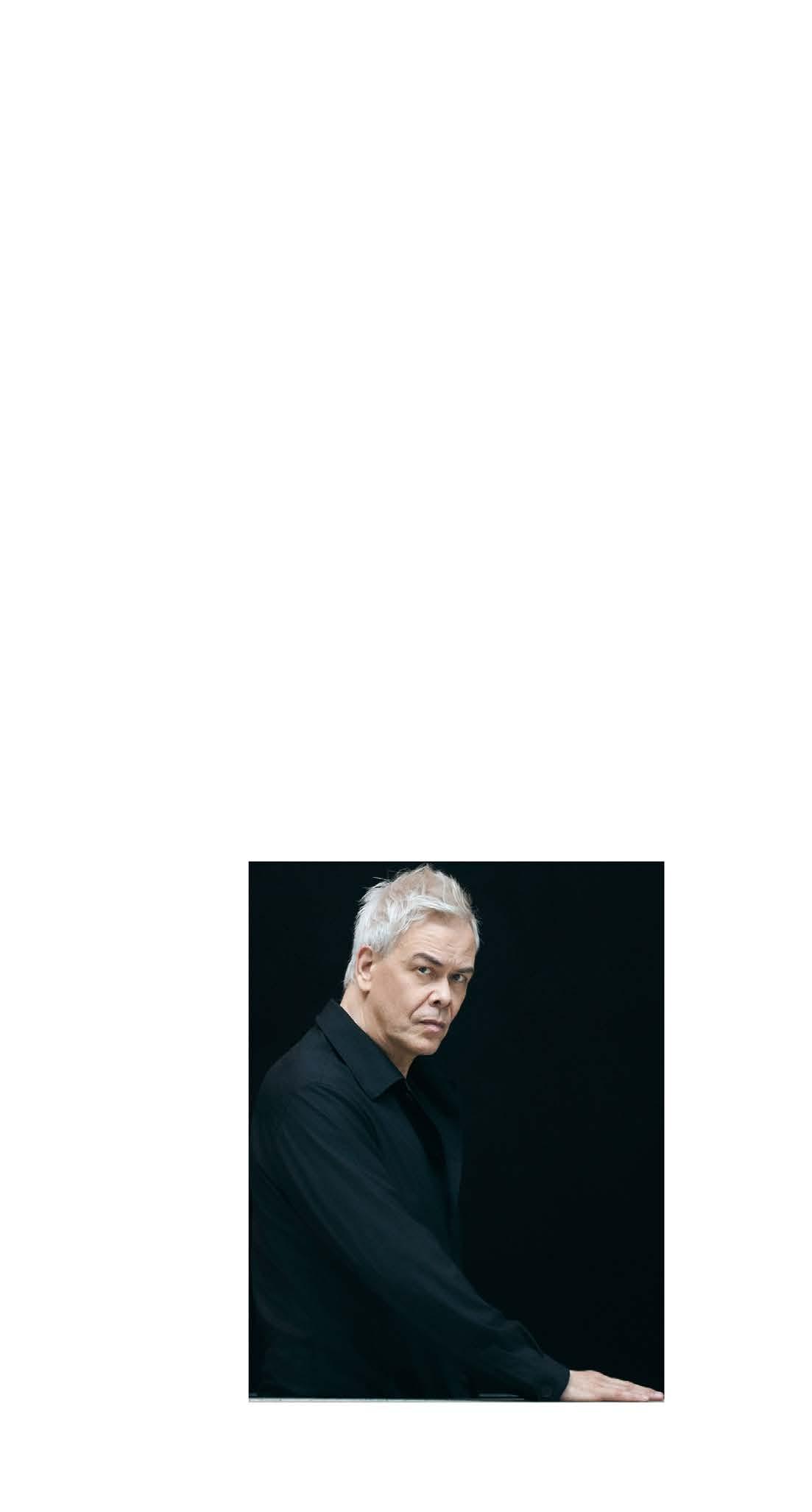
Hannu Lintu
Quantedge Music Director
Artist Highlights
Gil Shaham, Augustin Hadelich, Gautier Capuçon, Nobuyuki Tsujii, Marc-André Hamelin, Steven Isserlis, James Ehnes, Inmo Yang, Clara Jumi Kang, Stefan Dohr and Liao Chang Yong with conductors Marin Alsop, Vasily Petrenko, François Leleux, Lio Kuokman and many more.
Programme Highlights
Verdi’s Requiem, Bluebeard’s Castle, John Adams’s Harmonielehre, scenes from Götterdämmerung, masterpieces by Mahler, Beethoven, Bruckner, Dvořák, Tchaikovsky, Prokofiev and Rachmaninoff, alongside Singapore Premieres of works by Arvo Pärt, John Adams, Nikolai Kapustin, Unsuk Chin, Donghoon Shin, Tan Chan Boon, Zechariah Goh, Kevin Puts, Lera Auerbach and more. scenes from Götterdämmerung
With
TwoSet Violin, Apsaras Dance Company, Singapore’s very own Chloe Chua, Nathania Ong and more.
Scan

MESSAGE FROM THE ARTISTIC DIRECTOR
Albert Tiu
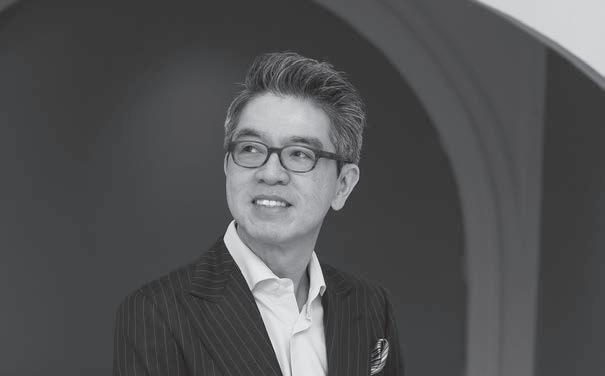
Greetings! It is a tremendous honour to be the new Artistic Director of the Singapore International Piano Festival, which is now in its 32nd edition. It is an exciting prospect as we explore ways to keep this tradition relevant with the times, especially in the post-Covid era.
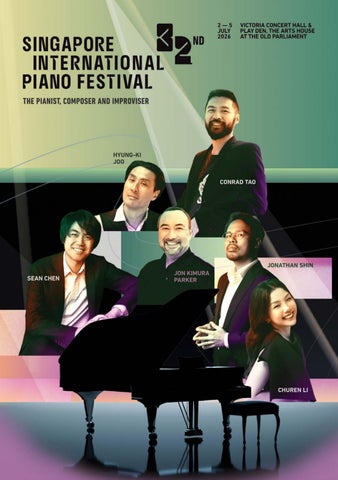
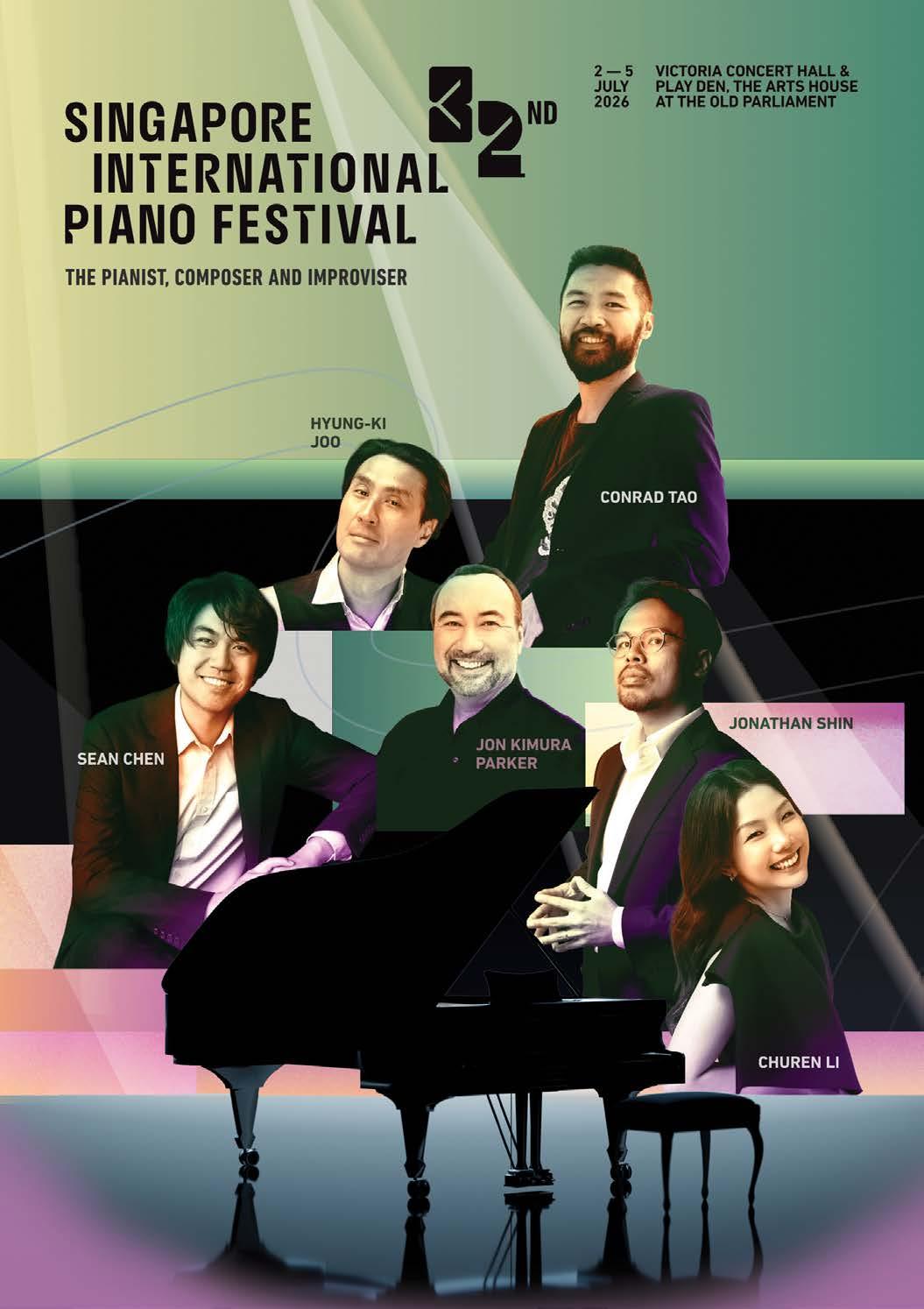
People who are familiar with my work know how fascinated I am with thematic programming. This year, we are showcasing the various facets of a portfolio musician from earlier times, when a pianist also composed and improvised. The six pianists we have assembled are versatile and accomplished performers.
Each programme is eclectic, mixing the mainstream with the unusual and more personal. Conrad Tao’s recital, “Emigrés and Friends”, looks like a buffet of several pieces, but a closer inspection reveals a clever concept of programme-building. Connections abound, as Gershwin and Schoenberg were neighbours and friends, Rachmaninoff was mesmerised by Art Tatum’s virtuosity, and Billy Strayhorn was influenced by Tatum, Debussy and Ravel.
Half of the successful comedic duo, Igudesman & Joo, Hyung-Ki Joo dreams up a programme which contrasts childhood innocence against phantasmagoric imagery, titled “Dreams & Nightmares”. 2013 Cliburn Competition Bronze Medallist Sean Chen promises to be a musical sorcerer through his alchemical fusion of improvisation with the classical canon, in “Music & Magic”. Winner of the 1984 Leeds Competition, Jon Kimura Parker explores two different halves in a recital of “Structure & Spontaneity”.
Rounding off this festival’s lineup are two late night recitals at the Play Den in the Arts House, by Yong Siew Toh Conservatory of Music alumni. Li Churen and Jonathan Shin are dynamic performers who are equally adept as pianists, composers, and improvisers.
In addition to these six recitals, Saturday 4th July is filled with various educational activities. Sean Chen is leading an improvisation workshop, Jon Kimura Parker will be giving a masterclass, and Hyung-ki Joo conducts a session on creative pianism.
Enjoy the festival!

Singapore International Piano Festival Artistic Director
At A Glance
Albert Tiu Artistic Director
Peter Salisbury piano technician
THU, 2 JUL 2026
Conrad Tao in Recital - Emigrés and Friends
7.30pm, Victoria Concert Hall
Works by Irving Berlin, Debussy, Gershwin, Scott Joplin, Korngold, Schoenberg, Billy Strayhorn, Conrad Tao, Rachmaninoff and Harold Arlen/Art Tatum
Churen Li in Recital - Echoes and Refractions
10pm, Play Den, The Arts House at the Old Parliament
Works by Churen Li, Saint-Saëns, Ravel. With additional works inspired by the likes of J.S. Bach, Mozart, Janácˇek, Beethoven, Debussy, Schumann, Liszt, and Mendelssohn
FRI, 3 JUL 2026
Hyung-ki Joo in Recital - Dreams and Nightmares
7.30pm, Victoria Concert Hall
Works by J.S. Bach, Debussy, Hyung-ki Joo, Leszek Moz.dz.er and Ravel
Jonathan Shin in Recital - Restless Natures
10pm, Play Den, The Arts House at the Old Parliament
Works by Timo Andres, Lili Boulanger, Bobby Ge, Mozart, Nico Muhly, Nathaniel Parks, Jonathan Shin and Takashi Yoshimatsu
SAT, 4 JUL 2026
Improvisation Workshop with Sean Chen
12.30pm, Victoria Concert Hall Dance Studio
Masterclass with Jon Kimura Parker
3pm, Victoria Concert Hall Dance Studio
“Creative Pianism” - Talk by Hyung-ki Joo
6.30pm, Victoria Concert Hall Dance Studio
SUN, 5 JUL 2026
Sean Chen in Recital - Music and Magic
3pm, Victoria Concert Hall
Works by Sean Chen, Dukas, Godowsky, Ligeti, Liszt and Rameau
Jon Kimura Parker in Recital - Structure and Spontaneity
7.30pm, Victoria Concert Hall
Works by John Adams, Beethoven, Chick Corea, Alexina Louie, Mozart, Jon Kimura Parker, Oscar Peterson and Ravel
DIGITAL RELEASES
Paul Lewis in Recital
Singapore Symphony YouTube channel (select pieces for members only)
Works by Beethoven, Brahms and Larcher. Recorded live at the Victoria Concert Hall in June 2025, during the 31st Singapore International Piano Festival
Conrad Tao in RecitalEmigrés and Friends
GERSHWIN The Man I Love* (1924) 3 mins
SCHOENBERG Zwei Klavierstücke, Op. 33a (1929) 4 mins
GERSHWIN Clap Yo’ Hands* (1926) 1 min
IRVING BERLIN All By Myself^ (1921) 2 mins
RACHMANINOFF/ Improvisation on Var. 15 of Rachmaninoff’s CONRAD TAO Rhapsody on a Theme of Paganini, Op. 43 (1934) 3 mins
HAROLD ARLEN/ Over The Rainbow (1939/1953) 4 mins
ART TATUM
RACHMANINOFF Rhapsody on a Theme of Paganini, Op. 43, Var. 18 (1934) 3 mins
BILLY STRAYHORN Lush Life^ (1933-1936) 4 mins
SCOTT JOPLIN Maple Leaf Rag (1899) 3 mins
SCHOENBERG Zwei Klavierstücke, Op. 33b (1931) 4 mins
KORNGOLD Randy and Drake from Kings Row (1942) 3 mins
GERSHWIN I Loves You, Porgy ^ (1935) 4 mins
GERSHWIN I Got Rhythm* (1930) 4 mins
Intermission 20 mins
DEBUSSY Étude XI (Pour les arpèges composés) (1915) 5 mins
RAVEL I. Modéré from Sonatine (1903-1905) 4 mins
STRAYHORN Chelsea Bridge^ (1941) 3 mins
RAVEL II. Mouvement de menuet and Animé from Sonatine (1903-1905) 7 mins III. Animé from Sonatine (1903-1905)
GERSHWIN Rhapsody in Blue^ (1924) 17 mins
* Selections from Gershwin’s Songbook , first published in 1932
^ Interpreted by Conrad Tao
Concert Duration: approximately 2 hrs (including 20 mins intermission)
Post-concert autograph session with Conrad Tao at Door 3, Level 2
Conrad Tao
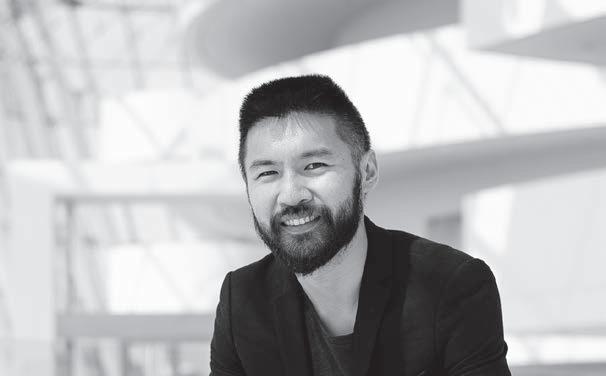
Conrad Tao is a pianist and composer celebrated for his boundary-defying artistry as well as his powerful performances of traditional repertoire. He has been described by New York Magazine as “the kind of musician who is shaping the future of classical music,” and praised by The New York Times for his “probing intellect and open-hearted vision”.
In the 2025–26 season, Tao returns to the Chicago Symphony Orchestra as both soloist and recitalist, and to the Los Angeles Philharmonic at Disney Hall and the Hollywood Bowl. He also reunites with the New York Philharmonic at the Bravo! Vail Festival, and with the Konzerthausorchester Berlin, and makes his debut with the NHK Symphony Tokyo, and on harpsichord in Patricia Kopatchinskaja’s Dies Irae
Recent highlights include his return to Carnegie Hall with Debussy’s 12 Études and his original composition Keyed In, as well as appearances with the San Francisco Symphony, Philadelphia Orchestra, Boston Symphony, New York Philharmonic, and Cleveland Orchestra.
Tao continues performing his own works, including Flung Out, an homage to Gershwin, and The Hand, a companion to Beethoven’s Piano Concerto No. 1. His orchestral work Everything Must Go premiered with the New York Philharmonic and later in Europe with the Antwerp Symphony.
Tao’s acclaimed recordings include Voyages, Pictures, and American Rage (all on Warner), as well as the loser by David Lang, and Bricolage with The Westerlies.
He is a recipient of the Avery Fisher Career Grant, the Gilmore Young Artist Award, and a New York Dance and Performance “Bessie” Award for his collaboration with Caleb Teicher on More Forever
conradtao.com
conradtao
Introduction
With this program, I was thinking about “American music”, how influences from European émigrés and Black traditions were instrumental to forming multiple strands of “American” sounds, from the songwriting of Tin Pan Alley to the film scores of Hollywood. I was thinking about moments of contact, physical and otherwise, real or imagined, between composers: Gershwin showing Ravel around New York and taking him to the jazz clubs of Harlem, Rachmaninoff hearing Art Tatum play in said jazz clubs, Debussy and Ravel echoing through Billy Strayhorn’s smoky harmonies, Gershwin and Schoenberg playing tennis together in Los Angeles. In this tapestry, perhaps we can hear Schoenberg’s liberation of intervals in dialogue with other rich chromatic voice-leading from the time; perhaps any fixed sense of what “American” musical identity is can be destabilized; perhaps seeming distances between different traditions and practices can get smaller.
Introduction by Conrad Tao
Churen Li in RecitalEchoes and Refractions
DEBUSSY Clair de lune 5 mins
CHUREN LI Moonrise 5 mins
THU, 2 JUL 2026
PLAY DEN, THE ARTS HOUSE AT THE OLD PARLIAMENT
We would like to thank Yamaha Music Asia for providing the Yamaha C3X that Churen Li will be performing on this evening.
Inspired by Beethoven’s Adagio sostenuto from Moonlight Sonata
RAVEL Ondine from Gaspard de la nuit 6 mins
CHUREN LI The Sun, The Moon, The Star 9 mins
CHUREN LI Prelude after Bach 2 mins
Inspired by J.S. Bach’s Prelude from Cello Suite No. 2 in D minor, BWV 1008
CHUREN LI Fantasy after Mozart 7 mins
Inspired by Mozart’s Andante from Piano Concerto No. 23 in A major, K. 488
SAMMY FAIN Alice in Wonderland 2 mins
ARR. BILL EVANS/
CHUREN LI
CHUREN LI Andante Cantabile 5 mins
Inspired by Schumann’s Andante cantabile from Piano Quartet in E-flat major, Op. 47
CHUREN LI Good Night 3 mins
Inspired by Janácˇek’s Good Night! from On an Overgrown Path
MENDELSSOHN On Wings of Song 3 mins
ARR. LISZT
CHUREN LI To Paint Visions of Paradise 5 mins
Inspired by Mendelssohn’s On Wings of Song
SAINT-SAËNS The Swan 5 mins
ARR. GODOWSKY
CHUREN LI Dream of the Panthère 6 mins
CHUREN LI Burning Moon 5 mins
Inspired by Debussy’s Clair de lune
Concert Duration: 1 hr (no intermission)
Churen Li
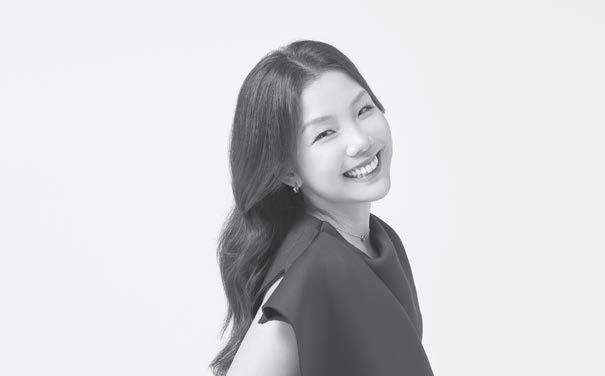
Churen Li is a highly regarded Singaporean classical pianist known for her technical prowess, expressive interpretations, and versatility across various musical genres. A graduate of the Yong Siew Toh Conservatory of Music in Singapore and the University of Cambridge, Churen has performed as a soloist with numerous orchestras around the world, including the Singapore Symphony Orchestra, and at prestigious venues such as Carnegie Hall in New York and the Victoria Concert Hall in Singapore.
Churen is celebrated not only for her command of the classical repertoire but also for her adventurous programming, often blending contemporary works with classical masterpieces. She actively collaborates with composers and artists from different disciplines, reflecting her interest in exploring new sounds and cross-genre experimentation. Known for her intellectual depth and engaging performance style, she has a reputation as one of Singapore’s leading young musicians, pushing the boundaries of classical music and bringing it to new audiences.
In addition to her concert career, Churen Li is passionate about arts education and advocacy, often participating in outreach programs and initiatives to make classical music more accessible to the public. Through her innovative approach, Churen is helping to shape the classical music landscape in Singapore and beyond, establishing herself as an influential artist with an international perspective.
churenli.com
churen.li
ChurenLi
churen
In this programme, I play my own compositions, and in some cases, paired with the classical pieces that inspired them. My compositions are usually borne out of improvisation; of noodling around at the keyboard until something clicks. This process of being able to take apart an established piece – brick by brick – and put it together, albeit in a different combination of harmonies, textures and melodies, has helped me to deepen my relationship with the classical pieces that I so revere and adore.
I have long been fascinated by the immense depth, beauty, and historical weight of this tradition — a lineage shaped over four centuries by extraordinary composers, performers, and evolving aesthetic ideals. At the same time, I often feel a creative tension between reverence for this inheritance and the equally natural impulse to question, reinterpret, and renew it. How do we honour a tradition without becoming imprisoned by it? How do we remain faithful to its depth while allowing it to speak meaningfully to the present moment?
For me, this tension is not something to be resolved, but something to be inhabited. The canon carries authority, but also invites dialogue. It asks us not only to preserve, but to participate — to bring our own sensibilities, urgencies, and contemporary realities into conversation with the past. In this way, classical music remains alive not through repetition alone, but through continual reimagining. My work as a performer has increasingly grown out of this space between inheritance and innovation: between the enduring power of the repertoire and the need to find new forms of connection, relevance, and expression in our time.
Tonight’s programme begins with Debussy’s Clair de lune and ends with my own composition inspired by it. The moon is a recurring motif throughout the programme, perhaps because I have always felt a special connection with its energy — its quiet mystery, its luminosity, and its ability to stir the inner world.
Debussy’s Clair de lune was inspired by Paul Verlaine’s poem of the same name. In one English translation, the poem evokes:
“The melancholy moonlight, sweet and lone, That makes to dream the birds upon the tree, And in their polished basins of white stone The fountains tall to sob with ecstasy.”
My composition, Moonrise, takes Beethoven’s “Moonlight Sonata” as its point of departure. Written in an ABACA form, the iconic moonlight sonata theme first gets reharmonized in the relative key of E major, before meandering off into something more fluid and luminous, including some passagework inspired by the slow movement of Ravel’s Piano Concerto. In the coda, Beethoven’s original theme returns, gathering the piece back to its source.
The Sun, The Star, The Moon, commissioned by Cartier for Trinity 100, is rooted in a single impulse: love, which for me is the deepest source of creative energy and inspiration. The sun, star, and moon are not three separate ideas, but interconnected symbols of harmony, balance, and flow — the forces that animate both life and art. The sun evokes nature, wonder, and the generative force of creation: the music begins with open fifths, which gradually expand into cascading textures suggestive of water, light, and elemental movement. The moon turns inward toward tenderness, memory, and imagination, drawing on a reharmonisation of Fauré’s Dolly Suite and embedded motifs as an ode to childhood innocence and to cherished memories of a “creative valentine.” The star points toward the inner world from which all art emerges, suggesting self-reflection as the basis for truly seeing and responding to the world, and quotes as its musical and conceptual basis, Ondine from Ravel’s Gaspard de la Nuit. Together, these celestial images form a personal cosmology — the cornerstones of what moves my soul, and the means through which love becomes sound.
The next two pieces pay the closest homage to the Western classical music tradition –I start off with my improvisation on Bach’s Cello Prelude in D minor. Historically, performers used to improvise preludes as a lead-in to the main recital, establishing a mood and tonal center that gives way to a larger expressive world. Although this is has mostly disappeared from modern concert stages, it is still something that I’m very
drawn to and sometimes do in my own concerts, which is why I wrote a prelude on Bach’s Prelude.
The next piece, Fantasy after Mozart was inspired by the slow movement from Mozart’s A Major Concerto, K. 488. This composition started out as a reharmonization exercise on the main theme, which then unfolds into new melodic and harmonic territories. It was one of my first compositions, and originally I planned to write this for fortepiano. But my reliance on pedal to create harmonic resonance took over, shaping it more firmly around the modern piano and its richer use of colour.
A brief jazz interlude – Alice in Wonderland but transcribed from Bill Evans’ iconic 1961 recording at the Village Vanguard – takes us into Andante cantabile. The initial idea came to me in 2017, when I first heard the unforgettable cello opening of the slow movement from Schumann’s Piano Quartet performed live at the Four Seasons Chamber Music Festival. I was so captivated by it that I immediately went to a piano, played it back by ear, and began reharmonising the melody with jazz chords. The final piece, however, was only completed in 2020, when I finally had the time and stillness to return to it over COVID lockdown. At its centre is another musical reference that I love dearly: Alice in Wonderland, which appears as the middle section theme. Bringing these two worlds together — Schumann’s lyricism and Sammy Fain/ Billy Evan’s jazz-inflected dreamscape — felt natural to me, as both inhabit a space of tenderness, wonder, and quiet transformation.
Good Night, after Janácˇek’s miniature of the same title from On an Overgrown Path was written with New York-based violist and producer, Rachel Lanskey. The original version for piano and electronics was created while doing a residency in France, and I think some of the open-heartedness of the music does come from the beautiful nature we were surrounded by. Debussy’s Clair de lune makes a re-appearance in its coda.
To Paint Visions of Paradise was inspired by one of my favourite German lieder, Auf Flügeln des Gesanges (“On Wings of Song”). The text is by Heinrich Heine, and Mendelssohn set to music as the second of his op. 34 set. I first play Liszt’s
transcription of Mendelssohn’s song, before following up with my reharmonised fantasy on it – a dreamy waltz with whimsical modulations and floating melodies.
Dream of the Panthère was originally written for a series of Cartier high jewellery exhibitions in China, themed Flora and Fauna. I was invited to curate piano performances accompany Cartier’s events in different cities. Although the occasion provided the initial frame for the piece, its deeper emotional impulse came from a very different source: Milan Kundera’s The Unbearable Lightness of Being, which I felt mirrored my inner state at that time. So while this piece is inspired by Cartier’s flagship Panthére, a symbol of womanly grace, strength and boldness, it is underscored by perhaps more personal sense of searching, freedom and fragility.
Burning Moon is perhaps the work in this programme that feels closest to my heart. It begins with a reharmonisation of Debussy’s Clair de lune, and gradually unfolds through echoes of Chopin’s Third Ballade, Schumann’s Fantasy, and Scriabin’s Fantasy. But the form and the melody follows the original exactly, even if it meanders into new harmonic, textural and affective territories, finally climaxing with a triumphant and grand ending.
I hope this programme offers a moonlit journey through my inner world and the musical resonances that have shaped it.
Notes by Churen Li
Hyung-ki Joo in RecitalDreams and Nightmares
HYUNG-KI JOO
Lina’s Waltz and Lullaby for Leo 3 mins
RAVEL Gaspard de la nuit 23 mins
I. Ondine
II. Le Gibet
III. Scarbo
DEBUSSY The Little Shepherd and Golliwog’s Cakewalk
ARR. GWILYM SIMCOCK from Children’s Corner 12 mins
Intermission 20 mins
J.S. BACH
FRI, 3 JUL 2026
VICTORIA CONCERT HALL
HYUNG-KI JOO
Partita No. 1 in B-flat major, BWV 825 15 mins
I. Praeludium
II. Allemande
III. Corrente
IV. Sarabande
V. Menuet I–II–I
VI. Giga
Selections from Childhood 11 mins
• The Little Prince
• Stardust
• Hiding the Tears
• Watching My Balloon Fly Away
• Childhood 1979
LESZEK MOŻDŻER Improvisation on Chopin’s Étude Op. 10, No. 6 in E-flat minor 5 mins
RAVEL La valse 12 mins
Concert Duration: approximately 2 hrs (including 20 mins intermission)
Post-concert autograph session with Hyung-ki Joo at Door 3, Level 2
Hyung-ki Joo
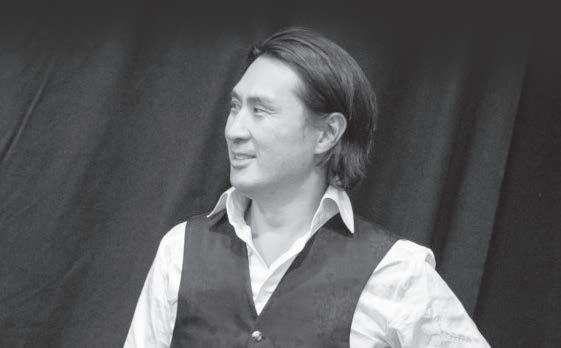
Hyung-ki Joo enraptures audiences worldwide with his contagious stage presence and brilliantly virtuosic performances. Devoted to making classical music accessible for the 21st-century, he takes on multifaceted musical roles, developing special projects that present him as a pianist, orchestra leader, arranger, communicator, and composer.
As soloist, Hyung-ki Joo has performed with renowned ensembles including the London Philharmonic Orchestra, Royal Philharmonic Orchestra, and the Wiener Symphoniker. Recent highlights include appearances at the Salzburger Festspiele and La Scala in Milan, alongside a critically acclaimed tour of A Diva is Born with celebrated soprano Asmik Grigorian. He has also performed Rachmaninoff’s Piano Concerto No. 2 with the Deutsche Kammerphilharmonie Bremen and received invitations to the prestigious Orchestra of the Accademia Nazionale di Santa Cecilia.
A passionate chamber musician, he regularly collaborates with classical luminaries such as Janine Jansen, Mischa Maisky, Renaud Capuçon, and the Quatuor Ébène. His versatility extends beyond the conventional sphere; notably, Billy Joel engaged Hyung-ki Joo to arrange and record his chart-topping album of solo piano pieces, Fantasies and Delusions. Furthermore, his own compositions have been performed by prominent soloists including Yuja Wang and Daniel Hope.
For two decades, he has brought classical music and comedy to a global audience as half of the groundbreaking duo Igudesman & Joo, collaborating with legends like Gidon Kremer and John Malkovich before their farewell tour concluded in 2025.
Deeply committed to inspiring the next generation, Hyung-ki Joo regularly leads his Beyond the Practice Room workshops. He holds an honorary doctorate from the Manhattan School of Music and serves as Artistic Director of the Menuhin Competition.
hyungkijoo.com
HyungkiJoo
hyungki_joo
joothoven
JooHandsSmall
When I began putting this programme together, I realised how much of it lives in the realm of dreams — childhood dreams, artistic dreams, memories that still feel half-real — and that fragile threshold where a dream can quietly darken into something more unsettling. Some of these pieces are intimate and tender, others fantastical or surreal, and some drift unmistakably into shadow. But all of them inhabit that elusive space where imagination takes over and reality loosens its grip.
HYUNG-KI JOO (b. 1973)
Lina’s Waltz
Lullaby for Leo
I wrote these two pieces for my children. Leo was born first, and I composed Lullaby for Leo to help him fall asleep. The music itself resists settling; it circles gently without ever quite resolving, as though sleep is hovering nearby but refusing to land. Only at the very end does the tonic G finally arrive, allowing the music — and hopefully Leo — to finally fall into slumber. If you, the listener, happen to fall asleep during it, please don’t worry — it simply means the piece is doing its job!
A few years later, Lina was born, and I realised she might one day question why her brother had a piece dedicated to him while she did not. So I wrote Lina’s Waltz. It begins almost like a small musical toy winding itself into motion — delicate, playful, slightly magical. If Leo’s lullaby drifts toward sleep, Lina’s waltz feels more like floating through a dream.
MAURICE RAVEL (1875 – 1937)
Gaspard de la nuit
I. Ondine
II. Le Gibet
III. Scarbo
As a teenager, I dreamt of playing Gaspard de la nuit. At my school there were very few pianists, and repertoire carried an unspoken sense of territory — if someone was already playing a major work, it felt almost off-limits, as though it belonged to them. A friend had already taken on Gaspard, and I quietly set the dream aside. Only recently, almost four decades later, did I return to it. Playing it now feels like reclaiming something I had once abandoned.
“Gaspard” comes from a Persian word associated with a keeper of treasures, and combined with
de la nuit, it suggests a guardian of the night’s riches — its darkness, its mysteries, its fantasies. In Bertrand’s preface, the figure even hints at something diabolical. Ravel transforms these strange, poetic visions into sound, creating a work that feels like moving through a sequence of nocturnal hallucinations — seductive, grotesque, and terrifying.
In Ondine, I am endlessly fascinated by how many ways Ravel finds to paint water. The piano glitters, ripples, flows, evaporates — never repeating itself for long. The instrument itself seems to dissolve into liquid. Bertrand’s Ondine whispers, “Listen! Listen! It is I…”, inviting us into her palace of “fluid walls,” where water itself becomes architecture. The music is hypnotic and luminous, but beneath it lies danger — the sense that one could be drawn under without ever noticing the exact moment of surrender. My childhood hero — Bruce Lee — said that the most powerful force was water. And he is famously quoted for saying “be water”.
Le Gibet presents the opposite of fluiditystillness. Bertrand asks, “Is it the wind… or the bell?” — and we realise it is the tolling of a bell beside a corpse hanging on the gallows, reddened by the setting sun. That bell becomes the fixed axis of the entire piece. Everything changes around it, yet nothing truly moves. Time feels suspended — a nightmare that cannot progress and cannot end. It feels almost like a hallucination: the same sound repeating over and over while the landscape of harmonies around it subtly changes shape. For me, it is one of the great examples of musical innovation becoming psychological theatre. Just when you thought it was safe to sit in a piano recital, be prepared for serious eerieness…
And finally comes Scarbo, the demonic goblin of the night. He appears suddenly, dances wildly, performs grotesque pirouettes across the
keyboard and disappears just as quickly. There is a moment when Ravel writes consecutive seconds — colliding notes against one another like wrong notes — and I am quite sure that this was a pianistic innovation with no precedent. These clustered notes sound like a mischievous child hammering randomly at the piano. I imagine this is Scarbo himself dancing on the keyboard, gleefully turning virtuosity into chaos. If Ondine is a dream and Le Gibet a nightmare, then Scarbo is what happens when the nightmare realises you are watching it. Beware — in this concert hall, no one can hear you scream…
CLAUDE DEBUSSY (1862 – 1918)
Selections from Children’s Corner (arr. Gwilym Simcock)
• The Little Shepherd
• Golliwog’s Cake Walk
Debussy wrote Children’s Corner for his daughter Chouchou, creating a world of childhood imagination filled with tenderness and humour.
The final two pieces are reimagined by Gwilym Simcock, whose music I admire enormously. What Simcock does in not simply “jazzed up add-ons”; they feel like Debussy’s musical dreams refracted through a modern improviser’s imagination.
The line between improvisation and composition is often blurred in classical music, with many of the great pieces we know today which are essentially notated improvisation.
JOHANN SEBASTIAN BACH (1685 – 1750)
Partita No. 1 in B-flat major, BWV 825
I cannot imagine life without Bach. Before almost every concert, I play Bach — even if only mentally. It is a kind of meditation. It clears away noise and sharpens my listening. After Bach, I feel grounded and awake.
The First Partita is a sequence of dances, but beneath its elegance lies an improvisatory spirit. Bach, one of the greatest improvisers who ever lived, seems to balance structure and freedom
effortlessly. In a programme full of dreams and distortions, Bach feels like a moment of clarity — or perhaps the dream of perfect order.
I often think about how Bach is traveling through space on the Voyager spacecraft, and I wonder — if an alien life form were ever to encounter it — whether they might be as mesmerised as so many of us here on Earth are.
HYUNG-KI JOO
Selections from Childhood
• The Little Prince
• Stardust
• Hiding the Tears
• Watching My Balloon Fly Away
• Childhood 1979
For a long time, I avoided writing for solo piano. Eventually, I found the courage to compose Childhood, a set of pieces reflecting memory, imagination, and the way the past reshapes itself over time.
Not all childhoods are easy — mine certainly wasn’t — but even difficult experiences become part of who we are. Becoming a parent allowed me to revisit those memories from a different perspective, as though stepping back into an old dream with new awareness.
The Little Prince
The Little Prince is probably my favourite book of all time. I first received a copy when I was seven years old and living in France. Although I loved it as a child, I think I truly fell in love with it as a teenager when I revisited it and realised how profound it really is.
It is also the only thing I actively collect. Whenever I travel somewhere new, I try to find a bookshop and buy a copy in that language. Ironically, more than half my collection now comes from gifts people have brought back for me from their travels. I even own a Klingon edition, given to me by a fan. If I had my way, I would probably wear Le Petit Prince T-shirts every day of my life.
HYUNG-KI
I have long dreamt of creating a larger theatrical work inspired by the book, so perhaps this miniature is merely the beginning of many future visits to Planet B-612.
Stardust
“Stardust” can mean many things: the remnants of exploded stars, particles floating invisibly through the cosmos, or simply a feeling of magic and romance. I rather like that the word itself feels suspended between science and fantasy — between reality and dream.
Hiding the Tears
As a child, I was often teased and bullied, and one of the hardest things for me was trying not to cry in front of other people. I did not want to give anyone the satisfaction of seeing vulnerability. Looking back now, I realise that emotional openness actually requires far more courage than emotional concealment.
Even today, whenever I see a child desperately trying not to cry, I feel an immediate connection. Some dreams leave scars and emotions behind long after morning comes.
Watching My Balloon Fly Away
I must have lost countless balloons as a child, but there is one moment I remember vividly. I was standing outside a church — perhaps four years old — when my balloon slipped out of my hand and floated higher and higher into the sky. I remember watching it disappear and feeling an unfamiliar sadness. It may have been my very first encounter with melancholy.
Sometimes childhood is simply the gradual discovery that beautiful things do not always stay.
Childhood 1979
In 1979, my family left England and I spent about eighteen months living in France. It was the happiest period of my childhood. I fell in love with French culture, its food, the comics and I had plenty of wonderful friends. Somehow my parents, despite working exhausting schedules, still found ways to take me on adventures and excursions.
What fascinates me is that happiness does not entirely vanish once time passes. Whenever I think about 1979, I still feel happiness physically inside me. I often dream about events from that happy year.
LESZEK MOZDZER (b. 1971)
Improvisation on Chopin’s Étude Op. 10, No. 6 in E-flat minor
Improvisations on Chopin
I discovered Moz - dz - er’s Impressions on Chopin in Poland and on the night train to Vienna, I could not stop listening. What amazes me is not just his virtuosity, but the uncanny sense that he steps inside Chopin’s musical language while remaining entirely himself. It feels less like reinterpretation and more like a parallel dream in which Chopin continues to improvise in another time.
MAURICE RAVEL La valse
If this programme begins in dreams, perhaps it ends in a dream collapsing into a nightmare.
Ravel’s La valse — originally titled Wien — is both a love letter to the Viennese waltz tradition of Johann Strauss and a vision of its destruction. Written in the looming shadow of the First World War, the piece seems haunted by the sense that an entire civilisation is dancing towards catastrophe without fully realising it.
At first the music emerges out of mist, as though an old memory were slowly materialising. The waltzes glitter and swirl with intoxicating beauty, yet beneath the elegance one senses instability, decadence and danger. The dance becomes increasingly unhinged until finally it spins itself into oblivion.
I have always felt that La valse captures something profoundly human: our ability to keep dancing even as the floor beneath us begins to collapse.
Notes by Hyung-ki Joo
Jonathan Shin in RecitalRestless Natures
JONATHAN SHIN night incantation 5 mins
FRI, 3 JUL 2026
PLAY DEN, THE ARTS HOUSE AT THE OLD PARLIAMENT
We would like to thank
MOZART Fantasia No. 3 in D minor, K. 397/385g 6 mins
LILI BOULANGER Deux morceaux pour piano 4 mins • D’un vieux jardin • D’un jardin clair
BOBBY GE To the Memory of a Little Grasshopper 7 mins
NICO MUHLY Move 3 mins
JONATHAN SHIN The House Sings 5 mins
TIMO ANDRES How can I live in your world of ideas? 9 mins
TAKASHI YOSHIMATSU ...to a disappeared pleiad 3 mins
JONATHAN SHIN Cervantes Dreams Recurring Dreams of Consumerism 6 mins
NATHANIEL PARKS from a great distance (World Premiere) 8 mins I. I just want to shoot you a quick message II. Epistle III. when I see you next (Cadenza)
Concert Duration: 1 hr (no intermission)
Yamaha Music Asia for providing the Yamaha C3X that Jonathan Shin will be performing on this evening.
Jonathan Shin
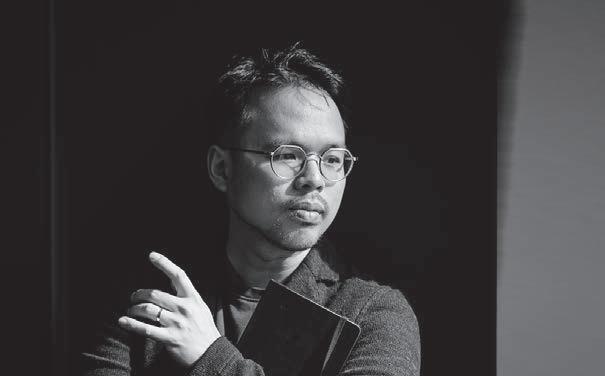
Jonathan Shin (b. 1992) is a multifaceted Singaporean musician who performs internationally as a piano soloist and chamber musician, while also composing and improvising across multiple genres. A top prizewinner across all age categories of Singapore's National Piano and Violin Competition, he made his concerto debut at age 16 with the Singapore Symphony Orchestra. The following year, he became the youngest winner of the concerto competition at the Yong Siew Toh Conservatory of Music (YST). Eminent artists with whom Jonathan has worked with include John Perry, Cyprien Katsaris, Albert Tiu, Vladimir Viardo, Luis de Moura Castro, Eliso Virsaladze, Mark Ray, and Nico Muhly.
Equally accomplished as a composer, Jonathan's works have garnered critical acclaim. His song cycle The Other Merlion and Friends was praised as “the most compelling and worthwhile new work from any Singaporean composer in recent years” (The Straits Times). In 2022, he was commissioned by the Esplanade to compose Illuminations, a large-scale choral symphony celebrating their 20th anniversary, which was premiered by the Singapore Symphony Orchestra and its associated choruses. Recently, his operatic works The Bright-Eyed Otter and Beacon (Phase 1) premiered locally, with the latter developing into a fully staged production by 2027.
During his graduate studies at the Longy School of Music, Shin won the concerto competition twice alongside the orchestral composition prize. He holds a doctoral degree in classical composition under Pulitzer Prize-winning composer Kevin Puts.
Dedicated to pedagogy, Shin teaches ear-training and improvisation at YST. He is also a founding member of the acclaimed multi-genre quintet, the Lorong Boys.
jonathanshinmusic.com
jonathan.shin.music
jonathanshinmusic
A crisis of attention arose in me last year. What am I paying attention to when I compose? What do past and present-day composers pay attention to? And when they attend to things and perceive this world, how do they preserve their perceptions?
The music I play tonight answers these questions in different ways. Some works announce the composer’s object of attention through titles and composer’s notes (think The Swan or The Seasons). In those cases we know, before hearing a single note of music, that this work is about such-and-such. Hearing the music closes the experience loop.
Others are more reticent. Mozart’s Fantasia in D minor throws us a few bones: by invoking the fantasy, Mozart signals his adoration for the fantasies of J.S. Bach (whose scores he studied in the library of Baron van Swieten in the summer of 1782, the same year he wrote this work). It is in the opening rhetoric of the Andante and the florid, chromatic Prestos that we witness Mozart channeling Bach’s influence.
The second clue is subtler, but more urgent: the aspect of D minor intimates to us that we are deep in the region of pathos — to be aware of this brings us closer to the composer’s inner ear, and the total effect is of a score that recomposes itself each time the work is performed. To my mind the composer turns the lens of attention inwards, where our subject is the chimerical heart of Mozart the composer, pianist, and improviser.
At first glance the subjects of Lili Boulanger’s Deux morceaux look more tangible. “D’un Vieux Jardin” (Of an Old Garden) and “D’un Jardin Clair” (Of a Bright Garden) were composed during Boulanger’s residency at Villa Medicis as winner of the Prix de Rome at the age of 21. The former opens with a sighing melody flushed with hues of seventh chords, and after turns of phrases that seem guided by some divine hand, blooms into a re-orchestrated version of itself. If the closed voicings in the first miniature sign for an ancient yet verdant foliage, the second miniature presents
a presence of light and its languidness with open fourths and fifths, led by a melody that repeats and fragments itself into the extreme ends of the keyboard.
A closer reading of the musical text reveals a biographical layer: each miniature is dedicated to a childhood friend, and the gardens are located in Chateau d’Hanneucourt, Gargenville, where the three friends were acquainted. In this way, the subject is no longer the gardens themselves but their shared memory of it. I believe it is in this suspension of real and remembered that Deux morceaux was composed in, and should be experienced.
What if the real and remembered is piano-playing itself? In To a Memory of a Little Grasshopper, the composer’s memories of playing Chopin’s 3rd Ballade becomes the subject:
“I found myself deeply enamored with [the] ballade... in writing this piece, I wanted to try and capture my impressions... as I remember it, as one might fondly recall an idealized memory.”
Music about music, then. We are treated to precedents of this in the theme-and-variations form, which Chopin was famously adroit at, with music-about-music in the variations serving as a platform for composers to dazzle with clarity of invention and compositional virtuosity. Ge’s work belongs to a separate category of musicabout-music. It is a music that is intentionally susceptible to mis-remembering its subject, capricious in form, and features a virtuosity that asks plenty of the performer’s agency. The opening, marked Delicate and hazy, sets in motion a score where speeds and lengths are determined by the pianist, now turned improviser.
Ge’s invocation of George Sand’s nickname for Chopin (“my little grasshopper”) recalls to us “how the on-again, off-again lovers might have tried to remember each other long after their relationship has passed”. By sustaining and sifting his attention on these multiple layers of
JONATHAN SHIN
meaning, Ge preserves his adoration for the longpassed composer.
We have seen restless compositional natures will their attention towards various beloved subjects: the soul itself, shared memory, past music residing in one’s inner ear and hands. What if the subject were more tangible, like a longtime friend?
Robert Hurwitz’s retirement as chairman of Nonesuch Records in 2017 spurred John Adams to organize a concert of newly-composed music as a celebration of Hurwitz’s 32-year tenure. The result was a concert of 11 solo piano compositions by Nonesuch-associated composers, with the album I Still Play featuring these works released in 2022. Adams derived this title from an overheard conversation:
“I’d overheard someone talking to Bob –they said, ‘I didn't know you played the piano.’ And Bob said ‘Yes, I still play.’”
Nico Muhly’s Move opens this album of gifts with a music that is immediately intimate and vulnerable. A falling motif suspends and resolves, speaks itself into existence by repeating, stuttering, slowing, accelerating. Not unlike Bach’s Invention No. 1, these falling rows transform by voice-leading in parts; in the central passage, this technique turns the music into a glittering kaleidoscope, with the minutest movements shifting us into new harmonic regions. We often hear of composers thanking performers for “making their music come alive”. There is an argument to be made that the inverse happens here: each note of Muhly’s Move is a Lazarian command to revivify the pianistic hands of a friend.
At first, How can I live in your world of ideas? may look like an outlier in this program for the way it sets up its own rhetorical question that runs to an asymptote with my original inquiry. So what is in it for this work?
The answer lies in a precise, sustained act that Timo Andres had to engage in: arranging. The
subject is Andres’ original two-pianos version composed in 2006 (the version I was introduced to by my dear friend, Margaret Boswell), and in preserving the essence of the work in its solo arrangement, David Kaplan writes that “[t] he version for one piano becomes a kind of rhetorical showpiece, in which the individual pianist must render the rapid transition between material played by two opposing, often interruptive, pianists. Each of the two pianists (in this case imaginary) take turns representing the titular subject ‘I,’ and the ‘World of Ideas,’ in which it’s evidently problematic to ‘live.’”
Where we can attest to a certain closeness between composers and their subjects of attention in the previous five works, the last three works of the evening take great distances between object and perceiver as a subject of attention.
Takashi Yoshimatsu’s 1997 composition ...to a disappeared pleiad is a music that offers and waits. Soft sprays of syllables glimmer like fireflies; when lyrical gestures extend towards a possible resolution, they seem to overhear themselves and wait in resonance, aware of their mortality. Even its central impassioned plea peters out into the first stanza of the poem, although this time we are offered a resolution that blurs into silence. The total effect feels like a letter written to a long-gone lover, with the faintest hope for a reply. We can ask, who is the letter really for, then?
My contribution this evening returns to my favorite source of inspiration: literature, but with a twist. I imagine a tongue-in-cheek dreamscape where the author of Don Quixote is plunged 400 years into the future, into a consumer paradise named after the eponymous hero of his novel. Dream-logic spills and threatens to overwhelm structure in Cervantes Dreams Recurring Dreams of Consumerism, but it is through my invented “riddle” form — or variations and theme — that I torment dream-Cervantes with a very familiar tune to the Singaporean ear.
It is especially apt and fitting to close this recital with Nathaniel Parks’s from a great distance. I present his introductory note in full:
My music tends to be extremely personal, so when Jonathan Shin asked me to write him a piece, I of course made it about us. Jonathan and I have been friends for many years, across many miles (8,769, at time of writing). That connection is made possible through texts, calls, and videos.
from a great distance is for piano and electronics and uses sounds from a handful of lighthearted videos Jonathan recorded with his loved ones. This piece is a form of musical correspondence, and explores the ways that connection is shaped by its medium, with each movement addressing a different form. It’s a live dialogue between two friends—the songs he shared with me, transformed and shared back with him.
Collaborations with friends are the brightest spots in my practice. I am thankful to Nathaniel Parks for his work, and to Jonathan Lim, who has made my program his subject to create this beautiful artwork that completes the recital experience. My deepest gratitude goes to Artistic Director Albert Tiu for entrusting me with this recital spot; Michelle and Jana for their patience with me; the production team for making this evening a reality; and lastly, my partner Seren for being both First Reader and Listener.
Notes
by Jonathan Shin
Sean Chen in RecitalMusic and Magic
SEAN CHEN Daydream No. 2: Flight (飛) 7 mins
SUN, 5 JUL 2026
VICTORIA CONCERT HALL
GODOWSKY Selections from Renaissance Book 1 (after Jean-Philippe Rameau) 12 mins
• Tambourin
• Elegie
• Rigaudon
RAMEAU Gavotte et six doubles with improvised epilogue 9 mins
LIGETI Étude No. 10 (Der Zauberlehrling) 2 mins
DUKAS The Sorcerer’s Apprentice 12 mins
ARR. SEAN CHEN
Intermission 20 mins
LISZT Deuxième année: Italie from Années de pèlerinage 45 mins
1. Sposalizio
2. Il penseroso
3. Canzonetta del Salvator Rosa
4. Sonetto 47 del Petrarca
5. Sonetto 104 del Petrarca
6. Sonetto 123 del Petrarca
7. Après une lecture du Dante: Fantasia Quasi Sonata
Concert Duration: approximately 2 hrs (including 20 mins intermission)
Post-concert autograph session with Sean Chen at Door 3, Level 2
Sean Chen
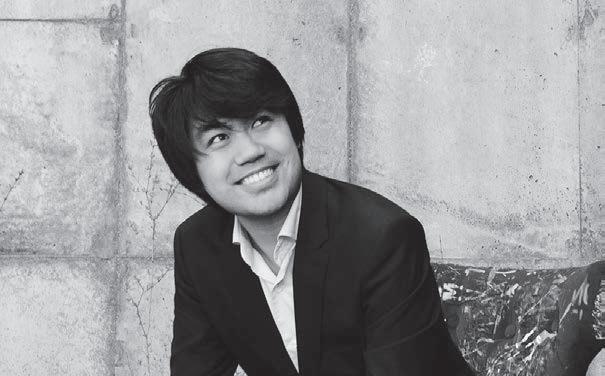
A “thoughtful musician well beyond his years” (The Republic), pianist Sean Chen won the 2013 American Piano Awards, secured the Bronze Medal at the 2013 Van Cliburn International Piano Competition, and was named a 2015 Annenberg Fellow. He shares his “genuinely sensitive” (LA Times) playing with audiences worldwide.
Chen has performed with prominent ensembles including the Indianapolis and San Diego Symphony Orchestras, collaborating with esteemed conductors such as Leonard Slatkin and Gerard Schwarz. His solo recitals have brought him to major international venues, including Het Concertgebouw in Amsterdam, the Salle Cortot in Paris, and the National Concert Hall in Taipei.
A frequent broadcaster, his live and recorded performances have been featured extensively on WQXR (New York), NPR’s From the Top, and American Public Media’s Performance Today.
A multifaceted artist, Chen is highly regarded for his virtuoso transcriptions of orchestral works, including Ravel’s La Valse and the Adagio from Rachmaninoff’s Symphony No. 2. His encore improvisations are regularly lauded as “genuinely brilliant” (Dallas Morning News). His discography features acclaimed releases on the Steinway & Sons label, and a live Cliburn recording on Harmonia Mundi, praised for its “ravishing tone” (Gramophone).
In high demand as an educator, Chen frequently presents masterclasses at institutions including the Cleveland Institute of Music and Indiana University and serves on the juries of notable competitions such as Cliburn Junior.
He earned his degrees from The Juilliard School, and his Artist Diploma at the Yale School of Music under the tutelage of Hung-Kuan Chen, Jerome Lowenthal, and Matti Raekallio. Sean Chen is a Steinway Artist and is an Endowed Associate Professor at the University of Missouri-Kansas City Conservatory.
seanchenpiano.com seanchenpiano
The program tonight is separated into two halves, with one of Liszt’s tour-de-force cycles in the second half, and a collection of coloristic pieces, mostly French in influence, in the first. All of these pieces have an imaginative quality, and from both a thematic and pianistic perspective, represent piano music at its most magical.
We begin the program with a piece I wrote titled Daydream No. 2: Flight (飛), composed as a companion to an earlier work titled Daydream No. 1: Steps (步). I have been fascinated by writing music inspired by dreams and sleep, and one could see these as a genre extension of a Nocturne or a Fantasie. Where the first Daydream featured a steady plodding, as if walking through a fantastical landscape, Flight is inspired by the dreams many of us have of gaining the ability to fly through the sky.
We come back to ground with works by one of the longest-lasting influences of French keyboard music, Jean-Philippe Rameau. First, we visit reimaginations of Rameau by the legendary Leopold Godowsky. While usually known for his devilish arrangements of Chopin’s Etudes (as if they weren’t difficult enough on their own), Godowsky arranged and transcribed pieces by a wide range of composers, from Bach to Strauss, Rameau to Schubert. Presented here are three of his Rameau arrangements in a three-movement set: Tambourin, Elegie, and Rigaudon. Godowsky’s arrangements are frequently a combination of contrapuntal and textural expansions, taking advantage of the versatility of the piano. Rameau’s original Tambourin almost reminds one of a Turkish march with open fifths in the bass like a drone, and trills in the right hand that evoke the tambourin sound. Godowsky expands the piece structurally and “orchestrates” the work to take advantage of the full range of a modern piano, not to mention adding some more adventurous harmonies. The Elegie is actually a combination of two Gigues en rondeau by Rameau, but Godowsky turns the gigues from lively dances into a sorrowful and poignant lilt, almost into a sicilienne. Finally, the Rigaudon comes from Rameau’s opera Dardanus, RCT 35 – an ebullient dance with an expressive middle section, which Godowsky turns into a delightful virtuosic morceau.
Now we get an original work by Rameau, Gavotte et six doubles, which is the final work in his Suite in A minor, RCT 5 from Nouvelles suites de pièces clavecin from about 1726. The doubles are what we now call variations, so this is a theme and variations, in which Rameau cleverly shows off what each hand can do, first using scales, then using repeated notes, then finally with large arpeggios. For most of the classical period Rameau’s influence was mostly by name, but he regained appreciation through composers like Saint-Saëns, Debussy, Ravel, and Paul Dukas.
The Sorcerer’s Apprentice was originally a poem by one of the most prolific and influential German writers, Johann Wolfgang von Goethe. The apprentice, after having been left alone by his master, uses magic to animate an old broomstick to fetch water and fill a bath. Unable to control and stop the broomstick, he resorts to chopping it in half, at which point both halves become animated, and the water fetching resumes with double pace. The situation turns increasingly dire until the sorcerer reappears, and banishes the broomstick back into the corner.
György Ligeti’s eponymous 10th Etude, Der Zauberlehrling, is a brisk but colorful pianistic imagining of the Goethe story. In his version, the sorcery is represented by fluttering repeated notes in a pattern that seems to be almost attainable yet is ultimately elusive. The water begins trickling from the highest reaches of the keyboard all the way to the bottom, and the music becomes more and more agitated. The hands are granted a brief moment in unison, signifying the axe cutting the broomstick in two, after which the magic resumes, but now with two voices in the moving line. The music rises and rises like the water until finally the sorcerer comes back, and the piece ends with a whole-tone dash down the keyboard.
Many of us first experienced the story through Disney’s 1940 retelling in Fantasia, set to Paul Dukas’s musical interpretation of Sorcerer’s Apprentice. In contrast to Ligeti’s two-minute version, Dukas’s is not only longer, but emerging from the turn of the 20th century, also more tuneful. Though Ligeti and Dukas used similar musical tropes, the characters of the broomstick, the water, and the magic have more time to
develop and intermingle in Dukas’s version. My arrangement of Dukas’s work tries to capture and preserve all the wonderful colors brought forth by his orchestration, to push pianistic virtuosity to the limits, and to create an exciting sonic experience for the listener.
The second half of the recital is Franz Liszt’s 2nd Year of Pilgrimage in its entirety. Goethe makes another appearance here, as the title Années de pèlerinage is influenced by his work Wilhelm Meisters Wanderjahre – the last word meaning “years of wandering.” Subtitled “Italie”, this second year of pilgrimage was inspired by his travels through Italy as well as famous works from the country. Many of the pieces are actually a culmination of revisions of previously composed works, but regardless, they fit together cohesively. I view the seven pieces of this set in three groups, the first three, then the three Petrarch Sonnets, and finally the Dante Sonata.
About first the three works in the cycle –Sposalizio, Il Penseroso, and Canzonetta del Salvator Rosa: The opening piece, Sposalizio, refers to the painting by Raphael of the Wedding of the Virgin, and Liszt begins with bells welcoming the guests (and the listeners) to the scene. There is a moment of quiet understanding between the betrothed couple followed by a slow build-up to the harmonious clamor of celebratory bells. The ending of the piece is an apparent acknowledgement of both the beauty and the gravitas of exchanging vows – the music takes a momentary turn towards uncertainty before satisfyingly resolving to the home key of E. The bells in the first piece turn into horn declamations in Il Penseroso. This second piece was apparently inspired by a sculpture on the Tomb of Lorenzo de’ Medici of Lorenzo himself, dressed in Roman garb, sitting in a thinking pose. Here, the music is dark and moody, and much of it takes place in the lower half of the piano. It is immediately followed by the Canzonetta, a cheerful song, unsophisticated in its construction or composition, yet dramatically a necessary foil between the previous piece and the next set to come. The text of the song references traveling and adventure, fitting for this cycle of pieces.
The second group of pieces are the three Petrarch Sonnets. Liszt had written two previous versions of these sonnets, both for voice and piano. For these final versions, Liszt forewent strict attention to the text, but one can hear the vocal quality in the piano writing. These sonnets by Petrarch talk about love and the joy and pain that come from it. He was smitten with a lady Laura, understood to be the wife of a count, and his sonnets often referred to her by name. Sonnet 47 is a pleasant, almost spring-like piece, and the text repeats the refrain of “Benedetto” or “blessed.” Sonnet 104 is a more passionate work, and the text is full of deliberate contradictions, in which the author blames Laura for the highest of highs and lowest of lows. Liszt uses the full range of the keyboard in this piece, and there is more anxiety than in the previous Sonnet. Sonnet 123 returns to the sweeter side of love, in which Laura is described as imbued with heavenly beauty. Liszt uses floating textures, like the gently undulating accompaniment, or the soaring melodic contours, to represent the angelic nature of the lady.
The sweet ending of the last Sonnet is interrupted by the imposing bells of the gates of hell, declamations of octaves a tritone apart at the start of the Aprés une lecture du Dante: Fantasia Quasi Sonata. This final and monumental work is inspired, in its title, by Victor Hugo’s poem of the same name, but in its subject by the actual work of Dante, The Divine Comedy. The piece follows Dante’s pilgrimage through the three realms: hell with the wailing of tortured souls; purgatory and the lamenting prayers of those trying to get into heaven; and heaven, filled with shimmering celestial light. But I think Liszt wanted to represent something even more human with this piece. His thematic transformations – the tritones turn into perfect fifths; the chromatically descending laments turn into joyful dances and heroic fanfares – represent the human experience. Love and sorrow, laughter and tears, war and peace, life and death, heaven and earth. All merge into one in music.
Notes by Sean Chen
Jon Kimura Parker in RecitalStructure and Spontaneity
MOZART
BEETHOVEN
Intermission 20 mins
SUN, 5 JUL 2026
VICTORIA CONCERT HALL
Piano Sonata No. 9 in D major, K. 311 / 284c 15 mins
I. Allegro con spirito
II. Andantino con espressione
III. Rondeau (Allegro)
Piano Sonata No. 23 in F minor, Op. 57 “Appassionata” 25 mins
I. Allegro assai
II. Andante con moto
III. Allegro ma non troppo – Presto
RAVEL Jeux d’Eau 5 mins
“Spontaneous and Thoughtful Creation”
CHICK COREA Got A Match? 6 mins
ALEXINA LOUIE Memories in an Ancient Garden 8 mins
JON KIMURA PARKER Improvisation 9 mins
JOHN ADAMS China Gates 5 mins
OSCAR PETERSON Blues Etude 8 mins
Concert Duration: approximately 2 hrs (including 20 mins intermission)
Post-concert autograph session with Jon Kimura Parker at Door 3, Level 2
Jon Kimura Parker
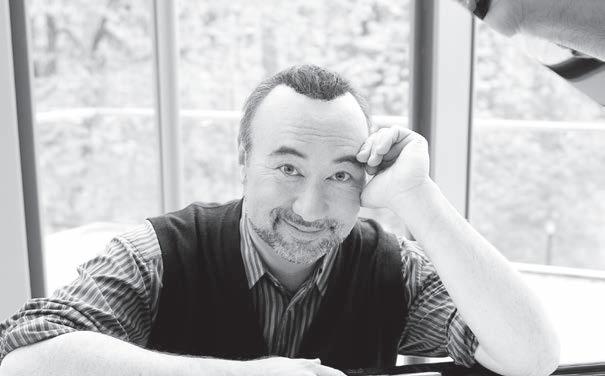
Pianist Jon Kimura Parker is known for his charisma, infectious enthusiasm, and dynamic performances that celebrate the joy of musical expression. A veteran of the international stage, Parker has performed in major venues including the Berlin Philharmonie, Carnegie Hall, London’s South Bank, Sydney Opera House, and Beijing Concert Hall.
He currently serves as Creative Partner for the Minnesota Orchestra’s Summer at Orchestra Hall, Artistic Director of the Honens International Piano Competition, Artistic Advisor for the Orcas Island Chamber Music Festival, and chairs the keyboard faculty at Rice University’s Shepherd School of Music.
An eclectic and collaborative artist, Parker has performed with Yo-Yo Ma, Cho-Liang Lin, Frederica von Stade, Susan Graham, and Lynn Harrell, as well as Doc Severinsen, Audra McDonald, Bobby McFerrin, and Dessa. He co-founded the Montrose Trio and toured Off the Score with Police drummer Stewart Copeland, performing his own arrangements of Prokofiev, Ravel, and Stravinsky.
The 2025–26 season includes engagements with Chamber Music Tulsa, Fort Wayne Philharmonic, Fresno Philharmonic, Richardson Symphony, Meany Center, and Canada’s Royal Conservatory of Music.
A Gold Medalist at the 1984 Leeds International Piano Competition, Parker studied with Edward and Keiko Parker, Lee Kum-Sing, Marek Jablonski, and Adele Marcus at Juilliard. He is an Officer of the Order of Canada and holds honorary doctorates from the University of British Columbia and the Royal Conservatory of Music.
Parker, affectionately known as “Jackie,” lives with his wife, violinist/violist Aloysia Friedmann. Their daughter, Sophie, is an artist.
jonkimuraparker.com
JonKimuraParker
Introduction
Two pillars of classical structure are represented by Mozart and Beethoven. Despite their similarity in form, and their having been written less than 30 years apart, Mozart has classical proportion on centre stage, yet Beethoven veers into raw and explosive displays of emotion and depth. The second half of the program showcases the 20th century and beyond, from Ravel’s impression of waterfalls to an early John Adams experiment in minimalism. I offer next my own improvisation, before the program concludes with the sensational Blues Etude - this score was a personal gift from the estate of the composer, Oscar Peterson to me.
Introduction by Jon Kimura Parker
Board of Directors and Committees
Chair
Goh Yew Lin
Board of Directors
Chang Chee Pey
Chng Kai Fong
Andress Goh
Kenneth Kwok
Clara Lim-Tan
Jesher Loi
Lynette Pang
Prof Qin Li-Wei
Jovi Seet
Farhana Sharmeen
Doris Sohmen-Pao
Prof Peter Tornquist
Geoffrey Wong
Andrew Yeo Khirn Hin
EXECUTIVE & NOMINATING COMMITTEE
Goh Yew Lin (Chair)
Chng Kai Fong
Lynette Pang
Geoffrey Wong
SSO Council
Alan Chan (Chair)
Odile Benjamin
Prof Chan Heng Chee
Prof Arnoud De Meyer
Dr Geh Min
Heinrich Grafe
Khoo Boon Hui
Liew Wei Li
Lim Mei
Sanjiv Misra
Paige Parker
Dr Stephen Riady
Priscylla Shaw
Prof Gralf Sieghold
Prof Bernard Tan
Dr Tan Chin Nam
Wee Ee Cheong
Yong Ying-I
HUMAN RESOURCES COMMITTEE
Doris Sohmen-Pao (Chair)
Jesher Loi
Prof Qin Li-Wei
Heinrich Grafe*
Carmen Wee*
FINANCE & INVESTMENT COMMITTEE
Geoffrey Wong (Chair)
Andress Goh
Chua Keng Hong*
Alex Lee*
AUDIT & RISK COMMITTEE
Jovi Seet (Chair)
Prof Peter Tornquist
Andrew Yeo Khirn Hin
Ryan Siek*
COMMUNITY & YOUTH ENGAGEMENT COMMITTEE
Clara Lim-Tan (Chair)
Chang Chee Pey
Farhana Sharmeen
Asst Prof Kat Agres*
Cecilia Pang*
*co-opted member
DEVELOPMENT COMMITTEE
Prof Chan Heng Chee (Chair)
Odile Benjamin
Dr Geh Min
Heinrich Grafe
Khoo Boon Hui
Lim Mei
Leonard Ong
Paige Parker
Priscylla Shaw
Dr Tan Chin Nam
Symphony Ball Committee
Paige Parker (Chair)
Celeste Basapa
Geoffrey Wong
Kris Tan
Joy Tan
Dr Karen Soh
Kim Camacho
Lim Kang Ning
Farhana Sharmeen
SSO Musicians’ Committee
Hoang Van Hoc
Austin Larson
Li Xin
Christopher Mui
David Smith
Elaine Yeo
Zhao Tian
Singapore Symphony Group Administration
Chief Executive Officer
Kenneth Kwok
Deputy CEO
Programmes & Production
Kok Tse Wei
CEO OFFICE
Shirin Foo
Musriah Bte Md Salleh
ORGANISATION DEVELOPMENT
Lillian Yin
Artistic Planning
Christopher Cheong (Head)
ARTISTIC ADMINISTRATION
Jodie Chiang
Terrence Wong
Jocelyn Cheng
Michelle Yeo
Operations
Ernest Khoo (Head)
LIBRARY
Wong Yi Wen
Cheng Yee Ki
Ng Yi Xiu
ORCHESTRA MANAGEMENT
Chia Jit Min (Head)
Kelvin Chua
PRODUCTION MANAGEMENT
Noraihan Bte Nordin
Nazem Redzuan
Leong Shan Yi
Asyiq Iqmal
Khairi Edzhairee
Benjamin Chiau
Syed Muhammad Idris
Bin Ramli
Deputy CEO
Patrons & Corporate Services
Jenny Ang
Community Impact
COMMUNITY ENGAGEMENT
Kua Li Leng (Head)
Whitney Tan
Lynnette Chng
Chua Xu Yang
Darren Siah
CHORAL PROGRAMMES
Kua Li Leng (Head)
Lu Heng
Chang Hai Wen
Mimi Syaahira
SINGAPORE NATIONAL YOUTH ORCHESTRA
Ramu Thiruyanam (Head)
Tang Ya Yun
Tan Sing Yee
Ridha Ridza
ABRSM
Patricia Yee
Lai Li-Yng
Joong Siow Chong
Freddie Loh
Corporate Services
FINANCE, IT & FACILITIES
Rick Ong (Head)
Alan Ong
Goh Hoey Fen
Loh Chin Huat
Md Zailani Bin Md Said
HUMAN RESOURCES & ADMINISTRATION
Valeria Tan (Head)
Janice Yeo
Fionn Tan
Netty Diyanah Bte Osman
Patrons
DEVELOPMENT
Chelsea Zhao (Head)
Nikki Chuang
Sarah Wee
Samantha Lim
Eunice Salanga
Kevin Yeoh
COMMUNICATIONS, DIGITAL & MARKETING
Cindy Lim (Head)
Communications
Ong Shu Chen
Nikki Loke
Elizabeth Low
Tan Li Ying
Data & Digital Projects
Calista Lee
Lim Wen Jie
Marketing & Content
Chia Han-Leon
Hong Shu Hui
Myrtle Lee
Jana Loh
Kashmira Kasmuri
Carrie Woo
CUSTOMER EXPERIENCE
Randy Teo
Dacia Cheang
Joy Tagore

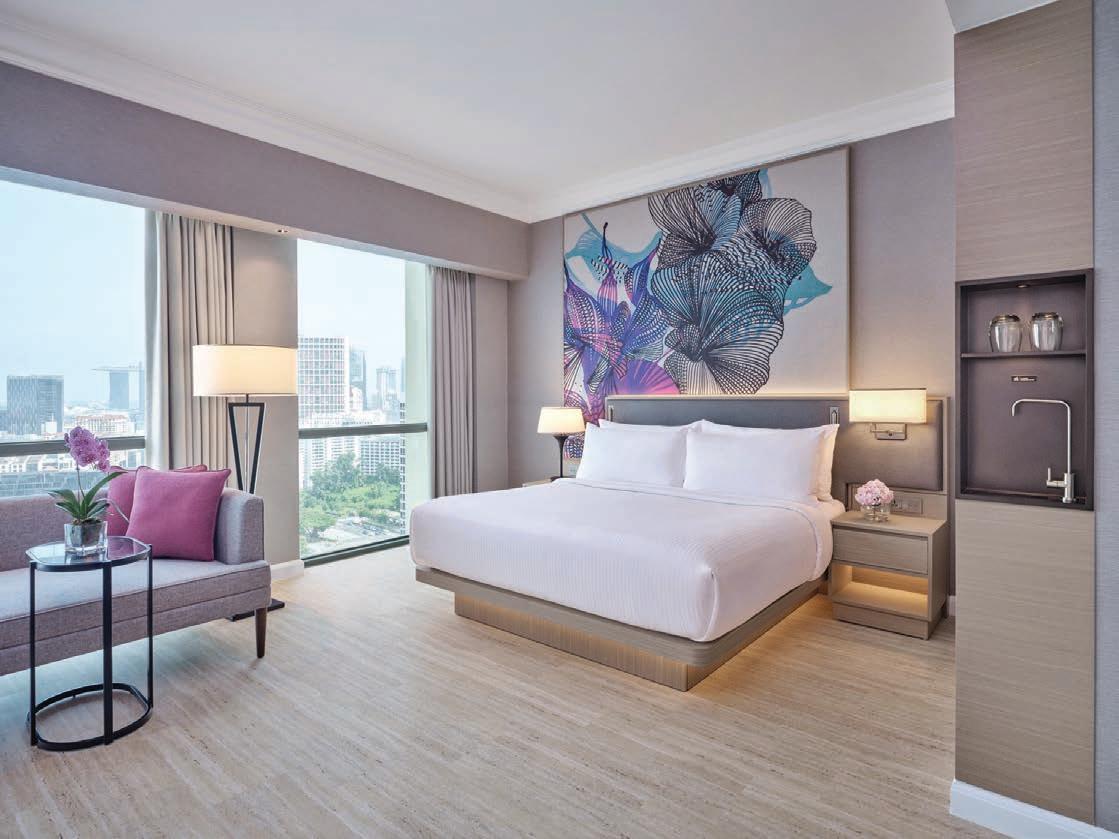
WHERE RIVERSIDE TRANQUILITY MEETS URBAN LUXURY
Set along the Singapore River, Grand Copthorne Waterfront Hotel Singapore presents a refined retreat just moments from the city’s vibrant heart. Discover elegantly appointed rooms, curated dining, and serene waterfront views, with sustainability and wellness thoughtfully integrated to create a stay defined by balance, sophistication, and quiet indulgence.
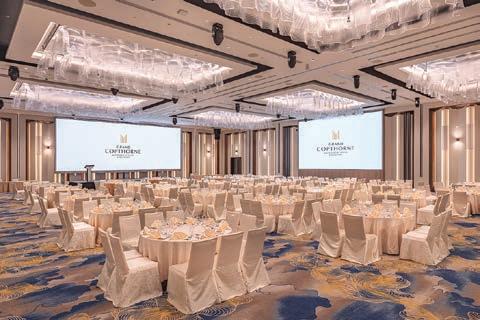

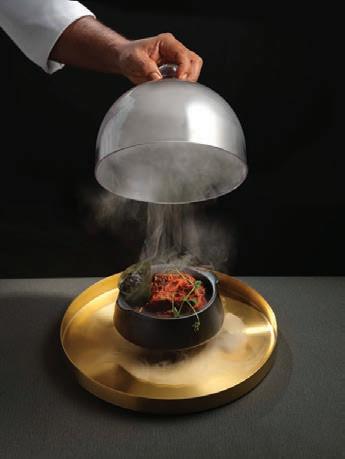
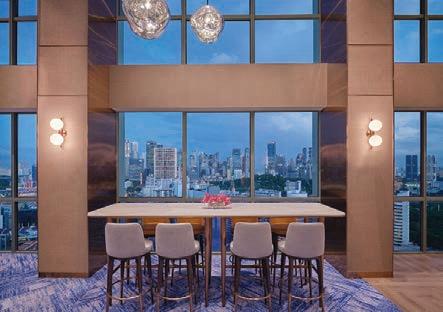
Book your stay with us today.
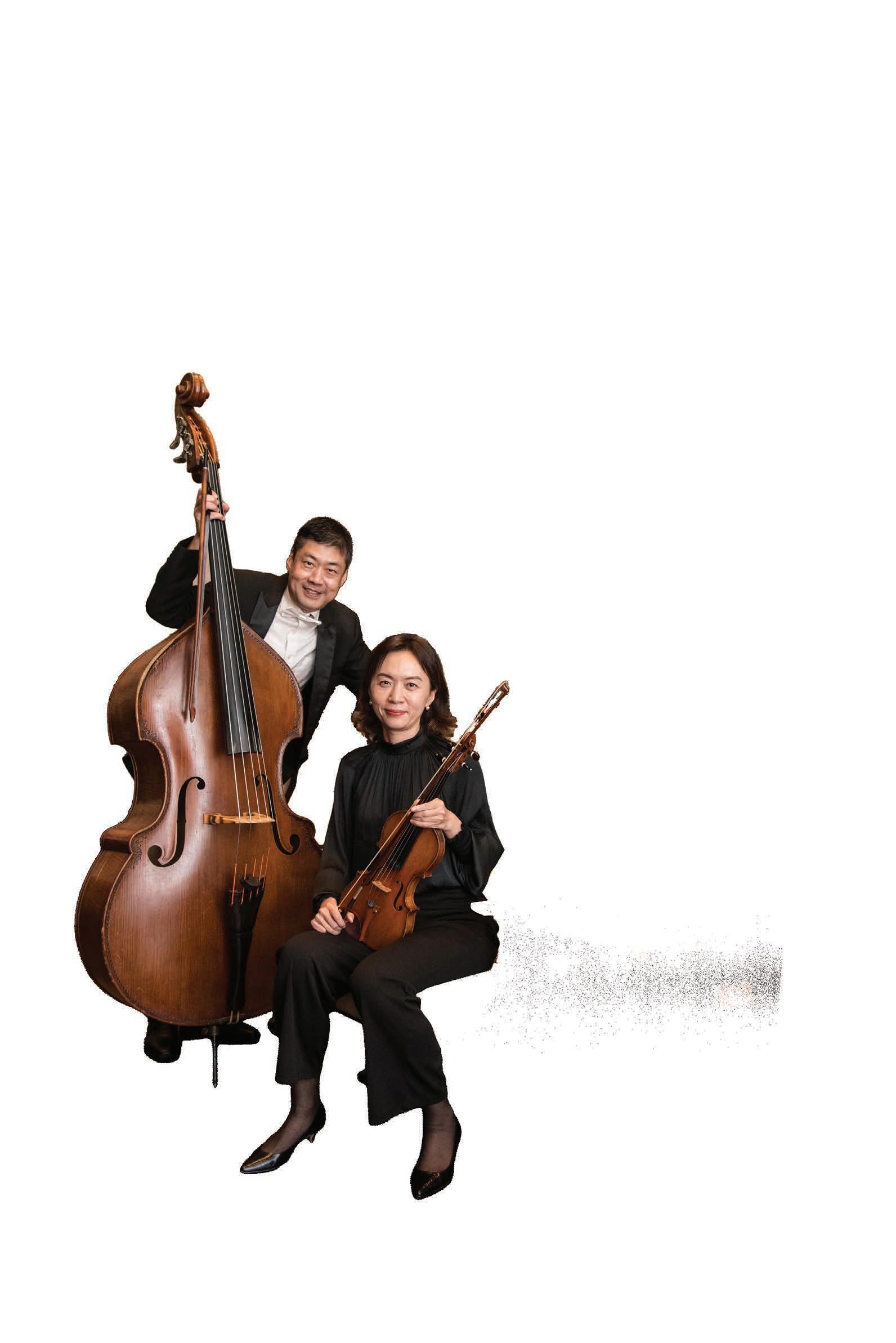
HAVE A SEAT IN THE HOME OF THE SSO
The Victoria Concert Hall has been a home for music, memories, and meaningful moments for generations.
Adopt a seat and be part of history by donating to the SSO Endowment Fund.
Your gift helps secure the future of our nation’s orchestra, so we can continue creating memorable shared musical experiences for years to come.
Seats are available for adoption in donation tiers of $8,000, $15,000 and $25,000, with various patron benefits.

The vision of the Singapore Symphony Group is to be a leading arts orrganisation that engages, inspires and reflects Singapore through musical excellence. Our mission is to create memorable shared experiences with music. Through the SSO and its affiliated performing groups, we spread the love for music, nurture talent and enrich our diverse communities.
The SSO is a charity and not-for-profit organisation. You can support us by donating at www.sso.org.sg/donate