Untold Stories
Maverick’s Monacan Homeland
Copyright Information
Authors: The Elders of the Monacan Nation
Editor: Sarah Richardson
Illustator: Dan Weiss
Designer: Hannah Taylor
Student Co-Authors:
Chapters 1 & 2: Fahad Khan, Lance Toapanta, Nikhil Amin
Chapters 3 & 4: Mikael Tefferi, Christian Setalsingh-Nazaire, Lucas Menedez Hassel, Alan Tobin
Chapters 5 & 6: Anna Kirchner, Cate Ansel, Isabel Angulo, Semony Shah
Chapters 7 & 8: Alex Liu, Emma Kee, Elizabeth Caro Tamayo, Paige Barron
Copyright 2024 Board of Visitors, University of Virginia
Except where otherwise noted, the content of this work is licensed under a Creative Commons CC BY-NC-SA.
To view a copy of this license, visit https://creativecommons.org/licenses/by-nc-sa/4.0/
Dedication
For the Future Generations of Monacan Children
Foreword
Dear Reader,
I want to give thanks to our ancestors and our future generations of the Monacan people. They are the reason this children’s book came about. There was nothing to show the respect due for our Monacan Nation Elders for their perseverance, resilience and love because without our Ancestors or Elders, there would be no community and we would not continue to thrive. Thank you to all the Elders from the Monacan Senior Center and the staff who participated with Dr. Sarah Richardson and her Spring 2025 UVA students.
Dr. Richardson and her students were dedicated in helping to bring the Monacan history alive for a children’s book for not only the future Monacan children to be proud, but for the Virginia school children to be able to understand the Monacan people and what we have survived and will continue to do.
Finally, I am extremely honored because 2 of the 3 people whom I love the most in this world are part of this story—my mother, Chief Diane Shields, and my grandson, Maverick are characters in this book. My hope is for this to inspire more Monacan people to continue to write our stories and history.
Warmest regards,
Teresa Pollak Citizen of the Monacan Nation
Project History
Untold Stories: Maverick’s Monacan Homeland was created from conversations with Elders of the Monacan Nation about their childhood and how they share their traditions with the children of the Monacan community. The Monacan people did not have an educational children’s book that details the history of the Monacan people—let alone one that prioritizes Monacan voices over Eurocentric perspectives. Addressing the lack of recognition for Native American history is important, but it is more valuable to listen to Native Americans.
Through a community partnership between the University of Virginia, the Monacan people, and Dr. Sarah Richardson’s Spring 2025 second writing requirement course titled: Community Engagement with UVA’s Indigenous History, this reader was created. Her students visited the Monacan Nation, listened, and interviewed the Elders to record those narratives for Untold Stories. The students then took on the difficult task of making sure the Monacan voices were represented accurately, that the students provide historical and cultural context throughout each chapter, and the course consistently spoke with a member of the Monacan Nation to gain approval on their representation.
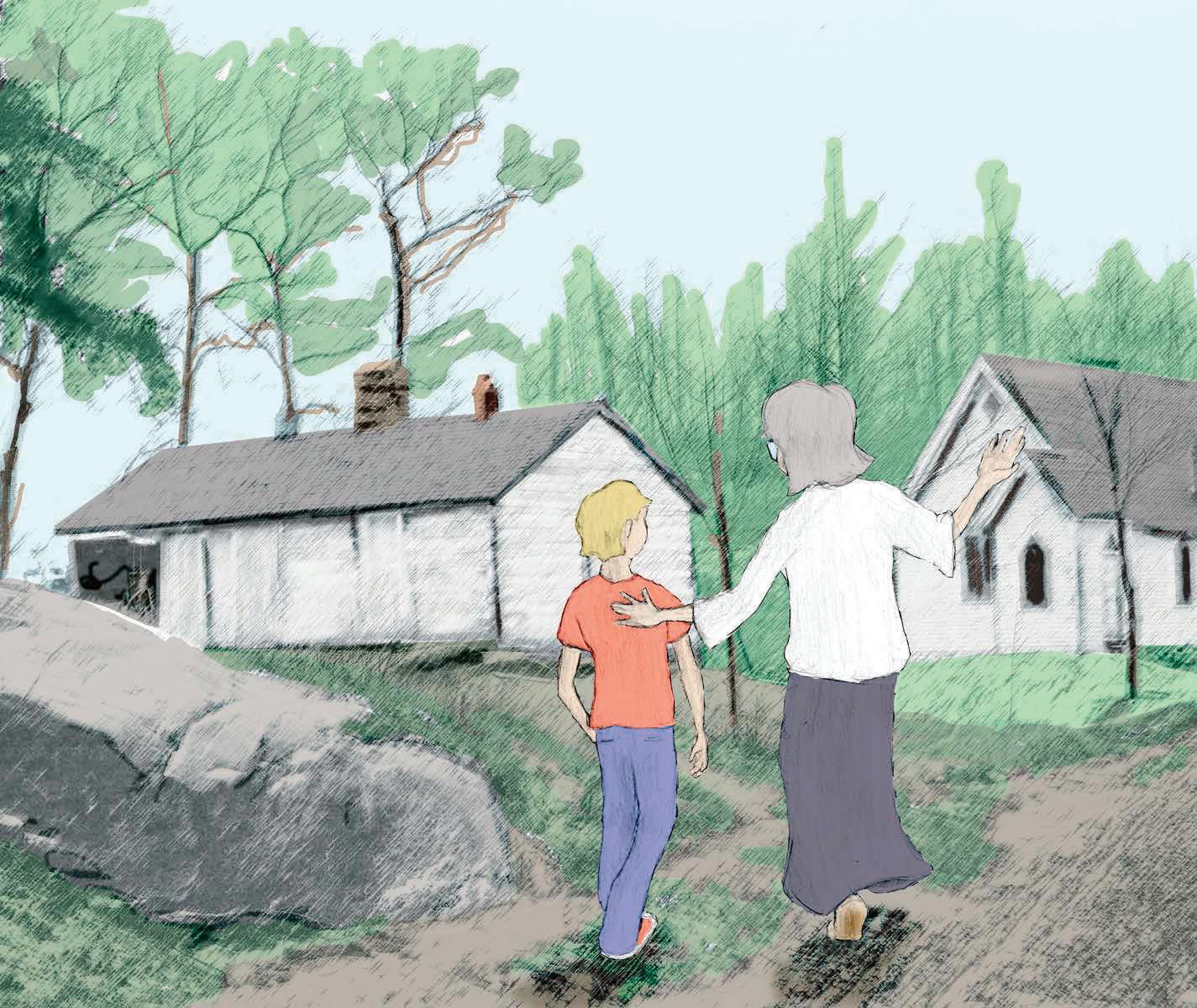
Untold Stories demystifies harmful stereotypes surrounding Native Americans while also providing a guide for how to discuss Monacan history. An important racial stereotype that should be addressed before the book even begins is the cover. Maverick and Diane are both light-skinned with Maverick having blonde hair. The common belief, as evidenced by most children’s books on Native Americans, is that all Native Americans have tan skin with black hair. Some people do have tan skin with black hair and are Native American. Some people have tan skin with black hair and are not Native. Some people have lighter skin and some have lighter hair. This book is a place to begin a conversation on appearance, identity, and belonging.
While reading these narratives, one thing to keep in mind is the terminology surrounding Native Americans. “Indian” by itself is a word to avoid as it is inaccurate. Christopher Columbus wrongly believed he had landed in India, when in reality, he landed in America. Each Native person has their own preferences on how they liked to be referred to. First and foremost, always check before assigning labels to people. Commonly used terms are: Native American, Indigenous, or American Indian, but the most acceptable term is their tribe—it is specific to who that person is. For example, Monacan people should be referred to as the Monacan Nation, Monacan Indian Nation, Monacan people, or Monacan citizens.
Terms such as Tribes and Nations are commonly recognized words used to discuss Indigenous communities. In general, the public refers to a Tribe as part of a Nation; however, all Native communities are actually Nations. Some people may refer to a Native community as Native Nations or Tribal Nations. Terms and translations are bolded throughout and align with the Definition and Translation sheets at the back of the book. Look to these resources when discussing Native American culture.
The final piece of information needed before beginning this book is that respect is shown to Native people by capitalizing words that are terms referencing Native Americans. For instance, addressing a specific ritual or cultural artifact and belief such as Eagle feather is capitalized. Additionally, terms referring to Native American people are capitalized such as Elder.
As a last note, thank you to the Monacan Nation Elders, Monacan Nation citizens, Dr. Richardson’s students, UVA’s Office of the Vice Provost for Academic Outreach, Center for Liberal Arts, and Teaching Literature for Liberty for supporting this project. This book would not have been possible if not for these communities coming together to share untold stories.
Untold Stories: Maverick’s Monacan Homeland is also available digitally at nativevoices.virginia.edu.
Letters from Student Co-Authors
Dear Readers,
In the coming histories, you will gain exposure to the Monacan people, not only who they are, but their beliefs, traditions, stereotypes they have been subject to, and their history, both told and untold. Although our story will be based on the Monacan Nation, the themes discussed throughout are applicable in some ways to almost all Tribal Nations in America.
We were privileged to have the most amazing primary sources. Several Monacan Tribal Elders welcomed us to the Tribal headquarters so that we could hear their stories, told in their own words. We have found the lessons that we have learned through our research and interactions with Monacan people to be too important not to share. This book includes lessons of resilience, family values, and so much more that not only give you a deep dive into their culture but also provide essential values for any person to include within their lives. We have focused on stories that explore specific activities within the lives of the Monacan people; these stories show how this amazing community of people lives based on their own stories, free from any bias that they may have faced in the past.
We worked to show you a perspective of the Monacan people that you may never have seen elsewhere. We hope you enjoy learning about the rich heritage of the Monacan Nation alongside Maverick!
Remember, be nice! Happy reading!
Lance, Nikhil, Fahad (co-authors of chapters 1 and 2)
Dear Readers,
Our experience writing this book began when meeting with Monacan Tribal Elders. This was the first of many collaborative efforts that would lead to the completion of this story. We wanted to emphasize the sense of community. Our overall goal is to allow you to discover the important values that have shaped the Monacan people — hard work, pride, resilience, and the spirit of sharing within their neighborhoods. You will learn about important events in history that created challenges for the Monacan community that reveal their strength and adversity through hard times. It’s important to note how gender roles work in Monacan society and how men and women both contribute equally to their community’s success. We hope you enjoy and have fun learning about the Monacan Nation just like Maverick does in this story!
Speak Truth,
Mikael, Christian, Lucas, Alan (co-authors of chapters 3 and 4)
Dear Readers,
Although it is important to learn about their vibrant traditions and heritage, it is also important to be aware of the struggles and hardships the Monacan people have faced throughout history. Unfortunately, Monacans have had to deal with exploitation and discrimination at the hands of other individuals.
We hope that after reading our retelling of the Elders’ stories, you understand more about how the Monacan people learned from their difficult experiences and didn’t let these struggles stop them from proudly displaying their culture to the world. You’ll learn some complicated terms from the stories in these chapters that will help you learn about why the legacy of the Nation is so strong today, and how this community has shown resilience and self-sufficiency throughout so many complex lived experiences and history.
We’re excited to share these amazing stories with you. We hope you all enjoy reading more about the rich heritage of the Monacan Nation!
Seek Knowledge!
Cate, Anna, Semony, Isabel (co-authors of chapters 5 and 6)
Dear Readers,
We hope you gain a greater understanding of what land means to the Monacan people. This book addresses topics like colonization and the mistreatment of burial mounds, which may be new and harder to understand. These are sensitive topics, but it is important that you learn about the impact they had and continue to have on the Monacan Nation.
We have been able to understand so much about others and how, even though we may celebrate different traditions, we share resilience.
Stay curious,
Emma, Paige, Elizabeth, Alex (co-authors of chapters 7 and 8)
Chapter One: Meeting the Monacan People
Whose voices do we hear when we listen to history? Is it George Washington? Is it Geronimo? Is it Princess Diana? What about Pocahontas? When it comes to American history, we hear voices from the winners: the colonists. First, Columbus, then John Smith, and even the Disney movie Pocahontas, are told from a colonial perspective. This mina:gi is different. Untold Stories: Maverick’s Monacan Homeland is told from the Monacan Nation’s perspective—they were here before Columbus and even before the Vikings. The Monacans, a resilient tribe, have outlasted the American stories written by the Western viewpoint.
You may be thinking, “Why are you telling me about the Monacan Indian Nation?”
Who are the Monacan People?
The Monacan Nation is an important part of the past, and their ancestral Amą:i may be closer than you think! Learning about their past and present customs and stories is important because their story should not be forgotten, as the history of the Monacan Nation is rooted deep in our soil. Understanding the Monacan history, culture, and identity at a young age, like you are right now, will help keep their continued legacy and current day impacts alive and allow you to pave the way for the future of our society! For 10,000 years and counting, the Monacan Nation lived in the mountainous areas and flatlands of Virginia and West Virginia. The Monacan people are an Indigenous tribe that was a part of the Eastern Siouan language group and were a particular type of Native called “Woodland Indians.” Many tribes speak variations of the Eastern Siouan language, but the Monacan people have traditionally spoken the Tutelo dialect
You may be wondering what the proper term is for referring to the Monacan people. You might have heard phrases such as “Indigenous Peoples,” “Native Americans,” “American Indians,” and “Indians” to describe them. The best term for you to call them is the “Monacan people” or “people of the Monacan Nation.” Although they are Indigenous peoples, the term “Indigenous” is broad and refers to all native populations in the country. The Monacan Nation, along with all other Tribal Nations, is unique and survives by its practices and livelihoods. That is why we call them the Monacan people to talk about them specifically!
The Monacan Nation was a part of a confederacy joined by other Native tribes, such as the Mannahoacs, Tutelos, and Occaneechis. These Tribal Nations were also speakers of the Eastern Siouan language and lived in nearby regions of modern-day Piedmont, Virginia, West Virginia, Tennessee, and North Carolina. Together, for thousands of years before the English colonizers arrived, they lived a peaceful, stable life.
The Monacan People’s Joyful Life
The Monacan people’s land was filled with life. Fruits, nuts, trees, and wildlife provided some food sources, while deer, rabbits, and other animals roamed and were hunted as well. The Monacan Nation used the many plants growing in the land in other ways. Monacans had an extensive knowledge of medicine and were an advanced civilization that used herbs and roots in their practices. The people who provided medicine were respected and highly honored among Tribal Nations.
Like us, the Monacan people have always engaged in many activities. For instance, they play various sports and activities in their pastime, including “stickball.” Monacans love to sing, dance, and participate in ceremonies. All of the people in the towns gather around twice a year for their large ceremonial festivities. They spend hours and hours reciting their faithful rituals and poems throughout the night.
Chapter six, “Stronger in Faith, Stronger Together,” shows how faith hasn’t changed for the Monacan people. The Monacan Nation worships a Wa:geni: and respects all forms of life. They respect the land they live on, and the creatures and wildlife found on it, as they are an important part of their culture. Their respect for land comes from the belief that it represents the present and the past. Part of the Monacan people’s faith comes with the belief that all of their ancestors who used to roam the land are still a part of them through the land. This faith has been passed on from generation to generation through storytelling.
Who doesn’t love stories? Monacan Elders love to tell stories. Tribal tales and religious narratives have been passed down over the centuries. Some of these stories are in this book. Stay tuned!
Elders are greatly respected, and society places high regard on the caretakers as well as the leaders of the homes. Nobody is solely in charge, yet no one has a job too small! Everyone does something! For example, women cooked food and worked with textiles and clothes. Men worked on crafting tools and weapons. They would all unite as a community to create homes in the towns and grow their crops. There was and still is a sense of respect and friendship among the tribes, and nobody competes against one another. They all live in harmony! Have you ever thought about where clothes are from, how they are made, and the difference between clothing today and clothing from centuries ago? Historically, Monacan people wore deerskin clothing; when they wanted to get fancy, they would wear jewelry made of other deer parts.
Life sounded so joyful back then, doesn’t it? So, why did things change?
European Colonization and the Monacan Legacy
The Monacan people’s stability and peace were disturbed when the Europeans came to America. Disease spread like wildfire, and unfortunately, many of the Monacan people did not survive. Also, the European colonizers took control of much of the land that the Natives lived on, forcing them out physically and legally through unfair government laws. The U.S. government wanted to use the Monacan land to expand the United States. Once removed, some of the Monacan people relocated. A good portion of the Monacan people went to Western Virginia, or up north into Canada to join with the Iroquois Confederacy where they were adopted by the Cayugas, among other locations.
Now, the tribe is working on buying back what was taken from them. To this day, the Monacan people honor their past and continue to spread their legacy. The present-day Monacan cultural heart is in Amherst County, centered around several important sites, such as the historical Bear Mountain, the Monacan Ancestral Museum, and a log Ati: yilana:ha called the Bear Mountain Indian Mission School.
The current Monacan Nation has a tribal government just like they did centuries ago! The Monacan Indian Nation is one of seven federally recognized tribes in the state of Virginia. Virginia officially recognized the Monacan Nation in 1989. The U.S. government granted the Monacan Nation federal recognition in 2018. Because the government has historically discriminated against tribes, these recognitions by the state and federal government help the Monacan Nation receive access to greater services and benefits.
Learning about the Monacan People
You may think, “How do we know so much about the Monacan people’s pasts?”
We learn about Monacan history through archaeological evidence, such as the recovery of fossils and tools. We also learn from oral recounting passed down through generations. Follow along as you hear multiple stories from the present-day Tribal Elders of the Monacan Nation! You will learn about the tribal history and the people who continue to keep the memory of the Monacan culture alive.
The Monacan values are important to learn and remember. These values guide the way the Monacan people lived their lives and how they continue to live now. You will learn a lot about these values in this book:
• Chapter 2, “A New Identity,” shares the values of hard work, family, and identity.
• Chapter 3, “Growing Up in the Monacan Nation ,” showcases the values of resilience and inclusivity.
• Chapter 4, “Riding into the Monacan Tradition” shows family roles and shared responsibilities.
• Chapter 5, “Stories of Strength, Roots of Resilience,” represents the values of overcoming hardship and exercising self-sufficiency and resilience as a Monacan community.
• Chapter 6, “Stronger in Faith, Stronger Together,” showcases the values of faith and cultural identity for the Monacan people.
• Chapter 7, “Protectors and Preservers of the Land,” depicts the value of land and the connection the Monacan people have to it.
• Finally, Chapter 8, “The Path Forward,” portrays the preservation of Monacan and other tribal history and its persistence in the modern day.
Follow along as you hear stories about a young boy named Maverick as he learns of these Monacan values!
Chapter Two: A New Identity
It is a bright September day, and Maverick, who also goes by Mav, is beyond excited to go outside and explore. Maverick is the great-grandson of Diane, the Chief of the Monacan Nation, but he just calls her Nana. When referring to Teresa, his grandmother, he uses the Monacan word for grandmother Higų:. Maverick has been itching to go outside for days for several reasons. For one, he has been stuck inside due to the rain, or xawo: as the Monacan Nation calls it, for the last couple of days. Plus, September has always been his favorite month! The days are warm, or Aka:teka; the sun seems to shine brighter, and the cool mamąklé is more refreshing. Today is the perfect day for an adventure outside.
Just as Maverick steps one foot outside, ready to seize the day, he hears the warm voice of his great-grandmother. Maverick slowly steps back inside. As much as he loves sunny September days, he loves his great-grandmother even more. Maverick walks back inside to find her, even though it means putting off his outdoor adventures a little while longer.
“Maverick! Where are you, Mav?” she calls.
“I’m here, Nana!” he replies.
Diane steps into the living room from her office. She often spends her days busy handling tribal issues, whether working to get more resources for the community or handling small disputes. Maverick can tell that being a Tribal Chief is not an easy job, but his great-grandmother is amazing at it and still makes time to spend with him.
“Before you run off, I could use some help around the house. There’s sweeping to be done, and the firewood needs to be stacked properly.”
Maverick groans. The sun smiles at him, ready to spend a day together. Maverick is ready, aching to feel the warmth of the sun. “But Nana, it’s such a beautiful day! I’ve been waiting all week to go exploring.”
Diane chuckles, shaking her head. “The world isn’t going anywhere, Maverick. It’s been here since I was a child.”
Maverick laughs and then sighs. “Can’t I do it later?”
She gives him a knowing look. “You say that now, but once you’re off, you’ll forget all about it. I should know. I used to tell my parents the same thing.”
He hesitates, but realizes there is no winning this battle, and besides, a small part of him knows he would enjoy spending time with his great-grandmother. Maverick thinks for a moment about how he enjoys her stories whenever they spend time together and how he will be doing her a huge favor. “Alright, Nana,” he finally says, dragging his feet as he comes back inside. Hopefully, he won’t be busy for too long with his chores, so he can play outside.
Diane smiles, “Maverick, before you start your chores, let me tell you a story about my childhood for a moment. I feel like it will energize you to get done with your chores quickly.”
Eager to hear and learn from his grandma’s stories, Maverick grins. “Sure! What’s the story about?”
“You’ll find out soon enough, Maverick,” Nana says with a smile. “Let’s go to the living room. Take a seat and get comfortable.”
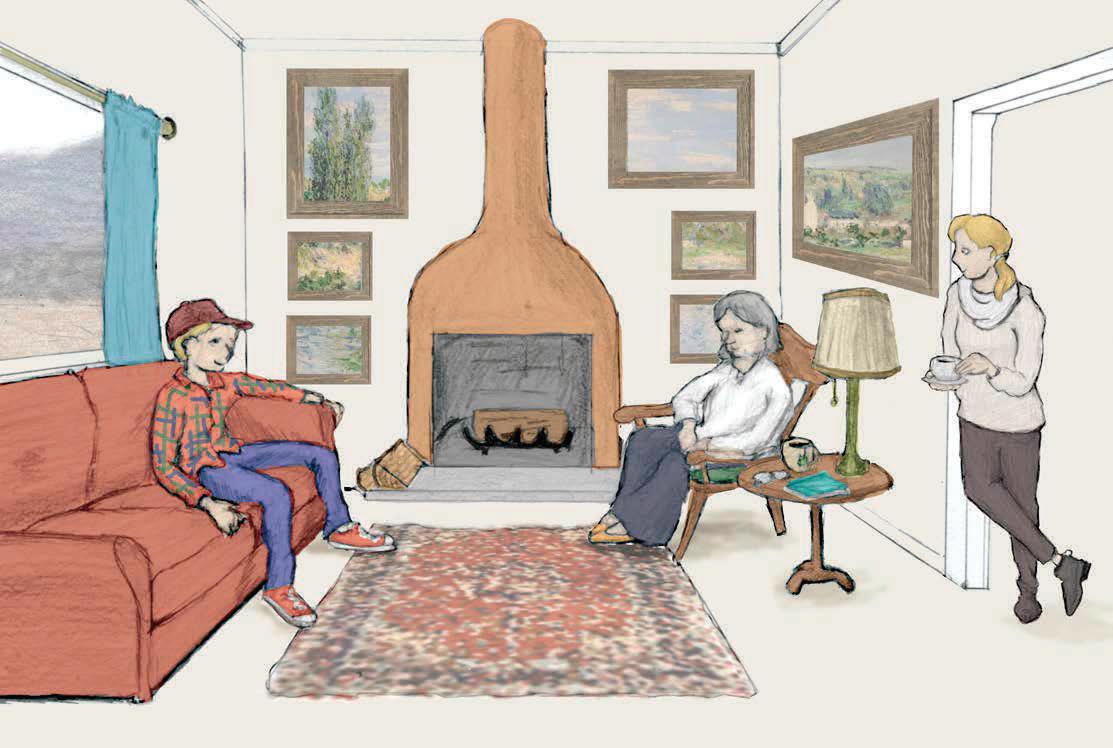
Maverick nods, and then he follows her. Maverick settles into his favorite spot, sinking into the dark-red couch cushions as his great-grandmother eases into her wooden chair with a green pillow. Growing up, the living room has always been a great source of comfort for Maverick. Mav finds that no matter when he finds himself within the room, he always feels warm. The living room is decorated with photos of family, his grandparents, cousins, parents, and paintings of the landscape surrounding the area he lives in. For Maverick, the room reminds him of all these things and reminds him of how supported he is. She folds her hands in her lap and looks warmly at him.
“Now,” she begins, her voice kind and caring, “I don’t think I’ve ever told you about when I grew up, right?”
He says, “No, I don’t think so.”
Diane chuckles. “Monacan history is complicated, with both good things and bad things that have happened to our people. Oftentimes in our past, our stories have been avoided by the Elders for these reasons, but I think it is time for you to begin to learn more about our people’s rich culture and history. Where to begin? For starters, we did not have advanced electronics. I know that because of the rain, you and your friends spent a lot of time during the past few days playing video games, which is something we never had. Rainy days for us were laundry days, and the sunny days that followed were filled with drying our clothes.”
Maverick asks, “But if you didn’t have electronics, how did you wash your clothes?”
Diane laughs and responds, “We did not have those fancy washing machines you have nowadays. Those did exist, but they were rarer than they are today and very, very expensive. Oh no, we scrubbed our clothes on a washboard.”
Maverick’s eyes widened. “A washboard?” He had only seen those in old-timey television shows since he was lucky enough to have a washing and drying machine at home. “That sounds like sooo much work! Didn’t your arms get tired?”
“Of course they did,” Diane says. “But there was no such thing as being ‘too tired.’ We had to do our part. Everyone did. We were raised to help out early, especially in big families. We had to work by doing chores, chopping and carrying firewood, and canning food for later. One family in our community even had fourteen kids. Oftentimes, these families had so many kids that they had to not only share their toys, but also their beds. Sharing your bed with so many other children doesn’t sound too comfortable now, does it, Maverick?”
Maverick’s jaw drops to the ground. “Fourteen?! That’s a lot!”
He cannot imagine sharing his video game console with that many people, much less sharing his bed. Maverick loves to sleep in on the weekends and cannot imagine waking up to the snoring or accidental kicks of other siblings. To Maverick, sleeping is very important, and he cannot imagine a world where he would be interrupted or be forced to wake up early to chop wood and can food. Maverick would not even know where to begin with canning food.
“Where do you even get the cans from?” he thinks to himself as his great-grandmother begins to speak again.
“Keep in mind that out of those fourteen, only nine made it to adulthood. Sadly, some of the children passed away at birth,” says Diane. “Back then, it wasn’t uncommon to have so many kids. Families were big because life was hard, and not everyone made it. Living on the farm meant you needed as many people as you could to help out. Everyone helped, no matter what age they were. Working hard surrounded by your family is truly a bonding experience that has spanned generations. That hard work that we all did together has taught me so many lessons and brought me so close to my family, I can hardly tell them apart from me.”
Diane reflects on the past for a moment as she thinks about how life was then compared to now. There are drastic changes in the amount of technology involved in day-to-day life. Now, there are video games and washing machines that are more accessible, things that she had never had. However, life has been good for Diane as she has always been, and still is, surrounded by family; she wouldn’t trade the life she’s lived, even despite her many hardships. Those are the types of lessons she passes on to her kids and now hopes to pass down to Maverick.
Maverick smiles, nods, and then says, “I can’t believe you grew up on a farm!”
Maverick loves that, even after all these years, he is still finding out brand-new things about his great-grandmother. A part of him begins to wonder more about the culture that he and his family come from. He has always heard that he belongs to the Monacan Nation but has never really understood what that meant. The more his Nana talks, the more he seems to understand that being Monacan is as much about values as it is about traditions.
“Yes, of course. We lived on a farm with a big apple orchard.” She smiles at the memory. “The apples were the best you’d ever taste. Amazing. You can buy as many apples at the store as you want, but there is something about knowing you helped with the finished product that makes them that much better.”
Maverick’s stomach grumbles loudly. “Now I want an apple. Actually, I want two apples.”
Diane laughs. “You would’ve loved the apples, but you would’ve had to work for your apples. Remember what I said about all of us, the old and young, the women and men helping out? Those apples were delicious, but you had to pick them first.”
Maverick sighs. “I knew there’d be a catch,” he says. Maverick knows that apple picking requires hard work, but loves the idea of community and, of course, delicious apples.
“It’s not a catch,” Diane responds. “You will soon begin to appreciate the value of hard work, especially alongside those who you love and care for. Without it, our sense of community and family would be much weaker. If the tribal members didn’t work hard, we would have struggled not only for food and water, but for other necessities such as shelter and clothing. A passion for hard work is what has allowed us Monacans to remain strong through so much adversity and conflict.”
“I never thought of it that way,” Maverick says as he reflects on all the good things he had in his life. Maverick’s reflection made him feel selfish for wanting to go out exploring instead of wanting to help Nana.
Sensing his guilt, Nana adds, “It’s not a bad thing to have fun. In fact, spending time with fellow Monacans and having fun is something we value, too. We play many games, hold festivals, and even perform beautiful dances. It’s all about balance, Maverick. I know that you want to go out and explore. It might even feel like, because you are so young, you shouldn’t have to help out as much when you could be having fun instead. But in our Monacan culture, everyone is a valuable part of our society, regardless of age or gender.”
“What will I do when I get older?” Maverick asks.
“Soon, you’ll be bigger and stronger than you are right now, so you will be hunting, not only for food, but also materials we can use to make ceremonial clothing and add on to our homes. You will also protect your family, as well as others in the tribe. I want you to know that your role will be very important,” Nana says.
“What about everyone else? I don’t know if I can handle all of that pressure,” Maverick wonders aloud, hoping that he won’t be responsible for the entire tribe.
“Obviously, you are going to be part of a bigger group and have help. As I said earlier, we value everyone in Monacan society. Elders who might not be able to perform such physically demanding tasks will pass down wisdom and stories to the younger generation to help keep our beliefs and practices alive for years to come, as I am doing now. This is especially important today as we Monacans find it harder to maintain a strong presence in a colonially dominant nation, but I will tell you more about that later.”
Women in our tribe do a lot of work, as I used to do when I was younger. We would harvest crops, prepare food, and use the resources the men gathered to craft pottery, clothing, and other necessities. The children like you played a more versatile role, helping out politely, while learning how to do the more intense tasks from those older than you,” Diane tells Maverick.
Maverick is so pleased to hear that he will not be alone in this work. Knowing that he will have help from so many other people makes him feel much less fearful about what the future holds.
He has only been speaking to Diane for a little bit now, but he already feels different. Something about the passion Diane speaks with makes Maverick feel different; he sees how much keeping the Monacan Nation alive means to her. Thinking back, Maverick considers how many times he rejected the offer of extra oknaho: simply because he didn’t want to, while everyone else was outside working hard so they could live the life they wanted.
“Thank you so much for teaching me all this about the way of life of our people. I already feel like a whole different person,” Maverick tells Diane, hoping she will realize that he really does care about what she wants for not only himself, but their community, too.
“Of course, as I told you, that is part of our job as Elders, to keep our values running through generations. You will soon learn that our identity as Monacan means nothing if we don’t maintain our roots. As you get older, you will see that our culture, alongside that of other Indians, has been suppressed, making it even more important that your generation is in touch with those who came before, and that you always remember who you are,” Diane concludes.
This quick discussion has a very large impact on Maverick’s understanding of what it means to be Monacan. Before, it was just something he identified with, but now Maverick wants to learn more and make his Monacan identity something that defines who he is as a person.
Maverick continues to reflect for a moment, and after some silence, Diane begins to speak again, “I just want you to know that no matter what anyone says, you should be proud to be Monacan.”
Maverick’s eyes widen with confusion as he wonders what people would say to him that wouldn’t make him proud to be Monacan. Diane, sensing his confusion, explains, “There is a lot we as Monacan people have experienced throughout the course of history, even before my mother was alive. Even today, although we might not experience violence or racism to the extent that us Monacans have been used to in the past, there are still ways our communities are attacked. However, that only further motivates our desire for strength as a group,” says Diane.
“Like what?” asks Maverick, “Nobody has attacked or said anything bad to me about being Monacan.”
“Violence today is less obvious to the naked eye. Maverick, what I want you to understand is that society today has tried to silence and suppress us, but that won’t be possible if we are able to maintain our identity as Monacan people. When you go to school, you often won’t learn about our history. Instead, you’ll hear about the colonial history where White men ‘bravely’ came and ‘discovered’ America. Stories of the Monacan people and other tribes will be sparse. You’ll be told the positive, pretty part of history. That’s why it is so important to share our stories, despite the pain we may feel,” responds Diane.
Maverick, rubbing his chin, asks, “So basically, what you are telling me is that as long as I remember I am Monacan, then I am safe from the violence our ancestors experienced?” It is clear Maverick had the right intention, but Diane does not want him to take away the wrong idea from this conversation.
“Not necessarily,” starts Diane. “I would prefer that, rather than just remembering you are Monacan, you immerse yourself into Monacan life. Keep in mind, immersion can take many forms; whether it is helping around the tribe as I mentioned earlier or even just having conversations like this with other Elders, my hope is that you are constantly learning about who we are.”
“I can do that! In fact, I enjoy learning about our history and traditions. I’m glad that I didn’t leave to play because I have had a lot of fun talking with you,” Maverick smiles, assuring Diane as he looks up to her face. Looking down and matching his expression, Diane asks, “You know what? Let’s go to Bear Mountain so you can feel our ancestors while we continue talking. On the way there, feel free to ask me any questions you have, it will only help you learn more about Monacan life. The chores I had ready for you can wait. I think this is more important,” Diane proposes.
Maverick’s face fills with excitement. Now he can’t wait to learn more about his people and identity as a Monacan.
Chapter Three: Growing Up in the Monacan Nation
Maverick shoots out the door, eager to explore Bear Mountain. The drive up to the su:hi is short, but filled with oni:, shrubs, and different flowers that welcome Maverick to the site where several of his Nana’s stories take place. Maverick steps out of his Nana’s old truck and his attention is instantly attracted to the schoolhouse that he has seen time and time again.
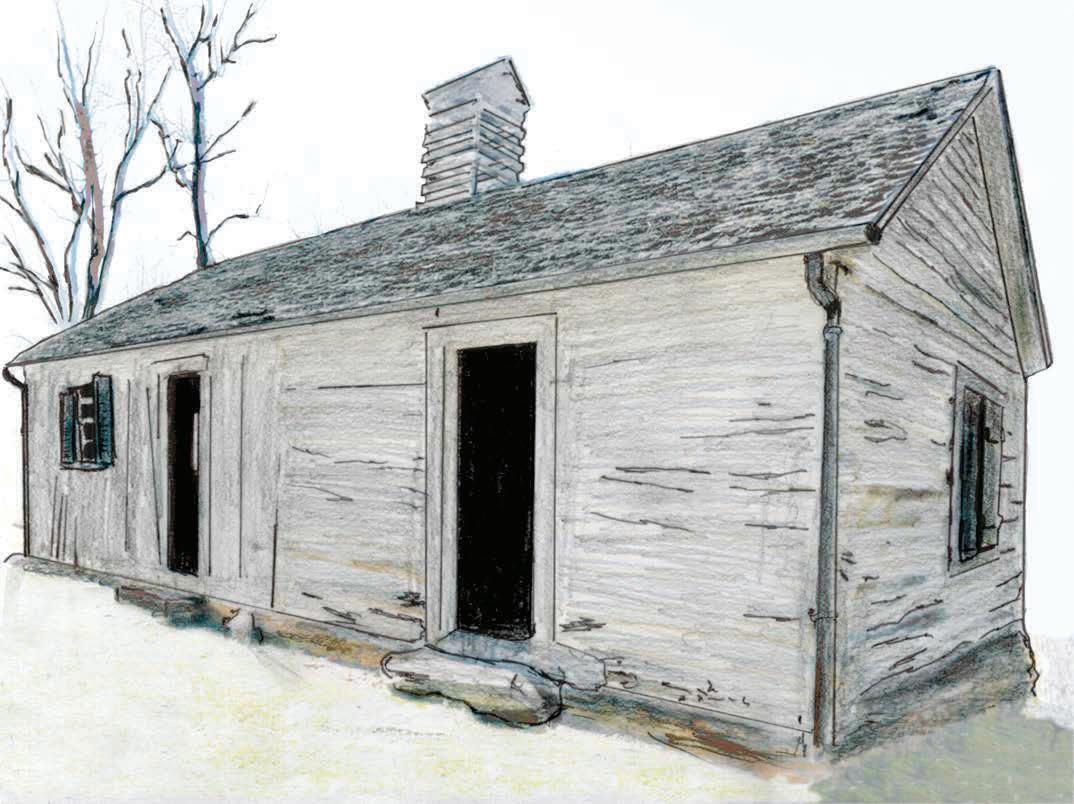
Maverick mutters to himself, “It is crazy that this school looks more like a cottage than a place to learn.”
This one-room building near Bear Mountain was originally built by the Monacan people in the late 1800s to serve as a church, as well as a spiritual and community gathering place. Later, when Native children were not allowed to attend white schools and were often excluded from public education, the Monacan community transformed the space into a school to ensure their children could still learn. Students were taught reading, writing, and math by Monacan teachers and community members. While lessons covered basic subjects, children also learned from their families and Elders about their culture, language, and history outside the classroom. The school stood not just as a place of learning but also as a symbol of strength, pride, and the Monacan people’s determination to protect their identity through education. The schoolhouse continues to hold great cultural significance to the Monacan people and is recognized through its addition to the National Register of Historic Places in 1997. The schoolhouse functions as the Monacan Indian Museum today, continuing to preserve and educate people on the perseverance of the Monacan people in educational institutions.
“A cottage?” Nana smiles as she catches his mumbling. She studies his puzzled face for a moment, staring at the schoolhouse, before she begins to explain: “The Bear Mountain Indian Mission School may be small, but it is mighty. Even though it is the size of a single classroom, its impact on our community is much larger.”
Maverick is immediately hooked and looks to his Nana attentively, waiting for what she has to say next.
Small but Mighty: The Bear Mountain Indian Mission School
Nana takes a second, as if she really is looking back in time.
“Originally, when it opened in 1868, the schoolhouse served as a place for church services. However, over time, it became the sole site for children’s education in our Monacan community.”
Maverick’s mouth hangs open in disbelief. “How in the world could this tiny building have taught the entire community? My elementary school is a million times bigger than this!”
“Well, Maverick, this school only taught up until seventh grade. To be able to teach the most students, you could find the teacher instructing the kids in the front of the class, who would then pass on the newly acquired information to the younger kids sitting farther back. This method brought together the youth and fostered strong relationships within our community.”
Maverick stops in his tracks: “So you’re telling me that in three years I would have been done with school forever?”
“Sounds nice, doesn’t it? However, it was not that great in reality. Up until 1964, Monacan people were not treated as equals to White Americans. We had to adapt to society, and this school was one of the ways we did just that. Your ancestors were very resilient during the period when the schoolhouse was active.”
Nana realizes that she needs to explain to Maverick why the Monacan people needed to establish their own school in the first place.
“Virginia had segregation laws that did not let Monacan children attend public schools. Monacan children were not classified as Native American. Instead, many were considered to be ‘colored.’ Therefore, this school symbolized the Monacans’ fight against this legally established system. The Monacan community would be educated even if unfair laws were making our access to education more difficult. It was not until the Civil Rights Movement in the 1950s and 1960s, which led to the integration of public schools, that we could attend schools like the one you learn in today. For the first time, skin color did not define where one could or could not go to school.”
Maverick can hardly imagine a life where he could not go to school with kids of different races and backgrounds like those who make up his friend group today.
The Civil Rights Movement
The Civil Rights Movement was a social movement that took place in the middle of the 20th century. Martin Luther King Jr., Rosa Parks, Dennis Banks, and many other Americans fought against racial segregation, discrimination, and unequal rights, particularly for Black Americans. This movement was also pivotal for Native American Nations and tribes such as the Monacan Nation, because, legally, they tended to be put into the same race group as African Americans. Thus, the Civil Rights Movement resulted in important social changes for the Monacan Nation, allowing them to live in American society more comfortably. Specifically, the Civil Rights Act of 1964 prohibited discrimination based on race, gender, or religion. This allowed the Monacan Nation to be treated as equal to other Americans in public places. Also, the Monacan Nation gained more visibility in politics, allowing them to become federally recognized in the future. This came with the acknowledgment of the Monacan Nation as a sovereign nation, federal resources, and protections that help to preserve Monacan culture.
Nana’s eyes light up brightly as she continues discussing the history behind this schoolhouse. “Did I mention that even after a fire hit this area in the 1930s, the schoolhouse still remained standing? Like this schoolhouse, no matter what challenges we are faced with, we keep standing tall through it all.”
Maverick follows Nana outside the schoolhouse, matching each step with Nana’s footsteps, and begins thinking about everything Nana said. While he respected his Tribal Elders before, after hearing about their reality growing up, he feels a new sense of appreciation for what they lived through.
The Evolution of the Monacan Household
Suddenly, Maverick interrupts his pondering: “I never thought about how things can change so much in just a couple of years. What else has changed?”
Nana cannot help the smile from forming on her face—a direct reaction to Maverick’s innocence. “Every day things are changing. That is why it is so important that we stick together as a family, maintaining our culture and traditions. Though, to answer your question, one of the biggest material changes I have noticed has been within our homes themselves.”
Nana explains to Maverick how, hundreds of years ago, the Monacan Nation lived in dome-shaped houses made of bark and reed mats, which were made from plaited pieces of different plant materials.
“Over time, our people moved into single-family homes just like the one you live in today. Growing up, I got used to having all of my siblings running around the house—there was never a moment of silence! My house would never be empty—if my siblings were not home, there was a good chance that Tribal Elders would be over, playing card games such as 100 Pedro.”
Maverick interrupts with excitement: “How in the world did you guys all fit in the same house?”
Nana lets out a chuckle before replying. “While it may have been a tight squeeze with many of us siblings sharing a sa:si, I would not trade that experience for the world. Within our home, we were taught to always be forgiving and lend a helping hand.”
“There is no way that this was comfortable,” Maverick responds surely.
“I never claimed to say that this was the most ideal situation growing up, but it helped to shape who I’ve become today. And it was very common in the Monacan Nation sixty years ago: many of my dear friends lived with several siblings, and they were all like family to me. Our community was very involved with each other’s lives in many ways. Some would perform church practices in their living rooms, inviting over neighbors and friends. Within our homes, every family member played different roles, whether it was gathering berries or hunting for supper— long-standing traditions in my home—each member would be brought together in unison.”
Maverick grows even prouder of the community that his ancestors were able to create and maintain for themselves, especially given the struggles that they went through.
“No matter what obstacles fall in your way, your brothers and sisters, whether they are of Monacan descent or are your best friends from school, will be there for you. It is also equally im-
portant that you are there for them whenever they may need it. This is what being Monacan is all about.”
Hearing this, Maverick is filled with pride for the Nation he is a part of.
A Symbol of the Monacan Community
In need of a break, Maverick hears the playground calling his name. Nana and Maverick make their way over to the swing set. Maverick climbs into the swing smoothly, and Nana begins to push him. With each push, he quickly gains momentum and finds himself soaring up to the sky. Suddenly, Maverick stops his swinging and exclaims, “Nana, look! There is an Eagle flying right above us!”
Nana looks up in awe; her eyes follow the Eagle until it is no longer within her visibility. She then explains to Maverick the role Eagles have within the Monacan Nation. “The Eagle flies higher than any other Ma: in the sky, just like you on that swing, Mav! They bring about courage, honor, and wisdom.
Maverick is impressed and thinks back to all the times he has seen Eagle feathers on display within his community.
“These feathers bring together our people. Not only do they hold significance, but they are also used in clothing and accessories worn at Powwows and used in prayers.”
These feathers have impacted me the most in times when tribal members have fallen ill. Laying an Eagle feather on a fellow citizen ensures that no matter what may happen, this feather will match another feather in the universe, creating a set of wings that will take them to our Creator.”
Maverick is moved by the presence of this Eagle. He thinks to himself, what an honor it would be to receive one of these feathers one day.
Having Fun in the Face of Adversity
Powwows are Native American celebrations that bring together different Tribal Nations in order to exchange traditions and cultures. Tribal dancing, singing, feasting, and playing games are key components of these culturally significant events. They serve to create a deeper sense of community and identity for the participating tribes.
As Maverick hops off the swing and makes his way over to the merry-go-round, Maverick suddenly asks, “Nana, what did everyone do for fun when you were growing up? I can’t imagine staying inside all day, especially with no internet or air conditioning.”
Diane laughs, acknowledging, “Yes, back then, times were very different. Besides each other’s company, we never had much to entertain ourselves with. Growing up, we had to utilize whatever was available to us.”
“So, you had to play outside all the time?” Maverick quickly questions.
“Yes, that’s right, Maverick. Playing outside and interacting with our friends were ex-
tremely important back then. We couldn’t simply talk to our friends over FaceTime or play video games together. After school, we would go outside and play. It didn’t matter what we played, as long as everyone had fun.”
Maverick still cannot believe that his Nana grew up without electronics. Her playing outside reminds Mav of how he felt during recess, his favorite subject in school.
“So, did you play sports? I could see how you could play frisbee all day—it’s so much fun,” Maverick replies.
“We didn’t have frisbees. Growing up, our parents worked extremely hard to provide for us. Money was something that we needed to spend on other things, things more important than toys for playing outside.”
“But toys are important. How else would you play without a Frisbee? How could you play baseball without a bat?” Maverick protests.
Diane smiles as she hears this, knowing that Maverick doesn’t understand the experience of growing up in a family without money, especially back when the Monacan people faced extreme prejudice and would work hard for just a few dollars.
“As you grow older, Maverick, you will see that this world isn’t always fair. Toys might be important, but wouldn’t you rather spend money on food, clothing, and necessities for your family?” Diane questions.
Maverick slowly considers this. He doesn’t have to worry about his next meal or whether his parents have to work overtime. All he worries about is waiting for his favorite video game to update and doing chores like sweeping the house and stacking firewood!
“If you didn’t have access to toys or balls, then what did you do all day?” Maverick ponders.
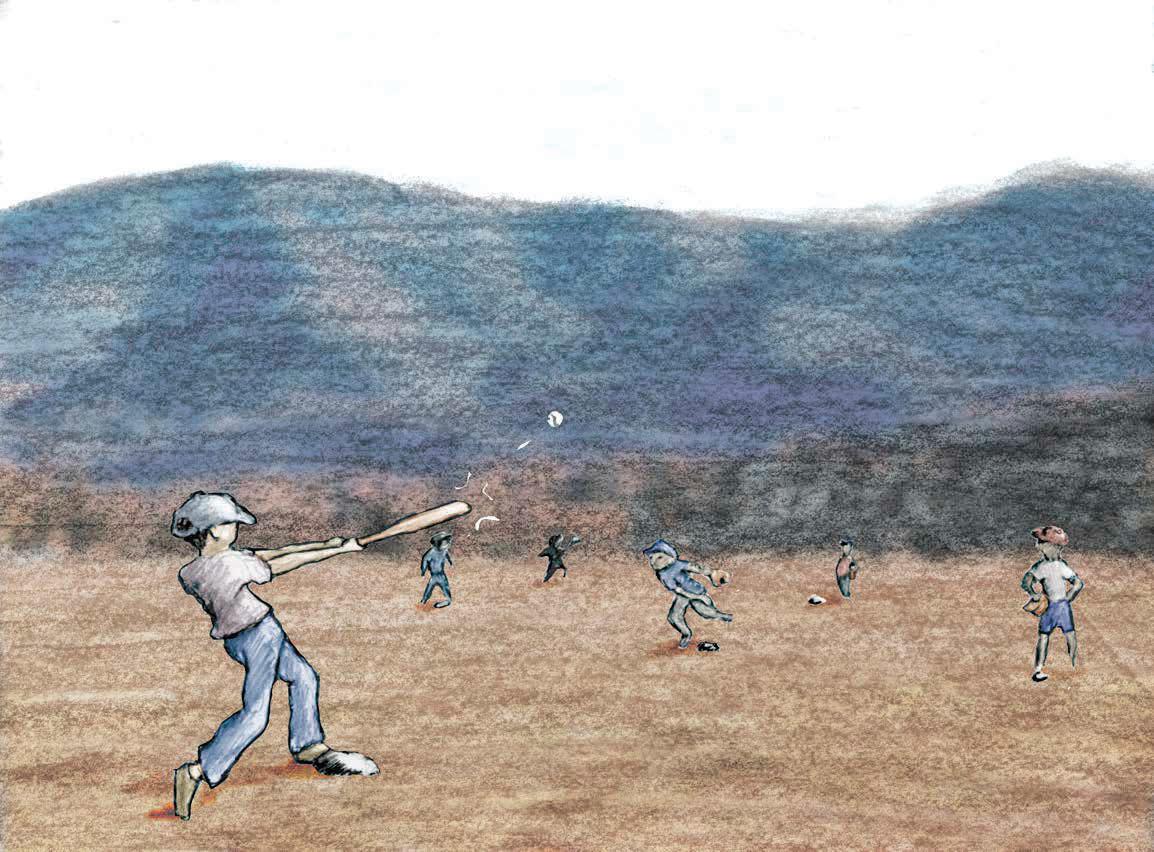
“Growing up, all the neighborhood kids would come together and figure out what to do after school. I loved playing baseball back then with rocks that we would find in the field near our home. The ball we used would be made out of rubber, and the bases would be large rocks that we would gather,” Diane replies.
In the 1900s, Monacan people faced extreme prejudice as a result of years of inequality. They primarily worked in the orchards where they were paid less than a dollar for an hour’s worth of work. The work consisted of pruning apple trees and harvesting the apples. Working in the orchards required hard labor, often over long hours. The payment consisted of paper that could only be used at certain stores. Landowners, who not so coincidentally owned the stores, determined individual pricing on goods, enabling the owners of the land to control even what and how much the Monacan people could buy.
Maverick considers what Diane said and asks: “Did Monacan kids play by themselves or were other people invited as well?”
“We would play with all the kids in our neighborhood—Black, Hispanic, White—it didn’t matter, just as it does not matter today.
“You see,” Diane continues, “We didn’t just play outside together. We would also go to each other’s houses and eat dinner with one another’s families. Community is something that we take very seriously, Maverick. My parents would always encourage my friends to come eat at our house after we finished playing.”
“I never realized how the community was so different back then,” Maverick reflects. “Now, we speak with each other through virtual chat.”
Laughing, Diane adds, “Yes, that’s right, Maverick. But that doesn’t mean you can’t go outside and play or invite your friends to come to our house for dinner. Even though society has changed, you can still be an active participant and do your part to help and connect with others. Even online, you must always be the best version of yourself and treat others with respect, just as our ancestors have always done.”
Listening to Diane, Maverick considers how he plays a role in the community. He speaks with his friends at school and plays video games with them online, but he never invites them for dinner or meets their families.
“So, what did my great, great-grandparents do? What did the Elders do for fun back then? I know they had to work hard, but didn’t they also take time to have fun?” Maverick asks.
“Great question. Let’s take a break from the playground and go to the Fellowship Room to learn a bit more about 100 Pedro, a Monacan favorite,” Diane offers as she motions for Maverick to follow her.
Playing 100 Pedro with the Elders
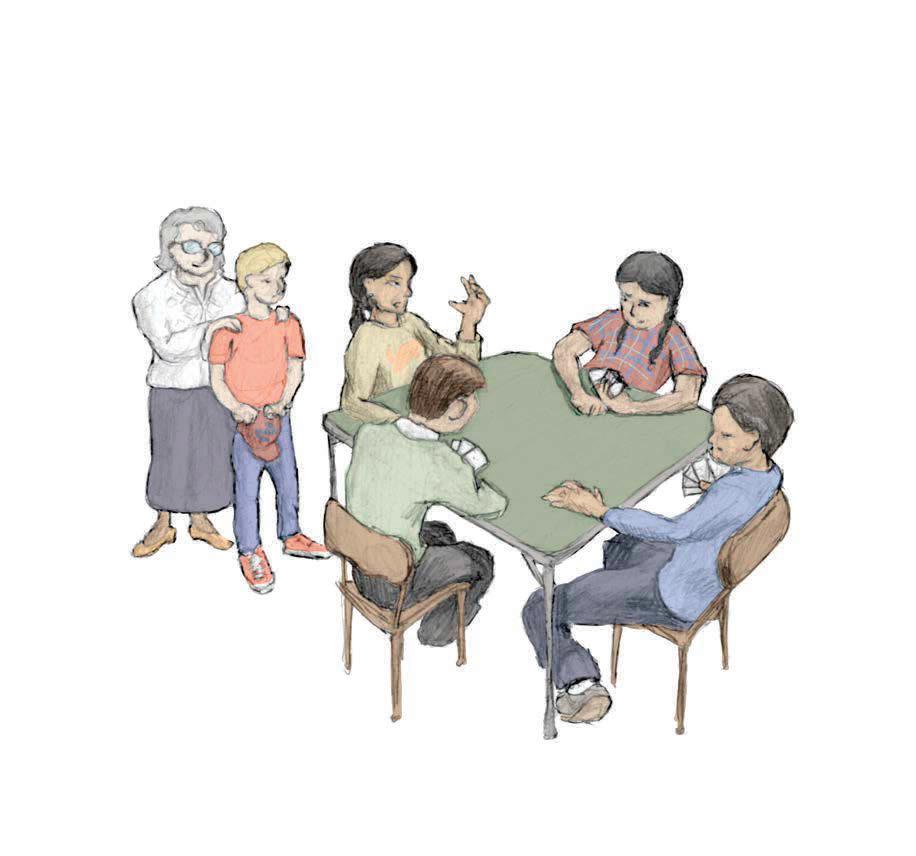
100 Pedro is a variation of the game Pedro that was extremely popular in the nineteenth century. Although it has declined in popularity since the nineteenth century, this game is still played in the Southern United States. 100 Pedro can be a complicated game due to multiple versions with differing rules. Variations of Pedro can be found all over the world, including places such as Nicaragua, Finland, Italy, and Portugal. It is thought that the game originated in North America and was then introduced to European and Latin American countries. Unlike other forms of Pedro, 100 Pedro has the objective of reaching 100 points.
Maverick hesitantly follows Diane, suddenly feeling nervous knowing that the Elders would be playing this game called 100 Pedro. Maverick has no idea how to play and doesn’t want to embarrass himself in front of the Elders. His game of choice has always been Uno.
“Do I need to know how to play?” Maverick quickly asks, trying to keep up with Diane, “I’ve never even heard of 100 Pedro before.”
Diane smiles and says, “Don’t worry, Maverick. At one point, the Elders didn’t know how to play either. We learned from watching our Elders play, and they learned in the same exact way. This is one of the reasons why Elders hold such a monumental role in Monacan culture. Elders are knowledgeable people who have lived and seen far more than those around them. They are also upstanding figures. It is for this reason that Monacan Elders play an instrumental role in passing down stories and knowledge to the younger generation. Who could teach our Heritage better than our Elders?”
Maverick walks faster, now feeling excited by the prospect of continuing this tradition and learning how to play the game. “Come on, Nana, I want to play with them.”
Diane picks up the pace so she can warn Maverick, “Wait, Maverick, it’s important to honor the Elders and let them play. 100 Pedro is a four-person card game, and if the Elders are playing, you have to watch.”
“How’s that fair? I want to play. I know I can do just as well as they can. I always beat Mom when we play Uno,” Maverick quickly counters.
“I understand how you feel, Maverick,” Diane affirms. “However, it’s important to show respect and honor those much older than you. Like I said before, Elders are people who have lived for much longer than you and who have experienced things you never will.”
Maverick slows with understanding. After all, he didn’t even know 100 Pedro existed until this conversation.
“Okay, Nana, I’m fine with just watching if there’s no space for me to play. I’ll show respect for the Elders, just as they did when they were my age.”
“Great,” Diane concludes as she and Maverick walk up the stairs to the Fellowship Room.
As Diane and Maverick make their way inside, four Elders are finishing up their game.
“Wow, well-played,” David, one of the Elders, exclaims. “Hey Diane, hey Maverick,” he quickly calls out as they walk into the room.
“Maverick,” David starts, “do you want to play?”
“No, it’s alright. I’ve never played before, and I want to watch you play and learn.”
David and the other Elders play the game while explaining it to Maverick and teaching him how to play. Gradually, Maverick learns that 100 Pedro has a simple objective: to get 100 points before the other team. Four players can play, with two opposing teams consisting of two players each. Each player is dealt 9 cards and can bid based on the strength of their cards. David
has 1 two, 2 threes, 3 fours, 2 sixes, and 1 seven. David doesn’t have a strong hand, as he doesn’t have any fives—which are considered trumps and the most valuable card.
“Okay, let’s start. I bid 55,” David states.
“60,” comments one of the other Elders.
“62,” declares another Elder.
“70,” says the last Elder.
“Okay, Maverick, it seems that our team will try to get 70 points using our cards. The other team has to prevent us from doing so. If we’re able to get 70 points, then we’ll win. Otherwise, they’ll win.”
The Elders quickly start playing, with players on the same team collaborating and playing strategically.
Maverick carefully observes the game, watching the players go back and forth with their card picks from their hands. He’s picking up on the strategy and teamwork that is needed to succeed. As the game ends, with David’s team winning, Diane and Maverick congratulate them.
David follows up with Maverick, “Do you want to play now?”
Maverick hesitantly looks around before saying, “Sure, if that’s okay with you.”
Chapter Four: Riding into Monacan Tradition
After the game, Diane tells Maverick she wants to take him to see something special. Without questioning, Maverick jumps into his Nana’s truck, full of excitement as they drive ten minutes before they arrive at their destination. Every time Nana has a surprise, Maverick knows it is going to be amazing
Nana glances at Maverick, who is bouncing a little in his seat as they drive down the winding road in the late afternoon sun that bathes the trees in golden light.
“You remind me of myself when I was your age,” she chuckles. “Always eager to see something new, always full of energy.”
Maverick grins in response and asks. “Were you as fast as me, Nana?”
Nana laughs. “Oh, I was quick. I needed to be quick with my hands as well as my feet. When I was younger, before the sun even rose, my mother would make me get out of bed and take care of the garden. Knowing that we were cultivating food for our entire family and the community brought a sense of calm to working with the earth. I used to complain about it, but after I stepped outside and enjoyed the refreshing morning air, everything changed.”
Maverick tilts his head and wonders, “So, everyone shared what they grew?”
“That’s right,” Diane nods. “That’s the Monacan way. If one family had extra squash and another had plenty of beans, we’d trade. No one ever went hungry because we took care of each other. My grandmother used to tell me stories about how our people have been doing that for centuries. Long before grocery stores, our ancestors farmed this land, hunted in these forests, and fished in the ta:kse:i. They respected nature, never taking more than they needed.”
Maverick watches as the trees fly past outside the truck window. “Have you ever caught wiho:i?”
Diane grins. “Oh, lots. Our grandfather used to take me and my brothers down to the James River. He taught us to read the water and to be patient. And we expressed our gratitude when we eventually caught something. Another lesson my grandmother taught me was to respect the land because it is what sustains us, rather than simply taking from it.”
Maverick contemplates her words with a nod. Maverick recognizes where they were heading. “Are we going to the garden now, Nana?”
Diane smiles proudly at him. “Exactly. It is perhaps even more significant than the baseball field. We gain patience, accountability, and thankfulness out here. You’ll also learn a little bit about that today.”
Maverick smirks and replies. “As long as I don’t have to get up before the sun like you did.”
Diane turns the wheel on the road and laughs. “We’ll see about that.”
When they finally arrive at the farm, Maverick’s eyes twinkle as he looks at the garden in front of them.
The Monacan Way: Plant, Share, Care
Maverick and Diane step out of the truck, and their eyes are met by the beauty of the farm along with the garden. Diane reminds Maverick that though playtime is fun and exciting, there are other important aspects of everyday life in the Monacan Nation. The vibrant gardens and farms, full of ripe fruits and plenty of green vegetables, are just as valuable as (if not more valuable than) the baseball field. The Monacan people have always cared deeply about the land, growing food not just to feed their own families but to share with the entire community, too.
Nana and Maverick walk along the narrow dirt path, with the feeling of warmth on their backs from the shining sun. Beside the path, they see beautiful gardens, where rows of corn, beans, and squash grow tall and strong. The Monacan people have always grown their crops. These crops have always been special because of how they work together in such a unique way. The ma:ta:xe: stands tall above all the crops, providing support for the beans to climb. The beans add nutrients to the soil, which is their way of helping the plants grow. The mądumaį yili:p is spread along the ground, keeping the soil moist and preventing weeds from growing. These are the three sisters of the Monacan people’s gardens.
“The crops work together as a community, just like we do. The only way all these plants thrive and survive is by supporting one another.” Nana explains proudly as Maverick’s smile grows.
“How do we make sure we’re taking care of our crops?” Maverick asks Diane.
“Soon, you will see,” she quickly responds.
Stepping into the garden, Maverick notices that everyone working has a role in taking care of the plants. Boys and girls, young and old, working side by side, taking care of the garden so it lasts for centuries. Instead of having only men work with the crops, the Monacan people believe that both boys and girls should learn how to grow food for their community. The Monacan Nation understands that any differences between their people do not matter; they are all Monacan, and they all have a role.
Maverick looks out towards the end of the garden, where he sees some of the middle-aged women showing young boys how to plant seeds and young girls carrying baskets full of vegetables. Mav starts to understand how the garden is a symbol of community.
Hard work has always been an important value in the Monacan Nation. Taking care of the land hasn’t always been easy, but the Monacan people know that working together is the best way to care for their sacred land. Families help each other out, so no one needs to struggle alone.
Everyone in the Monacan nation has each other’s backs. Maverick smiles as he watches parents and grandparents exchanging vegetables and sharing laughter. In this moment, Maverick realizes it isn’t just about farming or gardening, it is about looking out for each other.
Beyond the gardens, Maverick watches a group of people gathering wood. His great-grandmother has told him that the Monacan Nation worked together to collect firewood as an important part of their daily lives. Wood is still needed for warmth, cooking, and building homes— just like when Diane was growing up.
Similarly with farming and gardening, the Monacan people believe everyone shares the responsibilities. So, everyone can collect logs. The idea that only men should do physical labor is not part of the Monacan tradition. While men typically took on a more physical role, women were able to help. The main goal is to keep the community functioning, safe, and happy. As a group of children run by, Maverick recognizes a girl from school. She is in the grade above him. Maverick recalls her name: Andrea. She picks up a small bundle of sticks. Andrea looks to Maverick and remarks, “I love helping gather wood. I’ve been helping my uncle since I was six years old! Come over, Maverick, I can show you how!” Maverick glances at his great-grandmother, eager to see her expression. She gives him a nod of approval, and off he runs. Maverick races up to Andrea and the other children as they begin stacking firewood for the Monacan community.
Just before Maverick walks back over to Nana, Andrea reminds him, “This is what makes us strong. We don’t worry about who’s supposed to do something. We all help each other. That is the Monacan way.” Maverick looks at Andrea, slightly confused. Andrea smiles and says, “I overheard you talking with your Nana on my way to the garden.”
She holds his gaze for a moment before adding, “Strength is more than physical. It’s about knowing when to step up and when to lean on your people. It’s about resilience, about carrying your ancestors’ wisdom with you and honoring them by how you live. That’s the kind of strength that lasts.”
Andrea looks at Maverick with a proud smile. “We all have it. I see it in you, too, Maverick. You just have to trust it.”
Hard Work Despite Hardships
After helping Andrea gather the sticks, Maverick runs back to Nana. Excited and curious, Maverick asks, “So did the men and women do the same jobs?”
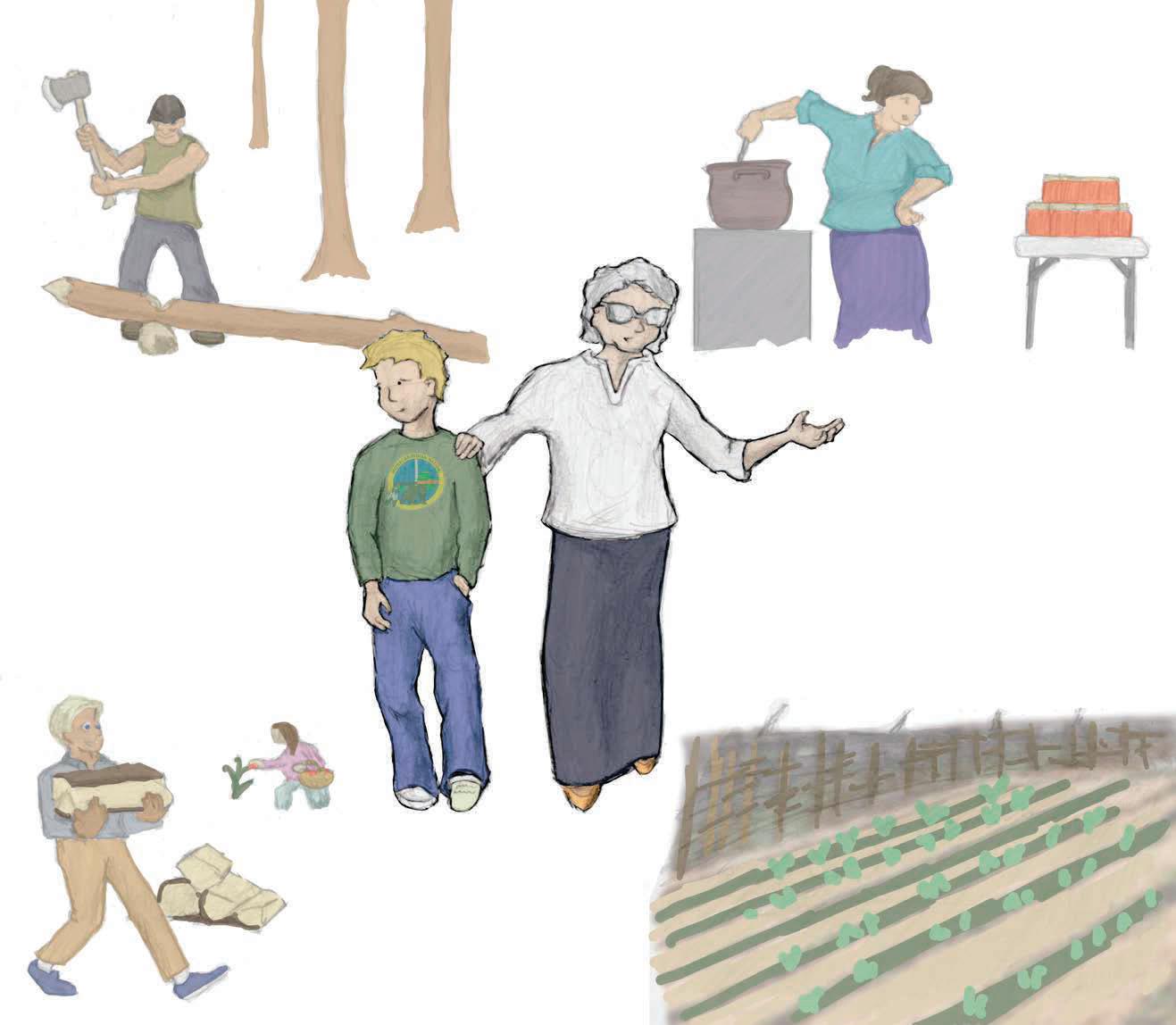
“Kind of,” Nana responds. “The men and women worked together, and we created a strong community. However, the women and men still had their own jobs. The men did the physical labor around the farm while the women, although they also helped with the more physical tasks, primarily cooked and worked around the house from a young age. From the age of eight, girls would immediately be put to work around the house and in the kitchen.”
“Eight?!” Maverick exclaims. “I’m almost eleven.”
“Yes, but it doesn’t matter how old you are, you always help your family however you can,” Nana explains. “You see, your great aunt has been taking care of her family since she was eight. Now she is almost 95 years old and still loves to take care of people. This is part of who we are. These life skills were developed at a young age, and the value of hard work was instilled in both the boys and the girls. Everyone had to work, and everyone was valued equally for their work.
Hard work was and still is such a valuable trait for the Monacan Nation and their people. Whether they are young or old, Monacans have a tendency to work hard and long,” Nana states. Your great-uncle has worked since he was 13 and now he is 75 and still going strong. Your cousin has also helped her mother with the cooking for the past few years even though she is younger than you!
Come, Maverick,” Nana grins and shuffles him towards the truck. “Let’s get in the truck so we can go to Teresa’s house.”
“We are going to Grandma’s house?” Maverick reiterates excitedly. “I can’t wait to see her!”
“She can’t wait to see you, too,” Nana shares.
Diane and Maverick both get in the truck.
“Buckle your seatbelt, Maverick!” Nana insists. “Safety first.”
“Okay!” Maverick exclaims.
Nana starts the truck, and they start their ten-minute ride to Teresa’s house.
“Anyways,” Nana continues, “the hard work of our people comes from our culture and how our ancestors had to work to survive. Even small everyday things are important. For example, guess who helps fix up this truck every time it breaks down?”
“Who?” Maverick asks.
“Your great uncle does. Even though he is older, he is still working very hard as a mechanic and has always helped keep my truck running smoothly.”
“Is that why you have had this truck for so long? Because Uncle Scotty always fixes it?” Maverick wonders aloud.
“That’s right, Mav!” Nana answers. “However, Monacans don’t only work hard by doing physically laborious jobs like as a mechanic or truck driver. We work hard to keep our land and identity, and to maintain our culture. For instance, when I speak to you in our language, I am working hard to maintain our culture and identity and pass it to you. Our Powwows are also ways that we maintain our culture and identity. We also fight to make sure we keep the land that belongs to us. Identity, culture, and land are all things that our people work hard to keep.”
Between 1885 and 1940, thousands of Native documents were modified to underrepresent their population. Undercounting the Native population has two significant negative impacts:
First, Tribal Nations have their own governments that receive funding from the U.S government. This federal funding is based on how many citizens are enrolled with the tribe. This funding is important to provide employees and programming for the Monacan citizens. By changing legal documents and undercounting the Native population, tribes get less of the money they need.
Second, undercounting Native populations also decreases their political representation and influence. Political representation is important because when the government is making decisions that directly impact the Monacan Nation and other tribal Nations, the tribes involved need their opinions to be considered.
Confused, Maverick questions, “Why do we have to work hard to keep our land, identity, and maintain our culture? Isn’t that something that can’t be taken away?”
“Unfortunately, Maverick, there were many ways that our land, identity, and culture were taken away from us,” Nana answers. “We had to move from our land, change who we are, and our legal identity was also modified to hurt us.”
“What do you mean?” Maverick probes.
“There are different types of identity Maverick. Our personal identity is how we see ourselves. For instance, we are kind, proud, and hard working. This is our personal identity. However, we also have a legal identity which is defined by our gender, race, and other metrics.”
“First, the U.S. government tried to take away part of our culture by forcing us to go to schools that only taught and spoke in English. This slowly eliminated our language, which is part of our personal identity, and along with other restrictions against us, many of our cultural traditions were starting to be forgotten.”
“Also, for thousands of Monacans and other Natives, our legal documents that listed us as Monacan and Native American were changed so that we were listed as other races such as African American or White. This changed our legal identity. Because of this change, the government undercounted our population which negatively impacted us economically, socially, and politically.”
“Wow,” Maverick says in awe. “That is terrible.”
Nana affirms Maverick’s answer: “It is scary. But this is part of the reason why we work so hard. You can always find good within even the worst situations.” Maverick ponders for a second then responds. “I think I understand. When we work hard in everything that we do, even in hardship, our hard work becomes a part of who we are.”
“You’re exactly right!” Nana exclaims. “Whether it is doing physical work, working at our jobs, or even cooking, we always put our all into it.”
“That food and cooking must have tasted so good since Monacans worked so hard to make it,” Maverick beams.
“You are right, Maverick,” Nana agrees. “Food was one of many ways that Monacans expressed their culture. Just like you eat Mexican food and Italian food, Monacans put their own flavors on food we know.”
“Like what?”
“Traditional soul food like mac & cheese and collard greens, and other foods like rice and beans were all commonly made at the house and during gatherings. Food was a way to bring people together, and it helped to unite the community. Today, every Sunday after church, the Monacan community comes together and eats. This is where ideas are passed along throughout the community and memories are made. Every Sunday, the Monacan community grows stronger.”
Monacan Pride and Respect
“Respect for everyone, especially your elders, was another value that Monacan kids adopted from a young age,” Nana continues. “Treating everybody with respect is a big part of how we, as Monacan parents and grandparents, want our kids and family members to act. How we treat others helps to overcome the negative views that some people have about Monacans. On top of being respectful, Monacans are also very kind to one another and to others. Kindness is not only used to combat hate but also helps to spread love. Keeping these values throughout several generations of Monacans has helped us maintain our root identity, even if other parts of our culture have been taken away. Even though our language, traditions, and location have changed, who we are has not.”
Maverick ponders, “It’s weird, in a good way, listening to you explain being a Monacan. I guess I just took it all for granted, since I’ve only known this way of life. But hearing about our people and culture makes me proud that we have such strong traditions and beliefs.”
“Yes, Maverick, our strong culture and traditions are a big reason why Monacans have such a large sense of pride,” Nana elaborates. “Being proud to be a Monacan is an important part of who a Monacan is. Everybody should be happy with who they are, but with Monacans this pride comes from many things. When European settlers took over this land, Monacans fought hard to combat them. This is the land that the Monacans lived on for hundreds of years, and it was taken away. After that, the Monacan language was banned, and slowly our traditions were starting to be lost. As the United States grew, the room for Monacans decreased. Maintaining our Monacan identity became almost impossible.”
“However, like Chief Seattle of the Duwamish and Suquamish people said, ‘When you know who you are; when your mission is clear and you burn with the inner fire of unbreakable will; no cold can touch your heart; no deluge can dampen your purpose.’
Chief Seattle lived between 1780-1866 and look at how important this quote still is. This is why Monacans are so proud of who they are,” Nana continued.
“Even though we face many hardships like disease, famine, and death, we have persevered and become stronger as a people. When people overcome these hardships, especially as a community instead of by themselves, they learn important things about who they are. When colonists tried to remove and erase our people, we learned that even though so much was taken from us, our identity and pride could remain. Monacans don’t think they’re better than others; we just would never trade our lives for anybody else’s.”
“This is what pride means,” Nana finishes. “Pride is not arrogance, it is not hurtful, and it is not negative. Pride is something that everybody should have, and the Monacan Nation needed pride to survive.”
Maverick’s mouth opens, but he’s speechless. It takes him a minute to respond: “Wow,” Maverick says, awed. “Even though all these bad things happened, we stayed together.”
“Yes, for the most part.”
“Then why did all these bad things happen to us if they saw how good of a people we are?” Maverick probes.
Turning slowly into Teresa’s driveway as she carefully considers Mav’s question, Nana replies “We can’t control how other people treat us Maverick, but we can control how we treat others. Make sure you never forget that.”
Chapter Five: Stories of Strength, Roots of Resilience
The gravel crunches beneath the tires as Nana and Maverick pull into his Higų: driveway. The sun dips low behind the trees, casting long golden streaks across the hills. Higų: house rests gently on a small rise, surrounded by tall oaks and pines whose branches sway softly in the breeze. His grandmother, Teresa, is already out on the porch, rocking slowly in her chair. Earlier that day, she had dropped off a jar of her homemade strawberry jam, and now, like she often does when stories are about to be shared, she’s invited her mother and grandson over for dinner. Maverick loves how the air here always smells fresh, like clean leaves and firewood. Inside, the house is warm with the scent of dinner. Nana has brought over leftovers from the night before of a traditional Monacan meal: venison stew slow cooked with wild carrots and onions, golden fry má:ksa:pa still crisp around the edges, and a bowl of beans she soaked, cooked, and seasoned. As Higų: sets the table, Maverick helps pour the glasses of sweet tea.
As they sit down to eat, Maverick listens to the clinking of spoons, the quiet hum of the fridge, and the sound of cicadas chirping outside. The house has a kind of quiet that makes stories feel sacred. After dinner, they move into the living room, the heart of Higų: home.
This room is cozy and full of memories. A faded quilt lies folded over the back of the couch, and black-and-white photos of ancestors line the mantle. A woven basket sits in the corner, filled with firewood. Everything about the space feels warm and familiar, like history lives in every corner.
Maverick plops down on his usual cushion near the fireplace, hugging his knees to his chest. He loves hearing stories in this room, where the air always seems to glow with something more than just the fireplace in the corner.
“I’m still thinking about what you said at dinner,” Maverick says, looking over at Nana. “About Monacan people being…what was it again?”
Nana smiles gently. “Resilient and self-sufficient.”
Higų: nods from her spot in the rocking chair. “It means we take care of ourselves and each other, even when no one else will.”
Maverick tilts his head. He glances at Higų:, curious about what she might say. “Is this because of the discrimination that Nana told me about earlier?”
Nana leans forward, resting her elbows on her knees and responds to Maverick’s question to Higų:. Maverick knows that look—he is about to hear another one of her stories, the kind that makes him feel like he is stepping into the past.
“That’s a good question,” she says, smiling. “Let me tell you a story.”
“In the 1970s, when Higų: was in school, Monacan children rode the school bus just like you do, Maverick. But for them, it wasn’t always a safe or friendly place. Some of the other kids didn’t understand what it meant to be Monacan. They whispered behind our backs or said unkind things out loud. Some kids made fun of how the Monacan children looked or they said rude things about our clothes, hair, and traditions. It hurt because they were being racist, which made the bus rides feel long and lonely.”
Maverick frowns. “That is horrible. How did the Monacan children respond?”
Nana smiles softly. “They didn’t give up, that’s for sure. Do Monacans give up, Maverick?”
Shaking his head, Maverick says, “No way.”
Nana nods approvingly. “That’s right. Instead of letting the bullies get to them, the Monacan kids supported one another in small but powerful ways. They sat together on the bus, offering each other words of encouragement. They shared lunches, teaching one another traditional Monacan words and stories. When one of them was teased, the others spoke up, making sure no one felt alone. They reminded each other that they were part of something bigger—something so:ti.”
Maverick’s face lights up. “I want to be strong like that! How were they strong?”
Nana chuckles. “They knew they deserved respect and wouldn’t let the bullies win. They knew Monacans had just as much right to be on that bus, in that school, and in this world as anyone else.”
Higų: has been listening quietly and suddenly speaks up. “You know, Miss Lou had a similar experience with someone she considered a friend.”
Nana leans back in her chair. Maverick’s ears perk up. He has met Miss Lou before—she is the Assistant Chief of the Monacan Nation. She is wise, kind, and always has something interesting to say. Maverick trusts that Miss Lou will always tell the truth.
“When Lou was about your age,” Nana begins, “she was invited to a sleepover at a friend’s house. She was so excited, just like any kid would be. But when she got there, something happened that she never forgot.”
Maverick scoots closer. “What?”
“When the friend’s mother asked her name, Lou gave her full name. ‘Lou Branham,’ she said, proud of it. But the woman’s expression shifted.”
Lou’s Sleepover
Maverick tilts his head. “Why did her face change? Isn’t it just a name?”
Nana nods gently. “Some people recognize certain last names. The mother had heard the name Branham before and knew it belonged to Monacan families.”
Nana’s voice grows quieter. “The mother didn’t say anything right away, but after a few minutes, she told her husband to drive Lou home.”
Maverick’s eyes widen. “Just because she was Monacan?”
Nana nods. “Just because of that. The car ride home was silent. Lou felt embarrassed and confused. She had done nothing wrong, but suddenly, she wasn’t welcome.”
Mav frowns. “That’s not fair.”
“No, it wasn’t,” Nana agrees. “But Lou didn’t let it make her feel small. She remembered who she was. Her last name, Branham, isn’t just a name—it is part of her Monacan identity. It connects her to her family, her ancestors, and her Nation.”
Maverick leans in.
“Some people knew that name and didn’t treat it kindly,” Nana continues. “But to Lou, it meant belonging. She had a family, a community, and a Nation that loved her. She held onto that.”
Maverick sits in silence, thinking. “So, even when people try to make Monacans feel like they don’t belong, we know that we do?”
Nana smiles, but her eyes are serious. “That’s resilience. We have to be strong because, for a long time, many people didn’t treat us fairly. They didn’t understand our ways, and some didn’t want us to be proud of who we are. This racism is still something we experience to this day.”
She pauses, letting the words sink in.
“It’s not right that we’ve had to face those things,” she continues. “But we do what our ancestors did—we remember who we are, and we keep going. That’s how we stay connected to our home, our stories, and each other.”
Standing Strong Through History: The Racial Integrity Act
Nana’s expression grows thoughtful. “You know, stories like these aren’t just about when I was little or when your Higų: was growing up. Monacan people have always had to stand up for themselves.”
Higų: nods solemnly, and Maverick leans in, curious. “Like when?”
Nana takes a breath. “Well, you’ve learned about school segregation in history class, right?” Maverick nods. “But there was something else too,” Nana continues, “a law called the Racial Integrity Act. It was passed in Virginia a long time ago. The law said if you weren’t White or Black, then you didn’t count. Almost like we didn’t exist. This law called us ‘colored’ to erase us from records—birth certificates, school files, everything. It was a way to try and make the Monacan people disappear on paper. And if you can’t prove who you are, then it’s hard to fight for your rights. This law tried to erase the Monacan identity, making it almost impossible to prove who we were.”
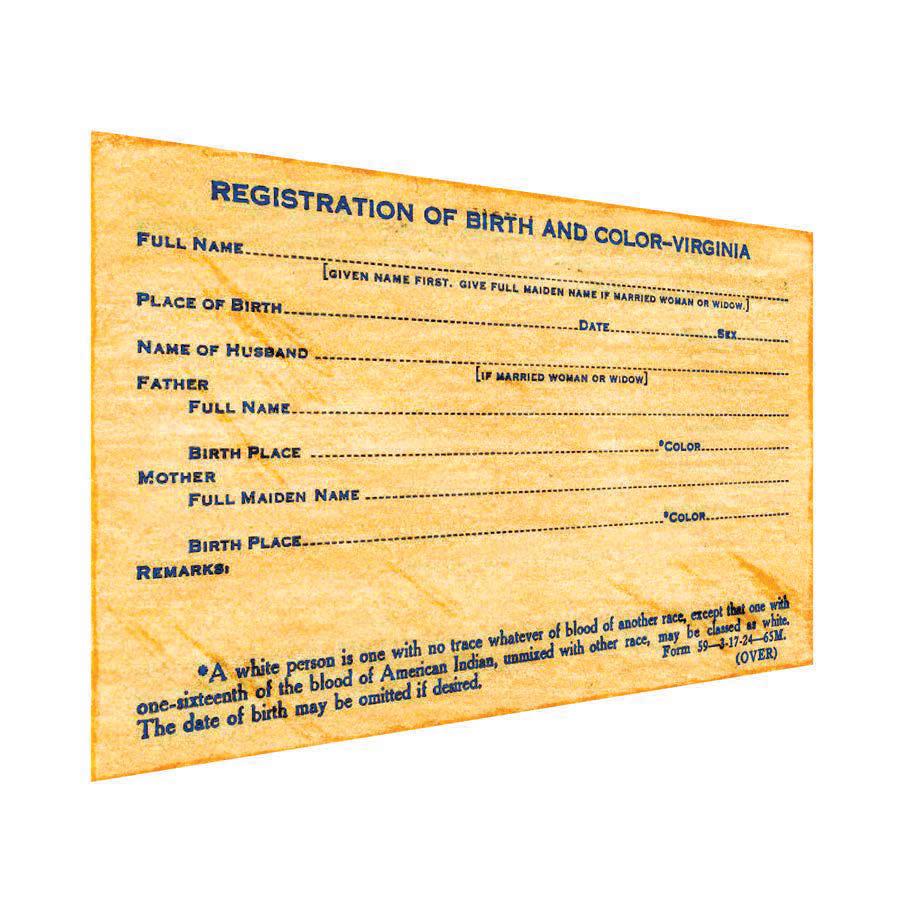
Due to the Racial Integrity Act of 1924, the state of Virginia would not recognize Native tribes like the Monacans. On official papers like birth certificates, Monacan people were forced to be labeled as “colored.” This law was an attempt to erase Native identity, making it harder for families to prove who they were. Even though these records were changed, the Monacan people never forgot the truth of their identity and worked hard to keep their culture and history alive. They did this by maintaining their tight-knit community life and passing down oral records and histories in their communities.
The Racial Integrity Act, designed to erase Native identity, was driven by the eugenicist Walter Ashby Plecker. Plecker was most known for his promotion of White supremacy and his goals of erasing Native identity in America. White supremacy is the ideal that white people were superior to all other races and should dominate them. This ideal reinforced the legal principle called the “One Drop Rule,” where if an individual has even one drop of non-white ancestry, then that individual is not classified as white. This reclassification worked to subject the Monacan people to legal discrimination.
“No,” Nana says. “Our people fought for their education. They built their own schools. They kept their traditions alive. Monacans proved that no law, no bullying, no one’s opinion could ever erase who they were.”
Maverick takes a deep breath. “Wow, I want to be like that!” He pauses and thinks for a second. “But it sounds kind of scary to convince someone of who you are. And to stand true in yourself, especially when the world tells you no.”
He looks up at Nana. “So, being Monacan means never letting someone else tell you who you are. It means standing together.”
Teresa reaches over and gently squeezes Maverick’s hand. “That’s exactly what it means.”
Maverick grins. “That’s really cool. I’m proud that my grandparents and great-grandparents stood up for what was right.”
Then, a question popped into his mind. “Why did the colonists think they could decide who was Monacan and who wasn’t, and how did we fight the laws?”
Nana exhales a deep breath “That’s another great question, Maverick. And I have just the story to answer it.”
Nana leans back in her chair, eyes drifting away. “We always knew how to keep our stories alive,” she says. “We whispered them to our children; we held on to our ways. The government could take our identity off paper, but they couldn’t take our language, songs, and culture. Those are the things that matter.”
Nana nods to herself, looking distantly, and then her expression becomes firm.
“Some of our Elders fought in court to try to protect our identity and land, even when it took years. Some stood their ground, refusing to be erased, even when it was dangerous. Others just survived, and that was their kind of resistance.”
Maverick then asks, “Wow, how were you able to do scary things like that?”
Nana assures Maverick, “We were always scared while doing what we did, but we never let fear stop us from fighting for our rights.”
Maverick thinks about that. “Did you ever feel… like giving up?” he asked.
Nana shakes her head. “Never. But there were times I felt invisible,” she said softly. “When I was in school, I couldn’t tell anyone I was Monacan. It wasn’t safe. If I did, I would’ve been mistreated, and I wanted to keep my family safe. Despite that, I still knew who I was.”
Then she smiles a quiet, proud smile. “But now, now we make ourselves seen in this country.”
The Courthouse
Maverick frowns. “When did you find out they changed your records?”
Nana sighed. “I found out when I tried to get my Social Security card.”
Maverick tilts his head. “Your Social Security card?” Nana nods. “I was about sixteen, old enough to work. I needed my birth certificate to apply for a job. So, I went to the courthouse with my father. When the man at the desk looked at my records, he frowned and said, ‘It says here you’re colored.” Maverick sees her jaw tighten.
“My father got very quiet, like he was holding back anger. He told the man, ‘My daughter isn’t colored. She’s Monacan, same as me, same as her grandfather and his grandfather before that.’
The man didn’t care,” Nana said. “They never did.”
“He just shook his head and said, ‘Not according to this record. The state doesn’t recognize Indians in Virginia.’”
Maverick gasps. “But we’ve always been here!”
Nana gives a sad smile.
“That didn’t matter to them. They thought if they erased us on paper, they could erase us in real life. My father argued, but the man refused to change it. He said if we wanted to fix it, we had to go to court. And we didn’t have the money for that.”
Maverick feels a sting of frustration.
“That’s not fair!”
“No,” Nana agrees. “It wasn’t fair. It wasn’t right. But we weren’t the only ones.”
She taps her fingers gently on the wooden arm of her chair.
“Even when they tried to erase us, our people always found ways to push back. Families kept detailed records, oral histories, and passed down birth certificates and family trees in secret. They kept proof of who we were, even when the government tried to rewrite it.”
“Some of our people traveled out of state just to marry legally as Monacans, refusing to let Virginia’s laws define them. Others formed tight-knit communities where everyone knew the truth, even if the outside world didn’t recognize us.”
“We didn’t let the law tell us who we were, we defined ourselves. And we made sure our children did, too.”
Maverick is quiet for a long time. “So, they tried to erase us. But they couldn’t.”
Nana reaches out and rubs Maverick’s hand.
“That’s right, my love. Because we remembered and fought for who we are.” She pauses, then adds, “That’s why self-sufficiency has always been a strong belief of ours. We couldn’t rely on the government to recognize us, to protect us, or even to tell the truth about who we were. So, we relied on each other. Community was, and still is, most important to us.”
She continues, “This is why, when I see you argue with any family, I tell you to knock it off. Fighting each other isn’t in our blood. Not when the world’s already against us. We farmed and stayed connected to our land. We supported ourselves. The Monacan Nation survived because we never waited for permission to exist.”
Nana stands up, brushing crumbs off her lap. “Alright, young man. Time for bed.”
Maverick follows her down the hall, past the photo-lined walls and woven baskets full of yarn and cedar sprigs. Higų: house always smells like home. Nana pulls back the covers, tucks him in, and kisses his forehead.
“Here, Maverick, now that you’ve learned a few things for the day, let’s get you settled. We have a long day ahead of us tomorrow. Sleep well. You’re part of these stories now.”
As Maverick lays in his bedsheets, he sinks into deeper awe of all the stories he has learned. His open window lets in the sounds of the whistling wind rustling through the trees. Maverick listens, hearing the courageous whispers of his ancestors in a way he never had before.
Chapter Six: Stronger in Faith, Stronger Together
As sunlight begins to stream through the windows, Maverick opens his eyes. It is Sunday, and it is time for him to start getting ready for church. He always sleeps best in this room at his Higų: house, so he struggles to leave the comfort of his bed. Mav can hear her downstairs, rustling with pots and pans, calling for him to get out of bed. Maverick hustles to get ready for church, putting on his favorite polo and his new Nike sneakers. As he walks downstairs, he sees that Nana is putting the finishing touches on her crockpot meal for the buffet lunch after service. It smells delicious.
“Good morning, Nana. When are we leaving for church? I am so excited to see my friends and eat all the yummy food after the service! Do you think I could have some of that food you’re cooking now? I’m pretty hungry,” Maverick exclaims.
Nana replies, “Good morning, Mav. We will leave very soon, so go grab your coat and help me carry this crockpot to the truck. I made your favorite chili for the buffet, so you can’t have any of that now! However, I have some blueberry muffins that I baked yesterday. Why don’t you grab one to eat in the truck?”
“That’s the best! I am so excited to eat that later. I can carry the crockpot to the truck,” Maverick says as he stuffs the muffin in his pocket and holds out his hands for the crockpot. Hustling outside, Maverick puts it on the passenger seat and crawls into the back seat, knowing he would lose the argument of trying to sit up front.
As Maverick and Nana climb into the familiar blue pickup truck in the driveway, Maverick begins to think this ride would be a great time to hear another one of his Nana’s great stories. This time, he starts to wonder about the church, where they are headed, and where he has gone every Sunday for as long as he can remember.
“How old is the church, Nana?” Maverick questions.
“That chapel has been there since long before I was born,” replies Nana.
“That must be pretty old. Has our family always attended this church?” asks Maverick.
Continuing,
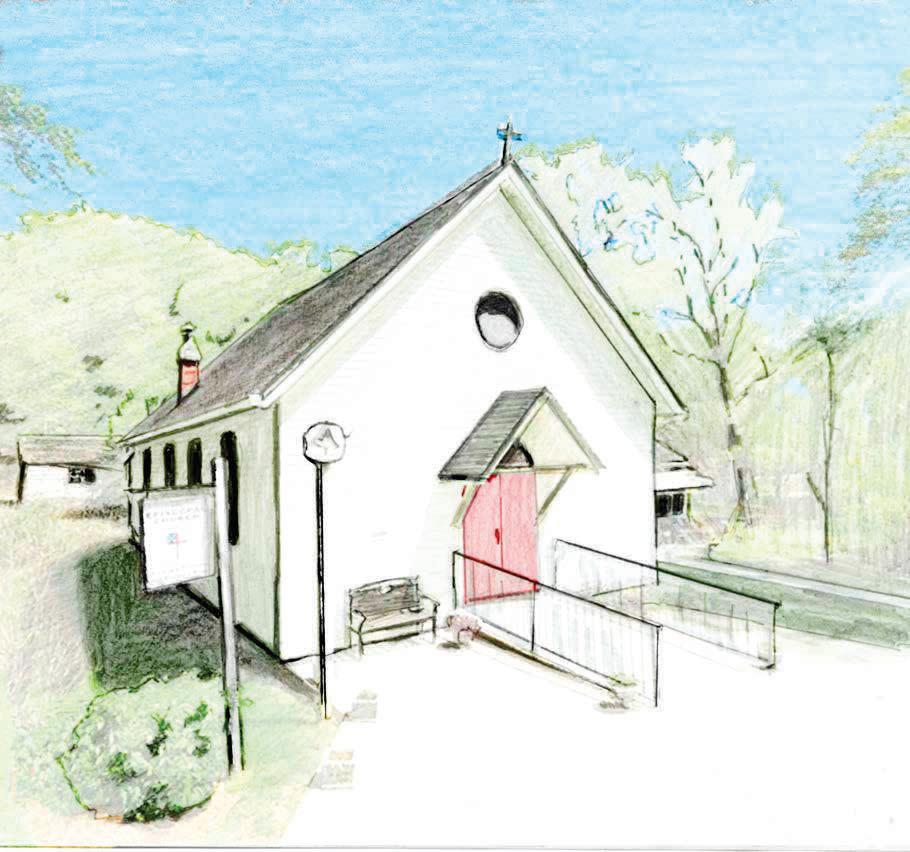
St. Paul’s Episcopal Mission was established on Bear Mountain in 1908 by Reverend Arthur Gray. A lasting relationship was established between the Monacan Nation and the Episcopal Church, which continues today.
Nana huffs out a breath, “It may be old, but it is sturdy! As a matter of fact, I have been coming to this church since I was younger than you! Every Sunday morning, my mother woke my siblings and me up early, with the tantalizing smell of Sunday dinner downstairs. She always cooked our Sunday dinner throughout the whole day before, shooing us away when we tried to steal a quick bite. We would just have to wait until after church.”
“Sound familiar, Maverick?” Looking into the rearview mirror, she catches him slyly smiling.
made beautiful long dresses with flowers; my sisters and I always liked to wear matching patterns. My mother had a gift for making dresses, and I can still remember how gorgeous they were to this day. My brothers wore their nicest shirts and slacks; my mother always made sure that they looked handsome.”
“Did your brothers wear clothes similar to what I’m wearing now?” Maverick interjects.
“A little bit like yours, yes, however, at that time, church attire and clothing in general were a bit more formal. My brothers wore dress shoes and button-down shirts,” Nana remembers.
“So, they didn’t wear their favorite Nike sneakers and polo like me?” Maverick asks.
“No,” chuckles Nana, “but that’s just a difference of the times. You look lovely, Maverick.”
“Okay, continue with your story, Nana. I want to hear how the rest of the day went,” Maverick answers, eager to soak up some more of his Nana’s knowledge.
“Well, once everyone was dressed, we walked to the bus stop, where all of the other families would board the bus with us. I always had so much fun chatting with my sisters and friends on the bus ride to church. When we arrived at the chapel, my whole family sat together in two pews. The service looked the same as it does today: a room full of the entire Monacan community gathering every week without fail. It was always a constant reminder that I was a part of a bigger identity and group beyond my family,” says Nana.
“That’s why I love coming to church every week, too. I love seeing all my friends and hearing stories from the Elders at the buffet after the service. It’s a great way for me to stay connected with my Monacan friends,” Maverick replies.
“I am glad that you realize that, Maverick. It is important that you keep in touch with your heritage,” replies Nana.
Nana pulls into her usual parking spot at the front of St. Paul’s Church. As Maverick and Nana climb out of the blue pickup truck and walk into church, they greet friends and family gathering outside before the service. The day is sunny and warm; everyone seems to be energized by the nice weather. Maverick looks at his church with a new appreciation. This church has been standing since long before him and long before his Nana. It has been a gathering place for his people for almost four generations.
After they enter the church, they take a seat in the second row. Maverick looks around for his parents, but it seems they haven’t arrived yet. The church service doesn’t start for another ten minutes, so he decides to ask Nana to finish the rest of her story.
Sunday Dinner
“Nana, what did you do after the service? Was there always a delicious buffet brunch after the service?” Maverick prods, hoping to pull some more information out of his Nana.
“No, not always. As I mentioned before, my mother always made a big Sunday dinner for my family at our house. After the service had ended and we rode the bus back home, our mother finally allowed us to eat that delicious meal that she had been cooking since the day prior. We all sat around the table together, eating and laughing. Those meals were some of my favorite memories with my siblings and parents,” replies Nana.
“What kind of food did your mom like to make for dinner?” Maverick questions, wondering if it was the same as what his mom likes to make.
“Well, Sunday was different from a normal night of dinner. My favorite Sunday dinner was deer. She always cooked it beautifully with a great big side of roasted vegetables picked straight from our garden outside,” replies Nana.
“Yum! All this talk about food is making me hungry for the buffet after the service!” replies Maverick.
Beautiful music starts to play, and the service begins as Nana finishes up her story. Maverick would just have to wait for church to be over before he could start eating.
As the service wraps up, Maverick grows restless; he is excited to hang out with his friends and eat some walu:ti bi:wa. They make their way toward the door and the buffet. Maverick knows the drill. Even though he is very hungry, and all of the food baked by the Elders smells delicious, he knows he has to wait for the Elders to get their food first. It has always been that
way for him. He knows that it is a sign of respect. This respect for his Elders has been instilled in him for as long as he can remember.
Finally, it is Maverick’s turn, and he loads his plate with mini sandwiches, fresh-cut fruit, his Nana’s chili, and a famous cookie baked by Birdie, another Elder. Maverick is making his way toward his seat next to his Nana when he spots two girls, a bit older than him, carrying decorations.
“Nana, what are those girls carrying?” asks Maverick as he sets his plate on the table and sits down.
“Those are decorations for the church. Did you know that Homecoming is next week?” asks Nana.
Homecoming
“I love Homecoming! I didn’t know that it was so soon. It’s so fun to play with my friends and eat all of the delicious food baked by the Elders. Have you always attended the Homecoming?” asks Maverick.
“No, not always. The very first Homecoming was in 1969, when I was nineteen years old. I have attended every year since. Even in that very first year, the whole community was involved, and still today the Elders bake goodies for the bake sale, the adults help to cook the buffet lunch, and the children get to enjoy the fun crafts and games. Old friends and relatives who have moved away come home to help out and see dear friends and family. It is always a great day, and I hope that you will always remember it fondly, Mav,” Nana describes.
Mid-bite, Maverick asks, “Why do we hold a Homecoming every year?”
“The money from the Homecoming goes back to the church. It helps to fund the church’s operations so that we can continue to gather and worship there. Our church is incredibly important even today for our people. While not everyone in our Nation worships in the same way, we all use the church to get together and share our identity. It is important for our people to stick together, and having a community gathering place ensures that we will continue to do so,” Nana replies.
“I am glad I have a place to come every Sunday to see our people. I can’t wait for next weekend! Can we walk around outside? I am finished eating,” replies Maverick.
“Sure,” Nana replies, “but don’t forget to clean up your plate.”
After taking care of their dishes, Maverick and Nana head outside.
Nana catches up with Maverick, who asks, “Are all churches the same?”
In her soft sweet voice, Nana chuckles, “No sweet boy, there are many churches all over the world. They are all different shapes and sizes and filled with all different types of people, not just Monacans.”
“Well, does everyone care about God?” Maverick asks hesitantly.
“Many people do care about God. But many people also just care about feeling a sense of connection to Earth and other people. Individuals worship all different creators and follow different religions across the globe.”
Nana recognizes her grandson’s state of confusion and elaborates, hoping to ease his frustration.
“Maverick, one person whom you love dearly prefers a sweat lodge over a church service! Miss Lou!”
“What is a sweat lodge, Nana? It sounds sticky.”
“A sweat lodge is a ceremony performed outside. As a group, people work together to create a small structure made out of twigs and branches. This structure is then covered by blankets. Inside the structure, a hole is made in the ground. The hole in the ground inside the sweat lodge is to receive rocks that are heated in a fire outside of the lodge. Lastly, water is added to the rocks in order to create steam. People within the structure pray together and begin to sweat due to the hot steam.”
With eyes bulging out of his face, Maverick eagerly says “Wow! That’s so cool! But how is that like church?”
“Great question! It is like a church because it provides people with faith. Faith is a strong belief in someone or something. In a sweat lodge, people are putting their faith in Mother Nature and the Creator to clean their souls and take away their burden, which is a duty or responsibility that can be very difficult,” replies Nana.
Baffled, Maverick asks, “So you can have faith in the environment?”
“Yes, exactly!” Nana exclaims. “Our Monacan people have a lot of faith in the environment and respect our Native land. One of the ways we show our respect for what Mother Nature has given us is through rituals like a sweat lodge.”
Maverick quickly runs right up next to Nana. “Are there other types of rituals? And could I join them?”
Nana’s face lights up like a lightbulb. “Of course you can get involved in rituals! Sweat lodges happen right here, on our very own Monacan land. I am so happy that your love for the Monacan people brings you curiosity! So, other than sweat lodges, there are also vision quests.”
“Wow, vision quests. Even the name sounds like something from my video games!” Maverick remarks.
Laughing, Nana adds, “Well, unlike in a video game, Vision Quests connect us with our ancestors. In order to complete a vision quest you must climb our sacred Bear Mountain, with no supplies or food or water. Throughout the journey to the top, you are led by Elder Spirit Guides who walk you through the experience. These Spirit Guides also lead you back down the mountain once it is time to return.”
“Don’t people get cold and hungry?” Maverick asks.
“Yes, they do. It can be a very hard experience,” adds Nana.

“I definitely want to do that when I am older Bear Mountain that I have not seen before. Maybe I could even collect an Eagle feather if I see any!”
Eagle Feather
“Nana, I saw Monacan high school kids with Eagle feathers at the graduation we went to last year. How do I get a feather?”
“The Eagle feather is rarely given”, says Nana. “Typically, an Eagle feather is presented to a young person when they graduate from high school or college to wear as an honor for their achievement. We—meaning Native Americans—are the only ones who can receive Eagle feathers and distribute them,” Nana responds.
“That’s kind of cool,” says Mav. “What else are Eagle feathers known for?”
“The Eagle feather can also be used in smudging since it is considered healing and protective. Before you ask, Smudging is a traditional ceremony used for cleansing the souls of negative people and places. You see, there are four central elements involved in smudging.
First, there is a container which is usually a shell to represent water.
Secondly, four sacred plants are used including Cedar, Sage, Sweetgrass, and Tobacco.
The fire from lighting the plants represents the third element.
Finally, the smoke from the fire represents the fourth element. The fire is wafted over a person or place by using an Eagle feather, representing ashes being returned to Mother Earth.
Our people have other special uses for the Eagle feather, too,” Nana continued.
“Like what?” Maverick asks. Nana smiles and replies, “I’m glad you asked.”
“In the Monacan Nation, Eagle feathers from a special repository are used to creat some of the beautiful ceremonial clothing you see dancers wear at our Powwows. If the Eagle feather comes from a wing or a tail, there is a specific process of plucking, cleaning, and ironing to treat them. Treating an Eagle feather is considered a great honor.
The Eagle can fly higher than any bird that the Creator made, and the Monacan people rely on them to take their prayers to the Creator. That’s what makes an Eagle feather the best gift a person can get. What do you think about that, Maverick?”
Maverick taps his chin thoughtfully, “I think there’s still a lot about our culture that I have to learn and I’m glad you’re the one teaching it to me.”
“Another way people connect to nature, faith, and the Creator is through tribal tattoos! However, making a permanent imprint on your body is only something you can decide once you become an adult.”
“Wow, that’s awesome!” says Maverick.
“I also want you to know that we, as Monacan people, must all be accepting of all different types of faiths,” notes Nana.
“Like what else?” Maverick wonders.
While now sitting at a picnic bench, Nana looks into the eyes of Maverick and says, “There are all types of religions and beliefs. As Monacans, we are accepting and encouraging everyone to follow their own faith. We do not judge or discriminate. This is one of the most important values of being Monacan.”
“Is this because our ancestors were discriminated against?” questions Maverick.
With a deep sigh, Nana replies, “Yes. But not just your ancestors from long ago. Remember, even I, your great-grandmother, your grandmother, and your mother have all faced discrimination. Do you understand, Maverick?”
Maverick looks over at his Nana, remembers the conversation from the night before, and understands completely. There is a sense of clarity and deep love between them. “Yes, Nana, I understand. I will continue to follow my faith and see where it leads me. I will value nature and connect to the land of my ancestors. Most importantly, I will be open to all people on the planet.”
“That is my Maverick.” Nana beams as they continue to sit on a bench for a little while longer.
Tribal Tattoos have been utilized in the Monacan Nation for hundreds of years. Different dots and lines have different meanings and symbolism. For example, there can be a dot next to each eye. One dot is to signify everyone you love, and the other is for the purpose of loving yourself. There are also three lines on the chin or under the mouth that are used to symbolize appreciation for your mother, father, and Creator. Tattoos are deeply personal and are typically connected to loved ones or faith. During and before the Colonial Period, tattoos were used to mark important coming-of-age ceremonies as well as victories in battles. Tattoos were utilized to demonstrate strength and personal achievements in war.
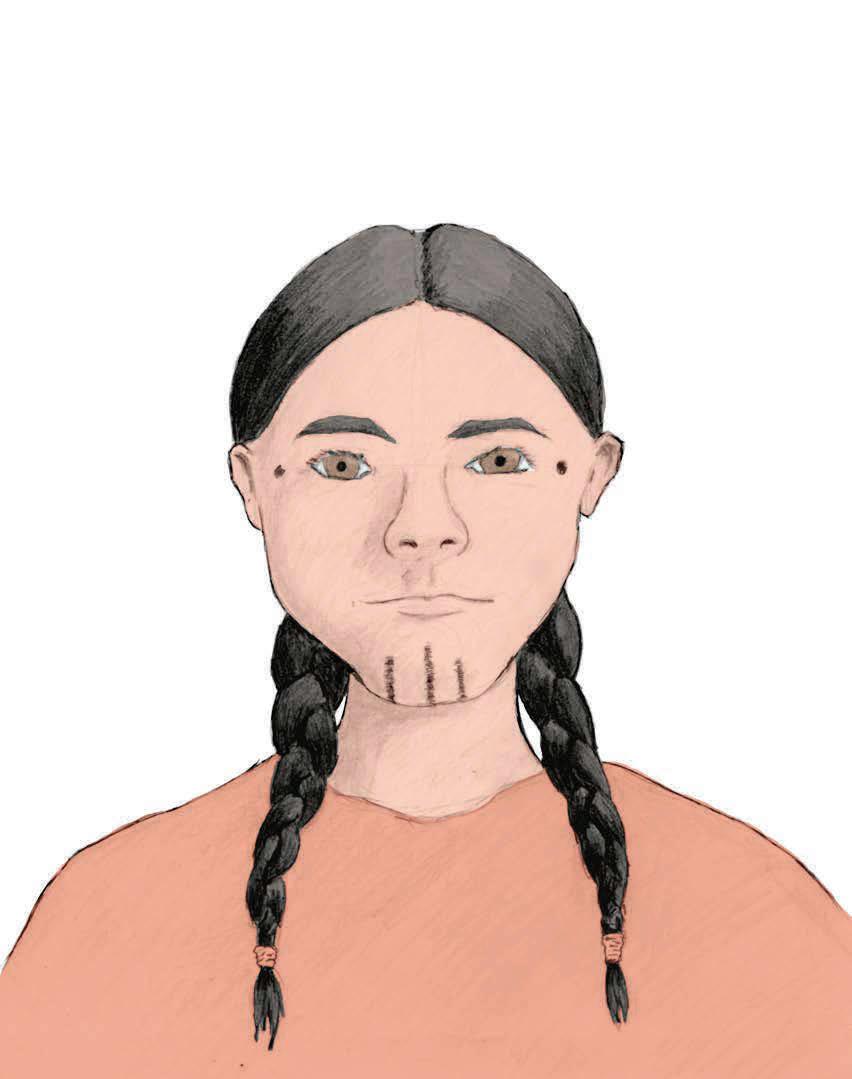
Nana grabs Maverick’s hand as they walk to her car to head home for the day. Maverick jumps and skips along the very same path as the Elders before him. For the first time, Maverick stops and contemplates everyone who has walked the same path before him. Grabbing the dirt from the ground and feeling the rubble in his fingers, he can’t help but think about how this very piece of land was where his parents, grandparents, great-grandparents, and all of his ancestors have lived for thousands of years.
Wiping his hands on his pants, Mav runs to the car when he hears Diane turning on the engine. She begins driving home for the night. Maverick turns to her, asking, “Could you tell me more about our Monacan people? What else is so special about our land?”
Nana looks through the rearview mirror, noticing Maverick’s tired eyes. “Rest, Maverick, that will be a story for another time,” Nana whispers in her soft voice.
Maverick looks out the window and begins drifting off to the peaceful notion of getting to hear more stories from his beloved Nana tomorrow.
Chapter Seven: Protectors and Preservers of the Land
It’s a new morning! Maverick is so happy that it is a long weekend. That means he has no school today! He loves it when he wakes up to birds singing and the sun warming his face instead of a 7 am school alarm or his mom dragging him out of bed. Usually, he lazes around on days he is off, but not today. Today, he is hanging out with his Nana again!
Although it is only 10 am, which to him still seems early, his great-grandmother is already up and lively. As Maverick approaches her with a good morning hug, Nana plants a big kiss on his forehead and jokingly says, “Good morning, sleepy head.” Sitting on the couch beside her, Nana tells Maverick that the car is all packed with his sleepover bags and that pancakes are on the kitchen counter for him to eat. She exclaims, “We’ve got a big day today, so eat up! We are going to a very sacred place for our people.”
Maverick’s eyes beam. “Ooo! Ooo! What is it, Nana?”
Letting out a chuckle, she sweetly notes, “You’ll see soon. You will just have to be patient, Mav.”
Sighing, Maverick knows his Nana won’t tell him any more information. Sadly, he is just going to have to be patient. Patience is not Maverick’s strength, but he’s determined to try his best.
On the drive, they listen to Nana’s favorite songs from her childhood. With the windows down, they sing and dance. Pulling into the parking lot, to the right, Mav sees the familiar weathered schoolhouse he knows so well. This building reminds him of his conversations with Nana from the weekend. He remembers how resilient his ancestors were as they fought for their education when it was denied to them by the government. This was a good reminder to him that he should work on complaining less when he has school because he should not take the opportunities he has for granted.
After parking, Nana gets out of the truck and goes down a path opposite the direction of the schoolhouse with Mav trailing closely behind her. Greeted by the sounds of nature, Maverick takes his time to reflect on everything he has seen in the place he calls home. He thinks about the deer searching for acorns and berries, the sunburnt orange and yellow leaves from the trees decorating the skies above, and the wind flowing through the grass blades. The land is so beautiful.
What Land Means to the Monacan People
Gazing around Bear Mountain, he feels pride rush into him like the wind that gushes around him and tussles his hair. Maverick recognizes that this land is important because when he observes the area around him, he feels a deep sense of connection to it. When Mav looks at the large area of land, he spots so many great places to hide and imagines his Nana and Higų: playing hide and seek. When he looks at the animals that also live on the land, like the birds that sing him awake in the morning and the squirrels that climb the trees, he feels a sense of responsibility to protect and care for these small creatures.
Maverick eagerly asks, “Did my ancestors also feel like this land is home, Nana? Did they respect and admire the birds and the squirrels and the trees?” With a cheery and proud tone, Diane responds, “Did you know that in the Monacans’ native language, called Eastern Siouan, the word ‘Monacan’ translates to ‘Earth People’? In another language, called Algonquian, spoken by the Powhatan Tribe who lived near our ancestors, ‘Monacan’ translates to ‘Diggers in the dirt.’ Isn’t that fascinating?”
Maverick cheekily adds, “Well, that explains why I like playing in the dirt so much. I’ll have to remember to tell Mom when she starts complaining about grass stains again.”
“Haha. I’d love to see her reaction to that, Mav,” exclaims Diane.
Taking a moment, Diane sits on a bench, then looks past Maverick into the distance and smiles. Maverick notes that her smile is so wide, he can see her eyes light up. She reflects, “To our people—the Monacan people—land and everything that lives on it are important and valued, including the smallest of small creatures and the biggest of big creatures. To us, land is not just
The Powhatan Tribe Today:
Today, the descendants of the Powhatan Tribe are not referred to as Powhatans. Powhatan Confederacy and the modern Tribal Nations stem from the Powhatan Confederacy. The modern confederacies that stem from the Powhatan Tribe include Chickahominy, Eastern Chickahominy, Mattaponi, Nansemond, Pamunkey, Rappahannock, and Upper Mattaponi. These seven tribes compose the Powhatan Confederacy today.
However, the more he reflects on this idea, the more confused he gets. He wonders why there are environment issues, if everyone treats the planet with respect? Is it because some people do not value the Earth? In school, Maverick remembers his science teacher talking about climate change, food waste, and how plastic affects ocean wildlife. It is puzzling to him that a person would knowingly harm the planet for convenience or personal gain. For instance, why would someone throw trash out on the street when things like trash cans exist? Even though a physical location. It is so much more. This land we are standing on now is what provided for our ancestors for thousands of years, what provides for us today, and what will provide for all future generations.”
not all people are Monacan or have deep-rooted beliefs about protecting the environment, shouldn’t everyone be responsible for helping preserve the planet? Maverick wrestles with these ideas but cannot find a way to voice them.
Seeing Mav’s hesitancy to respond, Diane prompts him by asking, “What are you thinking about?”
Maverick warily asks his Nana, “When my ancestors were alive, did people not always care for the planet as they should?”
Diane looks down at Mav with a sorrowful stare in her eyes as she explains the darker truths
Diane elaborates, “Because the land provides for us, we must, in turn, protect, respect, and be stewards of the land. These gifts the land gives us are not something we can just take. We must give back to the land by caring for it so that it can continue to bless us and everyone who lives on it. These values, as evidenced by the translations of the name ‘Monacan’, are deeply rooted and interconnected in our way of life, beliefs, and culture. Does this make sense?” This concept makes so much sense to Maverick. All of his life, he has watched his family, and the Monacan people respect the Amą:i by growing gardens and canning foods.
Another Native American Tribal Belief about Land Treatment:
The belief that land should be respected is not only a value that the Monacan people share with each other. These ideas are also shared by varying Native American Tribal Nations, from North to South and East to West. For instance, the Yurok Tribe, located on the West Coast in Northern California, similarly believes that land must be treated with respect as each generation is responsible for it, so when the time comes to pass on the land to the next generation, it is maintained and well-cared for.
of this land’s history.
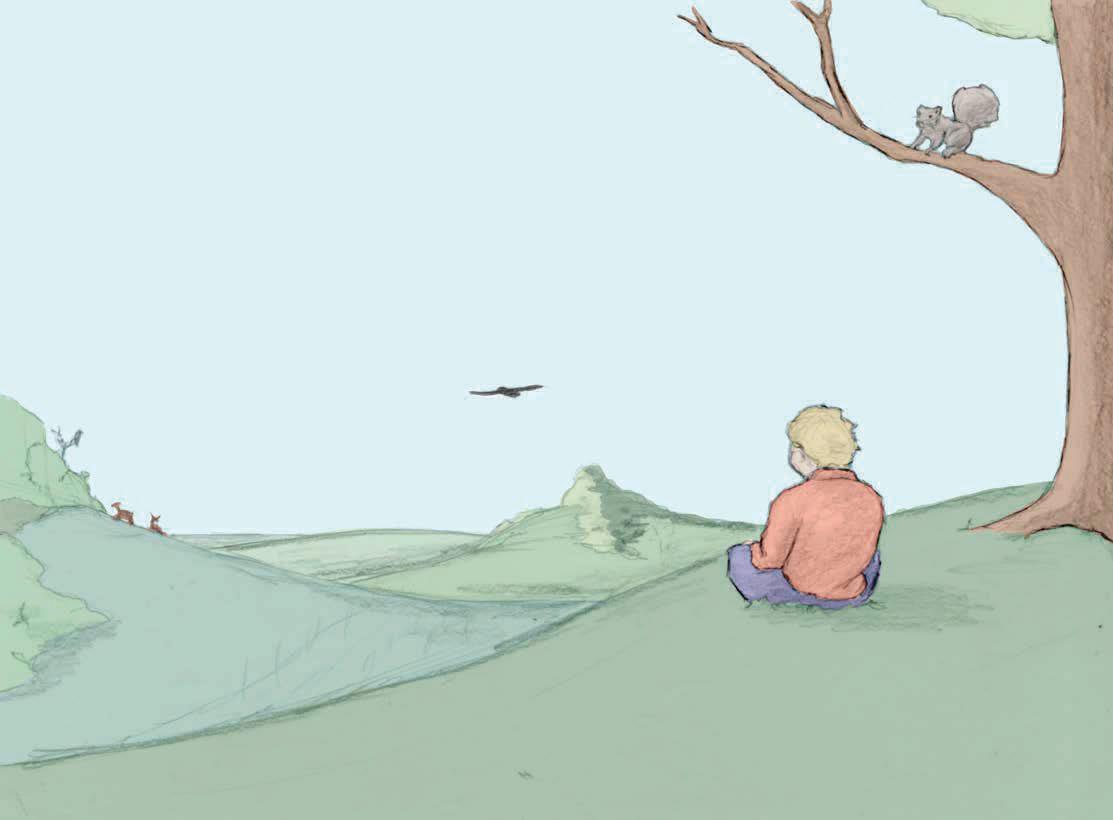
The Impact of Colonization on the Monacan People
“Mav,” says Nana, “I’m so proud of you. You’re asking difficult questions and that takes bravery. History isn’t just comprised of happy moments but sad moments too. Even though it is hard to talk about the discrimination and inequality we have faced as a tribal Nation, it is important to talk about them to spread awareness.”
With an earnest tone, she looks Mav in his eyes. “We cannot let these events and memories remain hidden in the past, Maverick. We must always talk about them to inform the world so that past mistakes are not repeated in the present or the future. We must never let the world forget.”
Continuing, Nana shares the negative impacts colonization had on the lives of their ancestors. “When the European colonists came to the modern-day United States, some held a different view of the land’s purpose. More than 400 years ago, in 1607, European colonists settled in Virginia, seeking new opportunities and privileges that the country they originally lived in restricted.”
Tilting his head, trying to understand her statement, Mav asks, “What do you mean?”
“The English colonists wished for religious and political freedoms and wealth and saw this land as a place where they could achieve these goals. With these new ideas of how they wanted to live, English colonists also brought along their ideas and practices of land treatment. From the point of view of some Europeans, the land had a different purpose than what the Monacan people believed,” Nana tries to explain.
For some Europeans, land was something that could be exploited for personal or economic gain. For instance, many English people believed that land was owned by one person and was their property instead of a place of common use.”
Maverick looks at her face, still staring up, and patiently waits for her to elaborate.
“Also,” Nana continued, “some people took more than just the resources that are needed to sustain a balanced life.”
“They did? Like what?” Mavericks asks, engaging in the conversation.
“Well, for example, some European colonists wanted to extract gold, silver, and precious gems from the land. In doing so, they were not respecting the land in the same way as the Monacans.
“There was an old prophecy within the tribe that predicted there “were a people who came from under the world, to take their world from them.” The Monacans believed that the English colonists were these people.”
“So, what did our ancestors do when the colonists arrived?” asks Mav curiously.
“In hopes that the English would leave them alone and not take their homes and livelihoods, our ancestors decided not to get involved in English business,” Nana responds.
She explains to Maverick that other tribes, like the Powhatans, took a different approach to relations with the new arrivals and became allies and trade partners. While the Monacan’s avoidance of the colonists was a good practice, it did come at a cost. It meant that many Monacan people moved to different areas when the English settlements encroached upon their ancestral land. So, even though there were no wars over land between the Monacan Nation and the English colonists, English expansion resulted in the displacement of many Monacans from their homeland.
“But not everybody moved from their homes,” continues Nana. “Others bravely chose to stay in their ancestral land. The result is that today, we have our tribal headquarters and many of our culturally significant sites here in Amherst County, right where we’ve always been!”
The Monacan Nation is not the only Native American tribe whose ancestral land was encroached upon by colonists.
“Wait, wait, wait”, insists Maverick. “Like the Powhatans? What did they do?”
Walking further, Nana gives some examples of how the Powhatan approach to doing business with colonists also came at a cost. “The Powhatans’ land was taken away by English colonists to grow cash crops like tobacco. Cash crops are plants that are grown to be sold rather than eaten by the community. To turn the land that was once the home of the Powhatan community into farmland, colonists cut down trees and much more. This devastated the Powhatan people, as it would devastate anyone whose home was lost because of monetary ambitions.”
“Monetary ambitions,” Maverick speaks with a questioning tone.
Tilting her head down toward Maverick, Nana states, “Remember that gold we were talking about. Well, these examples are the impact.”
Thoughtfully, Maverick responds: “Oh, so like in Pocahontas?”
Nana chuckles, “Not exactly. The movie Pocahontas has real points, we know the Powhatans existed and that the colonists were searching for gold, but not all of the points in the movie are made accurate. The movie doesn’t show the harm colonists caused because of those monetary ambitions. Plus, the film is less than two hours. It would be difficult to fit the results of greed into that timeline.”
“Why?” Maverick asks, completely absorbed in the conversation.
“The impacts of land removal and the clearing of forests is still happening. Pocahontas can’t fit in results that are still taking place from the 1600s. The film also doesn’t explain the multiple perspectives of the events at Jamestown.
Diane further explains to Mav that, today, some people still believe that land exploitation is an acceptable practice. We may recognize that exploitation is harmful, but the results of that exploitation are more complicated to explain. As a result, our world has environmental issues because some people do not see land as something they are responsible for, but as a commodity. Commodities are things and objects that are marked by their economic value. Therefore, some people’s intentions with land are not always noble and honorable or can have negative impacts on the land. For example, those in businesses that build infrastructure may clear forests to construct things like homes and buildings. This is good for people. However, this is not good for the animals whose homes are in those forests.
Frowning, Maverick responds, “I don’t like that. These conversations we’re having are frustrating. We can’t time travel to help our people or fix mistakes. We are just hearing this negative history. It’s uncomfortable.”
Stroking his blonde hair, Nana reflects on his feelings and thoughts. “Maverick you’re absolutely right, it is uncomfortable hearing about the negative and complicated parts of history, but we do make a difference. We can speak up for our ancestors. We can carry on traditions. We can also work toward correcting some of the harmful impacts of Jamestown’s colonization. Does that make sense?”
Pursing his lips, Maverick verbally works through his thoughts: “Every person has a role and responsibility in caring for the environment, because it is our home,” he says to Nana. “Just like how we would try our best to keep our room clean, we should keep the planet clean.”
He continues, “I believe in the importance of respecting the land like my ancestors did and just like the Monacans do today. I am glad, though, that now I know and understand more about the history of the land and the different viewpoints people have about the land’s purpose.”
With a new sense of pride in his land and Bear Mountain, Maverick continues on his walk with his Nana. They pass the stream and museum, heading across the parking lot to a path starting in the woods.
Nana says to Maverick, “Now that you better understand how our people value our land, do you want to see something cool?”
“Yes!” Maverick eagerly responds as he waits to see what she has to show him.
As they keep walking, Nana leads Maverick on a new path he does not recognize, then, after a few more minutes of walking, Maverick sees what looks to him like a small hill in the middle of the clearing. As he gets closer, he realizes the hill is taller than he is!
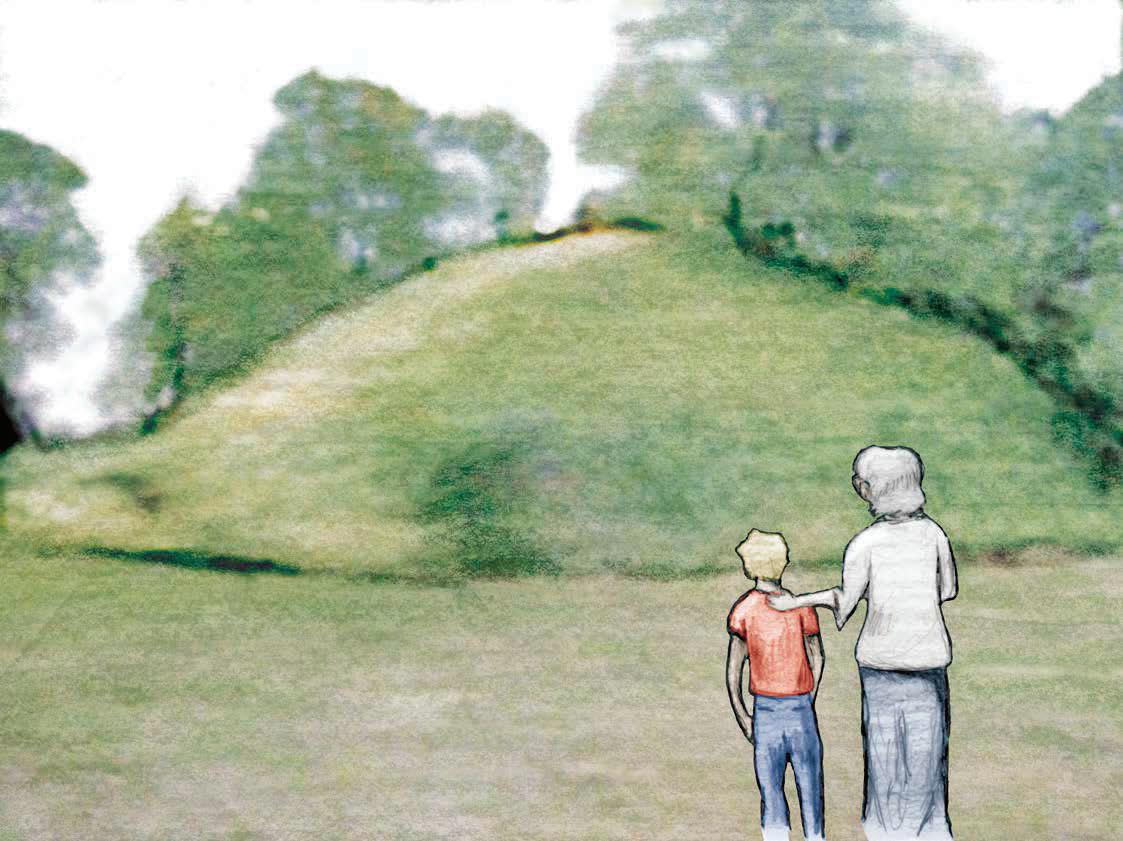
The Monacan Nation has used burial mounds for thousands of years to both bury and honor their dead. Building a mound was a process that could span over many years, because burials were not a one-time event. The Monacan people would add to the mounds with each generation. This act was treated like a ceremony to show love and respect to dead relatives. As a result, burial mounds honor family lineage, but also connect the Monacan people to the land in a deep, meaningful way.
Burial mounds were built through the Monacan people’s hard work. First, a hole was dug to build up the mound from inside the ground. Then, the Monacans would fill the hole by burying their dead in layers, adding more skeletons over time. As a result, burial mounds are made up of several layers and could grow to be very large. They can be taller than 8 feet high and wider than 40 feet (that’s as long as a school bus!).
Unsure of where he is and what he is looking at, but sensing that it is important in some way, Maverick asks, “What is this place?”
“This is a Monacan burial mound,” says Nana, “Our people created this spot a very, very long time ago through an ancient practice that honors our ancestors. Your family and fellow Monacan people and their bones rest here under this hill.”
“Woah,” Maverick replies.
Nana continues, “Burial mounds help us honor our ancestors, but they also help us track where they lived. If there is a burial mound in a new place, we know the ancestors must have lived there once.” He wonders why he has never been shown this before and why it is on its own path, so he asks, “Why is the burial mound away from everything else? Is it a secret?”
Nana responds, “Because burial mounds are so special to us, they get their own special place on our land. A long time ago, people found our burial mounds and stole some of the bones from inside them. This upset our people, because we want to keep our ancestors safe and protected. But now, because of something called the Native American Graves Protection and
Repatriation Act, the bones are being returned to us.” As Nana speaks, Maverick hears excitement in her voice.
There are thirteen documented burial mounds in Virginia. Seven of these were created using only dirt, grass, and soil. The other six used these parts of the land but were also made with stones.
In the past, other people outside of the Monacan Nation have examined these mounds and even removed bones to study Native American and Monacan practices. These people included farmers trying to relevel their fields, scholars, and government officials. Even the third president of the United States of America, Thomas Jefferson, took apart a burial mound to examine its layers. These acts were very hurtful to the Monacan people because burial mounds are sacred sites, which means they should not be touched or messed with.
She announces, “When we get the bones back, we will celebrate by hosting a reburial!”
Maverick loves celebrating with the Elders, so hearing this makes him happy. “Can I come? Please!” He implores, wanting a chance to honor his ancestors with his Elders.
“Of course, Mav, we can all honor them together,” she says, beaming. “Follow me. I have another place to show you.”
As they turn to leave, Maverick fixes his eyes up at the burial mound one last time. He stands still for a moment of silent reflection, staring at the mound as he feels a sense of awe and pride wash over him. When he’s ready to go, he turns around to find Nana watching with a gleam in her eye.
She clasps his hand and together they walk back on the path they entered. Nana shares, “This next place is a little further, we’ll need to drive to get there.”
“Race you to the car!” Maverick shouts as he turns and runs towards Nana’s old pick-up truck. “I win!” he says, tapping the blue, rusted door as he gasps for air.
Nana calls from behind Maverick, “You’ve gotten so fast! Maybe you should run there while I drive!” she jokes.
When Nana approaches the truck, she says, “Now Mav, we’re off to Laurel Cliff Farms.”
As Nana starts the car, she plays the old songs from when she grew up, but to Maverick they just sound weird.
“Can we listen to some of my favorite songs?” he asks.
Nana replies, “I’m sorry Mav, you know my car doesn’t have that fancy Bluetooth player like your mom’s, it only plays CDs.” She laughs, “I guess you’re stuck listening to my music!”
They drive for about fifteen minutes, but to Maverick it feels like forever. “Are we there yet?” he asks each time the song changes. Finally, they pull down a long driveway.
Laurel Cliff Farms
“We’re here!” Nana exclaims.
“Remember how a bunch of the Elders worked on an apple orchard? Well, this place is another farm that your Elders worked on.” As Maverick looks out, he immediately recognizes the farm as the site of the Monacan Nation’s Powwows.
Knowing this, he tells his Nana confidently, “I’ve been here before. This is where the Powwows are! Do people still work here? Are there apple trees? Can we pick some apples?”
With a smile on her face, Nana replies, “I’m so glad you recognize the land, Maverick. This place doesn’t have apple trees. Instead, it was used to farm corn, wheat, tobacco, and cattle. But, for a time, it didn’t officially belong to us.”
Confused, Maverick asks, “Why? How could our people work and tend to the land, but while it does not belong to us?”
Nana responds, “All 1300 acres you see in front of you were bought back by our people in 2021. These lands used to be ours before settlers came and claimed them from us, even though they came from different lands across the ocean. For a time, our people would work here for different owners, but we finally were able to reclaim the land back as our own.”
Still confused, Maverick asks more questions, “So our people lived here, but never owned the land?” He continues, “Do Monacan people live here again now that it’s ours Nana?”
Nana answers, “Yes, that’s right, Mav: Monacan people lived here even when they were not allowed to own this land that was taken from them. And while no one lives in that big farmhouse straight ahead, there are a few other homes further back where some of our people live today.”
“But Nana,” Maverick asks, “How is it ours if barely anyone lives on it now?”
Nana replies, “Sometimes ownership is more than just living somewhere Maverick. Remember the places we’ve visited this weekend; each place is very meaningful to our people. We are connected to the land we’ve explored today because it is where all those who came before us lived, worked, and loved one another—that’s why ownership is so important to us.” Nana’s voice shifts, her wisdom now laced with excitement. “But guess what, Mav! Our people have been talking about building more homes, a farmer’s market, and a youth center on this land to make it feel like a part of our community, like how it feels at Bear Mountain.”
As Nana says this, Maverick remembers what she said about Monacan land, that it is more than just a physical location. The land represents part who Maverick is and who his community is as a whole. After visiting the burial mound and Laurel Cliff farms, Maverick tucks this value into his heart. He feels his own personal and cultural connection to the land and can’t wait to tell the rest of his family and friends about it.
Chapter Eight: The Path Forward

Problematic Stereotypes: the “Vanishing Indian”
Looking back in the rear-view mirror, Nana raises her eyebrow and asks, “Well, how was school today?”
Maverick glances out the window and says, “Eh, okay. History class was weird. My teacher showed us papers that said, ‘Indigenous people used to live here.’ It’s like we’re only part of the past.” Maverick adds, “We looked at the United States Citizenship Test and even on the test, they ask, ‘Who lived in America before the Europeans arrived?’ like we’re not still here.”
Nana smiles a little, but it doesn’t reach her eyes. She says, “Last week we talked about segregation. But we haven’t really talked about how people think Native Americans are ‘Vanishing Indians.’ That’s just a stereotype. We’re still here— living, working, just like everybody else.”
Maverick frowns. “Why do they still ask those questions like we’re gone?” Nana answers, “Sometimes people only see what they learned a long time ago. It’s up to us to show them we’re still here.”
Maverick looks down. “You told me about our ancestors not being allowed in public schools.”
Nana nods. “As we talked about last week, Virginia had laws like the Racial Integrity Act of 1924, which tried to erase Native identity by labeling Monacan people as ‘colored’ on official records. What we didn’t talk about was how that same year, the Indian Citizenship Act was passed. It granted U.S. citizenship to Native Americans—but it didn’t guarantee the right to vote. States still had the power to decide, and many—including Virginia—continued to block Native people from voting for decades. It wasn’t until 1960 that Native Americans finally gained full federal voting rights.”
Maverick presses his forehead lightly against the window, thinking.
Ahead, he notices a woman struggling to hang a banner. He sits up straighter.
“Stop, Nana!” he calls out.
Nana pulls over to the curb. Maverick jumps out of the truck and jogs over.
“Need help?” he asks.
“Could you hold the stool still?” the woman says, smiling down at him.
Maverick steadies the stool and says, grinning, “Just a Monacan here to help!”
The woman chuckles. “There she is,” she says, turning her head and nodding toward Nana. “Always making sure everyone feels welcome. Even back when people tried to push us out, she stayed—and kept showing up.”
Nana leans her head out the window and calls, “It’s just our way of reminding everyone we’re still here! We haven’t ‘vanished.’”
They all įkse:ha.
“That’s the Monacan way!” the woman says
Maverick beams as he steadies the stool, feeling proud.
Maverick jogs back to the truck, and Nana drives them down the quiet main street.
As they drive, Nana glances over at Maverick and says, “Well, that’s one way to put the ‘Vanishing Indian’ myth to bed.”
Maverick grins. Nana smiles warmly and adds, “Maverick, never stop being you. The most authentic way to be Monacan is just being yourself. Who knows—someday, you could be both President of the United States and Chief of the Monacan Nation.”
Preparing for Homecoming
They ride in a comfortable silence as Maverick watches the town pass by the window. They turn off the main road, easing down a quiet lane lined with trees. The gentle tinkle of wind chimes drifts in through the open windows as they approach Nana’s house. Nana parks the truck and turns off the engine. “Home for the weekend,” she says with a small smile. Maverick opens his door and grabs his backpack from the floor. They walk up the porch steps together. Nana unlocks the front door, and inside, Maverick kicks off his shoes and sets his bag down. “Do I still have to do chores?” he asks, half-joking.
Nana hangs her keys by the door and looks over. “Only if you want dinner.”
Maverick groans dramatically. “Bribery? From my own grandmother?”
Nana raises an eyebrow. “Great-grandmother. And yes.”
Nana turns back to look at Maverick and smiles. “You’re lucky, dinner’s ready.”
On the table is a big pizza box—Nana’s special tradition for nights before celebrations. Maverick grabs a slice. “Pizza before Homecoming?” he grins.
Nana nods. “Only for the helpers.”
He takes a big bite and smiles. “Yum—definitely worth the chores. “Nana,” he asks, “are you making snacks for Homecoming?”
She smiles. “Wait till tomorrow,” she says.
He reaches across the table. “Please tell me!”
Nana puts her hands on the table. Her face lights up and they laugh at the sauce dotting Maverick’s chin while they eat. Nana tells Maverick to wipe his face.
While wiping his mouth, Maverick turns to Nana and considers, “Did you always know all these stories? Or did someone have to teach them to you?”
Nana looks at him for a moment. “Most of them were told to me when I was your age. I didn’t understand all of it back then, but I listened. Over time, they stayed with me.”
“Do you ever forget any?” he asks.
“Sometimes,” she says, “but the important ones come back when you need them.”
Maverick nods. “I want to remember all of them.”
“You will,” Nana says. “Just keep asking.”
Maverick asks, “Are you excited about Homecoming?”
Nana chuckles. “Of course I am. The smells, the music…but mostly, I’m excited to see all of the people coming together.”
She picks up her glass and looks at him. “Homecoming is a good time to listen. The stories float around everywhere—you just have to pay attention.”
Winking at Maverick, she adds, “Maybe you’ll even hear some stories you can carry with you to the White House someday.” As they finish up the dinner, Maverick can’t contain his excitement for the next day. “I just can’t wait for tomorrow!” he says eagerly.
Diane looks at Maverick with amusement on her face and says, “Tomorrow is going to be a big event, and I know you’re going to love every moment of it.” Maverick’s eyes light up. “Who else will be coming to the Homecoming? Will there be a lot of people like there were at the Powwow?”
Diane tells Maverick, “Yes! Our family and friends that we haven’t seen in months will be there. Technically, it is separate from the Nation, because it is held at our church, but we call it a Homecoming since it is a big reunion for us. A Homecoming is special because it brings us all together to honor our history, our traditions, and our future. It’s a time to reconnect with our people, share stories, and reflect on how far we have come.” Maverick’s face looks puzzled. “I get that, but at the Powwow, there were so many different tribes and we all got to hang out together. It’s always so much fun. Why do they come to those but not to Homecoming?”
Other Indigenous Tribes
Diane chuckles warmly. “That’s a great question, Maverick. Powwows are gatherings where many tribes come together. The Saponi, the Mashpee, and so many other tribes join us to share dances, songs, and stories. It’s a way for us to connect, to celebrate, and to support each other. Do you remember our friend Rufus, the person who sits with the drums at our Powwows?”
Maverick nods his head. Diane adds, “He is Monacan like us, but he also sits on different tribal drums. Just like Rufus, we all help each other out and support one another across different tribes. Each tribe has its own unique traditions, but we all have a shared history of resilience and strength. Some of their dances are different from ours, and their regalia, like their traditional and sacred clothing and accessories, tells different stories. But when we come together at a Powwow, we honor both what makes us unique and what unites us. The Saponi and the Mashpee tribes have supported us for generations, and so we do the same for them.”
Maverick leans forward, eager to learn more. “What’s special about the Saponi and the Mashpee? What makes them different from us?”
Diane smiles, pleased by his curiosity. “The Saponi were originally from what is now Virginia and North Carolina. Just like us, they had to fight to keep their identity, their land, and their traditions alive. Over the years, some of them joined our ancestors, and our histories have been intertwined ever since. Many of their people moved North, to Pennsylvania or New York, but their heart remains in the lands they’ve always called home. The Saponi were known for their skilled hunting, their knowledge of herbal medicine, and their deep connection to the land. Their language was similar to ours, and many of their customs mirror our own. They, too, had to fight for recognition, for their rights, and for the preservation of their stories.”
Maverick nods, fascinated. “And what about the Mashpee?”
“The Mashpee are from far up north, in what is now Massachusetts. They are a branch of the Wampanoag people, the ones who first met the English settlers hundreds of years ago. The Mashpee have always been known for their skills as fishermen and boat builders. Their ancestors navigated the Atlantic mani: long before European ships ever arrived. Their ability to thrive in both land and ocean environments made them strong and resourceful. But instead of letting themselves be erased, they held on, just like we did. They’ve fought for their rights and their land, just as we have. Their history is one of survival, resistance, and pride. Even though they are far from us, we have maintained a bond for many years. We have shared songs and dances and, over time, some of our families have even become connected.”
Maverick sits back, absorbing everything. “So, we’re all connected. Even though our tribes are different, we’ve helped each other stay strong.”
“Exactly, my boy,” Diane says, her voice warm with pride. “That’s why it’s important to remember that being Monacan isn’t just about what’s in our history books, it’s about the relationships we’ve built, the traditions we’ve held onto, and the stories we pass down.”
Maverick feels the same pride he did when they visited Bear Mountain. Over the past few days, he’s learned so much about his culture, and even more about himself. He now understands that Homecoming wasn’t just a celebration, and their presence wasn’t just a gathering, but it was a declaration. We are still here. His people have endured, adapted, and survived, and they will continue to do so.
As Maverick thinks about everything, Nana claps her hands. “Now, enough talk for tonight! You have a big day ahead of you tomorrow, and you need your rest.”
Maverick looks at her, still feeling wide awake. “Not yet, Nana! I just have one more thing to ask. What’s your favorite part about Homecoming?”
Diane smiles, looking out the window, as if she is already looking ahead into tomorrow. “The way it brings us all together. When I see old friends, when I hear the drumbeat echo in my heart, when I taste the food that has been made with love and care for generations, it reminds me of who we are. But more than anything, I love seeing young ones like you begin to understand it all. That’s the real Yą:ti of Homecoming.”
As the sun sets, Diane prepares to leave. “Where are you going, Nana? You aren’t going to spend the Osi:?” asks Maverick.
“No, not today. I promised Mrs. Birdie I would help her with her cooking tomorrow.” Maverick knows everyone looks forward to Mrs. Birdie’s famous cooking, and it is always one of the highlights of the Homecomings and Powwows. “You go to bed, Maverick, and I’ll see you in the morning.”
As Maverick lays in bed, under his favorite green and blue dinosaur blanket, his mind is still buzzing with everything Nana told him. He thinks about the Saponi, the Mashpee, and all the other tribes who have stood alongside the Monacan people. He thinks about the Elders, the songs, the food, and the traditions that tie them all together. He imagines the Powwow drum, steady and strong, like a heartbeat that has never stopped and never will.
Maverick closes his eyes and grins, feeling a new sense of purpose. Tomorrow, he will celebrate with his family, but beyond that, he will carry these stories forward. He has always been proud to be Monacan, but now he understands what resilience truly feels like. Sinking into the sheets, as he feels the weight of the day settle over him, Maverick knows this is just the beginning of his path forward.
Appendix: Definitions
First Appearance Term Definition
Chapter 1 Ancestors People from past generations within a family.
Chapter 1 Archaeological evidence Artifacts that serve as proof of past civilizations, helping us understand life in the past.
Chapter 1 Colonial Refers to the 1600–1800 time period when colonists arrived in North America.
Chapter 1 Colonizers People a country sends to a foreign place to gain control, often displacing existing populations.
Chapter 1 Confederacy A group of people or organizations that unite together.
Chapter 1 Dialect A variety of a language with different words or grammar.
Chapter 1 Elders Older Monacan members who are respected and are sources of history and wisdom.
Chapter 1 Eastern Siouan The Monacan Nation spoke Eastern Siouan Dialect.
Chapter 2 Canning Food A method of preserving crops so they last longer.
Chapter 2 Harvest To collect crops once they are ready.
Chapter 2 Higų: Monacan word for grandmother and great-grandmother. In this book, Higų: is being used for grandmother.
Chapter 2 Wisdom Knowledge and experience gained over time.
Chapter 3 Discrimination Unjust treatment based on differences.
Chapter 3 Eagle An animal of great cultural significance to the Monacan Nation.
Chapter 3 Fellowship Room A shared community space for all ages in the Monacan Nation.
Chapter 1 Faith A strong belief, often spiritual.
Chapter 1 Federal Recognition Where the government fully recognizes that a Native American tribe was in America pre-colonization.
Chapter 1 Identity Who you are, including name, beliefs, and background.
Chapter 1 Resilient The ability to persevere through hard times.
Chapter 3 Heritage Values and traditions passed down through generations.
Chapter 3 Inequality A lack of equal status or treatment.
Chapter 3 Integration To combine two or more things together and become one.
Chapter 3 Pondering Another word for wondering.
Chapter 3 Prejudice An unfair assumption about someone based on their identity.
Definitions
Chapter 3 Pride Confidence in who you are or where you come from.
Chapter 3 Prohibit To not allow.
Chapter 3 Segregation Forced separation of people based on characteristics like race or gender.
Chapter 3 Sovereign Nation An independent nation.
Chapter 3 Tradition Customs passed down through generations.
Chapter 3 Upstanding A role model or exemplary person.
Chapter 4 Perservere To endure and stay strong through difficulties.
Chapter 4 Sacred Deeply important to a group or culture.
Chapter 4 Underrepresented Lacking equal voice or opportunity compared to others.
Chapter 5 Birth certificate An official record of a person’s birth details.
Chapter 5 Racial Integrity Act An Act used to segregate marriages between different races and forced all people to register as “Colored” or “White.”
Chapter 5 Resistance Active efforts to fight injustice.
Chapter 5 Self-sufficient Providing for oneself without outside help.
Chapter 6 Homecoming A meaningful gathering of friends and family.
Chapter 6 Spirit Guide A spiritual entity that guides a person, often in dreams.
Chapter 6 Sweat Lodge A space for prayer and spiritual connection.
Chapter 5 Erased To remove someone from history by replacing their identity.
Chapter 6 Vision Quest A solo journey to discover one’s true self.
Chapter 5 Oral history History passed down through spoken stories.
Chapter 6 Worship/Religion Practices and beliefs expressing reverence for a higher power.
Chapter 7 Burial mound An elevated land area where ancestors are buried.
Chapter 7 Colonization A group expanding by taking over another group’s land.
Definitions
Chapter 7 Encroaching Starting to take over a space.
Chapter 7 Exploitation Taking advantage of others’ rights and resources.
Chapter 7 Native American Graves Protection and Repatriation Act A law ensuring tribal ancestors’ remains and possessions stay with their rightful communities.
Chapter 8 Mashpee A Native American tribe of the Wampanoag Nation in Massachusetts.
Chapter 8 Regalia Special clothing and accessories worn during ceremonies.
Chapter 8 Saponi A tribe closely connected with the Monacans.
Chapter 8 Vanishing Indian A stereotype that situates Native Americans as an extinct community.
Chapter 8 Wampanoag A Native Nation in northeastern America with a rich history.
Appendix: Translations
Translations: First Appearance English Word Translation
Chapter 1 Book Mina:gi
Chapter 1 God Wa:geni:
Chapter 1 Land Am :i
Chapter 1 Schoolhouse Ati: yilana:ha
Chapter 2 Rain Xawo:
Chapter 2 Warm Aka:teka
Chapter 2 Wind Mam klé
Chapter 2 Work Oknaho:
Chapter 3 Bed sa:si
Chapter 3 Bird Ma:
Chapter 3 Mountain su:hi
Chapter 3 Trees oni:
Chapter 4 Corn ma:ta:xe:
Chapter 4 Fish wiho:i
Chapter 4 River ta:kse:i
Chapter 4 Squash m duma yili:p
Chapter 5 Bread má:ksa:pa
Chapter 5 Night osi:
Chapter 5 Strong so:ti
Chapter 6 Good Food walu:ti bi:wa
Chapter 8 Heart Y :ti
Chapter 8 Laugh kse:ha
Chapter 8 Night Osi:
Chapter 8 Water mani:
Appendix: Maps

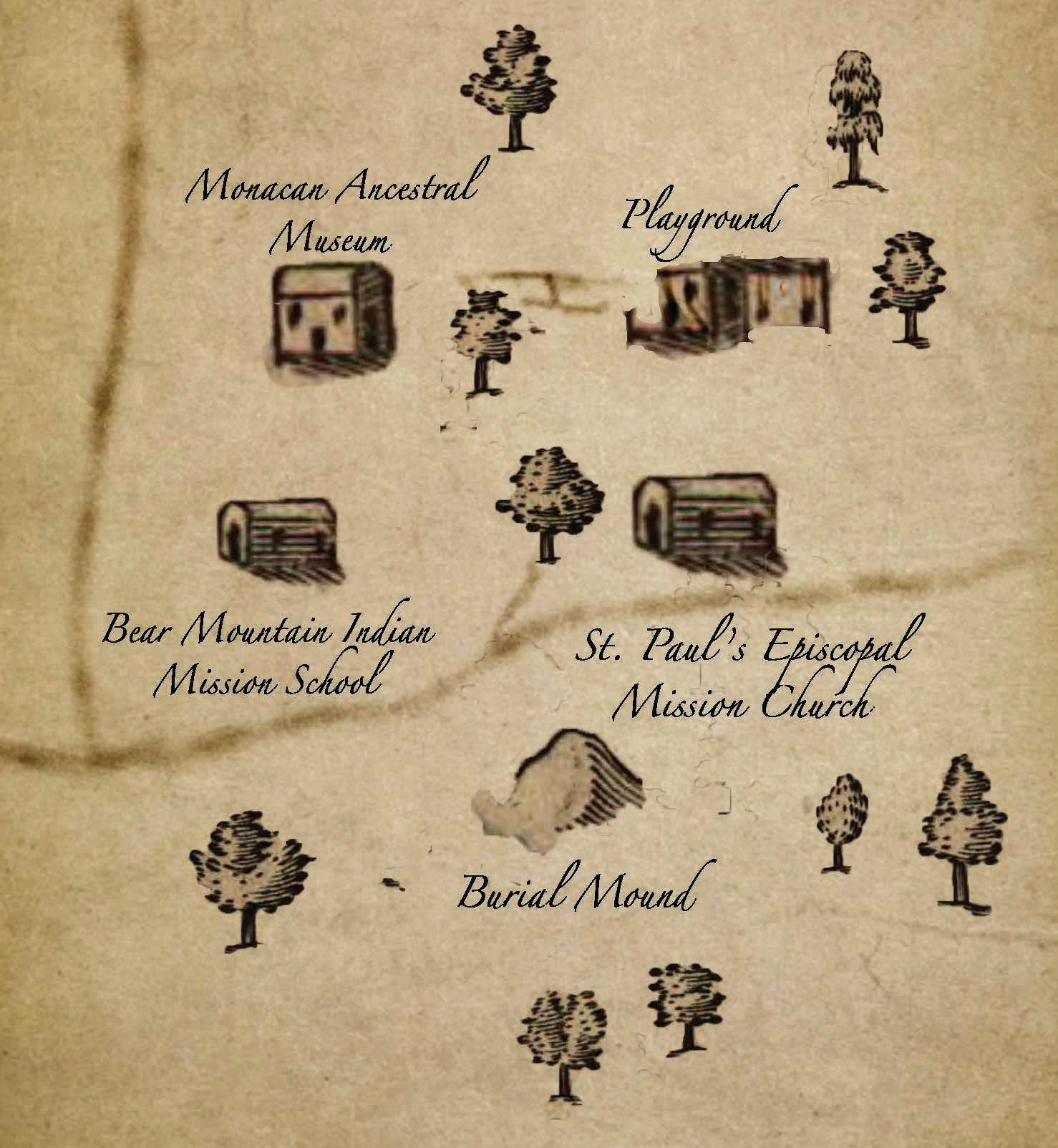
Appendix: Timeline
10,000 BCE -
The ancestors of the Monacan people lived in Virginia, hunting, fishing, and gathering food.
1400s-1500s -
1608 -
English explorer Christopher Newport visited Monacan towns, but the Monacans refused to trade with him. They did not trust the English, who had already begun taking land and resources from neighboring tribes and wanted to protect their people and way of life.
The Monacan controlled much of central Virginia. They traded with neighbors and built strong wooden walls (palisades) around their villages.
Before 1607 — Long Before the English Came
1700-1701 -
French settlers took over Monacan Land near the James River. The Monacan people who still remained moved into the mountains.
1656 -
The Battle of Bloody Run, fought near present-day Richmond, caused a great loss for the Monacan Nation. Many Monacan warriors were killed in the conflict, weakening their presence in the region.
— A New World Begins
1607 -
English settlers arrived in Jamestown. The Monacans lived farther west and did not trust the English newcomers.
1000 CE -
Monacans built permanent villages along the James River. They grew corn, beans, and squash. These crops were called the “Three Sisters” because they helped each other grown corn provided a tall stalk for beans to climb, beans added nutrients to the soil, and squash spread along the ground to keep weeds away and soil moist.
Searching for Safety
1680 -
A Monacan Chief named Shurenough signed the treaty again as the “King of the Manakins.”
1677 -
The Monacan people signed the Treaty of Middle Plantation, which made peace between the English and Native American tribes in Virginia and promised the Native people could keep their land and hunt and fish if they paid tribute. But some members decided to move west instead of living under English control.
1755 -
A map created by cartographer John Mitchell shows Monacan villages near present-day Amherst County. Although the Monacans lived peacefully, English and German settlers increasingly encroached on their lands pushing them from their traditional territories.
Appendix: Timeline
1830The U.S. government began removing Native Americans from their lands. The Monacans are not forced away, but they lose rights and land.
1868The Monacan Nation built a church at Bear Mountain. It becomes the heart of their community.
1924 -
The Racial Integrity Act erased Native identity from records. Monacans were labeled “colored” on official documents.
1908A school was built at Bear Mountain for Monacan children, but it only went to 7th grade.
1831-1833A Monacan leader, William Johns, bought land at Bear Mountain to protect his people.
1930s-1950sMonacan children could not attend regular public schools and faced discrimination.
2018 -
The U.S. government grants the Monacan Nation federal recognition.
1989Virginia officially recognized the Monacan Indian Nation.
1964Monacan students were finally allowed in public schools.
TodayThe Monacan Nation celebrates its culture, teaches its history, and holds annual Powwows to honor traditions.
Works Consulted
Chapters 1 and 2:
Hantman, Jeffrey. Monacan Millennium: A Collaborative Archaeology and History of a Virginia Indian People. University of Virginia Press, 2018.
“Our History.” Monacan Indian Nation. https://www.monacannation
Wood, Karenne and Diane Shields, Office of Historical Research, and the Monacan Indian Nation. The Monacan Nation: Our Story. The Monacan Indian Nation.
Chapters 3 and 4:
“Census Records Indian Census Rolls and Federal Population Censuses.” Native American Heritage; National Archives. https://www. archives.gov/research/native-americans/census
Hagi, Randi. “The Journey of a Virginian Eagle Feather: From Wild Flight to Spiritual Gift.” NPR News & NPR Talk in Central Virginia and the Shenandoah. https://www.wmra.org/2024-11-04/the-journey-of-a-virginian-eagle-feather-from-wild-flight-to-spiritual-gift
Johns, Bill. “Site of Historic Monacan Indian School.” Monacan Indian Nation. Photo. 2017 https://encyclopediavirginia.org/71992d123b16712ae95/
Lobo, Susan. “The U.S. Census as ‘Statistical Genocide.” Early Native Literature as Social Practice. Taylor and Francis, 2009. McLeod, John. “Pedro / Cinch / 63 / 83.” Pagat. https://www.pagat.com/allfours/pedro.html
Monacan Indian Nation. Feasibility Study for Economic Development on Laurel. June 20, 2024. Round, Phillip. “Early Native Literature as Social Practice.” The Oxford Handbook of Indigenous American Literature. James Cox and Daniel Heath Justice, editors. Oxford University Press, 2014.
“The Land Speaks: The Monacan Nation and Politics of Memory.” Virginia Tech University Libraries. https://exhibits.lib.vt.edu/theland-speaks/ Tribal Truths. June 1, 2023. “Monacan Indian Nation: Saving Rassawek: How Historical Racism is Still with Us.” Audio Podcast. Spotify. https://open.spotify.com/episode/0NxOj9iKWSelGfjGh0TH8g?si=dd46b0a95a814377&nd=1&dlsi=b81ca99f7b61417a Tribal Truths. June 1, 2023. “Monacan Indian Nation: Saving Rassawek: How Historical Racism is Still with Us.” Audio Podcast. Virginia’s Public Radio. https://www.wvtf.org/podcast/tribal-truths/2023-06-01/monacan-indian-nation-saving-rassawek-how-historical-racism-is-still-with-us
Chapters 5 and 6:
“1677 Treaty of Middle Plantation.” Native Knowledge 360, Education Initiative, National Museum of the American Indian. https:// americanindian.si.edu/nk360/pamunkey/assets/static/Pamunkey-Treaty-of-Middle-Plantation-r.pdf
“A Definition of Smudging.” Indigenous Corporate Training. https://www.ictinc.ca/blog/a-definition-of-smudging “Home.” Monacan Indian Nation. https://www.monacannation.gov/
“Site of Historic Monacan Indian School.” Virginia Humanities Encyclopedia. https://encyclopediavirginia. org/7199-2d123b16712ae95/#:~:text=%22Bear%20Mountain%20is%20the%20spiritual,Monacan%20children%20from%20public%20schools. VFH Radio. February 20, 2010.
“The Racial Integrity Act of 1924.” Audio Podcast. VFH Radio, a program of the Virginia Foundation of the Humanities “Virginia Health Bulletin: The New Virginia Law To Preserve Racial Integrity, March 1924,” Document Bank of Virginia, https://edu.lva. virginia.gov/dbva/items/show/226.
Chapters 7 and 8:
“Civics (History and Government) Questions for the Naturalization Test.” U.S. Citizenship and Immigration Services. “Colonists: Purpose.” Preparing for the Oath: U.S. History and Civics for Citizenship. https://americanhistory.si.edu/citizenship/learn/ a-growing-nation/58/learn
Cox, Toby. “On Monacan Land: A Three-Part Series.” The Central Virginian, 2021. https://www.thecentralvirginian.com/news/on-monacan-land-a-three-part-series/article_a587b43a-68dd-11ec-b7ff-632ad0bab2ca.html
Faulconer, Justin. “Monacan Nation Buys 5.5Million Monroe Property with Future Development Planned.” The New and Advance, 2021. https://newsadvance.com/community/new_era_progress/news/monacan-tribe-buys-5-5m-monroe-property-with-future-development-planned/article_9b6cb5a0-2165-11ec-a717-f70c039835c2.html
Hantman, Jeffrey. Monacan Millennium: A Collaborative Archaeology and History of a Virginia Indian People. University of Virginia Press, 2018.
“Home.” Mashpee Wampanoag Tribe. https://mashpeewampanoagtribe-nsn.gov/ https://www.uscis.gov/sites/default/files/document/ questions-and-answers/100q.pdf
“Home.” The Official Site of the Haliwa Saponi Indian Tribe. https://www.haliwa-saponi.org/
“Laurel Cliff Farms.” Land and Farm. https://www.landandfarm.com/property/laurel-cliff-farm-11802263/
Monacan Indian Nation. Feasibility Study for Economic Development on Laurel. June 20, 2024.
Mound, Ely. “Burial Mounds in Virginia.” Virginia Places. http://www.virginiaplaces.org/population/burialmound.html
“Native American Voting Rights.” Library of Congress. https://www.loc.gov/classroom-materials/elections/voters/native-americans/
“On Monacan Land Part 2: Acknowledging Past Injustices.” The Central Virginian. https://www.thecentralvirginian.com/news/on-monacan-land---part-2-acknowledging-past-injustices/article_83b680ec-709f-11ec-8e74-8b4c71f70199.html
“Our History.” Monacan Indian Nation.https://www.monacannation.gov/our- history.html
Pocahontas. Directed by Eric Goldberg and Mike Gabriel, written by Carl Binder, Susannah Grant, and Philip LaZebnik, Walt Disney Pictures, 1995.
Rountree, Helen C. Pocahontas, Powhatan, Opechancanough: Three Indian Lives Changed by Jamestown. University of Virginia Press, 2005.
“The Land Speaks: The Monacan Nation and Politics of Memory.” Virginia Tech University Libraries. https://exhibits.lib.vt.edu/theland-speaks/
“The Monacan In Virginia.” http://s1030794421.onlinehome.us/nativeamerican/monacantribe.html
“The Yurok Tribe Constitution.” Yurok Tribe. https://yurok.tribal.codes/Constitution/Preamble
“What happened to the Powhatan culture by the end of the 17th century?”