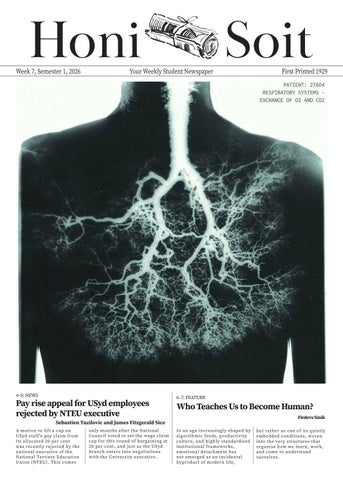
Pay rise appeal for USyd employees rejected by NTEU executive
Sebastien Tuzilovic and James Fitzgerald Sice
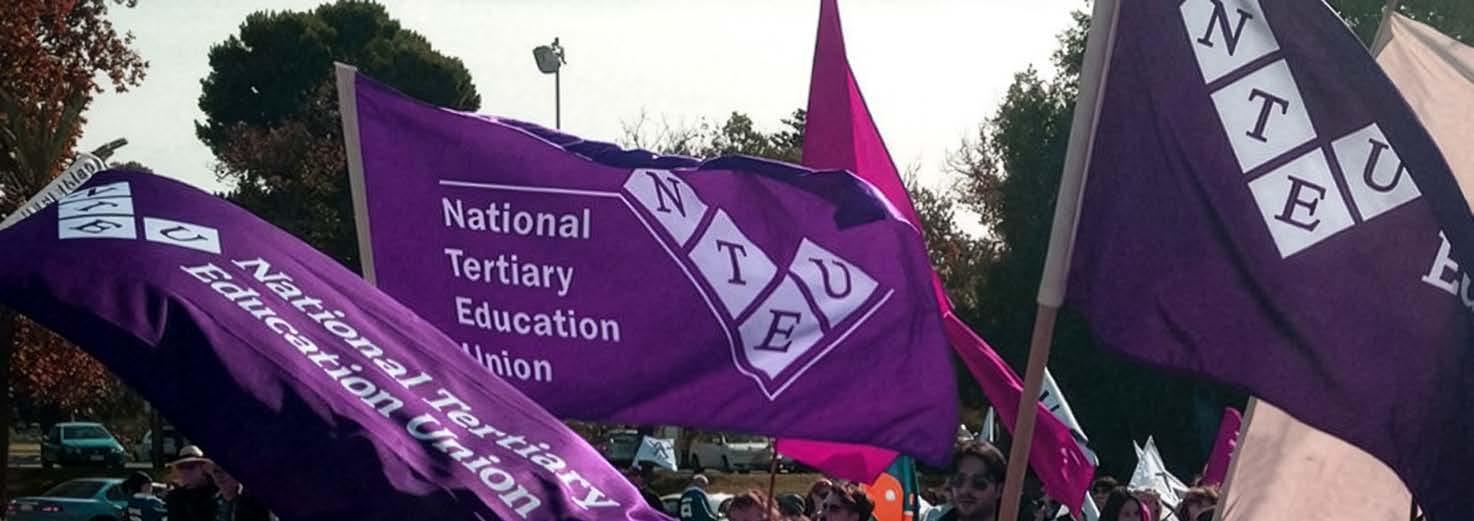
A motion to lift a cap on USyd staff’s pay claim from its allocated 20 per cent was recently rejected by the national executive of the National Tertiary Education Union (NTEU). This comes
only months after the National Council voted to set the wage claim cap for this round of bargaining at 20 per cent, and just as the USyd branch enters into negotiations with the University executive.
Who Teaches Us to Become Human?
In an age increasingly shaped by algorithmic feeds, productivity culture, and highly standardised institutional frameworks, emotional detachment has not emerged as an incidental byproduct of modern life,
but rather as one of its quietly embedded conditions, woven into the very structures that organise how we learn, work, and come to understand ourselves.
4–5: NEWS
6–7: FEATURE
Firdevs Sinik
EDITOR-IN-CHIEF
Firdevs Sinik
EDITORS
Madison
Anastasia
James
Kuyili
Ramla
Kiah
Marc
Firdevs
Sebastien
Firdevs
Sebastien
James
Kiah
Imane
Maeve
Sandy
Aiman
Max
Samuel
Acknowledgment of Country
Honi Soit publishes on stolen Gadigal land. Sovereignty was never ceded. The University of Sydney is a colonial institution that upholds Western knowledge as superior to First Nations knowledge systems. We reject this hierarchy.
As student journalists, we recognise that mainstream media has been complicit in silencing and misrepresenting Indigenous voices since invasion.
We commit to centring First Nations perspectives in our reporting, to challenging the colonial structures embedded in journalism, and to amplifying the voices of those resisting ongoing dispossession. We pay our respects to Elders past and present, and to all First Nations students and contributors.
Always was, and always will be Aboriginal land.
Zarfishan
Caitlin
Marc
Editorial
Welcome back everyone! If mid-semester break offered any illusion of pause, Week 7 is here to correct it. Deadlines resume their quiet accumulation, lectures pick up as if uninterrupted, and the familiar rhythm of productivity reasserts itself once more. You are expected, almost seamlessly, to slip back into the cadence of reading, writing, and submitting without hesitation. The machinery of university life rarely accommodates stillness for long.
After many years of reflection on my education, in this edition, my feature Who Teaches Us to Become Human? ruminates a question that feels increasingly urgent in environments defined by output. If university is where we come to
think, to specialise,and to refine our capacities, where, within all of this do we learn how to be human? Not in the abstract, but in the everyday: in empathy, in uncertainty, in our responsibility and care to one another. It’s terribly easy to become fluent in systems and still feel estranged from ourselves within them.
This tension echoes beyond the classroom, where the University of Sydney branch enters a new round of negotiations, with the motion to lift the cap on staff wage claims beyond the allocated 20 per cent being rejected by the National Executive of the NTEU. The decision arrives at a critical moment, raising questions not only about labour and equity, but about
how institutions value the people who sustain them. In a space built on intellectual and emotional labour, what does it mean to impose limits on recognition?
The pieces in this edition ask us to reconsider what we take for granted: the systems we move through, the cultures we inherit, and the ways we come to understand truth, value, and each other.
Thank you to the writers who have trusted this space with their work and special thanks to you reader, for still reading during these times of tribulation.
Lots of love, compassion, and care, Firdevs
Vox Pops: What are your thoughts on modern slavery?
M.P. says: Can we stop modern slavery because I dont want to do them uni modern slavery modules no more.
F.S. says: I love it when my $3 shien and temu clothes are made by incarcerated uyghur children, they have an eye for details.
K.B says: Sometimes I wonder what life would have been like if I was slaving away since birth in a brick slave factory in Pakistan because of a debt from 3
Honiscopes
generations back. But that never happened so who cares.
L.W says: Slavery doesn't exist, I work a 9-6 staring at a buzzing screen out of the goodness of my heart.
W.S. says: I work two part-time jobs, study full-time, and still try to have a social life—living the dream. Love that for me. Really glad my boss’s paycheck is seeing the benefits of all this personal
Aries: Blood Meridian by Cormac McCarthy. Read this while camping, I dare you.
Taurus: Don Quixote by Miguel de Cervantes. You're an old soul. You will be insufferable once you've conquered this classic.
Gemini: The Brothers Karamazov by Dostoevsky. It's worth all the drudgery.
Cancer: My Name is Red by Orhan Pamuk. Jewelled prose. Delicately painted dolls, in rich colours and gold leaf. Secrets exchanged in alleys.
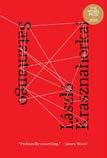
Leo: Satantango by László Krasznahorkai. Perfect pairing with Blood Meridian. #villainarc
Virgo: Melancholy by Jon Fosse. Schizofreni. Misunderstood freak artist genius, fragile ego. Don't read this when you're spiralling. Unreality. Reality.
growth.
P.O says: Modern slavery is awful, obviously, but also this sale ends in two hours...
R.I says: "When the rich rob the poor, it's called business. When the poor fights back, it's called violence" — Mark Twain my goat.
V.Q says: Can we talk about like, the political and economic state of the world right now?
Libra: Simple Passion by Annie Ernaux. You think about men too much, but who can blame you? He looks like Alain Delon.
Scorpio: The Post-Office Girl by Stefan Zweig. You've been craving money, pearls, a finer life.
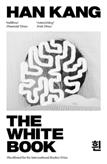
Sagittarius: The White Book by Han Kang. R&R. A book as quiet as snow.
Capricorn: Collected Poems of Ingeborg Bachmann . A religious inclination present in you, Mary Oliver-esque supplication. You want to be good.
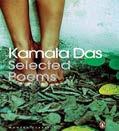
Aquarius: Selected Poems of Kamala Das . Malayali desire. Summer in Calcutta. Pacing the verandah, sticky sex under moonlight. "endless female hungers".
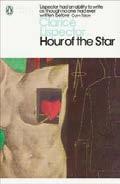
Pisces: Hour of the Star by Clarice Lispector. Whimsy even in the face of dismay. you have a neurotic side, but your emotions guide your heart away from the fray of mental disturbance.
CHRISTINE ANU 7pm Thurs 16 April @ The Vanguard
DAPPLED CITIES W/ KATE MOTH, OLIVER BEARD 7pm Fri 17 April @ Oxford Art Factory
BLOOD TRAILS W/ ANTIPOPE 666 7:30pm Fri 17 April @ Lazy Thinking, Dulwich Hill
HELMET (USA) W/ NUNCHUKKA SUPERFLY 8pm Fri 17 April
@ Metro Theatre
HERMITUDE
Attempting seven in-store performances in one day across Sydney as part of Record Store Day. 2:45pm Sat 18 April @ Hum on King
ORPHEUS IN THE UNDERWORLD W/ SMUSKO, LORENZO GUEVARRA (Label launch for The Shepherd Moon, featuring art exhibitions and a vintage fashion pop-up alongside the live performances) 3pm Sat 18 April
@ Tortuga Studios, St Peters
MALIGNANT AURA W/ MAMMON’S THRONE, GOLGOTHAN REMAINS, CIRCLE OF BLOOD, MOURNERS 7:30pm Sat 18 April @ The Chippo Hotel for more, visit sydneymusic.net
Pay rise appeal for USyd staff rejected by NTEU executive
A motion to lift a cap on USyd staff’s pay claim from its allocated 20 per cent was recently rejected by the national executive of the National Tertiary Education Union (NTEU). This comes only months after the National Council voted to set the wage claim cap for this round of bargaining at 20 per cent, and just as the USyd branch enters into negotiations with the University executive.
The 25 per cent pay claim has been a flashpoint between significant parts of the Sydney branch and the National Executive. At a recent mass meeting of the Sydney branch, a motion demanding the national executive reconsider their decision obtained 61 per cent support from attendees.
The motion called on the NTEU National Executive and Council to overturn their restriction on branches making pay claims above 20 per cent amid enterprise bargaining. Specifically, it advocated for a 10 per cent cost of living adjustment in the first and second year and either a 5 per cent or CPI pay rise in the third and final year, depending on
which is higher. This amounts to a pay rise of 25 per cent over the lifespan of the agreement.
The National Executive, responding to the decision of the Council in a letter, reiterated that the maximum pay claim that negotiators could seek in discussions with University executives would remain at 20 per cent.
In the letter, seen by Honi , the National Executive of the NTEU stated “the NTEU has pursued a common salary claim across the sector in order to speak with one voice and, in doing so, to magnify the power of all Branches.
“The only circumstances under which it would make sense to vary the national claim would be if the claim fell below current or projected inflation or if it was felt that members had the power to achieve a higher outcome”.
Union activist and USyd admin worker Alma Torlakovic told Honi that the pay claim was brought forward in response to rising inflation and the cost-ofliving crisis: “Since July 2021, a professional staff member at level HEO6.4 has lost over $30,000 to inflation.
Unions have a responsibility to ensure workers wages and our living standards do not go backwards. It is outrageous for a trade union to impose a cap on pay claims on its own members. For context, the AEU in Victoria are asking for 35% - so our claim is modest in comparison.”
“The NTEU National Executive did reject the motion endorsed
by the Sydney University branch log of claims meeting. This was communicated to us by the General Secretary.
This is the same national leadership that came up with the highly controversial Jobs Protection Framework (JPF) in 2020 which was a scheme where workers would lose up to 15% of their pay in exchange for empty promises of job security.
“There is growing national opposition to the cap on wage claims, and we plan to continue the campaign until the cap is overturned,” Torlakovic said.
“It is disappointing that the president of the branch and the NTEU national executive do not support workers having higher pay. Unions should be fighting for workers to have higher wages and better conditions, not limiting our demands and cementing pay cuts. We need to raise our pay claim, and we need to organise strike action to win it.”
This deepens the history of a contentious relationship between the USyd branch of the NTEU and its National Executive.
Despite strikes in 2013 and 2017 achieving comparatively better results for pay, which pushed USyd management to offer the best standards for pay within the sector, decisions made by
the National Executive in 2020 and 2022 were controversial with its USyd members.
Specifically, decisions by the National Executive around the Jobs Protection Framework, a scheme during COVID which proposed the cutting of worker pay by up to 15 per cent and the reduction of worker hours in exchange for job security guarantees, were extremely controversial within multiple union branches.
The decision was rejected by more than 15 university branches, leading to its retraction from the agenda of the National Executive. The USyd branch censured the National Executive over the decision.
Further scrutiny was leveled at the Executive during rounds of bargaining in 2022, with their initial decision of a flat rate pay demand of 12 per cent over 3.5 years being revised to 15 per cent after criticism from branch members, with the motion carried by 98 per cent of the voting members.
Honi Soit reached out to the NTEU USyd branch president for comment and was referred to the National Executive, who did not respond.
James Fitzgerald Sice and Sebastien Tuzilovic report.
UTS scraps early entry scheme
The University of Technology Sydney (UTS) has announced it will discontinue its early entry scheme from 2027 onwards. The changes will affect current Year 12 students and any high school students commencing university studies in 2027 or later.
The scheme previously allowed Year 12 students to receive acceptance offers based on test results from Year 11 and earlier rather than their HSC results. This meant students were able to receive a university offer before sitting the HSC. All Australian universities provide direct offers through the University Admissions Centre (UAC) based on HSC results, but only some universities provide early offers which are conditional on a specified ATAR.
UTS said in its announcement that removing early entry would make it “clearer and fairer for all applicants”.
The early entry scheme has been in place since 2022 to accommodate Year 12 students whose studies were impacted by the COVID-19 pandemic. The scheme was initiated by the NSW government, who requested that all NSW universities voluntarily participate.
UTS explained that “At the time, it provided much-needed flexibility and reassurance during an unprecedented period of uncertainty.”
UTS student and Vertigo editor Dylan Chesher told Honi that “Cutting the early entry scheme is a massive step backwards; the early entry scheme allowed students whose studies were significantly impacted by COVID-19 and lockdown to be accepted into universities early to give reassurance and structure at a time of uncertainty.
“Although this was accomplished, I think early entry evolved into being an accessible pathway for students — regardless of their circumstances — to secure a position at a university.”
Despite the retirement of this scheme, students applying for select courses including accounting, nursing, IT, and sport science, will be able to apply through UAC’s School Recommendation Scheme. This pathway will continue to function as a form of early entry, with applications for 2027 opening in April 2026.
UTS will also continue its Year 12 Subject Scheme in which a student applying for a degree who fails to
Imogen Sabey reports.
achieve the required ATAR may receive adjustment points if they have achieved a band 6 mark in a similar subject, and if they have achieved an ATAR of at least 69.
A 2023 report by the Centre for Independent Studies found that the proportion of high school leavers admitted to university was at 25 percent in 2023, an increase from 15 per cent in 2016. Of the 2023 data, 14 per cent used their ATAR in conjunction with non-ATAR criteria.
The report stated that “Despite rhetoric around non-ATAR pathways being ‘fairer’ or more ‘equitable’, in practice universities appear to be using this method as an opaque way to admit low-ATAR students, without commensurate increases in support needed to complete their degrees.”
Chesher commented “I received early entry offers from a couple other universities; it gave me a very good sense of stability and reassurance that if I didn’t get my first preference, I would still have these options. Getting rid of this
Child workers left behind as Fair Work raises wages for young adults
The Fair Work Commission (FWC) have abolished junior pay rates for young adults, hearing that employees aged 18 to 20 would no longer be subject to “discounted” pay rates.
Half a million young workers paid under retail, food, and pharmacy industry awards will be affected by this change. Workers under the age of 18 will continue to remain at the “discounted” rate.
The changes will be rolled out over the course of the next three years, with a five per cent increase each year until 2029, which will bring young adult workers’ pay in line with an adult wage.
The change is set to begin in December. The rise will also only be applied six months from the beginning of a job for those aged between 18-20, leaving young adults who begin work at the same discounted rate as before until the time has elapsed.
This marks a victory of the Shop, Distributive and Allied Employees Association (SDA), who brought the application for award alterations before the Fair Work Commission.
The change will not apply to workers younger than 18, for whom the SDA also applied for a wage increase. The justification for the decision given by the FWC voiced
reassurance, in my opinion, only further disadvantages students at a vulnerable time of their education.”
The Sydney Morning Herald reported that early entry offers had almost doubled since 2022, but the proportion of students accepting offers had declined. In 2022, 25.3 per cent of students enrolled via an early entry offer, whereas in 2026 this was reduced to 14.2 per cent.
Although UTS is the first major university in NSW to retire its early entry scheme, it stated that “there is growing momentum both from schools and government bodies for a review of early entry programs”.
Deputy Vice-Chancellor (Academic) Professor Kylie Readman said “[UTS] continues to support entry schemes and pathways programs such as the SRS, inpUTS and the Year 12 subject scheme. We’re also focusing on strengthening pathways and programs that support underrepresented groups of students gaining entry to our university such as U@Uni and the new UniReady Enabling Program.
“We continue to welcome applications via UAC, which remains the main admissions channel for undergraduate entry.”
Sebastien Tuzilovic reports.
concerns about entry into the workplace, with the deputy president of the Fair Work Commission, Terri Butler, stating that “there are strong fairness reasons for allowing them to continue to accept discount rates”.
The decision marks a landmark change in labour relations for young adults and will see around half a million young Australian workers receive a pay rise.
SDA national secretary Gerard Dwyer in a statement, said “It may take longer than we would have liked, but the principle has been established that no longer will 18-year olds be treated as second
class citizens. Their work is as valuable as anyone else’s and before too long they will be paid accordingly.”
Dwyer compared the decision of the rate increase to the gains obtained for equal pay between genders, saying “this is a landmark decision, up there with the introduction of equal pay for women in the 1970s.”
Despite the successes in the abolition of the “discount” rate for young adults, child workers continue to be paid at heavily discounted rates without steps to increase their wage.
Who Teaches Us To Become Human?
Firdevs Sinik is trying not to lose her humanity (and sanity).
In an age increasingly shaped by algorithmic feeds, productivity culture, and highly standardised institutional frameworks, emotional detachment has not emerged as an incidental byproduct of modern life, but rather as one of its quietly embedded conditions, woven into the very structures that organise how we learn, work, and come to understand ourselves. The language that surrounds us, from ATAR scores to performance bands and employability metrics, does more than simply evaluate; it constructs a hierarchy of value that subtly but persistently encourages individuals to interpret their worth through quantifiable outputs, and thus narrowing the expansive and often contradictory nature of human identity into something measurable, and ultimately comparable. As Michel Foucault reminds us, systems of measurement are never neutral, but function as instruments through which power operates, shaping not only behaviour but the very frameworks through which individuals come to perceive themselves.
This shift, while often justified in the language of efficiency or equity, carries with it a deeper psychological consequence, as individuals begin not only to participate in these systems but to internalise them, gradually adopting an externalised framework of selfhood in which validation is sought through performance rather than grounded in intrinsic meaning. In this context, the question of what it means to be human becomes increasingly difficult to locate, not because it has disappeared, but because it has been obscured beneath layers of expectation that prioritise productivity over presence, and achievement over relational depth. Sociologist Hartmut Rosa describes this condition as one of social acceleration, where the pace of life intensifies to such an extent that individuals experience a growing sense of alienation, as meaningful engagement is displaced by constant motion without reflection.
At the level of the human psyche, this produces a form of dissonance that is both subtle and pervasive, as the natural inclination toward reflection, connection, and meaning-making comes into tension with an environment that demands continuous optimisation and forward momentum, leaving little room for stillness or introspection. Maslach’s research on burnout explains that chronic exposure to high-demand environments leads not only to exhaustion, but to depersonalisation: a condition in which individuals begin to detach emotionally from others as a means of coping. The contemporary subject is therefore caught within a paradoxical condition: compelled to continually become more efficient, more accomplished, more competitive, all while rarely being afforded the opportunity to simply exist without the pressure of evaluation. This perpetual striving does not culminate in fulfilment, but in a diffuse and often unarticulated fatigue, one that extends beyond the physical into the existential, gradually eroding the capacity for empathy and sustained attentiveness.
To interpret this condition as an individual failure would be to ignore the broader ideological and economic
structures within which it has taken shape, particularly those associated with late-stage capitalism where value is defined through productivity, growth, and accumulation, and aspects of life that resist quantification such as care, compassion, and community are rendered structurally invisible.
As David Harvey argues, neoliberal systems embed market logic into the fabric of everyday life, transforming not only economies but also social relations, such that even education becomes increasingly oriented toward labour market outcomes rather than human development.
Within this framework, education undergoes a subtle but
significant transformation, shifting from a space of intellectual and personal formation into a mechanism for producing efficient and adaptable participants in an existing economic order. This transformation can be articulated through the concept of the hidden curriculum, introduced by Philip W. Jackson, which captures the implicit lessons transmitted through schooling that prioritise competition over collaboration, compliance over critical inquiry, and performance over genuine understanding. While standardisation is often defended as a means of ensuring fairness, its dominance risks flattening the diversity of human experience by privileging uniformity and discouraging the intellectual and emotional risk-taking necessary for meaningful learning. As Paulo Freire argues, when education is reduced to the passive transmission of knowledge, the “banking model”, it limits the development of critical consciousness, producing individuals who are capable of functioning within systems, but less equipped to question or transform them.
Yet this instrumentalisation of learning is not inevitable, nor is it historically universal. Earlier intellectual traditions approached education not as a means of extraction or competition, but as a process of inward and outward cultivation, in which knowledge was inseparable from ethical development and relational awareness. The writings of Rumi, for instance, articulate a vision of learning that resists reduction to utility, instead framing knowledge as a means of transformation, where the purpose of understanding lies not in domination or accumulation, but in the refinement of the self.
His reflection that “Yesterday I was clever, so I wanted to change the world; today I am wise, so I am changing myself” gestures toward a conception of education grounded in humility, introspection, and moral responsibility, rather than external validation or competitive success.
This perspective is echoed in the work of Al-Ghazali, who cautioned that knowledge without ethical purpose becomes not a source of benefit, but a burden, and that learning must ultimately be directed toward the betterment of both self and society. Similarly, Ibn Khaldun’s ‘ Muqadimmah ’ emphasised that the flourishing of civilisations is intimately tied to the moral and intellectual development of individuals, suggesting that education, when stripped of its ethical dimension, contributes not to progress, but to decline. These perspectives do not reject intellectual ambition, but rather reframe it, insisting that knowledge divorced from compassion risks becoming hollow, and that true understanding emerges through connection rather than competition.
Alongside these institutional and philosophical tensions, the digital environment introduces an additional layer of complexity, as individuals are exposed to an unprecedented volume of information that, while expanding awareness, simultaneously challenges the capacity for emotional engagement. The work of Daniel Kahneman highlights the limits of human attention, suggesting that when cognitive load exceeds capacity, individuals rely on heuristics that often reduce depth and nuance. In a media landscape characterised by constant exposure, the result is not necessarily apathy, but a form of protective detachment, in which individuals disengage emotionally in order to sustain basic functioning. In this sense, the issue is not that individuals no longer care, but that the conditions necessary for sustained care such as time, attention, and emotional space, are simply increasingly scarce.
It is within this context that empathy must be understood not as a passive disposition, but as an active and often difficult practice, one that resists the reduction of individuals to categories, metrics, or abstractions. As Paul Bloom notes, empathy can be partial and selective, yet this does not diminish its importance; rather, it underscores the need for forms of compassion that are reflective, deliberate, and grounded in ethical awareness.
In a cultural landscape increasingly structured by political, social, and ideological division, the capacity to recognise the full humanity of others becomes both more difficult and more necessary, as empathy serves to reintroduce complexity into spaces that seek to simplify and divide.
To reconsider the purpose of education within this framework is therefore not merely an academic exercise, but a moral and political one, requiring a shift away from purely instrumental models toward an understanding of learning as a process through which individuals come to recognise their interconnectedness with others. Contemporary frameworks such as those advanced by CASEL demonstrate that the integration of emotional and relational competencies into education not only enhances wellbeing, but also supports academic success, challenging the assumption that empathy and achievement exist in opposition.
Such a reorientation would require both structural and cultural change, including greater investment in teacher support, more sustainable workloads, and curricula that prioritise dialogue, reflection, and critical engagement alongside content mastery. As Martha Nussbaum argues, education must cultivate the capacities necessary for democratic life, including the ability to think critically, to imagine the experiences of others, and to engage with complexity rather than retreat into simplification.
To insist upon this shift is not to reject ambition, but to question the terms upon which ambition is currently constructed, and to ask whether a system that prioritises output at the expense of humanity can ultimately sustain the very individuals it depends upon. In this sense, the act of remaining human — of maintaining the capacity for care, reflection, and genuine connection — emerges not as passive idealism, but as a form of resistance against structures that seek to reduce complexity into utility and relationality into transaction.
The question of who teaches us to be human, then, cannot be answered through any single institution, because it is already being answered implicitly, continuously through the systems we inhabit and the values they reproduce. If those systems continue to privilege competition over care, efficiency over empathy, and output over understanding, then we will continue to produce individuals who are highly capable, yet increasingly disconnected, not only from one another, but from themselves.
To reimagine education, therefore, is to reimagine what we believe a human life is for. If learning remains tethered solely to material advancement, it will continue to reinforce the very conditions that fragment us; but if it is reclaimed as a process of becoming, one that centres empathy, ethical awareness, and collective flourishing, then it holds the potential to resist those conditions, and to cultivate individuals who are not only able to succeed within the world as it is, but capable of imagining, and creating, something more humane.
If the present moment feels fractured, it is perhaps because the dissonance between what we are and what we are asked to become has never been more visible, nor more difficult to reconcile. Human beings are, at their core, relational creatures, shaped not only by cognition but by an innate capacity for care, attachment,and recognition; yet the structures that increasingly organise contemporary life demand a form of detachment that is framed as strength, where emotional restraint is equated with professionalism, and where the ability to prioritise productivity over people is subtly rewarded as discipline. What emerges from this tension is not simply dissatisfaction, but a quiet disorientation, as individuals struggle to locate meaning within systems that rarely acknowledge the fullness of their humanity.
This disorientation is compounded by the normalisation of what is often described as the ‘rat race’, a condition in which life is experienced as an ongoing competition for advancement, security, and validation, with little space to question the premise upon which that competition is built. Ambition, in itself, is not inherently corrosive; indeed, the desire to grow, to contribute, and to strive toward excellence can be deeply generative.
However, when ambition becomes untethered from ethical purpose, when it is directed solely toward accumulation or status, it risks producing a form of success that is materially visible yet existentially hollow, leaving individuals with achievements that do not translate into fulfilment, and progress that does not resolve the underlying question of why one is striving at all.
To consider education through this lens is to recognise that its current trajectory increasingly aligns learning with economic utility and represents not an inevitable endpoint, but a particular historical configuration, shaped by specific ideological priorities that can, and perhaps must, be reconsidered. If education continues to function primarily as a sorting mechanism, distinguishing individuals according to their capacity to perform within narrow parameters, it will inevitably reproduce the very inequalities and divisions it claims to mitigate, while simultaneously diminishing the relational and ethical dimensions that render learning meaningful.
Reclaiming education, then, is not simply a matter of policy reform, but of philosophical reorientation, requiring a willingness to ask more fundamental questions about what it means to live well, and what responsibilities individuals hold toward one another within a shared social world. It requires acknowledging that the cultivation of empathy, care, and moral awareness is not supplementary to intellectual development, but constitutive of it, and that a system which neglects these dimensions risks producing individuals who are highly skilled, yet profoundly disconnected.
In this sense, the act of resisting the pressures of constant competition and instrumentalisation, of choosing to prioritise understanding over comparison, and connection over advancement, becomes not merely personal but also deeply political as it challenges the underlying assumptions that sustain the current order.
To step outside the logic of relentless striving, even momentarily, is to create space for reflection, and within that space, the possibility of reimagining both education and existence itself.
The Ocean’s Quiet Architects
Kiah
There is something looming beneath the surface of the northern Great Barrier Reef, beyond the reach of sunlight and the familiar imagery of coral gardens, lies a landscape that is unknown to humanity. What’s different about it is that it does not rise in branching forms or shimmering lights that draw people into the ocean in the first place. Instead, it spreads quietly across the seafloor in vast, pale rings and unbelievable structures that are so large, they stretch for hundreds of metres.
However, they are so subtle that they remained misunderstood for decades. Scientists have begun calling them “green donuts”, but recent research suggests they are something far more complex and profound, yet are persistently out of sight.
This project is known as ‘Project Halo’ and the formations in question are known as Halimeda bioherms , but they are not coral reefs. They are built by a calcifying green algae, Halimeda, whose tiny augmented bodies produce calcium carbonate as they grow. When these segments die, they do not disappear. They settle, accumulate, and over time form immense mounds, some that reach 20 metres in thickness and spanning hundreds of metres across.
When linked together, they create an underwater province extending across more than 6,000 square kilometres of the Great Barrier Reef seabed, making them one of the largest carbonate-producing systems in the region.
The most fascinating part of this discovery is that for a long time, scientists thought these formations were simple piles of sediment on the seafloor — nothing really to ponder over. But new highresolution mapping and research have revealed something very different. These ‘green donuts’ are actually complex living landscapes — rings with raised edges, central dips, and uneven shapes formed by
ocean currents moving sedimentover time.
This discovery completely changes how we see them. What once looked like simple piles on the ocean floor are actually living and shifting systems. Their shapes, those rings and dips, are not random. They’ve been slowly formed by moving water, drifting sediment, and changing conditions over thousands of years. In a way, they act like a natural archive, quietly recording the history of the ocean beneath land.
This is something revolutionary when indulging in the world of marine science Something even more interesting is where they exist. These structures grow in deeper, dimly lit parts of the reef where coral can’t easily survive. But instead of being empty, these areas are thriving. The algae allow ecosystems to form, species to interact, and biodiversity to grow.
For the changing ocean, due to the decline of coral reefs, this acts as a whole new world for marine life to thrive in.
Though it is buried deep and out of sight of humanity, it reveals a side of the Great Barrier Reef that most people never see, but it is just as important as the coral reefs above. These hidden systems quietly support marine life on a massive scale, reminding us that the health of the ocean depends not just on what we see, but also on the vast, overlooked life beneath it.
When looking at the whole picture, you can tell that there is something bigger at play. If something this massive and important can exist hidden beneath one of the most studied places on Earth, it makes you wonder, what else is out there that we haven’t even noticed yet? It’s a bit confounding. We tend to think we understand the natural world, especially one as famous as the Great Barrier Reef. There has been plenty of research, and we can see everything clearly, can’t we?
However, discoveries such as this remind us that we are only seeing just part of the frame; there are entire ecosystems quietly
existing just out of sight. That changes how we think about environmental loss too. It’s not just about the things we know are disappearing, like coral reefs. It’s also about the things we haven’t fully discovered or understood yet, far beyond comprehension. After all, we have only discovered five per cent of the ocean.
The hidden systems that are just as important will vanish before we even realise they were there if there is not enough research or conservation. It’s important to act, and there is no time like the present.
The ‘green donuts’ of the Great Barrier Reef are not spectacular in the way coral reefs are. They do not demand attention. But perhaps that is precisely the point. They exist as a reminder that the most significant processes in the natural world are of the slowest and least visible. That complexity does not always announce itself. But these ecosystems are what makes the ocean the most surreal place on the earth, it shapes environments, stores carbon, and supports life that humans need to survive without entering our field of vision.
In the end,
their
discovery is more than expanding scientific knowledge; it is about shifting perspective.
About recognising that the world is larger, more intricate, and more interconnected than the parts we choose to notice. This discovery should ground us and make us realise we don’t know much more than we think we do about our own survival, we need more discoveries like this to remind us that to save our oceans is to save ourselves.
Finally, for us, it’s about how we care for the planet and what we choose to protect. If entire ecosystems can exist without our awareness, they can be lost just as quietly. Hopefully, with time, we will uncover more about this phenomenon and take the right action to protect it before it’s gone and with that, our chances of progress in the field of science.
Why Psychology Isn’t Broken
It is a comfort for many to envision science and the discovery of knowledge as one of the most human endeavours we can pursue. That is how I felt about starting my studies in psychology, where my interest was sparked by curiosity, empathy, and the desire to understand one another. For me, psychological science would connect my metaphysical understanding of what it means to be human to the physical world. I was eager to join a community of researchers with a devotion to the integrity and truth that science truly deserved. Soon, I realised that behind every theory I learnt and every paper I read was a system that rewards productivity, novelty, and compliance. I found my faith in the epistemology of science wavering, with nothing to fall back on.
Science has historically been framed as the logical, rational body of knowledge: objective, detached, and immune from culture and society. However, philosophers and scientists alike have pushed for a reevaluation of scientific epistemology that recognises the constructivist nature of “scientific discovery” and deconstructs the assumption of “neutrality”. However, as antiintellectualism becomes more pervasive, manifesting as misinformation and science denial, transparency begins to feel like vulnerability.
As students of science, we must ask ourselves this fundamental question: if scientific facts are constructed, does that make them inherently less trustworthy?
Philosophers such as Bruno Latour argue that the messy, collaborative, and socially determined processes behind research are what give science its strength. Rather than relying on false assumptions of pure objectivity or political neutrality, science should embrace that its strengths lie in transparency and recognition of the context in which it was created. Instead, we should be advocating for a shift in our conceptualisation of authority and credibility. If we embrace these ideas, then we must let go of the notion that science is neutral.
So, what does this mean for scientific disciplines when we finally acknowledge the need to evaluate our practices and theories?
In the past few decades, scientists have begun by establishing an essential principle that scientific claims should gain credibility from their robustness and reproducibility rather than the subjective authority of its disseminator. So when psychology academics finally escaped the isolation of their labs and institutions to collate their works, they were faced with the ugly reality that this core assumption of reproducibility was not being upheld. The reproducibility crisis would soon emerge within almost every domain of science, albeit to different extents.
Within psychology, the notion that we can never truly become neutral observers would become a fundamental truth. We know that our subjective experiences — and therefore our creations —
are shaped by human cognitive biases. This helps explain how questionable research practices that are contributing to the reproducibility crisis don’t necessarily stem from malicious intents.
But to what extent is this crisis a result of human constraints rather than our systems?
Researchers have proposed a range of reforms and actions to address these problems, including publishing in openaccess journals and participating in replication initiatives. While these are crucial initiatives, they remain largely optional, with no real system that encourages these practices, let alone enforces them. Here, we risk these initiatives becoming obsolete when they aren’t paired with transformative shifts in how our institutions function. The structures of academia which reward significant, novel results cultivate an environment where engaging in these counterproductive behaviours is advantageous.
Even when we envision ethical frameworks for upholding research integrity, the economic incentives are still pervasive. The question of intrinsic ethical principles versus incentives is essential: when we are translating or codifying ethical research practice frameworks that can be widely distributed, can we really avoid the economic incentives that our academic institutions often prioritise?
In this country, our universities have a vested interest in increasing their international rankings as a result of profit motives, especially given that international student enrolments make up a large portion of their revenue. The majority of these international rankings rely on a university’s research output, so academics face immense pressure to ensure a continuous flow of publications.
They are also incentivised to publish with “high-impact” journals, many of which have a reputation for exploiting authors and prioritising novel studies for profit. Funding bodies are another cog in this system, where grants are more likely to be awarded to projects that promise novelty and impact, while replication studies are underfunded. In the meantime, our university sector finds it more appropriate to spend $1.8 billion on consultants and contractors who prioritise profit over workers’ rights, education, and fostering healthy research.
As neoliberal capitalism continues to gnaw away at the fabric of society, turning financial stability into a luxury few can afford, the pervasion of economic incentives will only increase. When it comes down to the individual to decide whether or not their job security is more important than how they report their p-values, the effectiveness
Imane Lattab reflects on her psychology class.
of these frameworks will ultimately be undermined by our socio-economic and political systems.
In my classes and amongst my peers, we discuss these issues openly with nearunanimous assent. So why is there still such a huge gap between our understanding of the larger systemic issues at hand and our ability to take the necessary actions?
If researchers continue complying with the demands of publishers and management, or relying on fragmented strategies for reform without collective action, very little will change. Psychology, as well as science more broadly, cannot fundamentally improve until we confront the systems that shape it. Reactive change is not sustainable nor efficient; we need to move towards collective action.
Students and staff unions have historically worked together, understanding both the value of collaborating on campaigns and the interconnectedness of our livelihoods within the university. From students supporting NTEU strikes for liveable wages and workers’ protections to staff supporting student-led campaigns, I believe there is even more potential for discipline-specific solidarity. Our learning and our futures are contingent on the ability for our academics to produce reliable research, their labour, and even their wellbeing. We should deeply care about deconstructing and fighting the systems that tie us all together, and we can start by acknowledging one another.
Opening more avenues for goal-directed student-academic engagement is one place to start, where open dialogue around the foundations of our discipline are concluded with discussions about concrete actions and initiatives. Whether these are embedded into our units of study or organised within the student liaison committee, it’s important that students and staff alike can feel empowered and have their agency recognised.
With all that being said, it wouldn’t be right to go on without recognising the work our psychology academics have been doing here at USyd. I am grateful to have engaged with some incredible academics who are not only opening up these conversations with students but actively supporting — and even organising — open access journals and boycotts of corporate publishers. Within my honours course, our seminars have been invaluable opportunities for discourse, idea exchange, and, ultimately, a shared agreement regarding the severity of these issues.
I recognise the privilege of not yielding to indifference, helplessness, or isolation — and I have the community of peers and academics around me to thank for that. I also know that if I am to stay within academia, I want to take responsibility for not just my actions, but for the actions of those who preceded me and beside me. Perhaps that is how we might start climbing down the Ivory Tower.
Don’t Judge A Reader By Their Book Cover
Dearest
gentle reader,
The 2026 Sydney Writers’ Festival is swiftly approaching, prompting book lovers across the state to become the most insufferable versions of themselves. Adorning a new book sleeve and a fresh stack of sticky notes for efficient annotation, we find ourselves preparing for the event of the year, flaunting our special hard-cover editions for the world to admire, but of course, there’s no denying, only one type of reader can be the “Diamond of the Season”.
I love books. I love how the pages feel against my fingers, their smell, and the incredible worlds held within the words. It’s one of my favourite sources of entertainment, but what I love more than reading books is talking about them! Luckily for myself and the reading community, Sydney Writers’ Festival (2026) is on our toes, providing a space for book-lovers to connect over their mutual hobby…Or so we’re led to believe. You see, reading isn’t quite what it used to be. One can’t simply pick up a book they find intriguing, oh no no no! The books you choose, your taste in literature, are a reflection of who you are. Pick up the wrong book, and you may lose the privilege to call yourself ‘a reader’.
Reading has become intellectually elitist.
Yes, it’s a bold statement, but as an avid reader myself, I stand by it wholeheartedly. Much like the majority of Gen Z, I discovered my love for reading as a result of the rise of BookTok. Previously, schoolassigned texts had caused me to despise books, primarily because I had no choice in the content I was consuming. It wasn’t until I stumbled across BookTok that I realised just how extensive my options were, and I was able to find something tailored towards my interests. Being 16 at the time, my ‘interests’ were strictly romantic novels and as embarrassing as it may be, that was my starting point. If I hadn’t picked up my first cheesy teen romance, I wouldn’t be the reader I am today.
I’ve found, however, that as more and more people seek refuge through books, the reading community becomes increasingly divided. Those who limit themselves to classic novels and literary fiction simply can’t stand to be in the same room as explicitly romance and fantasy readers; royalty must not associate with the plebs. Suddenly, the books you read have become a signifier of your intelligence, and as a result, avid readers slowly work to weaponise intellectualism.
In the Victorian era, reading denoted class and intelligence, where young women were encouraged to add reading to their repertoire of artistic skills and musical talents. Today, we seem to have fallen back into old habits with our hobbies ultimately becoming more of a ‘performance’. If critical texts indicate intelligence, then
why not carry around Jane Austen novels everywhere you go? You may not know what the words on the page mean or who Mr Darcy is, but at least you’ll be viewed as a sophisticated, well-read individual.
Seeking education through reading has lost its legitimacy almost entirely. We feel pressured to engage with certain books to shift how we present ourselves externally, rather than taking the time to truly understand complex literature. I could be wrong, but I’m 99 per cent sure that the boys with Labubus strapped in their belts aren’t really engrossed in the feminist literature they haul around.
We
are reading performatively, distorting the core purpose of intellectualism: to learn.
But it’s not only the matcha-latte-loving frauds that are ruining our love for reading. The major issue lies hidden within the inner circle, quietly eating at our joy for storytelling from the inside out….You guessed it! The problem is us, genuine book lovers! It hurts to acknowledge, but unfortunately, our attitude towards the types of books people should read has become pretentious, resulting in the rise of an elitist group of readers.
While reading is a great form of education, it is also, first and foremost, a fantastic resource for entertainment. Books hold the power to transport us into unknown worlds through the perspectives of unique characters.
Literature allows us to perceive our surroundings differently, understand ourselves critically and escape from our non-stop lifestyles.
After all, engaging with fictional realities is one of the best ways to seek asylum from one’s own, less appealing reality. So, why is it then that we shame each other for the books we choose to read?
Reading is the same as watching a movie, is it not? Whether it’s a chick flick or an investigative documentary, you’re still watching a movie, so why aren’t books held to the same standard? Sure, some texts are going to challenge
Maeve Jenkins appreciates all books.
you more than others, and it’s important to read as widely as you can, but at the end of the day, you’re still reading! We should be sharing our love of books with the world, not making it an exclusive hobby for the dark academia kids.
It’s okay to follow trends. It’s okay to read what you like – You are still a reader.
Now, more than ever, is the time we need to put our differences in taste aside and stand as a united front. The Sydney Writers’ Festival is approaching head-on, and while it provides a great opportunity to celebrate reading, it’s crucial that we acknowledge how the writing world has shifted. Reading is no longer an affordable hobby. Books adhering to popular tropes are now being mass-produced for no other purpose than economic gain; books under $20 akin to that of gold. This does not promote education; it promotes profitability and overconsumption, something we booklovers will not stand for.
So, my dear readers, I hope we can put aside our differences and find common ground in what we love. We mustn’t destroy ourselves from the inside out when the real enemy stands tall above us, and let me tell you, it’s a doozy of a story…and an expensive one too. Please, don’t let others take something so great from you.
Keep reading what you love, be unapologetic, be curious and strive to learn more! There are a lot of books out there just waiting to be read, so you’d better get started.
I’ll be sure to like your review on Goodreads.
A little sweet treat
Sandy Ou has a sweet tooth.
Grabbing ‘a little sweet treat’ always sounds like a good idea.
In the U.S., the joy of the dessert staple, ice cream, trickled down throughout the centuries from the utmost elite and wealthy to everyday working-class consumers. It was first served at a social gathering in 1744 by Maryland Governor Thomas Bladen at a dinner party. By the mid-19th century, ingredients used to make ice cream became more affordable and accessible, and developments in machinery used to make the frozen delight made it a less laborious task.
It became the centre of ice-cream gardens, which opened up a social space for women and members of the Black community to gather and become entrepreneurs, and ice cream socials, which became increasingly common community events.
The popularity of the infamous macaron in France dates back to the 16th century, when Catherine de’ Medici, in her marriage to King Henry II of France, brought them to the country. The delicate ganache-filled meringue shells, as we know them, were developed in the early 20th century by Pierre Hermé and are now the epitome of refined French pastry.
The same sweet joy felt over desserts took a different shape in the East. In Japan’s Nara period, kuradamono (fried sweets and dumplings), thought to be the earliest Japanese sweets, were served at temples and enjoyed by the nobility at banquets.
Nowadays, parfaits, crepes, taiyakis, and various mochi are highly sought-after by locals and tourists alike. Baklava, a Middle Eastern classic loved all around the world in pastry shops and social gatherings, has far-reaching roots in the Byzantine and Ottoman eras. The indulgent, endless layers of crispy pastry and filling, doused in sweet syrup, have endured
until now as a crowd-pleaser.
Even currently, in refugee camps where people are displaced from their homes and struggle to make ends meet, sweet shops selling hometown favourites are a vital source of comfort.
Throughout time, developing simpler ways to share enduring favourite desserts and assigning them meanings of happiness, joy, and togetherness signify
an innate human love for momentary indulgence.
Nowadays, here in Sydney, grabbing ‘a little sweet treat’ after classes, in the middle of the working week, or during a weekend hangout with friends has become a ritualised part of our lifestyle. It has become a fundamental pocket of joy, easily opened by jumping on Instagram and scrolling through endless reels by food influencers calling Sydneysiders to visit the latest sweet spot.
Iconic, popular spots have been frequently visited by many for the unique satisfaction they offer. Yo-Chi, a name that has shot into dessert stardom in the last few years, and other froyo spots allow patrons to exercise autonomy over different flavours and toppings, and enjoy their own masterpiece in a paper cup. Customers grab a quick drink or brave long lines at Molly Tea, Gong Cha, and Heytea, amongst other popular milk tea brands, to relish in the latest milky, fruity, floral concoctions. An everexpanding pool of pastry shops and cafes also spoil
Sydneysiders’ choice of crispy, flaky, sweet goodness. It can be a cute little nook in the Inner West and inner-city suburbs, perfect for a cosy hangout with friends, or a bright haven for coffee and cakes in busy central business districts across the city, offering a quick escape for 9 to 5 employees on a mundane work day. Classic gelato, revamped with experimental flavours and cultural fusions like pandan honey cake and strawberry matcha, is at the top of everyone’s mind when thinking, “What should I get?”.
Matcha runs, pastry pursuits, frozen yogurt on a cold night — all are deceptively simple leisure activities that go beyond purely attending to our sweet tooth. They are only made possible because the owners and creators of these sweet escapes recognise a constant market for human joy. Creative innovation in desserts stems from a passion for flavours and aesthetics. The continuous swell of eager customers happily satisfying their cravings, like Yo-Chi on a Friday night or Khanom House on a Sunday morning, then becomes the reason to keep stretching the limits of innovation and quality of products.
Amongst all that in the world which makes life mundane or challenging, there still exists something created by other people in which we can find emotional reprieve.
When the dessert scene in Sydney never stops changing, there is always something new being made in kitchens of all kinds. And when these creations make their way onto glass display cases or across countertops to customers, the mere idea of ‘a little sweet treat’ turns into tangible joy.
Salitang Bakla: Swardspeak and the Decolonial Politics of Filipino Queer Language
There is a specific kind of conversation that happens when I am with my queer Filipino friends that does not happen anywhere else in my life. Someone will ask, “ may jowa ka na? ” (do you have a boyfriend yet?) and I understand immediately that the sentence has already assumed something about me that most of my other conversations do not bother to, and that the word jowa, which technically just means partner in Tagalog, has been reappropriated by gay communities in a way that quietly rewrites the gender assumptions the word originally carried.
That reappropriation is not incidental: it is exactly what Swardspeak does, taking existing words from existing languages and returning them changed, with different assumptions built in. Someone else will say “ keri ko to sis ” (I’ve got this, girl), and the sentence is already three languages at once: the English word “carry” transformed into a Tagalog verb conjugation, “ sis ” addressing me in a way that would be absurd anywhere else in my life.
Most conversations I have do not register my queerness at all, treating it as something to be disclosed or explained rather than something already assumed. Swardspeak, by contrast, builds recognition into its grammar rather than leaving it to be negotiated after the fact.
The register is different and the freedom is different, and for a long time I did not have a political vocabulary for why that
What I want to argue is that this difference is not only social but political, and that the language that makes it possible has been doing political work for much longer than I have been using it.
Swardspeak, the argot developed by Filipino gay and trans communities, is not a separate language that sits alongside Tagalog and English in its own column, which is part of what makes it easy to dismiss and also part of what makes it interesting. The name itself comes from “sward,” an outdated Filipino slang term for gay male, and was coined by columnist and film critic Nestor Torre in the 1970s to describe a way of speaking that had already been developing organically within gay communities for years.
It is woven into ordinary speech rather than standing apart from it, which means that “galit sakin si mudra ” (my mum is mad at me) is a sentence that could pass unremarked in a conversation between queer Filipino friends, with mudra being a Swardspeak transformation of the Spanish madre (mother), feminised and made entirely local in a way that neither its Spanish origin nor its Tagalog context fully accounts
something more camp, more expressive, and more immediately legible as a particular kind of Filipino queer sensibility. The result is something that does not sit cleanly inside any of the official grammars it borrows from.
One way Swardspeak gets dismissed is through its association with kanal humour. Kanal means canal or gutter in Filipino, and as a cultural reference it points to a specific register of comedy that is unfiltered, crude, and associated with working-class street life, the kind of humour that gets coded as low precisely because it does not perform the respectability that official culture demands.
The closest equivalent in Australian English is probably ‘bogan’ humour, where the dismissal is never really about the joke’s contents and is always at least partly about the class background that the humour is assumed to come from.
The association of crudeness with Swardspeak is not entirely wrong, in the sense that Swardspeak developed among communities that had no particular stake in that respectability, and much of its vocabulary is deliberately vulgar and irreverent.
But the more specific form the dismissal takes is that Swardspeak gets written off as crass, as reliant on shock factor, as humour that works by saying the unsayable rather than by being clever. That framing refuses to engage with the fact that Swardspeak is genuinely layered and inventive, that the wordplay, the celebrity name transformations, the suffix conventions, and the invented vocabulary require a sophisticated in-group literacy to produce and to read. The communities that built Swardspeak were marginalised along two axes simultaneously: they were queer and they were working-class, and the dismissal of their language as kanal uses both class stigma and respectability politics to avoid taking seriously what the language is actually doing.
Calling something kanal is a way of saying it does not count, that it relies on shock rather than substance, and that the communities it comes from are expressing something garish rather than something that challenges the fundamental power structures embedded in language.
To understand what Swardspeak is refusing, it helps to be specific about what the Philippines inherited from its colonial past in terms of language. Under Spanish colonial rule (1565 to 1898), Spanish was the language of the church, legal documents, and institutional power, with access to it being stratified along racial lines that determined not just social prestige but material access to property, education, and the protections of colonial law.
When the United States took over following the SpanishAmerican War, English was introduced as the language of public education through a programme that American administrators explicitly described as civilising, meaning that the aspiration to be educated, modern, or credible in the Philippines became inseparable from the aspiration to sound Western and alien.
Across centuries of layered colonial rule, a language hierarchy was produced in which the official languages were always imported ones, and in which Tagalog, eventually standardised into Filipino, occupied an awkward middle position that was neither the language of colonial power nor elevated to the same institutional standing, while regional languages sat further below still.
Walter Mignolo, in The Darker Side of Western Modernity, describes this as the coloniality of knowledge: the way colonial systems establish hierarchies not only of political power but of what counts as legitimate expression and whose language has the standing to make claims in official space, and the way those hierarchies persist through institutions and habits long after the formal colonial period ends.
Marc Paniza is the woker.
Artist: Marc Paniza
The reason this is useful for thinking about Swardspeak is that it names something that is otherwise easy to overlook, which is that the dismissal of Swardspeak as kanal and the colonial delegitimisation of Filipino languages are expressions of the same logic, both insisting that legitimacy flows from official and institutional sources and that what is produced outside of those structures does not count as serious.
I can trace that logic in the decisions of Filipino families around me right now. Filipino diaspora kids grow up speaking English at home, raised by parents who made a calculation that English was the language of opportunity and Tagalog would limit rather than open doors, reproducing a hierarchy whose architecture was laid down across centuries of colonial rule rather than something they arrived at independently.
Tagalog becomes the language parents use between themselves and English becomes the language they use with their children, and the children grow up understanding enough Tagalog to follow a conversation but not enough to have one, fluent in precisely the direction that the colonial hierarchy would have designed if it had planned the outcome deliberately. This is not a criticism of those parents, whose calculations about what their children need to survive are entirely rational, but it is an observation about how thoroughly colonial language logic can reproduce itself through the decisions of people who are not consciously endorsing it, and how the hierarchy does not need anyone to actively maintain it because it has already been internalised as common sense.
Swardspeak was built by people who understood that dynamic from the inside and chose to do something different with it. It does not reject Tagalog in favour of English, or vice versa, and it makes no claim to institutional recognition or official status. Instead, it takes Tagalog, Spanish, English, Japanese, regional Philippine languages, celebrity names, and invented words, reassembling them in a way that does not answer to any official grammar and cannot be standardised. The language is also deliberately unstable, with words cycling out of use and new ones entering in response to pop culture and as a maintenance of the exclusivity that makes
the language function, so that the moment a Swardspeak term becomes widely legible outside the community it begins to lose what made it useful, which is why it keeps moving and why it cannot be captured by the institutions that would need to capture it in order to neutralise it. This is what makes it decolonial rather than simply countercultural: it does not just push back against the colonial language hierarchy, it builds something the hierarchy has no category for and keeps it out of reach.
Swardspeak
was also built
by a community
navigating multiple forms of exclusion. It was developed
by Filipino gay and
trans people, a group that faced not only the colonial marginalisation that applied to Filipinos broadly but the specific hostility that came with queerness under both Spanish Catholic moral governance and American heteronormative social norms.
The bakla (queer, gendernonconforming Filipinos), the community from which Swardspeak largely emerged, held a complicated position in pre-colonial Filipino society that Spanish colonisation actively worked to stigmatise and suppress. Building a private language in that context was a response to colonial language hierarchies and also a response to the very practical need for a space that could not be easily monitored or policed from the outside, and the
exclusivity of Swardspeak was always protection as much as it was identity. What the kanal humour dismissal does, then, is compound two existing stigmas: the colonial stigma against languages produced outside official structures, and the class stigma against communities that could not or would not perform respectability. That both of those stigmas land together on a language built by workingclass queer Filipinos is not a coincidence.
When I think about what the language actually does in a sentence like “may jowa ka na? ” (do you have a boyfriend yet?), the political argument becomes less abstract. The sentence has already recognised me without making recognition into a conversation, without requiring me to explain or qualify anything, because the language itself has been built to assume the version of me that most official registers either ignore or treat as requiring special accommodation. A language built by a community that spent a long time being unrecognised by the official structures around it developed its own mechanisms for recognition that do not require those structures to grant anything. Swardspeak makes a different kind of political claim than the ones made through official channels. It is a claim made in grammar rather than in petition.
My relationship to Swardspeak is partial and shaped by specifics: I came to it through queer Filipino friends rather than through family, and I use it in one part of my life while keeping it out of another. That gap between contexts is a description of exactly what the language is navigating, the distance between what is legible to conservative family structures and what is legible to communities that have had practical reasons not to be fully legible to the people in charge. Swardspeak was built to fill that gap and it stays in it, and
speaking English, without access to Tagalog let alone Swardspeak, are the latest product of a language hierarchy designed to produce exactly that outcome, to make the official language feel like the natural one and everything else feel like a deficit that a sensible parent would want to save their child from.
Swardspeak is not a solution to that problem and was never trying to be, but it demonstrates that communities excluded from official language hierarchies are capable of building their own systems of meaning that are more complex, more adaptive, and more politically sophisticated than those hierarchies have ever given them credit for.
Treating that as kanal humour is not a neutral aesthetic judgment made in the name of taste. It is looking at something political and deciding, in advance, that it does not deserve to be taken seriously.
“ Anetch ” (what?) is technically just a way of asking what someone said, but it is also evidence that the official grammar does not have a monopoly on how meaning gets made, and that the community that built this language has been making that argument in practice for decades without waiting for anyone to recognise it as an argument.
Native Title (or lack thereof) in a post Juukan Gorge Australia
Since the destruction of Juukan Gorge in 2020, multiple reforms in existing Native Title laws have been introduced, with the proposed aims to protect the cultural interests and sacred sites of Indigenous peoples. But do these updated laws actually give Indigenous peoples power over mining projects in practice, or are they merely just spins for corporate PR — echoing the same tokenistic land “rights” granted by previous legislation?
On 24th May 2020, two ancient rock shelters in the Pilbara, Western Australia, were destroyed in a mining blast by Rio Tinto. These sites were sacred to the Puutu Kunti Karrama and Pinikura peoples, inciting widespread backlash from the community.
Perhaps what’s equally as outrageous as the incident itself is the fact that Rio Tinto did not break any laws in the process. Under The Aboriginal Heritage Act 1972 (WA) , Section 18 allowed for the destruction of heritage sites with ministerial approval.
In response, the 2021 Heritage Act eliminated Section 18 ; however, in 2023, the law was repealed and reverted back to the 1972 version, with slight revisions in Section 18 , introducing the right of Native Title groups to appeal mining projects. The Environmental Defenders Office inquiry on
the incident stated that Section 18 approvals are in effect, “approvals to destroy, damage, alter etc a heritage site.”
This remains evident in recent and ongoing mining projects. In November 2025, the WA minister for Aboriginal affairs granted consent to Fortescue Metals Group for mining at Christmas Creek (Phase 32), with no formal appeal lodged to the State Administrative Tribunal.
However, this absence of appeal does not indicate that Fortescue’s actions were supported by Indigenous communities; rather, it reflects the uncertainty and structural inequality embedded within the appeal process itself.
Acquiring ongoing legal support is a practical barrier for “Aboriginal people with meagre resources” (Michael Woodley, Financial Review 2025), especially as underfunding of Indigenous communities is an entrenched systemic issue. In stark contrast, mining companies have immense financial and legal resources as multi-billion dollar corporations.
The law also prioritises procedural certainty, and many Indigenous land rights advocates argue that the right to appeal ultimately favours mining companies, making actualising mining projects simpler; streamlining the process by adding strict deadlines for an appeal to be lodged, reviewed, and in many instances rejected.
The progress stemming from the reform is thus largely symbolic. The right to appeal does not guarantee a favourable outcome for Indigenous communities. It draws parallels to John Howard’s contentious 1998/2007
Native Title Amendment Act that, while favouring legal outcomes for mining companies, emphasised negotiation rights for Indigenous communities. The right to negotiate undermines the role of Indigenous peoples as custodians with a responsibility to act preemptively against destruction.
Historically, it’s clear that the voice of Indigenous people in native title legislation has only been considered after the damage — or the authorisation of damage — has been done.
Clause 24MD (6B) of the amendment act removes the negotiation process altogether in projects designated “low impact,” replacing it with notification and the right to comment.
Right to appeal, notify, comment, negotiate -the passivity of language in our laws constraints Indigenous involvement to reactionary, rather than decisive roles over their own land. By contrast, mining companies’ rights are framed in active terms such as, ‘approval’, ‘development’, or ‘implementation’— demonstrating a bias within legislation that gives precedence to corporate interests.
According to The Guardian : James Lowe, the CEO of National Native Title Council, expressed the distress Indigenous communities face in their legal pursuit of native title stated
that:“Most communities that you talk to… will tell you the hardship that entails - meeting after meeting… with no real guaranteed outcome…”
So what needs to change?
Critics and advocates argue for the necessity of an Indigenous right to veto mining projects, blocking them from going through automatically after failed negotiations.
There also needs to be greater governmental funding towards Indigenous legal representation and increased financial advisory for native communities to make pragmatic steps in managing compensation and leverage their defence.
The Australian government must align itself with the The United Nations Declaration on the Rights of Indigenous Peoples , giving First Nations people free, prior, and informed consent (FPIC) in relation to decisions that impact protection of their heritage.
These aims aren’t overambitious, as First Nations groups overseas are provided with a veto system. In Canada, for example, the Haida and Tlicho peoples harbour the ability to grant or withhold consent for development projects, or to demand full consultation before a project even starts.
So what justification does Australia have in falling short?
How much more destruction needs to unfold on custodial land before real reform is implemented?
Countless Indigenous peoples and activists across Australia, are not willing to find out.
Aiman Zuhaina examines Native Title reform.
Damn Those Humanoid Beings
Under the Christmas tree are stacks of neatly wrapped gifts. Tinsel interwoven with fairy lights lines the walls of your house. On the countertop is a glass of milk, accompanied by a bowl of carrots for Santa and his reindeer.
All is well as you sit down with your family to watch The Polar Express. Yet when you see those early CGI characters, you start to feel uncomfortable. There’s something wrong with them.
This is caused by the uncanny valley (UV) effect, which occurs when we’re confronted with almost human-like robots, characters, and illustrations. There’s a chance that the Cats film evoked this sensation for you, or maybe watching Jimmy Fallon meet the android Sophia did. I’ll hazard a guess that you’ve experienced it at least once, though.
Masahiro Mori a Japanese robotics professor first identified the phenomenon in 1970, titling it ‘ Bukimi no tani genshō ’, or the uncanny valley. Mori asserted that the more a robot resembles a human, the more empathetic and positive our emotional responses to it will be.
That’s until the resemblance reaches a certain point, at which our responses morph into revulsion. This is the valley. Once the robot’s appearance passes this point, the positive feelings return, and the levels of empathy become comparable to those witnessed in human interactions.
There is no concrete explanation for why humans experience the UV effect, but a range of theories have been put forth.
One posits that it’s an evolutionary instinct designed to help us avoid pathogens. Beings that come closer to resembling humans share certain parts of our genetic makeup – such as chimpanzees, who share 98 per
cent of their DNA with humans, compared to an elephant’s 70 per cent.
A greater genetic similarity between two species increases the probability that viruses and bacteria can transfer between them. For primitive humans coexisting with other primates, this instinctive aversion to almost-human beings could have been the difference between avoiding a deadly illness and succumbing to one.
Through this theory’s lens, the UV can be viewed as a natural defence mechanism.
Other scientists believe that the UV stems from a violation of human norms. When robots and animated characters look almost human, their inhuman features become more noticeable.
The failure of these beings to achieve the normative expectations established for humans evokes negative responses. I find this particularly relevant for robots, whose jerky motions and justnot-right features trigger the UV for me.
The last commonly accepted argument centres on the difficulties inherent in mentally categorising near-humanoid figures.
Their features provide observers with contradictory cues about whether to categorise them as one of us or something else. This evokes a tension akin to cognitive dissonance, leading to feelings of distrust and revulsion.
Regardless of the UV’s root cause, it’s a sensation that we’re all going to grow more familiar with. The market for humanoid robots is expected to grow exponentially, with conservative estimates reaching $38 billion by 2035 and liberal estimates reaching $24 trillion.
Max Mcdermott
Manufacturing, customer service, construction, cleaning, and security are among the sectors that will be saturated with humanoid robots. This will lead to a humanoid robot population of between one to ten billion by 2040, according to Elon Musk and Brett Adcock.
These figures should be taken with a grain of salt both Musk and Adcock are founders of humanoid robotics companies, and their projections far exceed those of the Bank of America, which predicts only three billion robots in service by 2060.
In the next few decades, our everyday lives will feature a lot more robots than they do now. You’ll see them as you duck down to the shops for milk, step into a bank to deposit money, or walk through the halls of your workplace.
seeing dozens of humanoid robots along the way, their brain will classify them as something ordinary.
What does this mean for the UV? Will this 50,000-yearold evolutionary instinct morph into something new, or simply disappear?
It is likely that older generations will remain uneasy around humanoid robots. This can be explained by two main factors. Firstly, their cognitive functions are more fully developed, which research suggests makes ingrained instinctual responses harder to override.
Secondly, and on a broader scale, older generations tend to feel a general unease towards adopting new technology. This is a pattern that’s clearly visible throughout history. My grandmother never could be convinced to get an iPad.
However, scientists have proposed that future
Studies have already shown that children can conceptualise robots as mental, social, and moral beings. Professors at the University of Washington conducted one in which children were made to play with a robot called ‘Robovie.
When Robovie was forced into a closet and made to miss its turn, 73 per cent of the children protested that it was ‘unfair’. They believed that the robot possessed feelings and was a social being capable of friendship.
This demonstrates that interacting with robots from childhood can diminish the negative emotions evoked by UV, much like exposure therapy. Artist: Caitlin Angles
Wilful Blindness: The $9 Billion Exploit
Which question strikes your interest more: how impactful was the International Criminal Court’s arrest warrant for Putin on account of his war crimes in 2023, or will the Denver Nuggets score over 30 points in the second quarter of their game against the Utah Jazz? Maybe it’s not a matter of objectivity, after all, who am I to suggest the small topic of forced Ukrainian child deportations is any more significant than sports betting? In a university seminar on international criminal law, I would have guessed the answer would be unanimous. As it turns out, I would have guessed wrong.
It was only after I left the room that my perception of Australian culture received a new layer. I realised my rose-tinted depiction of the ‘Sydney lifestyle’, where sunshine, surfing and schooners joyfully cohabitate, has contained a glaring omission throughout my international study experience. Yet it has stared me in the face the whole time. The New South Wales gambling epidemic stands so visibly to the blind eye that it actually appears unremarkable, so blatant that it becomes easy to miss when your attention lies on every other aspect of a new culture. While the problem is so obviously clear, a lack of meaningful political action has left gambling systematically embedded in Australian culture to the point of social acceptance. But framing the epidemic as one stemming from political negligence or passivity is far too close to an acquittal; gambling in New South Wales, and the deprivation and wealth divide that inherently accompanies it, is a product of political encouragement, or more accurately, coercion.
A widespread presence of poker machines in pubs and clubs is an alien concept to a European mind. In New South Wales, it would be an understatement to say this is customary practice.
The Australian Institute found NSW to have one poker machine for every 88 people, totalling 37 per cent of the world’s ‘pokies’ that are not within casinos. This provides some context for the fact that 2025 saw the highestever annual losses from pokies in the state: $9.29 billion. That’s almost triple the annual budget for building and upgrading hospitals, and amounts to over $1700 for every adult in the state. It most likely will not come as a surprise that
these machines, purposefully manufactured to drain vulnerable people’s financial resources, exist disproportionately in areas where financial resources cannot afford to be drained. Canterbury-Bankstown, Fairfield and Cumberland recorded the highest losses in 2025, areas that face some of the highest levels of socio-economic disadvantage in Sydney. It is not merely a coincidence. How can it be, when Fairfield has one gaming machine for every 55 people, while the Kuring-gai local government area has one for every 1443 people?
The vicious cycle of gambling operates in front of our eyes, simultaneously perpetuating and depending on a continually increasing wealth divide. Who reaps the financial benefits? As well as the venue operators themselves, the main beneficiary is the body supposedly regulating the practice — the government.
According to Monash researcher Charles Livingstone, 42 per cent of the pokie revenue from ‘big clubs’ in NSW is generated from individuals with a serious addiction.
But that’s okay, because the Minns government has successfully closed a loophole that allowed several venues to operate outside of customary trading hours. Now, vulnerable gamblers are strictly limited to just 18 hours a day of exploitation by their government. The Minister for Gaming and Racing in the Minns Government, David Harris, has ensured they will continue “addressing gambling harm while supporting an industry that contributes billions to the NSW economy”. I wonder if his priority is the harm or the billions?
Samuel Illis spins the pokies.
Judging by the continued legality of certain ‘incentives’, I would suggest the billions. Free meals, indoor smoking, 18-hour days - once again, the European mind struggles to comprehend these aspects of gambling culture. It seems to me paradoxical to suggest that gambling harm can be addressed in any way while free food is being given to people in exchange for their financial well-being. But the Gaming Machines Act allows it. Free alcohol is apparently where the law draws its line, leaving the industry to operate in the legislative gap just behind it.
In this space, free meals can legally be used to persuade patrons to stay seated by filling their appetites and giving
them a new sense of optimism for the next few hours of spins.
The effect of embedding gambling into national culture is one that means this practice is generally accepted. Or maybe it’s just that people prefer to turn a blind eye. Either way, the fact is that people are quite literally being provided food as a sort of peace offering, after they have handed over their savings to Chris Minns and David Harris in the form of ‘lucky spins’. I cannot emphasise enough that this is not normal. NSW has a unique problem that cannot even be generalised to the rest of the country.
The Greens have recognised it: their manifesto on the topic leads with the principle that “policy at all levels of government should aim to reduce gambling harm”, going on to call for the prohibition of any offers of inducement to gamble, including free food. They also address the extension of the issue beyond pokies, specifically to the racing industry and animal welfare.
Recognition is more than Minns has managed to accomplish while hiding behind his billions in exploitation tax. But to extract what is so deeply rooted in a culture and so clearly visible in daily life takes action.
Though at the very least, consistency would be appreciated. If Minns feels the protection of ‘individual liberties’ is a priority over the protection of harm, then why justify police brutality against antiHerzog protesters practising their same individual liberties?
To put it simply, the money is too much to turn down even if it constitutes exploitation. Even if it reinforces class structure.
No Exchange with Apartheid: Students Demand USyd Cut Ties with Israeli Universities
Students Against War demand action.
We are demanding that the University of Sydney sever all institutional ties with the Hebrew University of Jerusalem (HUJ) and other Israeli universities in light of Israel’s genocide in Gaza, ongoing apartheid, military occupation of Palestine, and escalating settler violence in the West Bank.
Why boycott? Israeli universities are not neutral
For over 20 years, the Palestinian Campaign for the Academic and Cultural Boycott of Israel (PACBI) has called for an academic boycott of Israeli institutions complicit in occupation and violations of international law.
Israeli universities are not neutral institutions. They are deeply embedded in the Israeli state and military apparatus, contributing to systems of apartheid, occupation, and war. They provide research, training, and institutional support that sustain Israel’s system of control over Palestinians.
• Hebrew University of Jerusalem (HUJ) hosts military training programs such as the Havatzalot Program, which trains Israeli military officers.
• HUJ facilitates on-campus recruitment for Shin Bet, the Israeli intelligence agency responsible for the widespread torture of Palestinian prisoners.
even set up a dedicated taskforce to counter boycott campaigns.
Scholasticide: destroying Palestinian education
While Israeli universities are embedded in the war machine, Palestinian education is being systematically destroyed.
Israel has deliberately targeted Palestinian education. The UN has described this as “scholasticide” the systematic destruction of a people’s education system.
• HUJ’s Mount Scopus campus is built on land acquired in occupied Palestinian territory since 1967, from which it materially benefits
• HUJ is implicated in the ongoing colonisation and policing of Palestinian neighbourhoods such as Issawiyeh.
• Tel Aviv University hosts the Institute of National Security Studies (INSS) which staffs senior IDF and state security officers.
• Technion developed the D9 bulldozers being used to destroy Palestinian homes in the West Bank.
These universities are not passive. They are pillars of the occupation and apartheid system. Academic boycotts matter because universities are deeply embedded in Israel’s global research networks and economy. Targeting them puts real pressure on the system. The Israeli government takes this seriously, it has
All universities in Gaza have been bombed. Thousands of students and academics have been killed. Around 90,000 students have lost access to higher education.
USyd’s partnerships with Israeli institutions normalise this destruction.
War crimes and apartheid
Since October 2023, over 75,000 Palestinians have been killed. Israel continues to restrict food, fuel, and aid, manufacturing a humanitarian catastrophe in Gaza.
In the West Bank, illegal settlements continue to expand through military raids and settler violence backed by the Israeli Defence Forces.
Major human rights organisations, including Amnesty International, Human Rights Watch, B’Tselem, and the United Nations, have concluded that Israel is perpetrating apartheid.
Australia is complicit in this apartheid regime, not just through political support, but materially. Albanese greenlights ongoing military exports, the supply of military-grade steel, and facilities like Pine Gap, a joint US-Australian surveillance base near Alice Springs. Pine Gap is integral to the US intelligence network, helping to geolocate targets and provide real-time data that is used in airstrikes.
The government also allows and encourages research collaboration and exchange programs between Australians and Israeli universities. USyd is just one example.
USyd’s hypocrisy on academic freedom
USyd claims to uphold human rights and academic freedom. In practice, this is applied selectively.
The university cut or suspended ties with Russian institutions after the invasion of Ukraine, citing ethical responsibility and academic values. Yet it continues partnerships with Israeli universities despite evidence of their structural involvement in apartheid and war crimes.
Academic freedom is not the freedom to collaborate with institutions complicit in oppression.
Palestinian universities operate under extreme repression, with some of the lowest academic freedom scores in the world, directly due to Israeli occupation. Universities and schools in the West Bank have been increasingly targeted by repeated raids by the IDF, disrupting education on a large scale.
Just one example is in January 2026 when Israeli forces stormed Birzeit University, students fled for safety as live ammunition, tear gas, and stun grenades were fired. At least 41 people were injured. As of March this year, 165 students from Birzeit Uni alone rot in jail cells due to arbitrary raids and arrests by Israeli forces.
We can win again
Student pressure works. Campaigns forced USyd to drop an exchange with Bezalel in 2025. Bezalel has operated an “Emergency Sewing Centre” since October 2023, tasking students with fixing Israeli Defence Force uniforms. Every fixed uniform is fitted with a tag which reads “with love from Bezalel.” Just two days before the sewing centre was opened, Bezalel suspended nine Palestinian students without notice for voicing support for Palestine on social media.
After petitions and protests, USyd was forced to not continue the partnership.
The University of Technology (UTS) was also forced to cut ties with Technion, an Israeli University, after a sustained BDS campaign was waged by UTS staff and students.
We can win again. Every tie cut is a step towards undoing Australia’s material support for genocide and apartheid.
All academic collaboration must end now. Continued ties with Israeli universities make the University of Sydney complicit in Israel’s crimes against humanity.
USyd must apply its academic freedom and human rights commitments consistently.
Sign the petition on the back cover to demand that Sydney University end all exchange programs being offered to the Hebrew University of Jerusalem, Tel Aviv University, and the Israeli Institute of Technology. Take a photo of Honi ’s back cover and post on social media to spread awareness, tag @StudentsAgainstWar, and @HoniSoit (instagram). No exchange with apartheid!
In The Name Of Humanity: Bill Crews Brings Us To The Edge
For quite some time I’ve thought of charity with an instinctive, perhaps reluctant, scepticism. There’s a cognitive dissonance lurching between socialist politics and what it takes to survive class warfare. Charity is so often tantamount to a small bandaid on the gaping wound that is inequality. Its worst manifestations serve little more than to obfuscate economic brutality. That insidious belief that if society just somehow finds enough bandaids, business as usual can prevail.
Yet in writing this, I feel no small amount of reflexive guilt in remembering my trips to Vinnies, food pantries, and other moments interacting with charity for my survival, experiencing some of the most genuine human kindness of my life. Charity can never end the inequality which it necessitates. However, I and many others may not be alive without those who would choose to give for its own sake. In approaching the documentary Best Of The Best – Stories From The Edge , this dissonance greets me with a warm smile and tender handshake, those of Reverend Bill Crews.
Bill Crews, a minister of the Uniting Church, has spent the last 40 years of his life dedicated to compassion for human need, helping those whom society seemingly prefers would perish, invisible and forgotten. Founding Exodus, a charity which feeds 400 people daily free of charge, he has facilitated the survival of countless people through their downtrodden chapters of struggle against systemic violence. Stories From The Edge , co-conceived alongside filmmaker Warrick Moss, is an attempt to document over a decade’s worth of hidden hardships which constitute this everyday social reality. It seeks to platform the stories of Sydney’s underrepresented persecuted masses, and the violence
permeating the underbelly of this city.
Crews states, “This is the story that needed to be seen.” I’m inclined to agree with him. As informative as it is gutwrenchingly heartbreaking, Stories From The Edge will leave you questioning what injustice lurks beneath even Sydney’s most well trodden paths. A young man living in Hyde Park speaks of sleeping on trains to escape regular bashings and the dread of wondering which of his friends will survive until next month. Just outside St Mary’s Cathedral, wintertime food lines are freezing and drenched where the city council has refused to allow the construction of any overhead shelter. The lives of countless many, experiencing daily injustice and confusion, for example accidentally sleeping next to empty bottles that aren’t yours, awakening to find yourself in a jail cell. The broader anxiety of homelessness and poverty, of knowing your next so-called ‘unlucky day’ could be your last.
Each story within the compilation stands out as a uniquely compelling snapshot, sparing no detail in its dedication to bringing light to stories of struggle and perseverance. Against this empathetic framing, by which under slightly different circumstances anybody could transplant themselves onto the screen, any notion of a supposed free and fair society is decidedly annihilated.
Likewise, the stories surprisingly subvert my earlier cynicism. The work is a frank invitation into critical reflection on inequality alongside its structural causalities. In presenting the disproportionality of homeless women, it correspondingly identifies the inadequacy of domestic violence shelters, and the
Remy Lebreton reviews.
fact that half of all Apprehended Violence Orders fail. The stories dispel the hallowed myths of scarcity, pointing out: “It’s not the lack of wealth, but the distribution of it”.
A sincere humanism pervades throughout, interweaving and reaching beyond religion into community solidarity at its most genuine. The Exodus Project involves members of different faith, cultural, and community backgrounds, affirmed on principles as not in the name of God, but of humanity. Bill Crews further points out some of his fiercest opponents come from within the church itself. Morality, for him, is not defined by individual belief in gospels or religious authority. The Good Samaritan was not defined by his beliefs, but by his actions, that is by helping those who were in need, of bringing light to the darkness at society’s neglected edges.
It is of vital importance to acknowledge that many of those interviewed have tragically passed before they ever had an opportunity to see themselves on screen. Stories from the Edge invites us to question our assumptions regarding both crisis and care, amidst increasing polarisation and inequality. In the important critiques of charity, we too must remain critical of fighting for the present as much as its future, and remain conscious of whose survival we may be dismissing in this fight for a better tomorrow.
Whilst this screening (for now) was a onetime event, the series is available for free and in full on billcrewstv.org. Further, Crews and Moss intend to release several more volumes, with one planned for each year going forward.
The President’s Cake (2025): Iraqi film, Western Lenses
The President’s Cake (2025) is Iraqi director Hasan Hadi’s first debut feature and a rare cinematic project to come out of Iraq, which unlike its neighbour Iran, has been unable to produce a successful film industry mostly as a result of post-war destruction and instability. Hadi’s retrospective is interested in capturing a realist representation of Iraq, particularly of those pushed to its margins, during president Saddam Hussein’s government and the US’ invasion of Iraq in 1991. Despite the film’s realist approach and Arab-funded and directed identity (with its support from Hollywood executives), one’s main concern when approaching The President’s Cake then, is whether it remains sympathetic towards US neo-liberal sentiments of hope and interventionism. If the lauding the film received at its European independent film festival run is anything to go by, such skepticism is demanded.
In a rural wetland village, we are introduced to our protagonists: a young orphaned girl Lamia and her grandmother whom she refers to as ‘Bibi’. These two characters along with Saeed, the son of a beggar, represent the peasant rural Iraqi class who are socially and physically distant from the centre of society. The gorgeous non-diegetic folk sounds of the oud sparingly soundtracks the film, a choice which reflects the director’s focus on the traditional lives of his characters and the sombre realist tone of the narrative. The cinematography is hallmarked by the use of continuous long takes which draw out silences and slow
down pacing to emphasise the torturous sense of time felt during quotidian life under US sanctions and Hussein’s regime. This fascination with the quotidian frames the film’s entire premise — Lamia has to bake a cake for her school’s celebration of the president’s birthday. This task, made extremely difficult by the material conditions, forces the character to embark on physically, emotionally and psychologically demanding escapades across Baghdad to procure ingredients for the cake.
But this realist focus into the minutia of Lamia’s life is also the film’s weakness. Hadi’s concern with ridiculing Hussein’s cult of personality and the struggle of the Iraqi people under his regime, coupled with the temporally restrained range of the narrative occurring over two days, sees the director struggling to capture the complexities and richness of 1990s Iraqi society.
The film’s strongest narratorial elements are the moments when class divides and relationships reveal the intertwined layers of struggles within the country. The state are portrayed as repressors of the working and peasant class: the police are apathetic toward Bibi’s urgent demands to locate her missing granddaughter and respond to her with ethnic and classist slurs, and Saeed cannot ask about his detained father for fear that he will be arrested for being the son of a beggar. Ironically, Lamia is only found when she is arrested for allegedly being a thief and is forced to sit among other detainees within the police station, exposing the police’s
function under Hussein as a solely repressive apparatus rather than one which upholds justice and serves civilian society.
However, these poignant criticisms are only superficially handled and never develop into a nuanced and complex discourse. What the film consistently does however, in an obvious bid to appeal to the pathos of Western liberal audiences, is Hadi’s choice to represent Iraqi society through orientalist stereotyping to amplify the sense of violent absurdism as Lamia deals with corrupt and depraved men at every turn — liars, thieves, scammers, rapists, paedophiles and the like. Through this lens, Hadi obfuscates realities of collective perseverance and resistance and relegates hope in the people of Iraq to the actions of a few ‘good’ individuals.Why are Iraqi people portrayed in this way? As a people only incentivised by money and self-interest? What kind of conclusions does such a cynically orientalist representation of 1990s Iraqi society signify to audiences other than that ‘Third World’ countries like Iraq are sites of endless corruption and cannot be trusted to be reliable democracies without Western intervention?
The final scene, a grand spectacle of tragedy, captures the destruction of Lamia’s classroom under heavy bombardment and the rattle of guns during the school’s celebration of the president’s birthday. Just like the omnipresence of Hussein’s iconography — his ubiquitous photo portraits, murals and nationalistic songs of praise
Yasir Elgamil reviews.
throughout the film — Hadi wants Saddam Hussein to be the audience’s lasting association with Iraqi misery. Hadi does not explicitly highlight who and from where the bombs are coming from. Accordingly, the film endorses a ‘both sides are bad’ discourse surrounding the U.S.’ war in Iraq, but ultimately settles on Saddam Hussein as the target most deserving of blame. Indeed, the choice to include final archive footage of Hussein’s towering birthday cake, while highlighting the president’s decadence and bourgeois sensibilities, ultimately link the poverty of Iraqi society with Hussein’s corruption centring him as the main reason for the Iraqi people’s plight, not the barbarism of U.S. sanctions and invasion. As Joy Gordan puts it in Invisible War: The United States and the Iraq Sanctions :
“Blame was often placed as well on the corruption of the Iraqi government, on the grounds that Hussein was using Iraq’s funds, illicit income from smuggling, and proceeds from the Oil-forFood Programme to buy luxury goods for himself, his cronies, and privileged groups in Iraq. But in fact, these practices had only a marginal effect on Iraq’s economy. The real damage to Iraq’s economy and society was not from Hussein’s neglect or corruption but from the systematic impoverishment of the entire nation.”
Thus, the main question I left after watching the film was: why did Hadi reproduce the same racist and imperialist gazes of the West that have defined much of the cinematic landscape concerning Arab countries? More than twenty years after the U.S.’ 2003 invasion of Iraq, released in the midst of live streamed USIsraeli massacres of Palestinian people and imperialist attacks against Lebanon and Iran,
The President’s Cake can only be interpreted as a film reminiscent of a past reality when liberal entertainment and media was more successful at concealing the real villains of the world — a reality that is quickly fracturing right in front of our eyes.
President Grace Street (Grassroots)
It’s grind time, welcome to Week 7! I hope you all enjoyed a restful midsemester break of study, or as much as one can when imperialist wars and costof-living pressures are crushing young people around the world. As outlined in my SRC Instagram post last week, the SRC is listening and taking action on such issues – I, with the SRC collectives, conducted an informal Instagram survey to add to our existing knowledge of the main pressures on students and what they want to see from the University and our government. The responses focused on groceries, student accommodation prices, hybrid learning and exams, more bursaries, and free public transport or concession opal cards for all students. This is what I have told the University and I hope to have more answers and solutions for you in the coming weeks.
We know that these pressures and inequalities are not limited to the current fuel crisis and supply chain issues –students, young people and workers have long suffered improper living conditions, gone without meals, and been burdened by the debt of education at the corporate university. That is why the SRC will continue to fight against these systemic injustices, and not just the extra-horrific consequences that come about in
General Secretary
Yo! We hope you have had a joyous mid semester break and are looking after yourselves during what can be a very stressful time of semester.
We’ve been busy planning to check in with your SRC collectives and also coming off the great work that was the SRC budget. A lot of our job description can be considered fairly worked out, but we nevertheless continue trudging along BECAUSE WE CARE ABOUT YOU!
Vince has been working tirelessly to promote the SRC Flu Vaccine initiative that provides FREE flu vaccines to undergraduate students. There may still be some spots! Check out and follow @src_usyd and @usyddisabilities on instagram!
We’ve both been observing the horrific US/Israeli war on Iran and Lebanon.
Vice President
Welcome back from the mid-semester break!!
I hope the holidays have proved refreshing, and for those with midsemester exams, I wish you all the best. During the break, I have been working with the International Student Officers. We would like to highlight an upcoming trivia night hosted by the Collective on the 22nd of April - please find the r exact details on our Instagram @usyd_ international. Additionally, while there, I would really encourage you to watch the new explainer regarding
frequent capitalist crises.
There’s a few things you can take advantage of currently to ease the burden. Book in for a free influenza vaccination from the SRC via the information on our website. From this week, the SRC will be distributing a limited amount of grocery vouchers for students at risk of missing meals, which you can access via the Caseworker Contact Form (bit.ly/contact-acaseworker). Take up on the University’s $5 lunches at Laneway, the USU’s free breakfasts for members at the ISL, and our beloved FoodHub.
Keep up the fight, Grace
Vince Tafea (Grassroots) Ava Cavalerie (NSWLS)
If it wasn’t clear already, Trump threatening to end an “entire civilisation” should hopefully be enough to convince us all that we need to end AUKUS and send ZERO troops to aid these genocidal states in their war crimes.
As students, all of this has intensified our struggle with the cost of living crisis. More than ever it’s important to take advantage of every resource you have including the SRC which offers free loans to students and foodhub; we definitely do! (Foodhub started as an SRC initiative that has expanded. You can grab a bunch of free food and groceries that can help ease financial pressure: https://usu.edu. au/foodhub/).
In solidarity, Vince and Ava x
Bohao Zhang (Penta)
Shovan Bhattarai (SAlt)
the doubling in price of the Subclass 485 Temporary Graduate Visa. This decision by the government has hurt international students across the board, and I will remain committed to advocating for greater consultation and a change to this policy with the SRC.
By the time this lovely edition of Honi Soit is in your hands, the Student Accommodation Office of the SRC has protested the university’s abandonment of International House. International House was opened in 1967 after a campaign by the SRC to open housing that welcomed both domestic and international students (unlike the existing very white colleges). On December 31st 2020, it was suddenly closed due to “maintenance issues”.
A 5-year redevelopment was promised. Every other week Mark Scott tells us that an announcement on the building’s future is just around the corner. But the building has remained untouched. Despite the SRC’s role in the building’s creation, the voice of the students in the SRC has not been heard.
On the 1,929th day of International
Ethnocultural
Hi there! Thank you to everyone who attended and helped with any of the Israeli Apartheid Week events in Week 5! We wanted this to be an opportunity for everyone learn more about how all the ways the illegal Israeli occupation of Palestine has manifested, from the illegal occupation of the West Bank to the genocide in Gaza. This was the week that we also launched the 2026 ACAR Honi, which featured some excellent pieces ranging from political commentary to detailed accounts of some of history’s colonial endeavours and genocide. We hope everyone enjoyed the launch party, where we celebrated the ACAR Honi release and the amazing work of our contributors and editors over some good food and drink!
ACAR is currently working on our campaign to force the USU to drop its sponsorship deals with brands listed on the BDS and to become an ApartheidFree Zone. It appears that the USU has continued to double down on their stance to not accept these actions.
House’s ongoing closure, we sat outside the building to remind the student body of the building’s abandonment, and to remind the university that the students have not forgotten their failures.
We demand the university reopen International House as soon as possible. Renovations should not take years and replace this historic building with a soulless concrete cage. We demand the new International House is affordable, safe, inclusive, and accessible. We demand that students are given a democratic voice in the administration of the building and any redevelopment.
We will continue to protest until the university listens. If the International House Council or Mark Scott are having a quick read of Honi Soit and want to have a chat you can reach us at student. housing@src.usyd.edu.au ;).
Imane Lattab (Grassroots)
Pimala Leo (Grassroots)
ACAR condemns the USU’s refusal to rule out relationships with companies profiting off of human rights violations.
We encourage everyone to attend these events over the next few weeks:
- Palestinian Prisoners’ Day rally; 19 April, 1pm, Hyde Park North.
- Talk on Western Saharan selfdetermination; 23 April, 5pm, New Law School Building (F10) Room 210 (Foyer).
- Film screening of “Pig Feast — Colonialism in Our Time” + panel discussion; 8 May, 3pm, Social Sciences Building (A02) Lecture Theatre 200.
- Palestine Solidarity Week on campus; 27 April to 1 May.
For more updates on ACAR and antiracist campaigns, follow @usydacar on Instagram and go to the link in our bio to join!
IF YOU ARE AN UNDERGRADUATE STUDENT AT USYD, AND ARE AT RISK OF MISSING A MEAL DUE TO YOUR FINANCIAL CIRCUMSTANCES, COMPLETE THE CASEWORKER CONTACT FORM.
The Sydney Uni Learning Hub for Academic Language & Learning Resources
Make Your Study Easier
Studying at University can be very different from high school, and you should improve your academic skills and learn where to go for information and support. The following services are available to you for free.
The Learning Hub (Academic Language and Learning)
To develop skills in writing, research, time management, exam preparation, group work, presentations, or critical thinking, check the resources from the Learning Hub. There are online modules, as well as workshops in person and online. You can also book an individual consultation with one of their teachers.
There are also peer-facilitated programs, including workshops for international students from nonEnglish speaking backgrounds to improve their English skills and make connections, and workshops to help all students break assignments into achievable chunks.
The Learning Hub (Mathematics)
To improve your ability to understand or use mathematics in your first year maths subjects, the Mathematics Learning Hub offers:
• Self-access resources and modules
• Bridging courses in mathematics and statistics
• Workshops and supplementary tutorials
• One-to-one individual assistance by drop-in or by appointment
• This is not just for Math majors or minors, it’s for anyone who uses mathematics in their degree.
Getting the most out of the Uni libraries
The University Library, whether online or on campus, is a great
resource for all students. They offer help with exam preparation, library orientation, assignment support, referencing guides, and more. They also host the Peer Learning Advisors, who are postgraduate students who you can talk to about advice on study skills, referencing techniques, or anything that is affecting you as a student.
Study Groups – be aware of academic honesty
Finding a group of people from your course to study with is a popular strategy. Study groups can be a great way to make new friends and connections in your degree, while also improving your knowledge of course content.
However, the University’s Academic Honesty rules make a distinction between legitimate cooperation, and collusion that breaches academic integrity rules. The SRC has assisted a number of students with academic honesty allegations arising from shared notes and study groups. We recommend reading the short article from the Uni website to make sure you are aware of the line between collusion, and legitimate cooperation.
What other support is available?
There are also faculty-specific options for assistance. The library offers drop-in sessions for students to help with specific questions about research and referencing in your faculty.
If you want to talk about your degree structure and unit of study selection, you can contact an Academic Advisor from your faculty or discipline. If you have questions about the Uni and you’re not sure where to go, you can contact the SRC’s Caseworkers by completing the casework contact form: bit.ly/contact-a-caseworker
Ask Abe
SRC Caseworker Help Q&A
Plagiarism Allegation
Dear Abe,
I was really pushed for time, so I used something I found online without putting it in the bibliography. Now I’m in trouble for breaching academic integrity. My friend told me that if I tell them I didn’t mean to do it that I wouldn’t get into trouble. I wanted to check what you thought.
Rushed
If you need advice contact a caseworker: bit.ly/contact-a-caseworker
Dear Rushed,
The best way to deal with allegations is to be honest. Explain how you wrote the assignment, what parts you took without referencing, and why you did not correctly reference it. The Faculty will consider your explanation of what happened and apply the penalty they feel appropriate. This might be a reprimand, a percentage reduction of marks, a fail (0%) for the assignment, or a fail (0 FA) for the subject. It is a good idea to re-do the Academic Honesty Education Module before going to the meeting to show them that you are serious about not plagiarising in the future.
Abe
For more information about academic integrity and plagiarism, read more by scanning the QR
DID YOU KNOW YOU MIGHT BE ABLE TO GET A SIMPLE EXTENSION OF 5 DAYS FOR SOME OF YOUR ASSESSMENTS?
If you need some extra time to complete your assignment, check the uni’s website. sydney.edu.au/students/simple-extensions.html
Crossword Across:
Dusting off the cobwebs
Arguably more significant than his Nobel Peace Prize, the Honi Soit Person of the Century Award was cherished by Mandela. From issue 14, honi soit 1999.
1. Feline creature (3)
4. Deprived of life (4)
7. Composer of Easter Oratorio, master of counterpoint (4)
9. Until later, ‘”Hasta _____” (5)
11. To give on tenth of one’s income to a religious institution (5)
13. Successor of JFK (3)
14. Multiple Sclerosis (2)
15. Garden of ____ (4)
17. German surname derived from word for hunter (6)
19. Length of time (3)
22. Greek prefix indicating on or upon, as in “epioinopa ponton” (3)
23. United with (5)
27. Opposite to IDK, abbv. (3)
28. To permit (3)
30. Unit prefix representing one quintillion (3)
31. Foundational virtue of Confucianism (3)
32. Pull at (3)
33. Specialised electronic unit, abbv. (3)
34. Ancient Sumerian city (4)
35. Portuguese hello (3)
36. International disputes, plu. (4)
37 Contract restricting the divulgence of information, abbrv. (3)
38 American broadcast and television network, abbrv. (3)
39 A drink made from infused leaves (3)
40 Popular democratic candidate (3)
42 Latin for Bronze (3)
43 Expression of Interest, abbrv. (3)
44. Celebration of oneself (3, 2)
46. Historical union between Egypt and Syria, abbrv. (3)
47. National university, abbrv. (3)
49. Sweet chewy confectionary (6)
53. Continent (4)
55. Silcon (2)
57. German for ice (3)
58. Action to show subservience (5)
59. Bowed string instrument (5)
60. Symbol of peace
61. Predatory subantarctic
62.
Down:
12. Friend in war (4)
3. Large brass instrument (4)
4. ____ of the Rock, (4)
5. Apparatus to perform financial transactions, abbrv. (3)
6. Extended essay (12)
7. Place of rest (3)
8. Viet ____, (4)
10. Remove forcibly (5)
12. Author of ‘The Old Man and the Sea’ and ‘The Sun Also Rises’ (9)
16. Tea named after a British Prime Minister (4, 4)
18. Large endangered animals, plu. (12)
20. Brute? (4)
21. Animal analogous to Desdemona in Othello (3)
24. To emit (5)
25. City of Jasmine, one of the oldest continuously inhabited cities (8)
26. Large orange primate (9)
29. Salts used for baths (5)
37. American space agency, abbrv. (4)
41. Highest ranking member of a company (3)
45. Supernatural messenger beings (5)
48. Prefix, very small (4)
50. Killer whale (4)
51. Afflicts (4)
52. Popular American-Chinese chicken dish (4)
54. Nickname for Eisenhower (3)
56. Of a similar kind (3)
Quiz
1. In which Tintin comic does the plucky Belgian journalist travel to the moon?
2. When was Parramatta Road first opened?
3. Which French journalist and novelist wrote the famous open lett er “J’Accuse...!” over the events of the Dreyfus affair?
4. True or false? ASIO surveiled and kept a dossier on USyd’s Film Society and information pertaining to this surveilance is still restricted today.
5. Who is the only Australian author to have won a Nobel prize for literature?
6. What year was the Higgs boson particle discovered?
7. How many independent countries end with the suffix -stan?
8. What is Kramers name in the pilot of American sitcom Seinfeld?
Answers: 1. Explorers on the Moon, 2. 1811, 3. Emile Zola, 4. True!, 5. Patrick
Victor Martindale White, in 1973, 6. 2012, 7. 7, 8. Kessler
Libel Slander Defamation Proudly fueled by hatred Dividing the USYD student community
EVIL TWINK EUNUCH APPOINTED
INTERIM
MONARCH OF KINGDOM LTD
The Acquadorian Kingdom has recently incorporated and has transferred all ts assets, liabilities, and operations to the Acquadorian Kingdom Ltd.
Citizens and serfs alike were confused as to why Henchman Sissyphus, the King’s Evil Twink and Personal Eunuch, was appointed interim Monarch for the 4-day transition period between Acquadorian Kingdom and Acquadorian Kingdom Ltd.
“This is the first time a Eunuch has been the King. He wants us to call him Supreme Leader though. Getting dictator vibes,” said a concerned peasant.
Supreme Leader Sissyphus soft launched his rule by making sponsored posts on Instagram, which were CapCut hype edits of himself looksmaxxing to EsdeeKid audios. “Big things coming,” Sissyphus squeaked on an Instagram live.
NEWTOWN REBRANDS TO NOVITOWN, SYDNEY IN PHASE 1 OF BALKANISATION
Bijelo Dugme’s song Lažeš blasts from the Balkan Hotel, formerly named the Bank Hotel, in the latest effort of the City of Sydney to revitalise nightlife. “The teens aren’t drinking or dancing or going out anymore. They’re all saving up for Euro Summer. This year, we’re bringing Europe to Novitown,” said a spokesperson.
At Ksenia’s (formerly Kelly’s on King), patrons sing along to Zdravko Čolić. Kebab shop owners have pivoted to making the new craze animating Sydney’s culinary scene- the Cevapi. Mr. Cevap said: “Sydneysiders are tired of matcha, labneh, Totti’s burrata, and yuzu. They yearn for pivo and sausages”.
The University of Sjidnej’s Quadranglegrad looks regally upon the lively Balkanised streets.
TRUMP REHEATS IDI AMIN’S NACHOS, SOFT LAUNCHES PLANS TO RETIRE IN SAUDI ARABIA
Trump’s secret and burning crush on the Butcher of Uganda, Idi Amin, has finally culminated in a friendship with Saudi Arabian Crown Prince Mohammed bin Salman. Trump and MBS have bonded over their aggressive assault on Iran.
Trump has never publicly betrayed his fascination with ‘Dada’, the affectionate name by which he refers to Idi, because of Amin’s antisemitism and human rights violations.
Stan Twitter; however, has recently exposed X-user @doll4dada to be Trump’s burner account. “Happy Birthday to my problematic fav and ult bias,” wrote @doll4dada on May 17th 2024.
Trump recently offered the Saudi Arabian Prince a handsome sum of money to buy the Novotel in Jeddah where Idi Amin retired and spent the last 20 years of his “glorious” life.
Inspied by Dada’s full 25-word title “His Excellency, President for Life... VC, DSO, MC, Conqueror of the British Empire, Lord of All the Beasts of the Earth and Fishes of the Sea...” Trump is gunning for a Nobel Peace Prize and has decided he needs a duo-syllabic nickname. “Even Bibi has one,” moaned Trump, feeling the full weight of FOMO.
Melania refused to call her husband ‘Dodo’. “Dodo, like Donald, get it?!”