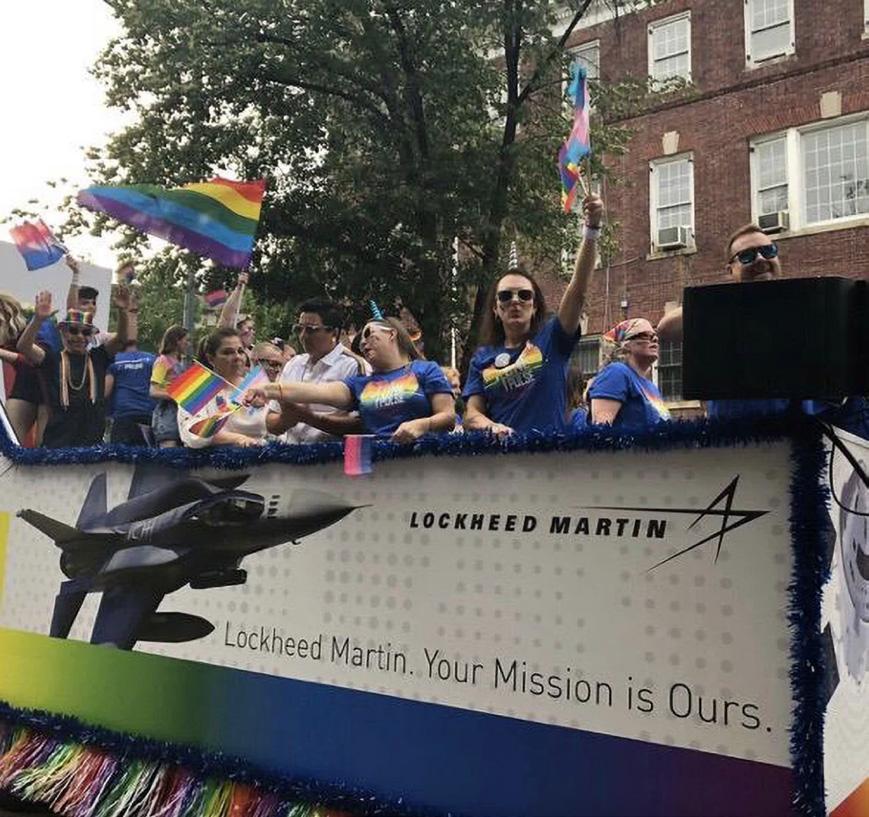
This year’s Mardi Gras sequins, glitter, and drunk straight tourists had their shine dulled by recent instances of censorship, police brutality, Mardi Gras Board controversies, and the increasing corporatisation of what was once a communityled protest inspired by the Stonewall riot. On the evening of the 27th of February, the night before the Mardi Gras parade, activist group Pride in Protest announced they were officially banned from the parade...
The working class, global south, and disabled people are on the knife’s edge of the climate crisis. If you can’t afford an air conditioner, if you work in a sweltering factory or a broiling kitchen, if you lack the mobility financially or politically to escape the climate’s escalating crises, or simply can’t physically
Bucky Barnes: Trauma Healer
bear its increasingly extreme conditions, the Albanese government has decided you’re shit out of luck. The Labor Party’s incessant prattling and virtue signalling should fall on deaf ears: We remain one of the highest contributors to global emissions...
ANALYSIS
14–15: PERSPECTIVE
Remy Lebreton
Kayla Hill Review, page 19
Kiah Nanavati Feature, page 8-9
Firdevs Sinik Analysis, page 12
EDITOR-IN-CHIEF
Kiah Nanavati
EDITORS
Madison Burland
Anastasia Dale
James Fitzgerald Sice
Kuyili Karthik
Ramla Khalid
Kiah Nanavati
Marc Paniza
Firdevs Sinik
Sebastien Tuzilovic
WRITERS
Kiah
Maeve
Chiara
William
Anastasia
Kuyili
Marc
Sebastien
Ananya
Firdevs
Max
Madison
Ethan
Acknowledgment of Country
Honi Soit publishes on stolen Gadigal land. Sovereignty was never ceded.
The University of Sydney is a colonial institution that upholds Western knowledge as superior to First Nations knowledge systems. We reject this hierarchy.
As student journalists, we recognise that mainstream media has been complicit in silencing and misrepresenting Indigenous voices since invasion.
In This Edition:
We commit to centring First Nations perspectives in our reporting, to challenging the colonial structures embedded in journalism, and to amplifying the voices of those resisting ongoing dispossession. We pay our respects to Elders past and present, and to all First Nations students and contributors.
Always was, and always will be Aboriginal land.
The future doesn’t feel distant anymore. It feels humid. It feels like 38 degrees on a train platform, like a rental that traps heat all night, like a power bill you hesitate to open.
This edition’s theme - Weathering the Future - isn’t about apocalyptic spectacle. It’s about the slow, grinding shift in what we accept as normal. It’s about the way extreme heat settles into bedrooms and classrooms, how rising rents push people further from green space and public transport, how energy bills quietly dictate who gets to stay cool and who doesn’t. Climate change, its more than just an environmental issue, its rooted around a social one to expose the fault lines that were already there.
Heat doesn’t land evenly. Neither do floods, insurance hikes, or the expectation to adapt. “Resilience” has become a comforting political
refrain, but resilience often means absorbing shocks without changing the systems that produce them. It means asking people to endure rather than asking institutions to transform.
This edition asks what it means to grow up under that pressure. We look at urban heat and housing inequality, and how adaptation becomes a privilege. We reflect on disability and the climate crisis — what it means when projected death tolls feel personal. We explore nihilism and the temptation to disengage when the problems feel too large to touch. We question national myths and political promises that ring hollow against material reality. And we consider the role of culture, technology, and everyday ritual in shaping how we respond, whether with apathy, resistance, or care.
To weather something is to survive it and also to be altered by it.
Letters to the Editor
I’m in mourning- my dear garamond has disappeared </3
Any time as I have red this first edition and the font accidentally re-appears in an article (by mistake I assume) I feel my eyes sigh with relief seeing an old friend, skipping through the minuscule sentences, phrases and sections of paragraphs that unexpectedly
Honiscopes
jump out at me… an old friend returning to grace me with its sharp serifs and round bold lettering.. ahhh…
I inquire- what lead to the new font choice?
I’m sure to become accustomed to this new friend, and look forward to this new team- the first edition was amazing content wise despite the wild ride my eyes went on!
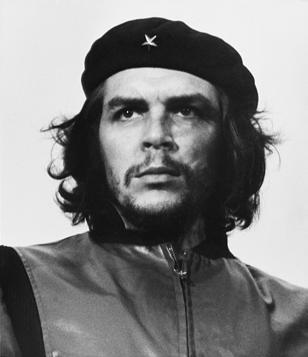
Aries: You’re a beret. You’re in a mercurial state of limbo. Move to Paris. Become a painter. Thank me later.
Taurus: Dear baseball cap, you are a stubborn fixture in history, an earnest favourite. Unpretentiously steezy.
Gemini: You’re either a revolutionary commie or you just bought this beret for 2k off Grailed. Probably both.
Cancer: The Greta Garbo / Anais Nin esque cloche hat. You contain emotional multitudes. Soft felt casts a shadow over your brooding brows. THE femme fatale.
Leo: You’re George’s Russian Sable Ushanka. Craving attention to a crippling level, you demean yourself to copying the headwear of TikTok 15-year-olds.
The climate crisis is not only changing coastlines and temperature records, it is also reshaping our sense of stability, of fairness, of what we think the future can hold.
As the atmosphere warms, so do the stakes. Who is protected? Who is exposed? Who is heard?
The future is already here and it’s uneven, uncomfortable, and contested. The question is not just how we endure it, but what we demand from it.
I hope you find something in these pages that makes it feel less inevitable, and more open to change.
- Kiah Nanavati
Regards, Front-to-back Honi reader
Hi there, I don’t know what you mean, we are really good at keeping fonts consistent. We’ve never heard of Garamond either, sorry. Love, Honi
Virgo: The humble working-class newsboy or baker boy, donned today by pseudointellectuals. Plain enough for the devoid of personality (hipsters).
4th March 7pm W/ Defair, Skirtless @ Metro Social
SUDS Presents: William Shakespeare’s JULIUS CAESAR 4th–7th March 7pm @ The Cellar Theatre THE MEANIES 6th March 7.30pm W/ The Maggie Pills, Crankees @ Botany View Hotel
BILLY MAY 7th March 3pm W/ Blain Cunneen, Grace Rogers @ Gasoline Pony MAGIC MUSIC 8th March 1pm
Libra: You’re a Kokoshnik. Famous Libras include Kublai Khan and Bella Hadid, You will be beautiful and disgustingly rich.
Scorpio: A beanie is classic, brooding, holding in all that pent-up energy and frustration. Take it off. It’s summer.
Sagittarius: Take off the balaclava, you’re not him bro. In fact, you’re not even chopped. Let that cherubic smile out.
Capricorn: You’re Kramer’s Panama pimp hat. You need to break from your stoic routine. Have a side-quest. Wear a weird one.
Ensemble consisting of Satsuki Odamura on koto, Sohrab Kolahdooz on vocals and percussion, Steve Elphick on bass and Sandy Evans on saxophone. Presented as part of the Iranian Music Festival. @ Leichhhardt Town Hall
Aquarius: You’re a rebel, like a cowboy. Fiercely independent, solo-ing the barren expanse of chaos. You’ve got a war in your mind. Just ride....
Pisces: You’re so esoteric. Wear this hat to a lecture hall, to the cinema, to a concert. Block people’s views.
Consultants, opaque spending and a KPMG spreadsheet: what came out of the NSW university sector inquiry
The latest hearing of the NSW parliamentary inquiry into the university sector has heard that KPMG produced a spreadsheet listing UTS academics by research income and publications as part of the restructuring process that led to significant job cuts at the university, with the consulting firm confirming the underlying data was later found to be inaccurate.
KPMG partner Chris Matthews confirmed to the Committee at the third hearing of the NSW Legislative Council’s Standing Committee on Social Issues on the 18th of February that his firm produced the spreadsheet as part of its $7 million engagement on UTS’s Operational Sustainability Initiative. He said a senior UTS executive halted the analysis after finding the data to be inaccurate, and that “to the best of [his] knowledge” the spreadsheet was not used for redundancy purposes.
Committee member Anthony D’Adam asked whether KPMG took responsibility for how its advice might be used: “You’re providing a service. It’s an advisory service... it’s quite evident where the direction is that that list was pointing to. Surely you must take some responsibility, rather than hedging?” Matthews maintained that decisions about staffing were ultimately matters for UTS leadership.
Professor Corinne Cortese, an accounting academic at the University of Wollongong, told the Committee earlier in the day that she had reviewed the publicly available Government Information (Public Access) Act (GIPAA) 2009 contract registers of all ten NSW universities, searching for entries relating to major consulting firms including the big four, Accenture, Gartner, KordaMentha, McKinsey, Nous Group,and Scyne.
When she searched USyd’s register, she stated she found no entries for any of those firms, despite USyd’s annual report disclosing approximately $18 million in consultant expenditure. She told the Committee that she attributed the absence to a provision of the Government Sector Finance Act that allows universities
to withhold disclosure of consulting engagements commissioned directly by the governing council. USyd disputed that characterisation, with a university spokesperson telling Honi Soit that USyd “does not rely on any legislative exemptions in its GIPAA contract register reporting.” The University did not explain why the register showed no entries for those firms.
Cortese told the Committee that scrutinising consulting expenditure across the sector more broadly was difficult. She estimated total consultingrelated expenditure across NSW’s ten universities at approximately $640 million in 2024, though she said the figure was unreliable given that universities use inconsistent labels for the same category of spending. “The reporting is just so difficult to unpick,” she said. Only Macquarie and USyd disclose consultant expenditure as a separate line item in their income statements; every other university buries it within a broader “other expenses” category.
Cortese also told the Committee that of 177 council members across NSW’s ten universities, approximately 18 per cent are elected academic or professional staff, around ten per cent are students, and nearly half are externally appointed — of
whom more than half have corporate, consulting or industry backgrounds. “I really don’t think we have diversity on university councils,” she said.
Jack Thrower, senior economist at The Australia Institute, told the Committee that university councils were not really representative institutions, and were more self-perpetuating than accountable to students and staff. He also raised concerns about USyd’s financial reporting, telling the Committee the university recorded an operating surplus of over $545 million in 2024 under standard accounting rules while simultaneously reporting an underlying loss of $68.6 million. “They managed to turn half a billion in surplus into a loss,” Thrower said.
USyd told Honi Soit the gap reflects the exclusion of philanthropic donations and investment returns, most of which carry restrictions on how they can be spent or must be reinvested in perpetuity. “We believe it is more transparent and responsible to disclose an underlying result which distinguishes between funding that is non-recurrent or restricted, and funds that can be used for day-to-day operations,” a spokesperson said, adding that the reconciliation between the two figures is publicly available in its 2024 annual report.
Nous Group chief executive Timothy Orton told the Committee his firm earned approximately $15 million in revenue from Australian universities in the last financial year. He faced questioning from Committee chair Sarah Kaine about UniForum, Nous’s benchmarking product used by nine Australian universities, and whether its proprietary methodology could be independently validated. Orton said the methodology had been tested with university partners but acknowledged it is not publicly available.
Deloitte partner Allan Mills confirmed UNSW had engaged his firm to assist with its wage underpayment remediation program. The Fair Work Ombudsman recently secured a $200,000 Federal Court penalty against UNSW for recordkeeping failures that hampered its investigation. Kaine noted that a judge had been critical of UNSW’s focus on complex multiyear IT overhauls rather than simpler fixes such as timesheets. Mills said decisions about how recommendations were implemented were ultimately the university’s responsibility.
A Treasurer’s reporting directive is expected to require more consistent disclosure by consultants from NSW universities from this reporting year. The inquiry is ongoing.
Marc Paniza reports.
USU Board’s first meeting in 2026: incorporation, partnerships, and a resignation
The University of Sydney Union Board held its February meeting on Thursday, 26 February, with incorporation, corporate partnerships, and a board vacancy dominating proceedings. Honi was invited to attend the ex-camera session at 12 pm, but waited roughly an hour in the Cullen Room before being admitted — the in-camera session evidently had a full agenda. The meeting was adjourned at 1:25 pm.
Present at the meeting were President Phan Vu, VicePresident Georgia Zhang, Honorary Secretary Shirley Zhang, Board Directors Archie Wolifson, Sally Liu, Michelle Choy, Layla Wang, and Noah Rancan, Immediate Past President Bryson Constable, and Senate-appointed Directors Michael Bromley and Tiffany Donnelly. Treasurer James Dwyer gave apologies, and Board Director Annika Wang was absent.
Incorporation heads to member vote
The USU’s long-running incorporation project reached a critical stage, with the Board announcing a Special General Meeting (SGM) on 20 March at Level 2, Manning House, from 11 am to 12 pm.
Members will vote on the final resolutions needed to complete the transition from an unincorporated association. The USU has since emailed members and posted on Instagram, encouraging them to register, with in-person and online attendance available.
According to Vu’s President’s Report, the University Senate approved the incorporation proposal and constitution at its meeting on 12 December 2025. Since then, the Board has been conducting due diligence, including a review of its assets and liabilities, contract novations, and a membership transition process.
At the SGM, members will be asked to approve the transfer of
assets and liabilities under Article 19 of the USU Constitution, the winding up of the unincorporated entity once the transfer is complete, and a name change to free up “University of Sydney Union” for the new body.
President Phan Vu told Honi that day-to-day changes for students would be minimal.
“We’re looking to make it as smooth as possible, so that you don’t feel the effect on membership,” Vu said, adding that there would be a transition period where members consent to the new entity, but no changes to existing perks. The USU’s email to members emphasised that the resolutions are “legal and procedural measures” and that “student services, clubs and societies, events, and campus life activities will continue.”
Board responds to ACAR’s criticism of Welcome Fest sponsors
The SRC’s Autonomous Collective Against Racism (ACAR) published an Instagram post during Welcome Week calling on students to pressure the USU to drop its partnerships with McDonald’s and Coca-Cola.
The post described the USU as “a corporate entity that receives sponsorships from BDS-targeted companies” and stated that both corporations are “complicit in the genocide in occupied Palestine.”
ACAR cited specific claims: that Coca-Cola operates a factory in an illegal Israeli settlement in Atarot in the occupied West Bank, and that McDonald’s has provided free meals and discounts to members of the Israeli Defence Forces. The collective called on the USU to “make the USU an apartheid free zone and obey the BDS boycott list,” noting that every university in Gaza has been destroyed by Israeli forces — “the same occupation force supported by Coca-Cola and McDonald’s.”
Vu said the Board discussed the feedback at the meeting and “recognised that we respect different views on campus.” However, she said the Board’s responsibility was to make institutional decisions through a “consistent” process, pointing to the Partnership and Advertising Policy adopted in October 2025.
That policy states the USU “will not engage in partnerships (including advertising) with companies or organisations that are reasonably considered to be in breach of recognised human rights standards or international law.” It also requires the USU to consider “reputational risk associated with the parent company” and factors such as “geopolitical conflicts” before entering into any partnership.
Vu said the inclusion of corporate partners at Welcome Fest “does not constitute a blanket endorsement of any company’s global operations,” and that partnerships went through a “rigorous process” assessing commercial viability and reputational risk. Asked how the Board balanced commercial partnerships with student ethical concerns, Vu said it was “really important to hear” the SRC’s criticism of the partnerships, but added: “I don’t know if the wider student body has objections to [it].”
The policy explicitly prohibits partnerships with military or police organisations, minerals and mining companies, and weapons manufacturers. It does not specifically address companies targeted by the BDS movement.
Director departs for Gaza flotilla
The Board noted the resignation of director Ethan Floyd on 17 February. Floyd is departing Australia to join the Global Sumud Flotilla, a non-violent humanitarian aid mission to Gaza. Vu thanked Floyd for their contributions over the past 18 months. The Board filled the vacancy internally, with Shirley Zhang serving as acting Honorary Secretary until July.
Finances and Welcome Fest
The USU closed the 2025 financial year with a net profit of $1.55 million — $738,000 above budget and $1.13 million above 2024’s profit, a result driven primarily by stronger outlet revenue.
Welcome Fest 2026, held 1820 February, featured over 300 stalls, including 200-plus clubs and societies and 70-plus corporate partners. The USU provided members with over 3,600 free meals and up to 3,000 free coffees during the event.
Other business
In a follow-up email to Honi, Vu confirmed that electoral reforms focused on election integrity are on track for early March, ahead of the election period in late March. The Clubs and Societies Committee has established a working group to examine user experience on MyUSU, an application launched in December 2025 to centralise club operations, including event creation, space bookings, and administrative submissions. Charlotte Long was welcomed as the new Director of Student Experience.
Portfolio reporting
Honi also asked Vu about expectations for portfolio activity, given that Board minutes from July to November 2025 showed significant variation in how frequently directors reported on their portfolios. As Honi reported in December, two directors — Ethan Floyd (First Nations) and Sally Liu (Ethnocultural) — provided no portfolio updates across four meetings, while others, such as Layla Wang, updated the Board at every session.
Vu said directors are expected to provide a short written update for each Board meeting, “even if it is simply ‘no major updates this month.’” She acknowledged that written updates are “not a complete record of all portfolio activity,” noting that day-today work, such as “liaising with management, responding to operational requests (including matters relating to autonomous spaces), or progressing issues through informal channels,” often occurs outside the formal reporting format. The Board has been “reinforcing more consistent written reporting,” Vu added.
What is the USU Board?
The USU Board of Directors is composed of 14 members: 11 student directors elected annually at USU elections, two Senate-appointed directors, and the Immediate Past President. Board meetings include an ex-camera session open to all students, where attendees can observe proceedings and ask questions during designated question time. The next Board meeting has not yet been announced.
Marc Paniza reports.
Combined Bachelor of Advanced Studies to be discontinued
After ten years of the combined Bachelor of Advanced Studies at USyd, the University will no longer offer it to students. This change is set to begin from the 2027 academic year.
In an email to the SRC President Grace Street, forwarded to Honi Soit by USyd’s Media team, Joanne Wright, Deputy ViceChancellor (Education and Students), stated that a review of the degree had been commenced in 2022 in order to address student feedback. Wright stated that a recommendation of the review was the discontinuation of the combined Bachelor of Advanced Studies.
Wright wrote that this change will “not affect the enrolment of any students currently studying the combined Bachelor of Advanced Studies degrees.” The University makes it clear on an FAQ posted to its website that students already enrolled in the degree will be able to complete their degree as was planned.
The discontinuation has not been formalised yet by a committee, though it appears that the process for the committee making the combined Bachelor of Advanced Studies discontinued will be relatively ceremonial. The FAQ states:
“This proposal still needs to progress through formal consideration and approval with our committees in early 2026. However, while this happens we will not accept applications for any of the combined Bachelor of Advanced Studies degrees from 2027.”
This discontinuation also affects transfers into and out of the degree. The FAQ has a list of available transfers, and
makes it clear that students enrolled in other degrees will not be able to transfer from them into the combined Bachelor of Advanced Studies.
Students in the combined Bachelor of Advanced Studies seeking to undertake Honours must “now apply directly for admission to a disciplinary appended honours degree.”
The axing of the degree comes after years of confusion, inconsistencies, uncertainty and change proposals around the bachelors degree.
From its inception, the degree has been a source of confusion. The National Union of Students seemed to misunderstand the structure of the degree in 2017. Honi reported that the Union misinterpreted the optin nature of the degree, and made a post stating that the University of Sydney was using the degree to add a compulsory fourth year onto three year Arts Degrees. This was never the case.
In 2019, second year students in the Bachelor of Arts/ Bachelor of Advanced Studies (International and Global Studies) also flagged a problem with the fourth year of the degree, stating they were told that an advertised semester exchange in fourth year alongside an Honours project was now not possible.
In 2024 the University flagged a potential problem with the degree, detailing a “potential administrations issue” which would affect its accreditation with the Australian Qualifications Framework (AQF). The University reissued completion certificates following this, and changed how the qualifications were represented on the website
Students will be unable to enroll in the degree from 2027.
Pride in Protest banned from marching in Sydney Mardi Gras
Beloved drag icon Maxi Shield passes away
William Winter reports.
On the 23rd of February, it was announced that Sydney drag legend Maxi Shield had passed away.
Activist group Pride in Protest has been banned from marching in the Sydney Mardi Gras parade by Mardi Gras’ corporate leadership for social media posts labelling Dayenu, a queer Jewish group that has published statements in opposition to Mardi Gras’ public endorsement of a ceasefire in Gaza, as “progenocide”. Dayenu will have a float at Mardi Gras.
The ban came following a complaint about the posts, and the Mardi Gras Board notifying Pride in Protest that it “requires” the posts be taken down in order to “support Pride in Protest’s continuing participation in the Parade.” Pride in Protest has now received confirmation that they have been removed from participation in the parade.
Pride in Protest has alleged that Mardi Gras CEO Jesse Matheson stated that “it did not matter if [their] statements [about Dayenu] were truthful”, and that they should take down the posts regardless.
Pride in Protest stated: “This attempt to censor Pride in Protest’s views on the genocide of Palestinians by Sydney Mardi Gras is deeply hypocritical.”
The news of Pride in Protest being banned from the Mardi Gras parade comes in the wake of Mardi Gras Board member and Pride in Protest member Luna Choo being censured and misgendered by Board CoChairs Mits Delisle and Kathy Pavlich, after a controversy surrounding transgender rights AGM resolutions not being followed through by the Board.
Pride in Protest stated they “intend to march for Mardi Gras one way or another” and called a snap rally for 3:30pm on Saturday 28th February at Sydney Town Hall.
Coverage of this rally can be found on the following page.
@wigsbyvanity posted the announcement, saying, “It’s with the heaviest of hearts that we share the news that our dearest sister, Maxine, has passed away. We are all mourning the loss of an incredible icon, friend, and our beloved sister.”
Maxi Shield was a legend in Sydney’s drag scene, becoming one of the most iconic names in the city and a fixture on Oxford Street over her nearly threedecade-long career.
In September 2025, Maxi posted to Instagram that she was diagnosed with throat cancer while in Edinburgh.
In January 2026, she posted, “Each day I’m feeling a little better,” and announced her return to performing.
Maxi was a contestant in the inaugural season of RuPaul’s Drag Race Down Under in 2021, and was most known for her lipsync against Etcetera Etcetera to Vanessa Amorosi’s Absolutely Everybody.
She was the oldest contestant on her season, a proud and outspoken advocate for plus-size performers and experienced drag queens. In a season that explored the tension between new and old styles of drag, Maxi’s presence was a refreshing reminder of the importance of honouring history and a recognition of classic styles of drag.
She won four Drag Industry Variety (DIVA) awards, including ‘Queen of Hearts’ in 2006 and 2008, and ‘DIVA Entertainer of the Year’ in 2015. She was a performer at the 2000 Sydney Olympics closing ceremony, 2022 Gay Games opening ceremony, and in 2015 was the hostess of Madonna’s Australian leg of the Rebel Heart tour.
Drag Queens online have been posting tributes in her honour remembering her for her incredible kindness, generosity, and superstar qualities.
Maxi was 51 when she passed. Read the full coverage online
Sebastien Tuzilovic reports
Anastasia Dale reports.
Pride in Protest Rallies at Town Hall after Mardi Gras Ban
Kiah Nanavati reports.
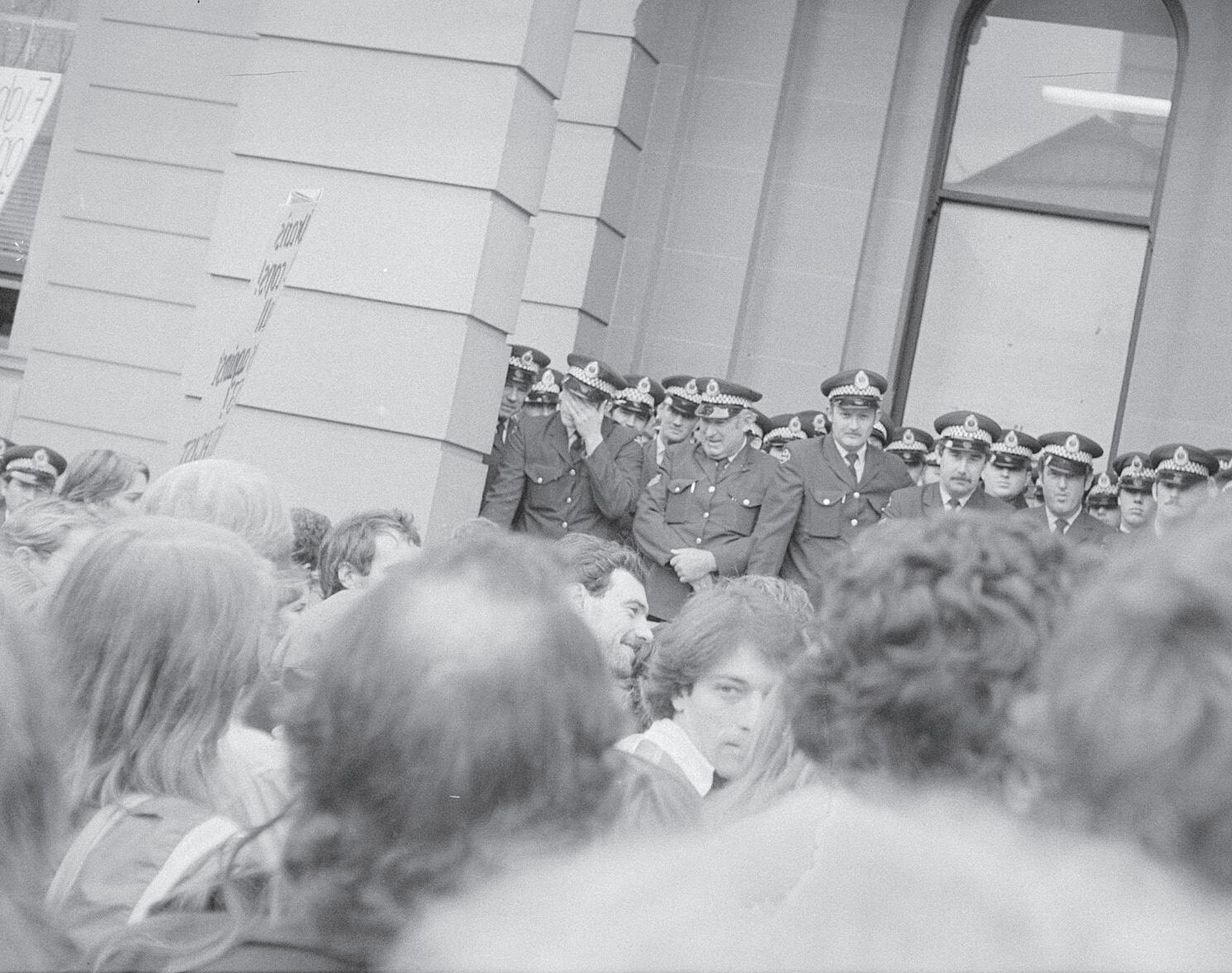
On 28 February at 3:30pm, the steps of Sydney Town Hall filled with more than 150 protesters demanding that Pride in Protest be reinstated into the 48th Sydney Gay and Lesbian Mardi Gras parade scheduled for that evening.
The emergency rally followed an 11am email sent the previous day by Mardi Gras CEO Jesse Matheson, giving Pride in Protest six hours to respond to allegations that a social media post had breached parade terms and conditions. The post criticised what Pride in Protest described as the “pro-genocide” stance of another parade participant. Later that day, Pride in Protest was officially removed from the Parade.
The protest was called as an urgent community response to fight for Pride in Protest’s freedom of expression and place in the parade. They described the removal as “unprecedented”, particularly given Mardi Gras’ long-standing refusal to exclude other controversial participants, including the NSW Police Force and the Liberal Party, under the banner of inclusivity.
There was one overlying question that ran through every speech that afternoon: why was an activist group expelled over political speech while parties accused by activists of violence or discrimination continue to march?
Signs that read “We support protest, we oppose genocide,” “There is no pride in genocide,” and “Let us in” were held aloft. Chants of “Pride was a riot, we won’t be quiet,” “Free, free Palestine,” and “Together we stand, together we fight” echoed across George Street.
Evan Gray spoke first, describing himself as “just an everyday person” exasperated by the events leading up to the protest: “I think a lot of us are really just everyday people who are really frustrated with the fact that more or less, the big end of town gets to decide how we express our culture, how we live our lives, how we work, and we don’t get any say in it”.
Gray then proceeded to say that Mardi Gras has increasingly catered to corporate and political interests at the expense of grassroots activism: “Right now, Mardi Gras has made a really cooked set of decisions. And I say set because it’s not just last night. ”He questioned why police participation was not scrutinised under the same standards: “Do I get to make a grievance where they expel all the cops?”
Two of Mardi Gras’ eight board directors, Luna Choo and Damien Nguyen, also Pride in Protest members, then addressed the rally, explicitly stating they were speaking
as community members rather than in an official capacity. Choo said, “I did not come here with a script. I came here with anger in my heart, but with pride.” She described Pride as inherently political. “Mardi Gras is a protest. It is a riot. It is an uprising.” Choo said it was “shameful” to see queer identity used to justify violence against Palestinians. “As a trans woman standing here right now, it is shameful that Mardi Gras will use my name and my flag to justify the ethnic cleansing of this people.”
Nguyen emphasised the political roots of Mardi Gras. “This year marks the 48th Mardi Gras, and we remember the first one in which people took the street out of pure anger,” he said. He referenced the death of Veronica Baxter in 2009 and the recent death of Collin Burling in police custody, linking the rally with ongoing struggles against state violence. “Today we stand here as recipients of that legacy,” he said.
Following the speeches, protesters marched from Town Hall toward Hyde Park. Pride in Protest members positioned themselves near the parade route, chanting “Let us in” and attempting to speak with Mardi Gras staff. A visible line of police officers formed a barrier as they prevented protesters from crossing public pathways, issued move-on orders, and physically pulled back when attempting to move between sections of the park.
Despite attempts at negotiation with the staff members of the parade, Pride in Protest was not reinstated. However, several floats and individual participants expressed solidarity, posing for photos with Pride in Protest’s banner reading “We support protest, we oppose genocide.”
As the parade moved along Oxford Street under a heavy police presence, there remained an air of animosity. Several drag performers carrying Palestinian flags were forcibly removed from the procession by police. Protesters described the incident as violent and emblematic of broader repression surrounding this year’s parade.
In an interview after the march, 78er Abby George reflected on how Mardi Gras has changed since 1978. “Back then, we were a very small group of people, consolidated by our determination,” she said. “ Being gay was illegal in New South Wales.” She described threats faced by parents and regular police harassment. She stated: “Now it has become corporatised. The police are allowed to come.”
George also described her own interaction with police that evening. “They grabbed me, pulled me back, threatened me, and gave me a move-on order that if I tried to cross that path I would be arrested,” she said.
By nightfall, the parade proceeded without Pride in Protest. Behind police lines, supporters continued chanting toward the floats. While the board’s decision remained unchanged, the protest emphasised the growing tensions about Mardi Gras over corporate influence, policing, and Palestine solidarity.
Read the full coverage online
U nited S tates and I srael strike I ran, Ayatollah assassinated
Sebastien Tuzilovic
A number of missile attacks have been made on Iranian cities, including the capital, Tehran. Strikes began near Ayatollah Kahmeni’s residence.
Attacks and retaliatory strikes have been reported in, Bahrain, and Kuwait. Air spaces closed across the South West Asian region following the attacks.
Donald Trump stated that the US has launched “major combat operations” in Iran, and has urged rebellion in Iranian cities. He has stated that the operation is “ongoing and massive”, and that American citizens may be casualties during the strike. Following this, Trump stated that the Supreme Leader of Iran, Ayatollah Ali Khamenei died in the strikes at his office in Tehran. He described Khamenei as “evil”. Khamenei’s daughter, grandchild, daughter-in-law and son-in-law were killed in the strikes.
Iranian state media confirmed that the Ayatollah had died in the attacks, at the age of 86. The assassination of a geopolitical leader in missile strikes by a foriegn power is unprecedented.
Israel’s defence minister, Israel Katz, has stated that the strikes were made “to remove threats to the state of Israel.”
The strikes can be construed as a breach of international law.
Iranian media have reported explosions, civilian deaths, and stated that the strikes have caused explosions in civilian sectors More than a hundred children have died in a US and Israeli missile attack upon a school. Civilian casualty figures are rapidly rising.
International communities have been quick to respond. Australia has reaffirmed its commitment to the United States in the face of the strikes, and the United Kingdom and Ukraine have also expressed support for the United States. China has urged an immediate ceasefire.
The attacks come following an intensified military buildup in the region by the United States.
Silent Hunters of the sea
Kiah Nanavati dives in.
In the span of just seven days in late January, three serious shark bite incidents along the coast of NSW coast turned an ordinary stretch of summer into what headlines dubbed as a ‘horror week’ and it reignited a familiar cycle: shock, grief, viral headlines about “shark-infested waters,” and renewed political calls for nets and culls.
So Honi sat down with Dr Chris Pepin-Neff, a shark policy expert, and according to him, the story unfolding beneath the surface is filled with complexity rather than just being sensational as it appears.
Rain, warm water and the perfect conditions
Pepin-Neff points first to the conditions that set the harbour and nearby beaches up for more encounters. Sydney was hit by intense rain: “127 millimetres of rain in 24 hours, which was the most in 38 years,” he said, while surface water temperatures in the harbour were sitting at 20°C or above. That combination matters because bull sharks can handle low-salinity water in a way other large sharks typically don’t.
“You don’t hear about white sharks being active around heavy rains… Bull sharks operate in low salinity,”
When freshwater pours into the harbour and meets seawater, it creates brackish conditions that can be far more biologically “busy” than people assume. “When people think brackish, they think muddy and may not think that the combination of salinity plus freshwater creates a biodiversity explosion that is an attractant,” he said.
Baitfish move in, activity rises, and bull sharks follow the food. That word ‘attractant’ comes up again and again in Pepin-Neff’s explanation. He argues that the story most people tell themselves after an attack is wrong: it’s not that there are suddenly “more sharks,” it’s that the climate crisis is creating more reasons for sharks to be close to where humans swim, surf, and snorkel.“We know shark numbers are down, there’s been no spike,” he said. “What has changed is the spike in attractants. Not the spike in shark populations.”
Climate change plays into this too, not as a scary, abstract headline, but as a practical shift in water temperature and how long warmer conditions last. Warmer water draws baitfish; baitfish draw sharks. Add peak summer beach use and you get what he calls a “chain reaction” as sharks move into feeding zones, swimmers and surfers move in too, and after rain, fast-changing salinity and low visibility can alter the marine environment almost instantly.
At the same time, Pepin-Neff says a different “new normal” is emerging that can make the public feel like things are getting worse even when safety is improving: surveillance. NSW has expanded drone monitoring, and Pepin-Neff says that alone will change what beachgoers experience. “We’re gonna have 90% more coverage, more drones that fly more often, and that’s gonna mean more alarms,” he said. More alarms don’t automatically mean more danger; they can simply mean we’re spotting more of what has always been there. He points to Surf Life Saving Australia data suggesting drones can reduce closures because operators can hover and track a shark’s movement, rather than making a split-second call from a helicopter that has to leave to refuel.
“I expect shark alarms to go up and beach closures to go down in a strange kind of twist,”
he said, framing that as a net positive: more eyes in the sky, better information, quicker warnings.
Viscous killers or simply just curiosity?
One of the most common fears after shark incidents is the belief that sharks “hunt” humans. Pepin-Neff is blunt about that.
“ Do bull sharks see humans as food? No…we are a biological failure.”
Humans are not efficient prey, and sharks generally don’t know what we are. What can happen, though, is that people enter a feeding environment without realising it.
If a bull shark is already active at the surface chasingbaitfish in poor visibility, and a swimmer bumps into that chaos, it can look like the shark was “going for” the person when the shark was actually responding to everything else already happening. He compared it to encounters around bait balls, where divers or fishers stray into swirling pockets of feeding chaos, or are engulfed by it, particularly in murky water or at dusk.
Pepin-Neff also talks about risk in a way that can be uncomfortable but matters for public understanding. Low visibility isn’t just “muddy water”; it can be dusk, dawn, heavy cloud, or brackish runoff that changes how well sharks and humans can see each other. He also noted that size can play a role in how sharks respond in close encounters, with smaller swimmers potentially at higher risk because sharks are often intimidated by larger objects.
He highlights that different ocean activities carry different risks. “Spear fishing is the most riskiest,” he said, because it involves blood, struggling fish, and cues that bring sharks in. Surfing can also raise risk in particular situations, not because surfing “attracts” sharks, but because surfers often chase empty, remote breaks and go early when the light is low. “Surfers don’t like having people around and that creates a risk,” he said, because there may be no “trigger for avoidance” when a shark investigates a lone silhouette.
Where Pepin-Neff is most forceful is on the political response that follows attacks. He argues that the debate gets narrowed to culling and shark nets, even when those approaches can be ineffective or harmful. “Shark nets don’t work,” he said, explaining that they are essentially gill nets that catch “bycatch” — animals that struggle and send out signals that attract predators.
“Shark nets attract sharks to the beach,” he argued, describing them as “ringing the dinner bell”
He also pointed to government and scientific reporting that shows sharks can be caught on the beach side of nets and that nets can become feeding points. In his view, nets create ongoing ecological harm while giving a false sense of security, and culling risks destabilising the marine ecosystem.
The Politics of Fear
Where Pepin-Neff becomes most reflective is in his assessment of how shark incidents are framed. He argues that public reaction often follows a predictable script: a tragic event occurs, headlines escalate the language, and the narrative quickly shifts from investigation to blame. Terms like “shark-infested” waters imply invasion, as though the animals have crossed into human territory, rather than the other way around.
He believes this framing shapes policy as much as science does. In the wake of a fatality, political leaders face intense pressure to restore a sense of control. “Doing something” becomes imperative — not necessarily because it’s effective, but because it’s visible. In that environment, nuanced conversations about environmental conditions, climate shifts, and behavioural risk factors struggle to compete with demands for immediate action.
What Happens When You Remove an Apex Predator
Culling, he argues, is even more short-sighted. Sharks are not isolated threats; they are part of a tightly balanced food web. Bull sharks help regulate other species in the harbour, including duskies and bronze whalers. Remove one predator and others shift to fill the gap. The system doesn’t become safer — it becomes unstable.
Marine ecosystems rely on balance. Apex predators control mesopredators, which in turn regulate smaller species. Disrupting that hierarchy can send ripple effects through the entire habitat, altering fish populations, breeding grounds and biodiversity in ways that are difficult to predict and even harder to reverse.
If bull sharks are removed other species can shift in response, potentially creating a cascade effect. “Now we’re in the category of a trophic cascade,” he warned.
“Then we’re not talking about shark bites, we’re talking about ecosystem collapse.”
Underlying all of this is the bigger message Pepin-Neff wants beachgoers and decision-makers to hear: the ocean is not a controlled environment, and pretending it is can be dangerous. He criticises the way beaches are marketed as safe, domesticated “paradises” for tourism, because it sets people up to expect certainty from a place that changes constantly. “We need to treat the beach like the bush,” he said.
Outside urban centres, snakes are part and parcel of life in socalled Australia. The ocean deserves the same mindset: not panic,not vengeance against wildlife, but better information, smarter choices, and systems that warn people quickly without trying to erase predators from a living ecosystem.
The recent attacks are tragic, and the fear they’ve triggered is real. But if there’s a lesson beyond the headlines, it may be this: after heavy rain and warm water, Sydney’s coast and harbour can become temporarily more active feeding zones and when more people enter the water at the same time, the chance of a rare, devastating encounter rises. Drones may mean we hear more warnings, not because the ocean has suddenly become “sharkinfested,” rather because we’re finally observing it more closely.
Mardi Gras 2026: Cops and Corporations
This year’s Mardi Gras sequins, glitter, and drunk straight tourists had their shine dulled by recent instances of censorship, police brutality, Mardi Gras Board controversies, and the increasing corporatisation of what was once a community-led protest inspired by the Stonewall riot.
On the evening of the 27th of February, the night before the Mardi Gras parade, activist group Pride in Protest announced they were officially banned from the parade by the corporate leadership of Sydney Gay & Lesbian Mardi Gras. Pride in Protest, which advocates for a free Palestine, transgender rights, and sex worker rights in addition to activism for the queer community more broadly, was banned wfrom marching in the 2026 Mardi Gras parade on 28th February. The ban was due to Pride in Protest’s social media posts made in which they labelled another group participating in the parade as “pro-genocide”. The group in question was Dayenu, a queer Jewish group that has published statements in opposition to Mardi Gras’ public endorsement of a ceasefire in Gaza.
Conversely to the situation Pride in Protest finds itself in, NSW Police had a float in the parade, despite multiple campaigns and protests focused on the “Cops out of Pride” movement. This movement gained greater traction in recent months due to the police brutality at the Town Hall protest against the visit of Israeli President Isaac Herzog on February 9th, where many queer protesters and allies experienced violence and intimidation by police. Recent allegations by transgender woman Elly of police brutality at Sydney Airport renewed calls for police to be banned from Mardi Gras.
should never have been invited to march in Mardi Gras, and they should be disinvited now. From the murder of Collin Burling last year, record high rates of Blak Deaths in Custody, and appalling brutality against protestors at the recent international weapons expo blockade and rally against Isaac Herzog, police continually show us that they stand against queer safety. The long-arm rifles the NSW Police have now been given for use during the Mardi Gras parade will only enable them to further intimidate, harass, assault, and murder us.”
The Mardi Gras parade and all related events, statements, and partnerships are overseen by the Mardi Gras Board. In recent months, the Mardi Gras Board has experienced significant controversy, with the Board nullifying transgender rights resolutions passed at last year’s Mardi Gras Annual General Meeting. The primary resolutions not followed were that the Board should encourage floats to promote transgender rights, and that the Board should write to state and federal members of parliament to deny them access to the parade if they do not actively commit to progressing transgender rights. These motions were passed at the AGM.
Board Co-Chairs Mits Delisle and Kathy Pavlich moved to censure two Board members who responded to emails about the issue. One of these Board members is Luna Choo, a transgender woman, who was misgendered by Delisle and Pavlich in official Mardi Gras Board papers. The Board Co-Chairs apologised for this, but Choo did not accept their apology. At this year’s Mardi Gras, any politician may march without making a commitment to transgender rights.
Anastasia Dale didn’t go to the parade.
is Coles, a member of the Australian supermarket duopoly, long accused of price gouging, and just days ago accused in court by the Australian Competition and Consumer Commission of intentionally misleading customers.
Numerous alcohol companies such as Absolut, Archie Rose, and Squealing Pig are cashing in on their chance to be featured in one of Sydney’s biggest parties. Gym chain Planet Fitness is a corporate partner, as is international retailer WHSmith, and weapons and gambling investing entity the University of Sydney.
The GAYTMs also make their yearly appearance as temporary plastic covers placed over ANZ ATMs. Similarly, certain businesses undergo temporary rebrands such as BWYASSS (BWS) and GLAMPOL (AMPOL). These makeovers have occurred in CBD, Inner West, and Eastern Suburbs locations, with businesses effectively calculating which areas of Sydney the ploys for “pink money” will benefit them the most, and where it will cost them.
Thompson and Duffy, SRC Queer Officers, commented:
“Corporations will never truly support queer people and our rights because they are driven only by what grows their profits. Mardi Gras should be by and for the community, like it was in 1978.”
The NSW Police, as well as marching in the parade, launched Operation Mardi Gras 2026 which involves uniformed and plainclothes police patrolling the CBD and surrounding areas.
Specialist officers from the Public Order and Riot Squad “who have the capability and training to use long-arms” will be “proactively patrolling the event”. The Public Order and Riot Squad is the same police unit that many members of the queer community have reported violence and intimidation from at various protests, including the first Mardi Gras in 1978.
Footage has emerged of parade participants being violently arrested at Mardi Gras, seemingly for carrying a Palestine flag. Drag king Maeve Nelli posted a video stating they had been “violently assaulted by the police, grabbed by the neck and thrown to the floor” after police pulled them out of the parade.
University of Sydney Queer Officers Wendy Thompson and Jesper Duffy stated: “Police
Thompson and Duffy, SRC Queer Officers, commented: “Luna’s censuring and related exclusion from board activities is a callous decision made amidst a slew of transphobia from the Mardi Gras board. The board has lost all trust from the trans community through this censure… the board has continued to refuse to acknowledge the trans community’s grievances as genuine and continue to fail to recognise any of their actions outside of misgendering Luna as transphobic, despite coalitional attempts from queer rights groups to get through to them.”
The parade has been increasingly corporatised in recent years, as corporations do a cost-benefit analysis and chase after what is known as “pink money”, the purchasing power of the ever-growing and upwardlymobile Australian queer population.
The Mardi Gras 2026 Presenting Partner
The official Mardi Gras afterparty was cancelled this year by the Mardi Gras CEO Jesse Matheson, an event typically attended by 10,000 people. Matheson stated that the afterparty had not turned a profit since 2020, and that Mardi Gras is “facing an existential threat… with new sponsorship uncertain.”
What began as an illegal protest for queer rights which ended in police officers queerbashing protesters has now become a company that welcomes police officers and punishes parade participants for taking political stances deemed too extreme by management. The Mardi Gras company has a CEO and a Board, the Co-Chairs of which have perpetrated concerning disrespect toward trans individuals and the trans community.
to the corporate entity. Mardi Gras could benefit from dismantling some of its business infrastructure and bureaucracy, and perhaps furloughing a few right-wing, corporate actors. Mardi Gras should be
community-led, radical, unafraid, and certainly not motivated by profit margins.
Perhaps there should be less of a focus on making the business’ numbers go in the black, and more importance placed on taking Mardi Gras back to its radical, community-centred origins.
Mardi Gras is indeed facing an existential threat. Existential changes must be made
The Influx of Data Centre Development in Sydney
90 data centres are running in Sydney, and the Minns Labor government is approving plans to develop more. A significant portion of them lies in Sydney’s west.
As AI development surges, tech companies like OpenAI and Atlassian have pushed for Australia to become a hub for data processing and storage. The government is justifying data centre development by citing that it provides reliable infrastructure for communities and businesses across Australia and the Asia-Pacific, aiding Australia’s attempt to assert itself as a regional power during the AI boom and reap financial gain from it, as per the National AI Plan.
The Minns government approved plans to develop a $3.1 billion data centre in Marsden Park, set to be the largest in the Southern Hemisphere. A $5 billion data centre dubbed ‘Project Atlas’ will be built in Eastern Creek, while an approved data centre on Mamre Road in Kemps Creek is set to be one of the world’s biggest, operating at 1GW capacity.
Whether data centres can power their hardware sustainably and keep the systems running in a way compatible with net-zero targets remains to be seen.
Yet, other data centres are being built without advertising such measures in mind. While renewable power sources were explored for a data centre being built in Moss Vale, they were unable to provide the necessary “scale and reliability of baseload supply” and ultimately
emissions. Operating the data centre on solar power would require 2.8 million panels, and a plant twice the size of anything currently existing in Australia.
The other costs involved in building and running Western Sydney’s new data centres include sourcing hundreds of thousands of chips, which are in short supply amid surging global demand, at a cost of $45800 each.
discarded.
The Marsden Park data centre is implementing efficiency measures to reduce water and energy use. To meet the developers’ purported goal of minimising greenhouse gas emissions up to 99% by 2030, the centre will source renewable energy and reuse chilled water so that every 1 kilowatt-hour of energy consumed by the facility uses 0.01 litres of water. The centre is touted by Minister for Planning and Public Places Paul Scully as “a great example of digital infrastructure being delivered sustainably.”
Though the Albanese government plans to reduce 2005 emissions by 62-70% and switch to renewables, Origin Energy extended the operation of its 2.8GW Hunter Valley Eraring coal plant to 2029, partially to support the operation of future data centres.
Meanwhile, the 1GW Kemps Creek data centre would use almost half the power that Victoria’s Loy Yang A coal power plant does, if both ran at full capacity. If this data centre’s power is sourced from a coal plant, it would release approximately 6.3 million tonnes of CO2 a year, or about a quarter of South Australia’s annual net
Additionally, data centres require continuous cooling, demanding up to 40million litres of freshwater per day, the equivalent usage of 80 000 households. Water demand for supercomputer cooling alone in Sydney is expected to exceed the volume of Canberra’s total drinking water within the next decade. While data centres currently use less than 1% of Sydney’s total demand, that demand will increase to 25% by 2035. By then, the city is forecasted to face water stress.
Sydney Water plans to use recycled stormwater and pursue measures to ensure that data centres do not draw from the state supply. But at least 89 data centres currently draw directly from public drinking supply. It is unclear how domestic electricity and water bills will be affected, as some data centres in the US have driven prices up by 267% for local residents.
Although Western Sydney residents will bear the impact of these data centres, homeowners and local councils were not meaningfully consulted before developments were approved. The Kemps Creek data centre is situated next to two schools. Its 852 backup diesel generators need regular testing and emit noxious air pollution, which poses health risks to local communities.
Chiara Prinsloo is apprehensive
Where are our pollinators?
megadiverse country, rich with endemic plants and animals which are found nowhere else on Earth. In reality, biodiversity is not simply a tally of species but a web of interactions allow ecosystems to function. Among the most essential of those interactions is pollination, the process that quietly sustains both native landscapes and agricultural systems.
Bees, beetles, flies, wasps, butterflies, and moths all contribute to pollination across Australia, alongside nectar-feeding birds and mammals. As these animals forage for pollen or nectar, they brush against the reproductive structures of flowers, carrying pollen from one plant to another and enabling fertilisation. What appears to be an incidental by-product of feeding is actually a perfect system; a foundational exchange giving energy for the pollinator and initiating reproduction for the plant.
An estimated 90 per cent of flowering plants rely on animals, primarily insects, to transfer pollen. This includes native species across bushland ecosystems as well as crops that provide fruits, vegetables, fibres and even chocolate. Thus, pollination promotes food security, genetic diversity within plant populations, and the regeneration of vegetation after disturbances such as fire or drought — essentially, it is critical to the life of all species, including ourselves.
Australia is home to more than 2,000 species of native bees, most of which are solitary and do not resemble the European honey bee commonly associated with pollination. Many of these species remain under-researched, and some continue to be discovered. When other pollinating insects and vertebrates are included, the scale and complexity of Australia’s pollination networks are evident.
Assessing whether these networks are stable, however, is far more difficult than recognising their importance. Dr Tanya Latty, an entomologist at the University of Sydney’s School of Life and Environmental Sciences, explains that the risk facing pollinators is complicated, not because threats are unknown, but because baseline data is limited. With thousands of potential pollinating species in Australia, there is little long-term population monitoring for the majority of native bees. When consistent historical data is absent, it becomes difficult to determine whether populations are declining, stable, or simply fluctuating naturally.
This lack of baseline information creates a significant barrier to conservation. Funding for ecological monitoring often depends on demonstrating evidence of decline and yet such evidence requires
sustained data collection in the first place.
Insect conservation can become trapped in a detrimental cycle where insufficient data prevents both recognition of the problem and investment in solving it.
Pollinators are also exposed to multiple, overlapping stressors where land clearing and urban expansion reduce habitat and nesting sites, fragmenting landscapes and disrupting plant–pollinator relationships that may have evolved over long periods. Pesticide use, like broad-spectrum insecticides, can poison non-target species that are essential to pollination. Climate change introduces further instability by altering temperature patterns and rainfall cycles, influencing flowering times and the life cycles of insects.
When plants and their pollinators respond differently to environmental cues, their timing can fall out of sync. A plant may flower earlier in response to warmer temperatures, while an insect emerges based on day length. Such phenological mismatches can reduce pollination success and when repeated across multiple species, may weaken entire ecological networks. Dr Latty compares pollination systems to “Jenga towers”, explaining that they can tolerate some loss, but as more pieces are removed, the structure eventually collapses.
For many Australians, the consequences of pollinator decline would likely first become visible in agriculture. Crops such as strawberries, blueberries, melons, apples, avocados, and cacao depend on effective pollination to produce fruit and reduced pollinator activity can lead to lower yields and higher food prices. Yet the ecological consequences extend further, as fewer successfully reproducing plants can lead to simplified ecosystems, altered food webs and diminished biodiversity over time.
While large-scale reform is paramount, Dr Latty argues that meaningful action can also begin at the home garden.
One of the simplest interventions is planting flowers, which provide nectar and pollen as critical food sources. Even a small number of flowering plants can make a measurable difference in urban environments where resources are fragmented. She recommends aiming for a diversity of flower shapes, colours and sizes, since different pollinator species have unique feeding preferences. In cities such as Sydney, where insects remain active during cooler months, maintaining flowers throughout the year can provide consistent support.
Firdevs Sinik looks for bees.
Resources such as the Wheen Bee Foundation’s “Powerful Pollinators” guide can assist with selecting suitable species, although careful observation of which flowers local insects already favour can be equally informative. Beyond providing food, flowering plants attract predatory arthropods such as spiders, ladybirds and lacewings, which help regulate garden pests naturally and reduce reliance on chemical controls.
Avoiding insecticides is equally essential, as most products marketed for home gardens are broad-spectrum, meaning they kill a wide range of insects, including pollinators. Even those labelled ‘organic’ or ‘eco-friendly’ may pose risks to beneficial species and so limiting chemical use will help preserve the complex insect communities that sustain pollination.
Food alone, however, is not sufficient if insects have nowhere to reproduce. Most native Australian bees nest in the ground, making small patches of bare, mulch-free soil surprisingly valuable whereas others nest in hollow plant stems, meaning grasses, vines and woody debris contribute to future habitat. Decaying timber supports beetle larvae, while specific host plants are essential for butterfly and moth caterpillars. A pollinator-friendly garden is therefore not only colourful, but also structurally diverse.
Citizen science platforms such as iNaturalist also help close data gaps by enabling individuals to record insect and plant sightings, generating distribution data that researchers can analyse over time. In a country where formal longterm monitoring remains limited, such distributed observations offer an increasingly important supplement to scientific research.
Safeguarding pollination systems requires structural commitment, including stronger protections against land clearing, sustained investment in ecological monitoring, and integration of pollinator-friendly planning into urban and agricultural policy. Australia’s biodiversity may appear abundant, but abundance in these tumultuous times should never be mistaken for permanence. Ecological resilience depends on countless daily interactions that largely go unnoticed, and pollination remains one of the most fundamental among them.
In a country renowned for its biodiversity, the unknown status of native pollinators is a stark warning: our understanding of ecosystems is lagging behind rapid environmental change, and safeguarding these species requires collective effort.
University of Sydney deploys unmarked security vehicle fleet during contractor transition Ethan
The University of Sydney (USyd) has deployed a new fleet of unmarked security vehicles across its Camperdown and Darlington campuses, replacing its previously marked patrol cars as part of a transition to a new private security contractor.
The new dark grey SUVs, complete with tinted windows, began appearing over the summer break. Unlike the bright blue Campus Security cars previously used by the university, they carry no distinguishing features or visible USyd branding.
Over several weeks of observation, Honi Soit did not observe any of the marked blue vehicles that had previously been a visible feature of campus. Instead, these unmarked SUVs were on patrol in their place, stationed outside Fisher Library, along Eastern Avenue, and near Victoria Park. Their only clear identifier is an amber light bar mounted on the roof.
Several students, approached by Honi Soit on Eastern Avenue and outside Fisher Library this week, said the change has made security vehicles harder to recognise.
“With the old blue cars, you knew straight away that it was security. If you needed help, you could wave them down,” said one student. “Now it just looks like someone sitting in a car watching.”
Another student said the difference was most noticeable at night.
“When I’m leaving uni late, I always look around for security. The whole point is that you can see them. If you can’t tell it’s them, it kind of defeats that purpose.”
A USyd spokesperson confirmed the fleet was introduced as part of a change in its contracted security provider.
“A new fleet of security vehicles was introduced at the University as part of a transition to our new protective security guarding and concierge provider in February.”
The spokesperson said the vehicles would not remain unmarked, but did not provide
a timeframe for how much longer they would operate without identification.
“We’re updating the vehicles with University of Sydney branding shortly, as it’s important our students and staff can easily identify security vehicles as they move around on campus and if they have any safety or security needs.”
The spokesperson did not respond to questions about whether student safety or accessibility considerations informed the decision to introduce the new fleet, or whether students or staff were consulted prior to the change.
Universities like USyd have increasingly relied on visible patrols to demonstrate they are addressing sexual violence, in response to increasing scrutiny and demands for accountability.
According to the USyd’s most recent annual report on sexual misconduct, the University received 231 reports of sexual misconduct in 2024, following 246 reports in 2023, more than double the 121 reports recorded in 2022. These figures include incidents occurring on campus, in student accommodation, and elsewhere involving students or staff.
On campus, visible security patrols have been increasingly framed as part of the institutional response to sexual violence, providing escort services and an accessible point of contact for students seeking immediate assistance.
Students’ Representative Council (SRC) President Grace Street said measures to improve safety should focus on underlying causes of harm.
“Unmarked security vehicles are a new step in the University’s increasing surveillance of students and staff, which is making our community feel intimidated and unsafe. Unidentifiable security vehicles means that students cannot approach them for help if they need — which should actually be the priority of security. The only thing that unmarked vehicles do is increase the ease of monitoring and covert investigations, which are completely unnecessary”, she said.
“Measures to create a safer campus need to focus on addressing systemic issues of sexism, toxic party and dorm culture in student accommodations — particularly the colleges — and better training and providing resources to students about how to stay safe and get help.”
“Unmarked vehicles and the increased securitisation of campus do not make students feel safer — they only make them feel like they should be scared and need to watch their backs. The community are made to feel like they are the enemy and the target of security, rather than the people they are meant to be helping and keeping safe.”
At the same time, Campus Security’s role extends beyond responding to safety incidents. Security officers are responsible for enforcing University policies governing access to campus and use of its spaces.
In recent years, that has included enforcement of the University’s Campus Access Policy (CAP) and subsequent protest-related regulations, which introduced permit requirements, restrictions on demonstrations, and limits on building access. These measures have been roundly criticised by student organisations and civil liberties advocates as constraining political expression on campus.
Security officers are often the frontline agents of that intimidation and surveillance.
SRC Queer Officers Wendy Thompson and Jesper Duffy said the introduction of unmarked vehicles raised
Floyd investigates
specific concerns about surveillance and the safety of queer students.
“Campus security does not have queer students’ safety in mind,” Thompson and Duffy said.
They pointed to previous incidents which they said had heightened distrust of campus security among queer students.
“Campus security has also previously threatened police violence against queer students. Police homophobia and transphobia is welldocumented, and the dangers of the police to queer students cannot be overstated.”
They said unmarked vehicles could expand security’s surveillance capacity.
“Introducing unmarked vehicles is only going to make it easier for campus security to do their jobs,” they said. “Any measures that allow campus security to increase their surveillance puts all students at risk.”
A University of Sydney spokesperson said its protective services team “works hard every day to identify, mitigate and manage risks on our campuses,” and that their presence “supports a safe and welcoming environment.”
This characterisation is clearly contested by student representatives. But, in any case, for now, that presence is functionally invisible.
I’m Scared the Climate Will Kill Me
Remy Lebreton is not a statistic.
Heat, for me, is a homeostatic nightmare. Regulating my body temperature has been a lifelong struggle. Growing up, I was nicknamed a “living heater” by my family, who would always poke lighthearted fun at my perennially scorching ears. I recall spending summer after summer in a simmering dread, expending exceedingly large portions of life I’m supposed to be sleeping, studying or otherwise living life, in exhaustive efforts to cool off. A poorly planned itinerary or wrong choice of clothing leaves me feeling feeble and rotten, as if I’ve walked into a sauna with no exit. From time to time, the sun just decides it hates me, and I’ll wake up that way from the get-go.
In such situations I’m left in a sisyphean state, forced to cancel plans, delay readings, put everything else on the backburner to desperately deploy an arsenal of cold showers, ice, and fans. In the summer when heat waves cascade, I lose sleep, energy, sanity and overall functioning for tasks that normally don’t require neurons in the single digits. For someone like me, with autism and ADHD, these conditions create a waking nightmare hiding in a weather forecast.
The way I was raised instilled a stalwart climate consciousness in me. Assuredly a formative point on my trajectory into left wing politics, I was taken to all the major marches and rallies, watched documentaries, paid great attention to the developing climate science, and we discussed the crisis sometimes daily in my childhood home. It was always a matter of principle to fight against the climate crisis. “There is no planet B” my mother would quote, (despite what fascist billionaires and their flights of fancy pretend), so it felt only natural to fight for humanity’s collective future. Unexpectedly, it has become personal lately, impacting me on an individual level each summer as well as dominating my consciousness for the collective.
In September last year, the Greens dragged the Albanese government kicking and screaming to release the National Climate Risk Assessment report, after withholding it for 9 months. The report projects heatwaves to increase in intensity, regularity and length. Heat-related deaths in Sydney alone are expected to increase by 444 per cent, from 117 deaths to 636 deaths annually, if global average temperatures increase by just 3 degrees. This average indeed already increased by half of this, 1.5 degrees, as you’ve likely felt this summer already. Simultaneously, the Albanese Government approved 35 new fossil fuel developments, the operation of the world’s largest coal port will continue in Newcastle, and Woodside’s North West Shelf gas export project has obtained a 45 year extension.
The working class, global south, and disabled people are on the knife’s edge of the climate crisis.
If you can’t afford an air conditioner, if you work in a sweltering factory or a broiling kitchen, if you lack the mobility financially or politically to escape the climate’s escalating crises, or simply can’t physically bear its increasingly extreme conditions, the Albanese government has decided you’re shit out of luck. The Labor Party’s incessant prattling and virtue signalling should fall on deaf ears: We remain one of the highest contributors to global emissions, a staggering 4.5 per cent. The Albanese government claims to be nominally left wing, to care about workers and disability justice, but condemns scores of these community members to a death it has itself anticipated.
The Albanese government tried to hide the data on the climate crisis they are furthering, in the interests not of the people of this country, but at the whims of the most powerful and wealthy.
So, I’m scared the climate will kill me. Or, more accurately: When politicians talk in vague or sycophantic language about how many people may die due to the climate crisis, that means me. It means your family, friends, housemates, work colleagues and community. It means ordinary people the world over. It may even mean you, reading this. We will be just another statistic in a delayed or altogether covered-up report, ordained as sacrificial lambs, dying for neoliberal economic “prosperity”. While we burn, we’ll take great comfort in the opening of new AI data centres and expanding property portfolios, preserved just that little bit longer from the fire and brimstone humanity is succumbing to.
Every new year is now the hottest on record. I refuse to sit back, a static and isolated data point, neatly modeled into the risk assessment of some quarterly profits projection. The impending crisis, and all the deaths that come with it, continues only at the behest of society’s greediest cowards and liars, perpetuating a self-serving system. We must not allow them to kill us.
It’s All Love For Your Ever-Present Roots: Nai Palm and Hiatus Kaiyote’s Lessons on Reconnection and Identity
I sit down with my guitar next to a still column of water resembling a river.
My friends brought their dogs to this lush evergreen plot of land. I watched their paws burrow into the red earthen ground. It’s a bliss I have not experienced in a long time. The turbulent pace of university life in Sydney seems to wash away with the serene winter air of a small farm an hour away from Bangalore.
The dogs roam free, excited to explore the abundance of their surroundings. As they nestle under the shade of a stone picnic table, I hum a little song in my head.
Nakamarra
Sweet red earth will hold you Like the strength you bless to me True we engage humility
“My all-time favourite are Hiatus Kaiyote… I don’t know if you know those guys but they’re this amazing R&B, soul, jazz, crazy funky off the wall dudes, and they’re really amazing.”
This is what musical genius Jacob Collier had to say when asked about his Aussie listening choices in an interview with Happy Mag. He definitely captured my thoughts on these “funky off the wall dudes” perfectly.
Describing themselves as “multidimensional, polyrhythmic gangster shit”,
bassist Paul Bender, drummer Perrin Moss, and keyboardist Simon Mavin never cease to amaze with the playfully jazzy soundscape they bring to the table. But the voice that shines through, calm and gentle, yet energised with momentum, flowing like a moving body of water, belongs to the band’s groovy lead singer/songwriter. This is Nai Palm.
Nai Palm has an unremarkably beautiful talent for storytelling through her lyrics, often drawing from raw, human experiences she’s encountered in her own life, yet reframing them in an earthy, nomadic, and ever-evolving context. Striking evidence of this is with “Nakamarra”. A song made about her First Nations friend with the skin name Nakamarra, she joyously captures the smaller yet pivotal parts that First Nations culture played in her life. A skin name assigns roles, rights, and responsibilities to a First Nations person, a practice common in central Australia, especially in the Kintore region, where Nai and her friend travelled.
“The indigenous mob out there are like some of the most warm and hilarious, like the humour out there is so beautiful. I just wanted to — without being intense — showcase that lightness,” she reflects while delivering a speech to an auditorium of students.
As a South Indian person, I grew up surrounded by people who taught me the
Ananya Ashwin traverses.
importance of land and nature and how they tie into the culture that develops from them. The earthen red soil of Karnataka, a state in South India, home to the city of Bangalore, is infused with history. Stories of native foods, culture, the war against British colonisation, and the lightness that emerged from the struggle stick with me to this day.
This was a culture that I tried to leave behind as I immigrated to Australia, a country with a rather obnoxious colonial history impacting its present. But I somehow always found myself back at my roots. “Nakamarra”, Nai Palm, and Hiatus Kaiyote’s music remind me to never leave that behind.
When Welsh poet Dylan Thomas created one of the most famous lines in English literature: “Do not go gentle into that good night”, he embodied the stubbornness and drive of the human spirit to push through and redefine what we believe in. Nai Palm offers the idea of a rather gentle perseverance:
Moonlight, I see why some go We go far and we go gentle
We should go far and go gentle together into that good night, staying true to our roots and branching out to new beginnings.
I Think, Therefore, “I Used ChatGPT” Maeve
I was born in 2006. In 2007, at the age of one, the first iPhone was released.In 2010, at four years old, the first iPad was welcomed into my home. At 11, I received my own iPad for school, and at 13, my own mobile phone. Now, in 2026, I am 20 years old, and most people I know use Artificial Intelligence daily.
I can’t stand technology.
Please, don’t misunderstand me. I am not anti-technology. Technological advancements have been, and will continue to be, crucial for the continuing development of mankind. It’s not technology itself that leaves me anxious; it’s AI.
Have you noticed a brewing sense of disconnect among Gen Z recently? I certainly have. You see, those of us born between 1995 and 2010, i.e. Generation Z, have quite literally grown up with technology. From infancy to adulthood, our development may as well have been marked by the release of the latest iPhone, ultimately rendering our existence as one that adheres to the title we so proudly adorn, ‘chronically
online’.
And yet, in previous years, our relationship with technology has shifted drastically leaving us, for the first time ever, sceptical and resentful of new digital programs, especially AI chatbots.
Following solitary teen years that left us addicted to doom scrolling, nostalgia has become a sort of life support for our generation, and we cling to it as if we’re about to be swept away by the waves of reality. Characterised by the popular resurgence of physical media and ‘classic’ hobbies like reading, crochet and crafts, Gen Z now embraces autonomous human action and simplicity. But why is that?
I believe it’s due to an ‘outside’ perspective. Gen Alpha, children born between 2010 and 2024, are notoriously known as ‘iPad kids’, and the label is certainly fitting. Lacking creativity and critical thinking skills, these children are in the midst of a generational crisis, growing up with the support of their closest friend, Gemini AI.
Viewing from afar, Gen Z has noted the horrors of the lifestyle we so narrowly avoided; the people we could have been. But, of course, digitalisation couldn’t escape us completely, resulting in immense frustration and a burning desire for change.
There’s nothing worse than working tirelessly to complete an assignment, or a degree for that matter, only to have your integrity threatened by a robot designed to detect your use of, well….a robot. ‘AI was detected’ in 10% of my assignment, you say?
Silly me, I wasn’t aware that the required references in my essay would result in academic purgatory.
While trying to maintain freethinking at a university that encourages the use of AI proves to be difficult, it’s really only an inconvenience.
that encourages the use of AI proves to be difficult, it’s really only an inconvenience. The real issue lies in what we dismiss.
What about the theft of artists’ work? The nonconsensual sexualisation of real women and children? The catastrophic environmental consequences? This is the real crisis.
According to the United Nations Environment Program, AI-related infrastructure is predicted to have consumed ‘6 times more water than Denmark, a country of 6 million people’ by the end of this year (2026). A quarter of humanity already lacks clean water. And yet, we ignore this in the name of convenience.
Gen Z, we can put an end to this madness. Society is rapidly digitising like we’ve never seen before, and while technology will always be a significant part of our everyday lives, please, take a moment to reminisce about what we once had.
Remember the stories we wrote, the games we played, the worlds we built with our minds alone.
These are what make us truly human. Resist AI.
nothing — no loyalties, no purpose, perhaps only an impulse to destroy. The word itself originates from the Latin ‘nihil’, nothing, sharing the same root as ‘annihilate’.
Ivan Turgenev first popularised nihilism in his novel Fathers and Sons (1862), where one of the characters espouses a creed of total negation. However, the German philosopher Friedrich Nietzsche has become the figure most frequently associated with nihilism.
He was profoundly critical of the notion, asserting that its corrosive effects would destroy all moral, religious, and metaphysical conventions, precipitating the greatest crisis in human history.
The German polymath Oswald Spengler was convinced that Nietzsche’s perspective was accurate. By analysing several cultures, he gave nihilism a structure of three distinct postures that he claimed appear in every collapsing civilisation. Today, these three postures are eroding established artistic, political, and religious traditions.
The first is the Faustian nihilist who shatters existing ideals. A great example is politicians who pervert religion to further their own power, such as the American Christian Nationalist movement working to
Nihilism Breeds Apathy
Max McDermott is a thinker.
This posture also encompasses politically inactive people of the older generations.
Lastly, Spengler identified the Indian nihilist, who withdraws from society into themselves. This is us, a generation raised on the internet. As people grow increasingly individualistic, obsessed with inane status symbols like follower counts and materialistic pleasures like the new iPhone, we pull back from society into our own worlds. This becomes a self-fulfilling prophecy. As we retreat into ourselves and simply watch the Faustian nihilists shatter ideals, they become emboldened and undertake worse actions.
A clear example is the evolution of Donald Trump’s behaviour over his two terms in the White House. While many of his policies during his first term were contentious and irresponsible, they don’t hold a candle to those of his second. This can largely be attributed to the lack of action by the American populace in response, enabling him to order mass deportations and extrajudicial killings since 2025. The further the Faustian nihilists go, the more dejected and apathetic our society becomes. We stop speaking up and protesting for change, succumbing to the corrosive effects of nihilism Nietzsche outlined. So, what does a future in which nihilism succeeds look
they rallied outside of the NSW parliament building, holding inflammatory banners and chanting the Hitler Youth phrase ‘blood and honour’ — clearly demonstrating their Faustian nihilism.
Accompanying the Faustian posture is the Apollonian nihilist, who watches passively while these ideals crumble before their eyes. News Corp Australia was predominantly opposed to the proposal for the Voice to Parliament, with analysis showing that approximately 70% of its coverage aligned with the ‘No’ campaign. Alongside this, they actively spread misinformation — the journalist Peta Cretin claimed that the page-long Uluru Statement from the Heart was 26 pages long. In this scenario, the organisation and the ‘journalists’ they employ are Faustian nihilists.
Moderate politicians and media outlets that failed to
call them out on this assumed the role of Apollonian nihilists, watching as lies and misinformation were spread to deride the value of equality that should be present in a liberal democracy.
The American priest Eugene Rose claims we’d live in a “cold, inhuman world” where “nothingness, incoherence, and absurdity” triumph. Social connection in our highly digitalised society is already worsening, with approximately 40% of Australians reporting loneliness. There’s no reason to think that this number will improve without intervention, leading to a decline in mental health outcomes and a general decline in the quality of life for the everyday person.
As the incoherent and absurd rhetoric of Faustian nihilists drives a wedge between different races, genders, and socio-economic classes, social cohesion is fractured even further. Anthony Albanese’s decision to invite Isaac Herzog, one of several Israeli government figures who the UN found incited the commission of a genocide, demonstrates this. It spat in the face of international law and led to mass protests in major Australian cities.
I did not write this piece to suggest that we are already too far gone, that it’s pointless to resist nihilism. I wrote it to reinforce the idea that younger generations need to continue fighting for the change they want to see. Attend protests, make your voice heard, write to your local MP, remember that you matter, that we all matter. Don’t roll over like a puppy and let the Faustian nihilists among us tickle your stomach. Bite back.
Media Training and Bible School: Honi in Conversation with Madeline Cash on her debut novel
Lost Lambs
Madison Burland interviews.
Meet the Flynns. Abigail, Louise, and Harper are the three daughters of Bud and Catherine Flynn, a middle-aged couple who, after years of struggling with the mundanity of suburban heterosexual marriage, decide to open their marriage. Naturally, this decision has a very interesting impact on their three daughters.
Abigail, the oldest at seventeen, begins dating a slightly older man nicknamed ‘War Crime Wes’. Louise, the chronically disinterested middle child at fifteen, finds herself in an experimental exploration of religion with her online boyfriend, who may or may not be a terrorist attempting to indoctrinate her. The youngest at twelve, Harper, shares the same precarious nature as her sisters, but sits at the crux of the novel. Harper directly propels the plot as she begins to unmask a conspiracy at the centre of the very small town they live in, despite her parents’ best efforts to silence her by sending her to a wilderness retreat.
Satirical, intelligent, witty and appropriately real, Madeline Cash’s debut — told in the third person from the perspectives of each main character — resists a tempting preachy voice, and instead takes the reader along for a ride through punchy, quick dialogue and intelligently exaggerated character archetypes. Cash’s tone is consistent, thrilling, and laugh-out-loud funny.
After obsessively binge-reading the book in a day, Honi was able to sit down and talk to author Madeline Cash.
Madison Burland: How are you feeling? This has to have been a crazy year for you so far.
Madeline Cash: Yeah, it’s definitely crazy there. I’m very excited and grateful, but I think I’ve been a little bit just on autopilot for the last few months. There’s a bit of an underlying existential dread that I’m going to say some
thing wrong, or mess up and make this all go away. So I’ve been a little terrified, but also very, very happy.
MB: That’s awesome. I think if I were in your position, I’d probably be stressed. I’m sure you’ll be fine.
MC: Well, thank you so much.
MB: Did they give you media training?
MC: They gave me media training, I mean, I’ve probably hyped it up too much. It was just a guy on Zoom asking me my most controversial opinions, which are not that controversial, and dissecting them for hours and hours and hours. It just made me feel kind of crazy. I think it can make one less authentic to be so manicured. So I try to resist that kind of thing.
MB: I’m sure you’ll be great. But yeah, congrats. Lost Lambs has really come out as one of the most anticipated debuts of this year. I do have to say, I absolutely loved it. I started reading it, and I did indeed read it in 24 hours.
MC: Thank you so much. I really, really appreciate it. It’s still surreal to hear that it’s resonating.
MB: I remember like, I kept reading quotes aloud to my partner, and he was just like, you keep just reading things to me without context. I’d read it and then start laughing. He’d be like, that sounds funny, but I’m confused. I was just like, you don’t get it.
MC: Well, that’s perfect. That’s kind of how I wrote it, reading things aloud to my partner. I’d be like does this make sense? He’d be like, I just don’t know what you’re talking about.
MB: It was so funny! Especially the dialogue. Every scene between the middle daughter and her online boyfriend is absolute gold.
On your dialogue, how did that come about during your writing? You’ve written before with, of course, like Forever Magazine and your short stories. How do you think writing dialogue shifted for you in a novel?
MC: I would often start with dialogue. It would be the first thing I’d write in a scene, and then kind of build out from there. Whether it was something that I thought of that night and scribbled down, or like overheard a variation of on the subway, I would kind of just integrate it into the narrative, rather than write dialogue after the narrative.
It was kind of at the forefront, and I’ve always just really had a penchant for dialogue and like to have tried my hand at writing scripts, not on any professional level, but always for fun. A completely dialogue-driven piece is something that really interests me.
Okay, yeah. It definitely read that the dialogue was super strong. As I said, I really loved the conversations. They were so funny. It’s really hard to kind of capture a character through an online chat, but
I could just so clearly see both of the characters.
MC: Thank you, I really, truly appreciate that. You never know how these things are going to come across or be received. You know, something that’s so personal and in your head for so long is suddenly made public domain.
MB: How are you going with that? Having shifted from the things you’ve worked on before to a novel?
MC: I don’t know if there was a formal change I had. I’d only written short stories, honestly, because the medium was most convenient for my time and lifestyle. Writing a novel seemed impossible because I was working full-time and running the magazine during any ounce of free time, but I kind of decided that it was like the final frontier for writing.
I needed to do it, and I needed to create time for it. It was, in a sense, like a big short story that just got elaborated upon. But I also really mapped it out for myself. Like, I created an entire timeline before I even started writing with post its on the wall, and I made character charts, and I did a whole world building map and I think that really helped me fill in the gaps for writing.
MB: That’s awesome. Wow. Very prepared. How much time did you end up spending on the novel from your day to day life?
MC: Well, it probably took, all in all, about a year, and I would like so I was working as a copywriter, and when so work would be inconsistent every day, but I if I had a heavy day, sometimes I couldn’t write it all, or like it would pull on too much of like, creative energy, it wouldn’t make me want to write it all.
I tried to write every weekend. I’d set aside four or five hours on Saturday and Sunday, and then in the mornings, in the evenings, if I could. During the final push of the novel, I took my vacation time, and then went to my aunt Brenda’s, who has just an apartment in the same city, but it’s far nicer than mine, and away from my friends and social life. I just hauled up there for a week and did the ending and the final pass on it, and devoted a full week’s attention to it.
MB: That’s awesome, shout out Aunt Brenda.
MC: She’s in the acknowledgement, honestly, she was so instrumental. She’s not my aunt though, she’s not actually related to me...
Read the full article online.
In Communion with Cameron Winter at the Sydney Opera House
The sun descending into the Sydney harbour sent an orange and pink blush across the clouds. I already felt God’s presence, just a tiny flicker, as the sunlight fractured in pale gold flecks on the water. Winter’s music had subtly recalibrated my brain. I remembered the lyrics of ‘$0’, where Winter recalls with a thick voice, “I was staring at the water” and sings, “God is real, God is real, I’m not kidding, God is actually real…I wouldn’t joke about this, I’m not kidding this time.”
I remember laughing with the rest of the crowd in December, in Paris, where I first heard him sing this confessional refrain. I was in a small, darkened room where
contorts into vibratos, warbles, and clearly sustained belts, unafraid to embrace the ugliness of emotion.
Winter is beyond pretence. There is something refreshingly unperformative and post-ironically sincere about him. He walked on stage in a black hoodie and black pants, with his inimitably characteristic chin-length wavy brown hair. There is a universality to the everyman-ness of his songs, which reach into the pulp of life. Winter draws on themes like the redeeming power of love and the numbing pain of labour and exploitation. His poetry charges the tangible, mundane with rapturous, transcendental feeling.
Winter’s fans revere him. Maybe it’s the seeming contradiction of generational musical genius being contained in the body of someone who appears to be just a normal guy. Maybe it’s his raw and unfiltered voice, which he
Winter performed with just a grand piano and microphone, a setup as sparingly simplistic as some of his most affecting lyrics, smack dab in the middle of the Concert Hall. It’s a sober and serious venue that does justice to the grandeur of Winter’s voice — strong, deep, and resounding with a rough texture to it.
Performing songs from his solo debut album, ‘Heavy Metal’, Winter also threw in three unreleased songs: the opener ‘It All Fell in the River,’ ‘Sandbag’, and ‘Emperor XIII in Shades,’ in which he comedically juggles the gravity of pain and pleasure in the lyrics: “it’s too bad what happened to Jesus, but I sure do love Sunday morning.”
In ‘Drinking Age’, Winter sings of the dissociation of watching oneself become a stranger. It’s strange to describe the song in such a flat way when the singersongwriter’s absurdly specific images are so profound: “table by the door, wallet on the ground, bag of rubber bands.” As light
Kuyili Karthik is raptured.
fanned out from behind him in a radial of white, Winter confronted the ineffability of sorrow, descending into wailing and mumbling syllables. Rearranging the songs for the piano, Winter allowed his right hand to take its time placing the higher notes, letting each resound and mull over till expiration. The audience was suspended in between these silences, confronting an almost uncomfortable depth of feeling. He repeated the chord movements, raising the octaves higher and higher, then spamming the highest note until the audience cracked into laughter.
The 23-year-old Brooklyn native elicits simultaneous laughter and tears from the audience. He knows how to break the ice during the most sombre of his songs, and pretend to break, by mock-kicking his piano chair. So do his fans. In one particularly long silence, a guy yelled ‘I love you!’, followed by a competing yell of ‘I love you more!’ and finally yet another guy’s nonsense babble, which I will phonetically transcribe as “achlalghbaplva” (he just wanted to feel included). Winter quipped: “Sorry, I don’t speak Australian.”
Though Winter was hunched over the piano, face shielded by hair, and talked less to the audience than during other shows on his solo tour, the audience formed an attachment. We gave him a standing ovation, pleaded for one more song, and were rewarded with the encore ‘Take It With You’. The song bears traces of Bob Dylan’s ‘Don’t Think Twice.’ Winter sings: “You can love me from afar if that’s what puts you at ease, but you won’t be on my mind.”
The show felt brief, at less than an hour, but I couldn’t have asked for more. I am just grateful to have witnessed it. He’s the voice of our generation and one to watch.
Manning Deli: Sandwiches, Sin, and Salvation
Convenience, versatility, and quality: these principles are the Holy Trinity of the Sandwich Bible. Armed with these tenets, I visited Manning Deli, the newly opened USU outlet which promises a “good ol’ sandwich” of a time, to see if the lunchtime bell would summon me to sandwich heaven or hell.
Convenience
Ordering a sandwich should be a simple and efficient affair. Instead, Manning Deli commits a cardinal sin. Sandwiches are plated up in lid-less cardboard containers, rather than wrapped and ready-to-go. I ordered a sandwich, not a whole crab. I’m looking for something easily portable and edible while walking between classes.
Thankfully, I didn’t feel like I’d financed a medium-sized infrastructure project. Costing between $12.50 and $14.50, the sandwiches are within a reasonable price range, though only just. Given it’s a student outlet, I’d like to see the goods sold at cost, or even below cost due to subsidies.
Versatility
Manning Deli offers a selection of eight pre-designed sandwiches and bagels, or a Subway-style personalised option. This has answered my prayers. Protein options range from salmon to falafel, from turkey to salami, with three types of chicken available. Seven choices of bread, seven choices of cheese. The scope for customisation means that everyone, from the most ardent coeliac vegan to gabagoolloving Tony Soprano, can create their preferred sandwich. Though a couple more vegetables such as carrot and beetroot might have been nice, it’s otherwise difficult to fault the variety available.
Quality
Like a venial sin, the inclusion of lettuce in a sandwich is a lesser, mostly pardonable offence. Though it can act as a physical barrier to flavour if placed near the bottom, it can provide some structural integrity and a crispy, textural difference. However, these benefits are wholly negated
Peter Pickle digests.
if the sandwich is toasted, which most of Manning Deli’s are. Now you’re left with wilted lettuce. Despite this, the overall standard of these sandwiches will deliver your daily bread and then some. Portions are substantial, and as far as fresh quality of ingredients, this is possibly one of the best outlets on campus. The bread itself, that oft underappreciated substrate, is a standout, comparable to bakery quality. However, I recommend opting out of the chicken schnitzel protein option, which was slightly dry.
For its quality, variety, and portions, Manning Deli gets a 4/5, though if it heeds the commandments of swapping cardboard for wrapping paper, slightly lowering prices, and interrogating the architecture of its ingredients, it might just transubstantiate into something divine.
An Ode to Oakberry
Kayla Hill is wiping purple off her mouth.
In early February, I made the excruciatingly hot and sweaty walk from City Road to Manning. I grew more and more weary as we reached Manning Road, my skipped breakfast catching up with me. I wobbled slowly into the building, trying to catch my breath. Suddenly, alarm bells in my head go off. Mayday, mayday! Oakberry is gone!
I was devastated to see that my muchbeloved Oakberry — well worth $20 from my savings for — had been replaced by a USU-owned sandwich bar. Closely following the closure of Mamba Juice to expand Laneway Cafe, there now exists no go-to place to replenish your açaí cravings on campus.
Students are now left with the ultimate trilemma: watery açaí smoothies at the busy USU cafes, a trip over to King St for Purple Parrot, or dropping out of uni. As each day goes on, making it through an açaí-less year seems all the more impossible.
My Oakberry bowl has always offered much reprieve from the overstimulation of Eastern Avenue. I remember many long days filled with classes, during which I would be frazzled, tired, and urgently needing not only a break from listening to the philosophy-bros in my tutorials, but a cold delectable treat. It was only after purchasing my Oakberry açaí, and consuming it slowly in the quiet, blissful air conditioning of Ethnospace that I would once again feel human and ready to take on the rest of my day.
I am well aware of how silly it seems to lament over an international brand that is available all across Sydney.
I must clarify that
my
bereavement is not over the loss of Oakberry as an institution, but over the community that was created through the store.
Much like in many parts of Sydney, the busy nature of food outlets makes ordering food a very rushed and impersonal process. But even in the hellscape of the loud and busy Manning House, there was something special about Oakberry. Over time, the workers there became enmeshed in our own lives at Manning, even if only by casual encounter for ten minutes each day. Dana, an açaíhater, commented, “I grieve the brothers that worked at Oakberry…they would always come into the ethnocultural space
(or the stairwell corner) to pray — they didn’t know we had prayer mats before until an ethno-frequenter told them. Seeing them was lovely. Hopefully, they are having a very blessed Ramadan.”
Vince, an Oakberry regular, shared a time the owner complimented him, “you lookin powerful today brother, Panthers jersey and kuffiyeh.” The Oakberry workers became part of the furniture of Manning. They too found peace in Ethno, shared our Panther pride, and recognised solidarity for what it was.
With a loss so devastating, further investigation was vital to give the students of USyd — me — some closure. After some probing, I managed to get in contact with the owner, Kabeer, in February. He described the closure as “totally unexpected.” The five-year lease for Oakberry was signed during the early COVID period, though it was coming to an end. Kabeer told me he expected the uni to renew it for a few more years. Alas, he received notice to vacate at the end of October last year. By then, it was exam season, and Kabeer was about to leave for a holiday, so he was unable to say goodbye to his regular customers. “I know a lot of my customers will be in shock to see it gone. They really loved it.” And he has the data to prove it — the Oakberry store has 150 Google reviews, averaging at 4.8 stars.
When I broke the news of Oakberry’s closure to my friend Zara, with whom I regularly eat açaí, she recounted, “The first ever time I tried açaí was at the Manning House Oakberry. I went back every week, and with every week I went came the little chats with the lovely staff members who were busy making USyd’s tired students a little sweet treat. My weekly açaí was something that cheered me up after a long day of labs, quiz marks, and stressful group projects.” Kabeer emulates this sentiment:
Kabeer insisted that I pass on this message to his dear customers: “We are very grateful for the support and love a lot of students showed in the last four and a half years. It really meant a lot to us, not just from a business profit point of view, but from genuine conversations where students shared what was going on in their lives — those conversations meant a lot to me personally.”
My grief also harbours some suspicion about the circumstances that led to the closure of Oakberry. Whilst one can question the significance of a company as large as Oakberry closing down (especially to make way for ostensibly cheaper food), Kabeer dealt with various problems as a franchisee. Preparing orders in the sweltering heat between giant machines, he once told me that the USU had not fixed the air conditioning for ages, and would not lower their rent in the meantime. Notably, the air conditioning in the Disabilities Community Room (also in Manning) has been broken for several months, despite repeated calls from disability representatives to the USU to repair it.
“It was not just a bowl of açaí, it was those conversations that really mattered to us.”
It is somewhat ironic that the feat of expanding access to affordable food on campus for students came at the expense of mistreating and eventually expelling a former international student navigating the precarious post-university world.
At the end of our call, I asked Kabeer what his plans were from here. He’s currently working in spice distribution, but is actively looking for a space to sell açaí again. “I’ve got all the machines and equipment, and the experience of working in a store,” he said.
As I sat fanning myself under the broken air conditioner in the Khanh Tran Room, my friend, to my chagrin, declared that their USU sandwich was delicious. I am still not convinced, but mostly because I’m sick of falafel and roasted veggies being my only options for vegetarian sandwiches.
May we never see açaí stores face the same fate as frozen yoghurt in the 2010s. Luckily, my açaí indulgences will go on — there are more açaí stores on UberEats in my area than there are pizza, manoush, or sandwich stores. But my cynicism in the USU grows, as do my laments at all my favourite food places that have inevitably closed over the years.
We all wish the best for Kabeer and the rest of the Oakberry USyd team.
President Grace Street (Grassroots)
Although it is Week 2, welcome activities are still continuing and I encourage you to check them out to find all the resources you need and all the ways to get involved with campus life and organising.
This week, the SRC took part in the Welcome Fair in the Great Hall put on by SUPRA, and hopefully you will see us handing out more of our 2026 SRC tote bags!
Despite all the fun of the start of a new semester, there are unfortunately ever-more problems in our society that are intimately affecting students.
That is why the SRC must be a political space, and why we need students to get involved. Israel and the US’ illegal attack on Iran has caused the deaths of many school children and continues to wreak havoc and fear across the Middle East, during the month of Ramadan at that.
The first world leader to speak up in support of this imperialist aggression was our own, Anthony Albanese, from the so-called ‘socialist left’ of the Australian Labor Party.
This same Labor Party continues to crackdown on protest and free speech, which has made its way onto our university campuses and manifested in intimidatory surveillance and unfair restriction of Palestine-related activities.
All of the challenges that students face – housing, cost-of-living, crushing international student fees and HECs debts, institutional racism and bad university governance – are political and tied up with these larger issues.
You can, and should, get involved with the campaigns to fight these injustices through our studentrun SRC collectives. Check out our website and social media for more details about how to get involved.
On a lighter note, I am writing this report while watching the AFC Women’s Asia Cup. Up the Tillies.
- Grace
Women’s Maxine McGrath (Grassroots)
Avin Dabiri (Independent)
Welcome Week was an all encompassing task for WoCo this February.
Every year, Welcome Week remains the most dangerous time on campus for feminised people, with 13% of all acts of sexual violence occuring this week alone. WoCo continues the call to abolish the Residential Colleges, as they facilitate and enable rape culture which remains particularly dangerous as new students move into accommodation, and as the hazing rituals begin. The university cannot continue to allow the perpetration of sexual violence on our campus, and must work harder to support victim-survivors. On Friday 20th of February, WoCo held a demonstration outside F23 to force our university to no longer remain silent about sexual violence, with speakers from each of the collectives, as well as members of other student activist groups. This had a good turnout with plenty of new participants, which was encouraging to see.
However, it is impossible to discuss protests without discussing the protest at Town Hall on February 9th. WoCo participated in this peaceful protest against Isaac Herzog, the Israeli head of state, and we experienced extreme police brutality, where many of our comrades got pepper sprayed or beaten. Lone female protestors were brutalised and a crowd of muslim protestors were beaten up whilst engaging in prayer. This behaviour of the NSW police is
utterly shameful and repugnant, and we stand with the call for Chris Minns to resign as Premier, due to apologia for this violence and police brutality.
Furthermore, we condemn the USU for its collaborations with companies complicit in Israel’s genocide against Palestine, allowing Coca Cola to have promotional space at the USU fair. This is utterly shameful, as Israel enters its third calendar year of the most recent stage of genocide.
February was a strong month for student activism and organising, but it also involved heavy suppression of protestors and activist movements. As students, we must continue the fight against the corporate university, sexual violence on campus, and Israel’s genocide.
In love and rage, Maxine and Avin
Queer
Jesper Duffy (QuAC)
Wendy Thompson
Pro-Palestine Queers have been repeatedly brutalised in just one month. QuAC members attended the rally against Isaac Herzog’s visit on Feb. 9th and experienced first-hand police indiscriminately using pepper spray and assaulting protesters. Riot squad officers also taunted visibly queer protesters with homophobic slurs, shaking cans of pepper spray. QuAC members have since been involved in exposing this brutality.
QuAC also had a presence at the Mardi Gras Street Rally on Feb. 15th, calling for an end to this very police violence, for an end to religious discrimination loopholes in the ADA, and for an end to systemic violence against transgender youth and their healthcare. With a turnout of 500, it was a strong show of fury at continued queerphobic attacks.
Just this week, drag kings and trans people were assaulted by NSW Police at the Mardi Gras Parade. After Pride in Protest, a community queer collective, was banned from marching less than
Environment
(QuAC)
24 hours before the parade for calling out Zionism, members affiliated with other floats were singled out by police. Riot cops accosted community members, drag kings, and activists as they prepared to march, ripped a Palestine flag away from them, and threw parade participants against fences and on the ground before dragging them out of the parade area onto the street. It is clearer now than ever, as the violence of the NSW Police echoes that enacted against queer activists who marched in the first Mardi Gras in 1978, that cops are an enemy of the queer community. We keep each other safe, not the police, and we must keep up the fight for a world free of queerphobia, pinkwashing, and police brutality. Cops out of pride now!
Continuing this fight is the National Day of Action for Trans Day of Visibility. Join us March 29th at 1pm in Pride Square, Newtown to demand our equal rights!
Aria Nadkarni
(Grassroots) Lucas Pierce (SAlt)
This year’s Welcome Week comes off the back of even more terrifying climate statistics flooding the news as our governments and institutions continue to invest in fossil fuels, generative AI, and in our collective doom.
Coming out of Welcome Week, it is clear that the sentiment of urgency is one felt by lots of people in the student body. One of the greatest takeaways from Welcome Week was the sheer volume of people interested in taking an activist stance to fight for intersectional environmental justice.
With over 250 new followers to our Instagram account, and overwhelming engagement success
marked by giving away nearly 300 tote bags and 200 copies of Combust, it is safe to say that welcome week was a great success for the collective, and is proof that the climate movement has a living, breathing heart on this campus. The marketplace of environmental ideas that the great conversations we had during welcome week put on display assures that this year’s environment collective is in an incredible position to resist the oppressive prerogatives which threaten our survival.
Up next, we’re beginning our regular meetings to get started on making actionable change on campus and beyond for a sustainable future, so stay tuned for more!
What is Contract Cheating?
Beware of scams targeting international students!
There are lots of advertisements showing cheaper ways to pay your international student fees. Some will even do smaller transactions with a refund on the exchange rate, for bills like mobile phone or internet, rental payments, or even your SSAF. Unfortunately, they are ALL scams. ALL OF THEM.
They will do the smaller transactions for you without a problem to build your confidence in them, to encourage you to pay your fees to them. They will even issue you a fake receipt, so you won’t know that you have been scammed until you are at risk of being unenrolled from uni. Don’t risk it. Pay your fees to the University through the official channels.
There are lots of accommodation scams too. Sometimes they will get you to sign a contract for an
Ask Abe
SRC Caseworker Help Q&A
Changing to your enrolment
Dear Abe,
I’m not enjoying one of my classes and I want to switch to something different. Is that possible to do?
Switching
Dear Switching,
The last day to add a unit is the Friday of Week 2. The last day to drop a unit without academic or financial penalty is the census date. So
theoretically you can switch to something different, however, you should consider how much information you have already missed, and whether that will cause you stress while you try to catch up or cause you to fail. The best thing to do is to talk to a faculty academic advisor but be mindful of the deadline. Don’t miss the deadline just because you are waiting for an advisor.
Abe
apartment that is completely different to the one they show you. Sometimes they will ask you to pay a deposit and disappear with your money. Sometimes they will cover up problems with the accommodation (e.g., mould, pests, noise), or tell you that they will fix those problems, get you to sign the contract, then not do those repairs. Always inspect the property yourself. If the price seems too good to be true, it is probably a scam. If they ask you to pay using a money transfer like Western Union, it is probably a scam.
Many online “tutoring” companies are scams. They are contract cheating companies that offer to write your assessments for you, provide you with fake medical certificates, or give you advice about university processes, like applying for DC grades, writing a show good cause letter, or responding to allegations of misconduct. These scams will not only cost you money, but they could also result in you being suspended or excluded from your degree. If you are not sure ask your unit coordinator or an SRC caseworker for help.
If you have been the victim of a scam, you can talk to the Uni’s Wellbeing team. They offer a free and confidential service.
For more information about scams go to: scamwatch.gov.au
For more information about SRC Casework Services: srcusyd.net.au/src-help/caseworker-help/
libraries, Honi Soit stands, or the SRC Office, open Tues–Thurs, 9am–5pm, Level 1, Wentworth Bldg, City Rd. Or download a print-at-home version: bit.ly/SRCwallplanner
Dusting Off the CObwebs
From a 1982 Honi Soit
1. Snoopy comic
5. Millennials buy this instead of a house
8. First Greek letter
10. Felt sore
12. Red Sesame Street puppet
13. Sandwich place
14. ___ on the hill; dupe
15. Musical; due every fortnight
16. “Revenge is ___ best served cold”
20. Fuzzy Russian headwear
21. Country bordered by Syria, Israel, and the Mediterranean Sea
22. Exists
23. Light switch position
24. Rat Pack Leader
26. Frosty, e.g.
28. “Whose Line Is It Anyway?”
host Tyler
29. ____, ____ into the room
30. Does not concern himself
31. You might use this to get home from a party
34. Battery fluid
36. Avian band
38. Luciano Pavarotti
40. Burst of sonic ecstasy
41. Shakespeare play studied in high schools
Down:
2. Sound booster
3. UTI medication
4. Han ____
5. Might need some Ritalin...
6. Use lube for this
7. Cigarette byproduct
9. Millennial-coded term for “lots of”
11. About
16. Kurosawa
17. Gurira of “Black Panther”
18. Wade noisily
19. Temporary tattoo dye
25. Last year’s SRC president
27. Dorian Gray’s creator
32. Less than alpha
33. A ___ of One’s Own
34. Big do
35. Hankering
37. Corn unit
39. Zero
Anagram
Rearrange the letters to find the secret phrase...
DIAGRAMS
ADORB
Hint: The first anagram is two words
BLAMED
Quiz
1. True or false: Last year USyd flew the trans flag from the quad for Transgender Awareness Week.
2. By what per cent was gay marriage passed in the 2017 plebiscite?
3. How much money does Mardi Gras bring in for NSW?
4. Which of the following artists have NOT performed at the Mardi Gras afterparty: Cher, Dua Lipa, Lady Gaga, RuPaul, George Michael, the Village People.
5. Which year was homosexuality decriminalised nationwide?
6. What’s the name of Tony Abbott’s lesbian sister?
7. Which year was the Taylor Square rainbow crossing painted?
Answers: 1. True, 2. 61.6 per cent, 3. $30 million per year, 4.
War profiteering corporation Lockheed Martin has announced a new partnership with the Sydney Gay & Lesbian Mardi Gras which will see them being given a float in the parade, and providing armed overhead surveillance “in case anything happens”.
“We at the Lockheed Martin family feel incredibly grateful to Mardi Gras for this latest opportunity. It helps us to sanitise our image and normalise our existence, particularly our role in wars and genocides past, present, and future. A big THANK YOU to Mardi Gras! Let’s party!” Said Terri Nighthawk, head of Lockheed Martin’s ‘Queer Warmongerers’ social group.
Mardi Gras leadership has stated they have extended invitations to Palantir, One Nation, and other groups that have been “historically turned off by all the activisty lefty stuff... thank God that’s gone and Mardi Gras is what it was always meant to be: an apolitical street party where businesses can actually make some fucking MONEY baby!”
Awesome.
2003 OFFICIALLY REPEATING
The elites have put out a press release notifying the world populace of the official repetition of the Year 2003. This comes as many countries worldwide experience alarming recession indicators, low-rise jeans and halter tops make a comeback, and the US military forms a ‘coalition of the idiotic’ to go back into the Middle East and fuck everything up again.
The US Government has stated it is excited to follow in President Bush’s footsteps, and hopeful that this large-scale military intervention will last even longer than Iraq and Afghanistan.
“We are so fucking keen” said Albo in an immediate follow-up to the US Government’s statement, “let’s go boys, and thanks for having me along!”
Mass protests have broken out, just like last time. The elites have signalled that this will do nothing to stop the repetition of 2003, as it was passed at a recent Elite AGM. “Unlike the Mardi Gras Board, we abide by our resolutions. By any means necessary.” stated a representative for the elites.
Dick Cheney has fortunately remained dead.
However, Tony Blair and George Bush are alive and keen to help “in any way possible” to the revival of their favourite year.