

We want to acknowledge that this paper was written and produced on the unceded lands of the Gadigal people of the Eora nation. This land is stolen, and always was and always will be Aboriginal Land. As we aim to tell our own stories and define
This issue is a partial reprint of this year’s issue of Queer Honi, originally ran in week 12 of semester one. Shortly after copies were put on stands across campus, many people noticed that some of the main stands had been emptied. After investigation by members of the community, a number of those issues were found in bins.
The destruction of these copies was done to silence queer students and minimise their visibility across campus through an act of censorship. This was an act of discrimination that undermines the safety of queer students on campus. The Queer Action Collective refuses to let this act silence us. Queer Honi has been running in some form since 1976 and it will continue to do so.
As we move into a more polarised political space, we must remember that we are foremost a collective that aims to uplift and support queer students. Primarily, our orientation
our existence by our own terms, we must remember how the dominant narrative pushes down the voices of Aboriginal people, erasing their history and struggle.
There cannot be true Queer liberation without the liberation of
to do so is through political organising from community aid to street rallies. To navigate these turbulent times, we will at moments need to set aside the nuance of ideological arguments to come together in opposition to those who seek to silence our community. To put it simply, though we may sometimes disagree, we are stronger together.
For us, Yaz and Ella, this year will be our second year as Queer Officers and Co-conveners of QuAC — a lot has changed during our time in these positions. Last year was a bit of a phoenix moment for QuAC as we worked hard to rebuild the collective after a rocky transition out of Covid. Having faced dwindling numbers in early 2020, now we have four Queer Officers and an active collective. At the same time there has been an upswing in queer bigotry and openly anti-queer rallies. We must continue our efforts to fight for queer liberation, stand up for queer students, and the queer community both on campus and in Sydney.
Pronounced like a duck
Aboriginal people as these two fights are connected and intersecting. We would like to extend our respects to all Elders past, present and emerging — may we all fight together, may we all celebrate together.
We would like to thank the contributors for sharing their voices with us. We would like to thank the Honi Team for their work and support. We would like to thank the SRC collectives that donated funds to have this issue reprinted. We would like to thank all the members of QuAC who volunteered to be editors and worked with us to bring this issue to life.
Thanks, Yaz and Ella
Inside?
4. Commodification
6. Queer & Autistic
8. Feature
10. Schools
12. POC Queerness
14. Queer Experience
to engage in political movements.
The Queer Action Collective, known commonly as QuAC, is a leftist political organising group on campus that focuses its efforts on queer liberation. As our liberation intersects with many social issues, we often work in collaboration or solidarity with other collectives and groups.
Notably, we have co-hosted the Mardi Gras rally and Trans Day of Visibility rally with Pride in Protest, both events pushing for the advancement of queer rights through demands of annualised gender affirmation
leave, no more exemptions for religious organisations, and the reintroduction of safe schools. We’ve been on the picket line with the NTEU in support of their annual gender affirmation leave demand, we rallied at the school strike for climate in solidarity with young activists, and International Working Girls Day in support of sex-workers and their fight against discrimination. We are also pushing for an end to deadnaming on campus, providing gender affirming supplies to trans students in our annual drive, and creating a space for queer students
If you would like to get involved with political organising on campus, and have some silly goofy fun with some straight up pals, you can find us on facebook at USYD Queer Action Collective or on instagram @ usydqueer.
And as always big things, coming soon.
The crucifixion of Christ is the most recognisable iconography of the Christian religion. By inserting myself into this iconography while wearing nipple tassels and a thong that reads “Nail Me,” I have criticised what we have been told not to question. With this tongue and cheek approach, I wanted to mirror the experience I had in religious education where we were told that Jesus was nailed to the cross and died for our sins as a symbol of salvation, at the expense of queer autonomy.
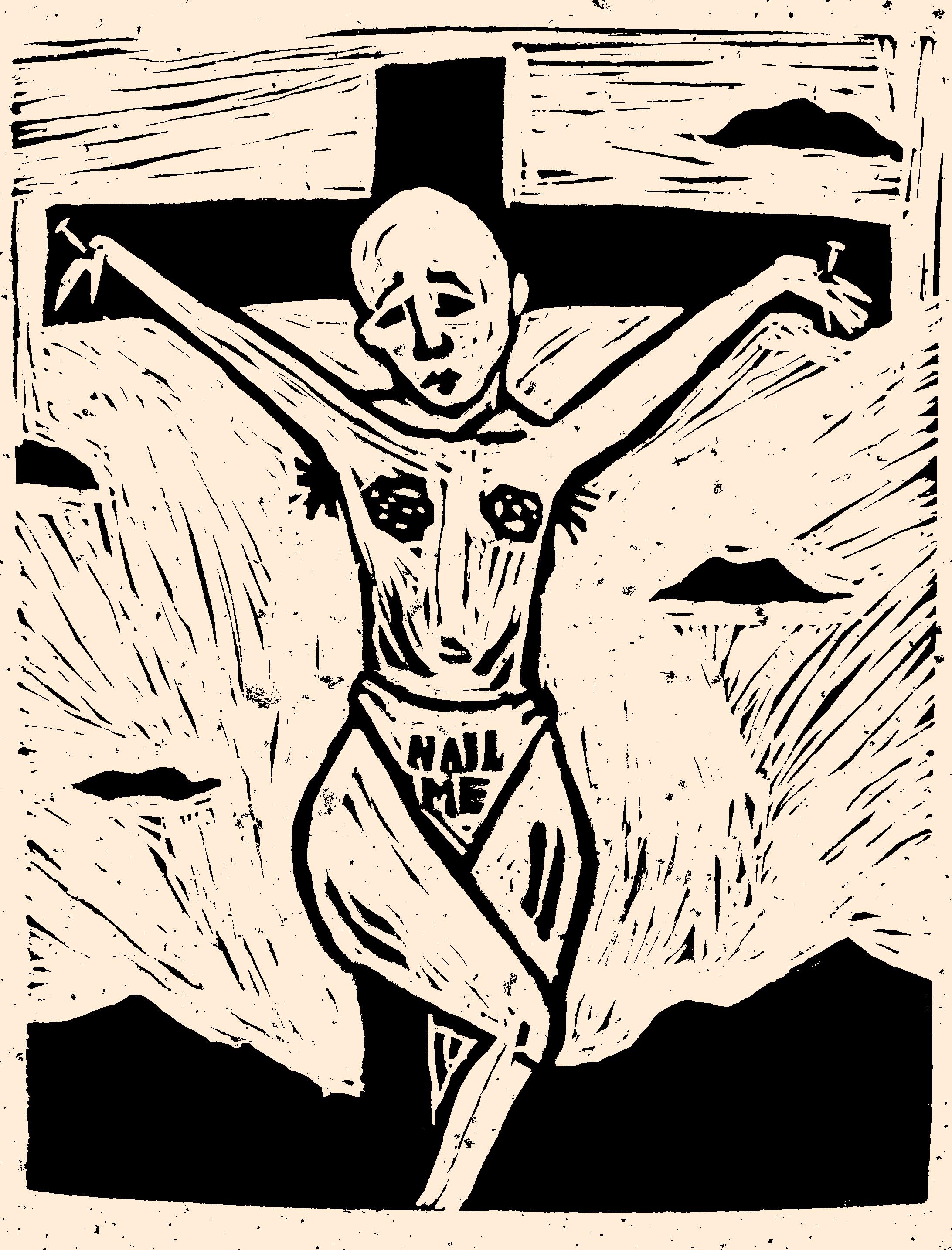
During my time in a religious school, I was targeted for being different from the mould they had for us. As a child who was coming to terms with their own identity, simply existing in a space where that was considered a sickness made me feel excluded and as if I didn’t belong in this world. During the abuse, the religion teacher would break me down every lesson. He did this by tearing away all my beliefs, my choices and my self worth so that he could build me up again into “a child of God.” I still have nightmares every single night about this even though it happened seven years ago.
Death by crucifixion is when the victim is hung on a cross by nails in their palms and feet, with the victim only living while they are strong enough to hold their body up.The only way to stop that pain is to give in, stop fighting, causing the crucified to asphyxiate and die. If you fight for too long, they break your legs and arms to speed up the process. That is how I felt during the abuse, as everytime I fought back and stood up for myself, it got worse. I am not the same as I was back then, but I continue to fight back to be my truest self.
Relief print on recycled paper, 210 x 297 mmAngus explores how queer liberation intersects with other form of struggle and how it can grow. Queerness is vibrant and celebratory. The positivity and enjoyment we get in this expression of our identity is essential to how we interact in society.
Equally, it is evident in how queer identity itself has become commodified. As a historically marginalized group, now brought to the front and center of civil society, corporations profit from our nominal inclusion.
Corporations, police forces and governments can conveniently forget our very real oppression by incorporating the most profitable elements of queer celebration. The history of queer struggle has its radical elements blunted to be suitable for the market.
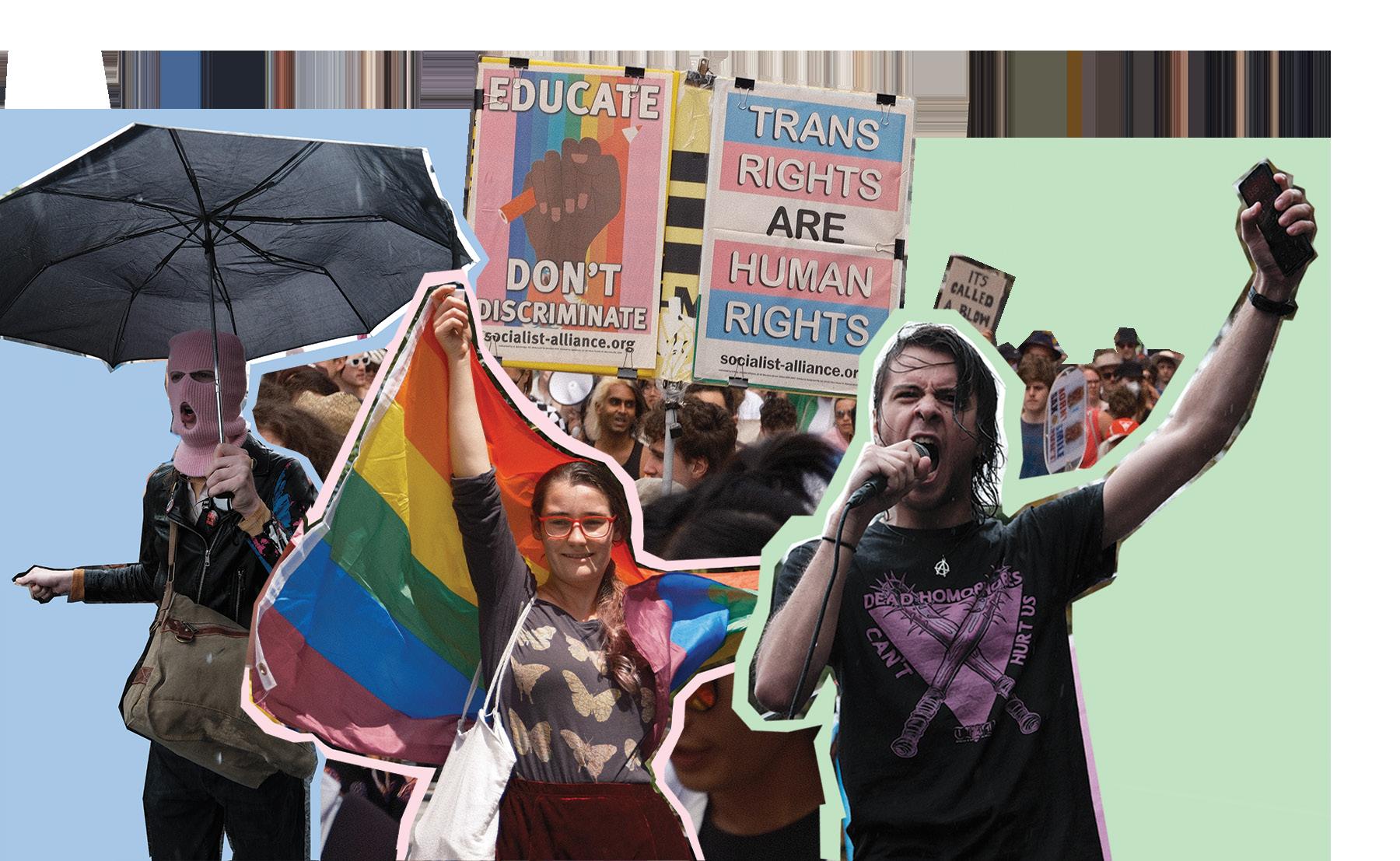
Let’s go back to the first Mardi Gras march in Australia on the 24th of June 1978. The march made radical calls for the decriminalization of homosexuality and to give queer people industrial protections. Spurned on by police, it became a riot - with 53 people facing arrest.
Unlike ’78, Mardi Gras is now in a supposed epoch of consensus between the state and queer people. The Mardi Gras board for the 2023 March allowed NSW Police to hold a float, sloganeering, “NSW
That very history of repression that fed into radical organizing for queer struggle - was forgotten. It pays to have a progressive paint job when you’re the repressive armed wing of capital.
This is pinkwashing, using the artificial promotion of Queer rights as evidence of our societal inclusion. Now we are a “demographic” for the market, inculcated with the capitalist imperative of consumption. YOU are a queer “individual” that has the “freedom” to buy rainbow products.
Like we forget the dissolution of memories of state violence, so too is the history of how solidarity broke the back of queer oppression.
Back to 1978. Marches in solidarity for those arrested on the 24th sprung up quickly, with thousands rallying outside Sydney police stations. This led to the successful (yet quiet) dropping of charges.
This grew into a mass national organization with the unions, finding success in NSW. It saw the repeal of laws that gave police powers to control public queer behavior in 1979, as well as the provision of industrial protections
today. The market in its inclusion of us in society has also facilitated the notion that struggle is no longer necessary. Our political masters have never willingly given us protections, it’s been through struggle.
Organization needs to be revitalized through solidarity with other oppressed groups. It must be concentrated into a mass movement that centers on the liberation of the exploited.
I see the germs of this in Pride in Protest (PiP), which organizes in intersectional alliances with the Blak rights movement to fight against police brutality. Their shared experience of repression is important, in that they have the shared tools to bring about their liberation.
This was heard in the words of Lidia Thorpe before her participation in a stunt with PiP at the 2023 Mardi Gras.
“Rights in this country for over 200 years have been denied, not only for first peoples…[but] for people who choose to love who they want to love. And if a trans man says that they’re a man, well that’s my brother!”
These words illuminate that solidarity amongst Blak and Queer activists can play a role in building mass liberation movements. This could manifest in organization by both groups to rally around concrete aims to, for instance, fight for an end to police brutality.
The rising Voice referendum reveals efforts by the Australian capitalist class to govern the radicalism of sections of Indigenous struggle. Indigenous liberation is queer liberation and we must cooperate to fight for a better world.
How does one communicate queerness?
The easy answer is with language.
But words can be so fickle, slurs evolve into labels accentuating generational divides. Bilingual speakers are forced to translate their identity, search for an equivalent in meaning and vibe. Sometimes, words can’t quite describe your selfconception, so we draw up other methods to express our selfhood.
Maybe it’s dressing like a pimp, or an Edwardian school teacher; visibly making yourself different from the norm as an act of reclamation and self love. You know that the hetro-cis norm will see you as a weirdo. Hopefully it will leave you alone.
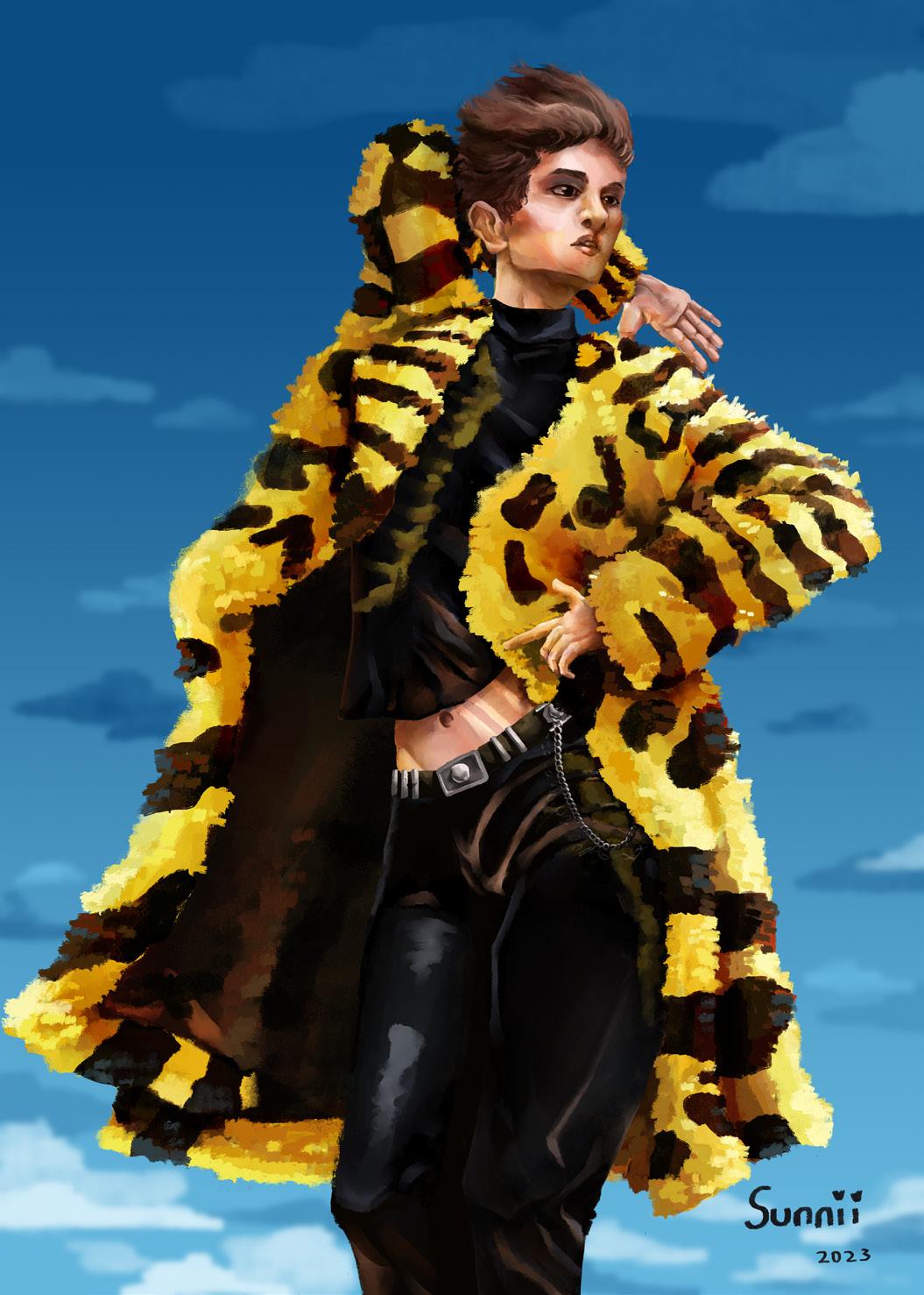
Queer aesthetics are inherently political. However, it is easy for corporations to sell bedazzled rainbows to gain a progressive brand image. Mulleted hair, Doc Martens and coloured hair now define an increasingly narrow and commercialised queer presentation. This is furthered by the internet where curational algorithms, which circulate very specific ideas as to what queerness looks like. Through this, queer expression is dislodged from its roots in political liberation.
When being who we are is illegal, we hide it (but only to the law). In such circumstances, it was necessary to codify expression through secret codes. Some were spoken: are you a friend of Dorathy? Others were visual, like the 1970’s ‘cruising
Esther Whitehead explores queer identity.
grounds,’ where different coloured handkerchiefs used to indicate sexual preferences.
But queerness is more than personal identity. This is why we can’t American-express ourselves to equality. It is not just how individuals present themselves — queerness is
AIDS/HIV. Aesthetics are how we make spaces ours.
Oxford Street is not queer because there’s a pride flag in every bottle shop. It’s not queer due to the rainbow crossway. It is the crowds on the dancefloors, the marches down these streets. The feeling of safety and community. It is also a place of remembrance and history.
A space I appreciate is just off the main thoroughfare. The Sydney Gay Holocaust Memorial stands quietly preserving the memory of tragedy, dedicated to those lost in the genocide. Pulling together symbols of oppression, with pink and black triangles interlocking to form a star of David. I find this space so remarkable for how it shows a divide within consideration of queerness. From the inception of the project in 1991 to its opening in 2001, the purpose of the memorial was questioned, such as if it should represent all discrimination or this specific tragedy. This shows the divide with the queer community regarding how we should represent ourselves.
a community; as we grow our love for each other, we build collective visual aesthetics. Like “camp” which subverts notions of professionalism, taste and sensibilities. The very idea of being too much, and then being more.
Queer is more than how we dress, it is our art. From the sensual art of voguing to the hyper performativity of drag or greeting all your friends with a kiss in defiance of the stigma
This leads to a crisis where legislation against drag is growing rapidly while RuPaul’s show is a massive hit, where well meaning liberals think they are doing politics by engaging in aesthetics rather than doing political work. As the queer community moves from liberation to celebration, how we visually frame our bodies, culture and space shifts.
@sunnii_8“I don’t typically prescribe HRT for trans people of your age with autism.
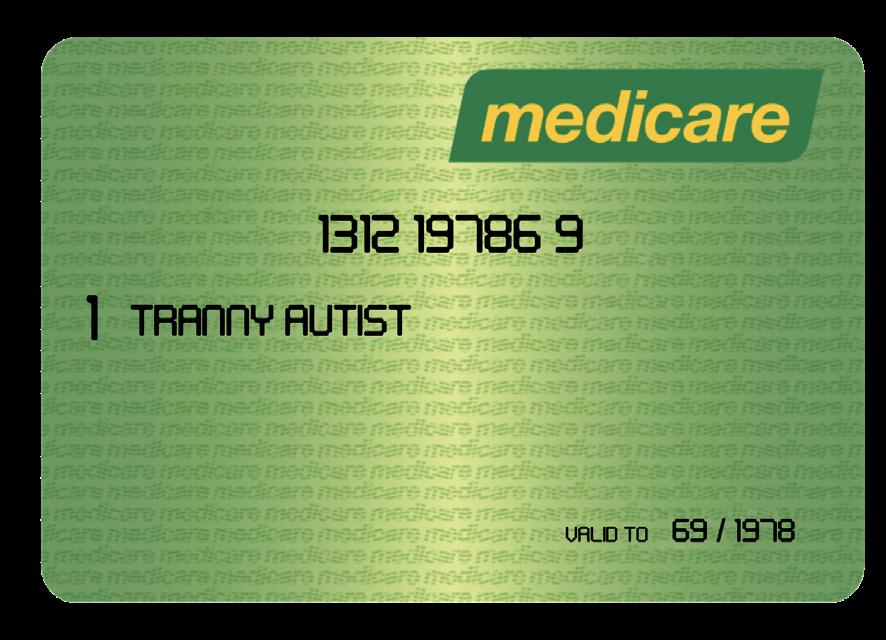
That’s what my first psychologist said to me at an appointment I made seeking vital medical care.
To some people this may come as a shock, but if you’re trans or autistic, you’re probably used to having your autonomy denied by doctors, bureaucracies and other bodies that have power over you. But why is this the case? The answer has to do with the Medicare system, the patriarchy, and capitalism’s control over our bodies.
First, let’s talk about transphobia and the patriarchy.
In pre-industrial, huntergatherer societies, raising children was a communal act. In fact, almost everything was. But this changed under capitalism as people were pared off into smaller and smaller groups working increasingly specific
living in a system which encourages endlessly increasing the production of goods and services for businesses to make a profit, rather than to meet actual human needs, (see “commodity customers (buyers) make more and more profit.
Both of these factors combined to create the patriarchal, nuclear family. In this system, a woman is tied to one man for her entire life — She is often shut out of the formalised economy, making her reliant on a man, and is instead charged with the responsibility of child-rearing.
reproduction, is punished or ‘corrected’. We see this in the phenomenon of so-called ‘gay conversion therapy’ — the horrific practice of traumatising queer adolescents into hiding their queerness. LGBT adults subjected to conversion therapy are more than twice as likely to attempt suicide as their other LGBT peers. We’ve seen this change in some places as society shifts from an attempt to eradicate queerness into an attempt to subsume it into capitalism through phenomena such as pinkwashing, but this is of course not universally the case.
Next, let’s talk about ableism.
jobs, in a phenomenon known as the “division of labour.”
Furthermore, we are now
Any disruption of this monogamous ‘one working man, one child-rearing woman’ dynamic, such as samesex relationships or trans people’s inherent disruption of the link between gender and
As mentioned above, capitalism requires a productive labour force in order to keep making a profit, regardless of whether it’s socially necessary. In a service-based capitalist economy such as our own, a ‘productive’ worker is one who interacts with others in a ‘normal,’ ‘non-autistic’ way. Deviation from this norm is similarly punished and ‘corrected’ with the practice of Behavioural seeks to traumatise autistic children into masking their autism. Autistic children subjected to ABA are more than twice as likely to report symptoms of PTSD as their other
“If you’re trans or autistic, you’re probably used to having your autonomy denied by doctors, bureaucracies and other bodies that have power over you. But why is this the case?”
Jamie (they/she) is not gay as in “happy”, but queer as in “fuck you .”
autistic peers. This is beginning to change as some employers now specifically seek out autistic employees for certain positions, but this comes more from a belief that autistic workers are uniquely exploitable due to a supposed aversion to confrontational social interactions.
The Australian Medicare system is another bureaucracy with a similarly intrusive role in the lives of trans people — any transmasculine person seeking breast reduction surgery can speak to the difficulty of obtaining the treatment they need. Breast reduction surgery is not covered under Medicare in Australia for transmasculine individuals breaking cissexist norms, but is covered for cisgender men who have ‘excess’ breast tissue (known

and to be a man is to not have these organs. This would be a marked improvement over what we have today, but is ultimately little more than the freedom to follow harmful gendered rules in a less harmful way.
When these factors combine, we get horrific results, such as those seen recently in the US state of Missouri.
as gynecomastia) seeking to better fit these norms. The same is true for the difficulty trans women face in accessing the exact same medications for their medical transition that cis women can more readily access for menopause.
This too will eventually change as Medicare’s position shifts from a nearcomplete denial of transness to allowing trans people to conform to gender expectations as their true gender, rather than their birth-assigned gender. For example, allowing trans men to access breast reduction surgery to uphold the idea that to be a woman is to have organs for child-rearing,
On the 13th of April, in a flurry of ignorance, bigotry and moral-panicking, Missouri Attorney General Andrew Bailey issued an unprecedented ‘emergency regulation’ severely restricting access to genderaffirming care for individuals in the state. In addition to requiring 15 months of psychological evaluation, the rule mandated that all individuals seeking access to gender-affirming care must be screened for autism and any so-called “social contagion with respect to [their] gender identity,” implying that autistic individuals are inherently lesscapable of making decisions
will only continue to increase. As it stands, up to 70% of autistic people identify as LGBTQIA+, and more than a quarter of gender diverse people are autistic. When combined with autism’s current underdiagnosis, the result is that thousands of people will be affected by this even if they don’t know it yet.
Simply put, it is impossible to truly fight for trans liberation without fighting for autistic liberation.
However, there is a way out — a two-pronged solution. The first is gender abolition — not in the transphobic, biologically-essentialist way. Rather, true gender abolition is the deconstruction of sex as a socially-influential institution governed by doctors, the state and capital through policed access to HRT, surgeries and other forms of care, in favour of a model of truly interpersonal relations and identities.
a feedback loop — if every single trans person must be screened for autism, when they otherwise wouldn’t be, then already disproportionate rates of medically-diagnosed autism recorded in the trans community
Similarly, the second part of the solution is the social model of disability, which involves a movement away from constructed diagnoses gate-kept by doctors and governed by the state and capital in favour of a model based on individual needs, which can be met collectively by communities — a more humane version of the model used in preindustrial society. However, both of these solutions necessitate a mass movement for the destruction of capitalism. Indeed, overt neurodiverse transness is an act of protest. To live proudly as an openly queer, openly neurodivergent person is not just a rejection of an oppressively cisnormative, neurotypical society. It is a rejection of capitalist power and a recognition that a better world is possible.
“The Australian Medicare system is another bureaucracy with a similarly intrusive role in the lives of trans people”
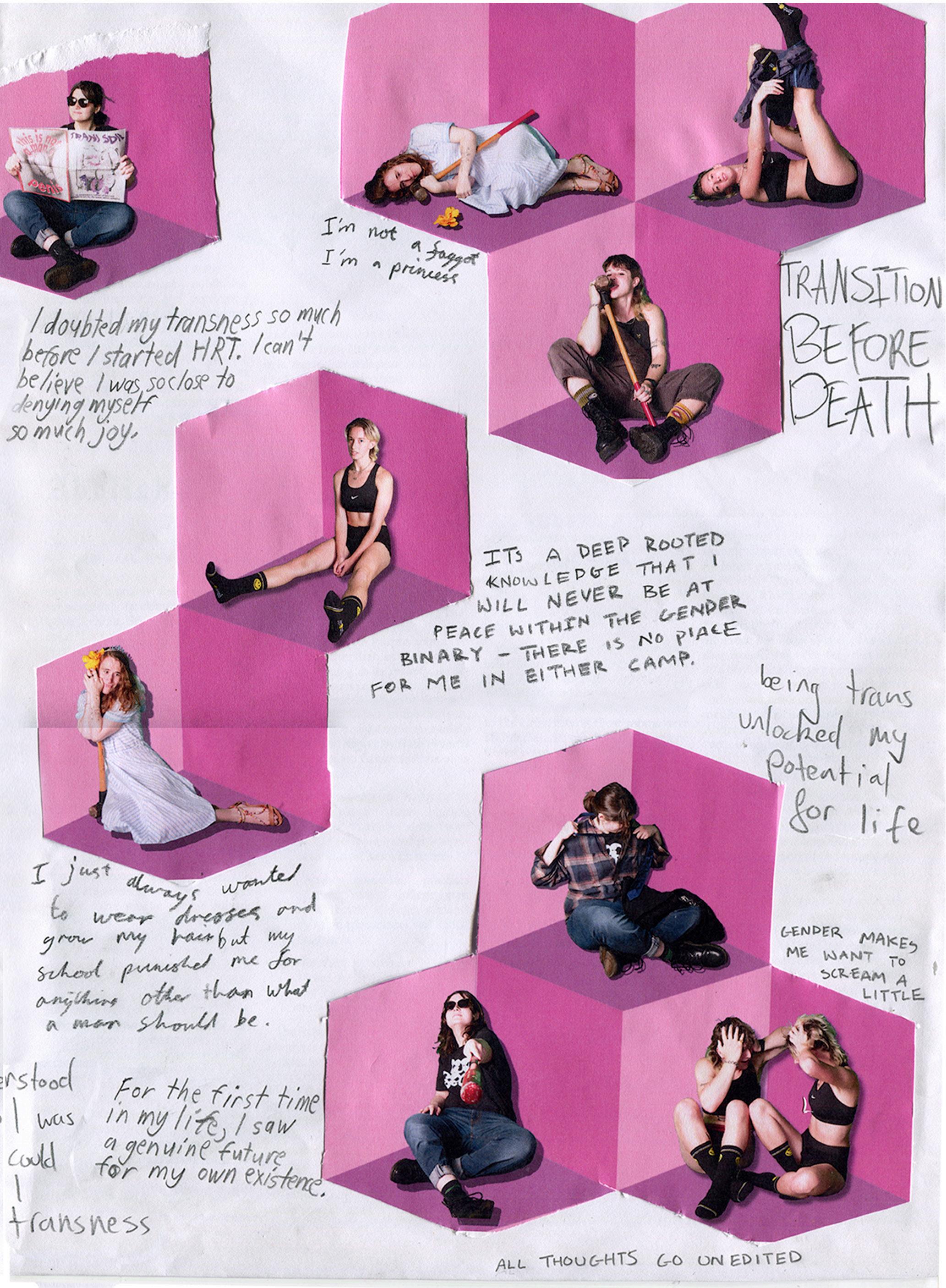
Josh Clay explores the suppression of identities at high school.
In late 2018, my high school was diverted from our normal timetables and brought into the hall. We were quite confused — no one had said why, so we halfexpected an intervention about vaping or phones or proper jewellery rules. At the time, Australia had recently voted yes to legalise same-sex marriage and conservatives were claiming that this was a slippery slope towards ‘discrimination’ against religious people, with a whirlwind of legislation, talking points, and an expert review weighing into the culture war.
For about an hour, a few teachers spoke to us about the importance of their ability to hire exclusively religious teachers and have the freedom to legally discriminate “to avoid injury to…religious susceptibilities” as the Sex Discrimination Act puts it. It felt odd — we weren’t of voting age and politicians had little motivation to win us over.
The reason became clear towards the end as the teachers asked us to pray together. To pray for their right to discriminate against prospective teachers for their religious beliefs and sexual orientations — I suppose God might favour them if they sent enough prayers all at once. And with teachers often punitively enforcing the closing of eyes and bowing of heads during prayer times, I had no choice but to pretend to pray.
The meeting caused a stir amongst some progressive parents who contacted the school to voice their complaints. So much so that a friend of mine, who was asked to film the event by teachers, was approached to delete the recording. Another
student also told Honi that they believed the quiet departure of a teacher who came out as queer was linked to the strange assembly.
It sent a very clear message — we would never hire anyone like you. How can a school possibly strive to nurture young people when they refuse to represent the diversity within the student body? How can queer students feel comfortable coming to teachers about bullying or hardships at home when not one of the staff has that lived experience?
By no means do I mean to denigrate religiosity — I’ve met amazing people of faith who have treated me with uncompromising acceptance — but the problem with many religious schools is their insistence on hiring teachers from a strictly heterosexual, conservative background.
incredibly important.
This led to silence. Barely any conversations were had by the school about queerness, and if they were, it was debating the morality of it or walking on eggshells around ‘difficult topics’ such as the mere existence of trans students. Through this, they failed to educate anyone, including queer students, on the real world beyond the school gates.
Evelyn, a trans man who attended high school in Jindabyne, told Honi that “they … ignored [our] existence, it’s like they wouldn’t say the word gay.”
Although in private some teachers supported him, Evelyn was told not to attend maleonly assemblies or classes out of fear of making students “uncomfortable” — continuing the veil of silence out of fear of challenging religious worldviews. “Looking back,” he said, “I didn’t get sad, I got angry [and] became really defensive.”
“If I didn’t know the facts, if I wasn’t defensive, people could actually hurt me.”
This leads to homophobia in the classroom, in the schoolyard, and in education, making queer students feel perpetually othered and alone at a time when a supportive environment is so
The need to have a constant guard up was a common experience for me too, wondering if a group of boys would call me “faggot” like they’d done in the past. Or dreading our mandatory Christian Studies class that would sometimes discuss homosexuality and its place — or lack thereof — in religion and, by extension, the school.
“No one should ever act on homosexual thoughts,” I remember one student saying, “It’s sinful and not normal,”
How can queer students feel comfortable coming to teachers about bullying or hardships at home when not one of the staff has that lived experience?
another added while the teacher nodded. The same teacher later heavily implied that gay people go to hell through his urgent call for the class to pray for homosexual people to give them “eternal life.”
lifestyle, you will be sent to hell.”
“People need to be taught what queer is. [If] at any point when I was growing up I had been told what being trans is, and been given the opportunity to dress … and present how I want, it would have changed my life.”
She mentioned how the school would never outright attack queer people, however, “they created a culture where people didn’t feel open to express themselves in regards to their sexuality and gender.”
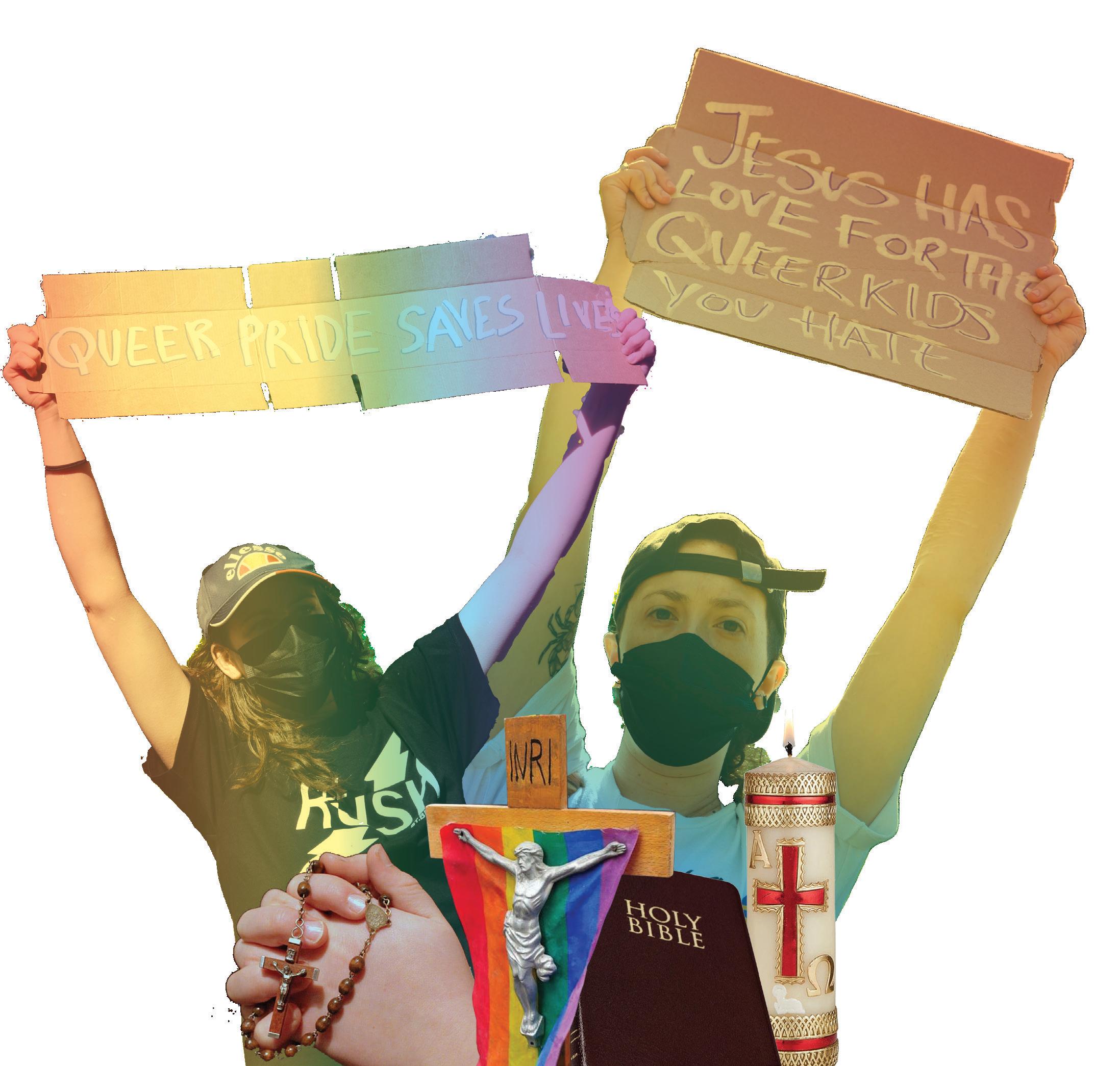
While every queer person raised in a religious school has a different experience of how it impacted them, for better or worse, many of us still grapple with the lasting impacts those environments had on us. The shame that teachers taught and some students reinforced have led me to years of internalised homophobia, guilt, and selfhatred over my queerness — something that I know many people like me have, or still are dealing with as a result of terrible school environments.
Ella, a trans woman who grew up in an all-boys Anglican
This complete lack of education and representation in schools has led to wild misunderstandings
Only after completely severing myself geographically and socially from my past self have I been able to truly accept my
“If I didn’t know the facts, if I wasn’t defensive, people could actually hurt me.”
René Hà explores the intersection between racial identities and queerness that is often left out of community discourse.
The discourse on queer politics within the current generation is heavily influenced by the Gay Liberation Movement of late 1960s. The Stonewall riots and Pride march inspired a transnational movement across the Western world, advocating for same-sex marriage and countering homophobia within the legal system. The modern conception of queer rights has mobilised beyond the Western world, with folks from nonWestern nations welcoming the rainbow flag as a symbol of their queerness. However, the way that global queer discourse seems to revolve around Western epistemic understanding is a byproduct of colonialism and further complicates how people of colour come to gain their space in the movement.
Amari – a Singaporean that moved to Australia for university — expressed to me their frustration growing up queer in a foreign country. Amari didn’t feel safe in their own country due to homophobia that could potentially harm them, and it took a toll on their mental health. After moving to Brisbane, Amari found a queer society at their university to finally feel more comfortable with their queerness, only to find it frustratingly white as it failed to grapple with their experience
of queerness as a Singaporean. Finding a queer Singaporean network has been a challenge, as has finding just any other queer people of colour (QPOC).
historical legacy of queer rights is about social progress within the US, and is used as a propaganda point for nationalism establishing a paradigm of a progressive West versus a homophobic non-West. Queer scholars called this homonationalism to address how queer politics are co-opted as a tool to further advance Western imperialism.
Similarly, Vivienne grew up in a Chinese-Australian immigrant household where her parents wouldn’t fully support her queer identity. She found community and solace with her high school and university friends. Especially in the student politics and activism space, Vivienne got to see more queer people than she initially thought she would, and as she wittily put it: “Queer people are among us”. But much like Amari’s experience, Vivienne’s circle is also overwhelmingly riddled with whiteness. All to say that the intersection between racial identity and queerness is often left out of mainstream queer spaces. Due to the dominant assumption of queer/LGBTQ+ being a Western phenomenon, the queer social space is undeniably a white and racialised place – where QPOC get fetishised, while their own migrant community doesn’t fully embrace the supposedly “Western” queerness phenomenon. Furthermore, the
Queer transnationalist politics then becomes a useful lens to acknowledge how queerness interacts between local discourse and its positioning across different racialised borders. Indeed, it is used to acknowledge the way American politics (or the West) as a whole could potentially undermine the efforts of nonWestern activists on the ground. There is a need for a thorough organising strategy for racialised queers to come together and push against the white xenophobic and queerphobic sentiment from different governments. More importantly, QPOC across national contexts should not idealise how the other country is better or worse off from their local place, as the oppressive nature of nations could be the same while it comes with different potentials for organising.
The intersection between racial identity and queerness is often left out of mainstream queer spaces.
Queer transnationalist politics can acknowledge the West as a whole could potentially
A call for transnational organising for global queer advocacy is apparent, if not fundamental. Given how white nationalism has segregated QPOC folks from joining each other, it requires effort between racialised groups to understand their own history and social positioning. By recognising how queer history extends across time and space, and continuing the effort of making an intersectional space that is conscious about the given constraints, queer liberation is possible. For queer diaspora to be in touch with their generational queerness is an important thing to account for and it could inspire how queer space organising can happen.
Indeed, there’s been an almost global movement for the QPOC nightlife scene to emerge. In Sydney, Queer Worship Collective has been a familiar name amongst QPOC locals to celebrate Asian Queer Excellence. Kerfew is a space that celebrates South Asian creativity, and Club Chrome is a queer pole dance & creative collective that brings POC and sex workers to the front. Additionally, there’s also a digital project called Queering The Map with their simple concept of allowing any queer people on the globe to share their experience and pin it on the map. This exposure to a global and intersectional practice of queer transnationalism, either via the digital space or the physical space, are all a
part of the ongoing movement and struggle for queer folks across borders.
“Things are changing and I am optimistic that things will be better the next time I visit home.” Amari said this when I asked them about if they’ve been keeping in touch with the queer community within Singapore. Because we’re both temporary migrants in a foreign country, our future with residency is precarious, and in one way or another, our experience existing as a racialised queer has made us reflect on how queer politics and culture play out in our home countries. In a sense, this exposure to the complex roadmap of alienation and belonging between identity groups have brought a greater awareness on how important queer solidarity can be for PoC.
The visibility of queerness in the diaspora community provokes a radical line of thinking about borders and cultures, about our history with colonisation and the legacy it’s inflicted on us in contemporary politics. All of those only affirms a strong sense of community and shared aspirations amongst QPOC folks across nationalities and upbringings, where we learn to come together and find each other in all ways possible.
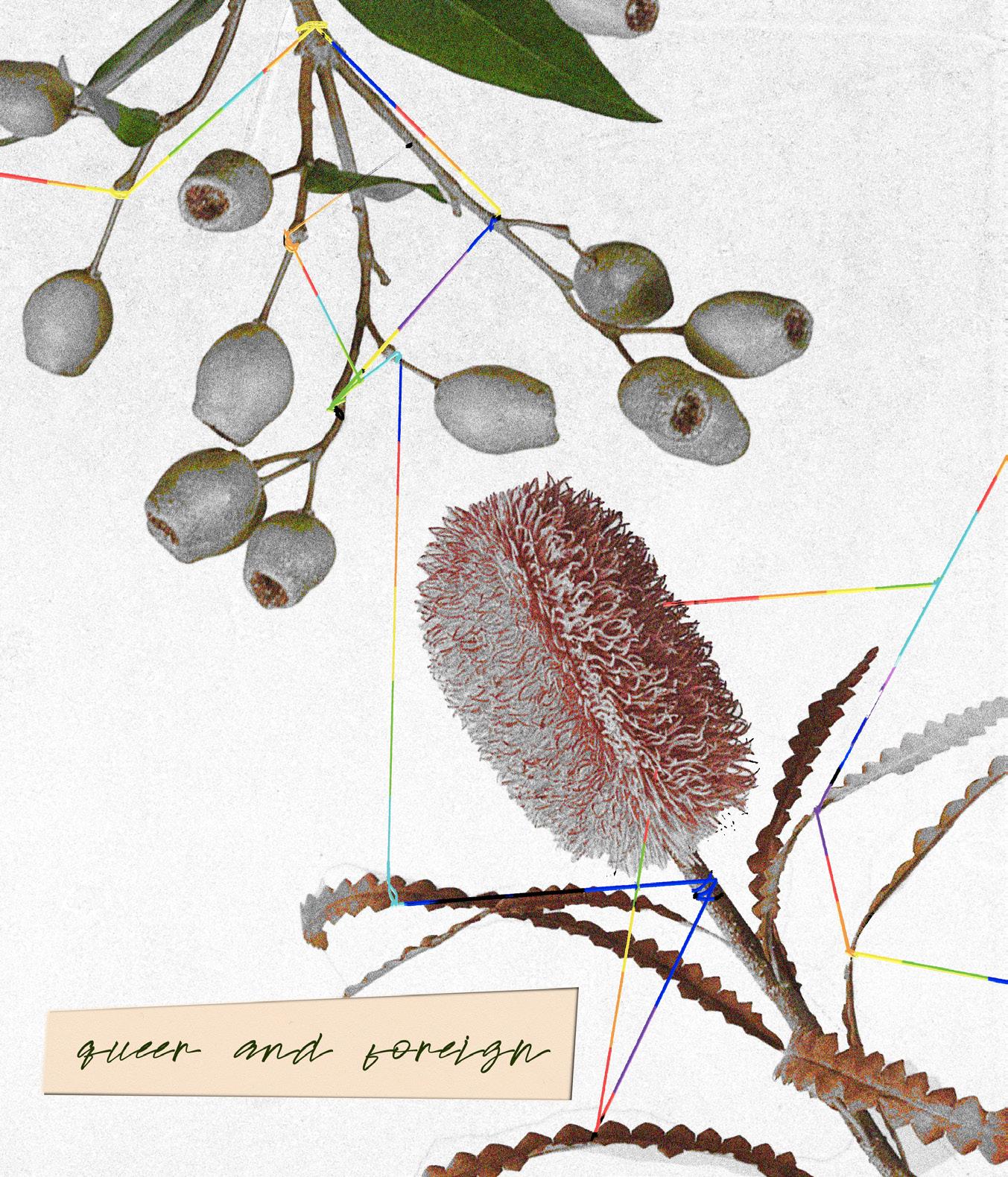
undermine the efforts of non-
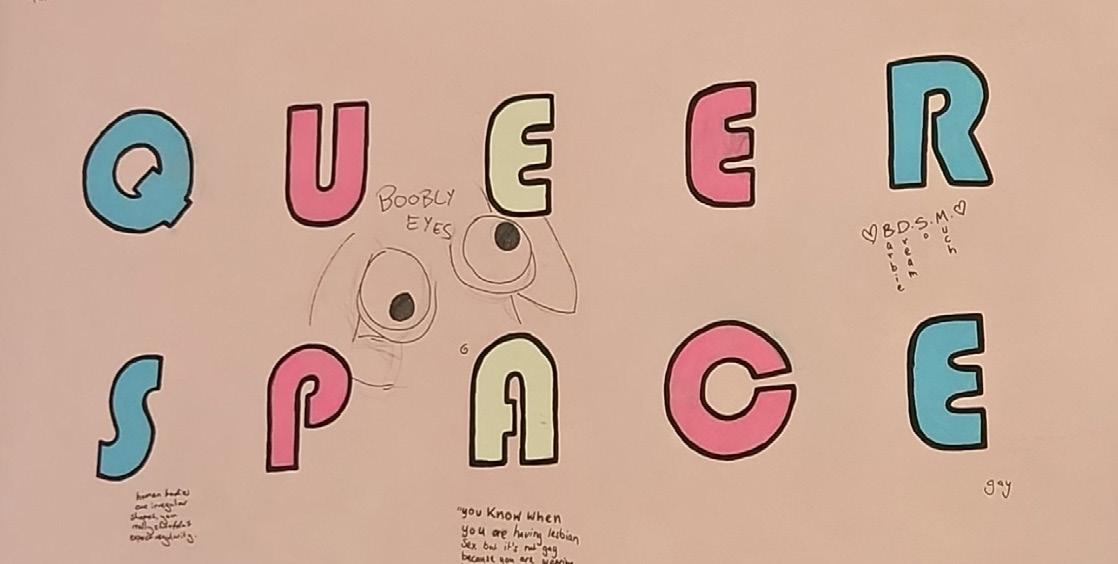
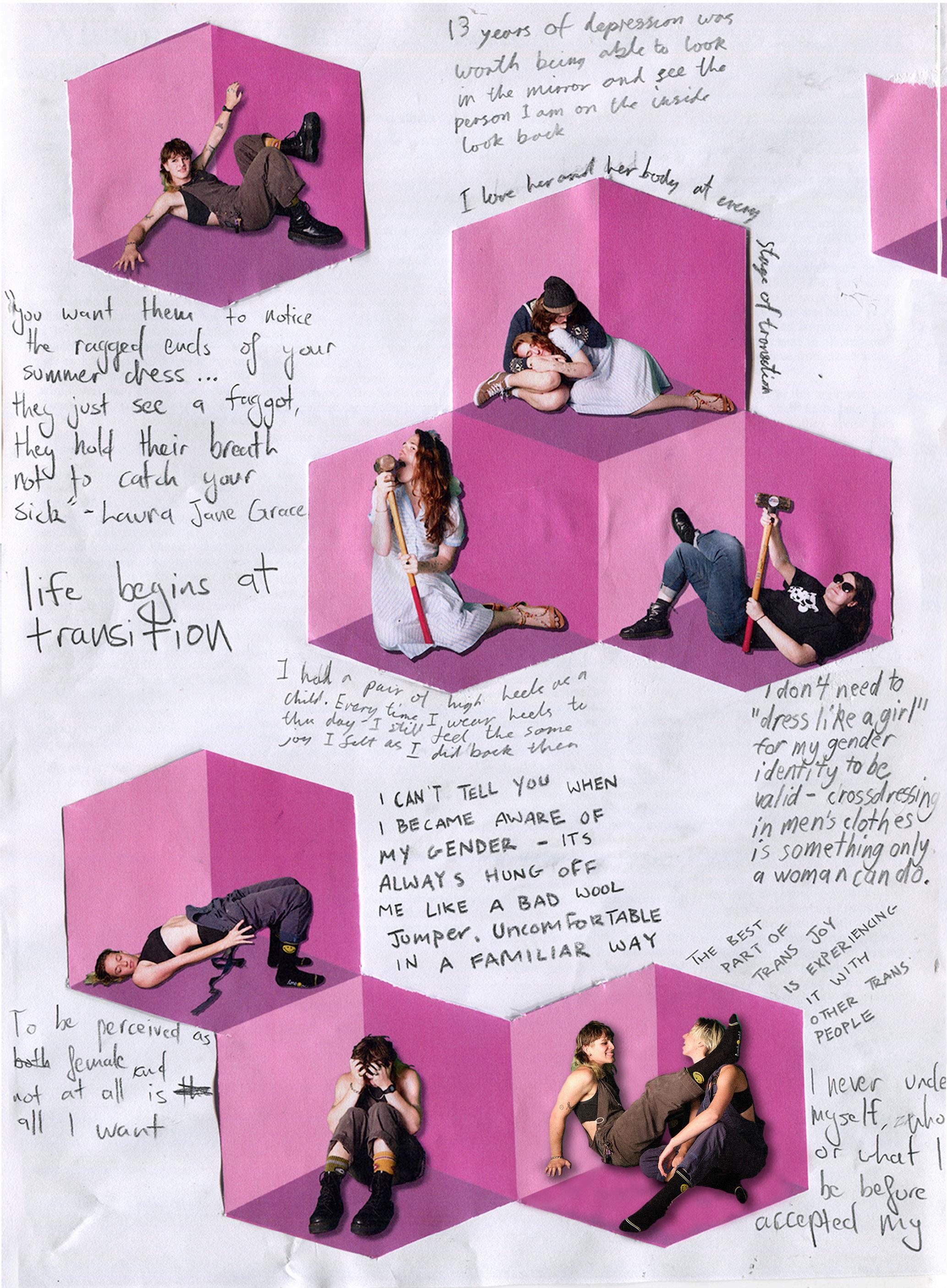
I was recently described as a “baby queer”. This is true – I’ve only been non-binary and using they/ them pronouns for a few months. With this in mind, I couldn’t be more grateful for the welcoming, tight-knit environment that is Queerspace.
Before I committed to this identity of mine, I had a growing sense of dissatisfaction with identifying as a male, fuelled by my sense of disconnection to male culture and predominant male forms of socialising. I wanted to experiment with my pronouns, in some limited capacity if I could, though I would never be able to use these around family given their extremely backward perceptions of trans people.
At the same time, I had a fear that I could be “jumping on the
bandwagon” – wanting to be queer only because I know people that are. Did I have a “good” reason to deviate from the cis norm?
Ultimately, this way of thinking reflects how much cisgender identities are the norm and how anything else is a deviation from that standard. The only reason you need to experiment with your identity is wanting to! There is absolutely no expectation that you must have some very compelling argument as to why you’re not cis beyond any shred of uncertainty, and you can change your pronouns just as frequently as you like!
I bought a non-binary sticker for my laptop – one subtle enough that my family wouldn’t notice, but that hopefully others would (as far as I know no one has yet, but maybe they just haven’t said so?). That and a close friends story highlight on Insta announcing my pronouns as they/ them were two basic steps of expressing my identity.
Queerspace was an incredible discovery, but at first I was intimidated. I entered a room buzzing with conversation, too afraid to try to join in, until I attempted and failed. It seemed everyone else was already extremely close. Thankfully
AnonI chose to stay a little while, admittedly concerned about how I would seem if I just got up and left after sitting down and saying nothing with my laptop open and scrolling or texting on my phone.
Eventually, the conversation quieted down enough that I could start to speak to people. To my relief, it wasn’t true that everyone there just knew each other well. It’s become apparent to me since that what I witnessed is an integral part of Queerspace – a sense of community that underpins that small, slightly tucked away room of Manning House.
Queerspace may well be the death knell for me being productive on campus. What I found, however, certainly beats spending all my time on campus outside of tutorials and lectures in Fisher Library. Sometimes it’s hectic, other times it’s quiet, but I always feel welcomed. I’ve met someone who sees in me things from their own gender journey, and as I’ve been affirmed and welcomed by Queerspace, I’ve been able to do the same as well. I’ve been fed popcorn and I’ve tried on clothes I would not have otherwise had the opportunity to wear.
Joy comes from being around people who are kind and supportive of you, people that are nice and that you feel a connection to. Everyone deserves this, and I have a bubbly feeling because that’s what Queerspace has given me.
I know you remember him.
Standing before you in the changing room. Blazer and tie, sleeves too long and shoulders too wide. Pants cuffed three times over and shoes in the smallest men’s size. Crawling out of the mirror as your mother came up behind you; “no, sweetheart, suits are only for boys.”
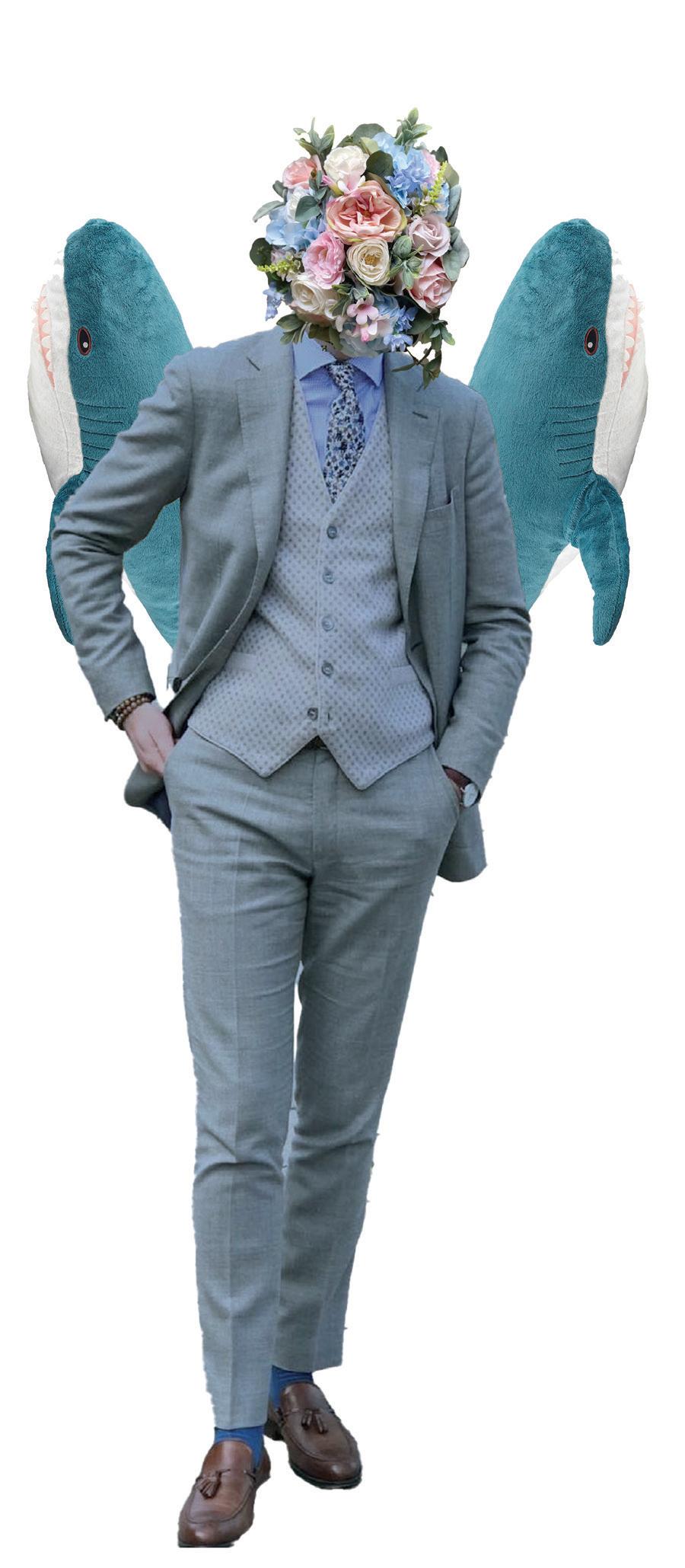
Do you remember roughhousing with the boys at school? Raising your voice. Being louder. Bigger. Stronger. Your classmates circled around
you, ropes of the fighting ring, banging the floor and cheering as you faced your opponent. Threetwo-one they cried as your fingers intertwined and the main event began – knuckles white as they hit the floor and you destroyed yet another opponent in the arm wrestling tournament. Top of the leaderboard as every single one wondered how on earth you beat them.
Do you remember how you felt?
I remember you saying “I wish I were a boy” out loud and proud almost every day, every single day, and yet never thinking to verbalise it. Never a whisper beyond your mind. The words tangled in your vocal cords, clawing at your throat even as your voice never deepened.
I remember the day you stopped swimming.
I remember the day you looked down at yourself when you were eight wondering why you were growing breasts and what that meant. What the word woman meant. Wo-man. The first question a child asks is why and yet you never thought to ask it — an overwhelming calamity on the tip of your tongue that clattered between your teeth and wriggled between your fingers; never once curling the question mark around why at the age of four you thought about why you did not have ‘boy parts’. Why you could never look in the mirror and see yourself. Not once. Not ever.
Why did you seem to recoil?
It heaved in your periphery, saturated with a melancholy that left an ebony trail in its wake.
Markus BarrieCaustic below your feet. But you knew better than to tread in the poison, tip-toeing about a realisation that perpetually threatened to climax, leaping over deltas that threaded between the letters that floated in your lexicon but never seemed to conjugate.
Do you remember the day it all clicked?
Wrong turn down a rabbit-hole and you were fallingfallingfalling, fingers scraping against the walls as you are thrust to the bottom on your bedroom floor. No clothes, no skin, nowhere to hide. Googling what transgender meant on the cusp of thirteen clawing at the moments where you bathed in your ignorance. Now drowning in the potentials of the years to come.
You tell your friends, but they did not understand. Then your parents did not understand, then your peers, relatives and then, the world. Enigma for another time, cast aside for them to gawk and jive. You are a carousel that never seems to stop for passengers, poised upon a petri dish for all the world to inspect.
Then suddenly you had filled the prescription and the moment the testosterone cleansed your blood it was all a blur. Suits that fit and a familiar face in the mirror. Rewriting the deepest parts of yourself as you cleared the poison from the petri dish and the contamination from the slide. Into the cerulean ambrosia of the sea, an old friend welcoming you once again – reimagined but not forgotten. Sun that kissed the scars that made you human.
Runrunrun and you were almost 20 years old and alive. No hips, no breasts, no “that’s such a pretty name”, no hiding, no fear.
You would be so proud of yourself.