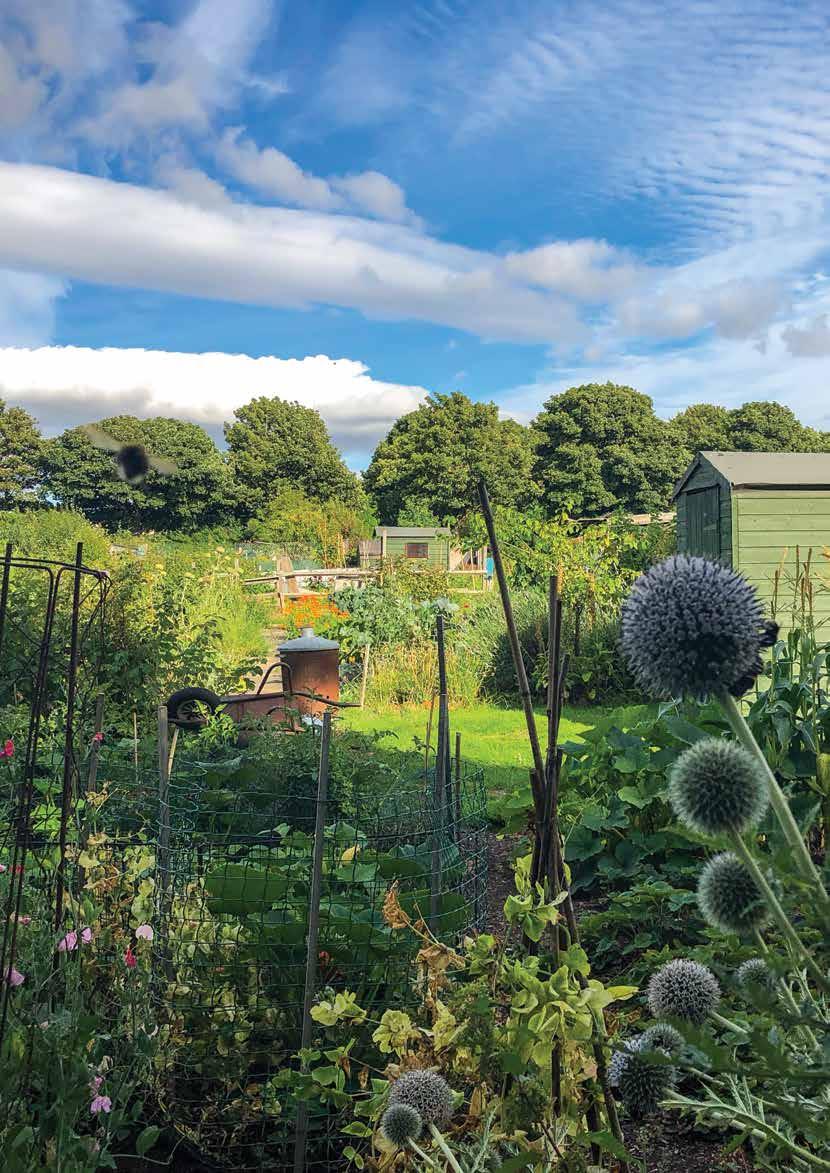
Demand for allotments is outstripping supply
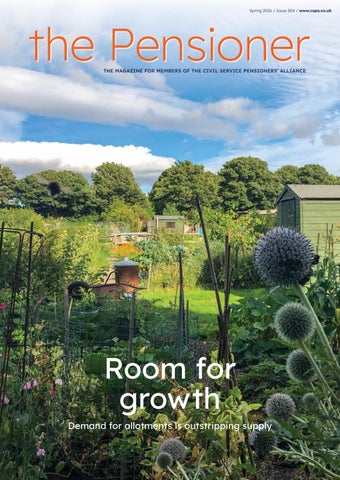
Demand for allotments is outstripping supply
The civil service pension scheme is struggling to catch up with a huge backlog of delayed payments following Capita’s takeover of administration in December.
Those waiting for payments have been offered emergency interest-free loans of up to £10,000 to tide them over. In late January the backlog reached 120,000, but no updated figure has been released. Capita said it had inherited a backlog of 86,000 people waiting for pension payments to start.
The CSPA’s head office has been inundated with calls and enquiries from people unable to contact Capita or waiting on the phone for hours in some cases.
CSPA staff have prioritised Capita enquiries and triaged cases so people get a prompt first response and an estimate of when their case can be fully looked into. The CSPA has also been leading calls for swift action from the Cabinet Office and Capita as the problem has escalated.

Amid concern about the administration of the scheme, the House of Commons Public Administration and Constitutional Affairs Committee questioned Cabinet Office minister Nick Thomas-Symonds and chief operating officer of the civil service Catherine Little.
In a joint statement, Capita and Little said: “This is not the service that members deserve. Capita and the Cabinet Office are deeply sorry for the worry, frustration and distress this has caused – particularly for those dealing with
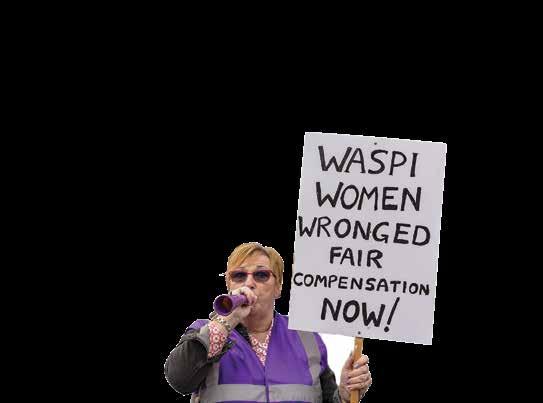
The long campaign by Women Against State Pension Inequality (WASPI) for compensation after the short notice of raising their retirement age suffered a major blow in January, when the government ruled out any payment. This is despite a recommendation in 2024 by the parliamentary ombudsman that they should receive some compensation.
Work and pensions minister Pat McFadden told the House of Commons a flat-rate compensation scheme would “cost up to £10.3 billion and would simply not be right or fair given that it would be paid to the vast majority who were aware of the changes”.
He said that women could have been informed earlier, but also that
early letters about pensions may have
bereavement or ill health.” Capita has recruited 150 extra staff to help tackle the crisis, taking its total workforce to 650.
Many newly retired civil servants have had to borrow money to cover everyday bills and some have feared that they will lose their home.
The standard level of loan has been set at £5,000 per retiree, with up to £10,000 available for exceptional cases. Those facing ill health, bereavement or hardship have been prioritised for help.
• See David Luxton, page 10
The CSPA has called on the government to ensure that older people are included in drafting a United Nations Convention on the Rights of Older Persons.
In a letter to Foreign Office Parliamentary Under Secretary Chris Elmore, the CSPA and many other organisations said: “The Convention will only succeed if older people, in all their diversity, are meaningfully involved in its drafting and implementation.”
It said: “Learning from their lived experiences is essential... Ageism and age discrimination are widespread and there is no international legally binding legislation to prohibit them.”
Read more at www.cspa.co.uk/ news/un-convention
The National Pensioners Convention (NPC), founded by former Transport and General Workers Union (T&G) leader Jack Jones in 1979, seemed to be heading to dissolution as The Pensioner went to press.
The organisation, which the TUC also helped establish to assist Jack Jones, voted to close amid a funding crisis at a meeting of its executive in January. A special general meeting of a broad range of delegates was due to be held in late February to make the final decision.
The NPC executive voted by 49 to 12 in favour of dissolution as an unincorporated association. The organisation will continue as a company limited by guarantee, which will be the custodian of the NPC’s history and its remaining assets.
It is understood that the NPC’s small number of staff were made redundant at the end of January.
The NPC has been supported and
The NPC executive voted by 49 to 12 in favour of dissolution
partially funded by a large number of trade unions and other organisations, including the CSPA. As its financial problems worsened, it sent a call for emergency funding to all its affiliates, but many felt that they couldn’t support this as there wasn’t a realistic chance of it continuing in the long term.
Jack Jones, who was a seminal figure in the trade union movement, began the NPC following his retirement from the T&G in 1978 because he believed there was no unified voice for retired workers.
The first NPC meeting, in 1979 in Central Hall, Westminster, was attended by about 2,500 retired and older people. It adopted a declaration of intent that said: “This convention declares that every pensioner has the right to choice, dignity, independence and security as an integral and valued member of society.”
Since then it has been a key national voice on all matters related to later life. It has organised rallies and protests and has made representations to the government and to MPs across all political parties.

Tell your story: show the real
Too often, the civil service is misunderstood – from myths about ‘gold-plated’ pensions to the idea that civil servants only work in Westminster. The reality is far more diverse. We want to challenge these misconceptions by showcasing the true breadth and
depth of civil service careers, and we need your voice to do it.
Share your career story and help paint a more accurate picture of what it really means to have been a civil servant. Tell your story using this link: www.cspa.co.uk/mycareer

A warm welcome to you all. I am Jonathan Safir and I am delighted to be joining the CSPA as Deputy General Secretary.
I arrive at the CSPA with a background in the public and third sectors, having worked for a local authority before moving to the National Pensioners Convention (NPC). At the NPC, I focused on several challenges facing CSPA members today, from pension adequacy and social care to digital exclusion, cost-of-living pressures and wider age sector inequality.
Much of my career has involved policy, advocacy and organisational change, and I am eager to bring that experience to an organisation with such a strong sense of purpose and a memberled focus.
Outside work, I am a keen football fan and enjoy open water swimming (whatever the weather).
Over the coming months, I look forward to meeting many of you, engaging with partner organisations and stakeholders and working closely with the team at head office to take forward the CSPA’s work.
Ihope you are “full of the joys” as you read our Spring issue. The days are getting a little longer, the weather a little warmer. The local government, Scottish Parliament, Senedd Cymru and mayoral elections in England on 7 May are
As you will read in David Luxton’s column on page 10, the transfer of pension scheme administration from MyCSP to Capita in December 2025 did not go smoothly – far from it, in fact, despite all the assurances given in the two-year ‘transition period’ by the Cabinet Office and Capita.
As we entered the new year, our phones were ringing off the hook as desperate members unable to get in touch with Capita – holding on for five hours in some cases –called us for help and advice. This is far from acceptable and not what our members deserve after years of public service.
We escalate members’ concerns at every opportunity, seeking the early resolution of shared and individual pensions-related issues, always insisting that the necessary improvements to services and communications be made.
We have been promised services will get better, and Capita has committed to dealing with the backlog of some 86,000 cases as quickly and efficiently as possible by the end of February. Until we see these promises delivered, we will keep ‘banging on the doors’ of the relevant people in the Cabinet Office, Capita and elsewhere.
likely to provide insights into the direction of travel for the Labour government and the opposition parties.
Reform UK, the Liberal Democrats and the Green Party are all expected to make strong gains, with the Conservatives and
Labour likely to fare less well. The CSPA has been working with Later Life Ambitions partners NARPO and the NFOP to lobby candidates and influence party agendas in the interests of our members and older people. Some key issues are set out here.
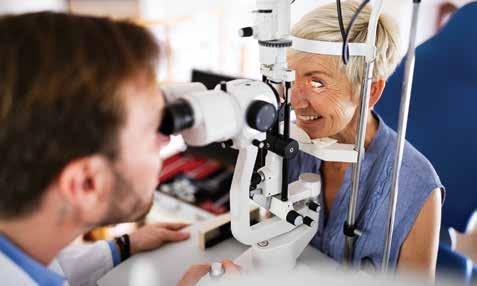
You may recall an article about older drivers in the Autumn 2025 issue of The Pensioner, followed by readers’ letters in the Winter issue. In January, the government launched a consultation on proposals to implement mandatory eye tests for drivers from the age of 70. CSPA members have been canvassed on their views so we can submit a response to the consultation by the deadline of 31 March.
The consultation stops short of including proposals for cognitive or other tests for older drivers, focusing on whether 70 is the right age to introduce eye tests, how the tests should be administered and how often drivers should be re-tested.
Some CSPA members say that although they have stopped driving, they wish to keep their driver’s licence as proof
The statutory purpose of a driver’s licence is to convey entitlement to drive, not ID
of identity – understandable given that many don’t renew their passport if they no longer travel.
Lilian Greenwood, minister for local transport, said that while the government recognises the use of a driving licence as evidence of identity, its statutory purpose is to convey the holder’s entitlement to drive. Individuals who do not meet the required medical standards to drive safely should not hold a driving licence.
For those who no longer require a driving licence, or do not qualify for one, local authorities offer a Voter Authority Certificate as a form of photo identity. Although this is a paper document, it can be used as photographic proof of identification. Further information can be found at www.gov.uk/apply-for-photo-idvoter-authority-certificate.
If you don’t have access to the internet, you can obtain, complete and return a paper application form at your local electoral registration office.
Later Life Ambitions’ Budget for Later Life (see Winter issue) is being used to maintain pressure on all the main political parties in several key areas:
• Protect the state pension (and triple-lock)
• Reduce tax on pensions
• Tackle the gender pension gap
• Support older people in work
• Widen access to improved concessionary public transport
• Introduce a minimum income
Last January, the government announced plans to reform England’s social care system by establishing a commission chaired by Baroness Louise Casey. The commission is expected to deliver an interim report this summer, with final recommendations in 2028.
The CSPA is working with more than 60 other organisations through the Care and Support Alliance (CSA), engaging with Baroness Casey and members of her team to represent the views of cross-sector organisations. While the Casey team has been out and about hearing from providers, carers and care users, we and others in the CSA have been frustrated by the slow progress towards a report that will bring urgent and meaningful change across the sector.
guarantee to ensure a decent standard of living in later life
• Make housing safe, secure, accessible and adaptable
• Support the NHS and introduce a social care framework setting minimum standards across the UK.
Members can find out more about this and other LLA campaigns via our website. Or to request a copy of the LLA Budget for Later Life, call CSPA HQ on 020 8688 8418.
Until now, all members of the CSPA’s national Executive Council (EC) have been elected by groups and branches voting on behalf of their members, mostly at annual general meetings but occasionally via postal ballots in between AGMs.
We continue to campaign with Independent Age, Age UK and the Centre for Ageing Better for Commissioners for Older People in England and Scotland. We raise the issue at all our meetings with MPs and many agree with establishing Commissioners to represent older people. A report on this issue can be found on Independent Age’s website at: https://www.independentage.org/ campaigning/commissioner
The CSPA works through Later Life Ambitions (LLA) and with other organisations on issues around digital exclusion and inclusion, including access to cash, banking and other financial services. We have seen many high-street bank closures and services increasingly moving online.
The CSPA argues the case with government, the Financial Conduct Authority, LINK and banks to ensure access to cash and in-person services are maintained for those who still rely on them. LLA has been working on this in several ways:
• Ongoing engagement with MPs –
including recent meetings on bank closures and access to cash with Wendy Chamberlain, Esther McVey, Adam Jogee and Gregory Stafford.
• Submissions to government consultations on access to cash, bank services and digital inclusion, including two Treasury Committee inquiries and the Department for Science, Innovation & Technology’s digital inclusion action plan.
• Working with the Athena Foundation, which supports the AllParty Parliamentary Group on Fair Banking’s plans for a roundtable, to which LLA figures will be invited.
Excitingly, 2026 will see the first all-member elections as part of a two-year trial supported by a motion carried at the 2025 AGM. The roles being elected in this way are the Chair, Vice Chair and five national seats on the EC (under our rules and constitution, two of these posts are reserved for women).
If more than one nomination is received for any of these posts, the elections will go ahead.
Members will be asked to vote either online or by returning postal ballot papers sent out with the Autumn issue of The Pensioner.
For CSPA members who have access to the internet and emails, voting online will be the quickest and easiest way to cast your vote – please ensure we hold the correct email address.
The ballot will be open for three weeks in September – dates to be advised –with the results announced at the start of the AGM on 7 October.
CSPA legal status
We are consulting members on our status as an unincorporated association, and alternatives including the CSPA becoming incorporated, to ensure a more sustainable future for the organisation in an ever-changing world.
Before taking any decision to make fundamental, structural changes, the EC would like to hear from you, our members. We urge as many members as possible to share their views. The deadline for your survey response is 27 March – don’t delay, do it today!
Our aim is to ensure a more sustainable future for the organisation
Pensioners have enormous potential power and influence in the UK and politicians must take note of them. There are 12.9 million pensioners in the UK – at 19% of the total population, they are one of the nation’s largest groups. And in an ageing society, their numbers are growing. In less than 50 years, according to the Office for National Statistics, 8.6 million more people will become pensioners – taking the share to 26%.
But pensioners are not a homogenous group. They don’t even now get the same rate of state pension. The majority – 8.57 million – are still on the lower pre-2016 pension, topped by a complex system of additional payments depending on when they were contracted in or contracted out of the old state earnings-related pension scheme (SERPS).
A minority – 4.38 million – are on the new state pension, currently £230.25 a week or £12,005 a year if you have 35 years of National Insurance contributions.
Most of the retired – 12.7 million – top up their state pension with a private pension, either from previous employment or an annuity. But this will change as those benefiting from final salary pensions are replaced by new pensioners getting contributory pensions.
Despite this, a big minority – 1.9 million, according to Age UK – are in relative poverty and 1.36 million have no pension savings but rely on pension credit benefit.
Political will
Politicians have to take account of the power of pensioners when designing policies. If they do not, the results can be disastrous, as Labour found out when it rushed through plans to scrap the winter fuel allowance for all those not on pension credit within weeks of winning a huge majority at the last election.
The scheme, which meant anybody earning more than £11,300 a year lost a £200 or £300 allowance, certainly contributed to Labour plummeting in the polls. It not only registered with the pensioners, but also with relatives unhappy to see grandma or grandpa having to cut back on heating their home.
The decision was taken without an impact statement or checking with the
Politicians have to take account of pensioners when designing policies
David Hencke spells out the ongoing impact of older voters on pensions and the political agenda

Social Security Advisory Committee, which advises the Department for Work and Pensions on benefits. The policy had to be reversed after MPs were flooded with complaints from voters, restoring the allowance to those whose income is less than £35,000 a year. But the damage was done and so far Labour has not recovered.
Pensioners benefit from the decision in 2010 by the Conservative/Liberal Democrat coalition government to implement the triple-lock – allowing pensions to rise every year in line with prices, wages or by 2.5%, whichever is highest. The origins of the triple-lock followed a 10 percentage point drop in the value of the state pension compared with wages between 1979, when Margaret Thatcher was elected, and 2010. It fell from 26% to 16% because it was only linked to prices by the Tories and Labour.
Pensioner power has meant all the main parties who have governed – Conservative, Labour and Liberal Democrat – have pledged to keep the triple-lock despite the cost every year rising rapidly.
It is estimated it will cost £15.5 billion by 2030 – three times the original estimates – and that the annual pension bill will rise from 5% of GDP now to 7.7% by the 2070s.
Reform UK, which is riding high in the polls, has so far not commented on whether it will retain the triple-lock.
The cost has sparked an intergenerational debate on whether too much is being given to pensioners – many of whom also have private pensions – while young people are not being supported, face student debts and huge rents, and often cannot afford to buy their first home.
The average UK state pension lags behind money paid to pensioners in many European countries, who have a higher standard of living. It is increases delivered by the triple-lock that are beginning to make up the difference.
Successive governments have also highlighted the increases given to people on the new state pension, who are still in a minority. It is not as high for those on the old pre-2016 state pension because their basic pension tends to be lower.
If Reform decides not to retain the triple-lock, the party is likely to run into opposition with their main area of support.
The collapse of the Tory vote during the last general election continues and has
had a profound effect on the pensioner vote. Despite a marked fall in support among the young in the 2024 election, 41% of men and 42% of women over 65 still voted Conservative.
But by October 2025, polls showed Reform UK leading among the over-65s –31% supported Reform compared with 23% for Labour. The Tory share was even lower. This means Reform will need to keep its support among pensioners, who vote more regularly than young people, if it wishes to become the next government in 2029 or 2030. If it does not support the triple-lock, or says it will modify it, that support is likely to disappear.
Certainly, in places where Reform has won councils, the party is trying to curb some public service pensions for local
Nigel Farage has stayed silent on the future of the state pension
government workers and firefighters, which is hardly going to be popular.
It is interesting that Nigel Farage, who has announced Trump-style policies on immigration, has maintained his silence on the future of the state pension. He will not be able to do so going into an election.
Not every campaign by pensioner groups has resulted in the government conceding to their demands.
The biggest group that has failed to move either the Conservative or Labour governments has included the 3.6 million pensioners born in the 1950s who bore the immediate brunt of the raising of the pension age from 60 to 66.
The Women Against State Pension Inequality (WASPI) suffered a huge blow in January when the government said it had reconsidered their case but ruled out paying any compensation.
Work and Pensions Secretary Pat McFadden told the House of Commons the government accepted that “individual letters about changes to the state pension age could have been sent earlier”. But he added: “Women did not suffer any direct financial loss from the delay.”
In 2024, a parliamentary ombudsman had recommended compensation of between £1,000 and £2,950 each for those affected. However, it could not enforce the payment and the government rejected it.
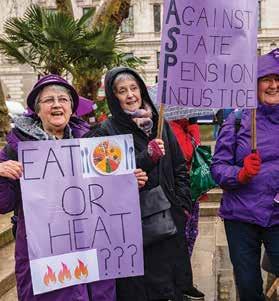
The ombudsman had found that there had been partial maladministration over the implementation of the scheme.
Any plan to compensate the women fell away as long ago as 2019 when former Labour leader Jeremy Corbyn was defeated in the general election. His shadow chancellor, John McDonnell, promised £60 billion to settle it – but the offer came too late in the election campaign to have any impact.
There is speculation that the present government may postpone plans to raise the pension age from 66 to 67 by 2028. The argument is that rising longevity, which grew rapidly before 2010, has levelled out and even slightly reversed following the Covid pandemic, so there is no need for such a rise.
Much will depend on the health of the National Insurance fund that pays the present generation of pensioners, however. The argument against raising the state pension age is that the fund is often raided by ministers to pay for other areas, including reducing government debt. And given the present financial stringency and the need for higher taxes, it could be vulnerable to another raid.
Pensioner voting power has had enormous success in securing rises for the new generation of state pensioners, but in the long term this may falter. The ever-growing increase in costs to fund pensions in the 2030s and 2040s could force a future government to modify it.
And the experience of 1950s-born women in their quest for justice shows that Labour is as adept as the Conservatives at fending off claims for compensation.
Catharine Braithwaite is in no doubt: “It’s a complete and utter lifesaver. We all get a bit stressed out, so it’s just a brilliant place for me to decompress, listen to the birds, feel the soil and get satisfaction from growing things to eat.”
The 58-year-old is talking about her allotment in Flixton, south-west Manchester, which she has had for nearly two decades. A freelance arts marketing consultant, Braithwaite has a large plot that includes fruit trees, soft fruit bushes and vegetables. When she applied for the space, she didn’t have to wait long. Today, many people are not so lucky.
Two years ago a report found that more than 170,000 people were on waiting lists for allotments in Britain. Not surprisingly, cities and large metropolitan areas have the biggest demand and lowest supply, whether that’s allotments run by local authorities, churches, farmers or private organisations.
More recent statistics have shown a huge disparity in the availability of allotments across the UK, with some people waiting years for a plot to call their own. But why is this?
Long held appeal
The popularity of allotments peaked between the two world wars, but their origins can be traced back to enclosures in medieval England, with allotments as we know them dating back to the early Victorian era.
Today, there are an estimated 330,000 plots in the UK – but some two-thirds of allotment land has disappeared since the mid-20th century.
Now, these former bastions of British culture are back in vogue thanks in part to rising urbanisation. With more people living in flats or homes without gardens, allotments offer an enticing opportunity to grow your own, save money, live more sustainably, get some exercise and discover a lifestyle that prioritises wellbeing and good mental health. However, if you live in an area where
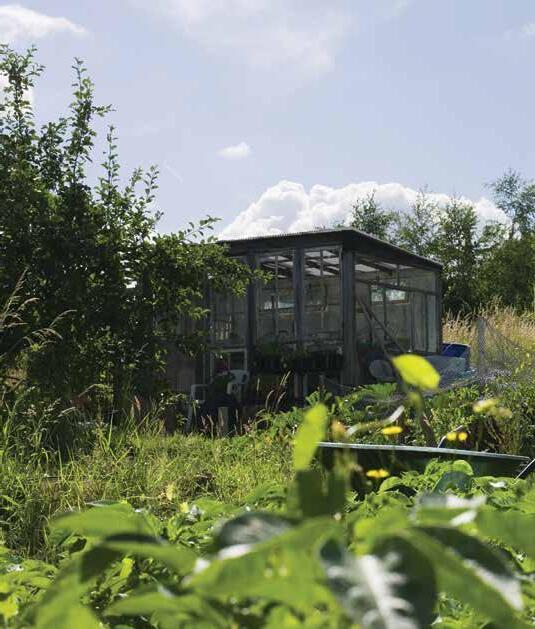
Allotments are a British institution – but are they at risk, asks Helen Nugent
demand significantly outstrips supply, you could be waiting some time. According to Freedom of Information requests to local councils (most allotments are run by local authorities), Portsmouth City Council has the highest number of residents on its allotment waiting list, followed by the City of Edinburgh, Bristol City Council, London Borough of Lewisham and Wakefield City Metropolitan District Council.
Regionally, south-east England reports the greatest demand for allotments, with more than 20,000 people waiting. As of May 2025, the average wait was four years, with some council areas, including Scotland and London, nearly double this.
Worth the wait

For many, it’s worth the wait, even if it can seem frustratingly long. Heidi Roberts is retired, but the 71-year-old continues to work as a food and travel content creator. She has two allotments, including one in St Albans. “I’ve had the allotment for more than 13 years,” she says. “I was on the waiting list for about three years, but the list is
currently shorter. I also have a second plot in Ipswich, where I have a second home. I was on the list for about two years and got that plot in April 2025.
“Both plots are essential to grow food for the family, but are also spaces of tranquillity and peace. We eat lunch and make hot drinks at them – both plots have small cooking facilities in the sheds.
“We took the second allotment plot to teach my two teenage grandsons the value of growing your own food – and, of course, every moment they are there, they are not on their tech or phones.”
She adds: “We would be lost without our plots and our fresh fruit and vegetables. Every year is an unexpected treat.”
How much does it cost?
In general, local authorities charge between £30 and £90 a year, with an average fee of about £60. However, like the varying costs, allotment provision per person varies dramatically.
In September 2025, the Guardian reported that the north-east of England was Great Britain’s allotment heartland,
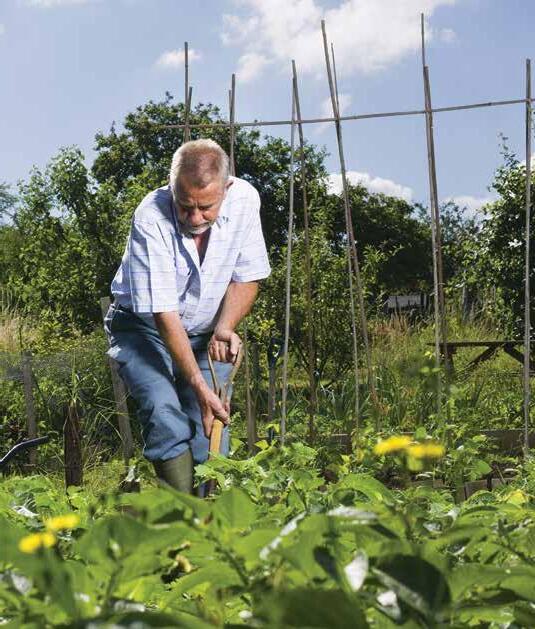
“The plots are essential to grow food, but are also spaces of tranquillity”
with Redcar and Cleveland Borough Council and County Durham the two councils with the highest space per person. Joint bottom of 350 local authorities were Kensington and Chelsea and the City of London, which have no allotments at all.
A spokesperson for the Local Government Association said: “Allotments play an important role in supporting community wellbeing, but it is natural for provision to vary across local authority areas due to differences in geography, population density and demand for land.
“Councils work hard to meet local needs and balance priorities but face significant financial and capacity pressures across all services. Despite these challenges, many councils continue to support and expand access to allotments where they can.”
Asked to comment on its lengthy allotment waiting list, Portsmouth City Council said the figure cited – 7,420 – was

59 – was that nearly one in five people had waited more than two years for a plot.
The society would like local authorities to commit to creating more allotments, ensure equitable access and include community gardens in urban planning. It recommends that legislation should be strengthened to protect allotment sites against development and ensure prompt allocation when demand arises.
too high as it referenced multiple site choices from people on more than one list; the true figure is 3,137.
A council spokesperson said: “We manage eight allotment sites in Portsmouth and one just outside the city, offering more than 1,700 individual plots. These are hugely popular and there’s increasing demand. Because we are an island city and one of the most densely populated parts of the country, there’s very little available green space to create new allotments.
“We know many people are unfortunately waiting for a plot and we’re doing what we can to ease the situation, including splitting large plots into smaller ones where possible. We employ a dedicated allotment officer who monitors all plots, and if any are underused or vacated, they are turned around quickly for a new tenant from the waiting list.”
What’s to be done?
National Allotment Society chairman Mike Farrell is concerned that councils don’t do enough to ensure adequate
Farrell says: “I have a strong belief that at some point in the not-too-distant future, maybe even as far as one generation, we will need allotments again, and we’ll be relying on people to grow food. It’s very short-sighted not to see that we have an asset in allotments and we depend on them. It’s food security.”
He reflects on the change in allotment demographics since he became involved in the sector 15 years ago. “Gone is the retired white-haired gentleman in a flat cap. It involves lots of young people now, especially couples with children who want to teach their children about growing… A lot of people from this generation were introduced to gardening and allotments by their grandparents.”
Nevertheless, allotments remain popular among pensioners. Farrell attributes this to them having available time, patience to sit on a waiting list, and often more concern about food and where it comes from.
“When I grew up, most of the food was either grown by my father or we got vegetables from the greengrocers and meat from the butchers. There were no supermarkets with mass-produced food, and stuff didn’t come from abroad. It was local and seasonal. So, I think that growing food is in our DNA.”

Early spring is a happy time for many as we shake off the winter blues and enjoy lighter evenings, flowers blooming and a 3.8% pension rise in April.
A highlight to look forward to this year was the planned tour of the Rolling Stones, still showing us there’s active life in your 80s. Sadly, you can’t always get what you want – the tour was cancelled due to Keith Richards, now 82, whose arthritis is affecting his hands and physical stamina. So it’s all over now. A big disappointment, but despite that the band will be releasing a new album soon.
A much bigger disappointment in 2026 has been the transition of civil service pensions administration to Capita from 1 December 2025.
Announced in November 2023, we were assured by the Cabinet Office that the transition would be seamless. But the CSPA office has been inundated with complaints from members unable to log on to the new pension portal, reporting inaccurate data and tax code changes, yet no ability to email for help or get help from the contact centre, despite waiting on the telephone for up to five hours!
Others who had retired months earlier had been left with no income because their
Lessons from the pensions administration handover in 2014 have not been learnt
pensions had not been paid. This is not acceptable.
An added problem has been the long delays in finalising payments for the 130,000 retired scheme members already drawing their pension but affected by the McCloud 2015 remedy legal judgment and offered a choice of pension for the remedy period 2015-2022.
That work was stopped by MyCSP in October, as they decided to get off McCloud, and it had not initially been contracted over to Capita as the work was meant to have completed by March 2025.
The Cabinet Office has said it aims to contact all members affected by the remedy who are already drawing their pension by March 2027.
Pension scheme members deserve better and should not have been left with the stress of delayed pension payments, unable to contact the administrator responsible. At the end of October 2025,
the Public Accounts Committee (PAC) published a report of its inquiry into the administration of the civil service pensions scheme, to which the CSPA had given evidence in June.
Capita had assured the PAC in July that it was “firmly on track to assume full administration of the scheme from 1 December 2025” with “enhanced innovative services for members for when the contract commences”. They had painted a rosy picture, but the MPs knew the facts and wanted to paint it black.

Asked how confident it was that “members would receive no disruption to service”, the Cabinet Office told the PAC: “It’s believed Capita had underestimated the complexity of the transition and the length of time it would take to implement the technology… and was working with Capita to produce a new delivery plan with realistic dates.”
As for the Parliamentary inquiry, well it’s all over now – but the impact of that shaky transition will not fade away.
This year’s pledges
So here we are in March 2026. Capita has promised enhanced services and facilities from the pension portal from April. None of this will be any consolation to the thousands of retirees who have had their lives put on hold over the past few months due to delays in finalising pension payments, delays in sending out remedy choices, and an inability to contact the pension provider.
The lessons of the last time the pension administration transitioned to MyCSP in 2014 have not been learnt. Memories of that fiasco will not fade away. As ever, the devil is in the detail – but there is no sympathy for the devil.
On a brighter note, the 3.8% pension rise, payable from 13 April, is something to look forward to next month. Oh, and a new album from the Rolling Stones soon after. Proving that whatever the setbacks in retirement, pensioners can still produce good music and that wild horses, let alone arthritis, can’t stop them.
• For access to the pension portal visit www.civilservicepensionscheme.org.uk
Fran Suermondt of u3a UK
How will you mark the International Day of Happiness on 20 March? It’s a day described as dedicated to recognising happiness as something we all deserve, at every stage of life.
If you’re a member of u3a, which promotes activities and social interaction among people who have retired, you might tune in to a spot of laughter yoga.
Judith Walker runs an online laughter yoga group where members can take part from their own home. It’s open to anyone who joins u3a and would like to start the day with a burst of positivity.
The group has been running for 11 years and is going from strength to strength. Judith (pictured) says: “A member of one of my laughter yoga groups once said ‘It’s the most fun possible in any u3a group!’ And many others would agree. Laughter really is the best medicine.
“But we don’t always know how to start. In laughter yoga there are no jokes, no comedy and no humour. No yoga mats, no funny postures, no standing on your head. Laughter releases endorphins, reduces stress and makes you feel great. But it’s not just having a laugh. It’s a gentle aerobic exercise, which improves your breathing and benefits your mental and physical health in so many ways.”
u3a champions the idea that happiness and wellbeing matter as much as productivity. Through lifelong, informal learning and social links, u3a helps people find purpose, community and reasons to smile.
Our members come together to learn across a wide range of subjects and activities, from art and languages to science, walking and music. With more than 1,000 locations across the UK, each u3a is a welcoming space where members can try new things, rediscover old passions and enjoy learning purely for fun.

Retirement is often painted as endless relaxation, but for many it can also bring unexpected boredom, uncertainty or a sense of “what now?”.
The good news? There are simple and proven ways to boost your wellbeing at any age. These five steps are widely recognised as the key to feeling happier and they fit perfectly with life at u3a.
1. Connect with other people
Friendship might sound simple, but strong connections make a huge difference. In retirement, social circles can shrink, especially if friends are still working or you’ve moved to a new area. u3a offers
ready-made opportunities to meet likeminded people, share laughs and feel part of something again.
2. Keep moving
You don’t need to run marathons to stay active. Walking, swimming, gardening, dancing or a gentle fitness group can boost your mood, mobility and confidence. Staying active helps maintain your independence and keeps the body and mind feeling good.
3. Learn something new
Learning doesn’t stop when work does. In fact, it’s one of the best ways to stay mentally sharp and socially connected. Whether it’s a language, a craft or a completely new subject, learning for pleasure builds confidence and keeps curiosity alive.
4. Give to others
Helping out feels good and science agrees. Acts of generosity release feel-good endorphins, reduce stress and increase life satisfaction. u3a members give back by sharing their skills, supporting groups and helping their communities thrive.
5. Be present
Slowing down after years of structure can feel strange, but it’s also a gift. Taking time to enjoy the moment – a conversation or a walk – can bring a deeper sense of contentment and appreciation for everyday joys.
If you love having fun, enjoy hands-on activities and want to be part of a friendly community, why not see what u3a has to offer?
• Find your local u3a at u3a.org.uk
Jess Harrison on how you can help others through giving a legacy
The Charity for Civil Servants supports current, former and retired civil servants through tough times in their lives. From mental health struggles and financial assistance to relationship issues, getting through grief and coping with disability, we’re here to help people stay strong, whatever life brings.
For generations, civil servants have dedicated their working lives to serving others. The Charity for Civil Servants exists to make sure that same care is there for them and their families throughout life.
We couldn’t do this without the generosity of our supporters and an amazing way you can help is through a gift in your will. When the time is right for you to write or update your will, you could consider leaving us a gift. It’s a way to give to the civil service community without it costing you anything in your lifetime.
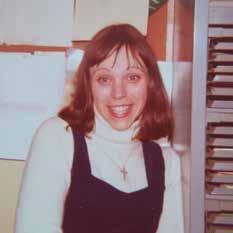
You can be like Gill (pictured), who left us a gift. Gill joined the civil service in 1975, where she met her husband Dave and made life-long friends with Elaine and Steve. She became godmother to their daughter, Hannah, also a civil servant.
After a lifetime of public service and making a difference to others, Gill retired but sadly, a year later, she died.
Gill’s god-daughter, Hannah, said: “Before she died, she said she wanted to leave a gift to the Charity for Civil Servants… She liked the idea of helping her colleagues through tough times, the people she had grown to call friends…
“Being a civil servant myself, I understand how important it is to look after each other. Like Gill and my parents, I chose to be a civil servant because I wanted to make a difference. Gill has chosen to continue to do this even in death and I’m proud to help her.”
When it comes to including the charities
you care about in your will, there can be a lot to consider. Here are some common questions to think about when considering leaving a gift in your will to the Charity for Civil Servants.
Will my gift really make a difference?
Your gift creates a lasting legacy, positively affecting people for years to come. It’s a helping hand to your civil service community that extends well after your lifetime. No matter the size, every penny counts towards the financial, emotional and practical support we give.
I already have a will, can I change it?
Wills can and should be updated and amended as your life and circumstances change. Checking your will is up to date will ensure it reflects your current wishes and intentions. Gifts to charity can be added, amended or removed in an update.
Will my loved ones be missing out if I leave a gift to charity in my will?
Family and friends always come first, so after taking care of your loved ones, any gift in your will can help provide an umbrella of support.
What type of gift can I leave?
You can leave three types of gifts:
• A percentage of your estate
• A set amount of money
• A specific object, asset or property. Most people choose to leave a percentage of whatever is left of their estate, ensuring your loved ones are looked after, and your gift will keep pace with inflation.
Can I reduce inheritance tax by leaving a gift to charity?
Making a charitable donation may help reduce the amount of inheritance tax payable where the value of an estate exceeds the nil rate band.
A gift to charity is free from inheritance tax and if you leave 10% or more of your net estate to charity, then the total amount you pay reduces from 40% to 36%. If you think this may apply to you, visit gov.uk for more information.
Should I inform you if I’ve left you a gift in my will?
Not if you don’t want to. It’s up to you whether you choose to tell a charity you’ve left a gift in your will. But if you have left us a gift, and feel comfortable telling us, we’d love to thank you and keep in touch about the work we do. Any information you share with us will be treated with confidentiality.
If this has interested you, please visit our website to find out more and get in touch via hello@cfcs.org.uk or call 0800 056 2424. Please note, the Charity for Civil Servants is unable to offer legal or financial advice and would always recommend seeking independent legal advice when making your will.

• Jess Harrison is legacy marketing manager for the Charity for Civil Servants
As part of your CSPA membership, you get access to a range of membership benefits, one of which is this magazine. Here is a quick snapshot of the most popular, but to see the full range visit the members’ area of the website members.cspa.co.uk
• Help and support with your pension
Our pensioner case worker can help if members have problems with their civil service or related occupational pensions. How to claim: email enquiries@cspa.co.uk with a brief outline of your query and your membership ID.
• IT/technology help and support
Free help and support on personal computer problems. How to claim: call BC Technologies on 01369 706656 quoting ‘CSPA’.
• Free initial legal advice Consultation for 30 minutes maximum, membership number must be provided. England and Wales: Lyons Davidson Solicitors, 01752 300 584 quoting ‘CSPA’. Northern Ireland: McCartan, Turkington & Breen, 02890 329801.
Scotland: Thompsons Solicitors, email advicecentre@thompsons-scotland.co.uk or call 0800 801 299.
• Free initial consultation on wills, trusts and powers of attorney
Solicitor Harvey Howell is offering members a free private consultation by phone or video. View the Harvey Howell video podcast by logging onto the CSPA website. members area.
How to claim in England and Wales: email cspa@harveyhowell.co.uk or call 0330 175 9959 quoting ‘CSPA’.
In Scotland: Thompsons Solicitors, email advicecentre@thompsons-scotland.co.uk or call 0800 801 299.
• Financial services you can trust Free initial consultation with an expert from Quilter Financial Advisers to find out how you can benefit from financial advice. How to claim: Members can book their free, no-obligation initial consultation by calling 08000 858590, quoting ‘CSPA’, or find out more on our website www.quilter. com/cspa.
• Discounted conveyancing Gordon Brown Law Firm offers discounts in England and Wales. How to claim: call 0191 389 5160 or email sales@gblf.co.uk
In Scotland: Thompsons Solicitors, email advicecentre@thompsonsscotland.co.uk or call 0800 801 299.
• Designed specifically for members This annual travel insurance plan from the Civil Service insurance Society (CSIS) offers a European or worldwide option for an individual, couple or family. You must be medically fit to travel, a UK resident and a CSPA member (and remain so for the life of the policy) aged between 50 and 79 at the time of joining (thereafter no upper age limit will apply) and comply with the eligibility criteria.
• Home and motor insurance*
CSIS offers a 10% discount to members taking out a home insurance policy over the phone and 10% off car insurance for those in England, Wales and Scotland.
• For full information on all insurance offers from CSIS visit: csis.co.uk/ partners/cspa
• Fred. Olsen We have teamed up with Fred. Olsen Cruise Lines for up to £200pp free on-board spend. How to claim: call 0800 0355 108 quoting ‘CSPA25’. For full info visit fredolsencruises.com/ affinity/cspa
• 5%-10% discount on Wendy Wu tours Wendy Wu tours and cruises cover Asia and the Far East. We have a 5% discount on all trips and up to 10% off Mekong River cruises. How to claim: visit www. wendywutours.co.uk or call 0800 035 5091 quoting CSPA5
• For great deals on shopping discounts, motoring, travel, lifestyle and discounts on the high street, visit our Savings Hub via members.cspa.co.uk/ discounts/
• Have a listen to our podcasts with guest speakers from CSIS and Harvey Howell by visiting cspa.co.uk/listen.
* Only available when calling CSIS for a quotation. Discount only applies when cover is offered with provider Salvation Army
Bernard Seymour explains how this specialist form of borrowing works
Iread recently that the first person who will live to 150 has already been born. This may be fake news, but what is true is that we are all living longer and looking for ways not only to protect our money, but to make it last for as long as we need.
One of the products available for a person over 55 who owns their own home is equity release.
I must stress that I am not giving any financial advice about whether this product is a good option. Everyone’s circumstances are different. But I thought it may be helpful to explain how equity release works and some of the points you should look out for.
When you sign up for equity release, you are looking to release funds (equity) from your home whilst you continue to live there. It is a specialist form of borrowing. Interest accumulates on the borrowed amount and the loan is usually paid back when you die or go into long-term care. You do not have to make repayments, although there are some lenders that allow you to do so, which will reduce the outstanding balance.
I have set out some questions you may
want to consider if you are thinking about equity release:
1. Is the financial adviser charging a fee? If so, do you want to add this to the loan (interest will then be charged) or pay this separately?
2. What is the interest rate and will that change over the years? Ask for examples of what the interest rate looks like in actual money.
3. If your circumstances change and you want to repay the money early, is there a penalty?
4. When the money is repaid at the end of the term, is there a fee?
5. What other costs are involved? For example, the lender will want a valuation of your home and some may charge for this.
Any reputable equity release lender will be signed up to the Equity Release Council’s consumer charter, which includes a guarantee that you (or your estate) will never go
into negative equity. This means that no matter how much interest accumulates, the total sum owed will not exceed the value of your home.
The most important advice I can give is always to take professional advice from a financial adviser who is authorised and regulated by the Financial Conduct Authority. The CSPA works with approved financial advisers, so you may wish to make enquiries with them.
A financial adviser will also be able to advise you on other options available that may be more suitable for your own circumstances.

Affinity Resolutions offers a helpline/signposting service on legal matters, which is free to members. The helpline is operational during normal business.
To access the service, the member first needs to register online at: www.affinityresolutions.co.uk/join/
We are aware that a number of members do not have internet access, and in those situations we will always help without registration. The link takes members to the joining

page and to our FAQs. If a member needs further advice, we work with a number of organisations who can provide this. Helpline tel: 03300 55 25 30 or email: hello@affinityresolutions.co.uk
Finlay Anderson offers more advice on day-to-day computer challenges
As we get older, many of us start to notice small changes in our eyesight or hearing, and this can make using a computer more challenging. Thankfully, modern devices come with a range of accessibility features to make life easier. These tools are built in, easy to turn on, and can make a big difference when using your computer.
One of the most popular options is increasing the size of text and icons. You can do this by clicking on your computer’s settings menu and selecting ‘Accessibility’ or ‘Ease of Access’. From there, you can increase the size of writing on the screen,
so emails, documents and websites are far easier to read. Many people also find the Magnifier tool helpful, as it allows you to zoom in on specific parts of the screen without affecting anything else.
If you struggle with the mouse, you can slow down the pointer speed or make the cursor larger so it’s easier to spot. Some people even prefer to use voice typing when writing emails or documents. Simply press the microphone button on the on-screen keyboard and speak clearly; the computer will do the typing for you.
Don’t be afraid to explore these tools. A small change can make your computer much more comfortable to use.
The internet is a wonderful tool for staying in touch, paying bills and ordering things we need, but it’s also important to stay aware of potential scams. Many readers have asked how to stay safe online, so here are some simple steps to help you feel more confident.
If you receive an email asking for personal details such as your bank account information or passwords, treat it with caution. Legitimate companies will never ask for this by email.
A good rule of thumb is: if something feels unusual or unexpected, it’s best to ignore it. You can always contact the company using a phone number you trust if you’re unsure.
When shopping online, make sure the website address begins with https. The “s” stands for secure and means the website protects your information.
You should also avoid clicking pop-ups that promise prizes or money. These are almost always scams designed to trick you into handing over personal details.
Most importantly, never feel rushed. Scammers rely on pressure and panic. Taking a moment to think can save you from a lot of trouble.
Over time, computers can start to feel slower, but often this can be fixed with a few simple steps. Many readers assume they need a new device, when really their


To contact BC Technologies for free advice and support, call 0330 800 1010, 9am to 5pm Monday to Friday, or email cspa@bc-group.co.uk at any time. Please quote ‘CSPA’ when contacting BC Technologies.
current one just needs a bit of care. One of the most helpful things you can do is allow your computer to install updates.
Updates may sound annoying, but they contain important security improvements and fixes that keep everything running properly. You don’t need to do anything special; simply restart the computer when prompted and let it handle the rest. Another common issue is too many programs opening automatically when you turn on your computer. These can slow things down and make the device feel older than it is.
To tidy this up, open your Task Manager (Ctrl + Shift + Esc), click on the Startup tab, and disable programs you don’t recognise or no longer use. And don’t worry –disabling them here only stops them from running in the background, it doesn’t uninstall them.
Finally, restarting your computer every so often can help clear any temporary files and give it a fresh start. It’s a small step but often makes a big difference.
On Facebook I’ve received a friend request from someone I’m already friends with. Does this mean their account has been hacked?
Not necessarily. In many cases, scammers simply copy someone’s profile picture and name to create a fake account. Before
accepting the request, check your existing friends list. If the real person is still there, you can ignore the request. The copied account is usually just an attempt to trick people into accepting it.
How can I tell if a social media profile is genuine or not?
A quick way is to look at the account’s activity. Fake accounts often have very few photos, no personal posts and few friends. Real accounts show a history of comments, shared posts and interactions. So an unusually empty account or one recently created may not be legitimate.
The bloke who stands at the end of the bar where the dartboard used to be is always going on about his ‘human right’ to drive a car, although his eyesight is so reduced he has difficulty finding his mouth with a pint glass.
If he just said “I don’t care about the rest of you, it would be inconvenient for me to stop driving, so I’m carrying on”, I could sympathise. Fair point, I’d say. We’ve been warned. But I object to him dragging in human rights. I suggested other people had a human right not to be flattened by an optically challenged chauffeur, but he rejected this, defending their human right to jump out of his way.
Years ago I squeezed into my parentsin-law’s car. As we jolted our way into the middle of the road and past the school, my father-in-law asked: “How far are we from the kerb?” When his wife estimated “two to three rolling pins” I said I’d just remembered I had to get out.
My sister-in-law recently gave up driving following an incident involving a row of dustbins and a tree, but selling her motor was harder than we’d thought. While the driver’s side was pristine, the passenger side looked like it had been beaten with a small hammer and pebble-dashed. And this was before the tree and bin episode. She explained that the fault lay in her right eye being better than her left – but at least she didn’t mention human rights.
As a public highway user, I’d like to think most people in control of 2,500kg of rolling metal don’t have poor peepers. For a wager recently we stood outside the Duke and tried to read a distant numberplate. Several of us couldn’t identify the car –which was actually a bus. Double decker.

I don’t know why anyone who lives in a town wants a car anyway. Their owners do nothing but moan about the cost of petrol or MOTs, potholes, scratches, insurance, depreciation and speed limits. These can all be replaced, at no cost, by bus mounting, tube taking or cab hailing.
My warm regard for public transport was hugely increased when I rented a car over new year, mainly to get rid of the Christmas tree and the in-laws. It cost me £150 to hire and £180 for traffic offences after driving in a bus lane (the one I’m used to being in when I’m on the bus); exceeding the speed limit (impossible not to do unless you’re an arthritic snail); and entering the congestion zone (which seems elastic in scope). It cost me about a fiver a mile.
Apart from financial misery, car owners are obsessed with parking. A few I know don’t go out in their motors for fear of not finding a parking place where they are going and not finding one when they get home. Car ownership makes them stationary.
Finding a parking bay is only the start. Jimmy, who stands where the fruit machine used to be, says he once made so many manoeuvres to fit into a space that he drew applause from a queue of people waiting
A few drivers I know don’t go out in their motors for fear of not finding a parking place where they are going and not finding one when they get home
for a bus. And then he couldn’t stay because he was unable to negotiate the complexities of the payment machine. He sat downloading apps and inserting his bank details for so long, it was only by good fortune he avoided a parking ticket. One friend has become so traumatised by the operation, he has entirely excluded the word ‘park’ from his vocabulary. That causes him difficulties when describing the coats worn by members of Oasis, or naming the chauffeur of Lady Penelope in Thunderbirds, or talking about his favourite football team, QPR, or discussing the green area in London containing Speakers’ Corner. But all in all, he claims it is a worthwhile inconvenience. All of which leads me to celebrate the marvellous Freedom Pass offering free public transport to retired folk. I was charged nothing for a lift on a bus in Birmingham recently, which, as I live in London, I thought pretty impressive. I stayed on a few stops after my destination so I could savour the experience. It’s such a civilised idea. Some cities have fare-free policies for all – Dunkirk in France, Tallinn in Estonia, Hasselt in Belgium – as does the whole of Luxembourg. I would be driven to distraction if we were to be deprived of this. Of course, when I say ‘driven’ I don’t mean I’d take a lift from the bloke by the missing dartboard.