In an article published by 'Nature', alarming statistics indicate that nearly 40 million deaths could occur by the year 2050, (approximately 2 million people each year), solely due to antibiotic resistance. You may have heard of the word “antibiotic” in a biology class or seen it being prescribed by a doctor prescribe it when you get an infection. A simple explanation is given in a journal published in 2010 “Origins and Evolution of Antibiotic Resistance” by Julian and Dorothy Davies J and Davies D,: antibiotics kill harmful microbes. However, their effectiveness is compromised by the ability of the microbes to develop resistance to it after the antibiotic’s was first introduced.
Over the course of natural history, bacteria have been shown to develop or acquire resistance through two primary mechanisms: intrinsic resistance and extrinsic resistance. Intrinsic resistance refers to the “built in” ability of the bacteria to resist the working of the antibiotics, while extrinsic resistance refers to the ability of the bacteria to “gain” resistance from other bacteria. The concept of mutational resistance is well explained by Munita and Arias in their book, “Mechanisms of Antibiotic Resistance,” wherein it resists the antibiotics’ function by altering the antibiotic action of the molecule. This can come about by modifying the target of the antibiotic molecules, decreasing the drug uptake, preventing the antibiotic molecule from entering the cell, or by entirely removing the antibiotic molecule from the cell entirely.
While mutational resistance is usually developed intrinsically, genetic resistance through horizontal gene transfer (HGT) is exclusively extrinsic. HGT involves the transfer of genetic material from one organism to another. One method this occurs through is through the assimilation of naked (free floating) DNA into the bacterium’s own genetic materials (transformation). Another method involves the transfer of genetic material through a tube-like structure between two bacterial cells (conjugation). Conversely, HGT this can be forced upon the cell as certain bacteriophages (viruses that infect bacteria) can transfer genetic material containing antibiotic resistance while they infect a bacterium.
The most notable cases of antibiotic resistance can be narrowed down to tuberculosis and Pseudomonas aeruginosa Tuberculosis (TB) can be traced back to ancient times and as such has , virtually evolved alongside the human race. In fact, references to this disease can be found in classical Greece where Hippocrates (considered to be the father of medicine and the one who the hippocratic oath is named after) referred to it as phthisis. He recognized that it targeted young adults between 18-35 years old which he wrote about in his book ‘the History of Epidemics’. In the following centuries it adopted the name of consumption where it caused the deaths of 4 million people in England and Wales between 1851 and 1910. As per fact sheets published by the World Health Organization, TB returned to being the world’s most infectious killer disease (surpassing even COVID-19) as of 2023. One of the major causes of deaths related to TB continues to be antibiotic resistance as the bacteria is resistant to four of the most widely used treatments and other commonly used treatments. This poses significant risks for economically developing nations as they might not have the funds to introduce new treatment therapies. In fact, there are strains of TB that are classified as TDR, or “totally drug resistant.”
Pseudomonas aeruginosa, another prevalent bacteria, has gained notoriety in hospital settings due to its ability
to escalate simple burn wounds into critical hospital-threatening conditions. While TB and Pseudomonas aeruginosa are dangerous in their own right, their antibiotic resistances have led to the creation of “superbugs.” As of now, Staphylococcus aureus remains the most notable superbug. This microbe is already present in the nostrils of nearly 30% of the population and. It manifests itself with boil-like structures on the skin that are filled with pus. The discovery of methicillin in 1959 stemmed the infection rates of this microbe for a while, however, the bacteria soon developed resistance to methicillin. As mentioned in the journal published in 2010 “Origins and Evolution of Antibiotic Resistance” by Julian and Dorothy Davies J and Davies D, within just three years of the introduction of methicillin, there was an appearance of methicillin-resistant S. aureus (MRSA). To this day, MRSA remains a major threat in hospital settings. Unless proper efforts by the scientific and medical communities are taken, the trend of antibiotic resistance developing could be very concerning in the near future. In fact, statistics published by the Lancet indicate that Southeast Asian countries like India, Pakistan and Bangladesh suffer the hardest with 11.8 million deaths between 2025 and 2050. This underscores the need for the establishment of proper solutions to the crisis of antibiotic resistance. One of the simpler solutions to implement would be the imposition of additional regulations to prevent the overuse and “selfprescription” of antibiotics. Vaccines have also proven to be effective as an alternative option to antibiotics. In a study conducted by the Nova Southern University in 2019, the use of pneumococcal vaccines led to a decrease in the number of antibiotics prescribed, thereby preventing theirits overuse. While these initial developments are promising, antibiotic resistance is a biological crisis that must be dealt with proper consideration to ensure minimal loss to society and particularly those who might not have access to a wide range of antibiotics.
Head Production Editors: Jacqueline Cheung, Erin Jang
Staff Production Editors: Tamanna Gandhi, Sanji Kumar, Himangi Sharma
Head Illustrators: Leo Harris, Christina Zhao
Staff Illustrators: Sofie Blazejova, Amber Ureña
Head Photographer: Inaya Nicholls
Staff Photographers: Andre Lin, Julia Song
Head Tech Editor: Samia Rahman
Inheriting DeficienciesNutritional
How does this happen, and what can we do about it?
Dr. Simone Passarelli et al.’s 2024 analysis of global dietary micronutrient inadequacies revealed that over half the global population suffers from inadequate consumption of essential micronutrients. Essential micronutrients as organic molecules that play integral roles in metabolic functions but cannot be innately produced by the human body. According to Passarelli et al., micronutrient calcium is insufficiently consumed by about 66% of the global population. Calcium helps regulate blood vessels and the heart by facilitating contraction and relaxation of smooth and cardiac muscle. If an individual is deficient in calcium, their parathyroid glands trigger osteoclasts to degrade bone and release calcium into the bloodstream. Stripping calcium from bones can lead to various diseases, namely bone softening and poor skeletal development in children and reduced bone strength and structure in adults. Calcium deficiency can also wear down protective tooth enamel and reduce function of digestive organs, making it more difficult for individuals to absorb other essential nutrients. Ultimately, an untreated deficiency in calcium can cascade into deficiencies for multiple micronutrients.
Passarelli et al. (2024) also found around 65% of the globe insufficiently consumes iron. Iron–a mineral stored throughout the body–is predominantly used to bind oxygen to hemoglobin protein in red blood cells and myoglobin protein in muscle cells.
The National Heart, Lung, and Blood Institute’s 2022 article on iron deficiency pathology emphasizes iron’s importance in oxygen transport and delivery: continuous poor iron intake can lead to increased fatigue, generalized muscle weakness, heart palpitations, and abnormal sensations like Restless Leg Syndrome. With continued iron deficiency contributing to motor developmental delays in children, the absence of iron sources not only harms individuals with poor iron intake but could lead to permanent physical disabilities if left untreated.
Likewise, the deprivation of folate – which induces permanent health consequences in gestating individuals – is especially dire as Passarelli et al. (2024) notes more than 4 billion people suffer from folate deficiency worldwide. As per a 2011 study by Dr. Krista Crider et al., folate is vital to the neural tube closing in the first trimester of embryonic development. When this tube fails to close, the unprotected nerves often develop into spinal cord protrusions outside of the body (spina bifida) and potentially brain and skull malformations like anencephaly. Given the difficulty in accurately predicting fetal conception, individuals already suffering from folate deficiency are at a higher risk of neural tube malformations during fetal development. Inaccessibility to prenatal folate exposes food insecure populations to even more intergenerational detriment regarding physical health, especially considering that neural tube defects are irreversible.
Nutritional deficiency continues to be a pressing health concern for SD county. Between 2019 and 2021, SD county’s annual study on population health recorded 382 deaths directly caused by nutritional deficiencies. Concerningly, the top three causes of death during this time—malignant neoplasms, diseases of the heart, and COVID-19—have been known to be exacerbated by malnutrition as well.
When contextualizing micronutrient deficiencies to San Diego (SD) county, historical causants for these disparities come to light. Lopez-Villafaña and Schroeder’s 2020 article on the history of San Diego’s housing insecurity explains how SD
written by LEANNE LIAW
photographed by JULIA SONG
county initially installed redlining policies to combat the 1933 housing shortage. These new housing regulations prevent Black, immigrant, and minority families from purchasing homes in economically-successful regions of San Diego. Although these restrictions were officially abolished with the 1963 Fair Housing Act, generations of minority communities who were forced to live in "undesirable" residential areas did not have the resources to relocate. By 2020, decades of legal discrimination and limited resources have resulted in food apartheid (i.e., the segregation of nutritional food availability through factors like race, class, and geography) for residents of these communities, particularly the City Heights neighborhood.
When San Diego County Food Vision 2030 surveyed City Heights’ residents in 2020, 85% of respondents stated that they face challenges finding healthy food, especially due to food costs and availability. Residents are now turning to support their community gardens, local farmers’ markets, and food allocation organizations to procure healthy, micronutrient-rich food. For example, the Food Shed Co-Op currently manages a network that distributes food grown from independent farmers in SD county to food-insecure families in City Heights. Thanks to such partnerships, City Heights residents have increased access to fresh, raw produce while economically uplifting the independent farmers in their region.
Understanding the extensive harm nutrient deficiencies cause is essential to inspiring action targeting food insecurity while developing strong bonds to the farmers and fishers within one’s community. As students gain interest in ameliorating nutritional access in historically marginalized neighborhoods like City Heights, more residents may feel compelled to share their stories regarding nutritional disparities. This drive to dismantle food apartheid could be the catalyst to global data analysis initiatives and grassroot projects that pave a way to a nutritionally-equitable future.
Stressed to Succeed
The Genetic Legacy of How Stress Shaped Our Cells
At any given moment, your cells are busy keeping you alive by absorbing nutrients, generating energy, and storing genetic material. Organelles work together harmoniously to ensure that both the cell and you survive. All of a sudden, this pictureperfect scene is disrupted. Organelles stop functioning properly; nutrients are not metabolized; and DNA is left unprotected. Everything has gone awry, and though panic might seem like the best reaction, the cells spring into action, bringing cellular conditions back to normalcy. This cell just underwent a stress response. A 2014 research article from defines a low level of stress as one that only requires energy to fix, whereas medium level stress might require genetic alterations that affect what genes are expressed or epigenetic alterations that change how genes function without actually changing the DNA sequence of the gene. At the highest level, entire genomic reorganization rearranges genes as needed. Though “stress” has developed a negative connotation, stresses—both external and internal—have carved the course of evolution by indirectly selecting for genes that help us adapt to and overcome such stresses. Today, our genomes are equipped with the ability to deal with crises ranging from the smallest cells to the greater environment surrounding us.
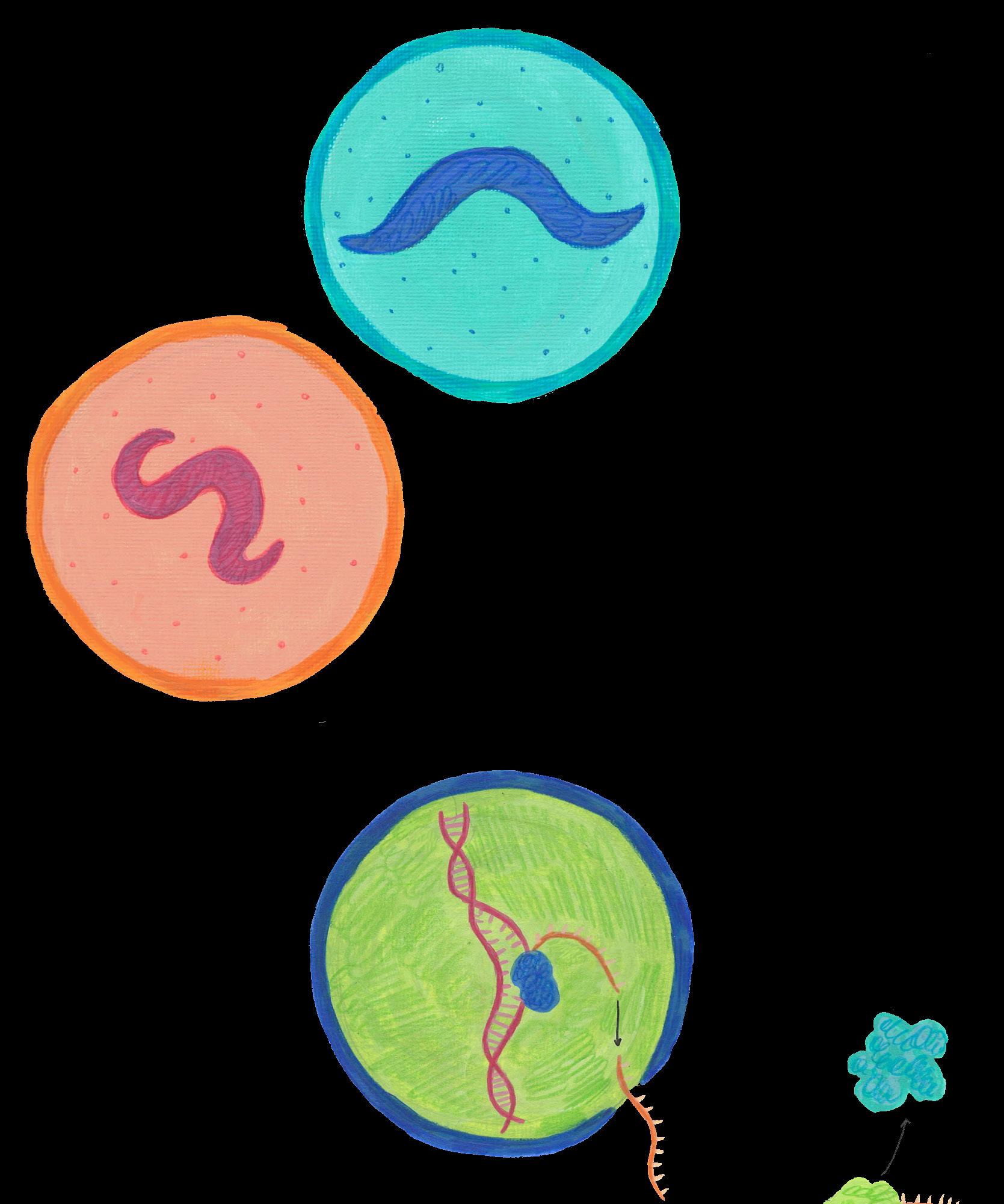
The biological definition of stress is any physical or psychological stimulus that disrupts the balance of a cell or organism. This triggers a physiological or behavioral reaction to return to normalcy, which can be achieved through gene regulation. Gene regulation controls how and when cells express genes, maintaining molecular homeostasis, or cellular balance. Not every gene in our expansive genome is always needed, so they are not expressed unless activators promote gene expression or repressors decrease expression. MicroRNAs, or miRNAs, are tiny strands of RNA, around 22 nucleotides long, that regulate gene expression post-transcriptionally by binding to mRNA and controlling whether or not it survives to make proteins. Dr. Amy E. Pasquinelli, a professor of molecular biology at UC San Diego, is investigating the role of the miRNA pathway in stress responses of
According to Dr. Pasquinelli, out of all known miRNAs, some were thought to have no function because roundworms had the same phenotype regardless of the presence or absence of miRNAs. Rather than concluding that miRNAs were useless, some scientists, including Dr. Pasquellini, decided to test these roundworms under stressful, hot conditions in contrast to unstressful, temperate lab conditions.
Dr. Pasquinelli focuses on thermal stress, subjecting the roundworms to high heats to discover the mechanism of miRNAs. When exposed to high temperatures, essential proteins begin to unfold or aggregate, and important cellular functions stop working, launching the cell into crisis.
written by: HIMANGI SHARMA illustrated by: SOFIE BLAZEJOVA
Nonetheless, roundworms survive through the Heat Shock Response Pathway, where the cell rapidly upregulates “heat shock proteins,” which keep other proteins properly folded.
Due to the global warming crisis, roundworms are not the only organisms that need to adapt to changing climates. At
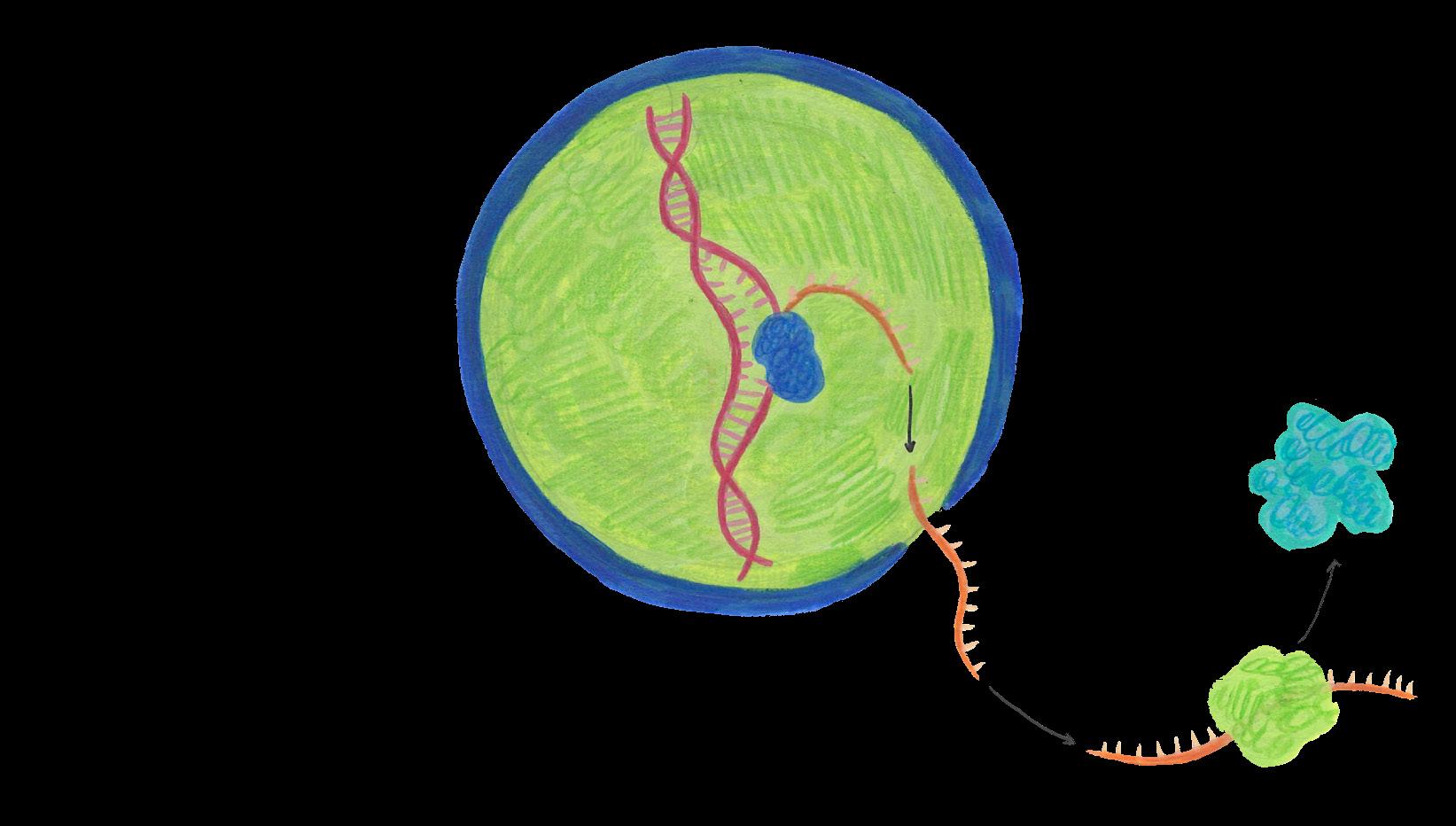
The central dogma of molecular biology posits that DNA is transcribed to RNA by RNA polymerase. Then, mRNA is translated to protein by ribosomes.