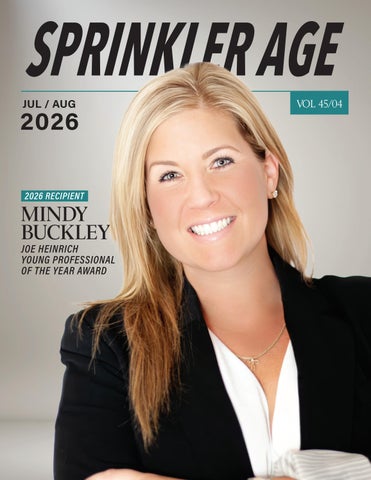
JUL / AUG
MINDY BUCKLEY
JOE HEINRICH YOUNG PROFESSIONAL OF THE YEAR AWARD




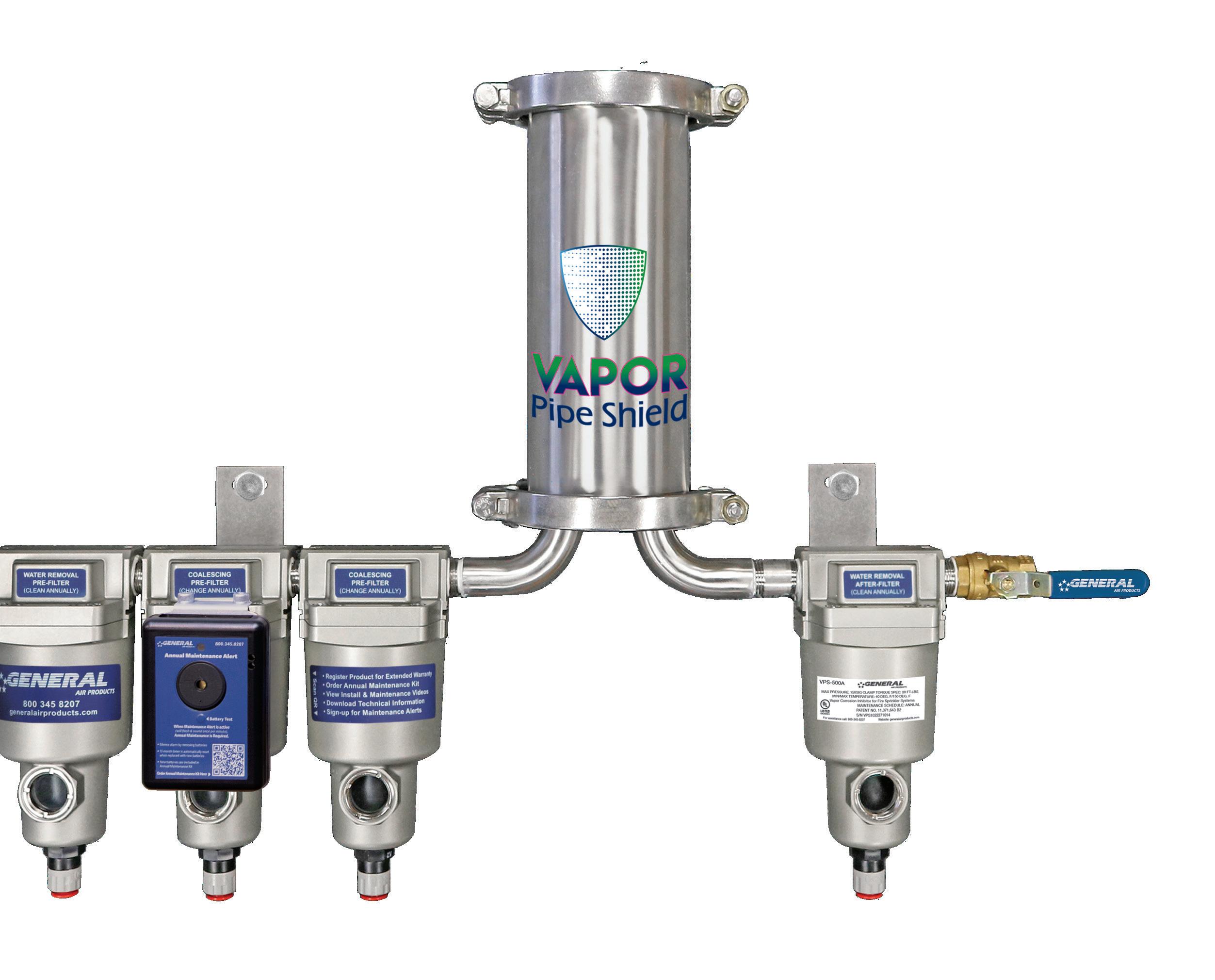
Vapor Corrosion Inhibitors Outperform 98% Purity Nitrogen in Mil Loss Testing.
Test Results
• Less Expensive
• More Effective
• Easier Install


Read the White Paper
ENTS


Mindy Buckley, CFO and co-owner, Allsouth Sprinkler Co., Lilburn, Ga., is the 2026 Joe Heinrich Young Professional of the Year. Also in this issue: protection of data centers.

CHAIR’S MESSAGE
As Chair of AFSA, I am proud of the technical skills that define the fire sprinkler industry. Our work requires precision and coordination, which is coupled with hard or difficult installation conditions. Imagine roughing in a steel pipe system on the fourth floor of a hotel, in February, that doesn’t have windows in northern states. The prefabricated pipe better fit if you expect to bring the job in under the estimated installation hours. The quality of the system design or shop drawings will be sabotaged by a poorly planned and poorly coordinated project by the general contractor. Unfortunately, that happens with certain general contractors or repeat offenders. Often, the other mechanical trades are the cause of installation conflicts. It’s so frustrating and costly to hack up prefabricated piping in the field to get around another trade’s installed material that is in the wrong place. Besides

PAUL
DELORIE
AFSA BOARD CHAIR
being on time, coordination is key to a successful rough-in. Some jobs do not require too much coordination, while other jobs are very intense.
Our industry has been keen on coordination for a very long time, all the way back to when shop drawings were done by hand on drafting boards. I can still smell the ammonia from the machine, making the blueprints from the shop drawings. We moved on to Computer-Aided Design or CAD, with plans on a computer monitor and drawings printed on a plotter. The light table for coordination overlay of hand-drawn plans went away. Coordination with CAD reduced conflicts but did not eliminate them. Today, coordination expectations are higher than ever. Now projects are CAD-designed with three-dimensional models utilizing 3D software with Building Information Modeling or BIM.
BIM offers tremendous advantages. You can view the structure and its systems in the building model. It provides coordination of all systems with clash detection. BIM allows project teams to make decisions early in the process. For fire sprinkler contractors and designers, these are meaningful benefits that can improve efficiency and accuracy.
At the same time, BIM presents very real challenges for fire sprinkler designers. In many projects, sprinkler design remains one of the last systems brought into the coordination process, forcing designers to work around decisions that have already been made by others. Walls move, ceilings shift, equipment changes, and the available space for piping becomes tighter with every revision. What may appear coordinated one day can become a conflict the next day, and more engineering time is expended. This constant need to adapt places significant pressure on designers who are already balancing code compliance, hydraulic performance, constructability, and project deadlines.
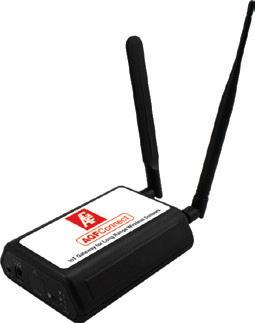

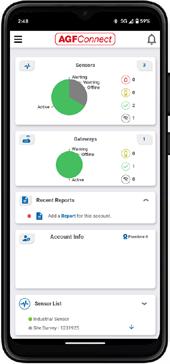
Sensors
Gateways
PRESIDENT’S REPORT
Welcome to summer! While families are planning trips, camps, and getaways, the construction world is planning data centers and energy generation facilities to support them. For some AFSA members, this is exciting news and an opportunity, while others are left wondering how to get involved in these projects.
The first step is to determine which types of water-based fire sprinkler systems will be required for these buildings and whether my company is equipped to handle this type of work. The short answer, in most cases, is likely to be pre-action systems, either single- or double-interlock designs, depending on the specifications. Data centers, for the most part, are facilities with stacks of self-contained cabinets filled with computers (aka servers), which generate a lot of heat, so they require extensive cooling systems and HVAC ducting. These HVAC systems use a lot of water, so you should expect communities where they are proposed to be built to raise concerns and for local people to protest their construction.
Pre-action sprinkler systems require electronic detection systems to activate solenoids, which trigger the valve(s) to open and admit water into the piping system. If your firm doesn’t have a low-voltage fire alarm division, you may need a partner to submit a complete bid for the work.
In addition to the technical aspects of these projects, many will have OCIP or CCIP insurance programs (owner or contractor-provided insurance policies). In these cases, you will be expected to reduce your bid by the amount of money you’d normally pay for your general liability insurance policy, already in place. Additionally, the project may require you to provide a pay -
BOB CAPUTO, CFPS AFSA PRESIDENT
ment or performance bond, which must be addressed with your insurance agent before submitting a bid.
About now, some of you might be wondering why I’d be writing this information when many of you already know these things. The short answer is that we get numerous calls asking what we know about data centers and how some of our members can get involved. The good news is that while this type of work has become pervasive and widely discussed, there are still plenty of great opportunities available in other sectors of the market, often with good margin potential and perhaps fewer chasers to compete with.
Regardless of the work you might be bidding on, I always encourage our members to remember you can’t spend the top line; only the retained earnings (profit). So, everything starts with a well-thought-out bid and proposal, and it always pays to be on time to maximize labor dollars and efficiency.
On a separate note, I want to give a big shout-out to Belinda Atuatasi, AFSA’s program manager for CTE school programs. In other words, her job is recruitment and lead development for bringing in the next generation of new hires to our industry. By introducing high school- and community college-aged students to people who most likely have never heard of the fire sprinkler industry and the awesome opportunities it offers, AFSA (national) hopes to bring more potential employees to our members. There is a bit of a catch to the success of this new program, and it’s you… the members. We need you to know what we’re doing and why we’re doing it, so when these young, interested people come knocking on your door, you’ll know we sent them your way, invite them in with open arms, and expect them to need training and grooming.
Remember the conversation about data centers a few paragraphs back? Well, I recently read that the electrical industry is looking to hire 50,000 new electricians to meet the need for workers to build them. We’re competing with them for talent, along with carpenters, HVAC workers, plumbers, and other blue-collar workers. How do we differentiate ourselves and share the message that our work is lifesaving, and it pays as well or better, sooner?
Belinda (at AFSA) needs your help with this program: let us know where opportunities are in your communities to share information about our industry and find volunteers within your companies to make presentations at your local schools. Belinda knows what to do; she just needs the help of every chapter and member to know where to support and do it. The more new blood we bring to the industry and to our members, the more qualified workers we train and deliver, the more work, and the more workers you will have in the future.
For the rest of Team AFSA, we’re busy preparing for our annual convention planned for September in San Antonio, Texas. If you were with us at the JW Marriott Hill Country a few short years ago, you know how much fun this year is going to be! Our opening party will be on the site lawn again, with a DJ, good food, and four cornhole courts. Get your teams together, and let’s see what our membership department comes up with for the winners’ prizes. As always, we have a great lineup of technical and business-related seminars for every interest, and you will not want to miss this year’s Awards Party at the famous Knibbe Ranch. Registration is now open on our website at firesprinkler.org/AFSA45, so come join us for the National Apprenticeship Competition, the training and education seminars, and a heck of a good time. Just remember, no suits or ties except for bolo ties. This is a jeans-and-boots event! See you in San Antonio!
BOB CAPUTO, CFPS, Publisher, ext. 124 | bcaputo@firesprinkler.org
D’ARCY G. MONTALVO, Editor, ext. 115 |dmontalvo@firesprinkler.org
CLARISSA RIOS, Communications Coordinator, ext. 134 crios@firesprinkler.org
D’ARCY G. MONTALVO, Editor, ext. 115 |dmontalvo@firesprinkler.org
PAUL DELORIE, Chair, Region 10, 603-432-8221
JAY STRICKLAND, First Vice Chair, Region 6, 301-474-1136
CHRIS JOHNSON, Second Vice Chair, Region 7, 727-581-9339
TOMMY CLEMENTS, Treasurer, Region 9, 804-459-2218
JEFF PHIFER, Secretary, Region 8, 803-438-2994
LINDA M. BIERNACKI, Immediate Past Chair, Region 5, 318-688-8800
BROOKS BAYNE, Region 1, 503-692-3284
HUNTER BRENDLE, At-Large, 334-270-8571
MINDY BUCKLEY, At-Large, 770-925-9099
R. DONALD (DON) KAUFMAN, Region 3, 505-884-2447
MICHAEL F. MEEHAN, At-Large, 804-459-2200
WAYNE WEISZ, Region 2, 209-334-9119
AFSA
BOB CAPUTO, CFPS, President, ext. 124
MATT KLAUS, Executive Vice President & COO, ext. 139
MELISSA ATHENS, Vice President, Finance, ext. 112
LESLIE CLOUNTS, Vice President, Education Services, ext. 130
JOHN AUGUST DENHARDT, P.E., FSFPE, Vice President, Engineering & Technical Services, ext. 121
MEDA MERRITT, CAE, Vice President, Membership & Chapter Development, ext. 133
Sprinkler Age is devoted to the professional development of the fire sprinkler industry. Deadline is 1st of the month preceding publication.
Published by American Fire Sprinkler Association, 1410 East Renner Road, Suite 150, Richardson, TX 75082. Call (214) 349-5965, FAX (214) 343-8898, or email sprinklerage@firesprinkler.org for information.
Copyright © American Fire Sprinkler Association, Inc. All rights reserved. PRINTED IN USA. Unless expressly stated otherwise, all editorial and advertising material published is the opinion of the respective authors and/ or companies involved and should not be construed as official action by or approved by Publisher or the Association.
Sprinkler Age is a membership benefit, provided free of charge to AFSA members. For information on non-member and/or foreign subscription rates, call (214) 349-5965.
AFSA annual membership dues are a sliding scale for Contractors and Associates and a flat fee for Authorities Having Jurisdiction. (Members receive a free subscription to Sprinkler Age.) Write or call AFSA for membership information. See AFSA’s website at firesprinkler.org.
FLASH POINT
Ijust had a birthday, which made me reflect on my career: what I have accomplished, what I have failed at, and what I still want to achieve. In my professional life, I can look at the buildings and projects I have protected, the range of systems I have designed, and the stories of systems performing when called upon to work. I have been fortunate: all the systems that operated worked as designed, and I am aware of no failures.
One interesting success story involves a friend of mine, Mark, who was the consultant on a project. This project involved an existing building that was being rebuilt after a major explosion and resulting fire. The use of the building involved the manufacture of road flares, whose ingredients and processes can lead to a rapidly developing fire. The system was designed, installed, and commissioned; then, within the first nine months, a fire occurred. That fire opened eight high-temperature-rated standard-response sprinklers and contained the situation until the fire department arrived to perform the final extinguishment. A true success story. The client was quoted as stating that the sprinkler system saved his company’s building, and operations were back the next week. I was proud of our team’s work.
Looking at my NFPA Technical Committee activities, I see many examples of how I changed and affected the standard over the years. It is my hope that I will be remembered for bringing a technical but practical voice to the standards. A funny example is the NFPA 13D requirement that pumps not be set directly on the floor. What does that mean? The TC wanted the pump off the floor, so a small amount of water on the floor would not affect the pump. I point-

JOHN AUGUST DENHARDT, P.E., FSFPE AFSA VICE PRESIDENT OF ENGINEERING & TECHNICAL SERVICES
ed out that, based on the current language, I could place a piece of paper on the floor and put the pump on it. That meets the requirements. The TC realized what I was saying and changed the requirement to be at least 11/2-in. off the floor.
Reviewing my impact on the next generation gives me the most joy. Over the years, I have had the opportunity to teach thousands of fitters, technicians, designers, and engineers. I enjoy what I do. We will always need new employees in our industry. Please encourage any interested person to come in and try this career. It will be rewarding.
What are you using your voice for? Are you proud of your current work? It was never my plan to do what I did. I just let my career take me to the next challenge. But the key is to always accept the challenge. I had the opportunity to listen in on a panel presentation in which Russ Levitt, Bob Caputo, and Steve Leyton discussed how their careers were shaped by their experiences. I took away the concept “Always accept a new challenge, assignment, or opportunity.” If you do not, a chance to make an impact might pass you by. A supervisor will understand if you say, “I have never done this, but I am willing to try and learn from it.” Amen! This has been my driving motivation throughout my career.
No matter where you are in your work experience, keep moving forward. AFSA is committed to education and training in the sprinkler industry. Use us in your career, and when you have the opportunity, give back. We are always looking for presenters, presentations, volunteers, VIP instructors, and other opportunities. I am challenging you to be all you can be and then give back.

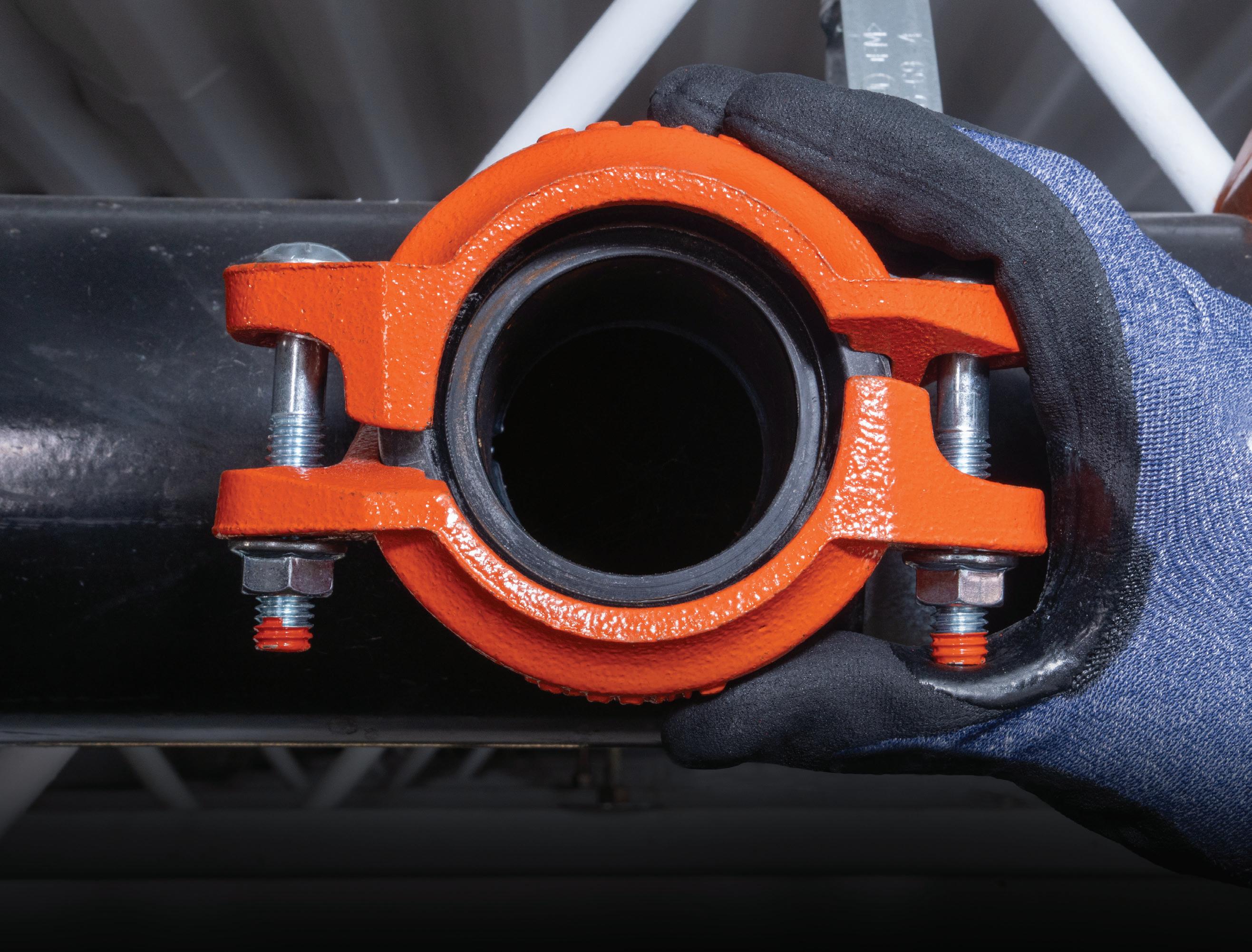
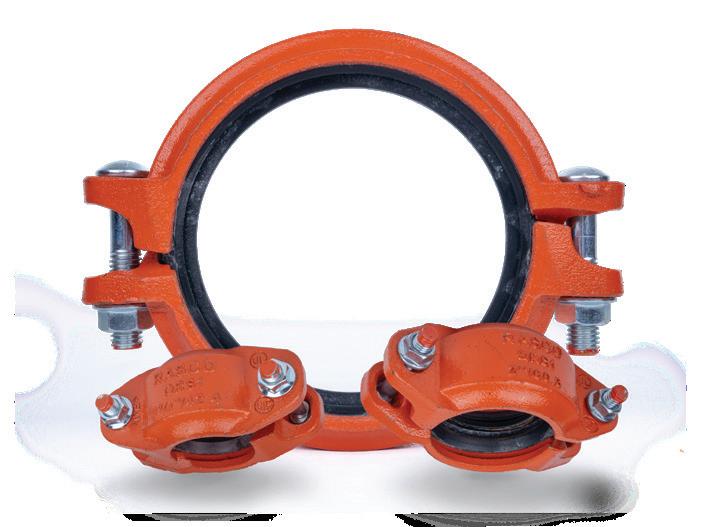
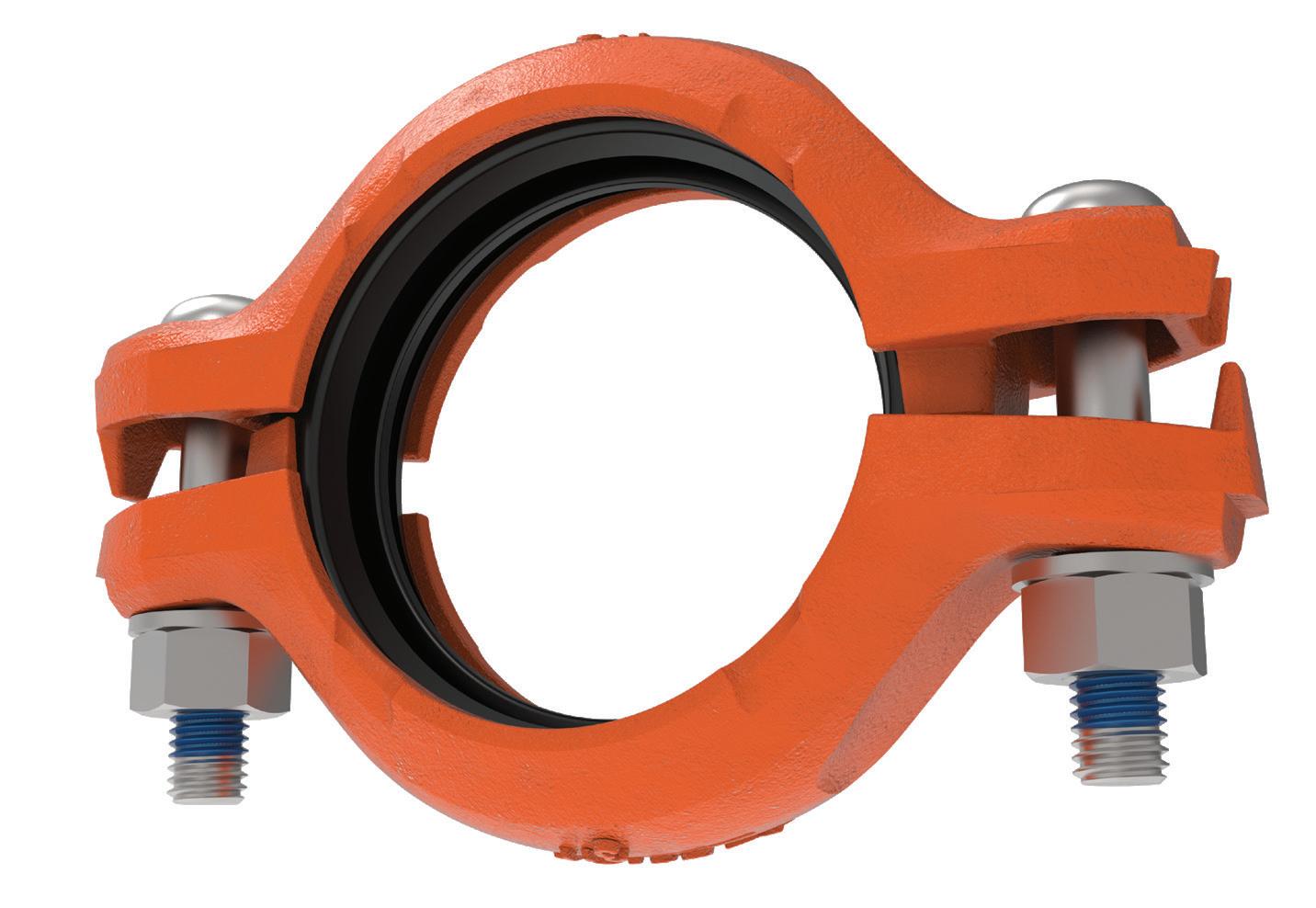
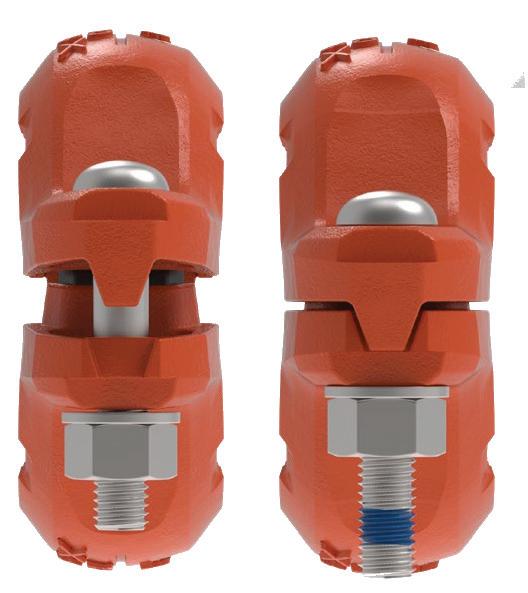
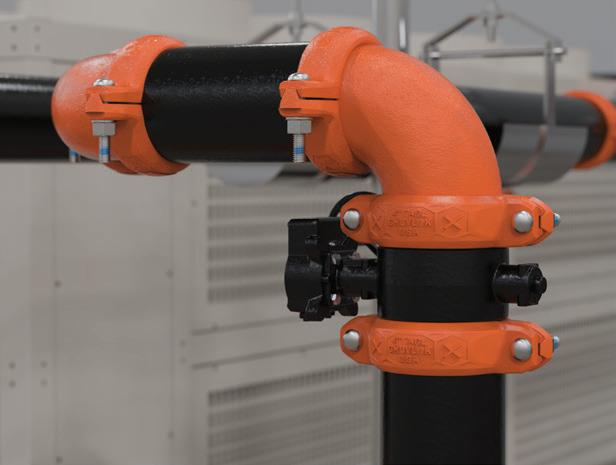
Introducing the Figure C9-CL The Fastest, Easiest to Verify Rigid Coupling Available
• Visual and Tactile Installation Verification
• All-new Patent-pending Design
• CenterLOK™ Gasket Enables Two-handed Installation
• Simplified Tightening
• Ready-for-installation

MAKING A DIFFERENCE FOR MELANIE
DIAZ FAMILY ADVOCATES FOR RETROFITS
AND UPGRADED FIRE SAFETY IN HIGH-RISE BUILDINGS
When tragedy struck the Diaz family in 2023, they made a promise that no other family should have to endure the same heartbreaking loss. In the wake of their daughter Melanie’s death in a high-rise apartment fire, Cesar Diaz, his wife, Zuleika Madera, and their son, Cesar Alejandro, transformed their grief into a relentless mission to improve fire safety across Montgomery County and the state of Maryland. Through tireless advocacy, legislative action, and unwavering commitment to protecting others, the Diaz family has become a powerful voice for fire sprinklers and life safety—efforts that have earned them AFSA’s 2026 Fire Sprinkler Advocate of the Year Award.
A FAMILY’S MISSION TO PROTECT OTHERS
Melanie Diaz had a passion for making the world a better place. She attended Georgetown University
and worked at NASA and the U.S. Attorney’s Office. After earning a Bachelor of Science in Foreign Service in 2021, she joined the Aspen Institute’s Climate and Environment Program, where she worked to address global challenges.
On February 18, 2023, Melanie’s life was tragically cut short when a massive fire broke out in her apartment building. Firefighters found her unconscious in a ninth-floor hallway during rescue efforts, and she later died from her injuries at the hospital. She was only 25 years old.
The subsequent investigation revealed significant fire safety deficiencies at the apartment complex. According to investigators, the building was equipped with fire sprinklers only in the garage—not in individual units. Officials also reported that there was no working smoke alarm in the apartment where the fire started and no smoke alarms in the hallways. Other deficiencies, including the absence of emergency lighting.
Since Melanie’s death, the Diaz family has worked tirelessly alongside fire service leaders, government officials, and sprinkler proponents to push for change. Their efforts culminated in the passage of legislation aimed at increasing fire safety and preventing future tragedies.
“YOU CAN’T REPLACE A LIFE.”
MELANIE DIAZ FIRE SAFETY ACT
A year after Melanie’s death, the Melanie Fire Safety Act was signed into law, strengthening tenant protections and fire safety requirements for residential buildings. The law includes: • Sprinklers & Tax Credits: Establishes a framework and a longterm goal to retrofit older high-rise buildings with modern sprinkler systems and provides local proper-
DIFFERENCE
ty tax credits for building owners who make these safety upgrades.
• Building Notification: Requires building management and landlords to clearly note in leases and on signs at all main entrances if the building lacks a complete automatic sprinkler system.
• Tenant Protection & Access: Mandates that landlords inform residents of emergency plans and provide 24-hour access to a building representative during emergency situations.
In addition, House Bill 149 was signed into law earlier this year, requiring residential high-rise buildings undergoing substantial repair or renovations (equal to or greater than 40% of the building’s state-assessed value) to install automatic fire sprinklers for building permits issued on or after October 1, 2026.
The Diaz family’s advocacy extended beyond legislation, donating more than $10,000 to help the Montgomery County Fire and Rescue Service become the first department in the nation to equip firefighters with smoke safety hoods designed to protect victims from toxic smoke inhalation during rescues, particularly in high-rise buildings.
Since Melanie’s death, the department has also adopted additional firefighting tools, including floor-below nozzles that allow firefighters to direct water to upper floors when stair access is unsafe, as well as smoke curtains that help limit the spread of smoke through open doorways during emergency operations.
HONORING DEDICATION
For AFSA, the Diaz family’s work exemplifies the purpose of its Fire Sprinkler Advocate of the Year Award, which recognizes individuals outside the fire sprinkler industry whose efforts have significantly advanced fire protection and life safety.
“Mr. Diaz has been a powerful and authentic advocate for sprinkler protection, demonstrating how one individual’s voice can influence policy, raise awareness, and drive meaningful change in life safety,” says AFSA First Vice Chair and Region 6 Director Jay Strickland, vice president of business Development, Pye Barker Fire & Safety, Forestville, Md., who nominated the family. “Follow ing the tragic and pre vent able
loss of his daughter in a high-rise apartment fire, the Diaz family has become relentless champions for improving fire protection. Their efforts have directly contributed to legislative action, increased public awareness, and ongoing policy discussions centered on expanding the use of sprinklers in residential buildings.”
The award will be presented at AFSA45: Convention, Exhibition, and National Apprentice Competition in San Antonio, Texas, this fall. Diaz says his family will continue in their efforts, no matter the cost. “You can replace a house, you can replace a car, you cannot replace a life. I don’t want anyone to feel the same pain we feel.”
He says Melanie expressed that same sense of purpose best: “She always said, ‘If you can’t make a difference, who will?’”
EDITOR’S NOTE: Nominations for AFSA’s awards are accepted year-round at firesprinkler.org/awards.

in the wake of melanie’s death, The diaz family has become a powerful voice for fire sprinklers and life safety.
BURN DAY FOR NEXT GEN FPES
UNIVERSITY OF MARYLAND HOLDS 12TH ANNUAL BURN DAY
JEFF LEWIS | VSC FIRE & SECURITY, INC.
The American Fire Sprinkler Association (AFSA) was proud to sponsor the University of Maryland Department of Fire Protection Engineering’s 12th annual Burn Day, when approximately 175 high school students from 11 schools competed to demonstrate their design and application of fire protection engineering principles. FPE alumni served as mentors to different schools and as judges. The purpose is to introduce students to the fire protection engineering field and have them enroll at the University of Maryland.
The challenge was for the students to work in small teams and use the provided materials to create a fire detection, notification, and suppression system for a scale
model two-room apartment. The apartment had to include furniture, carpet, and wall coverings of the typical variety you would encounter in an apartment. The teams are also limited to spending no more than $50 beyond the material provided.
Most of the teams I witnessed utilized a hardware and software kit that included a circuit board, a light, and a heat sensor for detection. Suppression agents included water, baking soda and vinegar, sand, and dry chemical. The suppression agents may have been released upon the activation of the heat sensor or by the melting of some component.
Now for the fun part, the fires. The competition took place at ATF’s Fire Research Lab in Beltsville, Md., under the world’s largest burn hood. ATF personnel set
the fires and handled all the scale models once they were placed on the tables. The entries were judged on five criteria: livability, response time of the detector, time for suppression, spread to other objects, and cost.
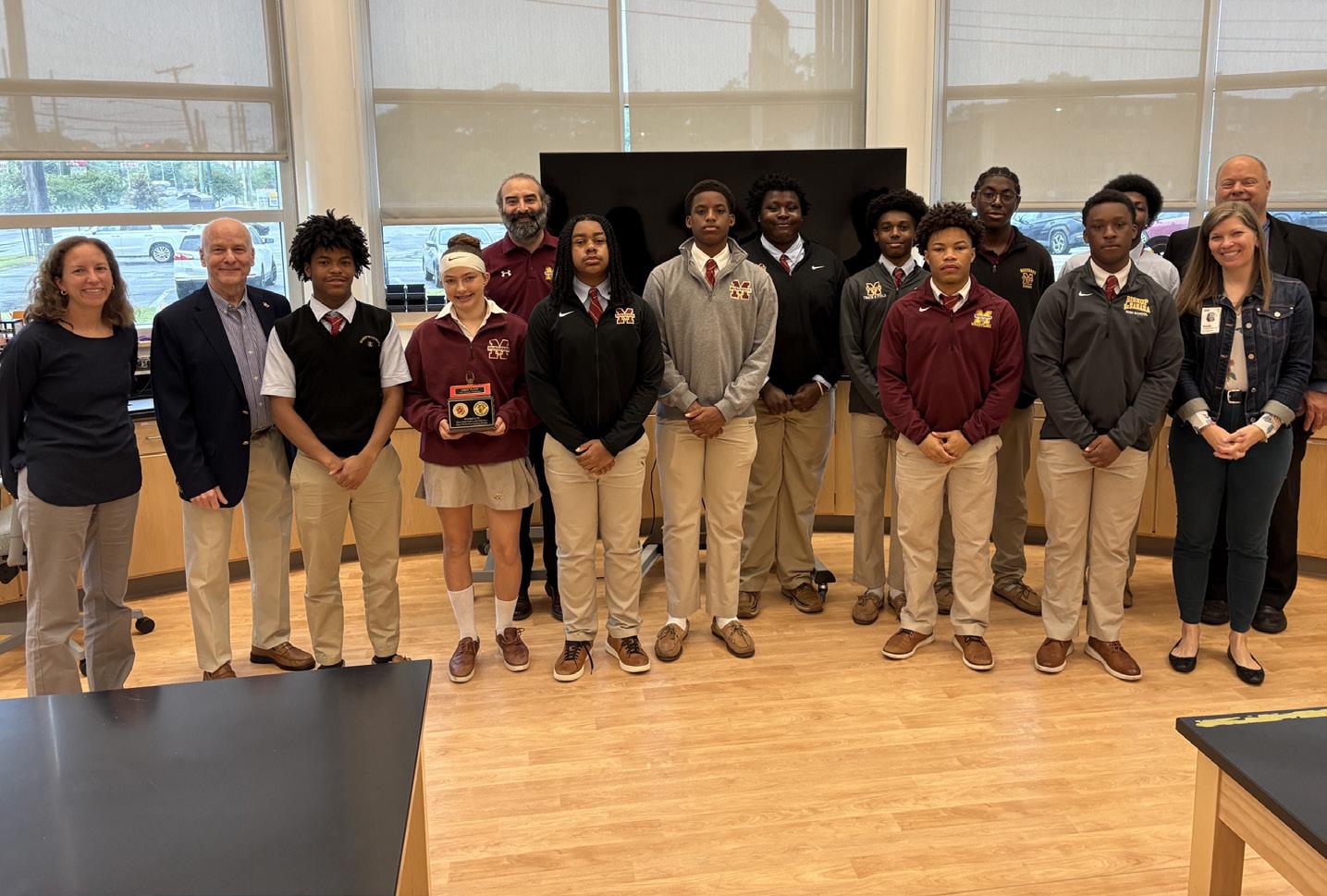
Congratulations to the overall winner from Bishop McNamara, “Mighty Mustangs,” for their wellthought-out and innovative design. Burn Day continues to be a powerful example of how handson learning can spark interest in fire protection engineering and the broader life safety industry.
ABOUT THE AUTHOR: Jeff Lewis is the vice president of technical workforce development for VSC Fire & Security, Inc. He has been in fire protection for 40 years. Lewis’ experience includes firefighting, inspections, special hazards, training, and project management. His NICET certifications include Level III in the Inspection and Testing of Water-Based Systems, Level III in Special Hazards Suppres-
STUDENTS FROM BISHOP MCNAMARA HIGH SCHOOL ACCEPTING THE AWARD FOR THEIR WINNING TEAM, MIGHTY MUSTANGS.
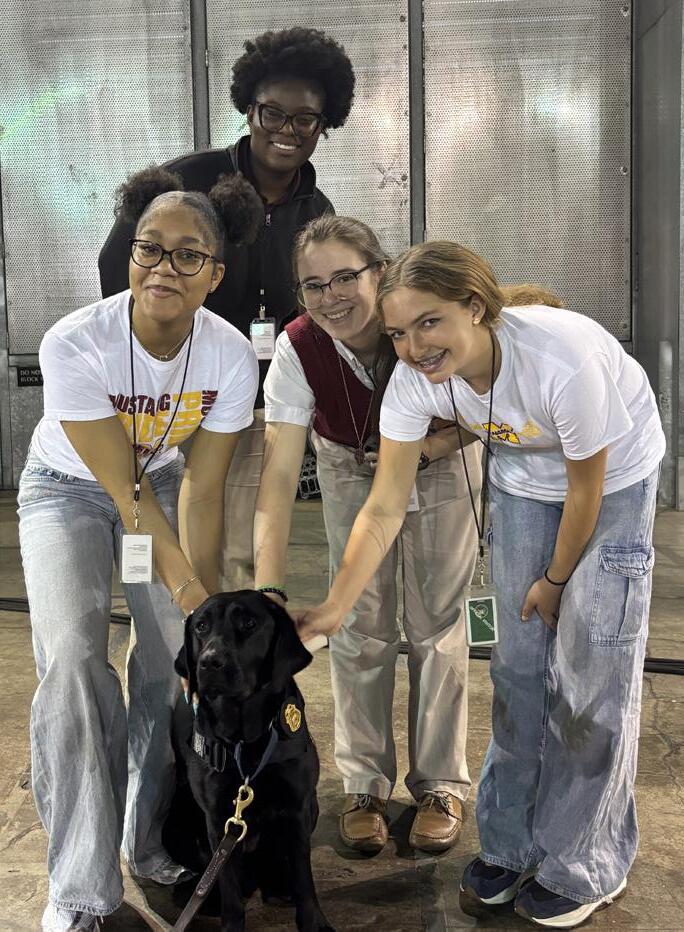
the winning team on event day with the ATF K9.

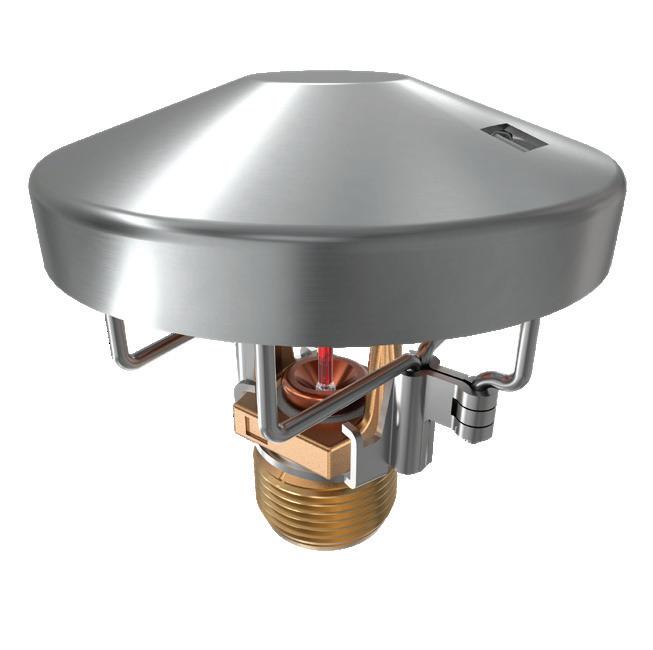
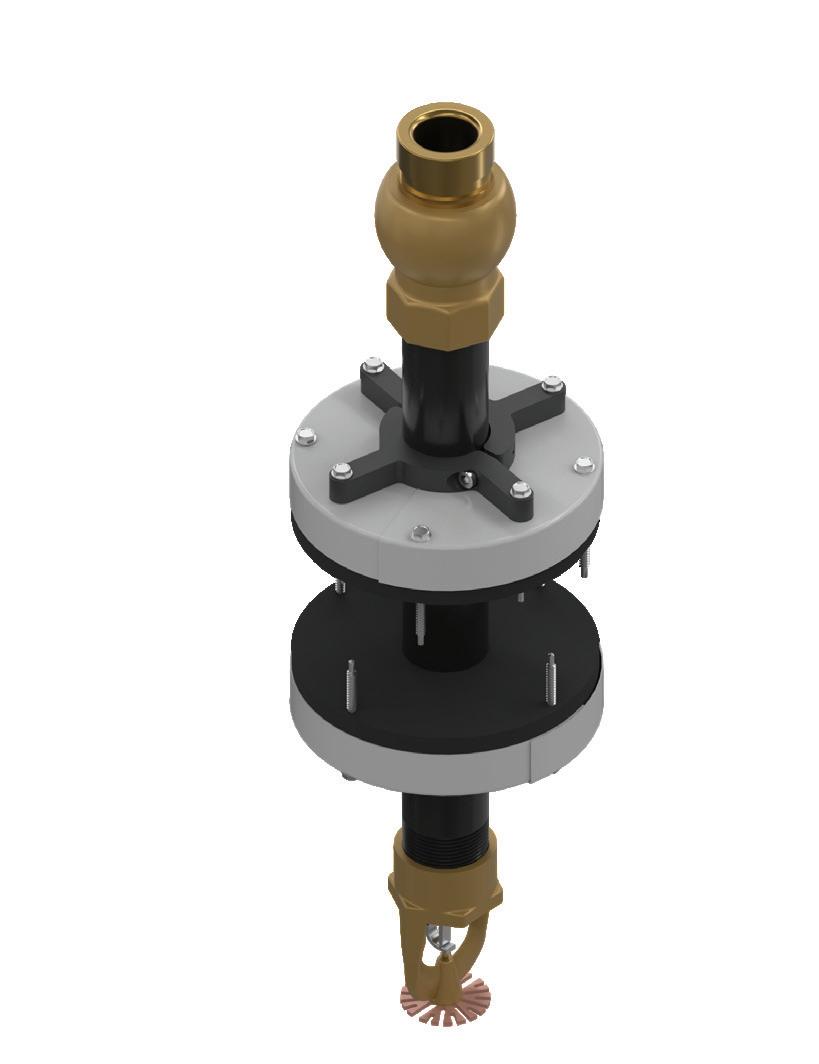
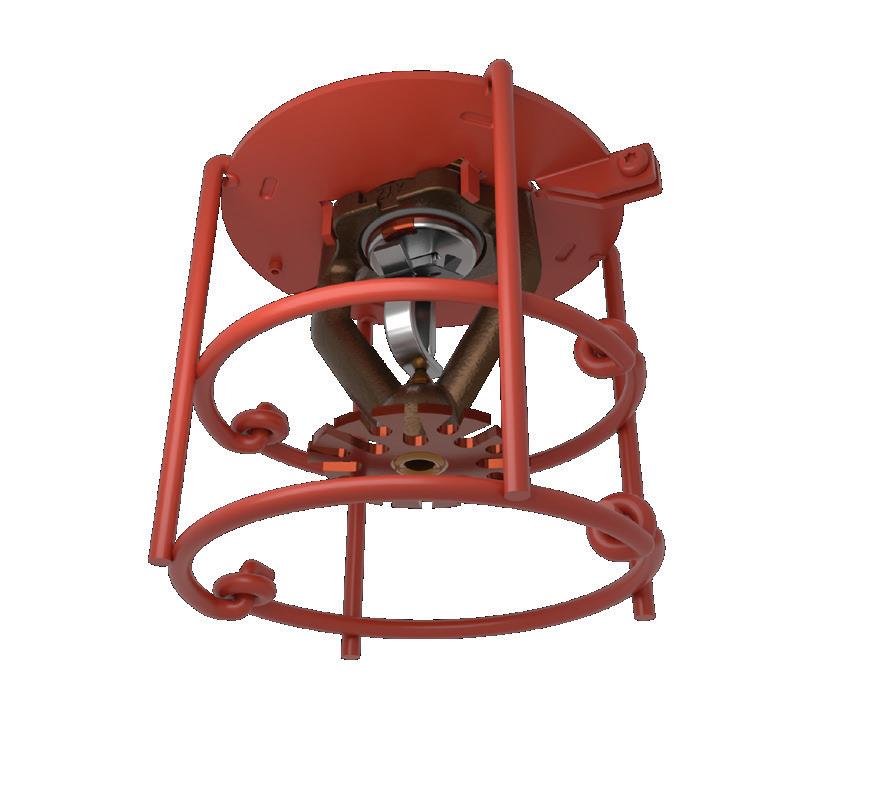
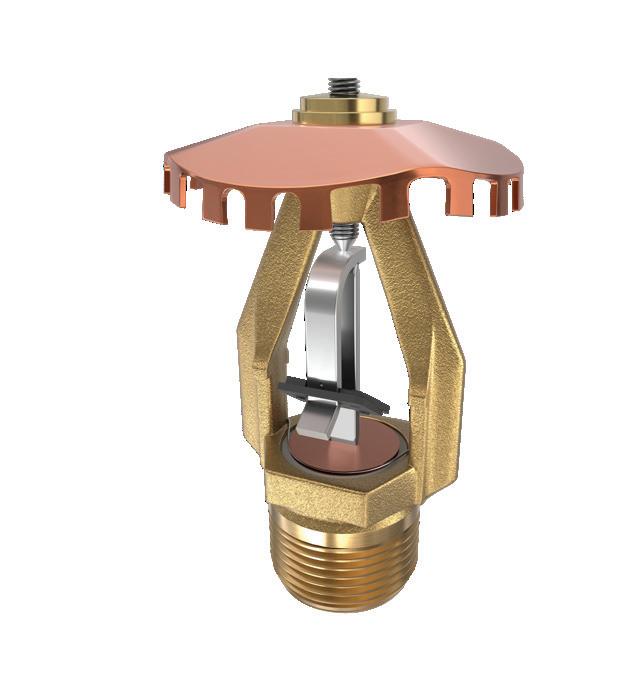
Complete Fire Protection for Storage Occupancies
When it comes to protecting storage facilities, Viking has you covered. From high-performance sprinklers to innovative valves and systems, we deliver a safety solution you can trust. Whether you are protecting a warehouse, a freezer or manufacturing plant, we have products that are FM Approved and/or UL Listed to just that.
• ESFR & Storage Sprinklers – Complete storage protection solutions, include control-mode and suppression sprinklers, with K-factors from 5.6 to 28
• Valves & Systems – Customize a valve & system solution to meet your specific needs
• Accessories – Sprinkler guards and shields, cold storage brackets and insulating boots, wrenches and more, we got them
• Expert Support – Our team is here to help tailor a solution to meet your storage needs
Learn more on our website at vikinggroupinc.com.
Viking’s revolutionary Sprinkler Selector ensures that you can find the right sprinkler for the job — every time. Get started by visiting webtools.vikingcorp.com/sprinklerselector.
AFSA45 EXHIBIT HALL SOLD OUT
ROUNDING UP THE BEST MANUFACTURERS AND SUPPLIERS
The American Fire Sprinkler Association (AFSA) has rounded up the best manufacturers and suppliers in the fire protection industry for AFSA45: Convention, Exhibition, and Apprentice Competition. View the best products and services at the event of the year, to be held Sept. 27-30, 2026, at the JW Marriott San Antonio Hill Country Resort & Spa.
portunities to build and reinforce relationships,” states AFSA Chair of the Board Paul DeLorie, senior vice president, Hampshire Fire Protection Co., Londonderry, N.H. “AFSA45 will bring together contractors, manufacturers, suppliers, designers, and AHJs to form partnerships and share best practices.”
The exhibit hall also serves as a hub for networking, where profes-
Eat, drink, and network as you visit with manufacturers and suppliers across the expansive hall. The next afternoon, the hall will open once again to attendees, with the 33rd National Apprentice Competition (NAC) simultaneously underway. Convention attendees can watch as the top seven apprentices cut, thread, and install a steel and plastic pipe system with sprinklers in Phase II of the competition.
“THE LARGEST FIRE SPRINKLER EXHIBITION IN THE INDUSTRY PROVIDES OPPORTUNITIES TO BUILD AND REINFORCE RELATIONSHIPS.” – PAUL
DELORIE
This year’s exhibit hall is sold out. Couple this with over 80 technical and managerial seminars, and you have a convention as big as Texas!
EXHIBIT HALL EXCITEMENT
AFSA’s exhibit hall is one of the most exciting and valuable parts of AFSA45. It offers a unique opportunity to discover the latest products, services, and innovations shaping the industry, all in one place. Attendees can meet face-to-face with exhibitors, ask questions, see demonstrations, and gain insights that go beyond what they can find online.
“The largest fire sprinkler exhibition in the industry provides op-
sionals can connect with industry leaders, explore new business opportunities, and exchange ideas with peers. Whether AFSA45 attendees are seeking solutions, inspiration, or new partnerships, the exhibit hall delivers hands-on experiences and meaningful connections that enhance the overall convention experience.
The exhibit hall will be open for unopposed hours twice during AFSA45: the Exhibition Grand Opening Reception on Tuesday, Sept. 29, from 2:30 p.m. – 5:00 p.m. and again on Wednesday, Sept. 30, from 12:30 p.m. – 3:30 p.m. The reception, hosted by DeLorie, offers the first look at this year’s exhibits.
EDUCATE AND ENTERTAIN
This year, AFSA is offering an Education Pass, allowing contractors to bring more staff for technical and managerial training. This value-packed option provides access to four days of seminars, three days of networking meals, and access on Day 2 of the exhibits. Purchase this pass during online or onsite registration.
After an afternoon of sessions on Sunday, Sept. 27, attendees will be ready to gather for a lively TexMex fiesta at the AFSA45 Opening Party. Guests will enjoy a buffet of regional favorites while a DJ fills the resort’s grand lawn with upbeat music and outdoor games
bring the party to life. This evening will provide an opportunity to unwind, strengthen professional relationships, and experience the vibrant culture and hospitality that define Texas!
Knibbe Ranch, a real Texas working ranch, will be the setting for the final night Awards Party on Wednesday, Sept. 30. Featuring a live country music band, armadillo races, line dancing, and delicious Texas-sized steaks cooked to perfection on an outdoor grill by master culinary chefs, this event will be an unforgettable night under the stars. The highlight of the party will be the announcement of the NAC champion, who will receive bragging rights, tools, a commemorative plaque, and a $10,000 cash prize!
AFSA
AGF Manufacturing, Inc.
American BackFlow Products Co.
Ameriflo Corporation
Ames, a WATTS Brand
Arbiter
ARGCO
Armstrong Pumps, Inc.
ASC Engineered Solutions
BAVCO
Borusan Pipe
Brecco Distribution Corporation
Brooks Equipment
BuildingReports
BuildOps
Bull Moose Tube Company
C-Aire Compressors, Inc.
Cintas Corporation
CLA-VAL COMPANY
Clarke Fire Protection Products, Inc.
Common Voices
Consolidated Fire Protection
Core & Main Fire Protection
Croker Div. Fire End & Croker Corp.
Diamondback Fire Protection LLC
Driven Fire Consultants
Duyar
DYNE/NFPA Global Solutions
Eaton TOLCO and Fire Pump
Ember Software
Engineered Corrosion Solutions, LLC
ETI Continuing Education
National Fallen Firefighters Foundation
Fayette Pipe Company
RESERVE YOUR ROOM
Hotel reservations can be made during the AFSA45 registration process. The $259 group rate per night plus tax for single/double ($305.85 per night with included resort fee and taxes) includes:
• Wireless internet in the conference center—general bandwidth, which allows for casual browsing.
• Guest room wireless internet for up to six devices and local/domestic long-distance phone calls.
• Two welcome drinks per stay in Crooked Branch (gratuity not included).
• Admission to the resort’s nine-acre River Bluffs Water Experience.
• Access to the Lantana Spa Fitness Center (minimum age 17 years).
• Golf bag storage at TPC San Antonio.
AFSA45 Exhibitors
Ferguson Fire & Fabrication
Fiberglass Tank Solutions
Fire Tank Pros
Fire Tech Productions
Firedesign.ai
Forge Global Tanks
Gast Manufacturing, Inc.
General Air Products Inc.
Geo-Systems USA
GTI Fire Protection Systems Corp. (Firetrol)
Guardian Fire Equipment, Inc.
Home Fire Sprinkler Coalition
Homes for our Troops
HRS Systems, Inc.
Hydratec Inc.
Inspect Point
IPEX USA LLC
ITW Commercial Construction
JG Innovations, Inc.
JOB GmbH
Johnson Controls
K-Factor Podcast
Kennedy Valve
LAW Technical Services, LLC
Lubrizol
Metraflex Company
Milwaukee Tool
Milwaukee Valve Company, LLC
National Fire Protection Association (NFPA)
NICET
Noble Company
Nucor Tubular Products
nVent CADDY
Oklahoma State University
• Use of tennis and pickleball facilities includes up to four rackets, based on availability.
• Use of the Sports Court includes two hours of court time and balls included.
REGISTER TODAY!
The regular registration deadline for AFSA45 is Aug. 21. Late registration dates, with higher fees, are Aug. 22-Sept. 23. After Sept. 23, registrations must be made at the AFSA45 registration desk at the onsite rate. Visit firesprinkler. org/afsa45 to secure your spot and join fellow professionals in Texas for a dynamic event filled with inspiration, connection, and plenty of Lone Star hospitality!

Patterson Pump Company
Peerless Pump Company
Permabond Engineering Adhesives
Potter Electric Signal Company
Potter Roemer
Pumptec
Quaker Houghton
REED Manufacturing Company
Reliable Automatic Sprinkler Co., Inc.
Senju Fire Protection Corp.
Service First Processing
ServiceTitan
ServiceTrade, Inc.
Siteline
Solberg Company LLC
South-Tek Systems
Spears Manufacturing Company
SPP Pumps Inc.
Talco Fire Systems
Test Gauge Inc
Texas Manufacturing Company
The Hose Monster Company
Tigerflow Systems, LLC
Tornatech International Inc
UNITED Fire Systems
Uptick Fire Production Software
Victaulic
Viking Group, Inc.
Wheatland Tube
Wilson & Cousins
Winsupply, Inc.
Zurn Wilkins
NFPA 75, 2028 EDITION UPDATES
MODERNIZING THE STANDARD FOR DATA CENTERS
KEVIN HALL, M.ENG., P.E., ET, CWBSP, PMSFPE | AMERICAN FIRE SPRINKLER ASSOCIATION
As data centers continue to grow in size, complexity, and importance, the technical committee responsible for NFPA 75, Standard for the Fire Protection of Information Technology Equipment, is evaluating several revisions aimed at modernizing the standard and aligning it with current industry practices. Although the proposed changes are still in the early stages of development, the first-draft revisions for the 2028 edition provide insight into how the committee is addressing terminology, sprinkler protection, and fire protection system testing in modern data centers. While many of the proposed revisions are relatively modest, they collectively signal a continued effort to ensure that NFPA 75 reflects the realities of today’s data center industry rather than the information technology environments that existed when the standard was first developed.
Among the most notable firstdraft revisions are updates replacing legacy information technology equipment (ITE) terminology with more commonly used industry terms, clarifications regarding the minimum sprinkler design criteria for data centers, and new guidance related to the testing of preaction sprinkler systems.
FROM ITE AREAS TO DATA CENTERS
One of the most visible proposed changes involves terminology. Historically, NFPA 75 has used terms such as “ITE area” and “ITE room” to describe spaces containing information technology equipment. While technically correct, these terms have become increasingly uncommon throughout the data center industry. Today, the industry almost universally refers to these facilities as data centers and the individual equipment spaces as data halls.
To better align the document with current industry terminology, the committee approved revisions that would replace references to “ITE area” with “data center” and “ITE room” with “data hall” throughout the standard. Proposed revisions also introduce new definitions for both terms while maintaining consistency with existing information technology equipment concepts. The revisions recognize the evolution of modern computing infrastructure, which now includes hyperscale facilities, colocation campuses, edge computing installations, and modular data centers designed to house large amounts of information technology equipment and supporting infrastructure.
The terminology updates extend beyond the definitions chapter. The committee also approved revisions to the scope statement that would identify the standard as covering the protection of data centers, information technology equipment, and associated areas, rooms, and records. The discussion surrounding terminology did not stop with the body of the document. During the public input stage, a submitter proposed changing the title of NFPA 75 to better reflect the industry’s widespread use of the term “data center.” However, any change to the title of an NFPA document ultimately falls under the authority of the NFPA Standards Council. While the proposal demonstrates the industry’s continued movement away from traditional ITE terminology, it should not be interpreted as an indication that the title of NFPA 75 will change as part of this revision cycle.
Although these terminology revisions do not significantly alter the technical requirements of the standard, they represent an important modernization effort. More importantly, they align NFPA 75 with the language already being used throughout the data center industry, reducing potential confusion among designers, owners, operators, and Authorities Having Jurisdiction (AHJs).
CLARIFYING THE MINIMUM SPRINKLER DESIGN BASIS
Another significant first revision addresses a longstanding question within the fire protection community: the appropriate occupancy hazard classification for sprinkler systems protecting data centers. Under a proposed revision, sprinkler systems protecting data halls and data centers would be required to use a minimum Ordinary Hazard (Group 1) (OH1) design basis unless a fire risk assessment identifies a higher hazard classification.
Many fire protection engineers already use an OH1 design basis for data centers. The proposed revision would establish that approach as the minimum requirement within NFPA 75. The revision appears intended to address lingering confusion stemming from older editions of NFPA 13, Standard for the Installation of Sprinkler Systems. Historically, examples associated with data processing occupancies appeared within Light Hazard occupancy classifications, leading some stakeholders to conclude that certain information technology spaces could be protected using Light Hazard criteria. While those references have since been removed from NFPA 13, questions regarding the appropriate design basis have continued to surface on projects involving data centers.
The proposed revision makes the committee’s position clear: modern data centers should be protected using a minimum OH1 design basis. From a practical standpoint, this reflects the realities of today’s facilities. Modern data halls frequently contain significant quantities of combustible cable insulation,

plastic equipment housings, rack components, and supporting infrastructure. Combined with high electrical loads and dense equipment arrangements, these hazards differ significantly from those found in traditional office environments.
For designers, the revision could help improve consistency between project teams, owners, insurers, and Authorities Having Jurisdiction. Ordinary hazard occupancies can use standard response and high-temperature-rated sprinklers throughout, which would simplify some design considerations when laying out sprinklers in hot/cold aisles. For owners and operators, it provides additional confidence that sprinkler systems are being designed to address the hazards associated with modern data centers rather than relying on outdated occupancy assumptions.
ADDITIONAL GUIDANCE FOR PREACTION SPRINKLER SYSTEMS
Another noteworthy revision addresses the use and testing of preaction sprinkler systems pro-
tecting data centers. Preaction systems have long been popular within mission-critical facilities because they are often viewed as providing an additional safeguard against accidental water discharge. However, reducing the potential for unwanted water discharge must be balanced against increased system complexity, maintenance requirements, and possible delays in sprinkler operation during a fire.
To address concerns associated with system testing, the committee approved a proposed revision recommending that preaction sprinkler systems protecting data centers be provided with an additional indicating control valve above the preaction valve, as permitted by NFPA 13. The recommendation is intended to facilitate the functional trip testing required by NFPA 25, Standard for the Inspection, Testing, and Maintenance of Water-Based Fire Protection Systems, while minimizing the potential for water to enter the sprinkler piping network serving the protected data hall.
THE NFPA 75 2028 REVISION CYCLE addresses the needs of modern data centers.
While relatively simple, this change could provide meaningful operational benefits. NFPA 25 requires periodic functional trip testing of preaction systems. During a traditional trip test, water may enter portions of the system piping. While this may not present a significant concern in many occupancies, data center owners often view any unnecessary introduction of water into sprinkler piping located above critical equipment as an undesirable risk. The proposed arrangement allows testing to be performed while limiting water movement to portions of the riser assembly, reducing the likelihood that water will enter the branch line piping protecting the data hall.
The proposed annex language also provides an important reminder regarding the broader use of pre-action systems. While many owners prefer preaction protection because of concerns regarding accidental discharge, the annex notes that efforts to minimize unwanted water release should be balanced against the possibility of increased fire damage resulting from delayed sprinkler operation. That discussion is particularly relevant as owners continue evaluating the merits of wet-pipe, single-interlock preaction, double-interlock preaction, and alternative suppression technologies. Rather than advocating for a single protection approach, the proposed language encourages stakeholders to carefully evaluate both fire protection performance and operational objectives when selecting a system type, but it should be noted that the scales
seem to be tipping towards the use of single-interlock with double-interlock preaction systems reserved for cold storage maintained below freezing.
WHAT THESE CHANGES MAY SIGNAL
While the first-draft revisions are relatively limited in scope, they suggest the committee is working to modernize NFPA 75 and better align the document with today’s data center designs and operations. The terminology changes recognize the industry’s shift away from legacy ITE language. The sprinkler protection revisions establish greater clarity regarding the expected level of protection. The preaction system revisions acknowledge operational concerns that have become increasingly important as data centers continue to expand in size and value.
None of these revisions fundamentally changes the purpose of the standard. However, they demonstrate an effort to make it more relevant to today’s facilities while providing clearer guidance for designers, owners, operators, insurers, and authorities having jurisdiction. As data center infrastructure continues to evolve, future editions of NFPA 75 may continue moving away from terminology and concepts rooted in traditional computer rooms and toward requirements that more directly address modern data center environments.
NEXT STEPS
As with all NFPA standards, the first-draft meeting represents only one step in the standards develop-
ment process. The proposed revisions discussed in this article will be published as part of the First Draft Report and made available for public review. Interested parties will have an opportunity to submit public comments on the proposed revisions. The committee will then review those comments during the second-draft stage and determine whether further revisions are needed.
Following completion of the second-draft process, the document may be subject to Notices of Intent to Make a Motion (NITMAMs) before ultimately proceeding toward issuance as the 2028 edition. It is important to emphasize that all the revisions discussed in this article are preliminary. Although the revisions were approved during the first-draft stage, they have not completed the NFPA consensus process and should not be considered final requirements. The proposed changes remain subject to public comment, potential revision by the technical committee, and possible action through the NITMAM process before the 2028 edition of NFPA 75 is ultimately issued.
Additional information regarding the NFPA 75 revision cycle, including access to revision documents and opportunities to participate in the standards development process, can be found at nfpa.org/75next.
ABOUT THE AUTHOR: Kevin Hall, M.Eng., P.E., ET, CWBSP, PMSFPE, is the director of engineering for the American Fire Sprinkler Association (AFSA). He is a member of several National Fire Protection Association (NFPA) technical committees responsible for developing the model codes and standards, and the staff liaison for AFSA’s Technical Advisory Council.


TRANSFORMING LEGACY INTO LEADERSHIP
BUCKLEY HONORED WITH THE 2026 JOE HEINRICH YOUNG PROFESSIONAL OF THE YEAR AWARD
D’ARCY MONTALVO | AMERICAN FIRE SPRINKLER ASSOCIATION
When the American Fire Sprinkler Association’s (AFSA) NextGen selected Mindy Buckley as its 2026 Joe Heinrich Young Professional of the Year, it recognized more than an emerging leader. It honored someone who has helped shape her family’s company while carrying forward a legacy of industry service—and is now helping prepare the next generation to do the same. “This industry was not where I thought I would end up,” says Mindy Buckley, CFO and co-owner of Allsouth Sprinkler Company, Buford, Ga. Despite being born into a family involved in fire protection, she didn’t see herself working at the company. “I wanted to be a teacher, a veterinarian, or a lawyer!”
Looking back, Buckley noticed a common thread: the desire to help people. “As I got older, I had the opportunity to watch my grandfather [Robert McCullough], father [John McCullough], and uncle [Bobby McCullugh] build Allsouth with passion and purpose.
I started to realize the impact they were making—not only by protecting lives and property, but by creating opportunities for employees and building lasting relationships with customers and industry partners.”
It’s that commitment to investing in people that has earned Buckley the 2026 American Fire Sprinkler Association’s (AFSA) Joe Heinrich Young Professional of the Year award.
AFSA Immediate Past Chair of the Board Linda Biernacki, president of Fire Tech Systems, Inc., Shreveport, La., nominated Buckley. “Mindy represents exactly what the industry envisioned when AFSA Chairman Joe Heinrich encouraged the creation of the Young Professional of the Year award. Mindy has grown up in this industry and steadily worked through the ranks, earning her role as CFO.”
FINDING HER OWN PURPOSE
After college, Buckley interned in the accounting department at Allsouth. “The more I learned about the business and the people behind it, the more I felt a similar pull toward this industry,” she remembers. “My grandfather and father inspired me, but finding my own purpose here is what ultimately made me choose Allsouth and what has kept me here ever since.”
Buckley spent many years at Allsouth learning the finance and administration side of the business. Over time, her father intentionally began exposing her to other areas of the company and giving her insight into the knowledge and experience he had gained from his father and throughout his career. “With many years of conversations and experiences, I gained a better understanding of sales,
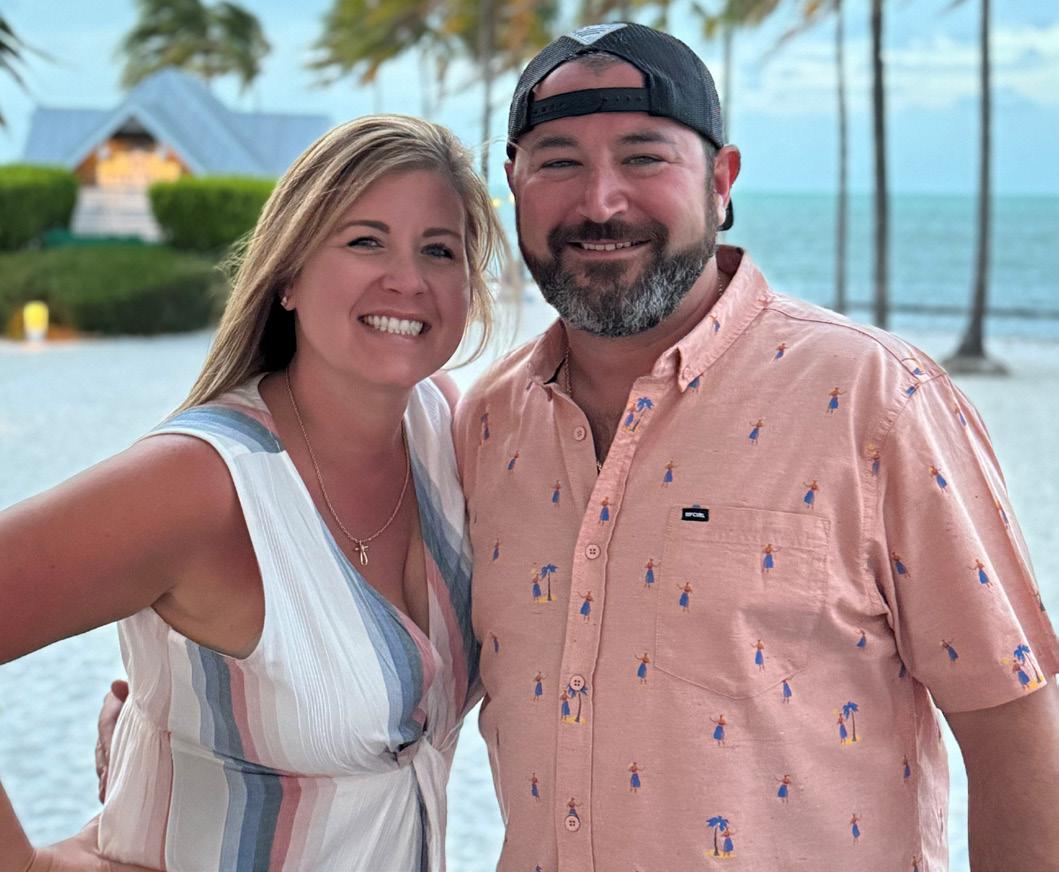
MINDY is grateful for MICHAEL’s love and support, and he is regularly a part of allsouth, GFSA, and AFSA events.
material procurement, project management, customer relationships, and the many moving pieces he managed and that were required to run a successful company.”
Some of the lessons Buckley learned from her father were to earn respect through service, invest in relationships, learn through experience, and never hesitate to seek advice. Those experiences became even more meaningful for Buckley after her father’s sudden passing. “I am incredibly grateful for the time he spent sharing his perspective and helping me understand the business. It gave me a much deeper appreciation for the role every team member plays in our success and has greatly influenced the way I lead today,” she says.
Buckley is proud that Allsouth has continued to grow and expand since its inception 50 years ago, offering protection services for properties in the commercial, industrial, and residential sectors. It also provides quality control, scheduling, inspection and fabrication services. Company leadership has embraced developing the next generation with mentoring programs and employee development initiatives like job shadowing, internships, and pathways for promotion.
EXPANDING HER IMPACT
Growing up, Buckley watched her grandfather’s involvement with AFSA and the Georgia Fire Sprinkler Association (GFSA), and later saw her uncle, Bobby, continue that through his leadership with GFSA. “It showed me early on that being part of this industry means more than just running a company,” she notes. “It means giving back and helping make the industry stronger for future leaders.”
Buckley’s father encouraged her to get involved with both associations, and she eventually served as treasurer for the GFSA board of directors. Since then, she has been committed to helping move its mission forward and supporting the fire sprinkler industry throughout Georgia through education, advocacy, and relationship building.
“One of the things I enjoy most is the opportunity to advocate for fire sprinklers and fire safety in our communities. Through the statewide fire safety coloring contest and fire safety calendar production, career fairs, industry expos, and school burn demonstrations, we have the opportunity to reach children and families across the state,” she says.
GFSA also supports causes that make a difference. Through its fundraising, members can give back to burn foundations, firefighter organizations, and families who have been displaced by fire. “Being part of those efforts and seeing the impact they have on people’s lives is incredibly rewarding, and it allows me to continue the legacy of service and involvement that was so important to my grandfather, uncle, and father,” Buckley notes.
On a national scope, Buckley has been involved with AFSA committees for several years, serving on the Bylaws, Membership & Chapter Development, Public Education & Awareness (PE&A), and NextGen committees. Allsouth has also supported AFSA’s National Apprentice Competition (NAC) since its inception, when her grandfather created the event to showcase apprentice training.
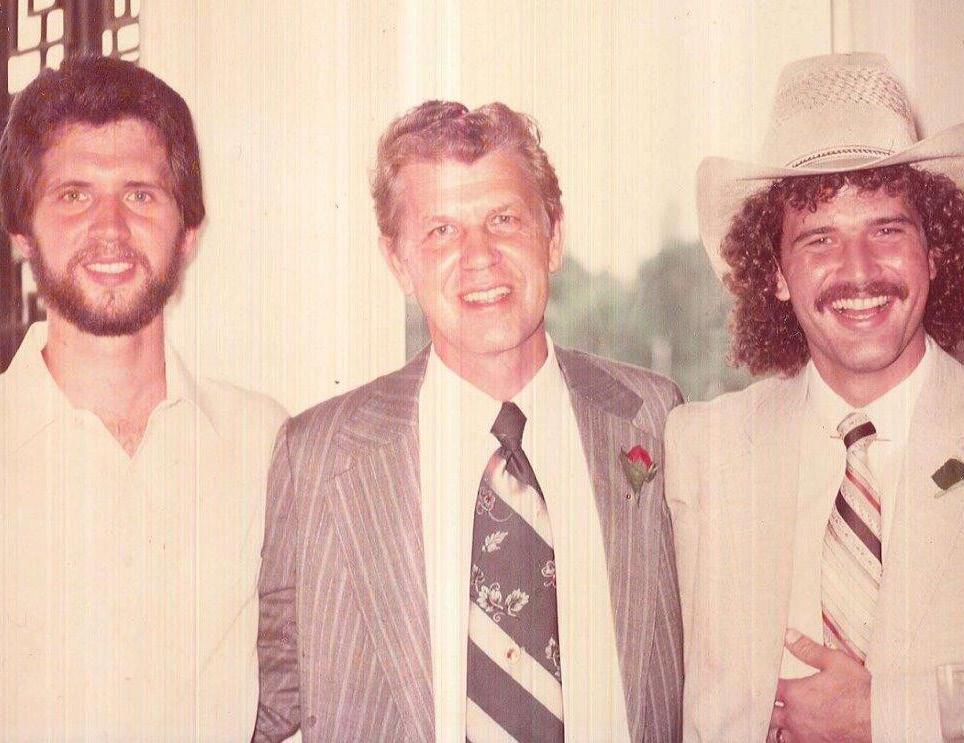
Bob McCullough (center) started allsouth and grew the company with bobby (left) and John (right) at his side.
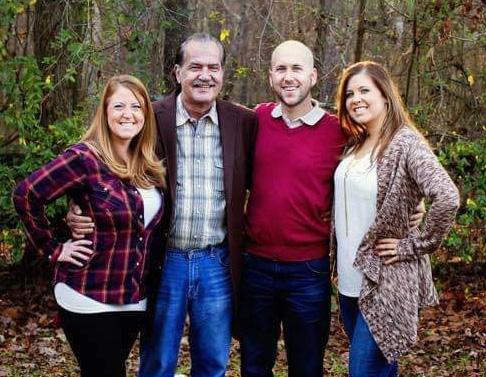
the third generation has continued the allsouth legacy. from l to r: abby, john, Jeff, and mindy.
Hunter Brendle, AFSA At-Large Director and president, Brendle Sprinkler Co., Montgomery, Ala., has known Buckley for many years. “Knowing how much AFSA meant to Mindy’s dad and grandfather, I know they would be incredibly proud to see her and her family carrying on that legacy while investing in the future of our industry,” he says.
In 2025, Buckley was elected to the AFSA Board of Directors as an At-Large Director and currently chairs the Education and PE&A committees. Biernacki, who served as Chair of the Board during Buckley’s election, says that in addition to professional success, Buckley has helped pave the way for others. “Being only the third woman in 44 years elected to the AFSA Board of Directors is a remarkable achievement and speaks to both leadership and dedication to the industry. This recognition is incredibly well deserved, and I could not be prouder of everything Mindy has accomplished.”
Serving on a national level has challenged Buckley to think differently about the industry and how to educate others about fire protection. “I have learned that we cannot limit our message to within our industry. We need to reach homeowners, business owners, builders, and the general public. This year, the PE&A committee launched a new initiative focused on reaching non-industry audiences and increasing awareness of the life-saving benefits of fire sprinklers over several social media platforms.”
Buckley sees her time at the national level as an opportunity to expand her reach. “I would like to see us continue to focus on workforce development and attracting young professionals into our industry. We have to continue creating opportunities for them to learn, build relationships, and develop into future leaders,” she comments. “I would also like to see increased public awareness of fire sprinklers and continued advocacy for stronger fire and life safety protection in our communities.”
INVESTING IN THE FUTURE
Over the next five to 10 years, Buckley believes there will be a significant leadership transition across the industry. “What excites me is that many of the leaders before us have intentionally invested their time and talents to develop tomorrow’s workforce. Because of that, I believe we have a strong group of young professionals who
are prepared to step into leadership roles and continue moving the industry forward,” she notes. “I think about the people who invested in me. My grandfather, father, and many industry leaders took the time to share their knowledge, encourage my involvement, and provide opportunities for me to grow. Because of that, I have always felt a responsibility to do the same for others.”
Buckley believes that connections with mentors are one of the industry’s greatest strengths. “If we want to continue developing the rising leaders, we have to be intentional. We need to invite people to participate, encourage leadership opportunities, and give them a seat at the table early in their careers,” she comments.
RECOGNIZING EXCELLENCE
Josiah Bergen, CEO, Heritage Fire Protection, Newton, Kan., is chair of AFSA’s NextGen, which presents this award. “I’m proud to recognize Mindy. Not only is she an exemplary leader at Allsouth, but she’s also been a driving force behind GFSA’s success and one of the most dedicated volunteers at the national level. What really stands out about Mindy is how selfless she is—she’s always willing to step up, give more of her time than most, and figure things out to help the association and the industry.”
“Some people earn recognition because of what they accomplish. Others earn it because of the impact they have on the people around them. Mindy has done both,” comments Brendle. “She is determined, driven, and authentic. Mindy treats people the right way and genuinely cares not only about her company, but about everyone who is part of this wonderful fire protection industry.”
The 2026 Joe Heinrich Young Professional of the Year award will be presented to Buckley during the general session at AFSA45: Convention, Exhibition, and Apprentice Competition, to be held in San Antonio, Texas, September 27-30. For more details about AFSA45 and to register, visit firesprinkler.org/ AFSA45. To learn more about AFSA’s NextGen Initiative, visit firesprinkler.org/nextgen.
“If we want excellence in our profession, we have to invest in people,” Buckley says. “The future of our industry depends on developing knowledgeable, engaged leaders who are passionate about protecting lives and moving our industry forward.”
KEEP WATER WHERE IT BELONGS
- AWAY FROM YOUR CRITICAL EQUIPMENT
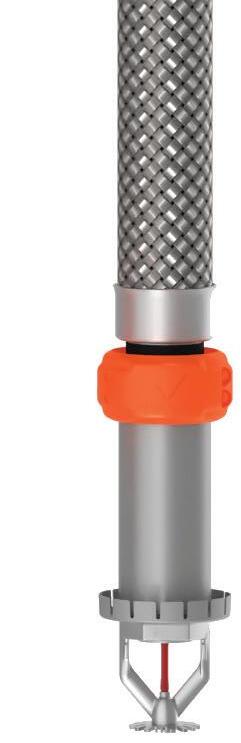

• Gain peace of mind by keeping water away from racks and protect critical equipment from accidental water damage
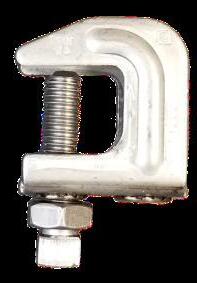
• Navigate dense ceilings with 2" UL Listed bend radius and versatile brackets for every configuration
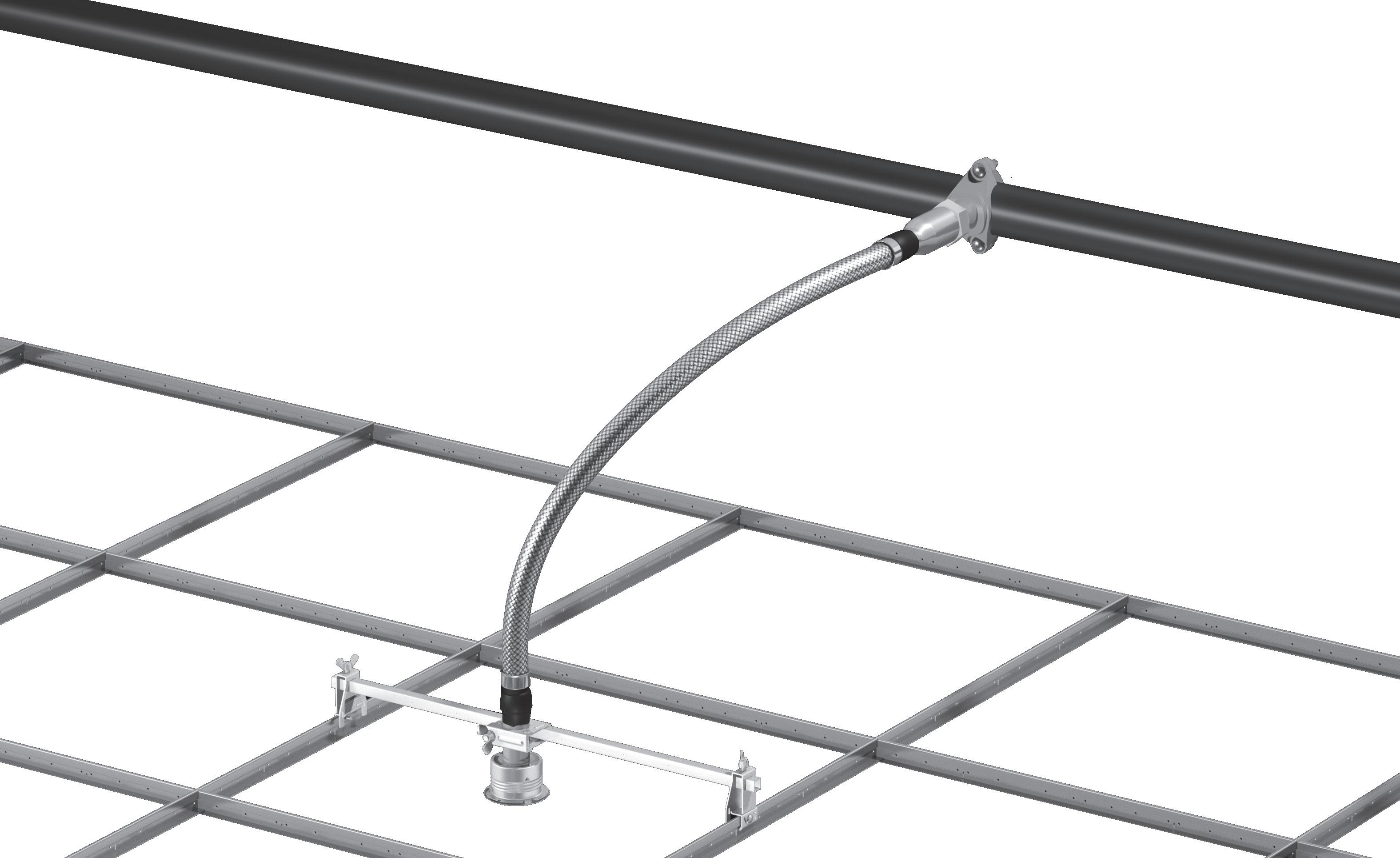
• Minimize facility downtime during upgrades and eliminate extended shutdowns in 24/7 operations
• Experience 100% kink-resistance that guarantees consistent flow characteristics and NFPA compliance
OPPORTUNITY AND OWNERSHIP
WE MUST TEACH LEADERSHIP BEFORE WE EXPECT OWNERSHIP
BECKIE L. BORTNER | NORTH AMERICAN FIRE PROTECTION COMPANY
If you spend enough time around fire sprinkler contractors, the conversation eventually turns to labor. Hiring, turnover, and the next generation dominate nearly every discussion. I’ve spent years trying to solve the same workforce challenge and assumed the answer was more opportunity, more responsibility, more leadership roles, and more chances to advance.
Eventually, I realized I was asking the wrong question. The issue wasn’t whether people wanted opportunity. The issue was whether they understood what came with it. Ownership isn’t a title. Ownership is caring about the outcome. It’s noticing problems before they become someone else’s responsibility and taking accountability when nobody is watching.
Most of us were never taught ownership either. We learned it by watching, getting burned, and figuring it out through trial and error. Maybe that’s why we struggle to teach it.
OPPORTUNITY WITHOUT OWNERSHIP
As owners and leaders, we spend a lot of time talking about opportunity, promotions, advancement, and career paths. But opportunity without ownership is just a title waiting to disappoint someone.
When somebody tells me they want more responsibility, my answer today is simple: “Good. We have plenty of it.” Ownership begins when someone starts caring about the outcome instead of just the task.
DEFINING OWNERSHIP
One of the challenges with ownership is that we rarely define it. We tell employees to take ownership, but we don’t always explain what that means. Does each employee understand how their role affects the bottom line? When employees understand how callbacks, rework, delays, and change orders affect profitability, they begin to see their work differently.
Ownership looks different at every level of the organization. For an apprentice, ownership might mean noticing missing material before it delays the crew. For a fitter, it might mean catching a design conflict before installation begins. For a foreman, it means owning safety, quality, production, and crew development. For a project manager, it means owning customer relationships, profitability, and project outcomes. The responsibility changes, but the mindset stays the same. Ownership means caring about the result, not just completing the task .
WHAT A FOREMAN ACTUALLY OWNS
Ask 10 apprentices what a foreman does, and most will describe
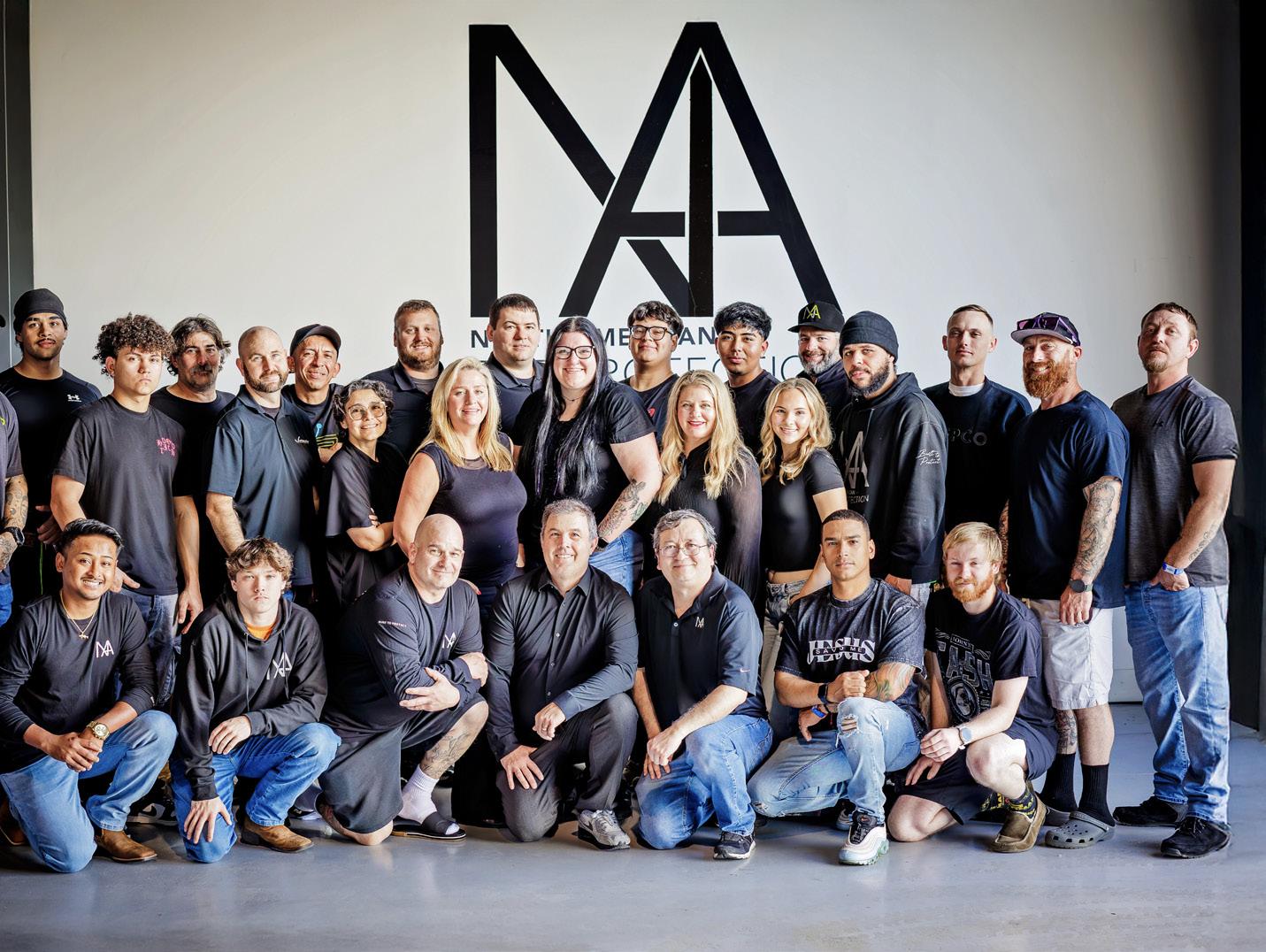
the team at NAFPCO is creating opportunities and ownership for its next generation.
the technical responsibilities. In reality, that’s only part of the job.
A foreman doesn’t own the pipe on the ground. A foreman owns the outcome. A foreman owns safety, planning, production, crew development, material shortages, relationships with other trades, and the countless issues that can derail a project. They own helping a homesick employee after weeks on the road just as much as they own installation quality.
ment because leadership should not have to be learned entirely through trial and error.
OWNERSHIP HAS TO TRAVEL
When your crews are spread across multiple states, micromanagement isn’t an option. Ownership must travel with the em-
come coaching opportunities instead of rescue missions.
“THE GOAL ISN’T TO BUILD EMPLOYEES WHO NEED US. THE GOAL IS TO BUILD LEADERS WHO CAN OPERATE WITHOUT US.”
When someone calls and asks, “What do you think we should do?” I’ve trained myself not to answer immediately. Instead, I ask them to define the problem and bring me two possible solutions. Employees grow through participation, critical thinking, and ownership.
Leadership often appears long before a promotion. The people who rise are usually those who stay calm in uncertainty, think beyond their assigned task, and focus on the outcome. That’s ownership. And it’s usually visible long before the title ever arrives.
WE PROMOTE FITTERS AND HOPE THEY BECOME LEADERS
One of the oldest mistakes in our industry is assuming the best producer automatically becomes the best leader. Someone can install pipe faster than anyone on the crew, understand the code, and solve field problems, yet still struggle as a foreman.
Leadership requires skills most of us were never formally taught: coaching, communication, planning, conflict resolution, and team development. Fortunately, organizations such as the American Fire Sprinkler Association (AFSA) and its NextGen are investing in leadership develop-
ployee because management can’t. “The goal isn’t to build employees who need us. The goal is to build leaders who can operate without us. Leaders who solve problems without waiting for permission,” says Derek Dingman, NAFPCO, superintendent.
I can’t stand beside every foreman every day or inspect every decision. Accountability can’t depend on me. It must come from ownership, personal pride, and teammates holding each other to a higher standard. That’s why I reward employees who speak up; the person who spots a risk, admits a mistake before it becomes a problem, or raises their hand when something doesn’t look right. Those behaviors are ownership.
Crews must be empowered to make real-time decisions when they encounter field conflicts, design challenges, or material shortages. They need to know leadership will support them while they work through the problem. That doesn’t mean every decision will be correct. It means mistakes be-
Leadership isn’t about having all the answers. It’s about helping others learn how to find them. That’s how ownership becomes part of the culture.
THE NEXT GENERATION WANTS CLARITY, NOT LESS ACCOUNTABILITY
Let’s challenge a common assumption. Maybe the workforce hasn’t changed nearly as much as we think. The next generation wants growth, respect, opportunity, feedback, and meaningful work. That’s not generational. That’s human. Most of us wanted those same things when we started our careers.
What’s different is that they’re more willing to say it out loud. They’re more likely to ask about advancement and less willing to wait years for someone to notice them. I don’t see that as a weakness. I see it as information.
The next generation isn’t asking for less accountability. They’re asking for accountability to be defined. When employees ask about
900 Industries, Inc.
Accu-Fire Fabrication, Inc.
ACT Pipe & Supply, Inc.
Aegis Technologies, Inc.
AGF Manufacturing, Inc.
American Backflow Products Co.
Ameriflo
Arbiter Inc.
ARGCO
Armstrong Fluid Technology, Inc.
ASC Engineered Solutions
Assured Partners of California Insurance Services, LLC
Atlanta Winsupply
BAVCO
BlazeMaster® Fire Protection Systems
Borusan Pipe
Brooks Equipment Company, Inc.
Bull Moose Tube Company
C-Aire Compressors, Inc
Cla-Val Company
Clarke Fire Protection Products Inc.
Cooper B-Line, Inc. DBA Eaton
Core & Main Fire Protection
Duyar Vana Makina San. Ve Tic. A.S.
Easyflex
Engineered Corrosion Solutions
Fayette Pipe Company
Ferguson Fire & Fabrication
Fiberglass Tank Solutions
FireDos US Inc
Fireflex Systems Inc.
FORGE Global
Gast Manufacturing
General Air Products Inc.
Globe Pipe Hanger Products, Inc
Guardian Fire Equipment, Inc.
Harrington, Inc.
Hose Monster Company
ITW Buildex
Jenny Products, Inc.
JG Innovations, Inc.
Job Gmbh
Johnson Controls
Kennedy Valve
Lehman Pipe and Supply
Leonhardt Acquistions LLC, dba Leonhardt Pipe & Supply, Inc.
Loos & Company, Inc.
Mechanical Sales, Inc.
Metraflex Company
Milwaukee Valve Company, LLC
Noble Company
Nucor Tubular Products
Pace Supply Corp.
Patterson Pump Company
Peerless Pump Company
Permabond
PHD Manufacturing, Inc.
Polymer Molding Inc.
Potter Electric Signal Company
Potter Roemer
Pumptec
Quality Fabrication & Supply
Reed Manufacturing Company
Reliable Automatic Sprinkler, Co., Inc.
Response Fire Supply
RJB Wholesale
Ruhrpumpen Systems S.A. De C.V.
Safe Signal
Senju Fire Protection, Corp.
South-Tek Systems, LLC
Spears Manufacturing Co.
SPP Pumps, Inc.
Star Wholesale Supply
Talco Industries Inc. dba Talco Fire Systems
Texas Manufacturing Company
Tigerflow
TLX Technologies, LLC
Tornatech International, Inc.
United Fire Systems
Uponor-USA
Venturi Supply Company, Inc.
Victaulic
Viking Corporation
Watts Water Technologies
Wheatland Tube Company
Wheeler- Rex, Rex International USA, Inc.
Wilson and Cousins
ZURN Industries, LLC


advancement, they’re telling us they want to grow. The question is whether we’ve clearly explained the responsibilities that come with the next role.
Too often, we teach people how to earn a title without explaining what it means to carry it. That’s where expectations and reality begin to diverge. Rather than criticize the desire for clarity, we should embrace it. Ownership can be explained, trained, measured, and rewarded.
“At North American Fire Protection, we’re investing heavily in leadership development through field training, handson learning, coaching, and feedback,” states Mitch Bortner, NAFPCO vice president. “Our goal is not only to teach what to do, but why it matters and how individual decisions affect project outcomes, customers, and profitability.”
Most importantly, we’re not simply handing employees expectations. We’re involving them in defining success because people are far more likely to embrace accountability when they understand what it looks like and why it matters.
LEADERSHIP BECOMES SCALABLE WHEN OWNERSHIP BECOMES TEACHABLE
Most people want the rewards of leadership before they’ve felt the weight of it. That’s not laziness; it’s inexperience. Nobody has shown them what that responsibility looks like.
I’ve come to believe the next generation isn’t asking for less ac-
countability. They’re asking us to define it. If that’s true, the responsibility shifts back to leadership. We can keep complaining about the workforce we wish we had, or we can develop the workforce we do have.
When accountability is defined, ownership becomes teachable. When ownership becomes teachable, leadership becomes scalable. And when leadership scales, companies grow.
My crews travel hundreds of miles and install thousands of feet of pipe. But the journey I care most about isn’t measured in miles or footage. It’s the journey from opportunity to ownership. Every successful career I’ve watched develop in this trade has required both.
Opportunity creates potential. Ownership creates leaders. The companies that will win the next generation won’t be the ones creating more opportunities. They’ll be the ones teaching ownership. Employee development begins when opportunity and ownership travel together.

ABOUT THE AUTHOR: Beckie Bortner is president and co-founder of North American Fire Protection (NAFPCO). Entering the industry from a non-traditional background, she helped scale NAFPCO into a national design-build fire sprinkler contractor specializing in complex industrial, cold storage, food processing, pharmaceutical, and mission-critical facilities. Bortner serves on the AFSA NextGen Committee and is committed to developing the next generation of fire sprinkler professionals and industry leaders.
“OUR GOAL IS NOT ONLY TO TEACH WHAT TO DO, BUT WHY IT MATTERS AND HOW INDIVIDUAL DECISIONS AFFECT PROJECT OUTCOMES, CUSTOMERS, AND PROFITABILITY.”
DATA CENTERS NEED FPEs
WHY WE ARE NEEDED NOW MORE THAN EVER
JACQUELINE R. WILMOT, P.E. | BROOKS SAFETY SOLUTIONS
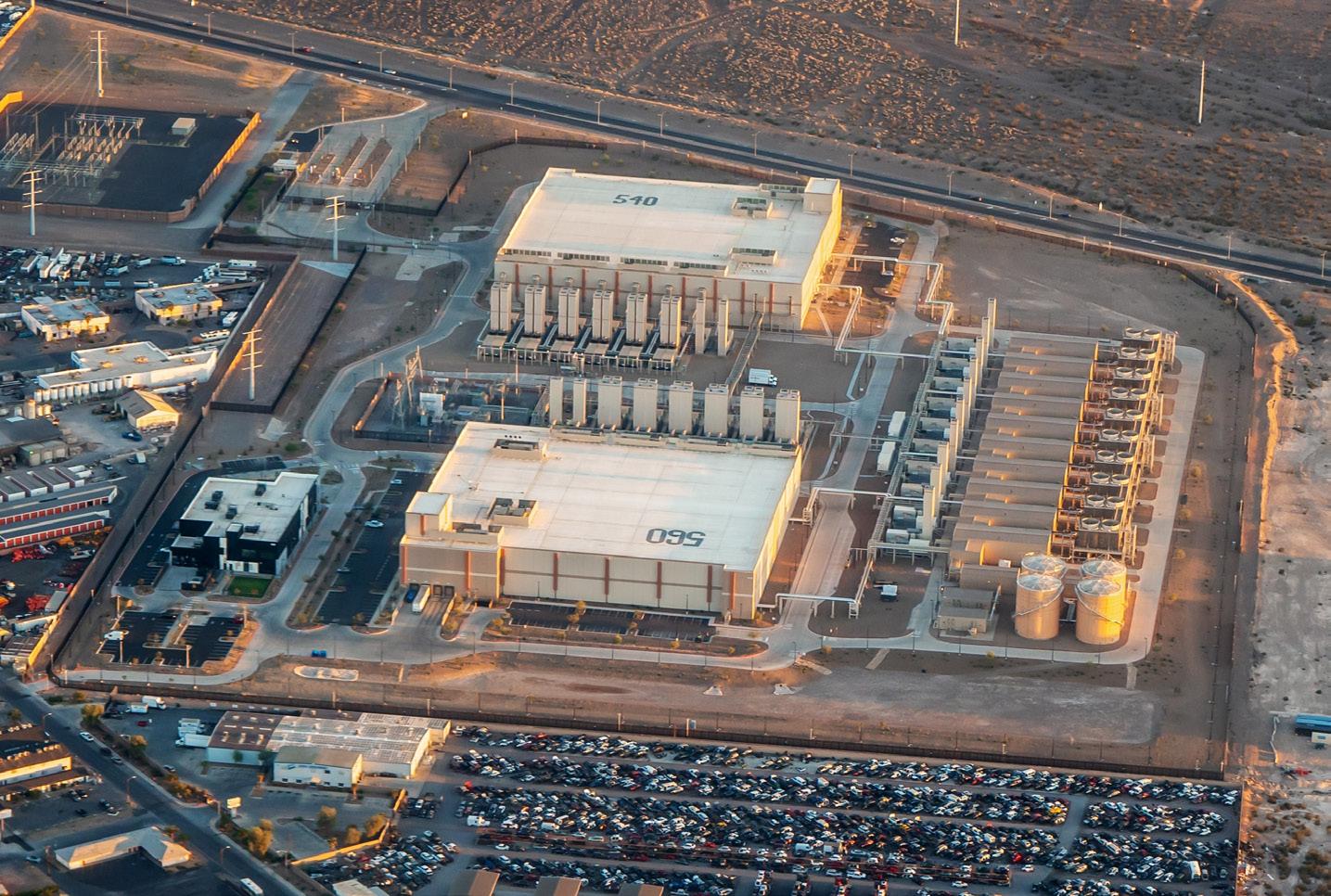
Data centers represent one of the fastest-growing construction sectors in U.S. commercial development and have become the backbone of modern life. Most people interact with a data center hundreds of times each day without realizing it. Flip through a typical day, and you’ll find a data center behind nearly every activity. Whether it’s your syncing alarm clock, sending a text, receiving weather notifications, using mapping apps to drive to work, transferring money on your phone, viewing a child’s report card, or buying something for next-day delivery, the information behind those activities is being processed, stored, and delivered through data centers. In many ways, they have become as essential to our society as electricity, water, transportation, and infrastructure. What does this mean for fire protection professionals?
As our reliance on technology grows, so does our role in protecting the data that never sleeps. The data center boom is more than a construction trend; it represents a long-term growth market for our industry. From designs in new construction, installation, acceptance testing, commissioning, inspec -
tion, testing, maintenance, integrated system testing as well as renovation work and system upgrades, opportunities for contractors who can deliver reliable fire protection in facilities where uptime is every bit as important as life safety is more critical than
rows of servers in multiple buildings. While hyperscale facilities certainly exist, modern data centers take many forms. Large cloud provider campuses may span hundreds of thousands or even millions of square feet. Edge data centers bring processing power closer
ever. The success of these facilities depends on the ability to identify emerging hazards, adapt protection strategies, and maintain the reliability that modern society increasingly relies upon. Here are the top five things you need to know.
1. Not All Data Centers Look the Same. When many people think of a data center, they envision endless
to users and devices to reduce latency, including healthcare monitoring equipment or autonomous vehicles, for example. Modular and containerized data centers can be factory-built and rapidly deployed to meet growing demand. Internally, facilities may feature raised floors, overhead cable distribution systems, hot aisle or cold aisle containment systems, and increasingly sophisticated cooling technolo-
What Does the Data Center Boom Mean for the Fire Protection Industry?
gies that are being installed above and within graphic processor units (GPUs), which in the past we always tried to keep water away from such equipment. These design variations influence everything from airflow patterns and smoke movement to sprinkler obstructions and detector placement. For fire protection professionals, understanding how these facilities are configured is essential to designing, installing, and maintaining effective fire protection systems.
2. What we know from fire incident data. Fire incident data for data centers is limited and this is for a few reasons. Since the National Fire Incident Reporting System (NFIRS), and the NFPA U.S. fire experience survey is self-reporting, it is estimated that 70% of these incidents are reported but the data analyzed is only as valuable as the data submitted, which can have some inconsistencies. NFIRS doesn’t specifically code data center structure fires. NFIRS has been replaced with the National Emergency Response Information System (NERIS) in 2026 and is built to address emerging challenges and hopefully provide additional data in the years ahead. Furthermore, many incidents are not reported publicly.
However, based on data from the 23rd edition of the NFPA Fire Protection Handbook, which analyzed incidents between 2014 and 2018, estimates indicate that most fires damaging Information Technology (IT) rooms do not originate in the IT equipment
itself, but rather in supporting equipment or from causes unrelated to IT and outside of the room. To be clear, the classification, “IT rooms” could be electronic equipment rooms, computer rooms, or control rooms. The leading equipment involve in ignition are electrical distribution and lighting which includes items such as fixed wiring and related equipment, transformers or power supply, cord or plug, lamp, bulb, or lighting. There are cases where fires do originate in the IT room, and to minimize the impact of that risk, only listed IT and IT support equipment should be allowed.
The data also reveals that even when the fire is confined to the object of origin, the average monetary loss per fire in electronic equipment rooms is still relatively high compared to incidents with fire spread to other rooms. This is because electronic components are very sensitive to temperature increases and damage can occur at relatively low temperatures. As IT equipment evolves, becoming denser and more powerful, generating more heat, requiring larger electrical loads, and more sophisticated cooling strategies are being implemented, the data center equipment remains sensitive heat need to be protected in a space that is dust-free, has temperature control, moisture control, and clean, reliable power.
This reality highlights an important lesson: protecting a data center requires protecting the en-
tire ecosystem that supports the computing environment. Electrical rooms, UPS systems, battery rooms, generator spaces, switchgear rooms, cooling equipment, and network infrastructure all contribute to overall risk.
3. Detection and Suppression. Early detection remains critical. Business continuity is often just as important as property protection within a data center environment. Even a small fire event can result in significant property damage, operational disruption, and data loss. In many cases, the financial impact of downtime far exceeds the cost of physical damage. For this reason, early warning fire detection technologies are commonly utilized. Typically, aspirating smoke detection systems or other types of very early warning detectors are used to identify developing fire conditions as early as possible.
When it comes to suppression, the use of single-interlock and
“THE DATA CENTER BOOM IS MORE THAN A CONSTRUCTION TREND; IT REPRESENTS A LONG-TERM GROWTH MARKET FOR OUR INDUSTRY.”





double-interlock preaction systems are used in data centers due to the fear of water damage. Clean agent suppression systems or other specialized protection approaches are utilized. In the hyperscale facilities, operators are employing a multitude of approaches including water mist systems.
4. Gaps in Codes and Standards. Several codes, standards, and data sheets play important roles in data center protection, including:
• NFPA 75, Standard for the Fire Protection of Information Technology Equipment.
• NFPA 13, Standard for the Installation of Automatic Sprinkler Systems.
• NFPA 25, Standard for the Inspection, Testing and Maintenance of Water-Based Fire Protection Systems.
• NFPA 72, National Fire Alarm and Signaling Code ®.
• NFPA 2001, Standard on Clean Agent Fire Extinguishing Systems.
• NFPA 855, Standard for the Installation of Stationary Energy Storage Systems .
• NFPA 90A, Standard for the Installation of Air Condition and Ventilating Systems.
• NFPA 220, Standard on the Types of Building Construction
• NFPA 750, Standard for Water Mist Systems.
• NFPA 770, Standard on Hybrid (Water and Inert Gas) Fire Extinguishing Systems
• FM Data Sheet 5-32, Data Centers and Related Facilities.
• UL 2755, Outline of Investigation for Modular Data Centers, 3rd edition, 2025.
Many of these documents are currently being revised to address the existing gaps in evolving data centers, which brings us to the final point.
5. So Now What? GET INVOLVED!!! (John Denhardt voice). The codes and standards development process is one of the most effective ways to ensure real-world experience informs future requirements. Whether through submitting public input, commenting on proposed changes, or serving on technical committees. The next generation of fire protection requirements will be shaped by those who choose to participate. Contractors have valuable field insight to share and an opportunity to have a seat at the table as the next chapter of data center development unfolds.

ABOUT THE AUTHOR: Jacqueline R. Wilmot, P.E., is the director of industry relations at Brooks Safety Solutions. She has 15 years of experience in consulting, codes and standards development, suppression and detection research, and industry engagement. Wilmot is an industry leader, content creator and approved NFPA instructor. She is a member of the NFPA 915 Technical Committee, NFPA 13R Technical Committee, and NFPA 1960 Technical Committee.
UL Listed Flexible Sprinkler Assemblies Make Retrofit a Breeze
cULus Listed for installations in accordance with NFPA 13 and 13R
No friction loss is required to be calculated through the length of the hose
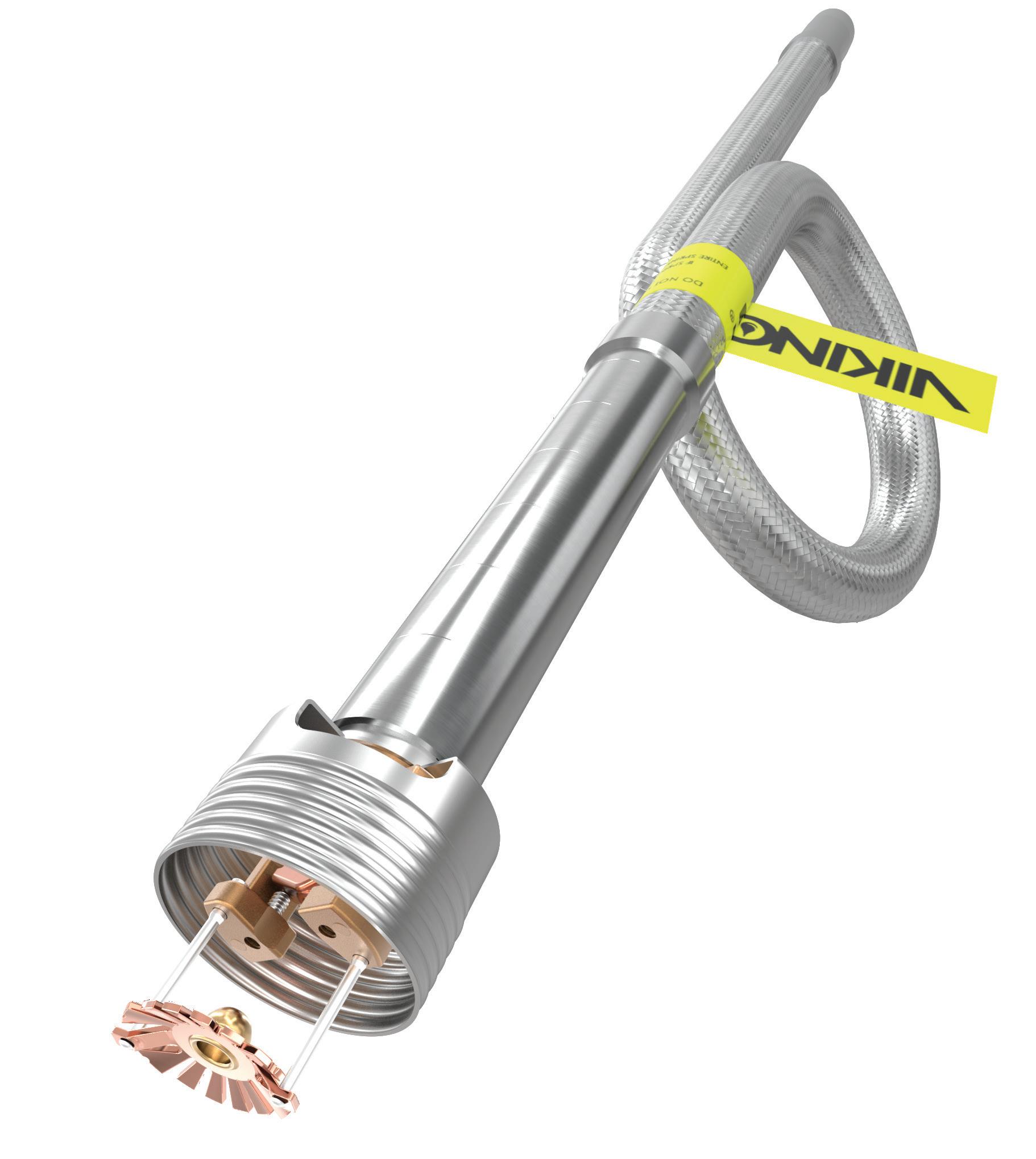
Features a pre-calibrated K-factor of 5.6 (80.6 metric)

Available in hose lengths of 48” (1.2m) and 60” (1.5m)
Packaged in boxes of five
2” minimum bend radius and may have up to four bends
Offered in a variety of temperature ratings and finishes to meet design requirements
BRIDGING THE TRADE GAP IN ARIZONA
INTRODUCING THE INDUSTRY TO THE NEXT GENERATION
MATTHEW STEERE | HALO FIRE PROTECTION
The construction in dustry is facing a si lent crisis: a widening chasm of unoccupied, high-paying roles in specialized trades. Perhaps nowhere is this “labor drought” more critical than in fire sprinkler protec tion, the invisible backbone of public safety. However, a new powerhouse alliance is fighting back. Halo Fire Protection, the American Leadership Applied Technical (ALA), and the Amer ican Fire Sprinkler Association (AFSA) have joined forces to cultivate the next generation of life-saving professionals.
On May 8, the ALA Technolo gy Campus in Mesa, Ariz., became the frontline for this transforma tion. The leadership and vision of Carla Way, CTO of ALA, have been critical in getting this program jump-started through this student event.
THE HYDRANT SURGE: MORE THAN JUST A DUCK RACE
DEBUNKING THE HOLLYWOOD MYTH
The event wasn’t just about brochures and speeches; it was about destroying misconceptions. We’ve all seen the movie scene: a hero pulls a fire alarm, and every sprinkler head in the building simultaneously drenches the room. Through live demonstrations, students learned that sprinkler heads are independent components.
The day kicked off with high-velocity physics. Each student was handed a rubber duck, but this wasn’t for a bathtub. By placing their “racers” in the path of a massive fire hydrant, students witnessed the raw power of underground water pressure.
As Halo Fire Protection activated the hydrant, the parking lot became a river. The demonstration provided a visceral understanding of the sheer volume of water required to protect a com-
walked away with prizes, every student walked away with a new respect for the infrastructure beneath their feet.
THE SHED DEMO: TRIAL BY FIRE
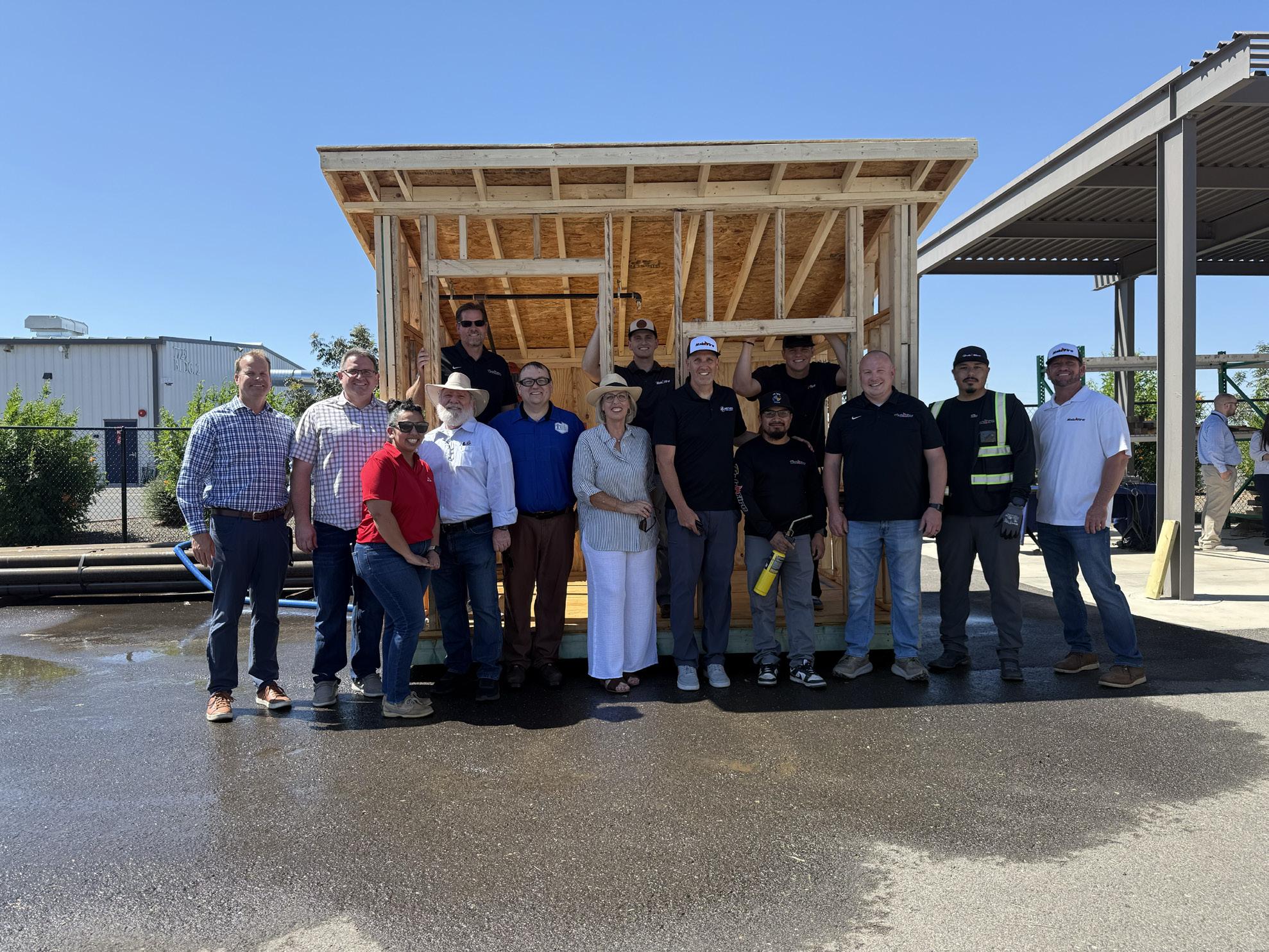
The highlight of the afternoon took place inside a wooden shed— one built by the ALA students themselves. Halo Fire installed a professional fire riser and two independent sprinklers within the structure, connecting them directly to the pressurized hydrant.
Dan Farnsworth, owner of Halo Fire, and Bob Caputo, president of AFSA, talked about the histo-
Halo Fire and AFSA are teaming up to cultivate the next generation of life-saving professionals in arizona.
ry of sprinkler systems and how they operate. Daniel Weiss, a construction program instructor, volunteered to participate in the demonstration of the sprinkler system. There were two important features that he demonstrated.
• Precision Activation: Weiss held the flame to the first sprinkler; the crowd watched the glass bulb reach its critical temperature. Snap. The head broke, discharging a focused spray of water outside of the shed while the second head inside the shed remained perfectly dry and pressurized.
• The “Drench” Factor: Proving the independence of the system, Weiss then moved to the second interior head. When it finally broke, the resulting downpour provided the biggest laugh of the day as the teach er was thoroughly drenched, proving that technology is simple but very effective. Both heads were engaged and oper ating at the same time.
BUILDING A FUTURE, ONE CLASS AT A TIME
This event was the opening act for a much larger movement. The goal? To turn that afternoon’s ex citement into a career path.
• Next Stop—Summer Camp: In terest is already surging for the Fire Protection Summer Camp launching this June, where stu dents will get a deeper, hands-on look at the trade.
• The New Elective: Starting this fall, ALA will make history by offering the first fire protection elective class, a year-long pro gram designed to give students a head start in a high-demand,
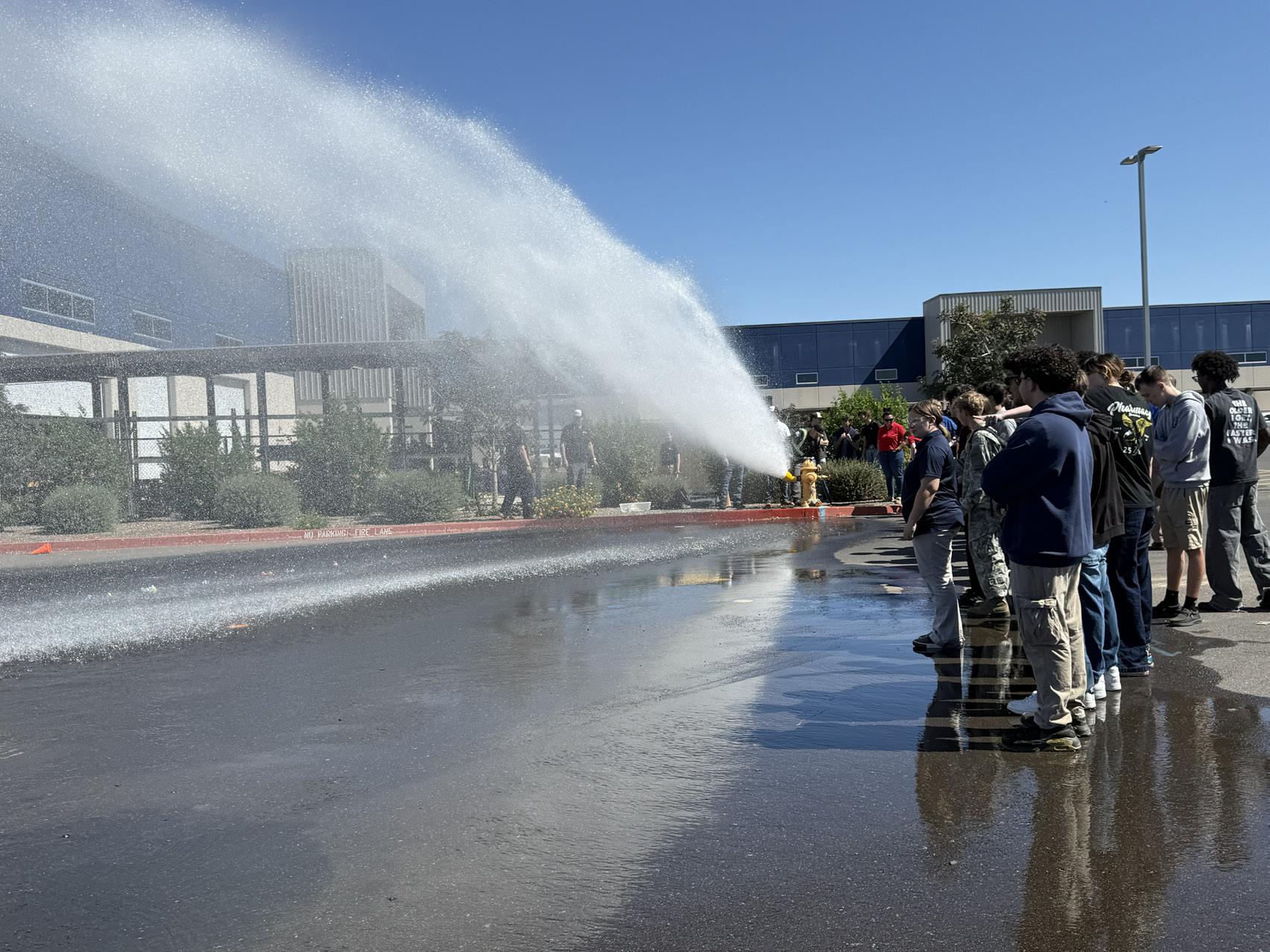
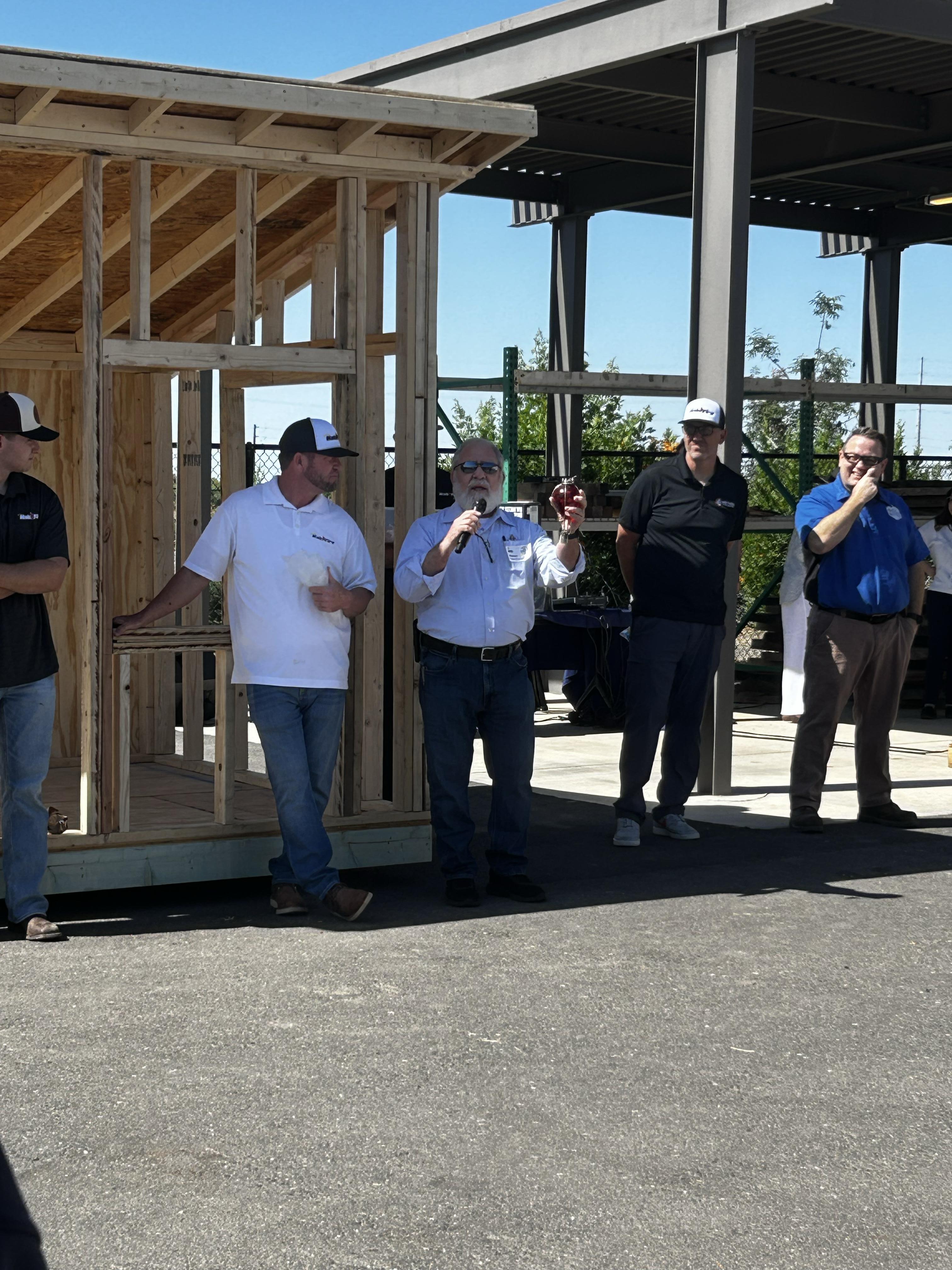
the hydrant demonstration provided an understanding of the sheer volume of water required to protect a community.
AFSA PRESIDENT Bob Caputo attended the event and talked about how sprinklers operate.
HONORING FIRE SAFETY ADVOCATES
NFPA AND HFSC ANNOUNCE BRINGING SAFETY HOME AWARD RECIPIENTS
The National Fire Protection Association (NFPA) Fire Sprinkler Initiative and the Home Fire Sprinkler Coalition (HFSC) have awarded the U.S. and Canadian Bringing Safety Home awards to Sean Tracey, FIFireE, HFSC Canada Chair, and Mayor Ken Branner, Middletown, Delaware. This award honors fire safety advocates in North America who diligently promote the importance of home fire sprinklers, use HFSC and NFPA resources to educate decision-makers, and recognize that protecting all new homes could have a tremendous impact on public safety and community risk reduction.
Tracey is being recognized because he has consistently made home fire sprinkler education a priority through his work as NFPA regional director, deputy chief of education, safety & innovation with the Ottawa Fire Service, co-chair of the Codes Committee for the Canadian Association of Fire Chiefs, and, most recently, chair of HFSC Canada. His efforts have increased awareness and supported initiatives that have resulted in protecting homes with fire sprinklers across Canada.
Mayor Branner was selected because he demonstrated a lifelong commitment to fire prevention, public safety education, and community advocacy as chief with the local Volunteer Hose Company and as mayor of Middletown, Del. He prioritized fire safety through education, collaboration, and policy initiatives. One of the most impactful examples of his leadership was his support of residential fire sprinkler requirements for new homes in the Town of Middletown, which was adopted last year.
“Both Sean and Ken recognize the importance of educating consumers and various stakeholders about the life-saving benefits of home fire sprinklers,” said Lorraine Carli, NFPA Vice President of Outreach
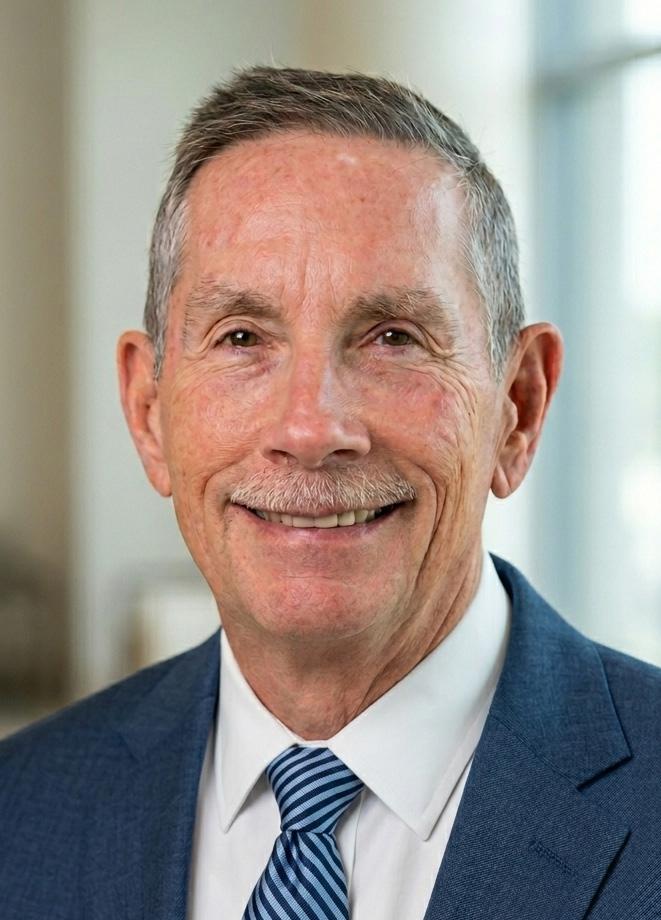
and Advocacy and HFSC President. “Both have been committed and understand how to work effectively with others to make sure fire sprinklers are installed in new homes. Thanks to their efforts, citizens and firefighters will be better protected.”.
As recipients of the Bringing Safety Home Award, both will each receive a $1,000 stipend to support further fire sprinkler advocacy and educational initiatives.
ABOUT THE HOME FIRE SPRINKLER COALITION (HFSC): For 27 years, HFSC has developed and provided comprehensive, non-commercial, educational resources that highlight the life safety benefits of protecting homes with fire sprinklers. HFSC’s mission is solely educational, and its materials are available to everyone at no cost through HFSC’s website: homefiresprinkler.org. AFSA is one of the founding members of HFSC and serves on its board of directors.
ABOUT THE FIRE SPRINKLER INITIATIVE®: The Fire Sprinkler Initiative®, a project of the National Fire Protection Association, is a nationwide effort to require the use of home fire sprinklers and the use of fire sprinkler requirements for new construction. Visit the Fire Sprinkler Initiative website at firesprinklerinitiative.org.
ABOUT THE NATIONAL FIRE PROTECTION ASSOCIATION (NFPA): Founded in 1896, NFPA is a global self-funded nonprofit organization devoted to eliminating death, injury, property, and economic loss due to fire, electrical, and related hazards. The association delivers information and knowledge through more than 300 consensus codes and standards, research, training, education, outreach, and advocacy; and by partnering with others who share an interest in furthering the NFPA mission. Visit nfpa.org. All NFPA codes and standards can be viewed online for free at nfpa.org/freeaccess.
KEN BRANNER (LEFT) AND SEAN TRACEY HAVE BEEN RECOGNIZED BY NFPA AND HFSC WITH BRINGING SAFETY HOME AWARDs.

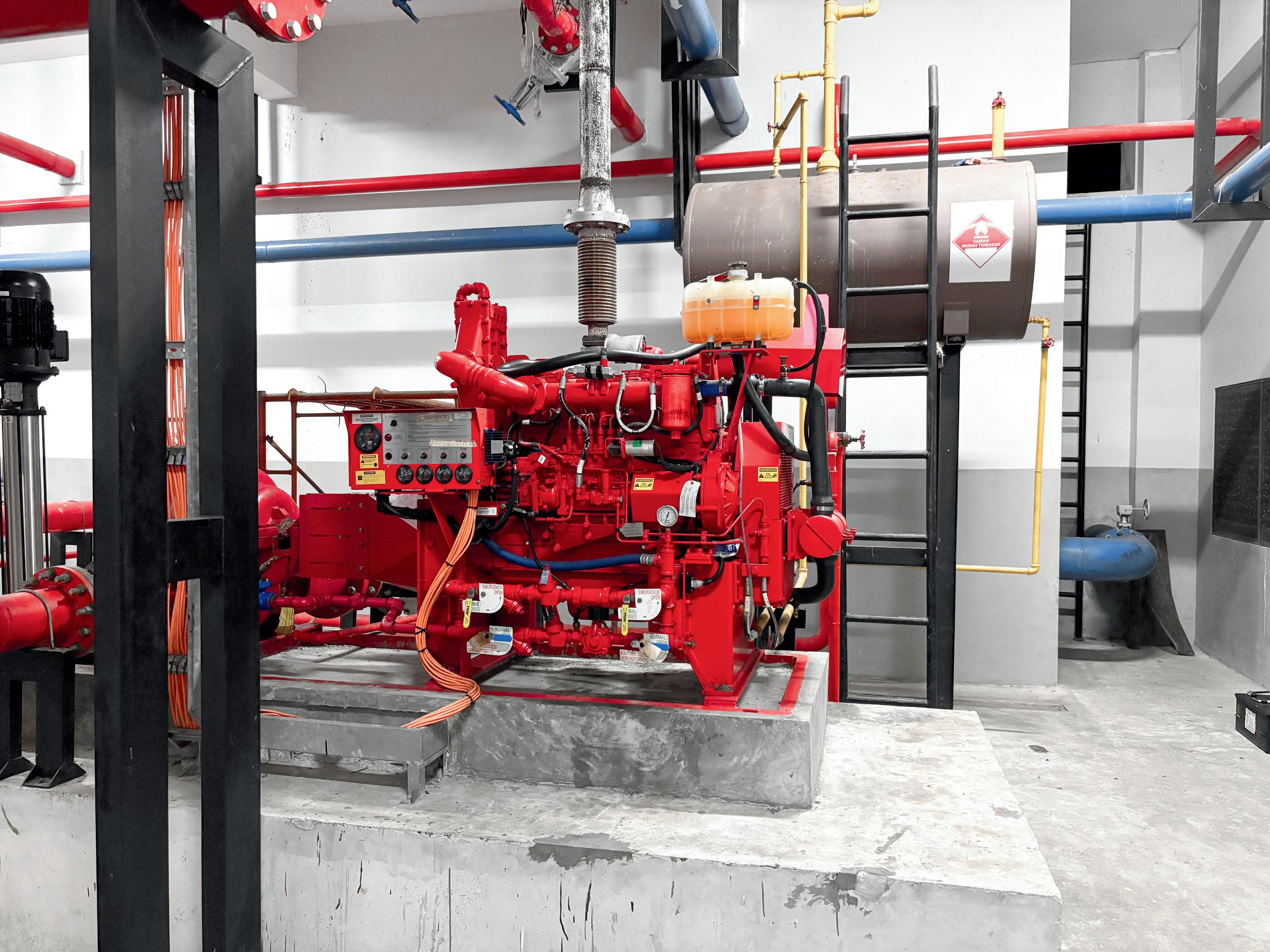
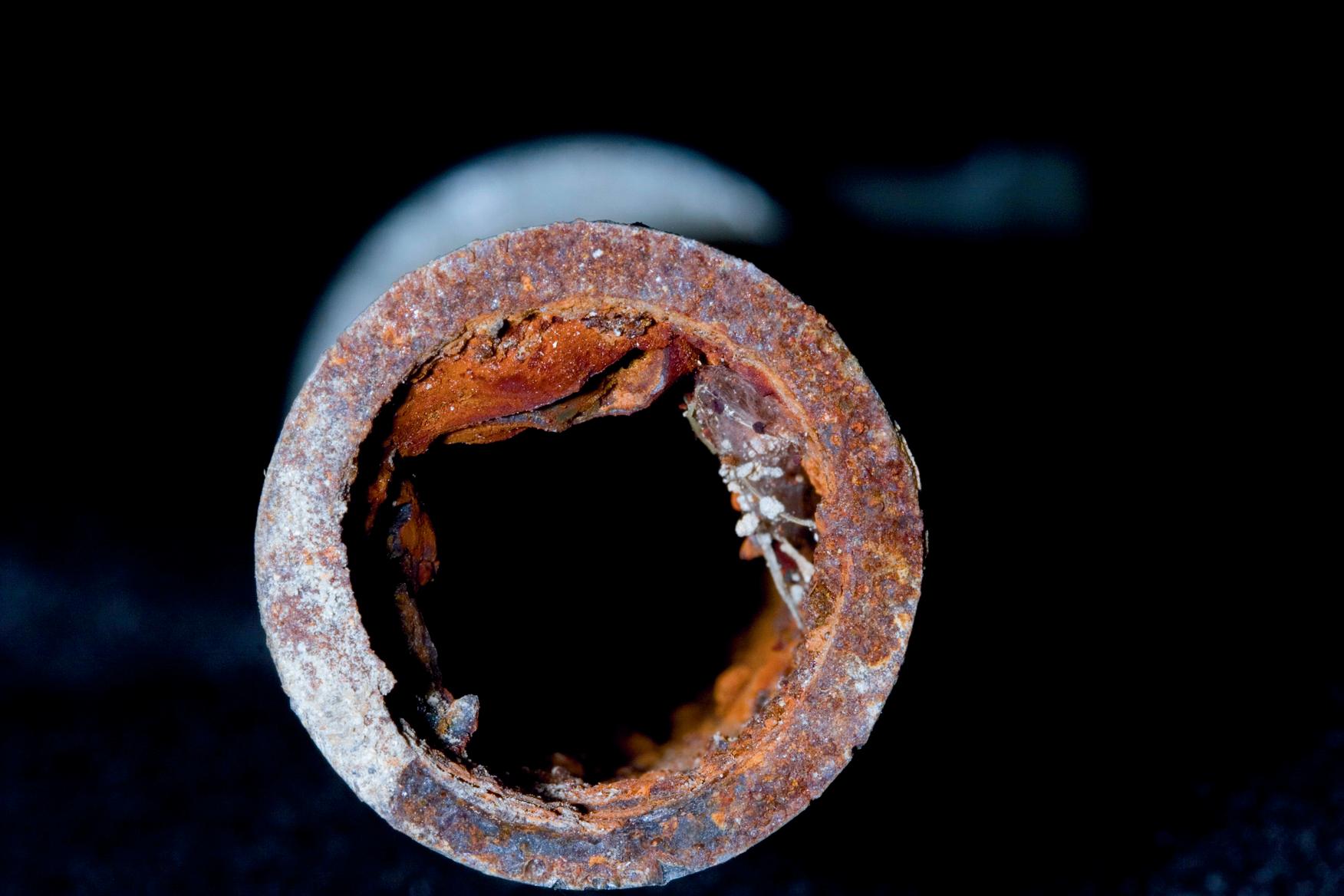
CONNECTIONS AND COLLABORATIONS
LEADERSHIP IN ACTION AT THE MID-YEAR CHAPTER CONFERENCE
The 2026 Mid-Year Chapter Leadership Conference occurred May 5-6 at the American Fire Sprinkler Association (AFSA) headquarters in Richardson, Texas. The conference brings chapter leaders together from around the United States to share successes and challenges to aid in the success of AFSA chapters.
Chapter leaders had the opportunity to gain insight into the basics of chapter operations, AFSA seminars, and AFSA resources. Although the classroom setting has its benefits, one of the biggest resources chapter leaders have is each other. The leadership conference included an evening social event for leaders to network while playing pickleball. We have some athletes at AFSA!
In addition to reviewing chapter operations, AFSA received great insight into leaders finding their lane and “Driving with Purpose” from guest speaker Bruce Waller, CRP, PHR, SHRM-CP, award-winning author/podcast host, and vice president of Corporate Relocation.
AFSA hosts two Chapter Leadership Conferences a year! The MidYear is typically held in May, and the other is held in conjunction with AFSA’s annual convention. It’s a great way for chapter leaders to tap into the resources AFSA has to offer.
If you missed the Mid-Year Chapter Leadership Conference, join us
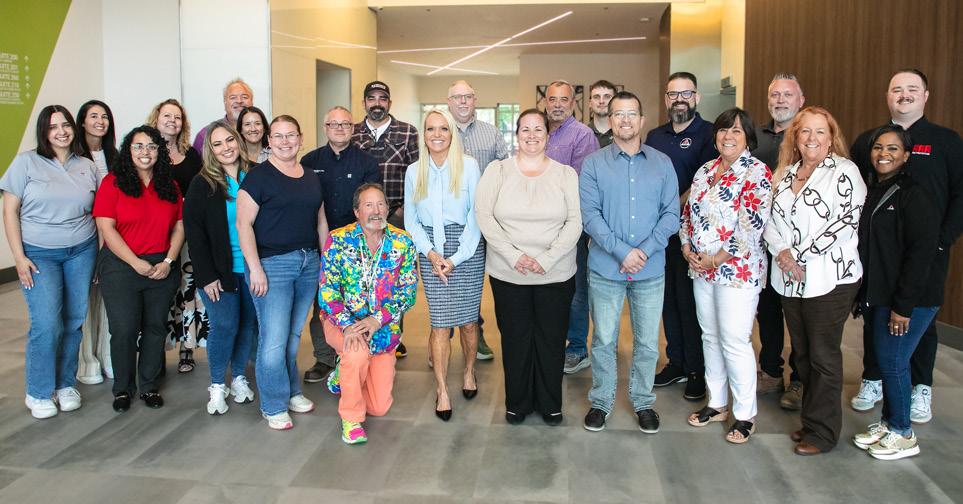
at the Fall Leadership Conference in San Antonio, Texas, at AFSA45: Convention, Exhibition, and Apprentice Competition.
“We appreciate all of the AFSA chapter leaders for your dedication, time, and effort you give to ensure that your chapters are successful,” comments AFSA Vice President
of Membership and Chapter Development Meda Merritt, CMP. “Their time, talent, and treasure are immeasurable!”
EDITOR’S NOTE: AFSA will hold its Fall Chapter Leadership Conference during AFSA45: Convention, Exhibition, and Apprentice Competition, Sept. 27-30, in San Antonio, Texas. For more details, contact Merritt via email at mmerritt@firesprinkler.org.
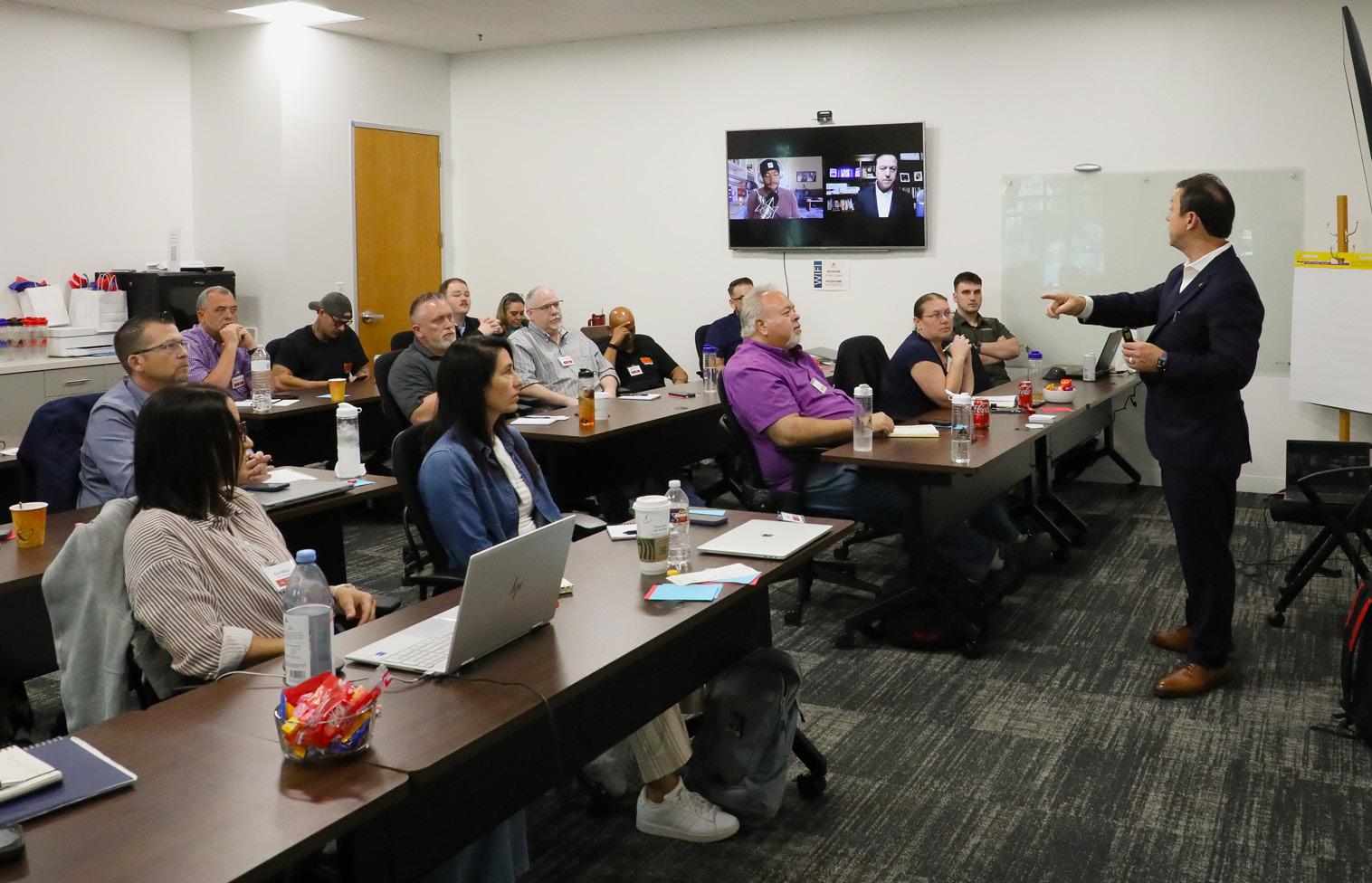
Chapter leaders gathered to connect, encourage, and learn during AFSA’s mid-year chapter leadership conference.
Bruce Waller, award-winning author/podcast host spoke to chapter leaders about “Driving with Purpose.”

As fabrication evolves, so do we. We stay on the leading edge of technology and technique to give our customers the best in the business. For us, that looks like automatic welding, data-driven processes and ISO certification. For you, that looks like reduced risk, improved consistency, more accurate timelines and industry-leading quality specifications. For a commitment to continual improvement, choose Ferguson Fire & Fabrication.
HIGHER STANDARDS
If there is one thing the NFPA standards development process proves year after year, it is that deadlines have a remarkable ability to inspire productivity. The public comment period has closed for the 2028 editions of NFPA 13, NFPA 13R, NFPA 13D, NFPA 20, NFPA 24, and NFPA 291, while the public input stage has wrapped up for the 2029 edition of NFPA 25. These milestones mark an important checkpoint in the standards development cycle and provide a glimpse into the level of industry engagement on each document.
The final tally of public comments submitted for the sprinkler installation standards was impressive:
• NFPA 13 – 142 Public Comments
• NFPA 13R – 26 Public Comments
• NFPA 13D – 9 Public Comments
• NFPA 20 – 56 Public Comments
• NFPA 24 – 3 Public Comments
• NFPA 291 – 1 Public Comment
Not surprisingly, NFPA 13 once again attracted the lion’s share of attention. As the industry’s flagship installation standard, it affects nearly every sprinkler contractor, engineer, manufacturer, and authority having jurisdiction. The volume of comments reflects both the complexity of the document and the broad range of stakeholders invested in its requirements.
NFPA 20 also generated significant activity. Fire pumps continue to be one of the more debated topics in the water-based fire protection world, particularly as the industry works through questions related to driver sizing, testing requirements, and practical application of performance criteria.
Meanwhile, the residential standards saw more modest participation. While NFPA 13R and NFPA 13D affect a large number of projects, the scope of those documents is comparatively narrow, resulting in fewer proposed revisions during a typical cycle.
The next step is for the technical committees to review each comment and determine whether revisions to the First Draft are warranted. Some proposals will become Second Revisions while others will be rejected. Regardless of the outcome, well-crafted committee statements should provide additional clarification. Even if no change is made, every comment becomes part of the official record and contributes to the development of the final document.
On the inspection, testing, and maintenance side, the public input stage closed for NFPA 25. At the time this column was written, AFSA’s Technical Advisory Council submitted 51 Public Inputs for committee consideration. The remaining inputs from the public had not yet been posted to NFPA’s TerraView platform.
Those inputs cover a broad range of topics, including clarification of inspection terminology, consolidation of signage requirements, obstruction investigation criteria, internal assessment requirements, testing procedures, and coordination between various chapters of the document. The goal of many of these proposals is not to create new requirements but to improve consistency, eliminate ambiguity, and make the standard easier to apply in the field.
Just a few weeks before the deadlines, AFSA’s Technical Advisory Council (TAC) met at General Air Products in Exton, Pa. The agenda was packed with standards development activities, including creation of public inputs and comments for NFPA 13, 13R, 13D, 20, 24, 291, and 25; review of NFPA 22 proposals; NFPA 14 ballot discussions; committee appointment approvals; and task group reports. The meeting demonstrated just how much work occurs before a proposal ever reaches an NFPA technical committee.
TAC members reviewed dozens of potential revisions, debated technical substantiation, refined language, and established association positions on key issues. By the conclusion of the meeting, AFSA had
developed and vetted a substantial package of proposals and comments that will influence multiple documents over the next several revision cycles. The productivity of the group continues to validate the decision to reestablish the TAC and expand contractor participation from across AFSA’s regions.
June also marked the NFPA Conference & Expo and NFPA Technical Meeting in Las Vegas. AFSA once again had a strong presence throughout the event, participating in committee meetings, educational sessions, and technical discussions that help shape the future of the industry. I presented alongside Steve Leyton and Terin Hopkins on the significant changes contained in the 2027 edition of NFPA 14, providing attendees with a detailed look at the latest developments affecting standpipe system design and installation.
As always, the standards development process works best when industry professionals remain engaged. Be sure to watch for AFSA’s Voting Guide identifying Certified Amending Motions (CAMs) of interest to sprinkler contractors and industry stakeholders. The guide will help members navigate the Technical Meeting process and understand the issues that may have the greatest impact on our industry.

KEVIN HALL, M.ENG, P.E.,ET, CWBSP, PMSFPE AFSA DIRECTOR OF ENGINEERING
AFSA TECHNICAL ADVISORY COUNCIL
E. PARKS MOORE, P.E., CHAIR (National Scope) Pye-Barker Fire & Life Safety
Alternate: Phillip Clemen, Rapid Fire Protection Group
ROBERT ANDERSON (Region 6) Silco Fire & Security
CHRIS CAMPION (Region 9) Eastern Fire and Safety
Alternate: Thomas Carlock, Eastern Fire and Safety
KEVIN GALLIGAN (National Scope) Johnson Controls Fire Protection
JASON GILL (Region 8) Crews and Gregory Fire Sprinkler, Inc.
Alternate: Griff Brinkley, Old Dominion Fire Co.
CHRIS JOHNSON (Region 7) Piper Fire Protection
Alternate: Steven Helkin, Piper Fire Protection
CHRIS KACHURA (National Scope) VSC Fire and Security
Alternate: Andrew Hafner, VSC Fire and Security
ADAM LEVINE (Region 9) Capitol Fire Sprinkler
Alternate: Chris Ribando, Approved Fire Protection
JEFF LEWIS (Region 8) VSC Fire and Security
Alternate: David Victor, VSC Fire and Security
DALE LINDH (Region 4) Summit Companies
Alternate: Paul Szafranski, Summit Companies
ERIC RIEVE (Region 10) Rieve Fire Protection
Alternate: Connor Rieve, Rieve Fire Protection
CHRIS RUSSELL (Region 1) Security Solutions NW
Alternate: Cody Sharp, Security Solutions NW
STEVEN SCANDALIATO (Region 5) SDG, LLC
Alternate: Michael Newell, Belvedere
JOHN SCHOTZ (National Scope) Davis Ulmer Sprinkler Co. (APi Group)
Alternate: Noah Koski, Reliance Fire Protection (APi Group)
TAYLOR SCHUMACHER (Region 4) Security Fire Sprinkler
Alternate: Calen Schumacher, Security Fire Sprinkler
BYRON WEISZ (Region 2) Cen-Cal Fire Systems, Inc.
Alternate: Erik Weisz, Cen-Cal Fire Systems, Inc.
JASON WILLIAMS (Region 3) Telgian Corporation
Alternate: Tracey Bellamy, Telgian Corporation
KEVIN HALL, M.Eng, P.E., ET, CWBSP, PMSFPE (Staff Liaison) AFSA
EX-OFFICIO MEMBERS
AFSA MANUFACTURERS/SUPPLIERS COUNCIL CHAIR Andy Kaempfer, Safe Signal
Alternate: AFSA Manufacturers/Suppliers Council Vice Chair Dave English, General Air Products
JOHNSON CONTROLS Melisa Rodriguez
RELIABLE AUTOMATIC SPRINKLER CO. Cary Webber
Alternate: Brandon Telford
UL SOLUTIONS Kerry Bell
Alternate: Jeff Hebenstreit
VICTAULIC Kevin Kelly
Alternate: Alaina Schwall
VIKING CORPORATION Martin Workman
Alternate: Josh Overholt
ABOUT THE TAC TAC meetings are open to all AFSA members in good standing. Contact your regional representative to discuss any issues that the TAC should hear. While the number of voting members on the TAC is currently restricted to 20 contractor companies, there are other opportunities for interested AFSA members. If you are interested in serving on an NFPA or UL technical committee, email technical@firesprinkler.org. All technical committee appointments are made by the TAC.
UNCLE RUSS
Ihave served on NFPA technical committees for over three decades. During that time, I much too often exhibited a lack of common sense in my efforts. To wit, I can be guilty of developing solutions and then searching for the problem. I call this the “what if” approach, and I am not the only guilty party. At times, technical committees make revisions without sufficient consideration for the context in which these changes will function. When we do this, we fail to use common sense or exercise good judgment.
Years ago, I learned an important lesson from Michael Meehan while we represented AFSA on the NFPA 13 installation TC. I do not recall the specific issue, but I was arguing endlessly for a revision that was ½ inch different from what was being proposed. After listening to me drone on, Michael spoke up and said, “I must respectfully disagree with my colleague on this issue.” He explained that when installing pipe, we rarely work to tolerances of ½ inch. To do so is impractical and usually unnecessary. Regarding the proposal at hand, arguing whether 2 or 2½ inches was the correct measurement was a waste of time. In the end, this small difference, one way or the other, would not impact the successful operation of a system. Michael was correct. I was embarrassed, but he changed thereafter how I looked at the requirements we were developing.
Common sense must also be utilized when applying codes and standards. We cannot ignore reasonableness or sensibility when doing our jobs. For example, NFPA 25 advises inspectors to use careful judgment when classifying abnormal conditions. Careful judgment includes consideration of the context in which the condition exists to ensure we exercise reasonableness.
Consider the following example of context. The speed limit on many Arizona interstate highways is
RUSS LEAVITT, CFPS, S.E.T.
TELGIAN HOLDINGS EXECUTIVE CHAIR AFSA COMMITTEE MEMBER & SPEAKER
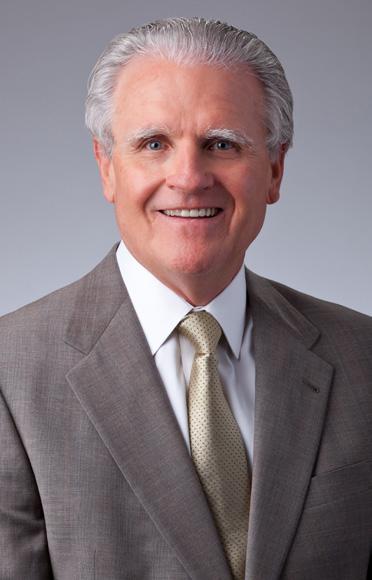
75 mph. If I were driving 78 mph and given a speeding citation, I would be terribly unhappy. Technically, I was breaking the law, but I was in the middle of the desert! In this instance, does driving 3 mph over the speed limit create a material increase in the risk of an accident? It seems to me that such literal enforcement is about generating revenue rather than about safety. At the same time, I understand that any tolerance is significantly less in an elementary school zone. The difference in context is easy to understand, and not understanding would exhibit a complete lack of common sense or good judgment.
Give this some thought the next time when classifying painted, loaded, or corroded sprinklers.
Regarding ITM, I reviewed the 2010, 2017, and 2024 NFPA reports titled U.S. Experience with Sprinklers. The data showed that the lack of maintenance continued to be the number one cause of system failures. However, it was surprising that the percentage of failures due to maintenance has remained rather static despite NFPA 25. In fact, the percentage of failures from the system being shut increased from 53% in the 2010 report to 59% in 2024.
I recognize that these statistics do not tell the whole story, but the reports cause me to wonder if we are focused on the right things in our fire and life safety roles. A question to ask, “Are we using careful judgment and common sense in our work, or are we too intent on creating a checklist of deficiencies while ignoring the context in which they exist. “
In other words, “Are we focused only on doing things the right way rather than doing the right thing?
Something to think about.



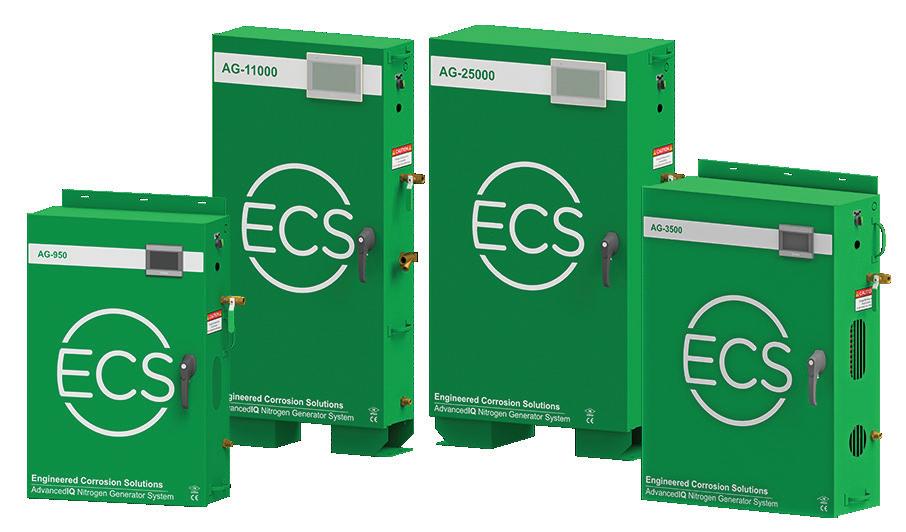
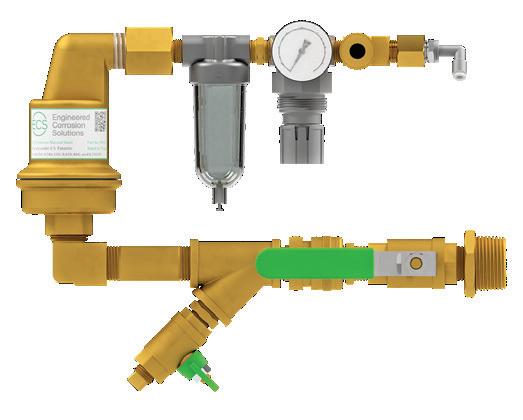


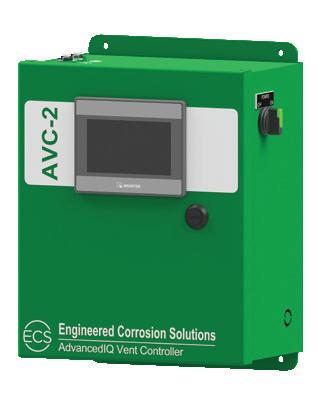


AFSA NEWS
AFSA WELCOMES BYRD
CALENDAR
AUGUST 3

BYRD
As AFSA’s Virtual Instruction Path (VIP) program continues to grow, so does the team behind its success. The American Fire Sprinkler Association (AFSA) is pleased to welcome Andrew Byrd as the newest VIP coordinator. In his role, Byrd oversees the daily administration of VIP courses, managing student records, attendance, and enrollment while supporting instructors and students throughout each live session to ensure a well-supported learning experience. Shortly after joining the team, he oversaw the program’s highest-attended VIP class with 150 students. As an Army veteran and former firefighter, Byrd brings a strong background in education and leadership to AFSA. He holds a bachelor’s degree in exercise science and a master’s of education in coaching, sport, recreation, and fitness administration from Angelo State University. His experience and commitment to student success make him a valuable addition to the VIP team.
AFSA BRINGS EXPERTISE TO NFPA EXPO
AFSA had a strong presence at the NFPA Conference & Expo, June 22-24, 2026. AFSA’s technical team was in attendance and spent time connecting with old and new friends within the fire protection industry. Throughout the event, the team welcomed attendees to the AFSA exhibit booth and contributed to the conference’s educational programs. AFSA experts hosted seminars and participated in discussions on current topics impacting the fire sprinkler industry. The event was an excellent opportunity to strengthen relationships and collaborate with professionals dedicated to protecting lives and property.
FIRE SPRINKLER LAB RESERVATIONS
Facility requests for AFSA’s fire sprinkler playground are rolling in, with many users requesting regular training throughout the year. If you are interested in renting the facility or providing customized training to support your organization’s educational and training needs at the sprinkler playground, complete the request form at firesprinkler.org/facility-request-form.
Introduction to the Fire Sprinkler Industry
AFSA Headquarters, Richardson, TX firesprinkler.org/intro
4-5
NFPA 25 Fire Pump Workshop
AFSA Headquarters, Richardson, TX firesprinkler.org/firepump
4-28
Beginning Design School
AFSA Headquarters, Richardson, TX firesprinkler.org/design
SEPTEMBER 2026 14
Introduction to the Fire Sprinkler Industry
AFSA Headquarters, Richardson, TX firesprinkler.org/intro
15-16
NFPA 25 Advanced Systems Workshop
AFSA Headquarters, Richardson, TX firesprinkler.org/systems
27-30
AFSA45: Convention, Exhibition, & Apprentice Competition in San Antonio, TX firesprinkler.org/afsa45
OCTOBER 2026 12-14
Sprinkler Hydraulic Calculations Workshop
AFSA Headquarters, Richardson, TX firesprinkler.org/calculations
15-16
Advanced Hydraulic Calculations Workshop
AFSA Headquarters, Richardson, TX firesprinkler.org/acalculations
CHAPTER NEWS
CHESAPEAKE BAY
On May 12, the chapter presented eight hours of NFPA-based training for Maryland AHJs and chapter members. AFSA Director of Engineering Kevin Hall covered “Acceptance Testing for Water-Based Fire Protection Systems,” “NFPA 20 Fire Pumps 101,” and “NFPA 20 Fire Pump Sizing and Selection.” Participants were given a continental breakfast and a free lunch! At the lunch break, the chapter held a short meeting to give an idea of what the chapter can provide. There were 37 attendees, 18 of whom represented Maryland AHJs. Discussions with some of the attendees during breaks indicated gratitude for the information and requests for more training. Visit afsachesapeakechapter.org.
SACRAMENTO VALLEY
The chapter held a full day of CAL FIRE-Approved seminars on June 16 at the Western Electrical Contractors Association in Mather with instructor Bob
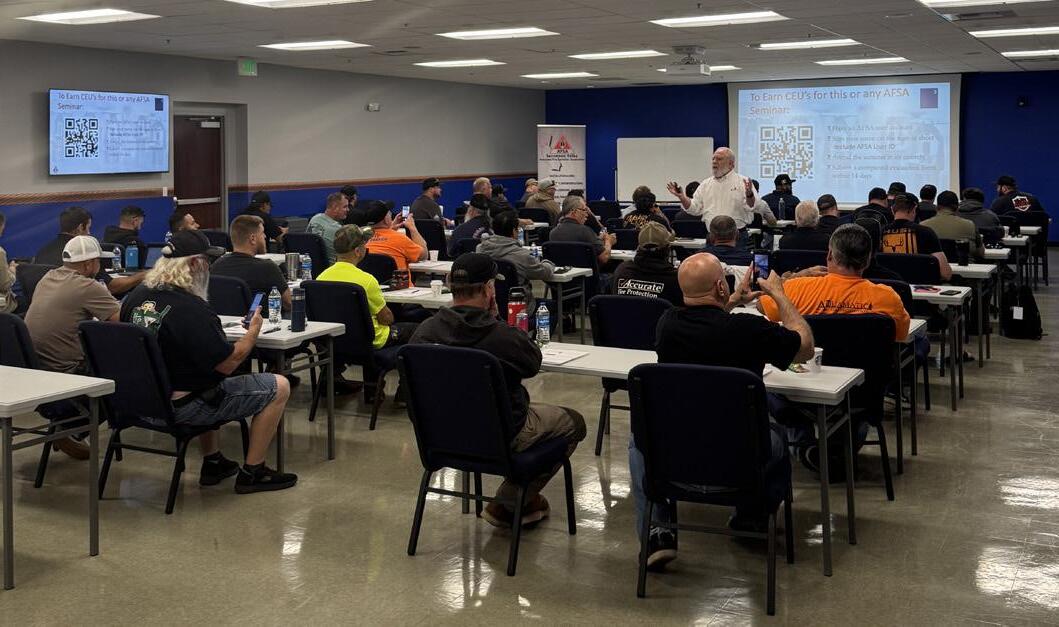
Caputo, AFSA president. Attendees learned about code standards, including NFPA 13 (2025), NFPA 14 (2024), NFPA 20 (2025), and NFPA 25 (2023), with a fabulous lunch sponsored by AGF Manufacturing. The chapter’s next seminars will be held on August 5 on “Installation Requirements.” For details, visit sacvalleyafsa.org.
Repair Parts?
• Complete Inventory
• Product Knowledge
• Same Day Shipping
Visit Us On-Line www.bavco.com • www.bavcostore.com
West Coast - Long Beach, CA (800) 458-3492 • info@bavco.com
Central - San Antonio, TX (866) 318-0274 • txinfo@bavco.com
East Coast - Charlotte, NC (844) 202-1618 • ncinfo@bavco.com Your Complete Source for Backflow Parts & Accessories
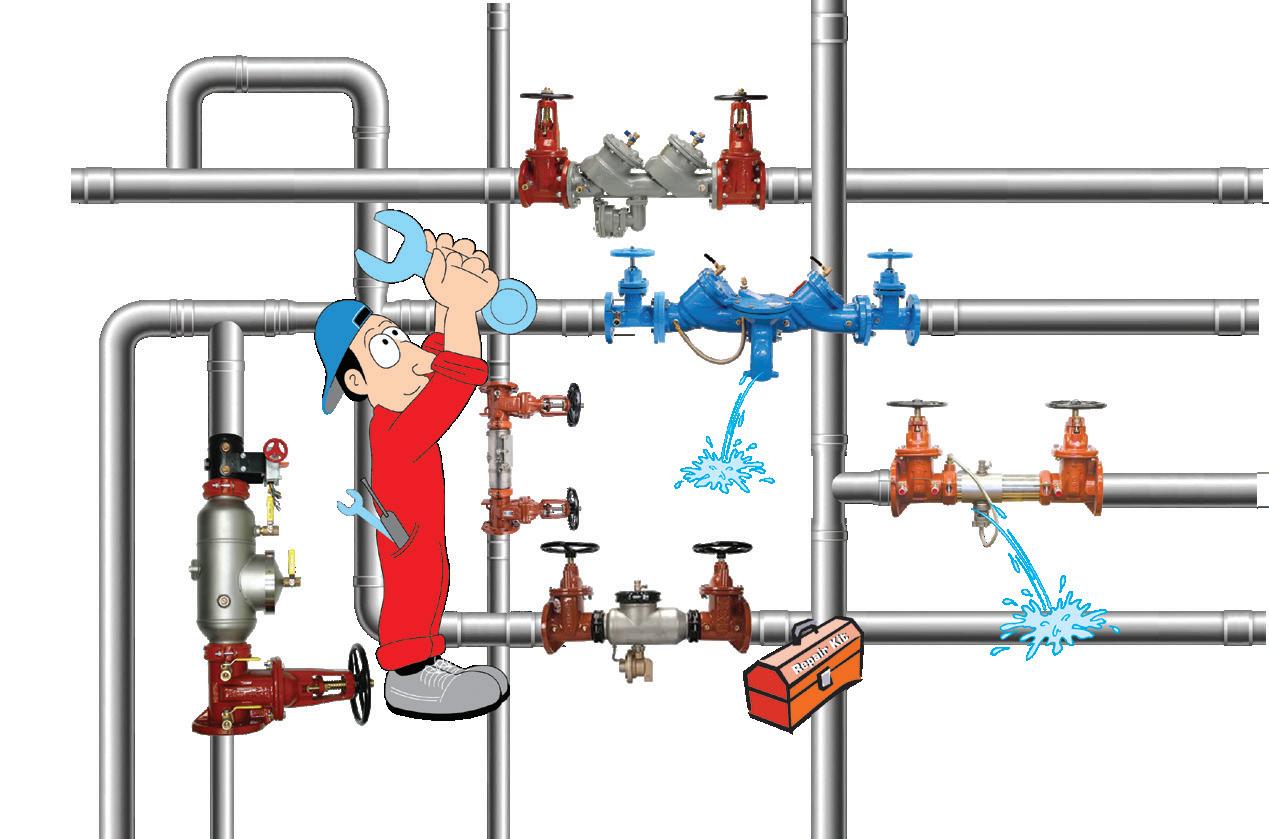
Sacramento Valley Chapter Members held a full day of seminars ON June 16.
AFSA CHAPTERS
ALABAMA
Gene Taylor – Pres. 334-270-8571
Greg Willis – Exec. Dir. 334-567-4257
ARIZONA
Jason Williams – Chair 480-421-8411
Denniece Cooper - Exec. Dir. 480-282-5393
ARKANSAS
Randy Gilliam – Chair 479-391-4523
Stephen Bitely – Exec. Dir. 501-605-3495
CHESAPEAKE BAY
Jason Martin – Chair 240-848-2710
Danielle Fowler – Exec. Dir. 410-972-1122
COLORADO
Roger Wallace – Chair
719-337-6550
Kim Cook – Exec. Dir. 704-213-4368
DALLAS-FORT WORTH
Talon Hernandez – Chair 214-575-2000
Merle Hittle – Vice Chair 214-282-0350
FLORIDA
Aaron Jones - Chair 813-695-1082
Jessica Cox – Exec. Dir. 813-784-3624
GEORGIA
Allen Cagle – Chair 770-554-5285
Tracy Williams – Exec. Dir. 770-355-0774
GREATER BAY AREA
David Lewandowski – Chair 209-652-3243
Angelica Ramirez – Exec. Dir. 408-680-1875
GREATER KANSAS CITY
Mark McKenzie – Chair
913-432-6688
Brett Heinrich – Exec. Dir. 785-825-7710
ILLINOIS-INDIANA
Skyler Bilbo – Chair 217-342-2242
LOUISIANA
Randy Laguna – Chair
504-464-6236 ext 224
Ellen Ballard – Exec. Dir. 318-393-9565
MICHIGAN
Doug Irvine, Jr. – Chair 616-784-1644
MINNESOTA-DAKOTAS
Marc Haug – Chair
701-232-7008
Tina Hoff – Exec. Dir. 701-709-1899
NEW ENGLAND
Daniel Berry – Chair 978-729-9977
Alison Desmond – Exec. Dir. 774-278-3260
NEW JERSEY
Thomas Bowlby, Jr. – Chair
908-226-5313
Victor Lugo – Exec. Dir. 201-635-0400
NEW MEXICO
Paul Chavez – Chair
505-898-9197
Renee Nix - Exec. Dir. 505-690-0913
NORTH CAROLINA
Drew Jester – Chair 336-469-0382
John Turnage – Exec. Dir. 919-624-3456
OHIO
Mike Hiatt – Chair 937-859-6198
ORANGE COUNTY/INLAND EMPIRE
Henry Fontana – Chair 914-497-6316
Michelle Rossmann– Exec. Dir. 951-644-9247
PACIFIC NORTHWEST
Brandon Stewart – Chair 971-235-9608
Cameron Kammers – Exec. Dir. 425-343-9793
SACRAMENTO VALLEY
Holly Gray Salmon – Chair 916-296-9913
Paulene Norwood – Exec. Dir. 916-296-0635
SAN DIEGO
Jonathan Joseph – Chair 619-588-6364
Rhonda Gudger – Exec. Dir. 951-326-4600
SCHUYKILL
Dan Hinkle - Chair 215-778-5484
Kasey Golden – Exec. Dir. 817-276-7060
SOUTH CAROLINA
Tyler Blume – Chair 864-909-2643
Kari Miller – Exec. Dir. 843-415-5452
TENNESSEE
Justin Smith – Chair 901-664-5930
David Pulliam– Exec. Dir. 901-484-0605
UTAH ROCKY MOUNTAIN
Mark Winder, Jr. – Chair 385-630-8064
Brent Heiner – Exec. Dir. 801-544-0363
VIRGINIA
Timothy “Hooper” Loscomb – Chair 804-620-3735
Danielle Fowler – Exec. Dir. 410-972-1122
OKLAHOMA FIRE SPRINKLER ASSOCIATION (AFFILIATE)
Tim Hollon – Pres. 918-851-2416
FIRE SPRINKLER CONTRACTORS ASSOCIATION OF TEXAS (AFFILIATE)
Paul McKenna – Pres. 281-741-1006
Sarah Kiefer – Exec. Dir. 512-844-6632
AFSA NEW MEMBERS
New members as of June 24, 2026
FACILITY MANAGERS
Sabrina Delaney, Kimberton, PA
Ryan Fulmer, Kimberton, PA
Charles Nader, Fort Myers, FL
Rebecca Shoemaker, Pottstown, PA
Jesse Valtierra, Sacramento, CA
ASSOCIATES
ServiceTitan, Glendale, CA
CONTRACTORS
Clutch Plumbing and Fire Protection, Richardson, TX
Firemex Solutions Inc., Brisbane, CA
Stokes Plumbing & Trenchless, Florence, SC

Fire Sprinkler Solutions, Kansas City, MO
Schmidt Design Solutions Ltd, Hamilton, OH
MANUFACTURERS/SUPPLIERS
Geo-Systems USA, Grand Prairie, TX
Milwaukee Tool, Brookfield, WI
nVent/CADDY, Willow Park, TX
AHJS
Richard Abiang, Commerce, CA
Derek Allmond, Columbia, SC
Na An, San Diego, CA
Erlinda Baque, Commerce, CA
James Childers, Gaithersburg, MD
Jakob Cirell, Staatsburg, NY
Brian Clausson, Spotsylvania, VA
Robert Cernuda, Miami, FL
Travis Francis, Towson, MD
Lingh Ha, Commerce, CA
LATIN AMERICA FIREFIGHTERS
Julio Montesdeoca, Guayas, Ecuador
John Waldir Navarro Ponce, Lima
Jose Oliva Soto, Lima
Eveldin Jesus Patiño Posso, Lima
José Aristides Ponce Santamaría, Lima
Jose Luis Pumasupa Arce, Lima
Richard Ramon Rosa Moya, Lima
Christian Alexander Segil Urcia, Lima
Aldo Flavio Solorzano Jara, Lima
Miguel Angel Toledo Torre, Lima
Julio Lozano Zambora, Lima
AFSA




U.S. CONSTRUCTION REPORTS
CONSTRUCTION STARTS POWER ON, UP 9% IN APRIL
Total construction starts rose 9.0% in April to a seasonally adjusted annual rate of $1.33 trillion, according to Dodge Construction Network. Nonresidential building starts grew by 18.6%, nonbuilding starts increased 7.0%, and residential starts fell 0.7% over the month. On a year-to-date basis, total construction starts were up 5.4% through April. Nonresidential starts were up 9.1%, nonbuilding starts improved by 12.3%, and residential starts were down 4.5% over the same period. For the 12 months ending April 2026, total construction starts were up 8.1% from the 12 months ending April 2025. Residential starts were down 4.4%, nonresidential starts were up 10.0% and nonbuilding was up 19.5%.
CONSTRUCTION STARTS SWELL 34% IN MAY
Total construction starts improved 34.1% in May to a seasonally adjusted annual rate of $1.78 trillion, according to Dodge Construction Network. Nonresidential building starts grew by 17.8%, nonbuilding starts increased 91.9%, and residential starts fell 2.1% over the month. On a year-to-date basis, total construction starts were up 12.7% through May. Nonresidential starts were up 12.3%, nonbuilding starts improved by 32.9%, and residential starts were down 4.9% over the same period. For the 12 months ending May 2026, total construction starts were up 12.5% from the 12 months ending May 2025. Residential starts were down 4.6%, nonresidential starts were up 11.7% and nonbuilding was up 33.2%.


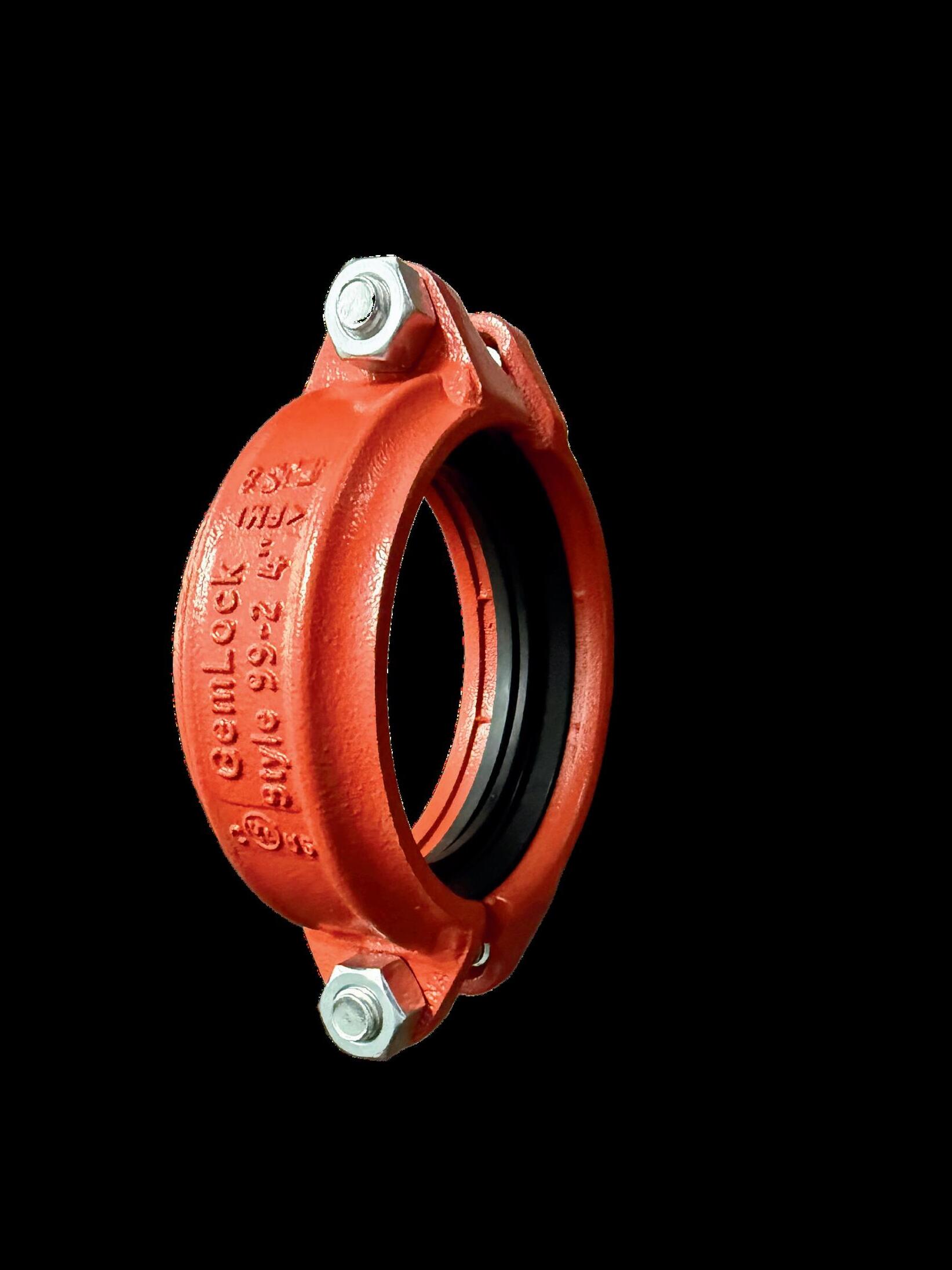
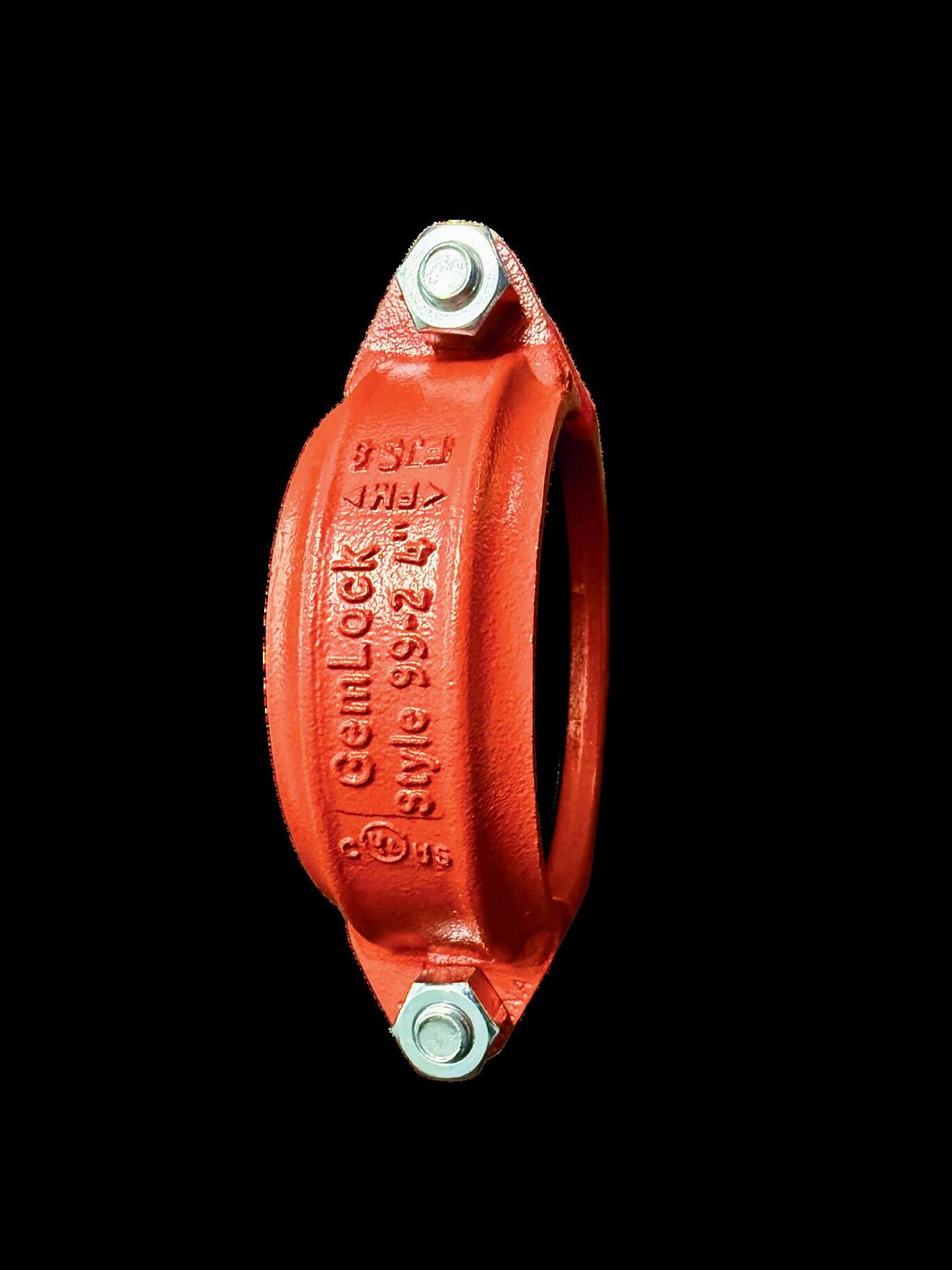
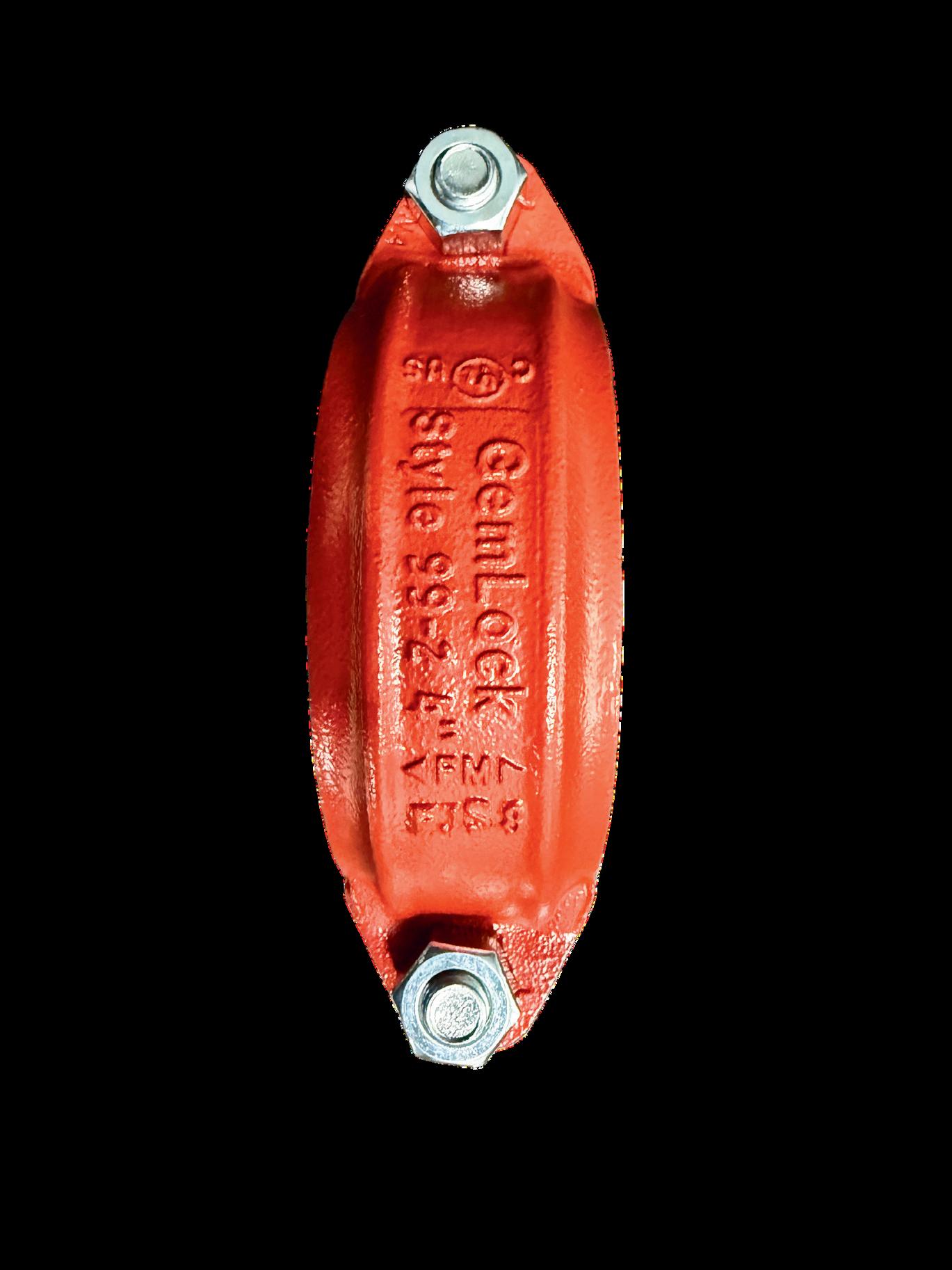
Some would call that unstoppable
We call it
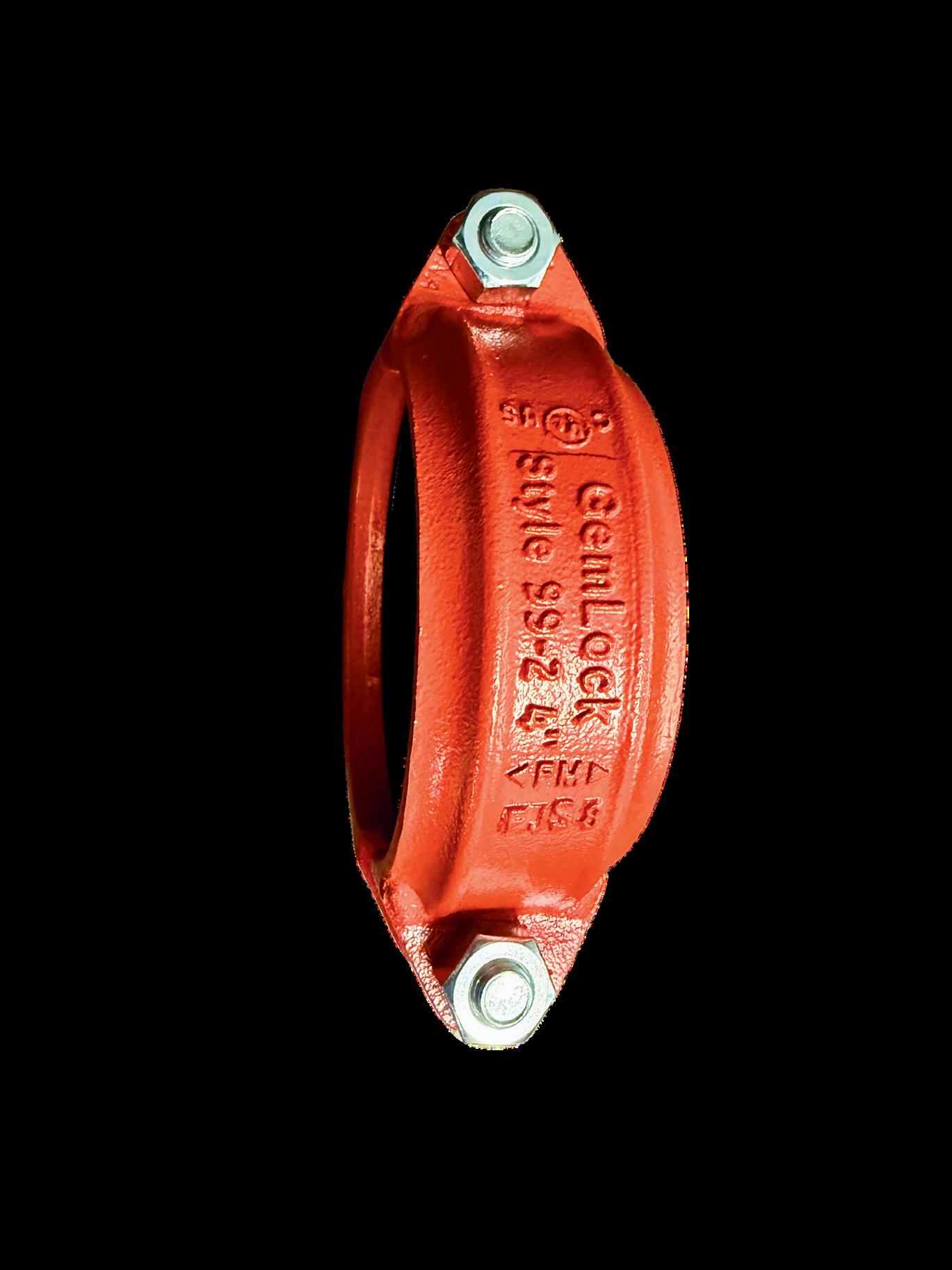

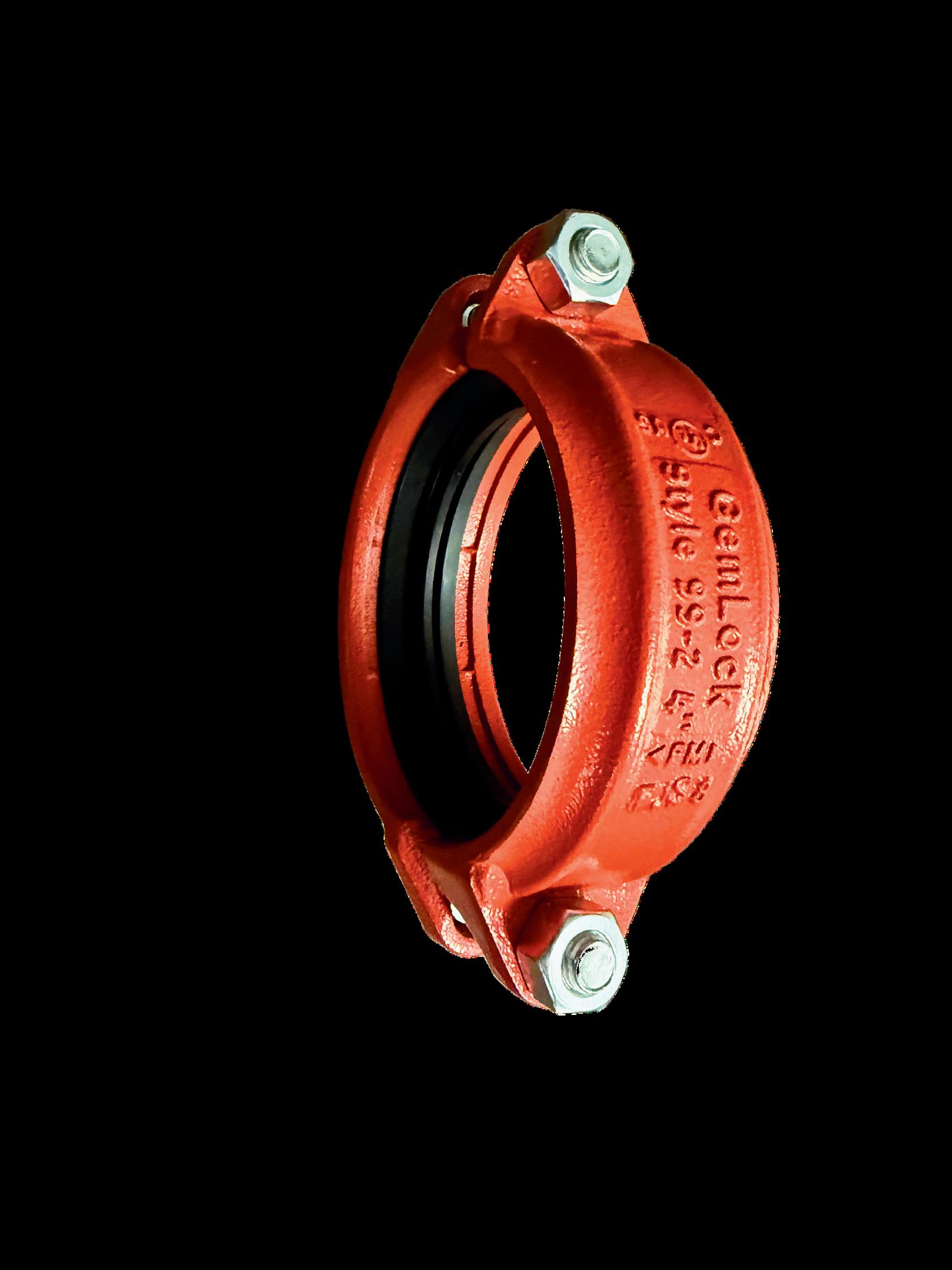

INDUSTRY NEWS
WINSUPPLY MEETING AND VENDOR SHOWCASE
The Winsupply Family of Companies marked its 70th anniversary at the Winsupply Annual Meetings and Vendor Showcase, held March 29 to April 2, 2026, at the Gaylord Texan. The week of events brought together over 2,000 total participants with nearly 1,000 representatives from Winsupply Local
Companies across the U.S., over 200 employees from the Support Services campus in Dayton, Ohio, and around 1,000 representatives from 200 vendor partners.
REGISTRATION OPENS FOR SFPE CONFERENCE
The Society of Fire Protection Engineers (SFPE) announces the opening of registration for the

2026 SFPE Annual Conference & Expo. Held at the Atlanta Marriott Marquis in Atlanta, Ga., from Oct. 6-8, the SFPE Conference & Expo is where fire protection engineers and fire safety professionals come together to learn, network, engage, and be inspired. Visit sfpe.org.
DYNE EXPANDS LABORATORY TESTING SERVICES
Dyne Fire Protection Labs, an NFPA Global Solutions Company, announces the expansion of its laboratory testing services to include Corrosion & Microbiologically Influenced Corrosion (MIC), Diesel Fuel, and Water Mist Nozzle testing, with results available in five business days or less. These additional capabilities strengthen Dyne’s role in supporting compliance with widely adopted NFPA standards and addressing emerging system risks identified through inspection, testing, and maintenance (ITM) activities. The expanded services specifically align with provisions within NFPA 25. Visit dyneusa.com.
FIRE PREVENTION WEEK 2026 THEME
Many of the devices in our daily lives—phones, tablets, laptops, tools, toys, e-bikes, and scooters, to name a few—run on rechargeable lithium-ion batteries, which store high amounts of energy in a small space. If the batteries are damaged or charged incorrectly, they can overheat, start a fire, or even explode. With these concerns in mind, NFPA, the official sponsor of Fire Prevention Week™, has announced “Charge
METRO CHIEFS 2026 ANNUAL CONFERENCE
The Metropolitan “Metro” Fire Chiefs Association, a section of NFPA and the International Association of Fire Chiefs (IAFC), recently concluded its 2026 Annual Conference in Milwaukee, Wis.
Hosted by Chief Aaron Lipski and the Milwaukee Fire Department, the conference brought together more than 200 fire service leaders representing some of the largest and most complex fire and emergency service organizations worldwide. Participants included chiefs and senior leaders from the United States, Canada, Mexico, the United Kingdom, Europe, and other international partners, who gathered to exchange ideas, address emerging challenges, and strengthen collaboration across the global fire service. Visit nfpa.org.
WFC ADVANCES GLOBAL FIRE SERVICE COLLABORATION
The World Fire Congress (WFC) has named the Metropolitan Fire Chiefs Association (Metro Chiefs), a section of NFPA and IAFC, to serve as its secretariat, establishing a long-term coordination and continuity framework designed to strengthen global collaboration across the fire and emergency services profession.
The secretariat structure will provide continuity between Congresses, preserve institutional knowledge, support host-nation coordination, and strengthen sustained international engagement on emerging
fire and life safety challenges. Visit worldfirecongress.org.
WINSUPPLY WELCOMES NEW LOCAL COMPANIES
The Winsupply Family of Companies has welcomed a new local company with the opening of Winsupply of North Wilmington in North Carolina. The HVAC parts and equipment supplier was opened in January by President/ Owner Conner Leahr. The company encompasses 12,000 ft2 at 3111 Kitty Hawk Road.
The opening of Cleveland Winwater Winsupply has also been announced. President Jason Petkac and the Cleveland Winwater employees officially opened their doors on February 1, 2026. Cleveland Winwater serves the waterworks industry while also crossing into the mechanical and plumbing industries with a partnership with Plumbing company Winsupply of Cleveland to provide customers with the best support possible. Visit winsupply.com
PEOPLE IN THE NEWS
NFPA NAMES WILLI FIRE AND LIFE SAFETY EDUCATOR OF THE YEAR
The National Fire Protection Association® (NFPA®) has announced that Elizabeth Willi, public information officer for Palm Harbor Fire Res-
cue in Florida, has been named the 2026 Fire and Life Safety Educator of the Year. She brings more than 20 years of leadership in fire and life safety education, building a sustainable, community-wide prevention model grounded in NFPA programs and resources. By integrating

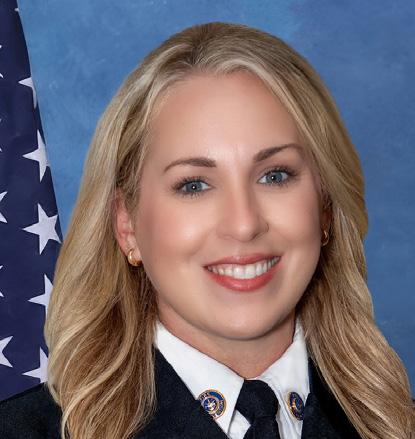
Fire Protection Contractor magazine keeps industry professionals connected to the news, products, projects, technical insights, and business ideas shaping fire protection.
Stay informed. Stay connected. Subscribe at: www.fpcmag.com
Inside every issue:
• Industry news
• Technical insights
• Code and Standards awareness
• Business growth ideas
• Product innovation
• Contractor stories and connections
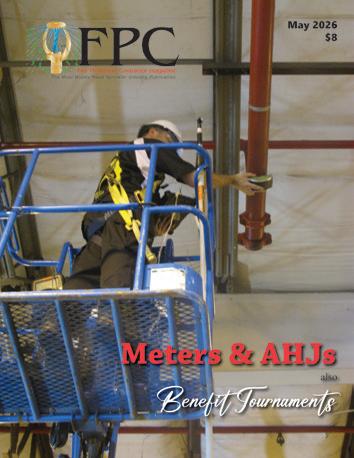

TELGIAN ANNOUNCES JENSEN PROMOTION
Telgian Fire Safety announced the promotion of David Jensen to a new executive leadership role within the company, senior vice president of sales. In this new role, Jensen will lead the company’s national sales organization, oversee strategic growth initiatives, and continue expanding Telgian’s market presence across key industry verticals. Visit telgian.com.
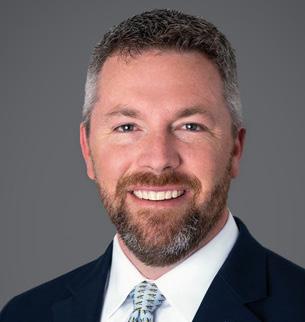
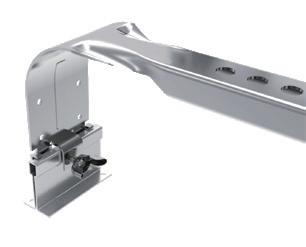
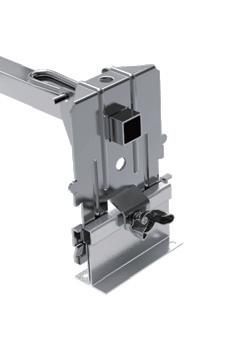
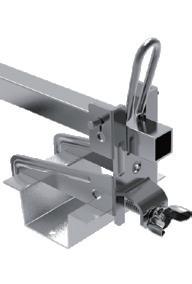
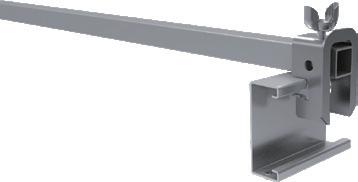
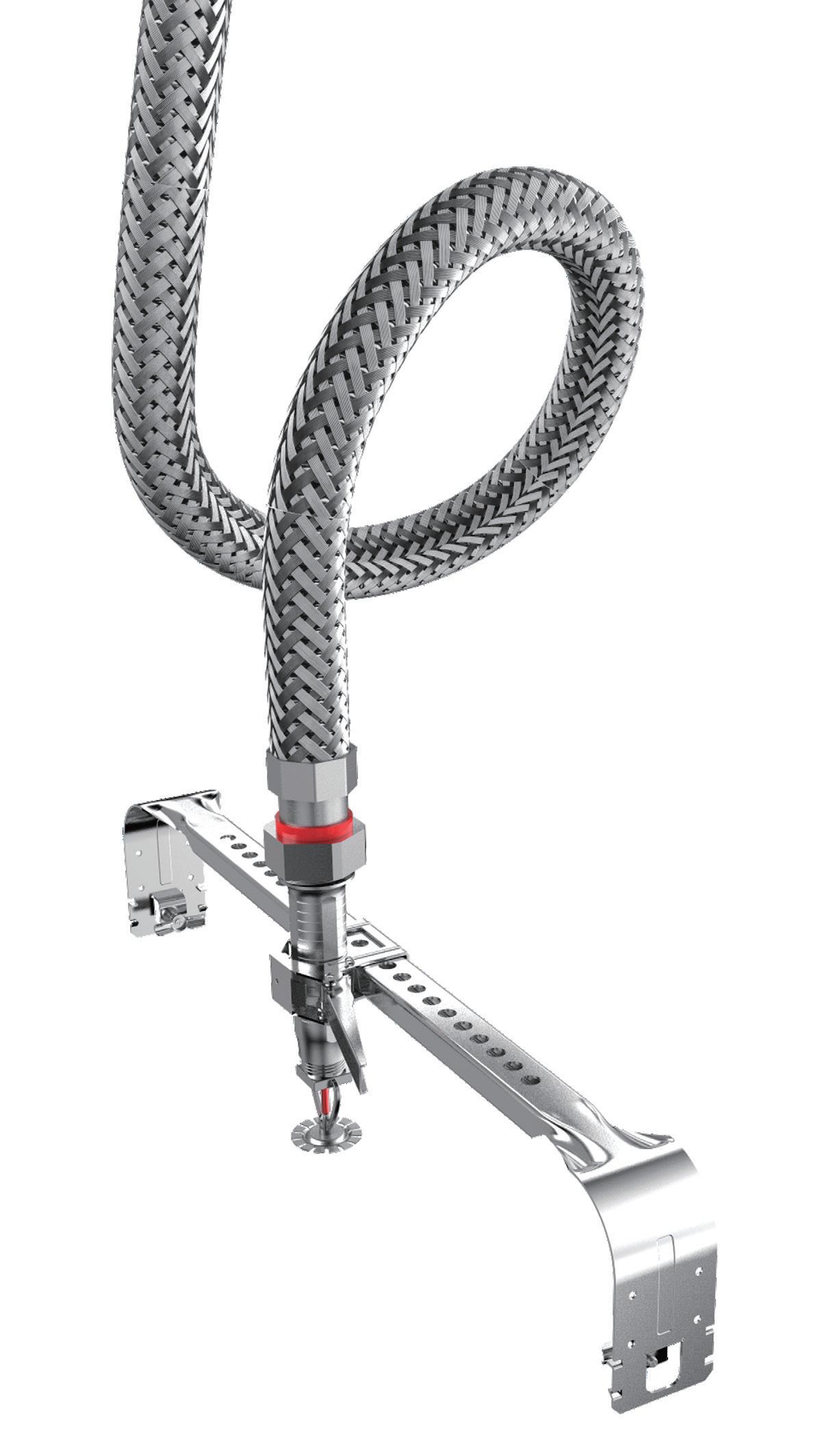




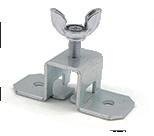
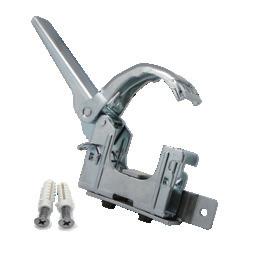
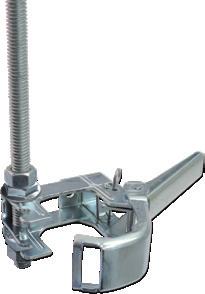
CONVENTION, EXHIBITION & APPRENTICE COMPETITION