
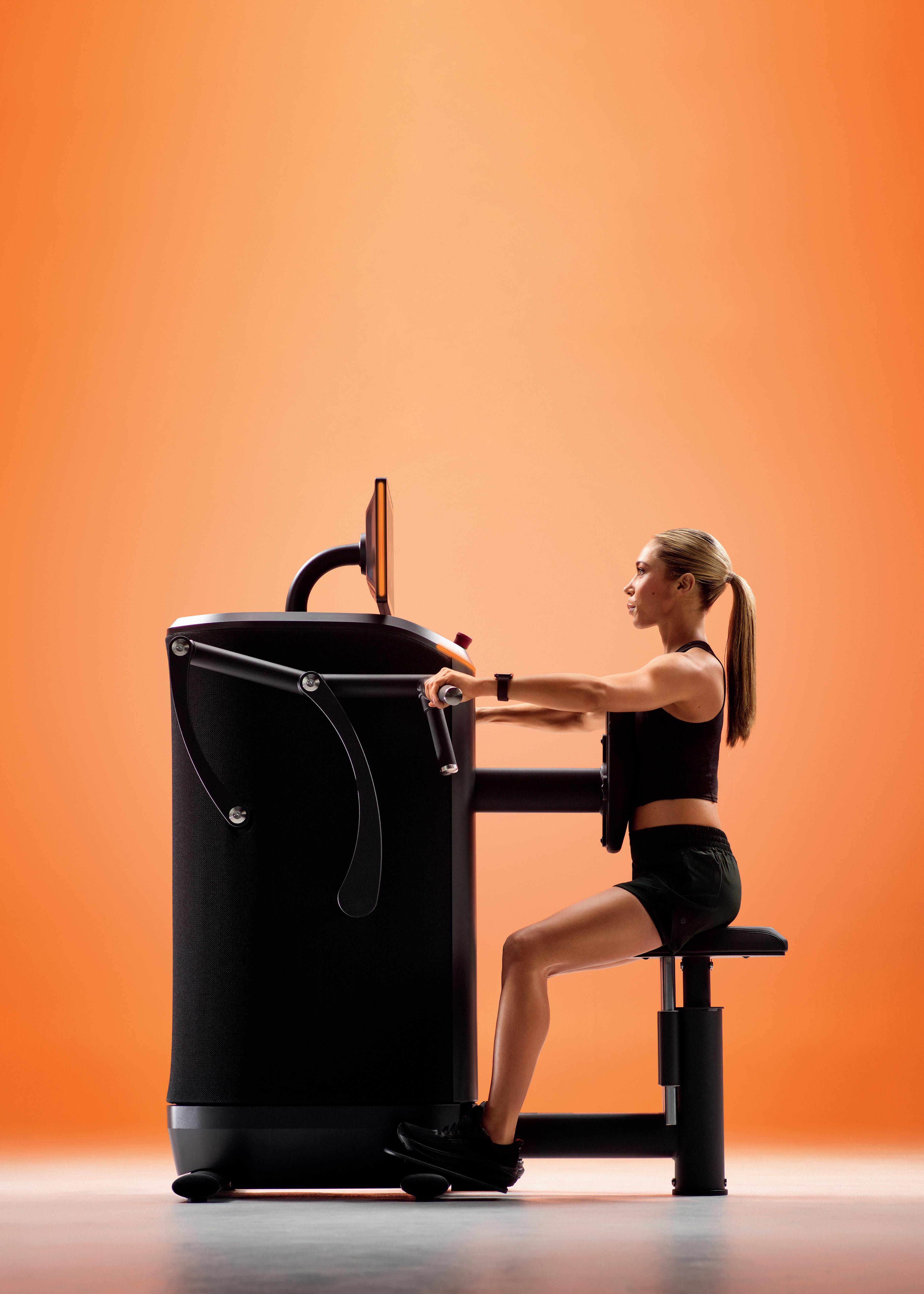
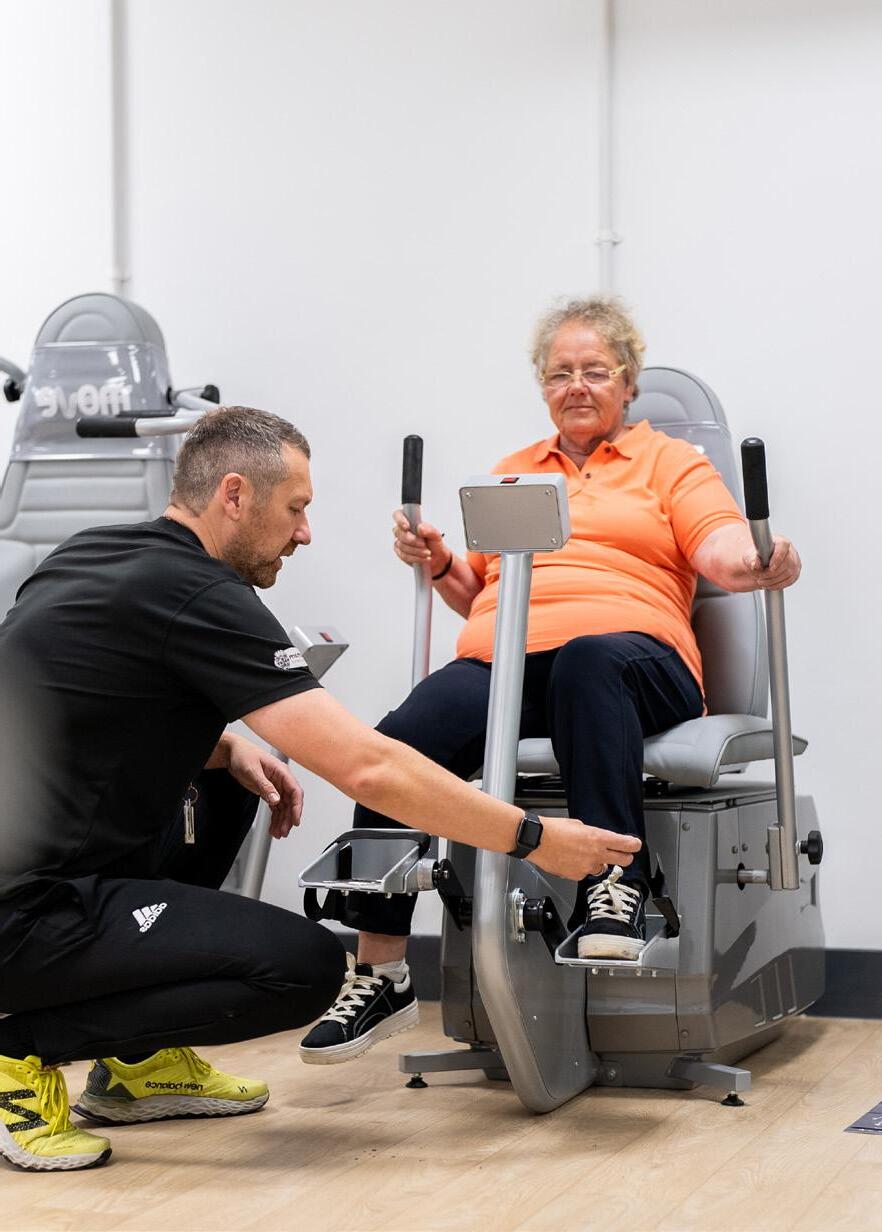
Discover how EGYM powers growth you can see, prove, and repeat with a fully connected, data-driven ecosystem, tailored to you.

www.egym.com/uk | sales@egym.com
LEARN MORE
Discover how EGYM powers growth you can see, prove, and repeat with a fully connected, data-driven ecosystem, tailored to you.
www.egym.com/uk | sales@egym.com
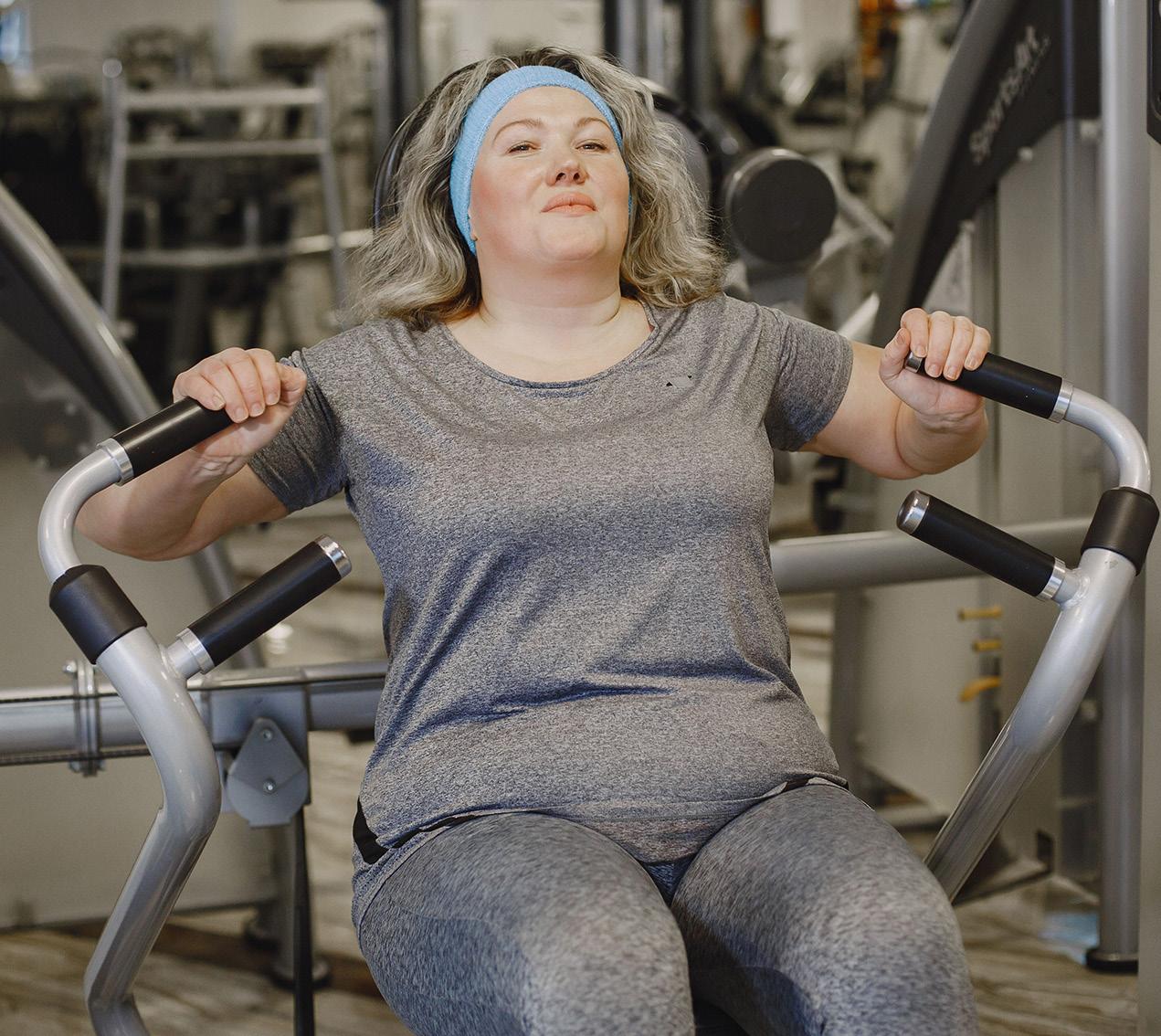
Combining regular exercise with GLP-1 therapy is estimated to generate, in the UK, around £2.7bn in economic and societal value over 10 years
Pairing GLP-1 therapy with regular, structured exercise improves long-term health outcomes, reduces downstream costs and generates positive economic returns. The findings come from a white paper, titled From Weight Loss to Lasting Value: Structured Exercise and the Economics of GLP-1 Therapy. The paper analyses research that examined the long-term clinical and economic value of the use of structured exercise in tandem with GLP-1 treatments. Developed by FTI Consulting’s Center for Healthcare Economics and Policy, the white paper compares impacts of GLP-1 therapy as a standalone obesity treatment with GLP-1 therapy combined with exercise. In partnership with a multinational coalition of fitness sector organisations, the analysis used a health-economic model adapted across Australia,
Canada, New Zealand, the UK and the United States. Across all five countries studied, the analysis found that a combined approach supports improved long-term health outcomes, reduced healthcare costs, and produced positive economic returns. Combining regular exercise with GLP-1 therapy is estimated to generate, in the UK, around £2.7bn in economic and societal value over 10 years and a 164% return on investment, rising to 717% and £13bn over 30 years.
For the US, the figures are even higher – US$120bn in economic and societal value over 10 years and a 496% return on investment, rising to 1,572% and US$393 bn over 30 years. The study also looked at three other countries (New Zealand, Canada and Australia) and in each exercise generated added value.

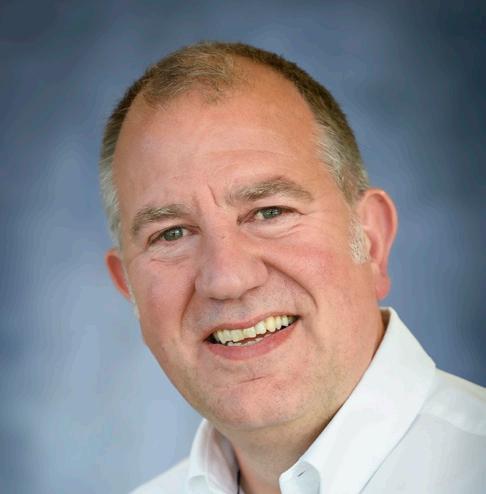

PureGym has appointed Alex Wood as its new CEO. Wood, who is currently Group Chief Financial Officer (CFO) for the company, will take over from Clive Chesser, who is stepping down after two years in the role. Wood joined PureGym as CFO in 2018 and has played an instrumental role in the growth and development of the business. Notably, he spearheaded the successful acquisition and integration of the Blink Fitness business in the USA in 2024-25 and oversaw the acquisition of the Fitness World business.
Fitness education provider, Study Active, is back in the hands of its founder, after James Luscombe announced that he has regained full control over the company operations and its shares. Luscombe founded Study Active in 2012 and oversaw its growth, culminating in the company being crowned ukactive Education Provider of the Year in 2023. After stepping away from the business in 2025, to focus on other business interests, including Which Personal Trainer Course, he has now returned to Study Active as MD and will again oversee the company operations.
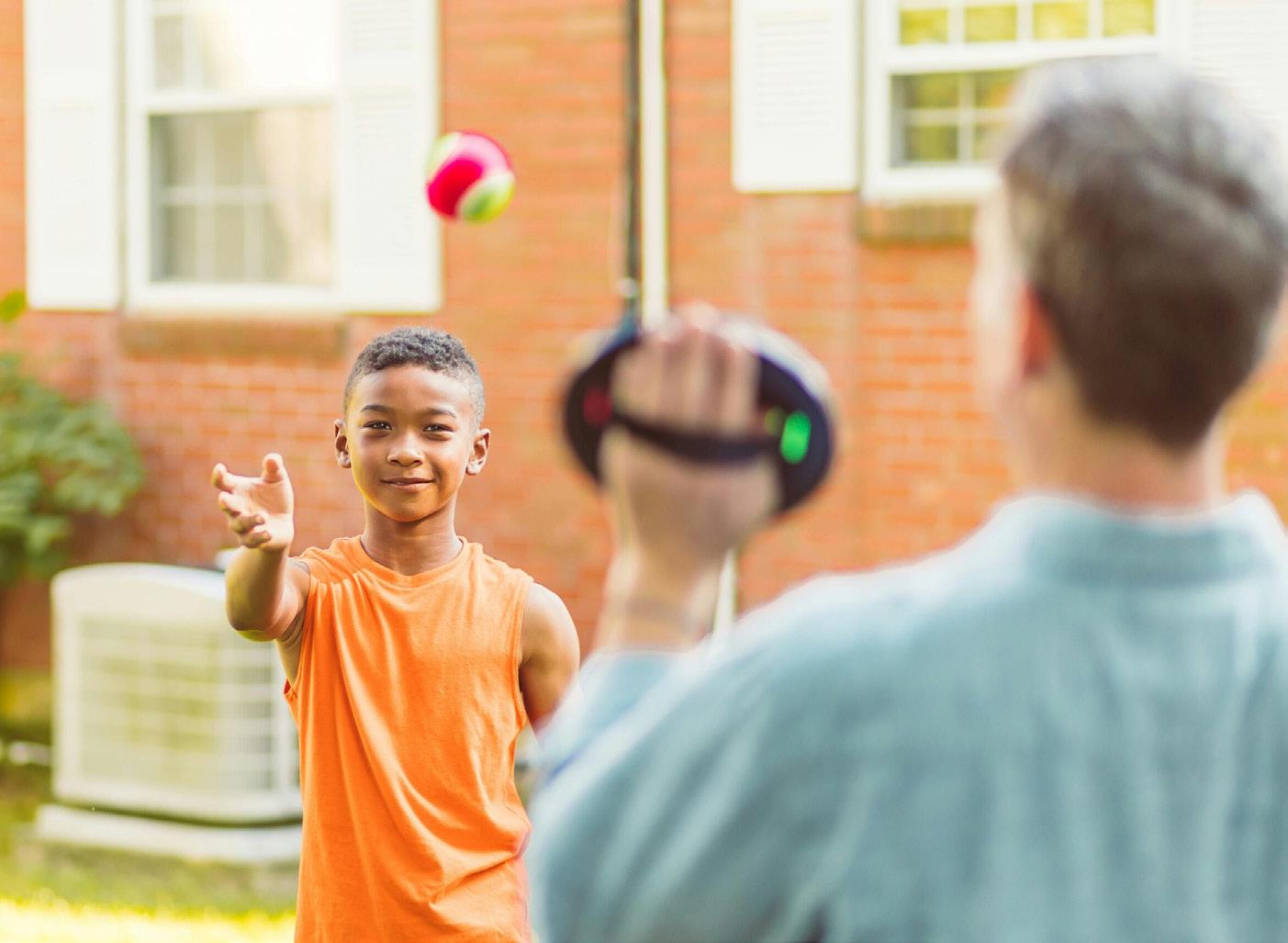
Only a “small minority of children” are mastering the basic movement skills
Children “more likely to own a phone than be able to throw a ball”
Young children are more likely to own a smartphone than be able to throw a ball, according to a new report.
New research from a think tank, the Centre for Social Justice, reveals that while a range of studies show fewer than half of English 10-yearolds meet a basic level of competence in throwing a ball, over 70 per cent now own a smartphone.
The report, Inactive Nation, warns that England is raising a generation of children where only a small minority of children are mastering the basic movement skills they need to participate confidently in sport and physical activity. Around half of the pupils in every single primary school classroom today fail to meet basic activity levels for a healthy life, the analysis revealed.
The displacement of outdoor play with screen-based activity is leading to the rise of a generation of so-called “iPad kids”, who are missing out on vital physical development and contributing to ballooning obesity
rates. By Year 6, pupils are spending 3 hours a day online – the equivalent of over a month each year – according to CSJ analysis of Ofcom data.
The report highlights the “resounding” evidence of the benefits of an active childhood. A range of studies show that physical activity builds resilience, supports good behaviour and physical development. Yet over half of primary school age pupils, or 2.1. million children, are insufficiently active – averaging less than 60 minutes of at least moderate physical activity a day. For disadvantaged children, this rises to 6 in 10.
Swapping 15 minutes of daily screen time for outdoors play would see 300,000 primary school pupils hit the recommended activity level. The CSJ says the consequences of sedentary lifestyle are already visible, as childhood obesity is rising. Deprived communities are worst hit, with children in them being more than twice as likely to be obese as those in more affluent areas.
Virgin Active has relaunched its Mayfair site as its first Social Wellness Club in London – a new category of destination that goes beyond the traditional gym model to “support the full breadth of how people live and work”.
The relaunch marks a significant moment in Virgin Active’s global evolution. Across 224 Clubs in nine countries, serving more than a million members, the brand has been building toward a singular conviction: that people need their wellness memberships to genuinely support how they live. The Social Wellness Club is its answer to that shift.
The concept, which has already seen success in Milan, Cape Town, Sydney and Doha, arrives in the UK for the first time through the evolution of its landmark Mayfair Club which offers not just an upgrade, but a new standard, and a statement of Virgin Active’s long-term commitment to investing in its UK estate. Rather than something separate from everyday life, the Social Wellness Club has been designed to sit
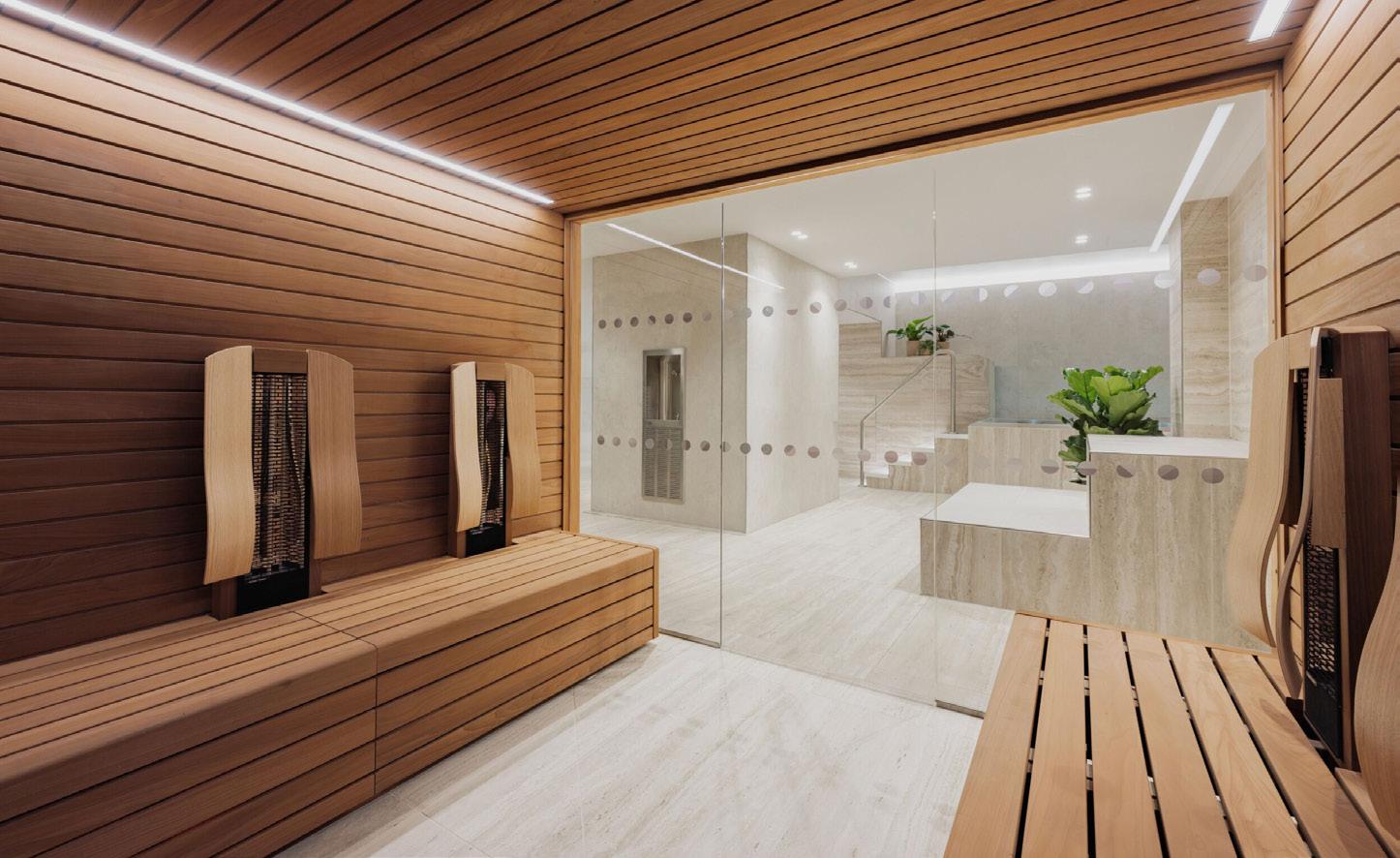
naturally alongside it. A place where training, recovery, focus, connection, work and nutrition are brought together with intent – supporting how members move through their day, not pulling them away from it.
At its foundation remains training. Six dedicated studios including
Combat, Lift Club, Cycle, Mind and Body, Reformer and Tower Pilates, and a 1:1 Pilates suite, are supported by a dedicated team of Personal Trainers delivering tailored programmes. In addition to these studios there is a fully equipped gym floor covering strength and cardio in equal measure.
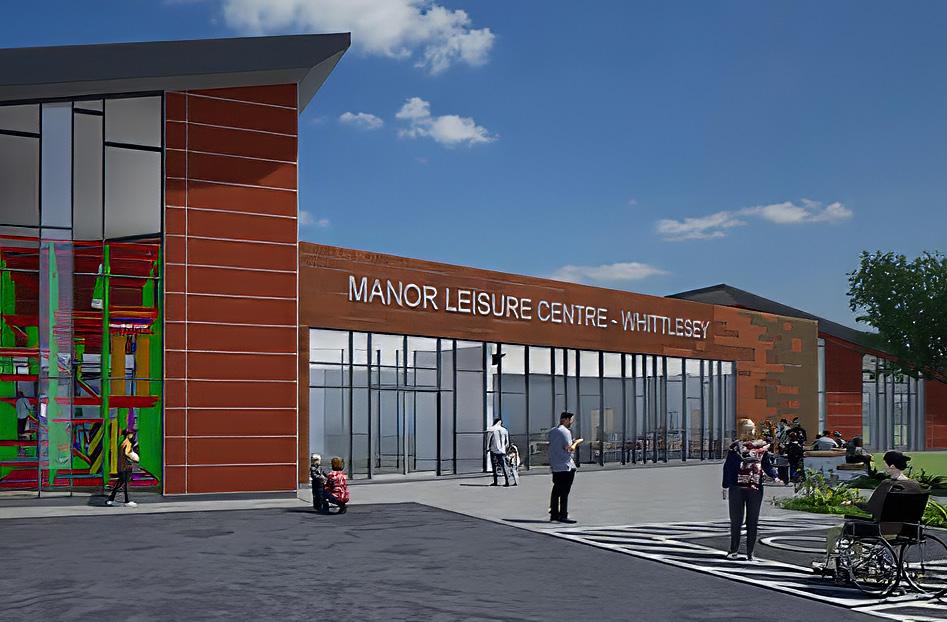
An £18m project to redevelop a leisure centre in Whittlesey, Cambridgeshire, is back on track after a new contractor was appointed to replace the original firm which had collapsed.
Fenland District Council, which is driving the project, said it is continuing to progress plans on the Manor Leisure Centre following confirmation that Curo Construction – which had been undertaking pre-contract design and development work for the project – has ceased trading. The council said it had been informed of Curo’s collapse by its project delivery partner, Alliance Leisure.
“Fortunately, Alliance works with a number of construction partners and began an immediate review of other suitable firms with the capacity to continue the project without unnecessary delay,” the council said in a statement.
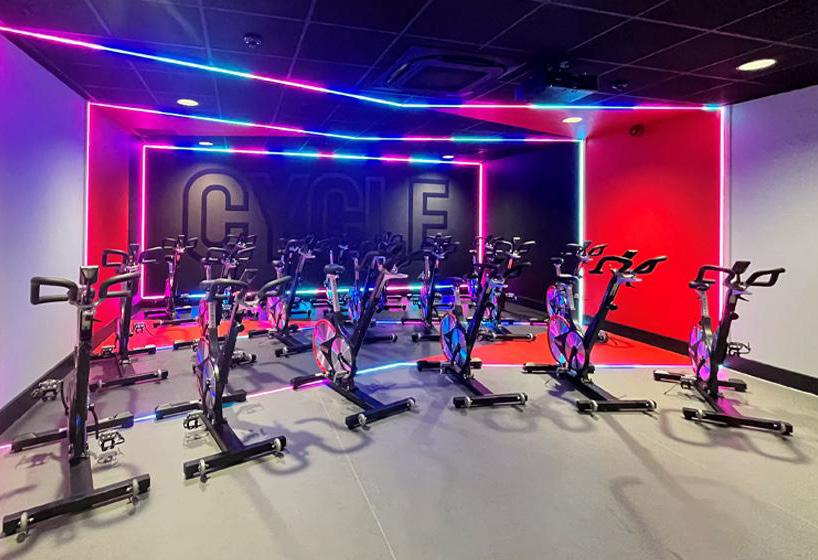
North Herts Council installed a new dedicated indoor cycling studio at North Herts Leisure Centre, following a public consultation earlier this year.
The project saw one of the centre’s two squash courts being converted into a purpose-built cycling studio, while the second court has now been fully refurbished to enhance the experience for squash players. The studio is equipped with 22 Keiser bikes, alongside immersive lighting and enhanced sound, creating a high-quality environment designed specifically for group cycling sessions.
Northampton gym and fitness provider, Trilogy Active, has officially opened its new state of the art gym, bolstering its presence and bringing further health benefits to the local community.
Trilogy Active, a health and wellbeing trust, operates Cripps Recreation Centre, and Duston Sports Centre in Northampton, Belper Leisure Centre in Derbyshire and Berzerk Active Play Centres in Atherstone, Northampton, Derby and Birmingham. Its new state of the art gym is situated in Scotia Close at the Brackmills Industrial Estate.
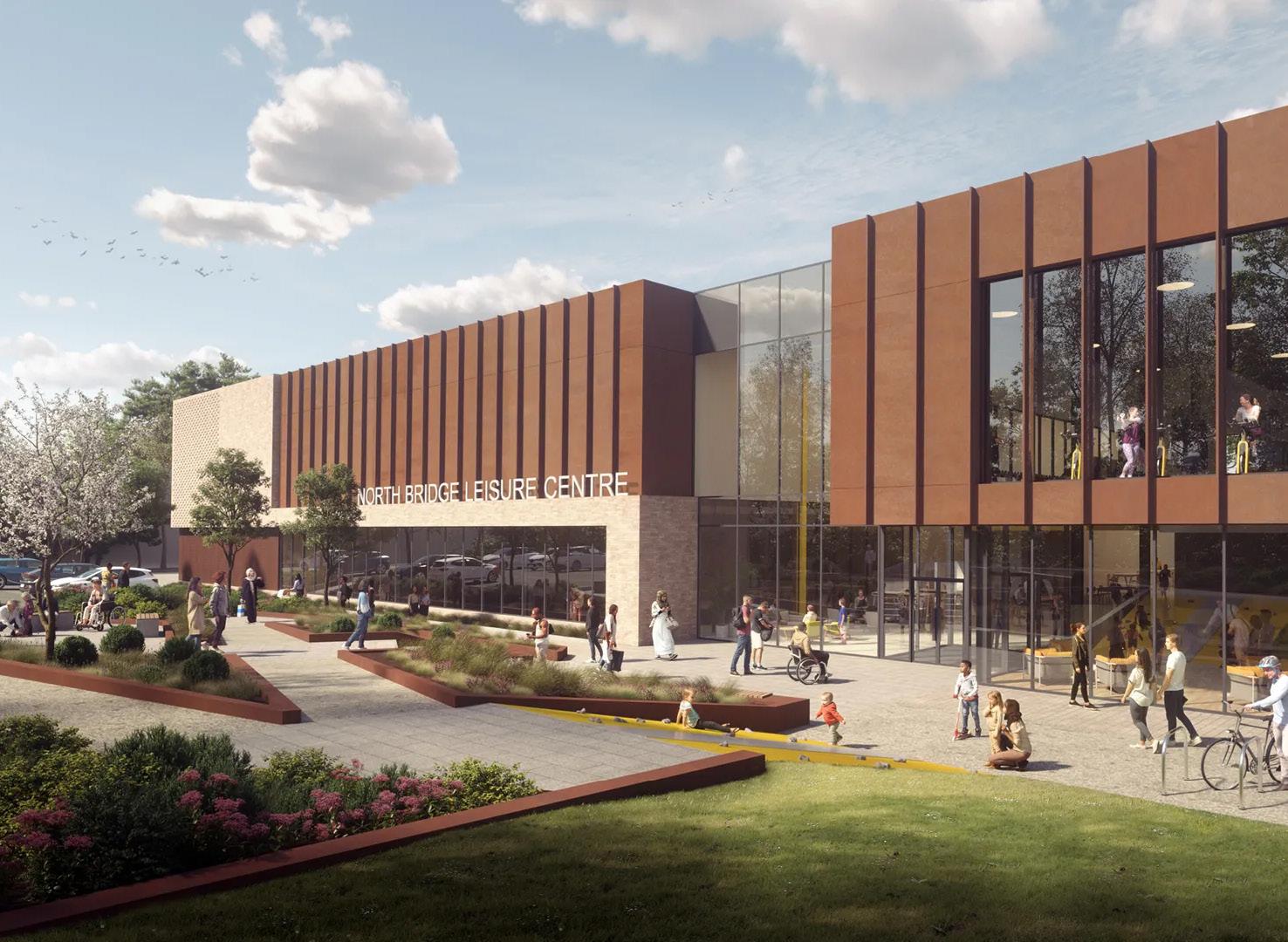
Building work has begun on a new leisure centre in Halifax, following the completion of all preparatory works that first began in October 2025. The works included the partial demolition of the old North Bridge Leisure Centre.
The project is driven by Calderdale Council, which will own the site.
The council has secured £12.2m from the government’s Levelling Up Fund to help fund the new facility. When completed, facilities at the new centre will include a six-lane swimming pool with spectator seating, a learner pool, refurbished eight-court sports hall, a 120-station fitness suite, three multi-functional studios, a dedicated cycling studio, a children’s soft play and adventure area and a café and community area.
A wet changing village and a Changing Places facility for disabled people and separate dry change facilities for sports hall and gym use. The Council is working with Visits Unlimited to ensure the facilities
are accessible for all. There will also be several wellbeing spaces, where health and community organisations can locate their services, creating closer connections between health, leisure and active wellbeing.
Calderdale Council has appointed contractor Tilbury Douglas to undertake the work. The centre, which is set to open in 2028, was designed by AEW Architects.
Shelagh O’Neill, Calderdale Council’s Director for Regeneration and Strategy, said: “The start of construction is a significant step forward for the Halifax Leisure Centre project, which is on track to deliver top-class sports, health and wellbeing facilities for all of Calderdale’s diverse communities in 2028.
“Teams have been busy finalising the detailed designs and doing lots of complex preparation work on site to reach this point, and creating the foundations is a vital first step in the actual construction.”
Making public leisure sustainable and building healthier communities.
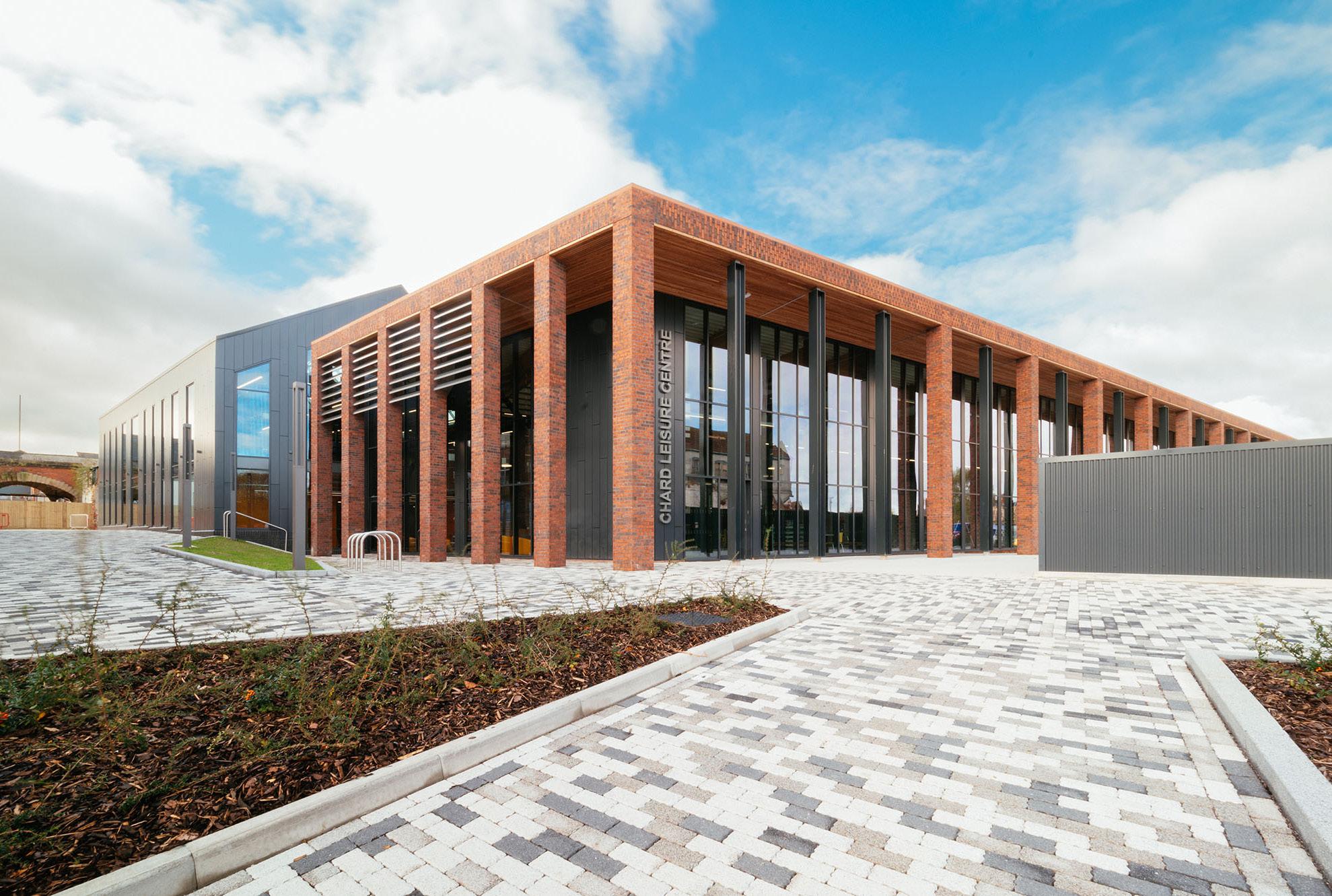
310+ completed projects
81% of clients choose us for further projects
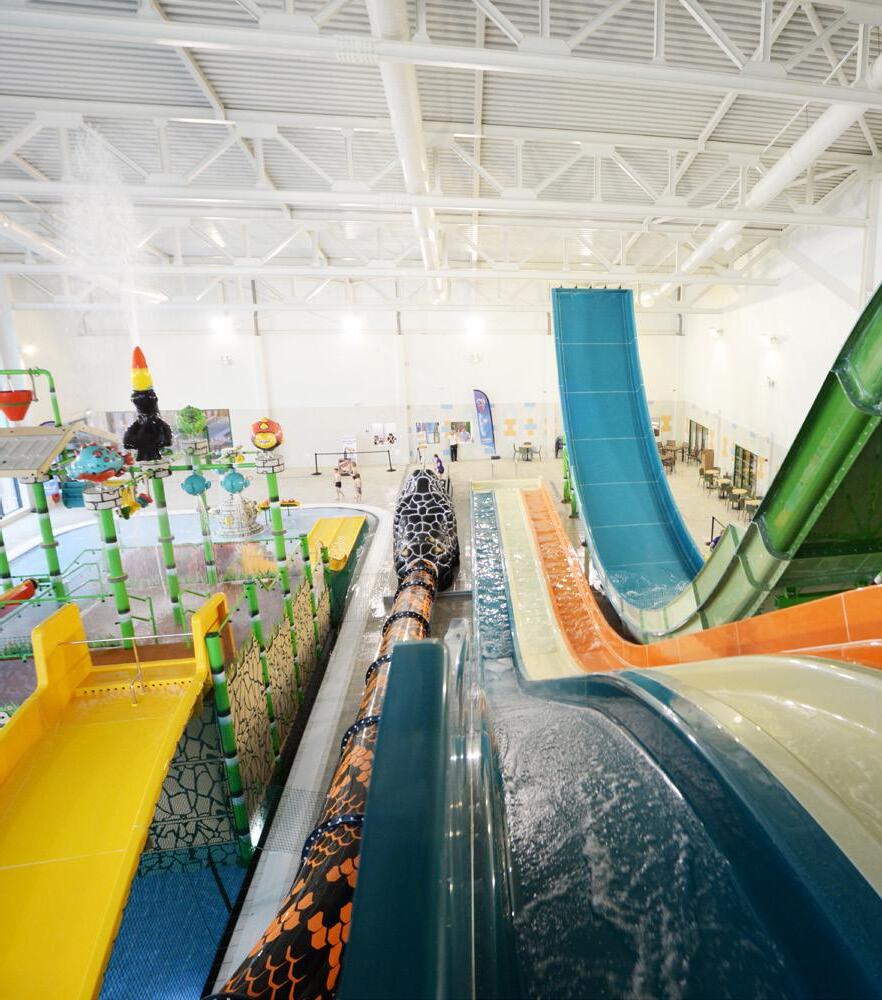
£520m+ investment in local authority leisure
Alliance Leisure are a trusted and experienced leisure development partner, with over 25 years’ experience transforming leisure facilities for local authorities.

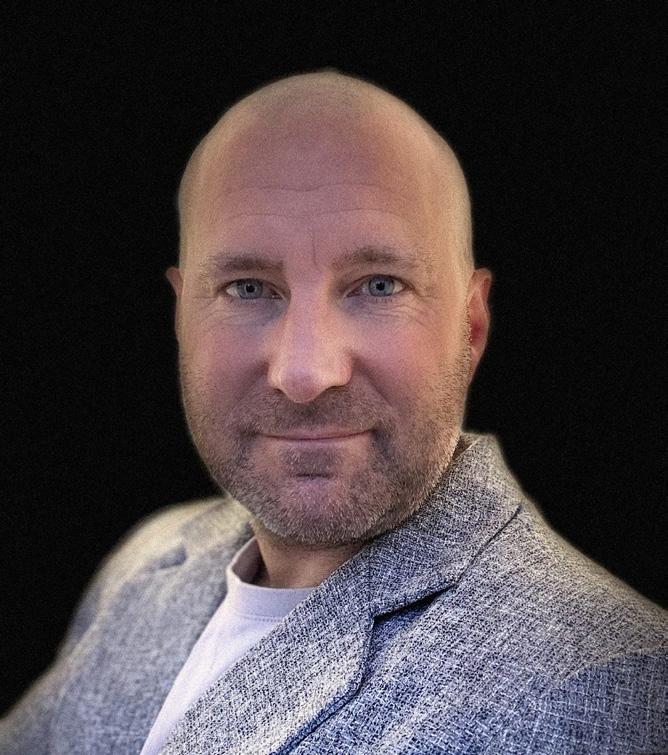
Richie Allan
Qualified Trainers (QT) has appointed Richie Allan as Vice President of Growth & Partnerships, marking a major step in the company’s global expansion strategy for the UK and Europe.
The appointment reflects a strategic move to scale internationally with leadership that understands both the commercial and operational dynamics of the fitness industry.
Allan has held senior leadership roles at CoverMe, Active-Insight,
Everybody Health & Leisure appoints Baroness Tanni Grey-Thompson as patron
Everybody Health & Leisure has appointed Paralympic legend and former ukactive chair, Baroness Tanni Grey-Thompson, as one of its new patrons.
Grey-Thompson is one of four industry experts to have been named as patron, each tasked with highlighting and promoting the work of the trust which operates 18 leisure facilities in Cheshire East.
The other three to join Baroness Grey-Thompson in the ambassadorial role are Professor Steve Peters, consultant Psychiatrist and bestselling author of the Chimp Paradox; Philip Bland MBE and Zoe Davidson from Deloitte.
“I have been working with Everybody as the host of their annual awards for a number of years now, and every year I am just so impressed by the passion and dedication when it comes to providing these life-changing services,” Baroness Grey-Thompson said.
“I look forward to continuing my work with the team and being a champion for this charity in the House of Lords and beyond.”

Commenting on the four appointments, Thomas Barton, CEO of Everybody Health & Leisure, said: “All four are leaders in their own fields, who have chosen to lend their considerable influence and huge expertise to help us in our mission to help the people of Cheshire East live well, and for longer.”
Professor Steve Peters is a consultant psychiatrist who specialises in the functioning of the human mind. He has worked in the clinical field of psychiatry for over 30 years and has authored four books, including the bestselling The Chimp Paradox, which has sold 2 million copies.
EZ Loyalty, and W3:Ride, while his earlier career includes work with leading fitness brands such as Les Mills UK, Xercise4Less, The Gym Group and Total Fitness.
Jason Edwards, Director of QT, said: “Richie’s experience in scaling fitness businesses and building meaningful partnerships makes him the perfect fit for this next phase of Qualified Trainers. What we’ve built in Australia is just the beginning.”

PSLT appoints Tony Barry to drive expansion
PSLT has announced the appointment of Tony Barry as its new Head of Health Care Solutions – a strategic role created to support the company’s expansion into the fast-growing active ageing market. With a strong reputation for delivering end-to-end fitness solutions, Barry will look to help the gym equipment specialist bridge the gap between fitness and healthcare – and reinforce PSLT’s ambition to being a holistic solutions provider.
NO UPFRONT COSTS. NO RISK
We run the marketing and sales.... You run the club.
6 week on site member acquisition campaigns for gyms, hotel gyms and leisure centres
Average result: 225 new members. Built for clubs ready to grow 5.0 Google reviews
North Lanarkshire Council is committing a significant investment in leisure facilities in the region, with major upgrades at Airdrie and Shotts leisure centres and work starting on the running track at Wishaw Sports Centre.
In Shotts, the gym is being upgraded, with new cardio equipment and a complete refurbishment of the functional fitness space, including new flooring, a new functional training rig, upgraded accessories and a full range of HIIT cardio equipment. The health suite has also been refreshed with a replacement sauna and steam room, new tiling throughout and the addition of a shower within the health suite area.
Airdrie Leisure Centre has seen £333,000 invested in a full gym refit and redesign. This includes the installation of brand new cardio, pin-loaded, plate-loaded and cable equipment, as well as new functional and free weight areas. Lighting and flooring are being upgraded throughout the venue.
The improvements also include a brand new spin studio with Keiser bikes,
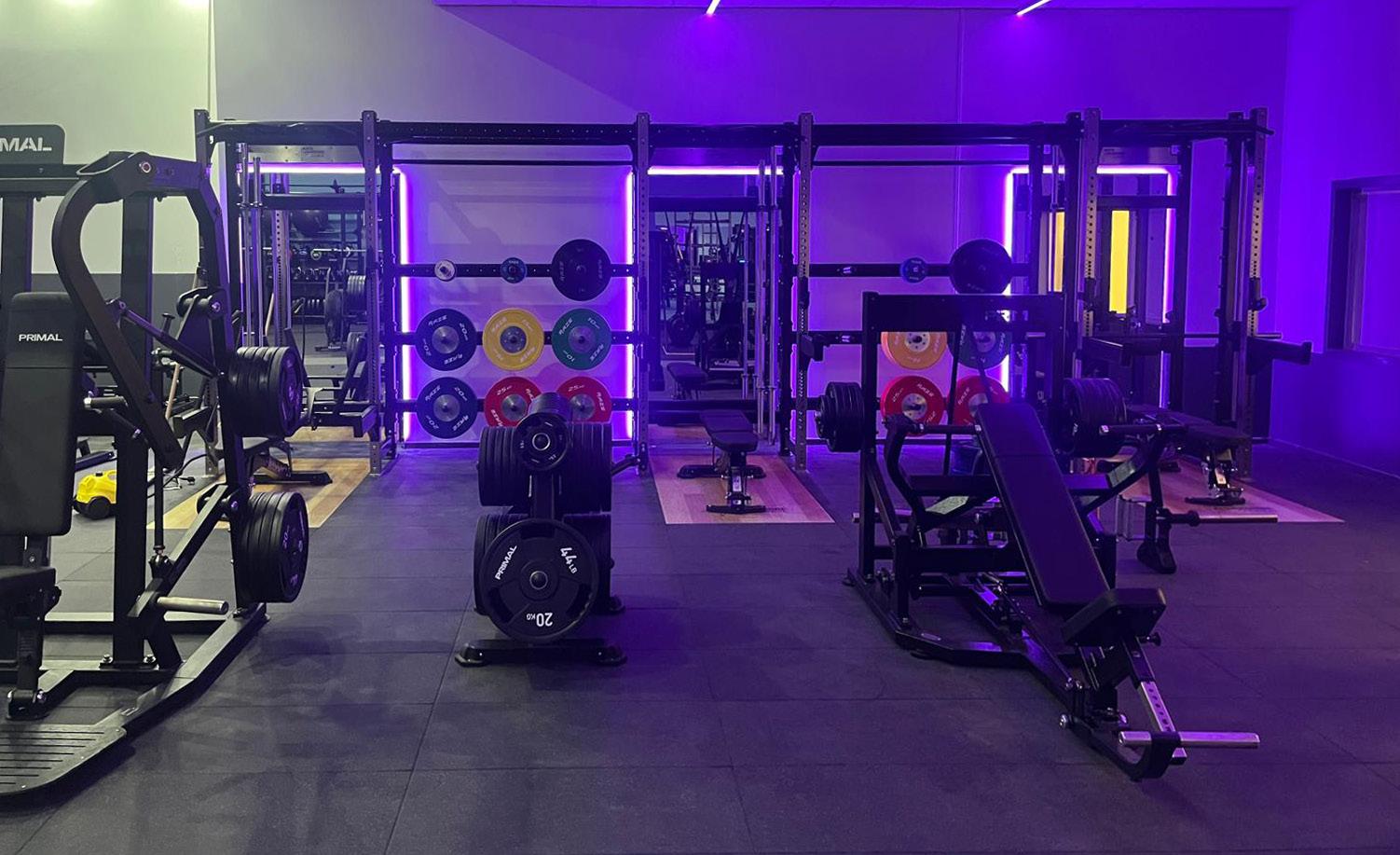
The investment includes upgrades to gyms and fitness spaces at two facilities
upgraded air conditioning, lighting and sound, an enhanced main studio, a new dedicated holistic studio for yoga and Pilates, and a new Power studio introducing a boutique fitness offer to users. Additional upgrades are also being made to walkways, stairwells and the outdoor entrance area.
Meanwhile, Wishaw Sports Centre is seeing a major upgrade to its running track, with the existing track being replaced to meet IAAF Track & Field standards. Work will start soon and is expected to last between 12 and 15 weeks, depending on weather conditions.
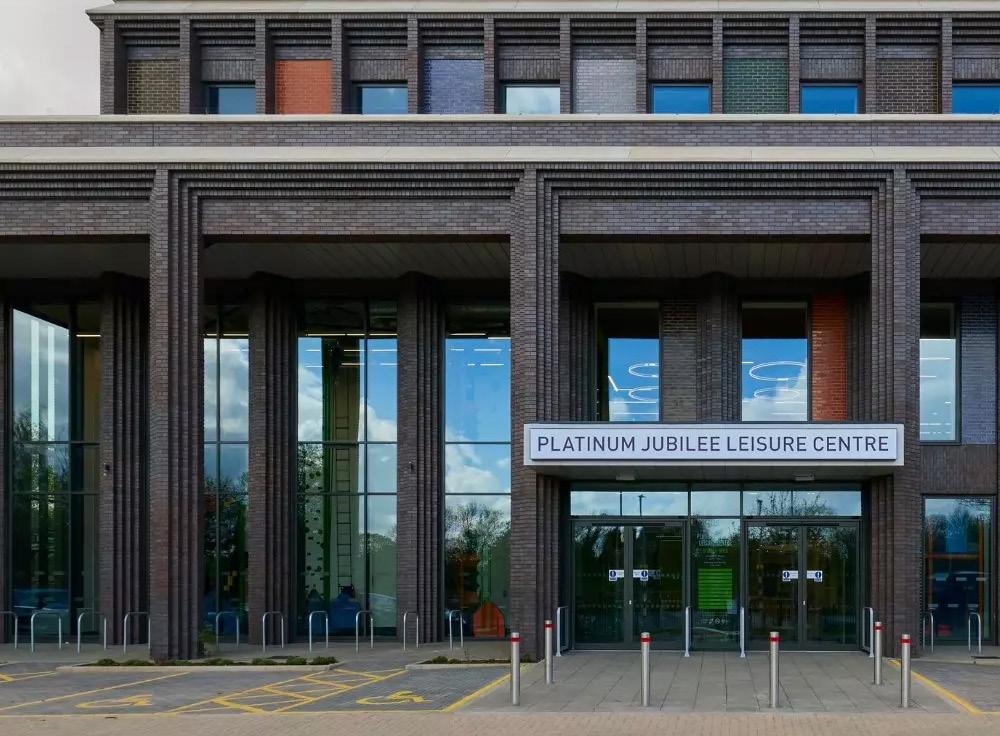
The Platinum Jubilee Leisure Centre has opened its doors to the public in Hillingdon, London.
Facilities at the centre include a 100-station gym floor equipped with Technogym kit, group exercise studios, indoor cycling, a 25m main pool for lane swimming and a 20m training pool for swim lessons. There is also a splash pool with a flume, a steamroom and sauna.
Additional facilities include a two-level soft play area, a sensory room, a four-court sports hall, a rooftop 5-a-side 3G pitch and a café.
The building is fitted with energy-efficient technology – including solar panels and air source heat pumps, designed to reduce both the building’s impact on the environment and energy costs.
Owned by Hillingdon Council, it will be the fifth centre in the borough operated by GLL.






















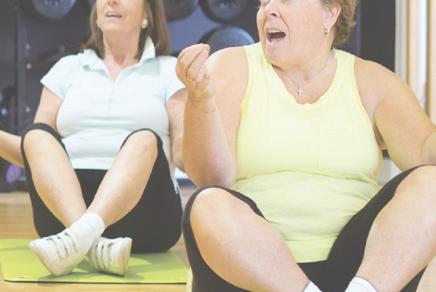



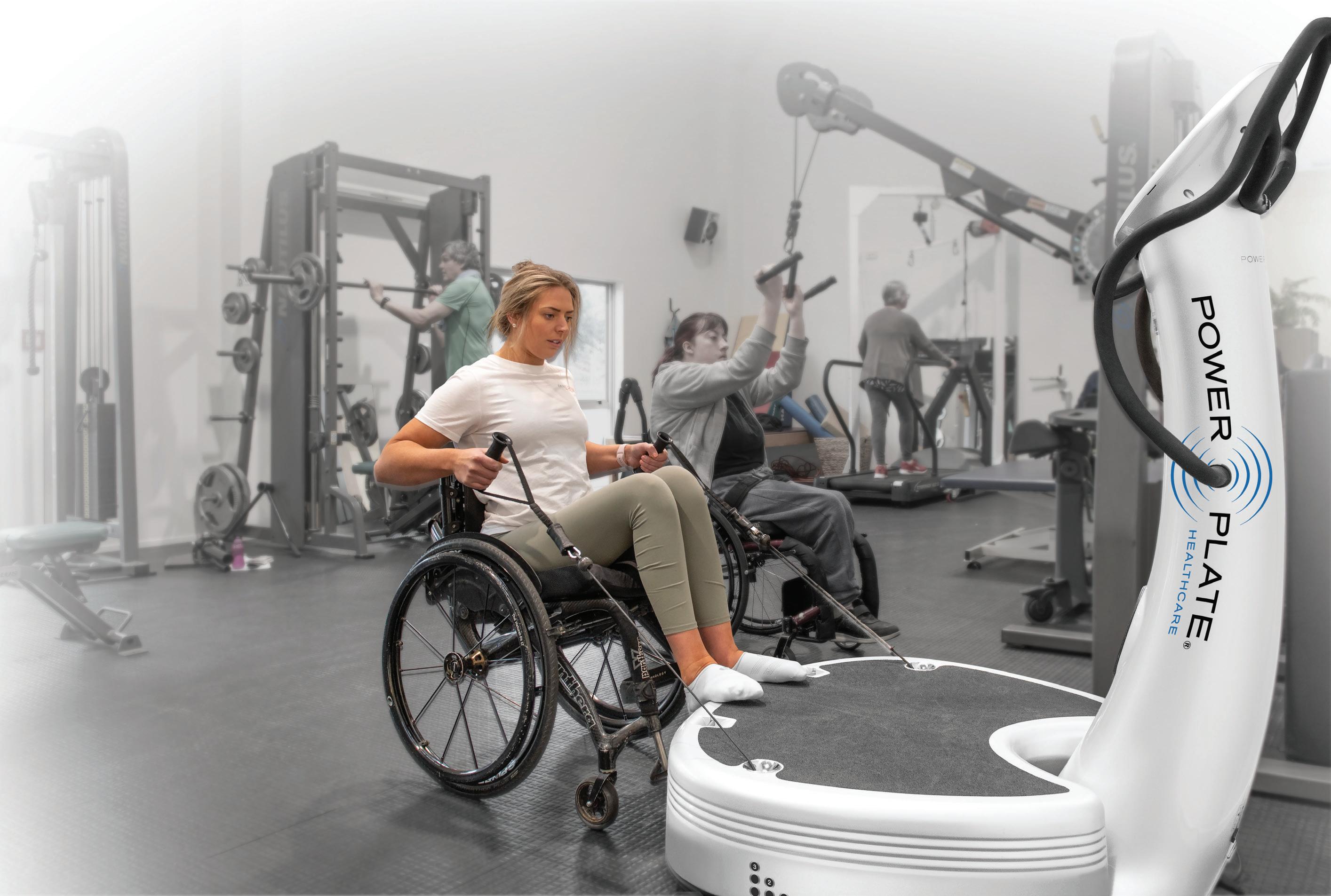
There is an increasingly popular view emerging that whole body vibration has a place in clinical settings
As healthcare continues to shift towards prevention, there’s a growing focus on helping people stay active, independent and feeling good for longer. Over time, our bodies naturally change. Strength can decline, balance can become less stable, and bone density can reduce. If not supported, this can impact how we move, how confident we feel, and ultimately how independent we are in everyday life. We know that resistance and weight-bearing exercise are some of the most effective ways to
support this. But in reality, not everyone is able to stick to these programmes - whether that’s due to time, confidence, pain, fatigue or mobility challenges. That’s where approaches like Whole Body Vibration (WBV), delivered by Power Plate, are starting to play a role.
ACTIVATION THROUGH VIBRATION
By using controlled vibration, WBV activates muscles throughout the body in a way that is lowimpact and time-efficient. In simple terms, it helps the body “switch on” and work harder, without requiring the same level of effort as more traditional
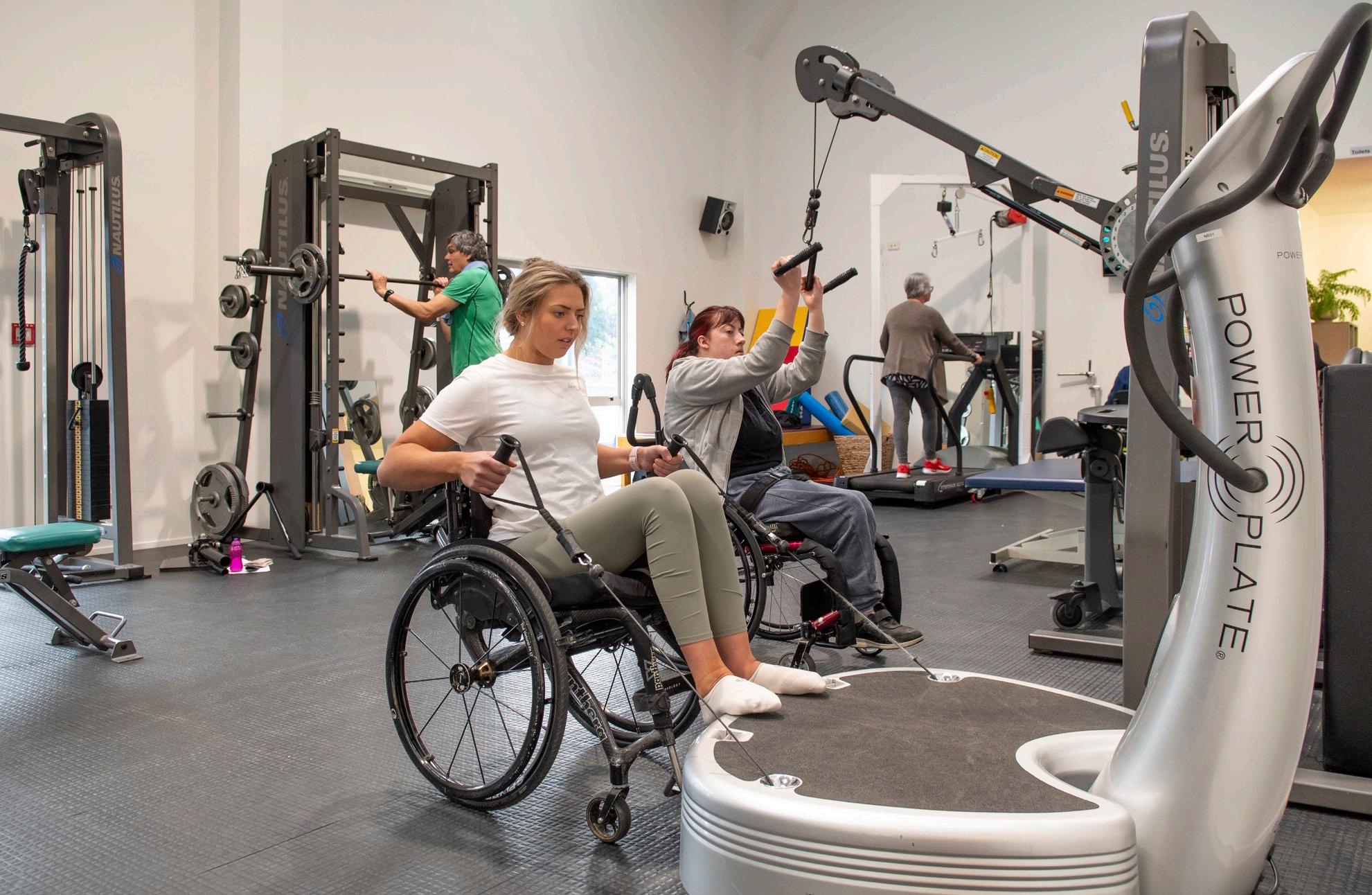
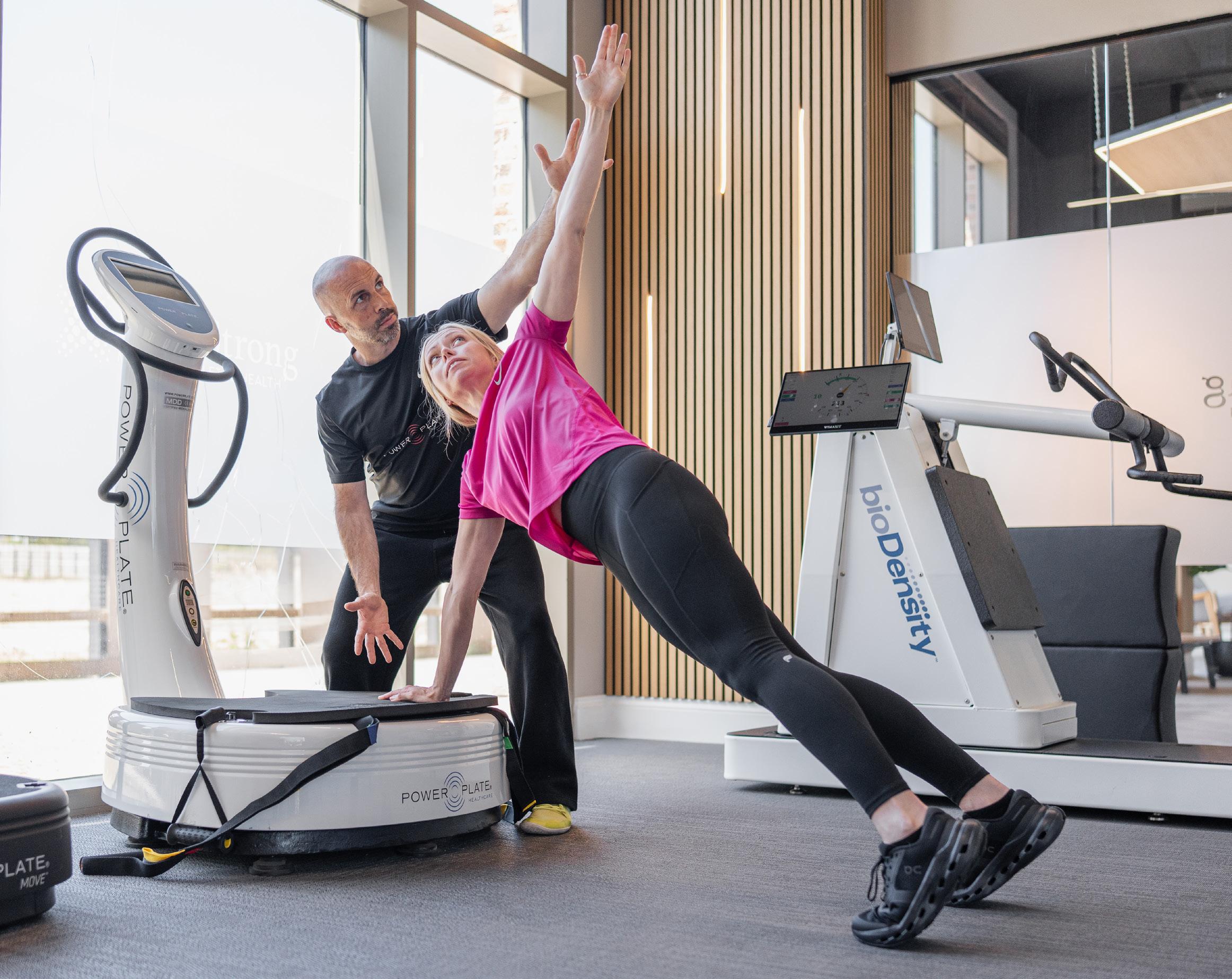
exercise. This makes it particularly useful in clinical settings, where the focus is often on helping people rebuild strength, improve movement, and regain confidence at a pace that works for them.
A good example of this in practice comes from a clinician in Bulgaria, who used WBV as part of a preventative approach with a 39-year-old woman going through perimenopause. Over time, improvements were seen in bone density, muscle mass and overall body composition - without significant changes to her wider routine.
While this is just one example, it highlights how WBV can be used in a practical, real-world setting - especially during periods of change, such as perimenopause, where supporting strength and bone health becomes increasingly important. More broadly, this aligns with a growing body of research showing that WBV can support strength, balance, bone health and overall physical function, particularly in populations at greater risk of decline.
Today, WBV is being used across a range of healthcare environments, including physiotherapy clinics, rehabilitation centres, and preventative health settings, as a way to complement existing treatment and exercise programmes.
While WBV devices are becoming more available for home use, the clinical environment offers
WBV can support strength, balance, bone health and overall physical function, particularly in populations at greater risk of decline
clear advantages. With the right guidance, it can be applied safely, tailored to the individual, and integrated into a structured plan, helping people stay consistent and get the most from it.
Ultimately, staying healthy as we age isn’t about one solution, it’s about finding approaches people can realistically stick to.
By making movement more accessible and time-efficient, WBV gives clinicians another way to support people in staying active, capable and independent for longer.
To explore how Whole Body Vibration could support your offering, contact: emea.sales@powerplate.com Visit: https://www.powerplate.com/
Leisure centres in West Berkshire have seen a major rise in usage following a multi-million-pound council investment to upgrade facilities across the district. The improvements at the centres – which are owned by West Berkshire Council and operated by Everyone Active – have ranged from refurbished gyms and modernised exercise studios to a new 3G pitch, as well as resurfaced courts.
At Cotswold Sports Centre, a new 3G pitch, which opened in July 2025, recorded 3,000 uses in its first six months alone. Overall attendance at the centre has risen by 13 per cent, when compared to the previous year, and is now 41 per cent higher than in 2023-24.
Hungerford Leisure Centre, which has seen a new fitness studio being added to its facilities, experienced a 14 per cent increase in fitness usage, while exercise class attendance has risen by 8 per cent. The additional space has also enabled the introduction of three new gymnastics classes.
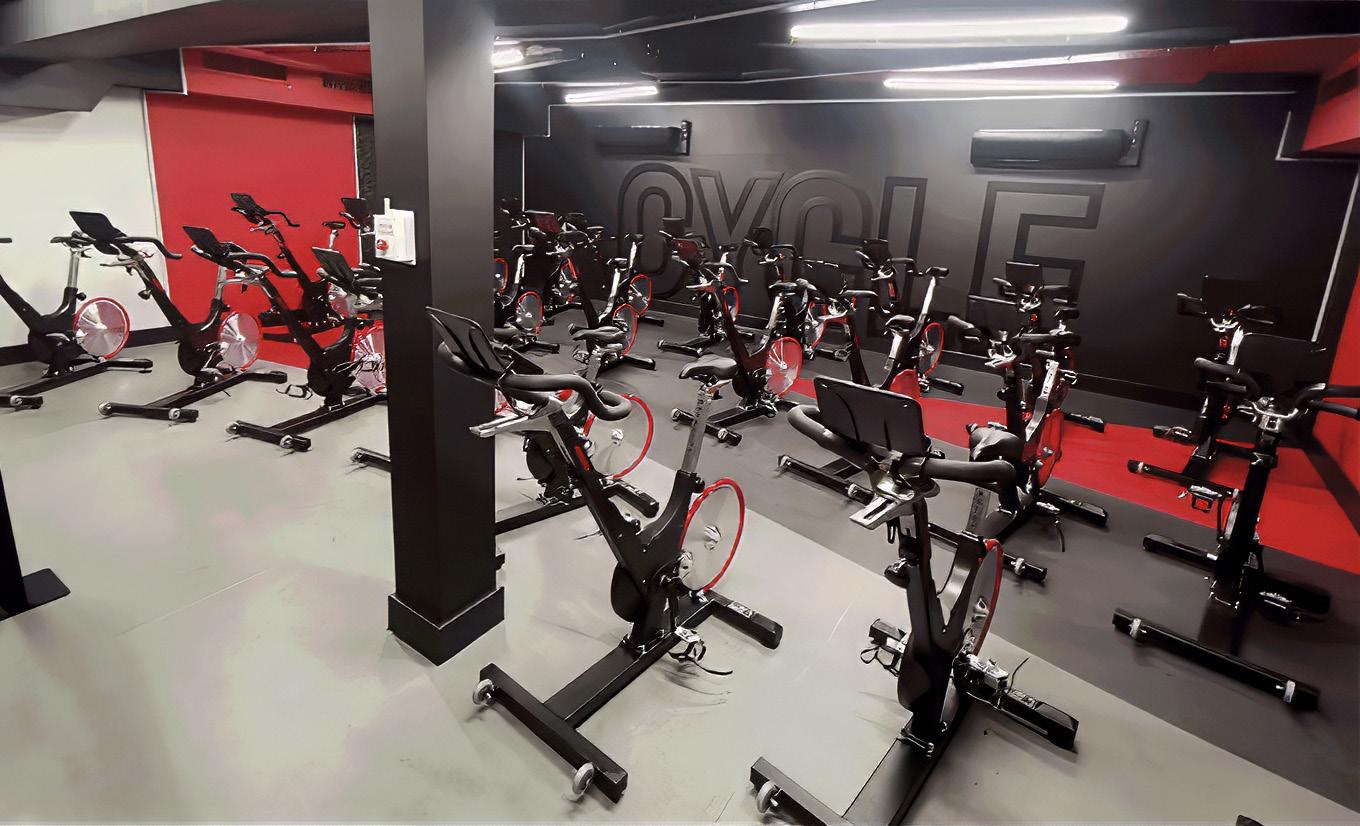
One of the biggest increases in usage levels has been at Northcroft Leisure Centre, where a £4.6m investment resulted in a major transformation. This included a larger, 80-station gym, a dedicated indoor cycling studio, a new group exercise studio and new changing rooms. A new
soft play area and a café were also added. Following the work, gym visits have surged dramatically – up by 973 per cent – while family-focused activities have also seen exceptional growth, with soft play usage up by 494 per cent and children’s parties increasing by 103 per cent.
Parkwood Leisure has partnered with health services provider Bupa to offer members access to Bupa’s Well+ health subscriptions as part of its premium membership packages. The deal will allow Parkwood members to complement their fitness routines with additional tools to support their wider health and wellbeing.
Bupa Well+ provides access to a range of digital health services, including GP appointments, physiotherapy, mental health support and diet and nutritional advice. Integrating Bupa Well+ is part of Parkwood’s strategy to position itself beyond the traditional gym model by providing a 360-degree approach to wellness – encompassing physical activity, mental health support and preventative care. The partnership began at select pilot sites in May 2026.



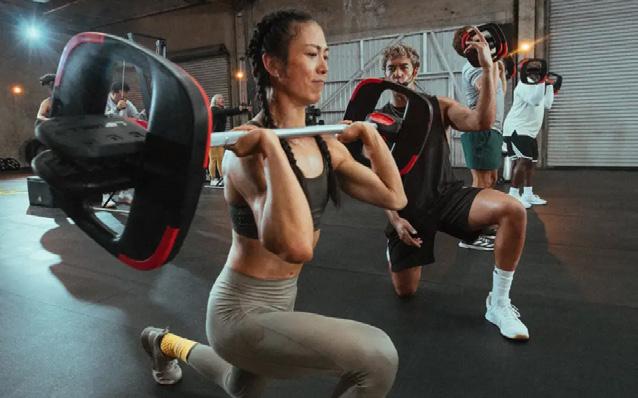
Les Mills has been named official group training programme partner for HYROX. The collaboration saw the launch of two new group training programmes: Ceremony HYROX and Ceremony HYROX Max.
Based on the Les Mills Ceremony functional circuit format, the new programmes will support HYROX training, featuring Les Mills’ blend of music, motivating coaching, community and movement. The new programmes, as well as HYROX affiliation and access to the full HYROX365 platform, are now available to clubs as a preferential package.
Power Plate is playing a central role in transforming staff wellbeing across NHS hospitals, with ultra-short “micro-workouts” and recovery sessions delivering measurable engagement and positive health outcomes among frontline teams.
The initiative, led by Aaron Tyler, wellness practitioner and founder of Feelgood Fitness and Wellness Centre in Basildon, Essex, has rapidly gained traction across multiple NHS sites, where staff face intense physical demands and emotional pressure.
By
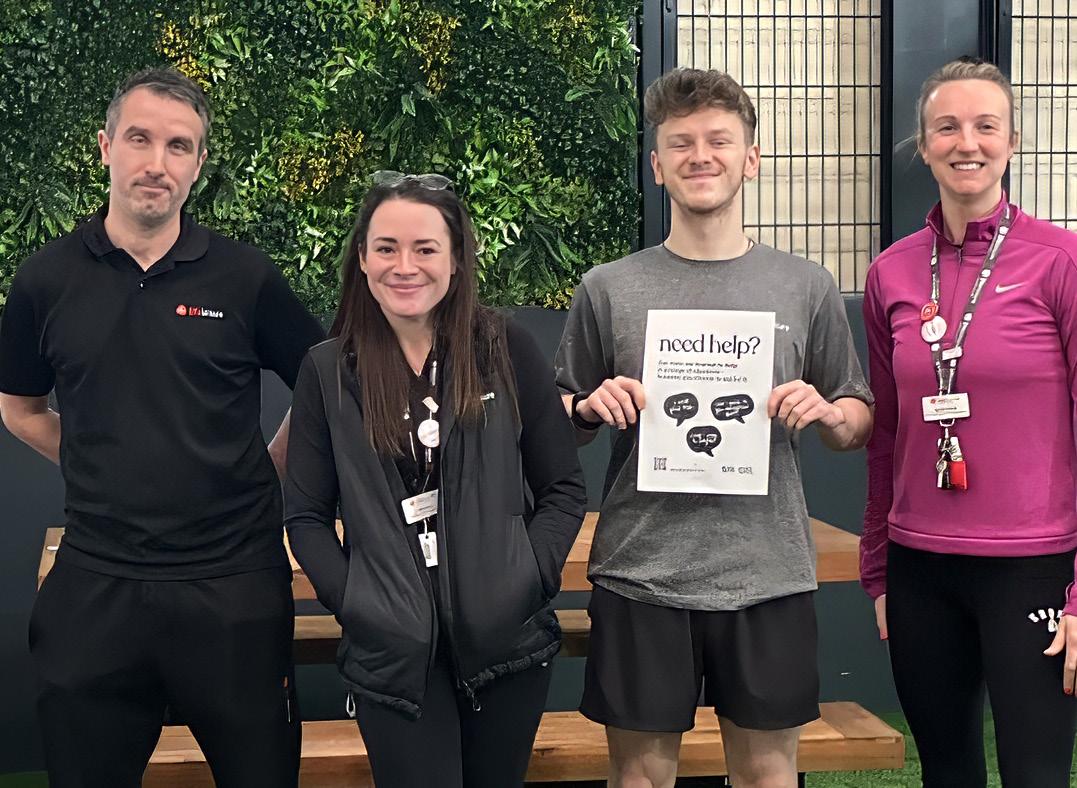
The Houldsworth Village hub in Reddish, Stockport, operated by Life Leisure, has become the first leisure centre in the UK to launch ‘Ask for Angela’ – a safety initiative allowing people to discreetly request help from staff if they feel unsafe, threatened, or vulnerable.
The move is the first of a planned roll-out of Ask for Angela across Life Leisure’s sites and is part of the operator’s strategy to make its environments even safer and more inclusive. While Ask for Angela is often associated with bars and clubs – and is sometimes misunderstood as an initiative only supporting women – the scheme is designed for everyone. It’s now widely used across a range of settings, including hotels, chemists and taxi services.
By simply asking a member of staff for “Angela,” people can communicate that they need help without having to explain their situation in detail.
“The scheme will enable our trained team to respond quickly, calmly
and without judgment to provide appropriate support,” Life Leisure said in a statement. “The initiative also reinforces a clear message that harassment and unwanted behaviour will not be tolerated in Life Leisure hubs. It demonstrates that staff are trained and prepared to respond effectively when someone may be in need of help or reassurance.”
Research highlights the importance of such measures, with a recent YouGov survey showing that 49% of people would be more likely to visit a venue that has visible safety measures in place. Initiatives like Ask for Angela help strengthen public confidence and improve perceptions of safety across community spaces.
Eve Fox, Inclusion Officer at Life Leisure, added: “We want everyone who walks through our doors to feel safe. Ask for Angela gives people a discreet way to ask for help and reinforces our commitment to creating spaces everyone can enjoy without concern.”


Wessex Cancer Alliance’s PREHAB Cancer exercise programme is coming to BH Live Active leisure centres across Southampton to help cancer patients prepare for surgery.
First introduced at Bournemouth’s Littledown Centre in 2018 under the name of ‘WesFit’, this prehabilitation exercise programme has already improved the post-surgery experience for hundreds of patients across Bournemouth and Portsmouth.
Thanks to a partnership with leading clinical researchers and healthcare specialists at University Hospital Southampton (UHS) and Wessex Cancer Alliance, BH Live is now expanding this innovative exercise and wellbeing programme to support even more people in the city preparing for cancer treatment. The programme is aimed at individuals aged 18 and over with stage 3 and 4 cancer and who are preparing for surgery. If they are successfully referred onto the scheme, they will receive a personalised exercise plan
to improve their cardiovascular fitness ahead of their surgery. The benefits of the prehabilitation exercise programme are said to include improved confidence, better fitness levels, reduced length of stay in hospital, enhanced quality of life and reduced post-treatment complications.
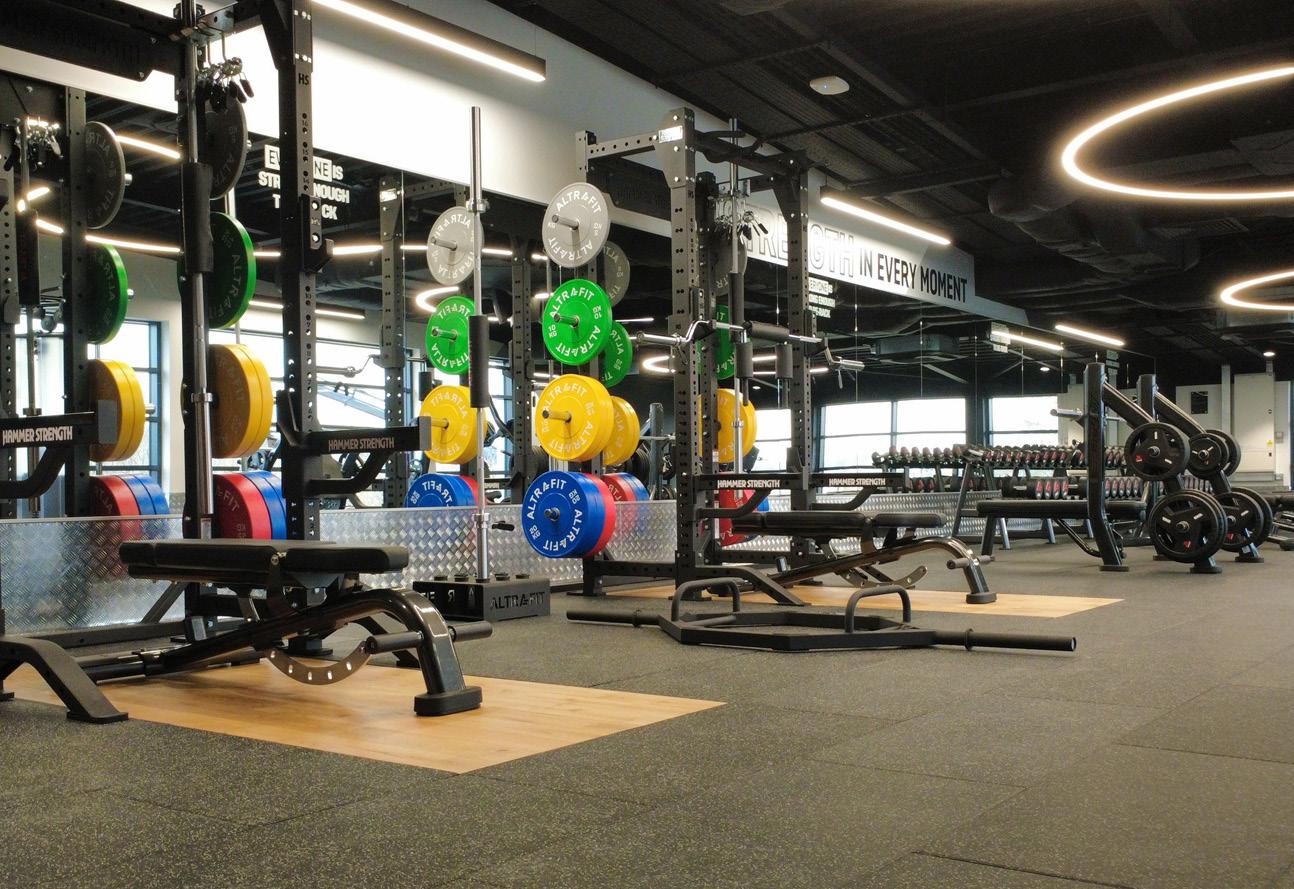
Activities include one-to-one personal training and group exercise classes such as cycling, yoga, Pilates and swimming. The scheme is available at BH Live Active, Bitterne; BH Live Active, Chamberlayne; and BH Live Active, The Quays – all centres owned by Southampton City Council.
Work to upgrade and improve Royston Leisure Centre in Hertfordshire has reached a major milestone, with the completion of phase two delivering a gym extension. The centre, owned by North Herts Council and operated by Everyone Active, has undergone a series of improvements over recent months. The latest phase has seen the gym more than double in size.
The newly extended gym now occupies the former group exercise studio, offering an increased footprint and a wide range of new equipment, including Life Fitness treadmills, cross trainers and indoor bikes, alongside enhanced strength equipment and Theraguns to support muscle recovery. As part of the redesign, a new dedicated group exercise studio has been created within the extension.

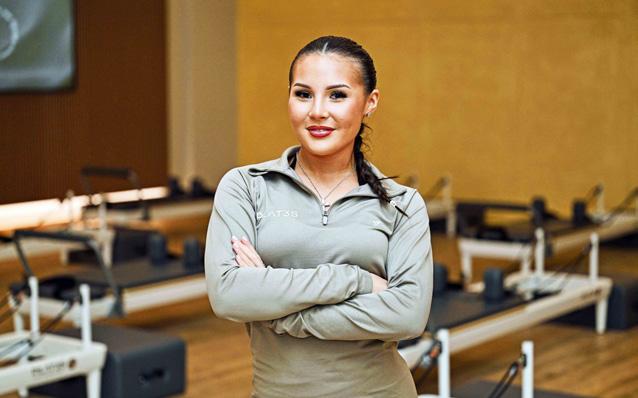
Following a £130,000 investment, Kore Sandwell has opened a new reformer Pilates studio at Wednesbury Leisure Centre. The renovated space introduces a modern take on reformer Pilates, designed to support strength, mobility, posture and injury prevention through low-impact movements.
The PILAT3S concept adopted at Wednesbury Leisure Centre in partnership with Tribute Brands, sets itself apart from other offerings, combining lighting, music and instudio technology to create a fully immersive workout experience for members. The launch coincides with the appointment of a new instructor, Grace Espinosa, a 20-year-old from West Bromwich, who recently secured her role after completing an apprenticeship with Kore Sandwell.
The organisation, formerly known as Sandwell Leisure Trust, operates Wednesbury Leisure Centre as part of a wider network of eight facilities on behalf of Sandwell Council.
Espinosa will lead a range of classes within the new studio, including Align, which focuses on open-rotation and twisting movements to help relieve stiffness and improve flexibility, and Power, which incorporates dumbbells and compound exercises aimed at building strength and endurance across multiple muscle groups.
The Greater Norwich Growth Board (GNGB) has said that residents are getting more active, more often –delivering the goals of the physical activity strategy it launched in 2022.
In its third annual update of its Greater Norwich Physical Activity and Sport Strategy (PASS) – revealing data for 2025 – GNGB said activity levels were rising among both adults and young people, while council-owned leisure centres received 1.34 million visits during the year. GNGB said the figures reflect increasing demand for affordable, accessible activity spaces.
According to the report, 2025 also saw significant investments being made in facilities and activity programmes. These included £5m for improvements at Framingham Earl Sports Centre, three inclusive padel courts at The Nest and planned enhancements at Woodrow Pilling Park – including an outdoor gym, sprint track and pump track upgrades. Inclusive programmes were also expanded,
from All to Play For to the Community Engagement Van, helping residents who face barriers to getting active.
Mike Stonard, Chair of the GNGB, said: “It’s inspiring to see so many projects supporting residents to be active in ways that suit them. These improvements are only possible through strong partnership working across Greater Norwich.”
PASS sets out a shared ambition to support happier, healthier and more active lives across the area. The strategy brings together partners to tackle inactivity, reduce inequalities and provide places to be active.
The GNGB comprises Broadland District, Norwich City, South Norfolk and Norfolk County Councils.
Future plans include delivering new facilities, expanding parkrun opportunities, developing new leisure centre information materials and allocating Place Universal Offer funding to support innovative communitybased approaches to increasing activity.
The independent fitness sector continues to evolve at an incredible pace and it’s genuinely exciting to see the level of ambition, innovation and community impact being driven by independently owned gyms across the UK.
Working alongside WellNation gives us a fantastic opportunity to shine a light on the real stories happening within our sector, from gym expansions and new facility launches through to wellbeing initiatives, fitness racing communities and operators creating stronger connections with their members than ever before.
NR Health & Fitness Club Dereham, Norfolk, is set for a major new chapter, relocating into a brand-new 24,000sq ft flagship facility as the business continues its ambitious growth journey.
Expanding from its current 10,000 sq ft site, the new club will become the official HQ for the NR brand and introduce a significantly enhanced fitness and wellness offering for members.
Alongside the features the club is already known for, including 24-hour access, more than 40 classes per week and its popular free, eightweek journeys, the new facility will also introduce reformer Pilates, a dedicated NR Recovery zone with sauna, ice bath, massage guns and compression boots, as well as a new NR Rox functional training area.
The expanded club will also feature boxing and kickboxing classes, the launch of NR Coffee and a host of new premium services, coinciding with the rollout of the company’s new premium membership tier.
The move marks a major milestone for the business, positioning NR Health & Fitness as one of the most progressive and fast-growing independent fitness operators in the region.
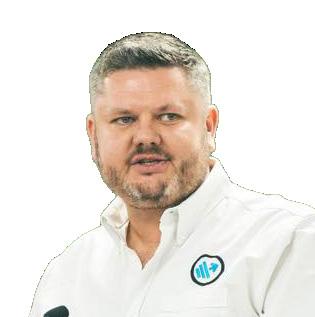
What stands out most from these submissions is the diversity of what independent gyms now represent.
They are no longer just places to train; they are becoming community hubs, wellbeing centres and spaces that genuinely change lives.
At Independent Gyms, we’re proud to support these businesses and help showcase the incredible work being done by passionate operators who continue to invest in their members, their facilities and their local communities.
Robert Handy, Founder, Independent Gyms
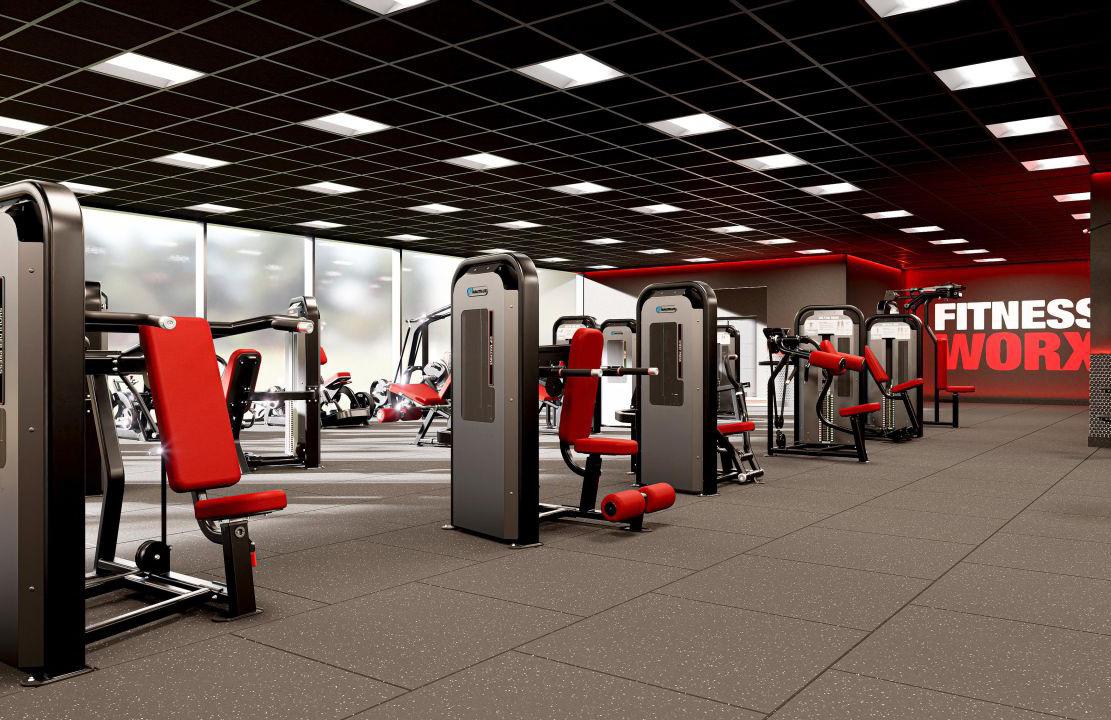
Midlands-based gym operator, Fitness Worx, is set to launch its 10th facility this summer with the opening of a site in Solihull. Located on Drayton Road in Shirley, the new club will further expand the brand’s growing footprint across the Midlands and South West, adding to an estate that already includes sites in Warwick, Leamington Spa, Rugby, Coventry, Stratford-upon-Avon and Bristol.
The Solihull club will offer a 24/7 gym, HYROX, functional training areas, strength and free weight zones, recovery facilities and an extensive class timetable, reflecting the operator’s
focus on performance-led training and community-driven fitness.
“We’re incredibly proud to be reaching the milestone of 10 gyms with the launch of Solihull this summer,” said Matt Gibson, Head of Operations, Fitness Worx. “Every club we open is about creating a welcoming, high-quality fitness environment that genuinely supports the local community. Solihull is a fantastic location for us and the new site will reflect everything the Fitness Worx brand stands for, from state-ofthe-art training facilities through to an inclusive and motivating atmosphere for members of all fitness levels.”
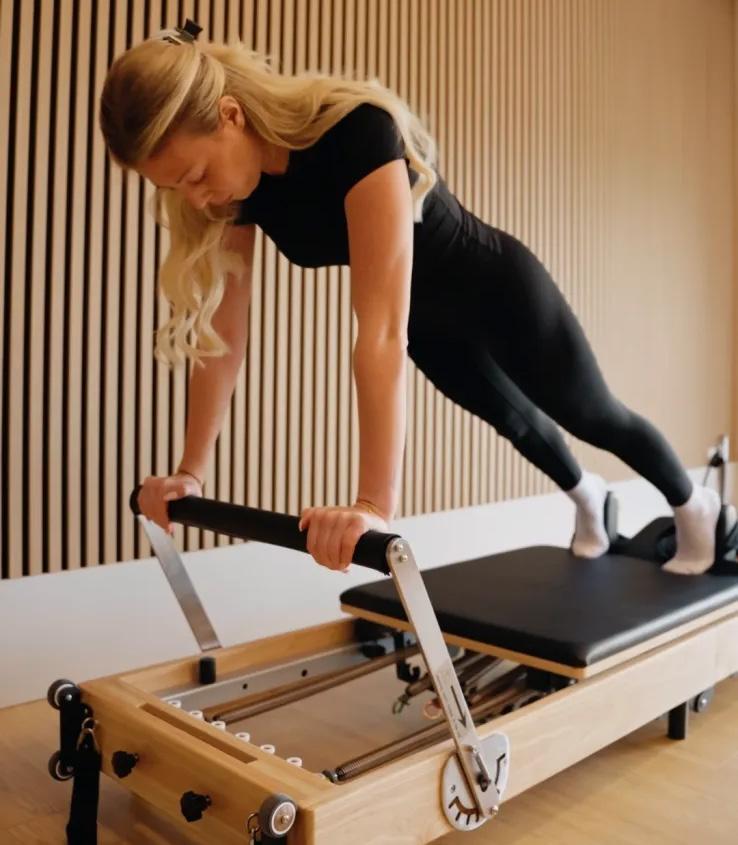
Club Kingswood in Basildon is continuing its impressive growth with a major expansion of its gym facilities alongside the launch of a brand-new Reformer Pilates studio this summer.
The club, which has seen membership grow from 2,900 to more than 3,500 members over the last three years, is investing heavily into its fitness offering to ensure members continue to receive a high-quality training experience as demand increases. The gym floor is being expanded and additional
equipment installed to improve member flow and reduce waiting times during peak periods.
As part of the expansion, Club Kingswood will also introduce Reformer Pilates from June, with a dedicated new studio and a full timetable of classes running throughout the day and into the evening. The move reflects the growing demand for holistic fitness and wellness services, while further strengthening the club’s position as one of the region’s leading independent health clubs.
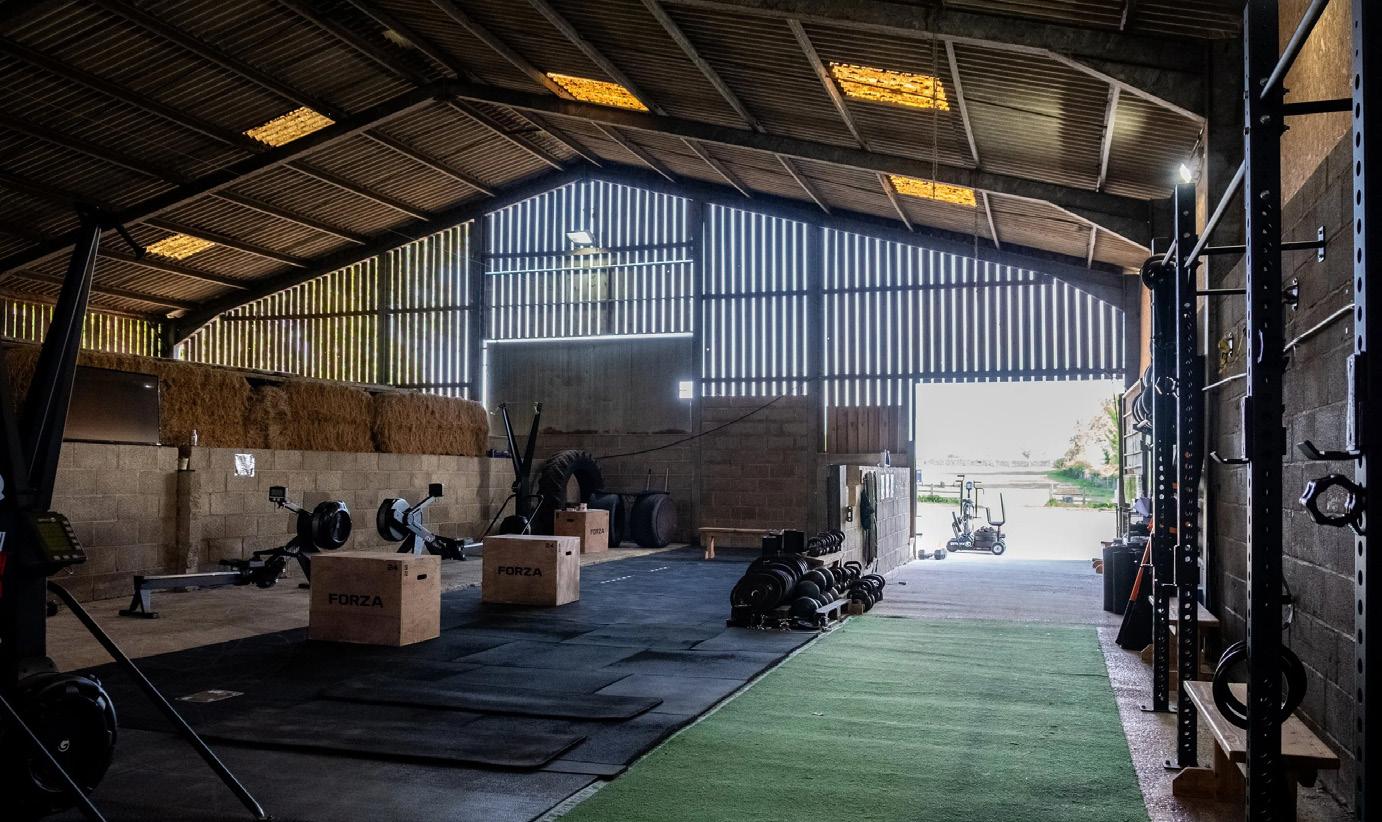
Rustiq Fitness in Winsley, Wiltshire, is continuing to evolve its offering beyond traditional gym services, expanding its presence within the growing fitness racing sector while also launching a new communityfocused wellbeing programme aimed at improving preventative health and accessibility to fitness.
The farm-based functional fitness facility has recently partnered with fitness racing brands, including ATHX Games and ROX Queens, while also entering its second year as an official Spartan DEKA affiliated gym. The partnerships further strengthen Rustiq’s position within the rapidly growing functional fitness racing space, giving members and nonmembers the opportunity to train with purpose, take part in events and experience fitness in a more engaging and inclusive environment.
Alongside its performance-focused growth, Rustiq Fitness has also launched a new health and wellbeing initiative called Health Seekers in collaboration with GGFit. Designed for individuals who may feel intimidated
by traditional gym environments, the programme focuses on improving overall wellbeing through health checks, lifestyle coaching, habit support and simple, sustainable interventions aimed at reducing stress and improving long-term health outcomes.
The business has already hosted multiple successful fitness racing events, including recent DEKA competitions attracting around 50 participants, while continuing to grow its membership base through
classes, small group personal training and community-led events. Rustiq is now aiming to reach between 50 and 100 local people through the rollout of the Health Seekers programme by summer 2026.
By combining performance, community and wellbeing under one roof, Rustiq Fitness is positioning itself as a modern independent gym focused not only on fitness, but also on creating a broader positive impact on the health of its local community.
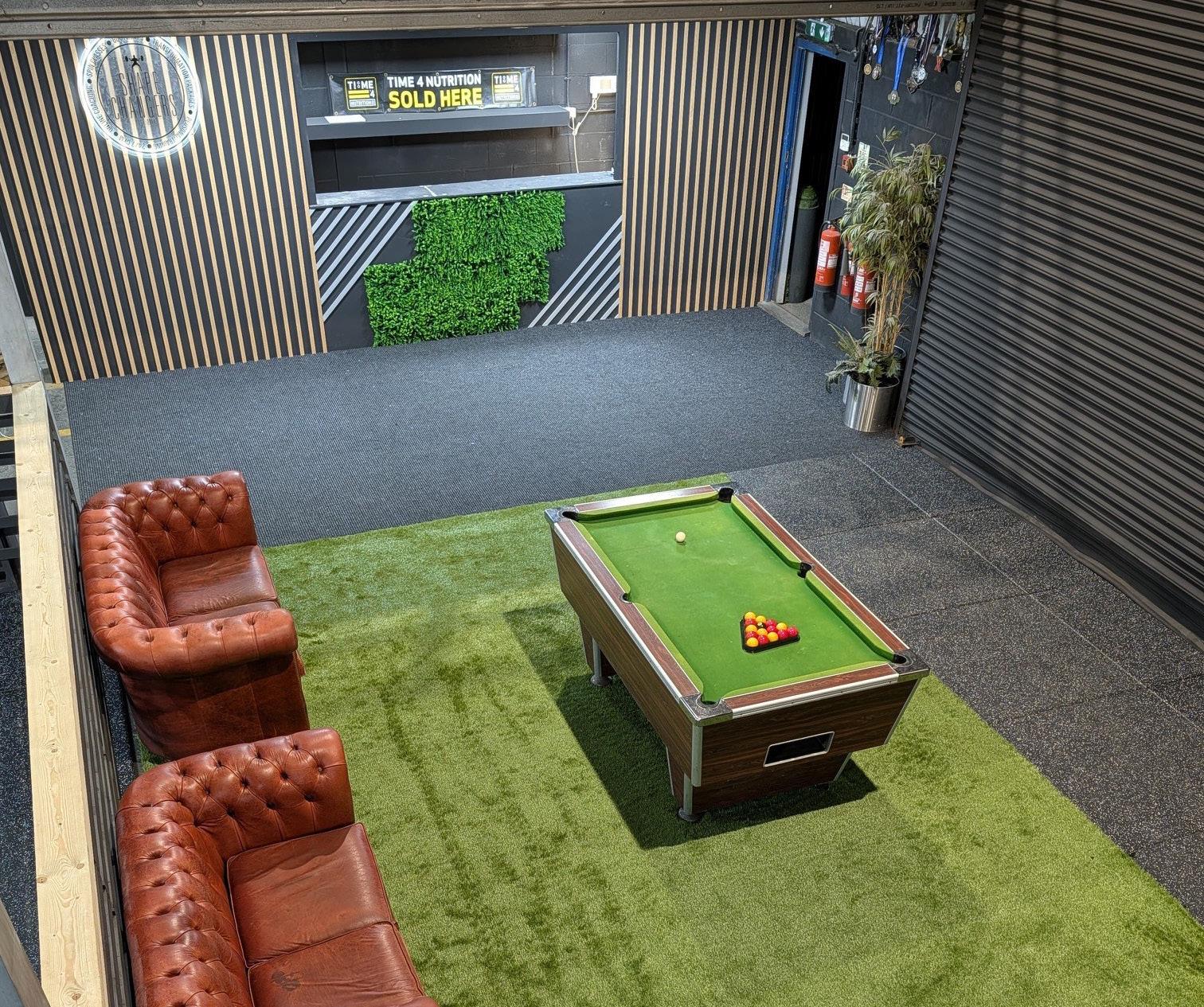
Shape Changers Gym is embarking on its biggest transformation to date, relocating into a once-abandoned warehouse as part of an ambitious long-term expansion project that reflects more than a decade of steady, sustainable growth.
After 12 years in business, the gym, in Barton-upon-Humber, has evolved from a single small industrial unit into a thriving community facility, previously expanding into two neighbouring units before taking the significant step into a much larger standalone site. Impressively, the project is being developed entirely debt-free, with the business continuing to reinvest back into its future as each phase of the redevelopment progresses.
The scale of the new facility will ultimately allow Shape Changers Gym to dramatically expand its offering to both members and the wider local community. Despite only completing phase one — currently representing
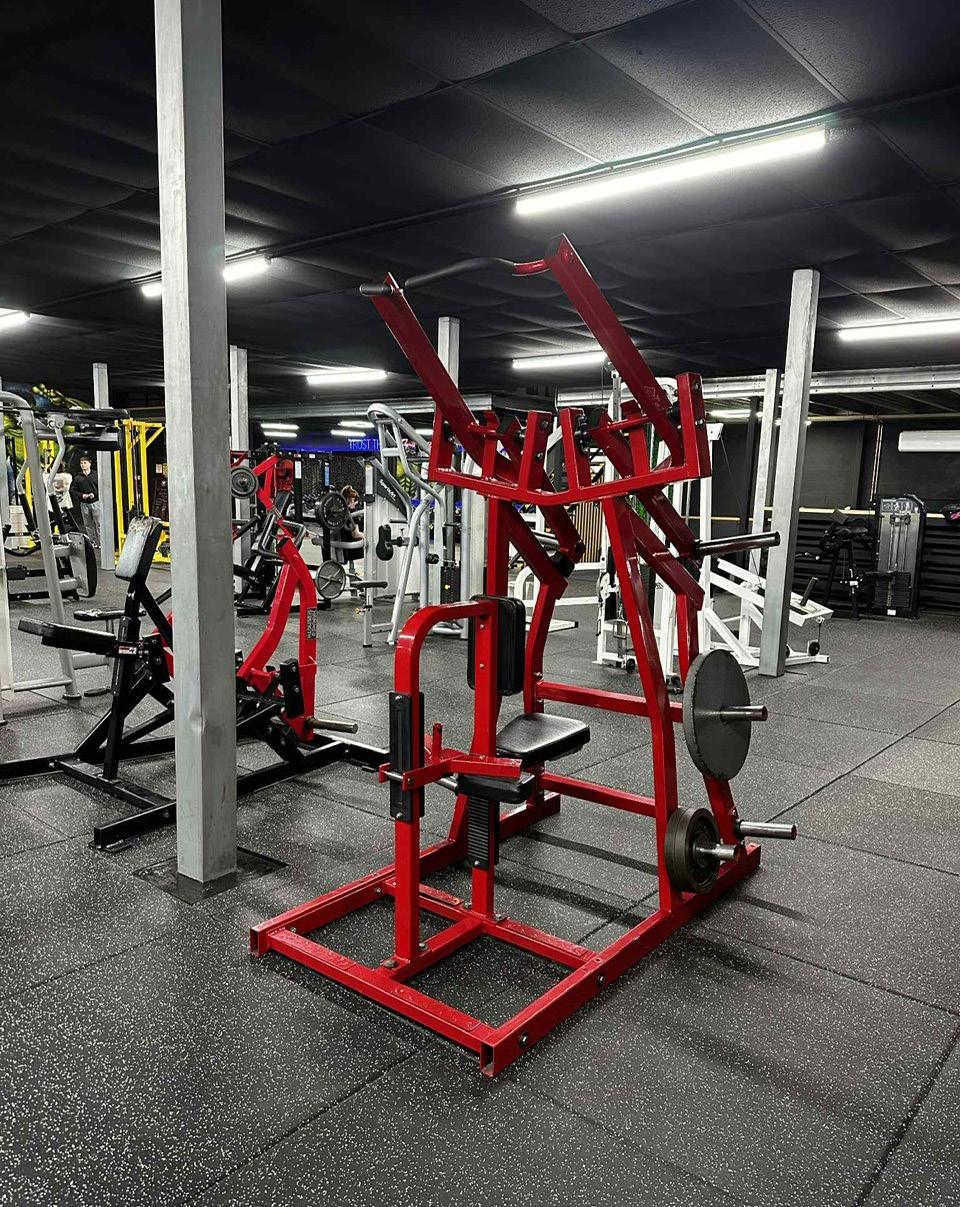
around one fifth of the overall floor space — the move has already driven substantial growth, with membership increasing from 350 to more than 500 members since relocating.
The expansion highlights the growing confidence and ambition within the independent fitness sector, with Shape Changers Gym demonstrating how community-focused operators can continue to scale organically while creating unique spaces tailored to the needs of their members and local area.
Mike Edkins takes control of Valhalla Gym –plans expansion
Valhalla Gym in Redditch is entering a new phase of growth following owner Mike Edkins’ recent move to take full ownership of the business, buying out his previous business partner as part of a wider transformation of the gym’s future.
Over recent years, the club has undergone a significant turnaround, evolving from a struggling facility with around 200 members into a thriving independent gym community with more than 420 members and continued growth momentum. The redevelopment of the business has focused not only on improving the training environment, but also on creating a stronger sense of identity and member connection around the Valhalla brand.
Recent investments have included brand-new flooring within the main strength training area alongside the addition of 20 new machines to further improve the training experience for members. Beyond the gym floor, Valhalla has also expanded its community-driven offering through initiatives such as the Valhalla Running Club and the newly launched Valhalla Social Padel group, designed to encourage social interaction, accountability and connection both inside and outside of the gym environment.
The continued evolution of Valhalla Gym reflects a wider trend within the independent fitness sector, where community, culture and member experience are becoming just as important as equipment and facilities in driving long-term success.
The Sport and Physical Activity Employability Academy – the sector-specific career initiative – is being rolled out nationwide to drive employability across the country
The Sport and Physical Activity
Employability Academy is a partnership between the Department for Work and Pensions (DWP) and the Chartered Institute for the Management of Sport and Physical Activity (CIMSPA), and will now be made available across the UK following several successful pilot programmes.
Recently published figures from the government show that the number of young people not in employment, education or training (NEET) have risen above one million, and projected to rise to 1.25 million in the next 5 years. Appetite for employment however remains high, with 84% of surveyed NEET young people stating that they want to be working or in education but are currently unable to.
The Employability Academy connects jobseekers with real employment opportunities by aligning training, work experience and employer demand. It provides a flexible, locally adaptable model that brings together education providers and industry employers to address workforce needs, provide young people with employment and training opportunities, and support economic growth.
The pilots demonstrated the impact of a sector focused approach, helping individuals
to build confidence, develop relevant skills and secure sustainable roles within the sport and physical activity sector. With the first pilot taking place in Scotland, it saw 70% of participants becoming qualified and advancing into either a gym instructor or personal trainer role. Building on this success, the national rollout will expand access to the programme, enabling more people and employers to benefit across the country.
Rather than a single programme, the Employability Academy operates as a framework that can be tailored to local labour market needs –and will be rolled out (and driven) by local employer demand. The initiative integrates:
l Pre-employment engagement and sector insight
l Sector-specific training aligned to professional standards
l Work experience, job placements and direct routes into employment
As access to employment is often influenced by wider barriers, the Employability Academy can incorporate wrap-around support tailored to individual needs. This may include health and wellbeing support such as occupational therapy, mentoring, career guidance, or even practical assistance such as travel, childcare and digital support.
This national launch marks a significant step forward in how we can support more people into meaningful careers within the sport and physical activity sector
Dame Diana Johnson DBE MP, Minister of State for Employment said:
“Our mission is to Get Britain Working – and this initiative is exactly what that looks like in action, helping people turn potential into real jobs. By bringing together employers, training and support, we’re creating clear pathways into meaningful work.
“From strong results in Scotland to new programmes in Merseyside, our partnership with CIMSPA is opening doors to rewarding careers, boosting local economies and helping to build the workforce the sport and physical activity sector needs for the future.”
The Employability Academy supports employers by reducing recruitment risk and ensuring candidates are prepared for the realities of the workplace. At the same time, it contributes to wider social and economic outcomes by tackling unemployment, supporting economic inactivity, and strengthening local workforce pipelines.
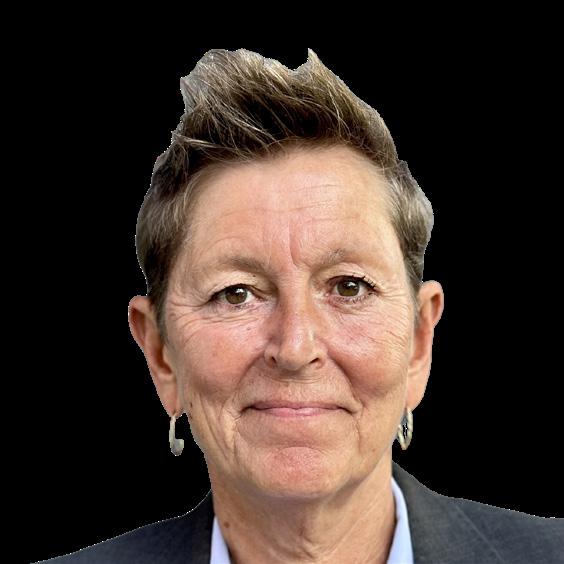
Tara Dillon, CEO of CIMSPA said: “With the UK unemployment rate rising to 5% and NEET figures for young people hitting one million, for many, finding long term economic security is a top priority. This national launch marks a significant step forward in how we can support more people into meaningful careers within the sport and physical activity sector. Through our partnership with the Department for Work and Pensions, we have demonstrated through successful pilots that when employers, education providers and employment support services are aligned, we can create clear, accessible pathways into work.
“The Employability Academy provides a scalable, flexible model that responds to local need while maintaining a consistent focus on quality and professional standards. By bringing together training, wrap-around support and real job opportunities, we are not only helping
individuals to enter the workforce, but also supporting employers to build a skilled, diverse and sustainable workforce for the future.”

The Employability Academy is designed to maximise impact as well as ensuring sustainability by drawing on a range of funding sources. These include DWP provision at both national and local levels, including Sector-based Work Academy Programmes (SWAPs). Funding will also be sourced from devolved adult education and skills funding through combined authorities, further education college provision and adult learning funding, as well local authority investment, including economic development and public health funding.
Stephanie Peacock MP, Sport Minister said: “Sport has profound benefits for young people’s mental health, building confidence and helping them be part of a community, which is why we’re investing so every person has the facilities they deserve on their doorstep.
“It is also a thriving £39 billion industry with rewarding and diverse careers that are very appealing to young people. Through this new programme we’re matching that ambition with the opportunities they deserve.
“This partnership will help break down the barriers so that young people who want to pursue a career in sport have the opportunity to do so and maximise their potential.”
Employers operating in the sport and physical activity sector can get involved by speaking to their local CIMSPA workforce development manager.
If you are a jobseeker and would be interested in a career in the sport and physical activity sector, you can find out more about the Employability Academy through your local Jobcentre Plus.
Dave Gerrish Strategic lead for digital ukactive
In June, ukactive launched the next phase of its Digital Futures programme, supporting organisations across the physical activity sector to develop their digital capability. Delivered in partnership with Sport England and supported by our strategic partners Gladstone, EGYM, Xn Leisure and PerfectGym, Digital Futures has become the sector’s leading digital maturity initiative since its launch in 2021.
More than 335 fitness and leisure operators, national governing bodies of sport, Active Partnerships and sector organisations have taken part to date, using the programme to better understand their digital capability, identify areas for improvement and receive recommendations to support planning and investment. We have now enhanced the programme to provide a clearer and more practical consultation experience, alongside the introduction of a new AIsupported assistant to help organisations interpret their results and understand what steps they can take next.

Whether an organisation is building its digital foundations or refining an established strategy, Digital Futures is designed to support progress at every stage
The AI-supported assistant has been developed to explore how personalised digital guidance can support decisionmaking in practice, helping organisations strengthen their digital capability with clearer, more tailored recommendations. Whether an organisation is building its digital foundations or refining an established strategy, Digital Futures is designed to support progress at every stage. The programme is not about prescribing a single pathway, but enabling organisations to make confident, evidence-led decisions based on their own context, priorities and level of maturity.

Digital Futures continues to evolve with the needs of the sector and this next phase is about making our support clearer, more practical and more personalised. Every organisation, regardless of size or maturity, can take meaningful steps forward, and those that participate consistently are able to build confidence, strengthen capability and make more informed decisions about the future.
Over the coming months, we will be introducing new partnerships, resources and opportunities for collaboration, ensuring organisations have access to the support, insight and expertise they need to accelerate progress.
Additionally, through design activities Digital Futures is committed to continue building robust data pathways with NHS, providing cybersecurity and responsible use of AI guidance as well strengthening the need for data standards alongside The Open Data Institute. l Get your digital maturity score here: https://digitalfutures.ukactive.com

healthandfitness.org/congress
If you’re thinking about the future of our industry, London is where you need to be.
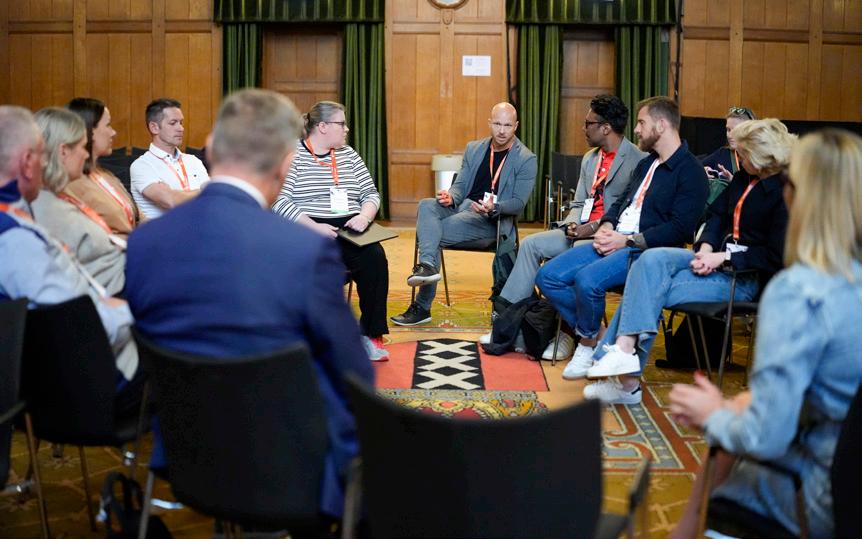
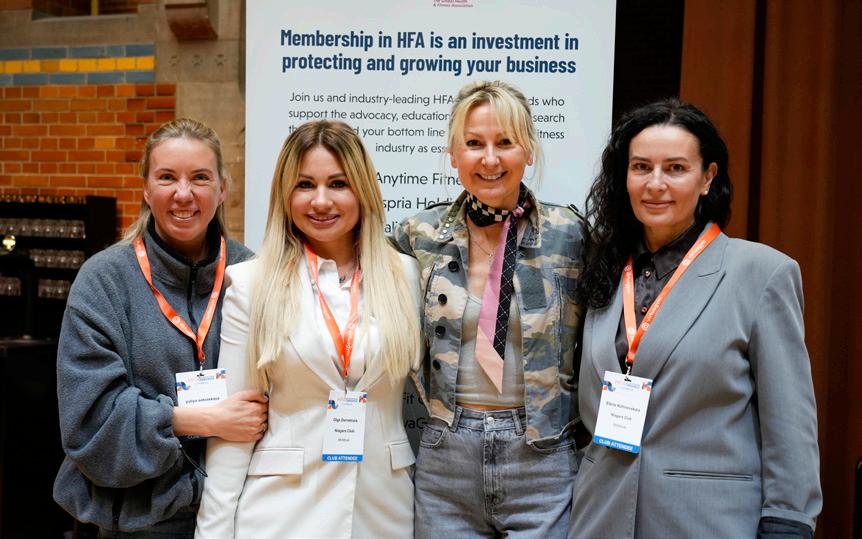
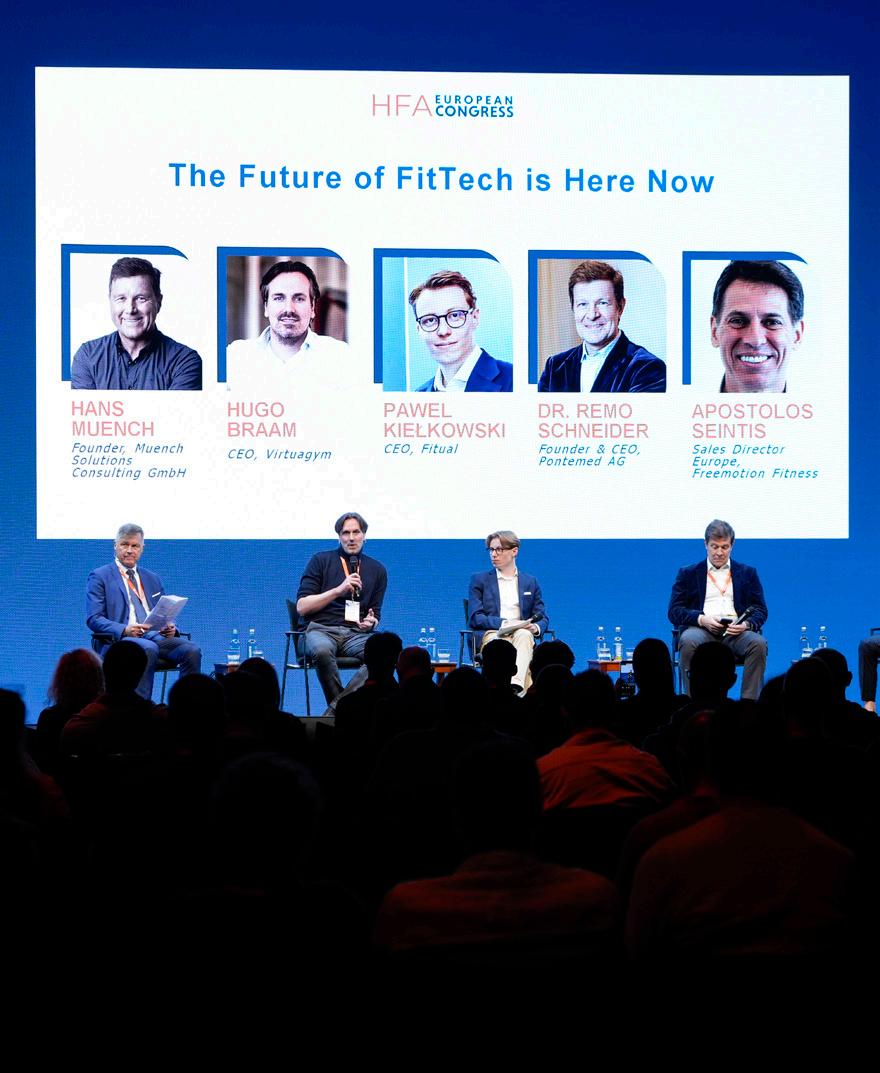
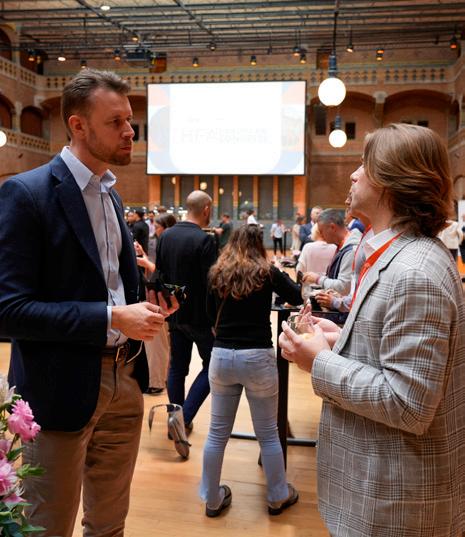
The HFA European Congress isn’t just an event—it’s a movement. It’s a gathering of top industry leaders who believe fitness is healthcare, prevention is power, and our industry is stronger when we speak as one.
Join the conversations that shift perspectives, the collaborations that spark change, and the community shaping the next era of fitness across Europe.
In his first full-length interview with WellNation as ukactive CEO, Cameron Saunders outlines how he plans to use his experience in shaping consumer behaviour and storytelling to help make fitness a mainstream activity, while also focusing on financial sustainability, member engagement and lobbying for government support
Cameron Saunders is rather unusual when it comes to a trade body leader: he has no background in the industry he will be representing. But that could be his biggest strength. The new CEO of ukactive brings with him experience from advertising, media and entertainment –industries built on understanding consumer behaviour, creating compelling brands and persuading people to change their habits. It is a perspective that could prove crucial as the physical activity sector looks to tackle one of its biggest challenges: persuading more people to get active.
While he might have not spent his career in fitness, he is well-versed with the state of the industry and the enormous opportunities within it. “The industry has enjoyed strong growth in recent years and there is still significant untapped potential,” he says. “Our vision is to get membership [the percentage of over-16s that are members of health and fitness club] to 20% by 2030. But if I’m honest, I’d hope we will be more like 25% by then.”
Saunders is conscious that growth of that magnitude, however, will not come from simply attracting more of the same customers. Instead, he believes the sector must further broaden its
“We need to really understand the consumer insight. What are the li le micro-blockers on the journey that stop people ge ing into fitness?”
appeal to groups that have traditionally been underrepresented in fitness environments – a journey, he says, the sector has already begun.
“You do run out of 25 to 34-year-olds sooner or later,” he says. “For me the key is to keep driving uptake with older populations and provide appealing messages for more diverse audiences. It’s already happening – you go to gyms today and you will see people look a bit different than 20 years ago. There’s a different range of people coming in.”
Saunders has spent much of his career trying to understand why people make the choices they do. Having worked extensively in advertising and consumer-facing businesses, he sees parallels between persuading someone to buy a product – whether it is to watch a film or join a gym.
One of the biggest opportunities he identifies is improving the industry’s understanding of people who do not currently participate. “I think it’s still a bit of a blind spot,” he says. “We know what we do is really valuable. We know it’s really important. But most people are sitting outside that world.”
Too often, he argues, the sector assumes that presenting people with evidence of physical activity’s health benefits will be enough to drive participation. “We don’t necessarily instinctively see it because, in our experience, we don’t get it,” he says. “We don’t understand why people don’t work out. Surely they know if they don’t work out they’re going to die earlier, or have 10 fewer years of healthy lifespan?”
The reality, he says, is that human decisionmaking is rarely that rational. People make choices based on emotion, identity, convenience and social influence. Understanding those motivations, rather than simply presenting health facts, could be key to unlocking further growth.

“We need to really understand the consumer insight,” he says. “What are the little micro-blockers on the journey that stop people getting into fitness?”
Saunders’ focus on consumer behaviour reflects his previous experience in the entertainment sector. He started his career in advertising in one of the top London ad agencies back in the mid 1990s – a period he refers to as “a kind of post Mad Men era”, but one where TV advertising would still be something people would talk about down the pub.
“My role was a consumer strategic planner, so I was focused on research and insight on what drives and motivates consumers,” he explains. “The goal was to create marketing that changed behaviour, attitudes and minds.
“A lot of our decision-making is based on emotion. One of the clients I worked with during my advertising years was a beer brand which, in a blind test, nine out of 10 would say tasted better than a leading premium brand. But once the labels went on, the result was reversed. So emotions can even change a person’s perception of taste.”
“I’m fascinated by consumer behaviour, and that emotional response. And it’s relevant to what we are trying to do. Answering questions like ‘what motivates people?’ and ‘how do we drive consumer change?’.”
The principle of altering attitudes, Saunders suggests, is highly relevant to physical activity. He draws a parallel from his past experience: Orange Wednesdays, the hugely successful, two-for-one cinema ticket promotion which he worked on. The concept helped change consumer behaviour and attracted large audiences into cinemas in the middle of the week, during quieter trading periods. It convinced people that cinemas weren’t just for Friday and Saturday nights.
When it comes to physical activity, Saunders says that the challenge is not simply persuading people that exercise is good for them. Most already know that. The challenge is making participation appealing, accessible and socially desirable.
“Everyone knows exercise is an investment and you should be working out,” he says. “You should,
“People enjoy things they identify with – social groups, communities, social pressure – most of us are herd animals.”
Cameron Saunders
Saunders graduated with a degree in social anthropology from King’s College, Cambridge. He began his career at WCRS, a prominent London-based creative advertising agency known for creating highly memorable campaigns for brands like Warburtons, BMW, and 118 118. While there, Saunders helped develop the Orange brand, which transformed the UK mobile market with the emotive promise of a bright, optimistic and wire-free future - ‘The future’s bright, the future’s Orange’. From advertising, he moved to entertainment and film and spent more than 20 years in leadership positions at high-profile organisations such as Sky, Paramount, Showmax Africa, Channel 4 and 20th Century Fox UK, where he was Managing Director. He also served on the Board of Cinema First, the UK’s trade body for the film industry, where he played a lead role aligning rival cinema operators and film studios around shared priorities, convening senior leaders through structured roundtables, and translating discussion into tangible outcomes.

also, eat your greens, you shouldn’t drink alcohol, you shouldn’t have coffee after midday – and a million other things to keep healthy. But why do people not do so? Because we are human beings. We’re lazy, because we’re biologically designed to be idle – we’re meant to conserve energy whenever we can. So it’s not a criticism as such, it’s just a fact.
Instead of relying solely on health messaging, Saunders believes the sector should think more like successful consumer brands, focusing on identity, belonging and experience.
“People enjoy things they identify with,” he says. “Social groups, communities, social pressure – most of us are herd animals.”
That thinking also shapes Saunders’ vision for ukactive itself. While many industry bodies focus primarily on advocacy and policy, he sees an opportunity to create a broader movement that captures public imagination. Among his ambitions for his tenure is to create campaigns capable of attracting sponsorship, generating mainstream media attention and, most importantly, bringing new people into physical activity.
“I want to start looking at what our Orange Wednesdays could be,” he says. “Perhaps it’s the National Fitness Day. As an awareness day, we know it’s a popular campaign among consumers and our
members, but it has so much more potential. Perhaps we make it into a month-long campaign of activity where we genuinely unite the nation. We get people out, achieve genuine media coverage, secure the right sponsorship and make it part of driving hundreds of thousands of new members into gyms – and then convert and retain those into life-long members.”
Whatever the sector’s “Orange Wednesday” moment ends up being, it is clear that Saunders believes that the ultimate objective is not awareness alone. Rather, it is converting participation into long-term behaviour change and sustainable membership growth.
Among the trends Cameron Saunders believes could reshape the sector over the coming decade is the ongoing growth of GLP-1 medications. While much of the public conversation has focused on weight loss, Saunders sees a much bigger opportunity for the fitness industry.
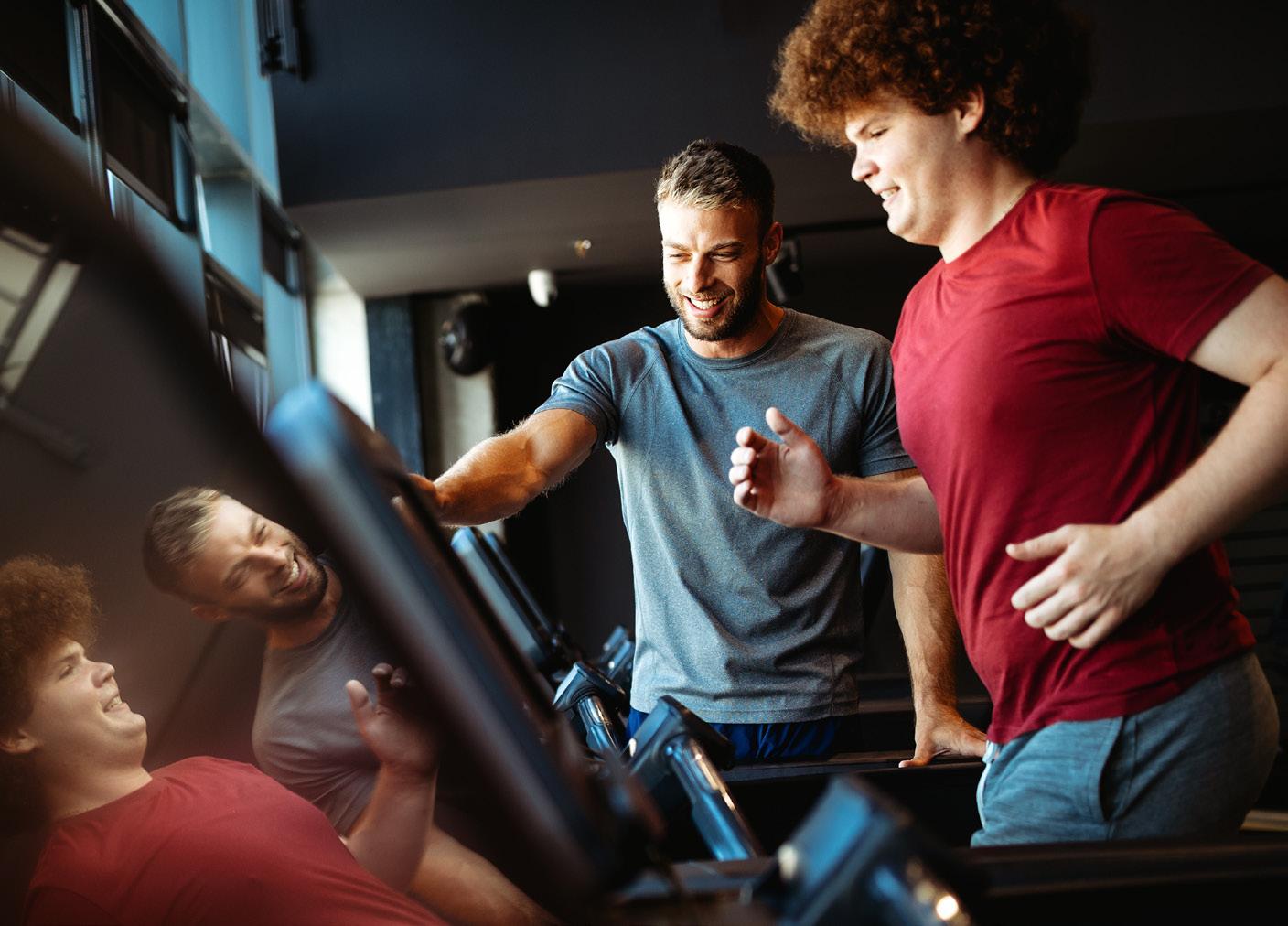
He supports the view that GLP-1s are not an alternative to exercise, but also sees the medications as a potential gateway for healthier lifestyles for many. “As more people begin the programmes and experience improvements in confidence, mobility and overall health, our members have an opportunity to support them on the next stage of their journey,” he says. “The real opportunity we have is helping people turn weight loss into long-term health gain.”
A focus on campaigns and widening consumer awareness doesn’t mean that ukactive won’t continue to bang the drum for the industry when it comes to Westminster. The inroads and recognition achieved in the corridors of power during Saunders’ predecessor’s, Huw Edwards’ tenure, will be fully utilised – and broadened. Saunders says strengthening the sector’s relationship with government remains a “key priority”.
For him, politicians, health leaders and policymakers now understand and largely accept the evidence linking exercise with improved health outcomes. The challenge, he says, is turning intellectual agreement into practical action.
“At the moment we’ve won the intellectual argument,” Saunders says. “People get that gyms are a good idea and that fitness is a great. What is missing is emotional and political momentum.
“I want MPs and political leaders to be saying, ‘I want to be part of that. I want to be seen supporting that’.”
His ambition is for investment in the sector – both private and public, from facilities to community activity programmes – to become politically attractive and publicly popular.
Rather than being viewed as a more niche issue affecting a segment of the population, physical activity should become something politicians actively champion.
“We want gyms and physical activity to be a
The real opportunity we have is helping people turn weight loss into long-term health gain
populist thing to support and to grow,” he says. “We have an election in about three years’ time. By then, when candidates and MPs are doing the rounds and talking to constituents in the hope of votes, we want them mentioning that they are funding more gyms and supporting local leisure centres to help people, young and old, get into fitness and exercise and to get everyone healthy.”
It is clear that Saunders arrives in his new role with a vision, enthusiasm, energy and plenty of ambition for the future. He is, however, equally clear that his first task is to strengthen ukactive’s existing foundations. A major focus during his early months will be member engagement.
“The top priority at the moment is going out and listening to – and engaging with – members,” he says. “I want to both get to know our members and ensure that members clearly understand the value they receive from the organisation, whether through lobbying, market intelligence, guidance, standards or sector representation. We want people to understand what they are paying for and what the value of being a member is.”
As part of that process, he wants ukactive to become even more relevant to smaller operators and independent businesses, many of whom face different challenges from larger national chains. He believes communicating this value proposition to organisations of all sizes is critical to ensure the organisation itself is financially sustainable and able to deliver further value in future.
Talking to Saunders, perhaps the clearest insight into his leadership philosophy comes from the way he talks about storytelling. Rather than focusing on targets, structures or processes, he repeatedly returns to the importance of creating a narrative that people believe in.
What’s the best piece of leadership advice you’ve ever received? You can’t be too enthusiastic.
Which leader do you most admire and why?
Hans Snook, visionary leader of Orange - a leader who had a very clear vision for the future, and built a team that manifested it from brand through to tech platform and customer services. Orange went from zero to almost £30bn in value in less than 5 years, a real trailblazer of its time.
What book, podcast or resource has most influenced your thinking recently?
Sleepwalkers: The Treaty of Versailles is a great read. Versailles failed not because the people were stupid, but because everyone arrived with a private script, a public ego and no shared theory of what success actually looked like. The fitness sector isn’t so different - technically capable, full of smart operators, but often negotiating in parallel rather than in concert. Our role at ukactive is to align around a common interest and objective – more people, more active, more often, and removing those barriers to greater success.
What’s one misconception about the fitness/ physical activity sector that you’d like to challenge? That it is “not for people like me” - there really is something for everyone to enjoy.
Complete the sentence: “If ukactive succeeds, the UK will be...” ..healthier, happier and wealthier.
For him, effective leadership starts with creating a compelling vision of the future. Once people believe in that story, they can work together to overcome the barriers standing in the way.
“What I want to try to do is work out what our story really is,” he says. “What’s the narrative that we all buy into and feel enthused by and want to be part of?”
There is, however, space for those in the sector to create their own story lines. “Equally, I wouldn’t want to micromanage,” he says. “You want people to buy into where we’re going and then create the space for them to work out how they contribute.”
The approach is perhaps unsurprising for someone who has spent much of his career helping organisations communicate with audiences. In his new role, Saunders will aim to do the same with a story that delivers the holy grail – to attract more people to become more active, more often.
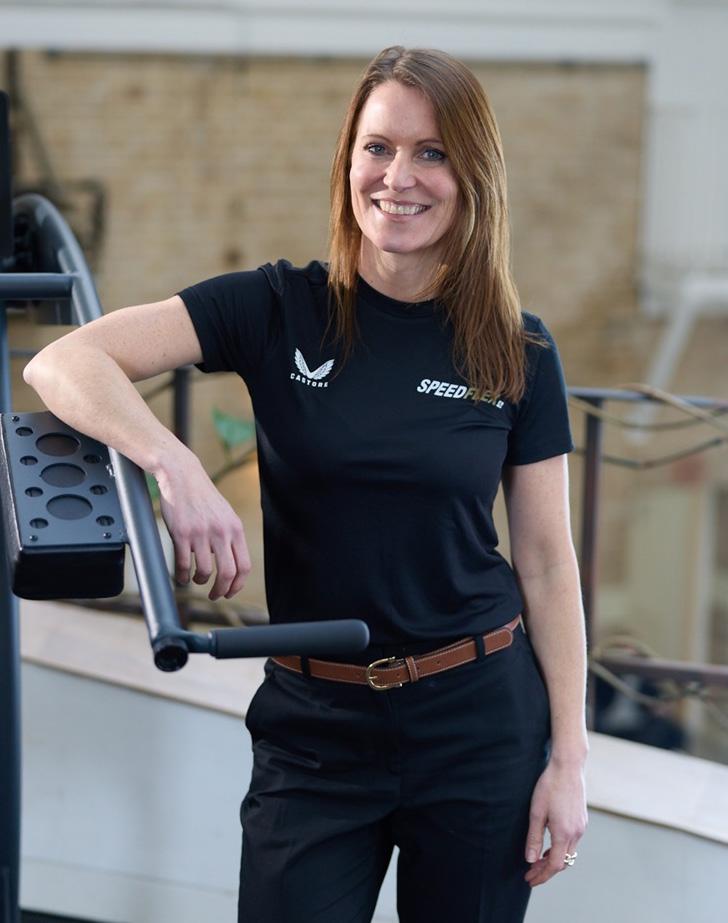
Amy Ritson, Director of Sales at Speedflex, reports from this year’s Women in Fitness event
The third annual Women in Fitness event recently brought together female professionals from across the industry for a day dedicated to connection, conversation and community. I was honoured to host the event, which was delivered with Independent Gyms UK and supported by Future Fit, Red Bull, New Forest Hikes and Optibac.
What began as a simple idea three years ago has developed into a valued industry initiative, creating a space where women can step away from their dayto-day responsibilities and engage with peers in a more meaningful and supportive environment. This year’s event saw attendees take part in a 15km walk along the Greenway in Stratford-upon-Avon. While the weather delivered a few light showers along the route, spirits remained high throughout the day.
The informal setting encouraged open and honest conversations, allowing participants to share experiences, discuss challenges and celebrate successes within the fitness industry.
One of the most rewarding aspects of the event has been witnessing its growth and evolution over the past three years. As the industry continues to develop, opportunities for authentic networking and peer support have become increasingly important.
The Women in Fitness event aims to provide exactly that - an environment where relationships can be built, knowledge can be shared and individuals can gain inspiration from others working across different areas of the sector. The day highlighted the strength of the female fitness community and the value of creating dedicated opportunities for collaboration. From gym owners and operators to suppliers,
educators and industry leaders, attendees represented a broad cross-section of the sector, bringing diverse perspectives and experiences to every conversation. Events such as these demonstrate that some of the most impactful professional development opportunities happen outside traditional conference settings. By creating time and space for genuine connection, the Women in Fitness initiative continues to foster a stronger, more connected industry network.
A huge thank you goes to everyone who participated and helped make the day such a positive and energising experience. With another successful event completed, plans are already underway for the next Women in Fitness gathering, continuing the mission of supporting and empowering women across the fitness industry.

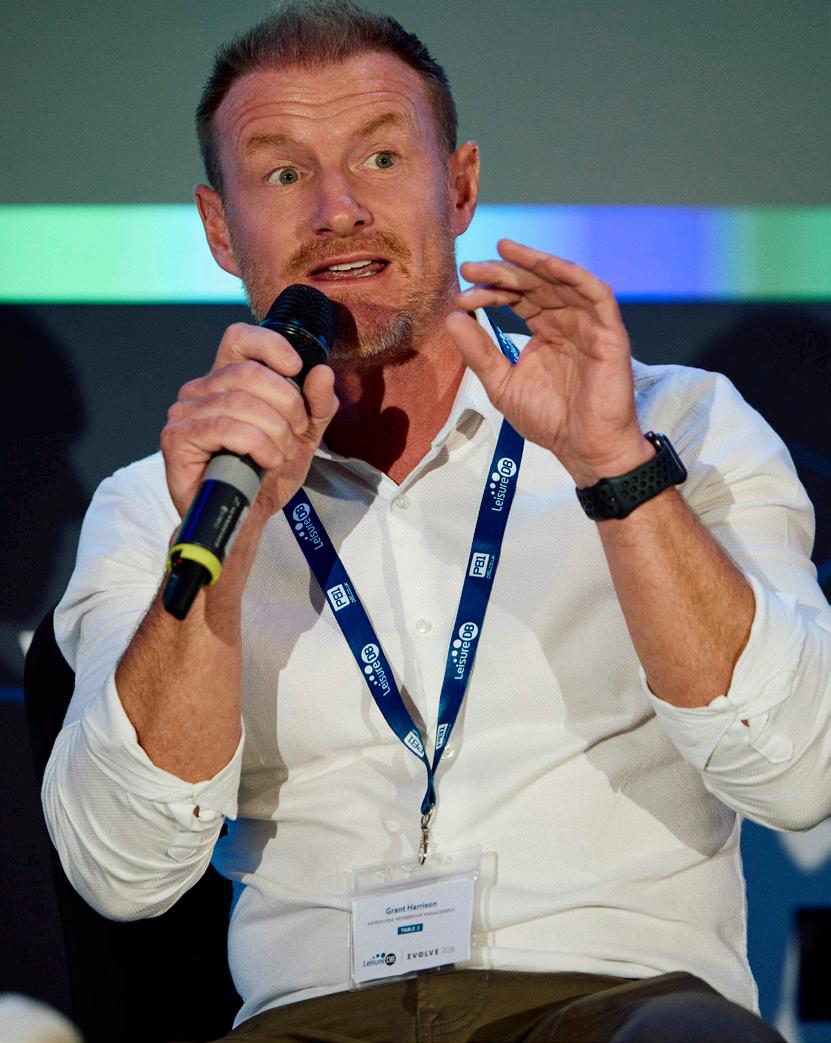
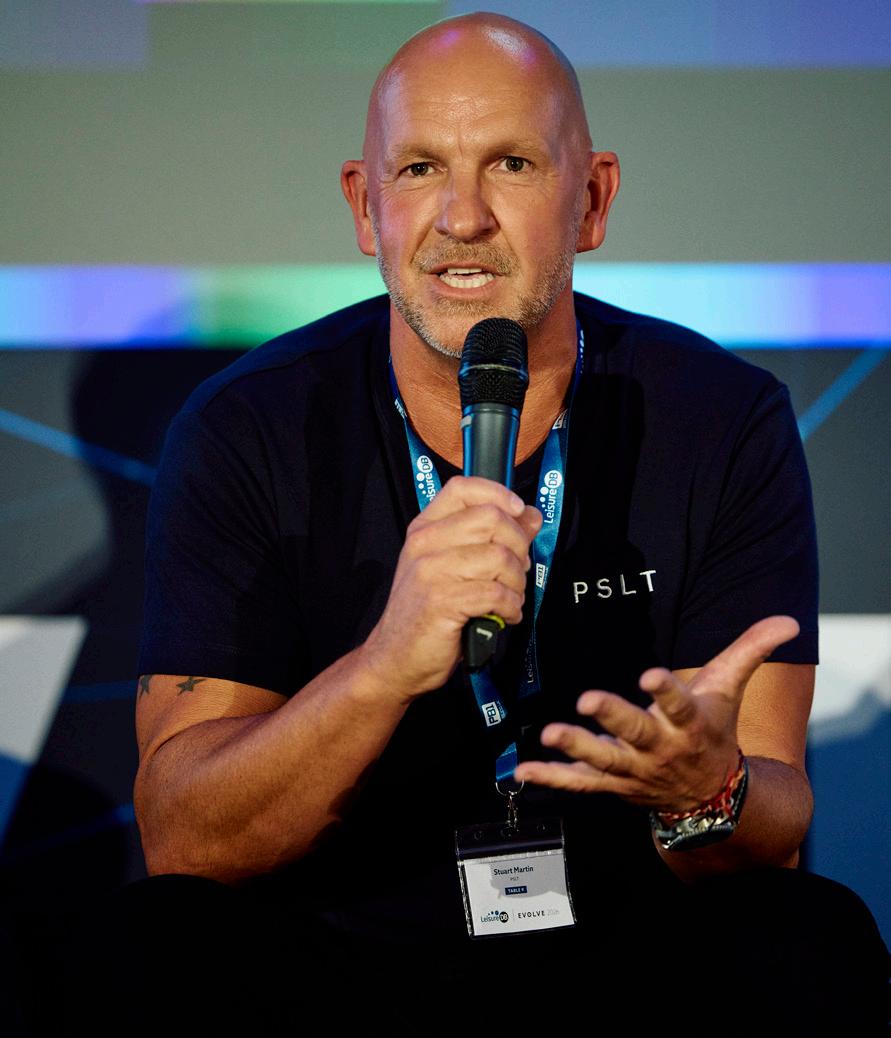
WellNation attended the annual EVOLVE event in London in June. As well as providing the backdrop for the launch of the landmark State of the Fitness Industry Report, this year’s event marked a significant rebrand for the sector’s leading insights company, Evolve (LeisureDB)
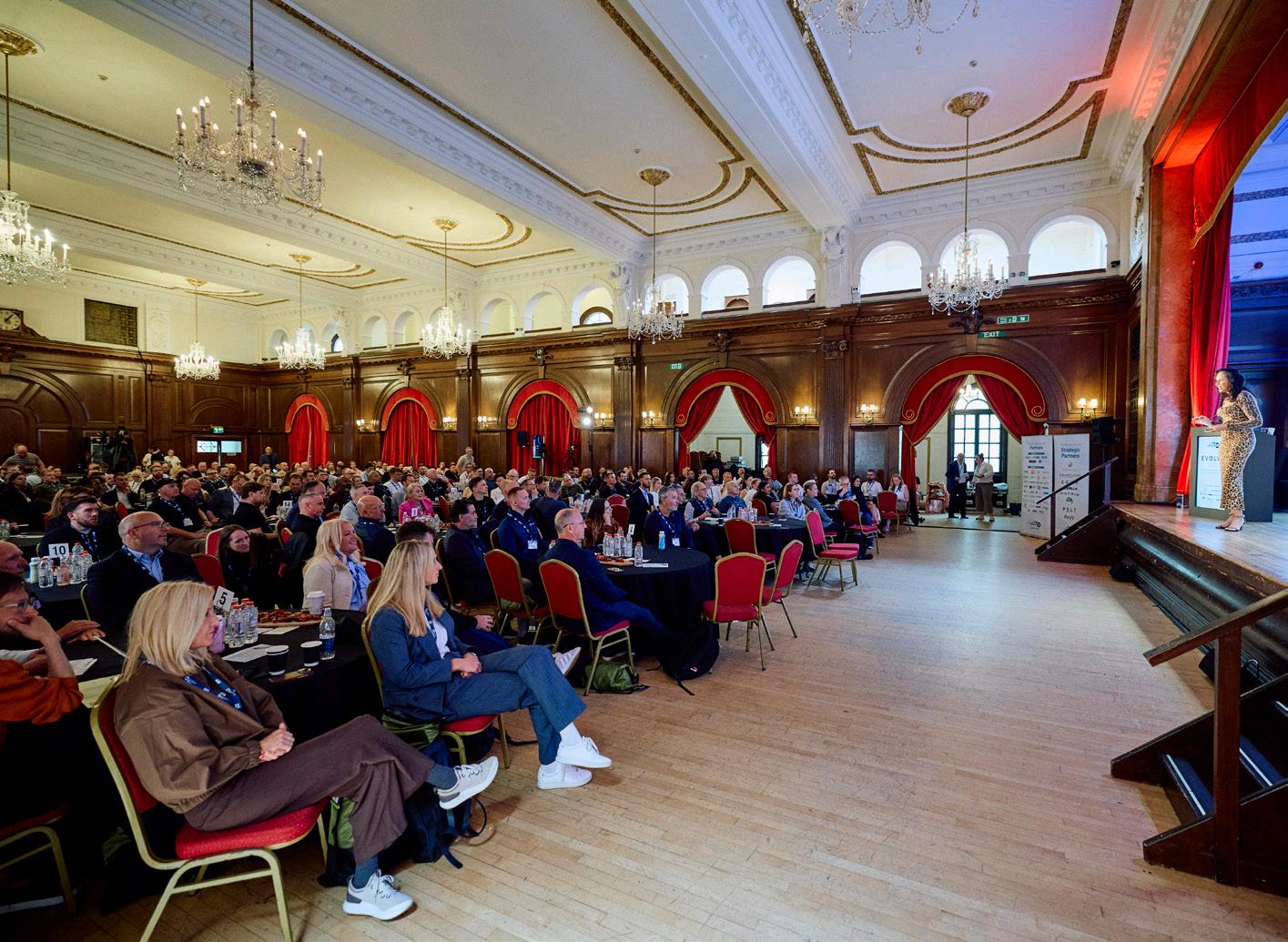
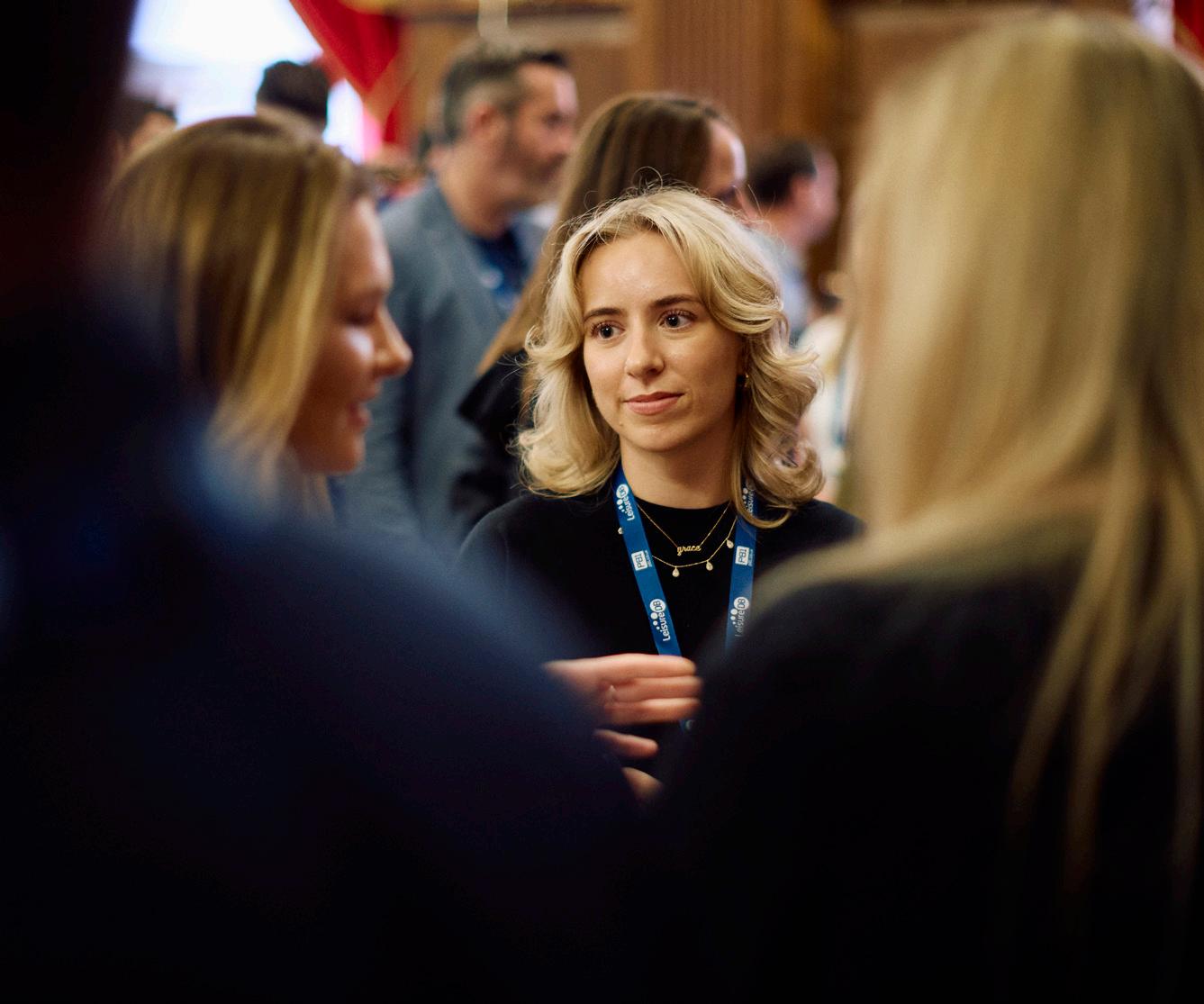
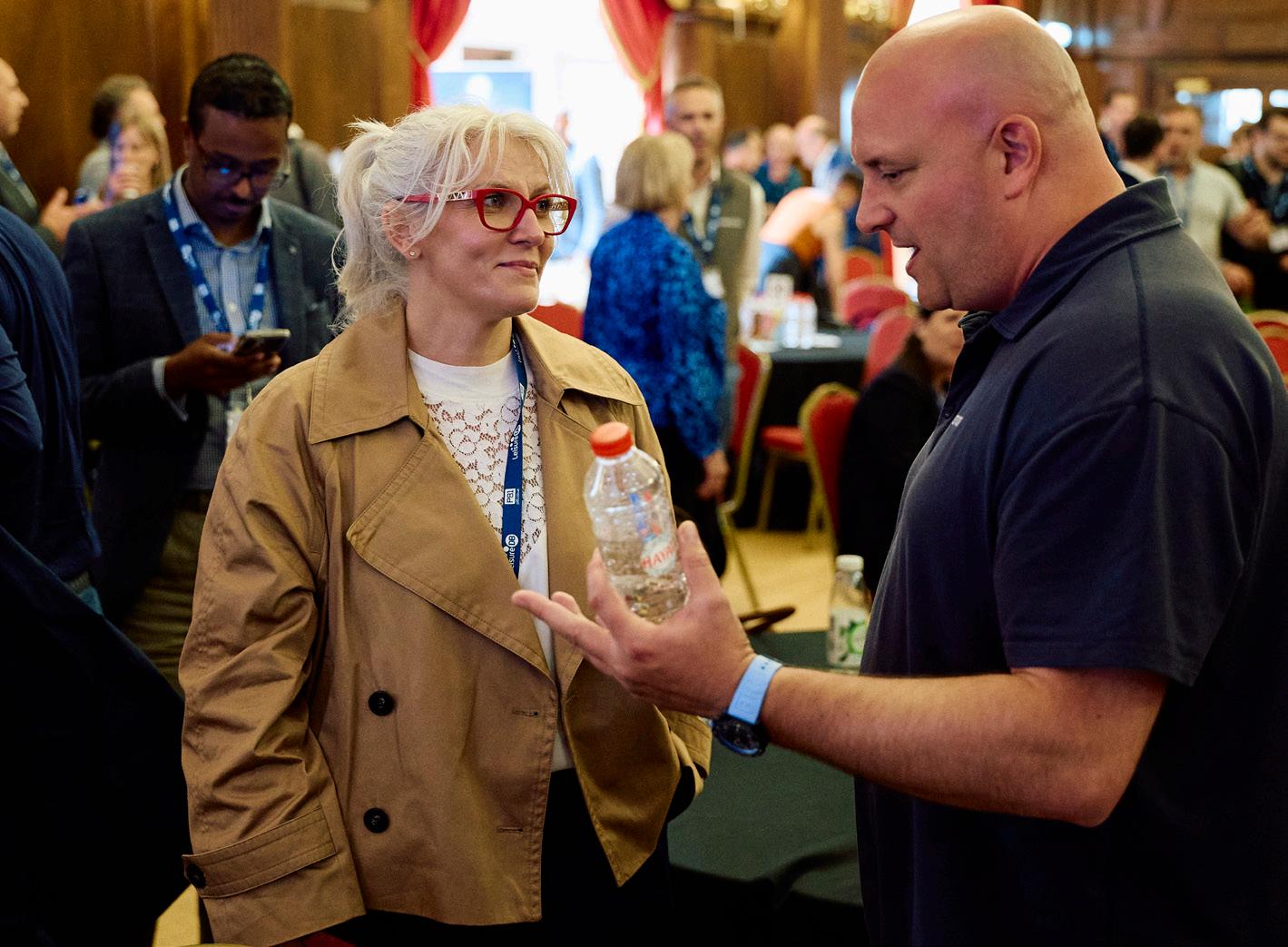
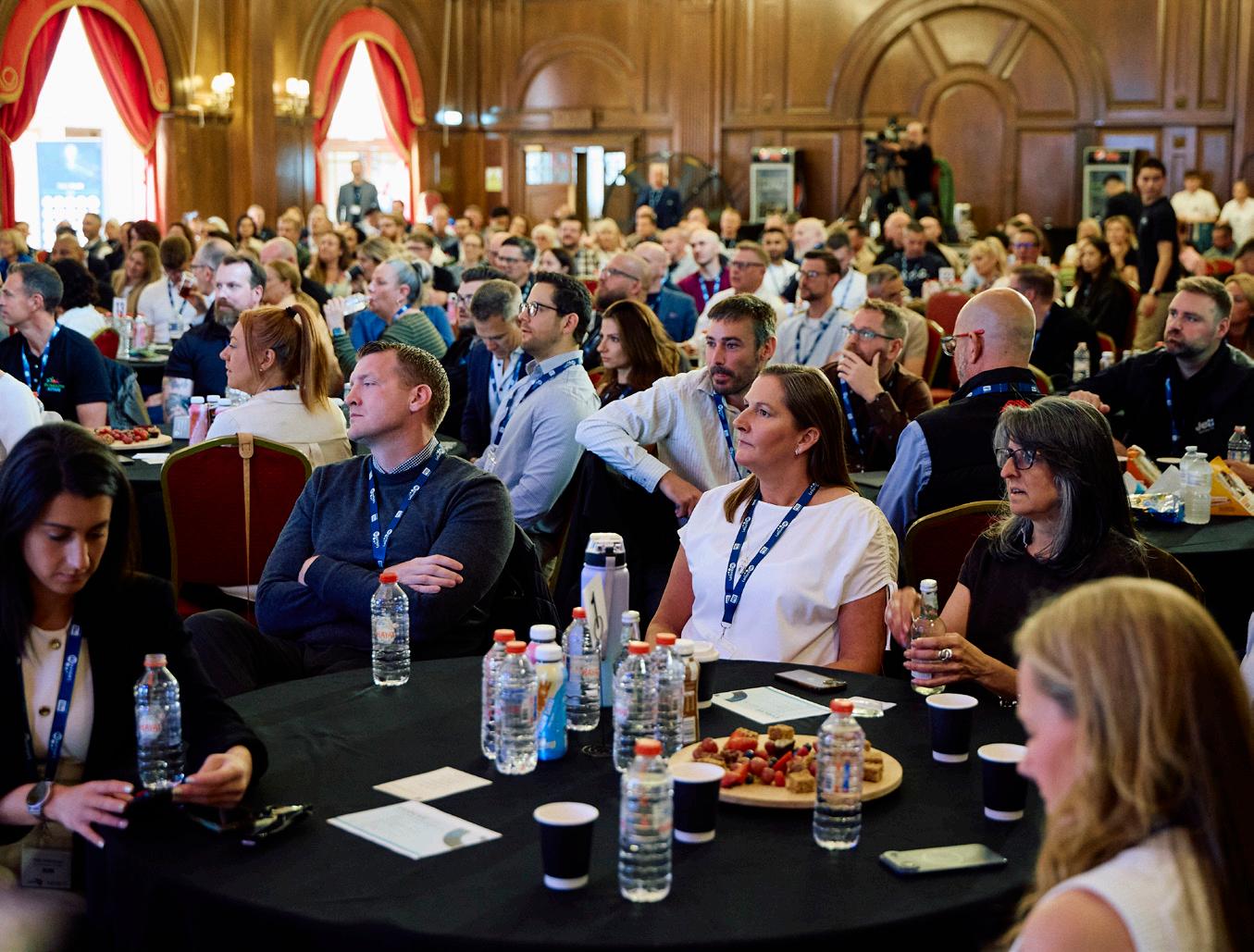
More than 300 leaders from across the UK’s fitness, leisure, health and physical activity sectors gathered beneath the iconic vaulted ceiling of London’s Porchester Hall on 4 June for EVOLVE 2026, an event that celebrated 45 years of industry insight while looking confidently towards the future.
The occasion marked several significant milestones. It celebrated the 45-year journey of Leisure DB, launched the 20th edition of the State of the UK Fitness Industry Report and introduced EVOLVE, a new identity reflecting the organisation’s growing role in research, strategic insight, events and industry collaboration.
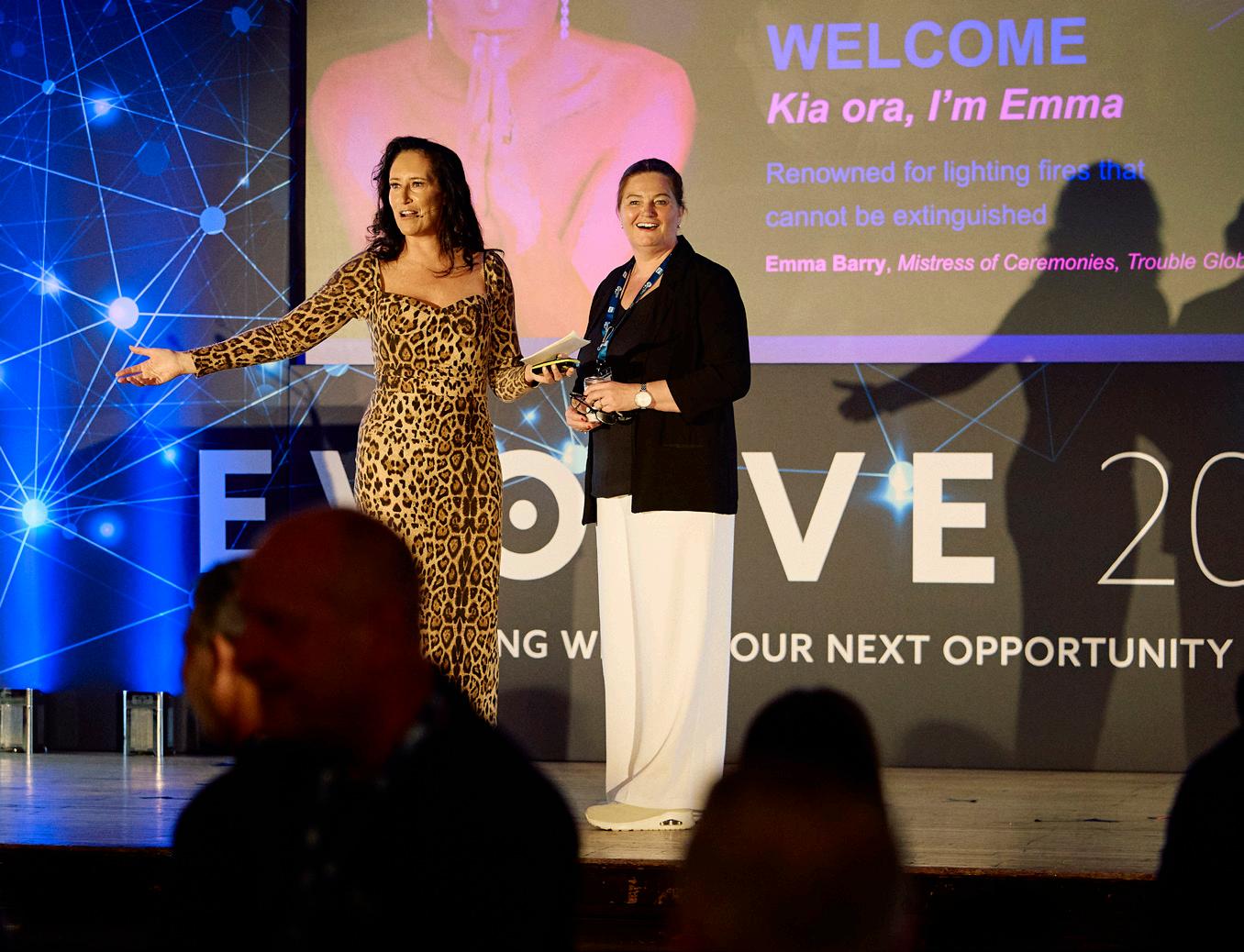
Hosted by Mistress of Ceremonies, Emma Barry, EVOLVE 2026 brought together a mix of operators, suppliers, investors, partners and industry leaders, sitting side by side in a room designed not simply for presentations, but for collaboration. Throughout the day, ideas were challenged, perspectives were shared and conversations sparked around one central theme: “Are we creating healthier communities, or more competition?”. It was a reminder that meaningful change happens when every part of the sector comes together with a shared purpose.
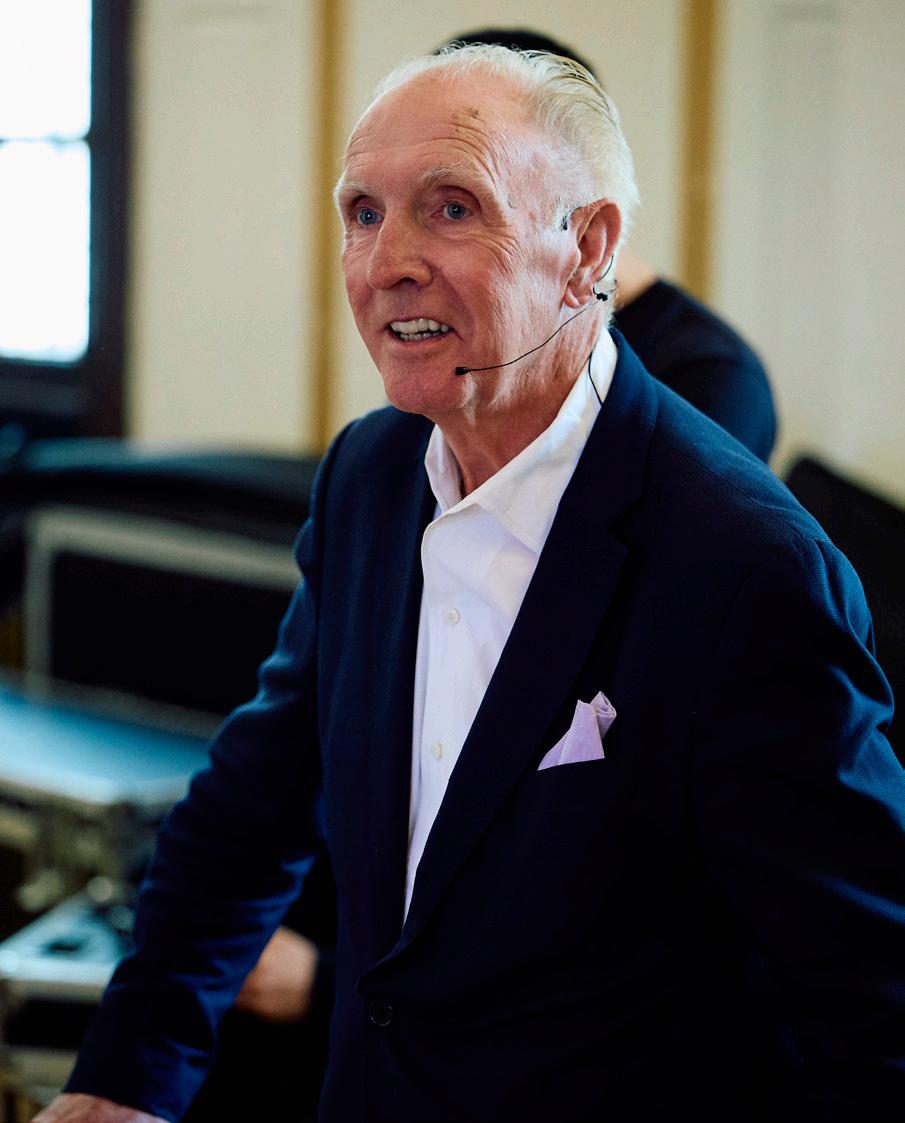
Opening the event, EVOLVE Chair, David Turner, reflected on almost five decades of change across the fitness industry. Drawing on his experience from the commercial health club sector through to boardroom leadership and strategic consultancy, Turner highlighted an industry that has continually reinvented itself, embracing new technologies, responding to
changing consumer expectations and increasingly positioning itself at the heart of preventative health.
In conversation with Emma Barry, the discussion explored what separates organisations that genuinely evolve from those that simply follow trends. Leadership, adaptability and a willingness to challenge conventional thinking emerged as defining characteristics for future success. The conversation set the tone for an afternoon focused not on looking back with nostalgia, but on using experience to shape what comes next.
Emma Barry then welcomed Leisure DB Founder David Minton to the stage for a fascinating conversation exploring the origins of market intelligence in the fitness and leisure sector.
Long before demographic profiling, catchment analysis and artificial intelligence became everyday language, Minton was demonstrating how data could help organisations make better strategic decisions. His pioneering work transformed the way operators, investors and local authorities understood markets, placing evidence at the centre of planning and investment.
Reflecting on 45 years of technological change, the discussion highlighted that while the tools available today are almost unrecognisable from those of the early 1980s, the fundamental principle remains unchanged: understand people, understand communities and make decisions based on insight rather than assumption. As the conversation concluded, delegates watched a specially commissioned five-minute film celebrating Leisure DB’s remarkable journey.
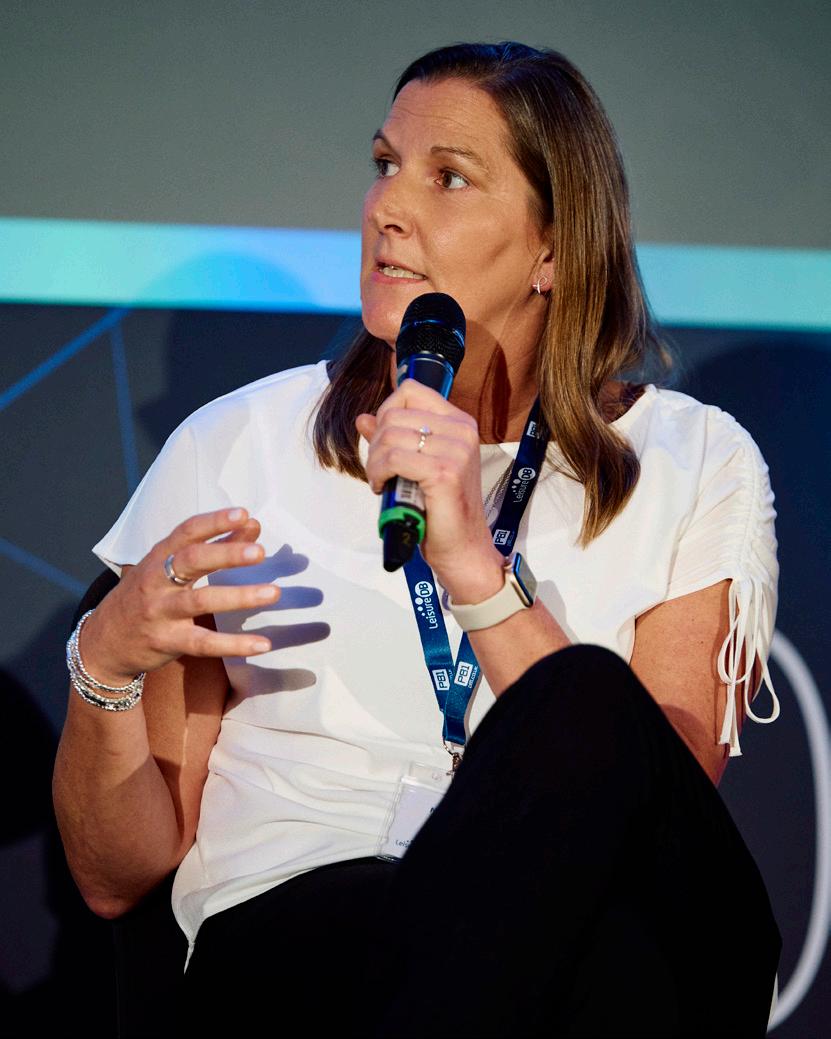

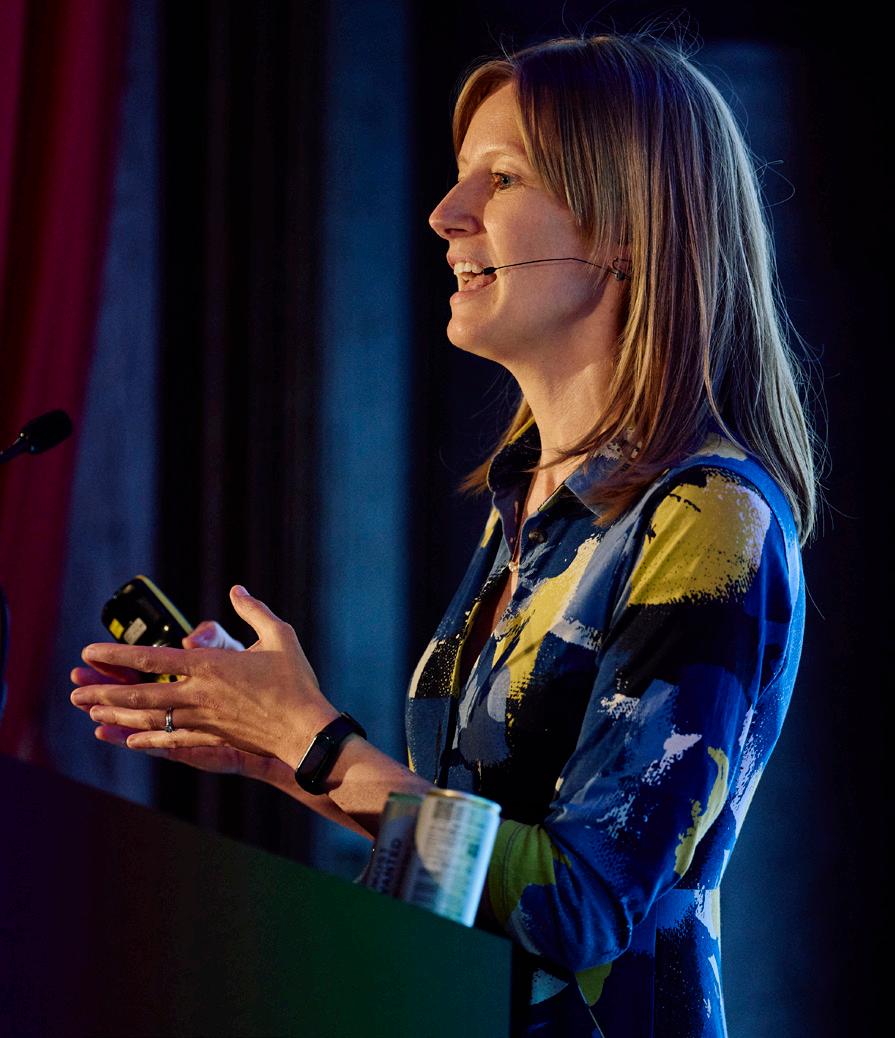
Rather than simply a new name or visual identity, the launch of EVOLVE marks the next stage for an organisation that has continually evolved alongside the sector it serves. Chief Operating Officer, Heidi Blackburn, has led much of that transformation behind the scenes, helping reshape the organisation, challenge established thinking and guide the transition from Leisure DB to EVOLVE while preserving the values that have underpinned the business for more than four decades.
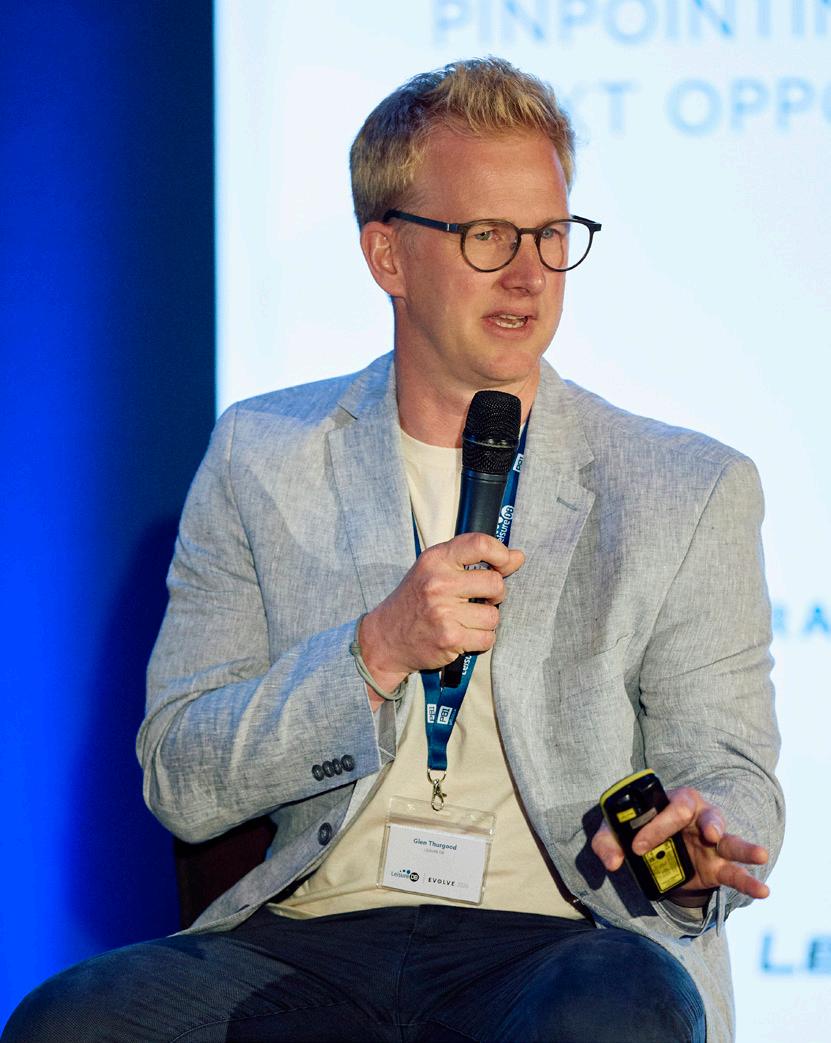
Looking ahead, Chief Strategy Officer Glen Thurgood outlined how an enhanced digital and data capability will strengthen EVOLVE’s research, strategic insight and support for the sector, ensuring the organisation remains at the forefront of evidence-led decision making for years to come.
If the opening sessions celebrated the past, the next challenged delegates to think differently about the future. Fresh from the launch of her new book, Art Cure, Professor Daisy Fancourt, one of the world’s leading researchers into the relationship between creativity, movement and human health, delivered a compelling keynote that encouraged delegates to broaden their understanding of wellbeing. Drawing on internationally recognised research, she explored the growing evidence linking creativity, social connection and physical activity to improved mental and physical health, highlighting the important role they can all play in prevention and healthier communities.
For a room filled with fitness and leisure professionals, it was a timely reminder that the sector has an opportunity to become a far greater contributor to public health by working alongside healthcare, education, culture and community organisations.
The keynote resonated strongly with delegates, reinforcing one of the central themes of EVOLVE 2026: creating healthier communities requires a broader understanding of health itself.
As Emma Barry remarked in closing the session, Art Cure should be essential reading for anyone interested in the future of health, wellbeing and prevention, a sentiment echoed by many delegates as discussions continued long after the presentation had ended.
The keynote resonated strongly with delegates, reinforcing one of the central themes of EVOLVE 2026: creating healthier communities requires a broader understanding of health itself
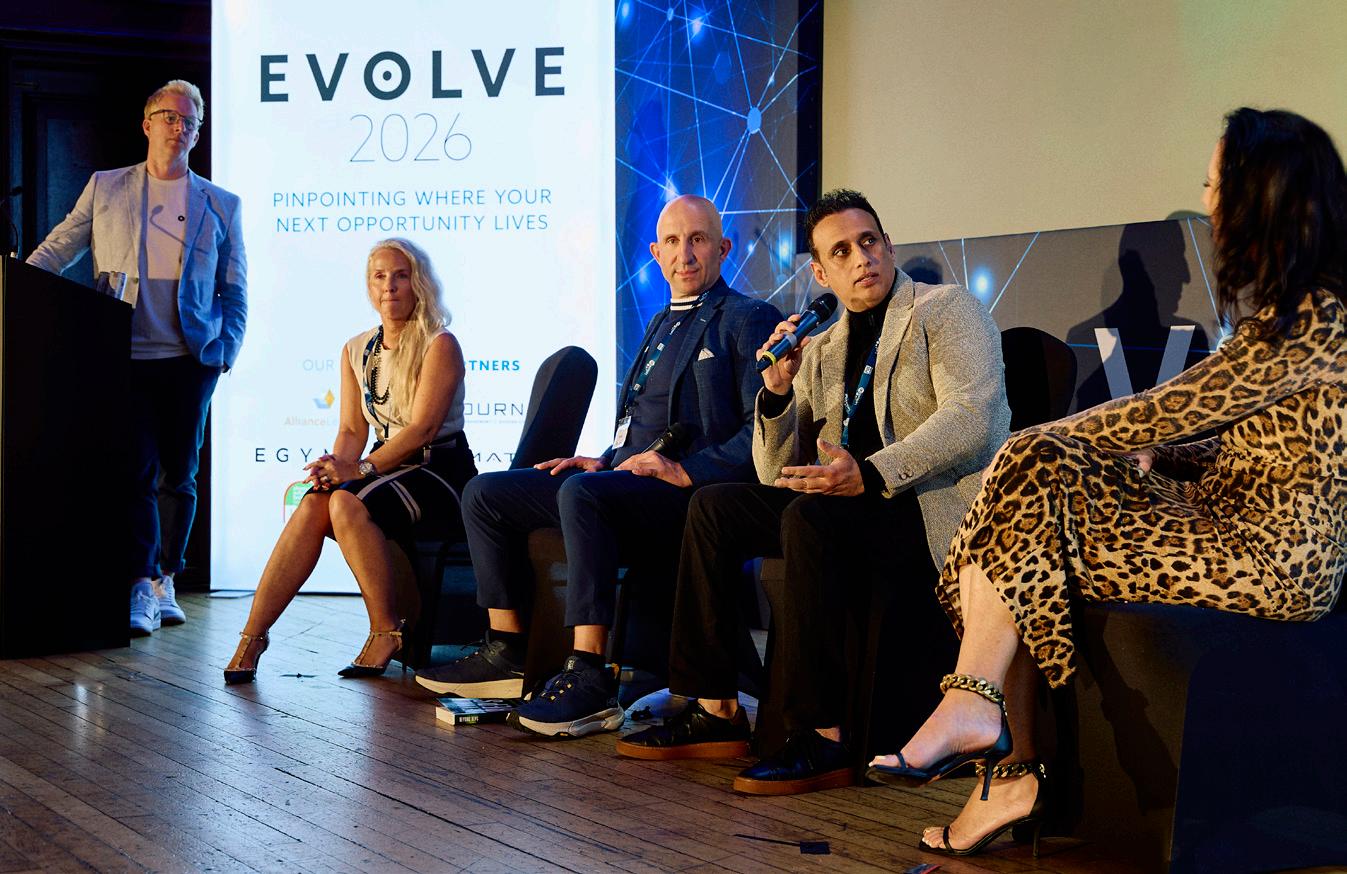
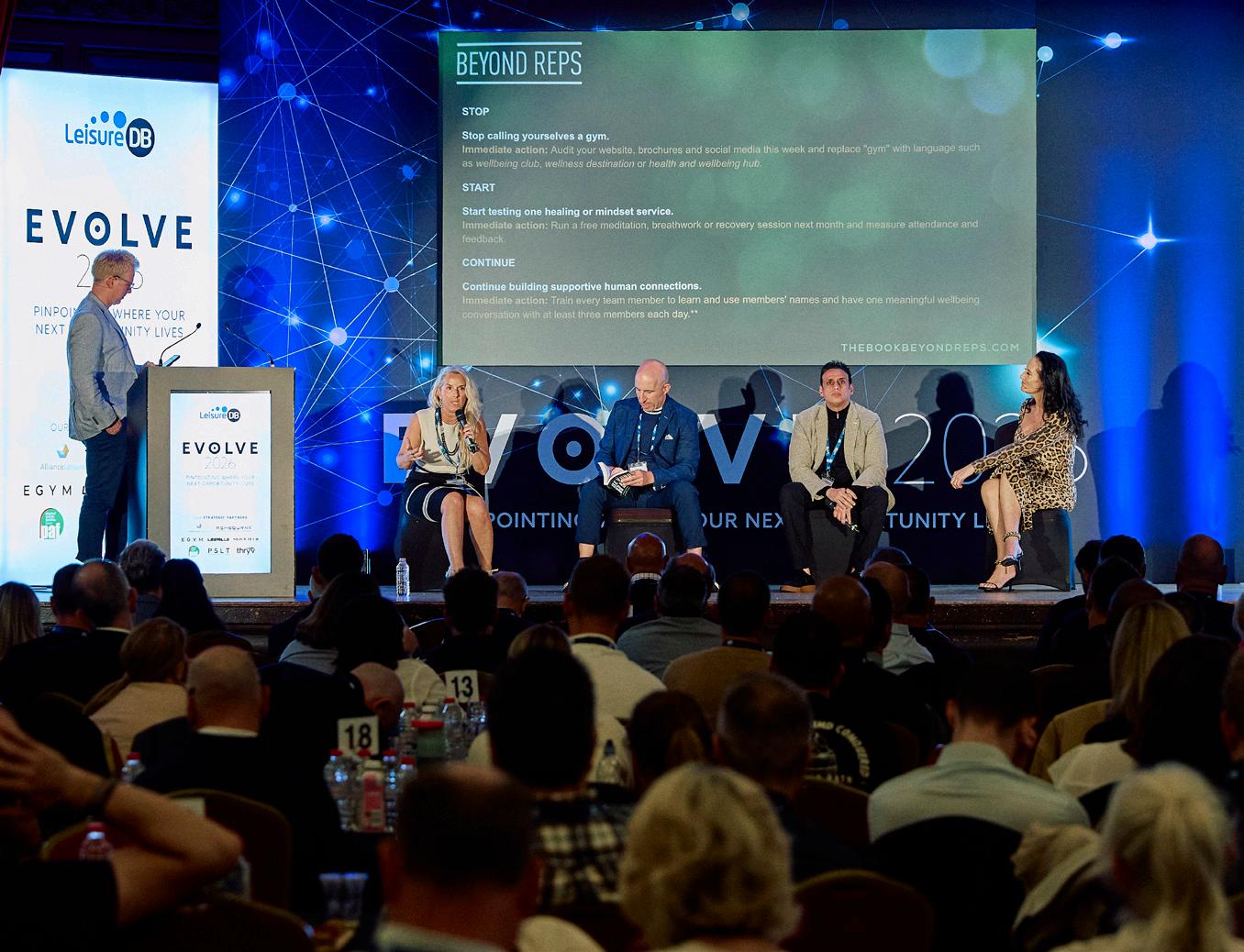
Building on the themes introduced by Professor Fancourt, the afternoon continued with one of the day’s most anticipated sessions, Beyond Reps. Moving beyond traditional discussions of exercise, performance and physical activity, the panel explored the future relationship between fitness, healthcare, behavioural science and human potential.
Emma Barry stepped from her role as Mistress of Ceremonies to join the panel, bringing her global perspective alongside Dr Glenda Rivoallan, Dr Samir Kapoor and Pete Cohen. Chaired by Glen Thurgood. Together, the panel challenged delegates to think differently about the role of the fitness and leisure sector. Rather than simply providing places for people to exercise, the discussion explored how operators can become trusted partners in prevention, behaviour change and long-term health outcomes.
The conversation reinforced many of the themes introduced by Professor Fancourt, highlighting the growing importance of collaboration between fitness, healthcare, education and community organisations. It also encouraged delegates to look beyond traditional measures of success, considering how the sector can create meaningful and lasting improvements in people’s lives.
Thought-provoking, insightful and often challenging, Beyond Reps perfectly reflected the ambition of EVOLVE 2026: to broaden the conversation and inspire the industry to think beyond today’s challenges towards tomorrow’s opportunities.
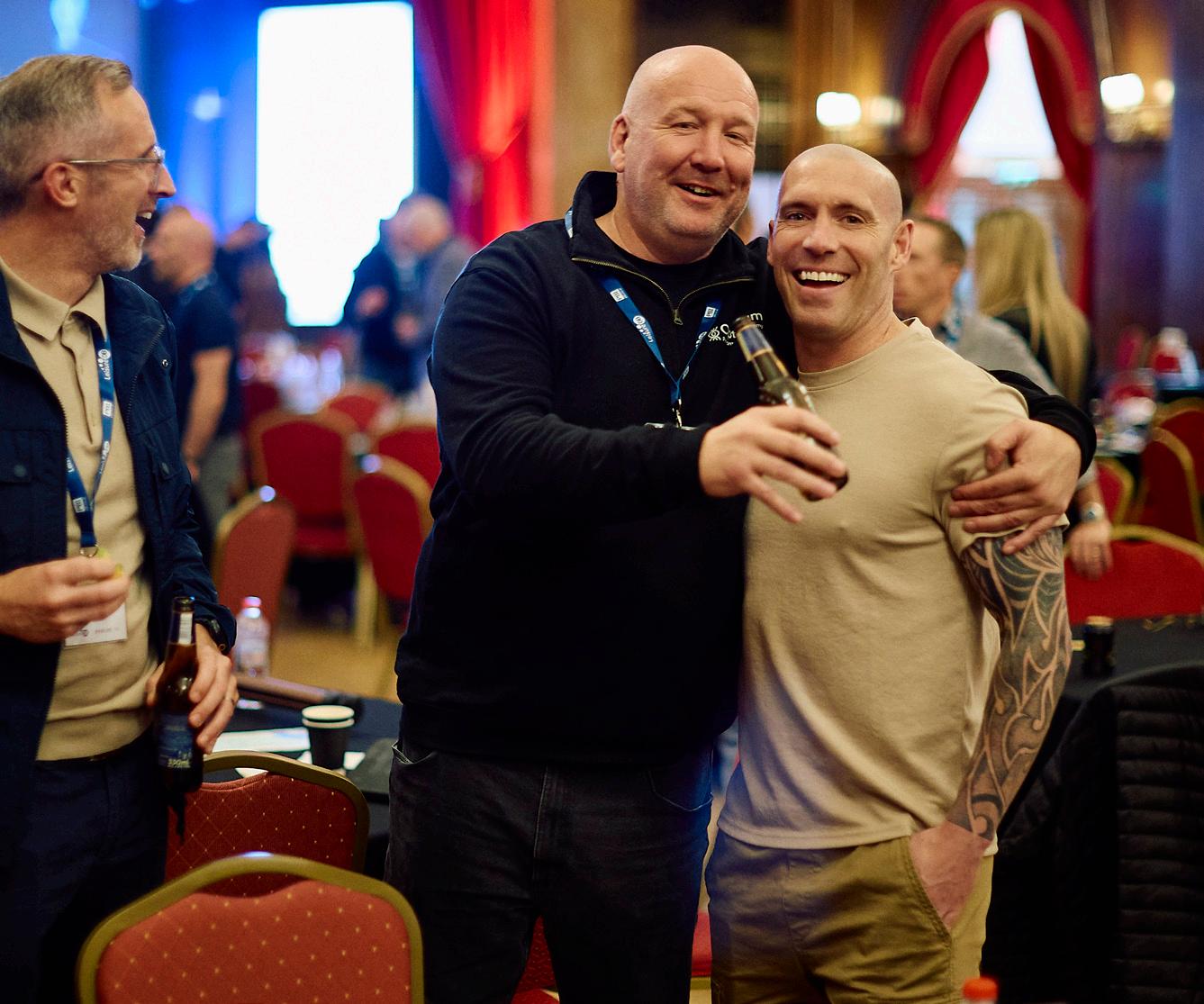
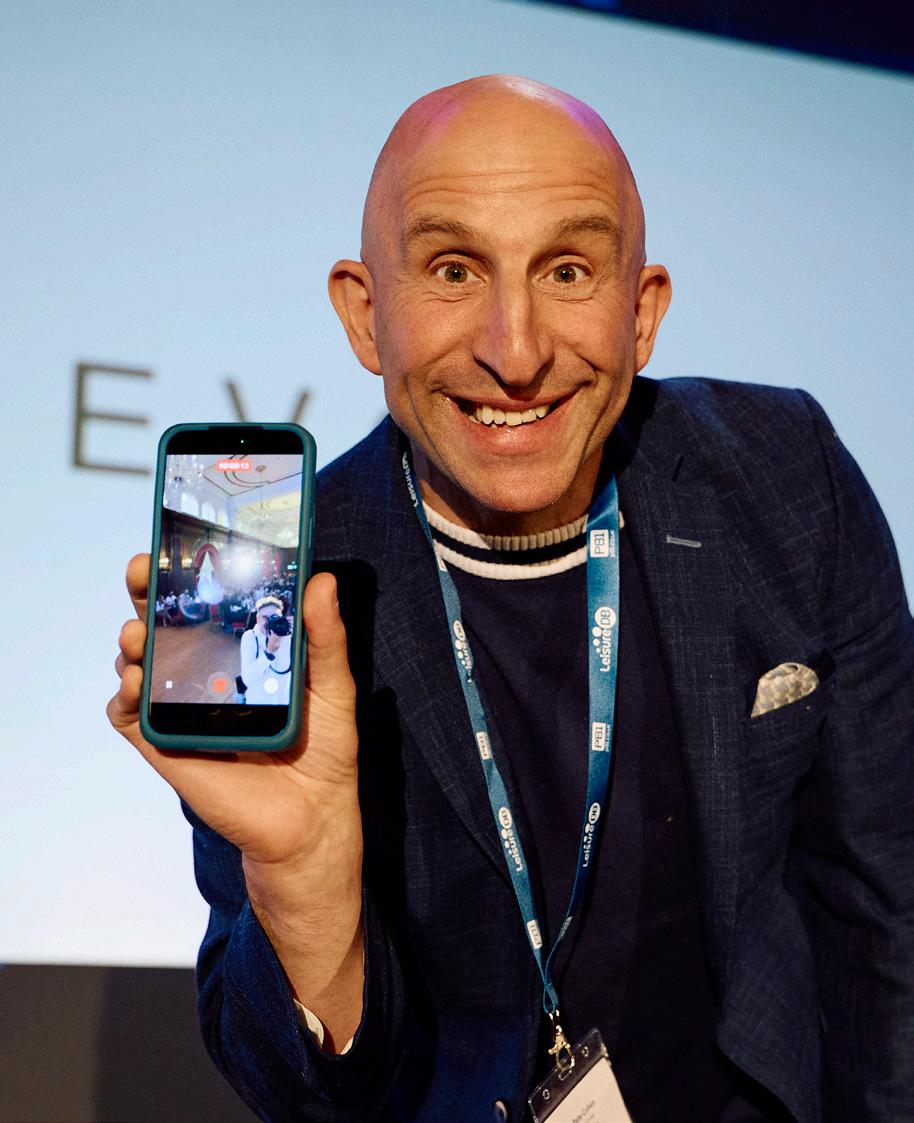
Forty-five years after Leisure DB first began helping the sector understand where it was, EVOLVE is helping it understand where it can go next
Bringing a fresh burst of energy to the stage, Darin Adams from Thryv shifted the focus towards one of the biggest challenges facing operators today: creating a seamless customer journey in an increasingly digital world.
Demonstrating how connected technology can help businesses get found online, convert more enquiries into customers and build stronger long-term relationships, Adams highlighted how operators can simplify marketing, communication and customer management without becoming full-time marketers themselves.
His energetic and engaging presentation reinforced another key theme of EVOLVE 2026: that technology works best not when it replaces people, but when it enables businesses to spend more time doing what they do best, delivering exceptional experiences for their communities.
The afternoon also featured a lively strategic partner panel, bringing together leaders from EGYM, Les Mills, Matrix, Alliance Leisure, Ashbourne and PSLT to explore one of the day’s central questions: “Are we creating healthier communities, or simply more competition?” Drawing on perspectives from technology, facility design, programming, public leisure and business operations, the discussion highlighted the importance of collaboration, innovation and shared purpose in shaping the future of the sector.
Bringing EVOLVE 2026 to a fitting close, Pete Cohen delivered a powerful and highly interactive keynote that challenged delegates to pause, reflect and consider the role they each play in shaping the future of the industry.
Rather than standing alone as the keynote speaker, Cohen cleverly turned the spotlight onto the audience,
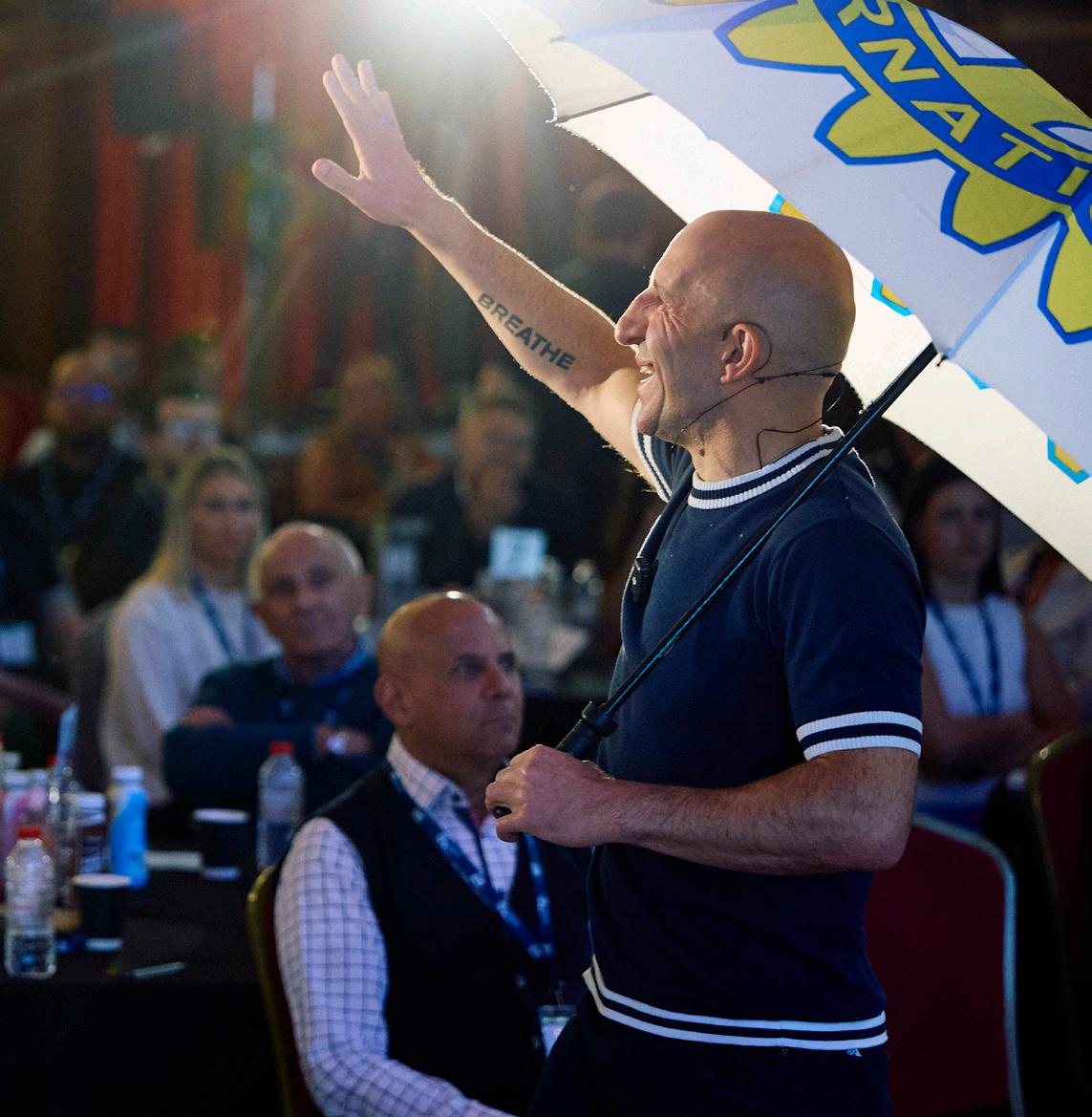
describing them as the real keynote of the day. Using Slido to invite live responses from across the room, delegates became active participants rather than passive listeners, creating an engaging and thoughtprovoking conclusion that gave everyone a voice.
Drawing on themes of leadership, purpose and human potential, Cohen encouraged the audience to stop, think and reflect on the conversations that had unfolded throughout the afternoon. His interactive approach transformed the session into a collective discussion, reinforcing the idea that the future of the industry will not be shaped by a single organisation or individual, but by the shared ideas, experiences and ambitions of those in the room.
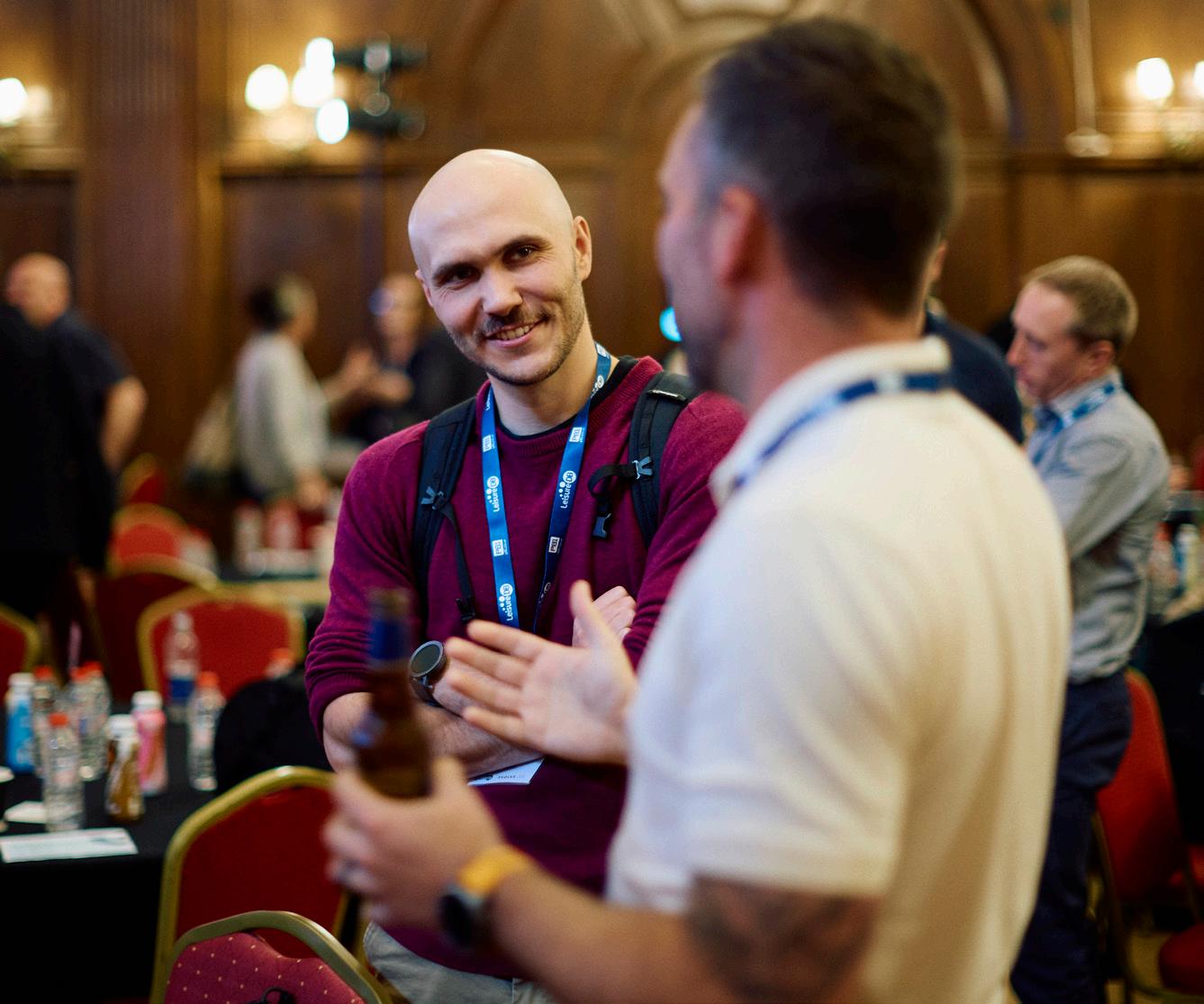
As the final responses appeared on screen and delegates prepared to continue conversations over drinks and canapés, there was a genuine sense that EVOLVE 2026 had achieved exactly what it had set out to do. It had celebrated 45 years of industry leadership while creating the space to challenge assumptions, share ideas and inspire the next chapter.
As delegates left Porchester Hall, many carrying the newly launched 20th edition of the State of the UK Fitness Industry Report – produced in partnership with WellNation – alongside a carefully curated goody bag packed with partner gifts, the conversations continued well beyond the auditorium. It was a reminder that EVOLVE is more than an annual conference. It is a catalyst for collaboration, innovation and evidence-led thinking.
“Forty-five years after Leisure DB first began helping the sector understand where it was, EVOLVE is helping it understand where it can go next,” Heidi Blackburn said. “Judging by the discussions that filled Porchester Hall throughout the day, that journey is only just beginning.”
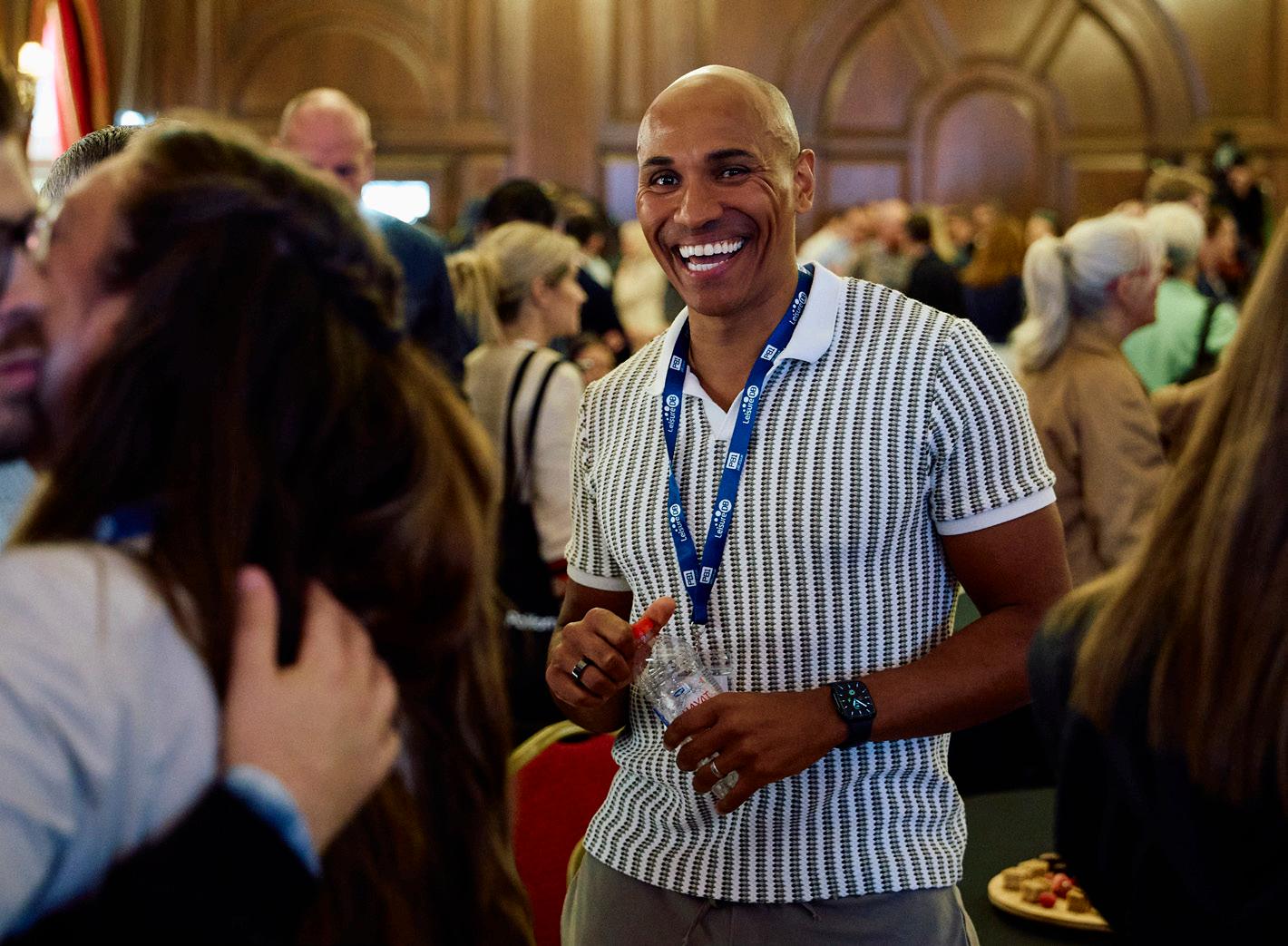
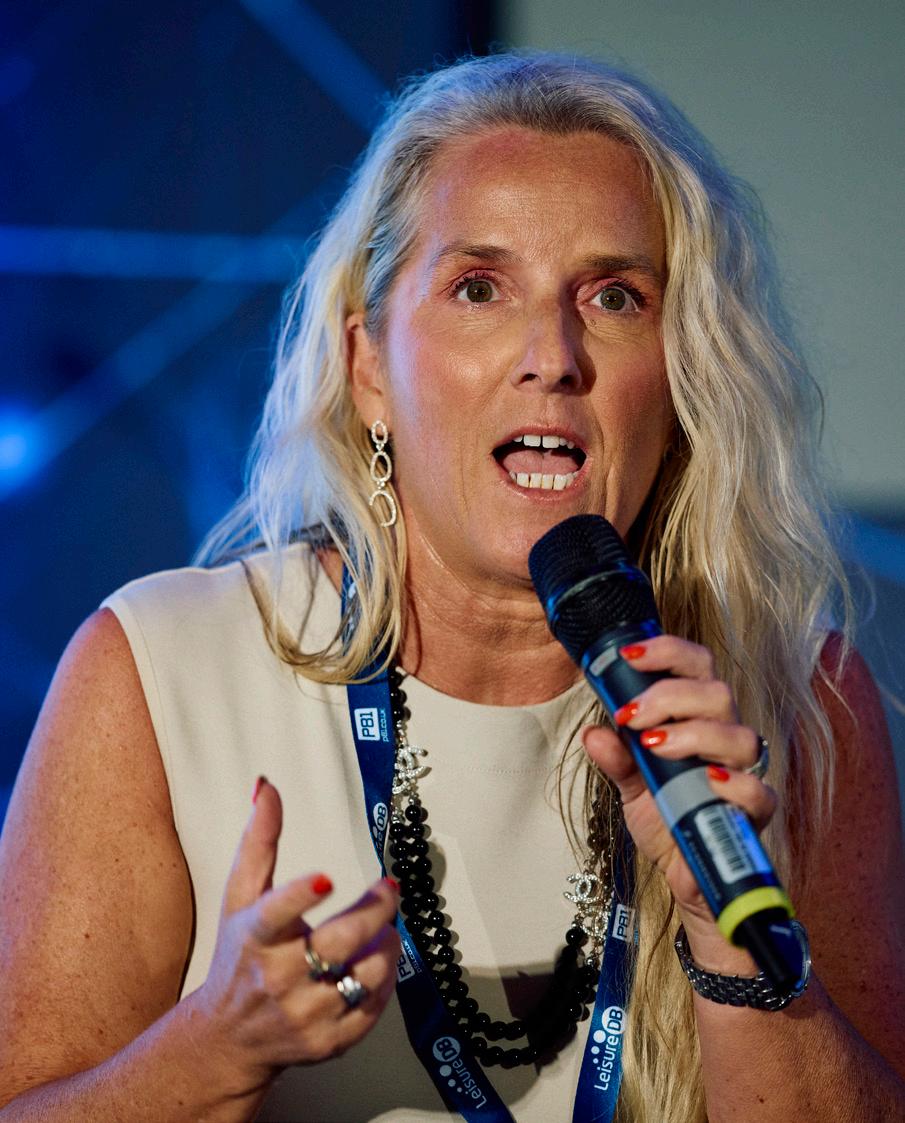
This year’s State of the Industry Report shows that the UK fitness sector has hit a landmark figure of 12 million members
The number of gym memberships in the UK has surpassed 12 million for the first time – resulting in the estimated market value of the fitness sector exceeding £7bn. The figures come from the State of the UK Fitness Industry Report 2026, published by Evolve (formerly Leisure DB).
Now in its 20th edition, the report reveals a sector that has moved well beyond post-pandemic recovery and established new benchmarks for participation, growth and consumer engagement.
The research shows there are now 7,463 gyms operating across the UK, serving 12.1 million members and generating a combined market value of £7.29 billion. Fitness penetration has reached 17.6% of the UK population, the highest level ever recorded.
The report highlights a sector that is becoming increasingly integrated into the wider health and wellbeing landscape, with operators expanding their offer to meet growing consumer demand for holistic wellbeing solutions.
Among the key trends identified are the continued growth of high-utilisation operating models, increasing focus on measurable health outcomes, greater integration with preventative healthcare initiatives, and rising consumer interest in services such as recovery spaces, reformer Pilates and padel.
David Minton, Founder of Evolve, said: “The 2026 report demonstrates a sector that is larger, stronger and more influential than at any point in its history. Participation continues to rise, but perhaps more significantly, the role fitness plays within health, wellbeing and preventative care continues to expand.”
“The organisations that will thrive over the next decade will be those that understand changing demographics, evolving consumer expectations and the increasing convergence between fitness, health and wellbeing. Insight has never been more important.”
Jamie Buck, Head of Research at Evolve, added: “What we are seeing now is no longer a recovery story. The sector has surpassed
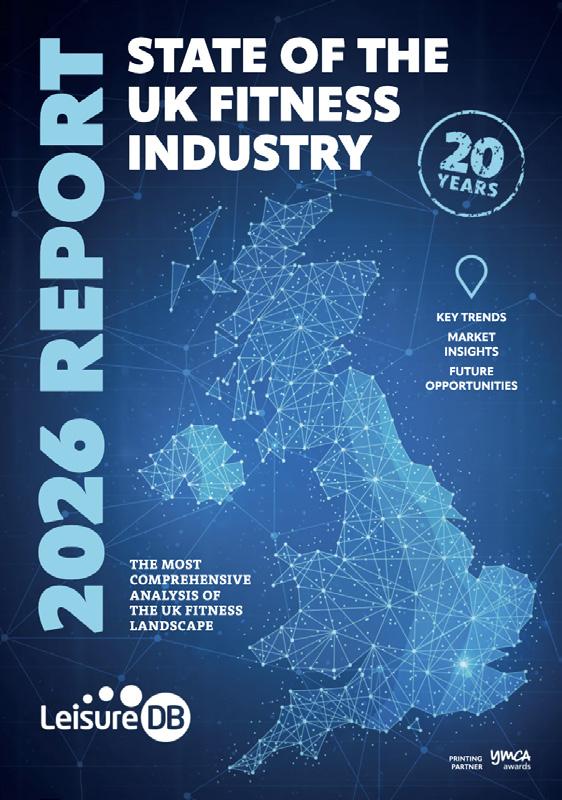
● UK gym membership has reached 12.1 million, the highest level on record
● Total market value has grown to £7.29 billion
● Fitness penetration has increased to 17.6% of the UK population
● Market value has grown by more than 50% over the past five years
● Membership has increased by more than 22% over the same period
● Operators continue to diversify beyond traditional fitness into wellness, recovery, health referral services and preventative health provision
previous benchmarks and established entirely new levels of participation and market value.”
“The most successful operators are increasingly positioning themselves as part of broader health and wellbeing ecosystems. This evolution presents significant opportunities for operators, suppliers, investors and policymakers who understand where the market is heading.”
COMPREHENSIVE INDUSTRY ANALYSIS
The State of the UK Fitness Industry Report 2026 provides detailed analysis of market size, public and private sector performance and openings, membership and penetration trends and site closures. There is also demographic and regional analysis and insights on infrastructure and technology trends, as well as the strategic implications that the data has for operators, suppliers, investors and policymakers. The report is based on Evolve’s annual market audit and ongoing intelligence programme covering more than 7,000 UK fitness facilities and drawing upon more than three decades of industry research and analysis. The full State of the UK Fitness Industry Report 2026 is available at www.weareevolve.io






















Setting up an attractive retail proposition for members could provide gyms and health clubs with a potentially large revenue stream
Walk into any busy leisure centre or fitness studio on a Tuesday morning and you’ll see the same thing: members arriving in branded kit. Gymshark. Lululemon. Nike. The big names are everywhere, and every single one of those garments represents a purchasing decision that happened somewhere other than your facility. That’s a revenue stream walking straight past you. The conversation around retail in the leisure sector has been gaining momentum for years, yet for many operators it remains an afterthought. A rail of faded t-shirts near the reception desk. A shelf of water bottles that never quite sells through. The potential is quietly ignored, while the opportunity quietly grows. It doesn’t have to be that way.
The case for gymwear retail has never been stronger
The UK activewear market continues to expand. Consumers are spending more on performance wear than ever before, and the shift towards healthconscious lifestyles shows no sign of reversing. People who are active want to look active. They want to wear kit they feel good in, kit that performs, and increasingly, kit that means something to them. That

last point matters more than most operators realise. Your facility has a brand. Your members have loyalty to it. The question is whether you’re giving them a way to express that loyalty, or leaving it on the table.
BLU Concepts has spent over two decades working with leisure operators, gyms, holiday parks and fitness studios across the UK. What began as a straightforward uniform and merchandise business has evolved into something far more strategic: a genuine retail partner for facilities that want to unlock the commercial value that’s sitting right there on their gym floor.
The BLU Branded Gymwear range covers the activewear essentials: performance leggings engineered for movement, sports bras built for real support, lightweight training tops designed for unrestricted range across lifting, running, stretching and cycling, and shorts that keep up with whatever the session demands. There are more styles and cuts available than a single website page can do justice to, which is rather the point: this is
The range is crafted to compete at a premium level in terms of quality and feel, while being priced in a way that makes it genuinely accessible to the everyday gym-goer
a considered collection, not a token offering.
The range is crafted to compete at a premium level in terms of quality and feel, while being priced in a way that makes it genuinely accessible to the everyday gymgoer. For operators, that balance is everything. When kit is priced at £80 for a pair of leggings, the impulse purchase disappears. BLU Gymwear is designed to sit in that sweet spot: quality that members will trust, pricing that converts browsers into buyers.
What separates BLU Concepts from simply being a supplier is the support that comes with the range. Bespoke retail displays are designed and built to fit the specific space, aesthetic, and footfall patterns of each location, from local authority leisure centres to boutique fitness studios. Account managers work proactively with operators to monitor sales, flag what’s working, and suggest new products that fit the facility’s profile.
The result is a retail solution that doesn’t require operators to become retailers. The heavy lifting,
sourcing, design, merchandising and reordering strategy is managed. The margin comes to you.
There’s a question worth asking in every facility: what is that corner near reception actually doing? Or the wall beside the changing rooms? BLU Concepts talk about transforming unused retail space into a genuine revenue stream — and that’s not marketing language, it’s a practical reality for operators who’ve made the switch.
For leisure centres under pressure to diversify income. For fitness studios looking to deepen member relationships. For holiday parks seeking additional margin from active guests. For independent sports retailers who want performance gymwear that competes with the big names without the big brand price tag, BLU Gymwear is a quiet but compelling answer. Your members are already spending money on activewear. The only question is whether any of it comes back to you. Find out more at bluconcepts.co.uk
Durham County Council has successfully increased women’s participation in sport and physical activity through a highly targeted campaign. WellNation finds out more about the initiative
Durham County Council has successfully engaged around 900 women in sport and physical activity in a month-long campaign helping to boost women’s health, wellbeing and community connection. The “She Thrives” campaign combined local storytelling, targeted programming and partnership working to raise awareness of opportunities for women to get active across the county. In addition to increasing participation, the campaign increased visibility for the council’s leisure services and the wider network of local activity providers, resulting in new provision.
According to Karen Allison, the council’s cabinet member for leisure – and one of the people driving the initiative – a key strength of the month-long campaign was the depth of partnership working with local grassroots clubs and national governing bodies of sport, which helped deliver a diverse and high-quality programme. “The She Thrives campaign has shown what’s possible when we work together to create welcoming, visible and meaningful opportunities for women to be active,” she said.
“By strengthening our partnerships with local clubs and national governing bodies, we’ve been able to expand our offer, reach new audiences and build confidence across our communities. Ultimately, this is about creating lasting change and ensuring everyone has the opportunity to thrive.”
Ultimately, this is about creating lasting change and ensuring everyone has the opportunity to thrive
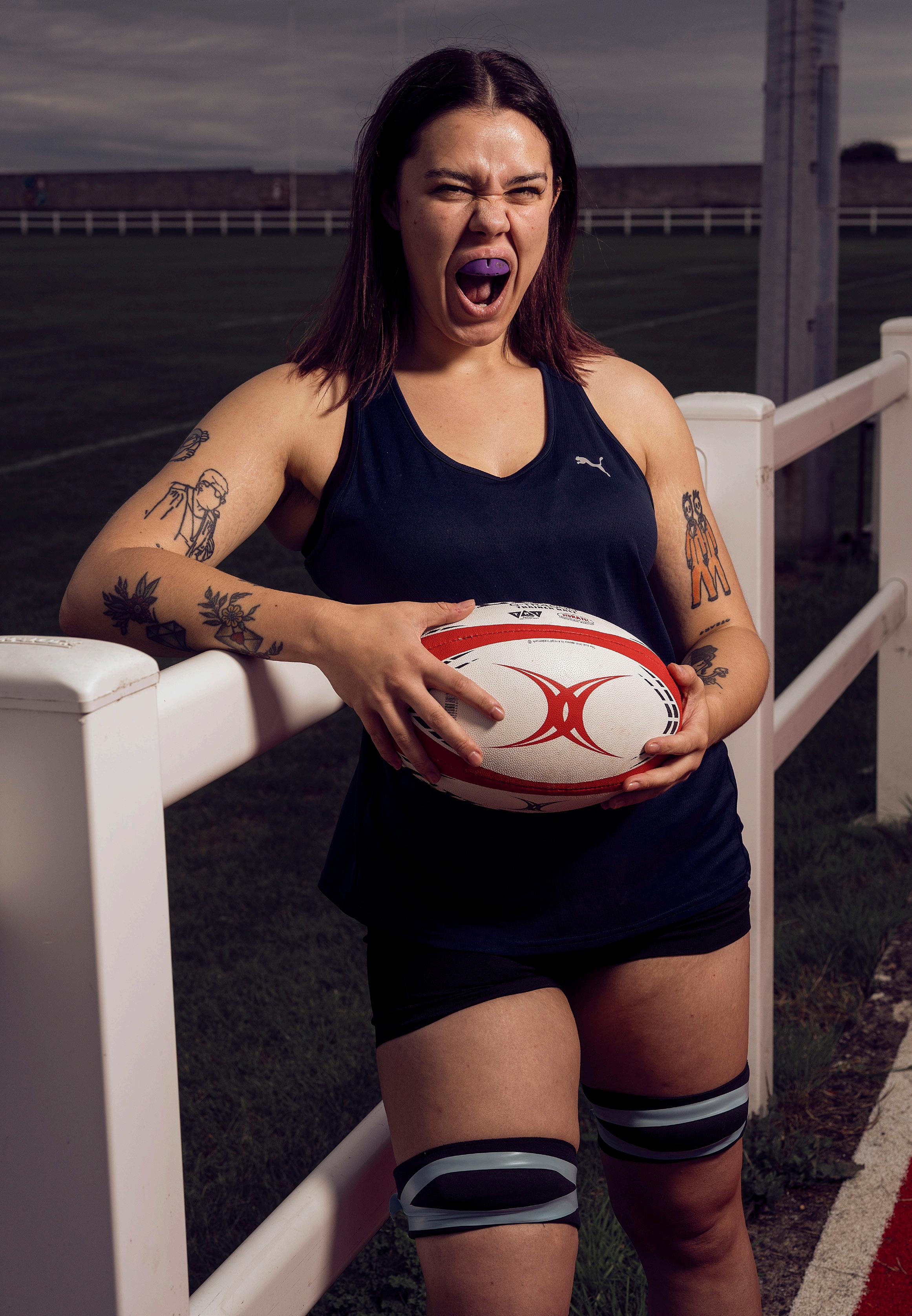
The campaign has engaged new audiences and built confidence across communities through sport
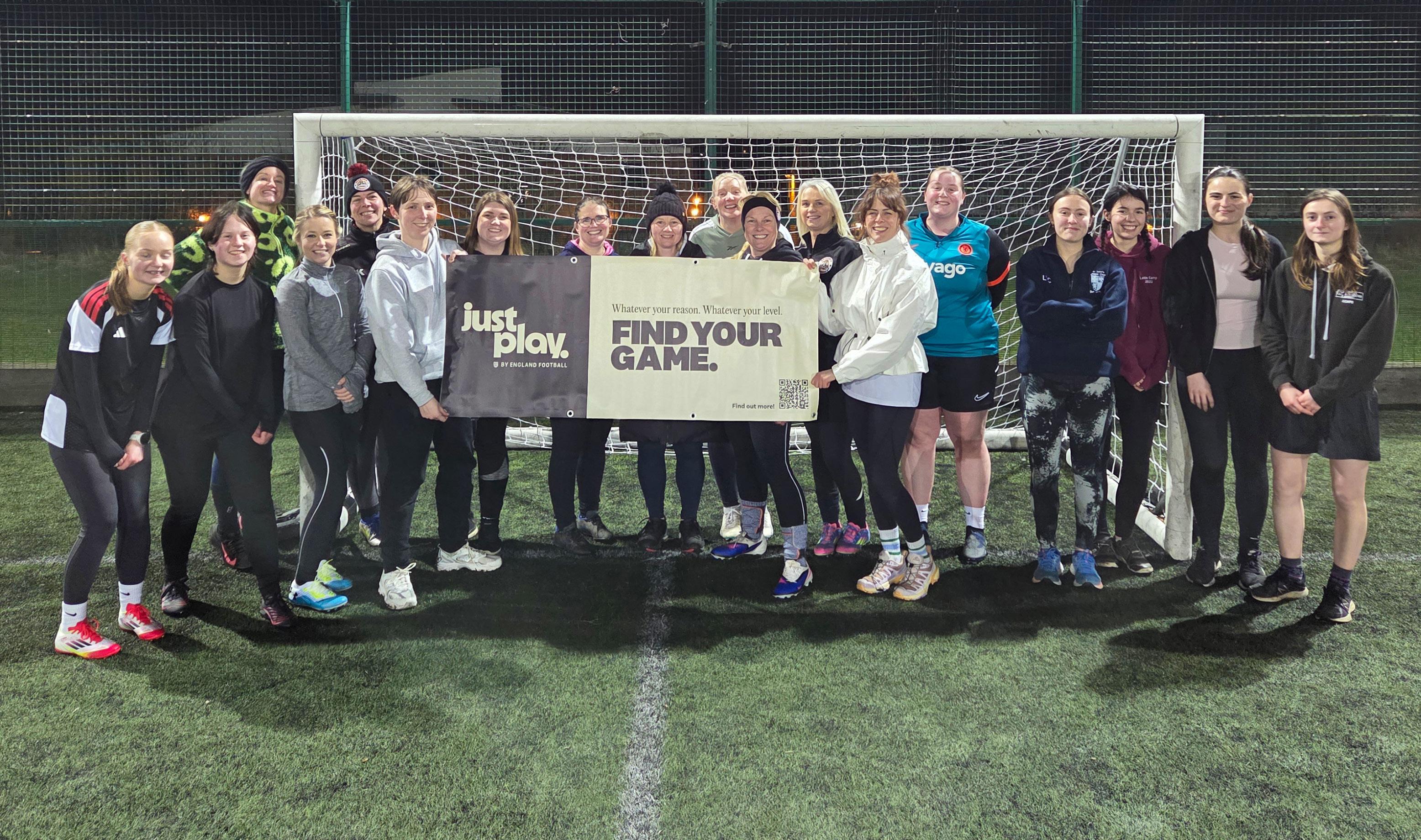
A
Building on an approach last year which focused on social media storytelling, the council delivered this year’s campaign by working more strategically with partners and expanding the programme of activities to reach more women, offer greater variety and create clearer pathways into ongoing participation.
A wide range of taster sessions were delivered through local clubs allowing women to try new activities in welcoming and supportive environments, while also creating clear and sustainable pathways into ongoing community provision. These sessions provided an important first step for many participants and strengthened connections between leisure services and local sport.
Golf taster sessions at Ramside Golf Club, rowing tasters with Lambton Rowing Club and table tennis sessions with Topspin Table Tennis Club were among the clubs participating, with several clubs expressing interest in delivering similar sessions in the future.
The campaign showcased emerging activities such as Roller Derby, which attracted strong engagement from women trying the activity for the first time.
Several of the council’s leisure centres offered women-only sessions, including bowling, spinning and Boogie Bounce. There was also a virtual fitness challenge, delivered in partnership
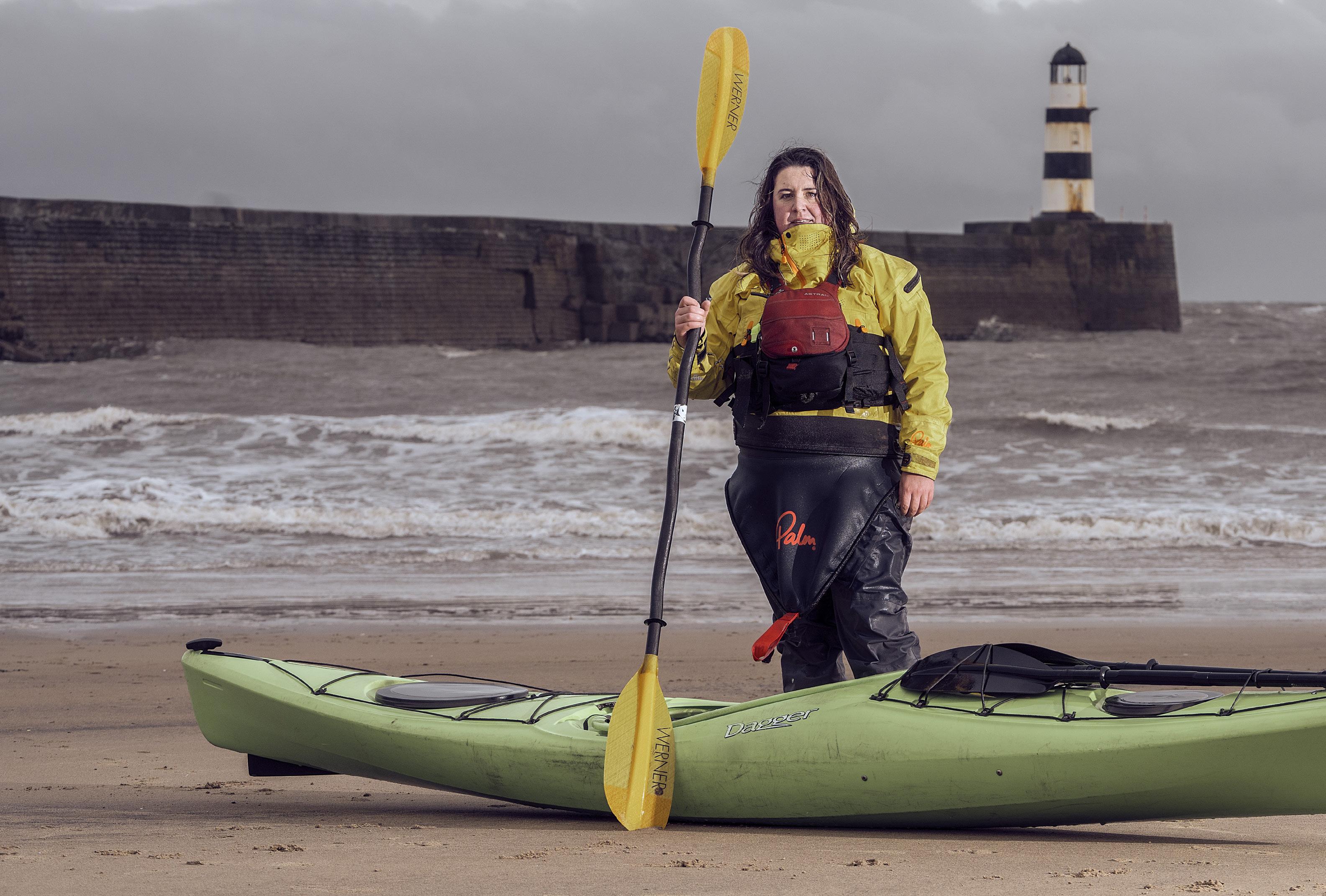
with gym equipment giant Technogym and the offer of free, seven-day gym passes.
A Back to Netball week created opportunities for the council’s staff to re-engage with sport in a relaxed environment. The week culminated in a staff netball tournament involving approximately 100 staff in friendly competition across departments. Following its success, a new lunchtime netball session is set to launch at Meadowfield Leisure Centre for council staff in partnership with England Netball to support wellbeing and sustained participation.
Another example of new sustained provision developed as a result of the campaign is a new recreational football offer for women delivered in partnership with Brandon Football Club.
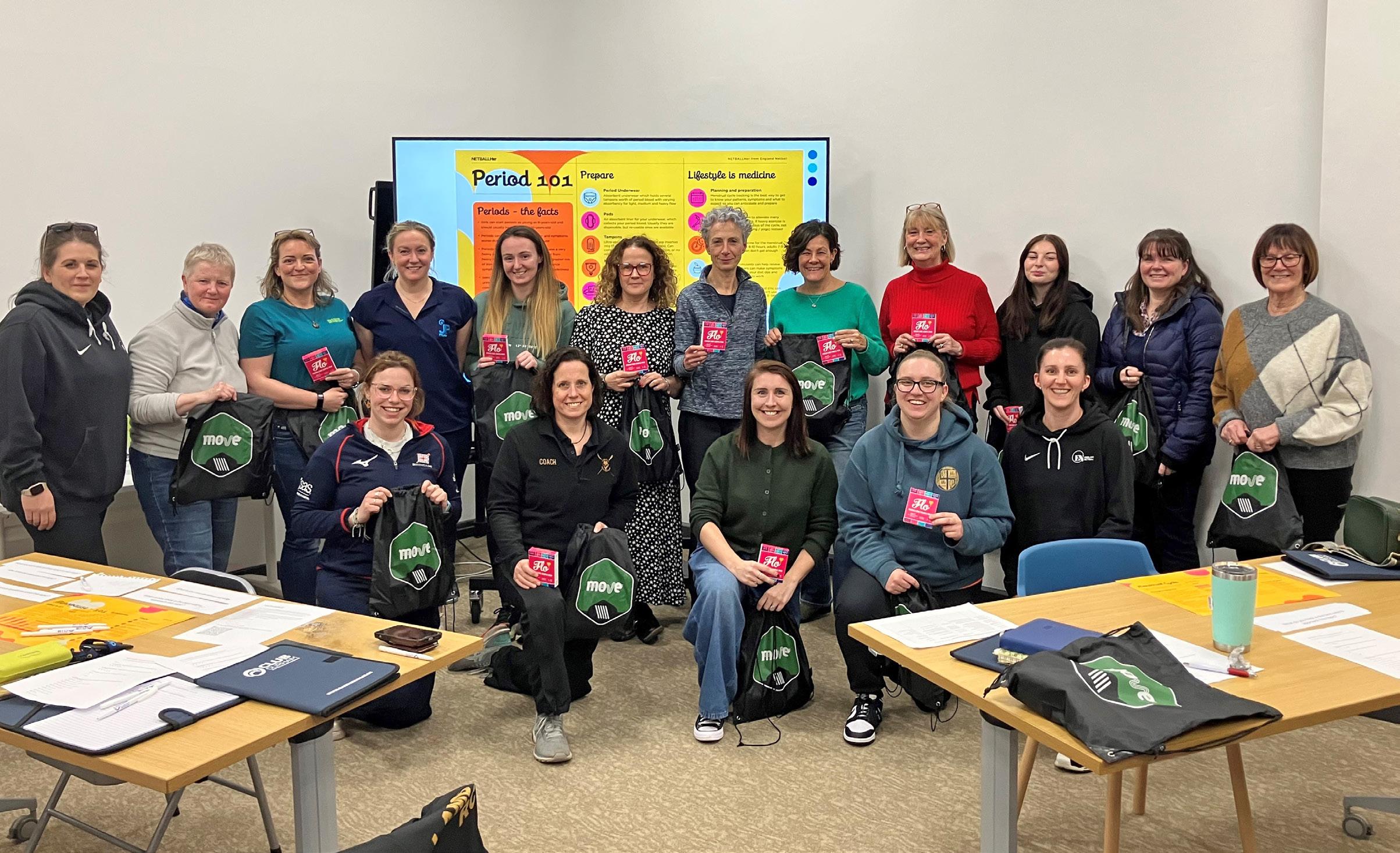
The campaign placed strong emphasis on creating inclusive and welcoming environments that better support the needs of women and girls. A Club Durham networking event brought together women from across grassroots sport to address real-life barriers to participation, while encouraging collaboration and shared learning across clubs. Delivered in partnership with JP Physio Durham and England Netball through the NetballHER programme, the session included discussions around female health, including menopause, menstrual health, relative energy deficiency in sport (RED-S) and pelvic floor health. Following positive feedback, Club Durham plans to host another network event later in the year, inviting men to join the discussion and support the development of women and girls in sport.
The campaign also delivered a practical legacy in the form of Court Short Kits. These emergency sanitary product kits were distributed to local sports clubs, with discussions underway to explore similar provision across leisure centres to remove a simple but significant barrier that can affect confidence and participation.
demonstrating the positive impact of movement on confidence, health, wellbeing and everyday life. This has been brought to life through the she thrives Photography Exhibition. Captured by local photographer Lee Dobson, the exhibition celebrates women of all backgrounds being active in their communities and has been displayed at venues including Bishop Auckland Town Hall and Freeman’s Quay Leisure Centre. This storytelling, combined with strong social media engagement, extended the reach of the campaign well beyond formal sessions and helped build a stronger local identity around women’s participation.
Allison added: “Our she thrives campaign shows that when opportunities are visible, welcoming and relevant, women will take part. The scale of engagement we’ve seen gives us a strong foundation to build on, and we’re using these insights to shape future programmes that continue to grow participation and deliver lasting impact.”
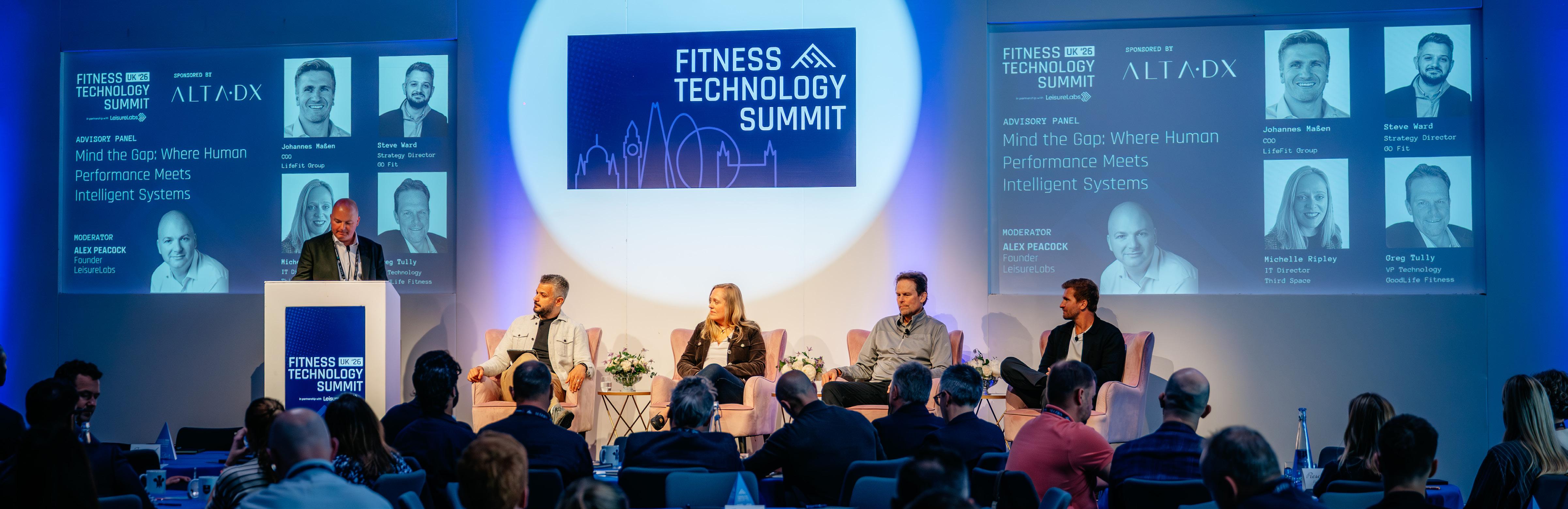
The annual Fitness Technology Summit was held in London in May. This year’s event saw one topic dominate both the sessions and discussions – the use of AI and how it might change the fitness sector forever
The Fitness Technology Summit Europe returned to London this May, bringing together 200 senior leaders from the global fitness, wellness and technology sectors for two days of discussion, debate and industry collaboration.
Curated by AltaDX in partnership with LeisureLabs, the Summit was held at the iconic Kia Oval. The event welcomed operators, technology leaders, investors and innovators from Europe, North America and the Middle East, representing thousands of locations and millions of members worldwide.
As with previous editions, the Summit maintained its operator-first approach, with an 80/20 split between operators and sponsors, designed to encourage open discussion between senior industry leaders. Across the agenda, one theme consistently emerged: the industry is no longer asking whether AI
and digital transformation matter. The conversation has shifted towards implementation, operational readiness and how technology can create measurable impact for both businesses and members.
From AI governance and interoperability through to trust, personalisation and organisational capability, the discussions reflected a sector entering a far more mature phase of digital transformation.
The Benchmarking Report: From ambition to operational reality
One of the defining moments of the Summit was the presentation of the 2026 LeisureLabs Technology Benchmarking Survey. Drawing responses from operators representing more than 26 million members and over 6,000 locations, the report highlighted both the progress being made across the sector and the operational friction that remains.
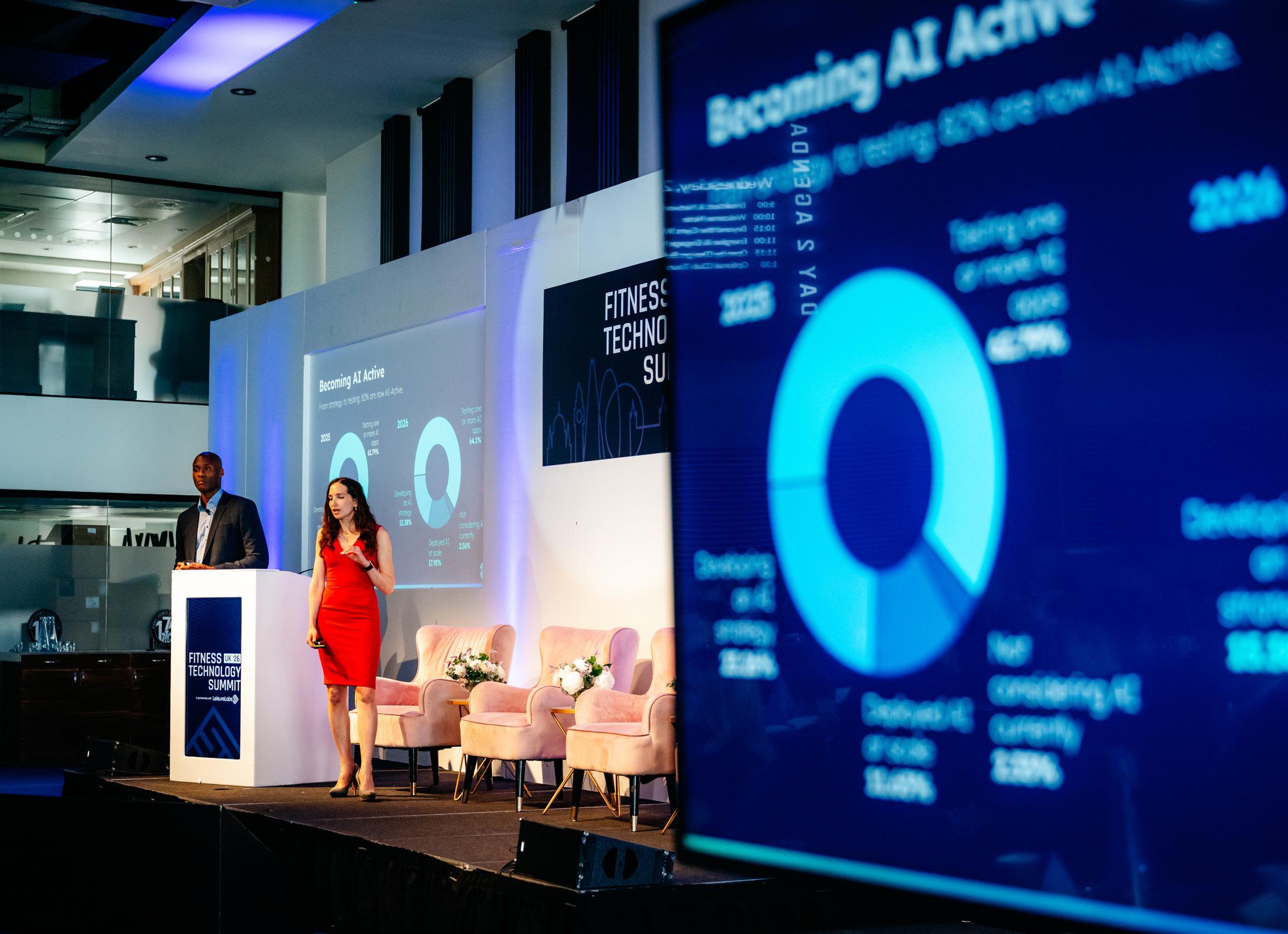
The findings revealed a sector continuing to invest confidently in technology:
l 75% of operators expect technology budgets to increase over the next 2–3 years
l 82% of organisations are now considered “AI active”
l 18% of operators have already deployed AI at scale
l Operational efficiency overtook revenue growth as the primary measure of digital ROI.
At the same time, the report highlighted some of the industry’s biggest challenges.
Legacy integrations remain the largest barrier to adoption, while many organisations continue to pursue ambitious transformation programmes with relatively lean internal teams.
One statistic that resonated strongly throughout the room was that while investment is increasing, over half of organisations still operate with technology teams of fewer than five people.
The discussion quickly moved beyond technology itself and towards capability, governance and organisational alignment. As one attendee summarised during the breakout discussions: “The ambition is there. The challenge is operationalising it.”
Unlike previous years, where AI often sat within future-focused discussions, this year’s conversations were far more practical. Operators openly discussed how AI is already being used across customer service, onboarding, CRM workflows, retention modelling, business intelligence and operational automation.
However, the tone across the sessions remained measured and realistic.
Several panellists highlighted the growing gap between experimentation and real operational adoption.
Others spoke candidly about the importance of fixing foundational data issues before layering AI on top.
“AI won’t solve poor operational foundations” became a recurring theme throughout the event.
There was also strong consensus that AI should enhance human interaction, not replace it.
From onboarding journeys to coaching and member engagement, speakers repeatedly reinforced the importance of maintaining human connection within increasingly digital environments.
As Florian from EGYM explained during the Trust & Transparency panel, the goal is not to replace coaches and trainers, but to remove low-value admin and create more time for coaching and member engagement.
As AI adoption accelerates, conversations around trust and governance became increasingly prominent throughout the Summit. Panels explored how operators can balance personalisation with transparency, particularly as member expectations around data privacy continue to evolve.
Speakers discussed everything from GDPR and AI governance through to member consent and responsible use of data. A common thread emerged around the importance of communication.
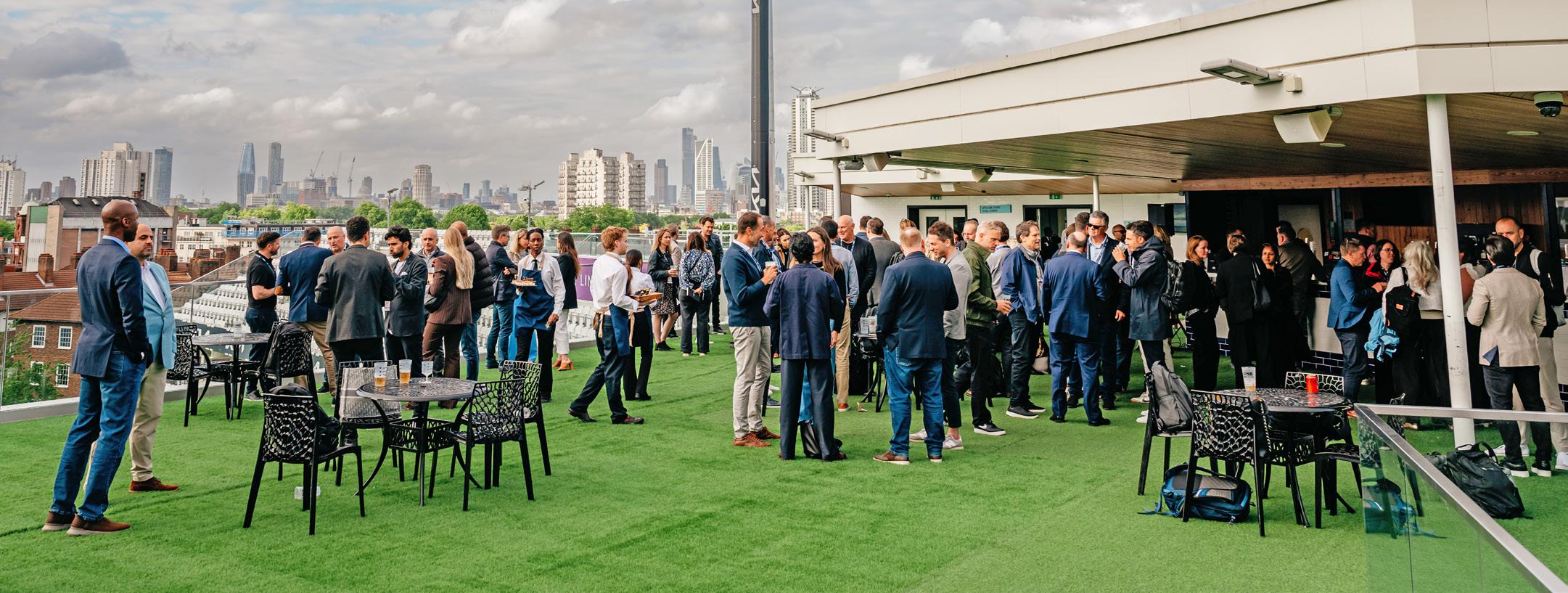
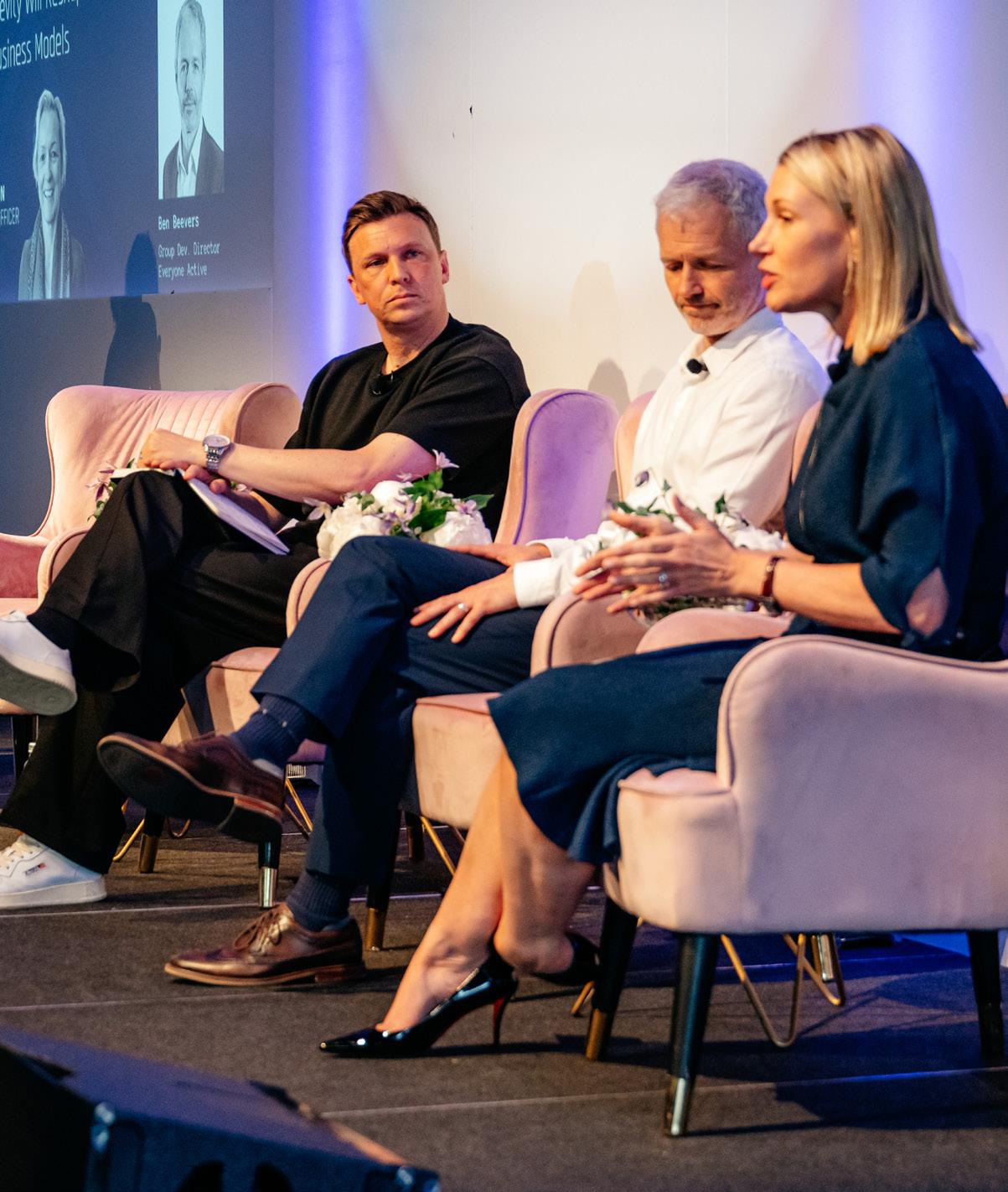
If members understand the value exchange, they are far more willing to engage with personalised experiences.
Several speakers argued the industry must move away from legal jargon and instead explain clearly what members receive in return for sharing their data.
One of the strongest moments came during a discussion around surveillance versus service.
“If it’s not obvious how the data benefits the member, it feels like surveillance.”
The human experience still matters most
Despite the heavy focus on AI and technology, the Summit continually returned to one central idea: fitness remains a fundamentally human industry. Operators stressed that while automation can improve efficiency, the moments that matter most still require people.
From first visits and onboarding through to coaching conversations and complaints handling, speakers consistently reinforced that technology should remove friction, not humanity.
This theme also extended into discussions around longevity, wellness and member motivation.
Sessions explored how operators can create more inclusive environments, better onboarding experiences and stronger emotional connections with members — particularly as expectations around health and wellbeing continue to evolve.
Open ecosystems and connected experiences
Interoperability and connected ecosystems also featured heavily throughout the agenda.
Panels explored how fitness businesses are increasingly
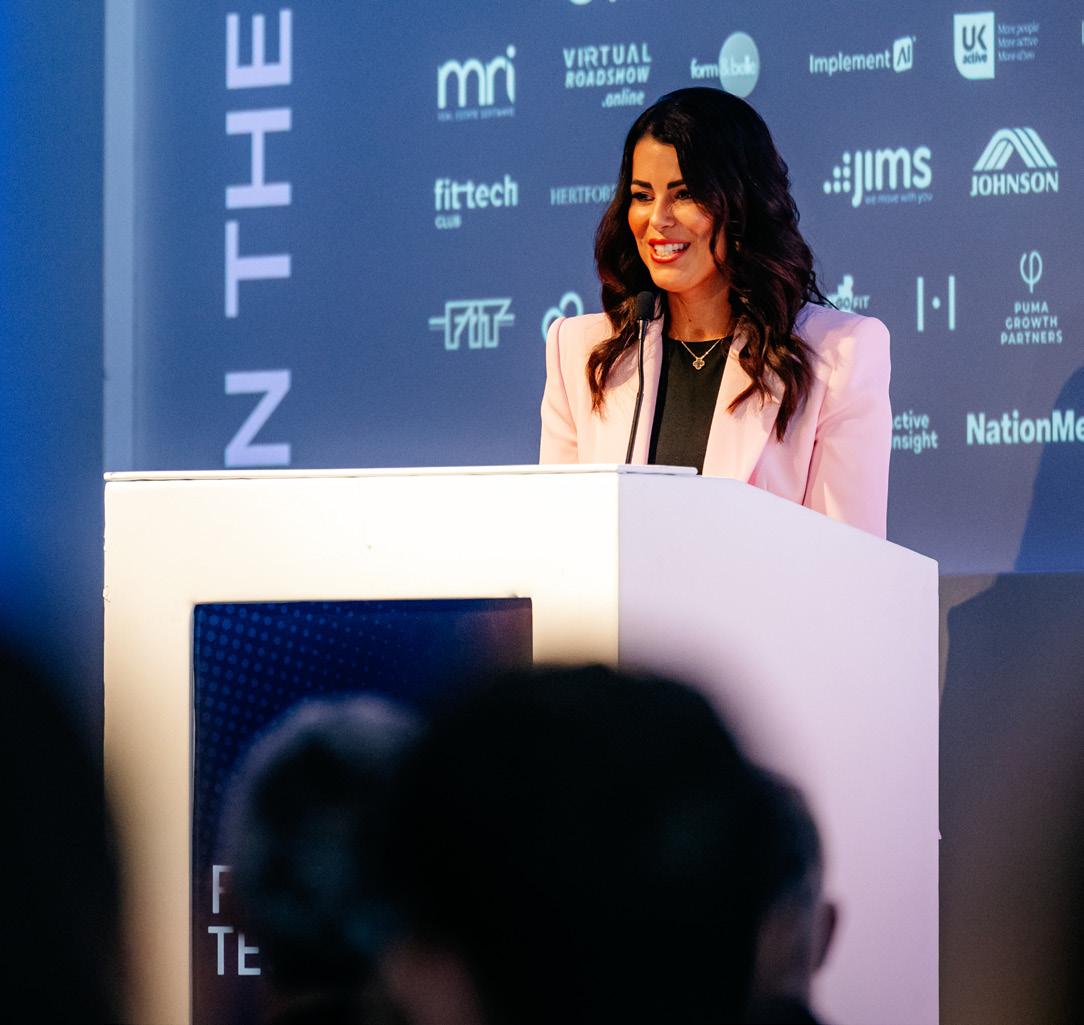
If members understand the value exchange, they are far more willing to engage with personalised experiences
expected to integrate with wider health, wellness and lifestyle platforms, from wearables and healthcare providers through to insurance and recovery services.
The conversation focused less on integrations themselves and more on experience design.
Members do not want to see fragmented systems or disconnected journeys. They expect seamless experiences where technology simply works in the background.
As several speakers noted, the opportunity for the fitness industry now sits within connectivity, collaboration and intelligent use of data rather than isolated technology products.
What became clear across the two days is that the industry is entering a new phase of maturity.
The conversations at The Fitness Technology Summit 2026 were less about hype and more about execution. Less about future possibilities and more about operational reality.
The sector continues to invest heavily in technology, but the focus is shifting towards integration, governance, capability and measurable impact.
Most importantly, there was clear recognition that technology alone is not the solution. Success will depend on how effectively operators combine intelligent systems with human experience, operational discipline and clear strategic direction.
The Fitness Technology Summit will return in 2027. To register your interest for the 2027 event, visit: https://thefitnesstechsummit.com/#contact