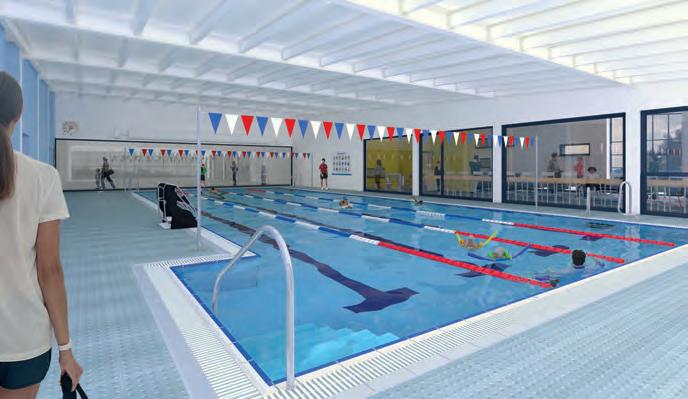
New taskforce looking to transform school swimming
BREAKING BARRIERS
London Aquatics Centre improving access to swimming
SAVING A ‘LOST GENERATION’
Why a career in aquatics could be the answer to youth unemployment
Safety in numbers
How using research could be critical for drowning prevention
THE POWER OF POOLS
Reframing swimming pools as health and economic accelerators
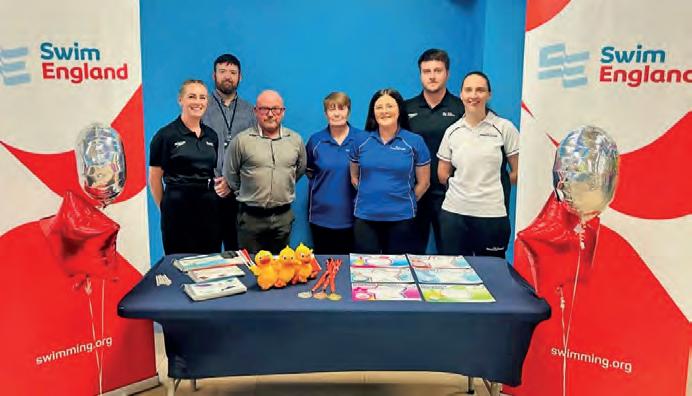
Swim England sets a new standard of excellence in swimming teacher training with the NEW SEQ Level 2 in Teaching Swimming.
This means:
Learners qualify faster
Our new qualification delivers quality without compromise combining a streamlined pathway with flexible entry routes to attract and retain the best talent.
Developed in line with CIMSPA’s updated Swimming Teacher Professional Standard and delivered by licensed educators, our qualification ensures learners and employers can trust the training to meet the highest industry standards.
Learners qualify faster with all the skills they need to teach confidently from day one.
Improved delivery model
Licensed educators benefit from an improved delivery model, supported by modern assessment technology.
Poolside-ready teachers
Providers get poolside-ready teachers equipped with the skills and confidence to deliver exceptional learn to swim lessons.
Flexible pathways to success
Whether learners start directly, begin as a Learn to Swim Helper, or upgrade from Level 1, there’s an option that’s right for every individual.
us in shaping the future of swimming teaching.
A resilient sector making a difference
Swimming teachers have always played a role that extends far beyond teaching front crawl, breaststroke or butterfly. For children and adults alike, they often become role models, helping to overcome fears, build confidence and develop a lifelong relationship with water. For many they are the first person to instill the belief that they are capable of achieving something they once thought impossible
Alliance on industry leavers – those who have left the aquatics sector for roles elsewhere. The results suggest that, while the sector is a great one to work in, low pay and limited progression opportunities mean that people will sometimes look elsewhere to further their careers. Read more about this – and how the sector might want to tackle the perception – from page 48.
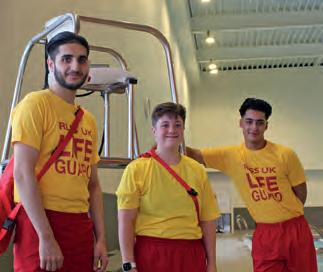
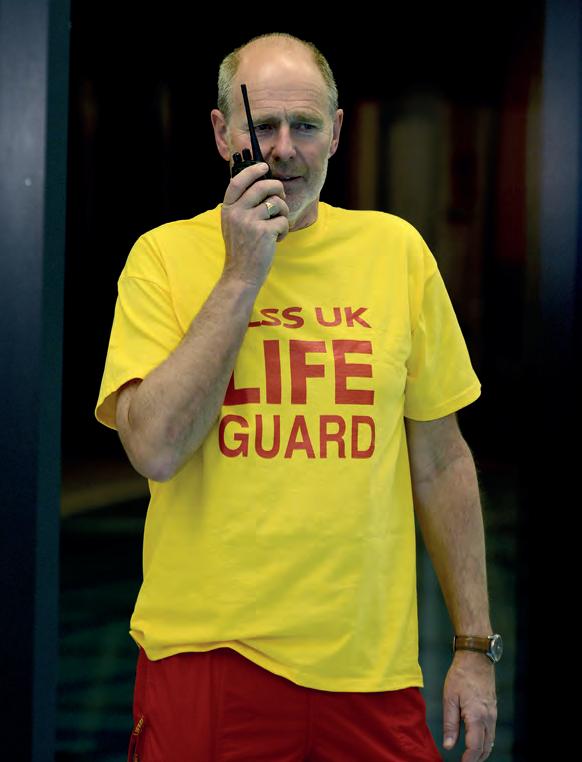
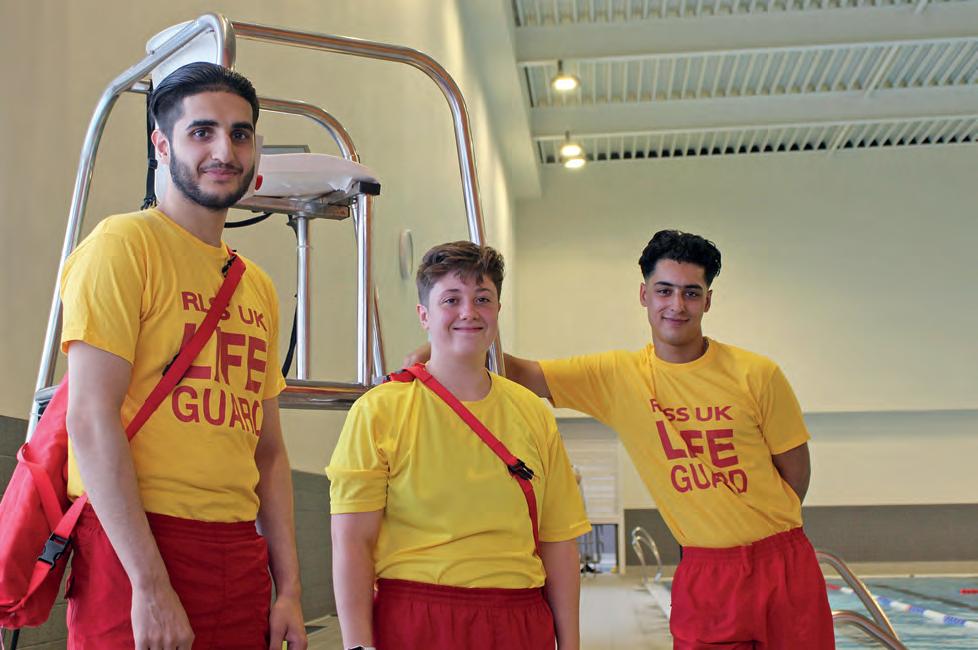
Another vital profession, lifeguarding, has a similarly extended function. For many young people, becoming a lifeguard represents their first step into the world of work. While the role is centred on safety, it also provides an opportunity to develop a range of transferable skills that can prove invaluable throughout a person’s career. Llifeguarding teaches responsibility, develops decision-making and improves teamwork, communication, leadership and situational awareness. It can also teach a crucial lifeskill – the ability to remain calm and solve problems under pressure.
As a result, swimming teaching and lifeguarding continue to provide rewarding and meaningful career pathways, while forming the backbone of an industry that helps millions of people stay active, safe and healthy. Yet, both roles are often seen as temporary or as “second jobs” and not necessarily as long-term career options. This is reflected in a survey conducted by the Swimming
Elsewhere in this issue, we find out how the countdown is now on for the RLSS UK’s flagship national water safety campaign, Drowning Prevention Week. This year’s campaign will see new resources for teenagers, one of the groups most at risk of accidental drowning. The campaign follows the tragic half-term heatwave, where 12 children and five adults drowned in just one week. For more, turn to page 26.
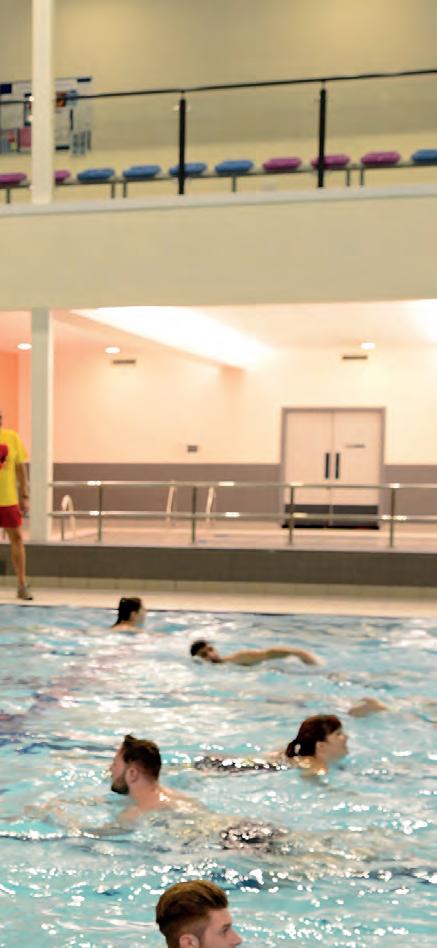
We also look at how a new taskforce, led by the Swimming Alliance, will look to improve school swimming attainment and tackle the challenges impacting delivery (p. 44) and review the recent One Swim England Summit (p. 56).
As always, we also celebrate the people, organisations and innovations helping to shape the future of aquatics. The resilience shown by the sector in recent years – despite the welldocumented challenges, from energy prices to cuts in funding – demonstrates not only its importance, but also its determination to ensure that swimming remains accessible for generations to come.
Tom Walker, Editor
Tom Walker
Editor
T: +44 (0)7796 512769 E: tom@nationmedia.uk
John Challinor
Publisher
T: +44 (0)7971 043396
E: john@nationmedia.uk
Register for your free subscription at www.swimnation.uk
Swim Nation
Dedicated to the aquatics sector
SwimNation is at the heart of the UK’s swimming and aquatics sector. Published in partnership with the Swimming Alliance, it is the go-to publication and news website for anyone involved in swimming and aquatic provision across the UK. From facility development and operations, research and technology though to sustainability, training and programming, SwimNation covers it all. SwimNation is published three times a year as a standalone title, with each issue also included within SportsNation
The Swimming Alliance advocates for equity, sustainability, and strategic investment in swimming as a lifesaving skill, public health priority and as a national development asset. You can find out more about the Swimming Alliance at www.theswimmingalliance.org
Subscribe today to receive your complimentary copy https://swimnation.uk/subscribe
https://www.linkedin.com/ company/swimnation
Advertising opportunities
Contact John E: john@nationmedia.uk
SwimNation is published by SportsNation Ltd.
This publication is protected by copyright and no part may be reproduced, transmitted or stored in any print or electronic format without the written permission of the publisher. Every effort has been made to ensure the accuracy of the contents of this publication and PadelNation accepts no responsibility for any error or misrepresentation. Opinions expressed by the contributors and advertisers are not necessarily those of the publisher and we do not accept responsibility of losses or damages arising from them. Printed by BCP Media Group Ltd.
Swim Nation NEWS
Historic Portishead open air pool reopens after £1.7m revamp
The historic open-air pool in Portishead, Bristol, has reopened after a major £1.7m refurbishment.
The redevelopment, funded in part by the government’s Community Ownership Fund, included replacing the ageing boiler system and upgrading the changing rooms.
First opened in 1962, the open air, 33m-pool was threatened with closure in 2008, when North Somerset Council produced a report in 2008 that determined that the pool was a financial liability and that it should be closed.
A group of six local people then formed a company limited by guarantee – which then became Portishead Pool Community Trust – in order to save and run the pool. The Trust managed to convince the Council that it had a feasible business plan to run the pool, and in early 2009 a 99-year lease was agreed with the Council, securing
the pool’s long-term future.
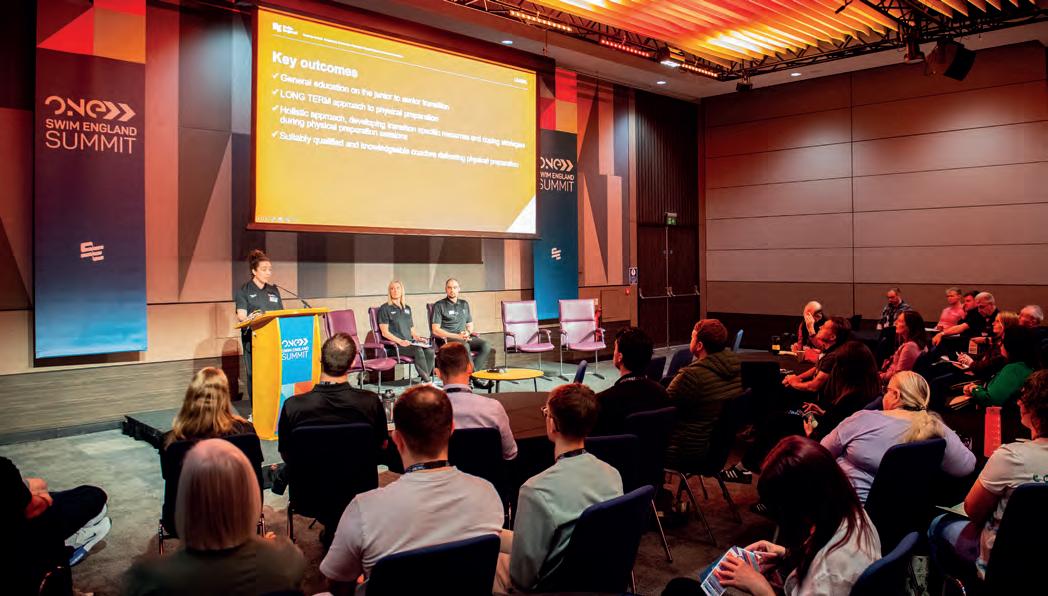
The pool was shut last year to enable the works, which also included making it more environmentally sustainable –such as the installation of solar panels to cut energy costs.
“Our pool refurbishment is complete and we are open for the heated season,” a spokesperson for the trust said.
“The Café has re-opened following refurbishment and is now open Monday to Sunday.”
Alliance: surge in energy prices shows why sector needs help
The spike in energy prices following events in Iran and across the Middle East has shown the financial risks to swimming pools – and the need for support.
That is the message from the Swimming Alliance, after the price of gas in the UK surged by more than 46%, pushing it to its highest price for three years.
“With 76% of the publicly accessible water space lost in the past 15 years disappearing since 2020, the impact of huge increases in costs on pool operators is clear,” the Alliance said in a statement. “
“The previous spike in energy costs required the government to step in with the Swimming Pool Support Fund.”
The pool, which first opened in 1962, was threatened with closure in 2008
The price of gas has surged by more than 46% due to the Iran conflict
Swim England and Stoke partner for Learn to Swim
Stoke-on-Trent City Council is partnering with Swim England to deliver a Learn to Swim Programme across the city, strengthening opportunities for local residents to develop vital life skills in the water.
Through the adoption of Swim England’s Learn to Swim Programme, Stoke residents will benefit from a structured pathway from first entering the water through to developing lifelong aquatic skills.
The delivery of the Learn to Swim programme will be supported by Swim England’s
teams, who will work closely with members of Stoke-on-Trent City Council across its leisure facilities, including Fenton Manor Sports Complex, Dimensions Leisure Centre and New Horizons Sport and Leisure Centre. The partnership will provide workforce training, ongoing technical guidance and support.
Jane Ashworth, leader of Stoke-on-Trent City Council, said: “Swimming is a vital skill and this partnership supports our wider ambitions to improve health outcomes for all and ensure all can participate in physical activity.”
“Major step forward” for £35m leisure centre
Kirklees Council has begun developing detailed proposals for a new leisure centre to serve the towns of Dewsbury and Batley in West Yorkshire.
Described as a “major step” for the plans, the work comes after the project secured £35m worth of funding at the council’s budget meeting on 25 February 2026.
“The next stage will include engaging experts in sports, leisure and health to help us to shape a facility that delivers long-term benefits for local communities,” the council said in a statement.
“That work will make sure the centre has the right mix of facilities to make a real and lasting difference to health and wellbeing for people in Dewsbury, Batley and across North Kirklees.”
The facility mix will include a swimming pool. A health club, featuring a large gym and studios, and an indoor sports provision are also likely to be included. Specialist consultants are expected to be appointed as the next step of the project.
Airdrie pool reopens following major refurbishment
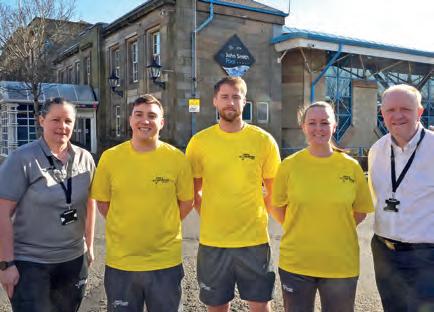
The John Smith Swimming Pool in Airdrie has reopened to the public in April, after the completion of a significant refurbishment programme.
The works have delivered a brighter and more modern facility, with improvements including the replacement of the
movable pool floor, extensive retiling of the pool tank walls and regrouting of the pool floor.
Visitors will also benefit from new accessible pool stairs, a fully refurbished pool filtration system and upgrades to both the water treatment system and the building’s heating system.
Stoke residents will benefit from a structured pathway PHOTO:
The facility is owned by North Lanarkshire Council
Making public leisure sustainable and building healthier communities.
310+ completed projects
81% of clients choose us for further projects
£520m+ investment in local authority leisure
Alliance Leisure are a trusted and experienced leisure development partner, with over 25 years’ experience transforming leisure facilities for local authorities.
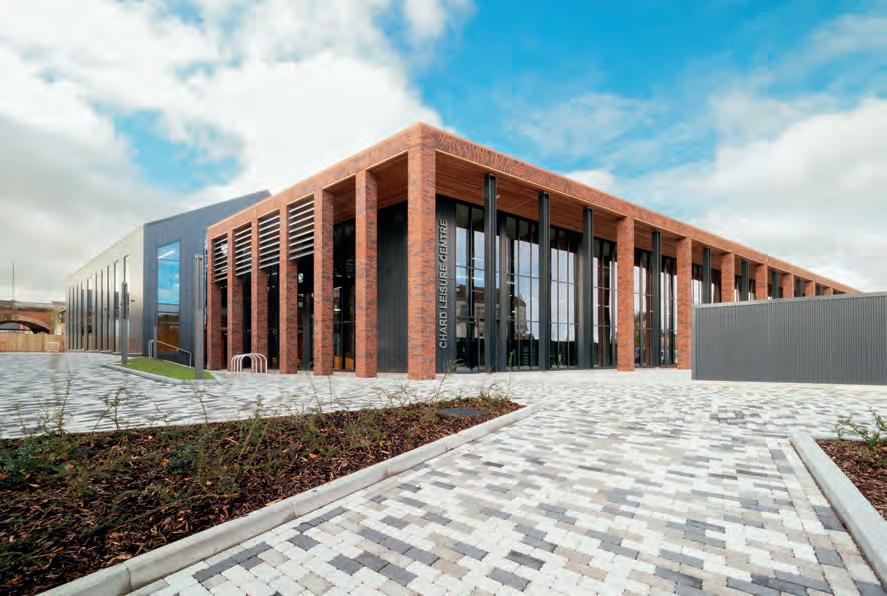
Chard
Nottingham to offer free holiday swimming for under-16s
Nottingham City Council has announced a free swimming programme for under-16s, providing 22,000 free swimming spaces during school holidays from July 2026 to February 2027. Backed by £197,000 of investment, the programme will help more children and young people across the city to access swimming.
The scheme will run across 49 school holiday days, offering free, structured public swimming sessions at all six Active Nottingham Leisure Centres owned by Nottingham City Council: Clifton, Djanogly,
Harvey Hadden Sports Village, Ken Martin, Southglade and Victoria Leisure Centre.
Sessions will take place on weekdays during school holiday periods (excluding bank holidays). Support will also be available to help children who are nonswimmers or who lack confidence in the water. The scheme is open to Nottingham City resident schoolage children under the age of 16. In line with the Pool Admission Policy, children under eight must be accompanied by a responsible adult or person aged 16+, who will be able to attend at no cost.
SfC opens Poolpod in Saffron Walden
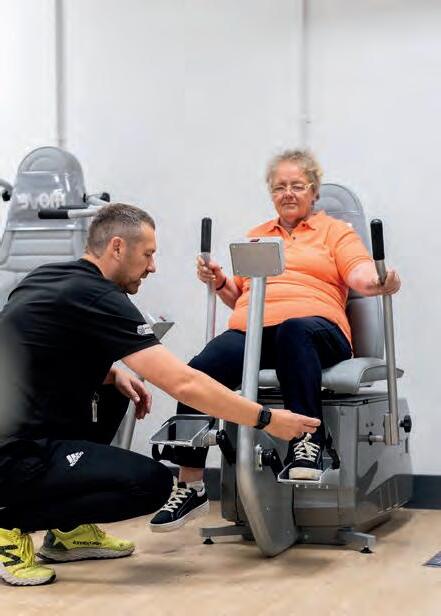
Sport for Confidence has launched a new pool lift, known as a ‘Poolpod’, at the Lord Butler Leisure Centre in Saffron Walden.
The installation will give people who face physical, sensory or cognitive barriers the opportunity to access the pool easily, safely and with dignity, enabling more individuals to enjoy the therapeutic and social benefits of swimming.
The centre is owned by Uttlesford District Council and operated by 1Life.
Sarah Wright, Sport for Confidence Senior Occupational Therapist based at the centre, said: “In addition to the wellknown physical benefits of swimming, being in water provides a range of therapeutic advantages, making it an ideal activity for many people with physical, sensory or cognitive difficulties.
Sport for Confidence launched at Lord Butler Leisure Centre in early 2025 and has worked closely with 1Life on activities.
The world’s first International Baby Swimming Teacher Week took place in March, celebrating the professionals who introduce babies and toddlers to the water – and shining a light on growing workforce challenges facing the sector.
The awareness week has been created to recognise the unique role
baby swimming teachers play in early childhood development, helping families build confidence, connection and foundational water safety skills from the very earliest age. It was delivered across a network of baby swimming providers, including Turtle Tots’ nationwide franchise network of more than 180 teachers.
The scheme will run across 49 school holiday days
PHOTO:
PHOTO: TURTLE TOTS
Baby swimming teachers play an important role in early development
£35m wellbeing hub with three pools set for summer opening
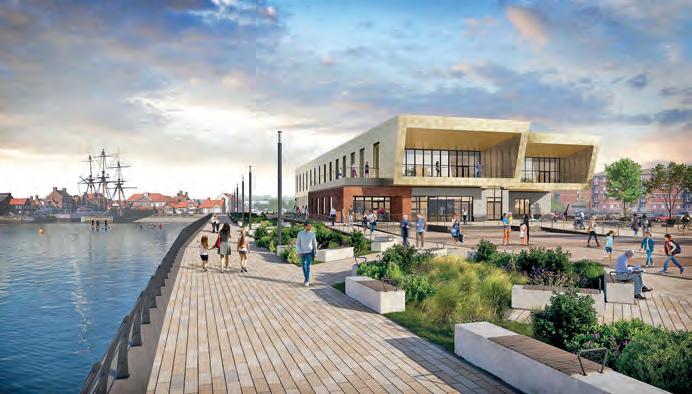
The £35m Highlight Active Wellbeing Hub in Hartlepool is set for a summer opening, after construction of the flagship facility has entered the final fit-out stage.
Located at The Waterfront within Hartlepool marina, the facility will replace the old Mill House Leisure Centre, which opened its doors in 1972 and has now reached the end of its operational life.
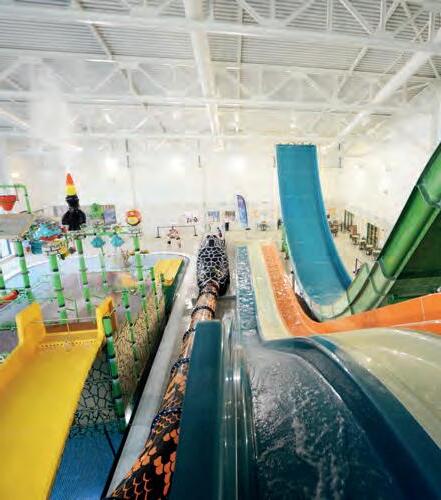
Designed by GT3 Architects, the centre will feature three swimming pools: an 25m eight-lane main pool, a 25m
four-lane learner pool with moveable floor and leisure pool with race slide and interactive water play features.
In addition, there will be a large health club with a 100-station gym, two interconnected fitness studios and dedicated indoor cycling studio. Other facilities will include active and soft play areas, function and meeting rooms, a café with panoramic seating overlooking the marina and NHS consultation suites, built as part of a partnership with University Hospitals Tees.
RLSS UK rolls out updated CPR and first aid training
The Royal Life Saving Society UK (RLSS UK) has implemented comprehensive updates to CPR and First Aid training across its qualifications and awards, following the latest Resuscitation Council UK (RCUK) guidelines.
The changes, introduced on 1 May 2026, follow several months of work to update RLSS UK’s training content and support materials.
The revised guidance covers areas including faster early response from bystanders, immediate calls to emergency services, enhanced use of automated external defibrillators (AEDs), and changes to infant compression technique.
RLSS UK said the updates are now an integral part of all relevant qualifications and awards. The organisation worked closely with its Clinical Governance Group and RCUK to understand how the new guidance should be applied across its training portfolio.
STA appoints Alex Barrett as new Head of Aquatics
The Swimming Teachers Association (STA) has appointed Alex Barrett as its new Head of Aquatics. In the role, Barrett will help lead and develop STA’s aquatic offering, supporting members, enhancing learn to swim products and qualifications and drive the growth and development of STA’s aquatic portfolio and team.
Barrett has 14+ years’ experience across the physical activity and aquatics sectors and joins the STA from Swim England, where he held the role of National Participation and Growth Manager. There, he led work focused on strengthening longterm sustainability and expanding participation opportunities.
The hub has been designed by GT3 Architects
PHOTO:
PHOTO: STA
Alex Barrett
APPG on Swimming publishes report on pool crisis
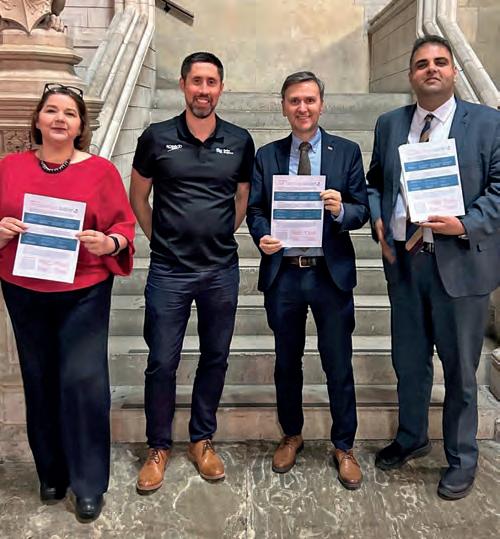
The All-Party Parliamentary Group (APPG) on Swimming has published the findings of its “The Deep End” report, which examines the escalating crisis facing Britain’s swimming pool network and a clear call to government for long term, strategic intervention.
Commissioned to identify the structural, financial and operational challenges affecting swimming pools across the country, the report draws from a comprehensive call for evidence across the sector. More than 200 written submissions were received from operators, membership bodies, governing bodies, clubs and individual members of the aquatic community.
The report shows that the UK’s swimming pool estate is ageing fast and becoming unsustainable without urgent action. More than 1,200 pools are over 40 years old, past their expected lifespan and hundreds of pools have already been lost, limiting access for communities already struggling with few local swimming options.
At the same time, costs continue to rise. Energy prices remain nearly double pre-pandemic levels, staffing costs are increasing, and ageing buildings often require more maintenance. Many councils now face a financial black hole, forcing difficult choices between keeping pools open or cutting other services.
To address these challenges, the report calls for Government to:
Deliver a funded, long-term strategy for aquatic facilities.
Prioritise sustainable, energy efficient, modern design to reduce operating costs and environmental impact.
Guarantee school swimming and water safety, ensuring all children leave primary school with essential life-saving skills.
Formalise the role of pools in public health, by expanding social prescribing and co-locating NHS services within leisure facilities.
The report also highlighted the positive impact strategic investment can make with improved environmental and economic performance from newer facilities. Rebecca Cox, Managing Director at the Institute of Swimming (IoS) responded to the launch, saying, “This report lays bare the scale of the challenge our sector faces, but it also provides a clear, achievable plan for securing a sustainable future for Britain’s swimming pools.
“Swimming is not a luxury; it is a life-saving skill, a cornerstone of public health, and a vital community asset. We urge the Government to act on these recommendations and commit to a long-term strategy that protects and rebuilds the aquatic infrastructure our communities so urgently need.
“A positive immediate action would be to direct the £400 million investment announced for grassroots sport to support our pools and leisure centres.”
ukactive publishes defibrillator guidance for facilities
ukactive has published new guidance on defibrillators to help fitness and leisure operators deliver life-saving support for anyone who suffers a cardiac arrest. The guidance has been developed with the British Heart Foundation (BHF) and forms part of ukactive’s commitment to support gyms, swimming pools, leisure centres and other fitness facilities to further improve safety and standards.
Out-of-hospital cardiac arrest survival rates in the UK remain low, with fewer than one in 10 people surviving. However,
rapid defibrillation within a few minutes of collapse can significantly increase survival rates. The new resource, titled ‘Guidance on Defibrillator Provision in Physical Activity Settings’, provides practical advice on installing, registering, and maintaining a defibrillator, as well as training staff and maximising the devices’ life-saving impact in the physical activity sector. It has been informed and approved by ukactive’s Standards and Legislation Committee, which features leading experts from operators of all types and sizes.
Construction starts on Halifax Leisure Centre
Building work has begun on a new leisure centre in Halifax, following the completion of all preparatory works that first began in October 2025. The works included the partial demolition of the old North Bridge Leisure Centre.
The project is driven by Calderdale Council, which will own the site. The council has secured £12.2m from the government’s Levelling Up Fund to help fund the new facility. When completed, facilities at the new centre will include a six-lane swimming pool with spectator seating, a learner pool, refurbished eight-court sports hall, a 120-station fitness suite, three multi-functional studios, a dedicated cycling studio, a children’s soft play and adventure area and a café and community area.
A wet changing village and a Changing Places facility for disabled people and separate dry change facilities for sports hall and gym use.
BH Live has secured a 10year contract extension to continue to operate leisure and wellbeing services on behalf of Portsmouth City Council (PCC). The charitable trust has operated community leisure facilities in Portsmouth on behalf of the council since 2013. The renewed agreement supports the council’s £40 million investment in sport and leisure facilities, aimed at helping improve residents’ health and wellbeing through enabling physical activity for all abilities.
BH Live currently operates six leisure centres and attractions across the city.
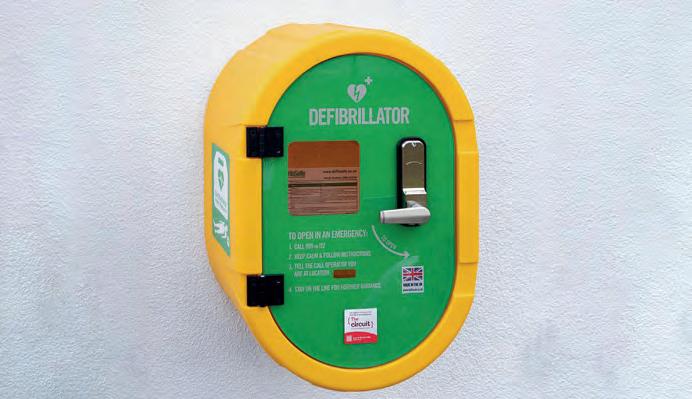
Ensuring defibrillators are visible and accessible can help save lives
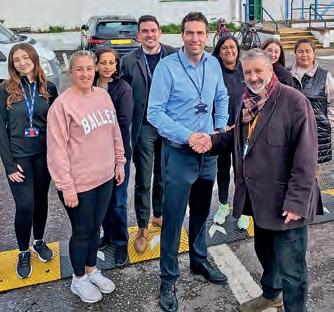
Plymouth council’s Lee Hunt with Rob Cunningham from BH Live
Briefing
ELIMINATING DANGER
GreenTech International has launched a breakthrough solution to eliminate biofilms and chlorine-resistant pathogens in pools and spas
Anew UK-based company, GreenTech, is entering the pool and spa sector, looking to provide operators with an effective new way to eliminate biofilms and the dangerous pathogens they protect.
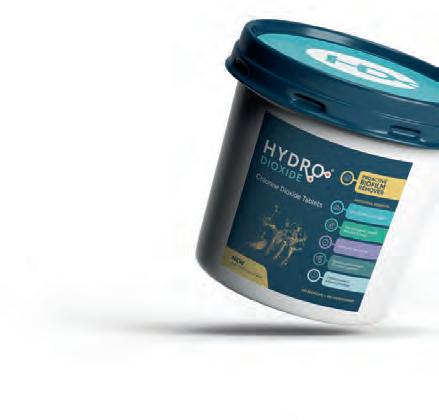
The company’s new Hydro Dioxide tablet has been designed to penetrate and break down chlorine-resistant biofilm structures throughout entire systems, exposing and eliminating the bacteria and pathogens hidden within. While chlorine struggles to penetrate biofilms, Hydro Dioxide works through them, removing the protective layer and stopping the continuous cycle of contamination that many operators have come to accept as unavoidable. Delivered in a fast-dissolving tablet, the solution is the result of more than 15 years of specialist research into chlorine dioxide and biofilm behaviour.
Biofilms have been described as one of the most persistent and underestimated risks in wet leisure environments. Forming deep within pipework, filters and surfaces, they can create a protective shield for harmful bacteria, allowing them to survive disinfection, re-enter circulation and repeatedly compromise water quality. This could result in not only poor bather experience – including skin irritation and infections – but also the presence of serious health threats, such as Pseudomonas Aeruginosa, Legionella, E. coli and Cryptosporidium oocysts alongside ongoing damage to plant infrastructure and spiralling maintenance costs.
Despite the threat they can pose, biofilms remain misunderstood across the industry, with many operators unknowingly treating symptoms in the
water rather than the root cause within the system.
GreenTech International is led by pool operations and treatment specialists, James Lee and Steve Martin, who combined bring more than 80 years of experience.
The founders say that the company’s scienceled approach targets biofilms at source, rather than relying solely on traditional sanitisation methods.
James Lee said: “Operators are often fighting a problem they can’t see with tools that were never designed to solve it. Biofilms sit behind the scenes, protecting harmful bacteria and contaminating systems again and again. Until you remove that layer, the problem never truly goes away. Hydro Dioxide changes that by targeting the source, not just the symptoms.”
Designed for commercial pools, spas and hot tubs the solution works within existing systems, removing the need for repeated draining and refilling, reducing water waste and lowering overall chemical demand while improving clarity, air quality and operational efficiency.
performance. It doesn’t produce harmful
Manufactured in the UK and fully compliant with GB BPR, ISO, OHSAS standards and Net Zero 2027, the product aligns with modern sustainability targets while delivering a step change in performance. It doesn’t produce harmful disinfection by-products (DBP’s) such as trihalomethanes (THMs) Chloroform and Haloacetic acids (HAA’s), an increasing concern for both regulators and operators focused on health and environmental performance.
https://greentech-international.com
Edlington centre to make way for new swimming pool
Demolition work is set to begin later this spring on the former Edlington Leisure Centre in Doncaster, paving the way for the building of a new facility on the site. Edlington Leisure Centre closed during the COVID-19 pandemic and never reopened. City of Doncaster Council, which owns the venue, launched a tender for the demolition work, the result of which is anticipated to be announced soon.
The new Edlington Leisure Facility, which received cabinet approval in November 2025, will include a 25m pool and will be
built on the site of the existing Leisure Centre, adjacent to Sir Thomas Wharton Academy. Construction of the new facility – a project led by leisure development specialist, ReCreation and its partners, including Box Architects – follows local feedback from residents and swimming clubs, who made it clear that they preferred a 25m full swimming pool. The estimated cost for construction is just over £6.5m and once the site is cleared, the council will then be able to finalise the construction timeline to build the new venue.
GLL partners with RLSS UK for water safety
Leisure operator, GLL, has partnered the Royal Life Saving Society UK (RLSS UK) to introduce water safety education into all swimming lessons at the facilities it manages on behalf of local authorities. GLL – which offers swimming lessons through its Better Swim School – has become RLSS UK’s first water safety education partner. The move will see all pupils of all ages, from toddlers to adults, benefit from life-saving skills. Better Swim School currently offers 200,000 adults and children weekly lessons at more than 140 pools across the UK. GLL will upskill more than 2,000 Swimming teachers to share water safety messaging and skills. Emma Lewis, GLL’s National Swimming Development Manager, said: “Our goal is to ensure that every child in the communities we serve gains essential water safety skills. Learning to swim is about far more than mastering a skill – it is about saving lives and fostering safer communities.”
Live borders becomes new STA approved training centre
Live Borders has become a new STA Approved Training Centre (ATC) for aquatics. It is also among the first organisations in Scotland to begin delivering STA’s newly accredited Swimming Teacher Qualification at SCQF Level 7. Managing six swimming pools
and leisure facilities across the Scottish Borders, Live Borders will now be able to deliver STA aquatic qualifications in-house – creating greater flexibility to recruit, train and develop swimming teachers locally, while supporting the continued growth of learn to swim provision across its communities.
The new leisure centre will include a 25m pool
Karen Steel, Scottish Swimming Tutor at Live Borders
The power of pools
Natalie Gibson, Head of
Insight at Alliance Leisure, explains how the aquatics industry can reframe swimming pools as health, economic and sustainability accelerators
As part of my recent insight work at Alliance Leisure, I’ve been looking at the age and condition of swimming pools across the UK. It quickly becomes clear that much of today’s provision were built to meet the needs, expectations and operating environments of a different era and are now being asked to deliver far more than they were ever designed for.
My findings are reflected in the recent publication of The Deep End, an All Party Parliamentary Group for Swimming report supported by Swim England. It concludes that ageing facilities, rising costs and a system shaped by short-term decision-making are placing a vital part of our community infrastructure at risk.
When we view swimming pools solely through the lens of cost and constraint, we risk missing a huge opportunity to unlock decades of sustainable community return. When designed and delivered in response to local need, swimming pools can become powerful drivers of social, health and economic value supporting prevention, reducing inequalities and strengthening communities.
Swimming remains one of the most inclusive and accessible activities available, supporting people of all ages and abilities while delivering a critical life skill. Yet, as highlighted in The Deep End, participation is falling and fewer children are leaving primary school able to swim confidently. This is not about a lack of demand, it reflects a disconnect between what communities need and what existing facilities are able to provide.
According to The Deep End report, more than 1,200 pools are already beyond their expected lifespan. These buildings were never designed to meet modern expectations around energy efficiency, flexibility or integrated health provision. As a result, they are increasingly expensive to operate, difficult to adapt and vulnerable to closure.
This creates a cycle that is hard to break. Local authorities, under significant financial strain, are Affordability
forced into reactive decisions, maintaining ageing assets rather than investing in long-term solutions.
UNLOCKING VALUE
What’s often missing from this conversation is the value that well-placed investment can unlock.
The report highlights that where facilities are modern, well-designed and aligned to local need, they deliver higher usage, stronger financial performance and greater social value, with facilities under 10 years old achieving around 20% higher throughput and impact.
We are seeing this in action. Warsop Health Hub was the first facility delivered through Sport England’s Leisure Local programme, which integrates pools with health and fitness provision with the flexibility to meet evolving local needs. Since the Hub opened, Year 6 school swimming attainment has risen from 40% to 80%. Beyond this, the Hub runs a range of pool programmes targeting the whole community, run by the centre and in partnership with community organisations.
Swimming pools are not just places to be active. They are increasingly central to public health. The Deep End reports that swimming pools already generate an estimated £2.4
billion in social value each year and help prevent over 1.4 million cases of ill health. When embedded within wider health systems, their role expands further – supporting rehabilitation, prevention and community-based care.
INVESTING IN THE RIGHT FACILITIES
Viewed through this lens, the question is no longer whether we can afford to invest in swimming pools, but whether we can afford not to. Affordability, sustainability and access remain real challenges. Pools will always be energy-intensive, and financial pressures on councils are unlikely to ease in the short term. But modern design, smarter technology and early investment in efficiency can significantly reduce long-term risk, both financially and environmentally. What my research and The Deep End makes clear is that the current trajectory is not sustainable. Continuing to rely on ageing infrastructure and short-term funding will only accelerate decline.
But when we invest in the right facilities, in the right places, we are not just maintaining buildings. We are creating needs-based active environments that drive healthier communities, reduce long-term public cost and secure the future of a vital service for generations.
THE RIPPLE EFFECT
The STA has launched a charity initiative to mark a long-term charitable commitment to training the next generation of swimming teachers
The Swimming Teachers Association (STA) has launched a long-term charitable initiative designed to remove financial barriers into swimming teaching and strengthen access to swimming and water-safety education across the UK. Called ‘The Ripple Effect’, the initiative places workforce development at the heart of improving access to swimming lessons - recognising that learning to swim starts with having skilled, qualified teachers on poolside.
The launch comes at a time when the UK continues to face a significant national shortage of qualified swimming teachers, limiting lesson availability and contributing to long waiting lists in many communities.
The Ripple Effect is a non-time-limited initiative, allowing funding, partnerships and impact to grow over time. At its core is a simple principle: when you train a swimming teacher, you change thousands of lives.
The charitable initiative is intrinsically linked to STA’s new Level 2 Swimming Teacher Qualification
and, in Scotland, the STA Swimming Teacher at SCQF Level 7 qualification accredited by Qualifications Scotland Accreditation. Developed to support the next generation of swimming teachers, the employerinformed, CIMSPA-endorsed programme has been designed to ensure learners build the skills, confidence and competence required to deliver safe, inclusive and effective lessons across the full learn to swim pathway.
As with STA’s wider qualification approach, the programme places a strong emphasis on practical delivery, supported by structured learning, blended learning options and ongoing professional development – helping to build confident, capable and work-ready teachers. Funds raised through The Ripple Effect will be pooled into a ring-fenced bursary fund, supported by a combination of public donations, fundraising bids, commercial partnerships, everyday giving initiatives and additional financial contributions from STA.
Dave Candler, CEO of STA, said: “Swimming is a life skill, but far too many children and families are still facing barriers to accessing lessons - not because the demand isn’t there, but because the workforce capacity isn’t.
By investing in people, we are investing in the thousands of learners they will go on to teach - creating a ripple effect that strengthens water safety, confidence and opportunity in communities across the UK
Dave Candler, CEO of STA
“Through our STAnd Up for Swimming campaign back in 2022, we saw first-hand the impact that targeted bursary support can have in helping people enter the profession. The Ripple Effect builds on that success, creating a sustainable, long-term approach to developing the swimming teacher workforce.
“By investing in people, we are investing in the thousands of learners they will go on to teach - creating a ripple effect that strengthens water safety, confidence and opportunity in communities across the UK.”
SECTOR-WIDE SUPPORT FROM ATCS AND PARTNERS
STA is inviting the aquatics sector to play an active role in supporting the Ripple Effect. STA Approved Training Centres (ATCs), Swim Academies and Swim Stars can pledge support by offering access to venues and or volunteering tutor time, while corporate partners can contribute through financial donations.
The Ripple Effect has already secured early support from partners across the aquatics and wellbeing sector, including Get More Vits, Seascooter and Course Pro, demonstrating a shared commitment to investing in the next generation of swimming teachers.
STA has also secured regional funding from regional trusts and charities, with the first courses already being planned in Coventry, as part of the funding agreement.
Under The Ripple Effect name, and through its partnership with SEN Swimming UK, STA will also work to improve access to swimming lessons for children and young people with special educational needs and disabilities. This will include supporting more teachers to gain specialist training, alongside developing practical resources and guidance to
help families find suitable swimming provision. All supporting organisations will be recognised through a dedicated Ripple Effect Supporters Page, featuring partner logos and acknowledgements to highlight the collective commitment to strengthening the swimming teaching workforce.
To support participation, STA will provide partners with a free digital supporter badge.
EVERYDAY WAYS TO CONTRIBUTE
STA has introduced new everyday giving opportunities, including easy fundraising, enabling supporters to raise donations through their normal online shopping at no additional cost.
The Ripple Effect is designed to grow organically, releasing bursaries as funding allows and creating a continuous cycle of opportunity, training and community benefit.
For further information on pledging support or becoming a funding partner, please visit https://www.sta.co.uk/news/2026/04/20/stalaunches-the-ripple-effect-charity-initiative-tostrengthen-uk-swimming-teacher-workforce/
ACTION NEEDED ON DROWNINGS
RLSS UK HAS CALLED ON THE LEISURE SECTOR TO BACK DROWNING PREVENTION WEEK 2026 FOLLOWING HALF-TERM DROWNINGS
The countdown is on to the Royal Life Saving Society UK’s (RLSS UK) flagship national water safety campaign, Drowning Prevention Week, with new resources for teenagers, one of the groups most at risk of accidental drowning, emphasised during the recent May halfterm.. The campaign, now in its 13th year, follows the tragic half-term heatwave, where 12 children and five adults drowned in just one week. Running from 13-20 June 2026, the campaign focuses on the Water Safety Code, which is designed to help people make safer decisions in, on and around water. By encouraging individuals to stop and think, stay together, float if they fall in, and call 999, RLSS UK aims to equip children, and their parents and carers, with practical, memorable knowledge and skills that can save lives.
HIGH-PROFILE SUPPORT
RLSS UK’s new celebrity ambassador, Tom Dean MBE, triple Olympic gold medallist and founder of Tom Dean Swim School, is keen to ensure water safety knowledge and self-rescue skills are integrated into swimming lessons. Dean, who strongly believes “all children should have the opportunity to learn lifesaving water safety skills”, will help the campaign by presenting a major water safety education event for more than 500 schoolchildren
in Maidenhead and by speaking at the All-Party Parliamentary Group for Water Safety Education to encourage the Government to provide consistent swimming and water safety education for all.
This year, RLSS UK has developed a range of materials to specifically resonate with male teenagers, after the latest figures from the National Child Mortality Database (NCMD) show that 13 to 17-year-olds are among the highest risk of accidental drowning. Leisure operators can access these materials alongside a wide range of other free campaign resources, including posters, digital assets, lesson plans, and interactive activities, available on the RLSS UK website.
Jo Talbot, Commercial Director, RLSS UK, says: “Drowning Prevention Week is a collective effort. As the countdown to summer begins, we urge leisure operators to help us reach more communities than ever and move closer to our vision of communities free from drowning.”
PREVENTABLE TRAGEDIES
Drowning is one of the leading causes of accidental death in the UK, and many incidents are preventable with the right knowledge and awareness. Now in its second decade, the annual campaign engages more than 1,000 leisure operators and swimming
pools across the UK and Ireland who come together to deliver free water safety education to children and young people ahead of the summer holidays. This is historically the period with the highest number of drowning fatalities, according to data from the UK Water Incident Database (WAID).
Driven by a vision to create communities free from drowning, the campaign educates young people, engages families and communities and shares expert guidance on how to stay safe in, on and around water. In 2025 alone, Drowning Prevention Week reached more than 2.3 million children, highlighting the initiative’s scale and impact.
Leisure and swimming pool operators are key to the campaign’s success. As trusted community hubs, they play a vital role in introducing children, young people and their families to water safety skills.
TAKING ACTION
RLSS UK is promoting the wide range of activities taking place during Drowning Prevention Week in lifesaving clubs, leisure centres, swim schools, sports clubs and more across the UK and Ireland. The campaign not only supports water safety education but also helps operators engage new audiences and strengthen their Corporate Social Responsibility (CSR) commitments.
For many operators, it’s also an opportunity to build stronger relationships with local schools and community organisations.
Andrew Clark, Head of Sport & Aquatics at GLL, says: “Our mission is to ensure everyone in our communities has the opportunity to learn how to swim and become safe in and around water. We use Drowning Prevention Week as an opportunity to get into schools and deliver water safety assemblies ahead of the summer holidays. In addition, all our swimming lessons during that week have a water safety focus.”
Incorporating water safety into swimming lessons is another key approach. Throughout the week, instructors can deliver focused sessions using RLSS UK’s lesson plans and teaching resources, ensuring consistent and impactful messaging across all age groups.
Beyond the pool, facilities can host community events such as water safety workshops, Rookie Lifeguard taster sessions, and family activity days. Promotions, discounts and offers on lessons and programmes can also help drive participation, while competitions and fundraising events can raise awareness and attract local media attention. To learn more about Drowning Prevention Week: https://www.rlss.org.uk/dpw
The Swimming Alliance conducted a survey on “industry leavers” – those who have left the aquatics sector for roles elsewhere. The results suggest that, while the sector is a great one to work in, low pay and limited progression opportunities means that people will sometimes look elsewhere to further their careers
The Swimming Alliance has published the findings of a workforce survey carried out by its Workforce Subgroup, providing valuable insight into the experiences, motivations and challenges facing the aquatics workforce across the UK.
Conducted during autumn 2025, the survey gathered responses from individuals who had worked within aquatics roles, including swimming teachers, pool lifeguards, assistant teachers, swim managers and duty managers. The survey received a total of 211 responses. Of those who responded, 80% had worked as lifeguards and 51% as swimming teachers. A quarter (23%) had held other roles – predominantly those of either swim manager or duty manager. Another 7.50% had worked as assistant teachers.
KEY FINDINGS
The findings reinforce both the value people place on working within aquatics and the ongoing workforce pressures affecting the sector. Many respondents highlighted the rewarding nature of their roles, with flexibility, making a difference to children’s lives, working within a team environment and contributing to local communities all identified as key positives.
The survey also demonstrated strong levels of long-term commitment within parts of the workforce, with more than 40% of swimming teachers having remained in role for over a decade. The survey also showed, however, that less than a third (30%) of respondents had worked in the sector for more than 10 years.
The results also highlighted several recurring factors contributing to people leaving the sector.
How long did those who left aquatics work in their role?
Total Swim teacher Pool lifeguard
People
Pay, limited career progression opportunities and not feeling valued emerged as the most common reasons respondents chose to leave aquatics roles. Nearly two thirds (65%) of swimming teachers said they left due to pay, while the figure is only slightly lower (60%) for lifeguards.
Other reasons for leaving in the two roles included:
Swimming teachers:
49% left due to a lack of career progression
38% leave because they didn’t feel valued
Lifeguards:
47% left due to a lack of career progression
44% left because they didn’t feel valued
30% left to pursue a different career
GREAT EXPERIENCES
When asked about the aspects that they had enjoyed – or benefitted from – while working in their role within aquatics, more than half (52%) identified the flexibility of the hours. Access to local leisure facilities (49%), making a difference to children’s lives (45%) and working in a team environment (43%) also rated highly. However, only a quarter (27%) said that they had benefitted from training and development opportunities in their roles – an aspect which might come as a worry to sector organisations.
NEW HORIZONS
One of the most interesting findings of the survey was to do with the reasons people left the aquatics sector. Nearly half (42%) left to join another sector entirely, with swimming teachers (45%) particularly likely to find new challenges elsewhere. Less than one in five (17%) left aquatics for a role within the wider leisure/sports sector. On one hand, this could suggest that those leaving the aquatics sector were enabled to do so by the transferable skills they had acquired. On the other, it might be evidence that a large proportion of aquatics sector workers leave because they either feel that there aren’t any further opportunities available to them, or that they didn’t enjoy some other aspect of their experience.
Importantly though, the survey also revealed a significant opportunity for workforce recovery and retention, with 58% of respondents stating they would consider returning to work within the aquatics sector.
The Swimming Alliance Workforce Sub-group, led by Ian Cotton, Group Aquatic and Activity Manager at Everyone Active, is now using the findings to help shape future activity and collaborative sector action. Initial priorities include showcasing clearer career progression opportunities within aquatics, addressing misconceptions around pay and employment, and exploring ways to attract more young people into the sector.
The data will also help inform wider conversations around workforce development, recruitment, training pathways and retention across the leisure and aquatics sector. As the Swimming Alliance continues its collaborative work across workforce, inclusion and school swimming priorities, the survey represents an important step towards building a stronger evidence base to support future sector planning and advocacy.
Learning how to swim is possible, and my friends and I are living proof of this
BREAKING BARRIERS IN THE POOL
A new programme is supporting visually impaired swimmers at the London Aquatics Centre
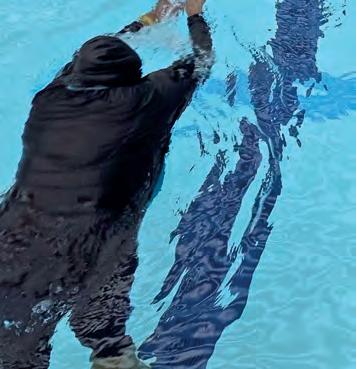
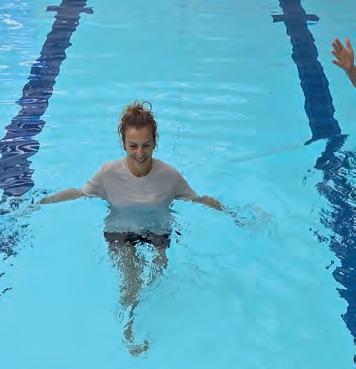
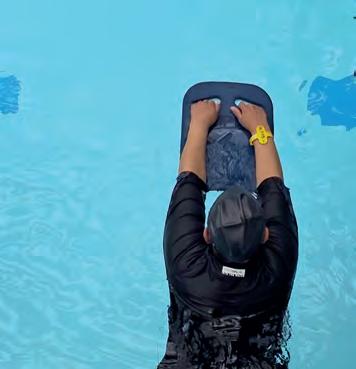
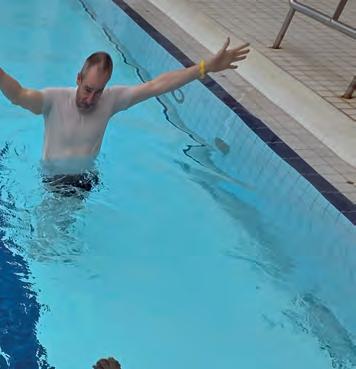
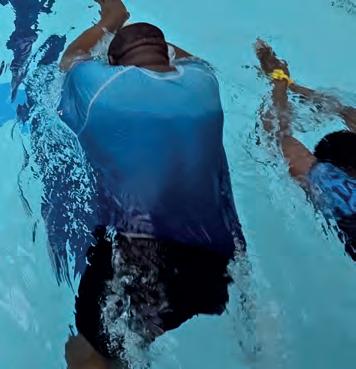
Inclusive practices help remove barriers to participation and widen access to swimming and water safety education. One example of this can be seen at the London Aquatics Centre, where a growing community of visually impaired swimmers are building confidence, independence and a genuine enjoyment of the water through a dedicated sensory swimming initiative.
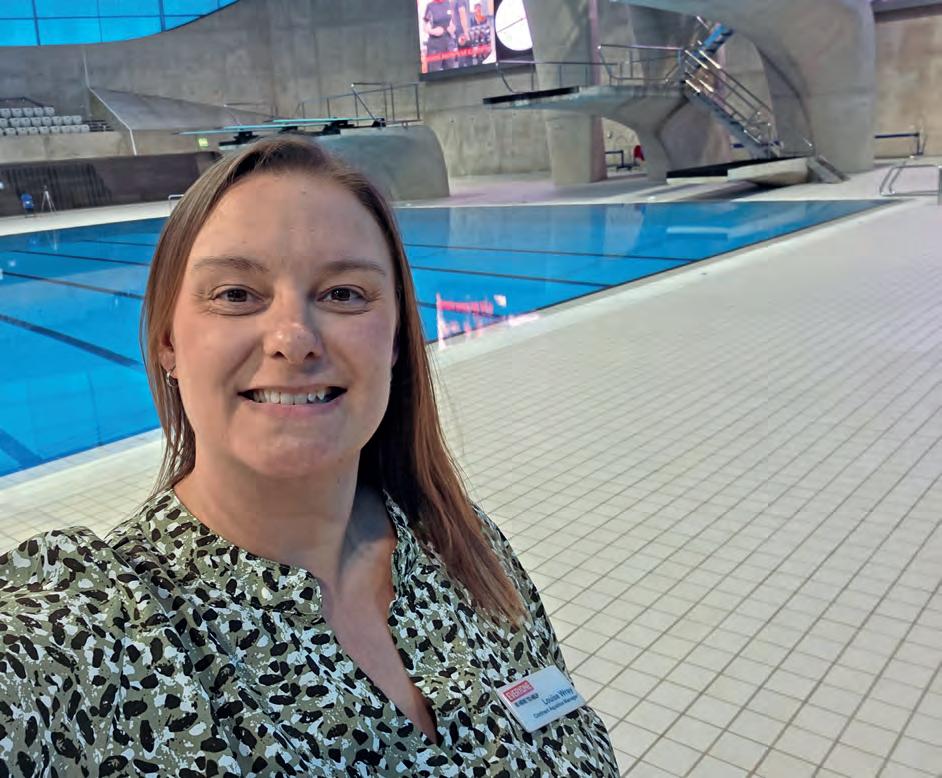
Delivered by a team of swimming teachers, led by Louise Wray, Swim Manager at Everyone Active – which operates the aquatics centre and is a member of the Swimming Alliance – the sessions have been designed to create a supportive, structured environment where participants feel comfortable from the moment they arrive. Swimmers are met at reception, guided around the pool to help build a sense of space and familiarity, and supported in the water using clear, precise verbal instruction rather than visual demonstration.
HUGE IMPACT
The approach is simple but highly effective, giving each participant the confidence to progress at their own pace.
For Daniel, one of the programme’s first participants, the impact has been significant. “My confidence in the water has increased massively,” he said. “Just putting my head under used to feel impossible - now I can swim short distances on my back without a float. The instructors are supportive, patient and even bring humour to the lessons, which makes learning enjoyable.”
What started as a small trial session with Daniel and one other participant has since grown into a regular group of around 10 swimmers, highlighting both the demand for accessible provision and the value of getting the approach right.
“I want others to know this is possible,” Daniel added. “For me the question isn’t ‘can it be
The initiative is led by Louise Wray, Swim Manager at Everyone Active
done?’ - it’s ‘how can it be done?’ At the London Aquatics Centre, everything has been thought through, and that makes all the difference.
“Learning how to swim is possible, and my friends and I are living proof of this. I’d encourage any visually impaired person to come and join the class and see what’s possible.”
Chris Wells, Contract Manager at the London Aquatics Centre, said: “Daniel’s journey reflects what can be achieved when inclusive practice is prioritised. His story shows what can be achieved when barriers are removed.
“We want people with disabilities to know they are welcome here, and that with the right support, they can be active and enjoy the health and social benefits of swimming.”
By combining practical adaptations with a supportive teaching approach, the team at the London Aquatics Centre is not only helping people learn to swim but also demonstrating what inclusive provision can look like in practice.
BEST PRACTICE
Across the UK, organisations within the Swimming Alliance are continuing to explore ways to make aquatics more accessible, inclusive and representative of the communities they serve. By sharing examples of positive practice, the Alliance hopes to encourage wider collaboration, innovation and learning across the sector, helping more people access the physical, social and wellbeing benefits that swimming can provide.
The Swimming Alliance brings together national governing bodies, operators, charities, educators and community organisations to advocate for greater equity, sustainability and strategic investment in swimming and water safety education. Through collaborative working groups focused on priorities including inclusion, workforce development and school swimming, the Alliance is helping create a more connected and evidence-led approach to sector challenges. Learn more here https://theswimmingalliance.org/
We believe lifeguards deserve training grounded in evidence, operators deserve qualifications that reflect real-world conditions and the public deserves the safest possible environments
Improving safety with research
Asking difficult questions, challenging long-held practice, and using robust evidence to shape skills and knowledge are critical for drowning prevention, says Jo Talbot, Commercial Director, RLSS UK
In a sector responsible for public safety, tradition is not enough. Practices that have long been accepted as standard must still stand up to scrutiny and demonstrate that they remain effective, justified, and fit for today’s challenges.
Recognising this need for scrutiny, the Royal Life Saving Society UK (RLSS UK) and the University of Chichester have worked together for more than ten years to challenge long-established water safety practices using robust, real-world evidence.
This partnership is built on shared values and a commitment to high-quality, sector-focused research to develop and evolve water safety training and education. The research team at Chichester have embedded themselves within RLSS UK’s training and qualification activity. Many of the academics have attended National Pool Lifeguard Qualification (NPLQ) courses themselves, some are RLSS UK trainers, while others have worked as lifeguards. That lived experience elevates the quality of the research, ensuring it is grounded in the operational realities of the lifeguard role.
WHY RESEARCH MATTERS
Building on these efforts over the years, this research has directly shaped lifeguard training and qualifications to support the sector and ultimately to save lives. One of the most significant and arguably pivotal changes was the evolution of lifeguard scanning and supervision.
For more than 35 years, lifeguards across the UK, Ireland and much of the world were trained using the ‘10:20 system of bather supervision’. This required lifeguards to scan their entire zone every 10 seconds for 10 seconds and reach any casualty in their zone of responsibility within 20 seconds.
The system was widely accepted and embedded in guidance, including references within Health and Safety Executive (HSE) documentation, Managing Safety in Swimming Pools – HSG179. However, following serious incidents and investigations, questions emerged about whether the 10-second scanning expectation was realistic or even evidence-based.
CHALLENGING 35 YEARS OF PRACTICE
Dr Jenny Smith, research lead at the University of Chichester, questioned whether scanning an area of up to 250sq m and potentially 80 pool users every 10 seconds, was physiologically and cognitively possible. In 2022, we began a study to determine whether lifeguards could actually meet the 10-second requirement. The findings were clear: lifeguards, even when instructed to, did not scan every 10 seconds for 10 seconds, either because they chose not to or because it was not possible. For the brain to interpret what the eye sees, the eye must fixate. Fixations take time. The coordination between head movement, eye focus and cognitive processing cannot be compressed infinitely. The
If a casualty is submerged or in difficulty, every second counts
expectation of scanning an entire busy pool/zone within 10 seconds, repeatedly, was just not possible.
This was a pivotal moment. We had identified that a globally adopted system, one used for over three decades, was just not achievable in practice.
INTRODUCING NATURAL SCAN: 20
Thanks to robust data, we were able to act confidently. In July 2023, RLSS UK created and introduced Natural Scan: 20 into its NPLQ. Instead of rigid 10-second cycles, Natural Scan: 20 requires lifeguards to continuously scan the pool and/or the zone they are responsible for. Pool operators must also ensure lifeguards can get to any area within their zone within 20 seconds.
Some ask why the 20-second benchmark remains. The answer is simple: survival. If a casualty is submerged or in difficulty, every second counts. Rapid recognition, swift rescue, extraction from the water and the early initiation of CPR and defibrillation dramatically improve survival outcomes. The 20-second reach requirement ensures lifeguards are positioned and deployed so a casualty has the best possible chance.
We presented the change to our customers and our network of more than 7,000 trainer assessors. Importantly, we also worked closely with the HSE, sharing the full research findings and evidence base.
In 2024, the Health and Safety Executive amended Managing Safety in Swimming Pools – HSG179, removing references to 10:20 and incorporating Natural Scan: 20.
To see a method developed by RLSS UK, grounded in research, embedded in national guidance, is something of which we are exceptionally proud. Even more encouraging is seeing Natural: Scan 20 adopted beyond our own qualifications. But most importantly, it means swimming pool lifeguards are better equipped to do their job effectively and confidently.
A COMMITMENT TO EVIDENCE
Our future research programme is just as exciting. Working with the University of Chichester, we are currently progressing three major projects: Technology and supervision – exploring how innovation can enhance safety and support for staff.
Public perception of water hazards – examining how people understand risk in outdoor environments such as lakes, rivers and reservoirs, with the aim of preventing future drownings.
Water safety education and children –investigating the impact of water safety education on children’s safety in, on and around water.
Each project is rooted in the same principle: if we better understand behaviour, perception and human performance, we can design training and qualifications that save lives. We believe lifeguards deserve training grounded in evidence, operators deserve qualifications that reflect real-world conditions and the public deserves the safest possible environments.
A commitment to research means being prepared to discover that long-standing methods may not be optimal and having the courage to make the changes required. We’re proud of what we have achieved so far and are even more excited about what comes next, because we know that when research informs practice, lives are protected.
● To view or download the guidance, visit https://www.rlss.org.uk/hsg179
What is Natural Scan: 20
The 10:20 system of bather supervision (or 10:20 protection standard, as known by its creator - Ellis & Associates), had been within the NPLQ for over 30 years. RLSS UK wanted to examine its effectiveness and commissioned a research project to learn more. Due to the results of the research, RLSS UK has replaced the 10:20 standard with the System for Supervising Swimming Pools (Natural Scan: 20) within the NPLQ. This means that lifeguards must continuously scan the zone they are responsible for, using their preferred scanning pattern tailored to the pool users, hazards, and risks.
The pool operator element remains unchanged, and pool operators are still responsible for ensuring that where they position lifeguards, the lifeguards can get to any pool user in any area of their zone within 20 seconds.
CASE STUDY
Warsop Health Hub
Warsop Health Hub – delivered by Alliance Leisure on behalf of Mansfield District Council – was developed to address long-standing health inequalities, inactivity and poor access to local leisure and wellbeing services in Warsop, North Nottinghamshire. Before the Hub opened, limited access to facilities contributed to multiple preventable drownings. Since introducing the new pool and structured swimming programme, the percentage of children able to swim 25 m has risen from 43% to 76%.
In just the first two months, over 4,000 children and spectators attended lessons, and 172 nonswimmers accessed intensive confidence-building courses. Five local primary schools now walk to weekly sessions, reducing transport costs by 40% and enabling 300 children to join regular lessons.
Rethinking the swimming pool
ReCreation’s above-ground approach to designing and construction swimming pools is changing how aquatic facilities are delivered
or decades, the delivery of public swimming pools has followed a familiar model: excavation, reinforced concrete tanks and lengthy construction programmes carrying significant cost and programme risk.
That traditional model is under pressure. Capital budgets are constrained, carbon reporting expectations are increasing and much of the UK pool estate, much of it built before 2000, is approaching the point where major refurbishment or replacement is unavoidable.
Against this backdrop, ReCreation, a leisure development partner founded by Olympians Adrian Turner, Steve Parry and Rebecca Adlington, is challenging the default “dig and pour” assumption.
By combining end-to-end development expertise with above-ground modular pool technology supplied by AstralPool UK, ReCreation is delivering high-quality aquatic facilities with shorter programmes, reduced construction risk and, in many cases, a lower carbon footprint.
For Adrian Turner, the case for above-ground pools is both professional and personal. As an Olympian and Commonwealth swimmer, he has competed in some of the world’s leading above-ground facilities and understands first-hand that performance and user experience need not be compromised. That perspective underpins ReCreation’s approach: making it easier for communities to deliver and sustain high-quality water space—not only for elite performance, but for everyday public use.
Why above ground? An alternative to the traditional concrete tank
Above-ground pools have historically been associated with temporary or lower-spec installations. However, modern modular steel-panel systems, such as AstralPool’s SkyPool technology, are engineered as permanent structures capable of meeting both commercial and competition standards.
These systems use hot-dip galvanised steel panels and are designed for long-term operation, with manufacturer warranties of up to 20 years on structural components. For ReCreation, this fundamentally changes the risk profile of delivery by reducing reliance on deep excavation, complex ground conditions and extensive concrete works.
In practice, the advantages over traditional in-ground construction often include:
● Reduced capital costs, driven by lower groundworks and material requirements
● Shorter construction programmes, limiting disruption and exposure to inflation
● Lower embodied carbon, through reduced concrete use and site disturbance
● Greater site flexibility, particularly in constrained or challenging locations
● Long-term durability, suitable for permanent public leisure facilities
These benefits are already being realised across a growing number of UK projects.
Designed for longevity
A common misconception is that modular or aboveground pools are temporary. In reality, modern steel-panel systems are engineered for long-term use, with corrosion protection, defined structural warranties and maintainable design principles.
ReCreation’s approach also prioritises accessibility for maintenance, simplified structural interfaces and reduced reliance on hidden elements – addressing many of the long-term challenges associated with ageing concrete pool infrastructure.
Early
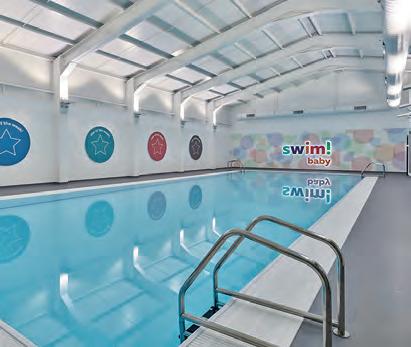
adoption by Swim!
This approach was adopted early by Swim!, reflecting confidence in the model from an operator focused on learn-to-swim and pathway provision. Through Swim!, the focus remains on access, participation and long-term community benefit—an emphasis that aligns with ReCreation’s aim to protect, enhance and futureproof the UK’s swimming infrastructure.
Briefing
A partnership-led model
Central to this approach is collaboration.
ReCreation acts as an integrator, aligning funding, design, planning and delivery, while AstralPool UK provides specialist modular systems and water treatment expertise.
This partnership model enables a more efficient route to delivery, demonstrating that new aquatic facilities do not need to be prohibitively expensive, high-risk or environmentally intensive.
The future of pools is already here!
As local authorities and operators respond to ageing facilities, rising construction costs and increasing demand for accessible water space, the need for alternative delivery models is clear.
ReCreation’s above-ground approach offers a practical, scalable and lower-risk solution – balancing cost, programme, carbon and whole-life performance.
For Turner, it is ultimately about protecting the future of swimming itself: widening access to high-quality facilities and ensuring that the next generation has the opportunity to participate, compete and thrive.
Discover how ReCreation can support your next leisure project:
● info@therecreationgroup.co.uk
● 0161 764 2224
● www.therecreationgroup.co.uk
Delivery in practice: UK case studies
Becontree Heath Leisure Centre (Barking and Dagenham): 50m annex pool
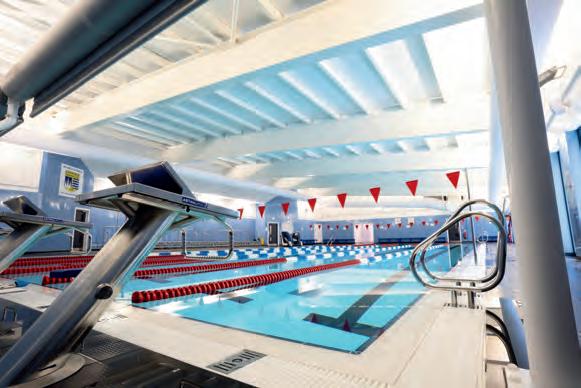
A well known example is the 50m annex pool at Becontree Heath Leisure Centre. ReCreation designed and delivered an above-ground 50m pool alongside the existing centre, allowing the main building to remain operational during delivery.
The annex pool was delivered for less than £2.5m and included the pool hall plus supporting areas (including plant and changing provision). It is often referenced as an early UK example of using modern modular methods to deliver an Olympic length pool at a cost point that would be difficult to achieve with a conventional in-ground concrete tank.
Astral Pools UK provided the modular pool structure and supported water treatment design and delivery, working with ReCreation through design, manufacture and installation.
Lichfield Leisure Centre and The Dukeries: repeatable delivery
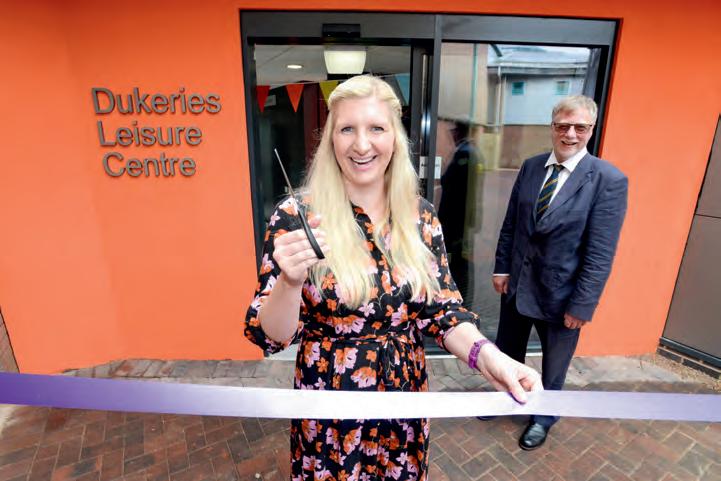
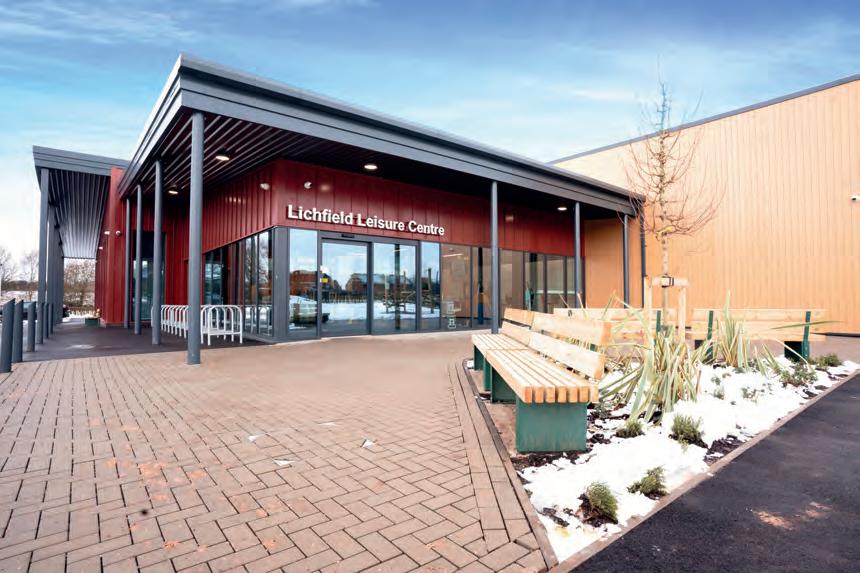
At Lichfield Leisure Centre and The Dukeries, ReCreation has applied the same core principles: reduce construction risk, shorten delivery timescales where possible and plan for long-term operational sustainability.
The wider takeaway is that above-ground modular pools can be delivered as a repeatable solution, adaptable to different sites, budgets and community needs.
Rainham Leisure Centre: doing more with a constrained budget
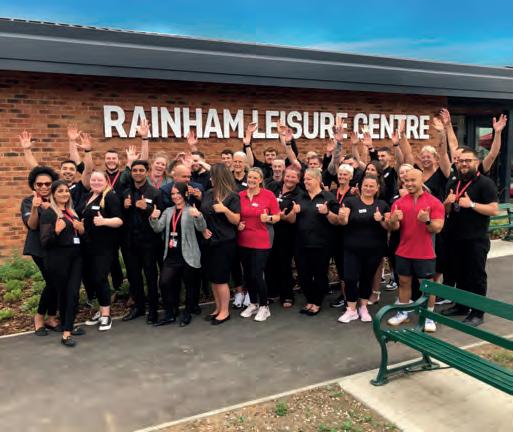
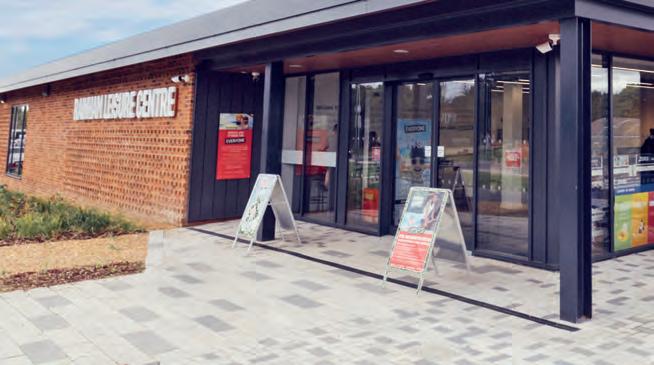
At Rainham Leisure Centre, ReCreation delivered an integrated community facility for around £8m, bringing together a range of elements often seen on higher value schemes. The approach contributed to the project achieving a BREEAM Excellent rating, highlighting the impact that design choices and construction approach can have on operational and environmental outcomes. While the scheme is not an aquatics-only project, it is a useful reference point for how ReCreation applies modern methods and specialist partners to manage cost, energy and programme.
REIMAGINING the FIRST SPLASH
SwimNation looks at how the National Schools Swimming Taskforce, led by the Swimming Alliance, will look to improve school swimming attainment and tackle the challenges impacting delivery and access
Currently, 40% of UK children leave primary school unable to swim the minimum curriculum standard
The aquatic sector has launched a major offensive against the “postcode lottery” and inconsistent outcomes of school swimming through the formation of the Schools Swimming Taskforce. Operating under the Swimming Alliance, the taskforce is developing a single, national school swimming framework designed to ensure every child leaves primary school with essential water competence.
The reform comes at a critical juncture. Currently, 40% of UK children leave primary school unable to swim the minimum curriculum standard. The taskforce’s mission is to move beyond “arbitrary distance-based performance metrics” and reclaim school swimming as a core life skill centred on survival and inclusive delivery.
The taskforce, led by Swimming Alliance Vice Chair, Andrew Clark, has moved from a strategic group, who agreed on the scope and focus, to a technical group, with Schools Swimming technical leads from Alliance members along with invited experts
Addressing a Fragmented System
The taskforce’s technical groups have identified several “entrenched challenges” that have historically hindered progress, identified in the table on the following page. Current data suggests that more than 70% of primary schools receive swimming instruction to external providers and operators. This has led to what sector observers describe as a “rabbit hole” of varying standards, where the definition of competence varies. The taskforce aims to correct this and ensure Schools Swimming has a stronger focus on developing water safety skills and a love for water with a more consistent approach. It will also publish best practice guidance for Schools and operators.
The innovation of “lesson zero”
A central pillar of the emerging framework is the introduction of “Lesson Zero.” This concept aims to transform the inefficient “first lesson” model, where time is often wasted on individual testing and rule-
The ultimate goal is to move away from a “compliance exercise” and toward a lasting cultural shift where swimming is viewed as a joyful, inclusive, and essential life skill
Category Primary Barriers Identified
Operational Transport costs, inconsistent facility access, and facility closures
Instructional Low active learning time in pools, large group sizes, and weak differentiation
Systemic Fragmentation between school swimming, "learn-to-swim" frameworks, and water safety standards
Workforce An aging workforce, lack of SEND (Special Educational Needs and Disabilities) training, and a lack of teacher confidence
reading while the majority of the class remains inactive, and also support the addition of Classroom Water safety lessons which are a new addition to the curriculum.
Lesson Zero is a “dry-side” orientation delivered in the classroom or on the poolside before pupils ever enter the water. Its objectives include:
Physical Literacy Integration: Focusing on the pillars of “Think” (purpose/safety), “Feel” (confidence-building), “Move” (land-based concepts), and “Connect” (peer relationships).
Psychological Safety: Removing barriers and building readiness to maximize active water time during Lesson One.
Operational Efficiency: Completing safety briefings, changing procedures, and identifying SEND or cultural needs early.
Choice and Autonomy: Utilising a “Play Your Way” model that allows pupils to share learning preferences. By shifting non-water preparation to Lesson Zero, the taskforce aims to ensure that Lesson One is highly active, structured, and progression-focused from the first minute.
Defining “the informed observer”: a shift in outcomes
The taskforce is advocating for a shift in how success is measured. While the current National Curriculum requires pupils to swim 25 metres, the sector is increasingly prioritising “water competence” and survival skills over stroke perfection.
A new set of suggested outcomes – to be completed in full-reach depth water– is being proposed to clarify the “minimum standards of capability”:
This framework also emphasizes the “5th Stroke”– the Lifesaving Stroke– as a vital addition to the traditional four competitive strokes (front crawl, backstroke, breaststroke, and butterfly).
Progress and Future Roadmap
The taskforce has already initiated several workstreams to support the rollout of this national model. These include the following:
External Sector Engagement: The group is collaborating with all the relevant key stakeholders and is even engaging with other sectors to explore how gamification and motivation principles can be applied to swimming progression.
Teacher Support: Development of “Activity Cards” to serve as practical lesson plans and a new CPD (Continuing Professional Development) framework to support teachers in delivering the “5th stroke” and safety intent.
Research & Pilots: Scoping for Year 7 testing feasibility is underway to assess the long-term retention of skills.
Alternative Environments: Exploring “bolton” lessons delivered in open-water or alternative environments to reinforce skills learned in the pool.
The emerging framework and the taskforce’s progress will be showcased at the Elevate Conference (17–18 June at ExCeL London), co-funded by RLSS, Swim England, and the STA.
The ultimate goal, as outlined by the Swimming Alliance, is to move away from a “compliance exercise” and toward a lasting cultural shift where swimming is viewed as a joyful, inclusive, and essential life skill for every child, regardless of their background or geography.
THE BARRIERS TO SWIMMING
DIVING IN Saving a ‘lost generation’
SwimNation sits down with industry experts to discuss why aquatics is bucking the trend to become the ultimate ‘first-time’ career and how the sector is successfully tapping into a young, motivated talent pool
The current landscape for young jobseekers is fraught with obstacles, from the cost of university and student debt to the shrinking availability of entrylevel roles. For many young people, the barrier to enter the job market feels as psychological as it is financial.
Youth unemployment has hit an 11-year high, with a 14% surge among 18 to 24-year-olds at the start of 2026. With one in six young people who wanted to work unable to find a job, experts fear a ‘lost generation’ as the traditional gateways of retail and hospitality contract. This decline is driven by a convergence of rising overheads, including the April 2026 National Minimum Wage hike and a shift toward AI-driven automation.
A LIFELINE FOR A NEW GENERATION
In response, there has been a significant surge in young people seeking ‘human’ AI-proof careers. For example, UK applications for school teacher training have risen by 13% this year alone. Aquatics offers a similar ‘people’ role. AI proof, but without the academic barriers or heavy debt of a degree. So, while the national outlook is challenging, the aquatics industry is diving in to help. By stepping onto the poolside, young people aren’t just escaping unemployment statistics; they are entering a sector defined by mentorship, a sense of self value, career pathways and social connection. Whether teaching a child to swim or maintaining the safety of a pool, these roles build a foundation of confidence and professional resilience for their life.
OPINION
Rebecca Cox
Managing Director of the Institute of Swimming (IOS)
“This generation is looking for secure environments where they feel genuinely respected and heard. They want flexibility to balance their lives, competitive salaries that reflect their hard work, and a real sense of responsibility and purpose from day one. Young people are deeply invested in their own wellbeing, and I truly believe working in leisure offers the perfect intersection of all these needs.
Between 2024 and 2025 we saw a 16% increase in the number of 16 to 18-year-olds qualifying with the IOS – 48% of all our learners in 2025 were in this age bracket. It’s a trend driven by a number of factors that set the sector apart. The financial aspect is of course a major draw, with starting pay for swimming teachers significantly outpacing the National Minimum Wage. It’s also an AIproof role paired with unmatched flexibility. Perhaps most importantly, at a time when nearly a third of young people not in education or employment cite mental health as a barrier to work, teaching swimming is actively improving it, addressing the mental health crisis head-on. Teaching swimming has boosted overall wellbeing and self-esteem for 90% of our members aged 18 to 24; 90% make meaningful friendships on the job too.
For young people who might lack self-confidence, becoming a swimming teacher is a high-value stepping stone
For young people who might lack selfconfidence, becoming a swimming teacher is a high-value stepping stone. More than three quarters of our 16 to 18-year-old teachers tell us they found work immediately upon qualifying and 87% say the role gave them significantly more confidence when applying for further education or other careers.
Our new one-step Swim England qualification also simplifies the learning journey and reduces the cost of qualifying, while maintaining high professional standards. Trainees don’t need to come from a swimming background, and there are no educational requirements to enter the training. Once qualified, they’re poolsideready and highly employable. For those who aren’t quite ready for the full qualification, our new one-day Learn to Swim Helper CPD is a fantastic entry pathway for anyone aged 14+.
Across every discipline, the leisure sector has a shared responsibility to open doors and inspire the next generation. By coming together with CIMSPA, we can shine a brighter light on the diverse and rewarding routes into our industry. Collectively, we have the power to raise the profile of this incredible sector and create meaningful opportunities for the future.”
TALKING HEADS
Jo Talbot Commercial Director, RLSS UK
“Lifeguarding has always been a profession powered by young people, and that hasn’t changed. Between April 2025 and March 2026, 71% of those achieving their National Pool Lifeguard Qualification (NPLQ) were aged 16 to 18. For many this is a flexible way to support themselves through school or university, and we embrace that. Whether they stay with us for a season or a decade, the NPLQ is a fantastic launchpad. It’s also worth eight UCAS tariff points; so an even more valuable asset for those heading toward higher education. However, the real value of lifeguarding goes far beyond the qualification itself; it’s about the life skills gained. We found that 93% of lifeguards feel the role enhanced their communication skills and 89% reported a significant boost in self-confidence. Some young people find public interaction scary, which is why our training is so hands-on. We use structured role-play and real-world scenarios to teach young people how to handle sensitive or challenging situations professionally. By the time they step onto the poolside, they aren’t just trained in safety; they are mentored in the art of communication.
While many use lifeguarding as a stop-gap, there is also a clear pathway for those who want to go further, naturally progressing into roles like Duty Manager, Swim School Manager or Lifeguard Trainer. Our Rookie Lifeguard and National Lifesaving Academy programmes support these pathways, taking children as young as seven and building their water safety competence step-by-step. By the time they’re old enough to work, they have a foundation of discipline and knowledge that makes them incredibly employable, in any industry. Ultimately, our goal is to develop confident, capable individuals and help them prepare for the realities of the working world. Whether they use those skills to save a life or simply carry themselves with more confidence in a future interview, the pool is where that transformation begins.”
By the time they step onto the poolside, they aren’t just trained in safety; they are mentored in the art of communication
TALKING HEADS
Kaylë Brightwell Director of Education, STA
Aquatics is playing an increasingly important role in supporting young people into employment. Swimming teaching offers flexibility around education and part-time work, alongside a meaningful career with transferable skills and competitive pay.
Over the last 12 months, 23% of swimming teachers qualifying through STA were aged 16-18, with a further 42% aged 18-24. We expect this to accelerate with the introduction of our new Level 2 Swimming Teacher Qualification, designed to create a clearer, more accessible route into the profession.
Learner needs have changed and it is essential we continue to evolve in response. Today’s learners expect flexibility, accessibility and support, and through collaboration with tutors, learners and employers, we have evolved our delivery models to include blended learning, digital resources and more flexible pathways that reflect this.
We also offer stronger entry routes into the sector. Our Aquatic Helper programme engages
From lifeguarding the pool to managing the fairway
At just 25 years old, Joe Dobb is taking the helm as the new Centre Manager at Mytime Active’s Orpington Golf Centre.
Joe’s journey with Mytime Active began four years ago after he graduated from Buckinghamshire New University with a degree in Accounting and Finance.
As a competitive swimmer for the Bromley Swimming Club, he originally began lifeguarding at Mytime Active as a practical way to earn money while he applied for graduate schemes and internships.
However, Mytime Active quickly recognised Joe’s potential. He gained his Level 2 swimming teacher and coaching qualifications
13 to 15-year-olds, while apprenticeship pathways, including the Leisure Team Apprenticeship supported by Excel Me, provide a structured route into sustained employment. Across our Approved Training Centres, innovative outreach in sporting and community environments is also helping broaden access to more diverse audiences. CPDs such as STA’s People Developer course also support teachers to better engage younger learners, while partnerships like Bold Waters are creating more inclusive pathways. Cost continues to remain a barrier, which is why we are launching a new charity campaign called The Ripple Effect, which builds on the success of STAnd Up for Swimming, where 900 teachers were trained and 86% secured employment. This introduces a sustainable, long-term bursary model that widens access while strengthening the future workforce. Ultimately, it’s about listening, evolving and adapting to meet young learner needs, while aligning with professional standards and employer expectations.
with the Institute of Swimming and was soon promoted to Swimming Coordinator at West Wickham Leisure Centre. He also gained his RLSS Trainer Assessor course and delivered multiple lifeguard NPLQ courses for Mytime Active.
Since then, his rise through the ranks has been remarkably rapid. He was promoted from Swimming Coordinator to Operations Manager, overseeing multiple sites, before becoming Centre Manager at Orpington Golf Club.
Joe explains: “I didn’t plan my career this way, but I am extremely pleased with how it’s fallen into place. I originally wanted to go into finance, but my work with Mytime
Active is much more varied and interesting. I love the training I’ve received and feel valued in my work. Every day is different, which keeps me both motivated and on my toes. I really enjoy what I do, and there is a great team around me.
my toes. I really enjoy what I do, and there is a great team around me.
“Although working area management
“Although working in leisure started as a part-time stop gap, it has transformed into my full time career, with many possible pathways to explore. Ultimately, I hope to move into regional area management and then beyond!”
THE RISE OF INFLATABLE WATER PLAY
Ahead of the new industry guidance led by RLSS UK, SwimNation looks at how inflatable water play is helping to drive participation, boost revenue, and transform pools into exciting activity spaces
Step into any swimming pool during an inflatable water play session, and the earsplitting shouts and shrieks of delight from children and youngsters scrambling over the slippery structures instantly tell you how popular they are. But it’s not just kids who are fans; pool operators are increasingly seeing the benefits of including inflatables in their pool programming.
RLSS UK is supporting the industry in the safe delivery of these experiences. The organisation is leading the development of new guidance on the safe operation of pool inflatables to help facilities manage risk effectively while continuing to offer safe, engaging and enjoyable aquatic activities.
Inflatables are becoming an increasingly attractive option for operators, says John Wilkes, Director at Airspace Solutions. “A pool inflatable will attract more users and generate much-needed income. They also provide a safe, structured environment for water-based fun, introduce new audiences to facilities, and help develop water confidence. A swim manager recently told me how she likes watching the smaller kids grow in confidence as the inflatable sessions go on.”
Public sessions, along with private hire and parties, can typically generate £25,000 a year for an average pool. With larger installations, operators can expect that to increase to £50,000 to £60,000 a year. But figures can vary considerably.
“We’ve seen small operators make up to £49,000 per annum from a £4,000 investment, and some larger sites make £120,000 to £130,000 per year. The business case is easy with venues often seeing a return on investment within a few months.”
MAKING INFLATABLES WORK
Providing the leisure sector with inflatable play for more than 35 years, Airspace Solutions works with a wide range of operators, from those responsible for multiple sites to independent operators. Wilkes says most operators face tough choices about what they
offer, but there are usually sessions that aren’t as busy as they could be, creating opportunities for water play.
“Inflatable sessions don’t have to take over your entire pool; they can be designed to fit the space available. We’ve helped pools utilise a section within the pool for inflatable play. It’s about working with the operator to make it practical and safe,” says Wilkes.
He also stresses the importance of programming: “You don’t need to completely overhaul your timetable. Look at when and how you can fit in inflatable sessions to attract more users, while making sure the public knows they’re available. Accessibility and affordability are key.”
Operators often cite storage as a potential hurdle to offering inflatables, but when packed according to supplier instructions, this shouldn’t be an issue. When it comes to staffing, operators generally need three to four lifeguards per session.
Public sessions, along with private hire and parties, can typically generate £25,000 a year for an average pool
Public sessions, along with parties, can typically generate £25,000 a year for an average pool
Before making an investment, Wilkes urges operators to do their research and not to buy on a whim.
“Arrange a site survey prior to investing. Make sure the unit suits your pool, fits your programme, can be effectively supervised by lifeguards and that staff are happy to use it. If it sits in a cupboard, it’s worthless.”
SAFETY CONSIDERATIONS
RLSS UK is bringing together operators, safety professionals, and industry partners to strengthen safety standards for pool inflatables. As part of this, it is leading a working group collaborating with CIMSPA,
Inflatable sessions provide a safe and fun activity for children to enjoy water
experienced operators, inflatable specialists and organisations including Airspace Solutions, an RLSS UK water safety partner, to update and strengthen industry guidance for the safe operation of pool inflatables.
The work reflects the evolving needs of the sector, incorporating new insights, safety considerations, and best practice approaches to support operators in delivering fun, highquality, and safe aquatic experiences.
Anticipated to launch later this year, the guidance will provide clearer operational standards, improved risk management recommendations, and practical resources for facilities of all sizes.
BENEFITS FOR OPERATORS
There’s no doubt that inflatables are fun, but most operators will tell you they are also a great way to build water confidence, helping youngsters to learn safety boundaries in a structured environment.
Jo Talbot, Commercial Director, RLSS UK, says: “Inflatable sessions provide a safe and fun activity for children to enjoy water. I’d much rather children enjoy inflatables in a pool than risk unsafe play in lakes or rivers.”
At a time when pool operators are dealing with rising costs, inflatable water play is a win-win for both operators and the public. As Wilkes says, “Every pool in the UK should be offering this. It’s fun, it’s safe, and it makes business sense.”
The guidance will provide clearer operational standards
Jo Talbot, Commercial Director, RLSS UK
Inflatables in action
Birtley Community Aquatic Centre is a charitable trust formed to save the former Birtley Swim Centre from permanent closure following its closure in 2023 due to rising energy and operational costs.
Now known as Birtley Community Pool, the notfor-profit centre has become a thriving community hub, attracting more than 16,000 visitors each month, including around 6,500 children.
To enhance its appeal and create additional income streams, the trust invested in an Atlantis modular aqua inflatable system. “Being a new charitable trust, it was vital that the swimming pool inflatable would generate attendances, income and be energy efficient,” says Lewis Herbertson, Senior Operations Manager at Birtley Community Aquatic Centre.
The modular design of the Atlantis system allows the team to adapt the layout to suit different sessions and customer needs. Individual modules can be repositioned, and additional units can be purchased over time as demand grows. Energy efficiency was also a key factor in the decision, says Herbertson.
“The sealed design of the unit ensures energy efficiency. Once inflated, they support the entire session without requiring additional energy. Given the high programming usage, it was critical that we were not creating extra demands on energy usage.”
Penlan Leisure Centre in Swansea has a longstanding partnership with Airspace Solutions. The Aquarun inflatable has become a key attraction, providing a value-for-money leisure activity for local residents. Offering a variety of obstacles and challenges, the inflatable obstacle course supports open swim sessions and birthday parties. Demand is high with the centre running six party slots every weekend at £215 each.
“The fun variation of activities keeps bringing children back again and again,” says Jim Kelly, Regional Director for Freedom Leisure, which operates the site. The centre also rotates an additional Aquarun to keep the offer fresh and exciting. The impact of the inflatables extends beyond the pool, contributing to driving significant secondary spending in the café.
The trust invested in an Atlantis modular aqua inflatable system
One Swim England Summit
The One Swim England Summit brought together over 500 leaders, coaches, teachers, exhibitors, speakers and volunteers from across the aquatics sector, delivering a clear and compelling message: collaboration is central to the future success of aquatics in England
Held as a flagship event in the aquatics calendar, the One Swim England Summit provided a platform to share ideas, align priorities and inspire a renewed sense of purpose across the sector to deliver great experiences for all. At its heart, the Summit reinforced Swim England’s “One Swim England” vision – an approach aimed at breaking down silos and creating a more connected, inclusive aquatics community. Whether from swimming, diving, artistic swimming, water polo, or open water, attendees were united by a shared ambition to grow participation and improve experiences at every level.
LEARNINGS
Educational sessions were split across the themes of “Lead”, “Learn” and “Inspire” and covered a wide range of challenges and opportunities currently facing the sector. From how facilities can future
proof themselves by embracing AI and innovating for sustainability, performance and value to how to put children at the heart of coaching to the opportunities a place-based approach to swimming and aquatics can offer, speakers acknowledged the realities the sector is navigating. However, the tone throughout remained optimistic, with practical solutions and case studies highlighting resilience and innovation.
Helen Marney, Director of Community Participation and Health at Swim England said: “Our vision at Swim England is great experiences in water. For all. For life. We know we can only achieve this by working in partnership with organisations and individuals from every part of the aquatics community and it was great to have the opportunity to bring people together at the Summit around that shared purpose.”
“A huge thank you to everyone who came along and we’re already looking at how we can come back bigger and better next year.”
Event review
DEVELOPING PEOPLE
A particularly strong theme of the day was workforce development. With recruitment and retention continuing to challenge many organisations, the Summit showcased initiatives designed to support and upskill the aquatic workforce.
Inclusion and diversity also featured prominently. Sessions explored how swimming can better reach under-represented communities, ensuring that opportunities in aquatics reflect the diversity of the population it serves. Attendees heard powerful examples of programmes breaking down barriers, underlining the role swimming can play in improving both physical and mental wellbeing.
For operators and partners, the Summit provided valuable networking opportunities and practical insights. Collaboration between clubs, leisure providers, and local authorities was highlighted as essential to sustaining and growing aquatic activity— particularly in a challenging financial landscape.
Ultimately, the One Swim England Summit succeeded in reinforcing a simple but powerful idea: the future of aquatics depends on collective effort. By working together, sharing expertise, and maintaining a clear focus on delivering great experiences, aquatics is well positioned to thrive.
For SwimNation readers, the message is clear – be part of the conversation, embrace collaboration, and help shape the next chapter of aquatics in England.
A RECORD BREAKER SPATEX 2026
The 30th edition of the UK’s dedicated water leisure exhibition attracted the highest number of exhibitors and visitors at the Coventry Building Society Arena
Professionals from across the aquatics and leisure sectors descended on Coventry for the annual SPATEX event, which acts both as an educational event and a showcase for the latest products and innovations. From swimming pools, ice baths, spas and saunas to steam rooms, hot tubs, enclosures and swim spas, the hall was brimming with new solutions.
“The event illustrated just how integral water leisure has become to 21st century life,” said SPATEX Organiser, Michele Bridle.
“The industry’s overwhelmingly positive response to SPATEX was this year rewarded with a fantastic turnout of 1,749 unique visitors – which is up 14% on last year.”
LEARNINGS
SPATEX’s double seminar programme, with leading industry speakers addressing topical and current issues and giving vital health and safety guidance, also recorded an impressive increase in attendance figures – up nearly a quarter (23%) to 737. This included a highly informative Pool Plant
Theatre for commercial pool operators, plus the ever-popular CPD-accredited ISPE (Institute of Swimming Pool Engineers) technical workshops.
The Industry Hub was launched this year with great success. Free impartial advice was provided by the BSPF (British Swimming Pool Federation) representing SPATA (Swimming Pool & Allied Trades Association) and BISHTA (British & Irish Spa & Hot Tub Association), RLSS UK (Royal Life Saving Society UK), IOS (Institute of Swimming), PWTAG (Pool Water Treatment Advisory Group) and STA (Swimming Teachers’ Association).
Visitor Kushal Vyas of Humidity
Solutions: “We spent the day meeting a range of pool and spa experts, from installers and consultants to engineers and manufacturers. It was a great opportunity to further understand the challenges the industry faces with regards to humidity control.”
Visitor Anthony Jackson, Project Manager: “Always worth stepping away from site to see what’s new, what’s changing, and what’s coming next in the pool and spa world. Plenty of good chat, new ideas, and a few sore feet by the end of it.”
Event review
Visitor
Sarah Morley of Water Hygiene Centre Ltd: “A great opportunity to connect with industry professionals, share insights, and keep up to
date with the latest developments across the sector.”
Exhibitor
Jordan Lemon of Superior Wellness: “An incredible few days packed with great conversations, increased momentum and exciting new opportunities. One clear highlight: sauna enquiries were through the roof. A strong signal of where the market is heading.”
Experts from LCA (Legionella Control Association) and WMSoc (Water Management Society) were also on hand to give keynote talks in the seminar arenas.
TALKING SHOP
With the “who’s who” of water leisure gathered under one roof, networking was to the fore. The BSPF hosted an entertaining Wet Leisure Industry Gala Evening & Awards, highlighting exemplary projects and honouring winners who continue to raise industry standards and deliver exceptional results. This year’s ceremony was made even more special by the presence of the Guest of Honour, Anna Hopkin MBE, Olympic champion and one of Great Britain’s most accomplished sprint swimmers.
The following evening, SPATEX hosted a special anniversary edition of the now famous SPATEX Networking Party. Visitors and exhibitors enjoyed challenging and cheering on colleagues with a variety of interactive games and fantastic prizes. With the night still young, the fun continued with a Bandeoke Curry Night, with many taking to the stage, complete with a lively audience providing an exuberant support act.
Exhibitor Robert Smits Poolstar: “What an incredible experience. Celebrating 30 years of the pool and spa industry in the UK was the perfect backdrop for what turned out to be one of our most successful shows yet.”
SAVE THE DATE: The 31st edition of SPATEX will take place from Tuesday 2nd to Thursday 4th February 2027 at the Coventry Building Society Arena
Elevate 2026
The 2026 edition of Elevate will mark both the event’s 10th anniversary and the return of the Active Aquatics Stage for the third year
What began as an ambition to bring together fitness, sport and physical activity has grown into the UK’s flagship industry event – a meeting place for leaders, innovators and practitioners committed to improving the nation’s health and wellbeing. A decade on, the sector looks very different. Collaboration is stronger, standards are higher, and the connection between physical activity and overall wellbeing has never been more central to how we live. From community-based prevention pathways to rehabilitation programmes, physical activity’s role in shaping healthier, happier communities is clearer and more influential than ever.
Elevate remains the standout event for education & professional development in our sector
Rob Johnson, Founder and CEO of Future Fit
Elevate 2026 will honour this progress through dedicated Legacy Sessions that will revisit key themes and speakers from the 2016 programme, reflecting on how far the industry has come and what lies ahead.
AQUATICS AT THE HEART
This year will also mark the third year that the event will host The Active Aquatics Stage, bringing together two days of dedicated aquatics content designed to inspire, educate and connect the sector. Created in partnership with Swim England, STA and RLSS UK, the programme will explore the latest opportunities, challenges and innovations across aquatics, swimming and water safety. From the impact of AI on aquatics, the future of swimming teacher training and latest innovations in pool technology to using swimming in healthcare pathways, the programme features topics for all areas of the sector. Highlights include a Leadership in Aquatics panel session, which will offer delegates the opportunity to learn about the The Swimming Alliance and its work. The panel will feature Simmy Akthar, CEO of RLSS UK; Andy Salmon, CEO of Swim England; Dave Candler, CEO of STA and Andrew Clark Vice Chair of Swimming Alliance and Head of Sports & Aquatics at GLL.
“I’ve been attending Elevate for the last 10 years and have loved being able to contribute to discussions and the programme, as well as showcasing our services and sponsoring various elements of the show. I’m sure the next 10 years will be even more successful than the last, as the show builds on what has been created by Lucy and the team.”
Sarah
Watts, CEO, Alliance Leisure
Other topics and sessions include:
Shaping Futures: AI and the Next Generation of Swim Teacher Training Community pools as extensions of healthcare pathways
The Aquatics Workforce: Pathways, Governance and Growth
Inclusion in Practice: How Specialist Training Transforms Teachers and Learners
Whether you are looking to integrate AI into your teacher training or position your pools as vital healthcare hubs, these two days offer the evidence-led strategies needed to ensure your facility thrives. Don’t miss the opportunity to connect with over 6,500 peers and set the standard for the next decade of aquatic excellence.
ELEVATE CURATED THEATRES
Central to Elevate’s wider commitment to championing innovation and raising standards across the physical activity sector, the 2026 programme will once again be free to attend and will give delegates access to more than 200 speakers in a full agenda of expert-led sessions across four curated theatres: Debate, Generate, Accelerate and Collaborate.
New for 2026, each of the four curated theatres will be hosted by an industry specialist, adding their insight to content, introducing panels, posing questions and encouraging audience engagement. Hosts will be named nearer to the event.
Also new for 2026, the education programme will be peppered with thought-provoking Legacy Sessions – a reappraisal of topics first tackled in the inaugural 2016 event – some featuring the same speakers who addressed the audiences 10 years ago. A real chance to reflect on how far the industry has come in the past decade – and to share views on where the next 10 years will take it. Delegates will also see some of the event’s most popular speakers return to the stage, including Sarah Watts (CEO, Alliance Leisure), Tara Dillon (CEO, CIMSPA), David Stalker (Chair, ukactive), Davina Deniszczyc (Medical Director, Nuffield Health) and Katherine Knight (Director, Intelligent Health). These experts will be delivering content on a wide range of topics designed to spark conversation, share best practice and explore the ideas and trends influencing the future of physical activity.
VENUE: Excel London (Halls S1 - S3)
DATE: June 17-18, 2026
OPEN TIMES: Wednesday 9.30am – 5.30pm Thursday 9.30am – 4.30pm
“We’re proud to have been part of Elevate for 10 years. It’s always a great chance to meet new and existing customers, deliver meaningful workshops, and showcase our services. It’s the key moment each year to connect with the whole sector and network with leading suppliers and providers.”