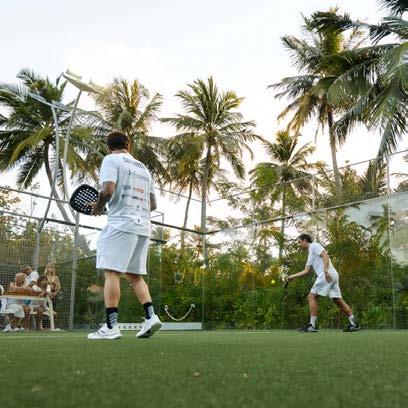
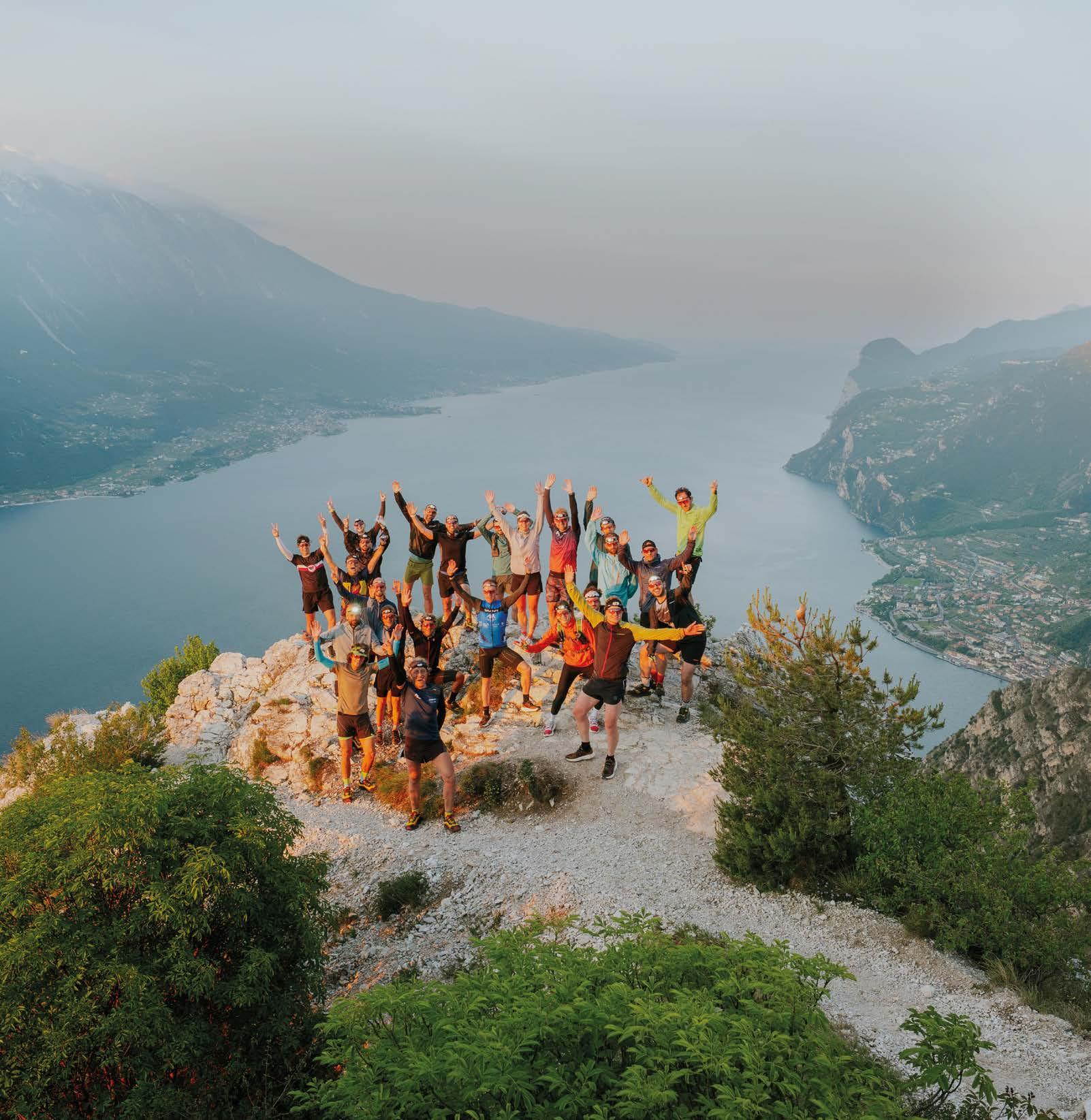
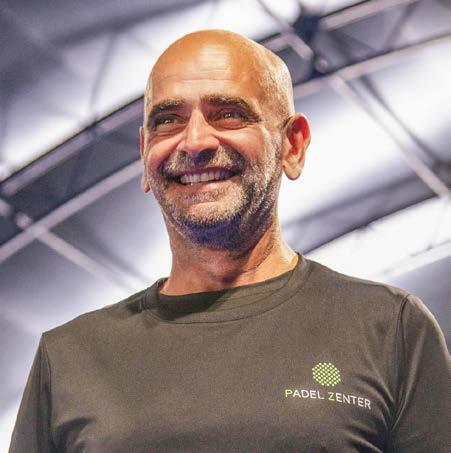
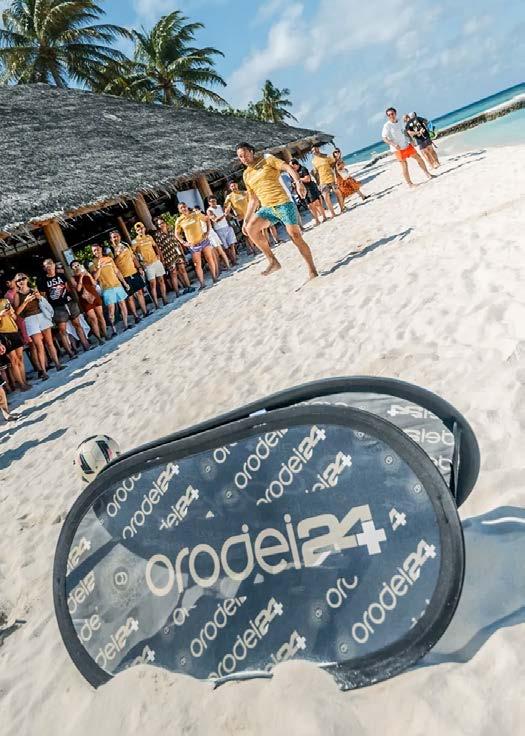
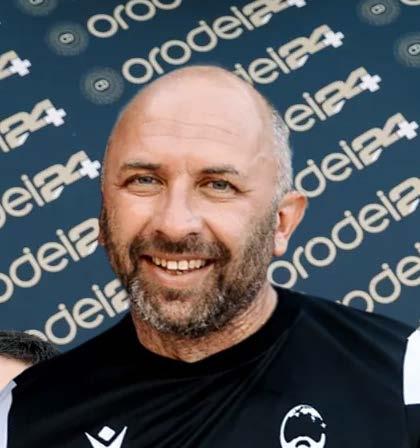
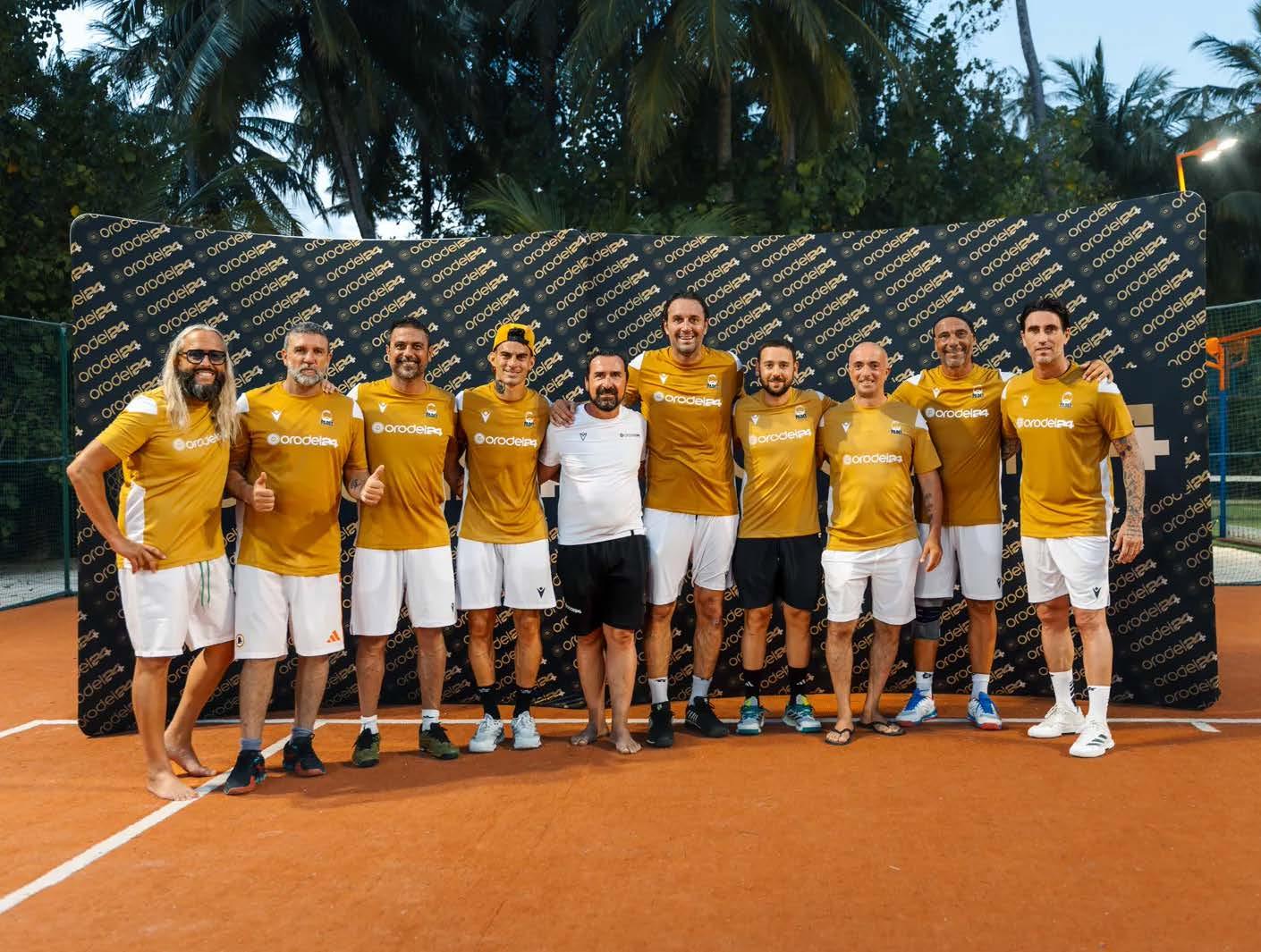
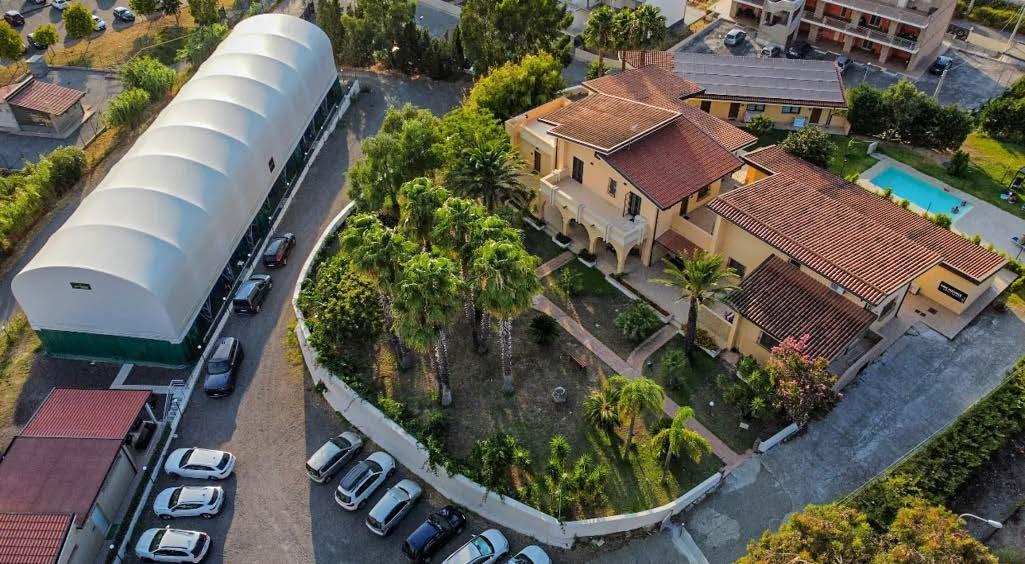
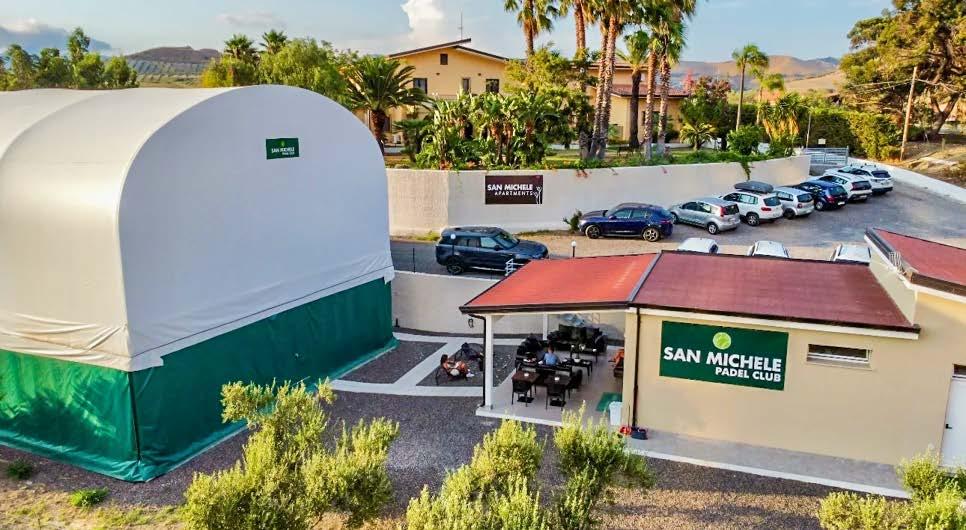
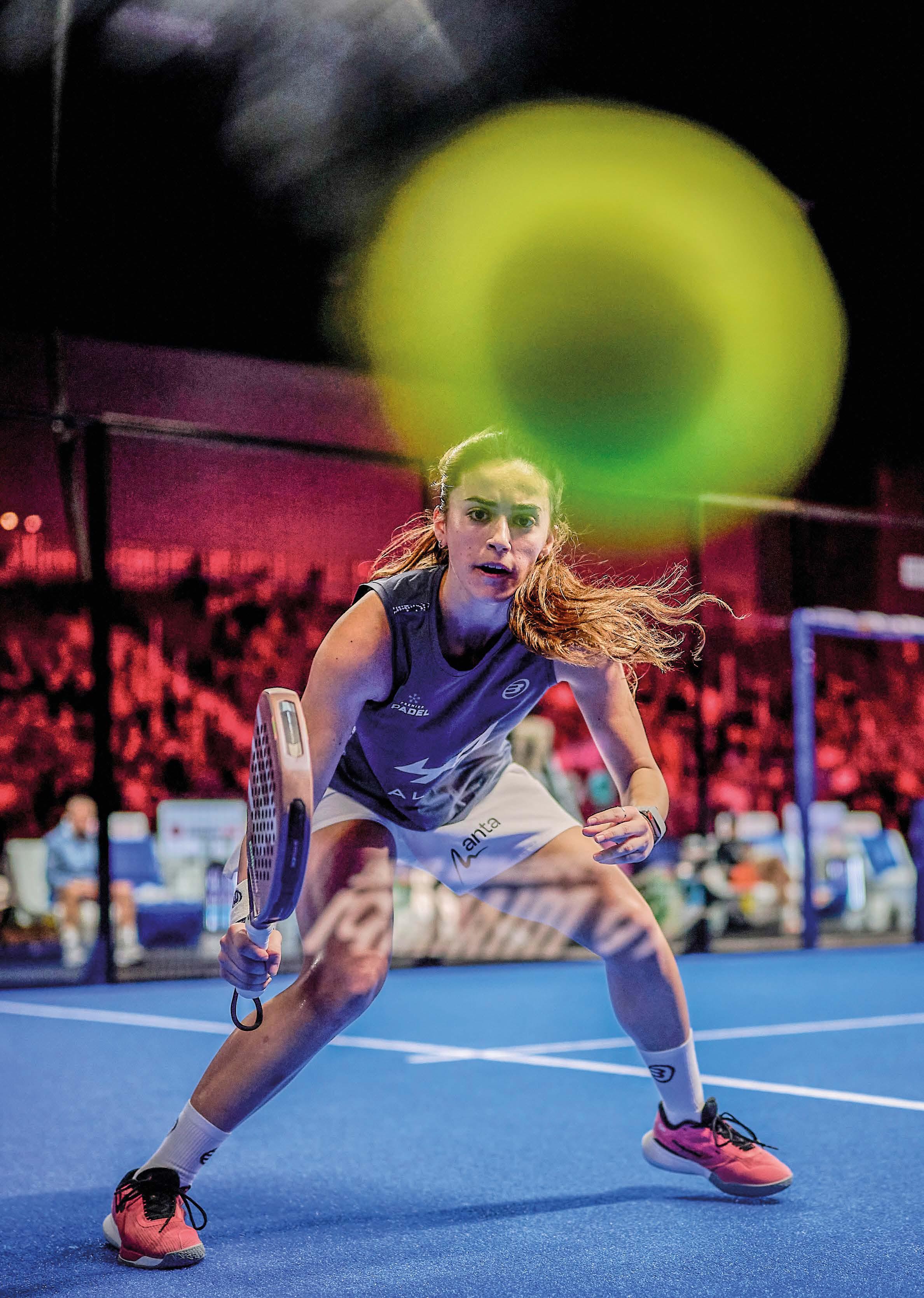
One of the most wonderful things was seeing how people who had started out as strangers began, within just a few days, to share unique moments, smiles, and emotions.
Gabriele Conrotto, founder Gundu Padel Cup pag.26
TOTAL PADEL
30 INTERVIEW WITH GIORGIA MARCHETTI
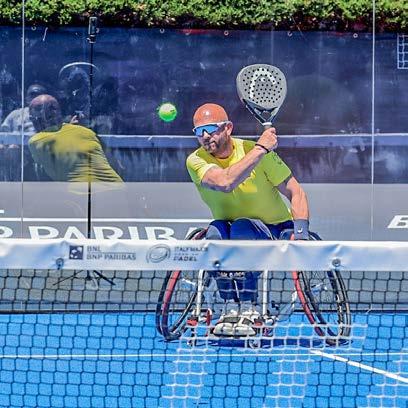
WHEELCHAIR PADEL
31 THE BNL ITALY MAJOR WHEELCHAIR IN ROME
FOCUS SHOP
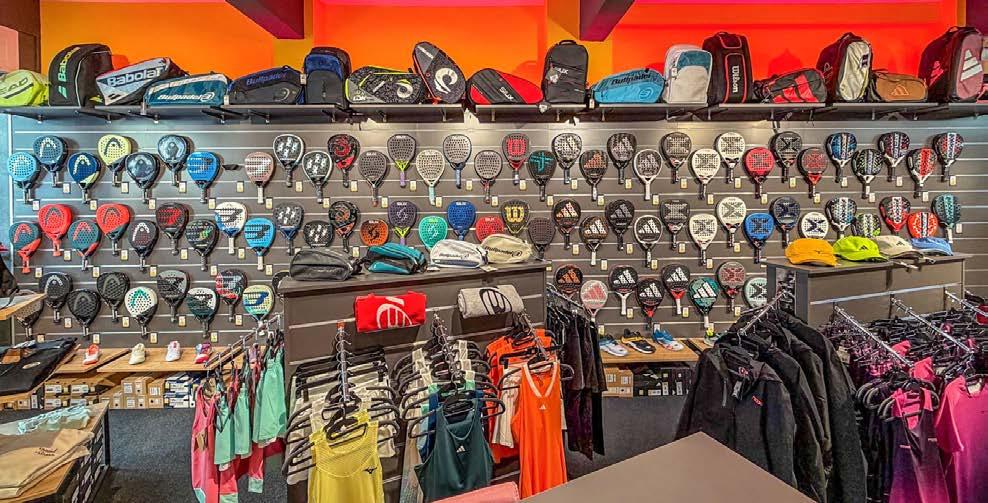
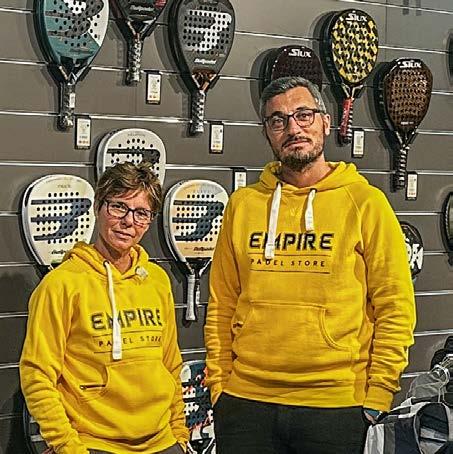
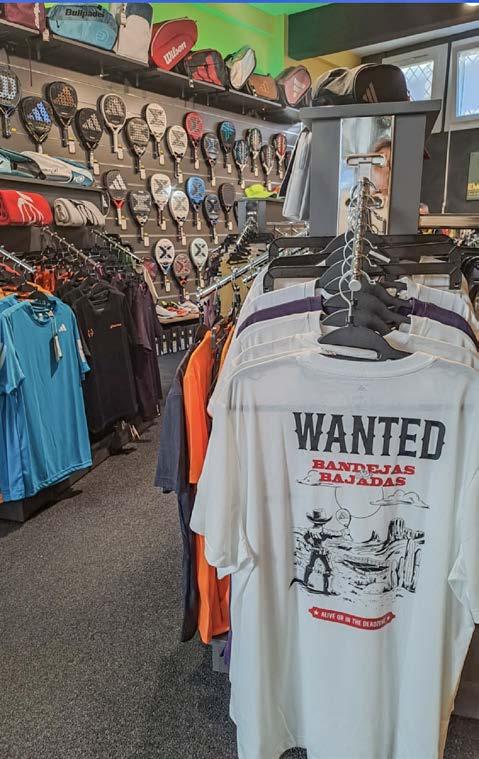
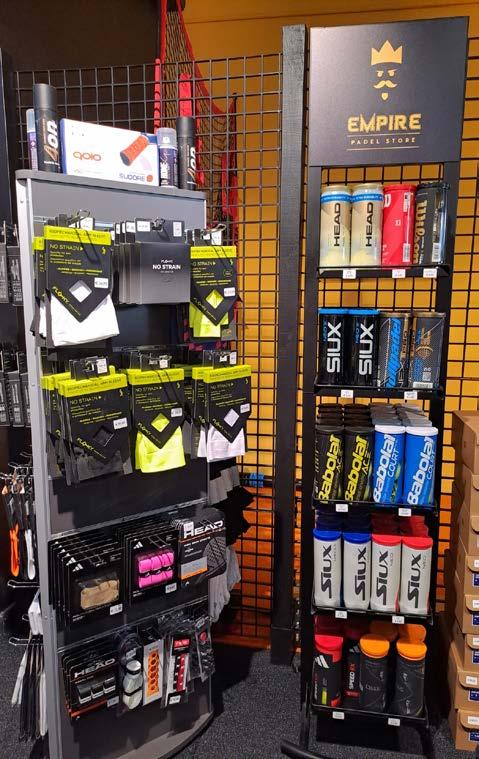
32 EMPIRE PADEL SHOP IN SANREMO (IM)
THE COACH SAYS
34 DESIGNING AN EFFECTIVE LESSON
THE CORNER OF THE MENTAL COACH
35 THE AMBITION TO BE A WINNER
INTERVIEWS
36 CARLOS BERNARDES AND FRANCESCA DI MASSIMO
PADELEGAL
38 FIELD CONSTRUCTION AND LEGAL CERTAINTY
AN ITALIAN FUTURE
by Daniele Pansardi
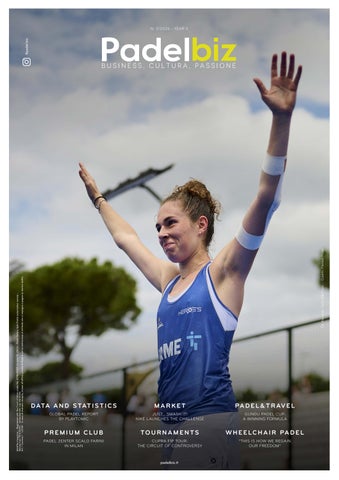
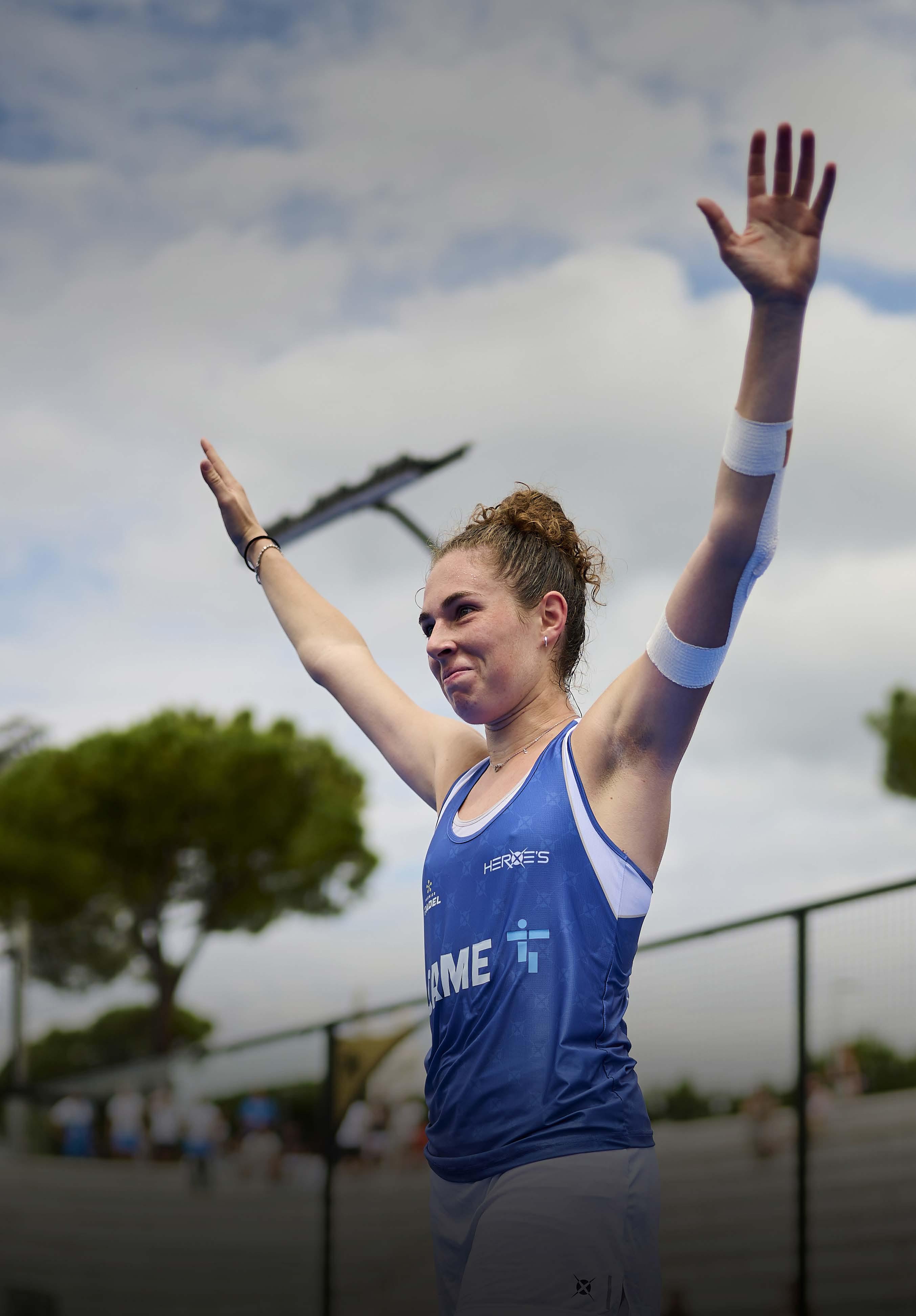
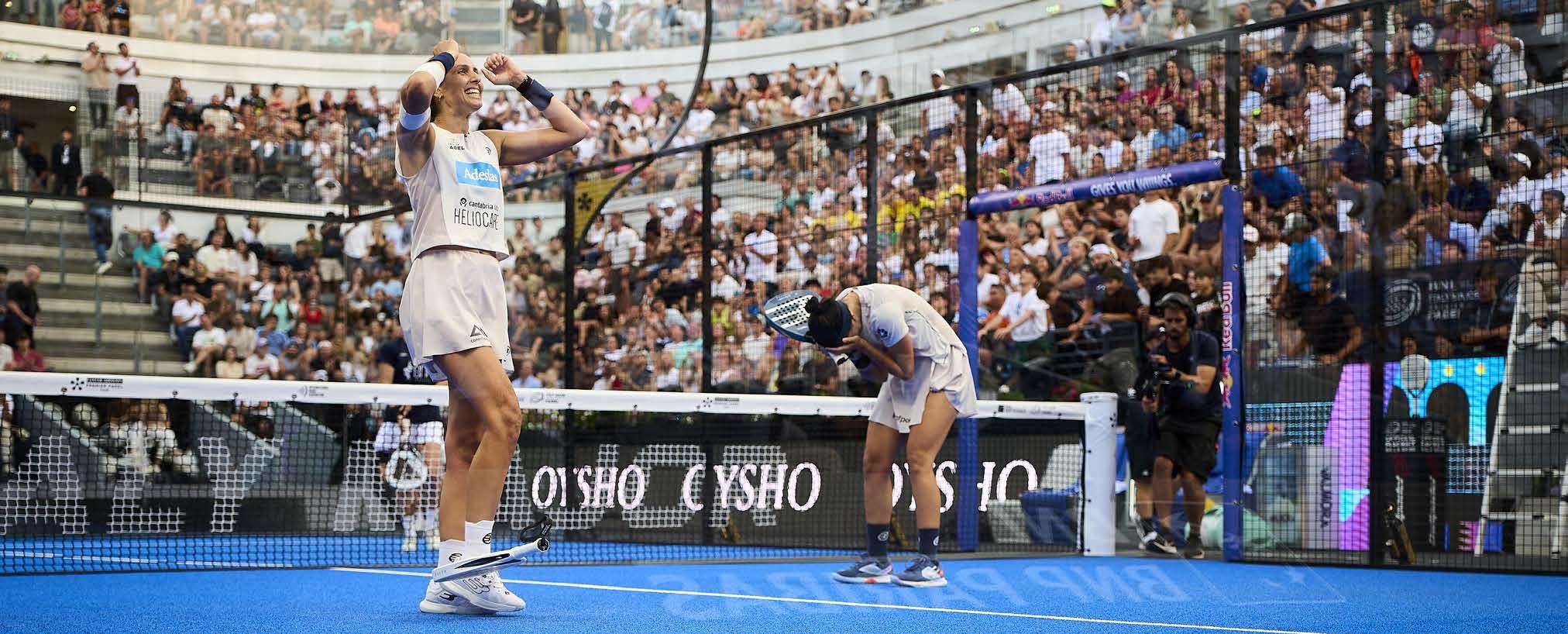
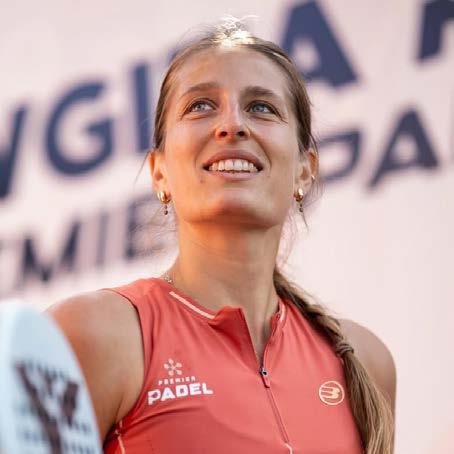
Since 2022, all the leading champions of our era have taken turns gracing our covers—from Fernando Belasteguín to Ari Sánchez, including Bea González and Agustín Tapia, all the way to Arturo Coello, Ale Gálan, and Juan Lebrón. For the first time, after 26 issues of Padelbiz, the cover has been rightfully claimed by an Italian player. We hope this is just the beginning, but then again, Giulia Dal Pozzo shows real promise. At 21, she’s ranked in the world’s Top 30, with the Barcelona Finals as a concrete goal for the second half of the season and the prospect of receiving future invitations from higher-ranked players. Meanwhile, her partnership with Nuria Rodríguez is working wonderfully, and not just because of their historic achievement at the Major in Rome. As we write this editorial, Rodríguez and Dal Pozzo have pulled off another small miracle in Valladolid: first saving five match points against Fernández/Araújo in the round of 16, and then dominating Salazar/Alonso 6-1, 6-1 to reach their second Premier semifinal in just a few weeks. The Spanish player, a solid and experienced athlete, is proving to be the ideal partner for the Italian, who has already demonstrated—both mentally and in her on-court presence—that she is a top player. She’s ready to fight for every point, in line with the demanding nature of a sport like padel. As she herself has admitted, she still has a lot of work to do technically—but that’s just another reason to believe in her path to growth. Rodríguez and Dal Pozzo weren’t even discouraged by a few negative results early in their journey together, which can often lead to hasty splits and easy breakups. Instead, they chose to focus primarily on the Premier Padel circuit, without looking for shortcuts in Silver and Bronze tournaments—a gamble that has now paid off.
In this regard, Giulia Dal Pozzo herself has spoken out in favor of a better redistribution of points, to reward results in Premier tournaments more heavily than those on the FIP Tour. In short, although she is very young, her ideas
are already clear. The issue raised by the Italian player was, in fact, addressed in Rome by the FIP and Premier Padel, who took steps to change the scoring system in the Premier circuit to discourage players from dropping down a division in search of easy points. We discuss the potential effectiveness of these measures on page 29. We’re talking about two circuits—Premier Padel and the FIP Tour—that are young and still developing their identities, but establishing clear boundaries in the relationship between the two parties is absolutely essential for the mid-tier of the global padel scene and for those who want to try to climb the rankings.
Those who look down on everyone else, however, are playing on other fronts. We’re talking about Agustín Tapia and his possible deal with Nike (page 16). The figures would be staggering, with a massive media impact that would benefit everyone—including Nox itself, which would find itself alongside one of the most recognizable brands in the world. Tapia has said it would be a dream come true—and who could blame him? Meanwhile, the market continues to show signs of vitality and excitement, although much depends on the lens through which you view it. The 2026 edition of Playtomic’s Global Padel Report serves as a useful litmus test for understanding the complex dynamics of the padel world (pp. 10–11), ranging from nations on the rise (the United Kingdom and Germany), others that are more stagnant (the U.S. above all), and more disciplined investments. Economic and financial analyses now take precedence over enthusiasm. Financial capital, investment funds, and private equity could play an increasingly significant role in the market, especially in light of the ever-closer link between padel and the real estate sector. Less sport, more business? What is certain is that the “pioneering” phase now seems to be behind us, and the sports business is taking its place. This will be one of the topics in the next issue.
Editors: Daniele Pansardi, Davide L. Bertagna, Andrea Farano, Marcello Ferrarini, Andrea Fierro, Gabriele Marini, Marco Paialunga, Adelio Rosate
Art Director: Simone Comi
Editorial Office: Via Tertulliano 68, 20137 Milan Tel: 02.87245180 - Fax: 02.87245182 Corso della Resistenza, 23 - 20821 Meda (MB) Email: redazione@padelbiz.it Website: padelbiz.it
Year 5 - Issue 3/2026 - Bimonthly journal
Registered with the Court of Milan under No. 6796/2023 on June 12, 2023.
Poste Italiane SpA - Postal subscription service pursuant to Decree-Law 353/2003—converted into Law 46/2004, Article 1, Paragraph 1—LO/MI. Registration in the ROC No. 16155, dated November 23, 2007
Printed by: Ingraph - Seregno (MB)
One copy: 1.00 euro.
The publisher guarantees the utmost confidentiality of the data in its possession. This information will be used to manage subscriptions and to send marketing information.
Pursuant to Article 13 of Law No. 196/2003, your personal data may be corrected or deleted at any time by writing to: MagNet srl SB
Data Controller: Benedetto Sironi
This issue was closed on June 26, 2026 MagNet srl SB @padel.biz
SANREMO PADEL EXPERIENCE: A MINI CIRCUIT OF FIP TOURNAMENTS THROUGHOUT ITALY
KUWAIT BECOMES A PREMIER PADEL MAJOR TOURNAMENT; PRETORIA MOVES FROM P2 TO P1
Sanremo Padel Experience is the direct evolution of the Sanremo Padel Tour and will combine sports, entertainment, and the promotion of the local area. The project is being carried out in collaboration with the FIP, with the goal of creating the best possible conditions for nurturing today’s young talents. The Sanremo Padel Experience will revolve around the tournaments of the FIP Promises World Circuit—approximately 90 worldwide by 2025—dedicated to the youth categories Under 12, Under 14, Under 16, and Under 18 age groups, as well as events on the FIP Beyond circuit aimed at amateur players in the Over 19, Over 40, and Over 50 age groups. The 2026 edition will visit several Italian cities—Perugia, Grosseto, Rome, and Turin—culminating in the final event in Sanremo in September.
PADEL WILL BE A MEDAL SPORT AT THE 13TH SOUTH AMERICAN GAMES
Padel has officially been added to the sports program of the XIII South American Games, to be held in the province of Santa Fe, Argentina, from September 12 to 26, 2026. Following the exhibition matches in Asunción in 2022, padel is taking a major step forward and will be among the medal sports in an edition of the Games that will involve 15 countries and 5,000 athletes, with a program featuring 43 sports and 60 disciplines spread across five different venues. The padel competition will take place in the city of Rafaela, at the new Microestadio, from September 22 to 25. The tournament will feature delegations from the National Olympic Committees affiliated with ODESUR, with each nation represented by one men’s and one women’s pair.
Premier Padel and the FIP have announced some changes to the 2026 season schedule, citing “operational difficulties caused by the conflict in Iran” as the reason. The Kuwait Premier Padel P1 (October 26–31) will be upgraded from P1 to Major status to compensate for the cancellation of the Doha Major, originally scheduled for April. Meanwhile, the Pretoria P2 tournament (July 27–August 2), which marks South Africa’s debut, will be upgraded from the P2 category to the P1 category. Both tournaments will retain these categories exclusively for the 2026 season. According to Premier Padel, these changes “are intended to rebalance the calendar in terms of both prize money distribution and the allocation of ranking points.”
The International Padel Players Association (IPPA), the association representing female players, has announced that Lucía Sainz has resigned from her position as President. During a meeting held in May, the Board of Directors accepted her resignation. To ensure institutional continuity and in accordance with the law and the association’s bylaws, Vice President Gemma Triay will serve as interim president until the end of the current season, during which time the Board of Directors has decided to hold elections for a complete renewal of the board. Similarly, Board Member Lara Arruabarrena will assume the role of Vice President of the IPPA.
SAE GROUP AND FITP SIGN AN AGREEMENT TO PROMOTE TENNIS AND PADEL COVERAGE
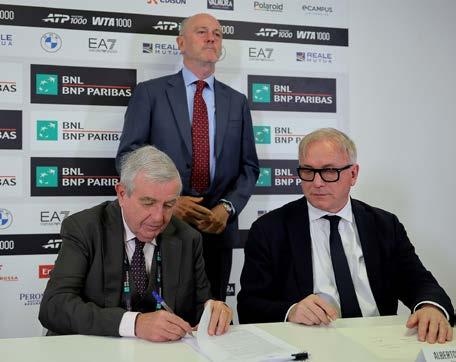
The SAE Group and the Italian Tennis and Padel Federation (FITP) have signed an agreement to strengthen the collaboration that began with the addition of Sportcast (the company that owns SuperTennis) to the publishing group. The SAE Group recently acquired La Stampa from the Agnelli family and also publishes several local newspapers. The agreement calls for the development of editorial, digital, and commercial synergies between the two organizations, with the goal of promoting coverage of tennis and padel. Planned initiatives include dedicated content in the SAE Group’s print publications, on its websites, and on its social media channels; special supplements covering major events and federal circuits; and co-marketing, training, and collaboration projects with SuperTennis.
THE FIRST LEVEL OF THE FIP ACADEMY COACHING PROGRAM IS NOW AVAILABLE
ANNUAL PADEL PROGRAM: THE NEW OFFERING FROM THE RAFA NADAL ACADEMY
The FIP Foundation Course, Level 0 of the FIP Coaching Program, is available online on the FIP website. It is a fundamental step in the development of a comprehensive, high-level training program for coaches. The goal is to enable coaches and referees, wherever they may be, to access quality education and actively contribute to the growth of padel in their regions. The first step in this journey is the FIP Foundation Course, the introductory level of the coaching program, available in English and Spanish. In addition, the platform will gradually integrate the Officiating Program (for referees) and the FIP Lab, an open space for expanding knowledge and skills in padel at all levels.
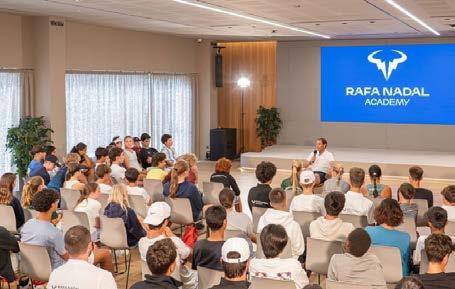
The Rafa Nadal Academy is expanding its offerings with the launch of the new Annual Padel Program, a comprehensive training program designed for young players who wish to combine high-level athletic development with their academic studies. Inspired by the model of its well-established tennis program, the project is based on three pillars: athletic excellence, an international academic education, and a values-based education rooted in the club’s ethos. Technical direction is entrusted to Rodri Ovide, former coach of athletes such as Gemma Triay, Juan Lebrón, Paquito Navarro, and Marta Ortega. His method aims to develop players capable of reading the game and making decisions under pressure.
GEMMA TRIAY SUCCEEDS LUCIA SAINZ AS PRESIDENT OF THE IPPA
Pictured: standing, Angelo Binaghi, president of the Italian Tennis and Padel Federation (FITP); seated, from left, Giancarlo Baccini, president of Sportcast, and Alberto Leonardis, president and CEO of the SAE Group
Federico Chingotto
POPE LEO XIV RECEIVES FIP PRESIDENT LUIGI CARRARO AND PAQUITO NAVARRO
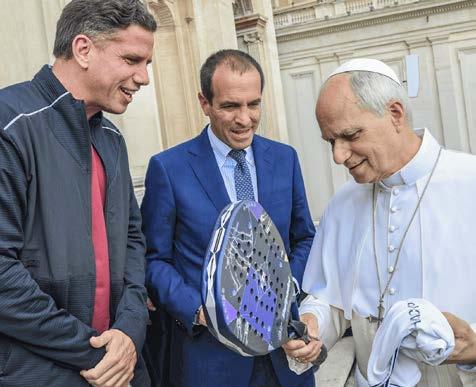
FIP President Luigi Carraro and Paquito Navarro were received by Pope Leo XIV on the occasion of the BNL Italy Major in Rome. The meeting was organized by Athletica Vaticana, the Holy See’s official multisport association, which has been officially recognized by the FIP since 2022. During the audience, Carraro presented the Pope with the official racket of the Rome Major as a symbol of a sport that has attracted millions of players worldwide in recent years. “It was a great honor to meet His Holiness and present him with the official padel racket of the Rome tournament, a symbol of a sport that promotes friendship, respect, and inclusion,” said President Luigi Carraro. “Pope Leo XIV’s words echo the values that padel embodies every day on courts in every country. Loyalty, social interaction, and true sportsmanship are the principles we see in every event organized and promoted by the FIP.”
RED BULL PADEL COURT LEGENDS: THE FIRST VIDEO GAME DEDICATED TO PADEL
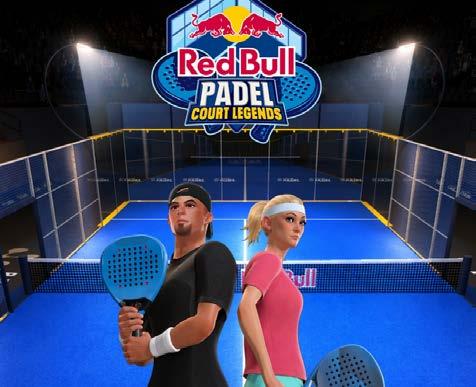
With Red Bull Padel Court Legends, the Austrian brand is introducing the first official Premier Padel video game. Officially launched on May 27, it aims to offer a realistic and immersive experience. Players will be able to manage a club, sign contracts, train athletes’ skills, and build a competitive team. The calendar mirrors that of the Premier Padel circuit, featuring Major, P1, and P2 tournaments. The game will be free and available on iOS and Android. It recreates the actual tournament venues, creating a strong and recognizable identity. Players will be able to experience a full season, with stages that mirror those seen on TV. The game uses a free-to-play model, meaning it can be downloaded and played for free.
WEEBORA IS EXPANDING INTO TENNIS AS WELL WITH THE TERRAROSSA PROJECT
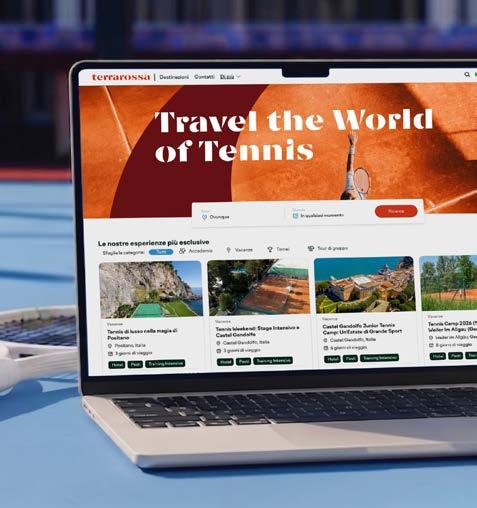
Terrarossa is the new vertical marketplace dedicated to tennis. The platform was created with the goal of bringing together and making accessible some of the most important and sought-after academies and tournaments on the international scene. Terrarossa will allow users to build, customize, and tailor their own experience based on their interests, schedule, and level of involvement in the world of tennis. To round out the offering, the platform features exclusive tennis vacations and group trips, ideal for those who want to combine the energy of the court with the joy of discovery and sharing with fellow enthusiasts. “With Terrarossa, we want to do for tennis what Weebora has successfully begun to do for padel: transform a passion into a gateway to memorable experiences, connections, places, and communities,” said Attilio Ruffo, general director and co-founder of Weebora.
I BECAME
ENJOY PADEL DURING THE BEST SEASON OF THE YEAR WITH PĀDEL NUESTRO
There’s a time of year when padel becomes something more. The days grow longer, the sun stays high in the sky until evening, and stepping onto the court stops being just a workout and becomes a true pleasure. Summer is the perfect season to play outdoors, reconnect with old teammates, and discover new courts. Pādel Nuestro, Europe’s largest e-commerce site specializing in padel, is launching the “Enjoy Padel in the Sun” campaign: a selection designed for those who want to make the most of this season, both on and off the court. Rackets from the top brands, performance shoes for every surface, bags, and lightweight apparel to beat the heat in style. Because in the summer, there are no excuses not to play. Just great matches, good company, and the sun lighting up every point.
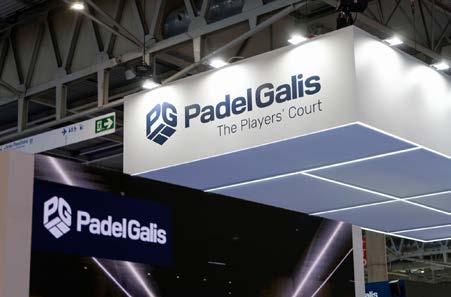
THE PADEL GALIS MANAGEMENT TEAM ACQUIRES A MAJORITY STAKE IN THE COMPANY
Padel Galis has announced changes to its ownership structure. The management team, led by CEO Juan Larraz and Director of Business Development Salva Segura, has acquired a majority stake with the aim of accelerating its strategic plan. The transaction also involves the entry of other minority investors, while Grupo Atitlan is reducing its stake to 27% of the share capital, nearly five years after its initial investment in the company in June 2021. Padel Galis, which has a production capacity of over 5,000 courts per year, exceeded 27 million euros in revenue in 2025.
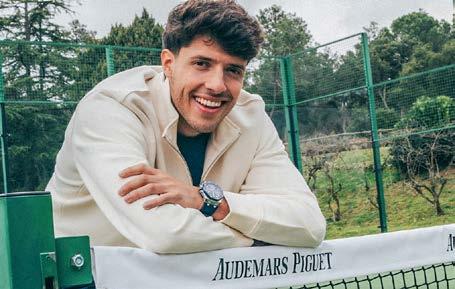
AGUSTIN TAPIA AND PREMIER PADEL GO LUXURY: NEW PARTNERSHIP WITH AUDEMARS PIGUET
Padel and luxury watches: Arturo Coello paved the way by signing a sponsorship deal with Rolex, hinting at a new dimension for elite sports, and now his trusted partner has joined him on this path. Audemars Piguet has chosen Agustín Tapia as its new brand ambassador, making its debut in the world of padel alongside the “Mozart of Catamarca.”
The Swiss company’s commitment will not be limited to its partnership with the Argentine player. Audemars Piguet has also become the official timekeeper of Premier Padel, further demonstrating the high regard in which the top international circuit holds premium and luxury brands.
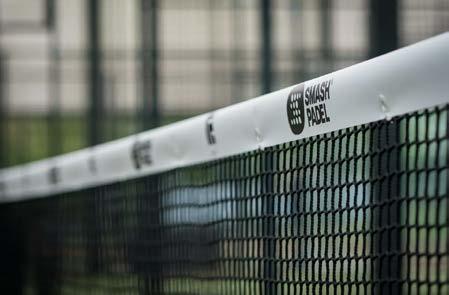
SMASH PADEL RAISES
£1.25 MILLION IN THE UNITED KINGDOM
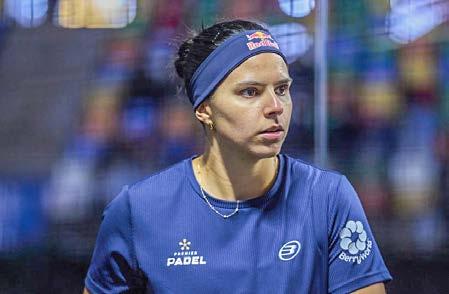
DELFI BREA JOINS THE RED BULL FAMILY
Red Bull continues to invest in the world of padel. The Austrian giant is a new sponsor of world No. 1 Delfi Brea, who took the court at the P1 tournament in Buenos Aires wearing a headband featuring the brand’s logo, thereby formalizing the partnership. The Argentine, born in 1999, is the fourth top-level padel player to be included by Red Bull in its sponsorship program, following Juan Lebrón, Ale Galán, and her former playing partner Bea González. Red Bull’s commitment to padel extends beyond partnerships with athletes; starting in 2023, the company will stream all Premier Padel tournaments on its website beginning with the quarterfinals, with commentary in Italian.
OYSHO BECOMES A PARTNER OF P1 LONDON AS WELL
Smash Padel, one of the leading operators of padel centers in the United Kingdom, has secured new funding of 1.25 million pounds to support its national expansion strategy, with the goal of growing from five to 20 centers. The investment was led by the British investment firm Middleton Enterprise. The company currently operates five centers in Bicester, Oxford, Whitstable, Mid Sussex, and Cardiff; a new facility will open in Taunton in the summer of 2026, while three more centers are scheduled to open before the end of the year. The funds will be used both to support grassroots participation and to develop young talent.
Oysho will be a Major Partner of the London Premier Padel P1, further strengthening its presence in Premier Padel. The tournament’s London debut is scheduled to take place at Olympia from August 4 to 9. Oysho’s partnership with the tournament aligns with the Spanish brand’s growth ambitions in the British market, following the opening of its flagship store on Oxford
will provide apparel for tournament personnel, including technical staff and ball boys and girls. The company is establishing itself as a major investor in Premier Padel, as Oysho is already a partner in various capacities for tournaments in Rome, Milan, Madrid, Valladolid, and Dubai.
Street. Oysho
ADIDAS LAUNCHES A SPECIAL COLLECTION FOR THE 2026 WORLD CUP
If there’s one thing we’ve learned in recent years, it’s that the line between soccer and padel has become very thin, at least in Italy. Adidas has helped strengthen this connection; it is one of the most innovative and beloved brands in soccer, and in padel, it has become a solid and recognizable brand thanks to a supplier like All for Padel and brand ambassadors like Ale Galan. The German company has brought it all together with the new 2026 World Cup Special Collection: a limited-edition line of racquets that brings the colors and graphics of the most iconic national soccer teams directly to the padel court. The national team rackets available feature the designs of Italy, Argentina, Spain, Germany, France, England, Mexico, Colombia, Belgium, the Netherlands, the U.S., and a “Multination” model representing the three host countries.
PREMIER PADEL REVAMPS ITS OFFICIAL WEBSITE AND SMARTPHONE APP
Premier Padel has launched its new official website and mobile app. The new platforms introduce advanced customization features, allowing users to select their favorite players and access tailored content, including news, match schedules, and results. This makes it easier than ever to follow the most important matches and stay up to date throughout the season. The redesign also improves navigation across all sections, offering faster access to real-time results, tournament information, and player content on both desktop and mobile devices. Fan-favorite features such as Premier Predict, Premier Padel’s interactive prediction game, remain, and a new section dedicated to the press is now available.
ATHLETES
IS THE FOURTH PLAYER MISSING? SERENA WILLIAMS TAKES THE COURT
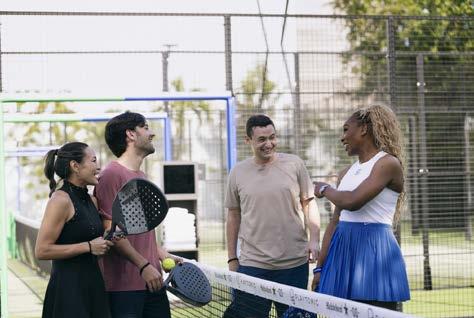
Heineken 0.0 has announced Serena Williams as one of its new global ambassadors as part of a multi-year partnership with the American legend, which will center on padel. Universally recognized as one of the greatest athletes of all time, Serena has embraced padel in recent years as a way to stay active and meet people who share her passion. To launch the collaboration, the tennis star spent a day in Miami surprising some unsuspecting padel players: she stepped onto the court as a “last-minute teammate” for a match booked through the Open Match by Heineken 0.0 feature on the Playtomic platform. The players had no idea that their fourth partner would be a champion with 23 Grand Slam titles.
A GLOBAL MAP FOR INVESTMENTS
In the latest edition of the Global Padel Report, Playtomic analyzed five market categories. A useful tool for understanding the sport’s evolution around the world by Daniele Pansardi
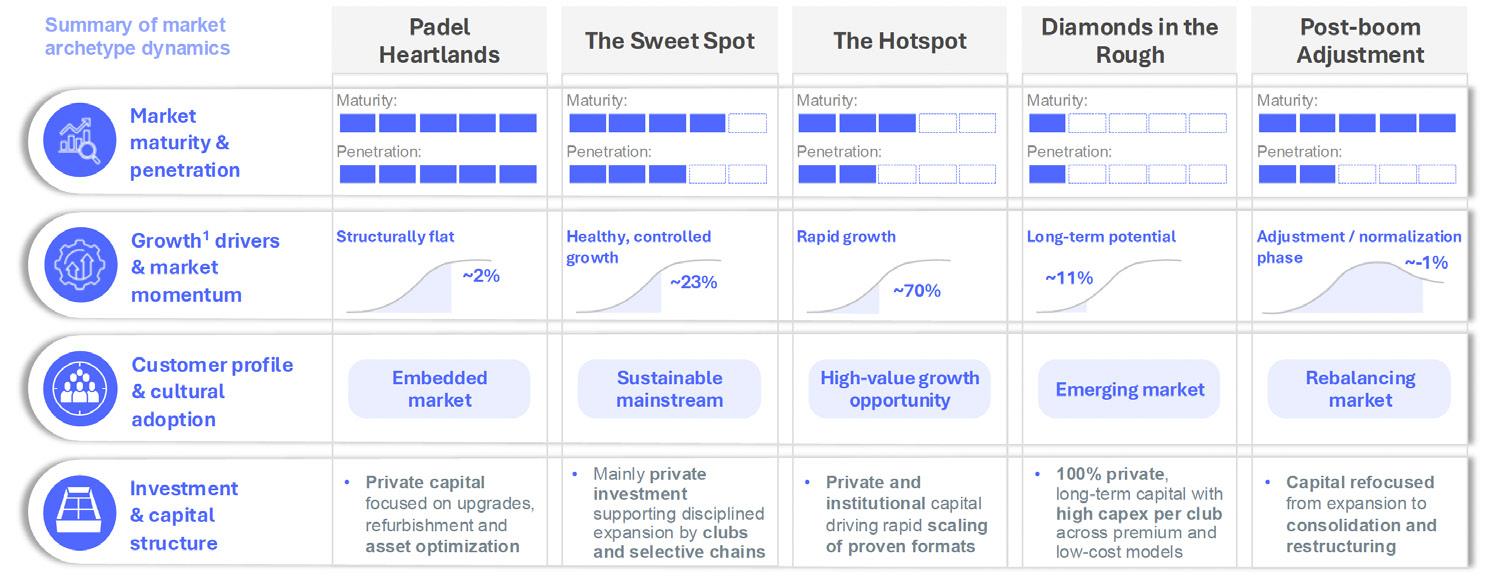
Over the years, Playtomic’s Global Padel Report has become a useful tool for gauging the health of the global padel movement. While previous editions still discussed padel as a novelty or a phenomenon to be studied, this edition of the Report takes it a step further by delving into more structural issues related to the “financialization” of the sport. We are on the cusp of a new era at the macroeconomic level, where investments are more disciplined and market analysis takes precedence over enthusiasm. To navigate this complexity, Playtomic has adopted an analytical lens based on certain market archetypes, distinguishing between infrastructure-driven expansion and expansion driven by actual demand absorption.
A ROADMAP FOR INVESTMENTS
THE FIVE MARKET CATEGORIES IDENTIFIED BY PLAYTOMIC
The five-archetype model proposed by Playtomic is an effective technical tool for comparing markets with divergent adoption rates and dynamics. This classification allows us to view countries not as static categories, but as evolving ecosystems.
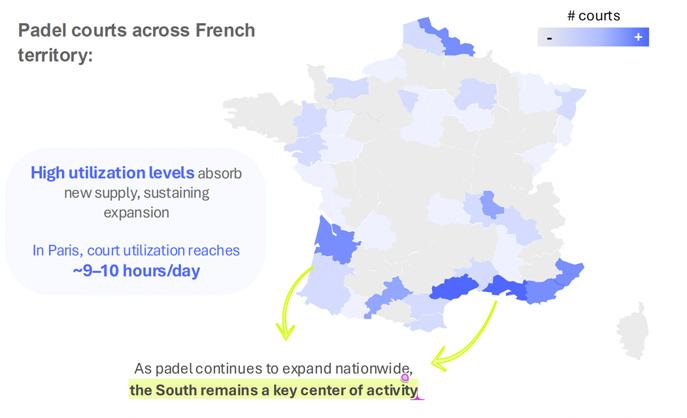
PADEL COURTS THROUGHOUT FRANCE
• Padel Heartlands (Spain, Italy, Argentina, and Portugal)
Fully mature markets that serve as "structural anchors," setting global benchmarks for prices and employment. They can easily support high demand.
• The Sweet Spot (the Netherlands, Belgium, South Africa, and France)
Regions with controlled growth, where supply is perfectly aligned with demand and the ecosystem is in balance.
• The Hotspot (United Kingdom, Germany, and Ireland)
Markets with high spending propensity where demand is outpacing infrastructure or where the ecosystem is undergoing rapid development.
• Diamonds in the Rough (the U.S., India, Brazil, Indonesia, Poland, India, and Australia)
Emerging and fragmented markets with irregular demand and high price sensitivity, often limited to metropolitan hubs.
• Post-Boom Adjustment (Sweden, Finland)
Markets facing a phase of saturation, where supply exceeds demand, resulting in a need for consolidation and price adjustments.
PADEL HEARTLANDS:
EXTRACTING VALUE FROM A SATURATED MARKET
In markets such as Spain, value creation has shifted from building new courses to optimizing existing assets. These markets set the operational standards for the entire global industry. The strategy for operators is based on three pillars: an increasingly premium offering, with clubs seeking to provide a greater
number of high-end services to increase revenue per court; regular maintenance and upgrades to facilities, a key driver for ensuring the necessary quality; a transition toward management models that enable economies of scale through more standardized operational management; and the integration of padel into real estate investments (which we’ll explore in more depth in the next issue of Padelbiz).
THE SWEET SPOT: SUSTAINABILITY AND EFFICIENCY
"Sweet Spot" markets are the most disciplined and stable ones, where growth is solid and steady. The benchmark for economic resilience, with utilization levels consistently above average thanks to disciplined growth. It is already a mainstream sport in every sense, but still far from saturation, with a balanced mix of occasional participants, regulars, and competitive athletes.
According to Playtomic, France has completed the transition from “Hotspot” to “Sweet Spot.” Growth has become regionally structured, thanks to the integration of padel into the infrastructure of existing tennis clubs.
The Netherlands is the quintessential model of operational efficiency, driven by professional operators who focus on customer loyalty and fair pricing. The market is dominated primarily by operators managing multiple centers.
South Africa is the most significant new development in this category for 2025, standing out for its extremely high player participation and the rapid expansion of private clubs, thereby confirming its status as a market with high growth potential.
HOTSPOTS
AND DIAMONDS IN THE ROUGH: UNTAPPED POTENTIAL
While the challenge in the Hotspots is primarily logistical and infrastructural (in the United Kingdom, the demand from players exceeds the availability of courts, while Germany is engaged in a massive expansion and renovation of courts), growth in the Diamonds in the Rough is less uniform and more uneven.
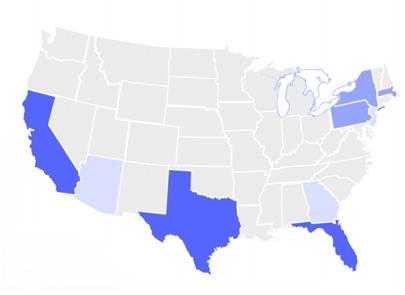
The United States provides a prime example. For several years now, many industry insiders have been hoping that padel would take off in the U.S. as well, opening up a multimillion-dollar market, but the reality to date is quite different. Padel has been concentrated mainly in the Miami area, New York, and certain areas of Texas, the East Coast, and California. Outside of these hubs, padel remains relatively unknown, while very high commercial costs and red tape are slowing its spread and expansion in areas where there appears to be potential. Its “premium” positioning also makes it a rather niche sport at the moment.
The spread of padel in the United States, with a high concentration in just a few areas of the country. Despite the ambitions of industry players around the world, the U.S. market faces a series of structural obstacles that will limit its growth in the short term
Indonesia, on the other hand, added about 800 courts in 2025, but the trend remains limited to luxury resorts and metropolitan hubs. In these areas, price sensitivity remains a critical factor that requires flexible business models to avoid the risk of alienating the target audience.
POST-BOOM ADJUSTMENT: THE NORDIC MARKETS
Sweden and Finland serve as a cautionary tale for the entire industry. Excess supply relative to the market’s actual capacity to absorb demand has led to premature saturation. The result is a period of structural adjustment, characterized by low utilization rates and downward pressure on hourly rates. For investors, the Nordic lesson underscores that without an understanding of the depth of local demand, indiscriminate expansion can quickly erode margins. The market in these areas is now moving toward forced consolidation, where only clubs with efficient cost structures and professional management will survive.
Decrease in the average number of hours of daily court use in Sweden
TOWARD A MORE PROFESSIONAL MODEL?
Padel is completing its transformation into a full-fledged industry, where financial capital, investment funds, and private equity will play an increasingly significant role. Setting aside the specific examples of countries like Qatar, Saudi Arabia, and the United Arab Emirates—where the entire ecosystem relies on large investments from a few private individuals—the global trend is clear: success no longer depends on simply building courts, but on the quality of management and stan-
dardization.The player has evolved from “occasional” to “mainstream and regular,” demanding high-quality services and operational continuity. In short, in the future, we may see more and more chains or operators managing multiple clubs applying economies of scale to ensure greater profitability and financial efficiency. Less sport, more product? What is certain is that the “pioneering” phase now seems to be behind us, and in its place, the sports business is gaining ground.
THE NUMBERS BEHIND THE PROMISES
How will the global movement evolve strategically?
The Global Search Report attempts to provide some answers, starting from a fundamental certainty: padel has become a well-established and tangible asset
by Daniele Pansardi
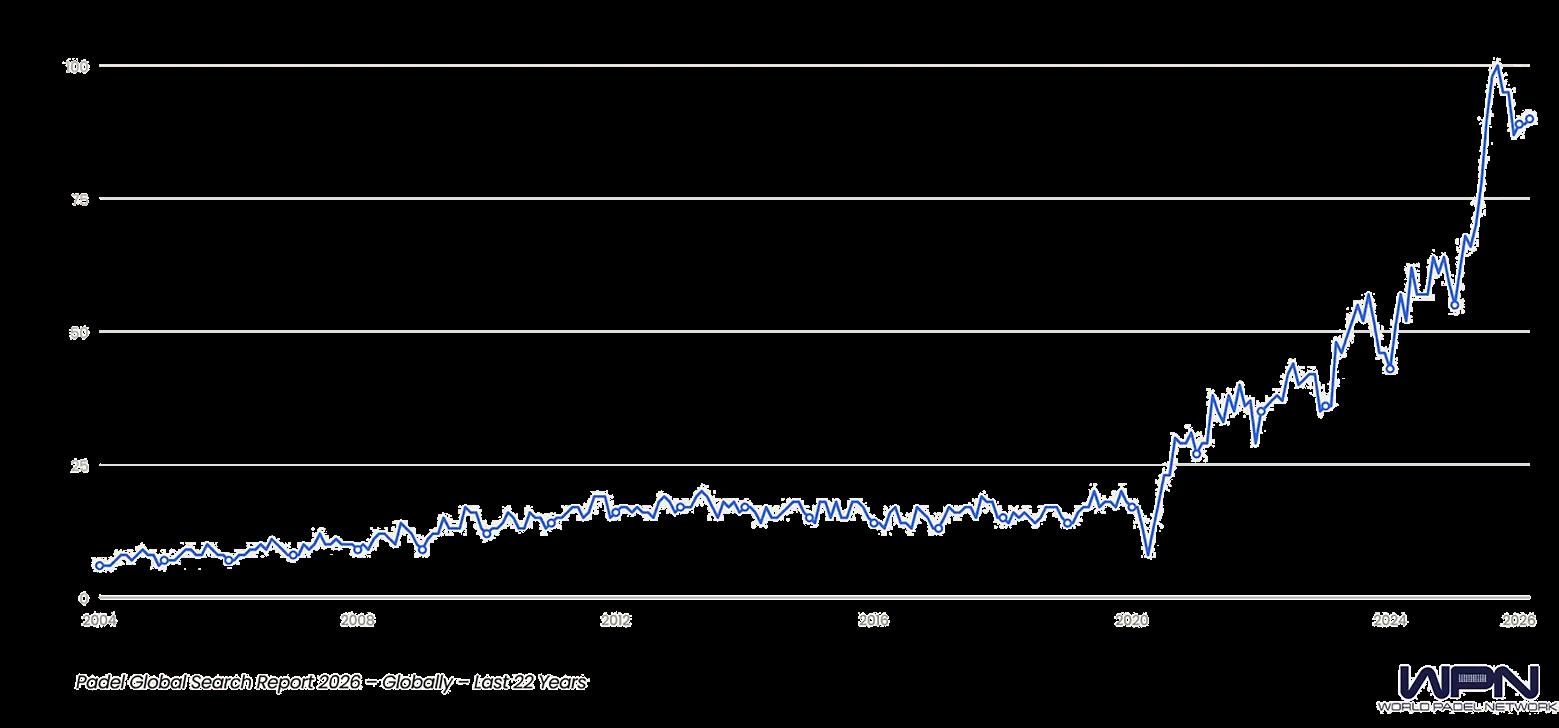
Padel is no longer just an interesting anomaly in the sports landscape, or a passing fad fueled by post-pandemic enthusiasm. Today, it is, to all intents and purposes, a pillar of the global sports industry, attracting great interest from investors, institutions, and operators outside the sector. For high-level stakeholders, viewing this sport through the lens of data means recognizing a transition that has already taken place: the shift from a “niche curiosity” to a “well-established strategic asset.” Padel has structurally redefined many social and commercial habits, reshaping leisure time and real estate investment flows. The 1,026% increase in global search interest between 2004 and 2025 is a significant and impressive figure, and it allows us to establish a starting point.
The growth was sudden and took place mainly over the course of just a few years, during which many players flooded the market—sometimes with few ideas and nothing but enthusiasm. But now, intuition alone is no longer enough. A more sophisticated management approach is needed—one that can interpret market trends and cycles and—why not?—translate digital signals into potential business insights, distinguishing between the background noise of social media and actual market trends.
PADEL GLOBAL SEARCH
2026 REPORT: THE METHOD
Monitoring online searches—analyzed in detail by the Padel Global Search Report—serves as an indicator of consumer intent. In a digital world, search volume can even predict future spending behavior. The report’s methodology is based on Google Trends, which uses a score from 0 to 100 to measure the direction and scale of global interest, regardless of language or specific terminology used, where 100 indicates peak interest for the time period (a value of 50 indicates half the popularity of the peak, while 0 indicates insufficient data). This approach, based on the word “padel” within Google Trends’ “Topics,” allows for capturing genuine interest even when expressed in different languages, offering a granular
and scientific perspective. The analysis conducted by Jamie Rowe (founder of World Padel Network) segments this data set into four types of intent, each with distinct commercial implications and varying weights.
• Informational intent: This represents the discovery phase. New users looking for rules or tutorials, indicating the potential for user base growth.
• Navigational intent: users searching for specific clubs or leading brands, indicating that brand equity is in the process of being consolidated.
• Commercial intent: the decision-making phase in which equipment, racquets, or franchise opportunities are compared—a crucial phase for hardware manufacturers.
• Transactional intent: direct actions, such as booking a court or enrolling in a coaching course—the primary driver of operating revenue.
GLOBAL GROWTH ANALYSIS (2025–2026)
If 2020 was the turning point, 2025 established what is known in financial analysis as a new baseline for global interest. Over the past year, search volume has grown by 49% compared to the previous twelve months, demonstrating that the peak in September 2025 was not an isolated event, but the result of a compound and structural trend. Amid a sea of numbers, there is one figure in par-
ticular that seems very reassuring to club managers and potential investors: even during the week with the weakest performance, the search value stood at 56/100. To put this into context, this “annual low” would have been an all-time record only at the beginning of 2024. What does all this mean? It means that market volatility has decreased dramatically. A more solid foundation ensures more predictable court occupancy rates even during the off-season. Data from the first quarter of 2026 (January 89, February 93, March 96/100) confirm that the trajectory is moving along a new path of stability, making the exceptional the new operational norm.
HOW GEOGRAPHY IS CHANGING
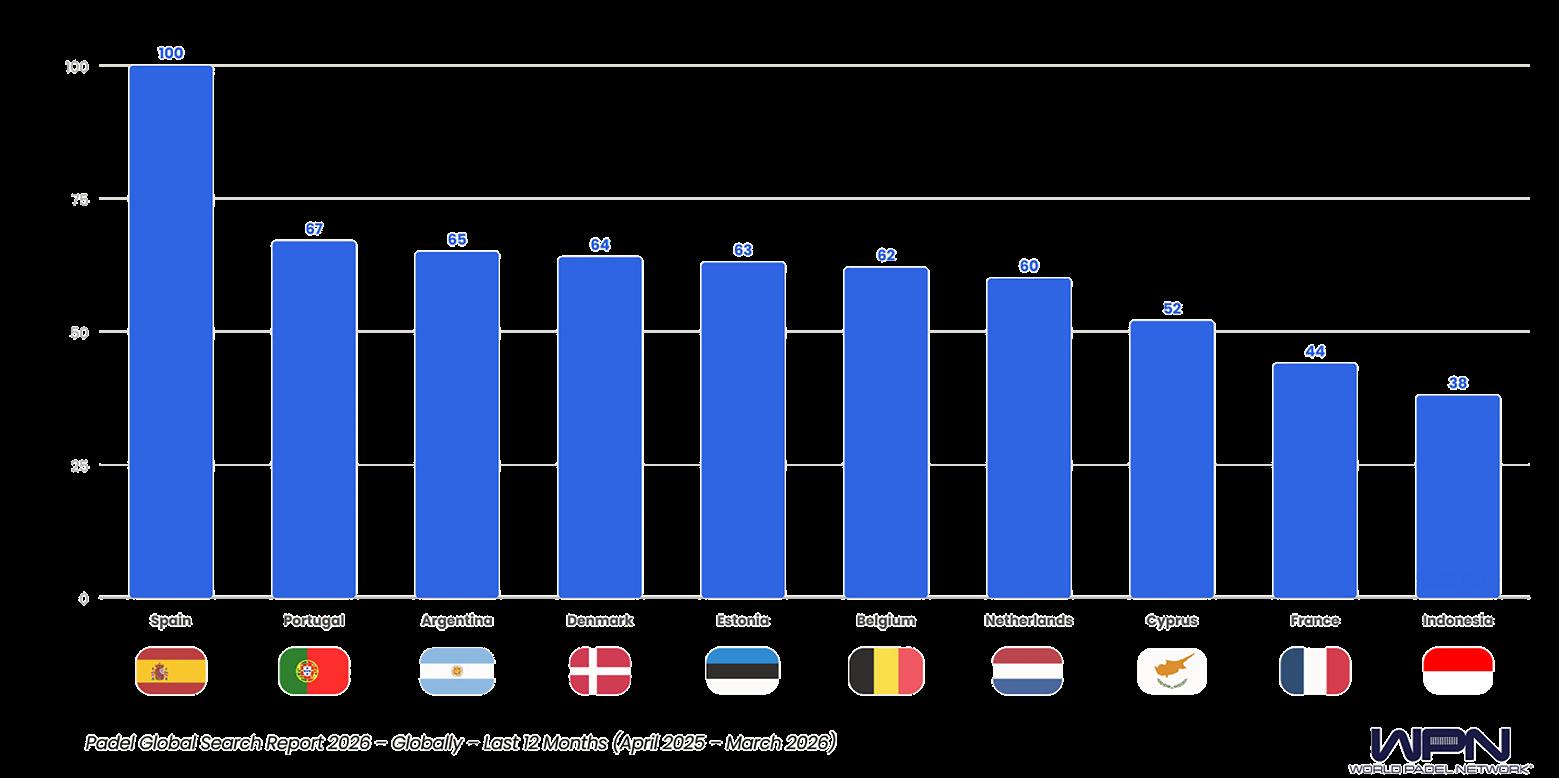
THE TOP 10 COUNTRIES WITH THE HIGHEST SEARCH RATES
APRIL 2025 – MAY 2026
The global padel landscape is undergoing a geographical shift, which requires a strategic reallocation of resources. There is no longer a single padel market, but rather a constellation of markets with divergent life cycles. If we look at Spain (+0.5%) and Italy (-0.2%), we see signs of natural saturation. In these areas, growth can no longer be horizontal (new clubs popping up everywhere), but must become vertical: optimizing processes, digitizing reservations, and improving the overall offering. Another interesting case is Portugal (-11%): a decline in search volume does not necessarily indicate a decline in the sport, but rather a level of maturity where consumers no longer need to “search” for information, having already integrated the sport into their daily routines.
In Northern Europe, however, we can observe an interesting phenomenon. Sweden, once a pioneer of explosive growth, has fallen out of the global Top 20 (a warning sign to assess potential oversupply). In contrast, Norway (which has risen to 34/100 in the global index) continues to show healthy and steady growth. Estonia serves as a case study: with a population of just 1.3 million, it maintains an average search intensity of 81.7/100, demonstrating how high population density can create extremely profitable and resilient hyper-local markets.
In untapped markets, where padel is growing at a more steady (and perhaps even healthier?) pace, the metrics are showing spectacular numbers. United Kingdom (+121%) and Ireland (+98%): markets showing reversed seasonality. While the Mediterranean market declines in December, the United Kingdom reached peaks (97/100 in January 2026) driven by strong indoor supply.
Indonesia (+887%): With nearly vertical growth between May and October 2025, it is the first Southeast Asian market to enter the Top 20, as we previously mentioned in Padelbiz No. 5/2025. With a population of 275 million people, Indonesia serves as the gateway to a high-volume Asian market.
Ukraine (+280%): a figure that demonstrates the resilience of people’s innate desire for social interac tion, even in times of extreme crisis. India and Pakistan: India recorded growth of +128%, while Pakistan re corded growth of +198%. In India, following a period of stability, a struc tural shift was observed in November 2025: search volume rose from an average of 52 to 87/100 in just a few weeks and has since remained at that level. Although India still accounts for only 1% of the global index, these trends suggest that the Asian “giant” is beginning to wake up.
THE WORLD OF RACKET SPORTS
According to the report, padel is es tablishing its own unique identity dis
tinct from tennis and pickleball. Tennis naturally remains the undisputed leader (about six times the volume of padel), but its demand sees huge spikes during the Grand Slams and significant drops during the rest of the year. Padel, at least for now, is driven by people’s interest in playing the game. This suggests that fans seek out padel not to watch it on TV, but to play it themselves: for a club owner, this is the most valuable metric, as it ensures stable cash flow that is less dependent on major events.
In the U.S., as one might easily imagine, the situation is reversed: pickleball dominates, with participation levels 10 times higher than those of padel. However, the report highlights that since November 2025, interest in padel in the United States has begun to stabilize at higher levels (from an average of 48 to about 70/100 domestically). The United States today represents nothing more than a high-potential market: it is still in the early stages of the adoption curve, offering vast opportunities for those bold enough to export the European business model to a territory where pickleball has already laid the cultural groundwork for “social” racket sports.
A GUIDE TO THE INDUSTRY
The 2026 data provide investors with one certainty: padel has successfully moved beyond the media hype phase and entered a phase of structural consolidation. The growth of the market’s “base” (floor) is the indicator that transforms the sport from a gamble into a safe investment. The ability to distinguish between mature markets (Spain, Italy), which require efficiency, and rapidly growing markets (the United Kingdom, India, Indonesia), which require bold infrastructure investment, will be the true differentiator between success and mere participation. Padel, one small step at a time, is coming of age, requiring a leadership class capable of looking beyond the court to understand the macroeconomic dynamics of what is now a global phenomenon.
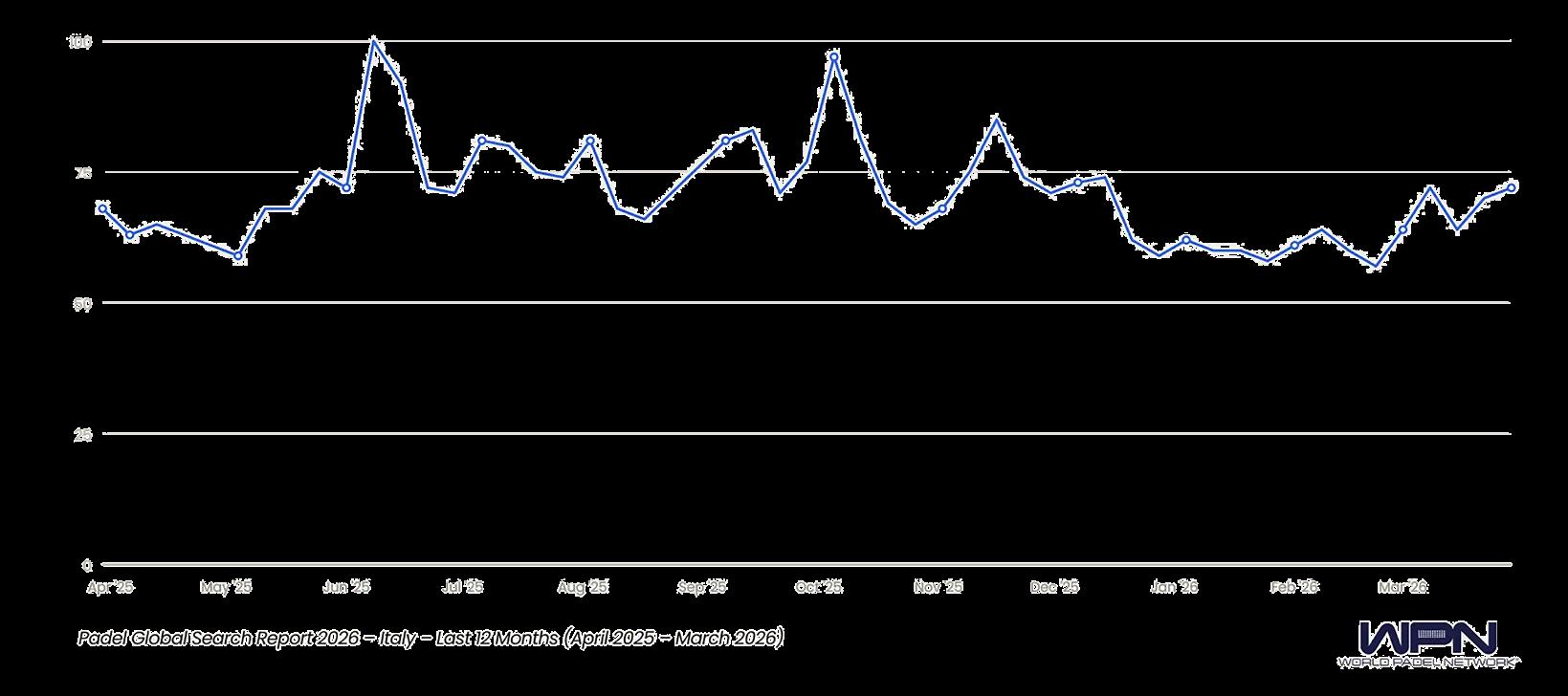
IN PADEL IN ITALY FROM APRIL 2025 TO MARCH 2026
INTEREST
JUST… SMASH IT!
The Nike Swoosh has already made a quiet appearance on Leo Augsburger's shoes, but rumors of a partnership with Agustín Tapia seem to be throwing down the ultimate challenge to the market
by Gabriele Marini
And so, on a warm morning in mid-June, the news that the entire padel world had been waiting for for years finally arrived. Nike is reportedly set to enter the padel market in 2027. The journalist behind the scoop was Marca’s Alberto Bote, who added fuel to the fire by revealing that the American brand’s top athlete will be none other than Agustín Tapia. The news spread in a matter of minutes, going viral and effectively forcing Nox to take a stance, admitting that talks are underway and that there is something concrete in the works. But let’s take it one step at a time.
THE AUGSBURGER EXPERIMENT?
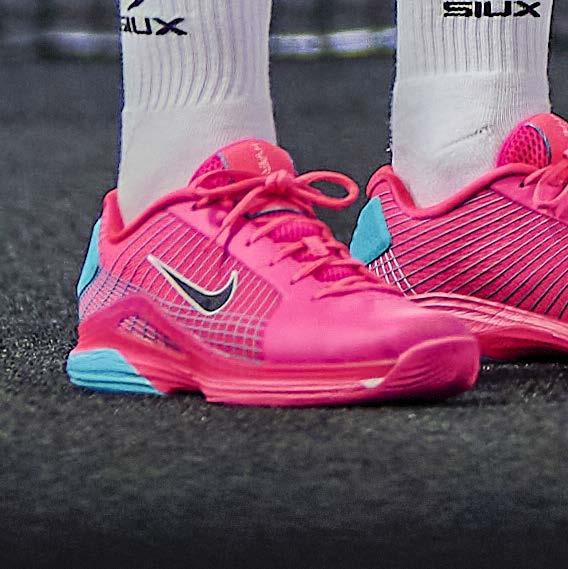
It all began in April of this year, when it was impossible not to notice Leo Augsburger’s new shoes—a pair of fuchsia-pink Nikes that sparkled on the black court in Brussels.
This seemed strange, given that the Argentine sensation had just signed a 14-year contract with Siux—a decision that at the time appeared to be a very risky gamble on the part of the Spanish company, but which, in light of Nike’s upcoming entry into the market, has proven to be a highly forward-thinking move. Siux does not yet have any shoes in its catalog, and for this reason, it’s reasonable to assume that Nike has begun to seriously test the market by partnering with one of the brightest talents on the world stage, providing him with footwear that has sparked the curiosity and desire of many fans. The collaboration between Nike and Leo is still ongoing, so much so that the athlete has continued to show off shoes in different colors and styles and has even responded—more or less subtly—to a few questions on the subject. But the real turning point came during the tournaments in Buenos Aires and Rome.
STRATEGIC SITE VISITS
Under the direction of Nasser Al-Khelaifi, owner of the Premier Padel cir-
cuit and the PSG soccer club—whose official equipment sponsor is none other than Nike—several representatives from the multinational company reportedly traveled in person to Argentina and Italy. There, they were impressed by the potential of the top professional circuit and became convinced that now is the right time to enter the market, especially given the company’s latest quarterly financial results, which were not exactly stellar. What better way to enter the padel market than by partnering with the world’s number one player? There are certainly significant technical hurdles, given that Tapia is under contract with Nox through December 2028, and the company that first backed him was quick to make it clear that any potential deal would have to go through them. Negotiations are underway, and it’s reasonable to assume that a compromise will be reached along the lines of what we saw with Arturo Coello (wearing On and using a Head racket), with Tapia set to wear Nike and play with a Nox racket, effectively becoming a marketing icon unlike anyone else before him in the world of padel. Early (unconfirmed) figures suggest an offer of 60 million euros over 10 years, compared to the 1.5 million the Argentine currently earns. A flood of money that would have been unthinkable just a couple of years ago. And Tapia? When recently pressed on the subject, he replied that he had learned everything from the thousands of news stories circulating on social media and that it would be a dream come true for him to wear Nike—while, of course, respecting his current sponsor.
Following the high-profile news of recent months—with On, Rolex, and Audemars Piguet joining as partners of Coello, Tapia, and Premier Padel— Nike’s arrival would be further proof of the sport’s tremendous global growth. We all know very well what Nike is capable of in marketing and communications. Tapia would join an exclusive club of athletes including Cristiano Ronaldo, Jannik Sinner, Carlos Alcaraz, Kylian Mbappé, and LeBron James, potentially becoming the ambassador for padel in new markets such as the U.S. and Asia.
The new era of padel as an even more global sport seems poised to begin.
Leo Augsburger wearing Nike shoes at P2 in Brussels
The white version of Augsburger's Nike shoes, spotted at P1 in Valencia
THE PADEL INDUSTRY KEEPS ON GROWING
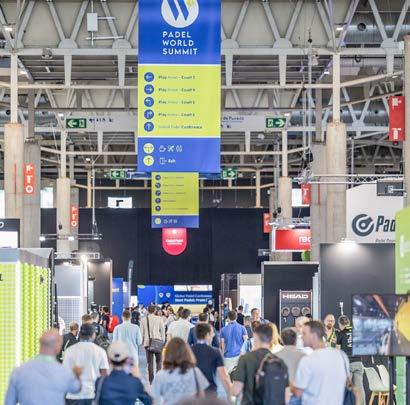
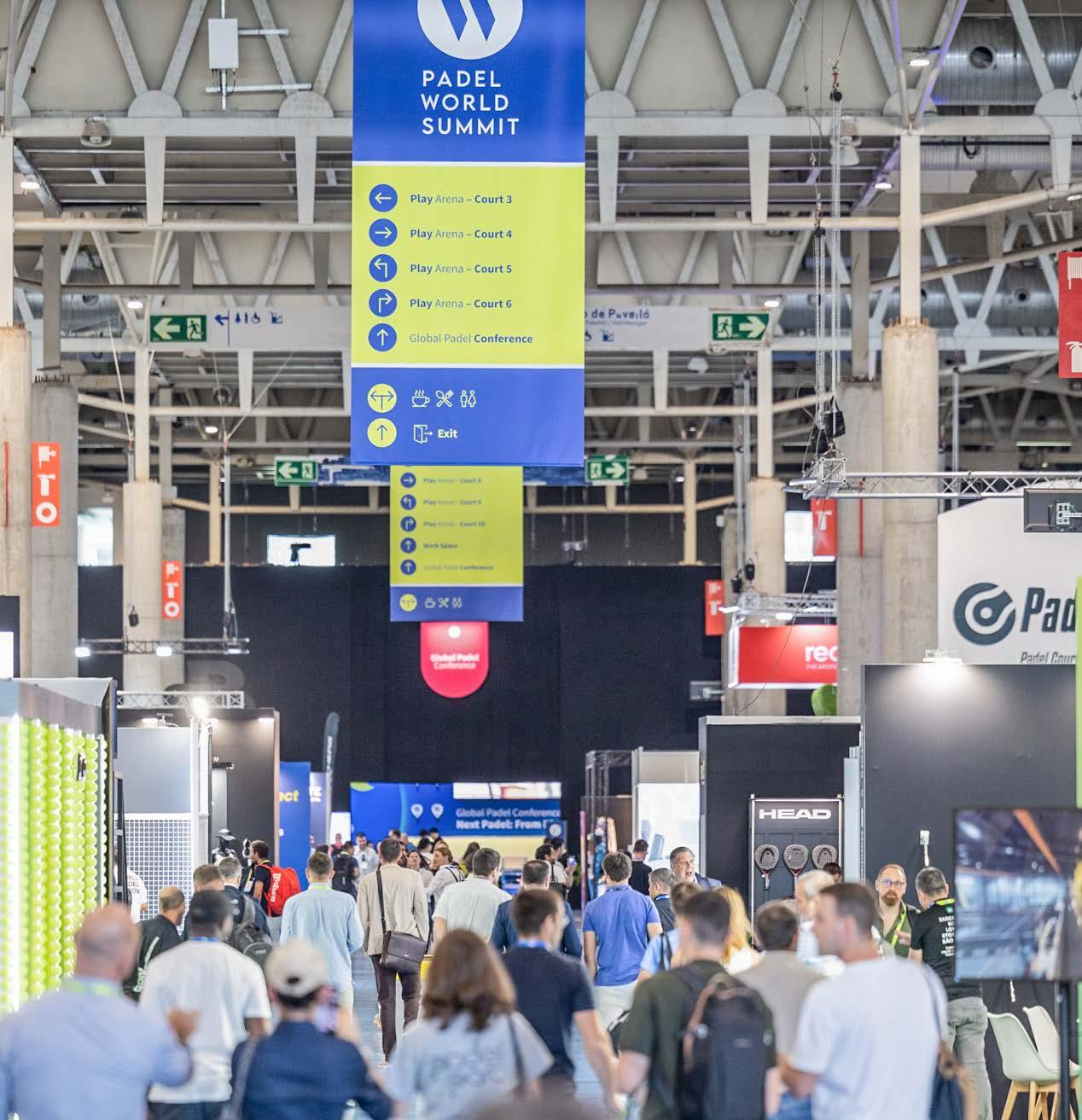
In Barcelona, for the third edition of the Padel World Summit, more than 7,000 industry professionals gathered. This broad and international turnout underscores the increasingly central role of the sports market
by Daniele Pansardi
Under the arcades of Pavilion 6 at the Fira de Barcelona Gran Via, the “game-set-match” of the third edition of the Padel World Summit (PWS) did not merely mark the conclusion of a simple trade show, but reaffirmed the transition that padel is undergoing from a cultural phenomenon to a strategic asset of the global sports industry. This was also underscored by Playtomic’s Global Padel Report, which was presented during the event itself and is featured extensively in this and upcoming issues of Padelbiz, and was fu rther confirmed by the atmosphere felt while walking among
the booths. We’ve moved beyond the phase of discovery and curiosity—which is certainly still present, given all the new innovations on display—to a phase of planning and strategy. Barcelona is one of the technical hubs of padel and has reaffirmed its status as a global hub for the padel business, while also serving as a testing ground for the financial and economic developments of this sport. The 2026 edition of the event, organized by Cluster Internacional Padel (CIP) and Fira de Barcelona, served as a show of strength for a sector that has all the hallmarks of an industrial enterprise. The discussion was no longer limited to potential scenarios (whether or not to invest), but focused on when and how to invest, and how to optimize every action. The quality of the dialogue among industry players—who transformed the summit into a catalyst for partnerships—is steering the industry toward long-term stability.
THE NUMBERS FROM THE PADEL WORLD SUMMIT
+20% 7.208
THE RECORD-BREAKING NUMBERS
The final figures from the 2026 Padel World Summit offer a clear snapshot of an ecosystem that has accelerated its march toward a global scale, reducing its historical dependence on the Spanish and Italian markets. In short, padel has come into its own. The figures from this year’s event show growth that defies external economic downturns:
50%
140 compared to 2025 participants international participation exhibitors from more than 30 countries
• 7,208 participants, a 20% increase compared to 2025;
• 50% international participation: for the first time in the event’s history, half of the visitors came from outside Spain, signaling a global expansion that has now become a structural feature;
• 140 exhibitors from more than 30 countries, with a geographic diversity that spans the entire value chain.
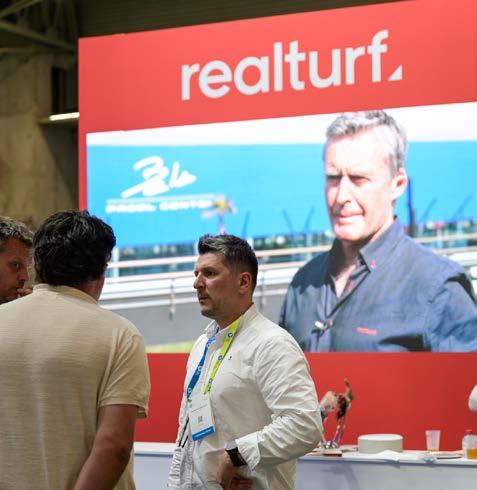
This demographic balance provides greater security for the industry, protecting manufacturers from fluctuations in individual national markets. The beating heart of PWS 2026 was the high volume of B2B trade, facilitated by a results-oriented organizational structure. In an industry trending toward consolidation, the ability to bring together the world’s leading decision-makers in a single physical space drastically reduces transaction costs and accelerates the formation of strategic alliances. The Investor & Business Forum was remarkably productive, with a total of 1,175 business meetings, 293 of which were specifically dedicated to the Hosted Buyers program, which brings together international investors and buyers with significant decision-making power. The caliber of the participants further enhanced the event, lending it a high-level prestige: we’re talking about industry leaders such as Padel Nuestro, Playtomic, adidas, Head, and Babolat, as well as technical specialists like HIT-X by Padelgest, Realturf, Mondo, TenCate Grass, LED Projects, and Okatent.
LA PADEL GLOBAL CONFERENCE
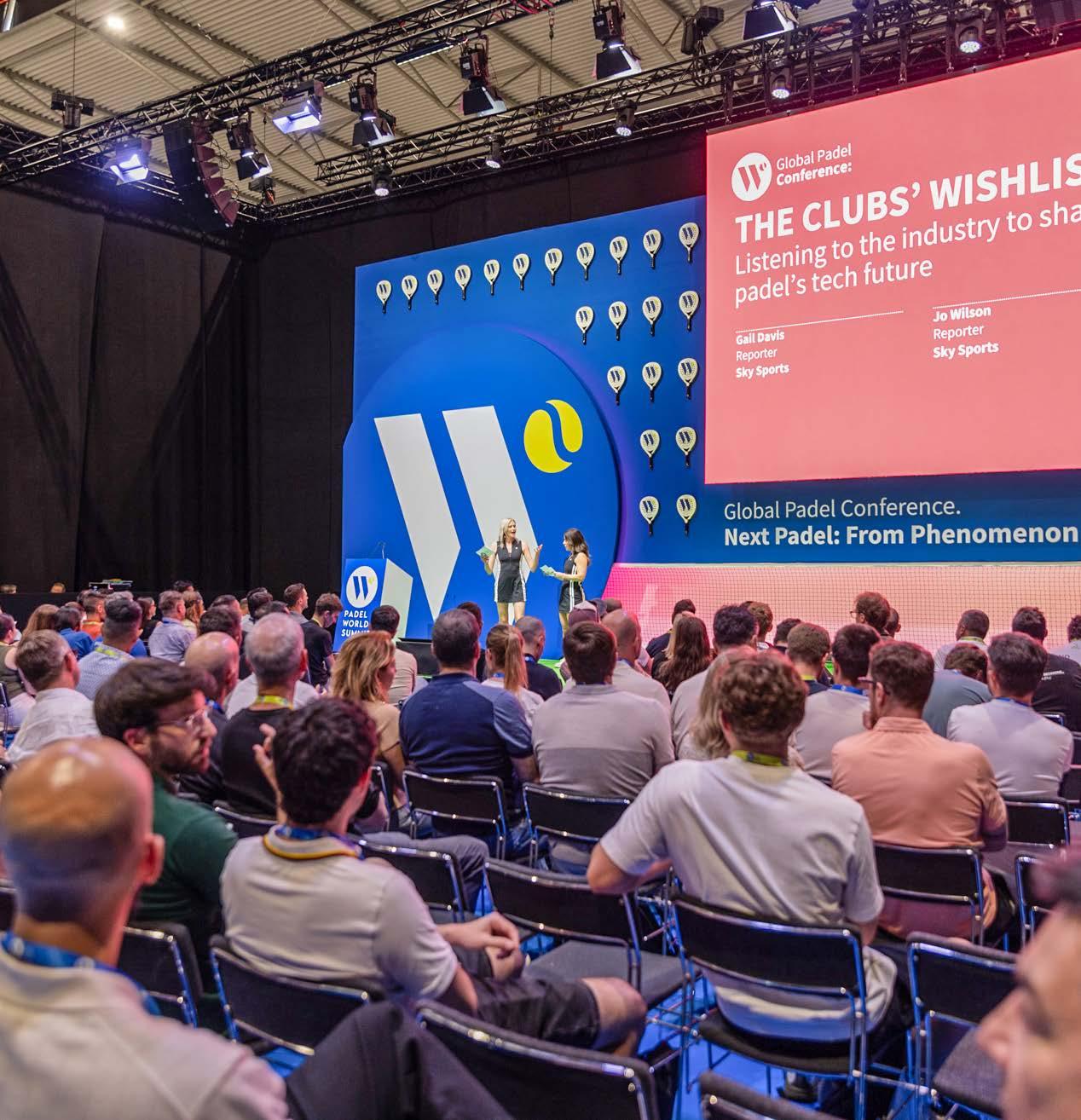
The Padel Global Conference was particularly significant, where key figures such as Pedro Claveria (co-founder and CSO of Playtomic) explained how open APIs are transforming clubs into increasingly integrated businesses. The presence of Abigail McCulloch (founder of the Alma Padel club) and Darren McMullen (founder of Racquet Club in Australia) highlighted how the business model is evolving toward more sophisticated and integrated management,
while Astrid Thams analyzed the evolution of the Hexagon Cup into a global team-based competition, opening up new avenues for corporate sponsorships.
INNOVATION ARENA: WHERE IDEAS ARE BORN
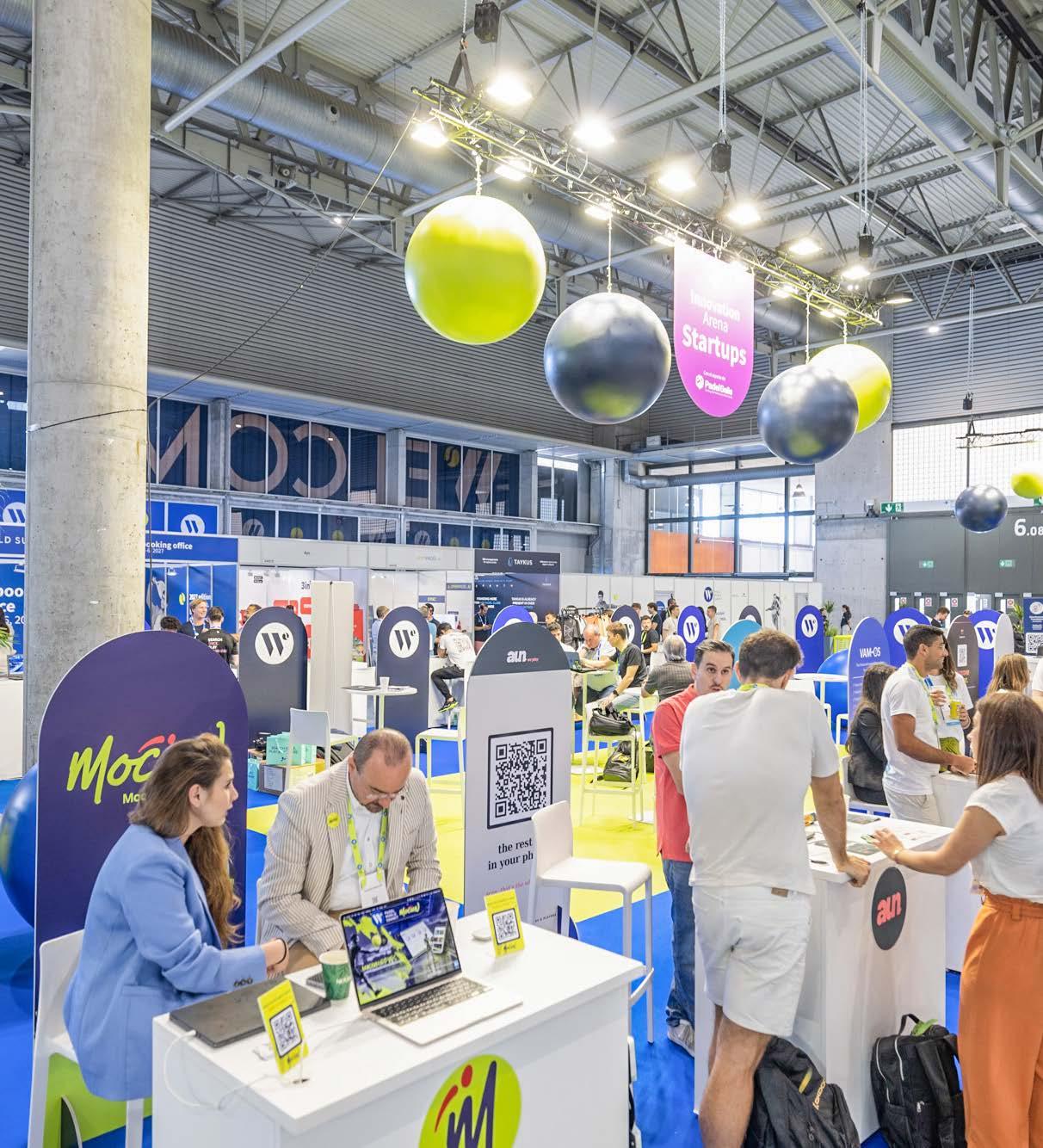
As competition intensifies, technological innovation is no longer a luxury but a necessity for clubs’ survival. The Innovation Arena, sponsored by Padel Galis, showcased 20 startups aiming to drive the industry’s progress through digitalization and sustainability. The panel of experts recognized three solutions in particular.
VAM-OS (1st Prize)
A financial management platform that provides real-time visibility into profitability and cash flow.
CourtBrain (2nd Prize)
A neutral shot-detection system that integrates various tracking solutions, enhancing technical analysis without tying the operator to a single proprietary hardware platform.
Bopa (3rd Prize)
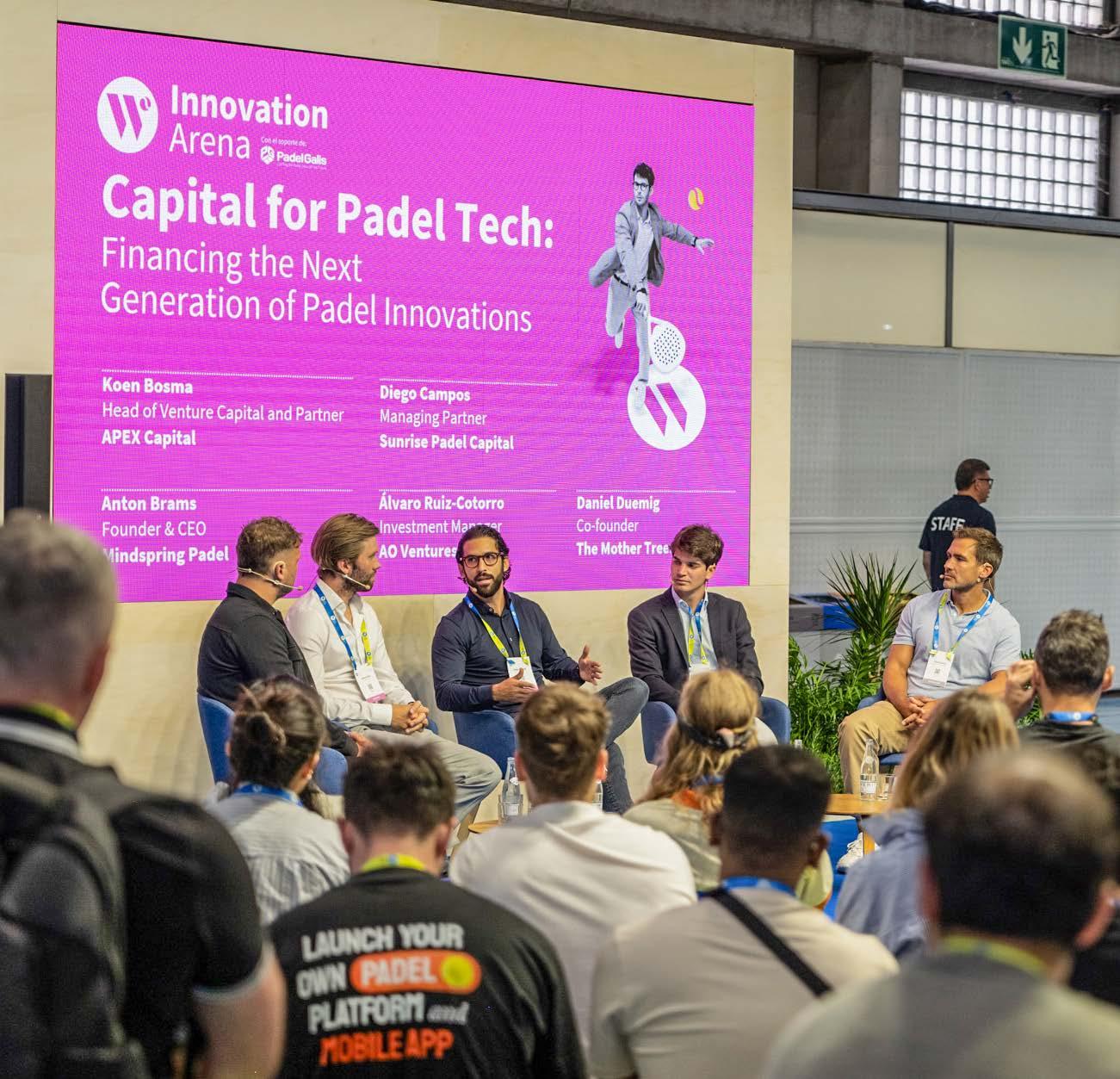
A solution for repressurizing balls intended for rental. An innovation that combines sustainability with a drastic reduction in the cost of consumables. The involvement of global investors such as Alan Flatt (InvestTrek Capital), Ali Al Arif (SPADREC Investment Group), Hale Yildiz (Lumia Partners), and Oriol Cortada (Tripelsum Investments) indicates that padel has caught the attention of international private equity firms. The discussion shifted to the scalability of club models and the financing of tech companies capable of digitizing the entire player experience, as discussed by panelists Diego Campos (Sunrise Capital) and Koen Bosma (APEX Capital).
THE ROAD TO 2027
The 2026 Padel World Summit concludes with the certainty that the industry seems to have increasingly found its center of gravity. It was not merely a celebration for its own sake. The trade show serves as a tool for navigating an increasingly complex and interconnected global market that is moving toward a phase of structural maturity. This is reflected—and should continue to be reflected in the future—in the higher caliber of investors and the sophistication of the technological solutions adopted by club operators. The fourth edition of the Padel World Summit has already been scheduled for May 4–6, 2027, once again at the Fira de Barcelona, now the natural hub of the padel business.
AMID THE CHAOS OF THE MARKET
In Italy, the sector remains chaotic and fragmented. To avoid flying by the seat of their pants, retailers are relying on professional advice and product testing. However, these measures alone are not enough to mask the difficulties
by Daniele Pansardi
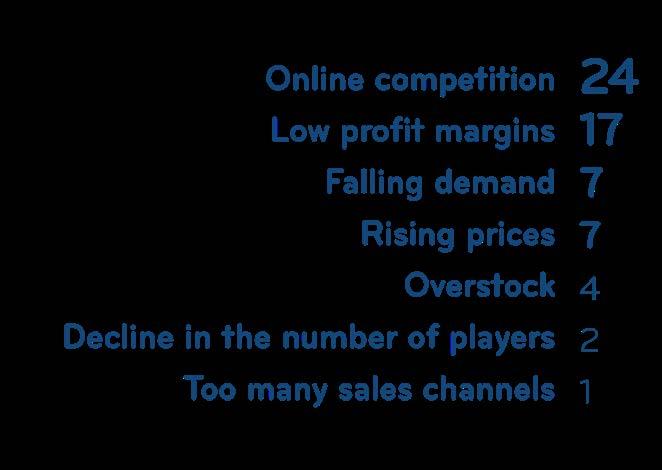
From 2020 to the present, the padel market in Italy has been marked by profound turmoil. We could say that we are in a prolonged “hangover” phase, where the euphoria of past years has given way to a period of adjustment that is, in some ways, traumatic. In a short time, we have seen multiple market cycles open and close, and in this turbulent distribution landscape, retailers have found themselves right in the eye of the storm. The padel market is extremely fragmented, and this chaos appears to be a genuine structural factor that retailers must contend with to survive in the coming years. Through our Padel Retail Observatory—a market survey conducted by interviewing a select group of stores—we’ve witnessed this firsthand, working with them to assess the trends in a sector where retailers’ local presence is becoming increasingly important. The brick-and-mortar channel has lost its exclusivity and central role, and to regain it, retailers are forced to reinvent themselves and increasingly collaborate with other local players—particularly padel centers and instructors—even though these entities sometimes effectively compete with retail stores. The other key ingredient for survival is the ability to “expose” any flaws hidden by e-commerce, helping customers understand how important it is to be able to evaluate a racket in their own hands, with the corresponding assurances regarding weight and balance.
THE “NEW” THAT… GROWS OLD
Online competition, after all, is at the heart of today’s distribution problem, but directly linked to this is also the oversupply that characterizes the market and clogs sales channels. Manufacturers launch new collections at a very rapid pace, triggering a vicious cycle in which the “new” becomes “old” within a six-month period. This is a problem of inventory and product turnover, but above all of perceived value: if a racquet that
ISSUES
costs 300 euros is already discounted after 90 days, the customer will be accustomed to thinking accordingly. For retailers, keeping up with highly aggressive pricing strategies means entering a war of cutthroat discounts that erodes all profit margins. Retailers are trying to respond with increasingly precise and targeted purchases, seeking out suppliers who strive to better protect their customers’ interests.
WHAT INFLUENCES CONSUMERS
Despite everything, the data collected shows that padel consumers’ purchasing behavior is driven by pragmatism and the search for direct expert advice, mitigating the impact of exclusively digital marketing channels. Retailers’ opinions remain highly influential, as buyers seek technical validation from an expert amid the vast array of products available. This is no easy task, given that most players are now experienced and savvy and are no longer satisfied with standard service. Price and promotions remain two highly relevant factors, as does the opportunity to test the product. This is a crucial lever for closing a sale, and one that retailers would like to leverage more fully. Brand loyalty appears less stable than in the past, being influenced primarily by recommendations within the player community.
PRICE ANALYSIS
Recent price trends indicate greater consumer awareness; as mentioned earlier, consumers tend to plan their purchases based on timely discounts offered throughout the supply chain at any time of the year. In the absence of strict retail price protection policies by manufacturers, the market lifespan of premium products is significantly reduced. Competitive pressure consequently shifts toward lower price ranges, forcing
FACTORS INFLUENCING CONSUMERS
HOW TO INCREASE SALES
THE RANKINGS
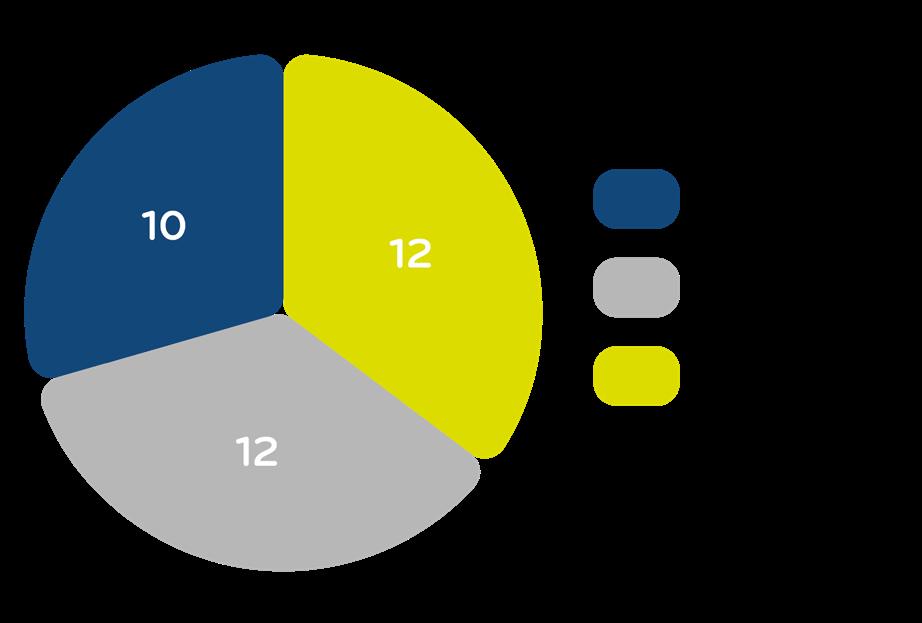
During our survey, we asked retailers to list the three best-selling brands in the categories “rackets,” “shoes,” “clothing,” and “bags/backpacks.” To compile the rankings, we applied the following criteria: we assigned 10 points to the retailer’s first choice, 5 points to the second, and 1 point to the third.
retailers to increase sales volumes to maintain profit margins. Protecting minimum retail prices thus emerges as a crucial factor for the sustainability of the entire distribution chain.
WINNING STRATEGIES
Market changes require a shift from a passive sales model to proactive strategies focused on direct interaction with the sports community.
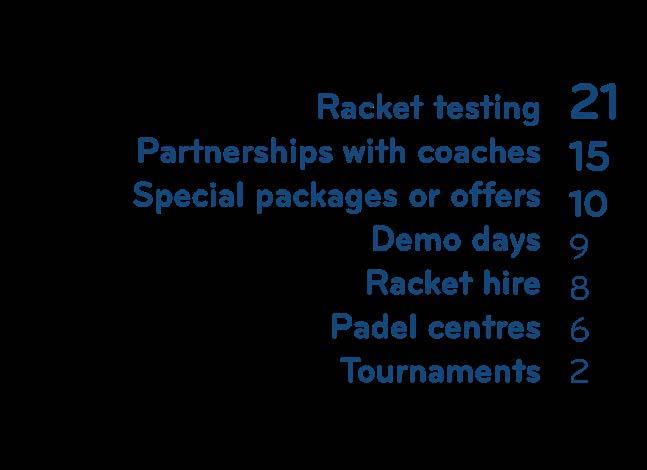
While after-sales service is a solid and concrete component in tennis— given the need to restring rackets periodically—padel requires a bit more creativity. As mentioned earlier, racket testing becomes a key and powerful factor, as players can evaluate the equipment firsthand on the court. And if we combine this with partnerships with coaches, this approach could make sell-out extremely effective. Dedicated promotional packages and demo days—often organized in collaboration with a specific brand—are also useful for strengthening customer loyalty and building a community around the retail location. Furthermore, those offering rental programs emphasize that this is a useful strategy for building a direct relationship with the customer and gathering valuable contacts for the future of that relationship. In short, the data suggests the need to prioritize on-court trial activities and technical collaborations over traditional forms of sponsorship.
WHAT TO EXPECT?
The business’s sustainability in the medium term will depend on the ability to maintain operating margins—not merely on increasing sales volume. The impression is that procurement planning will need to be based on selective criteria, rewarding manufacturers who adopt transparent commercial policies that protect the physical retail channel, while technical specialization and high-level consulting are emerging as the true factors that can make a difference. For retailers, maintaining a strong presence in sports centers and implementing value-added services are the key strategies for operating profitably in a complex market. Among the interviews conducted for the Padel Retail Observatory, the comment made by Marco Fusina of Net Padel Store (one of Italy’s leading stores, located in Sesto San Giovanni) sums it up perfectly. “Suppliers should
WHAT WAS THE PRICE RANGE? WHICH RACQUETS WILL BE THE BEST-SELLING ONES IN 2025?
PADEL RACKETS, SHOES, OR CLOTHING: WHICH CATEGORY OFFERS THE HIGHEST PROFIT MARGIN?
provide more support to retailers, meet delivery deadlines, and make a concrete effort to limit price depreciation as much as possible. Padel is an extraordinary market, full of constant innovations and great opportunities. Unfortunately, however, the situation created by large foreign retailers is becoming unsustainable for a brick-and-mortar store like ours. We continue to fight every day, relying on our true strength: offering customers a comprehensive, professional, and personalized technical service. We will move forward with determination, driven by our passion for padel and the satisfaction our customers bring us every day.”
BREAKOUT BRAND
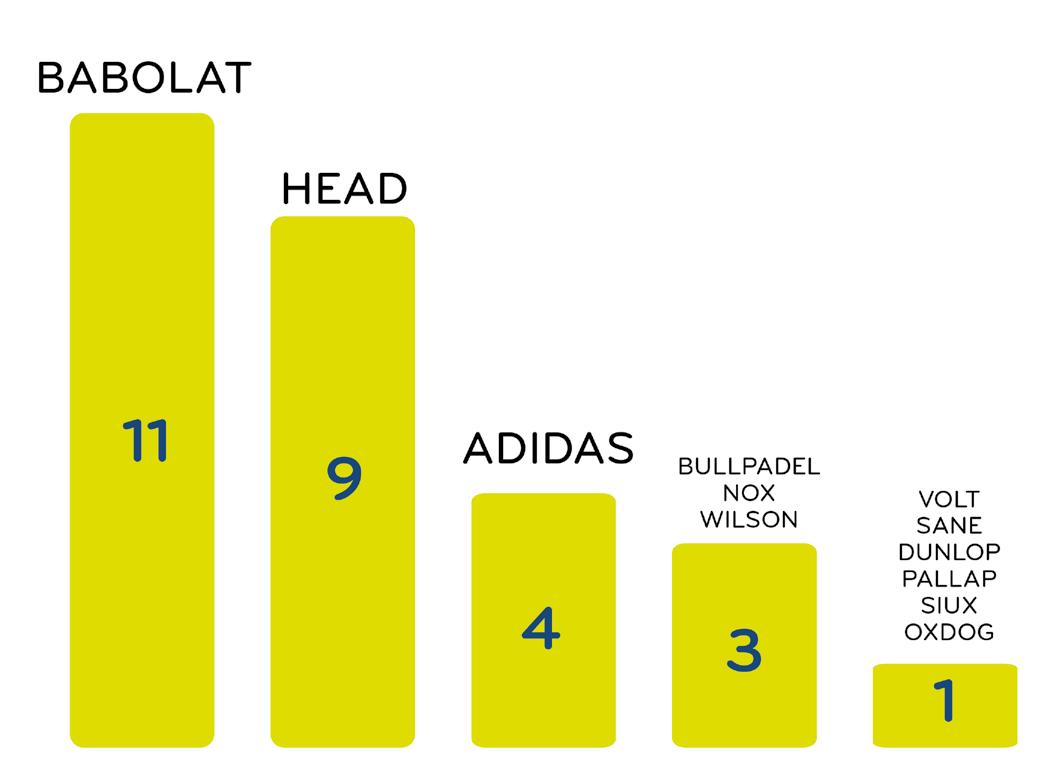
As usual, we asked retailers to tell us which company they felt was the most deserving in 2025. By this, we mean a brand that may have impressed the public with its new releases, its relationships with retailers, or simply an unexpected sales rebound at the beginning of the year. Babolat took first place, ahead of Head and adidas.
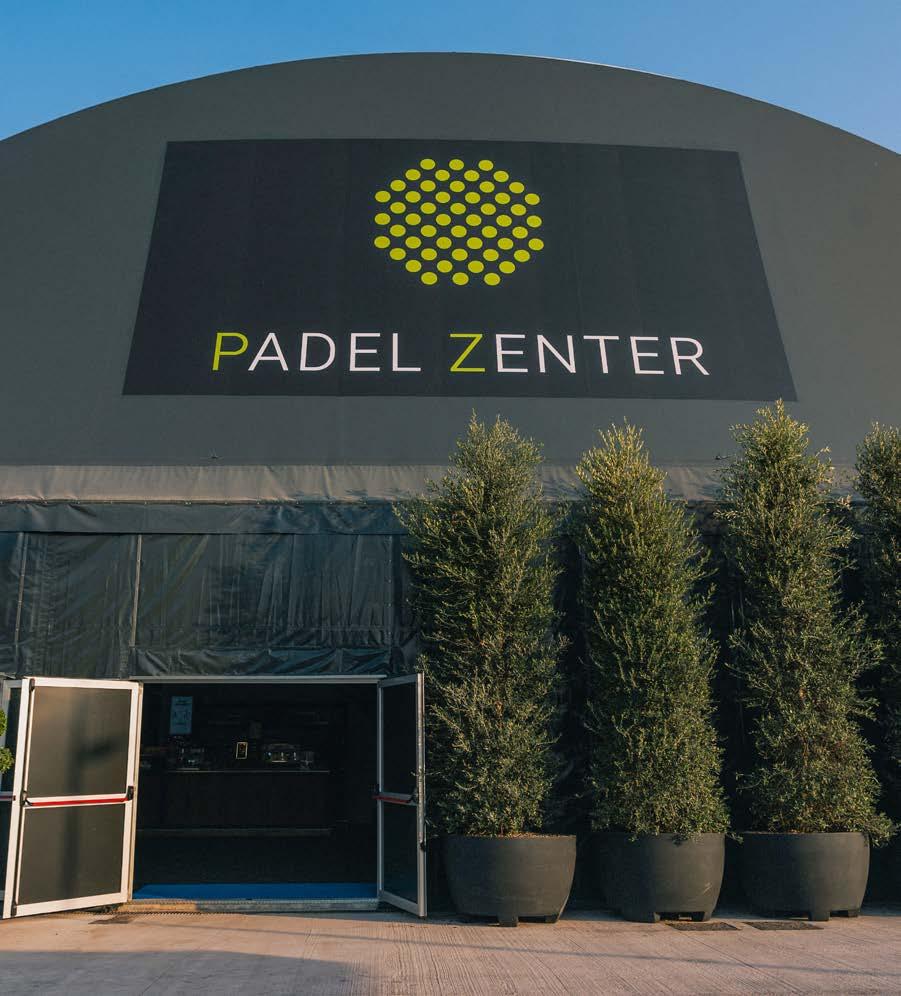
PADEL ZENTER SCALO FARINI: HEART BEYOND THE OBSTACLE
At the heart of a majestic urban regeneration project, a sports center is taking shape in Milan where barriers do not exist
by Andrea Farano
“Nothing grows from diamonds… flowers grow from manure”: this is what Fabrizio De Andrè so masterfully sang in 1967, suggesting to us—in his own way—that the most authentic and vibrant realities do not emerge in glossy settings, but often sprout in more marginal and run-down situations, drawing sustenance from hardship, or from what society discards, perhaps treating it as mere trash. This renewed awareness buzzes in our minds as we leave behind the gigantic dome of the Padel Zenter Scalo Farini, situated at the heart of what, until recently, could have been called a “non-place,” but which today serves as an ideal suture heal-
Isacco Arroyo Interview DIRECTOR
When did the idea for this club first come about, and how did the process that led to its opening unfold?
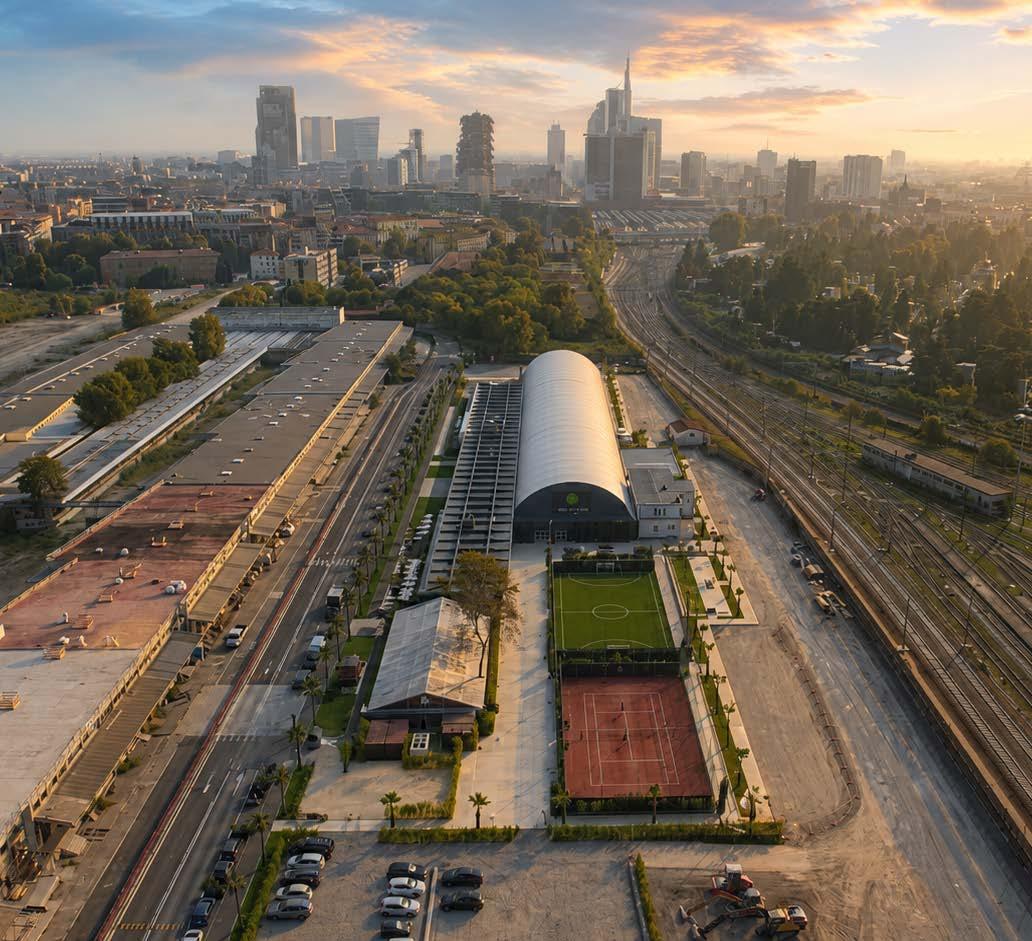
The club will open in October 2025 and stems from the vision of a successful entrepreneur in the entertainment industry, who brought me on board for the project. The facility is part of the redevelopment of an area that had been completely abandoned for 40 years, within a broader plan to repurpose what was once a railway yard, now in disuse. I should note that the club was built in accordance with the provisions of the Program Agreement on the Farini Railroad Yard, in implementation of the Temporary Use Agreement with the City of Milan.
The Padel Zenter Scalo Farini project, therefore, is taking shape under circumstances that are neither trivial nor commonplace. I’m convinced that unconventional venues influence the activities that take place there in some way: what is your vision for a padel center?
The idea is to bring the concept of freedom of play back to the heart of the urban fabric, from which it has undeniably disappeared; to this, we have added a further component of strong social responsibility, with particular emphasis on inclusivity and disability. In fact, right from the start, we’ve involved third-sector organizations, which find a welcoming and always-open home here. First and foremost, I’d like to mention the Qiqajon
ing an ancient urban wound, restoring to the community a sense of a space poised to rise again. It is likely that being formed in such an atypical area—among the tracks of a decommissioned rail yard, and the remnants of the industrial Milan of yesteryear—has, to some extent, shaped the soul of this club, which, under the leadership of a highly recognizable champion, uses sports as a vehicle to promote true social inclusion, without excluding anyone. All of this is complemented by a facility that, in terms of size and amenities, has few equals in the city, because the game, like happiness, is… a serious matter.
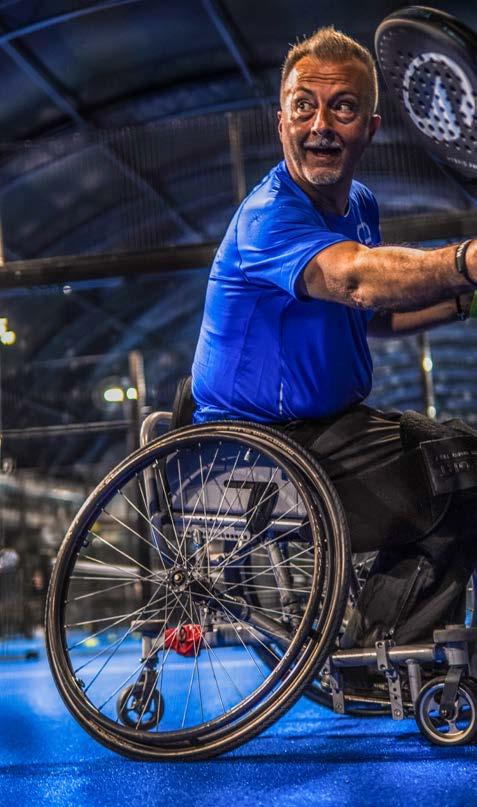
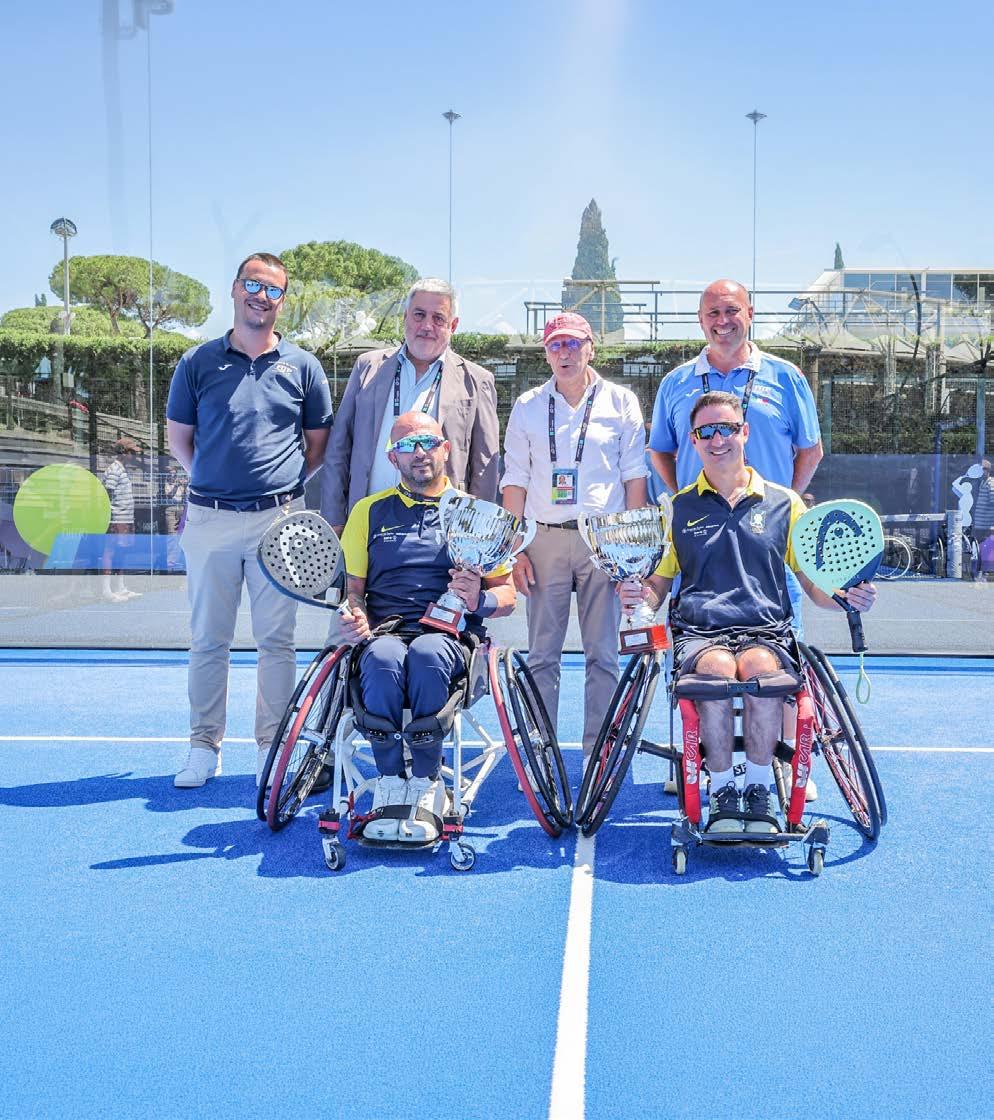
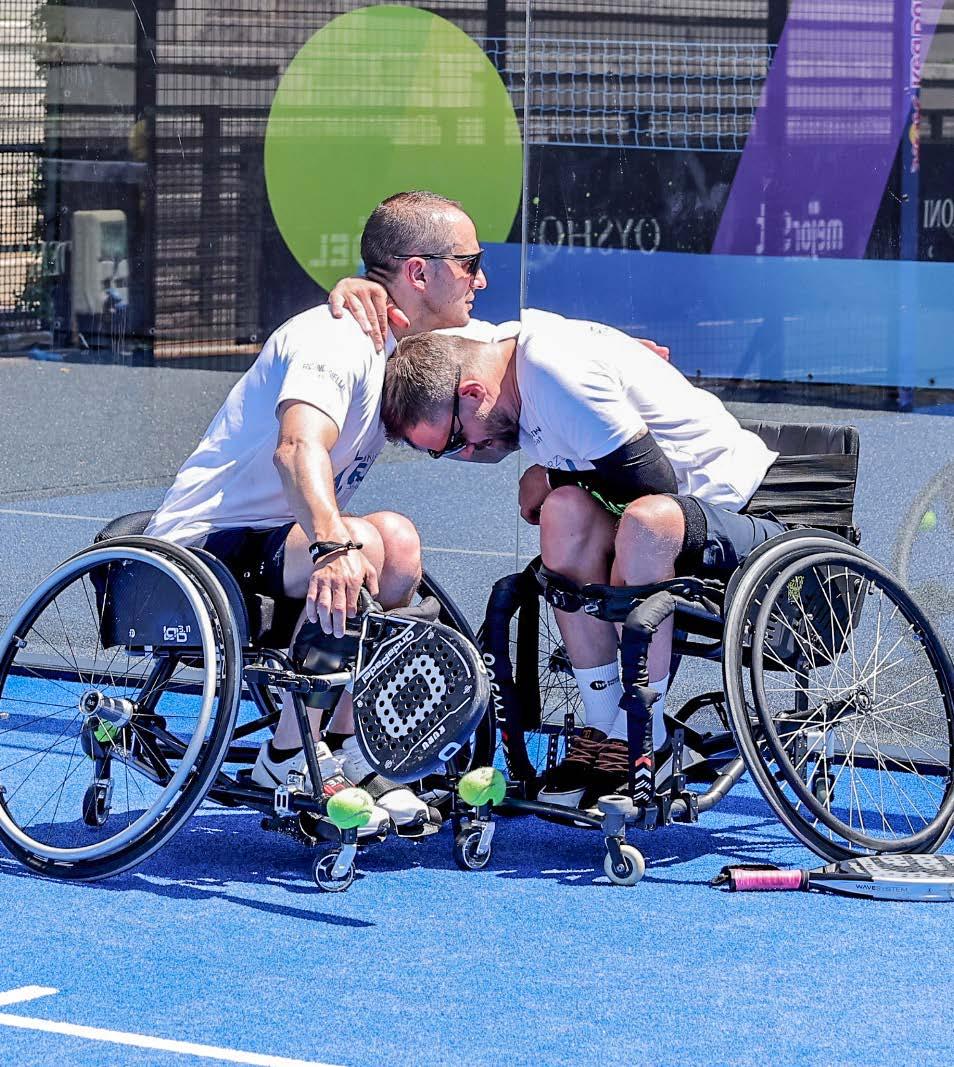
association, a group home whose residents train in our facilities, as well as the exceptional athletes from Alessandro Ossola’s Bionic People and Daniele Cassioli’s Real Eyes Sport. And let’s not forget wheelchair padel: thanks to Pippo Galliano and his Para Padel Project, our center serves as one of the main hubs for this sport.
The sincere feeling that comes through in your words makes it seem like a kind of “mission. ”
It is, when you think about it. If the padel court is the beating heart of the facility, its arteries are all the other complementary areas, such as the five-a-side soccer field, the children’s playground, the tennis court, and the bocce courts: facilities available to all organizations that contact us—or that we reach out to on our own—to whom we offer fully equipped spaces free of charge, often with the assistance of instructors, whose costs are covered by our ownership. All of this translates into summer camps for those who may not have the financial means, but also into sports days for children on the autism spectrum, as in the case of the Renato Piatti Foundation, or the Super Sportivi and Vivi Down OdV associations, which have just recently held their first enthusiastic session.
What goal do you envisage at the end of the journey you have already embarked upon?
Our goal is to create a true hub, called SportHello, to try to provide a solution for every person with a disability who needs a place to play
sports. Sport is a right for everyone, and this is our way of practicing the best form of democracy, to the best of our ability. And let me add that a company’s legitimate expectations of financial return are in no way hindered by the desire to help others: there is ample room for both goals.
What motivates customers to walk through the doors of Zenter?
Our love for the game is what keeps us away from our phones for two hours, allowing us to spend time with people we’ve chosen to be with— and who, in turn, have chosen us. It’s a boost to our ego, taking us back to the innocence of our childhood, where we were never judged: sports are, after all, an expression of pure happiness. In this context, the playful nature of padel shines through most clearly, thanks to its strong ability to bring people together and foster social interaction. Those who choose us, after all, are treating themselves to a sort of vacation from everything that automatically stays outside that gate.
The building we are in is majestic and imposing, catching the eye with its seemingly endless perspective.
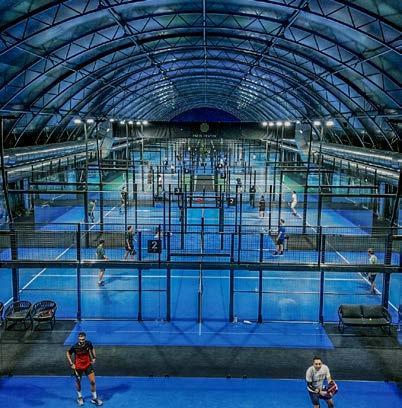
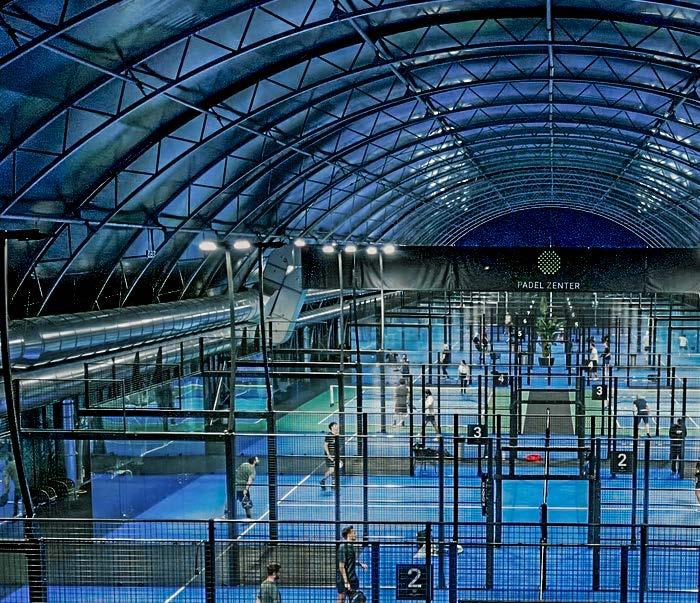
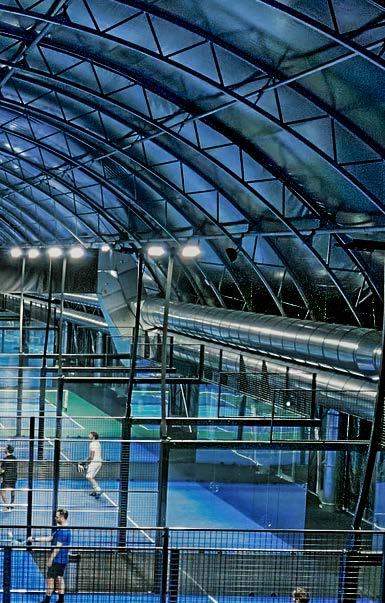
There are 4,500 square meters dedicated to padel, all under a single span that is 150 meters long, 30 meters wide, and 12 meters high. For us, however, the game remains a serious matter—so much so that we’ve installed the best courts available and a high-performance heating and cooling system to ensure players enjoy an experience of the highest quality. And let’s not forget the amenities, such as parking, locker rooms,
9 indoor courts with spectacular views 2 pickleball courts
1 tennis court
1 five-a-side soccer field 2 bocce courts
and a refreshment area for that classic post-game get-together.
You are one of the few examples of a franchise in the padel industry, a contractual arrangement that is still viewed with skepticism in our country. What has been your experience?
The main advantage is being able to rely on a name—and, therefore, a brand—that is highly evocative, first and foremost in Milan but not only there: my vision includes the idea of further expanding the “Padel Zenter” brand internationally. I’m thinking, for example, of the United States as a market with enormous potential to be tapped, given that people overseas are particularly receptive to this unique business model: our center could serve as a “pilot club” to be used as a blueprint for future projects.
Let's wrap up with a look at the next generation of gamers: what initiatives are in place for the next generation?
First, we hosted a stop on the Next Generation amateur circuit, featuring three doubles tournaments divided by age group: Junior (ages 6 to 10), Next Gen (ages 11 to 14), and Advanced (ages 15 to 18). Over 50 children took to the court, each receiving a personalized FIFA-style card. It was a huge success that’s sure to grow, as next year the event will become international under the auspices of FITP Promises. Starting in September, our commitment will then extend to the “Racchette in Classe” program, in the hope that families will see the ease of reaching our center as a decisive factor in introducing their children to padel.
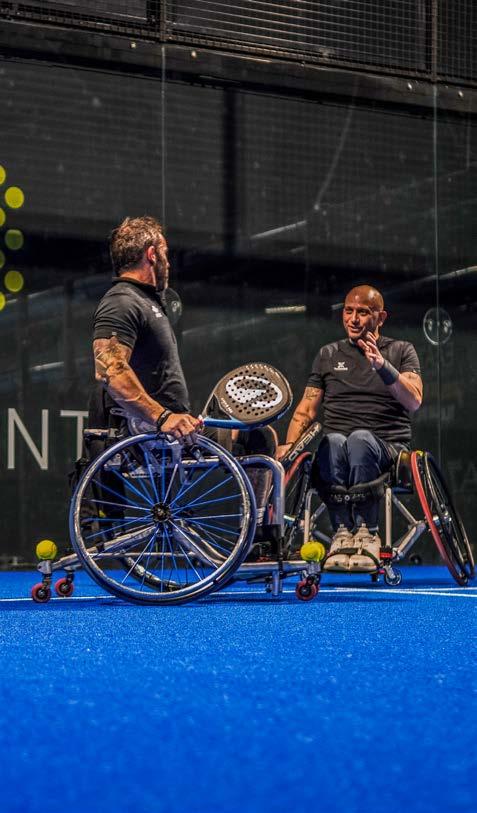
The Padel Zenter Scalo Farini also places wheelchair padel at the heart of its mission through the Para Padel Project
DOMINATE THE FIELD LIKE EL LOBO
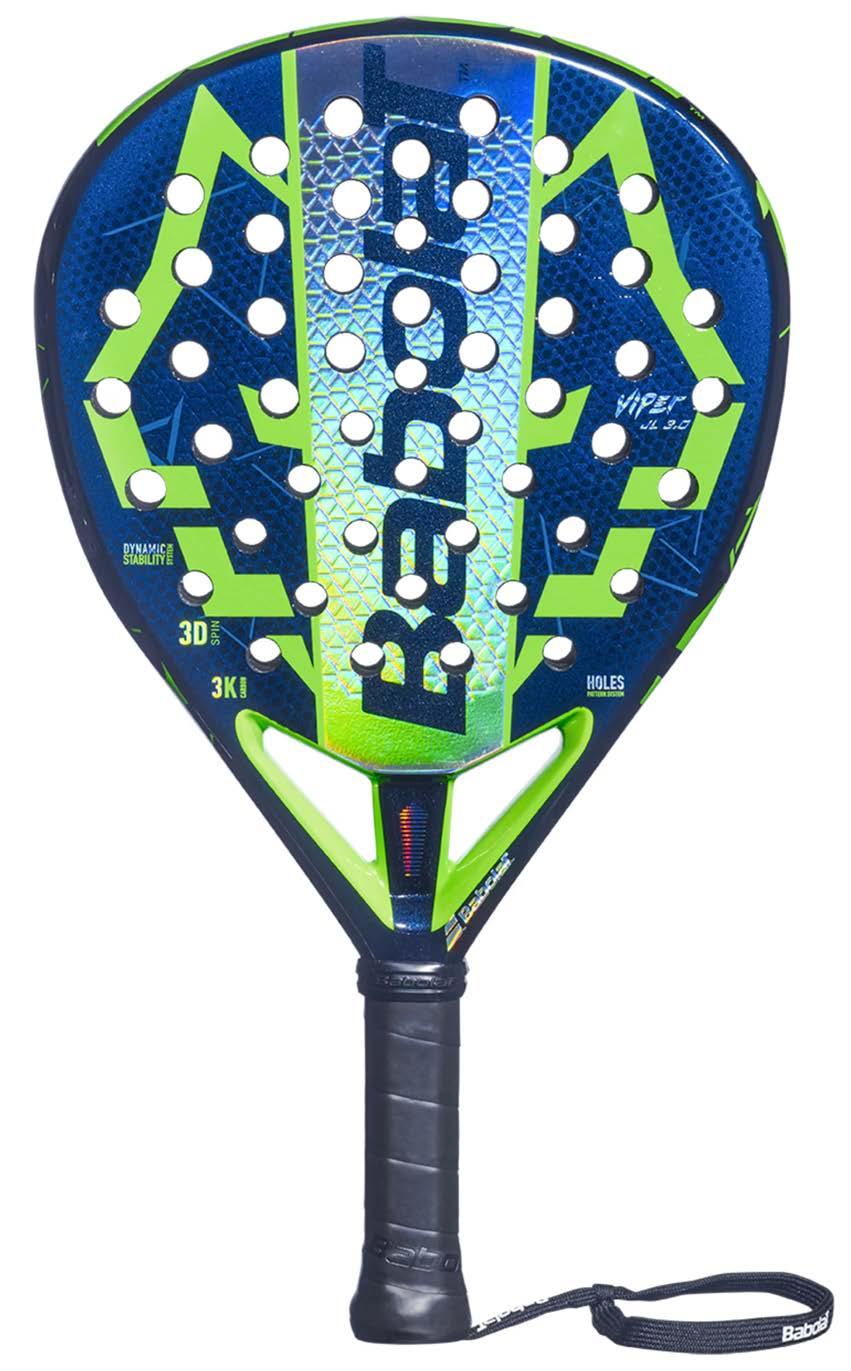
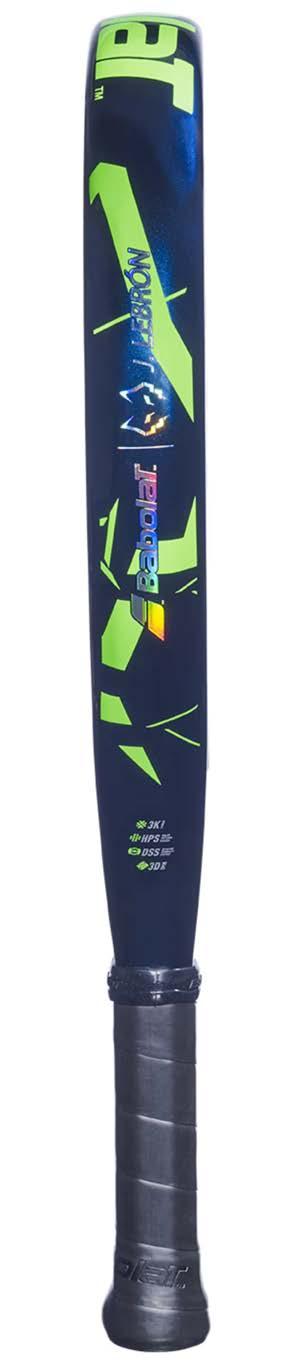
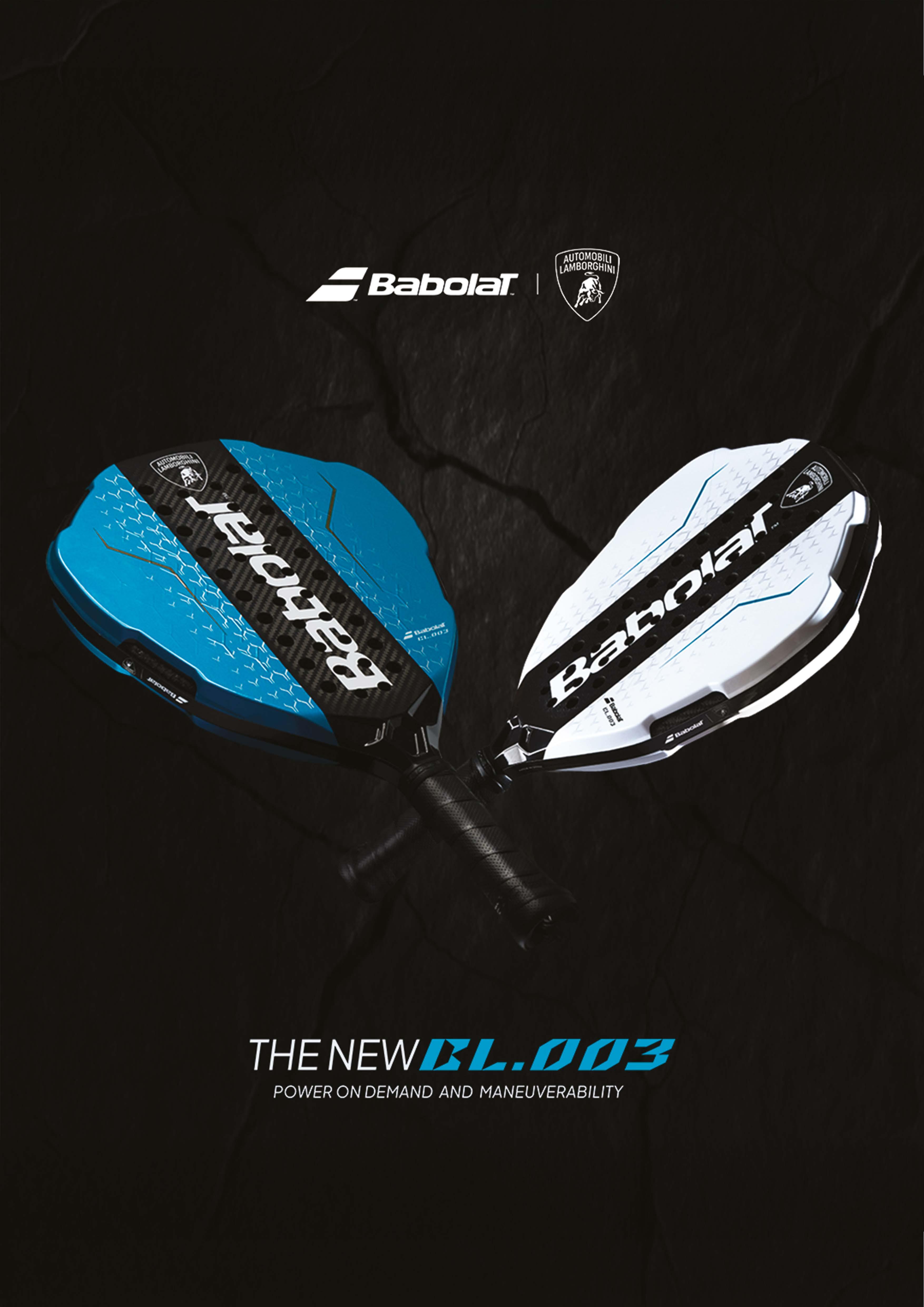
The Viper Juan Lebrón 3.0 is the signature racquet of the Spanish champion, featuring a 3K carbon frame and Hard EVA rubber, designed by Babolat for players who want an aggressive style of play. It offers explosive power and immediate response on every shot, allowing you to finish the point with decisiveness and control
Developed in collaboration with El Lobo, the Viper Juan Lebrón 3.0 FW is one of the highest-performing models in Babolat’s padel lineup. This racket is designed for advanced players seeking maximum intensity in offensive shots, rapid acceleration, and an immediate response upon impact. The combination of a diamond shape, a 3K carbon surface, and Hard EVA rubber delivers a particularly responsive feel, designed to promote speed of execution and aggressive finishes. This technical design reflects the evolution of professional padel toward ever-faster paces and a style of play built on constant pressure.
DYNAMIC STABILITY
One of the model’s standout features is the Dynamic Stability System, a solution integrated into the heart of the racket that increases rigidity and structural stability during periods of peak stress. The goal is to improve energy transfer at impact and maintain precision even on high-speed shots. The racket’s response thus remains stable even in the most aggressive playing situations, especially during overhead shots and net approaches.
IMMEDIATE RESPONSIVENESS
The 3K carbon construction helps make the Viper Juan Lebrón 3.0 a particularly responsive rack et. Energy transfer is fast and direct, a feature that clearly positions it in the premium-performance segment designed for technically advanced players.
DISTINCTIVE IDENTITY
The design also maintains a strong connection to the Spanish champion’s image, reinforcing the bond between the product and the athlete—a bond that is now one of the key elements in the posi tioning of high-end racquets. Rounding out the product is the Smart Buttcap, a system developed by Babolat that allows you to easily remove and replace the racket’s string, adding another layer of customization and convenience.
DIFFERENT LINES, SAME PHILOSOPHY
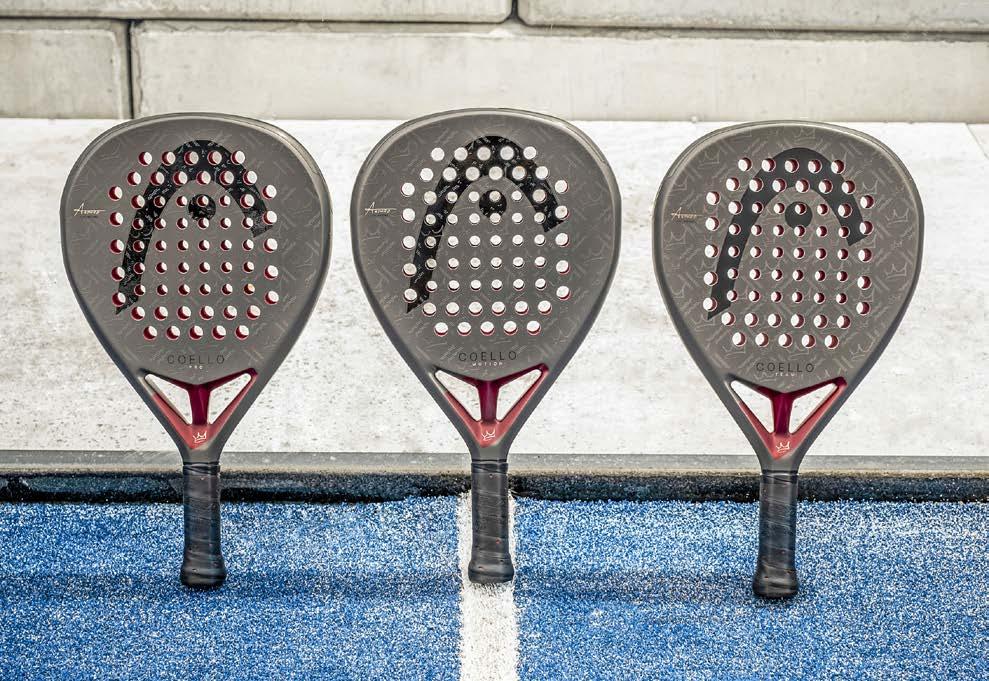
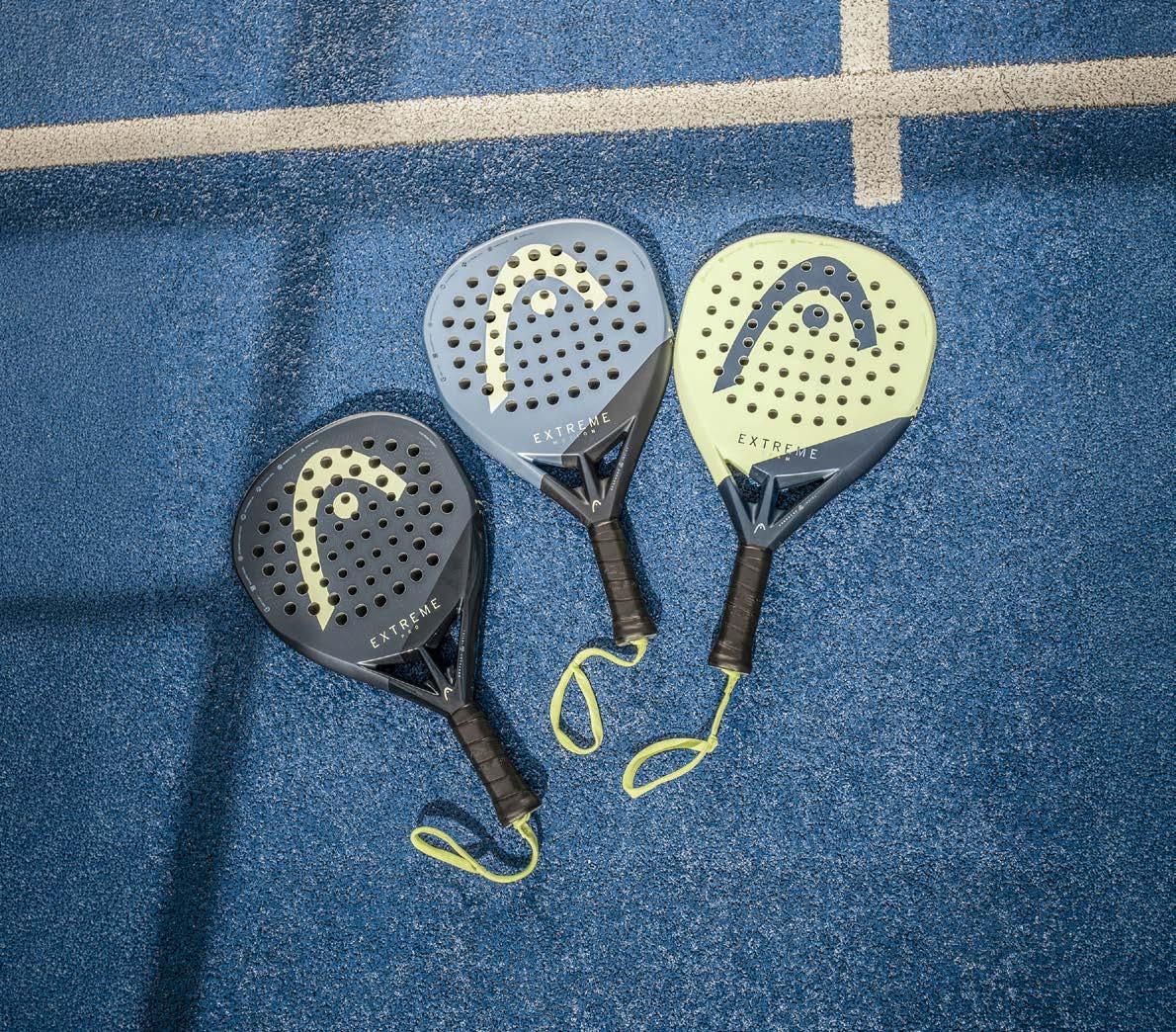
With its new collections, HEAD is revamping its performance lineup by focusing on an advanced balance between power, comfort, and playability. From racquets developed in collaboration with Arturo Coello to the technical redesign of the Extreme line, the Austrian brand is expanding its target audience without compromising its competitive identity
COELLO LINE
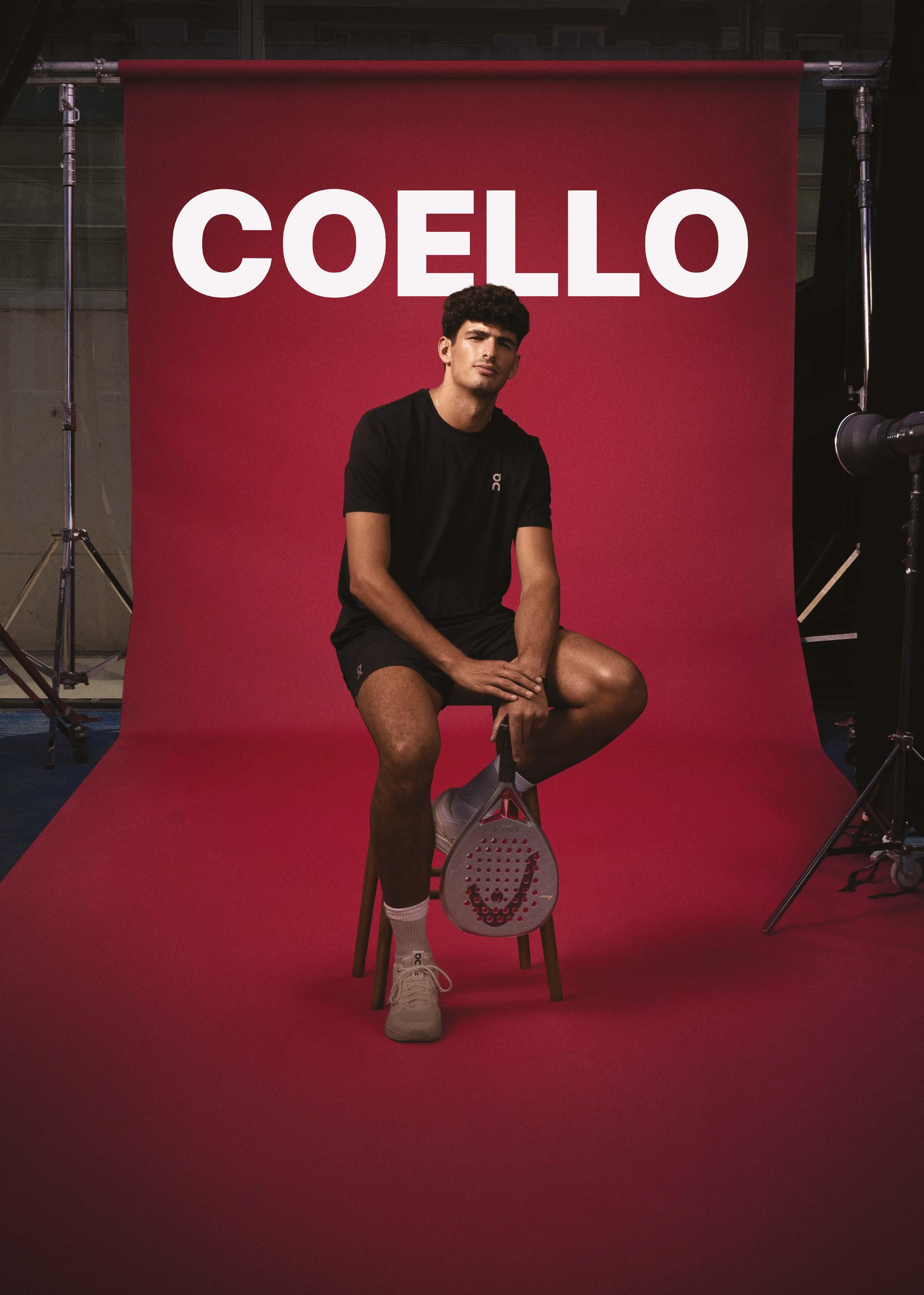
With the new Coello 2026 line, Head further strengthens a partnership that remains one of the most solid on the international scene. The collection introduces five models (Pro, Motion, Team, Vibe, JR) developed based on direct input from the world’s num ber one player. The entire line has been redesigned to offer an even more effective combination of power, stability, and ease of use, broadening its target audience from experienced players to beginners. At the heart of the collection is a frame designed to facilitate an offensive style of play. The diamond shape emphasizes power on over head shots, as does the high balance point (27.2 cm). Supporting this design is Power Foam rubber, engineered to maximize ball speed, and an optimized bridge to enhance frame flex. In addition, the textured surface allows for greater control over spin, while the hybrid construction ensures an effective balance between stiffness and elastic response. The result is a racket that feels solid on impact yet maintains good feel even on the most delicate shots. Among the key new features of the 2026 version is a weight adjustment: the Pro model has been reduced from 375 to 370 grams. This targeted reduction makes the frame more accessible and manageable without compromising its technical character. This change also makes the collection more suitable for non-professional players. All models in the line share a distinctive aesthetic, enhanced by the crown symbol, Coello’s signature, and high-quality finishes.
Pro, Motion, Team, One X, and One. The Pro and Motion versions are the flagship models of the collection and have now been refreshed with a new, eye-catching graphic design. Structurally, the two rackets are identical; the only difference is their weight—370 grams for the Pro and 360 grams for the Motion—while the balance is the same for both (27 cm). Players seeking maximum power and willing to sacrifice a bit of maneuverability will prefer the Pro version, while those looking for a product that’s equally powerful but less extreme and more playable will opt for the Motion.
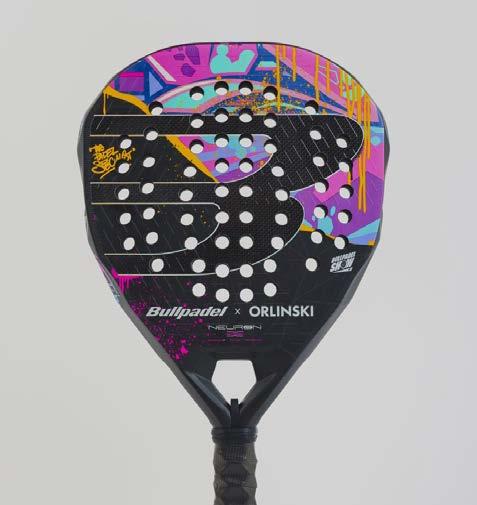
BULLPADEL X RICHARD ORLINSKI
NEURON 02 EDGE
Bullpadel has signed an exclusive partnership with Richard Orlinski, one of the most internationally recognized contemporary artists, and Esprit Padel Shop, a leading French e-commerce platform dedicated to padel. The result is a limited-edition racquet, available in just 1,000 numbered pieces, born from the convergence of contemporary art, athletic performance, and technological innovation. A passionate padel enthusiast, Orlinski has reimagined the new Neuron 02 Edge with a distinctive and highly expressive design. Against a black background—a symbol of elegance and character—the design features vibrant bursts of electric pink, turquoise, purple, and orange, enriched by dripping effects, splashes of color, and calligraphic details that evoke the aesthetics of street art and the pop art style that defines the artist. Making the project even more special is the first racket in the series, autographed by Fede Chingotto, one of the leading players on the world professional circuit and an ambassador for the Spanish brand. Proceeds from its auction will be donated in full to the French Hemophilia Association (AFH), which has been committed for over 70 years to supporting people with rare bleeding disorders.
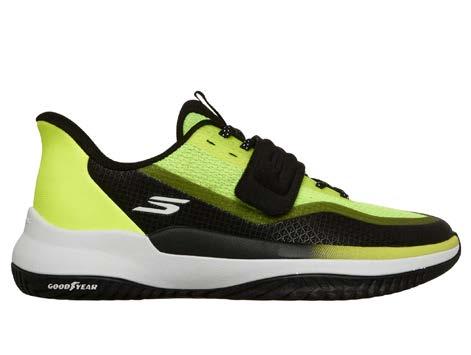
SKECHERS
VIPER COURT ELITE 2.0
Skechers is entering the world of padel by introducing a new collection dedicated exclusively to the sport, following years of great success with its everyday sneakers known for their comfort. Among the new offerings from the U.S. brand are the Viper Court Elite 2.0 shoes, which stand out for their integration of Hands Free Slip-ins technology—a system that allows you to slip them on without using your hands and, together with the adjustable closure, ensures a personalized fit. A nylon plate injected into the frame provides the Viper Court Elite 2.0 with the torsional stiffness needed to prevent sprains during the most demanding lateral movements. Also important is the Arch Fit insole, which offers arch support and distributes weight evenly.
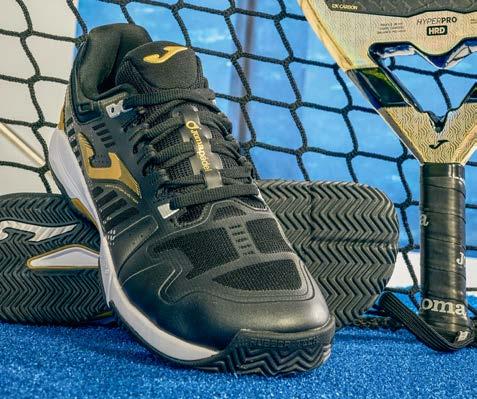
JOMA
SLAM FOOT SHAPE
Joma presents Slam Foot Shape, a shoe designed to follow the natural anatomy of the foot and ensure comfort, support, and control at every stage of the game. The technical, breathable, high-strength mesh upper ensures a precise fit and high performance in every game situation, while heat-sealed reinforcements protect the areas most prone to wear. The antibacterial insole promotes moisture management, helping to keep the foot dry and prevent the formation of unpleasant odors. The phylon and rubber outsole with a 4 mm heel-to-toe drop enhances agility and responsiveness while reducing the risk of injury. Rounding out the technical features is a stabilizing element that enhances stability during lateral movements without compromising freedom of movement.
REALTURF
FIT & FIX
Technological advancements in the synthetic turf sector for padel are increasingly focused on installation efficiency and the durability of the turf surfaces. In this context, the Spanish company Realturf has introduced the Fit&Fix installation system, a solution designed for the B2B market. This technical innovation aims to address issues related to routine maintenance, installation time, and the commercial value of the playing surface. To minimize the number of seams between the modules needed to cover the court—which are the points most vulnerable to wear and stress— Realturf provides custom production directly at the factory of just three rolls of textured turf, each five meters wide (labeled A, B, and C). Rolls A and B are unrolled in the central area of the field (Roll A already incorporates the white center service line). Roll C is cut in half during installation to cover the two short end lines of the field. This layout results in a 50% reduction in seams and a 50% reduction in materials used. It also reduces the number of labor hours required to complete the installation.
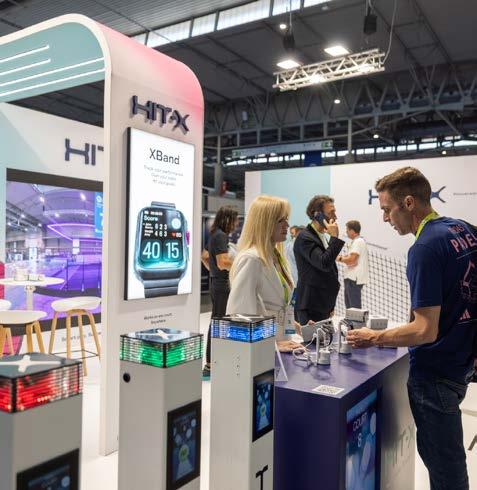
HIT-X
SMART PADEL COURT
Hit-X is the innovative company backed by Padelgest that has chosen the 2026 Padel World Summit in Barcelona as a showcase to unveil the evolution of its smart ecosystem: a completely revamped Smart Padel Court concept, ready to lead the digital transformation of clubs (and beyond) around the world. At the heart of Hit-X lies its ability to bring together the needs of all key players in the padel world on a single platform. For club managers, the Smart Padel Court offers advanced tools for monitoring court activity in real time, optimizing the facility’s operational management and digitizing processes. In addition, coaches have access to advanced performance metrics and data analytics systems capable of tracking students’ progress and enhancing the quality of training sessions. For players, the on-court experience becomes interactive thanks to performance tracking and gamification features (challenges and scores) that make the game even more engaging. Finally, it is a valuable tool for tournaments, as it enables seamless and interconnected management of competitions within the same system.
A WINNING FORMULA
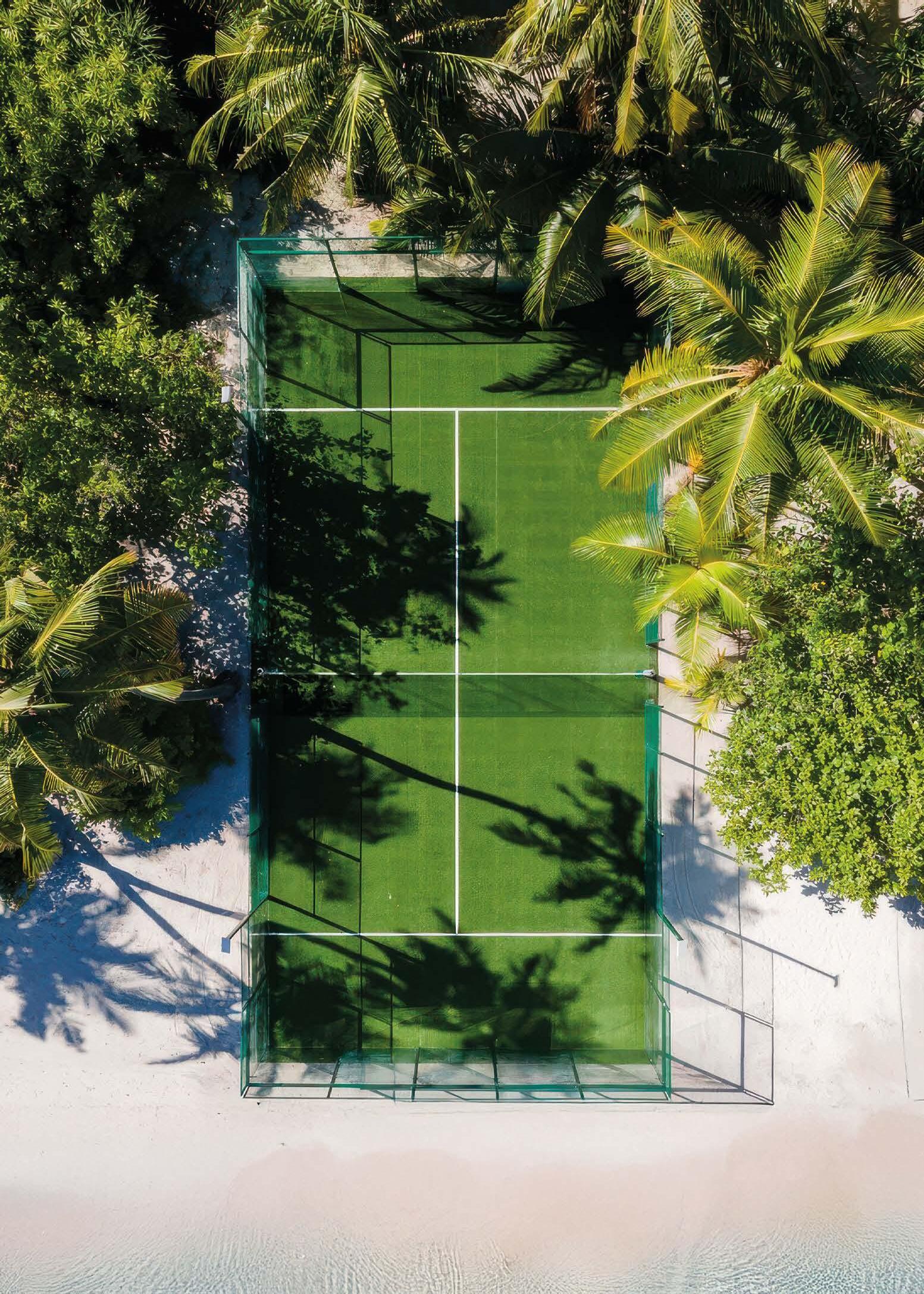
The first edition of the Gundu Padel Cup transformed an island in the Maldives into a hub dedicated to sports, socializing, and fun. With tournaments, exclusive events, and special guests, the event was well-received and laid the groundwork for international growth
by Davide L. Bertagna
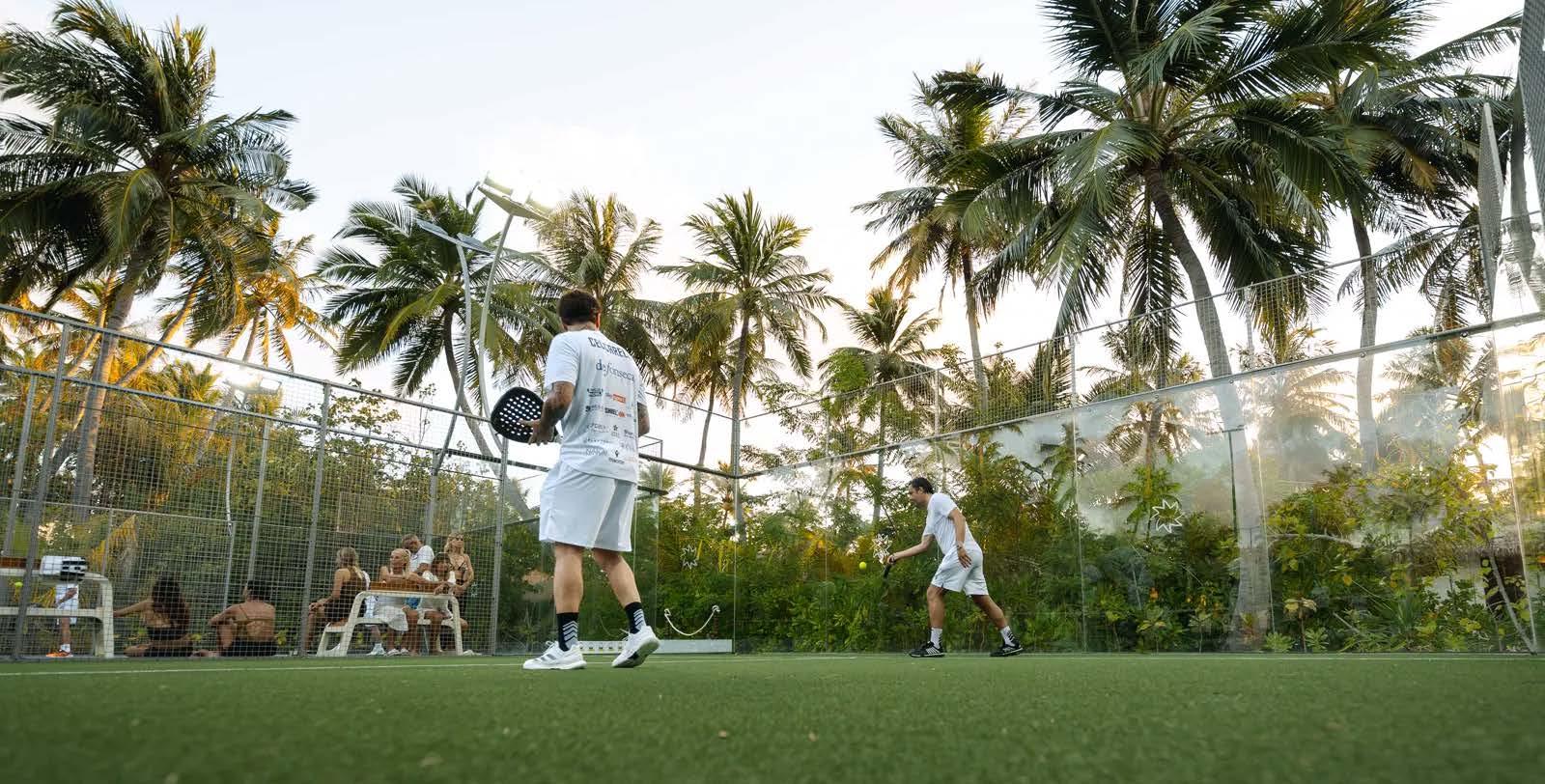
The first edition of the Gundu Padel Cup, held in late May on an island in the Vaavu Atoll in the Maldives, exceeded the organizers’ expectations, establishing itself as one of the most interesting emerging formats in the travel industry. Approximately 250 participants—including enthusiasts, guests, and international soccer stars—took part in a week of events that successfully combined sports competition, entertainment, and networking in one of the world’s most exclusive destinations.
THE FORMAT
At the Bravo Club Alimatha, amateur players and special guests spent seven days sharing the courts in a unique setting, where padel, travel, and socializing came together as a single experience. The program alternated between sports competitions, clinics, exhibitions, and social gatherings. From matches played at sunset overlooking the ocean to beachside activities and evening events such as the Welcome Party, the White Night, and the gala dinner, every element was designed to encourage participation and foster relationships among the guests. Gabriele Conrotto, the project’s creator, takes stock of the first international edition of the event.
Gabriele Conrotto
Interview FOUNDER GUNDU PADEL CUP
What aspects of this first edition make you most proud?
The event was even more successful than we expected, both on social media—with millions of views—and on a personal level. Seeing 250 happy, smiling people interacting and getting to know each other so well even though they’d never met before was one of my greatest joys. Day by day, a very strong community has emerged.
What was the moment this week that made you realize the event was achieving its goals?
The day of the event organized in partnership with one of our main sponsors, Orodei24. The game set up on the beach, with players kicking the ball from a distance, generated millions of views and, above all, created a moment of togetherness and sharing that was truly one of a kind. That’s where the spark was ignited, leading us to experience ever-stronger emotions every day.
The format combines sports, travel, fun, and networking. Which of these elements made the biggest difference in the participants' experience?
I don’t think there was any single factor that was more important than the others. It was the people who made the difference: the work of my team, starting with event manager Eleonora Isabella Ozzello; players like Diego Perotti,
Jimmy Maini, and Luca Ceccarelli, who served as the link between guests and professionals; and every single participant who played an active role in the Gundu Padel Cup.
What kind of feedback have you received from the participants?
One of the most wonderful things was seeing how people who started out as strangers began, within just a few days, to share unique moments, smiles, and emotions. Padel and the spirit of togetherness forged real bonds. This is the true essence of the Gundu Padel Cup.
Throughout the week, there were champions and figures who are very popular with the public. Can you share some interesting anecdotes or a special moment you experienced with Francesco Totti, Luca Toni, or other key players?
Everyone contributed in their own way, bringing their unique personalities to the table. Perotti, Maini, and Ceccarelli were instrumental behind the scenes. Ceccarelli and Luca Toni livened up the evenings in the Maldives with great energy; Vincent Candela was always there for every sporting activity; and Stefano Fiore brought style and a friendly demeanor to everyone. And then there was captain Francesco Totti, always smiling and approachable, capable all on his own of generating a lot of attention and millions of views.
What lessons will you take with you to the next rounds of the Gundu Padel Cup? We’re already working on the 2027 Gundu Padel Cup, with an even more structured and exciting schedule and format. Our goal is to continue growing this community and offer increasingly unique experiences.
ROME IS A TRUE CLASSIC
In tennis, it remains a dream, but in padel, it’s a solid reality: the “Major” designation is perfect for the Foro Italico. The decision to designate the Pietrangeli court as the center court through Thursday has been approved by our correspondent Gabriele Marini
There was a great deal of anticipation for this first Major of the year—partly because the race was more up in the air than ever, partly because of the many new pairs making their debut in Rome, and partly because of the many Italians competing during the hottest week of the year. Expectations were not disappointed, especially given that the tournament was held a week earlier than last year and featured more bearable temperatures compared to past editions—a benefit everyone could enjoy. The stunning setting of the Foro Italico was redesigned to ensure a better experience for the public, with a fully covered commercial village and numerous mini-courts scattered throughout the grounds for the many children in attendance to play on. There were also various federation-sponsored activities, such as clinics led by Marcela Ferrari and Martin Pereyra, refresher courses for coaches, and youth tournaments, which drew a large turnout of industry professionals. The commercial village featured many major brands, including Head, Bullpadel, and the Italian brand Hirostar (with a stand that was very well received), in addition to the many food and beverage stands run by the tournament’s sponsors and equipped with powerful fans—a sign that the organizers seem to have taken some of the feedback from attendees in previous editions to heart. As always, many players took the time to sign autographs in the areas set up by their sponsors, including Gemma Triay, Marta Ortega, Paula Josemaria, and Tolito Aguirre—true stars who are increasingly comfortable in this role.
ON THE FIELD AND IN THE STANDS
Despite Wednesday’s rainy day, which forced a few schedule changes, everything proceeded as planned, with the varying court conditions depending on the time of play being the main factor—a variable that led to a few complaints, though these were more due to the lackluster results than to any actual organizational
shortcomings. The first part of the tournament was dominated by the Pietrangeli court, set up for the occasion as the center court with new stands on the short sides and more space for players to run out from the baseline, in accordance with the rules in effect this year. Some of the tournament’s most thrilling matches took place on this iconic court, such as the historic Italian derby in the round of 16, which saw the extraordinary Giulia dal Pozzo and Nuria Rodriguez prevail over Carolina Orsi and Patty Llaguno, at the end of a match that deserved a better time slot, given its significance for Italian padel.
And then there was the reunion of Paquito and Di Nenno, which took them to the quarterfinals; the resurgence of Momo González and Lucas Bergamini, who only lost in the semifinals to Tapia and Coello; but above all, the incredible run of the aforementioned Dal Pozzo and Rodriguez, who, in the quarterfinals, defeated the No. 4-seeded pair Fernández/Araujo, gifting themselves—and all of us Italians—a historic and unexpected Major semifinal on center court, where the No. 1-seeded Triay/Brea still had to play their best padel to secure a spot in Sunday’s final. The other semifinal was just as historic, as it featured the longest match in padel history—a marathon lasting over four hours, at the end of which Ari Sanchez and Andrea Ustero defeated the red-hot Bea González and Paula Josemaría. A match for connoisseurs, filled with tactics, talent, and plenty of resilience, ultimately rewarded the world No. 3 pair at the end of a spectacle that kept the many spectators in the stands on the edge of their seats.
In such a sprawling venue, it can be difficult to gauge attendance. Certainly, the stands had several empty seats during the sunniest parts of the day, but in the evening the center court filled up, especially on the weekend, culminating in Sunday’s spectacular sight of approximately 9,000 people bearing witness to the No. 1 player’s resurgence after four consecutive lost finals. Now that the lights have gone out and the curtain has fallen on the first Major of the year, we can certainly say that Rome remains a tournament beloved by players, set in a location that is as beautiful as it is disjointed—one that, by its very nature, requires even greater attendance to do justice to its iconic status. It’s an event that grows and improves every year, but one that likely needs a few more promotional activities dedicated to fans and greater audience engagement during matches to shake off some of that polished “Major” vibe and bring it closer to the colorful events in Spain and South America.
Agustín Tapia and Arturo Coello during the final
Delfi Brea and Gemma Triay celebrate their victory
THE CIRCUIT OF CONTROVERSY
Between regulatory gaps and natural survival instincts, the Cupra FIP Tour does not always manage to live up to its primary mission. Will the measures taken by the Federation and Premier Padel be enough?
by Daniele Pansardi
The Cupra FIP Tour has been at the center of much controversy and just as many debates since the beginning of 2026. The padel Challenger circuit, launched in 2019 by the Federation, was mostly praised for its merits, its increasingly widespread network designed to reach players in every corner of the world, and its role as a springboard for young talent. Then something went awry. Specifically, many athletes who also rank within the world’s Top 50 realized they could earn easy points, especially in the Silver and Bronze categories—the very categories that should serve, above all, to help those struggling to survive from the 100th position down break out of the rut. Furthermore, this “middle class” of Premier Padel often struggles to get past the very first rounds of the P2 and P1 brackets due to the very rigid technical hierarchies, and so, to keep their rankings alive, they end up competing in lower-level tournaments as well. This is a downward spiral that blocks the path for those trying to climb up from the lower ranks and allows those higher up to exploit a loophole in the regulations. In recent months, the system has faced criticism from Edu Alonso and prominent figures such as Miguel Lamperti and Paquito Navarro, and many players have found themselves preferring an FIP Silver tournament to a P2 event, as it is more advantageous both financially and, above all, from a sporting perspective. When asked about this, Lamperti didn’t mince words: “If there are players who prefer to play in an FIP rather than a Premier event, we’re on the wrong track.” In terms of image, these players’ choices can be seen as a setback for Premier Padel, which is supposed to represent the highest and most prestigious stage—not just one option among two circuits that should have a hierarchical relationship. During the latest meeting of the Executive Committees—which bring together all the circuit’s stakeholders—several changes were announced in an effort to restore balance to the situation. But will that really be the case?
ADJUSTMENTS ON THE FLY
As is already the case in tennis with the Challenger circuit, FIP and Premier Padel have introduced restrictions on the entry lists for the Gold, Silver, and Bronze draws, which will take effect starting in the 2027 season. In the Gold division, the top 4 players in the world rankings are ineligible to participate, while players ranked 5th through 16th may only participate via wildcard. In Silver tournaments, men ranked 1st through 24th and women ranked 1st through 20th will be barred from participating (no wildcards granted), while in Bronze tournaments, the restriction extends to men ranked up to 50th and women ranked up to 40th. A quick glance at the Silver and Bronze draw sheets from 2026 is enough to see that these restrictions are not particularly drastic. For example: if the goal of the
FIP and Premier Padel is “to protect lower-ranked players, promote young talent, and prevent top players from monopolizing minor tournaments,” excluding men ranked between 25th and 40th from a Silver tournament seems to solve very little. The FIP and Premier Padel have not limited themselves to restrictions but have also introduced incentives. The FIP points awarded in the early rounds of Major, P1, and P2 tournaments have been increased to better reward players who advance past the early stages (and discourage entry into FIP tournaments). Specifically, for P2 tournaments, the points awarded in the round of 16 have increased from 22 to 35, and in the round of 8 from 45 to 55. The impression is that, as with the Star Point, neither the FIP nor Premier Padel wanted to adopt overly radical measures so as not to excessively upset many players, who consider FIP tournaments to be an integral part of their annual strategy. The professionalization brought about by Premier Padel has been a godsend, but it is still in its infancy and becomes increasingly fragile once you move beyond the Top 20/30, and only time will tell if these imbalances can be corrected through the movement’s increasingly organic growth.
A MISSING RULE
While, on the one hand, we have new regulations that are too lenient for wellknown situations, there is a legislative gap for equally frequent cases—one of which came to the attention of the padel community during the most recent FIP Platinum tournament in Albania. World No. 29 Inigo Jofre lost to two unranked Albanian players—who had entered the draw via a wild card—due to a partner who was not up to the tournament’s level: Lok Hei Jamie Yau. Born in 2002 and hailing from Hong Kong, Yau arrived in Tirana ranked No. 954, a ranking he earned by accumulating 17 points in Silver and Bronze tournaments across Asia. How did he manage to convince a player like Jofre to play alongside him? Probably in the same way he convinced Fran Ramirez (No. 116), Jose Roman Martinez (No. 217), Miguel Gonzalez (No. 142), and Miguel Morales (No. 150) in previous tournaments in Hong Kong and Kuala Lumpur—always losing in the first round but presumably padding others’ bank accounts. This wasn’t the only case of its kind: at the FIP Bronze Agadir in Morocco, Lucas Campagnolo (No. 28) found himself paired with local player Alami Mohamed (No. 2144); at the FIP Bronze Baku tournament in Azerbaijan, Maria Virginia Riera (No. 33) was paired with Rahila Karimli, an unranked player. The increased media coverage of the Albanian tournament has magnified an already existing problem, and what was objectively a poor showing for the entire international padel community. Greater regulation, in this regard, would be necessary.
Marco Cassetta, winner of 14 tournaments on the FIP Tour since 2022
DOES A TENNIS LEGACY SERVE ANY PURPOSE?
According to Giorgia Marchetti, during this transitional phase in women’s padel, it could prove useful. The Rome native spoke about it on the Total Padel podcast by Gabriele Marini and Marco Paialunga
Three years ago, in an interview with Padelbiz, Giorgia Marchetti spoke at length about her tennis background and the defensive and strategic shortcomings typical of players coming from another racket sport—shortcomings that can become apparent when facing opponents who have grown up playing on glass courts from a young age. Over the past three years, the Rome native has grown and become a more well-rounded player, establishing herself around the Top 50 in the world rankings, and is
Interview
Giorgia Marchetti
Do you think you're at the beginning of your career?
I think I still have room to grow, and that I can give myself some satisfaction by improving my current ranking. And that’s the motivation that drives me to train my hardest every day.
In what ways do you think you've improved over the past year?
I've been going to Spain for training for about three years now, so I get to train with the best players. I've worked hard on my defense, and I can say that I feel more confident on the court in that regard. I'm better at reading the game and helping my teammates, and that boosts my self-confidence.
What were the most challenging aspects of the transition from tennis to padel?
The concept of point-building is very different. At first, I struggled to adapt to the higher levels, especially because you’re up against people who’ve been playing padel their whole lives—not just former tennis players, as was the case in Italy. Over time, you tend to play a bit more conservatively, without, however, completely losing that tennis flair that sets those of us who’ve made this transition apart—it’s what makes us a bit more aggressive.
Throughout your journey as a player, have there been any specific moments or situations that have shed new light on the game of padel for you? That have truly enriched your “knowledge” on the court?
The matches that have taught me the most are the ones against the top players: Triay, Salazar, Brea… You really realize the gap that exists between the Top 10 and those ranked between 30th and 50th. When you play against them, it really clicks, and you understand what you’re missing. It’s a very stimulating challenge: until you play these matches—or even just in practice—it’s hard to put into words.
It seems that women's padel is also moving toward a more aggressive style of play, aimed at putting pressure on the opponent. What do you think?
I agree. That’s another reason why it’s important not to lose that “tennis-like” approach I was talking about earlier. If I were to coach a young woman who wants to become a professional player, I would place a lot of emphasis on being aggressive on the court and on having a very effective and powerful finishing shot. When I go to Spain to train—often with Carolina Orsi—I notice that Spanish coaches favor a more thoughtful and traditional style of padel, whereas in Italy the tendency is to do the opposite. Let me give an example: after a few weeks of training in Spain, you might make a lot of progress with your cross-court shots, but at the same time, you might also want to play more cautiously. It’s a difficult balance to strike, especially for us who didn’t grow up playing padel, but I think maintaining our natural style will give us an advantage in the future.
experiencing firsthand the slow transition that women’s padel is undergoing. Compared to men’s play, the pace and speed are always more moderate, but even among women, there is greater aggression on the court and a greater tendency to close down the opponent’s space. Giorgia Marchetti discussed this and much more with Gabriele Marini and Fulvio Paialunga on Total Padel, the podcast produced in collaboration with Padelbiz. The full episode is available on Total Padel’s official profiles on Spotify and Apple Podcasts.
You mentioned the importance of competing against the world's top players. What are the main differences between you and them?
First of all, reading the game. They know in advance where the ball is going and already know the best way to play it. I see this especially in the top six players in the rankings. In addition to that, I believe that being used to winning and playing many important matches makes you feel stronger and more experienced. This has a significant impact on a match.
Why are more and more players choosing a FIP Silver over a P2 or even a P1?
In my opinion, there’s too big of a point gap between a FIP Silver and a P2, where everyone’s always playing, and it gets really complicated. If you pick out specific Silver teams to play, you can rack up a good number of points very easily, and at certain points in the season, it almost becomes a no-brainer. In short, it’s normal to make these kinds of decisions right now—we’re all doing it to some extent. I always try to play all the Premier teams because it’s important to face the best, but you also have to keep an eye on the standings and figure out what makes the most sense at any given moment.
“THIS IS HOW WE REGAIN OUR FREEDOM”
With tournaments like the Italy Major Wheelchair, held in the prestigious setting of the Foro Italico, and by continuing to promote the mission of the Para Padel Project. A shared goal that requires teamwork by Pippo Galliano
Playing padel is a thrilling experience, but doing so in a historic and prestigious setting like the Foro Italico is something that really gets under your skin. For those who live and breathe this sport every day, competing in such an impressive setting—alongside the Premier Padel champions—is tangible proof of just how much our sport is growing, step by step. The BNL Italy Major Wheelchair Padel is one of the season’s major highlights. Eight pairs took the court, with the initial qualifying rounds held on the courts of the Ponte Milvio Tennis Club. The real climax came when we moved to Court 2 for Sunday’s finals. In the final, Luca Taramelli and I faced Andrea Pacini and Marco Dolfin, a pair we had already beaten the day before, but who took the court with a different attitude in the final. And in fact, after losing the first set, we found ourselves down 4-1 in the second. At that point, I’ll admit, the match could have taken a complicated turn. Instead, we managed to rally and take the set 6-4, sending everything to a super tiebreak. And even there, down 6-2, we found the strength to turn it around: 13-11, and the match was ours. Winning like that, coming from behind, feels special: it confirms that mental toughness matters just as much as physical strength. For Luca and me, it was our second consecutive victory following last year’s win.
A final that lasted two hours and a quarter, under the blazing sun, on a very slow court that made moving around in a wheelchair truly challenging. This often happens when courts are set up specifically for the occasion and aren’t permanent facilities: during the qualifying rounds, held at a tennis club, the surface was much faster. It’s a difference you really notice.
Luca and I have been playing together for a year now, and despite the distance (he’s from Rome and I’m in Milan), we’ve developed a great rapport. Out of four
is a nonprofit organization founded by
tournaments, we’ve won three. Not bad, right? I might bring a little more technical and mental experience to the table, but it’s our balance that’s helping us grow.
BEYOND THE TROPHY: A SHARED MISSION
Seeing people stop in the stands, first intrigued and then captivated by the level of play and the intensity of the match, was the greatest victory and a source of immense satisfaction. At the awards ceremony were Gianluca Vignali (head of the FITP National Wheelchair Technical Division), Roberto Agnini (coach of the FITP’s ISF Roberto Lombardi team), and Mauricio Rosciano, director of the Italy Major: having these individuals present at the awards ceremony really drives home just how much attention our movement is truly gaining. The visibility provided by FITP is a starting point, and we must view it as such. We cannot stop here. For those with spinal cord injuries, padel is not just a sport: it is a tool for regaining freedom.
However, to ensure that this message reaches everyone, a concerted effort is needed. We must work together with associations and local and international federations to create increasingly well-organized events and circuits. By working as a team. Only by involving as many stakeholders as possible can we enable more and more people to discover that life—even in a wheelchair—can be lived at full speed on a padel court. With the Para Padel Project, we’re giving it our best shot and staying committed, but we all need to work together—federations, clubs, and organizers—to promote wheelchair padel among people with spinal cord injuries and spread our message as widely as possible. It would be great, for example, if the FIP were to take the lead in organizing international tournaments: a concrete step toward further growing the movement and giving many others the chance to experience what I experienced in Rome.
inspired by his firsthand experience with wheelchair
make this sport accessible to everyone who has suffered a spinal cord injury, collaborating with clubs, instructors, and spinal cord centers to create pathways back to sports participation.
Marco Dolfin and Andrea Pacini defeated in the final
The award ceremony for Pippo Galliano and Luca Taramelli following their victory at the BNL Italy Major Wheelchair Padel
Para Padel Project
Pippo Galliano,
padel. Para Padel Project works to
EMPIRE STATE OF PADEL
An ambitious name, a project that aims to encompass the entire Riviera. In Sanremo, where the tradition of racquet sports predates everything else, Elisa Cavalli and Marco Dieli want to become a go-to destination for players and fans by Daniele Pansardi
Even before the Festival, which began in 1951, and the Classicissima, which debuted in 1907, tennis had already arrived in Sanremo. The entire Riviera, after all, has always had a special connection to racquet sports: in 1878, Italy’s first tennis club opened in Bordighera, followed in 1897 by the Tennis and Bridge Club right here in the City of Flowers. Those roots have fostered a strong and robust cultural and sporting tradition, which, more than a century later, has helped lay the groundwork for padel as well. The growing number of players and opportunities (such as the Sanremo Padel Tour) convinced Elisa Cavalli and Marco Dieli to open a specialty store in Sanremo in 2025, filling a gap with an ambitious project whose very name speaks volumes: Empire Padel Store.
Elisa Cavalli Marco Dieli Interview FOUNDERS
How did the idea to launch Empire Padel Store in Sanremo come about?
My journey with padel began in 2016 in Andora, where I started playing. Over the years, I worked at several clubs until I felt the need to strike out on my own. So, together with Elisa, we decided to open this store.
It’s a very ambitious name—but then again, so are we. When I first discovered this sport, which is highly accessible and open to everyone, I saw a lot of potential. Ten years ago, I never would have imagined it could become a career, but now I’m already thinking about future plans for a possible expansion.
You’ve been in business for about a year, at a time when the market demands the highest level of expertise. What factors led you to invest right now?
I’d been looking for someone to help me open a store for quite some time. We know full well that competing with the Internet, for example, is very complicated, but even padel players are gradually realizing that going to a store can offer added value. From our perspective, of course, we can’t afford to hesitate: we must always demonstrate our expertise.
In your selection of racquets and accessories, what was your product selection strategy?
First and foremost, we wanted to carry the leading brands on the market, because otherwise it’s hard to even get a project off the ground. If people don’t see the most popular rackets right away, they often turn their noses up at the idea. We then expanded our selection to include other brands like Hirostar, Oxdog, and Lok, trying to tailor our offerings to customer trends. Lately, many people have been asking us for the Nike shoes worn by Leo Augsburger, but we don’t carry that brand.
Speaking of shoes: How have players' needs changed over time?
In the early stages, we noticed a greater preference for more affordable products, but now it seems to me that there is greater awareness of what’s available and the differences between the various brands. People often go for top-ofthe-line products as well.
Address: Via XX Settembre, 26, 18038 Sanremo IM
Phone number: 393.658 4465
Email: empirepadelstore@gmail.com
Website: empirepadelstore.it
Facebook Page: Empire Padel Store
Instagram Page: empirepadelstore
Year of opening: 2025
Square meters: 80
Racket brands: adidas, Babolat,
Bullpadel, Lok, Head, Hirostar, Nox, Oxdog, Siux, Wilson
Footwear and apparel: adidas, Babolat, Bullpadel, Head, Joma, Mizuno, Nox
What are the most challenging aspects of retail sales in the padel industry?
Helping customers understand the benefits of trying out a racquet before purchasing is one of the most important factors. While people always try on shoes before buying them, the same process isn’t as automatic when it comes to racquets. Yet trying it out is crucial. We let customers try out a racquet for a month with the payment of a deposit. If the customer then decides to finalize the purchase, they would only pay the difference.
How are you going about creating synergies with the padel clubs in Sanremo and the surrounding area?
We already had a solid network of contacts to build on, such as the club where I had previously worked. We established various partnerships by organizing several mini-tournaments at the clubs and supplying consumables.
Many retailers complain that there are too many sales channels, including those associated with clubs and instructors. What is the situation in your area?
In Sanremo, the club’s direct sales are seen as a burden rather than a real source of revenue. We’re able to fit into this context with our store, perhaps by setting up a dedicated section. We also support some instructors through a sponsorship program, because we know that players listen to their advice.
From your perspective, what is the most common request or need that suppliers have not yet addressed?
We've noticed that not all companies provide a computerized B2B portal for ordering goods. With some, you have to go through a sales representative, who then has to report back to the parent company, and so on. Fortunately, others have more practical systems.
What is the short-term goal you have set for yourselves?
I’d love to see more and more people putting their trust in us. Let me give you an example: along with the racquet, we also give away a personalized yellow Empire-branded bag. As we visit the various courts in our area, we’re seeing it more and more often, but we’d like to see that number grow even more.
EMPIRE PADEL STORE
PADEL PRO S + SPEED UP THE GAME
PADEL PRO + CONTROL THE GAME
TWO SUPERIOR WAYS TO WIN ONE GREAT GAME
HOW TO PLAN AN EFFECTIVE LESSON
Technical expertise, organization, and personal engagement: the three essential elements for building student loyalty over time
by Andrea Fierro
An essential part of a padel club’s life is linked to the improvement in the overall level of play among amateur players, especially the most dedicated ones who, over time, want to commit to regularly participating in tournaments and events—perhaps even competitive ones. For these reasons, a club aims to progressively develop players’ skills, striving to prepare them as best as possible from the very moment they first join the club. It is therefore essential that the club’s coaches and instructors are aligned on the objectives and structure of the lessons offered. Since padel is primarily a tactical sport—especially in the early stages of learning—it is essential not to limit lessons to the “simple” teaching of strokes but to strike a balance between technique, tactics, and real-game situations. First and foremost, the lesson must be engaging, dynamic, and motivating for the player, keeping in mind exactly what you want to teach during those 60 minutes and finding the simplest way to explain it and achieve the desired result. It is certainly necessary to spend part of the time doing “basket” drills, which are useful for learning the technical movements, but it is recommended to move on as soon as possible to dynamic drills with a “live ball” to simulate actual gameplay, so as to make the players independent and eager to test themselves. Furthermore, during this phase, coaches and instructors, together with the club staff, should encourage the athletes to connect with one another to organize friendly matches. The lesson should be adapted to the students’ skill level:
• using simple explanations;
• by conducting hands-on demonstrations;
• making immediate and positive corrections;
• encouraging the players.
Those who find that a padel lesson is well-organized and professional, and who see tangible progress over time, quickly become satisfied players who are in-
clined to trust their coach or instructor—not only because of the technical and tactical improvements they make, but above all because they have fun, feel supported, and find a positive environment. For this reason, every lesson—even if taken only sporadically—must convey a clear objective. At the end of each lesson, the teacher should ask themselves: Did I achieve the teaching goal I set for myself? Were the concepts I explained understood by all the players? Did I keep the students’ interest high?
60-MINUTE CLASS
In general, a typical 60-minute class should include these four phases.
1. Warm-up (5–10 minutes)
This is an essential phase that helps players get warmed up. It usually begins with some ball-handling drills, where the goal is to control the ball, keep it “in play,” and execute shots both from the baseline and on the fly.
2. Exercise (30–40 minutes)
This is the most important central phase. The lesson’s objective must be clear and must be achieved through drills that become progressively more challenging based on the players’ skill level. At this point, the drills can be more technical (for example, near the basket) or tactical (with the ball in play), and can be more collaborative or competitive.
3. Points (10–15 minutes)
The final phase—often the most fun, ambitious, and engaging—really puts the players to the test. Ideally, you should design exercises with a scoring component based on the lesson’s objective.
4. Feedback (2 minutes)
This is an opportunity to interact with students, which is extremely important for building a lasting relationship. The teacher is encouraged to review the technical and tactical concepts explained during the lesson, emphasize the importance of the corrections made, and introduce the objectives for the next session.
A well-structured class automatically builds greater confidence in the athletes, who immediately sense professionalism, attention to detail, a personalized approach to the activity, and—as a result—tangible improvements. Players take the field for many reasons, but they all have one thing in common: at the end of the session, if they feel they’ve learned something and had a positive experience, they’ll be more motivated to return. Among the qualities of a coaching staff should be the ability to build relationships, motivate students, and ensure consistency throughout training sessions. This combination of technical expertise, organization, and personal engagement can make a session truly effective for the growth of the club and player retention.
ANDREA FIERRO
I was born and raised on the tennis courts in Milan, thanks to my father’s passion for the sport, and it became my profession around 2005. I gained a wealth of experience abroad (in the U.S., the U.K., and Spain), including working at the prestigious Academia Sanchez-Casal in Barcelona. It was right here that I started playing padel for fun, without realizing that a few years later it would become my job once I returned to Italy. I am a FITP National Padel Coach and serve as the technical director of Starpadel, based in Legnano.
THE AMBITION TO BE A WINNER
Anyone who truly wants to grow, both on and off the field, must learn to train in challenging conditions, not in comfort
by Marcello Ferrarini
In the world of sports, there is often a great deal of talk about talent, natural ability, technique, tactics, physical conditioning, and results. However, much less often is mention made of a decisive factor that distinguishes those who truly improve and progress from those who remain stagnant—namely, the quality of the challenges we choose to take on. Every competitive athlete or amateur player has—and must have—their own ambition before taking the field. Some may simply want to have fun and spend a few healthy hours in good company; others aim to constantly improve their level of play by committing to training sessions and matches; still others set their sights on winning high-level tournaments and competitions. Certainly, whatever their personal goal may be, there is one truth that unites all these athletes: you don’t grow by always facing mediocre opponents or comfortable situations.
LEARNING FROM EACH OTHER TO GROW
In fact, athletic growth stems from competition. Improvement occurs when an athlete encounters something that poses a serious challenge. It is precisely through this challenge that the brain, the body, and the mindset begin to adapt and evolve. Playing all the time or very often against weaker opponents may provide a sense of well-being and momentary confidence, as well as boost self-esteem and ego, but it slows down our real growth. All too often, easy victories don’t force us to develop new game strategies or try out the complicated shots we’ve learned in practice; they don’t teach us how to manage pressure and anxiety, and they don’t push us to exceed our limits. They merely allow us to win easy matches.
That’s why, on the contrary, for those who truly want to grow and improve, it’s essential to face better players—not those considered mediocre or even worse. By doing so, you achieve two immediate and empowering outcomes: either you win or you learn. And no matter how the match turns out, there’s always something to learn, because even if you win that match, you have to realize that your opponent has learned something from you!
Facing more skilled players forces you to evolve by stepping outside your comfort zone, so you can learn to:
• improve concentration;
• improve the ability to read the game;
• develop mental resilience;
• learn how to deal with mistakes;
• find new technical and tactical solutions.
In sports mental coaching, we talk about the “value of defeat,” since it is not viewed or interpreted as a failure, but rather as extremely useful information. Every game lost to a strong opponent contains valuable insights and questions that would otherwise go unnoticed: what’s missing, where to improve, and which mental aspects to strengthen. Many athletes fear competing against superior opponents because they associate losing a match with a loss of personal worth. In reality, avoiding difficult challenges protects self-esteem in the short—if not immediate—term, but it greatly limits potential in the medium to long term. Those who truly want to win must learn to train in the face of difficulty, not in comfort.
Being ambitious in sports doesn’t mean feeling superior to others. It means having the courage to strive to be a better version of yourself, facing all opponents— regardless of who they are—and acknowledging them as the strongest. Mediocrity, on the other hand, often thrives on the constant search for easy validation—which has absolutely nothing to do with ambition— such as winning easy games without challenging oneself, conveniently avoiding those stronger than us, coming up with pathetic excuses after every difficulty or defeat, or settling for a level achieved through a sports app based on algorithms or self-assessments. But in sports, just as in life, those who stop evolving slowly begin to regress.
THE THEORY OF CHAMPIONS
Great athletes share a common trait, one that in coaching could be redefined as the “theory of champions.” True champions, regardless of their level of play, innate abilities, or how realistic their rankings may be, do not shy away from difficult competitions; rather, they seek them out with ravenous eagerness. This mindset shapes several key sporting attitudes in these individuals—whom we might describe as possessing a healthy “champion’s mindset”—leading them to achieve:
• greater adaptability;
• genuine security;
• stress management skills;
• Trust built on real-world experience.
True confidence, therefore, does not come from easy victories, but from the awareness of having faced significant challenges. Therefore, in a genuine athletic journey, it’s not just about winning, but about becoming the kind of person and player who is capable of facing, winning, or losing certain challenges. In life, just as on the field, you need to have ambitions. It is through this that a true winning mentality is born.
MARCELLO FERRARINI
I am a National Padel Coach and a FITP-certified Pickleball Instructor, and I work with padel clubs in the Modena and Reggio Emilia areas. I serve as the Regional Padel Representative on the Emilia-Romagna Regional Committee. I hold the PCR-Padel Coaches Registry Professional Instructor certification, having earned the International Padel Certification and attended clinics and training courses focused on competitive coaching, adult and youth training, physical-motor skills, and mental coaching. With a degree in Psychological Sciences and Techniques, I developed the Padel Player Program—ilpadel.org—an educational project focused on multilateral strategic planning and on-court mental coaching, as well as specialized programs for children and adolescents with developmental disorders (DIR).
Bea González and Paula Josemaría
QUIET, PLEASE!
From the referee’s chair and the Grand Slam courts to the glass walls. Carlos Bernardes and Francesca Di Massimo talk about their journey into padel, after a lifetime spent together playing tennis by Adelio Rosate, Team and Marketing Manager at O&B Padel
It seems to be padel’s fate to be constantly and unfairly compared to other sports. In our opinion, some people—incorrectly—find it similar to squash, but the most common comparison is certainly to tennis. In this comparison, the common view is that padel is somewhat the younger sibling of the sport that, in recent years—thanks to Sinner and his teammates—has brought great prestige to our country. Come to think of it, this “junior” status may also stem from the story of its origins—the tale of a Mexican, Enrique Corcuera, who wanted to build a tennis court in his own backyard and, having miscalculated the dimensions or lacking enough space, found himself building a smaller one with no out-of-bounds areas, compensating by using the back walls of his house as boundaries. In a nutshell: smaller dimensions, a minor sport. But Argentine sports culture does not accept this version: the interpretation that has developed in this South American country has brought out the sport’s potential, giving it a clear direction. By emphasizing certain characteristics, they’ve developed a sport with a distinctly defensive nature. The winner is whoever defends best. This alone is enough to give padel its own distinct personality and clearly set it apart from tennis. Of course, some might argue that the “por tres” and “por cuatro” plays of Juan Lebrón and Ale Galán—played from a considerable distance from the net—don’t exactly inspire defensive thinking. But this is part and parcel of any product, sport, or technological innovation. What is certain is that the possibility of a second bounce—after the first on the court and off the wall—allows for the development, together with the smaller playing area to cover, of a specific defensive style, such as shots off the wall that cannot be replicated in tennis.
Let’s go back to the 1980s. The first clubs emerged in Argentina; some became true hotbeds and experimental laboratories, where the most suitable and relevant technical moves for tactical play were conceived and developed by hand. Club Tortugas in Buenos Aires and the Ocean Club in Mar del Plata became the most significant hubs. It was in these prestigious centers that the bandeja, the vibora, and the globo were born. A growing and specialized technical repertoire attests to and confirms the sport’s complexity and uniqueness. All of this, moreover, was achieved with equipment far more rudimentary than what we’re accustomed to today: wooden rackets, masonry walls, and concrete floors. Even the first legendary figure in its history only serves to re -
inforce this point. Emerging on the international tournament scene in the late 1990s was a player whose calm patience and ability to bide his time became legendary. Of course, he was Argentine and would soon become number one, remaining there for a full 16 years. Fernando Belatseguin, known as Bela, was unrivaled, particularly in the execution of one shot: the lob!
But the association with tennis was also fostered by the central role that the FIT (Italian Tennis Federation) played in promoting padel in Italy. It encouraged the construction of padel courts within tennis clubs and organized training programs for padel instructors. And, last but not least, by creating teaching protocols tailored to different age groups. The coexistence of the two disciplines is evident not so much in large “padel-oriented” centers as in the current federation structure: the FITP, whose new acronym includes the “P” for padel. This close coexistence serves as a mutual stimulus for the two organizations, creating a dynamic and vibrant atmosphere for both.
CARLOS'S THOUGHTS
Returning to the purely technical and sporting aspects that distinguish padel from tennis, we thought it would be a good idea to bring in a South American who has become an icon of the ATP in his role. I had the chance to see him in action for the first time about twenty years ago, in the picturesque setting of the Croatia Open final on the center court in Umag. On the court were Filippo Volandri and Guillermo Cañas, with him in the chair serving as the umpire. We’re talking about Carlos Bernardes, the star of a career marked by impressive statistics: more than 8,000 matches officiated, over 300 finals, and a full three Grand Slam finals. How many others can say they’ve seen tennis at that level up close?
In short, he’s a highly respected figure. We know that padel has been a recent discovery for him as well: you might run into the Brazilian Carlos behind the glass walls of a padel center in Bergamo, perhaps playing alongside a female padel player who, in turn, has a background as both a tennis player and a tennis referee: his wife, Francesca Di Massimo, who started as a chair umpire before specializing as a line judge. In that role, she’s had the opportunity to work on stages just as prestigious as her husband’s.
Interview
Carlos Bernardes
Carlos, let's start with tennis. How did your passion for this sport begin in Brazil? Here in Italy, we tend to associate Brazil with soccer rather than tennis. Actually, soccer played a bit of a role in my early experiences as well. The first tennis court I played on was inside the state-run sports complex in São Paulo. As kids, my friends and I would climb over the wall to try our hand at tennis. I became passionate about the sport, eventually playing competitively and eventually becoming a tennis instructor.
When will you decide to put down your racket and take a seat in the referee's chair? When my trips around Brazil to participate in tournaments had become too frequent and were no longer compatible with my work as a teacher.
I’d like to take this opportunity to ask a few more questions that have nothing to do with padel, but that might pique the curiosity of the “aficionados.” Even with your well-known authority as a manager, who has made your job the most difficult? Can we bet on Kyrgios?
Kyrgios, when compared to some players from the past, can even be considered calm. There were others who made officiating much more complicated. For fans, I don't think I need to mention any names.
How did you end up living in Italy, and in Bergamo of all places? Is it thanks to Francesca?
You guessed it—we met on the courts at an ATP tournament, and that’s where we started dating. She was already living in Bergamo, and we’ve been
Interview
Francesca Di Massimo
Given your experience at Wimbledon, I can’t help but ask a couple of questions: Is it harder to judge the ball on grass than on clay?
It’s more difficult because the game is faster and the mark doesn’t stay as it does on clay, but the chalk that rises upon contact with the ball is a big help, indicating that the ball is in. Even though it causes you to be slightly slower in making a judgment call compared to what happens with the lines on the red court.
How did you discover padel?
With my cousin, who is a padel coach and a national champion in his senior category. I have to say it wasn't love at first sight, but over time I started to really enjoy it.
I'll ask you the same question: What technical differences do you notice between padel and tennis?
I like that in this sport, at any level, you can play fun matches. You don’t need a lot of technical skill, like in tennis, to play a match. I think that’s the key reason why so many people have become passionate about it so quickly. Also, I like that it’s a doubles sport—in fact, I’ve always loved doubles in tennis, too.
husband and wife for about 18 years now.
Speaking of padel, the transition from tennis to playing on glass walls is quite common.
Since we’re involved in the city’s sports scene, it was a pretty natural discovery— we had plenty of opportunities to try it out. We found out that it’s a lot of fun.
Do you play more tennis or padel these days?
I play more padel, but don't tell anyone…
What technical differences do you notice in padel?
You definitely don't need to pull too hard; using the walls helps you defend yourself.
Why has padel grown so rapidly, gaining even more popularity than other sports— even among women?
Because it's easier to pick up the basic skills needed to have fun. It's easy to have fun. But if you really want to learn it—with all the moves involved—then the learning process becomes just as complex.
If you had to give the center managers a piece of advice, what would it be?
The rules should be displayed in a clearly visible place; for many, this is a new sport, and precisely for that reason, they aren’t familiar with the details of the rules. This can lead to arguments. I would also suggest adopting internal guidelines that emphasize basic courtesy: we often hear shouting, cursing, and profanity that would not be tolerated at any other tennis facility. So why should we accept it here? Especially considering how close the courts are to one another.
O&B Padel is a research firm specializing in padel-related marketing. It conducts targeted surveys and studies on national and international markets, identifies catchment areas for padel centers and academies, and provides market estimates and customized business plans.
Anyone interested in learning m ore about our work can contact us at the following email address: arosate@yahoo.com
Carlos Bernardes and Francesca Di Massimo at Wimbledon
Padel and forehand tips
THE PERMITTING PROCESS FOR THE CONSTRUCTION OF PADEL COURTS: LEGAL CERTAINTY
The Calabrian Regional Administrative Court firmly reaffirms that the SCIA is not sufficient to legitimize the construction of a padel court, thereby upholding the relevant case law by Andrea Farano, attorney in Milan
In the pompous and dusty legal jargon that legal professionals (and we) are accustomed to using —the so-called “legalese,” which is not something to boast about—there is an adjective whose use seems indispensable when one wishes to imbue a legal ruling (and the principle it expresses) with particular strength and effectiveness. A ruling—or rather, a series of precedents—that precisely supports the argument put forward thus inevitably becomes “rock-solid.” And a lawyer always relies on such “granitic” case law with confidence, because a principle now considered well-established by judges and courts allows those interpreting our complex legal system to place greater trust in it. In fact, even those who are not regular visitors to courtrooms can benefit from the practical implications of this mechanism, because such principles often become part of the body of common and established knowledge, allowing economic and entrepreneurial initiatives to be guided—with reasonable certainty. It is in this spirit that we present the judgment in question to our readers: the judges of the Calabrian court meticulously review the case law established regarding the relationship between building permits and the construction of padel courts, citing an interpretation that—albeit modestly—one might begin to describe as… rock-solid.
THE BACKGROUND
In April 2023, a company submitted a SCIA (an acronym for “Certified Notice of Commencement of Activities”) to the City of Catanzaro regarding the construction of two padel courts (covered by a removable tensile structure), locker rooms, and a reception area, as an expansion of the tourist facility known as “San Michele Apartment.” In the absence of any prohibitive or conformative action by the City, the same company obtained substantial bank financing for the execution of the announced works; consequently, once the work was completed, the complex was leased to a third party for the management of the sports facility. In a notice dated February 2025—that is, nearly two years after the filing of the aforementioned Report—the Municipality notified the initiation of proceedings for the annulment, through self-protection measures, of the SCIA itself and, by subsequent Resolution No. 1251 of May 8, 2025, it mandatorily revoked it (and subsequently ordered, by a notice dated May 13, 2025, the suspension of sports activities).
The company that owns the facility and its operator filed an appeal against the aforementioned acts and measures with the competent Administrative Court, arguing there that the Municipality had failed to justify the primacy of the public interest over the private interest—which, they claimed, had become established after nearly two years of operation—nor had any balancing of interests been performed, despite the serious economic harm the companies would suffer from the annulment of the SCIA. The appellants further argue that the work carried out is lawful, as it does not create new floor area, and is in any case compliant with the regulatory framework in effect at the time the SCIA was filed. The Municipality, in its response to the lawsuit, noted that—in the case of a project lacking proper authorization—the public interest in restoring legality could not but prevail over private interests.
THE REGIONAL ADMINISTRATIVE COURT’S DECISION AND ESTABLISHED CASE LAW
The Regional Administrative Court of Calabria, Second Section, in Judgment No. 759 of April 28, 2026, dismissed the appeal filed by the companies involved on its merits, thereby confirming the validity of the contested municipal measures. The judge effectively upheld the public administration’s position by classifying the project subject to the SCIA as a “new construction,” thereby deeming it subject to the prior issuance of a building permit and, in any case, non-compliant with the current urban planning regulations for the area in question. The Panel held—and this is the point that deserves the most attention here—that this classification was correct because it is consistent with the established case law in administrative and criminal law, according to which “…the construction of a padel court, as well as the conversion of a tennis court into a padel court, constitutes a ‘new construction,’ for which a ‘building permit’ is required, since it, ‘due to its overall characteristics—marked by installation on a specific surface, designed for the specific sporting activity, involving carpentry and perimeter glass panels, affects the territory by altering it, and as such falls within the category of ‘new construction projects’ referred to in Article 3, letter e), Presidential Decree No. 380 of June 6, 2001” (see Criminal Cassation, Section III, March 6, 2024, No. 11999, as well as the Council of State, Section VII, December 3, 2024, No. 9679).” Based on the logical conclusion of the syllogism—and the direct application of the legal principle that can now be considered well-established—the claim by the appellant companies that the construction of padel courts falls under so-called “building renovation,” which is subject only to a SCIA pursuant to Art. 22, paragraph 1, letter c, of Presidential Decree 380/2001. Finally, the Judge’s reference to the exception provided for in Article 21-nonies of Law No. 241/1990—concerning the maximum time limit within which a measure may be annulled “ex officio”— is particularly noteworthy —which was deemed inapplicable since that provision governs exclusively the exercise of inhibitory powers in relation to a SCIA deemed “effective” (and the one at issue here is not such a SCIA): the repressive power exercised in such cases is not an expression of self-protection, but serves merely to ascertain an abuse that must be identified and punished (see Council of State, Section IV, January 13, 2025, No. 181 of 2025).
IN CONCLUSION
In light of the above, it can now be argued with reasonable certainty that the construction of a padel court falls outside the scope of the SCIA, as this type of project qualifies as “new construction” and is therefore subject to a building permit. In the presence of an inadequate instrument, such as the Certified Notification, the administration will (always) be required to declare the permit invalid and to prohibit the unauthorized activity. Furthermore, as highlighted by the cited case law, since a valid legal title was never established, the contested act does not constitute an exercise of discretionary self-protection power by the public entity, but rather a declaratory and ascertaining act regarding the lack of legal effect of the SCIA; consequently, neither the expiration of the twelve-month deadline for revocation nor—much less—the potential consolidation of an advantageous position for the private party can be established.
Dentro le storie del padel. Una volta a settimana.
con Gabriele Marini e Marco Paialunga
NON LIMITARTI A GIOCARE. RESISTI.
Presentiamo Endure. Progettato per i giocatori che richiedono controllo preciso, maneggevolezza e sensibilità per rendere al meglio sotto pressione. PRENDI IL CONTROLLO CON ENDURE V1