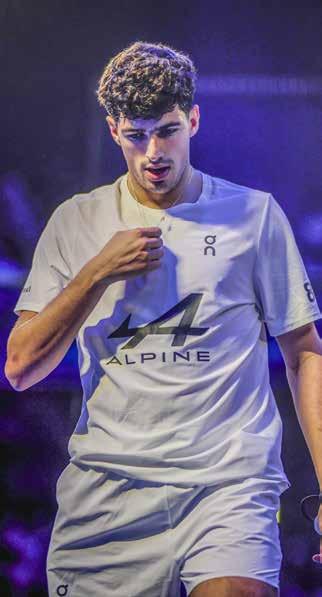
16: MATTEO PLATANIA: THE SACRIFICES OF A 20-YEAR-OLD
WHEELCHAIR PADEL
17 ANDREA PACINI: BETWEEN SKY AND FIELD
PREMIUM CLUB
18 APC ACTIVE PADEL CLUB: INHERITING THE PASSION
PRODUCTS
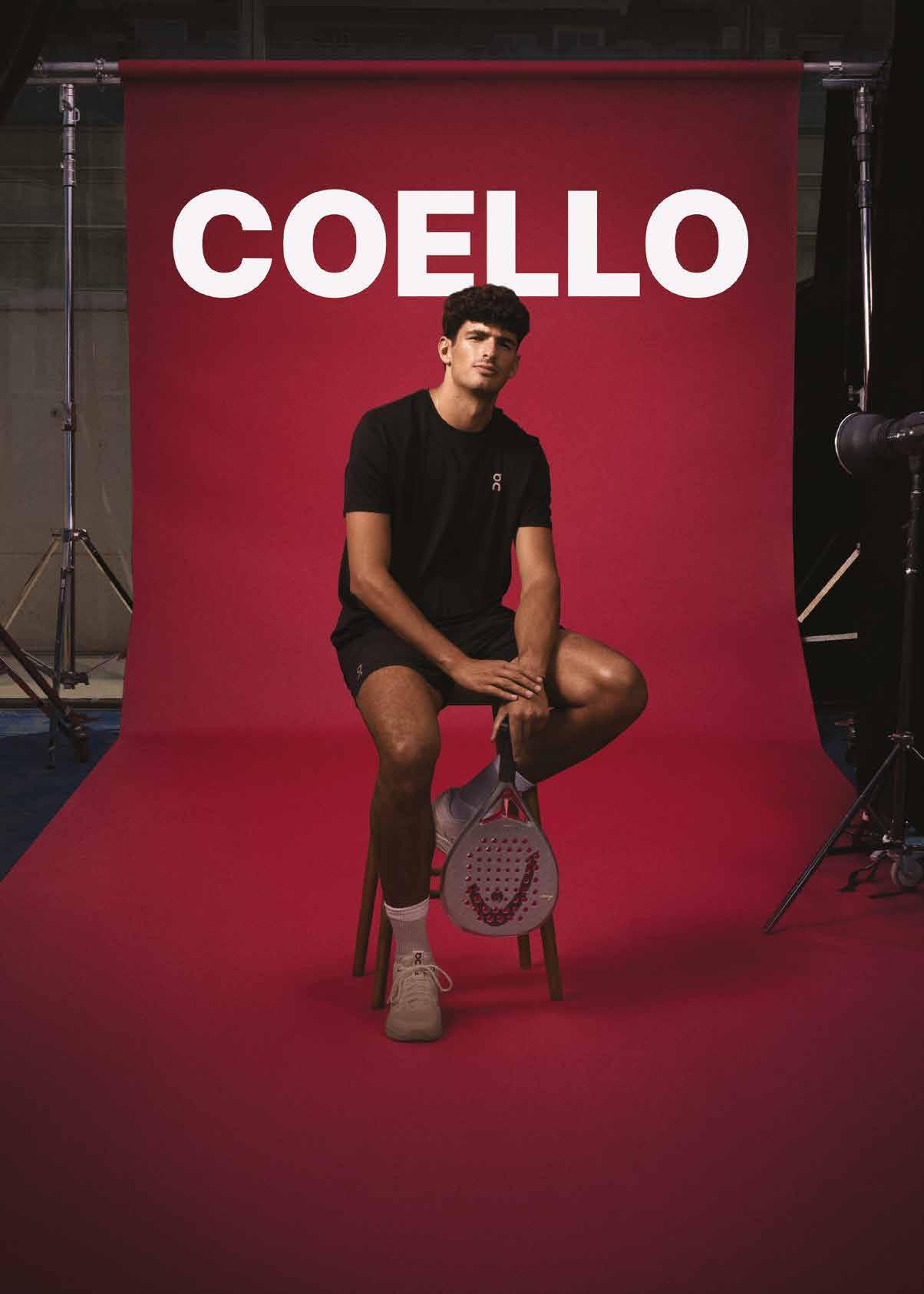
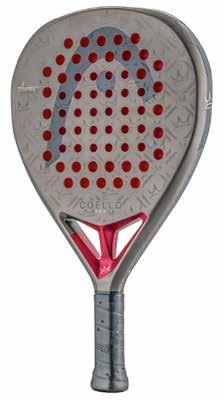
20 HEAD COELLO: PLAY LIKE THE NUMBER 1
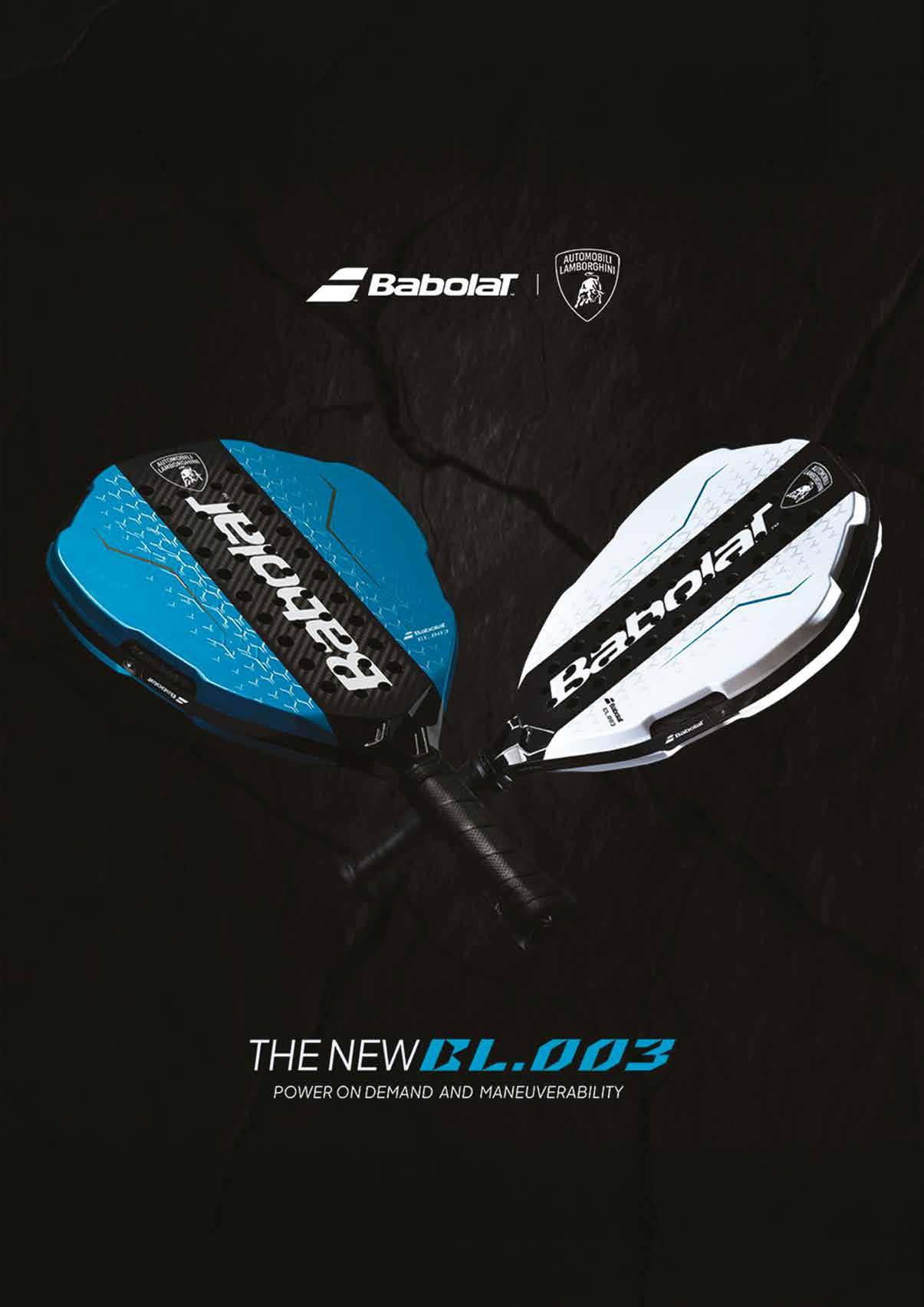
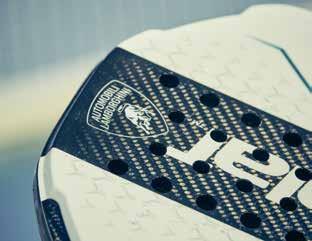
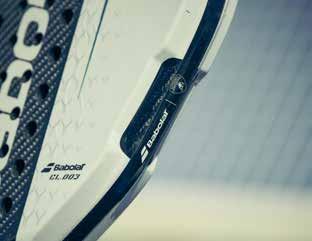
22 BL003: THE BABOLAT X LAMBORGHINI COLLABORATION
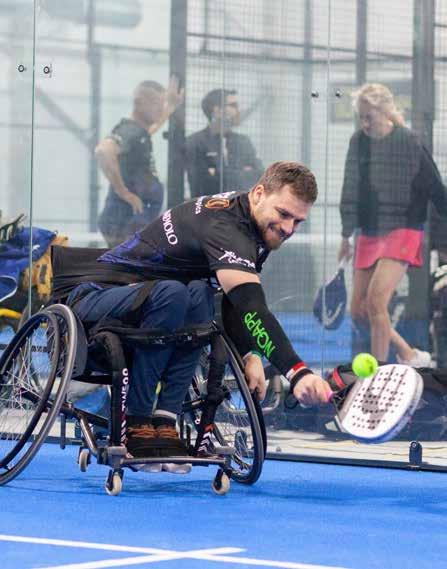
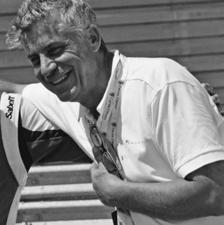
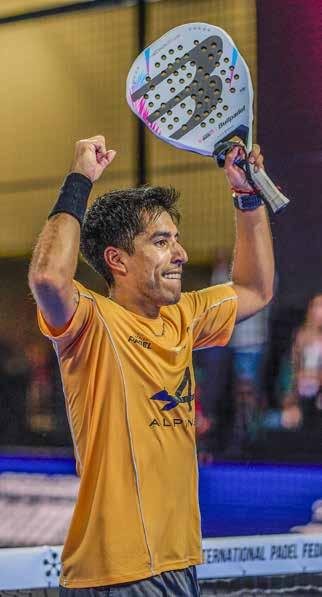
What I like most about padel is the connection with your partner when you're in a match. It becomes like a dance for two, and the goal is really to try to make this dance harmonious
Andrea Pacini, page 16
RESPONSIBILITY
24 NO EXCUSES: OUTDOOR IMPACT SUMMIT
TRADE SHOWS
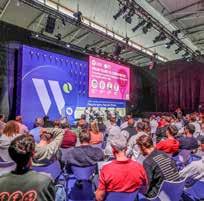
25 : LOOKING AHEAD TO THE 2026 PADEL WORLD SUMMIT
FOCUS ON
26 PADEL AND NEUROSCIENCE: HOW TO USE YOUR HEAD
UNDER THE MICROSCOPE
28 INSIDE CHAMPIONS' WALLET
CIRCUITS
29 SICILIA PADEL TOUR 2026: THE HAPPY ISLAND
FOCUS SHOP
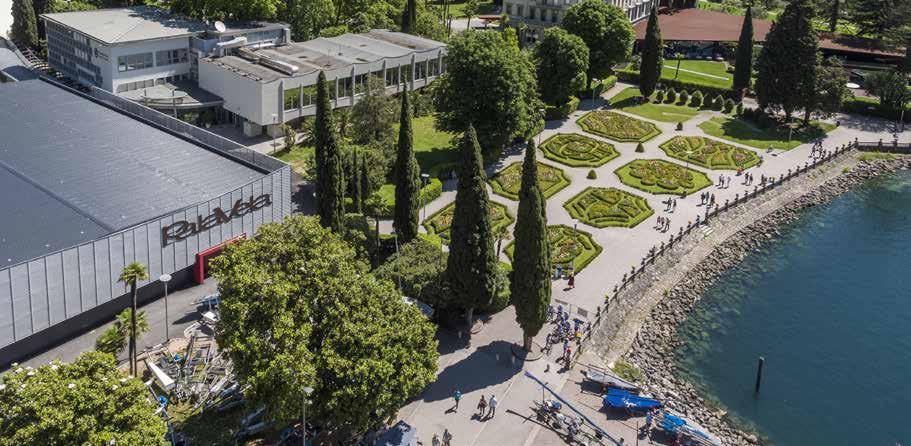
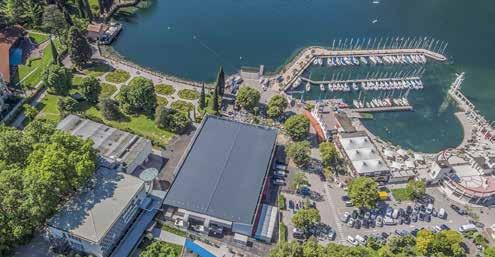
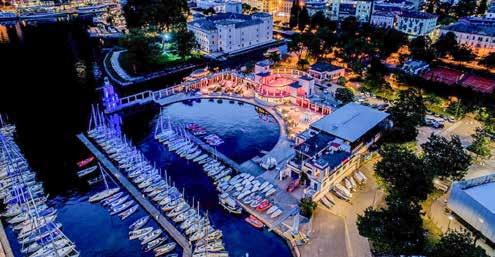
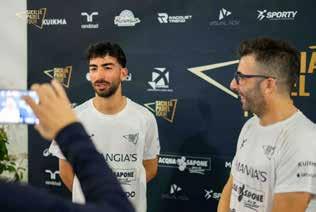
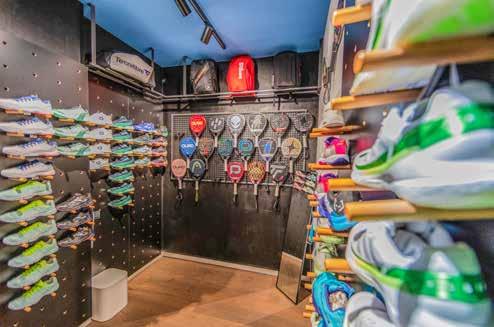
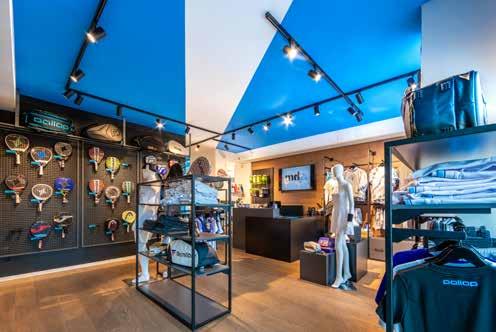
30 MUNDO DEL PADEL IN TRENTO
THE COACH SAYS
32 THE IMPORTANCE OF BEING CALLED A TEACHER
THE CORNER OF THE MENTAL COACH
33 DISCOVERING VISION TRAINING
PADEL LEGAL
34 RETROACTIVE BUILDING
MISUNDERSTANDINGS TO RESOLVE
by Daniele Pansardi
The Cupra FIP Tour would serve as a gateway to the major stages of the global padel circuit. After various adjustments and tweaks, the Federation can now say it is satisfied with its product. The 2026 calendar includes a total of 200 tournaments, with 17 new countries and growing participation, but behind the dazzling numbers (which are very positive for the sport) lie misunderstandings that have been dragging on for several months. Matteo Platania, a promising 20-year-old from Sicily, touched on this, for example, during his interview on Gabriele Marini and Marco Paialunga’s Total Padel podcast, an excerpt of which can be found on page 17. Platania notes that trying to climb the international rankings has become “much harder than before,” because even players in the Top 50 or 60 are entering Silver and Bronze tournaments. Unlike in tennis Challengers, there are in fact no ranking limits, and those who need points to cling to higher positions in the rankings end up clogging the draw sheets of events that, in theory, were created for other purposes. Edu Alonso, some time ago, framed the problem in much clearer and sharper terms: “It’s a big problem for young players. If we aren’t prevented from participating in these events, it will be difficult for the kids to develop. Somehow, the situation needs to be regulated.” Manuel Lamperti was even harsher: “If there are players who prefer to play in an FIP rather than a Premier, we’re on the wrong path.” There is still time to correct the course: will the Federation led by Luigi Carraro be able to find the right balance for a better format, perhaps by borrowing the rules of tennis? We will
continue to explore this issue on our channels.
Meanwhile, here in our part of the world, there is certainly no doubt about the health of amateur padel. It is a vibrant and mature community that fuels the entire movement, and thanks to the insight and skill of local and national organizers, it also finds fertile ground for fostering a healthy dose of competitive spirit. Take the Sicilia Padel Tour, for example, which has united an entire region around “pala y bola” and joined the FITP-TPRA circuit with its fourth edition (we discuss this with Francesco Russo on page 29); or the newly launched Decathlon Wansport Padel Cup, which starts in Piedmont but has interesting ambitions, given its two main sponsors. And what about an experience like the Rafa Nadal Academy Padel Tour? Six stops in Italy and the prospect of playing the international finals in Mallorca. In short, anyone looking to test themselves has plenty of options to choose from. And speaking of challenging oneself, you can draw inspiration from the story of Andrea Pacini’s audacity and determination (page 17). You’ll discover that even between skydiving and padel there can be similarities and points of contact, and that perhaps you can feel more anxiety on the court than during a flight. It’s truly the case that our mind is still largely uncharted territory. Some have tried to understand it better by applying neuroscience to sports (pages 26–27) in a dedicated book that addresses players’ most common questions and concerns. When we say that padel “is all in the head,” do we really know how to use it?
Editors: Daniele Pansardi, Davide L. Bertagna, Andrea Farano, Marcello Ferrarini, Andrea Fierro, Sara Fumagallo, Gabriele Marini, Marco Paialunga, Adelio Rosate Art Director: Simone Comi
Editorial Office: 68 Via Tertulliano, 20137 Milan Tel: 02.87245180 - Fax: 02.87245182 23 Corso della Resistenza - 20821 Meda (MB) Email: redazione@padelbiz.it Website: padelbiz.it
Volume 5 - Issue 2/2026 - Bimonthly journal
Registered with the Court of Milan under No. 6796/2023 on June 12, 2023.
Poste Italiane SpA - Postal subscription service pursuant to Decree Law 353/2003—converted into Law 46/2004, Article 1, Paragraph 1—LO/MI. Registration in the ROC No. 16155 dated November 23, 2007
Printed by: Ingraph - Seregno (MB)
One copy: 1.00 euro.
The publisher guarantees the strictest confidentiality of the data in its possession. This information will be used to manage subscriptions and to send marketing communications.
Pursuant to Article 13 of Law No. 196/2003, you may request the correction or deletion of your data at any time by writing to: MagNet srl SB
Data Controller: Benedetto Sironi
This issue was closed on April 14, 2026
MagNet srl SB @padel.biz
GALÁCTICOS RACKETS: RONALDO'S PROJECT TO PROMOTE THE GROWTH OF PADEL IN BRAZIL
CARLOS TEVEZ OPENS THE APACHE 32 PADEL CENTER IN ARGENTINA
Ronaldo "O Fenômeno" is set to invest in racket sports through the Galácticos Rackets project, which aims to promote the growth of padel in Brazil. The former star’s ambitious initiative calls for the construction of 100 padel courts and 100 tennis courts. As reported by Exame magazine, Ronaldo’s project is based on three main pillars: the Galácticos Club, a premium brand that combines racquet sports with wellness offerings; Galácticos Arena, a more accessible franchise format; and social initiatives to revitalize unused or abandoned spaces in cities such as São Paulo and Rio de Janeiro. The first phase involves an initial investment of approximately 25 million reais.
THE PRO PADEL LEAGUE HAS RAISED $15 MILLION IN NEW FUNDING
Rick Schnall, owner of the NBA’s Charlotte Hornets franchise, has led a $15 million investment campaign in the Pro Padel League, the North American league that attracts the world’s best players every year. Joining Schnall was the venture capital firm Left Lane Capital. “Partners like Rick give us additional credibility,” said Michael Dorfman, CEO of the Pro Padel League. "I believe we can also gain a great deal of institutional experience by involving people like him, who have seen how the sport works at the highest levels. This investment demonstrates the long-term vision we have as a league."
PADEL IN THE U.S.: 53% INCREASE IN MEMBERSHIP BY 2025
The USPA (United States Padel Association) has revealed that its membership grew by 53.5% in 2025, reaching 2,915 nationwide. In addition to the growth in membership, the number of clubs affiliated with the USPA rose to 108 in 2025, compared to 53 at the end of 2024. Specifically, the number of “premier” clubs rose from 32 to 63, while “official” clubs increased from 13 to 36 (the two categories differ in terms of public offerings, requirements, and the ability to host tournaments of varying national significance). The number of Open tournaments under the USPA’s auspices has also grown, more than doubling: from 48 events hosted in 2024 to 104 in 2025.
Another illustrious name has joined the ranks of the many former soccer players who have found their calling in padel: Carlos Tevez. The former Argentine striker has opened an indoor facility in San Miguel, in the province of Buenos Aires, named after his nickname and his historic jersey number: Apache 32 Padel. Tevez’s passion for padel has turned into a business opportunity, just as it has for others before him. The most famous examples? Zlatan Ibrahimovic with Padel Zenter, Zinedine Zidane with Z5 Padel, and Francesco Totti with the court management and construction company TZ Service. In recent months, Tevez was also honored by Bullpadel with two special Apache 32-branded rackets.
SPASH IS GOING PUBLIC THROUGH A CROWDFUNDING CAMPAIGN
Spash, a French company specializing in video and AI technologies for padel, has launched a crowdfunding campaign on Crowdcube, with the goal of opening up the company’s equity to the public in exchange for a minimum investment of 150 euros. The company, which has already established a significant market presence in over 400 clubs and on more than 1,000 courts, allows amateur players to review their matches, share highlights, and analyze game statistics just seconds after the match ends, thanks to cameras and AI software installed directly in sports centers. The round has already raised over €230,000 from 120 potential investors in the initial phase.
AMER SPORTS APPOINTS CARRIE ASK AS THE NEW PRESIDENT OF WILSON
Amer Sports has appointed Carrie Ask as the new president of Wilson. Ask brings extensive experience in the sports retail sector: she served as CEO of Helly Hansen for nearly four years and previously held the roles of Chief Customer Officer at Tailored Brands and Executive Vice President and President of Global Retail at Levi Strauss & Co.
At Nike, she served as Vice President and General Manager of Nike Stores for North America. Amer Sports CEO James Zheng described Ask as a “proven leader with solid senior management experience,” highlighting her expertise in omnichannel management and international development.
BULLPODCAST: BULLPADEL’S PODCAST SERIES
TELLING THE STORIES OF THE CHAMPIONS
Bullpadel is expanding its content offerings with the launch of BullPODCAST. The new format, available on the brand’s official YouTube channel, is designed to offer a behind-the-scenes look at the professional world: the daily lives, mental preparation, and personal challenges of the Bullpadel team players, going beyond mere sports results. Hosted by journalist Nacho Palencia, the guest on the first episode was Paquito Navarro, who discussed several key aspects of his career in an interview: his world No. 1 ranking, which he described as a “relief” rather than mere joy; his teammates and his relationship with Belasteguin and Lebron; and how he manages pressure both on and off the court.
Carrie Ask, President of Wilson
Paquito Navarro
WEEBORA HAS ENTERED INTO A PARTNERSHIP WITH GEMMA TRIAY
Weebora has announced a partnership with Gemma Triay that will continue throughout the season. “Gemma Triay embodies the excellence that Weebora aims to convey in every project,” said Fabio Zecchini, founder and CEO of Weebora. “While her exceptional talent and the titles she has won define her career, it is her attitude and ability to look beyond the court that make Gemma unique. Together with her, we want to introduce fans to a new way of experiencing padel.” Triay will wear the Weebora logo on her apparel during official tournaments and will be the star of exclusive activations and events dedicated to fans and those who love to travel with padel, inspiring the global community with digital content.
FRANCO STUPACZUK AND SIUX HAVE EXTENDED THEIR CONTRACTS THROUGH 2029
Franco Stupaczuk and Siux had already renewed their partnership through 2028 last August, extending a collaboration that began in 2022. The Argentine player and the Spanish brand have further strengthened their relationship, which will continue at least through 2029. The Murcia-based company announced the news with a video on its Instagram channel. The 30-year-old Pole, currently ranked No. 6 by the FIP, is the brand’s main ambassador, and the brand has even honored him with a series of signature paddles from the Electra line. This season, Stupa is playing alongside Mike Yanguas, who was already his partner back in 2024. Siux, which recently underwent a major rebranding that revitalized its identity, is demonstrating its unwavering belief in one of its star players, whom it will support for at least another four years.
ONLYFANS HAS CHOSEN ZAZU OSORO AS ITS NEW AMBASSADOR
Aranzazu Osoro has announced a new partnership with OnlyFans, with the aim of sharing aspects of her professional and personal life in a more direct way. The decision stems from her desire to give fans a behind-the-scenes look at her daily life: training sessions, physical conditioning, travel, moments off the court, and exclusive content for fans. Osoro’s goal is to strengthen her relationship with the public by offering a space where she can communicate directly and unfiltered. She is not the first professional padel player to be sponsored by OnlyFans: over the past year, the platform—known primarily for its explicit content—has signed Jon Sanz, Victoria Iglesias, and Veronica Virseda.
I BECAME
THE SIX ITALIAN STOPS OF THE RAFA NADAL ACADEMY PADEL TOUR
DECATHLON WANSPORT PADEL CUP: IN PIEDMONT A NEW FORMAT FOR AMATEUR PLAYERS
Following the success of the first two editions in Spain and the expansion of the tour into new international markets—including its recent launch in the United States—the Rafa Nadal Academy Padel Tour continues to expand its global presence, now coming to Italy as well. The Italian leg of the Rafa Nadal Academy Padel Tour will feature six tournaments in major Italian cities. The confirmed venues are Turin (April 10–12), Ancona (April 24–26), Rome (May 22–24), Milan (June 12–14), Naples (June 26–28), and Florence (September 18–20), before culminating in the final to be held at the Rafa Nadal Academy in Mallorca, where the best international teams will also converge. This amateur circuit, which brought together 800 players in Italy in 2025, retains its innovative team format inspired by the Hexagon Cup. In 2026, the circuit will have Holafly as its partner in Italy, in addition to support from Babolat.
SERIE A: THE 2026 FINALS AT CORBETTA PADEL & FITNESS
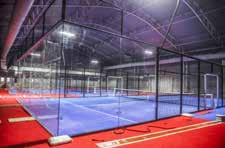
The 2026 Serie A Padel Finals will be held at Corbetta Padel & Fitness in Corbetta, in the province of Milan. The Scudetto will be awarded between June 17 and 20, determining the successors to Lazio and Milano Padel. Following the 2025 edition held at the Eschilo Sport Village in Rome, the final stage of Italy’s top league returns to the Milan area, after the 2024 finals were held at the Get Fit Village on Via Pinerolo. Corbetta Padel & Fitness is a state-of-the-art club located west of Milan, featuring 10 indoor courts. Additionally, the two central courts will be equipped with bleachers, making them ideal for hosting tournaments and private events.
LED LIGHT PROJECTS NEW OFFICIAL PARTNER DELLA FIP
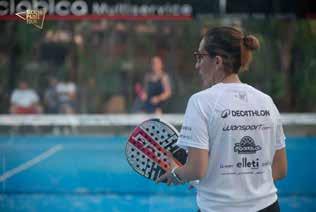
The first edition of the Decathlon Wansport Padel Cup will take place from April 7 to June 21. This amateur tournament, held throughout Piedmont, will involve 65 clubs and 400 players. The format was created by Wansport, the management platform for clubs and match scheduling. The Italian company led by Michele Granieri is launching the project in Piedmont specifically because of its widespread adoption in the region (160 active clubs use the app). The tournament will kick off on April 7, and the finals will be held on June 20 and 21 at two iconic Turin padel venues, the Palavillage and the Motovelodromo, which will host the closing event. In addition, during the final on June 21, there will be a match in the Italy Padel Tour VIP Tournament featuring the Football Legends, which will include some of soccer’s biggest names such as Nicola Amoruso, Cristian Brocchi, Alessio Tacchinardi, and Mark Iuliano.
PREMIER PADEL: IN LONDON, THE TOURNAMENT WILL BE HELD AT THE HISTORIC OLYMPIA VENUE
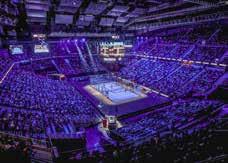
The Premier Padel debut in London will take place in the stunning setting of the Olympia, a historic venue for events, trade shows, and concerts in Kensington with over 130 years of history. Over the years, it has hosted sporting events such as boxing matches and wrestling shows, as well as concerts by Rod Stewart, The Cure, and the Chemical Brothers. From August 4 to 9, it will welcome the biggest names in world padel for one of the most anticipated P1 tournaments of the year, as this marks the circuit’s debut in the British capital. Opened on December 26, 1886, the Olympia has undergone extensive renovation and refurbishment over the past decade, making it a highly sought-after and iconic venue, especially given its central location and proximity to London’s many historic sites.
PARTNERSHIP
WHOOP SIGNS AN AGREEMENT WITH PREMIER PADEL
The FIP has signed an agreement with Led Light Projects S.L., a Spanish company specializing in professional lighting solutions for the sports sector and already a leading provider for padel courts worldwide. Under this partnership, Led Light Projects will serve as the Federation’s Official Lighting Supplier. The agreement represents another step forward in the growth and innovation of the international circuits governed by the FIP, with the aim of strengthening the organizational and technological standards of tournaments.
OYSHO BECOMES A SPONSOR OF MADRID'S P1
Oysho continues to expand its presence in the world of padel by sponsoring the Madrid P1, one of the most important tournaments on the Premier Padel calendar. The Inditex Group brand, a partner to many players on the women’s circuit, will serve as the presenting and apparel partner for the Madrid event, taking place September 1–6 at the Movistar Arena. This is yet another demonstration of Oysho’s commitment to being part of the international padel scene, following its existing partnerships with the P2 in Valladolid, the P1 in Milan, and the Major in Rome. In addition to sponsorship investments in major tournaments and elite players such as Paula Josemaria, the brand supports the organization of events dedicated to amateur players, such as the Oysho Padel Cup, which concluded last year in Milan.
Premier Padel and WHOOP have announced a new partnership that brings together the world’s fastest-growing sport and a leader in health and performance technology. Under this three-year agreement, WHOOP will become Premier Padel’s official health and performance wearable partner, bringing its cutting-edge wearable technology and performance data to athletes. WHOOP provides continuous physiological insights that help people better understand their health. By tracking sleep, effort, and recovery, WHOOP translates complex data into clear, actionable insights, enabling users to make smarter decisions about training, performance, and long-term health.
PADEL VS RACISM MOVES TO SARDINIA FOR ITS FIFTH EDITION
After four editions held in Milan, the Padel vs Racism event is moving to Sardinia with a new format focused on sports and solidarity from June 25 to 28. Four days of sharing, networking, and fun at the Chia Laguna resort in the province of Cagliari. The resort will serve as the setting for the amateur charity tournament organized by the event agency Touche Eclat, which will donate a portion of the proceeds to the IOTIFOPOSITIVO Association. This organization focuses primarily on elementary and middle schools, sports clubs, and youth centers, with the goal of educating young people about respect and responsibility. Once again this year, the event will be graced by several special guests, including former world champion Fernando Poggi and Miguel Lamperti.
PADEL ADDED TO THE LIST OF EXPERIMENTAL SPORTS RECOGNIZED BY FISDIR
The Italian Federation of Paralympic Sports for People with Intellectual and Relational Disabilities is taking a new step forward in its growth, and it is doing so with padel, which is officially joining the FISDIR’s experimental disciplines. The introduction of this discipline is aimed at encouraging participation and creating new structured sports programs. Launching the sport on an experimental basis will allow the Federation to progressively evaluate its development, promoting dedicated activities, opportunities for exchange, and initial competitions, with an eye already set on possible future consolidation. To support this experimental phase, FISDIR is promoting the first Open Days dedicated to padel, which are key opportunities to introduce athletes, coaches, and clubs to the sport: June 13, 2026 – Suprema Sport Village, Gubbio (PG)
3 ottobre 2026 – Gioia Padel, Pero (MI) 24 ottobre 2026 – TC2, Palermo (PA)
ATHLETES
MAGNET: AN INCREASINGLY INTERNATIONAL IDENTITY
A new chapter is beginning for MagNet. Over the years, our group has become a leading name in B2B publishing (and beyond) in Italy, and we now aim to expand our reach to an international audience. All digital editions of our magazines are now available to read and download entirely in English. This evolution aims to broaden our editorial reach and create networking and visibility opportunities for professionals worldwide. It is an ambitious step to meet the needs of an increasingly interconnected global market. MagNet currently boasts a readership of over 2 million readers. The international editions of our magazines aim to increase the reach of our information, transcending language barriers—which, now more than ever, can be overcome with increasing ease. And we won’t be doing this solely through print magazines. Our digital ecosystem is now also available entirely in a bilingual version. On our websites, via the dedicated menu option, you can change the language and view all our content in English.
JOYS AND SORROWS OF THE SPORTS ECONOMY
Increasingly profitable, with staggering growth prospects through 2050.
According to a study by the World Economic Forum, however, not all that glitters is gold when it comes to sports, especially when we look at the data on physical inactivity
by Daniele Pansardi
Sports are currently experiencing a golden age. According to a report by the World Economic Forum, compiled in collaboration with the consulting firm Oliver Wyman and published by the World Federation of the Sporting Goods Industry (WFSGI), the global sports economy is currently worth approximately $2.3 trillion, but is projected to reach $8.8 trillion by
2050. A forecast spanning such a long period must, by its very nature, be treated with caution, especially given the volatile and uncertain global landscape, but it does tell us, at least in part, just how profitable sports have become for corporations and investment funds, which are able to capitalize on people’s approach to sports as a means of personal fulfillment and community participation. The report highlights how physical activity is a key—yet still somewhat underestimated—factor for public well-being and sustainable growth, and that it is not adequately promoted by national governments in the context of prevention. Although it is set to grow exponentially over the next 20 years, the sports industry, in short, faces rivals that must be taken into account, as they may partially undermine its role in generating profits and having an impact on society: in addition to the aforementioned lack of interest from policymakers, we must also consider sedentary lifestyles and climate change.
FUTURE GROWTH DRIVERS
According to the report, future growth in the sports economy will be driven by four main trends:
1. The evolution of sports tourism; 2. the emergence of sports as a financial asset class;
3. the growth of women's sports; 4. Rebalancing global growth in sports.
As for tourism, forecasts indicate a 60% increase in the total sports economy by 2030. It has also become the fastest-growing segment in the broader tourism industry, to the extent that in 2025, 10% of global travel spending was on sports-related activities, with
and sport betting
Sports economy market sizing FIGURE 5
– Nutrition: Covers sport protein and nonprotein products for muscle repair or energy boost – Wearables and technology software: Includes fitness wearables and sport-related experiential technology such as artificial intelligence (AI), global positioning system (GPS) and virtual reality (VR)
– Sport services: Includes agencies and insurance companies providing sport-related solutions.
revenues growing at a compound annual growth rate of 28% since 2020. Sports tourism encompasses both the purchase of tickets and experiences at major events and packages that include hands-on physical activity.
The sharp rise in such solutions and offerings—which aim to maximize profits by capitalizing heavily on the widespread desire to be part of events and not be left out— is inextricably linked to the second trend: the financialization of sports. Revenue has grown steadily, and massive investments from private equity and venture capital (not to mention sovereign wealth funds seeking to use sports as a tool of soft power) have propelled the industry into a new and different phase, where the competitive or performance-oriented aspect is not necessarily the top priority. While this new chapter has secured substantial capital inflows for sports compared to the past, there is a risk of losing sight of grassroots movements or the segment of less affluent athletes and fans tied to specific traditions. When it comes to women’s sports and emerging countries, however, the numbers tell a story of explosive growth with nothing but positive implications. For example, the WEF report estimates that by the end of 2025, revenue from women’s sports will reach $2.35 billion—more than triple the figure for 2022.
RISKS AND CHALLENGES
Having discussed the significant economic growth of sports, we must also address the issue of those who should be participating but are instead inactive. Sports have become more profitable, but they have not become more accessible, given that, according to a study by The Lancet, nearly one-third of adults and up to 80% of young people do not get enough exercise. According to the World Health Organization (WHO), the economic burden of physical inactivity will cost healthcare systems approximately $300 billion between 2020 and 2030.
Then there is climate change, and the degradation of natural resources that it entails, which poses an obstacle to many outdoor activities (and this is yet another reminder that padel should primarily be an indoor sport: just look at the P2 tournament in Cancun, or the sweltering heat endured at the Rome Major in recent editions). At the same time, however, sports are one of the factors that in turn put pressure on the natural environment on which they depend, creating a vicious cycle that is difficult to counteract, especially when it comes to professional sports.
FOR HEALTHY PROSPERITY
In the section on potential best practices, the WEF report emphasizes that all stakeholders must prioritize fostering a healthy and sustainable ecosystem—
not just from an economic and financial perspective. Despite its challenges, sports can serve as a driving force thanks to its cultural influence, which can promote widespread change. With this in mind, the WEF has identified three paths forward for the sports economy.
1. Promote the responsible management of resources
Global demand for freshwater is projected to exceed supply by 40% by 2030, a gap exacerbated by changing rainfall patterns and the increasing frequency of droughts. Responsible resource management should therefore become a management priority across the entire sports sector, integrated into risk management frameworks, supplier engagement strategies, and long-term infrastructure planning. At the same time, it is necessary to promote the scalability of business models based on the circular economy and to leverage sporting events to disseminate and test more responsible consumption strategies on a large scale.
15
Preventive healthcare expenditure as a share of total health spending, selected countries/regions
2. Sports in City Centers
Cities account for 80% of global GDP, and projections indicate that they will be home to 70% of the world’s population by 2050. The urban landscape therefore holds enormous potential; it can leverage city communities and attract largescale, high-impact investments, as their population density and concentration of infrastructure foster active lifestyles and generate significant ripple effects.
3. Promote capital flows directed toward specific objectives
To stimulate purpose-driven capital flows, it would be necessary to shift from transactional financing to impact-oriented and values-aligned investment strategies. If structured effectively, financial flows directed toward sports can serve not only as drivers of asset growth and commercial performance, but also as catalysts for social inclusion, environmental sustainability, and the long-term resilience of communities.
FIGURE
Totale: $ 2,3 mila miliardi Settori diretti
mila miliardi
Sports economy global revenue pools ($, 2025E)
Fonte: Off the Pitch, Sportsvalue,
PADEL RETAIL OBSERVATORY
Padelbiz continues its survey of Italian retailers, in which we analyze market trends for 2025. Financial results, challenges, positive developments, suggestions, and opportunities for the future. We hear from retailers across the country
by Daniele Pansardi
Retailers are the cornerstone of the supply chain, which is precisely why it is important to gather their perspectives, listen to their requests, and take their needs into account. Through our “Focus Shop” and “Why I Open” columns, we give them a voice every single day of the year, but it is in the first issues of the new year that, with our Padel Retail Observatory (now a MagNet trademark in the “La Carica dei 101” format), we conduct a comprehensive market survey. A review of the year just ended and outlook for the coming one, news, trends, challenges, opportunities, proposals: with 2025 now in the books for retail outlets, what are retailers’ opinions? Here is the first installment of our survey, offering interesting food for thought for all players in the padel market.
JOIN US IN OUR SURVEY
Are you a retailer running a business in the padel industry? Padelbiz and the MagNet publishing group are giving you the chance to have your say by participating in our Padel Retail Survey, which is based on one of our most widely read and highly regarded editorial formats. To respond to our survey, scan the QR code on the right, call us at 0287245180, or email us at redazione@padelbiz.it
CARLISPORT
Ariccia (RM)
Luigi Carliseppe, titolare
BILANCIO DI FINE ANNO
1. Stabili.
2. Calo della domanda, concorrenza online, marginalità ridotte.
3. L’abbigliamento.
4. Sì, tra lo 0% e il 10%.
TREND DI ACQUISTO
5. Consigli del negoziante, passaparola, fedeltà a un marchio già usato, prezzo e/o promozioni, utilizzo da parte di un giocatore pro. PREFERENZE SULLE RACCHETTE
6. 150-200 euro
7. Ogni 12 mesi.
8. Demo day, test racchette, pacchetti o promozioni speciali.
12. Cerchiamo di fare acquisti sempre più mirati e di non avere quantità esagerate di prodotti, anche perché più prodotto abbiamo e minore è il margine per tutti, sia per negozianti sia per le aziende.
The questions
1. How did sales perform in 2025 compared to 2024? (Please indicate the percentage increase or decrease)
2. What were the main challenges of 2025?
3. Rackets, shoes, or clothing: which category offers the highest profit margin?
4. Do you have an e-commerce site? If so, what percentage of your total revenue does it account for?
PURCHASING TRENDS
5. What factors most influence consumers when making a purchase?
6. What was the price range of the best-selling racquets in 2025?
7. How often do regular customers buy a new racket?
8. What initiatives or agreements are effective in boosting sales and attracting more customers to the store?
BRAND PREFERENCES
9. What are your top 3 racquet brands, in order?
What are your top 3 shoe brands, in order?
What are your top three clothing brands, in order?
What are your top 3 brands of bags and backpacks, in order?
10. Which company did you work with best in 2025?
11. How would you rate this 2025 on a scale of 1 to 10?
12. Any final thoughts and a message from you to suppliers and colleagues.
SPACE SPORT
Porto San Giorgio (FM) Sebastiano Properzi, titolare
BILANCIO DI FINE ANNO
1. In crescita del 20% circa.
2. Aumento dei prezzi, concorrenza online, marginalità ridotte.
3. L’abbigliamento.
4. No.
TREND DI ACQUISTO
5. Consigli del negoziante, fedeltà a un marchio già utilizzato, passaparola, prezzo e/o promozioni, test del prodotto, utilizzo da parte di un pro, tecnicità dei prodotti.
PREFERENZE SULLE RACCHETTE
6. 200-250 euro
7. Ogni 12 mesi.
8. Noleggio, test racchette, partnership con allenatori.
I MARCHI PIÙ VENDUTI DEL 2025
9. racchette: ADIDAS, BABOLAT, NOX scarpe: ASICS, JOMA, HEAD abbigliamento: ADIDAS, JOMA, HEAD zaini/borse: HEAD, BABOLAT, YONEX
10. HEAD
11. Voto 2025: 9
12. Il mio negozio è basato su uno storico importante di tennis. Quindi l'aumento di fatturato e di movimento in generale è dovuto più all'incremento sul settore tennis che su quello del padel.
RAPID STRING
Rivoli (TO)
Davide Bianchin, titolare
BILANCIO DI FINE ANNO
1. In crescita di circa il 15/20%.
2. Aumento dei prezzi, concorrenza online, marginalità ridotte.
3. Le scarpe.
4. Sì, vale tra il 10 e il 20%.
TREND DI ACQUISTO
5. Consigli del negoziante, fedeltà a un marchio già utilizzato, prezzo e/o promozioni.
PREFERENZE SULLE RACCHETTE
6. 150-200 euro
7. Ogni 12 mesi.
8. Test racchette, pacchetti o promozioni speciali.
I MARCHI PIÙ VENDUTI DEL 2025
9. racchette: ADIDAS, BABOLAT, WILSON scarpe: ASICS, BABOLAT, WILSON
abbigliamento: ADIDAS, BABOLAT, WILSON zaini/borse: WILSON, ADIDAS, BABOLAT
10. WILSON
11. Voto 2025: 6
CA’ SPORT
Rivarolo Canavese (TO) Paolo e Alberto Moro, titolari
BILANCIO DI FINE ANNO
1. In calo del 40%
2. Overstock.
3. Le racchette.
4. No.
TREND DI ACQUISTO
5. Prezzo e/o promozioni.
PREFERENZE SULLE RACCHETTE
6. 150-200 euro
7. Ogni 12 mesi.
8. Corner e partnership con i centri padel. I MARCHI PIÙ VENDUTI DEL 2025
12. Il nostro punto di vista va ben oltre il perimetro di Ca’ Sport. Le nostre attività hanno più ramificazioni, visto che la famiglia Moro ha diverse partecipazioni nella filiera sportiva grazie alla partnership con i-Sports, al cui interno confluiscono !koneec e Tennisfibre, e alla società 4Mat con il quale distribuiamo il marchio Diadem. Dal nostro osservatorio, vediamo un grande e continuo disordine nella distribuzione degli articoli sportivi, che comportano difficoltà insormontabili nelle vendite.
PADEL NUESTRO CASERTA
Marcianise (CE)
Emanuele Rinalli, addetto alle vendite
BILANCIO DI FINE ANNO
1. In crescita del 20-25%, perché è aumentata la notorietà del negozio.
2. Concorrenza online.
3. Le racchette.
4. No.
TREND DI ACQUISTO
5. Consigli del negoziante, utilizzo da parte di un giocatore pro.
12. Purtroppo bisogna combattere la concorrenza sleale che “sporca” il nostro lavoro. Non parlo solo degli e-commerce, ma anche di alcune piccole realtà private che svendono tutto perché non pagano Iva e tasse.
PADEL NUESTRO BRESCIA
Brescia
Giuseppe Bugatti, titolare
BILANCIO DI FINE ANNO
1. Stabili
2. Calo della domanda, i giocatori cambiano meno l’attrezzatura.
3. Le racchette.
4. No.
TREND DI ACQUISTO
5. Consigli del negoziante, fedeltà a un marchio già utilizzato.
5. Consigli del negoziante, passaparola, test del prodotto.
PREFERENZE SULLE RACCHETTE
6. 150-200 euro
7. Ogni 12 mesi.
8. Test racchette, pacchetti o promozioni speciali. I MARCHI PIÙ VENDUTI DEL 2025
9. racchette: BULLPADEL, WILSON, ADIDAS scarpe: MIZUNO, ADIDAS, BABOLAT abbigliamento: ADIDAS, PADEL MI AMOR, MIZUNO zaini/borse: ADIDAS, WILSON, BULLPADEL
10. WILSON
11. Voto 2025: 3
12. Purtroppo le condizioni attuali mettono in crisi i negozianti a favore di sistemi poco corretti. Nel mio negozio sto chiudendo il reparto padel perché le aziende produttrici non stanno valorizzando i loro prodotti (vedi promo dal 50 al 70% dopo pochi mesi dall'uscita sul mercato di alcuni modelli) e non tutelano chi vende e cerca di fornire anche consulenza ai clienti. Poche aziende hanno adottato strategie corrette (cito Floky e Wilson), mentre molti fornitori
hanno il solo obiettivo di stracaricare i negozianti di ordini con condizioni assurde e per molti miei colleghi il tutto sta diventando insostenibile. Pale svendute a prezzi assurdi dopo pochi mesi e ribassi sul resto del materiale che non permette ai rivenditori di marginare. Mi auguro che questo sistema cambi, ma fino a quando le condizioni rimangono queste preferisco sospendere il reparto padel. Per assurdo, dopo sei mesi dal lancio sul mercato, mi sono ritrovato a vendere alcune pale sotto costo. A questo si aggiungono i Maestri venditori (con regolare ricevuta e titolo a farlo?), siti online che vediamo sparire in pochi mesi dopo svendite assurde. Va detto che i clienti preferiscono acquistare racchette usate, visti i prezzi elevati e non giustificati di alcune pale, considerando che basta una griglia per veder buttare nel cestino qualche centinaio di euro. Credo che il mercato sia saturo di attrezzatura e, passatemi il termine, direi piuttosto "marcio". Fino a quando non si assesterà su valori accettabili terrò sospeso il padel, che comunque mi ha garantito vendite importanti.
PADEL ELITE
Barletta
Daniele Corcella, titolare
BILANCIO DI FINE ANNO
1. In crescita del 20%.
2. Concorrenza online, marginalità ridotte.
3. Le racchette.
4. Sì, vale tra lo 0 e il 10%.
TREND DI ACQUISTO
5. Consigli del negoziante, test del prodotto
PREFERENZE SULLE RACCHETTE
6. 200-250 euro
7. Ogni sei mesi.
8. Demo day, test racchette, partnership con gli allenatori.
12. Ci vorrebbe più collaborazione per rendere il mercato meno caotico e mantenere una qualità più alta, senza svendere i prodotti primo giorno. Più servizi di qualità e meno quantità senza senso..
ACE TENNIS & PADEL
Brindisi
Ugo Cervo, titolare
BILANCIO DI FINE ANNO
1. In calo del 30%.
2. Concorrenza online, overstock, troppi canali di vendita.
3. Le scarpe.
4. No.
TREND DI ACQUISTO
5. Utilizzo da parte di un giocatore pro, recensioni online.
12. Bisognerebbe cercare di mantenere i prezzi corretti per il maggior tempo possibile, in modo tale da lavorare tutti al meglio e con i margini giusti. Invece le svendite continuano a iniziare troppo presto.
THE THRILL OF THE SKY AND THE FIELD
Andrea Pacini is one of the few paraplegic skydivers in the world, yet he feels more anxiety during padel tournaments. A story of determination like no other, that moves between flight and the racket by Daniele Pansardi and Giuseppe Galliano
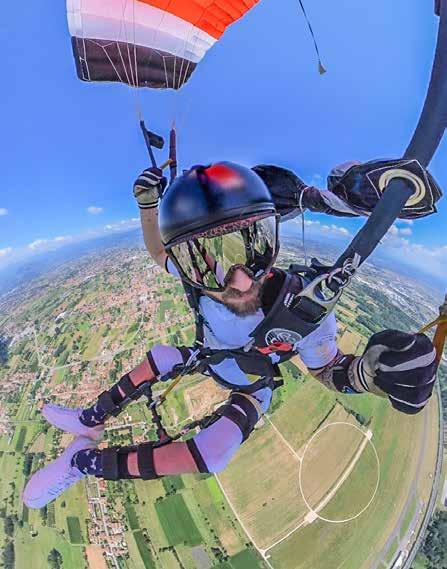
For Andrea Pacini, a Florentine skydiver with over 450 jumps under his belt and a wheelchair padel player, flying has never been an escape. It has always been a return to his deepest identity. Pacini is one of the very few paraplegic athletes in the world—about ten in all—to practice skydiving independently. It is the result of years of technical training and a passion rooted in his military past in the Folgore Brigade. An experience that shapes his approach to sports and to life itself. In February 2008, at age 24, a motorcycle accident and a spinal cord injury changed his daily life, but even in a wheelchair, his approach has not changed. His mindset remains that of a skydiver.
FLYING AGAIN, ON MY OWN
gh the “Obiettivo Volare” association, he has helped hundreds of young people experience that sensation of weightlessness he knows so well.
DANCING IN THE FIEld
"What I like most about padel is the connection with your partner when you're in the game. Being in the right place at the right time, having those plays down, and moving as one."
Archery, table tennis, skiing, go-karts… As a sports enthusiast always seeking new challenges and daily goals, Andrea tried to find his place in the world by moving from one sport to another, before returning to the skies with tandem jumps in 2009. But that wasn’t enough. Andrea wanted to regain control of his own flight, to decide every detail of the descent. What followed was a journey spanning nearly a decade, involving equipment to adapt, protocols to build from scratch, and authorizations to obtain in a field without established precedents. In 2018, he received his ENAC skydiving license, placing him in an extremely rare category worldwide. A special brace stabilizes his legs during flight, but he is the one who makes all the decisions. “It’s one of the few sports where you leave your wheelchair behind,” he says during an interview with Padelbiz. “It’s a place where I feel at home.” Over 450 jumps attest not only to his technical skill but also to a level of competitive consistency that few athletes manage to maintain over time. Today he oversees the Disability Project at Aero Gravity in Milan, through which he introduces people with disabilities to indoor flight, and throu-
“When it comes to competitive play, I get more anxious playing padel than when I jump out of a plane. It’s a strange thing to say, but it’s true.”
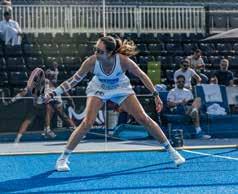
For several years now, the thrill of the open air has coexisted with a more intimate form of competition: wheelchair padel, in a curious and intriguing contrast of styles and sensations. Andrea competes on the FITP national circuit, training in Florence at the Rondinella Padel Club, where he is part of the Rondinella Wheelchair project for wheelchair padel. "What I like most about padel is the connection with your partner when you’re in a match. Being in the right place at the right time, having those plays down, and moving as one. It becomes like a dance for two, and the goal is really to try to make that dance harmonious." Despite the differences between the two sports, Andrea has found, in his own small way, a common thread between skydiving and padel. And as is often the case, it’s a matter of mindset. “When we jump from 4,000 meters, you have 50 seconds of freefall. If you apply that ability to stay clear-headed in critical moments, you can also project it into padel to better understand what to do at a given moment.” A mental skill honed in the void, applied even within the glass walls. With a small paradox: “In competitive play, I feel more anxiety in padel than when I jump out of a plane. It’s a strange thing to say, but it’s true.” Pacini’s commitment extends beyond his own career. Alongside Pippo Galliano, he is a key figure in the Para Padel Project, which aims to build a structured wheelchair padel movement at the national level. For 2026, the goals are clear: to rank among the top five Italian athletes in the FITP rankings and to win a stage of the national circuit. In the long term, Andrea is looking toward the potential Paralympic recognition of padel, which could reshape the entire movement. This perspective says a lot about Andrea’s mindset: always looking ahead to the next goal, whether it’s a 4,000-meter jump or a match to play.
Para Padel Project is a nonprofit organization founded by Pippo Galliano, inspired by his personal experience with wheelchair padel. Para Padel Project works to make this sport accessible to everyone who has suffered a spinal cord injury, collaborating with clubs, instructors, and spinal cord centers to develop programs that help people return to sports.
THE SACRIFICES OF A TWENTY-YEAR-OLD
Matteo Platania is one of the most promising Italian talents for the future of the national team.
From Agrigento to Rome, via Madrid, the Sicilian opened up to the hosts of the Total Padel podcast by Gabriele Marini and Marco Paialunga
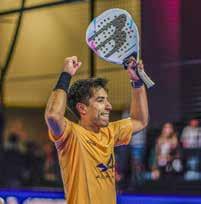
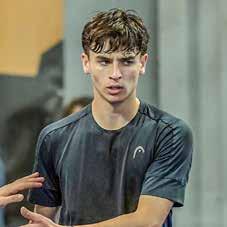
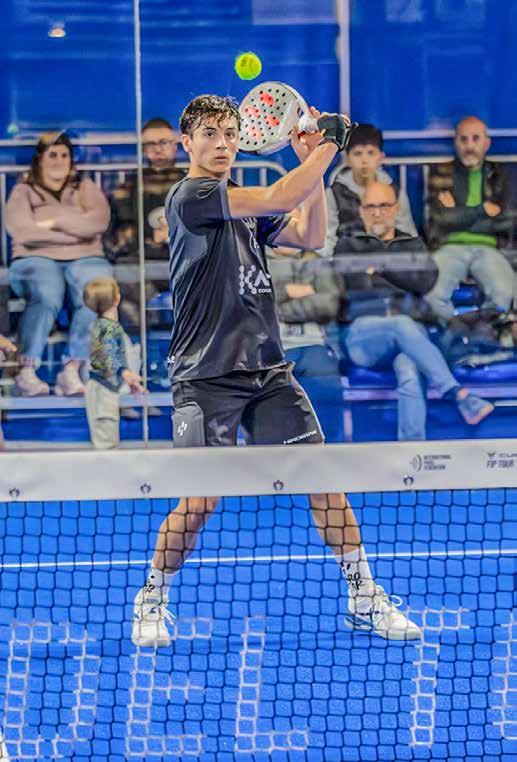
Anyone familiar with the competitive Italian padel scene will likely know Matteo Platania quite well. Born in 2006, the Sicilian is considered by many insiders to be one of the most promising names for the future of the national sport, so much so that in late 2024 he won the SuperTennis Awards alongside another Matteo, Sargolini, as the season’s rising stars. In one of the latest episodes of Total Padel, the podcast by Gabriele Marini and Marco Paialunga produced in collaboration with Padelbiz, we spoke with the Agrigento native about his professional career, which is still in its early stages, the challenges of carving out a niche at the international level, and supporting himself financially while still far from the top echelons of the sport. In the interview, Platania also touches on an issue that has been on the minds of many athletes in recent months: the overcrowding that has developed, especially in the Silver and Bronze categories of the Cupra FIP Tour, where players from the Top 30 or 50 often enter in search of easy points. The full episode is available on Total Padel’s official profiles on Spotify and Apple Podcasts.
Matteo Platania Interview
When did you realize it was worth trying to pursue a professional career?
In 2021, I tried out for a national-level training camp open to all young people. I went to Rome without any expectations, but then I was invited to another camp, and eventually I made the national youth team. It was a bit unexpected, but at that moment I realized I could try to make something of it.
You also spent some time in Madrid. When you returned to Italy, did you notice any significant differences among your peers?
Spain was a whole different world. Especially a few years ago, it was something we’d never seen before. I’ve faced all kinds of players. Here in Italy, we don’t have the same academies yet. We’re slowly getting there, and I hope that with the new generations, there will be lots of kids who start playing padel right away without going through tennis first.
How difficult was it for you to compete against kids your own age at the start of your short career?
Until a few years ago, when I was still living in Sicily, there were very few peers my age to compete against. Right from the start, I began competing against older players as well, but in a way that was better, because I realized sooner what a real tournament was like.
Are there any specific players who inspire you on the field?
There isn't one player in particular who stands out to me, but I try to take something from many different players. For example, Galán's dribbling, Tapia's game management, and Coello's aggressiveness. Lots of little things that I try to put together to create a well-rounded style.
We read that you’d like to break into the world’s top 100 on a permanent basis. What do you think you need to improve to reach that goal?
I’ve been working hard on my mental game. I’ve made great progress, and I’m proud of it, because until a few years ago I was a bit of a “wild card.” Now I’m more composed, though sometimes I risk being a little too calm. I lack that “edge” in crucial moments to really make my presence felt.
You recently became a Hirostar athlete. At what age does a brand typically reach out to a young person like you?
If a company spots a promising young rider, they try to sign him right away for 4–5 years. This is my first season with Hirostar; before that, I was with Head for four years.
To start a career at such a young age, I imagine it takes some serious sacrifices. How difficult is it to turn pro? Do sponsors help cover some of the expenses and investments?
It's really tough, because there are so many expenses. If you want to become a professional, you have to expect to be busy every weekend, pay for court rentals, training sessions, physical conditioning, flights… With sponsors and a little help from the Federation, this year I managed to achieve a goal I had set for myself: to be financially independent without asking my parents for help.
What short-term goals have you set for yourself for the next 2–3 years? Climbing the international rankings has become much harder lately than it used to be, because very strong players are entering the FIP Bronze and FIP Silver tournaments. If you don’t have 1,000 points as a pair, you aren’t even seeded. I’d like to try to break into the Top 200 this year, even though it’s not easy. And then, maybe one day, make it onto the national team.
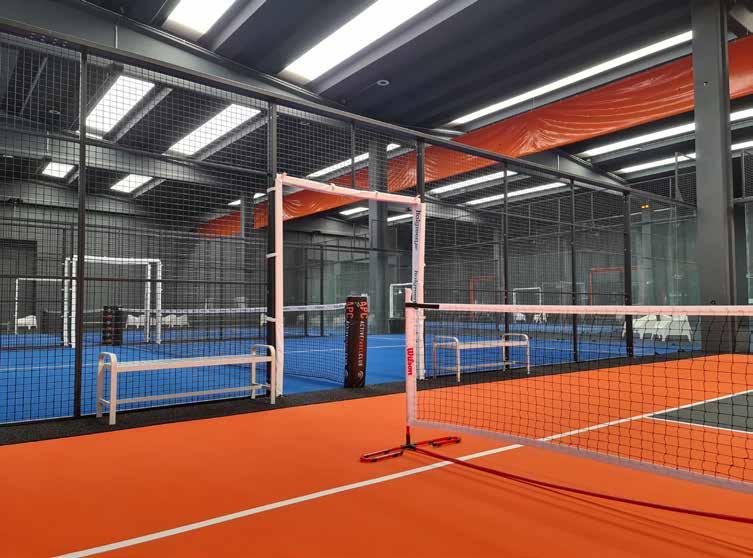
ACTIVE PADEL CLUB:
INHERITING THE PASSION
An abandoned warehouse, a successful conversion, and a state-of-the-art sports center. It is the result of a small entrepreneurial dream, capable of creating a welcoming atmosphere where every detail has been carefully considered
by Andrea Farano
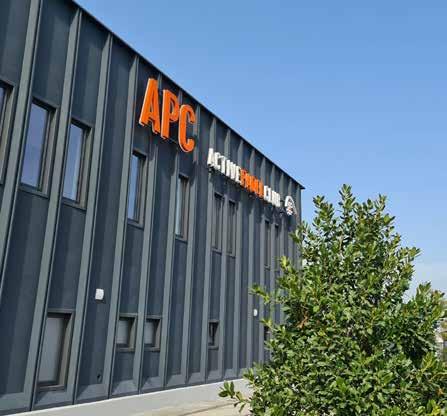
The black monolith that appears in *2001: A Space Odyssey* is a mysterious black rectangular prism, a symbol of a superior intelligence guiding human evolution. This ethereal association came naturally to us when we spotted the large, dark warehouse of the APC Active Padel Club from the road, as if the visual impact of the structure were accompanied by a powerful and resolute energy. That first impression was then confirmed during a visit to a club that is as beautiful and impeccably maintained as only certain intimate establishments in the Italian
Interview
Marco De Gaetano
OWNER
When did this project begin, and who was behind it?
We launched the project in late 2022, driven by a group of entrepreneurs with backgrounds in the logistics sector: we had our eyes on this property, which was originally intended for the transportation industry, but the tremendous postCOVID surge in padel enthusiasm fueled our long-held dream of changing careers. I was immediately put in charge of managing the club, which now keeps me busy full-time: by dedicating myself to this role, I’ve rediscovered the energy and joy of working every day in a healthy and rewarding environment.
Who is the club aimed at?
We are located in the so-called “lower Bergamo area,” specifically the region south of the Adda River, which includes the municipalities of Caravaggio, Brignano, and Dalmine—a territory rich in charm and history, with echoes of Manzoni’s works—but our catchment area extends as far as Crema and the eastern outskirts of Milan.
Have you ever wondered why a player should choose you?
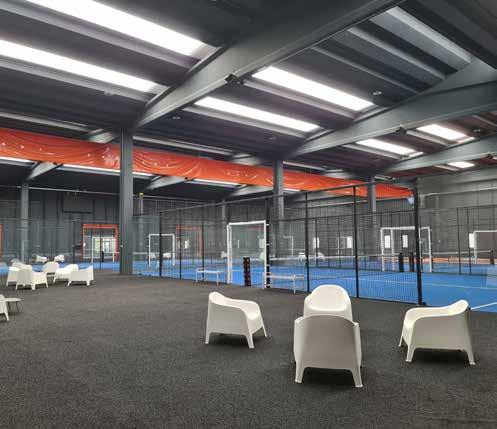
This place was designed to offer customers an experience that goes beyond the individual game: obviously, tournaments, instructors, and competition are essential, but the aspects we’ve focused on shape the perception of the quality of the entire facility. The locker rooms are a prime example: they’re so beautiful and spacious that you rarely find anything like them even in prestigious settings such as golf clubs. We also offer a very large parking lot
provinces can be, where hard work and daily dedication to one’s mission are— fortunately for everyone—essential values. We then found ourselves naturally swept up in the genuine enthusiasm of an entrepreneur who has chosen to apply to his business a value system that may be old-fashioned, yet capable of transforming an industrial complex into a place that exudes friendship, family, and the future. Not to mention the sporting aspect, treated and respected here as one of those ideals so precious that they must be passed down from father to son.
equipped with electric charging stations, without forgetting often-overlooked factors such as cleanliness—not just of the playing surfaces, but of the entire complex, which we’ve chosen to maintain ourselves with our own staff: we guarantee well-maintained spaces throughout the entire day.
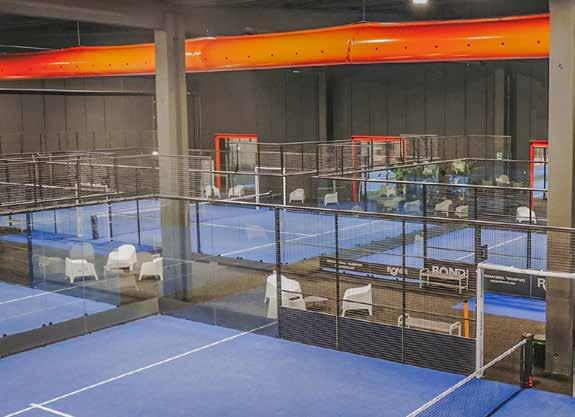
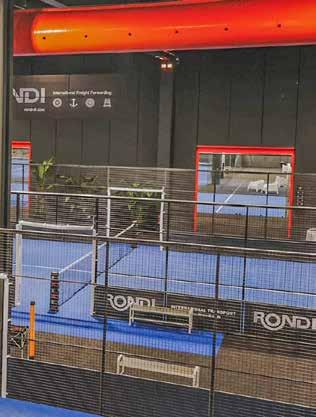
The visual impact of the playing area is thrilling, with a truly uncommon attention to detail.
Every element has been carefully selected, regardless of cost. For example, we did not adopt the traditional lighting system with floodlights attached to the court supports (which project about 250 lumens onto the ground), but after careful study, we installed projectors on the warehouse ceiling that provide a full 1,700 lumens on the ground: the difference in perception is clear. The thermal factor is of fundamental importance to us: we ensure adequate temperatures throughout the winter, just as we can provide cooling in the summer. Allow me to reflect on this point: it would be fair if, as happens in tennis, the price of the court were to vary in line with rising structural management costs, given the extremely high impact of energy price hikes.
I imagine that running a facility like this requires a large, trained staff that matches the quality of the facility.
Staff selection was the most important process in shaping the club as it is today: we are open 15 hours a day, so the front desk plays a fundamental role in managing customer relations. I’m thinking especially of organizing matches based on participants’ skill levels: a demanding but essential service. On the sports side, we recently introduced Argentine national coach Fernando Lopez Piscitello, who joins the four other instructors already on staff. He will be entrusted with the technical leadership of the club and the newly established Academy; in his honor, we even organized an asado-themed
Address
38 Via Treviglio Brignano Gera D’Adda, 24053 (BG)
Fields
10 indoor courts with stunning views 1 pickleball court
APC Active Padel Club035.0900259 – info@apcpadel.itapcpadel.it
evening to introduce him to the public and foster the tradition of the socalled “third half,” the true beating heart of APC.
I read about your goal to create an “inclusive” club: what exactly were you aiming for?
Our service offering is typical of a “club,” understood as a classic private club, but we avoid an elitist approach: our doors are open to everyone without any requirement for membership. The sense of belonging we seek has already been achieved the moment this place became a natural stop in our customers’ daily routine. They come here even when they don’t have a game: they do so to meet a friend, watch a match, or simply spend time with a smile on their faces. When I realized this dynamic, I knew I was on the right track.
Let’s take stock of these past three years of activity.
The numbers are crucial because, in addition to revealing the company’s financial health, they also help in our dealings with sponsors—an area I personally oversee. Over the past two years, we’ve reached 55,000 visitors, and I’ll add that our 25 rental rackets are often not enough during the evening session. This means that even today, the courts are occupied by players trying padel for the first time, and who often go on to become regulars at the club, captivated by the chance to play and have fun right from the start. Now that the long wave of the pandemic has subsided, players today choose their go-to center by looking at the quality of the facility and seeking a toptier playing experience. That’s why every extra kilometer a customer decides to travel to reach us is a source of great pride.
You brought up the topic of sponsors: what role have they played in your growth?
Given that the renovation of the warehouse was also entrusted to local companies—but it couldn’t have been any other way, considering Bergamo’s re-
putation—as an entrepreneur, I am well aware of what it means for a company to commit to a project and invest capital in an entity outside its core business. That’s why I understand how necessary it is to give something back to those who believe and have believed in us: a return that may not be strictly or immediately monetizable, but is certainly tangible in terms of brand recognition and customer loyalty. Among them, I’d like to specifically mention Rivoltella, a BMW dealership and MINI partner, which placed its trust in us when we were nobody and continues to accompany us on this adventure today, even organizing a stop on the 2026 Mini Padel League.
The future of this sector is tied to the development of youth participation: what is your perspective?
From the very beginning, we embraced the FITP’s “Racchette in classe” project, which children always welcome with enthusiasm. We bring our instructors into schools and recreate basic padel dynamics to give thousands of young people their first introduction to the sport. That’s why I’m disappointed when I see that the percentage of students who go on to join the academy is still so low, but sometimes I also get the impression that today’s children are so overwhelmed by commitments that there’s little room for the seed of padel to take root as it deserves.
In conclusion, tell us what you see in the future of the center.
The APC of the early 2020s is already in my mind: I’d like to expand our sports offerings to include beach volleyball, as we could meet a demand that exists in the area. In the short term, I’m confident in the development of the technical program for young people: the kids will play a fundamental role in establishing this sport, especially if they seize the opportunity to embrace a sport that, like few others, can strengthen family bonds and help them rediscover the unique joy of spending time in harmony and in the company of their parents.
IN SHORT
PLAY LIKE THE NUMBER 1
With the launch of the Arturo Coello 2026 line, Head is introducing five racquets developed based on feedback from the Spanish champion. The new collection is designed for both advanced players and beginners or young people looking to get started in the sport
by Daniele Pansardi
With the new Arturo Coello 2026 line, Head further strengthens a partnership that remains one of the most solid and recognizable on the international scene. The collection introduces five racket models developed based on direct input from the world’s number one player, with the goal of translating his playing style into practical solutions for the court. This is not simply an update to the previous range, but a broader reinterpretation of the design. The entire line has been redesigned to offer an even more effective combination of power, stability, and ease of use, broadening the target audience: from experienced players to those trying padel for the first time.
A WELL-DEFINED TECHNICAL IDENTITy
At the heart of the collection is a frame designed to promote an offensive style of play. The diamond-shaped head emphasizes power in overhead shots, as does the high balance point (27.2 cm). Supporting this design is Power Foam rubber, engineered to maximize ball speed, and an optimized bridge to improve frame flex. Additionally, the textured surface allows for greater control over spin, while the hybrid construction ensures an effective balance between stiffness and elastic response. The result is a racket that feels solid on impact yet maintains good feel even on the most delicate shots. Among the main new features of the 2026 version is a weight adjustment: the Pro model has been reduced from 375 to 370 grams. This targeted reduction makes the frame more accessible and manageable without compromising its technical character. This change significantly broadens the target audience, making the line more suitable for non-professional players as well.
A COMPLETE RANGE FOR EVERY LEVEL
The collection consists of five models, each designed for a different type of player:
• Coello Pro: the highest-performance model in the line, designed for advanced players seeking maximum power, stability, and an immediate response upon impact. It features technologies such as Auxetic 2.0, Extreme Spin, and a Carbon Hybrid surface.
• Coello Motion: retains the same offensive focus as the Pro model, but with a
lighter weight that improves maneuverability and speed of execution, making it ideal for fast-paced, aggressive play.
• Coello Team: Designed for intermediate players, it offers a softer feel thanks to its fiberglass surface, making it easier to generate power.
• Coello Vibe: Designed for beginners and casual players, it features a larger sweet spot and an oversized teardrop shape for a more forgiving feel.
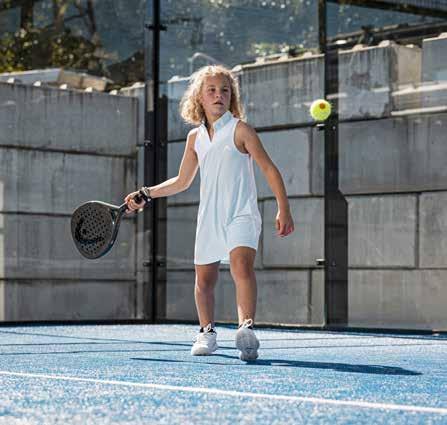
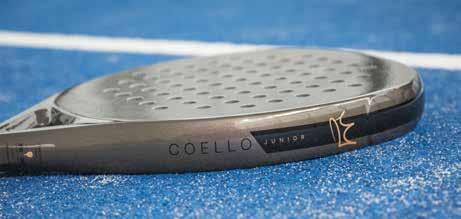
• Coello JR: Designed for younger players, it is lightweight and easy to handle, and is designed to support the technical development of up-and-coming talent.
DESIGN
All models share a distinctive aesthetic, enhanced by the crown symbol, Coello’s signature, and high-quality finishes. A strong visual identity that reflects the player’s competitive spirit and contributes to the line’s premium positioning, as King Arthur himself points out: “This second collection developed with Head is something truly special. We’ve worked on every detail: from the materials to the balance, right down to the design. The goal is to give every player the chance to express themselves with aggression and confidence on the court.”
TECHNICAL DATA
RABBIT PRO
Shape: diamond
Weight: 370 g
Balance: 272 mm
Core: Power Foam
Impact surface: Carbon Hybrid
EMILIAN CRAFTSMANSHIP, FRENCH DESIGN
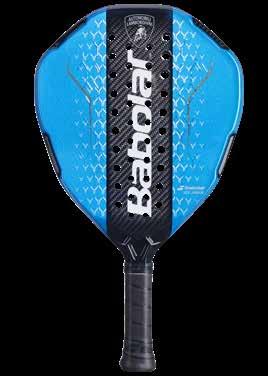
The BL003, the result of a collaboration between Babolat and Lamborghini, is a racket that embodies the competitive spirit of padel and the technology of the automotive world, establishing itself as the ideal racket for those who want to push beyond their limits
Never change a winning team. Following the success of the BL001 and BL002 models, Babolat and Automobili Lamborghini present a new chapter in their collaboration: the BL003 racquet, a symbol of the increasingly strong relationship between two global leaders in performance and innovation. The result of a joint development process, the new racket combines the French brand’s expertise in tennis technology with Automobili Lamborghini’s expertise in structural design and advanced carbon engineering. The result is a racket designed for players seeking uncompromising feel and performance. Inspired by the DNA of Italian supercars, it incorporates advanced geometries, high-modulus carbon fibers, and an optimized structural architecture to ensure maximum stability, responsiveness, and precision with every shot. Thanks to its lightweight construction and aerodynamic profile, the BL003 offers excellent maneuverability, allowing players to express power and control with ease. Its performance stems from
Frame: 3K carbon fiber with Koridion rigid foam (patented and used in Lamborghini vehicles)
Weight: 355 g
Balance: 265 mm
Thickness: 38 mm
Surface: 3K carbon
the use of state-of-the-art materials, selected to ensure absolute responsiveness and precision.
Handcrafted at the Babolat Padel Studio in Spain (the workshop where the brand’s most exclusive rackets are produced in limited editions), the BL003 features an ABS/TPU thermoplastic coating that ensures superior comfort upon impact and long-lasting durability.
THE STAGES OF THIS COLLABORATION
The BL003 marks the third chapter in a successful collaboration that began in 2024 with the BL001, the racket that introduced Lamborghini’s advanced carbon fiber engineering to the world of padel. Manufactured at the brand’s facilities in Emilia and unveiled during Arena, the global event dedicated to the company’s fans and customers, the debut model marked the beginning of a new era for both companies. The journey continued in 2025 with the BL002, developed at the Babolat Padel Studio and praised for its enhanced stability, exclusive material composition, and a design inspired by the aerodynamic lines of Lamborghini’s super sports cars.
“With the BL003, players gain access to a new level of technology and performance. It is the most advanced expression of our shared vision: maneuverability, power on demand, and uncompromising exclusivity.”
José Luis Sanz, Head of Babolat Padel
HIGHLIGHTS
derived from the 3K carbon fiber surface and the carbon fiber chassis reinforced with Koridion, a rigid foam based on patented technology used in Lamborghini cars.
Core material: Multi-EVA rubber Babolat.com
With its lightweight design (355 g) and aerodynamic shape, the BL003 offers great flexibility, allowing you to catch your opponents off guard with high-speed shots.
thanks to TPS technology, developed at the Babolat Padel Studio, which consists of a thermoplastic layer that reinforces the racket's carbon surface.
NO EXCUSES
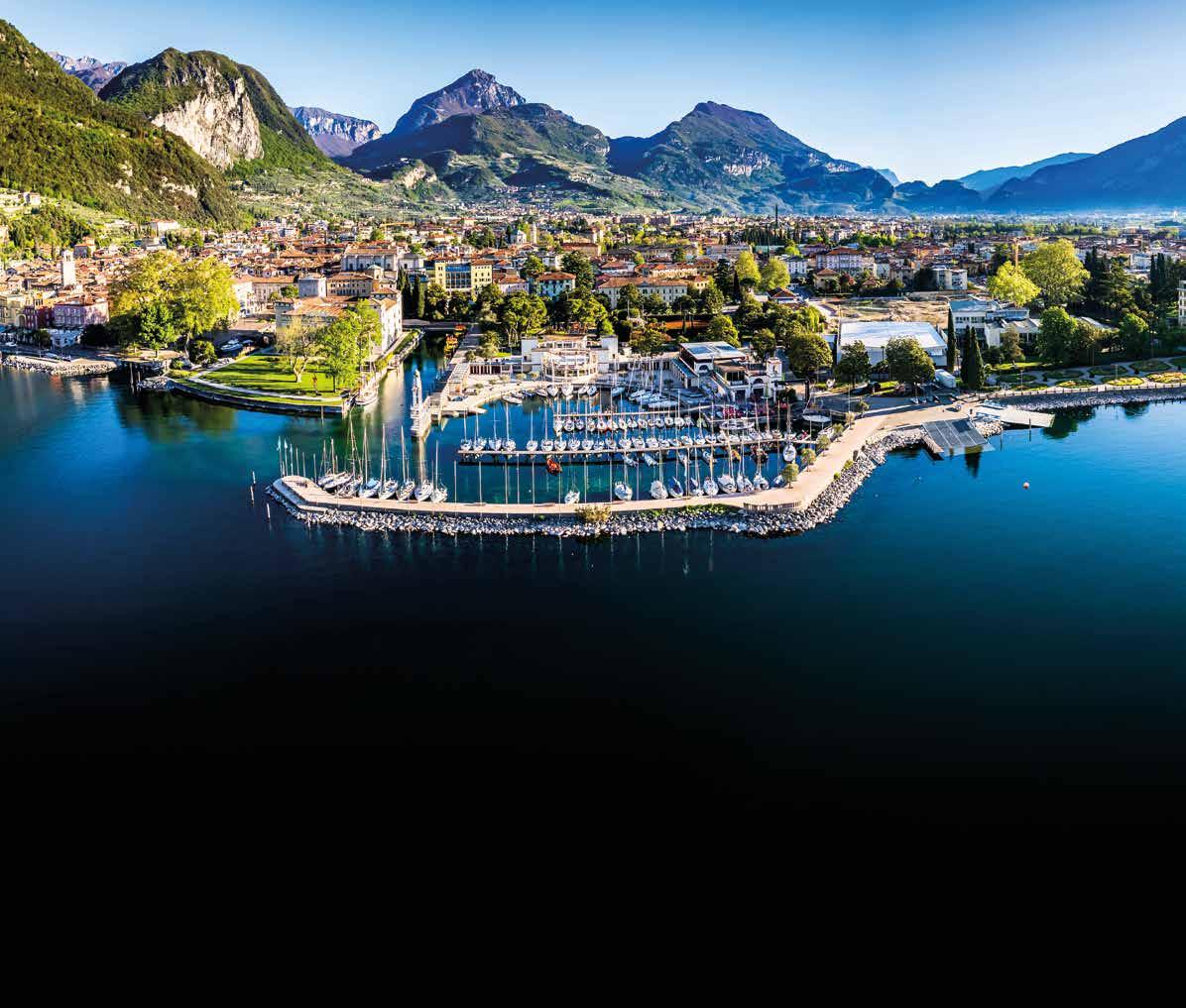
The second edition of the Outdoor Impact Summit 2026 is coming to Riva del Garda on May 14 and 15 under the slogan “No Excuses,” bringing together experts and companies to tackle the challenges of sustainability in a practical way
by Davide L. Bertagna and Sara Fumagallo
Following its debut in Monaco in 2025, the Outdoor Impact Summit returns for its second edition in Riva del Garda on May 14 and 15, 2026, under the slogan “No Excuses.” Organized by the European Outdoor Group and the MagNet group, in collaboration with Green Media Lab, the event reaffirms itself as a key forum for the outdoor sector and the sports industry in general to discuss sustainability and its integration into business models. Two days of keynotes, panels, and workshops will offer a structured and actionable agenda designed to address the sector’s main challenges: from the circular economy to traceability, from responsible communication to governance.
THE PROGRAM
AND THE MOST ANTICIPATED PRESENTATIONS
The program will get off to a strong start right from the first day, featuring presentations and discussions aimed at redefining the very concept of “impact” in the outdoor industry, covering corporate strategies, innovation, and responsibility throughout the supply chain. The schedule also includes experiential formats such as “Walk and Talk,” which will take participants outside the conference room to foster a more direct and immersive exchange on the topics of responsibility and communication. Ample space will also be dedicated to sharing concrete experiences, with case studies and projects ranging from environmental protection to the transformation of sporting events, and public-private partnerships for the sustainable management of territories and trails. Among the most anticipated presentations is that of Sylvie Goulard, Professor of Practice at SDA Bocconi, specializing in geopolitics and global issues, and co-chair of the International Advisory Panel on Biodiversity Credits, who will bring the ideas of economist Partha Dasgupta to the forefront of the debate: the biosphere not as an inexhaustible resource, but as natural capital to be preserved. A pa -
Download the agenda
radigm shift that directly calls businesses to account, inviting them to reduce their environmental dependencies, minimize negative impacts, and manage physical, transition, and reputational risks to build truly sustainable business models. This is a particularly relevant theme for the outdoor sector, which is intrinsically linked to the health of natural ecosystems. Opening the second day, however, will be Enrico Giovannini, scientific director of ASviS, with a presentation dedicated to the 2030 Agenda and the global challenges of sustainability, offering a systemic analysis of the transformations underway. Inclusive leadership will be addressed in a panel dedicated to women’s empowerment, featuring Nat Jackson (The Outward Bound Trust), Patagonia, and Global Game Shapers, as well as in the keynote “The Culture of Respect” by Arianna Colombari of Tecnica Group. The focus will be on the role of businesses in promoting fair and respectful work environments, where every individual can feel valued, and the need to recognize and overcome the biases that influence behavior and decision-making processes. Other topics on the agenda include circularity as an industrial driver, with in-depth discussions on product end-of-life, extended producer responsibility (EPR), and regulatory implications for brands and retailers, along with a focus on digital traceability, the social impacts of circular transitions, and responsible withdrawal practices throughout the supply chain. A dedicated networking event—a central element for fostering connections and collaborations among industry leaders—will be the dinner on May 14 at Spiaggia Olivi, which will serve as one of the event’s key moments, offering an informal setting to explore the themes discussed during the sessions and stimulate new initiatives. With a program that combines strategic vision and practical application, the Outdoor Impact Summit 2026 aims to be a key event for those who want to understand and actively drive the responsible transition in the sports industry.
Sign up
THE GLOBAL CENTER OF THE INDUSTRY
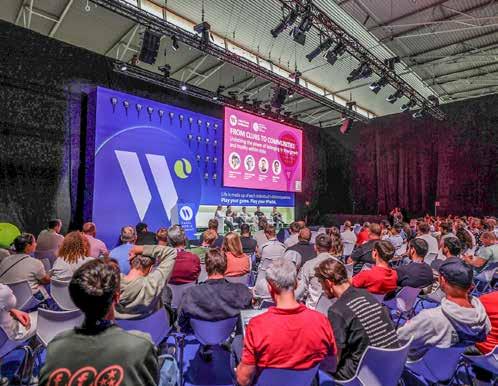
The Padel World Summit aims to establish itself as the ideal platform for expanding your network. A trade show strategically positioned for international appeal, destined to become the place to be for B2B
by Daniele Pansardi
The Padel World Summit (PWS) has established itself as the leading catalyst for expanding networking and B2B opportunities. Data from the latest edition—the first held in Barcelona following its debut in Málaga in 2024—confirmed the success of the organizers’ positioning strategy: the event attracted 6,062 industry professionals and 120 exhibitors, with a 40% penetration rate in the international market. Against this backdrop, Barcelona reaffirms its status as a strategic hub for innovation, with the third edition scheduled for May 26–28 on Gran Via in the Catalan capital, serving as a nerve center for connectivity and the economic development of the sports value chain.
The PWS’s strategic vision is based on four key pillars:
1. Internationalization, with a primary focus on introducing and establishing padel in high-potential markets such as Asia, North America, and the Middle East;
2. promote the growth of sports and the industry through collaboration with industry media and initiatives with federations and institutions;
3. the integration of cutting-edge technologies to redefine the user experience and operational efficiency;
4. the development of padel as a global economic asset capable of attracting investment in infrastructure, equipment, and events.
The event’s structure is designed to maximize the return on investment in networking. At the heart of it all, the Expo area serves as the meeting point for the entire value chain (field construction, infrastructure, management software, and specialized services). The effectiveness of the matchmaking is evidenced by the fact that 86% of visitors found the professional profile they were seeking during the event, through 275 meetings generated by the Buyers &
Investors Program.
The trade show also features the Innovation Arena, dedicated to new market players, where the Startup Awards were held, featuring over 20 emerging companies. The focus is on applied technologies such as biometrics, wearables, and club management software. There are also plenty of on-field activities at the Play Arena, a dynamic area with 10 active fields dedicated to product testing, brand activation, and demos showcasing the use of AI in performance analysis.
The Summit’s credibility is backed by strong performance metrics: 90% of participants reported being satisfied, and 96% confirmed their intention to attend the 2026 edition.
NEW HORIZONS
The industry’s evolution will enter a new chapter in May, when the central theme of the third edition will be “Next Padel: Vision, Alliances, and the Power of Transformation,” which will be explored during the Global Padel Conference. The topics will be organized around six key pillars: geographic expansion, new business models, strategic partnerships, digital innovation, training and performance, and user engagement.
In fact, the Padel World Summit is not merely an exhibition platform, but a true value multiplier capable of generating tangible benefits for all stakeholders. By connecting decision-makers, companies, and institutions, the Summit can transform padel into an increasingly well-established economic asset, accelerating its journey toward becoming an Olympic sport and a global mass phenomenon.
6.062
120 96% 86% Participants Exhibitors People who, after 2025, have confirmed their participation for 2026
“IT’S ALL IN THE HEAD”: BUT HOW DO YOU USE IT?
To answer the ultimate question, there’s a new book about the toughest challenges our brains face on the field. We spoke with the three authors about their most interesting findings by Adelio Rosate, Team and Marketing Manager at O&B Padel
The ball is in play. Your legs move, but by the time you get there, you’re a split second too late. Half a second, sometimes less—yet that fraction of a second is the difference between choosing where to place the ball and just hoping it goes in. For years, you thought you were slow, that something was missing, that others had a gift you didn’t. But you’re not slow. You’re looking in the wrong place. For this release, marketing has been put on hold, allowing the player and his instincts to resurface. Wandering through the courts, I happened to run into an old acquaintance: Piergiorgio Ravaioli, a companion in many battles behind the glass, part competitive, part amateur. He wanted to introduce two of his friends, insisting on presenting the work they had just finished together. My interest grew with every word, and like St. Paul on the road to Damascus, I had a true epiphany. It’s called Soffri, Vedi, Vinci – “Padel Hack,” coming out on May 5. A book written by someone who has read the right research and transformed it into practical protocols for padel. A bridge between the lab and the court that didn’t exist yet, which has also captured the interest of Daniele Gilardi of Italgreen—in every sense, one of the partners in this project that puts the individual at the center, and not just the court user.
THREE ROADS, ONE DESTINATION
The first is Andrea Devicenzi. He holds ten Guinness World Re cords on the track, where he covered 602.990 kilometers in 24 hours—on one leg. When asked how he does it, he replies: “For twenty years I called that thing ‘stubbornness,’ then I discovered it had a specific name and that anyone can have it.” The second is Piergiorgio Ravaioli, a padel instructor for years. He has seen many players with impeccable technique lose every time the match got serious. A professional frustration that became the backbone of the book. The third story concerns Roberto Jannone, who works in finance but became fascinated by the subject, deciding to delve deeper. He found the language that brings together the other two paths—the one experienced firsthand and the one observed on the court— creating something that can be taught to anyone. Three paths that converge on a single question: what if the problem isn’t just technique, but the brain that executes it?
Do you suffer from
In 2009, researcher Samuele Marcora conducted an experiment that turned everything we knew about fatigue on its head. Sixteen people were subjected to the exact same physical exertion twice: same exercise, same intensity, same duration. The only thing that changed was what they had done in the preceding 90 minutes. In one session, they had performed a mentally exhausting task; in the other, they had simply watched documentaries. The result was surprising: after the more demanding mental task, the same people stopped sooner. Marcora measured every physiological parameter: heart rate, oxygen, and lactate. The body’s response was identical in both conditions. It wasn’t the muscles that gave out. It was the brain that called it quits too soon. You know that third set where your legs feel twice as heavy? It’s not a matter of physical fitness, but of neuroplasticity (the brain’s ability to modify its circuits in response to experience) working against us, rather than for us.
See
The human brain processes visual images with a delay of hundreds of milliseconds. When we think we see the ball leaving the racket “right now,” we are actually seeing the past. Champions don’t react faster; they read the predictive signals before the shot even exists. The rotation of the shoulders, the feet that betray the intention, the angle of the racket. All of this happens 200–300 milliseconds before the ball is struck: in padel, that’s an eternity. The most surprising aspect of all is that we’re not talking about talent, but about a skill built through observation. Professionals have built this catalog of patterns (recognizable motor patterns that the brain automatically stores and retrieves) in their minds by watching thousands of shots with the “right eyes.”
A perfect forehand in practice, but rookie mistakes on match point? The classic “choking under pressure”—a performance freeze caused by excessive conscious control under pressure. The amygdala (the brain’s alarm center) signals danger; the body enters a “threat state” (a state of perceived threat); the prefrontal cortex reactivates and interferes with the au -
Vinci
Andrea Devicenzi
Piergiorgio Ravaioli
Roberto Jannone
Juan Lebron and Leo Augsburger
tomatic movement, and the shot that was executed without thinking becomes conscious and much slower. But there is an alternative state, the “challenge state.” Same adrenaline, opposite interpretation. Champions aren’t any less afraid on decisive points; they’ve simply learned to interpret that fear as fuel.
THE QUESTIONS PLAYERS KEEP ASKING
Ravaioli, Jannone, and Devicenzi were asked questions from Padelbiz readers, which had been collected over time from instructors, coaches, and players. What emerged was the essence of this meeting.
"Is being 'stingy' a sign of mental weakness, or is there another explanation?"
Jannone replies without hesitation: "There’s a clear explanation. Under pressure, the brain interprets the situation as a threat. Your focus shifts from the outside to the inside: instead of watching the game, you start monitoring your own movements. It’s not weakness; it’s physiology."
Ravaioli adds: "I see this happen all the time on the court. During warm-ups, the student hits a perfect backhand, but on the decisive point, he hits it into the net. It’s not a matter of technique, but of his mental state."
"Is anticipation something you can train yourself to do, or is it natural?"
"That's the question I get asked most often," Ravaioli replies. "Professionals don't have a gift; they've watched thousands of shots with the right perspective until their brains learned to read their opponent's body before the ball is struck. In the book, we've developed specific exercises to speed up this process. The first one is simple: for an entire set, you focus solely on the position of your opponent’s shoulders before they hit the ball. At first, it will all seem chaotic, but then, slowly, something will change.”
"What happens in the brain during the decisive set? "
Jannone: "Mental fatigue affects performance before physical fatigue does. The brain consumes glucose. When cognitive reserves are depleted, the inhibitory control system—the one that allows you to choose the right shot instead of reacting on instinct—weakens. The unforced errors in the decisive set aren't physical; they're neurological."
Devicenzi, who knows what real fatigue feels like—such as spending 24 consecutive hours in the saddle—brings the discussion onto the padel court with disarming simplici+ty:
“You prevent mental breakdowns during a match not by grabbing an energy bar at the last minute, but by managing your mental load throughout the match.” In padel, this means reaching the decisive set with a mind that’s still capable of making choices, rather than reacting on autopilot.
"Padel is a doubles sport. How does that change things?"
Ravaioli: "On the court, there aren't just two players; there are two nervous systems constantly reading each other. A glance, a posture, a breath between points: the brain is constantly processing all of this, adjusting your state in real time. If your partner falters, your mirror neurons (the brain cells that automatically mimic the emotions and movements of others, like an internal mirror) perceive it and begin to produce the same response.”
Jannone: "Chapter 14 of the book is titled 'Invisible Communication,' and it focuses on building what we call the 'distributed brain': two people who stop functioning as separate individuals and begin to function as a system. It’s not poetry, but a method applied to the padel doubles team."
"What makes this book different from traditional mental coaching?"
Devicenzi replies: "Mental coaching tells you what to do, while this book explains why it works—and that makes a huge difference. When you realize that your hesitation on match point isn’t a sign of weakness but a specific neurological mechanism, you stop fighting it and start managing it, because we can’t change what we don’t understand."
THREE THINGS TO DO IN YOUR NEXT MATCH
1. WATCH YOUR BACK, NOT THE BALL
For the first five points of the next match, focus solely on your opponent’s shoulders. Ignore the ball as long as you can, even if it feels chaotic at first and you might lose a few points. Your brain will start to build a database of the patterns used by experienced players.
2. The reset between po ints
After every major mistake, breathe in through your nose for four seconds, hold your breath for two seconds, and breathe out through your mouth for four seconds. This pattern activates the vagus nerve (the main regulator of the autonomic nervous system), lowers cortisol (the stress hormone), and shifts the brain from a threat state to a challenge state.
3. Indicate where the opponent is hitt ing
Before every shot—whether yours or your opponent’s—mentally predict where the ball will go: down the line or crosscourt? Keep track of your correct predictions. Those who practice this exercise regularly will see their success rate gradually increase. System 1—the part of the brain that processes information quickly and automatically without conscious analysis—begins making tactical decisions even before you’re aware of it.
THE EXAMPLE OF DEVICEN ZI
When it comes to Andrea Devicenzi, there are details worth mentioning that don’t show up in his record-breaking statistics. In a 24hour race, there comes a moment—usually between the 18th and 20th hour—when the body enters what physiologists call “anticipatory shutdown.” It’s not the muscles that give out, but the brain that calculates that continuing isn’t worth the expected cost, even though physiological parameters are still within normal limits. Devicenzi knows that moment; he’s gone through it several times and for 20 years simply called it “stubbornness.” Then, while working and exchanging ideas with Jannone and Ravaioli, he discovered that it wasn’t just a matter of character, but a neurological mechanism he had developed unconsciously—one he could teach to anyone curious enough to learn it. “I wasn’t special; I had learned to use my brain in a certain way without realizing it. This book teaches you how to do it intentionally.”
IT WORKS OFF THE FIELD, TOO
This book isn’t just about padel. Each chapter includes a section called “Beyond the Court,” because managing pressure at match point is neurologically identical to what’s required in a difficult negotiation. Recovering from a serious mistake is the same mechanism needed to bounce back from a professional setback. The unspoken communication with your playing partner is the same dynamic of trust that is built within a work team. Readers of this book aren’t just working on their padel game. They’re working on how their mind functions under pressure, no matter where they are.
Andrea Devicenzi
Andrea Devicenzi's Guinness World Record for 24 hours on the track
INSIDE CHAMPIONS' WALLET
Prize money accounts for only a small portion of the world's top players' earnings. Sponsors now generate significantly higher revenue than they did ten years ago, with some notable differences from country to country by Gabriele Marini
Once upon a time, the life of a professional padel player was a tough one: it consisted of sweltering courts, endless trips, and clinics around the world because tournament prize money wasn’t enough to make ends meet. Rereading these few lines, it seems like a lifetime ago, but we’re talking about less than ten years ago, when the World Padel Tour was the main circuit bringing together the top players, while everyone else was spread out across the remaining tournaments around the world. At that time, very few players could make a living solely from padel. Prize money wasn’t high enough, and generally, the revenue generated by the sport allowed very few to support themselves solely through playing. Consequently, it wasn’t uncommon to see Federico Chingotto playing in Italy’s Serie B or Fernando Belasteguín participating in exhibition matches all over the place. The turning point came in 2022, the year Premier Padel was founded with the specific aim of making the sport as international as possible, raising the standards of the product, attracting new investments, and exponentially increasing the sport’s visibility. With the subsequent acquisition of the WPT, the perception of professional players changed radically, to the point that in a very short time it became possible for many to pursue a career as a player, albeit with some differences.
But how much does a top player earn these days? Let’s take a look at some figures. Last season, the duo that dominated the men’s circuit—Arturo Coello and Agustin Tapia—earned €486,000 each in prize money, while Chingotto and Ale Galán earned around €380,000, and other top players earned around €180,000, varying based on results. On the women’s circuit, earnings are exactly the same; the only differences were in the number of wins per pair, which is why Gemma Triay and Delfina Brea earned slightly less than Chingotto and Galán, having won fewer tournaments. These figures are certainly impressive and show a clear increase compared to the past, but they are certainly not enough, after taxes, to guarantee everyone the income needed to sustain a lifestyle involving travel, coaches, doctors, and a great deal of training. To put it in perspective, if we step down a level and enter the world of FIP tournaments, prize money drops to around €800 for the winner of a Bronze, €1,400 for a Silver, and €3,000 for a Gold. In light of these figures, it’s clear that even if you manage to win an FIP
Bronze tournament, between travel, hotels, and miscellaneous expenses, you’re likely to break even or make very little profit.
THE REAL TURNING POINT FOR SPONSORS
And that is why sponsors play a crucial role; they are often the athletes’ main source of income, especially for those outside the top 60 or 70, although there are significant differences. Let’s look at a few examples: a top player like Arturo Coello recently signed a partnership agreement with Rolex, another with the wellknown luxury shoe brand Golden Goose, and with the Swiss sportswear company On, in addition to various shirt and racket sponsors, for a total that’s hard to calculate but is likely to exceed one million euros. While this represents the pinnacle of the pyramid, sponsors enable countless athletes to focus solely on their performance even at lower levels, with earnings that are clearly variable and lower but still sufficient to support their staff and maintain a lifestyle befitting an athlete.
However, even in this case, there are differences to consider that are mainly related to one’s nationality, as Simone Cremona explained in an episode of our Total Padel podcast. In fact, being number one in one’s own country—even if it’s a smaller market for padel—is certainly more lucrative than having a higher ranking in a more competitive country, as sponsors are more likely to invest in a top player from a potentially growing market than in a player who may be stronger but comes from an already saturated market. This is why the Deus brothers, currently ranked 47th in the world, earn more than a higher-ranked Spanish colleague, attracting local sponsors or those interested in investing in the Portuguese market.
Finally, this revenue picture must also include invitation-only events such as clinics (which, until around 2021, even the world’s best players could not avoid), exhibitions, and private tournaments: think of the Reserve Cup or the Pro Padel League, as well as the Hexagon Cup, which has come under the FIP’s umbrella this year. And we mustn’t forget the royalties derived from technical gear bearing their names, in a world that is becoming increasingly diverse and competitive and shows no signs of slowing down the growth of a multi-million-dollar industry.
Arturo Coello
Federico Chingotto Gemma Triay and Delfina Brea
THE HAPPY ISLAND OF PADEL
The fourth edition of the Sicilia Padel Tour confirms that it was a winning bet, and this year it has also joined the FITP-TPRA circuit. We spoke with founder Francesco Russo by Daniele Pansardi
The world is divided between those who approach padel with competitive goals and those who don’t. It might seem like an exaggeration—and most likely it is—but the competitive spirit among amateur players is the fuel that drives the padel movement and holds it together, contributing significantly to the functioning of the entire market. Those who aren’t satisfied with just a casual weekly game among friends deserve a setting that can ignite and rekindle their passion, and to feel at the center of a project tailored specifically for amateurs. The success of the Sicilia Padel Tour, which kicked off its fourth edition in Catania on April 11, stems from this: the ability to create a stimulating and attractive event, both for participants and sponsors, with an inclusive and winning traveling format. The Sicilia Padel Tour has, in fact, managed to “unite” the island’s nine provinces under a single banner, thanks to the dedication and organization of founder Francesco Russo and his team. It is an ongoing challenge whose success year after year is far from guaranteed, and which becomes even more intriguing in the 2026 edition with its entry into the FITP-TPRA circuit. This is further recognition of the interest the Sicilia Padel Tour has generated at the institutional level, a topic we discussed with Francesco.
Francesco Russo Interview FOUNDER OF THE SICILIA PADEL TOUR
What does it mean, in terms of organization and budget, to ensure the sustainability of a tour that visits all of Sicily’s provinces for four consecutive years?
Amateur padel is thriving, and the more tournaments we organize, the more players we can attract. This trend has been well established for several years now. We always strive to add something new to improve the event year after year, while staying true to ourselves. This year’s most significant development is our entry into the FITP-TPRA circuit.
Tell us more.
Ever since its first edition, the FITP has always shown great interest in our circuit, given how well-organized it was. Last year, the situation was mixed: some tournaments were under the TPRA umbrella and others were not, whereas this year, for the sake of consistency, we have decided to bring the entire circuit under this platform. We aim to raise the level of the matches even higher, given that the players will be registered, and to maintain the same number of participants as in the 2025 edition, namely around 500. Plus, the TPRA seal gives us even more prestige.
After having Gianluca Basile as your spokesperson, who did you choose for this year?
Our ambassador will be Mara Santangelo, a former Roland Garros doubles champion who is actively involved in various initiatives related to tennis, padel, and charity work.
What criteria must a club meet to join the circuit? Are you looking solely for
structural excellence, or is the club’s ability to build a sense of community more important?
Let’s try to take various factors into account. Obviously, this year all clubs must be affiliated with the FITP, and we always try to make the most of the number of members and participants in the club’s day-to-day activities.
The Sicilia Padel Tour has always had major sponsors. Are there any new developments for this edition?
Mangia’s remains our premium partner and will also host the final Master’s tournament in Sciacca. We have built a much closer relationship with the Racquet Trend trade show and its co-founder, Luigi Spera; we will organize various activities together, and they will support us throughout the tour.
What is the main "promise" you make to a company when you invite it to join the tour?
We don’t just offer visibility—though we do excel at that both regionally and nationally. We also give companies the opportunity to engage in targeted marketing activities: we assess their needs and aim to maximize the value of those requirements. The goal is also to connect partners with one another or to strengthen existing relationships in the region, as in the case of Grimaldi Lines and Mangia’s. Those who join the Sicilia Padel Tour become part of an entrepreneurial ecosystem.
Now that you have covered the entire region and strengthened your ties with the TPRA, what are your goals?
We want to build on last year’s success, and with the help of Racquet Trend, we aim to bring more and more people here to Sicily and continue to expand the event. Given the ongoing demand from clubs to host tournaments, we’re also considering organizing several qualifying rounds in partnership with the FITP-TPRA.
A TRENTINO SHOP WITH AN ARGENTINE SOUL
Mundo del Padel has stepped into a market that was still underserved, where there was no store capable of serving as a go-to destination for enthusiasts in the region. The Battocletti family has stepped in to fill that gap by Daniele Pansardi
Leaving Argentina to move to Trento can be a shock. If it’s the 2000s and you’ve already discovered padel, the transition risks being even more brutal, because there are no courts where you can play and nurture that passion. Anibal Battocletti had to wait patiently, devoting himself to other sports in the meantime, before glass-walled courts began to spread in Italy as well. Anibal passed on his passion to his family and his daughter Antonella, who, after finishing her studies, decided she wanted to be independent and open Mundo del Padel, filling a gap in the market where there was still no professional, competent physical location. We interviewed Antonella herself to hear about the plans for the store, which opened in late September 2025.
L'intervista
Antonella Battocletti
OWNER OF MUNDO DEL PADEL
How did the idea to open Mundo del Padel come about, and what is your background?
In our family, except for my sister, we were all born in Argentina; we moved to Trento partly because of our local roots in the Val di Non. My father, Anibal, used to play padel back in Argentina, with a wooden racket that had an iron edge, and when he arrived here in the 2000s, he tried to take it up again, but without success because there were no courts. He turned to other sports until padel began to gain traction in Italy as well. Everyone in the family plays; he found work as an instructor, while I suggested opening a shop.
You opened in September 2025, at a time when the market was nearing saturation. What was your assessment of the situation?
We wanted to provide a service to the local community. We heard a lot of complaints about online orders, which were often incorrect, and Trento lacked a dedicated padel shop. We decided to offer this service ourselves, aiming to feature not only the classic, well-known brands but also lesser-known and niche brands like Quad and Pallap, which have actually done very well. One of our main partners is Wallbang, which distributes Pallap in Italy, and with whom we’ve established an excellent relationship. We were less interested in the more traditional brands, but we couldn’t help but include them in our selection.
What kind of customers typically come to you? What area do you serve?
Many of our customers come from the tennis world, and they particularly prefer rackets with slightly longer handles, such as Babolat and Pallap. The store has already exceeded our expectations, and we’ve also started collaborating with local clubs and expanding into e-commerce. We have customers who come from Val di Fiemme, Verona, or Bolzano who prefer to shop in-store rather than online.
Which brand is driving sales in Trento during these first few months?
Definitely Pallap and Quad, tied for first place. Quad is a top-tier brand because their rackets can also be customized, with prices ranging from 220 to 410 euros.
How are you collaborating with the clubs in Trento and the surrounding area? Here in Trento, we partner with PadellHall—where he has been an instructor for some time—and with Hype Club; we have a pro shop located inside the club. We’ve established relationships with other centers, including smaller ones, with which we organize Mundo del Padel tournaments. Members of those clubs receive a discount on our merchandise.
Do you offer any additional services besides sales? How much do tests influence the closing of a deal?
We offer instructors the opportunity to test our racquets. Initially, we wanted to involve only them, but we are now expanding this service to customers as well. They can use a racquet for one or two matches, and then we follow up with them to get their feedback. At the moment, this service is free, though we are considering changing this policy to provide greater protection. The trials have a conversion rate of nearly 80%: they are an extremely valuable tool.
What channels are you using to promote your business? Does the Trentino public respond better to social media or to direct word-of-mouth in the fields?
We work with the Pump agency in Trento, which has been with us from the very beginning. We’ve had a great rapport; we’re on the same page, and they’ve fully understood our goals—so much so that sometimes people on the street greet us by repeating what we say in the videos. It shows us that the message has definitely gotten through.
What are your goals and plans for the future?
We’d love to work more closely with clubs: promoting events, organizing tournaments, serving as a go-to resource for teams looking for uniforms (and other gear), and collaborating more with coaches in Trentino. This way, we can expand our—for now—small world of padel.
THE WORLD OF PADEL
THE IMPORTANCE OF BEING A "MAESTRO"
The person who often makes the difference between mediocrity and excellence at a facility, between critical issues and mistakes to avoid by Andrea Fierro
The padel coach plays a central and irreplaceable role within a sports club. He or she contributes in multiple ways to the growth of both the sport and the club itself. Without this professional figure, a club risks losing its competitiveness and credibility, eventually becoming nothing more than a place to play (“court rental”). Giving up the opportunity to become a sports and social hub is an economic loss that should not be underestimated. In addition to being a teacher, the coach is a key driver of growth and must be able to enhance the club’s value and make it a dynamic, welcoming environment focused on the continuous improvement of all its members.
THE CRITICAL POINTS
In my opinion, there are a few key points that should be taken into consideration when training the technical staff.
• The head coach and the instructors are the cornerstones of the players’ technical and tactical development. Their presence ensures high-quality training and lends credibility to the padel academy. Raising the overall level of play at the center is essential for attracting new members and retaining existing ones.
• The expertise of the coaching staff rounds out the program, offering lessons
both to beginners who want to start from the basics and to more experienced players who need to refine their strokes and specific skills. Furthermore, the promotion of core values such as respect, discipline, and teamwork should not be underestimated.
• Their ability to bring people together and foster inclusion facilitates the development of additional activities such as tournaments, leagues, events, special projects (e.g., "Racchette in Classe"), summer camps, and so on. The coaching staff often has to “convince” less experienced players to get involved in amateur competitions, which help build player loyalty to the club.
• The head coach assists the administrative staff with organizational tasks, such as managing group training sessions, and works with the instructors to determine which players can participate in a training group based on their skill level. In addition, the coaching staff encourages “individual” students to participate in group lessons and supervised matches, thereby increasing their activity levels.
• The head coach and instructors play a key role during open days (free trial sessions) in increasing enrollment in lessons and courses. During these events, the coaching staff is on hand at the facility, which must do everything possible to attract as many participants as possible through an effective marketing campaign.
MISTAKES TO AVOID
Of course, managing a coaching staff—even a small one—presents challenges that can negatively impact the smooth running of operations. There are many factors to keep in mind, as in any area of human resources. It’s not a simple matter: every coach and instructor brings their own unique athletic, cultural, social, and educational background, which should be leveraged to the fullest extent possible. Here are some of the most common mistakes to avoid.
• Poor communication between the club’s technical and administrative staff: this leads to a lack of shared goals, which ultimately results in “instructors simply renting out the courts” without the sports club having a true identity.
• The lack of training among instructors: it is essential to have a common foundation, and in this regard we can look to the FITP. Subsequently, the head coach must supervise and provide ongoing guidance to the technical staff.
• Lack of enthusiasm during lessons and courses: this dampens players’ spirits, leading them to seek inspiration elsewhere. The coaching staff must pay close attention to this issue, which is closely linked to the next point.
• Choosing the wrong instructor for a particular session: matching the right instructor with the right student or group is no easy task. The coach must keep track of the instructors’ activities and the players’ feedback so that they can make adjustments as needed.
In conclusion, the head coach oversees and supports many of the sports center’s activities and represents it in dealings with players, parents, tournament athletes, and sponsors. He is one of the club’s leading figures: he must be provided with the best possible conditions to practice the delicate art of coaching. This is a science that is sometimes underestimated, yet the future of our sport largely depends on it.
ANDREA FIERRO
I was born and raised on the tennis courts in Milan, thanks to my father’s passion for the sport, and it became my profession around 2005. I gai ned a wealth of experience abroad (in the U.S., the U.K., and Spain), including working at the prestigious Academia Sanchez-Casal in Barcelona. It was right here that I started playing padel for fun, without realizing that just a few years later it would become my profession once I returned to Italy. I am a FITP National Padel Coach and serve as the technical director of Starpadel, based in Lagnano.
DISCOVERING VISION TRAINING
The eye sees, the brain processes the information, and the body moves. The proper integration of our senses and hand-eye coordination influence performance on the field: training them can make a decisive difference
by
Marcello Ferrarini
Scientific studies have shown that over 80% of learning occurs through the visual channel and about 10% through the auditory channel. The quality of our interaction with the outside world—including in sports—depends on the proper integration of these two primary senses. Psychokinetics, on the other hand, is a science that studies the relationship between the mind and space, as well as an educational and sports methodology that combines reasoning—that is, the psyche—with bodily movement, or kinesis. This practice aims to optimize spatial-temporal adaptation, reaction speed, and cognitive abilities through movement, training perception, analysis, and decision-making in complex situations, and thus rapid responses to specific stimuli. From these two theoretical macroareas, it follows that a padel player, in order to best develop their potential, should also incorporate “vision training” sessions, considering the optic nerve as another muscle to be systematically strengthened. During the learning phase, with the help of their coach, a player should therefore design specific visual and motor exercises, establishing a direct mind-eye connection to build a sort of visual memory. In this way, the player will be able to develop fine motor skills and improved hand-eye coordination, which are essential for basic technique and the sensitivity of the hand on the racket and the ball.
MULTICHANNEL LEARNING
There are various sensory channels and practical exercises that can be incorporated into training sessions, based on four fundamental principles. And keeping in mind that learning is most effective when multiple channels are used simultaneously:
• visual-iconographic learning, using images, concept maps, videos, graphical representations of concepts, and the use of colors to highlight specific tasks;
• the visual-verbal channel, using written letters, numbers, and icons, as well as brief concepts, keywords, and codes;
• the auditory channel, through repeated and attentive listening or the explanation of key concepts and game strategies, which allow information to be absorbed and processed through hearing;
• the kinesthetic approach, which involves a hands-on learning method that uses practical, real-world experiences to better absorb the information being conveyed through doing and experimenting.
To train the brain to process this vast amount of visual information—especially in sports like padel, where the pace of play is fast—the Sport Vision method comes into play. This method examines how visual abilities influence athletic performance, including skills such as:
• visual reaction time;
• hand-eye coordination;
• peripheral vision;
• visual tracking (following moving objects, such as a ball);
• depth perception;
• visual cue.
In padel, these skills are essential for reading the ball's trajectory, anticipating your opponent's shot, and positioning yourself correctly.
IL VISION TRAINING
Targeted “vision training” exercises develop all these skills in the same way as physical training, with the goal of improving visual processing speed, making reactions more automatic, and increasing accuracy and timing. They are also particularly useful because the ball moves very quickly and in ways that are sometimes unpre-
dictable, requiring players to react and make decisions in a matter of milliseconds.
1. Ball tracking
Exercises for tracking objects or signals designed to improve the ability to “read” a shot, through:
• balls thrown at varying speeds;
• use of dynamic displays;
• Reading specific pictorial signs featuring letters, numbers, and colors, and coordinating them with movements or simulated strikes.
2. Peripheral vision
Exercises involving lateral stimuli while focusing on a central point, which help you perceive:
• opponents' positioning;
• openings on the field;
• Use of special glasses that completely or partially block the vision in one or both eyes.
3. Response time
Serial and random exercises involving external elements and light-emitting devices or random signals to strike or touch, recommended for:
• improve responsiveness;
• enhance visual perception and stimulation;
• reduce motor response time.
4. Hand-eye coordination
Exercises using balls of different sizes and with irregular bounces, which can improve:
• shot control;
• the ability to distinguish;
• the capacity for transformation.
5. Motor anticipation
Exercises focused on reading opponents' movements, game patterns, and ball movement, which are useful for:
• improve your ability to anticipate your opponent's shot;
• anticipate the flow of play and make technical and tactical decisions;
• Improve ball control during phases and steep sections.
In conclusion, designing a well-structured multisensory “vision training” program— one that works in synergy with and is integrated into physical conditioning and technical-tactical training—helps players achieve greater precision in their shots, improved decision-making in response to stimuli, a significant reduction in unforced errors, reduced physical fatigue, and effective management of stress, anxiety, and self-doubt. At the same time, it also provides excellent support for the entire proprioceptive and postural system and enhances body awareness in space.
MARCELLO FERRARINI
I am a National Padel Coach and a FITP-certified Pickleball Instructor, and I work with padel clubs in the Modena and Reggio Emilia areas. I serve as the Regional Padel Representative on the Emilia-Romagna Regional Committee. I hold the PCR-Padel Coaches Registry Professional Instructor certification, having earned the International Padel Certification and attended clinics and training courses in competitive coaching, senior and junior coaching, physical-motor skills, and mental training. With a degree in Psychological Sciences and Techniques, I developed the Padel Player Program - ilpadel.org, an educational project focused on multilateral strategic planning and on-court mental coaching, as well as specialized programs for children and adolescents with special needs.
Ari Sánchez
pillole di padel e diritto
LANDSCAPE AUTHORIZATION AND RETROSPECTIVE BUILDING PERMITS IN RESTRICTED AREAS
A recent ruling by the Lazio Regional Administrative Court provides an overview of the permitting process for the construction of padel courts in areas of particular historical and environmental significance by Andrea Farano, attorney in Milan
In the research and fact-finding work that precedes the drafting of each chapter of this column, we have rarely encountered such widespread coverage and media attention devoted to an administrative ruling concerning padel—news that is usually relegated to the back pages of the local news. Yet, in response to the ruling in question, some have already delivered the eulogy for padel, predicting a grim future for a sport that some would like to see increasingly excluded from the vital areas of city centers. We do not know whether this legal precedent will be capable of curbing the expansion of a sport that continues its rise across the country (albeit with perhaps diminished momentum); what is certain is that we could not fail to report on these pages a ruling deemed historic.
THE BACKGROUND
It is spring 2022, and the excavation of a foundation pit has set off alarm bells for the residents of Rome’s San Lorenzo neighborhood—and, in particular, for those living near the Knights of Columbus sports center on Via dei Sabelli. This marked the beginning of a long and complex legal saga that has only recently come to a conclusion. The case in question therefore concerns the construction of five padel courts by a private company, in agreement with the religious organization that owns the entire sports complex. The dispute unfolded by intertwining purely legal grounds with the skirmishes typical of local politics: in the background, the fate of a green space that had until then been for collective use serving the neighborhood, pitted against the implementation of a sports-related business initiative (and, therefore, one with a social impact regardless).
Citizens raised various objections: from the start of construction preceded by a simple CILA (later converted to SCIA), to the presence of specific restrictions on the area slated for transformation, considered of particular historical, morphological, and environmental value according to the provisions of the Rome Master Plan. As if that were not enough, concerns were heightened by plans to cut down some forty trees, including olive, magnolia, and cedar trees, which, according to the project, were to be replaced by laurel hedges. The Lazio Regional Administrative Court stepped in to put an end—or, rather, to bring about an initial halt, though we do not know if it is definitive—to the dispute: with Judgment No. 3044 of February 17, 2026, the Second Section Bis of the Administrative Court upheld the residents’ arguments, declaring null and void both the landscape authorization adopted on September 18, 2023, by the Special Superintendence for Archaeology, Fine Arts, and Landscape of Rome, and the retroactive building permit issued by Roma Capitale on January 13, 2025. Let’s take a closer look at the merits of the case, noting that—due to space constraints and complexity—we can only outline the main points.
THE DECISION OF THE REGIONAL ADMINISTRATIVE COURT
In the first ground of the complaint, the plaintiffs argued that the aforementioned landscape authorization was null and void, as it had been issued by the Rome Superintendency in violation of the res judicata established by Judgment No. 4912/2023, rendered between the same parties at an earlier stage of the litigation. In fact, the Court, in the aforementioned ruling, had already annulled the previous landscape authorization dated March 9, 2022: on that occasion, the Court had directed the Superintendency to examine the merits of the arguments and defenses that the plaintiffs had raised in the case. In this regard, the cited ruling in fact held: the landscape authorization (later annulled) “is based on a purely assertive reasoning,which merely states that there are no impediments to the approval of the project for the construction of the five padel courts as provided for in the documents submitted for review by the Superintendency, without in any way addressing the numerous arguments to the contrary that the appellants’ defense raised in this proceeding. It follows that the act must be annulled for lack of reasoning, with the obligation to reexamine the opposing party’s application in light (also) of the arguments and defenses that the parties have presented in this proceeding.” Well, the subsequent authorization, which is the subject of this appeal, merely stated laconically that “having regard to the note… in which this Superintendency issued the archaeological clearance regarding the project for the construction of the padel courts; noting that the planned works are compatible with the requirements for the preservation of the building in question, authorization is granted for the execution of the interventions provided for in the project, as described in the documents received.” According to the Regional Administrative Court, the decision is therefore substantially flawed for failing to make any reference
to the objections raised by the appellants during the previous proceedings, including the absence, in the project of elevations from which it would be possible to assess whether the height of the padel court fences (and their varied composition of Plexiglas and metal mesh) might or might not obstruct the view of the monumental complex adjacent to the facility. On this basis, the Judge—given the aforementioned lack of reasoning in the decision—assessed the authorization in question as evading/violating the res judicata, and it is therefore overturned: its defect then cascaded onto the related building permit, establishing its derivative invalidity.
On another point, however, the retroactive building permit was challenged as unlawful, since it was issued in violation of urban planning regulations: specifically, it was allegedly granted in disregard of the provisions of, among others, Articles 24(2)(g), 25, paragraph 8, and 42, paragraphs 5, 6, and 10 of the Technical Implementation Regulations (NTA) of the General Urban Plan (PRG), as well as the green space regulations of Rome Capital, and Article 8 of Law 447/1985. In particular, the area in question falls within the category of “private green spaces of historical, morphological, and environmental value,” in which—as clarified by Article 42, paragraph 5, NTA of the PRG—only “interventions in the categories of routine maintenance, extraordinary maintenance, and restoration and conservative rehabilitation” are permitted, as well as “interventions in the categories of building renovation and demolition-reconstruction,” but not new constructions (meaning the padel complex in question). Thus, according to the Administrative Court, the competent authorities could not have issued even the building permit (under an amnesty) at issue in this case. Furthermore, the judge also found the contested measure to be unlawful due to a violation of Article 24, paragraph 2, letter g) of the NTA of the PRG, in that “within the Historic City, building and urban planning interventions, as well as initiatives for social and economic promotion, are aimed at the conservation and enhancement of existing qualities, while respecting the distinctive characteristics of each settlement component,” with the consequence that the only possible interventions must be aimed at pursuing the “maintenance” and “restoration of external open spaces (streets, squares, parks, and gardens) and interior spaces (courtyards, vegetable gardens, and gardens), as structural components of the various settlement complexes.” In the present case, however, the two fountains located in the green area subject to the project would have been demolished and replaced with the construction of padel courts.
IN CONCLUSION
The enforcement of the ruling, briefly outlined above, is expected to result in the demolition of two of the five already-built fields, as well as the restoration of the green area to its pre-construction state. The decision has been wielded by local politicians as a banner waved amidst perpetual institutional strife and neighborhood squabbles: this column refrains from taking sides, but cannot help but note how it has become a primary need to strike a sustainable balance between landscape preservation and public spaces, compliance with urban planning regulations, and support for the spread of a sport with strong community-building value and significant economic impact, with beneficial effects on the local area. Is padel dead? …Long live padel!
Dentro le storie del padel. Una volta a settimana. con Gabriele Marini e Marco Paialunga
Credits: Premier
Padel
NON LIMITARTI A GIOCARE. RESISTI.
Presentiamo Endure. Progettato per i giocatori che richiedono controllo preciso, maneggevolezza e sensibilità per rendere al meglio sotto pressione. PRENDI IL CONTROLLO CON ENDURE V1