GUNDU PADEL CUP: MALDIVES 2026 EXCLUSIVE SURVEY BY
INTERVIEWS
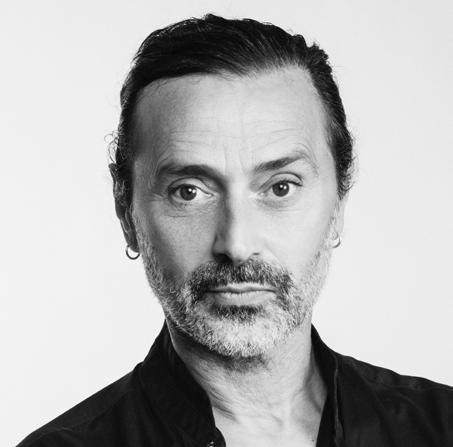
JORGE MARTÍNEZ: FROM PLAYING TO TECHNIQUE
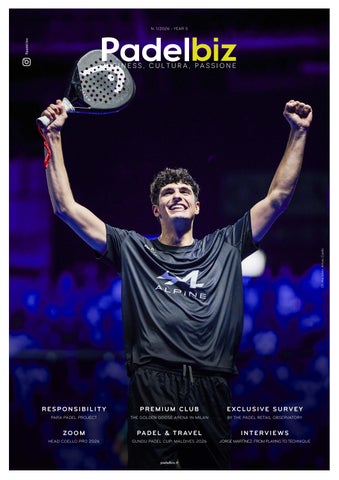
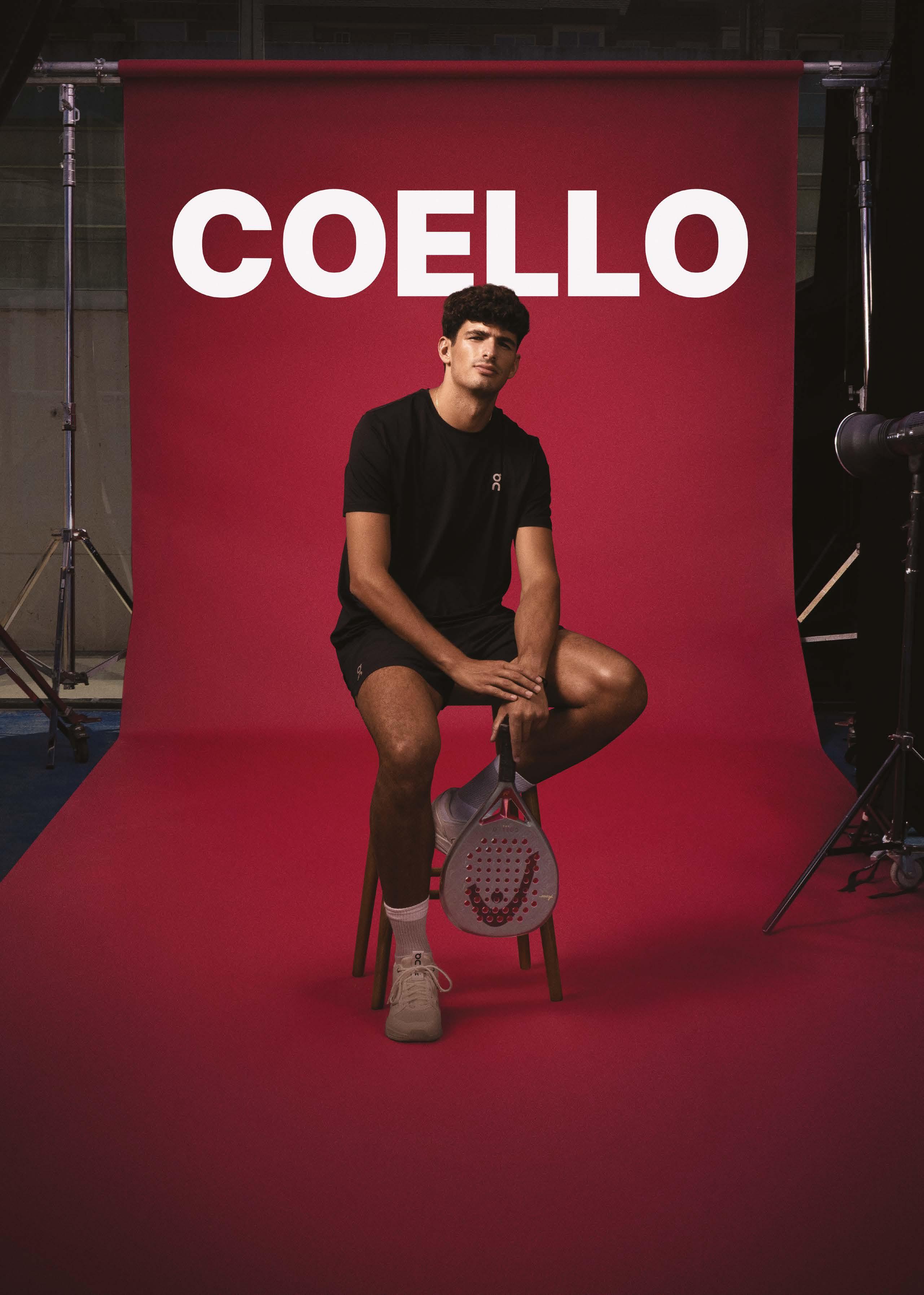
On the cover:
Arturo
Coello
NON LIMITARTI A GIOCARE. RESISTI.
Presentiamo Endure. Progettato per i giocatori che richiedono controllo preciso, maneggevolezza e sensibilità per rendere al meglio sotto pressione. PRENDI IL CONTROLLO CON ENDURE V1
N.1/2026 - YEAR 5
DATA AND STATISTICS
10 FIP WORLD PADEL REPORT – PART II
EXCLUSIVE SURVEY
12 PADEL RETAIL OBSERVATORY
RESPONSIBILITY
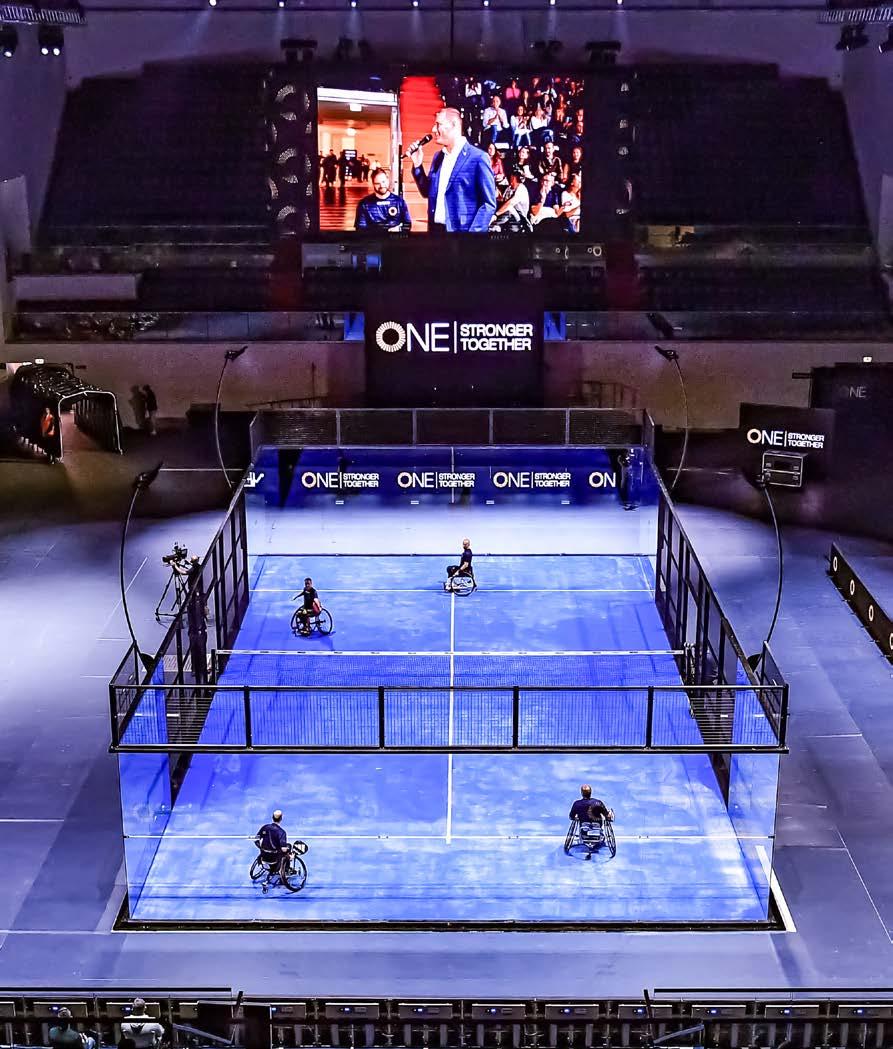
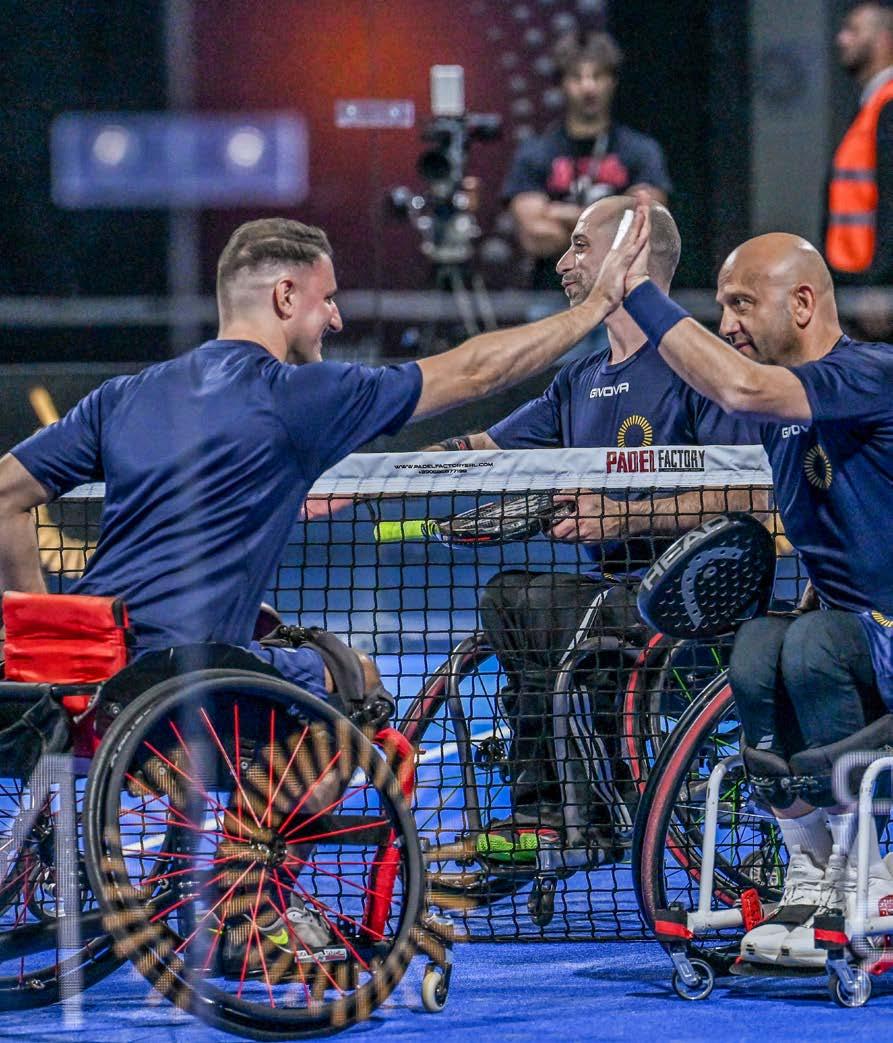
16 PARA PADEL PROJECT
TOTAL PADEL
18 THINKING ABOUT THE FUTURE OF PADEL WITH MARTIN PEREYRA
ZOOM
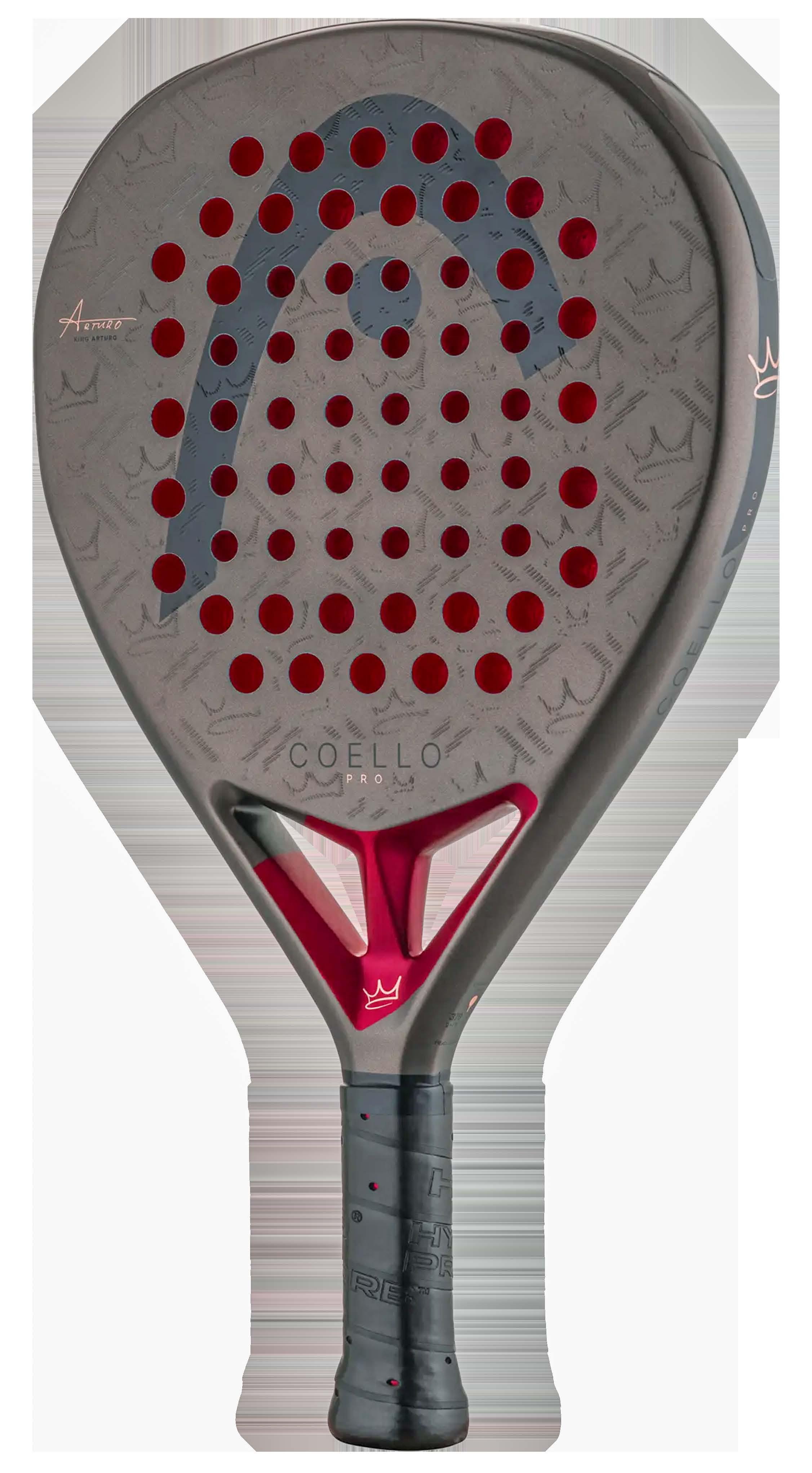
20 HEAD COELLO PRO 2026
PRODUCTS
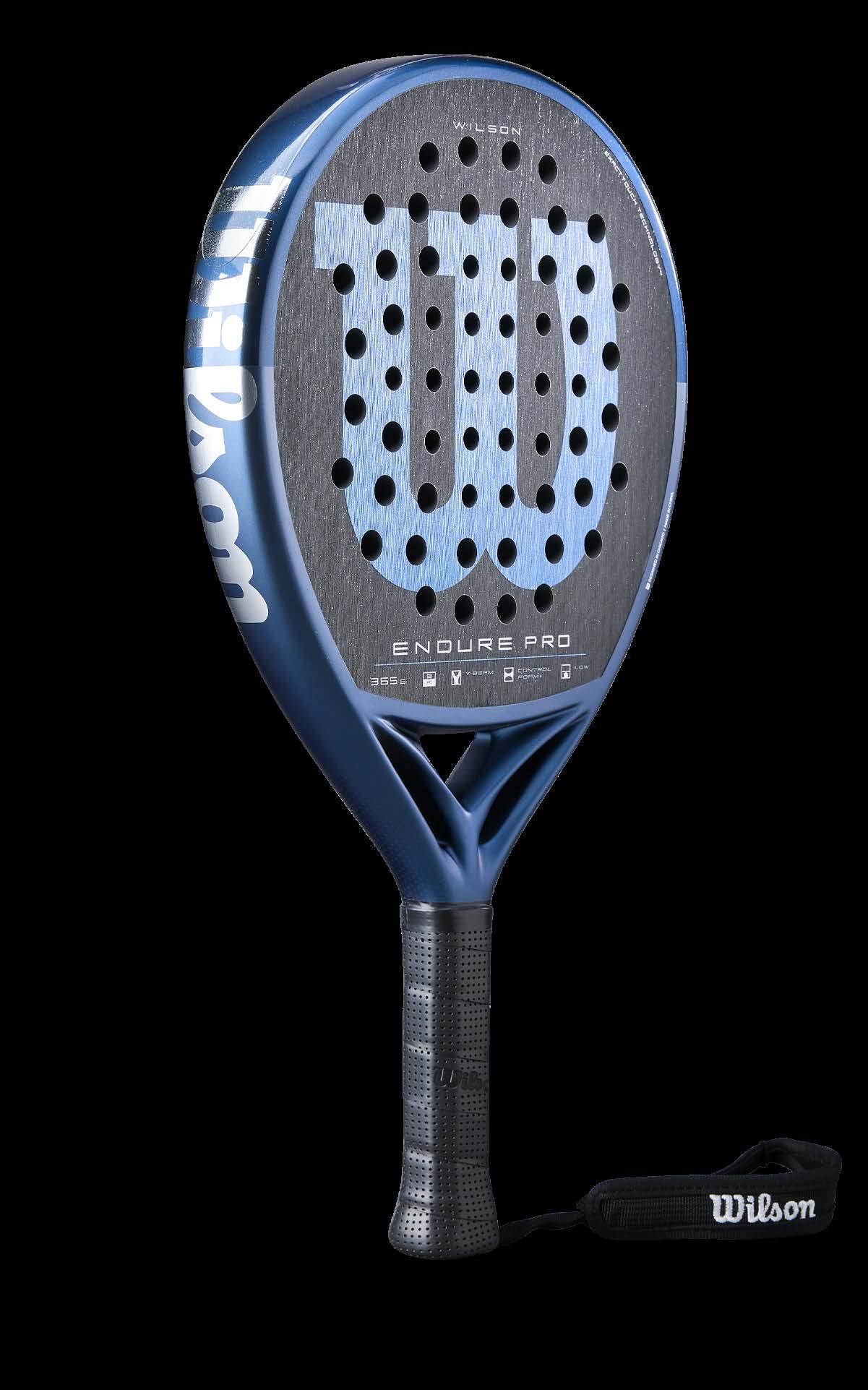
22 ENDURE PRO V1 BY WILSON
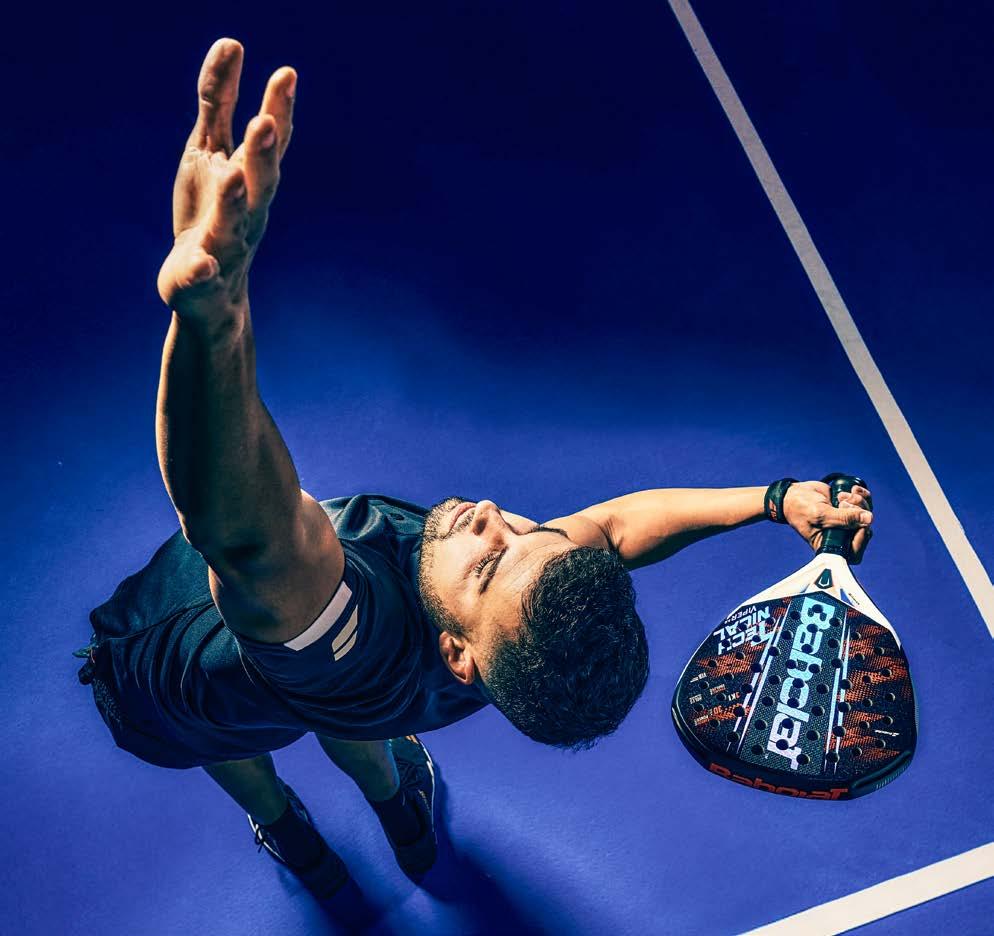
24 BABOLAT'S TECHNICAL 2026 LINE
“Understanding the game is increasingly more important than technique, because without understanding what you are doing, it is impossible to reach a certain level.” Jorge Martínez, p. 33
33 16 26 20
PREMIUM CLUB
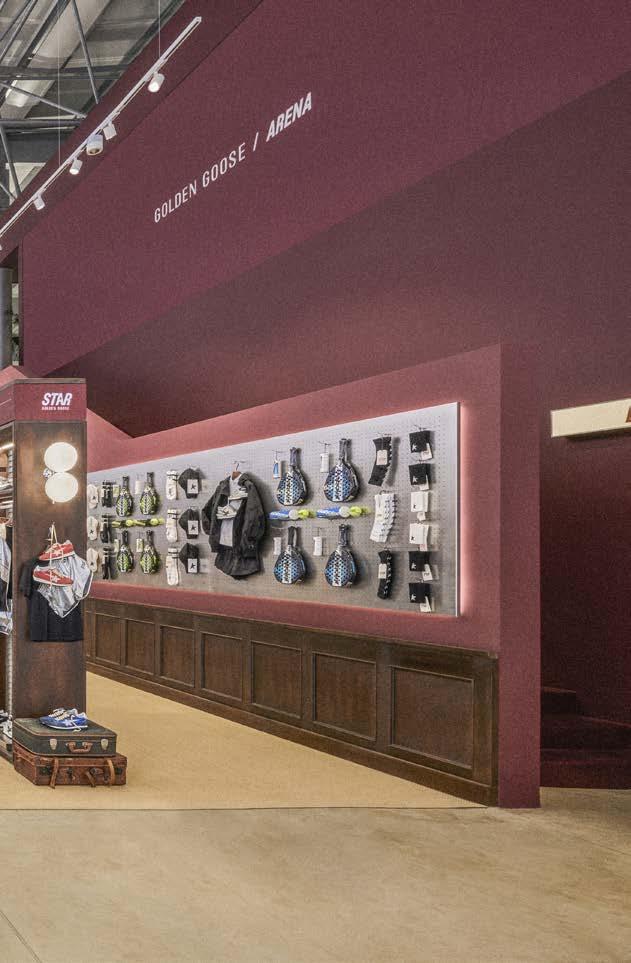
26 GOLDEN GOOSE ARENA IN MILAN
PADEL & TRAVEL
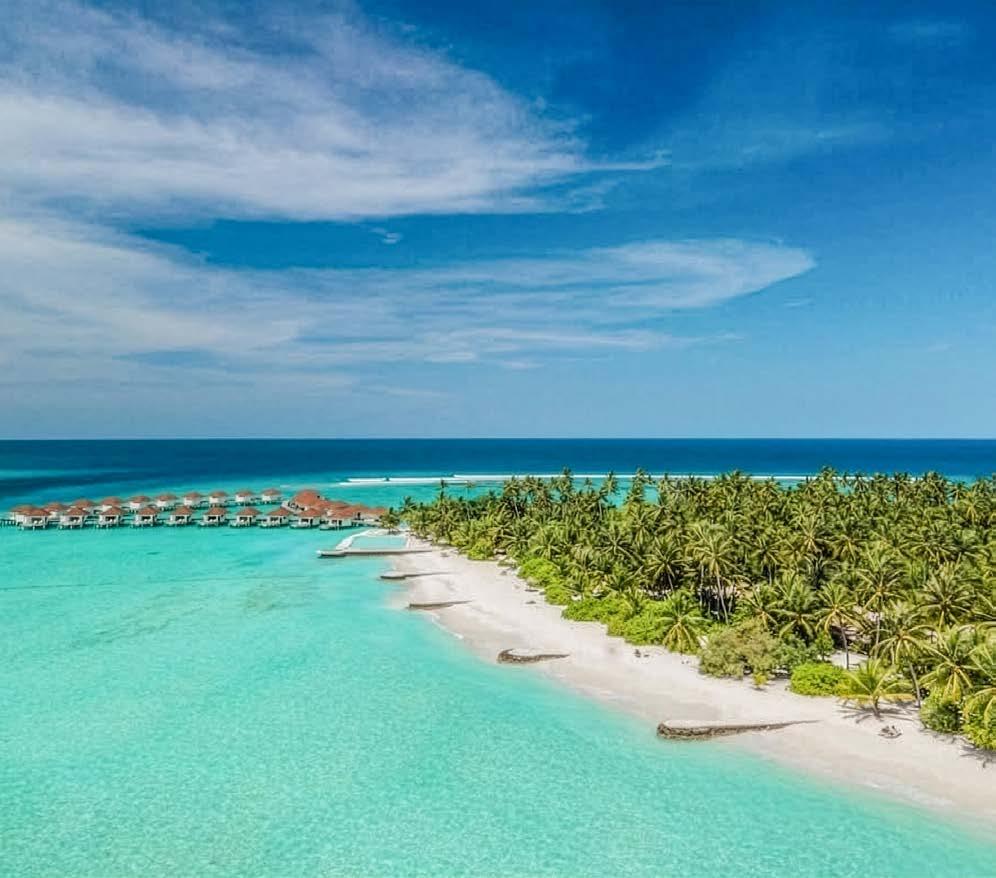
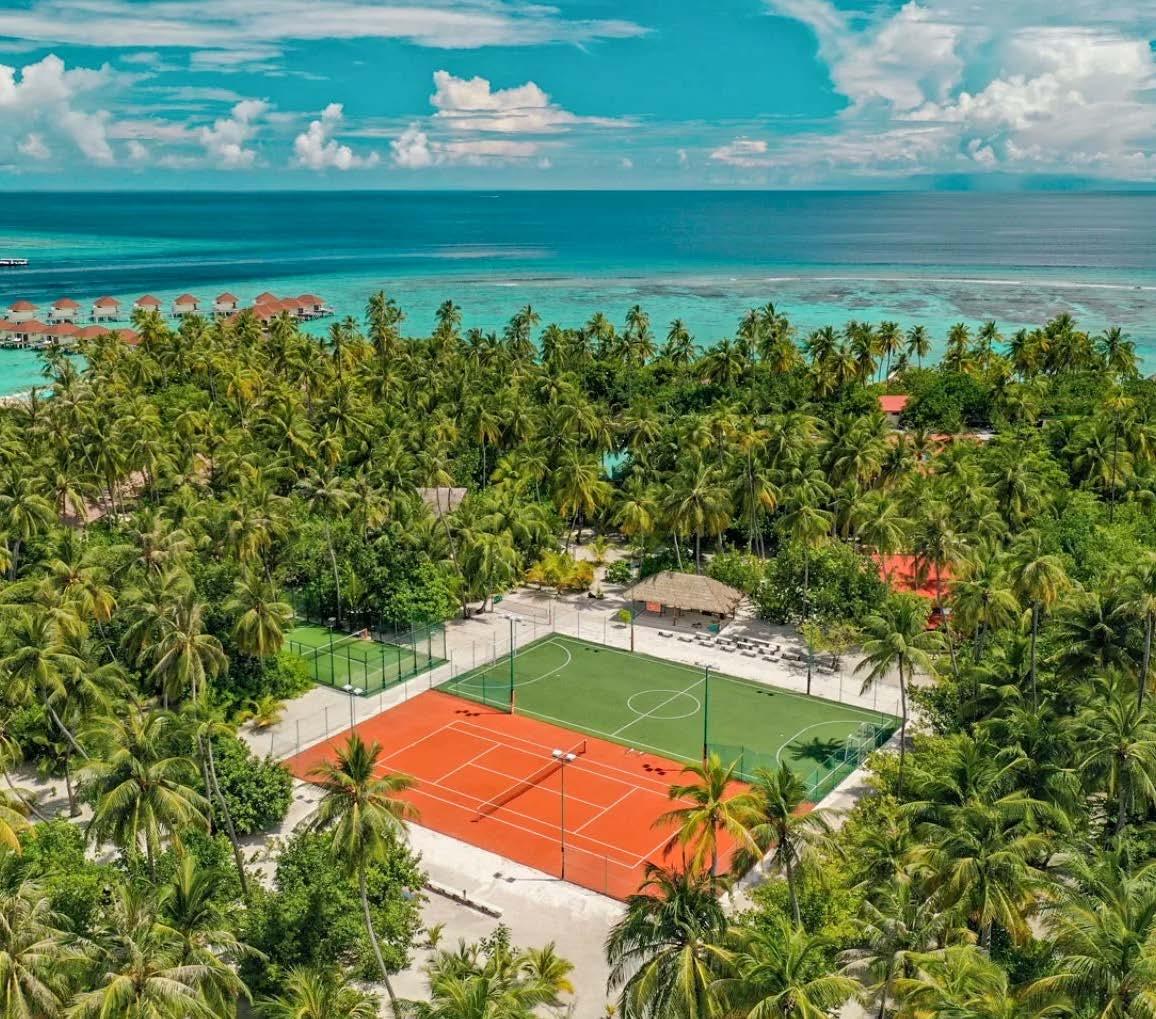
28 GUNDU PADEL CUP: MALDIVES 2026
FOCUS ON
30 HOW TO MAKE A SPORT POPULAR
UNDER THE MICROSCOPE
32 NEW YEAR, NEW PAIRS (OR ALMOST)
INTERVIEWS
33 JORGE MARTÍNEZ: FROM PLAYING TO TECHNIQUE
FOCUS SHOP
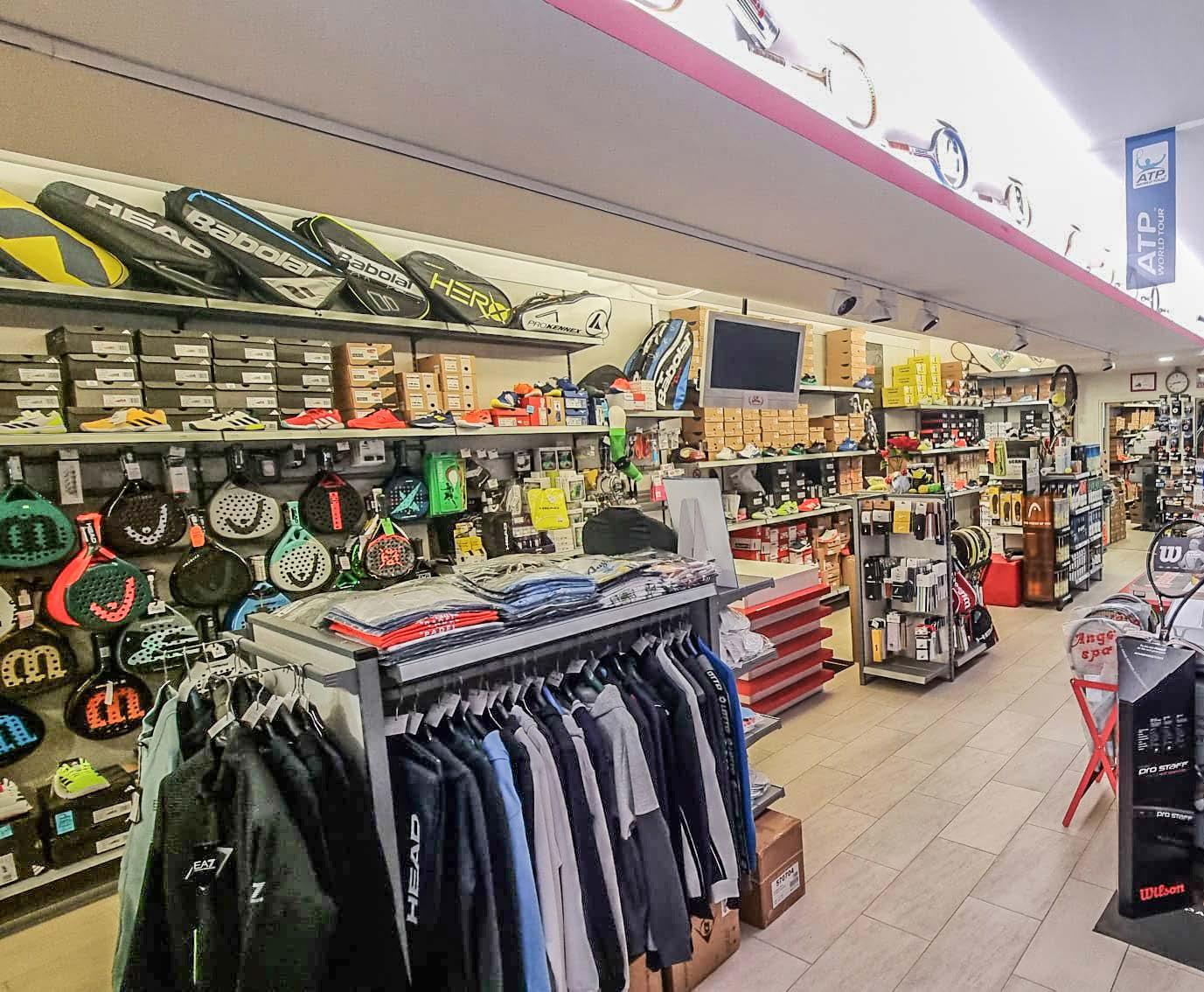
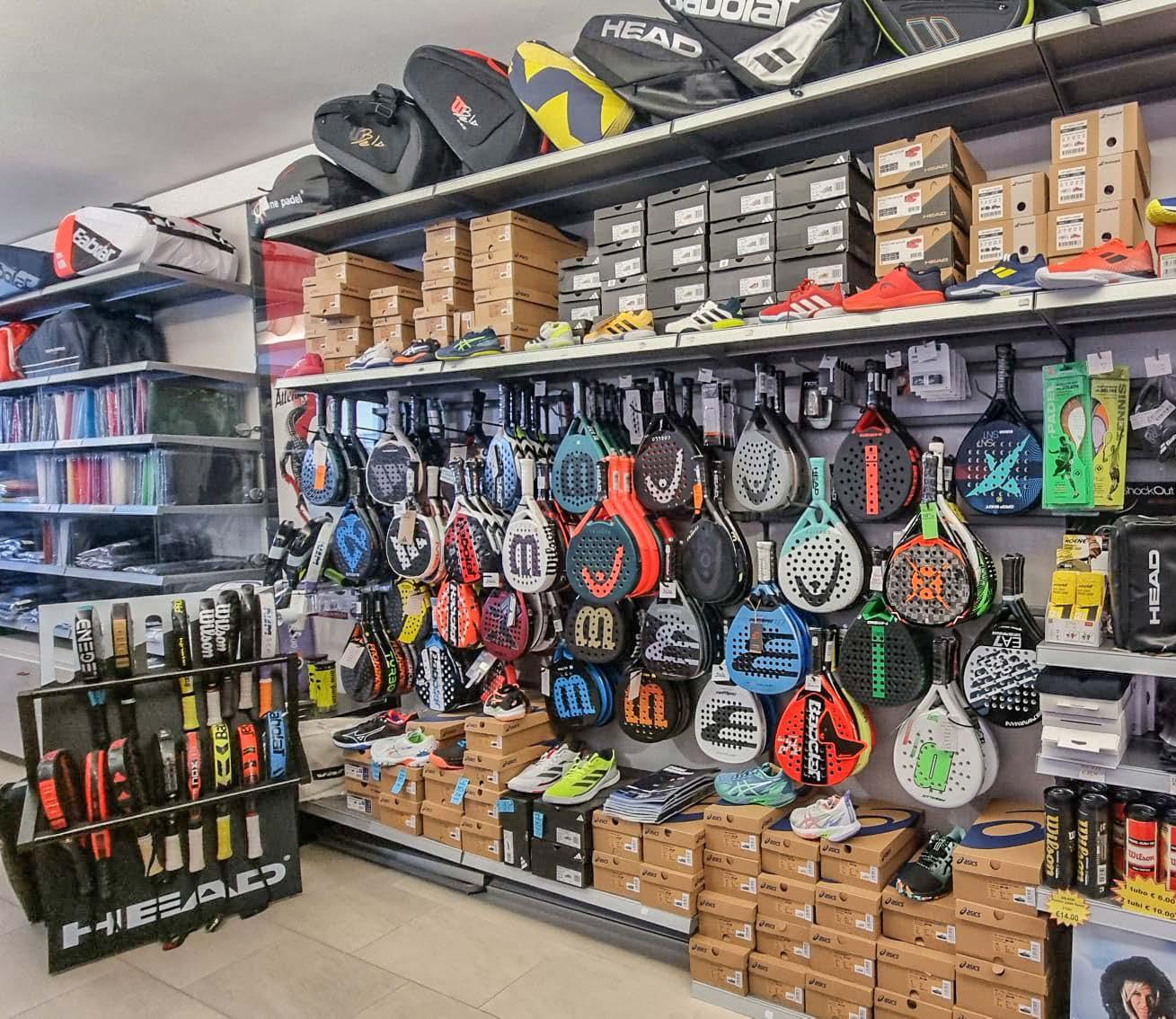
34 ANGELO SPORT: HALF A CENTURY OF HISTORY
THE COACH SAYS
36 EIGHT MYTHS TO DISPEL IN PADEL
THE CORNER OF THE MENTAL COACH
37 HOW TO DEAL WITH MISTAKES
PADEL LEGAL
38 COVERAGE AND LANDSCAPE VIEWS: THE RECKONING
SNAPSHOTS FROM A CHANGING PADEL SCENE
by Daniele Pansardi
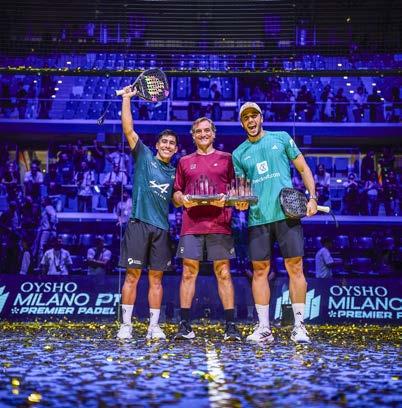
There are two photographs that perfectly sum up the present and future of padel. Both are symbols of the status achieved globally, both commercially and in terms of sport.
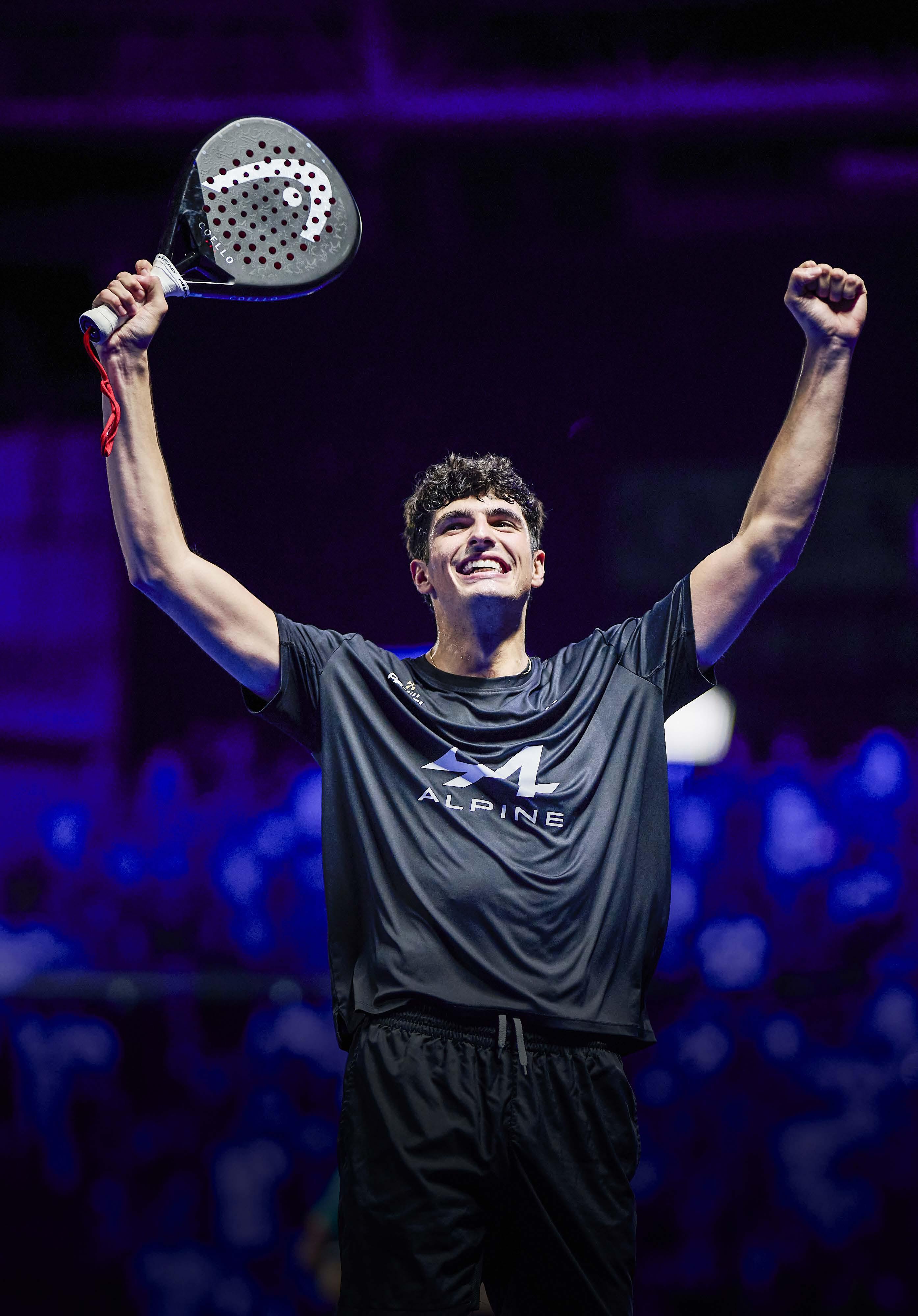
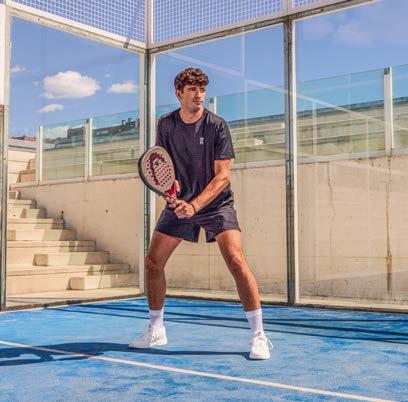
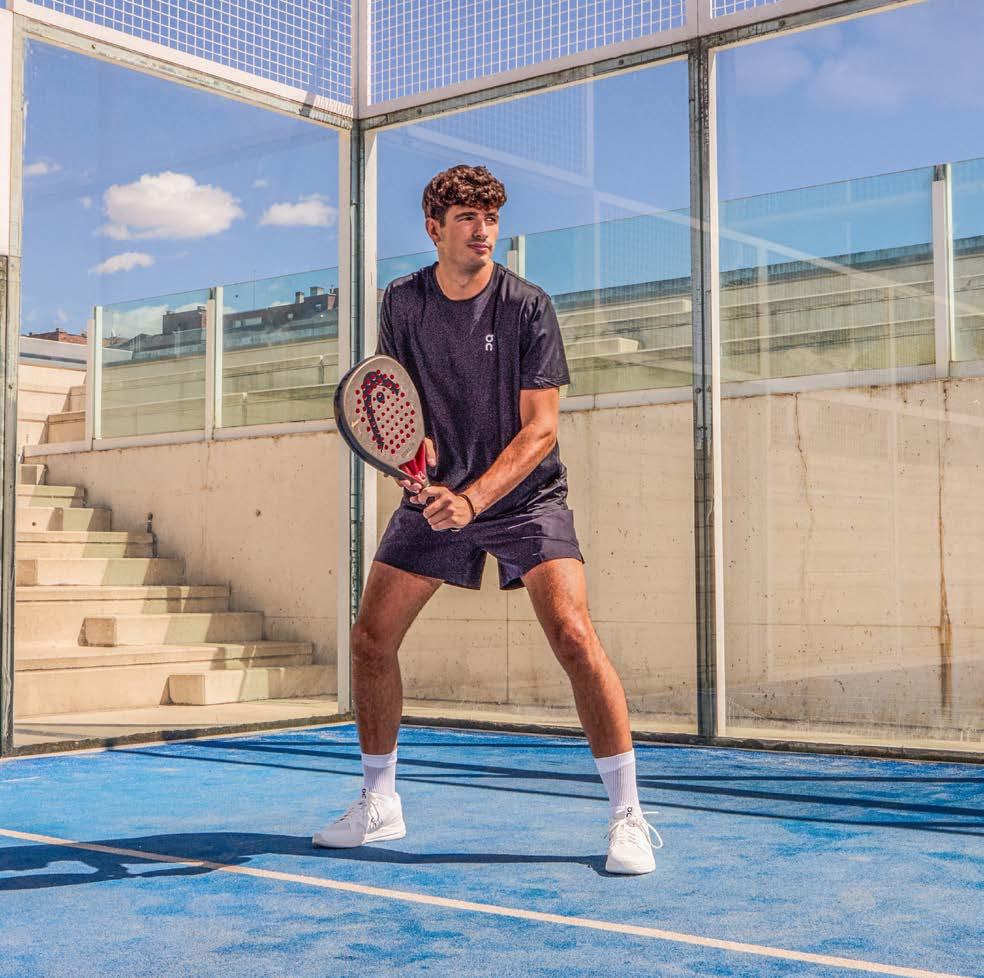
The first shows Arturo Coello, who is, unsurprisingly, featured on our cover, with his brand new sponsors, On and, above all, Rolex. These two collaborations send a very clear message: today, the face of padel is Arturito, more so than Galán (who nevertheless boasts a partnership with Armani), Tapia, or Lebrón. He is young, charismatic, confident, more at ease in front of the microphones than his partner, and phenomenal on the court. The world number one has all the makings of the perfect testimonial, so much so that he convinced a prestigious brand like Rolex to add him to a family of ambassadors that includes names such as Jannik Sinner, Carlos Alcaraz, Iga Swiatek, Tiger Woods, Lewis Hamilton, and of course Roger Federer, who is also a shareholder in On.
This is a small masterpiece of image management, thanks to the work of Miki Sanchez, Coello's inseparable friend and manager, and the IMG Tennis division of WME (William Morris Endeavor), one of the world's leading sports marketing agencies. A few names from their portfolio? Carlos Alcaraz, Ben Shelton, Matteo Berrettini, Lorenzo Musetti, Coco Gauff, Félix Auger-Aliassime... Thanks to a shrewd entourage and a well-chosen strategy, Coello is on the ideal path to becoming a true star. And when On and Rolex jump on board, it means he's heading in the right direction. It is difficult to calculate the potential benefits of
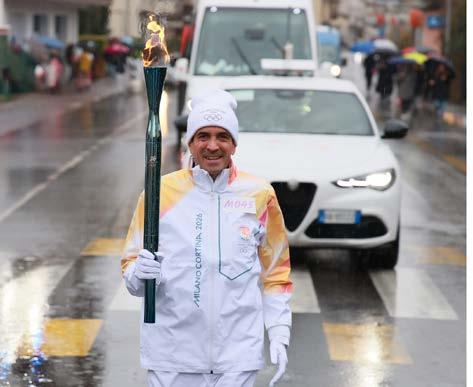
these market maneuvers on the entire movement, but what is certain is that Arturito can help put padel even more on the map, giving this sport further visibility. The bulk of the work in recent years has been done by the FIP and Luigi Carraro, the latter being the protagonist of the second of the two photos mentioned at the beginning. The federal president was one of the torchbearers for the Milan Cortina 2026 Olympic Games, and his image with the torch was inevitably evocative and had a great impact from a symbolic and media point of view. The next two years will be decisive in achieving the great goal of entering the Summer Olympics. The first concrete attempt is underway for Brisbane 2032, but the bid could be affected by the lukewarm reception of padel in Australia (80 courts and 50,000 amateur players according to the FIP World Report 2025) and also by a certain delay in the application of anti-doping protocols in Premier Padel.
The prospects for the 2036 Olympics, on the other hand, could be very different, especially if the allocation procedure rewards Qatar or Saudi Arabia, whose links with padel are well known; in this case, we would be willing to bet that the Olympic leap would be little more than a formality. The Brisbane program will be unveiled at the end of 2026, and the winning bid for the 2036 Games will be announced by 2028. Will the dream come true?
Editors: Daniele Pansardi, Davide L. Bertagna, Andrea Farano, Marcello Ferrarini, Andrea Fierro, Gabriele Marini, Marco Paialunga, Adelio Rosate
Art director: Simone Comi
Editorial office: via Tertulliano 68, 20137 Milan Tel: 02.87245180 - Fax: 02.87245182 Corso della Resistenza, 23 - 20821 Meda (MB) Email: redazione@padelbiz.it Website: padelbiz.it
Year 5 - Issue 1/2026 - Bimonthly magazine Registered with the Court of Milan under no. 6796/2023 on June 12, 2023.
Poste Italiane SpA - Postal subscription shipping D.L. 353/2003 - converted into Law 46/2004 Art.1 Paragraph 1 - LO/MI. Registered with the ROC no. 16155 of November 23, 2007 Printed by: Ingraph - Seregno (MB) One copy €1.00.
The publisher guarantees the utmost confidentiality of the data in its possession. This data will be used for the management of subscriptions and for sending commercial information.
Pursuant to Art. 13 of Law No. 196/2003, the data may be corrected or deleted at any time by writing to: MagNet srl SB Data controller: Benedetto Sironi
This issue was closed on February 19, 2026. MagNet LLC SB @padel.biz
ARI SÁNCHEZ MOVES
FROM
HEAD TO ADIDAS
TAMARA ICARDO AND SANYO GUTIÉRREZ SIGN WITH STARVIE
adidas has officially announced the signing of Ari Sánchez as its new brand ambassador. The agreement had been partially anticipated by a video released by the German company featuring Marta Ortega, in which Ortega had prepared a gift package for a mysterious new product at adidas. The recipient of that package was Sánchez, who will therefore begin the new technical partnership to coincide with the start of Premier Padel 2026. The world number three has chosen adidas after six years with Head and will use the Arrow Hit, the new line launched in 2026, on the court. In addition to his technical sponsor, Sánchez has also changed partners, separating from Paula Josemaría and joining Andrea Ustero.
PAULA JOSEMARÍA
JOINS THE OYSHO FAMILY
Paula Josemaria joins the Oysho community. The Spanish brand continues to invest in high-profile sponsorships in the world of women's padel, involving the left-handed player born in 1996. Oysho's commitment to women's sport is deep and concrete, with the aim of promoting not only competition, but also sharing, inclusion, and the amateur talent of women. Josemaria joins a family that includes, among others, Alejandra Salazar, Sofia Araújo, Carmen Goenaga, Martina Calvo, and Alejandra Alonso, to name the most important.
ALEX RUIZ CHANGES SPONSOR AND SIGNS WITH OXDOG
Alex Ruiz and Oxdog have announced the start of a new partnership ahead of the new season. The Andalusian, born in 1987, is changing sponsors after 11 years with adidas, where he was one of the first ambassadors and one of the longest-serving. Ruiz has long been one of the German brand's key figures and will also be one of Oxdog's most important ambassadors with a contract until 2028. Ruiz joins a family that already includes Javi Barahona, Javi Mora, Teo Zapata, Ramiro Choya, Noa Cánovas, and Arnau Ayats, as well as content creator Crespo (Efecto Pádel). Ruiz will use the Hyper Pro 2.0, one of Oxdog's most powerful and aggressive models.
PREMIER PADEL ACADEMY: A PLATFORM OFFERING CAMPS, CLINICS, AND EXPERIENCES FOR AMATEURS
Premier Padel has announced the launch of the Premier Padel Academy, a new global platform for camps, clinics, and immersive padel experiences, designed to bring the professional tour closer to the global amateur community. The launch is scheduled for the 2026 season, and the initiative marks a strategic step in connecting grassroots players with the professional ecosystem. Premier Padel Academy will launch a comprehensive international calendar of camps and clinics for children and adults, organized in conjunction with already scheduled tournaments and open to amateur participants of all levels from around the world.
StarVie is back in the professional padel world. The Spanish brand, which in recent years had lost virtually all of its main endorsers due to financial problems, has announced the signing of Sanyo Gutiérrez and Tamara Icardo, signaling a renewed strategy to reposition itself among the elite of the sport. The Argentine, although in the twilight of his career, is still one of the public's favorites and one of the most spectacular players in the world, while Icardo, ranked No. 10, is one of the most solid and consistent players on the women's circuit.
COKI NIETO BECOMES KUIKMA AMBASSADOR FOR DECATHLON
Coki Nieto and Kuikma have announced a new partnership for the 2026 season. Decathlon's own padel brand has signed a Top 10 player for the first time, demonstrating its desire to invest more and more in its own brand of rackets. "Coki perfectly embodies our values: consistency, hard work, and persistence," reads the Instagram post announcing the collaboration. Born in 1998, Nieto is an atypical left-handed player for our times: consistent and a great defender, he is one of the most agile and fastest padel players on the circuit; while certainly not the most powerful, he stands out for his reliability and consistency. He was previously sponsored by Babolat.
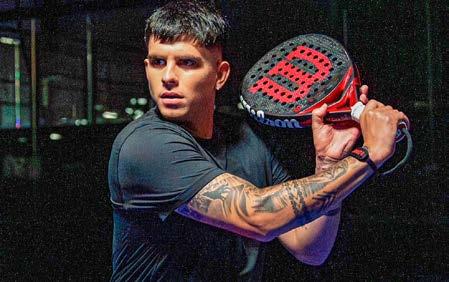
JAVI LEAL SIGNED BY WILSON
Wilson has added Javi Leal to its family of ambassadors for the new season. The Spaniard, born in 2003, entered the top 16 in the world rankings last year, qualifying for the Finals in Barcelona in December. Leal, previously sponsored by Bullpadel for the last four years, ended the season alongside Lucas Bergamini and will start the new Premier Padel season alongside Pablo Cardona, forming a pair dedicated to offensive play and powerful overhead shots. In the photo shoot with which Wilson announced its new ambassador, Leal is pictured with a racket from the Bela line, which will therefore be the Spaniard's new 'weapon'.
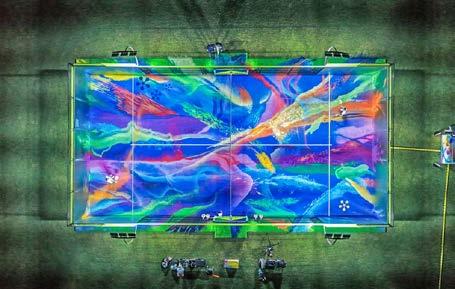
MR. D 1987: AN IMMERSIVE PADEL COURT AT ART BASEL QATAR
On the occasion of the first edition of Art Basel Qatar, padel tennis enters the realm of contemporary art with a project by artist Sébastien Boileau, known as Mr. D 1987. The initiative takes shape in a custom-made padel court, conceived as a meeting place between sports and visual language. Developed from a structure provided by MejorSet, the project offers a reinterpretation of the playing field as a cultural expression. The artistic intervention is inspired by the night skyline of Doha, with a design that extends beyond the playing surface to include the glass walls and perimeter structures.
LEVEL PADEL: THE NEW BRAND
BY JAVI RUIZ, VICTOR RUIZ, AND GONZALO RUBIO
The padel market welcomes a new brand, born from the direct expe rience of three players: Javier Ruiz, Víctor Ruiz, and Gonzalo Rubio have presented Level Padel, a brand that aims to make its way into the alrea dy complex and crowded equipment sector. The launch, which coincides with the start of the 2026 season, responds to the three players' desi re to be directly involved in the cre ation and development of sports equipment, based on their daily ex perience in competition. In this first phase, Level Padel will launch sa les through its official website, from which it will offer its products throu ghout Europe. The company aims to gradually expand its distribution net work to reach new markets.
CARRARO AND THE OLYMPIC TORCH: THE FUTURE OF PADEL IN A PHOTO
The Olympic torch relay was one of the most intense moments in the run-up to the Milan Cortina 2026 Winter Games. Among the torchbe arers taking part in the Olympic re lay was FIP president Luigi Carraro, who played a leading role in this event of great sporting and cultu ral significance. "Carrying the torch was a deeply emotional experience. As I walked, I felt that I was repre senting all those who live and bre athe this sport every day and share the same dream. The Olympics are the pinnacle of world sport, and at that moment, I felt that padel was there too, with its energy and aspi ration to one day be part of the Olympic Games," said Carraro.
BABOLAT AND LAMBORGHINI
UNVEIL THE THIRD CHAPTER OF THEIR COLLABORATION
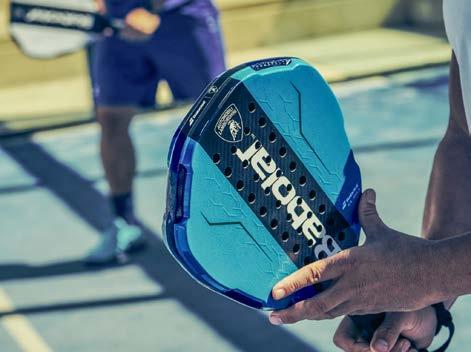
Following the BL001 and BL002 editions, Babolat and Automobili Lamborghini present the latest chapter in their collaboration: the BL003 racket, marking an ever-stronger alliance between two global leaders in performance and innovation. The BL003 combines Babolat's expertise in racket construction with Lamborghini's advanced carbon engineering. Inspired by the DNA of Italian supercars, it incorporates advanced geometries, high-modulus carbon fibers, and an optimized structural architecture to ensure maximum stability, responsiveness, and precision with every shot. "It is the most advanced expression of our shared vision: maneuverability, power on demand, and uncompromising exclusivity," says José Luis Sanz, head of Babolat Padel.
MONDO PADEL Tutto per il tuo gioco
Entra nel mondo Padel Nuestro: www.padelnuestro.com
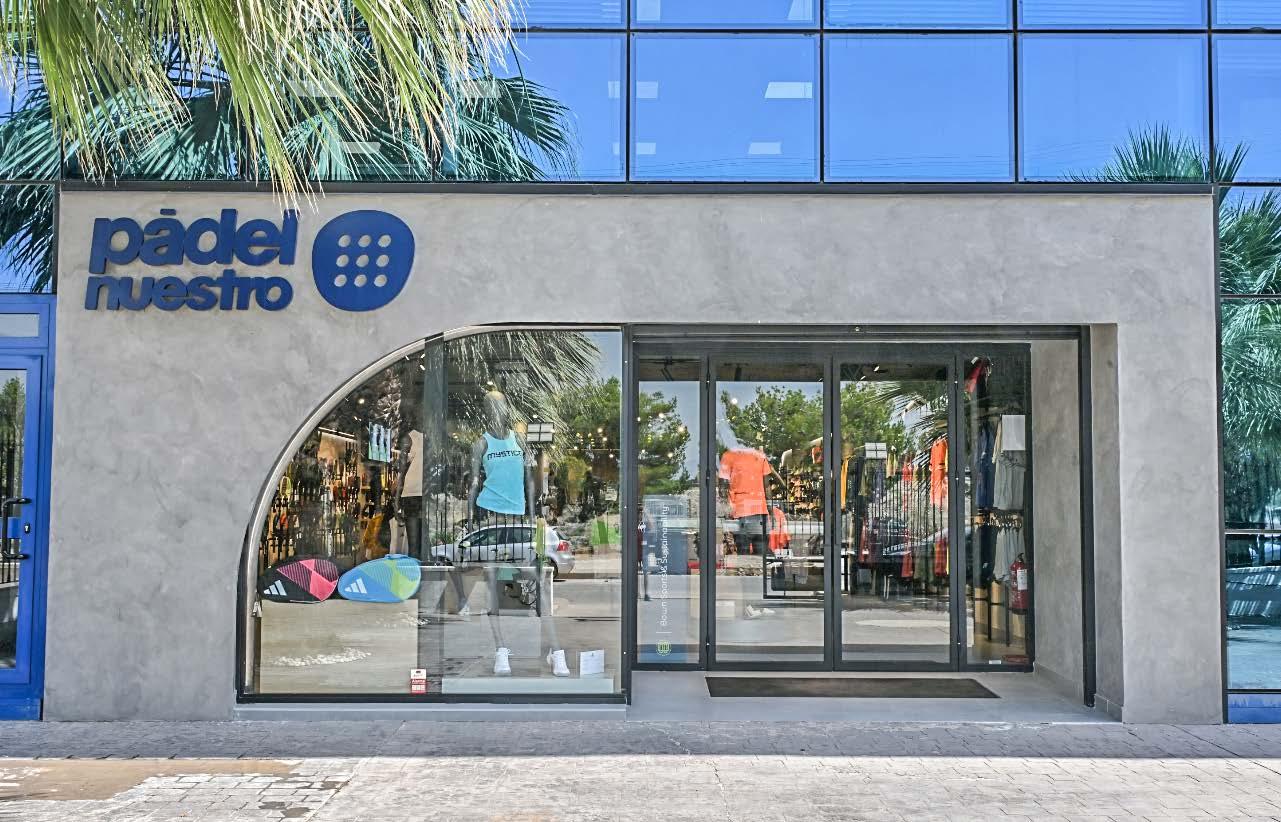
PĀDEL NUESTRO: THE NEW SEASON IS PLAYED WITH THE BEST RACKETS
With the arrival of a new season, Pādel Nuestro confirms its position as a benchmark for padel enthusiasts. The company, a leader in specialized distribution, presents new collections from brands such as Bullpadel, Babolat, Nox, adidas, Head, and Siux, synonymous with innovation, performance, and the evolution of the game. This season stands out for its strong focus on technology applied to performance, with rackets that incorporate more advanced materials, new formats, and improvements in fundamental aspects such as control, power, and ball output. Bullpadel and adidas continue to be leaders in high-level padel, while Babolat and Head perfect balanced and versatile models. Nox and Siux, on the other hand, are strengthening their offering with rackets designed for demanding players looking for precise sensations and a distinctive touch on the court. Careful design, greater comfort when hitting the ball, and solutions suited to different playing styles characterize a season in which equipment is once again taking center stage. Pādel Nuestro accompanies this launch with a specialized consulting service, both in physical stores and online, helping each player find the racket that best suits their game. Because choosing the right equipment means improving performance and enjoying every game more.
TOURNAMENTS
FROM JULY 6 TO 11 IN MALAGA, THE FIRST EDITION OF THE WORLD UNIVERSITY CHAMPIONSHIPS
2026 CALENDARS: A EUROPEAN P2 CONVERTED INTO A HEXAGON EVENT
International university padel will be coming to Spain from July 6 to 11, when Malaga will host the first FISU World University Championship Padel. The tournament will be organized by the University of Malaga together with the International Federation, for a great celebration of sport and padel that will see the participation of athletes from universities in 32 countries: in addition to Spain, Argentina, Italy, France, and the Netherlands, Poland, Hungary, Moldova, Egypt, Lebanon, and the United States are also expected to attend. Each team will be able to field up to a maximum of 12 athletes (6 men and 6 women), divided into two men's pairs, two women's pairs, and two mixed pairs.
THE CUPRA FIP TOUR WILL VISIT 78 COUNTRIES IN 2026
There will be over 200 tournaments scheduled in 2026 on the Cupra FIP Tour calendar, the circuit managed by the Federation that opens the doors to Premier Padel. The Tour will visit five continents with 400 men's and women's competitions, a figure that consolidates its growth after 166 events in 2025. Seventeen new countries will host at least one stage of the Cupra FIP Tour in 2026: Cambodia, Singapore, Vietnam, Pakistan, the Maldives, Ghana, Kenya, Nigeria, Senegal, Morocco, Hungary, Kosovo, Malta, Slovakia, Slovenia, Poland, and Latvia. With the new countries added to the calendar, the total number of countries hosting the CUPRA FIP Tour rises to 78, 46% of which are in Europe.
THE SICILIA PADEL TOUR JOINS THE FITP-TPRA CIRCUIT WITH ITS FOURTH EDITION
The Sicilia Padel Tour is ready to return to the court for the fourth time. After the success of previous editions, the Sicilian circuit is back with a well-established formula that involves players, clubs, and partners in a structured and constantly evolving project. The new event marks a fundamental step in the Tour's growth, with its entry into the FITP-TPRA circuit. This is an important recognition that certifies its organizational level and sporting value, allowing participants to compete within a structured federal circuit. Further information on the Sicilia Padel Tour calendar will be announced in the coming weeks.
The FIP, in coordination with Premier Padel and Hexagon World Series, has confirmed a series of updates to the calendar of major padel events in 2026. The main changes concern the Asunción Premier Padel P2 in Paraguay, brought forward from May 18–24 to May 4–10, 2026; the conversion of a European P2 into a Hexagon World Series event (September 14–20) and the scheduling of the other two planned stages of the new Series (October 22–25 and December 17–20), and the announcement of a FIP Platinum in Albania, scheduled for May 25–31. The men's P2 tournaments in the 2026 season will also feature a main draw of 28 pairs.
DETAILS OF FIP BEYOND, THE INITIATIVE DEDICATED TO AMATEURS
The FIP has announced details of FIP Beyond, the new circuit aimed at amateur players. It is divided into three levels: B1 (with prize money ranging from €6,000 to €18,000), B2 (from €3,600 to €10,800) and B3 (no prize money). The age categories are amateur (18–39 years old, no prize money) and five other age groups (+40, +45, +50, +55, and +60). Each tournament will feature at least three of the six categories (always including +40 and +50). The FIP Beyond ranking will be determined by the best 11 results obtained by each player on the circuit and will allow access to the major official events: the FIP Beyond Finals, the FIP Beyond Continental Cup by Pairs, and the FIP Beyond World Cup by Pairs.
PLAYTOMIC CLOSES CROWDFUNDING CAMPAIGN WITH €5.1 MILLION
Playtomic has completed its first investment operation open to its user community, an initiative that has allowed players, clubs, and fans to directly invest in the company's capital. The operation, carried out through Crowdcube, closed with more than €5.1 million raised and over 4,600 new shareholders. "The campaign demonstrates the extent to which the community is the true pillar of Playtomic," said Félix Ruiz, co-founder and CEO of the company. "The fact that thousands of people have decided to invest reflects an extraordinary level of trust and encourages us to continue developing the platform together with them."
BRITISH GROUP FRASERS ACQUIRES CONTROL OF MAXI SPORT
Frasers Group, the British holding company that owns Sports Direct, has reached an agreement to acquire a majority stake in Maxi Sport. The current shareholders—Emanuele Sala, Giovanni Sala, Ester Sala, and Giulia Sala—will retain a stake in the company and continue to be part of the management team. Maxi Sport operates 18 stores in Italy, including six flagship stores, and offers a range of products from extreme sports to winter sports equipment. According to SGB Media, Frasers says that Maxi Sport "will continue to offer Italian consumers its premium sporting goods format, while the British group intends to explore further growth opportunities for the Sports Direct brand in the region in the near future."
APPOINTS IVÁN GARCÍA AS GENERAL MANAGER OF
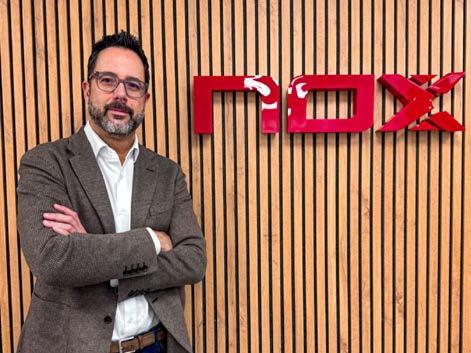
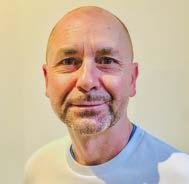
Nox has announced the appointment of Iván García (pictured) as its new general manager, strengthening its management structure at a key moment for growth. Jesús Ballvé will continue to lead the company as CEO. According to Nox, García's appointment as general manager will enable the brand's development to continue. Throughout his career, he has worked in sectors such as sports, retail, consumer goods, and e-commerce, leading projects related to international expansion, brand positioning, and innovation. With this appointment, Nox reinforces its commitment to creating a high-level management structure and consolidating its role as one of the leading players in the industry.
WHO WINS AT PADEL RISIKO?
Without a doubt, Europe leads the market with over 50,000 courts, closely followed by America, with new emerging countries eager to catch up (Venezuela and Ecuador) and others now well established. Watch out for unexpected surprises, such as Indonesia and South Africa, which are experiencing strong growth.
by Davide L. Bertagna
As anticipated in the last issue of Padelbiz, we return to the second edition of the World Padel Report, a study that provides a snapshot of the entire ecosystem of the sport at a global level. From player participation to the number of facilities and courts, from federal activity in tournaments to sporting results, the report offers a comprehensive and upto-date overview. Presented in early December during the General Assembly in Acapulco (Mexico), the publication is a fundamental tool for monitoring the evolution of the movement, thanks to the work of the FIP Research & Data Analysis Department, coordinated by Carlo Ferrara, and the contribution of the 87 affiliated federations that took part in the FIP National Federation Survey 2025. In this issue, we analyze the differences between the various continents, with the aim of understanding the evolution of the discipline and the different levels of consolidation.
THE
GROWTH OF PADEL IN THE WORLD
EUROPE
clubs. Among the smaller markets to monitor are Switzerland (+400 courts), Greece and Austria (+300), Lithuania (+200), Cyprus (+200), and Ireland (+100). According to data from Google Trends and the Padelfip.com website, Portugal (1,560 courts) has also seen strong interest in recent months, ranking third in terms of number of fans in Europe, after Spain and Italy. Eastern Europe, on the other hand, remains in an early stage of development overall.
Consolidated countries
Among the mature markets, Spain stands out with over 17,300 courts, six million players, and 50% of European enthusiasts, continuing to grow, albeit at a more moderate pace than in the last five years. Italy is undergoing a period of consolidation after the boom of previous years, but remains the second country in terms of number of enthusiasts. The Netherlands (over 3,500 courts by mid-2025), Belgium (2,150), and Denmark are also showing more modest growth, while Sweden is not yet showing signs of recovery, still having to "absorb" the very rapid expansion of 2020.
NUMBER OF PADEL CLUBS
Europe has surpassed 15,000 clubs and 50,000 courts, but, as we will also see in other continents, growth appears uneven across different countries. At the beginning of 2020, there were approximately 5,000 facilities and 18,000 courts, but in five years, there has been a marked evolution, with an increase of 10,000 clubs (+200%) and over 33,000 courts (+185%), driven in particular by the boom recorded in 2021 in Italy and Sweden.
Emerging countries
Three main markets have continued to expand: France, the United Kingdom, and Germany, but they are not the only ones. France was the country with the highest number of new installations in the last 18 months (+1,850 courses, equal to an annual growth of +55%), exceeding 4,000. The United Kingdom continued the path it started in 2023 with very high positive rates, reaching the target of 1,000 courses in July 2025. Germany, albeit at a slower pace than the UK, continues to grow, exceeding 900 thanks to a 50% increase in
There are more than 24,627 clubs and facilities worldwide where you can play padel, with 35% of clubs affiliated with national federations. Since our last report published 18 months ago (April 2024), the number of sports facilities with padel courts worldwide has increased by 4,775, representing a 24.1% increase (equivalent to an annual increase of 16.1%). 8,612 clubs managing more than 30,000 padel courts are affiliated with national federations, compared to 2023 (5,820 clubs), the FIP has recorded an increase of 48%.There are 150 nations and 20 dependent territories where padel can be played, 26 more than in the previous survey (16 African, 7 Asian, and 3 American UN countries). More than 75 percent of the world’s nations have facilities where padel can be played; in Europe, there is at least one club in all 50 nations of the continent. Although FIP member countries account for 59% of countries with padel facilities, they own 96% of padel clubs and courts worldwide. In 2026, this percentage is expected to rise to 99% with the entry of new national federations into the FIP.
NATIONS WHERE THERE ARE PADEL
AMERICA
After Europe, America is the second continent in terms of padel development, with 18,100 courts and 6,400 active clubs. Until a few years ago, the sport on the continent was almost exclusively associated with Argentina, with more limited contributions from Brazil and Uruguay. Today, the scenario is much more complex. Mexico is experiencing strong growth in terms of enthusiasts, players (over one million), and number of facilities, as well as intense national and international tournament activity. The US is in a transition phase: at the beginning of 2025, the threshold of 650 courts in 31 states was exceeded, reaching over 770 today. Florida remains the fastest-growing state, accounting for 41% of all courses, followed by Texas (18%), California (10%), and New York (4.7%). Paesi emergenti
THERE ARE 49 COUNTRIES
(20 European, 13 American, 12 Asian and 4 African) with more than 100 padel courts (up from 35 last year), including 10 with more than 2,000 courts, 8 with more than 1,000, 6 with between 500 and 1,000, and 25 with between 100 and 500.
Fig.2 – Numero di nazioni ONU per continente in cui si gioca a padel
TOP 15 PAESI N° CLUB
Europe is the continent with the highest number of clubs and accommodation facilities (62.3%), followed by South America with 21.5%, Asia with 7.0%, Africa with 4.7%, Central and North America with 4.5%, and Oceania (0.1%).
In the latest survey, South America grew by 557 clubs (+11.8%), Europe by 2,613 (+20.5%), Asia by 560 (+48.6%), Africa by 387 (+51%), Central and North America by 641 (+135%), and Oceania by 17 (+142%).
Venezuela ed Ecuador hanno superato i 300 campi, Panama ha raggiunto quota 200, mentre la Colombia si avvicina ai 500. Anche Bolivia e Repubblica Dominicana hanno oltrepassato i 100 campi. Perù, Canada e altri Paesi dell’America Latina si trovano ancora nelle prime fasi di sviluppo, pur mostrando tassi di crescita significativi rispetto al precedente rilevamento.
Emerging countries
Venezuela and Ecuador have exceeded 300 fields, Panama has reached 200, while Colombia is approaching 500. Bolivia and the Dominican Republic have also exceeded 100 fields. Peru, Canada, and other Latin American countries are still in the early stages of development, although they are showing significant growth rates compared to the previous survey.
Established countries
Argentina, Brazil, Chile, Paraguay, and Uruguay are experiencing more moderate growth. Although access to detailed data is complex, information from local federations, the FIP observatory, and Google Trends analysis still indicates a steady increase in the number of players. Argentina remains the leading country on the continent, accounting for over 40% of enthusiasts, followed by Mexico (13%) and Chile and the United States (10% each). ASIA While in
the previous report padel in Asia was mainly concentrated in the Middle East (89% of facilities), the situation is now very different. Countries such as Lebanon, Thailand, and especially Indonesia (an estimated 350 courts and up to 17% of all enthusiasts on the Asian continent) are growing, but countries such as Pakistan, the Philippines, China, India, and Israel are also showing several positive indicators, albeit to a lesser extent.
Established countries
The Asian part of the Middle East has continued its moderate growth phase this year in most countries, which have nevertheless recorded an average growth of 18% in facilities (+200 clubs and almost 500 courts). Saudi Arabia remains the leader in Asia with 1,127 courts, followed by the United Arab Emirates (1,000) and Kuwait (600). AFRICA Although padel has begun to develop across the continent, to date more than 80% of the facilities where it is possible to play in Africa are concentrated in two countries (Egypt and South Africa). South Africa is experiencing a real boom with almost 390 facilities and more than 1,200 courts installed in just a few years. All indicators in this country are on the rise: the percentage of enthusiasts, which in 2024 represented 16% of all fans on the continent, is now at 28%. Morocco and Tunisia are the other two countries growing at a similar and interesting rate; they have exceeded 100 courts and in the last year there has been a sharp increase in the number of enthusiasts (representing 13% and 12% of fans on the continent). The most promising nations in the early stages of growth are undoubtedly Ivory Coast and Senegal (more than 50 courts), Angola, Kenya, and Mauritius; one step below are Algeria and Ghana, while the rest of Africa still has few facilities where people can play.
Established countries
Egypt is the only African country that has reached a stage of maturity, as it was the first country where padel exploded and holds 44% of the facilities and 31% of fans across the continent. OCEANIA Padel in Oceania is moving from an embryonic stage to one of growth. The main country is obviously the largest, Australia, which has 80 padel courts and is beginning to build a following of enthusiasts, thanks in part to several FIP international tournaments organized in Sydney and Melbourne. New Zealand is also beginning to have dedicated clubs, and two other countries where it is possible to play are French Polynesia and New Caledonia.
PADEL RETAIL OBSERVATORY
Padelbiz's survey of Italian retailers is back again this year, analyzing market trends in 2025. Balance sheets, issues, positive aspects, proposals, opportunities for the future. Shopkeepers from across the country have their say by Daniele Pansardi
Retailers are a fundamental link in the commercial chain, which is why it is important to gather their opinions, listen to their requests, and consider their needs. With the "Focus shop" and "I open because" columns, we usually give them a voice every day of the year, but it is in the first issues of the new year that, with our Padel Retail Observatory (which has become a MagNet trademark in the La Carica dei 101 format), we carry out a comprehensive market survey. A review of the year just ended and prospects for the coming year, news, trends, issues, opportunities, proposals: with 2025 now in the books for stores, what are retailers' opinions? Here is the first installment of our survey with interesting food for thought for all padel market operators.
TAKE PART IN OUR SURVEY
Are you a retailer who runs a business related to the world of padel? Padelbiz and the MagNet publishing group give you the chance to have your say by participating in our Padel Retail Observatory, which is based on one of our most widely read and appreciated editorial formats. To respond to our survey, scan the QR Code on the right, call us at 0287245180, or write to us at redazione@padelbiz.it.
TENNIS21
Pistoia
Massimiliano Battistini, titolare
BILANCIO DI FINE ANNO
1. In crescita del 30%
2. Concorrenza online, marginalità ridotte.
3. Abbigliamento.
4. No.
TREND DI ACQUISTO
5. Consigli del negoziante, fedeltà a un marchio già utilizzato, test del prodotto.
6. 200-250 euro.
7. Ogni 12 mesi.
8. Test racchette, partnership con allenatori, corner nei centri padel.
I MARCHI PIÙ VENDUTI DEL 2025
9. racchette: ADIDAS, NOX, HEAD scarpe: ADIDAS, ASICS, MIZUNO abbigliamento: ADIDAS, MIZUNO, ASICS zaini/borse: ADIDAS, NOX, HEAD
10. ADIDAS
11. Voto 2025: 8
The questions
1. How did sales perform in 2025 compared to 2024? (indicating the percentage increase or decrease)
2. What were the main issues in 2025? 3. Rackets, shoes, or clothing: which category guarantees the highest margins?
4. Do you have an e-commerce site? If so, what percentage of your total turnover does it account for?
PURCHASING TRENDS
5. What factors most influence consumers when making a purchase?
6. What was the price range of the best-selling rackets in 2025?
7. How often do regular customers buy a new racket?
8. What initiatives or agreements are successful in increasing sales and bringing more people into the store?
BRAND PREFERENCES
9. What are your top 3 racket brands, in order? What are your top 3 shoe brands, in order? What are your top 3 clothing brands, in order? What are your top 3 bag/backpack brands, in order?
10. Which company did you work best with in 2025?
11. Overall rating for 2025 from 1 to 10?
12. Any final thoughts and a message to suppliers and colleagues.
12. La consulenza e la specializzazione batte sempre il prezzo dell'online.
ANGELO SPORT
Piacenza
Egidio Livraghi, titolare
BILANCIO DI FINE ANNO
1. In calo del 20%
2. Calo della domanda, marginalità ridotte, diminuzione del numero di giocatori.
3. Abbigliamento.
4. Sì, vale tra lo 0-10%.
TREND DI ACQUISTO
5. Fedeltà a un marchio già utilizzato, prezzo e/o promozioni.
6. 150-200 euro.
7. Ogni 12 mesi.
8. Partnership con allenatori.
I MARCHI PIÙ VENDUTI DEL 2025
9. racchette: HEAD, WILSON, BABOLAT scarpe: ASICS, ADIDAS, HEAD abbigliamento: ADIDAS, LOTTO, AUSTRALIAN zaini/borse: HEAD, WILSON, BABOLAT
10. HEAD
11. Voto 2025: 5
12. È diventato difficile fare grandi ordini, perché i modelli cambiano annualmente, e di conseguenza i margini si riducono già dopo pochi mesi dall'uscita del nuovo prodotto. Ci vorrebbe più controllo dei prezzi da parte delle aziende. Inoltre il mercato conta ancora troppi marchi improvvisati, che spesso non trovando posto nei negozi servono direttamente i circoli.
SWAP PADEL STORE
Roma Gennaro Eboli, titolare
BILANCIO DI FINE ANNO
1. Stabili.
2. Calo della domanda, aumento dei prezzi, concorrenza online.
3. Abbigliamento.
4. Sì, vale tra lo 0-10%.
TREND DI ACQUISTO
5. Consigli del negoziante, passaparola. 6. 250-300 euro.
7. Ogni 12 mesi.
8. Noleggio, test racchette, partnership con allenatori.
I MARCHI PIÙ VENDUTI DEL 2025
9. racchette: NOX, ADIDAS, VOLT scarpe: ADIDAS, NOX, MIZUNO abbigliamento: ADIDAS, NOX, PERSONALIZZATO zaini/borse: NOX, VOLT, ADIDAS
10. VOLT
11. Voto 2025: 6
12. Purtroppo a Roma il padel è esploso tanti anni fa, e i club non hanno investito sulle scuole o sul ricambio generazionale. Noi fortunatamente continuiamo a lavorare perché la nostra realtà si è consolidata nel tempo e abbiamo una locale commerciale con una posizione molto visibile e centrale.
NAKE SPORT
Milano
Alberto Visentini, titolare BILANCIO DI FINE ANNO
1. In crescita del 5%
2. Concorrenza online.
3. Scarpe.
4. No.
TREND DI ACQUISTO
5. Consigli del negoziante, fedeltà a un marchio già utilizzato, prezzo e/o promozioni, tecnicità dei prodotti.
6. 100-150 euro.
7. Ogni 12 mesi.
8. Avere subito le novità.
I MARCHI PIÙ VENDUTI DEL 2025
9. racchette: BABOLAT, NOX, ADIDAS scarpe: ASICS, HEAD, MIZUNO abbigliamento: NOX, BABOLAT, PADEL MI AMOR zaini/borse: BULLPADEL, NOX
10. BABOLAT
11. Voto 2025: 8
12. Siate seri!
EIFFEL 59
Casale Monferrato (AL)
Marco Gazziero, titolare
BILANCIO DI FINE ANNO
1. In calo del 30%
2. Calo della domanda, concorrenza online, marginalità ridotte.
3. Scarpe.
4. No.
TREND DI ACQUISTO
5. Consigli del negoziante, fedeltà a un marchio già utilizzato, prezzo e/o promozioni, test del prodotto.
6. 150-200 euro.
7. Ogni 12 mesi.
8. Demo day, noleggio, test racchette.
I MARCHI PIÙ VENDUTI DEL 2025
9. racchette: BABOLAT, ADIDAS, HEAD scarpe: BABOLAT, ADIDAS, WILSON abbigliamento: VERVE, AUSTRALIAN, UNDER ARMOUR zaini/borse: ADIDAS, BABOLAT, WILSON
10. BABOLAT
11. Voto 2025: 6
12. Messaggio per gli e-commerce: basta con questi prezzi bassi folli anche su prodotti appena usciti sul mercato.
5. Fedeltà a un marchio già utilizzato, prezzo e/o promozioni, test del prodotto.
6. 150-200 euro.
7. Ogni 12 mesi.
8. Test racchette, pacchetti o promozioni speciali.
I MARCHI PIÙ VENDUTI DEL 2025
9. racchette: BULLPADEL, WILSON, HEAD scarpe: ASICS, MIZUNO, LOTTO abbigliamento: HEAD, LOTTO, BULLPADEL zaini/borse: BULLPADEL, HEAD, WILSON
10. BULLPADEL
11. Voto 2025: 4
12. Il prezzo delle racchette viene percepito come eccessivo rispetto alla qualità e durata del prodotto.
A TUTTO CAMPO
Carpi (MO)
Massimo Corradi, titolare
BILANCIO DI FINE ANNO
1. In crescita del 15%
2. Aumento dei prezzi.
3. Abbigliamento.
4. Sì, vale tra il 10 e il 20%.
TREND DI ACQUISTO
5. Consigli del negoziante, fedeltà a un marchio già utilizzato, test del prodotto. 6. 200-250 euro.
7. Ogni sei mesi.
8. Demo day, test racchette, corner nei centri padel.
I MARCHI PIÙ VENDUTI DEL 2025
9. racchette: BABOLAT, ADIDAS, HEAD scarpe: ASICS, MIZUNO, ADIDAS abbigliamento: ADIDAS, UNDER ARMOUR, BABOLAT zaini/borse: ADIDAS, BABOLAT, NOX
10. BABOLAT
11. Voto 2025: 8
12. Si sta facendo un po’ di selezione finalmente. I negozianti seri, che acquistano quantità di prodotto congrue e si rivolgono a fornitori affidabili hanno avuto sicuramente una buona annata. L'attenzione al cliente e la capacità di "accompagnare" la vendita con consigli e test del prodotto incuriosiscono il cliente, che si fida più volentieri, specialmente dopo avere preso qualche "sola" nell'acquisto online in autonomia. Per noi è stato un buon anno, sempre più padel club si affidano a noi per la fornitura e l'allestimento delle pareti del circolo con racchette, scarpe e accessori. Ritengo che la consulenza e la serietà siano la nostra chiave per i buoni risultati sia in store che online.
GO4TENNIS
Torino
Lino Casoria, socio
BILANCIO DI FINE ANNO
1. In calo del 50%.
2. Concorrenza online.
3. Racchette.
4. Sì, vale tra lo 0 e il 10% del fatturato. TREND DI ACQUISTO
5. Consigli del negoziante, fedeltà a un marchio già utilizzato, passaparola, prezzo e/o promozioni, test del prodotto.
6. Meno di 100 euro.
7. Ogni 18-24 mesi.
8. Demo day, noleggio, test racchette, pacchetti o promozioni speciali.
12. I brand propongono delle gamme troppo diversificate. Inoltre, c’è una svalutazione online quasi immediata dopo l’uscita del prodotto, che abbassa da subito i margini per i negozi fisici.
NEW TENNIS
Castellanza (VA) Riccardo Morelli, socio
BILANCIO DI FINE ANNO
1. Stabile.
2. Concorrenza online, marginalità ridotte
3. Racchette.
4. No.
TREND DI ACQUISTO
5. Consigli del negoziante, fedeltà a un marchio già utilizzato, prezzo e/o promozioni.
6. 150-200 euro.
7. Ogni 12 mesi.
8. Test racchette, pacchetti o promozioni speciali, partnership con allenatori.
I MARCHI PIÙ VENDUTI DEL 2025
9. racchette: ADIDAS, HEAD, NOX scarpe: ADIDAS, ASICS, K-SWISS abbigliamento: ADIDAS, LACOSTE, HEAD zaini/borse: ADIDAS, NOX, HEAD
10. ADIDAS e NOX
11. Voto 2025: 7
MATCH POINT
Milano Marittima (RA) Gabriele Guerrini, socio titolare
BILANCIO DI FINE ANNO
1. In crescita del 30%
2. Concorrenza online, marginalità ridotte.
3. Scarpe.
4. Sì, incide tra lo 0 e il 10%.
TREND DI ACQUISTO
5. Consigli del negoziante, prezzo e/o promozioni, consigli degli insegnanti.
6. 200-250 euro.
7. Ogni 12 mesi.
8
. Demo day, partnership con gli allenatori. I MARCHI PIÙ VENDUTI DEL 2025
10. ADIDAS come fatturato, BABOLAT come servizio 11. Voto 2025: 8
12. I fornitori dovrebbero sostenere maggiormente i negozianti, rispettare le date di consegna e impegnarsi concretamente per limitare il più possibile la svalutazione dei prezzi. Il padel è un mercato straordinario, ricco di continue novità e grandi opportunità. Purtroppo, però, la situazione creata dai grandi rivenditori esteri sta diventando insostenibile per un negozio fisico come il nostro. Noi continuiamo a combattere ogni giorno, puntando sulla nostra vera forza: offrire un servizio tecnico completo, professionale e personalizzato al cliente. Andremo avanti con determinazione, spinti dalla passione per il padel e dalle soddisfazioni che i nostri clienti ci regalano ogni giorno.
12. Nel corso di questi anni posso dire di aver creato più collaborazioni che concorrenza, quindi ci si può aiutare l'uno con l'altro senza problemi, senza farsi guerra di prezzi.
REBUILDING A LIFE THROUGH SPORT
Para Padel Project wants to put people back in the spotlight.
The association founded by Pippo Galliano is entering spinal units to promote wheelchair padel as a tool for rebirth and inclusion
by Daniele Pansardi
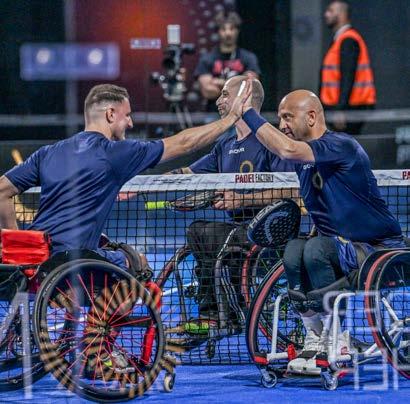
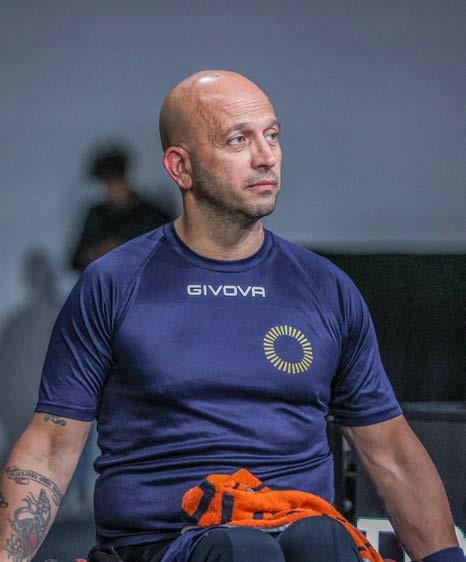
Aspinal cord injury can turn your life upside down, clouding any future prospects. Sport can easily slip to the bottom of your list of priorities, yet it can be a powerful tool for rebirth and inclusion. It can be a way to take back control of your life, as Giuseppe 'Pippo' Galliano has done, who has now made it his main mission through the Para Padel Project. We met Pippo for the first time at Padel Zenter in Milan, a place that has become something of a 'home' for the association, whose goal is to make wheelchair padel increasingly accessible. "We want there to be clubs suitable for wheelchair padel in all regions of Italy, and we want access to this sport to be easy," he explained during our chat. "Parking, bathrooms, showers, support from instructors: a wheelchair padel player must feel like an integral part of a club just like everyone else."
INSIDE SPINAL UNITS
To promote the sport and expand the network, Para Padel Project goes directly into hospital Spinal Units. Galliano, who was involved in a car accident in 2001, shares his story with people with spinal cord injuries. "It's the most effective way. You spend months in a hospital because the process is long and complex, but often the biggest problems come when you return home, where you risk falling into a void and facing everything passively. We have to make those kids understand that sport can be a new beginning, and that life goes on in a different way than they had thought."
Every year in Italy, around 1,500 people suffer spinal cord injuries. Eighty percent are between the ages of 15 and 35: their lives are shattered at a crucial moment. "We have collaborated with a dozen units so far, including the
Montecatone Institute in Imola, the largest in Italy, directed by Dr. Laura Simoncini, who is helping us to get in touch with other institutions. Our project is also very important from a medical point of view, because padel is one of the activities that spinal units can offer for the patient's physical and psychological recovery."
"When we arrive at the hospital, we talk about our project in the morning and then in the afternoon we go to the court to play. We have seen young people who had never smiled before leave the court happy and excited to have had two hours of fun, without being tormented by thoughts of what had happened to them." A powerful message Pippo Galliano discovered and embraced padel because it allows him to still play with his friends. "Before the accident, I played soccer and basketball, but afterwards I could only watch other people's games. I devoted myself to handcycling for several years, but then I gave it up. With padel, on the other hand, I can easily play doubles with others; as in tennis, I have an extra bounce for the ball. It's really cool because you don't feel marginalized. Social reintegration changes completely. With Para Padel Project, we want to convey this message: the court is medicine." While the association is committed to spreading a powerful message, it also wants to make a concrete contribution to equipping courts, organizing open days, and purchasing adaptable sports wheelchairs. The latter is an aspect that Para Padel Project cannot underestimate. "Sometimes they can cost several thousand euros, so our activity also aims to attract sponsors who can cover these costs. It is essential that the wheelchairs are adaptable, because we are not all the same; everyone has their own measurements, habits, and a certain ability to push based on the injury they have suffered."
At the moment, there are about thirty wheelchair padel players in Italy, just over half of whom are competitive. But Pippo Galliano and the Para Padel Project's journey to raise awareness has only just begun. "Over the next 10 years, we would like to bring about 500 people to wheelchair padel, helping them and improving their lives where possible." In the meantime, the association is making itself known through promotional events (such as the one organized in October with Bobo Vieri and Francesco Totti in Tortona), collaborations with healthcare companies, the Italian Paralympic Committee, and the FITP (which organized a tournament during the last Italy Major at the Foro Italico), and anyone else interested in embracing the cause. To make people protagonists once again.
To learn about the association
Progetto Para Padel
Pippo Galliano, founder of Para Padel Project
THINKING ABOUT THE FUTURE OF PADEL
From schools to technical training, the FITP is laying the foundations for a truly national system. We discussed this with Martin Pereyra, one of the federal managers and guest on the podcast by Gabriele Marini e Marco Paialunga
The results achieved by Italian tennis in recent years are the fruit of long-term planning, which has generated a veritable "Italian system," based above all on youth activities and successes built up over time. It has been a journey lasting about twenty years, which continues today and which the FITP would now like to replicate in padel. In this case, we are only at the beginning, and the Federation is still laying the foundations to build something solid for the future. In the tenth episode of Total Padel, the
Interview
Martin Pereyra FITP RESPONSIBLE TRAINING
What is the situation of the Italian padel system?
padel is a relatively new sport, we are trying to build a system. In four years, we have gone from 32 to 600 schools. The important thing is to grow and involve more and more young people, so as to broaden the base. The Federation does not want to strengthen only the top of the pyramid, but also to reinforce education and develop the base. We are satisfied because all the regional committees and the "periphery" of the movement are working very well.
With padel schools, it seems that we are moving in this direction. If you had to give practical advice to padel center managers who want to set up a functional and future-proof school, what would you focus on?
In the post-Covid period, there has been very strong and rapid growth. Now the fashion effect has subsided: entrepreneurs have noticed that the curve has stabilized or started to decline, and they are investing more in schools. It is necessary to find quality coaches and teachers, whom the Federation is training, who are not only capable of providing excellent lessons but also have organizational skills in managing an academy. Commercial projects must be sustainable: it is right to complement the rental of courts with a school that stimulates the desire to learn and improve. In some countries, where the focus has been solely on large facilities and time slots, there are now empty cathedrals.
podcast by Gabriele Marini and Marco Paialunga produced in collaboration with Padelbiz, we talked about this with Martin Pereyra, head of technical training at the FITP. An Argentine who was previously involved in federation tennis, Pereyra is part of a board of teachers that defines study plans and work programs based on different skills. Below is an excerpt from the interview. The full episode is available on the Total Padel pages on Spotify and Apple Podcasts.
What should be the ideal organization within a center among the coordinating figures?
Within a large facility, there should be three figures: the technical director, the sports director, and the center director. The latter is responsible for the facility, general services, and their functionality. The sports director must balance the income statement with sports management, find sponsors, and establish a budget for their responsibilities. The technical director draws up the programs and selects the collaborators. The teacher, on the other hand, must be a teacher. Sometimes this does not happen and the roles overlap, but an instructor should not also hold one of the other three positions.
When you look at a player, what are the two or three characteristics that are worth valuing first?
A very important aspect is understanding the game and one's own path, and the ability to transform today's mistakes into tools for growth tomorrow. One example is Flavio Abbate, who in recent years has always played with a clear model in mind, even though he has made a few mistakes. The difference lies in not repeating them and constantly updating oneself. In this case, mistakes become a way of learning. Then there is the part about sacrifices and renunciations, from which a certain attitude often emerges. Going for a run in the cold at seven in the morning or spending 40 minutes in the gym working on joint mobility is not fun, but there are kids who, at the age of 13 or 14, already understand that it is useful and know that they have to invest time in taking care of their bodies. They understand that their real tool is not just the racket, but their body. There are two types of talent: the initial talent, defined by one's genes, and the talent developed during the growth process.
Listen to the full interview with Martin Pereyra
Flavio Abbate, 21 years old
Giulia Dal Pozzo, 21 years old
THE COLLECTION DESIGNED BY "KING ARTHUR"
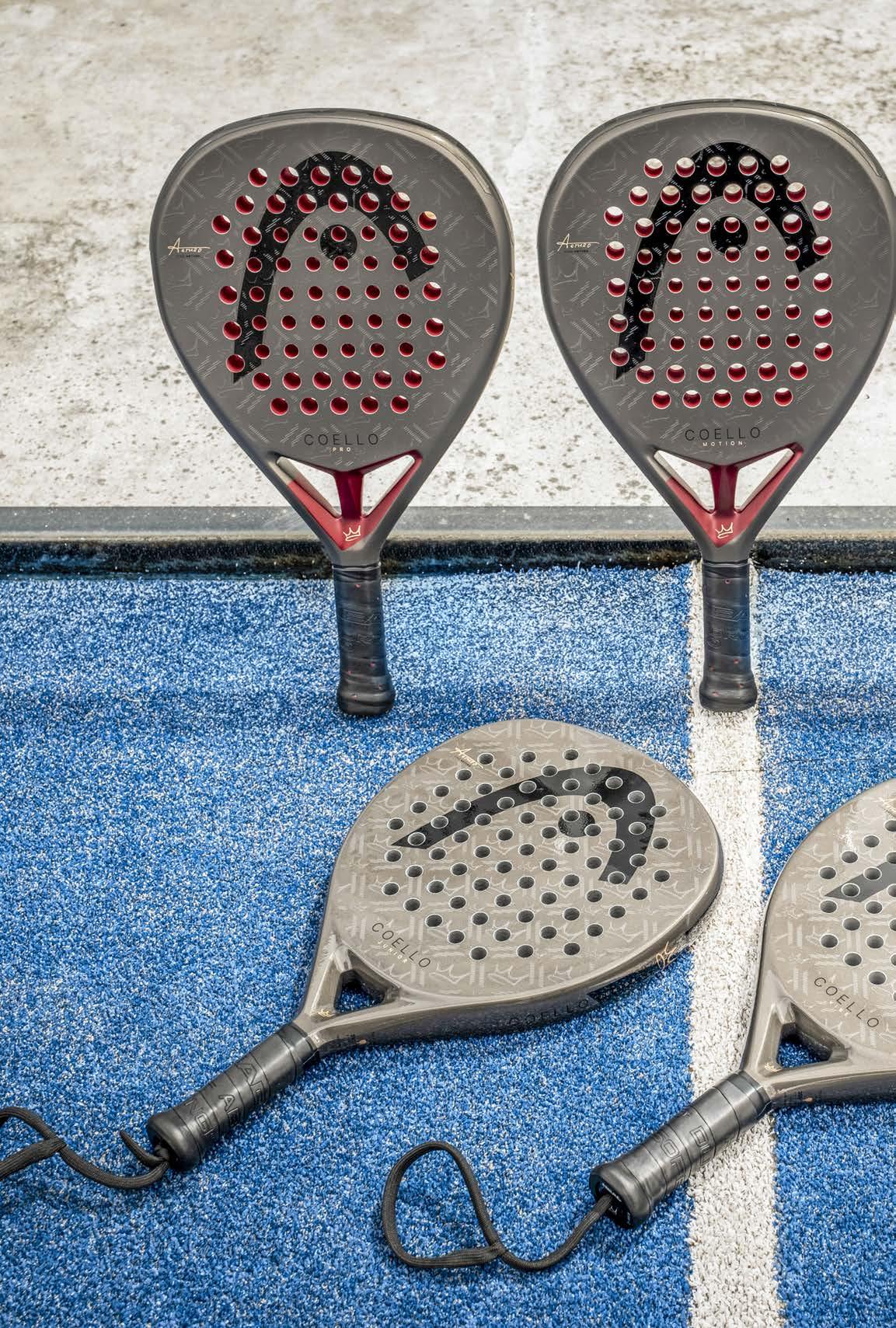
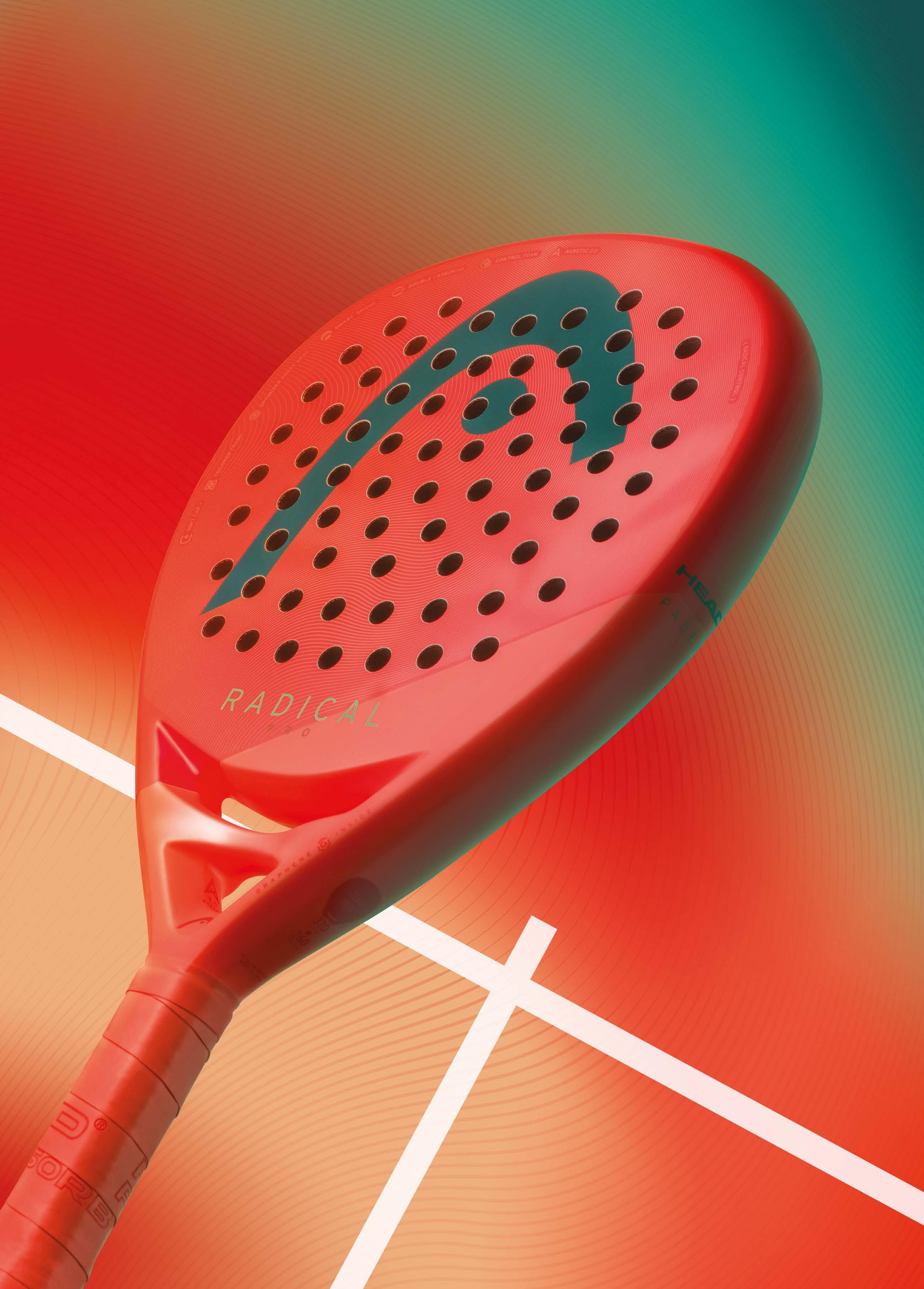
Head celebrates the world number one with the launch of the exclusive Arturo Coello 2026 line: five new rackets developed by listening to feedback from the Spanish champion, designed to fully reflect his identity on the court.
For the second time, Head presents an exclusive collection designed by the Spanish champion, confirming a solid and successful collaboration. This new line is the result of the world number one's direct experience and translates into a complete range, designed to give every enthusiast the same sensations of power, stability, and aggression that characterize his game. This is not just a technical update, but a profound evolution of the Coello concept. Every detail (from the materials to the balance, right down to the distinctive aesthetic elements) has been designed to embody the competitive character of "King Arturo" and offer high performance at every stage of the point.
FIVE RACKETS, ONE DNA
From advanced players to beginners new to the sport, the new series offers a model for every playing style.
Coello Pro: the most powerful racket in the collection, designed for experienced advanced players looking for maximum stability, pure power, and immediate ball output. The diamond shape and weight allow for maximum power generation thanks to other technologies including the Carbon Hybrid impact surface, Auxetic 2.0, Extreme Spin, and red Power FOAM.
Coello Motion: maximum pure power combined with improved maneuverability. Same technologies as the Pro model, but with a lower weight to increase maneuverability without losing its offensive identity. Designed for advanced players looking for maximum explosiveness at the net and during overhead shots. Coello Team: the ideal model for intermediate players. The fiberglass surface offers a softer feel and easy power for offensive play. Finished with a glossy look that distinguishes the stylistic approach of the Coello series. Coello Vibe: the ideal racket for beginners and occasional players who want to try to play more powerfully thanks to the larger sweet spot and oversized teardrop shape.
Coello Junior: the ideal racket for young players who want to follow in the footsteps of Arturo Coello. Lightweight, easy to maneuver, and designed to enhance emerging talent. All rackets in the series feature the Coello crown logo, his signature, and a high-quality design.
“This second exclusive collection created with Head is extremely special to me. We worked together on every single detail: materials, balance, feel, design, crown identity... Everything. I want every player, regardless of their level, to feel free to play aggressively, enjoy their shots, and step onto the court with confidence.”
Arturo Coello
COLOR
The Power Foam has been updated by Head and is red, one of the Spanish champion's favorite colors.
A FIRST FOR WILSON
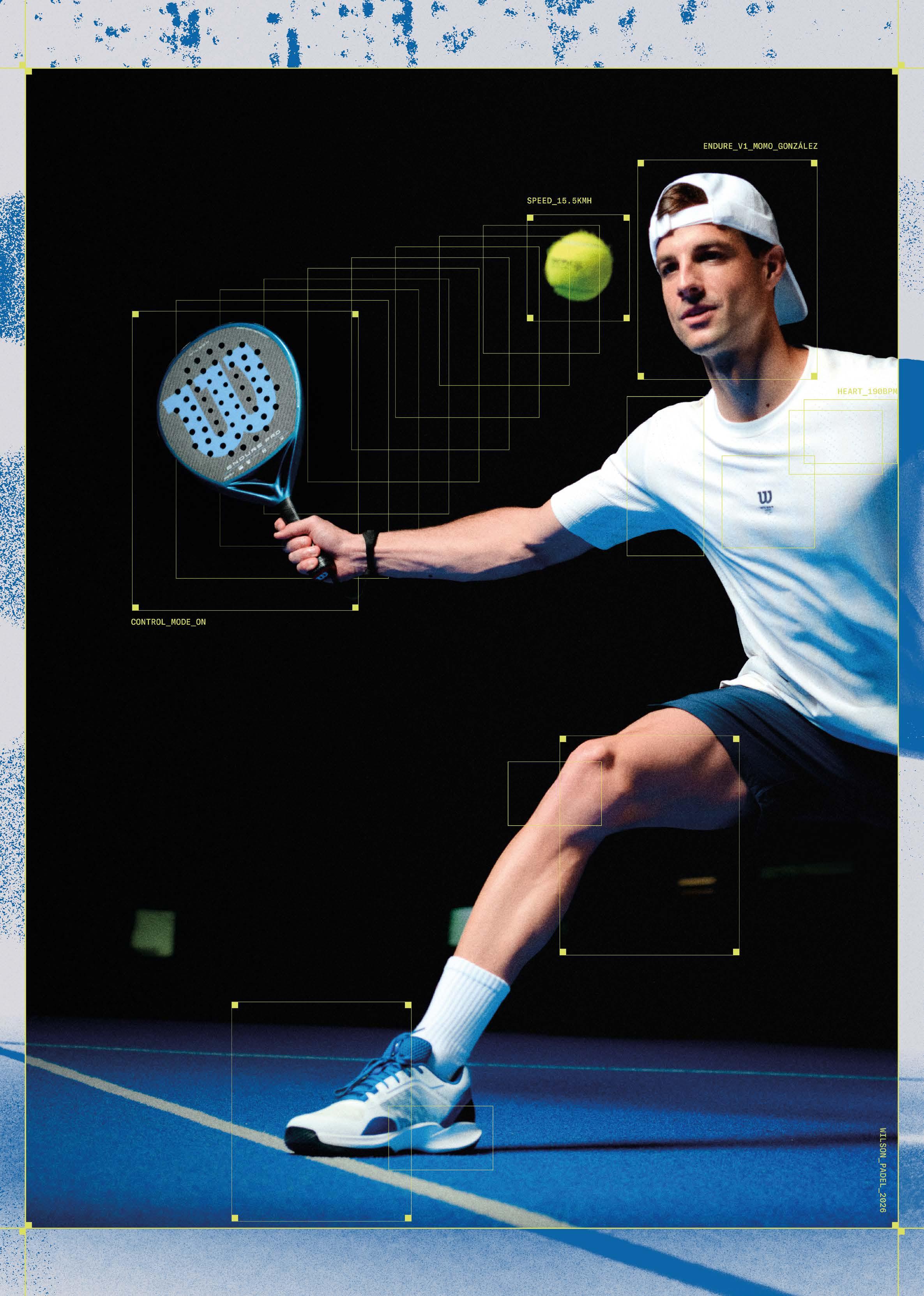
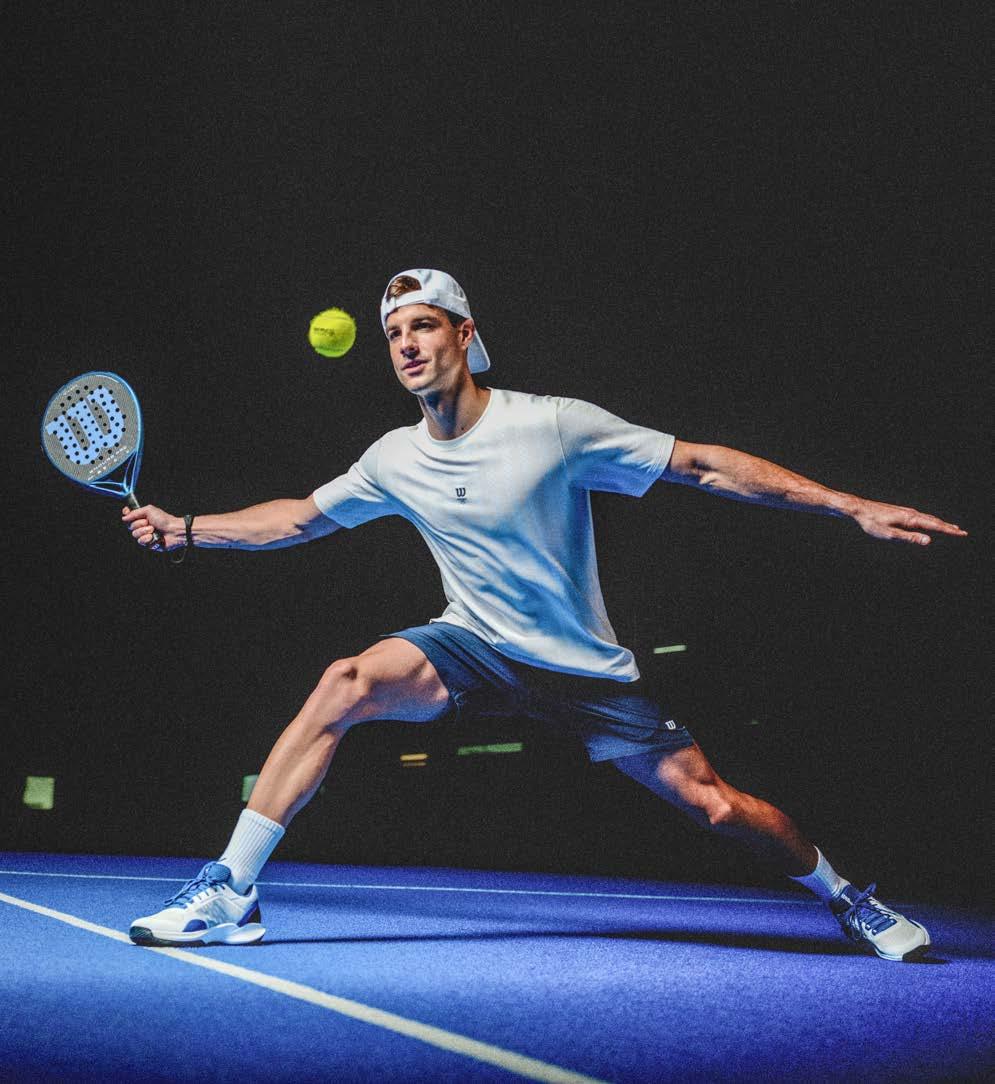
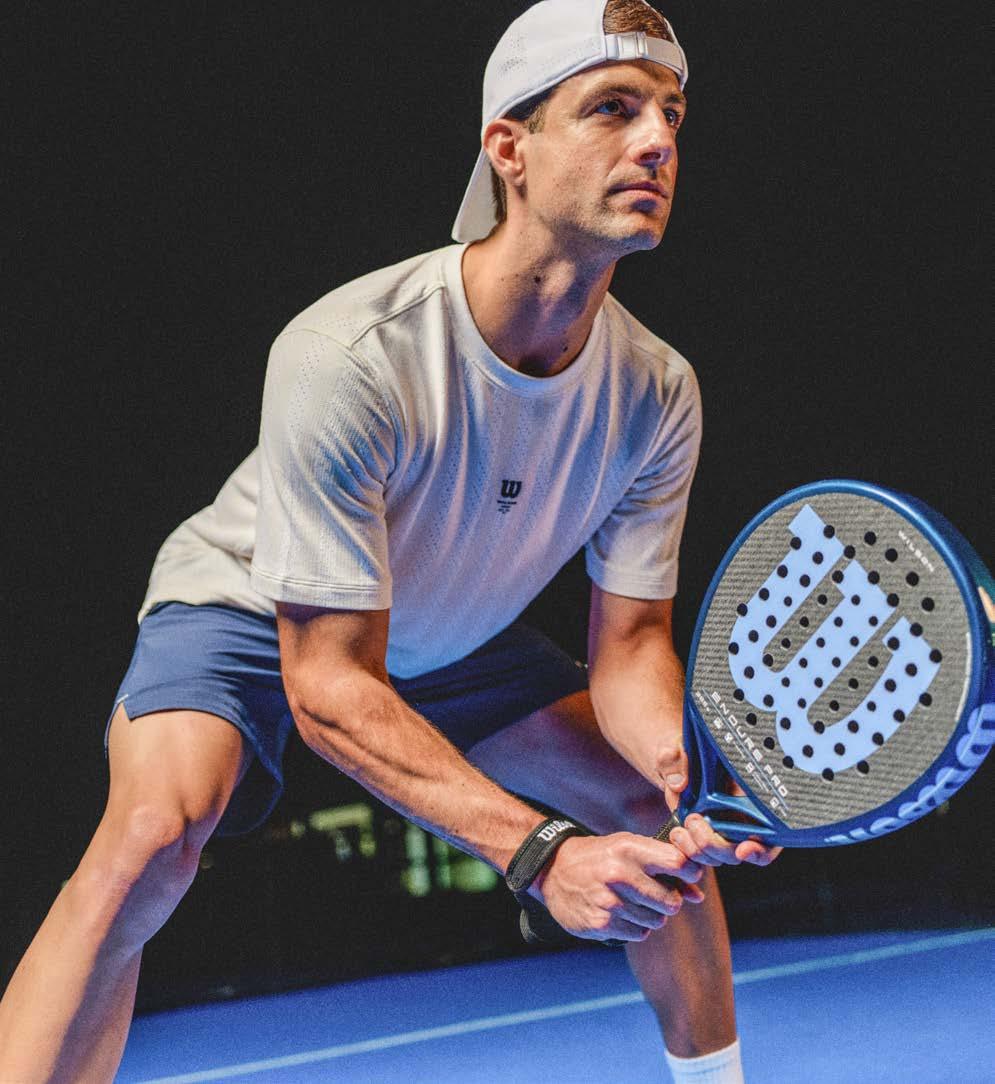
The Endure Pro v1 is a brand new round racket for the big W, the result of a new partnership with Momo González. Maximum control and precision, but not just for defensive players.
It is one of the common misconceptions about padel: with a round racket, you can only play on the left and with a defensive style. However, even among professionals, there are high-level examples that are ready to disprove this theory. The most illustrious, both in terms of fame and ranking, is Momo González, who throughout his career has always been faithful to the round shape of the racket, even though he plays with his backhand. The Andalusian has maintained his philosophy even in his new adventure with Wilson, which has created the first round racket in its range for him. The American company's new line is called Endure, and González will specifically use the Endure Pro v1 model throughout the season. This racket had previously been seen on the courts in an unofficial form, as a prototype, since September 2025, and its development was personally supervised by Momo together with the brand. "I am very happy to finally be able to compete with my definitive racket, because I love the design and feel very comfortable with it. I am sure that I will achieve great results with this racket," said the Spaniard.
Shape: round
Weight: 365 g +/- 10 g
Core: Dual Density Control Foam+
Balance: medium
Plate: 3 K carbon
Finish: Exacttouch with exposed carbon
ENDURE PRO V1 TECHNOLOGIES
Exacttouch: a new feature from Wilson that uses exposed carbon, ensuring a higher level of texturing and high-quality effects.
STRENGTHS
The three main strengths of the Endure Pro v1 are those typical of a high-level round racket: control, maneuverability, and a secure touch. Wilson engineers have managed to offer even more precision, thanks to a 3K rough carbon face and Exacttouch technology, which adds a new texture to the surface to improve effects and spin, increasing the player's control on every shot. In addition, the Y-shaped inner core, rounded frame, and elongated handle further improve maneuverability. The inner core is dual density with Control Foam+, while Wilson has added microtexture just above the grip to increase feel when holding the racket with two hands for the backhand. The weight is approximately 365 grams, with a tolerance of 10 g, and the frame head is fitted with a standard protector. From an aesthetic point of view, the exposed carbon fibers give the Endure Pro an elegant and minimalist look, which Wilson has combined with navy blue for the frame, bridge, and logo on the face. "At Wilson, we are excited about the launch because we have managed to design a racket that is completely focused on control. We are confident that players looking for these characteristics will find the Endure to be their best ally," said Iñaki Cabrera, Global Padel Business Director.
Y-Beam Throat: the unique shape of the heart ensures greater maneuverability and aerodynamics.
Touch points: a slightly raised dot pattern in the area just above the grip offers improved handling, especially when holding the racket with two hands.
Momo González
Momo González
Book now your next padel experence
TECHNICAL REVOLUTION
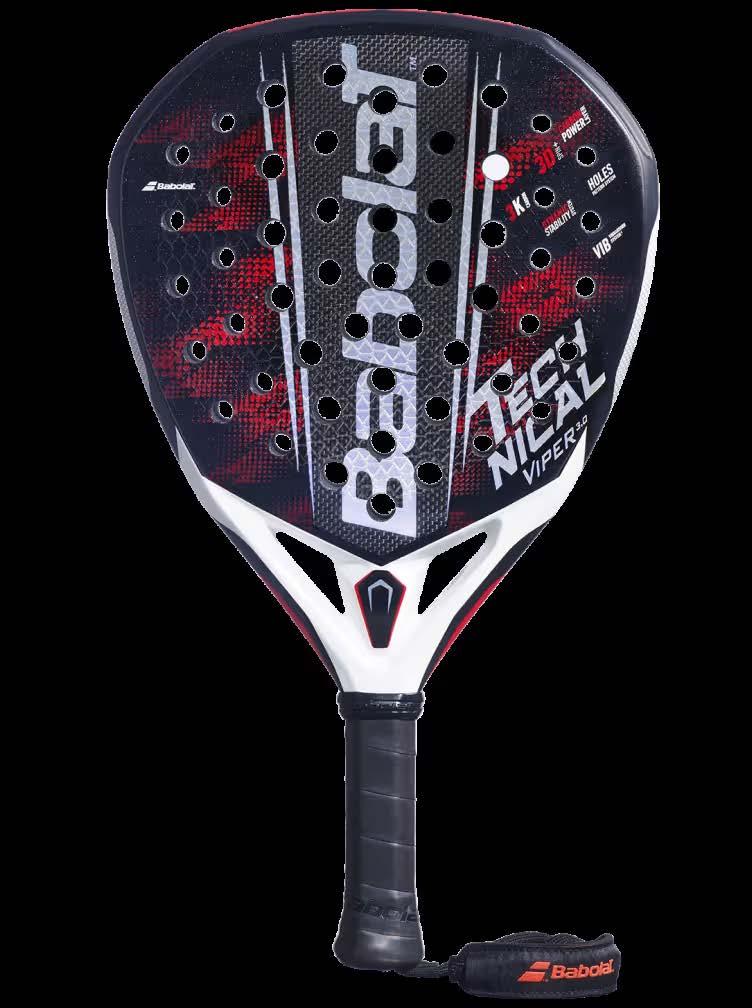
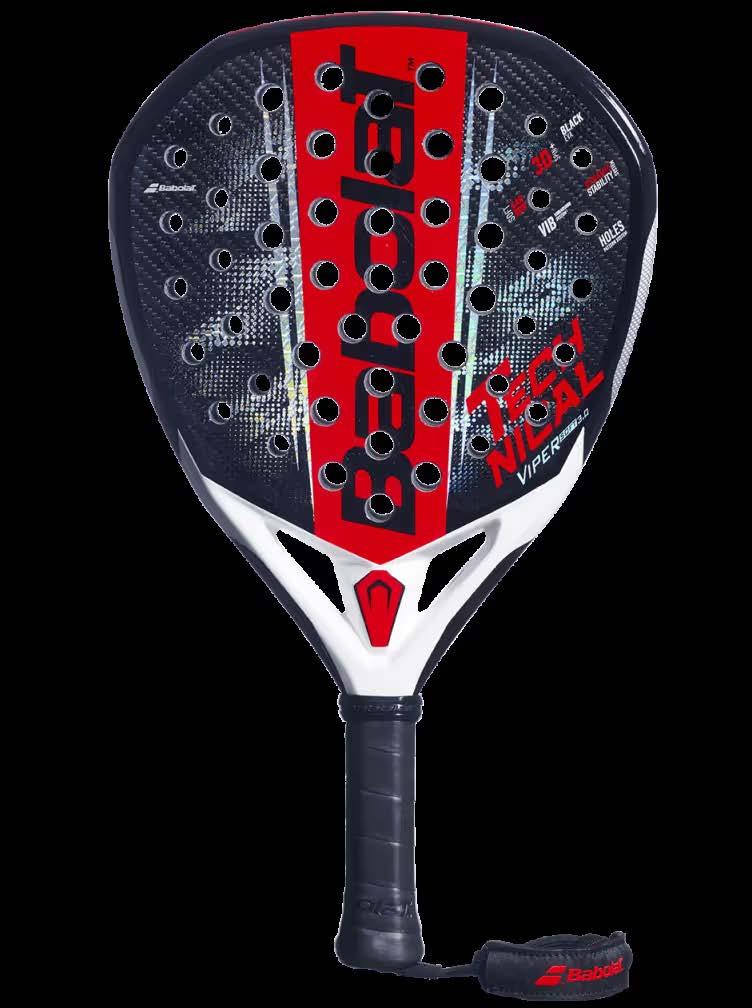
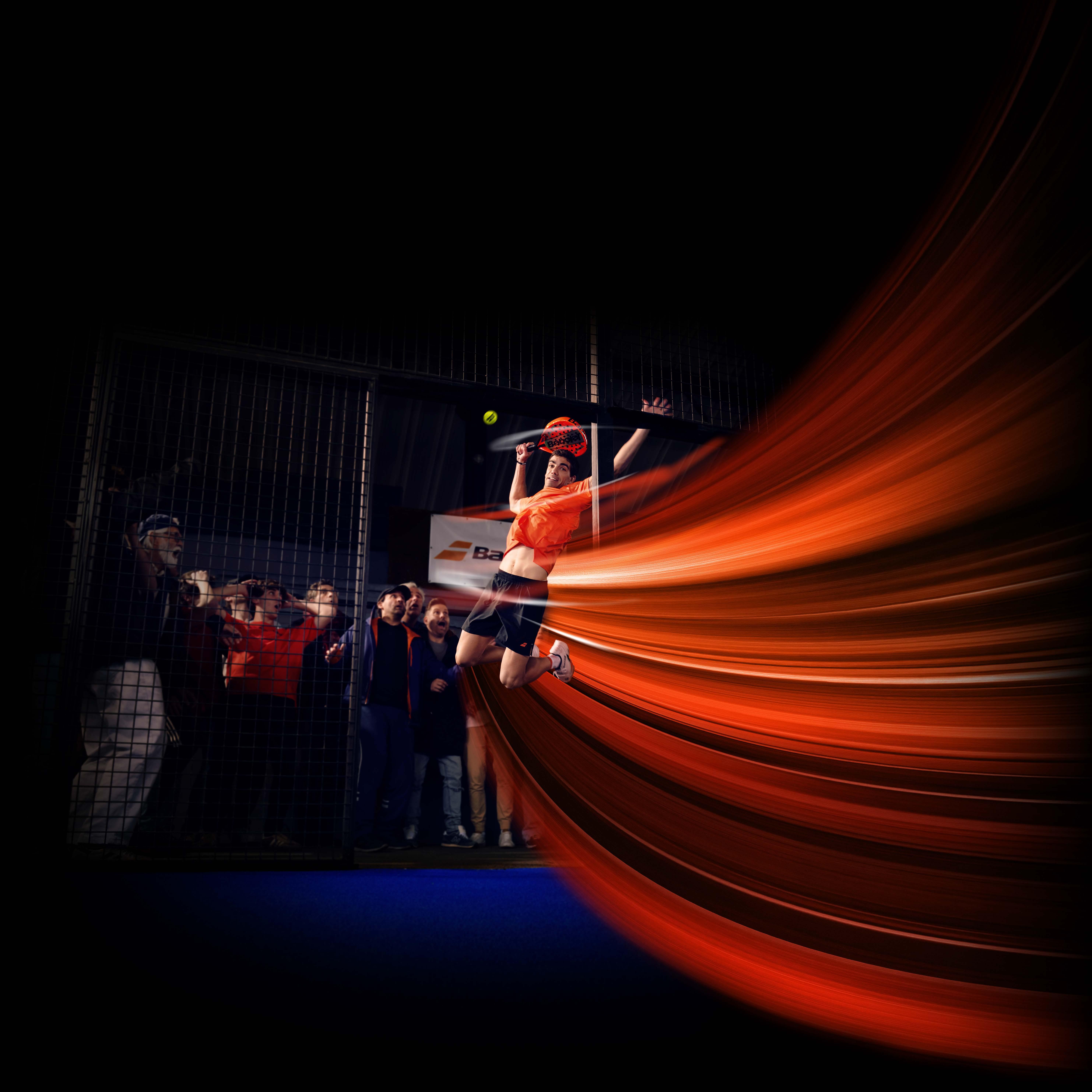
Babolat has completely redesigned its most aggressive and powerful line, both in terms of shape and internal composition. The big news in the Viper 3.0 is a carbon sheet inside the rubber.
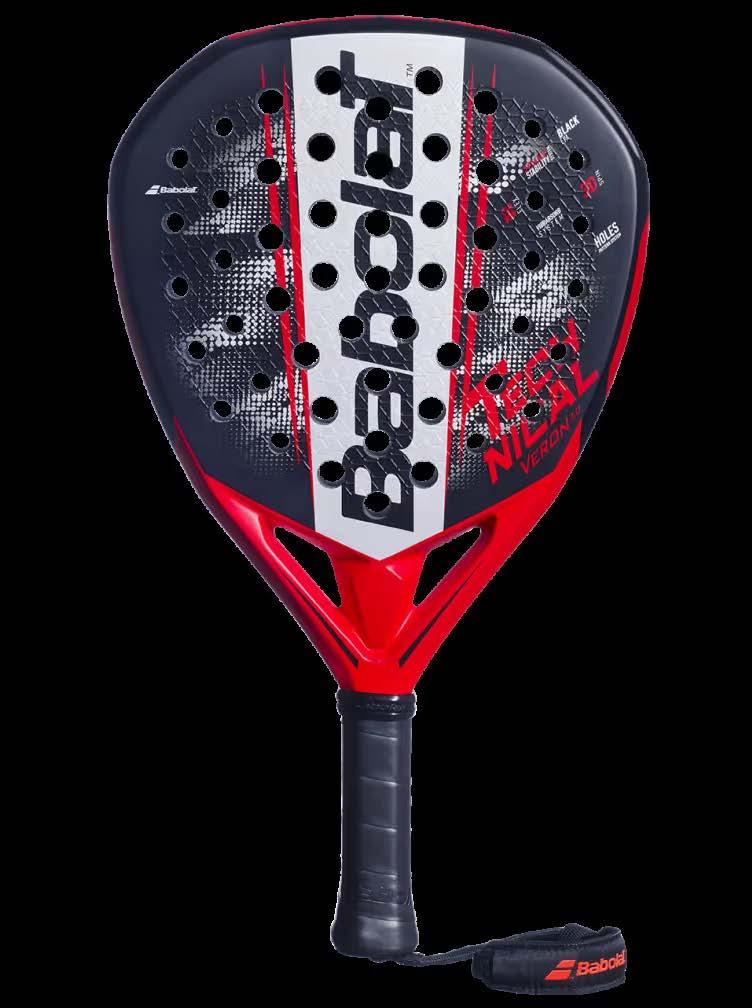
If 2025 was a year of innovation for Babolat's Air range, 2026 sees the French brand launch a complete revamp of its Technical line. The racket design has undergone a complete overhaul, both in terms of shape and core composition, with the aim of ensuring maximum power and explosiveness. Compared to previous versions, the diamond design typical of the Technical range is more squared and angular, giving the racket a more aggressive look. The bridge is no longer open but incorporates a reinforced bar (Dynamic Stability System) to ensure greater rigidity.
Technical Viper 3.0 The most significant innovation is found in the Technical Viper 3.0 and concerns the interior of the racket. Between the two layers of rubber (single density) that make up the core, Babolat has added a carbon sheet (Carbon Power Layer) to maximize energy transfer and increase responsiveness. Its optimized structure guarantees a feeling of solidity and power with every shot, ideal for those who want to take full control
Dynamic Stability System
The exclusive design of the racket's core with a reinforced central bar improves stability, provides more power, and increases control.
Found on: Technical Viper 3.0, Viper Soft 3.0, and Veron 3.0
of the court. The face of the racket is made of 3K carbon, with a rough finish that provides high-quality effects. In terms of color, Babolat has chosen a palette with less contrast than last year, with a more uniform and elegant graphic pattern and the white of the bridge providing contrast.
Shape: diamond Face: 3K carbon Frame: carbon Core: rigid Eva+Carbon Power Layer Weight: 370 g +/- 10 g
nical Viper is a demanding racket that requires adequate physical and technical support, with a hard feel. The Soft 3.0 version is more forgiving, making it a very attractive product for many amateur players. In addition to the power and responsiveness guaranteed by Babolat quality, it offers greater comfort for the arm thanks to a softer EVA rubber core, which provides greater vibration absorption, reducing discomfort and allowing you to play longer without discomfort. The look is more aggressive than the Viper, thanks to the red central band, in harmony with the logo and detail on the bridge.
Shape: diamond Face: Carbon Twill 3K Frame: carbon Core: soft EVA Weight: 365 g +/- 10 g
THE TECHNOLOGIES OF THE TECHNICAL LINE
Carbon Power Layer
A carbon sheet integrated into the core, between the two rubber layers, to ensure additional power and responsiveness.
Found on: Technical Viper 3.0
Soft Carbon
Enjoy a more comfortable impact surface thanks to the incorporated carbon twill, which offers a softer feel during play.
Found on: Technical Viper Soft 3.0
Technical Veron 3.0 For the midrange racket in the Technical line, Babolat has chosen a pattern that highlights the logo on the face, with a strong contrast also provided by the red-colored bridge. The Veron's faces combine carbon and fiberglass, offering excellent power combined with greater flexibility.
Shape: diamond Face: Carbon Flex Frame: carbon Core: Eva Weight: 360 g +/- 10 g
Carbon Flex
A woven texture with two different materials on the racket surface: the power of carbon combined with the simple strength of fiberglass creates a flexible and responsive surface.
Found on: Technical Veron 3.0
VIRTUOUS CONTAMINATIONS
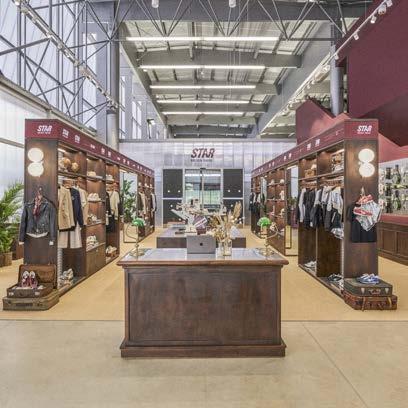
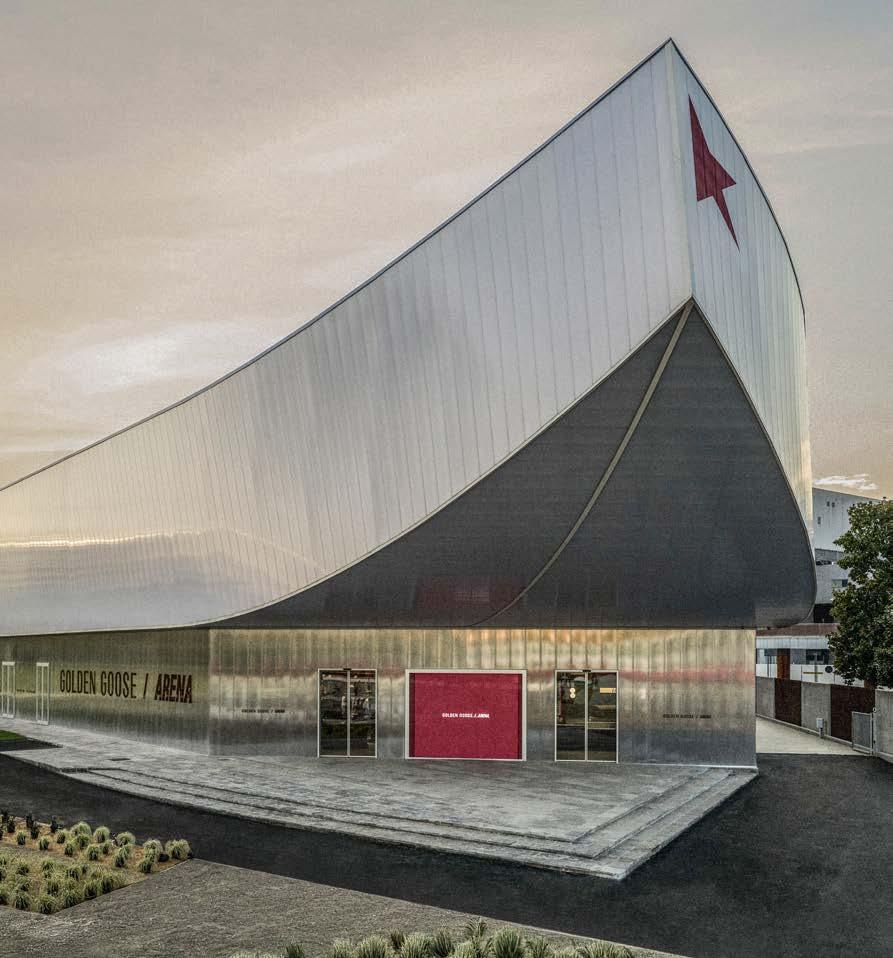
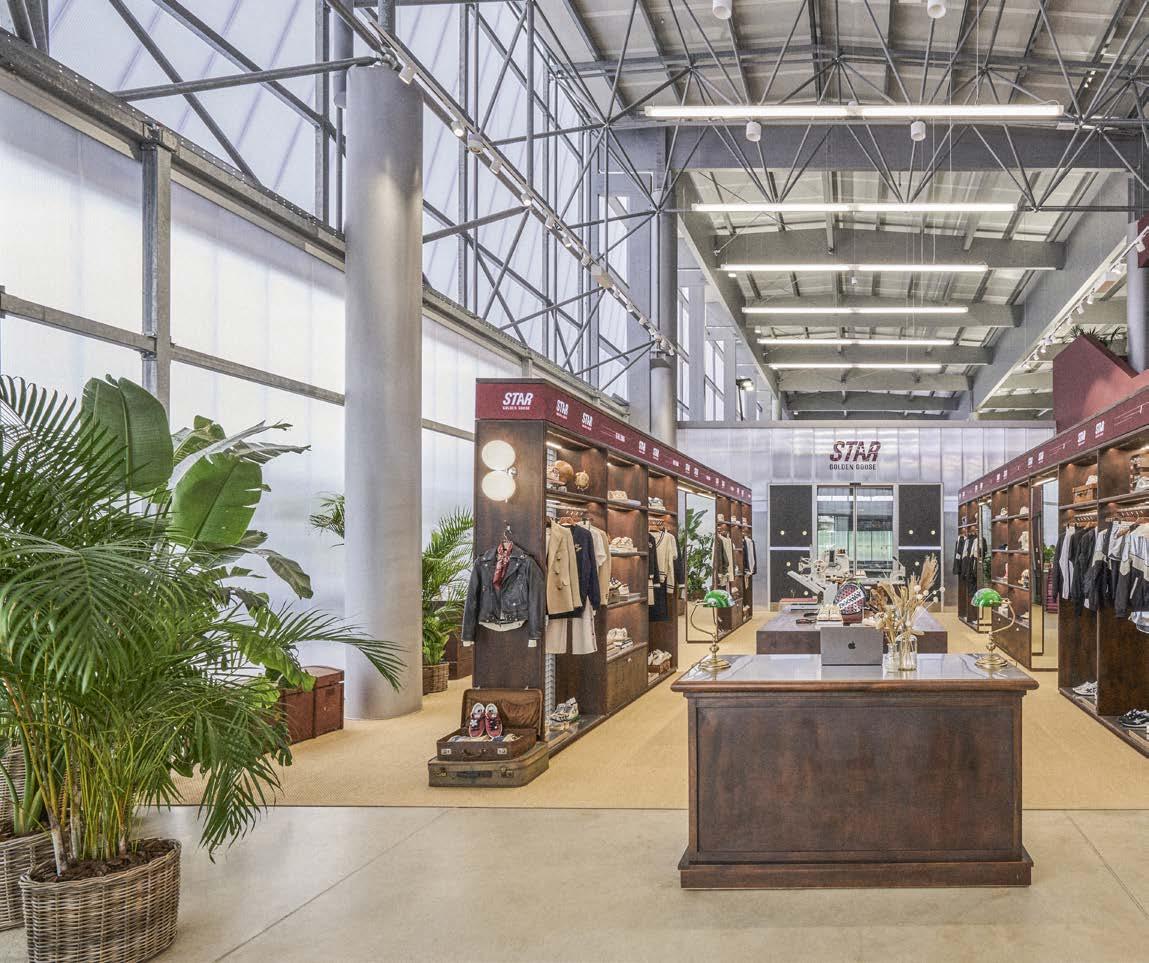
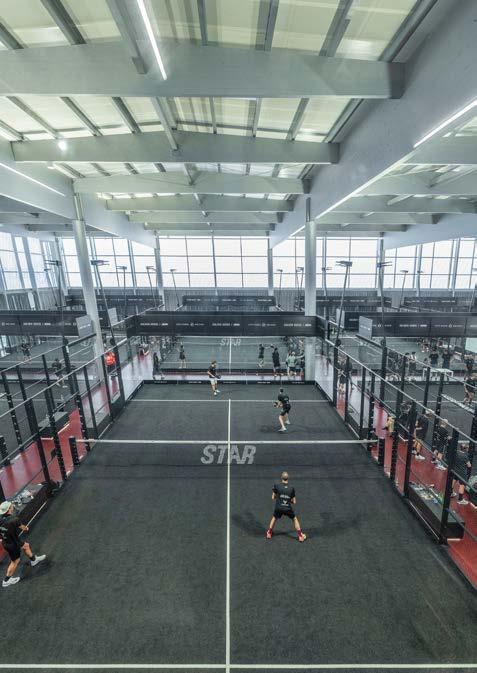
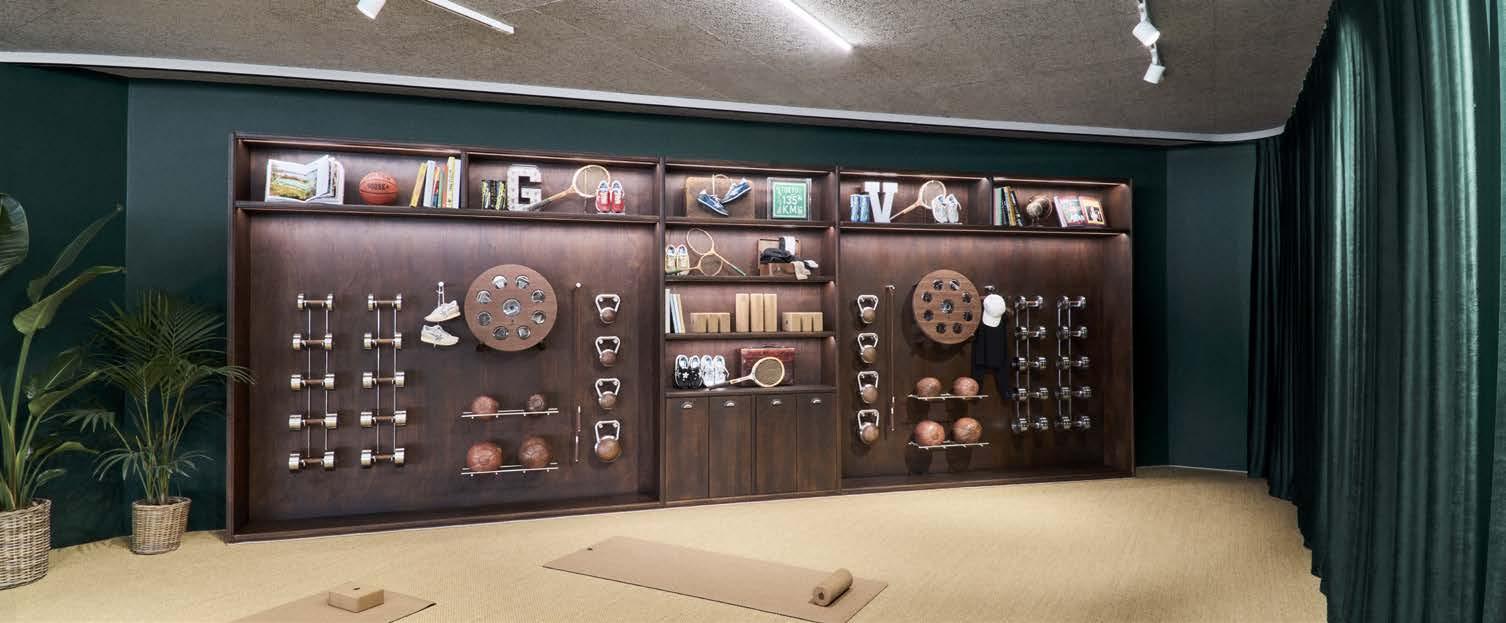
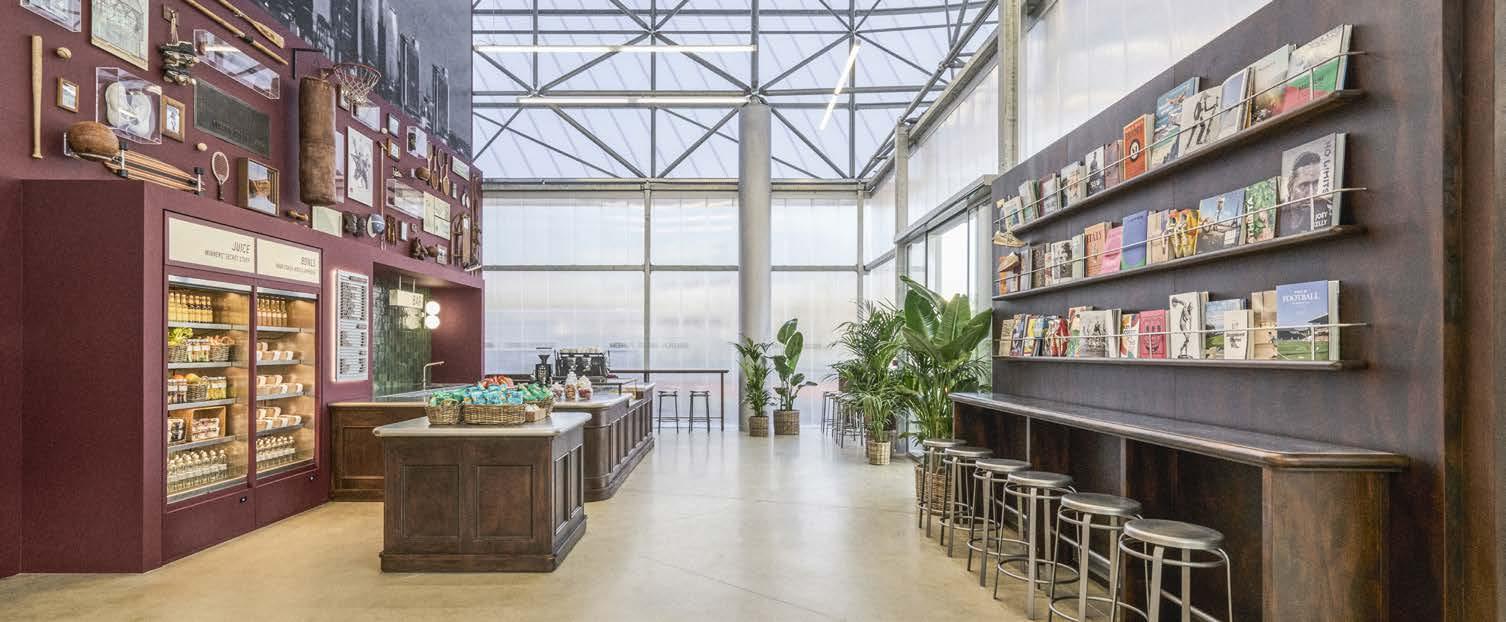
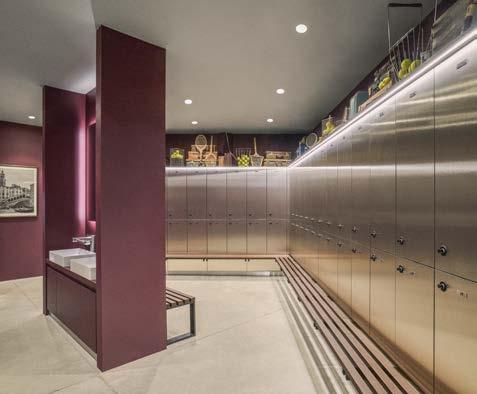
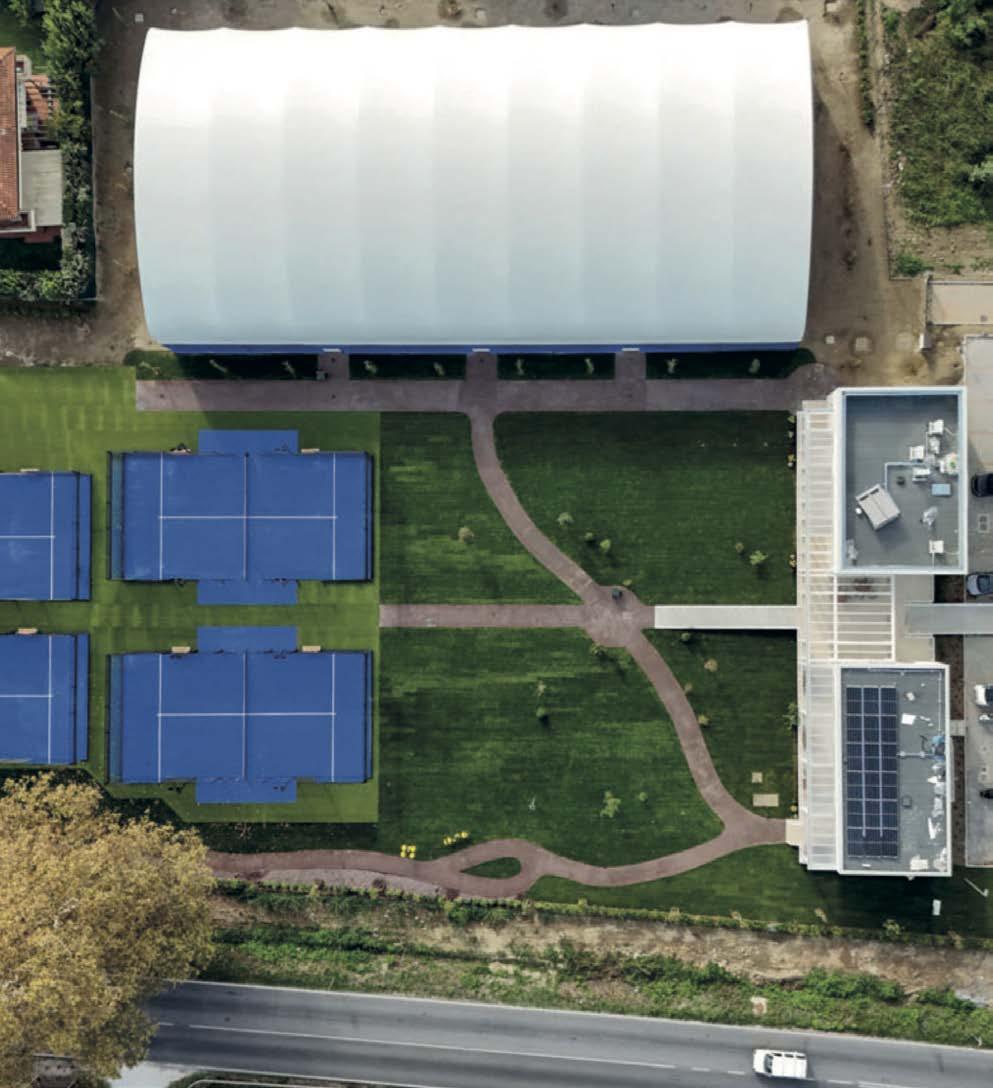
The Golden Goose Arena combines City Padel's pioneering experience with Fabio Novembre's vision, under the star of a lifestyle icon and accompanied by a refined gastronomic offering by Daniele Pansardi and Benedetto Sironi.
For first-generation Milanese players, who discovered padel at the turn of the last decade, City Padel has been an important bastion. The center founded by Demetrio Albertini and Lorenzo Alfieri in 2018 has been a key hub for the growth of the game in Milan, and the place where many amateurs initially cultivated their passion. In some ways, City Padel also served as an incubator for Padelbiz, but above all, it was a pioneering experience that has now evolved into its definitive form: the Golden Goose Arena. The project is the result of a joint effort between SmartCityLife, which manages and innovates the public areas of CityLife in Milan; Novembre Studio, which designed the architecture of a sinuous and light building, futuristic and consistent with the neighborhood; and City Padel, which manages the technical side and continues to be a point
Interview
Demetrio Albertini, FOUNDER CITY PADEL
Golden Goose Arena is now considered one of the most beautiful and cutting-edge facilities in Italy. Where did the idea to create a center of this kind in the heart of Milan come from?
In 2018, when we opened City Padel, in collaboration with the Generali group, we already knew it would be temporary. Our idea was not just to create a successful sports center, but to create the most beautiful one of all. I remember that these were the exact words used. We said to ourselves that we would have to do it in line with the entire CityLife neighborhood, which at the time was not yet complete. We started four years ago. When Silvio Campara (CEO of Golden Goose) learned about the project two years later, he joined us in this adventure, while CityLife involved Studio Novembre in designing the architecture. Today, together with Golden Goose, we have managed to create a one-of-a-kind club, where we manage the facility together, each according to our own skills.
What were the distinctive elements that you absolutely wanted to introduce compared to traditional padel centers?
We don't want to sell just an experience or the sporting aspect. We want players to have a tailor-made experience, both on and off the court. A player may work all day in a busy city like Milan and then choose the Golden Goose
of reference for the city thanks to the passion and professionalism of the two Albertini brothers (Demetrio and Gabriele). And then there is Golden Goose, which, under the guidance of Silvio Campara, has created an unbreakable bond with padel, contributing its own style to give the club its iconic status. The Arena is a unique ecosystem in Italy, without fear of contradiction. From its refined and original sporting offering, with total black courts by Italian Padel and Italgreen and a partnership with Babolat, to its contemporary design and high-quality, sophisticated cuisine. Everything inside is held together in perfect balance, just as the structure blends perfectly into the daily life of CityLife. To learn more about the genesis and identity of the Golden Goose Arena, we spoke with the founder of City Padel, Demetrio Albertini, and architect Fabio Novembre.
Arena: at that moment, we have to be there to serve the customer. Every person who enters our club must be an event for us.
"We want players to enjoy a tailor-made experience, both on and off the court."
The Golden Goose Arena is the continuation of what was one of the first and most important bastions of padel in Milan, namely City Padel. What legacy from that pioneering experience are you bringing to this new facility?
I have done many things in my life: footballer, manager, entrepreneur, and at a high level on many fronts. Even when I worked for the FIGC, I loved crosspollination. Sport certainly manages to "infect" companies, for example with various team-building activities, but the same must happen in reverse. Instead, many times, especially in soccer, we close ourselves off within our own standards and beliefs. Golden Goose has taught me lessons every day: they influence me, and at the same time, I try to bring my experience and added value. From this point of view, there is certainly great synergy in customer service and attention to detail.
How is the technical side organized at the moment?
Today we have twelve instructors, but for now we are still unable to meet the demand for lessons. We know that padel is very playful, but we try to ensure professionalism at all levels. We are also working on the competitive side to come up with an ambitious, high-level project.
IN SHORT
Interview
Fabio Novembre
CEO STUDIO NOVEMBRE
The Golden Goose Arena brings together sport, design, and identity. What was the balance between functionality and aesthetic language?
The project stems from the desire to give padel tennis a prominent architectural space for the first time in Italy. Within a complex context such as CityLife, surrounded by works by Bellini, Hadid, Libeskind, Isozaki, and Ingels, the goal was not to impose a new mark, but to find a balance with the surroundings. We chose reflective and opaque materials to visually integrate the park and kept the height low to respect the view from the Fiera, working with fluid shapes capable of dialoguing with the architectural heterogeneity of the place. The Padel Pavilion is designed as an adaptive and flexible architecture, not exclusively bound to its sporting function, but capable of transforming over time according to the needs of the community.
The Arena is located in a neighborhood dominated by skyscrapers designed by famous architects. Did the project interact in any way with these buildings? Was there a desire for continuity, contrast, or simply independence from that language?
We chose to visually integrate the architecture into the landscape, respecting the view of the park from the Fair, and working with a fluid form capable of dialoguing with the stylistic heterogeneity of the context. Our architecture was built right next to Bjarke Ingels' CityWave building: it is a structure that rises with a very recognizable curve, and in order to remain in continuity with its forms, we wanted to respond to that gesture with a mirrored inclination. We raised the
Six indoor, all black
One immersive Pro Court with cameras
Two outdoor courts Clubhouse services
Refreshment area Lounge area Ba-
bolat Pro Shop Golden Goose store Changing rooms Racket rental
Opening hours
Monday – Sunday 7am-midnight
Instagram: @GoldenGooseArenaMilano
TikTok: @goldengoosearenamilano
Telephone: 02.8112752
entrance to the Padel Pavilion, creating a dialogue between the two structures, almost like a dance, a symbolic portal that introduces CityLife from the northeast. It is a formal but also urban gesture that connects and orients.
"The goal was not to impose a new sign, but to find a balance with the surroundings."
At the entrance is Fabio Viale's sculpture, which dialogues with the building and becomes its symbol. What role does art play in a project like this?
Together with Silvio Campara, CEO of Golden Goose, we decided to place Fabio Viale's sculpture right at the tip of the architecture. It is a tattooed reinterpretation of the hand of the Colossus of Constantine: with its finger pointing towards the sky, the sculpture seems to lightly support the top of the Arena.
Today, sports facilities are increasingly places for meeting and socializing, not just for playing. What kind of experience did you want to create for those who enter the Golden Goose Arena?
The Golden Goose Arena was created to interpret padel as an opportunity to combine sport, socializing, and sustainability. Designed as a public and inclusive space, it is accessible to all citizens and involves not only players but also the public thanks to an open and participatory experience. Built in agreement with the public administration, the Arena fits perfectly into the urban design of CityLife and is part of the park, an area of 178,000 square meters with over 2,000 trees, which hosts sporting, cultural, and social events throughout the year. The Golden Goose Arena powered by Atlante aims to be a space dedicated to physical activity, an inclusive community venue, and a safe haven for all park visitors.
Address Viale Duilio 9, Milan - 20145 Courts
EXPERIENCE PADEL IN PARADISE
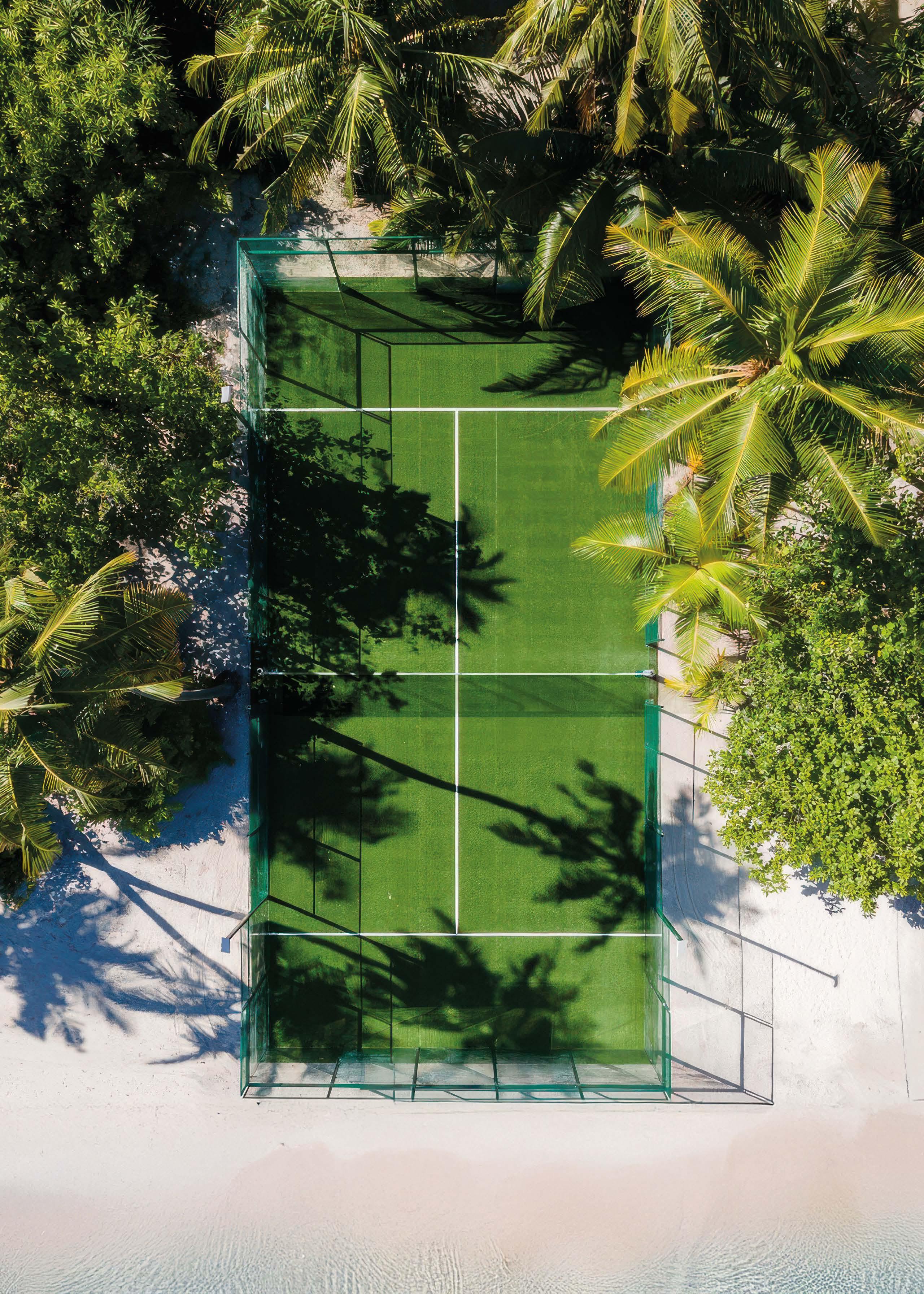
Gabriele Conrotto tells us about the first edition of the Gundu Padel Cup, an event that combines sport, travel, and lifestyle. With VIP and amateur tournaments, exclusive parties, and special guests, enthusiasts will enjoy an unforgettable experience in the Maldives.
by Davide L. Bertagna
In the last issue of Padelbiz, we told you about the birth of the Gundu Padel Cup, the format created by Gabriele "Gundu" Conrotto. The idea for the project came about during one of his trips to the beach, while chatting with three friends (Diego Perotti, Luca Ceccarelli, and Jimmy Maini), when Gundu decided to transform his great passions, padel and travel, into a project capable of offering a 360-degree experience. From that intuition, supported by the enthusiasm of his team and co-organizers, a format was born that is not limited to a padel tournament, but combines sport, lifestyle, and entertainment in unique contexts. After a 2025 full of initiatives in Italy, from the Garden Padel Cup to the San Vincenzo Padel Cup and the Blu Padel Tour, the project (supervised by event manager Eleonora Isabella Ozzello) has consolidated a community of enthusiasts and amateurs and is preparing for its international debut in the Maldives in 2026. Here, Gundu and his team will offer VIP guests and amateurs the chance to experience padel in breathtaking settings, with tournaments, exclusive parties, and socializing. All in an unprecedented context. We met Gabriele Conrotto to find out all the details of the first international edition: how the VIP and amateur tournaments will be organized, what activities will accompany each day, the role of former soccer champions, and how sponsors will be integrated into the event. An exclusive opportunity that takes us behind the scenes of an ambitious project, designed to offer participants a truly memorable experience.
Interview
Gabriele Conrotto FOUNDER GUNDU PADEL CUP
What does a typical day at the Gundu Padel Cup look like?
Each day has a dedicated program, which guests will find in their rooms upon arrival. There are moments of sharing, lifestyle events, activities dedicated to sponsors and, of course, the VIP and amateur tournament run by the guys at @quellidelpadel. The day ends with themed dinners and exclusive parties, with entertainment guests such as the legendary Matteo Lotti. How much time is there for leisure and vacation? The trip is designed to be a 360-degree experience. Guests should feel pampered and supported: there is always a dedicated desk in the resort to organize trips, experiences, spa treatments, or any other activity. At the same time, each participant has a detailed program with all the daily events at various locations around the resort. It is an experiential trip that combines travel, lifestyle, and padel.
Which sponsors are supporting the first edition of the Gundu Padel Cup? Some partners are still being finalized, but we can already confirm our main sponsors: Gold (Orodei24, a leading Italian company in the purchase and sale of metals, and Securmetra, a company specializing in residential security), Silver (Trust Me, Cusano University, and Ares Italia Spa). Reale Mutua Assicurazione will also be supporting us in the event, and many others will be announced shortly. Our technical sponsors include Macron, which will provide kits and equipment for the tournament, Aggs with technical socks, and Shield On, a leader in hair cosmetics, with products in the welcome bag. Finally, Sky Sport, with Alessandro Lupi and the column This is Padel, will be covering the event exclusively from the Maldives.
How will the sponsors be integrated into the days?
The sponsors will play a concrete role: branded courts, personalized uniforms, and activities dedicated to the more than 200 guests. We are already involving some of them in the preparation of the next edition in 2027. The goal is to build lasting partnerships with Gold, Silver, Bronze, and prominent technical sponsors.
What media coverage is planned for Maldives 2026?
Coverage will be divided into areas: the CLEC agency will manage the lifestyle and travel side, with videographers, photographers, and daily social media content; while the padel side, both amateur and VIP, will be covered by the guys at @quellidelpadel with the support of Sky Sport and Padelbiz.
What role will the former soccer champions play during the week?
The eight former soccer players, who we will reveal in the coming weeks, will be the glue that holds the event together. They will help to create moments of sharing and dialogue among the guests, uniting the three pillars of our format: travel, lifestyle, and padel. There will be activities and special moments that we cannot talk about yet, but they will be central to the experience.
Do you plan to expand the VIP guest list in the future?
We have many ideas for the future, always with the aim of combining VIPs and amateurs in a context that respects our concept: travel, lifestyle, and padel. For now, we are focused on the Maldives 2026, but we are certainly thinking of expanding the format, maintaining the balance between entertainment and the concept of the project.
Jimmy Main Diego Perotti Luca Ceccarrelli
HOW TO MAKE PADEL A POPULAR SPORT
We are continuing our investigation with the centers to understand their strategic choices and economic management. Two types of critical issues emerge: structural and cultural
by Adelio Rosate, team and marketing manager at O&B Padel, and Giacomo Cirelli, O&B manager
"Our prices are as follows: €6 in the morning and €9 during peak hours." Claudio Forte, director of Seven Padel Village in Syracuse, dispels any doubts we may have when reading the price list. These prices may seem at odds with the huge investment required to create the largest center in Sicily and one of the largest in Italy (12 courts, 10 of which are in a single large indoor facility, built under the guidance of Leonardo Ravizzini). "We want everyone to be able to play," comments Claudio. We can hardly believe that we are seeing concrete proof of what we have been arguing for some time (see Padelbiz no. 6/2025 on the subject). In Claudio and the owner Giuseppe Terranova, we find an awareness of the role and responsibility that must be a key feature of a large center. A vision and foresight that cannot be taken for granted. In our opinion, padel must be able to offer affordable prices. Certainly at least 10% below €15 per slot per player. Although the cost of living in the south is lower than in the north, the reasons for these prices, as we shall see, are attributable to a different marketing approach. In the north, on the contrary, there is a tendency to overestimate the 'positioning' of the offer and to consider the product 'premium'.
PADEL IS NOT A NICHE PRODUCT!
By origin and history, it is a popular sport. The opportunity to play it must be
consistent and not oversized. The reasons why the opposite is happening are only partially understandable, even though we are aware of the investment involved in setting up a center (which has almost doubled in recent years). As already pointed out, the history of marketing teaches us that as a market matures, it is more affected by the price variable. Overpricing can slow down or even compromise the growth trend, which still has potential. It should be remembered that in Italy this sport involves 1% of the population, compared to 10% in Spain. Growth is not only possible but necessary, because the relative absolute values help to overcome some of the current critical issues. In Spain, it can be estimated that the cost of renting courts is on average about 30% lower. The Italian market must therefore trigger a virtuous spiral. A circular action that, starting from economies of scale, can bring down prices to the public, favoring the expansion of demand for growth in enthusiasts and frequency of play. Today, we have over 10,000 courts distributed across approximately 3,000 centers, an average of just over three courts each. The larger ones, with five or more courts, are often "burdened" by complementary services/products that are not focused on the core business, diverting attention and resources away from it. Paradoxically, the cost is sometimes higher here. But let's take a look at these prices.
SLOT PRICES
Our survey confirms that prices vary considerably (Table 2). Even in our limited sample, we see that they range from €5 to €16, with an average between €11.57 and €13.8, although the incidence of Seven Padel Village is significant. If we expanded the survey, we would have an even higher average price. Paradoxically, in Lombardy, we find that prices are lower in smaller centers: this
means that those who have the opportunity (8-10 courts) do not produce the correct economies of scale, probably inspired by an approach that we consider fragile, which positions them at premium (high-end) levels. With these medium-high prices, a very promising segment in terms of prospects, namely the youth segment, is also compromised.
We asked the centers which costs have the greatest impact on the income statement in relation to ordinary management. The answer? Staff and utilities, namely gas, electricity, and water. To make them more representative, we decided
For gas, the difference in average temperatures can certainly cause operating costs to differ between the North and South. However, overall, this cannot justify the differences we see in the slots. While personnel costs are affected by another factor, they are influenced by the type of teaching. We find two distinct types of organization: • direct, where teachers and instructors are employees of the center and are paid by it; • outsourced, where the team of teachers (in many cases a single instructor or teacher, therefore not a school) is autonomous in its proposals and approach. The latter is understandably the option chosen by small centers.
However, a direct and well-structured school is another essential component for medium-large centers (eight courses or more), which must be able to offer group courses (even simply amateur ones) and provide classes at different levels, from beginners to intermediate and competitive players, as suggested by our expert instructors (Ariel Mogni, Andrea Fierro, and Sarah Martignoni, to name a few). It must be able to offer not only individual lessons at €50, but also lessons that are affordable for everyone, especially at the basic level. If well organized and qualified, the school is in fact the club's best calling card. Ariel Mogni has made this his mantra at his Centro Padel Firenze: "The first thing I focus my attention and time on is organizing and supervising the school. I cannot think of delegating the strategic key to the center to third parties." We see many resources squandered in some centers: too many tournaments, some of which are poorly qualified, with which managers understandably want to compete for slot saturation. Prioritizing tactical action over strategic action (the school) in the long term risks being detrimental.
A DOUBLE PROBLEM
In summary, the development of the trade is a structural and cultural problem.
• Structural, because the network of centers, as already mentioned, consists on average of small clubs or (for non-multisport clubs) with an average of just over three courts.
• Cultural, because there is a widespread tendency, especially in the North but not only there, to consider it a premium, niche sport, combining the primary product (padel) with a series of often unrelated products and services (see our analysis of complementary products offered by sports centers in Padelbiz no. 6/2025). The most common is to equip it with a structured restaurant (in some cases even sophisticated), when in most cases a fast food bar would suffice, as some of these teach us. In this way, there is a risk of generating a reversal of the marketing 'product
to compare them in a summary income statement, with two revenue scenarios, based on the likely revenues of a center with three courts (and an average of five slots per court per day).
portfolio' structure, where padel goes from being a core product to a mere tactical product of attractiveness. Yet there is an unequivocal benchmark, which we have already mentioned and to which we would do well to refer: Spain. Where the centers are on average spartan and where people go to learn and/or play padel, period. And where, coincidentally, we repeat, the average price is significantly lower than ours.
The survey reveals that the Italian approach is still somewhat provincial and naive. The managerial approach is still poor, with little focus on the possible segmentation of users (by age, gender, residence, and frequency of play). Information that is already available (reservations, membership cards, etc.) but remains an unused tool. Yet, it would not be complicated to add a database to the booking device (often an external tool) from which, with a simple pivot table, accurate and useful information could be extracted simultaneously to promote targeted initiatives. At the same time, this tool would be useful for periodic analysis and verification of planned objectives. In the next issue of Padelbiz, we will continue to explore the management aspects of the centers, focusing on the procurement of financial resources and emphasizing the importance of training. In issue no. 6/2025 of Padelbiz, you can read the previous installment of our survey on the centers.
O&B Padel is an observatory specializing in padel-related marketing. It conducts targeted surveys and polls on national and international markets, defines catchment areas for centers and academies, and provides market estimates and dedicated business plans.
If you would like to learn more about our work, please contact us at: arosate@yahoo.com
NEW YEAR, NEW COUPLES (OR ALMOST)
Coello/Tapia and Brea/Triay are the teams to watch for the 2026 season. Among the men, the Chingalans are still the main (and only?) rivals, while among the women, all eyes are on Josemaría/González
by Gabriele Marini
The 2025 season ended with Arturo Coello and Agustín Tapia's first Masters title as a pair and Bea and Claudia's resounding victory in what was their last appearance together. Much has changed since those Finals: here's how the 2026 season looks at the starting line.
WOMEN'S DRAW
After more than five years, Paula and Ari parted ways in a season finale marked by tears and hugs. Paula Josemaría will attempt to storm the number 1 spot in the rankings with Bea González, forming a duo with an offensive capability perhaps never before seen in women's tennis. The duel with Gemma Triay and Delfina Brea promises to be explosive. The only unknown factor will be who, between two strong personalities, will take the lead, but if Paula and Bea get along, it will be painful for everyone else. Ari Sánchez's 2026 starts with another left-handed player, less experienced than Josemaría but with enormous potential. The choice fell on Andrea Ustero: bold, powerful and fearless, but still prone to unforced errors that naturally place her a step below the top players on the circuit. Ari Sánchez's experience will help the young Andrea, but will it be enough to propel the 100% Barcelona-made pair into the top three?
Claudia Fernández has suffered a cruel twist of fate, finishing the season on a high for the second year running and showing extraordinary progress, only to be left by her partner. La Niña Maravilla will try to stay in touch with the leaders with Sofia Araujo. On the one hand, there is the Portuguese player's personality and charisma, and on the other, Claudia's desire to prove to the world that she is the best right-hander on the circuit. They will start with their headlights off and without pressure, the best way to play a few tricks on the favorite pairs. The puzzle of the pairs is completed with the interesting union between the class of 2008 Martina Calvo, on the rise last season, and the experience of Marta Ortega. Also noteworthy is the return of Icardo/Jensen and Virseda/Guinart, but above all the interesting pairing of the "Alejandras," Salazar/Alonso, with the former world number one trying to lead another young player (born in 2006) in her last season. Finally, keep an eye on Goenaga/ Caldera, confirmed after a very high-level end to the season: it will come as no surprise if the doors to the Masters open for Gustavo Pratto's two young pupils at the end of the year.
MEN'S DRAW
Everyone is chasing Arturo Coello and Agustín Tapia. The Golden Boys finished their third consecutive season in the lead, despite the physical torments
of the Mozart of Catamarca, ahead of Fede Chingottto and Ale Gálan. The impression is that 2026 will also be a battle between the four of them, but who can seriously threaten them?
There's no point beating around the bush, the most intriguing project of all is that of Juan Lebrón and Leo Augsburger. Their first outings were not encouraging and showed all the limitations of a pair that, on paper, should have nothing to envy the top two. But padel is a sport with a predominant mental component, and both leave some doubts from this point of view. After splitting up with Galan, Juan Lebrón has been overwhelmed by the hypercompetitiveness that often leads him to destroy team chemistry, while on the other hand, Augsburger (who has described himself as one of the three best left-handed players, perhaps a little too soon) does not seem to be the kind of teammate who is particularly interested in the opinions of those around him. Technically, there is no question about their abilities, but the unknown factor is whether they will be able to put their egos and destructive behavior aside in favor of team results. Franco Stupaczuk's return with Mike Yanguas looks very much like a search for a safe haven after an emotionally troubled season, with Polaquito suffering from Lebrón's cumbersome presence, alternating between excellent performances and others that could be improved upon. With Yanguas, he will form a solid pair ready to take advantage of any missteps by the top four. Another big comeback is that of the duo Coki Nieto/Jon Sanz, with the latter opting for the serenity that an eternally underrated player like Coki can give him, despite an excellent season alongside Paquito. Together, they have already won a Master in the incredible 2024 final against Tapia-Coello. In a recent interview, Martín Di Nenno stated that the latest changes in his pairing have hurt him, leading him to reflect on various aspects of the sport. It is no coincidence that for 2026 he turned to Momo González, a veteran of the circuit who, although no longer in his prime, is still capable of great individual performances. If we are talking about the right choices on paper, there was no better partner than Fran Guerrero for the ever-beloved Paquito Navarro. The young player, born in 2003, is growing more and more, establishing himself as one of the next generation of right-handed players. With Paquito, he will have the opportunity to learn how to play at the highest level, offering in return all the defense and athleticism of a 20-year-old, a rare commodity that the Seville native needs in this final stage of his career.
We conclude our overview with the reunion of Javi Garrido with what is perhaps the ideal partner to complete his rebirth, Lucas Bergamini. Finally, keep an eye on Jairo Bautista and Lucas Campagnolo, but above all on the umpteenth reedition of the "bombarderos" in the form of Javi Leal/Pablo Cardona.
Delfina Brea and Gemma Triay
Federico Chingotto, Ale Galan, Arturo Coello, and Agustin Tapia
FROM PLAY TO TECHNIQUE
When it comes to teaching and coaching, Jorge Martínez is an institution. The Spanish coach, founder of the M3 Academy in Madrid, explains the unique features of his methodology by Gabriele Marini.
Jorge Martínez is one of those coaches who has been able to adapt his methodology to the evolution of the game, training a number of toplevel players such as Ale Gálan and Juan Lebrón. He is also the founder and director of the M3 Padel Academy in Madrid, one of the leading institutions for padel training and teaching in Europe. In short, interviewing the Spanish coach could only yield a wealth of interesting insights.
TRAINER
When did you start coaching and why?
I come from tennis, like everyone else in my generation, and I've been coaching padel for over 20 years now. I started learning tactics when the first Argentinians, such as Pablo Rovalletti and Pablo Semprún, arrived in Spain. They taught me things I didn't understand because they were different from tennis. That's why I always say that understanding the game is more important than technique, because without understanding what you're doing, it's impossible to reach a certain level.
Let's talk about the M3 methodology. How is it different from others?
We have two fundamental principles. The first is that we are a team, which means that we see padel as a team sport. Not everyone agrees with this statement, but for us it is essential to understand that a team is made up of three people, because the coach is much more involved than in other sports. The second principle is that we go from playing to technique and not the other way around. With our method, both amateurs and children start by playing first and then look at technique, a bit like in soccer, where you first learn to kick the ball to score a goal and then move on to the rest. At M3, we first teach how to play and then try to adapt the technique to make the player as effective as possible in relation to their qualities. This way of teaching is different from what I learned from tennis, where I was very good at hitting the ball but didn't understand the game as well.
Do you also try to adapt the technique to the player in the professional game?
Much more so. Obviously, I can't train Chingotto and Gálan in the same way because they have two different physiques and personalities, and they can't have the same technique. This has to be adapted to what is needed on the court based on tactical and physical requirements. The more professional they are, the more we adapt to each individual situation: if Gálan were to play with Coello, I would have to train him differently.
How many people are in the M3 team?
We currently have around 40 coaches, a group of physical trainers within the academy, and we work with several psychologists outside the facility. We have a nutritionist, a physiotherapist, and everything a professional needs. How many pairs of professionals or aspiring professionals are currently training at M3? We have divided the groups by level. In the first round, where players who enter the Premier Padel main draws train, there are about 20 pairs, which can become more than 30 when Italian, French, or even South African players come. Consider that at M3 we have 20 courts, and one coach for every three players on the court, plus two who are off the court. I keep myself a little more on the sidelines and believe that the right ratio is about one and a half coaches for each player. The second level consists of about 20 other players who regularly enter the qualifiers or compete in other important competitions. Finally, there is a third level, consisting of aspiring professional players, who number about 30.
What are the main mental, technical, or tactical pointers you give when you're on the bench?
It depends on the game: there are situations where the match is evenly balanced and I have to use a few key words to make myself understood, other times there is a need for emotional reinforcement, and other cases are even more different. I always try not to be negative and to keep the concentration high. It's not so much the mistake that interests me but what caused it. Padel has become much faster and more physical in recent years. It is said that the decisive shot is no longer the lob and that there are more important things. Do you agree? How do you adapt your method? Everything adapts. Court conditions, rackets, balls. If the game evolves, you have to do the same, adapting to faster and shorter rallies. We study the sport a lot. We have an area in the academy called M3 Lab where we study statistics and prepare for matches. We try to understand how to score more points and which shots are most commonly used in padel, and all this is added to the methodology. For example, if I know that the most commonly used shot in men's padel is the backhand volley, or that the forehand and backhand without bounce are being used more and more, this already tells me what kind of game I need to build. Not only for the pros, but for all players, as the sport is evolving in that direction.
Who will be the players of the future?
I think Martina Calvo is coming on very strong in the women's game, and there is a group of seven or eight players we will be hearing a lot about in the near future, not forgetting Claudia Fernández, who is very young, but also Delfi and Bea. In the men's game, I really like Leo Augsburger and Tino Libaak: Yanguas is young but already very well known, but if I had to choose one, I'd say Leo because of the way he plays and his character. He strikes me as a determined and ambitious guy with lots of positive qualities and the potential to reach the top.
Federico Chingotto, Jorge Martinez e Ale Gálan dopo la vittoria del Milano Premier Padel
Ale Gálan con Jorge Martinez
Jorge Martínez
Interview
HALF A CENTURY OF HISTORY
Since 1974, Angelo Sport has established itself as one of the leading companies in the Lodi and Piacenza areas. A wealth of knowledge and expertise that has remained unblemished over time, as Egidio Livraghi tells us.
By Daniele Pansardi
When Angelo Livraghi started his first business in Casalpusterlengo (LO), padel was little more than a hobby for its founder Enrique Corcuera. In tennis, Jimmy Connors and Björn Borg were winning their first Grand Slam titles, and no one could imagine anything other than wood being used to make rackets. Since then, Angelo Sport has witnessed the history and evolution of both disciplines, becoming a point of reference both in the Lodi area and in Piacenza, where it opened a second store in 1989. That legacy is carried on today by Angelo's son, Egidio, whom we reached for this interview.
How has the store evolved over time?
Initially, it was a multisport store, offering gym and leisure items as well. In the 1990s, however, we began to specialize more and more in tennis, which is the sport that my father and I played and in which I felt most competent and able to best serve our customers. Now, of course, the range has expanded to include racquet sports as a whole, and I believe that focusing on a single sector is essential to compete with e-commerce today.
When did you first start selling padel equipment ?
In 2018, when I saw that companies were starting to offer equipment on portals for retailers like us. I started with a limited number of rackets and balls, partly because for the next two years there were no courts and everyone from Piacenza had to travel to Milan. I also supplied rackets to Simone Cremona, who is from this area and had started training at that time and was going to Spain to seriously pursue a professional career. How do you assess the current situation of padel? What are the main difficulties? Sales have flattened out a bit, there are few new users. Highend and mid-range rackets are doing well, while entry-level rackets under €100 are struggling. It is also important to note that rackets are replaced too quickly: in tennis, each model lasts 2-3 years, while in padel, after a few months, there is already talk of a new collection, which triggers discounts that risk devaluing the merchandise.
Racket brands: Babolat, Head, Wilson, Bullpael, Nox, adidas, ProKennex, One Padel Other brands: Australian, EA7, Lotto
How does customer service in padel differ from tennis?
In padel, there is obviously less after-sales service, as there is no stringing. We try to be helpful, especially before the purchase, particularly considering the rather significant weight range between rackets, which can be as much as 20 grams. Unfortunately, there are no test rackets in padel: in tennis, I can count on about 100 frames to give out for testing, 20 of which are in constant use, while in padel we are talking about 20/25 pieces. There is also a big difference in the management of used equipment.
What is it?
70% of new tennis rackets sold are linked to the trade-in of used rackets that I offer in the store. In padel, I cannot trust second-hand rackets because it is not possible to thoroughly check the condition of a product or the state of the internal foam. The triangulation between the company, the store, and the instructor can be difficult in padel: what is your experience? It is challenging. The market will do its own screening, but in the meantime, many padel companies go directly to clubs, and selling through instructors becomes a little more difficult. If you had to give advice to companies regarding padel? Extend the life cycle of rackets so that there is more room for management. By doing so, we could also give them to users to test.
What should future growth in the padel movement focus on?
Padel schools need to be developed a little more. A tennis club here has about 100 children, while padel has half that number. It's almost more of a game for adults at the moment, so we need to build a base.
EIGHT MYTHS TO DEBUNK ABOUT PADEL
Do you think you know everything about this sport? Perhaps your convictions are less solid than you think
by Andrea Fierro
Padel is a sport that continues to grow thanks to its ability to engage people of both genders and all ages. Its accessible, dynamic, and social nature has made it popular in record time, conquering courts and sports clubs throughout Italy. Along with the boom in sales of rackets, balls, clothing, lessons, and courts, many clichés have also spread.
Padel is surrounded by mythological phrases that describe only half the truth and misconceptions often spouted by "veterans" of the sport. Some make you smile, others risk discouraging those who want to start or compromising the growth of an already experienced player.
Debunking false myths means promoting padel for what it is: a complete, engaging sport suitable for everyone, but one that deserves to be understood in the right way. In this article, I will analyze some myths that I have heard or read in various chats and online content over the years. I will explain why I do not believe them to be true and what you need to know in order to approach this sport with greater awareness.
1. "Padel is an easy sport" Padel is an easily accessible sport, but it is not easy, quite the contrary. Mastering every technical and tactical component requires
many years of experience. Furthermore, at a competitive level, skill with the racket alone is not enough; top-level players also perfect their physical and mental aspects.
2. "It's like tennis, but smaller"
Although the two sports certainly have some technical elements of basic strokes in common, the use of wall rebounds and game tactics make them very distinct. A good tennis player certainly has an advantage in the early stages of learning, but if they are unable to understand the tactical dynamics and, above all, the use of the walls, they are destined to remain at the same level or end up playing tennis on a padel court.
3. "If I hit hard, I always win."
Hitting hard is only one of the possible game strategies and is often not the best choice. The use of force and speed is a simple tactic that is only very effective in the early stages of learning, when the timing of the ball is still unclear. People who insist on this style of play often lack alternatives, which makes them very predictable when the level starts to rise.
4. "It's just an amateur sport."
The national competitive circuit, regulated by the Italian Tennis and Padel Federation (FITP), has been in existence since 2020 and is growing rapidly among both adults and juniors. Outside Italy, players who choose to go professional compete in FIP tournaments, divided into various level categories. 5. "The instructor is only for beginners." In every sport, including padel, the instructor or coach is an indispensable figure both for the player's growth and for maintaining their level of play. Clearly, the coach's job is very different when training beginners or professionals. In the first case, they will have to explain every shot and tactic in detail, while in the second case, they will have more of a supporting role, offering advice and experience.
6. "If I've been playing for years, I have nothing left to learn."
You can be an expert and have a very broad knowledge of all the dynamics, but there is always room for improvement. A keen eye can give you even a small piece of advice that could revolutionize your game, take you out of your comfort zone, or help you in the decisive moments of a complicated match. 7. "I need a pro racket." You need a racket, or rather a paddle, that suits your level. There are more than 30 brands, each producing paddles that promise greater power, control, and spin. It takes a lot of experience to handle a pro-level racket, especially if you haven't played other racket sports. It's better, even for your elbow, to start with a softer and simpler paddle. 8. "To score a point, I have to learn how to do the por tres."
The por tres is perhaps THE special shot that players are most passionate about. It is technically complicated and should be used at the right moment, not every time you receive a high ball. The vast majority of points are won by making good use of the lob, the volley, the vibora, the bandeja (yes, the bandeja), the grata, and above all, by playing a solid game.
In conclusion, padel is a sport that combines fun and challenge, but to enjoy it to the fullest, it is important to free yourself from preconceptions that can limit your understanding and its true potential. Knowing and overcoming these myths not only helps those who are new to the game, but also those who have been playing for a long time and still want to improve.
ANDREA FIERRO
I was born and raised on the tennis courts in Milan, thanks to my father's passion for the sport, and it became my profession around 2005. I have gained many experiences abroad (USA, UK, Spain) also working in the prestigious Academia Sanchez-Casal in Barcelona. Right here I started playing padel for fun, not knowing that within a few years it would become my profession once I returned to Italy. I am the FITP National Padel Master and hold the position of technical director of Starpadel based in Legnano.
Ari Sánchez
THE BIGGEST MISTAKE IS TO DWELL ON THE MISTAKE
Even among the best, victory depends on knowing how to handle negative moments with deep serenity. To avoid getting mentally stuck at every lost point by Marcello Ferrarini
Iwould like to talk about padel and the mind through the words of the man I consider to be the greatest tennis player of the last 50 years. I think one of his most exciting "matches" was not played on the grass of Wimbledon's Centre Court, but when he had to give a motivational speech at Dartmouth College, one of the most prestigious universities in the United States, where he was awarded an honorary degree in humanities and the title of Dr. Roger Federer during a graduation ceremony in 2024. The words he spoke on that rainy morning, on a stage crowded with learned professors, in an environment less familiar to him, quickly spread around the world because of their depth, humanity, and inspiration. I believe that for many students, listening to a global sports icon talk not about tennis, but about life, discipline, and failure was a very special and meaningful moment, as well as a great stimulus for their future.
Summarizing Dr. Roger's speech in a few key concepts, the Swiss champion emphasized to the curious eyes of the graduating students how, in his immense career, he managed to win almost 80% of the matches he played, for a total of 1,526 singles matches. But hidden behind this apparent magnificence, he wanted to highlight a statistical aspect of significant importance that many—including myself—were unaware of, posing this question directly to the audience: "What percentage of points do you think I won in those matches?" The answer, given by himself, is incredulous and surprising: "Only 54%!" This candid and realistic analysis shows that even the most successful professional players win just over half of the points they play.
EVERY POINT IS THE MOST IMPORTANT, UNTIL THE NEXT ONE.
This specific aspect gives rise to the need not to make the biggest mistake for an athlete: that of dwelling on the mistake just made. If, on average, during a match,
you lose one point in every two, you have to learn not to stop mentally after every shot, considering and reflecting through your inner dialogue. Did I just double fault on my serve? It's just one point! Did I miss a volley at the net? It's just one point! Just as the points we win are worth only one point, when we hit a perfect volley or perhaps a dream X3 or X4. Even among the best, victory comes from learning to lose and, above all, knowing how to manage mistakes with deep serenity during performances.
Every single point is the most important one at that moment, in that match. But once it's over, it's over! This attitude becomes crucial because it allows the player's mind to free itself and focus immediately afterwards, committing fully to the next point and the one after that. Without making the serious mistake of blocking their game dominated by negative thoughts, or stopping their challenge gratified by positive thoughts. In any game or challenge to be undertaken in the larger field represented by life, sometimes when you lose a point, a match, a project, or a job, it is absolutely natural to feel disappointed and heartbroken, but you must remember that others may feel the same way. If we talk and focus exclusively on the sporting arena, represented in this case by a padel match, our opponents on the other side of the net may experience the same moments of discouragement, frustration, or anxiety, based on this continuous ups and downs. It is necessary not to remain anchored to the negativity of a lost point, because it would only be a waste of energy. We must channel it in the right direction in order to overcome difficult moments with enthusiasm and awareness. This is what winners do, true champions, those who also play with a steady mind. The best players in the world are not so because they simply win every point, but because they have realized that in their careers they will lose other matches again and again, and they have learned to deal with this in the best possible way. Accepting defeat, crying if necessary, and then smiling again at the victory they have deservedly won. Dr. Federer, visibly moved, concluded his speech that day amid the applause and cheers of the academic audience with these words: "Success does not mean always winning. It means staying present, learning from defeat, and respecting the journey." Personally, I would like to conclude this analysis by stating that, after all, the difference between talent and hard work lies in one thing. The next step!
MARCELLO FERRARINI
I am a National Padel Master and FITP Pickleball Instructor, and I work with padel clubs in Modena and Reggio Emilia. I hold the position of Padel Regional Trustee in the Emilia Romagna Regional Committee. I am a PCR-Padel Coaches Registry Professional Instructor, having obtained International Padel Certification and attended clinics and training courses for competitive, over, under, physical-motor, and mental teaching. With a degree in Psychological Sciences and Techniques, I developed the Padel Player Program - ilpadel.org, an educational project for multilateral strategic planning and mental coaching on the court, as well as special courses for children and young people with DIR.
Roger Federer durante il suo discorso al Dartmouth College nel 2024
Gemma Triay
pillole di padel e diritto
COVERAGE AND LANDSCAPE VIEWS: THE RECKONING
The Council of State, in confirming a ruling by the Regional Administrative Court of Tuscany, emphasizes the functional criterion in the authorization process for a marquee by Andrea Farano, lawyer in Milan
“For the record, the mayor of Pietrasanta, having taken note of the court's reprimand, announced that he would appeal to the Council of State to have the ruling in question reformed, in order to ascertain the full legitimacy of the public action: as always, Padelbiz will monitor developments in the case and keep its attentive readers informed." This column in issue 1/2025 ended with a firm statement of intent. Then, as now, there was discussion of the dispute involving the Municipality of Pietrasanta (LU) and the multi-purpose center built on the ashes of the former Focette Tennis Club—entrusted to the Sentinel Group—as opposed to a fierce group of residents living near the padel center. Just one year has passed, and Padelbiz is keeping its promise to its readers by examining the appeal ruling that seems to have put an end to a story that has received widespread coverage in the local press. Our motivation was and remains to shed light on the principles and guidelines that are becoming established in the courtrooms, which are even more interesting when, as in this case, they are formulated by the highest levels of administrative jurisdiction.
BACKGROUND
The case concerns the construction of a sports facility with eight padel courts, four of which are covered by a 10-meter-high shed, consisting of a metal structure covered with PVC sheeting. According to complaints made by residents living in the immediate vicinity of the club, the project was accompanied by a landscape authorization issued on the basis of a brief opinion issued by the local commission, with the tacit approval of the competent superintendency. At the same time, the new facility was never subjected to any urban planning compliance assessment, nor was any legitimate building permit ever issued. The appellants, complaining about the negative impact of such a large structure close to their property—to the extent that it had spoiled their panoramic view of the Apuan Alps—denounced the overall illegality of the project approved by the municipality, asking the Regional Administrative Court to annul the preliminary resolutions.
THE FIRST DECISION OF THE REGIONAL ADMINISTRATIVE COURT
The Regional Administrative Court of Tuscany, First Section, in its ruling no. 1324 of November 18, 2024, upheld the appellants' arguments: given the positive assessment of the residents' interest in taking action, the judge –with reference to the conditions for granting 'landscape authorization' to the project – censured the measure, which did not comply with the minimum standards required. The Administrative Court noted that, under the system outlined in Article 146 of Legislative Decree No. 42/2004, the issue of the aforementioned certificate must be supported by detailed reasons, which allow the premises and the evaluation process leading to the judgment of compatibility of the intervention to be reconstructed – noted that the Municipal Landscape Commission had ruled in favor of the concessionaire's building project, but had issued reasons that were considered completely unsatisfactory. In its evident laconicism, this measure did not contain any data or elements to support the conclusions reached, thus preventing it from tracing the logical-argumentative path behind the landscape compatibility judgment made in support of the project.
THE RULING OF THE COUNCIL OF STATE
As expected, the Municipality of Pietrasanta did not passively accept the adverse ruling and, in agreement with the company managing the plant, challenged the first-instance decision. First of all, it contested that the view from the appellants' homes lacked the "unique and distinctive features of value" required by case law, such as to make it a sort of necessary "feature" of the property (and, therefore, a value to be protected, capable of supporting the owners' interest in bringing the case). In the opinion of the appeal judge, on the contrary, the existence of a prejudice had emerged in an indisputable manner which – even if not detrimental to the value of the panoramic view –
was to be identified in the 'certain negative impact, also in terms of reduced commercial value of the properties, caused by the proximity of a new building that obstructs a previously unobstructed view or outlook', given the evidence of a "clear reduction in light and air" attributable to the disputed building. The municipality and the appellant company therefore argued that landscape authorization no. 763/2022 was, contrary to the findings of the court of first instance, adequately justified. This objection was rejected by the Council of State, which held that it was clear that the Superintendency had not explained the real and concrete reasons for considering the project in question not to be in conflict with the restrictions of the Territorial Plan, as the approval issued was only "generically justified" and lacking the necessary 'factual and legal reasons that led to a specific solution'. Finally, the second instance judge also rejected the appellant municipality's version that only the construction of the padel courts required a building permit, and not the marquee (which, according to the municipality, "could be assimilated to a canopy"). On this point, the Council of State referred to its established case law on marquees covering padel courts, according to which "the construction of a structure intended to meet non-temporary needs requires the issuance of a building permit, even if it is made of easily removable materials. In order to verify whether the construction of a work can benefit from the regime applicable to temporary works, it is therefore necessary to consider the 'functional criterion' and not the 'structural criterion' (see Council of State, Section VI, October 17, 2023, No. 9030). It is precisely the adoption of the 'functional criterion' that argues for the non-removability of the contested structure, as it is 'clearly intended to meet ongoing and certainly not temporary needs, represented by the practice of indoor padel tennis throughout the year, with the possible exception of the hottest months of the year' (see Council of State, Section IV, December 30, 2024, No. 10466). In short, there is no longer any room for discussion or negotiation: the covering of the courts is unlawful and must therefore be removed.