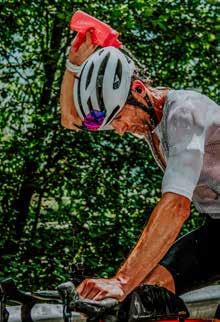
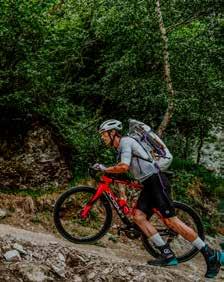
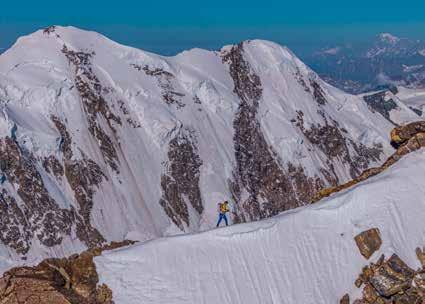
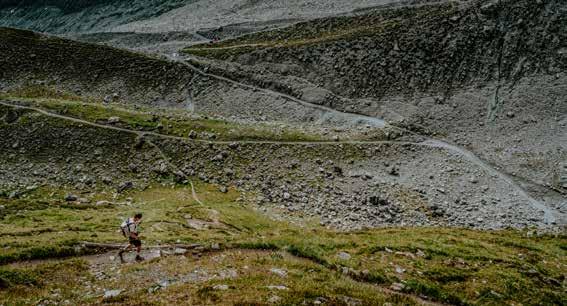
MonTalent: when the mountains meet the designers of tomorrow
I NTERVIEWS
Hervé Barmasse on his project
Endurance-Italia
Year 19 - Issue 6 - 2026
ACTIVE TRAVEL
Special feature on outdoor tourism and backpacking
Verticality defines us. Rope or cable, we all share the same desire to
move into the vertical. Altitude is an attitude. Vertical, unlocked.
BREAKING NEWS
12 Riva del Garda will host the EOW until 2029
DATA & STATISTICS
14 The Italian Outdoor Market according to Mediobanca
THE STATE OF PLAY BY IOG
16 France: a strategic model for all of Europe
RESPONSIBILITY
18 How the new European regulations affect businesses
20 Why can't we accept climate change?
#MONTURAPEOPLE
22 The Ger for Life project
FOCUS SHOP
23 Sportway in Piedmont
BRAND PROFILE
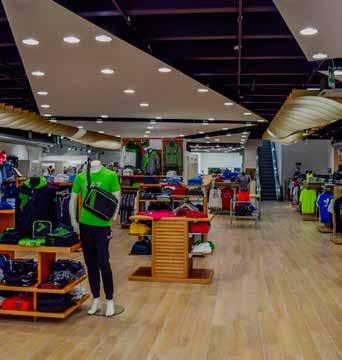
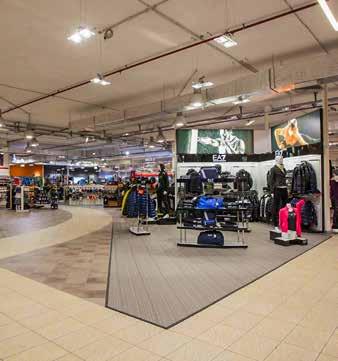
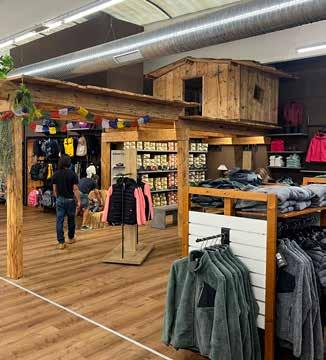
24 The history and values of AlpineStandards
25 Hypershell exoskeletons
INTERVIEWS
26 M.G.M. becomes PLAYSPORT S.p.A.: Marco Foglio, CEO of the Group speaks
28 Symon Welfringer on Tahu Rutum
30 Hervé Barmasse's journey among Italy's highest peaks
EVENTS
32 PoliMi and MagNet together with the MonTalent project
34 Rock Master celebrates 40 years
FOCUS
DATA & STATISTICS
36 Figures and statistics of the European outdoor tourism
REPORTAGE
38 In the Aosta Valley with Simond
40 In Calabria with Va’ Sentiero
FAIRS
42 ECF Data and Il Salone del Camper
DESIGN
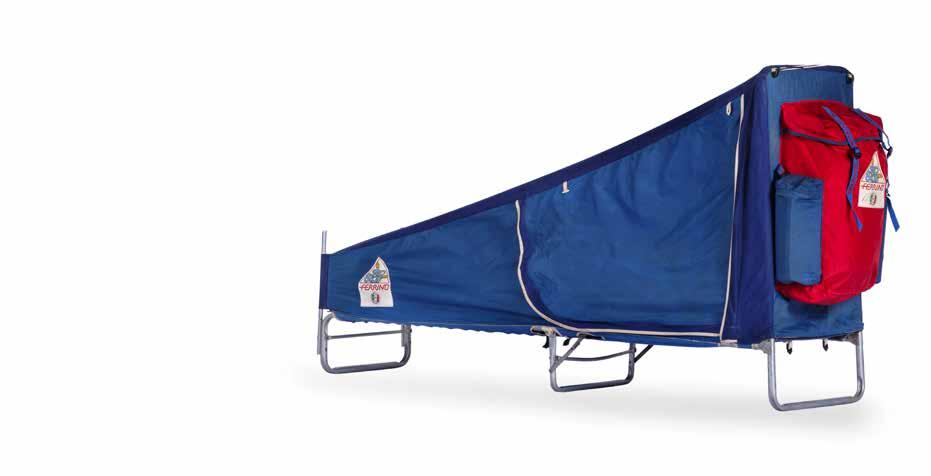
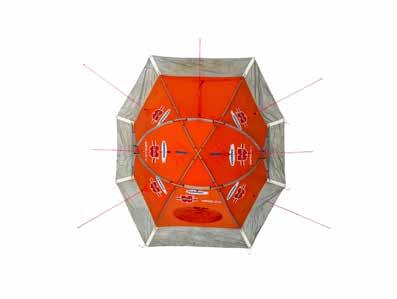
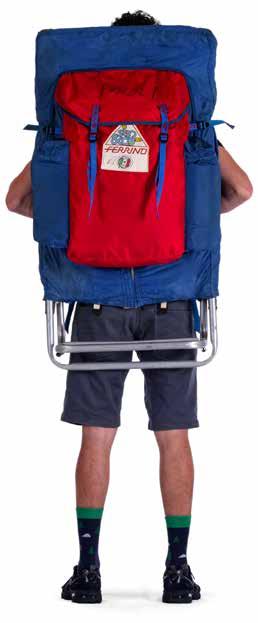
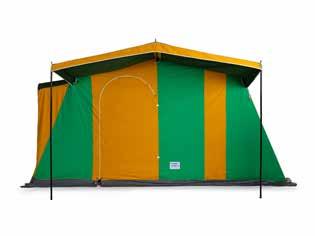
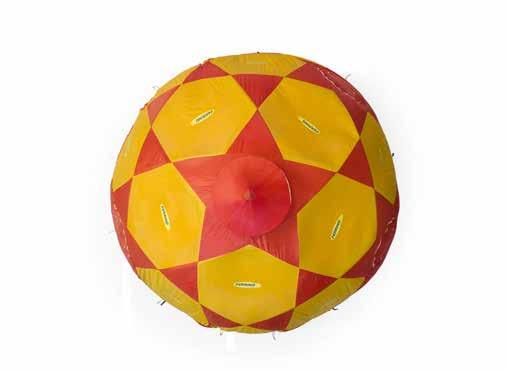
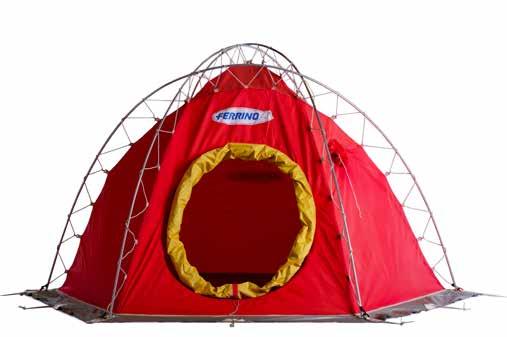
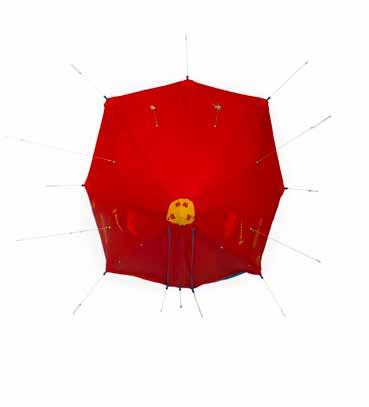
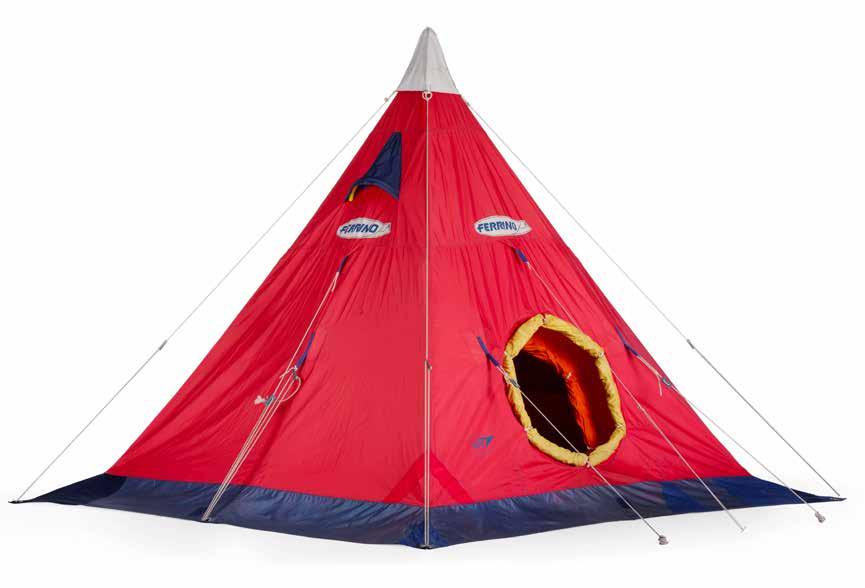
44 Ferrino tents featured in the latest issue of Typologie
PRODUCT SHOWCASE
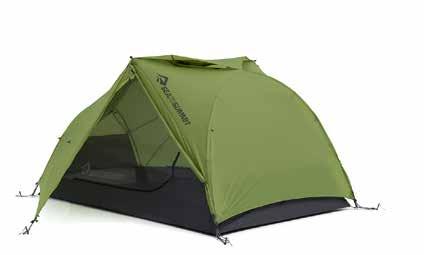
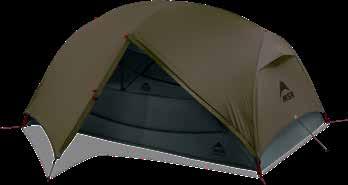
46 C.A.M.P., Ferrino, Sea to Summit, MSR
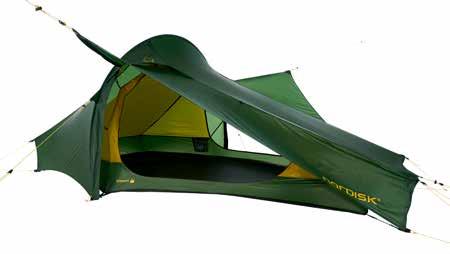
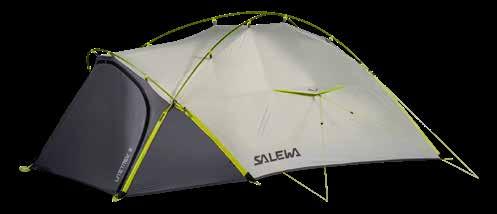
47 Nordisk, Salewa
48 C.A.M.P., Ferrino, Millet, Rab, Sea to Summit, Therm a Rest
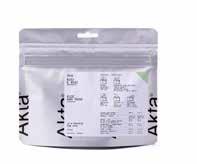
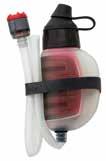
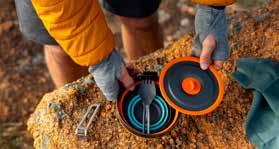
50 Aerogogo, Lyofood, Akta, MSR, Primus, Sea to Summit
genius loci
We don’t need to go back to the Romans to realize that places and their spirit influence people and the products they create. “Made in Italy” is what it is because it stems from the idea of beauty, artistic tradition, and inventiveness—which are among the most evident characteristics of Italy and its people. The people themselves are part of—and help create— the genius loci. The cultural and entrepreneurial fabric of the Veneto region differs from that of Piedmont or Emilia, and it has given rise to the Sportsystem industrial district—one that could likely have emerged and flourished only in the province of Treviso, like a small fire that is constantly fed with fresh wood.
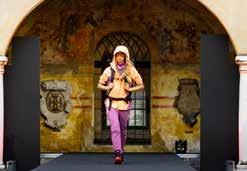
However, the relationship with the local area is something deeper than a mere concept. It is a mission, one that carries great responsibility. This is even more true today, despite some signs of a crisis in the globalization model. I was reflecting on this a little over a month ago when CMP organized a two-day event in Bassano del Grappa to present the SS 27 collections. “What are you celebrating?” asked a former schoolmate of CEO Fabio Campagnolo upon seeing the cloister of the Civic Museum transformed into a runway for the fashion show and the Ponte degli Alpini turned into a spectacle of lights and water fountains. “Nothing—we’re just presenting the new collections,” came the calm reply. What better place to showcase new products than the very place where a brand—which has surpassed 200 million in revenue—was born and grew? Because that know-how was forged right there, starting from a market stall right on the square just outside the cloister, and it grew thanks to the hard work of the people of Bassano. And at the same time, it helped Bassano grow. Because that distinctive look has its origins amid the beauty of one of the most charming small towns in the Italian province. There is an unbreakable bond between a brand’s success and the place where it has its roots.
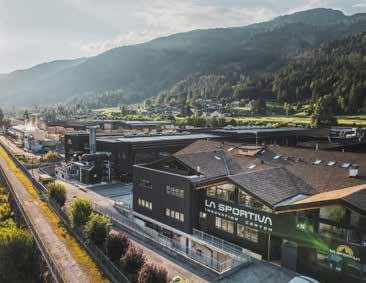
What would Ziano di Fiemme be without La Sportiva, which has chosen to resist the allure of the globalized economy once again in order to build a new future at the foot of the Dolomites? Starting July 1, 2023, La Sportiva launched a shuttle bus service connecting Trento and Val di Fassa to its Ziano di Fiemme plant via three dedicated routes. This service is used daily by over 110 employees. It’s exactly what a visionary entrepreneur like Adriano Olivetti did—the man to whom we owe the fact that entire Piedmontese valleys weren’t depopulated. And what would C.A.M.P. be without Premana? What would OUTDOOR & ORBDAYS and European Outdoor Week be without Riva del Garda? The history of the trade show organized by our publishing house goes back a long way and, after several attempts, has finally found its home on the shores of Lake Garda. And it will remain there at least until 2029, as the agreement between MagNet and the European Outdoor Group has just been renewed. Finally, what would the UTMB Mont Blanc be without Chamonix and Mont Blanc? Only in the world capital of mountaineering could a race—initially considered impossible—have come into being. Clearly not in Zermatt or even in Courmayeur.
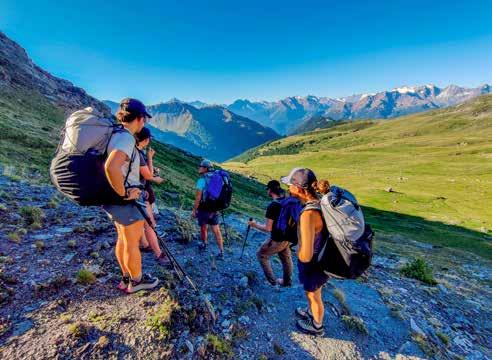
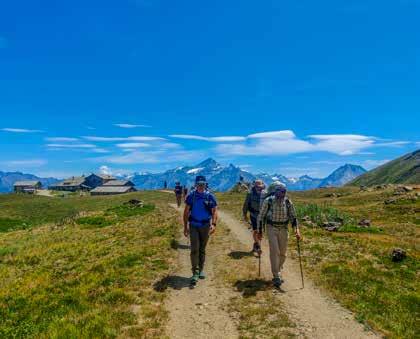
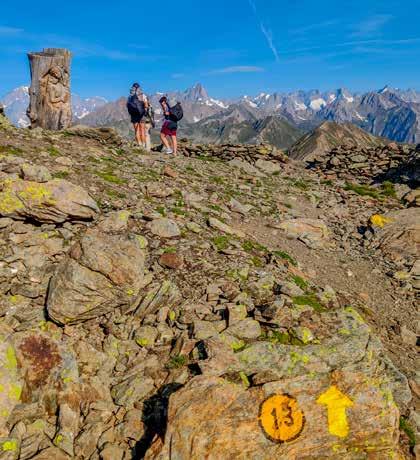
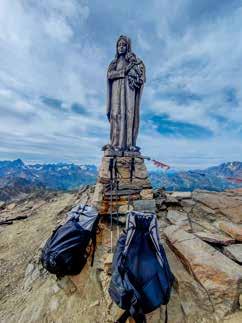
Included with this issue, in addition to the SS 27 product guide, is the trail running special. We decided to publish it right now because this issue coincides with the UTMB. August and the summer break lie in between, but the event is less than a month away, and at the foot of Mont Blanc—as has been the case for the past few years—some of the major new products will be unveiled. Yes, the genius loci—just like that of the many places we discuss in this issue, such as the Pollino National Park or the Mont Fallère area in the Aosta Valley, two stops on our “Active Travel” column. We traveled there with a light, brisk step and minimal gear, striving to leave as few traces of our passage as possible and to get to know the nature and the people who live in these idyllic corners of Italy—as travelers first, rather than tourists. Have a great vacation.
Claudio Primavesi claudio.primavesi@mag-net.it
Publisher: MagNet Srl SB
Managing director: ANGELO FRIGERIO
Editor-in-Chief: CLAUDIO PRIMAVESI
Contributors: DAVID BELLATALLA, BENEDETTA BRUNI, SARA CANALI, SARA FUMAGALLO, MATILDE MARELLI, MATTEO MOTTERLINI
Art Director: ROSANGELA BARNI
Editorial Staff: Corso della Resistenza, 23 - 20821 Meda (MB) Via Tertulliano, 68 - 20137 Milan Tel. +39 02.87245180 - Fax 02.87245182 redazione@outdoormagazine.it outdoormagazine.it
Monthly magazine. Registered with the Court of Milan, No. 186 March 20, 2007. Registered with the ROC under No. 16155 on November 23, 2007 Poste Italiane SpAPostal Subscription Shipping (Decree-Law 353/2003converted) in Law No. 46/2004, Article 1, Paragraph 1 - LO/MI One copy: 1.00 euro.
The publisher guarantees the utmost confidentiality of the data in his possession. This data will be used for managing subscriptions and for sending commercial information.
Pursuant to Article 13 of Law No. 196/2003, you may request the correction or deletion of your data at any time by writing to: MagNet Srl SB
Data controller: Benedetto Sironi
Magazine @outdoormag_ mag-net-srl
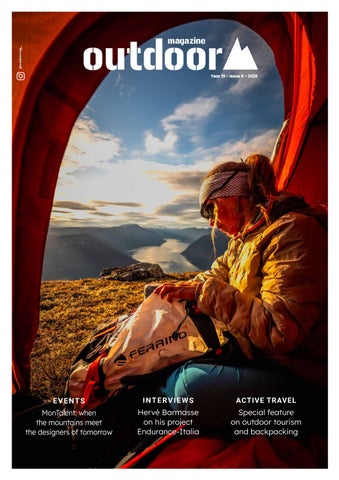
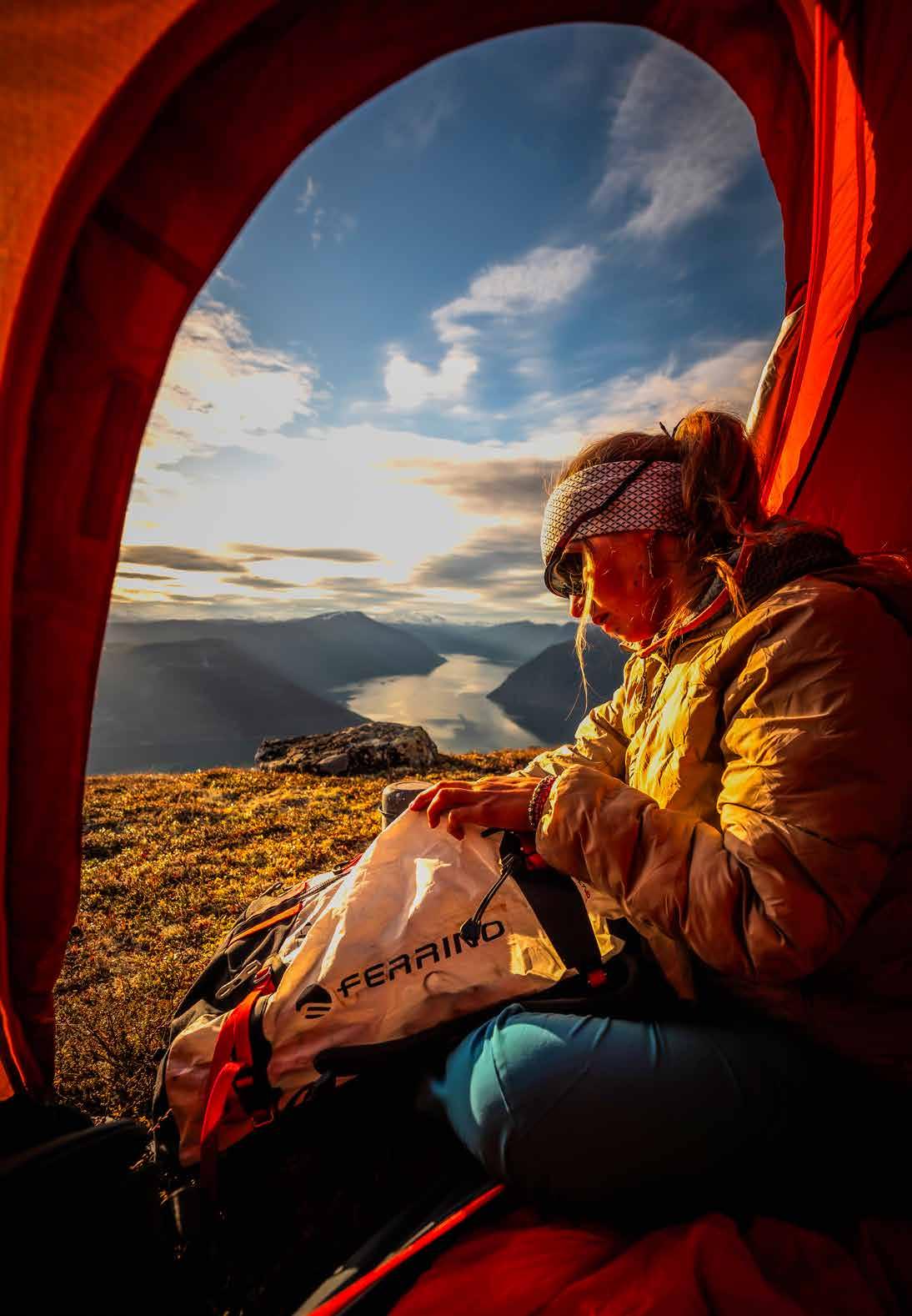
ON THE COVER: FERRINO photo by Giovanni Levi Outdoor
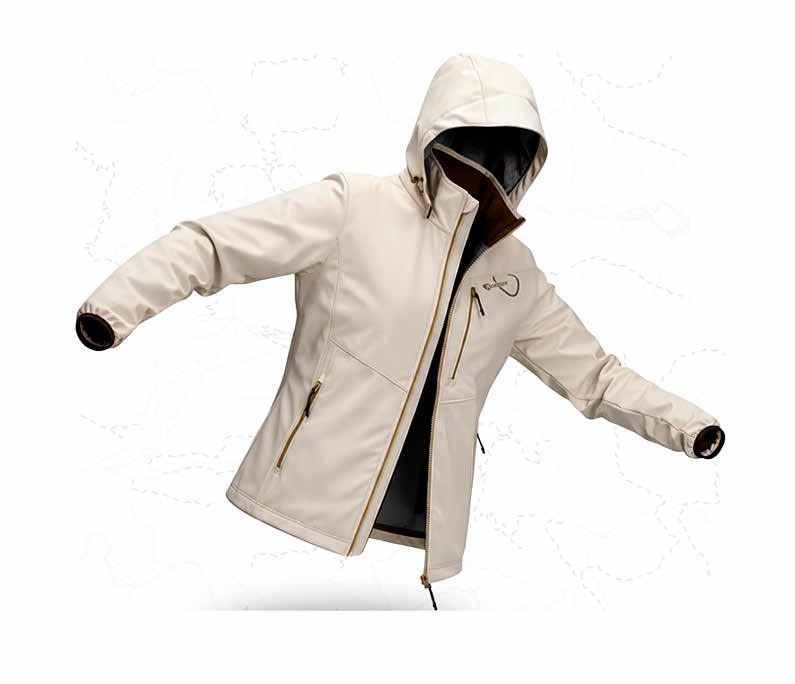
Versante™
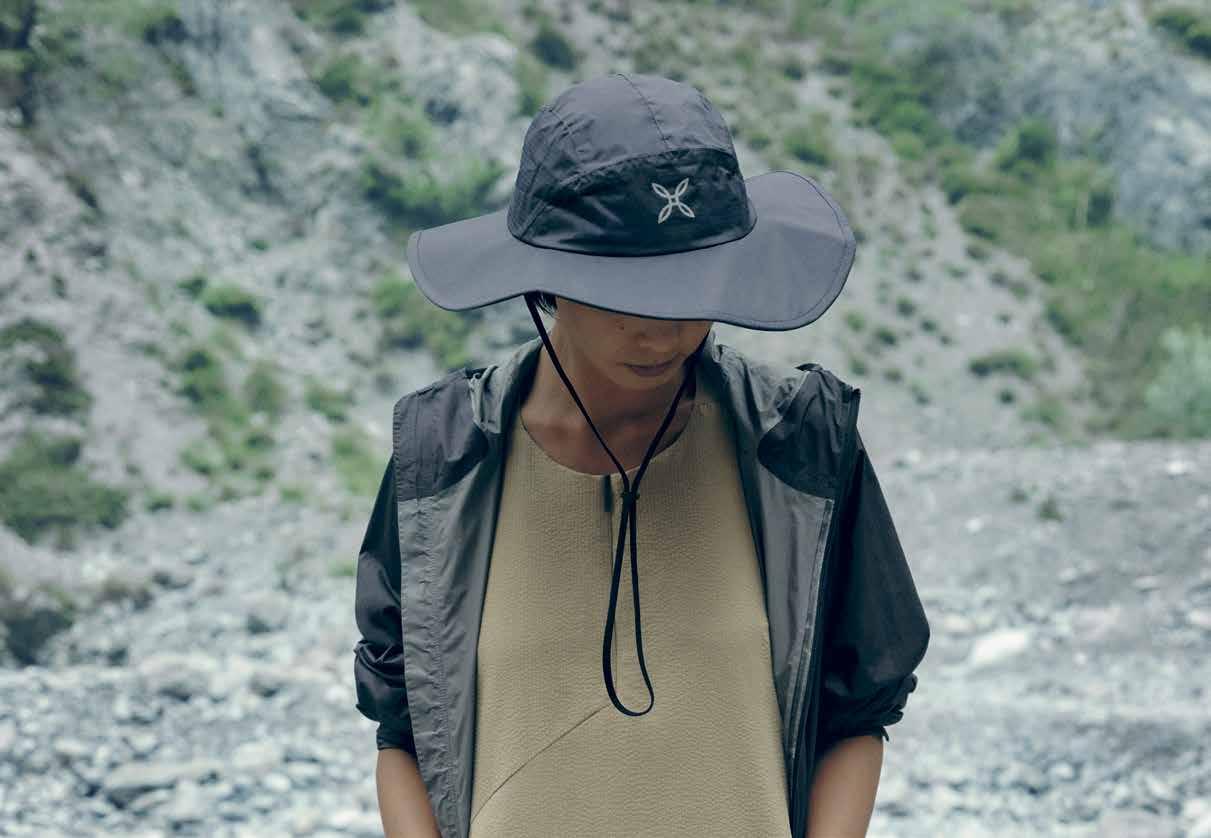
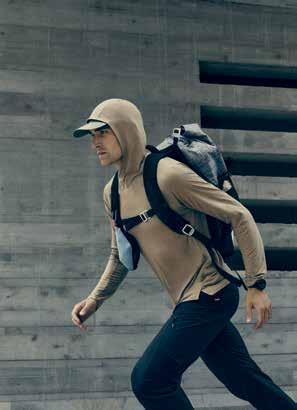
Con Versante™ non devi scegliere tra funzionalità ed estetica, tra praticità e libertà: li hai tutti insieme, in una collezione che parla di movimento, adattabilità e vita quotidiana.
Functional
Ogni capo Versante™ è progettato per offrire di più con meno: tessuti leggeri, tagli essenziali e dettagli funzionali curati nei minimi particolari. Tutto ciò che è superfluo viene eliminato, lasciando solo ciò che conta davvero. Il risultato è libertà di movimento, comfort e massima facilità d’uso. Un approccio al design dove la forma segue sempre la funzione.
Packable
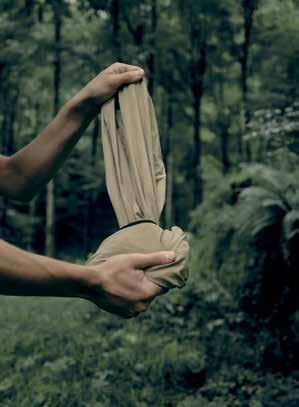
Pensato per chi viaggia leggero. Ogni capo Versante™ si ripiega in sé stesso, trasformandosi in un’unità compatta da infilare facilmente in una borsa o in uno zaino. Tasche interne o inserti in rete rendono il tutto veloce e intuitivo. Minimo ingombro, massima praticità — sempre con te, quando serve.
Versatile
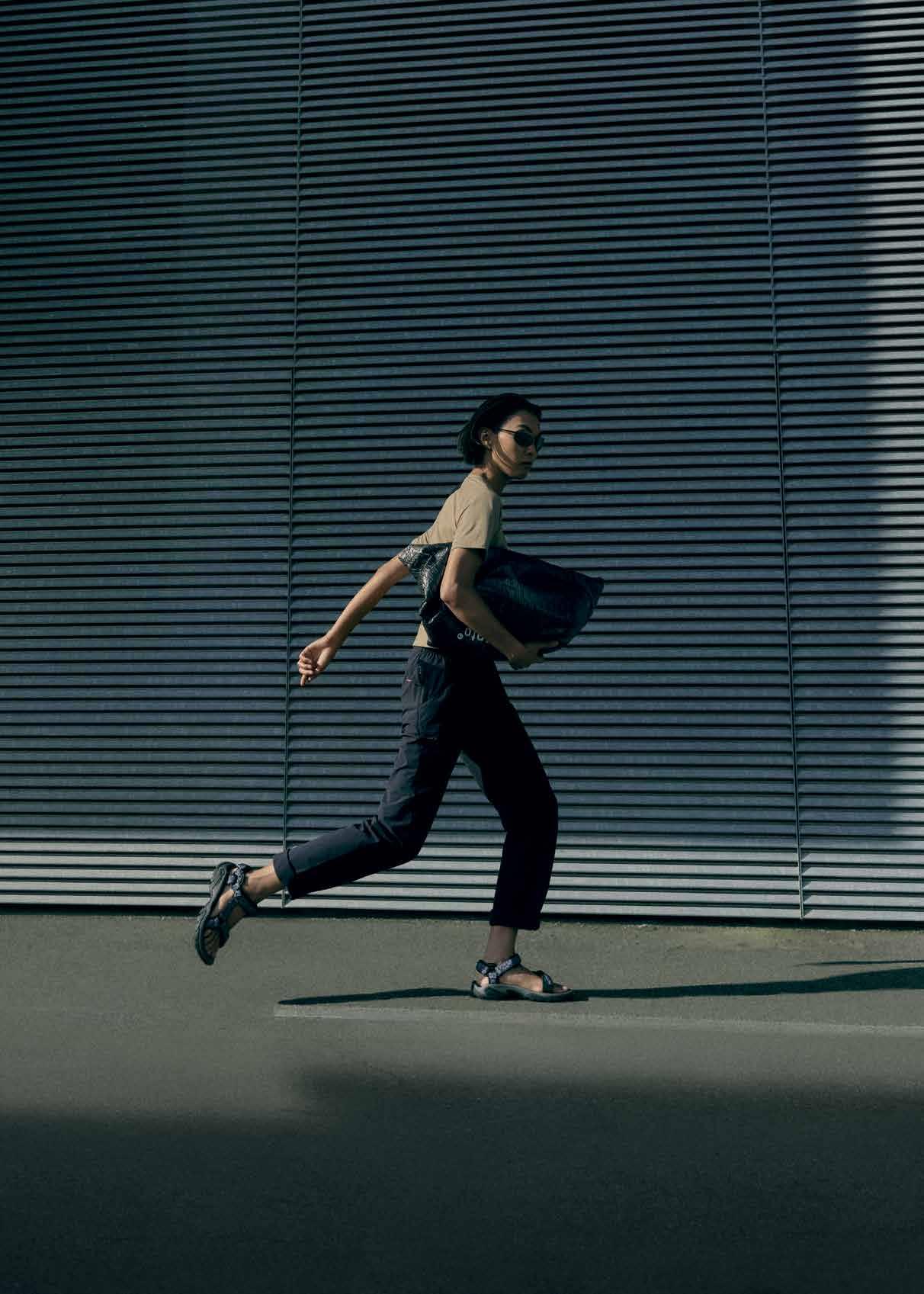
Versante™ è fatto per seguire il tuo ritmo. In viaggio, al lavoro o fuori dai sentieri battuti, ogni capo si adatta al momento, si lava facilmente e si asciuga in un attimo. Perfetto per giornate imprevedibili, contesti diversi o viaggi prolungati — il giusto equilibrio tra stile e funzionalità. Ovunque tu vada, qualunque cosa tu faccia.
Instant versatility
SIMONE MAYER IS THE NEW CEO OF MAIER SPORTS
Maier Sports, part of the Schwan-Stabilo Group’s Outdoor division, is led by Simone Mayer, who assumed the role of sole managing director on July 1. A member of the Maier Sports board of directors since 2012 and the company’s spokesperson, she has assumed full management responsibility. The reorganization is part of the repositioning strategy launched by Schwan-Stabilo to address a complex market environment. “The new structure defines responsibilities and lays the groundwork for implementing the next phases of development in a focused, consistent, and rapid manner. We need well-defined priorities and decisive action,” said Michele Molon, CEO of Schwan-Stabilo.
VALMASSOI AND DHIMAN ENTER THE AMAZFIT TEAM
Amazfit has announced the expansion of its ambassador team with the addition of two trail runners: Martina Valmassoi and Ben Dhiman. Valmassoi recently claimed victory at the June edition of the Trail 100 Andorra by UTMB, also finishing sixth overall. Ben Dhiman finished second in the flagship race of the UTMB Mont-Blanc in 2025. His achievements also include victories at the LUT 120K by UTMB and the Grand Raid Ventoux 100K. Valmassoi and Dhiman join, among others, Rod Farvard (winner of the June edition of the Trail 100 Andorra by UTMB) and Ruth Croft (winner of last year’s UTMB Mont-Blanc and the only female athlete to have claimed victory in Chamonix in both the OCC and CCC).
ULTRARUNNER JOSH WADE JOINS THE RUDY PROJECT TEAM
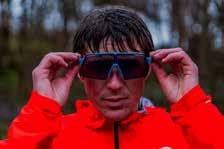
Josh Wade joins the Rudy Project team for a high-level technical partnership. His list of achievements includes victories across various distances at the Ultra-Trail Snowdonia and podium finishes in races such as the UTMB Mont Blanc and Transgrancanaria. The partnership with Rudy Project will last two years, during which Wade will use the brand’s models and contribute his feedback to the development of new products. The athlete will compete wearing the Turbolence sunglasses, which he chose for the wide field of view and sharp clarity offered by the lenses, as well as for the sweatband on the frame. The collaboration aims to strengthen the brand’s position in trail running.
RESPONSIBILITY
INTERSPORT AUSTRIA IS TESTING A CIRCULAR RETURNS MODEL
Intersport Austria, Austrian Post, and the University of Applied Sciences in Upper Austria have piloted a new circular returns model to make e-commerce more sustainable. Under this system, a returned product—provided it is eligible and has never been used—is sent directly to another customer who has purchased the same item, bypassing the warehouse. Austrian Post handles the shipment using anonymized labels, while a digital system verifies the product’s condition. According to a study, the model could reduce CO₂ emissions generated by returns by an average of 25.3%.
SALOMON IS EXPANDING ITS REPAIR SERVICE TO FIVE NEW COUNTRIES, INCLUDING ITALY
Salomon is expanding its repair program to include five new countries in addition to France: Italy, the United Kingdom, Germany, Spain, and the Netherlands. The initiative is part of the brand’s circularity goals and aims to extend the life cycle of its products. Users can access the service through a dedicated online platform by following a few simple steps. The customer covers the cost of the repair, while the brand covers shipping costs. To support this new service, Salomon is partnering with United Repair Center (URC), which provides the technical expertise needed to repair products, including those with waterproof membranes, complex fabrics, and technical constructions.
AKU IS STRENGTHENING ITS COMMITMENT TO RESPONSIBLE DEVELOPMENT
With its new 2025 Responsibility Report, AKU is strengthening its commitment to responsible development through a strategy based on data, processes, and product innovation. At the heart of this initiative is the “Design to Reduce” framework, an approach through which the brand develops footwear designed to reduce environmental impact throughout the entire product lifecycle. In terms of materials, approximately 23% of the materials purchased in 2025 are classified as responsible or having a lower environmental impact. The chemical and regulatory aspect is also significant: 100% of the materials purchased for the outdoor line in 2025 are PFAS NIA (Not Intentionally Added).
AND INCLUSION
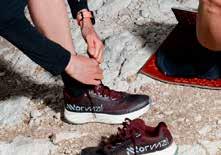
NNormal has published its first Commitment Report, offering an overview of the brand’s environmental, social, and product initiatives. A central focus is information regarding the carbon footprint of its products—which includes raw material sourcing, production, transportation, and packaging—providing data that promotes transparency and awareness. Through its “Replace Less. Do More.” philosophy, the brand develops durable products and supports their use with repair and resole services, as well as takeback programs. To extend the lifespan of its products, the brand has developed a global network of 68 shoemakers trained by Vibram.
MARKET
ALPA IS THE NEW DEVELOPMENT DIVISION FOR HANWAG, ROYAL ROBBINS, AND DEVOLD IN ITALY
ALPA has been established as a company dedicated to representing and driving commercial development in the Italian market for Hanwag, Royal Robbins, and Devold—three brands in the portfolio of the international Fenix Outdoor Group. The creation of a dedicated structure represents a significant organizational evolution, designed to further strengthen the brands’ presence in the Italian market and ensure an increasingly focused management of commercial activities and relationships with customers and partners. The goal is to highlight the unique characteristics of each brand, support their growth in the region, and consolidate their market positioning. Lukas Acherer has been appointed to lead the new entity, overseeing commercial activities and brand development in the Italian market.
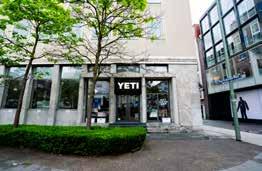
IN MUNICH YETI'S FIRST EUROPEAN FLAGSHIP STORE OPENS
Yeti opened its first flagship store in Munich, marking the brand’s entry into European brick-and-mortar retail with an event for industry professionals and the media held on June 11. The new store officially opened to the public on June 12 and 13. The flagship store covers an area of 150 square meters and represents a new step in the brand’s expansion strategy in the European market. Munich was chosen for its combination of an urban lifestyle, a quality-conscious customer base, and proximity to some of the top outdoor destinations.
GARMIN ACQUIRES TRAININGPEAKS AND TRAINHEROIC
Garmin has acquired the TrainingPeaks and TrainHeroic training platforms. The acquisition “strengthens Garmin’s fitness ecosystem with customizable coaching experiences for endurance, strength, and performance athletes,” the company said. The training programs cover disciplines such as triathlon, cycling, running, swimming, rowing, winter sports, and strength training. “TrainingPeaks and TrainHeroic share Garmin’s passion for supporting athletes and coaches around the world through worldclass training tools, performance metrics, and actionable insights. The addition of these platforms to the Garmin ecosystem will expand access to more authentic coaching experiences,” said Brad Trenkle, Garmin’s co-chief operating officer.
Tutto inizia con un singolo passo, che poi diventano mille. Una spinta continua che ti porta sempre più lontano, mentre ogni chilometro percorso ti avvicina a qualcosa di più grande.
UNFOLD YOUR JOURNEY with LOWA® E XPLORER GTX MID.
ADVENTURE UNFOLDS WITH YOU.
2030 WINTER GAMES IN THE FRENCH ALPS: SKI MOUNTAINEERING CONFIRMED, FREERIDE ADDED, NORDIC COMBINED DROPPED
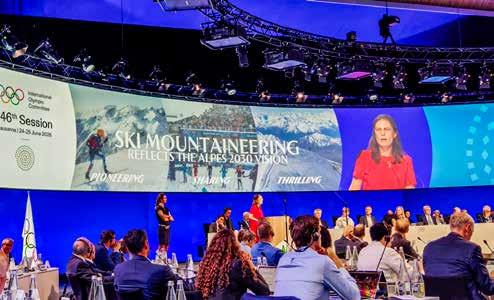
On July 7, the IOC Executive Board in Lausanne announced the venue, the athlete quota, and the competition schedule after the 146th IOC Session had confirmed on June 25 that ski mountaineering would be included in the 2030 Winter Games in the French Alps. Ski mountaineering will therefore return with five Olympic medal events (compared to the three awarded at the Bormio venue—sprint and mixed relay) divided into two disciplines: Individual (men and women) and Sprint (men, women, and mixed relay). The Executive Board also doubled the athlete quota from 36 to 72 (36 men and 36 women). The competitions will take place in Montgenèvre. “Today’s decision is a moment of pride for everyone involved in ski mountaineering. Seeing our sport confirmed for the 2030 Winter Olympic Games in the French Alps, with five medal events in the Sprint, Individual, and Mixed Relay, is a significant milestone for the entire community,” commented Regula Meier, president of the ISMF (International Ski Mountaineering Federation). Among the decisions was also the confirmation of freeride’s inclusion in the program, with four medal events and a quota of 44 athletes: men’s and women’s skiing and men’s and women’s snowboarding. The introduction of new sports and events, along with the increase in the number of
male and female athletes (among other factors), led to the decision to remove Nordic combined—one of the Games’ historic events—from the program. Alpes 2030 will also be the first Winter Games to achieve gender parity, with spots distributed equally between women and men.
- ECONOMY -
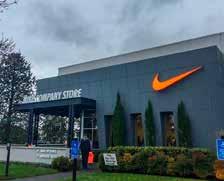
Nike Inc. reported sales of $11 billion for the fourth quarter of its fiscal year, which ended on May 31, down 1% on a reported basis (-4% at constant exchange rates). Net income rose to $1.1 billion, partly due to a customs duty refund. Despite results that beat expectations, the stock fell about 3% in the first few hours following the release of the earnings report. This was driven by a decline in sales in Greater China (–12% on a reported basis, –17% at constant exchange rates), only partially offset by 3% growth in North America, and a 1% decline (-6% at constant exchange rates) recorded in the EMEA region, as well as the prospect that the company’s turnaround may take longer than expected. For the full fiscal year 2026, Nike reported revenue of $46.4 billion, essentially flat on a reported basis and down 2% at constant exchange rates.
ALUULA UP 94% THANKS TO THE OUTDOOR SEGMENT
Aluula Composites closed out Q2 with record revenue, driven by growth in the Performance Outdoor segment. The Canadian brand, which specializes in the production of ultralight composite materials, nearly doubled its quarterly revenue. Revenue for the quarter ended April 30, 2026, increased by 94%, reaching a record 3.06 million Canadian dollars (1.9 million euros), compared to 1.57 million Canadian dollars in the same period of the previous year, while the gross margin rose from 42% to 44%. The outdoor segment accounted for 87% of second-quarter revenue. Within the outdoor business, backpack and bag applications continued to grow in importance, accounting for 19% of quarterly sales compared to just 3% a year ago.
NIKE EXCEEDS EXPECTATIONS IN Q4 CMP REACHES 215 MILLION
In 2025, the F.lli Campagnolo Group estimates consolidated revenue of approximately 215 million euros, in line with and slightly higher than the previous year, when it reported revenue of 213.7 million. CMP is currently the group’s main driver, generating approximately 90% of total revenue. In 2024, the Italian market accounted for 41.7% of consolidated revenue, while 54% came from other European Union countries and 4.3% from non-EU markets. Germany remains the leading foreign market, accounting for 34.1% of revenue, followed by Spain, Austria, Poland, Switzerland, France, and Denmark. By the end of the year, the CMP network will comprise 70 retail locations, including flagship stores, outlets, and partner stores, complemented by a widespread presence at specialty retailers in Italy and abroad.
BOLLÉ BRANDS SELLS SPY+ AND SERENGETI TO SAFILO
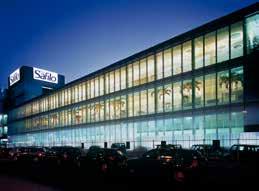
Safilo Group, which also owns the Smith and Carrera brands, has completed the acquisition of the Spy+ and Serengeti eyewear brands from Bollé Brands for $24.6 million. In 2025, the two brands generated combined revenue of approximately $39 million. The closing of the deal follows the preliminary purchase agreement signed on May 11. The transaction includes select assets of Spy+ and Serengeti in Europe and 100% of the shares in two dedicated companies operating in the United States and Canada. According to Safilo, the acquisition represents “a further step in the Group’s strategy, focused on the selective acquisition of brands capable of strengthening its positioning in the most attractive and high-growth segments, while enhancing the value of its portfolio of owned brands, which includes Smith, Carrera, Polaroid, and Blenders.”
LA SPORTIVA ENDS 2025 ON A HIGH NOTE AND SETS ITS SIGHTS ON VAL DI FIEMME
La Sportiva closed the fiscal year with consolidated revenue of 213 million euros (up from the 211.4 million reported by the Stratos holding company in 2024): an increase driven by a strategy focused on strengthening direct markets, consolidating relationships with consumers, and product innovation, with an increasingly structured presence in its target communities and regions.
At the same time, it has launched an investment plan totaling more than 20 million euros aimed at strengthening the company’s infrastructure, internal services, and welfare and training programs, reaffirming its commitment to continue investing in the company’s development, its human capital, and the communities it serves—even amid a complex and uncertain macroeconomic environment.
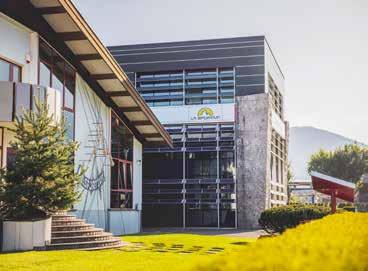
Among the strategic investments is the new headquarters currently under construction in Ziano di Fiemme, designed as an expansion of the existing corporate complex and scheduled for completion in 2027, which will cover a total area of 8,568 square meters. The project will incorporate new workspaces and production areas alongside employee amenities, including an indoor climbing gym, which reflects the brand’s sporting and cultural identity. The construction of underground parking facilities will also help improve the well-being of the company’s employees and significantly alleviate the pressure on parking availability in the Ziano industrial area, thereby generating benefits for the local manufacturing sector as well.
This decision reaffirms La Sportiva’s intention to continue expanding its presence in the region, demonstrating concrete confidence in the company’s future. The corporate welfare plan also includes initiatives related to mobility. As of July 1, 2023, La Sportiva launched a shuttle bus service connecting Trento and Val di Fassa to the Ziano di Fiemme plant via three dedicated routes. Created in response to a shared and concrete need, the service is now used daily by over 110 employees, with tangible effects on reducing CO₂ emissions, easing traffic in the industrial area, and improving safety during commutes between home and work.
EUROPEAN OUTDOOR WEEK IN RIVA DEL GARDA FOR THE NEXT THREE YEARS
The agreement between MagNet and the European Outdoor Group has been renewed, and the dates through 2029 have been announced. Registration for the next edition is already open
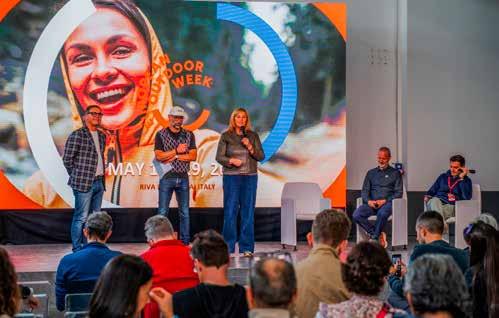
The European Outdoor Group (EOG) and the MagNet Group have confirmed that European Outdoor Week (EOW) will remain in Riva del Garda at least through 2029. Following the success of this year’s inaugural edition, the two organizations have signed an extension to their partnership agreement, which provides certainty for the industry and allows companies to plan with confidence. The announcement coincides with the opening of registration for EOW 2027, scheduled for May 8–13. First held in 2026, European Outdoor Week brings together the industry’s leading platforms in a single week of events. The project was created in response to the industry’s request to reduce the number of events on the calendar, focusing instead on more effective gatherings capable of optimizing costs and resources. EOW 2026 marked the return of OUTDOOR, the industry’s leading international trade show, held in conjunction with the Outdoor & Running Business Days (ORBDAYS), with over 280 exhibitors and 2,500 buyers.
Other events of the week included: the second Outdoor Impact Summit, with over 220 delegates; Outdoor Media Day, featuring 45 brand booths and 250 participants; the European Outdoor Awards ceremony, which brought together 360 people for the awards in various product and community categories; the Outdoor Activation Days, during which over 700 people took part in 27 different activities; and the Innovation for Outdoor Day, held as part of OUTDOOR & ORBDAYS, which showcased 20 startups to over 40 potential investors. During the week, the EOG also held its Summer Member Meeting, which brought top industry representatives from among its more than 150 members to Riva. The events of the first edition of European Outdoor Week attracted over 8,000 visitors from more than 60 countries, exceeding expectations. In light of the extremely positive feedback and numerous constructive suggestions, EOG and MagNet immediately confirmed the dates for 2027, along with some changes to the program. With registration now open for EOW 2027, the two partners have reached an agreement that allows organizations to plan their participation in the event well in advance: EOW 2028 will take place from May 13 to 18, and EOW 2029 from May 12 to 17.
“In every respect, the first edition of European Outdoor Week was a huge success. EOG and MagNet created the kind of event and format our sector was asking for, and the industry turned out in force. EOW clearly demonstrated the value of in-person events: as an industry, we can achieve so much more when we work together, and meeting in person is an essential part of that. We now have a solid foundation on which to continue building. I’m delighted that we’ve reached an agreement with MagNet to return to Riva del Garda for the next three years. We’ll continue to improve the format and content, taking into account the excellent feedback we’ve received from industry colleagues, and the certainty provided by this announcement allows everyone to plan with confidence. I’m already very excited about the potential of EOW 2027 and future editions, and of course it will be a tremendous pleasure to return to Riva, a splendid setting for our annual gathering with the outdoor world.”
Christian Schneidermeier, Managing Director of EOG
“This agreement goes far beyond a simple extension of our partnership: it reflects a shared commitment to the future of the outdoor industry, as well as marking an important milestone in a journey that began many years ago. For over a decade, MagNet has been investing in the development of one of the most important business events for the outdoor industry, continuously evolving its format to meet the changing needs of the market. The success of the first European Outdoor Week confirmed that the vision shared by MagNet and the European Outdoor Group was the right one: to bring together the industry’s leading events on a single, coordinated platform capable of creating greater value for brands, retailers, the media, and the entire community. Looking ahead to 2027 and beyond, we are committed to continuing to invest in innovation, quality, and international growth. Working side by side with EOG, we will further strengthen European Outdoor Week’s role as the annual gathering for the global outdoor and sports industry.”
Benedetto Sironi, CEO of MagNet
REGISTRATION
Registration is now open for organizations wishing to participate in the EOW 2027 events. For more information: europeanoutdoorweek.com
Anyone interested in exhibiting at OUTDOOR & ORBDAYS 2027 can reserve a spot by scanning the QR code shown here
PORTA CON TE I TUOI SOGNI ANCHE SE NESSUNO
LI VEDE
SPORTS AND OUTDOOR ACCOUNT FOR 0.15% OF GDP
According to Mediobanca’s Research Department, aggregate revenue in 2024 was 12.3 billion, and the sector employed 53,000 people
A sector worth 12.3 billion euros, accounting for 0.15% of Italy’s GDP and showing steady growth. This is the snapshot of the sports and outdoor industry according to the Mediobanca Research Center. The data released last June pertain to 2024 and show a 2% increase in aggregate revenue compared to 2023 and a 4% increase compared to 2022, with employment at 53,000 workers (+2.5% compared to 2023 and +7.2% compared to 2022). The study covered 86 manufacturing and distribution companies with an average revenue of 19 million and 50 or more employees. It should be noted that the study included not only manufacturers of outdoor sports equipment but also, for example, groups that produce ski lifts and other fitness infrastructure, as well as mass-market retail brands and brands that also produce clothing more geared toward the sportswear sector. The only figures showing a slight decline are those for EBIT, which stood at 6%, down 2.5 percentage points from 2023 and 1.9 percentage points from 2022.
GEOGRAPHIC AREA AND SECTORAL BREAKDOWN
51.9% of the companies surveyed are located in the Northeast, 36.4% in the Northwest, 11.4% in Central Italy, and only 0.3% on the islands. The largest sector is “Mountain Attitude” (28.8%), followed by distribution companies (27.5%) and “Multi-sport” (14.7%).
BREAKDOWN BY SECTOR
Also of interest is the information on controlling shareholders, 74.1% of whom are Italian and 25.9% foreign (with France holding 12.8% and the United States 4.7%). Excluding distribution companies, 72.5% of the firms are manufacturers of sporting goods. Of these, 55.3% produce equipment, 25.9% produce apparel, and 18.8% produce footwear. The data on production organization is significant: 88.4% is in-house and 11.6% is outsourced. More than one-third of sports and outdoor manufacturing companies have decided to keep their operations in Italy. As for the location of manufacturing facilities, 39.7% are in Italy, 37.3% are in the rest of Europe, and only 11.5% are in Asia.
EXPORTS AND PROFITABILITY
Fatturato 2024 in % sul totale
The sports and outdoor manufacturing sector boasts an impressive international outlook, with exports accounting for 64% of total output in 2024. Europe accounts for 41%, Italy for 36%, the Americas for 15%, and Asia for 7%. The export figure for the “Mountain Attitude” segment is 60.6%. Profitability is on a downward trend, falling from 8.9% in 2022 to 8.7% in 2023 and 7.7% in 2024. The only segments bucking this trend are “Water Sports” and “Multi-Sport,” with EBIT growing by 1.1% and 2.8%, respectively, compared to 2022. The “Mountain Attitude” segment’s value for 2024 is the second highest after “Activewear and Lifestyle,” with an average of 10.5%.
Ripartizione settoriale
54 WEAVE
BORN OUT OF THE DOLOMITES, CRAFTED BY PIONEERS AND WORN BY ADVENTURERS SINCE 1897.
FRANCE: A STRATEGIC HUB FOR EUROPEAN INDUSTRY
Data analysis, major distribution trends, and prospects for collaboration among Italian companies in the sector
by the Italian Outdoor Group
Among the major European outdoor markets, France continues to be one of the most dynamic and interesting markets for companies in the sector. This was confirmed by data presented during the Outdoor Groups Breakfast, a strategic discussion organized by the Italian Outdoor Group (IOG) as part of OUTDOOR & ORBDAYS 2026. In our Outdoor Network Lounge, leading Italian, French, and Scandinavian associations shared macroeconomic data, emerging trends, and development prospects for their respective national markets. In this article, we take a closer look at market dynamics across the Alps using data from Outdoor Sports Valley (OSV), the leading association for the outdoor sector in France. Based in Annecy, OSV brings together over 500 entities, including brands, retailers, distributors, and event organizers. The figures highlight the impact of this true ecosystem: an aggregate revenue exceeding five billion euros and a workforce of approximately 10,000 employees. A key factor in understanding France’s competitiveness is the extremely high geographical concentration: 71% of member companies operate in the Auvergne-Rhône-Alpes region, demonstrating how the deep connection between industry, the mountainous terrain, and the ability to collaborate effectively constitutes a formidable competitive advantage.
DRIVERS OF DEMAND: SPORTS PARTICIPATION STATISTICS
For the Italian outdoor industry, France is not just a geographical neighbor, but a priority export market. On a continental level, it ranks as the second-largest European outdoor market, backed by an average annual growth rate of 5.5% recorded since 2018. This economic performance is rooted in solid cultural foundations: a widespread enthusiasm among citizens for outdoor activities. Out of a total population of 69.1 million, as many as 73% regularly go hiking, 31% cycle, and 28% run, with an average of 2.8 sports practiced per person. The winter segment remains a key focus, having recorded an extraordinary total of over 54 million ski days during the 2024–25 season
DISTRIBUTION CHANNELS
The retail landscape in France is governed by well-defined business principles that Italian companies must be able to navigate. Generalist retailers—such as the major chains (Decathlon, Intersport, and Sport 2000)—account for between 60% and 70% of total sales in the outdoor sector. In contrast, specialty retailers (Au Vieux Campeur, Ekosport, Chullanka, Alltricks, etc.) account for the remaining 30–40%. This second commercial force remains strategic for brands aiming for a premium positioning: it is here that qualified technical advice, authentic product storytelling, and the genuine building of brand value are concentrated.
STABILIZING CONSUMPTION AND TOP-PERFORMING SEGMENTS
On the consumer front, the market is showing encouraging signs. Following the strong growth recorded in the post-pandemic period, the sector is entering a phase of greater stabilization, while still maintaining promising growth prospects. In fact, some segments continue to stand out for their dynamism: trail running and running are seeing very strong demand, with numerous events quickly selling out, while the indoor climbing market appears to have reached a stage of maturity following significant investments in recent years. Specialty retail in mountain resorts is also performing well, having recorded a 6% increase in revenue during the 2025/26 winter season.
IOG'S VISION: BUILDING NETWORKS BEYOND BORDERS
For IOG, understanding the evolution of the major European markets means providing member companies with useful tools to guide their development strategies. The collaboration launched with Outdoor Sports Valley during OUTDOOR & ORBDAYS—and set to continue in the run-up to Prowinter 2027—is precisely aimed at this: stimulating the exchange of industry best practices, creating new opportunities for international business networking, and, above all, forging an increasingly strong bond among Europe’s leading outdoor clusters.
italianoutdoorgroup.it
THE STATE OF PLAY BY IOG
RRAVIK Y YOKO RYOKO RYOKK RYOKK
LESS BUREAUCRACY, MORE SUBSTANCE
How are the new European regulations transforming sustainability from an administrative requirement into a driver of growth and corporate competitiveness? Less mandatory compliance, more voluntary responsibility. Here’s what has really changed
by Sara Fumagallo
Sustainability is shifting from a regulatory requirement to a driver of competitiveness
Banks, investors, retailers, and businesses continue to seek sustainable information FROM COMPLIANCE
In 2026, Europe will reduce bureaucracy, deadlines, and ESG requirements
For years, sustainability was portrayed as a race to meet obligations: new directives, new standards, new deadlines, new reports. A complex, technical world, often perceived by companies as a maze of rules to be followed rather than as a driver of growth. Then something changed. Today, in 2026, a true Simplification Revolution is unfolding in Europe, and the question is no longer simply “What are we required to do?” but “How ready are we to demonstrate our sustainable value to the market?” The turning point is clear. European regulations have been streamlined; the Omnibus Package has literally rewritten the rules of the game, postponing certain deadlines and reducing the number of companies directly required to report on ESG by 90%, thereby cutting annual administrative costs by over 6 billion euros. Fewer companies are formally involved, meaning reduced bureaucracy and lower administrative pressure. But this does not mean that sustainability has become less important. On the contrary, it is becoming more concrete, selective, and closely tied to business. Whereas this issue was once often viewed as mere regulatory compliance, today it is increasingly part of the logic of competitiveness. It is no longer merely an environmental or reputational issue, but a matter of access to credit, supply chain resilience, investor confidence, brand positioning, and the ability to stay competitive: Banks, retailers, investors, and supply chain partners continue to request ESG data. If a large company needs to report its Scope 3 emissions, it will require data from its suppliers. If a bank incorporates ESG indicators into its risk assessment, it will request information from the companies it finances. If a brand markets a product as sustainable, it must demonstrate
Fewer companies are required to report, resulting in lower administrative costs
that this claim is well-founded, verifiable, and not misleading. If an investor is looking for more transparent ESG (Environmental, Social, and Governance) ratings, they will seek solid, comparable, and credible data. This gives rise to a new landscape characterized by greater credibility, improved access to the supply chain, and reduced exposure to the risk of greenwashing.
GREATER COMPETITIVENESS WITH THE OMNIBUS DIRECTIVE
Until recently, the ESG landscape was viewed primarily through an ethical or purely environmental lens. Over the past 18 months, we have witnessed a complete paradigm shift in which sustainability has also become intertwined with economic security, European industrial autonomy, and competitive positioning vis-à-vis the giants of the U.S. and China. Geopolitical tensions over critical raw materials and the need to mitigate market volatility have made supply chain traceability and decarbonization crucial elements of risk management and cost efficiency. In the wake of the recommendations set forth in the Draghi Report on competitiveness and the subsequent Budapest Declaration, European lawmakers recognized that simplifying bureaucratic requirements was necessary to prevent European companies from falling behind. This premise led to Directive (EU) 2026/470 (Omnibus I), published in the Official Journal of the European Union (OJEU) on February 26, 2026, and effective as of March 18, 2026. This new regulation has significantly raised the thresholds of the Corporate Sustainability Reporting Directive (CSRD), limiting the reporting obligation to companies with more than 1,000 employees and over 450 million euros in reve -
CURRENT RULES
ESG Ratings become transparent
Effective July 2, 2026, Regulation (EU) 2024/3005 requires ESG rating providers to obtain authorization from ESMA, ensure transparency in their methodologies (with separate scores for the E, S, and G pillars), and maintain a clear separation between rating and advisory activities. A strong ESG profile thus allows companies to see their commitment recognized and to lower their cost of capital.
The end of Greenwashing (ECGT Directive)
Although the complex Green Claims Directive was suspended by the European Commission in June 2025, the ECGT Directive (Empowering Consumers for the Green Transition—Directive 2024/825) is fully in effect. It strictly prohibits the use of generic claims such as “green,” “eco,” or “climate neutral” based solely on carbon offsets rather than actual emissions reductions. It also prohibits self-assigned labels and imposes severe penalties of up to 4% of revenue. The critical deadline for compliance is September 27, 2026.
The Digital Product Passport (DPP)
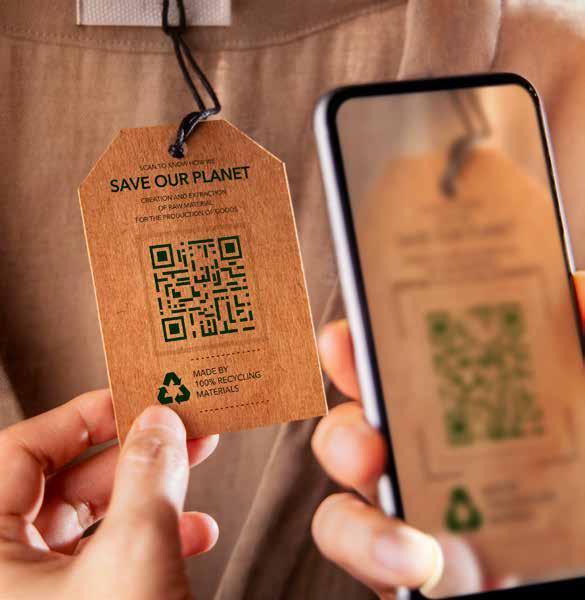
Introduced by the Ecodesign Regulation (ESPR — EU Reg. 2024/1781), it requires traceability via QR code or NFC of product composition, origin, and recyclability data, with the textile and fashion sectors at the forefront, with delegated acts expected in 2027 and full implementation scheduled for 2028. Without a passport, products may be denied access to the EU market.
Deforestation Regulation (EUDR)
It prohibits the placing on the EU market of products linked to deforestation for seven key raw materials (including cattle, cocoa, coffee, palm oil, rubber, soy, and timber), requiring geolocation and supply chain due diligence, with penalties of at least 4% of revenue and compliance deadlines for large and medium-sized enterprises set for December 30, 2026.
Traceability, Scope 3, and decarbonization: risk management tools
Europe, USA and China follow different rules and speeds on sustainability
Solid data, verifiable claims, and voluntary reports strengthen trust and reputation
Consulting and communication help companies develop reliable ESG strategies
nue. Consequently, the new simplified ESRS (European Sustainability Reporting Standards) reduces mandatory data points by 61% and makes sector-specific standards voluntary, granting SMEs below the threshold the legal right to refuse requests for data that exceed these voluntary parameters. Corporate Sustainability Due Diligence Directive has also been significantly streamlined: the requirement has been restricted to companies with more than 5,000 employees and €1.5 billion in revenue, with its final implementation postponed until July 26, 2029.
OUTSIDE EUROPE, THE SITUATION IS DIFFERENT
While Italy and Europe are operating within an increasingly regulated ESG framework—albeit one that is now more “streamlined” than in the past—the landscape in the rest of the world is more fragmented. In the United States, there is a retreat at the federal level, though this is offset by activism in certain states such as California and New York; China, on the other hand, is accelerating its reporting requirements and using the transition as a lever of industrial policy, bolstered by its leadership in solar, wind, electric vehicles, and batteries. For companies operating internationally, therefore, the main challenge is no longer simply “pursuing sustainability,” but understanding the regulatory and commercial landscape in which to operate: in Europe and Italy, the combination of compliance, credit, and the supply chain carries significant
weight; outside Europe, there are more deregulated markets, some very active governments, and countries—such as China—where ESG requirements are becoming increasingly institutionalized.
RESPONSIBILITY AS A DRIVER OF GROWTH
In this maze of looming deadlines and markets moving at different speeds, the real challenge for companies is not passive compliance, but the ability to transform regulatory complexity into a selling point and a strategic positioning asset. What is truly mandatory? What is useful and can generate value? What is urgent?
The most in-demand services are precisely those that address these issues: ESG assessments, supply chain analysis, double materiality, carbon footprint, Scope 3 emissions measurement, voluntary reporting, certifications, audits of environmental and social claims, decarbonization plans, support for gender equality, ESG communication, sustainability reports, and B Corp certification pathways. And this is exactly where Green Media Lab Srl SB adds value. As a Benefit Corporation and a B Corp-certified company since 2018, it boasts solid credentials and deep experience in the field. The agency’s true competitive advantage lies in its “consulting + communication” formula: the only approach capable of building sustainability based on solid scientific data while, at the same time, communicating it to the market in a powerful and legally defensible way, thereby eliminating the risk of penalties associated with the new era of the ECGT directive.
THE MOUNTAIN WARNS US, BUT OUR MINDS DO NOT
The climate is changing right before our eyes, altering the Alpine environment. Why do we keep denying it? Why do we know this, yet fail to act?
by Matteo Motterlini
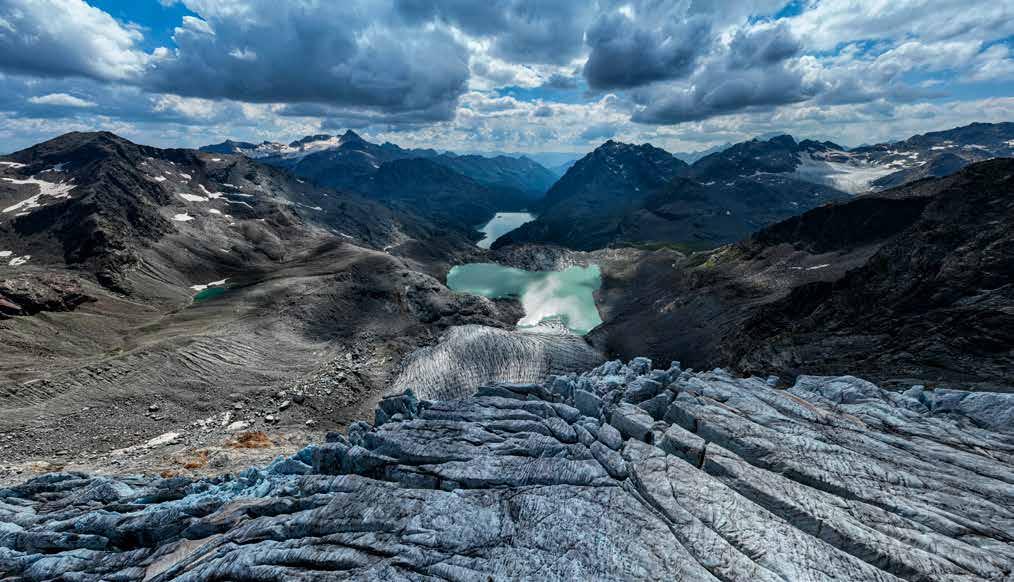
Anyone who hikes in the mountains doesn’t need to see it in graphs. They see it in the glacier that retreats a few meters every summer, in the moraine that stands out like a scar, in the mountain hut that had to change its water intake because the snowfield above it is gone. The mountains tell us straight to our faces: they’re changing—and fast. Yet our minds struggle to process it. We know, but we don’t act. Why?
The answer is cognitive, even before it is ecological. Our brains evolved for hunting and gathering, for fleeing from predators—not for reacting to slow, diffuse threats that unfold over decades. It is sensitive to rapid changes in sound, light, and temperature, but if the change is gradual enough, it simply doesn’t perceive it. It’s the metaphor of the boiled frog: thrown into water that’s already hot, it jumps out; if the temperature rises slowly, it adapts until it dies.
The metaphor is rhetorically effective but scientifically false: frogs, being ectothermic animals, jump out long before they’re cooked. But it works perfectly on us. Scientists warn that, physically speaking, global warming is happening extremely rapidly—at an unprecedented rate. But perceptually, it isn’t fast enough to jolt us awake. If we could spend just one day in the year 2100, we’d return so shaken that we’d do whatever it takes. Instead, we remain asleep in a burning bed.
There is a second short circuit, and it feeds off the first. The same brain that fails to anticipate slow-moving threats is programmed to chase immediate rewards. This is intertemporal discounting: the value of a reward erodes the further we project it into the future. An egg today, not a chicken tomorrow. For our ancestors on the savanna, this was pure wisdom: consume calories immediately, escape danger immediately. Today, that same instinct leaves us bound hand and foot to an environment designed to constantly hit the dopamine button: notifications, likes, endless feeds, shortcuts at our fingertips. And a brain accustomed to wanting everything right away is the least equipped to worry about a glacier that will disappear in thirty years or a climate threshold we’ll cross by the end of the century. The climate crisis demands exactly what we’re least capable of doing: thinking long-term for future generations.
So, while Europe is experiencing yet another record-breaking heat wave, there are still those who cry “alarmism” and take issue not with the 40 degrees, but with the bright red on the weather maps. And there are those in high places who deny it: the president of the country that has historically contributed more than any other to global emissions dismisses the climate crisis as a hoax. But how is that possible?
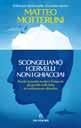
Matteo Motterlini is a Ski Instructor and Full Professor of Philosophy of Science at Vita-Salute San Raffaele University in Milan, where he directs the Research Center in Experimental and Applied Epistemology. He is the author of Let's Thaw Brains, Not Glaciers. Why our minds are the biggest obstacle in the fight against climate change (Solferino Libri, 2025).
In the 1950s, psychologist Leon Festinger studied a cult that expected the end of the world to come on December 21, 1954, only to be saved at the last minute by an alien spacecraft. When the prophecy failed, the followers did not lose their faith—they strengthened it. The catastrophe had been averted thanks to them. This is cognitive dissonance: when reality contradicts what we believe, we often don’t change our minds—we change the narrative. It works the same way with climate change. Admitting that our actions are fueling the crisis means acknowledging that we are part of the problem—a narcissistic wound that’s hard to swallow. It’s easier to tell ourselves, “It’s summer; it’s always been hot!”—confusing today’s weather with climate trends spanning decades.
Furthermore, as glaciers retreat, the world is also squandering the most precious resource needed to stop them: trust among nations. Wars devour the future twice over—by increasing emissions and destroying the cooperation needed to reduce them. Four years of Russia’s invasion of Ukraine have produced approximately 311 million metric tons of CO₂ equivalent—nearly as much as Italy’s annual emissions. And the global military sector accounts for about five percent of worldwide emissions. But the worst damage is the erosion of international law and the credibility of commitments. If a country suspects that others will stand idly by, why should it be the first to act to reduce emissions? Trust is conditional: it holds as long as everyone believes that others will also do their part. When that trust breaks down, self-interest prevails.
We must also be wary of the “small gestures” excuse. A stainless-steel water bottle and a cotton bag ease our guilt, not climate change: they’re a green alibi, a placebo for our conscience. What’s needed are collective, coordinated choices and a steadfast defense of trust—in institutions, in science, and among nations.
The good news is that trust isn’t imposed by decree—it’s built. In communities, in cities, even on trails. The mountains have always taught us this: at high altitudes, you can’t survive on your own. You tie yourself into a rope team, you trust your partner, and you depend on one another. It’s the same logic that can still save the climate— provided we stop playing the frog and finally recognize that the water is boiling.
GER FOR LIFE
A “journey of a lifetime” unlike any mountain climb or expedition
by David Bellatalla
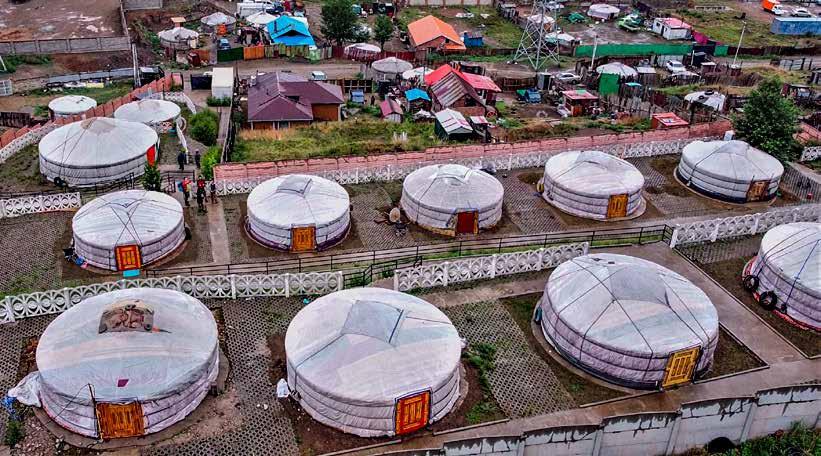
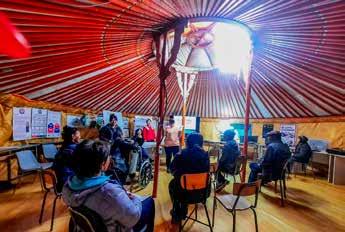
When solidarity and culture go hand in hand, the door opens to reexamining a paradigm about the importance of working together for a better world—a reminder that can also serve as an example for many. Ger for Life is a humanitarian project aimed at homeless single mothers and their young children—some of whom have various disabilities—who live in the Chingeltei district on the northern outskirts of Ulaanbaatar, the capital of Mongolia. This experience, which I have been living through for several years now, has marked a major turning point in my life, setting me on a completely new existential journey, rich in meaning and powerful emotions felt both in my body and in my heart. After undertaking many expeditions and long journeys and retracing the ancient caravan routes of Asia on foot, I never would have expected to embark on a new kind of journey like the one I am currently undertaking. My encounter with the single mothers on the outskirts of Ulaanbaatar—where these women go about their daily lives, just a few kilometers away yet at the same time light-years from the luxurious apartments in the city center—happened by chance, or perhaps it was already part of my life’s journey without my realizing it.
In 2013, it was no longer young children knocking on the door of Casa della Speranza—the shelter I had established with the Mongolian Red Cross and the nonprofit Need You ODV in Acqui Terme, designed to help the “street children” of Chingelte. Instead, it was young women seeking help to escape terrible realities of abuse and violence, to find shelter, survive, and provide a future for their little ones. The Casa della Speranza simply could not accommodate entire families who came asking for help, and as a result, I decided to create something that could address, at least in part, the situation we were facing: a humanitarian aid program.
Together with the Red Cross, we planned to purchase a plot of land in the Chingeltei district and build a Ger Camp (a “ger” is the traditional tent of Mongolian nomads)—a safe place where single mothers and their young children could find shelter and live in dignified conditions. The ambitious goal was to provide a small community, for two years, with a range of support services—including housing, basic necessities, medical care, guarantees for the children’s education, a safe place to raise them, and training courses to enable the young women to become financially independent.
To do this, we needed help—a helping hand. It took three years—marked by many sleepless nights and nagging worries—until Montura, along with many Italian volunteers, joined our project. That’s how Ger for Life was born, with its baking, sewing, and tailoring workshops.
BIO I DAVID BELLATALLA
Born in La Spezia, he lives and works in Mongolia. An anthropologist and researcher, he is an honorary professor at the Mongolian National University of Science and Technology and a member of the scientific committee of Asian Nomadic Cultures, the Mobility and Environment Study Center at the Universities of Florence and Parma, the CELSO Institute of Oriental Studies in Genoa, and the International Association for Mongolian Studies in Ulan Bator. He has been Mongolia’s Cultural Ambassador since 2022. Between 1987 and 1988, he conducted research in Nepal, Ladakh, and Tibet, and between 1989 and 1991 in South America. He led the “Ande 89” expedition—the first complete traverse of the Cordillera. Between 1992 and 1994, he led the “Iter Rossicum” expedition along the ancient caravan routes of Asia. Since 1994, he has been conducting ongoing research in Mongolia on nomadism and shamanism. In 2013, he received the Red Cross Gold Medal for his humanitarian work in the country. In 2018, he received the “Eugenio Montale” Literary Prize for his book *Sull’Altipiano dell’Io Sottile* (On the Plateau of the Subtle Self), published by Montura Editing.
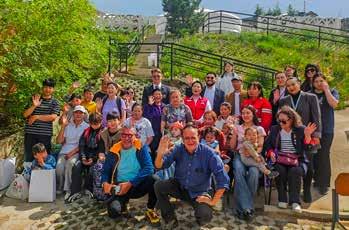
Despite the countless challenges we faced along the way, it’s not easy to convey just how deeply moving it was to be part of that human experience—one that helped us all grow together, both the staff and the young single mothers. A meaningful “journey of a lifetime.” We realized that helping to restore peace and joy to the lives of these young families was our most important mission.
Yet another two-year cycle has just come to an end, during which the community lived with us; the families have left the camp, taking with them not only the ger we gave them, but also the realization that they have found—in addition to economic independence—dignity and a real hope for the future. Seeing that renewed smile on their faces after so much suffering is proof of just how important the experience they had during the two years they spent with us has been.
Over the years, Montura has provided us with significant financial support through donations from the proceeds of my books. Culture has joined forces with solidarity; our shared efforts, perseverance, and collaboration have brought back smiles, joy, and a sense of purpose that has made hope for a better future possible.
For anyone interested in making a donation to the project: BANK TRANSFER payable to NEED YOU ODV; Strada Alessandria 134 (formerly Regione Barbato, 21), 15011 Acqui Terme (AL) Bank: Fineco Spa - IBAN: IT06 D030 15032 0000 00031 84 112. Important: Specify the GER FOR LIFE MONGOLIA project
Montura People is the brand’s column for Outdoor Magazine. It’s a space dedicated to people—the people of Montura. Anyone who feels, in some way or another, connected to the company’s values is part of its community. Their stories are gathered here so that they may inspire others.
photo:
PEOPLE FIRST
In an ever-changing market, Sportway continues to evolve while remaining true to its core values of quality and community
by Matilde Marelli
Founded in 1997, Sportway is one of Piedmont’s leading sports retail chains, with a network of megastores across the provinces of Novara, Verbania, and Vercelli. Thanks to an approach that emphasizes quality, a wide range of products, professional staff providing specialized sales service, and strong ties to the local community, the chain has grown to become a go-to destination for athletes and sports enthusiasts in Northern Italy. We spoke with Davide Parodi, founder and sole director of Sportway.
Sportway was founded in 1997. What was the idea behind the project, and how did you end up opening your first store?
It all started quite by chance. After graduating, I joined the family business, which was in a completely different field, but my passion for sports and the realization that the sporting goods retail industry was undergoing a transformation convinced me to start from scratch with a new project. I combined two elements: the focus on the shopping experience typical of small stores and the breadth of selection found in large retail outlets—which, however, often offer cheaper products in generic, self-service environments.
How important was the connection to the local area in the company's growth? Was being located so close to the mountains a strategic advantage?
Our connection to the local area is crucial. Our passion for the outdoors stems from the roots that bind us to the valleys, traditions, and values we grew up with. Our physical proximity to the mountains has led us to specialize in mountain sports, even though, as a large retail chain, we are open to all sports disciplines. It’s no coincidence that, alongside mountain guides and ski and snowboard instructors, our staff includes coaches and professionals from all sports.
Do you collaborate with local events, organizations, or groups? Is it important to you to help promote outdoor culture?
Absolutely yes, we partner with the most significant events in the areas we serve (Novara, Verbania, Vercelli, and, to some extent, Biella). These include the MEHT, the Lake Maggiore Marathon and Half Marathon, the Mezza Due Laghi, the Summer Games, the Strà Granda, the Trail dell’Oasi Zegna, the Domobianca Vertical Race, and many others. We believe that a local company has a duty to support high-quality initiatives taking place in its area of operation.
Valsesia is a wonderful valley that is experiencing strong growth in tourism; it has been a pleasure to offer our products and services to this region, where, in our opinion, the sports retail sector was lacking. Valsesia is strategically important to us because it allows us to form a triangle with Novara and Gravellona Toce, thereby establishing a presence in the northern part of Piedmont.
You've been in business for nearly 30 years. How has the sports retail industry changed, and what factors have enabled you to continue growing?
Everything has changed over the past 30 years, even though, in reality, change has always been happening. The difference lies in the speed, which has increased incredibly; today, transformations that used to take 10 years now happen in just one year. In a world that moves so quickly, our strength has been our ability to adapt rapidly without straying from the three pillars we believe in: product quality, staff professionalism, and store identity.
Consumers have also changed significantly in recent years. What differences have you noticed, and which categories or trends are driving the market the most?
The changes have been radical—just think of e-commerce, the proliferation of outlet stores, or brands’ direct-to-consumer initiatives. However, the transformation of the retail sector should not be viewed as a problem, but rather as a natural evolution. The real danger, in my view, lies in the fact that these new distribution channels often tend to sell the discount rather than the product itself, undermining all the effort companies have put into innovation, technology, and production. Quality risks mattering less than price.
What are Sportway's goals, and how do you envision the future of your stores?
Our company’s true assets are not our buildings, brands, or inventory, but rather our employees, who have earned the trust of our customers. We will continue to improve our retail locations, adapt our brand portfolio to meet expectations, and steadily expand our range of services—but all of this will be done in line with what we’ve done in recent years: valuing our employees, ensuring they have a good quality of life, investing in their training, and listening to them. I believe that the results achieved in recent years are the result of teamwork, and I see myself merely as the conductor; they are the musicians.
Last year, you opened your new store in Quarona (VC). What does this new opening mean to you? And why did you choose this particular location?
Name: Sportway
Website: sportway.it
Instagram: @sportwaymegastore
Owner: Davide Parodi
Year opened: 1997 Retail locations: six Total commercial square meters: 9,750 (excluding laboratories and logistics)
AlpineStandards began as a specialist in mountaineering apparel. With the goal of bringing style to functional garments without compromising on technical performance
by Claudio Primavesi
What’s the connection between a “grolla”— the traditional wooden cup from the Aosta Valley—and a 320-gram down jacket with 880 fill power? On the surface, none. Matteo Mendiola probably thought so too before founding the “for mountaineers by mountaineers” clothing brand AlpineStandards with Matteo Upinot. “In 2020, during the lockdown, I researched standard items of Alpine culture, cataloging them and noting differences and similarities, then I turned my attention to mountaineers’ clothing, and finally, a piece of mountaineering gear I was particularly fond of broke, so I started daydreaming about how I would have made it if I could have crafted it myself,” says Matteo. Now that idea has become a brand used by mountaineers and mountain guides around the world, and it will make its debut this fall in the windows of Ravanel, in the heart of Chamonix—the ultimate showcase for mountaineering gear. Or “mountaineerings,” as Matteo is keen to point out. “At its core is the idea of simplicity: anything extra increases the risk of damage, makes the garments harder to repair, and shortens their lifespan—even in terms of style, because they go out of fashion,” he adds, telling me that in his personal wardrobe he has about ten pieces that he rotates from season to season for use in various ‘styles of mountaineering.’ “Take the Jorasses, for example—it’s a 320-gram down jacket that disappears into your backpack and stays there most of the time, but you can wear it on a 4,000-meter peak in summer or as an insulating layer during a day of freeriding—these are all activities with a common thread, regardless of the season.” Matteo has made style the guiding force of his life. With a background in photography and art and a current career in the fashion world, when he decided to create his own technical apparel brand, he immediately thought of Matteo Upinot, whom he’d met while working in distribution for several fashion brands. “He told me he’d quit his job to try to become a mountain guide, and I realized it was a sign of destiny.” But the early days weren’t easy; after their initial tour of specialty stores, the two Matteos returned demoralized, but they didn’t give up. Year after year, the collection grew, and the partnership
with Outback ’97 marked a turning point. “It’s not easy to earn credibility; after all, it’s like roping up together—the product alone isn’t enough, but being distributed by Outback ’97—alongside other brands that share our philosophy, with whom we’ve established synergies—was important. So was building those connections with other like-minded companies such as Alba Optics, with whom we’ve created collaborations.” And the style? It’s about research, much like the pursuit of alpine standards from which it all began. “A pursuit that, unlike gorpcore— which moves from the mountains to the city—in our case starts in the city and heads toward the mountains, while keeping the technicality and functionality of the garments intact,” Matteo concludes. An example? The new BARMA platform (through which we select and develop our membranes together with specialized external partners),
where we’ve reimagined waterproofing and protection from the elements by prioritizing breathability and durability, using a ripstop fabric on the inside to extend the technical lifespan of the garments and enhance their value. After all, at the heart of AlpineStandards lies the very idea of restoring the true value to the items we use in the mountains. This is also why the brand does not participate in Black Friday: it’s not just a matter of brand value, but of principles.
>> AUTHENTIC STORES AND AMBASSADORS
AlpineStandards is headquartered in Champoluc (AO) and is distributed in Italy by Outback ‘97; its products are available in five specialty stores (12 starting this fall). The strategy also includes a direct-to-consumer approach. For a brand so closely tied to mountaineering and open-mountain sports such as freeriding and ski mountaineering, the relationship with authentic and credible ambassadors is essential. Two names stand out above all others: the mountain guides Matteo Calcamuggi and Federico Camangi.
Matteo Upinot
Matteo Mendiola
GO WHEREVER THE EXOSKELETON TAKES YOU
The three models in Hypershell’s X Series make the mountains more accessible to those who are less fit, have suffered injuries, or want to push the limits of distance and elevation gain
by Benedetta Bruni
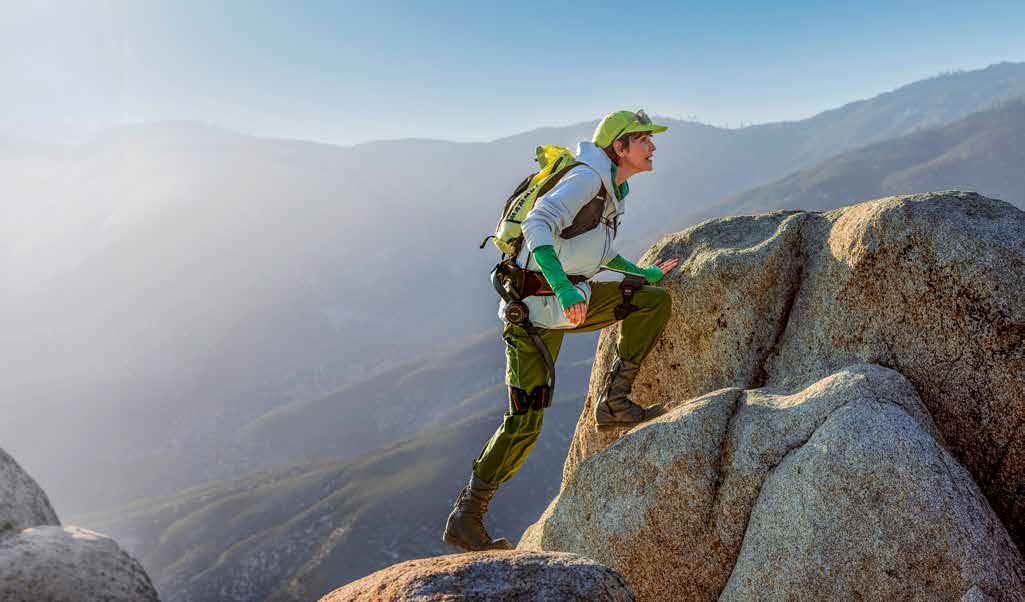
While curiosity—which drives exploration—is the primary force that motivates people to move, it is the body that ultimately sets the limits of what is possible. To compensate for what cannot be overcome by willpower alone, Hypershell offers smart exoskeletons that adapt to the terrain, the activity, and the individual’s exertion. The result is wearable technology that moves naturally with hikers, allowing them to go farther with less effort.
WHY AN EXOSKELETON?
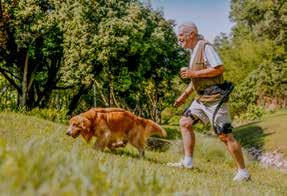
Adopting this kind of technology does not mean taking a shortcut or replacing the effort that makes the mountain experience authentic and meaningful; rather, it means enhancing human mobility, making every step easier, and breaking down barriers that would otherwise prevent the same level of accessibility—except through motorized vehicles. It is therefore a valuable ally both for personal use—for those who are older, those still recovering from an old injury, or those with other physical limitations—and in a professional context, namely for professionals who must stand for long periods in challenging environments, such as photographers, guides, or first responders, to name a few. It’s a product for everyone, so much so that it’s readily available in stores such as MediaWorld and Unieuro.
THE ADDED VALUE OF HYPERSHELL
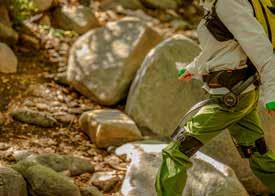
To be truly helpful, an exoskeleton should not merely serve as mechanical support. Instead, it must be able to fluidly follow the wearer’s movements without getting in the way or feeling like an artificial burden. It must understand the hiker, anticipate their stride, and offer no resistance; it must support the leg even on steep uphill slopes and become one with the body. This is exactly what the new Hypershell X Series does: fully synchronized with every movement, it offers immediate assistance—without any hesitation from the technology—so you can focus solely on the adventure you’re experiencing.
The intuitive design of the three exoskeletons that make up the line—the X UltraS, X MaxS, and X ProS, priced from 999 to 1,999 euros—is ensured by the combination of a system of 22 high-precision HyperSense sensors, which constantly monitor
and provide information on the surrounding environment and the user’s movements, and HyperIntuition, an integrated AI that processes sensor inputs and interprets the user’s movements in real time. Finally, a chip converts the AI’s decisions into calibrated and precise motor output, ensuring stable, long-lasting assistance that is naturally synchronized with every movement. The result is physical benefits such as an average heart rate that is up to 42% lower and approximately 39% less oxygen consumption. The exoskeletons offer three assistance modes to adapt to any terrain and user: Transparent, for minimal support and a nearly imperceptible fit in terms of weight; Eco, balancing assistance and energy efficiency; and Hyper, which unleashes the full power of the dual-motor system. Finally, the models are resistant to extreme temperatures (from -20 °C to 60 °C), water, and sand; they are constructed from a titanium alloy and carbon fiber, and can transmit activity data via a dedicated app.
INTEGRATION FOR GROWTH
The M.G.M. Group becomes PLAYSPORT S.p.A., with the goal of accelerating innovation, product development, and its presence in international markets
by Sara Canali
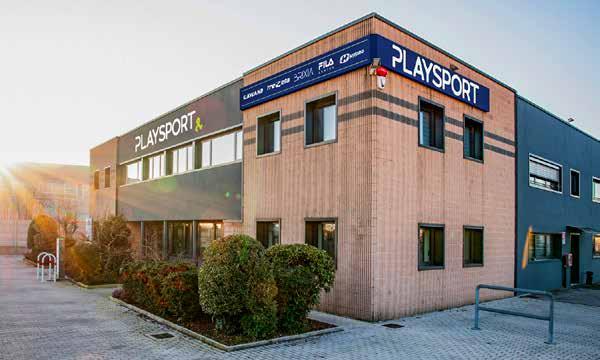
A strategic step in the Group’s growth and consolidation. Thus, the Italian company M.G.M., which specializes in the production of technical, outdoor, and professional footwear, has announced the completion of its corporate integration into PLAYSPORT S.p.A., effective July 1, 2026. According to the press release, the transaction aims to create a more efficient, solid, and competitive structure capable of supporting future development plans. The integration will, in fact, leverage the know-how developed by M.G.M. over more than forty years of operation, fostering new synergies at the organizational, industrial, and commercial levels. Objectives include strengthening investments in the Group’s brands, accelerating product innovation, and supporting expansion plans in international markets. The company also clarifies that the transaction will not result in any changes for customers, suppliers, and business partners. Contracts, orders, services, and partnerships will continue without interruption, maintaining the current points of contact and the standards of service that have distinguished M.G.M. over the years. To better understand the scope of this transaction, we interviewed Marco Foglio, the Group’s CEO.
What does this merger into PLAYSPORT S.p.A. mean for M.G.M.?
For M.G.M., this represents an organizational evolution that originated within the Group. Calzaturificio PlaySport S.r.l. was already part of our organization: this merger was chosen to simplify the corporate structure, make processes more efficient, and create an even more solid platform for future development. For customers, suppliers, and partners, very little changes in day-today operations: the people, values, expertise, and way of working remain the same. The difference is that today we can operate with a leaner organization and an even broader range of expertise.
What are the values and synergies between these two organizations?
We have always shared the same values: quality, reliability, innovation, technical expertise, and customer focus. M.G.M. brings over 40 years of experience in the design and development of technical, outdoor, and professional footwear. Calzaturificio PlaySport S.r.l. adds specific expertise in the field of personal protective equipment
"In the coming months, the main change will involve the way we work: a unified corporate structure will make project development easier and faster."
Marco Foglio, CEO of PLAYSPORT S.p.A.
(PPE), a strategic area that expands our wealth of know-how. This merger therefore allows us to pool our complementary expertise and approach the market with a simpler and more effective structure.
What will change in terms of production and distribution?
From an operational standpoint, there will be no significant changes. Production, distribution, orders, contracts, and business relationships will continue as usual. The benefits will primarily affect the internal organization, which will become simpler and more efficient.
How does a historic company like M.G.M. maintain its identity and continuity within a larger group?
M.G.M. remains the same company the market has known for over forty years. The merger does not alter the company’s identity, because PLAYSPORT was already part of the Group. The wealth of expertise, product culture, people, and relationships built over time with customers and partners remain unchanged. The merger does not alter the company’s principles, but allows us to enhance them through a more integrated organization and greater sharing of expertise.
Specifically, what will be the main changes over the next 12–24 months in terms of markets, investments, and product development?
In the coming months, the main change will concern the way we work: a unified corporate structure will make project development simpler and faster. We will continue to strengthen our presence in markets where M.G.M. was already recognized for the quality of its footwear. We will invest in innovation across technical, outdoor, and professional footwear lines. Our goal is to offer increasingly comprehensive solutions and seize new market opportunities where safety and protection are becoming increasingly strategic factors, while maintaining the continuity that has always characterized our company.
TAHU RUTUM, MOUNTAINEERING MEANS TELLING STORIES
For Symon Welfringer, who has just opened a new route on a 6,000-meter peak in the Karakoram, climbing a remote mountain is also a way to honor those who came before us
by Benedetta Bruni
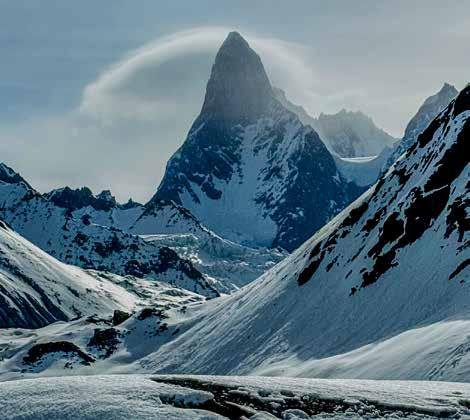
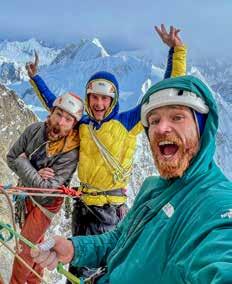
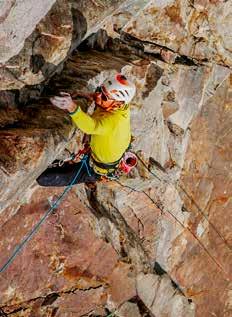
The mountains—especially at very high altitudes, as well as those that are remote and hostile to human presence—are made up of all those who have had enough courage—but also respect—to attempt to uncover the secret behind their impregnable nature. Because every peak, on its own, would certainly exist all the same, but it would be devoid of the folklore passed down by word of mouth, in a tapestry of stories that honor the memory of those who are no longer with us while creating new reasons for men and women who decide to test themselves in the presence of unyielding and merciless giants of rock. Heroic mountaineering, then, lives on when we revisit a story like that of Kyle Dempster, an American mountaineer who passed away in 2016, and who, in 2008 at the age of 25, was the first to attempt a solo ascent of the west face of Tahu Rutum (or Taa Hurutum in the local language) in the Pakistani Karakoram, though he never reached the summit; an ascent that inspired Sean Villanueva O’Driscoll, Siebe Vanhee, and the French climber Symon Welfringer of the Millet team, who have just returned from the summit of that same face after establishing a route that ascends 1,500 meters to reach 6,651: this is likely the first free climb at this altitude. “The Leopard of Higher Ground” was named in Kyle’s honor. Because for Symon, whom we interviewed upon his return from Pakistan, mountaineering means exploring, discovering the unknown, but also studying, teaching respect, caring for the mountain, and telling the stories of those who came before—whether by repeating known routes or opening new ones. And remembering that mountaineering is not tourism, as is often the case in the Himalayas.
>> THE INTERVIEW SYMON WELFRINGER, MOUNTAINEER ON THE MILLET TEAM
You've just returned from the Karakoram in Pakistan, where you opened a new route: can you tell us how it went?
Our goal was to find a wall suitable for free climbing at high altitude: until we set out, no route had gone higher than Eternal Flame (6,251 m), also in Pakistan. While evaluating the project, we came across the story of Kyle Dempster, an American mountaineer whom my partners knew and who had attempted the ascent in 2008, alone. His story is incredible: he was just 25 years old and spent 23 days on the face in complete solitude; when he was forced to descend, he was taken to the hospital with a frostbitten finger, and apparently asked the doctors if he could stay awake while they amputated it. Kyle died in 2016, also in Pakistan, but he was the one who inspired us to attempt the climb again. So we put together a diverse team of climbers: myself, with high-altitude mountaineering experience; Sean Villanueva O’Driscoll and Siebe Vanhee, big-wall experts; and originally Pete Whittaker as well, who unfortunately fell ill during the approach and had to turn back. The expedition lasted about two months, 15 days of which were spent on the wall—a rather long time for big-wall climbing, where the duration usually doesn’t exceed five days. I believe ours is the first free climb up to grade 7b at this altitude. It’s certainly not the limit of what humans are capable of—there’s still a lot of untapped potential in our endeavor—but it was the route of our dreams, and when I consider the exploratory aspect, I’m very satisfied.
What are the challenges of climbing that high?
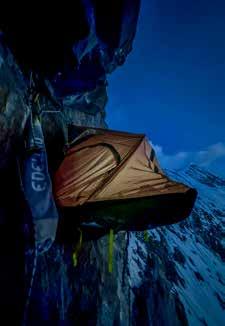
There weren’t any specific problems: we had already planned for 15 days’ worth of food, so we were set even when we were forced to stay in the portaledge for three days because of a snowstorm. On the other hand, two
weeks of climbing on the face is a significant physical and mental challenge. You’re testing your endurance; you don’t know when or if you’ll make it to the top, and there’s always a certain degree of discomfort to endure. Perhaps the main challenge is having to cope with your own fatigue as you exert yourself physically and are unable to fully recover your energy. It’s impossible to rest often, and at the same time, you have to fight fatigue and stay highly motivated to reach the summit. We were luckier with the weather—we had a 10-day stretch of good weather in a row.
In the 2024 short film produced by Millet, Le Cavalier Sans Tête, you and Charles Dubouloz talked about overtourism and how you felt “like you were at Walmart on the weekend” even on a 7,000-meter peak. What do you think is driving this “summit rush,” and why is there such resistance to exploring lesser-known places?
In my view, mountaineering today is divided into two distinct categories: it can be considered both a sport and a tourist activity. And the branch that is becoming increasingly popular is mountain tourism. It’s easy, therefore, to forget that it requires physical and cultural preparation, or that it’s necessary to do your research and study before even thinking about starting the climb. Today, especially in mountain ranges like the Himalayas, there are agencies that offer tourists the opportunity to climb mountains without any kind of professional training, using supplemental oxygen, just to experience the thrill of reaching a summit—and not for its exploratory or introspective nature. To draw a comparison with another sport: reaching the summit of Everest is now like racing the Tour de France on an electric bike and claiming to have performed on par with Pogačar. There’s nothing wrong with choosing a non-muscle-powered bike, provided, however, that you use it for your own comfort and not with any expectations of high performance. Yet from the outside, it’s perceived as achieving exactly the same goal. Tourists therefore feel as though they’re engaging in a sport just as if they were mountaineers. But their goal isn’t to open a new route or reach an unclimbed peak: what matters is having made it to the top. And social media, which acts as a sounding board, validates their approach. Following this logic, our expedition to Pakistan is by no
From left: Sean Villanueva O'Driscoll, Symon Welfringer, and Siebe Vahnee
means on the same level as reaching Everest with oxygen and sherpas in tow. This also conveys the message that anyone can go mountaineering under certain conditions. We—and by “we” I mean the professionals—should explain that it doesn’t work that way, that the athletic component still exists: the one built on preparation, study, and goals. But agencies take advantage of this and sell an experience that turns the mountains into a playground for tourists. For everyone to have access to the highlands, there must first be awareness, respect, and education.
In light of what has been said, do you think there is still such a thing as the unknown in mountaineering today?
Yes, there are still many unexplored places. Tahu Rutum is one of them: there are no agencies to help with logistics or getting to base camp. It becomes a full-fledged expedition, requiring preliminary research and planning. Today, just as in the past, there is still so much to discover and draw inspiration from, and I don’t think I’d be any happier if I’d been born 40 years ago. Much depends on each person’s goals: the difficulties increase with altitude, while at the same time the range of options decreases. On the other hand, discovering the unknown isn’t necessarily tied to a specific altitude. I like the idea of reaching as high as possible, but I don’t care whether I’ve reached 8,000 meters or if I’m just a little lower but on a lesser-known mountain. If I climb a peak that hundreds of people have climbed before me—even if it’s with fixed ropes and without supplemental oxygen—I lose all interest, as well as the values I uphold and the very reason I climb. If my goal is to seek out the unknown, rather than following well-trodden paths and tracks, I prefer to go somewhere where I’m not putting myself in danger. By this, however, I am not referring to the historical value of repeating a route: retracing the Bonatti route on the Matterhorn, for example, remains to this day one of the greatest feats a mountaineer or climber can attempt.
What are these values you're talking about?
they leave a footprint and, as a result, detract from the experience of those who come after. For me, sustainability means taking care of the mountains, leaving no trace of your passage, leaving behind as little gear as possible, and not spoiling the experience for others. If someone wanted to repeat one of our routes, I’d want them to experience exactly what we did. Another value is exploration: it’s true that many places are already wellknown, but you can learn more by asking others and studying the history of mountaineering. That’s how we discovered Kyle, and it’s also why we chose to name the route in a way that would shed some light on a young man who was a pioneer on this face. That’s the beauty of mountaineering—being able to tell new stories but also to bring others back to life, to remember the incredible people who came before us. The very act of repeating routes is a great way to talk about the past and to offer an interpretation of the mountain that goes beyond mere performance.
How does Millet support you, and how does it align with your approach to mountaineering?
The first is sustainability. The problem with high-altitude tourism is that there are so many people, porters, infrastructure, and logistics involved that
Next year will mark 10 years since Millet and I started working together. For an outdoor athlete, it’s not always a given to work with the same brand for so long. What I appreciate most is that we have a personal relationship: we’re very close geographically, which allows me to meet the people who work for the brand in person. I always say that when you talk to real people—not through a computer—you can get real things done. I’m also directly involved in marketing, testing, and product development; I can share my experiences with prototypes on expeditions and how the gear performed for me. For the Tahu Rutum, for example, I brought a prototype of a backpack that will be added to the big-wall lineup, and more generally, we can work together to develop products tailored to my specific needs. That’s what I look for in a sponsor: not someone who funds my trips and congratulates me when I reach the summit, but people with whom I know I can have a genuine exchange and a human connection.
THE MOUNTAINS OF ITALY BY FAIR MEANS
Between June and July, Hervé Barmasse traveled nearly 5,000 kilometers exclusively by bicycle, sailboat, and on foot to connect all the highlands of the peninsula and its islands
by
One month to reach the highest peaks in every Italian region and cross the peninsula on foot, by bicycle, or by sea, relying solely on one’s own strength. Hervé Barmasse’s Endurance-Italia project was all this, but also much more, because it united Italy’s highlands— as well as its islands—with the mainland in a single grand journey, thanks to Giovanni Soldini’s sailboat and the nautical miles traveled together. And furthermore, a shared journey that brought together mountaineers, passionate runners, and simply curious people who answered Hervé’s call and joined him for part of the journey on foot or by bike, starting from the mountains of Sardinia and Sicily, then passing through the Apennines and the vast beech forests of Central Italy, all the way to the glaciers of the Alps. If we consider only the portion covered on foot or by bike, the numbers speak for themselves: 4,250 kilometers and 81,000 meters of elevation gain. After completing this incredible adventure, we asked Hervé to tell us a little more about it.
Is there a mountain or region that has surprised you more than any other?
Mount Etna made a huge impression on me. In recent years, I’d mostly visited it in the winter; this time it was active, and the guides decided not to climb to the summit. Just being there, facing a living mountain, was something special. The Apennines also surprised me. Pollino, Serra Dolcedorme… technically straightforward mountains, but with extraordinary landscapes that at times remind me of Switzerland or even Colorado. In the Alps, on the other hand, my discovery was Ortles. I’d never climbed it before, and it truly won me over. It’s a mountain I’d recommend to anyone who loves mountaineering.
Let's start at the end: what was it like coming back after this experience?
It went well, although I would have liked to have had a little time to let everything I experienced sink in, put the notes I jotted down during the trip down on paper, and reflect on this experience. Instead, my return was rather hectic, with interviews, meetings, and previously scheduled commitments. I still hope to be able to tell the whole story, though, because I wouldn’t want to lose the memories of such an intense adventure.
Let's take a step back. How did this project come about?
It stems from the desire to combine sports with the discovery of our region. Italy has a unique feature: a veritable backbone made up of mountains. It begins in Sardinia, passes through Mount Etna in Sicily, runs the entire length of the Apennine Range, and connects with the Alps before reaching Trieste. From experience, I knew that every region has a very deep connection with its own mountains—a sort of identity-defining bond that can be felt everywhere, from Barbagia to the slopes of Mount Etna, all the way to the Apennines. The idea, then, was to tackle a challenging journey relying solely on my own strength, but also to rediscover a country that, despite my many travels, I still know far too little about. And then there was the desire to share part of this experience with all the people I met along the way.
How did you prepare for this adventure?
Although I started with a good athletic foundation, I had to focus my training primarily on the cycling portion, because the average distance was about 150 kilometers with 2,700 meters of elevation gain each day, with virtually no rest breaks for a month. The two days spent on the boat weren’t really a chance to recover, but it was a wonderful experience—both from a sporting perspective and from a human and cultural standpoint.
HervéBarmasse
After traveling all across Italy, what did you find our mountains from an environmental perspective?
Bad. The first thing that struck me was seeing streams and rivers that were practically dry. And we’re talking about just a few weeks ago. I wondered what might happen if there were another couple of heat waves like the one we experienced during the trip. Even high in the mountains, the signs are clear. On Mont Blanc, climbing the Italian route, I saw the effects of climate change with my own eyes. You constantly hear seracs collapsing and rockfalls; you can sense that the mountain is undergoing profound changes, even if it will be able to adapt. We are the ones at greatest risk, because without the water resources they provide, it will be difficult to imagine our future.
Have you had a chance to talk to people who live in the highlands? What was your impression?
Everyone is noticing the same changes: higher temperatures, less snow, and mountain farming facing increasing difficulties. Many people are choosing
Sara Canali - photos by Valentina Celeste and Luca Rolli
to move elsewhere. At the same time, tourism to the mountains is on the rise, especially during heat waves. This is a positive development, but it also highlights how many destinations are still unprepared to handle these influxes. There are many questions, but still few answers.
How did you handle the logistics of the trip?
I drew inspiration from projects like those of Kilian Jornet. I had a small team following me in a camper van: it served as a base where I could change clothes, rest, and document the trip. I didn’t want to rely constantly on hotels or lodging facilities because that would have taken away from the sense of adventure. We also had a tent just in case, but in the end, we didn’t need to use it. The goal was to travel as simply as possible.
Another important part of the trip was the sea crossing with
years ago, when he invited me aboard his racing boat. This time was different: we had time to talk and exchange views on the mountains, the sea, climate change, and future projects. It was like having a mobile retreat as we traveled between Sardinia, Sicily, and Calabria. Once again, I learned so much.
What will happen next? Will this journey become a book or a documentary?
I have the idea. It could become a book, a documentary, or a series, because I’ve gathered so much material. Usually, when I finish a project, I immediately start thinking about the next one. This time, though, I think it’s important to pause and turn everything I’ve experienced into something
MONTALENT: WHEN THE MOUNTAINS MEET THE DESIGNERS OF TOMORROW
The first phase of the project—a collaboration between MagNet, Outdoor Magazine, the Politecnico’s School of Design, and the Alpi+Milano association—has come to a close at the Bovisa Campus of the Politecnico di Milano
by Claudio Primavesi
From June 8 to 12, the School of Design at the Politecnico di Milano became the Alpine Design Base Camp. And this is just the first step in a new journey that MagNet and Outdoor Magazine have embarked upon in collaboration with the School of Design at the Politecnico di Milano and the Alpi+Milano association. This is the MonTalent project, a platform where the world of mountaineering and the outdoors meets the ideas of future designers to explore new paths together. The initiative was incorporated into the Industrial Product Design degree program under the name “MagNet Interdisciplinary Workshop.” For five days, the Bovisa Campus hosted a seminar led by Aldo Faleri, professor of Alpine Design and creator of the project, assisted by Benedetta Cabras and Francesca Rinaldi with support from Anna Checola and Marco Carrara, and strongly championed by Venanzio Arquilla, coordinator of the Industrial Product Design degree program. Twenty-three students, now nearing the end of their studies, worked on a theme proposed by our editorial team: redesigning the outdoor experience through “hiking,” a segment of the industry that is currently experiencing strong growth.
THE STUDENTS’ PROJECTS
Applying the School of Design’s project methodology combined with their fresh perspective, these future designers—who are passionate
mountaineers, climbers, and hiking enthusiasts—developed 12 innovative product and service concepts in the areas of “Movement/Transportation” and “Sleep/Shelter,” designed for different types of hikers. The reference routes included the relatively easy and classic Camino de Santiago and Via Francigena, as well as the challenging GR20 (Grande Randonnée 20) trek across Corsica and the Haute Route des Alpes, integrating sustainability, safety, and new technologies. Some have focused on making products such as footwear, clothing, backpacks, and first-aid kits more specifically tailored for hiking; others have turned their attention to specific user groups, such as children and dogs, who are increasingly present on these types of outings; and still others have dedicated themselves to optimizing or introducing features and aspects that are ancillary to walking but essential for fully enjoying this type of experience, such as rest, personal hygiene, and human and cultural exploration.
SECOND EVENT IN THE FALL
MonTalent will continue in the fall with a second event, during which a select group of mountain and outdoor companies will have various opportunities to meet and engage with students from the School of Design and, more broadly, the entire Politecnico, through presentations, product testing, and hands-on activities.
Alessandro Gogna during the lecture he gave on campus as part of the MonTalent Workshop
>> THE INTERVIEW
ALDO FALERI, HEAD OF THE ALPINE DESIGN PROGRAM, POLITECNICO OF MILAN EVENTS
“There are no educational initiatives at other Italian or European universities focused on mountain and outdoor design”
How did the idea for MonTalent come about?
MonTalent, an acronym for “Montagne di Talenti” (Mountains of Talent), stems from an idea that has now taken root within my “Alpine Design” workshop course, which I have been leading for seven years. It is a program in which we develop concepts for products and services for the mountains, viewed as a territory of great value for both production and cultural experimentation, which designers must approach with awareness and knowledge.
As far as you can recall, had you already organized similar initiatives at the Politecnico, or at least workshops related to the design of outdoor equipment?
At the Politecnico and the School of Design, there have never been ongoing programs like MonTalent, except for sporadic, short-term specialization courses—and certainly none with such a broad scope. Together with representatives from MagNet, the workshop’s sponsor, we devised a broad-ranging thematic project rather than a very narrow brandfocused one, as is typically the case with this type of initiative.
Are there any similar initiatives elsewhere?
We have conducted our research, just as we did for the Alpine Design course, and to date there are no other initiatives at Italian or European universities that are as diverse and multidisciplinary as ours when it comes to mountain-related topics, capable of incorporating traditional design fields such as product design, communication, and fashion.
How are the two phases of MonTalent, the Workshop and the Village, structured?
They are two aspects of the same project, even though they did not take place simultaneously in this first edition. In the future, we’ll need to work toward having the Workshop accompanied by the Village—a sort of experiential campus where brands will be invited to showcase their products and share the creative and production stories behind their “iconic” items. This year, for example, many of us participated in the Activation Days organized by MagNet in Riva del Garda, and afterward, some of the participants took part in the Workshop. I hope that in the future, these two activities will become increasingly interconnected: the Village could serve as a testing ground for materials and products, while the Workshop could foster the creative evolution of the outdoor experience.
Was the workshop open to students from across the entire Politecnico or only to those from the School of Design? Did participants need to have been enrolled for several years, or could first-year students participate?
Twenty-three students participated in the workshop; they were selected by the tutors through a call for applications posted on the Politecnico’s platform and organized by the School of Design. For this inaugural edition, third-year students were invited—those nearing the completion of their bachelor’s thesis and strongly motivated by a deep passion for the mountains.
Were there any international students as well?
Yes, certainly. The Politecnico is now the most international institution in the field of design in Europe and around the world. That is why the presence of Erasmus students—there were five in total, including both European and non-European students—is significant, even though they were busy taking their final exams before returning to their home countries; the majority of participants, however, were Italian.
Mountaineers such as Alessandro Gogna also participated in the workshop: how important is this type of event?
The presence of industry stakeholders is always important, as it brings experiential value related to their own activities, material testing, and insights into future scenarios for the mountain world, its people, and its products.
Can you share an anecdote from the workshop?
Alessandro Gogna and I had thought of organizing a special day: stepping out of the classroom and leading the students to experiment… What could be simpler than having everyone take off their shoes and walk barefoot around the school, experience different sensory
sensations, overcome prejudices and fears of inadequacy, and feel free? So that’s what we did, much to the amazement of our colleagues and classmates. This experience sparked the desire to organize a special day on campus, which we’ll propose to the administration, titled “Barefoot on Campus,” a play on the title of the famous Hollywood movie.
The Politecnico is a prestigious institution: How many people pass through the campus every day, and where will the Village be set up?
Daily foot traffic is estimated at a few thousand students who frequent the Campus, including those attending classes and those who come to the School to work in the labs, study, or use the library. For this reason, the Village will be set up in the heart of the Campus, in the main building, B2, in the entrance area leading to the various floors of classrooms.
Alpi+Milano also organizes other events related to design and mountain culture: What are the upcoming events?
Alpi+Milano was born from an idea of mine, together with my friends Adalberto Muzio and Armida Armellini, with the goal of supporting young designers and videographers who, like us, share an overwhelming passion for the mountains. We provide them with opportunities for visibility and experimentation, such as the one we’ve created with you at MagNet, which in the future will certainly become a traveling event at other major national and international universities. The association’s next major event is the CORTALP contest/festival (cortalp.it), now in its fifth edition—free and open to students and those under 35—born from a collaboration between PoliMi and the CAI. Every year on December 11, with the prestigious “Manlio Armellini” Award, it brings hundreds of students to take center stage at Palazzo Lombardia with their mountain-themed short films, and offers the winners their first ascent of a 4,000-meter peak in the Alps. At the same time, we are accepting submissions for the ALPI Design Awards 2026 (alpidesignawards.it), the international award for mountain-related projects and products—now in its second edition—which honors architects, designers, and companies in the sector. Last year, among others, Ande was honored for its “Exploral” snowshoe, and a lifetime achievement award was presented to Gioacchino Gobbi of Grivel.
You're in charge of the Alpine Design course: Can you tell us what it's about?
My “Alpine Design” course was inspired by my observation of the curriculum at the Politecnico and other major universities, which revealed that the topic of the mountains was never addressed. That’s why I developed the course and presented it to the school, which immediately supported its launch. Over the past two years, we’ve had a steady enrollment of about 50 students—a great success for an elective, experimental course that aims to reach great heights.
How did your passion for the mountains begin?
Like for many people, my love for the mountains began thanks to spending time with my parents. Before them, there was my grandfather, who, in the early 1900s, had started traveling from Milan—as was customary back then—by coach to reach the Alpine resorts. In my case, Valsesia was my second home: I spent every summer there, made my closest friends there, and tried my hand at activities like rock climbing, skiing, canyoning, and working on the mountain pastures alongside my peers. This is the source of my deep respect and admiration for those who live and work in the mountains.
What’s your best memory from the mountains? And your worst?
My best memory is definitely my first encounter with a legendary figure of the mountains: In 2018, I met Reinhold Messner, before deciding— with absolutely no experience organizing public events—to bring him back to Milan for an evening with more than 1,200 people, over 20 years after the legendary event at Milan’s Palazzetto dello Sport in 1982, which drew 8,000 attendees. My saddest memory is of the many friends I’ve lost: not just “professional” mountaineers, but also dear friends who passed away while carrying out their most humble and simple work—mountain guides, ski instructors, and park rangers.
ROCK MASTER 2026, 40 LEGENDARY YEARS EVENTS
From October 2 to 4, the one-of-a-kind event in Arco, which gave rise to climbing competitions, will celebrate this historic milestone with plenty of opportunities for businesses and the public
Rock Master is one of the most iconic and long-running events in the world of sport climbing. Founded in Arco (Garda Trentino) in 1986 with the first edition of Sport Roccia, it has helped shape the history of modern climbing and remains an international benchmark for athletes, enthusiasts, the media, and brands in the industry. The 2026 edition celebrates a historic milestone: the 40th anniversary of the first event.
The competitions will take place from October 2 to 4, 2026, at the historic Climbing Stadium in Arco, one of the world’s first permanent artificial facilities built to host high-level climbing competitions. Since 2021, the Climbing Stadium has served as the national training center for the Italian Sport Climbing Federation and as the training base for the national teams and Olympic athletes.
WHY IT'S A SPECIAL EVENT
Rock Master is considered one of the events that has had the greatest influence on the evolution of sport climbing. Among the innovations introduced throughout its history are:
• development of new competition formats;
• the emergence of modern parallel speed competitions;
• Use of the speed wall in Arco as a benchmark by the International Federation and the Olympic Movement. Today, Rock Master is recognized as one of the symbols of climbing culture worldwide.
ARCO, HOME OF CLIMBING
The connection between Rock Master and Arco is an integral part of the event’s history. Over the past forty years, Arco has become one of the world’s most famous climbing destinations, so much so that it is internationally recognized as the “Home of Climbing.” The event is therefore not only a sporting competition but also an opportunity for the international climbing community to connect with the Garda Trentino region.
AN IMPORTANT BIRTHDAY
The program for the 2026 edition includes some special initiatives to celebrate Rock Master’s first 40 years. We can’t give away any spoilers,
“I think that if sport climbing has reached the Olympic stage, it’s partly thanks to Rock Master. We can’t forget that modern parallel speed competitions were first held in the early ’90s right here in Arco.”
Angelo Seneci, Technical Director of Rock Master
but word is that former athletes who have left their mark on the history of climbing will be in attendance for the occasion.
ADAM ONDRA, A ONE-OF-A-KIND AMBASSADOR
Rock Master will once again feature Adam Ondra, one of the most influential climbers in the history of modern climbing, as its Event Ambassador in 2026. Ondra has a special connection to Arco and Rock Master, a competition he has always cited as one of the most significant events of his career. His presence helps strengthen the event’s international standing and foster dialogue with the global climbing community.
>> THE 2026 EDITION
Rock Master 2026 builds on and strengthens the path it has taken in recent years: from an iconic competition to a full-fledged climbing festival. For three days, Arco will host:
Competitions
• Lead Duel (a classic format and the hallmark of Rock Master)
• KO Boulder
• Speed Competition in collaboration with FASI
• The Fun Bloc, with two categories: U15 and amateurs
Festival and community
• Climbing Village with area expo
• Talks with athletes and guests
• Challenges open to the public
• Food Area
• Kids Area
• Evening events and music
• Yoga sessions for climbers
• Rock Adventure on the crags of Garda Trentino
In addition to the climbing community, the festival format is attracting an increasing number of families, curious onlookers, and visitors drawn to the outdoors, sports, and the active lifestyle of Garda Trentino. In fact, Rock Master is an event that perfectly embodies the “Italian Outdoor” spirit of the destination that hosts it. The audience consists of both indoor and outdoor climbers as well as spectators experiencing climbing for the first time, making the event appealing to both enthusiasts and the general public alike.
Visit the website
Adam Ondra Exhibit at Rock Master
FOCUS ACTIVE TRAVEL
photo by CMP
ITALY OUTDOOR OVERNIGHTS – FORECAST 2026 (mln)
THE NEW ERA OF OUTDOOR TOURISM
A report by Human Company and THRENDS details how this sector has evolved from a niche market to an economic pillar at the European level
by Sara Canali
EU tourism market 2025
New
In 2025, European outdoor tourism recorded over 413 million overnight stays, confirming its status as a structural component of the continent’s tourism economy and evolving from a niche activity into a dynamic driver of the industry. In recent years, this market has undergone a massive transformation, with campgrounds, glamping, van life, and accommodations nestled in nature becoming an increasingly central part of the travel habits of millions of people. The 2026 Outdoor Observatory, now in its sixth edition and produced by Human Company in collaboration with THRENDS, clearly captures this evolution and marks a turning point for the sector, transcending national borders and adopting a European perspective. The picture that emerges reveals a mature, resilient, and constantly evolving sector, with Italy consolidating its leading role and positioning itself among the key players in the European market. For 2026, forecasts indicate over 68 million visitors to our country, with growth driven primarily by international demand, which is increasingly drawn to experiences that combine nature, wellness, sustainability, and freedom. This trend reflects not only a shift in travel choices but a deeper evolution in how people view their free time and vacations.
EUROPEAN FIGURES FOR 2025
EU outdoor market 2025
The Big Six
Accordingto
413 millions). Among the top six markets,the one with the highest growth compared to2019 is Germany (+25.9%), followed by the Netherlands (+22.4%). The majority of overnight stays, more than two-thirds (excludingtheUK, for which 2019 data are not available), are accountedfor by the top four countries:France, Spain, Italy and Germany,theonly ones toreach and exceed the40 million mark.
It should be noted that the figuresfor Italy differ from those of Istat (campsites and holiday villages) as the Eurostat source classifies only properties with NACE code 55.3 under the ‘campsite’ category, excludingthose with code 55.2 (holiday villages).
According to the Human Company report, in 2025 the outdoor tourism sector in Europe and Italy showed solid resilience, consolidating post-pandemic levels. Across the continent, there were 413.2 million overnight stays at outdoor accommodations (campgrounds and vacation villages), representing a 1.1% increase compared to 2024 and a 7.3% increase compared to the pre-pandemic levels of 2019. Today, the outdoor sector accounts for 11.5% of total European tourism demand, a figure that demonstrates how campgrounds, vacation villages, and nature-based accommodations are playing an increasingly central role in travel decisions. The report highlights that the European outdoor market is dominated by the so-called “Big Six”: France, Italy, Spain, Germany, the Netherlands, and Croatia, which together account for 85% of total demand, though with varying trends. In this context, France remains the undisputed leader with 153.8 million overnight stays, while Germany stands out as the most dynamic market, with 25.7% growth compared to 2019—a sign of a strong acceleration in outdoor demand. Spain and the Netherlands show solid growth (+22.4%), confirming their status as resilient and well-organized markets, while Croatia stands out for its concentrated yet high-quality offerings, capable of maintaining high standards and steady growth. In this scenario, Italy consolidates its strategic role as an international hub for the European outdoor sector.
Source:
Source: Istat
OUTDOOR MARKET IN ITALY 2025
Data for Italy in 2025 point to a mature and international market. The year closes with 68.09 million outdoor overnight stays, down slightly (-0.6% compared to 2024) but still up compared to 2019 (+1.9%). The most interesting figure concerns the composition of demand: the sector is driven primarily by international tourism, which reaches 37.49 million visitors—equal to 55.2% of the total— representing a 13.1% increase compared to pre-pandemic levels. In contrast, domestic tourism is showing signs of a slowdown, with 30.6 million overnight stays and a 9.2% decline compared to 2019. This trend highlights how the Italian outdoor market is becoming increasingly competitive and attractive to foreign visitors, confirming its status as one of the most strategic segments. The northeastern regions (Friuli-Venezia Giulia, Veneto, Trentino-Alto Adige), as well as Emilia-Romagna, account for 46% of national outdoor tourism demand, with a total of 31.4 million overnight stays. In particular, Veneto is the undisputed leader in the international market, with 16.4 million visitor nights, accounting for 44% of Italy’s total international share. Tuscany is the preferred destination for domestic tourists with 5.3 million overnight stays (17% share), followed by Veneto and Emilia-Romagna.
FORECASTS FOR 2026
Forecasts for 2026 indicate that the Italian outdoor tourism market has entered a new phase of maturity. Outdoor tourism is expected to reach 68.36 million overnight stays, a slight increase from the 68.09 million recorded in 2025 (+0.4%). Following the strong post-pandemic rebound, the sector thus appears to have stabilized at high volumes, reaffirming its status as one of the most robust pillars of the national tourism industry. The most significant figure once again concerns the composition of demand. International tourism continues to be the main driver of growth, with 37.76 million overnight stays projected, accounting for 55.2% of the total. Compared to 2019, the international segment shows growth of +13.9%, confirming Italy’s growing appeal as an outdoor destination for international markets. At the same time, domestic demand remains essentially stable at 30.61 million visitors, though still below pre-COVID levels (-9.2%). From a regional perspective,
the Northeast remains the beating heart of Italy’s outdoor sector. The region will account for 31.54 million visitors, equal to 46% of the national total, further strengthening its strategic role. Veneto, Trentino-Alto Adige, Friuli-Venezia Giulia, and Emilia-Romagna continue to represent Europe’s leading hub for outdoor hospitality. Alongside the Northeast’s leadership, however, interesting signs are emerging from other parts of the country. The Northwest shows the strongest growth (+0.8%), while the South and the Islands continue to grow (+0.6%), signaling a gradual expansion of Italy’s outdoor tourism landscape. Central Italy remains more stable, showing a slight decline (-0.1%), suggesting the need to rethink competitiveness and offerings in certain regions. Thus, 2026 does not appear to be a year of quantitative expansion, but rather one of qualitative transformation. The Italian outdoor sector seems increasingly oriented toward a premium model, characterized by advanced services, glamping, sustainability, and integration with the local area. The challenge for operators and destinations will not only be to increase visitor numbers but also to capture an increasingly international, discerning, and experience-oriented demand.
ECONOMIC IMPACT
Alongside the demand figures, it is above all the economic impact that confirms the growing centrality of the outdoor sector within the Italian tourism system. According to the Outdoor Observatory 2026, in 2025 the sector generated a total economic value estimated between 8.85 and 12.93 billion euros, with growth projected for 2026 to reach a range of between 9.12 and 13.32 billion euros. The value generated is not limited to the direct revenues of campgrounds, vacation villages, and glamping facilities, but extends to a broad range of related industries, including restaurants, local businesses, tourism services, outdoor activities, transportation, and experiences tied to the local area. This growth is driven not only by an increase in visitor numbers but, above all, by the qualitative evolution of the offerings: Italian outdoor tourism is gradually shifting from a volume-based approach to a high-valueadded model, driven by premium services, advanced hospitality, and demand that is increasingly oriented toward personalized, sustainable, and highly experiential offerings.
WHO COMPILED THE REPORT
The Outdoor 2026 Observatory is the result of a collaboration between Human Company and THRENDS, two organizations that analyze the evolution of outdoor tourism in Italy and Europe from different perspectives. Founded in 1982, Human Company is one of Italy’s leading operators in the outdoor hospitality sector. The group manages open-air facilities, vacation villages, and resorts in some of the country’s most strategic tourist destinations, with a focus on innovation, quality of service, and the development of increasingly advanced hospitality models. In recent years, the company has established itself as a leading player in Italy’s premium outdoor sector. THRENDS, on the other hand, is a company specializing in strategic consulting, market intelligence, and data analysis for the travel, hospitality, and tourism real estate sectors. Through studies, observatories, and market reports, it supports operators and investors in interpreting the trends that are transforming the tourism industry. The Outdoor Observatory is now one of the most authoritative tools for analyzing the outdoor sector, as it combines strategic analysis, tourism flow analysis, and economic assessment of the industry.
THREE DAYS AMONG THE GIANTS
A self-guided hike through Mont Fallère, the Dzioule Lakes, and landscapes dominated by the 4,000-meter peaks: a trip to the Aosta Valley with Simond
by our correspondent Sara Canali
One valley, then another, and yet another. All in the presence of the giants—those four-thousand-meter peaks that encircle the region and reveal their majesty climb after climb. This is the Aosta Valley, and the three-day trek we undertook with Simond took us on a journey of discovery through one of the least-traveled areas of the northwestern part of the region, between the towns of SaintPierre, Avise, and La Salle, within the Mont Fallère area. Here we encountered very few people, some animals, many alpine pastures, glacial lakes, vast high-altitude meadows, and even an artist who has made the mountains his personal studio. Three days of selfsufficiency, with backpacks, tents, and trekking poles from the French brand’s Sprint line, freeze-dried food, and a filtering water bottle so we could drink directly from streams and rivers.
DAY 1
On the first day, we set out from the Vetan Plateau and followed the so-called “Path of Sculptures,” a roughly two-hour hike leading to the Mont Fallère Mountain Hut, along which more than 400 wooden sculptures by Siro Viérin—a sculptor from the Aosta Valley and the hut’s manager—are scattered. They are all handcrafted: some are monumental, others tiny and almost hidden, turning the climb into a sort of treasure hunt. You’ll encounter animals symbolic of the mountains—such as ibex, chamois, marmots, owls, and eagles—as well as shepherds, lumberjacks, farmers, traditional Aosta Valley characters, and historical figures like the Salassi and the ancient Romans. It’s a veritable atelier that creates a new, different world where you can lose yourself and blur the lines between reality and fiction. Even the structure of the Mont Fallère Mountain Hut itself reflects this philosophy. Built of stone and wood in the traditional Aosta Valley style by Siro himself, it has expanded over time, offering shelter and excellent cuisine to those who make it this far. It is not a tourist attraction, but rather an expression of the personality of an artist and a man of the mountains. Here we have lunch with polenta and a mixed platter of Aosta Valley cold cuts and cheeses, before setting off again, backpacks on our shoulders, toward Lago Morto, nestled at over 2,700 meters. Before reaching the lake, we decide to leave our backpacks at the foot of Monte Fallère—where we’ll set up camp that evening—so we can climb more lightly first to the lake and then to the mountain’s summit. A significant elevation gain packed into just a few kilometers leads to the summit, at an elevation of 3,061 meters, as well as to one of the
most spectacular panoramic viewpoints in the area, from which the view sweeps across the main peaks of the Aosta Valley: Mont Blanc (4,810 m), which dominates the entire northwestern sector of the region; Grivola (3,969 m), one of the iconic mountains of the nearby Gran Paradiso National Park; the Grand Combin (4,314 m), already in Swiss territory; and the Emilius massif (3,559 m), which overlooks Aosta. Even a young eagle came to circle above our heads, treating us to a beautiful spectacle. By the time we’d made our way back down, pitched our Simond Sprint-line tents, inflated our sleeping pads, and unrolled our sleeping bags, it was already time to make the most of the last few hours of sunlight to rinse off in the stream, put on warm clothes, and enjoy dinner together—a group of French and Italian journalists (just us)— as the sky turns red and the wind picks up, battering the tents. In the distance, the clouds have taken on strange, twisted shapes—like large, fluffy meringues.
DAY 2
We wake up at first light after a cold night, ready to tackle the long trek that will take us today to the Dzioule Lakes in the upper Vertosan Valley. Breakfast consists of spring water heated on camping stoves and packets of freeze-dried food, and then off we go, backpacks on our shoulders, with the campsite dismantled and packed up, careful not to leave any trace of our passage. From here, we set off toward Col Fenêtre (2,728 m), crossing a pass that connects the Vetan valley with the Flassin valley and offers sweeping views both toward the central Aosta Valley and toward the great peaks of the northwestern sector. Following Trail No. 13/TMF toward Col Vertosan, we cross the vast high-altitude pastures that characterize the western slope of Mont Fallère, before beginning the descent toward the Meanaz basin, entering the wild Vertosan valley. The trail descends to about 1,960 meters, winding through alpine pastures, streams, and meadows. Here we encountered some chamois and heard the whistles of numerous marmots. A quick break for a packed lunch, sheltered from the hot sun beating down more intensely, and then back up again, following the trail that leads to the Dzioule Lakes, located at about 2,540–2,550 meters. The two glacial lakes are situated in a basin dominated by Col Dzioule and represent one of the most secluded corners of the upper Aosta Valley. On the shores of the lakes stands the Claudio Bredy Bivouac, inaugurated in 2021—a modern, year-round facility that offers shelter to hikers and a magnificent view of the Gran Paradiso massif and the mountains of Valgrisenche. Here we meet
The overnight camp on the second day at the Dzioule Lakes
the first people of the day: a few young people who’ve come up to spend the night at the bivouac, while we set up our tents around the lake, ready to enjoy another sunset over the Alps.
DAY 3
The final day is dedicated to the return journey, featuring a gentle climb to Col Dzioule (2,520 m), followed by the crossing to Col de Bard (2,178 m), before the long descent toward Challancin, a hamlet in the municipality of La Salle, at an elevation of 1,626 meters. About four hours of walking for a total descent of 900 meters, enough to complete the loop and return to the valley. Although the route was shorter, we didn’t miss the chance to cross lush green pastures, say hello to the cows, and then, as we descended, admire how the landscape changes—the crops and the human presence, which becomes more prominent and shapes the forest and the meadows. We arrive in La Salle hot, tired, but extremely happy with all the beauty we’ve taken in over the past few days.
On the left, the summit of Mont
Below, sleeping bags Simond
PRODUCT HIGHLIGHT
On
the way, lightly
For Simond, 2026 marked a new chapter in its history, which began in 1860 in the mountains of Chamonix. The brand, part of the Decathlon Group since 2008, has redefined its mission around the concept of “Performance with Respect for the Environment” and expanded its technical scope to include trekking and backcountry skiing, in addition to mountaineering and rock climbing. This evolution is inspired by the “Alpine style” philosophy: lightness, simplicity, and responsibility. It is precisely within this rebranding framework that the new Sprint collection is positioned, offering a complete, ultralight, and highly technical kit for a fast and minimalist approach to trekking—which we had the opportunity to test over three days in the Aosta Valley.
SPRINT 2P TENT
MT900 UL 50L BACKPACK
A trekking backpack designed to combine low weight, comfort, and maximum ventilation. It features a curved, adjustable back panel with a tensioned mesh that promotes air circulation, complemented by dual-density foam shoulder straps and a lumbar belt, engineered to distribute the load effectively even after many hours of walking. Every component has been optimized to reduce weight, and the end result is a 50-liter backpack weighing just 880 grams.
A single-wall model made from Dyneema composite fabric, it represents the top of the line in the collection and combines extreme lightness with durability. Equipped with a double vestibule, it offers highly reliable performance, quick setup, and a minimalist, essential design. Designed for demanding treks, it reduces backpack weight without compromising protection. It weighs just 510 grams and is set up using trekking poles, which serve as the frame.
UL TREKKING SLEEPING BAG
Compact, lightweight, an designed for high-altitude trekking and bivouacking, the Simond Sprint UL is a sleeping bag developed for hikers who refuse to compromise on weight, pack size, and thermal performance. With a volume of just 6.2 liters and a weight of 665 grams (710 grams with the compression sack, size L), it offers thermal comfort down to 0 °C, with a temperature limit of -5 °C. At the heart of the design is the 900 cuin RDS-certified goose down filling, characterized by high loft. The internal “Z”-shaped chamber construction ensures even distribution of the down, minimizing the formation of cold spots.
Above, Trail No. 13/TMF heading toward Col Vertosan
Fallère
The Mont Fallère mountain hut in the background
“THE
LAND HOLDS ME”
Taking this quote from the writer Rocco Scotellaro as our starting point, we went for a walk in the Pollino National Park together with the people from Va’ Sentiero
by our correspondent Matilde Marelli – photo by Va' Sentiero
We are at the Luna Rossa restaurant, in Terranova del Pollino, a small town with fewer than a thousand residents in the province of Potenza, when Chef Federico Valicenti, while presenting the evening’s tasting menu, quotes Rocco Scotellaro, a writer and poet from Matera who, with a simple phrase, captured the deep bond between the people of Pollino and their land.
With its approximately 190,000 hectares spread across Basilicata and Calabria, the Pollino National Park is the largest in Italy and encompasses 56 municipalities. Established in 1993 to protect the Southern Apennines, it includes the Pollino Massif, the Orsomarso Mountains, and Mount Alpi, with peaks exceeding 2,000 meters, including Serra Dolcedorme (2,267 m) and Mount Pollino (2,248 m).
The park’s symbol is the Loricato pine, a relict species from the Ice Age that grows in Italy almost exclusively in these mountains. The biodiversity is also extraordinary, among the richest in the country: the Apennine wolf, golden eagle, red deer, roe deer, wildcat, and otter live here, along with numerous birds of prey and butterflies. From hiking to multi-day treks, from trail running to mountain biking, all the way to rock climbing, rafting, canyoning, and canoeing along the Lao, Raganello, and Frido rivers, the area offers endless opportunities to experience nature in an authentic way. It is no coincidence, then, that
Va’ Sentiero chose this setting as the venue for the second edition of the Va’ Sentiero Fest, held from July 5 to 17. This is the first hiking expedition festival that combines trekking, culture, and the discovery of new territories, as well as the stories of all the participants.
Catasta, a tourism and cultural hub located in Campotenese, provided essential support to the Fest. It manages tours of the Pollino area and plays a key role in promoting slow and sustainable tourism between Basilicata and Calabria. Here, hikers and cyclists can find information on trails, visitor services, e-bike and bicycle rentals, a bike repair shop, guided activities, and logistical support for exploring the area. Catasta is also one of the main bike points along the Ciclovia dei Parchi della Calabria and collaborates with guides, tour operators, local producers, and associations, helping to create an experience that combines sports, culture, and food and wine. It is thanks to this in-depth knowledge of the area that the company has partnered with Va' Sentiero to organize the Fest, providing services and local coordination.
With a length of 195 kilometers, an elevation gain of 8,645 meters, and an elevation loss of 8,649 meters, the Fest route—divided into 10 stages—started in Scalea and ended in Sibari. We participated in two of these stages.
A LESSON IN FORAGING
Among the many activities organized to explore the area from every angle, on Wednesday, July 15, San Lorenzo Bellizzi hosted a foraging excursion (the art of gathering wild food) led by Carmine Lupia, director of the Ethnobotanical Conservatory of Castelluccio Superiore (PZ). During the walk, participants learned to identify some of the most characteristic plant species of the Pollino region, including manna ash, domestic fig, catmint, clematis, elderberry, and broom. The excursion combined botany and local culture, exploring not only the culinary uses and properties of wild plants but also the traditions, folk beliefs, and stories that have linked them to this region for centuries.
It’s 8:00 a.m. on Tuesday, July 14. In Terranova del Pollino, in the province of Potenza, after loading our backpacks onto “Santos”—the van provided by Va’ Sentiero—and doing a quick stretching routine to wake up our muscles, we set off on our hike toward San Lorenzo Bellizzi, in the province of Cosenza.
After a long descent, the ascent begins—often along trails shrouded in vegetation—which takes the group several kilometers until they reach the ridge of Monte Sparviere (1,713 m), right on the border between Basilicata and Calabria, with a view of the Raganello Valley. It is right here that the Pollino National Park reveals one of its most authentic features: dozens and dozens of cows graze in complete freedom among the pristine meadows.
After a short lunch break, the second part of the stage begins, consisting mainly of well-trodden trails and long descents through the park’s woods until we reach San Lorenzo Bellizzi. In this small
Length: 13 km (+2 km)
Calabrian village of about 500 residents, situated at an elevation of 800 meters, the villagers give us a warm welcome: in the town square, they’ve prepared a traditional dinner for us, accompanied by traditional music, pizzica, and folk dances.
Length: 17.5 km
Elevation gain: 1,180 m
Elevation loss: 1,250 m
Difficulty level: E
Thursday, the 16th, marks one of the most spectacular stages of the Va’ Sentiero Fest. The hike begins with a long descent to the bed of the Raganello River, which the group follows for a few kilometers before climbing back up the slope that runs along the upper edge of the Raganello Gorges, amid breathtaking cliffs and stunning views. After a brief stop, the group sets off again, following an alternative route to the one originally planned: due to the high temperatures, Salvatore, the guide who led the entire stage, decides to extend the route by about two kilometers, opting for a more breezy and shaded path. After several kilometers of descent, they reach the valley floor, from which the final destination is already clearly visible: Civita, a village at an elevation of 450 meters. Thus begins the final part of the stage, an ascent leading up to the famous Devil’s Bridge, suspended over the Raganello Gorges at a height of about 250 meters and serving as the symbolic entrance to the village. Once you’ve crossed the bridge, you’ll face the final climb—short but steep—which leads to Civita’s central square.
THE CHARM OF CIVITA
On Thursday, July 16, the trip continued to Civita, a village that preserves Arbëreshë culture in Calabria. Guided by Enzo Filardi, the participants explored the historic center through stories, traditional music, visits to small museums, and conversations in the Arbëreshë language, connecting with the community’s Italian-Albanian roots. With its narrow alleys, characteristic “talking houses” (homes resembling human faces), and spectacular views of the Raganello Gorges, the village—despite being an increasingly popular destination for hikers—has managed to preserve its identity intact.
vasentiero.org - catasta.org
Rizzi
TERRANOVA DEL POLLINO - SAN LORENZO BELLIZZI
SAN LORENZO BELLIZZI – CIVITA
On the left, some moments of camaraderie during the San Lorenzo leg of the tour. Above, a majestic Loricato pine, the emblem of Pollino National Park. On the right, Civita's distinctive "Talking House"
SLOW TRAVEL, STRONG MARKET
In Italy in 2025, 7,936 new motorhomes were registered, representing an increase of 10.56% compared to 2024, while the European average remained at around 0.6%
by Sara Canali
"Resilient" is the word that best describes the European recreational vehicle market in 2025, according to data from the European Caravan Federation (ECF) and the German caravanning industry (CIVD).
The sector is, in fact, holding up well despite a challenging economic environment, with a trend that is now clearly split between growing motorhome sales and declining trailer (caravan) sales. In Europe, over 215,000 new vehicles were registered, of which approximately 161,000 were motorhomes and vans, representing a slight increase of 0.6% compared to 2024, while caravan registrations fell to 54,200 units (-11%).
This figure confirms a structural shift in consumer preferences toward more flexible vehicles that can be used year-round. Within Europe, Germany remains the leading market with 94,134 new registrations, followed by France and the United Kingdom. France recorded 33,504 registrations, essentially stable compared to the previous year, while the United Kingdom stood at just under 26,000 units, down 7%. Overall, 2025 is considered the fifth-best year on record for the European motorhome sector, a sign of a mature market that is still capable of selective growth, especially in the more compact segments.
IN ITALY
While the European picture shows stability, Italy stands out for its growth, which is more pronounced than the continental average. According to data released by APC, the Association of Caravan and RV Manufacturers, 7,936 new RVs were registered in 2025, representing a 10.56% increase compared to 2024. When including used vehicles, the Italian market exceeded 44,000 units in total, with a 6.05% increase in transfers of ownership—a sign of increasingly broad and diverse demand that is not limited to new vehicles. On the industrial front, Italy also remains Europe’s third-largest motorhome manufacturer, behind Germany and France, with exports accounting for over 80% of production, primarily destined for the markets of Northern Europe and the United Kingdom. In 2025, the Ministry of Tourism allocated 25.7 million euros for the creation of over 4,400 new RV parking spaces in 170 Italian municipalities, with the goal of expanding the national network dedicated to RVs and outdoor tourism. According to industry estimates, this investment could generate an economic impact of more than 370 million euros on local tourism.
SEE YOU IN PARMA
Scheduled to take place at the Parma Exhibition Center from September 12 to 20, 2026, in collaboration with APC, the Salone del Camper offers a unique vantage point on this sector. Today, travel on wheels meets increasingly relevant needs: freedom, connection with nature, flexible itineraries, sustainability, and even short trips in any season. These concepts reflect the very trends promoted by the Salone for its 2026 edition.
MORE SUSTAINABLE TRAVEL
Sustainability is a sensitive issue for younger generations, but it must be addressed without resorting to slogans. In the European Parliament’s 2024 Youth Survey, among 16- to 30-year-olds, the environment and climate change ranked as the second-highest priority for the EU over the next five years, cited by 33% of respondents; in Italy, that figure rises to 46%. In this context, modern travel is increasingly intertwined with the issue of sustainability. The RV is often seen as a vacation option that allows for a more widespread exploration of the country. According to the study “Campervan Tourism: The Economic and Environmental Impact of Campervan Travelers,” conducted by Ergo, a spin-off of the Sant’Anna School of Advanced Studies in
Pisa and featured at the Salone del Camper, recreational vehicles have a lower environmental impact than traditional forms of travel, with an estimated reduction of approximately 70% in CO₂ emissions, 64% in the consumption of fossil fuels, and 73% in water usage.
VALUES
The heart of this phenomenon is not only environmental, but above all practical and cultural. Traveling by RV means being able to adjust your itinerary in real time, reducing the rigidity of organized tourism. Added to this is a shift in perception: outdoor travel is no longer seen as a sacrifice of comfort, but as a balance between autonomy and technology. In fact, modern RVs incorporate safety systems, connectivity, and amenities that are increasingly similar to those of a small mobile home. According to a joint analysis by FAITA Federcamping, HBenchmark, and CISET Ca’ Foscari, in 2025, outdoor tourism in Italy reached 74 million visitors, with a total economic value of approximately 8.5 billion euros, while campsites accounted for 59% of the accommodation options used.
RETURN TO NATURE
For centuries, the tent has been a symbol of escape and freedom, but also of protection against the elements of the mountains for mountaineers.
A book traces its origins and phenomenology
by Claudio Primavesi
“A tent is more than just a shelter; it’s a porous membrane that allows us to glide, relatively unscathed, between the mundane, asphalt-covered reality of urban life and the romantic greenery of a scenic retreat. The tent is a refuge, both literal and ideological, an object through which we enact a fantasy of escape while clinging to the comfort of walls—whether made of nylon, canvas, or something else.” Sina Sohrab’s words introduce the reader to a history of the tent and, at the same time, a sociological analysis of its use. This excerpt is taken from the latest edition of Typologie, an independent publication series that analyzes everyday objects to understand their structure and meaning. Curated by four French designers, it was presented in collaboration with Ferrino during the exhibition “Typologie – The Camping Tent Exhibition” last April at the Fuorisalone in Milan. Typologie explores the history of the tent in mountaineering and the
phenomenon of camping from its origins but, above all, brings together a collection of images of historic tents photographed by Alberto Strada from various perspectives, thanks in part to the use of drones. “Both the die-hard mountaineer and the amateur camper use the tent as a means of escape: the former after averting the imminent possibility of freezing to death, the latter seeking to free themselves from the monotony of the workweek lit by fluorescent lights. But while the latter flirts with the dangers of the natural world, the former throws himself headlong into it,” concludes Sina Sohrab.
ACTIVE ARCHITECTURE
Rafaël Têtedoie, an independent designer, in a chapter featuring a three-way dialogue with historian and sociologist Olivier Sirost and Anna Ferrino, defines the tent as a “porous” object. The philosopher Vilém Flusser,
HISTORY IN 54 PRODUCTS
There are 54 tents photographed in Typologie. The first “mountaineering” tent was that of Edward Whymper, the conqueror of the Matterhorn, from 1865: it weighed 10 kilograms and had an A-frame structure, with canvas and crossed poles. In 1892, Albert Frederik Mummery introduced an A-frame model made of oiled silk, replacing the poles with ice axes and reducing the weight by 90%. In 1936, during a French expedition to Everest, fabric used in hot-air balloons—very similar to nylon—was used for the first time, while in 1964, Jack Stephenson’s Warmlite tunnel tent simplified setup. In 1975, Mark Erickson and Bruce Hamilton of The North Face
invented the Oval Intention, which could withstand winds of 200 kilometers per hour. Then there’s Ferrino’s Extreme 1, used by Reinhold Messner in Antarctica. The first true camping tent, however, was created in early 20th-century England by tailor Thomas Hiram Holding; it was a simple, thin silk sheet stretched over a rope, supported by sticks found in the woods and secured to the ground with stones. Jarl Reinhaldt Lönnqvist’s 1932 “Sopu” was the forerunner of dome tents, while Bill Moss’s “Pop-Tent” from the 1950s opens like an umbrella and requires no stakes.
Backpack, Ferrino, 1980
Antarctica, Ferrino, 1989–90
Urano 5, Ferrino, 1991–92
CURIOSITIES
Since the 1990s, tent production has shifted to Asia: factories spanning up to 100,000 square meters, employing 1,000 workers, and producing 1.2 million units per year for over 50 brands. These are well-organized and certified companies where production for leading brands is concentrated.
in comparing the tent to a boat’s sail, highlights a characteristic that might help us understand it better: “It is a fabric open to all experiences (open to the wind and the spirit) and preserves them.” The tent is a piece of “active architecture” that allows for circulation and exchange. At the root of the idea behind this object—whose etymology derives from the verb “to stretch” (a fabric)—lies socialization: being with others, exposed to judgment and scrutiny.
THE SEA, NOMADS, AND MOUNTAINS
The earliest traces of tents are linked to maritime history: sails and jibs were used on land as shelters, but even before that, they were part of the history of nomadic peoples, who have always used them. The fact remains that they first entered
our lives through mountaineering, starting in 1865 with the model used by Whymper during his ascent of the Matterhorn, and then through the concept of camping, which first appeared in the French press in 1903 but developed between the two world wars thanks to the introduction of paid vacations. Curiously, the first recreational tent models, in the early 20th century, were derived from those used in military encampments. What this object has certainly represented—and will continue to represent—is an idea of freedom. “The kind of freedom the tent offers is a temporary escape; a bubble of autonomy carved out against the backdrop of larger systems that remain firmly in place,” writes Sina Sohrab. Designers, industrialists, and sociologists also discuss freedom in the final chapter of *Typologie*. After all, who among us hasn’t
“The first Ferrino tent to be massproduced was the Cervino model in 1910. Even before Italy’s great economic boom at the end of World War II, people were already going camping, but it was still a rather rare phenomenon.”
THE FERRINO ARCHIVE
Ferrino’s historical expertise and physical archive were crucial to the creation of this book. For each object, Typologie seeks an industrial partner with a solid history, an accessible archive, and deep technical expertise: Ferrino possessed all of these, and in particular an archive that few brands can boast.
The project required the physical object to be rephotographed, and Ferrino’s tent archive made this possible. Among the items featured and photographed, the Antartide tent—which accompanied Reinhold Messner’s exploratory expeditions— could not be left out.
Globe, Ferrino, 1985
Vertical 2, Ferrino, 1987–88
Piramide Enea, Ferrino, 1986
Base, Ferrino, 1983
Anna Ferrino, General Manager of Ferrino
MAIN GOAL: BACKPACKING
Set out with a backpack on your shoulders and a pair of lightweight hiking shoes on your feet. For a multi-day trek where you’re self-sufficient, carrying as little as possible but without sacrificing protection and comfort.
On the following pages, we’ve selected tents, sleeping pads, sleeping bags, and accessories for fast & light adventures
This is a two-person tent designed for lightness and compactness.
Weighing just 1.6 kilograms, including the poles and stakes, it’s the ideal solution for those who want to reduce the weight of their backpack without sacrificing comfort and protection while sleeping.
The double-wall tunnel design ensures a good balance between interior space and quick setup, thanks to the pole insertion system that uses a sleeve. The mesh inner tent promotes constant ventilation, limiting condensation buildup overnight, while the ultralight, waterproof nylon outer tent with taped seams effectively protects against rain, wind, and sudden weather changes. The tent is complemented by functional details such as the zipper cover flap and the quick-release system, designed to facilitate setup and takedown during hikes.
SEA TO SUMMIT
TELOS EVO
MEASUREMENTS
C.A.M.P - + 39 0341.890117 - contact@camp.it
Designed not only for those embarking on multi-day hikes but also for bikepacking trips, Ferrino’s Blow 2 prioritizes lightness and practicality. Weighing just 1.65 kilograms and with a compact footprint, this twoperson tent is designed to be compact and easy to carry. The dome-shaped structure with 7001 T6 aluminum alloy poles ensures intuitive setup thanks to pre-connected, color-coded poles, while the double roof made of siliconized Ripstop nylon with taped seams guarantees effective protection from the rain. The inner mosquito net chamber, along with the ventilation flaps and two entrances, promotes air circulation and offers additional space for storing gear. Rounding out the features are the Fast Adjustment guy line system, the lantern hook, the waterproof tent bag, and the repair kit—so you can tackle any adventure with essential yet complete gear.
MEASUREMENTS
Length:
New for 2026, the Telos Evo by Sea to Summit is a three-season tent designed for those seeking the right balance between light weight (1.6 kg), protection, and comfort during treks and backpacking adventures.
The Tension Ridge structure optimizes interior space, increasing living volume and improving accessibility thanks to taller doors and a more functional layout.
The Apex Vent ventilation system, located at the top, promotes constant air circulation, helping to effectively reduce condensation. Among the new features, the recycled UltraSil LS fabric stands out, designed to absorb less moisture, dry more quickly, and maintain stable tension even in variable conditions. Designed for modern backpacking, the Telos Evo prioritizes practicality and performance without sacrificing comfort. Another key feature is the availability of a bikepacking version, ideal for those who want to optimize carrying capacity and pack size during bike trips.
MEASUREMENTS
MEASUREMENTS Length:
It’s the mother of all backpacking tents, a legend that has stood the test of time and retains its appeal.
The rectangular layout of this two-person tent maximizes interior space, offering ample headroom and two spacious side vestibules for storing gear. The tent body, made primarily of micromesh, ensures ventilation, reduces condensation, and provides protection from insects. With a minimum weight of just 1.36 kilograms, it is designed to offer maximum lightness without compromising stability and durability.
The DAC NFL poles ensure reliability even in variable weather, while the rainfly—featuring a PFAS-free waterrepellent treatment and taped seams—effectively protects against rain and moisture. The two StayDry doors with integrated rain gutters enhance protection from the elements. Inside, storage pockets, overhead compartments, and cable channels allow you to organize your gear and electronic devices efficiently. The system—featuring a central hub, unified poles, and a symmetrical design—makes setup quick and intuitive, ideal even after long days of hiking.
MSR
HUBBA HUBBA LT 2 PERSON
BLOW 2
NORDIC
TELEMARK 2.2 LW SALEWA LITETREK III
It is designed to offer the ultimate in lightness, compactness, and comfort for two people. Weighing just over one kilogram, it is an ideal solution for those who want to minimize the space it takes up in their backpack. The double-wall construction ensures a good balance between weather resistance, ventilation, and interior comfort, while the optimized design provides ample space for two people, including an area for storing gear. Made with top-of-the-line technical materials, it combines a siliconized ripstop nylon flysheet, DAC Featherlite aluminum poles, and ultralight aluminum stakes for a stable and reliable setup even in changing weather conditions. The ventilation system helps improve air circulation and minimize condensation. Among its most notable features are the quick-snap magnetic closure, easily adjustable guy lines, and the ability to convert the outer door into a small canopy to create additional sheltered space.
MEASUREMENTS Length:
Designed for trekking in alpine environments, the Litetrek III is a threeperson double-wall tent that combines protection, lightness (minimum weight of 2.6 kg), and compactness. Tested in a wind tunnel at the Technical University of Munich, it guarantees stability at wind speeds of up to 90 km/h. The semigeodesic structure offers a balance between weather protection, ventilation, and interior space, while the 100% freestanding design allows for easy setup even on rocky terrain or in alpine environments, where it is not always possible to use stakes and guy lines. Made with durable, waterproof materials—such as the 50D ripstop nylon outer fly and the 70D nylon floor, both coated with silicone and PU—it offers excellent protection against rain and moisture. The adjustable ventilation system, controlled via an external zippered panel, allows for optimal airflow management and reduces condensation. Rounding out the package is the 3S Speed Set Up system, which makes setup quick and intuitive, along with an additional waterproof space for storing gear or creating a convenient cooking area.
C.A.M.P. ESSENTIAL LIGHT MAT
Weighing just 315 grams, the Essential Light Mat by C.A.M.P. is ideal for trekking adventures and multi-day hikes. Compact and packable (6 x 24 cm when compressed), it fits comfortably inside your backpack without adding much weight. It contains no foam, so once the mat is deflated and placed inside the compression sack, its volume will be less than 2% of its inflated volume. Made entirely of polyamide, it features a brass valve and a plastic valve that optimize and speed up inflation and deflation even in extreme conditions. Included with the Essential Light Mat are a storage bag and a portable repair kit, which extend the product’s lifespan and reduce unnecessary waste.
contact@camp.it
RAB
ALPINE DOWN SLEEPING BAG
When weight and bulk become decisive factors, the Alpine Down Sleeping Bag (comfort/limit/ extreme temperatures: 5 °C / 0 °C / -15 °C) from Rab comes into play—designed for alpine adventures from spring through fall. At the heart of the design is the 650 Fill Power European duck down filling, enhanced by the L.O.F.T. chamber construction, which keeps the down evenly distributed throughout the sleeping bag, improving heat retention while reducing weight and bulk when the sleeping bag is compressed. Featuring an extremely lightweight and protective 20D Pertex Quantum outer fabric, the sleeping bag is designed in a mummy shape, with an adjustable anatomical hood and a three-dimensional collar that ensure effective insulation while sleeping. Weighing just 870 grams, with a double-slider YKK zipper featuring an anti-jam system, an internal pocket, and a compression sack included, it’s the ideal solution for those tackling treks and climbs with a lightweight backpack.
FERRINO AIR WARM
Air Warm is Ferrino’s inflatable sleeping pad designed for trekking and backpacking, when minimizing weight and bulk is essential. Weighing just 490 grams and measuring only 10 × 25 centimeters when folded, it takes up very little space in your backpack while maintaining comfort, thanks to its five-centimeter thickness that effectively insulates against uneven terrain. Made from PFC-free 40D Ripstop nylon, it features an internal aluminum-coated film that enhances heat retention, achieving an R-Value of 3.1—ideal for use from spring through fall. The inflation pump, included with the mat, also serves as a storage pouch, simplifying transport and allowing you to inflate the mat without letting moisture inside.
Ferrino & C. +39 011.2230711 info@ferrino.it
SEA TO SUMMIT SPARK DOWN SLEEPING BAG
B-Factory
+39 039.9193830 info@b-factory.it rab.equipment
Spark Down, designed for those who want to reduce weight without sacrificing quality sleep, is crafted by Sea to Summit for outdoor adventures. The RDS-certified goose down filling with 850+ fill power, treated with PFAS-free Ultra-Dry Down technology for improved moisture resistance, ensures effective insulation while maintaining a compact profile (comfort/limit/extreme temperatures: 7 °C / -1 °C / -9 °C). The technical design, featuring a contoured hood and a zipper with a heat-retention system, helps retain body heat even on the coldest nights. The 10-denier inner lining is lightweight and highly breathable, enhancing comfort while sleeping, while the DWR water-repellent treatment on the 10D outer fabric protects the body from moisture and condensation. An interesting feature is the ability to connect two compatible sleeping bags, transforming them into a shared sleeping solution for up to two people.
Designed for summer trekking with bivouacs and overnight stays at high altitudes, the Millet Bossons 5° Reg is a spacious mummy-style sleeping bag (3.2 L capacity) that weighs just 895 grams. Padded with M-Loft synthetic fibers made from 100% recycled polyester—which provide effective thermal insulation even in humid conditions—it ensures a restful night’s sleep (comfort/limit/ extreme temperatures: 10 °C / 5 °C / -7°C). The three-quarter-length central zipper with a double slider facilitates access and allows you to adjust ventilation, while the internal wind flap minimizes heat loss. The preshaped hood with drawcord, phosphorescent zipper pulls, snag-resistant zipper, and internal pocket round out the features. Highly packable (up to 30 × 17 cm) and supplied with a compression sack, it’s a practical solution for those seeking lightweight gear without sacrificing comfort.
THERM A REST NEOAIR XLITE NXT millet.com
Designed for those seeking the perfect balance between lightness and thermal insulation, the NeoAir XLite NXT is an ultralight inflatable sleeping pad designed to accompany you on outdoor adventures year-round. Weighing just 370 grams in the regular size and measuring 7.6 centimeters thick, it offers excellent support and a comfortable night’s sleep even on uneven terrain. The combination of ThermaCapture technology and the Triangular Core Matrix structure retains body heat and provides an R-value of 4.5, ideal for use in all four seasons. Compared to the previous version, the new internal construction also reduces noise by 83%, improving sleep quality. When folded, it takes up minimal space—comparable to that of a one-liter water bottle—while the WingLock valve ensures quick inflation and deflation. The package also includes an inflation bag, a carrying case, and a repair kit.
Outback '97
+39 035.361103 info@outback.it
BORN FOR MOTION. -------- READY FOR EVERYTHING.
The SCRAMBLER LIGHT is the ideal jacket for the most dynamic outdoor activities. Featuring DOUBLE WAVE technology, it combines a breathable brushed mesh lining with a lightweight stretch ripstop outer fabric, offering the perfect balance between protection and freedom of movement.
Designed for trekking, hiking and everyday life, it’s the layer that adapts to your pace wherever the trail takes you.
Discover more on rockexperience.it
AEROGOGO GIGA PUMP AIR
Designed for backcountry use, the Giga Pump Air embodies Aerogogo’s approach to creating lightweight outdoor gear developed through careful engineering. Compact and minimalist in design, it can be easily clipped to a backpack or carried along with the rest of your gear, making it a practical tool for inflating sleeping pads and other essential accessories during trail activities. Instead of incorporating a built-in battery, it is powered directly by a power bank or smartphone, utilizing the energy users already carry with them. This reduces battery waste, extends the product’s lifespan, and ensures reliable use wherever a power source is available. Furthermore, by eliminating the need to inflate by mouth, it prevents moisture from penetrating the sleeping pads, helping to improve their hygiene and longevity. The goal is to simplify gear preparation, making essential tasks faster, more intuitive, and more efficient.
LYOFOOD PIZZOCCHERI AKTA RISI AND BISI
Lyofood reimagines one of the most iconic dishes of Northern Italian tradition as a convenient freeze-dried meal that’s easy to carry and simple to prepare. Created in collaboration with Ragni di Lecco, it uses high-quality natural ingredients, with no preservatives or artificial additives, while staying true to the original recipe. The buckwheat pizzoccheri are combined with savoy cabbage and potatoes, enriched with a sauce made from melted butter flavored with sage and garlic, aged Latteria Grignolo cheese, and Parmigiano. The freezedrying process preserves the flavor, texture, and nutritional value, offering a complete meal even when you’re away from home. To prepare, simply add hot water directly to the pouch, stir, and wait about 10 minutes.
Akta’s goal is to bring the flavors of Italian cuisine to the wildest and most remote places, and to provide hikers with healthy, high-quality meals during their expeditions and adventures. One of the brand’s classics is “Risi e Bisi,” an organic freeze-dried product inspired by the historic Venetian recipe. Made with certified organic Italian ingredients, it combines Arborio rice, peas, Parmigiano-Reggiano, butter, onion, and parsley—with no preservatives or additives— to offer a healthy, authentic dish even when you’re far from home. Thanks to freeze-drying, the flavor is preserved, as are the texture and nutritional properties of the ingredients, while keeping the weight low and making the product ideal for any outdoor experience. To prepare, simply pour about 300 milliliters of boiling water directly into the pouch: after stirring and waiting 10 minutes, the meal is ready to enjoy. With 550 kilocalories per serving and a shelf life of up to three years, it’s a practical solution for those seeking energy without compromising on the quality of Italian cuisine.
aerogogo.com
Lightweight and compact, the TrailShot Microfilter is designed for those who need to refill their water supply directly along the trail without adding extra weight to their backpack. Weighing just 142 grams, it fits easily into gear pockets and allows you to drink from streams, lakes, and other natural sources or quickly fill water bottles and hydration bladders. The one-handed system allows you to filter one liter of water in about 60 seconds, minimizing stops during outdoor activities. Tested according to EPA standards for drinking water and the NSF P231 protocol, it removes 99.9999% of bacteria, 99.9% of protozoa, and suspended particles, ensuring safe water virtually anywhere. Designed for trail runners, hikers, fastpackers, and mountain bikers, the Trailshot is easy to maintain: just a few simple steps are all it takes to restore the filter’s flow.
Outback '97 +39 035.361103 info@outback.it
Compact, lightweight, and ready to use, the Essential Trail Kit includes everything you need for cooking during treks, hikes, and outdoor adventures in general. Designed for both firsttime backpackers and experienced hikers looking for a practical cooking system, the kit includes the Essential Trail Stove and a one-liter anodized aluminum pot, designed to hold the stove with the attached 230-gram gas cartridge inside, optimizing space and portability. Thanks to its 2,500-watt burner, the stove can bring a liter of water to a boil in about three and a half minutes, while Laminar Flow Burner Technology lowers the system’s center of gravity, increasing stability during cooking and thus enhancing safety. The set also includes a lid that doubles as a pan, two removable handles, and a convenient mesh carrying bag.
Ferrino & C. +39 011.2230711 info@ferrino.it
Designed for those who want to cook outdoors without weighing down their backpack, the Frontier Ultralight Collapsible Cook Set combines compactness, lightness, and practicality in a single kit. The set includes a 2-liter collapsible pot made of food-grade silicone with a hardanodized aluminum base, ensuring even heat distribution and excellent cooking performance. The Click Safe handle provides a stable and secure grip both during preparation and when serving, while the locking system allows you to secure the lid and neatly store the cookware inside the set, minimizing bulk. Rounding out the set are the Frontier collapsible bowls and cups, which are lightweight, durable, and feature reinforced rims for a more comfortable grip. The ideal solution for those who want a complete outdoor kitchen without sacrificing space or portability.
To the world, the word “Italy” is synonymous with wonder. Whether from an artistic or environmental perspective, our country is number one in the world when it comes to beauty. Today, it’s a somewhat outdated phrase—or perhaps one that has disappeared entirely— but in the now-distant past, it was common to hear people say that “Italy is the garden of Europe.” A phrase that, in its simplicity, summed up the sense of a preeminent status achieved thanks to the natural endowments of our land, combined with the creative wisdom of skilled hands—hands capable of transforming the spontaneous beauty of the environment into the marvelous work of an enchanting garden, from the plains to the hills, all the way up to the highlands not yet overrun by mass tourism. The beauty of cultivated nature—not a bad concept, though some might argue that the “wild place” is still preferable to the manicured garden with its somewhat cloying aesthetic. It’s a matter of perspective.
The fact is that today, in Italy, we no longer hear anyone talk about the “Garden of Europe,” and true wilderness now exists only in the imagination of certain indomitable dreamers or in the few areas that are increasingly less protected from the invasion of outdoor weekenders. Yes, because today in Italy, the outdoors is all about “make way, here we come,” with our SUVs and superbikes on Alpine passes, our sporty vans, or ultra-high-tech bicycles that know no limits—from state highways to mountain trails, racing at full speed even uphill thanks to the electric motor in turbo mode. An experience in which nature—or the outdoors, if you prefer—is no longer a garden or a wilderness, but rather a playground or a racetrack where one can measure one’s performance with total indifference to its fate.
This is demonstrated by the fact that in Italy, unlike other European nations, a serious environmentalist
movement—capable of consistently asserting its own political and social standing—has never taken root. The few figures who have attempted this path have inglorious names that aren’t even worth mentioning. This is a curious fact, because while on the one hand the ultra-branded, barbaric-sports-obsessed masses are in constant turmoil on the Italian stage, on the other hand it is true that Italy is one of the most important sources of scientific research on environmental issues and, in particular, on the climate crisis—a focus that dates back to a time long before the current crisis became apparent. Intellects—by no means artificial—work behind the scenes, often under conditions of serious precariousness, producing results that represent the cutting edge on issues critical to the future of our species, such as renewable energy production, the study of climate change, and new technologies for the preservation of cultivated biodiversity—to name just a few.
Cutting-edge research goes hand in hand with niche initiatives carried out by small “local subversive groups” dedicated to passing down ancient knowledge for forest management or traditional agricultural practices in disadvantaged areas—an essential prerequisite for environmental protection, especially in mountainous regions. Heroes, both big and small, who send messages into the vacuum where the heroes of the race against time and the marathon of taste in gourmet mountain huts roam freely and obliviously. The future?
Given the extreme weather events that lie ahead, we can expect a rush to take protective measures. We also hope to see a slightly more widespread appreciation for the natural environment that we Italians have been blessed with—and that past generations, through respect and skilled work, were able to transform into the “Garden of Europe.”
*Off the grid. One less ad, one more thought-provoking idea. Off the grid isn’t a new outdoor brand founded by two young mountain runners who are passionate about climbing. It isn’t an influencer’s Instagram account. Nor is it the name of a secret crag on an unknown Mediterranean island or a hotspot in Hokkaido where the world’s powderiest snow falls. Lafuori is the title of Outdoor Magazine’s editorial commentary. A free-spirited and disillusioned take on the outdoors, written under a pseudonym.
Would you like to respond to Marrano and share your thoughts? Write to redazione@mag-net.it