

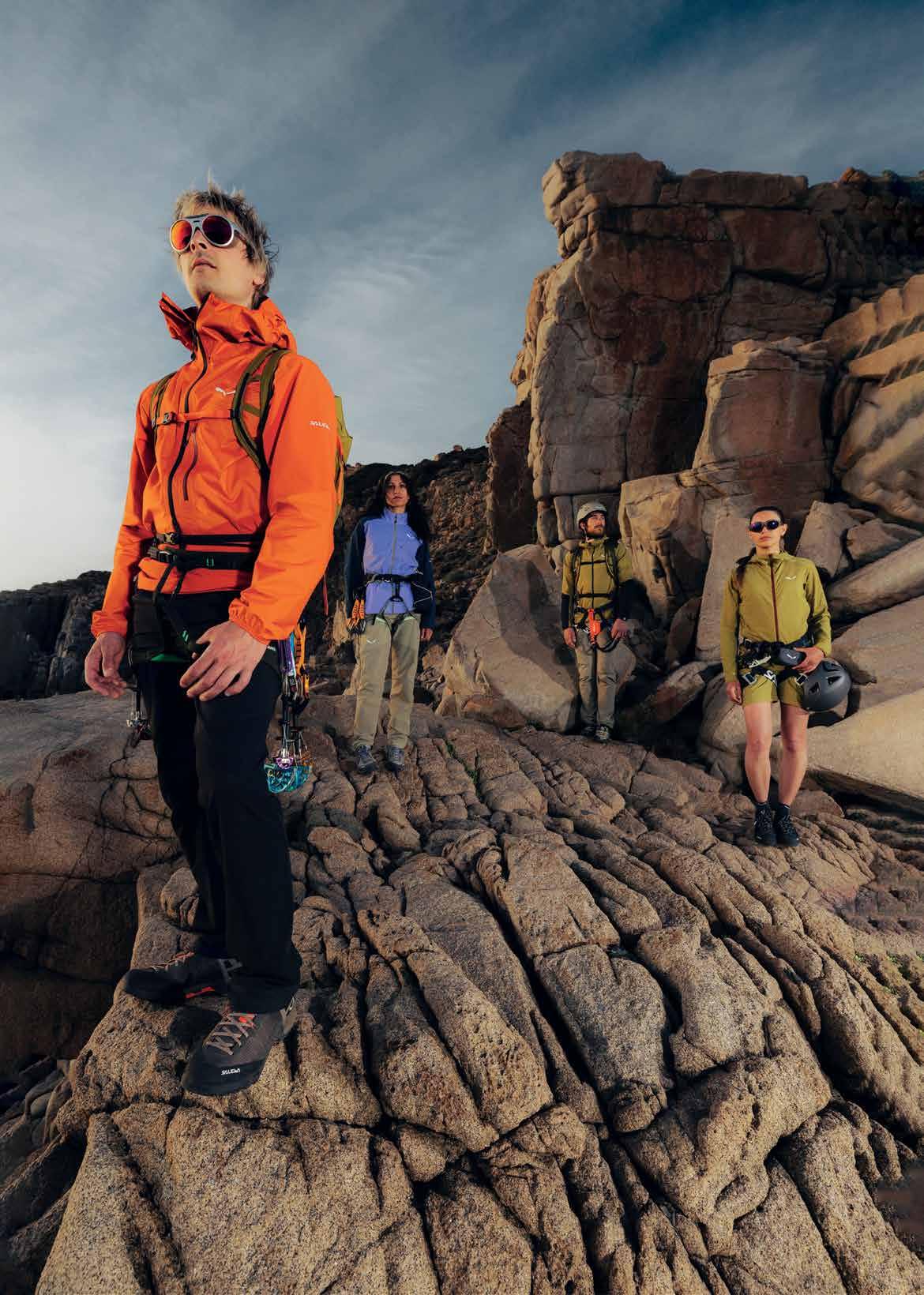
ISPIRATA ALLE DOLOMITI, CREATA DAI PIONIERI E INDOSSATA DAGLI AVVENTURIERI, DAL 1897.
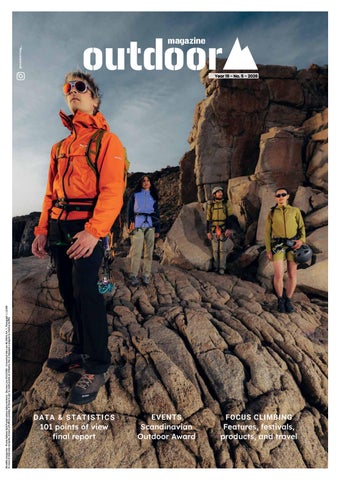
FOCUS SHOP
13 Red Point in Arco
DATA & STATISTICS
14 101 points of view: the final report
#INSIDETHERACE

18 The Italians' results at the Off-Road Championships in Slovenia
#MONTURAPEOPLE
20 The Mountains for Young People
PARTNERSHIP
21 The collaboration between AKU and CNSAS
EVENTS
22 Cazzanelli presents “Kimshung, The Mountain of Destiny”
26 RiminiWellness: interview with Valentina Fioramonti
27 Scandinavian Outdoor Award
BRAND PROFILE
23 The comfort of Nat’s shoes
29 Näak supplements
ACTIVE TRAVEL
24 The routes to Santiago through Asturias
FOCUS TECH
28 Vibram and Gheller
PRODUCT FOCUS
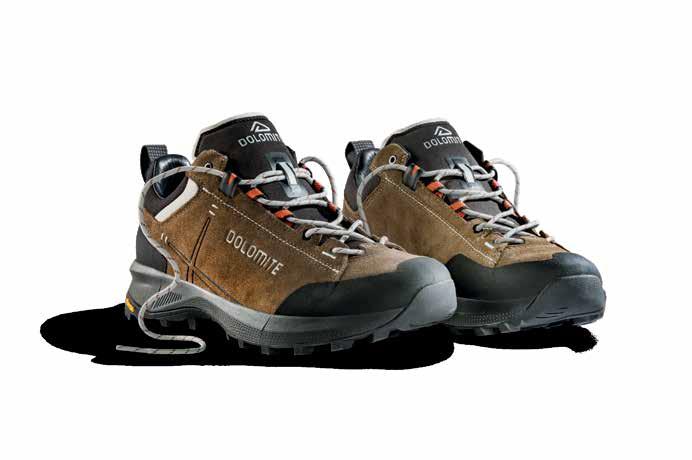
30 Dolomite
31 Kayland, Trezeta
32 Gregory, Mico
33 Lowa, HOVERAir
34 Ternua, Icepeak
35 BV Sport, Ferrino
FOCUS CLIMBING
FEATURE
38 How is the industry doing?
ACTIVE TRAVEL
42 Alessandra Prato's journey in Yosemite
RESPONSIBILITY
44 Climbing for a Reason's Cuban project
EVENTS
46 The 2026 edition of Melloblocco
48 Rock Master turns 40
BRAND PROFILE
50 Skylotec Outdoor: talking with Arianna Colombo and Gianluca Brioschi
COLLECTION HIGHLIGHTS
52 Montura's Free to climb again
PEOPLE
53 Maurizio “Manolo” Zanolla
PRODUCT INSIGHTS
54 Rock Experience
55 La Sportiva
56 E9
57 Petzl
58 DMM





Socrates was right. The more you know, the less you know. That’s the feeling we’re left with after an incredibly intense European Outdoor Week. A month later, we’re still a bit dazed by the kaleidoscope of emotions, encounters, and comments. We’ve processed the new experiences, the sensations, and the adrenaline—but not quite all of it yet. It’s like when you win an important race and have to wait until the celebrations are over to fully realize what you’ve accomplished.
The truth is that, as soon as we got back, we shifted into “European Outdoor Week 2.0” mode: debriefing meetings, wrapups, organizing the thousands of photos, and responding to the hundreds of messages we received. And we’re already hard at work on the 2027 edition, mindful of the success of the one that just wrapped up and the widespread praise it received, but also aware of what can be improved. We come away with a certainty that’s worth far more than all the uncertainties: the industry—both its B2B and B2C sectors—needed a meeting place and a weekly platform with a European scope, in a crossroads of the “outdoor way of life” like Riva del Garda. After Friedrichshafen, this “get-together” had never really happened again, fading away amid the allure of modern individualism, exacerbated by the flood of conference calls brought on by the pandemic. We at MagNet knew it, and so did the European Outdoor Group, but we didn’t have proof. So what does Socrates have to do with it?
come to identify with the brand’s values. The data presented by McKinsey, however, highlighted how brand-driven choices carry less and less weight in purchasing decisions—and given the authority of the source, there’s no reason to doubt this. Shall we continue? It has always been assumed (and the data, at least in Italy, support this) that inclement weather negatively affects sales of summer clothing and gear. In the survey we’re publishing on page 16 of our issue dedicated to the European Outdoor Week special, an Austrian retailer tells us, however, that in their case, bad weather actually leads to an increase in sales, due to purchases of specific, high-value-added clothing and gear.
It’s relevant because, after a week of trade shows, workshops, product tests, summits, and award ceremonies—all of the highest caliber—you realize that the more you learn and the more you talk with the decision-makers in our industry, the more you see that everything is changing rapidly, calling our certainties into question. The OUTDOOR & ORBDAYS trade show was a huge success, with five pavilions filled and 407 brands (a record for the event), but this success has grown within a multichannel platform that combines product exhibitions, tests for industry professionals and the B2C public, a media day, the Outdoor Impact Summit, and Innovation Day. A simple trade show no longer makes sense unless it also—and above all—becomes an opportunity for networking and is, in some way, open to enthusiasts as well. A melting pot that is also gaining traction in North America. The deeper you delve into the intricacies of the many workshops and initiatives at European Outdoor Week, the more you discover reasons to agree with Socrates. The panel “Outdoor & Running: From Evolving Market Dynamics to AI-Driven Opportunities,” organized by McKinsey & Company, debunks one of the assumptions of recent years—namely, that brands have filled a void left by traditional organizations and that consumers have
And what about the workshops at the Outdoor Impact Summit? When it comes to environmental sustainability, the more you track your metrics and try to improve them, the more you realize just how complicated the subject is. Just as the growth driven by the gorpcore phenomenon—the trend that transforms technical clothing and accessories for hiking, trail running, and climbing into elements of urban style—isn’t always positive. We learned this during the panel “The Mainstreaming of Outdoor Culture: Balancing the Risk and Reward,” moderated by Brandwave: the gorpcore trend is a natural evolution as long as it remains consistent with the brand’s identity; otherwise, new consumers aren’t enough to offset the loss of those most loyal to the brand. Sometimes, however, there are also confirmations, such as the growth of climbing—especially from the parallel world of climbing gyms and artificial walls—which doesn’t always translate to natural rock, except in bouldering. It’s a true social and cultural phenomenon that attracts many young people from Gen Z. And it is precisely to the many facets of climbing that we dedicate the special feature inside this main issue of Outdoor Magazine. Climbing is one of the favorite pastimes for many of us, and there are destinations—such as Arco and Finale Ligure—that have built a tourism and economic model around climbing; however, nothing can be taken for granted.
Read the article on page 44 about the Climbing for a Reason initiative in Cuba, and you’ll discover that in some corners of the world, even just getting from one place to another—as we do on the weekend or to go to a trade show—is a serious problem. That even finding the materials to build a climbing wall and transporting them can be a problem. That even having electricity or finding enough food can be a problem. That’s why we’re lucky to live in the heart of a continent where well-being and rights are at the center of the debate, and we must do everything we can to make outdoor sports increasingly inclusive. It’s not just an economic issue, but a cultural and civilizational one.
Claudio Primavesi claudio.primavesi@mag-net.it

Publisher: MagNet Srl SB
Managing director: ANGELO FRIGERIO
Editor-in-Chief: CLAUDIO PRIMAVESI
Contributors: TATIANA BERTERA, BENEDETTA BRUNI, SARA CANALI, FAUSTO DE STEFANI, MATILDE MARELLI, ALESSANDRA PRATO, GIACOMO TONOLI, MAURIZIO TORRI
Art Director: ROSANGELA BARNI
Editorial Staff: Corso della Resistenza, 23 - 20821 Meda (MB) Via Tertulliano, 68 - 20137 Milan
Tel. 02.87245180 - Fax 02.87245182 redazione@outdoormag.it www.outdoormag.it


Printed by: Ingraph - Seregno (MB) - Volume 19 - No. 5 - 2026
Monthly magazine.
Registered with the Court of Milan, No. 186 March 20, 2007. Registered with the ROC under No. 16155 on November 23, 2007 Poste Italiane SpAMail-order shipping under Decree-Law 353/2003—converted into Law 46/2004, Article 1, Paragraph 1—LO/MI
One copy: 1.00 euro.
The publisher guarantees the utmost confidentiality of the data in his possession. This data will be used for managing subscriptions and for sending commercial information.
Pursuant to Article 13 of Law No. 196/2003, the data
They may be corrected or deleted at any time by writing to: MagNet Srl SB
Data Controller: Benedetto Sironi
GRIVEL'S REBRANDING AND NEW TAGLINE
With over two centuries of history behind it, Grivel has recently completely revamped its brand image, starting with its logo, a new creative direction, and a more contemporary communication strategy. The Courmayeur-based company’s evolution is reflected in a cleaner, more minimalist, and instantly recognizable visual language. The iconic yellow color remains central but is reinterpreted in a more essential and dynamic way. The logo uses sharp angles and bold lines to evoke traction on rock and ice. Central to the brand positioning is the tagline “For When It Matters,” which expresses the company’s commitment to continuing to develop precision technical equipment and to offering natural movement, control, and reliability in the most challenging alpine environments.
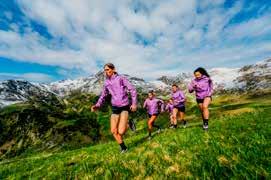
KAILAS LAUNCHES THE TALENT TEAM PROJECT WITH FIVE ITALIAN TRAIL RUNNERS
Kailas FUGA and the FUGA Mountain Club, which brings together over 500 trail runners, have launched a new Talent Team featuring some of the strongest Italian female trail runners: Benedetta Broggi, Enrica Dematteis, Luisa Dematteis, Nicol Guidolin, and Alice Minetti. The initiative follows partnerships with the Dolomiti Women’s Trail, held on May 16, and the Swiss Canyon Women’s Trail, scheduled for September 11. Both competitions, supported by the FUGA Mountain Club, are pioneering projects that are setting new standards for women’s races in Italy and Switzerland, respectively. Promoting participation by female trail runners is one of the Club’s priorities; it organizes the annual Alice in Wondertrail race series and offers over 50 free workshops led by female coaches.
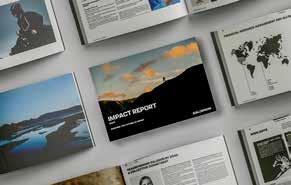
Salomon has released the fourth edition of its Impact Report, covering the year 2025. By 2030, performance, sustainability, and resilience must go hand in hand, influencing every aspect of the organization; Meanwhile, last year the company succeeded in strengthening its governance, improving how it measures and manages its impact, and further integrating sustainability into its daily operations. Highlights from the report include: eco-design of up to 40% of the softgoods range; 100% of major product categories analyzed using the Life Cycle Assessment (LCA) system; 80% of Tier 1 suppliers with an A or B rating; over 90% of employees participating in sustainability training programs; and more than 560,000 euros invested through the Salomon Foundation.
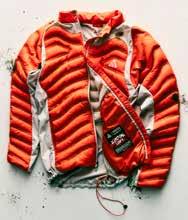
The Milan-based agency Box Agency will exclusively manage Nike ACG’s presence in Italy—the American brand’s line designed for activities such as trail running, hiking, and trekking. This development marks a new phase in the brand’s presence within the specialty retail channel. Box Agency will be responsible for guiding ACG’s placement in stores and retail outlets that align with the brand’s profile, targeting a market where the outdoor sector is no longer just about performance, but also about product discovery, functional aesthetics, and urban culture. The agency’s portfolio also includes Gramicci, Kavu, Klattermusen, Danner, Helinox, Healthknit, Pointer Brand, and United Athle, confirming a selection focused on projects with a strong identity that bridge lifestyle, contemporary outdoor culture, and their respective communities.
GENERATIONAL TRANSITION AT OBERALP: RUTH OBERRAUCH IS THE GROUP'S NEW PRESIDENT
Effective June 1, Ruth Oberrauch assumed the role of chairwoman of the Oberalp Group, succeeding founder Heiner Oberrauch, who remains a member of the board of directors. “I see my role as that of a bridge-builder because I know that this is how I can steer the Group in a positive direction for the future,” said Ruth Oberrauch, while Heiner expressed his confidence in the new generation. Ruth is also stepping down from the leadership of LaMunt, a women’s mountain apparel brand she founded in 2022. There are also changes in operational leadership: Stefan Rainer will assume the role of Group CEO effective October 1, following a period of working alongside Christoph Engl, Group CEO since 2018, who will conclude his term at the end of September and then support the group as a senior advisor starting in 2027.
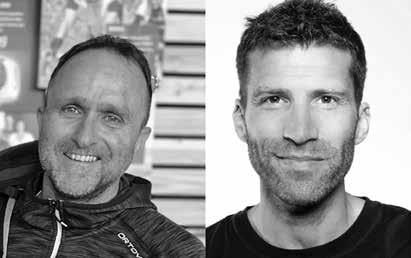
SCHWAN-STABILO OUTDOOR: FRECHEN TAKES OVER FROM RIEBEL AS CEO

After 14 years with the company, Martin Riebel will step down from his position as CEO of the Schwan-Stabilo Outdoor Group at the end of June. Effective July 1, he will be succeeded by Christoph Frechen, who will take the helm of the group that owns the Deuter, Ortovox, Maier Sports, Gonso, and Doghammer brands. He initially joined the company in 2012 as head of Deuter and later became the first CEO of the Outdoor division; during his tenure, he oversaw the company’s international expansion and managed various phases of growth and transformation. His successor, Christoph Frechen, brings with him over 20 years of international experience in the sporting goods and outdoor sectors. Among his priorities, the new CEO identifies strengthening the group’s international presence, improving competitiveness, and building new platforms for long-term growth.
The SS 27 collection marks the beginning of an evolution in the brand's identity, involving the logo, tagline, communications, and retail concept
At the International Sales Meeting held in Riva del Garda and Arco in early May, La Sportiva unveiled the brand’s most significant evolution in recent decades: a new logo, accompanied by the debut of a tagline, a brand campaign, a global communication platform, and a revamped retail format.
A change designed to guide the brand toward its 100th anniversary, which La Sportiva will celebrate in 2028, while preserving its identity and strengthening its ties with the global mountaineering community.
The logo is the result of a redesign process aimed at making its visual
“Reaching our centennial milestone inspires us to plan for the next 100 years; continuity is not a form of passive preservation, but the ability to evolve while keeping our identity intact. Through this evolution, we want to look to the future with courage, remaining true to our mountain culture, our community, and our vision of innovation.”
Lorenzo Delladio, President and CEO of La Sportiva
language more essential, recognizable, and contemporary, while at the same time reinforcing its iconic nature. The mountain remains at the center: the Cimon della Pala, the brand’s historic symbol and a direct refer-
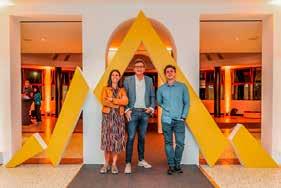

ence to the Val di Fiemme, the region where the brand was born and continues to grow.
The new communication platform, which will be rolled out gradually starting with the Fall/Winter 2026 season, will encompass all of the brand’s touchpoints—from global campaigns to retail, from digital to packaging—with the goal of creating a more consistent, distinctive, and international brand voice. In this context, the retail format will also evolve to physically translate the brand’s evolved identity into La Sportiva’s physical spaces and retail locations, strengthening the sense of community and the connection to the world of the mountains.
The brand evolution project was developed in collaboration with The Branding Letters, a creative agency based in Italy, which designed the new logo, and with Mynt, a strategic and creative agency based in the United Kingdom, which oversaw the development of the campaign and the new communication platform.
ROSSIGNOL HITS 346 MILLION
THANKS TO MULTI-SEASON OFFERING
At the end of a season in which its athletes won 50 medals—a season marked by a return to growth, with revenue of 346 million euros (358 million at constant exchange rates, representing a +4.3% increase on a comparable basis)— the Rossignol Group confirms the transformation of its business model from winter-focused to multi-season, while maintaining its strong presence in the mountain sports market. The return to growth is accompanied by a sharp increase in operating profitability (EBITDAR) of over 50% year-over-year. Winter sports equipment remains a solid foundation for the business, posting a 6.5% increase (at constant exchange rates), but the Apparel and Footwear segments are now driving diversification, accounting for 25% of the brand’s sales (35% in France) and targeting 100 million euros in revenue within three years.
MERRELL AND SAUCONY IMPROVE WOLVERINE WORLD WIDE'S MOODY’S RATINGS
Moody’s has upgraded the debt ratings of Wolverine World Wide, Inc., which also owns the Merrell and Saucony brands. The rating upgrades include Wolverine’s Corporate Family Rating (CFR), raised to B1 from B2; the Probability of Default Rating (PDR), upgraded to B1-PD from B2-PD; and the rating on its global senior unsecured bonds, raised to B2 from B3. The speculative-grade liquidity (SGL) rating was also upgraded to SGL-2 from SGL-3, while the outlook remains stable. The stable outlook reflects expectations of earnings growth, debt reduction, and the maintenance of at least good liquidity. Moody’s adjusted debt-to-EBITDA ratio fell to 4.1x as of April 4, 2026, compared with 5.3x as of June 30, 2025, while the EBITA-to-financial expenses ratio improved to 3.7x from 2.8x.
THE OUTDOOR PERFORMANCE CATEGORY DRIVES AMER SPORT'S GROWTH IN Q1
Amer Sports, which owns Arc’teryx, Salomon, Wilson, Peak Performance, and Atomic, reported a particularly strong first quarter of 2026, with revenue, adjusted margins, and earnings per share exceeding expectations. Revenue rose 32.1% to $1.95 billion (1,945.5 million), compared to $1.47 billion in the same period last year, representing 26% growth at constant exchange rates. Growth was driven by Salomon apparel and Arc’teryx’s omnichannel performance. The Technical Apparel division, led by Arc’teryx, recorded a 33.3% increase in revenue to $885 million, representing 28% growth at constant exchange rates. The Outdoor Performance category, which primarily includes Salomon and Atomic, showed even stronger growth, with revenue up 42.0% to $713.6 million, or +33% at constant exchange rates.
RECORD-BREAKING DECKERS: HOKA HITS DOUBLE DIGITS
PIDIGI S.P.A. ACQUIRES THE GERMAN COMPANY SYMPATEX TECHNOLOGIES
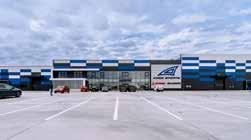
Sympatex Technologies has come under the control of the Italian company Pidigi S.p.A., which will acquire the German manufacturer of membranes, laminates, and technical fabrics following the filing of an insolvency petition with the Munich court on January 22. The transaction took effect on June 1. Founded in Verona, Pidigi develops, sources, and distributes materials and components for the footwear, leather goods, and technical sportswear sectors. At the Unterföhring site, near Munich, 21 jobs will be retained, and the training programs for four apprentices will continue. The company’s international offices in France, China, and Hong Kong will also be retained, as will the sales office in South Korea. In parallel with the industrial restructuring, 25 employees at the German headquarters were laid off in May, with their departure scheduled by the end of August.
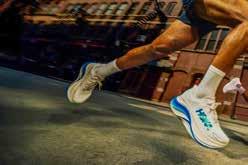
Deckers Brands expects double-digit growth for HOKA at least through 2030. The brand’s Q4 2026—which ended on March 31—was, in fact, its best quarter ever. The brand’s sales grew by 14.5% during the quarter, driven by strong performance from new road and trail offerings and robust growth in the direct-to-consumer channel globally. At the group level, Deckers Brands closed the fourth quarter with revenue up 9.6% to $1.22 billion, exceeding market expectations. During the period, the gross margin rose to 57.6% of sales (+90 basis points). For the full fiscal year 2026, Deckers reported revenue of $5.47 billion (+9.8%). HOKA grew by 15.9% to $2.59 billion. Annual net income exceeded $1 billion for the first time, coming in at $1.02 billion.
LYCRA EMERGES FROM CHAPTER 11
LYCRA, a company specializing in the production of textile fibers that had filed for bankruptcy protection in March, has completed its financial restructuring and announced its emergence from Chapter 11, eliminating over $1.2 billion in long-term debt and securing more than $75 million in financing. Control of the reorganized company is passing to new shareholders, a group of global investment funds that have long held stakes in the company. Lycra also announced that Gary Smith, the company’s former CEO, has stepped down from HIS position. He is being replaced by Dean Williams, the group’s chief financial officer. The company has also appointed a new board of directors, with Bruce Rubin serving as executive chairman of the board.
Equip Outdoor Technologies, owner of the Rab and Lowe Alpine brands, has announced a 48.5 million pound (57.7 million euro) investment package thanks to financing from HSBC UK. These decisions were made amid a period of continued growth. The company reported revenue of 117 million pounds (139.2 million euros) in fiscal year 2026, up from 106.4 in FY25 and 105.8 in FY24. The 48.5 million pound loan from HSBC UK will be used to acquire and develop a new logistics center in Alfreton, Derbyshire (UK), and has been structured as a Sustainability Improvement Loan, in line with the company’s environmental, social, and governance (ESG) objectives.
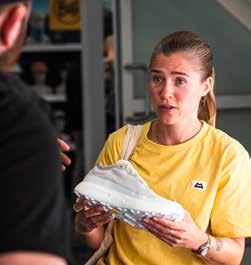
According to research by Arizton Advisory & Intelligence, the global sportswear market will grow from $419.1 billion in 2025 to $531.4 billion by 2031, at a compound annual growth rate (CAGR) of 4.04%. Athleisure is driving this growth. Apparel accounted for approximately 55% of the global sportswear market in 2025, while North America remained the leading regional driver (though the Asia-Pacific region will see the fastest growth through 2031), accounting for 39% of total revenue. Key trends include sustainability and direct-toconsumer (DTC) distribution. According to the report, brands can increase profitability by 15% to 25% through stronger digital ecosystems and direct consumer engagement.
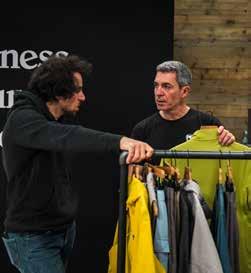
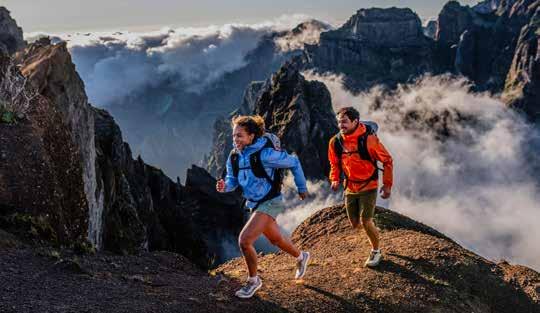
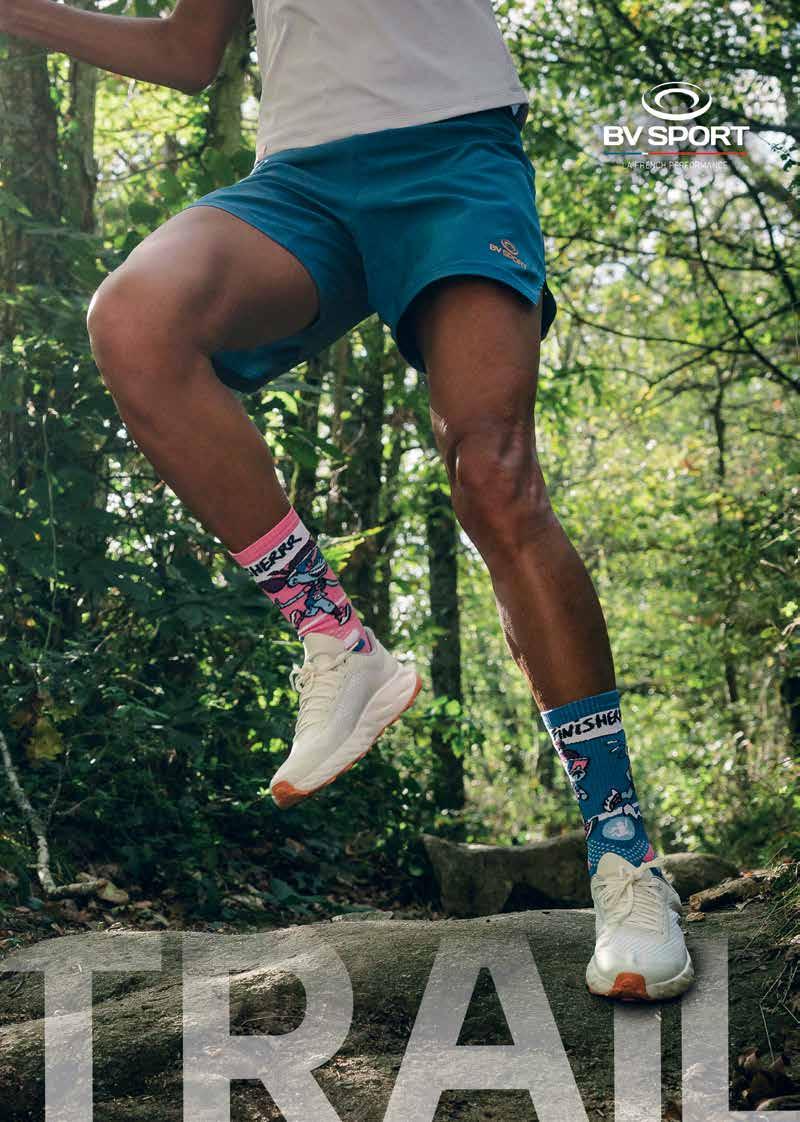
From July 17 to 19, the 100 Miglia Monviso returns—the ultra-trail race that will bring the city of Saluzzo to life. Despite some changes to the format, the goals remain the same: to take care of the runners and the places they pass through, and to offer routes that cater to a variety of athletes, both Italian and international. Among the four race courses—M160K, M50K, M20K, and Monviso Trail—the 50-kilometer and 20-kilometer courses have been rerouted, while the other two remain unchanged. In addition to the race, there will be many side events characterizing this new edition, ranging from “Aspettando la 100MM” to the village, which on Friday and Saturday evenings will serve as a gathering place for the community. Sustainability—with the World Plogging Championship—and charity—with “I Run for Find The Cure”—will also be central to the event.
100migliamonviso.eu

The second edition of the ALPI Design Awards, organized by the ALPI+MILANO Association, is now underway. The awards are open to companies, planners, architects, designers, and communications professionals who develop products and services promoting sustainability and innovation in mountain regions. Registration is now open, and entries can be submitted by September 30 on the website alpidesignawards.it, where all necessary information and the rules can be found. There are three categories in which to compete: “Architecture and Environment,” “Communication and Graphics,” and “Product and Business”. In the latter category, the first edition was won by Ande for its single-material Exploral snowshoe, with an honorable mention going to MM Design for VTech’s XVST ski collection and a special Lifetime Achievement Award presented to Gioachino Gobbi (posthumously) and Maurizio Gallo, the entrepreneur and designer behind the Grivel Twin Gate carabiner, the only mountaineering product to have won the Compasso d’Oro in 2016.
ERRATA CORRIGE
In issue 04 of Outdoor Magazine, in the “101 points of view” section, the interview with the FraAndrea Mountain and Climbing store, published on page 32, was associated with an incorrect name and location.
The correct location and name of the interviewee are, respectively, Fivizzano, in the province of Massa Carrara, and Andrea Jacomelli, the store owner. We apologize to our readers and to the person concerned.
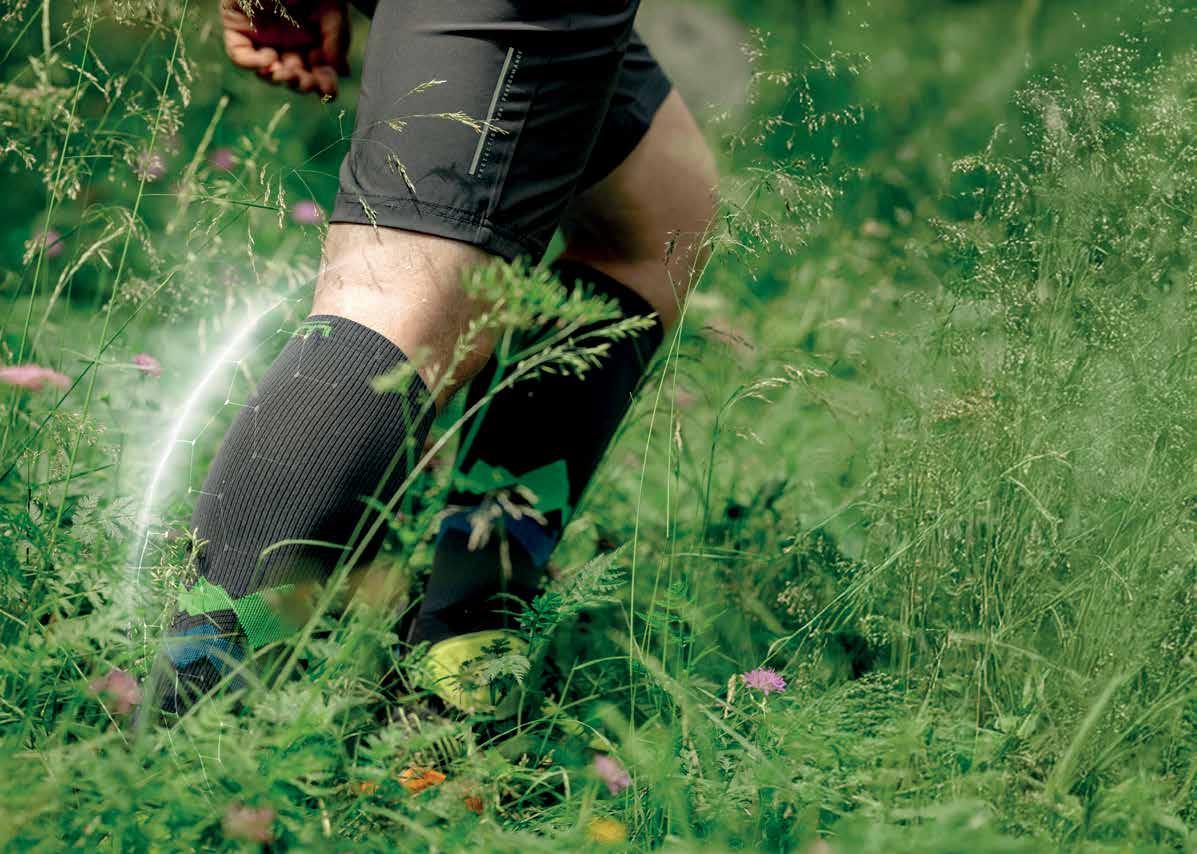
Since 1990, it has been one of the first specialist shops in the capital of sport climbing. Today it also has shops in Trento and Cortina, but the town in Trentino remains at the heart of its strategy
by Claudio Primavesi
In 1990 in Arco (TN), when Red Point was founded, there was just one sports shop. It was the dawn of a revolution in the way people approached and engaged with the vertical world. From the peaks of the Dolomites to the crags overlooking the lake. From long routes at high altitude to sport climbing. A new sport, with its own prestige and a following that would grow exponentially over the course of a few decades, eventually leading to Olympic medals. And Arco was, and remains, the epicentre of that revolution, thanks to the challenges faced by the world’s finest athletes at the Rock Master and the bolting of dozens of crags. Since then, the number of specialist shops has also grown exponentially, probably making Arco the place with the highest concentration of such shops in the world: there are more than 20. Red Point, however, is still there and has expanded.
The history of Arco and Red Point is inextricably linked: how did the first shop come about?
Those were the years of the lira’s devaluation and the ‘super mark’; Germans were flocking in droves to snap up bargains: I opened a shop just outside the town centre, beyond the bridge. I was young and inexperienced, and I was swept up in that boom, for better or worse, because you had to take a financial risk to run a large shop, and at first it wasn’t easy to secure credit to finance the purchases; but then we grew very quickly thanks to the volume of sales.
And the competition grew too...
Yes, the second phase saw the opening of many new shops, but turnover remained strong because, as well as being able to secure better prices from the brands thanks to the volume of orders, healthy competition developed, which attracted customers even from far afield to shop in Arco. And then, as I always say, it’s better to open an ice-cream parlour where there are already others than where there isn’t a single one: it means there’s demand, and if you’re better than the rest, you’ll have a better chance. The latest phase, the one we’re currently experiencing, is driven mainly by two factors: the shift of some indoor climbing gym users, which continues to expand the base of climbers, and the international situation, which discourages long-distance travel.
Today, however, Red Point isn’t just about Arco.
We have five retail outlets and an outlet store. In Arco, following
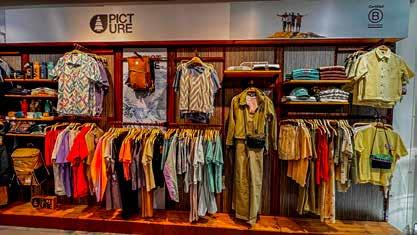
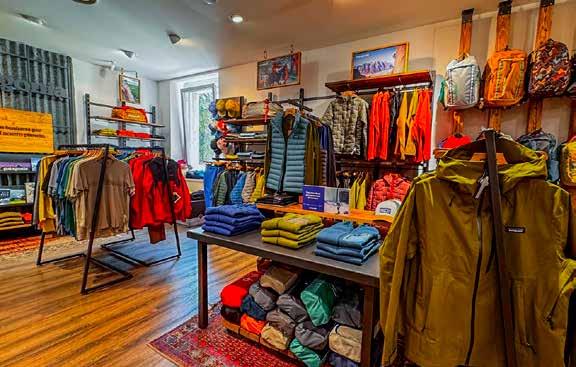
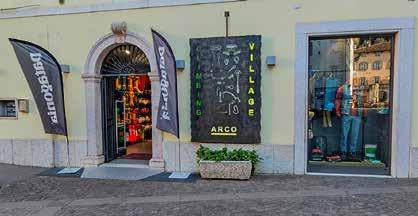
the Red Point on Via Santoni, we felt the need to open a shop in the town centre, on Via Segantini, and we called it Red Point 2. It was a clever marketing move because customers, seeing the ‘2’ on the sign, would ask us if there was a Red Point 1 and would come to visit us at the first shop as well. Today in Arco we also have the Climbing Village in Piazza Marchetti, covering 350 square metres, with an entire floor dedicated to Patagonia, our long-standing brand, and other brands committed to sustainability. Rock & Ice also has a presence in Trento, where our previous premises were too small; during the pandemic, we expanded and now have a 300-square-metre shop. Finally, in Cortina d’Ampezzo, we run a 100-square-metre shop.
How have the market and the customer changed in recent years?
In the early years, those who came were passionate about climbing for its own sake, aiming to push their limits. Nowadays, families come in – with parents who may well have been among the first climbers – they spend a few days climbing in Arco and then meet up at the climbing centres in town. We used to sell mainly equipment; today, clothing sales have boomed, not just for climbing, but also for everyday use in town. Climbing and the outdoors have become a holistic way of life. This trend has made a significant contribution to our turnover growth, and having shops with ample floor space has allowed us to offer a wide variety of products and brands.
What other sports do you stock?
Those linked to my training and passions, as I’m a Mountain Guide: the whole world of vertical activities, from rock climbing to mountaineering and ice climbing, moving on to trekking, ski mountaineering and freeriding – or, in any case, a more alternative approach to skiing, using wide skis.
How do you cope with the presence of flagship stores run by the major brands?
Over the years, we’ve built up strong relationships with some of the leading brands, such as Patagonia, and we’ve even run The North Face shop in Arco ourselves. I believe there’s room for everyone; in our case, what makes the difference is that we’re a local business and deeply involved in the crag – in fact, I’m off to place some bolts in a moment...
Name: Red Point Sito: climbingarco.it Instagram: @red_point_arco
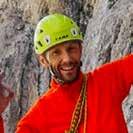
Owner: Diego Mabboni
Year opened: 1990 Shop point: sex
Total retail space: 1.200 Sports covered: climbing, alpinismo, trekking, lifestyle Equipment rental: via ferrata set, snowshoes
BRANDS
Footwear: AKU, Kailas, Merrell, Ocún, SCARPA, Teva Abbigliamento: Chillaz, Nograd, Ocun, Patagonia, Picture, Rafiki, Slab Apparel: Black Diamond, C.A.M.P., Edelrid, Petzl, Slab
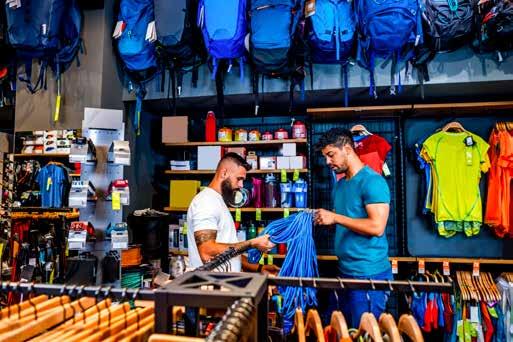
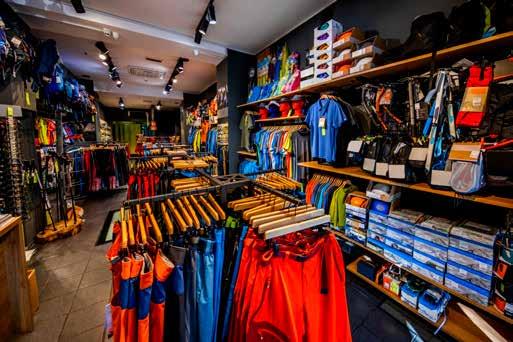
Year-end 2025 financial results, purchasing trends, sustainability, consumers, and brand performance. These are just some of the findings from “101 points of view,” the exclusive feature that gives a voice to retailers by the editorial staff
“The 101 points of view” is the annual feature conducted by Outdoor Magazine to analyze year-over-year trends in the retail market. We asked 101 retailers from all over Italy to describe their vision for 2025, posing specific questions about online and offline sales trends, product categories and sports disciplines, customer demographics, social media use, trends, and sustainability. Specifically, of the 101 stores, 77 are in Northern Italy, 21 in Central Italy, and 3 in Southern Italy and the Islands.
Through the perspectives of retailers, we were able to identify the major challenges and positive factors that most influenced the year, while also gaining several insights into how to improve various dynamics within
the industry. In particular, the challenges retailers face in keeping pace with online competition emerged quite clearly. Based on these issues, most retailers hope that the future of the outdoor market will bring a more relaxed and favorable climate.
The 101 full-length interviews can be viewed by browsing past issues of Outdoor Magazine from 2025 (No. 12) and 2026 (Nos. 1, 2, 3, and 4), which can also be downloaded in digital format directly from our website by scanning the QR code shown here.
OVERALL SALES TREND
IN 2025 WHAT WAS THE TREND? OF OUTDOOR STORES COMPARED TO 2024?
The chart shows that 2025 was a generally positive year, with an increase in the number of satisfied retailers compared to 2024. In fact, while 2024 ended with 41 stores showing growth, 34 in decline, and the rest remaining stable compared to 2023, 2025 saw a significant reduction in the number of retailers operating at a loss, with 46 stores growing, 46 remaining stable, and only 9 declining. Respondents also reported growth and decline rates, which translate to average values of +13.6% and -12%, respectively.
Growth: 46
Stable: 46
Decrease : 9
Growth: 41 in 2024 vs. 46 in 2025
Stable: 26 in 2024 vs. 46 in 2025
Decreasing: 34 in 2024 vs. 9 in 2025
POSITIVE ASPECTS OF 2025 (TOP FIVE) NEGATIVE ASPECTS OF 2025 (TOP FIVE)
Online competition emerged as the biggest challenge for retailers, who agreed that e-commerce is becoming the new trend at the expense of physical stores. The lack of snow and the short winter have remained a constant problem over the years, and in 2025 as well, they had a negative impact on sales. Furthermore, the economic crisis and low purchasing power, combined with rising prices and inflation—which were also caused by the precarious global geopolitical situation—often led customers to forgo purchases. Finally, another issue identified is competition from brands’ online stores.

Retailers report that the favorable weather during the summer, along with the resulting extension of the warm season, was the factor that had the most positive impact in 2025, but they also maintain that their effective customer service builds customer loyalty and, consequently, generates greater profits for the store. The overall growth in the number of outdoor enthusiasts can only be seen as a positive development, as is the rise in active tourism. The increased focus on the quality of outdoor products has also proved to be a positive factor for retailers.
DESPITE THE ISSUES THAT HAVE ARISEN, THE FINAL ASSESSMENT OF 2025 GIVEN BY RETAILERS IS MOSTLY POSITIVE:
32 stores gave it a 7; 31, on the other hand, gave it an 8; while 22 rated it a 6. Eight retailers gave the 2025 vintage 9 points, and a single store gave it the highest possible score. Only seven retailers rated the vintage negatively, giving it 5 or 4 out of 10. With an average of 7.1, it’s safe to say that, overall, retailers are satisfied.
PURCHASING TRENDS
CATEGORIES WERE MOST PURCHASED BY CONSUMERS? (MULTIPLE CHOICE)
CUSTOMERS BOUGHT MORE PRODUCTS FOR WHAT INTENDED USE OR APPLICATION? (MULTIPLE CHOICE)
RESPONSIBILITY
DO YOUR CLIENTS ASK FOR SUSTAINABLE PRODUCTS? IS THE CUSTOMER WILLING TO SPEND MORE ON THESE PRODUCTS? (optional answer)
BRAND SELECTION
THE THREE CHARACTERISTICS OF A BRAND THAT DETERMINE WHETHER IT IS STOCKED IN A STORE (top five responses)
WHICH ARE THE THREE BRANDS YOU WORK BEST WITH? (Each retailer listed the three brands they work best with)
CMP, HOKA, LA SPORTIVA BROOKS, SALOMON SCARPA
THE NORTH FACE
Retailers emphasize how crucial the technical quality and overall quality of products are in their stores: they do not want to sell low-value merchandise. Value for money and commercial policies are two key factors in fostering a strong brand-retailer relationship and, consequently, are essential for carrying a brand in the store. The brand’s reputation and heritage, combined with its values, are also factors that retailers consider when deciding whether or not to invest in a company. Finally, aesthetics play an important role: the respondents know that for a product to sell, it must not only be innovative and of good quality, but it must also be visually appealing.
ASICS, KARPOS, MIZUNO, MOUNTAIN EQUIPMENT, SALEWA, SAUCONY
C.A.M.P., CRAZY, DYNAFIT, E9, FERRINO, HEAD, MICO, NNORMAL, TOPO ATHLETIC
ADIDAS, ALPENPLUS, ANDE, ATOMIC, COLMAR, DARE2B, ICEPEAK, JULBO, KAILAS, KAYLAND, LOWA, MCKEES, NORDSEN, ON, PETZL, REGATTA, ROSSIGNOL, STÖCKLI
FOR OUTDOOR RETAILERS, WHAT WAS THE BREAKOUT BRAND OF 2025?
BROOKS
1 vote: 361° ALPINESTANDARDS ANDE ARAN ARC’TERYX ARMADA BLIZZARD BLUE ICE CRISPI FERRINO FITWELL ICEBUG ICEPEAK JULBO KÄSTLE LURBEL MERRELL MICO MILLET
For information on how to access the full report containing all the survey data, contact the editorial staff of Outdoor Magazine by sending an email to redazione@outdoormag.it
MOUNTAIN EQUIPMENT NEW BALANCE NNORMAL NORDA ON ORTOVOX
PEAK PERFORMANCE
PETZL REDBULL REDELK
ROCK EXPERIENCE ROSSIGNOL SALOMON SILVERSKIN
STÖCKLI
TOPO ATHLETIC TRS X-BIONIC
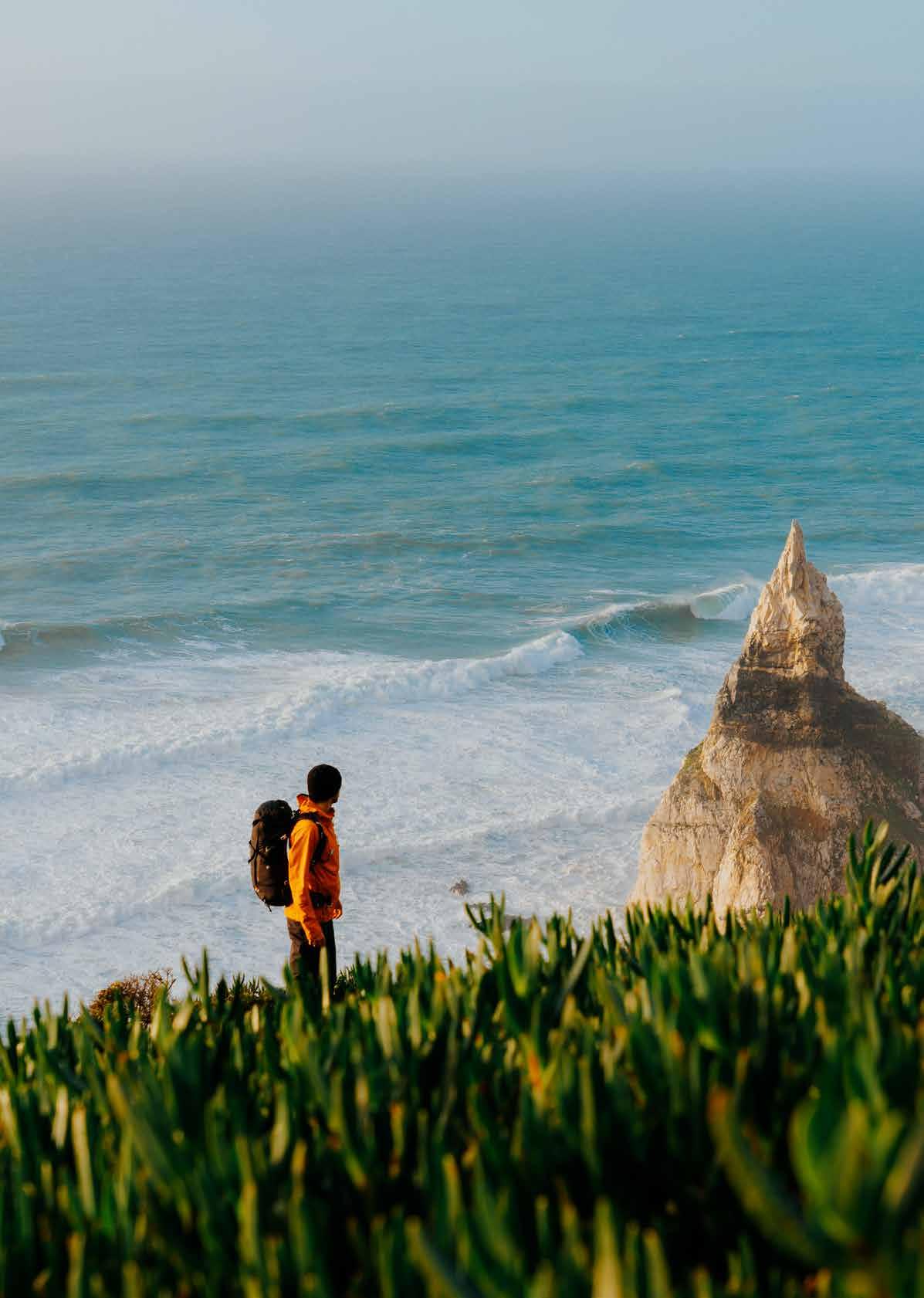
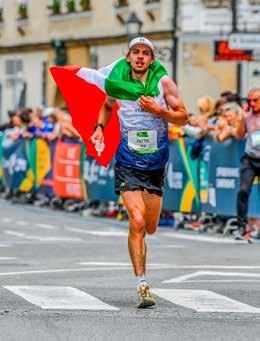
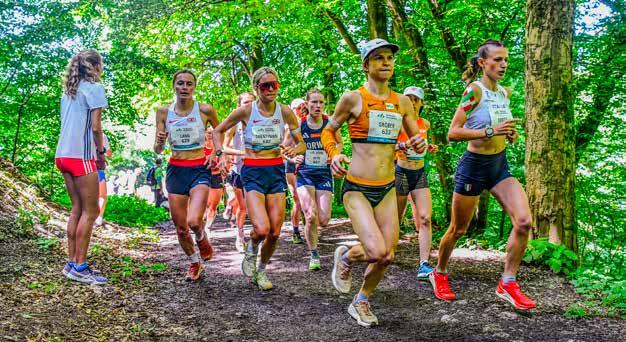
The Italian team won seven medals at the Off-Road European Championships in Slovenia from June 4 to 7
by Maurizio Torri - photo by Davide Vaninetti/FIdal
Italy’s trail and mountain running teams emerged with their heads held high from the continental off-road competition in Kamnik. Weather conditions in Slovenia were challenging, especially during the vertical race, but the Italian team managed to shine, bringing home two individual medals and securing several more in the team standings. The most notable performances? Undoubtedly those of Andrea Elia in the inaugural “Only Up” race and Daniel Pattis in the trail race. Following his progress over the past few seasons, the Lombardy-based Topo Athletic Recastello ambassador once again demonstrated his prowess as a vertical runner. With four Italian titles in three years across the “only up” and vertical kilometer events, and an eighthplace finish at last September’s World Championships, the Malgrate, Lecco native didn’t arrive here by chance. The South Tyrolean from Team Brooks, already a major standout at Zegama, confirmed his excellent form in Slovenia as well. He is currently among the strongest athletes competing at the marathon distance. Given these circumstances, he could aim for something significant in an OCC. But let’s take it one step at a time and analyze the various races.
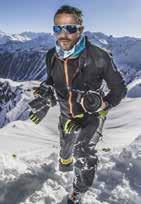
Freelance journalist, founder of the website sportdimontagna.com, photojournalist and communication consultant for some of the most iconic events in trail running, skyrunning, and ski mountaineering
Cold, rain, mud, and hail. Despite all that, Italy ended the first day with an individual bronze medal for Andrea Elia and another for the men’s senior team. Both junior teams made it to the podium: the men took silver, and the women took bronze. Italy’s European Championships campaign has thus begun with four medals. The man of the day is Andrea Elia. At the moment, in terms of consistency and skill level, he is our top athlete. Behind him, Michael Galassi secured a solid 12th-place finish. Cesare Maestri didn’t have the best race (17th), though he managed to make up a few positions in the final stretch. It was an off day for Henri Aymonod, who finished 29th. In the women’s race, Lucia Arnoldo was a standout. The 20-year-old from Veneto finished 4th, 17 seconds off the podium, followed by Vivien Bonzi in 20th, Benedetta Broggi in 22nd, and Martina Falchetti in 26th.
DAY TWO: DANIEL PATTIS STEPS UP
Daniel Pattis takes home a shining silver medal at the Off-Road European Championships in Kamnik. The Italian rider from Team Brooks in Slovenia finished second in the 52-kilometer trail race, with 2,450 meters of elevation gain, after nearly four hours of racing. This medal marks his first-ever international podium finish and establishes him among the sport’s elite. A talented mountain runner—who nine years ago, as an Under-20 athlete, won European silver right here in Kamnik and World silver in Premana—the Bozen Raiffeisen athlete crowns his journey of growth, which began as a junior with his 2015 victory at the international Under-18 championships. The Italian team finished fourth in the standings (45 points), with Cristian Minoggio in 14th, Gianluca
Ghiano in 29th, and Lorenzo Beltrami withdrawing due to an ankle injury. In the women’s trail race, Caterina Stenta finished 18th and Alice Testini 20th; Fabiola Conti withdrew, and Camilla Magliano did not start.
A STYLISH FINALE WITH UP&DOWN
In classic mountain running, we’ve once again proven ourselves to be the strongest nation. The quartet of Maestri, Costa, Vender, and Cagnati has brought us back to the top step of the podium after four years. This success was built on a team effort. Captain Cesare Maestri narrowly missed the individual podium, delivering a standout performance that saw him fight back to finish fourth. The placings of Italian champion Isacco Costa, who finished seventh, and Alberto Vender, who finished ninth, were also crucial. Lorenzo Cagnati followed in 16th place. It had been since 2022 that the Italian men’s team had last celebrated a European title in the team “mountain classic,” before going on to win world gold in the uphill race that same season. In the women’s race, Italy placed fifth with Arianna Dentis in 13th, Anna Hofer in 15th, Martina Falchetti in 18th, and Arianna Del Pino in 50th. The Under-20 team also earned a medal—silver again, just as in the uphill race. This, too, was an extraordinary display of team spirit, as Matteo Bagnus took a hard fall at the start after colliding with an opponent; a little further back, his teammates also went down, but they all got back up quickly, demonstrating a dedication to the cause that did not go unnoticed. At the finish line: Bagnus 5th, Christian Piana 9th, Christian Suini 11th, and Francesco Pepe 22nd. The Italian women’s U20 team had little luck. On the uphill section, Licia Ferrari and Martina Ghisalberti took a wrong turn along with other athletes, misled by an incorrect sign while they were battling for the top positions—around fourth and sixth place at that moment.
Italy finished with seven medals: one gold, three silvers and three bronzes. The Italian team has proven to be a solid group with some excellence in various disciplines and many young people who are the future of our sport. In the up&down trial, an organizational failure prevented our girls from getting what they deserved. Taking a forehand off course in a major event is any athlete's nightmare, but the Azzurrine will have the opportunity to bounce back in the future. To the masculine great test of character of our boys. Having fallen at the start, they did not give up, but regained position after position. Well done. We still have to grow, especially in the women's sector, that's a fact. We are experiencing a phase of generational turnover and the continental results reflect what is seen every Sunday on the national competition courts. Time to time.




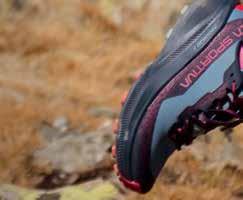








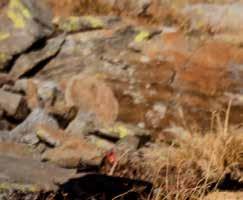
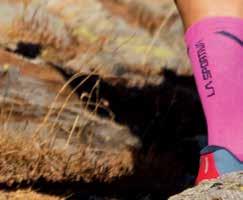




Ridisegnata da chilometri, ore e metri di dislivello su rocce e sentieri dove ogni appoggio è diverso.
Riprogettata nei punti che contano per garantire continuità, stabilità e comfort quando la distanza aumenta.
La nuova tomaia alleggerisce la calzatura, il toe box è più ampio per un fit più comodo, senza sacrificare la precisione. Calzata precisa. Struttura stabile. Comfort sulle lunghe distanze. Perfezionata per non farti perdere il passo. Find your flow su lasportiva.com ONE MORE STEP.
L’XFlow lavora per assorbire e restituire energia in modo costante, la progressione è fluida e naturale.








Reflections of a dreamer who, gazing at Monte Baldo, became the sixth person to climb all the eight-thousanders
text by Fausto De Stefani
I believe in young people. I enjoy talking with them and listening to them. I am certain they will be able to build a better world than the one their parents created—a sick society that does not respect others, the environment, or the common good; a society that has destroyed knowledge and values. We have no alternative. We must have faith in young people and entrust them with responsibility.
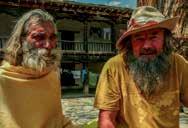
When I see them daydreaming, I, too, become a child again. A boy from the plains, who listened in rapt attention to the stories of an old man with his rickety bicycle and his box of odds and ends: the kind of person who today would be considered a “vagabond,” a “good-for-nothing,” a “has-been” in a society like ours, which puts money and efficiency above everything and everyone. But Mandelo—that was the name of the old man with the long white beard—knew how to touch our hearts. He’d take us aboard his imaginary hot-air balloon and from there make us fly over the oceans and the highest mountains. This broadened our horizons and sparked our curiosity—which has always been the driving force behind the spirit of exploration. Monte Baldo, which I could see from Cascina Rossa in Castiglione delle Stiviere, became in my dreams the highest peak in the world. A summit I was convinced I would reach. On August 4, 1983, together with Sergio Martini, that dream came true, and I stood on the summit of K2. It was an indescribable joy. But it also had physical consequences that would become apparent once we descended to base camp and that would mark me for the rest of my life.
Fausto De Stefani is one of the world’s greatest mountaineers, although he prefers to describe himself as a naturalist, photographer, and environmentalist. Born in Asola (MN) in 1952, over the course of 15 years he climbed all the eight-thousanders—the sixth person in the world and the second Italian after Messner— without oxygen or high-altitude porters. In 1988, he was among the founders of Mountain Wilderness, and in 1994 he organized “Free K2,” an expedition to clear the summit of tons of trash. In the 1990s, the school in Nepal and the nature reserve in Castiglione delle Stiviere also took shape. As the author of several books published by Montura Editing, he has donated all proceeds from this work to charitable causes. Over the past 30 years, he has traveled the length and breadth of Italy to raise funds for the school in Nepal and for numerous charitable initiatives, collaborating with associations and volunteer groups to promote the inclusion of people with disabilities or those on the margins of society: drug addicts, alcoholics, and prisoners.
From that point on, I embarked on a personal journey to climb all the eight-thousanders, but with great respect for the mountains and their people. This is also why I’ve always preferred to talk about “hiking in the mountains” rather than mountaineering. Far from the spotlight. With love for everything that is different, because it is in diversity that the world’s richness lies. Hiking in the mountains is one of the most beautiful activities in a person’s life. But the mountains are also very dangerous. Not just because an accident could happen to you—quite the opposite! They are most dangerous precisely when you succeed. When you lose perspective. When you think you’re stronger than nature, you feel like a god. Instead, the mountains teach you a lesson by putting things into perspective, by making you feel small, defenseless, and in need of others. Humble. Climbing mountains serves only one purpose: to look down with a new perspective—that of compassion.
This is another reason why, back in 1998, when I felt indebted to the peoples of the Himalayas who had welcomed and guided me, I felt it was necessary to dedicate myself to young people and their future. Because I was tired of seeing poverty and injustice. Thanks to some Nepalese and Italian friends and with the support of the

Senza Frontiere Foundation, we were thus able to realize another dream—one that some have called my fifteenth eight-thousander: the “Rarahil Memorial School” in Kirtipur, a suburb of Kathmandu, has grown year after year, with the involvement of the local community and countless people from all over Italy. So one building was added to another, and then came the gym, the dormitory, and the cafeteria. Now it is home to about a thousand children and teenagers aged four to 18, many of whom come from rural areas and poor families. There are various grade levels, vocational training courses in woodworking—a craft in which Nepalese people have extraordinary skills—and training to become nature and cultural tour guides, in a country with an endless heritage. There are spaces and facilities for sports and music. Computers, interactive whiteboards, solar panels, and recycling. And there’s even a flower garden: all schools must be beautiful because going to school, everywhere in the world, should be not only a right but also a pleasure.
I always remind people of this when they come to visit me at Collina di Lorenzo, just a few kilometers from the bustling southern shore of Lake Garda. Collina di Lorenzo is a natural oasis of peace and silence that a forward-thinking entrepreneur entrusted to the community to manage. Here, where there’s no admission fee and dozens of school groups visit every year, young people are invited to marvel at nature and the stories we tell. So that, just as it happened to me when I listened to old Mandelo, the spark of curiosity and love for others and for nature might be ignited within them.
"Montura People" is the brand’s column for Outdoor Magazine. It’s a space dedicated to people—the people of Montura. Anyone who feels, in some way or another, connected to the company’s values is part of its community. Their stories are gathered here so that they may inspire others.
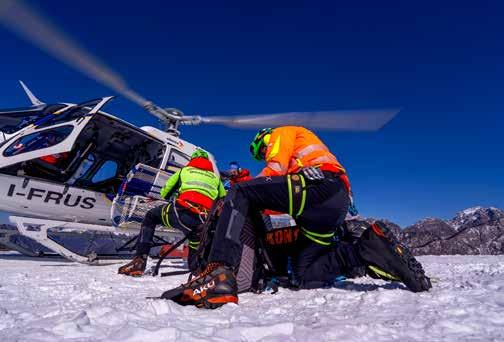
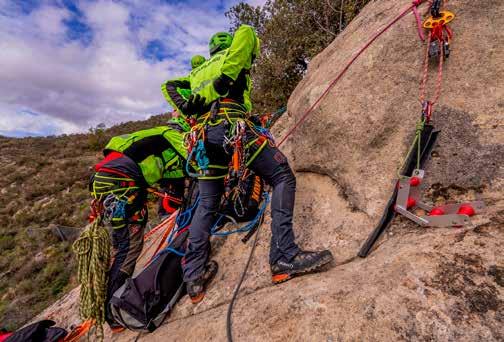
The partnership between AKU and CNSAS is based on a joint project that combines technical development, training and a culture of prevention
by Sara Canali
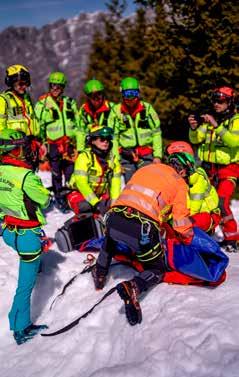
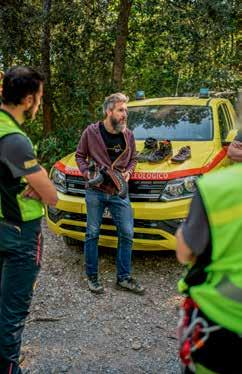
The collaboration between AKU and CNSAS, the National Alpine and Speleological Rescue Corps, goes beyond a simple technical or commercial partnership. The goal is to promote a culture of training, prevention, and proper risk management in mountain environments. The relationship was solidified by the agreement signed in December 2024, which outlines a program structured around two main areas: on the one hand, the CNSAS’s participation in the AKU PRO FORMA program, dedicated to promoting professional training in high-risk sectors; on the other hand, support for research and development activities through product testing programs entrusted to selected technical staff from the Alpine Rescue Corps. “It all began about three or four years ago, when we started developing the more technical models in our mountaineering collection,” says Vittorio Forato, AKU’s marketing manager. “At that time, we asked the Alpine Rescue Service to put us in touch with qualified professionals who could test the products and provide us with feedback during the development phases.”
ning initiatives are complemented by the involvement of Alpine Rescue personnel in the testing and evaluation phases of new products—a contribution that allows AKU to gather feedback directly from professionals who work daily in complex environments with high levels of risk exposure.
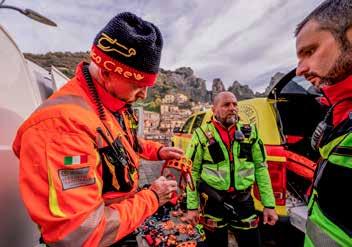
“The goal is to reinforce the understanding that continuous training is one of the fundamental tools for improving risk assessment capabilities.” As part of the project, AKU has documented various CNSAS activities through videos and reports shared on its digital channels. This content is not designed as product promotion, but rather as accounts of training and field instruction.
Working with industry experts allows the operators themselves to develop a deeper technical understanding of the product, gaining a better grasp of what goes into the design of a pair of hiking boots. “In addition to our outdoor collection, we have a Professional line that serves the worlds of search and rescue, Civil Protection, the Fire Department, SAF teams, the Guardia di Finanza, and, more generally, all those who work in high-risk environments. This category also includes mountain workers, from ski lift operators to those working on high-altitude construction sites,” continues the marketing manager. In this context, the partnership with the CNSAS stems from the idea that mountain safety cannot be taken for granted, but is rather an ongoing process based on training and experience. In fact, the project involves Alpine Rescue volunteers, who operate in often extreme conditions and serve as key partners both in training activities and during product evaluation phases.
A key part of the collaboration involves training activities carried out with the regional branches of the CNSAS. The first phase of the initiative, in 2024, involved the Ligurian regional branch and, in particular, the CNSAS station in Genoa, which participated in a field training session. In 2025, the program continued, involving the regional services of Basilicata and Friuli-Venezia Giulia, with the aim of supporting refresher courses for both rescue personnel and mountain enthusiasts, promoting an increasingly informed approach to safety and the use of technical equipment.
“In these contexts, CNSAS teams conduct rescue simulations and complex technical maneuvers, with the goal of maintaining a high level of operational readiness,” explains Forato. The collaboration is part of the AKU PRO FORMA program, a series of initiatives dedicated to fostering a culture of professional training in high-risk sectors. As part of the agreement, the trai-
The film about François Cazzanelli’s ten-year quest to climb a 6,000-meter peak in Nepal is the manifesto of introspective mountaineering, far from the sensationalism of modern times
by Claudio Primavesi - photos by Damiano Levati
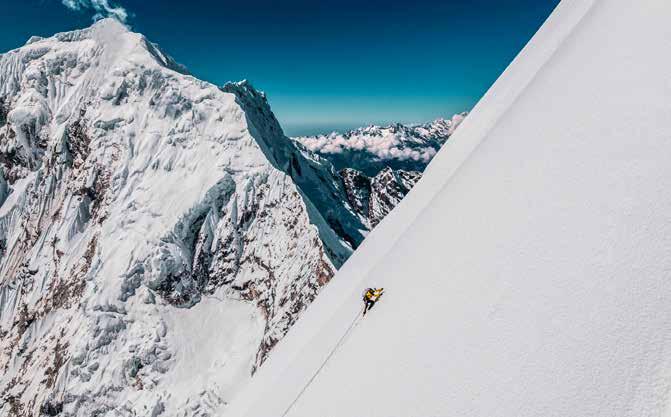
Destiny or obsession? Can you devote ten years of your life to striving to reach a peak that’s nearly 7,000 meters high, in a remote region of Nepal? These are the questions that spring to mind after seeing the poster for “Kimshung, the Mountain of Destiny,” the film directed by Damiano Levati that chronicles François Cazzanelli’s four attempts to reach the 6,781-meter summit in the Langtang Valley. These are questions to which the film—which I was fortunate enough to see at its world premiere on May 27 in Saint Vincent—does not necessarily provide a definitive answer. Like all great works, it leaves the final word—a personal one—to the viewer. But the very fact of having produced a film about the relationship between François and Kimshung is, in itself, an answer. In a world of mountaineering that has always been competitive, cruel (not to say unfair). The goal? Glory, which comes from conquering a summit that’s high-profile in the media—perhaps a new route on an 8,000-meter peak—not a little-known “almost 7,000-meter” peak. In a world where, even in the Himalayas, big budgets, commercial expeditions, and the spirit of blockbuster cinema have taken hold—applied to mountaineering feats—transforming those who reach the summit into actors. Or a hero. Against this backdrop, “Kimshung, the Mountain of Destiny” is not a mountaineering film. Or at least, it is not “just” a mountaineering film. It is first and foremost a documentary (featuring valuable insights from journalist and writer Enrico Camanni) that delves into the minds of François and his climbing companions, exploring an intimate dimension that puts people at the center. It answers questions with more questions. It reveals, unfiltered, the struggle and pain behind every achievement, but also the value of friendship and shared experience. A Machiavellian lesson lasting nearly two hours: the conquest of Kimshung is the litmus test proving that life is governed 50% by luck and 50% by virtue.
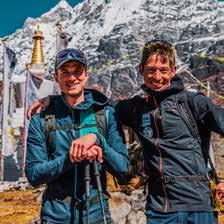
The film chronicles all of Cazzanelli’s expeditions to Kimshung, featuring a good mix of live footage, action cam footage, and drone shots. The relationship between François and director Damiano Levati is a long-standing one, and their chemistry is not just a key factor in the success of a mountaineering expedition. The film has a documentary style and a slow pace, yet time flies by. “We had to tell a story spanning ten years,” says Levati. The first expedition (lightweight and alpine-style, like the last one, even though François has gone from being a promising young mountaineer to a global star over the years) took place in 2015. Cazzanelli arrived in Nepal with Giampaolo Corona, on the advice of Oskar Piazza. They wanted to climb a lesser-known mountain in a valley off the beaten
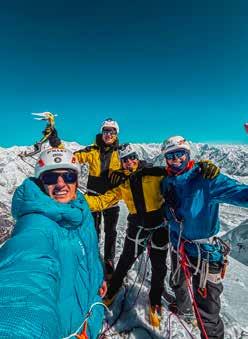
path of mass mountaineering. Fate, however, had other plans in store: a terrible earthquake that, in addition to sowing death and misery, killed Oskar. Thus, the expedition turned into an operation to recover and transport the bodies. Then came 2016 and the second trip, again with Giampaolo Corona, joined by Emrik Favre. Only Giampaolo and François remained for the summit attempt. A rock— perhaps a block of ice—grazed Giampaolo and struck François squarely in the arm, causing him to bleed profusely. Pain and cold take over, and after a night at high altitude, a helicopter transports Cazzanelli to the hospital, where he undergoes emergency surgery. “In those moments, all you think about is surviving,” says François as images of him with his suit completely covered in blood flash across the screen. It takes eight years to find the courage to return to the Langtang Valley. “When I think of Kimshung, the first adjective that comes to mind is ‘bastard.’ At first, it strikes you with its harshness, its sheer verticality, but then, when you’re lucky enough to watch it at sunset, you understand its gentleness, its magic.” The third expedition takes up a significant portion of the film. François says, in no uncertain terms, that he wouldn’t have been able to return if it hadn’t been for his best friends—his climbing partners—standing at the foot of the “bastard.” Giampaolo is missing; due to a serious accident at high altitude, he is no longer able to tackle the Kimshung. The final attempt will be made by four climbers: François, Giuseppe “Bepi” Vidoni, Jérome Perruquet, and Francesco Ratti, but they have to turn back 200 meters short of the summit due to the wind and cold. When the last favorable weather window arrives, fate strikes again: a serious accident involving two climbers. There’s not the slightest doubt—a rescue must be organized. And so we come to the final expedition, the one in the fall of 2025. “Go back one last time and try to settle the score with fate, but if you don’t succeed, things will remain unresolved,” says Alessia, François’s partner. By now, the Cazzanelli-Vidoni climbing team is very close-knit, and the film highlights “Bepi’s” crucial role in giving François new energy and motivation (in addition to being instrumental during the climb itself). They are joined by two young Austrians: Lukas Waldner and Benjamin Zörer. “If they’re good, they’ll help us; if they’re not good, they’ll give up; and if they’re better than us, we’ll learn something—but I don’t want to turn this into a competition on the same route,” says François in the film. The rest is history: the four of them reaching the summit—François first—the shouts, the tears. “Unfortunately, Lukas and Benjamin couldn’t be here tonight, but on Kimshung I made two new friends.” There you have it: François’s closing remarks at the event in Saint Vincent are the best response to the competitiveness of modern mountaineering—coming from one of the greatest figures in modern mountaineering.
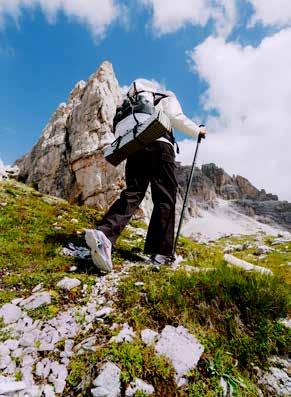
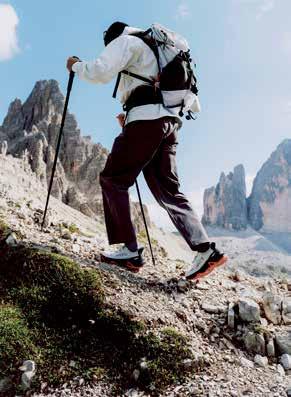
Nat’s combines the manufacturing and artisanal traditions of the Marche region with the vitality of the outdoors and a very specific philosophy: experiencing nature to enjoy it, not to conquer it
Nat’s story began in the late 1960s with Selenia, a shoe workshop in the Marche region whose shoes initially reflected the classic, elegant style of the era, before shifting toward a more casual and versatile look. It was against this backdrop that Nat’s was founded in 1993—a new brand designed to embrace a more active lifestyle through footwear that combined comfort, natural materials, and a sporty design, while keeping the tradition of Italian craftsmanship intact. The 1990s were a period of intense growth, but with the arrival of the new millennium and the boom in major international sports brands and retail chains, many independent boutiques that supported Nat’s began to disappear. This situation forced the founders to make a difficult but necessary decision: to entrust Nat’s to new hands capable of revitalizing the brand without betraying its core values of authenticity, exploration, and the balance between comfort and the spirit of the outdoors. Today, Nat’s carries on this legacy while remaining true to its mission: to produce footwear for those who experience the mountains every day—not to conquer them, but for the sheer pleasure of the journey itself.
COMFORT FIRST, PERFORMANCE FOLLOWS
by Matilde Marelli
“We didn’t want to create just another technical shoe, but rather the right one for those who truly love walking: with the comfort of a sneaker, the stability of a technical shoe, and an Italian soul— a product made the right way. The market demands performance; we respond with something more lasting: the pleasure of every step.”
George Zhang, owner & ceo Nat’s
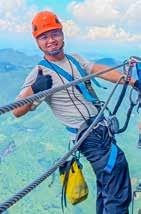
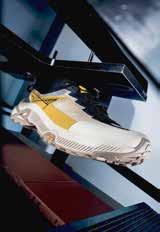
This is at the heart of the brand’s philosophy: putting comfort first and using it as the starting point for creating products designed for outdoor activities. In short, according to Nat’s, the design of outdoor footwear should begin with the foot itself, rather than with the desired performance—which follows as a natural consequence. After more than 30 years of experience in the industry, the brand now occupies a distinct niche within the broad audience of outdoor enthusiasts— from those seeking high performance to newcomers—catering to those who want to live in harmony with nature.
Every Nat's shoe is the result of a detailed study of foot anatomy and all the technical elements of the shoe, which are combined with the know-how and tradition of the Italian manufacturing industry. This allows us to develop products that offer a comfortable feel without compromising stability, protection, and lightness. At the heart of the design is the “Natural Fit” architecture, which allows for the creation of a last that accommodates the foot’s natural move-
ment, promoting a more natural gait, balanced weight distribution, and greater freedom of movement for the toes. The Hybrid Hard+Soft construction combines different materials and densities to achieve the right balance between support and cushioning: the structured areas ensure stability and control of movement, while the soft components absorb impact and enhance comfort. The result is a shoe that provides support without feeling stiff, maintaining a natural feel while walking. Integrated into the midsole is a frame designed to improve foot control, limit excessive twisting, increase structural protection, and help maintain balance without restricting movement, while the Vibram Megagrip outsole ensures stability on all terrains. Finally, the upper is made of Dyneema, a material known for its strength-to-weight ratio, which allows for a very lightweight yet equally sturdy construction while maintaining high levels of breathability. This translates to greater durability, better foot ventilation, and a constant feeling of lightness.
Each product is thus the result of a fusion of technological innovation and Italian manufacturing expertise, offering advanced technical footwear while maintaining comfort.
Nat's goal is to create a new category of outdoor shoes focused on the joy of walking—from mountain trails to city streets—with a distinctive design and a marketing strategy built on credibility.
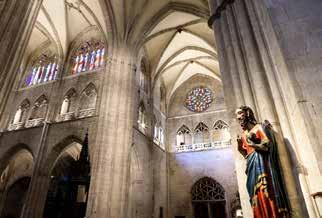
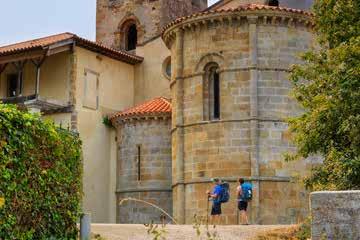
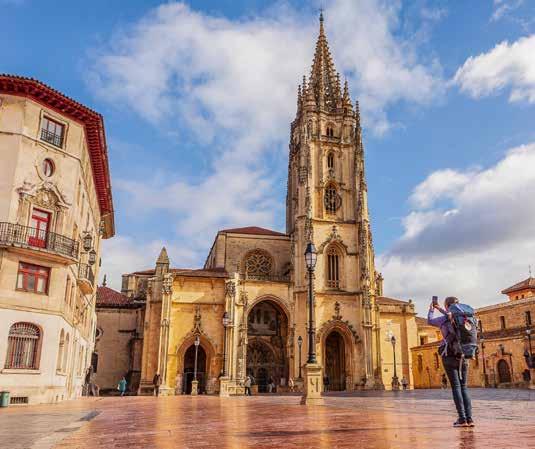
There are three routes of the Camino that pass through the Spanish region as well as two main connecting routes that make Oviedo one of the main pilgrimage destinations
by Sara Canali - photos by Noé Baranda
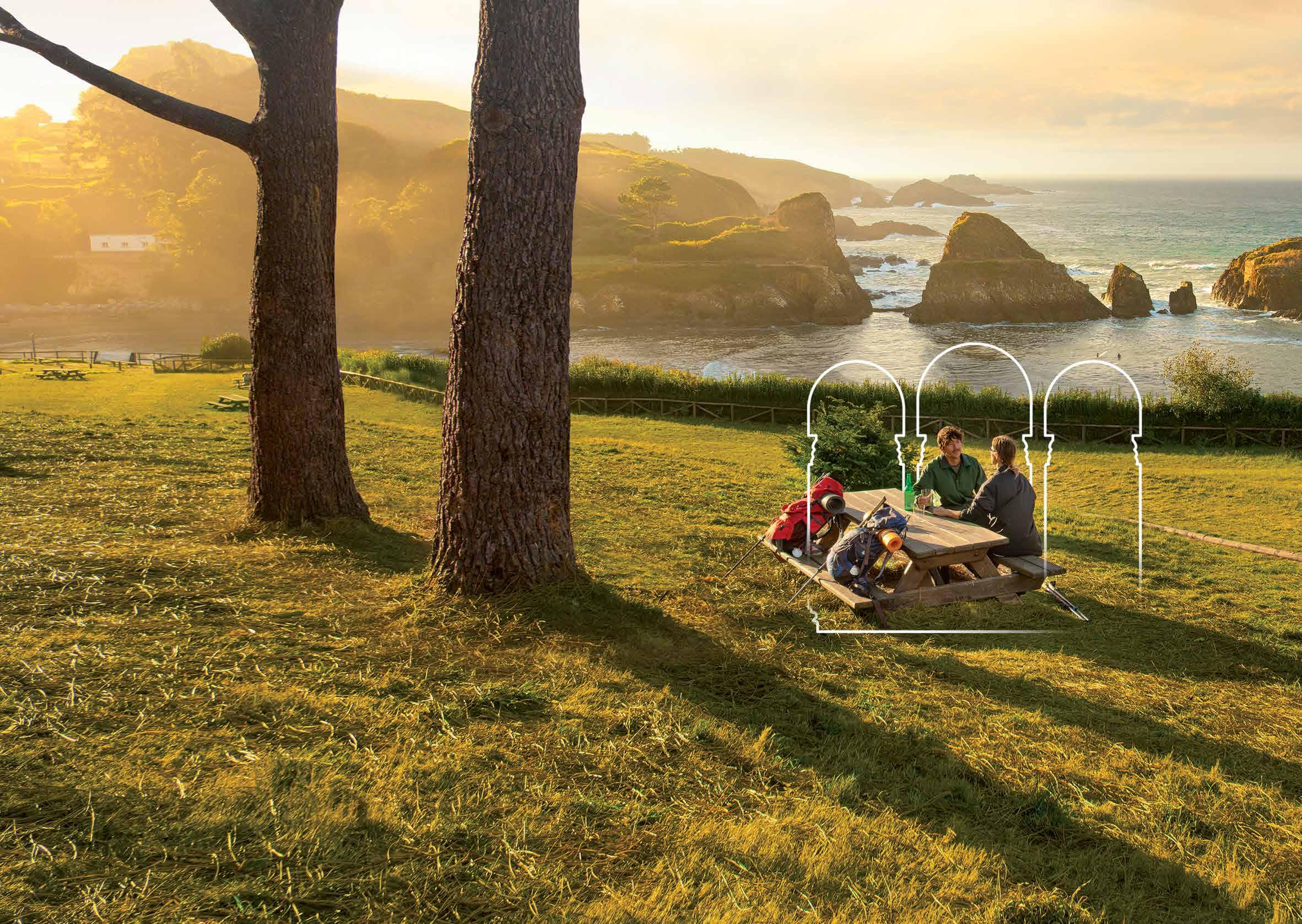
Wind-swept ocean beaches and spectacular mountains. This is Asturias: a part of Spain where nature is untamed and the tourist experience remains authentic and rural. It’s no surprise, then, that hiking and slow tourism are among the main ways to explore the region, which is a paradise for those who love outdoor vacations. Several routes of the Camino de Santiago pass through here, centered on Oviedo, the regional capital, and have been designated UNESCO World Heritage Sites for their historical significance and cultural vitality. These are the St. James routes, so named in honor of St. James the Greater, the saint to whom the pilgrimage to Santiago de Compostela is dedicated. Those that pass through Asturias are: the Primitive Way, the Northern Way or Coastal Way, as well as the Way of El Salvador and the links between the Primitive and Coastal routes. All of these feature a network of modernized hostels, designed to suit the lifestyle and perspective of 21st-century pilgrims, and are intended for rest after the many kilometers of each stage. In addition, there is also a wide network of rural and urban accommodations to choose from, should you prefer this option.
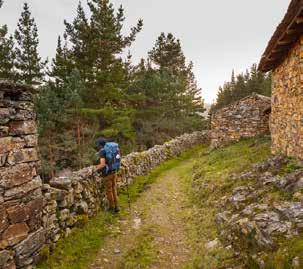
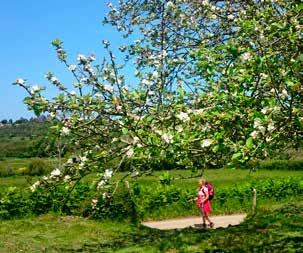
The Primitive Way is considered the oldest pilgrimage route to Santiago on the Iberian Peninsula. According to tradition, monarch Alfonso II of Asturias was the first to travel it in the 9th century, journeying from Oviedo to the site where the tomb of the Apostle James had been discovered—the future Santiago de Compostela. It was this very journey that would transform the king into the first pilgrim in history and the route he followed into the so-called “Primitive” Way. Today, the route spans approximately 145 kilometers of rural and mountainous landscapes, divided into seven stages. From Oviedo, the route heads inland through Asturias, passing through Grado, Salas, Tineo, Pola de Allande, and Grandas de Salime, offering a continuous immersion in the most authentic nature of Asturias. Mountains, forests, streams, waterfalls, and valleys alternate with a rich cultural heritage of medieval monasteries, churches, hermitages, and small historic villages. Here, rural and mountainous landscapes dominate, featuring humid forests, deep valleys, pastures, rocky trails, and small villages frozen in time. It is a route that still retains a strong outdoor character today and requires good physical conditioning, especially on the sections with steeper gradients. One of the most spectacular segments is the so-called Hospitales
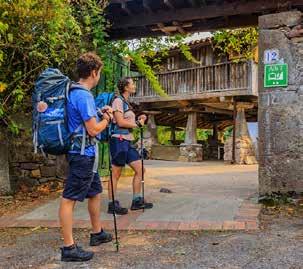
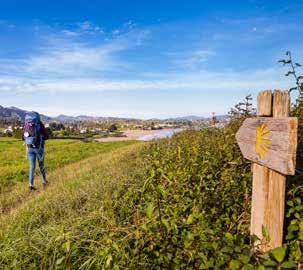
variant, a historic variant between Borres and Puerto del Palo; the name derives from the ancient medieval hospitals that offered shelter to pilgrims as they crossed the Asturian mountains. This section is considered by many to be the original route of the Primitive Way and is also one of the most challenging, yet it offers the most spectacular scenery, with sweeping views of the mountains of western Asturias. Many pilgrims describe it as the most memorable experience of the entire journey.
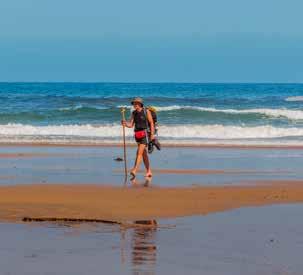
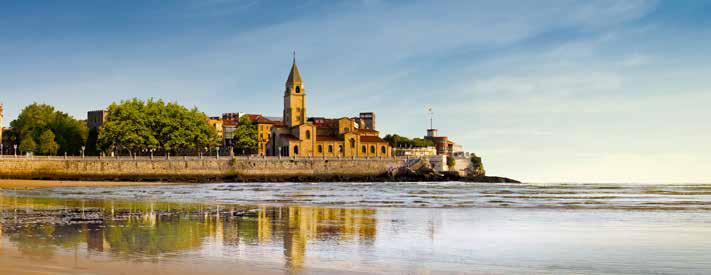
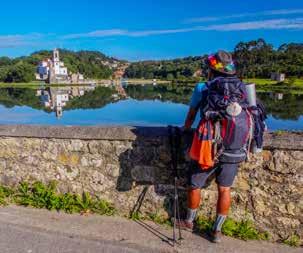
Completely different in terms of scenery, yet just as spectacular, is the Northern Way, also known as the Coastal Way. Starting in Irún, in the Basque Country, it follows the coast of the Cantabrian Sea for long stretches, offering one of the most scenic routes in the entire Camino de Santiago. In the Asturian section, it stretches for circa 280 kilometers across 13 stages that remain in constant contact with the ocean. It passes through towns such as Bustio, Llanes, Ribadesella, Gijón, Avilés, and Muros de Nalón, alternating between wild beaches, cliffs, fishing villages, and green Atlantic hills. Along the way, pilgrims encounter medieval bridges, monasteries, ancient hospitals for travelers, and significant architectural landmarks, ranging from rural churches to stately mansions to the elegant residences built by Asturian emigrants. The Coastal Way constantly blends nature and culture, and although it is often associated with the sea, it is by no means an easy route. The constant unevenness of the terrain, the continuous ups and downs, and the valleys that interrupt the coastline make it physically quite demanding. Historically, some sections even forced pilgrims to combine overland travel with coastal navigation. Along the route, evidence of Asturias’ medieval and maritime history emerges, complemented by the so-called “indiano villas”, elegant villas built between the 19th and 20th centuries by Asturian emigrants returning from Latin America, which are particularly widespread along the coast.
It was 1075 when King Alfonso VI opened the Holy Ark kept in the Cathedral of El Salvador in Oviedo, Spain, revealing the relics brought to Spain from Jerusalem, including the Holy Shroud, fragments of the Cross, and relics of the saints. The significance of the discovery reinforced the city’s status as a starting point for all those

making the pilgrimage to Santiago, but it also transformed the Asturian capital into a full-fledged pilgrimage center. Today, the Oviedo Cathedral stands as the symbolic heart of the route bearing the same name (the Way of El Salvador), which is considered one of the most fascinating and least-known pilgrimage routes. It is, in fact, a mountain route connecting León to Oviedo across the Cantabrian Mountains and, in the Middle Ages, represented a fundamental spiritual detour for many pilgrims heading to Santiago de Compostela. The official route consists of five stages, the last three of which traverse the Asturian territory, passing through Puerto de Pajares, Campomanes, Mieres, and Oviedo. Although relatively short compared to other routes, El Salvador is considered one of the most physically demanding in the Jacobean network. The climb to Puerto de Pajares is the main elevation challenge, but the Asturian side also requires good physical conditioning due to constant elevation changes, mountain trails, and often variable weather conditions. One of the most distinctive aspects of the Way of El Salvador is the gradual transition from high-altitude landscapes to the historic mining valleys of central Asturias. After the Pajares Pass, the route follows the Lena and Caudal river basins, passing through areas deeply connected to the region’s industrial and mining history.
There is a connection between the Asturian section of the Coastal Way and the Primitive Way, which heads into the mountains toward Oviedo, following two possible detours that converge at the summit of La Campa. This route winds through the inland region, traversing terrain that is not particularly difficult but somewhat more challenging than what pilgrims coming from the coast have faced so far. One of the most fascinating aspects of this connection is the detour leading to the Monastery of Santa María de Valdediós, which allows visitors to explore the medieval Cistercian monastery and the pre-Romanesque church of San Salvador de Valdediós, known as “El Conventín”—two treasures of Asturian history. After the two routes rejoin at Alto de la Campa, the path continues toward La Pola Siero, one of the liveliest stops along the route, known for its traditional cuisine and strong Asturian folk identity. From here, the pilgrim gradually enters the urban area of Oviedo, where the route officially joins the Primitive Way in front of the Cathedral of El Salvador.
"TODAY,
According to Valentina Fioramonti, group exhibition manager wellness & outdoor at Italian Exhibition Group (IEG), whom we interviewed in the RiminiWellness pavilions
by Sara Canali
RiminiWellness is dynamism, energy, and a culture of movement. And for the past four years, it has also been an event capable of engaging the entire region, extending its reach beyond the walls of the exhibition halls and offering a wide array of events that make Rimini a hub for a vision of wellness that is widespread, accessible, and inclusive. RiminiWellnessOFF is the off-site festival of fitness, wellness, and sports organized by the Italian Exhibition Group and the City of Rimini in conjunction with the 20th edition of RiminiWellness, which from May 28 to 31 brought the historic center and the Rimini Riviera to life with activities such as running, trail running, hiking, walking, and outdoor sports. In short, the Romagna event welcomes a new community of enthusiasts, opening its doors to an increasingly diverse audience of athletes. We spoke about this with Valentina Fioramonti, Group Exhibition Manager for Wellness & Outdoor at Italian Exhibition Group (IEG), whom we met in Rimini.
How has the event changed over the years?
topics generating the most interest, but running has also shown significant growth. Visitors themselves asked us for more running-related activities, and companies did the same.
How does running fit into fitness culture in the most traditional sense?

i
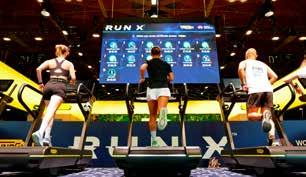
Running is a very inclusive sport that can be practiced outdoors and fits perfectly with the spirit of Rimini. Thanks to the Parco del Mare, the city offers ideal spaces for this type of activity. Furthermore, running integrates easily with other sports, both indoor and outdoor. We’ve noticed an increase in demand for dedicated activities, such as those on treadmills, and in fact, this year we have two areas set aside for group workouts. Running also has a strong social component: people run together, make friends, and use apps and digital tools.
That’s why we’ve decided to use running as a bridge between the trade show and the local community.
RiminiWellness is an event much loved by the general public, who over the past twenty years have made it recognizable, soughtafter, and eagerly anticipated. Starting in 2023, we embarked on a major initiative to make it more relevant and better aligned with the public’s needs. On one hand, we’ve boosted the event’s brand awareness by focusing on social media, our community, and content creation throughout the year. On the other hand, we’ve strengthened our commitment to education and outreach. Today, the concept of wellness goes beyond fitness and encompasses diet, sports nutrition, physical therapy, and sports medicine. For this reason, we have delved deeper into specific areas and created the Health section, designed specifically to combine exercise and health.
The concept of wellness has changed significantly; today, we’re really talking about all-around well-being. How have you worked to broaden your perspective beyond traditional fitness?
First of all, we focused on raising awareness. We addressed the topic of longevity by starting with educational content, organizing conferences, and involving university professors, nutritionists, physical therapists, and professionals—including some from the United States. Next, we sought to turn this content into activities that would engage the public. Strength training is one of the
And this is where the RiminiWellnessOFF project comes into play?
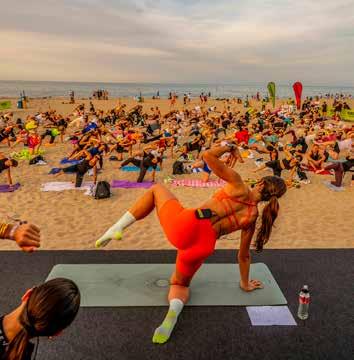
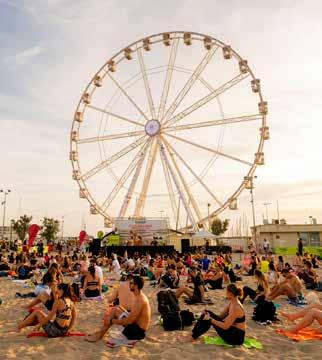
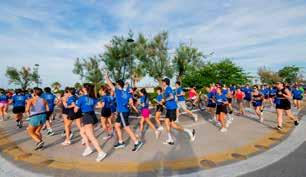
Exactly. RiminiWellnessOFF is a calendar of events that we’re offering before and after the main event, involving the city and some of its most iconic locations. We organize sunset runs along the Parco del Mare, sunrise meditation sessions, sunset Pilates under the Ferris wheel, and the Rudimental, a run through the historic center. We do this by engaging local communities with the goal of highlighting the sporting spirit already present in the area, conveying the idea that fitness today isn’t just about working out indoors, but also about experiencing the city through sports.
What do you see in the future of RiminiWellness?
We are already thinking about the future evolution of the event, and starting in 2027, we are considering creating an area dedicated to the Outdoor Experience. The idea is to promote walking and running as sports and wellness activities, while also integrating them into tourism, culture, and exploration of the local area. We envision routes that can showcase cities, landscapes, and regions, or that are linked to local literature and culture. The goal is to create a space where products, physical activity, and culture can come together to give rise to something new. What’s probably missing is a cultural community that can fully represent and promote this vision.
Frank Wacker (Germany) – Outdoor Magazin, Jury Chair
Piotr Drozds (Poland) – Góry Magazine
Christian Milbo (Denmark) – Outsite
Julien Bels (France) – Sport-guide
Joel Svedlund (Sweden) – Peak 63, sustainability expert
Claudio Primavesi (Italy) – Outdoor Magazine
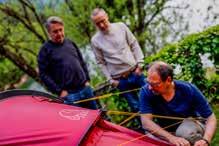
During the summer session of the awards, immediately following the EOW in Riva del Garda, awards were presented for sustainability, innovation, lifestyle, and authentic Scandinavian spirit, in addition to the grand prize
by Claudio Primavesi
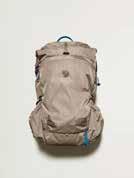
Five products were honored at the Scandinavian Outdoor Awards Spring/Summer 2027, following extensive field testing conducted in the mountains of Trentino, in Molveno, at the conclusion of European Outdoor Week. Among the five winners, the Fjällräven Keb Lätt 55 backpack and the OrganoTex Odor Remover spray stood out as the most notable products, winning the Grand Prize and the Sustainability Award, respectively. The jury consisted of industry journalists of various nationalities, including Claudio Primavesi, editorial director of Outdoor Magazine. The awards ceremony was broadcast on June 1 on the event’s website.
OrganoTex Odor Remover
FJÄLLRÄVEN KEB LIGHT 55
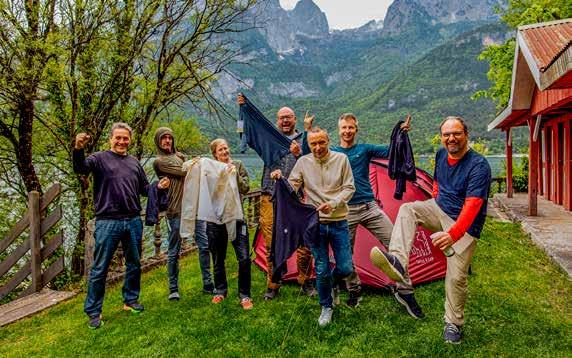
Divided into two sessions—summer and winter—these awards, organized by the Scandinavian Outdoor Group, recognize products exclusively from Scandinavian brands each year. The winning products were tested under real-world conditions on various alpine terrains in Trentino, where the variable weather, challenging trails, and long days in the mountains provided an ideal testing ground. The judges also spent a night in the Nordisk Sirius 4 EXP tent, personally experiencing its comfort, weather protection, and functionality.

No other hiking backpack combines lightness, high load capacity, carrying comfort, and durability quite like the Keb. The carrying system developed by the Swedish brand Fjällräven effortlessly handles loads of up to 18 kilograms and allows for great freedom of movement. The backpack also reflects the brand’s commitment to sustainability: the main fabric is made of recycled polyamide with UHMWPE ripstop reinforcements that ensure its durability. The Keb Lätt offers all the features needed in the mountains, weighs 1,130 grams, and can be lightened to as little as 800 grams. The wooden walking stick is an interesting touch.

“I can finally wear my favorite shoes again without having to warn everyone before taking them off,” commented one of the jurors after using OrganoTex’s ShoeCare Odor Remover the previous evening. Made in Sweden with organic and biodegradable ingredients, it meets strict sustainability requirements. It’s easy to apply and has a pleasant peppermint scent.

Aclima Lightwool 140 Hoodie w/Zip
The Norwegian brand Aclima is the first manufacturer to offer a merino wool hoodie made from an
extremely lightweight, UPF 40+ certified fabric that protects the skin from UV rays.
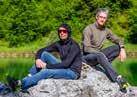
TRUE SCANDINAVIAN SPIRIT
Nordisk Sirius 4 EXP
Tunnel tents with spacious vestibules originated in northern Scandinavia and remain the ideal choice for hiking in rainy or winter condi-
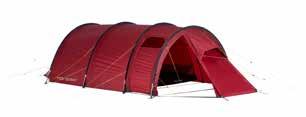
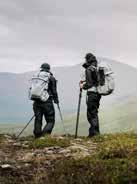
tions. The new Sirius 4 EXP from the Danish brand Nordisk is among the most versatile and durable models in its category.
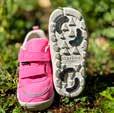
Isbjörn of Sweden Foxy All Weather Low Sneaker
After six years of development, Isbjörn of Sweden, a specialist in children’s outdoor gear, is introducing its first footwear model: the Foxy All Weather Low Sneaker. Designed for children’s everyday use, it combines comfort, functionality, and healthy foot development.

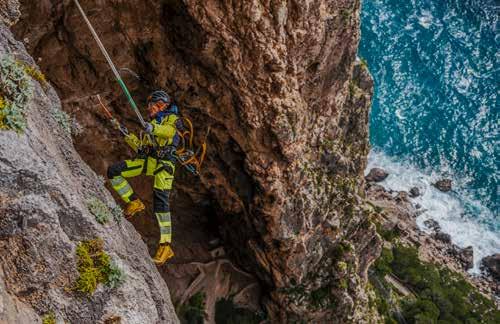
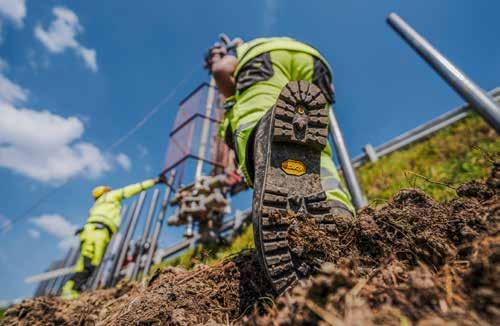
Vibram announces its partnership with Gheller in the Work&Safety division: the expertise of the yellow octagon brand aims to meet the needs of the specialists in rock wall stabilization
by Benedetta Bruni
Products for the vertical world cannot be limited solely to sports and recreational activities. The professional world, in fact, requires state-of-the-art equipment with the highest technical specifications to ensure safety even in complex situations and to balance precision, control, stability, and reliability. With this forward-looking approach to its Work&Safety division, Vibram works closely with Gheller, a leading company in hydrogeological risk mitigation and rock face stabilization, supported by elite teams of geologists, mountaineers, and rock climbers. This partnership helps solidify a development model in which input from professionals drives innovation. This effort also benefits hikers by enhancing trail safety through the stabilization of the rock faces that overlook many trails.
THE PARTNERSHIP WITH GHELLER
A collaboration rooted in the work of people in direct contact with the
ground and the underground environment: unstable locations where equipment isn’t about optional extras, but essential features that operators must be able to rely on in the most complex situations. This is why Vibram chose Gheller as an integral part of the development phase, translating very specific on-site applications and concrete needs into applied innovations: The goal of this partnership is to constantly optimize designs and rubber compounds to develop solutions that increasingly meet the real needs of those who work daily in complex and highly challenging environments. Once again, even in the Professional sector, Vibram places the end user at the center of product development: the most valuable input comes from those who experience the product in the field, and it is always the user who is entrusted with providing initial feedback on new solutions during the testing phase. This approach transforms direct experience into tangible innovation, resulting in products capable of delivering ever-higher levels of performance, reliability, and safety under the most demanding conditions of use.
The most popular models with Vibram soles currently used in rock consolidation and work at height
Work boot designed for professionals who demand maximum reliability and high performance, inspired by the historic Nepal series. The Vibram outsole is made of an antistatic compound and is compatible with automatic crampons. It guarantees excellent grip, stability, and safety even in the most extreme environments. It offers complete protection thanks to its puncture-resistant, crush-resistant, antistatic, and waterproof properties. The water-repellent Idro-Perwanger leather upper, over three millimeters thick, and the GoreTex Performance Comfort lining ensure durability and long-lasting comfort in all conditions.
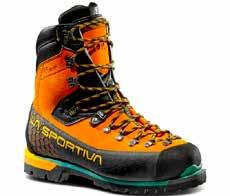
A sturdy and comfortable boot, based on the historic AKU model, designed for long distances and for those tackling challenging environments while carrying heavy loads. The Vibram Fourà outsole, featuring Weave and Elica technologies, is engineered to provide excellent slip resistance, superior shock absorption, and protection on rough terrain. Lightweight, comfortable, stable, and moderately stiff, this boot is the ideal solution for working in difficult conditions and extreme environments.
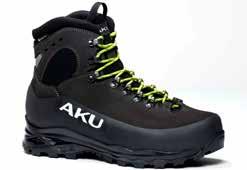
The 5090 Mountain Lite GTX RR S3 is a versatile and durable technical boot, designed to handle challenging environmental conditions while ensuring safety and reliability. It features an aluminum toe cap and puncture protection, while the Vibram Teton outsole with the Zamberlan PCS system ensures grip, stability, and high performance even in alpine environments. The outsole’s design ensures precision even during the most delicate movements.
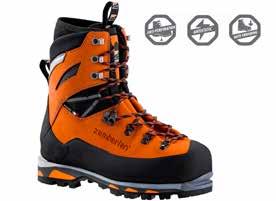
Näak was founded with the goal of finding the perfect supplements for ultrarunners, developing products that deliver high performance with a low environmental impact
This story begins in Canada, in Montréal, in 2016, with an idea from two friends and endurance athletes, Minh-Anh Pham and William Walcker. Their firsthand experience in triathlon and ultra-distance trail running led them to realize that there was a gap in the market: a lack of nutrition capable of providing sustained energy, easy digestibility, and environmental sustainability. From this principle, Näak was born—a brand that aims to rethink traditional sports nutrition by developing products capable of delivering high performance with a reduced environmental impact. The first energy bars were made right in their home kitchen using cricket protein, one of the most sustainable protein sources available at the time. From that insight came the concept of “Ultra Energy,” the philosophy that still guides the brand today. We delved into the brand’s history and its evolution with CEO William Walcker.
What inspired the creation of Näak, and what needs is it addressing?
In trail running, 85% of race dropouts are due to gastrointestinal issues. As endurance athletes, we’ve experienced this problem firsthand and wanted to find a solution. Nutrition shouldn’t be the limiting factor, but rather what enables anyone to reach the finish line and enjoy their race, whether it’s a 5-kilometer run or a 100-mile race. For us, “ultra” isn’t a distance—it’s a mindset. Determination and resilience. Näak aims to support everyone on their personal ultra journey with its Ultra Energy.
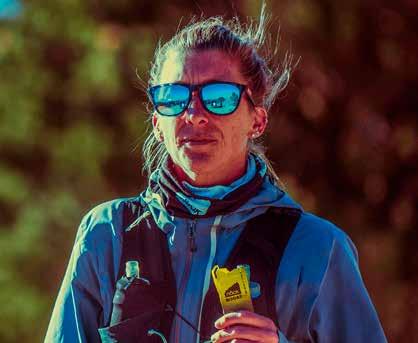
and delicious (thanks to natural fruits and vegetables), with an easy-to-consume texture (semi-liquid) and a practical format (resealable, doesn’t melt, etc.). We’ve added functional ingredients to provide 200 calories of complete, real-food-based nutrition (5 g of protein, 26 g of carbohydrates, 170 mg of sodium). It’s also made with upcycled ingredients: maple syrup and rapeseed protein.
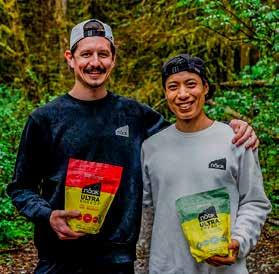
What is Näak's target audience?
Our products are designed with trail runners in mind, to support them with both their daily nutritional needs and their performance-related nutritional needs. Our primary audience consists of trail runners, but we also cater more broadly to all outdoor enthusiasts and active people.
How much did your personal experience with ultramarathons play a role in launching Näak?
Together with my co-founder Minh, we created the products we wished we had during our ultra races or simply on our mountain hikes. Something tasty, not overly sweet, enjoyable to eat during physical activity, and gentle on the stomach. Every product is inspired by our adventures and is tested directly by us or by our ambassadors in real-world conditions.
You claim that your products have a low environmental impact. What does that mean?
What is missing in the supplement industry today, and what does Näak aim to bring to it?
Ultra Energy: steady, long-lasting energy (sustainable for both the body and the planet), without sudden energy crashes. Näak is the first brand specializing in nutrition for ultra-distance events. We’ve developed a complete, nutrient-rich, and perfectly balanced nutrition system to keep athletes feeling energized and allow them to enjoy long hours in the mountains. We select natural ingredients from sustainable sources and optimize their proportions to prevent sudden insulin spikes and gastrointestinal discomfort. Näak is B Corp certified.

What is your most iconic product?
Ultra Purée is probably our most iconic product. We drew inspiration from baby food: extremely healthy
We select ingredients and packaging with the lowest possible carbon footprint. Our competitors use corn-based maltodextrin; we use tapioca and agave syrup, which require 50% fewer CO₂ emissions and 50% less water. In addition, we plant a tree for every online order placed.
Where are Näak's products manufactured? Where do the raw materials come from?
Näak products are manufactured in Canada and Europe using raw materials sourced from suppliers located as close as possible to our production facilities.
What are the core values and the message that Näak wants to convey?
Ultra isn’t a distance—it’s a mindset. An “ultra” effort isn’t something reserved for elite athletes tackling 100-mile races. The determination, willpower, and mental challenges a beginner faces during their first five kilometers are exactly the same. Our goal is to inspire anyone to take on their own personal “ultra.”
Dolomite expands the Vernale family with the Vernale Hike GTX, the new hiking boot designed for hikers seeking technical performance, comfort, and versatility
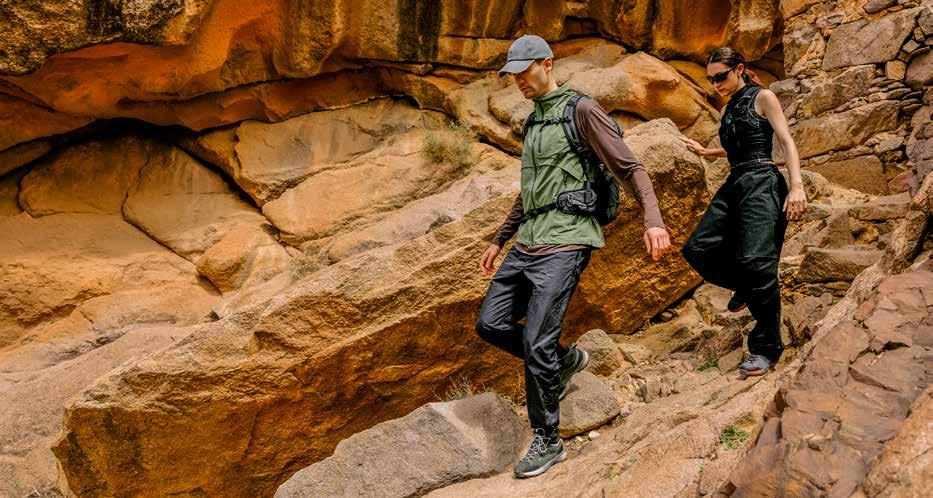
Tested during the trekking experience organized by Dolomite in collaboration with AllTrails as part of the Activation Days in Riva del Garda (May 16 and 17), the Vernale Hike GTX represents the perfect blend of Dolomite’s more than 100 years of experience and a modern, functional design. This shoe was developed to accompany enthusiasts along trails of varying difficulty—from day hikes to multi-day adventures—offering a balance of protection, support, and freedom of movement. This new addition is part of the Vernale collection, a line created to meet the needs of those who experience the mountains in a dynamic way and seek a reliable shoe for every situation. The design aims to combine high-quality materials, proven technologies, and a construction designed to ensure comfort throughout the day. The collection’s philosophy is to ensure a natural stride without sacrificing the stability needed on the most challenging terrain.
TECHNICAL EXPERTISE
to its low-cut design, it offers greater freedom of movement, making it ideal for those seeking flexibility without sacrificing support. It’s suitable for brisk hikes, walks on well-trodden trails, and allaround outdoor use.
• The mid-cut version features a padded collar and TPU inserts that provide greater protection, stability, and support on uneven terrain or more technical trails while maintaining comfort and flexibility. A version designed for those tackling more challenging trails, carrying heavy backpacks, or spending long days in the mountains who need additional support around the ankle.
Thanks to the LWG (Leather Working Group)-certified suede upper, reinforced with rubber inserts strategically placed in the most exposed areas, the shoe is durable and capable of protecting the foot from sudden movements. This construction also helps increase the product’s durability, a feature particularly appreciated by those who frequently tackle rocky trails, dirt paths, or uneven terrain. The Gore-Tex membrane, on the other hand, keeps the foot dry in any conditions thanks to its waterproof and breathable properties; this ensures comfort throughout the entire outing, whether on hot days or in rainy or humid conditions. The goal is to provide a constant sense of comfort by reducing heat buildup and promoting optimal internal moisture management. In terms of performance, the Vibram XS Trek Evo outsole, enhanced with Traction Lug technology, guarantees grip and traction even on the most technical terrain, improving traction while walking, both uphill and downhill. The dual-density midsole, meanwhile, provides cushioning and stability, helping to absorb impact and make your stride smoother even over long distances.
Ideal for both day hikes and multi-day treks, this model is available in two versions: the Vernale Hike Low GTX and the Vernale Hike Mid GTX. Both versions share the same technical design but are tailored to different needs, allowing every hiker to choose the configuration that best suits their walking style.
• The low-cut version is designed to adapt to all types of terrain and provide protection while remaining lightweight and comfortable. Thanks
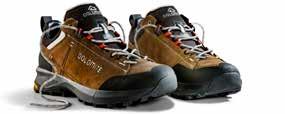
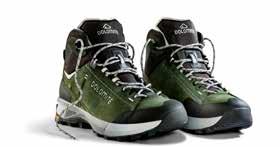
TECHNICAL FEATURES
• LWG-certified suede upper
• Waterproof and breathable Gore-Tex membrane
• Vibram XS Trek Evo outsole with Traction Lug technology
• Weight of the low-cut model: 440g men's version - 380g women's version
• Mid-cut model weight: 490g men's version - 420g women's version
The Vernale Hike GTX is available in eight color options, divided equally between men’s and women’s versions. For the men’s model, you can choose from Olive Green, Golden Yellow, Gunmetal Gray, and Mud Green; while the women’s version is available in Burgundy Red, Gunmetal Gray, Silver Green, and Storm Blue. This collection underscores Dolomite’s commitment not only to technical performance but also to aesthetics, offering a shoe that accompanies hikers along the trails without compromising on contemporary, recognizable style.
Dolomite - +39 0422.884488 - info@dolomite.it
The MGM Group serves the fast hiking segment with its Kayland and Trezeta brands, which offer two different yet complementary approaches
Combining the comfort of a hiking boot with the agility and responsiveness typical of trail running. This is where fast hiking comes in—a discipline that offers a more dynamic, faster, and more versatile way to experience the mountains. Among the leaders of this evolution is the MGM Group, which, through its two brands—Kayland and Trezeta—approaches
the segment with different yet complementary strategies. On one hand, there’s Kayland’s Tuono family, designed for those seeking performance, precision, and speed on the most technical terrain; on the other, Trezeta’s Sekai line, which focuses on comfort, versatility, and ease of use to accompany hikers in a wide range of outdoor activities.
TUONO
This shoe embodies Kayland’s take on modern fast hiking. Lightweight and responsive, it combines a lightweight construction with a sole designed to ensure traction and control even on the most varied terrain. The abrasion-resistant technical fabric upper promotes comfort and breathability during dynamic hikes, while the protective design allows you to confidently tackle technical trails, approach routes, and fast-paced treks.
TUONO GTX
The GTX version adds the Gore-Tex Invisible Fit membrane to the Tuono platform, designed to keep your feet dry without compromising the shoe’s responsiveness and lightweight feel. The combination of a technical upper, TPU reinforcements, and a high-grip Vibram outsole makes it a reliable companion when weather conditions become unpredictable.
TUONO LEATHER GTX
It features a nubuck upper that enhances protection and durability. It maintains the dynamic character of the Tuono family thanks to its lightweight construction and Vibram Multiverse outsole with XS Trek compound, while offering a more structured feel and greater resistance to wear. The Gore-Tex Invisible Fit membrane rounds out the package.
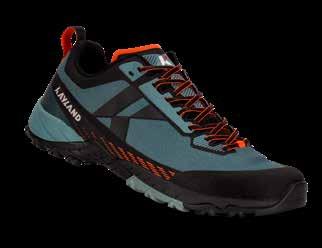
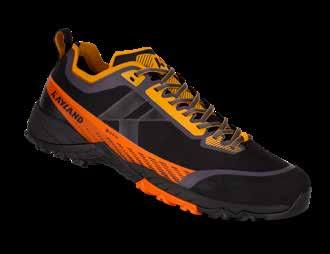
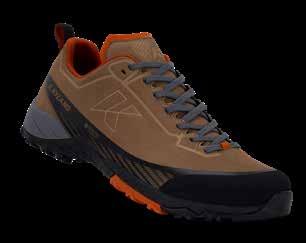
SEKAI
Sekai, from the Japanese word for “globe,” is a shoe designed for a variety of uses—from work to walks in the park—and embodies the spirit of the ever-exploring adventurer. Perfect for fast hiking and light backpacking, it features a modern design that prioritizes dynamism, comfort, and versatility on mixed terrain. The design is clean and sporty, with a lightweight, breathable upper that prioritizes freedom of movement and a feeling of agility. The outsole is designed to provide grip and stability on dirt trails, forest paths, and mixed terrain, while maintaining good flexibility when walking.
SEKAI WP
The Sekai design returns, now featuring full protection from the elements thanks to its waterproof membrane. The outsole ensures traction and safety on uneven surfaces, making the Sekai WP a well-balanced choice that combines performance and protection.
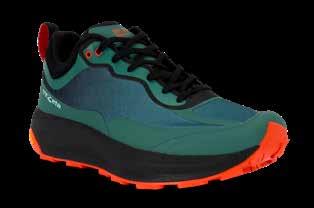
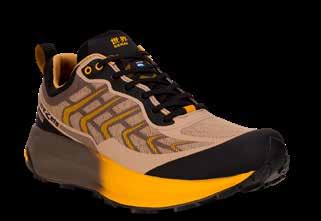
Gregory presents the Alpinisto series of technical backpacks, designed for those who experience the mountains without compromise and available in various sizes
From fast ascents to high-altitude traverses, including nights spent in bivouacs and long days on ice and rock: the new Alpinisto series from Gregory Mountain Products was born out of these needs—a collection of technical backpacks designed to accompany mountaineers and mountain enthusiasts through every stage of their adventure. Available in 20-, 30-, and 50-liter sizes, the Alpinisto line shares a design philosophy focused on maximum functionality, while adapting to different uses.
One of the collection’s standout features is the AirCushion back system, designed to ensure excellent breathability even during the most intense activities. The mesh construction creates a space between your back and the backpack that promotes ventilation and accelerates moisture wicking, helping to maintain comfort even on the hottest days. The body-hugging suspension system, combined with anatomically contoured padding and an adjustable chest strap, ensures stability and effective load distribution.
The differences between the models are most evident in how they handle weight. The Alpinisto 20 prioritizes lightness and freedom of movement, while the
30- and 50-liter models feature aluminum frames to improve support when carrying heavier loads, with the 50-liter model capable of supporting up to over 22 kilograms. In terms of organization, Gregory has developed a carrying system that allows you to secure two ice axes using dedicated aluminum hooks, while modular straps let you attach crampons to the outside of the backpack, keeping them easily accessible and separate from the rest of your gear. There’s also an integrated helmet system, hidden in the front pocket and ready for use in just a few seconds.
All backpacks are made of 100D ripstop nylon with a C0-DWR water-repellent finish and contain 40% recycled material. The inner linings and reinforced bottom are made of 210D nylon to increase abrasion resistance. All materials are also PFAS-free, while the plastic and aluminum components are bluesign certified. For summer 2026, the series is available in the new colors Alpine Glow, Summit Black, and Vivid Orange—shades that evoke the alpine environment and reflect its dynamic character.
Panorama - +39 0472.201114 - info@panoramadiffusion.it
For the SS 27, Mico is expanding its Repel Mosquito line to keep insects away from every part of the body without killing them
In the summer, the mountains aren’t just about heat and elevation gains—they’re also about mosquitoes, ticks, and other insects you have to deal with. For spring-summer 2027, Mico is addressing this need by expanding its Repel Mosquito line, a collection that combines technical performance and comfort with a special fiber designed to keep insects at bay without killing them, thereby helping to prevent bites.
The new Extradry Outdoor long sock, made from Repel Mosquito polyamide with LYCRA® fiber, is designed for long days on the trails. It combines elasticity and support with excellent breathability and moisturewicking properties. The anatomically shaped right and left toes with terry cloth reinforcement, heel and Achilles tendon protection, breathable microchannels on the instep, and flat, friction-resistant seams are key details that enhance comfort even after many hours of use. A product entirely made in Italy that underscores the brand’s commitment to quality craftsmanship.
Available for both men and women, in long- and short-sleeve styles, the new Skintech seamless shirt is lightweight and soft against the skin. Featuring Repel Mosquito technology, it is characterized by a jacquard weave with varying textures that promotes ventilation and accelerates the drying of the fabric in different areas of the body. The goal is to offer a garment capable of adapting to the most dynamic activities, maintaining a feeling of comfort and freshness even during exertion.
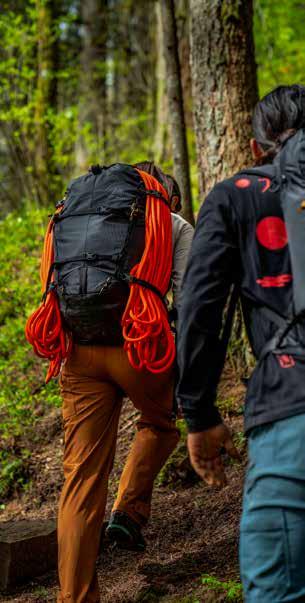
Completa la proposta la bandana unisex Repel Mosquito, un accessorio essenziale ma versatile, pensato per chi cerca una protezione aggiuntiva senza rinunciare alla leggerezza. Anche in questo caso Mico utilizza la costruzione seamless e la particolare lavorazione del tessuto, studiata per garantire traspirabilità, asciugatura rapida e morbidezza.
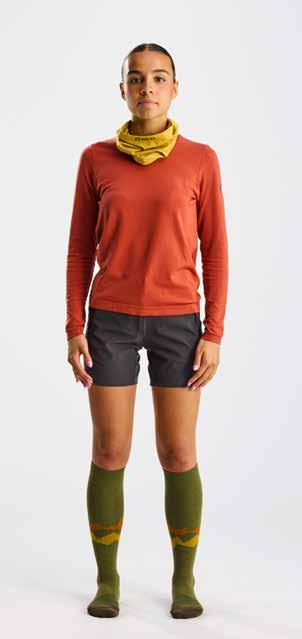
Mico Sport - +39 030.2003211 - info@mico.it
Designed by Lowa for unrestricted exploration, the new Flowterra is a versatile and comfortable shoe, developed for a dynamic approach to the outdoors, from trail running to light hiking
From gravel trails to mountain paths, Flowterra offers natural movement and confidence while walking thanks to the Lowa Trac outsole, designed to ensure grip and reliability on mixed surfaces. The lightweight and durable ripstop upper ensures durability and protection, while the comfortable construction supports the foot even on the longest outings. The minimalist, contemporary design highlights its functionality, facilitating a smooth transition between different environments. The result is a shoe that combines a sporty spirit with practicality.
Flowterra is available in QC (quarter cut) and LO (low cut) versions, both of which are offered with a Gore-Tex membrane for waterproof protection against the elements, as well as in a version without the membrane, ideal for prioritizing lightness and breathability in milder conditions. This way, every user can choose the configuration that best suits their needs, the season, and the type of outdoor experience they wish to enjoy.
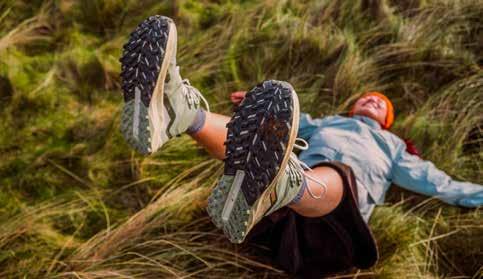
• Lowa Trac outsole with reliable traction
• Upper made of lightweight, durable ripstop fabric
• Available in Quarter Cut or Low Cut styles, with or without a waterproof Gore-Tex membrane for greater breathability
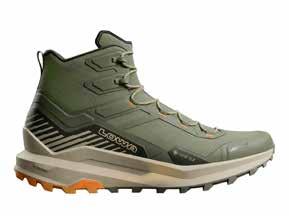
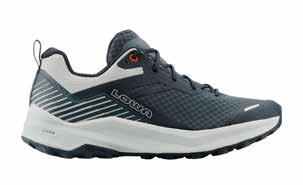
The new HOVERAir X1 Pro Max drone captures images in ultra-high resolution and flies through nature in automatic mode, making it the best friend of content creators and photographers
For those who enjoy outdoor sports, gear isn’t just about trail shoes, ice axes, or crampons. For those who want to document their adventures, there are drones and self-flying cameras from HOVERAir. The X1 Pro Max is the ideal product for content creators and professional videographers: a drone designed to fly without a controller, moving and exploring the terrain completely on its own. Compact, foldable, and ready to take off right from the palm of your hand, it guarantees top-notch footage: it’s the first flying camera capable of recording in 8K at 30 fps, with the option to switch to vertical 4K for social media content that’s instant and ready to share. Its real strength, however, lies not only in video quality but also in its more than 10 automatic flight modes—from Follow to Cycling—which give the product total independence: once you’ve launched the drone and selected a mode, you can bike, ski, run, or simply enjoy the view: the HOVERAir X1 Pro Max will take care of
the rest. It’s precisely while you’re on the move that the camera performs at its best: its advanced tracking system and a tracking speed of up to 42 km/h (with peaks of 60 km/h) ensure a perfectly framed shot even in the most dynamic situations. From snow to cliffs, through water and mountain trails, it’s the perfect travel companion for any outdoor adventure. Footage always remains smooth and stable thanks to SmoothCapture 2.0: a two-axis gimbal, electronic stabilization, and automatic horizon leveling work together to eliminate vibrations and unwanted movements, delivering smooth, cinematic videos that are ready to use right away. On the safety front, the dual-sensor system (ToF + visual) detects obstacles and brakes automatically, making flight much more reliable even in complex environments. Finally, all controls are managed through the app: live preview, advanced controls, and instant sharing, while the internal storage is 64 GB, expandable up to 1 TB.
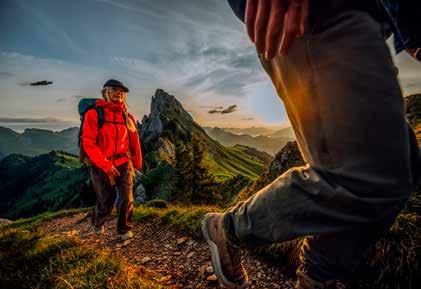
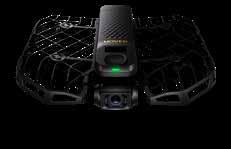
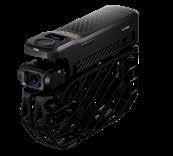
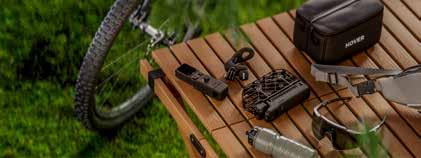
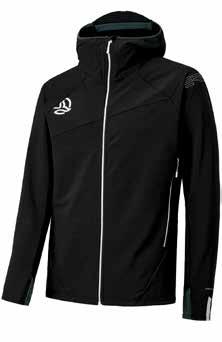
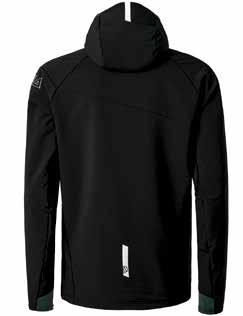
The EHUNMILAk 2.0 is the new jacket developed by Ternua based on the feedback and suggestions of participants in the same race in the Basque Country
This is a technical yet versatile garment. Made with the innovative Storm Fleece Pro fabric, the Ehunmilak 2.0 Jkt prOVIDES EXCELLENT Wind protection and water resistance without the use of membranes, as well as remarkable breathability during both aerobic and anaerobic activities. Its four-way stretch, meanwhile, offers freedom of movement and comfort, while the numerous technical details meet most users’ needs.
Among these features, two large zippered hand pockets stand out; they can also be used as additional ventilation openings when needed, while the elastic Lycra cuffs and thumb holes enhance the garment’s comfort and fit. The hood features an elastic closure panel on the forehead, beneath the brim, which reduces movement during more dynamic activ-
ities; furthermore, both the hood and hem are adjustable with ultralight cord locks. Thanks to the chest adjustment system, the Ehunmilak 2.0 Jkt allows for greater ventilation without neEDING TO fully UNzip the jacket. A zippered side pocket lets you store your cell phone or other small items, while the double interior pocket has enough capacity to carry everything you need during your outing.
Made from recycled polyester derived from post-consumer plastic bottles, it guarantees durability and abrasion resistance, as well as breathability and protection from wind and rain. WitH THE EHUNMILAK 2.0 Jkt, Ternua continues its commitment to sustainability and has earned bluesign certification thanks to its use of recycled materials and responsible manufacturing processes.
Ternua - infor@ternua.com
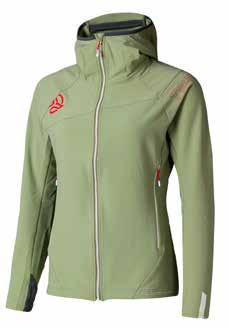
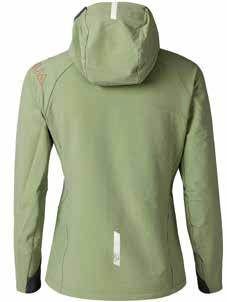
Versatile, technical, and designed for the changing conditions of the summer season: Icepeak’s SS 26 collection is a must-have for everyday adventures and the most challenging hikes
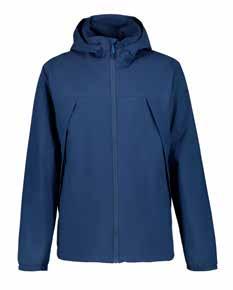
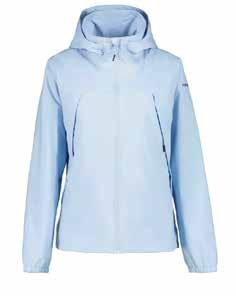
BROCTON M / BRITTON W SHELL
Functional and reliable for days spent outdoors, this two-layer shell packs down easily into its pocket, making it simple to carry along on trips or outdoor adventures. It features taped seams to provide protection against wind and rain. Waterproof (10,000 mm) and breathable (10,000 g/m²/24h), the full-length lining and the fold-away hood round out its features. Available in the men’s Brocton and women’s Britton versions.
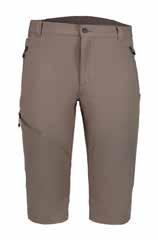
info@luhta.it - luhta.com
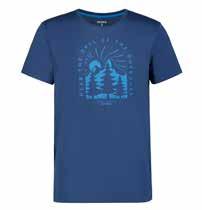
BEEVILLE M T-SHIRT
Versatile and technical, this T-shirt is an everyday essential, featuring a hiking-themed print on the front and designed for all kinds of activities.
BASTROP W SHORTS
Shorts made from 4-way stretch fabric, featuring two zippered pockets and belt loops for a customizable fit, comfort, and freedom of movement. The waterproof fabric stands up to the most variable weather and conditions, whether you’re on a hike in the woods or simply out in the open air.
BALLARD M PANTS
Long-lasting comfort for summer adventures: these pants, made from 4-way stretch fabric, ensure freedom of movement and waterproof protection all day long. With four zippered pockets, an adjustable waist with belt loops, and adjustable pant legs, the Ballard pants offer versatility for both everyday wear and mountain hikes.
BV Sport kicks off the summer season with Story Trailing, a collection produced in collaboration with "Des Bosses et Des Bulles," perfect for those looking for stability and comfort while running
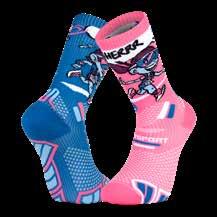
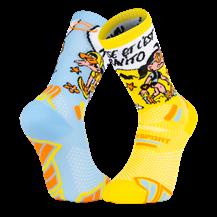
Conceived by Des Bosses et Des Bulles (DBDB), the French art and publishing project founded by Matthieu Forichon, BV Sport’s new Story Trailing collection captures the thrill of trail running through exclusive sock designs. Starting with a white sock, Matthieu perfectly captured the emotions of trail running through his drawings, which BV Sport then brought to life without losing any of the details or the finesse of the lines. This collaboration, which also marks the start of “Made in France” production for BV Sport socks, brings the fun and unconventional world of Des Bosses et Des Bulles to technical products—essential for races and training, but also for everyday life.
The four socks in question—Finisher, Ravito, Clic, and Flow—feature the new ultra-reinforced 3D anatomical sole, which provides stability and shock
absorption, and are designed to ensure comfort, performance, and support during trail runs. Thanks to their 360° support, they provide even protection for the ankle and foot, ensuring comfort and safety over all distances, whether on a short run or a more demanding session. Targeted reinforcements in strategic areas effectively protect against chafing and repeated impacts, even on uneven terrain, while the lightweight, breathable mesh promotes proper moisture wicking, keeping feet dry and comfortable. The high leg and wide, anti-constriction ribbed cuff keep the sock securely in place without causing compression. The flat seams, meanwhile, minimize friction and help reduce irritation. The asymmetrical design conforms to the shape of each foot for a precise fit and lasting comfort, making them suitable for both regular and occasional use.
BV Sport - +39 335.5927456 - info@bvsport.it
Drawing on the expertise that has made Ferrino backpacks a trusted choice, Gecko is the fresh and lightweight model with an ergonomic back panel, suitable for both the mountains and the city
Every hike requires a suitable backpack—the ideal companion for covering long distances in comfort without feeling overly weighed down. Gecko is Ferrino’s compact and lightweight model that combines comfort with high performance. The ergonomic, ventilated back panel ensures excellent airflow even on the most challenging climbs. Its contemporary and functional design makes it indispensable for tackling the mountains and everyday life with style and practicality, thanks in part to the 210D Hexagonal nylon fabric.
Featuring the “Dry Net System”: the flexible steel frame perfectly distributes the load and ensures a high level of ventilation by tensioning the mesh that separates the backpack from the back. The shoulder straps and waist belt, on the other hand, feature the “Hollow Back” system, which offers excellent breathability thanks to a combination of padding with ventilation channels and highly breathable mesh fabric.
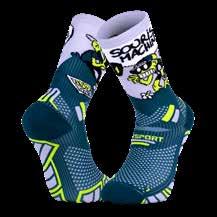
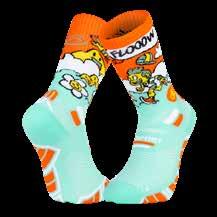
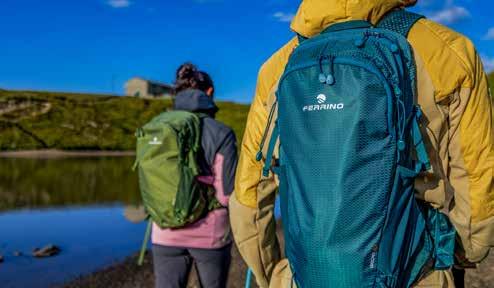
Features several pockets: mesh side pockets, a front pocket, a mesh security pocket with a key ring on the waistband, and an internal pocket on the back. It also features a rain cover pocket located at the top to ensure quick and easy access to the rain cover, which is particularly useful when you need to protect the contents during sudden changes in weather.
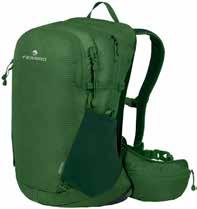
Gecko’s features make it suitable for both mountain outings and everyday use, such as the backpack cover, trekking pole holders, and helmet loops. In addition, it’s compatible with the H2 Bag hydration system and the “Helmet Holder.” It also includes a rear loop for a safety light and a chest strap with an emergency whistle.
Weight: 910 g
Capacity: 23 L
When the distance seems immeasurable
by Marrano
Elevation gain, or the difference in elevation from the starting point to the finishing point after a climb or a run in the mountains. Like time, elevation gain is often one of the greatest obsessions of those who view the outdoors and their relationship with the mountains solely as a sporting experience. It’s one of the many ways to measure one’s talent and athletic ability when taking on the challenge of nature or oneself. For many, however, the pursuit of performance in this sense becomes an irresistible temptation—as much for true mountain athletes as for weekend hikers in their perfect Sunday outdoor gear. But while for certain high-altitude phenoms, the pursuit of elevation gain may be the result of a refined and perfect synthesis of technique and pure talent—with goals that even have a professional character—in the case of the “outdoorsy” types who show up in full force, it’s laugh-out-loud funny to try to uncover their true motivation. Yes, because the real purpose, to be honest, is nothing more than to brag about it: to an audience of arm-wavers or friends at the bar and the sports shop where you hang out on Saturday afternoons for après-mountain, after a nice shower, wearing the standard Birkenstocks (which we’ve already mentioned) and sporting that hint of a tan that’s the hallmark of a mountain man’s well-being—and which alone is enough to make him think he’s truly earned a cold beer.
However, in both cases, focusing solely on the magnitude of the elevation difference prevents both groups from recognizing “other differences” to which we would now like to shift our attention. “Dislivelli” is, in fact, also the name of an association founded in 2009 at the University of Turin on the initiative of a group comprising university professors, researchers, journalists, and writers united by their shared expertise on topics related to the mountains and the Alps in particular. Names such as Enrico Camanni, Giuseppe Dematteis, and Filippo Barbera speak volumes to those who, for as long as anyone can remember, have engaged with the mountains and their culture not merely for athletic purposes or simple self-gratification. The value of studying and researching the past, present, and—above all—the future of the highlands is what characterizes and distinguishes the work of this association, which, in over 15 years of activity, has tackled a vast number of trails, covering and helping others understand many different elevations. This involves constant study, analysis, and monitoring of the mountain environment to highlight best practices—from which professionals and anyone interested can
draw inspiration—while warning against the harmful effects of certain political and administrative decisions that jeopardize the future of the mountains and their inhabitants.
Like skilled meteorologists, the researchers at Dislivelli— through a resilient Web 1.0 site—have been able in recent years to predict, with clear precision, the turbulent socioeconomic phenomena that lie at the root of certain emergencies now plain for all to see, starting with depopulation caused by a lack of services and forward-thinking policies in favor of mountain communities, accompanied by the degrading paradox of overtourism, which, among its many negative effects, includes the displacement of the local population not involved in the tourism industry, who are now unable to cope with the unsustainable rise in the cost of living. This critical analysis never descends into polemics, preferring instead to highlight best practices and useful perspectives arising from counter-trend initiatives, such as the revival of certain rural micro-enterprises by young locals returning from disappointing urban experiences, or new forms of virtuous cooperation that breathe new life into high-value-added production chains—chains now deemed defunct by the usual champions of unlimited progress.
Uphills and downhills, abandonment and perseverance: although certain aspects of their experiences curiously overlap, it’s hard to find anything in common between the ups and downs of Saturday-afternoon heroes in hiking boots that look more and more like gym shoes and the researchers from the Piedmontese association. In fact, aside from the name, there is nothing that connects these two groups… Yet one can’t help but indulge in this unusual parallel to reflect on the fact that, on the one hand, there are those who study the elevation changes of the mountains and place them at the center of a perspective of mindful development for the benefit of the rugged environment and its communities, while on the other, the elevation differences separating the valley floor from the high altitudes are increasingly traversed by people who are deaf and blind to the future of an environment known only as a calculation generated by yet another app. The work of the former—often unheeded or underestimated in terms of its true significance—represents a beacon of hope for those who envision living in the mountains under dignified conditions, while the pastime of the latter ends up becoming the dominant paradigm of our questionable era, celebrated as the most appealing prospect for getting through the coming weekend with childish pride.
*This article was not written using artificial intelligence*
*Off the grid. One less ad, one more thought-provoking idea. Off the grid isn’t a new outdoor brand founded by two young mountain runners who are passionate about climbing. It isn’t an influencer’s Instagram account. Nor is it the name of a secret crag on an unknown Mediterranean island or a hotspot in Hokkaido where the world’s powderiest snow falls. Off the grid is the title of Outdoor Magazine’s counter-editorial. A free-spirited and disillusioned take on the outdoors, written under a pseudonym.
Would you like to respond to Marrano and share your thoughts? Write to redazione@mag-net.it
For those who want to learn more about the Dislivelli Association dislivelli.eu
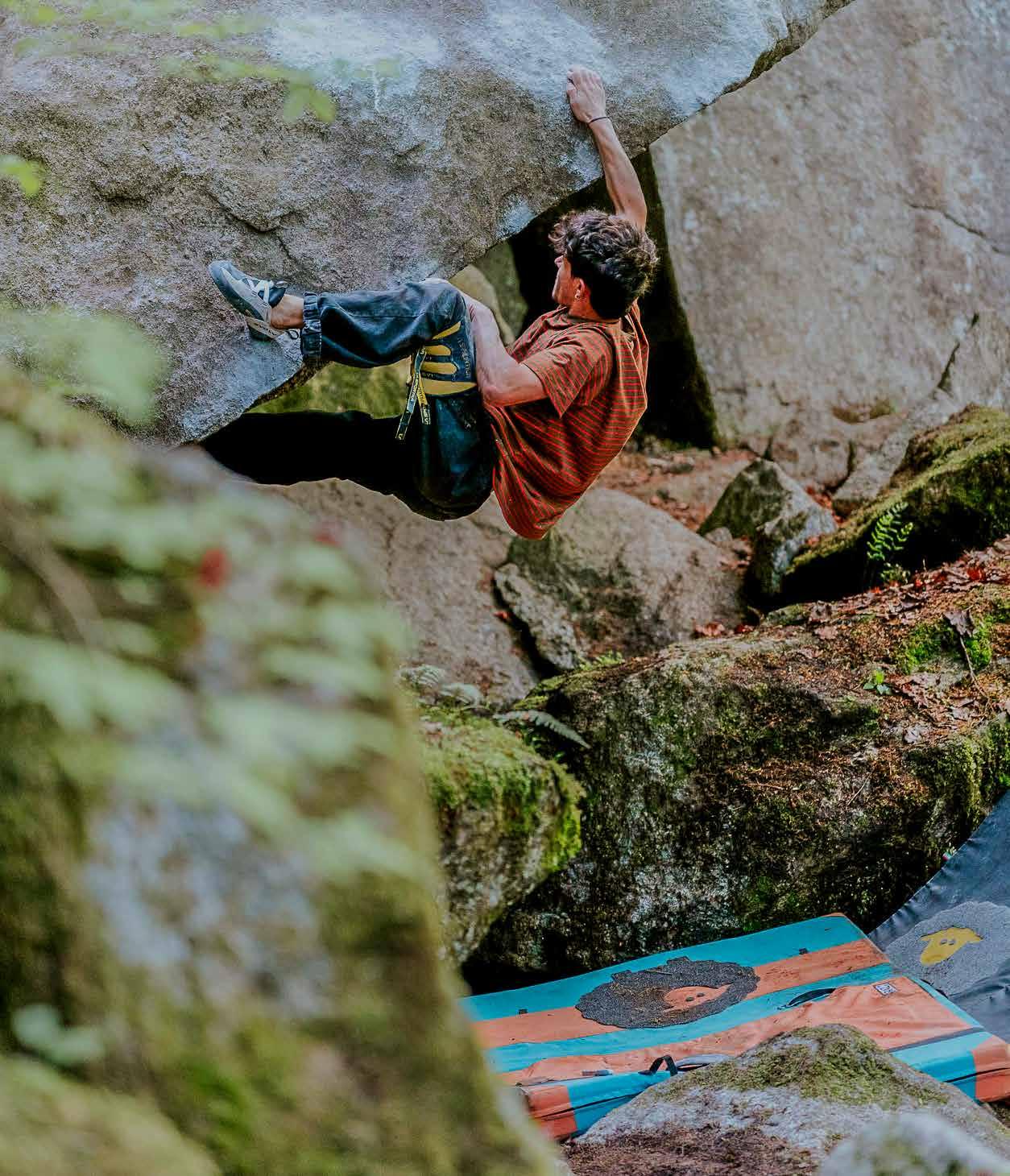

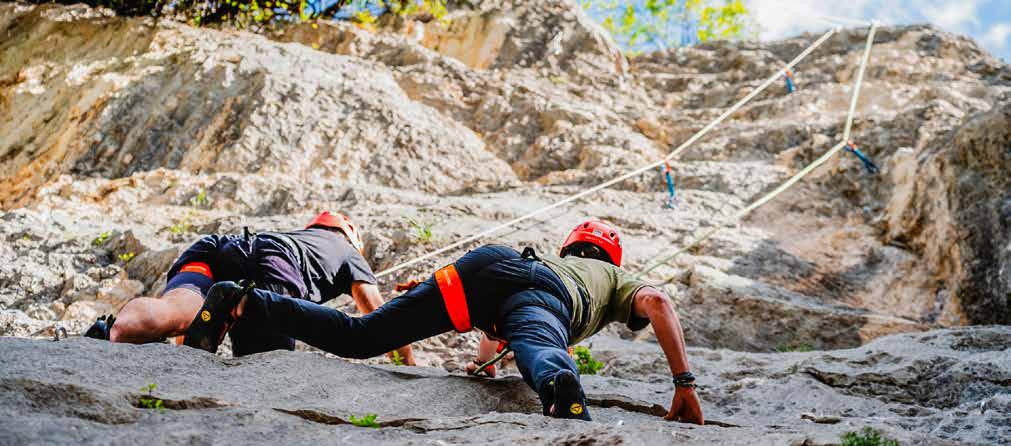
The state of a sport that has grown so much in recent years that it has partially shifted its target audience and the settings where it is most commonly practiced
by Benedetta Bruni
After five years of nearly unchecked growth in the number of climbers, the sport has settled into a more organic and less dramatic rate of growth—a trend supported by positive sales figures and optimistic sell-out forecasts, despite the geopolitical uncertainties characterizing 2026. From the post-COVID era to the present, however, the reason why climbing continues to attract so many people has changed: progress on rock and the mountaineering-style pursuit of reaching a summit have gradually given way to the more social and community-oriented aspect of indoor climbing gyms. Indoor climbing has, in fact, become the gateway for new enthusiasts who end up doing mostly bouldering, both because it has much lower barriers to entry than rope climbing—from both a technical and financial standpoint—and because, quite simply, it’s easier to create moments of
1. In line with recent seasons. In other words: we’re seeing a steady— though not explosive—growth in the number of climbing enthusiasts and practitioners, undoubtedly driven by the ability to access climbing gyms that aren’t too far from home. Every year, indoor climbing facilities are becoming more numerous and of higher quality, especially in major cities and densely populated areas. This trend is now a well-established fact. For a brand like ours, it is therefore essential to understand the tastes and needs of these new climbers. The inclusion of climbing as an Olympic sport in Tokyo and then in Paris has given a further boost to this trend, which, however, had already been underway for some time.
1. How did the climbing industry go in 2025? Did you notice any particular trends?
2. How much of an impact does the difference between indoor and outdoor climbing have on you? How different are the respective target markets and products? What are the consumers’ needs?
3. How did the SS26 sell-in go? What are your expectations in terms of sell-out?
camaraderie on the mats than on a 10-meter-high wall. With such frequent visits to climbing gyms—places where climbing has become a “complete sport” or an alternative to weight rooms rather than just a place to train for crag climbing or multi-pitch routes—indoor climbers have come to form a distinct demographic. With needs such as versatility, comfort, ease of use, and even a certain aesthetic appeal—the complete opposite of the more demanding outdoor climbing, which, for obvious reasons, requires high-quality products that are lightweight, high-performance, reliable, ethical, and above all, safe. The new challenge for the climbing market is to successfully guide climbers from the wall to the rock, identifying and anticipating their needs with offerings that meet all their requirements and help “boost” the number of outdoor climbers.

includes harnesses, carabiners, quickdraws, chalk bags, and—starting next year—a gym and crag backpack.
“We are now in the early stages of the post-pandemic period, as the longterm impact of the 2020 pandemic is beginning to fade.”
2. We observe differences in terms of the number and types of products, as well as in styles and approaches within the same categories, precisely because the target audiences are different. Those who focus their activities primarily on indoor climbing need a more limited range of products compared to those who practice outdoor climbing, and even more so compared to mountaineering. Speaking of indoor climbing and fresh, new offerings, one of the most successful projects in recent years stems from our collaboration with Olympic champion Janja Garnbret. Together with her, we’ve developed a product line that combines C.A.M.P.’s logo and history with her visual identity: colors, graphic style, and personality. The collection
3. Sell-in for SS 26 was positive, thanks in part to a series of new products. We believe these items are strong and well-positioned, so we are confident they will also achieve good sell-out results. However, looking beyond the single fiscal year, our impression is that we are in the early stages of a period in which the long-term impact of the 2020 pandemic is waning, albeit with some consequences that are now undoubtedly structural. From the initial climate of uncertainty to the boom in demand, to the subsequent widespread shortage of inventory, and finally to inflation and the ensuing excess inventory. All of these factors have been analyzed repeatedly in your magazine as well. In recent years, we have always sought to manage the “noise” and short-term dynamics as best we can, while simultaneously maintaining a more strategic vision. It is undeniable, however, that the geopolitical tensions of the past 18 months are once again creating a climate of uncertainty and resulting caution in the retail market. Nevertheless, it seems to us that product demand in the outdoor sector in general remains fairly robust. Taken together, these factors make us confident about the coming seasons, while remaining aware of the macroeconomic instability that inevitably affects every aspect of our lives.

ALBERTO FERRIN, WHOLESALE DIRECTOR
OBERALP
1. AF - 2025 confirmed the growth in sales within the climbing industry. Over the past three years, we have observed a recovery in the sector after the pandemic brought indoor climbing to a standstill. However, we note that the world of sport climbing—specifically crag climbing and big-wall climbing—has remained relatively stable, while there is strong demand for indoor climbing products.
MN - The climbing sector, particularly sport climbing, continues to grow, with an increase in the number of climbing gyms, participants, interest in products, and, consequently, sales of clothing, footwear, and accessories. In 2025, as in 2024, the trend shows a stable, steady, and positive increase in Italy. There is significant interest in bouldering and indoor climbing, as well as in outdoor climbing and via ferrata.
2. AF - The main difference concerns the type of users, and this is evident at various levels. First of all, we’re seeing less and less overlap between those who climb indoors and those who go on to climb outdoors. Furthermore, in climbing gyms, we see a distinction between boulderers (a rapidly growing segment) and those who prefer rope climbing; this second group remains stable, if not slightly declining. I think the difference between the target audiences—and consequently the products—is starting to emerge now. Boulderers are certainly more influenced by what we consider to be trends and
VITTORINO MANDELLI, SALES MANAGER
1. The climbing industry ended 2025 on a positive note, albeit with more normalized growth rates compared to the post-pandemic boom. 2025 confirmed that climbing is no longer a niche sport, but a full-fledged, structured, and global mass phenomenon. This success was driven by two main factors: the long-term boost in media visibility from the Olympics and the widespread proliferation of indoor climbing gyms, which continue to open at a rapid pace in major urban centers. The profile of the climber—and thus the market itself—is undergoing a profound transformation: the traditional boundaries between the “pure” sport climber—associated with rock and crags—and the “urban” climber are rapidly being redrawn. Within this transformation, the true driving force behind the sector is bouldering, which continues to grow at a faster rate than rope-based disciplines. The reason lies in its extreme accessibility—a very low technical barrier to entry and minimal equipment requirements—and in a very strong social component that transforms the climbing gym into a gathering place and a lifestyle hub.
2. Indoor and outdoor climbing are synergistic activities; they coexist and feed off each other—they are not completely separate spheres. However, when we analyze purchasing behaviors and consumer choices, the differences remain evident, falling into two distinct profiles. The target audience for indoor climbers tends to be younger, urban, often coming from other disciplines such as CrossFit, and strongly community- and style-oriented: they seek immediate comfort, breathability, and an appealing aesthetic. The outdoor climber generally has a more experienced profile and is connected to the environment, nature, and ethics. Here, the top priority shifts to technical performance and safety. Their needs center on maximum material reliability, and the required equipment is specialized. For us, the indoor climbing scene is a formidable recruitment channel; the strategic challenge lies in guiding consumers through their transition to rock climbing by meeting their needs with versatile products.
MARCO NICOLI, SALES MANAGER ITALY

are less loyal to a specific brand or a particularly technical product. The needs of this consumer are geared more toward versatility than toward pure performance. MN - In recent years, the indoor climbing market has grown much faster than the outdoor one, but both are important to us because we cover these two worlds with three brands—Salewa, Wild Country, and Evolv—as well as with various product categories, offering items designed to provide the best possible experience for end users in every situation. The differences between products stem from their intended use, which varies considerably between indoor and outdoor climbing due to the nature of the walls and the type of climbing. Consequently, there are specific products designed for use on both plastic and rock. The common thread is safety, while the differences in the products are driven by the type of surface being climbed and the environmental conditions.
3. MN - Order intake for SS 26 was positive, in line with the outdoor sector, which returned to growth, thanks in part to renewed confidence among retailers who have invested—and continue to invest—in climbing as a sport that is currently booming. For us, it was also the time to launch a very important and iconic product: Wild Country Friends. The warm season has just begun with an unpredictable spring, so it’s still too early to confirm expectations—which remain positive, however—especially given that summers are getting longer thanks to mild fall weather, when climbing is a pleasure, both indoors and outdoors.

3. Sales of the SS 26 collection were very strong, with an excellent response to the “lifestyle-climbing” apparel line: products that combine technical materials with a distinctly urban and contemporary design. Retailers have recognized the value of versatile products capable of appealing to the growing segment of customers who view climbing as a daily lifestyle. As for sell-out, our forecasts are based on cautious but solid optimism. We are aware that today’s retail market operates in a crowded, competitive environment, where the true differentiator for the success of specialty stores will be the quality of service. In an industry where technical gear requires in-depth understanding, the retailer’s expertise and ability to offer personalized advice remain the only true antidote to a pure price war and competition from e-commerce. Those who can create value in-store will reap the rewards of a market that still has plenty of room to grow!
“The year 2025 confirmed that climbing is no longer a niche sport, but a fullfledged, structured, and global mass phenomenon. [...] Within this transformation, bouldering is the true driving force behind the industry.”
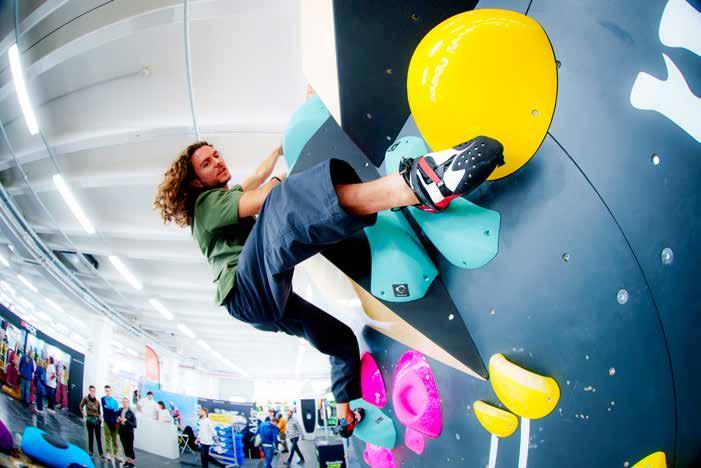
1. For us, 2025 represented a particularly significant year, marked by the brand's transition from Climbing Technology to Skylotec Outdoor. This was an important transformation that the market welcomed very positively, confirming the trust built over the years and the interest in the new positioning of the brand. Overall, the climbing industry continues to show signs of growth, albeit at different speeds depending on geographic areas and practice methods. The most obvious trend remains the development of sport and indoor climbing, which is always attracting new practitioners and contributing to the broadening of the enthusiast base.

lightness, performance, and safety prevail in highly variable contexts; in the indoor, however, needs related to frequency of use, comfort, and ease of use emerge. Our goal is to constantly listen to practitioners and anticipate their needs through innovative products and increasingly targeted solutions.
“Indoor, needs related to frequency, comfort, and ease of use emerge”
2. For Skylotec Outdoor, rock climbing, in all its declinations, represents the predominant segment both from a commercial point of view and in terms of the breadth and depth of the proposed product range. It is our target market and the one where we express our technical know-how most. Indoor climbing, however, plays a very important strategic role, as it often represents the first point of contact with new generations of climbers and with an ever-expanding community. The two worlds present different needs: in the outdoor, aspects such as versatility,
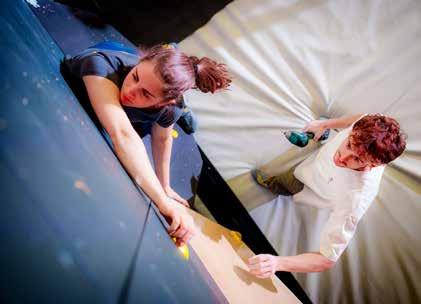
PETZL RICCARDO HUMAR, SALES AND MARKETING DIRECTOR ITALY

1. 2025 was a very positive year, driven by the numerous new products introduced—which included the range of harnesses and via ferrata lanyards—and by continued sales growth in the crampon line.
2. In both cases, consumer needs cut across the board. There is demand ranging from premium to entry-level products, both among rock climbers and those who prefer indoor climbing gyms. However, outdoor users are typically more brand-conscious and quality-oriented, as the environment in which they climb is potentially more dangerous, and the quality of their equipment can make all the difference in terms of safety. For these reasons, our growth tends to be more closely linked to building loyalty among those who prefer rock to synthetic surfaces.
3. 2026 has gotten off to a pretty good start. In the first few months of the year, sales roughly mirrored the trend seen in 2025, then picked up significantly with the arrival of spring. As for sell-out, we remain fairly optimistic: over the years, we’ve seen growing appreciation for our brand among users.
3. The Spring/Summer 2026 collection sell-in was very positive. We have prepared for a long time to face our first sales campaign with the Skylotec Outdoor brand and the results obtained confirm the interest of the market and the confidence of our business partners. The renewal of the product range was real, not just a promise. The new line of all-modulable All Round X-Change System crampons, the Gynger harness with the innovative sliding bridge and the new line of via ferrata sets, to name just a few products, are the basis of the success of the seasonal orders collected. With regard to sell-out, our commitment continues by actively supporting the points of sale through training, communication and marketing activities, helping to increase brand awareness and create the best possible conditions for products to perform successfully in the market.
SEBASTIANO FINAZZER, SPORT MARKETING MANAGER CLIMBING

1. Overall, the market trend in 2025 remains positive and growth-oriented, though it does not replicate the strong surge seen in the immediate post-COVID period. Today, we are seeing a natural slowdown in the upward trend, which actually helps make the sector more mature and structured. In this context, our performance is fully in line with the overall picture.
2. The indoor segment remains the market’s main driver: growth continues in Europe and the United States, though at a more moderate pace than in previous years, while Asia is experiencing a period of strong expansion, with extremely promising trends in terms of both new participants and infrastructure development. The outdoor segment, on the other hand, shows a more stable—yet still solid—trend, with figures that remain positive and encouraging in the medium term. It is a segment that continues to generate value, supported by a passionate community and a growing return to experiences in nature.
3. From a sell-in product perspective, there is a clear trend toward indoor soft shoes, which are valued for their comfort and affordability, as well as a growing demand for versatile models that perform effectively both indoors and outdoors. This is particularly evident among intermediate-level users, who now represent a strategic segment for the market’s future development.
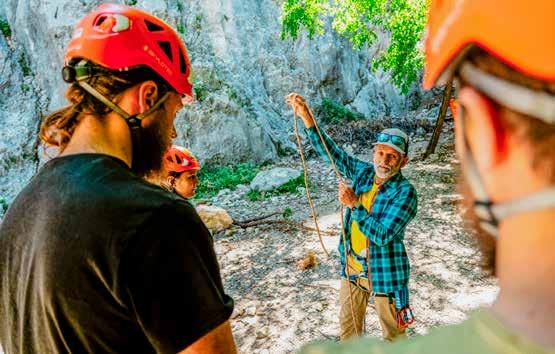
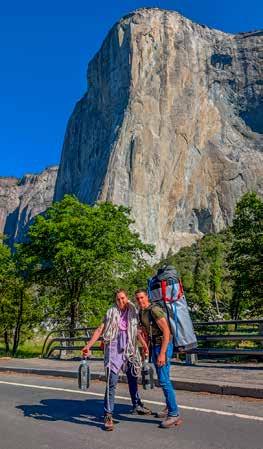
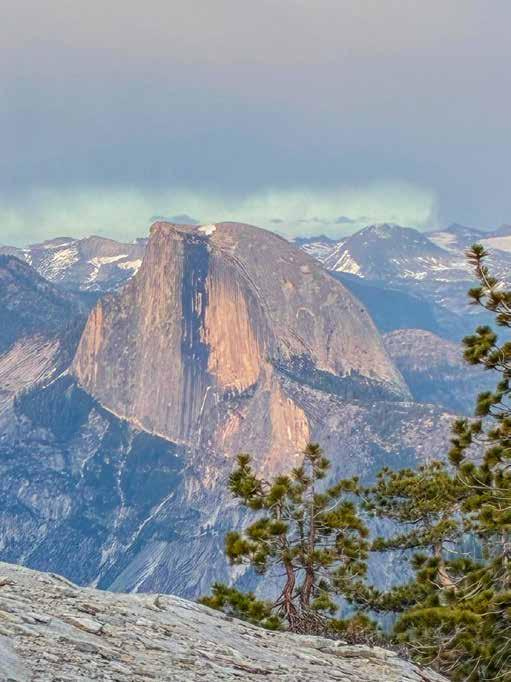
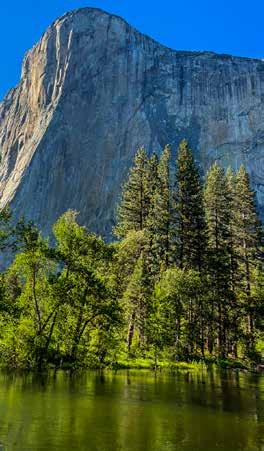
An adventure is an extraordinary experience with an uncertain outcome. And that’s exactly how the climb of El Capitan via the Free Rider route began—and it ended in the best possible way
by Alessandra Prato – photos by Alessandra Prato and Andrea Migliari
The trip to California, to the legendary El Capitan face in Yosemite, was one we’d been planning for a long time. We were supposed to leave in November, but 2025 was definitely not a lucky year for me: first, a cervical herniation in Patagonia that derailed the expedition and left me immobilized for months; then a car accident; a viper bite that nearly cost me my life, the cancellation of the guide training course, and the postponement of Yosemite: just one week before departure, I discovered that a previous trip I’d taken to Iran disqualified me from an ESTA, so I would have had to navigate the bureaucratic nightmare of applying for a traditional visa. Between the costs and the wait, my passport didn’t return to me until December 24. By then, I was already thinking about a trip to Lourdes—especially since my 2026 began with two lumbar herniated discs and a winter spent on crutches.
And yet I kept telling myself that 2026 would be my year. I was craving rock climbing, new projects, and a fresh start.
We rescheduled the trip for May, making the most of every available moment to prepare. As soon as my back gave me a break, I started climbing only in cracks, commuting every week between Val di Mello, where I worked, and Val d’Ossola. I did my very best, even though I knew that when faced with major challenges, you never really feel fully prepared. So if you wait until you’re ready, great adventures will never begin.
On May 1, Andre and I finally landed in the United States for a quick trip to the world’s granite mecca. When you enter Yosemite Valley, El Capitan looms before you like a titan. Our eyes were wide with wonder, like those of two children: a mix of pure adrenaline, awe, and a touch of fear. “Wow, Andre, it’s a beast! Do you think we can make it to the top?”
No vacation mode—we were there with no Plan B and a single goal: to climb that kilometer of vertical wall. Little time, no prior big-wall experience, and just one shot at the legendary Free Rider,
the route first free-climbed by the Huber brothers in 1998. We spent the first few rainy days at Camp 4—the climbers’ extremely spartan campsite—studying the route guide until we’d worn it out. We had to calculate everything: bivouac ledges, water canisters, bags of freezedried food, energy bars, and salami. We even fashioned a homemade “poop tube” (a container for human waste) out of a protein shake jar and duct tape, and selected our friends down to the gram. All things we’d only known about through videos until the day before.
I remember those first few days vividly: spending the days in a tent in the rain, in the cold, with the damp seeping into my bones—it was pure misery. I felt guilty toward Andre, who would have preferred a comfortable RV but accepted my “authentic, full experience” without complaint—even though it was really dictated by our tight budget. The tension was palpable: we had only one shot at this. The anxiety rose even further the day we tackled the fixed ropes to haul our gear up to the first bivouac. There, climbing up with jumars and ladders under the weight of a disproportionately large pack, we ran into many American climbers—experts in aid climbing—who were super kind enough to give us a few tips, but who probably wouldn’t have bet a penny on us, so inexperienced and without even a portaledge. But we, stubborn as mules, learned the maneuvers on the spot, meter by meter. Pushing our doubts aside, we looked at each other and decided to give it a try anyway.
The next day, we climbed the first 10 pitches of Free Blast as our only acclimatization climb. They were challenging but spectacular pitches, and I felt incredibly good on them. We stashed water and gear on the ledge and rappelled down. Then came a rest day, spent changing the battery in our rental car, and the alarm for the big day went off. One last coffee at the Yosemite Lodge to charge our headlamps—Andre focused on my *Silmarillion* and I on a harrowing novel to shake off the tension—and then off we went. There’s no other word for it: it was an adventure, in the most literal sense of the term—that
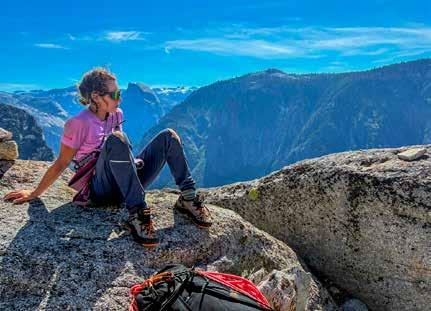
is, an extraordinary undertaking with an uncertain outcome. We’d planned for three nights on the wall; in the end, it took four, plus one at the summit. Every pitch was grueling and demanding, set in an insane environment with dizzying exposure. The belay bag was a nightmare: it got stuck everywhere, and hoisting it up the chimneys required a tremendous effort. Luckily, we were almost alone on the route: besides us, there was just a couple from Austria and a Canadian attempting a solo free ascent. A true legend. We weren’t thinking about free climbing: I was climbing as best I could, but if I fell or if there was a section I had to start over from scratch, I didn’t back down.
There are images that will remain etched in my memory forever. belay station 25, for example: the guidebook clearly stated “poor bivy for one,” but we had overlooked that detail, still hoping for a comfortable ledge. We found ourselves on a tiny rock step, trying to sleep sitting up with our legs dangling into the void, half against the wall and half over the abyss.
And then the traverse across the Headwall. At dawn, I was suspended on a bizarre wooden swing above the Enduro Corner. Andre had disappeared around the corner, out of my line of sight and earshot. Left alone in the silence, wondering how to lower the big bags across the traverse without being able to communicate, I realized we were past the point of no return. We could only go up. On the Headwall, the landscape becomes lunar: the rock changes, the wind picks up, and the environment is harsh. There, we divided the tasks meticulously to move quickly: I led on all the pitches, and Andre retrieved the big bags. My back, ravaged by hernias, will be eternally grateful to him. And so, meter by meter, exhausted but united, we reached the summit of El Capitan.
Maybe, in reality, I’ll never forget a single thing about those days on the wall: the curses directed at the stuck pack, the nights suspended beneath the stars, the wet, slippery chimneys followed by dreamlike cracks, the first time I had to use the poop-tube, the sound
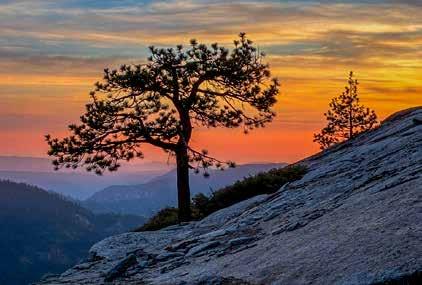
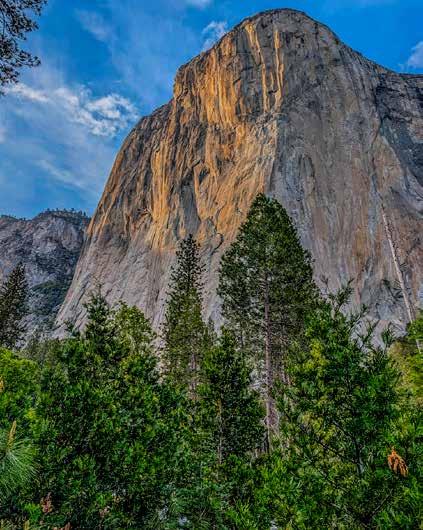
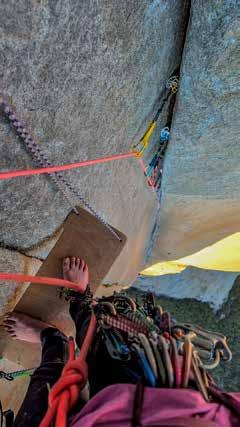
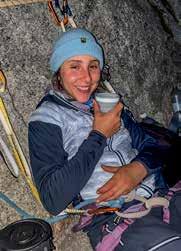
of my labored breathing in the final offwidths, Andre’s falls on the Enduro Corner. But above all, our mutual support: when one of us was tired, the other understood immediately and drew strength for both of us. Reaching the summit is an indescribable feeling. Shouts, hugs, tears, and the deep certainty that no one, apart from the two of us, would ever truly understand how hard we’d fought. It was an adventure all our own; it was just the two of us in there.
The night at the summit, under an unforgettable starry sky, was the best night ever. We finished off our last supplies of chocolate, cookies, and cheese, and called our families and friends.
Unaware of the very long descent that lay ahead of us, we were blissfully perched atop the Capitan and felt as if we were in Paradise. The next day—our last day there—we were going to play tourist! We’d go to the lake, take a shower, eat a steak… luxury and splendor awaited us!
Andre and I met just a few years ago when we bought a plane ticket to Taghia, Morocco, without ever having met before. We’re both crazy, basically. Even back then, we hit the jackpot, because we started building a rare and solid friendship. Andre is incredibly smart, a determined man, and a fantastic father who always puts his beautiful family first, often sacrificing his climbing for them. For this trip, it was my turn to do the homework and train on the cracks for both of us, while he shouldered the weight of those huge bags that I couldn’t even lift off the ground. I wouldn’t have wanted anyone else by my side on this crazy journey. Thank you, Andre: even though you always tell me I’m grumpy, I love you so much.
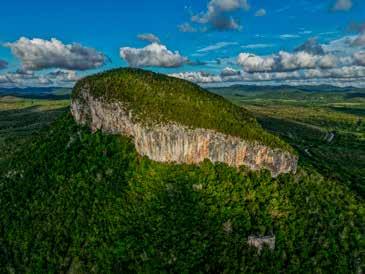
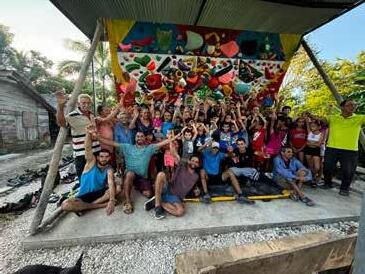
The Caribbean island is the latest destination chosen by the Chilean NGO Climbing for a Reason to develop a project focused on resilience and community development in remote communities
by Sara Canali
What happens when a community discovers that the rocks it sees every day can become a resource for the future? This question led to the founding of the Chilean NGO Climbing for a Reason, which has been developing climbing projects in the most remote areas of the planet for years and has chosen Cuba as its focus for 2026. It’s not just about opening new routes, bolting walls, or building dedicated facilities, but about helping local communities recognize the value of the land where they live. After carrying out projects in Pakistan, Suriname, Tanzania, and Angola, the organization founded by Lucho Birkner and Mateo Barrenengoa has turned its attention to the Caribbean island, specifically to Bariay, in the eastern province of Holguín—an area characterized by imposing limestone walls and largely unexplored potential for sport climbing.
CLIMBING
While for a European climber, buying a rope, a pair of climbing shoes, or a box of bolts is almost a trivial matter, in Cuba the situation is completely different. Climbers continue to face a combination of regulatory and economic obstacles that severely limit the sport’s development. For years, climbing on the island has existed in a sort of regulatory limbo, and local communities have had to contend with restrictions, bans, and a substantial lack of official recognition. This situation is further compounded by an economic crisis and U.S. embargoes that have hit the island hard in recent years, leading to fuel shortages, frequent power outages, difficulties in securing essential goods, and very low wages. All of this makes even the simple maintenance of sports activities a challenge, and allocating resources to climbing becomes an impossible luxury for many. This is also why the Climbing for a Reason project takes on a significance that goes beyond the development of a new outdoor destination. We spoke with Lucho Birkner to understand what motivated him to believe in this project.
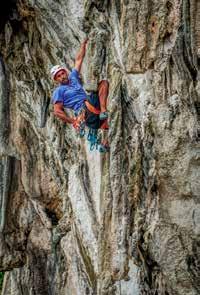
When and how did the idea to launch a project in Cuba come about?
Every year, we choose a different destination for a Climbing for a Reason project. The year 2026 presented an opportunity to offer this experience to Cubans. We had always heard that Cuba has extraordinary limestone and virtually limitless potential for the development of climbing, but at the same time, it was difficult to get there, and for many years, climbing had been illegal. As a climber and traveler, I couldn’t imagine how I could enjoy those rocks knowing that Cubans couldn’t. That’s why I waited a long time, patiently, until the opportunity arose to go there with a greater purpose. A few years ago, climbing became legal for Cubans, so we began reaching out to them.
Which local organizations or partners did you collaborate with?
We worked with Jorge Luis Piñeiro of Skalamas in Havana and with Yunior Suarez of the Stone Hand Climbing Club in Holguín. In Bariay, we collaborated with the entire local community. People of all ages felt involved because they saw the positive impact a project like this can have. They told us themselves that there aren’t many opportunities for children in Bariay. Thanks to this project, the youngest kids have a reason to wake up every morning eager to improve at something. And that something is right in their own backyard. The situation in Cuba today isn’t easy, but climbing is bringing a lot of joy to a community that faces challenges every day. As a team, we worked alongside three Chilean volunteers—Weffa Azocar, Coto Labrin, and Benjamin Undurraga—in addition to ourselves, Lucho Birkner and Mateo Barrenengoa.
What does the project involve?
The project involved the construction of a public, free climbing wall for the entire community. The structure was built on land owned by Angelito, a local climber from Bariay who donated the space. Since its construction, the wall has offered daily lessons and training sessions for all children and residents who wish to participate. The activities are led by Angelito, Luisma, and Alejandro, three local climbers who live nearby. Another important part of the project was the donation of climbing gear and the opening of about 35 new routes of all difficulty levels.
What were the main challenges you faced?
The main challenges stem from Cuba’s overall situation: power outages that can last for days, unstable or non-existent internet connections, communication difficulties, and fuel shortages, which make travel difficult. Even the simplest building materials are hard to come by, and it is often necessary to search for them house by house in remote villages, without transportation and with very little information available. In this context, even basic tasks such as finding wood, nails, paint, or electrical cables can take entire days of searching, involving constant travel on foot or on horseback. Despite this, the very complexity of the situation has strengthened the team’s motivation.
What has been your greatest satisfaction so far?
Seeing the community’s reaction, especially that of the children. The enthusiasm with which they embraced the project and how quickly they became passionate about climbing confirmed the value of the initiative. For many of them, the hours spent on the climbing wall have become the highlight of their day. Families also share how this experience is positively changing their children’s daily lives. For the Climbing for a Reason team, seeing this direct impact on the community is the greatest reward and confirmation of the project’s deeper meaning.

A rich, intense, and technically one of the most significant editions in recent years. Miriam Fogu stood out among the women, while James Pearson took the men’s title
by Tatiana Bertera - photo by Giacomo Tonoli
It’s in the silence of the morning, when Val Masino is still asleep, that the first climbers begin to approach the boulders. Because later, in the middle of the day, it might get too hot—and, as everyone knows, climbing the most challenging routes requires good grip. That’s for the champions—those who test their skills on the competition boulders. For everyone else—the majority—Melloblocco begins after the customary breakfast at the historic Bar Monica (run by Simone Pedeferri and his wife) or at the legendary Kundaluna. Or at the Sasso Remenno campground, sitting on the same crash pads they’ll later place beneath the boulders. From May 6 to 9, San Martino and Val Masino once again became the true “emotional and cultural hub” of the global climbing world, hosting what has been the world’s largest bouldering gathering for over twenty years. More than 2,000 officially registered climbers, dozens of international athletes, workshops, concerts, documentaries, and evening events at the San Martino village—the nerve center and gathering point of the event. Launched in 2004, the event has had its share of hiatuses over the years, but its philosophy has remained unchanged. And this is perhaps the key factor that ensures Melloblocco continues to be what it is. Michele Comi, one of the event’s long-time promoters, explains: “Melloblocco has always simply sought to blend into its surroundings without overshadowing them. Perhaps that’s still the essence of the event: letting the location guide the story, not the other way around.”
Melloblocco can’t be described in numbers or even in words. For those who experience it, it’s all about images and sensations. It’s told through white, raw, and chalk-stained fingers, through the sudden rain that forces everyone to take shelter and then, as soon as the skies clear, to set off again on the still-damp rocks, eager to try once more. This year, for example, snow blanketed the peaks in the early days of the event, giving the valley that surreal atmosphere which, at Melloblocco, however, seems perfectly normal. The “Mello” speaks many languages, but walking among the various bouldering areas, you got the feeling that the whole world was speaking the same language: that of attempts. Athletes from Italy, France, Austria, the Czech Republic, Lithuania, Poland, and Spain—all wearing the same jersey and sharing the same passion. That sense of camaraderie so typical of the climb-
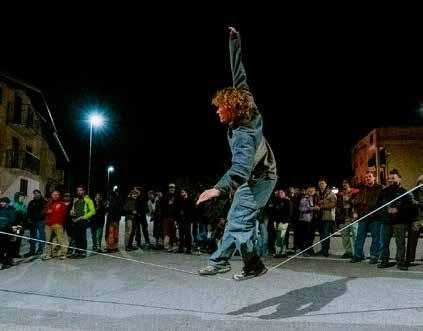
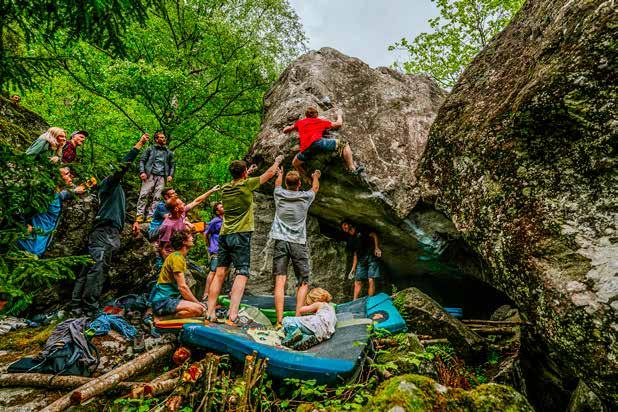
ing world. A “challenge that isn’t a challenge”—unique in the world—that of Melloblocco. A “competition that isn’t a competition.” In 2026, the “prize-money boulders” once again became the symbolic heart of the event, and yet— even with rankings and award ceremonies—the event seems, by its very nature, to reject the idea of pure competition. You could sense it as you approached the boulders and simply watched: strangers helping one another, shared crash pads, shouts of encouragement for anyone giving it a try. As if to say that here, it doesn’t matter who wins. What matters is being there.
On the other hand, Melloblocco is also a competition, so a ranking has to be established. “The 2026 edition,” comments Nicola Noè on behalf of the organizers, “once again confirms its role as an international benchmark in the world of outdoor bouldering. The quality of the performances and the distribution of tops attest to a particularly interesting edition.” Miriam Fogu (ITA)
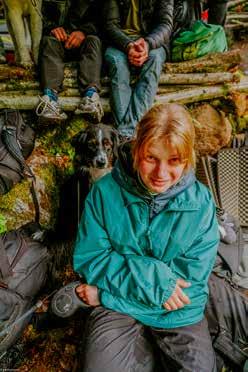
Melloblocco 2026 was supported by La Sportiva, the title sponsor; Decathlon, the main sponsor; E9 and Brazz, VIP sponsors; and C.A.M.P., Versante Sud, For Outdoor People, Lyofood, and Ecogrid, premium sponsors. Organized by the Porte di Valtellina Tourism Consortium with the support and collaboration of the Municipality of Val Masino and APICI International Climbing Park, and with funding from the Lombardy Region, the Province of Sondrio, BIM Adda, the Valtellina Mountain Community of Morbegno, and the Municipality of Morbegno, in collaboration with longtime promoters Michele Comi, Nicola Noè, and Stefano Scetti, and with the support of the Val Masino Operators Association and the Val Masino Climbing Association.
finished with 9 tops, confirming her exceptional form and excellent route-reading skills. Following closely behind, with 8 tops, are two prominent names on the international scene: Barbara Zangerl (AUT) and Melissa Le Nevé (FRA). Excellent performances also came from Giulia Medici (ITA), with 7 tops, and Ema Galeova (CZE), with 6 tops. In the men’s category, James Pearson (UK)—who completed 3 flash ascents—Gabriele Moroni (ITA), and Stefano Carnati (ITA) stood out with 8 tops each, delivering a high-caliber performance. Close behind, with 7 tops, was Stefano Scarperi (ITA), followed by a highly competitive group with 5–6 tops, including Jacopo Larcher, Silvio Reffo, Leonardo Colombo, and Davide Bassotto. The presence of iconic athletes such as Elias Iagnemma (ITA) and Charles Albert (FRA) added further technical and cultural value to the event.
The village of San Martino, open until late at night, was once again the heart of the event. Under the large tent, there were a series of talks with athletes such as Jacopo Larcher, Barbara Zangerl, and Melissa Le Nevé, who shared stories of exploration, failures, and comebacks, while documentaries like *Cleaning the Boulders* brought back into focus a fundamental theme of Melloblocco: respect for nature and for the valley that is home to it all. In addition, the program included film screenings, DJ sets, sunrise yoga, and opportunities for discussion.
During Melloblocco 2026, the Interreg APICI project— “Implementation of the International Interconnected Climbing Hub”— was presented. This cross-border initiative between Italy and Switzerland is designed to enhance the area between Val Masino and Bregaglia through a model of sustainable outdoor tourism. The project aims to improve trails and climbing areas, promote alpine culture, foster cooperation among mountain communities, and develop new opportunities related to climbing and hiking, while keeping environmental respect and the identity of the alpine region at the forefront. But anyone who has experienced Melloblocco knows: certain experiences don’t end when you leave the valley. They linger in your scraped hands, in your tired muscles, in the friendships forged beneath a granite boulder. And above all, in the desire to return.
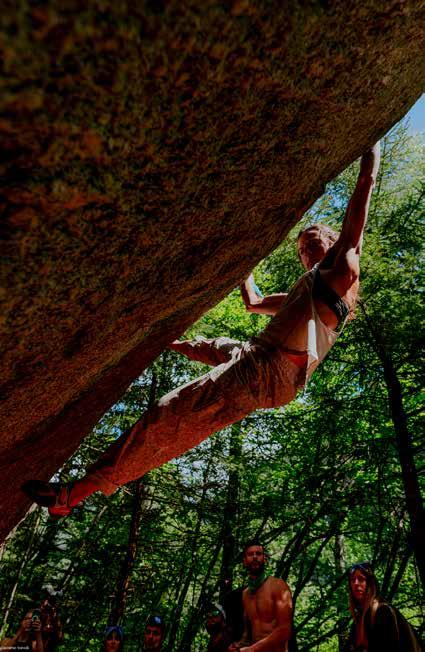
"Over the years, I've come to realize that photographing bouldering here means, above all, capturing emotions in advance"
Giacomo Tonoli, photographer
FOCUS ON
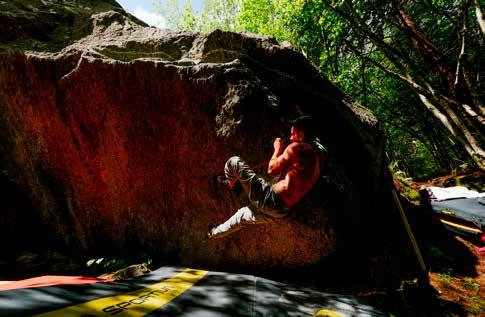
by Giacomo Tonoli
There are events you photograph. And then there are events you experience.
For me, Melloblocco—now for three consecutive years—has become this: an experience that goes beyond simply working as a photographer. Arriving in Val Masino during the festival means stepping into a special world. I feel at home. The streets fill up with crash pads, bicycles, ropes, chalk, and people from all over the world. Some people spend hours working on a problem, while others simply lie on the grass, gazing at the mountains and daydreaming. And perhaps that’s exactly what makes Melloblocco so special: it’s not just a competition, but a temporary community that springs up every year among the rocks of the valley.
This is where people meet and eventually become friends.
As a photographer, the real appeal lies in trying to capture all of this without limiting myself to pure action. Of course, there are the incredibly strong athletes, the perfect movements, the attempts that push the limits, and those suspended moments of absolute silence just before a climb is completed. But the essence of Mello lies elsewhere as well: in the battered feet at the end of the day, in the white dust on hands cut by the rock’s sharp edges, in the crowd’s shouts deep in the woods, and in the beers shared in the evening after pushing ourselves all day.
Over the years, I’ve come to realize that photographing bouldering here is, above all, about anticipating emotions. You have to read the light as it shifts through the trees, understand where the right moment will arise, and sense when an athlete is about to push past their limits—or when they’re simply enjoying one of the best days of the year. Free, without the anxiety of the usual seasonal competitions.
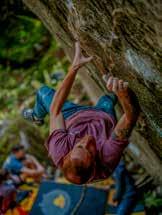
And then there’s the valley. Val Masino isn’t just a backdrop—it’s an integral part of the festival. The granite cliffs, the forests, the streams, the biodiversity, and the silence of the mountains create an incredible contrast with the energy of the people. Every morning, it feels like stepping into a huge natural playground built for those who love to be active outdoors.
After three years, what I’m taking home with me isn’t just thousands of photographs, but above all the feeling that Melloblocco still manages to preserve something rare: authenticity. In an outdoor world that’s becoming increasingly fastpaced and artificial, there’s still room here for connection, for making mistakes, and for spending time together around a boulder without watching the clock.
Ed è probabilmente questo che continuo a cercare ogni volta che torno a fotografarlo. Il Melloblocco è casa.
The entire B-Factory team
Exactly 40 years ago in Arco, the very concept of competitive sport climbing was born, and nearly half a century later it remains the global benchmark for the climbing community, even beyond the purely competitive aspect
by Claudio Primavesi
There are “sacred places” that have rightfully earned their place in the sports hall of fame: Wimbledon’s Centre Court, the Maracanã Stadium, and the Monte Carlo circuit. And the Rock Master Climbing Stadium in Arco. “From the very beginning, Rock Master has been a great testing ground for climbing, always offering innovative competition formats,” says Angelo Seneci, technical director of an event that has become a paradigm for climbing itself. “Our goal has always been to combine sport and entertainment, without compromising the competitive value of the event. The recognition from five generations of athletes, the enthusiasm that Rock Master still generates among the public after 40 years, and the attention it receives from television networks all attest to this.” Seneci’s words capture the spirit and essence of the event: an iconic milestone in the history of climbing that has successfully reinvented itself and revitalized the world of competition, as it approaches its 40th edition in 2026. Scheduled for October 2–4, the format goes beyond a mere competition, becoming a true climbing festival in Arco—a place that, thanks to the Rock Master, has become the “Home of Climbing.” “Forty years ago, when we embarked on the adventure that would give rise to Rock Master the following year, we never could have imagined how much of an impact it would have on life in Arco,” Seneci continues. “It has not only sparked a unique economic development—studied worldwide—but has also radically transformed the social life of the city, which has become an international hub for outdoor sports, where young people from all over the world choose to live and work.” And where all the leading brands are sold in over 20 specialty stores—both multi-brand and single-brand. Thus, Rock Master has also evolved into a festival that attracts enthusiasts and brands in the sector, because associating one’s brand with that of the iconic climbing event—whether as a sponsor or an exhibitor at the village—can make all the difference in an increasingly competitive market.
40
“Vertical Thrill” is Rock Master’s apt tagline, and it perfectly captures the excitement and suspense experienced by the athletes in this community of over 10,000 enthusiasts who gather every fall in Garda Trentino. The history of climbing in Arco began in 1986 with the first edition of Sport Roccia, at the foot of Monte Colodri. In 1987, the event moved to the cliff face below Arco Castle, adopting the name Rock Master and immediately making its mark on the history of the sport. In 1988, with the construction of the Climbing Stadium, the competition found its permanent home. It was one of the world’s first permanent artificial structures designed to host high-level climbing events—a key milestone in the development of modern sport climbing. After 40 years, one could simply survive. Or one could continue to be the global benchmark—and the Rock Master has chosen the latter path. “I think that if sport climbing has reached the Olympic stage, it’s partly thanks to the Rock Master as well. We can’t forget that modern parallel speed competitions were born in the early 1990s in Arco with the Rock Master: the Rock Master Speed wall was later adopted by the International Federation as the global and Olympic standard,” Seneci continues.
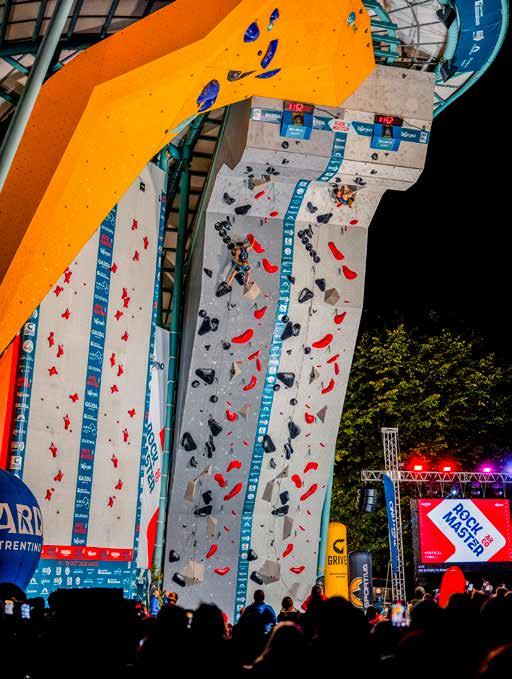
For an event as iconic to the world of sport climbing as the Rock Master, there is an athlete who is equally iconic to the entire climbing community and its history, serving as the event ambassador: Adam Ondra, who has won 22 gold medals and was the first man to send routes graded 9b+ and 9c. “I’ve known about the Rock Master since I was seven years old. When I was eight, I was dying to see the wall and make it to the top. If you’d asked me what my biggest dream in competitive climbing was, I would have said: to win the Rock Master! It’s always been an obsession of mine, and the feeling I had when I finally competed in Arco in 2009, at age 16, was truly special. What makes this event unique is the Climbing Stadium, the atmosphere surrounding it, the crowd, and its history. The fact that I go there almost every day to train—since the wall is part of the national team’s training center—makes it even more special. I can’t get enough of it.”
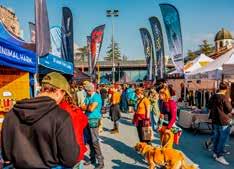
To call the Rock Master simply a climbing competition—even though it’s one of the most important competitive events—would be an understatement. That’s because the competition is just the culmination of a three-day festival that combines performances, special guests, entertainment, and the chance to experience climbing in all its forms, bringing the climbing community together in Arco. The heart of the event is the festival village, featuring booths from industry brands, a food area, and a kids’ area, but the days are also enlivened by side events including yoga sessions, challenges, talks, and rock adventures. The competitive portion features four formats: lead, bouldering, fun bloc for amateurs, and FASI speed climbing. Become an exhibitor at Rock Master

Quando ci si avvicina all’arrampicata, indoor o outdoor, uno degli aspetti fondamentali è imparare come assicurare al meglio il proprio compagno. Assicurare vuol dire prestare attenzione, posizionarsi nel punto giusto per non intralciare il climber e anticipare i suoi movimenti per dare o recuperare corda al momento opportuno. Ma significa anche saper scegliere il dispositivo giusto, quello più adatto alle tue esigenze. Nella nuova palestra Nobaria, vicino a Tokyo, i nostri due climber si affidano a GRIGRI +: un assicuratore con bloccaggio assistito mediante camma e maniglia antipanico, ottimizzato per l’arrampicata in moulinette e perfetto per chi muove i primi passi.

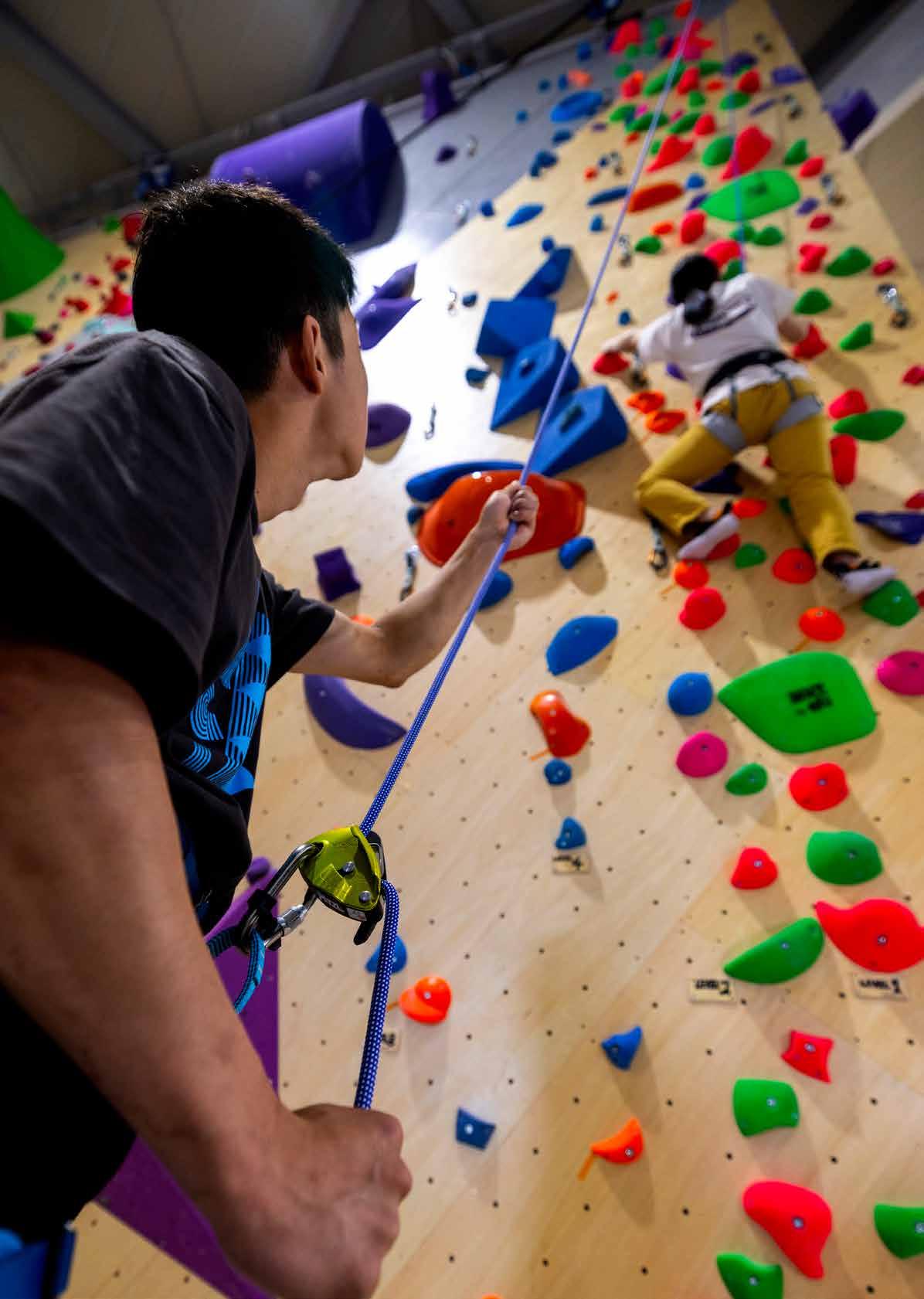
The 2026 collection represents the culmination of the integration of CT and marks the official launch of Skylotec Outdoor's production, bringing the spirit of the Alps to highly advanced equipment for the world of vertical sports
by Benedetta Bruni - photos by Luca Matassoni
In 2021, Skylotec acquired Aludesign, the owner of Climbing Technology. Four years later, the full integration of CT was completed, giving rise in mid-2025 to the Skylotec Outdoor brand, which, starting with the 2026 collection, marked the launch of increasingly advanced equipment designed for the world of sports: mountaineering, via ferrata, and rock climbing. During this transition period, the brand has increasingly estab-
One year after the full integration of Climbing Technology and the official launch of Skylotec Outdoor, how is the brand perceived?
Today, the brand is perceived as more solid and consistent on an international level. For retailers, the main value is technical continuity: historically reliable products like those from Climbing Technology have been integrated into a broader ecosystem, with a global vision for safety and the outdoors. Among consumers, however, perceptions are evolving: on the one hand, the CT brand still enjoys strong recognition; on the other, trust in Skylotec as the European “umbrella” brand for high-altitude reliability is growing.
What are your key markets?
The key markets remain primarily: Central Europe—namely Germany, Austria, and Switzerland; Italy and France, which have a long history in the outdoor sector; and there has been steady growth in Eastern and Northern Europe. In Italy, distribution is already widespread in the specialty and professional channels (work at height, rescue, and mountaineering), but the current focus is on strengthening brand awareness in the consumer segment, where the Skylotec brand is still in the process of establishing itself compared to the long-standing reputation of Climbing Technology.
lished itself as a synonym for reliability and precision, thanks in part to the exchange of expertise and know-how from Climbing Technology. To gain a deeper understanding of this new positioning strategy—and in conjunction with the launch of the first official line of Skylotec Outdoor products, built on CT’s legacy—we asked a few questions of Arianna Colombo, marketing manager, and Gianluca Brioschi, product manager.
The partnership with the Mmove Alpine Guides is central to Skylotec Outdoor. Our relationship with them is primarily technical and operational: they serve as the bridge between product development and real-world use. The guides use the equipment daily in alpine environments and often under very challenging conditions, which is why their input is extremely valuable. Through constant dialogue, we gather concrete feedback on ergonomics, ease of use, and product performance, as well as useful suggestions for improving our products and developing new solutions. It is an ongoing dialogue that allows us to maintain a strong connection to the reality of the mountains and to the needs of those who experience them every day. This approach, based on direct field experience, is an integral part of Skylotec Outdoor’s philosophy and of our commitment to creating products that are increasingly safe, reliable, and functional.

How do your values come through in the products you offer?
How important is it for you to participate in B2B and B2C events that bring you into direct contact with the public, such as OUTDOOR & ORBDAYS and the Activation Days?
These are strategic events because they allow us to engage directly with both retailers and enthusiasts. On the one hand, retailers have the opportunity to learn more about the technical features of the products and the brand’s value; on the other hand, end users can test the equipment in the field and evaluate its performance and functionality firsthand. This direct contact is essential for building trust, gathering feedback, and strengthening our connection with the community.
What feedback have you received from consumers and retailers?
The feedback received has generally been very positive, particularly regarding the perceived quality of the safety devices, the clarity of the technical specifications, and the opportunity to test the products in real-world conditions. Retailers point out that these demonstrations reduce barriers to purchase, while consumers especially appreciate the chance to “get a hands-on experience” with products that typically require a high level of trust.
The experiences organized during the Activation Days were all in collaboration with the Mmove Alpine Guides: What is your relationship with these mountain professionals? How do they support you in product development?
Safety is, of course, the starting point, but it is complemented by a continuous pursuit of innovation, the reliability required in highly demanding environments, and a commitment to creating durable products. At the heart of it all is always the user—whether a mountain professional or an enthusiast—because understanding their needs is essential to developing truly effective solutions. These principles are encapsulated in the slogan “Forged in the Alps,” which authentically expresses Skylotec Outdoor’s identity. It refers not only to our Alpine roots but also to our commitment to supporting a European supply chain and leveraging expertise developed in regions where the mountains serve as a real-world testing ground for products and technologies. It is precisely in this context that solutions are created to ensure the highest levels of safety, quality, and performance.
What does the future hold for Skylotec?
Looking ahead, Skylotec Outdoor will continue to invest in the development of products that are increasingly high-performance, lightweight, and intuitive—capable of meeting the needs of an ever-evolving audience. Innovation will remain a central element of our strategy, both in terms of materials and design, and in the introduction of new technologies that can enhance the user experience and safety. At the same time, we will continue to grow and consolidate the brand internationally, strengthening our presence in more mature outdoor markets and developing new opportunities in emerging ones. Our goal is to continue to be a benchmark for those who enjoy mountain activities, offering products that combine safety, reliability, and innovation, always in keeping with the values that distinguish the Skylotec Outdoor brand.
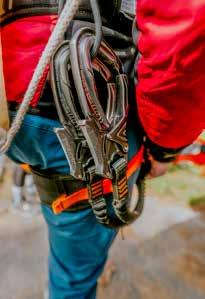
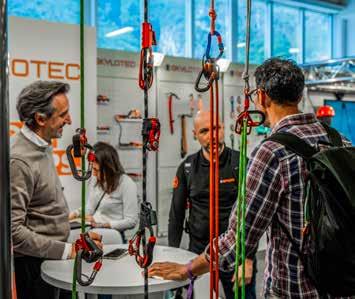
With the launch of the 2026 collection, Skylotec Outdoor has completed the acquisition of CT. What has the journey been like that has brought you to this point? Have there been any significant changes in terms of product offerings, distribution, and the exchange of know-how?
The integration of Skylotec and CT represents the natural evolution of a journey that began several years ago, with the goal of uniting two companies united by a strong culture of safety, innovation, and European manufacturing. The acquisition has allowed us to consolidate complementary expertise, creating synergies at both the technological and commercial levels. In terms of our product offering, the catalog has expanded further, allowing us to meet the needs of outdoor enthusiasts even more comprehensively—from mountaineering and rock climbing to professionals working at high altitudes. On the distribution front as well, we have benefited from the Skylotec Group’s international presence, increasing our ability to reach new markets. One of the most interesting aspects has been the exchange of knowhow between the different teams: sharing technical expertise, production processes, and experience gained in different sectors has generated significant added value for future product development.
duction process, from design to final manufacturing, ensuring high quality standards and complete traceability. The proximity between our engineering offices and production facilities also facilitates faster product development and greater flexibility in adapting to market demands. For most of our product catalog, we are able to manage production in-house, leveraging the expertise and technologies we have developed over the years. This approach allows us to maintain high levels of quality, reliability, and production flexibility.
Gianluca, in addition to being a product manager, you’re also a mountain guide: from the perspective of a professional who guides less experienced people in the mountains, what are the strengths of Skylotec Outdoor products?
What are the different target markets for Skylotec Outdoor products?
The Skylotec Outdoor line is designed to meet the needs of a wide range of users, from beginners to the most experienced mountaineers and climbers, all the way to mountain guides and professionals who demand high performance and absolute reliability. Each product is developed based on a specific analysis of its intended discipline. For sport climbing, we prioritize lightness, ergonomics, and ease of use; for mountaineering and activities in harsh environments, the focus is on durability, versatility, and safety management in variable conditions. For professionals, on the other hand, we develop solutions that guarantee durability, operational efficiency, and full compliance with the most rigorous standards. Although they differ in terms of use and technical characteristics, all products share the same fundamental principles: safety, build quality, and reliability.
What does the research and development component of your offering entail?
Research and development is one of the pillars of our business. The process begins with constantly listening to end users: mountain guides, athletes, professionals, and enthusiasts who use our equipment in the field every day. Ideas are turned into prototypes that undergo rigorous laboratory testing and extensive validation phases in real-world conditions. This approach allows us to develop products that not only comply with regulatory standards but also effectively meet users’ needs. We are constantly working to optimize materials, production processes, and ergonomics, with the goal of improving safety, comfort, and performance.
What, on the other hand, are the advantages of having production entirely within Europe?
In-house production in Europe is a distinctive and strategic advantage. It allows us to maintain direct control over every stage of the pro-
As a mountain guide, I have the opportunity to observe the needs of users with very different levels of experience on a daily basis. I believe that one of the greatest strengths of Skylotec Outdoor products is their ability to combine safety, ease of use, and high performance. For those who are just learning, it’s essential to be able to rely on intuitive equipment that helps reduce the chance of error and facilitates learning. At the same time, professionals need products that are efficient, reliable, and capable of withstanding intensive use. Our philosophy is precisely to develop solutions that can support users throughout their entire journey of technical growth, without compromising on safety.
When it comes to climbing gear, what are Skylotec Outdoor’s standout products?
Among the most popular products are assisted safety devices, harnesses designed to ensure comfort even during prolonged use, and carabiners crafted with a focus on ergonomics and ease of use. The goal is to offer equipment that strikes the best possible balance between safety, light weight, and ease of use.
For the SS 27, we focused on launching several key products, such as adjustable lanyards, multipurpose harnesses, and ultralight rope devices. In particular, the revamped Tuner family allows us to expand our range of adjustable lanyards. Thanks to the patented solution featured on the Tuner Guide, we offer a dedicated ring that ensures a very clean double rappel. In addition, we have a new 9-millimeter rope with UIAA Water Resistant treatment and a second patented Kevlar sheath that makes the rope itself cut-resistant. The Wall harness line has also been updated and now features our patented “Sliding Bridge,” which allows a three-buckle harness to be more adjustable than a four-buckle one. Finally, the new Dom three-slot plate finally fills a gap in rope devices for those who frequently use a lightweight configuration with a single rope and a tagline.
Montura reimagines the iconic Free Evo shirt and incorporates it into a collection that stays true to its DNA, reflecting a vision of intimate and pure climbing
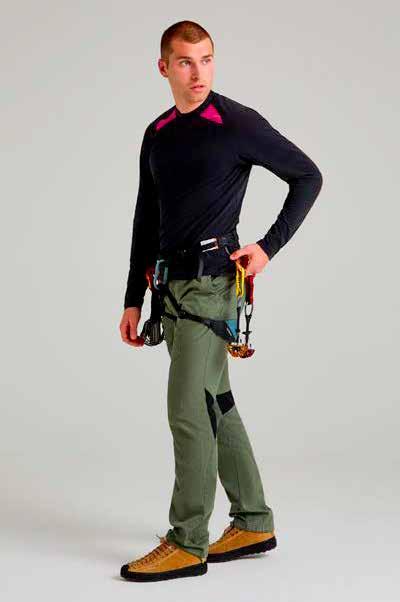
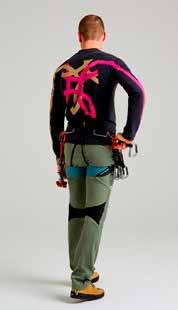
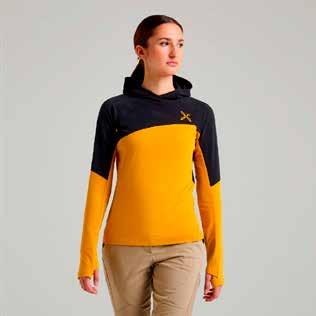
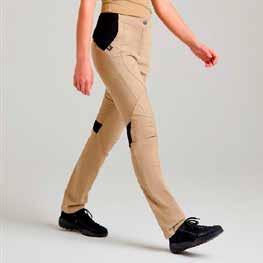
For Montura, consistency has always been one of the key principles guiding its collections. A garment must be truly functional, not just aesthetic. It must work in harmony with the rock, without the fit getting in the way. Finally, it must stand the test of time, withstand intensive use, and endure the most varied weather conditions. In other words: it must make you feel free—free from distractions and discomforts—so you can focus solely on the rock face. And it must put people—climbers, rescue workers, mountaineers, and enthusiasts—at the center to address real needs, drawn from experience and direct dialogue with those who live and breathe the mountains every day.
With this in mind, Montura presents the “Free to climb again” line, consisting of the Free Evo pants—a legacy of the original Fusion Pants from 20 years ago—and a reimagined version of the Free shirt, developed in collaboration with a landmark figure in the history of climbing, both in Italy and abroad: “Manolo,” the stage name of Maurizio Zanolla.
The update does not introduce structural changes, but rather adapts to new generations who, although shaped by a modern vision of climbing, still uphold the idea that climbing is an intimate and mental experience—a dialogue between the wall and the climber as a whole, from head to toe. There can be no room to worry about one’s clothing. For this reason, today’s shirt and pants feature an Ergo Fit construction—a design principle based on body mapping and the analysis of movement dynamics. The result is a garment capable of supporting every phase of the climb without interfering, creating a natural connection between the body and the product.
Developed through direct observation of the body in motion while climbing, when the arms are often extended above the head and the torso is subjected to prolonged, continuous strain: the first Free Evo Maglia, designed in 2003, had to adapt to these conditions without creating any hindrances. Its construction featured wide shoulders to promote mobility, long sleeves, and a snug waist that worked well with a climbing harness. All of this was complemented by a distinctive graphic design. The new version retains the same structure and updates only the fabric—a stretch organic cotton jersey—to enhance comfort, breathability, and freedom of movement. The fitted silhouette ensures an excellent fit, and the raglan sleeves provide greater flexibility. Lightweight and naturally moisture-wicking, the jersey stays true to the original design philosophy while consistently upgrading its performance. A hooded version is also available.
An evolution of the iconic Fusion Pants, first introduced in 2006, the Free Evo Pants solve the challenge of creating cotton pants that are both stretchy enough and feel natural against the skin. Thanks to body mapping and the inclusion of stretch panels and seams at the joints, this garment conforms to the human anatomy and delivers both ergonomics and functionality. The Free Evo Pants are made from stretch cotton, which allows for a simpler construction with fewer inserts, while maintaining high mobility and updating the design with more advanced materials. The fabric is also breathable and abrasion-resistant, while the waistband with an adjustable drawstring, button, and zipper offers a customized fit. Practical details such as open pockets and an adjustable hem complete this technical yet minimalist design. The women’s version of the pants is specifically designed to provide optimal comfort at the waist.
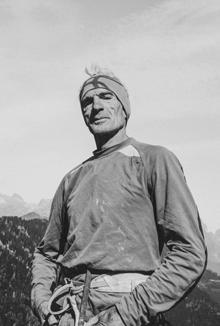
The past and the present come together in the people that inspire Montura’s collections.
Like “The Wizard” Manolo, the very essence of freedom and imagination, who sees the rock as a canvas on which to paint his path
by Benedetta Bruni - photos by Matteo Pavana
Those who end up becoming an integral part of climbing history—whether consciously or not—always have one thing in common: simplicity. It is through this simplicity that one practices a discipline that is, above all, mental rather than merely physical. It is through this simplicity that one reaches the summit of a mountain without any pretensions regarding numbers or performance. Simply for the pure and essential beauty of a gesture that may seem pointless, yet makes every muscle tremble with an almost religious tension: stringing together a series of movements calculated down to the millimeter, as in a dance with the rock—so rugged, yet equally welcoming to those who know how to respect it. Until the miracle of the summit gives meaning to an ascent that is, admittedly, incomprehensible to many, but one that always leaves you a little changed from when you set out.
If Maurizio “Manolo” Zanolla (born in 1958) has made history, then it is thanks to his raw and intimate relationship with the rock. Unburdened by any formal mountaineering training, imaginative, creative, and never repetitive—selftaught and independent to the point of defiance. He refused to follow in the footsteps of others and therefore always sought new ways and new routes to be free, starting with the way he chose to climb: under his own power, without pitons, bolts, or any support whatsoever, as the purest form of respect for the rock face. A “simple” interpretation of the concept of exploration: devising a way to reach the goal, accepting the unknown both as a sort of pulley and as a vehicle for wonder.
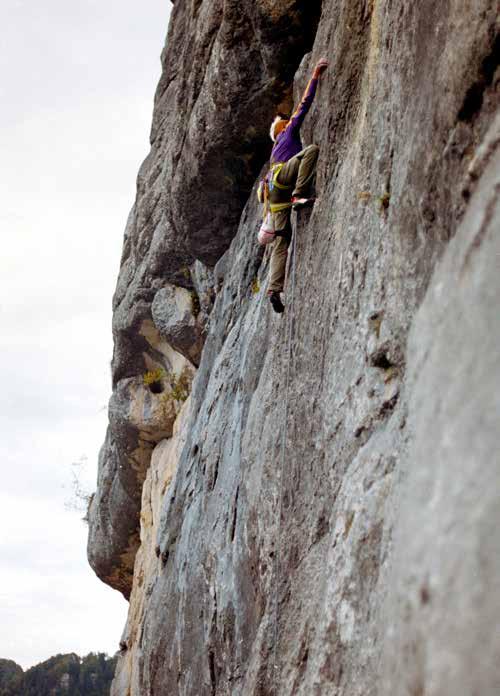
a certain degree of unpredictability that prevents you from ever feeling completely at ease on a mountain, and accepting that fear is a fundamental part of the experience. This, too, is part of the beauty of having such a direct and physical relationship with the rock. And it is also what has always drawn climbers to risky and reckless exposure— at least in the eyes of those who don’t know the feeling of being part of something greater. It’s not “easy” to explain, but when you’re climbing and your senses are so heightened, you reach a level of attunement to your own emotions—as in Manolo’s case—that it becomes something broader and translates into responsibility and ethics toward yourself. And thus toward the mountain itself and one’s own personal concept of freedom.
But simplicity does not mean the absence of complexity. And climbing is too transformative an act to be considered “easy,” even when it seems that way. “Il Mago” accepted—and still accepts—that climbing means grappling with inaccessibility, coming to terms with
It takes a certain degree of imagination and determination to shift one’s perspective and become a magician. The story of Manolo, who stepped away from the spotlight yet still found his way into the collective imagination, is also the story of all those who “seek a new path” to beauty and accept the challenges it entails. It is the story of those who, faced with a rock face several hundred meters high, see a blank canvas or a page yet to be written, knowing that by the end of this journey, they will not be the same person they were before. It is, therefore, also the story of Montura: from the first Free Maglia worn by Manolo 20 years ago to its current version, past and present are linked by the products and the lives of those who have helped shape a vision of the mountains based on freedom as a form of personal and authentic expression.
A selection of technical apparel by Rock Experience designed to support every stage of your climb, from the approach to the ascent: high-performance materials, lightweight design, protection, and comfort so you can move naturally
On the rock face, every detail counts. Freedom of movement, protection from the elements, and the ability to adapt to changes in pace are essential, whether you’re spending a day at the crag or tackling a longer, more challenging route. Climbing gear must support athletic movement without restricting it, offering comfort during dynamic phases and the right level of insulation during rest periods.
The Rock Experience SS 26 climbing collection for men and women was created precisely to meet this need: to develop a system of versatile, lightweight, and functional garments designed to be mixed and matched based on conditions and the type of activity. Protective, breathable jackets; compact fleeces to always carry in your backpack; pants engineered to ensure mobility and practicality even when wearing a climbing harness; and lightweight, comfortable layers: this is our offering for experiencing the mountains with agility. Technical solutions, high-performance materials, and essential details define garments designed for the rock face, yet versatile enough for hiking and everyday life.
A technical crossover jacket designed to offer the right balance between stretch, wind protection, breathability, and abrasion resistance. Thanks to Double Wave technology, it combines a four-way stretch outer fabric with a brushed mesh lining, promoting moisture wicking during intense activities. Versatile and comfortable, it’s suitable for climbing, ski mountaineering, hiking, and everyday use. The integrated hood is helmet-compatible and adjustable. The cuffs with flaps and Velcro closures, along with the drawcord at the hem, allow you to customize the fit and enhance protection from the elements.
An ultralight, reversible technical fleece designed to provide extra warmth with minimal bulk. An essential piece to always carry in your backpack, ideal as a mid-layer or for insulation when paired with a windbreaker. Made from stretch fabric with brushed mesh, it can be worn two ways: with the brushed side facing out for maximum breathability and quick-drying, or facing in to increase warmth and thermal comfort. It features an integrated hood, a practical zippered kangaroo pocket, and elastic
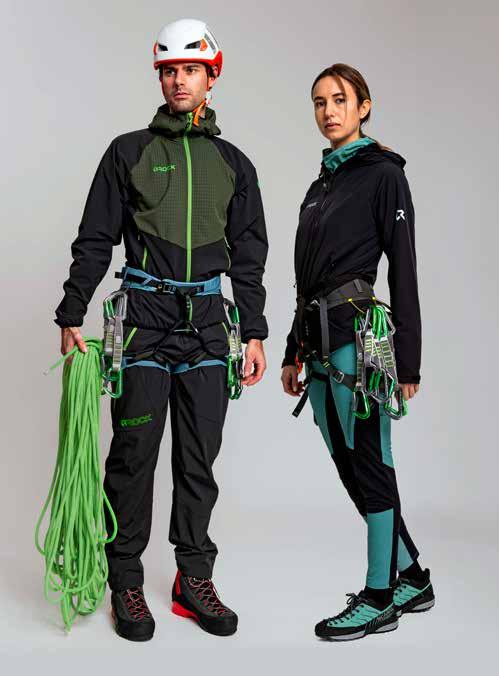
Lycra hems at the bottom, cuffs, and hood opening. The jacket can also be folded into the kangaroo pocket, making it compact and easy to carry.
Slim-fit technical pants with a comfortable fit, crafted from a combination of two fabrics to offer practicality and freedom of movement. They feature a zippered pocket on the right leg, flatlock stitching details along the leg openings, and an internal elastic waistband with a drawstring, designed to easily adjust the fit.
A lightweight and versatile jacket, crafted from a combination of two fabrics and designed for a variety of outdoor activities. The jacket features an integrated hood and flock-effect inserts on the chest, back, hood, and elbows, adding a technical and distinctive detail to the design. The Lycra elasticized trim on the hood, sleeve cuffs, and hem enhances comfort and fit.
Technical pants with a regular fit designed to offer comfort, practicality, and freedom of movement during outdoor activities. The waist features an internal elastic band and an adjustable drawstring with a loop for securing it. The waist and leg pockets are positioned for easy access even when wearing a harness, while the zippered back pocket allows you to securely store small items. The leg cuffs are adjustable via a lightweight elastic cord integrated into the hem.
7 TO 7 Srl - +39 031.692161 - info@rockexperience.it
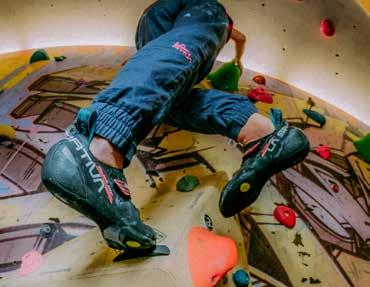
At some point in their climbing career, every climber inevitably finds themselves at the same delicate juncture. It’s the inter mediate stage—the phase that solidifies what they’ve learned in their first climbing lessons enough to be independent, but not quite enough to be considered advanced. This transitional phase coincides with the age-old question of choosing a second pair of climbing shoes: the first pair no longer meets the climber’s needs, as they now feel the need for more grip on the wall but aren’t yet ready to choose a shoe that’s too arched or aggressive. This is where La Sportiva comes in with the Skwama Lite, designed for climbers who are making technical progress and seeking the per fect balance between comfort and perfor mance; ideal for bouldering or rope climb ing in the gym, it’s also suitable for sessions at the crag.
FEATURES
Entirely made in Italy, this climbing shoe combines craftsmanship with tech nical innovation. The new last, combined with an unlined microfiber upper and a soft construction with a slightly roomy fit, makes it easily adaptable to different foot types and ensures lasting comfort from the very first use. The three-layer SkinLike insole also makes it highly breathable. It features technical specifications desig ned for climbing, such as the 1.1-millime ter LaspoFlex midsole with the P3 system for maximum torsional stiffness; the grippy rubber toe cap that improves toe grip; and the 4-millimeter FriXion Black outsole, which offers highly reliable trac tion while maintaining sensitivity on holds. The lacing system is derived from Skwama and allows for quick adjustment.
Skwama Lite is La Sportiva's solution for an intermediate-level climbing shoe, designed for climbers who are looking to improve their technical skills on the wall but aren't quite ready to give up comfort
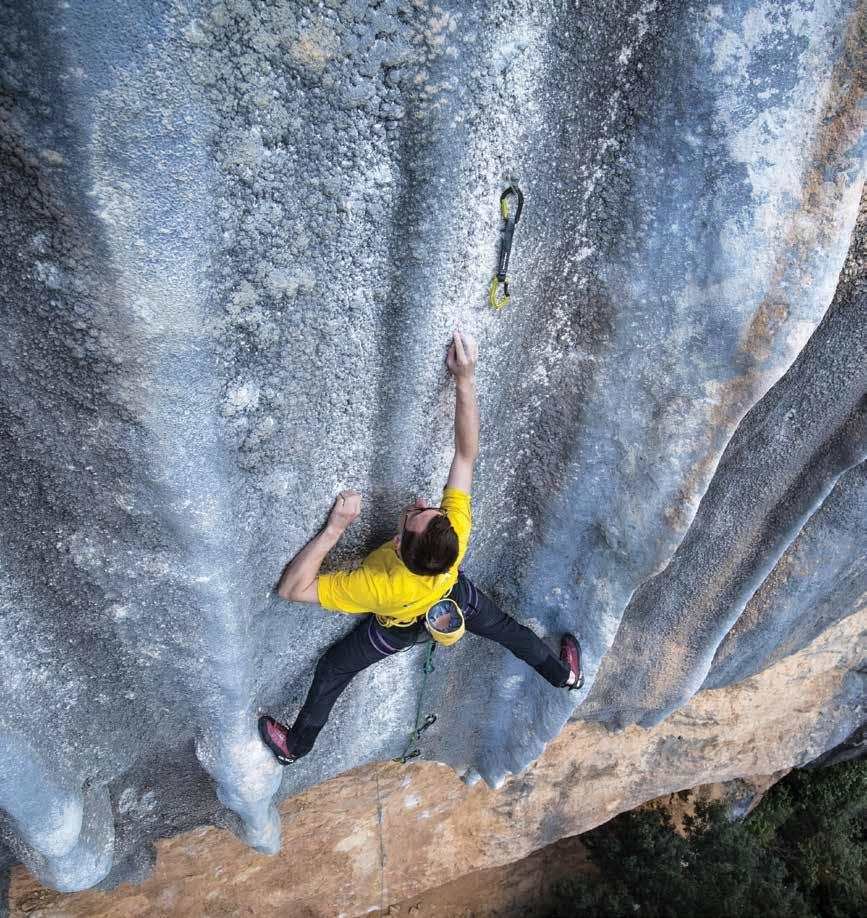
The Alpha Sport is the ultimate sport climbing quickdraw. Shaped for success with a confidence inspiring gate action, the rest is up to you. A durable and easy to grab nylon sling reduces the effort of working routes. For sport climbers who prize positive handling and quick clipping.

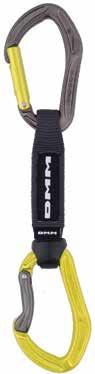
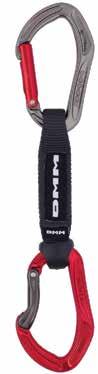
Not just any pair of technical pants, but an iconic E9 model.
Rondo Flax2 embodies the spirit of climbing: free, functional, and connected to nature
Rondo Flax2 are pants designed to provide a natural, comfortable feel during the warm season, combining the authentic spirit of climbing with a style suited for everyday urban life.
What sets the Rondo Flax2 apart from other models is the choice of fabrics: it features a blend of 52% linen, 46% organic cotton, and 2% spandex, offering the perfect balance of breathability, durability, and freedom of movement. Linen is one of the most popular natural fibers due to its high breathability and its ability to dissipate body heat even during the most dynamic activities, while organic cotton adds softness and comfort against the skin. Finally, elastane provides the elasticity needed to accommodate every movement. The decision to use these materials not only meets performance requirements but also reflects the brand’s growing focus on more sustainable solutions, helping to reduce the environmental impact of the production process while maintaining high standards of quality and durability.
From an aesthetic standpoint, Rondo Flax2 remains true to the brand’s unmistakable design, starting with the distinctive pockets in contrasting fabric, which—in addition to serving a practical purpose— introduce a color combination that gives the garment personality, making it recognizable even from a distance. The embroidery on the back further reinforces the pants’ bold character and artisanal craftsmanship, evoking the attention to detail that has always been a hallmark of the company.
Of course, however, functionality remains a key feature: equipped with an adjustable elastic waistband, the Rondo Flax2 provides a secure and comfortable fit all day long, while its regular fit is designed to ensure freedom of movement both while climbing and during everyday outdoor activities. Among the details most appreciated by climbers are the dual side brush holders, which keep the brush used to clean holds and grips within easy reach during bouldering sessions or at the crag: a simple solution that demonstrates the brand’s deep understanding of climbers’ needs. What makes the Rondo Flax2 particularly appealing, however, is its extraordinary versatility: although designed for climbing, these pants are also perfectly suited for other outdoor activities such as light trekking, travel, day hikes, and relaxing in the great outdoors. Their minimalist, contempo-
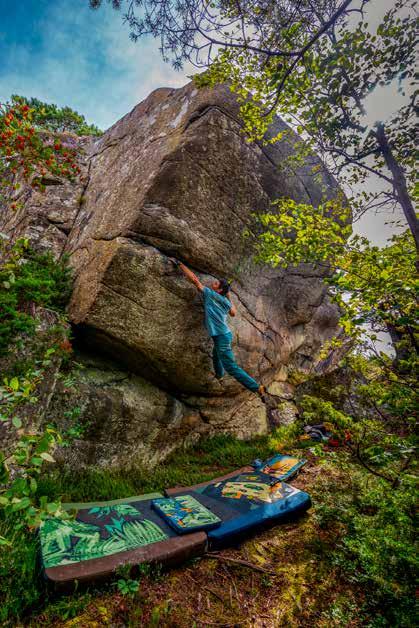
rary design also allows them to be worn effortlessly in urban settings, confirming the fusion of sport and lifestyle that has always been one of E9’s defining characteristics.
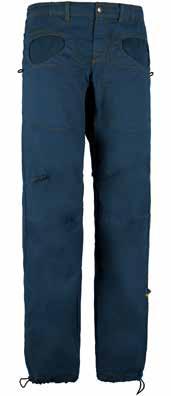
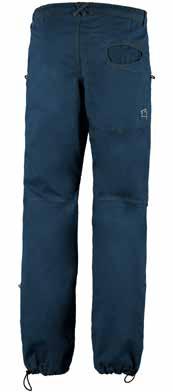
In keeping with its commitment to sustainability, E9 does not simply use recycled or natural fabrics; it also adheres to eco-friendly principles in its production process through a supply chain that is entirely “Made in Italy” and by investing in local manufacturing and direct quality control of its products.
With the Rondo Flax2, E9 once again demonstrates how innovation and tradition can coexist within the same product, combining, on the one hand, the pursuit of natural, high-performance materials and, on the other, the commitment to preserving the details that have made the brand a benchmark for climbers.
FLAX (52%): ensures breathability and lightness
ORGANIC COTTON (46%): it feels soft and comfortable against the skin
ELASTANE (2%): provides flexibility and freedom of movement
New for 2026 is the combination of assisted locking and a panic handle: during descent, if the belayer pulls too hard on the handle, the system automatically engages, stopping the rope from sliding; a feature that makes the device particularly safe and therefore wellsuited for training. In addition, the ASSIST+ mode returns to optimize top-rope belaying by pre-activating the cam lock and facilitating rope retrieval, thereby limiting sudden rope slippage.
The ergonomic handle improves descent control, while the lever’s gear ratio allows for better performance with both thin ropes and thicker ones. In
Designed for lead climbing and top-roping, Petzl's new GRIGRI+ focuses on ease of use, comfort, and control
fact, the device is compatible with single ropes ranging from 8.5 to 11 millimeters and is optimized for diameters between 8.9 and 10.5 millimeters. In terms of construction, Petzl continues to prioritize strength and durability, featuring aluminum flanges, a stainless steel cam and braking support, and plastic components made from recycled polyamide. This choice aligns the belay device with the brand’s commitment to sustainability. Weighing 200 grams and featuring a compact design, the new GRIGRI+ remains a benchmark for those seeking a versatile, intuitive belay device that is ideal for both learning and intensive use.
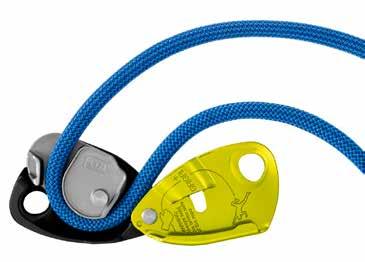
HIGHLIGHTS
• Cam-assisted locking
• Built-in panic bar
• ASSIST+ mode for top-roping
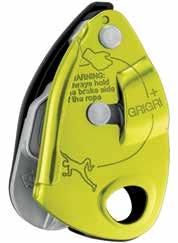
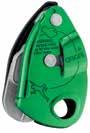
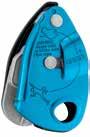
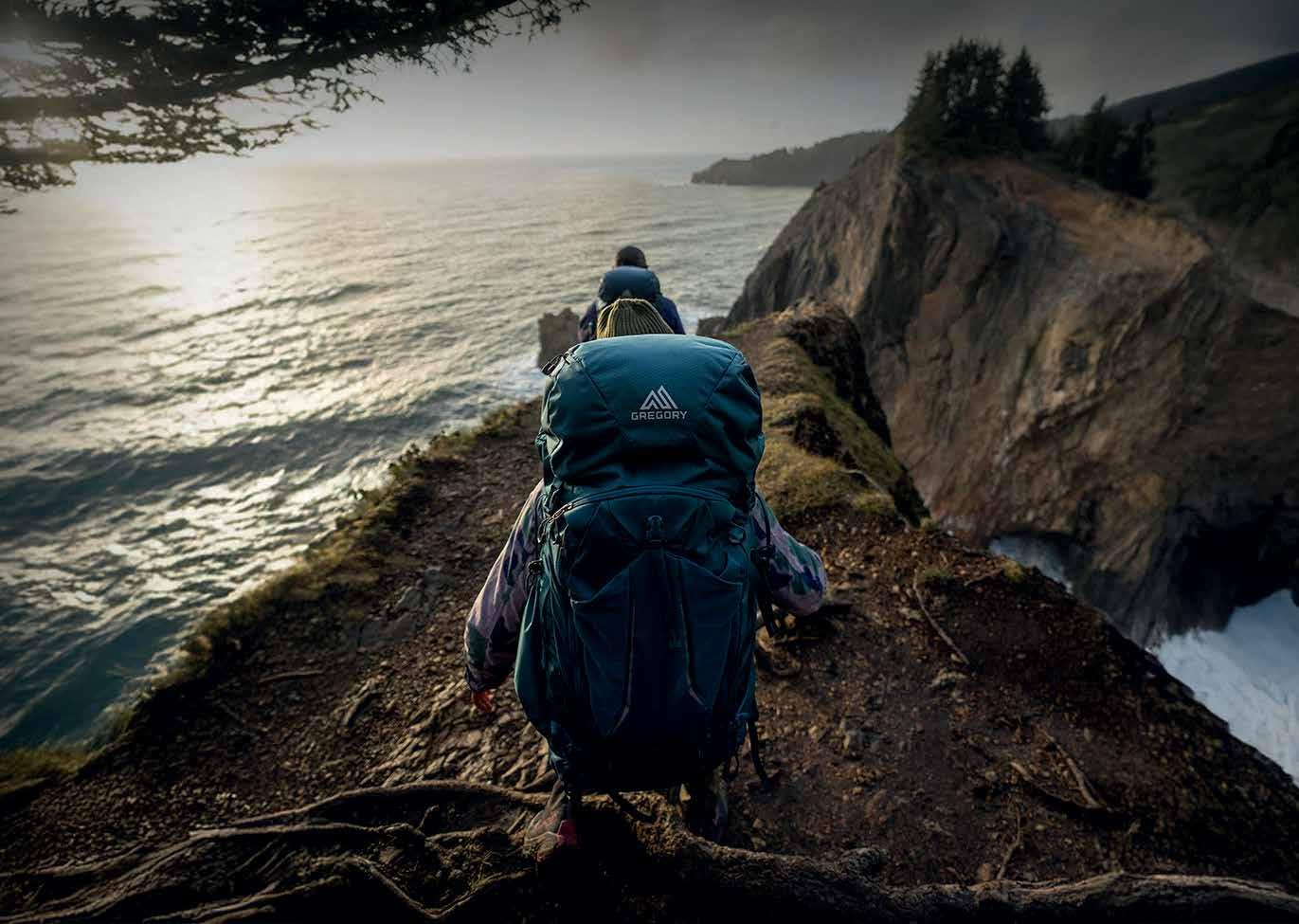
Designed with purpose. Built with intention. Born in the mountains, and crafted to endure the everyday, so you can comfortably carry what matters most with confidence.
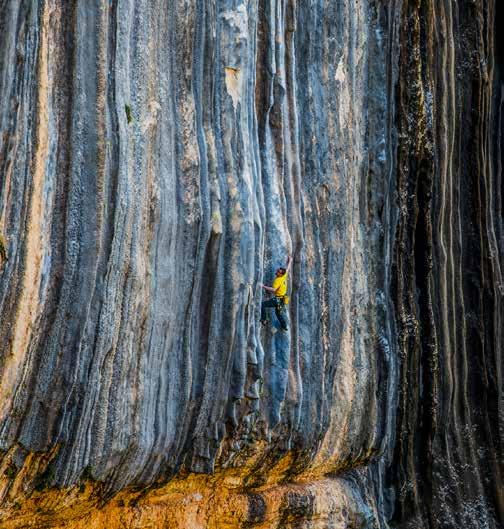
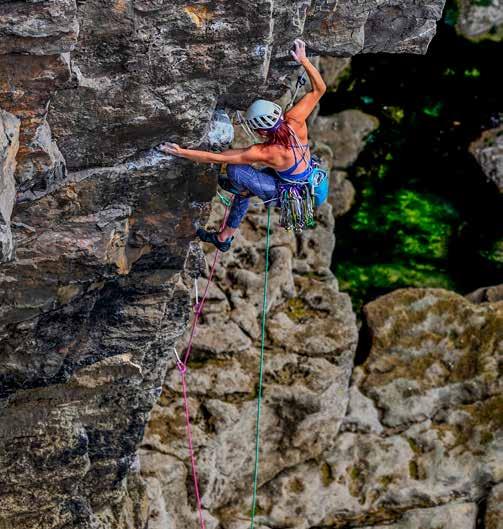
In quickdraws, when climbing multi-pitch routes, or simply for clipping cords and friends: carabiners are essential climbing companions. DMM offers the ultra-lightweight Wisp and the XSRE gear clipper
The lightest climbing carabiner in the entire DMM lineup, weighing just 22 grams. Its ultralight design makes it versatile and ideal for alpine and trad multi-pitch climbing—activities where weight and bulk are key factors in gear selection. Despite its very compact profile—designed to save space in your harness—the Wisp maintains a 20-millimeter gate width, making it easy to clip and avoiding the problem of a carabiner that’s difficult to maneuver, a common issue with smaller-sized gear. Small, then, but not too small: Wisp strikes the perfect balance between weight savings, safety, and durability. It’s available in seven color options that match DMM’s various Friends and quickdraws, so you can instantly recognize the right piece of gear with just a quick glance at your harness while climbing. Wisp is also the right size for secondary uses such as carrying climbing shoes, water bottles, keys, a backpack, and even clipping all these items to a crash pad.
When you need every last carabiner for climbing and don’t have a single one left to carry your shoes and water bottle, that’s where XSRE comes in—the solution for non-sport use. With its oval shape, inspired by the climbing line, the clean, linear design of the Keylock nose prevents keys from falling out, while the I-Beam construction drastically reduces the weight to just 8 grams. It can even withstand a force of 4 kilonewtons (equivalent to about 400 kilograms), making it far more durable than many other carabiners used as keychains, so you can clip various everyday items to it with complete peace of mind. Rounding out its features are the vibrant colors that stand out in a crowd—or, even better, among the odds and ends in your backpack.
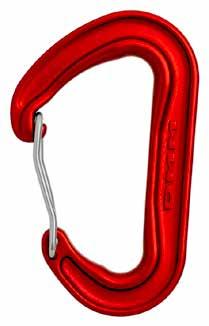
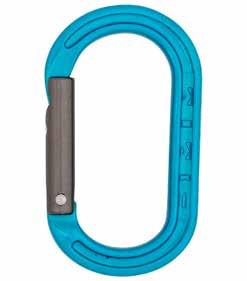
Founded in 1981 in Wales, DMM—the UK’s unrivaled manufacturer of climbing equipment—has grown over the past 45 years from a staff of four to a workforce of over 200, becoming one of the region’s most prominent companies. It all began with an idea as simple as it was complex: to create the best possible equipment. This vision has guided all of the company’s decisions in the years since and has consistently fueled its drive to innovate, bringing products to market that have since become international benchmarks. From the very beginning, DMM has focused on two target markets: on the one hand, climbing and mountaineering as recreational sports, and on the other, more professional and industrial applications. These areas complement one another, and the inevitable overlaps serve as a source of inspiration and benefit for both. From an operational standpoint, the company continues to follow a development plan reflected in state-of-the-art facilities, a careful selection of machinery, and manufacturing in Wales. Since 2004, DMM has been distributed in Italy by Ferrino.

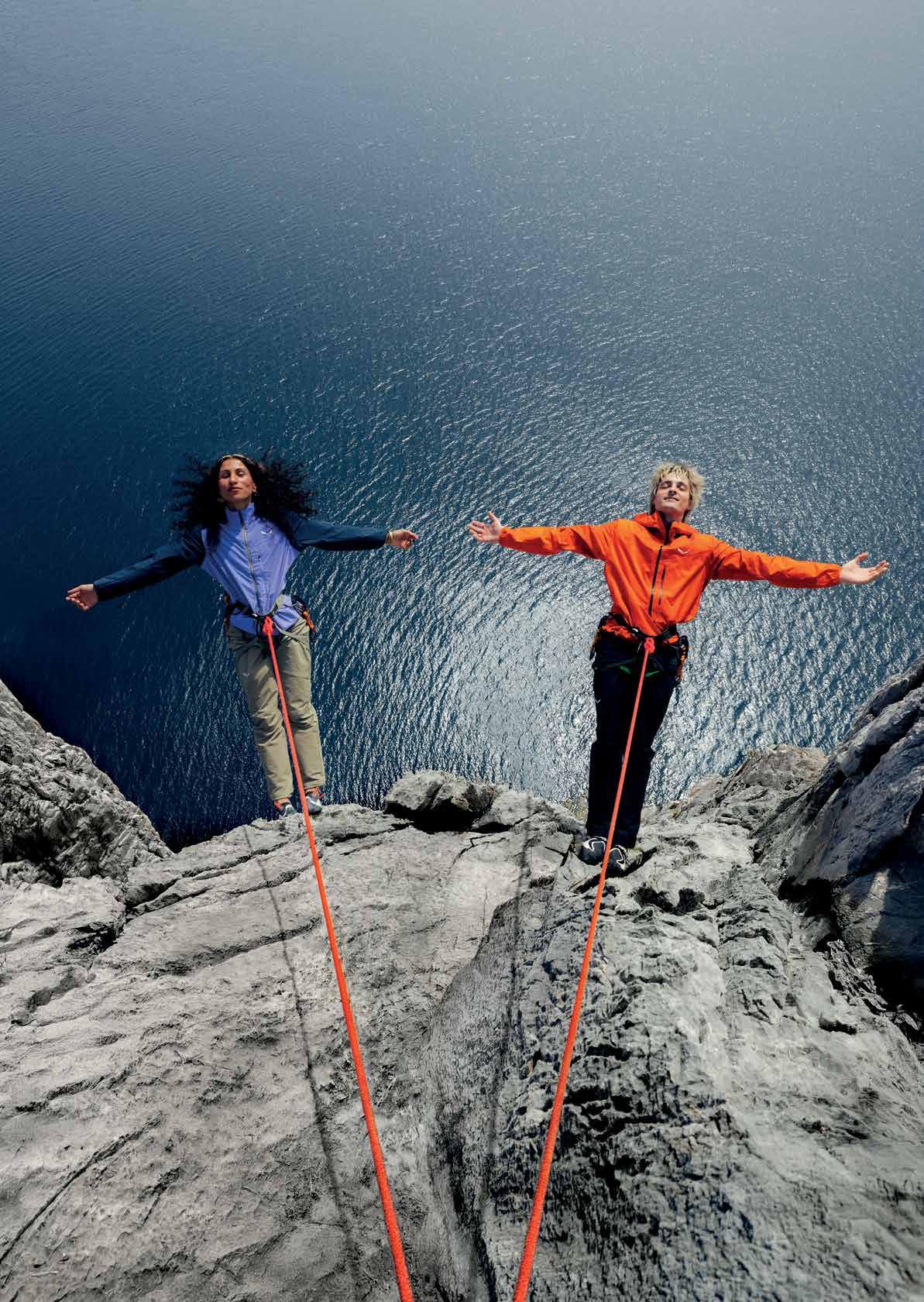
Verticality defines us. Rope or cable, we all share the same desire to move into the vertical. Altitude is an attitude.
Vertical, unlocked.