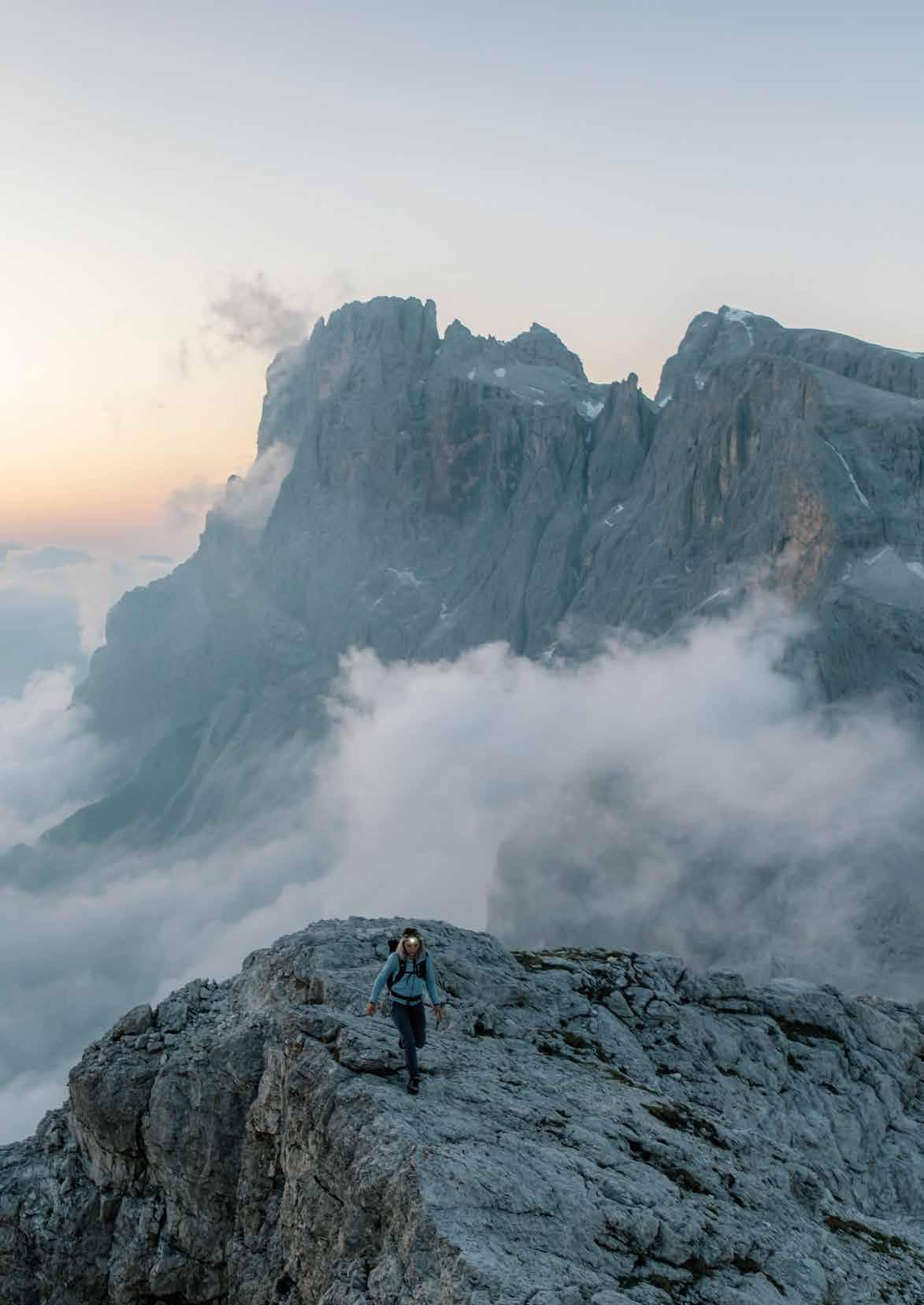
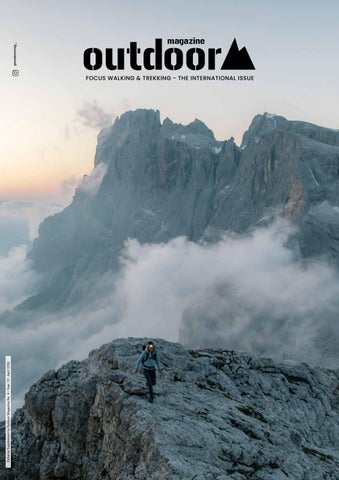
FOCUS WALKING & TREKKING - THE INTERNATIONAL ISSUE

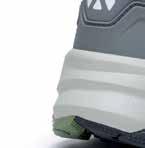
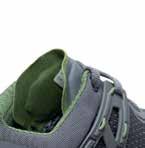
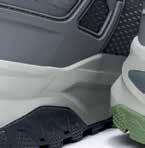
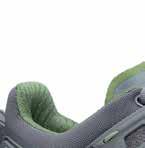
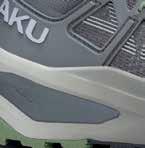
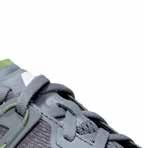
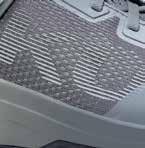





HYKE & FLY ED ESCURSIONISMO SPORTIVO.
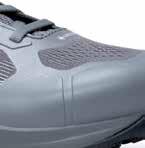
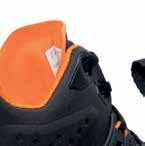
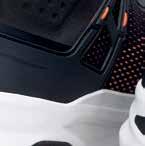
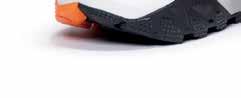
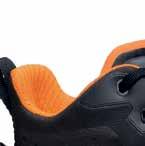
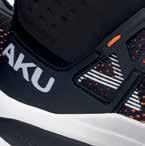
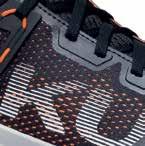
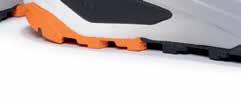
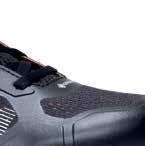
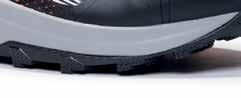
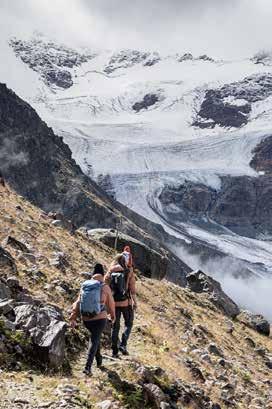
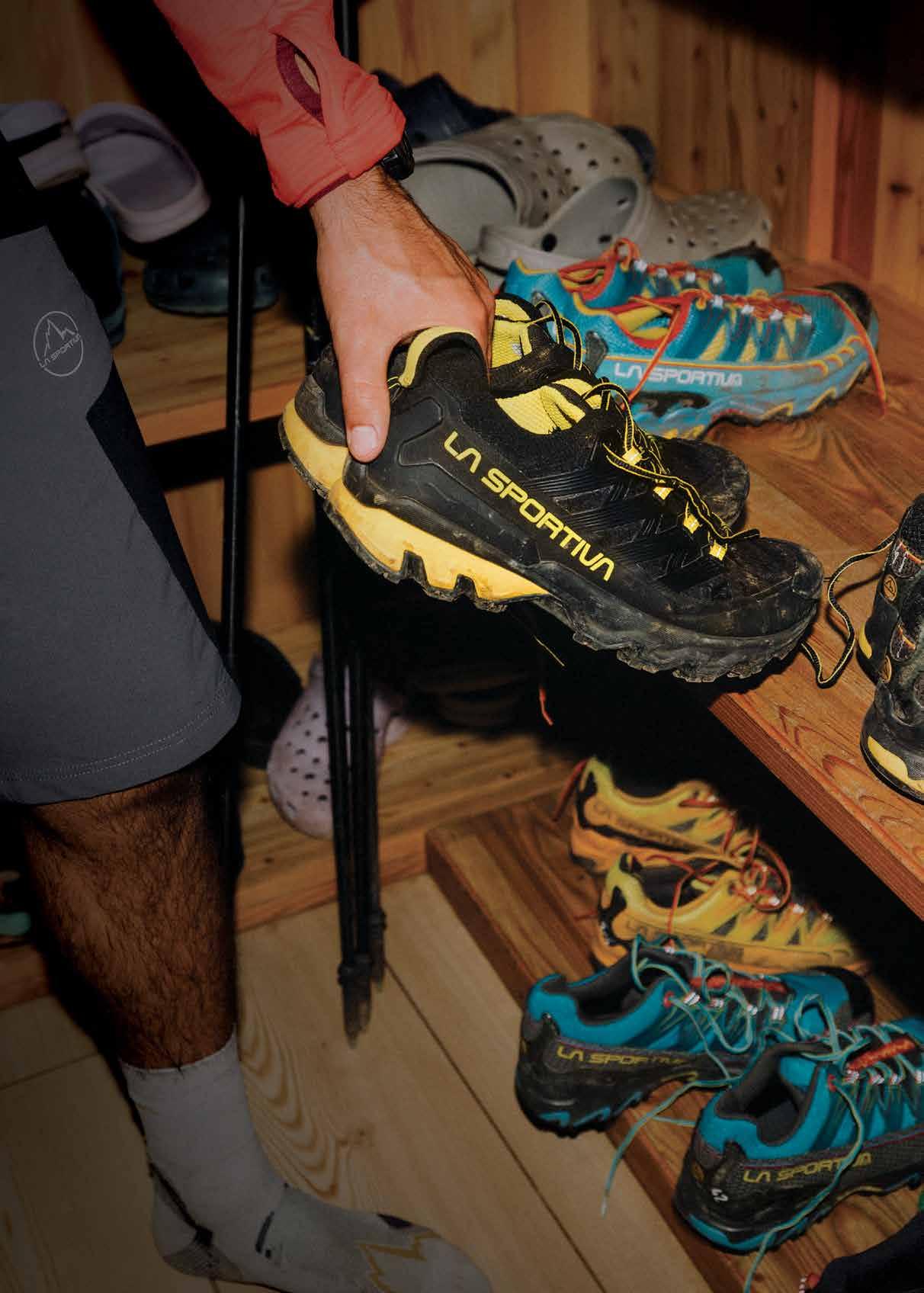
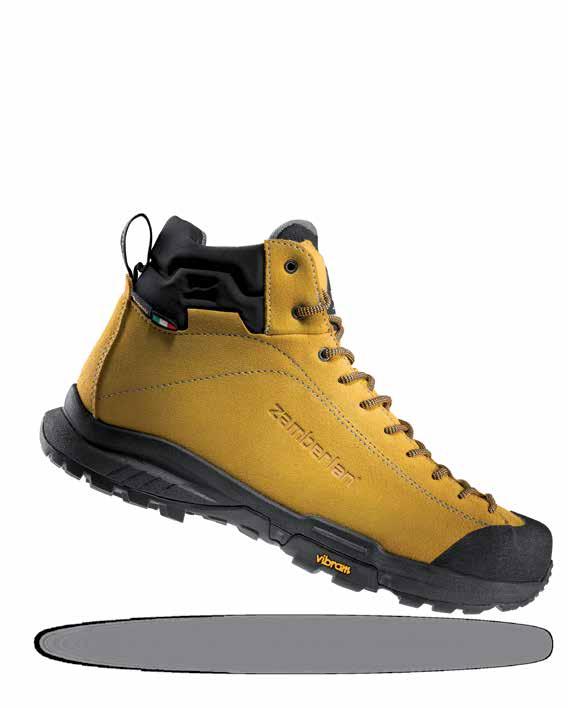
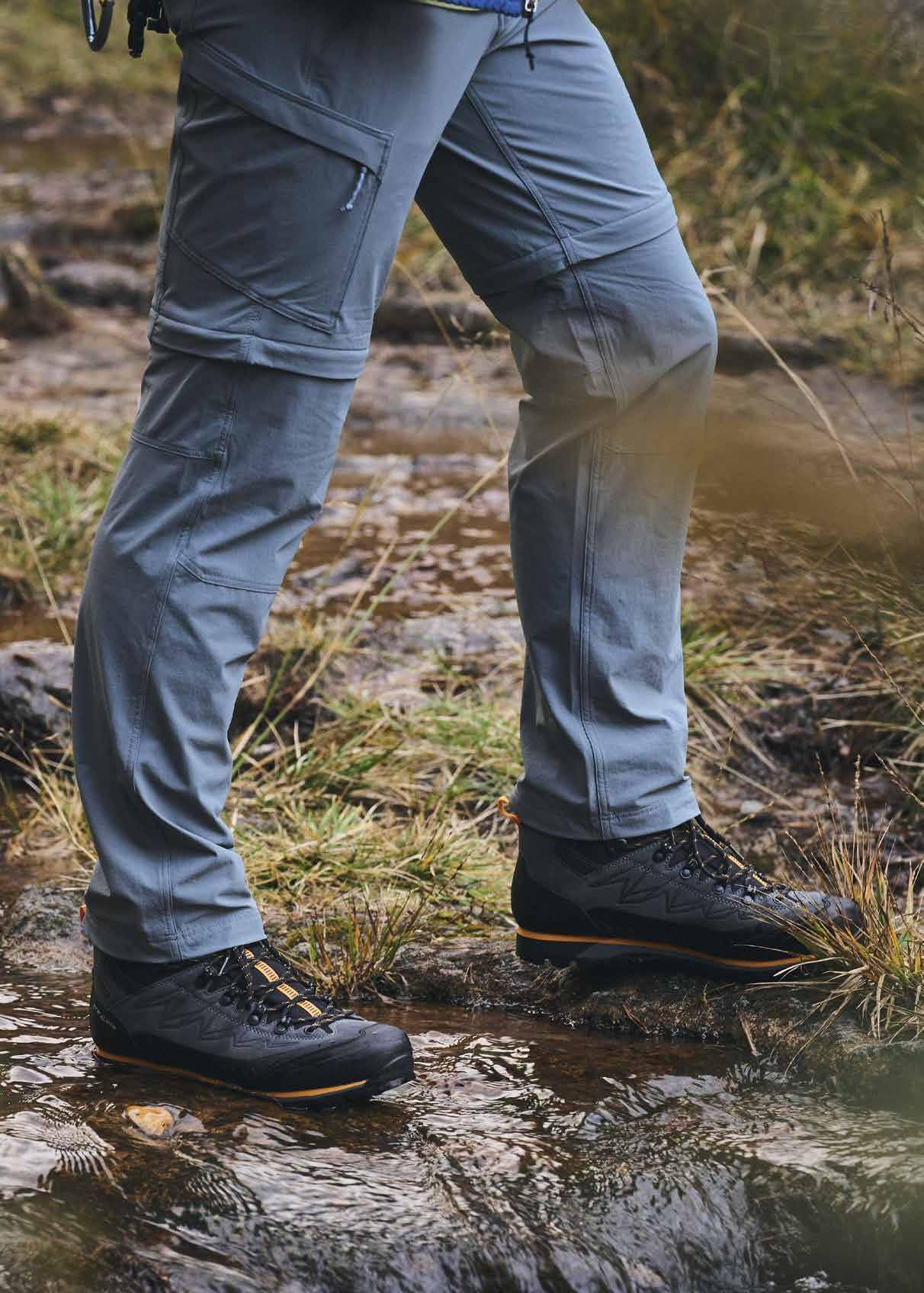
Furiosa è una calzatura comoda, agile e precisa, ideale per l’escursionismo sportivo. L’intersuola in Supercritical Foam migliora ammortizzazione, restituzione dell’energia e resistenza alla compressione su ogni tipo di terreno. La tomaia in engineered mesh garantisce leggerezza e traspirabilità.












Publisher: MagNet Srl SB
Managing director: ANGELO FRIGERIO
Editorial Director: CLAUDIO PRIMAVESI
Contributors: SARA CANALI, BENEDETTA BRUNI, MATILDE MARELLI, TATIANA BERTERA
Art Director: ROSANGELA BARNI
Italian Office: Corso della Resistenza, 23 - 20821 Meda (MB) Via Tertulliano, 68 - 20137 Milan
Tel. 02.87245180 Fax 02.87245182
redazione@outdoormag.it - www.outdoormag.it
Editorial Supplement of Outdoor Magazine, Year 19 – No. 4/2026
Printed by: Ingraph - Seregno (MB)

Monthly magazine - Registered with the Court of Milan under No. 186 dated March 20, 2007.
Poste Italiane SpA - Postal subscription service (Decree Law 353/2003, converted into Law 46/2004, Article 1, Paragraph 1) - LO/MI
The publisher guarantees the strictest confidentiality of the data in its possession. This data will be used to manage subscriptions and to send commercial information.
Pursuant to Article 13 of Law No. 196/2003, you may request the correction or deletion of your data at any time by writing to: MagNet Srl SB
Data controller: Benedetto Sironi

Outdoor Magazine @outdoormag_


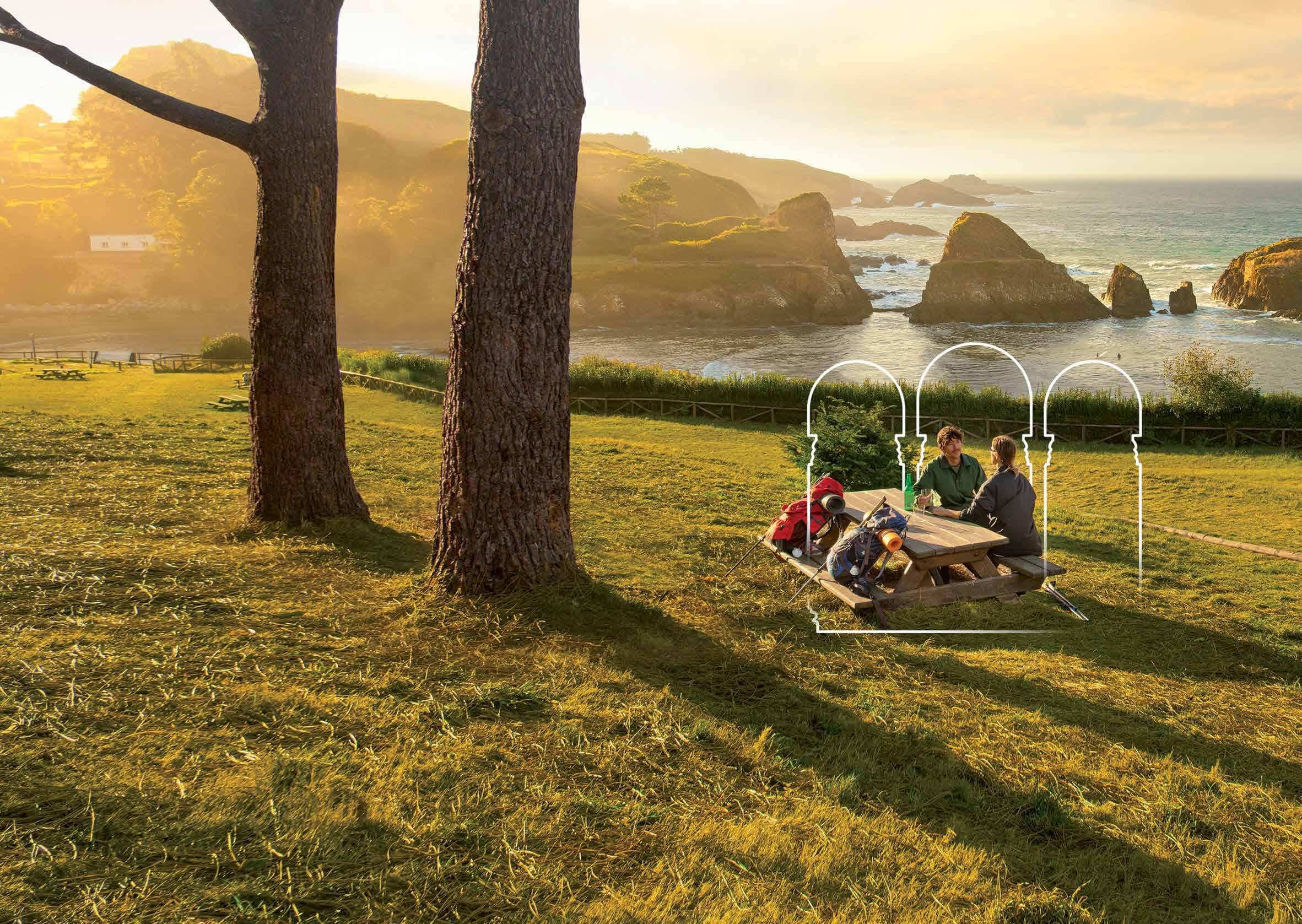



According to the Terre di mezzo report, 2025 was a boom year (and a turning point) for the sector. Not just a trend, but a genuine cultural shift
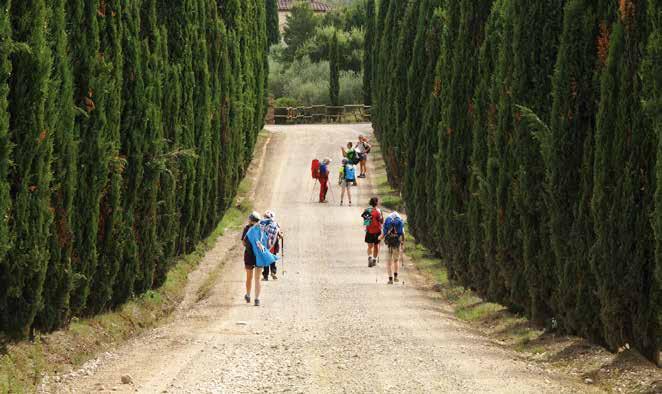
There is a side of Italy which doesn’t run, but walks slowly, growing steadily. We’re talking about the trekking paths sector, which, according to the report “Italy, Land of Trails” by Terre di mezzo Editore, reached unprecedented levels in 2025. The publishing house’s ninth report was presented at the Fa’ la cosa giusta! fair (March 13–15, 2026, Fiera Milano Rho) and compiled industry data (trails, credentials, and Testimonium certificates issued) and, above all, responses to 4,328 questionnaires completed by long-distance trekkers. What emerges, therefore, is a sharp increase that can no longer be interpreted as a mere post-pandemic trend, but rather as a sign of a deeper transformation in the way people travel.
According to the dossier, at least 300,046 people set out on foot in 2025, marking an increase of more than 56% compared to 2024. This impressive figure is part of a wellestablished trend: +29% in 2024, +24.4% in 2023. Furthermore, the report highlights that long-distance walkers don’t just hike for the weekend, given that the average duration of the experience is 7.4 days—basically a full week. Meaning that the trail is no longer an occasional experience but a true journey. Slow tourism has become a structured segment, actually able to generate visitor flows and extended stays in the region. It is no longer a matter of a few pilgrims or enthusiasts, but of a broad, diverse, and constantly growing community. In this sense, the success of the trails speaks to something deeper on a cultural level, because walking means accepting a limit— one’s own pace—and turning it into an experience. The trail thus taps into a contemporary need for slowness, authenticity, and reconnection.
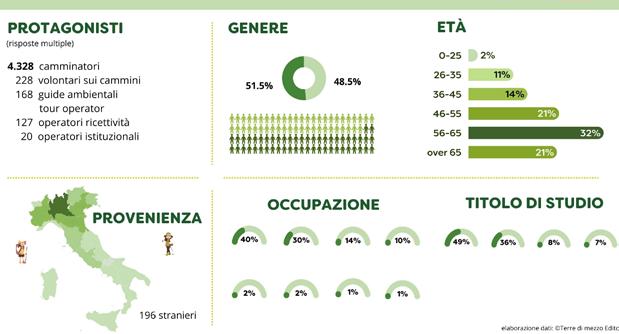
Not just numbers, since the ninth dossier issued by Terre di mezzo also offers an interesting insight into the profile of the walkers. A slight male prevalence was observed (51.4%), an inversioncompared to 2024, with 27% under 45, a sign of strong attractiveness for the new generations. As for the geographical origin, the majority comes from Northern Italy, with Lombardy leading the way, followed by Veneto and EmiliaRomagna.
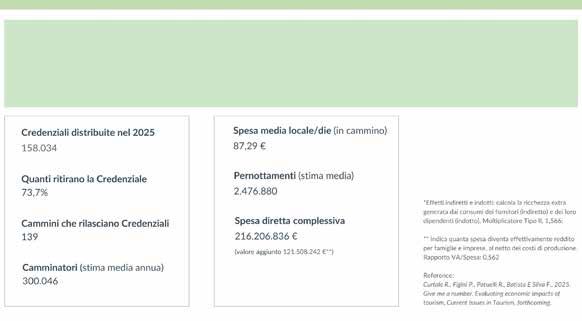
With long-distance hikers surpassing the 300,000 units, it means they have a significant impact on local areas in terms of accommodation and length of stay. In 2025, the sector generated 2,476,880 overnight stays, a figure that reflects a distributed and sustained presence across the regions compared to the eat and go tourism that leads to overtourism, highlighting how multi-day trails do not concentrate, but rather spread out. This also has a positive economic impact, as the value generated remains within the regions. Thanks to the collaboration with the Center for Advanced Studies on Tourism (CAST) at the University of Bologna, the report introduces for the first time a scientific estimate of the overall impact: a total impact of 336.4 million euros, 216 million euros in direct spending by walkers, and an average daily expenditure of 87.29 euros. It should be noted that this figure does not include travel or preparation costs. Therefore, it’s a matter of spending money directly inside the regions the trekkers pass by, making walking tourism truly sustainable.
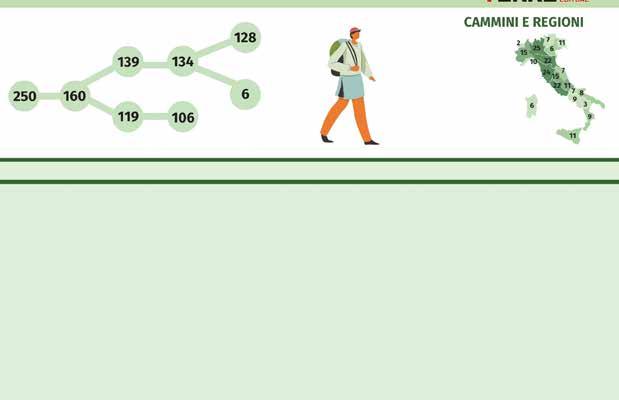
Not only has the number of enthusiasts grown, but so has the range of trails. In fact, by 2025, there were approximately 250 registered routes, compared to 160 the previous year. Of these, 160 provided active data, a sign of the sector’s growing organization. Next to the major routes, smaller trails are multiplying—often lacking formal governance but rich in local identity. In fact, the great revolution of this way of traveling is that it creates a tool for storytelling and local promotion. A strong signal comes, for example, from the routes that have Rome as their destination, particularly along the Via Francigena and the Via Romea Strata. In the Jubilee Year of 2025, the number of Testimonium certificates awarded to walkers who arrived on foot at St. Peter’s Basilica more than doubled, rising from 5,576 in 2024 to 12,038 in 2025. This figure confirms how religious and cultural events can magnify trends that are already growing.
THE TERRITORIES
Trails and paths cross territories that become as protagonists as walkers. The routes, in fact, cross an often marginal Italy that includes depopulated villages, mountain areas, and territories far from major tourist flows. This helps reactivate services, keep businesses open, and create new opportunities. The real challenge now, after last year’s boom, will be to sustain this growth without distorting the experience, avoiding transforming the routes into standardized tourism.

THE ECONOMY OF THE TRAILS
€336.4 million
Source: ©Terre di
the entire route in one go a section / a few stops the entire journey over several years one single section / daily trips
with the University of Bologna, Center for Advanced Studies in Tourism
1–4days 5–7days8–10days11–15daysmore15days
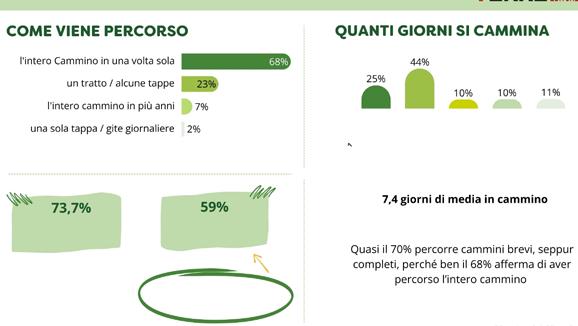
An average of 7.4 days on the road
Nearly 70% opt for short trails, although complete, since as many as 68% say they walked the entire route
The Credential is the passport to be stamped along the way, while the Testimonium is the certificate issued at the end of the path
one of the founders of Terre di mezzo, now the editorial director of Fa’ la cosa giusta! fair
This is the ninth edition of the report “Italy, Land of Trails.” Why did you launch this study, and where does the data come from?
In Italy, there was a lack of metrics to measure the growth in the number of hikers and the entire ecosystem surrounding the trails. We had a sense that this was a rapidly growing phenomenon, but lacked structured data. The model we looked to was the Pilgrim’s Office in Santiago de Compostela, which for years has been collecting information on pilgrims when they receive the Compostela—the official document certifying the completion of the route—through a questionnaire that is now digital. Nothing similar existed in Italy, but some trails inspired by that model issue the Credential and Testimonium. From there, we began collecting data, and for about nine years we have been contacting the trails and integrating the information through a very comprehensive online questionnaire, which this year gathered 4,328 responses. We cross-reference this data with that provided by the routes, and out of approximately 250 organizations contacted, 160 responded. That is how we estimate the number of routes that are actually active. More than the absolute numbers, however, it is the trends that matter.
How has the guidebook evolved over time? Is the boom in hiking reflected in sales as well?
We’ve been working on long-distance routes since the late 1990s—so for
nearly 30 years. In that time, there have been enormous changes. In the beginning, we were also part of the origins of Italian trails, with the first guide to the Camino de Santiago in 2000, when the phenomenon was practically nonexistent in Italy. In 2004, the first Italian guides arrived, covering the St. Francis Way and the Via Francigena, when there wasn’t even an official route yet. Today, the process has reversed: the trails emerge independently and come to us for publication, which often still serves as their birth certificate. Digital technology has also transformed the sector, but it has not replaced the printed guidebook. GPS tracks are for walking; the guidebook is for dreaming, serving as a tool as well as an identity object.
These days, walking is increasingly becoming a way of life. Was the Fa’ la cosa giusta! fair inspired by this vision?
Yes, it’s an experience that combines authenticity and simplicity. You travel with almost no limits, discover new places, and take on a personal challenge. But above all, it’s a relational experience, since even if you set out alone, you’re never truly alone on the trail. Fa’ la cosa giusta! was born out of this very vision: it’s the fair for sustainable lifestyles and conscious consumption, and it dedicates a large section to sustainable tourism. In this context, the world of trails and the outdoors takes center stage.
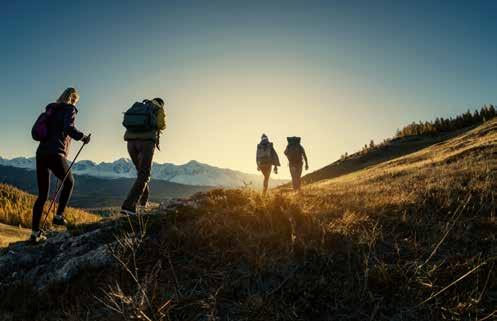
Lightweight hiking boots and mid/low-cut styles are driving the hiking footwear market, a thriving sector according to executives at leading brands
di Benedetta Bruni
Considered one of the most accessible outdoor activities, walking—in the broadest sense of trekking, hiking, and long-distance trails—is often the first step into the mountain and outdoor sports world. In the years following the pandemic, the market has expanded, drawing from an ever-wider pool of participants, partly due to the gradual urbanization of outdoor activities. This trend, which has brought more and more trail running and light hiking shoes into cities,
1. How did the hiking shoe segment perform compared to last year? What percentage does it account for in your annual revenue?
2. In recent years, more and more people have taken up walking and hiking, often starting with a lightweight pair of shoes designed for light hiking or even trail running. Have you noticed this trend? Do you have a light hiking section?
To what extent is this trend driving the growth of the segment, and to what extent do “lightweight” shoes help attract consumers to hiking?
3. What is the best-selling type of hiking shoe in Italy for your brand?
4. How did the SS 26 sell-in? Have you noticed any particular trends? What are your expectations in terms of sell-outs?
has, on the other hand, brought those same shoes back from paved streets to the trails. This trend has encompassed gentle hikes, easy approaches, and all activities that don’t require heavy-duty boots, as well as the first forays onto mountain trails by those who first discovered the highlands as a trend and only later as a way to spend quality time in nature. We interviewed the heads of some of the most important outdoor footwear brands to take the sector’s pulse.
FABIO FURLANETTO SALES MANAGER ITALY AKU
1. In 2025, amid a generally positive trend for AKU, the “walking shoes” segment performed very well. The “hiking” and “fast/ light hiking” categories are the core of our collections and account for approximately 70% of our Italian sales. Furthermore, the start of 2026 has been very positive, with these two categories in particular already showing an increase compared to the full year of 2025.
2. I completely agree that more and more people are getting into the world of “walking.” Undoubtedly, long-distance trails— from the most famous ones to the more local and lesser-known ones—have led to an increase in the number of people using this type of footwear. However, a distinction must be made, as, in my opinion, “long-distance walkers” do not always use the most suitable shoes. Often, they prefer models with membranes even when they aren’t necessary, or they use products designed for running when, in fact, footwear specifically designed for trails—whether slow or fast—would be more suitable and would better support the user’s stride. Our collection includes various products designed for walking that are well-suited for this type of consumer, and, of course,

we pay special attention to this aspect when developing new models.
3. When it comes to fast hiking, the Flyrock model is definitely the one to watch— so much so that it has been adopted by several hike-and-fly athletes. It has been a bestseller for us for several seasons now. Initial feedback on the new SS 26 models, such as the Furiosa Boa and Aira, has also been positive.
4. The SS 26 sell-in concluded on a positive note compared to the previous summer season, as did the recently concluded FW26 season. We can therefore only be satisfied with the foundation laid in 2026. The trend toward low-cut shoes suitable for light/fast hiking in the summer is undoubtedly gaining momentum, while in the winter we also sell the classic “hiking boot” very well. In terms of sell-out, the geopolitical situation and uncertainty regarding the future, coupled with a general rise in costs and a definite decline in purchasing power, are factors that do not help and do not favor product sales. Fortunately, the outdoor sector has been less impacted than other sectors, and therefore, with a more stable situation, we expect the results to be positive.
NICOLA FACCINETTO HEAD OF MARKETING & COMMUNICATIONS ANDE
1. In recent times, the footwear market has generally shown steady growth, and this year, compared to last year, we have seen a significant increase. Footwear accounts for approximately 50% of Ande’s annual revenue; when considering only trekking boots—which constitute our core business—the figure is approximately 40%.
2. In recent years, we have developed trail running and fast hiking shoes, and the former are increasingly being used by people who go to the mountains just to hike; however, pure trekking remains the main focus of our brand, with classic structured, ankle-high boots featuring a waterproof membrane. Today’s consumer is certainly very price-sensitive but also pretty attentive to good quality: the issue of lightweight design appeals more to technical customers than to the general public.

3. Customers have shown great enthusiasm for our best-seller, the Dosdè 2.0, a classic, lightweight, and reliable hiking boot.
4. Ande’s sell-in for 2026 was stronger than in 2025, demonstrating a continued positive trend for the brand. People want quality products at affordable prices, and this makes us optimistic, even though the current global geopolitical situation is not conducive to trade. We haven’t noticed any particular trend, but in the world of summer apparel, the introduction of our top-tier collection featuring RECCO technology has been very satisfying. Raising awareness on safety in the mountains seems to be a message that resonates well with the end user, who can now enjoy outdoor activities more consciously and with peace of mind.
SEBASTIAN STÄDTLER MARKETING DIRECTOR AT HANWAG

1. We are currently seeing increasing momentum in demand for our brand and our products, which we are very pleased about. Customers are once again placing greater value on durability, quality and repairability – values that Hanwag has always stood for. Our hiking segment and our versatile trekking and outdoor models are currently developing particularly strongly.
2. In recent years, we have observed that certain market segments within classic hiking have been increasingly dominated by trail running models. As hiking boot specialists, we see it as our mission to strengthen Hanwag’s presence in these areas with solutions clearly geared towards hiking. With the new Kaduro family and new SS27 models such as the Lightstone Low and Banks NF Mid and Low GTX, we are setting the pace in this area and offering innovative and light solutions for various applications in modern hiking.
3. Currently, our classic hiking and trekking footwear, as well as mountaineering boots, are among the best-selling categories in the Italian market. These segments continue to perform particularly well, reflecting strong demand for durable, high-performance products suited to a wide range of outdoor conditions.
4. The SS 26 sell-in in Italy took place in a still selective market context, with retailers carefully assessing assortments, stock rotation and price positioning. For Hanwag, the season confirmed the strength of our more technical categories, while highlighting the opportunity offered by lighter and more versatile models, such as the Kaduro family and, looking ahead, the new SS 27 low-cut styles. We therefore look at sell-out with realism, but also with confidence, especially in the light hiking segment.
LUCA ZANATTA CHIEF EXECUTIVE OFFICER AT ASOLO
MATTEO DEMICHELI SPORTS MARKETING MANAGER AT SCARPA
1. Following a general decline due to the post-Covid period, the hiking/trekking segment performed well compared to the previous year, posting double-digit growth that confirms the trend already observed in recent years. In particular, we saw solid demand driven by a growing interest in accessible outdoor activities and a longer season of use. In terms of its share of revenue, hiking represents one of the most important categories in terms of volume, contributing significantly to the overall business. It is a strategic pillar, with a significant impact on annual revenue.
2. In recent years, we have seen steady growth in lightweight and hybrid footwear—a cross between hiking and trail running—driven by the pursuit of comfort and versatility. For us, this is not a new trend, but an area we have been active in for some time with dedicated products. These solutions often serve as a gateway to hiking, helping to expand the user base. At the same time, some consumers eventually move on to more structured footwear, depending on their needs and level of experience.
1. The hiking footwear segment performed well compared to the previous year, confirming a growth that reflects both evolving consumer demand and our brand’s distinctive positioning. We observed an increase in both volume and value, driven by consumers’ growing interest in outdoor activities and a rising demand for technical, reliable, and durable products. This result was further reinforced by our ability to innovate while remaining consistent to Asolo’s DNA, introducing advanced technical solutions and constantly improving the comfort, performance, and sustainability of our materials. The market response, in both traditional and digital channels, has been particularly encouraging. In terms of its share of total revenue, the hiking segment represents a central component of our business, contributing significantly to our annual turnover. It is, in fact, one of the company’s strategic pillars, in which we continue to invest with conviction in terms of product development and commercial expansion in key markets. Looking forward, we believe this segment will continue to play a decisive role in our growth, thanks to solid market fundamentals and our ability to interpret the needs of an increasingly sophisticated and quality-oriented consumer.
2. Yes, this is a trend we’ve been clearly observing for several years now. The transition into the outdoor world has become more gradual and accessible: many consumers start with lightweight, versatile, and immediately comfortable products, often drawn from trail running or light hiking. This evolution reflects a broader cultural shift, in which hiking is no longer perceived as a technical activity open to a selected few only, but as a widespread, dynamic experience integrated into one’s lifestyle. As for Asolo, the light hiking segment is already an integral part of our product line. In recent years, we have worked to develop footwear that combines lightness, comfort, and support, while maintaining our core values: protection, reliability, and quality construction. This allows us to appeal to both a new audience, just getting into hiking, and more experienced users seeking agile products for quick or less demanding treks. The trend toward lightweight footwear has a dual effect. On one hand, it drives the development of the light hiking segment, pushing companies to innovate in terms of materials, construction, and design to offer increasingly high-performance yet accessible products.

3. Although there has long been a clear trend toward lightweight hiking and fast hiking models, with a prevalence of low-cut styles, the more structured footwear segment remains significant for SCARPA. This is because there are still many consumers with technical needs who seek greater protection, support, and stability. In contexts such as alpine hiking or multi-day trekking, for some users this type of product remains an essential choice, guaranteeing performance and reliability over time.
4. Sell-in for the SS 26 collection was positive, with results in line with or up from the previous season, depending on the market. We have seen a positive response from retailers across the entire hiking/ trekking line. Trends that have been evident in the outdoor sector for several years are continuing: a strong focus on lightness and comfort, and growing demand for hybrid products that bridge the gap between hiking and trail running. As for sell-out, we expect a positive season and remain optimistic despite a still uncertain economic environment.

On the other hand, and perhaps even more importantly, it serves as a true gateway to the outdoors: lighter and more versatile shoes lower the barrier to entry, making hiking more accessible and less “intimidating”. From our perspective, these two dynamics are closely linked. A consumer who starts out today with a lightweight shoe, if they’re met with a positive experience, is more likely to move on to more structured and technical products. For this reason, the light hiking segment is not only a response to market demand but also a strategic investment in the future of hiking and the growth of the outdoor community.
3. Within Asolo’s product portfolio, this translates into a strong preference for high-performance, versatile mid-cut models that combine technical features with comfort, making them ideal for both experienced hikers and more casual users seeking reliability and durability. Next to this main category, however, there is also growing demand for low-cut, lightweight hiking shoes designed for speed and less demanding outdoor activities, while traditional high-cut boots remain more of a niche product, associated with technical uses or more extreme environmental conditions.
4. The SS 26 sell-in trend has been overall coherent to our planning expectations, though with more selective dynamics compared to previous seasons. Order distribution showed a greater focus on core and carryover models, confirming a phase of consolidation for high-turnover items. In terms of trends, we observe a progressive polarization of demand: technical and performance-oriented products are holding up strongly and continue to represent a key driver for sell-in. There is also a confirmed greater focus on inventory risk management, with more fragmented orders and planning that more closely aligns with actual seasonality. In terms of expected sell-out, we anticipate a season characterized by strong performance from highly technical products and established best-sellers, which should ensure steady and consistent turnover throughout the season. Overall, the current outlook suggests a market that remains selective yet stable, where shop execution capabilities and a focus on the core assortment will be decisive for the final sell-out results.

1. In my opinion, after two challenging years, the outdoor footwear segment is showing signs of recovery. We haven’t yet reached the levels we’d like, but we’re heading in the right direction. The footwear sector accounts for about one-third of our annual revenue.
2. The trend toward lightweight footwear is very real, yet it also causes a great deal of confusion. Consumers are increasingly less likely to choose shoes based on their specific needs; instead, they let themselves be influenced by certain mountain sports. As a result, many people engage in outdoor activities with products that are not suitable for the task.
3. Currently, the best-selling type is undoubtedly the lightweight shoe, whether for trail running or light hiking.
4. Sales of the SS 26 collection are strongly influenced by the trend toward lightweight footwear, which we expect will also be reflected in retail sales. However, it remains essential to invest more in consumer education to guide them toward more informed choices that align with the product’s actual use.
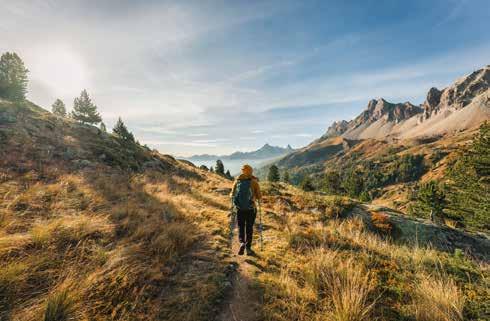

1. Market response is largely in line with last year’s. Currently, hiking shoes account for 40% of demand in the Italian market, compared to 60% for lifestyle/ multisport footwear.
2. When discussing light hiking or trail running from the perspective of enduser application, we are referring to very broad terms that are interpreted differently by manufacturers, retailers, and, above all, the general public. It is no coincidence that, on trails that run along gravel routes, paved surfaces, or grassy areas, consumers use different types of footwear interchangeably. As for light hiking, we offer our Vernale Hike in both mid and low cuts. Their features—lightweight, comfortable, versatile for multiple sports, and easy to use—have significantly contributed to the development of this product category. At the same time, these qualities allow consumers to approach hiking with footwear that is comfortable, easy to use, affordable, and, above all, safe.
3. The Vernale line is the brand’s best-selling product. It ranges from light hiking models—such as the Vernale Hike Mid GTX and Vernale Hike Low GTX— to more technical hiking boots, including the Vernale High GTX and Vernale Leather High GTX.
4. In absolute terms, SS 26 sell-in is in line with SS 25. It has become even more evident that low-cut and mid-cut models have clearly outperformed high-cut models. In particular, we are focusing on the mid-cut, because it combines the lightness of the low-cut with greater stability and support for the ankle area while walking. Outdoor activities, in all their forms—from mountaineering to travel—are a steadily growing trend; we therefore expect that those who engage in them will drive positive market growth and sales.
GIAN LUCA FARINAZZO LOWA SALES MANAGEMENT, ITALY

1. In 2025, the hiking and outdoor footwear segment registered double-digit growth compared to the previous year, accounting for over 70% of total revenue.
2. In recent years, we have seen a significant increase in demand for lighter shoes for hiking. For this reason, we have expanded our product line to include hiking and light hiking models that offer lightness and comfort without compromising on traction and support while walking. Lightweight footwear not only makes hiking more accessible to consumers but also helps expand the pool of potential users, making the activity more accessible and enjoyable.
3. Next to the exceptional and timeless Renegade Evo Mid—which has held a leading position in the market for over 30 years and serves as a clear benchmark for the entire industry—we are experiencing the success of low-cut shoes that allow for ankle mobility, such as the Innox Evo and the Maddox Pro, which have been wellreceived by our target audience. These models perfectly meet the needs of those seeking versatility and comfort without sacrificing high performance, confirming that product variety is a key to success in the Italian hiking boot market.
4. The SS 26 sales campaign was very successful, and early feedback and restocking requests confirm the strength of our product lineup, even in an uncertain market environment. We have also seen an excellent reception for our new trail running shoes, such as the Skyterra and Amplux, which can be tested at the many offroad running events we participate in. These initiatives allow us to engage directly with enthusiasts, gather actual feedback by on-site testing, and strengthen trust in the brand, thereby driving increased sales and brand awareness for our new models.

1. The hiking segment has performed well compared to last year, with particularly strong growth in the low and mid categories, which are capturing broad and continuously expanding demand. Hiking now accounts for a significant portion of our annual revenue—around 40%—and is one of Garmont’s strategic pillars, both in terms of sales volume and its role in attracting new customers.
2. Yes, it’s a trend we’re clearly experiencing. Many people start their outdoor journey with lightweight shoes—light hiking or even trail running shoes—that are used in a variety of ways, reflecting a shift toward immediate comfort, lightness, and versatility. To capitalize on this trend, Garmont has strengthened its light hiking segment as a strategic focus, while we’ve chosen not to enter the realm of pure trail running. This trend is a powerful driver of light hiking’s growth, opening the discipline to a broad and curious audience. At the same time, lightweight shoes are the essential first step in introducing new consumers to hiking: they serve as a gentle entry point that, with experience, evolves toward more structured models. A concrete example is Nexus, a new shoe born from Garmont’s product and commercial reorganization: a Vibram sole available with and without Gore-Tex, perfect for those transitioning from city walking to light hiking.
3. Currently, the best-selling models in the low-cut hiking category are lightweight boots designed for recreational hikers, such as the Nexus; however, the Dragontail remains an absolute bestseller, offering precision and technical performance for those seeking targeted performance. In the mid/high-cut category, the Lagorai and Nebraska dominate—traditional hiking boots suitable for all-around use: versatile, reliable, and perfect for both everyday hikes and more demanding outings.
4. SS 26 sell-in was strong, with 35% growth and excellent restocking rates, indicating solid sell-out performance. We’ve noticed strong interest in lightweight, versatile models—less seasonal—in light hiking and speed approach. A perfect example is the 9.81 Onyx, which combines the comfortable fit of a trail shoe with the structure and protection of an approach shoe: exactly what modern consumers are looking for. These results continue to grow following ORBDAYS 2025 in Riva del Garda, where we saw the first outcomes of the new Garmont: product innovation, a refreshed design, and an enhanced commercial approach, which are opening up increasingly promising performance scenarios.
The Stelvio
Historical Trek
is a project sponsored by Bormio and the Stelvio National Park that combines hiking, nature, and historical heritage. The tracks, once used by soldiers of World War I, have been turned into routes
by our correspondent Tatiana Bertera - photo by Giacomo Meneghello
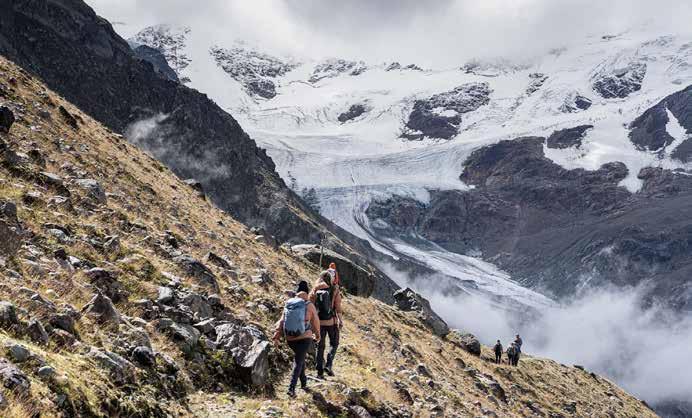
Walking through history, as if in a vast open-air museum, where the fortifications and trenches built during World War I serve as a backdrop to some of the highest peaks in the Alps. Here, the 1915–18 conflict is known as the White War, for it had been fought high in the mountains, often above 3,000 meters, in extreme conditions of snow and cold. Created with the aim of connecting the Park’s natural heritage with the historical traces found literally behind every rock and along every stretch of trail, “Stelvio Historical Trek” combines sport and culture. Thanks to technology, visitors can use the free Valtellina Outdoor app to access audio guides and multimedia content, enabling an informed and independent exploration. The routes pass through trenches, tunnels, and military outposts. Among the most famous trails are the “Filon del Mot” from the Stelvio Pass and the “Path of Peace” in the Forni Valley. In addition to history, the treks offer spectacular views of the Ortles-Cevedale peaks and Punta San Matteo.
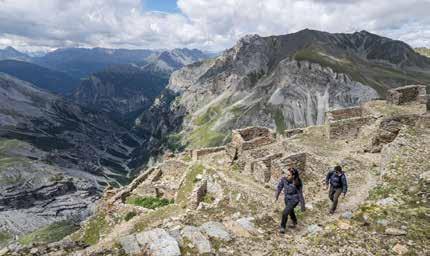
The Filon del Mot military village is located at an elevation of 2,768 meters, on the western ridge of Mount Scorluzzo, near the Stelvio Pass. An extraordinary complex built by Italian soldiers during the war with the strategic purpose of controlling the Braulio Valley as well as monitoring the movements of Austro-Hungarian troops. Stone buildings, barracks, defensive positions, walkways, stairways, and
protective walls are arranged on multiple levels and literally “clinging” to the mountain. The village is often called the “Machu Picchu of the Alps” due to its spectacular location and the striking visual impact of its structures. It can be reached via several routes starting from the Stelvio Pass area. The most popular begins at the Third Cantoniera on State Road 38 of the Stelvio. From here, follow a dirt military road follows, climbing gently toward Malga Scorluzzo and proceding along a well-marked trail to the village ruins. Alternatively, the site can also be reached from the Stelvio Pass, passing through Monte Scorluzzo along a more scenic but slightly more challenging route.
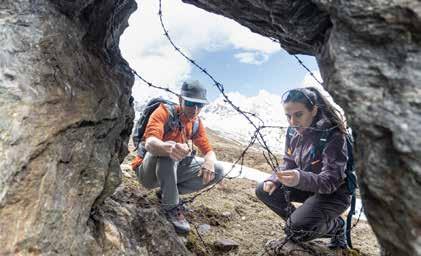
The Path of Peace, which includes sections such as the one in the Forni Valley, connects the sites and memories of World War I (southern front) to reflect on the past and promote peace. It is a roughly 9-kilometer loop hiking trail that starts and ends at the Forni Mountain Hut in Valfurva, offering views of the Ortles-Cevedale Group and the Forni Glacier. It crosses the pastures of Malga dei Forni, where animals graze during the summer. Continuing toward Cima Branca, the first traces of the Great War appear (trenches, fortifications, and lots and lots of barbed wire that has lain dormant for over 100 years). The route continues toward the Rosole Valley, then climbs up to the Branca Mountain Hut before returning to the starting point.
More than just a guide to inclusion: the book “Hiking and accessibility,” published by the Italian Alpine Club, offers the perspective of those who cannot yet fully experience the mountains
by Matilde Marelli
FABIO PELLEGRINO, PRESIDENT OF CAI SODAS
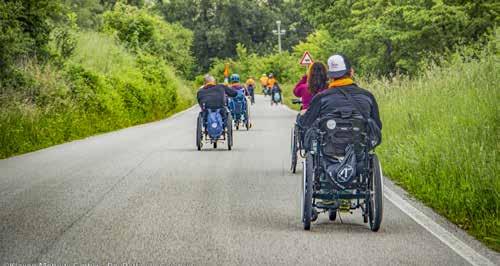
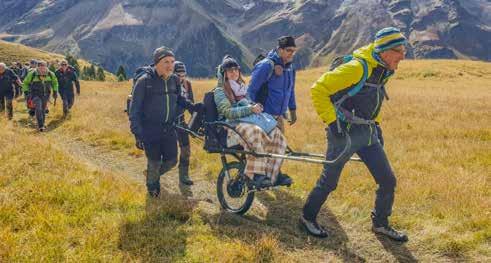
Published by the Italian Alpine Club (CAI) in collaboration with Terre di mezzo Editore, “Hiking and Accessibility” is the latest volume in the CAI Manuals series. It was written by Pietro Scidurlo in collaboration with the club’s Solidarity-Based Guiding Unit (SODAS), established in 2024 to promote inclusion thanks to the mountains.
On the one hand, a cultural reflection on inclusion, which is still too often perceived as an exception or a form of diversity rather than the norm; on the other, a practical guide offering concrete tools to make it possible. Customized trails, clear signage, adequate infrastructure, and diverse routes integrated into the landscape form the core of the book. It is not about “bringing” people with disabilities to the mountains, but about building a mountain
The CAI’s Solidarity-Based Guided Unit (SODAS) is an association founded in 2024 with the aim of promoting mountain-therapy and adapted hiking, making the mountains an accessible place
How and why did the CAI decide to engage with the disability community?

This journey began long ago and took shape during Antonio Montani’s presidency. As early as 2017, there was a strong need to create guided programs for people who, due to their condition or physical limitations, wanted to explore and experience the mountains. This led to the formation of a working group within the Central Hiking Commission, culminating in the establishment of SODAS in 2024. Today, SODAS works on two fronts: providing support for mountain-therapy projects and addressing accessibility, with a particular focus on adapted hiking.
What is the basic concept behind SODAS?
For us, the mountains should be experienced not merely as a guided activity, but as an opportunity for connection, social interaction, and participation, tailored to people’s actual needs. It is not simply a matter of “taking” someone to the mountains, but of sharing a moment with them, in a journey, carefully planned with expertise.
The manual reflects a commitment to creating a mountain that is accessible to everyone. What does that mean in practice?
It means designing the experience even before the trek begins: planning the routes, assessing their feasibility, determining what tools are needed, and tailoring each activity to the person being accompanied. It means not just making adjustments afterward, but thinking from the very beginning about inclusive trails, welcoming environments, tools, and communication. Accessibility isn’t just a technical matter; it’s also about the quality of the relationship and the ability to make every person feel like they’re part of the experience.
There’s a lot of talk about sustainability in mountain regions, but where do we stand on accessibility? Are there already any good examples?
We are in a phase of growth that has accelerated significantly in recent years. The issue is still evolving, but there are concrete signs of progress: many CAI sections have become directly involved in this effort, and the number of
members participating in courses organized by SODAS is growing. This demonstrates that accessibility is no longer a marginal issue, but one that cuts across the entire association.
What are the main obstacles to making the mountains truly inclusive? How difficult is it to apply the practical tools provided in the manual?
One of the main obstacles is cultural, even more so than organizational or infrastructural. Making the mountains inclusive means learning to plan outings based on people’s actual needs, with the right skills, training, time, and a focus on building relationships. Another key issue is hospitality: we also need to work with those who manage mountain huts and facilities to eliminate difficulties and barriers and foster a more mindful relationship with visitors.
Are the institutions supporting this initiative?
The picture is still very uneven. The availability of financial resources and the capacity to address social needs vary greatly from one region to another, and this also affects the practical possibilities for developing inclusive programs in mountain areas. In this context, CAI volunteers play a fundamental role: thanks to the technical expertise of the local chapters and the commitment of our members, we are able to provide outdoor experiences to people who would otherwise be excluded from them. In this sense, the CAI does not merely offer a recreational activity, but actively contributes to making a right a reality.
Can mountain accessible to everyone represent an opportunity for tourism?
Yes, without a doubt. Accessibility represents a great opportunity from both a social and a tourism perspective. In a country like Italy, where much of the terrain is mountainous or hilly, truly opening up the highlands means expanding the number of people who can enjoy them: not only people with disabilities, but also seniors and families. A region capable of offering accessible trails, proper signage, and welcoming mountain huts also becomes more attractive and competitive. For this reason, alongside support projects, we are also investing heavily in training and fostering a culture of inclusive hospitality.
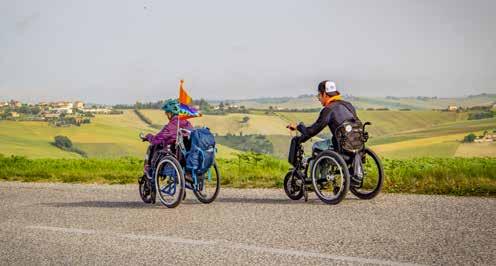
that is already designed to welcome them and allow them to enjoy all the experiences it has to offer. A clear shift that calls upon industry professionals and institutions. And it is precisely in this context that the Italian Alpine Club (CAI) takes center stage. Long active in the protection and enhancement of mountain regions, the CAI promotes projects, training, and dedicated facilities with the goal of transforming hiking into an activity suitable for everyone, one that can make the mountains a place of connection.
Among the contributors to the book is Pietro Scidurlo, a key figure in the field of outdoor accessibility. Born in 1978 in Somma Lombardo (VA), he turned his paraplegia into a starting point for creating something new, becoming over the years a leading figure in accessible tourism in Italy and a concrete example of how personal change can influence the destinies of others as well. A traveler, author, and co-founder of the Free Wheels association—established in 2012 to promote accessible slow travel along European trails—he has long worked to make itineraries truly open to everyone, demonstrating that inclusion is not only possible but also a source of en-
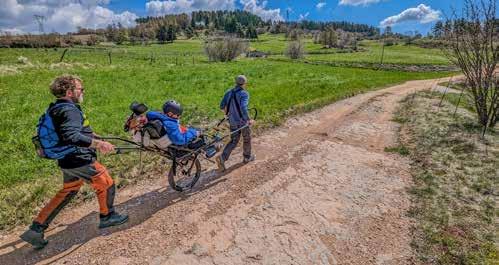
richment. His firsthand experience lends the guidebook a rare credibility, as every piece of advice stems from real needs experienced and addressed along the trails.
A book written for a broad audience, including tour operators, itinerary planners, facility managers, and guides, as well as anyone who spends time in the mountains and wants to learn to do so more mindfully. In addition to serving as a guide to outdoor activities, “Hiking and accessibility” guides readers toward a form of communication that takes broader realities into account, featuring a glossary of “key terms” and making inclusion a shared educational and collective responsibility.
Making the outdoors accessible is not only an ethical issue, but also a cultural and social responsibility. At a time when the hiking and trail sector is growing and diversifying, this guide serves as an essential tool for seeing and experiencing this world from a different perspective: recognizing that the mountains was already a shared space and that we have made exclusive.
by Sara Canali
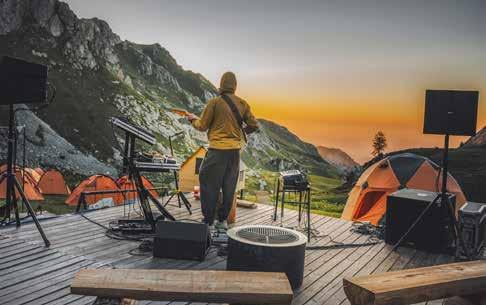
In the heart of the Cottian Alps, the second edition of KOM – Kulture of Mountain returns, the event to experience the true spirit of the mountains
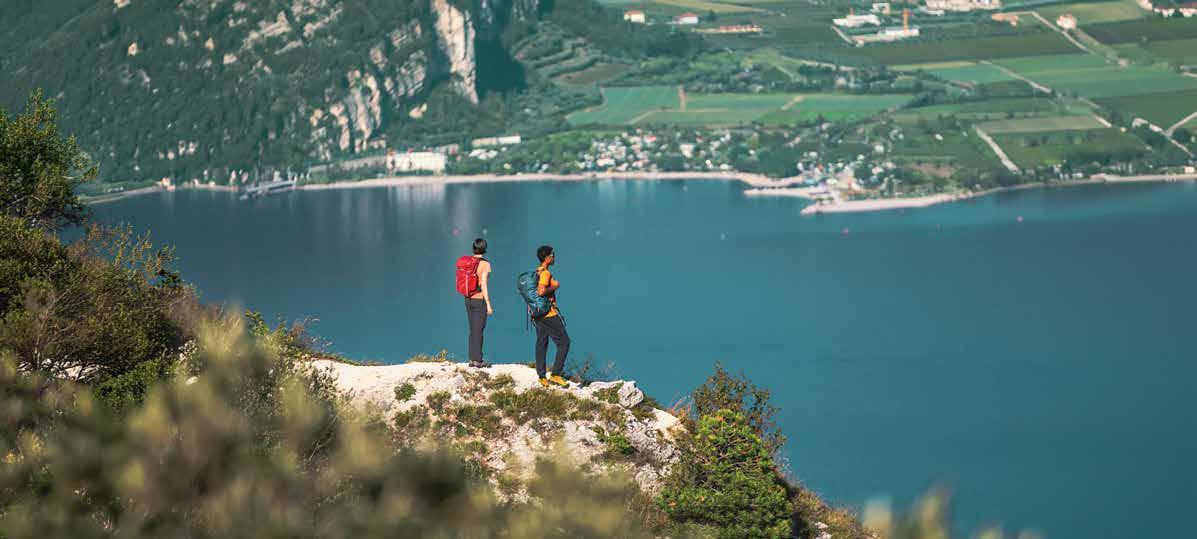
From June 26 to 28, KOM – Kulture of Mountain returns to Colle Fauniera, the untamed heart of the Cottian Alps in the province of Cuneo, offering an exclusive experience for just 60 explorers who choose to swap the hustle and bustle of everyday life for the breath of the peaks. This three-day event features guided hikes, live music, and cultural gatherings, offering an invitation to experience the mountains in an authentic and shared way. Located at an altitude of 2,400 meters, the Fauniera Mountain Hut serves as the beating heart of the festival, where outdoor activities, moments of reflection, and music intertwine, creating an authentic space where nature and culture engage in unfiltered dialogue. The experience is all-inclusive: you sleep in a fully equipped tent, complete with a sleeping pad and sleeping bag/sheet, and with food and beverages included for the entire duration. A package that allows you to focus solely on the activities and on immersing yourself in the setting. The days are filled with various activities. A festival that represents the “slow response” from Karhu, Garmin, Alba Optics, Ferrino, Officine Mattio, and Silva.
Hiking and orienteering are among the main activities planned. These aren’t just simple hikes, but guided, technical routes that use Garmin devices to teach participants how to navigate and read the terrain. The goal is to make the experience more mindful and engaging, even for those already familiar with the mountains. Mornings begin with outdoor yoga sessions, designed to energize the body and prepare for the day ahead. Throughout the day, music enhances the experience with live acoustic performances and sets crafted to blend seamlessly with the surroundings without overpowering them. There are also opportunities for discussion through talks and gatherings with guests and artists—often in an informal setting—to explore topics related to the mountains, travel, and the outdoor lifestyle. Alongside the more structured activities, there is room for lighter moments, such as games, sunset aperitifs, and shared relaxation, which help create a spontaneous group dynamic. A technical gift kit is also included, featuring gear and accessories useful during the experience, designed to be used immediately in the field.
On Saturday, May 16th, in the late afternoon, the KOM – Kulture of Mountain project stops in Riva del Garda for the European Outdoor Week, with an event that promises to be a slow and shared immersion through landscape, history, and social interaction. A 7-kilometer trek, with 150 meters of elevation gain, follows the Tagliata del Ponale and concludes with a happy hour with a lake view and live music (with a surprise artist).
kom-experience.com
Three days of hikes, outdoor activities, and gatherings on Mount Bibele with Cammini d’Italia and its community
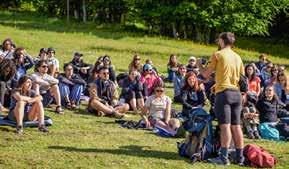
The dates for the 2026 Yunka Festival, an event dedicated to the culture of walking and slow tourism, have just been announced. From September 11 to 13, on Monte Bibele, in the heart of the Bolognese Apennines, Yunka reaffirms itself as an event that places trekking at the center as an experience of connection, discovery, and sharing. Amid the trails, forests, and landscapes of the Tuscan-Emilian Apennines, the Cammini d’Italia community will gather to experience the outdoors in its fullest. The days will feature guided hikes of varying difficulty levels, designed for everyone from beginners to experienced hikers. Alongside trekking, there will be outdoor yoga, workshops, forest bathing, and orienteering activities. The cultural dimension is not to be missed, with dedicated talks and meetings. An approach that makes the festival not just an outdoor event, but also a place for exchange and storytelling. During the 2025 edition, the format reaffirmed its communitybased nature, with the participation of creators and content creators such as Il Cammino del Cretino, 2F Hiking, Tom Search, and Itinerario a colori, alongside the Cammini d’Italia community. Many Italian trail organizations will also participate, including the Via degli Dei, the Via Mater Dei, the Via della Lana e della Seta, the Cammino di Oropa, and the Via degli Abati.
yunkafestival.it
“Noi Camminiamo in Sardegna” is back with 26 weekends to discover routes, trails, and pilgrimage sites
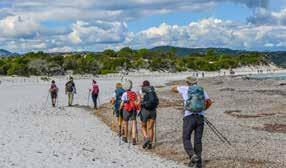
The “Noi Camminiamo in Sardegna” festival returns in 2026, one of Italy’s most well-established events dedicated to slow tourism and the culture of multi-day hikes. Presented at the Fa’ la cosa giusta! Great Trails Fair in Milan, this initiative promoted by the Region of Sardinia revamps its format with an even broader and more sustained approach, designed to accompany travelers and hikers throughout most of the year. The project runs from April through fall with a calendar of 26 trekking weekends, organized from Friday to Sunday along the island’s network of official trails. The program involves Sardinia’s eight official trails and eight recognized pilgrimage destinations, plus a special route dedicated to sustainable cycling, with the aim of promoting the region through leisurely experiences spread out over time. The project’s structure aims to transform long hikes into a regular way of discovering Sardinia, fostering a deeper understanding of the local areas, villages, and communities. The initiative concludes with the traditional Week of the Trails, scheduled for late September to early October, which serves as the culminating and celebratory moment of the entire program. The format is part of a broader strategy to promote sustainable tourism, with the goal of making the trail not just an experiential activity, but a genuine reason to travel, capable of showcasing the island throughout the year.
noicamminiamoinsardegna.it




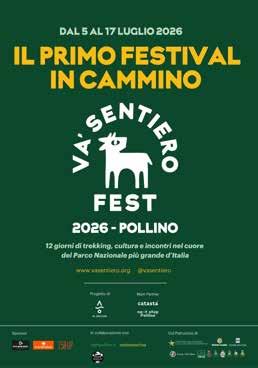
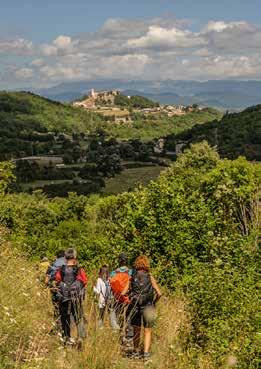
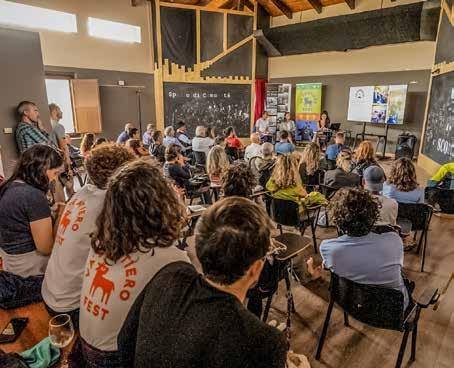
From July 5 to 17, in the heart of Pollino National Park between Calabria and Basilicata, a festival will take place—yes, but above all a different way of experiencing the area
by Sara Canali
Pollino is Italy’s largest National Park, stretching across Calabria and Basilicata, carving a landscape so appealing it just wants to be traversed, observed, and experienced slowly, at a walking pace, and with the calm of someone who truly wants to understand where they are. Here, the mountains are not merely backdrops, but guardians of ancient stories, deep-rooted traditions, and different panoramas behind every corner. The 2026 edition of Va’ Sentiero Fest has chosen this very place for an 11-day event (July 5–17), featuring 10 days of hiking, approximately 190 kilometers, and 10 participating municipalities, along a route that brings together nature, culture, and community.
The event is described as a participatory, free hike open to everyone, but its simplicity only lies in the surface. In fact, the festival’s route is challenging because it’s a hike, not a long-distance trail. For this reason, it requires good physical fitness and is not suitable for children. Obviously, it doesn’t mean one should be an athlete, but it’s essential to be in shape since the festival will walk people every day to a different village where gatherings, storytelling, and music take place. What makes this festival unique is the so-called “mountain school,” as during these days people will learn orientation, to read the landscape, identify plants, and under-
The Va’ Sentiero Fest originated from the experience of a group of young people’s long-distance trail along the Sentiero Italia trail (over 8,000 kilometers) between 2019 and 2021, an adventure that drew in thousands of people and turned exploration into a collective experience. Sara Furlanetto, co-founder of the “Va’ Sentiero” project alongside Yuri Basilicò, answered a few questions for us.
What is the difference between the Va’ Sentiero Fest and a simple account of the local area?
The Fest is not just a communication project: first and foremost, it is an event designed to bring the local area to life through public events, to explore a brandnew hiking route with people from all over Italy (and beyond), helping them discover Italy’s largest National Park and supporting local businesses through field collaborations. It is a unique and special event, but one that is intended to be repeatable. In fact, as Va’ Sentiero, we will document the entire route to give back to the local community, so that Catasta (a tourism and cultural hub and the Fest’s main partner) can offer the experience again to anyone who wishes to relive it.
How does the travel experience offered by Va’ Sentiero Fest differ from traditional tourism?
The Fest is, above all, a community experience. Among the hikers, who share intense days along the trail, quickly transforming a group of strangers into a network of authentic relationships built on trust and spontaneity. But it is also a
stand the rhythms of nature. Everything while hearing the stories of the locals, connecting with those who live in these places every day.
The journey begins at the sea, on the Riviera dei Cedri, with the opening of the coastal trail connecting Scalea to Praia a Mare, passing through the picturesque village of Arcomagno. In Laino Borgo, on July 7, the festival will immediately get into the spirit of things with the patron saint’s celebration and a concert by young bagpipers. The next day, however, the perspective shifts completely: heading down the Lao River on a rafting trip, the water will guide the journey. On July 9, the trekkers will hop on an e-bike to reach Masistro, where a tented camp created by Ferrino, nestled in nature, awaits them. A simple, shared night under the stars. Then there are the Orange Flag villages like Morano Calabro and Civita, explored through tours with the Italian Touring Club: places where time seems to have stood still, but which are now coming back to life through new forms of tourism. And more: hikes with Infopollino guides, educational sessions, landscape interpretation, and even experiences that appeal to the palate, such as dinner in Terranova di Pollino with chef Federico Valicenti. The journey concludes in Sibari, with a final event that blends local culture and food and wine, with guests from Vinitaly.
vasentiero.org
time to connect with the local areas: in the villages we pass through, thanks to events organized in collaboration with municipalities and local tourism associations, genuine opportunities for exchange with locals are created, featuring music and local food and wine traditions. Added to this is a more “educational” dimension, linked to the mindful discovery of the natural environment, guided by experts such as the VS team’s naturalist, Federico Biguzzi, who offers tools every day to interpret and understand the landscape. More than a tourist experience, the Fest is a true social experiment—a mountain school on the move.
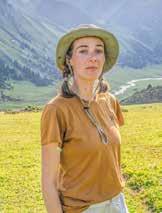
Why is walking the best example of “slow and sustainable tourism”?
I don’t know if it’s the best way, but it certainly has a lot of potential. It always depends on a person’s attitude—whether they approach the area with curiosity and respect. In theory, walking fosters a gentle and profound connection, simply because it’s the slowest mode of travel there is. It’s when we move quickly that we cause damage, because we don’t pay attention to the present; we consume places just to check them off a list. Walking teaches us that every step is an effort and an achievement, from start to finish, and that the journey lies in the middle, not just in the destination.
by Sara Canali
Sometimes, something unexpected emerges from a misfortune. That’s exactly what happened to Davide Nanna, CEO and co-founder of Cammini d’Italia, a project dedicated to promoting Italy’s network of walking routes and itineraries—that is, the historical, religious, cultural, and nature trails that crisscross the country, connecting villages, shrines, parks, and rural areas.
“The Cammini d’Italia project actually originated from a mishap on the Via degli Dei. It was 2017; I was in college, and a couple of friends and I decided to set out with practically no hiking experience.” That’s how Davide describes his summer that year, when he set out with a backpack that was too heavy, unsuitable gear, the wrong shoes, and challenging weather conditions. “At one point, I was really struggling, but my hiking partner Mattia was determined to keep going at all costs. In the end, I stayed too, and from that moment on, everything changed.” Following that experience, the idea emerged to create a space for gathering information on Italian trails, leading to the launch of an initial Facebook page that spontaneously fostered a small community. When he began his university degree in economics and marketing, during a practical workshop, Davide shared the project with his fellow students, and it gradually evolved into a collective effort. The professors also saw “Cammini d’Italia” as an opportunity for digital experimentation. In short, a simple Facebook page first became a blog and then a constantly growing community.

Over time, the project gained further momentum with the addition of collaborators such as Vincenzo Caruso, a science communicator, and Francesco Boggi, with whom Davide founded the company in 2022—the year that marked a definitive turning point. Cammini d’Italia became a fully-fledged organization, complete with a website, app, publishing division, and events, transforming from a spontaneous initiative into an organized platform dedicated to the culture of walking. The team is rounded out by Fabrizio, Gianluca, Sara, Marta, and Alessandra. We asked Davide Nanna himself to tell us what this community represents today—a community that, year after year, has achieved incredible numbers.
What is Cammini d’Italia today? How would you describe it?
Cammini d’Italia is many things at once. The definition that best describes us is that of a community of hikers, but at the same time, it’s also a startup. We’re working to innovate this sector, which continues to grow year after year.
How has your interaction with your community changed over time?
At first, our audience was mainly adults—often very knowledgeable— who also provided us with constructive feedback. Today, however, we’re seen as a go-to resource for hikers of all ages. There are many young people, including very young ones, who are discovering the world of hiking and joining the adult audience from the early days, who have stayed with us over time. People ask us for advice and use our platform to choose their next route.
Today’s audience is much more diverse, ranging from beginners to experts. How do you manage to speak to both groups?
Our goal is to bridge these two worlds. We focus heavily on community and events to foster interaction among people with varying levels of experience. One example is the Yunka Festival, a three-day event featuring hikes, workshops, gatherings, and talks where many newcomers are introduced to hiking and begin to build connections. We also produce content and resources such as the beginner’s hiking guide, designed specifically to help those starting from scratch.
The field is more crowded than it was in the beginning. How do you position yourselves relative to other creators and similar platforms?
We don’t see them as competitors. It’s still a young industry, and those who work in this field help foster broader interest. In fact, we collaborate with other creators, journalists, and professionals: our community isn’t just made up of users, but above all of enthusiasts who create content. The idea is to build bridges, not walls.
How do outdoor brands relate to the world of hiking trails?
Brands are still skeptical. It’s a growing sector, but it requires a specific approach, both in terms of product and communication. You can’t just take mountaineering gear and use it on hiking trails. We’re very selective about our partnerships: we’re not interested in simply running ads, but in working with brands to create useful content and value for the community.
What tools and projects are you investing in?
We are investing heavily in the website and the app, as well as our social media channels. At the same time, we are working on editorial content, events, video productions, and documentaries about the region. In addition, we have our print publications, including the Atlas of Trails and the Guide to Your First Hike.
HIKING EXPLORER
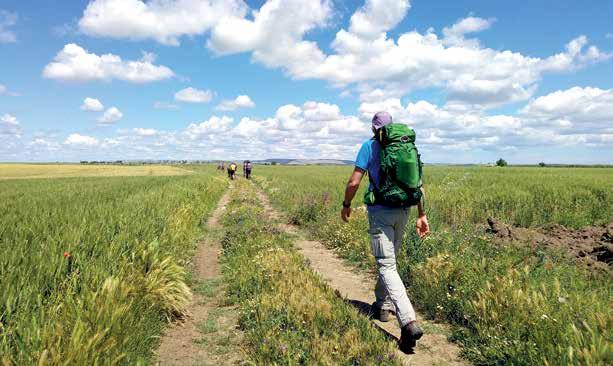
Starting with this question, we investigated the passage from concept to plan and the network of people who bring it to life. Here’s what we found out on the way to Matera
by Sara Canali
It was the spring of 2015 when three friends launched an ambitious yet simple project: to promote and establish a culture of walking in southern Italy as well. This is how the Cammino Materano came to be, a route intended to connect Bari to Matera, which today comprises six trails stretching from the mountains of Basilicata to the white shores of the Ionian Sea. But when this project was conceived, the world of walking trails was very different from what we know today, and there were very few organized routes, including the Via Francigena and a handful of others. In Southern Italy, in particular, there was a complete lack of options allowing hiking enthusiasts to embark on a true walking journey capable of traversing and showcasing the inland regions. “Our goal was to create an itinerary—or rather, several itineraries—leading to Matera,” says Claudio Focarazzo, one of the association’s founders alongside Angelofabio and Lorenzo. The choice of this city in Basilicata is no coincidence. “First of all, Matera is one of the oldest cities, dating back some 8,000 years, where people and the environment have always lived in harmony. Walking, in this context, means entering into an authentic relationship with the places, learning to recognize them in every detail—from the squares to the trees, from the streets to the archaeological sites—and experiencing the territory in all its layers: natural, historical, and human.”

_Our goal was to create a route—or rather, several routes—leading to Matera, one of the oldest cities in the world, which has existed for about 8,000 years, where people and the environment have always lived in harmony
Claudio and Angelofabio graduated in archaeology, while Lorenzo in botany, which is why they have such a keen interest in their local area. Together, they decided to set out on their first exploration, discovering the natural features, the woods, as well as the archaeological and scenic highlights. “After that, we began organizing the first events to promote the trail, identifying key stops, and focusing primarily on local residents; in doing so, we started to structure the route.” This is how the non-profit social promotion association for the Cammino Materano was born. Thanks to donations collected during visits, it was able to begin investing in signage and markers to indicate the route, successfully bringing it to fruition in 2018. It was necessary to map out existing Roman secondary roads, medieval streets, and trails. “We had a direction, but then we had to go out into the area countless times to see what was left of those roads and trails, to find the most distinctive route. The Matera Trail was a project to restore a heritage that belongs to everyone, leading all the way to Matera,” Claudio continues. What emerged is not a linear route, since Bari and Matera are about sixty kilometers apart in a straight line, while the trail covers 160 kilometers along a route that leads to the discovery of places rich in meaning.
“To qualify as such, the route had to be over 100 kilometers long, because the experience had to last at least four days; otherwise, it risked becoming just a hike. That’s why we focused on long-distance routes exceeding 150 kilometers.” The Cammino Materano is now a complex network of trails that all lead
to Matera, each with its own distinct landscape, cultural, and symbolic identity. It is not a single route, but a system of trails created with the aim of holding together a direction that was also an idea: that of crossing the unknown inland areas of Southern Italy to reach the heart of a territory that for millennia has been a central point of balance among the many peoples and cultures that have composed the extraordinary mosaic of the Mediterranean.
THE JOURNEY
As for regulations governing the routes, there were no clear guidelines in Italy in 2018. “We forged our own identity; we were among the first,” says Claudio. “First and foremost, we established a network of volunteers, which is fundamental to the entire organization. The response has been incredible, and our approach from the very beginning has been to transform the walking experience into a shared project.” Today, many people are involved in the project, and this has made it possible to create the so-called “Case del Cammino,” (“Trail Houses”) which represent much more than simple lodging facilities. “They are the human heart of the experience. It’s a network of welcoming places—like B&Bs, farmstays, and private homes—selected over time for their ability to share the spirit of slow travel and authentic hospitality. Here, the walker finds much more than a place to sleep, that is an environment which adapts to their pace, offers practical support, and above all fosters connection,” explains Claudio. At the Case del Cammino, you come into direct contact with local communities, listen to stories, receive advice, and experience the region from the inside. It is no coincidence that they are considered the true pillars of the route, as they make the trail possible, support local economies, and help keep alive that spirit of exchange and sharing that accompanies every step toward Matera. “Then, among the many people who approached us, there is also the graphic designer Paolo, who developed the entire brand identity—from the logo to the merchandise, from the Credentials to the jerseys. As a social promotion association, the route is supported by donations, Credentials, and merchandise sales, which are then reinvested.”
In short, a trail does not begin with a line drawn on a map, but with a keen eye and the ability to interpret a landscape, to traverse it step by step, to recognize its traces, and to pass them on to those who come after. And while it is the dedication of people deeply connected to these places that sows the first seed, in the end, walking becomes a collective act that brings to light what already existed, setting it in motion once more.
Claudio Focarazzo, co-founder of Cammino Materano camminomaterano.it
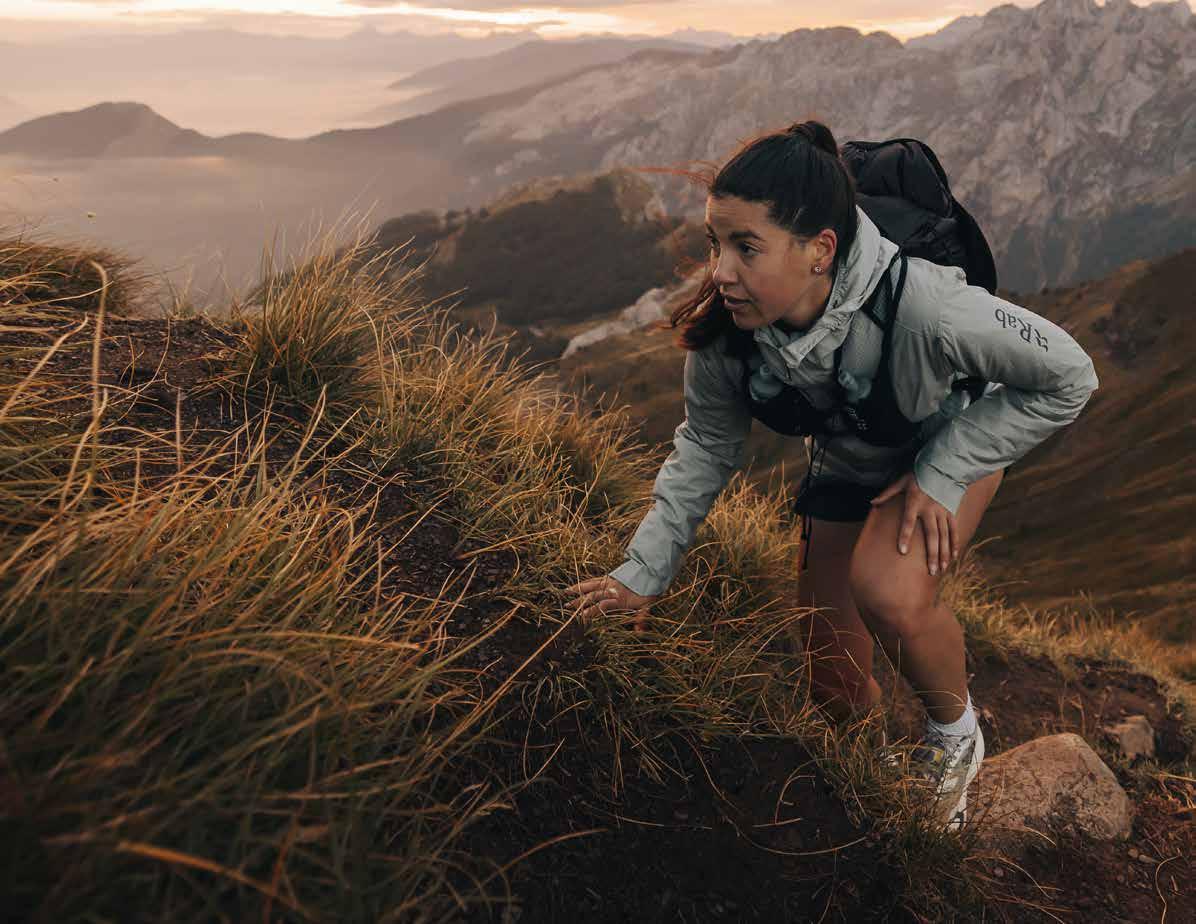
Be ready to get out there from the moment the first spring dawn burns through the mist.
Bags already packed and boots by the door, we are there at first light and the last to return.
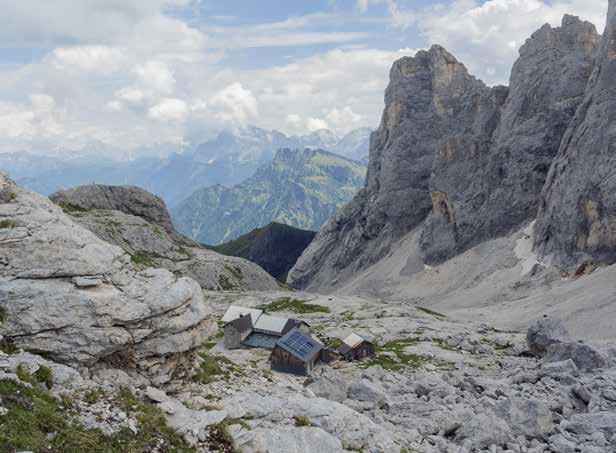
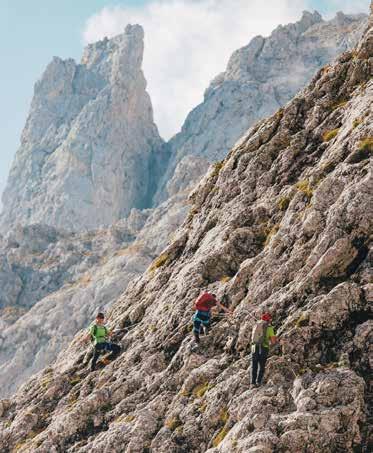
The Palaronda Trek is the result of a collaboration between lodge owners and the local community; a model of organized trekking that combines hospitality, trails, and a shared vision of the mountains
by Sara Canali
A structured trekking project, created with the aim of transforming an existing network of trails into an organized circuit of hikes and via ferratas from mountain hut to mountain hut. A package-based walking model, offering varying levels of difficulty and different combinations, allowing hikers to traverse the Dolomite plateau above 2,500 meters via a hut-to-hut route, with simplified logistics and well-distributed support points. An evocative name: Palaronda Trek. “The idea was born in 2010, on the initiative of the mountain hut owners in the Pale di San Martino, with the goal of offering a more effective and distinctive trekking vacation package for the area,” explains APT Director Manuel Corso. “A decisive factor was the strong collaboration among the hut owners, which proved to be the true key to the project’s success. To structure and promote the initiative, particularly in international markets, they turned to the APT, thus giving concrete launch to the Palaronda Trek.” Rosetta Hut (2,581 m), Pradidali Hut (2,278 m), Treviso–Canali Hut (1,634 m), Mulaz Hut (2,571 m), Velo della Madonna Hut (2,358 m)
How did the idea for the Palaronda Trek come about, and what factors led mountain hut owners to collaborate?
In the past, many hikers on Alta Via No. 2 used to end their journey at the foot of the Pale di San Martino. This led to the idea of creating a hut-to-hut trek, similar to a high-altitude trail, that would offer a continuous and organized experience. At the same time, there was a growing demand for the ability to book through a single point of contact and for a more structured network of trails.
How has the project changed the relationships between the shelters?
work together and represent more than just rest stops; they define the very structure of the routes. “The Palaronda Trek model is potentially replicable, but not automatically,” continues Manuel Corso. “Success in the Pale di San Martino depends on a combination of factors: the quality and variety of the routes, logistics that allow for flexible stages accessible in several ways, and an offering which adapts to different levels and needs. Also crucial is the ability to create a modular product, with a base package that can be supplemented with additional services.” The Palaronda Trek offering is now a well-established product, capable of providing a comprehensive experience across multiple levels, from trekking to via ferrata, with varying durations and difficulty levels. “Future development is focused primarily on international markets,” the director continues. “Following the consolidation of the German- and Dutch-speaking markets, new opportunities are opening up, for example in Poland and the American market, with particular interest in the trekking segment and high-altitude trails.”
FROM TREVISO – CANALI HUT

What were the main benefits of joining?
The centralized booking system has lightened the workload for mountain huts by reducing the need to manage reservations, deposits, and payments directly. Furthermore, it provides assurance for both operators and hikers. The project has also yielded benefits in terms of promotion, thanks to coordinated activities with the APT and more structured communication.

Cooperation among the mountain huts already existed, but with Palaronda it has been strengthened and made more structured. Today, communication is more frequent, especially regarding the management of hiker traffic. We are also working on practical aspects such as menu planning, to ensure variety along the route and avoid repetition.
How do you envision its development over the next few years?
Over the years, the product has been improved based on feedback from hikers. Future developments include expanding the range of via ferrata experiences, making the most of the opportunities offered by the local area. Another key focus will be raising awareness of a responsible approach: paying attention to waste, resource consumption, and respect for flora and fauna—all of which are essential to the sustainability of the highaltitude experience.
Founded in the early 1990s, Lyofood with its freeze-dried meals has transformed the concept of open air dining. Food is no longer just a source of energy, but an integral part of the experience
by Matilde Marelli
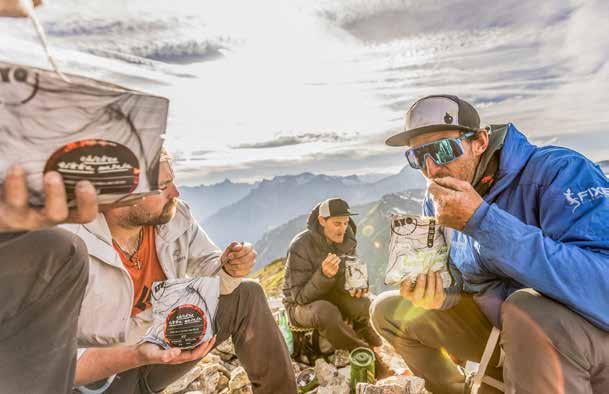
Nutrition is a fundamental concept in the outdoor world. Not only because it is the “fuel” that helps us reach the highest and most challenging goals, but because eating in nature has become an integral part of the performance and the experience itself. This is the concept behind Lyofood, a Polish brand that has transformed the idea of a high-altitude meal: no longer just simple energy, but real, satisfying food—a true culinary journey more akin to home cooking than to classic technical rations. Because to achieve peak performance, you need to eat well. And eating well means flavor, quality ingredients, and balanced nutritional value.
THE HISTORY OF THE BRAND
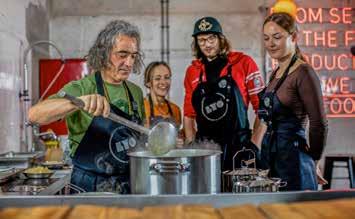
Lyofood traces its roots back to the early 1990s, when Jerzy, a Polish engineer working at a blood bank, observed the freeze-drying of plasma and wondered if the same technical process could also be applied to food. From that moment on, he began building the machinery and then conducting the first experiments with chives, which were freeze-dried, processed, and finally shipped abroad. The quality was immediately apparent: the product was a hit, and demand grew. The real breakthrough, however, came when mountaineers and travelers on long expeditions began requesting complete meals: the company shifted from freeze-drying individual ingredients to freeze-drying full meals. From there, Lyofood began to build its own identity and strengthen its structure, continuously evolving and growing until today, offering nearly 50 main dishes, as well as soups, breakfasts, desserts, and snacks distributed in more than 30 countries worldwide. Despite its rise in popularity, the connection between the Polish brand and the outdoor world remains central, so much so that some recipes are developed in collaboration with the brand’s athlete ambassadors. The menu includes signature dishes by climber and mountaineer Seán Villanueva O’Driscoll, renowned mountaineer Marko Prezelj, world ice climbing champion Ines Papert, and ski mountaineer Mathieu Maynadier. An all-new, entirely Italian initiative is the collaboration with the Ragni di Lecco alpinist group, with whom Lyofood

has successfully created a freeze-dried version of pizzoccheri, a traditional dish from Valtellina.
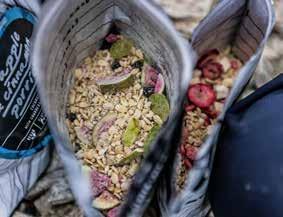
The secret to its success lies in a production process that is rigorous to say the least: authentic ingredients that are cooked using traditional methods before being freeze-dried, thereby preserving their texture, flavor, and nutritional value. Every product is the result of a fully controlled process carried out entirely in-house, from the selection of ingredients to distribution. Lyofood carefully selects its suppliers, who must adhere to the brand’s transparent ethical standards, but that’s not all: the company often grows some of the ingredients—including fruits, vegetables, and herbs—directly. This allows for total control over quality and, above all, enables the complete elimination of additives and preservatives. The result is a line of 100% “clean label” products.
The brand’s approach to ethics doesn’t start with slogans, but with the simple concept that producing food means consuming resources. Lyofood, however, does so in the most responsible way possible: no unnecessary products, nor product lines created solely to boost sales. Every recipe is conceived, developed, and produced only if it is truly useful, not to chase a trend or the latest fad. Within the production process, the decisions made are not merely theoretical: natural ingredients—often local or grown directly on the farm—no additives, no pesticides, water recovery from the freeze-drying process, heat reuse, reduced energy consumption, and power from renewable sources are all concrete, operational choices Lyofood has made to minimize its environmental impact. And then there are the people. Just as production involved the whole family in the 1990s, the company remains family-run today, with no outside investors. It does not look elsewhere but finds internally all the useful and necessary elements to build a cohesive and balanced team capable of maintaining the brand’s consistency over time. And it is precisely this continuity with the past that makes the brand credible, both within and outside the outdoor world.
EXPERIENCE UNTAMED EXPLORATION
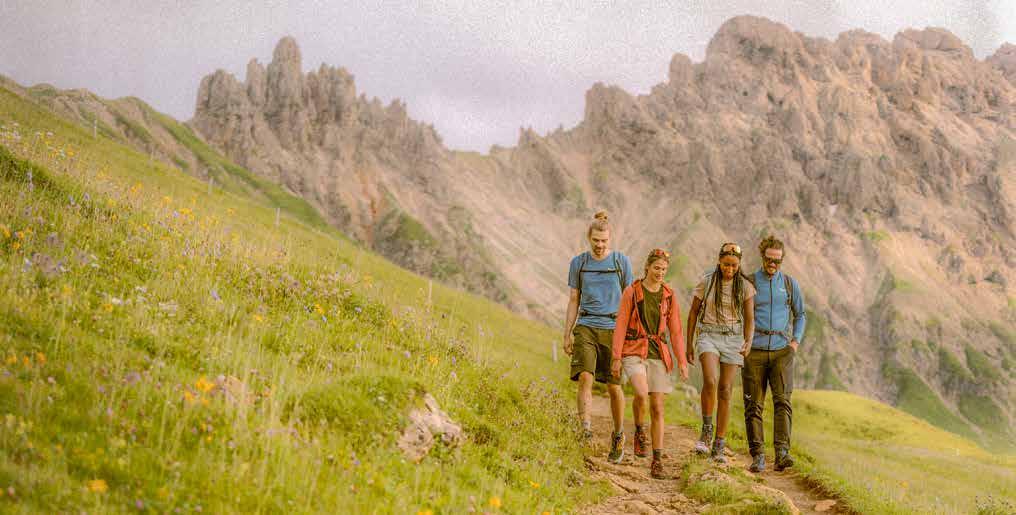
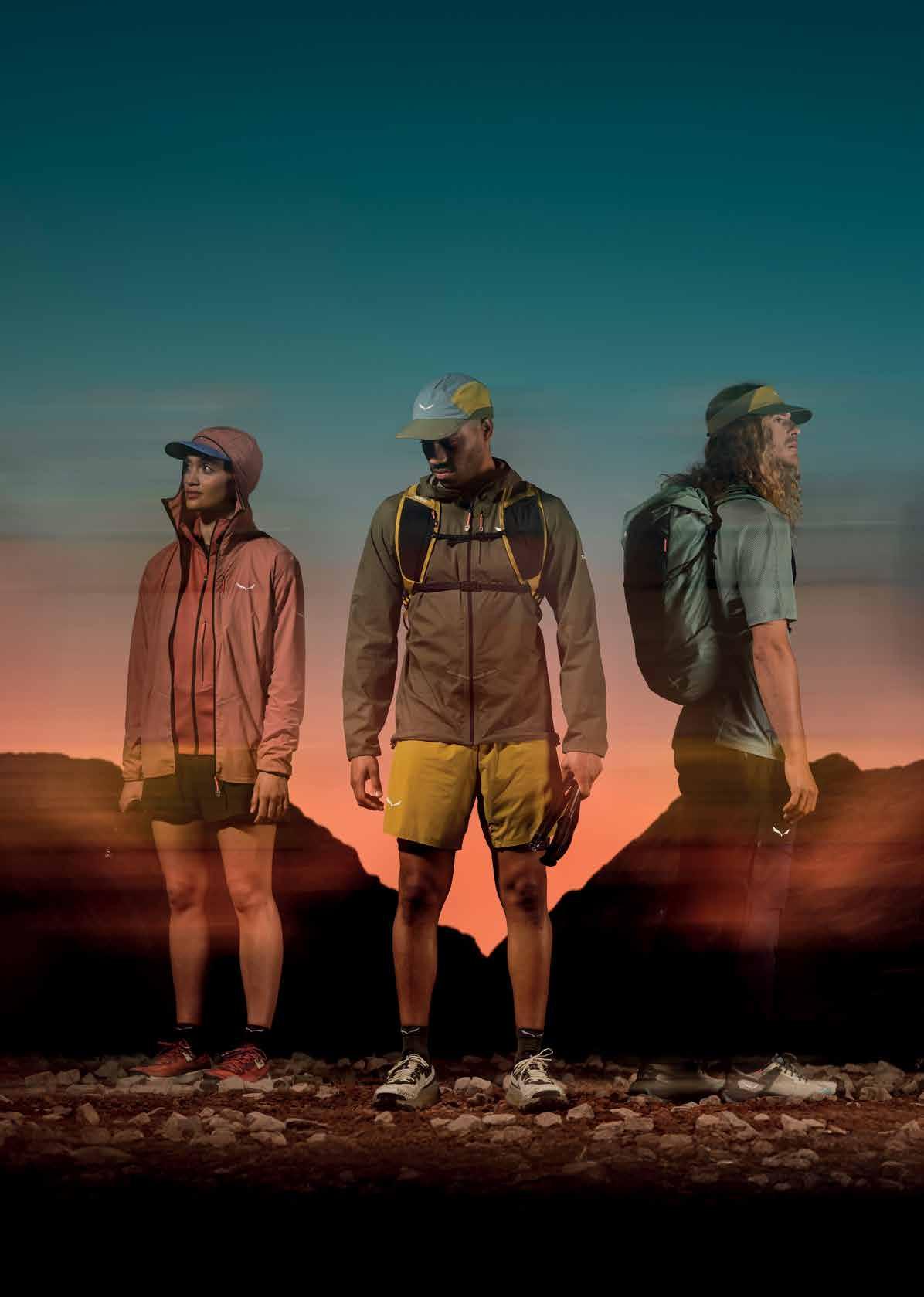
Salewa Puez collection address to young people who see the mountains as a place to unwind and who seize every opportunity to rediscover the sense of well-being that only the outdoors can provide
In an age where the only constant is change, priorities are taking on new forms as well. Today’s younger generations feel a more intense desire to disconnect: it has become a widespread necessity, an often urgent need to escape constant exposure to information and the frenzy of consumerism. Consequently, even going to the mountains is now more about the simple pleasure of being outdoors and less about the pursuit of technical summits in the strictly mountaineering sense. Salewa Puez collection is designed precisely for this type of consumer: the young hiker used to moving through nature, seeking moments of peace, serenity, and well-being through daily or long-distance treks.
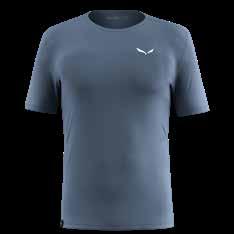
PUEZ SPORTY DRY’TON FOR MEN
Technical T-shirt with a regular fit, short sleeves, and a classic crew neck, made from 83% recycled polyester. It offers functional comfort and excellent moisture management thanks to the quick-drying Dry’ton fabric, which wicks moisture away from the skin, helping to regulate body temperature and prevent excessive cooling, making it ideal for hiking and mountain trekking. It is also treated with a natural anti-odor finish to feel fresh longer.
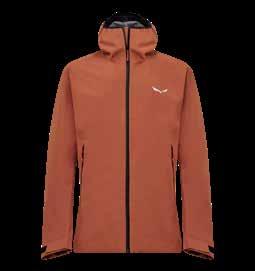
PUEZ GORE-TEX 3 LAYERS EPE
Jacket made from bluesign-certified 75D Gore-Tex fabric with a PFAS-free DWR finish. Designed to be as lightweight, packable, and breathable as possible while still providing maximum protection in extreme conditions. The Gore-Tex ePE membrane combines high breathability (RET <20 m² Pa/W) with excellent waterproofing (28,000 mm water column). Additionally, it features taped seams, a waterproof front zipper, a hood with a drawcord at the back, two pockets with waterproof zippers, and adjustable Velcro cuffs. A shell with a minimalist look but a functional soul, designed for minimal environmental impact.
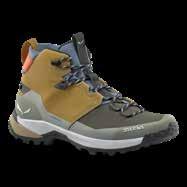
PUEZ 2 MID POWERTEX
Shoe with an innovative design for a smooth fit and long-lasting comfort, ideal for versatile use both in the city and in the mountains. The mid-cut, abrasion-resistant upper is reinforced with an external toe cap and a protective rubber band featuring a waterproof and breathable Powertex membrane. Its shape, specifically designed for trekking, works in conjunction with the dual EVA midsole and the Volume Reducer insole to offer greater comfort and a personalized fit. The Pomoca Alpine Trekker outsole guarantees grip and traction on technical terrain. At the heart of the construction is the new Salewa Edging Plate, a special thermoplastic structure embedded in the insole that runs the entire length of the boot; this combines flexibility and cushioning, ensuring comfort on long hikes, with specific levels of stiffness and flex in the forefoot and heel for targeted support and greater stability. Additionally, the Salewa 3F system with Kevlar cables supports the ankle and provides enveloping stability to the midfoot.
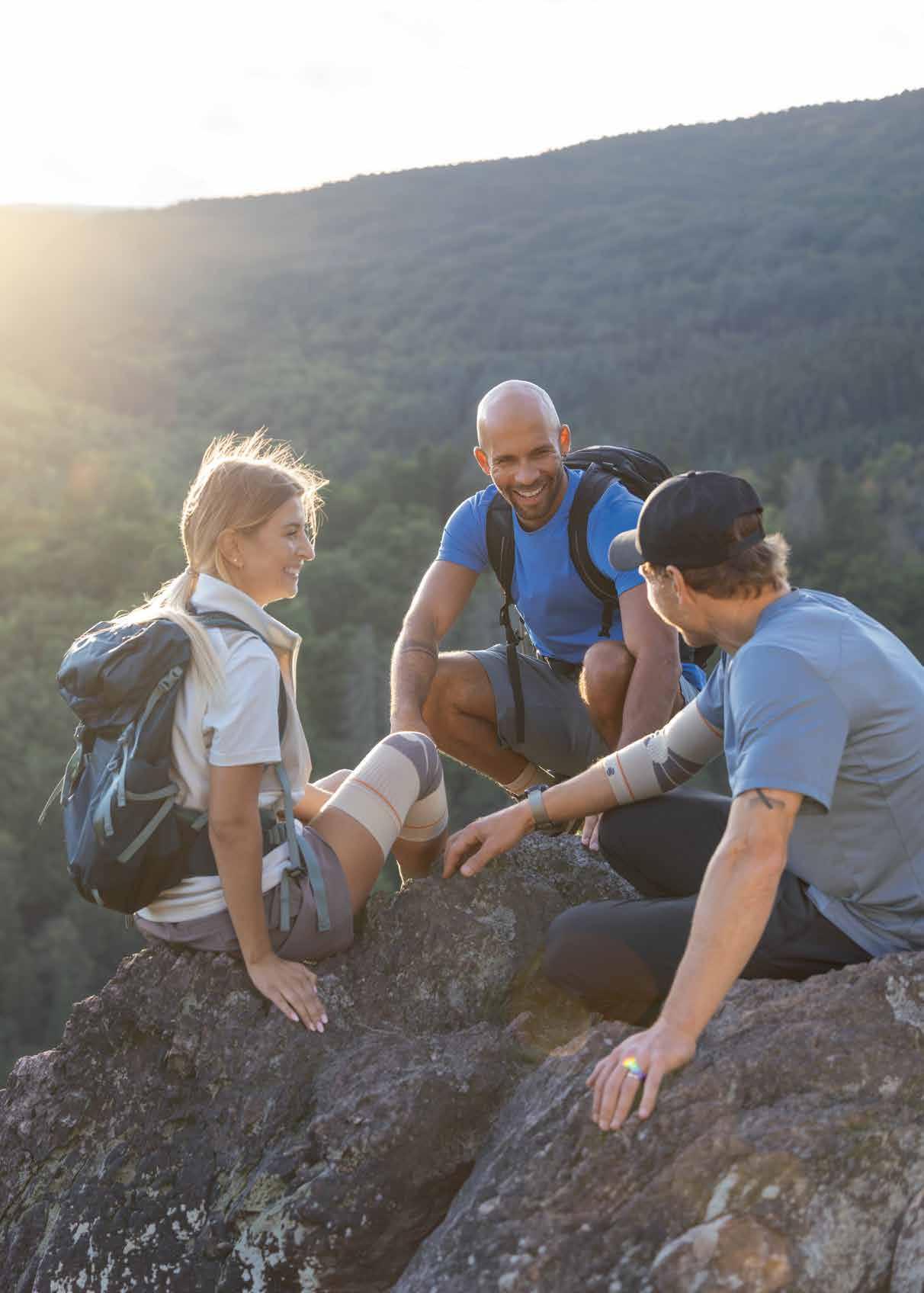
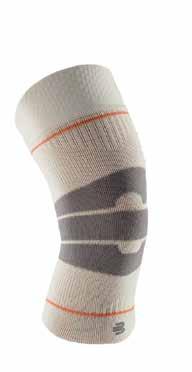
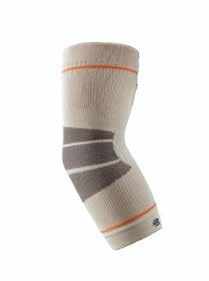
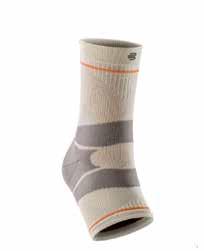
Our innovative outdoor supports made with merino wool relieve pressure on the joints for untroubled outdoor adventures: More stability – More comfort – More freedom in the mountains.
Plenty of new additions to CMP SS 26 hiking collection: the Unlimitech technical line is expanding with the arrival of the Rigel 2.0 shoes, two new backpacks, and poles
Hiking takes many forms, from day trips to get a change of scenery to multi-day treks in the high mountains, in varying weather conditions. For the SS 26, CMP meets the needs of all walking enthusiasts by expanding the Unlimitech line—the brand’s most technical collection—and introducing new products in the complementary footwear and accessories segment as well.
THE EVOLUTION OF THE UNLIMITECH LINE
A benchmark for those seeking uncompromising technical performance, CMP’s Unlimitech line evolves for SS 26 with new high-performance garments, including three-layer shells, ultra-light stretch jackets, and 4-way stretch ripstop pants. Designed and tested for long-lasting durability, they strike the perfect balance between protection, lightness, and breathability, making them essential for those who love to experience the outdoors to the fullest. The color palettes for the 2026 summer season are divided into three options for men and three for women. For him: the first includes shades ranging from anthracite to gray, followed by rope, vanilla, and orange; the second focuses on black blue, blue-green, turmeric, and lemon; the third features soft shades like pine green, sage, and apple. For her: pistachio, avocado, and coral as the first tones; then brighter colors like space blue, sky blue, magenta, and neon pink; finally, more delicate shades including toffee, cream, offwhite, and lagoon.
WHAT’S NEW IN THE FOOTWEAR AND ACCESSORIES SEGMENTS
For the SS 26 collection, CMP is introducing exciting new additions to its footwear and accessories lines: among the most notable designs is the Rigel 2.0, an evolution of the brand’s most
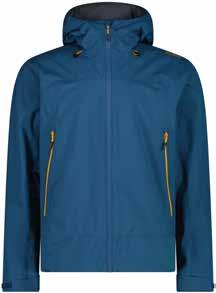
THREE-LAYER SHELL
Maximum protection and technical performance. Made from 110 g/m² polyester with a Clima Protect membrane (WP 20,000/MVP 20,000), a water-repellent finish, fully taped seams, and a waterproof zipper, it guarantees superior protection against rain and wind without compromising breathability. The design features a fixed hood with a contoured visor and side and rear adjustments, a high front collar, underarm ventilation zippers with mesh inserts, large front pockets, and a practical internal secret pocket. The jacket is completed by adjustable cuffs with drawstrings and Velcro, and an adjustable hem with a side coulisse. The fit is regular, designed to ensure comfort, freedom of movement, and maximum versatility during the most intense outdoor activities.
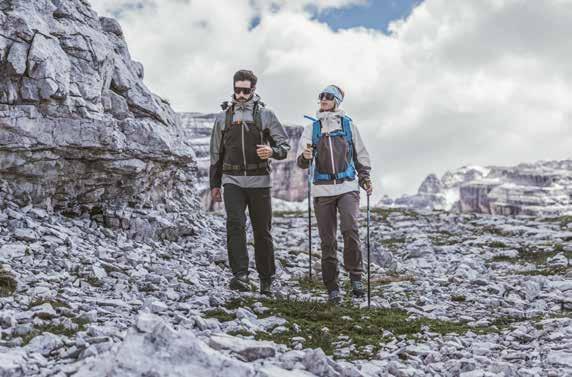
iconic hiking boot. A bestseller in the collection, available in mid and low versions, it now features a refreshed aesthetic and technical design. New offerings are also arriving in the accessories category, with the introduction of two compact backpacks for shorter hikes— the Wayfar 30L and Tind 20L—which join the flagship models Nordwest 30L and Havre 40L. Rounding out the gear lineup are trekking poles, a segment in which the brand offers an increasingly comprehensive range with the new Panamara and Aeryth models.
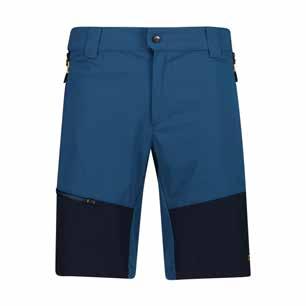
RIPSTOP STRETCH BERMUDA SHORTS
Designed for outdoor activities on hot days and made from the same technical 4-way stretch fabric, they guarantee maximum freedom of movement and comfort. The waist is pre-shaped and adjustable with Velcro straps on the sides, while the zippered side pockets ensure functionality and convenience even when on the move.
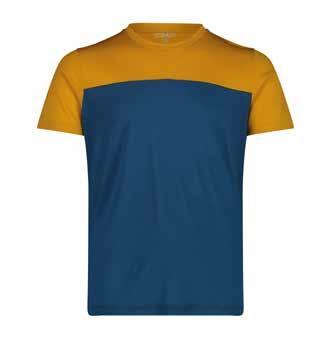
PERFORMANCE MERINO T-SHIRT
Performance Merino is a fabric with excellent technical properties and breathability, thanks to the combination of synthetic fibers and wool. The colorblock design follows the latest trends in athletic wear and gives the garment a unique look; thanks to its odor-inhibiting treatment, it is particularly wellsuited for high-intensity activities. Manufactured entirely in our own facilities, it is Oeko-Tex Standard 100 certified.
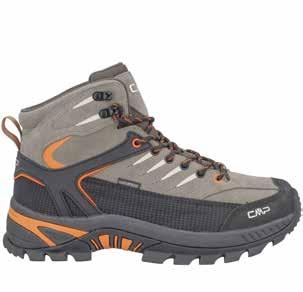
The stylistic and technical evolution of the brand’s most iconic hiking boot. The outsole design has been updated with a TPU medial insert in the midsole that provides greater support and stability while walking. The tread pattern with textured lugs, combined with the CMP FullOnGrip rubber compound, ensures effective traction even on the most challenging terrain, confirming the performance that has made this model an international bestseller.
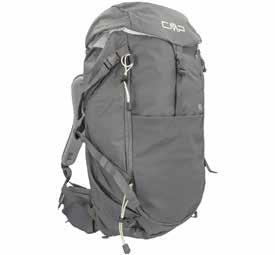
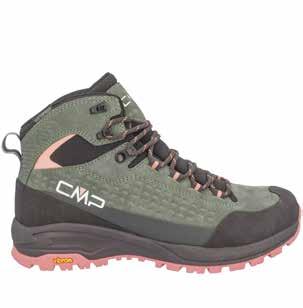
Technical footwear designed for tackling the most demanding mountain trails. Made of suede with a polyester-based fabric collar, it features rubber reinforcements on the toe and heel. The upper is decorated with embossed details on the side that define its design. The Clima Protect waterproof membrane, patented by CMP, ensures that your feet stay dry in the rain. The sole consists of an EVA midsole mounted on a Vibram S3018 rubber outsole with XSTrek compound, which guarantees excellent traction on any type of trail.
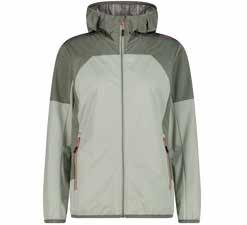
Designed to offer advanced protection and comfort, thanks to the Clima Protect membrane with a waterproof rating of 10,000 g/m²/24h and a breathability rating of 5,000 g/m²/24h, ensuring resistance to wind and light rain while maintaining ventilation and comfort. The jacket features a fixed hood and two zippered side pockets for safely storing small items during hikes and active pursuits. Ultralightweight and technical, this jacket is perfect as an outer layer on milder days or as part of a layering system in more challenging conditions.
Designed specifically for hiking, with a 40-liter capacity, it features two direct access points to the main compartment: a top entry with a drawstring closure and a front entry with a zipper. Equipped with a thermoformed, adjustable EVA back panel, it offers optimal comfort and effective ventilation, ensuring even weight distribution and reducing the risk of excessive sweating during use. The back panel is removable, so it can be hand-washed. Made of durable polyester, it also comes with a rain cover that protects the backpack’s contents from light rain and water splashes, keeping items inside dry and protected.
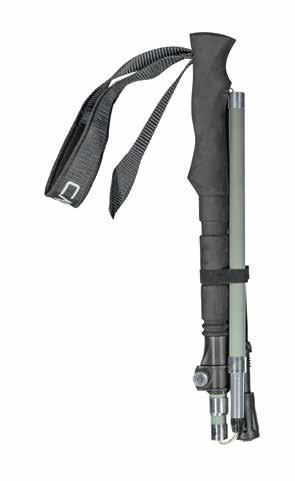
Aeryth is a five-section folding hiking pole made of 7075 aluminum alloy. It weighs 225 grams and is adjustable from 105 to 120 centimeters at its maximum length. The long, ergonomic grip is made of EVA, making it lightweight and practical. The tip of the pole is made of tungsten, ensuring strength and long-lasting durability.
Made from lightweight nylon, a durable material that, in its 4-way stretch version, guarantees optimal freedom of movement. Dry Function technology ensures excellent breathability, keeping the skin cool even during the most intense hikes. The fabric’s surface treatment shields against the sunrays, offering additional protection against UV exposure. The pants feature an elastic waistband at the back for a comfortable, body-hugging fit. Ripstop reinforcements on the knees provide extra durability, making them ideal for tackling challenging terrain.
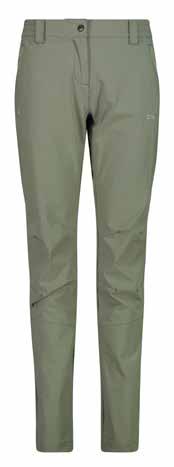
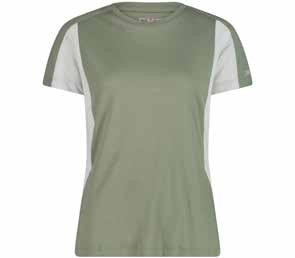
Technical T-shirt made from Performance Merino fabric, which combines the natural benefits of wool with the high performance of synthetic fibers. This combination ensures excellent breathability, temperature regulation, and moisture management, guaranteeing comfort even during the most intense activities. The sporty design features dynamic color blocking that gives it a modern and contemporary look. The anti-odor treatment helps maintain a fresh feeling even during prolonged use. Certified to Oeko-Tex Standard 100, guaranteeing the use of responsible materials and non-toxic dyes that are safe for both people and the environment.
The growing number of people visiting the mountains during summer also increases the risks for beginners. Ande responds with a technical collection featuring an integrated RECCO system, yet at an affordable price
In recent years, more and more people began going to the mountains regularly, driven by the current trend but without the necessary awareness to avoid putting themselves in dangerous situations. Injuries, lack of preparation, and misjudgments on the trails may require intervention by rescue teams. Companies are therefore called upon to consider how they can facilitate the work of rescue professionals. This is a responsibility that Ande has decided not to shirk.
THE COLLECTION FEATURING THE INTEGRATED RECCO SYSTEM
Ande has responded to this need with its new top-of-the-line collection for trekking and mountaineering, introducing garments that incorporate the RECCO system alongside the “Explore Safely” campaign. The line includes technical products, made with high-quality materials and suitable even for the most demanding hikes, yet maintaining Ande’s signature style and the “A Matter of Balance” tagline, which ensures a premium positioning while remaining affordably priced. The collection includes the Midi Pant, the technical Eccles Fleece, and the threelayer Peuterey shell, with a waterproof (15,000 mm) and breathability (15,000 g/ m²/24h), available for both men and women. The integration with RECCO stems from an analysis based on research and data revealing a growing trend in the use of these devices even during summer, demonstrating the reflector’s versatility beyond avalanche victim search and rescue. Thanks to the latest innovations from the Swedish company, in fact, a helicopter equipped with a RECCO search device can scan an area of 1 km² (30 soccer fields) just six minutes. With this line, Ande reaffirms its commitment to safer mountain recreation and does not shirk its responsibility to support every enthusiast with peace of mind on their vertical adventures.
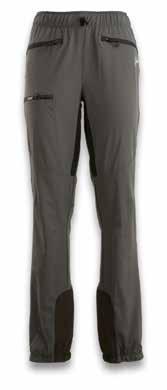
• Elastic waistband
• Abrasion-resistant
• Quick-drying
• Breathable and quick-drying
• Thermoregulator
• LYCRA edges
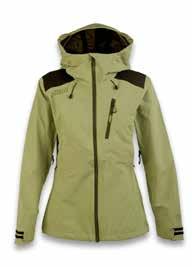
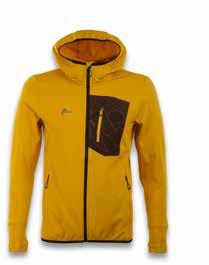
• Water resistance: 15,000 mm H₂O
• Breathability: 15,000 g/m²/24h
• Tear- and abrasion-resistant pads on the shoulders
• Ventilation zippers under the arms
• Waterproof zipper and taped seams
Avantgarde - +39 0341 288573 - customer@ande.it
That is the two words that make up Arrio, the Gregory backpack from the new Mountain Products collection, which will be tested at the Activation Days in Riva del Garda
Derived from “air” and “rio” (air and river), the Arrio backpack line embodies two design principles that define the new Gregory Mountain Products collection: superior ventilation and enhanced airflow while on the move. For SS 26, the brand is therefore introducing updated models designed for speed on the most challenging trails, while combining enveloping comfort with breathability and practical functionality.
Including backpacks in 20, 22, and 30-liter sizes, the Arrio line offers a range of smart features for various hiking needs, without sacrificing freedom of movement or airflow. The core feature of the Mountain Products collection is the VaporSpan ventilated back panel. Designed with an anatomical perimeter structure, this system uses a tensioned mesh that acts like a spring to support the load and ensure unobstructed airflow. The 3D mesh structure combines a denser section along the lower part for cushioned support with a more open and breathable section at the top of the back panel for maximum ventilation. To top it off, the CloudControl hipbelt offers a flexible yet stable suspension system. The shoulder straps are intentionally slim, featuring strategically placed perforated foam and a breathable mesh covering the entire surface. Arrio stands out for its practical features: two large angled side pockets made of stretch mesh, easily accessible even while on the move; a front pocket with a quick-access zipper; inside, another pocket with a SpeedClip hook that securely holds the water bag. Trekking poles attach via an upper elastic loop and a sturdy lower strap. The main body of the backpack is made of 210D Ripstop Nylon, the bottom of 40% recycled 420D Nylon, and the lining of 40% recycled 135D polyester and postconsumer materials, all with a C0 DWR finish. The materials are PFAS-free, and the buckles are bluesign certified.
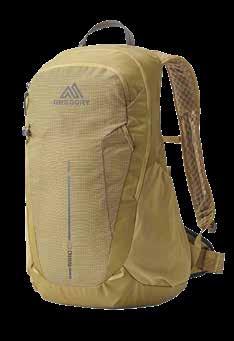
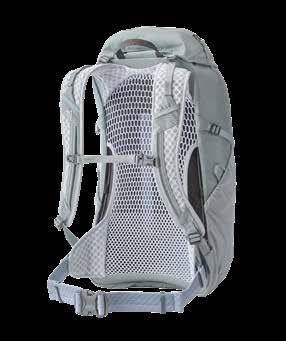
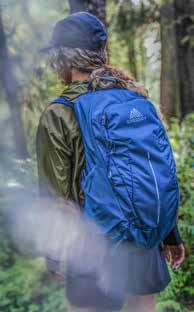
As Lowa’s rebranding claim says, which stems from a vision of the outdoors as a quest for freedom
What does it really mean to feel free? This is the question that inspired Lowa to envision a new chapter in its more than century-long history and launch a new visual identity that is not merely an aesthetic makeover, but an “Un-Compass”—a compass that invites you to lose your way in order to find yourself, guided by a call to action: Go find out. In fact, for those who experience the mountains as mountaineers, hikers, and trail runners, freedom is about that moment when you leave the marked trail and choose to go further. A moment’s hesitation, then everything opens up. And this concept forms the basis not only of new product collections but of a vision and a paradigm shift. When people are given the chance to explore on their own terms, a value is created that goes beyond numbers. The new brand identity marks this transition: staying true to our roots, continuing to create exceptional footwear, and, at the same time, affirming an idea of freedom—open, curious, independent.
Since 1923, the year Lorenz Wagner crafted his first pair of shoes, Lowa has built its identity on reliability, quality, and artisanal expertise. This DNA has remained unchanged over time, carrying through to the present day. What has changed, however, is the world around us. Today, the outdoors is
often measured, shared, and judged. Sometimes it seems that aesthetic codes and “likes” matter more than genuine joy, curiosity, or connection with nature. That is why Lowa wanted to reaffirm that the outdoors should liberate, not limit. No scripts, no instructions.
Today, Lowa aims to evolve from a respected brand into a beloved one. “Consumers know exactly what they want. They’re not just buying a product; they’re choosing a mindset and a way of life,” says Matthias Wanner, CSO of Lowa Sportschuhe GmbH. “We want to inspire curiosity. We don’t tell people how to explore nature by laying down rules; we give them a gentle nudge to go discover it for themselves.” The rebranding touches every aspect of the brand, from the logo to the iconography, right down to the color palette. The new colors draw inspiration from vast blue skies—a symbol of boundless freedom—blending them with the chromatic roots of Bavarian heritage. The past thus becomes the solid foundation upon which to build the future. As Ulf Michels, head of marketing, emphasizes: “With ‘Go find out,’ we’re not just talking about products, but about what our products make possible. We’re evolving to connect deeply with the end consumer.”
27
IN THIS CONTEXT, PRODUCTS CONTINUE TO SERVE AS TOOLS FOR UNLOCKING NEW EXPERIENCES
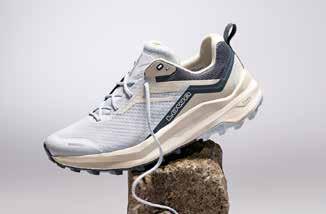
Designed for the days when life flows naturally, this model is the perfect shoe for when your mind clears and one step follows another effortlessly. This is a lightweight, breathable “door-to-trail” model, perfect for longer runs and for those who want to pick up the pace on a whim. The EVA cushioning provides a soft, even feeling, supporting effortless movement without a second thought. The Lowa TRAC outsole ensures safety on gravel, in the underbrush, and on wet trails. Available in Low or Mid versions, with or without a Gore-Tex membrane, this shoe asks for nothing more than for you to start moving.
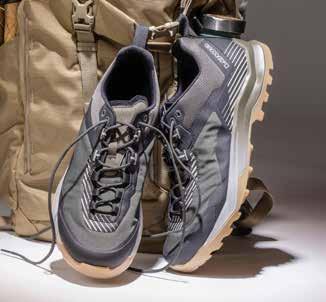
Building on the success of the SS 26 season, Lowa presents a lighter version of its iconic Explorer model, designed to offer the perfect balance between the sturdiness of a hiking boot and the agility of a fast-hiking shoe. It retains stability and reliability, but reinterprets them in a lighter, more fluid, and contemporary design.
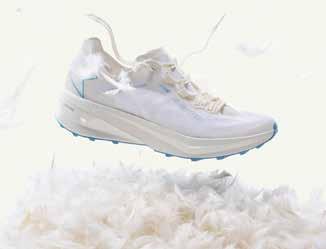
Designed to tackle technical trails without compromise, it features a Dynatpe midsole with supercritical TPE foam, delivering significant energy return without sacrificing stability. The upper, made of highly abrasion-resistant Matryx material, keeps the weight to a minimum (just 416 grams per pair), while the Vibram Megagrip Litebase outsole ensures precise grip even on the most treacherous surfaces. Weighing just 208 grams per shoe, it takes the feeling of lightness and speed to new levels in trail running.
Tecnica Group SpA - +39 0422.8841 - info@lowa.it
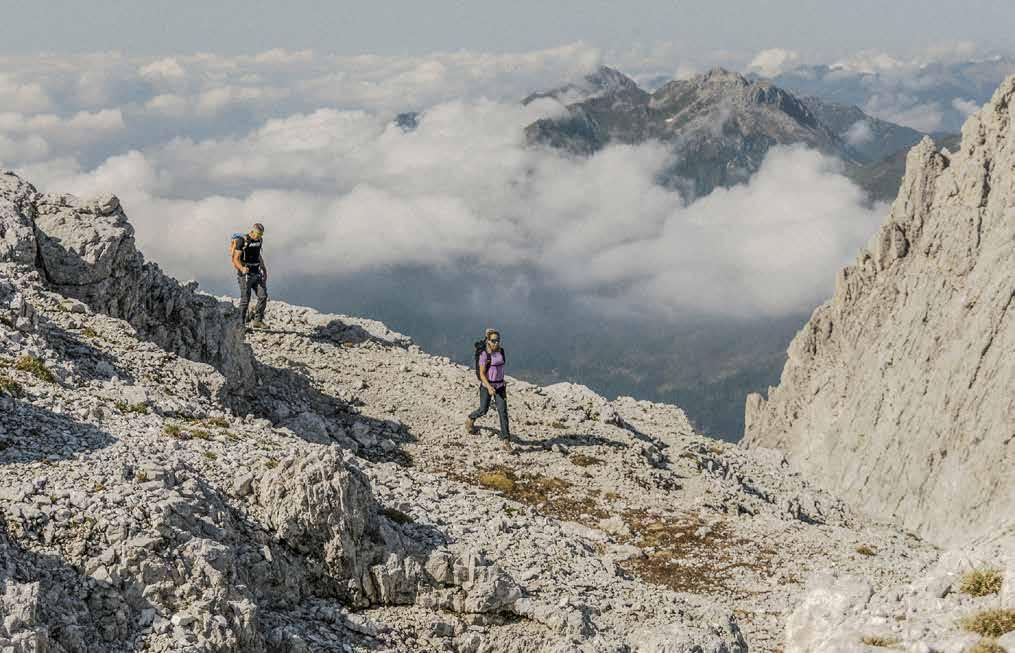
The AKU Trekker Lite IV GTX is now in its fourth edition, staying true to its philosophy of versatility while placing even greater emphasis on comfort
In the outdoor sector, which is increasingly focused on lightweight and fast shoes, there are products that take a different path: that of evolving without losing their essence. This is the case with the AKU Trekker Lite IV GTX, one of the Italian brand’s most iconic models, which reaches its fourth iteration for the SS 27 season. This longevity speaks volumes about the company’s approach of not necessarily chasing trends, but continuing to develop products that truly work in the field. AKU continues to invest in the category of versatile, protective, and reliable hiking boots, catering to those seeking a shoe capable of accompanying them in diverse settings, with the right balance of comfort, support, and safety. That’s why it presents the fourth evolution of the Trekker Lite GTX, a model designed to adapt to multiple situations—from leisurely hikes to more dynamic outings—without ever becoming too specialized. In the new version, the focus has been primarily on comfort and fit, without compromising the product’s core DNA
The success of Trekker Lite is due to the unique user experience this type of product offers. Unlike low-cut footwear, it wraps around, protects, and supports the foot and ankle, putting less strain on the joints and fostering a confident feeling with every step to fully enjoy every hike.
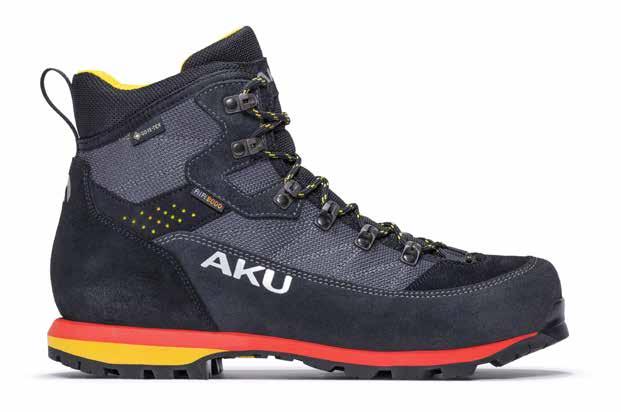
FIT
Also available in a WIDE fit to accommodate different foot shapes.
MORE FLEXIBLE UPPER
Designed to enhance freedom of movement without compromising support. It is crafted from suede sourced from LWG-certified Italian tanneries and features the AIR8000 system, an exclusive AKU technology that ensures excellent breathability. In addition, the upper has been redesigned and equipped with new, more functional lace loops.
GORE-TEX MORE SEASONS LINING
PFAS-free, it ensures waterproofing while maintaining the breathability needed for various weather conditions.
MIDSOLE
Featuring a new double-density EVA design (Double Density Die Cut EVA), which is thicker to provide better cushioning.
VIBRAM TURMERIC OUTSOLE WITH WAVE TECHNOLOGY
Designed to reduce weight while ensuring maximum traction and grip in all conditions.
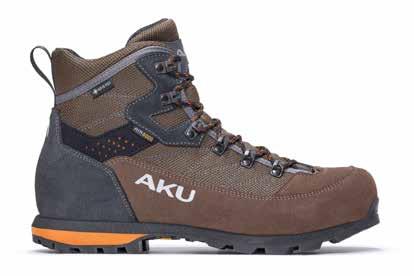
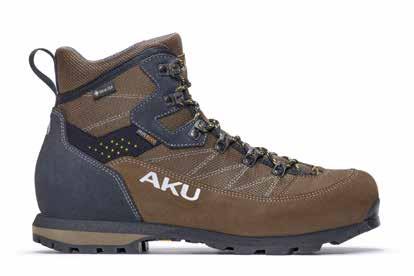
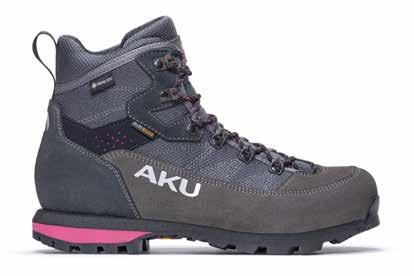
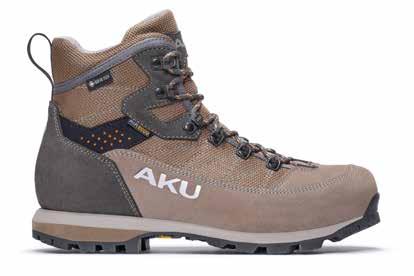

“We’ve never stopped developing”
by Sara Canali
Giulio Piccin, product manager at AKU, told us the evolution of the Trekker Lite GTX. From the decision to continue investing in a “legendary” model to the work done to update its comfort and construction, a clear vision emerges: to improve without altering, by listening to those who truly live in the mountains.
Why continue to invest in a model like the Trekker Lite?
It’s been in our collection from the very beginning. We’ve never stopped offering it: we continue to refine it year after year. Even though part of the market has shifted toward lighter products, this segment remains very appealing. There’s still a real need for this type of boot, especially among those seeking greater protection.
What is the main selling point of this product?
Versatility. This is a shoe you can wear for low-key activities as well as for something more active. It’s not limited to just one use— it’s up to the wearer to decide how to make the most of it.
What’s new in this version?
We put a lot of work into the construction, especially around the ankle. The previous model was a bit restrictive, so we made it more flexible, with a softer, more adaptable upper. Overall, we made it lighter and more fluid.
How does the evolution of an existing model come about?
Sometimes starting from scratch is easier. But when you already have a product on the market, you have to improve it without losing its essence. We put a lot of effort into listening the feedbacks from retailers and brand ambassadors—that is, people who use the products on the field, from mountaineers to professionals.
How important is hiking to AKU today?
It is a key category and continues to grow. In recent years, there has been a boom in mountain tourism, and the trend continues.
What about the phenomenon of walking trails?
It’s growing rapidly. It’s often tackled with lighter footwear, but it depends a lot on the type of trail. We believe in this segment, though.
What is the future direction of the product?
Greater versatility and durability. We’re talking about products made in Europe from durable, repairable materials. Extending the life of footwear means reducing both the environmental impact and the cost to the wearer.
Atmos and Aura are Osprey’s backpacks designed for multi-day hikes and independent travel
Designed to support every step, even as the load increases, they offer a unique combination of comfort, ventilation, and stability thanks to the AntiGravity system, which naturally cradles the body, distributing weight and making every movement more fluid. This technology includes a mesh suspension system, back panel, and shoulder straps, providing the comfort needed to tackle long hikes. The Fit-on-the-Fly system for the shoulder straps and hip belt offers greater comfort and precise adjustment for an optimal fit across different sizes, while the AG system extends the back panel directly into the hip belt for continuous support. The ErgoPull design distributes weight toward the lower back when the hip belt is securely fastened, while the integrated rain cover keeps the backpack and gear dry even in adverse weather conditions.
The top hood is detachable and features attachment points. On the front is a reinforced “shove-it” pocket, while the sides feature tall, dual-access pockets designed for water bottles. The ice axe holder is double and secures via compression straps, while a zippered compartment at the bottom is designed for a sleeping bag. Removable straps for a sleeping pad are also included. Inside, there
is a pocket for a hydration bladder with a central outlet on the back panel, along with the Stow-on-the-Go quickattach system for trekking poles.
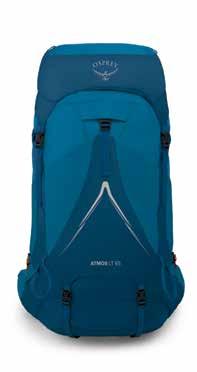
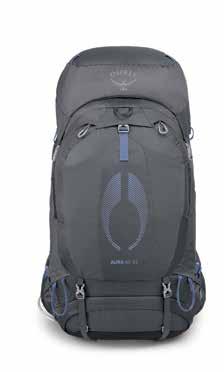
The Miura GTX is Kayland’s hiking boot designed for mixed terrain and for those seeking both lightness and protection in a single model
With the Miura GTX, Kayland introduces a hiking boot designed for dynamic hiking, technical trails, and mixed terrain, featuring a construction that, in terms of design and precision, draws inspiration from the world of approach shoes. The model falls into the “advanced fast hiking” category, catering to those seeking greater support and protection than a trail running shoe offers, without the bulk of a traditional hiking boot.
UPPER
One of the most distinctive features of the Miura GTX. It features a three-zone construction designed to provide targeted protection, support, and flexibility. Made primarily of suede, it gradually adapts to the shape of the foot and offers a good balance between durability and comfort. Additionally, the hot-pressing process helps stiffen certain areas of the upper without the need for additional inserts. On the lower section, there is a polyurethane perimeter strip that protects the shoe from abrasions and lateral impacts, while the front features a high-strength rubber toe cap. The Gore-Tex Extended Comfort Footwear membrane, designed for high-intensity activities in variable conditions, prioritizes breathability and internal moisture management over thermal insulation, making the Miura GTX more suitable for three-season use than for winter conditions.
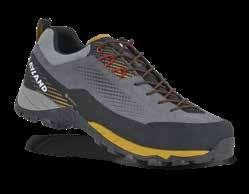
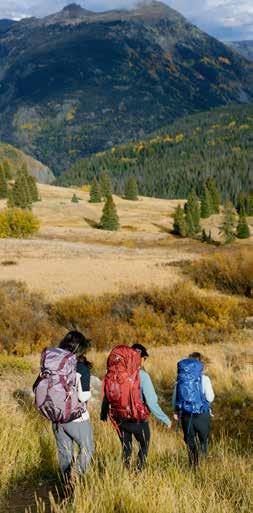
TECHNICAL FEATURES
• AntiGravity suspension with full perimeter frame and torso adjustment system
• AntiGravity back panel with a mesh spacer for added durability and a silicone insert in the lumbar region for better grip
• AntiGravity shoulder straps with the Fit-on-the-Fly system for a better fit, featuring a contoured foam upper section and an Exoform mesh lower section
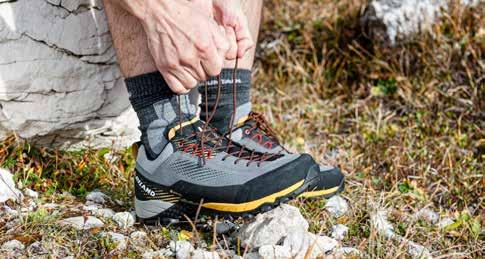
LACING SYSTEM
Extending toward the forefoot, it allows for precise fit adjustment, which is useful during technical sections. The integrated eyelets reduce bulk, while the hot-melt tongue with a microfiber insert evenly distributes pressure, improving comfort even when the laces are tightened.
PU INSOLE
Quite thick, it enhances cushioning and helps reduce fatigue during long runs or on very hard surfaces.
TWO-TONE, DUAL-DENSITY EVA MIDSOLE
It creates a softer zone to absorb impact and a firmer zone to enhance stability and lateral support. The result is a shoe that feels lightweight but offers more structured support.
VIBRAM MULTIVERSE OUTSOLE
Designed to deliver performance on uneven terrain. The tread pattern alternates between lugs and solid sections, and overall offers impressive performance on dirt roads, rocky trails, and dry mixed terrain, with a feel reminiscent of lightweight approach shoes.
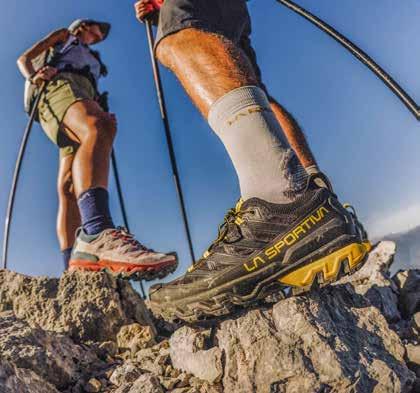
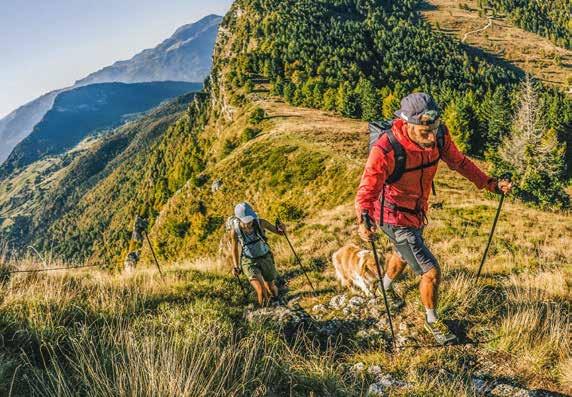
Now in its third version, La Sportiva’s Ultra Raptor remains a benchmark for long, demanding hikes, drawing on its heritage and adapting to today’s technologies
There are products that are instantly recognizable and have become iconic over the years. Items that have walked thousands of trails, marked entire generations of outdoor enthusiasts, and left a legacy that brands have drawn upon to further refine their performance. This is the case with the Ultra Raptor, now in its third iteration: La Sportiva’s historic mountain hiking boot that won over hikers from all over the world with its previous model and has now been improved thanks to the latest technologies.
A product that is as technical as it is versatile, it offers maximum protection, exceptional flexibility, and durability without compromising on comfort. These features make it ideal for any type of terrain, from the most technical offroad trails to dirt roads, as well as for trekking or mediumlength summer hikes.
TECHNOLOGIES AND LOOK
Durable and breathable thanks to its ripstop upper (a durable recycled mesh that allows the foot to breathe), this shoe still provides protection from rocks and roots thanks to its rubber toe cap and protective side panel; the comfortable collar also features a gaiter to keep debris out of the shoe. The EVA midsole combines two materials: a softer layer in direct contact with the foot and a more structured layer under the heel to increase support. The dual external TPU heel counter improves heel and ankle stability and structural support. The insole is an Ortholite Hybrid Mountain Hiking 5MM, further ensuring comfort. The outsole is made from high-quality FriXion White rubber, known for its superior grip on slopes, while the tread design features the proven Impact Brake System technology, with strategically angled lugs to improve traction on ascents and braking on descents. The outer lugs are also specifically shaped to increase support and stability, and flex grooves run the entire length of the sole to enhance flexibility with every step. The Ultra Raptor 3 is the perfect choice for all hiking and adventure enthusiasts seeking an iconic and highly versatile product—reliable on every type of trail—to confidently reach the most beautiful peaks and achieve every personal goal.
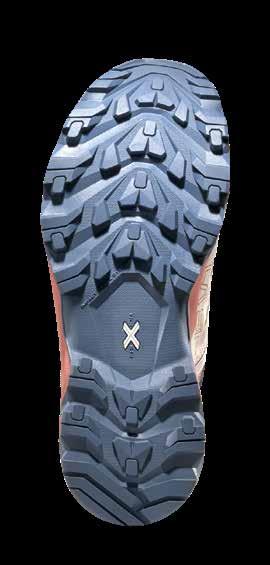
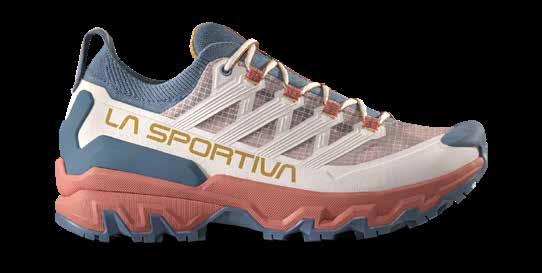
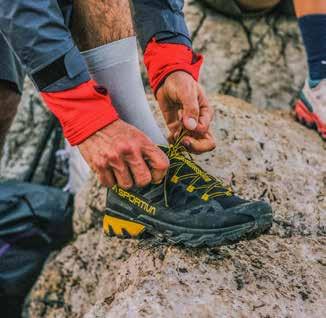
• Upper: 100% recycled ripstop nylon
• Lining: Mesh
• Insole: Ortholite Hybrid Mountain Hiking 5MM
• Midsole: soft CM EVA in the area in direct contact with the foot, combined with denser CM EVA in the heel area
• Outsole: FriXion White
Trezeta Backpacking line can now rely on the H-Dry membrane, which guarantees protection during long-distance hikes
On long trails and multi-day hikes, sustained comfort, protection, and moisture management become critical factors. Trezeta has chosen to revamp its offering in the backpacking segment, introducing a dedicated line designed for hikers facing variable weather conditions and technical terrain. A range of durable, sturdy boots in brown with a timeless design, based on H-Dry technology. The goal is to eliminate water absorption by the upper and ensure a more effective waterproof barrier compared to traditional constructions with internal membrane.
H-DRY TECHNOLOGY
The core of the collection is the direct lamination of the membrane to the inner side of the upper. Unlike traditional systems, in which the membrane is separate from the outer materials, H-Dry is applied directly, completely sealing the shoe and ensuring total waterproofing, no water absorption, and faster drying.
M.G.M. S.p.A. - +39 0423.489310 - info@trezeta.com
THE MODELS
As part of its Backpacking line featuring H-Dry technology, Trezeta offers a variety of models designed to meet specific needs.
TREZETA FITZ ROY H-DRY
A top-of-the-line model for intensive backpacking that is semi-cramponcompatible, designed for long distances and heavy loads. It offers the highest level of protection, support, and comfort in demanding conditions
TREZETA TOP EVO H-DRY
Designed for multi-day hikes with medium to heavy loads, it ensures exceptional stability and reliability on all types of mountain terrain, even when wet
TREZETA TOP EVO LEATHER H-DRY
A version of the Top Evo with a leather lining, it retains the same technical design with a focus on strength, durability, and stability, making it ideal for extended use on mixed terrain
TREZETA PAMIR H-DRY
A versatile boot designed for mid-mountain trekking and professional outdoor use. Its sturdy one-piece nubuck construction and Vibram Rothorn outsole ensure durability, traction, and protection
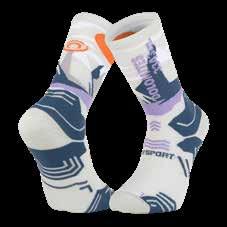
BV Sport’s new socks collection designed for trekking and hiking ensures stability with every step and comfort on all terrains, featuring a distinctive design
The Trek Summit is a socks collection designed for hiking and trekking that delivers performance on any type of terrain and over any distance. Designed and manufactured in France, these socks are built using a proven technical construction developed to provide comfort and support. The design incorporates targeted reinforcements in the areas of the foot more subject to stress, particularly the toe and heel, to limit friction, improve comfort, and reduce repeated impact throughout the duration of the outing. The knit structure ensures effective pressure distribution under the foot, contributing to a more stable and comfortable walk over time. The
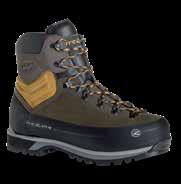
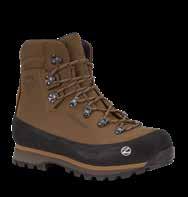
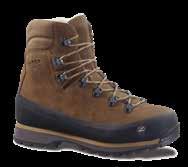
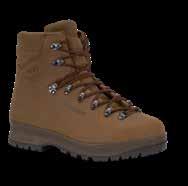
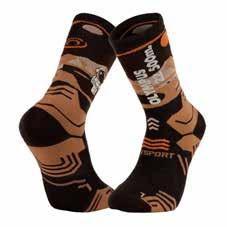
stabilizing support provides reliable and secure support for both the foot and ankle, limiting unwanted movement while preserving freedom of motion, while the breathable zones promote moisture wicking and help keep the foot dry, even during long days of walking. Thanks to the high leg, Trek Summit socks offer additional protection around the ankle and Achilles tendon, adapting to all types of hiking footwear without compromising comfort. Available in different models inspired by the Alpes, Pyrenees, Dolomites, and Olympus mountain ranges, BV Sport’s trekking sock line combines technical performance, durability, and visual identity.
TECHNICAL FEATURES
• Reinforcements at the toe and heel to limit the rubbing
• Ankle and foot support to limit sudden movements
• Breathable areas to wick away moisture
• High shaft for added protection to the Achilles heel
+39 335.5927456 - info@bvsport.it
Fjällräven’s goal with the SS 26 collection was to design garments that allow for greater freedom of movement in nature. This vision gave rise to the lightweight version of the brand’s trekking line
The pursuit of lightness has been part of Fjällräven’s history since its inception: as early as 1960, the first Lätt backpack was developed with the aim of offering a lightweight yet sturdy and functional solution. Today, this
Weighing just over one kilogram, this backpack packs everything you need for a comfortable and practical trek: a 45-liter capacity, a modular carrying system, a removable front pocket, a detachable internal pocket that can also be used separately, and a birch wood frame—chosen as a sustainable alternative to materials like metal and plastic. The product was also designed to accommodate different body types, featuring ergonomic shoulder straps, an anatomically shaped waist belt, and an adjustable back panel.
• Weight: ≥ 1 kg
• Capacity: 45 L
• Birch frame
• Modular design
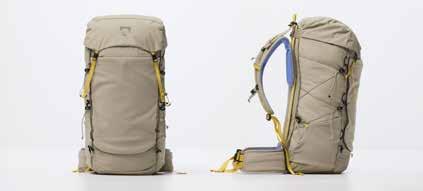
legacy takes on a new form in the Kajka X-Lätt, a hiking backpack that reinterprets one of the brand’s most iconic models in a more minimalist and contemporary style, and in the new Keb Lätt collection arriving in June.
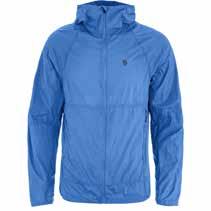
Designed for those who want to reduce the overall weight of their gear without sacrificing comfort, protection, and functionality, this regular-fit jacket features a design, construction, and finish optimized to deliver true lightweight performance. Made from recycled polyamide and light ripstop fabric, it resists tears while maintaining a lightweight feeling, and its low weight and ability to fold into its own pocket make it ideal for easy transport. The raglan sleeves offer greater freedom of movement, and the close-fitting hood provides protection from the wind.
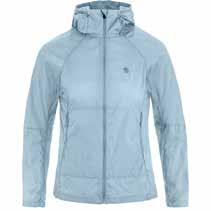
• Fit: regular
• Material: 100% recycled polyamide and 20D ripstop (40 g/m²)
• Weight: 119 g in size M and 108 g in size S
• Can be folded into its own pocket
- customerservice@fenixoutdoor.at
For the SS 27 summer season, Hanwag is reimagining the concept of hiking with three low-cut models that combine comfort, durability, and performance with a fresh new look
HIGHLIGHTS
Maximum durability
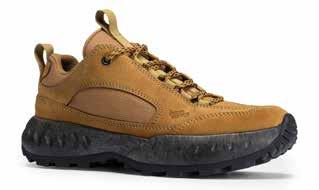
Comfort and performance come together in the Lightstone Low, a modern reinterpretation of the classic Gritstone II XC GTX hiking and outdoor shoe. Thanks to its PFAS-free, waterproof, and breathable Gore-Tex ePE membrane, it offers reliable protection in all weather conditions. Featuring a high-grip Vibram outsole, this shoe is ideal for hikes on both well-trodden trails and forest paths.
Designed for heavy-duty use
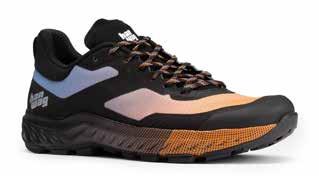
Multifunctional, lightweight, and durable, it provides long-lasting cushioning and high energy return thanks to the Hanwag Bead Technology in the midsole. Gore-Tex Invisible Fit technology makes the shoe water-repellent and breathable. Like most Hanwag models, the Kaduro is resoleable, underscoring the brand’s commitment to the longevity of its products, avoiding unnecessary waste, and promoting a more sustainable future.
100% Made in Europe
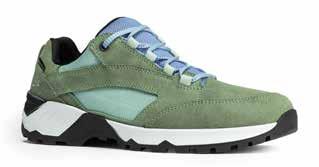
Combining a low-cut upper with extreme comfort, the result is the new low-cut version of the classic Banks boot. Crafted from high-quality nubuck leather and suede and built on the Natural Fit last, this lowcut version of the boot is biomechanically optimized. It supports the foot’s natural movement, while the PU foam midsole and premium insole provide reliable cushioning.
Nordsen presents a collection of softshell jackets and technical T-shirts designed to tackle any condition, offering performance, comfort, and versatility
Nordsen’s new collection is designed to support every stage of outdoor activity, from the most demanding hikes to multisport sessions, without compromising on comfort and functionality. Featuring technical garments and lightweight solutions, the focus is on advanced materials, intelligent
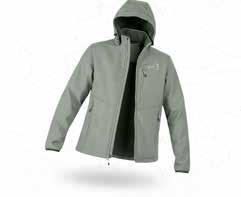
A three-layer, unlined technical softshell jacket with a shuttle-stitched construction and waterproofing (8,000 mm water column). Featuring a removable hood, elastic cuffs, and an adjustable hem for a precise fit, it also includes front pockets, a chest pocket, and an internal security pocket. Ideal for hiking and changeable weather conditions.
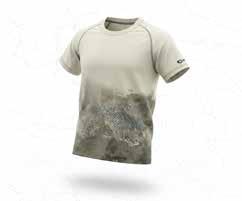
Technical crew-neck T-shirt with raglan sleeves for maximum freedom of movement. Made from perforated fabric with mesh inserts to promote ventilation and heat dissipation, it features a graphic design inspired by alpine landscapes. Lightweight, quickdrying, and easy to care for, it is designed for hiking and multisport activities.
For the SS 27, Zamberlan is expanding the Free Blast family with the new Mid GTX, a shoe designed to provide control and stability with every step
construction, and a minimalist aesthetic that evokes the natural landscape. A comprehensive collection, available for both men and women, that prioritizes freedom of movement, protection, and lightness, positioning technical apparel as a true ally for performance.
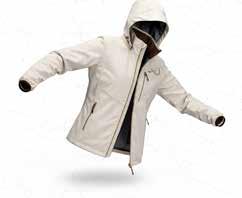
This unlined, three-layer softshell jacket is waterproof (8,000 mm water column) and designed for protection and comfort during outdoor activities. A removable hood, elastic cuffs, and an adjustable hem ensure a snug fit and adaptable wear, while functional pockets and an interior one make it a versatile piece.
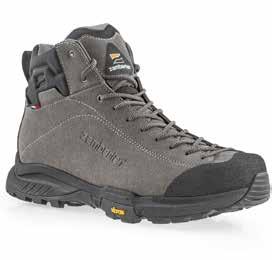
With the new Free Blast Mid GTX, Zamberlan Free Blast family welcomes a mid-cut model designed for hiking, bringing the lightness and versatility of the low-cut version to the trail along with enhanced ankle protection. The Hydrobloc suede upper features lacing all the way to the toe, ensuring a perfect fit that adapts to the foot, while the Gore-Tex Extended Comfort lining, thanks to its highly water-repellent and breathable fabric, keeps the foot dry and cool. The thermoformed collar wraps precisely around the ankle, ensuring support and stability with every step, even on uneven terrain. The anatomical fit, with a wide flex zone and increased support surface in the heel area, ensures comfort and control on any type of terrain. The EVA midsole absorbs impacts thanks to its cushioning properties, while the Vibram Junko Lite Megagrip outsole guarantees reliable grip in every situation, while keeping the weight low. Entirely made in Italy, the Free Blast Mid GTX is available in sizes 37 to 48, including half sizes.
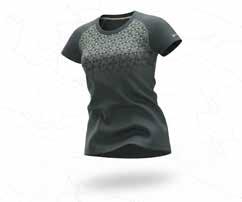
Technical crew-neck T-shirt with raglan sleeves, designed to ensure comfort and freedom of movement. The perforated fabric with mesh inserts promotes breathability and heat management. The floral graphic pattern, reinterpreted in a contemporary style, adds a distinctive touch. Lightweight, breathable, and quick-drying.
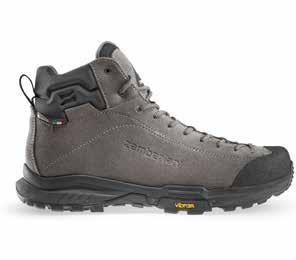
TECHNICAL FEATURES
• Hydrobloc suede upper for a custom fit
• Waterproof Gore-Tex Extended Comfort lining
• Anatomical fit for greater comfort and control
• EVA midsole for shock absorption
• Vibram Junko Lite outsole for a reliable grip
Icepeak knows what it takes to feel comfortable throughout your entire hike: breathability, natural UV protection, and a relaxed, stretchy fit
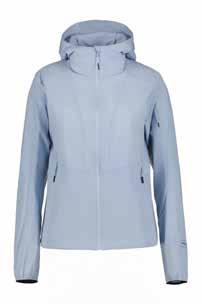
Perfect for summer days to shield you from the wind and sudden downpours: this ultra-light jacket packs down into its own pocket, making it easy to take along on any adventure—even when it doesn’t seem necessary. The fabric provides UPF 30 protection and blocks harmful UV rays from reaching your skin: only 1/30 of these rays manage to penetrate the water-repellent material.
A long-sleeved shirt with a relaxed fit, designed for active summer activities. The fabric provides UPF 30 protection, shielding the skin from sun exposure: only 1/30 of UV rays can pass through the shirt. This result is achieved not through the use of chemicals, but thanks to the innovative weave of the yarn. The quick-drying material effectively wicks away moisture, ensuring comfort throughout every outdoor excursion.
Breathable, water-repellent, and featuring a relaxed fit: these pants are perfect for any kind of adventure, offering guaranteed comfort all day long. They feature two front pockets, two side zippered pockets, and elasticated legs with adjustable hems. This freedom of movement is further enhanced by the elastic waistband and 4-way stretch fabric. The pants offer UPF 40 protection, meaning only 1/40th of UV rays can pass through the fabric and reach the skin—a benefit achieved without chemical treatments. Plus, they pack down completely into their own pocket, making it easy to take them everywhere, from the start of the trail to the end, when it’s time to relax.
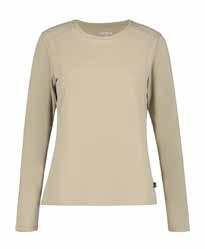
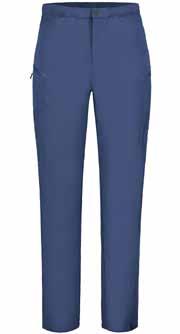
info@luhta.it - luhta.com
The SCARPA Mustang TRK GTX is designed for a wide range of outdoor activities: from hiking on challenging terrain to daily or long-distance treks. All without compromising on comfort, traction, and breathability
High-performance materials, balance, traction, and structural support even on uneven terrain are the hallmarks of the SCARPA Mustang TRK GTX. Ideal for day hikes or short- to medium-length treks, as well as for newcomers to outdoor activities, its features make it perfect for those seeking a versatile, lightweight, and comfortable boot.
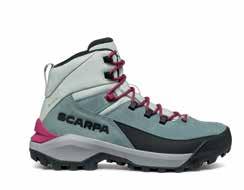
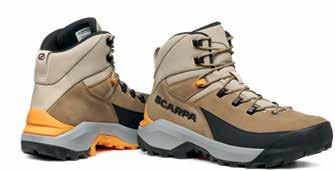
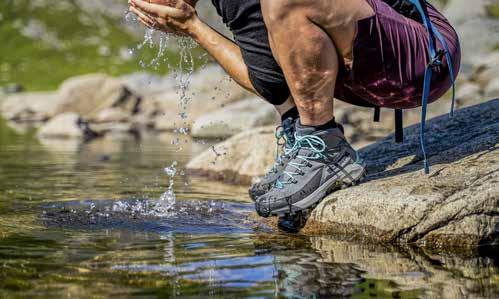
The Gore-Tex Prism XT membrane is a key component of the shoe: this technology ensures maximum protection in all weather conditions, maintaining its waterproof properties while offering excellent breathability. The feet stay dry and well-ventilated both on summer hikes and on wet terrain. The midsole, which combines IKS (Interactive Kinetic System) geometry with lightweight PU and a TPU overlay, offers support and stability during each step while also providing agility and a smooth stride. The Vibram XS Trek outsole with 5-millimeter lugs ensures traction even on uneven or slippery terrain, while the rubber toe cap increases the boot’s durability and cushions impacts on the foot. Finally, the upper combines water-repellent suede and eco-mesh that is 45% recycled. The construction with a padded collar and tongue enhances comfort and protection, while the TPU heel stabilizer supports the foot during the step. The zone-specific lacing system allows for adjustable tightness between the forefoot and ankle, improving stability and comfort while walking.
For the 2027 summer season, Mico is introducing two new styles of hiking and trekking socks that combine performance and design
A unisex and a women’s sock both part of the Outdoor Extradry Hike collection, featuring a sophisticated color palette together with the functional technology characteristic of the Brescia-based brand. Among the new features are the use of organic cotton yarn, which ensures a soft feeling and advanced comfort that adapts to the foot, and the use of nanoGLIDE fiber on the toe and heel, which reduces abrasion, friction, and heat, preventing blisters even during long walks or intense activities.
The elastic construction of these unisex socks, featuring an anti-twist design, promotes stability with every movement, while the use of LYCRA fiber maintains flexibility without adding thickness. For the women’s version, an
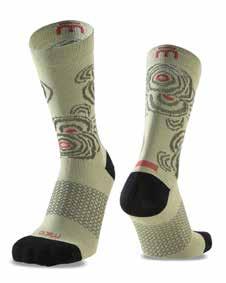
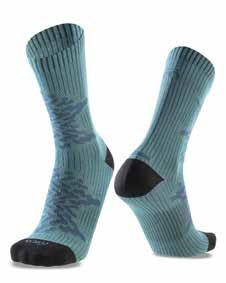
elastic band has been designed across the midfoot, with a diamond-shaped construction that adapts to the shape of the foot, providing additional support and comfort. The socks also feature special ventilation zones on both the collar and the insole, which promote continuous breathability, keeping the foot cool and dry all day long. The flat, invisible seam, which is particularly gentle, minimizes friction, especially in the forefoot area around the toes, offering total comfort without irritation. As for the design, the unisex sock features an elegant and modern graphic pattern, while the women’s version exhibits a stylized floral motif, created using a heldstitch technique, resulting in a timeless and classy look. Entirely made in Italy, these socks are designed for those seeking the ultimate in performance and style.
The Backcountry GT is the trekking pole by C.A.M.P. that offers lightness and precision during long, strenuous hikes
The Backcountry GT pole, designed for longer and more demanding outings, is the perfect choice for those seeking the ideal balance between strength, stability, and lightness. Constructed from three-section aluminum with reduced-diameter tubes, it offers excellent durability without compromising on maneuverability. The telescopic design, featuring graduated lower sections, allows for simple and precise length adjustment, ranging from 64 to 135 centimeters in the men’s version and from 60 to 125 centimeters in the women’s version. Adjustment is facilitated by the plastic lever mounted on the aluminum ring of the clips, designed for a secure and reliable lock. The foam grip ensures a firm and comfortable hold. The ribbed lower section allows varying the handle according to the terrain. The soft, ergonomic,
TECHNICAL FEATURES
• Three-section telescoping aluminum pole
• Adjustable lower segments for length adjustment (64 to 135 cm for men and 60 to 125 cm for women)
• Ergonomic dual foam handle
• Length ranges from 64 to 135 cm
• Quick-release system
• Carbide tip
TECHNICAL FEATURES
• Weight: lightweight
• Height: crew – below the calf
• Versions: unisex and women’s
• Materials: cotton organic, nanoGLIDE fibers and LYCRA fibers
and adjustable hand straps promote freedom of movement without compromising stability, while the hard metal tip guarantees durability and effec tiveness, offering excellent grip on any surface. The Backcountry GT W pole, in addition to being shorter than the men’s version, is also lighter, making it even more maneuverable and extremely versatile. Both come equipped with Dart baskets (standard), Small, and Large (included) for use in every season and feature minimalist packaging, consistent with C.A.M.P.’s com mitment to sustainability.
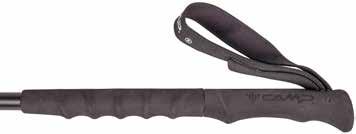

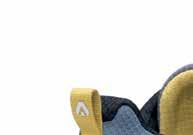
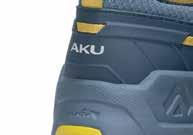
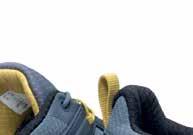
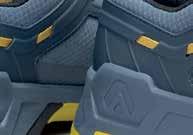



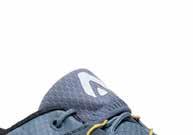




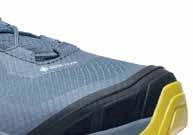






Aster GTX è una calzatura studiata per il fast hiking: agile e protettiva, consente di muoversi velocemente anche sui sentieri più tecnici.
Aster GTX è caratterizzata da una piastra interna che protegge la pianta del piede dalle asperità del terreno.
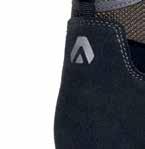


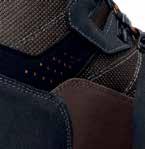













Calzatura robusta e leggera che offre un elevato comfort e traspirabilità, Trekker Lite IV GTX presenta un nuovo design della tomaia e dell’intersuola, unitamente ad un’allacciatura più efficiente, mantenendo l’elevato livello di comfort che ha sempre caratterizzato la serie Trekker Lite.




Siamo entusiasti e determinati per ogni tipo di esperienza a contatto con la natura.
Alpinismo, lunghi trekking, escursionismo lento e veloce, lavoro duro ma in sicurezza.


Abbracciare l’outdoor in ogni suo aspetto per AKU significa viverlo con questo spirito: libero ma consapevole, dinamico ma responsabile.