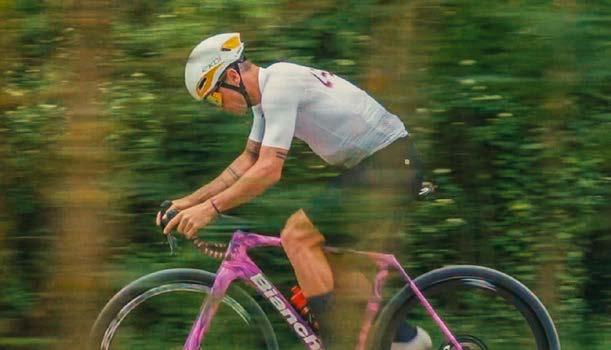
18 CULTURE AND COUNTERCULTURE 20 GUERCIOTTI, OLYMPIA, SPECIALIZED, DE ROSA
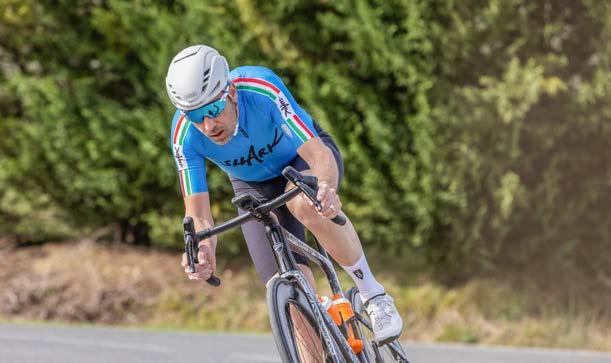
BH, DRALI MILANO, ORBEA, SARTO
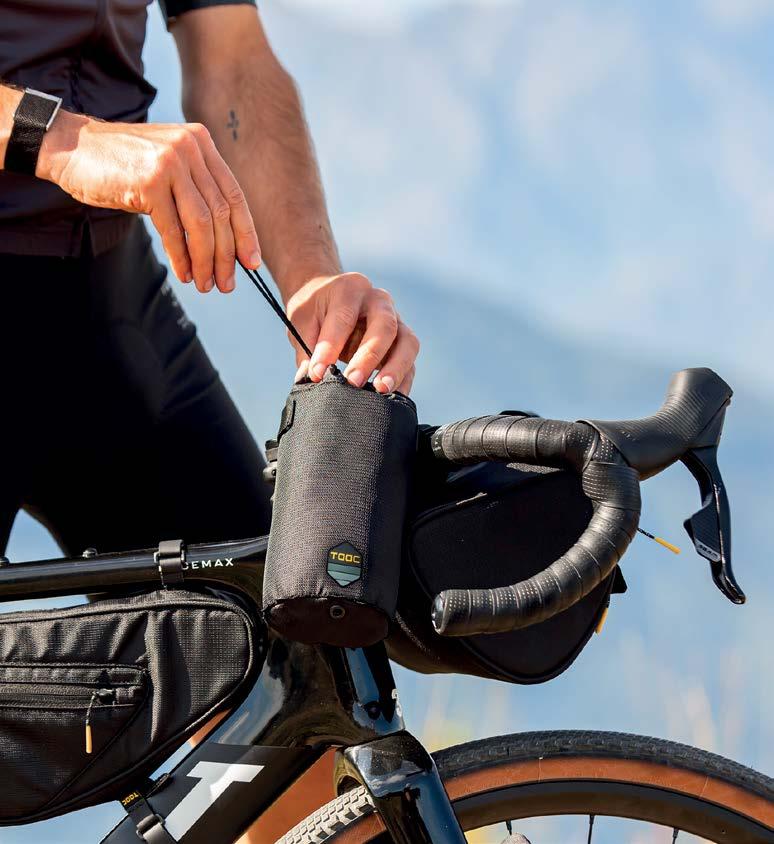
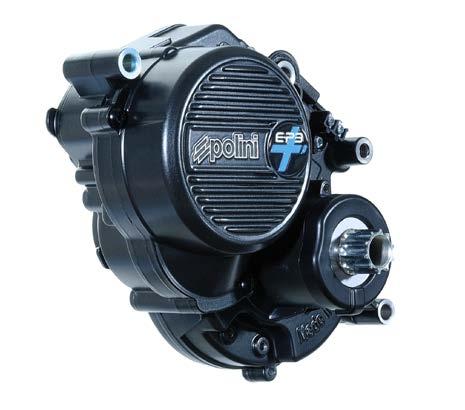
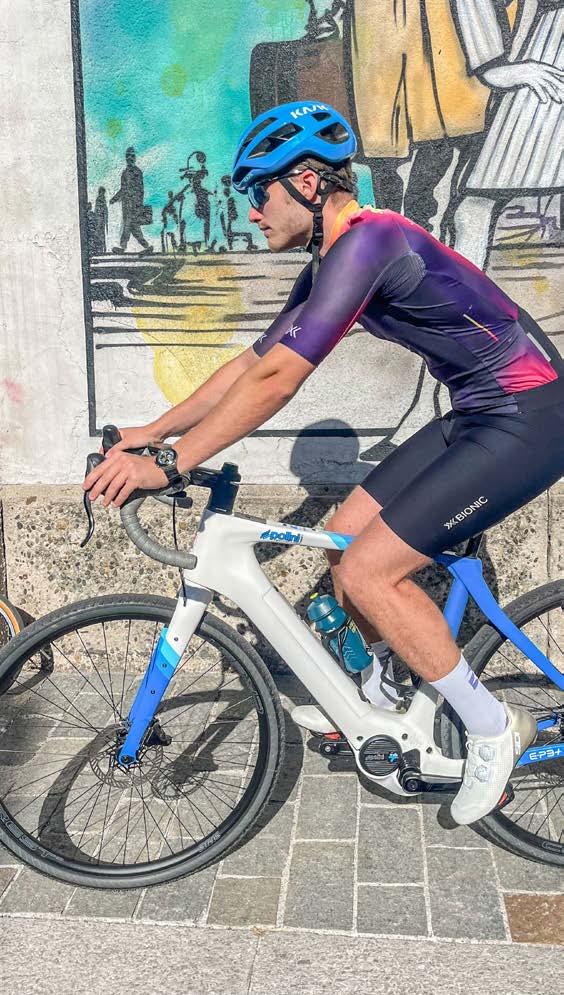
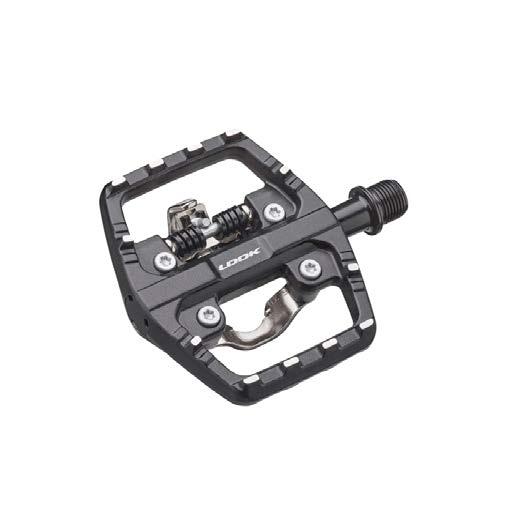
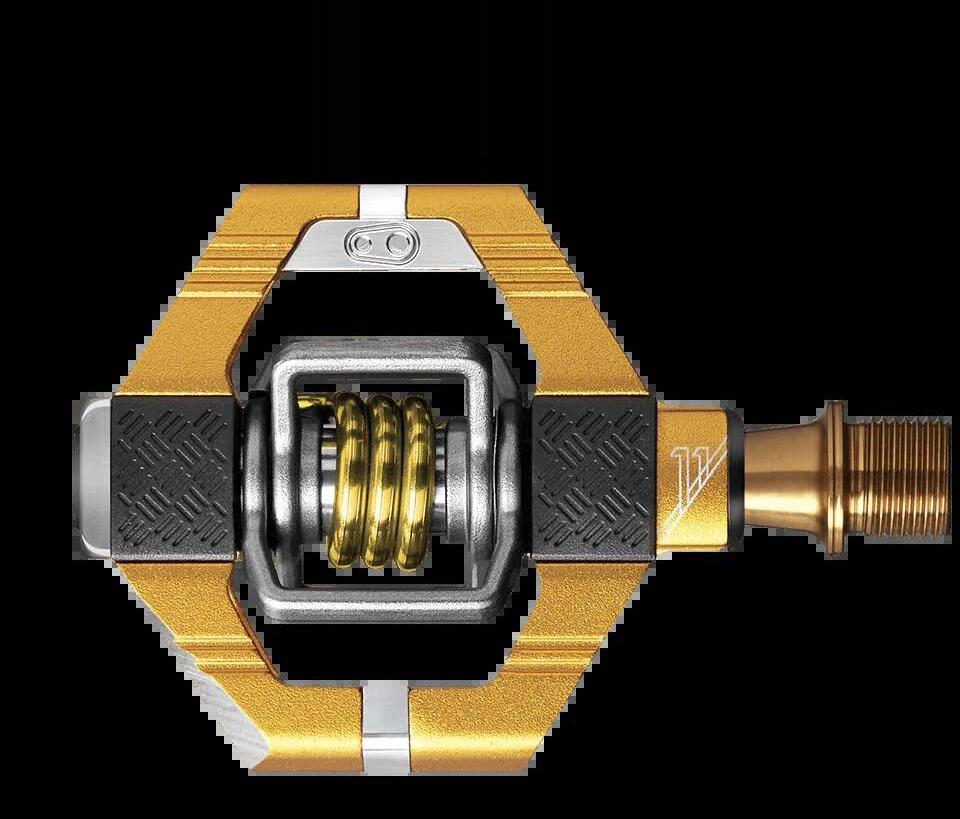
POLINI E-P3+ EVO2 23 X-ONE-G MAX E X-VENTURE+ OF LOOK
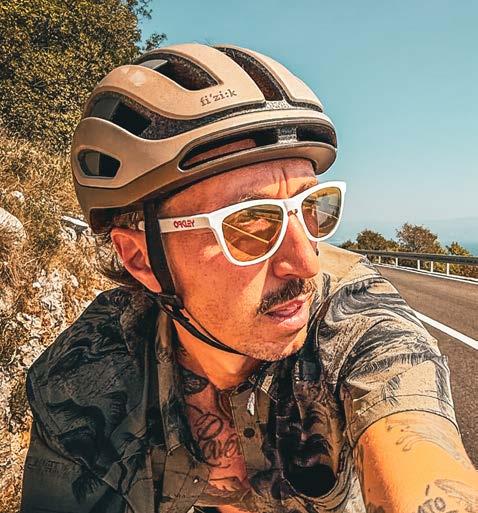
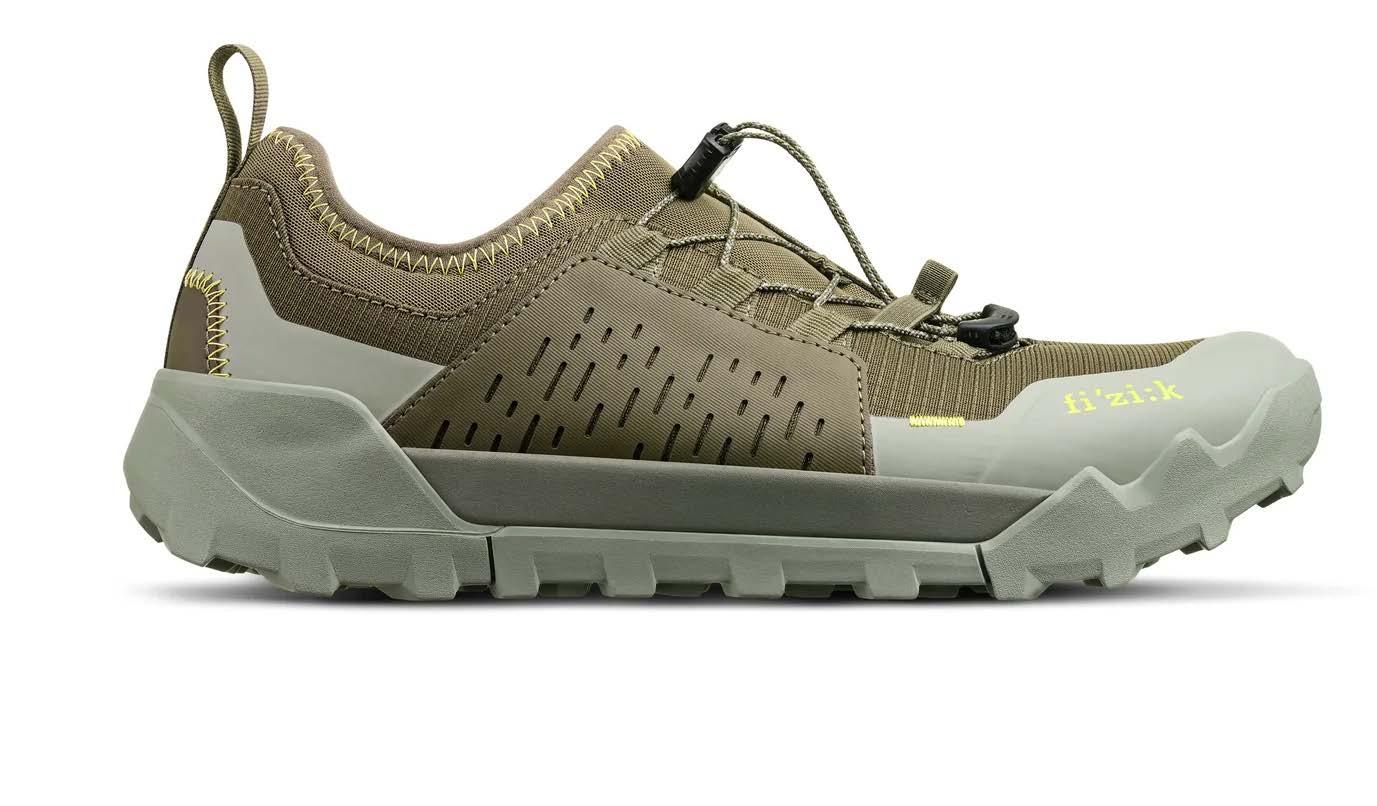
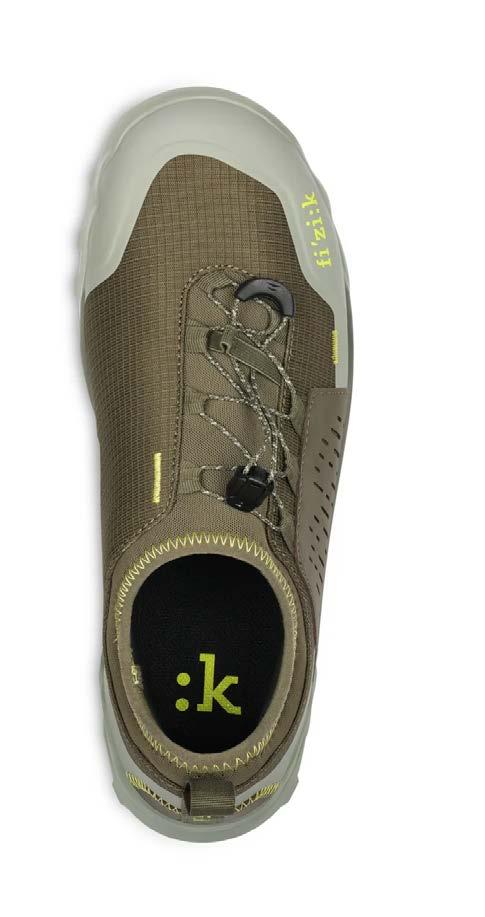
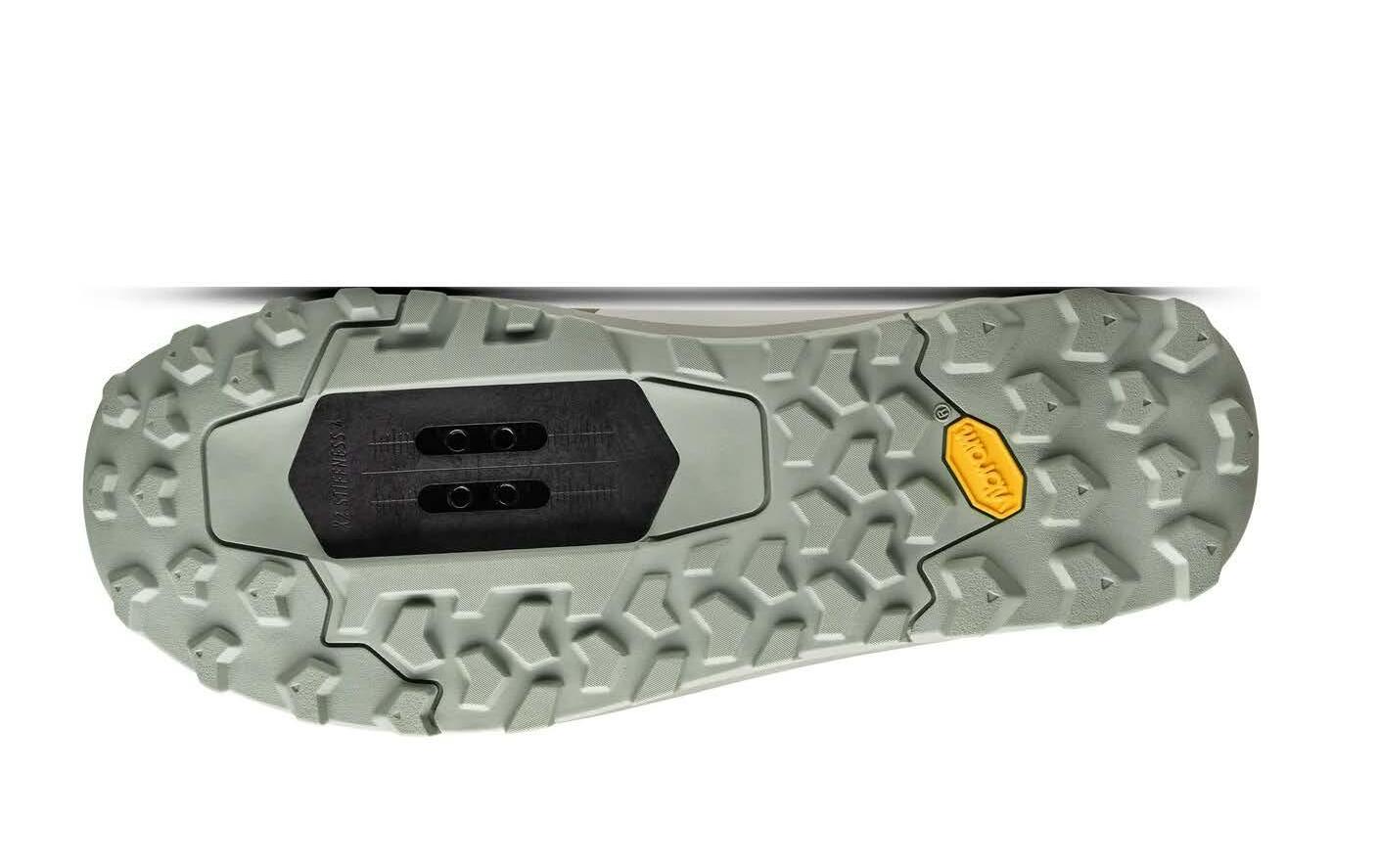
FIZIK ERGOLACE 2 WITH VIBRAM MEGAGRIP OUTSOLE
BY DAVIDE L. BERTGNA davide.bertagna@mag-net.it
PRODUCT, FREEDOM, VALUE
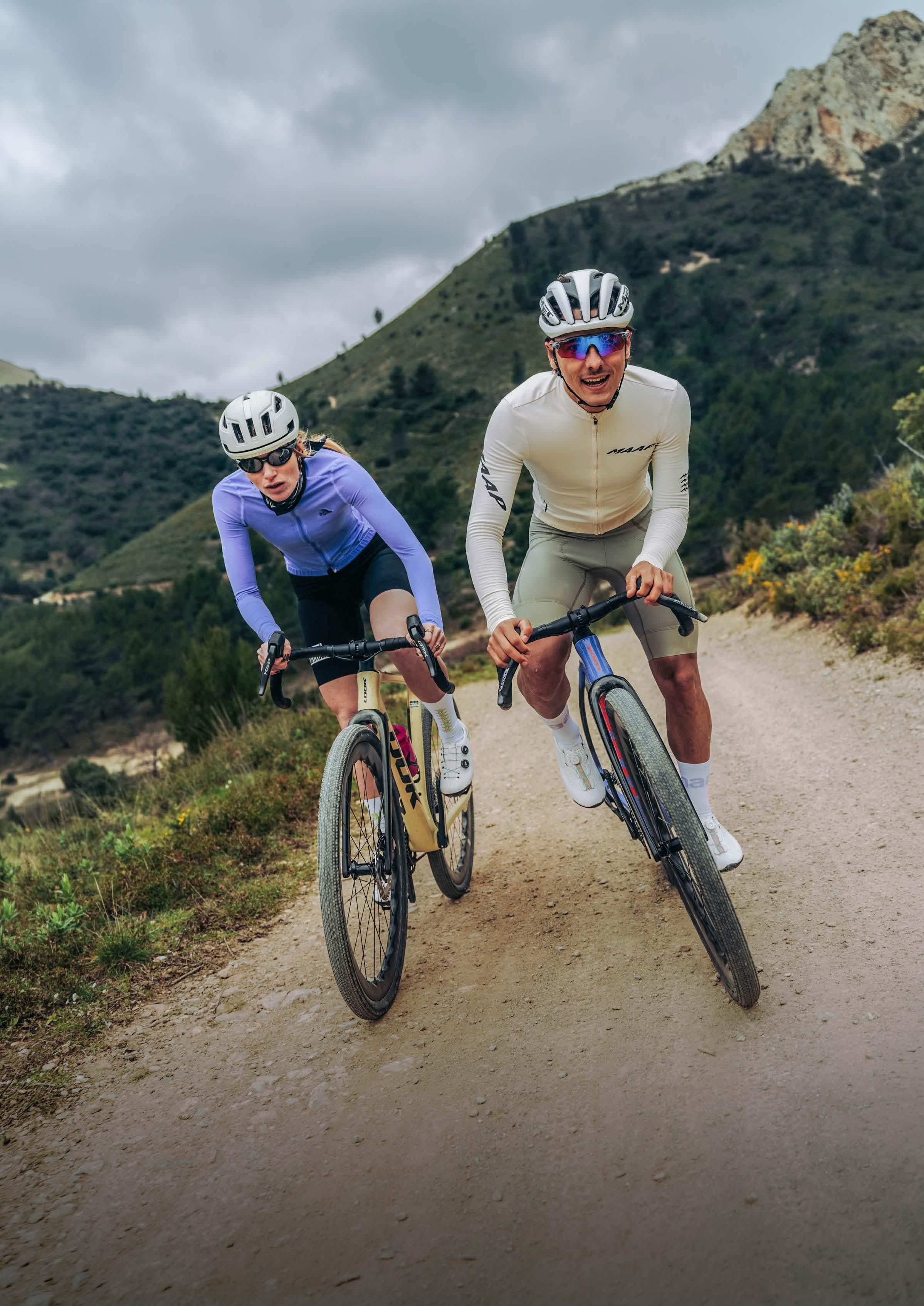
There are times when an industry needs to pause and reflect on what it is becoming—not out of nostalgia for the past, but to understand which paths are worth pursuing in the future. Today, this reflection concerns not only the products the market offers, but also the way people choose to experience cycling. And it is precisely by observing these changes that some of the industry’s most interesting dynamics emerge. In recent years, gravel has ceased to be merely a technical category. It has become something more: a language, an approach, a different interpretation of cycling. In a market that has long pursued extreme specialization, gravel has brought a fundamental concept back to the forefront: freedom.
The freedom to choose your route, to mix paved and unpaved roads, to ride without rigid rules. After all, what we call “gravel” today resembles what for decades was simply riding a bike: setting out without labels, driven by curiosity rather than performance. It’s no surprise that this discipline has won over such a wide audience. Because of its versatility, its accessibility compared to other segments, and its ability to attract riders from diverse backgrounds. But above all, because it has tapped into a deeper cultural shift. In an era dominated by speed and performance, gravel cycling offers a different relationship with time, the landscape, and the experience itself. It invites riders to choose less-traveled roads and to value the journey itself over the destination. The same phenomenon is reflected in cycle tourism. More and more people are choosing bicycles to explore and experience the countryside at a different pace. And when customers buy an experience rather than a product, their relationship with the market changes as well.
Gravel riders rarely look for just a bike. They seek preparation, reassurance, advice, experiences, and places to discover. They want to feel part of a community that extends beyond the purchase. It’s no coincidence that many “new gravel riders” come from worlds far removed from traditional cycling, with different expectations and sensibilities. Then there’s another aspect: safety. More and more people are avoiding busy roads and choosing back roads, dirt paths, and unpaved roads. Perhaps its success stems from lowering the psychological barrier to participation, making cycling more human and inclusive. This transformation goes beyond the product itself and broadens the base of participants.
And this is where gravel cycling intersects directly with the world of retail. Because while we’re witnessing the rise of new ways to experience cycling, the report from our exclusive survey “The Charge of the 101” (on pages 10–11) paints a realistic picture of the environ-
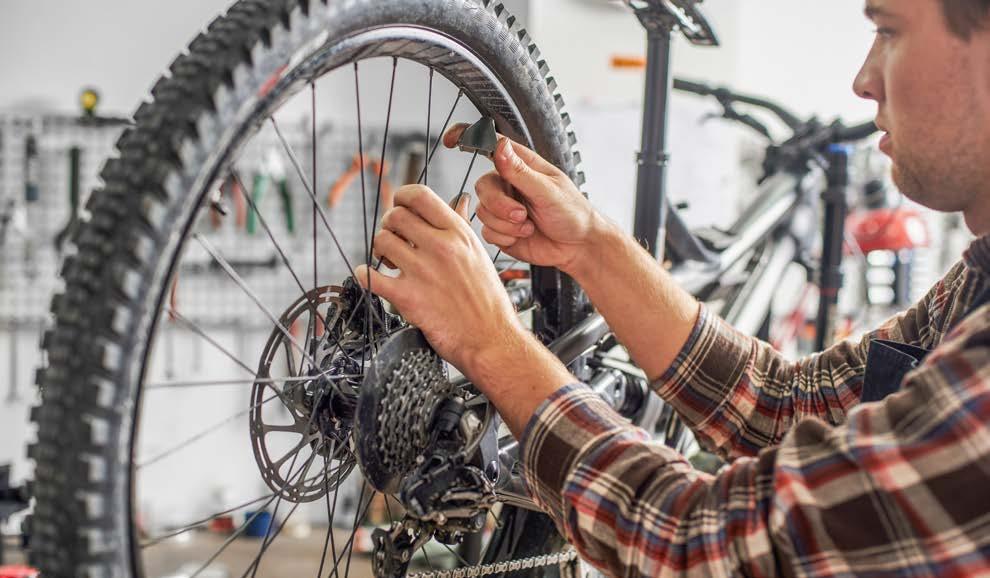
ment in which Italian bike shops operate every day. It’s an industry built on passion and expertise, but also on increasingly squeezed profit margins, more cautious consumers, aggressive online competition, and challenges that, for many operators, are becoming structural in nature. The 101 interviews conducted nationwide paint a picture of an industry that continues to seek balance in a complex environment. For many specialty retailers, their room to maneuver has gradually shrunk. In many cases, the repair shop is the true pillar of economic sustainability, while bike sales alone are finding it increasingly difficult to ensure adequate profitability. Yet, the responses collected also reveal a possible key to understanding the future. The stores that seem to be handling this phase best are not necessarily those with the highest sales, but those that manage to build stronger relationships with their customers. These are businesses that complement their technical expertise with services, consulting, community engagement, and opportunities for social interaction.
In other words, what today’s gravel customer is looking for increasingly aligns with what specialty shops can offer better than anyone else. Because online, someone will always be able to sell at a lower price. It will be much harder, however, to replicate the value of a community, a well-organized ride, or the trust built over time through presence and expertise. The requests that retailers are making to manufacturers and distributors remain clear: greater balance in pricing policies, more flexibility in ordering, production that better aligns with actual demand, and greater attention to the impact of e-commerce strategies on the specialty channel. These are concerns that deserve to be heard, and companies and distributors address them in the pages of this issue (pp. 32–44), offering their perspectives on the market’s key challenges.
But perhaps the most interesting message to emerge from our survey concerns precisely the need to redefine the very concept of value. Because while the product remains fundamental, it is no longer enough on its own. The market rewards those who succeed in creating experiences, relationships, and a sense of belonging. This is where the two major themes of this issue naturally converge. On one hand, gravel riding and cycle tourism, which are redefining the way people experience cycling. On the other, retailers who strive every day to turn these changes into concrete and sustainable opportunities. The industry’s challenge today seems to boil down to this: combining passion and business, experience and profitability, community and the market. Because there’s no shortage of paths to explore. As is often the case with gravel riding, it’s the least obvious paths that turn out to be the most fascinating.
Editors: Davide L. Bertagna, Alessandro Marra, Daniele Pansardi, Riccardo Penna, Gabriele Pezzaglia, Gabriele Vazzola Art Director: Simone Comi
Editorial Offices: Corso della Resistenza, 23 - 20821 - Meda (MB) Via Tertulliano, 68 - 20137 - Milan - Tel. 02.87245180-1-2 - Fax 02.87245182 redazione@bike4trade.it - bikefortrade.it
Volume 14 - Issue 4 - 2026 - Bimonthly journal
Registered with the Court of Milan, No. 39, February 8, 2013 Poste Italiane SpA Sent via postal subscription Decree-Law No. 353/2003—Converted into Law No. 46/2004—Article 1, Paragraph 1, LO/MI Registration in the ROC No. 16155, dated November 23, 2007 Print: Ingraph - Seregno (MB) - One copy: 1.00 euro
The publisher guarantees the utmost confidentiality of the personal data in its possession. This information will be used to manage subscriptions and to send marketing information.
Pursuant to Article 13 of Law No. 196/2003, your personal data may be corrected or deleted at any time by writing to: MagNet Srl SB Data Controller: Benedetto Sironi - Corso della Resistenza, 23 - 20821 - Meda (MB) Closed at the editorial office on June 16, 2026
MARKET
THE CHINESE PREMIUM BRAND PARDUS OFFICIALLY LAUNCHES IN EUROPE
The Chinese brand Pardus officially debuts in Europe. Pardus is the only Chinese cycling brand to have established a permanent corporate presence on the European continent, with a structure specifically designed to meet the needs of end users and retailers. The brand can rely on the industrial strength of its parent company, Taishan Sports Industry Group, a leading supplier to top-tier international sporting events (including the Olympic Games) for over forty years. Although the group operates in numerous sectors—ranging from the construction of sports facilities to professional equipment for gymnastics, judo, and boxing—Pardus represents the division highly specialized in premium cycling and is also the official bike of the Chinese National Cycling Team. Unlike many competitors who rely on external suppliers for the production of carbon frames, Pardus controls every stage of the process in-house at its 100,000 m² facility.
CICLEON BECOMES A BRN DISTRIBUTOR FOR THE IBERIAN PENINSULA
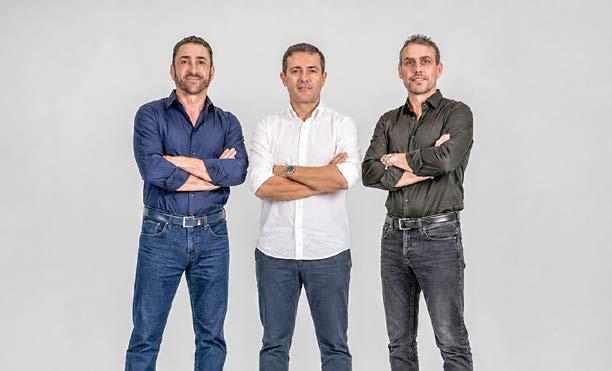
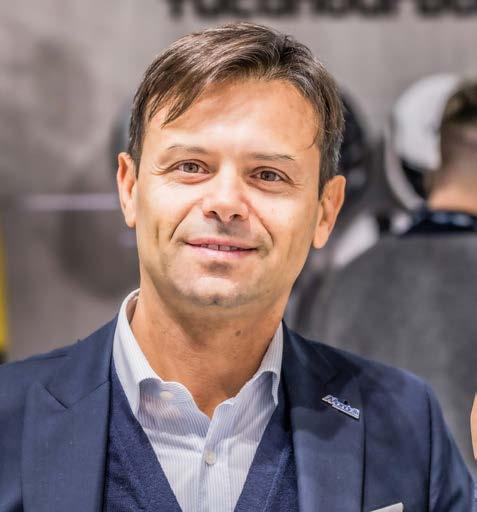
BRN has announced that Cicleon has become the official distributor of the Italian brand for the entire Iberian Peninsula—namely, Spain, Portugal, and Andorra. Cicleon, a brand directly owned by Merida South West Europe, is one of the leading distributors in the bike market and manages a portfolio of premium brands including Thule, Pirelli, Kask, KOO, Bryton, Elite, and Stevens, to name just a few. Eduardo Roldán, CEO of Cicleon, commented: “BRN is a brand with a strong identity and a comprehensive, competitive product offering across several key categories. We are confident it will be very well received by our customers and partners.” Marco Bernardi, CEO of BRN, added: “This partnership represents an important opportunity to strengthen our presence in the Iberian Peninsula. Thanks to their experience, structure, and market knowledge, we are confident that together we can build a solid and lasting partnership.”
ZWIFT ACQUIRES ROUVY TO ACCELERATE GROWTH IN INDOOR CYCLING
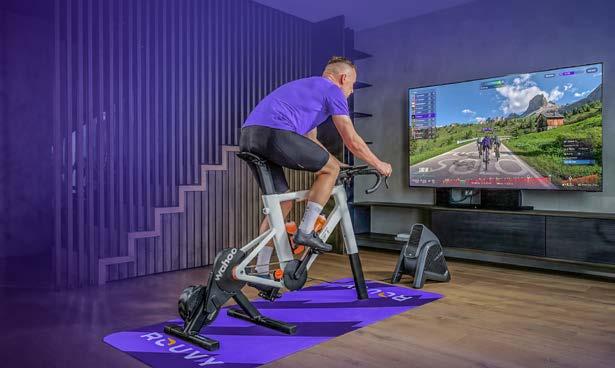
Zwift announced that it has completed the acquisition of ROUVY. The deal aims to accelerate growth in the indoor cycling segment through a strategic partnership between the two companies, which will continue to operate independently. “This is an important moment for both Zwift and ROUVY. We have great respect for what ROUVY has built—developing an excellent product and a global community, and demonstrating that there is strong demand for experiences based on real-world video. Together, we can be stronger, and I’m excited to see how this acquisition will accelerate our mission to get more people active, more often,” said Eric Min, co-founder and CEO of Zwift. Both platforms will continue to operate independently, with distinct roadmaps and subscription models.
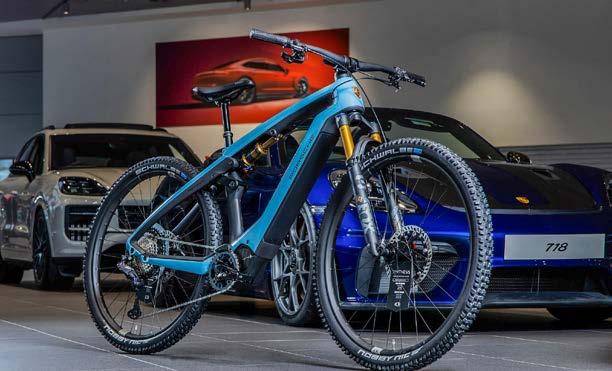
PORSCHE CLOSES ITS EBIKE DIVISION: ABOUT 360 EMPLOYEES TO BE LAID OFF
Four years after the project began, Porsche has decided to shut down its eBike Performance division. "Porsche eBike Performance GmbH was founded with the goal of developing high-performance drive systems and marketing them worldwide," the company statement reads. “Due to the radical change in market conditions for eBike systems, the joint venture’s operations will be discontinued. This decision is in line with Porsche AG’s strategic focus on its core business. The closure of operations at the Ottobrunn and Zagreb locations affects approximately 360 employees.” Porsche had also acquired all of Fazua’s shares. Consequently, questions arise as to how the Bavarian brand will continue to operate given the parent company’s divestment. As reported by Bike Europe, in addition to the e-bike division, Porsche also intends to close Cellforce Group GmbH, which specializes in batteries, and the engineering firm Cetitec GmbH. These measures will affect more than 500 jobs.
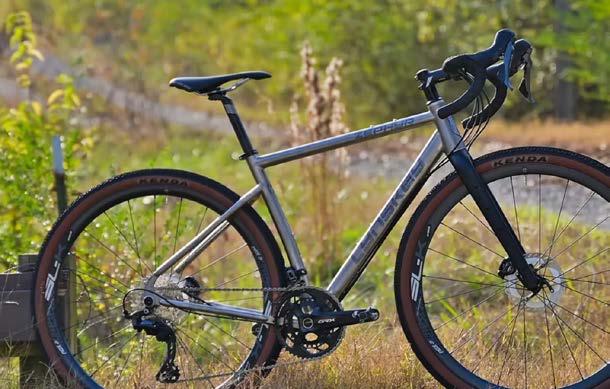
LYNSKEY PERFORMANCE PRODUCTS FILES FOR BANKRUPTCY
The U.S. titanium bicycle brand Lynskey Performance Products has filed for bankruptcy in U.S. federal court with the aim of restructuring its debt and stabilizing its operations under court supervision. According to documents filed with the U.S. Bankruptcy Court for the Eastern District of Tennessee, the company attributed its difficulties to rising production and operating costs, reduced cash flow, and issues related to order fulfillment. Other causes of the crisis cited include significant chargebacks imposed by the e-commerce platform Shopify and financial difficulties that arose following the transition to a direct-to-consumer sales model. The filed documents reveal that the reduction in liquidity prevented the company from purchasing components needed to fulfill orders, causing delivery delays and an accumulation of debt to suppliers. The company’s performance was also negatively impacted by the deteriorating health of co-founder David Lynskey, who died in June 2025.
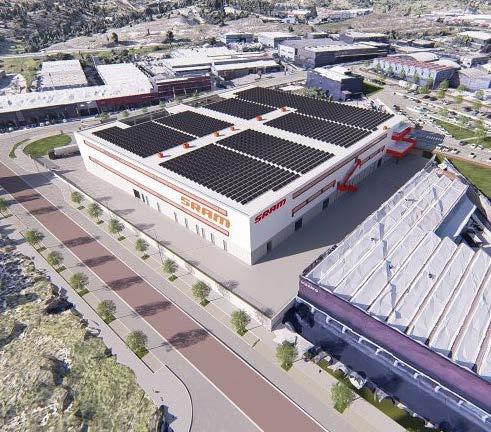
SRAM: NEW MANUFACTURING FACILITY IN COIMBRA, PORTUGAL
SRAM has announced the construction of a new manufacturing plant in Coimbra, Portugal, dedicated to the full production of its components. The investment represents a strategic step toward expanding the group’s industrial presence in Europe, increasing production capacity, and strengthening the resilience of the supply chain. The new facility will cover an area of approximately 25,000 square meters and will bring SRAM’s entire manufacturing capacity—including assembly, testing, and quality control—to the EU for the first time. The facility will enable local production of the company’s entire component portfolio—which includes over 7,500 SKUs—bringing manufacturing closer to its key OEM and aftermarket partners across the continent. Currently, the Coimbra site is already home to the world’s only SRAM plant dedicated to the production of bicycle chains, with millions of units manufactured each year. The campus also houses production facilities for Zipp wheels and TIME Sport pedals, employing a total of over 300 people. This initiative is part of the group’s broader “onshoring” strategy, aimed at bringing production closer to its target markets. According to the company, reducing long-distance transport between Taiwan and Europe will help cut logistics-related emissions, shorten delivery times, simplify operations for manufacturers, and improve collaboration with industrial partners. Production at the new plant is scheduled to begin gradually starting in 2028, with a progressive increase in capacity through 2032.
The Bernardi brothers, with Eduardo Roldán in the center
TENWAYS: VITTORIO MANGANO, SALES ACCOUNT EXECUTIVE FOR ITALY
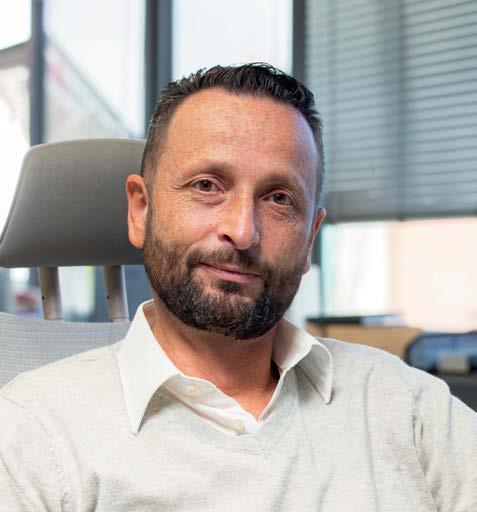
Tenways has appointed Vittorio Mangano as its new sales account executive for the Italian market. Mangano, who served as the exclusive national agent for Moustache until the end of 2025, will contribute to business development in one of Europe’s most complex and fragmented cycling markets, leveraging his established relationships with the dealer network and his in-depth knowledge of market dynamics. Mangano stated: “Tenways has developed a structured after-sales network, and this is becoming a significant differentiator. Retail remains central, especially in a context where service expectations are constantly rising. The company’s commercial approach guarantees retailers flexibility in purchasing and sustainable profit margins— crucial factors in current market conditions.”
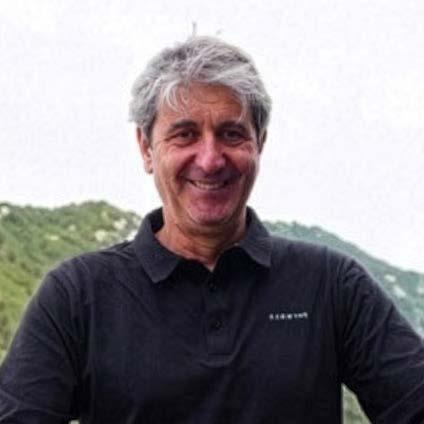
HEIKO MÜLLER IS STEPPING DOWN FROM THE MANAGEMENT OF RIESE & MÜLLER
After 33 years, co-founder Heiko Müller will step down from the management of Riese & Müller on July 31, 2026. With his departure—and following Markus Riese’s retirement from management in 2022—the founders’ generation will conclude its operational leadership. Heiko Müller stated: “For me, Riese & Müller has always been much more than just a company. It has been an opportunity to work alongside fantastic people, bring many ideas to life, and contribute to more sustainable mobility. A new era is now beginning for me, with new responsibilities. As an active partner, I remain closely connected to my life’s work. My goal is long-term development and, consequently, safeguarding our family-owned company in Germany.” Dr. Sandra Wolf, in her role as CEO, now holds overall responsibility for Riese & Müller.
CHARLES RUSSELL BECOMES PRESIDENT OF KONA BICYCLES
Kona Bicycles has appointed Charles Russell as its new president and CEO. Russell succeeds co-founder Jake Heilbron as part of a transition aimed at ensuring continuity and investment in the company’s future. Russell joined Kona in the spring of 2025 as chief revenue officer. In this role, he worked closely with the company’s founders to support business development following the brand’s return to independent ownership. He brings extensive experience in the cycling industry, gained through leadership roles at various organizations in the sector. In May 2024, Kona co-founders Dan Gerhard and Jake Heilbron reacquired the brand from Kent Outdoors. “The past year has been dedicated to rebuilding Kona. The company is experiencing some of the most significant growth in the industry. Dan and Jake have laid the foundation for a solid future, and I am proud to take on this role at such an important time,” Russell said.
VittorioMangano
CharlesRussell
HeikoMüller
PARTNERSHIP
BRITISH RIDER LAURIE GREENLAND JOINS FORBIDDEN
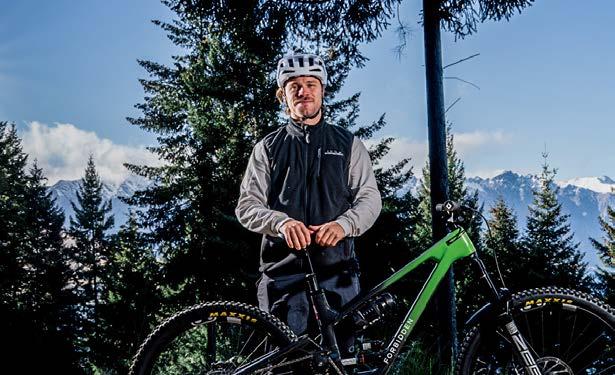
After more than a decade at the top of the world downhill scene, Laurie Greenland is starting a new chapter in his career. The British rider has announced his move to Forbidden: a step back from competition to rediscover the truest essence of mountain biking. The decision isn’t the result of a decline in performance or motivation, but rather a deeper reflection. In recent years, Greenland has had to manage health issues while still maintaining top-level results. However, the constant pressure of competition led him to question how much this pace might be compromising his passion for cycling. Joining Forbidden represents an opportunity for Greenland to experience a different kind of season: more time on the trails, greater creative freedom, and the chance to develop projects that have been on hold.
JOINS
THE ABUS FAMILY AS AN AMBASSADOR
Abus has announced Vincenzo Nibali as its new brand ambassador. The Sicilian champion’s joining the German company represents much more than a partnership: it is the convergence of real-world experience and continuous innovation. In his role as ambassador, Nibali will be involved in communications and product development, making a tangible contribution based on years of experience in professional cycling.
“Collaborating with Abus means working with a brand that puts safety first, without compromise,” commented Vincenzo Nibali.
“Throughout my career, I’ve always strived for excellence in every detail, and I see this same approach in Abus products.”
ALÉ: COLLABORATION BEGINS WITH FORMER PRO NICOLAS ROCHE
Alé has announced a new partnership with Nicolas Roche, a former professional cyclist who is now active in the gravel cycling scene. The partnership with the Italian brand spans multiple areas and includes the provision of technical apparel for all of Roche’s activities: from daily training to scheduled competitions and, of course, his custom jersey as the reigning Gravel World Champion. Alé’s relationship with Roche will be built not only on visibility but also on the direct exchange of feedback and know-how, with the goal of contributing to product development. “We’re thrilled about this partnership. His experience in professional cycling and his current perspective on gravel are of extraordinary value to us. This collaboration is not just a sponsorship, but a true exchange: listening to athletes like Nicolas allows us to continue improving our products and respond more precisely to cyclists’ needs,” commented Alessia Piccolo, CEO of APG.
BIANCHI ANNOUNCES A DEAL WITH MOTOGP STAR MARCO BEZZECCHI
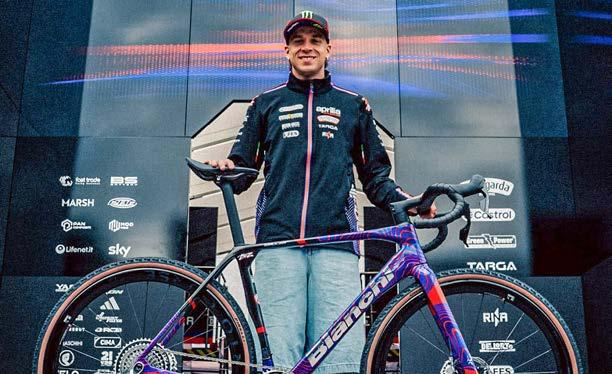
Bianchi has announced MotoGP star Marco Bezzecchi as the brand’s new global ambassador. The partnership brings together two icons of Italian sports. The collaboration also includes the Bianchi logo on the Romagna-born champion’s racing suit. To officially welcome him into the family, the Italian brand presented the rider with a one-of-a-kind Impulso RC at the Spanish Grand Prix, where he secured a solid second-place finish at the Jerez circuit. Ubaldo Della Penna, Bianchi’s chief commercial officer, stated: “We are thrilled to partner with Marco, a highly talented rider who also embodies a strong team spirit—qualities that contribute to his performance and with which Bianchi fully identifies.”
URSUS EXPANDS ITS PRESENCE IN THE OFF-ROAD WORLD WITH TEAM KMC
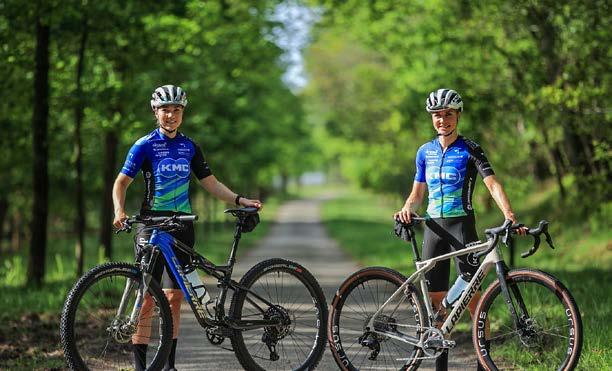
Ursus is strengthening its presence in the MTB world with a new international partnership. For the 2026 season, the Rosà (Vicenza)-based company will supply wheels to Team KMC. This applies not only to mountain bike races, but also to gravel and beach racing, at both the national and international levels. In mountain biking, the Dutch athletes will ride Lapierre XR bikes equipped with Ursus Proxima M carbon wheels. “I’m very pleased to have found a partner for our team in Ursus. They manufacture their own hubs in Rosà, Italy, where the wheels are also assembled. As a mechanical engineer, I deeply appreciate manufacturing companies with genuine technical expertise,” said Martin Schuttert, KMC’s team manager.
CARIÀDE, FEEL THE GRAVEL: LOOK CYCLE, SPONSOR OF THE EVENT
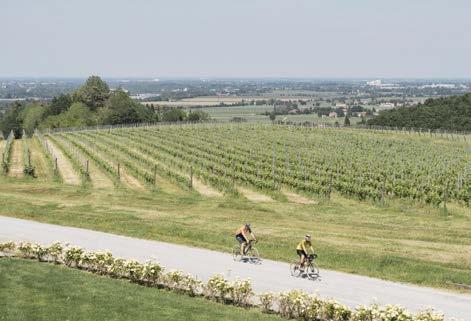
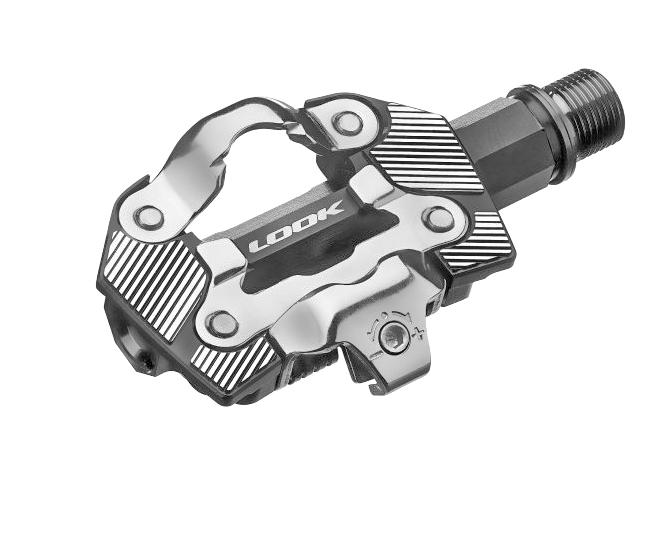
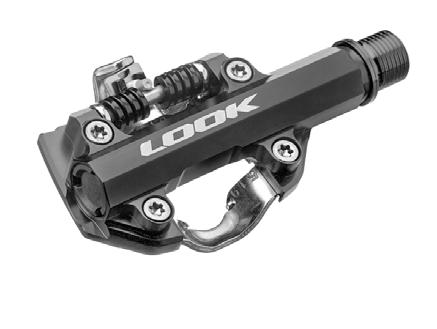
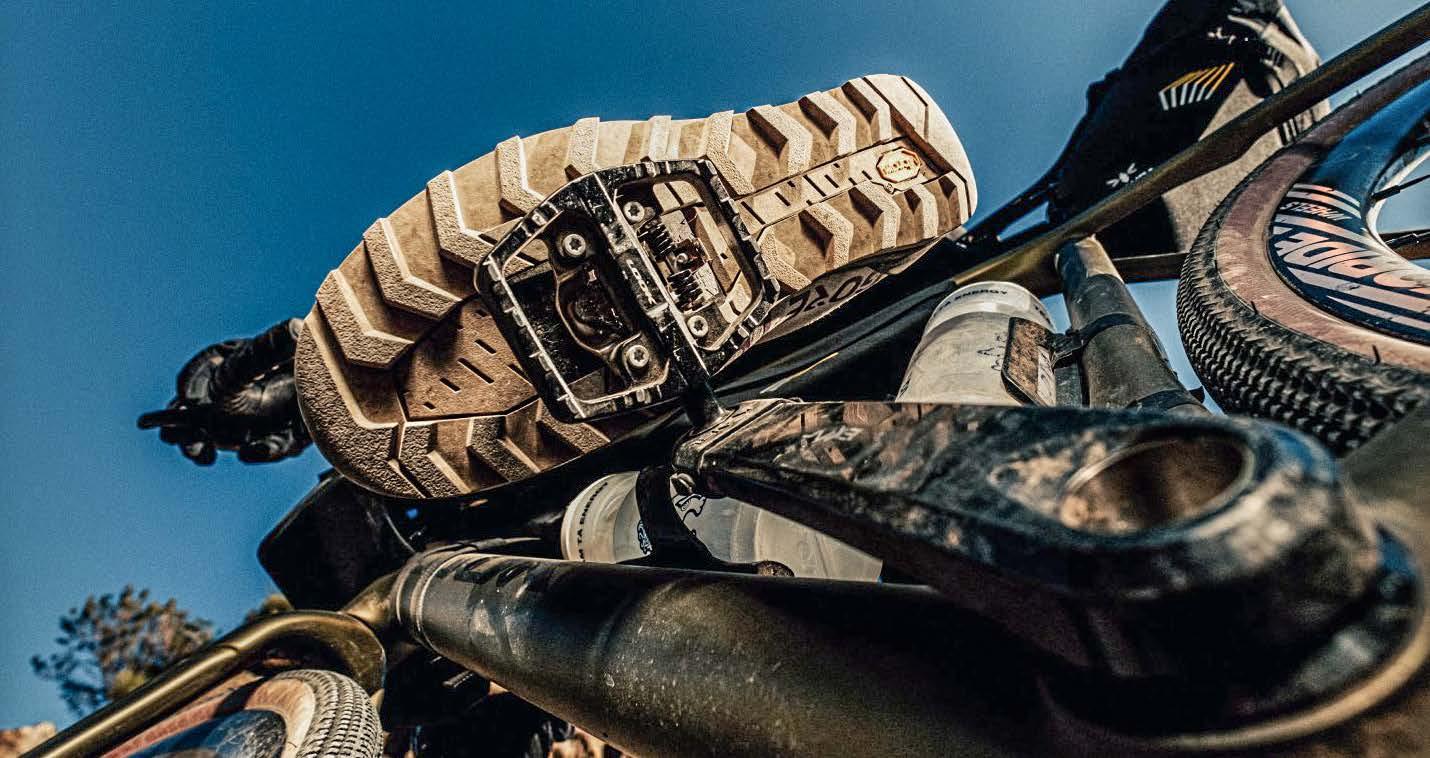
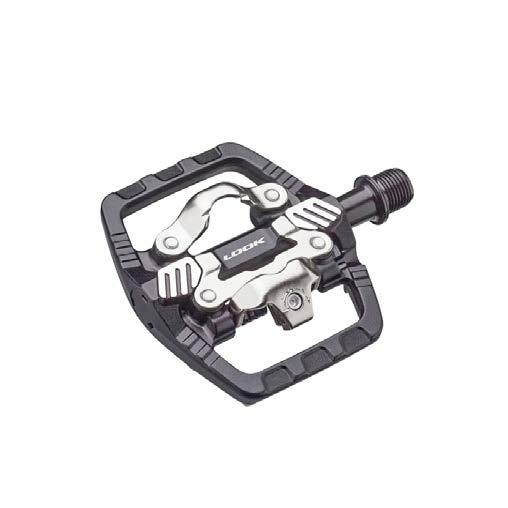
Look will be a sponsor of Cariàde, Feel The Gravel, the new event set amid the UNESCO World Heritage hills of the Conegliano Valdobbiadene Prosecco Superiore DOCG region and along the banks of the Piave River, which will debut on June 27 and 28. This event was created with the goal of bringing together sports, the local area, and authenticity, celebrating the true spirit of gravel riding: effort, discovery, freedom, and a connection with the landscape. It’s no coincidence that the name “Cariàde” evokes local farming traditions and the idea of leaving a mark—a visible trace of one’s passage. The event kicks off on Saturday, June 27, with the Sunset Criterium, a 1.7-km gravel race within the village hosted at the picturesque Ca’ di Rajo estate, amid suspended rows of vines and numerous guests, including former professionals such as Federico Spinazzè and Sacha Modolo. Sunday, June 28, will be dedicated to the main event, accompanied by music and opportunities for the entire community to come together. Look will award the top finishers with the iconic X-Track off-road pedal.
PON.BIKE ITALIA
PARTNERING WITH THE VAL DI FASSA TOURIST BOARD FOR 2026
The Val di Fassa Tourist Board (APT) and PON.Bike Italia have announced the launch of a partnership starting this year, with the goal of supporting the area’s development as a cycling destination through a shared, long-term vision. Part of this initiative is the growth of the Val di Fassa Bike District, a project that unites the valley’s cycling offerings under a single identity and guides its evolution. Located in the heart of the Dolomites, Val di Fassa offers a wide variety of experiences: from iconic road cycling passes, such as Passo Sella, Passo Pordoi, Fedaia, and Gardeccia, to unique off-road trails. “The recent Family Day reminded us how important it is for us to build genuine relationships around our brands, together with ambassadors, creators, collaborators, and athletes. We’re thrilled to extend this family to Val di Fassa, a destination we feel is fully in tune with our vision of cycling: as an experience, a culture, and an opportunity for growth,” said Giorgio Garofoli, CEO of Pon.Bike Italia.
VINCENZO NIBALI
Laurie Greenland
Vincenzo Nibali
Nicolas Roche
Marco Bezzecchi
EVENTS
EUROBIKE 2027 MOVES TO SEPTEMBER, STRENGTHENING ITS B2B FOCUS
Eurobike’s new advisory board has announced the new dates for Eurobike 2027, which will take place from September 1 to 3. Based on the feedback received and internal discussions within the advisory board, the organizers are now aiming for a stronger B2B focus and the return of the industry’s leading brands. For the 2027 edition, Eurobike will also move to the eastern section of the Frankfurt exhibition grounds, occupying Halls 3, 4, and 5 around the Agora, which, thanks to its outdoor spaces, will offer new opportunities for test tracks and demo areas. The new dates conflict with the traditional slot on the calendar for Movestro’s International Bike Festival, which has already confirmed its 2027 edition to Bike Europe and stated that there will be no rescheduling. “We were quite surprised by Eurobike’s decision,” Elisa Galli of Movestro told Bike Europe. “For an organization that has shaped the cycling in dustry, this choice seems short-sighted and completely ignores the strategic needs of brands. Companies shouldn’t be forced to choose between a B2B platform and a high-profile B2C event.”
BIKEUP USHERS IN A NEW ERA WITH TWO EVENTS IN PARMA
BikeUP is entering a new phase in its history and transforming into an ecosystem of events dedicated to sustainable mobility, the outdoors, and the two-wheeled experience. Thanks to its acquisition by Fiere di Parma, the project is enriched with new synergies, innovative formats, and opportunities designed to engage an ever-wider audience of outdoor enthusiasts. From September 12 to 20, as part of the Salone del Camper, BikeUP Travel Days will make its debut—an experiential area dedicated to cycling, with a focus on active tourism: an exhibition area, test rides emphasizing inclusivity, workshops, talks, and in-depth sessions on cycling travel. On September 19 and 20, the BikeUP Festival will take place at Parma’s Parco della Cittadella, the event’s new home. These two days will be dedicated to slow and sustainable mobility, featuring an exhibition area, test routes, activities for everyone, and the new BikeUP Cargo Days initiative focused on urban and family mobility.
GRAVEL GOURMET RETURNS ON OCTOBER 3 AND 4 FOR THE 2026 EDITION
Gravel Gourmet 2026 is scheduled for the weekend of Saturday, October 3, and Sunday, October 4. Between Collecchio, Felino, Sala Baganza, and Traversetolo, participants will be able to cycle amidst the colors of fall, discovering picturesque landscapes and the region’s culinary delights thanks to the format conceived and refined over the years by the organizers. As in the 2025 edition, there will be two routes on Sunday, October 4 (a 50-km short route and an 80-km long route), both accessible to everyone, ensuring a participatory and shared experience. Along the routes, participants can look forward to the much-anticipated snacks featuring typical products from the Parma Valleys: Parma prosciutto, Felino salami, Parmigiano Reggiano, as well as pasta, tomatoes, Malvasia, Lambrusco, and more. A Family route will also be offered in 2026, designed for those who want to enjoy the atmosphere and experience of Gravel Gourmet with the whole family.
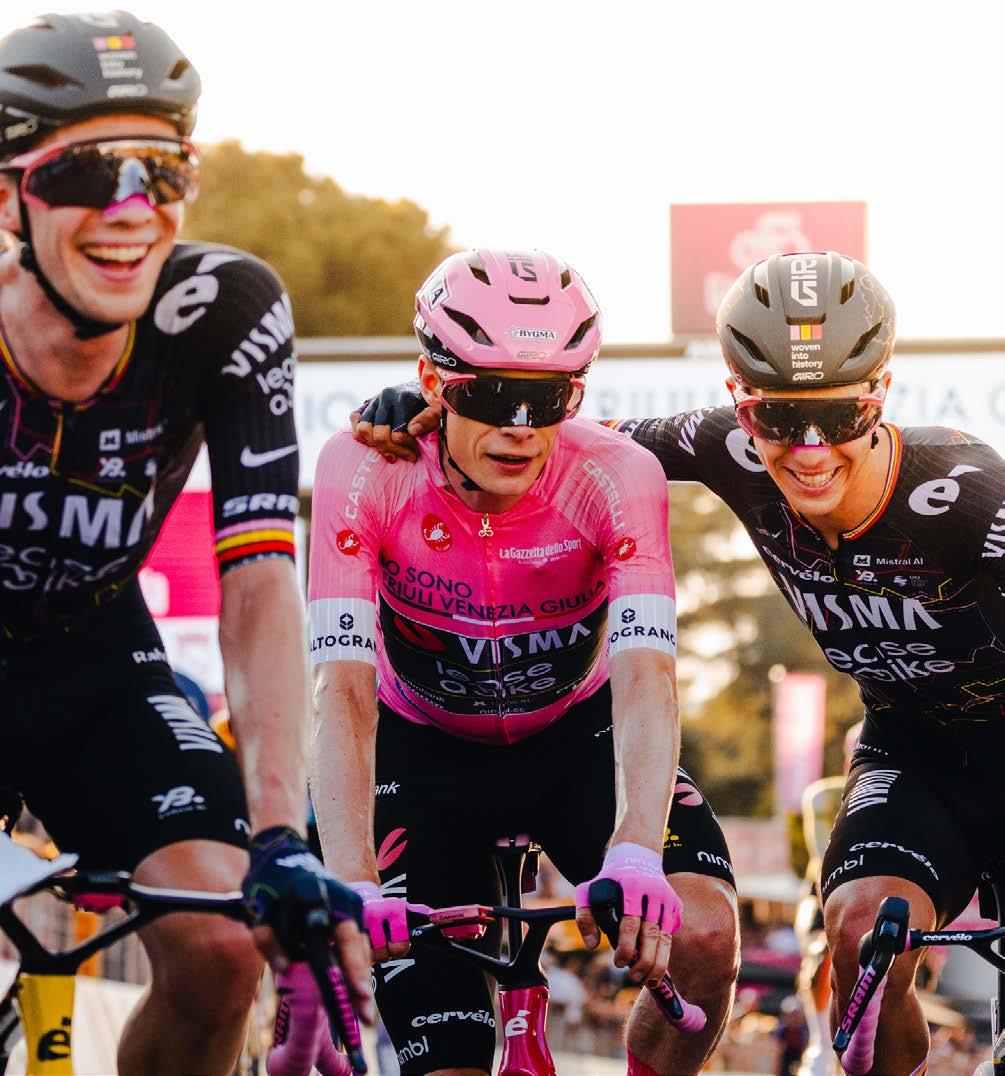
GIRO D’ITALIA 2026
THE 101: NUMBERS, TRENDS, AND RANKINGS
The challenges facing retailers in the bicycle industry have become structural, amid declining purchasing power and falling prices that are cannibalizing the market. Here are the results of our exclusive survey
by Daniele Pansardi and Alessandro Marra
For many specialty shops, difficulties and uncertainties seem to have become structural. The room to maneuver—both financial and operational—is, in some cases, quite limited. And without the revenue generated by repair shops, many retailers would be well below the waterline. The current historical and political climate is objectively dire, even more so than it was in 2024: the purchasing power of many consumers has been progressively eroded by international conflicts, inflation, and rising energy costs; the dynamics of the online market leave very little breathing room; and the business strategies of manufacturers over the past five years are still taking their toll by having saturated the market. In short, the trade finds itself caught between a rock and a hard place. How can this constant pressure be alleviated? There is no one-size-fitsall solution. Smaller businesses can still rely on support and practical expertise, while medium-to-large stores (or those with a more comprehensive view of their operations) generally manage to combine their service department with more effective sales strategies and creative solutions that foster greater customer loyalty.
Meanwhile, retailers’ requests continue to revolve around a few very specific issues: lower prices from manufacturers; reducing production without constantly chasing the latest trends; greater flexibility with orders; and more attention to the choices set by e-commerce platforms. Given the ongoing economic downturn that shows no signs of abating, prices that are eating into everything, and budgets that need to be balanced by year-end, defining and maintaining a strategy that looks beyond the next peak season is becoming increasingly complicated. For this reason as well, among the 101 stores surveyed in our regular market research, the perspective of Massimo Calcaterra, owner of Doctorbike in Magenta (Milan), can offer a glimmer of hope and inspiration for everyone: “In this scenario, we’ve chosen not to rush things. We’ve preferred to stay true to our identity, continuing to believe in quality, professionalism, and respect for those who live and breathe cycling every day: dealers, partners, and riders. Instead of chasing the latest discount, we’ve worked to build something that will stand the test of time, strengthening our brand and our relationship with our community. Because the real goal isn’t to be first at every traffic light, but to keep pedaling consistently, even when the road gets tough.”
Below, we present the findings from our analysis and processing of the data, based on 101 interviews with stores across Italy. Individual responses can be viewed in the first three issues of Bikefortrade published in 2026, or by browsing or downloading the magazine on the MagNet portal by scanning the QR code.
Stores
The dominant theme is pressure on prices: discounts, below-cost pricing, and competition from online retailers and large-scale retailers (in the entry-level segment) are frequently mentioned and are often cited together. Many other retailers attribute the problems to a general decline in demand and purchasing power. After years in which sales channels were clogged with an excessive supply, overstock remains a fairly significant problem.
IS THE FEATURE THAT CUSTOMERS VALUE MOST AND THAT HAS THE
Stability and decline carry nearly equal weight, while responses indicating growth account for about a quarter of the sample. The message is clear: we are still in a contraction phase, as the Ancma report had also emphasized. This situation is more complicated than in other European countries, which have entered a phase of more pronounced stabilization and are showing some signs of greater optimism.
The economic factor is by far the strongest: when you consider prices, discounts, special offers, and value for money, these factors account for 54 out of 101 responses. Engine power and battery capacity, on the other hand, are the most frequently cited technical reasons.
WHAT TYPES OF BIKES AND E-BIKES WERE THE BEST-SELLING IN 2025? WHAT WAS THE PRICE RANGE OF THE BEST-SELLING BIKES?
According to ANCM data, the eBike category saw a 7% decline in the number of units sold. In our survey, it remains the single most frequently mentioned category, driven by eMTBs, but a comparison with the non-electric segment reveals a complex situation. Conventional MTBs, on the other hand, are struggling significantly compared to their electric counterparts. Rounding out the top three are gravel bikes and road bikes.
The 2,000–3,000 euro range is the most common. This figure may be indicative of the cycling public’s needs and should serve as a clear signal to manufacturers. Some trends seem to point in that direction, perhaps partly due to the significant pressure that several Chinese brands are beginning to exert on Euro-American brands.
Al negoziante è stato chiesto di indicare fino a tre categorie
BRAND RANKINGS
During our survey, we asked retailers to name the three best-selling brands for conventional bikes, eBikes, clothing, and accessories. To compile the rankings, we applied
the following criteria: we assigned 10 points to the retailer’s first choice, 5 points to the second, and 1 point to the third. Here are the top three in each category.
In other words, a brand that may have surprised the public with its new releases, its relationships with dealers, or simply an unexpected uptick in sales at the be -
ginning of the year. Amflow/Avinox took first place—a true revelation in the eMTB sector over the past few months—ahead of Bianchi and Cube.
THE ALCHEMISTS OF BRAKING
Raicam combines over thirty ingredients to create the best compound for its Ceramic and Ceramic+ brake pads. We visited the Bruzolo plant, where the magic happens and where we also discovered other interesting innovations
by Gabriele Vazzola
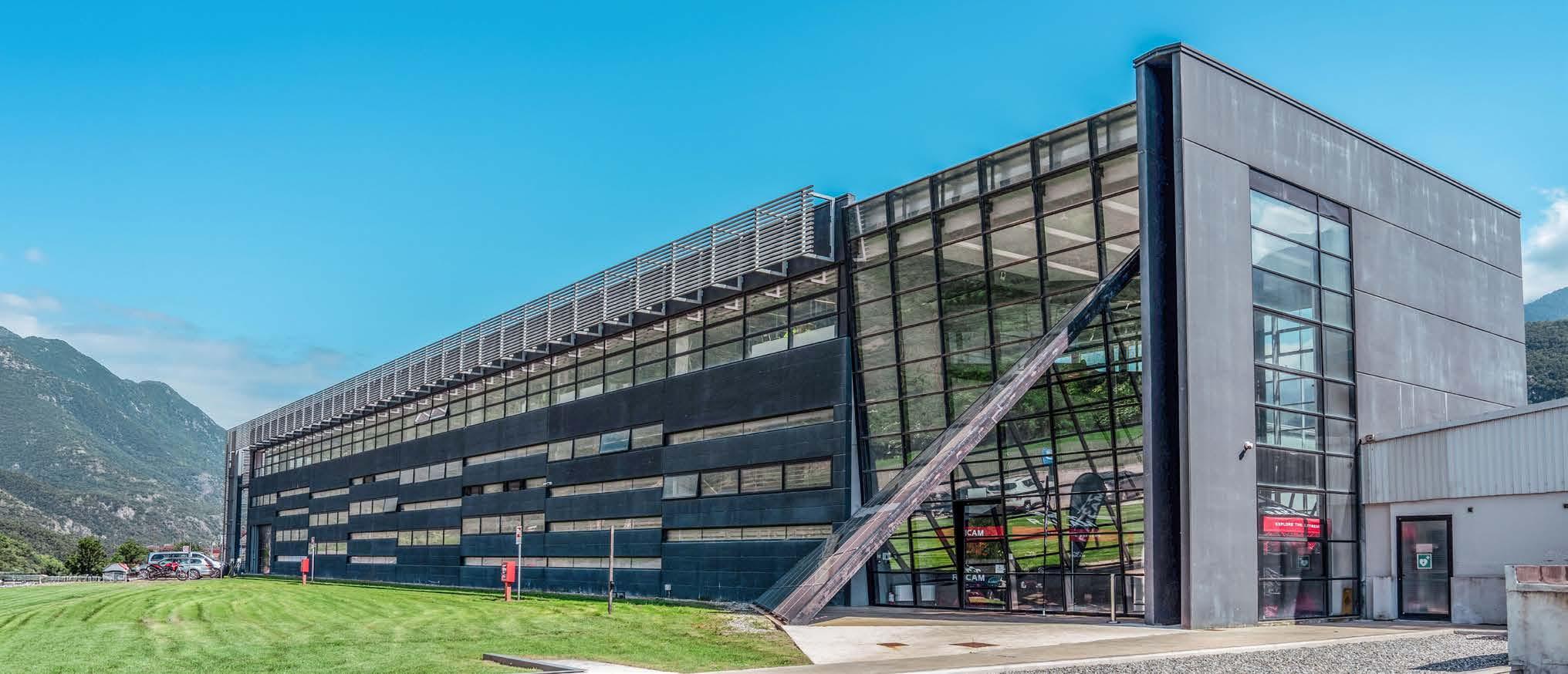
Bruzolo is not one of the best-known towns in the Italian industrial landscape. It is located at the entrance to the Susa Valley, and from here, looking east, you can see the landmark that marks the valley’s beginning: the fascinating Sacra di San Michele complex, which towers atop Mount Pirchiriano. Continuing past Bruzolo, you reach Salice d’Ulzio, from which you can travel to France via the Fréjus Tunnel or the Monginevro Pass. As is often the case in Italy, the places where quality and innovation are forged can be found in sometimes surprising locations, even though in this instance we are not far from Turin’s “Motor Valley.” It is precisely in this Piedmontese town that one of Raicam’s production facilities is located; Raicam is a world leader that develops complete braking systems for the bike and automotive industries. Our readers know that this company, with multiple locations in Italy and around the world, has long since positioned itself to bring its full technological expertise to the cycling world as well. It’s certainly no secret that a motor is currently under development in-house that aims to be a game-changer in the e-bike sector, and an ABS system is also being studied in the R&D departments. While we look forward to telling you more about future innovations, we’re focusing on the present (and the near future), which sees the Italian factory positioning itself in the market with a range of complete braking systems and now also with new proprietary brake pads designed specifically for Raicam brakes, plus a lineup of pads compatible with SRAM and Shimano systems. This means that owners of the most popular disc brake models will also be able to access Raicam’s “Made in Italy” technology.
INSIDE THE BRUZOLO FACTORY
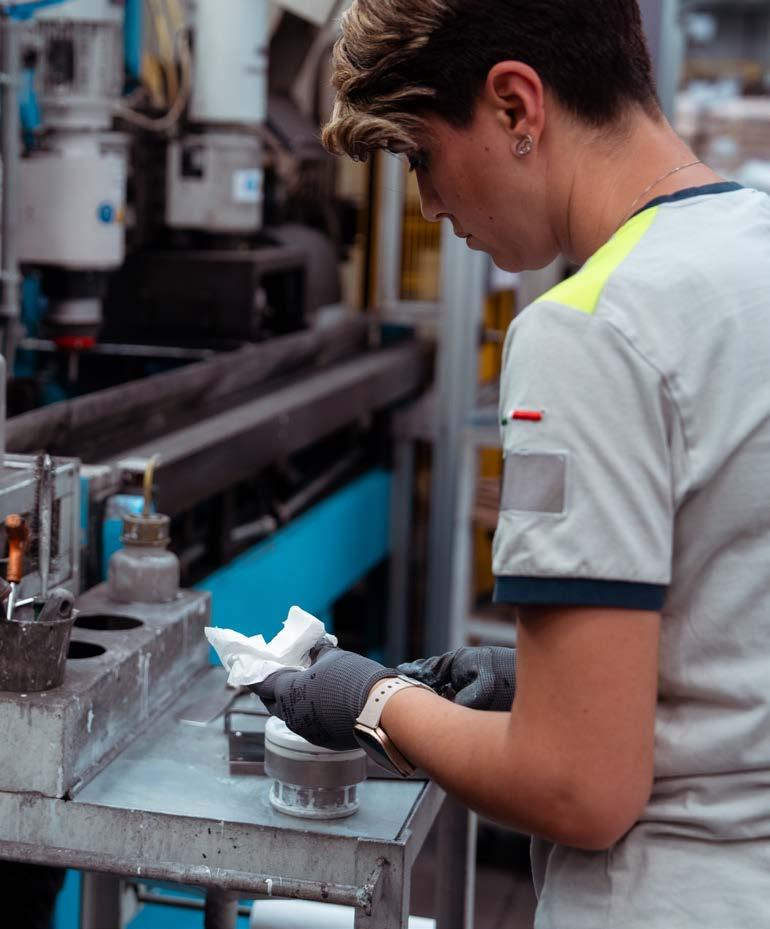
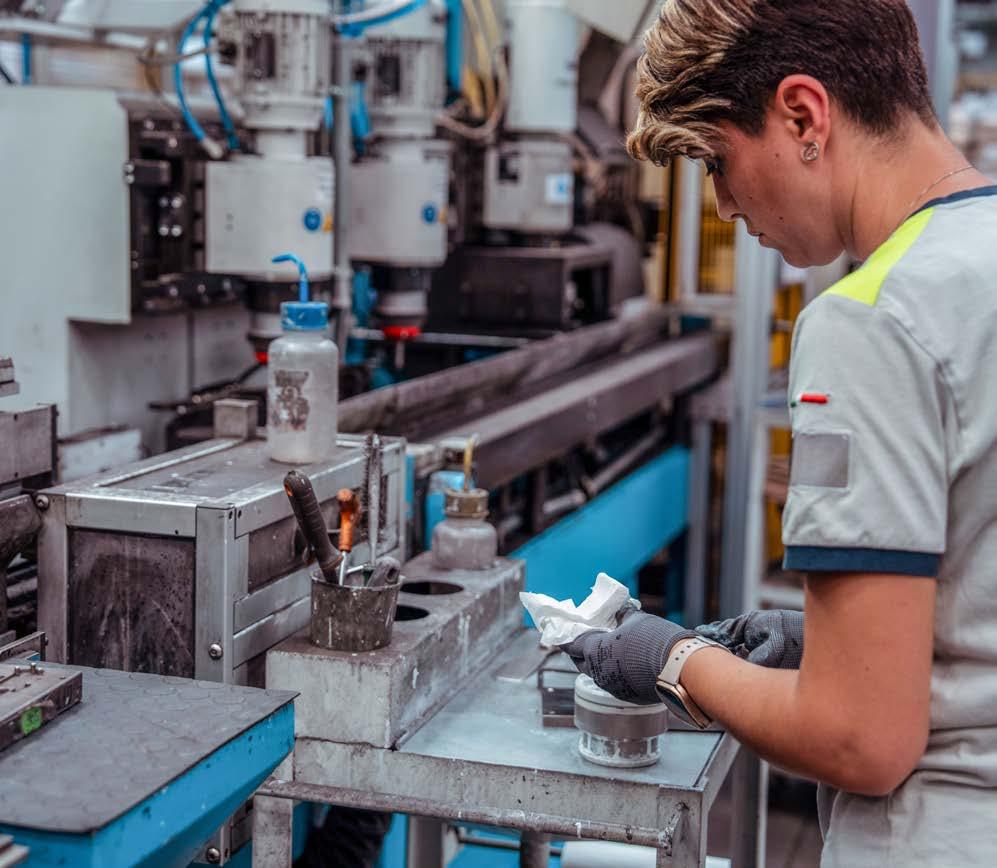
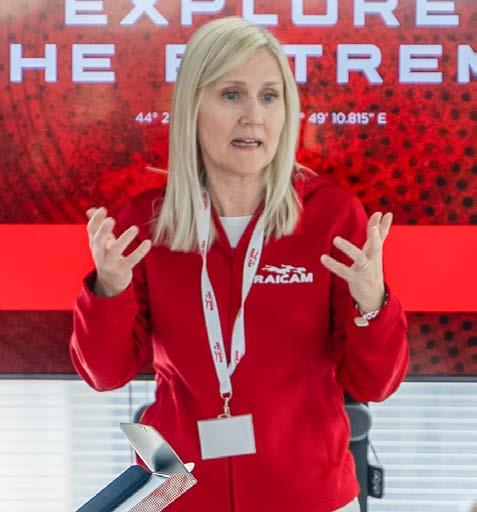
To coincide with the market launch of its new brake pads, Raicam opened the doors of its Bruzolo production facility, showing the industry media how the friction components were designed and how they are manufactured—on a production line right next to those where brake pads for the most prestigious European and global automakers are produced. Of course, the product dimensions are quite different, but the attention to detail and design are the same. In fact, in some respects, miniaturization and the need to achieve acoustic and ride comfort (elimination of vibrations) set higher standards in the world of bicycles than in that of premium-brand cars.
Bruzolo is one of two Italian plants where friction materials are produced; the other is located in Manopello Scalo in Abruzzo. However, it is here in Val di Susa that the R&D department develops the compounds for brake pads. The process for creating friction materials is lengthy and leaves nothing to chance. The same team that works across all levels of the automotive sector also develops compounds for bicycle brakes using a method implemented in the company’s in-house laboratories. Each individual product is designed for its specific use and purpose with the same meticulous attention to detail. The same principles have been applied to safety as well. A total of 34 people are employed in this phase, conceiving, designing, and testing various solutions until the optimal one is achieved, which is then sent to production. To date, the company tells us, Raicam is capable of producing over one million bicycle brake pads per year (while producing nearly 15 million for cars), with plans to reach up to three million. The manu-
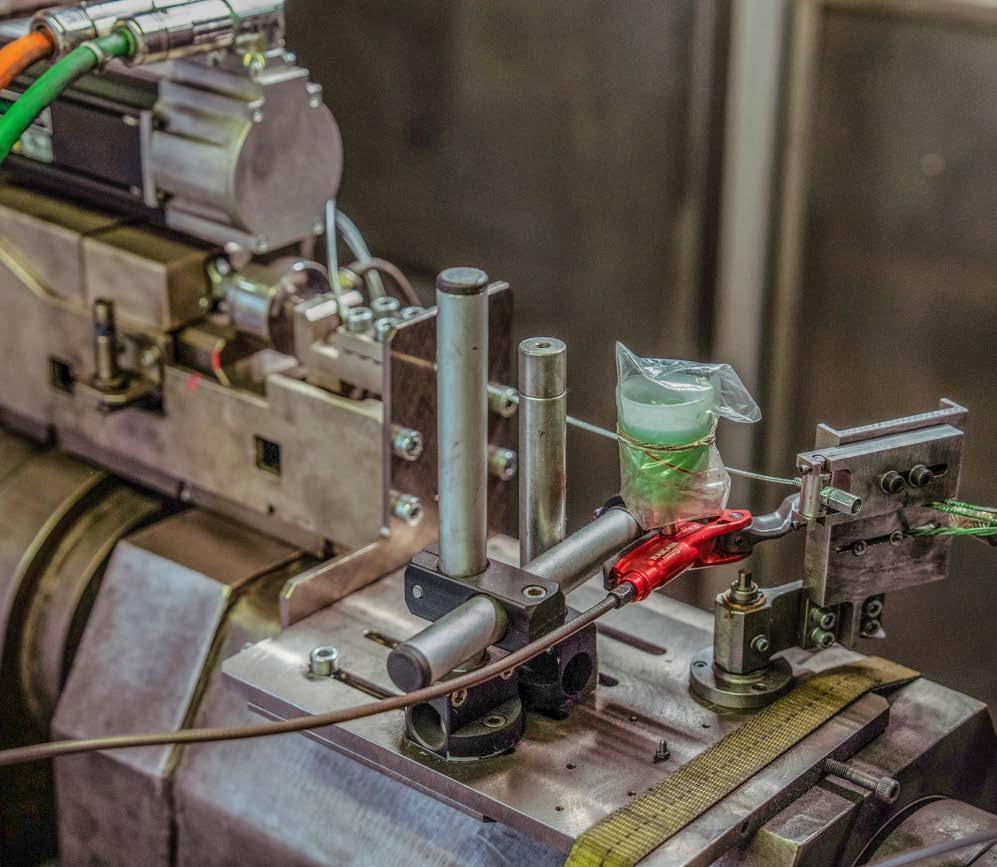
facturing process involves several stages, beginning with the blending of raw materials, which are then hot-pressed and bonded to a painted metal backing via thermal bonding. Each individual model is manufactured according to specific “recipes” in which the proportions are a Raicam trade secret. Digital microscopes are also used to analyze the materials in order to create the optimal blend of organic and inorganic components, carbon, ceramic fibers, and lubricants. Each individual mixture consists of between 15 and 30 different materials, which are pressed and then tested on special “test benches” where dynamic bench tests are conducted to replicate braking patterns or cycles, simulating various real-world scenarios. These are determined on a case-by-case basis by the designers to measure every operating parameter and analyze the behavior of the various compounds. This process is repeated many times—even more than 100 times— until the best result is achieved in terms of performance, comfort, safety, and durability. Dynamometer testing includes various physical tests for wear, fatigue, and noise. The process then moves on to field testing of the best solutions, which are put through their paces by professional athletes in various disciplines. They validate the product’s quality during top-level riding in a variety of conditions. And if, in the field, the brake pads do not meet the riders’ needs and expectations, we simply go back to the lab test bench and repeat the process, then return to the field. This continues until the desired result is achieved.
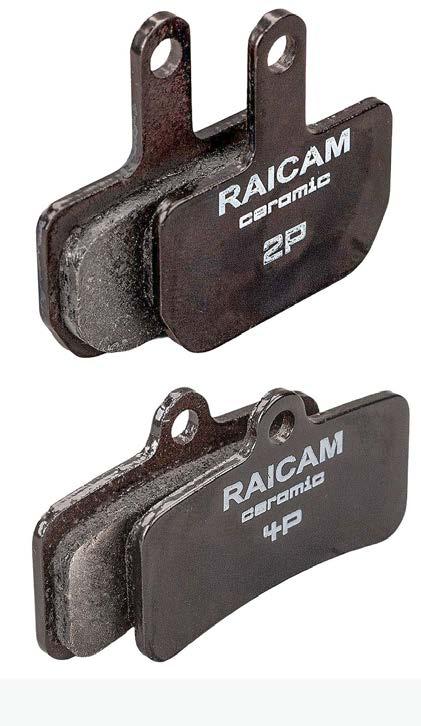
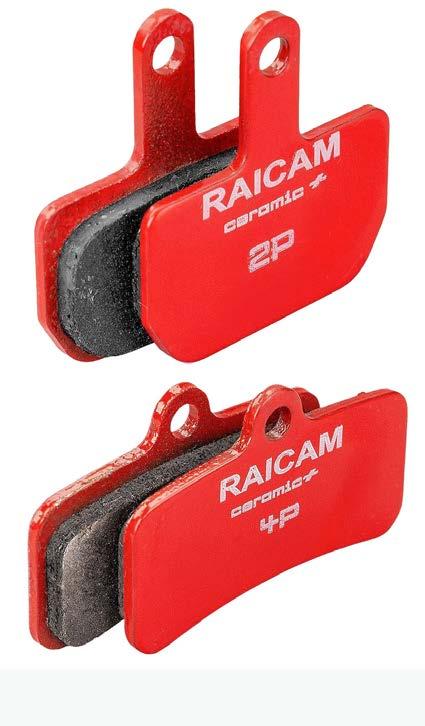
A development process of this kind—which progresses from laboratory design through bench testing to field testing—ensures that nothing is left to chance and that the brake pads meet the high standards of premium products in the cycling industry. Raicam has developed two different product types (Ceramic and Ceramic+), which differ in their
The Raicam plant in Bruzolo (TO)
Ceramic Ceramic+
compound. The former have a more progressive friction coefficient for smooth, controlled braking and low noise levels, while the latter prioritize strong braking power in all conditions and ensure stable performance even at high temperatures. Both options share key characteristics: zero copper, reduced fine particulate matter, and long service life. The ceramic matrix dampens high-frequency vibrations, reducing noise and squealing, while ensuring resistance to fading even during long descents or under extreme conditions.
NEW BRAKE ROTORS, NOW ALSO AVAILABLE WITH CENTER-LOCK MOUNTING
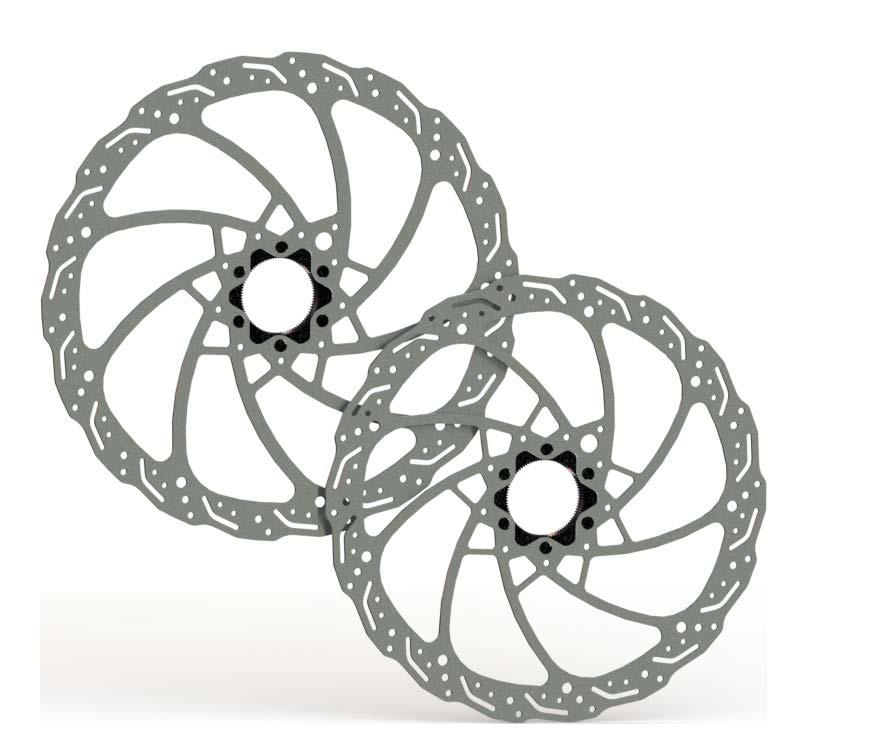
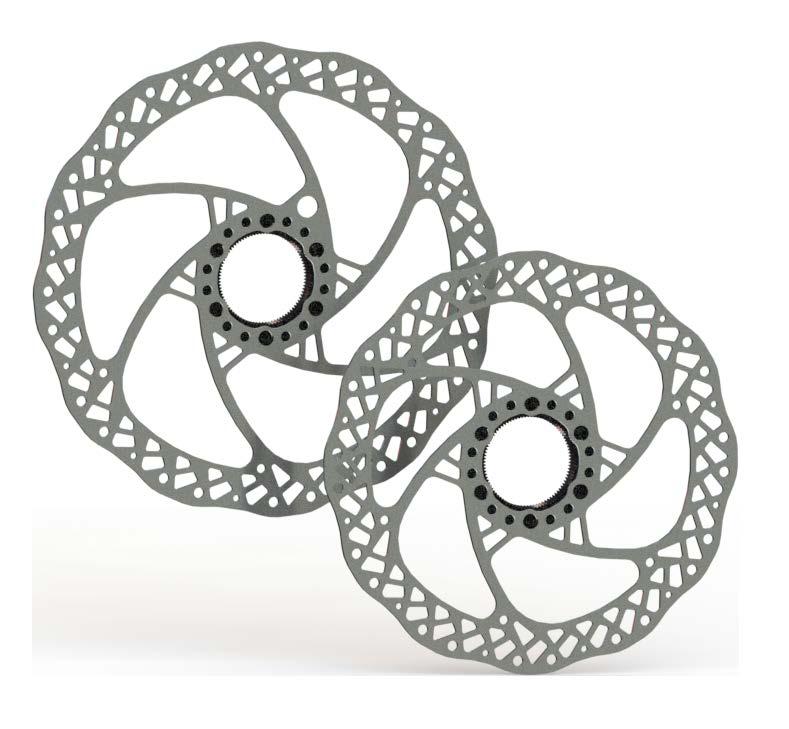
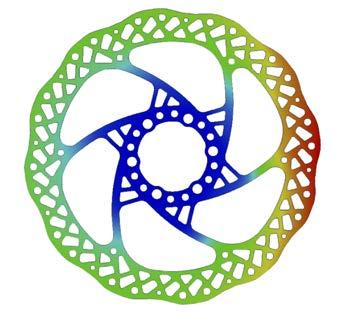
Along with the new brake pads, Raicam’s engineers have also designed a range of brake rotors. Product manager Mattia Rossi himself brings us up to date on the offerings for 2027. The range is divided into two different braking surface profiles: one specifically for cross-country and the other for gravity riding. This is because the two different disciplines (and the RXC and RGR brake lines) require different disc properties to perform optimally in each context. Thicknesses range from 1.8 mm (for a 140 mm diameter), designed specifically for road use, up to 2.2 mm (for a 220 mm diameter) for the more demanding conditions of gravity riding. Starting this year, single-material center-lock versions are also available to ensure lower weight. To achieve maximum versatility in the design of the braking surface pattern, Raicam has chosen the most complex (and also the most expensive to produce) approach, which allows for greater design freedom by manufacturing the rotors via laser cutting. This process gives designers complete freedom regarding the size and shape of the holes, allowing Raicam discs to focus entirely on achieving the best coefficient of friction and on increasing the number of holes while reducing their size. This allows for high braking power to be
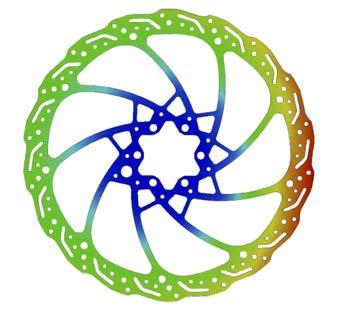
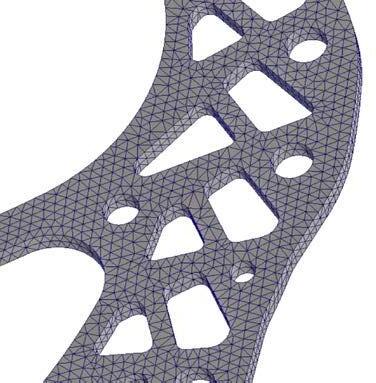
maintained without compromising thermal dissipation and system cooling between braking maneuvers. Braking force is generated by friction plus the thrust of the brake pads, which are quite small on bicycles and thus generate a lot of heat; a proper balance between open and solid areas, with more micro-holes, creates a radiator-like effect, improving the overall performance of the entire system. The development process for the rotors is also managed in such a way as to leave nothing to chance. The optimal pattern is determined through finite element analysis, which yields various design proposals and is rendered as three-dimensional meshes in specialized software that simulates the thermal and mechanical behavior of the disc, as if it were mounted on a bicycle. The simulation replicates the pad contact surface and the most extreme operating conditions, allowing for the evaluation of stress conditions, the contact area, and the torque forces that occur during braking, thereby enabling the development of the optimal geometries.
RXC FACTORY SYSTEM:
PERFORMANCE IS NOW MORE ACCESSIBLE
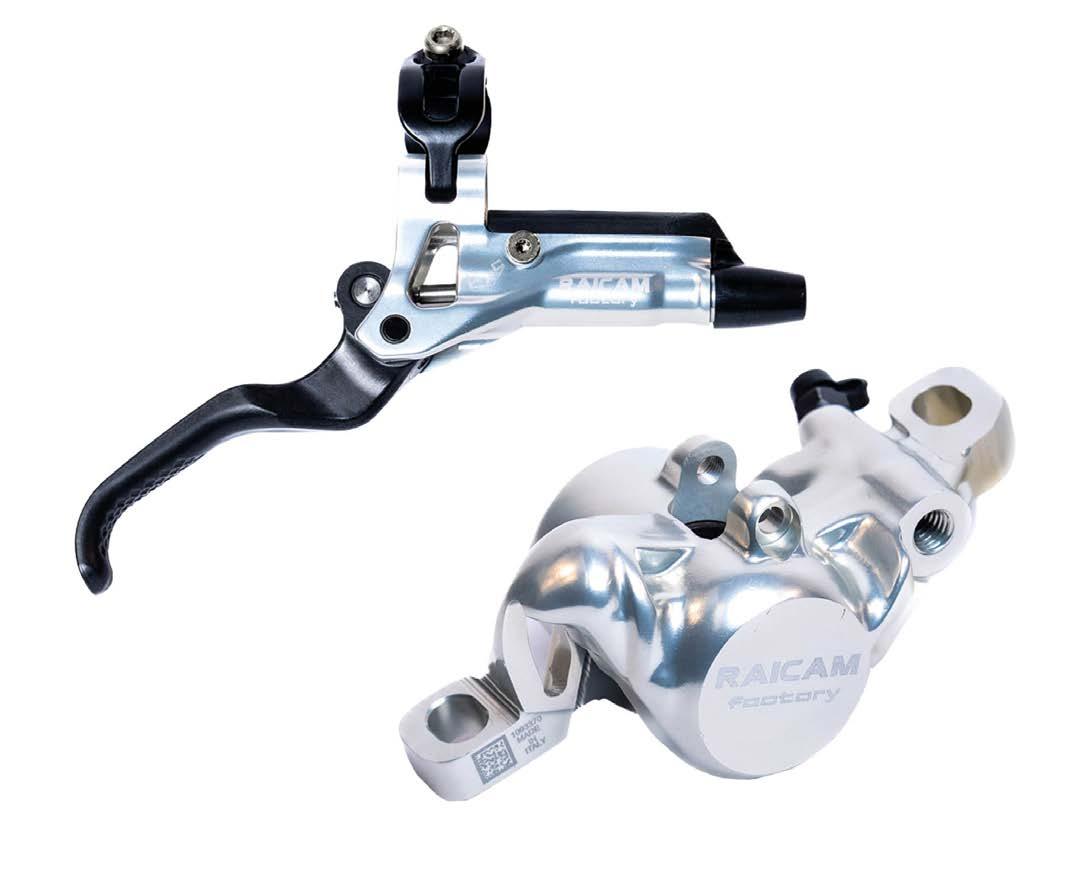
Last but not least, as they say on such occasions, Raicam is taking the opportunity of its visit to the Bruzolo factory to unveil an unexpected new product—one that we’re sure will delight those looking for a distinctive, high-performance product to equip their race bike. The new RXC Factory brake is designed for advanced amateur riders who demand the best—including in terms of value for money. In fact, it’s a brake that mirrors the features of the top-of-the-line model, but at a lower price. Raicam has indeed considered all competitive riders seeking the best for XC and marathon races, adopting production systems that have made it possible to reduce machining (and production times) on the caliper and pump bodies. Micro-machining with the smallest cutters has been eliminated, and the titanium fasteners have been replaced with steel and aluminum components to maintain the same performance with only a few grams added. Another difference lies in the hose, which—unlike the top-of-the-line model made of braided aerospace-grade steel—is the more standard R3 version. The lever, however, remains made of carbon composite, and the design, complemented by a silver finish, is every bit as impressive as that of its big brother, the RXC Racing.
Bench Testing Machine for Brake Systems and Friction Materials Raicam Bike Brake Pad Production Line
RGR Factory
RXC Factory
of the tetrahedral mesh used to construct the three-dimensional model of the disk
@ Patrick-Wasshuber
THE GERMAN AFFAIR
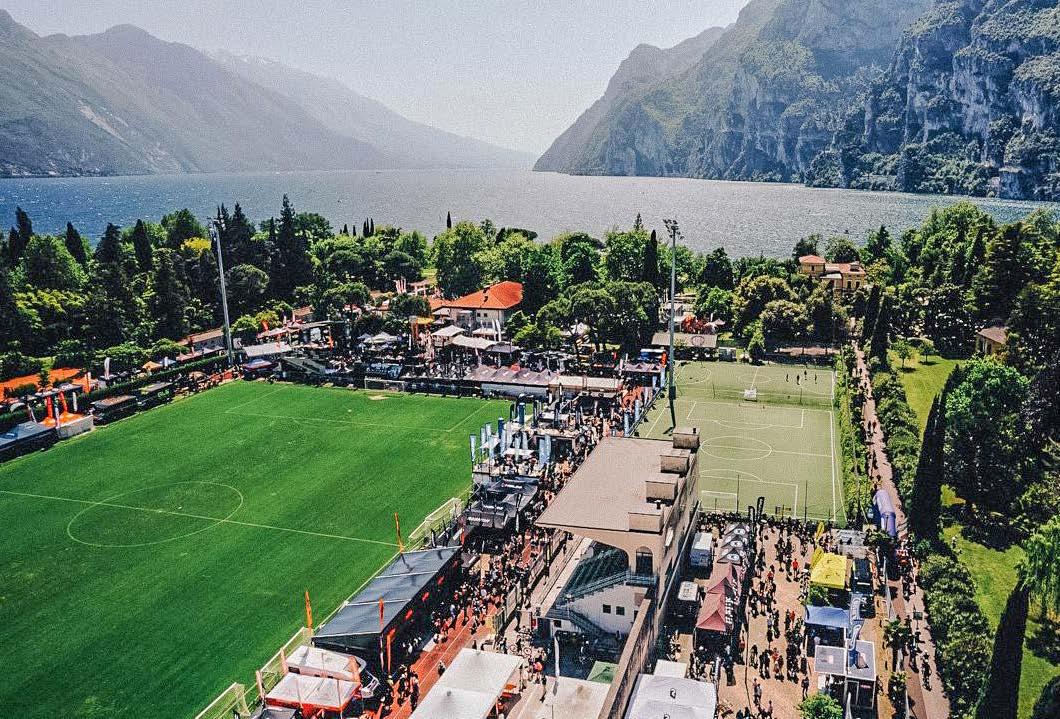
Despite the challenging market conditions and the restructuring of the German trade show landscape, the FSA Bike Festival in Riva del Garda continues to win the hearts of an audience that loves the event and the surrounding area. But perhaps a new, more international perspective is needed
by Gabriele Vazzola
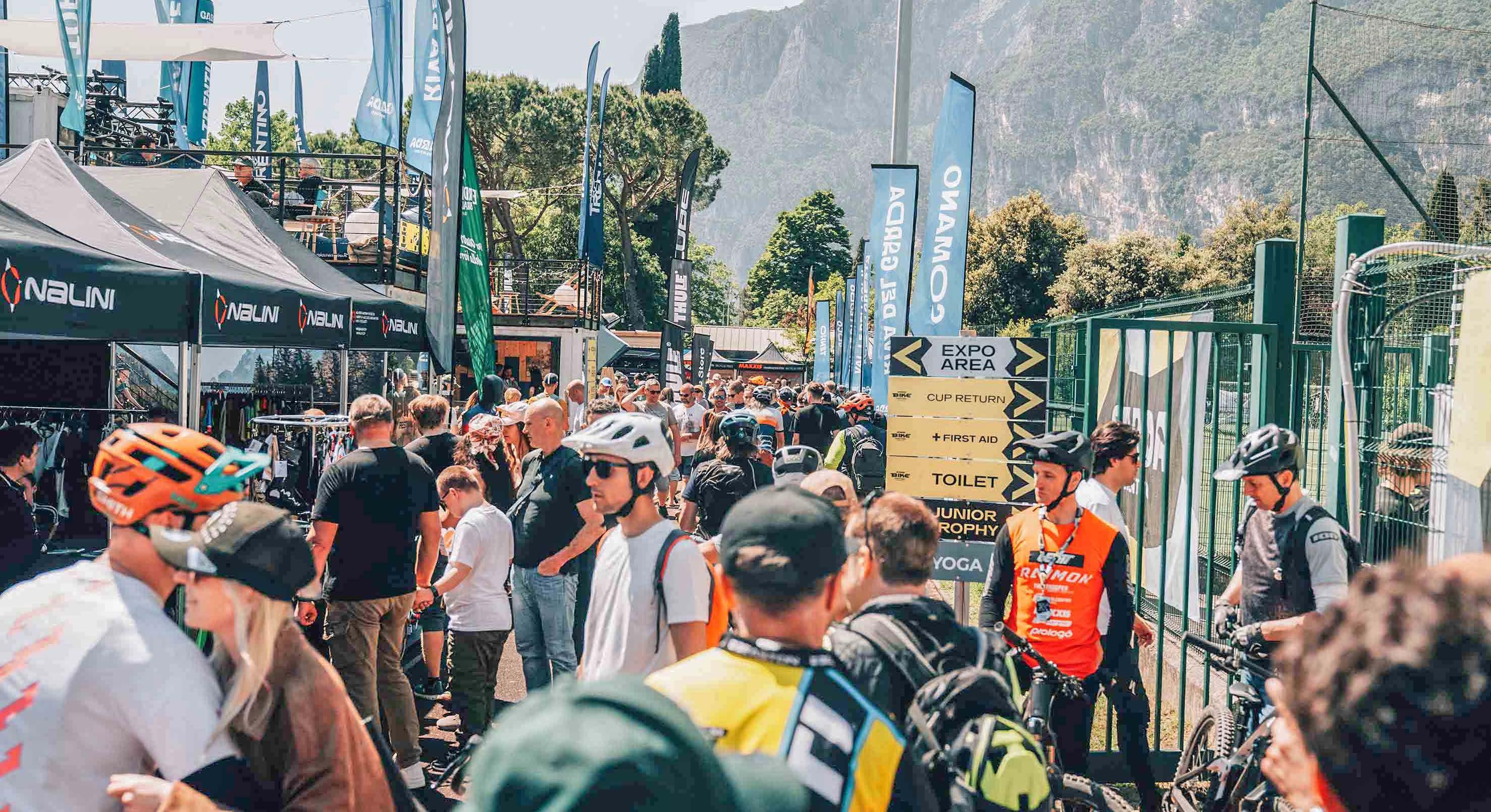
For over thirty years, between April and May, an event has taken place that has come to be seen as a collective tradition. It marks a new beginning for all mountain bike enthusiasts—especially German-speaking riders—who flock in droves to the northern shores of Lake Garda. We’re talking, of course, about the FSA Bike Festival. The event began in 1994 as a “gathering” promoted by the German magazine *Bike*, and its success transformed it within a few years into a festival that grew in tandem with the growth of the entire MTB movement, as well as outdoor sports in general and hospitality tailored to active tourists. Located in a region that the DACH countries view as their own exclave, the event continues to this day to possess a unique charm and atmosphere, capable of attracting thousands of people once again this year who flocked to the Garda Trentino area and the festival village. Navigating the crowds and making our way through the booths was, at times, quite challenging. Fortunately, the organizers arranged for early access for the press on Friday, May 1, which allowed us to discover some new products and speak more freely with industry professionals.
There’s a catch, though. Never before has there been such a sense that something has gone awry in the festival’s well-oiled machinery as there has been this year. Since the organizational handover from the German media outlet Bike to APT Garda Trentino in 2024, there have been few changes; and where changes were noticeable, they were certainly for the better. We’re talking about more organized planning, from attention
to certain sensitive issues (such as reusable cups and free water for everyone) to a more consistent use of the venues. Everything seemed less improvised and more professional. In essence, the new direction has brought a more focused approach. This effort by the organizers, however, does not seem to have been enough to ensure the presence of some major players, who were absent from the 2026 edition. It appears that some top German players, after a few editions of adjustment and hesitation, have decided to include the Lake Garda event in their spending review policies, effectively breaking a taboo and the umbilical cord that tied them to the previous organization. As a result, fewer companies (or subsidiaries) from Germany were in attendance. German also no longer seems to be the dominant language, vying for the top spot with English and Italian. This shifts Riva del Garda’s position on the German trade show landscape but opens up the possibility of pursuing a truly international approach— provided the organizers can capitalize on this opportunity disguised as a crisis. The decline in exhibitors can be interpreted in this light. The fact remains, however, that a significant portion of enthusiasts north of the Alps continue to view the Bike Festival as one of “their own” events.
But while in Germany, as mentioned, a complex process of realignment within the trade show sector appears to be underway, the situation in other key countries within the industry seems more established. For example: in Italy, the dominance of the Italian Bike Festival (renamed the International Bike Festival this year) is evident, and in the U.S., the Sea Otter Classic seems to have found its own balance between B2B and B2C, cementing its success as an international hub overseas and effectively filling the void left by Interbike. We’re talking about two important markets, but ones that are often more volatile and, arguably, less established than the German market. The latter, given its strength, seems to be driven by the inertia of a heavy flywheel, whose momentum appears to be starting to run out. This paves the way for a realignment in which other players are seeking different niches. The crisis at Eurobike can also be viewed in this light; the event recently announced an unexpected repositioning for its 2027 edition, scheduled for September 1–3—a time slot that has already been “occupied” in recent years by IBF. Furthermore, as we had partly predicted, it seems a new trade show is on the horizon; there’s already talk of 2027, and rumors suggest it will be presented to industry professionals this summer. The FSA Bike Festival is also concerned about another German event: the Freiburg Bike Festival. Same name, same dates, different city, and different country. What will the future hold for the Riva del Garda Bike Festival? And more broadly, what will happen to the industry’s Germany-centric trade show circuit? We’ll learn more in the coming months. For now, we know that the dates for 2027 (April 30 to May 2) have been confirmed, and we believe that, given the enthusiasm for this year’s edition, attendance will be on par with major events, just as it was this year.
JanVolbracht
VIEWED AND LIKED
by Gabriele Vazzola
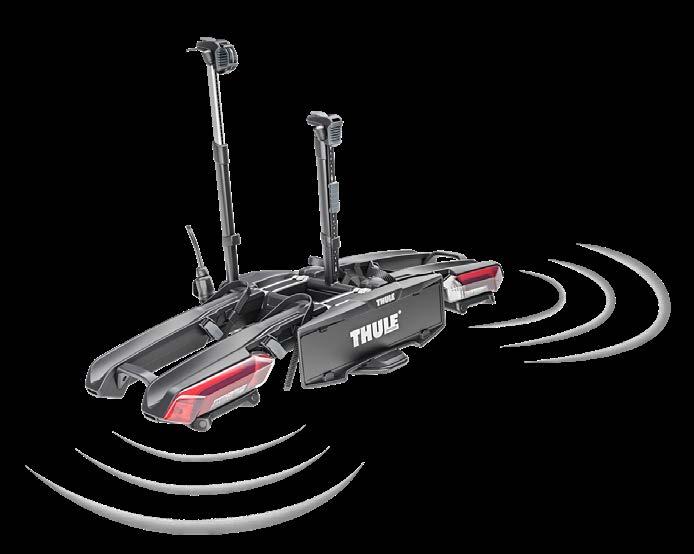
Bikers often have their heads in the clouds (or in the mountains), which is why Thule has introduced a new distraction-proof product. We’re talking about a two- or three-bike tow-hitch carrier equipped with rear parking sensors. The in-car unit pro vides audible and visual alerts, reducing the risk of accidents. The four-sensor system accommodates bikes with a wheelbase of up to 1350 mm and 29" wheels, and has a wide field of view to protect both the bike rack and its load.
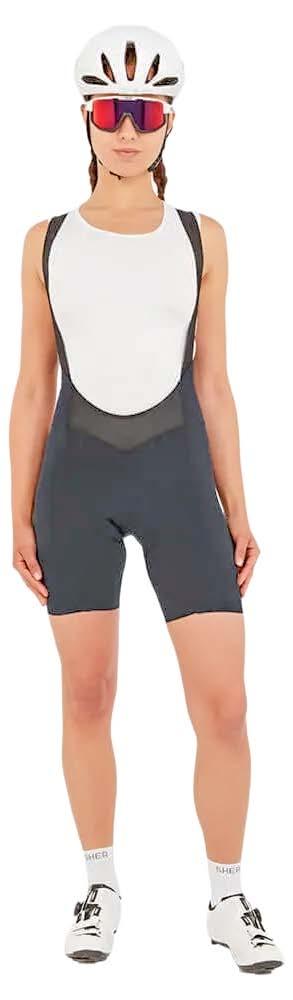
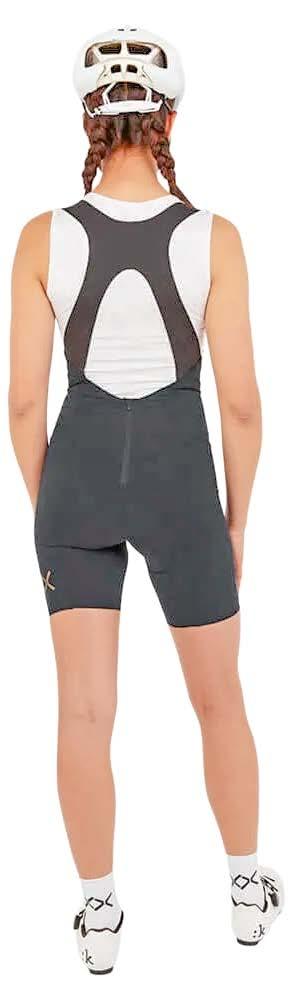
Sher is a Bolzano-based, Made in Italy brand that focuses on products designed to enhance women’s cycling experience. Frizzante is a pair of short cycling shorts with a padded seat that offers the right amount of support and straps that follow the contours of the female body for maximum freedom of movement. The chamois is the first on the market capable of preventing infections and inflammation in the intimate area thanks to a fabric that eliminates 99.9% of bacteria and fungi. At the back, the automatic-lock zipper makes bathroom breaks easier without having to remove the outer layers.
thule.com sheractive.com
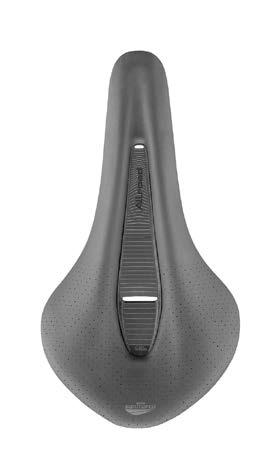
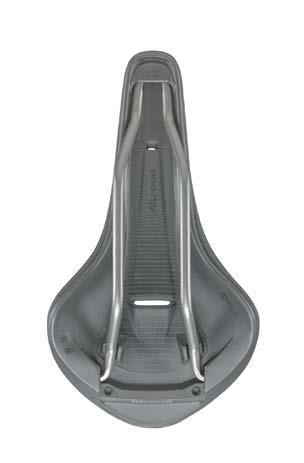
Designed for long rides, bikepacking, gravel endurance, and the most challenging terrain. A saddle that combines racing performance with an adventurous spirit, thanks in part to Supercomfort—extra-thick padding with a layer of variable-density Biofoam Plus for maximum comfort while riding. The center cutout is maximized to ensure optimal relief for the perineal area while maintaining adequate support. Also suitable for e-bikes, it improves pressure distribution and vibration absorption by working in tandem with the Bow Rail and the shock absorbers integrated into the saddle shell. Racing saddles are also equipped with Xsilite rails, which combine lightness and high structural strength for maximum performance in the saddle.
sellesanmarco.com
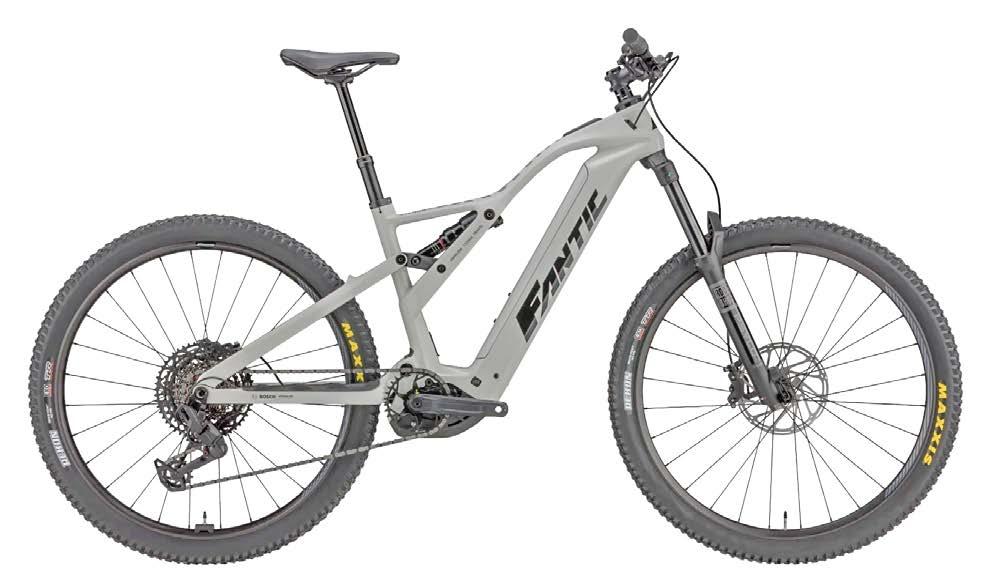
The historic Italian brand is building on its expertise in the off-road world with a trail bike featuring a distinctive design and top-notch performance. The carbon frame draws inspiration from the lightweight Rampage model but features more travel and a linkage with a coaxial Horst joint and a flip chip for adjusting the geometry. Powering the Sierra is the Bosch Performance Line CX Gen 5 motor with an 800 Wh Bosch PowerTube battery—a choice that prioritizes reliability, even after the purchase.
EXTREME
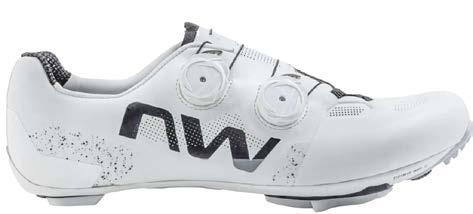
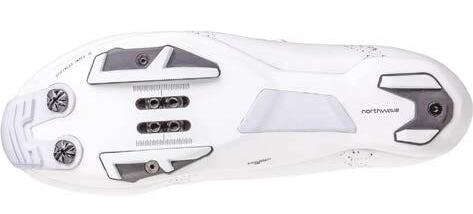
A shoe designed for maximum off-road endurance performance. From gravel races to marathons, including the most aggressive cross-country terrain. It delivers excellent power transfer and exceptional stability thanks to its carbon outsole with arch support. The new Hyperlight HT outsole, made of unidirectional carbon fiber, features replaceable rubber/TPU lugs. The Extreme X is equipped with the High Tail system for off-road use. A new heel design, engineered for performance, support, and comfort.
northwave.com
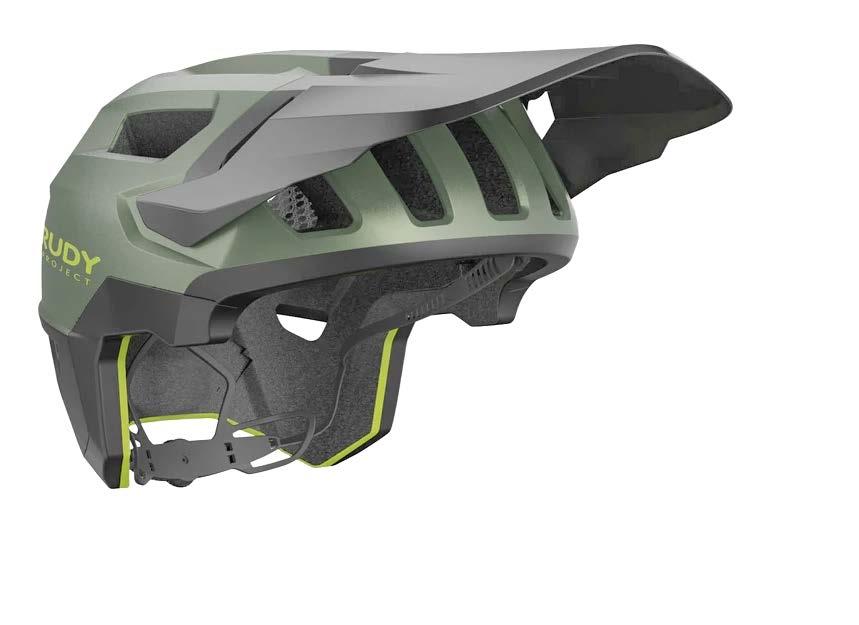
A trail/enduro helmet designed for cyclists seeking protection and practicality. Its innovative visor design provides space to store glasses during climbs, ensuring comfort and convenience. Terraform is certified for eBikes and S-Pedelecs, offering reliable safety even at high speeds, and features TWICEME technology, which makes medical information accessible in case of an emergency. The helmet has successfully passed the RP Rotational Impact Test, Rudy Project’s proprietary protocol for evaluating performance in the event of a rotational impact.
rudyproject.com
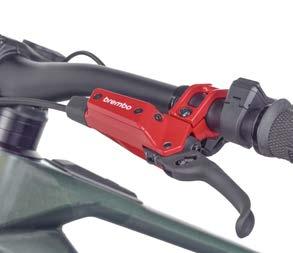
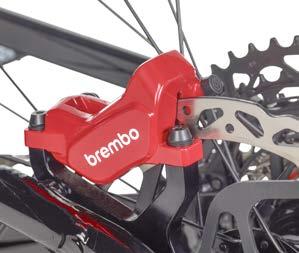
After much anticipation, the new Brembo brakes designed for gravity MTB are now available to the public. The master cylinder features three different settings for maximum racing customization. The three-level lever-to-handlebar distance adjustment allows you to customize your braking and find the ideal feel, while the 40 adjustment positions for the lever-to-handlebar distance ensure optimal ergonomics for any hand size and riding style. Brembo’s patented seven-position free-play adjustment allows you to customize the braking engagement point.
ROAD
ROAD
ROAD
ROAD
ROAD
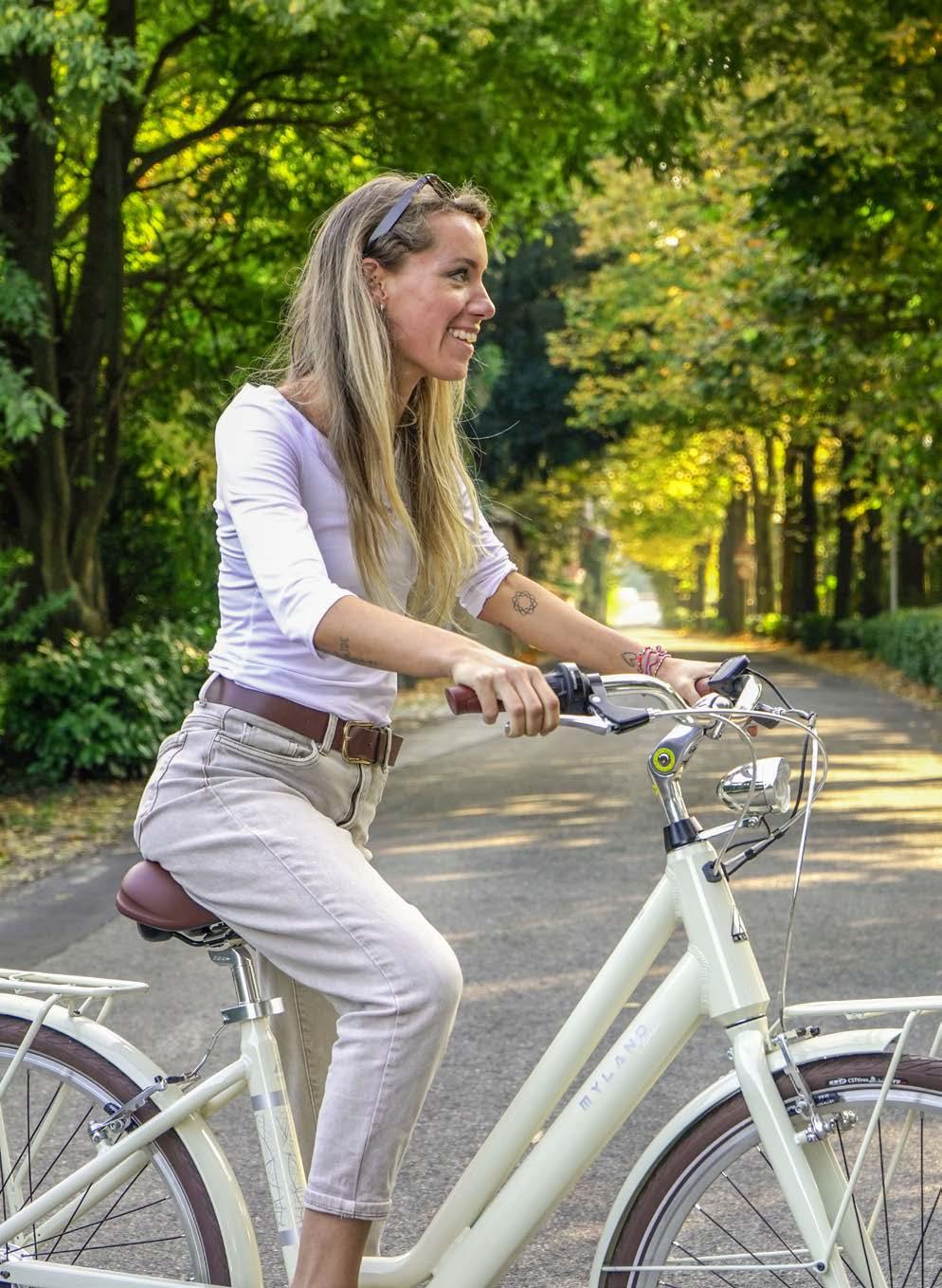
MYLAND'S "EASY BIKE" PHILOSOPHY
Bikes from the RMS brand are designed for everyday use, featuring essential, reliable, and functional technical features. Great attention is paid to range and riding comfort. The offering is rounded out by rigorous checks and configurations designed to adapt to different needs
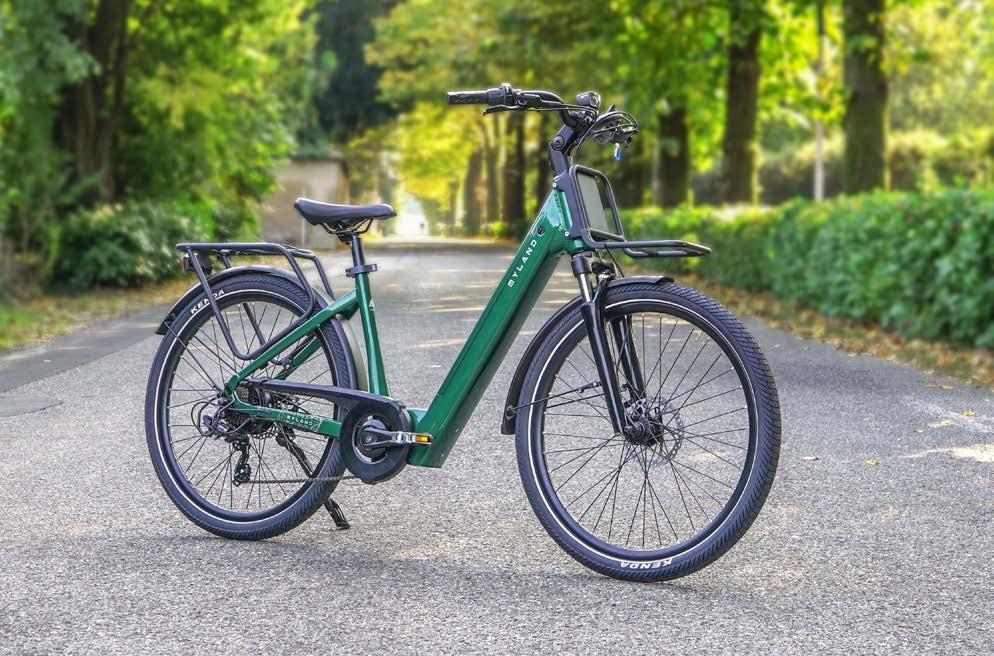
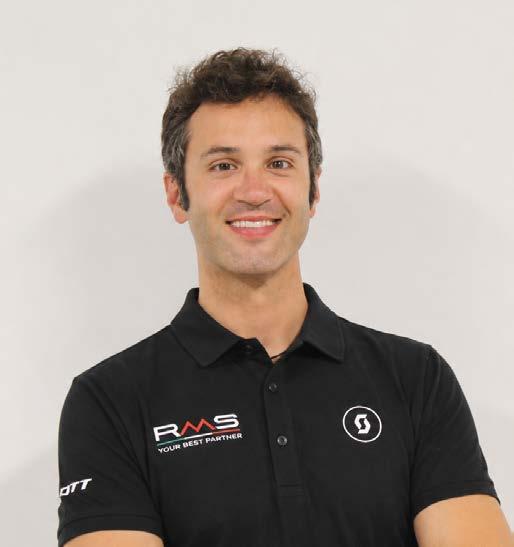
Traveling in a more responsible and alternative way—a choice that can be made easier if the market offers suitable means to facilitate light and sustainable mobility. With this in mind, Myland, the RMS brand that strongly believes in the bicycle as the primary mode of transportation, was founded in 2022. The brand’s philosophy is based on a simple yet precise concept: to develop modern, innovative, high-quality, and functional bicycles designed to support the new urban mobility without technical excesses or solutions that are ends in themselves. The goal is to offer bikes for real-world use—suitable for daily home-to-work commuting, urban travel, and everyday errands—without sacrificing the ability to venture out of the city for weekend rides on suburban routes or light trekking. The result is a balanced, sturdy, and versatile lineup: agile in city traffic and reliable when the route extends and the pavement gives way to more open roads.
THE HEART OF MYLAND BIKES
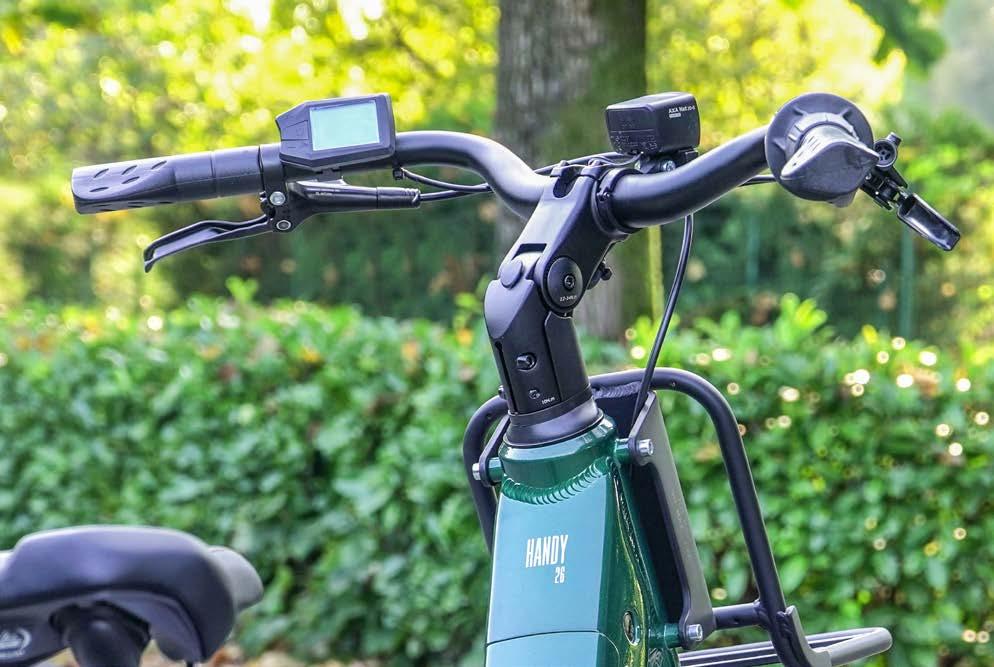
In recent years, Myland has devoted significant attention to the development of powertrains designed to ensure smooth, reliable performance that is well-suited to everyday use. Simplicity of design represents a deliberate technical choice: less complexity means greater long-term reliability and more efficient management of urban travel. This is not a sacrifice of power, but rather a smart way of delivering it—always ready when needed and without waste. The battery has also been sized to offer practical range that is truly tailored to daily commutes. The result is a balance between performance, low weight, and charging efficiency, with every component designed to contribute to a stable, responsive, and safe driving experience.
ESSENTIAL AND COMPREHENSIVE SETUPS
real-world user experience. Components are selected to ensure durability, comfort, and reliability in everyday urban use. There is no room for superfluous elements: every choice is aimed at tangibly improving the riding experience and focusing the investment on the most important aspects, such as structural integrity, efficiency, and perceived quality.
For Myland, the concept of simplicity does not mean a compromise on quality. In fact, every model is the result of careful design, where the features are optimized for the
EASY BIKE: FREEDOM OF CHOICE
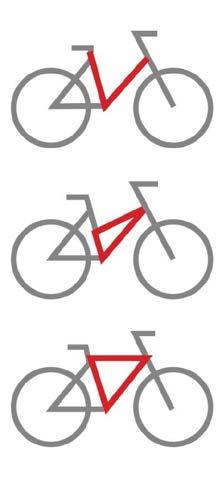
The “Easy Bike” concept developed by the brand isn’t just about technical simplicity—it’s also about freedom of choice. For each size, Myland offers different frame options, with geometries designed to adapt to different riding positions, riding styles, and needs. It’s not a one-size-fits-all platform, but rather specific configurations aimed at improving comfort, accessibility, and ease of use. This philosophy is based on a clear premise: the right bike isn’t just the one that’s the right size, but the one the rider truly feels is their own.
STRICT CONTROLS
Before leaving the production facility, every Myland bicycle undergoes a thorough inspection process carried out by specialized technicians. The Easy Bike protocol includes eight inspection steps for conventional models (including the 14”, 16-inch, and 20-inch versions), supplemented by additional specific checks for eBikes and the entire electrical system. The inspections cover every aspect: from checking the wheels, brake rotors, drivetrain, and fasteners, to testing electrical functions such as power-on, walk-assist mode, and the lighting system. The process is completed by a final cosmetic inspection, focusing on the quality of the paint finish and the cleanliness of the frame. With Myland, RMS thus offers a vision of contemporary mobility based on practicality, simple design, and everyday functionality, interpreting the bicycle not as a specialized item, but as a true tool for urban freedom.
CULTURE AND COUNTERCULTURE
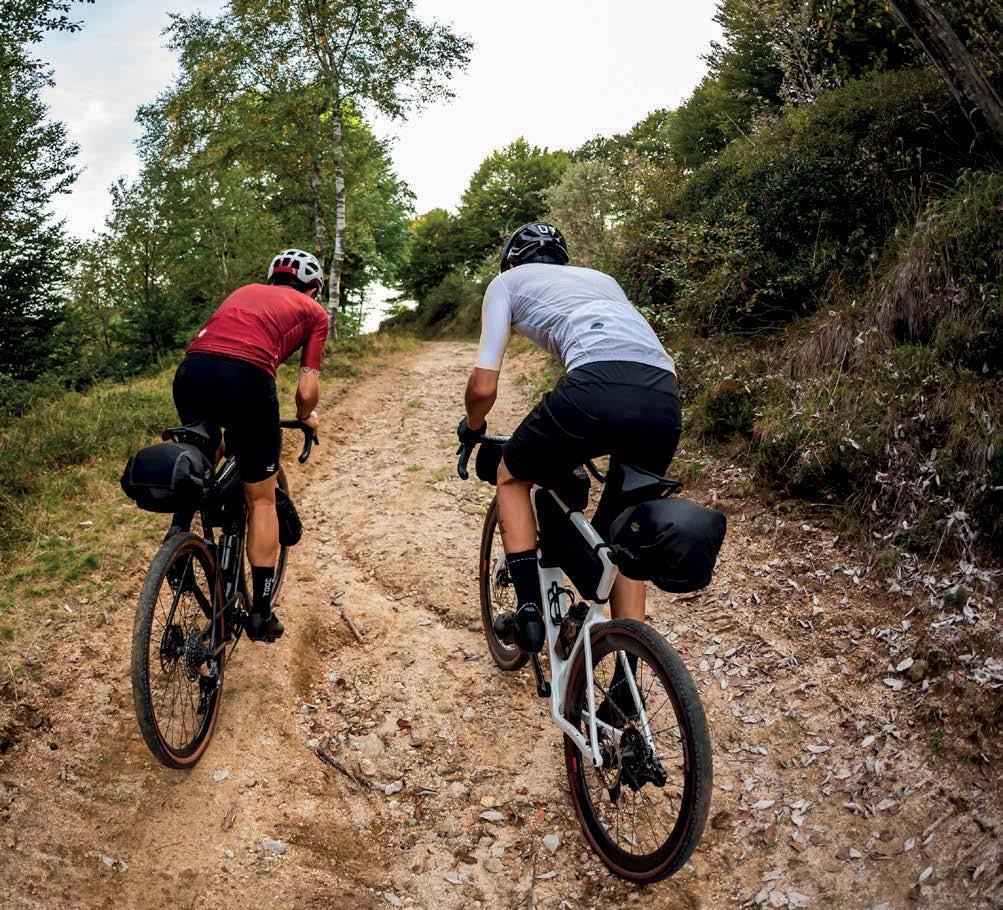
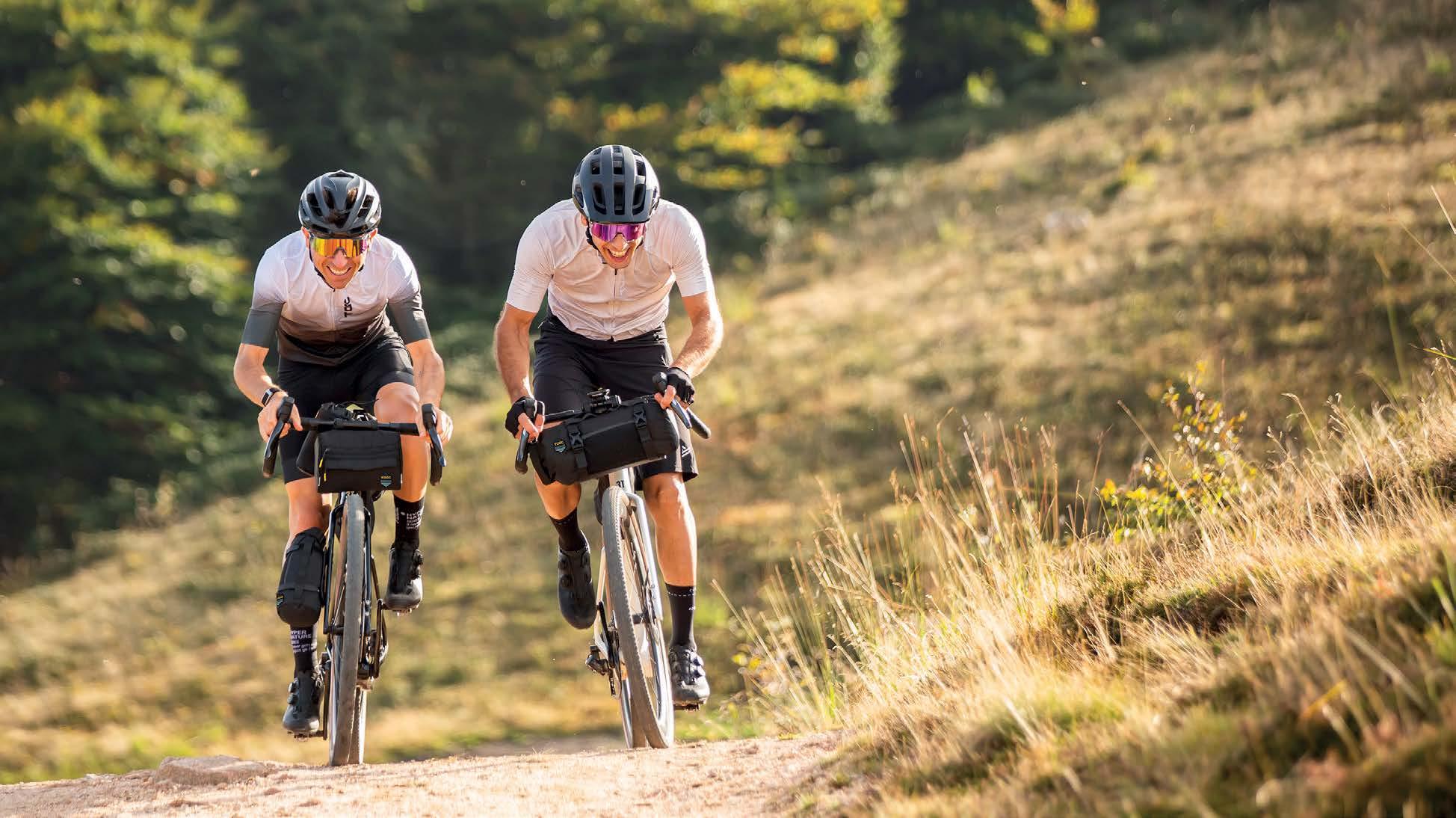
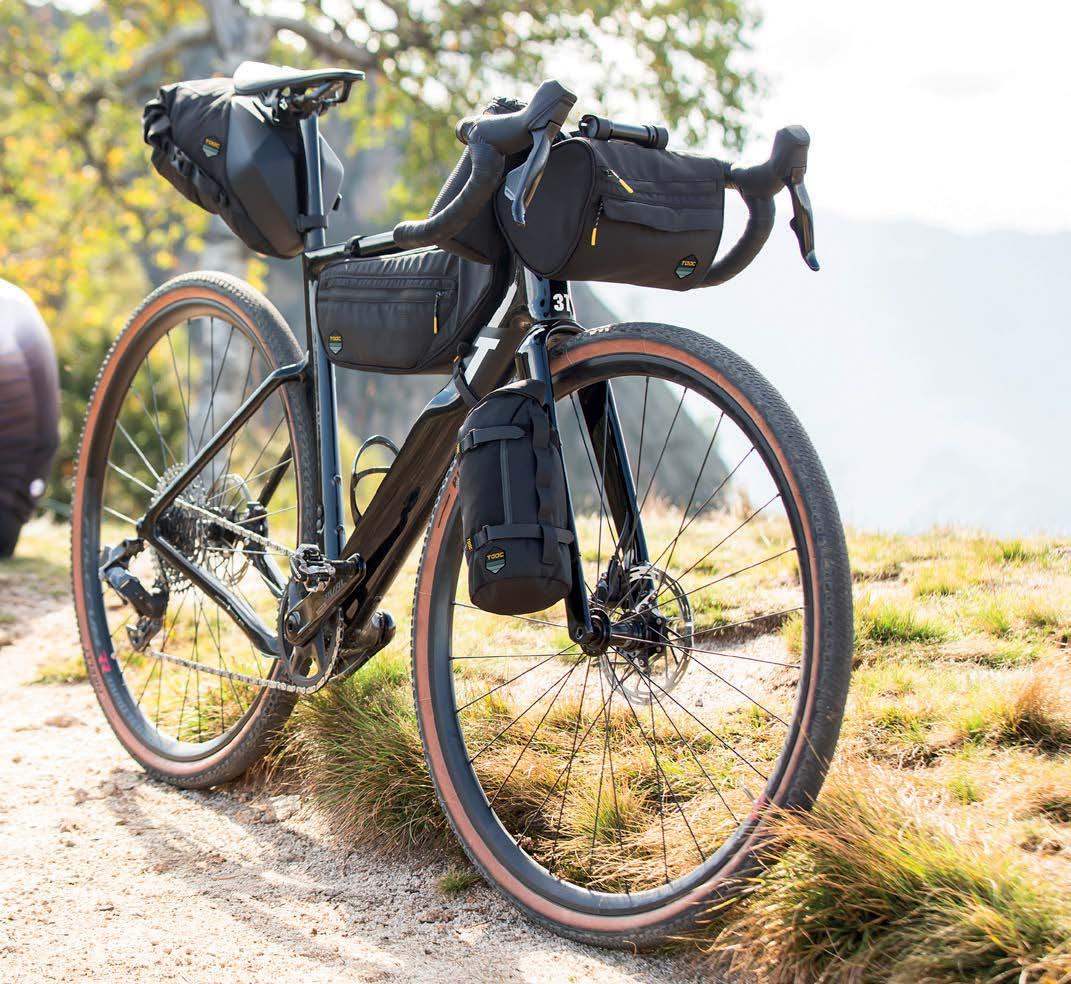
What is now perceived as the newest cycling discipline has its roots in the past. To those who ask, “Who invented gravel riding?”, there can be only one answer: “No one. It has always existed, and it I s the very essence of cycling.”
by Gabriele Vazzola
Let’s talk about what is undoubtedly the most talked-about discipline in the cycling world in recent years. It’s a sector that can sometimes be difficult for a layperson or newcomer to understand from the outside. There are countless facets and types of products—and, above all, the ways in which each person can or wants to use them. More and more often, however, the answer to the classic question from an undecided friend (or customer)—“What bike do you recommend?”—is simply: “Get a gravel bike!” And there are many reasons for this. First and foremost is certainly the cost factor. Leaving aside low-value bikes without a clear identity—which are little more than toys destined to gather dust in garages—gravel bikes have affordable entry-level prices. They’re less intimidating for those new to cycling, especially those coming from other worlds and disciplines. Then there’s definitely the versatility as well.
A beginner’s indecision isn’t just about spending a certain amount of money on an item whose value they often don’t understand—and without even knowing how or how much they’ll actually use it. Gravel bikes, therefore, leave many doors open: they make it easier to adapt to drop bars and go on long rides on pavement, to get your wheels dirty on trails and dirt roads, and to figure out if off-road riding is what you’re looking for. Or maybe not. In any case, it doesn’t really matter. It also allows for a more “laidback” approach to sporty cycling, thanks to wider tires and a more relaxed frame geometry. Plus, you can use that same bike to commute to work or run errands. So, even if you later decide to switch to an aerodynamic road bike or an enduro e-bike, this one could still come in handy on many occasions—or as a “backup” bike.
The versatility of the gravel bike is precisely what sets it apart from other bikes that have gradually become more and more specialized, and this characteristic lies at the very heart of the discipline—which, in turn, is rooted in the very essence of cycling itself. In fact, it is not so much the bike itself but rather the motivations and underlying spirit that have been carried over. What we now call “gravel”—and for which specific, specialized products have been developed—is what, from the very beginning, was simply called “cycling.” This has, however, been shaped by years of culture, technical evolution, and marketing.
SAY "GRAVEL," MEAN "FREEDOM"
The origins of this discipline are often attributed to supposed American pioneers— extreme travelers who would gather to cover long distances on the backroads of Arkansas—but let’s think about it carefully: perhaps we’re dealing with a narrative misconception. Just consider that at the beginning of the last century, for pleasure but above all out of necessity, the Bersaglieri corps in Italy traveled by bicycle along the dirt roads of the Po Valley and the Alps, even going so far as to commission sturdy bikes designed to withstand heavy loads and long distances. In that case, a durable and versatile bicycle could mean the difference between life and death, between
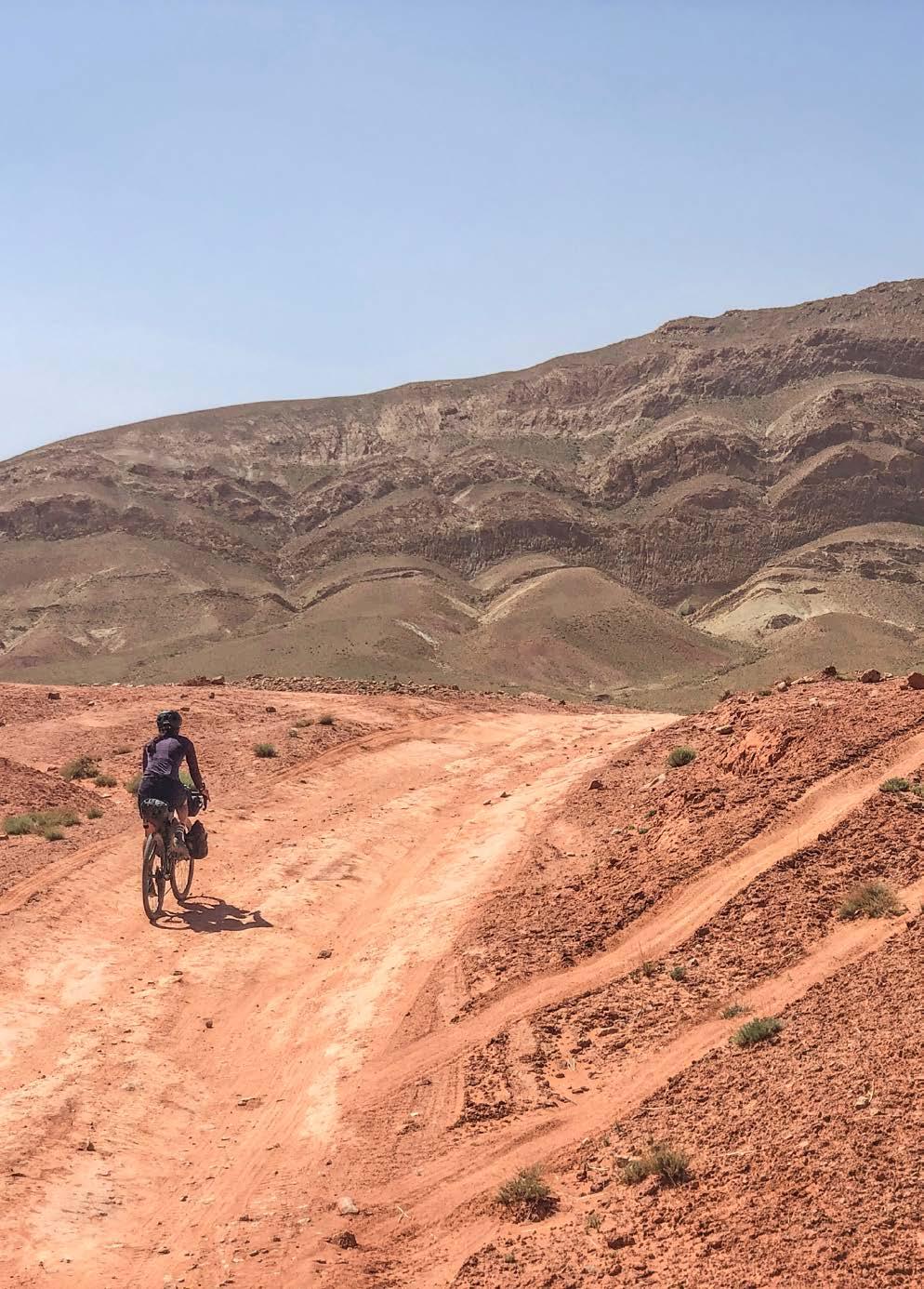
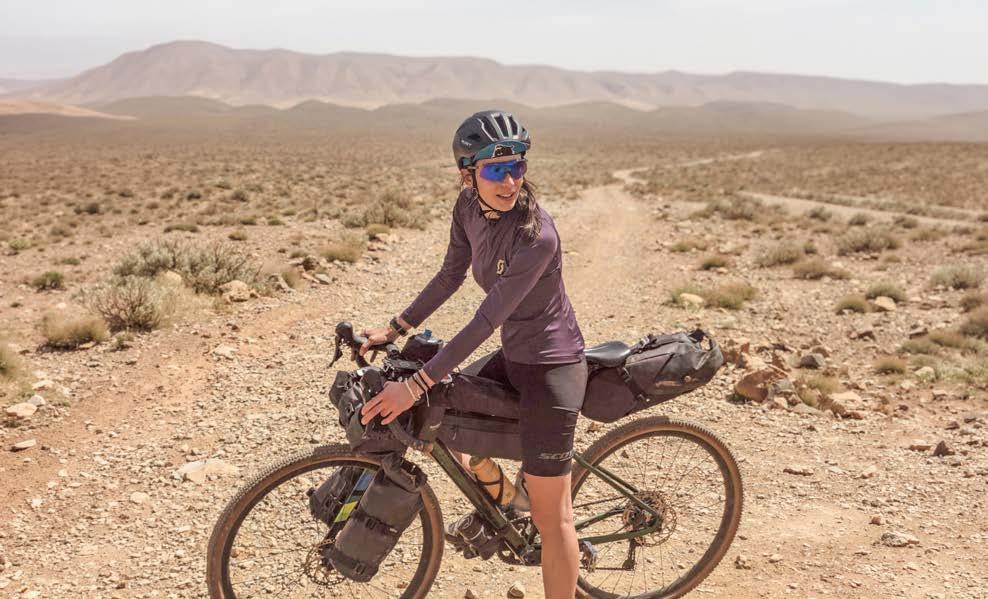
victory and defeat. Or again, shifting the timeline forward just a few years, let’s consider the male and female workers who traveled along the local roads (strictly unpaved) of our countryside, and who, thanks to increasingly modern models, achieved emancipation, broadened their horizons, and expanded their opportunities. Whether they did so out of duty, pleasure, or necessity, in doing so they also expanded their personal range of action (which until then had been limited to just a few kilometers) and came into contact with ever-new people and experiences. Even the first great epic tours took place mostly on dirt roads. Every single stage was a true self-supported randonnée, and the epic feats of these pioneers are still recounted in cycling clubs everywhere. All of them undoubtedly laid the foundation for a collective imagination that has allowed a significant portion of humanity to associate the word “bicycle” with the word “freedom”—an association that has found its perfect embodiment in the gravel movement. Freedom to ride on different road surfaces, in different settings, but also the freedom to choose not to compete with anyone—often not even with oneself. It matters little, then, that there’s now so much talk about gravel from a racing perspective; the UCI World Championships are welcome, and so too are the controversies sparked by the “hardliners” who reject them, arguing that gravel is something entirely different. After all, the most popular events are precisely others—such as Unbound and The Traka—which embrace the long distances and the spirit of the modern pioneers of this way of cycling. It hardly matters if, in the end, these races aren’t very TV-friendly, because (spoiler alert) almost no one cares anymore about what’s on TV. Dirty roads, in fact, dominate the new world of social media and still thrive on images, moments, and stories that capture the spirit of the legendary radio reports of the feats of the first cyclists who completed the first grand tours. In doing so, they increasingly fuel the imaginations of travelers and athletes seeking an escape from an ever more complex and incomprehensible reality, toward the security of the few—but solid—certainties offered by a day spent in the saddle.
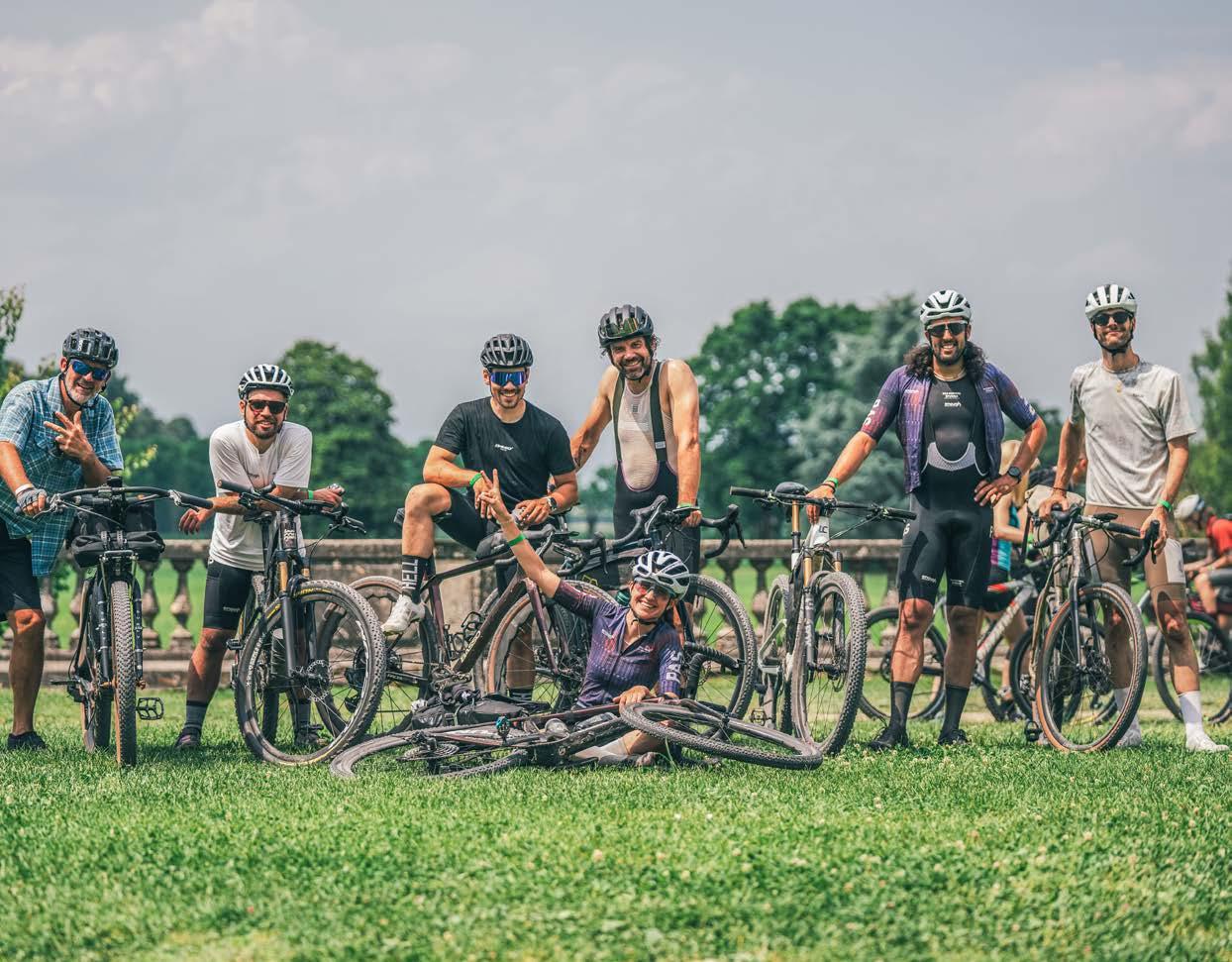
In fact, it is precisely in this unintentional or unconscious return to our roots that we must look for the reasons behind the success of the new urban cycling clubs (or crews), which are able to bring together large groups of people for an escape from the city after work or on weekends. We saw this firsthand while riding with the Milan-based crew Wizard.cc, which organizes rides attended by dozens of people to explore the dirt trails around a city—Milan, for instance—that is typically considered challenging for cycling. Another example is BAM!, a gathering of cycle tourists, who are invited to reach the event location by bike and spend the night in tents, spending a few days exploring the area alongside other enthusiasts on a relentless quest for new challenges and adventures. Finally, in the interview that follows, we’ll also talk about those who have drawn inspiration from the growth of the gravel cycling scene and their passion for bicycle travel to change their lives and follow their calling to “inspire people.”
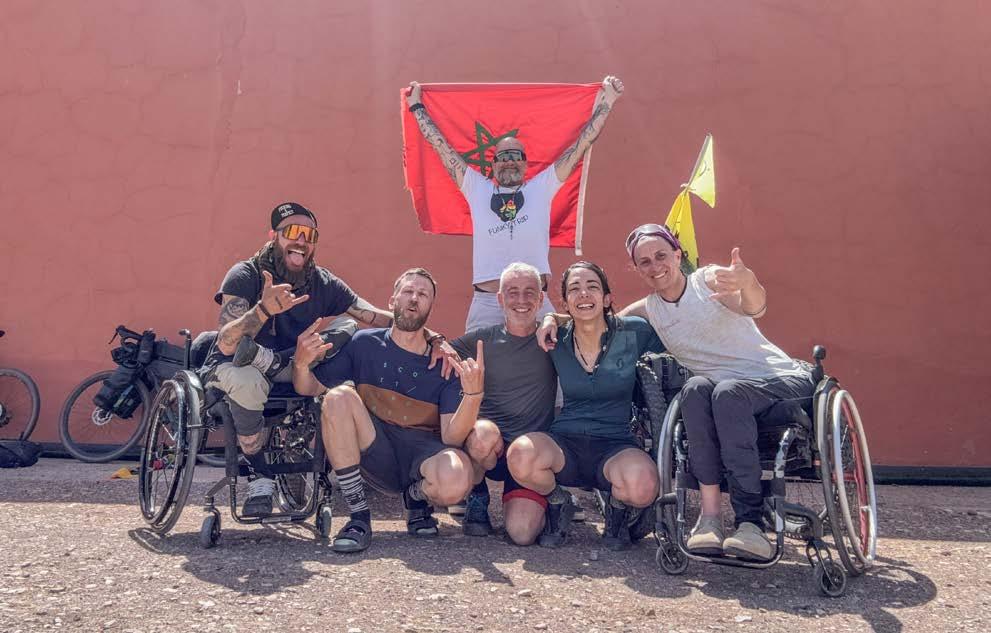
A photo from BAM! 2026 celebrating the diverse facets of the gravel world
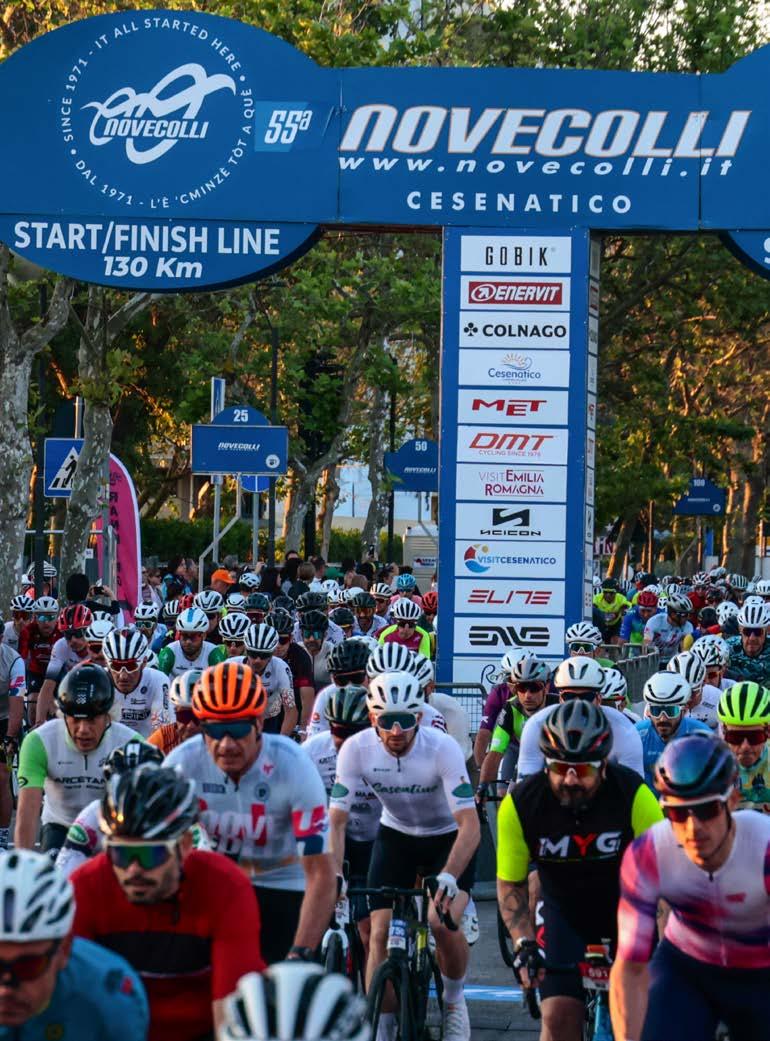
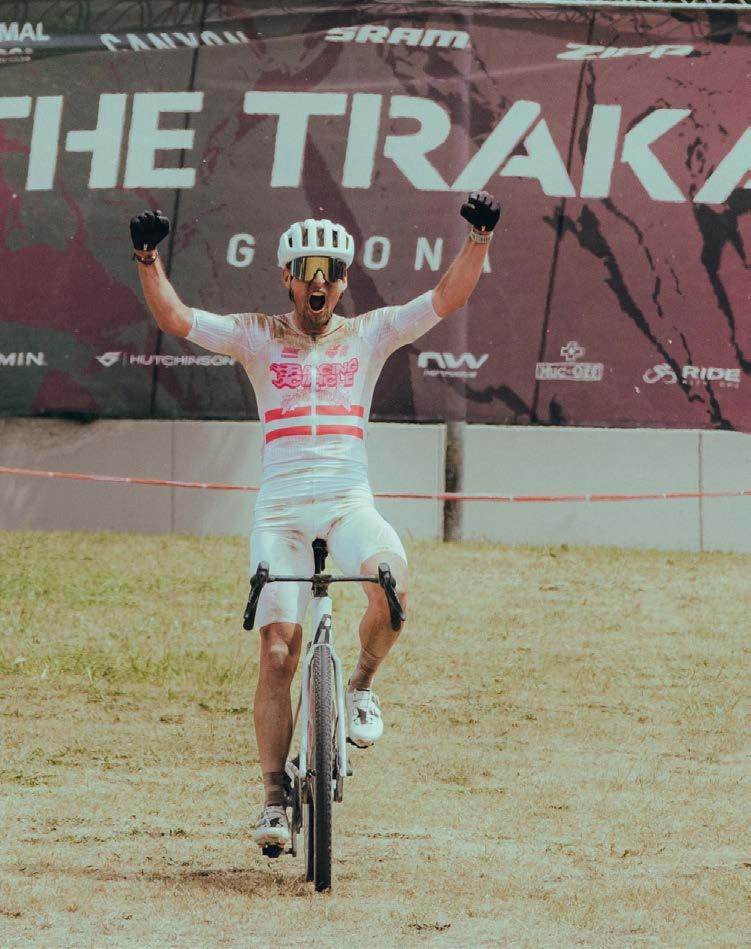
Lukas Pöstlberger's arrival at The Traka 200 km. Among the event's sponsors is the Italian company Northwave
The Interview
DJ Andy Love, whose real name is Andrea Serighelli, after years of performing in the world’s best clubs and producing music, has decided to devote himself body and soul to what was his not-sohidden passion: cycling. He and two other partners are behind the project epicdays.cc, which combines adventure and freedom on two wheels. Based on the idea that every ride can turn into an extraordinary adventure, capable of leaving a lasting impression on the lives of those who take part, this has given rise to night rides, randonnees, and other projects that Andy himself has told us about.
Tell us a little about yourself and your life before this.
After twenty years as a DJ and music producer, I decided to take a chance on myself and devote myself entirely to the epicdays.cc project. Before that, thanks to music, I traveled the world and had a great time. I went far, played at the best festivals—the things that mattered to me. It all started by working my way up from the bottom in the worst clubs and organizing parties. Then, my love for music led me to want to create it myself, starting with my passion for hip-hop and moombahton and blending the world of Latin music with electronic music. I was pretty much the only one playing this genre as early as 2010. I started traveling first throughout Italy, then abroad as well, eventually playing at the Winter Music Conference in Miami. I’ve done lots of gigs all over the place; I’ve also produced music and had my own record label and recording studio.
How did you go from music to cycling?
As I approached 40, at some point I just said, “Enough.” Cycling has always been my second passion, my escape. For me, it’s always been a natural counterbalance to music. I lived at night, but whenever I could during the day, I liked to go for a bike ride on my own. For work, I was always surrounded by lots of people, so in my free time I liked to be out in nature, in total silence, and I’d go on bike rides on my own. At first I rode a mountain bike; gravel biking came later, because it didn’t exist yet in the form we know it today. I rode a lot on my own; for me, it was a way to have fun and let my mind wander. So, since I enjoy cycling, organizing things, and being around people, I decided to bring these worlds together in a way that suited me. When I stopped making music, I had a lot of free time, which I used to go biking on my own terms. The racing scene never really suited me—I never competed, and above all, I didn’t want that kind of stress. I’d go on trips and post a few photos, maybe sending them to my closest friends. They were amazed that certain places could be reached relatively easily by bike. So I started inviting them to join me on some of these adventures, and—helped along by the advent of e-bikes—some of them took me up on it. I especially remember one day when I took a dear friend along; I could see in his eyes that he was somehow surprised by what he’d done. I realized that was what I wanted to do: give everyone the chance to experience “epic” and memorable days. Incidentally, this represents coming full circle for me, because the reason I fell in love with playing music—with performing—was precisely because I loved seeing people dance, have fun, and get excited.
Have you also had experience in the bike industry?
When I stopped working as a DJ and producer, I also worked at a company in the cycling industry. It was a great experience, even though it only lasted a little over a year. Everything was going well, but I just didn’t feel like I belonged there. Still, I’m glad I did it, because it gave me in-depth, firsthand knowledge of the industry. Seeing how a bike shop operates gave me unique know-how—I was right there observing, learning, managing the mechanics, and handling e-commerce. It brought me much closer to this world, helping me understand it from an insider’s perspective. Plus, I made a lot of contacts.
Did you do it all by yourself?
Not exactly—there are three of us partners. When I presented my project, I met the person who would become my first partner, and he, in turn, introduced me to the second. I never would have expected it, but today I consider these two people an invaluable asset; we have a unique relationship, and they provide endless support when it comes to brainstorming, even though they let me take the lead. It would be difficult for me if it weren’t that way. When I came up with the idea for epicdays.cc, it had to be brought to life exactly as I’d envisioned it.
What happens during your epic adventures?
My job is to seek out extraordinary locations and take people there by bike, but in a very relaxed and inclusive atmosphere. I want people to discover beautiful places in Italy—maybe right on their doorstep. Fortunately, we have countless such places. But the true value of a ticket to our events goes beyond that. Living the experience, feeling part of the community, and soaking up the “vibe.” epicdays.cc aims to make people feel good through a shared passion; at our events, we seek to fully engage all the senses. The real value is mental—it’s not so much what you find in the participation package.
What are the rides like that you offer during epicdays.cc?
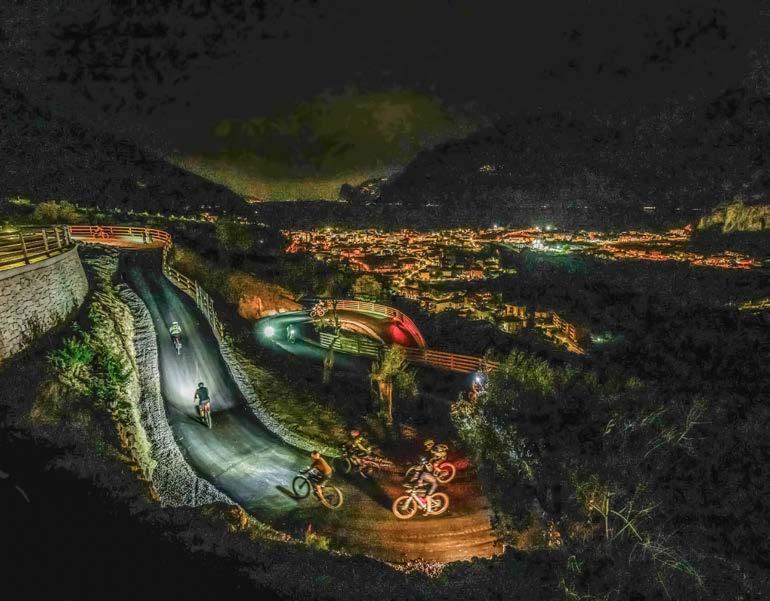
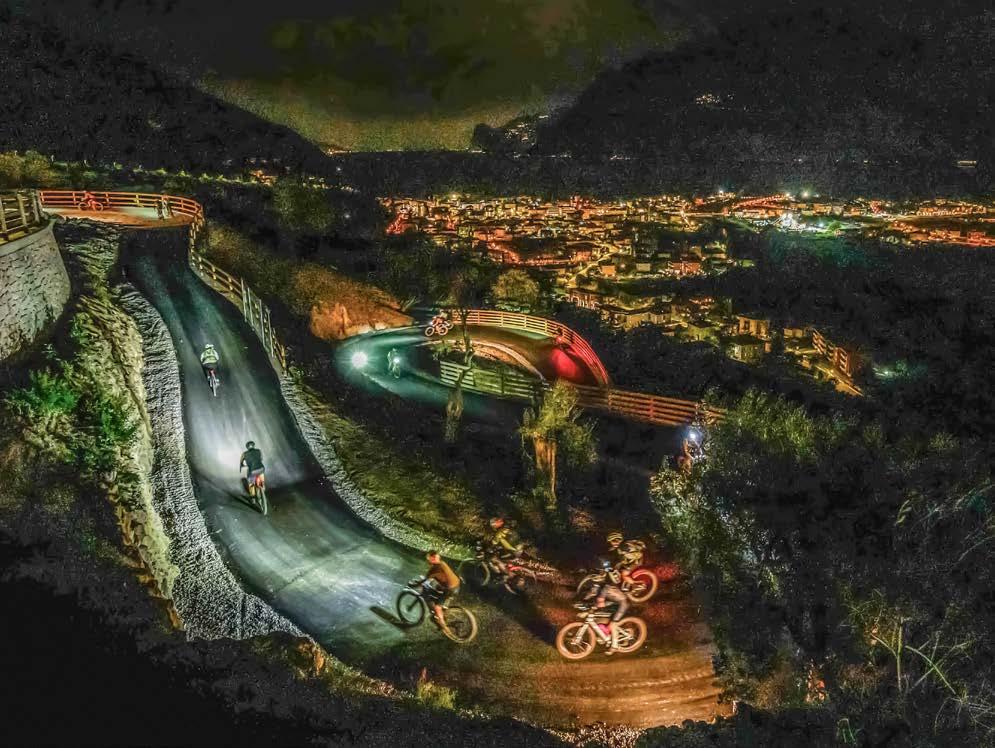
It often seems to me that people are just looking to push their bodies to the limit, just to stand out. We’re pursuing a different goal. I was tired of watching or participating in extreme gravel or MTB tours, where the risk was very high, the effort was an end in itself, and you might even spend more time carrying your bike than actually riding it. The routes I suggest are all rideable and feature manageable elevation gains—perfect for gravel bikes— but I’d like anyone to feel free to tackle them on whatever bike suits them best. It’s a sort of return to the roots of cross-country or bike touring, when as kids we used to explore the trails behind our houses on 26” MTBs. The first of our official events was a night ride in Bergamo—a simple ride along an 80-kilometer bike path with 500 meters of elevation gain. It sounds pretty mundane, but at a certain point the sun sets, you find yourself in the dark, and everything changes. It’s an experience many aren’t used to, and they find it fascinating. That’s epicdays.cc, through and through. This year we’ve organized three night rides; there’s always a shorter 40-km route as well. I realize there are people who go to Decathlon, buy a gravel bike, and then don’t know where to go or how to get started. We want to get more people on bikes—not to create the kind of exclusion that’s often seen in certain corners of the cycling world.
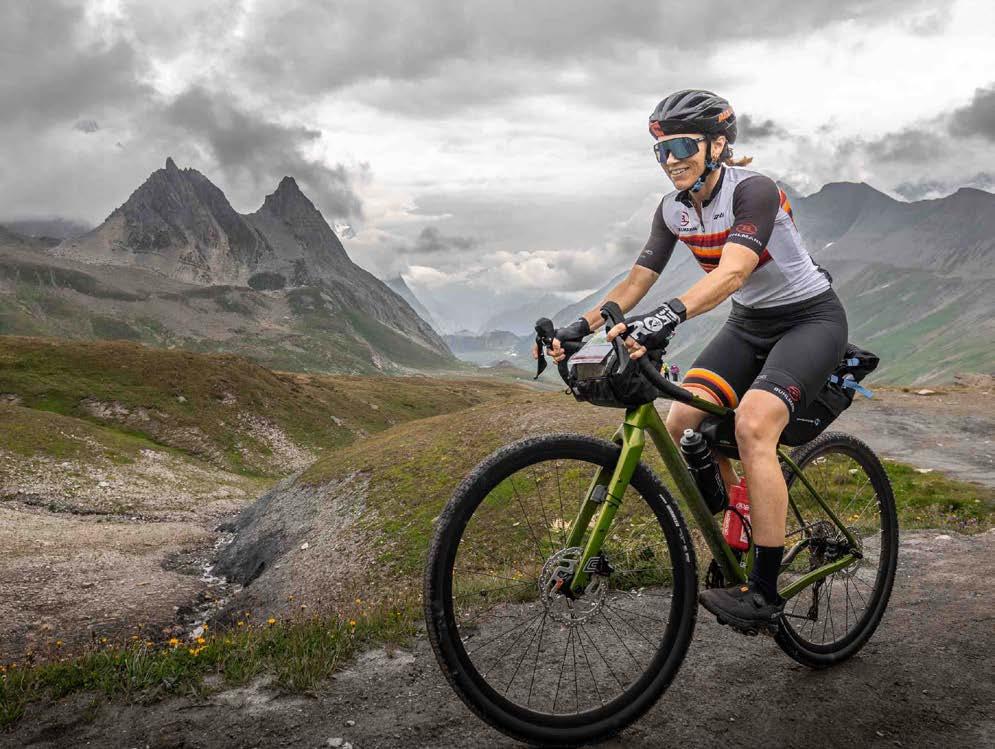
For those looking for a more challenging adventure, I thought of the Randonnée du Mont Blanc, inspired by the famous UTMB trail run. My idea was that there wasn’t just the high-altitude loop around Mont Blanc, but that you could do a route—perhaps at a lower elevation—that’s entirely bikeable. There are villages there, each one more beautiful than the last. Plus, the route crosses three countries: Italy, France, and Switzerland. After a full year of research, I finalized the loop, and now that route is part of our events (in 2026, it will take place starting July 25) with two options: a full 330-km route and a 100-km route.
From left: the Epicnight in Riva del Garda and a section of the Randonnée du Mont Blanc
Andy Serighelli co-founder of epicdays.cc
Playlist epicdays.cc by dj Andy Love
CROSS COUNTRY
GUERCIOTTI
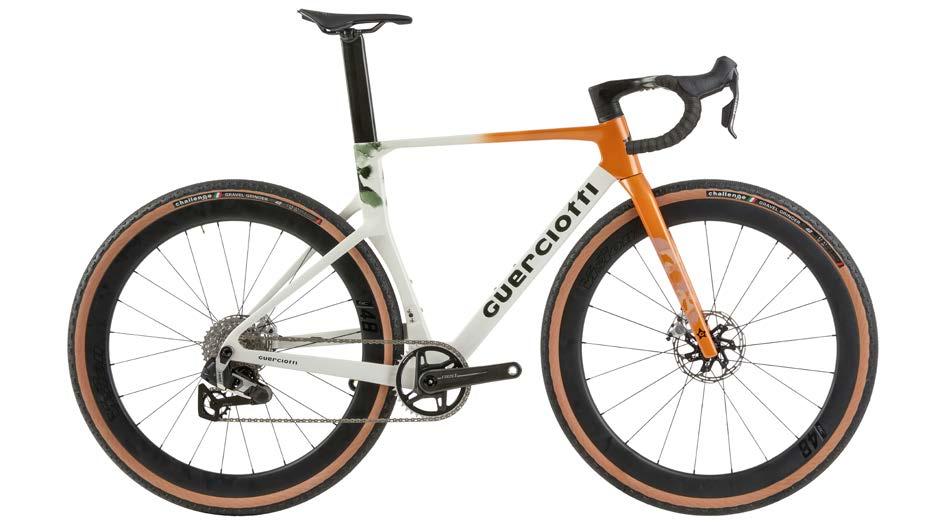
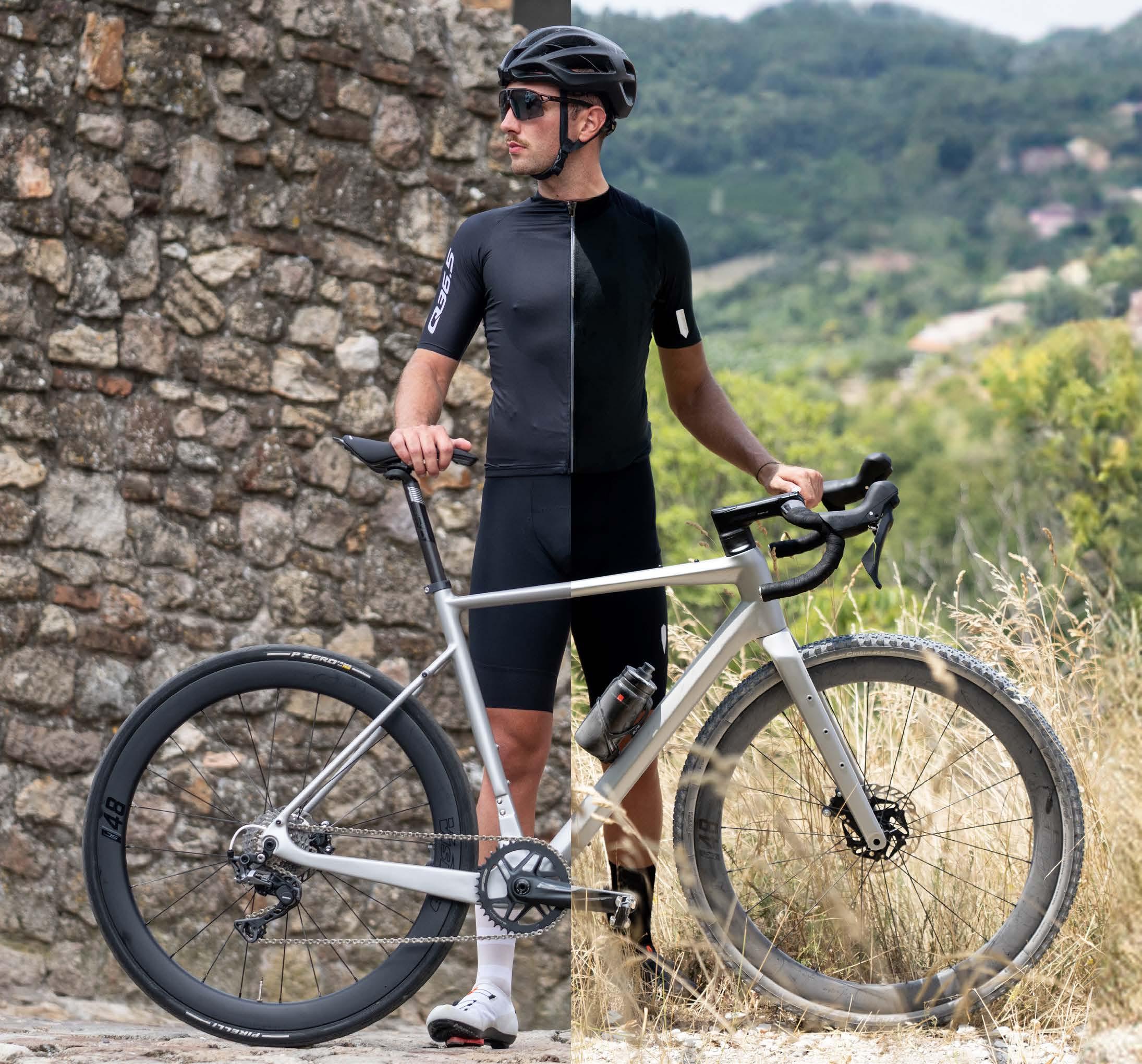
For Guerciotti, gravel has never been a passing trend, but rather the natural evolution of a passion born in cyclocross. Thanks to the experience gained in extreme conditions—including mud, sand, and steep climbs—the Italian brand has been able to precisely interpret the needs of gravel riding. From this know-how came Anima, a bike made from Mitsubishi T65 fiber and built using Expanded Polypropylene System technology, which ensures optimal carbon compression, eliminating micro-pores and excess resin to achieve maximum stiffness, precise thickness control, and a frame weight of 830 grams. Noteworthy features include not only fully integrated cables but also the innovative asymmetrical rear stays, secured at four points, which improve traction and control, especially on the most technical sections. Furthermore, the T47-86 bottom bracket shell provides exceptional structural stiffness, making the bike responsive and precise.
TECHNICAL DATA SHEET
Frame: Mitsubishi T65 carbon fiber
Fork: carbon
Groupset: SRAM Red AXS XPLR 1×13
Brakes: disc brakes
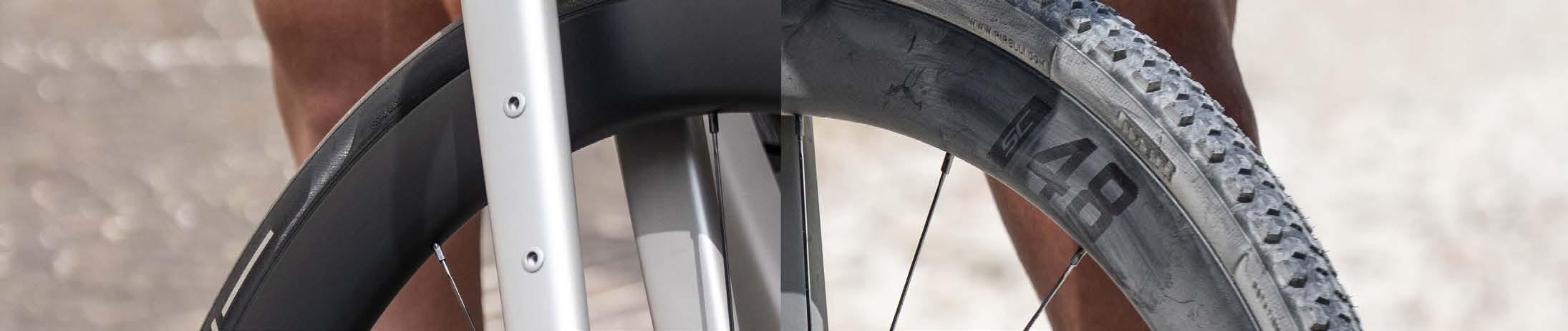
Wheels: Vision SC48 Carbon TLR
Tires: Challenge Gravel Grinder
SPECIALIZED
OLYMPIA
CHALLENGE
DE ROSA ANIMA
S WORKS CRUX 5
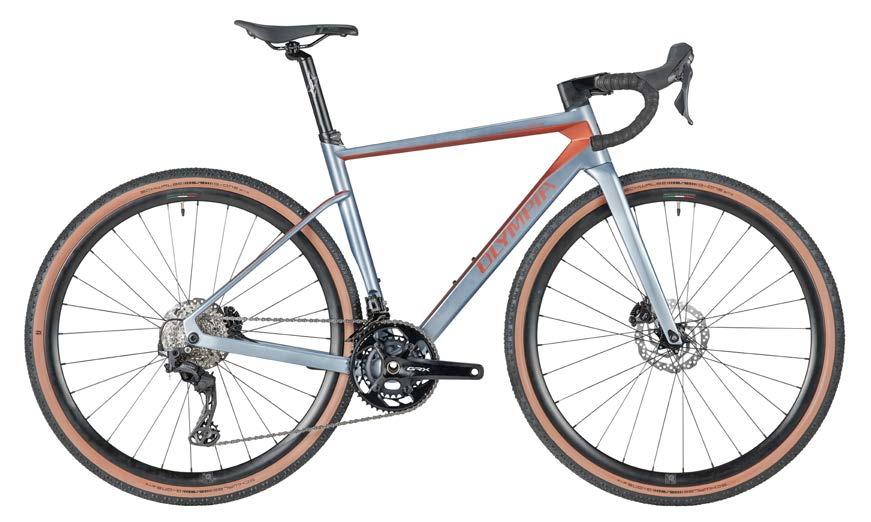
The Challenge is a lightweight, versatile all-road bike that delivers high performance while remaining a pleasure to ride on mixed terrain. The lines of the carbon frame exude a strong personality, even though they feature moderate geometry designed to give fast gravel enthusiasts a comfortable ride even over long distances. The rear triangle features the universal UDH dropout, compatible with various drivetrain types. The wheel clearances selected by Olympia’s engineers are generous and functional, allowing for tires up to 45 mm (700x45c). When equipped with road wheels, the Challenge is a bike that even the most die-hard road cyclists will appreciate for its smoothness and responsiveness. It also features bottle cage mounts both above the top tube and below the down tube. These have been elegantly integrated and can be covered with a rubber insert when not in use, thus maintaining the frame’s clean lines.
Cicli Olympia – 049.9703000 - info@olympiacicli.it
TECHNICAL DATA SHEET
Frame: Toray T1000 – T800 carbon fiber
Fork: carbon
Groupset: Shimano GRX 12-speed
Brakes: Shimano RX400 / RT10 disc brakes
Wheels: X-Feel Gravel
Tires: Schwalbe G-one Bite TLE 45-622
TITANIO X
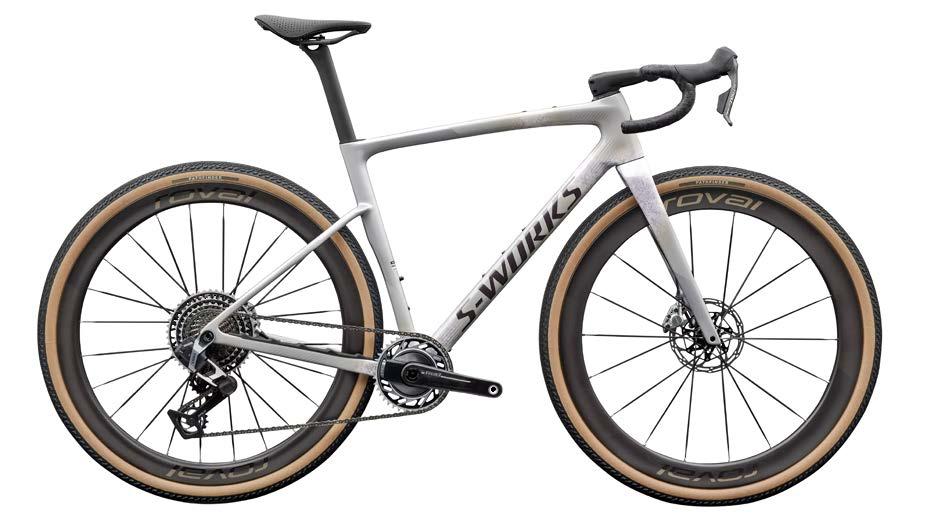
Specialized aims to raise the bar for performance in the gravel world with the new S-Works Crux 5. At the heart of its development is the “Equation of Speed,” a model that integrates aerodynamics, weight, rolling resistance, terrain characteristics, and rider power to calculate the final time on a real-world course. With a 789-gram frame and a complete bike starting at 6.9 kg, the Crux 5 is among the lightest gravel bikes in the world. This is thanks to Flow State Design, a design philosophy that optimizes the frame’s geometry to manage loads, reducing the amount of material needed while simultaneously improving stiffness and comfort. The Crux 5 has its roots in competition, thanks to feedback gathered from athletes on some of the world’s most challenging courses, such as the Unbound Graveld, and has been developed using data collected in the field and through extreme testing. Finally, it’s worth noting that it accommodates tires up to 55 mm wide, ensuring versatility and performance on any terrain.
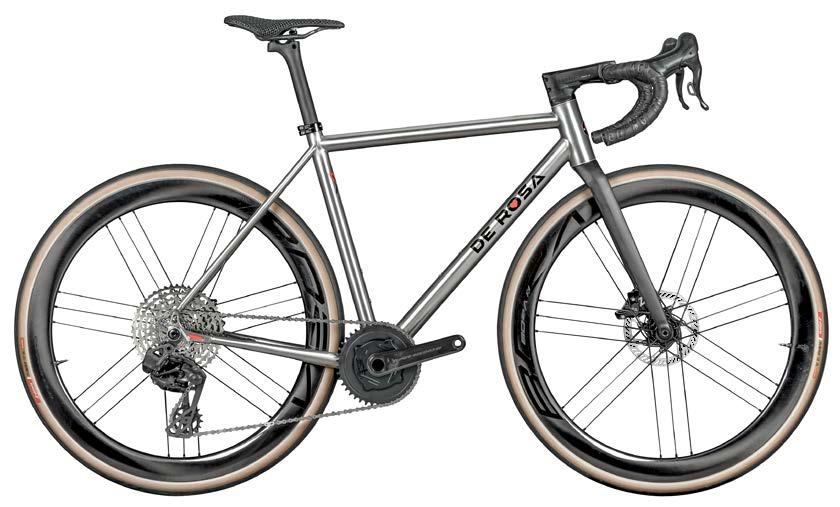
Titanio X is the new project that aims to blend De Rosa’s two core identities—its road-racing heritage and off-road spirit—into a natural balance, designed to turn every ride into a pleasure. The titanium frame, paired with a carbon fork, absorbs vibrations without sacrificing responsiveness and control. The geometry balances stability and agility, making the Titanio X effective on asphalt and safe on mixed terrain. In particular, De Rosa has incorporated slightly more open head angles in larger sizes and a compact rear end that maintains the bike’s agility even on asphalt. The reach is progressive depending on the size, so as to offer every rider an effective riding position without extremes. Each frame is handcrafted at the headquarters in Cusano Milanino, with the option for complete customization of geometry, finishes, and details. The Titanio X is compatible with the major groupsets available on the market.
De Rosa - 02.6195171 - derosa@derosa.it
TECHNICAL DATA SHEET
Frame: Grade 9 Titanium
Fork: carbon
Groupset: Campagnolo Super Record X 13 1x
Brakes: disc brakes
Wheels: Campagnolo Bora Ultra WTO
Tires: Vittoria Rubino
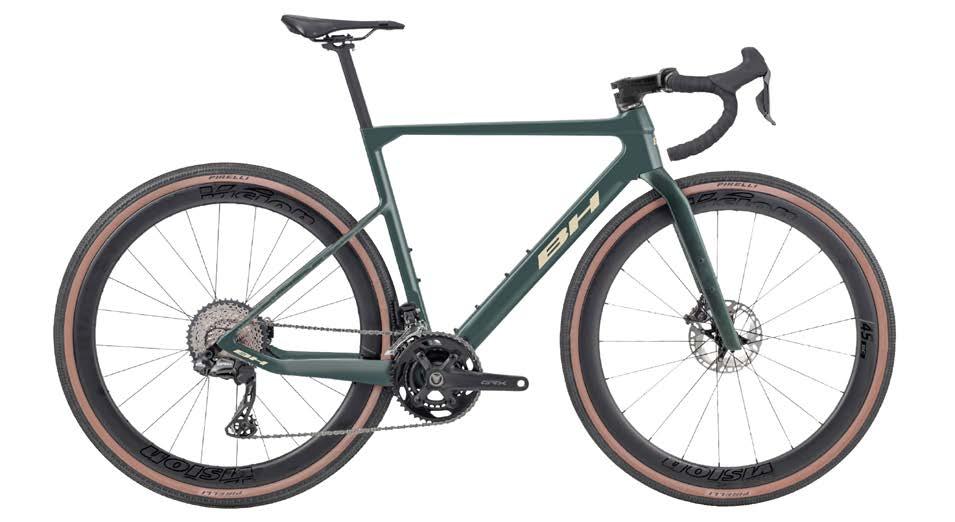
BH
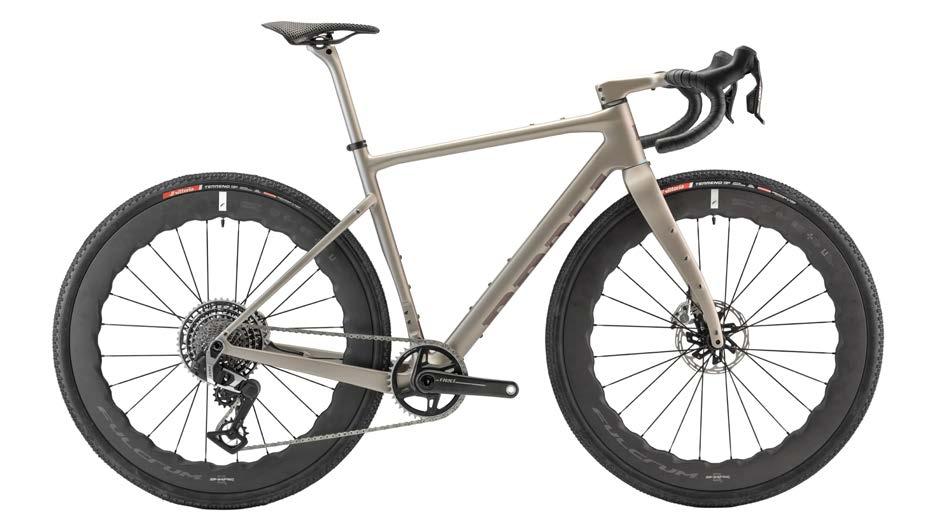
DRALI MILANO
GRAVELX R ZENITH
The new BH takes its design cues from the current GravelX, the model with which the Spanish brand made its debut in high-performance gravel biking. While comfort takes precedence on the GravelX—thanks to the Smooth Riding System (SRS) micro-suspension—the GravelX R is all about performance, forgoing the SRS to achieve a lighter frame that delivers maximum stiffness. The GravelX R’s carbon frames are built using the HCIM process, which eliminates any imperfections in the frame. The fork was designed using the “Air Bow” concept, which, in addition to being a key aesthetic element, plays an important role in filtering vibrations and enhancing performance. Also worth noting is the ICR internal cable routing system, which offers a clean look and improves aerodynamics. The main feature of the GravelX R’s integration is the Toolbox, an internal compartment located at the bottom of the down tube and easily accessible.
BH - 335.6442523 - g.orsi@bhbikes.com
TECHNICAL DATA SHEET
GRAVEL X R 6.5
Frame: carbon fiber
Fork: carbon
Groupset: Shimano GRX 825 DI2 12-speed
Brakes: Shimano GRX hydraulic disc brakes
Ruote: Vision SC45
Tires: Pirelli Cinturato Gravel 700x40
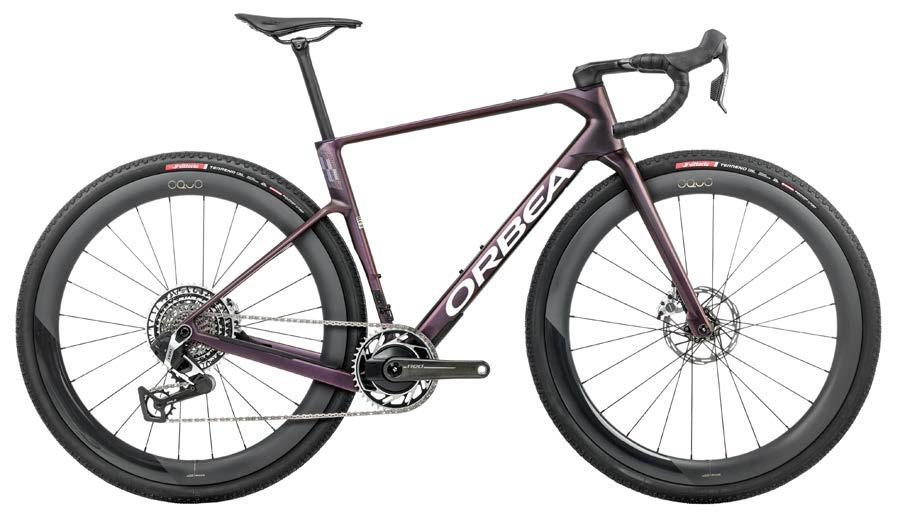
ORBEA
TERRA RACE
Designed to deliver outstanding performance on unpredictable terrain, the Terra Race combines a lightweight OMX carbon frame with refined aerodynamics. Thanks to high-modulus fibers that are laser-cut and precisely positioned, it offers maximum stiffness where needed and reduces weight where it isn’t necessary. The frame is 300 g lighter than previous models, and the matching OMX fork, weighing just 425 g, ensures precision and agility on technical sections. The geometry chosen by Orbea’s engineers is derived from gravel racing, featuring a lower stack, a longer reach, and an optimized bottom bracket height to ensure maximum control on fast sections. Every component is designed to minimize drag (from fully internal cable routing to the elegant OC SH-RA10 Aero Cockpit). Finally, the wheel clearance for tires up to 45 mm allows you to customize rolling efficiency, grip, and comfort to suit the demands of each race.
TECHNICAL DATA SHEET
Frame: Orbea Terra Carbon OMX
Fork: Orbea Terra ICR, full carbon
Groupset: SRAM Red XPLR AXS 13-speed
Brakes: SRAM Red AXS
Zenith carries on the legacy of Drali Milano and propels it toward a new vision of adventure—a more refined form of exploration, characterized by long distances and uncharted territories. This is immediately evident in the clean, minimalist lines of the high-modulus carbon frame, free of any excess. Zenith maintains a sense of efficiency reminiscent of the road bike world, but without the sometimes excessive stiffness that characterizes more competition-oriented platforms. The asymmetrical bottom bracket and chainstays—designed according to the same philosophy—are not merely an engineering solution, but a way to enhance the connection between rider and terrain. Power transfer is effective, while control remains consistent even in the most demanding situations. The generous wheel clearance (up to 47 mm) further expands the bike’s versatility. The frame features a UDH mount, ensuring full compatibility with any drivetrain groupset.
Drali Milano - 02.84892829 - info@ciclidralimilano.it
TECHNICAL DATA SHEET
Frame: HM - T800 carbon fiber
Fork: Deda Gera Curvy
Groupset: SRAM Red
Brakes: disc brakes
Wheels: Fulcrum Sharq
Tires: Vittoria Terreno
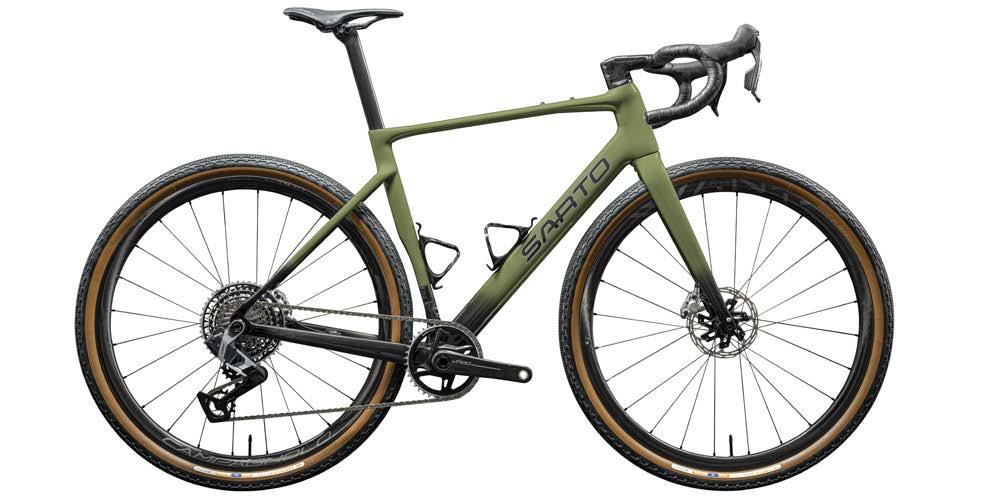
SARTO
RASO GRAVEL
Like every Sarto bike, this gravel bike is also the result of an entirely in-house design and manufacturing process. The new model inherits the aerodynamic performance of the Raso road frame. With the fork integrated into the front of the head tube, clean lines, and tube shapes designed and optimized to cut through airflow as efficiently as possible, this bike was developed by the Veneto-based brand to travel at surprising speeds while offering precise cockpit control. The wider tires (tires up to 48 mm or 55 mm can be fitted) and the challenges of off-road riding prompted Sarto’s engineers to develop a new fork that is both stiff and lightweight. The balanced lines of the road bike silhouette have been retained, “enriched” with the resilience and flexibility needed to tackle the most demanding off-road conditions. orbea.com
Sarto Bikes - 041.5190563 - info@sartobikes.com
TECHNICAL DATA SHEET
Wheels : Oquo Road Performance
RP50LTD
Tires: Vittoria Terreno T30 Gravel
Endurance G2.0
Frame: carbon, UDH-compatible
Fork: carbon
Groupset: SRAM Red XPLR AXS 1x13
Brakes: SRAM Red
Wheels: Campagnolo Levante
Tires: Panaracer Gravelking
POLINI: THE HEART CHANGES, PERFORMANCE IMPROVES
E-P3+ EVO2 represents the evolution of the E-P3+ platform, featuring a new electronic architecture, advanced digital functions, and optimized thermal management. This update is designed to offer manufacturers greater integration and increase the level of customization for the end user
by Davide L. Bertagna
When Polini Motori decided to enter the e-bike market in 2016, the sector was experiencing significant growth but also undergoing a profound technological transformation. In a landscape dominated by large international conglomerates, the Bergamo-based company chose a different path: to develop a proprietary platform, drawing on the know-how gained through decades of experience in mechanics and engine design. This decision has allowed the Lombardy-based brand to carve out a well-defined niche within the market, thanks to a philosophy centered on in-house development, “Made in Italy” production, direct customer support, and continuous product evolution. Ten years after entering the e-bike sector, this journey reaches a new milestone with the launch of the E-P3+ EVO2, an evolution of the E-P3+ platform developed to offer manufacturers an even more comprehensive system from a technical, electronic, and digital standpoint. More than a revolution, the new motor represents a substantial update to an already established design. This decision addresses the needs of bike manufacturers and end users, who are increasingly seeking reliable, upgradeable systems capable of ensuring long-term durability.
REVAMPED DESIGN AND IMPROVED THERMAL MANAGEMENT
Among the most noticeable new features of the new E-P3+ EVO2 is the complete redesign of the side casings. This redesign is not merely for aesthetic purposes; it also helps improve the dissipation of heat generated during operation. More efficient thermal management allows the electronics to operate under optimal conditions even during intensive and prolonged use, ensuring consistent performance and long-term reliability. From an aesthetic standpoint, the new motor features a Graphite finish and Total Black Ergal hardware, which help define a more contemporary and technical look.
NEXT-GENERATION ELECTRONICS
and ready to incorporate any future developments. Among the most significant innovations is the management of the speed sensor, which improves the accuracy of speed detection and helps make the delivery of assistance even smoother, even in the most demanding riding conditions.
AN ADVANCED APP WITH GREATER CUSTOMIZATION OPTIONS
Hardware development goes hand in hand with software development. The Polini app expands the range of available features, introducing tools that enhance both the user experience and customization options. Among the main new features are the electronic lock that protects the motor from unauthorized use, route tracking with automatic uploads to Strava, and advanced management of usage and performance data. Particularly interesting is the ability to customize the motor maps, adjusting the assistance response to your riding style and the type of route.
INCREASINGLY EFFICIENT MECHANICS
While maintaining the design philosophy that characterized the original project, Polini has also introduced a series of mechanical refinements. The pedal pivot center distance has been standardized to 137 millimeters across the entire range, increasing design flexibility in the selection of dedicated spider assemblies. This solution improves the system’s integration without compromising efficiency and performance.
QUALITY-CONTROLLED PRODUCTION AND EXTENDED WARRANTY
At the heart of this evolution is the new electronic platform developed by Polini. The control board has been designed to offer greater processing power and an even faster response to the rider’s inputs. The system features a BIOS that can be updated via a dedicated app, a solution that keeps the motor constantly up to date
For 2026, Polini has decided to limit production of the E-P3+ EVO2 to a maximum of 3,000 numbered units. This decision reflects the Bergamo-based company’s commitment to maintaining high quality standards and exercising rigorous control over the entire production process. In line with this philosophy, the warranty has been extended to three years, confirming the manufacturer’s confidence in the platform’s reliability. Furthermore, the direct technical support network across Europe remains active to support the product, with spare parts available even beyond the warranty period. This is an increasingly important factor in a market that is paying ever greater attention to the durability of components and the sustainability of the product’s entire life cycle.
TESTED FOR YOU
We had the opportunity to test the E-P3+ EVO2 on a Cipollini Fybra, and from the very first kilometers, the motor demonstrated what we believe to be its most interesting feature: the natural feel of the assistance. Power delivery (which is always easy to control thanks to the two-button handlebar control) is consistently smooth and progressive, without any jerks or sudden surges, helping to maintain a pedaling sensation very close to that of a traditional bike. Added to this is remarkable quietness, which makes the riding experience particularly enjoyable both on paved roads and off-road. During the test, we used the three available assistance modes (we did not try the two custom modes). At the end of the approximately four-hour test, the battery still showed 50% of its remaining range—a figure that pleasantly surprised us and confirms the system’s overall efficiency. The Touring mode proved ideal for those seeking comfort, range, and a consistently smooth and progressive response. Dynamic mode likely offers the best compromise for everyday sporty riding, providing more assertive yet still natural and easily manageable assistance. Finally, Race mode showcases the system’s highest performance: the response becomes immediate and particularly effective during acceleration and on uphill climbs. During the test, we connected a heart rate monitor directly to the display, which allowed us to keep our heart rate under control throughout the workout without ever exceeding the threshold. The wireless connectivity is also very impressive: through the dedicated interface, you can quickly adjust assistance levels, select different motor modes, control the lights, and access key usage information intuitively. After several hours in the saddle, the overall impression is of a motor that prioritizes balance and performance, impressing with its natural operation, quietness, and efficient battery management.
ALL THE ESSENCE OF GRAVEL
The extensive Look lineup is designed to satisfy every taste, from racing-oriented products to those intended for bike touring that prioritize versatility and practicality
X-ONE-G MAX
This model takes the best of the road bike world in terms of power transfer and smooth operation and combines it with the versatility of SPD-compatible mountain bike pedals. Look has created a product specifically designed for the fastest gravel riding, while also allowing riders to tackle portage sections during races or enjoy comfort on the road. De signed for the racing world, it’s perfect for all off-road enthusiasts, enhancing the rider-bike connection and making it a special bond—just as on the highest-performance road bikes, where every watt is transformed into forward momentum and every pedal stroke is a direct expression of the athlete’s power, always in pursuit of performance and stability even on the most challenging terrain and steepest climbs.
Contact area: 650 mm²
Support height: 16.8 mm
Weig
X-VENTURE+
Designed for cycling adventure enthusiasts, it offers control and stability on all terrains, from gravel roads to the most rugged trails. Its compact profile integrates seamlessly into the design of modern bikes and represents the best in both performance and aesthetics, featuring an SPD-compatible pedal (with adjustable clamping pressure) on one side and a platform with molded pins on the other. The 77 mm contact surface ensures precise support while riding, a secure grip on unstable or steep terrain, and is ideal for riders who, in certain situations, prefer not to feel locked into the pedal. Its wide contact surface ensures comfort and control and is specifically designed for use with modern hybrid shoes that offer good walkability and pedaling performance.
TECHNICAL DATA SHEET
• SPD-compatible
• Steel shaft
• Body made of recycled CNC-machined aluminum • Ball bearings
Freedom of movement: 6th Q Factor: 53 mm
TECHNICAL DATA SHEET
• SPD-compatible
• Steel shaft
• Aluminum body
• Ball bearings
BACK TO THE ROOTS
Fizik revamps its off-road lineup and introduces the Ergolace 2 with Vibram Megagrip rubber. Versatility is everything for this shoe, designed for gravel adventures and bikepacking, but whose limits are set only by the rider’s pedaling ability.
by Gabriele Vazzola
There’s been a lot of talk lately about gravel races, and we certainly don’t mind that. But people tend to forget that the true spirit of the discipline lies elsewhere—in more carefree adventures, casual rides in search of “that trail,” and bikepacking trips to explore new territories, away from traffic and the beaten path. The Fizik Ergolace 2 seems designed precisely for this “back to the roots” approach to gravel, and it’s in these contexts that we’ve tested them—and retested them, and retested them again; proving not only great versatility but also that they are the worthy successor to an iconic model—perhaps one of the most beloved of all time by cycling adventurers.
The Ergolace 2 is a lightweight, durable, quick-drying, and comfortable shoe— yet just stiff enough—especially in the clip-in version for riders who dream of
The new Ergolace 2 outsole features an exclusive tread pattern and Vibram Megagrip, the Vibram compound that offers excellent traction on both dry and wet surfaces and high resistance to wear. Vibram Megagrip provides confidence and control, maintaining an optimal balance between stability and flexibility to adapt to various surfaces. Returning to the evolution of the sole design, the midfoot features lower, more uniform lugs to improve pedal interaction and stability while walking. For greater traction during walking sections, more aggressive toe and heel areas have been developed: the lugs are taller in these areas and feature a wide pattern for better grip on the ground. The Vibram LCS midsole is designed for extreme durability
venturing far beyond the pavement. The new model features a wider fit, a more compact design, and a redesigned outsole that offers even more grip on rough or uneven terrain. The upper uses a breathable ripstop fabric that eliminates unnecessary materials, reducing drying time and making the shoe lighter. The large PU-laminated areas increase protection against impacts. The closure features the Speedlace lacing system, which is easy to tighten and loosen even while pedaling. The wraparound construction is ergonomic (asymmetrical to avoid interfering with the bike’s drivetrain) and made of Airprene fabric, which reduces material overlaps compared to a traditional tongue. The Fizik Ergolace 2 is available with a flat or clipless sole and in a version with a waterproof Gore-Tex insert; it’s designed for gravel riding but is also suitable for MTB trails, backcountry riding, and any cycling adventure.
The Ergolace 2 was tested with Crankbrothers Candy pedals—a natural pairing, since they represent the adventure-oriented choice from the American brand, which is part of the same group as Fizik. On a gravel adventure with the Ergolace 2, comfort and efficient pedaling are key, but so is the ability to clip in and out without a second thought or hesitation. The pedaling feels effective, and stability on descents is improved, thanks in part to the larger surface area compared to the famous Eggbeater model, which made this clipless pedal technology famous. The unclipping process with the Fizik Ergolace 2 is smooth and intuitive. The Candy clip-in pedals are available in various versions, with an outer cage made of composite, alloy, or titanium, and in a variety of colors. They also feature Crankbrothers’ proprietary fourpoint engagement technology, making it easier to clip into the pedal even in muddy conditions.
The Fizik Ergolace 2 outsole features a Vibram Megagrip compound and a tread pattern designed for gravel and adventure riding
Crankbrothers Candy 11 Titanium Clip-In Pedals, the top-of-the-line model in the family
ORDER REIGNS SUPREME
Schwalbe is reorganizing its Tour line to streamline its catalog.
Marathon, Motion, and Hybrid cover the urban, trekking, and SUV segments, with exciting new features such as the introduction of radial technology
The reorganization of Schwalbe’s Tour line is not merely a catalog update, but rather the next step in a comprehensive strategic vision to redefine internal standards of operational efficiency. Following the precedent set by the MTB line—which saw a simplification of the product lineup with a new, streamlined classification system that is easier for retailers to understand—the German brand has chosen to apply a similar approach of structural rationalization to the city and touring segments as well. For retailers and industry professionals, this “simplification” reduces inventory complexity and optimizes inventory turnover, aiming to eliminate product redundancies and condense market needs into three clear pillars. The goal is to provide customers with a useful tool to navigate the product range easily, reducing friction along the customer journey. Both B2B customers and end consumers can thus find a product offering that aligns with their specific needs. The new structure is based on three distinct macro-families, each designed to occupy a specific niche in the contemporary market. In an increasingly hybrid landscape with blurred boundaries—especially when it comes to urban use, day trips, and outdoor adventures—Schwalbe has chosen to segment
The Interview
To learn more about the German company’s latest developments and the reorganization of the Tour line, we asked Elisabetta Dell’Orto, Schwalbe’s Italy manager, a few questions.
What need does the decision to divide the historic Tour line into three well-defined families address?
We wanted to group the products by their intended use, in order to make it easier for consumers—and, of course, retailers—to have a clear guide to the products so they can easily find the tires that best suit the user’s needs. The Marathon family includes several models, and since it’s our flagship line, it remains categorized under its own name. Motion brings together all our products that end
its product lineup into three categories covering commuting and SUV bikes.
MARATHON
This is Schwalbe’s flagship tire line. The first Marathon, launched in 1983, was a pioneer in terms of durability and puncture protection. Synonymous with top quality and cutting-edge technology, it guarantees reliability in every situation and a steady supply for all retailers.
MOTION
With Motion, Schwalbe targets cyclists who want to combine style and performance and who ride sportier urban bikes. The tires in this line range from models for cargo bikes to options for sporty urban bikes.
HYBRID
Hybrid tires are particularly well-suited for SUV bikes, a segment that is becoming increasingly popular in the European market. They combine everyday use and touring comfort with off-road capabilities and reliable protection against punctures. In fact, they offer excellent performance on both paved roads and dirt trails.
users can choose for everyday use, bikepacking, and commuting. Hybrid covers all products designed for SUVs and hybrid bikes.
How will this new categorization help retailers optimize inventory management and guide customers toward the right product during the sales process?
We’ve reduced the number of products in the Tour segment by 30%. This will make it easier for consumers to choose the right tire. Therefore, anyone looking for a tire for an SUV bike will turn to the Hybrid range. Retailers will find it easier to choose which products to stock in their stores, based precisely on the type of consumers they cater to.
The new Marathon Almotion is described as the sportiest Marathon ever made, and the Pro version introduces high-end technologies such as the ADDIX Race compound and tubeless-ready design. What are the reasons behind this decision? The Pro version was initially developed for the MTB segment. Our product man -
In addition to the new product lines, Schwalbe is also updating the categories within its existing lineup, adding the Marathon Almotion, the Motion Kojak, the Motion Land Cruiser (Plus), and the Hybrid Johnny Watts (Plus).
WHAT'S NEW AT MARATHON
The Marathon line continues to be the beating heart of Schwalbe’s product lineup, and with the new Almotion model, the brand is also venturing into sportier territory. This tire not only stands out for its efficiency and puncture resistance, but also aims to deliver a performance boost. The Marathon Almotion features a tread pattern with a continuous center section for greater efficiency and closely spaced outer knobs for secure traction on gravel roads or rough terrain. For the most demanding cyclists, Schwalbe has also developed the Marathon PRO Almotion version: featuring V-Guard puncture protection and the ADDIX Race compound for extremely low rolling resistance and excellent grip, as well as being tubeless-ready. Both versions are ECE-R75 certified for S-pedelecs and vehicles weighing up to 150 kg. They also feature a reflective strip on the sidewall for increased visibility.
THE VERSATILITY OF THE MOTION LINE
Schwalbe is introducing solutions specifically designed for the modern urban environment and for trekking, including an increasingly important niche: that of light-duty cargo bikes.
Motion Kojak: a sporty, fast, and modern tire for city bikes. The tread pattern is continuous and features a scale-like design. It is approved for e-bikes up to 25 km/h, features Schwalbe’s ADDIX Green compound, and includes integrated RaceGuard protection.
Motion Land Cruiser (and Plus version):
Thanks to its narrow center tread, it rolls quietly and quickly on asphalt, while the open lugs on the shoulders ensure immediate traction on gravel and rough terrain. An ideal solution for trekking and all-terrain bikes. The Plus version features reinforced rubber sidewalls and a 3 mm puncture-resistant layer, which drastically reduce maintenance and minor mishaps.
HYBRID AND RADIAL TECHNOLOGY
One of the most interesting and noteworthy aspects of Schwalbe’s new products concerns the Hybrid models. For the Johnny Watts model, in fact, the German company has introduced radial technology, which made its debut in MTBs and was immediately well-received. The radial casing, whose cords cross at different angles than in traditional tires, increases the contact area and more effectively absorbs uneven terrain, improving overall comfort. The Plus version features enhanced puncture protection, making the Johnny Watts an even more cutting-edge tire.
agers wanted to bring this technology to riders who demand maximum performance from a tire for everyday use or touring.
What factors led you to expand radial technology to the SUV bike segment with the new Hybrid Johnny Watts ?
To offer consumers the same performance found in MTBs. We wanted to bring greater innovation to this segment as well, which is seeing increasing demand.
If you had to give advice to a retailer facing an undecided customer, what are the two key features of the Johnny Watts Radial to highlight when explaining the value of this tire compared to a standard model?
The radial casing offers greater grip, comfort, and safety thanks to the side-toside protection beneath the tread. It stays “glued” to the ground and deforms selectively, depending on the terrain’s roughness. Additionally, the foldable TLR version can be used with hookless rims.
With the Motion line, you’re targeting people who use their bikes in the city for work or leisure. On one hand, there’s the Kojak, with a slightly knobby, fast-rolling tread; on the other, the Land Cruiser Plus, which is highly protected and rugged. Given how our cities are changing, which of these two approaches is gaining more traction in the market?
Product selection shouldn’t just take into account how cities are changing, but a range of factors such as the type of bicycle, the performance you want to achieve, safety and reliability, and even the type of roads.
For these reasons, our decision to differentiate our products by intended use also addresses the changes taking place in cities regarding safety, stability, and personal goals. But above all, it puts the cyclist at the center—ensuring they can count on products every day that represent them and meet their needs.
Motion to proceed
Hybrid Johnny Watts
Motion Land Cruiser Marathon Almotion_
The Johnny Watts also features radial technology, which Schwalbe introduced in 2024 for mountain bikes
TUCANO URBANO:
HERO OF THE TWO WHEELS
The Italian brand has updated its Garibaldine waterproof and packable capes, which are ideal for those who want to get around town even in inclement weather
In 2017, they were among the most interesting new products presented by Tucano Urbano at Eurobike: the Garibaldine marked the official debut of the Italian brand’s urban cycling line, capturing the attention of the public and industry professionals alike thanks to an original approach to rain protection for cyclists. Today, eight years later, these capes are back with a major update, keeping the original philosophy intact while evolving in fit, colors, and functionality. Designed for those who choose to bike every day—even in the rain—the new Garibaldine models reaffirm Tucano Urbano’s commitment to practical and sustainable urban mobility. The concept remains the same one that made the project a success: an ergonomic, ultra-compact rain cape designed specifically for urban cycling, compatible with city bikes and commuter bikes.
Behind this project lies all the expertise Tucano Urbano has developed in the field of rain protection for motorcycles and scooters—experience gained over years of creating products for urban mobility and now applied to the world of cycling through technical solutions designed to ensure waterproofing, comfort, and practicality even during everyday bike use. The most noticeable update is the new fit, designed to improve comfort and freedom of movement while riding. The fit has been redesigned with modern, functional lines that better adapt to the urban cyclist’s posture and the
demands of daily use. The color palette has also been updated, now offering a more contemporary look in line with urban outdoor trends.
TECHNICAL UPDATES
From a technical standpoint, the Garibaldine retains all the features that made the product a benchmark in the commuter segment. The windproof and waterproof ripstop nylon construction with a high 10K water column rating, taped seams, and details designed to provide effective protection from the rain remain central elements of the design. Breathability is also a priority, thanks to integrated ventilation systems, as is safety, ensured by reflective inserts and high-visibility details. Practicality is also a given: the capes fold into a compact pack that’s easy to carry or attach to a bike or backpack, while the ergonomic, helmet-compatible hood and windproof features continue to make the product particularly well-suited for urban travel.
With this update, Tucano Urbano is relaunching one of the most iconic products in its cycling lineup, offering a contemporary reinterpretation of a cape that, ever since its launch, has anticipated many of the needs that are now central to the world of urban mobility: protection, functionality, and style.
Shaping What’s Next. Together.
Join the global platform for cycling and ecomobility.
June 24 – 27, 2026
Messe Frankfurt, Germany
EUROBIKE Festival: June 27
EVERYTHING IN ONE SET
With its Cleaning Kit, Svitol Bike offers a complete and practical solution for those who want to take good care of their bike using specialized products
There’s a moment after every ride when your bike truly reveals the route you’ve just taken: dust on the frame, mud between the components, residue on the drivetrain—signs of use that are part of the experience but which, if neglected, can affect the bike’s appearance, functionality, and performance over time. Maintenance is therefore not just a matter of cleaning, but an act of care that helps preserve the bike and keep it ready for the next ride. To meet this need, Svitol’s Cleaning Kit brings together in a single solution products and tools designed to guide you through the various stages of bike care,
ride. After cleaning, the 500 ml Polishing Compound completes the treatment with a uniform finish that enhances the bike’s original look. But the true strength of this product lies in its protective, antistatic, and water-repellent properties, which help prolong the cleanliness and protect the bike from external elements.
What makes the kit even more complete is the set of dedicated accessories: a 7-liter bucket, which is also useful for diluting the cleaner; a soft sponge for effective yet gentle cleaning; a large brush for the frame; an adjustable double-headed brush for spokes and rims; a 4-in-1 brush for the most stubborn dirt, and a long, bristle-tipped brush to reach gears and hard-to-reach areas. Rounding out the kit is a 100-ml bottle of Dry Lubricant, designed for drivetrain maintenance.
THE WINNING CHOICE
Choice is the first integrated and modular road saddle. Patented by Prologo, it was developed in collaboration with the Visma | Lease a Bike team and has already won Paris-Roubaix thanks to Wout van Aert and the Giro d’Italia with Jonas Vingegaard
The world of cycling, which is constantly evolving—especially in the racing arena—is increasingly characterized by high speeds, with aerodynamics playing a crucial role in achieving victory. In this context, Prologo presents its new Choice saddle, which stands at the forefront of a process of total integration, offering both comfort and performance. This Prologo-patented product opens up new possibilities in the high-end component sector. The Choice stands out for its elegant, minimalist design, which reimagines the interchangeable model launched in 2007 with an innovative twist. This integrated racing saddle is designed to minimize aerodynamic drag coefficients through the use of CFD simulation software and has been refined in a wind tunnel. Its futuristic shape—refined through pressure testing with the Pressure Map MyOwn system—is combined with next-generation variable-density foam, ensuring the perfect balance between comfort and performance. The ergonomics are engineered to adapt to high speeds and new frame geometries, allowing riders to maintain an aerodynamic position for longer. Its compact dimensions, semi-round T-shape, and lightweight design at 152 grams make the Choice ideal for those seeking
Narrow version: 240 × 140 mm
Wide version: 240 × 147 mm
Shape: semi-round, T-shape
Weight: 152 g
Diametro rail: Nack (7 × 9 mm)
innovation and performance. Its high aerodynamic efficiency is closely linked to the concept of rail integration. The Nack (nano carbon fiber) fork is concealed by the two side wings, designed to deflect the frontal airflow and channel it toward the rear of the saddle. The result is an extremely lightweight, aerodynamic, and responsive product in all conditions. Thanks to a reduced stack height and an optimized connection between the rail and the base, the saddle ensures greater structural stiffness, resulting in more efficient power transfer and a precise, controlled ride. A distinctive feature of the Choice is its modularity: using two screws, the rail can be separated from the carbon shell, allowing for the replacement of individual components. The model is already available in the version with a long-fiber carbon base and Nack rails at leading specialty shops and on the prologo.it website.
svitol.it
Jonas Vingegaard, winner of the 2026 Giro d'Italia
La prossima generazione dei motori centrali
M7100 eCity motor
M7600 eMTB Motor M7200 eTrekking motor
Potenza naturale
Controllo preciso
Integrazione totale
Costruita su una piattaforma condivisa e ottimizzata per diverse esigenze di guida, la serie M7000 combina potenza di picco e coppia elevata, design compatto, funzionamento silenzioso e connettività intelligente in un’unica soluzione.
AFTER THE RETAILERS, IT'S THE TURN OF COMPANIES AND DISTRIBUTORS
The points raised in *The Charge of the 101* have been brought to the table from producers and industry professionals. How are they responding to the challenges posed by rising prices, competition from online retailers, and market stagnation?
by Davide L. Bertagna and Daniele Pansardi
As is traditional, the first few months of the year provide our publishing group with an opportunity to take stock of the situation with our network of retailers throughout Italy. Retailers are the cornerstone of the supply chain, which is precisely why it is important to gather their perspectives, listen to their requests, and consider their needs. Our market survey, “La Carica dei 101,” has highlighted the critical issues of a complex line of work—one that has presented increasing challenges in recent years—as well as new trends, potential opportunities, and many points for reflection aimed at fostering a more harmonious and collaborative relationship with their respective suppliers. The ball is now in the court of companies and distributors. The second phase of our survey (which is always
widely read, commented on, and appreciated) is therefore dedicated to manufacturers and distributors, to whom we have shared the retailers’ insights in order to gain a complete picture of the situation. The topics on the table include price increases, competition from online retailers, the influence of Asian brands, and a potential rebalancing of the product offering between brick-and-mortar stores and the internet—but that’s not all. The questionnaire was then expanded to include the most successful product categories, the reasons that drive companies to choose one trade show over another, future strategies, and a reflection on the role of institutions in a sector as important as the bike industry—a sector that is all too often unfairly mistreated and undervalued.
THE QUESTIONS
1. With a turnover of nearly 2.5 billion euros, the Italian bicycle industry is a major economic player. Yet its political clout and involvement in major infrastructure projects still appear limited. What collective strategies should be adopted to give the sector a stronger voice and “influence” institutions?
2. Conflicts in the Middle East and energy uncertainty continue to hold back the global economy, eroding consumers’ purchasing power. How is this situation affecting your business strategies and market positioning?
3. Over the past year, the specialty retailer channel has experienced the sharpest decline in sales. In your opinion, what are the medium-term prospects for retailers, and how is your partnership with them evolving?
4. Many Asian manufacturers have shifted from their traditional role as original equipment manufacturers (OEMs) to that of direct sellers in the European market, often employing fairly aggressive marketing and pricing strategies. How do
TREK
1. Unfortunately, there’s no magic formula. In terms of infrastructure, a lot has been done over the past decade, especially at the local level, but it’s still not enough. We’re a wonderful country, but we argue over 30-zone limits, and cyclists are still looked down upon. Not to mention safety. I believe that a couple of hours a month of traffic safety education in schools could help.
2. These are factors that are exacerbating a situation that, unfortunately, is already well established. At Trek, we continue to develop products and services with this firmly in mind.
3. I’ve read the data, but I think it’s simply widening the gap between companies (stores) that are evolving and those that are standing still. We’ve always helped our retailers become “the best bike shop in the world”; every fall, we help them review their strategies for the upcoming season through our “Win the Season” meetings. This year, the main focus has been on cost and inventory control.
4. As in every industry, this is a transition that is happening very quickly. We’re not afraid of new competitors, but we’re aware that having a strong “brand” isn’t enough—that’s just the tip of the iceberg, and its foundation must remain solid.
5. There has certainly been a shift in recent years, with budgets increasingly allocated to online initiatives rather than in-person event attendance. But we remain con-
you assess this new competition?
5. In a market that demands maximum cost efficiency, managing your marketing budget is crucial. How should you allocate your resources today among communications, sponsorships, and in-person trade shows?
6. What makes a trade show truly indispensable in 2026? Do you base your decision on the quality of B2B contacts, the number of B2C attendees in specific sectors, or the event’s ability to put on a show for the public?
7. In recent months, there has been a lot of talk about 32" wheels. In your opinion, is this a genuine technical innovation developed on an industrial scale, or is there a risk that it will introduce further fragmentation and confusion (and thus indecision among consumers) in an already saturated market?
8. What were your three best-selling products among retailers in 2025?
9. Do you think Italy needs a shared platform dedicated exclusively to B2B, where companies, distributors, stores, and institutions can connect?
stantly vigilant about what’s happening in our market and monitor which choices are best to make from year to year. As for sponsorships, we have a very significant international program featuring teams and athletes from every discipline.
6. This year, we do not plan to physically attend events due to a number of internal assessments and our focus on other objectives. Certainly, all the factors mentioned will need to be taken into account in the future. We need to make investments that are as productive as possible on all fronts.
7. Cycling is a sport in which athletes are always striving for peak performance. Research and development lead to new products—some revolutionary, others less so. Compared to the past, there is much more science involved today, both in terms of development—to confirm performance gains with data—and on an industrial level— to ensure product reliability.
8. We have a lineup that ranges from kids’ bikes to time trial bikes, so it’s hard to give you a definitive answer. The Madone is certainly one of our best sellers, but we’re also very pleased with our gravel line (Checkpoint, Checkmate, and Checkout). One product we don’t talk about much but which, according to our dealers, is unrivaled is our Marlin front-suspension MTB.
9. There’s already Ancma for manufacturers and distributors, which tries to lobby institutions, and then there’s you guys, who do an excellent job of raising awareness. I don’t think there’s room for anything else. Mainly because ours is a very individualistic sector, a bit like cycling.
Ambrogio Grillo Sales Manager for Southern Europe
RIESE & MÜLLER
1. First and foremost, a constructive critical mass must be created. There is a lack of the “cycling culture” that has developed over the years in Northern European countries, enabling them to achieve significant results. There is a lack of an overarching vision and a lobby to represent and protect the interests of the industry and its stakeholders.
2. Rising fuel prices could be a new opportunity to help people realize that there are alternatives to cars for getting around their cities. These are effective and efficient solutions that are accessible to everyone.
3. In my opinion, retailers will remain a cornerstone of our market. They are the ones who have direct contact with customers and play an indispensable advisory role in the purchase of complex products (I’m thinking especially of e-bikes). We will con-
SPECIALIZED
1. We live in an era when people talk about “high gas prices” and “respect for the environment.” Motorcycles are an excellent means of transportation and a conscious choice for those who care about these issues, but, unfortunately, industry associations are struggling to raise awareness among our policymakers, even though the benefits of motorcycle travel are numerous:
• They improve overall traffic flow
• They generate environmental benefits related to pollution
• They generate savings for the community by reducing healthcare costs
• They make cities more modern and attractive to tourists
• They make the transportation system more efficient and flexible
We must entrust our future to a political class that is sensitive to these issues; every citizen should make choices with these issues in mind when they go to the polls. Today—as unfortunate as it is to say—those who govern us are deaf to these issues. To create a united front, we need to be more effective in “influencing” public officials by uniting the supply chain, stakeholders, and associations into a single voice, and by presenting our politicians with best practices from European countries where, thanks to concrete decisions, they have improved the well-being of cities and citizens.
2. Uncertainties always create shortfalls in the consumer market, especially for non-essential products. Fortunately, Specialized’s DNA is focused on the midto-high-end market and the racing sector, where financial resources and passion are less affected by these historical factors.
3. We’ve noticed that retailers who offer quality services—in addition to sales and product selection—are struggling less; in fact, their results are improving. Specialized is investing more and more in training our partners and in providing services to consumers through retailers. Expertise trumps everything, especially when selling products where the technology needs to be explained and the costs need to be justified.
4. The surge of Asian brands is a threat in certain market segments, where there is less of a sports culture and the bicycle is viewed purely as a means of getting
tinue to invest in and support our retail network.
4. It was to be expected; we’re seeing the same thing in the automotive industry. I’m not surprised they’re here. Competition is stimulating and good for the market.
5. Our focus on the Italian market is centered on supporting our dealers. They are the ones we primarily choose to support through marketing efforts.
6. I believe it is important to reach as wide an audience as possible, seeking to attract new audiences and, consequently, new potential customers.
7. It’s one more option available; the market will decide whether or not it’s an innovation.
8. For us, the long-tail cargo bike market is the one that’s growing the most. We offer a variety of solutions designed primarily to meet the needs of families with children.
9. It would certainly be a useful tool. As I was saying, we need to be able to give all the key players in the industry a single, strong voice.
around and for transportation. When it comes to bikes designed for sports and competition, you can’t “catch up” on decades of development and research in just a few months or years. Specialized has been investing in the racing world for decades, and one of our mottos is “innovate or die.” We have hundreds of athletes who, thanks to their regular feedback and collaboration with our engineers, continually improve the quality of our bikes. I don’t think Asian manufacturers can or will be able to become competitive without an approach like this.
5. Our investments are generated partly by our global headquarters and partly at the local level. The largest and most significant portion of the budget is allocated to providing full support to five teams: WT Road, a WT XC/XCM Factory Team, a WT Gravel Factory Team, and a WT Gravity Team, alongside various national-level partnerships.
Another portion of our expenses—which I like to call “investments”—is related to renovations and collaborating on the redesign of our retail locations and display areas; and, finally, we manage our relationships with media partners. We’ve scaled back our events; we’re doing—and will continue to do—fewer activations, selecting only the highest-quality ones.
6. Today, every initiative must deliver an ROI (return on investment). We focus on and participate in trade shows and festivals because they are more appealing to consumers. Obviously, the “in-person presence” aspect is important for generating leads with whom we can maintain an ongoing dialogue over time. Furthermore, it’s important to attend events that feature a test ride area, which is essential for us in allowing people to truly appreciate our bikes.
7. We are, of course, paying close attention to this trend—that’s undeniable. But we’ll only move forward once we’re certain it will deliver technical and quality benefits through winning products. We don’t follow trends, nor are we in a hurry to do so. The direction of our development is dictated by our athletes and engineers; if the 32 models prove to be efficient and successful in certain segments and categories, they will certainly be included in our catalog.
8. Levo G4-R, Tarmac SL8, and Epic 8 for bikes. For accessories, in order of sales: Roval wheels, shoes, and helmets.
9. It might be helpful and constructive to address the first question on the questionnaire.
Marco Mattarolo
Paolo Mauri sales manager Italy & South-East Europe Marketing Manager, Italy
1. A 2.5-billion-euro sector that still struggles to make its voice heard in the “corridors of power” is, frankly, an anomaly we can no longer afford. The response cannot be an individual one—it must be a collective effort. As an industry, we must first and foremost speak with one voice, strengthening ANCMA’s role as a credible and well-structured institutional partner capable of presenting data, proposals, and a vision—not just demands. We must then build cross-sector alliances with the worlds of tourism, public health, and sustainable mobility, because the bicycle is not just a product: it is a solution to problems that institutions have already declared to be priorities in words but have not followed up with concrete action. Every euro invested in cycling infrastructure generates a demonstrable return in terms of health, traffic, and emissions. It is up to us to bring this data to the right decision-makers; we cannot wait for someone else to do it for us.
2. The global situation has forced us to thoroughly reevaluate our priorities. The erosion of purchasing power is real and being felt. Our response has been twofold: on the one hand, we’ve worked to improve supply chain efficiency by diversifying our suppliers and reducing our exposure to volatile markets; on the other hand, we’ve chosen not to compete in the low-price segment, because competition there is unsustainable. Instead, we’re focusing on solid value for money and a brand narrative that positions Atala as a smart, long-lasting choice. In times of uncertainty, consumers want to feel secure in their purchases—and we want to be that source of certainty. We’ve invested heavily in new products offering excellent value for money in the road, gravel, and eMTB segments. We’re seeing positive signals from the market.
3. The specialty retail sector has had a very difficult year, and it would be dishonest to deny it. The decline has been significant, exacerbated by inventory carried over from the two years following the pandemic and by a slowdown in demand that occurred just when stores were at their most stocked. That said, I am convinced that specialty stores have a future, provided they evolve. The retailer who will survive is the one who can transform themselves into a trusted advisor, not just a simple point of sale. Atala is working to be a true partner in this transition: sustainable commercial agreements, after-sales support, marketing materials, and profit margins. We cannot leave our retailers to fend for themselves: their success is our success. On the other hand, a minimum level of planning is also necessary on the part of the dealers.
4. It’s a competition we follow closely and with respect, without underestimating it. Some Asian companies have made tremendous strides in terms of product quality and marketing sophistication. Pricing is often aggressive because cost structures are incomparable, and let’s not forget that China, as a nation, supports exports with substantial “subsidies.” But there is one thing they still cannot easily replicate: proximity.
ATALA/WHISTLE HEPHA
1. Personally, I believe that to strengthen the political influence of the Italian bicycle industry, we first and foremost need a collective vision capable of presenting the bicycle not only as a sports or recreational product, but as a strategic asset for mobility, industry, public health, tourism, and the energy transition. From HEPHA’s perspective, there should be three priorities. The first is to build a more coordinated and authoritative representation of the sector. Manufacturers, distributors, retailers, tourism operators, sports associations, and urban mobility organizations should speak with one voice through permanent roundtables and shared documents. Institutions must recognize the bicycle industry as a mature industrial sector capable of generating employment, innovation, and economic value. The second priority is to provide concrete data to public deci -
The extensive distribution network, after-sales service, consumer insight, and the history of a brand like Atala—which has been around since 1908—are assets that take decades to build. Our response lies in perceived value, trust, and continuity. Furthermore, we must verify, on a case-by-case basis, that Asian products comply not only with technical standards but also with EU customs and tax regulations.
5. We have significantly realigned our priorities over the past two years. Digital communication now accounts for a growing share of our resources, because it allows us to measure the return on investment and speak directly to specific consumer segments. We evaluate sponsorships very selectively: we prefer initiatives with strong local roots and alignment with our brand values rather than visibility for its own sake. We still attend trade shows, but we attend fewer of them and do so with greater purpose.
6. Today, a trade show must earn its audience; it cannot take attendance for granted. For us, the main criterion is the quality of the contacts, both B2B and B2C. It’s important to attract the right buyers, international distributors, and decision-makers, as well as end-users who can see and try out the product. That said, events that succeed in creating a true community—where industry professionals meet, discuss ideas, and build relationships—still hold a value that digital platforms cannot fully replace.
7. To be frank: the risk of fragmentation is real and must be taken seriously. The market has already absorbed the transition from 26" to 27.5" and then to 29", with all the manufacturing and marketing costs that this entailed. Before embracing a new standard, we must ask ourselves: who really benefits from this innovation? The cyclist or the supply chain? If there is a real, measurable technical benefit for specific categories of use, then so be it. But if it’s a move to drive component replacement in a saturated market, consumers will eventually catch on and lose trust. We prefer to innovate on what truly makes a difference—and in the riding experience.
8. The city and trekking eBike segment continued to drive demand, with a growing preference for accessible geometries and longer ranges. Children’s bikes held up well, demonstrating that this category remains resilient even during periods of overall market contraction. Meanwhile, road and gravel bikes saw growing interest from retailers looking to expand their customer base to include new riders.
9. Yes, we feel the need for it. Today, the sector is fragmented even in terms of communication and tools: every company builds its own channels, every distributor uses its own systems, and the result is inefficiency for everyone. A shared platform where companies, distributors, retailers, and institutions can communicate, exchange orders, access market data, and develop joint projects would mark a significant step forward for the entire industry. The challenge lies in finding the right governance structure: who manages it, who funds it, and who ensures its neutrality. But these are obstacles that can be overcome if there is a collective will. And I believe that will exists—or at least that it is growing.
sion-makers.
To truly influence infrastructure policies, statements of principle aren’t enough: we need data on economic impact, traffic reduction, health benefits, tourism, road safety, and the potential of e-bikes for everyday mobility. A brand like HEPHA, which focuses on the technological evolution of the e-bike, can contribute by demonstrating just how much the e-bike has become a practical solution for urban travel, commuting, and sustainable mobility. The third step is to get involved in decision-making processes earlier on. The industry must not limit itself to commenting on projects that have already been finalized, but must participate in the planning phase of bike lanes, incentives, and urban mobility programs.
2. The current international context is leading consumers toward more cautious, selective, and rational purchasing behavior. Economic uncertainty, rising energy costs, and declining purchasing power are prompting end users to evaluate every investment more carefully, particularly when it comes to non-essential goods such as eBikes. For HEPHA, this scenario is not merely a challenge
Massimo Panzeri
Beltain Schmid chief executive officer country manager Italia
but also a strategic opportunity to consolidate and evolve its market positioning: offering technologically advanced, reliable, and competitively priced products that deliver excellent value for money. In this context, HEPHA’s clear and distinctive positioning as an innovative brand capable of offering high perceived value at an affordable price allows it to present itself to consumers as a viable alternative to more established—and often more expensive—brands. A further source of competitive advantage stems from the high degree of inhouse production integration. The in-house production of a significant portion of our components—both electronic and mechanical—allows us to reduce our reliance on external suppliers, optimize turnaround times, and improve overall control over quality, costs, and supply chain continuity.
3. The specialty retailer channel continues to be a key asset for the industry’s future, even though it has underperformed compared to other distribution channels over the past year. The decline in sales should not be interpreted solely as a negative sign, but also as a phase of market selection, rationalization, and transformation. In the medium term, we believe that specialty retailers will continue to play a central role, particularly in the e-bike segment. Customers who purchase an electric bike are not just looking for a product, but for an ecosystem of services: expert advice, the opportunity for test rides, technical support, warranty, maintenance, and an ongoing relationship built on trust. These are high-value-added elements that the online channel, on its own, can hardly replace completely. For HEPHA, the retailer is not merely a point of sale but a strategic partner in the brand’s growth journey. Our goal is to build a more structured relationship with retailers, based on technical training, sales support, product availability, clear communication materials, and operational tools that enable the store to convey the true value of our offering to the end customer. Alongside the traditional sales model through specialty retailers, HEPHA also offers end users the option to purchase through its official online channel, which is integrated with a click-and-collect feature. This approach is also beneficial for retailers, who maintain an active role in customer management, product delivery, and after-sales services. Looking ahead, we believe this channel will see steady growth, fostering greater integration between digital sales and our physical presence in the market.
4. The growing presence of Asian manufacturers in the European market is a phenomenon that should be observed with a clear-eyed perspective, avoiding oversimplified interpretations. It is evident that many companies that started out as OEMs have gradually developed industrial expertise, production capacity, and technological know-how that have enabled them to create their own brands and market directly to end consumers. For HEPHA, this evolution is part of the market’s natural transformation. Competition—even when particularly aggressive in terms of pricing and marketing—can help raise the overall standard of the product offering. The entry into the European market of already established Asian manufacturers has helped shift the end consumer’s perception, demonstrating that Asian quality is now fully comparable to European quality. Furthermore, it is increasingly evident that some of the major innovations—especially in electronics, software, batteries, and smart management systems— originate precisely from the Asian industrial ecosystem. However, we believe that competing solely on price is not sufficient in the European market. European consumers are placing increasing importance on aspects such as actual product quality, safety, regulatory compliance, long-term reliability, after-sales service, availability of replacement parts, warranty, and the continuity of the relationship with the retailer. These factors are particularly crucial in the eBike segment, where the motor, battery, electronics, and software require specific technical expertise and structured support throughout the entire product lifecycle.
5. In an increasingly selective market environment, managing the marketing budget requires a higher level of focus than in the past. Our priority is to direct investments toward activities that generate measurable value, strengthen brand recognition, and provide concrete support to the sales network. Currently, our resources are focused primarily on three areas. The first is digital and product communication. This is the area where we invest most consistently, as it allows us to clearly convey HEPHA’s positioning, the technical features of our eBikes, the advantages of the motor-battery system, and the value of use for the end customer. The second area consists of sponsorships, events, and partnerships. This year, in addition to the IBF, we have selected two events with strong local ties focused on product testing: Rosadira Bike Days and Bike Festa Südtirol. The goal is to create effective synergies between the brand, the event, and partner retailers, generating added value and reaching an audience genu -
inely interested in learning about, trying out, and evaluating HEPHA’s offerings. At the same time, we have launched a collaboration with Mario Presi, a mountain bike guide based in Liguria—a region that offers an ideal setting for e-bike testing, both for identifying potential product improvements and for building targeted visibility among an audience focused on high-performance e-MTBs.
6. In 2026, a trade show can be considered truly indispensable only if it is able to generate tangible value for all stakeholders. Simply having a booth is no longer enough. Companies must be able to measure their return on investment in terms of qualified leads, business relationships, visibility, brand positioning, and opportunities to let visitors actually try out the product. For HEPHA, the primary evaluation criterion remains the quality of the B2B audience. A trade show must provide an effective setting for meeting retailers, distributors, technical partners, and industry stakeholders with real growth potential. The value of the event depends not only on the number of leads generated, but above all on their quality and relevance. In an increasingly competitive market, it is essential to focus time and resources on events that foster the development of solid, long-lasting partnerships. The second factor concerns the presence of a vertical, targeted, and genuinely interested B2C audience. In the e-bike segment, hands-on product experience is a determining factor: range, comfort, motor response, build quality, and riding feel cannot be conveyed solely through a technical spec sheet or static marketing materials.
7. 32-inch wheels are an interesting topic and deserve consideration, but they must be evaluated objectively and in light of their actual intended use. From a technical standpoint, a larger diameter can offer some potential advantages, especially in off-road settings: better ability to clear obstacles, greater directional stability, and a different sensation of smoothness on certain types of terrain. 32” wheels can therefore be justified in specific, predominantly sports-oriented segments, such as XCO and gravel, where rolling efficiency, stability, and the ability to maintain speed on uneven terrain can be significant factors. At the moment, however, I do not see a particularly significant benefit in the e-bike market, except for taller riders or very specific applications.
8. Throughout 2025, retailers focused their attention on three areas of our product line: everyday mobility, trekking, and sports use. The most in-demand product was the trekking segment, particularly the long-range versions such as the Trekking 7 Performance and Ultra models. This category is highly valued by retailers because it appeals to a broad audience: experienced urban riders, cycle tourists, commuters, and customers looking for a versatile, comfortable, and reliable eBike. The second area of strong interest was the city segment. In a context where many consumers are evaluating real alternatives to cars for short- and medium-distance travel, eUrban models continue to play a strategic role. Retailers are asking us for affordable, well-equipped, safe, and easy-touse products, such as our City 7 Performance line. The third most in-demand product category was the mountain/all-mountain segment, particularly in configurations offering the most competitive value for money. Here, interest stems from the combination of performance, our proprietary motor, range, and build quality. The most popular models were the All Mountain 7 Carbon LTD and the Mountain 7 Performance.
9. Yes, we believe that in Italy there is room—and likely a genuine need—for a shared platform dedicated exclusively to B2B. The sector has now reached a significant economic, industrial, and technological scale, but it remains fragmented in terms of representation, the flow of information, and the ability to engage in structured dialogue with institutions. An effective B2B platform could become a stable meeting point for companies, distributors, retailers, trade associations, industry professionals, and public agencies. It should not be limited to serving as a mere commercial showcase but should function as an operational tool capable of facilitating the sharing of market data, sales network needs, technical standards, infrastructure opportunities, training programs, and joint initiatives. For HEPHA, the primary value would be the opportunity to forge meaningful connections within a more organized, competent, and professional ecosystem. The bicycle industry cannot be viewed solely as a commercial sector but must be considered an integral part of policies related to mobility, sustainability, tourism, road safety, and urban development. Having a B2B space where the sector can present itself as a unified whole would strengthen dialogue with municipalities, regions, and the government, fostering greater industrial and strategic recognition of the sector. From this perspective, it would also be beneficial to have an organization capable of helping to raise the labor, quality, and professional standards of the entire sector.
1. I believe the first step is to continue working as a team. Our sector is made up of many different entities, and if we want to be heard, we must present a unified front. Recently, Ancma has done important advocacy work, and there has been no lack of dialogue with the institutions. That said, we expected greater attention to be paid to a sector that generates economic value, jobs, and tangible benefits for mobility and the environment.
2. There is no doubt that the economic climate of recent years has made consumers more cautious about their purchases, especially when it comes to products with a high average price, such as bicycles. In this context, we believe it is essential to continue investing in brand value—and, above all, in supporting retailers. That is why we are investing in initiatives that help retailers sell more effectively, such as the creation of premium shop-in-shops, custom-designed for each retail location to enhance visibility and the shopping experience. These investments are funded directly by Look, with the goal of providing tangible support to our partners and strengthening the brand’s presence in the local market. Organizing test rides and providing test bikes that allow customers to experience the product before purchasing. These efforts drive sell-out, help retailers sell more effectively, and enable end consumers to recognize the benefits of their purchase.
3. We believe that specialty stores will continue to play an important role in our industry. It is true that in recent years they have faced a challenging period, due both to excess inventory on the market and a general decline in demand, but they re-
ABUS ITALIA
1. The Italian bike industry must stop limiting its dialogue to industry insiders. To carry more weight at the institutional level, it needs a unified voice, backed by clear data on the economy, mobility, tourism, safety, and related industries. The point is not to simply ask for attention for the sector, but to demonstrate that cycling generates value for cities, regions, businesses, and citizens. We need ongoing dialogue among companies, associations, retailers, and institutions, as well as a more unified message to the outside world.
2. Economic uncertainty is making consumers more cautious and selective. For us, this means focusing even more on the true value of the product: safety, durability, reliability, and service. At the same time, we are doing everything we can to avoid automatically passing on these challenges through price increases or reductions in margins for the sales network. The challenge is to maintain a premium positioning that is also sustainable for the market.
3. The specialty retailer remains central, but must increasingly evolve from a simple point of sale into a hub for advice, service, and community. It cannot compete with online retailers solely on price, but it can succeed through relationships, trust, and the ability to guide customers in their choices. That’s why our relationship with retailers is evolving into a more comprehensive partnership: training, marketing support, in-store materials, and tools that help stores better showcase the product.
4. Direct competition from Asia is now a part of the market and must be taken seriously: it is fast, aggressive, and often very strong in the digital realm. That said, European manufacturing must once again be perceived as a strength, not just a cost. For ABUS, this is a key point: we are building a new facility dedicated to “Made in Italy” helmets, and our padlocks continue to benefit from the value of “Made in Germany.” Brand, quality control, certifications, consistency, and customer service are elements that the market must learn to recognize more clearly.
5. For me, managing the marketing budget has also been an opportunity to take a close look at everything. It’s clear that, in a more selective environment, some sacrifices are
main a point of contact between the brand and the end customer—one in which we strongly believe. For our part, our relationship with retailers is increasingly evolving into a true partnership. We believe in the work they do, and we strive every day to offer an increasingly personalized service.
4. This is the natural evolution of commerce. It is up to us to continue investing in building an ever-stronger relationship with our retailers, without ever losing sight of the end consumer’s needs. Competition cannot be based solely on price; in the long run, what makes the difference is the ability to innovate, product quality, brand value, and the support provided to the sales network and the end consumer. The emergence of new players also represents an opportunity for niche brands like Look— which are characterized by a strong identity—to further distinguish themselves.
5. It is extremely important that we identify what can most strategically help us achieve our goals and refine each communication tool to make it as effective as possible.
6. All of these factors aside, the cost of the investment becomes crucial.
8. The 795 Blade RS bike, the new Keo Vision pedal, and the X-Venture Plus gravel pedal, as well as the timeless Keo Classic 3 and Keo 2 Max—also available in carbon versions.
9. It could be very interesting, provided it is structured with clear objectives and managed consistently over time. The risk, as is often the case, is that it will start with enthusiasm and great initial interest, only to lose momentum after a few months. To generate real and lasting value, it is essential that it be supported by a concrete plan, dedicated resources, and a long-term vision.
inevitable. But cutting back or making better choices doesn’t necessarily mean communicating less or worse. If you focus on the quality of your activities, brand consistency, and clear objectives, even a more tightly controlled budget can generate real value. The question today isn’t just “how much do we spend,” but “why do we do it and what does it actually achieve.”
6. A trade show in 2026 is essential only if it offers something that cannot be replicated online: relationships, product experience, and direct contact. The vertical B2C audience is very interesting, but it must align with the brand. For us, both the quality of B2B leads and the event’s ability to let people try out and understand the product are important. The spectacle helps, but it’s not enough if it doesn’t bring real value.
7. Since I don’t deal directly with bicycles, it comes naturally to me to draw a parallel with the world of helmets, particularly time trial and performance helmets. Technical evolution is ongoing, and if the data show a real advantage in terms of performance, there’s no point in halting progress. At the same time, we must be fair to the consumer: we can’t give the impression that anyone who doesn’t have the latest model is automatically missing out. There’s a right product for every need. A top-of-the-line or newly launched helmet isn’t necessarily “the best” overall—it’s the best for a specific need. Expanding the product range is positive when it helps consumers make better choices, not when it creates confusion. A brand’s strength lies precisely in its ability to offer diverse solutions while maintaining customer trust—customers turn to you because they know they’ll find a suitable solution even before comparing all the other brands.
8. In our case, the products most in demand by retailers in 2025 were primarily related to performance and safety: GameChanger 2.0, AirBreaker, and the anti-theft solutions from the Bordo line. These are different products, but they have one thing in common: retailers recommend them when they feel they have a compelling story to tell, not just a price to quote.
9. Yes, and this ties back to the first question: if we want the Italian bike industry to have more influence, we also need a shared platform that helps companies, distributors, retailers, and institutions communicate more effectively. It shouldn’t be just a showcase platform, but a useful space for market data, training, an events calendar, joint initiatives, and engagement with institutions. The sector is still too fragmented today. A well-designed B2B platform could help make it more coordinated, more credible, and therefore more influential.
Carolina Parteli country manager Italia
Gabriele Bonetti marketing manager
FSA VISION
1. To increase its political clout, the Italian bike industry should take a more coordinated and strategic approach focused on three key areas. It should produce robust reports demonstrating the sector’s economic, employment, and environmental impact, thereby making itself indispensable to public policymakers. Forge partnerships with the tourism, environmental, healthcare, and urban planning sectors, positioning cycling as a solution to multiple challenges (climate, health, regional development). Invest in communication and campaigns to build public support, making cycling a priority in the eyes of voters. In short, more evidence, more coalitions, and more public support: this is how the sector can become truly influential.
2. Conflicts in the Middle East and energy uncertainty are eroding purchasing power and increasing cost pressures throughout the supply chain. In this context, our strategy focuses on one key point: maintaining a high level of competitiveness, especially against competition from the Far East. Our customers (bike manufacturers) are now extremely price-sensitive and demand increasingly efficient solutions. Consequently, we are working to align our offerings with their needs by focusing on: optimizing production costs, improving supply chain efficiency, and offering flexible solutions. In an uncertain macroeconomic environment, we aim to remain competitive without compromising on quality, quickly adapting our offerings to a market that increasingly demands a balance between performance and price.
3. In the short term, the specialty retailer channel will likely continue to undergo a period of adjustment, but in the medium term, we believe it will remain central to the market, especially because of the expertise, service, and relationships with end customers it is able to offer. Our business strategy, however, does not involve direct relationships with retailers, except for support and technical assistance. Our primary point of contact remains the distributor, whom we consider a key link in the supply chain.
With this in mind, we are working to incentivize distributors to build solid, long-lasting networks of customers loyal to the brands; to promote a model in which retailers can benefit from more favorable commercial terms, linked to the quality and continuity of the relationship; and thus to help sustain the channel’s profit margins, which are currently under significant pressure
4. We are monitoring this phenomenon very closely, as it undoubtedly represents a significant structural shift in the market. Our response, however, is not limited to price or competitive product strategies. Rather, we aim to enhance the brand’s value by investing in elements we believe are distinctive and difficult to replicate in the short term, such as overall product quality, the reliability and consistency of our supply, and the level of service and after-sales support. We are convinced that these aspects, together with a solid relationship with our customers, represent a competitive advantage that Asian players—despite being very aggressive on price—cannot quickly match.
5. In an environment where cost efficiency is critical, we do not adhere to a rigid
marketing budget allocation; instead, we prefer to allocate resources flexibly, based on the needs and opportunities that arise from time to time. Sponsorships play a central role, not only in strengthening our relationship with bicycle manufacturers, but above all because of their direct impact on R&D: partnerships with pro teams are not merely a showcase, but serve as a true testing ground for developing new solutions and high-performance products. At the same time, we continue to believe in the value of trade shows, provided they are well-contextualized, with a strong focus on B2B, and scheduled at a time that is favorable for the industry.
6. A trade show becomes truly indispensable today when it manages to combine several key factors, but first and foremost, I’d say that 50% of its success depends on the location: a well-connected venue that’s easily accessible and offers good hotel accommodations already makes a big difference. Furthermore, it’s essential that the venue be suitable for actually test-riding the bikes, because the hands-on experience remains irreplaceable. That said, what we really value is the event’s ability to effectively integrate B2B and B2C elements. It’s not a matter of choosing between the quality of professional contacts and public attendance, but rather knowing how to strike a balance: on the one hand, real business and networking opportunities for industry professionals; on the other, an engaging and accessible experience that also attracts enthusiasts.
7. There is certainly still a great deal of uncertainty surrounding 32" wheels. People have been talking about them for about a year now, but concrete offerings are struggling to reach the market in a structured way. This may indicate that, at least for now, there isn’t a real need for them in the industry, or that this innovation is facing obstacles. While there are some potential advantages, there are just as many disadvantages: changes in geometry, limited compatibility, and possible complexities for manufacturers and consumers. It is precisely this still-unclear balance that is contributing to a certain degree of indecision. In any case, FSA’s role is to support innovation, so we, too, are ready with our own offerings. To date, however, it is clear that no one yet has a clear picture of the direction 32" will actually take, and this situation risks creating fragmentation and confusion in a market that is already highly complex.
8. Throughout 2025, the three products most in demand by retailers were quite clear and representative of our market positioning. First, the Vision Metron 3D handlebar continues to be one of our best-selling integrated handlebars. Another standout product was the new Vision Metron RS wheelset, our top-of-the-line model featuring carbon spokes. Finally, demand for FSA e-bike parts remains very strong, especially for chainrings. Users are increasingly turning to original parts, or they choose FSA for the breadth of our product lineup and the recognized quality of our products.
9. It could certainly be a useful solution, especially for fostering dialogue and creating synergies among companies, distributors, stores, and institutions. However, in practice, it is difficult to implement: each company has its own priorities, strategies, and business objectives, which often differ from one another. This diversity makes it challenging to maintain a common focus and align the interests of all stakeholders. Precisely for this reason, although it is an interesting idea, its practical application is complex in the current context.
THE QUESTIONS
1. With a turnover of nearly 2.5 billion euros, the Italian bicycle industry is a major economic player. Yet its political clout and involvement in major infrastructure projects still appear limited. What collective strategies should be adopted to give the sector a stronger voice and “influence” institutions?
2. Conflicts in the Middle East and energy uncertainty continue to hold back the global economy, eroding consumers’ purchasing power. How is this situation affecting your business strategies and market positioning?
3. Over the past year, the specialty retailer channel has experienced the sharpest decline in sales. In your opinion, what are the medium-term prospects for retailers, and how is your partnership with them evolving?
4. Many Asian manufacturers have shifted from their traditional role as original equipment manufacturers (OEMs) to that of direct sellers in the European market, often employing fairly aggressive marketing and pricing strategies. How do
you assess this new competition?
5. In a market that demands maximum cost efficiency, managing your marketing budget is crucial. How should you allocate your resources today among communications, sponsorships, and in-person trade shows?
6. What makes a trade show truly indispensable in 2026? Do you base your decision on the quality of B2B contacts, the number of B2C attendees in specific sectors, or the event’s ability to put on a show for the public?
7. In recent months, there has been a lot of talk about 32" wheels. In your opinion, is this a genuine technical innovation developed on an industrial scale, or is there a risk that it will introduce further fragmentation and confusion (and thus indecision among consumers) in an already saturated market?
8. What were your three best-selling products among retailers in 2025?
9. Do you think Italy needs a shared platform dedicated exclusively to B2B, where companies, distributors, stores, and institutions can connect?
Edoardo Girardi general manager
DEDA
1. Collective associations in the sector already exist, but what is likely missing today is an institutional figure who is truly connected to and passionate about the world of cycling, capable of serving as a bridge between industry, local communities, and politics. At the same time, the Italian bike industry must now seek to engage its consumer base through associations and communities, because a broad and informed base of voters can have a tangible impact on policy decisions regarding mobility and safety. Finally, our sector must continue to expand its alliances with tourism, public transportation, and the related infrastructure system: the more the sector is perceived as cross-cutting and strategic for the economy and quality of life, the greater its bargaining power will be with institutions.
2. In recent years, even before this particularly challenging period from a geopolitical and energy perspective, the company had already embarked on a major investment and optimization initiative, such as the installation of a state-of-the-art photovoltaic system covering more than 3,000 square meters.
3. From a strategic and positioning standpoint, over the past year we decided, for example, not to adjust our price lists. This was a decision made to stay close to both retailers and end customers, while maintaining our brand’s positioning. At the same time, however, we have continued to invest in our products: we’ve increased the number of available options, expanded our catalog offerings, and introduced numerous technical innovations. We leave it up to our customer base to choose which products to purchase based on their needs—and, why not, their budget. The retail network in Italy is very diverse: it ranges from online retailers to bike fitters, all the way to traditional shops that base a significant portion of their business on repairs and service. We believe that all these players remain the driving force behind the bicycle sales sector in Italy. Our task, as companies, is to put them in the best possible position to do their jobs by offering solutions tailored to the diverse needs of their end customers.
4. The competition is very strong and “aggressive”—we won’t deny it. What these brands still lack, in part, is the development of a true brand positioning. It is precisely in this area that we European brands must continue to make a difference. We must communicate our exclusivity, our attention to detail, and above all, our focus on customer service. In these areas, we still have the opportunity (and the responsibility) to set ourselves apart from Asian brands.
5. In reality, our investment has grown gradually, while still maintaining very strict budget control at all times. In particular, our participation in in-person international trade shows has increased, because we believe that human contact—in both B2B and B2C contexts—
OLYMPIA BIKES
1. It’s time for the industry to speak up. The problem isn’t the size of the market, but its extreme fragmentation. Other sectors have long since learned that institutional lobbying is built on data, coalitions, and a constant presence. Despite significant numbers, the cycling sector almost always arrives at ministerial meetings too late and without a convincing economic narrative. In other words, a permanent roundtable is essential—one that brings together all supply chains (manufacturing, distribution, aftermarket, and cycling tourism) under a single, internally negotiated political mandate. Today, the bike industry makes its voice heard in Parliament only when there is an emergency, an unfavorable amendment, or a poorly structured call for proposals; and to some extent, institutions tend to respond and take action primarily in light of potential penalties or revenue for the state treasury. This reactive approach is a losing strategy. When it comes to major infrastructure projects, the industry too often gets involved only after decisions have already been made, and limits itself to requesting corrections. The winning strategy is to get involved in the design phase, bringing technical expertise (cycling infrastructure standards, intermodality, safety) to the table before the specifications are finalized.
remains essential. Communicating our direct presence and our organization is key to strengthening our brand image externally. As for communications and sponsorships, investments have remained largely unchanged. In our specific case, sponsorships are often linked to our OEM partners, who supply professional teams. Looking ahead to 2026, with the entry of Uno-X (riding Ridley bikes) into the World Tour and our partnership with Decathlon CMA CGM (riding Van Rysel bikes), we can say that our presence in the top tier of professional cycling has effectively doubled.
6. Every trade show is different and has its own identity. One important factor, certainly, is the level of expertise among the audience at B2C trade shows: the target audience should be moderately qualified and have a good basic understanding of the subject. The same applies to B2B events, where the quality of leads is essential: they must be contacts with whom we can at least initiate a discussion regarding a potential collaboration. The choice also depends on the type of market in which the event takes place and the strength of our partners’ or distributors’ presence in that area.
7. The technical advantages of the 32” on certain terrains are clear: just consider, for example, the recent victory of a bike with this configuration at Unbound XL, one of the industry’s most iconic races. This clearly signals that the “paradigm shift” between MTB and gravel has now taken place, and that the next step—from gravel to road—may seem more natural in the long run. Part of this evolution responds to the need to introduce innovations to the market, even if they are supported by genuine technical logic. The 32” offers advantages especially on flat, straight terrain, where high speeds can be maintained and built up (see the Unbound and gravel races in the United States characterized by long, fast sections). Conversely, on more technical or varied terrain, the benefits become less obvious—or may even become a limitation. For this reason, the risk of fragmentation and confusion for consumers certainly exists.
8. These are upgrade products, such as the Alanera RS integrated handlebar, available in 28 size combinations for the 1”1/8 fork version and in 14 combinations for the 1”1/4 version. In addition, dedicated adapters allow for installation on different bike models, further expanding their compatibility. At the same time, its “little brother,” the Superbox stem, offers a more subtle integration solution while still allowing for the use of both carbon and aluminum handlebars. In recent months, there has also been strong growth in demand for extensions and related accessories, driven by the new range introduced over the past year. In this segment, we are progressively consolidating an increasingly significant market share.
9. Opportunities for Italian industry players to meet already exist, both through events organized in Italy and at major international trade shows. Certainly, however, shared B2B platforms can always be useful for taking stock of the market situation, creating new synergies, and, above all, finding common solutions by listening to the needs and challenges of all stakeholders: companies, distributors, stores, and institutions
2. The context matters. It’s clear that there’s headwind, but the bike has already proven it can ride uphill—and, in fact, especially uphill. There’s only one real strategic gamble: in a volatile market, those who communicate value beat those who communicate price. And those with a dealer network ready to explain it win twice over. When it comes to positioning, the key word has become perceived value, not price. At a time when consumers are more attentive and selective, those who focus solely on price lose out in the long run. Those who can explain why that bike is worth the price build a relationship that outlasts economic cycles.
3. Those who limit themselves to displaying and selling will continue to struggle. Those who handle technical support, product demonstrations, and customer relationships over time become irreplaceable. The uncomfortable truth is that they have brought part of this decline upon themselves: years of inadequate training, dusty storefronts, staff who don’t know the product, and no customer loyalty strategy. Today’s customers walk into the store already informed. If the dealer adds nothing to that knowledge, they lose the sale. If, on the other hand, they can advise, customize, and provide support, they become irreplaceable. Another fundamental aspect of the strategy we’re implementing is investing in the training of our sales network: today’s dealers must be able to justify the value of the product, not just show the price list. Furthermore, this is precisely our priority in the corporate restructuring that began nearly a year ago: to have the sales network interact with and integrate into the company’s commercial strategies, making them our direct points of contact so they can experience as directly as possible the atmosphere that exists when
Biagio Arnone sales director
Fabio Guerini sales & marketing specialist
interacting with avid cyclists, thereby establishing a business ethic that perhaps has never existed before. I can assure you this is by far the most complex undertaking because, in my opinion, companies—rather than adequately raising awareness, training, and integrating their dealer networks—have often adopted an approach that treats them as external entities or even competitors. Our response as a company is clear: fewer dealers, but better organized ones.
4. The entry of Asian manufacturers into the European market comes as no surprise. Those who have been building our bicycles for years have accumulated enormous manufacturing capacity and now have the resources to build a brand. It would be a mistake to overestimate them. Here, too, an uncomfortable reality emerges, largely attributable to structural and organizational shortcomings: many companies have, in fact, invested insufficiently both in developing their internal structures and in the professional growth of their sales network. Their advantage is real: price and scale of production; anyone who tries to compete solely by lowering prices is already setting themselves up for a price war they cannot win. Their current limitation is structural and identity-based; we sell passion, and the European consumer—especially in the mid-to-high-end segment—doesn’t just buy a bike: they buy a sense of belonging, a story, a guarantee, and a point of contact who’s there even when something goes wrong.
5. The marketing budget isn’t an expense to be optimized, but an investment in where you want to be in three years. Cost pressures have led many companies to cut marketing first, but it’s also true that the way resources are allocated has changed profoundly. In-person trade shows remain strategic, even if you have to make a drastic selection of those that are actually effective. They are no longer the place where orders are placed, but rather where relationships with the network—dealers, distributors, the press, and, above all, end buyers—are built and strengthened. We evaluate sponsorships based on a single criterion: consistency with the brand’s identity. Digital communication is extraordinary for maintaining an ongoing relationship with the community and for product education, but to build long-term value, editorial presence remains indispensable.
6. The trade show market is undergoing a period of profound transformation; in this context, we will increasingly focus our efforts on in-house events, which we view as authentic spaces for building relationships and sharing ideas. On these occasions, we will open the doors to our day-to-day operations to reveal what normally remains behind the scenes, offering our partners not only information but also a deeper understanding of the passion, values, and commitment that drive every one of our projects. The B2B approach remains the strongest justification for our participation. A trade show is worthwhile if, in two or three days, you can meet with dealers, distributors, partners, and the press—people
SCHWALBE
1. Make the sector’s voice heard more clearly and work together, rather than each going it alone. A strong association that engages in consistent lobbying, a common manifesto with concrete proposals, and a few pilot projects in the area (bike paths, bike-sharing for tourists) to demonstrate real results. We need to form alliances with environmentalists, the tourism sector, the healthcare sector, and schools to carry more weight: more voices, more attention.
2. We are diversifying our suppliers, maintaining strategic inventories, adjusting prices as needed, and focusing on products that customers perceive as “durable and worthwhile.” We are also investing in energy efficiency at our factory because it lowers costs in the medium term and is well-received by the market.
3. The stores that will survive will be those that specialize and offer a structured pre- and post-sale service: consulting, fitting, after-sales support, and test rides. Manufacturers must help them with training, marketing support, digital tools, and more flexible inventory models. The landscape will certainly consist of a few top-tier stores and many small ones struggling to get by.
4. Asian manufacturers that sell directly pose a real challenge, given their aggressive pricing and large production capacity. The Italian response is to focus on quality, design, after-sales service, and the “Made in Italy” label. In some cases, it also makes sense to use third-party suppliers to optimize costs, but without losing control over distribution and the brand.
5. About 40–50% is allocated to digital and brand- and performance-related content, while we allocate 20–30% to sponsorships and targeted events. The same percentage is allocat-
who would otherwise require weeks of separate appointments. The density and quality of these relationships are the key factors. The vertical B2C criterion is still extremely important, but only at events where the end audience is selected based on a passion for motorcycles, is well-informed, and is curious to learn about the latest innovations.
7. The 32-inch wheel emerged from a specific need in the gravel and bikepacking segments: greater contact area, better vibration absorption on mixed terrain, and superior comfort over long distances—but it has already made a strong entry into the XC segment and is making inroads into the all-mountain segment. The problem isn’t the size itself. It’s the timing and the way it’s being introduced. The market has already struggled to adapt to the coexistence of 26", 27.5", and 29" in the MTB world, 700c and 650b in gravel, and axle and brake standards that change every three years. Every time a new wheel size is introduced without coordinated industry-wide adoption, the result is always the same: initial enthusiasm, distribution frustrations, confusion among end consumers, and headaches for dealers who must manage the complexity of their product lineup. Therefore, the real risk with the 32" is twofold: on the one hand, that it will be adopted opportunistically by manufacturers without investing in the maturity of the surrounding ecosystem; on the other hand, that consumers will perceive yet another new development as a reason to postpone their purchase.
8. Our three best-sellers for 2025 are not merely a ranking, but a clear indication of the market’s evolutionary trends and the positioning that Olympia has successfully consolidated over time. The Enduro eBike confirms that premium electric bikes hold their own even in challenging markets. The trekking-city and road eBikes signal a market that is expanding to reach new audiences. The traditional full-suspension XC platform is a clear expression of Olympia’s competitive identity: in a market heavily oriented toward electric bikes, the presence of a lightweight, responsive, traditional full-suspension model among the most sought-after products is a significant validation of the existence of a community that continues to choose the brand for the racing spirit that has always set it apart.
9. Italy lacks a B2B platform dedicated to the bicycle industry. What is needed is an ecosystem where dealers, manufacturers, distributors, and institutions can come together in a single environment to share commercial strategies based on sales, financial, entrepreneurial, and technical training for the entire sales network—and where official industry communications are clearly presented. It is pointless to envision a complete sharing of data, projects, or product availability. On the contrary, strategic cohesion among all Italian brands in the sector is essential, aimed at countering the advance of Asian competition by leveraging Italian identity and a renewed sense of national belonging.
ed to in-person trade shows, based on return on investment. If a trade show doesn’t generate concrete leads, it’s better to shift to digital channels or targeted B2B meetings.
6. A trade show is truly essential if it brings in qualified B2B leads or an enthusiastic audience that tries out products. If it offers test rides, press events, or experiences that digital platforms can’t replicate. Otherwise, you can save money and focus on one-on-one meetings or digital channels.
7. They might make sense in certain segments (gravel, cross-country), but standards, testing, and clear communication are needed. They aren’t intended for all riders or all bike models, because they risk only increasing confusion and discouraging purchases. It would be better to conduct tests and provide training for retailers before rolling them out in full force.
8. Gravel tires, because they’ve become the “all-rounder” for bikes, handling asphalt, light off-road terrain, and trails. Consumers are looking for versatile, tubeless-ready tires with medium tread patterns and good rubber compounds. The G One line is exactly what they’re asking for. In MTB, radial and high-performance tires are in high demand because more and more riders want tires that offer grip and comfort without adding weight to the bike; radial constructions improve safety and feel on the trail. Demand is particularly strong for Trail/All Mountain tires and for those seeking a good balance between control and speed. It’s important to offer tubeless options, softer compounds for grip, and reinforced versions for e-MTBs. Commuter tires with puncture protection are also among our best sellers. Commuters want hassle-free riding: long-lasting performance, low maintenance, and protection against flats without sacrificing smoothness. The Marathon (and lighter versions or those with reflective strips) remain evergreen favorites.
9. In Italia si è tentato tante volte di creare eventi per gli operatori del settore. Sicuramente di aiuto, ma fino a quando non sarà chiara e definita quale strada l’Italia voglia intraprendere per risollevare il settore, gli eventi e le fiere servono maggiormente per il b2c. Per il b2b dobbiamo essere maggiormente supportati dall’associazione di settore e dalle istituzioni.
1. The bicycle industry still pays the price today for being a relatively small sector, especially when compared to other sports industries and, even more so, to industries such as the automotive sector. For this reason, the first real challenge is the ability to work as a cohesive system: greater cooperation is needed among companies and throughout the entire supply chain to develop joint projects that can give the sector strength and continuity. Furthermore, our sector aligns perfectly with today’s major issues: sustainability, well-being, quality of life, and respect for the environment. But it must be more effective in translating this alignment into concrete projects and institutional visibility. Another fundamental element is investing in cycling culture—not only as a sport but as a means of daily transportation, as is already the case in other European countries. This requires a long-term, cultural, and structured effort that must begin with young people. At the same time, a stronger and more continuous dialogue with institutions is essential, so that cultural growth is accompanied by adequate infrastructure development—especially in Italy, where this issue remains critical.
2. International conflicts have contributed to strong global inflationary pressure, which has reduced consumers’ purchasing power. Today, given the same budget, consumers certainly have less spending power, and this directly impacts all sectors, not just the bicycle industry. In our market, the need for better value for money—rather than simply lower prices—is becoming increasingly clear. Since we are positioned in the premium segment, this scenario affects us to a relatively lesser extent, because in this segment, technology, innovation, and performance remain priorities over price. However, for companies operating on a large scale, the challenge will be significant: they will need to remain competitive in an environment where costs are rising and consumers are more cautious about spending.
3. Our work in the retail channel is central to our business, and for years we have been investing in the training and specialization of retailers. Through initiatives such as Open House and the Beltrami TSA Academy, we aim to build ever-higher levels of expertise, because we believe that specialization is the true competitive advantage against price pressures and mass-market competition. A knowledgeable retailer, capable of offering professional services and expert advice, is better equipped to weather market turbulence. This journey, which began over ten years ago, continues today with unwavering commitment, because we believe that the future of retail lies in knowledge, expertise, and the ability to offer added value to the end customer.
4. This trend has been underway for several years and is linked to various factors, including weak domestic demand in Asian markets and the need to find new markets. Europe represents a very significant share of the global market, so it is only natural that it should become a strategic area for expansion. Today, consumers are also more open to Asian brands, as preconceptions about quality have faded: these products can offer high technical standards and competitive prices. As far as we’re concerned, our strategy remains clear: a focus on the premium segment, with products featuring high-tech content, innovative design, and superior performance. We’re not interested in competing on price, but rather in strengthening our market position through quality, innovation, and distribution expertise.
5. The issue of costs has always been central to our industry, but today it is even more so.
BRN BIKE PARTS
The sector is characterized by margins that are not always adequate given the business risk and by intense pressure for continuous innovation, which requires constant investment. For those working in distribution, the work is complex and often not fully commensurate with the margins generated. For this reason, cost analysis is essential: in a hyper-competitive market and an increasingly expensive global landscape, it is crucial to carefully evaluate every decision. Today, however, analysis alone is not enough: swift decision-making is also required, because the market moves extremely fast. In marketing, we operate on two levels: on the one hand, aligning with the activities of the brands we distribute; on the other, maintaining a direct relationship with the retail channel. In recent years, we have revamped our events calendar to adapt to new market dynamics, such as the growth of gravel cycling, and we have strengthened our direct contact with retailers through dedicated events. However, there is still a clear lack of a major independent trade event that can serve as a true meeting place and forum for discussion for the entire industry.
6. The evaluation of a trade show must begin, first and foremost, with identifying the target audience the event aims to reach and the objectives of the participating companies. Today, there are several events dedicated to the consumer market, which have grown and become well-established in recent years, while there are still few events that are truly structured for the trade sector. There is certainly room for growth in this area: we need events capable of actively engaging the retail sector, making it an integral part of the project and helping it perceive tangible value in terms of professional growth and support for day-today work. In the consumer sector, however, the main driver is increasingly the experience. Today, an event must offer something not already available online: product testing, direct contact, and real-world experiences become decisive factors in guiding the consumer toward a purchase decision—a process often already initiated through digital channels. In summary, on the one hand, there is a need for greater quality and consistency in trade events, with the goal of fostering a culture of collaboration within the supply chain; on the other hand, in the consumer sector, distinctive value is increasingly tied to direct experience and the opportunity to engage with the product beyond the digital realm.
7. The 32-inch wheel design is interesting from a technical standpoint, but it still raises several questions today. One of the main limitations is the lack of a complete ecosystem of components capable of supporting this new standard. The issue of smaller wheel sizes also remains unresolved, as this type of wheel can create challenges related to geometry and compatibility. Beyond the technical aspects, in the initial phase this would likely be a niche segment, more useful as a novelty and a narrative driver than as a mass-market innovation. In this sense, it could represent an opportunity to revitalize marketing in cross-country cycling, a sector currently facing significant challenges.
8. Our company distributes over 25 brands, so it’s difficult to identify a single standout product each year. However, the Factor ONE has been a true standout, redefining the concept of the aerodynamic bike and becoming a market benchmark. Alongside this, the Hutchinson Caracal has also been a huge success in the gravel segment, as have Ravemen’s products—particularly the FR series, which is now well-established among cyclists.
9. In Italy, there is certainly a need for greater dialogue among industry stakeholders. The key requirement is that this dialogue be ongoing, sincere, and focused on collaboration. We are a country characterized by great creativity but also by strong individualism: this is both a strength and a limitation. For this reason, the opportunity for companies, distributors, retailers, and institutions to come together represents a great opportunity. We strongly believe in the value of dialogue and exchange, because we are convinced that the sector’s growth necessarily depends on collaboration among all players in the supply chain.
1. Collective strategies should be led by a strong and truly effective trade association, such as Ancma, which currently represents the sector but has little real influence. The Italian bike industry is worth 2.5 billion euros, but it has not yet managed to translate this economic clout into political influence. What is needed is a structured lobby capable of engaging with institutions and infrastructure providers, fostering collaboration among com-
panies, and promoting cycling as a strategic industry for mobility, the economy, and sustainability.
2. There’s no doubt that consumer purchasing power has declined and the market is experiencing a downturn, which is also affecting the bicycle industry. At the same time, however, energy uncertainty and rising utility bills could present an opportunity for the bicycle industry: the increase in fuel and energy costs may encourage more and more people to use bicycles as a means of daily transportation, especially in urban areas.
3. This sharp decline is likely also due to the fact that specialty stores had invested heavily in high-value products, such as e-bikes and high-end bicycles. In a market situ-
Salvatore Miceli
Paolo Franchi general manager product manager
ation where prices have fallen dramatically in recent months due to the large inventories accumulated by manufacturers, many retailers have found themselves in difficulty. Seeing bicycles priced at 6,000 euros sold for 3,000 euros has inevitably created a situation of significant commercial and financial “embarrassment” for those who had purchased them under completely different conditions. This has created a distorted market, and it will take time to recover from it and restore prices, profit margins, and consumer confidence. In the medium term, I believe that the retailers who will survive are primarily those capable of differentiating themselves through service, expertise, and customer relationships, because today it is no longer enough to simply sell the product.
4. They are—and will increasingly be—a competitive threat. Consumer attitudes are changing: what was once derisively called “cheap Chinese junk” is now viewed in a completely different light. Just look at the automotive sector with brands like BYD: until a few years ago, no one would have considered buying a Chinese car, whereas today they are a well-established reality. The same is happening in the motorcycle world, even among high-displacement models, and it will inevitably happen more and more in the bicycle business as well. Furthermore, many Asian manufacturers are entering the European market directly, bypassing intermediaries such as importers and distributors. This allows them to be much more aggressive and competitive—especially on price—putting further pressure on traditional European companies.
5. Today, in a market that demands the utmost attention to costs, marketing must also be managed in a much more rational way than in the past. Resources are allocated with the aim of maintaining a balance between communication, local presence, and sales support. In-person trade shows certainly remain important, especially for direct contact with customers and retailers, but they must offer real added value to justify the investment. At the same time, the importance of digital communication and targeted activities is growing, as they allow companies to reach their audience in a more effective and measurable way. Even sponsorships are now evaluated more carefully: it’s no longer just visibility that counts, but the actual return in terms of brand image, leads, and sales.
6. As far as we’re concerned, a trade show becomes truly indispensable when it man-
CICLO PROMO COMPONENTS
1. To have a greater political impact, the sector should stop presenting itself solely as a producer of products that are ends in themselves and start promoting itself as an integrated economic “system.” It is essential to convey to policymakers that cycling infrastructure is not a cost, but an investment that generates tourism and reduces healthcare spending. The winning strategy is to present a united front, providing verified data not only on revenue but also on jobs and CO2 savings, and calling for incentives that go beyond the purchase itself to include maintenance and safety as well.
2. The current instability has prompted us to shift our focus from quantity to quality, prioritizing “value” over sales “volume.” Instead of chasing after low-end segments where competition is based solely on price, we are investing in high-tech, high-value accessories for the premium market.
3. Specialty retailers must evolve into true service centers, offering qualified repair shops and becoming points of reference for the community, since simply selling products is no longer enough to stand out. For our part, our relationship with retailers is evolving into an active advisory role: we don’t just supply merchandise; we help stores manage their inventory more effectively and protect their profit margins by avoiding excessive discounts and providing ongoing technical support.
4. Direct sales by Asian manufacturers pose a particular challenge in the lower-to-middle end of the market. Our response is not to engage in a price war, but to focus on the strength of the brands of the companies we represent in Italy and on the continuous improvement of our after-sales services.
ages to strike a balance between the B2B and B2C aspects. However, realistically speaking, what really makes the difference today is the ability to create a spectacle and evoke emotion in the audience. We live in a world where, in our industry, all you have to do is turn on a computer to find information about bikes and accessories without leaving home. That’s why the real added value of a trade show or event lies in the emotional aspect: creating experiences, fostering engagement, and conveying passion. It’s that extra something that makes an event special and truly appealing.
7. If I’m not mistaken, this is a discussion we’ve heard many times before: first with 27.5-inch wheels, then with 29-inch wheels. People always think there’s nothing left to invent, but in the end, something new always pops up. Sure, 32” wheels might initially cause a bit of uncertainty and fragmentation, but that also means there’s still interest, research, and a desire to innovate in the industry. And personally, I don’t think that’s a bad thing for the market.
8. Identifying three specific products from a selection of over 10,000 items is no easy task. Certainly, in terms of numbers, consumables remain the best sellers: inner tubes, tires, and replacement parts continue to see steady demand. At the same time, in 2025 we also saw significant growth in accessories such as bags, helmets, and locks— that is, all those products related to the daily use of bicycles. This is a sign that more and more people are beginning to use bicycles as a real alternative to cars, especially for urban travel.
9. Personally, I don’t believe the Italian market is yet ready to create genuine synergies of this kind among competitors. In our industry, there is still a very individualistic mindset, where companies often tend to protect their own turf rather than collaborate toward common goals. A shared B2B platform could certainly offer significant advantages, such as facilitating dialogue among companies, distributors, retailers, and institutions, but for it to truly work, a shared vision, mutual trust, and the ability to operate as a cohesive system would be needed. And that is precisely what is missing today. In other sectors or countries, competitors are able to collaborate when it comes to defending the market or developing strategic projects. In the Italian bike business, however, we remain highly fragmented, and individual interests often take precedence over collective ones.
5. Our resources are allocated across three main areas. The largest portion goes to sports sponsorships: we support numerous Elite, Under-23, and Junior teams, and we partner with a wide range of national cycling events, from road racing to mountain biking to gravel racing. We believe that supporting cycling, in all its disciplines, is the most authentic way to build credibility around the brands we distribute. Concrete examples include the Maxxis Gravel Circuit—now in its second edition—and the first Veneto Gravel Circuit, created in collaboration with Keepsporting. When it comes to trade shows, we are a regular exhibitor at IBF—the International Bike Festival—a key industry event in Italy and abroad. Rounding out the picture are our communication activities, which we manage through dedicated initiatives and collaborations with selected ambassadors. We complement this with constant monitoring of new channels and formats, convinced that the ability to identify them early on represents a real competitive advantage today.
6. A trade show today is only useful if it can clearly differentiate its offerings: it must provide high-level B2B opportunities for industry professionals and transform into a true “show” or festival during the days open to the public. The old “catalog” trade show model, where exhibitors simply display their products, is now outdated.
7. There is a significant risk of further market fragmentation. Introducing a new standard at this time, with store inventories still full of 29" products, could confuse customers and bring sales to a standstill. We believe that 32" wheels will remain an innovation confined to a specific niche—such as very tall riders or extreme disciplines—at least for the foreseeable future.
9. Yes, we believe a common platform is necessary to stabilize the market. It would be the ideal tool to enable companies to engage with retailers, facilitating a comprehensive, 360-degree discussion on all the various hot topics. This would provide a useful means of conducting real-time assessments of the sector, helping decision-makers at various levels to identify the right strategies for the market.
Massimo Pivato sales manager
RAICAM
Lisa Colombelli
1. The sector should present a unified front, engage in ongoing dialogue with institutions, and actively participate in roundtables on mobility, infrastructure, and sustainability to highlight its economic and social impact.
2. This instability requires us to optimize production costs and shorten the supply chain to mitigate geopolitical risks. Economic uncertainty leads us to prioritize efficiency, cost control, and a clear value proposition, while keeping quality, reliability, and customer service at the forefront.
3. Specialty retailers remain essential. In the medium term, we expect to see greater market consolidation, with the most competent and service-oriented stores set to grow stronger. Partnerships are increasingly based on training, sales support, and shared technical activities.
4. This competition must be taken seriously, but we believe that product quality, customer service, availability, and our relationship with the local market remain our distinguishing features. Our strategy to counter them is not a price war, but differentiation:
MANDELLI
Biollo sales manager ceo
1. The problem is not limited to the cycling sector alone but extends to any other industrial sector, and it is a cultural issue; lobbying should follow the Anglo-Saxon model and become an institutionalized, regulated, and protected profession. In Italy, we have a trade association that does everything it can, but it is often ignored by legislative bodies. Unless there is a “major outpouring of public sentiment” to serve as a catalyst, I don’t see any short-term solutions.
2. Our focus on market prices and the concept of “value for money” goes beyond the international geopolitical situation. It represents one of the core corporate values on which our strategy is based; therefore, there are no changes underway in response to these events.
3. The challenges facing retailers are evident, as are those affecting the industry as a whole; better times will surely come, and retailers will be able to put their skills to good use.
4. The market is constantly evolving; where competition is fair, it should be accepted
BARBIERI
1. In our view, the most important thing would be to build bike paths through large-scale projects—not small paths that lead nowhere and serve no purpose. In Bologna, we’ve spent more than 500 million euros—combining funds from the PNRR and the state—to reintroduce trams. With much lower costs and much faster implementation, we would already be the “Copenhagen of Southern Europe.” This would also lead to an increase in cycle tourism, which should be much more widespread in Italy given the beauty of our country.
2. We try to help our customers by offering controlled prices and favorable terms, without pressuring them to order excessive quantities of material that they would then have trouble selling.
3. Same as above. In addition, we are striving to improve the quality of our products at the expense of quantity.
we focus on brand value, products made in Italy, the reliability of our component supply chain, and, above all, a local after-sales service network.
5. Today, we’re focusing on a balanced mix: digital communication and trade marketing are becoming increasingly important, while sponsorships and trade shows are evaluated based on their concrete return on investment.
6. A trade show is essential when it generates qualified leads, fosters meaningful business relationships, and offers networking opportunities that cannot be replicated online.
7. It is still too early to make a definitive judgment. Innovation is positive if it is backed by real technical advantages; otherwise, there is a risk of increasing complexity for consumers and operators.
8. Throughout 2025, demand for Raicam products focused primarily on three categories: brake pads, brake rotors, and high-performance braking systems for mountain bikes and e-bikes.
9. Yes, a shared B2B platform could foster dialogue among companies, distributors, stores, and institutions, improving collaboration, visibility, and the development of joint projects.
and serve as an incentive for everyone to do better. Unfortunately, companies in Asia do not always operate transparently, but we must keep in mind that price alone is not the only factor in choosing products.
5. We consider ourselves an “atypical distributor” that combines the sale of third-party branded items with products developed in-house under our own brands, which is why our “marketing” expense is particularly significant across the board. In particular, we still consider our presence at trade shows to be strategic.
6. The level of participation by industry professionals is currently our primary selection criterion.
7. Personally, I see it as a somewhat contrived variation, but since I'm not directly involved in the market for high-performance bikes, I can't offer a technical assessment.
8. Our Brera bike catalog and other related products, which focus primarily on urban mobility, are certainly proving to be a success.
9. That would be interesting, but we would need to figure out how to turn this concept into something concrete and effective.
4. In our view, this is a very serious problem. There are Chinese online stores that sell at cost and offer free shipping. Europe must put a stop to this unfair competition, or many small and medium-sized Italian and European businesses will be forced to close.
5. Unfortunately, trade shows are becoming less and less interesting—take Eurobike in Frankfurt, for example. After more than 30 years of attending trade shows in various cities across Germany, we won’t be exhibiting or attending this year. We’ll be going to the International Bike Festival in Misano because it’s quite interesting. We’re investing the rest in advertising in magazines and on social media.
6. A little bit of all three.
7. In our opinion, it might be interesting, but it's a niche market.
8. For us, the best-selling products remain chain cleaners, CO2 dispensers, Anaconda foam, and TPU inner tubes—in other words, everything we manufacture in-house at our facility in Funo, Bologna. The sales side, on the other hand, is becoming increasingly difficult.
9. Sì, sarebbe l’ideale. Manca dalla fiera di Padova-Verona.
Marco
Kalman Barbieri managing partner
RMS
Matteo Lurati
Matteo Radin trade marketing manager sales director
1. The key is to give our sector the political clout it deserves, and to do this we must unite the entire supply chain: from manufacturers and distributors to the extensive network of retailers and repair shops, which serve as the true barometer of the country. We believe the winning strategy is to create a supply-chain coalition that engages directly with local governments and urban planners. Major infrastructure projects are decided at the national level but are ultimately implemented at the local level. If we demonstrate to the institutions that the growth of the bike industry generates stable employment, our involvement in infrastructure projects will become a natural consequence. We must assert our status as a strategic manufacturing and service industry for Italy.
pared to or associated with those of a brand; our communication must necessarily be much more targeted and almost hidden from the consumer’s view, to the benefit of the brand we work with. In this sense, we strive to optimize the resources at our disposal alongside those of our partners (the brands), joining forces wherever possible and investing jointly to gain greater strength. Trade shows, for example, are of great value to us, particularly IBF, which has been our main event for years alongside Ammiraglia; this year, we’ll also be participating in Sea Otter Girona and Pro Days in Paris.
2 . To address global instability, we have adopted a vision of scale. Our business strategies did not come to a halt in the face of the crisis; rather, they accelerated toward an increasingly international and European dimension, structurally preparing us to be much more than just a distributor. We combat the decline in consumption by offering impeccable service and a comprehensive product catalog that meets every need. We do not passively endure the macroeconomic environment; rather, we manage it by focusing on operational efficiency and providing concrete support to our sales network, which now more than ever needs solid, well-structured industrial partners.
3. There’s no denying that the past year has been challenging for retailers, caught between falling demand and excess inventory accumulated earlier. The medium-term outlook points to a gradual stabilization of the market, provided that financial efficiency is restored. Aware of this, we have restructured our partnership model to prioritize maximum flexibility. RMS now serves as the retailer’s true logistical and financial backbone. Thanks to the extensive reach of our service, we enable retailers to buy “the right items when they need them,” reducing financial exposure and inventory costs. Today, a partnership is measured by the ability to work as a team to protect the store’s profit margins, while ensuring immediate access to replacement parts and accessories so that not a single customer is lost.
4. We are closely monitoring this competition, while remaining fully aware of our industrial and distribution strengths. The Asian supply, particularly in certain product categories, has proven capable of having a truly significant impact and growing rapidly. Our response to the prospect of an ever-increasing supply is the consolidation of our ecosystem: RMS is not merely an intermediary, but a strategic partner that selects, develops, and optimizes the product offering for the European market. Those who choose RMS choose the reliability of a European group, financial stability, and in-depth market knowledge.
5. We are a distributor, and that’s the starting point before we even talk about a “marketing budget.” As distributors, our communication plans cannot be com -
BONIN
1. The main obstacle limiting our political influence is the lack of an institutional voice dedicated exclusively to cycling. Today’s representative bodies, by their very nature and purpose, often find themselves addressing markets other than ours or focusing their dialogue almost exclusively on manufacturers, struggling to protect the specific needs of those—such as distributors— who drive this market. A successful collective strategy could be the creation of an institutional body dedicated exclusively to the cycling world—a single, officially
6. There are many factors to consider. While overall attendance is certainly an important initial indicator for assessing the success of a trade show, it is not enough on its own; we must also consider the quality of the people it attracts, the strategic timing of the dates, and the number of brands, retailers, and industry professionals participating—in our case, not just end users. All of these are key factors to consider.
7. There’s been a lot of talk about it, and we’ve even seen quite a few prototypes— too many, I’d say, to think of this as an experiment destined to fade away anytime soon. We ourselves, under our SYNT brand, have unveiled a 32’ wheel—partly as a joke—but it immediately sparked a lot of interest and inquiries. It would take a crystal ball to know for sure, but the truth is that depending on what manufacturers do, we could be facing a new revolution—because after the wheels and tires, all the other components would have to adapt to the new standards.
8. It’s difficult to answer this question for a company like ours that deals in such a wide range of products with such varying prices. A brake system, a gear cable, a complete bike, a screw… what criteria should we use to determine what’s in highest demand? Volume or value? We could look at product categories, with tires, inner tubes, and chains remaining the top sellers; or at brands—for example, our WAG brand is experiencing truly significant growth; or even at bicycles, with Myland delivering excellent results. I’m afraid our business is too complex and diverse to provide a precise and clear answer to that question.
9. We always welcome initiatives aimed at uniting the industry, but we must We need to be very pragmatic. Today’s B2B market is driven by extreme speed, specialization, and service customization. At RMS, we believe that the relationship between distributor and retailer is unique and requires dedicated channels. A general-purpose, shared platform would risk standardizing a market that thrives on diversification and tailored strategic partnerships. On the other hand, a shared ecosystem is welcome if it is strictly limited to dialogue with institutions and to simplifying bureaucratic or regulatory processes in our sector.
recognized entity that gives equal voice to the entire supply chain.
2. Initially, we did everything we could to absorb the rising costs and avoid putting pressure on the market, but as the situation dragged on, we were forced to make some necessary adjustments. Unfortunately, such dynamics always end up placing a disproportionate burden on intermediaries in the supply chain, such as ourselves. Despite these pressures, our top priority remains the customer: we are evaluating and implementing all possible options to optimize our processes and maintain the high level of service that sets us apart.
3. The best prospects lie with those retailers who are able to evolve by complementing simple sales with high-value-added services, such as specialized techni-
Maria Mansutti ceo
cal consulting and an efficient repair shop. Continuous learning is now the only real key to staying competitive. As a result, our partnership with them is evolving toward increasingly integrated support: we constantly share information and tools to better assist them in their daily operations. Our goal is to simplify and speed up routine operations, such as reordering items, allowing retailers to free up valuable time to devote entirely to the end customer.
4. This competition is undeniably formidable. Their enormous commercial power and high profit margins allow these players to make increasingly massive and aggressive marketing investments in the European market. In this area as well, a dedicated agency could go a long way toward protecting our market. For traditional distributors, the only way to counter this pressure at the moment is by raising the bar on service, offering expert advice, extensive coverage, and a selection of quality brands that direct sales from Asia alone cannot replicate.
5. We are focusing a large portion of our resources on strategic communication— both direct and indirect—to reach our target audiences in a targeted and consistent manner. When it comes to in-person events, we apply a very rigorous selection process and focus on regional marketing. We carefully choose which events to attend by evaluating their actual business return, recognizing that the most profitable opportunities for us do not necessarily coincide with the trade shows traditionally considered the “most important” in the industry.
6. When it comes to what is “essential,” from a practical business standpoint, it is
TRIBE DISTRIBUTION
1. I believe the industry must first and foremost be more united and develop a shared vision of the role of the bicycle. Today, we tend to focus on a few established segments, limiting the spread of cycling culture and, consequently, its political influence. Let me give a concrete example: as a distributor, I still struggle to help retailers recognize the potential of touring bikes, which could introduce a huge segment of users to cycling. In many European countries, cycle tourism boosts the economy, increases the number of cyclists, and helps justify public investment in infrastructure. We often say that more infrastructure is needed to promote bicycle use. I believe the opposite is also true: we need a larger critical mass of users for cycling to become a political priority. That’s why the industry should look beyond the product and beyond sports, promoting cycling more as a means of mobility and tourism—starting with us, the industry professionals.
2. The international geopolitical and economic situation certainly has a significant impact, especially in terms of uncertainty. Today, it is more difficult to forecast demand, plan purchases, and manage costs. That is why we strive to make more informed purchasing decisions, share information with our partners as much as possible, and ensure operational flexibility for our sales network. We believe that at this stage, it is more important to make the right decisions than to pursue growth at all costs. Prudence, the ability to adapt quickly, and financial stability have become central elements of our strategy.
3. As distributors of premium products, we have been selective in choosing our partners. In an increasingly competitive environment, we need retailers who can sell the value of the product, the service, and their expertise—not just the price. That is why we continue to believe in specialty stores and to invest in relationships with those who work professionally and create value for the customer, regardless of their size. Our goal is to build strong, lasting partnerships, because the challenges of the market are too complex for either party to face alone.
4. It is certainly a competitor that demands our attention and makes the market even more competitive. However, as far as the premium brands we represent are concerned, we do not consider it a direct competitor in most cases. Price is certainly an important factor, but in the premium segment, design, innovation, customer service, brand value, and the quality of the customer experience also come into play. These are aspects that take time and investment to build. That said, the
the profiling of contacts and the opportunity to establish or strengthen direct and strategic business partnerships that justify the investment and physical presence.
7. The market is inherently always on the lookout for something new, so we look with interest at those who seek to stimulate this demand by introducing new solutions. However, it is too early to determine whether 32" wheels represent a structural technical evolution: the true value and sustainability of these innovations can only be measured over the long term, based on actual results and the end market’s reception.
8. Our core business has always been in the world of tires and inner tubes; we’ve always called ourselves “tire specialists.” Alongside these, essential replacement parts remain a strong seller—the lifeblood of all specialized repair shops.
9. On paper, it’s certainly a winning idea that would bring great value. However, given my deep understanding of the dynamics and long-standing players in our industry, the implementation of such a cross-cutting and collaborative project has always run into significant practical complications and historical resistance. It would be an important step forward in truly creating a “system” in Italy: the only question remaining is whether the market today, faced with new global challenges, has finally reached the maturity necessary to be ready for this kind of collaboration.
arrival of new players can also have positive effects. It increases competition, stimulates innovation, and will likely help bring some prices back to levels more in line with the products’ true value. Ultimately, the market will reward those who can offer the best balance of quality, service, and price.
5. We’re going back to our roots with marketing focused on the end customer and on the ground. We support athletes, brand ambassadors, and competitive teams. We organize demo days and have recently signed a partnership agreement with Bike Park Paganella under our historic Transition brand. The only official trade show we’ll be attending is the IBF, and it represents a small portion of our overall budget.
6. In our case, we can say that it is, on the one hand, an institutional engagement and, on the other, an excellent opportunity to meet with B2B clients, industry professionals, colleagues, and end customers.
7. Given our background primarily in off-road riding, we observe this phenomenon with curiosity but without prejudice. Let’s not forget that the arrival of 29" wheels was also met with a great deal of skepticism, and today they represent the de facto standard across much of the market. At the moment, I don’t have a strong opinion. It seems that 32-inch wheels may offer real advantages in certain specific applications. However, it remains to be seen whether these benefits will be sufficient to justify a new standard on a large scale. There is a risk of creating further complexity for consumers and industry professionals, but innovation should never be judged too soon.
8. eMtbs with DJI motors, gravel-road endurance bikes, and electric crossovers with large battery capacity.
9. I’m not sure how to answer that, or rather, I know that—like all initiatives—if it were truly aimed at a healthier and more thoughtful management of the sales channel, it would certainly have a good reason to exist. On the other hand, however, I also think it would be difficult to implement. In principle, a platform of this kind would certainly be valuable if it helped make the channel healthier, more efficient, and focused on the long term. At the same time, I see it as difficult to implement. Ours is a relatively small and highly competitive market, where companies and distributors often compete for the same retailers and, further upstream, the same brands. In some geographic areas, there are very few—if any—truly strategic retail locations. That’s why I believe it’s very difficult to move beyond the natural survival instinct of individual companies and think like a true team. However, if we could work toward some common goals, it could represent an interesting opportunity for the entire sector.
Andrea Bruno owner
STYLE, ELEGANCE, CYCLING
A concept store offering understated and refined luxury, with Alba and the Langhe as a backdrop. KOM Cycling Boutique is where passion and modernity meet
by Daniele Pansardi
In the name “KOM Cycling Boutique,” the key word is the last one: “boutique.” It is synonymous with intimacy and attention to detail, distinctive atmospheres and high-end offerings, and personalized shopping experiences. KOM Cycling Boutique began as a concept store born from the ideas and passion for cycling of Ricardo Pichetta, a former professional cyclist and co-founder of Officine Mattio, and Marta Giordano, a member of a historic family involved in winemaking. At the heart of it all is the bicycle: not merely a means of transportation, but an object of beauty, passion, and performance—one
The Interview
The store has been open since April 2025: How would you sum up this first year of business?
It’s been a year of many new discoveries. As a partner and co-founder of Officine Mattio, I primarily handle the business side of things in markets such as the U.S., South America, and the Arab world, but B2B sales are very different from those aimed at the end consumer. We wanted to develop a different kind of store concept—one that would blend seamlessly into the city. KOM isn’t just a retailer of bikes and cycling gear; it’s a comprehensive lifestyle space. We wanted to create a high-end environment with a carefully designed and refined aesthetic. Debora handles organization, sales, apparel, and accessories, while Alberto manages the workshop.
What else do you offer besides cycling?
that also embodies style and elegance, as demonstrated by the store’s modern and sophisticated selection of clothing and accessories. Alba and the Langhe provide the ideal backdrop for a boutique of this kind: far from the hustle and bustle of big cities, in close contact with the hills and gentle slopes of a region that’s irresistible for cyclists. The store aims to be a natural gathering place for all cycling enthusiasts, whether for a casual social ride, an organized tour, or to watch a stage of the Giro d’Italia together. We spoke with Ricardo Pichetta himself about the identity of KOM Cycling Boutique.
Our goal is to engage city runners as well, which is why we’ve set up a section featuring Karhu shoes. We also carry Born, a fitness and yoga apparel brand, but we don’t want to stop there. The idea is to expand our selection with other brands and sports categories, tailored to those seeking optimal physical and mental well-being.
How did the idea for this space come about, and what is the business philosophy that sets you apart from traditional retail stores?
In 2018, Giovanni Monge Roffarello (co-founder of Officine Mattio) and I were discussing various business plans for the future. Among the various possibilities was the idea of opening an Officine Mattio concept store and a series of franchises—a project we ultimately decided against. That idea, however, fascinated me, so over the past
few years we’ve begun to develop this atelier to welcome cyclists and create an experience that’s as personalized as possible, while showcasing our products and brands. We’ve left no detail overlooked, from the carefully selected materials sourced locally to the warm welcome extended to everyone who walks through the door.
What does it mean for Officine Mattio to have a "proprietary showcase" of this caliber?
It adds value for the company. Being able to welcome customers inside this store makes everything more special, because we can showcase our entire line to a large number of people. It also allows us to better promote our tour operator, OM Cycling Tours, through which we organize cycling trips and experiences. Everything is designed to offer a premium service.
In addition to high-end bicycles, technical apparel and sophisticated accessories play a key role in your boutique. What criteria do you use to select the brands to carry in your store in order to maintain this exclusive identity?
We chose these brands based on both our personal tastes and the style of our bikes. We focused on Italian-made brands like Nimbl, Kask, KOO, and Pissei, as well as the Spanish brand Endless, which we trust.
From a strategic and business perspective, is KOM a replicable model, or was it designed specifically to celebrate and promote the Cuneo area and the Langhe?
I think it’s feasible elsewhere, too. There are other examples like this, because it’s possible to offer a high-quality experience without keeping inventory. For our part, we do have ambitions to expand; what’s difficult right now is finding staff who can ensure continuity in the store’s operations.
Ricardo Pichetta Founder of KOM Cycling Boutique
The president of the Piedmont Region, Alberto Cirio, Marta Giordano and Ricardo Pichetta, co-founders of KOM Cycling Boutique
Alba and the Langhe are international destinations for high-level cycling (road and gravel). How important is your boutique to the development of your cycling tourism project?
Very much so. We recently hosted a group of 27 Norwegians, invited here by one of our distributors, who spent four days in the Cuneo area. The Langhe region is ideal for these kinds of activities. We also offer road bike rentals, a service that’s very popular because it makes cyclists’ vacations easier—they don’t have to bring their own bikes.
What kinds of side events do you organize to take advantage of the store's location? It’s a hub for our Thursday and Saturday social rides. Building on our initiative to involve runners as well, we’re also organizing events with running clubs and Karhu. For us, this can be a strategic sales driver.
What are your short- and long-term goals?
The goal would be to double the first year’s results. What matters most to me is that the store runs smoothly and that more and more people visit it—not just to shop, but to experience it as a place to meet and gather to share their passion.
KOM Cycling Boutique
Address: Corso Europa, 12 B, 12051 Alba (CN)
Phone: 3759409642
Email: info@komcyclingboutique.com
Employees: 3
Instagram: @kom_cycling_boutique
Bike Brands: Officine Mattio
Clothing and accessory brands: Born, Endless, Kask, KOO, Nimbl Services: auto repair shop
MUCH MORE THAN JUST A GRANFONDO
Now in its 55th edition, the Nove Colli is an event that involves eighteen municipalities, attracts thousands of visitors, and showcases the region’s cycling identity to the world. With its blend of passion and hospitality, Cesenatico continues to serve as the gateway to one of Europe’s most important cycling destinations
by Gabriele Pezzaglia
Total number of participants Countries represented Editions
The 55th edition of the Granfondo Nove Colli—the traditional amateur cycling event held in Cesenatico—was a significant success, with participation numbers on the rise compared to recent years. “We’ve surpassed 7,000 registrants; we’re finally putting the pandemic and the flood—which led to a drop in participation—behind us. Over the last two editions, we’ve grown by about 650 athletes,” said Giunio Bonoli, president of ASD Fausto Coppi – Cesenatico Cycling Tour Group. The Romagna event is particularly dear to the local community, which works closely with the organizers to ensure every detail of the event is taken care of. The impact on occupancy at tourist accommodations has been significant, so much so that hoteliers have written an official letter to ASD Fausto Coppi to underscore the strategic importance of the Granfondo and the path taken in sharing ideas, insights, and guidelines.
“Nove Colli is the first event of the summer season; everyone’s involvement is our strength, our calling card—not just for the riders, but for everyone. Nove Colli is a Granfondo that belongs not only to Cesenatico, but to the entire Romagna region. The work and involvement of the eighteen municipalities we pass through during the race are crucial,” Bonoli added. Involvement and participation are the key words. And safety is a top priority: there are 600 volunteers—500 along the route and about 100 from the
7.000+ 43 55 2009 1943 THE FIGURES FOR THE 2026 NOVE COLLI OFFICIAL ROUTES 2026
200 km
Member’s age group youngest
Member's level most experienced
police, the Red Cross, and technical support teams. We tackled the traditional route with its nine climbs, a course that has returned to its original form with the addition of the grueling and rugged Gorolo as the final challenge. 200 kilometers with 3,800 meters of elevation gain: a demanding route, an incredible test of endurance, an event that requires consistent, methodical preparation and that great passion that drives those who prefer it to the second route—which is by no means trivial, covering 130 kilometers and four climbs. The Nove Colli is iconic, never repetitive in its lineup of guest stars, its highlights, or its challenges.
A prime example was the participation of Isaac Del Toro, the young star from the UAE who rode the 200-km course. Also worth noting was the expo village, always bustling with leading exhibitors showcasing a range of cutting-edge products, as well as the initiative to offer a 10% discount to those who have participated in more than five editions. In short, an event that continues to evolve, having hosted athletes representing as many as 43 nations. And then there’s the exceptional nature of the course: a “beast of a ride” winding through the hills of Romagna, a 200-kilometer battle that stands as one of the movement’s must-attend events. It’s unthinkable to have never ridden it.
137 km
107 km
with 3,814 meters of elevation gain with 1,872 meters of elevation gain with 1,798 meters of elevation gain
Gabriele Pezzaglia
Gabriele Pezzaglia has been involved in winter sports and cycling for more than twenty years. Cycling is his great passion, and for at least a decade he has been competing in various Granfondo road races. He rode the long course of the Nove Colli di Cesenatico as a member of the Swatt Club.
Credits: Nove Colli
RESPONSIBLY
BARRIER-FREE MOROCCO
Over 400 kilometers and 6,000 meters of elevation gain for the new Plastic Free Ride adventure. An experience shared with Bergamont centered on inclusion, discovery, and solidarity, where sports prove once again to be a powerful tool for breaking down all cultural barriers
From the snow-capped Atlas Mountains to the dunes of the Sahara, Sara Mazzanella and Raffaele Fanini turned a trip into something much greater than just a cycling adventure. The members of Plastic Free Ride, Bergamont ambassadors, crossed Morocco this year on their Grandurance bikes, sharing—kilometer after kilometer—an experience marked by hard work, inclusion, discovery, and humanity. Over 400 kilometers and more than 6,000 meters of elevation gain: numbers that only partially convey the scope of a journey shared with Paolo Marzadro, Eleonora Delnevo, Danilo de Faveri, and Francesco Stucchi. An extraordinary route that took them from the snow-covered 2,950 meters of the Atlas Mountains to the red sands of Zagora, the gateway to the infamous and feared Sahara. But what truly made this journey unique was not just the variety of landscapes or the athletic challenge they faced. It was the energy of the people they met along the way. In every village, at every stop, the group encountered smiles, curiosity, and a spontaneous willingness to help—especially when it came to finding accessible solutions for Lola and Paul’s handbikes.
Morocco thus proved to be a place capable of breaking down every cultural barrier through the simplicity of its hospitality. It was a journey that demonstrated how sports can become a universal language, capable of uniting different worlds and creating authentic connections. And then there were the children. Their wide-eyed, incredulous, and enthusiastic gazes as the handbikes passed by will remain among the most vivid memories of this experience. For many of them, it was something they’d never seen before: aliens, robots, or perhaps an image straight from the future. When in doubt, they chose to run after the group amid laughter and amazement, until they were out of breath. With this journey, Sara and Raffaele once again affirm the spirit of the Plastic Free Ride project: cycling not only to explore the world, but to experience it in a more mindful, sustainable, and inclusive way. An adventure that leaves a deep impression, not only on the maps they’ve traversed, but above all on the people they’ve met along the way.
Plastic Free Ride was launched in 2019 as an initiative by Raffaele Fanini and Sara Mazzarella with one main goal: to rid the streets of trash. A project born out of a love for nature and cycling, it aims to remind us just how much we take the world we live in for granted. Armed with bikes and telescopic grippers, Raffaele and Sara have embarked on a personal mission to raise awareness about this issue affecting our planet—one we all too often turn a blind eye to. The message they want to convey is that through concrete actions—and by reflecting on the consequences of our choices—everyone can do their part to protect nature. LEARN
THE BUSINESS OPPORTUNITY THAT STORES NEED TO CAPITALIZE ON
Gravel and cycle tourism are transforming the bike market: it’s no longer just about selling products, but rather an ecosystem built on experiences, relationships, and services. Test rides and events are becoming strategic tools for generating recurring profit margins
by Riccardo Penna
In recent years, gravel biking has broken down the overly rigid boundaries between road bikes and mountain bikes. It has become the symbol of a new approach to cycling: a bike that allows riders to slow down, explore, stop in a small village, experience the local area, and rediscover a different connection with time and with themselves. Cycle tourism is further amplifying this phenomenon. More and more people are choosing active vacations, micro-adventures, and outdoor experiences lasting one or more days. And when customers are buying experiences, their relationship with spending changes completely: they’re willing to invest more, return to the store more often, demand ongoing services, and—above all—seek a personal connection. For bike shops, this means one very clear thing: revenue can no longer depend solely on bicycle sales. It’s necessary to build an ecosystem of experiences centered around the customer. Those who continue to think only in terms of price lists, availability, and discounts risk slowly becoming invisible, because online, someone will always sell at a lower price. But no e-commerce platform will ever be able to replicate a well-organized gravel ride, a shared mini-tour, or simply the sense of belonging that comes from sharing a coffee together at the end of a ride on dirt roads.
ONE BIKE FOR THE WHOLE YEAR
Gravel riders are looking for preparation, reassurance, storytelling, and experience. They want to feel like they’re part of something. It’s no coincidence that many “new gravel riders” come from worlds completely different from traditional cycling. And let’s not forget another increasingly important aspect: safety. Many customers want to spend as little time as possible on busy roads shared with cars and motorcycles, preferring dirt paths, unpaved roads, and back roads. Gravel riding has also lowered the psychological barrier to extreme performance and made cycling more human, accessible, and less judgmental for all age groups. But above all, it has introduced a concept destined to reshape many future market dynamics: the ability to use a single bike practically all year round. And this is where technical limitations are gradually disappearing. The new gravel bikes are increasingly versatile: fast on asphalt, efficient on dirt, comfortable over long distances, and capable of tackling even the most challenging routes. A bike used twelve months a year requires a much more advanced approach to service, maintenance, and tuning. The modern gravel rider doesn’t just want to buy a bike—they want to keep it running efficiently, reliably, and ready to ride at any time of year. That’s why after-sales service becomes even more strategic, because it’s essential to support the customer over the long term.
THE STRATEGIC MISTAKE TO AVOID
However, it is precisely in the sale of gravel bikes that many stores continue to make a major strategic mistake. They limit themselves to listing technical specifications,
Riccardo Penna
but the real difference comes when you understand who you’re dealing with. Because there is no such thing as “the gravel customer.” There are completely different gravel worlds: the performance rider, the adventure seeker, and the touring cyclist. Three different customers require three different sales approaches. And this is where a new and increasingly essential role for modern bike shops emerges: the gravel specialist, capable of listening, interpreting, and translating often unspoken needs. Very often, the customer doesn’t really know which gravel bike they need. They describe a dream, an idea of freedom, a mental image. It’s up to the professional to figure out whether that person wants to feel fast, adventurous, free, or simply wants to escape from everyday life. Today, gravel bikes aren’t sold by simply explaining “what kind of bike it is.” They’re sold by helping customers imagine “what kind of life you can live with that bike.”
MARGINALITY DOESN'T STEM FROM THE BIKE
That’s why test rides play such a central role. It’s no longer enough to try out a bike in the parking lot in front of the store; you need to create real-world experiences. Even clothing and accessories are following a different approach than in traditional cycling. You rarely see a cyclist dressed in “gravel” gear taking the same approach as with a traditional road bike. Gravel apparel conveys identity, a sense of belonging, and a lifestyle. Here, too, the customer isn’t just buying a product—they’re buying a personal transformation. They want to feel like they’re part of that world. And this opens up enormous economic opportunities for bike shops, because the average gravel enthusiast buys significantly more than the traditional customer: technical bags, specialized jackets, GPS devices, dedicated shoes, adventure helmets, lights, bikepacking gear, travel accessories, and multifunctional clothing. The real profit margin, therefore, often doesn’t come from the bike itself, but from everything surrounding the gravel and cycle-touring experience. And this is where specialization makes all the difference. Those who sell gravel gear on the fly risk appearing untrustworthy, because today’s customer is well-informed, digitally savvy, curious, and highly attuned to authenticity. They want to find someone who truly lives and breathes that sector. In an increasingly fast-paced world, gravel riding and cycle touring are becoming a form of mental balance as well as a sport. And those who can convey this value in their stores will have a huge competitive advantage. The real point isn’t how many customers walk into the store today, but how many want to return on their own—even when they don’t need to buy anything. This concept is still difficult for older bike shop owners to grasp, as they’re too accustomed to the “hit-and-run” mentality. Today, however, you need to invest in the customer’s lifecycle, accompanying them over time. That’s where the strongest business is built, and that’s exactly where gravel and cycle touring are taking the market.
He is an executive business and sports coach with over 45 years of experience in sales and marketing in the mobility sectors (cars, motorcycles, bicycles). Former Head of Worldwide Sales Training for Alfa Romeo at FCA, he specializes in digital transformation. He offers free strategic assessments to strengthen brands and retailers. As a lecturer in master’s programs and an athlete-manager, he is the ideal partner for excelling in the mobility market.