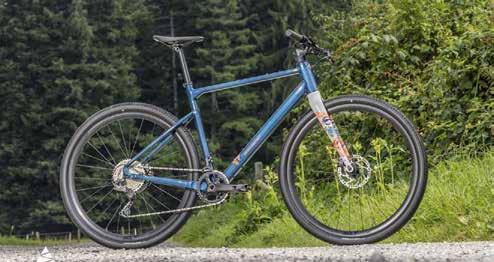
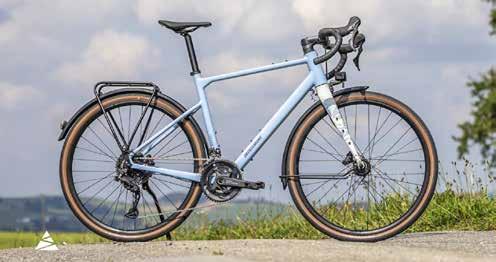
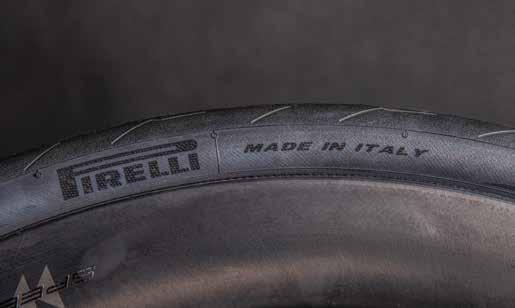
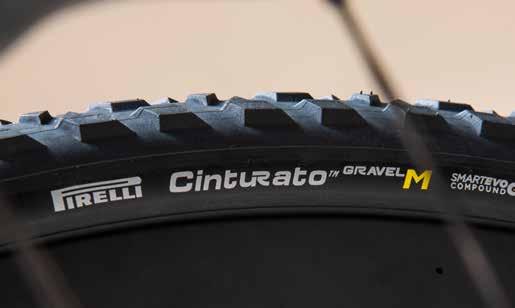
26 BRINKE XXR CARBON RACE, MINI BARBIERI COMPRESSOR 28 THE NEW GRANDURANCE RANGE FROM BERGAMONT
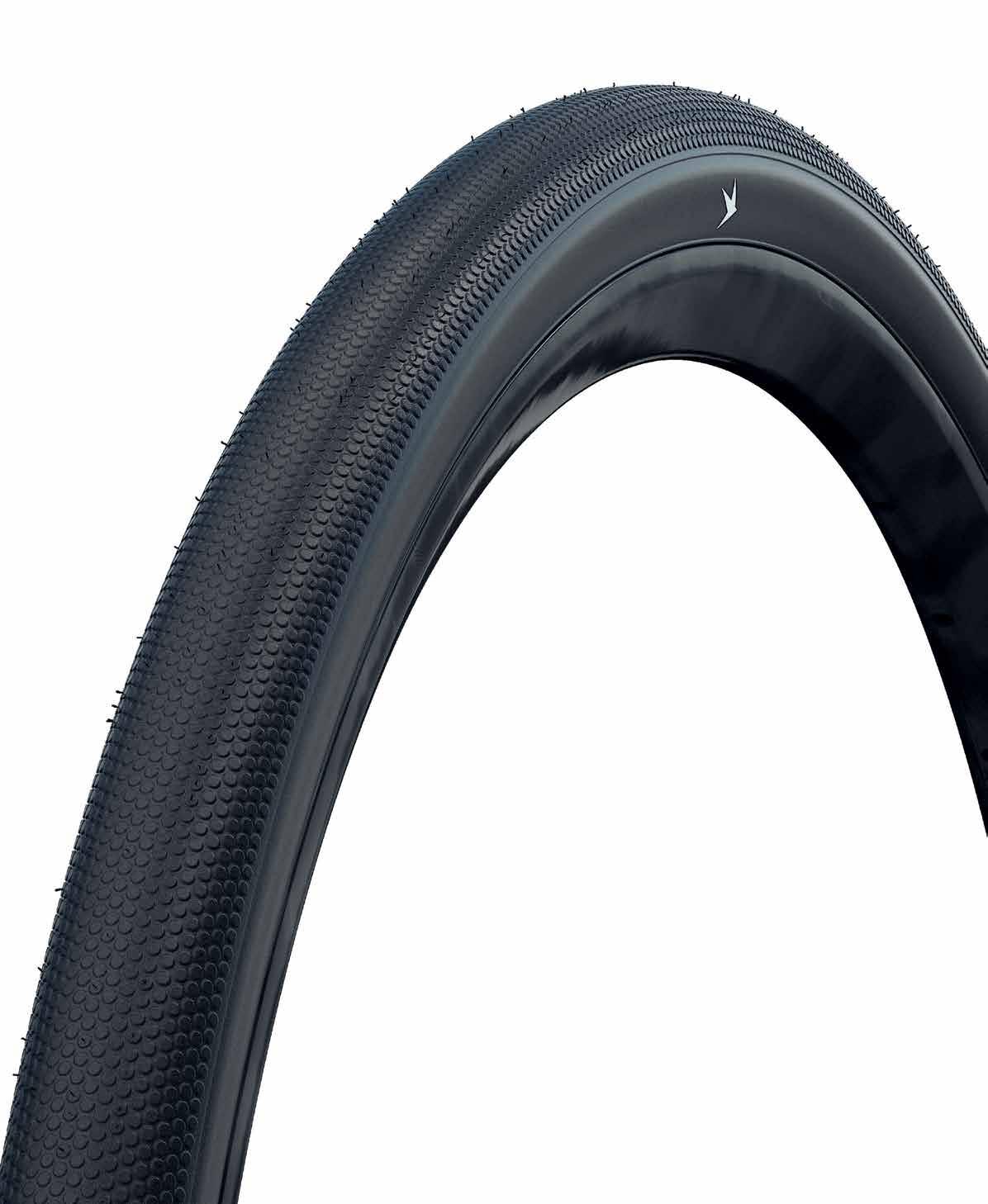
PIRELLI: MADE IN ITALY AND TOP-NOTCH PERFORMANCE
BY DAVIDE L. BERTAGNA davide.bertagna@mag-net.it
BE PREPARED
For any self-respecting cycling enthusiast, March is never just another month. The days are getting longer, the sun is really starting to warm things up, and the great Classics are back. In short: it’s time to get back to serious cycling. And that, when all is said and done, remains the most important thing. Because while the market grapples with overstock, pressure from online retailers, aggressive discounts, rising prices, geopolitical instability, and shrinking spending, one certainty endures: when spring arrives, the streets fill with cyclists.
In this issue, we’ve decided to compare two very different realities, united by a key element: a personal, almost identity-defining approach to amateur cycling. On one hand, La Stelvio Santini, which over the years has chosen to move away from the traditional Granfondo model, increasingly transforming itself into an event to be experienced—featuring iconic climbs, the local landscape, and a social dimension. On the other, the Swatt Club, an expression of contemporary cycling—less rigid and more attuned to the language of the younger generations. What do these experiences tell us? That cycling hasn’t lost its appeal, but if anything, its meaning has shifted. For over twenty years, the driving force behind the road bike market was a very clear archetype: the competitive amateur. They would sign up for a Granfondo, train, and walk into a shop with a specific goal: to go faster. Retail built a perfect narrative around this model: lighter, stiffer, faster. Every purchase promised time gained. Today, that paradigm hasn’t disappeared, but it is no longer dominant.
Cyclists are still seeking challenges, but more and more often they want something else as well: experience, community, safety, well-being, and time for themselves. Not necessarily a race, but a personal
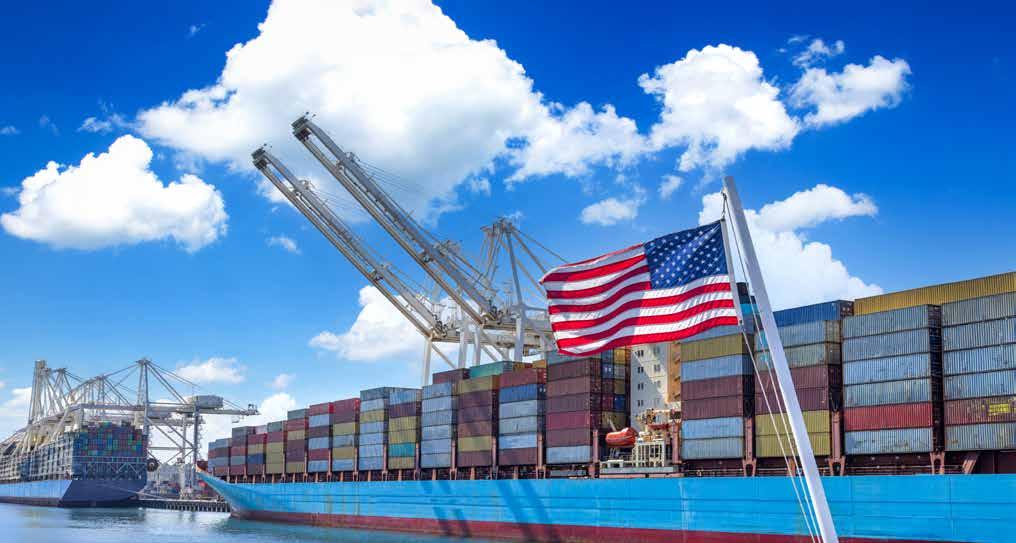
story to live and share. It’s a shift with deep roots, accelerated by the post-COVID era, and undoubtedly linked to the explosion of gravel cycling and the arrival of new generations with different values—less focused on pure performance and more on a social and identity-driven dimension. Yet, while cyclists evolve, the market often seems stuck in outdated ways of thinking. Retailers make this clear in the second installment of our survey “The Charge of the 101”: lack of vision, instability, pressure on margins, and out-of-control competition are some of the issues cited. We’re no longer talking about a temporary crisis, but a new normal we must come to terms with. A normality in which continuing to compete solely on price risks becoming an increasingly unsustainable strategy. Further complicating the picture are global dynamics that are difficult to manage, such as the issue of tariffs in the United States (which we discuss in depth on page 40), which in recent months has called into question already fragile balances, directly affecting many companies in the bike industry and opening up scenarios that remain uncertain.
The point, however, is something else. Perhaps the industry as a whole has continued to chase yesterday’s customer, while today’s customer was already evolving right before our eyes. Because the desire to ride hasn’t diminished. It has transformed. And so the question isn’t whether the market will return to growth, but who will be the first to interpret this transformation. Who will be able to create products, services, and narratives consistent with a cycling culture that is no longer just about performance, but about experience. No longer just about results, but about meaning. March, after all, reminds us of just that: all it takes is a sunny day to get everything moving again. It’s up to the industry to decide whether it will be ready.
Editorial Offices: Corso della Resistenza, 23 - 20821 - Meda (MB) 68 Via Tertulliano - 20137 Milan - Tel. 02.87245180-1-2 - Fax 02.87245182 redazione@bike4trade.it - bikefortrade.it Year 14 - Issue 2 - 2026 - Bimonthly magazine
Registered with the Court of Milan, No. 39, February 8, 2013 Poste Italiane SpA Sent via postal subscription Decree-Law No. 353 of 2003 – Converted into Law No. 46 of 2004 – Article 1, Paragraph 1, LO/MI Registration in the ROC No. 16155, dated November 23, 2007 Print: Ingraph - Seregno (MB) - One copy: 1.00 euro
The publisher guarantees the strictest confidentiality of the personal data in its possession. This information will be used to manage subscriptions and to send marketing communications. Pursuant to Article 13 of Law No. 196/2003, you may request the correction or deletion of your data at any time by writing to: MagNet Srl SB
Data Controller: Benedetto Sironi - Corso della Resistenza, 23 - 20821 - Meda (MB) Finalized in the editorial office on March 19, 2026
MARKET
CHINA IS THE LEADING EXPORTER OF E-BIKES TO EUROPE
China has once again become the leading supplier of electric bicycles to the EU. According to Eurostat data, imports from China accounted for 32.83% of total e-bike imports (approximately 200,000 units). This is the first time this has happened since the European Union enacted anti-dumping regulations in 2019 specifically to counter the massive influx of Chinese products into the continent. Taiwan, which has led this ranking in recent years, is still just behind with a market share of 32.77%. Vietnam remains in third place with 16.14%. The total number of pedal-assisted bikes imported into Europe in 2025 was 605,000, down 4% from 2024 but at the same time stabilizing after the sharp post-COVID declines. China also leads the EU export rankings for conventional bicycles.
DUTECH: NEW
INVESTMENTS FOR A MORE CENTRAL ROLE IN THE INDUSTRY
A new player is emerging in the cycling industry: Dutech Holdings Limited. According to Bike Europe, the Singapore-based holding company, which specializes in high-tech security systems, is pursuing an acquisition strategy aimed at building a true sustainable mobility conglomerate—a strategy that recently led to the acquisition of the assets of Sprick Rowery, a German company active in the manufacturing and wholesale of bicycles and components. Dutech has built its reputation on the production of security systems for banks and smart terminals. However, in recent years, the group has diversified its business by focusing on Green Mobility and leveraging its global production capacity of over 300,000 square meters of facilities across Asia and Europe. Dutech recently acquired Prophete and Cycle Union, as well as a majority stake in Onomotion, a specialist in e-cargo bikes.
DSB AND ROCKY MOUNTAIN END THEIR PARTNERSHIP
PARK TOOL RELIES ON CICLO PROMO COMPONENTS
Ciclo Promo Components is the new Italian distributor for the U.S. brand Park Tool, a company specializing in the manufacture of professional bicycle maintenance tools. Founded in 1963 in Minnesota by Howard Hawkins and Art Engstrom, Park Tool was born out of a concrete need to improve the work of mechanics. Starting with the first PRS-1 repair stand, the company has built a global reputation based on innovation, quality, and reliability. Today, Park Tool manufactures over 500 products distributed in more than 70 countries. “We are thrilled to partner with Ciclo Promo Components in Italy. They will soon begin offering a wide range of Park Tool products, which will be available to bike shops, retailers, OEMs, and consumers. We look forward to a long and bright future together,” said Park Tool owner Eric Hawkins.
RUDY PROJECT ACQUIRES FULL OWNERSHIP OF THE NORTH AMERICAN DISTRIBUTOR
As of February 2026, the brand has acquired full ownership of Rudy Project North America L.P., the brand’s exclusive distributor. Through this transaction, the Italian company will operate directly in the U.S. market. Established in 1998 and headquartered in San Clemente, California, Rudy Project North America was founded by a group of investors from the optical and sports industries who believed in the brand’s potential in the U.S. market. Cristiano Barbazza, CEO of Rudy Project, commented: “The United States is one of the most significant, stimulating, and at the same time most competitive sports markets in the world: an environment that demands speed, vision, and the ability to innovate continuously. This is precisely why we have developed an ambitious multi-year investment plan, designed to support growth and strengthen our presence in the U.S. market.”
After more than three decades, the partnership between DSB and Rocky Mountain—one of the historic brands in the international MTB scene—has come to an end. This 31-year relationship evolved over time through various market phases, ranging from periods of growth to more challenging times. According to a press release, this separation is a mutual decision following a gradual erosion of the conditions necessary to continue the partnership. DSB has, however, confirmed its commitment to supporting the network during the transition phase, ensuring the availability of Rocky Mountain parts in stock and providing assistance as needed.
INITIATIVES
MOUNTAIN BIKE INNOVATION CENTRE: THE SCOTTISH PROJECT IS TAKING SHAPE
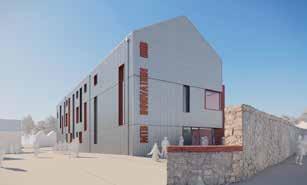
Everything is ready in Scotland for the launch of the Mountain Bike Innovation Centre in the Tweed Valley, one of the beating hearts of British mountain biking. This is a unique project designed to benefit the cycling industry and the local community—and beyond. Similar initiatives exist in Italy, but they are funded and spearheaded by individual private companies, whereas this project is publicly funded and also involves a university. Ed Shoote, project manager for the MTB Centre at South of Scotland Enterprise, stated: “The centre will be a hub for research, development, and knowledge exchange, supported by Edinburgh Napier University, which is rapidly becoming the world leader in MTB research.” The building, managed in collaboration with South of Scotland Enterprise, will offer both local and international companies a meeting place to develop and showcase their products.
ANANDA ANNOUNCES THE EUROPEAN DEALER TRAINING TOUR FOR COMPANIES AND RETAILERS
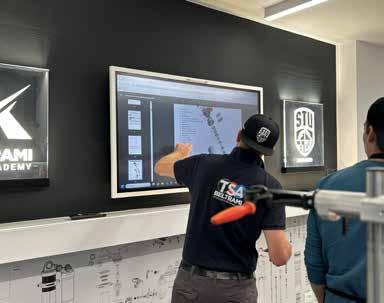
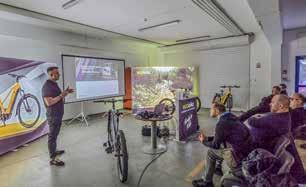
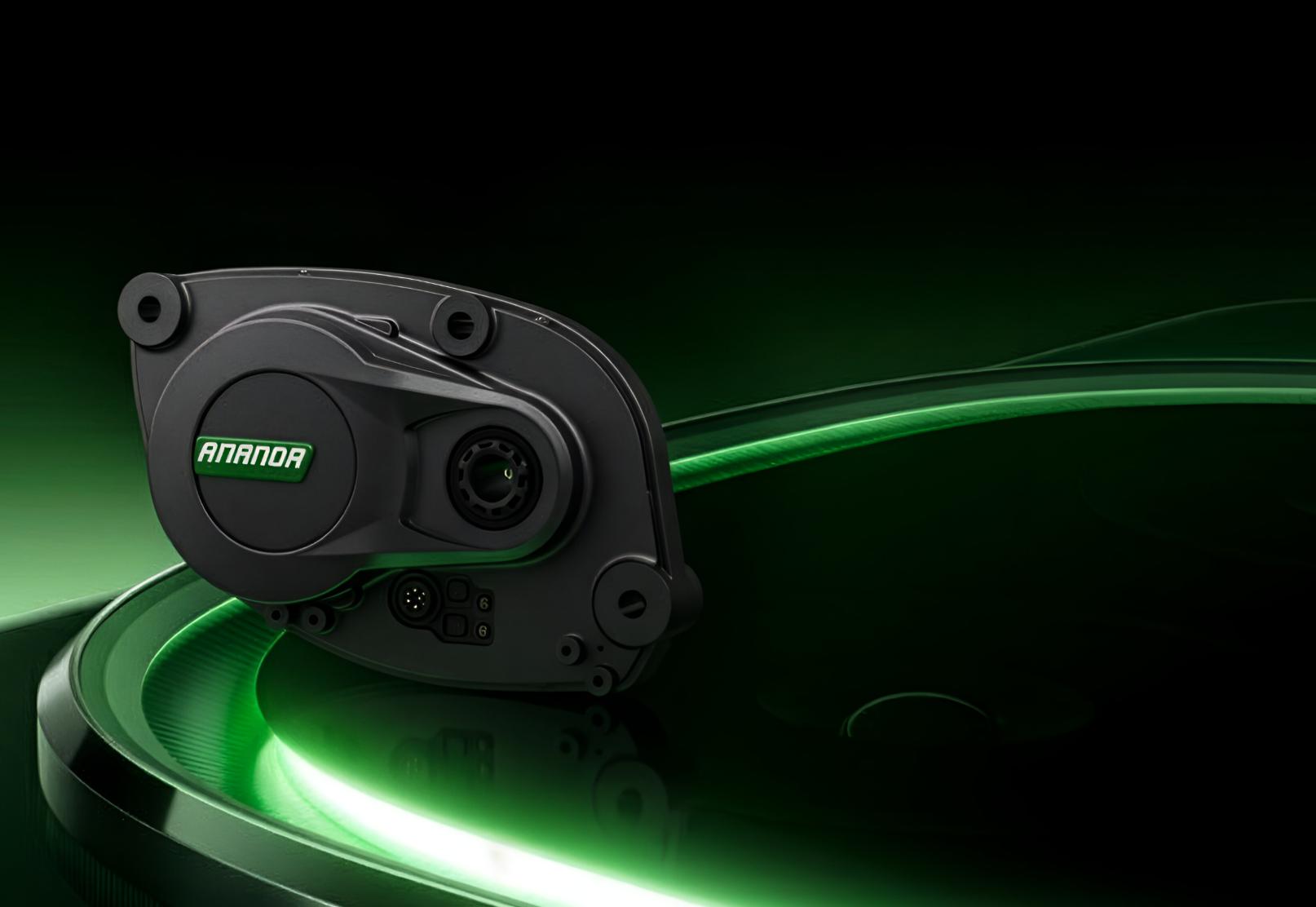
Ananda has announced its 2026 European Dealer Training Tour, which aims to prepare bike dealers and technicians across Europe to work confidently with the Chinese brand’s systems. The tour consists of a series of handson technical and operational sessions scheduled to take place in at least eight locations across five different countries. The program aims to strengthen dealers’ familiarity with Ananda systems, improve their diagnostic and firmware update skills, and share best practices in troubleshooting. Chao Liu, Ananda’s sales director, stated: “We immediately received a lot of enthusiastic responses when we opened registration. This program represents our ambition to be more than just a motor supplier. We want to actively support companies and retailers working with our technology.”
JOMA SPORT: SPONSORSHIP AGREEMENT WITH THE FCI
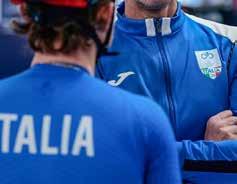
Joma Sport and the Italian Cycling Federation have announced a sponsorship agreement that will see the Spanish brand outfit the Italian national teams in the coming seasons. Alessandro Annibbale, head of Joma Italy, said: “We are thrilled to partner with the FCI and to enter the world of cycling. This is one of the many sectors we are developing, both for technical products and for leisure wear.” FCI President Cordiano Dagnoni added: “The agreement with Joma represents a valuable choice for the FCI. We’re talking about a brand with solid international experience, focused on material quality and innovation, capable of consistently embodying the role and image of the teams it outfits. Joma will accompany athletes and staff on a journey that combines functionality and style, helping to shape the image of the Italian national team.”
TEAM POLTI VISITMALTA AND SVITOL RENEW THEIR PARTNERSHIP THROUGH 2026
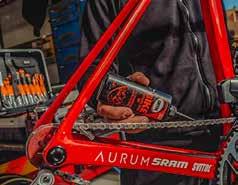
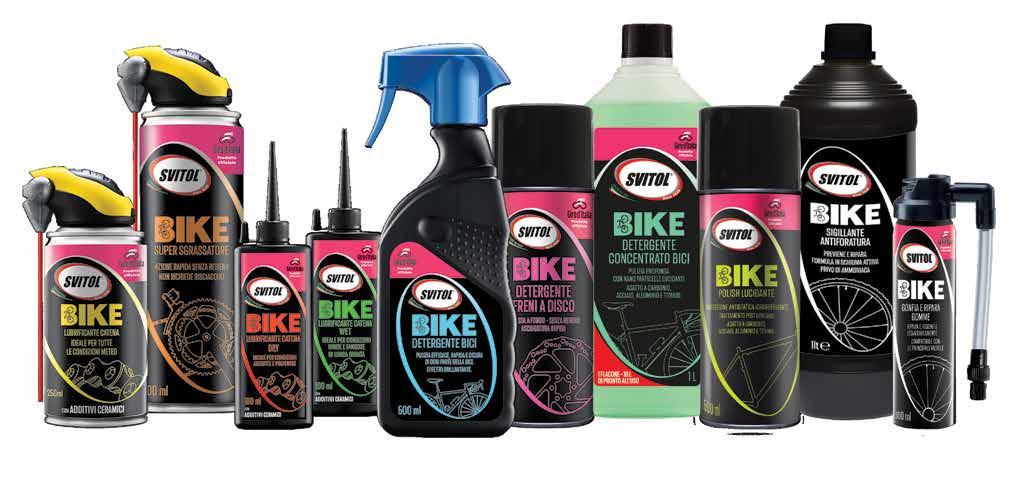
Svitol and the Polti VisitMalta team have announced the renewal of their partnership through 2026. This year, the partnership will feature an even more integrated presence. The Svitol logo will be visible on the Aurum Magma bikes used by the riders, as well as on official buses, trucks, and vans, accompanying the team throughout the season. “The continuity of this journey is a source of satisfaction for us,” commented Mario Patrick Parenti, president and CEO of Arexons. “Collaborating with a professional team is a concrete opportunity to refine our solutions through ongoing dialogue with those who experience cycling and its maintenance on a daily basis. The renewal of the partnership confirms a shared vision of growth and development, where the combination of technical expertise and performance translates into a constant commitment to excellence.”
PARTNERSHIP
AMACX AL FIANCO DEL TEAM WORLD TOUR BAHRAIN VICTORIOUS
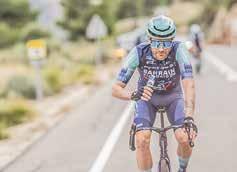
The Bahrain Victorious team has announced a partnership with Amacx, which will become the team’s official nutrition partner. Under the agreement, Amacx will provide a comprehensive range of nutrition, hydration, and recovery products, supporting the riders at every stage of training and racing throughout the demanding World Tour calendar. Targeted nutrition, faster recovery, and consistent energy availability are essential for maintaining performance in long stage races and high-intensity one-day events. Working closely with the team’s technical staff, Amacx will provide a comprehensive range of products that meet the nutritional protocol needs of each athlete, including advanced carbohydrate intake strategies that allow riders to absorb up to 120 grams per hour during the race.
MATTEO CASSINA JOINS CAMPAGNOLO'S BOARD OF DIRECTORS
Campagnolo has announced the appointment of Matteo Cassina as a new member of its board of directors. Cassina brings with him over two decades of experience at the top of the global financial sector, during which he held senior positions at some of the world’s leading banking institutions. In recent years, Cassina has also gained experience in the cycling world, taking the helm as majority shareholder of Rouleur and the historic Milanese brand Passoni. Campagnolo is emerging from a difficult period that has led to a phase of profound reorganization and the need to streamline internal decision-making processes. “Campagnolo is an extraordinary brand, an integral part of my history and that of my family,” said Cassina. “I climbed the Spluga Pass with my father when I was 14; my first bike was equipped with Campagnolo. I repeated the same route with my 12-year-old son, and my father alongside us at the splendid age of 80. All of us, without exception, on an Italian bike with Campagnolo components. I have purchased every product from this company over the past 40 years. I know every groupset, every detail, every design choice. That is why I can say, with conviction and without rhetoric, that Campagnolo is a solid, healthy, highly capitalized company with some of the most advanced levels of production automation in the industry.”
MARCEL BEEKMAN BECOMES CEO OF BASIL AND MIK
Marcel Beekman has been appointed the new CEO of Basil and MIK. Beekman succeeds Marc Roelofsen, who is stepping down after nearly nine years at the helm of the company. He brings with him extensive international experience in the development and growth of production-oriented brands and organizations. Beekman commented: “Basil and MIK are built on a solid foundation of distinctive products and a highly motivated team. My ambition is to further unlock the potential of international markets through an innovative way of working, optimized processes, and a competitive market approach capable of adapting to ever-changing conditions. I am fully confident that this solid foundation will enable us to further strengthen and expand our organization.”
LUCA BRISCHETTO COUNTRY MANAGER ITALIA PER BELGIAN CYCLING FACTORY
Belgian Cycling Factory, the manufacturer behind the Ridley, Eddy Merckx, Nukeprook, and Aeres brands, has announced the appointment of Luca Brischetto as country manager for the Italian market. Brischetto is returning to the cycling industry, where he previously worked for 27 years, after nine years of entrepreneurial experience outside the sector. He is coming back to what he has always considered a bit of a home, having previously served as export manager during Ridley’s early days. From now on, he will focus exclusively on revitalizing and managing the Italian market, but no longer solely for Ridley, as the parent company has expanded its product portfolio through the acquisition over the years of the Eddy Merckx and Nukeproof brands and the launch of the Aeres brand in late 2025, offering a comprehensive range of bicycles.
BONT CYCLING: ALEX MALONE NAMED CEO OF THE FOOTWEAR BRAND
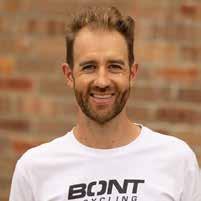
Bont Cycling has appointed Alex Malone as its new CEO. Malo ne officially assumes the role after leading the brand for the past eight months, having previously served as global marketing manager. “The design foundation of Bont Cycling shoes has been, and remains, one of the most powerful assets in our history,” Malone said. “Now it’s about building on the momentum we’ve gained and bringing the brand to an even wider global audience. Now more than ever, our primary goal is to offer the best products and services to our customers across every channel. I take on this role with an even greater sense of motivation to drive the business forward.”
GIANT GROUP ANNOUNCES THE PASSING OF ITS FOUNDER, KING LIU
Giant Group announced that its founder, Mr. King Liu, passed away on February 16 at the age of 93. To the company, Mr. Liu was not only its founder but also a leader who consistently guided the organization toward the future. In 1972, he founded Giant Group in Taichung. Thanks to a strong commitment to quality and a forward-thinking vision, he led the company onto the global stage, helping to bring international recognition to the expertise of Taiwan’s bicycle industry. He was widely respected as a tireless advocate for cycling culture and remained a deeply influential figure for colleagues, partners, and cyclists across generations. The editorial staff of Bikefortrade extends its deepest condolences to the Liu family and all Giant Group employees.
DUCATI COMPLETES ITS ROSTER WITH ALESSANDRO PETACCHI
Ducati has announced that Alessandro Petacchi has joined its cycling project as a tester, PR, field, and marketing specialist. Petacchi brings with him the experience of a top-level competitive career, during which he won stages in all three Grand Tours as well as the 2005 Milan–Sanremo. In his new role, he will play a leading role in public relations, on-site events, local marketing, and product development. "With Alessandro, we complete our roster of professionals, brand ambassadors, and technical staff supporting our engineering and development department," stated Giorgio Favaretto, head of the cycling project. "Alessandro brings with him experience and genuine connections with the cycling community, and he is highly regarded and recognized internationally." Petacchi joins Elia Viviani and Vincenzo Nibali for the road bike models, as well as Lorenzo Suding for the eMTB range.
RIDER SAM HOCKENHULL JOINS MONDRAKER
Mondraker has announced the addition of Sam Hockenhull to its roster. Known for his dynamic riding style, Hockenhull brings a fresh energy to the Spanish team. “Joining Mondraker is an exciting new chapter for me. I’ve always loved the look of their bikes, so now I can’t wait to start riding seriously! We have a busy year ahead of us, and I’m super pumped to get started on all the projects we have planned!” commented Sam Hockenhull. “We’re thrilled to have Dave on our rider roster,” said Pete Drew, Mondraker’s UK marketing manager. “His skills and style are a joy to watch. The whole team is eager to see him in action on our bikes.” In his new role, Hockenhull will collaborate on various media projects and provide crucial feedback for product development.
LucaBrischetto
AlessandroPetacchi
KingLiu
MarcelBeekman
MatteoCassina
AlexMalone
SamHockenhull
EVENTS
IBF IS EXPANDING ITS GLOBAL REACH BY BECOMING THE INTERNATIONAL BIKE FESTIVAL
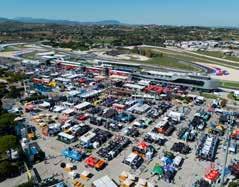
From September 4 to 6, 2026, the Misano World Circuit will host a new chapter in the history of the IBF, as it transitions from the Italian Bike Festival to the International Bike Festival. This evolution solidifies the event’s global scope and reinforces a trajectory of growth that, from 2018 to the present, has established it as one of the leading events for the bike industry, urban mobility, and cycle tourism in Europe. This evolution had already received formal recognition in 2023, when IBF was officially designated an International Trade Fair. “The transition from Italian to International Bike Festival is not merely a change in name, but the natural consequence of a journey that, over the years, has expanded our audience, our partners, and our vision. Today, IBF is a European hub for the bike industry: a place where business, innovation, and community engage in dialogue on an international scale. This change reflects our commitment to establishing an even stronger presence on the global stage and attracting an increasing number of operators, brands, and media from abroad,” stated Lucrezia Sacchi, marketing director at Movestro.
ITALY BIKE CUP CHAOYANG 2026: AN INCREASINGLY PACKED SCHEDULE OF EVENTS
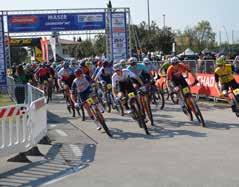
2026 marks another significant step forward for the Italy Bike Cup Chaoyang, with a calendar that solidifies the series as the undisputed benchmark for Italian and European cross-country racing. Chaoyang will remain the title sponsor in 2026 as well, confirming a now solid and strategic partnership. Chaoyang, the flagship brand of the ZC-RUBBER group—one of the world’s top ten tire manufacturers—and exclusively distributed in Italy by Mandelli, continues to invest in the world of mountain biking by supporting leading events and teams.
The 2026 calendar features four UCI international races that will attract foreign athletes and top-tier teams, enhancing the prestige of the circuit. Among the major new features of this edition is the expansion of the youth calendar. This is a strategic decision, as emphasized by Alessandro Saccu, one of the organizers: “We wanted to expand the calendar by including national classics in this category. It is a significant undertaking that will provide additional motivation for the young riders to compete on circuits of particular technical difficulty.”
THE 2026 CALENDAR
March 7, 2026 - Albenga (SV) - UCI International C1+ Junior Series
14.03.2026 - Verona (VR) - UCI international C2
25.04.2026 - Caneva (PN) - UCI international C1
16.05.2026 - Courmayeur (AO) - UCI international C1
March 8, 2026 - Albenga (SV) - Allievi and Eso
March 15, 2026 - Verona - Junior and Eso
March 29, 2026 - Rivoli V.se (VR) - Youth and Eso + Junior
April 26, 2026 - Caneva, Stevenà (PN) - Allievi and Eso
May 31, 2026 - La Salle (AO) - Allievi and Eso + Junior
June 14, 2026 - Gorizia - Youth and Eso + Junior
July 26, 2026 - Fumane, Cavalo (VR) - Allievi and Eso + Junior
August 15, 2026 - Pergine (TN) - Youth and Eso + Junior
September 6, 2026 - Lugagnano V.a. (PC) - Youth and Eso + Junior National Youth Competitions To UCI
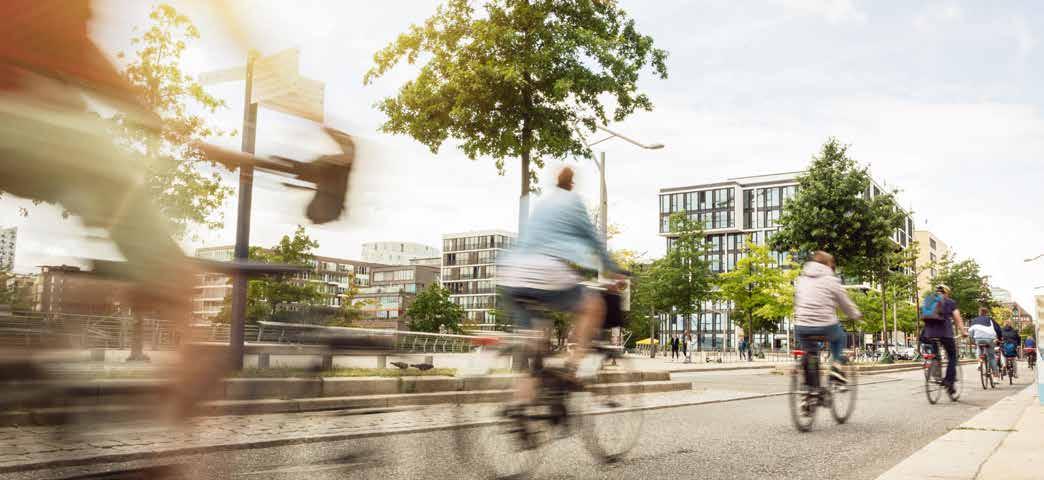
How do we get around the city? How significant are alternatives to cars today? Are policy decisions truly supporting this transformation? These and other questions are addressed in the tenth edition of Focus2R, the survey that analyzes the state of two-wheeled travel in Italy’s provincial capitals
by Davide L. Bertagna
As is customary, at the start of the year, Ancma presents two key reports for the sector. While awaiting the economic data for the construction sector and sales estimates—which will be released at the end of March—the tenth edition of Focus2R was published in January. The 2025 edition (produced by Confindustria Ancma and Legambiente in collaboration with Ambiente Italia) involved 94 local governments, with data updated through 2024, analyzing seven key areas, including urban accessibility, road safety, shared mobility, infrastructure, intermodality, and parking, as well as planning and incentive tools. The central message is clear: bicycles, scooters, and motorcycles are now a structural component of Italian urban mobility. However, local policies are not yet fully aligned with this role. The overall picture that emerges shows selective progress, but also structural delays, with a territorial divide that remains marked between the North and the South.
ALTERNATIVE MODES OF TRANSPORTATION TO CARS: 38.9%
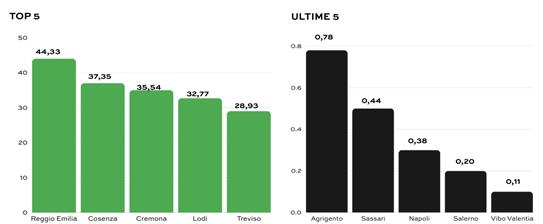
In 2024, alternative forms of urban mobility accounted for 38.9% of all trips— the highest figure since the pre-pandemic period. This data confirms a gradual yet well-established shift in travel habits. In terms of infrastructure, the average availability of bike lanes in regional capitals stands at 10.39 equivalent meters per 100 inhabitants. The indicator includes dedicated bike lanes, reserved lanes, shared bike/pedestrian paths, and 20- and 30-km/h zones. The figure marks a slight decline compared to 2023 but shows a 44.9% increase compared to 2015. This represents significant growth over the medium term, though it does not eliminate regional disparities: Reggio Emilia, Cosenza, and Cremona lead the rankings for cycling infrastructure, while in several cities in Southern Italy, levels remain below the national average. On the intermodal front, encouraging signs are emerging:
• 63.7% of municipalities allow bicycles on public transportation;
• More than 80% of cities have bike racks at at least one train station. Factors that directly affect the day-to-day usability of bicycles as a mode of transportation integrated with public transit.
SHARED MOBILITY: OVER 50 MILLION RENTALS
In 2024, mobility-sharing services surpassed 50 million total rentals, with a national fleet of over 95,600 vehicles. Bike-sharing, however, remains heavily concentrated in major cities: Milan, Rome, Florence, Bologna, and Padua alone account for more than half of the shared bicycles available in regional capitals. This figure highlights a strong polarization of the market. Pickups from freefloating systems are growing, while the overall fleet has seen a slight decline
compared to the peak in 2022. Electric scooter sharing is active in 40.7% of responding cities, with Rome and Milan accounting for the majority of vehicles and rentals.
SAFETY: INDICATORS ARE IMPROVING
In 2024, the total number of traffic accidents has unfortunately increased, but the number of casualties is declining, with a decrease in the fatality rate. However, users of two-wheeled vehicles (bicycles and motorcycles) continue to account for a significant proportion of injuries and fatalities. Despite this, only 60.6% of municipalities consider bicycle safety a high or very high priority in their planning documents (PUM and PGTU).
30 km/h zones are on the rise: 76 county seats have introduced speed limits of 30 km/h or lower. Initial data show a reduction in accidents in these areas, confirming the effectiveness of speed reduction as a structural measure for urban safety.
THE STATEMENTS
Ancma President Mariano Roman stated: “The 2025 Report once again highlights how two-wheeled mobility is a strategic social, industrial, and environmental asset. Although local governments are paying increasing attention to this issue, their commitment remains insufficient to meet the needs of citizens and the market; without a shift in approach, alternative mobility to fourwheeled vehicles will never truly be safe and inclusive, as it is in the rest of Europe. Two-wheeled vehicles are a sustainable and popular solution for urban mobility, as evidenced, for example, by the positive trend in the scooter market, but in general, we need a bolder cultural approach and greater investment in infrastructure, intermodality, and safety, with a particular focus on pedal-powered two-wheelers.”
Legambiente President Stefano Ciafani added: “The data collected by the tenth edition of the Focus2R Observatory show encouraging signs regarding cycling, with progress underway but still too tentative to address the climate challenge and uphold the right to safety, mobility, and health. Once again, the car remains the most widely used mode of transportation. To reverse this trend, we need bolder and more structural policies. We want people-friendly cities, urban planning tools with investments in widespread cycling infrastructure, a decisive strengthening of local public transit, stable incentives for shared mobility, and effective measures to discourage private car use, especially in urban areas. It is also essential to expand the number of 30 km/h cities following the Bologna model.”
EXPANDING UNIVERSE
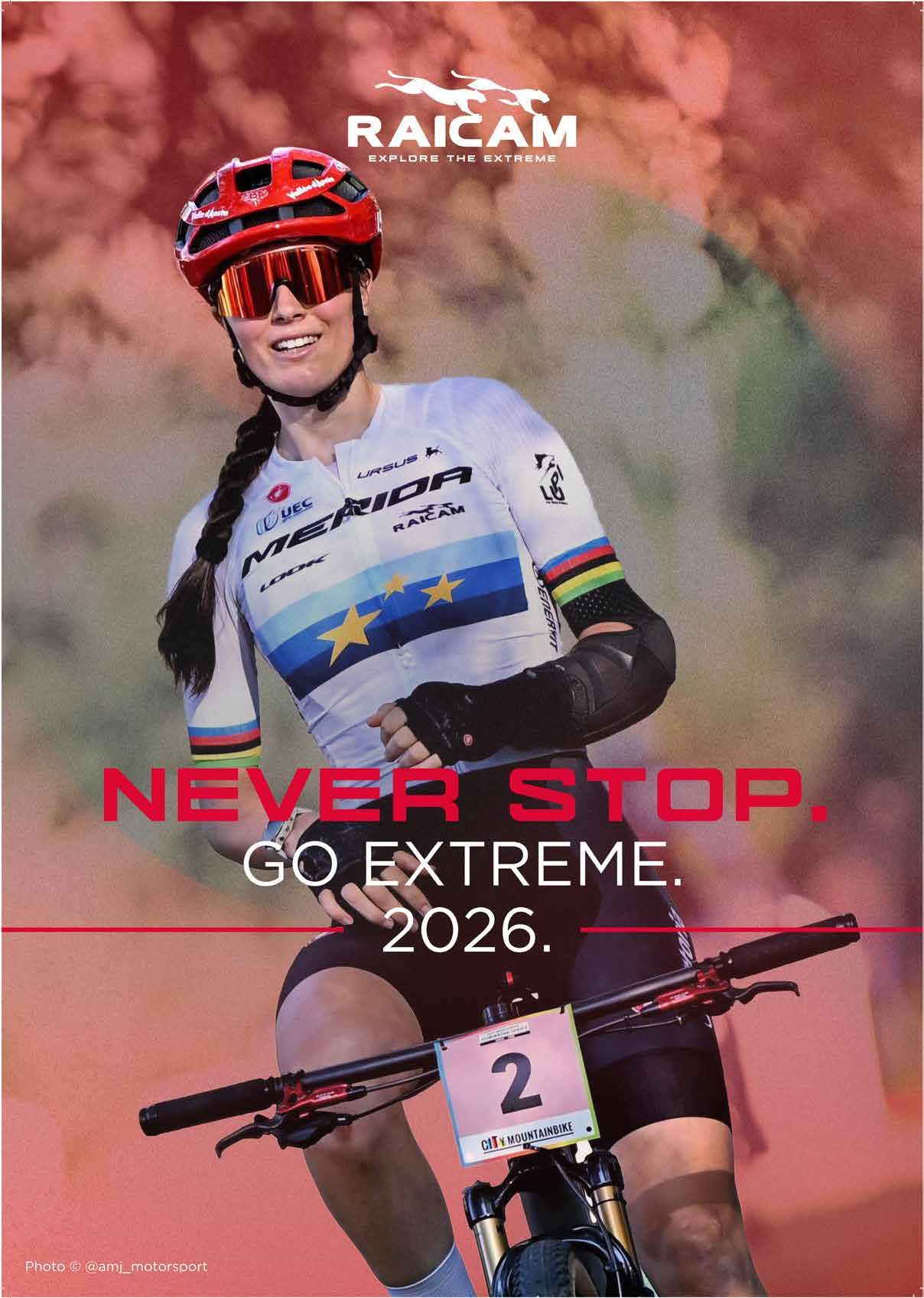
Raicam is an Italian company known for its high-quality braking systems and Fox's distribution. But that's not all. The R&D department is working on some major new developments bound to make an impact
by Gabriele Vazzola
Acouple of years ago, we visited one of Raicam’s facilities in Mondovì, in the province of Cuneo, where we were invited along with other media outlets to attend the presentation of the new Made in Italy braking systems and the announcement of the new distribution of Fox Group products in Italy. Raicam is a well-established player in our industry and is fully committed to quality and innovation thanks to an approach that leaves nothing to chance. Proof of this lies in the meticulous design of its braking system range, the attention to service for Fox
The Interview
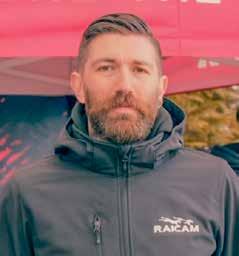
product promoter & technical specialist
The product you launched on the market was brakes. Tell us about how they came about.
The history of Raicam’s braking systems for the cycling world began even before I joined the company. Before designing the brakes, we started with an analytical assessment of the industry and the competition. Raicam wanted and needed to thoroughly study the market and analyze the sector. This was to understand what characteristics the system should have compared to what they already knew—namely, the automotive braking system. This was the longest, most difficult, and most laborintensive phase of all, because it forced the designers to adapt their perspective to the bicycle as well.
Raicam's expertise also draws on its experience in the automotive industry. How has this influenced your brakes?
Bike brakes, especially in downhill riding, tend to change their performance even during the same run. There are many variables that affect how they feel, including temperature and atmospheric pressure. For us riders, this is normal; you start a descent and know that at some point the lever travel might change. A couple of pumps usually fixes it, but imagine that happening in a car going 200 km/h. It simply can’t happen— it wouldn’t be safe. That’s exactly where we started. Our concept of performance isn’t about the pursuit of raw power, but about safety and consistent performance. This is the added value we believe we’ve brought to the bike industry: with our brakes, safety becomes performance. It’s not just about power or modulation; our customers also expect reliability from the start to the finish of a descent or throughout an entire day of riding.
And what are the characteristics that make it so?
It depends on how you design and develop a product. In the bicycle industry, everything is in the hands of component manufacturers. Bike manufacturers order brakes asis; they don’t decide whether they have the right specifications. In the automotive industry, it works exactly the opposite way. Automakers contact the brake system manufacturer and request specific brake specifications. For example, Lamborghini might call you and say they need a brake pad that can handle 1,000 horsepower within a certain temperature range and at a specific price point. The product standard isn’t set by the OEM manufacturer but by the assembler. We’re therefore accustomed to extreme attention to detail, always striving to find the best materials.
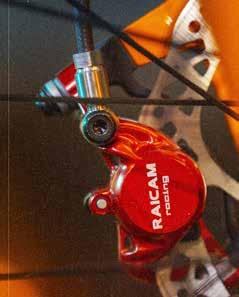
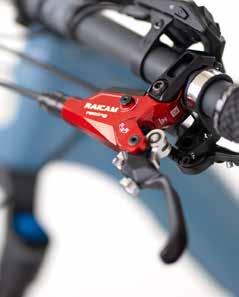
I imagine that quality control and ease of maintenance are also essential. To give you an idea, every one of our brakes undergoes 220,000 cycles at different pressures before being released to the market or tested. In practice, we simulate 10 years of continuous use. Since we adhere to automotive standards, every system is tested, bled, checked under high pressure, and drained. Every single part goes through machinery that tests its airtightness. First the pump, then the caliper are assembled, then filled with oil using a machine we built in-house. Then the brake must pass a second pressure-seal test. A QR code engraved on the parts ensures traceability in case of any issues. So we’re not talking about random quality control, but testing every single part. We offer an (almost) absolute guarantee that every system will function perfectly without defects. Technically, the brake is designed for minimal and simple maintenance. We have our own mineral oil and bleed kit, but it’s also possible to use Shimano’s, as well as their mounts. We manufacture everything: the brake, the
and Marzocchi suspension systems, as well as the projects currently in development within the R&D departments, whose highlight will undoubtedly be the arrival (scheduled for 2028) of a new motor with an integrated gearbox. A technological leap that promises a small revolution, especially in bike design. We discuss Raicam’s present and future with Andrea Asta, product promoter & technical specialist, as well as an avid rider who personally tests the products we see on the race courses and in store windows.
disc, the pads, and the product is designed to be a complete ecosystem that you can purchase and install at home. Our system is entirely Made in Italy. The brakes come from the factory in Mondovì, while the pads and friction materials come from Bruzolo. However, 90% of the raw materials are sourced from European suppliers.
What are the differences within your product line?
We have six brakes across two product families—one for gravity riding and the other for XC—and the differences lie in cost and performance. The varying costs stem primarily from technical choices, while the different performance levels are designed to suit different types of riders. As you move up the product line, you’ll find more specific technical solutions—such as weight reduction for cross-country riding, or a completely different feel for gravity riding. Our entry-level line is designed to be simple, with few adjustments (only the lever travel). It’s a system with long travel, designed for those who don’t have specific performance needs in terms of racing. It’s what we recommend to people who expect a brake that’s modular, intuitive, and progressive. Then we have the mid-range line, which suits 80% of users on the market; it has a few more adjustments and offers a crisper, more responsive feel. The top-of-the-line model is designed for racing and for those who ride hard. It features titanium screws and micro bearings to make the lever a bit softer and reduce stress on the joints. Additionally, we use special hoses reinforced with aerospace-grade steel. We’ve put a lot of work into the brake’s ergonomics and the lever ratio of each individual pump. This makes a huge difference. There are parameters derived from hand physiology; we arrived at the optimum with 50% theory and 50% practice. Everyone has their own way of braking, and we’ve tried to create a design that can adapt to various styles, especially in gravity where we offer the widest range of adjustments, including dead travel.
But we know that a brake isn't just a caliper and a master cylinder. Tell us about Raicam brake pads.
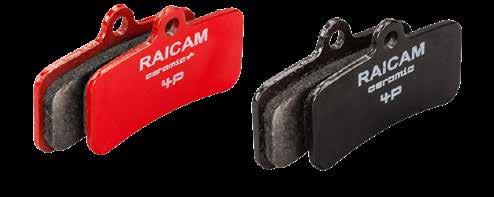
The development of the brake pads followed the same process as that of the brakes, with a great deal of research at the outset to determine whether organic or sintered pads were better. In the end, we chose organic pads and launched two lines with added ceramic components, though the exact formula is a secret. This allowed us to retain the advantages of organic pads—namely, greater bite—while achieving vitrification points very similar to those of a sintered pad. We wanted the range to be very simple. Often, there is little knowledge of these components among both the sales network and the end user. We have two models: the Ceramic and the Ceramic Plus. The latter is the top of the line, with even more bite. Our “perfect recipe” is a balance of ingredients: ferrous elements are combined with plastic resins, then there’s the magic touch of the ceramic components. Refining the right recipe is a long process, always walking a tightrope between achieving one goal and compromising other characteristics. The balance lies in the trade-off between four parameters: noise, vibration, braking torque, and heat resistance.
Andrea Asta
Ceramic and Ceramic Plus brake pads for the 4-piston system
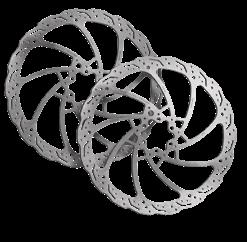
Let’s not forget about records, though When designing brake rotors, the most important parameter is the ratio of open to solid sections. For XC, we offer 160- and 180-mm rotors. In this discipline, braking distances are shorter than in gravity riding—perhaps more intense—but temperatures are much lower. So we designed a ratio of open to solid sections specifically to provide higher braking torque than gravity rotors, but with lower heat resistance. Consequently, these rotors have many more holes. There are two key parameters: chemical braking—that is, the coefficient of friction between materials—and mechanical braking, which involves the rotor edges gouging into the pad material. With many holes, you get a more powerful rotor because there is a larger friction surface, but less heat dissipation. In the gravity world, we’ve done the opposite: we’ve created a disc that’s less powerful in terms of braking torque to address the issue of overheating.
There’s a lot of talk about 32-inch wheels in mountain biking—does this new standard affect braking performance?
Theoretically, yes. Since the diameter at the point where force is applied is larger, the moment of force is greater. In practice, no. Because the distance (and thus the lever arm) from the pivot to the caliper remains the same. Physical tests have not revealed any particular problems or variations. The issues lie more with the spokes and the wheel offset. Despite the doubts, I think everyone will eventually switch to 32” wheels;
in my opinion, the problem lies more in the relationship between the rider’s height and the wheel diameter. In the first XC races of the season, many will be testing prototypes with the “big wheels.”
What does the future hold for Raicam?
For Raicam, the development of the new engine is of utmost importance. It will be a power unit with an integrated transmission. Building an engine in and of itself isn’t difficult—many companies do it—but we want to go further and change the way power is transmitted to the wheel. We are working to eliminate the flaws found in gearboxes so far, such as noise, internal component friction, but above all, negative power spikes. We are currently developing our patents for a motor with an integrated 12-speed gearbox; the idea is to provide maximum smoothness, and we will soon conduct the first field tests. We’re starting at the high end of the range for enduro racing, then we’ll move down. The world of eBikes hasn’t seen major technological advancements or progress in quite some time, despite what one might have expected just a few years ago. With our motor, it will be possible to design a frame without necessarily having to make it asymmetrical; with 50-50 flared wheels on a 148mm Boost axle, there will be cascading benefits across all components. Furthermore, we believe that at some point ABS will become mandatory in certain areas, so we are also working on that. This input came from manufacturers in Northern Europe, and we’ll certainly see it first on S-Pedelecs and cargo bikes. We won’t just be talking about ABS, but also CGS—that is, the front-torear brake force distribution system. In the racing and sports MTB sectors, opinions are divided; it seems to make sense on the front, less so on the rear, where sometimes you need to lock the wheel.
Last but not least, let’s talk about Fox. Now that you’ve acquired 100% of the distribution and service operations, can you explain how and why you “chose” each other?
The connection with Fox came about through the automotive industry. The bulk of Fox’s revenue comes from there—military contracts, ATVs, and trucks. Our two companies already knew and respected each other. It’s as if the two worlds of Raicam merged with the arrival of Fox, but also Marzocchi, Race Face, and the group’s other products. We’ve adapted some of our industrialization processes to suspension servicing to make everything very fast and precise. And if there’s a problem, Paolo Accusato takes care of it—a highly experienced technician who’s well-respected in the industry and knows all the ins and outs of Fox products. Our goal is to ship the repaired product back within 48 hours. However, the actual turnaround time also depends heavily on the responsiveness of the retailer or the courier.
THE TOP-OF-THE-LINE MODELS
RXR
Lightweight for endurance
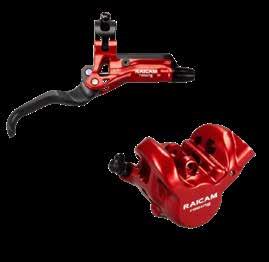
A brake that combines performance and lightness, designed and available in both post-mount and flat-mount versions. A one-piece forged aluminum product with a carbon lever. The Raicam team used advanced topology software to minimize aluminum usage and maximize the weight-to-braking-power ratio. The shape of the caliper body and master cylinder is generated using computational algorithms and lightened with a carbon lever and titanium hardware. Designed to push performance to the limit in XCO and XCM races.
Versatile performance and reliability for gravity riding
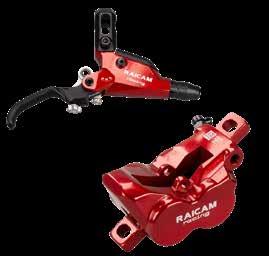
The most extreme brake designed for downhill and enduro race courses, engineered to deliver high braking power and maximum reliability and consistent performance, thanks in part to its four-piston hydraulic chamber. The pump is optimized to ensure smooth operation and power, managed through the use of shielded, selflubricating bearings. Designed for the most demanding athletes, it is robust, stable, and adaptable with dual tool-free adjustment.
• Forged aluminum lever
TECHNICAL SPECIFICATIONS
• Double lever mechanism on micro
• Bearings and bushings
• Adjustment of the deadband and lever travel
• Low gear ratio
• R1 hose with Kevlar and aircraft-grade steel braiding
• Available with flat mount bracket
• Pump weight: 143 grams
• Gripper weight: 110 grams
180x2 mm brake disc for endurance/XC use
220x2.2 mm brake disc for gravity riding
THE EBIKES “FORGED” BY EFESTO
The German brand HEPHA is strengthening its market presence with a product range built around proprietary solutions and an expanding sales network. We spoke with Beltain Schmid, Country Manager for Italy, to learn more about the company’s strategies and goals in our country
by Davide L. Bertagna
Founded in 2021 and headquartered in Maisach, just outside Munich, HEPHA has managed to make a name for itself internationally in just a few years.
From the very beginning, the German brand has been able to count on a leading industrial partner like Gobao, a global company specializing in the development of e-bike drive systems. This technological support allows HEPHA to develop proprietary solutions and position itself with a solid technical offering in a highly competitive sector. In this context, the Italian market has also begun to closely monitor the brand’s evolution. Our editorial team first came into contact with HEPHA at Eurobike 2024, where the company unveiled two e-bike motors, the S80 and P101.
Just over a year after that launch, management has decided to further strengthen its presence in the European market, with the aim of consolidating its position in the competitive e-bike segment. The brand name itself says a lot about its identity. HEPHA is inspired by the mythological figure of Hephaestus (Hephaistos), the Greek god of fire and blacksmithing, a symbol of creativity and technical mastery. A reference that reflects the company’s ambition: to blend engineering, design, and proprietary technology into cohesive and recognizable products.
STRATEGIC EXPANSION IN EUROPE
To support growth in key markets, HEPHA has recently expanded its sales organization by bringing on board industry veterans such as Andrzej Luniak for Central and Eastern Europe and Sébastien Raymond for Southern Europe, who will lead the brand’s regional development. The goal is clear: to strengthen the dealer network and build brand awareness.
In late 2025, the company also announced the appointment of Beltain Schmid as the new country manager for Italy. With experience at Shimano (2016–2019) and Pierer Mobility (2022–2024), as well as collaborations with GHOST Bikes and Accell Group, Schmid brings to HEPHA a deep understanding of the European bike market, gained in part through direct experience managing a bike and ski rental service in the province of Bolzano. We interviewed him to better understand the brand’s vision and strategies in Italy, a market where HEPHA believes it can play a significant role.
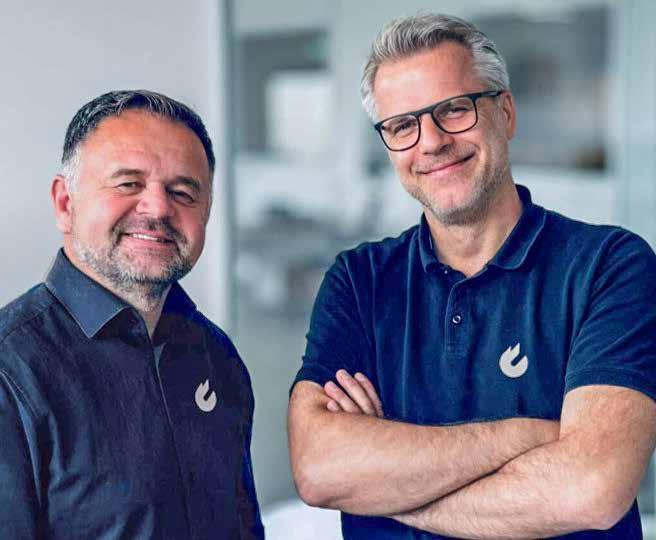
From left: Managing Director Bernd Lesch and CEO Alex Thusbass
The Interview
How did HEPHA come about? What was the initial vision, and how has it evolved over time?
HEPHA was born from an idea by our CEO Alex Thusbass, a longtime engineer and designer at Haibike and Husqvarna, who decided to embark on this exciting journey in May 2021. Later, a key figure joined the team: Sales Director Bernd Lesch. HEPHA’s corporate structure is lean and dynamic, allowing us to be practical and swift in bringing solutions to market for retailers and end consumers. Furthermore, having an industrial partner like Gobao behind us represents significant added value, as it enables us to develop and utilize a proprietary drive unit. With our product range, our ambition is not to position ourselves exclusively at the high end of the market—with the exception of one model in the collection—but rather to offer technologically sound and affordable e-bikes. Currently, frame production takes place in Cambodia and Vietnam, while assembly and final assembly are carried out in Germany, in Maisach. Looking ahead, we also plan to establish our own production facility in Asia.
In an increasingly competitive market like that of e-bikes, what factors make HEPHA a valuable choice for end customers and dealers today?
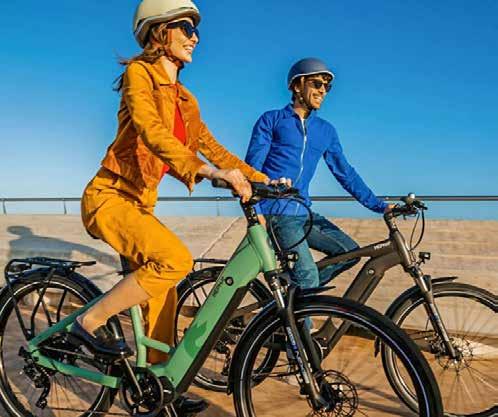
Our goal is to offer consumers “excellent bicycles at excellent prices.” In our models, we pay close attention to technical quality, down to the smallest details, such as the smooth welds found on all our frames. At the same time, ease of use and fast customer service are two fundamental pillars of our vision. We also know that design is one of the most important factors when choosing a bike. That’s why we devote a great deal of attention to both styling and color schemes, as well as technological development. In this regard, I’d like to highlight our ErgoAdjust System, an advanced
THE ENGINE CREATED WITH GOBAO
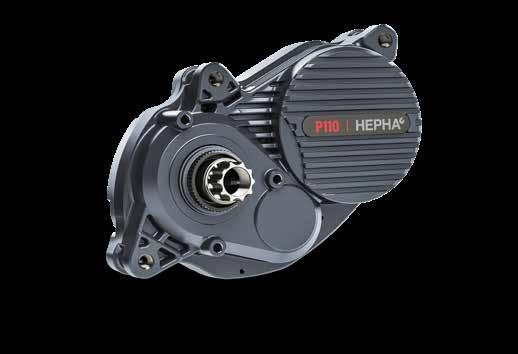
At the heart of HEPHA’s 2026 lineup is the new P110 motor, produced in collaboration with Gobao, the result of five years of development involving over a hundred engineers. With a maximum torque of 120 Nm and a peak power output of 850 W, this drive unit stands out as a leader in the e-bike sector. The motor is encapsulated in epoxy resin, which improves heat dissipation. Also noteworthy is the 804 Wh battery, made with cells from the same battery manufacturers as LG and Samsung, which weighs 4 kg and promises a long range.
adjustment system that won the Eurobike Gold Award 2025. This technology allows users to quickly and precisely adjust the eBike’s ergonomic settings to their needs, improving posture and comfort while riding.
How do you view the evolution of the Italian electric vehicle market, and what role do you hope to play in the coming years?
The Italian market is currently in a phase that warrants close attention. Many companies still have significant inventory to clear, which often leads them to offer deep discounts. Even brands that have revamped their product lines have found themselves caught up in this trend. I believe the market will undergo a period of readjustment in 2026, with the hope of seeing positive signs in 2027. In this complex context, both our pricing strategy and the simplification of our components represent a competitive advantage for us.
How many stores do you currently have in Italy?
From a business perspective, 2026 marks a real turning point for us. Our goal for this year is to consolidate our presence, particularly in Northern Italy. Currently, our sales network includes 40 retailers that have been activated over the past few months— we now have more than 550 retail locations across Europe. In Italy, our goal is to reach 100 stores by the end of the year: an ambitious challenge, but one I believe is entirely achievable.
Were there any athletes who helped you develop the product line?
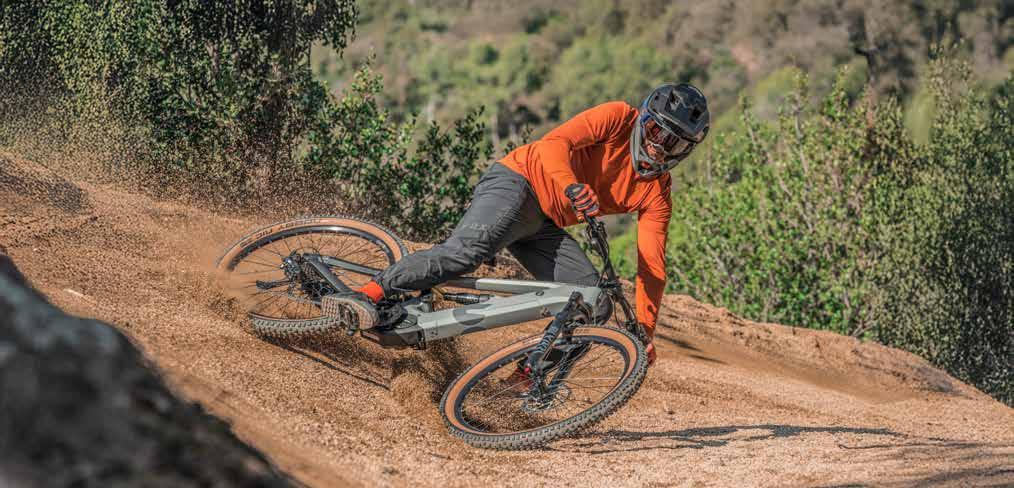
We collaborated with German downhill rider Guido Tschugg. His input was crucial both as a tester of the drivetrain system (for example, regarding power and torque delivery) and in decisions related to geometry and kinematics. The 2026 product lineup also includes a model dedicated to him: the All Mountain 7 Carbon Tschugg Signature.
Which trade shows will you be attending in 2026?
This year, we will give top priority to IBF in September as an international trade show; we will then organize a roadshow in the fall exclusively for retailers to give them a firsthand look at the 2027 collection and provide them with technical training.
RETAILER INFO
To learn about the business opportunities the company offers in the Italian market and how to become a dealer, please contact:
What do La Stelvio Santini and the much-talked-about Swatt Club have in common? Simple: a highly personal approach to the world of amateur cycling. And perhaps it is precisely in this uniqueness that lies the key to navigating the uncertain future of the bike industry
by Gabriele Vazzola
The etymology of the word “crisis” derives from the Greek κρίσις (krisis), which means “choice.” It does not necessarily have a negative connotation, or at least not exclusively. It can also indicate the need to implement (and confront) concrete change by exploring new paths. The first way to overcome a crisis, then, may be to think “outside the box,” breaking away from common and recurring patterns, and to follow one’s own path with determination and conviction. If the path is the right one and the effort is sufficient, results will come sooner or later. Proof of this lies in the two organizations we’ve heard from, which have their own unique way of viewing amateur cycling without distorting its essence. Without questioning the fundamental elements of a sport built on passion, sweat, leg strength, and self-sacrifice, but also on community, fun, places to discover, and experiences to be had. There’s no point in stubbornly clinging to the usual models if they no longer work. It’s better to seek a new path and focus on identity, leveraging one’s uniqueness and credibility. Because even if the market is at the mercy of overstock, warehouses, wild discounts, online shopping, geopolitical crises, and inflation, one thing remains certain: on the first sunny days of spring—no matter how turbulent it may be— the streets will fill with cyclists.
Don't call it a Granfondo
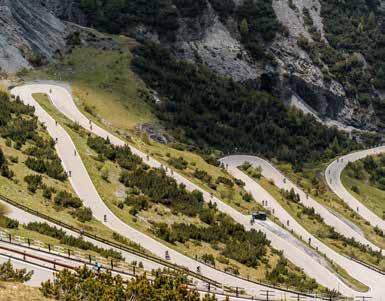
The Stelvio Santini has built a strong reputation among amateur “races” in part due to its international appeal. More than 70% of participants come from abroad and spend several days in the valley.
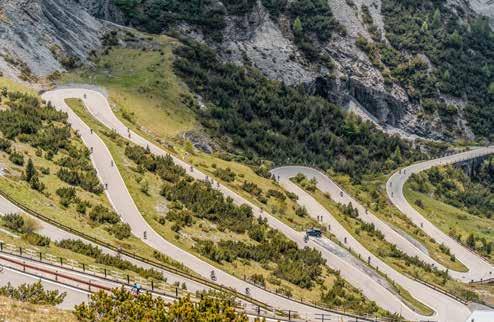
Over the years, the Stelvio Santini event has sought to distance itself from the traditional Italian granfondo format, first by linking its name to two cycling landmarks—the iconic Alpine pass and the Santini brand—and then by eliminating the overall classification and timing only the climbs. New this year: the introduction of “Gravel Saturday.” This shifts the focus away from the race day itself toward a more social event that embraces leisure and local food and wine. Because it’s a shame to visit Valtellina just for a quick stop! It’s much better to take the time to fully experience La Stelvio Santini, the beauty of its routes, and the delicious local products. An event that doesn’t chase numbers, but aims to be a celebration of cycling, all about fun, the joy of the challenge (but without obsession), and without too many worries. We spoke with Paola Santini, marketing director at Santini, and Mario Zangrande, owner of US Bormiese and the driving force behind the event.
Why is La Stelvio Santini the most important Granfondo on the Italian scene?
Paola: Let me correct you. Actually, we haven’t called it a “granfondo” for a while now— just La Stelvio Santini. It’s the name the amateur riders have always given it. Plus, we’ve removed the general classification and now only time the climbs. The goal is to make the event more accessible and safer, following a trend that’s becoming increasingly common internationally. We have an incredible number of foreign participants—over 70% of the registered riders. The classic Italian-style granfondo is often misunderstood by those coming from abroad. For them, it became dangerous to find themselves in certain situations of extreme competition. It’s a difficult course—not one to be taken lightly. Plus, if you approach it with the idea of going all out from the start, it gets complicated. The approach here is different, even though the organization is the same—with closed roads, safety along the route, police, volunteers, and aid stations.
So it’s not a randonnée, but neither is it a race to be run from start to finish with a knife between your teeth?
Paola: No, it’s not a randonnée, but there’s also no urge to start off and go all out even on the descents. Partly because the route isn’t, as the English say, “a piece of cake.” It’s better to save your energy for the main event—the final climb. On the other hand, we have so many people who come just to climb the Stelvio and the Mortirolo, and they want
to tackle our route safely.
The world of granfondos has changed. What do you think caused the crisis in traditional amateur races?
Paola: In my opinion, a lot changed during the lockdowns; the pressure to chase a time at all costs faded away. People simply rediscovered the beauty of cycling outdoors, of getting some exercise without overthinking it. During that time, something must have shifted in the minds of many die-hard competitive cyclists as well. Meanwhile, the gravel movement has grown, attracting new riders, including many young people. The new generations have started by embracing a more social and relaxed approach to cycling, albeit one driven by passion, dedication, and sacrifice. There will always be a niche of ultra-competitive riders, but they’re no longer our target audience. Instead, it’s those who come here to discover and experience the region, for the flawless organization, for the best food stops in Europe, for the local food and wine… Of course, you still need stamina and strong legs, because the route doesn’t cut any corners.
What is the history of Santini’s partnership with this event?
Paola: In 2011, we began collaborating with Mario Zangrando, president of US Bormiese. He proposed the idea of a gravel race on the same route as the 2012 Giro d’Italia stage. We liked the idea right away; we were looking for an interesting event to partner with. It’s not the classic relationship between a title sponsor and an organization. We contribute our own resources; we handle all the communication, social media, and newsletters. Meanwhile, Mario and his team take care of all the on-site organization and all the bureaucratic tasks.
Which, as we all know, is one of the most complicated parts
Mario: The organizational side is quite complex and involves many steps. It starts with liaising with prefectures, prosecutors’ offices, and police headquarters. Then there’s the entire volunteer recruitment phase. We have a good relationship with the authorities, which works to our advantage since the roads must remain closed for many hours. There can be as much as a six-hour gap between the first and last runners to arrive, and on top of that, our finish line is uphill, at the summit of the Stelvio Pass. This leads to a further series of logistical challenges. The high altitude brings with it unpredictable weather during the race. All competitors hand us a bag with a change of clothes, and we take them to the finish line so that once they reach the top of the Stelvio, they can change, refuel, and then return to Bormio, where the pasta party is set up.
Paola Santini
Mario Zangrando marketing director Santini Cycling patron US Bormiese
How is the route determined, how has the event changed, and what are the major new features this year?
Mario: The original route follows the 2012 Giro stage. At the time, I was supporting Gigi Negri, the man behind the pink stages in Valtellina, and we designed one that passed through the vineyards of Teglio, then climbed up the new Tovo slope on the Mortirolo, ending on the Stelvio. I decided to start from this base because it was a different route from that of the former GF Pantani. Over the years, things have changed, partly due to construction on the Tirano bypass. We introduced a variation that was very well-received and runs along a ridge that offers views of Val Camonica on one side and Valtellina on the other.
Paola: We had been looking for a way for some time to ensure that La Stelvio Santini wasn’t just a one-day event, but a weekend-long celebration on bikes, and we were wondering how to make that happen. Moreover, foreign visitors already stay here for several days. The introduction of the gravel race is a step in exactly that direction. It’s a growing scene, and it fits well with our event philosophy.
Mario. Unfortunately, it’s impossible to climb the Stelvio on a gravel bike since there’s still snow at that time of year. We’ll still be riding through wonderful routes selected with the help of the most experienced locals. We’ve linked the gravel race to the National Park and embraced the three valleys that make it up. We’ll pass through Valfurva, the Olympic ski slopes, and the lakes of Cancano, with the start and finish in Bormio. We’ve also created a combo package: gravel plus road, which is already proving quite successful.
We’re in a period of declining participation in gravel races; how do you address this issue? Paola: It doesn’t really affect us much. For us, quality is more important than quantity. We’ve never aimed to have thousands of participants; for us, it would be impossible to manage them, even logistically. A lot has changed in recent years; a new generation of cyclists has emerged. Often, cycling is an opportunity to do something that takes you away from the routine of daily life, from stress and traffic, immersing you in nature and a new sense of shared community.
From Zero to Pro in a Flash
Credibility and community are the key words for describing the Swatt Club phenomenon. It has more than 1,300 members, including competitive athletes and regular members. President Carlo Beretta talks to us about his somewhat crazy venture, attempting to analyze the secret behind its success.
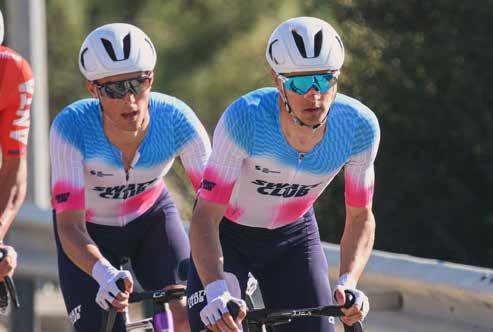
It was a short step from a small-town club to a Continental team. Swatt Club began as a blog that discussed (and still discusses) sports and competitive athletics, and soon evolved into a full-fledged racing team. Steady growth and consistent results—including last year’s high point with the victory in the Italian championship—have built a community of more than 1,300 athletes around the Swatt jersey. The key has been to give members maximum freedom and create a sense of belonging—a family where they can pursue their passion for the sport according to their own abilities and without pressure.
Let's start from the beginning: how did the Swatt Club get started?
We were officially founded as a sports club in 2017. It all started with the determination of a small group of friends. The four of us founders were still quite young at the time, and we set out without really knowing where we were headed. In our first year, we had 30 members, and then that number grew exponentially. We built on the experience of our blog, launched in 2012 under the name “SoloWattaggio,” where we discuss everything but focus primarily on competitive cycling. Now the blog also features our podcasts, the shop, and more. At the time, there were no similar initiatives in Italy. From there, it was a short step to creating the team; we wanted to stay true to our roots and do things our way. We were tired of the usual cycling teams with local sponsors on their jerseys—and especially of the obligations.
Does that mean every member manages their own affairs?
There’s no requirement to buy our team gear, compete in a certain number of races, or join group rides or dinners. The original goal was simply to offer a competitive membership to anyone who wanted one. But it was after the pandemic that everything really took off—lots of people who had never ridden a bike before started cycling. We went from being a group of die-hard competitive cyclists—including experienced amateurs and former pros—to signing up people who had never played sports before.
A perspective that is quite different from the traditional view of amateur cycling. From the very beginning, we’ve tied our team to a certain image—one rooted in our philosophy, but also in our jerseys, which have always featured a unique and distinctive design. Our name has always been associated with a different approach, one that set us apart from the conventional image of the competitive amateur. These figures have always been viewed with a degree of suspicion by both the professional world and more laid-back amateurs. Perhaps we’ve positioned ourselves somewhere in the middle of all these worlds while maintaining a strong competitive spirit. The SWATT amateur trains an average of 10 to 20 hours a week.
What do you think about the crisis in the world of reality TV?
Certainly, some Granfondo races are still going strong. Many amateur cyclists now aim to compete in just a few major events, preferring to focus their resources on specific races rather than doing 20 races a year. There are still die-hard Granfondo enthusiasts, but their numbers are dwindling. Many are increasingly seeking out experiences or events abroad, such as the Granfondo in Umago, Istria. Seventy of our members go there—if you think about it, it’s crazy. Nowadays, athletes want to share experiences, and the goal is no longer competition for its own sake. For those seeking competition, I think the UCI Granfondo circuit will be the one that dominates them all. It has different standards and could become a bit like the Ironman for triathlon.
How do you see the near future of amateur cycling?
There are really a lot of people out there cycling. Cycling is very popular, as are running and triathlons. Forecasts also predict that the outdoor sports sector will continue to grow steadily through 2030. In my opinion, we’re in a golden age. It’s true that there’s been a dip over the last two or three years, but if we look at the pre-COVID data, we see two completely different worlds. Many people have taken it up, but a lot of competitive athletes have slowed down a bit and rediscovered the joy of cycling to spend time with friends and be outdoors. Trends come and go, but ultimately, people want to be part of a community. And that feeling is always growing.
What advice would you give to someone who has an amateur team today?
The first thing is not to put pressure on people. Then, credibility is everything: you have to show that cycling is your passion, that you’re fully committed. For better or worse, you have to demonstrate that you’re out there on the ground yourself. The team environment needs to be much more relaxed; we need to recapture some of the vibe of shops in Northern Europe. Even though I’m not a big fan of their “coffee rides,” they have the advantage of being a natural gathering point for enthusiasts. An interesting initiative for a shop with a team could be to find a young rider or a close-knit group of strong riders to support. This could become the core of a new community.
Carlo Beretta President of the Swatt Club
Filippo Conca, 2025 Italian champion with the Swatt Club
GUERCIOTTI
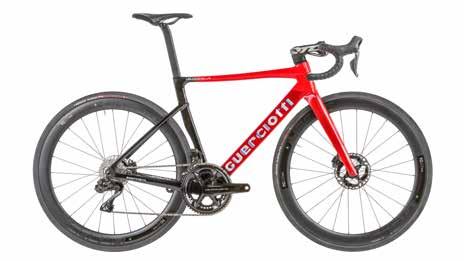
The Veloce SLR stands out for its strong racing DNA and high-level technical features. The frame is constructed using Mitsubishi T45 carbon tubes with a UD finish, a choice that increases structural stiffness compared to the Veloce S. This results in more efficient power transfer. Among the technical features, the T47-68 bottom bracket stands out, a solution that helps increase frame stability and offers broad compatibility with various types of cranksets. Great attention has been paid to customizing the riding position: the Veloce SLR is equipped with a seatpost available in three offset versions (0, -25 mm, and -35 mm) to meet different ergonomic needs. The fully internal cable routing helps create clean lines while simultaneously improving efficiency. The bike is available in three color schemes: red/ black, white/blue, and white/black.
Guerciotti – 02.2826188 – info@guerciotti.it
TECHNICAL DATA SHEET
Frame: carbon fiber with Mitsubishi T45
tubing
Fork: carbon
Groupset: Shimano Dura-Ace 9270 Di2,
12-speed
Brakes: Shimano Dura-Ace 9270
Wheels: Ursus TC47 Carbon TLR
Tires: Vittoria Rubino Pro
BH
The SL1 rounds out the Spanish brand’s road bike lineup with a model that combines lightness, performance, and ergonomics in a Toray T400 carbon frame featuring Hollow Core Internal Molding (HCIM) technology, which draws on solutions from BH’s high-end models and is tailored to the needs of today’s long-distance riders who refuse to compromise on speed. The one-piece Compact Stay rear triangle offers greater responsiveness and optimizes power transfer. The SL1’s geometry is designed to provide a comfortable and stable riding position, while the full-carbon Endurance fork—engineered to enhance both aerodynamics and vibration absorption—allows for tires up to 32 mm, thereby expanding versatility across various surfaces. The new SL1 also prioritizes aesthetic and functional integration, with fully internal cable routing that keeps the frame clean and aerodynamic.
BH - 335.6442523 - g.orsi@bhbikes.com
TECHNICAL DATA SHEET (SL1 4.5)
Frame: SL1 Disc ICR carbon
Fork: SL1 Disc Full Integrated Tapeder
carbon
Groupset: Shimano Ultegra DI2 12-speed
Brakes: Shimano Ultegra hydraulic disc
brakes Wheels: Vision Team TC30 i23
Tires: Hutchinson Nitro 700x28
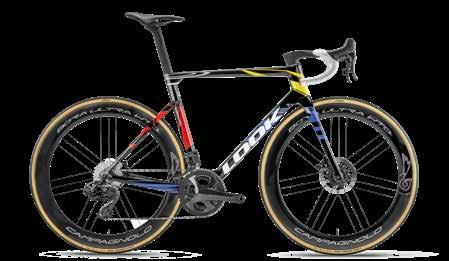
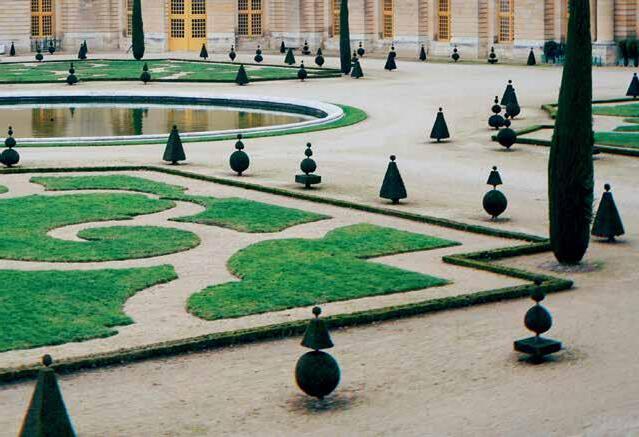
The Iconic Black Radial design of the 795 Blade RS pays homage to French architecture and nature. Inspired by the symmetry and layout of France’s most famous gardens—from Versailles to Chambord—it evokes the endless lines of French country roads and the curves of Alpine hairpin turns. The 795 Blade RS Iconic Black Radial combines pro-level performance with refined beauty. This bike was used in the 2025 Tour de France by Team Cofidis (which played a key role throughout the development process). From the new 13-speed Campagnolo Super Record Wireless groupset to the Bora Ultra WTO 60 Team Edition wheels in exclusive colors, every component was selected by the French brand to deliver top-tier performance. The frame is constructed from a special blend of carbon fibers, predominantly Ultra High Modulus carbon, for an unmatched weight-to-stiffness ratio.
lookcycle.com
TECHNICAL DATA SHEET
Frame: Ultra High Modulus carbon Fork: carbon
Groupset: Campagnolo Super Record Wireless, 13-speed
LOOK TREK
Brakes: Super Record Wireless hydraulic disc
brakes
Wheels: Campagnolo Bora Ultra WTO 60
Gomme: Vittoria Corsa Pro 28c Tan Wall
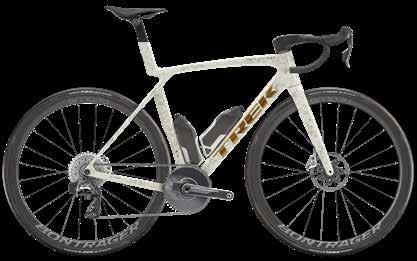
Designed based on feedback from the world’s top cyclists to help anyone riding it achieve great results, the SLR 9 AXS 1x is the lightest Madone Disc ever created by Trek. The frame chosen by the American brand for this model is made of OCLV 900 Series: Optimum Compaction Low Void Carbon is a proprietary, patented carbon fiber used for frames, wheels, handlebars, and much more. OCLV involves layering the fiber according to carefully calculated patterns, then compacting it using heat and pressure to achieve a perfect ratio of carbon to resin. Weighing 6.4 kg, it is 400 grams lighter than the minimum weight requirement set by the UCI, yet retains the aerodynamic efficiency for which Madone is known. Furthermore, the new Full System Foil aerodynamic tube profile improves airflow across the entire bike while maintaining the lightweight performance so coveted by climbers.
Trek - 035.302502 - trekbikes.com
TECHNICAL DATA SHEET
Frame: OCLV 900 Series carbon Fork: Gen 8 Model
Groupset: SRAM Red AXS
Brakes: SRAM Red AXS E1
Wheels: Bontrager Aeolus RSL 51, OCLV carbon
Tires: Pirelli PZERO Race, 700x28 mm
DE ROSA
WILIER TRIESTINA
FILANTE SLR ID2
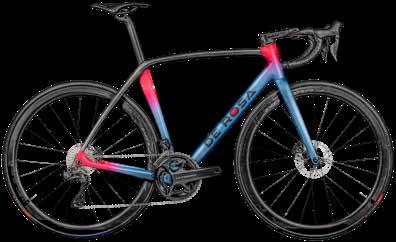
De Rosa celebrates 25 years of carbon manufacturing with the launch of the new Idol. A road bike with a very clean design, engineered to offer an optimal balance between comfort and performance, featuring the distinctive, bold curve of the Arc Slope top tube. Designed not only for pure performance, but thanks to its updated geometry, it’s ideal for tackling long distances and Granfondo events. Designed for those seeking a lively and precise riding experience, but who don’t want to immediately invest in a top-tier price range. The Idol’s frame is constructed using a blend of three different carbon compositions: 24T (T700) for 15%, 30T (T800) for 68.5%, and 40T (M40J) for 16.5%. All this results in a frame weighing 900 grams and a fork weighing 385 grams. With a maximum wheel clearance of 700x34, the Idol is compatible with all the latestgeneration drivetrains.
De Rosa – 02.6195171 - derosa.it
TECHNICAL DATA SHEET
Frame: carbon fiber (T700, T800, and M40J)
Fork: carbon
Groupset: Shimano Ultegra Di2, 12-speed
IDOL AT-01
Brakes: Shimano disc brakes
Wheels: Fulcrum Wind
Tires: Vittoria Rubino
PASSONI
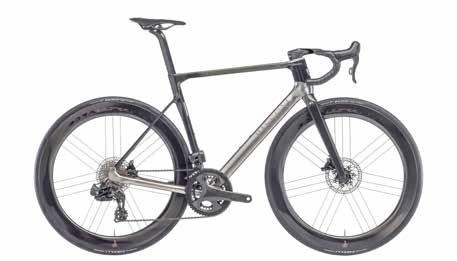
The AT-01 was born from a desire to reinterpret an important chapter in Passoni’s history through a contemporary lens. Animus Titanium isn’t simply about speed, but about a concept of performance rooted in identity and master craftsmanship. The design philosophy draws inspiration from two models that have marked the history of the Italian brand: the Mito and the XXTi. The AT-01 carries on this legacy: the lower triangle, made entirely of titanium, ensures precision, responsiveness, and long-term durability, while the upper triangle, crafted from high-modulus monocoque carbon, reduces weight and gives the frame a distinct aerodynamic profile. The development process for the Animus Titanium lasted over two years, during which every element was meticulously studied by engineers to preserve the purity of the original concept. For example, components such as the head tube and dropouts are made of Grade 5 titanium, manufactured using both CNC machining and 3D printing.
Passoni - info@passoni.it
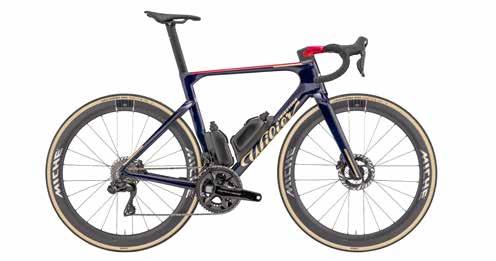
The sleek SLR ID2, developed through rigorous testing in the Silverstone (England) wind tunnel, represents the evolution of Wilier’s aero road bikes. From a technical standpoint, the new F-Bar ID2 deserves special mention—a cockpit designed around the needs of the modern cyclist, thanks to the collaborative efforts of engineers and athletes from the Groupama–FDJ Cycling Team. Every detail is designed to offer maximum efficiency and riding control. The O.E.F. design introduces a 3 cm orthogonal flare between the low and high grips, maintaining the ergonomics of the controls. The rear triangle has been slightly lengthened: a choice that allows for better integration of the new drivetrain groupsets with UDH dropouts, increases tire clearance (up to 34 mm), and improves overall stability. Furthermore, thanks to Wilier’s AccuFit system, every size maintains the same geometric consistency, delivering a balanced and high-performance riding experience.
wilier.com
TECHNICAL DATA SHEET
Frame: HUS monocoque carbon fiber
Fork: carbon
Groupset: Shimano Dura-Ace Di2
TECHNICAL DATA SHEET
Frame: high-modulus carbon monocoque
Fork: carbon
Groupset: Campagnolo Super Record
2x13
Brakes: Campagnolo disc brakes
Wheels: Bora Ultra WTO 60
Tires: Pirelli P Zero Race TLR RS
Brakes: Shimano Dura-Ace BR-R9270
Wheels: Miche Kleos 50 Carbon
Tires: Vittoria Corsa Pro 700x28c
DRALI MILANO
IRIDIUM TEAM EDITION
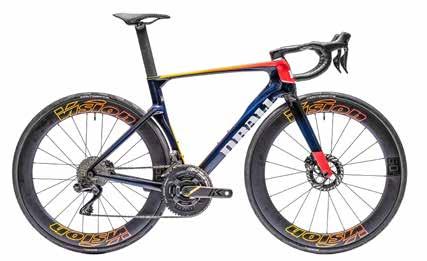
Designed, tested, and raced to the same standards demanded by professionals, the Iridio Team Edition is the bike chosen by Drali Repsol for the 2026 season. The livery stands out immediately: a deep dark blue—the primary color of the team jersey—enhanced by iconic Repsol details. At the heart of the bike is a suite of components selected to ensure top-level performance: the Shimano Dura-Ace Di2 groupset ensures precise electronic shifting, while the FSA K-FORCE Team Powerbox crankset, with an integrated power meter, strikes the ideal balance between stiffness, control, and style. The package is completed by Vision Metron SL wheels in a special color scheme matching the bike and Continental GP5000 tires. Riding comfort is a key feature of this model thanks to a carefully designed frame geometry that ensures balance, efficiency, and stability even on the most demanding routes.
Drali Milano - 02.84892829 - info@ciclidralimilano.it
TECHNICAL DATA SHEET
Frame: HM Drali Repsol carbon
Fork: carbon
Groupset: Shimano Dura-Ace Di2
Brakes: disc brakes
Wheels: Vision Metron SL
Tires: Continental GP5000
THE DECISIVE SPRINT OF TAAC
The Mandelli Group brand is launching a new line of high-performance apparel that’s accessible to everyone. A collection that stands out for both its understated aesthetic and its color palette featuring more natural shades
New fabrics, new cuts, and new colors that increasingly embody the "Made in Italy" spirit. For the upcoming spring season, TAAC—the Mandelli Group brand specializing in bags, accessories, and apparel—is focusing entirely on innovation for its road and gravel lines.
“With the 2026 collection, we wanted to give the brand’s development a decisive boost. In line with market demands and current trends, we set an ambitious goal: to offer a fit that is accessible to everyone yet high-performance. Because the cyclist wearing TAAC must feel that the garment was tailor-made for them, and not the other way around,” stated Marcello Fusi, brand manager of the Cycling Division of the Brianza-based group, who added: “We’ve introduced more technical fabrics to support cyclists seeking compression and aerodynamics, and at
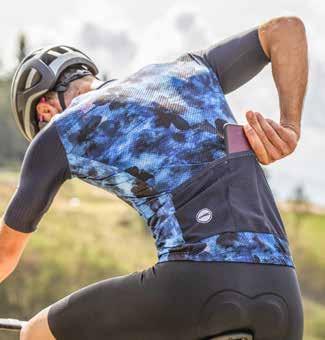
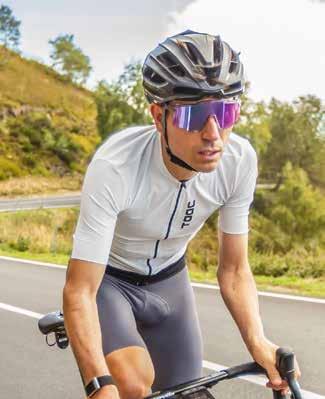
SPRINTA is the new technical jersey that dedicates two of its four colorways to the world of racing: the floral Blue and the Red with transparent TAAC lettering, alongside the classic White and gradient Black. Entirely made in Italy, slim fit, lightweight, and super breathable, this men’s jersey features short sleeves in a special raw-edge fabric that prevents rolling and is completely stress-free, thanks to the technical stretch yarn and ergonomic cut with minimal seams. It also features a silicone-coated elastic hem, a shorts-protecting flap at the bottom of the zipper, and three rear pockets to keep everything you need within reach.
TECHNICAL DATA SHEET
• Main fabric: polyester
• Raw-edge sleeves that won't roll up
• Extremely comfortable thanks to the stretch technical yarn and ergonomic design
• Reverse zipper with a flap to protect your shorts at the bottom
• Silicone-coated elastic band
• Three back pockets
• Slim fit
• Price: €69.90
the same time, we’ve revised the cuts to ensure comfort for enthusiastic beginners who are less accustomed to form-fitting garments.”
Raw materials, fit, and style are the three areas on which Mandelli Lab—the Research & Development team that has built upon Tucano Urbano’s more than twenty years of experience in the motorcycle industry—has focused. Tucano Urbano is a brand acquired in 2021 by the Carate Brianza-based company. As for style, TAAC has embraced minimalism: the new collection stands out for both its understated, clean aesthetic and a color palette featuring more natural shades, ranging from earth tones to sky tones, with a few nods to the racing world. And yes, because in a delicate balance between minimalism and sporty grit, the Italian brand also has a racing soul that is expressed in patterns inspired by the world of racing and in textures that evoke speed and asphalt.
PODIO is the unisex technical jersey that takes the top spot in the road and gravel apparel line thanks to its performance fit, ultra-thin, form-fitting, and highly breathable bi-elastic micro-nylon fabric, quick-drying properties, and UPF 20 sun protection. It is available in three colors: White, Red, and Blue.
TECHNICAL DATA SHEET
• Two-way stretch micro-nylon technical fabric that hugs the body and is highly breathable
• Raw-edge sleeves that won't roll up
• Extremely comfortable thanks to the stretch technical yarn and ergonomic design
• UPF 20 sun protection
• Reversed zipper with a flap to protect the shorts at the bottom
• Silicone-coated elastic band
• Three back pockets
• QuickDry: quick-drying
• Performance fit
• Price: €79.90
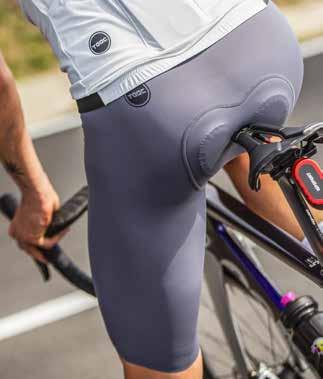
Ideal for both road and trail riding, meet VOLATA, a technical men’s knee-length bib shorts featuring silicone grips and raw-edge hems. Available in Black and Grey, they’re made from a high-tenacity, quick-drying, breathable 4-Way Stretch fabric, with an ergonomic cut, minimal seams, and, most importantly, seamless elastic mesh straps. The anatomical, breathable highdensity foam chamois allows you to ride for up to seven hours.
TECHNICAL DATA SHEET
• Outer shell made of high-tenacity, breathable stretch nylon
• Ergonomic design
• Extremely comfortable thanks to the 4-way stretch fabric and ergonomic design
• Seamless elastic straps
• Anatomically shaped, breathable seat pad made of high-density foam
• Silicone-grip hem with raw-edge finish
• QuickDry: quick-drying
• Price: €79.90
SPRINT
PODIUM
SPRINT
CYCLING FOR A DIFFERENT FUTURE
From recycling tires and inner tubes to the Green Marathon, including fair trade in the countries where they are produced. Schwalbe’s commitment to a circular and responsible economy is growing ever broader and more widespread
by Daniele Pansardi
Schwalbe is one of the companies in the cycling industry that has most distinguished itself in recent years through its commitment to greater production responsibility. The German brand has long been working toward clear and specific goals: climate neutrality, transparency, closed-loop material cycles, and fair supply chains. Schwalbe’s strategy is structured around several key areas, including the development of new standards for recyclable materials and solutions that can combine ecological and social responsibility with the necessary pace of industrial production. This balance is often difficult to achieve, but according to Schwalbe, it is essential for creating a mobility system that conserves resources.
TYRE AND INNER TUBE RECYCLING
Schwalbe has created the first tire collection system for all brands, a true mile-
Recycled tires by 2022
Percentage of recycled carbon black (rCB) across the entire range of tires
Schwalbe is the first tire manufacturer to join Fair Rubber, the association that promotes fair trade in natural rubber, even though 70% of the world’s natural rubber is processed by the tire industry. The German company aims to improve the living and working conditions of workers in the supply chain by paying a fair price for every kilogram of rubber purchased. Specifically, the price set by Schwalbe is €0.50 per kilogram of natural rubber, which translates to a 50–100% increase in income for local harvesters, excluding any intermediaries. The cooperatives that receive the funds decide independently how to use the resources for schools, medical care, clean drinking water, or infrastructure.
stone for the circular economy. Instead of burning used tires, they are recycled and used as raw materials. This reduces CO₂ emissions by up to 80% compared to incineration. Already today, 70% of the entire product range consists of recycled tires, and the collection system makes it easy to dispose of tires responsibly.
While the tire collection service is currently available only in Germany, the inner tube collection service is already available in Austria, Switzerland, Liechtenstein, the Netherlands, Belgium, Luxembourg, France, Italy, the United Kingdom, and North America. Schwalbe has been pursuing this project since 2015 using an in-house devulcanization process that makes the rubber reusable: technically complex, but extremely effective. Today, every new standard inner tube already contains 20% recycled butyl from Schwalbe’s recycling process.
Bicycle inner tubes used in recycling +2.1 million 30% 80% 70% 2035 0% 11 +17 million
The percentage of tires manufactured by Schwalbe through its participation in Fair Rubber
Schwalbe's goal to produce all tires using Fair Rubber
Countries where there is a recycling system for inner tubes
One of the key outcomes of all the eco-friendly initiatives Schwalbe has undertaken over the past five years—and which has been available in stores and on the roads since 2024—is the Green Marathon. It is the world’s first bicycle tire with a fully closed-loop lifecycle, maintaining high standards in terms of performance, safety, and durability. The Green Marathon is made from 80% recycled and renewable materials, including:
• recycled nylon from fishing nets
• rCB from the Schwalbe recycling system
• recycled steel
• Fair Trade natural rubber (Fair Rubber)
Recycled and recyclable materials used in the Green Marathon
Schwalbe Italia - 039.6058078 - info@schwalbe.it
Petroleum-based synthetic rubber in the Green Marathon
LA PRECISIONE SVIZZERA DIVENTA PERFORMANCE TRAIL.
Con CILO, l’ingegneria svizzera incontra la leggerezza per trasformare ogni trail in puro flow e massimo divertimento di guida.
Per scoprire i vantaggi di diventare rivenditore Cilo contattaci scansionando il QR code
AT THE UNIVERSITY OF CONTINUING EDUCATION
Retailers and mechanics need increasingly advanced skills. The Beltrami TSA Tech Academy provides the tools needed to build the present and the future, adapting to the needs of its customers
by Daniele Pansardi
While bikes aren’t what they used to be, everyone stands to benefit. Companies are able to offer the public products of ever-higher quality, allowing riders to enjoy high-performance, state-of-the-art bikes. Such a level of technology, in turn, requires thorough maintenance by specialized technicians—a role that demands advanced, specialized skills that can be leveraged to a greater extent than in the past. Provided, however, that they stay up-to-date and keep pace with the times. The current and future bike fleet needs retailers and mechanics who can meet these demands, not least because the repair shop is the backbone of retailers and (often) the main source of cash flow. To bridge the gap between the demand for specialized repairs and the supply of qualified technicians, the Beltrami TSA Tech Academy steps in. A project that addresses concrete market needs on both sides, launched several years ago and now a flagship initiative of the Reggio Emilia-based distributor.
The Academy operates under the auspices of SRAM Technical University, thanks to the close collaboration between Beltrami and the U.S.-based multinational, which have maintained a solid and long-standing partnership over the years. This allows Beltrami’s technicians to gain direct access to updates and new product releases—such as SRAM drivetrains or RockShox forks and drivetrains—and then share the knowledge they’ve acquired with their sales network. A synergy built around a very specific philosophy: that of a future focused on service and after-sales support. The Beltrami TSA Academy is based on five fundamental pillars: one-hour
webinars, in-house group training, on-site training, one-on-one sessions, and innovative technical support via video call—a tool launched in September 2025 to ensure rapid and even more personalized support for retailers and mechanics. The Academy’s services are thus tailored to meet all the needs of industry professionals, offering a wide range of opportunities. Beltrami TSA aims to support retailers’ work in the best possible way, as they must adapt to the current times in this historic phase.
Anyone who thinks they won’t need ongoing training on brakes, electronic groupsets, shock absorbers, and suspension systems by 2026 is effectively doomed to fall behind, both in terms of knowledge and financially. Everything has become more complex. Mechanical skills alone are no longer enough: hydraulic and electronic skills are also required, not to mention firmware updates and control units, which can present quite a few pitfalls. A modern bike shop builds customer loyalty, establishes a relationship of trust, and is, above all, a profitable business, capable of generating revenue much more quickly than the sale of bikes and accessories. Investing in courses and training, in short, is a low-risk and highly rewarding endeavor, because it creates a reservoir of trust that the customer might choose to invest in the shop—perhaps with a new bike. And at that point, the cycle begins anew. Beltrami aims to facilitate this workflow by creating a deep connection with bike shops that goes beyond a simple commercial relationship.
THE FIVE PILLARS OF THE BELTRAMI TSA TECH ACADEMY
I WEBINAR
One-hour online training session on forks, shock absorbers, seatposts, brakes, and suspension. Open to a maximum of 20 people.
ON-SITE TRAINING
This course is held in the Academy’s training room and runs all day in groups of up to four participants. It offers a practical and theoretical exploration of the most complex technical aspects, in a training room equipped with four independent workstations.
ONE TO ONE
An opportunity to develop technical knowledge and improve your skills in a detailed and personalized way, with a customized program tailored to your specific needs.
THE AWAY LINEUP
The service through which Beltrami Tech Academy is moving out of its headquarters in Reggio Emilia and bringing training directly to retailers and bike shops.
VIDEO CALL SUPPORT NEW
A video call via Zoom or WhatsApp to provide quick, personalized support to shops and mechanics, who can access the service through a simple and user-friendly online booking system. On the website, users can choose the date and time of their appointment and directly select the most suitable technician based on specific skills or previous interactions.
BENEFITS FOR RETAILERS
In a market that changes with the seasons, direct access to the official SRAM and RockShox manuals helps eliminate technical uncertainties, turning new developments into skills that can be put to immediate use in the workshop.
QUICK RETURN ON INVESTMENT
CONSTANT UPDATES SERVICE SPEED
Investing in training has a direct impact on profit margins and cash flow. Every issue resolved in-house, thanks to the skills acquired, translates into higher net profits for the business.
The integration of video support and on-site assistance drastically reduces diagnosis times. Resolving a technical issue without having to send the component to an external service provider optimizes daily workflow.
SPECIALIZATION CUSTOMER LOYALTY
Raising the technical profile of your workshop means standing out from the generalist competition. Certified training transforms mechanics into specialized technicians capable of working on high-end components, and turns the shop into a local go-to destination.
Raising the technical profile of your workshop means standing out from the generalist competition. Certified training transforms mechanics into specialized technicians capable of working on high-end components, and turns the shop into a local go-to destination.
WHAT PEOPLE ARE SAYING ABOUT THE ACADEMY
There are so many things changing at lightning speed. You really need to stay up to date on everything, especially suspensions and forks, but brakes have also come a long way. I see great passion and expertise in Beltrami’s technicians. I’ve been attending their one-on-one courses for several years now, which I consider a wise strategic choice. You can physically work on the components and really build your knowledge. The day is entirely dedicated to you, so I can personally decide what topics to cover. The personalized nature of the experience is key.
I started with more general courses and then moved on to more specialized ones. We need to stay up to date on highly technical and widely used products like those in the SRAM family, particularly RockShox suspension, and you can only do that at an SRAM Tech Center. In the courses I’ve taken—both in-person group sessions and webinars—I’ve always learned something; the technicians have always been very helpful in addressing our questions, whether in person or online. Suspension systems, and shock absorbers in particular, have made repairs more complicated and necessitated ongoing training to fully understand how certain components work. Otherwise, you risk causing serious damage.
Stefano Girardi
Philip Fiorani
The Lab Bike Wellness - Riva del Garda (TN)
22nd Bike Workshop - Sant’Olcese (GE)
THE ENDURO FOR BRINKE
The XXR Carbon Race underscores the Italian company’s commitment to continuing to invest in technological and product innovation, while keeping an eye on style and design. The LTD version of this model represents the pinnacle of performance, thanks to a setup designed for the most challenging races
From all-mountain trails to eEnduro special stages, this Brinke mullet MTB combines racing performance with a design that turns heads, thanks in part to its color scheme that accentuates the frame’s contours—designed for maximum stiffness and to ensure traction, handling, and speed. Specifically, the rear triangle measures 445 mm in length—a dimension that, according to the designers, strikes the right balance for performance in every situation, from trial-style climbs to the most demanding descents. The front triangle geometry also contributes to this, with a 65° head angle in the “flip chip high” position and increased reach, ensuring excellent handling even on
HIGHLIGHTS
The seat tube angle has been designed to allow riders of different heights to maintain the same center of gravity on the eMTB: 77° for size M, 77.5° for size L, and 78° for size XL.
The Shimano EP801 motor, with 85 Nm of torque, is compact and compatible with Fine Tune Mode on the E-Tube Project app. The 708 Wh Darfon battery is Shimano-approved and covered by the Service Center program.
The XXR Carbon is equipped with a 170-mm RockShox Zeb Ultimate fork with 38mm stanchions, while the rear shock is a RockShox Super Deluxe Ultimate with 160 mm of travel.
Bthe most technical terrain. The seat tube angle is designed with different values to allow riders of varying heights to maintain an optimal center of gravity regardless of frame size. The XXR Carbon is available in various versions; the model under review is the high-end performance version, called “Race LTD,” designed to deliver maximum performance in races thanks to the Shimano EP801 motor and the Darfon 700 and 800 Wh batteries. The components are equally impressive, with Rock Shox handling the suspension. The wheels are DT Swiss HXC 1501 Spline in a mullet configuration, with Shimano XTR brakes and the SRAM XX wireless electronic groupset.
Frame: Full Carbon, 160 mm travel
Front fork: Rock Shox ZEB Ultimate 29” Solo Air 170 mm
Front suspension fork: Rock Shox Super
Deluxe Ultimate
Brakes: Shimano XTR 4-piston, 203 mm rotors
Groupset: SRAM XX Eagle 12-speed drivetrain
Wheels: DT Swiss HXC 1501 Spline (front
Brinke - 030.9144848 - info@brinkebike.com
THE FUTURE FITS IN YOUR POCKET
29”, rear 27.5”)
Tires: Schwalbe Magic Mary 29x2.6 (front), Schwalbe Big Betty 27.5x2.6 (rear)
Motor: Shimano EP801 250-watt, 85 Nm
Battery: Darfon 708 Wh (also compatible with an 800 Wh battery)
Display: Shimano SC-EN600
Barbieri's mini air pump could become a must-have for all cyclists. Compatible with all valve types, it features a digital display for easy and precise inflation
arbieri has developed the ideal solution for anyone who forgets their CO2 cartridges or repair kit: a pocket-sized air pump that ensures smooth sailing during your rides, preventing a simple problem from ruining a day on the bike. A product that has the potential to become a must-have for every cyclist. Compact (70x50x32 mm) and lightweight (125 g), this compressor combines power and practicality: it reaches 8.3 BAR and features a digital display for precise and easy inflation. With a fully charged battery, you can inflate:
• four 700x25 racing tires inflated to 6 bar
• four 700x45 gravel tires inflated to 3 bar
• four 29" x 2.3" MTB tires inflated to 1.3 bar
The kit includes everything you need: a reversible valve adapter for all valve types (plus a hose for Schrader val-
ves), a USB Type-C charging cable, a manual in Italian and English, a rain-resistant pouch, and adapters for balls and inflatables. Perfect to keep with you at all times, versatile and universal, it works with all valve types, eliminating the need for additional tools. Please note that for TPU inner tubes, it is recommended not to inflate for more than 30 seconds, as the compressor could overheat and damage the valve: it is therefore recommended to let the valve cool down and then continue for another 30 seconds.
KEY FEATURES
• Inflation pressure: up to 8.3 bar, ideal for road, mountain, and gravel bikes
• The battery charges in 25 minutes
• Easy-to-read digital display for monitoring pressure in real time
• Lightweight and compact: weighing just 125 grams and measuring 70x50x32 mm, it’s easy to store and carry
• Universal compatibility with all valve types (Schrader, Presta, Dunlop, Regina)
• Istruzioni in italiano e inglese incluse
La prossima generazione dei motori centrali
M7100 eCity motor
M7600 eMTB Motor M7200 eTrekking motor
Controllo preciso Integrazione totale
Costruita su una piattaforma condivisa e ottimizzata per diverse esigenze di guida, la serie M7000 combina potenza di picco e coppia elevata, design compatto, funzionamento silenzioso e connettività intelligente in un’unica soluzione.
NOT JUST A FACELIFT
Bergamont raises the bar with its new gravel bike lineup. The collection includes three models: the Grandurance 10, 20, and 30 in carbon or aluminum for top-tier performance; the Flatbar, which combines control and comfort; and the Randonneur, ideal for commuting and light touring
Gravel, dirt, asphalt, singletrack. In recent years, many people have been discovering their inner gravel rider, finding a clear identity for their passion for cycling and outdoor sports thanks to this discipline. Bergamont has always been a leader in this segment, offering bikes designed to explore nearly every type of terrain at your preferred speed and intensity. For 2026, the German brand introduces the new Grandurance family, which puts the spirit of adventure at its core and consists of three different versions. Each represents a dynamic blend that captures the essence of freedom, speed, and exploration, because gravel isn’t just a sport— it’s a lifestyle. Wherever roads, dirt tracks, or trails take you, the Grandurance range is designed to go the distance.
TECHNOLOGIES IN THE GRANDURANCE RANGE
Inside the down tube of the Grandurance 10 is the handy built-in Stashbox compartment, which holds everything you need to handle any unexpected situation. When you open the lid, you’ll find the Matchbox multitool and two inner pouches: the first includes a minipump, two tire levers, and a Matchbox 5 chain tool. The second contains an original Schwalbe inner tube with a Clik valve (SCV).
GRANDURANCE CARBON
Balanced geometry, tires up to 50 mm wide, multiple mounting points, and a design with unmistakable character. In addition, the carbon fiber frame (Grandurance 10) features the Stashbox storage compartment for multi-tools and essential spare parts, along with a UDH dropout, compatible with the latest drivetrains and designed for quick and easy maintenance. Ideal for sporty rides, yet comfortable and balanced for long tours or bikepacking adventures.
GRANDURANCE FLATBAR
STASHBOX MULTIPLE MOUNTING POINTS FLATBAR
Why replace the classic drop handlebars with flat bars on a gravel bike? The answer is simple: to gain greater control even on the most challenging terrain. The wide handlebars are more stable and forgiving, making riding safer even on technical sections. Furthermore, for those who aren’t used to racingstyle handlebars over long distances, this solution offers superior comfort.
The Grandurance’s versatility also stems from the numerous mounting points distributed across the frame and fork. In addition to standard bottle cages, you can attach bikepacking bags, locks, or additional racks—even on the fork—to enjoy unlimited adventures.
EQUALIZATION AND REDUCTION
They refer to certain models in the Grandurance range. EQ stands for Equipped, while RD stands for Randonneur: both are equipped with fenders, a rack, a kickstand, and a dynamo-powered lighting system, and are approved for urban use. All components are integrated into the design and sturdy enough not to limit off-road riding.
A bike designed for riders seeking maximum control even on the most challenging terrain. The reliability of the Shimano GRX components—engineered for gravel riding—and the 50 mm Schwalbe G-One R tires ensure comfort and traction on any type of trail. The frame reach has been extended by 20 mm to achieve the perfect flat-bar geometry. With a handlebar width of up to 720 mm, control and stability are always total, even on rough terrain. Noteworthy are the 50 mm Schwalbe G-One R tires, which offer high-level performance and excellent protection against punctures.
GRANDURANCE EQ E RD
The abbreviations EQ and RD identify certain versions of the Grandurance. EQ stands for Equipped, while RD stands for Randonneur: both versions come equipped with fenders, a rack, a kickstand, and a dynamo-powered lighting system, and are approved for urban use. All components are integrated into the design and sturdy enough not to limit off-road riding. The LED lighting system, powered by a dynamo hub, is extremely reliable and ensures total visibility and safety.
MADE IN ITALY AND TOP-LEVEL PERFORMANCE
Pirelli recently unveiled its High Performance gravel line, featuring the redesigned Cinturato tires, which are now manufactured at the Milan-Bollate plant. In the road segment, the 35 mm size makes its debut for the P ZERO Race TLR RS, the widest size available to date
In recent weeks, Pirelli has introduced significant updates to its product lineup, featuring two new tires (one for gravel and one for road) manufactured in Italy at the Milan-Bollate plant using FSC-certified natural rubber. As for gravel and all-road tires, the new Cinturato models have been designed by the Italian brand to meet the diverse needs of the sport’s many enthusiasts. The Milan-based company’s catalog is now divided into two distinct lines: High Performance (HP-Line) and Performance (P-Line). The first introduces the new Cinturato Gravel H and M, developed with advanced technologies geared toward maximum performance. Both stand out from the Performance Line models due to two key features: the new SmartEVO GR compound, which ensures low rolling resistance and high grip on both dry and wet surfaces, and the 120 TPI TLR ProWALL Gravel casing, derived from Pirelli’s latest-generation MTB tires and designed to offer high puncture protection. While the Gravel M aims for an optimal balance between smoothness and traction on
mixed terrain, while maintaining good durability, the Gravel H is designed for hard, compact surfaces and is characterized by high puncture resistance.
THE PROPOSAL FOR THE ROAD
For road cycling enthusiasts, the new 35mm P ZERO Race TLR RS prioritizes smoothness and practicality without compromising on grip and comfort, thanks to its wider tread. It is the widest version of the fastest tubeless tire currently available in the range. Designed for those seeking speed and reliability combined with grip and comfort, it has also been tested by the professionals at Alpecin-Premier Tech and Lidl-Trek, teams with which Pirelli partners. The P ZERO Race TLR RS uses the SmartEVO2 compound, developed in the Italian brand’s Motorsport departments: an “intelligent” technology that combines grip and speed, further evolved compared to previous versions.
pirellicycling.com
LA CARICA DEI 101
This issue continues Bikefortrade’s exclusive survey, in which we analyze market trends in 2025 and offer interesting insights into the future prospects for the bicycle industry. We hear from retailers across Italy
by Davide L. Bertagna and Gabriele Vazzola
Retailers are the cornerstone of the bicycle supply chain, which is precisely why it’s important to gather their perspectives, listen to their requests, and take their needs into account. Through our “Focus Shop” column, we give them a voice every day of the year, but it is in the first issues of the new year that, with the customary “Charge of the 101” (now a MagNet trademark), we conduct a comprehensive market survey. A review of the year just ended and outlook for the coming one, news, trends, challenges, opportunities, proposals: with 2025 now in the books for retail outlets, what is the sentiment among Italian retailers? Here is the second installment of our survey, offering interesting food for thought for all players in the bike market.
JOIN US AT “101 DALMATIANS”
Are you a shop owner, do you have a repair shop, Do you run a business in the cycling industry?
Bikefortrade and the MagNet publishing group are giving you the chance to have your say! As always, we’re renewing our commitment to the best Italian retailers this year. To take our survey, scan the QR code to access the online form, or request a phone appointment by emailing redazione@bike4trade.it
THE QUESTIONS
YEAR-END FINANCIAL STATEMENTS
1. How did the store's sales perform in 2025 compared to 2024?
2. Indicate the percentage of any increase or decrease.
3. Bike sales, accessory and clothing sales, and repair shop. Which of these categories generated the highest profit margins for you in 2025?
4. Given the current market challenges, what were the biggest challenges you faced in 2025?
PURCHASING TRENDS
5. Which types of bikes/e-bikes were the best sellers in 2025? And in which price range?
6. What is the feature that customers value most and that has the greatest impact on sales?
SOCIAL MEDIA
7. Which social media platforms do you use most often?
8. Do you use them for direct sales, promotions, or simply to build your community?
TOP-SELLING BRANDS IN 2025
9. What are your top 3 bike brands, in order? What are your top 3 e-bike brands, in order? What are your top three clothing brands, in order? What are your top 3 accessory brands, in order?
10. In your opinion, which brand was the standout (the company that stood out the most) in 2025?
11. Overall rating for 2025 on a scale of 1 (very poor) to 10 (excellent)?
12. Any final thoughts or messages for the bike industry.
CICLI CASCELLA
Grazia Cascella, amministratore
BILANCIO DI FINE ANNO
1. Stabile.
3. Officina
4. Il calo della domanda di bici è stato il principale problema nel 2025. TREND DI ACQUISTO
5. Bici bimbo e gravel.
6. L’utente finale ricerca soprattutto professionalità nel nostro settore. SOCIAL MEDIA
7. Instagram e Facebook
8. Utilizziamo poco i social network. MARCHI PIÙ VENDUTI NEL 2025
12. Per contrastare la concorrenza del web dobbiamo garantire assolutamente professionalità e assistenza. Questi elementi sono ancora in grado di fare la differenza.
CICLI LALLUCCIO
Andria (BT)
Donato Fuzio, titolare
BILANCIO DI FINE ANNO
1. In decrescita.
2. -30%
3. Officina.
4. Il problema principale è stato l’aumento dei prezzi da parte dei fornitori.
TREND DI ACQUISTO
5. Per noi le fat-bike e le eCity (fascia di prezzo tra gli 800 e i 1.200 euro).
6. Abbiamo osservato un interesse crescente della nostra clientela verso le fat bike nell’ultimo periodo.
SOCIAL MEDIA
7. Instagram e Facebook
8. Sfruttiamo i social per promozioni e per visibilità.
MARCHI PIÙ VENDUTI NEL 2025
9. bici: BIANCHI, ATALA, VELOMARCHE eBike: ARMONY, ATALA abbigliamento: GIST accessori: RMS, MANDELLI, ATALA
10. VELOMARCHE
11. 5
Nata per la Strada
795 BladeRS Iconic Black Radial
Il design Iconic Black Radial è un tributo all’architettura unica e alla natura della Francia. Ispirato alla simmetria e alla struttura dei giardini più celebri del paese, da Versailles a Chambord, richiama anche le linee infinite delle strade di campagna francesi e le curve dei tornanti alpini. La composizione decisamente moderna riecheggia nei colori Mondrian, firma di LOOK Cycle, integrati come simbolo della nostra eredità racing e dei nostri design senza tempo. Elegante nella forma e determinato nello spirito, la 795 Blade RS Iconic Black Radial porta bellezza e struttura nella ricerca della velocità, in una celebrazione pura dell’Arte del Ciclismo – À La Française. lookcycle.com
CICLOSPORT PORCIATTI
Poggibonsi (SI)
Fabio Porciatti, titolare
BILANCIO DI FINE ANNO
1. In decrescita.
2. -15%
3. Officina.
4. Il problema principale è stata la gestione degli sconti effettuati dai vari marchi che hanno distrutto la stabilità del mercato e il margine di guadagno, visto che abbiamo acquistato le bici per il nostro negozio a un prezzo decisamente più alto di quello attuale.
TREND DI ACQUISTO
5. Bici da corsa (dai 3.500 ai 9.000 euro) e gravel (dai 1.500 ai 4.000 euro).
6. Senza dubbio il prezzo.
SOCIAL MEDIA
7. Instagram e Facebook
8. Li utilizziamo per promuovere i nostri articoli e le nostre offerte.
MARCHI PIÙ VENDUTI NEL 2025
9. bici: TREK, PINARELLO, WHISTLE eBike: TREK, WHISTLE abbigliamento: CASTELLI, TO FIT accessori: BONTRAGER, CONTINENTAL, MAXXIS
10. GIANT
11. 6
12. Sarebbe positivo se ci fossero delle regole più restrittive sulle possibilità di fare sconti eccessivi sugli articoli e sulle biciclette.
COCO CYCLE
Milano
Colin Nicholas Buckley, titolare/socio
BILANCIO DI FINE ANNO
1. In decrescita.
2. -10%
3. Officina.
4. Un problema che ho riscontrato è che i clienti portano i ricambi da casa. Inoltre, i prezzi elevati e margini/ricarichi bassi ci hanno messo in difficoltà.
TREND DI ACQUISTO
6. Il cliente oggi cerca la disponibilità immediata del prodotto e forti sconti. SOCIAL MEDIA
7. Instagram, Facebook, LinkedIN
8. Li sfruttiamo soprattutto per costruire la nostra community. MARCHI PIÙ VENDUTI NEL 2025
9. bici: non le vendiamo. eBike: non le vendiamo. abbigliamento: non lo trattiamo. accessori: SHIMANO, SRAM, CONTINENTAL 10. SHIMANO
11. 2
12. I marchi devono smettete di alzare i prezzi e vendere online perché in questo modo lo store fisico muore. Inoltre, sono insostenibili gli sconti del 40%. Una situazione ridicola.
DREAM BIKE
Montefiascone (VT)
Mirco Catteruccia, titolare
BILANCIO DI FINE ANNO
1. In decrescita.
2. -30%
Are you a shop owner, do you have a repair shop, Do you run a business in the cycling industry?
Bikefortrade and the MagNet publishing group are giving you the chance to have your say! As always, we’re renewing our commitment to the best Italian retailers this year. To take our survey, scan the QR code to access the online form, or request a phone appointment by emailing redazione@bike4trade.it
3. Officina.
4. Purtroppo oggi per vendere ci troviamo costretti a svendere.
TREND DI ACQUISTO
5. Le all-mountain/enduro dai 4.500 euro sono state le più richieste.
6. Il prezzo è l’elemento che ha influenzato maggiormente le vendite.
4. Tasse e costi fissi sono stati i maggiori problemi con cui abbiamo fatto i conti nel 2025.
TREND DI ACQUISTO
5. Le gravel sono state le più richieste lo scorso anno.
6. L’utente finale è sempre più interessato a gravel capaci di montare un copertone molto largo.
SOCIAL MEDIA
7. Instagram e Facebook
8. Sfruttiamo i social per inserire le varie inserzioni pubblicitarie, non per le vendite. MARCHI PIÙ VENDUTI NEL 2025
9. bici: RIDLEY, MERIDA
eBike: non le trattiamo.
abbigliamento: NORTHWAVE
accessori: ABUS, SELLE ITALIA, MAXXIS
10. NESSUNO IN PARTICOLARE.
11. 6
12. A mio avviso i negozianti dovrebbero comprare meno bici e venderle a prezzi onesti. In questo modo i brand si troveranno costretti ad abbassare i listini. Dal mio punto di vista la colpa dei prezzi fuori mercato è dei retailer grossi.
FIOCCA CICLI
Sassari
Paolo Fiocca, titolare
BILANCIO DI FINE ANNO
1. In decrescita.
2. -15%
3. Officina.
4. In un momento di difficoltà del mercato come quello che stiamo vivendo, la rincorsa al ribasso dei brand è uno dei problemi principali con cui dobbiamo fare i conti.
TREND DI ACQUISTO
5. Tra i più richiesti ci sono stai i modelli da bambino (tra i 180 e 290 euro) e le mtb full tra i 1.800 e i 3.000 euro. Domanda abbastanza alta per le eUrban sui 1.300 euro.
6. Il prezzo è il fattore che sposta gli equilibri per il consumatore.
SOCIAL MEDIA
7. Instagram e Facebook
8. Li sfruttiamo per vendite dirette, promozioni e per costruire la community.
MARCHI PIÙ VENDUTI NEL 2025
9. bici: SCOTT, BRERA
eBike: SCOTT
abbigliamento: CASTELLI, PARENTINI, SCOTT
accessori: SCOTT
10. SCOTT
11 10
BIKE 2000
Bologna
Andrea Guidi, titolare BILANCIO DI FINE ANNO
1. Stabile.
3. Vendita bici.
4. Il problema principale è legato alle vendite online. Oltre ai soliti siti che vendono materiale contraffatto, le aziende stesse ci hanno messo in difficoltà con sconti mai visti prima per il consumatore finale.
TREND DI ACQUISTO
5. Gravel e road dai 1.500 ai 7.000 euro.
6. L’elemento che influenza maggiormente la vendita è il rapporto qualità/prezzo.
SOCIAL MEDIA
7. Instagram e Facebook
8. Li utilizziamo per costruire la nostra community. MARCHI PIÙ VENDUTI NEL 2025
12. Gli amatori o i cicloturisti non hanno bisogno di prodotti che sono studiati per i professionisti, anche perché non sfruttano il potenziale per cui sono stati progettati.
BICICLETTE BRAZZO
Certosa Di Pavia (PV) Filippo Brazzo, proprietario
BILANCIO DI FINE ANNO
1. In crescita.
2. 5%
3. Vendita bici.
4. La saturazione del mercato bike ha portato a scontistiche troppo elevate. TREND DI ACQUISTO
5. Le più richieste sono state le bici da corsa tra i 4.000 e i 6.000 euro.
6. Novità e prezzo sono i due elementi che fanno la differenza nelle scelte d’acquisto.
SOCIAL MEDIA
7. Instagram e Facebook
8. Sfruttiamo i social per vendite dirette, promozioni ma anche per costruire la nostra community.
MARCHI PIÙ VENDUTI NEL 2025
9. bici: SCOTT, WILIER, GIANT eBike: OLYMPIA, SCOTT, KTM abbigliamento: SCOTT accessori: SYNCROS, ABUS, KASK, GARMIN 10. SCOTT
11. 9
12. Ci sono sempre più prodotti sul mercato e nuovi marchi con aggiornamenti continui. Tutto ciò rende difficile vendere, perché quello che pensavi fosse un buon acquisto diventa obsoleto in pochi mesi e il suo valore commerciale, anziché aumentare, diminuisce drasticamente.
BIKEAFÈ
Ferrara
Elisa Zaniboni, amministratore
BILANCIO DI FINE ANNO
1. Stabile.
3. Officina.
4. I problemi maggiori che abbiamo dovuto affrontare nel 2025 sono legati alla concorrenza online (prezzi sottocosto). I fornitori dei principali brand di bici lavorano solo su preordine con marginalità sempre più ridotte, con costi fissi eccessivi di personale e affitto.
TREND DI ACQUISTO
5. Le più vendute sono state le gravel con fascia di prezzo medio/bassa.
6. Le caratteristiche più ricercate dal cliente sono la versatilità dei mezzi e la scontistica.
SOCIAL MEDIA
7. Instagram e Facebook
8. Li sfruttiamo per costruire la nostra community.
4. Il grande problema è collegato a colleghi e aziende che, svendendo le rimanenze di magazzino, hanno distrutto il valore della merce che avevamo acquistato e delle biciclette usate.
TREND DI ACQUISTO
5. Gravel muscolari ed eTrekking sono stati i modelli più richiesti nel 2025.
6. Ovviamente il prezzo, dato che tutti sanno che ormai “le bici si regalano”.
SOCIAL MEDIA
7. Instagram e Facebook
8. Sfruttiamo i social oltre che promozioni e per far crescere la community anche per vendite dirette con il nostro eshop.
MARCHI PIÙ VENDUTI NEL 2025
9. bici: BIANCHI, MEGAMO, MERIDA
eBike: BIANCHI, MEGAMO
abbigliamento: GOBIK
accessori: GARMIN, MAGENE, MAGICSHINE
10. MEGAMO
11. 4
12. Le aziende devono smetterla di affidarsi a manager a scadenza, i quali lasciano poi nel fango chi in questo settore ci rimane in pianta stabile. Smetterla di produrre novità inutili e iper-costose per poi svendere tutto. Ci vuole più presenza sul campo e realtà, meno sogni e illusioni.
BICYCLE STORE LECCE
Lecce
Bijan Djalili, proprietario
BILANCIO DI FINE ANNO
1. Stabile.
3. Vendita accessori e abbigliamento.
4. Il forte calo nella richiesta di bici è stato complicato da arginare nel 2025.
TREND DI ACQUISTO
5. Le più richieste sono state le cargo bike sui 5.500 euro.
6. I clienti vogliono risparmiare per una questione di scarsa cultura della bici in generale, pochi apprezzano la qualità.
SOCIAL MEDIA
7. Instagram e Facebook
8. Li sfruttiamo per vendite dirette, promozioni, ma anche per costruire la nostra community.
MARCHI PIÙ VENDUTI NEL 2025
9. bici: MULI-CYCLES, MERIDA, COMMENCAL
eBike: MULI-CYCLES, MERIDA, COMMENCAL
abbigliamento: CYCOLOGY
accessori: CYCOLOGY, MET, ROCKBROS
10. CYCOLOGY
11. 6
12. Ci piacerebbe che i prezzi delle bici tornassero alla normalità. Per incentivare la mobilità e la cultura delle due ruote servono costi accessibili.
RECORD BIKE
Malo (VI)
Federico Querin, titolare
BILANCIO DI FINE ANNO
1. In decrescita.
2. -7%
3. Vendita accessori e abbigliamento.
4. Abbiamo fatto registrare dei margini molto bassi nella vendita di bici. Gli overstock di magazzino e la gestione difficile dei fornitori ci hanno messo in grande difficoltà. Tra gli aspetti positivi il comparto abbigliamento, in generale, ha performato bene rispetto agli anni precedenti.
TREND DI ACQUISTO
5. Bici da corsa con valore di poco superiore ai 4.100 euro.
6. Ci sono svariati fattori che dipendono dalla tipologia di bici. Nel mondo road la visibilità del brand nel mondo professionistico è sempre importante anche se si sta sempre più cercando il modello di fascia alta proposto a prezzi concorrenziali. Per quanto riguarda le gravel, il segmento è molto frammentato e la scelta è dipesa molto da quello che riusciamo a trasmettere noi negozianti e dalla capacità del brand di essere presente nel territorio. In ambito eMtb si ragiona quasi esclusivamente su watt, NM e prezzi scontatissimi. Spesso c'è molta poca tecnicità nella scelta della mtb a pedalata assistita.
SOCIAL MEDIA
7. Instagram, Facebook e YouTube
8. Li sfruttiamo maggiormente per costruire le community, per promuovere nuovi prodotti e parlare di argomenti che possono essere interessanti per gli amatori.
MARCHI PIÙ VENDUTI NEL 2025
9. bici: SCOTT, PINARELLO, MONDRAKER eBike: MONDRAKER, SCOTT abbigliamento: CASTELLI, ASSOS, SPORTFUL accessori: FIZIK, SIDI, SCOTT
10. NESSUNO IN PARTICOLARE.
11. 3
12. Il nostro comparto purtroppo è assolutamente privo di visione a medio termine. Il settore dovrebbe essere gestito con un certo criterio dalle grandi aziende che dovrebbero creare il mercato con coerenza e obiettivi, ma che in realtà sembra quasi che lo scopo sia quello di "raccattare" il fatturato mensile senza una vera e propria logica di sistema.
RIVIERA OUTDOOR
Finale Ligure (SV)
Luca Bondi, titolare BILANCIO DI FINE ANNO
1. In decrescita.
2. -15%
3. Vendita accessori e abbigliamento.
4. Il problema principale affrontato nel 2025 è stato la continua lotta sui prezzi dei nuovi prodotti, specialmente sulle biciclette.
TREND DI ACQUISTO
5. Le più vendute sono state le eBike dai 4.000 ai 7.000 euro.
6. Purtroppo il prezzo.
SOCIAL MEDIA
7. Instagram e Facebook
8. Pubblicano sui nostri canali social bici nuove e usate e qualche offerta su materiale in stock.
12. Tre cose vorrei dire all’industry: ridurre la produzione, ridurre l’inflazione sui prezzi finali e garantire tranquillità d’acquisto ai negozi.
ROTOEBIKE
Trento
Roberto Alessandrini, titolare
BILANCIO DI FINE ANNO
1. In crescita.
2. +37%
3. Vendita bici.
4. L’elemento più complicato è stato far capire ai clienti la bontà dei prodotti proposti. Tante persone erano solo interessate al prezzo.
TREND DI ACQUISTO
5. I modelli più richiesti sono stati le eMtb e le gravel tra i 4.000 e i 7.000 euro.
6. L’elemento che influenza maggiormente la vendita è senza dubbio il prezzo. Noi negozianti dobbiamo essere bravi a far comprendere le qualità e le peculiarità di certi prodotti.
SOCIAL MEDIA
7. Instagram
8. Li utilizziamo soprattutto per costruire la nostra community.
12. Ai brand vorrei richiedere una riduzione dei prezzi e della produzione. Inoltre, stop dell'obbligo del preordine stagionale che indebita il negozio.
TOP BIKE AND COMPONENTS
Fermo
(FM)
Fabio Alati, titolare
BILANCIO DI FINE ANNO
1. Stabile.
3. Officina.
4. Quello che ho osservato è stata una difficoltà economica generale da parte dei clienti.
TREND DI ACQUISTO
5. Le più richieste sono state le bici da corsa tra i 3.000 e i 5.000 euro.
6. Il rapporto qualità/prezzo fa la differenza per l’utente finale.
SOCIAL MEDIA
7. Instagram e Facebook
8. Li sfruttiamo per vendite dirette, promozioni ma anche per costruire la nostra community.
12. Il consiglio che vorrei dare all’industry è quello di unificare le componenti per semplificare la reperibilità dei ricambi e le riparazioni sulle bike/eBike di media e alta gamma.
GREENBIKE
Pesaro (PU)
Luca De Rosa, titolare BILANCIO DI FINE ANNO
1. In crescita.
2. +10%
3. Vendita bici.
4. L’elemento con cui stiamo facendo i conti in questi anni è “l'invasione” dei marchi cinesi della grande distribuzione con prodotti non a norma.
TREND DI ACQUISTO
5. Le più richieste sono state le city bike sotto i 1.300 euro e i modelli trekking fino a 3.000.
6. L’elemento che influenza maggiormente la vendita è l’autonomia delle eBike.
12. A mio avviso le aziende dovrebbero puntare sulla formazione dei rivenditori prendendo contatto con i produttori di motori, dato che a parte Bosch, gli altri non lo fanno o comunque non abbastanza.
L'ANGOLO DEL BIKER
Bolsena (VT)
Andrea Pesetti, titolare
BILANCIO DI FINE ANNO
1. In crescita.
2. +10%
3. Officina.
4. La vendita delle bici ha subito un forte calo, questo a causa dell’online che ha abbassato i prezzi.
TREND DI ACQUISTO
5. Le più richieste nel 2025 sono state le eBike sui 5.000 euro.
6. Le caratteristiche più ricercate dal cliente sono i motori sempre più potenti e le
batterie con 800 Wh minimo. SOCIAL MEDIA
7. Instagram e Facebook
8. Li sfruttiamo principalmente per costruire la nostra community. MARCHI PIÙ VENDUTI NEL 2025
12. I prezzi devono essere in linea tra online e store fisico.
MALINI BICI
Casalecchio di Reno (BO)
Paolo Malini, titolare
BILANCIO DI FINE ANNO
1 In decrescita.
2. -10/15%.
3. Officina
4. I prezzi delle bici sono stati il problema principale. Le case madri continuano ad abbassare i prezzi anche dopo ad aver venduto i modelli a cifre più alte.
TREND DI ACQUISTO
5. Corsa e gravel dai 1.500 euro a salire.
6. Oggi l’utente finale è alla ricerca di avventura, per questo il gravel ha preso così piede negli ultimi anni.
SOCIAL MEDIA
7. Instagram, Facebook, TikTok
8. Li sfruttiamo per costruire la nostra community.
MARCHI PIÙ VENDUTI NEL 2025
9. bici: WILIER TRIESTINA, MONTANA, SCOTT eBike: MONTANA, SCOTT abbigliamento: ALÉ accessori: BRN
10. AVINOX
11. 5
12. Non capire che i mercati si saturano è un grosso problema. Tantissimi marchi hanno fatto gli stessi errori e oggi non sembra ci siano vere strategie con tutti che inseguono tutti.
MIKE'S BIKE GARAGE
Sarentino (BZ)
Mike Felderer, proprietario
BILANCIO DI FINE ANNO
1. In crescita.
2. +22%
3. Vendita bici.
4. Non esistono problemi, ma solo soluzioni. Il mercato varia, ma la differenza la fa chi sa leggerlo con anticipo.
TREND DI ACQUISTO
5. Le più vendute sono state le eMtb alto di gamma.
6. La differenza la fanno il servizio post vendita (officina) e consulenza all’acquisto.
SOCIAL MEDIA
7. Instagram e Facebook
8. Più che altro i social sono una vetrina virtuale, dove si presentano novità, continuità e l'andamento quotidiano del negozio.
4. In questo momento storico stiamo osservando una mancanza di meccanici.
TREND DI ACQUISTO
5. Le più vendute sono state le eMtb front tra i 2.500 e i 3.000 euro.
6. Le caratteristiche più ricercate dal cliente e che influenzano maggiormente la vendita sono l’affidabilità del marchio e le relative garanzie.
SOCIAL MEDIA
7. Instagram
8. Sfruttiamo i social per costruire la nostra community. MARCHI PIÙ VENDUTI NEL 2025
9. bici: WOOM
eBike: RAYMON, GHOST
abbigliamento: CRAFT, UMBRAIL
accessori: SHIMANO, TOPEAK, BLACKBURN
10. AVINOX
11. 7
SCOUT BIKE
Lainate (MI)
Sergio Larghi, socio amministratore
BILANCIO DI FINE ANNO
1. Stabile.
3. Officina.
4. Diciamo che non si può più parlare di problemi, ma di una situazione di mercato che sarà la normalità per i prossimi anni. Le aziende produttrici di bici e accessori si trovano con invenduti importanti senza trovare "valvole di sfogo" per poter risolvere il problema se non con qualche shop online o grandi negozi che riescono ad approfittarne acquistando a prezzi spesso sottocosto. Inoltre, a questo si aggiunge il calo della domanda in generale e la riduzione della capacità di spesa delle famiglie. Dal mio punto di vista, inoltre, sempre più marchi si affacciano sul mercato “rubando” rivenditori ad altre aziende (la fidelizzazione è cosa rara se non per pochi brand).
TREND DI ACQUISTO
5. L'interesse per le gravel continua a essere importante, a discapito di altre tipologie di bici (mtb ma anche road). In questo segmento troviamo un'offerta molto ampia di marchi, purtroppo anche cinesi. La domanda di eBike si è stabilizzata.
6. La professionalità del venditore è in grado qualche volta di fare la differenza, ma quello che influisce maggiormente sulle vendite resta il prezzo abbinato a un'offerta sempre maggiore. Questo porta a rischi importanti per il venditore e spesso a rimanenze di magazzino.
SOCIAL MEDIA
7. Instagram, Facebook, LinkedIN
8. Li utilizziamo solo per costruire la nostra community.
10. Credo che AMFLOW tra le eBike sia la stata la novità più importante. 11. 5
12. C'è tanto margine di crescita nel nostro settore. La scommessa più grande sono certo che sia quella di riuscire a far avvicinare sempre più persone al mondo della bici. Ci sono troppi "ciclisti della domenica" ancora con bici di 20 anni fa e di livello bassissimo.
EBIKE CATANIA
Catania
Francesco Nicotra, titolare
BILANCIO DI FINE ANNO
1. Stabile.
3. Vendita bici.
4. I problemi maggiori che abbiamo dovuto affrontare nel 2025 sono stati gli
eccessivi sconti online e gli stock delle aziende.
TREND DI ACQUISTO
5. Le più richieste sono state le eMtb.
6. Le domande più frequenti dei clienti sono legate a motore e batterie, mentre l’elemento che influenza maggiormente la vendita è il prezzo.
SOCIAL MEDIA
7. Instagram, Facebook, TikTok
8. Per costruire la community.
MARCHI PIÙ VENDUTI NEL 2025
9. bici: non le trattiamo.
eBike: CUBE, LOMBARDO, OLYMPIA abbigliamento: CUBE, FOX accessori: CUBE, FOX
10. CUBE
11. 6
12. Oggi vendere online bici costose non ha senso. Le aziende devono puntare sugli store fisici e invertire la tendenza: basta guardare il mondo auto/moto.
ROBI BIKE
Belluno
Enrico Viel, titolare
BILANCIO DI FINE ANNO
1. In decrescita.
2. -15%
3. Officina
4. Il problema maggiore sono stati i folli sconti sulle biciclette.
TREND DI ACQUISTO
5. Le gravel sono state le più richieste nel corso del 2025.
6. Il cliente guarda solo e soltanto al prezzo.
SOCIAL MEDIA
7. Instagram
8. Li utilizziamo per costruire una community con cui poi interagire dal vivo.
MARCHI PIÙ VENDUTI NEL 2025
9. bici: BIANCHI, RIDLEY, WOOM
eBike: BIANCHI, RIESE & MULLER, XP abbigliamento: ALÉ, GOBIK, SPORTFUL accessori: SHIMANO, TOPEAK, MISS GRAPE
10. BIANCHI
11. 4
THE QUESTIONS
YEAR-END FINANCIAL STATEMENTS
1 How did the store's sales perform in 2025 compared to 2024?
2. Indicate the percentage of any increase or decrease.
3. Bike sales, accessory and clothing sales, and repair shop. Which of these categories generated the highest profit margins for you in 2025?
4. Given the current market challenges, what were the biggest challenges you faced in 2025?
PURCHASING TRENDS
5. Which types of bikes/e-bikes were the best sellers in 2025? And in which price range?
6. What is the feature that customers value most and that has the greatest impact on sales?
SOCIAL MEDIA
7. Which social media platforms do you use most often?
8. Do you use them for direct sales, promotions, or simply to build your community?
TOP-SELLING BRANDS IN 2025
9. What are your top 3 bike brands, in order?
What are your top 3 e-bike brands, in order?
What are your top three clothing brands, in order?
What are your top 3 accessory brands, in order?
10. In your opinion, which brand was the standout (the company that stood out the most) in 2025?
11. Overall rating for 2025 on a scale of 1 (very poor) to 10 (excellent)?
12. Any final thoughts or messages for the bike industry.
CICLOFFICINA BIKE BOX
Capranica
(VT)
Alessio Accosta, proprietario
BILANCIO DI FINE ANNO
1. Stabile.
3. Officina.
4. Gli sconti su Internet ci hanno affossato. Si compra a meno di rispetto a quanto compriamo noi dai nostri fornitori.
TREND DI ACQUISTO
5. I modelli più richiesti lo scorso anno sono state le eMtb sui 4.000 euro.
6. Gli elementi che influenzano maggiormente la vendita sono la coppia motore e la capacità della batteria.
SOCIAL MEDIA
7. Instagram e Facebook
8. Li sfruttiamo per fare promozioni e per costruire la nostra community.
MARCHI PIÙ VENDUTI NEL 2025
9. bici: BH, THOK eBike: BH, THOK
abbigliamento: non lo trattiamo.
accessori: ANDREANI, RMS, BRN
10. AMFLOW
11. 4
COMA BIKE SERVICE & SHOP
Bizzarone (CO)
Manuel Magitteri, proprietario
BILANCIO DI FINE ANNO
1. Stabile.
3. Officina.
4. In un momento di difficoltà del mercato come quello che stiamo vivendo, abbiamo acquistato con attenzione tutti i ricambi, evitando pre-ordini inutili.
TREND DI ACQUISTO
5. Il medio/alto di gamma è andato bene nel 2025.
6. La caratteristica più ricercata dal cliente e che influenza maggiormente la vendita per quanto riguarda le eBike è la capacità della batteria.
SOCIAL MEDIA
7. Instagram, Facebook e TikTok
8. Li sfruttiamo per costruire la community e per aggiornare i clienti sulle promozioni.
12. Secondo me le aziende dovrebbero tornare a fare bike test seri e non puntare tutto su influencer che aspettano solo "prodotti" gratis.
DF SPORT SPECIALISTBICIMANIA
18 punti vendita sul territorio nazionale
BILANCIO DI FINE ANNO
Eugenio Zappa, buyer
1. Abbiamo registrato una leggera decrescita.
2. -2%
3. In percentuale l’abbigliamento ha garantito i margini più alti, mentre come ricavo complessivo le biciclette sono risultate la voce principale.
4. Nel 2025 i principali problemi che abbiamo dovuto affrontare sono stati l’instabilità del mercato e dei prezzi di acquisto, la minor affluenza nei negozi fisici e la concorrenza di sconti esagerati praticati dai negozi online. Questi fattori hanno reso la gestione quotidiana più complessa e hanno influenzato sia i margini sia i volumi di vendita.
TREND DI ACQUISTO
5. Nel 2025, per numero di unità vendute, le mountainbike muscolari sono state le più richieste. In termini di valore di vendita, invece, le eBike hanno rappresentato la
quota più significativa.
6. I clienti sono indubbiamente alla ricerca dello sconto dal prezzo di listino.
SOCIAL MEDIA
7. Attualmente utilizziamo Instagram e Facebook per attività legate all'e-commerce e ai punti vendita, Linkedin solo per attività corporate e di branding. Tik Tok non è ancora attivo ma è nei progetti futuri.
8. Utilizziamo i social principalmente per coinvolgere il pubblico tramite contenuti originali, oltre alle comunicazioni di nuovi eventi e lanci di prodotto.
MARCHI PIÙ VENDUTI NEL 2025
9. bici: CUBE, SPECIALIZED, SCOTT eBike: CUBE, SPECIALIZED, CANNONDALE abbigliamento: CASTELLI, RH+, NORTHWAVE accessori: SHIMANO, SPECIALIZED, VITTORIA
10. CUBE
11. 6,5
12. Vorremmo che ci fosse maggiore stabilità di mercato e degli sconti, più disponibilità di prodotto, un controllo efficace sulle vendite online, a difesa dei retailer fisici.
TAZEBIKE CICLOFFICINA
Bari
Michael Mayeux, socio
BILANCIO DI FINE ANNO
1. Stabile.
3. Officina.
4. La concorrenza dei prezzi su internet è stato il principale problema nel 2025.
TREND DI ACQUISTO
5. Le più vendute sono state le eBike nella fascia di prezzo tra i 1.500 e i 2.500 euro.
6. L’autonomia della batteria è l’elemento che influenza maggiormente la vendita nel segmento a pedalata assistita.
SOCIAL MEDIA
7. Instagram e Facebook
8. Non li sfruttiamo troppo i social.
MARCHI PIÙ VENDUTI NEL 2025
9. bici: BERGAMONT, BASSO, LEE COUGAN eBike: BERGAMONT, LEE COUGAN, MBM abbigliamento: BRN, SPORTFUL, SCOTT accessori: BRN, ZEFAL, EWHEEL
10. EWHEEL
11. 7
CHIERICI BIKES
Parma
Barbara Chierici, socio
BILANCIO DI FINE ANNO
1. In decrescita.
2. -40%
3. Officina.
4. Le vendite online ci stanno mettendo in ginocchio.
TREND DI ACQUISTO
5. City bike (250-300 euro) ed eBike sui 1.400.
6. Il prezzo è l’elemento che influenza maggiormente la vendita.
SOCIAL MEDIA
7. Instagram e Facebook
8. Li sfruttiamo per promozioni e per costruire la nostra community.
More than 2,000 companies, including major cycling brands, have filed a lawsuit against the Trump administration after the Supreme Court ruled that the global tariffs imposed a year ago were illegal
by Daniele Pansardi
On February 20, the U.S. Supreme Court ruled that most of the heavy tariffs imposed by President Donald Trump in 2025 were illegal. The ruling has reignited debate over one of the most controversial economic issues of the past year, stemming from Trump’s desire to “rebalance” the U.S. trade balance with other countries, which has led to increased tensions and market uncertainty.
The political and economic consequences were immediately significant, but the Supreme Court’s decision nevertheless left some gray areas for the many companies harmed by the tariffs. The highest U.S. court did not immediately clarify whether and how the government would handle potential refunds, which have been estimated at approximately $130 billion in customs duties paid by over 300,000 importers to bring their goods into the United States, including companies in the bicycle industry.
It has not been specified whether legal action against the U.S. government will be necessary to obtain compensation, or whether the U.S. Customs and Border Protection (CBP) will automatically handle the process. The prospect of having to file complaints against the U.S. federal government, in fact, would be a deterrent for most small and medium-sized businesses, which could be forced to spend up to hundreds of thousands of dollars to pursue the claims.
REACTIONS FROM THE AMERICAN INDUSTRY
Meanwhile, on Wednesday, March 4, a judge in a commercial court in Manhattan (New York) ordered the U.S. government to begin reimbursing all companies that have faced tariffs in recent months. A portal dedicated to refunds has also been launched on the U.S. Customs and Border Protection website, but it is unclear whether this will be sufficient to obtain them. “I think the industry needs to establish a solid position regarding the tariff situation before adjusting prices,” Jacob Heilbron, CEO of Kona, told Bicycle Retailer.
"As for the collection of refunds, we have been unable to obtain duty drawbacks for the components we imported and then re-exported from the United States for over a decade. We should temper our expectations that these refunds will actually be paid out, especially in the near future."
In short, those who could afford it opted for legal action, even though the disputes are expected to be lengthy, spanning years rather than months. And among the 2,000 companies that have filed lawsuits are some of the biggest names in the bike industry, such as Trek, Goodyear, Specialized, Shimano, Marin (which, according to CEO Matt Vanenkevort, paid an additional $2 million in tariffs, just to give one example), GoPro, Ibis, Bell Sports, and QBP.
On the American website PinkBike, Ibis founder Scott Nicol commented on the matter as follows: “The bike industry was already under immense pressure before the tariffs. Many companies were unable to raise prices by an additional 20%, so the refunds will serve as compensation for last year’s losses.” In addition to leaving doubts and concerns about the reimbursement process, the Court’s ruling has in any case not dampened Trump’s determination to continue his protectionist and punitive policies. After taking the cancellation of the previous tariffs in stride, the American tycoon in fact announced new ones, initially at 10% and then at 15% for a period of 150 days, always with the aim of curbing imports from the rest of the world. “Small businesses are the heart of the U.S. economy, but they have been pushed to the breaking point,” Nicol continued. “We hope that the reimbursement of the illegal tariffs will be civil and swift, and that the newly approved measures will be blocked and reimbursed as soon as possible.”
“It was to be expected that new taxes would emerge after the tariffs were lifted, and that’s exactly what happened,” Marin CEO Vanenkevort told PinkBike. “Right now, we want the value of our offering to remain strong. Marin’s motto is ‘Made for fun.’ Riding a bike should be different. Paying tariffs isn’t—for any of us.”
THE IMPACT ON IMPORTS
As might have been expected, the uncertainty caused by U.S. trade policies also had a sharp impact on U.S. import figures in 2025. As reported by Bike Europe, the value of goods entering the country in 2025 hit an all-time low of $850 million, for a total of 8.8 million units, representing a 21% decline compared to the previous year. This decline can clearly be attributed to the government’s protectionist strategy, given the absence of other market-related factors that could have influenced supply and demand and destabilized the overall situation.
Looking at the details, the leading exporter to the United States—China—saw its exports plummet by 47%, dropping from $415 million to $220 million. Looking at individual units, China’s market share in the U.S. fell by 66%, dropping from 16.7 million in 2024 to 5.7 million in 2025. In an effort to rebalance the import-export relationship with the world’s largest commercial and political “rival,” Donald Trump had raised reciprocal tariffs with China to as high as 66%. Among those taking advantage of this situation was Cambodia, which in 2025 became the United States’ leading supplier with imports valued at $256 million, thanks to tariffs of just 19%. The Cambodian bicycle industry is home to many Taiwanese and Chinese factories, to the point that it has become the fourth-largest exporter of e-bikes to the European Union. This growth in the global bicycle market will not go unnoticed.
BEYOND PREJUDICE
Bike House was founded in an unusual context for the industry.
Tiziano Milan had to overcome the initial skepticism of cyclists by offering a clear and consistent concept that emphasized customization and bespoke solutions
by Daniele Pansardi
Without a competitive background in cycling or a family already involved in the industry, Tiziano Milan knew he would face skepticism from a community deeply rooted in tradition when he opened his shop. A lifelong enthusiast of bikes and motocross but with experience in the automotive world, in February 2020 he ventured into the bike industry, specia -
The Interview
What is Bike House's identity?
Although we can’t focus solely on one segment, the store’s DNA is deeply rooted in off-road cycling. For mountain bikes, I work with Olympia and Mondraker, which I was able to bring in thanks to the opening of their Italian branch, while I’ve introduced Bianchi to cover the road bike sector, and I’m a Canyon Service Center. I also have a great passion for customizing bikes.
lizing primarily in off-road, and gradually dispelling the initial skepticism that might have existed. The driving force behind Bike House is the high quality of its offerings and the customization of bikes—both in terms of components and aesthetics—as the shop owner himself explains, to provide an experience that is as tailored as possible.
What can you offer your customers in this regard?
I always strive to offer the best solution for improving a bike’s performance, from the wheels to the brakes and suspension. I’m also highly skilled in graphics. I design and apply custom protective wraps for most frames on the market, available in clear versions or with custom graphics tailored to the customer’s preferences.
What are the best-selling types of bikes? What is their price range? 75% of sales are for mountain bikes, with prices ranging from €4,000 to €12,000. Electric bikes account for 70% of the total. I take a lot of courses related to the ebike industry because I’ve always believed in this type of product, so it’s important to stay up to date.
Do people prefer light e-bikes or full-power e-bikes?
The lightweight models seemed like a flash in the pan, but now they may have struck a balance between light weight and power. They could yield some interesting results.
Is your service area limited to the province of Alessandria? No, we’re also able to reach customers outside the region thanks to our social media efforts and our sales channel on Subito. I don’t just sell new items, but used ones as well.
How should the end-of-life management of e-bikes be handled, taking into account the life cycles of the batteries?
When I pick up a used e-bike, I feel confident knowing it was purchased at my shop, because I’m familiar with it. If the bike didn’t come from Bike House, I tread carefully. The world of electric bikes resembles that of used cars and motorcycles, but there aren’t the same guarantees regarding the reliability of used models. This would be a matter for insurance companies, and I’m seeking dialogue with some agencies to see if tools of this kind can be introduced.
In mountain biking, the next step seems to be the 32-inch wheel—what do you think? Sometimes it seems like companies come up with innovations just for the sake of doing something different. They seem like things designed to stir things up a bit.
Do you also offer financing as a payment option? How much does it help in closing sales? A lot. By partnering with a finance company, I was also able to offer a lump-sum payment option, similar to what’s available for car loans.
How do you think the bicycle market will evolve in the coming years?
From a technological standpoint, it would be interesting to have a battery charging system that recovers energy while riding. On the other hand, I don’t like the race for maximum motor power, because it shifts the focus too much toward that aspect, and it can also become dangerous from a regulatory standpoint. Someone might start bringing up issues like insurance, registration fees, and so on again. We risk distorting the very essence of the bicycle forever.
And from a business perspective?
If I were a manufacturer, I would try to adjust our policies a bit. The COVID bubble burst a long time ago, yet many people continue to demand completely unrealistic sales figures when placing orders. It’s a perverse logic, almost like a form of pseudo-blackmail: I’ll revoke your contract if you don’t meet certain sales targets. Sometimes I get the impression that the people at the helm of these companies only look at the numbers, without giving a thought to the stores they work with.
Se dovessi indicarmi il problema più grande nel mercato della bici oggi, quale diresti? Lo scarso dialogo tra casa produttrice e negozio.
Tiziano Milan owner
Address: 51 Via Santorre di Santarosa – Alessandria 15121
Phone: 33 -874-8802 - 0131-380-189
Mail: info@bike-house.it
Website: bike-house.it
Instagram: @bikehousealessandria
Facebook: BIKEHOUSEAL
Store area: 190 square meters
Bicycle brands: Bianchi, Mondraker, Olympia, Via Veneto
Clothing, accessories, and component brands: Leatt, Northwave, Mavic, Monaco Bici, Extreme Racing Shox, Fox Suspension, Deity Components, Garmin Services: repair shop, trade-ins, financing, suspension inspection, Canyon Service Center
FROM THE PERFORMANCE SHARING
Granfondo events are no longer seen simply as a test of performance. Over the years, motivations and purchasing criteria have changed. This presents a strategic opportunity for retailers: to transform themselves from retail outlets into hubs for preparation and support
by Riccardo Penna
For over twenty years, Granfondo events have been the most extraordinary driver of sell-outs the bike retail industry has ever seen. The mechanism was simple: the amateur would sign up, get scared, train, and then walk into the store. He walked in with a very clear goal: to ride faster. His mental model was that of competition, even if he worked at a bank, even if he had two kids, even if he rode three times a week. The Granfondo was his personal test of worth. Retail thrived on this archetype for years, building a perfectly coherent narrative made up of stiffer frames, lighter wheels, more aggressive gear ratios, and more aerodynamic clothing. Every purchase carried a single implicit promise: this will save you time. And the customer bought time. Then, slowly, without making a sound, time ceased to be the primary currency.
Today, people who sign up for a Granfondo don’t necessarily do so to improve their finishing position or compete with their riding buddies. They do it to enjoy an organized event, ride safely on closed roads, share a goal with friends, restore mental clarity through a physical challenge, and have a day that breaks away from the daily routine. They aren’t looking for a race; they’re looking for a personal narrative. And this narrative doesn’t require watts, but endurance. Physical endurance, emotional endurance, relational endurance. The new Granfondo rider doesn’t buy gear to improve performance but to increase the likelihood of finishing well—without pain, without crises, without stress—with enough energy to enjoy the refreshments and the post-event festivities. The cultural shift is clear, from the logic of performance to the logic of endurance. Added to this is an element that has gradually deterred some of the long-time participants: the perception of safety. Open roads during training, traffic, difficult coexistence with other road users, and a growing awareness of risk have changed the way the amateur cyclist approaches training. The Granfondo thus becomes a protected, organized space where safety is an integral part of the perceived value. It is not just a matter of the route or medical assistance, but of comprehensive support. Today’s participants want to feel supported before, during, and after the event.
SELECTION CRITERIA
When motivation changes, the criteria for choosing a bike inevitably change as well. The endurance rider is willing to put up with a few extra grams, prefers wider tires, looks for more stable geometries, asks for more manageable gear ratios, is interested in comfort-oriented bike fitting, and wants to understand how to fuel themselves before and during the event. They don’t care if that wheel is more responsive. They want to know if they’ll finish without back pain, if they can complete the ride without cramps, if they can do it with their group of friends, if they’ll have fun—or simply survive. The problem is that many bike shops continue to answer questions the customer is no longer asking, offering
small performance gains to people who are looking for something else. Meanwhile, the range of events has expanded. Different routes, non-competitive formats, and events focused on sports tourism or exploring the local area have fragmented the Granfondo landscape. There is no longer a single model of participation, and this makes it more difficult for cyclists to navigate their options.
THE STORE AS A GUIDE
This is where the bike shop can reclaim its role as a technical and organizational guide, transforming participation in a Granfondo into a structured journey rather than an experience left to chance. The Granfondo shouldn’t just be a reason to sell a bike; it can become a product in its own right. Not the registration, but the preparation and support. The bike shop can transform from a retail outlet into a hub of real support, offering services built around participation such as specific fitting for long distances, selection of an endurance setup, preevent mechanical check-up, basic nutritional support, route briefings, or group rides dedicated to registered customers. But above all, it can involve an active presence during the event itself, organizing a support service or a full-fledged support vehicle for its customers. Knowing that your go-to shop is on the route, ready to intervene if needed, radically changes the perception of the experience. In this context, the value of every component installed on the bike takes on a different meaning. It is no longer just a technical choice but a guarantee of reliability. A customer who feels supported does not question the price if they perceive tangible value in terms of safety, continuity, and support. The cost becomes an investment in the success of the experience. The shop no longer simply sells a product but actively contributes to the customer’s final outcome.
TO BE AN INTEGRAL PART OF THE EXPERIENC e
Taking part in a Granfondo today is less and less about competition and more about self-expression. It means taking time for oneself, demonstrating consistency, breaking free from a sedentary lifestyle, and sharing in a sustainable challenge. The bike shop that captures this meaning stops selling products and starts selling confidence, expertise, and support—elements that build relationships and loyalty. Those who continue to sell only speed risk speaking to a segment that is gradually shrinking, not because performance is disappearing but because it is no longer the only relevant language. Granfondos are evolving toward sports tourism, active wellness, and organized socializing. Retailers who can design around these needs will become an integral part of the experience. The others will remain suppliers of equipment for a race that the customer is no longer running. In cycling as in business, the question is no longer how far you go, but how you get there. And increasingly, with whom you’ve chosen to get there.
Riccardo Penna
He is an executive business and sports coach with over 45 years of experience in sales and marketing in the mobility sector (cars, motorcycles, bicycles). Former Head of Global Sales Training for Alfa Romeo at FCA, he specializes in digital transformation. He offers free strategic assessments to help brands and retailers grow. As a lecturer in master’s programs and an athlete-manager, he is the ideal partner for achieving excellence in the mobility market.
WHAT DOES “IMPACT” REALLY MEAN?
This question will serve as the starting point for the second edition of the Outdoor Impact Summit, an event taking place in Riva del Garda on May 14 and 15, which aims to bring together the global sports industry to address issues of sustainability and how to integrate them with business competitiveness
by Davide L. Bertagna
Following its debut in Monaco in 2025, the Outdoor Impact Summit will hold its second edition in Riva del Garda on May 14 and 15, 2026. Organized by the European Outdoor Group and our publishing group MagNet, in collaboration with Green Media Lab, the event reaffirms its role as a key forum for the sports industry supply chain to discuss sustainability and its integration into business models. It serves as a space for informed and actionable dialogue, aimed at corporate executives, decision-makers, and ESG professionals, where they can share tools, data, experiences, and solutions applicable across the entire value chain.
THE HEART OF THE SUMMIT
Under the new slogan “No Excuses,” the event will take place at the Riva del Garda Congress Center (ISO 20121-certified, the international standard for sustainable event management) and will officially kick off European Outdoor Week, which from May 14 to 19 will transform the Garda Trentino region into an international hub for the world of sports in all its forms. A week that will bring together industry professionals, companies, institutions, and enthusiasts, creating a unique ecosystem of exchange and cross-pollination.
TOPICS AND SPEAKERS
What does “impact” really mean for the outdoor industry? It’s a word that’s everywhere in strategies, financial reports, and marketing claims, but all too often it remains abstract. At the Outdoor Impact Summit 2026, the term will be put under the microscope with a direct, critical, and, above all, actionable approach. Kicking off the event on May 14 will be EOG Director Christian Schneidermeier, who will welcome an audience called upon not only to listen but to redefine the very scope of responsibility within the sector. Among the keynotes to mark on your calendar is the presentation by textile innovation and sustainability expert Bowie Miles, who will start with a question as simple as it is unsettling: who decides what impact really is? It is not just what positive outcomes are generated, but also what negative impacts are avoided or reduced.
CASE STUDIES AND REAL-WORLD PROJECTS
Next, three case studies will bring the topic to life: the environmental projects of the European Outdoor Conservation Association (EOCA), the sustainable transformation of trail running events with Protect Our Winters (POW), and the inclusive approach of Un Para Ltd. There will also be a celebration of the Single Use Plastics Project, with a presentation of results that exceeded initial targets for reducing single-use plastic throughout the supply chain, led by Verity Hardy (EOG), Debbie Read (Equip), and Marta Pellegrino (VF Corp). Among the most anticipated presentations is Pitt Grewe’s (AllTrails) talk on the value of publicprivate partnerships for trail conservation, and the presentation of the “Care for the
Outdoors” report, led by Fredrik Ekström of Above the Clouds. The central theme: trust is fragile, and sustainability must be communicated with credibility, clarity, and consistency. Thursday evening will conclude with a networking dinner at Spiaggia Olivi, dedicated to speakers and participants—a unique opportunity to discuss the topics that emerged and make a concrete contribution to the sector’s responsible future.
LEADERSHIP, ESG, AND INCLUSIVE GOVERNANCE
The second day of the Summit will open with a presentation by Hannah Worthington (Astraia), who will present an analysis of 100 leading global brands highlighting the growing integration of ESG objectives into executive compensation systems. Particular attention will be given to the role of women on boards and the correlation between inclusive governance, financial performance, and sustainability outcomes. This topic will be revisited in a panel discussion on women’s leadership, featuring Nat Jackson (The Outward Bound Trust), Patagonia, and Global Game Shapers, where concrete tools will be shared to promote the advancement of women in governance roles.
CIRCULAR ECONOMY AND INDUSTRIAL INNOVATION
Significant attention will be devoted to circularity as an industrial driver: from the end-of-life economy with REJU and Rematrix (featuring presentations by Gianluca Pandolfo and Enrico Soffiati), to the design approach promoted by the Cradle to Cradle Products Innovation Institute, and Decathlon’s experience with repairability integrated into its retail model. The day will continue with a session dedicated to Extended Producer Responsibility (EPR), which will provide an update on the international regulatory framework, highlighting operational implications and strategic opportunities for brands and retailers. The Summit will address other crucial topics such as responsible withdrawal, led by the Fair Wear Foundation; digital traceability with Peak 63 and Swedish Textile & Fashion 2030; and the social consequences of circular transitions, analyzed in a panel discussion with SLCP, Textile Exchange, the Fair Wear Foundation, and BSR. To conclude, the Astraia Collective workshop will demonstrate how to communicate sustainability credibly, avoiding greenwashing and building trust with stakeholders and consumers.
The Outdoor Impact Summit 2026 is not only an opportunity to stay up to date on industry trends and challenges, but also a true hub for ideas, experiences, and concrete solutions to guide the sustainable transition of the sports industry. Participating means connecting with key industry leaders, exchanging knowledge, sharing best practices, and actively contributing to building a more responsible, inclusive, and circular future for the entire supply chain.