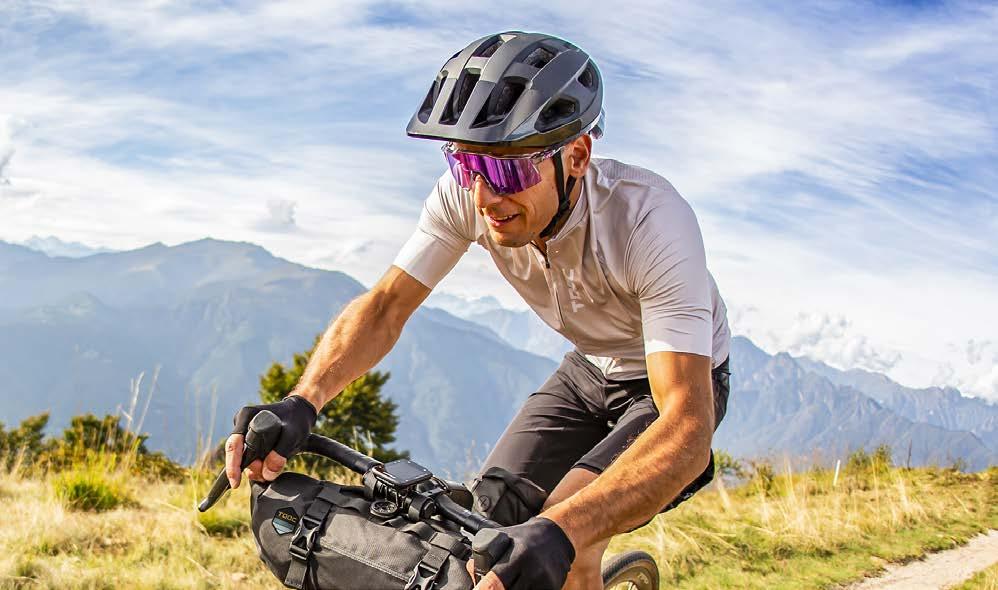
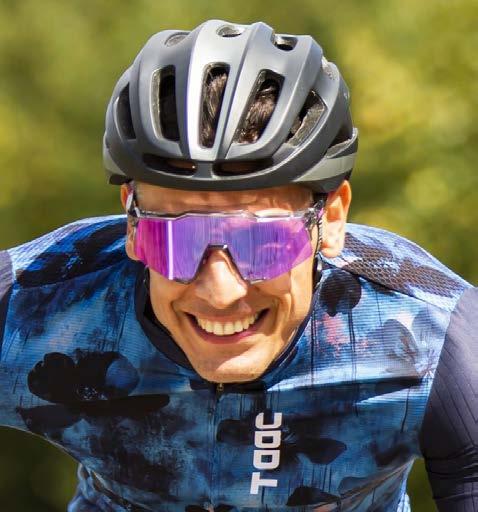
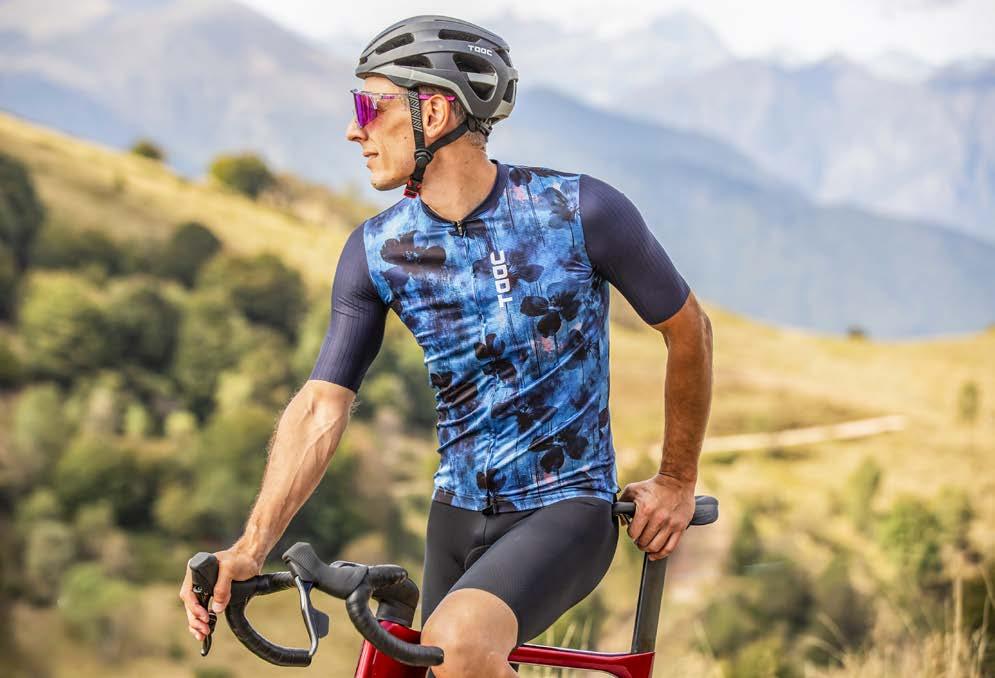
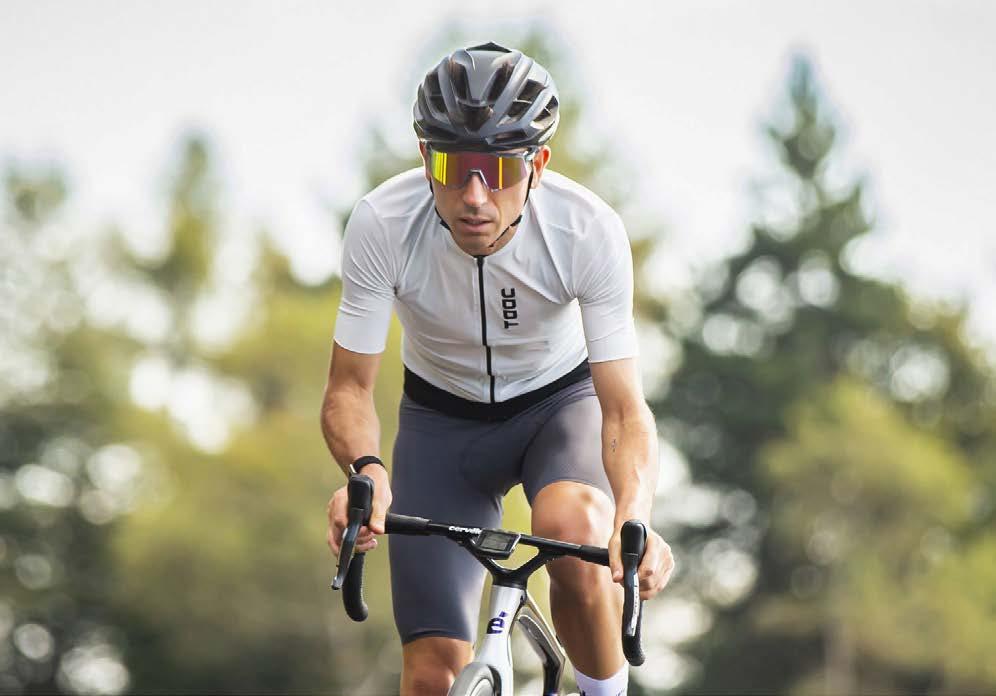
FOCUS ACCESSORIES THE PERFECT BLEND OF FUNCTIONALITY AND SAFETY
INTERVIEW
PHILIPP FERGER: NEW CEO OF EUROBIKE
FOCUS ON THE FINAL EXAM OF TAAC
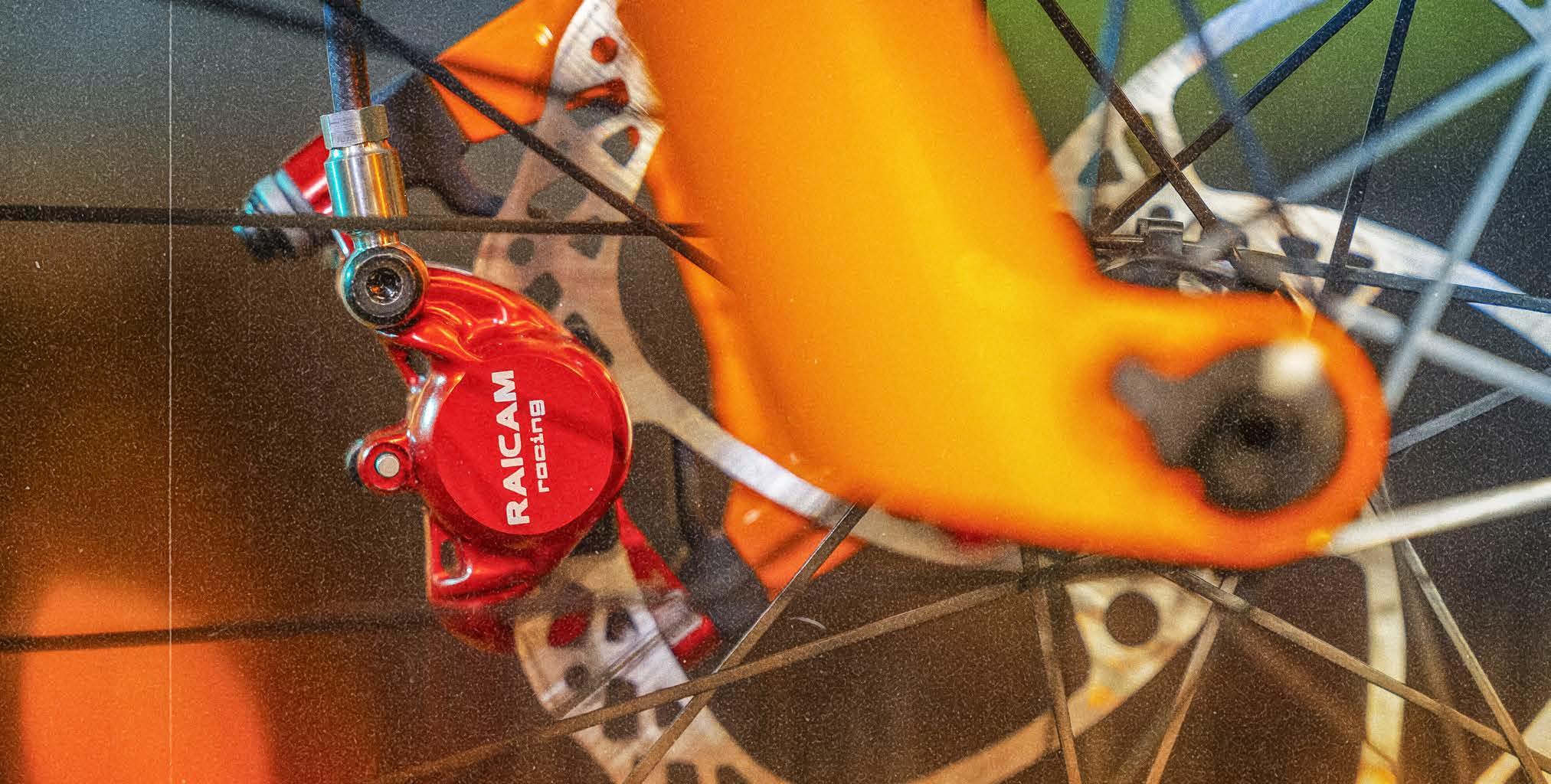
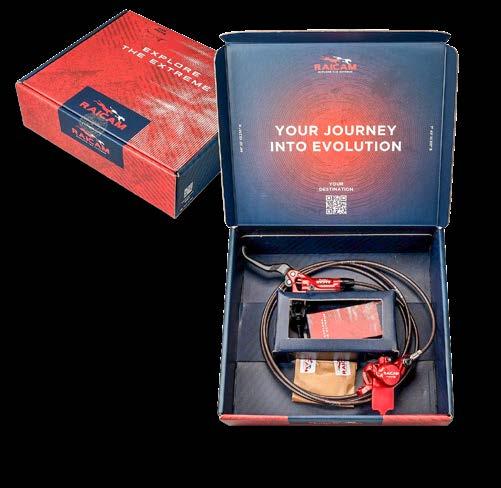
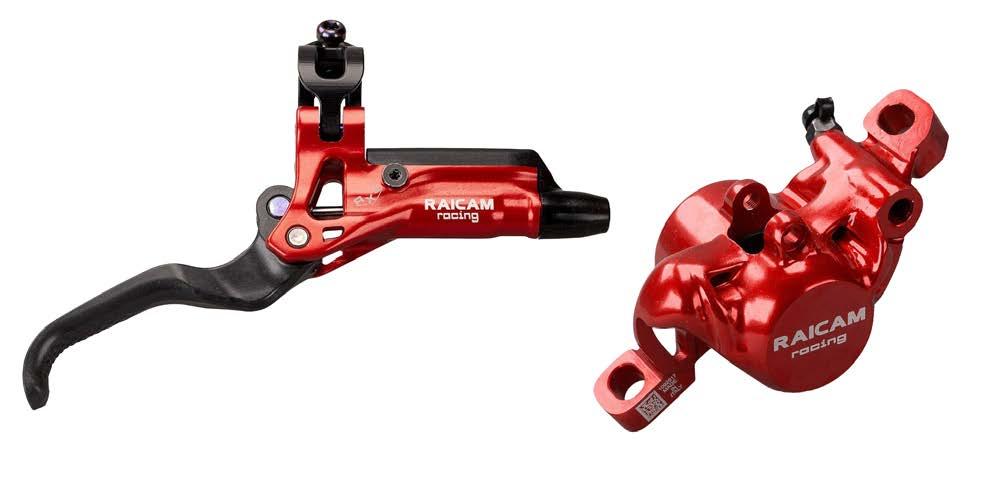
FOCUS TECH RAICAM RXC RACING: LIGHTER, MORE POWERFUL
12 VELO DE VILLE: TAILORED IDENTITY FOCUS ACCESSORIES
14 THE IDEAL MEETING OF FUNCTIONALITY AND SAFETY
18 MET, ABUS, SMITH, LAZER
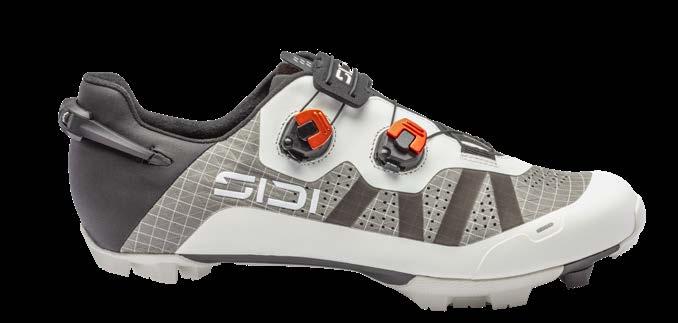
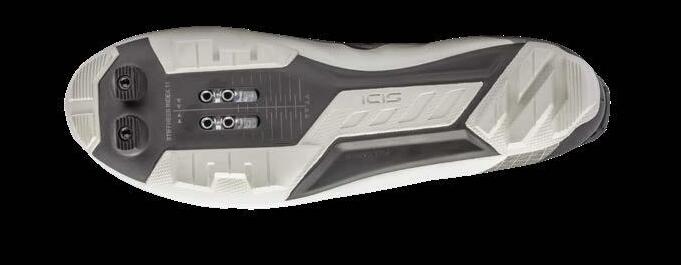
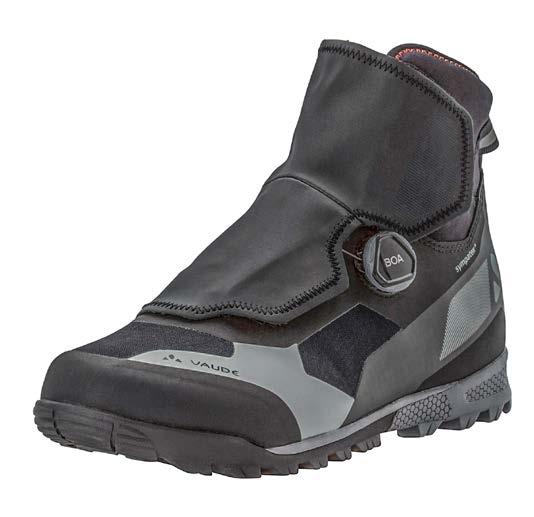
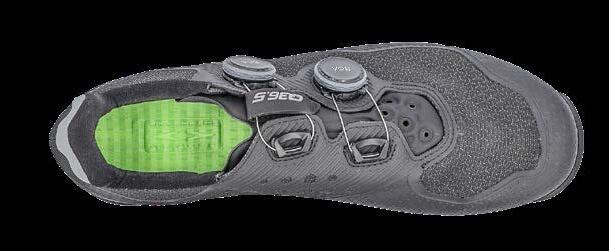
20 GAERNE, SIDI, Q36.5, VAUDE, SCOTT
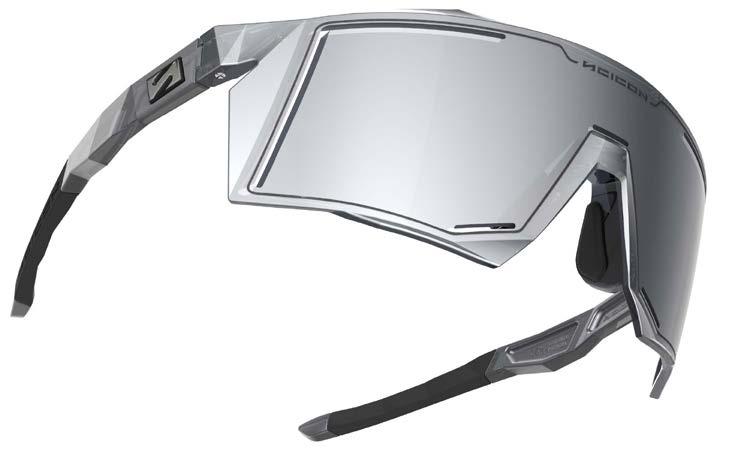
21 EVIL EYE, GIST, BLIZ, RED BULL SPECT EYEWEAR, SCICON
FOCUS ON
22 THE FINAL EXAM OF TAAC
PRODUCT
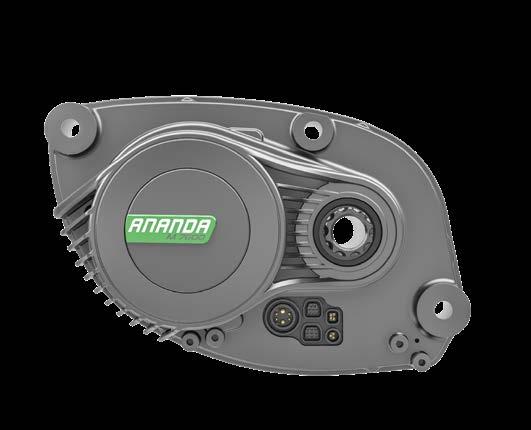
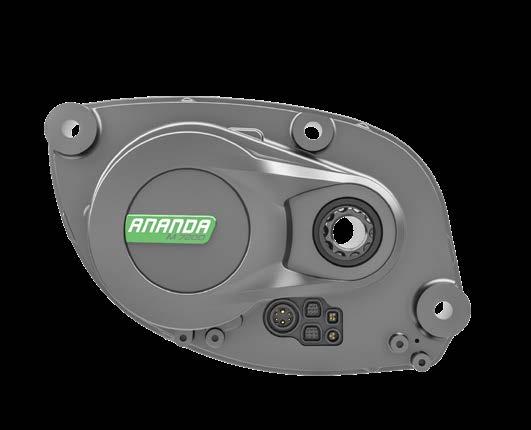
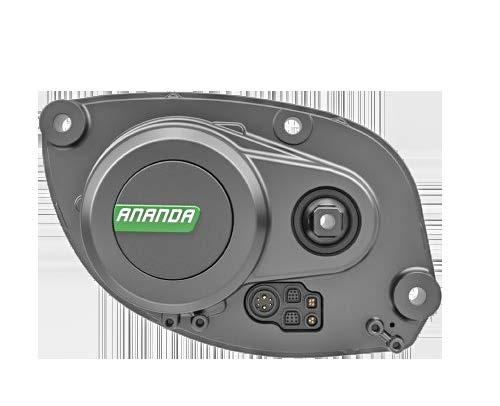
24 ANANDA: A SINGLE PLATFORM, MULTIPLE APPLICATIONS
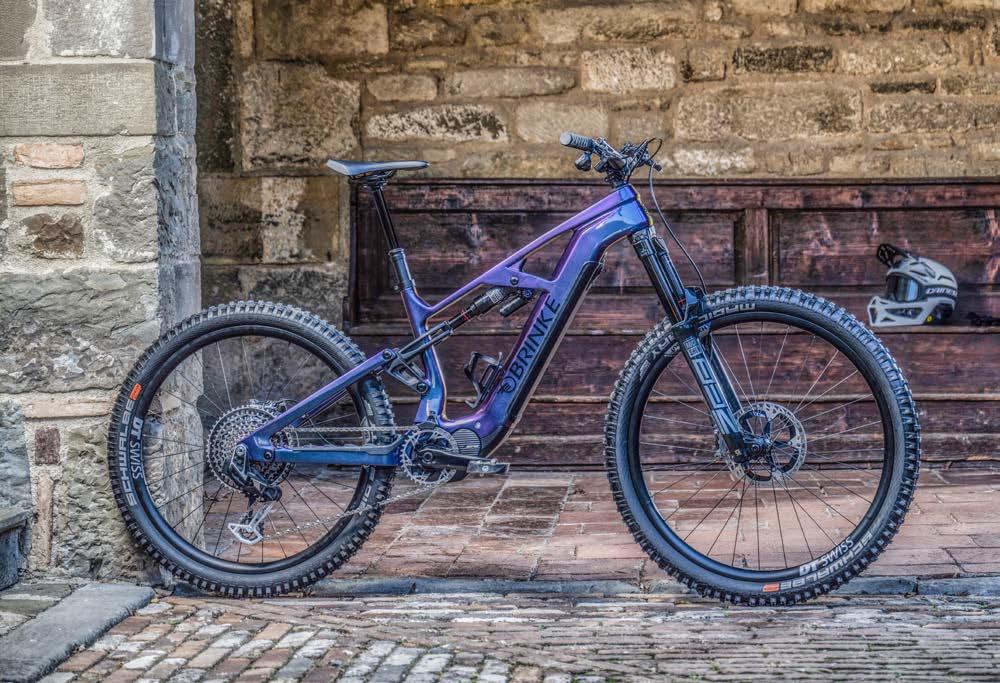
25 XXR CARBON RACE LTD BY BRINKE, BARBIERI COMPRESSOR
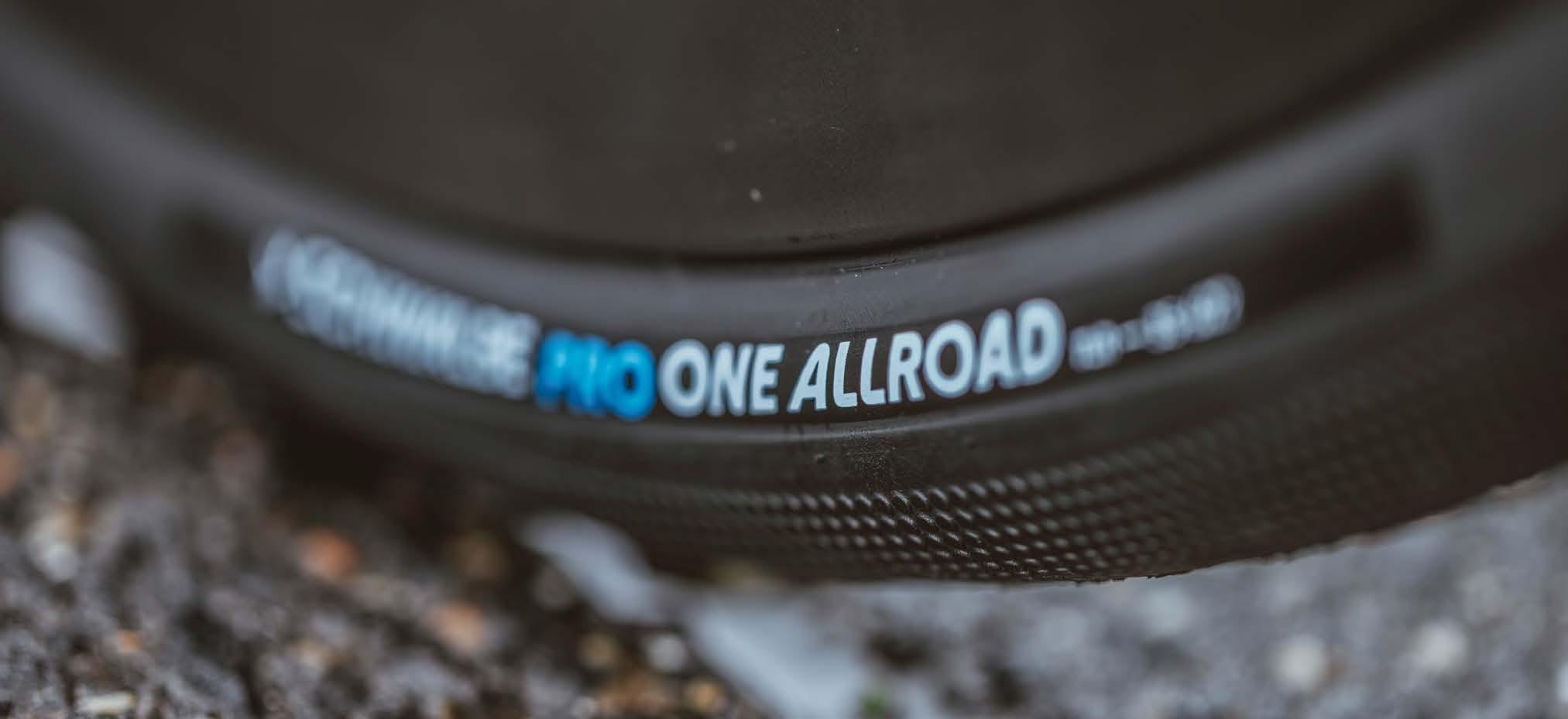
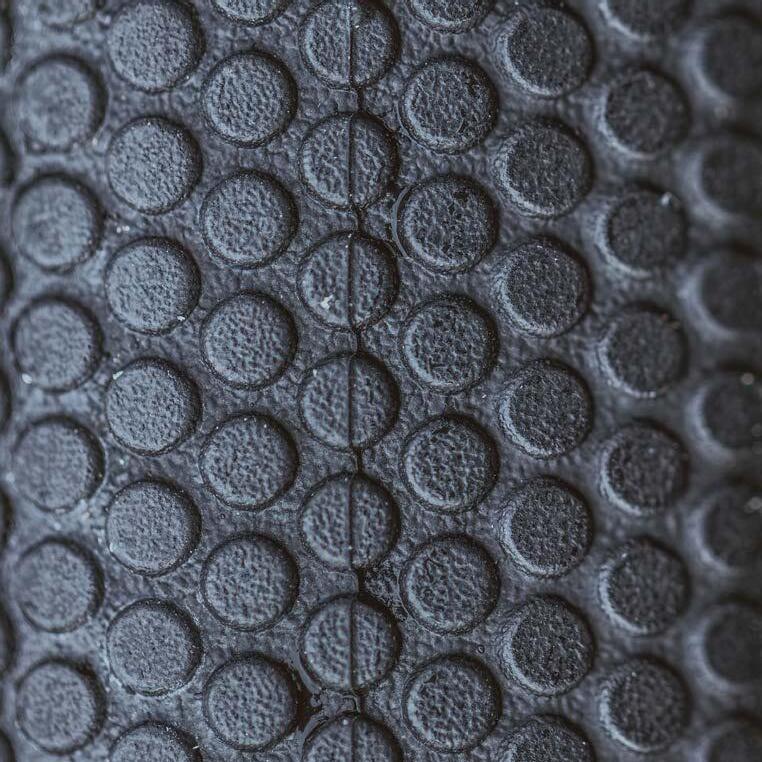
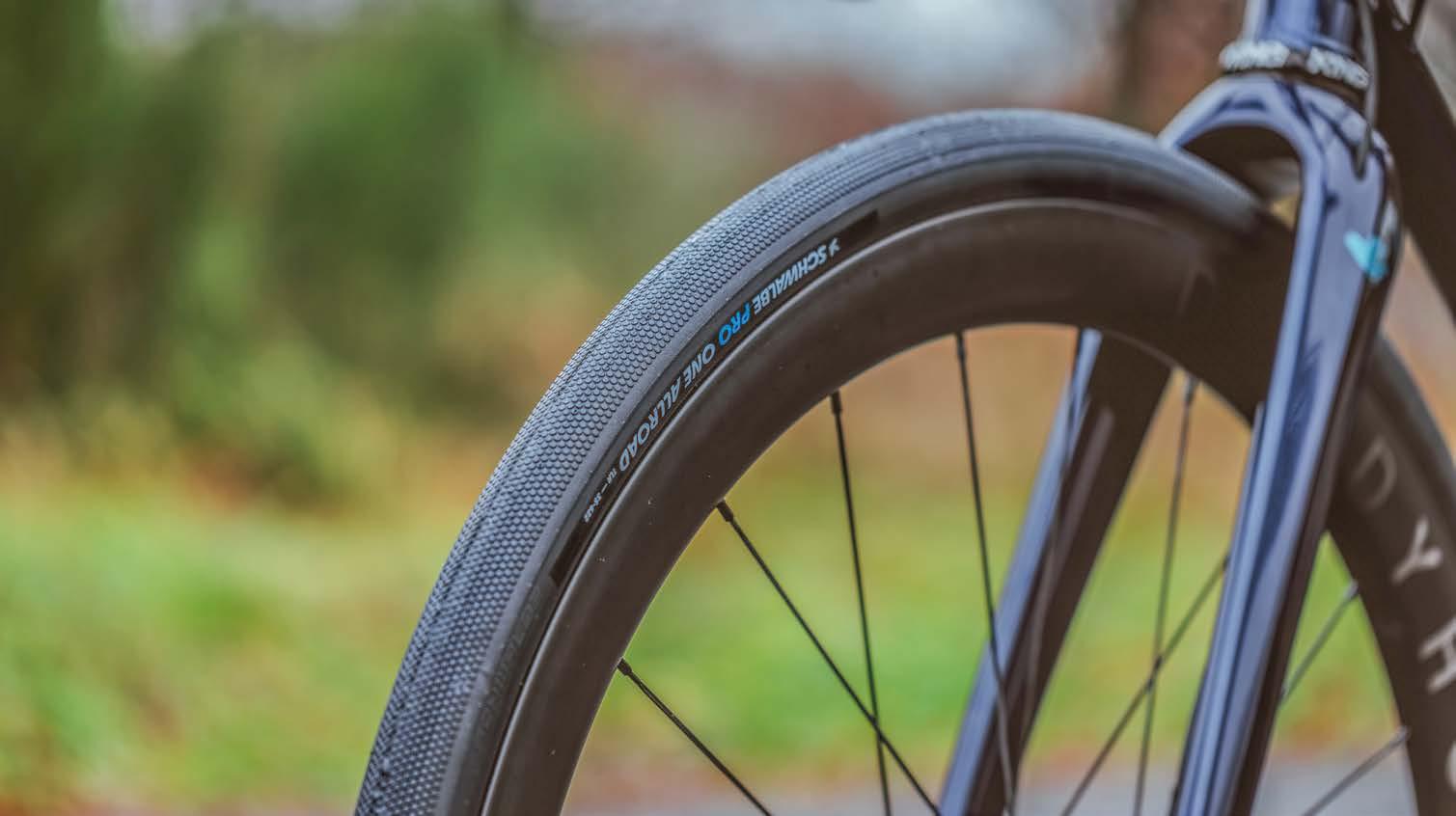
26 PRO ONE ALLROAD BY SCHWALBE
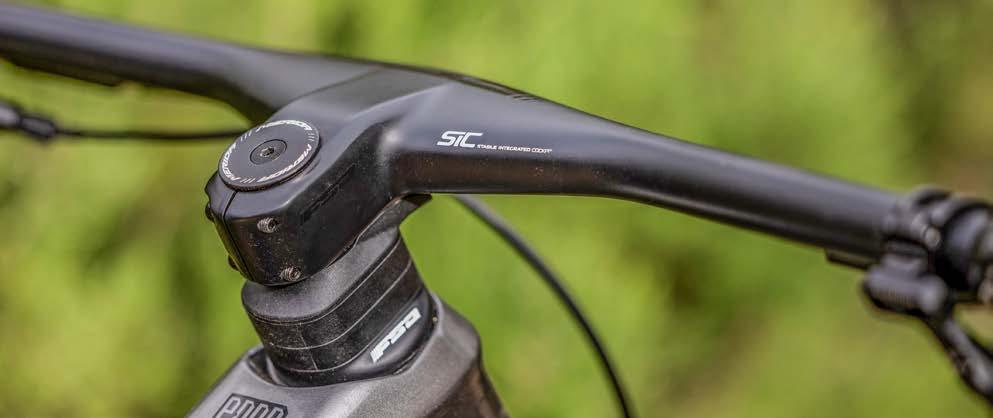
27 THE CUSTOMIZATION INDUSTRY WITH FSA
FOCUS TECH
28 RAICAM RXC RACING: LIGHTER, MORE POWERFUL
30 THE CHARGE OF THE 101: FIRST EPISODE
42 PHILIPP FERGER, NEW CEO OF EUROBIKE
COACHING
44 THE HIDDEN TREASURE THAT SHOPS IGNORE
45 DIGITAL PRODUCT PASSPORT: THE FUTURE IS TRACEABLE
DAVIDE L. BERTAGNA
davide.bertagna@mag-net.it
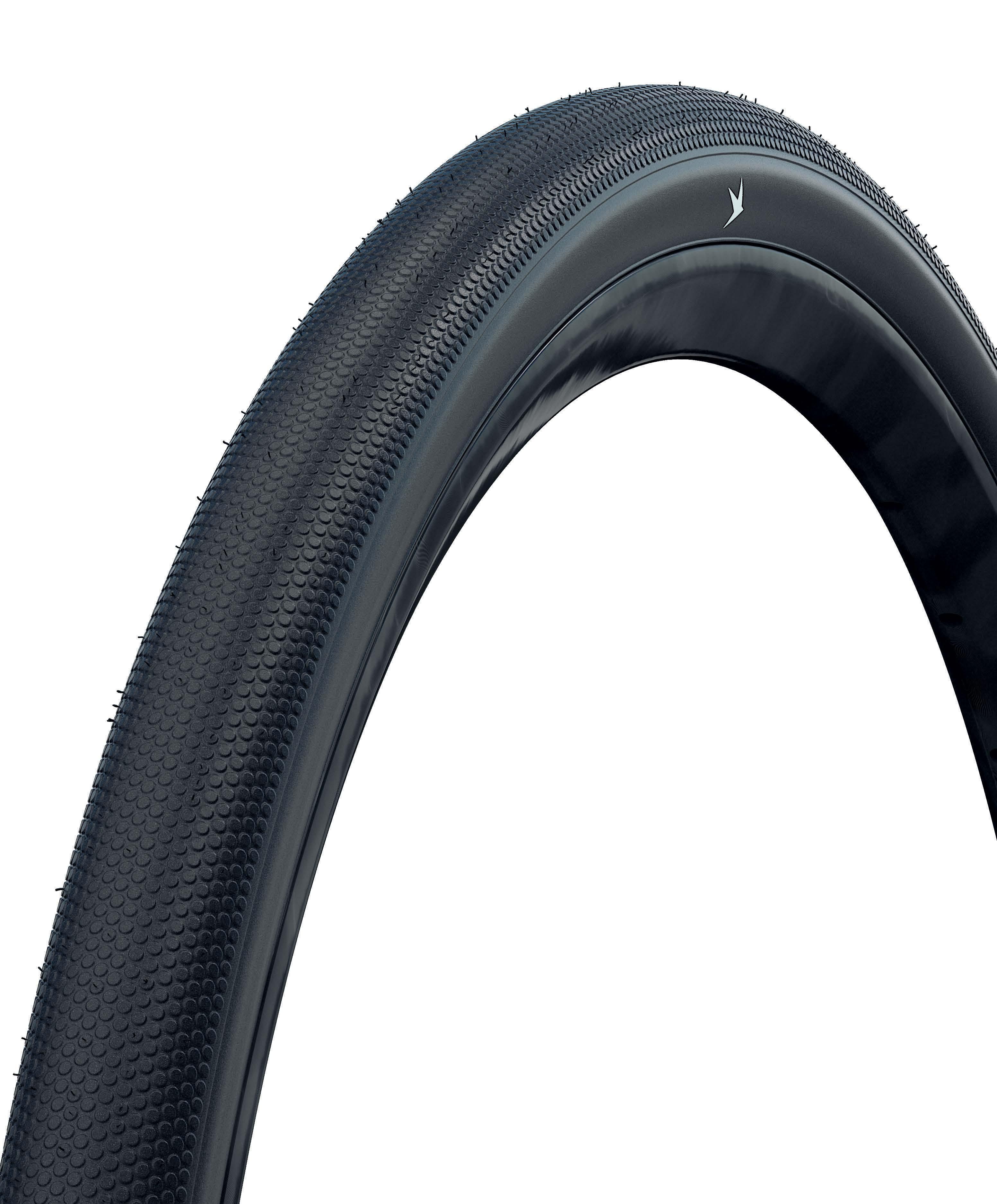
INTEGRATED SYSTEM
If we want to understand where our market is heading, perhaps we should stop for a moment looking only at sell-in and sell-out numbers and observe cities more closely. Because it is in urban policies and infrastructures that structural demand is built, the kind that makes the bike business predictable rather than episodic. This is why the return of a benchmark like the Copenhagenize Index (which we discuss in detail on pages 10-11), six years after the last edition and following a pandemic that reshaped mobility habits worldwide, is not just a ranking but an indicator of maturity. The result is clear: urban cycling is moving out of the pilot project phase and entering the stage of structured programs. Utrecht leads the ranking, Copenhagen remains a global reference, Ghent shows how political leadership can radically transform urban space. And Bologna, the only Italian city present, ranks among the top thirty, signaling that something is also happening in our country. But the most interesting data is not the ranking itself, but the gap between ambition and implementation. Leading cities are such because they have ensured political continuity, stable funding, and technical expertise. Others remain in an intermediate tier characterized by announcements and operational delays. For those operating in the bike industry, urban cycling is a fundamental topic. Where the bicycle becomes stable infrastructure, the entire ecosystem grows in a healthier, more predictable, and structural way. Where it remains episodic, the business also stays fragile.
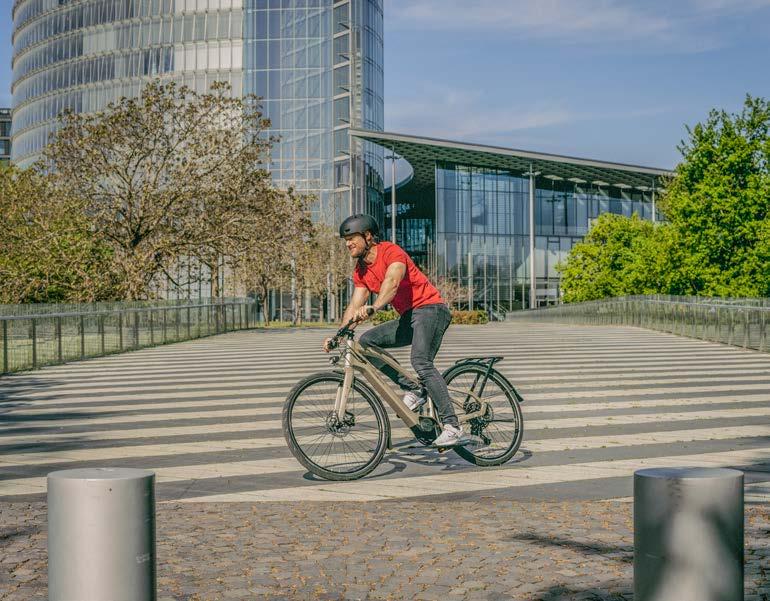
And this is where the second major theme of this issue comes into play: accessories. For years, the sector has portrayed the bicycle as a central, almost selfsufficient product: today we know this is not the case. The bike is the pinnacle of a pyramid of components and solutions that determine safety, performance, and the quality of the experience. Helmets, glasses,
and shoes are no longer just complements but an integral part of the value. Helmets have become a de facto standard among athletes. Not by imposition, but through innovation: lightness, ventilation, design, advanced protection systems. The same applies to glasses and shoes, increasingly high-performing and capable of improving efficiency and comfort. Behind these products lie research, development, positioning, and investments. Now the challenge moves to urban and commuter cycling. As cities mature, daily users will also need to evolve in their equipment choices. And this is where technology can make a difference. In the interview with Gabriele Bonetti of Abus Italia (on page 14), a key point emerges: the issue of mandatory helmet use is repeatedly discussed, especially in urban areas, where not everyone wears one yet. A mandate could represent an immediate market boost but not necessarily healthy growth. The urgency to obtain a product risks generating poorly informed choices and price tensions, without building a real culture of safety. The real challenge, probably, remains education and the natural growth of demand. In urban areas, the helmet is still perceived as an extra accessory, not as an integral part of the mobility experience, whereas in Nordic countries it is considered essential. In a market that has experienced price compressions and stock tensions (as emerges in this first episode of the longawaited The Charge of the 101), the difference will not be made by volumes alone, but by the ability to build value around the bike.
Cities are proving that cycling works when it moves from a symbolic project to a structural system. The supply chain must make the same leap: from episodic sales to an integrated strategy. Products, accessories, service, technical expertise. Not separate elements, but a single ecosystem. And only those who can manage it will be able to transform uncertainty into stable growth.
Editors: Davide L. Bertagna, Dino Bonelli, Elisa Flamini, Daniele Pansardi, Riccardo Penna, Gabriele Vazzola Art Director: Simone Comi
Editorials: Corso della Resistenza, 23 - 20821 - Meda (MB) Via Tertulliano, 68 - 20137 - Milano - Tel. 02.87245180-1-2 - Fax 02.87245182 redazione@bike4trade.it - bikefortrade.it
Year 14 - Issue 1 - 2026 - Monthly periodical
Registration at the Trib. di Milano n. 39 of ’8 February 2013 Poste Italiane SpA Postal subscription shipping Legislative Decree 353/2003 - Conv. in Law 46/2004 - Art.1 Paragraph 1 LO/MI
Registration in ROC No. 16155 of November 23, 2007
Print: Ingraph - Seregno (MB) - One copy 1.00 euros
The publisher guarantees the utmost confidentiality of the personal data in its possession. Such data will be used for subscription management and for sending commercial information.
According to Article 13 of Law No. 196/2003, data may be corrected or deleted at any time by writing to: MagNet Srl SB Data Manager: Benedetto Sironi - Corso della Resistenza, 23 - 20821 - Meda (MB) Closed on February 12, 2026
MARKET
ACCELL GROUP SELLS VAN NICHOLAS TO VELO-CE
The Accell Group has sold the Van Nicholas brand to the Italian company Velo-ce. Velo-ce is a bicycle manufacturer based in Magenta, in the province of Milan (where it has a production facility), and from now on will assume full responsibility for the production and distribution of Van Nicholas bicycles. “This acquisition marks a significant milestone in Velo-ce’s strategic expansion in the premium touring and adventure bike segment. Van Nicholas, globally recognized for its lightweight yet robust titanium frames, perfectly aligns with our philosophy based on durability and performance. The integration will focus on expanding Van Nicholas in cycle tourism and travel,” Velo-ce stated in a press release.
MANDELLI BECOMES EXCLUSIVE DISTRIBUTOR OF URSUS IN ITALY
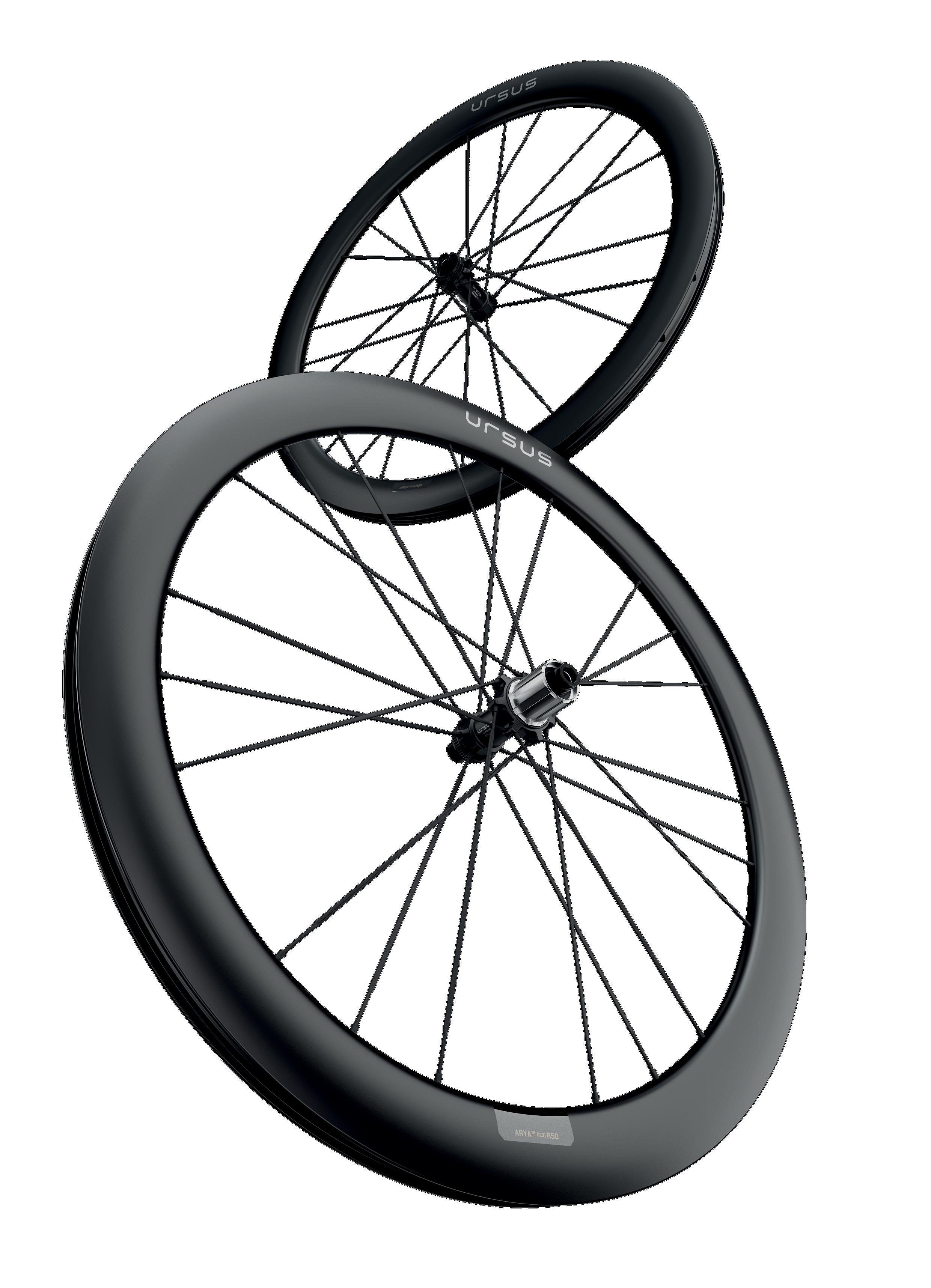
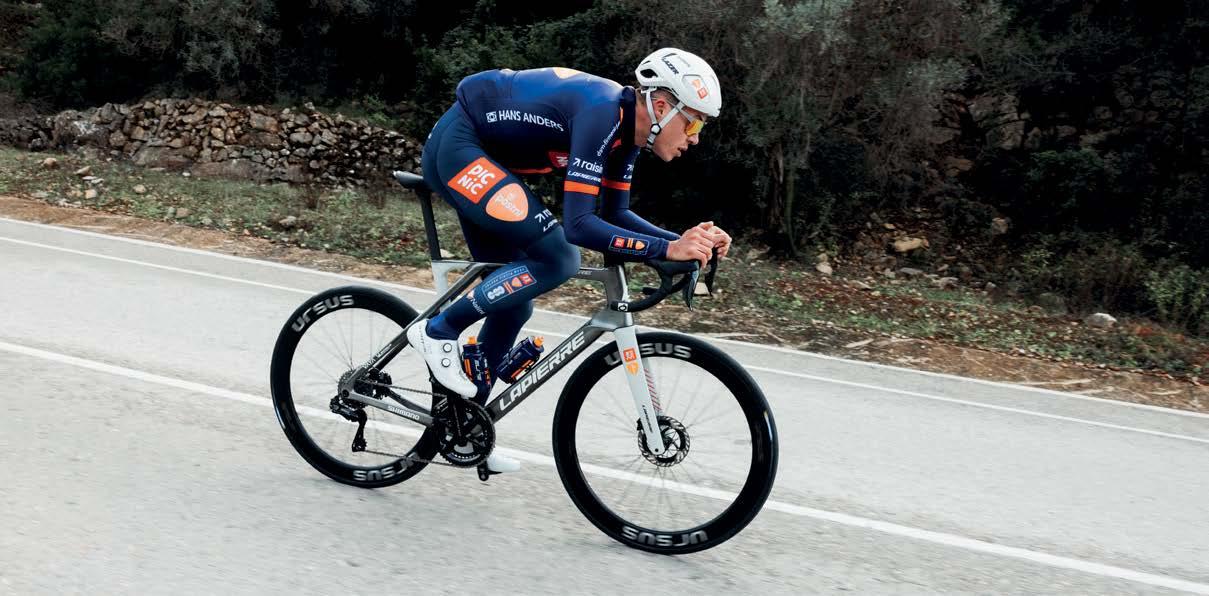
Mandelli has become the exclusive distributor in Italy for Ursus, the historic Venetian brand that has been a reference point in component design for the cycling sector since 1967. Born as a specialist in metalworking, Ursus has built over time a unique know-how where precision, reliability, and innovation make the difference. Product design and development take place in Rosà (VI), the brand’s headquarters, where research, engineering, and quality control operate in an integrated manner, while production and assembly follow strict quality standards to guarantee consistent performance over time. From 2025, Ursus will sponsor the World Tour team Picnic PostNL, confirming its top-level positioning in international competition.
HEAD GROUP ACQUIRES APPAREL BRAND LE COL
LAS HELMETS BRAND JOINS ACERBIS GROUP
Acerbis Italy has completed the acquisition of Las Helmets, marking the group’s entry into the premium helmet market for cycling, equestrian, and workplace safety. The operation represents a strategic step for diversification and acceleration of the group’s growth, strengthening technical and production skills and creating value for the Bergamo area. CEO Guido Acerbis commented: “We are proud to have successfully completed the acquisition of Waves Italia-Las Helmets. This operation accelerates our growth path and marks our entry into a new market niche. The synergy between Acerbis’ know-how and Las Helmets’ excellence in Made-in-Italy design, safety, and innovation will allow us to develop cutting-edge products.”
COROS RELIES ON NITAL FOR THE ITALIAN MARKET
Nital has announced the launch of official distribution in Italy for Coros, an international brand specializing in GPS sports watches and advanced training technologies. The agreement marks the structured entry into the Italian market of a performance-oriented range of devices already appreciated by cyclists, runners, trail runners, and endurance athletes in many European countries. Founded in 2014 and headquartered in the United States, Coros Wearables Inc. has quickly established itself in the sports wearable market thanks to a strong focus on competitive applications, technological innovation, and solutions designed for those who train and measure performance rigorously.
The Austrian group Head has acquired the cycling apparel brand Le Col from Puma Growth Partners. The operation is part of Head’ s strategy to expand its sportswear and apparel division, while the terms of the agreement have not been disclosed. “We are pleased to have successfully completed the exit from Le Col with such a solid counterpart and believe Head will be excellent for Le Col’s future,” commented Rupert West, managing director of Puma Growth Partners. Le Col was founded in 2011 by former professional cyclist Yanto Barker. The brand is known for high-performance garments made in Italy, developed through wind tunnel testing and feedback from the WorldTour.
FRASERS GROUP: AGREEMENT FOR CONTROL OF
MAXI SPORT
Frasers Group, the British holding company that owns Sports Direct, has reached an agreement to acquire a majority stake in Maxi Sport. The current shareholders (Emanuele Sala, Giovanni Sala, Ester Sala, and Giulia Sala) will retain a stake in the company and continue to be part of the management. Maxi Sport operates 18 stores across Italy, including six flagship stores. Frasers Group stated: “Maxi Sport will continue to offer Italian consumers its premium format for sporting goods, while the British group intends to explore further growth opportunities for Sports Direct in the near future.” Frasers Group CEO Michael Murray added: “I look forward to working with Emanuele, Giovanni, Ester, Giulia, and their team, combining our international experience and strong relationships with global brands with their deep local market knowledge”.
CANYON:
320 JOB CUTS BETWEEN COBLENZ AND AMSTERDAM
Canyon has announced a 20% reduction in its workforce due to recent financial results and in an attempt to carry out a financial restructuring to contain losses. The workforce will lose 320 people out of a total of 1,600, with cuts mainly affecting the Coblenz and Amsterdam offices. “After years of rapid growth, the company is now responding to a deeply changed market environment and strategically adjusting its organizational and cost structures to ensure long-term innovation and competitiveness,” Canyon said in a press release, also highlighting the need to simplify internal processes. “In cycling, you don’t win a race because of size, but because of speed, precision, and agility. We are laying the foundations to regain our operational strength and defend our position at the world’s top,” explained founder Roman Arnold Arnold.
PARTNERSHIP
MONSTER ENERGY MAIN PARTNER OF WHOOP UCI MOUNTAIN BIKE WORLD SERIES
Monster Energy becomes the main partner of the WHOOP UCI Mountain Bike World Series, taking on the role of official energy drink partner. Under the agreement, the global energy drink giant will join WBD Sports on-site at all 14 events of the circuit, helping to enhance the experience both on the field and in broadcast coverage. The partnership builds on Monster Energy’s long-standing commitment to the world of MTB, a discipline the brand has supported since its inception by backing some of the sport’s most iconic athletes, including Sam Hill, Steve Peat, and Brendan Fairclough. Chris Ball, Vice President of Cycling Events at WBD Sports, stated: “The involvement of a brand with Monster Energy’s reputation demonstrates the passion and dedication shown by our teams since we took over the organizational and promotional management of the series.”
NUNCAS SUPPORTS SOUDAL QUICK-STEP AND AG INSURANCE SOUDAL
Nuncas, an Italian company specializing in high-quality products for cleaning and fabric care, will support the riders and staff of Soudal Quick-Step and AG Insurance Soudal throughout the season. Through this partnership, Nuncas will provide tailored solutions, assisting the teams in maintaining apparel according to the highest standards of hygiene and durability. The Italian brand has a long-standing connection with sports, having developed its Sportswear product line nearly thirty years ago. Luca Manzoni, CEO of Nuncas, stated: “This partnership with Soudal Quick-Step and AG Insurance Soudal represents a natural meeting of passion, values, and dedication. As a sports enthusiast, I recognize in cycling the same principles that guide Nuncas every day: commitment, precision, and pursuit of excellence. Just as athletes work to achieve maximum results, we develop products that guarantee high and lasting performance.”
CAMPAGNOLO CONFIRMS SUPPORT TO TEAM COFIDIS FOR THE 2026 SEASON
With the start of the new cycling season, Campagnolo has renewed its technical support for Team Cofidis, confirming a strategic collaboration focused on performance, innovation, and technological research. 2026 represents a new phase of development and consolidation for the Italian brand’s Super Record 13, officially launched in 2025 as the world’s first 2x13 road platform. Already during last season, a selection of Team Cofidis athletes, including those competing in the Tour de France, used the new system, actively contributing to the final stages of development and validation in competition. “This collaboration is a concrete example of how continuous dialogue between company and athletes allows the development of increasingly advanced platforms, capable of delivering real benefits to both professionals and enthusiasts,” Campagnolo commented.
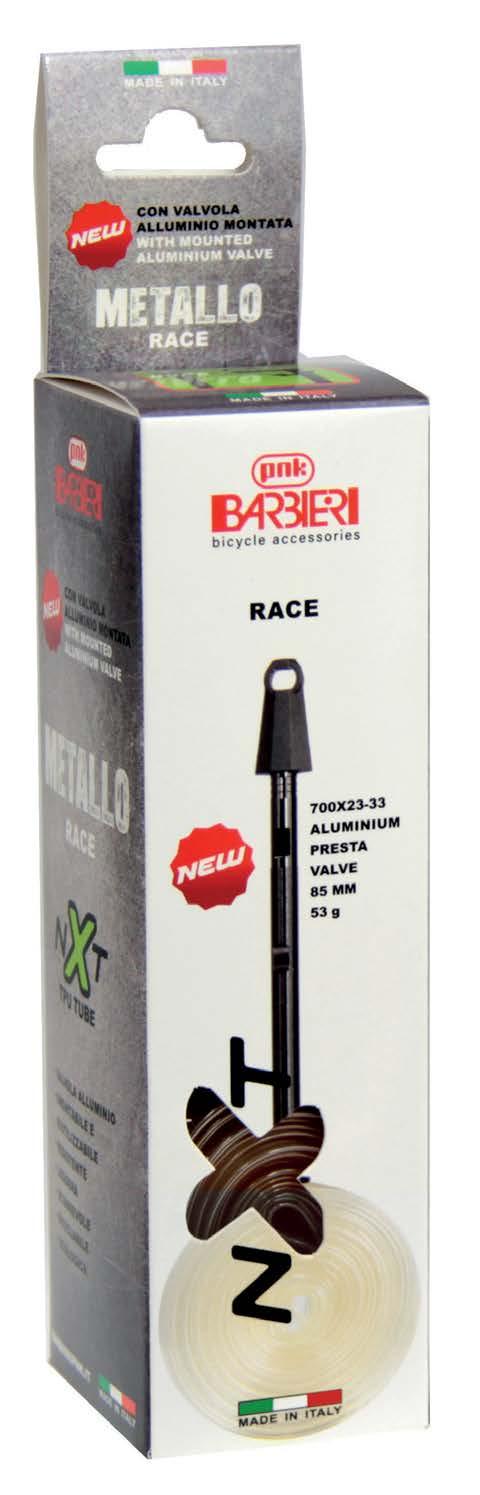
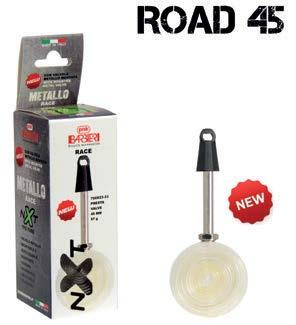
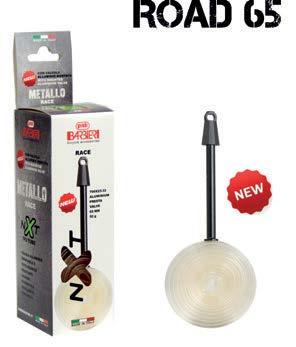
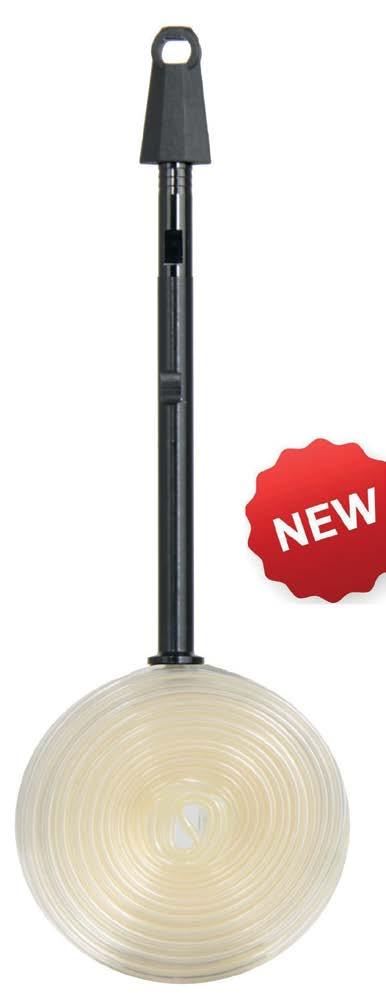
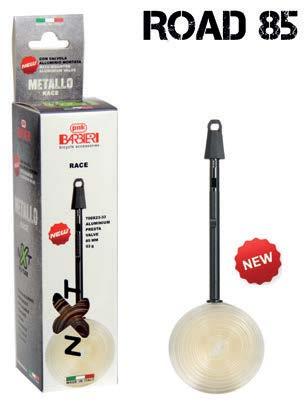
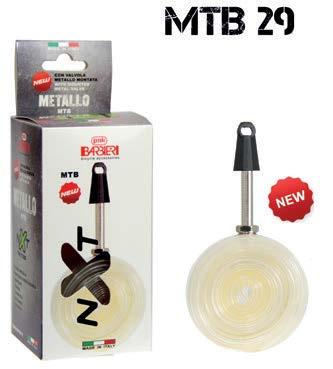
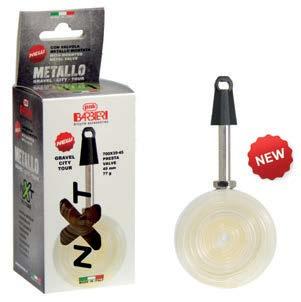
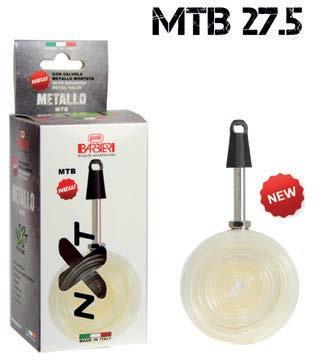
LE NUOVE NXT METALLO
MUC-OFF ANNOUNCES
SVEN MACK AS CHIEF STRATEGY OFFICER
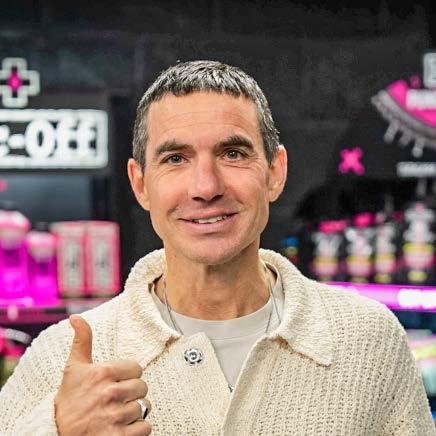
Muc-Off has announced the appointment of Sven Mack as its new Chief Strategy Officer. The appointment represents the natural evolution of a professional collaboration that has lasted nearly twenty years. “Sven knows Muc-Off in depth. We have worked closely for many years through Sports Nut and hostettler, which allowed him to develop a deep understanding of our business and the markets in which we operate. He has played a key role in developing Muc-Off in the DACH region,” said Alex Trimnell, CEO of Muc-Off. “Having worked with Muc-Off for almost two decades as a distribution partner, I have been able to observe firsthand how the brand has revolutionized the bike care market, establishing itself as a global leader,” commented Sven Mack.
MARCEL KORNER APPOINTED CEO OF MYSTROMER GROUP
myStromer AG, the manufacturer of Stromer and Desiknio, has announced the appointment of Marcel Korner as Group Chief Executive Officer, effective May 1, 2026. Korner, who will join the board of directors of myStromer AG, has gained experience across sectors including sports, consumer goods, and media. He currently serves as CEO of TSG International AG, and previously spent nearly ten years at Amer Sports, leading global D2C operations for Salomon, Atomic, and Armada. Earlier, he worked for five years as Head of Strategy & Business Development at Ringier and Ringier Axel Springer Media. “My goal will be to further strengthen the brands in the premium segment, maintain our technological leadership, and successfully lead the next phase of growth,” Korner said.
A group of private investors led by former Crankbrothers CEO Gaspare Licata has acquired the majority stake in Extreme Racing Shox (EXT), a renowned Italian company specializing in suspension systems for MTB and motorsport. The passing of founder and former technical director Franco Fratton in April 2025 marked a significant moment of transition for the company. Under Fratton’s leadership, EXT built a strong reputation based on technological innovation and high-quality manufacturing. In this context, former owner Katia Persico recognized the need to secure the company’s future through new investments and experienced leadership. Given his experience and long-standing friendship with the Fratton family, Licata saw the opportunity to lead EXT into the next phase: growing the brand while preserving the craftsmanship and authenticity that have always characterized the company
EVENTS
FSA SUPPORTS BIKE FESTIVAL IN RIVA DEL GARDA UNTIL 2028
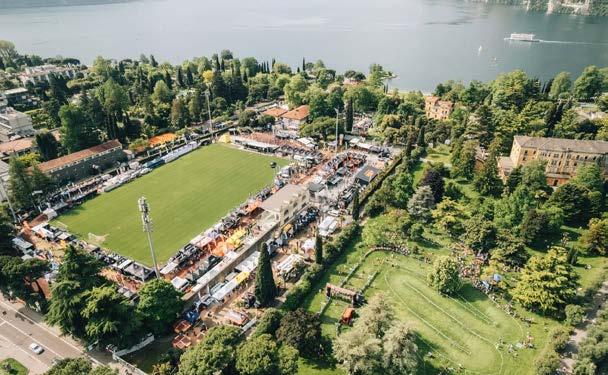
FSA will be the title sponsor of the Bike Festival in Riva del Garda for another three years, until 2028 inclusive, strengthening a collaboration that began in 2018 and has grown edition after edition. Today, the event is a festival capable of engaging everyone, from professionals to amateurs, families, and young riders taking their first steps into the world of cycling. “Since 2018, this project has grown alongside us. The FSA Bike Festival represents exactly the type of event we believe in: open, international, and constantly evolving. Renewing this partnership means continuing to build, together with Garda Trentino, an increasingly engaging and accessible experience for the entire cycling community,” said Giorgio Marra, Project Manager at FSA.
NORTHWAVE: MULTI-YEAR AGREEMENT WITH THE TRAKA
Northwave has signed a multi-year partnership with The Traka, one of the most recognized and attended gravel competitions in the world. Born in Girona in 2019 and now part of the Gravel Earth Series, The Traka has quickly become a symbol of the European gravel scene: an event capable of attracting thousands of riders from over 50 countries. The 2026 edition will take place from April 30 to May 3: registration is already open, and more than 3,000 athletes from over 60 countries are expected once again this year. “Gravel has become much more than a discipline: it is a cultural language, and Girona is its natural capital,” explained Thomas Brandolini, General Manager of Northwave. “For this reason, it would be reductive to think of The Traka simply as a race or sporting event: it is a space where performance, travel, and community coexist, becoming a global reference point. Entering this ecosystem means Northwave can further strengthen its presence in a sector where we continue to grow.”
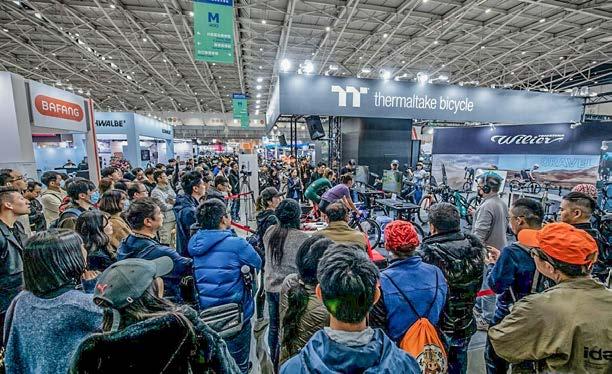
TAIPEI CYCLE SHOW 2026: 900 EXHIBITORS AND 3,450 BOOTHS EXPECTED
The Taipei Cycle Show will take place from March 25 to 28, 2026, at the Nangang Exhibition Centre, consolidating its status as one of the leading international trade fairs in the sector. The 2026 edition will attract over 900 exhibitors in 3,450 booths. Its global reach is highlighted by 200 international exhibitors from 30 countries. The 2026 edition, themed “Cycling to Wellness,” will revolve around four main topics: “Cycling Innovation,” showcasing new products; “Riding Passion,” represented by the Cycling Lifestyle Area, connecting the technical industry to consumer culture; and finally, “Supply Chain” and “Sustainability,” emphasizing the fair’s renewed focus on the future of the sector.
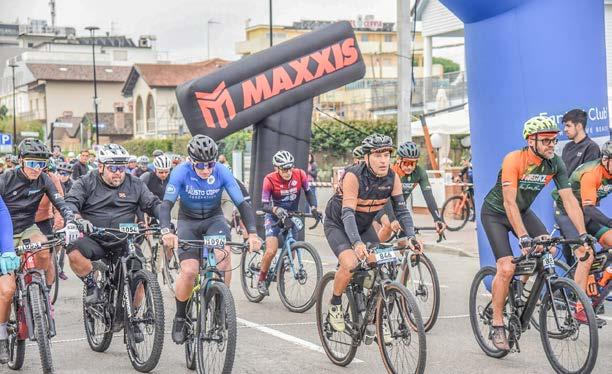
CIRCUITO GRAVEL MAXXIS: SECOND EDITION CONFIRMED FOR THIS YEAR
After the success of its debut in 2025, which saw over 5,000 cyclists participate, the Maxxis Gravel Circuit is preparing to return in 2026 with a renewed format and an even richer calendar. The initiative, promoted by Ciclo Promo Components, the exclusive distributor of Maxxis in Italy, was one of the most appreciated novelties of last season. Following the successful debut, the circuit is confirmed with a renewed calendar, new collaborations, and an even more engaging format. The second edition will maintain an open and inclusive formula: no cumulative ranking or merit classification, but valuable prizes for everyone participating in at least three of the eight scheduled events. Furthermore, the 2026 calendar confirms the choice of locations with significant cycle tourism relevance, favoring gravel roads. The circuit will cross regions historically linked to cycling, including Emilia-Romagna, Triveneto, Lombardy, Tuscany, and Marche.
GASPARE LICATA TAKES THE HELM AT EXTREME RACING SHOX
SvenMack
GaspareLicata
MarcelKorner
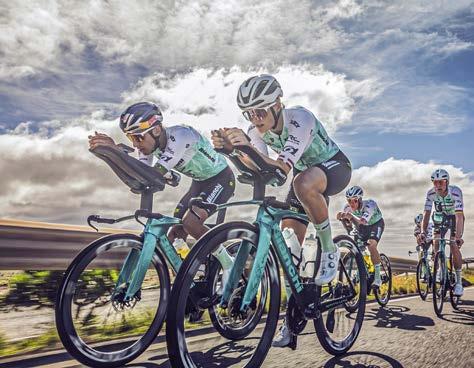
BIANCHI PRO TRIATHLON TEAM AND ALÉ TOGETHER UNTIL 2027
After two seasons together, Alé renews the partnership for 2026 and 2027 with Bianchi Pro Triathlon. For the next two seasons, the Verona-based brand will supply technical race apparel and skinsuits to the six team members: Daisy Davies and Cameron Main (Great Britain), Finn Grosse-Freese (Germany), Miguel Hidalgo (Brazil), Antonio Benito López (Spain), Laura Madsen (Denmark).
“The renewal of the partnership represents for us the natural evolution of a project built on shared values such as performance, innovation, and international vision. The team’s new identity and the entry of Bianchi as main sponsor give further strength to a squad that perfectly embodies our vision of high-level sport,” commented Alessia Piccolo, CEO of APG and Alé.
EF PRO CYCLING CHOOSES ASSOS AS TECHNICAL PARTNER
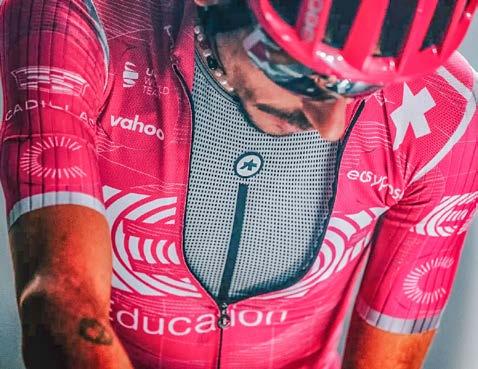
EF Pro Cycling has officially announced Assos as its new technical partner with a multiyear agreement. After being linked to Rapha for seven years, the British team will now rely on the Swiss company, which will outfit the men’s, women’s, and development teams. The announcement came together with the unveiling of EF Pro Cycling’s new kit for the 2026 season, maintaining the pink color that distinguishes the team’s main sponsor.
“This partnership represents an alignment of values. EF Pro Cycling is known for pushing boundaries, both in performance and culture, and this reflects Assos’ own pursuit of innovation. Together, we will challenge conventions, test limits, and create apparel capable of delivering real advantages in the most demanding racing environments,” stated Assos CEO Edwin Navez.
PARTNERSHIP
CAMELBAK AND VISMA | LEASE A BIKE ANNOUNCE A LONG-TERM PARTNERSHIP
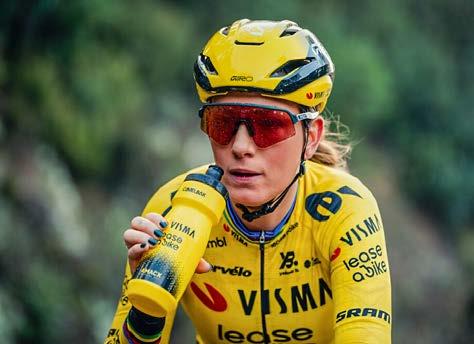
The American company CamelBak has announced a multi-year partnership with Team Visma | Lease a Bike, one of the most successful teams in professional cycling. Through this agreement, the U.S. brand becomes the exclusive supplier of performance and lifestyle bottles for race and training programs. Feedback gathered during WorldTour races will guide the development of CamelBak products, with the goal of providing professionals and amateurs with lighter, more aerodynamic bottles designed for fast and effective hydration.
“This partnership goes beyond traditional sponsorship,” explained Mikey Rangel, Senior Director of Global Marketing at CamelBak & Revelyst Adventure Sports. “Working alongside one of the most innovative organizations in professional cycling allows us to accelerate innovation and enhance the performance of our products.”
COPENHAGENIZE INDEX URBAN CYCLING COMPARED
The 2025 edition of the study explores how cities are trying to transform streets to be (also) bike-friendly. The analysis focuses on winning strategies and virtuous examples. In this context, investment in infrastructure, integrated planning, and political support once again prove decisive
Davide L. Bertagna
The Copenhagenize Index is a benchmark that measures cities’ progress in making urban cycling safe and accessible. Six years after the last edition and following a pandemic that reshaped daily habits, the study returns with new data collected globally. New questions emerge: which municipalities are truly investing in transforming streets in favor of cyclists? And which have fallen behind? Out of 150 pre-selected cities, 100 were evaluated across 44 nations, creating a unique global assessment that includes urban centers from every continent. Overall, the study highlights a growing maturity in cycling policies, with a shift from pilot projects to structured, long-term programs embedded within broader sustainable mobility strategies. However, the gap between ambition and implementation remains significant: funding stability, political continuity, and technical capacity continue to be decisive factors distinguishing leading cities from those in the mid-tier.
The 2025 edition marks a significant methodological evolution. Drawing on over a decade of comparative research (the first edition dates back to 2011), the Index adopts a renewed, data-driven model combining quantitative and qualitative indicators. The Copenhagenize Index thus becomes not only a ranking, but also a standardized database available to public administrations, researchers, and industry stakeholders. The study does not merely rank cities but helps to understand the dynamics behind the scores, which result from the interaction of complementary pillars representing the entire cycling ecosystem. The methodology is based on 13 indicators grouped into three macroareas.
• Safe and connected infrastructure: cycling infrastructure, parking, traffic, and safety.
• Usage and adoption: growth in cycling modal share, trips made by women, bike sharing, cargo bikes.
• Policies and support: political com -
mitment, advocacy, overall image of cycling, urban planning. The international ranking brings together cities with very different population densities, climates, and economies. What clearly emerges from the Index is that climate alone does not determine the “cycling share.” From the tropical conditions of Singapore and Dubai to the harsh winters of Helsinki, Québec City, and Minneapolis, all demonstrate that two wheels can thrive anywhere and contribute concretely to the fight against climate change. The decisive factor remains continuous investment, supported by effective and cross-sector governance. Cities that treat cycling as an integrated system achieve more solid and lasting results.
CONTINENTS COMPARED
North America
North American cities show two opposing dynamics. In Canada, there is positive and steady momentum, driven by significant investments in cycling infrastructure, particularly in the expansion of large-scale urban networks. These measures have supported strong usage levels despite harsh winter conditions, signaling a cultural shift toward everyday cycling. In the United States, however, many prepandemic gains have faded: the spread of remote work and political changes have reduced investments, especially in infrastructure, resulting in a decline in modal share. Nevertheless, a widespread network of local organizations and activists remains active in promoting a culture of cycling.
Latin America
Cycling policies in Latin American cities are becoming increasingly institutionalized, shifting from isolated interventions to structured strategies embedded in broader urban and climate agendas. This process is particularly relevant in areas characterized by rapid urbanization. Medium- and smallsized cities tend to achieve better results thanks to greater decision-making agility and faster, more visible impacts. Large metropolitan areas face more complex challenges related to territorial scale. Prospects remain positive, but momentum must be maintained: for many cities, the next step is to turn today’s policies into lasting action.
Europe
Copenhagen
is the city with the highest density of cycling infrastructure in the world 52 km on 100 of road
European cities continue to stand out for the completeness and consistency of their cycling policies. Extensive, safe, and connected networks translate into high levels of use, supported by quality services such as secure parking and bike-sharing systems integrated with public transport, particularly rail. Compact urban forms, often of historical origin, naturally encourage short-distance trips by bike. This is complemented by a strong emphasis on evidence-based policies: systematic data collection and continuous updates enable measurable and adaptive progress.
Africa
In African cities, scores related to policies and institutional support tend to exceed those linked to infrastructure and usage, a configuration typical of the early stages of cycling development. In many contexts, the bicycle remains a pragmatic and economical means of transport, with usage levels often prece-
ding the construction of dedicated infrastructure. The main challenges concern creating safe and continuous networks and accessing stable funding. Safety remains a central concern, as existing infrastructure is often shared with motorized two-wheelers. However, this phase also represents an opportunity: integrating data collection systems from the outset can foster more structured medium- to long-term development.
Asia & Oceania
Asia and Oceania present highly diverse contexts. Cities in New Zealand emerge as top performers; however, recent political changes and budget constraints have introduced uncertainty regarding the continuity of infrastructure investments. In Asia, Japanese cities display a mature and consolidated cycling culture, with modal shares stable over time. Policies prioritize safety, public health, and inclusion, recognizing the bicycle as an everyday means of transport.
Looking more closely at the 2025 edition of the Copenhagenize Index, Utrecht ranks first. A compact, human-scale city, it demonstrates how coherent urban strategies can generate significant impact: with nearly one-third of trips made by bike, cycling is fully integrated into urban planning. In second place is Copenhagen, which continues to represent a global benchmark thanks to its extensive network and consistent investments. In third place is Ghent, confirmed as Belgium’s most bike-friendly city and an international case study. Thanks to decisive political leadership, its cir-
EU Netherlands U Utrecht 1 71,1 67,1 64,4 79,2
EU Denmark C Copenhagen 2 70,8 73,8 65,2 76,6
EU Belgium G Ghent 3 67,6 59,2 66,1 83,1
EU Netherlands A Amsterdam 4 66,6 68,7 66,5 62,4
EU France P Paris 5 65,0 70,8 73,1 56,4
EU Finland H Helsinki 6 64,9 60,2 58,3 80,3
EU Germany M Münster 7 64,7 56,2 61,8 80,3
EU Belgium A Antwerp 8 64,4 51,2 75,4 63,9
EU France B Bordeaux 9 62,9 53,7 69,7 65,1
EU France N Nantes 10 62,8 55,3 65,2 68,4
EU Germany B Bonn 11 61,4 50,1 69,9 64,6
EU Netherlands T The Hague 12 61,0 55,8 62,3 65,6
EU France S Strasbourg 13 60,3 54,2 56,3 73,0
EU France L Lyon 14 58,9 53,4 52,2 77,0
NA Canada M Montréal 15 58,3 49,2 60,1 70,5
EU Sweden M Malmö 16 57,7 50,9 63,5 59,5
EU Germany M Munich 17 57,6 54,1 57,5 57,8
EU Norway O Oslo 18 57,2 45,2 50,6 76,3
EU Austria V Vienna 19 56,7 55,1 55,0 66,7
EU Switzerland B Bern 20 56,4 43,2 64,4 61,2
EU Austria G Graz 21 55,8 49,1 52,7 71,6
EU Switzerland Z Zurich 22 55,7 45,3 48,0 74,2
EU Netherlands R Rotterdam 23 55,1 50,6 56,8 54,8
EU Slovenia L Ljubljana 24 54,6 51,8 55,9 65,3
culation plan has transformed car-oriented streets into more livable urban spaces, making cycling safe and intuitive for all ages. An honorable mention goes to Bologna, which enters the Copenhagenize Index for the first time (the only Italian city), ranking among the top 30. The capital of Emilia-Romagna positions itself as a national reference point, thanks to a growing network of protected infrastructure and a strategy centered on calmer livable streets.
EU Sweden S
EU Poland W Wroclaw
NA Canada Q Québec
EU Italy B Bologna 25 54,4 49,1 56,9 66,7
TOP CITIES IN THE 2025 RANKING
TAILORED IDENTITY
For Velo de Ville, every bike is a unique product that responds to people’s wishes. Personalization and craftsmanship have made the German company a successful model, 60 years after its foundation
Daniele Pansardi
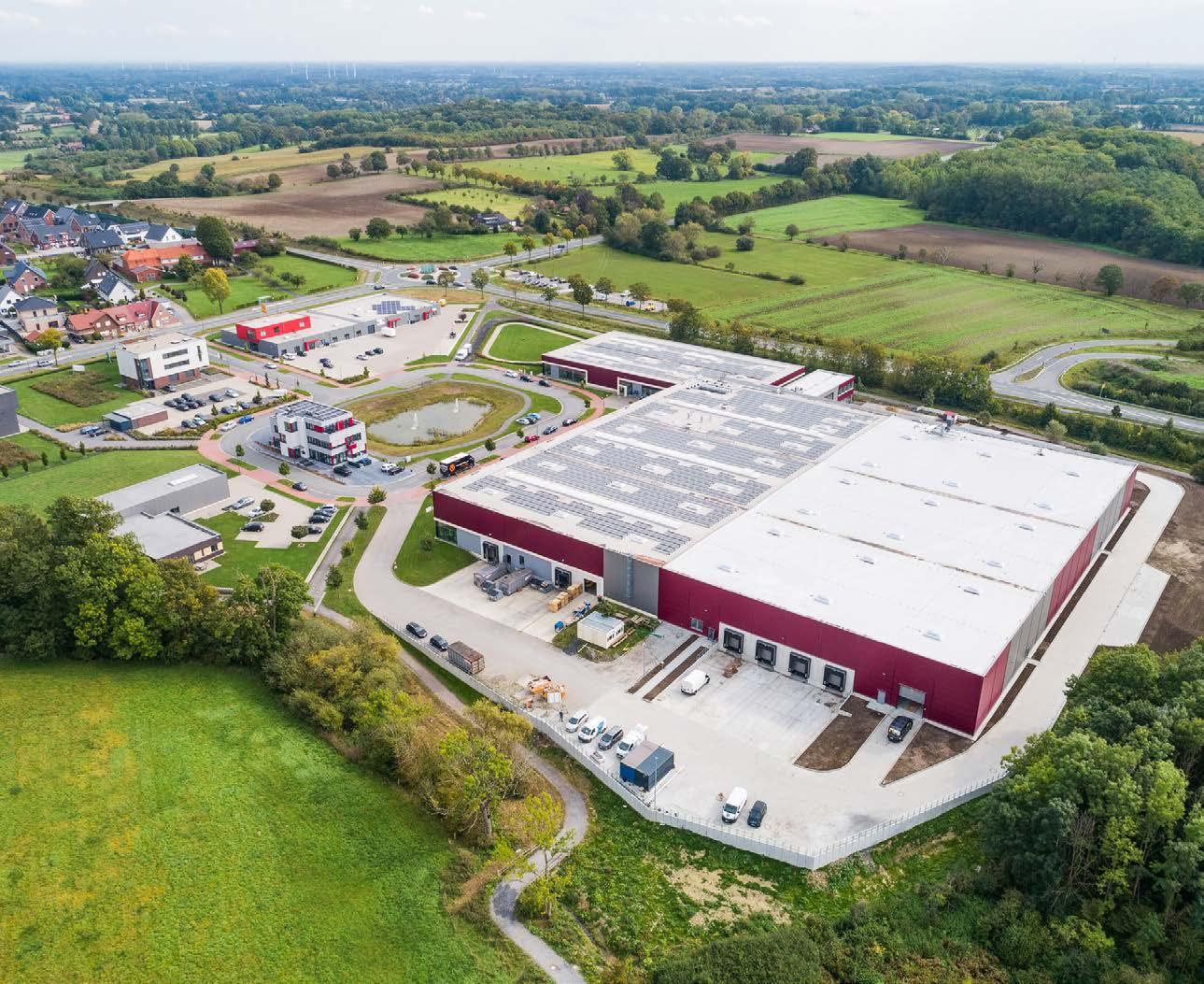
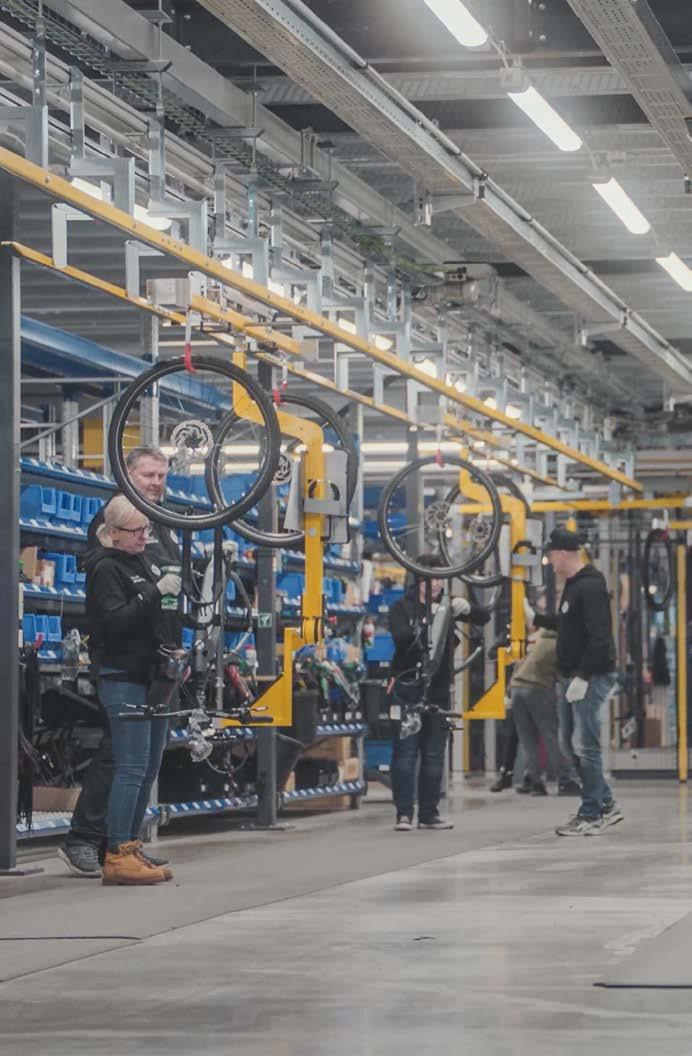
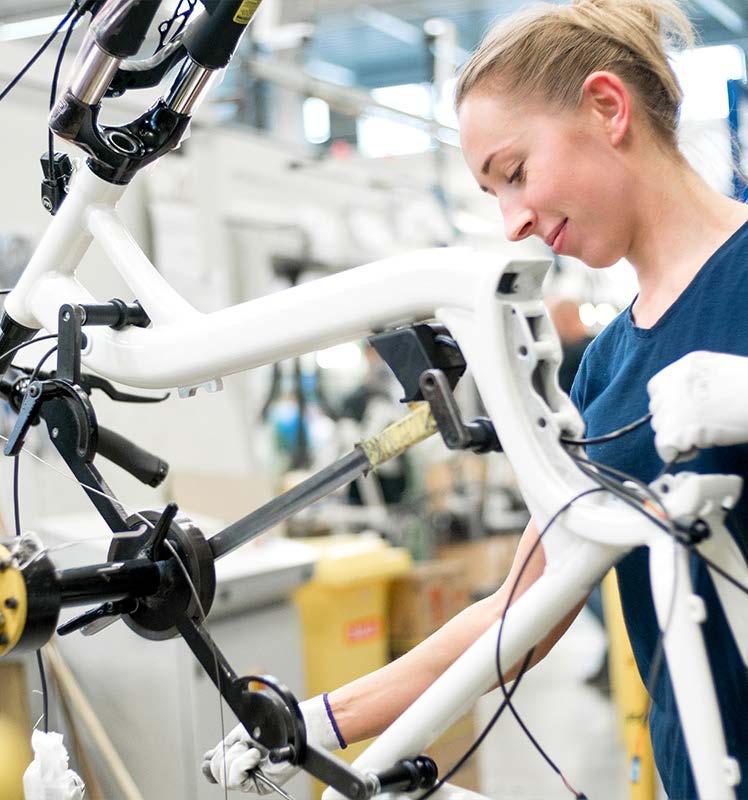
Over its 60-year history, which will be celebrated in 2026, Velo de Ville has never betrayed its original philosophy. Staying close to cyclists and listening specifically to their requests has always been at the core of the German brand’s work. This concept has translated into a very precise hallmark: personalization. By navigating Velo de Ville’s website, the online configurator allows customers to create a tailor-made bike starting from the frame, choosing every detail of the preferred package: from the fork to the tires, including color, brakes, lights, drivetrain, and saddle. The company, based in Altenberge and led from the beginning by the Thiemann family, has built its uniqueness in this way. Producing bikes on demand, respecting each buyer’s wishes, has not just been
Interview
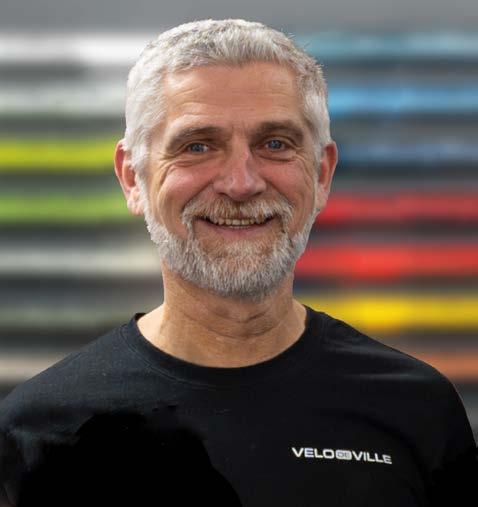
Olivier Doucot, brand manager South West Europe
Velo de Ville was founded in 1966 as a distribution company and over time evolved into a custom-made manufacturer. What were the key milestones in this transformation, and when did you realize that personalization would become your “hallmark”?
Velo de Ville started as a regional bicycle distributor, maintaining a very close relationship with both retailers and end customers. This proximity was the first key step: it allowed us to constantly listen to what cyclists truly wanted and to understand when and where standard models were not sufficient. In the early 2000s, we began offering customizable configurations instead of fixed specifications. The second decisive moment was investing in a modular production system, which enabled us to assemble each bike individually without sacrificing industrial quality standards. We realized that personalization would become our identity when demand for configurable bikes consistently surpassed that for standardized models.
Why did you choose to focus on made-to-order production instead of large stan-
a dream or a purely conceptual vision: it has proven to be a winning strategy to differentiate and assume a well-defined market positioning, appreciated by both consumers and the retail network. While on one hand this means giving up mass production and highly developed economies of scale, on the other it allows the creation of unique products and better management of warehouse costs (which can become quite significant). The latter can be an added value especially for retailers, who can actively contribute to the personalization of the final bike, increasing the value of their work while streamlining inventory. For Velo de Ville, this too means putting people at the center. We discussed this with Olivier Doucot, Brand Manager South West Europe.
dardized volumes?
Because the bicycle is a personal means of mobility. The real turning point came in the 1990s, when we understood that customers did not simply want a good bike, but their bike. From that moment on, personalization became our DNA and the concept of “Your bike. Custom Made.” our guiding principle. Sizes, ergonomics, components, riding style, and design preferences vary enormously. Large standardized production leads to compromises and excess stock. Made-to-order production allows precision, flexibility, and responsibility. It aligns production with real demand, reduces waste, and offers retailers a strong value proposition: differentiation instead of price competition.
One of the key messages is the drastic reduction of stock: in practical terms, what changes for a store that chooses to work with Velo de Ville?
For retailers, this model transforms the business from “buy stock and sell” to “configure and sell.” Instead of investing heavily in inventory, they invest in consultation and customer experience. The showroom becomes an exhibition space, not a warehouse. Cash flow improves, risk decreases, and margins are protected, because the product is personalized and not directly comparable to competitors’ offerings, whether online or in physical stores.
What impact does this model have on retailers’ inventory management? In your opinion, can this approach represent a structural response to the current difficulties of the European bike retail sector?
It significantly reduces stock pressure and the risk of price markdowns. Retailers no
longer have to forecast demand months in advance for sizes, colors, and specifications. They order what has already been sold. In the current European market, characterized by volatility, stock overload in some segments, and margin pressure, this is not just a tactical solution. It is a structural response that brings production closer to real demand and restores balance across the entire value chain.
Do you think the “on demand” model will become a standard in the bike industry or remain an evolved?
It will grow significantly, but it will not completely replace standardized production. The two models will coexist. Entry-level and high-volume segments will remain with the classic model. But in urban, trekking, and eBike categories (where comfort, fit, and equipment truly make a difference), on demand will increasingly become mainstream, because it ensures greater customer satisfaction and a healthier economy for retailers. Another aspect to consider is the ability to launch such a model. Reaching our level was possible because we started at a time when business and consumer rules were not what we know today. It required time and continuous adaptation to the market over the years, up to now. Would it be possible to do it today? That is the real question.
“The exhibition space becomes a showroom, not a deposit. Cash flow improves, the risk decreases and the margins are protected, because the product is personalized and not directly comparable with that of the competition, both online and in physical stores”
What role does the Italian market play today in your strategy?
For us, Italy is a strategic growth market, characterized by a strong cycling culture and increasing attention to premium and urban mobility solutions. Italian customers are highly sensitive to design, riding comfort, and product individuality: aspects that perfectly match our DNA. We are steadily expanding our network of specialized retailers and currently collaborate with a growing group of selected partners throughout the country.
If you had to choose three words to define Velo de Ville, which would you use? Personalized. Sustainable. Craftsmanship.
“For us, however, innovation does not stop at the product,” Doucot added. “We are also working on improving our digital bike passport, VeloWallet, which offers end customers and specialized retailers a smart tool to ensure transparency throughout
NEW PRODUCTS FOR 2026
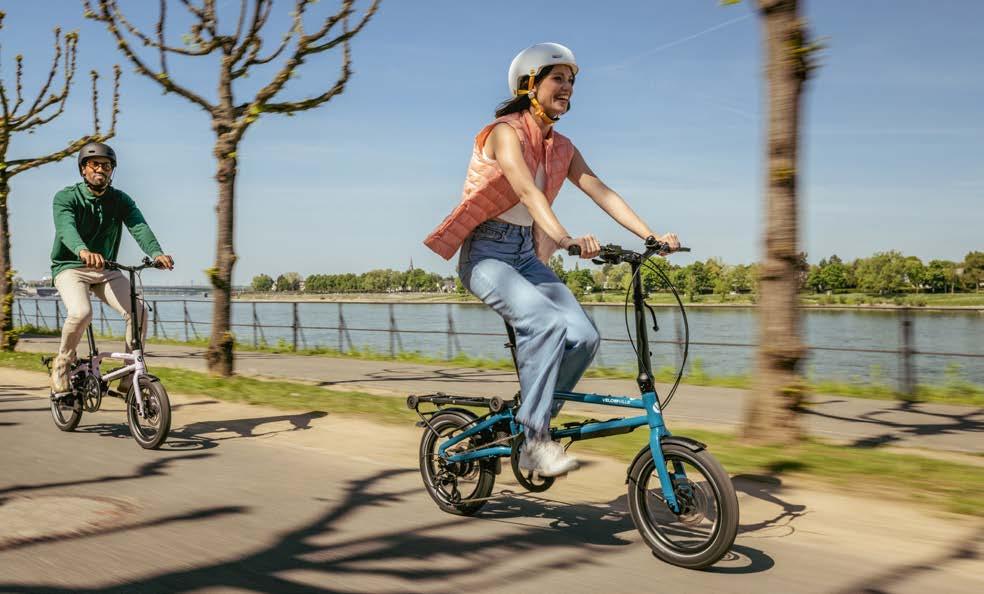
“In 2025 we introduced two highly interesting new products,” Doucot explained. “Foldy, our compact folding eBike designed to offer maximum flexibility even in very limited spaces. It is ideal for commuters, campers, or as a last-mile solution.”
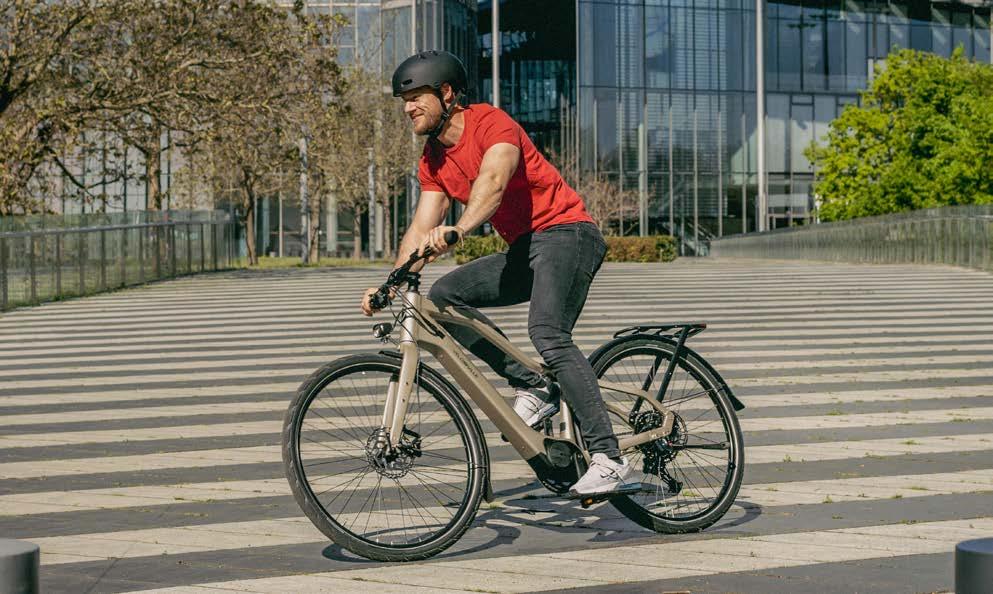
“Then there is Revo-C, currently the most powerful urban eBike in its category, equipped with the new Avinox motor by DJI, combining a sporty riding experience, safety (thanks to an integrated alarm system), and modern design. It is aimed at those who move around the city and seek performance and style in everyday life.”
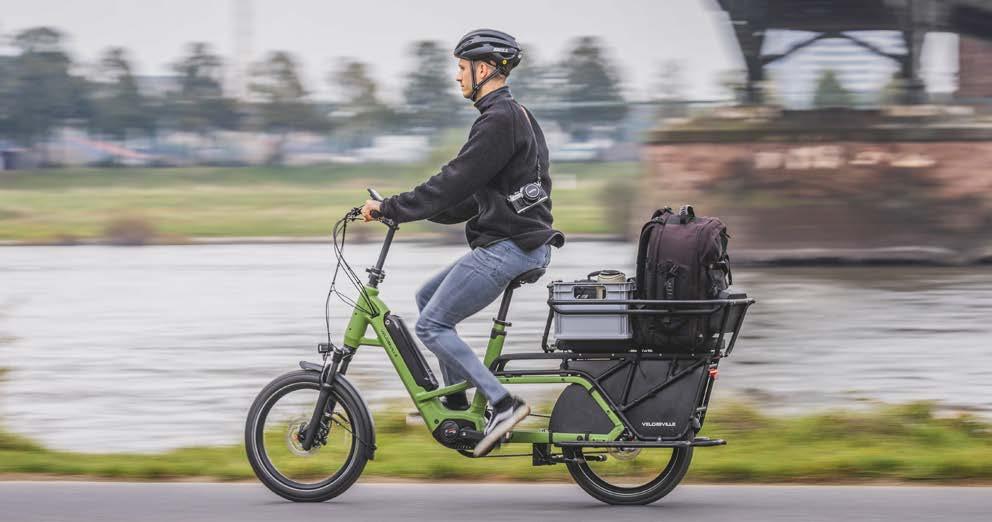
“We have also further developed our proven longtail eBike Loady, introducing new accessories such as modular transport solutions, child seats, and weather protection, making it an even stronger and more convincing alternative to the car. All models are fully configurable in terms of color, technology, equipment, and style.”
the entire lifecycle of the bike, from maintenance to repairs, from component information to ownership transfers. Of course, our R&D department is already working to further expand next year’s range. With some pleasant surprises on the way.”
FOLDY
LOADY
REVO-C
VELOWALLET
THE IDEAL BALANCE BETWEEN FUNCTIONALITY AND SAFETY
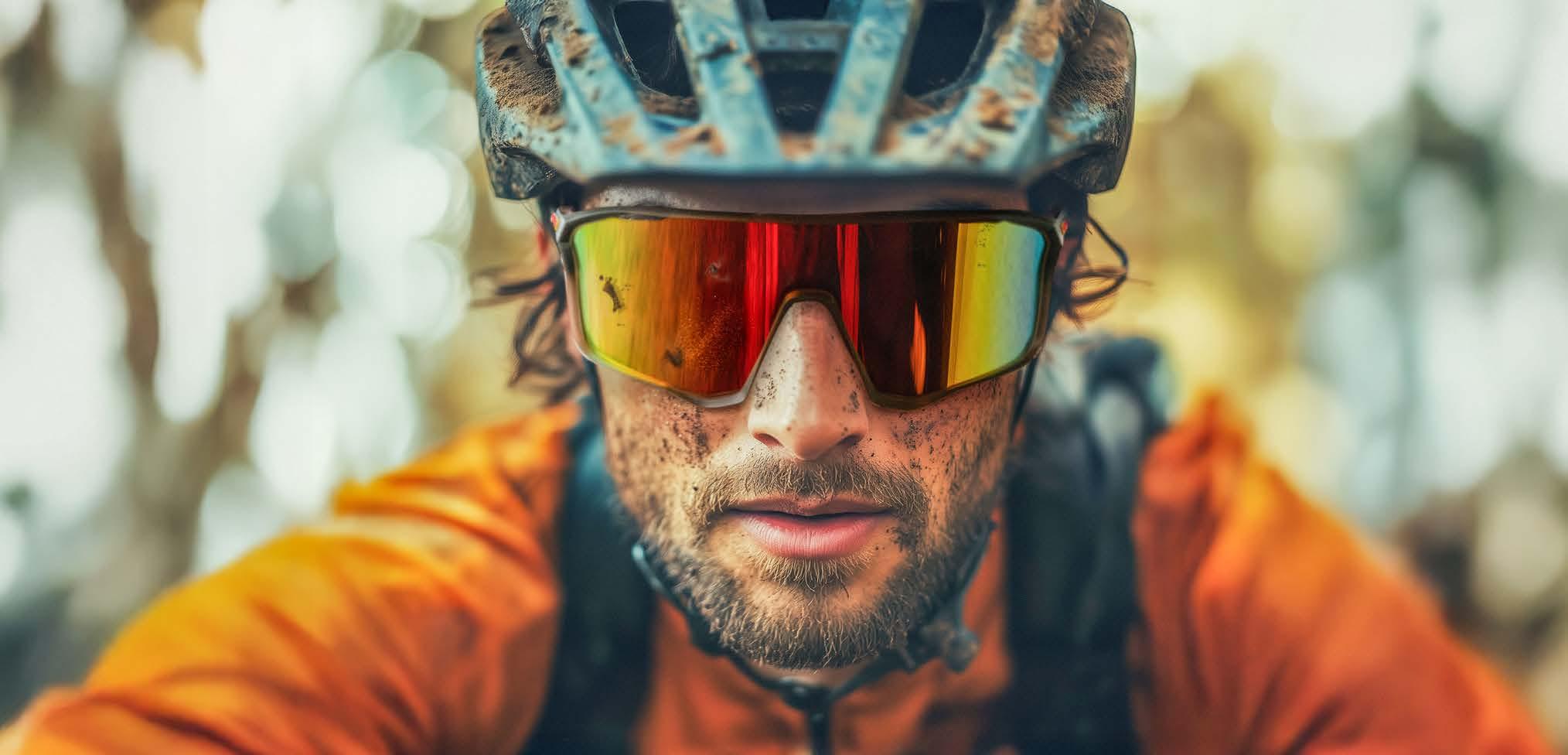
Often underestimated, accessories (glasses, helmets, shoes) are the foundation of the cycling experience. They must deliver performance, protect our most exposed body parts and,
Gabriele Vazzola
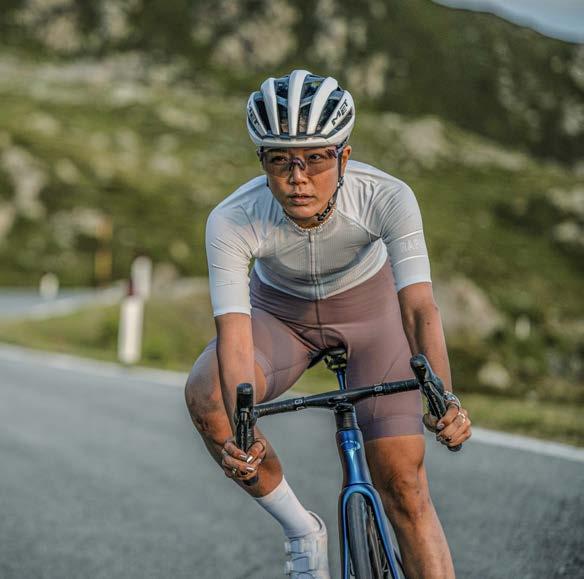
Anyone working in the bike industry knows it well: the bicycle is just the tip of a pyramid of products without which it would be impossible to ride at your best and in full safety. The focus in accessory design is precisely this: ensuring maximum protection while improving life in the saddle. Compared to the notso-distant past, when accessories were far from being taken for granted, manufacturers have heavily invested in research and development in a “battle” that has led to a significant evolution — namely, getting all sport cyclists to accept the use of these products (especially helmets and glasses). Take helmets, for example. Wearing one is not mandatory, yet it is now almost impossible to find an experienced cyclist who does not use it. Next-generation helmets are lightweight, non-bulky and even enhance riding comfort thanks to improved ventilation. Glasses allow riders to keep their eyes focused on roads and trails, minimizing discomfort caused by chan-
ABUS ITALIA
“We put our marketing department at the service of retailers!”
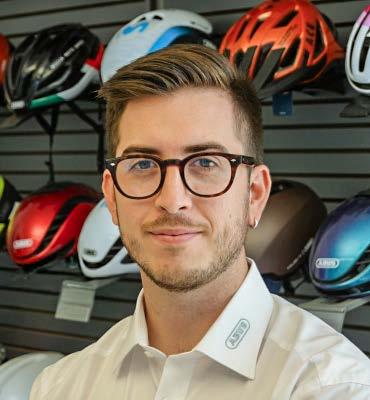
Gabriele Bonetti, marketing manager
why not, look good too
ging light conditions and protecting against debris. Shoes provide protection in both summer and winter, while also improving performance by helping riders unleash all the watts built during training sessions. More protection, more speed, greater awareness of what surrounds us — and consequently more fun. In addition, price ranges vary widely, and with the help of a knowledgeable retailer everyone can find the best solution according to their budget. The next step seems to be raising awareness of the importance of accessories among urban riders and commuters, possibly with the support of technology. To explain how much work goes into designing these products, we interviewed representatives from three leading brands in their respective sectors: Gabriele Bonetti, Marketing Manager of Abus Italia; Nicholas Romano, Tech Rep for Oakley and Bliz; and Emiliano Serotti, Commercial Director of Endura in Italy.
Interviews
Abus is a German company that produces its premium helmets in Italy at the Maxi Studio facilities in the province of Vicenza. German quality combined with Made in Italy production has allowed the brand to make a significant leap forward in high-performance models. Thanks also to contemporary and refined design, Abus is now among the market leaders.
Which helmets are most requested and appreciated by customers?
Our positioning is mainly focused on the premium segment, and our best-selling range is the Made in Italy road collection, from entry level up to the Airbreaker. These are also the products we support the most through marketing, as they are used by our pro teams such as Alpecin, Movistar and now also Pinarello-Q36.5. As a single product, the
Gamechanger 2.0 is our best seller.
In MTB, cross-country athletes often use road products, while gravity is one of our targets for next season. We want to establish ourselves more strongly in that segment because we expect growth there — especially with the increase in beginners and the expansion of the eBike and bike park markets.
What is your opinion of the urban segment? In Italy it seems to be struggling the most.
Abus is a German company, so in the urban segment we have a very deep range: from basic helmets to the highly technological HYP-E with integrated lights and turn indicators. In Italy we are facing some challenges in this specific segment, but globally and in Northern Europe we are a high-profile brand.
There is discussion about making helmets mandatory, but we tend to believe more in education and natural growth. Mandatory use could provide an immediate boost, but it must be handled carefully: urgency in purchasing a product does not always lead to the right choice and could even result in price increases. In Italy, helmets are often seen as an extra; in Nordic countries, they are considered essential.
How does the launch of a new product take place? Does it start from athletes’ feedback or market demand?
Feedback comes from multiple sources, but the foundation of the business is always know-how. Development with athletes has always been a key focus. Generally, a new project requires about two years of work before reaching the market. The process
starts in Germany and is then finalized with Maxi Studio in Camisano Vicentino. One of the main goals is to optimize every aspect: a helmet must satisfy all departments — marketing, sales, product managers, engineers and designers. The product is at the center, but around it there is an ecosystem that must function as comprehensively as possible. If you focus too much on extreme performance, you risk narrowing the target audience. The best product is always the result of a balance among all stakeholders. European regulations also impose strict testing and certification requirements.
What details have improved safety and helped increase helmet acceptance?
For all Made in Italy helmets, in-mold production allows us to achieve the highest level of safety. The supply chain is entirely Italian, so we can verify material quality at every stage, from the straps to the shell.
Seeing professionals always wearing helmets also creates an emulation effect that works. In road cycling, reduced weight and improved ventilation have played a major role, contributing to overall comfort — an aspect that will also become increasingly important in the urban segment.
Does a helmet have an expiration date? How often should it be replaced?
A helmet can last between three and five years if it has not suffered impacts. Maintenance also plays a key role. To maximize durability, it should be stored at a constant temperature, kept in its case and protected from sunlight. After a strong impact, it should be replaced. It may seem excessive, but helmets are designed to dissipate impact energy — once that function has been activated, performance can no longer be guaranteed.
Can you tell us about upcoming innovations? What technologies are on the way?
Abus is among the leaders in integrating innovative technologies, and we are presenting a large number of new models. However, we remain very cautious because the standards we want to apply are extremely high and we never want to release an unreliable product. There are future developments, but they are currently top secret. Material research is one of the hottest topics in the sector, and we invest in wind tunnel testing to further improve performance in these areas.
What is the difference between buying a helmet in-store and online?
Our business operates across all sales channels, but the trade channel is closest to our heart because that is where the passion for cycling is truly experienced. Our products sell for their quality, not because of price wars or fashion trends. For retailers,
ENDURA
“Every product is extensively tested by athletes before it reaches stores.”
selling our products is coherent because quality is high from entry level to top of the range. We also provide display systems to meet retailers’ needs, creating consistency and enhancing helmet presentation to showcase all categories. We have skilled sales agents who support shop owners, and our marketing department works closely with them. We actively seek interaction with stores and invite them to contact us directly for advice on displays, sizes and most requested colors. We are eager to share this data. We also offer ambassador collaborations for community rides or safety-focused events.
Helmets, glasses and shoes are essential accessories. How does Endura launch a new product?
Everything starts in the research and development department, where the first prototype sample is created. Then comes a crucial phase for us: athlete testing. Our riders are the first to use products intended for the market, often for a period of up to four months. During this time, feedback is shared and development continues based on the long-term data collected in the field. Endura has a design, research and development department at its headquarters in Edinburgh, Scotland, which works closely with international athletes. During this phase, riders approve the product or request modifications and refinements until we reach a highly performance-oriented result. From there, a second prototype is produced — the version that will eventually be presented to retailers. The final stage is arrival in stores, approximately 8–9 months after the initial development phase, making the product available to end consumers.
What are the main features you look for in your products?
Innovation has always characterized Endura’s collections, and it is built on a fundamental pillar: technical performance in service of comfort on the bike. However, we do not overlook other aspects that make our products appealing and contemporary — namely style and creativity, which we incorporate into all our garments.
Which products are most requested by the market?
Our best seller — and the category that made us known to the international MTB community — is the MT500 line. It represents top-level performance across every product category: MTB apparel, protection and helmets.
What are the most interesting technologies introduced in recent years? And what are you focusing on for the near future?
Regarding accessories such as helmets and protective gear, one of the most interesting technologies is D3O, a dilatant material — essentially a fluid whose viscosity increases with the speed of deformation. In practical terms, it progressively hardens upon impact and can be applied in many different contexts. In terms of helmet safety, the new standards and technologies are also very promising, such as MIPS and KOROYD, which significantly enhance protection levels and impact management.
Emiliano Serotti, commercial director
The Endura brand comes from the United Kingdom, where riders often face long days in the saddle under harsh weather conditions. This background has shaped a strong know-how that has made the brand one of the most appreciated among bikers — including Italian riders — thanks to the distribution and industry expertise of B-Factory Outdoor Agency.
OAKLEY/BLIZ
“The most important part is the lens. The frame design comes only after.”
Nicholas Romano, tech rep/eventi
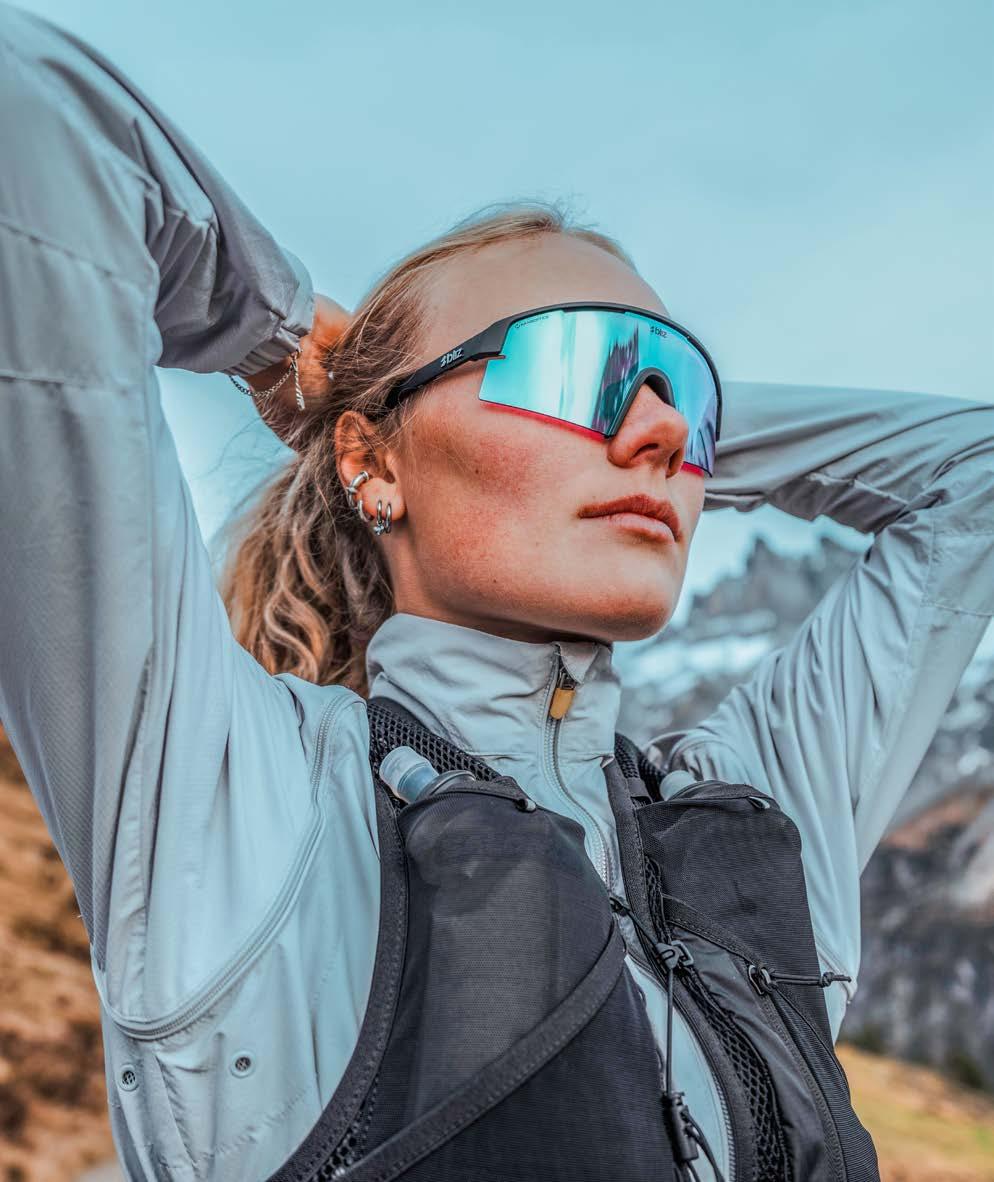
Oakley, a historic premium sports eyewear brand, and Bliz, a recent acquisition of EssilorLuxottica, bring years of expertise to the table along with a product range that now — thanks to the addition of the Scandinavian brand — covers all needs and price segments. Because when riding a bike, “the eye” wants its share too.
What is your role for Oakley and Bliz?
I am a tech rep and I manage product technical support and events. My job is to explain the technical features of our eyewear to B2B partners, so they can pass this knowledge on to the end customer. I’m active in the field and a product specialist — usually among the first to see and handle new releases. My role is dual, as I work with both Oakley and Bliz. The Bliz project started in 2023, when the company acquired the brand, and we are now building its new image.
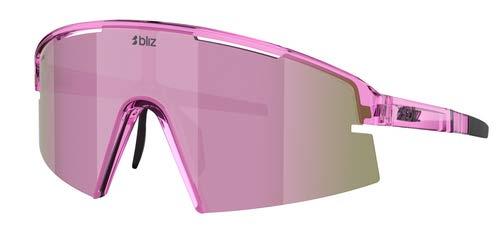
How does Bliz fit into your offer compared to Oakley? Bliz focuses strongly on value for money. After segmenting Oakley’s product range, we realized a more accessible price tier was missing — and Bliz now fills that gap. Oakley has always been positioned as a top premium brand, so we decided to invest in another quality brand with its own identity. We present new products from both brands by letting customers test them. This is essential for us because we gather valuable feedback. Many are surprised by Bliz’s performance despite its competitive pricing. The main challenge for Bliz is brand awareness — we need to bring it into the field. At that quality-to-price ratio, it’s hard to find competitors. It appeals to riders who don’t want to overspend, especially for products used in demanding conditions. We are positioning it correctly.
How much of Oakley’s expertise is reflected in Bliz?
2025 was a transition year — we had to get to know each other and develop synergies. Now Oakley has started contributing technically, influencing Bliz with its immense know-how. In 2026, we aim to establish Bliz firmly in the Italian market, and in 2027 we plan global positioning. You can already see Oakley’s influence in the new collection, especially in the latest model, the P006. We introduced small but important improvements: interchangeable lenses, adjustable nose pads, polycarbonate lenses, adjustable temples, and more. These refinements enhanced an already solid product. The lens uses Nano Optics technology, available in three versions. It can be considered the “younger sister” of Oakley’s Prizm technology, designed to minimize distortion and enhance visual clarity. Today, Bliz is focusing on three main verticals: running, cycling and winter sports. From a philosophical standpoint, the two brands move in parallel.
Speaking about cycling, what are your expectations?
We expect strong performance from the new P006 model. We believe it will become our best seller for 2026, much like Oakley’s Sutro did in its time. The lens cut is different, but it’s a highly sought-after style. It’s a beautiful, versatile and simple model suitable for many cyclists. Bliz is generally minimalist, which is reflected in its basic, widely appealing color palette. The same applies to the lenses. I expect the cycling community to respond positively, both for the price and the quality.
What are the key features a cycling eyewear product must have?
Eyewear is a safety accessory, just like a helmet. When riding, vision and eye protection are essential. It also provides active safety: while a helmet works after an accident happens, glasses help prevent accidents.
The most crucial element influencing product quality is the lens. With Prizm first and now Nano Optics, we have two strategic lens technologies. Everything else is an added value. You can experiment with frame design only when you are certain the lens performs flawlessly.
Tell us about Bliz lenses and their technology.
Nano Optics combines multiple materials into a single polycarbonate layer. This is important because multi-layer constructions can increase visual distortion. The result is high optical quality with minimized distortion. It also integrates an anti-fog layer directly within the lens.
There are three versions:
• Nano Optics Standard
• Nano Optics Nordic Light, developed for Nordic countries with specific light conditions
• Nano Optics Photochromic, which reacts to UV rays
What do you think about the recent introduction of new technologies in sports eyewear?
We are working to redefine the future of sports eyewear through a major project with Meta for the Vanguard smart glasses. It’s an important partnership for our company, and significant investment is being made. Currently, these products are available only in selected stores. It is a new technology with very interesting functionality. For cycling, integration with Garmin and Strava is already available, and future developments are promising. The glasses can deliver audio information directly without forcing riders to look at their watch or bike computer, increasing safety. Open-ear audio allows users to hear environmental sounds while a dedicated speaker creates a sound bubble around the ear. The glasses also integrate a 12-megapixel camera capable of 3K video recording, hyperlapse and slow motion. Remarkable quality for such a compact and lightweight device. Artificial intelligence operates on two levels: one functions like a chatbot, providing information and responding to commands, including controlling eyewear functions; the other uses the camera’s visual input to provide contextual information based on what it “sees.” Real-time translation of text and live conversations into other languages is also possible. The glasses are resistant to heat and cold, waterproof with IP67 certification, and resistant to heavy rain and sweat. We are working on major innovations for upcoming launches, but for now, we cannot reveal more.
ROAD
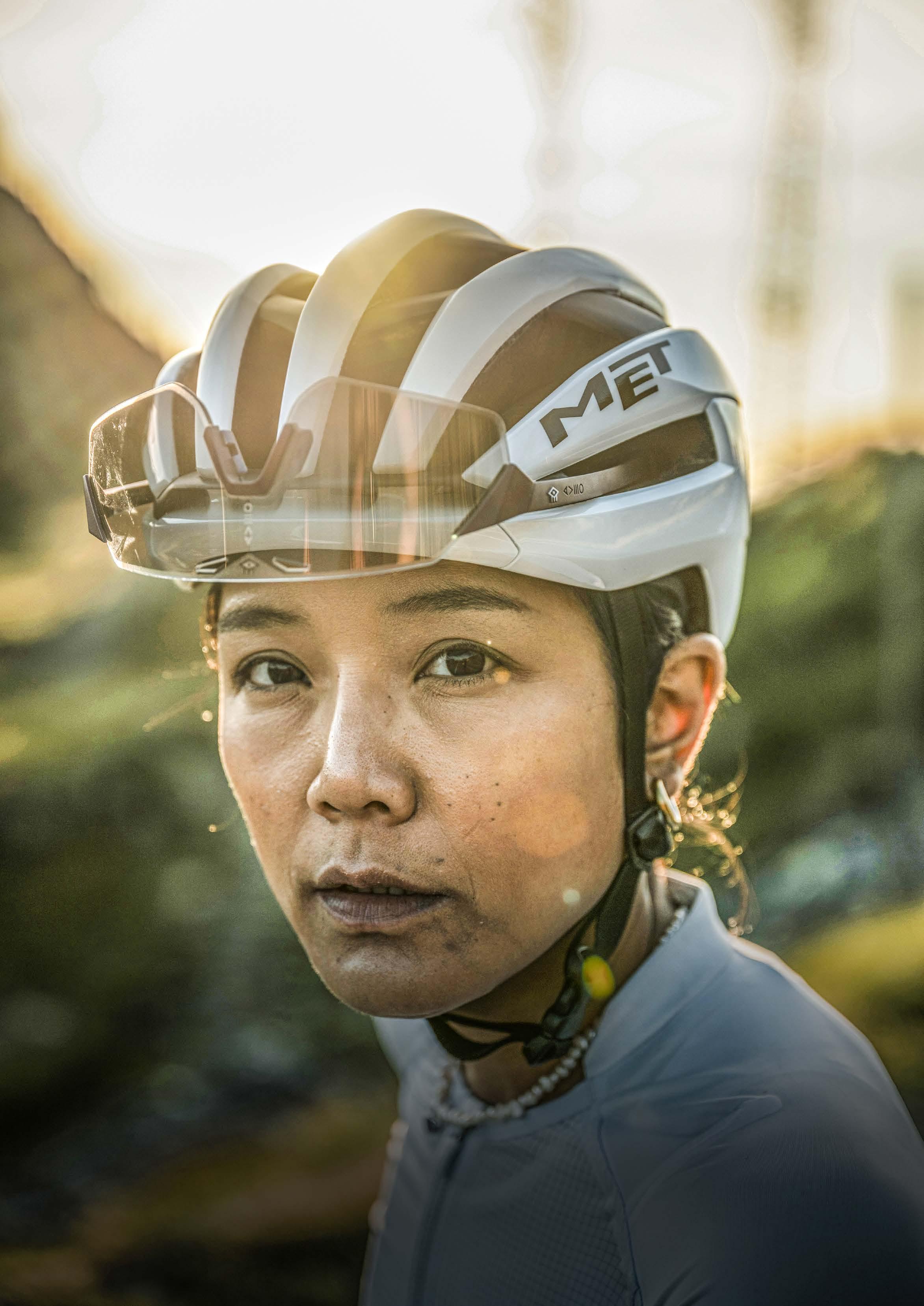
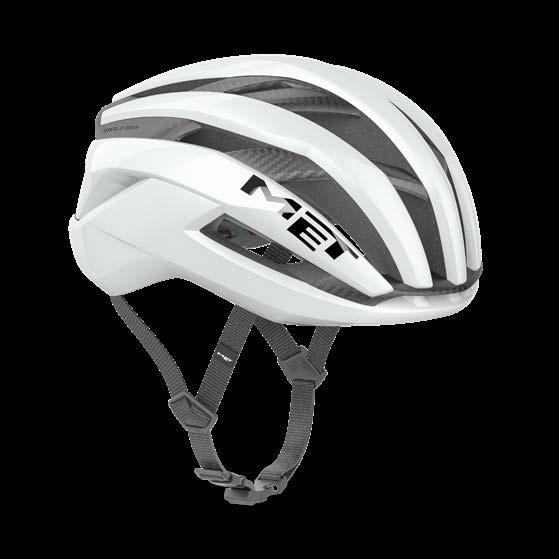
Used by Tadej Pogačar at the Tour de France and unveiled at the end of 2025, the new Trenta 3K Carbon is the most ventilated road helmet ever produced in the history of MET. Developed for the most demanding races and refined in the wind tunnel, the helmet features the 3K Airframe structure — a carbon element that removes EPS from the internal frame. The result is a continuous air channel that ensures constant airflow at both high and low speeds. The model is equipped with the ultralight Mips Air Node system, designed to redirect rotational forces in the event of a crash for advanced protection. Weighing 260 grams (size M), the Trenta 3K Carbon features 24 air vents with optimized internal channeling and an integrated eyewear port.
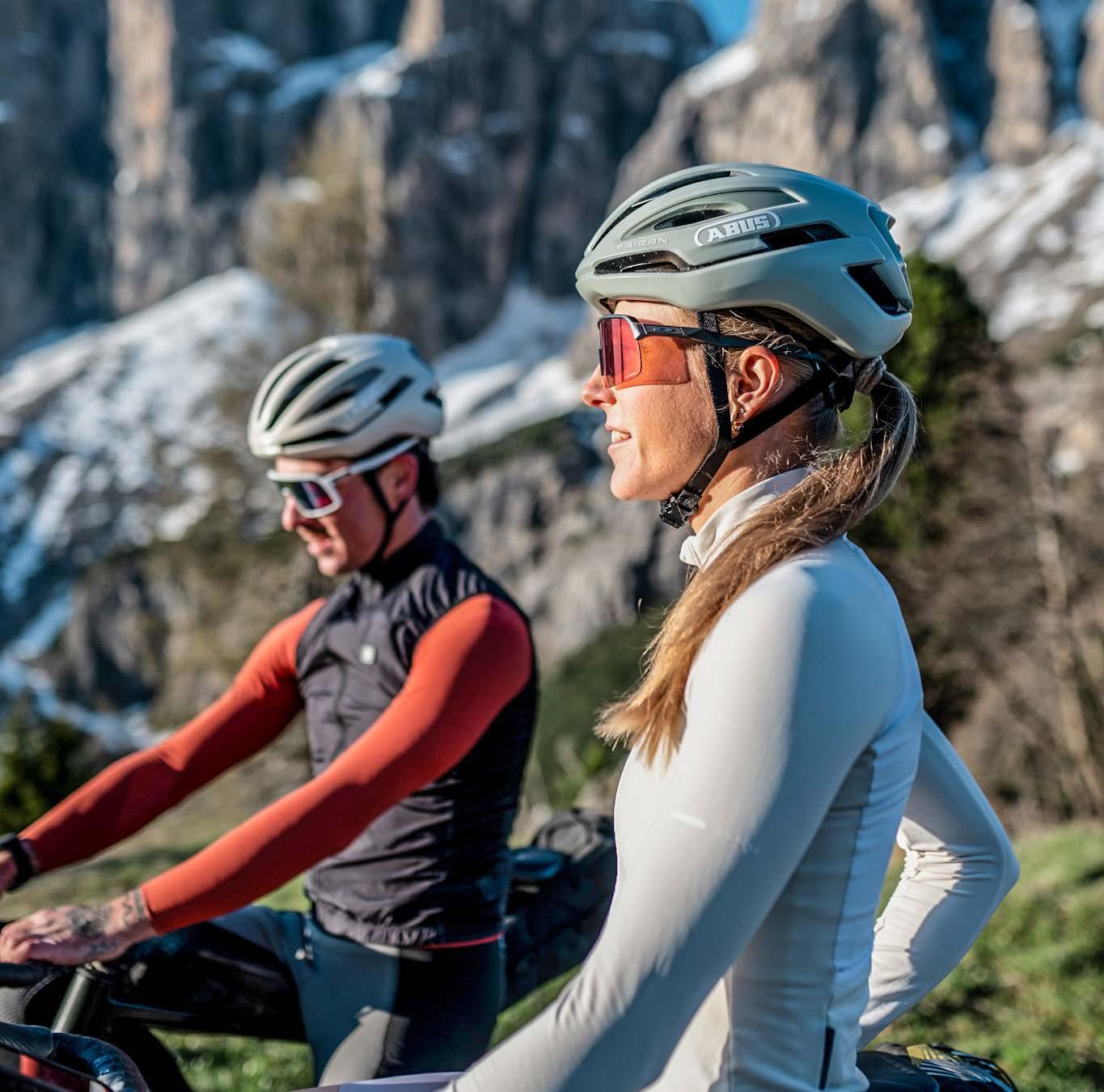
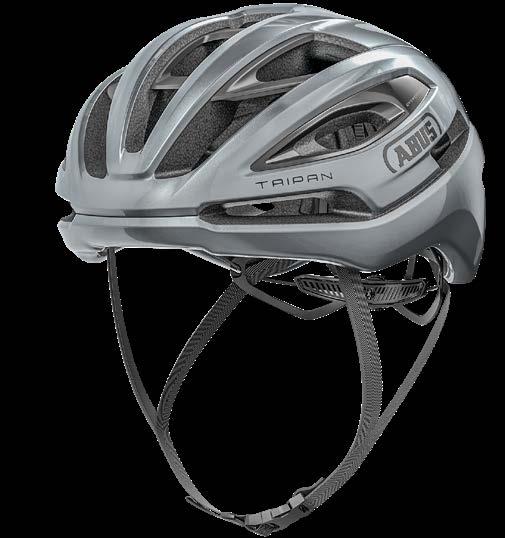
Gravel is not just a discipline — it’s a true experience of freedom. Following this philosophy, Abus introduced Taipan, the latest addition to its Made in Italy helmet family, designed for riders tackling long distances on unpaved and unexplored roads. Thanks to testing with the Factory Racing Team, prototypes were put through mixed terrain, night rides, extreme heat and cold, and even 500 km outings. The collected feedback was integrated into the development process, resulting in a helmet shaped “in the field.” The name Taipan refers to one of the world’s most resilient snakes, symbolizing independence and adaptability. Available in two versions (Taipan and Taipan LED), the model combines typical road helmet features — aerodynamics, low weight and ventilation — with comfort and safety specifically designed for gravel. The internal shape, an evolution of the proven Road Fit system, has been slightly widened to accommodate a 5 mm floating padding designed for greater long-distance comfort. Its low weight, aerodynamic straps, 18 ventilation openings and optimized airflow cooling system make it ideal for uncompromising adventures.
Abus - 0542.34720 - abusitalia@abus.it
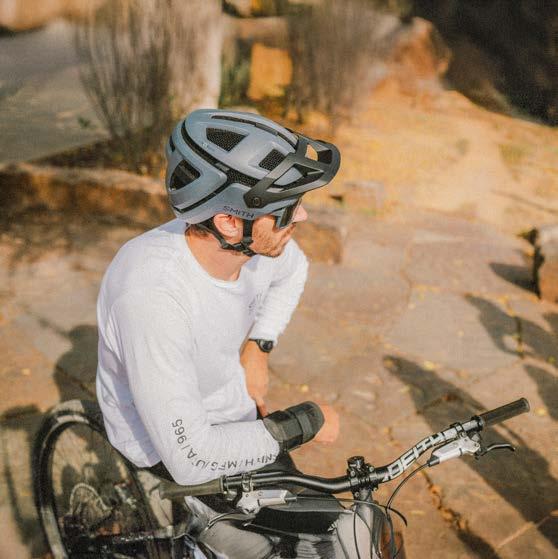
SMITH
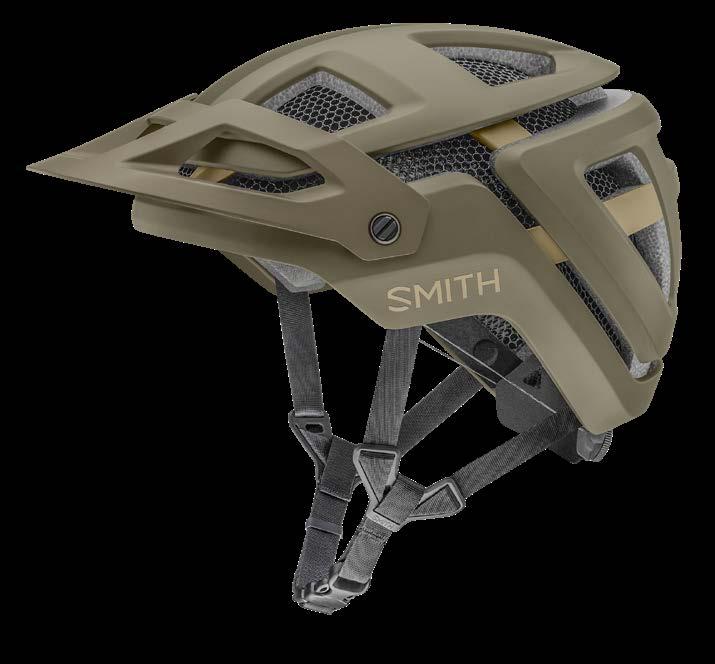
FOREFRONT 3
Without forgetting its roots, this new version of the Forefront is designed for riders who tackle diverse terrain and embrace modern riding styles. Now featuring extended rear coverage, the in-mold construction retains Koroyd protection, engineered to absorb impact energy while improving ventilation. Manufactured using an injection technique, the new full integrated roll cage throughout the helmet helps distribute kinetic energy for maximum protection. Forefront 3 combines optimized ventilation channels and 20 vents, improving airflow circulation by 25% compared to the previous model. It also maintains constant airflow thanks to AirEvac technology, preventing lens fogging. The Smith Flexible Fit system, equipped with a BOA dial for 360° adjustment and a lightweight single-layer strap, is engineered for maximum performance.
smithoptics.com
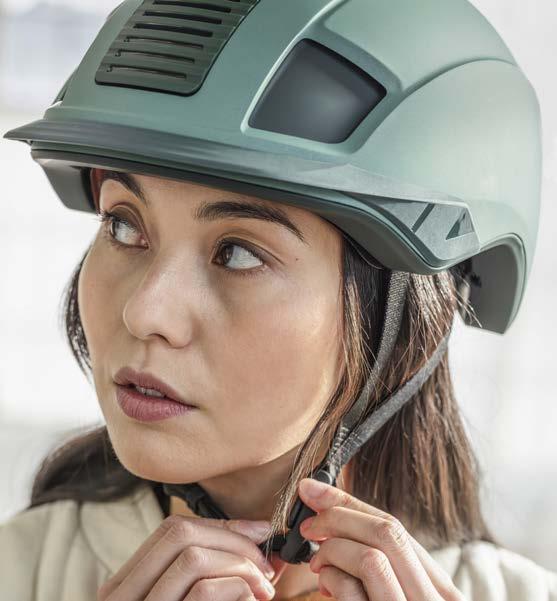
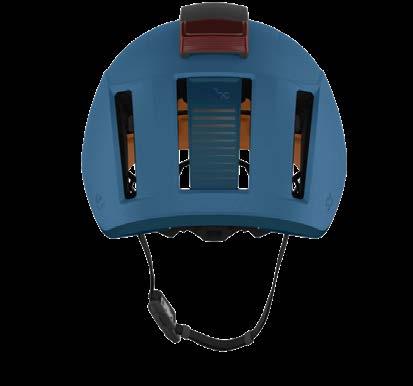
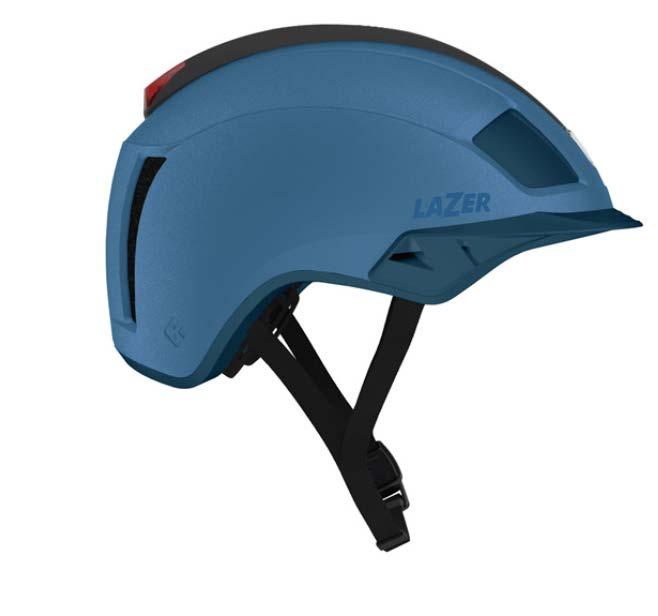
Next KinetiCore is designed to make commuting safer and more enjoyable, adding a touch of style to every ride. Certified under the NTA 8776 standard, it offers high-speed protection by combining advanced impact absorption technology with smart features tailored for everyday use. On top, a rechargeable 360° SMART LED light enhances visibility in traffic. For year-round comfort, the SMART LED can be replaced with a ventilation slider, improving airflow when open and providing extra warmth when closed during winter. The Advanced TurnSys system ensures a precise and adjustable fit, while the magnetic buckle allows quick fastening — even when wearing gloves. In terms of safety, Lazer’s patented KinetiCore technology uses EPS foam blocks that deform under both direct and rotational forces, absorbing energy before it reaches the brain, while also reducing the use of plastic and unnecessary materials.
bike.shimano.com
URBAN
MTB TRAIL
ABUS TAIPAN
LA PRECISIONE SVIZZERA DIVENTA PERFORMANCE TRAIL.
Con CILO, l’ingegneria svizzera incontra la leggerezza per trasformare ogni trail in puro flow e massimo divertimento di guida.
Per scoprire i vantaggi di diventare rivenditore Cilo contattaci scansionando il QR code
GAERNE
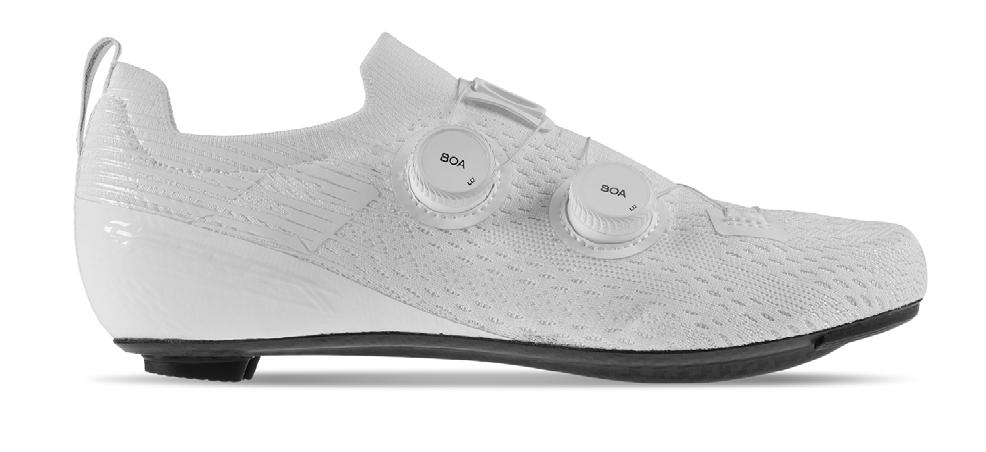
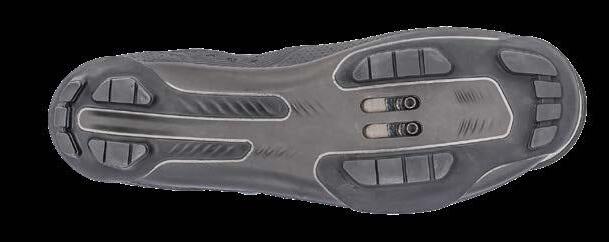
G.Zephyr features a modern design combined with cutting-edge technical construction. The G.Aeroknit fabric ensures a snug, wrap-around fit while delivering excellent ventilation. Micro-perforations in the forefoot area further enhance airflow. The more elastic knit structure around the tongue adapts to the shape of the foot, providing a precise fit. The BOA Li2 Dial A system allows quick and accurate adjustments, while the integrated non-slip heel ensures maximum stability and optimal power transfer. Its ultra-thin thickness enables the foot to sit as close as possible to the pedal, maximizing power output without energy dispersion.
Q36.5
GREGARIUS ADVENTURE
Designed for gravel and XC riding, Aeron combines a precise fit with advanced construction to deliver support, protection and power. It was created with a clear vision: to offer a lightweight yet stable shoe ready for any terrain. The upper is made from highly resistant Ripstop fabric, reinforced with rubber inserts in exposed areas for superior protection against abrasion and tearing. The instep features an adaptive insert that dynamically shapes to the foot for a customized fit. Inside, the Firmor X support system works in synergy with the adjustable heel retention device, providing lateral stability, improved alignment and a secure hold even on the most technical sections.
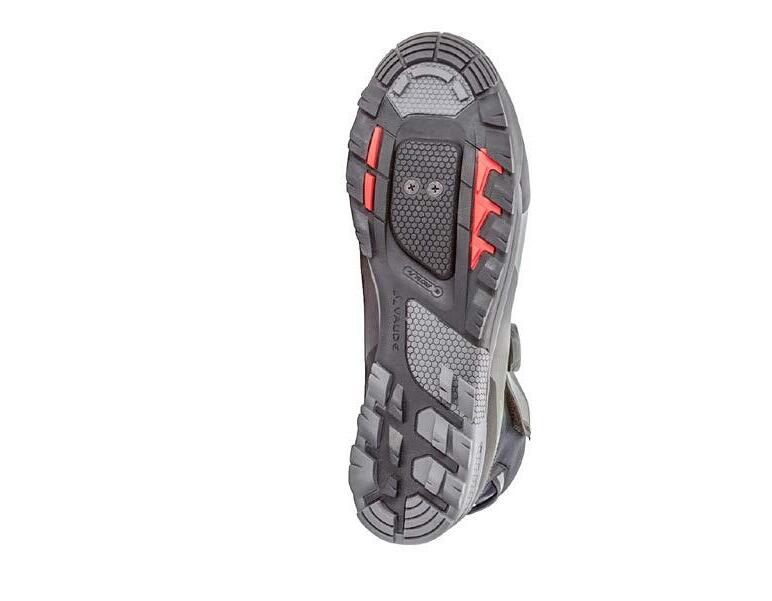
Minaki III STX Winter shoes are built for riders who keep pedaling even when temperatures drop drastically. Warm, waterproof and comfortable from the first ride, they accompany bikers on winter trails with the confidence of dry and protected feet. The zip and Velcro closure keeps wind and rain out, while the mid-cut design wraps the ankle without adding bulk. Ideal for those who value freedom even on the coldest days, these shoes combine comfort and functionality with the sustainable commitment that distinguishes Vaude.
Gregarius Adventure shoes are designed for mixed terrain and gravel-oriented routes. They offer the same breathable structure as road shoes but with a classically styled thermoformed tongue and additional tread, ideal for “hike-a-bike” sections. The wide and durable carbon fiber and polyamide outsole is engineered to handle long distances. The model features a Solestar insole, positioning the foot in the “Optimal Neutral Position” — an optimized posture that enhances stability, comfort and pedaling power. Additionally, the wider metatarsal area is designed to accommodate a broad range of foot shapes, ensuring long-term comfort.
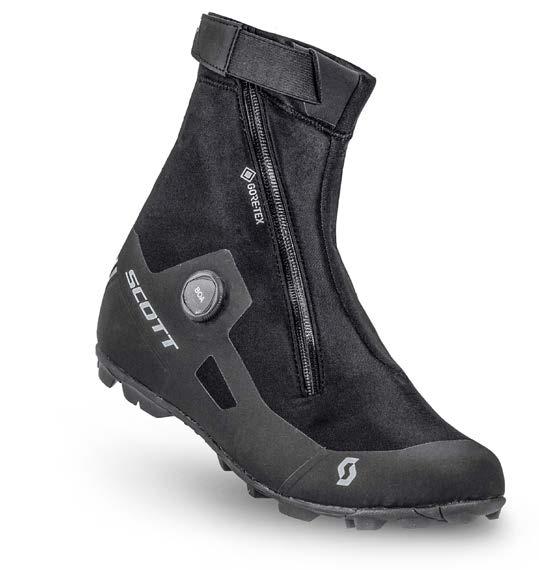
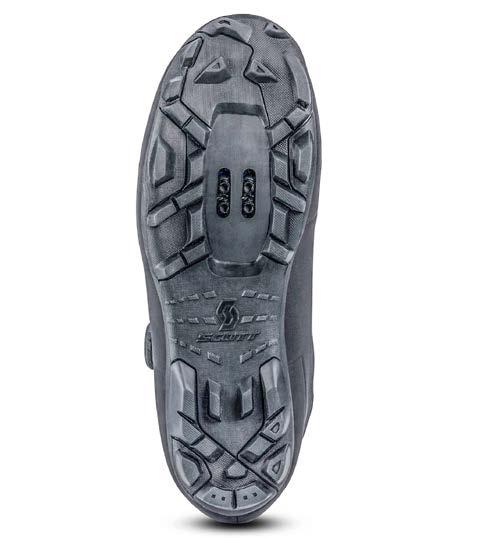
For those who ride trails regardless of the weather, MTB Heater by Scott is designed to deliver warmer and drier adventures. The model features an adjustable ErgoLogic insole, a Gore-Tex membrane and thermal insulation (Duratherm L Kelvin), allowing the shoe to remain well insulated while keeping the elements out and retaining warmth inside. The BOA Li2 system ensures fast and precise micro-adjustment for a secure and customizable fit.
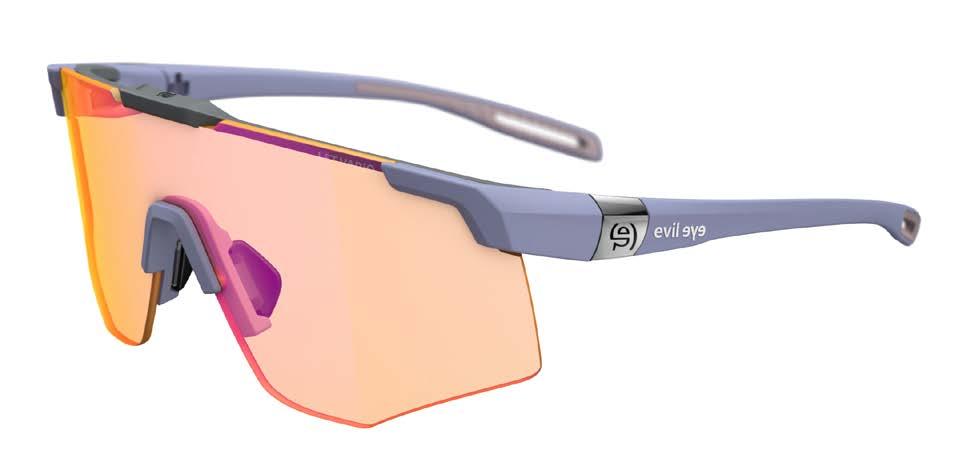
Last January, evil eye launched the Speedsense model, which won one of the most prestigious awards in the eyewear industry: the SILMO d'Or, recognizing products that set new standards in innovation. The jury was impressed by the Speedsense ventilation system, engineered to guarantee optimal vision at any speed; the new lens attachment
king. It features an elegant and minimalist unisex profile, with two available sizes to accommodate different face shapes. Its adjustment features allow riders to fine-tune the fit for maximum comfort and control. Ultra-lightweight yet durable, the glasses include an adjustable nose bridge and flexible temples to ensure stability once worn.
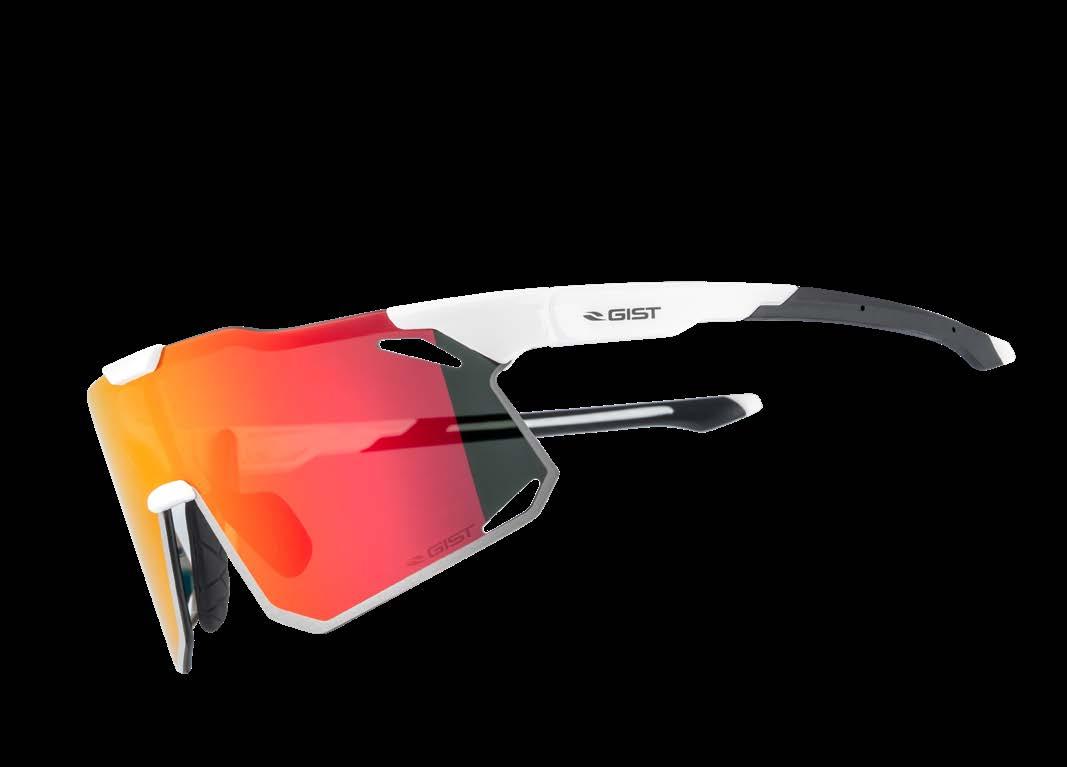
Designed to offer protection, comfort and maximum visual clarity on every ride, Eclipse is available in two versions. The first features a Category 3 solar lens, updated compared to the rest of the Gist Cycling range, incorporating High Contrast technology for sharper and more precise vision. The alternative is the new photochromic lens, particularly suited to MTB enthusiasts, capable of quickly adapting to changing light conditions. The TR90 polymer frame is lightweight and flexible, ensuring stability both on the bike and while running. Flexible temples are coated in rubber, and the adjustable nose pads are made of hydrophilic rubber to guarantee secure grip even in conditions of heavy perspiration. The glasses are also compatible with prescription lens clips, sold separately.
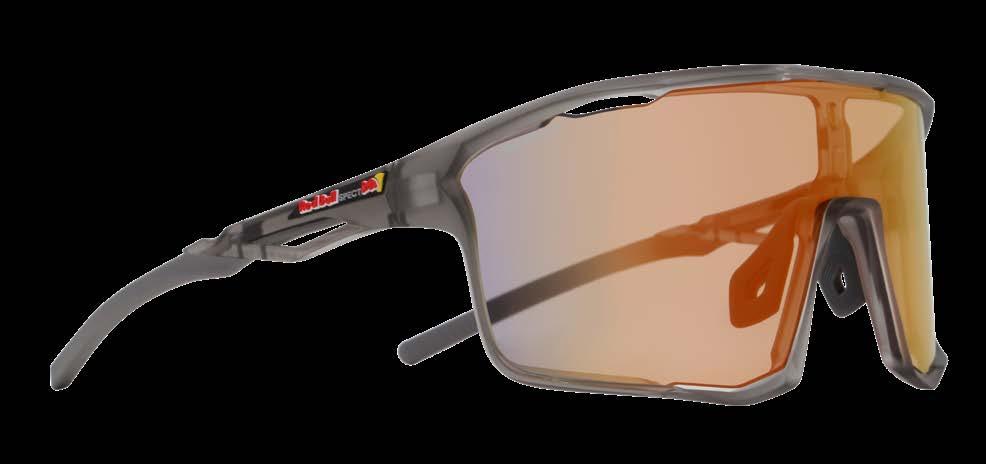
SPECT Eyewear is the eyewear division of the Austrian giant Red Bull, developed in collaboration with the specialized company MPG. The Rumble line is designed for riders who demand high performance without compromising on style. Its sporty design is combined with smart functionality: lightweight, flexible and equipped with adjustable rubberized temple tips for a secure fit on every ride. Thanks to I°Boost technology (available in Rumble-001IBX, Rumble-002IB and Rumble-003IB models), riders benefit from enhanced visual contrast in variable light conditions. The premium Rumble-001IBX model also includes Chrom°X technology and adaptive tint (Category 1–3), offering impeccable style and sharp vision.
The Aerostorm project is defined by a monoblock frame with sharp, angular lines and the Space Toric Vision lens. Its aesthetic deliberately breaks conventions, creating a bold look that stands out while maintaining high performance and maximizing aerodynamics. Two angular peripheral vents allow the frame to flex and adapt to the face, ensuring a secure and comfortable fit. The design prevents any lens distortion, guaranteeing perfect vision in all conditions. The diamond-shaped temples help the glasses adapt to different face shapes without unwanted pressure, both on-road and off-road. The SlideFit optical insert allows prescription lenses to be mounted and can be removed in seconds thanks to the Ejector system.
THE FINAL EXAM OF TAAC
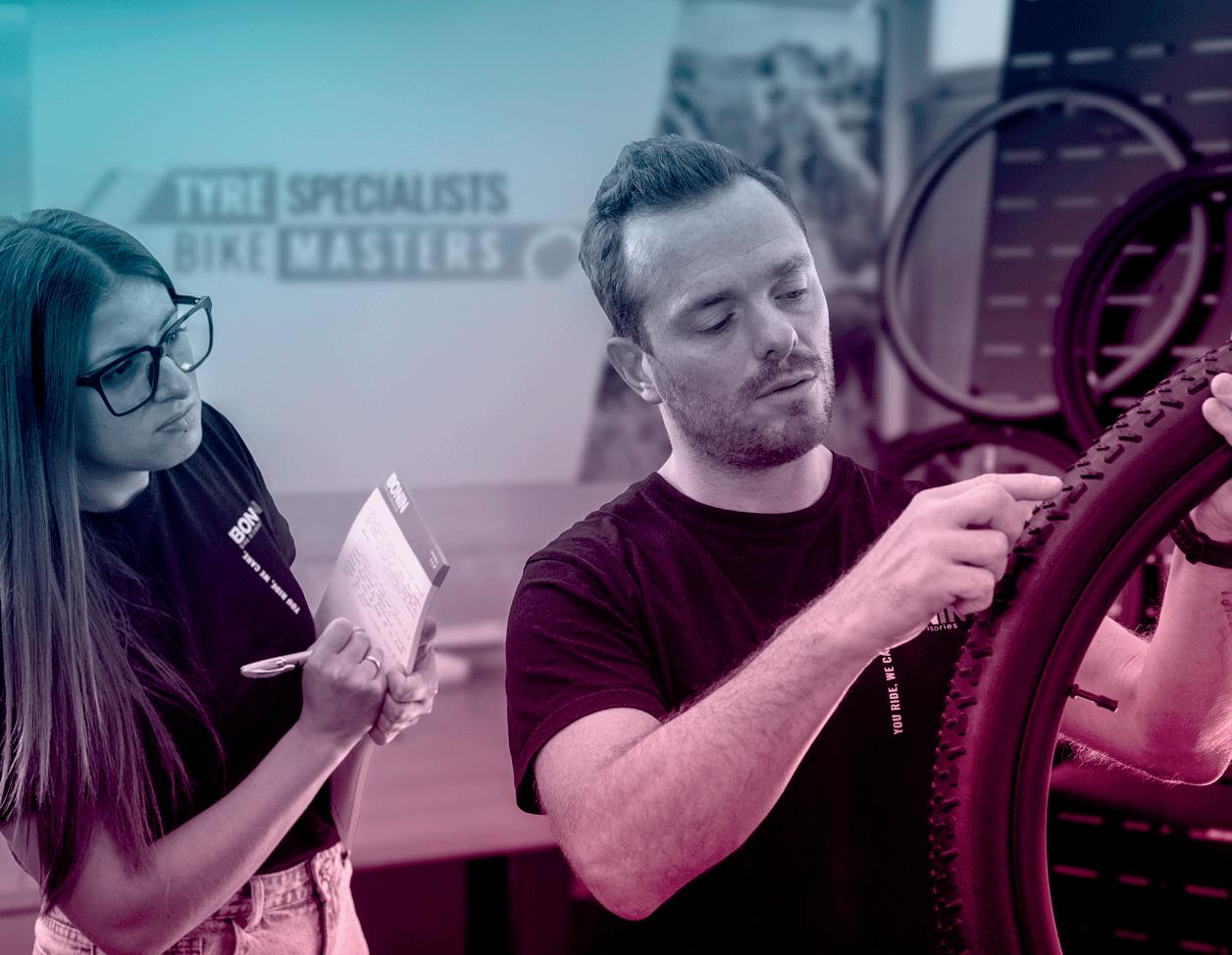
Marcello Fusi, brand manager of the label, talks about the development path of the 2026 product range, structured across road, gravel and MTB. At the core is a Stock-On-Demand strategy that allows the brand to stand out in B2B
Davide L. Bertagna
Three years after the brand’s launch, TAAC enters a new phase of design maturity with its 2026 range. The work on materials, fit and style reflects an evolution that goes far beyond a simple product update, combining performance and design in a more coherent way. We discussed this with Marcello Fusi, brand manager of the label, to understand how the new collection was created and which technical choices guided its development within the Mandelli Lab, the beating heart of TAAC.
Interview
Marcello Fusi, brand manager di TAAC
What needs did you start from when developing the 2026 range?
2023 represented our true starting block: the moment when we said, “we’re ready.” After two years of fine-tuning and gathering feedback, with the 2026 range we wanted to take a decisive leap forward. We are not talking about a simple restyling, but about a real technical maturation of the product. By listening to the market, we understood that in order to grow we had to work on two fundamental fronts: raw materials and fit. The goal was ambitious: to offer a democratic yet high-performance fitting. On one side, we introduced more technical fabrics designed for advanced enthusiasts seeking compression and aerodynamics; on the other, we revised the cuts to ensure comfort also for beginners who do not want to feel restricted. We want anyone wearing TAAC to feel that the garment is designed around the cyclist, not the other way around. There has also been an evolution in terms of style: cleaner graphics, essential lines and a sober aesthetic, in line with contemporary design that rewards elegance without “noise.” The color palettes move between earth- and sky-inspired nuances, easy to match yet never ordinary. At the same time, we have not given up the brand’s racing soul, introducing textures and patterns that recall the world of competition. A balance between minimalism and sporting grit, well represented for example by the Sprinta model, offered in two graphics dedicated to the race world.
What are the main new features of the 2026 collection?
The new range, launching at the end of February, is structured across several lines: two road lines (one more entry level and one more technical), one gravel line in continuity with previous years and, as a major new addition, a mountain bike collection designed especially for e-bikers, who look for softer and not excessively technical garments. The offering includes short- and long-sleeve jerseys, pants, gloves (such as the Supergrip with technology derived from Tucano Urbano) and a significant expansion of the helmet line, with the extension of the Urban range and the introduction of the new Cresta dedicated to gravel and MTB. As for bags, a segment in which
we have received very positive feedback also at an international level, we have chosen not to introduce additional products, consolidating the existing offering.
Who supported you in developing the new product range?
Development, which started at the beginning of 2025, was handled internally by the Mandelli Lab, a team of eight people: four dedicated to accessories and four to apparel. The contribution of feedback collected from our ambassadors, such as Dino Bonelli and Ilaria Fiorillo, as well as input from the sales network and retailers, was also fundamental. A collective effort that allowed us to refine the product in a concrete way.
What differentiates TAAC from other brands on the market?
TAAC is a 100% proprietary brand. We do not distribute a third-party label: we are TAAC. This total control allows us to keep a significant part of production in Italy. For us, Made in Italy is not just a label, but a guarantee of quality supervision and support for the textile supply chain. The numbers confirm the strength of our path: today we are present in around 350 stores in Italy, with an annual growth rate of 50%. A figure that shows how the technical apparel market is far from saturated, if a credible model is proposed.
Why should a retailer choose TAAC products?
One of the major problems for retailers is system rigidity: advance orders, high volumes, strong dependence on weather conditions and very fast collection cycles that quickly lead to sales. As distributors at heart, we decided to go against this trend. We change the collection only after three years and, above all, we do not force retailers to place pre-orders. In a historical moment like the current one, this represents a huge competitive advantage, because it reduces risk and improves inventory management.
In a market often described as saturated, how does TAAC manage to stand out?
TAAC is not just a brand, but the direct expression of Mandelli’s strength. Our approach is not to reduce product quality, but to optimize everything that happens before the product reaches the end customer. Our key word is agile service. Thanks to the “Stock-On-Demand” model and Mandelli’s logistics power, retailers can rely on extremely fast restocking, almost in real time. For the retailer, this means lower financial risk; for the end consumer, it means always finding the desired product when needed. We offer the service of a big player with the agility of a start-up: today, true luxury is efficiency that turns into convenience. taacsport.com - Mandelli srl - 0362.1797888 - info@mandelli.net - mandelli.net
Maglia Podio
Maglia Sprinta
Casco Cresta
G
A R A N T I TA
G A R A N Z I A A V I TA .
U n t e l a i o i n t i t a n i o n o n è s o l o u n a s c e l t a t e c n i c a : è u n a p r o m e s s a c h e d u r a p e r s e m p r e
Pe r q u e s t o , o g n i t e l a i o G r a v e l T i t a n è c o p e r t o d a u n a g a r a n z i a a v i t a
Pe r c h é c r e d i a m o n e l v a l o r e d e l t e m p o , n e l l e s t r a d e c h e c a m b i a n o m a a n c h e i n c i ò c h e r e s t a i m m u t a b i l e : l a t u a v o g l i a d i l i b e r t à , e u n t e l a i o c h e n o n t i a b b a n d o n e r à m a i
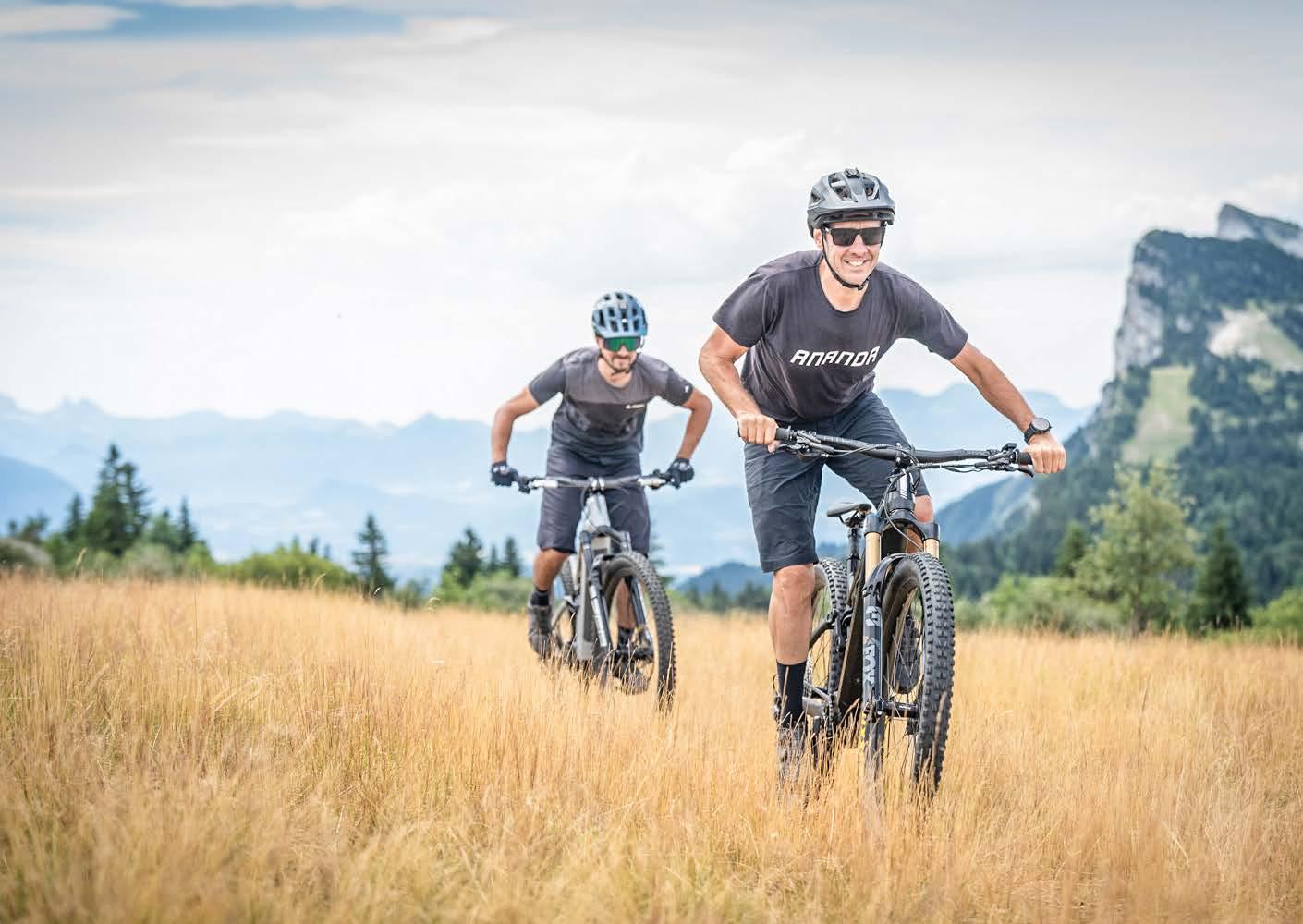
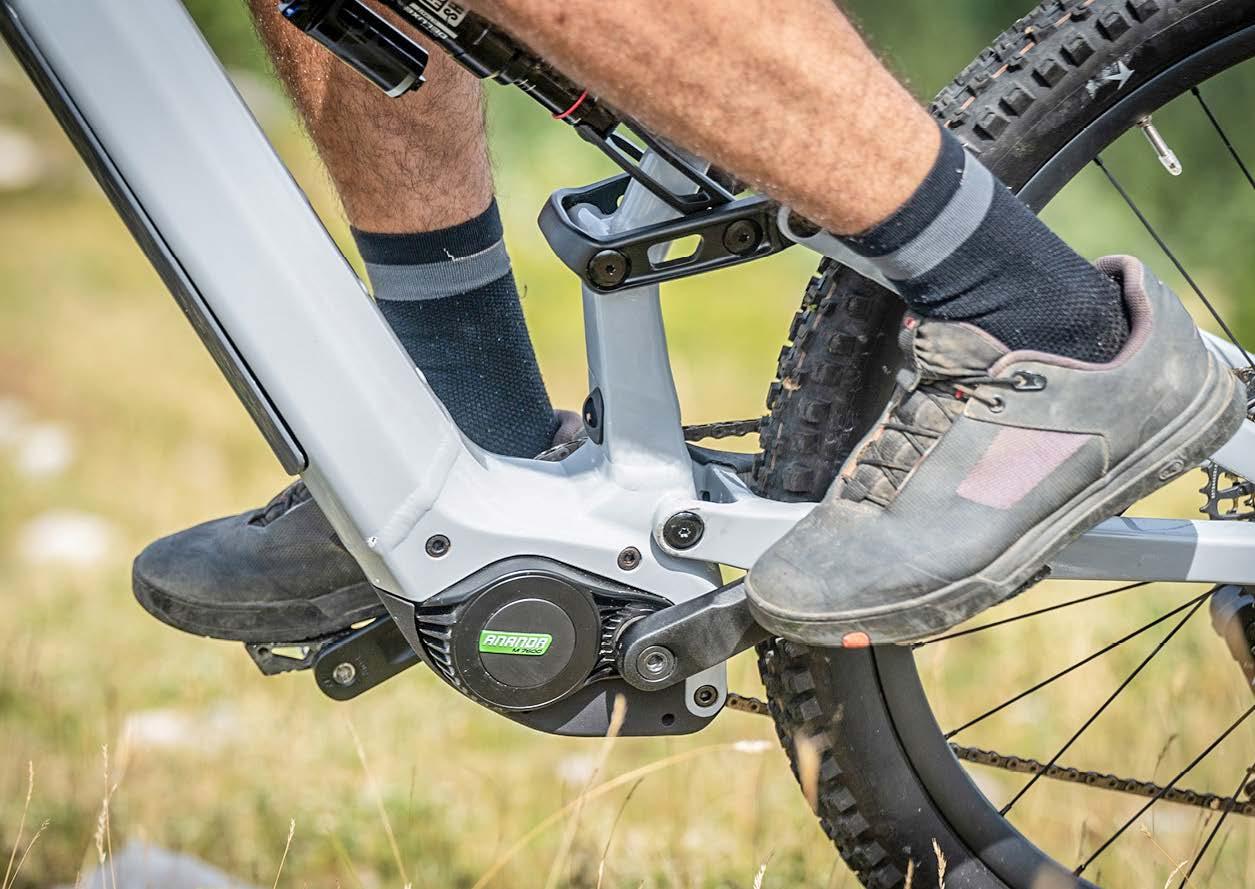
ANANDA: A SINGLE PLATFORM, MULTIPLE APPLICATIONS
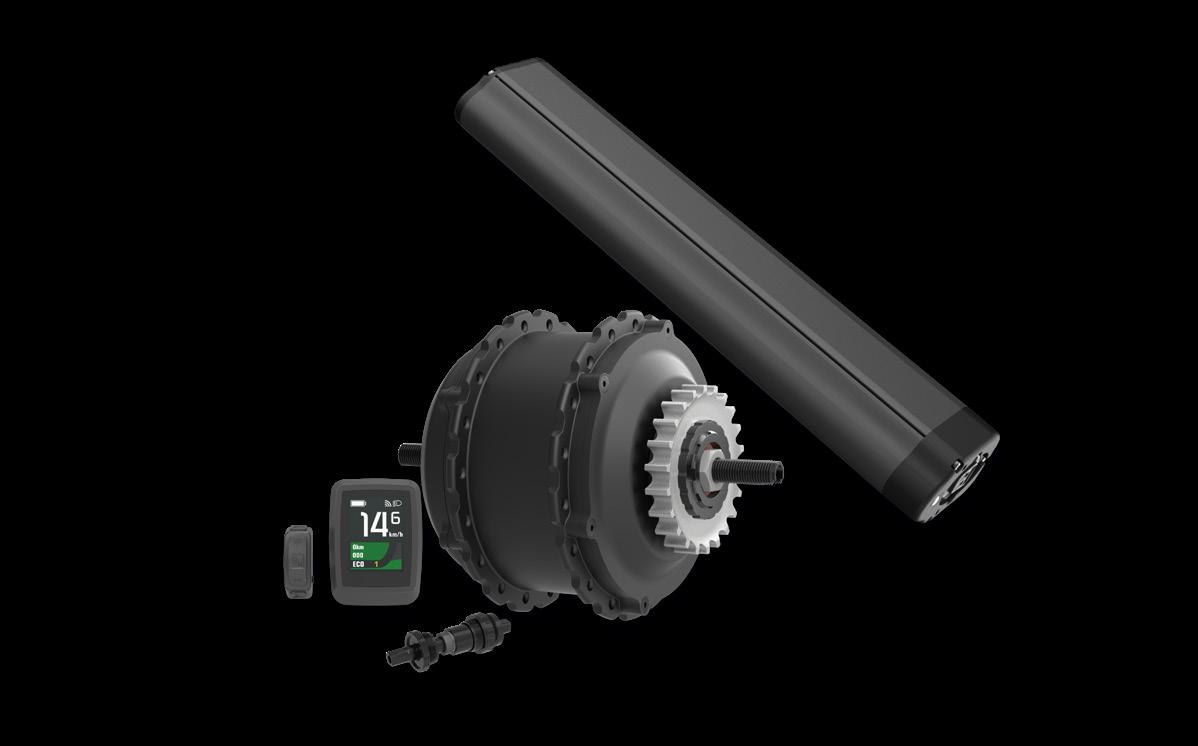
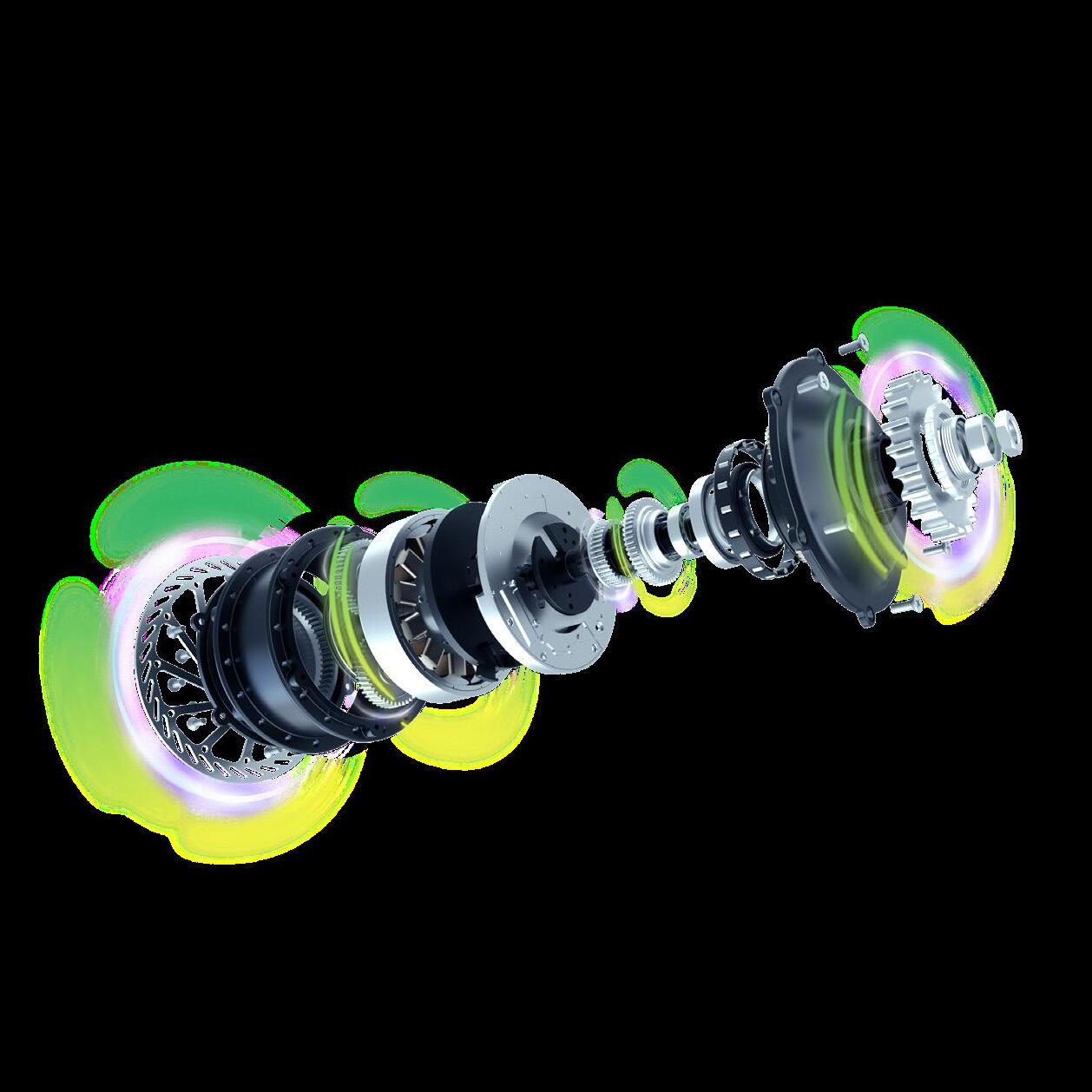
The Ananda M7000 Series, designed to cover multiple segments of the eBike market, is based on a shared architecture that allows brands to develop different applications from a single system. This solution reduces complexity for OEMs and accelerates time-to-market
At Velofollies 2026, Ananda officially presented the M7000 Series, introducing a new generation of mid-drive motors designed as a modular platform rather than as a standalone product. The M7000 Series meets the growing demand from bike brands for flexibility, integration efficiency, and consistent ride quality across different eBike segments. Based on a shared technological architecture, the M7000 platform supports applications ranging from high-performance eMTBs to urban mobility and city commuting, allowing brands to develop diverse product ranges starting from a single system base. Unlike traditional motors designed as stand-alone solutions, the M7000 Series is conceived as a modular platform. It combines a universal mounting interface, high peak power, strong torque, compact dimensions, quiet operation, and smart connectivity in a single cohesive solution, while also enabling clear differentiation between applications.
CURRENT PLATFORM INCLUDES:
• M7600, tuned for aggressive eMTB use and tackling technical climbs (120 Nm torque – 850 W peak power, 36V)
• M7200, optimized for urban and trekking applications (100 Nm torque – 650 W peak power, 36V)
• M7100, an accessible entry-level solution for city bikes (85 Nm torque – 600 W peak power, 36V)
All variants share the same integration standards, electronics, sensor technology, and system logic.
HIGH PERFORMANCE AND COMPACT INTEGRATION
Weighing between 2.7 and 2.9 kg, the M7000 motors deliver up to 120 Nm of tor -
que and peak power up to 850 W, depending on configuration. Low-cadence torque optimization ensures immediate assistance from the very first pedal stroke. Additionally, a high-precision sensor system processes rider inputs in real time, while a responsive clutch ensures smooth, delay-free engagement. The compact motor architecture gives designers greater freedom in frame geometry, enabling clean integration and high ride stability.
A COMPLETE EDRIVE ECOSYSTEM
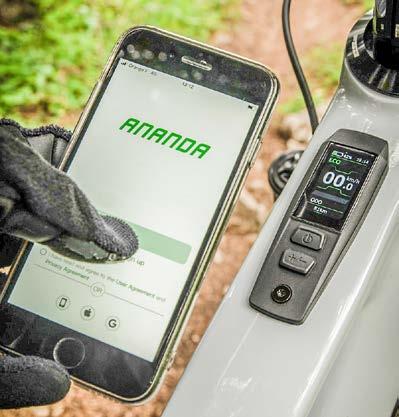
Beyond the motor itself, Ananda presents the M7000 Series as a full eDrive ecosystem. Motors, batteries, controllers, displays, sensors, and optional IoT modules work in synergy. Display options range from TFT units integrated into the frame to handlebar-mounted or stem-mounted displays, all with Bluetooth and designed for clean, organized cockpits. Optional IoT modules enable diagnostics, service management, and future connected services.
CONCRETE VALUE FOR OEMS AND BRANDS
For OEM partners, the platform translates into reduced development effort, lower complexity, and faster time-to-market. A universal mounting standard and a unified CAN system simplify equipment, inventory management, and variants, while the platform’s scalability allows reuse across multiple projects.
“With the M7000 Series, we wanted to move beyond the single-product approach and offer brands a true platform strategy. M7000 allows our partners to develop complete eBike ranges more quickly and efficiently while ensuring a premium, natural ride feel, without the typical costs of high-end systems,” said Thomas Lecoq, Marketing Director Europe at Ananda.
ITALIAN THOROUGHBRED
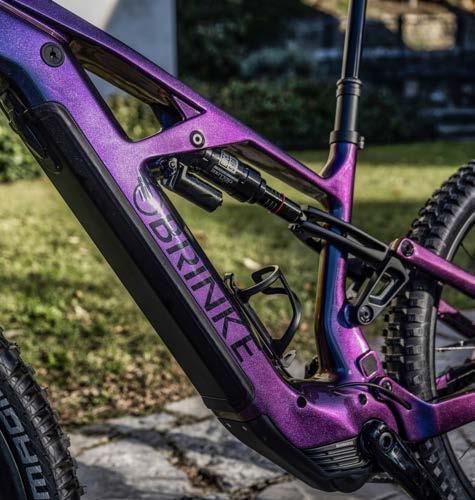
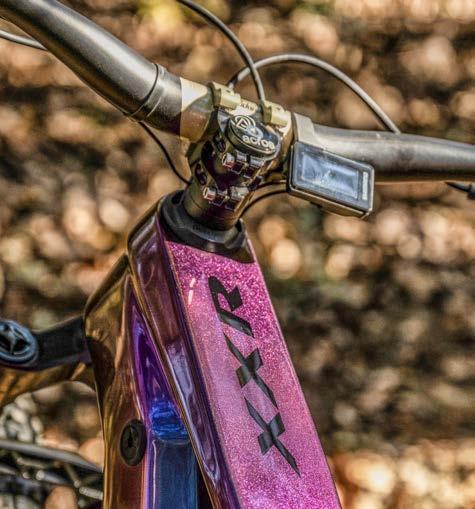
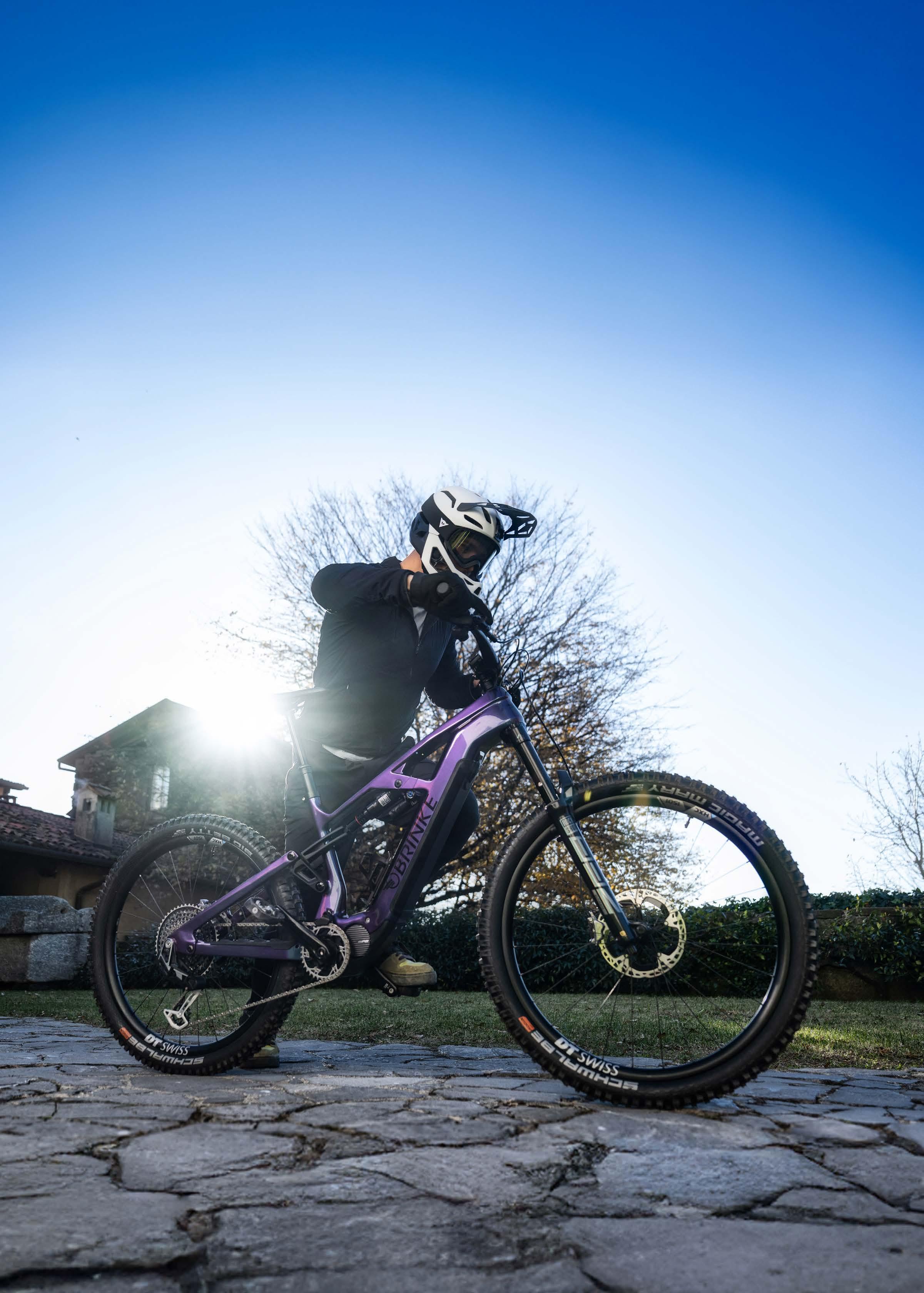
The XXR Carbon Race LTD represents the pinnacle of Brinke’s technology. Designed for the most challenging e-Enduro races, it’s also perfect for riders who refuse to settle
The e-MTB is one of the most versatile vehicles in today’s bike market. In particular, the XXR Carbon Race LTD, at the top of Brinke’s range, is engineered to be a faithful companion for eBikers seeking the ultimate experience. Ideal for winter rides and training, capable of tackling enduro races during the competitive season, and a loyal partner for epic high-mountain rides in the summer months, it embodies the expertise of a brand built on quality construction and design. From the all-mountain trails around Lake Garda (where Brinke is headquartered) to the special stages of e-Enduro, this bike blends racing performance with a striking design, accentuated by a color scheme that emphasizes the frame’s lines. It is engineered for maximum stiffness, ensuring traction, handling, and speed. Specifically, the rear triangle measures 445 mm—a length that, according to the designers, strikes the ideal balance for top performance in every situation, from trial-like climbs to the most demanding descents. The front triangle geometry also contributes, featuring a 65° head
angle in the “flip chip high” position and an increased reach to ensure excellent control on technical terrain. The seat angle is carefully calibrated in different sizes to allow riders of varying heights to maintain an optimal center of gravity regardless of frame size. The XXR Carbon is available in several versions. The model examined here is the high-end “Race LTD” trim, designed to deliver peak performance in competition, featuring a Shimano EP801 motor and Darfon 700 or 800 Wh battery. The components are equally high-end: RockShox suspension, DT Swiss HXC 1501 Spline mullet wheels, Shimano XTR brakes, and a wireless SRAM XX electronic groupset.
Frame: Full Carbon, 160 mm travel
Rear Shock: RockShox Super Deluxe Ultimate Fork: RockShox ZEB Ultimate 29” Solo Air, 170 mm travel
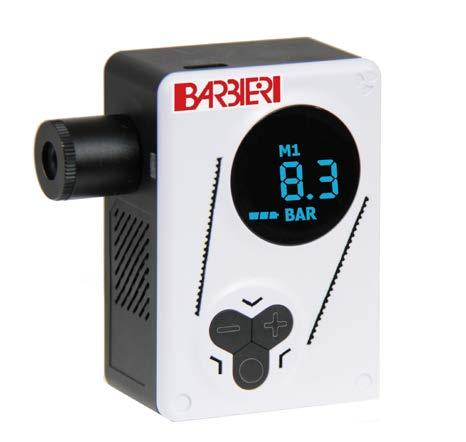
The Bologna distributor has developed a mini pocket compressor, which can save many cyclists' days in the saddle. A product with digital display, simple to use and suitable for all valves
arbieri has developed the ideal solution for those who forget about CO2 cans or inflate and repair kits: a pocket-sized compressor, which allows you to avoid hitches during your rides, preventing a simple problem from ruining a day in the saddle. A product that can potentially become a must have for every cyclist. Compact (70x50x32 mm) and lightweight (125 g), this compressor combines power and practicality: it reaches 8.3 BAR and has a digital display for precise and simple inflation. With the battery fully charged, you can inflate:
• four tires
700x25 at 6 BAR
• four gravel 700x45 tires at 3 BAR
• four 29" x 2.3 mtb tires at 1.3 BAR
The kit comes complete with everything you need: reversible connection for all valves (plus tube for the Schrader val-
ve), USB Type-C battery charging cable, manual in Italian and English, rainproof purse and adapters for balloons and inflatables. Perfect to carry with you at all times, versatile and universal, it works with all valves, eliminating the need for additional tools. Please note that for TPU chambers, it is recommended not to inflate for more than 30 seconds, as the compressor may overheat and compromise the valve: it is therefore recommended to let the valve cool and proceed for another 30 seconds.
MAIN FEATURES
• Inflation capacity: up to 8.3 bar, ideal for road, mountainbike and gravel
• Battery recharges in 25 minutes
• Easy-to-read digital display for real-time pressure monitoring
• Lightweight and compact: only 125 grams and dimensions of 70x50x32 mm, easy to store and transport
• Universal compatibility for all valves (Schrader, Presta, Dunlop, Regina)
• Instructions in Italian and English included
Barbieri snc – 051.6646278 - info@barbieripnk.it
THE LINKING RING
Road and gravel racing often overlap, and to meet the needs of riders seeking maximum speed even on light gravel, Schwalbe has launched the Pro One Allroad, available in three sizes: 30, 35, and 40 mm.
Beyond the cultural, experiential, and commercial impact of recent years, gravel has opened many new industrial opportunities for bike companies. One of the most vibrant and innovative sectors has been tires: catalogs have greatly expanded, offering cyclists a wide range of solutions depending on usage, needs, and terrain. For races that combine large stretches of asphalt with light gravel, the standard is now semi-slick tires, which provide smooth rolling and high speed, bringing road and gravel bikes closer together. This intersection between the two worlds has led to increasingly hybrid tires, and the Pro One Allroad was created to bridge these segments. According to Schwalbe, the design of this tire is rooted in extreme conditions such as Paris-Roubaix, classic cobbled races in the rain, and long endurance events on partially unpaved roads. The Pro One Allroad continues the legacy of the S-One, launched in 2015 and debuted in tubeless form during the “Inferno of the North,” now renewed to bridge the gap between road and gravel. The tread features a dense micro-knob pattern, combining high-speed rolling on asphalt with secure grip on light gravel and wet conditions, minimizing compromises. Schwalbe has introduced this tire in 30-622, 35-622, and 40-622 sizes, making it the widest Pro
One in the range. This ensures the tire looks proportionate to the frame.
AVAILABLE VARIANTS
• 30-622 – Weight: 340 g
• 35-622 – Weight: 425 g
• 40-622 – Weight: 465 g
For all three versions, Schwalbe recommends a tire pressure of 4.5 bar / 65.0 psi.
PRO ONE ALLROAD TECHNOLOGIES
At the heart of this tire is Schwalbe’s new Race Pro construction. Three layers of casing on the sidewall provide excellent protection against punctures and cuts, while the improved and expanded V-Guard insert offers even more protection under the tread. By optimizing the casing layers, rolling resistance has also been further reduced. The tire is tubeless-ready and compatible with hookless rims, like all Schwalbe TLE/TLR tires. The Pro One Allroad is made with natural rubber sourced from fair trade (Fair Rubber) and uses recycled carbon black (rCB) from Schwalbe’s own production waste.
Schwalbe Italia - 039.6058078 - info@schwalbe.it
THE INDUSTRY OF CUSTOMIZATION
There is no simple catalog, nor a single solution. This is FSA’s philosophy, applied also to the development of headsets, which must adapt to the growing diversification of frames
Developing a new headset requires the right balance between market trends and technical expertise. Thanks to 30 years of experience, FSA continues to meet the evolving needs of cyclists and manufacturers by offering advanced solutions for different segments. With the increasing diversification of frames, components must adapt to increasingly varied requirements: this is why the company focuses on customization as a true industrial method, the result of direct and ongoing dialogue with OEMs and companies. Everything is tailored to customer needs, integrating innovative technologies to optimize performance and design. There is no simple catalog, nor a single solution.
INTEGRATION ACCORDING TO FSA
FSA is able to develop multiple solutions that allow the integration of front lights, USB ports and accessory wiring directly into the cockpit and headset, achieving cleaner designs, improved aerodynamics and simplified assembly.
ACR (Aerodynamic Cable Routing): a fully hidden solution with cables running through the handlebar, stem and headset, ideal for high-performance road bikes.
ICR (Integrated Cable Routing): designed for OEM integration, it enables internal routing from the handlebar to the frame while maintaining structural integrity and system alignment.
SMR-II (Smart Cable Routing): a versatile system compatible with both fully internal and semi-integrated routing.
CR II System (patent pending): the latest evolution of headset routing, featuring an integrated compression spacer and a flexible sealing ring. Advantages include improved head tube support (ideal for eBikes and more demanding applications), tolerance compensation without micro-shims, and cleaner integration for hidden or semi-hidden routing.
CR Project (Cable Routing partnership program): a semi-integrated platform developed with leading cockpit manufacturers, including Satori, TranzX, Zoom and Ergotec. It offers companies a plug-in solution that simplifies production while maintaining design flexibility.
IN-HOUSE PRODUCTION
FSA internally manages the entire development and production process of the plastic headset components (in particular the top cone and spacers), ensuring perfect integration between the stem and the head tube. From design to Moldflow analysis, from mold engineering to in-house injection molding, every stage is supervised to guarantee precision and consistency. The process includes:
• design validation (7–40 days);
• mold production (gates, vents, cooling system, DFM);
• mold validation and pre-series before mass production.
HEADSET TECHNOLOGIES
FSA is a pioneer of several innovations, each designed to deliver superior integration, stability, customization and durability.
CBS – Control Bike System
Improves steering stability and reduces unwanted oscillations. It integrates a damping system directly into the bearing, available in two levels: HON (light), for gravel, eTrekking and touring; TAR (medium), for heavier eCargo and urban bikes.
RAS – Reach Adjust System
Customizes reach without modifying frame geometry. The RAS system allows reach adjustment of ±5 mm through ovalized cups, without tools. In addition to enabling more optimal adjustment, it reduces inventory requirements for frame manufacturers. It is ideal for downhill, enduro and all-mountain.
HBS – Headset Blocking System
Protects frame and cables by limiting steering rotation. It incorporates a mechanical stop capable of preventing handlebar over-rotation. Recommended for enduro, urban and cargo bikes.
BEARINGS
The heart of the headset, whose durability, smoothness and resistance to contamination affect riding feel and maintenance. Two families represent FSA’s technical standard.
HPB – High Performance Bearing
A premium solution for excellent durability and internal routing systems, ideal for bikes with integrated cable routing, eBikes subject to higher loads and torque, gravel and enduro bikes used in extreme conditions, and brands seeking to reduce warranty costs and after-sales service.
X-Bearing
Offers the best durability at a competitive price. X-Bearings provide a performance upgrade over standard chromed steel bearings, improving corrosion resistance and component lifespan without reaching the premium standard of HPB bearings.
LIGHTER, MORE POWERFUL
Raicam RXC Racing is the top of the range for XC and endurance. Disciplines where, in addition to efficiency, every gram saved counts, because marginal gains in racing make the difference between the podium and anonymity
Gabriele Vazzola
Raicam is now an established presence in the mountain bike world. Its complete range of made-in-Italy braking systems has already won over numerous enthusiasts and riders. With the RXC Racing model, the brand aims to claim top positions in XC and marathon races, thanks to its proverbial power and modulation combined with podium-level lightness. This brake represents the pinnacle of Raicam’s endurance range and is designed to deliver maximum advantage to professionals while enhancing the performance of more advanced enthusiasts. It features a selection of refined materials applied to the main components: a carbon composite lever, a titanium piston rod, and a design engineered to shave off every possible gram. Maximum power is also ensured by the R2 hose in Kevlar and fiber, which reduces expansion during braking, guaranteeing consistent performance and precision. To achieve the ultimate balance between power and lightness in the RXC Racing brake, Raicam’s team of engineers—who boast unique expertise in the automotive world—used one of the most advanced software solutions available. Through complex calculation algorithms, this software generated a design that minimizes the use of aluminum,
achieving the best ratio between weight and braking power.
The complete kit is available at leading stores and includes:
• master cylinder
• RXC Racing caliper
• 2x R1 hoses 1.9 m • 2x spare olives
hardware
At Raicam, they know that a brake must not only be efficient and high-performing—appearance also matters. Further work was therefore carried out to create a distinctive design, with premium details that enhance its racing spirit. The same approach was applied to the RXC Racing master cylinder, which has been lightened and enhanced with a carbon lever and titanium hardware, resulting in a product that not only guarantees race performance but certainly does not go unnoticed. The Raicam RXC Racing master cylinder reaches a featherweight 78 grams and features lever reach adjustment. Two versions of the brake caliper are available: a two-piston post-mount version weighing 77 grams, and a two-piston flat-mount version weighing 92 grams. Another distinctive feature of all high-end brakes from the Italian brand is the special “cherry” red anodized finish, which not only makes these products immediately recognizable but also ensures durability and component protection. For maximum performance, Raicam recommends pairing this brake with RXC Ceramic+ pads, the result of Raicam’s automotive expertise applied to MTB; and RXC Brake Disks in stainless steel, laser-cut and available in diameters of 160, 180, 204 and 220 mm.
Pinza Flat-Mount
@neilwilsonphotography
@garage6studio
La campionessa di xce Gaia Tormena
THE CHARGE OF THE 101
Bikefortrade’s exclusive survey returns once again this year, analyzing market performance in 2025 and offering valuable insights into the future outlook of the bike industry. The floor goes to retailers from across Italy
Davide L. Bertagna and Daniele Pansardi
Retailers represent the fundamental link in the bike supply chain, and for this reason it is essential to gather their point of view, listen to their requests and take their needs into account. With the “Focus Shop” column, we give them a voice 365 days a year, but it is in the first issues of the new year that, through the traditional “Charge of the 101” (which has now become a MagNet trademark), we conduct a true 360-degree market survey. A review of the year just ended and perspectives for the one ahead, new products, trends, challenges, opportunities, proposals: with 2025 now closed in store balance sheets, what is the sentiment among Italian retailers? Here is the first installment of our survey, offering thought-provoking insights for all operators in the bike market.
PARTECIPA ANCHE TU A
“LA CARICA DEI 101”
Sei un negoziante, hai un’officina, gestisci un’attività nel settore bike?
Bikefortrade e il gruppo editoriale MagNet ti danno la possibilità di dire la tua! Come di consueto, anche quest’anno rinnoviamo l’impegno nei confronti dei migliori negozianti italiani. Per rispondere alla nostra inchiesta inquadra il QR Code per il form online oppure richiedi un appuntamento telefonico al seguente indirizzo mail: redazione@bike4trade.it
GAGABIKE
Piacenza
Luca Peveri, titolare
BILANCIO DI FINE ANNO
1. In decrescita.
2. -30%
3. Officina
THE QUESTIONS
YEAR-END REVIEW
1. In 2025, how did your store’s sales perform compared to 2024?
2. Please indicate the percentage of any growth or decline.
3
. Bike sales, accessories and apparel sales, workshop services. Which of these areas generated the highest margins for you in 2025?
4. In a difficult market situation like the one we are experiencing, what were the main challenges you had to face in 2025?
PURCHASING TRENDS
5. Which types of bikes/eBikes sold the most in 2025? And in which price range?
6. What is the feature most sought after by customers and that most influences the sale?
SOCIAL MEDIA
7. Which social media platforms do you use the most?
8. Do you use them for direct sales, promotions, or simply to build your community?
BEST-SELLING BRANDS IN 2025
9. What are, in order, your top 3 bike brands? What are, in order, your top 3 eBike brands? What are, in order, your top 3 apparel brands? What are, in order, your top 3 accessory brands?
10. In your opinion, which brand was the revelation of 2025 (the company that stood out the most)?
11. Overall rating for 2025 from 1 (extremely insufficient) to 10 (extremely positive)?
12. Any final considerations or messages to the bike industry?
CICLI CASTAGNONE
Vinovo (TO)
Marco Castagnone, titolare
BILANCIO DI FINE ANNO
1. In decrescita.
2. -30%
3. Officina
4. Il problema maggiore è stato l’abbassamento troppo importante dei prezzi sul mercato.
TREND DI ACQUISTO
5. Le eBike sui 3.500 euro sono state le più richieste nel 2025.
6. Il prezzo rimane l’elemento fondamentale che sposta le scelte d’acquisto del cliente.
SOCIAL MEDIA
7. Facebook
8. Sfruttiamo i social network per le promozioni.
MARCHI PIÙ VENDUTI NEL 2025
9. bici: SCOTT
eBike: SCOTT
abbigliamento: FOX, ENDURA, SCOTT
accessori: GARMIN, MAXXIS, OAKLEY
10. AMFLOW
11. 4
4. Il calo delle vendite ha rappresentato senza ombra di dubbio il problema maggiore che abbiamo dovuto affrontare nel 2025.
TREND DI ACQUISTO
5. I modelli che abbiamo venduto maggiormente sono state le eBike sui 2.000 euro.
6. I nostri clienti richiedono oggi molto le city bike.
SOCIAL MEDIA
7. Non utilizziamo social media.
MARCHI PIÙ VENDUTI NEL 2025
9. bici: CERVÉLO, TREK, SPECIALIZED
eBike: CUBE, SPECIALIZED, FOCUS
abbigliamento: TOFIT, SANTINI, ASSOS
accessori: NORTHWAVE, KASK, SPEEDPLAY
10. NESSUNO IN PARTICOLARE.
11 5
BILANCIO DEL 2025 RISPETTO AL 2024
ZTL BICI
Roma
Gianpiero Chinigò, co-fondatore
BILANCIO DI FINE ANNO
1. In decrescita.
2. -10%
3. Officina
4. Abbiamo avuto grande difficoltà nel vendere biciclette a prezzi non scontati e a mantenere il margine.
TREND DI ACQUISTO
5. I modelli più richiesti nel 2025 sono state le city-trekking e le pieghevoli sulla fascia di prezzo tra i 1500 e i 2500 euro.
6. Il fattore in grado di influenzare maggiormente la vendita è il rapporto qualità/prezzo. SOCIAL MEDIA
7. Instagram e Facebook
8. Utilizziamo i social per promozioni e per costruire la nostra community.
12. Ritengo sia importante incentivare modalità di vendita più moderne. È inutile scaricare la patata bollente sui retailer. Per esempio con bici in esposizione-provaconto vendita in negozio e ordine click and collect, riconoscendo un margine decente al rivenditore.
IL BICIAIO Merate (LC)
Vincenzo Arlati, titolare
BILANCIO DI FINE ANNO
1. In decrescita.
2. -35%
3. L’officina ha garantito i maggiori margini nel 2025.
4. Le problematiche maggiori con cui abbiamo dovuto fare i conti lo scorso anno sono state le scontistiche su siti e-commerce e i prezzi sottocosto delle aziende bici.
A nostro avviso servirebbe più professionalità da parte di tutto il settore.
TREND DI ACQUISTO
5. La mtb muscolare è stata la più richiesta nel 2025.
6. La caratteristica più ricercata dal cliente e che influenza maggiormente la vendita è sempre e solo lo sconto.
SOCIAL MEDIA
7. Instagram e Facebook
8. Usiamo molto poco i social.
MARCHI PIÙ VENDUTI NEL 2025
9. bici: ORBEA
eBike: ORBEA
abbigliamento: LEATT
accessori: MAXXIS
10. DJI
11 2
DOCTORBIKE Magenta (MI)
Massimo Calcaterra, titolare
BILANCIO DI FINE ANNO
1. In crescita.
2. +20%
3. La vendita bici.
4. La domanda di mercato risulta fortemente discontinua, con dei picchi alternati a fasi di crollo delle richieste. Tale instabilità è ulteriormente amplificata dalle politiche di pricing aggressive adottate nel canale online, dove pratiche di scontistica eccessiva da parte di operatori poco strutturati compromettono la percezione del valore del prodotto. Questo fenomeno genera nel consumatore un comportamento attendista, orientato all’acquisto esclusivamente al raggiungimento del prezzo minimo, con conseguente erosione dei margini e distorsione delle dinamiche di mercato.
TREND DI ACQUISTO
5. La gravel nella categoria di prezzo dai 1.500 fino ai 5.000 euro.
6. La leva decisiva di vendita è la coerenza tra prezzo e valore percepito, che riduce l’attesa opportunistica del cliente e rafforza la fiducia nel fornitore.
SOCIAL MEDIA
7. Instagram e Facebook
8. Utilizziamo i social media principalmente come strumento di promozione e di consolidamento del brand, con l’obiettivo di rafforzare la visibilità, la reputazione e la relazione con la community, più che come canale di vendita diretta.
12. Questo è stato un anno che ci ha messi alla prova, fatto di salite ripide e discese improvvise, proprio come certe strade che ogni ciclista conosce bene. Il mercato ha cambiato ritmo più volte, tra accelerazioni inattese e lunghi tratti d’incertezza, mentre politiche di sconto sempre più aggressive hanno spesso spostato l’attenzione dal valore al solo prezzo. In questo scenario, abbiamo scelto di non forzare il passo. Abbiamo preferito restare fedeli alla nostra identità, continuando a credere nella qualità, nella serietà e nel rispetto di chi vive la bici ogni giorno: dealer, partner e rider. Invece di inseguire l’ultimo sconto, abbiamo lavorato per costruire qualcosa che durasse nel tempo, rafforzando il nostro brand e la relazione con la community. Perché il vero risultato non è arrivare primi a ogni semaforo, ma continuare a pedalare con coerenza, anche quando la strada si fa dura. E il viaggio, per noi, è appena iniziato.
12100 CYCLING STUDIO
Cuneo
Francesco Mariotti, titolare e gestore
BILANCIO DI FINE ANNO
1. Stabile.
3. L’officina è la voce che ci ha garantito i maggiori margini lo scorso anno.
4. La scontistica selvaggia sul mercato ha influenzato negativamente il 2025.
TREND DI ACQUISTO
5. I modelli più richiesti nel 2025 sono state le road di alta gamma.
6. Il cliente richiede sempre più esclusività.
SOCIAL MEDIA
7. Instagram
8. Utilizziamo i social network soprattutto per costruire la nostra community. MARCHI PIÙ VENDUTI NEL 2025
9. bici: COLNAGO, FACTOR, CERVELO eBike: non le vendiamo.
abbigliamento: non lo trattiamo.
accessori: CERAMICSPEED, CARBON TI, GARMIN
10. SRAM
11. 7
12. Il cliente è sempre più abituato a correre dietro al prezzo più basso a discapito della professionalità e del sevizio. A queste condizioni non c’è futuro per noi negozianti e per tutto il comparto.
111 BICYCLES STORE Albignasego (PD)
Giuliano Padovan, meccanico
BILANCIO DI FINE ANNO
1. In decrescita.
2. -20%
3. Officina.
4. La guerra dei prezzi al ribasso è stata la problematica più importante registrata nel 2025.
TREND DI ACQUISTO
5. Gravel entro i 3.000 euro.
6. Il prezzo è l’elemento centrale sempre nelle scelte d’acquisto del consumatore.
12. Ai brand vorrei chiedere di diminuire il numero di modelli, concentrandosi su un miglior rapporto qualità/prezzo, evitando le sovrapproduzioni e cercando di selezionare i rivenditori per la qualità dei servizi offerti e non per quantità.
BICICLETTE MARZANO
Pomigliano d'Arco (NA)
Giovanni Marzano, amministratore
BILANCIO DI FINE ANNO
1. Stabile.
3. La vendita di nuove bici è la voce che ci ha garantito i maggiori margini nel 2025.
4. In un momento di difficoltà del mercato come quello che stiamo vivendo la concorrenza online e i siti cinesi stanno influenzando negativamente il nostro lavoro.
TREND DI ACQUISTO
5. Le bici da corsa sono stati i modelli più richiesti nel 2025.
6. Oggi il cliente è sempre più attratto dai gruppi elettronici.
SOCIAL MEDIA
7. Facebook
8. Utilizziamo i social network per promozioni, vendite, ma anche per costruire la nostra community.
3. La vendita di biciclette ci ha permesso di avere i maggiori margini nel 2025.
4. I tre problemi maggiori che abbiamo dovuto affrontare negli ultimi anni sono stati: i troppi sconti, la troppa proposta e i troppi marchi sul mercato.
TREND DI ACQUISTO
5. Bici da corsa e gravel.
6. Gli elementi che influenzano maggiormente la vendita sono l’estetica dei modelli e il rapporto qualità/prezzo.
SOCIAL MEDIA
7. Instagram e Facebook
8. Utilizziamo i social per aumentare le vendite e per sviluppare la nostra community.
12. Ritengo sia fondamentale per tutta l’industry rivedere i prezzi. In questo momento storico sono troppo alti e il pubblico è “spaventato”.
CICLI MARINO ROSSI
Udine
Andrea Rossi, titolare
BILANCIO DI FINE ANNO
1. Stabile.
3. Vendita bici.
4. La problematica maggiore che abbiamo dovuto affrontare nel 2025 è stata la concorrenza dei siti online.
TREND DI ACQUISTO
5. Le eCity intorno ai 1.500 euro.
6. La caratteristica che nel nostro lavoro riesce a fare la differenza è l’assistenza post vendita.
SOCIAL MEDIA
7. Instagram e Facebook
8. Sfruttiamo i social per vendite dirette, promozioni, ma anche per ampliare la community.
MARCHI PIÙ VENDUTI NEL 2025
9. bici: VIA VENETO, TORPADO, ZARMA eBike: VIA VENETO, TORPADO, BRERA abbigliamento: non lo trattiamo. accessori: BRN, RMS, MANDELLI
10. BRN
11. 7
MOTOCICLIDORO
Verona
Marco Bertagnoli, titolare
BILANCIO DI FINE ANNO
1. In decrescita.
2. -15%.
3. I maggiori margini nel 2025 sono dipesi dal lavoro in officina.
4. Il problema maggiore che abbiamo dovuto affrontare nel 2025 è legato alla vendita di biciclette nuove.
TREND DI ACQUISTO
5. Le eBike full suspended da 4.000 euro.
6. L’elemento che influenza maggiormente la vendita è sicuramente il prezzo.
SOCIAL MEDIA
7. Instagram e Facebook
8. Li sfruttiamo per vendite dirette, promozioni o semplicemente per costruire la community.
MARCHI PIÙ VENDUTI NEL 2025
9. bici: WHISTLE
eBike: WHISTLE, THOK abbigliamento: non lo trattiamo.
accessori: MVTECK, BYTE, SWITCH
10. WHISTLE
11. 5
KOALA BIKE
Trieste
Sara Bencina, titolare
BILANCIO DI FINE ANNO
1. In decrescita.
2. -20%
3. L’officina.
4. In generale, tra il difficile momento di mercato, le vendite online a prezzi sempre più stracciati e la potenziale clientela che arriva in negozio con idee che raramente corrispondono alla realtà, la maggiore difficoltà è realizzare un giusto margine sulle vendite.
TREND DI ACQUISTO
5. Mtb ed eMtb. Per le prime più o meno dai 500 ai 2.000 euro, per le seconde dai 3.000 ai 5.000 euro.
6. Per quanto riguarda le eMtb gli elementi che fanno la differenza sono sicuramente la potenza del motore e la capienza della batteria.
SOCIAL MEDIA
7. Instagram e Facebook
8. Li utilizziamo per vendite dirette e per costruire la nostra community.
4. Il problema principale è collegato all’overstock di magazzino di bici invendute.
TREND DI ACQUISTO
5. Bici da corsa sotto 3.500 euro ed eBike sotto i 4.000.
6. La caratteristica più ricercata dal cliente è il prezzo scontato delle bici. Con il lavoro in officina viene riconosciuto dal consumatore il valore aggiunto del negozio senza avere problemi di giustificazione prezzi.
SOCIAL MEDIA
7. Instagram e Facebook
8. Sfruttiamo i social soprattutto per proporre e presentare al consumatore prodotti di tutti i tipi.
Potenza e controllo, senza compromessi. Scopri la gamma su brinkebike.it
BIGA LA CARGOBIKE
Pogliano Milanese (MI)
Alessandro Ledda, titolare
BILANCIO DI FINE ANNO
1. In crescita.
2. +70%
3. La voce che ci ha garantito i maggiori margini nel 2025 è quella legata alla vendita di bici.
4. Il problema maggiore che abbiamo affrontato lo scorso anno è stata la mancanza di cultura (o almeno non ancora adeguata) al modello imprenditoriale sviluppato intorno alle cargo bike.
TREND DI ACQUISTO
5. I modelli più venduti sono state le cargo bike di Larry vs Harry e Riese & Müller nella fascia di prezzo medio di 5.000 euro.
6. Nel nostro segmento il cliente cerca una cargo bike specifica per il trasporto merci.
SOCIAL MEDIA
7. Instagram, Facebook e LinkedIN
8. Utilizziamo i social soprattutto per costruire la nostra community.
MARCHI PIÙ VENDUTI NEL 2025
9. bici: BERGAMONT
eBike: LARRY VS HARRY, RIESE & MÜLLER, TENWAYS abbigliamento: ROSTI
accessori: THULE, ABUS, LAZER
10. LARRY VS HARRY
11. 9
12. Nel nostro lavoro è fondamentale puntare sulla specializzazione con attenzione alla qualità, al product care, alla massima longevità del prodotto garantendo un buon servizio post vendita.
BIKE HOUSE
Vigevano (PV)
Tiziano Milan, titolare
1. Stabile
3. Vendita bici.
4. Il problema principale è l'oramai continuo overstock che parte dalle case madri che, a cascata, si riversa sui negozianti. Non sposo la “cantilena” dei prezzi esagerati (perché a mio modo di vedere qualsiasi cosa nel suo dettaglio ha prezzi esagerati a questo punto).
TREND DI ACQUISTO
5. Per il mio target di pubblico (focalizzato sull’elettrico) nel 2025 ho avuto una certa stabilità unita a qualche picco di crescita, sempre sul mondo a pedalata assistita.
6. La novità prodotto è capace di suscitare ancora grande interesse sul pubblico finale.
SOCIAL MEDIA
7. Instagram e Facebook
8. Li sfrutto principalmente per la community. Non sono strutturato per un e-commerce purtroppo.
MARCHI PIÙ VENDUTI NEL 2025
9. bici: MONDRAKER, BIANCHI, OLYMPIA eBike: MONDRAKER, BIANCHI, OLYMPIA abbigliamento: LEATT
accessori: DEITY COMPONENTS, GARMIN, EXTREME RACING SHOX
10. Domanda facile visto che a quanto pare se non lo hai sei tagliato fuori. Vi dico quindi DJI con il loro sistema Avinox. 11. 4
CICLI MIOTTO
Asolo (TV)
Andrea Miotto, titolare
BILANCIO DI FINE ANNO
1. In crescita
3. Senza dubbio l’officina.
4. Le scarse vendite hanno caratterizzato tutto il nostro 2025.
TREND DI ACQUISTO
5. Gravel intorno ai 2.000 euro.
6. La caratteristica più ricercata dal cliente e che influenza maggiormente la vendita è senza dubbio il prezzo.
SOCIAL MEDIA
7. Instagram e Facebook
8. Li sfruttiamo per vendite dirette, promozioni e per costruire la community. MARCHI PIÙ VENDUTI NEL 2025
9. bici: ATALA, BERRIA, GUERCIOTTI eBike: ATALA, BERRIA, VIA VENETO abbigliamento: non lo trattiamo. accessori: KAYAK, WOT
10. BERRIA
11. 7
BICIPEDIA
Sieci (FI)
Max Gerbi, titolare
BILANCIO DI FINE ANNO
1. In decrescita
2. -30%
3. L’officina ci ha garantito i maggiori margini lo scorso anno.
4. I problemi più grandi sono stati gli overstock di magazzino (soprattutto per bici e abbigliamento). Inoltre, valutazioni dell'usato troppo elevate ci hanno messo in difficoltà. I clienti oggi sono poco inclini a cambiare bici.
TREND DI ACQUISTO
5. Corsa e gravel muscolari sono stati i modelli più richiesti.
6. L’utente finale guarda solo un elemento ormai: il prezzo.
SOCIAL MEDIA
7. Instagram, Facebook e TikTok
8. Già da anni sui social pubblichiamo dei contenuti su servizi, organizzazione di eventi e tour, gestione di bike park, corsi di guida e promozione del territorio con la bici. In futuro daremo ancora più spazio alla nostra community.
12. Dal mio punto di vista, per i negozianti con modelli di business tradizionali l'unico modo per sopravvivere è investendo su prodotti d'alto e altissimo livello.
CICLI MIGANI
Riccione (RN)
Denis Migani, titolare
BILANCIO DI FINE ANNO
1. Stabile.
3. L’officina è la voce che ci ha garantito i maggiori margini nel 2025.
4. Il problema principale è il bassissimo potere d’acquisto della clientela.
TREND DI ACQUISTO
5. Le bici più vendute nel 2025 sono state le gravel tra i 4.000 e i 4.900 euro.
6. La caratteristica maggiormente ricercata dal cliente e che influenza la vendita è l’estetica dei modelli.
SOCIAL MEDIA
7. Instagram e Facebook
8. Li utilizziamo per costruire la community e per le promozioni di vendita.
3. L’officina ha tenuto nel 2025, garantendoci i maggiori margini.
4. Il problema principale affrontato lo scorso anno è stata la sleale concorrenza dell'aziende produttrici che vendono online.
TREND DI ACQUISTO
5. Nel nostro caso i modelli maggiormente richiesti sono stati le city bike sotto i 300 euro.
6. Le bici economiche sono sempre più ricercate dal cliente finale.
SOCIAL MEDIA
7. Non li utilizziamo.
MARCHI PIÙ VENDUTI NEL 2025
9. bici: BRERA
eBike: BRERA
abbigliamento: non lo trattiamo. accessori: non li trattiamo.
10. BRERA
11. 2
THE QUESTIONS
YEAR-END REVIEW
1. In 2025, how did your store’s sales perform compared to 2024?
2. Please indicate the percentage of any growth or decline.
3
. Bike sales, accessories and apparel sales, workshop services. Which of these areas generated the highest margins for you in 2025?
4. In a difficult market situation like the one we are experiencing, what were the main challenges you had to face in 2025?
PURCHASING TRENDS
5. Which types of bikes/eBikes sold the most in 2025? And in which price range?
6. What is the feature most sought after by customers and that most influences the sale?
SOCIAL MEDIA
7. Which social media platforms do you use the most?
8. Do you use them for direct sales, promotions, or simply to build your community?
BEST-SELLING BRANDS IN 2025
9. What are, in order, your top 3 bike brands? What are, in order, your top 3 eBike brands? What are, in order, your top 3 apparel brands? What are, in order, your top 3 accessory brands?
10. In your opinion, which brand was the revelation of 2025 (the company that stood out the most)?
11. Overall rating for 2025 from 1 (extremely insufficient) to 10 (extremely positive)?
12. Any final considerations or messages to the bike industry?
CICLI PEDERZOLLI
Riva del Garda (TN)
Alessio Pederzolli, socio titolare
BILANCIO DI FINE ANNO
1. In crescita.
2. +15%
3. Vendita bici.
4. Il segmento delle mtb tradizionali ha sofferto tantissimo nel 2025. TREND DI ACQUISTO
5. La domanda maggiore è stata per le eBike tra i 1.100 e 1.600 euro.
4. I problemi principali sono stati la mancanza di domanda generale e i grandi sconti da parte della concorrenza.
TREND DI ACQUISTO
5. Bici da corsa e gravel con fascia di prezzo dai 3.000 euro in su.
6. La caratteristica più ricercata dal cliente e che influenza maggiormente la vendita è la percentuale di sconto. In campo tecnico invece il peso della bici.
SOCIAL MEDIA
7. Facebook
8. In generale utilizziamo poco i social. Li sfruttiamo parzialmente per vendite dirette o per farci notare.
12. Per l’industry è importante cercare di valorizzare i negozi che hanno una certa storicità e non solo gli store che sono cresciuti con una buona parte di fondo monetario proveniente da attività di altro settore.
BICI & BIKE TECH-SERVICE
Castel Bolognese (RA)
Alberto Gavelli, titolare
BILANCIO DI FINE ANNO
1. In crescita.
2. +5%
3. L’officina ci ha garantito la marginalità più importante fra tutte le voci.
4. La sempre maggiore richiesta di scontistica è stato l’elemento che più ha contraddistinto il nostro 2025.
TREND DI ACQUISTO
5. La domanda è stata soprattutto per le eMtb sui 3.000/4.000 euro.
6. Le caratteristiche più ricercate sono prezzo e capacità della batteria per le eBike.
SOCIAL MEDIA
7. Instagram e Facebook
8. Non sfruttiamo a pieno i social come dovremmo.
MARCHI PIÙ VENDUTI NEL 2025
9. bici: non le trattiamo.
eBike: FULGUR
abbigliamento: non lo trattiamo.
accessori: SHIMANO, SRAM, MAGURA
10. RMS
11. 6
CICLI CAPELLA
Collegno (TO)
Paolo Capella, titolare
BILANCIO DI FINE ANNO
1. In crescita.
2. +20%
3. L’officina ci ha permesso di far registrare i maggiori margini nel 2025.
4. Abbiamo osservato i soliti problemi degli ultimi anni con i prezzi troppo scontati della concorrenza fisica e online.
TREND DI ACQUISTO
5. Il modello più richiesto nel 2025 è stata la mountainbike (fascia di prezzo intorno ai 7.000 euro).
6. L’aspetto che fa la differenza nel nostro settore per il consumatore finale è l’assistenza qualificata dei negozianti.
SOCIAL MEDIA
7. Instagram e Facebook
8. Li utilizziamo principalmente per far crescere la nostra community.
MARCHI PIÙ VENDUTI NEL 2025
9. bici: BH, CAPELLA, FM-BIKE
eBike: BH, FM-BIKE
abbigliamento: BIOTEX, GSG, NALINI accessori: DEDA, VITTORIA
10. NESSUNO IN PARTICOLARE.
11. 8
12. I brand dovrebbero cercare di svendere meno e dare più stabilità al mercato, strategia che alla lunga premia tutto il comparto.
EDENCICLI Legnano (MI)
Alessandra Fugazza, store manager
BILANCIO DI FINE ANNO
1. Stabile.
3. La vendita di bici/eBike ci ha garantito i maggiori margini nel 2025.
4. Come negozio a conduzione familiare abbiamo dovuto combattere con gradi rivenditori che acquistano chiaramente a condizioni migliori e possono uscire con prezzi più vantaggiosi per il cliente finale.
TREND DI ACQUISTO
5. City bike e trekking di fascia media, ma anche mtb front sempre di fascia media.
6. La maggior parte dei nostri clienti guarda principalmente il prezzo, ma sicuramente gioca un ruolo importante anche il servizio di assistenza che offriamo.
SOCIAL MEDIA
7. Instagram, Facebook e TikTok
8. Attraverso dei contenuti ad alto engagement cerchiamo d’interagire con i nostri follower cercando di allargare la comunicazione con la nostra community e di rendere la bici non solo un mezzo di trasporto ma un "veicolo" di aggregazione.
MARCHI PIÙ VENDUTI NEL 2025
9. bici: LOMBARDO, SMP, GTA eBike: MYLAND, XP BIKES, ATALA abbigliamento: NORTHWAVE, ENDURA, BLUEGRASS accessori: MET, SELLE ITALIA, VITTORIA
10. GTA
11. 6
12. L'inflazione persistente e la diminuzione del reddito reale degli italiani hanno trasformato la bicicletta, spesso percepita come bene voluttuario, in una spesa sacrificabile. Grazie però a un riposizionamento strategico siamo riusciti nel 2025 a chiudere con lo stesso risultato del 2024 ma con marginalità più elevate. Questo ci ha permesso di investire per questo 2026 su prodotti accessibili e competitivi per poter riportare la bici nelle case di tutti.
THE QUESTIONS
YEAR-END REVIEW
1. In 2025, how did your store’s sales perform compared to 2024?
2. Please indicate the percentage of any growth or decline.
3
. Bike sales, accessories and apparel sales, workshop services. Which of these areas generated the highest margins for you in 2025?
4. In a difficult market situation like the one we are experiencing, what were the main challenges you had to face in 2025?
PURCHASING TRENDS
5. Which types of bikes/eBikes sold the most in 2025? And in which price range?
6. What is the feature most sought after by customers and that most influences the sale?
SOCIAL MEDIA
7. Which social media platforms do you use the most?
8. Do you use them for direct sales, promotions, or simply to build your community?
BEST-SELLING BRANDS IN 2025
9. What are, in order, your top 3 bike brands? What are, in order, your top 3 eBike brands? What are, in order, your top 3 apparel brands? What are, in order, your top 3 accessory brands?
10. In your opinion, which brand was the revelation of 2025 (the company that stood out the most)?
11. Overall rating for 2025 from 1 (extremely insufficient) to 10 (extremely positive)?
12. Any final considerations or messages to the bike industry?
SALVI BIKE STORE
Zogno (BG)
Franco Salvi, gestore
BILANCIO DI FINE ANNO
1. In decrescita.
2. -10%
3. L’officina è stata fondamentale e ci ha garantito i maggiori margini nel 2025.
4. Il problema principale è ancora legato ai magazzini pieni.
TREND DI ACQUISTO
5. La domanda maggiore è stata per le eMtb.
6. Il prezzo è l’elemento fondamentale che influenza la vendita.
SOCIAL MEDIA
7. Instagram e Facebook
8. I social li sfruttiamo trasversalmente per vendite dirette, promozioni ma anche per costruire la nostra community.
MARCHI PIÙ VENDUTI NEL 2025
9. bici: SPECIALIZED, BIANCHI, AURUM eBike: SPECIALIZED, BIANCHI abbigliamento: solo il nostro personalizzato. accessori: SPECIALIZED
10. SPECIALIZED
11. 4
12. All’industry voglio dire di fare molta attenzione alla sovrapproduzione con conseguente overstock e sconti.
LA BICICLETTA
DI LUNA DAVIDE
Montirone (BS)
Giuliana Cazzavacca, titolare
BILANCIO DI FINE ANNO
1. Stabile.
3. L’officina senza dubbio.
4. In un momento di difficoltà del mercato come quello che stiamo vivendo, le vendite di biciclette sottocosto da parte di alcuni produttori/venditori hanno influenzato negativamente il nostro lavoro.
TREND DI ACQUISTO
5. Le eBike tra i 1.000 e i 2.000 euro sono state le più richieste.
6. La caratteristica più ricercata dal cliente e che influenza maggiormente la vendita
è il prezzo scontatissimo dei prodotti.
SOCIAL MEDIA
7. Instagram e Facebook
8. Sfruttiamo i social solo per costruire la nostra community. MARCHI PIÙ VENDUTI NEL 2025
3. L’officina ci ha garantito i maggiori margini nel 2025.
4. Il commercio online è molto aggressivo, con prezzi continuamente al ribasso e inflazionati. Questo ha creato timore per i potenziali clienti tanto da bloccare gli acquisti.
TREND DI ACQUISTO
5. Bici da strada con prezzi tra i 2.000 e i 4.000 euro.
6. Attualmente la rincorsa a "trovare" l'occasione al ribasso (purtroppo).
SOCIAL MEDIA
7. Instagram e Facebook
8. Li sfruttiamo per le vendite oltre che per tenere costantemente informati i nostri clienti.
12. Ritengo fondamentale cercare di ridurre i prezzi puntando ad avere dei listini "giusti", senza doversi trovare durante l'anno a super sconti e prezzi dimezzati che francamente destabilizzano i clienti e il mercato. Inoltre, credo che il ciclismo non sia cambiato solo nelle metodologie e le gare dei Pro, ma anche nell'idea della gente. Le aziende dovrebbero capire le esigenze del mercato e cercare soluzioni anche per chi acquista solo per piacere di fare sport senza voler per forza investire un sacco di soldi per modelli estremamente performanti.
CAMPAGNANO BIKELAND
Campagnano di Roma (RM)
Francesco Graziani, titolare
BILANCIO DI FINE ANNO
1. In crescita.
2. +10%
3. L’officina ci ha assicurato i margini maggiori nel 2025.
4. In un momento di difficoltà del mercato come quello attuale i problemi principali sono stati la diminuzione della richiesta di bici nuove e la concorrenza online.
TREND DI ACQUISTO
5. I modelli più richiesti sono state le eMtb di fascia medio alta.
6. La caratteristica più ricercata dal cliente e che influenza maggiormente la vendita per il segmento eBike sono la tipologia di motore e batteria.
SOCIAL MEDIA
7. Instagram, Facebook e YouTube
8. Li utilizziamo esclusivamente per creare la nostra community e pubblicizzare eventuali promozioni.
12. Bisogna tutelare la filiera di vendita e i reseller a discapito magari del mercato online. Inoltre, è fondamentale cercare di riaprire il segmento degli under 25 con bici muscolari economiche di buona qualità.
CICLI DRIGANI
Borgaro Torinese (TO)
Andrea Drigani, proprietario
BILANCIO DI FINE ANNO
1. In crescita.
2. +30%
3. Vendita di bici ed eBike.
4. Il problema maggiore che abbiamo dovuto affrontare nel 2025 è senza dubbio il livello alto di stock (magazzino bici).
TREND DI ACQUISTO
5. Le richieste maggiori sono state per road e gravel sulla fascia di prezzo media di 4.000 euro.
6. In questo momento indubbiamente il rapporto qualità/prezzo, vista l'alta concorrenza tra le offerte dei brand.
SOCIAL MEDIA
7. Instagram
8. Mediamente utilizziamo i social per costruire la nostra community. Non facciamo vendita diretta, ma presentiamo promo e pubblicità.
3. L’officina ci ha garantito i maggiori margini lo scorso anno.
4. Non avendo magazzino il problema principale è stato convincere i clienti ad acquistare bici senza vederle fisicamente. In generale i prezzi sono comunque troppo alti.
TREND DI ACQUISTO
5. Abbiamo venduto bici ed eBike soprattutto di media gamma.
6. L’utente finale cerca una bici che abbia un montaggio buono a un costo decente.
SOCIAL MEDIA
7. Instagram e Facebook
8. Li utilizziamo principalmente per costruire la nostra community. MARCHI PIÙ VENDUTI NEL 2025
9. bici: SUNN, COMMENCAL, MARIN eBike: SUNN, MARIN, COMMENCAL abbigliamento: non lo trattiamo. accessori: non li trattiamo.
10. SUNN
11. 7
12. Il futuro nel nostro settore è ancora incerto. La vendita è troppo selettiva e temo che molti marchi falliranno. In questa fase storica bisogna investire sulla ciclofficina.
SANREMO BICI
Sanremo (IM)
Marco Lanteri, titolare
BILANCIO DI FINE ANNO
1. Stabile.
3. L’officina.
4. L’elemento che abbiamo osservato lo scorso anno è stata la bassa affluenza sulle vendite delle bici più che dell’abbigliamento o degli accessori.
TREND DI ACQUISTO
5. Le bici da corsa sui 3.500 euro.
6. Le caratteristiche più ricercate dal cliente sono il marchio in primis e il prezzo competitivo.
SOCIAL MEDIA
7. Instagram e Facebook
8. Li utilizziamo per promozioni e per vendite dirette.
1. In 2025, how did your store’s sales perform compared to 2024?
2. Please indicate the percentage of any growth or decline.
3
. Bike sales, accessories and apparel sales, workshop services. Which of these areas generated the highest margins for you in 2025?
4. In a difficult market situation like the one we are experiencing, what were the main challenges you had to face in 2025?
PURCHASING TRENDS
5. Which types of bikes/eBikes sold the most in 2025? And in which price range?
6. What is the feature most sought after by customers and that most influences the sale?
SOCIAL MEDIA
7. Which social media platforms do you use the most?
8. Do you use them for direct sales, promotions, or simply to build your community?
BEST-SELLING BRANDS IN 2025
9. What are, in order, your top 3 bike brands? What are, in order, your top 3 eBike brands? What are, in order, your top 3 apparel brands? What are, in order, your top 3 accessory brands?
10. In your opinion, which brand was the revelation of 2025 (the company that stood out the most)?
11. Overall rating for 2025 from 1 (extremely insufficient) to 10 (extremely positive)?
12. Any final considerations or messages to the bike industry?
FERRETTI BIKE SHOP
Zola Pedrosa (BO) Claudio Ferretti, titolare
BILANCIO DI FINE ANNO
1. In decrescita.
2. C’è stato un calo del 20%.
3. L’officina garantisce i margini maggiori.
4. Essere competitivi con i prezzi. TREND DI ACQUISTO
5. Bici da 5.000 euro.
6. I clienti ricercano l’affidabilità. SOCIAL MEDIA
7. Instagram e Facebook
8. Per tutto quello che può consentirci di aumentare le vendite o costruire una community.
12. È necessario che le aziende controllino di più i prezzi dei propri prodotti.
3. La vendita delle bici.
4. Ce ne sono stati tanti, su tutti gli errori delle case produttrici, che propongono troppi sconti.
TREND DI ACQUISTO
5. Le bici da corsa di alta gamma.
6. Ricercano soprattutto le novità e i prodotti legati a marchi blasonati.
SOCIAL MEDIA
7. Instagram, Facebook e LinkedIn
8. Per migliorare la nostra brand reputation. MARCHI PIÙ VENDUTI NEL 2025
9. bici: CERVÉLO, PINARELLO eBike: non le trattiamo abbigliamento: non lo trattiamo accessori: SHIMANO, SRAM, RESERVE
10. AMFLOW
11. 6
12. Ci sono tantissime cose che andrebbero riviste in questo mercato.
SPEED WHEEL SAVONA
Savona
Leonardo Mordeglia, titolare
BILANCIO DI FINE ANNO
BILANCIO DI FINE ANNO
1. In crescita.
ALL BIKE
Ruvo di Puglia
(BA)
Antonio Giaconella, titolare
2. L’aumento è stato del 20%.
3. I margini maggiori sono stati garantiti dall’officina.
4. I prezzi troppo alti delle bici.
TREND DI ACQUISTO
5. Le bici da corsa.
6. La ricerca del prezzo più basso, vista la grande influenza del mercato online.
SOCIAL MEDIA
7. Instagram
8. Per fare pubblicità.
MARCHI PIÙ VENDUTI NEL 2025
9. bici: ORBEA, LAPIERRE, GASGAS eBike: GASGAS
abbigliamento: FORCE, GIST, SPIUK accessori: FORCE
10. ORBEA
11. 7
12. Le aziende dovrebbero cercare di allineare i prezzi per rendere i prodotti più accessibili a tutti.
RUSH CYCLE
Malgrate
(LC)
Emanuele Vicinanza, proprietario
BILANCIO DI FINE ANNO
1. In crescita.
2. C’è stato un aumento del 18%.
PARTECIPA ANCHE TU A
“LA CARICA DEI 101”
Sei un negoziante, hai un’officina, gestisci un’attività nel settore bike?
Bikefortrade e il gruppo editoriale MagNet ti danno la possibilità di dire la tua! Come di consueto, anche quest’anno rinnoviamo l’impegno nei confronti dei migliori negozianti italiani. Per rispondere alla nostra inchiesta inquadra il QR Code per il form online oppure richiedi un appuntamento telefonico al seguente indirizzo mail: redazione@bike4trade.it
1. Stabile.
3. La vendita delle bici.
4. L’approvvigionamento del materiale è stato il problema principale.
4. Il problema maggiore è stato competere con le politiche commerciali dei fornitori, che hanno svalutato il nostro magazzino mettendo sul mercato stock invenduti a prezzi molto più bassi.
12. Bisogna stare molto attenti ai prodotti cinesi di qualità. Stanno entrando nei negozi con politiche commerciali più accessibili e senza creare divari insensati di scontistiche tra i grossi e piccoli rivenditori. Stanno anche riuscendo ad avere un controllo degli sconti online garantendo ai rivenditori margini più sicuri.
“TRADE FAIRS ARE A MIRROR OF THE MARKET
We meet Philipp Ferger, the new CEO of Eurobike. His plan to relaunch the event revolves around downsizing and renewed dialogue with the bike industry. And he reiterates that in 2026 Messe Frankfurt will continue pedaling
Gabriele Vazzola
Philipp Ferger is the new CEO of Fairnamic GmbH, the company that organizes Eurobike. With a twenty-year career at Messe Frankfurt behind him, he now carries the responsibility of steering the German powerhouse out of the storm it has faced in recent months. A storm that began with the end of cooperation agreements with German trade associations and has continued with the recent outflow of brands from the event. One thing, however, seems quite certain according to Ferger: the 2026 edition is not in doubt. On the contrary, it will be the opportunity to redefine Eurobike’s future together.
L'intervista
Philipp Ferger, new ceo of Fairnamic GmbH
How did you come to lead Eurobike?
What are your expectations?
I have long experience in trade shows. I am also Vice President of our consumer events, responsible for major shows such as Ambiente, our fair dedicated to interior design. I have extensive experience in growing markets, but also in reorganizing and restructuring “saturated” events. I want to find, together with the industry, retailers and companies, a new basis for cooperation in order to identify solutions on how to position ourselves in the present and the future. I would also like to establish dialogue with Italian operators and hope that we can look in the same direction, so that your market better understands the concept on which we are building the Eurobike of the future.
Have you already introduced changes compared to the previous management?
I have been here since January, so I do not want to look too much at the past. I am thinking about the future, and what we know is that the bike market is experiencing a generalized standstill. This is not recent; it has been ongoing for several years and requires a new approach. Eurobike must also reinvent itself, work on a new concept, and we want to do this together with the bike industry. That is why we are listening to and discussing individually with the most important players. For some time now, we have reconnected with exhibitors and associations to update them on developments and the current situation. We have primarily reached out to those with experience and knowledge to discuss together the future of Eurobike.
How are you concretely preparing the 2026 edition? What will be the main new features?
Eurobike 2026 will be an important milestone. If it were not to take place, it would be a major loss for everyone, a gap that could cost the bike industry dearly, especially in these difficult times. Therefore, it is necessary to find solutions for trade and exhibitors to enable them to participate in large numbers. For this reason, Eurobike 2026 will be held on a smaller scale, which also means lower investments and budgets for companies. We have reduced spaces and stand sizes, and we will open only selected halls in order to facilitate meetings and concentrate visitors, who will thus have a more “condensed” overview of what the market offers. Among the stands there will also be lounge and meeting areas where networking will be possible; we know the bike world needs these aggregation spaces. We no longer expect brands to come with large stands as they did in the past. We want to facilitate debate and focus on a purely B2B and international perspective. Messe Frankfurt has representatives in more than 100 countries promoting our shows worldwide. We have activated all
these collaborators to work on Eurobike as well, both for exhibitors and visitors. Our goal is to bring more international guests from a long-term perspective.
And regarding future editions?
Beyond what has already been said, we have a very motivated team working on multiple fronts, implementing ideas for the 2026 edition while at the same time constructively looking ahead to 2027. I will be able to answer fully only after listening to operators’ expectations and understanding why they have chosen to participate in Eurobike over the past 20 years; based on their answers, we will shape the event of the future. Of course, we are already working to offer better value for money, but also to understand exhibitors’ reasons. What do they want? What do they need? What is their goal? Do they want to meet customers? Receive orders from retailers? Meet the trade press? Showcase new products? Reach the B2C market? There are potentially many reasons to come to Eurobike, but if we do not know why companies participate (and have participated for many years), we cannot convince them to return in the future. I intend to shape the Eurobike of tomorrow according to the needs of the bike industry.
Is there a possibility that the dates could be changed?
Trade fairs are based on three pillars, and we have already discussed two: the location and the name. The third is the date. It is therefore essential to find the right timing. For 2026 we cannot make changes. But if the majority of voices (between 60 and 80%), not only from Germany, ask us to change the date and perhaps move to autumn, we will certainly be willing to listen and conduct in-depth research to assess the feasibility. There will never be a single date that suits everyone, but there is no reason to hold a trade fair in disagreement with the reference industry. If we understand that a significant percentage prefers different dates, we will work to find a solution as early as 2027.
There seems to be a desire to “boycott” the fair, especially among German operators. Do you agree?
I do not know whether anyone truly wants to boycott us or is working to favor other fairs. I see smaller competitors developing strongly. Perhaps they would like to take our place, but you should ask them. I can say that we have resumed discussions with associations about possible future cooperation. Of course, there are other players such as Velofollies in Belgium or Cyclingworld in Düsseldorf, but they are not new; they have been on the market for years. Perhaps someone has an interest in creating the “gap” I mentioned, and that is also why we are working. Eurobike will take place in 2026, even though the easiest decision for us would have been to take a year off and rethink the format more calmly. Some exhibitors have not confirmed their presence and the industry is not in a good moment, not to mention the issues with associations. However, that would have been a short-sighted decision. Our intention is not to lose our role as the world’s leading platform. Trade fairs are a mirror in which the market reflects itself, and if the market changes, trade fairs will change as well.
THE HIDDEN TREASURE TOO MANY STORES IGNORE
January and February are months of reflection and new resolutions. Every bike store has a clear list of goals ahead: increase sales, build customer loyalty, optimize space and stand out in an increasingly competitive market. Yet there is a resource that is often overlooked: accessories
Riccardo Penna
Helmets, shoes, gloves, lights, pedals, backpacks and technical apparel are not simply “add-ons” or “extras.” If managed strategically, they can become a powerful lever to increase margins, perceived value and customer satisfaction. Unfortunately, many bike store owners place them in secondary corners, treat them as passive products or display them “out of duty.” Every accessory, instead, has the potential to tell a story, create emotion and stimulate purchasing decisions. Ignoring them means losing concrete opportunities.
ACCESSORIES: MARGINS, LOYALTY AND UP-SELLING Helmets, for example, are not only a future legal requirement, but also high perceivedvalue products. A high-end helmet, with lightweight materials, appealing design and advanced safety systems, can offer margins above 30%. But the value goes beyond margin: it becomes a “reference product.” Customers who try on a comfortable and safe helmet are more likely to return for other related accessories: gloves, lights, backpacks. Trust in the retailer’s advice grows and turns into additional sales. And is the helmet actively proposed in combination with the bike, enhancing the overall riding experience? Specific footwear represents another often-overlooked opportunity. Road, MTB or gravel shoes, paired with the right pedal and technical socks, can become a complete kit. The customer does not just buy a product, but an experience and the feeling of being guided by an expert. The result? Increased turnover and stronger loyalty. Does the store dedicate time to fitting, as is done with professional footwear? Fit is crucial: a small detail such as an accurate fitting session can turn an occasional customer into a loyal one. Gloves, eyewear and lights also carry significant weight. Small investments for the consumer, strong margin returns for the store. Often it is precisely these “small products” that determine the overall perception of quality. Even services such as insurance policies or bike protection plans can be considered accessories, increasing safety and peace of mind while strengthening trust in the store.
COMMON MISTAKES BIKE STORES MAKE
MOST
THE
Many stores make the same mistakes, often without realizing it:
• Passive positioning: hidden shelves, secondary corners or displays without logic.
• Passive promotion: waiting for the customer to ask drastically reduces sales opportunities.
• Treating accessories as isolated products: ignoring strategic combinations with bikes or seasonal kits means missing the opportunity to sell packages and increase the average ticket value.
CREATING VALUE THROUGH ACCESSORIES
To turn accessories into a real resource, three key actions are required: tell the story, combine, let customers try. Tell the story means providing clear and detailed information. Why does a high-end helmet offer better protection? How can a pair of shoes
improve pedaling efficiency? Which gloves reduce fatigue? This is not about pushing a sale, but about guiding the choice with expertise. The physical store has a unique advantage over e-commerce: the human value of consultation, the ability to respond in real time to doubts and concerns. Combine means creating logical and appealing purchasing paths. Customers appreciate complete solutions, especially when they perceive that these have been tailored specifically for them. Let customers try means allowing them to experience the product directly in-store. Trying on a helmet, slipping into shoes, testing gloves increases emotional involvement and the likelihood of purchase. It must happen in a relaxed atmosphere, without pressure: the customer should feel free, secure and supported. The sense of trust and availability of the staff is decisive.
THE IMPORTANCE OF A SEASONAL STRATEGY
The beginning of a new season is an opportunity to rethink the role of accessories. Creating themed corners, recommended kits or smart promotions does not mean discounting: it means offering high perceived value. A helmet + gloves + lights kit is not only more convenient for the customer, but also increases the store’s overall margin and strengthens the perception of the retailer’s expertise.
STAFF EXPERTISE AND AVAILABILITY
It is not enough to have accessories in store: the team must know them, try them and be able to propose them effectively. Every staff member becomes a consultant: those who suggest the right accessory increase customer satisfaction and generate sales that go beyond routine numbers. Training staff is therefore crucial: products and people must communicate the same story. A dedicated accessories specialist can operate as a “store within the store”: empowered and knowledgeable, they become the customer’s point of reference, building trust and confidence. Relying on someone who does not ride or has limited experience is not enough: customers immediately perceive the difference between someone who truly knows and someone who simply sells. Today, customers are not satisfied with information found online: they seek reassurance, personalized advice and human dialogue. Staff availability, listening skills and technical expertise become decisive factors in standing out from the competition. Fashion also plays a role: accessories such as helmets, shoes and gloves are not only functional, but part of a style that engages those who ride for passion, pleasure or well-being, creating an emotional bond with the store. Accessories are not fillers. They are not secondary. They are the hidden treasure of every bike store. Every product tells a story, every combination increases perceived value, every fitting builds loyalty. If you want to start 2026 on the right foot, look at your shelves with new eyes: do not just sell a helmet or a pair of shoes—sell trust, expertise and a complete experience. Every accessory can become an ambassador for the store and a multiplier of sales because, when staff professionalism and availability meet the right product, the customer comes back… and talks about the store to others. Simple as that.
RICCARDO PENNA is an executive business & sport coach with over 45 years of experience in sales and marketing within the mobility sectors (automotive, motorcycle and bike). Former Head of Worldwide Sales Training for Alfa Romeo at FCA, he specializes in Digital Transformation. He offers free strategic check-ups to strengthen brands and retailers. A master’s-level lecturer and athlete-manager, he is the ideal partner to excel in the mobility market.
THE FUTURE IS TRACEABLE
The Digital Product Passport, mandatory by 2027, will ensure transparency, traceability, and new opportunities for European businesses
Elisa Flamini
Starting in 2027, it will be mandatory to associate certain products with a European Digital Product Passport (DPP). The aim is to give each product a unique identity linked to one or more data sources, providing information about its lifecycle, such as origin, composition, durability, repair and disassembly options, and recyclability of individual components. This represents a major step forward in terms of transparency and traceability, while also being crucial for promoting sustainability and the circular economy. In this sense, the DPP is one of the most ambitious pillars of the new European framework for product sustainability. Behind this initiative lies a profound transformation: transparency as a competitive lever. In an increasingly complex and globalized supply chain, being able to demonstrate a product’s environmental impact and regulatory compliance in a traceable way becomes a strategic—not just ethical—factor.
THE REGULATORY FRAMEWORK: FROM ESPR TO DELEGATED ACTS
The legislative backbone of the DPP is the Ecodesign for Sustainable Products Regulation (ESPR), approved in 2024. The regulation extends ecodesign principles to a wide range of goods, introducing the digital passport as a crosscutting tool to promote circularity. The ESPR requires the European Commission, through delegated acts, to progressively define the product categories involved and the specific information requirements. The first sectors targeted will be textiles, electronics, batteries, and construction, chosen for their environmental impact and innovation potential. In parallel, European standardization bodies (CEN and CENELEC) are developing data formats, digital infrastructures, and interoperable protocols, aiming to avoid fragmented or proprietary solutions. The first operational obligations are expected between 2025 and 2027, with 2025 being a crucial transition year, during which companies must begin structuring systems to collect and manage environmental and supply chain data.
OPERATIONAL AND CULTURAL CHALLENGES FOR COMPANIES
Adopting the DPP will not be a mere technical compliance exercise—it represents a true management paradigm shift. The most immediate challenge concerns data quality and traceability: many companies, especially SMEs, still lack digital
tools capable of systematically tracking material composition, component origin, and product lifespan. Interoperability is another key issue. The DPP requires a continuous, shared data chain: manufacturers, suppliers, recyclers, and retailers must communicate via compatible systems. Without proper standardization, there is a risk of creating technological barriers and excessive costs, undermining the purpose of the measure. Equally important is managing sensitive information. Companies will need to decide which data to make public and which to restrict to partners or authorities, balancing transparency with the protection of industrial know-how. This entails defining new internal policies and integrating digital and legal expertise.
OPPORTUNITIES: COMPETITIVENESS, INNOVATION, AND NEW BUSINESS MODELS
Alongside challenges, the DPP opens a range of strategic opportunities. Companies that act early can leverage the digital passport to differentiate themselves in the market, offering products that are traceable, safe, and compliant with evolving consumer and stakeholder expectations. The DPP becomes an enabler of circular business models: by facilitating reuse, repair, and refurbishment, it allows for more efficient after-sales services and adds value to end-of-life materials and components. In the longer term, it may foster digital ecosystems where product data feed reverse logistics platforms, secondary markets, and certification services. For many companies, the DPP compliance process will also be an opportunity to optimize internal processes, digitize the supply chain, and improve environmental data management. In a context where sustainable finance and green public procurement reward transparency, the DPP can become a reputation and business asset. In conclusion, the transformation brought by the Digital Product Passport goes beyond regulatory compliance. It is an invitation to rethink the relationship between product, data, and value. Companies that approach it with an integrated strategy, combining technology, sustainability, and governance, will be well-positioned in Europe’s future circular economy. Ultimately, the DPP is not just a technical tool—it is a new common language between industry, market, and environment. And like any language, it becomes more powerful the better it is understood, shared, and applied by those who produce, innovate, and make decisions every day.
ON THE ROADS OF MEMORY
From the harrowing memories of the 1990s genocide to the stunning hills explored by bike, where history, nature, and local cycling intertwine. Here’s the story of the final stage in Rwanda of a journey that began in Burundi and continued through Tanzania
text by Dino Bonelli, photo by Dino Bonelli and Roberto Cravero
After Burundi and Tanzania, in a cycle trip designed to fully experience this rural part of Africa, we arrived in Rwanda just in time to witness the Road Cycling World Championship. Yes, throughout Rwanda there are many wide, well-paved roads—an indirect legacy of the tragic 1994 genocide. To understand this, one must go back over 30 years to that fateful April, when tensions between the Hutu majority in power and the Tutsi minority erupted into a brutal civil war. In just 100 days, over 800,000 people were massacred, mainly Tutsi and moderate Hutu, often with machetes and clubs—an average of more than 8,000 deaths per day. Victims had no escape, and the UN turned a blind eye. Afterwards, peace came, and Western organizations began building infra -
structure and roads as a way to "cleanse their conscience," as a survivor who lost her entire family at age 14 told us without hesitation. In Nyamata, 30 kilometers south of the capital, Kigali, we visited two of the main genocide memorials. The photos and horrors of that time document an era that may seem distant, but is painfully recent. We shuddered at the sheer blindness and cynicism of the Western world during that period.
HILLS ”
CYCLING LIGHTLY IN THE “LAND OF A THOUSAND
The roads are incredibly smooth—some even our favorite—but our true love remains the dirt paths lost in nature. Long red trails rise and fall along the hills of the "Land of a Thousand Hills," roads and trails we traverse seeking nothing in particular, with the daily goal of reaching some accommodation for the night and, ideally, some food along the way. Our journey relies on slow, mindful bike touring, staying true to the lightweight feel of our bamboo bikes equipped with just eight Taac gravel bags: Two 2-liter Cargo Paac on the forks, holding bike spare parts, tools, headlamp, sleeping sheet, and small items, 6-liter Handlebar Rollpaac with toiletries, medicines, protective creams, charging cables, swimwear, and mini towel, two Snack Paac bottle holders on opposite sides, Top Tube Paac for phone, camera, and an energy gel, 4-liter Frame Paac for Cetilar Nutrition supplements, 14-liter Saddle Paac for minimal extra clothing and running shoes (both of us run on alternating evenings). Choosing the right bags for the intended activity was crucial for the trip’s success, and we are fully satisfied with our minimal setup, allowing our gravel bikes to remain agile and light (24 kg per bike at departure from Burundi).
TOWARDS KIGALI, WHERE AFRICA TAKES A NEW FACE
In Rwanda, people drive (and cycle) on the right side. Besides Swahili, English is widely spoken, and locals seem less curious about two white cyclists, or perhaps we’ve simply grown accustomed to their stares. Like in other countries visited, the bike is primarily a means of transport, often loaded with everything imaginable. Approaching Kigali, we saw national cycling teams training in recognizable groups, as well as local riders cycling for sport. Their bikes were no longer rusty single-speed transport bikes, but vintage frames from a past cycling era. Arriving in the city, modern skyscrapers mark the boundary between rural, authentic Africa and the curated future version. The number of transport bikes drops, while motorcycles, mainly used as moto-taxis, increase dramatically. Traffic, absent throughout the journey, suddenly appears along with smog—but we had arrived. After a couple of days riding the world championship course alongside professional athletes, it was time to pack the bikes. With an incredibly beautiful adventure behind us, it was time to head home.
Bonin rafforza il proprio impegno nel mondo della gomma con il nuovo Catalogo 2026. Un’offerta ancora più completa che include ben 8 brand di coperture e camere d’aria in distribuzione.
Da sempre specialisti nella gomma e allo stesso tempo partner a 360° per il tuo punto vendita bike.
Nel nuovo Catalogo Bonin troverai novità, premium brand di accessori smart, nuove esclusive per il mercato italiano ...e come sempre tanti nuovi componenti selezionati e tutta la garanzia del