Video Game History Foundation





New
 By: Kelsey Lewis - July 10, 2023 By: Kelsey Lewis - July 10, 2023
The Video Game History Foundation, in partnership with the Software Preservation Network, has conducted the first ever study on the commercial availability of classic video games, and the results are bleak. 87% of classic video games released in the United States are critically endangered.
Imagine if the only way to watch Titanic was to find a used VHS tape, and maintain your own vintage equipment so that you could still watch it. And what if no library, not even the Library of Congress, could do any better — they could keep and digitize that VHS of Titanic, but you’d have to go all the way there to watch it. It sounds crazy, but that’s the reality we live in with video games, a $180 billion industry, while the games and their history disappear.

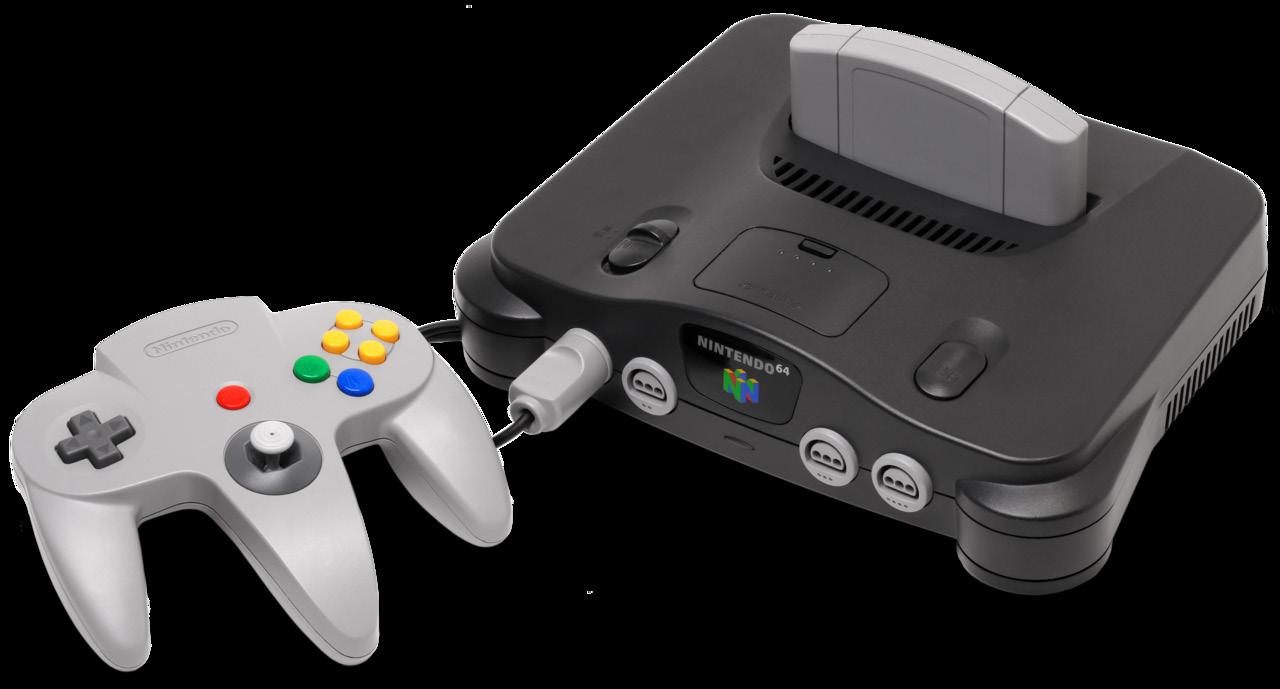
For accessing nearly 9 in 10 classic games, there are few options: seek out and maintain vintage collectible games and hardware, travel across the country to visit a library, or… piracy. None of those options are desirable, which means that most video games are inaccessible to all but the most diehard and dedicated fans. That’s pretty grim!
This is where libraries and archives should come in. Anyone should be able to easily explore, research and play classic video games, in the same way that they can read classic novels, listen to classic albums, and watch classic movies. But outdated copyright laws are preventing institutions like ours from doing our jobs.
86.73%

13.27%
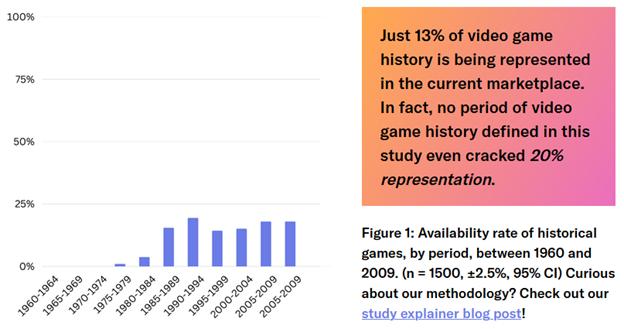
Availability rate of historical games. (n = 1500, ±2.5%, 95% CI) Random list of games pulled from MobyGames.
Just 13% of video game history is being
represented
in the current marketplace. In fact, no period of video game history defined in this study even cracked 20% representation
Figure 1: Availability rate of historical games, by period, between 1960 and 2009. (n = 1500, ±2.5%, 95% CI) Curious about our methodology? Check out our study explainer blog post!
Goal of this study: Get expanded exemptions for libraries and organizations preserving video games, which are currently far more limited than their ability to preserve books, movies, audio, etc.
How this study helps: The video game industry’s main lobbying group has successfully argued to the US Copyright Office that the industry already does enough to preserve its own history commercially, and that additional protections for preservation institutions would hurt their bottom line. We proved them wrong: the industry has actually only managed to make 13% of its history available, and it’s unlikely to get better.
The argument that these games are commercially available is what’s keeping video games behind in the preservation world.
•87% of classic games are not in release, and are considered critically endangered
•Availability is low across every platform and time period tracked in the study
•Libraries and archives can digitally preserve, but not digitally share video games, and can provide on-premises access only
•Libraries and archives are allowed to digitally share other media types, such as books, film, and audio, and are not restricted to on-premises access
•The Entertainment Software Association, the video game industry’s lobbying group, has consistently fought against expanding video game preservation within libraries and archives (example 1, 2 ,3)
The next rulemaking proceeding under the Digital Millennium Copyright Act (“DMCA”), Title 17, section 1201, of the United States Code is scheduled for 2024. We’re hopeful that this study will incite change, and that video game preservation will become stronger — before we lose more.
Survey of the Video Game Reissue Market in the United States was conducted for the Video Game History Foundation and the Software Preservation Network by VGHF Library Director Phil Salvador, published July 2023.
Want to learn more? Check out our explainer blog post for a more in-depth look at this study. A bonus episode of our podcast about this study and its findings will be available soon. You can read the full study here.
The Video Game History Foundation is a 501(c)3 non-profit organization dedicated to preserving, celebrating, and teaching the history of video games.
The Video Game History Foundation is a 501(c)3 non-profit organization dedicated to preserving, celebrating, and teaching the history of video games.