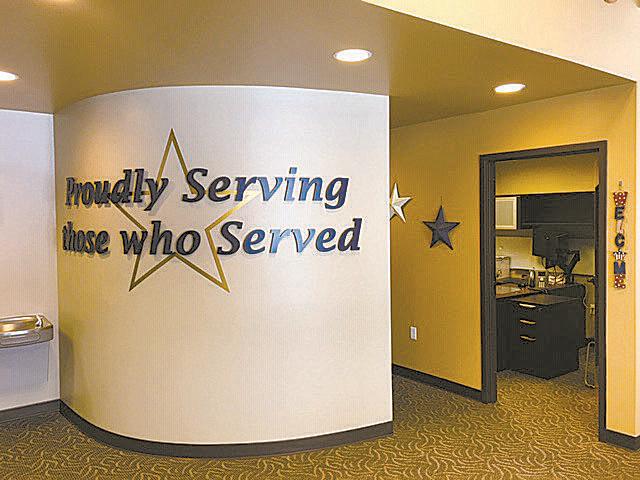
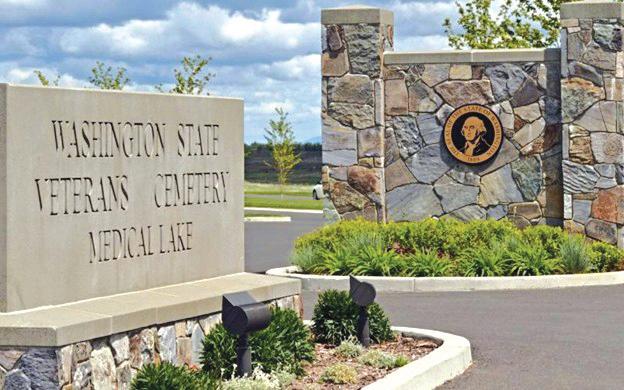
The Washington State Veterans Cemetery in Medical Lake helps veterans and their families through one of life’s most challenging times while honoring their military service and sacrifice. Knowledgeable cemetery staff guide veterans and families through the process of preregistering for cemetery services and work with families after a death occurs. The facility serves eligible veterans and their families regardless of state of residency, and determines eligibility based on established Federal VA National Cemetery Administration criteria.
have met characterization of discharge requirements. Family member eligibility is determined based on the veteran’s military service meeting eligibility criteria. The veteran does not have to be interred at this facility for a qualifying spouse to be interred at the State Veterans Cemetery.
The cemetery offers preneed planning services, giving veterans and eligible family members the peace of mind that they’ve satisfied eligibility criteria, knowing their end-of-life needs will be met without burdening their families.
The pre-need eligibility
Federal law provides eligibility for burial in a state or national cemetery to veterans who have met minimum active duty service requirements as applicable by law and who were discharged under conditions other than dishonorable.
Members of the reserve component of the armed forces are also eligible, provided they died while on active duty under certain circumstances, or while performing training duty; have 20 years if service creditable for retired pay; or were called to active duty and served the full term of service and
determination process is non-binding and does not obligate the family to use the State Veterans Cemetery should life situations and end-of-life plans change. There are no charges for veteran interments, which includes an interment plot, government headstone or memorial marker, use of a committal shelter for interment services and perpetual care of the grounds as a national shrine. The cemetery recovers a cost of $300 at the time of interment for family member interments.
The 120-acre Washington State
Veterans Cemetery opened in 2010 through federal grants totaling $11 million for capital development from the U.S. Department of Veterans Affairs.
This facility makes the federal VA burial benefit more accessible to veterans in Eastern Washington and Northern Idaho. In the coming years, WDVA will continue to expand burial areas incorporating additional public spaces and maintenance facilities.
Additionally, WDVA is committed to developing a second state veterans cemetery in central or southeastern Washington to better serve veterans across this region.
Since opening, the site is a final resting place for over 5,200 veterans and family members.
The cemetery offers traditional casket burials as well as options for cremation inurnments; in-ground burial, a columbarium wall for above ground placement, as well as a scattering garden.
All inurnment options include a personalized granite marker to memorize veterans and their family members. Families are invited to use the committal shelter for memorial services including full military honors for veterans.
Military honors is a statutory entitlement for qualifying veterans which includes playing of taps and presentation of a burial flag to the veteran’s next-of-kin. The cemetery does not
provide graveside services for safety concerns. We are also fortunate to have the assistance of a team of over 100 volunteers who assist with a wide range of supportive services.
Individuals interested in volunteering should contact the cemetery directly for additional information.
The Washington State Veterans Cemetery grounds are open to the public 7 days a week, from 8 a.m. to sunset. Interments are conducted Monday through Friday and are scheduled by contacting the cemetery staff. Additional information and preregistration forms are available online at dva.wa.gov/cemetery or by calling (509) 299-6280.

Monday, May 25
10:30 a.m.
Lilac City Community band
11 a.m (promptly) Memorial Ceremony
21702 W. Espanola Road
Medical Lake
Parking available along Richey Road
For additional information call (509) 299-6280 or email cemetery@dva.wa.gov
If you are selecting burial in a private cemetery and plan to request a government headstone, grave marker, or medallion, there are several things you should determine in advance.
Find out if the cemetery has any restrictions on the type of headstone or marker that can be used to mark the grave or if it will require a special marker base.
Ask if there will be an additional cost for the placement, setting or care of a free government headstone or marker and if they charge more than if a private headstone or marker is purchased.
If you plan to request a government headstone or marker for the veteran’s grave in a private cemetery, it is recommended that you complete in advance, VA Form 40-1330, Application for Standard Government Headstone or Marker (https://www.va.gov/forms/40-1330/), or VA Form1330M (https://www.va.gov/forms/40-1330m/) for a bronze medallion, and place it with the veteran’s military discharge papers for use at the time of need. Only an eligible veteran may receive a government-provided headstone or marker for placement in a private cemetery. Veterans’ spouses and dependent children are not eligible.
This information was provided by Rudy Lopez, director of the WDVA Veterans Cemetery in Medical Lake.
Every county and state has a Veteran Affairs office to answer questions about benefits and provide assistance. There are also other useful resources for veterans in the Inland Northwest.
VA.gov
The Department of Veterans Affairs website has resources on every topic relevant to veterans.
VA.gov/welcome-kit
The VA Welcome Guide covers all types of benefits and services available for veterans, new recruits, active service members and their families.
Explore.VA.gov/benefitsnavigator
Explore VA benefits and discover which ones you and your family may be eligible to receive.
Spokane County Regional Veteran Service
1117 N. Evergreen Rd., Spokane Valley, WA (509) 477-3690
Apply for emergency services, or have any benefits or service questions answered by 5 Veteran Service Officers (VSO) and staff.
Kootenai County Veteran Services and Benefits Office
120 E. Railroad Ave., Post Falls, ID (208) 446-1092
Meet with a VSO or staff for help with VA benefits enrollment, claims or other veteran needs.
Goodwill Support Services for Veteran Families (SSVF)
130 E. Third Ave., Spokane, WA (509) 828-2449
SSVF helps homeless veterans and their families find housing and connects veterans with other support organizations. Healthcare for Homeless Veterans (HCHV)
504 E. Second Ave., Spokane, WA (509) 435-2019
Provides healthcare and outreach for housing, job opportunities and counseling.
Spokane County Regional Veteran Service (509) 477-3690
Kootenai County Veteran Services and Benefits Office
120 E. Railroad Ave., Post Falls, ID (208) 446-1092
Veteran Crisis Line
1 (800) 273-8255, press 1
North Idaho Crisis Center (208) 625-4884
Washington or Idaho 2-1-1
Dial “2-1-1” for health and human resources referrals.
VETERANS HELP NET
Don Walker
Bryan Bledsoe
MANAGING EDITOR
Joe Butler
ART DIRECTOR
Russ Rosenbalm
MARKETING ADVISOR
Andrew Christensen
ADVERTISING SALES MANAGER
Jeanne Inman
Veterans Help Net partners with The Spokesman-Review to publish Veterans Chronicle each quarter to increase awareness about veteran issues and to help veterans find hope and help.
To share a veteran story or information about resources for veterans, please contact don@vethelpnet.com call (509) 998-6484 or visit www.facebook.com/ veteranshelpnet.
For advertising information, please contact advertising@spokesman. com or (509) 459-5095. No portion of this magazine may be reproduced in whole or in part without written consent of the publisher.






























By Don Walker Veterans HelpNet
By Capt. Roldan F. Vigil
To: The many who didn’t make it back. The many confined to VA hospitals throughout the U.S.A.
The many whose lives were never the same again.
I stand my watch, my post I guard; That time will tell, but not retard; For across the sea, she waits for me; She waits and prays and thinks of me. The night is dark, the jungle hell; Each noise sounds as a resounding bell; But across the sea, she dreams of me; She waits and prays and thinks of me. When night is done and dusk is near; I seem to feel her so very near. For across the sea she waits for me; She waits and prays and thinks of me.
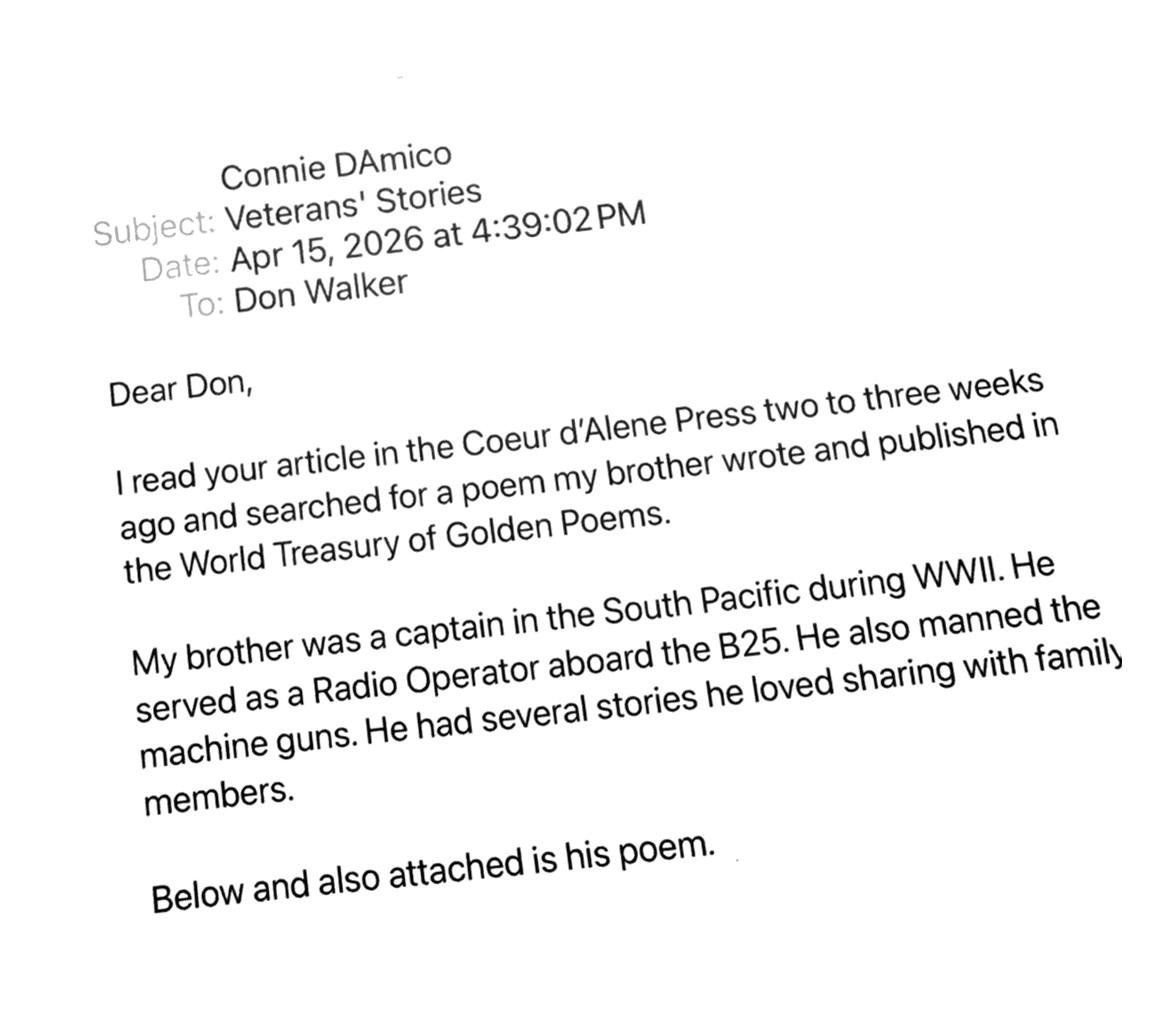
If you wonder why we work every issue to produce a meaningful Veterans Chronicle and Veterans Press (for our North Idaho readers), maybe this story and poem will help you understand.
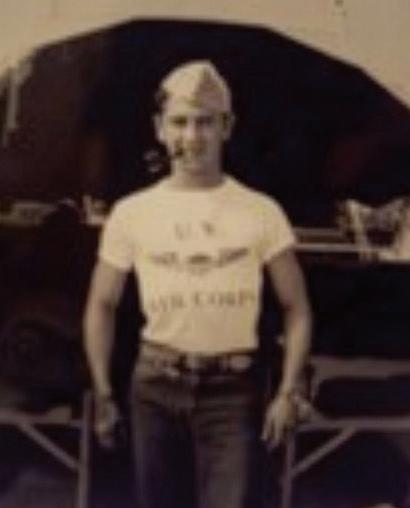
As Connie and I talked about her brother, I asked her for a picture to put with this moving poem. Connie sent me a couple of pages of awesome and emotional stories about Connie
and her brother and family stories over the years.
We may try to include sections of those stories in later editions. I can tell you that my wife and I both laughed and cried.
Thank you, Connie, for sharing your story!
Thank you, Capt. Roldan Fredrick Vigil. Thanks for serving your country, and thanks for writing a moving insightful poem. We are honored to share this poem and story with our readers.
In helping write these sections, we

discovered that telling a veteran’s success stories is one of the most effective and impacting methods of getting information out about the help available to today’s veterans and their families. A real story can generate interest and inquiries from other veterans, their families, or their friends.
We also like to end every story with “Does this sound like someone you know?” and include a place readers can contact to get help. People relate to real stories about real people. People that overcome obstacles and find lifechanging help can open the door to others.
Please send us your stories!
Don Walker dwalker106@gmail.com
Editor’s note:
We asked ChatGPT to describe the differences between Memorial Day and Veteran’s Day. The results are very interesting!
Memorial Day is a federal holiday in the United States that is observed on the last Monday of May. It is a day to remember and honor men and women in the armed forces who died while serving their country.
The origins of Memorial Day can be traced back to the late 19th century, when various communities across the country began to hold tributes and remembrances for their fallen soldiers. The first official observance of Memorial Day was on May 30, 1868, when General John A. Logan proclaimed a day of remembrance for the Union soldiers who had died during the Civil War.
Over time, the holiday evolved to include honoring all those who have died in service to their country. Today, Memorial Day
is observed with parades, concerts, and visits to cemeteries and memorials where loved ones are buried. It is a solemn and important occasion to remember those who made the ultimate sacrifice for their country.
Memorial Day and Veterans Day are both important holidays in the United States that honor the men and women who served in the military. However, there are some key differences between the two holidays.
Memorial Day is a day to remember and honor the men and women who died while serving in the military. It is a time to pay tribute to those who made the ultimate sacrifice for their country. Memorial Day is always observed on the last Monday in May.
Veterans Day, on the other hand, is a day to recognize and thank all veterans who have served in the military, both living and deceased. It is a time to show appreciation for the brave men and women who have served their country. Veterans Day is


observed on November 11th every year. While both holidays share similarities in that they both honor the sacrifices of those who served in the military, there is a significant difference in what each



holiday focuses on. Memorial Day is about remembering and honoring those who died while serving, while Veterans Day is about recognizing and thanking all veterans who have served.





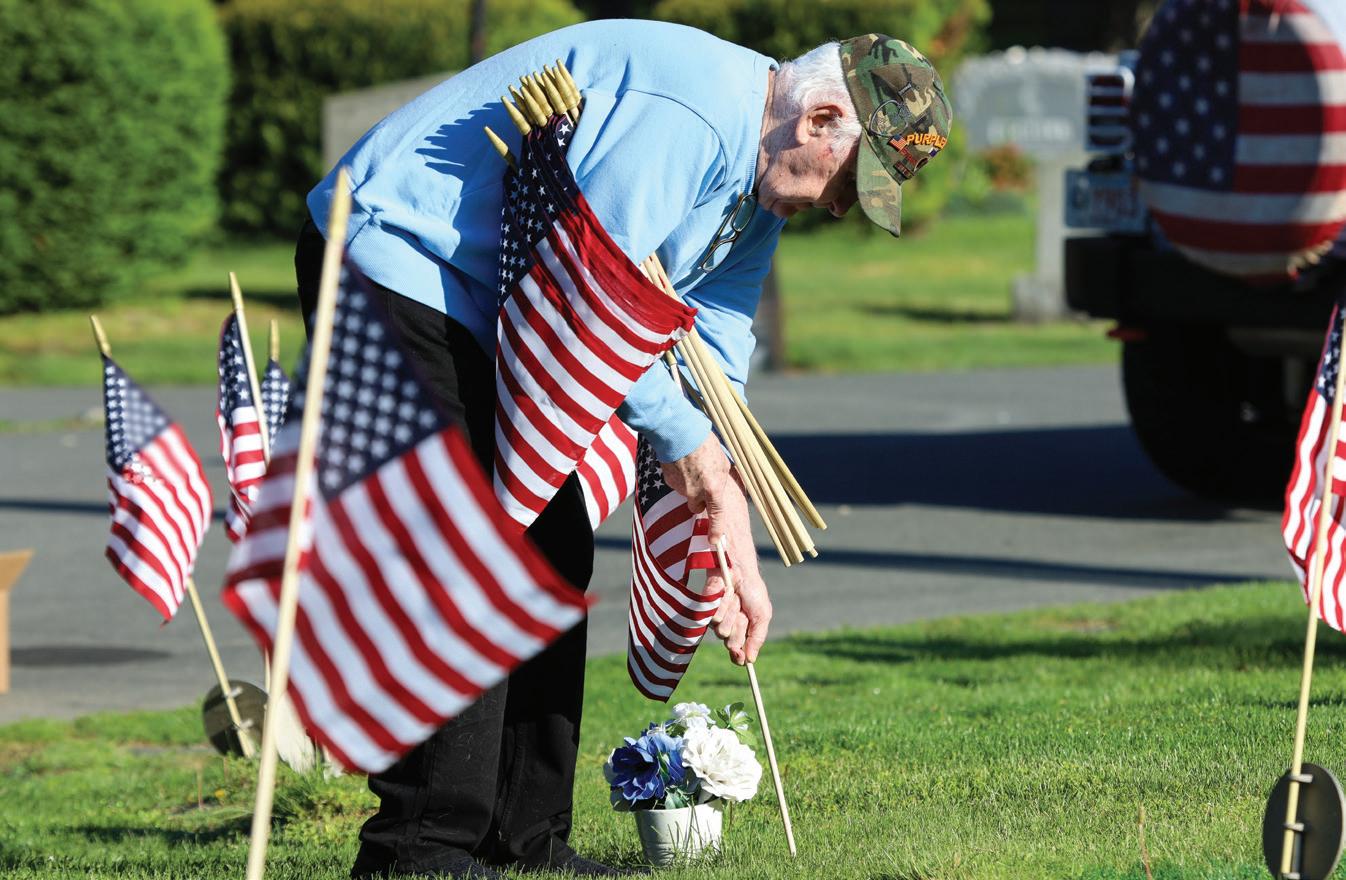
In the spring of 1866, Henry C. Welles, a druggist in the village of Waterloo, NY, suggested that the patriots who had died in the Civil War should be honored by decorating their graves. General John B. Murray, Seneca County Clerk, embraced the idea and a committee was formed to plan a day devoted to honoring the dead.
Memorial Day, originally called Decoration Day, is a day to remember those who have died in our nation’s service.
Townspeople made wreaths, crosses and bouquets for each veteran’s grave. The village was decorated with flags at half mast.
On May 5 of that year, a processional was held to the town’s cemeteries, led by veterans. The town observed this day of remembrance on May 5 of the following year as well.
Decoration Day was officially proclaimed on May 5, 1868, by Gen. John Logan in his General Order No. 11, and was first observed officially
on May 30, 1868. The South did not observe Decoration Day, preferring to honor their dead on separate days until after World War I. In 1882, the name

was changed to Memorial Day, and soldiers who had died in other wars were also honored.
In 1971, Memorial Day was declared a national holiday to be held on the last Monday in May.
After the Civil War many people in the North and South decorated graves of fallen soldiers with flowers.
Today, Memorial Day marks the unofficial beginning of the summer season in the United States. It is still a time to remember those who have passed on, whether in war or otherwise. It also is a time for families to get together for picnics, ball games, and other early summer activities.
Thanks to the Idaho Division of Veterans Services for providing this info.


Throughout the history of veterans health care, sports have always served as a means of rehabilitation and healing. While many sports and recreational activities have been incorporated into the fabric of Veterans hospitals, one sport stands out for its popularity and impact on veterans –baseball.
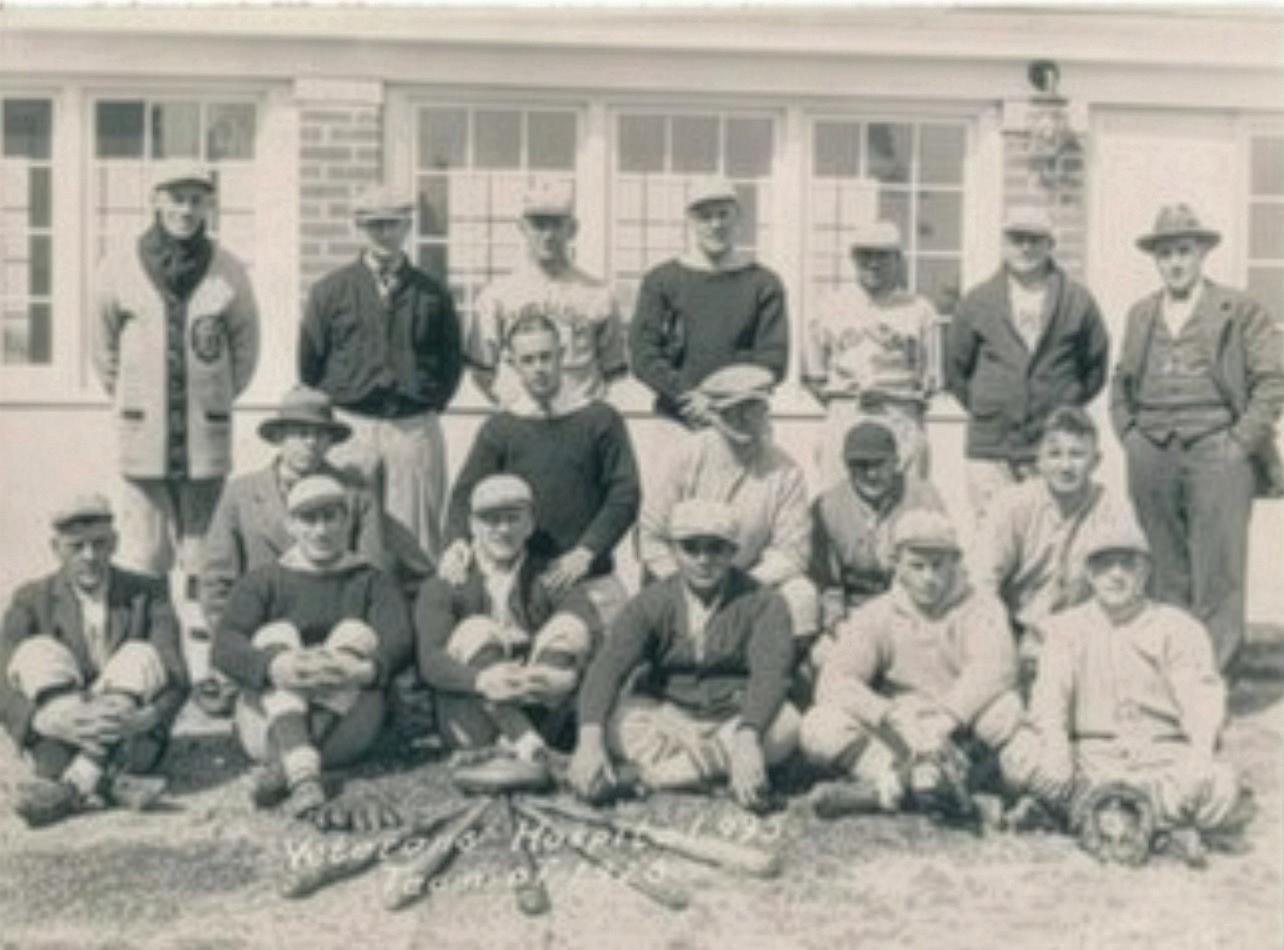
While baseball was a mostly regional sport in the 1850s, the Civil War propelled its progression into a national sport when both Union and Confederate soldiers began picking up and playing games in camps, during times of rest in between battles, and even in prisoner-of-war camps.
As baseball’s popularity spread, military doctors encouraged the sport and believed the game provided physical and mental health benefits, boosting morale while providing a sense of camaraderie and teamwork. After the war, this reasoning followed directly into the planning of the new National Home for Disabled Volunteer Soldiers (Soldiers Homes), that were built for Veterans beginning in 1866. Soldiers Homes, the forerunner of today’s Veterans Health
Administration, provided not only medical care to Veterans, but also served as domiciliary residences where Veterans could live in a domestic setting and retain some aspects of their military life while enjoying recreation and amusements, including baseball. Soldiers Homes also served as ideal locations for baseball diamonds as most were located in rural areas with large amounts of space that could be dedicated to playing.
Funding for the construction of baseball diamonds started in the 1870s at the Homes’ Eastern, Central, and Western Branches, among others, as baseball remained as popular with Veterans as it had been during the war. Baseball became such a popular activity at the Homes that one report noted dinner hours at the dining hall at the Central Branch in Dayton, Ohio, needed to be adjusted to fit around baseball games that were held on Saturday afternoons.
In addition to serving as an amusement, baseball at the Soldiers Homes contain the roots of occupational and recreational therapy at VA, long before those were recognized as therapies and
professions within the medical community. Providing physical, social, and mental benefits for Veterans, a report from the 1870s notes that recreational activities like baseball, “tend to drive away dull care and keep the men in a pleasant and cheerful state of mind…contented and comparatively happy.”
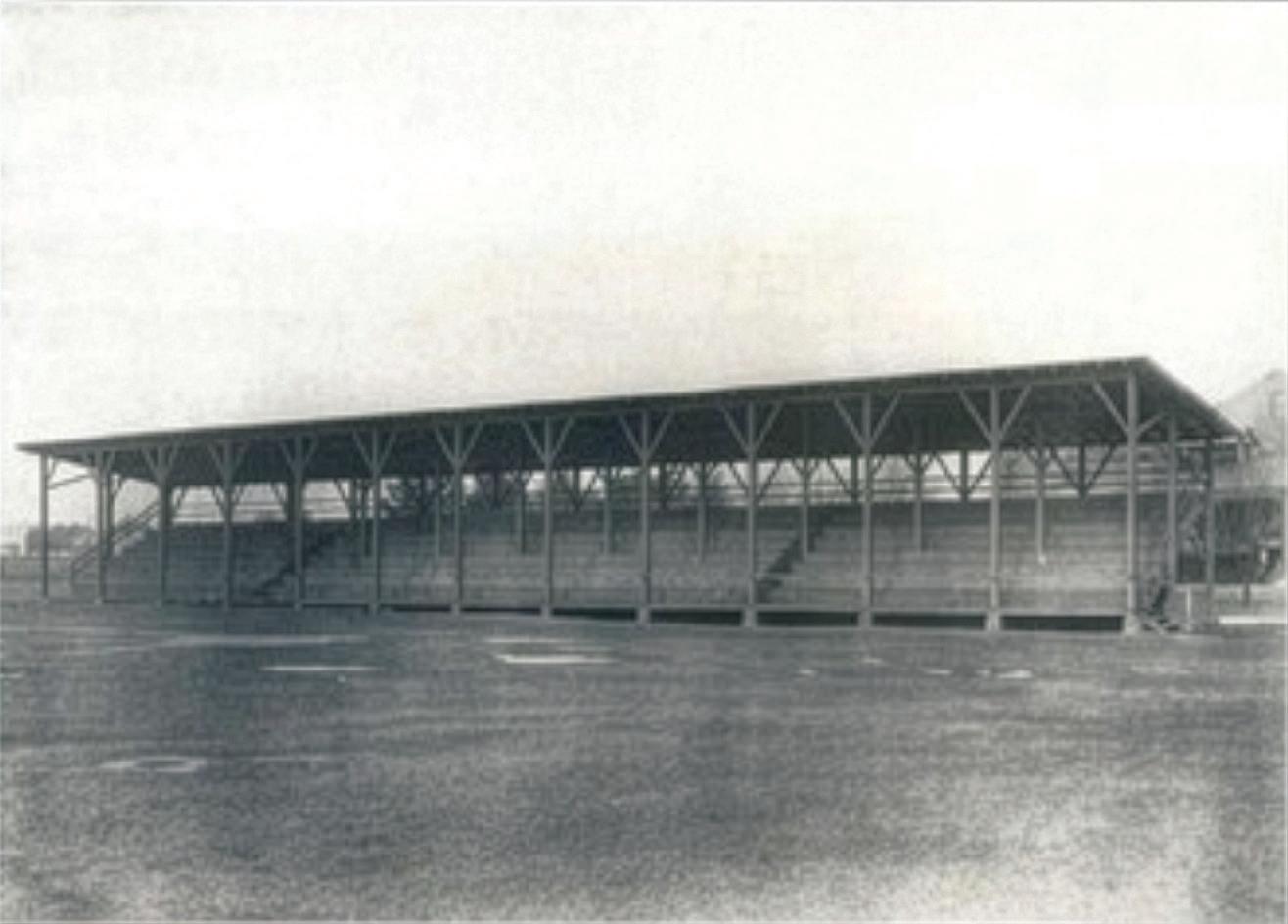
Coinciding with baseball’s rise in popularity around the country, baseball expanded its reach at Soldiers Homes as well at the turn of the century. Grandstands were built at nearly every location to accommodate both Veterans and the general public, as spectators from nearby towns came to watch games played between the Veteran teams and other local and traveling teams.
The Dayton “Old Soldiers” began playing other local area teams beginning in 1897, as other Veteran teams emerged throughout the country under team names such as the “Veteran Hospital Baseball Club,” “Vets,” or the “Hospital Club.” Local newspapers began regular reporting on season activities, scores, and game recaps. In Leavenworth, Kansas, the “Soldiers Homes Team” was reported
as “one of the fastest growing semipro aggregations in this part of the country.”
Baseball remained a staple at veterans hospitals well into the 20th century as baseball facilities across the network of Soldiers Homes, Veterans Bureau hospitals, and Veterans Administration hospitals were constructed, improved, and expanded. At its height, up to 60 games per year were played at some of the Homes and hospitals.
In later years, baseball became an integral part of VA’s Adaptive Sports Program, as it joined a host of other rehabilitative recreation activities including golf, basketball, soccer, and even fishing. What started out as Civil War Veterans playing games between each other evolved into something larger, as baseball became a valued asset of the Soldiers Homes and hospitals and helped baseball evolve into the national pastime that it is today.
This story was originally published on VA News on June 2021.
Veteran Service Organizations, including the American Legion, Veterans of Foreign Wars, Disabled American Veterans, and many local posts nationwide, have long been cornerstones of veteran life. They offer camaraderie, service opportunities, and a collective voice for those who have served. For many women veterans, however, participation in these organizations remains a mixed experience.
A growing population, an outdated image
Today, women make up more than 10 percent of the U.S. veteran population. Over 3 million women have served our country since the Revolutionary War, and more than 2 million women veterans are alive today. Women have served in every branch, in every era, and in every role the military has to offer. Yet many VSOs still reflect an outdated image of who a “typical” veteran is, an image that does not always include women. That disconnect is often felt the moment a woman veteran walks through the door.
First impressions that miss the mark
Women veterans frequently report being mistaken for a spouse or guest rather than recognized as a fellow veteran. Some are questioned about their eligibility or asked to “prove” their service in ways their male counterparts rarely experience. Others report being directed toward auxiliary membership, despite being eligible for direct membership.
While these moments are often unintentional, they can create an immediate sense of exclusion in spaces meant to foster belonging, trust, and shared experience.
Membership without a voice
Even when women are welcomed as members, inclusion does not always extend beyond attendance. Leadership roles within many VSOs remain overwhelmingly male. Women who seek greater involvement, or who raise concerns about equity, conduct, or organizational culture, sometimes report being talked over, dismissed, or labeled as disruptive.
Several women veterans also note that meetings and social environments can feel unwelcoming when sexist language or dismissive behavior goes unaddressed.
When VSOs get it right
These experiences are not universal. Many women veterans have found VSOs that lead with respect and inclusion. Posts with diverse leadership, clear codes of conduct, and intentional outreach to women veterans often become stronger and more effective organizations.
Simple steps like using inclusive language, publicly recognizing women’s service, and ensuring respectful meeting space can make a measurable difference in whether women veterans feel valued and heard.
Why inclusion matters
VSOs play a vital role in advocacy, community service, and veteran support. When women veterans disengage because they feel undervalued or unwelcome, organizations lose experienced leaders, dedicated volunteers, and perspectives shaped by modern military service. The broader veteran community loses as well.
Moving forward together
Women veterans are not asking for special treatment. They are asking for the same respect, trust, and sense of belonging afforded to any veteran. VSOs face a clear choice: remain rooted solely in tradition or adapt to reflect on the veterans they serve today.
Listening to women veterans—and acting on what they share—will determine whether these organizations remain relevant, representative, and strong for generations to come.
For this piece, author Tzena M. Scarborough asked ChatGPT “What are women veteran’s experiences with Veteran Service Organizations such as the American Legion, VFW, DAV, and others?”
Tzena M. Scarborough is an Army woman veteran (WAC) and American Legion member. She is a veteran advocate and organizer of the “Women Veterans in the Spokane Area” Facebook page, for all women veterans, active duty and reserve members. She encourages all veterans to consider joining a VSO.
Contact her at 509-999-4939 or ladyveterans@comcast.net.









June 5th - 6:35pm vs. Hillsboro Hops
June 19th - 7:05pm vs. Vancouver Canadians
June 26th - 7:05pm vs. Tri-City Dust Devils
July 24th - 6:35pm vs. Tri-City Dust Devils
August 7th - 6:35pm vs. Eugene Emeralds
August 21st - 6:35pm vs. Hillsboro Hops
September 4th - 6:35pm vs. Everett AquaSox
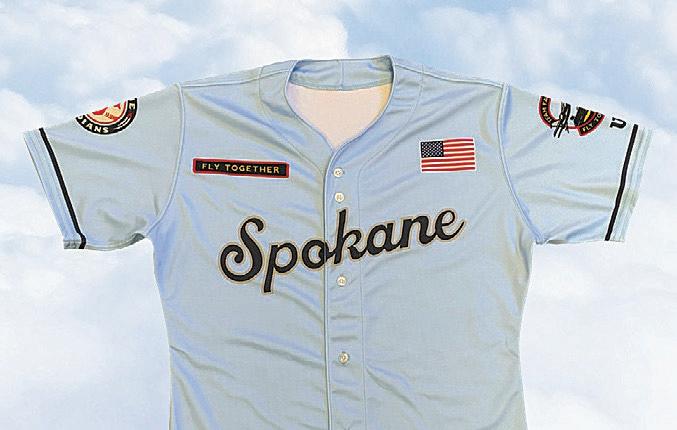
your Operation Fly Together gear in support of Veterans!





Submitted by Len Crosby
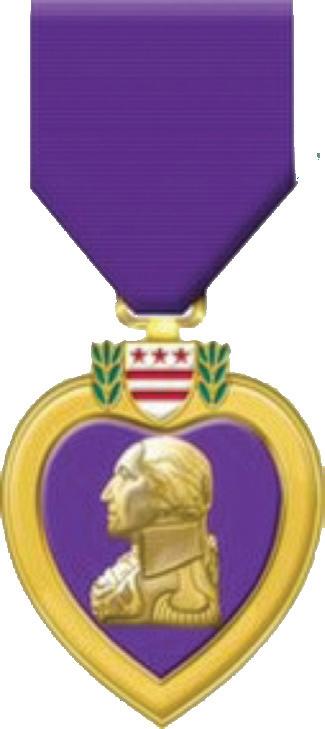
1. The Purple Heart was created by George Washington. In 1782, Washington, who was then commander in chief of the Continental Army, created the Badge of Military Merit, which is the Purple Heart’s predecessor. He designed it in the form of cloth purple heart, to be given to soldiers who had displayed “unusual gallantry in battle” and “extraordinary fidelity and essential service.”
2. The first recipient was Sgt. William Brown, a Continental Army soldier. The Badge of Military Merit, as the award was called back then, was bestowed on Brown in 1783 for his service during the Battle of Yorktown.
3. Gen. Douglas MacArthur revived and redesigned the Purple Heart in 1932. The Badge of Military Merit had not been awarded since the Revolution, so MacArthur worked to reinstate it as the Purple Heart medal to mark Washington’s 200th birthday. The new medal was created as a combat decoration for commendable action as well as for soldiers who were wounded or killed in combat. In 1944, the Purple Heart became a decoration only for those wounded or killed in enemy action.
4. John F. Kennedy is the only president to have had a Purple Heart. Kennedy, a lieutenant in the U.S. Navy during World War II, injured his back when his patrol torpedo boat collided with a Japanese destroyer.
5. Vietnam War veteran Curry T. Haynes Jr. received a record 10 Purple Hearts. Haynes, who served in the U.S. Army, was wounded during an attack in 1967, which led to his first Purple Heart. The other nine were awarded for the wounds he received during an attack in 1968. Haynes died in 2017 from cancer.





While there are many benefits available to veterans, not everyone realizes that those around them can also receive support, including spouses, dependents, survivors, and caregivers.
Family and caregivers:
https://www.va.gov/family-andcaregiver-benefits/health-anddisability
For spouse, dependent child,
The Cost-of-Living Allowance for 2026 has been released and it will be 2.8%. This will be for VA Benefits as well as Social Security Awards.
Following the COLA increase, the NonService-Connected Burial Allowance has increased to $1,002 as well as the Plot Allowance rate ($1,002) if a veteran is buried in a private cemetery. The Service-Connected Burial Allowance remains at $2,000 and VA does not permit plot allowance rates to be paid if a Service-Connected Burial Allowance is paid.
Burials/Inurnments at the State or National Veteran Cemeteries are at no charge for Veterans. State Veteran Cemeteries charge the current plot allowance rate for non-veteran spouses.
The Snake River National Cemetery in Buhl, Idaho, is considered a National Cemetery and does not charge for spouse internments.
Some examples of the new Cost of Living Allowance Rates are:
- 10% S/C- $180.42
- 100% S/C (Single): $3,938.38,
(Married): $4,158.17
- Non-Service-Connected Pension at the A&A Rate (Single/Max)- $2,424 (Married/Max)- $2,874 - Dependency Indemnity Compensation-$1,699.36, 8-year Enhanced Rate- $360.85, A&A- $421.00
- Survivor Pension A&A Rate (Max)$1558
* At no time does the VA allow surviving spouses to assume the Veterans VA Award. DIC can be awarded for a service-connected disability rating as low as 0% as long as it is stated on the Death Certificate.
** All VA Awards are Tax Exempt. VA will not send out 1099s or W-2s for VA Benefit Awards For those with questions or anyone needing assistance with claims, please contact a Veteran Service Officer. Look at the “How Can I Get Help?” box in this publication for contact information.
surviving spouse, surviving child, caregiver.
Find out if you’re eligible for health care or related benefits through CHAMPVA or other programs. And learn about support for caregivers, including training, counseling, and payments.
Survivors Pension and DIC: https://www.va.gov/family-andcaregiver-benefits/survivorcompensation
For surviving spouse, surviving child, surviving parent.
Find out if you’re eligible for VA Dependency and Indemnity Compensation (DIC) or a VA Survivors Pension. If you need help with daily activities or you’re housebound, you may also be eligible for VA Aid and Attendance or Housebound benefits.
Education and career benefits for family members:
https://www.va.gov/family-andcaregiver-benefits/education-andcareers
For spouse, dependent child, surviving spouse, surviving child.
Find out if you’re eligible for money for school or to help you cover expenses while you’re training for a job through the Survivors’ and Dependents’ Education Assistance Program (also called Chapter 35) or the Fry Scholarship. And learn about how a Veteran may transfer their unused Post9/11 GI Bill benefits to you.
For more information on any of these topics see the “How Can I Get Help?” in this insert or contact Spokane County Veteran Regional Veteran Services office at 509-477-3690 or Kootenai County Veteran Services and Benefits office at 208-446-1090.


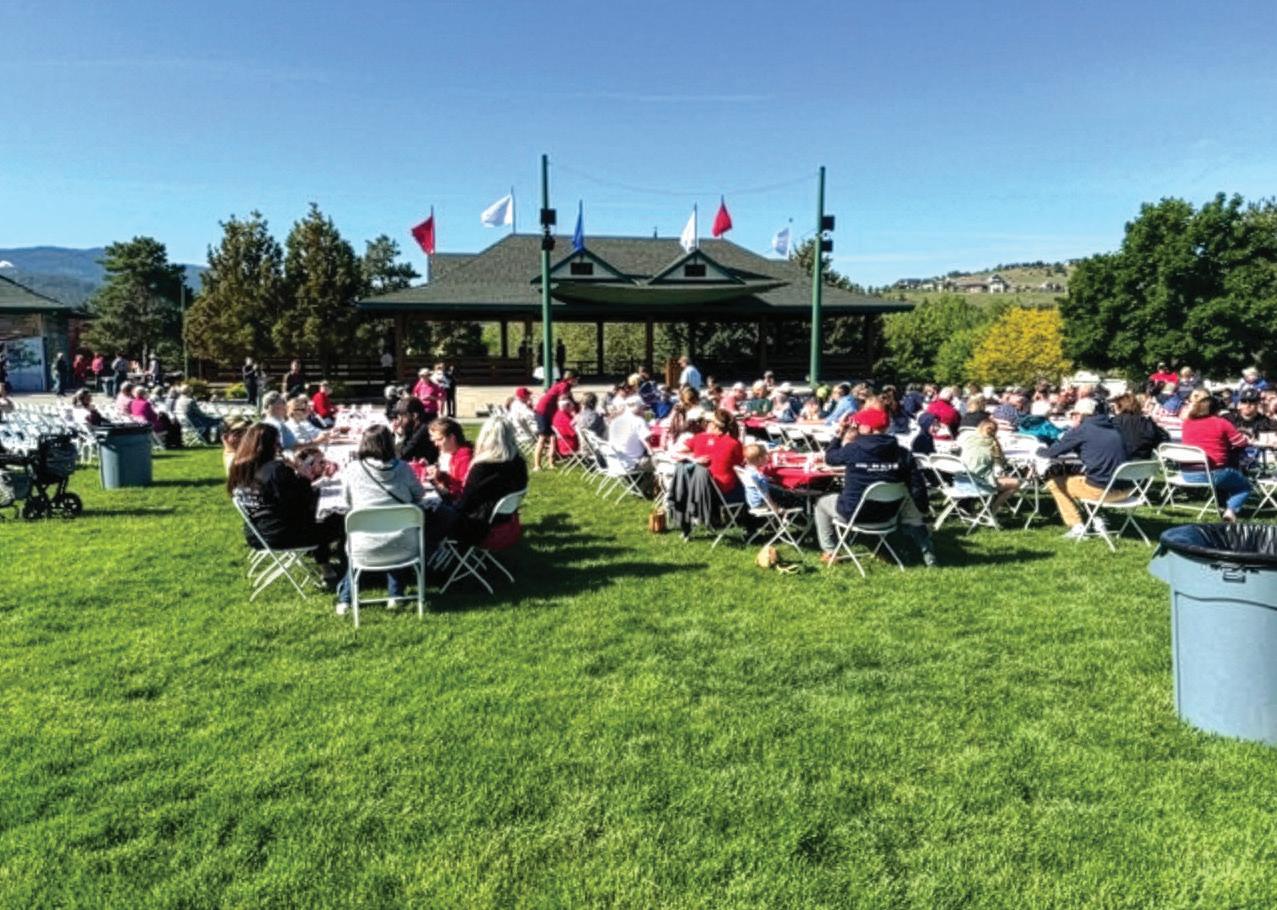
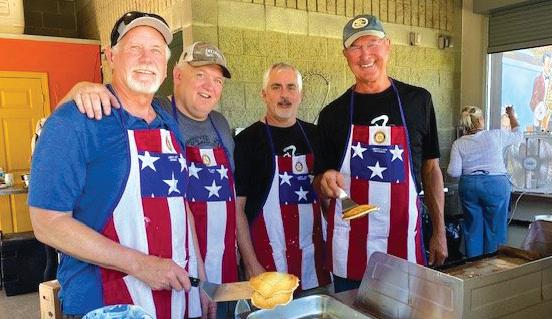
Residents are invited to visit Liberty Lake’s Pavillion Park on Monday, May 25 for the city’s annual Memorial Day Ceremony and Pancake Breakfast.
The event begins with a community pancake breakfast from 8 to 10:30 a.m., followed by a Memorial Day ceremony starting at 9 a.m.
The breakfast is hosted by the Liberty Lake Centennial Rotary Club, and all proceeds will benefit the Inland Northwest Honor Flight, an organization that provides veterans with free trips to Washington, D.C. to visit national war memorials.
The morning will include patriotic music, community speakers, and a tribute to those who have served and sacrificed in the U.S. Armed Forces.
Attendees are encouraged to bring lawn chairs or blankets and wear patriotic colors. It will include a presentation of colors and a full honors ceremony by the Spokane Honor Guard, similar to what happens at a military funeral.
Representatives from the Washington Fallen Heroes Project will bring their float. Banners will be on display throughout the weekend along the park pathways.

The keynote speaker will be USAF Major Gen. Sarah Zabel.
Organizers say the event is a way to both reflect on the meaning of Memorial Day and connect with neighbors in a spirit of gratitude and remembrance. It’s also an opportunity to support veterans and local causes.
The Memorial Day Ceremony and Pancake Breakfast is open to the public and is family-friendly. Organizers invite veterans, active-duty service members, families, and community members of all ages to attend.
More information is available at libertylakewa.gov or on the city’s
Facebook page. In addition, the community will be offering a special Luminary Tribute for veterans this month. The quiet and moving display of remembrance honors the lives of fallen U.S. service members.
Organized by the Liberty Lake Centennial Rotary Club, the tribute will run from Friday, May 22, through Monday, May 25. Hundreds of candlelit luminaries will be arranged in a grid pattern, each representing a service member who gave their life in service to the country.
The self-guided display is open to the public, allowing visitors to walk the glowing paths at their own pace.
The tribute is especially meaningful for Gold Star Families (those who have lost a loved one in military service) offering a space for reflection and community support.
Did you know that many of your VA benefits have an expiration date? If not, you are not alone, most veterans aren’t aware of their benefits, let alone that many of them can expire.
Although these deadlines are generally set in stone, the VA has provisions to waive them if you have a legitimate reason for not applying before the given deadlines. These may include health and disability issues. However, the VA will not waive a time limit for not knowing the deadline for your benefits.
Here are some quick examples of common VA benefits and their time limits:
Post-9/11 GI Bill: The Post-9/11 GI Bill provides 36 months of education, training, and OJT benefits to eligible veterans. The full in-state tuition and fees are covered at







public schools. for private schools there is an annual maximum amount that is inflation adjusted. The Post-9/11 GI Bill also pays a housing allowance based on the E-5 with dependents BAH rate for the location of the school, and an annual $1,000 for books and supplies. Time limit is 15 years from date of last discharge or release from active duty if you were discharged before Jan. 1, 2013. If you were discharged after that date there is no expiration date.
Montgomery GI Bill for Active-Duty (MGIB): MGIB provides 36 months of education, training, and OJT benefits to eligible veterans. Payment rates are determined by the number of classes taken. Time limit is 10 years from date of last discharge or release from active duty.

















Montgomery GI Bill for Selected Reserve (MGIB-SR): Provides members of the Reserves, and National Guard with up to 36 months of education, training, and OJT benefits. Time limit is 14 years from the date of eligibility for the program, or until released from the Selected Reserve or National Guard. Some extensions available if activated.
Dental Treatment: Veterans may receive one-time dental treatment who were not provided dental examination or treatment within 90 days of discharge or separation from service. Time limit is within 180 days of separation.











Vocational Rehabilitation and Employment (VocRehab): An employment oriented program for veterans with service-connected disabilities that offers services and assistance to help prepare for, find and keep suitable employment. Generally, time limit is 12 years of separation from service or within 12 years of being awarded serviceconnected VA disability compensation.

Disability Compensation: VA pays monthly compensation (tax-free) to veterans for disabilities incurred or aggravated during military service. Entitlement is established from the date of separation if the claim is filed within one year from separation. No time limit.












Disability Pension: This income-based benefit is paid to veterans with honorable war-time service who are permanently and totally disabled due to non-service connected disabilities or who are 65 or older. No time limit.


Veterans Health care: VA provides a wide range of health care services to veterans including treatment for military sexual trauma, and for conditions possibly related to exposure to Agent Orange, ionizing radiation, and other environmental hazards in the Persian Gulf. Generally, veterans must be enrolled in VA’s Health Care System to receive care. No time limit.










Combat Veterans Health care: VA provides combat veterans free health care for any illness possibly associated with service against a hostile force in a war since the Gulf War or during any period of hostility after Nov. 11, 1998. Time limit is 5 years from release from active-duty
VA Home Loan: The VA Home Loan Guarantee Program offers Veterans the chance to purchase a home at a low interest rate without the need of a down payment. No time limit.
Want to know more? Or if you know a veteran that might need this information go to VA.Gov for more information or seek local help in the “How Can I Get Help?” section in this publication or call 509-477-3690.
By Missina Schallus Center for Women Veterans
Have you recently transitioned from military service, or are you looking to better understand the benefits and services available to you or a veteran in your life?
Here’s a step-by-step guide on how you can apply for your earned benefits and services:
1. Determine your eligibility
Start by assessing your eligibility for various benefits. Visit VA’s Health Care (877-222-8387), Memorial Affairs (800-535-1117), and Disability Compensation (800-827-1000) eligibility pages, among others, for detailed requirements.
2. Gather necessary documentation
Gather essential documents, such as your discharge papers (DD Form 214), personal identification, any relevant medical records and supporting documents—like VA Form 21-10210
Lay or Witness Statement, also
known as a “Buddy Statement.” If you don’t have these documents, you can request them online from the National Archives, by calling 1-314-801-0800, or mailing an SF 180 to:
National Personnel Records Center 1 Archives Drive St. Louis, Missouri 63138
If you are unable to print, you can also get a copy of an SF 180 at your local VA Office or call 1-800-8271000.
Transitioning service members should make copies of all medical records, including inpatient records from any hospitals you were admitted to or had surgery in. You may request paper copies of your medical records from the military hospital or clinic records office. If it’s been more than two years since your last appointment, you’ll need to request copies of your records from the archives. You must request a copy of your medical records from each individual health care provider you have visited.

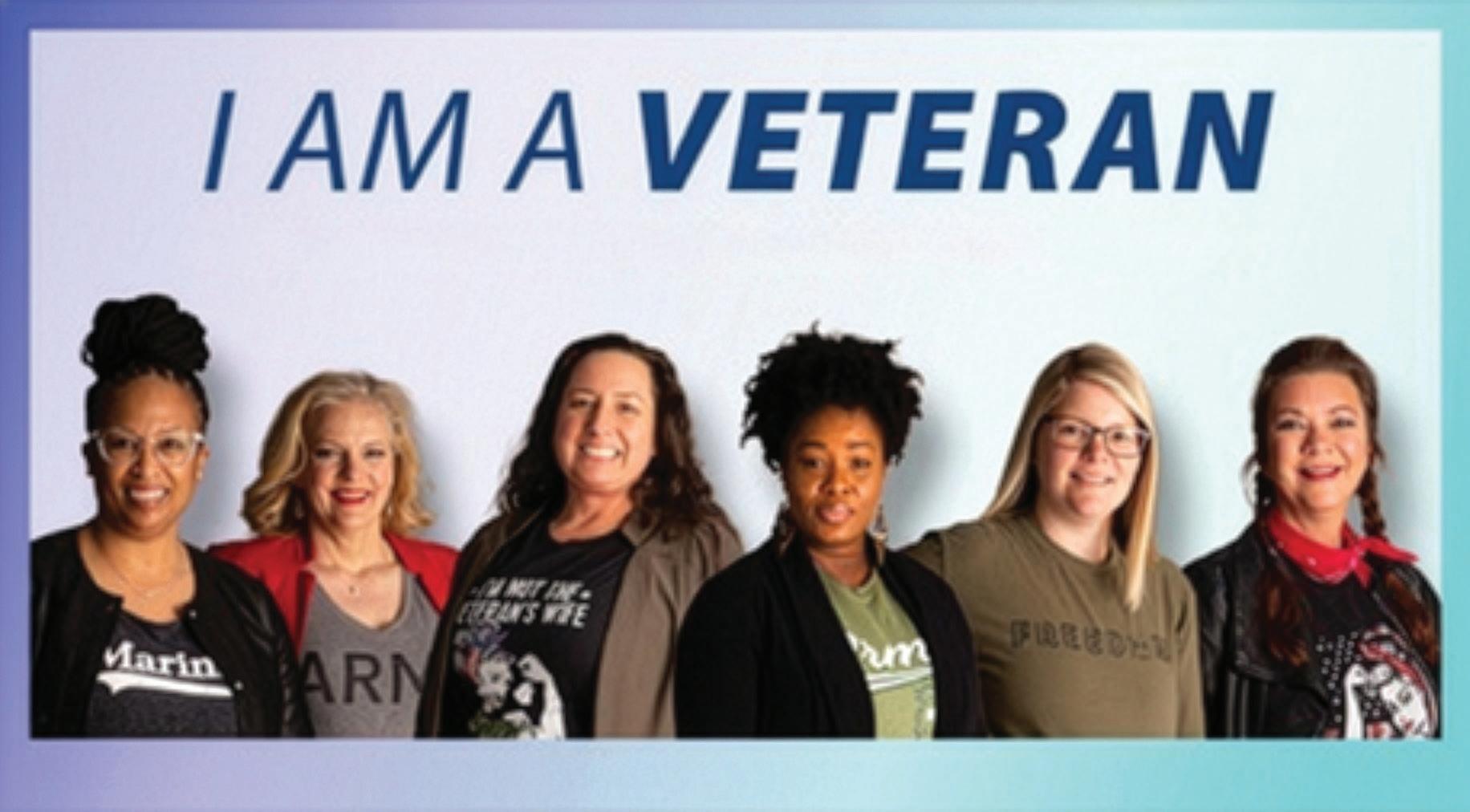
3. Find an accredited VSO
Navigating VA can be complex, and that’s where accredited Veteran Service Organizations (VSOs) come in. These organizations have trained professionals ready to assist you in understanding and applying for your benefits. You can find a list of accredited VSOs on VA’s official website. Reach out to one today to ensure you have the support you need. You should never pay a fee to apply for your earned benefits and services; these are likely scams.
4. Create a VA account
If you haven’t done so yet, set up an account VA.gov. This will allow you to access and manage your benefits, track your application status and receive important updates. If you need assistance, you can call 1-800827-1000 to speak to a subject matter expert.
5. Apply for benefits
Depending on the benefits you’re seeking—health care, disability compensation, education assistance, burial and memorial affairs—including pre-need, transition assistance, Military Sexual Trauma, Intimate Partner
Violence and more—you can submit your application online, by phone or in person at your nearest VA office. If you have a VSO, they can help you with this process, ensuring you complete your application correctly.
If you are a service member preparing to transition, you have the option to file a claim through the Benefits Delivery at Discharge (BDD) program 180 to 90 days before you leave active duty.
This may help speed up the claims decision process so you can get your benefits sooner. An Accredited Veteran Service Officer(VSO) can assist you or you can file it online.
For local help, contact one of the service centers found in the “How Do I Get Help?” section of this publication. Or contact Spokane County Veteran Regional Veteran Services office at 509-477-3690 or Kootenai County Veteran Services and Benefits office at 208-446-1090.
(This piece previously appeared in Women Veterans)
Missina Schallus is the CWV Communications Manager and a retired Navy veteran.
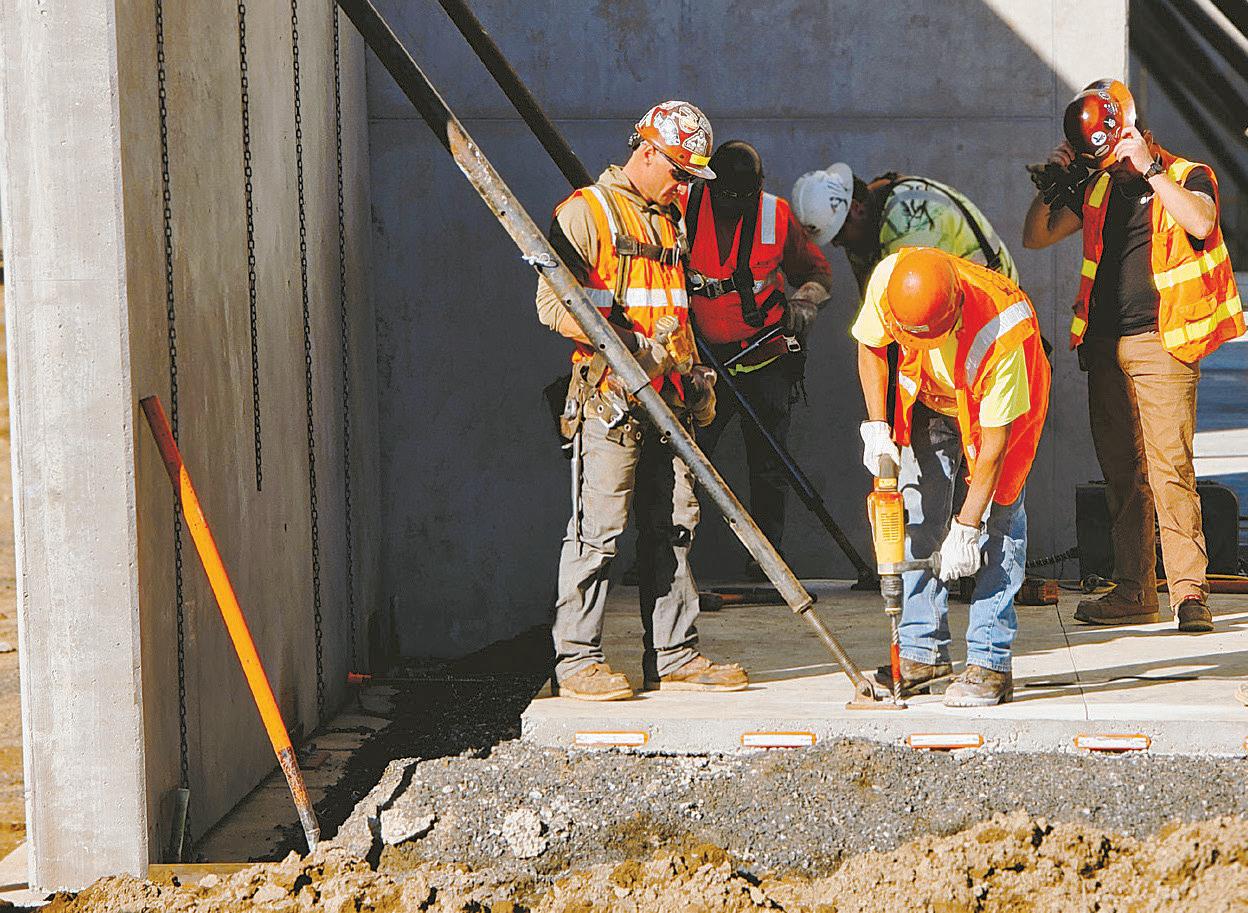
Did you know that you may be eligible to use your GI Bill benefits to learn a trade or skill through an on-the-job training or an apprentice program?
Apprenticeships are industry-driven, high-quality career pathways where employers can develop and prepare their future workforce, and individuals can obtain paid work experience, classroom instruction, and a portable, nationally-recognized credential. Apprenticeship combines on-thejob training with a steady paycheck, making it an ideal solution for many, especially those transitioning from service to civilian life.
You can use your GI Bill benefits to train in industries such as construction, law enforcement, transportation, education, healthcare, IT, cybersecurity, and more.
Who’s covered?
• Veterans • Reservists
• Survivors’ and Dependents’ Educational Assistance Program beneficiaries
• Marine Gunnery Sergeant John David Fry Scholarship (Fry Scholar) beneficiaries
• Dependents using transferred benefits under the Post-9/11 GI Bill
You can’t get on-the-job training if you’re an active-duty service member or the spouse of an active-duty service member using transferred benefits.

Benefits of pursuing OJT or Apprenticeships: Apprenticeships provide a unique earn-and-learn pathway to develop in-demand workplace and technical skills while earning a paycheck from day one.
There are many benefits to participating in an apprenticeship:
• Earn While You Learn: Get paid while learning a new skill that is outside one’s military occupation.
• Mentorship: Work alongside a mentor in a structured environment.
• Nationally Recognized Credentials: Earn credentials and college credits.
• No Student Debt: Provides a career pathway without accumulating college debt.
• Structured Training: Provides a direct pathway to civilian jobs in construction, IT, healthcare and manufacturing.
• Career Advancement: OJT provides opportunities to enter high-demand fields and often leads to higher wages upon completing the program.
Monthly benefits depend on which GI Bill program you are using.
If you are using Post-9/11 GI Bill or Fry Scholar benefits, you may be able to also receive a monthly housing allowance.
For local assistance, contact one of Veteran Service offices listed on the “How Can I Get Help?” list in this publication or call 509-477-3690.
























Spokane County Regional Veteran Services Center is a regional strategic partnership with Spokane County and the Washington State Department of Veterans Affairs, leading innovation in rural Veterans Services by providing a comprehensive array of programs and services to Eastern Washington veterans in a positive culture of honor and respect for their military service.

We are located at 1117 N. Evergreen Rd., Suite 2 Spokane Valley, WA 99216. We look forward to serving you!
https://www.spokanecounty.org/VeteranServices