
SUSTAINABLE PACKAGING NEWS Supply Chains? …Be Prepared! KPMG tells you how, in a special report for SPN. Labelexpo is here! SPN looks at some of the exciting product launches at this year’s show in Brussels Taking the lead in sustainability Issue 23:4 - September 2023 Mono-materials The advantages of mono-material packaging and its potential to revolutionise the industry Transit Packaging Biodegradable Packaging Embracing the Future Machinery





SUSTAINABLE PACKAGING NEWS 2 SUSTAINABLE PACKAGING NEWS RECYCLABILITY CONFERENCE David Katz Plastic Bank Antonia Schüttler Made For Recycling Silvia D’Alesio aizoOn Technology Consulting Chris Fiander Westpak Group Ltd and more! SPN is excited to invite you to our Recyclability conference which is being held on the 12th September Featuring a wide range of speakers covering recyclable packaging, providing valuable insight into ways that services and packaging techniques can be more sustainable. Some of the confirmed speakers for the conference include... The conference will be shown on our website www.spnews.com -westpak-group-ltd.jpg https://drive.google.com/ le/d/1ZM6tkrqOm0ZZB8ba312sOS675S0mD08z/view
Welcome to


Dear Readers,
I hope this finds you and yours keeping well. Whether you have been living through a heatwave or a monsoon, we hope that you are still be able to make the most of the exciting Labelexpo show in September!

Major International Trade shows such as Labelexpo, lift our spirits and helps us to stay positive in the face of the many challenges and uncertainties that lay ahead of us. Most of these being created by a fragile global economy. Added to this is the barbaric war taking place on our doorstep, with all the problems it creates for supply-chains. However, despite all the turmoil, our industry somehow manages to stay resilient and to create opportunities that enable us to press-on with our mission towards creating a more sustainable and more eco-friendly environment.
With this in mind, you will discover that some editorials in this issue will help you to optimise your efficiency and sustainability programmes. Here we also unveil the super-efficient HP V12 digital label printer to be shown at LabelExpo in September and in our Retail Round-Up feature, we look at the significant achievements of both Amazon and Tesco in the consumer marketplace. We also publish a new guide on how to make the most of today’s “Mono Packaging Materials”
All this, and much more is packed into this unique and topical issue, which just leaves me to wish everyone a productive and profitable run-up to the forthcoming Autumn trade show events!
Take good care everyone and stay safe.
Sincerely,
Philip Yorke ( Editor )

SUSTAINABLE PACKAGING NEWS
spnews.com
September 2023 SUSTAINABLE PACKAGING NEWS 3 SUSTAINABLE PACKAGING NEWS Supply Chains? …Be Prepared! 1. KPMG tells you how, in a special report for SPN. Labelexpo is here! SPN looks at some of the exciting product launches at this year’s show in Brussels Taking the lead in sustainability Issue 23:4 - September 2023 Mono-materials The advantages of mono-material packaging and its potential to revolutionise the industry Transit Packaging Biodegradable Packaging Embracing the Future Machinery news_packaging WELCOME TO SPN MAGAZINE linkedin.com/company/ sustainable-packaging-news/ Director Editor Writers Designer Kevin Gambrill Philip Yorke Steven Gislam, Dominy Jones Dom Thorby
4 SUSTAINABLE PACKAGING NEWS Contents CONTENTS REGULAR FEATURES TOPICS RETAIL ROUND-UP 14 It’s Raining Whole-Foods at Amazon! 15 Sustainable Retailer of the Year 6 SUPPLY-CHAIN SLEUTHS 6 Supply Chains? …Be Prepared! DIGITAL DIGEST 12 Vivid, Sustainable Pouches 13 “Astonishing digital results” REDUCING CARBON FOOTPRINT 22 Colpac - Going Beyond Sustainability 24 A Carbon Footprint To Fit All Sizes 20-20 VISION 10 Measure of success 11 Can-makers can! MONO-MATERIAL PACKAGING 16 Making the most of Mono-Material BIODEGRADABLE AND COMPOSTABLE 18 Embracing the Future EVENT NEWS 26 Labelexpo Europe 2023 RETURNABLE TRANSIT PACKAGING 34 goplasticpallets.com - All Systems Go! 36 Dinner-Max - Transit Packaging MACHINERY 37 Nicholl Food Packaging - Trending Trends 40 Powerstar - Transforming Efficiency ALTERNATIVES TO PLASTICS 46 Breaking the Mould 12


SUSTAINABLE PACKAGING NEWS 5 CONTENTS 36 26 37 18 24 16
SLEUTHS
Supply-chain Sleuths
Supply Chains? …Be Prepared!
KPMG recently released a report on the supply chain trends that are shaking-up today’s manufacturing industries. Here are some of its key findings that could help packaging companies prepare for future challenges:

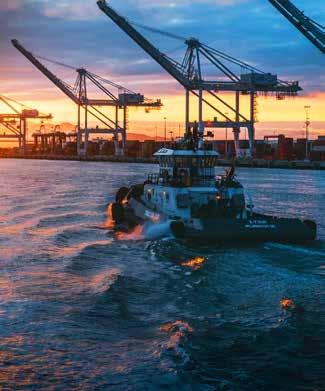
Disruptions to supply chain operations are set to stay for the year ahead, whether they be existing or new geopolitical conflicts, or other influencers. These could be inflationary pressures and the recessionary environment, climate change weather events, or other issues yet to emerge. They can all impact access to goods and how they flow to their final destination, as well as creating port hold-ups, reduction of container and ocean freight availability, and can also surge prices, among other concerns.
“ managing your organisation’s response to disruptions can be a critical opportunity in the year ahead ”
Amid these disruptions, there will likely be some key supply chain trends to manage. Therefore, managing your organisation’s response to these can be a critical opportunity in the year ahead. At KPMG, from within our Global Operations Centre of Excellence, we firmly believe that: Nations will be sceptical about cross-border trade cooperation; cyber criminals will ramp up activity; there will be key material access turmoil; manufacturing footprints will change shape; retail and distribution supply chains are morphing rapidly; supply chain technology investments will accelerate; and on the ESG front, scope 3 emissions will be scrutinised – notably, by investors and regulators in addition to the environmentally conscious consumer.
6 SUSTAINABLE PACKAGING NEWS
SUPPLY-CHAIN
To help set yourself up for success in dealing with these supply chain trends there are three overarching things you should have in place. These are:
Capability
A mature supply chain planning capability to always be a step ahead and ready to tackle supply chain risks and opportunities
Agility
Making sure your supply chain is responsive and agile to manage the unexpected, and to deal with these threats and disruptions appropriately, efficiently and profitably
End-to-end forward-looking visibility
Having ‘control tower’ visibility on key real-time indicators; being able to manoeuvre your supply chain beyond your own business borders; and building real-time collaboration with your ecosystem of supply chain partners will likely be critical – all done using digital capabilities. The ultimate goal is to enhance collaboration across the supply chain eco-system.
With these three factors in place, you should be set up to turn the current challenges into a competitive advantage.
Here are the supply chain trends to watch for and what to do about them:
Nations sceptical about cooperation
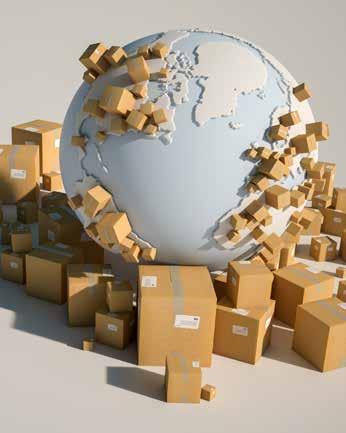
Geopolitical tensions have seen nations turn inward and become sceptical about cooperation and interdependence. When it comes to the supply chain, this caution is fair, as if tensions escalate, essential materials may be inaccessible, or major trade routes could be shut down. Therefore, governments and industry leaders are exploring domestic self-sufficiency in material supply and manufacturing. Short of this, they are looking to build ‘friend shoring’ relationships – trade links with like-minded and most likely geographically close countries (‘nearshoring’) where supply of goods will likely be more secure.
More than 6 out of 10 global organisations expect that geopolitical instability may have a detrimental impact on their supply chains in the next 3 years. Organisations consider cyber security as an important operational challenge.
To protect against geopolitical tensions, some critical steps to initiate during 2023 include:
• Model scenarios to understand the impact geopolitical tensions will have on your supply chain.
• Consider how you can leverage friendshoring or nearshoring to create a more secure supply network.
• Be clear on what will happen if you can’t access a key material or component. Will you need to reformulate a product? What will this mean in terms of regulatory and/or customer approval and are there cost impacts to sourcing from new suppliers or markets?
• Recognize the impact that friendshoring or nearshoring will have on your lead times and speed to market. Can you become more responsive, agile, and reduce your working capital?
Cyber criminals ramping-up
Looking ahead, cyber criminals will likely be even more sophisticated when it comes to infiltrating supply chains to damage or steal from businesses. The supply chain can offer vulnerabilities that provide external parties with a pathway to get into your systems, particularly via your supplier network. Criminals could also hack in through basic warehouse equipment such as a barcode reader or via Internet of Things (IoT) devices applied within your manufacturing and other operational sites. Cyber risk will likely be compounded if you rethink your supplier networks and make changes to friendshore/nearshore, or invest in new technologies.
In the year ahead, a second wave of unplanned supply chain risks will likely be realised. Organisations may experience limited access to critical inputs for manufacturing, or even spare parts and critical maintenance items.
SUSTAINABLE PACKAGING NEWS 7 SUPPLY-CHAIN SLEUTHS
In an aligned challenge, key commodity prices and availability may fluctuate – whether that be fuel/diesel, construction items like timber, steel and resin, or re-useable plastic for packaging. Building resilient supply chains to combat future disruptions and adapt to new changes quickly will be key to helping companies navigate these risks.
Manufacturing footprint changing shape
While accessing critical materials in future may be challenging, so too will be manufacturing for many of the same reasons including the rapid rise in energy costs and price surge of key inputs. Therefore, global corporations with manufacturing operations will be re-evaluating their manufacturing footprint. Friendshoring and nearshoring will again be considered, however, there may be deeper thinking around whether manufacturing needs to be – and can be – done entirely onshore. This shift can’t happen overnight, but wheels will be put in motion.
Another factor to consider will likely be the increased impact of online retail on product manufacturing. Often, online platforms want to differentiate their offer, whether that be the size of products, minor ingredient changes, or even the style of packaging. This means organizations will seek out manufacturers that can provide more customization. Similarly, in life sciences, precision medicine will become more accepted by regulators, healthcare practitioners and patients. Therefore, rather than manufacturing millions of units for each vaccine/ drug and moving these products across the globe, corporations may seek to manufacturer specific products per patient. This manufacturing change will significantly transform the future manufacturing footprint and how supply chains operate. As a result, a key question is whether organisations should establish new supply chains or simply divert production to other markets with existing capacity.
Retail and distribution supply chains are morphing
While getting goods into the hands of consumers in 2023 might appear easier than in earlier COVID-19 times, it will likely not be simple nor inexpensive. There may be more consumption mechanisms and channels than ever, and costs are not showing any signs of letting up, partially due to the close link to the complex manufacturing challenge, but also to the difficulty in getting goods into the hands of a more-demanding-than -ever consumer.
The prevalence of last mile delivery challenges, coupled with reliance on suppliers that are often experiencing difficulties also, means global and local retailers may need to review their inventory distribution network and create a seamless experience around a unified commerce approach.
67% of organisations consider meeting customer expectations for speed of delivery as a critical force impacting the structure and flow of their supply chains over the next 12-18 months.
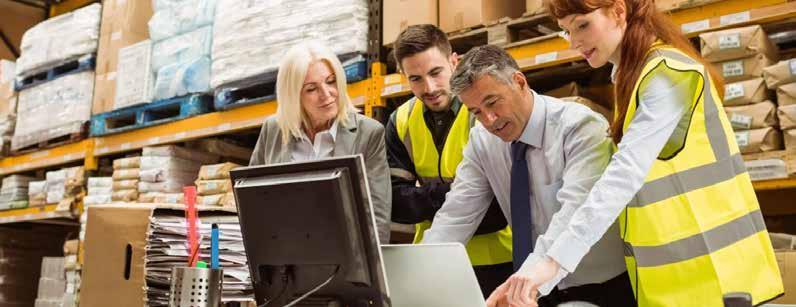
Key steps to better manage retail and distribution complexities include:
• Consider the future of your distribution and microfulfilment centre locations.
• Enhance and advance your e-commerce and omni-channels into true unified commerce process and technology.
• Review sourcing and supplier strategies to reduce risks.
• Implement control tower visibility in a predictive environment, leveraging AI and ML.
8 SUSTAINABLE PACKAGING NEWS SUPPLY-CHAIN SLEUTHS
“ a key question is whether organisations should establish new supply chains or simply divert production to other markets ”

CUSTOMER SERVICE
sacrq@repsol.com Repsol.com
20-20 Vision Measure of success
Sanofi is the first large consumer healthcare company to earn B Corp Certification following significant, measured progress.
Sanofi told SPN, “After making strides in environmental sustainability and social impact commitments, Sanofi Consumer Healthcare North America is pleased to announce it has earned B Corp Certification. This designation follows a rigorous evaluation and is the first time such certification has been granted to a large consumer healthcare company.
Sanofi Consumer Healthcare North America has products in nearly 54 million households in the U.S and Canada, including Allegra®, Icy Hot®, Dulcolax® and Unisom®. Businesses certified by B Lab, a third-party non-profit, are leaders in the global movement for an equitable, sustainable economy. B Lab measures a company’s entire social and environmental impact and attaining B Corp Certification means a company meets high standards of social and environmental performance, accountability, and transparency.

Andrew Loucks, Head of North America Consumer Healthcare, Sanofi said, “We are honoured to join the B Corp movement alongside other companies aiming to transform business into a force for good. A recent study by NielsenIQ found that 78 percent of US consumers say that a sustainable lifestyle is important to them1 and we are committed to meeting this demand by integrating sustainable practices into every aspect of our operations. Our B Corp Certification is another step in our journey to champion better self-care for a healthier society and a healthier planet.”
Sanofi Consumer Healthcare North America earned B Corp Certification because of its continued commitment to social impact and sustainability, that include the following:
Eliminating 35 tons of plastic packaging per year by removing plastic windows on Allegra®, Nasacort®, and other products as part of the goal to reduce the environmental footprint of our products and increase packaging recyclability.
Reducing operational (scopes 1 and 2) greenhouse gas emissions of its North American manufacturing site by 77% since 2019 as part of the goal – across all scopes to build a road to carbon neutrality by 2030 & net-zero emissions by 2045
Powering North American manufacturing and distribution site with 100% renewable electricity as part of the goal to reach this benchmark for all global manufacturing operations by 2025
Attaining 41% representation of women in senior leadership roles as part of the goal to reach 50/50 gender parity in senior leadership positions by 2025
Renovating basketball courts in under resourced communities via the “Comebaq Courts” initiative with Icy Hot and the Shaquille O’Neal Foundation
Providing access to organised sports opportunities for Canadian youth facing socio-economic barriers via a partnership with KidSport Canada as part of the global goal to reach 5M people by 2030 through on-the-ground programms
Sanofi is an innovative global healthcare company, driven by one purpose: “We chase the miracles of science to improve people’s lives”. Our team, across some 100 countries, is dedicated to transforming the practice of medicine by working to turn the impossible into the possible. We provide potentially life-changing treatment options and life-saving vaccine protection to millions of people globally, whilst putting sustainability and social responsibility at the centre of our ambitions. Sanofi is listed on EURONEXT: SAN andNASDAQ: SNY
For more information on Sanofi visit: https://www.sanofi.com/en

10 SUSTAINABLE PACKAGING NEWS 20-20 VISION
Can-makers can!
About “The Can Makers”
The Can Makers is the trade body representing drinks can manufacturers in the UK. Members work together specifically to promote the benefits of the drinks can and aid communications between the industry and its customers: the brewers and soft drinks manufacturers and the retailers, as well as the packaging industry, the media and consumers.
The UK is the largest beverage can market in Europe, with over 10 billion cans shipped each year from UK can manufacturing plants. The Can Makers was the first organisation in Europe formed to promote drink cans. It is part of the Metal Packaging Manufacturers Association which represents the UK metal packaging industry. The Can Makers and MPMA form part of a European network set up under Metal Packaging Europe (MPE), which includes similar country organisations across Europe.
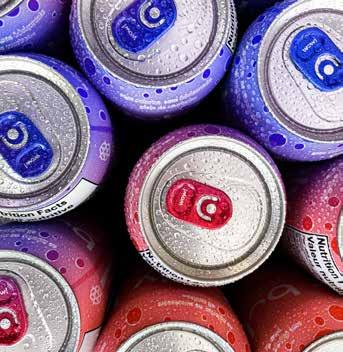
When purchasing canned beverages, consumers can enjoy guilt-free convenience in the knowledge that aluminium cans are a permanent material that can be recycled easily and economically. Cans are collected, recycled, filled, and back on the shelves in just 60 days and, impressively, around 75% of all aluminium produced around the world is still in use today with the 2020 recycling rate for drinks cans in the UK at 82%.
However, as recent research conducted by the Can Makers has shown, it is not just sustainability which is driving the popularity of cans. The convenience cans offer appeals to consumers who need drinks on-the-go, and the 360-degree printable surface of cans means that brands can make sure their products stand out on supermarket shelves, catching the eye of consumers and driving sales.
Our members are working hard to ensure beverage cans are recognised as a model packaging format for a circular economy. With beverage cans recycling endlessly in a material-to-material loop, we can retain the value of aluminium as a packaging material forever, ensuring that canned drinks are economically and sustainably available today and for future generations.

20-20 VISION SUSTAINABLE PACKAGING NEWS 11
A new insight contributed by Tim Conybeare, chairman of “The Can Makers” the canned drinks trade body.
Tim Conybeare Chairman of “The Can Makers”
Consumers are increasingly aware of the need to protect our planet and a 2021 Co-op report shows that ethical consumerism is on the rise, with an estimated value of £122 billion in the UK alone. However, recent research also shows that while eco-friendly choices are important to consumers, half admit that convenience can still often take priority.
Vivid, Sustainable Pouches Digital Digest
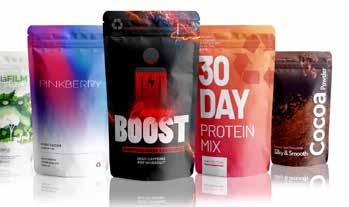
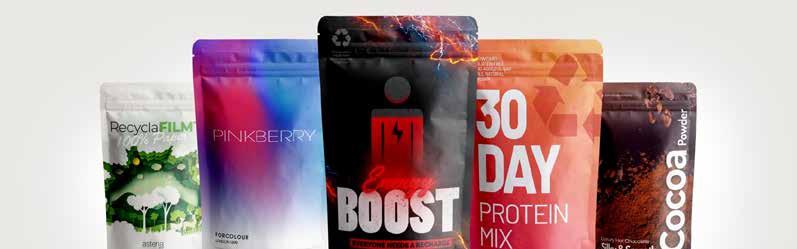
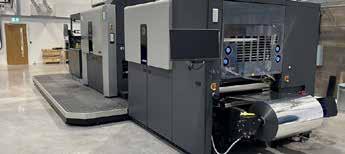
The UK’s leading digitally printed label manufacturer, Pouches.co.uk is improving its overall quality and sustainability with its installation of HP’s latest Indigo 20000 Digital Press. In doing so the HP Indigo 20K digital press which can produce “fantastic vivid colours” ensures that the company will keep up with market growth and maintain its position as market leader.
HP Told SPN. “Pouches.co.uk have installed the HP Indigo 20000, digital press with 25K upgrades to improve capacity and flexibility in its offerings, whilst providing high quality products manufactured on demand. Based in Wolverhampton, Pouches. co.uk, Asteria Group (formerly CS Pouches) is the UK’s leading digitally printed label manufacturer with more than five years of pouch making experience, and a wealth of knowledge of printing and forming pouches with other digital technologies.
Pouches.co.uk’s latest investment into HP Indigo is an example of how HP is continuing to serve brands across the world with premium digital printing. With the digital flexible market continuing to grow at a rapid pace, this installation will help the company continue to keep up with demand while still providing packaging of the highest quality to their customers.
The company opted to purchase the HP Indigo 20000 with 25k upgrades Digital Press due to its width of 760mm, which makes it the ideal option for the majority of the pouch sizes manufactured across all market sectors. In addition, HP’s combination of CMYKW + OVG has enabled Pouches.co.uk to utilise this extended colour gamut and provide an offering of fantastic, vivid colours in their product.
In terms of sustainability credentials, Pouches.co.uk explain that this new HP product fits in with their sustainability goals, as it uses very little heat during the print process, allowing them to offer a Mono Film to market, which is ideal for recyclability.
Speaking on this investment announcement, Paul Humpage, Sales Director & Co-Managing Director at Pouches.co.uk says that this installation will, “add additional capacity and flexibility to our current digital pouch solutions. We have seen some fantastic results from the HP already, it really complements the other printing, laminating and conversion machinery in which we have already invested.”
12 SUSTAINABLE PACKAGING NEWS DIGITAL DIGEST
The Indigo 200000 digital press
Flexible, recyclable, ‘Vivid’ pouches from Pouches.co.uk
“Astonishing digital results”
Mack told SPN, “Our HP Indigo 20000 combined with a finishing line including lamination and EB curing of varnish, makes us unique in Europe. Finishing with EB curing is the sustainable way without the use of solvents, indicators etc. and enables pack ready products directly after production.
The benefits of using digital printing are many, it is less timeconsuming when producing short runs and doing smaller printon-demand jobs. It also eliminates the expense of plate making which enables easier and less expensive last-minute changes to a print job and the possibility to print multiple variations”.
Strict EU Code conformity
Mack added, “Our digital printing capabilities cover production of both a wide range of flexible packaging as well as labels and late-stage coding of carton-board packaging. On pharmaceutical packaging we ensure conformity with all country-specific markings, including EU Code according to regulation 2016/161, China Code, and Russia Code.
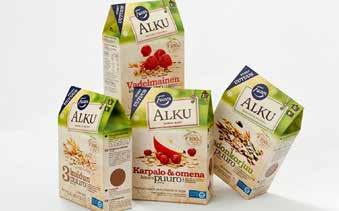
Digital printing provides great benefits when it comes to test launches and an efficient upscaling to larger volumes with production using traditional converting technologies. Digital artwork is instantly turned into real printed prototypes which speeds up the packaging development process.
Unique late-stage customisation
“If you are looking for personalised packaging to attract the consumer at the point-of-sale, or late-stage customisation to secure full traceability in the health care sector, the possibilities are unlimited. AR Packaging not only offers full artwork individualisation on our digital presses, but also, unique late-stage customisation with endless options of downstream print processes.
No matter if supplied as reel material, labels, sheets, blanks and even pre-glued folding cartons, we offer individualisation printing as required specifically for your market campaign or traceability”.
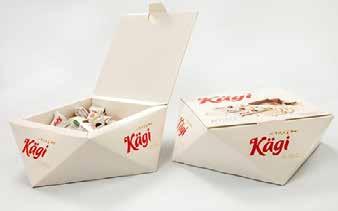
Astonishing potential
“What’s more, the latest digital printing technology is ideal for market tests and product launches where volumes are difficult to predict. However, there is astonishing potential when it comes to full upscaling and to larger volumes, the digital print has been made to ensure the same print-look as when transferred to large-scale conventional printing technologies. In this way we have used our digital printing possibilities to increase flexibility, enable swift product development and optimise overall cost savings”.
SUSTAINABLE PACKAGING NEWS 13 DIGITAL DIGEST
“Digital print can be Individual, unique, traceable and sometimes simply astonishing” So says Ralph Mack of AR’s Graphic Packaging International. Based in Sweden, the company provides a vast range of different digital-print technologies, from full reel-to-reel digital print on its HP 20000, to late-stage coding or serialisation on sheets… or even directly onto carton blanks.
“ we have used our digital printing possibilities to increase flexibility, enable swift product development and optimise overall cost savings ”
AR Multi-Pack re-useable packaging Courtesy AR re-usable Packaging
Retail Round-up It’s Raining Whole-Foods at Amazon!

Amazon will now sell Whole Foods 365 products following a string of strategic manoeuvres by the giant in the grocery sector. Shoppers are now able to order “Whole Foods 365 private label brand” on Amazon, as Philip Yorke reports.

The delivery giant will offer the private label brand on its site shortly and will also offer up to 15% off recurring orders that include 365 by Whole Foods Market, a brand which has over 3,500 products in its portfolio. Amazon announced at the start of the year that it was going to become a serious player in the grocery sector, but until recently the company was only showing signs of retreat in that particular sector. Lay-offs and Amazon Fresh store closings were the main grocery news items coming from Amazon during the first and second quarters, however, early August saw a major shift of its strategy towards listing more grocery offerings.
Amazon now provides fresh food delivery to non-Prime members and stores have been remodelled, and new tech, such as, Amazon’s One palm payment, will now also be available in stores. During Amazon’s most recent earnings call, the company saw a 4.2% increase in its e-commerce sales and a 6.4% physical rise in store sales. With Prime Day producing record sales numbers in mid-July, Amazon is forecasting as much as a 13% increase in third quarter sales!
14 SUSTAINABLE PACKAGING NEWS RETAIL ROUND-UP
Courtesy of Whole Foods Market
Sustainable Retailer of the Year
James Bull, Head of Packaging at Tesco, told SPN: “Packaging remains at the top of Tesco’s priorities for a reason. Around 70% of the UK’s plastic waste comes from packaging, with 46% of household waste recycled in the UK. As a responsible retailer, we have a big part to play in ensure we make it as easy as possible for our customers to recycle at home, and that we are only using packaging where we absolutely must.
Challenging Status Quo’s
In 2009, Tesco were the first supermarket to set a target of 2050 for carbon neutrality and we amended this to become net zero in our operations by 2035, and across our entire supply chain by 2050. For packaging to meet these targets, we’re challenging status quos; collaborating with our supply chains; and working hard to continually make improvements in every area of our business”.

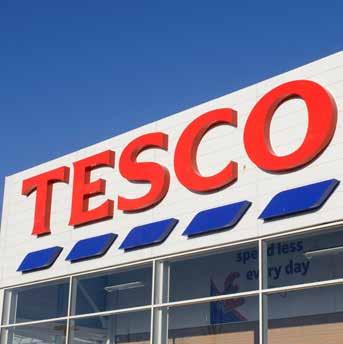
Bull added, “I’m delighted that Tesco has been recognised as Sustainable Retailer of the Year at the recent Environmental Packaging Awards – celebrating the hard work of our fantastic teams, and their commitment to help us become an even more sustainable business. We use our 4Rs strategy to explain our position when it comes to packaging – committing to always remove plastic and packaging where we can; reduce it where we can’t; reuse more and recycle what’s left. We’ve now removed more than 2 billion pieces of plastic from our UK business since 2019.
Understanding environmental impacts
We are proud to work closely with external partners, such as WWF, to better understand the challenges that the industry face. Together, we commissioned a report examining the UK’s global packaging footprint to improve our understanding of the environmental impacts of materials including glass, aluminium, paper and plastics. With our suppliers we prioritise easier to recycle materials, ranking them as red, amber or green, and demonstrating the type of packaging that Tesco wants to use. We have asked our suppliers to remove all ‘red’ material, which is harder for customers to recycle. Since 2018, by working in partnership with suppliers, we have replaced over 11,000 tonnes of the hardest-to-recycle materials with much easier alternatives”.
SUSTAINABLE PACKAGING NEWS 15 RETAIL ROUND-UP
“ I’m delighted that Tesco has been recognised as Sustainable Retailer of the Year ”
Making the most of Mono-Material
Packaging plays a crucial role in product preservation and transportation, but its impact on the environment cannot be overlooked. In recent years, there has been a growing emphasis on sustainable packaging solutions, and one such innovation is mono-material packaging. This article explores the sustainability advantages of mono-material packaging and its potential to revolutionise the industry.
By Dominy Jones
Mono-material packaging refers to packaging made from a single type of material, eliminating the need for complex and non-recyclable multi-layered structures. Common examples include mono-polyethylene (PE) or mono-polypropylene (PP) films. Unlike conventional packaging, which consists of various materials like plastics, foils, and laminates, mono-material packaging is designed to be easily sorted and recycled, reducing waste and promoting a circular economy.
The new Emerald Lipstick from international beauty manufacturer and provider Quadpack encapsulates high performance in an elegant design that’s completely monomaterial. The lipstick is available in a square or cylindrical shape, with a choice of materials. These include recyclable PET and up to 100% recycled PET (rPET) for brands looking for a more positive impact from their packaging. Moreover, the mechanism is POM-free for improved circularity.

Recyclability and Waste Reduction
One of the primary advantages of mono-material packaging is its high recyclability. By using a single material, it becomes easier to separate and recycle the packaging waste. Traditional multi-layered packaging can be challenging to recycle due to the need for specialised processes to separate different materials. However, mono-material packaging can be efficiently processed through existing recycling streams, reducing the strain on recycling facilities and increasing the likelihood of successful recycling.
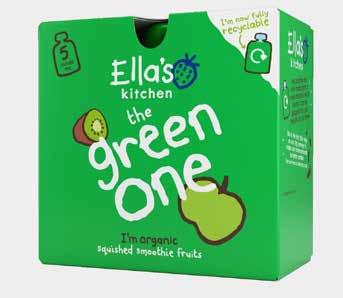
Ella’s Kitchen has launched its first mono-material pouch, “The Green One”, and will be transitioning its entire pasteurised range to mono-material pouches over the next 18 months. Mono-material pouches are technically easier to recycle than the combination of plastic and aluminium in current pouches, and the new pouch has been shown to successfully go through the existing UK recycling system, from kerbside collection through to sorting and recycling.
16 SUSTAINABLE PACKAGING NEWS MONO-MATERIAL PACKAGING
“ Quadpack encapsulates high performance in an elegant design that’s completely monomaterial ”
- Emerald Lipstick from Quadpack
Positive impact
Mark Cuddigan, CEO of Ella’s Kitchen, said: “Positive impact is at the heart of Ella’s Kitchen’s mission as we strive to be good for tiny tummies, good for the planet, and to do good business. Today, as we unveil our annual impact report, we are proud of the work we have done to demonstrate our commitment to this mission. From transforming our packaging and setting ambitious science-based targets, to championing diversity and inclusion, every step we take embodies our responsibility to leave a lasting legacy.
Moreover, mono-material packaging helps minimise waste generation. With simpler packaging structures, companies can optimize material usage and reduce over-packaging. By eliminating unnecessary layers and components, monomaterial packaging reduces the overall volume of packaging waste, resulting in less energy consumption during recycling processes and a reduced burden on landfills.
David Clark, Amcor’s vice president for sustainability, explains a key issue is the lack of proper sorting and recycling infrastructure for flexible plastics.

“Flexible packaging often isn’t accepted in kerbside recycling because it’s challenging for mechanical sorting systems at the recycling plants to separate it from other materials such as paper. Also, flexible packaging is often made of mixed materials that are difficult to separate, which limits the quality and economics of recycling flexible plastic packaging,” he says. “This issue means the flexible packaging that can be recycled frequently has to be recycled through store drop-off programs, which have lower accessibility and consumer participation than kerbside recycling programs.”
Carbon Footprint and Energy Efficiency
Reducing carbon emissions and energy consumption is a critical aspect of sustainability. Mono-material packaging contributes to this goal by offering notable advantages. Firstly, the production of mono-material packaging requires fewer resources compared to conventional multi-layered packaging. The simplified manufacturing process reduces energy consumption, water usage, and greenhouse gas emissions, thus minimising the carbon footprint associated with packaging production. Secondly, the lighter weight of mono-material packaging compared to its multi-layered counterparts translates to reduced transportation emissions. The lower weight not only decreases fuel consumption during transportation but also reduces associated air pollution. Companies can achieve substantial energy savings and lower their carbon footprint by adopting mono-material packaging solutions.
Total Energies announced the commercial launch of a new highdensity polyethylene (HDPE) resin for tethered cap applications, allowing to reduce material usage, enhance recovery and improve recycling.
The new HDPE 20HD07 resin has enhanced mechanical and organoleptic properties, enabling identical technical cap performances with less material than market reference, thus reducing the carbon footprint of end applications, such as beverage or cosmetic bottles. Furthermore, it has been designed for mono-material PE packaging solutions to facilitate sorting and recycling, and hence contributes to the circular economy.
In the quest for a sustainable future, mono-material packaging has emerged as a promising solution. By simplifying packaging structures and using a single material, this innovative approach significantly enhances recyclability, reduces waste generation, and minimizes carbon emissions.
The advantages of mono-material packaging extend beyond environmental benefits; it also promotes a circular economy by increasing the likelihood of successful recycling and reducing the strain on recycling facilities.As businesses and consumers increasingly prioritise sustainability, mono-material packaging stands as a practical and effective solution to achieve a greener and more sustainable future.
MONO-MATERIAL PACKAGING SUSTAINABLE PACKAGING NEWS 17
“The Green One” mono-material pouch
Embracing the Future
For biodegradable and Compostable Packaging
In a world grappling with a mounting plastic crisis, the imperative to adopt sustainable alternatives is now more pressing than ever before. The ubiquity of plastic packaging has led to environmental degradation, overflowing landfills, and marine pollution. As consumers and industries alike seek more eco-friendly solutions, attention has turned to biodegradable and compostable packaging as a potential answer. In this article, we delve into the nuances of biodegradable and compostable packaging, their benefits, challenges, and the potential they hold for a greener, more sustainable future.
Understanding Biodegradable and Compostable Packaging
Before we delve into the advantages and challenges, it’s essential to understand the fundamental differences between biodegradable and compostable packaging. Both terms refer to a natural process whereby a material decomposes in the environment. But, while all compostable materials are biodegradable, not all biodegradable materials are compostable.
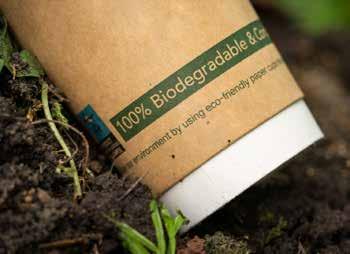
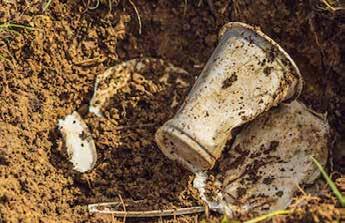
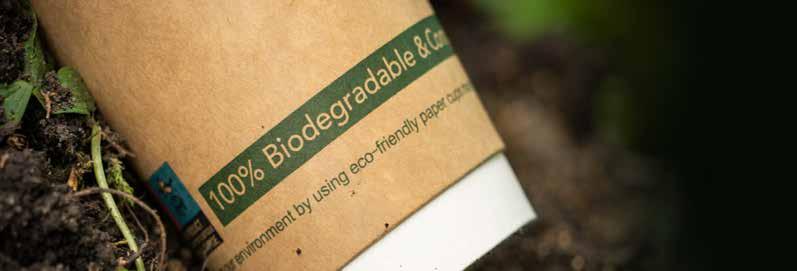
Biodegradable products are those will break down naturally over time, thanks to the work of microorganisms but they can sometimes leave residue waste behind. For example, a plastic-lined paper coffee cup. The paper will decompose, and eventually the plastic too. However, there will still be microplastics left behind.
18 SUSTAINABLE PACKAGING NEWS BIODEGRADABLE AND COMPOSTABLE
From the desk of our European reporter, Steve Gislam
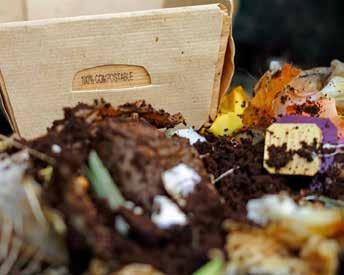
Compostable materials, on the other hand, break down into organic matter, or humus, which adds valuable nutrients to the soil during decomposition.
While both options provide more eco-friendly alternatives to traditional plastics, compostable packaging goes the extra mile by enriching the soil.
These materials come in various forms, from polylactic acid (PLA) derived from cornstarch to bagasse made from sugarcane pulp. Their burgeoning popularity serves as a testament to the ongoing innovation in the packaging industry, which is striving to clean up its act while offering a diverse range of options for different product types and packaging needs.
Advantages of Biodegradable and Compostable Packaging
The advantages of biodegradable and compostable packaging are multifaceted and offer compelling reasons for their widespread adoption.
Unlike traditional plastics that can persist for centuries, biodegradable and compostable materials break down relatively quickly by comparison, reducing the strain on the environment. Their decomposition produces fewer greenhouse gases and is generally less detrimental to the planet’s health.
The production of biodegradable and compostable materials typically requires fewer fossil fuels and emits fewer carbon emissions than conventional plastics. This reduction in the carbon footprint is a crucial step toward mitigating climate change. Growing awareness and concern for the environment has increasingly led consumers to actively seek products packaged in more environmentally friendly materials. Brands that adopt biodegradable and compostable packaging often enjoy a competitive edge, attracting eco-conscious consumers.
Compostable packaging, in particular, can provide a boon for soil health. When these materials break down, they release nutrients into the soil, enriching it and promoting healthier plant growth. This closed-loop system offers a sustainable way to cycle nutrients back into the ecosystem.
Biodegradable plastics, designed to break down in natural environments, offer a bridge between convenience and sustainability. While they may take longer to degrade than compostable materials, they still represent a significant improvement over traditional plastic.
Challenges and Considerations
While biodegradable and compostable packaging hold great promise, they also present a set of challenges that need careful consideration.
The absence of universally accepted definitions and certifications for biodegradable and compostable materials can lead to confusion and greenwashing. Establishing clear standards is crucial to ensuring that the products truly align with sustainability goals.
Compostable materials require specific conditions to break down efficiently, necessitating access to industrial composting facilities. The lack of such facilities can be an obstacle to widespread adoption.
Contamination of compostable materials with non-compostable items can disrupt the composting process and undermine its environmental benefits. Effective waste management coupled with consumer education are essential to address this challenge.
Maintaining the integrity of products while ensuring reasonable shelf life is a delicate balancing act. Striking the right balance between functionality and biodegradability is a critical consideration for businesses.
As ever, there’s always the bottom line to think about. Biodegradable and compostable packaging can sometimes be more expensive to produce than traditional plastics. Finding ways to make these alternatives economically viable while keeping products affordable for consumers is an ongoing challenge.
Then, there’s the need for transparency in order to dispel misconceptions about biodegradable and compostable materials. Some materials may not break down as expected under certain conditions, which could lead to accusations of greenwashing and disillusionment among consumers.
BIODEGRADABLE AND COMPOSTABLE SUSTAINABLE PACKAGING NEWS 19
“ Maintaining the integrity of products while ensuring reasonable shelf life is a delicate balancing act ”
Consumer Awareness and Education
While the shift towards biodegradable and compostable packaging is full of promise, consumer awareness and education play a pivotal role in its success. Without the backing of the public, it is doomed to fail.
Informing consumers about the proper disposal and composting processes for these materials is essential to ensure their effective decomposition.
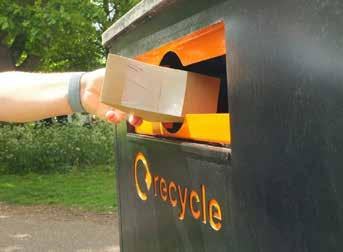
That’s why it’s vital that packaging should be well labelled and contain clear instructions instructing consumers on how to dispose of biodegradable and compostable items correctly. Initiatives that raise awareness about sustainable packaging practices can empower consumers to make informed choices and contribute to a healthier planet.
The Road Ahead
The adoption of biodegradable and compostable packaging requires collaboration between governments, the packaging sector, retailers, and consumers.
Governments can incentivise businesses to adopt sustainable packaging practices through policies and regulations. The packaging industry must continue innovating and investing in research to improve the performance of biodegradable and compostable materials.
Governments and private enterprises must work together to expand composting infrastructure, making it more accessible and convenient for consumers to dispose of these materials correctly.
Continued research and development is essential to overcome the challenges associated with biodegradable and compostable packaging. This includes developing materials that strike the right balance between functionality, cost-effectiveness, and sustainability.
As we navigate towards a sustainable future, it’s crucial to recognise that the journey involves a holistic approach. It’s not merely about swapping out plastic for biodegradable or compostable materials, but also about reimagining our entire packaging ecosystem. This includes considering the full lifecycle of packaging materials, from production to disposal, and how they interact with the environment and society.
A holistic approach to the future of packaging
The adoption of biodegradable and compostable packaging marks a significant stride towards mitigating the environmental impact of plastic waste. These materials offer a promising solution to the mounting plastic crisis, with benefits ranging from reduced environmental impact and a lower carbon footprint to enhanced soil quality and positive consumer perception. However, it’s important to navigate the challenges thoughtfully, including the lack of standardised definitions, accessibility to composting facilities, and consumer education.
The success of biodegradable and compostable packaging hinges on collaboration, where governments, businesses, and consumers work hand in hand. Through innovations in material development, improvements in composting infrastructure, and informed policy interventions, we can pave the way for a sustainable packaging future. As individuals, we also play a pivotal role in this transition. By making conscious choices as consumers, such as supporting businesses that prioritise ecofriendly packaging, and advocating for sustainable practices, we all play a part in creating a world where packaging not only protects products but also nurtures the planet.
In the face of environmental challenges, embracing biodegradable and compostable packaging signifies more than a mere trend – it represents a vital shift towards a circular economy that respects and replenishes the resources of our planet. By choosing to invest in a future where packaging aligns with the cycles of nature, we move one step closer to leaving a healthier, greener world for generations to come.
20 SUSTAINABLE PACKAGING NEWS BIODEGRADABLE AND COMPOSTABLE
“ embracing biodegradable and compostable packaging signifies more than a mere trend – it represents a vital shift towards a circular economy that respects and replenishes the resources of our planet ”
THE FUTURE OF PLASTICS
15 - 18 November 2023 Jakarta International Expo, Kemayoran Indonesia Co-located with: Sustainable Events:
For digital collaboration or to book your booth, please contact your nearest office:
SUSTAINABILITY IN FMCG SUSTAINABLE PACKAGING NEWS 21
The 34th International Plastics and Rubber Machinery,
and Materials Exhibition Wiwiek Roberto +62 816 1995 068 wiwiek@pamerindo.com William Lim +65 9452 2976 william.lim@informa.com Andrea Boccellini +44 (0) 78 669 18897 andrea.boccellini@informa.com
Processing
ORGANISERS - INDONESIA INTERNATIONAL SALES OFFICE - ASIA INTERNATIONAL SALES OFFICE - WORLDWIDE www.plasticsandrubberindonesia.com Plastics & Rubber Indonesia Plastics & Rubber Indonesia plasticsandrubber.indonesia
Going Beyond Product Sustainability Colpac
In its drive to deliver net-zero, Colpac has adopted a clear carbon reduction plan to achieve it by the end of 2023. SPN asked Colpac some leading questions about its ambitious net-zero endeavours with a series of questions and its answers featured here:
In relation to sustainability, what would you say have been your most important milestones?
2023 has seen the launch of our net-zero programme. We are especially proud of this initiative leading the way as this is not yet a requirement of SMEs. We have calculated our scope 1, 2 and 3 emissions for the first time, and we are working through how to deliver our short- and long-term net zero targets.
How ‘sustainability-aware’ would you say your company is and what recent measures have you taken to improve your overall contribution to the circular economy?
“As a manufacturer, we believe that business should be a force for good which extends beyond championing product sustainability. We are rigorous about ethical practices across our supply chains, for our people, and on behalf of our customers, whilst instilling a forward-thinking attitude to continuously improve.
Our UK factory uses 100% renewable energy, and we are proud to send zero waste to landfill. In order to improve circularity, we focus on the development of compostable and recyclable paperboard food packaging and evaluate recyclability and compostability against UK and European guidelines. We sell to over 60 worldwide markets, so consider global legislation to ensure we adhere to the most stringent standards.
As part of this programme, we have committed to calculating our carbon footprint annually and to delivering a net zero strategy and carbon reduction plan by the end of 2023. Our net zero targets will also be externally validated by the Science Based Targets Initiative, which will validate such targets against climate science.
In your opinion what have been the most significant developments in terms of recycling and bio-degradable packaging?
Colpac has always been at the forefront of innovation, and we were one of the first manufacturers to adopt compostable packaging. Now with the Single Use Plastic Directive (SUPD) and more stringent recycling legislation, there is even more call to close-the-loop on packaging waste. Materials innovation is key to developing plastic free products and truly circular packaging. Used as coatings for paperboard and films for windows and lamination, options include seaweed and chitin as translucent biomaterials.
Our manufacturing agility means we are a partner of choice for new material developers. We are currently working under NDA to develop commercially viable solutions with materials innovators.
22 SUSTAINABLE
NEWS REDUCING CARBON FOOTPRINT
PACKAGING
“ Colpac has always been at the forefront of innovation ”
Colpac’s recyclable food packaging
What do you consider to be the most promising market opportunities for your company at this time?
We are seeing a market shift from lower quality imports to options from companies like Colpac that can support sustainability claims. This guards against greenwashing to support brands in marketing to environmentally conscious consumers.
We have always focused on quality and have supporting declarations for sustainability, food safety, and usages for our product lines. This makes us a partner of choice for brands that value the chain of custody and evidence-based circularity.
What are the key drivers for change in your industry sector and how much is the on-going pressure for greater sustainability and recycling affecting your productivity?
A key driver for change in the packaging industry is global sustainability legislation, which is rapidly changing across markets. This is a positive step and demonstrates inherent understanding from producers and consumers that the industry needs to adapt.
This comes with challenges as markets and geographies are all at different stages of formalising sustainability legislation, adding complexity for manufacturers and in communication to consumers.
We strive for greater ambition towards sustainability, so we are encouraged by the increased attention this topic is receiving across our industry. Our considered design approach and agile manufacturing set up allow us to respond to this positive change.
As we are keen to understand more about the latest trends shaping the packaging industry in your sector, what do you consider to be the most significant recent developments?
We are seeing increasing calls for packaging that works across the supply chain, to cater for busy consumers across increasing interaction points. There is demand for packs that are easy to fill, can be frozen for distribution, regenerated back-of-store and then displayed in a hot hold cabinet or chiller. This is a lot to ask from a pack, but ranges like our Stagione® can fulfil these requirements.
Can you describe your product portfolio and its sustainability credentials?
Sustainability is prevalent across our product portfolio. It is considered at the very outset of product design, and all the way through manufacture.
We offer a wide range of paperboard food packaging across the food-to-go arena. Our stock ranges include solutions for sandwiches, chilled and hot food-to-go, and delivered food, as well as specialist areas such as bakery and travel.
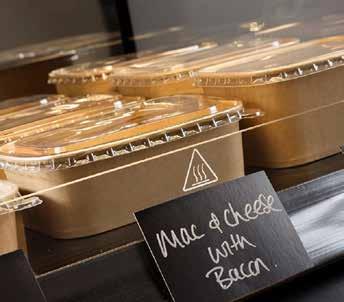
Our materials are sustainably sourced, many of which are FSC® certified, and we continually look to reduce plastics through new barriers and lighter films. We focus on how our products can be disposed of, either via composting or recycling and work closely with testing bodies and waste management companies to maximise this.
Are you planning the launch of any new products in the foreseeable future that you can tell us about?
We have continued to develop our award-winning Stagione® range. This has included expanding our product line to include lightweighted, PE coated pots, for customers that do not require reheating functionality. We have also worked to certify our PP coated Stagione® for use in an oven, subject to specific parameters. These additions demonstrate our continuous product development to offer even more functionality from this incredibly versatile range.
We will soon be launching a new size of Stagione®, which we foresee being of particular interest to the food-to-go market. It will be perfect for consumers to hold and eat hot or cold food from on-the-go.
SUSTAINABLE PACKAGING NEWS 23
Keep up to date with Colpac’s latest news here: https://colpacpackaging.com/news/ REDUCING CARBON FOOTPRINT
“ Sustainability is prevalent across our product portfolio ”
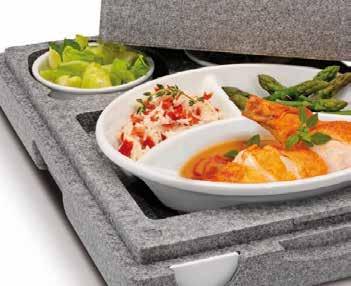
Colpac’s Stagione® products in a hot cabinet
A Carbon Footprint To Fit All Sizes
The climate collaborative of the USA offer some interesting views on how to reduce your carbon footprint - Whatever the size of your company!
On average, packaging accounts for about 5% of the energy used in the life cycle of a food product making it a significant source of greenhouse gas emissions. And for some products, the packaging used has an even bigger impact on climate change than the fuel used to ship it to market.
Big Benefits
Circular economies are those that design out waste and pollution, keep products and materials in use, and regenerate natural systems. Designing product packaging for circularity and investing in the materials and processes to close resource loops can benefit your company’s bottom line and increase brand reputation and leadership.
The World Economic Forum estimates that through harnessing improvements in both design and end-of-life systems, 50% of the world’s plastic packaging can see economic opportunity even after its initial use, which works out to $2-3 billion annually across OECD countries (including the US) In recent years, consumer surveys have repeatedly shown US consumers’ preference for companies that take stands on social and environmental issues (43-65% according to 2020 Forbes research).

Packaging communicates more than just a product’s contents; it’s an opportunity to share your company’s values and impact on people and the planet and can offer everyone big benefits.
Reducing Impact
Companies will implement practices to reduce the GHG emissions associated with their packaging to the greatest degree they deem possible. There are many ways to reduce the climate impact of packaging including reducing materials a.k.a. “source reduction”; replacing virgin materials with post-consumer recycled content; replacing traditional plastics made from fossil fuels with biopolymers; re-designing packaging to use materials more efficiently to cut down on the GHG emissions required for transport and storage; and recycling at end of the packaging’s life to name just a few practices.
Simply adopting practices like those listed above is a great first step. Using a tool to measure the GHG impacts of your packaging can also help you design the negative climate impacts out of your packaging supply chain.
While climate is the focus of the Climate Collaborative, we realise that many factors go into packaging decisions including consumer preference, product shelf-life, price, performance and convenience. Additionally, there are multiple environmental considerations including packaging end-of life and circular systems, toxicity, litter, water pollution, marine eco toxicity and more. The ideal is to achieve climate reductions while simultaneously addressing other key factors that your company may value.
24 SUSTAINABLE PACKAGING NEWS REDUCING CARBON FOOTPRINT
Developing country’s are the worst affected by climate change image courtesy: Unsplash
Fresh-Line Management
SPG has directed its efforts towards delivering solutions that meet the latest eco-design requirements, by creating three Sustainable Product Lines that comply with European directives and optimise both their sustainability and efficiency.
When it comes to flexible packaging, the tendency is towards recycling streams of post-consumer plastic packaging made from PE and PP polyolefins. SPG has therefore turned its efforts towards delivering solutions that meet eco-design requirements. We have created three SUSTAINABLE product lines that comply with European directives:
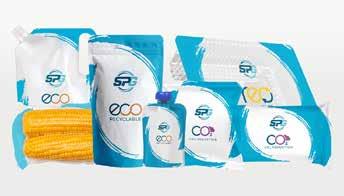
• ECO Line – Mono-materials for improved recyclability. By constructing our products from fewer polymer types we ensure they are fully recyclable, PE and PP-based structures.
• RECYCLED Line – Supporting the circular economy. We use materials with a high percentage of PCR content.
SPG Told SPN: In recent years, awareness over the importance of recycling packaging has grown dramatically around the world, and the UK has been no exception. Driven by increasing concerns over the environmental toll of plastic waste, the food packaging industry’s search for more sustainable practices in line with current and future recycling trends has not been short of its challenges.
Awareness over recycling packaging has significantly increased in the last decade. Consumers are more conscious of the environmental impact of plastic waste, especially singleuse packaging. Statistics published by Recycle Now, the UK government-funded national recycling campaign, show that more than 90% of the UK population ‘regularly recycle’ or ‘occasionally recycle’.
Overcoming major challenges
Plastic collection and sorting still pose a major challenge in Europe though. In the UK there are a number of recycling trends. Selective waste collection is the most common system, where consumers place packaging in specific containers to be recycled later. However, a poor infrastructure means that not all recycling systems can properly process flexible packaging.
To address this issue, some Supermarkets and shops, such as Tesco, have launched specific collection and recycling campaigns for flexible packaging. These campaigns make it easier to properly collect and recycle this type of packaging, improving the material recovery rate and reducing the environmental impact.
• CO2 Line - Reducing our carbon footprint and more. By creating innovative solutions to ensure the optimum thickness of structures we make them more eco-efficient and keep greenhouse gas emissions to a minimum.
Here are just a few of the products in these lines RSE RCY and RFA RCY are coextruded polyamide and polyethylene films which can be recycled in PE streams and have been certified by the Cyclos-HTP institute.
PP HB ECOTOP is a material for lids that is compatible with rigid thermoformed polypropylene trays. It is a recyclable monomaterial solution.
SOL range products feature a significantly REDUCED THICKNESS, between 30% and 40% less than other alternatives. SOL EFFICIENT, with a thickness of up to 25μ., is the most efficient, offers a high barrier and welds directly onto RPET polyester (recycle ready + 100% PCR content). Like the other products in this range, it also leads to significant cost savings. It can be laminated with PET 12, OPP 40, paper and others.
PE ECO is a mono-PE-based complex, which is recyclable, transparent and can withstand heat treatments such as hot-fill, microwaving and pasteurisation processes. It can also be made with high-barrier properties.
For more information visit: https://www.spg-pack.com/en/
SP GROUP SUSTAINABLE PACKAGING NEWS 25
SPG
Labelexpo Europe 2023

Packing them in!
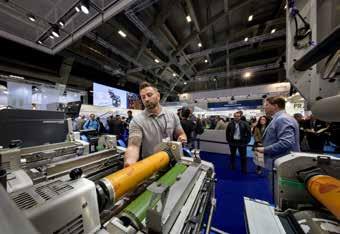
Labelexpo Europe ’23 returns to Brussels and promises to be the biggest and best show ever! This will be the first time that the world’s largest label and package event has been held at Brussels Expo since 2019. From 11-14 September, the show promises to be an unforgettable experience. It will be featuring hundreds of live demonstrations, product launches, expertled masterclasses and special events, all focused on automation and flexible packaging.

Aimed at label and flexible packaging converters, brand owners and packaging designers, Labelexpo Europe 2023 covers nine halls with over 600 exhibitors across four days. Leading suppliers taking part include ABG, Avery Dennison, Bobst, Domino, Durst, Epson, Fujifilm, Gallus, HP, Kocher & Beck, Konica Minolta, Mark Andy, MPS, Nilpeter, OMET, and Xeikon. SPN will be making its own contribution with special supporting features in its September issue!
Running alongside the exhibition, visitors will also have the opportunity to attend three expert-led masterclasses organised by The Label Academy, an Automation Arena, and a Flex Pack Trail. The popular educational programme will comprise three half-day masterclasses which will cover wine labelling markets and technology, flexible packaging and sustainable labels and packaging.
In addition, visitors will also get the chance to attend the Dieline Forum, a two-day design conference that will explore the latest trends and innovations shaping the brands of tomorrow. Labelexpo Europe 2023 is again strongly supported and endorsed by trade bodies: FINAT, EUWID, Febelgra, SPPES, UNFEA and VskE.
For full coverage of this exciting biennial show visit: https://www.labelexpo-europe.com/
26 SUSTAINABLE PACKAGING NEWS LABELEXPO EUROPE
LabelExpo’s Product Launches Snapshot!
A Snapshot of some of the exciting product launches at LabelExpo 2023
Wanjie Technology Presenting Wanjie WJPS
Hebei Wanjie Machinery Technology will present its servo-driven semi-rotary offset press.
Innovia Films Shows Rayoface™ CPE45 & WPE45
Innovia Films will be presenting Rayoface™ CPE45 and WPE45, which are clear and white labels.
Sandon Global Presents Anilox Engravings
Sandon Global showcases its innovative anilox engravings that increase the efficiency of narrow web printers
Siegwerk Introduces it’s Portfolio
Siegwerk introduces its portfolio of UV, LED-UV, solvent-based and water born ink-systems
Epson Debuts colourworks label printers
Epson will debut its new cloud enabled ColorWorks label printers at Labelexpo Europe 2023
Herma Unveils NEW Self-adhesive material
Herma will present their innovative material for labels (in hall 5, stand C14).
Priber Showcases SQ Label Barcode
Priber presents SQ Label barcode and labelling software, the software offers scalability and flexibility.
Toyobo Introduces NEW Film Grades
Toyobo, leader in Japan in flexible and industrial film manufacturing, will introduce new grades.
Increasing automation
Heidelberg and its subsidiary Gallus will be showcasing a range of digital technology at Labelexpo Europe 2023 at stand 11C30
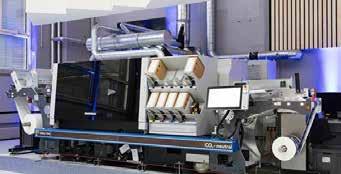

The systems support increased automation of the entire print ecosystem, with the aim of facilitating ‘smart, connected printing’ to address shortage of skilled labour, increase productivity, and reduce waste.
For Heidelberg, digital label printing is an attractive market to grow in the digital printing segment, as it has a growth rate of around 6 percent per year and is, therefore, increasingly turning to digital solutions. The latest innovations from Heidelberg and Gallus underscore their commitment to boosting this digital transformation.
‘The new solutions that Heidelberg and Gallus have developed together address the most important challenges that stakeholders market-wide are facing every day, such as the shortage of skilled labour and the demand for more productivity,’ commented Dr. Ludwin Monz, CEO, Heidelberg.
SUSTAINABLE PACKAGING NEWS 27
LABELEXPO EUROPE
Pulse
More efficient than digital - at a fraction of the cost ”
So says Pulse’s MD Gary Seward, as Pulse plans to showcase its latest innovations at Labelexpo Europe 2023. Seward added, “With PureTone inks and Monolox Fixed Anilox Printing, we’re fulfilling our commitment to help printers boost their accuracy, efficiency and throughput by effectively making flexo label-printing more efficient than digital, and at a fraction of the cost. By using PureTone inks and a bespoke mixing database, printers can use this cutting-edge technique to make any spot colour, using just one anilox volume”.
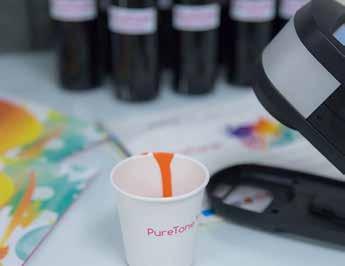
Pulse will have a major presence at Labelex this year where Professionals from across the label printing and converting industries will have the chance to discover the next generation of print processes. Pulse Roll Label Products (‘Pulse’) returns to Brussels for this year’s Labelexpo Europe and there it will share the incredible benefits of both its Monolox Fixed Anilox Printing, as well as its PureTone® DC dual cure inks, at the world’s largest print and packaging event in September.
Visitors to the Pulse booth (3C64) will be able to see first-hand the benefits of using a single anilox volume for their print jobs – made possible thanks to Pulse’s revolutionary PureTone® ink range. Since its launch last October, Monolox Fixed Anilox Printing has been helping converters around the world to maximise their uptime and reduce ink consumption by standardising the flexographic process.
Seward added, “This has unprecedented benefits for print efficiency, providing high-speed make ready and reducing waste through ink consumption,” said Gary. “In fact, thanks to its high strength compared with other ink brands, using PureTone can cut ink consumption by as much as 30%, while still delivering a Delta E of less than two with ease.
With this year’s Labelexpo Europe highlighting the ‘modern legends of print’, there’s never been a better time for businesses to find out how Monolox Fixed Anilox Printing could be the perfect solution for their business.”

28 SUSTAINABLE PACKAGING NEWS
“
Seward continued, “The Pulse booth will also showcase the company’s newest high-performance ink, PureTone DC, which can be cured with UV LED lamps, meaning the curing process uses just a fraction of the power of traditional UV lamps. Being fully Food Packaging Compliant, new PureTone DC is suitable for label converters supplying industry sectors that require compliance to food packaging regulations and guidelines,” he said. “What’s more, the range also includes CMYK+OGV for extended colour gamut printing.”
The LED lamps used with PureTone DC not only deliver a more stable light ensuring consistency of curing and print, but can also be switched on and off instantly – unlike traditional UV lights, which must be left running – they also last many times longer.
Efficiency Gains
Crucially, PureTone DC’s dual cure formulation means printers can use just one set of inks with both UV and LED curing presses, delivering further efficiency gains through avoiding unnecessary and costly inventory and ink management complexity, as well as being able to convert across press by press. The new ink also matches the impressive strength of others in the Pulse range, making it easy to compare and match colours as necessary.
“Offering increased performance compared with other suppliers, and with a dual cure formulation, this new solution gives printers the versatility and freedom they need to switch to LED ink at their own convenience,” commented Seward.
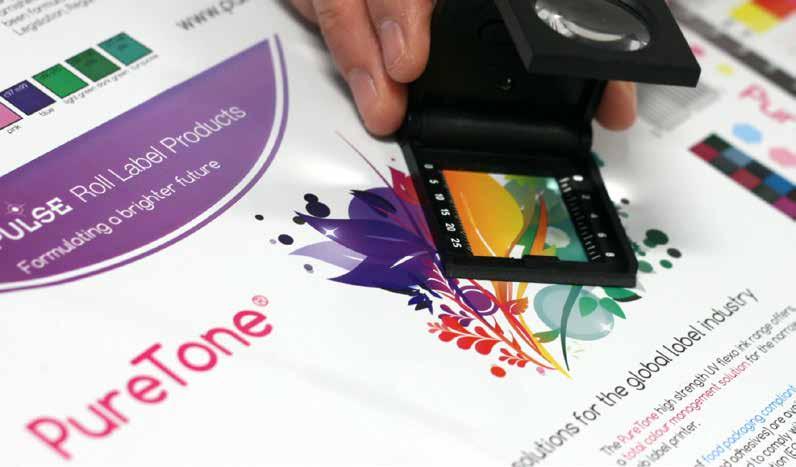

Unlike some LED inks, PureTone DC’s dual cure formulation means the initiators within the ink are activated when exposed to either traditional UV lamps or UV LED light. This feature is designed to help printers gradually phase out their existing mercury-based curing equipment without the need for expensive initial investments. As an LED curing ink, PureTone DC can also cure at lower temperatures, making it suitable for a wider range of substrates including heat-sensitive thin films.
“There are already significant restrictions in place on disposal of mercury and introducing it into the waste stream, and these regulations are only tightening,” said Seward. “With different rules and procedures across different countries around the world – particularly with regard to landfill – printing businesses are looking to transition away now, to get ahead of the changes on the horizon”.
“We’re looking forward to joining customers and colleagues at this year’s Labelexpo and we can’t wait to share the benefits of these ground-breaking solutions with them!”.
LABELEXPO EUROPE SUSTAINABLE PACKAGING NEWS 29
image courtesy Pulse
Europe’s ‘first’ unveiled at Labelexpo
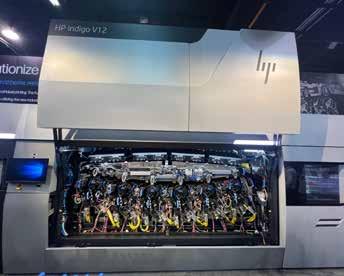
As a market leader with the largest installed-base and the widest portfolio of digital presses, HP Indigo is showcasing End-to-End digital production at LabelExpo. With the first presentation in Europe, both the HP Indigo V12 Digital Press and the recently-launched HP Indigo 200K Digital Press will be demonstrating digital efficiency, sustainability, and profitability for the labels and packaging industry.
These will feature alongside the popular HP Indigo 6K Digital Press, converters will be able to learn how Indigo’s LEP and LEPX technologies can help them grow their business.

The V12 Digital Press ensures non-stop production and earning power; the HP Indigo 200K Digital Press delivers a 30% percent improvement in speed and 45% increase in productivity, and opens the door to more flexible packaging converters who want to enter the digital market; and the HP Indigo 6K is the versatile press offering E2E solutions.
The Digital Pouch Factory, featuring the HP Indigo 200K digital press, will also be demonstrated at the booth with prepress and finishing equipment. An elaborate application showcase will invite visitors to examine samples of unique and sustainable labels, shrink sleeves and flexible packages.
For more information about HP Indigo digital presses, visit: www.hp.com/uk-en/industrial-printers/indigo-digital-presses.html
More Impact
ACTEGA, manufacturer of specialty coatings, inks, adhesives, sealants and compounds for the print and packaging industry, will be exhibiting with its latest innovations!
On display will be a range of ACTEGA’s innovative products designed to enable the production of high-quality labels and packaging with greater visual impact. The extensive range of products showcased include ACTEGA’s haptic effect coating series, LED-UV coatings, White and Metallic Inks, as well as ACTEGA’s pioneering ECOLEAF metallisation technology.
30 SUSTAINABLE PACKAGING NEWS LABELEXPO EUROPE
HP unveils its advanced V12 digital label printer at Label Expo
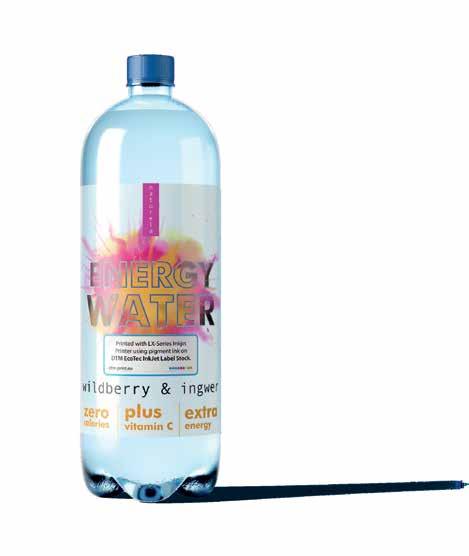
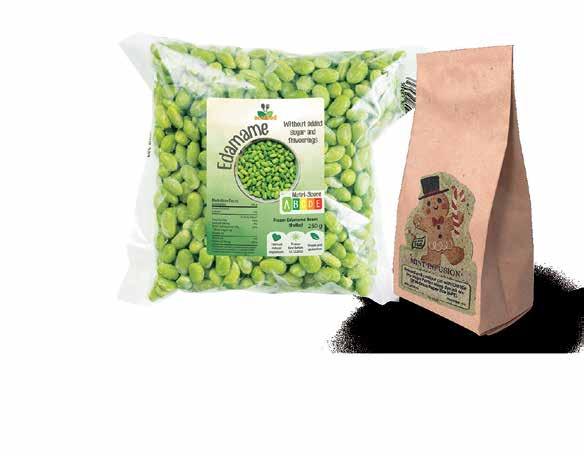
LABELEXPO EUROPE green.dtm-print.eu It is really that simple! YOUR PRODUCTS + OUR LABELS = 100% RECYCLABL E
more information:
For
Domino Printing Sciences
New codes of conduct
The move towards more sustainable materials often means adopting new ‘codes’ of conduct. These include recyclable plastic packaging alternatives, which can present many unforeseen challenges for manufacturers…as well as making sure that products can be effectively coded with product information, and precise traceability data.
Despite its reputation for creating pollution, plastic does have some undeniable benefits:
It’s lightweight, minimises transportation carbon emissions, it also provides product protection, preservation, and quality assurance. Furthermore, it is 60% more energy efficient to manufacture, than materials such as paper and card. In addition, recycling plastic uses just 10% of the energy that is necessary to recycle paper.
However, with OECD estimates suggesting that only 9% of plastic waste is being recycled globally, there is clearly much room for improvement. It’s all the more reason for the industry to redouble efforts and invest in flexible plastics that are suitable for recycling.
The impact on coding and marking?
Initially, we have to look at what makes plastic suitable for recycling: First is by using mono-materials (one single material) rather than layers of different plastics, which can be difficult to separate and therefore challenging to recycle. Secondly, anything that is added to the material, i.e. colour, glue, wrapper, etc. needs to either be easily removable or recyclable with the plastic material.
Domino Printing Sciences told SPN that it is fully committed to developing coding solutions that support the move to more sustainable packaging materials. The company’s introduction of the latest UV laser technology to its print product portfolio is specifically targeted at applications using recyclable plastic materials.
Recyclable plastics for a circular economy
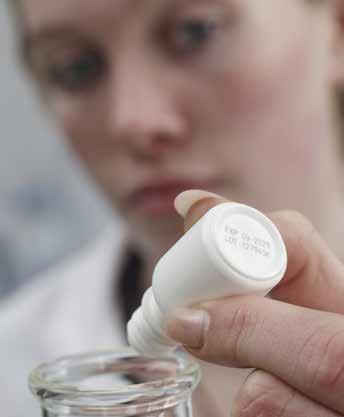
Domino added: “Plastic packaging is everywhere – in fact, over 60% of all flexible packaging used in the EU is plastic, and this is unlikely to change any time soon.
These two factors influence how codes can be applied. Any alterations in packaging material composition can influence the adhesion of inks and the reaction to laser light. So therefore, moving to a mono material film, tray or cup, and using a different method to decorate packaging such as adding a paper wrapper or changing colouring methods, has a direct effect on the choice of printing technology used for applying traceability data. This is the very reason that we have added the latest U510 UV laser coder technology to our portfolio.
The Ideal Choice
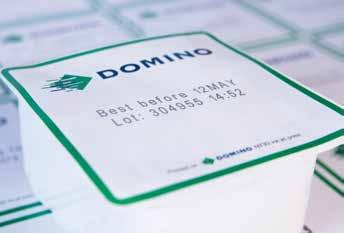
Domino’s U510 UV laser coders are an ideal choice for recyclable, mono-layer flexible plastics as they are capable of creating indelible codes without adding additional inks or chemicals to the packaging material.
32 SUSTAINABLE PACKAGING NEWS DOMINO PRINTING SCIENCES
Utilising UV light the U510 produces brilliantly sharp and contrasting labels via a photochemical reaction on the very top layer of the substrate, with almost zero stress on the material compared to other technologies. Thereby keeping barrier properties of films absolutely intact, which is especially important when increasingly thinner films are used to save raw material.
White and light-coloured plastic packaging containing titanium dioxide (TiO2), the most commonly used pigment for creating opacity, can be coded directly with the U510, without need for additional laser-activated fields.
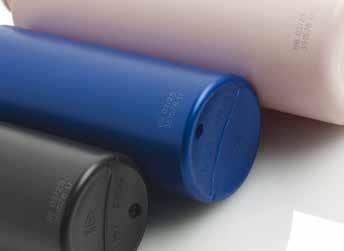

For easy integration and retrofitting the U510 is designed as a compact all-in-one system, with the controller integrated into the laser-head. The system is IP55 protected in order to make it suitable for harsh production environments. For modern requirements needing more than a printer, connectivity via the Domino Cloud enables remote diagnostics and 24/7 visibility of the laser’s performance.
“We have added the U510 to Domino’s laser portfolio to be able to offer our customers the ideal solution to their needs and support changing to new packaging developments. Testing each application first enables us to provide the best solution for the individual requirement from our range of CO2, fibre and UV lasers,”
 - Felix Rief, Head of Laser and Extraction, Domino
SUSTAINABLE PACKAGING NEWS 33
DOMINO PRINTING SCIENCES
To find out more about Domino’s U510 UV laser coders Visit: https://bit.ly/3NeYQzm
“ We have added the U510 to Domino’s laser portfolio to be able to offer our customers the ideal solution to their needs ”
goplasticpallets.com
All Systems Go!
Taking a fresh look at the latest in sustainability and plastic pallets, SPN has discovered that the UK’s goplasticpallets.com is pioneering sustainability and the circular economy in a bigger way than ever before. In the face of ongoing global environmental challenges, it’s all go at goplasticpallets.com, which is prioritising sustainability across the logistics and fulfilment sectors. Known as the “Responsible Plastic Pallet Company,” its mission is to create more responsible supply chains and to contribute to a greener, more sustainable future.
Total Commitment
Leading the field in producing pallets made from recycled plastic materials, goplasticpallets.com’s commitment to sustainability is deeply ingrained in every aspect of its business. An impressive 93% of its plastic pallets are made from 100% recycled materials, reflecting its dedication to reducing waste and promoting recycling. In 2019, the company also launched an industry-first recycling scheme, taking full responsibility for recycling all the plastic pallets and boxes it supplies. This initiative set them apart in the UK pallet industry and demonstrates leadership in the promotion of sustainable supply chains.
“ Across the last four years, goplasticpallets.com has recycled more than 1252 tonnes of plastic ”
Breaking Records
The company’s recycling numbers continue to grow year-on-year. In fact, goplasticpallets.com has just sent its 53rd trailer of the year to its recycling centre in Belgium, exceeding the 2022 total of 38 trailers (number correct as of August 2023).
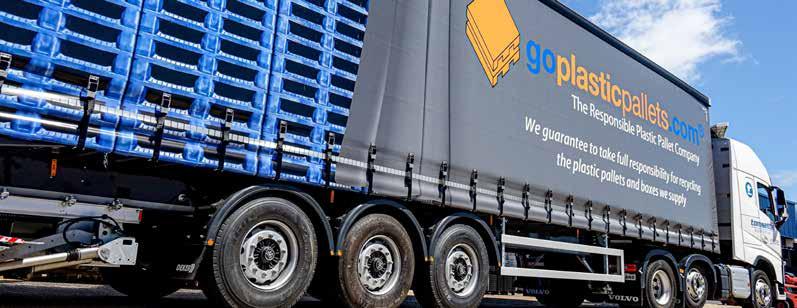
Across the last four years, goplasticpallets.com has recycled more than 1252 tonnes of plastic. When you consider the popular APB 1210 Pool Open 5R Black weighs 21kg, that is the equivalent of 59,619 pallets. If stacked on top of one another (160mm in height), the tower would be over 11 times higher than the world’s tallest building, the Burj Khalifa (830m).
This important initiative is a cost-effective and convenient solution for disposing of plastic pallets and boxes at the end of their lifespan.
34 SUSTAINABLE PACKAGING NEWS RETURNABLE TRANSIT PACKAGING
Pioneering scheme
The traditional linear ‘take, make, dispose’ culture is unsustainable. goplasticpallets.com recognises the need to move towards a circular ‘reduce, reuse, recycle’ model. Its pioneering recycling scheme ensures that plastic pallets are reused and recycled, reducing the need for new resources and contributing to a circular economy.
Jim Hardisty, Managing Director of goplasticpallets.com, emphasised: “Our recycling records are a testament to our unwavering commitment to sustainability. By comfortably exceeding last year’s total, we are not only fulfilling our promise to the environment but also setting a new standard in the industry. We believe in a future where every plastic pallet and box is part of a sustainable lifecycle, and we’re leading the way to make that vision a reality.”
Leading by example
The company offers a range of innovative products made from recycled plastic. The GoPalletBox 1210S 3R Black is a strong 610-litre plastic pallet container with solid walls, made from 100% recycled plastic, whilst the GoPalletBox 1311S 3R Black holds 1400-litres and is made from 100% recycled HDPE. The APB 1210 Pool Open 3R Black is a resilient plastic pool pallet suitable for repeated use, made entirely from recycled polypropylene. Other products include the APB 1210 Pool Closed 5R Blue, Cabka-IPS NEW CPP 110 PE 9F, SF 1210 NL 9F, and Qpall 1210 Export Closed 9F, all made from recycled HDPE.
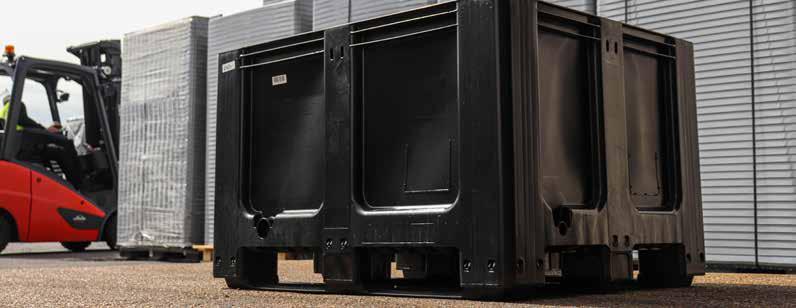
However, goplasticpallets.com’s approach extends beyond its products. It ensures that all import transportation trucks are loaded to maximum efficiency, reducing CO2 in transportation. In addition, the company only partners with leading manufacturers who share the same responsibility values.
Inspired
Today, goplasticpallets.com is more than a provider of sustainable plastic pallets and boxes; it is an organisation that is dedicated to making a positive impact on the world. Its efforts in recycling, reducing waste, and promoting a circular economy are not just commendable but essential in today’s world. As businesses and consumers, we must all do our bit. goplasticpallets.com’s leadership in this area is an inspiring example of what can be achieved with commitment, innovation, and a genuine desire to leave a better world for future generations.
Today, goplasticpallets.com is on a mission to create responsible supply chains. “We believe that by working together, we can build a better future for everyone”
Interested to learn more about the company’s industry-leading products or its pioneering recycling scheme? Contact the team on 01323 744057, or email sales@goplasticpallets.com

SUSTAINABLE PACKAGING NEWS 35 RETURNABLE TRANSIT PACKAGING
Dinner-Max
Maximising Returnable Transit Packaging
Leading the way there-and-back in returnable food-in-transit packaging, is Dinner-Max. This is a company that offers re-usable packaging for food that can be kept hot or cold for up to 3 hours. Its high quality, reusable and returnable food delivery packaging is optimally equipped to transport meals safely and at the perfect temperature.
The long-established German company DINNER-MAX has been developing sustainable food packaging solutions tailored to individual needs since 1993.
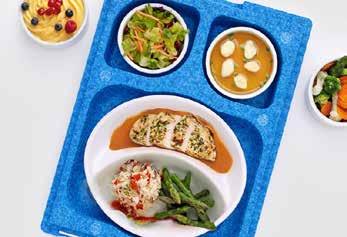
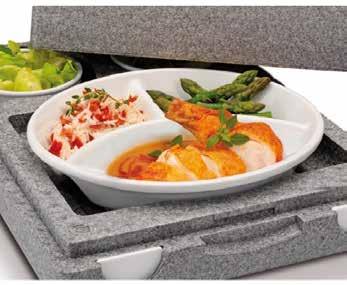
Dinner Max told SPN: In addition to reusable tableware and transport boxes, we can provide customers with all the components they need for digital and analogue organisation and logistics, that covers the entire range of kitchen and food distribution requirements. So, if you want to reduce waste and save costs over the long term, then check-out DINNER-MAX solutions for yourself, where optimal value and hygiene come as standard!
Versatile packaging for individual and group catering Dinner-Max creates food delivery packaging for individual and group catering and it’s also ideal for cook-and-chill, as well as for frozen food & induction. Whether you distribute food in schools, hospitals or group homes, or offer out-of-home delivery for senior citizens or businesses, our long-lasting reusable packaging for food will delight all with their sophisticated handling concept and special surface feel. What’s more, all are 100% leak-proof and will keep food hot and cold for up to 3 hours. With Dinner-Max, it is also possible to deliver salads, desserts and even ice cream to the highest standards – all problem-free!
All Dinner Max products are produced in Germany and subject to the strictest quality tests that exceed European hygiene and quality standards. We are the market leader in Germany, Austria and Switzerland, where over 150,000 people are supplied using our systems every day”.
36 SUSTAINABLE PACKAGING NEWS RETURNABLE TRANSIT PACKAGING
“ if you want to reduce waste and save costs over the long term, check-out DINNER-MAX ”
For more information visit: https://dinner-max.de/en/
Nicholl Food Packaging
Packaging Machinery’s Trending Trends
Nicholl Food Packaging takes a closer look at the latest trends in packaging machinery and processing. With the rise of e-commerce products and packaging trends, the only constant that has allowed companies to efficiently package products and ship them to customers instantly, is the very machinery that comes with them.
Nicholl told SPN: “Packaging machinery makes an important contribution to the success of the packaging market. So, let’s go over some of the packaging machinery development trends and see what kind of machinery industries are using to keep up with their packaging processes.
Business potential
The global packaging machinery market has enormous commercial potential. Having been valued at $43,520 million in 2020, current consumer and supplier trends have influenced a positive trajectory. Between 2021 and 2030, the packaging machinery market is expected to grow at a CAGR of 4.7% to reach USD 69,218 million by the end of the period. What reasons contribute to this? The main factor is the increased demand for consumer goods, which encourages industries to use more automated packaging machines to be more efficient and fulfil orders. Older versions require more time and resources, so Moderna packaging machines play a very important role in ensuring that product safety and quality assurance standards are always met throughout the supply chain.
The latest trends in packaging machinery
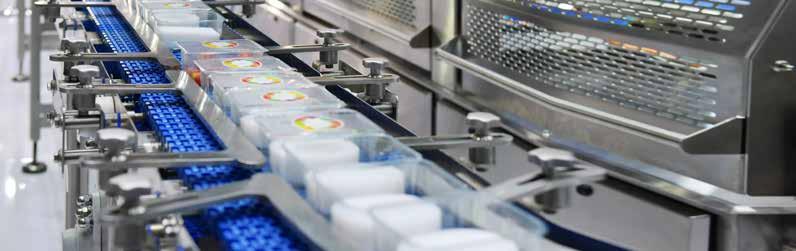
Let us review some of the trends in packaging machinery that play a role today and will play an additional role in the appreciation of market value in the coming years: Improved automation and intelligent technology. Undoubtedly, one of the main trends is the innovative approach of the packaging machinery industry to continue improving the automation in its packaging lines.
With workforce-related issues such as retention of top talent and high labour costs, many industries have been inclined to focus on smart manufacturing and seek automated processes. This is possible with the integration of Artificial Intelligence (AI) and Machine Learning (ML). Nowadays, there is an increasing trend to rely on robots to maximise production in less time. However, the demand may vary between larger companies and smaller companies. In addition, there is also a demand for collaborative packaging machinery that makes it convenient for human workers to operate remotely and it’s also safer for them.
SUSTAINABLE PACKAGING NEWS 37 MACHINERY
Despite many claims that robots can take over humans in the future, there is no denying that intelligent robots and automated packaging machinery can lead to greater accuracy and speed of packaging. Automation can be one of the main factors that separates high-performing companies from the rest, as it improves speed and accuracy. In addition, it brings consistency to the entire process to manufacture high-quality packaging materials.
The new era of wireless connectivity
When talking about convenience and advanced technologies, packaging machinery with wireless connectivity is another trend to keep in mind. The Industrial Internet of Things (IIoT) has an effect on the packaging process. This is another smart manufacturing method since in the old days, delayed connections could affect the manufacturer’s packaging process. To ensure the stability and uninterrupted workflow in the packaging process, the packaging machinery that supports Wi-Fi and Bluetooth, 5G and Zigbee is a great help.
The need for advanced cybersecurity
The next trend is related to cybersecurity. Ransomware attacks on major retail companies such as Cadbury and Target have led to the identification of vulnerabilities in the infrastructure of packaging machinery. Manufacturers are now eager to improve their industrial packaging machines to combat these cyberattacks and ensure a smooth workflow.

Increase in e-commerce
Last but not least, the rise of e-commerce has become probably the most important factor driving all these trends. The volume of online sales increased in recent years, which led to an increased need to maximise packaging space and use more and more packaging materials. To support this, the packaging machinery keeps innovating and has become more advanced to serve smart consumers and fast processing of packaging supplies.
Findings
These current trends have and will affect the habits of packaging machinery manufacturers in the coming years. However, it is not inconceivable to think that there will be future trends that may exponentially affect the growth of the global packaging machinery market.
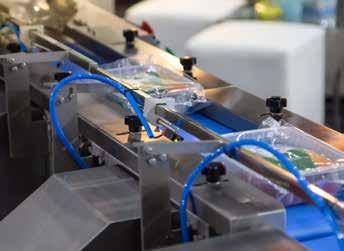
38 SUSTAINABLE PACKAGING NEWS MACHINERY
“ packaging machinery keeps innovating and has become more advanced to serve smart consumers and fast processing of packaging supplies ”
“ Manufacturers are now eager to improve their industrial packaging machines to combat cyberattacks ”
A WORLD OF PACKAGING SOLUTIONS DESIGNED FOR SUSTAINABILITY. BROUGHT TO LIFE BY
 SCHUBERT.
How can packaging be both environmentally friendly and cost-efficient? With our TLM packaging machines. They enable you to use the thinnest materials possible, cutting them to size to reduce consumption and dramatically decrease your use of resources. It’s great for the planet and you benefit from a real competitive edge. We call it Mission Blue and we promise: The mission goes on. www.mission-blue.com
SUSTAINABLE PACKAGING NEWS 39 MACHINERY
Transforming Efficiency
Energy efficiency makes for greater resource efficiency. Today, modern transformer technology and voltage optimisation offers secure, sustainable power – with reduced energy requirements. Every company welcomes a win-win situation, especially where carbon emission reduction can go hand-in-hand with more resilient power, whilst still cutting energy costs.
Avoiding long-term power losses

Transformers are common across manufacturing - converting alternating current from one voltage to another, either “stepping up” or “stepping down” voltage to the required level for improved safety and efficiency. And a comparison of conventional and modern alternatives is enlightening. Conventional cold rolled orientated steel (CRGO) transformers may appear to be cheaper but compared to the greater initial outlay for amorphous core technology, this can be a very shortsighted option.
The PFF Group is one of the UK’s largest independent food packaging manufacturers and is Britain’s largest manufacturer of PPE aprons. Members of NEXTLOOPP, they are actively committed to developing a sustainable, circular plastics economy. They are dedicated to playing their part in protecting the aquatic environment with certified recognition from Operation Clean Sweep, an international initiative which aims to ensure that plastic pellets, flakes, and powders passing through manufacturing facilities do not end up in seas or rivers.
PFF Group approached Powerstar, with the dual aims of improving power resilience at their Keighley plant while furthering their corporate sustainability strategy. A comprehensive site survey uncovered one potential risk area - the company’s ageing transformers. Powerstar’s recommendation was replacement with modern, low-loss, amorphous core transformers with integrated voltage optimisation (VO) technology to improve power resilience while offering greater energy efficiency: potentially lowering energy bills while reducing their carbon footprint.
Taking a 90 kVA system and assuming an average load of 40 kW/h, based on an industry standard of 5% losses a conventional transformer will consume its purchase cost in wasted energy every nine months. By contrast, with losses of less than one percent, Powerstar’s amorphous core transformers take more than 20 years to consume their initial cost. Over 15 years, a traditional transformer will consume 20 times its purchase price just through energy losses, emitting more than 73,000kg of CO2, hampering any company’s sustainability efforts.
Matching demand means lower emissions
A transformer-based technology, VO is also prevalent in manufacturing. While most electrical equipment is designed to operate at 220V, National Grid supply fluctuates, with mains supply regulated at 230V +10% / -6%, giving a permitted voltage range anywhere between 216V and 253V and averaging around 242V. Significantly higher than most operational requirements, overvoltage creates wear and tear on critical equipment, while wasting energy - meaning unnecessary cost and carbon emissions. VO technology helps ensure that Grid supply matches demand, eliminating the problems caused by any overvoltage.
40 SUSTAINABLE PACKAGING NEWS MACHINERY
Powerstar
Dean Hogg, Head of Sales, Powerstar
Dean Hogg, Head of Sales at Powerstar, looks at the savings made by one customer’s focus on sustainable energy management, and the transformer technology and voltage optimisation that helped them to achieve their goals.
For PPF Group, the installation of Powerstar’s low-loss, amorphous core transformers with integrated VO technology has delivered a 5% reduction to the site’s carbon footprint while protecting against disruption to power supply in the event of transformer failure. For any manufacturer, this is an area worth investigating. More than 70% of the UK’s transformer fleet has been in operation for 25 years or more, which is long beyond their intended design-life, meaning that replacement can avoid the financial and production costs of failure while also offering significant savings on energy bills.
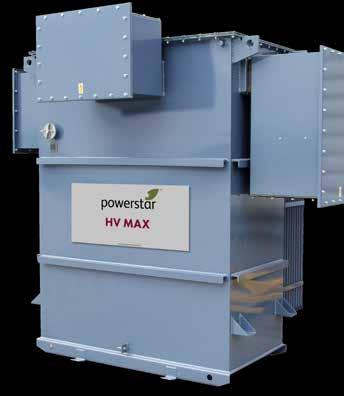
Lee Brydon, General Manager at PFF Group, highlighted the rationale for the upgrade, “Carbon foot-printing offers the most accurate assessment of the way our products impact on our planet. Therefore, reducing our carbon footprint is the biggest thing we can do to protect the environment.”
Alongside the environmental benefits of modern transformers with integrated VO, there are compelling financial reasons to explore the options - the cheapest and greenest unit of energy is the one you don’t use. And power resilience is vital for packaging manufacturers to ensure uninterrupted operations and remain competitive in the modern economy.
To find out more about transformer technology for energy savings, contact Powerstar, or complete our 2-minute Energy Saving Calculator. Visit: www.powerstar.com
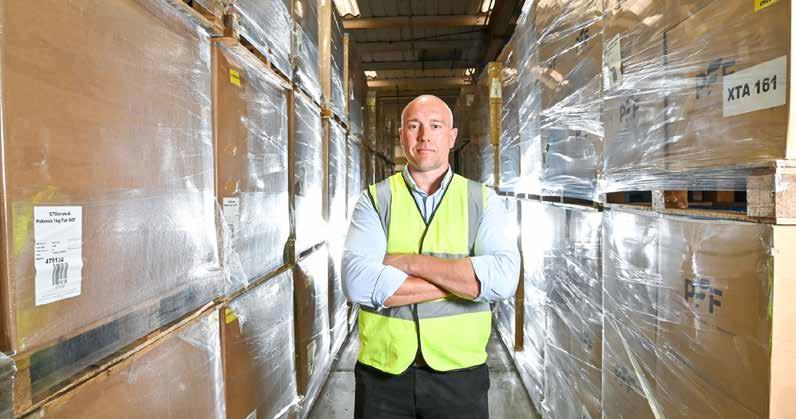
MACHINERY SUSTAINABLE PACKAGING NEWS 41
Lee Brydon, General Manager, PFF Group
HV MAX
Powerstar
Fresh clarity for Circularity
PMMI told SPN, “As awareness of single-use plastics, litter, and depletion of nonrenewable resources expands, a growing number of consumers, businesses, governmental entities, and other organizations are striving to establish a circular economy where products and packaging are recovered and turned into new products and packaging in a never-ending cycle.
To accomplish this goal, all stakeholders in the value chain need to work toward improving infrastructure for collection, sortation, and end-of-life reprocessing. Policy changes will be needed to achieve these objectives.
According to 2023 PACKAGING COMPASS: Evaluating Trends in U.S. Packaging Design Over the Next Decade and Implications for the Future of a Circular Packaging System, a study undertaken by PMMI, The Association for Packaging and Processing Technologies, and AMERIPEN (the American Institute for Packaging and the Environment), establishing a circular economy will depend on the development of :
• Extended producer responsibility (EPR). EPR programs shift financial and operational responsibility for endof-life management of products to producers instead of taxpayers and the government. As of spring 2023, four states (California, Colorado, Maine, and Oregon) have enacted EPR requirements, and more states are considering EPR bills. However, a national law would overcome a patchwork of differing state requirements and simplify compliance.
According to the report, EPR programs should focus on ways to improve the quality and quantity of recycled materials. Other key considerations include how best to invest in the composting infrastructure (including packaging), handle hard-to-recycle materials, invest in collection and sortation technology, and support end-market development.
• Universal Access. Convenient, consistent access to recycling and composting services for all households would increase collection.
• Standardized Definitions. Definitions for commonly used terms like recycling and composting would help stakeholders communicate a consistent message and reduce consumer confusion.
- 2023 PACKAGING COMPASS: Evaluating Trends in U.S. Packaging Design Over the Next Decade and Implications for the Future of a Circular Packaging System, a study undertaken by PMMI, The Association for Packaging and Processing
• Alternatives to Material Bans. Shifting from material bans to dialogues about collection, sorting, and reprocessing gives brand owners the freedom to pick the optimum option.
42 SUSTAINABLE PACKAGING NEWS PMMI
PMMI
PMMI says that true Packaging Circularity requires important policy changes and added that a circular packaging economy depends not only on regulatory changes, but also improvements in design and an improved recovery-infrastructure.
Technologies, and AMERIPEN
• Recovery Innovation. Federal investments into emerging science and data are needed to drive efficiencies across packaging design and waste management.
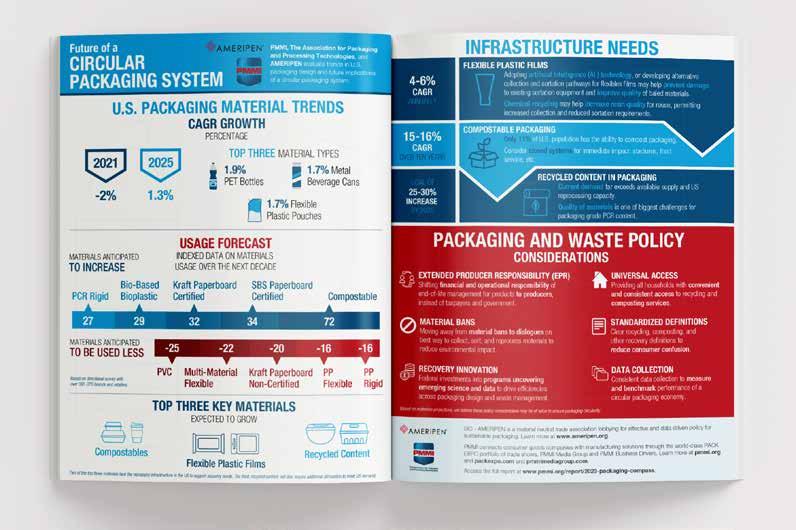
• Data Collection. Consistent data collection will help measure and benchmark the performance of a circular packaging economy.
• Reusables Infrastructure. Reusables are another promising option to achieve circularity. However, as with other options, infrastructure is lacking, and investment is needed. According to the report, successful reusable packaging programs depend on redesigning distribution systems for reverse logistics. This involves establishing safe and hygienic drop-off points, which are convenient to consumers, and equipping production lines for washing and refilling. Currently, the costs are a daunting challenge to developing and scaling a reusables system that would make a significant impact. A collaborative strategy that incentivizes innovation and participation from a wide range of stakeholders is needed.
To foster this communication, sustainability will be a major theme at PACK EXPO Las Vegas (Sept. 11–13, 2023; Las Vegas Convention Center). A new Sustainability Central area will serve as an interactive resource to learn about design, materials, manufacturing, recovery, logistics, and data.
At the accompanying Sustainability Stage, attendees will hear from experts on a range of packaging sustainability topics and learn how to make brands more sustainable. In addition, the PACK EXPO Green Program returns to PACK EXPO Las Vegas and is the commitment of PACK EXPO and its partners, vendors, and exhibitors to work together to create a more sustainable world. PACK EXPO Green identifies exhibiting companies that provide sustainable solutions via new materials, technology, or strategies such as sustainable processes and machines, renewable and biodegradable packaging, source reduction and lightweighting, recyclable and recycled-content materials, or innovations that reduce carbon footprint. Look for companies participating in the PACK EXPO Green Program to advance sustainability goals. The green icon also highlights education sessions focused on sustainability.
PMMI SUSTAINABLE PACKAGING NEWS 43
Access the full report at : www.pmmi.org/report/2023-packaging-compass
IMA At Pack Expo Las Vegas 2023
Welcoming you in our Booth C-3200/3400 in Central Hall from September 11th to 13th
At Pack Expo Las Vegas 2023, IMA, presents itself as an everevolving system: integrated, characterised by a technological and innovative environment, which brings together all its production entities on a single stand. A technological and innovative environment, in which each element has its own structural function and each individual finds their own dimension.
On show, visitors will be able to discover our processing, assembly and packaging solutions for the Pharmaceutical, Medical Devices, Food and E-commerce industries, as well as our corporate projects dedicated to sustainability and digitalization.
The booth’s design will represent the Group’s development philosophy and highlights the key role of sustainability in designing processes and products, outlining a fundamental combination for IMA: respect for the environment and advanced technology.
Technologies on show :
Pharmaceutical Solutions
• C1290 - Automatic tubefiller
• SENSITIVE AV - Labelling machine for ampoules and vials
Area dedicated to IMA AUTOMATION’s medical devices assembly solutions with a special focus on X-Pen: Pen and autoinjector assembly system.
Food Solutions
• Vegatronic 6400 HD - VFFS hygienic machine
• Vegatronic 6000 DZ - Continuous motion vertical bagging machine
• DELTA OF-360 X - Horizontal Form, Fill & Seal
• Eagle – Horizontal Form, Fill & Seal
Specific dedicated areas for the Confectionery & Snacks and Dairy, Beverage & Baby Food, where our experts will be available to explore with visitors our machines portfolio and find the solution that best suits the business.
E-Commerce Solution
• E-CO Flex - E-fulfillment packaging station
End Of-Line Dedicated Area
Here you can discover the range of solutions developed by the Group for this specific sector. Each company within the IMA END-OF-LINE hub brings a specific expertise to provide comprehensive solutions. IMA BFB is a leading brand in end-ofline technologies ranging from robotic handling to overwrapping, case packing and palletizing, IMA CIEMME is an expert manufacturer of carton packaging machinery, closing, forming and automatic loading technologies, IMA MESPIC specializes in tailor-made machines, from conveyors to wrapping, from case packers to palletizers and offers complete turn-key end-of-line systems, IMA PHOENIX is expert in labelling solutions, print & apply label applicators and modular labellers for self-adhesive labels, for secondary and end-of-line packaging.
44 SUSTAINABLE PACKAGING NEWS IMA AT PACK EXPO ( SPONSORED )
The goal of the hub is to expand the scope of IMA offerings, to strengthen its role as a benchmark of quality and better serve target markets.
Stop by our booth C-3200/3400: during the event, our experts will perform live demos on the machines displayed. Stay tuned as the demo agenda will be available soon on our website.
Green Soul, Digital Brain
Today sustainability and digital transformation are two sides of the same coin, capable of having a positive impact on business and environment.

About Sustainability on show
The green element comes to life, bringing a part of OPENLab on show: a small-scaled laboratory to illustrate the analysis and research on packaging materials that the IMA Group carries out in its worldwide network of laboratories.
During the event, visitors will be able to run tests on their materials’ samples thanks to our OPENLab instruments present:
• Perkin Elmer Infrared Spectrometer, to identify the material’s chemical nature through the absorption of the infrared radiation.
• Leica Optical Microscopy, to count and measure the layers of which a material is made, analyse surface and defect with potential measurement of elements of interest.
NOP (No-Plastic Program) means we promote eco-friendly plastic substitutes for the packages manufactured on IMA machines. rough the research and testing of alternative processes and materials together with our partners we foster plastic-free and sustainable, compostable, biodegradable or recyclable packaging solutions.
According to these objectives, IMA established OPENLab: the Group’s network of technological laboratories and testing area, dedicated to the research on sustainable materials, technologies and production optimization processes.
IMA AT PACK EXPO ( SPONSORED ) SUSTAINABLE PACKAGING NEWS 45
Discover more about IMA NOP on ima.it/imazero and IMA OPENLab on ima.it/open-lab
PACK EXPO
2023
Las Vegas
September 11th-13th Central Hall Booth C-3200/3400
Alternatives To Plastics
Breaking the Mould
Steve Gislam SPN’s roving European reporter, takes a closer look at how breaking the plastic mould can help to craft a greener future for our Industry.
The detrimental impact of plastic waste on ecosystems and human health is becoming increasingly apparent to consumers who are ever more aware of environmental issues. In response, the packaging industry is investing heavily in sustainable alternatives. In this article, we delve into the realm of eco-friendly packaging solutions that are viable alternatives to plastic and are poised to reshape the industry’s future.
Bioplastics
The rise of bioplastics offers tangible hope for a more sustainable future. Leading the charge are Polylactic Acid (PLA), which is made from fermented plant starch, and Polyhydroxyalkanoates (PHA), a biopolymer derived from vegetable oils, sugars and starches which is produced using a bacterial fermentation process that mimics nature.

Bioplastics offer a reduced carbon footprint, less reliance on fossil fuels, and degrade much faster than traditional plastics. They are increasingly being used for food packaging, in particular for delivery services and on-the-go applications like coffee cups and lids, and disposable cutlery.
Edible Packaging
As the name suggests, this is packaging that you can eat! Edible materials made from seaweed, rice, or potato starch are gaining popularity, especially in the food packaging sector.
Besides reducing waste going to landfill, they offer unique opportunities for creativity and innovation in the packaging industry. However, finding the right balance between taste, texture, and shelf-life still presents a significant challenge.
Compostable Packaging
Compostable packaging materials break down into natural elements under specific conditions. They create nutrient-rich compost, improving soil health and minimising waste.
A common compostable example is cornstarch-based packaging. Derived from corn, cornstarch-based packaging offers a viable alternative to single-use plastics. It decomposes efficiently, leaving no harmful residues in the environment.
Mushroom-based packaging is also becoming increasingly popular. Mushroom mycelium is employed to create sustainable packaging products. It is biodegradable, lightweight, and can be tailored to fit specific packaging needs with relative ease.
46 SUSTAINABLE PACKAGING NEWS ALTERNATIVES TO PLASTICS
“ By exploring and embracing sustainable alternatives, businesses and consumers can contribute to a greener future”
Paper and Cardboard
A packaging classic! Recycling paper and cardboard reduces the strain on forests and energy consumption while also cutting greenhouse gas emissions. Utilising post-consumer recycled materials helps close the loop in the packaging sector’s circular economy.
Using paper that has been certified by German-based nonprofit, the Forest Stewardship Council (FSC) ensures that it comes from responsibly managed forests, ensuring sustainable sourcing without deforestation.
Plant-based Fibres
Renewable and biodegradable, packaging made from plantbased fibres can often provide more than adequate alternatives to traditional plastics. For example, the fibres of hemp and jute make exceedingly durable packaging materials. Their cultivation is not water-intensive they require less pesticide usage.
As a material, coir, which is derived from the fibres of coconut husks, is both robust and versatile. It’s an excellent option for cushioning and protective packaging applications.
All forms of plant fibre-based packaging have the edge over traditional plastics in terms of environmental impact as they break down naturally and release valuable nutrients back into the soil.
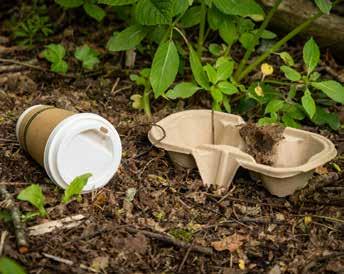
Glass and metal
A number of companies are going back to basics by ditching single-use plastic and returning to glass or stainless steel containers. While they may cost more to produce, the benefits that they are durable, non-toxic, and near infinitely recyclable largely balance out the cost factor.
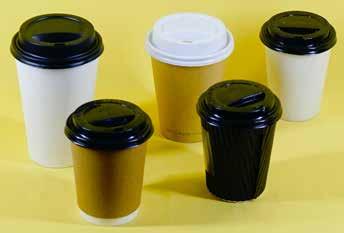
Seaweed-derived packaging
With the ocean usually becoming the place where plastic packaging ends up, it is not without irony that it has also emerged as a source of inspiration that can help solve the problem. Seaweed and algae, the unsung heroes of our aquatic ecosystems, have quietly taken centre stage as game-changing materials in the quest for eco-friendly packaging alternatives.
Seaweed thrives in coastal waters and has long been a source of nutrition in some culinary traditions. However, recent innovations have unlocked its potential beyond the kitchen. Alginate, a compound extracted from seaweed, has become a star player in sustainable packaging. This natural polymer boasts an exceptional ability to form gels, making it an ideal candidate for crafting packaging materials with varying degrees of flexibility and strength.
Alginate-based packaging materials offer several distinct advantages. Firstly, it is renewable and biodegradable, leaving no harmful residues in the environment. Secondly, the moisture-holding properties makes it ideal for the packaging of items with specific humidity requirements, such as fresh produce or flowers. Additionally, the water-solubility of alginate films means that they can dissolve harmlessly, reducing waste in landfills and oceans.
ALTERNATIVES TO PLASTICS SUSTAINABLE PACKAGING NEWS 47
Algae-based bioplastics
To most of us, when we think of algae, images come to mind of stagnant ponds covered in icky green stuff. However, algae is emerging as a major player in the sustainable packaging revolution. Algae-based bioplastics are derived from a diverse range of aquatic microorganisms, and have garnered attention as being a potential gamechanger.
These bioplastics offer compelling properties. Algae grows prolifically, requires minimal resources to thrive, and can be cultivated in diverse environments, including wastewater. As they grow, algae absorb carbon dioxide, making them a carbonneutral or even carbon-negative source for packaging materials. Furthermore, algae-based bioplastics can be tailored to possess specific qualities, from flexibility to barrier properties, rendering them suitable for a wide array of packaging applications.
By harnessing algae’s remarkable properties, researchers and companies are working together to develop packaging materials that are not only biodegradable but also possess the potential to enrich the environment during their lifecycle. Imagine a future where packaging materials, once discarded, biodegrade and contribute valuable nutrients back to the ecosystem, fostering a regenerative cycle that contrasts starkly with the harmful legacy of conventional plastics.
What’s the catch?
Naturally, a shift away from traditional plastics towards alternatives comes with its own challenges.
As a business, good intentions can only go so far. There’s a bottom line to think of, after all. Sustainable alternatives may initially incur higher costs, requiring industry-wide commitment and collaboration to achieve economies of scale.
Further costs are also required for businesses as well as local and national governments. Investments in recycling infrastructure and composting facilities are vital for ensuring the successful adoption of eco-friendly packaging materials.
There’s also the issue of consumer attitudes and behaviour, as well as education. Changing people’s mindsets and habits is a crucial aspect in creating a lasting demand for sustainable packaging solutions. Without this, an industry-wide shift could fall flat fast.

Where do we go from here?
The journey towards a plastic-free packaging industry demands collective effort and commitment. By exploring and embracing sustainable alternatives, businesses and consumers can contribute to a greener future. As we stride forward with innovation and responsible choices, we have the opportunity to create a packaging industry that still thrives without compromising the planet’s well-being.
In this epoch of conscious consumption, we hold the script to our planet’s narrative. By embracing these innovative solutions and nurturing a harmonious coexistence with our environment, we can elevate the sector and give it a central role in preserving the Earth’s vitality for generations to come. The applause of a grateful planet and future generations awaits.
48 SUSTAINABLE PACKAGING NEWS ALTERNATIVES TO PLASTICS
New E-Commerce fulfilment paper packaging system
SEE (formerly Sealed Air) has expanded its range of automated E-Commerce packaging systems with the launch of the SEE® AUTOBAG® brand 850SP – a compact fulfilment packaging system designed for paper stream mailing bags.
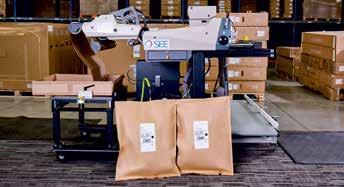
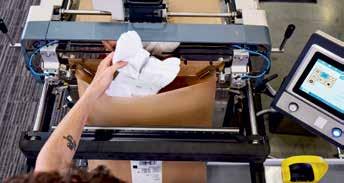
Designed to work with the range of AUTOBAG® brand allpaper recycle-ready bags, the system provides retailers with sustainable packaging on a high-speed machine for mail order fulfilment and E-Commerce applications.
AUTOBAG® brand 850SP can open, label, and seal up to eight bags per minute, using high-quality seals. It also offers optional resealable capabilities for mailing bags, allowing consumers to reuse the same packaging for product returns to minimise waste and improve packaging recyclability.
The system’s high-speed performance is achieved with easyto-use bag threading for fast and efficient product changeover, while next-bag-out printing prevents product queuing and reduces waste material. AUTOBAG® brand 850SP prints high resolution shipping labels directly on the bags, reducing the requirement for a separate labelling operation, and has been designed for packaging single and multiple orders of products such as ready-to-wear clothing and accessories.
The system helps minimise maintenance requirements and enhances productivity with an intuitive interface that provides fulfilment operatives with access to machine diagnostics, performance monitoring and support. The system can also be easily integrated into a packaging network system to facilitate centralised monitoring and deliver productivity information in real time.
Ingo Lublow, EMEA Director Protective & Equipment Marketing at SEE comments: “The demand for buying goods online has grown rapidly in recent years. At the same time, retailers have had to adapt fulfilment processes to meet new sustainability requirements and drive efficiencies to manage production and labour costs.
“AUTOBAG® 850SP answers these challenges. The system delivers a high-quality and high-speed solution that streamlines mail order fulfilment and packaging processes, to support sustainability goals.”
The AUTOBAG® 850SP is compatible with AUTOBAG® brand allpaper recycle-ready bags. They are currently available in two formats: 355mm (width) x 480mm (length) and 480mm (width) x 600mm (height), and in both white and Kraft paper.
For more information, visit: https://www.sealedair.com/uk/ products/protective-packaging/high-speed-paper-bagging-system
SUSTAINABLE PACKAGING NEWS 49 SEE
SEE
“ The system delivers a high-quality and high-speed solution ”
Minor adjustment - major impact!
It has been announced that KHS Nature MultiPack is now available with a universal adhesive. So what seemed to be a minor adjustment, now offers major and positive environmental benefits! This change produces even more reliable and future-proof technology.
For its Nature MultiPack (NMP) KHS has produced a universal adhesive that can be used on practically all outer coatings on both aluminum and tin cans. This makes it much easier for many beverage producers to convert to this environmentally-friendly style of packaging.
To date, choosing the right adhesive was something of a challenge: numerous advance tests had to be run to check how an ideal amount of the same creates the perfect balance between high pack stability and easy-to-remove beverage cans when applied to the different coatings that can manufacturers use on their containers.
“There’s a huge variety of can lacquers, running into several hundreds worldwide,” says Dr. Matthias Caninenberg, head of Nature MultiPack Technology at KHS. They often have very different surface properties, from matte to glossy. “The discrepancies in chemical and physical properties such as roughness are enormous,” he explains.
Elaborate testing redundant
Since this system became successfully established on the market, the demands made of the adhesive especially, have continuously increased. The Dortmund systems supplier has answered this call and now enables customers to create appropriate packs with the new one-fits-all system for beverage cans, thus also helping them to achieve their sustainability targets.
When it comes to circular economy packaging, KHS helps its customers by providing specific advice and developing and implementing environmentally-friendly and circular systems. These include its NMP. As one of the most sustainable types of secondary packaging, this future-proof technology does away with secondary packaging completely, holding packs of six beverage cans, for instance, together with just a few dots of adhesive.
These dissimilarities affect the effectiveness of the adhesive which is why elaborate testing at the KHS laboratory used to be required. For interested canners, this was a procedure that first and foremost was very time-consuming, Caninenberg said, “In developing a universally applicable adhesive for practically all outer can lacquers used worldwide, KHS has now risen to this challenge. The new consumable satisfies stringent requirements to ensure stability during transportation, among other things. In order to do so, the adhesive had to prove its worth both on a laboratory scale and in industrial application”
Caninenberg is more than pleased with the results as he added, “The goal of producing a universal adhesive that works on practically all coatings was again exceeded. During qualification and practical application in industrial production, it was shown that our exacting requirements were met.”

50 SUSTAINABLE PACKAGING NEWS KHS
KHS
Dr. Matthias Caninenberg
The implemented one-fits-all solution enables beverage producers to form the perfect NMP from all standard formats and sizes. “On the one hand, both matte and glossy containers can be processed without complex adhesive changeovers being necessary; on the other, future customers no longer have to keep to a given selection of surface lacquers,” Caninenberg smiles. This makes pack production more flexible and efficient, which in turn also has a positive impact on the supply chain. “A selection of predefined lacquers no longer has to be kept in stock. This cuts down on the amount of cost and effort needed and greatly simplifies production processes,” Caninenberg explained further, “We’ve thus completely eliminated any entry thresholds when it comes to investing in this standardised, environmentally-friendly technology.”
Investment improves eco-balance
Nature MultiPack also cuts costs – in the long term the system is less expensive than other kinds of secondary packaging as beverage producers save on both materials and resources. This plant engineering is also ideal when specific company sustainability strategies are to be implemented – especially when in the future taxes will possibly be levied according to the amount of CO2 equivalents generated, rather than the style of packaging. Independently validated LCA analyses show that a company’s carbon footprint can be massively reduced where NMP technology is used.
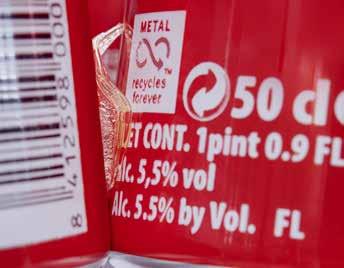
The KHS Innopack Kisters Nature MultiPack packaging machine is available in a version that outputs up to 45,000 containers per hour and in a high-capacity variant produces a maximum of 90,000 cans per hour.
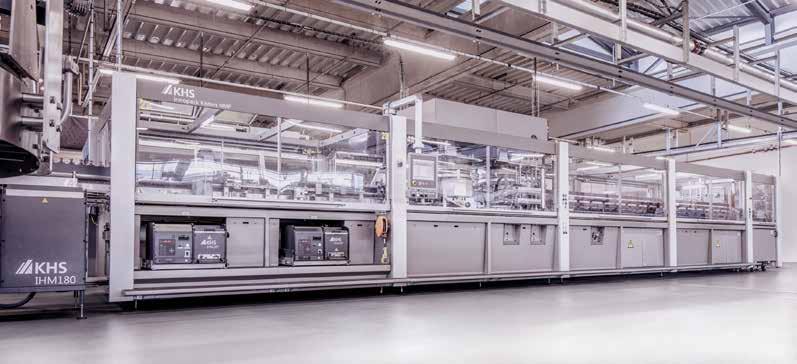
For both speeds of machine three optional modules are available: a distributor, a pack turner and a handle applicator to create NMPs with a carrying strap. This can also be fully omitted to give customers the best possible eco-balance. Doing without the necessary modules for the above makes the machine up to 50%. Doing without the necessary modules for the above makes the machine up to 50% shorter, thus cutting the length down to just 10.8 meters. “With our further developed adhesive we provide a flexible, cost-efficient and extremely sustainable solution. Thanks to its resource-saving technology, this will ultimately score with consumers,” Caninenberg summed up.
For more information about KHS visit: www.khs.com/en/
KHS SUSTAINABLE PACKAGING NEWS 51
KHS Innopack Kisters Nature MultiPack packaging machine
The KHS Innopack Kisters Nature MultiPack packaging machine is available in a version that outputs up to 45,000 cans per hour and in a high-capacity variant produces a maximum of 90,000 containers per hour.
Universal adhesive KHS has developed a universal adhesive for its Nature MultiPack that can be used on practically all outer can coatings.
PET TraysClosing the loop
Evertis is keen on sharing their innovative approach to closing the loop on PET trays. A groundbreaking integration strategy across the three companies within the Group: Renascis, integrated PET recycling business, Evertis, PET film producer for packaging applications with barrier, and Selenis, specialty co-polyester producer.
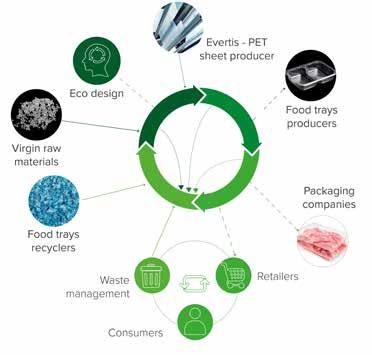
Evertis’ four-step approach to close the loop:
Continuously increase the utilisation of recycled content in their films, while ensuring maximum standards for food safety. In 2022, Evertis incorporated 35% of non-virgin raw materials, amounting to 33.5k tonnes of recycled content utilised in their processes. This is equivalent to over 1.3 billion PET water bottles or 1.9 billion PET trays. Their target is to reach a 50% of recycled raw materials by 2025.
Thanks to the utilisation of recycled content, Evertis has been able to demonstrate significant environmental benefits such as the reduction of greenhouse gases and carbon emissions and the decrease of overall energy consumption for new product manufacturing. According to LCA studies, each unit of recycled PET replacing virgin PET, achieves a 40% reduction in process and transport energy, 75% reduction in energy demand, and 60% decrease in greenhouse gas emissions .
The circular integration of the three business units supports the development of a closed-loop system in two main ways. Firstly, Selenis develops PET resins, closely collaborating with Evertis, and with first hand insight into the needs and challenges of the packaging industry, resulting in cutting edge sustainable packaging solutions introduced into the market by Evertis , such as monomaterial solutions that are easily recyclable. Secondly, Selenis and Renascis, have both chemical and mechanical recycling capabilities, Recyclass and EuCertPlast certified, allowing them to recycle different post-consumer PET materials, as well as increase recycled content in their products.
Promote the tray-to-tray circuit by increasing the incorporation of PET flakes from trays and promoting new innovative multilayer recycling technologies. Evertis is committed to the incorporation of recycled content from the tray circuit. In this sense, Evertis is being certified by the RETRAY Process certification in order to audit its film manufacturing process to ensure the traceability of recycled materials, with a focus on the incorporation of post-consumer flakes from the tray circuit.
Additionally, as an example of an initiative to promote the tray-to-tray model, Evertis collaborated with key recycling stakeholders in Portugal for a R&D project demonstrating the benefits of circular economy and tray-to-tray recycling. This project assessed the feasibility of sorting PET trays, previously classified as mixed plastics, and upcycling them back into the PET stream.
52 SUSTAINABLE PACKAGING NEWS EVERTIS
Evertis
Facilitate the recyclability through product design, by offering innovative monomaterial and other recyclable solutions that meet clients’ technical needs, whilst facilitating packaging recyclability. Some highlight of Evertis’ latest key product innovations: Evertis Ecoseal™, Ecopack™ HI, IR Black,
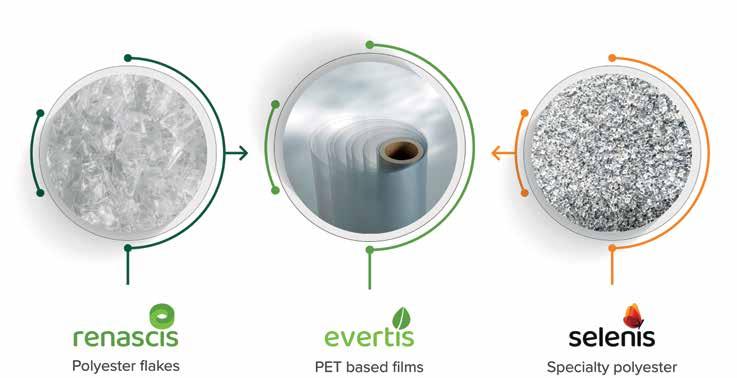
Several of these product innovations are the result of the close collaboration between the sister companies, Selenis (resin manufacturer) and Evertis, and their success in jointly designing and developing new polyester resins that provide enhanced properties to the final packaging, without the need of adding
Emphasise collaboration and support throughout the , working together in closing the loop, and aligning with policymakers in defining new guidelines. Evertis is fully committed to continuing to enhance their circular model for PET tray packaging and playing a leading role in the industry by continuing to offer sustainable innovations to the food industry. Thanks to Evertis’ circular integration, the company is able to work from the resin design to ensure the recyclability of their products, until the final mechanical and chemical recycling of post-consumer PET materials, supplying innovative recyclable films with a high percentage of recycled content.

EVERTIS SUSTAINABLE PACKAGING NEWS 53
“ Evertis is fully committed to continuing to enhance their circular model for PET tray

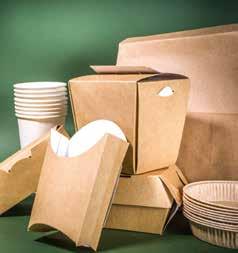
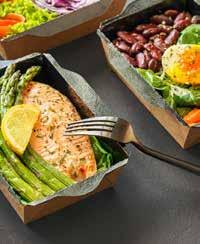


SUSTAINABLE PACKAGING FOREFRONT INDUSTRY THE UK’S LEADING EVENT SPEAKERS SUPPLIERS BUSINESS ADVICE thth OCTOBER RESPONSIBLE PACK AGING EXP O #RPE23 #HOSPOB2B Unwrap the latest in sustainable packaging Source responsible packaging solutions Put the environment at the forefront of your business FREE TICKETS responsiblepackagingexpo.co.uk RUNNING ALONGSIDE CAFÉ BUSINESS EXPO INNOVATION EXPO STREeT FOoD BUSINESS EXPO AS A PART OF
