

Welcome to the first edition of the year of Sustainable Packaging, where we set the tone for the months ahead by focusing on the innovations, collaborations and commitments shaping our industry. A new year always brings renewed momentum, and 2026 is already signalling acceleration across circular design, material innovation and scalable recycling solutions. With sustainability targets tightening and net zero ambitions under increasing scrutiny, the pressure to move from pilot projects to real-world implementation has never been greater.
A major focal point for companies across the value chain is interpack, the global stage where technology, materials and strategy converge. For many, it is more than an exhibition, it is a benchmark moment to showcase progress, launch solutions and define competitive positioning. We are excited to let you know that the SPN team will be in attendance and we are looking forward to seeing you all there!
As we begin the year, our focus remains firmly on practical progress, highlighting the technologies, partnerships and strategies that are turning ambition into measurable impact.
Whether you are preparing for interpack or mapping out your sustainability roadmap for the year ahead, we hope this issue informs, inspires and supports the next phase of your journey toward more sustainable packaging.
All the best, Emily








Page 5
Printing Innovation: Where Sustainability Meets Performance (and Fewer Headaches)
Including
• article by ATS Tanner
Page 10
Design for Circularity: Turning Intent into Industry Practice
Including
• article by goplasticpallets.com
• Exclusive Interview with Mandy Glew at Ball Corporation
Page 16
Building Recyclablity into Packaging
Including
• article by Husky Technologies
Page 21
Interpack Preview
Page 24
Collaboration at Scale: How Strategic Partnerships are Shaped are Reshaping the Future of Packaging
Including
• article by Bruckner Group
Page 32
Chinaplas Preview

Page 33
From Ambition to Action: How Packaging Leaders are Delivering Net Zero
Including
• article by Sabert Corporation Europe and Colpac Packaging
• Exclusive Interview with Sean Cairns at Sonoco
Page 40
Automation in Motion: Robotics and Industry 4.0 Reshaping Packaging
Including
• BUSINESS LIMELIGHT by Packaged
by Dominy Jones
In today’s packaging landscape, printing is about far more than making things look good. It’s a strategic lever for efficiency, sustainability and brand consistency — and, let’s be honest, avoiding those “why is it purple again?” moments on press. From digital workflows to ink innovation, the printing sector is evolving fast, helping converters and brands deliver quality without the waste.
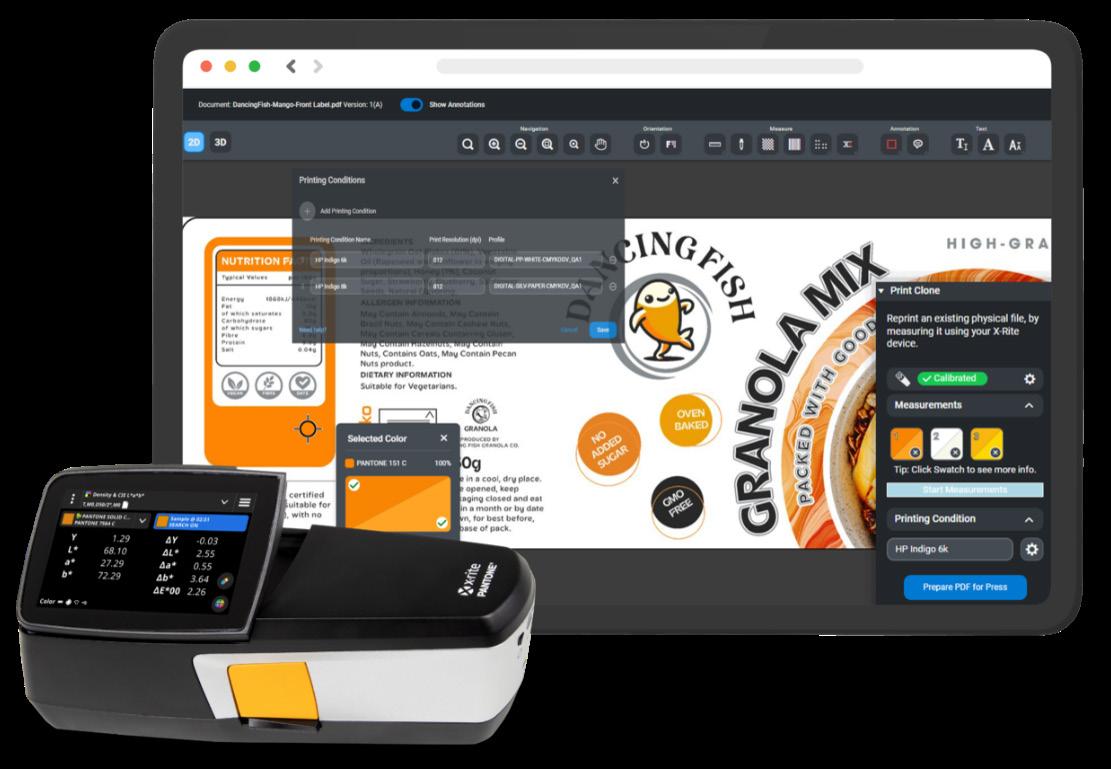
A good example is Esko, whose Print Clone software recently picked up a Zero Impact Packaging Award. Designed to replicate colours accurately across presses and substrates, the cloud-native tool reduces set-up time, material waste and the age-old printer’s curse of endless test runs. As Jan De Roeck, Esko’s Chief
Marketing Officer, puts it: “Print Clone significantly reduces manual interventions and accelerates job completion times for packaging and label converters.”
In other words, less time tweaking colours, more time actually printing — which most operators will agree is the fun part.
“Print Clone significantly reduces manual interventions and accelerates job completion times for packaging and label converters.”
Inks and coatings are also getting smarter. Siegwerk, the global inks and coatings specialist, has expanded its focus on functional coatings that support recyclability and performance without compromising print quality. These coatings are designed to enable circular packaging solutions, proving that sustainability doesn’t have to mean dull graphics. “Functional print coatings offer a high potential for the future of packaging,” says Dr Nicolas Wiedmann, CEO of Siegwerk — and crucially, they don’t ask printers to reinvent everything overnight.
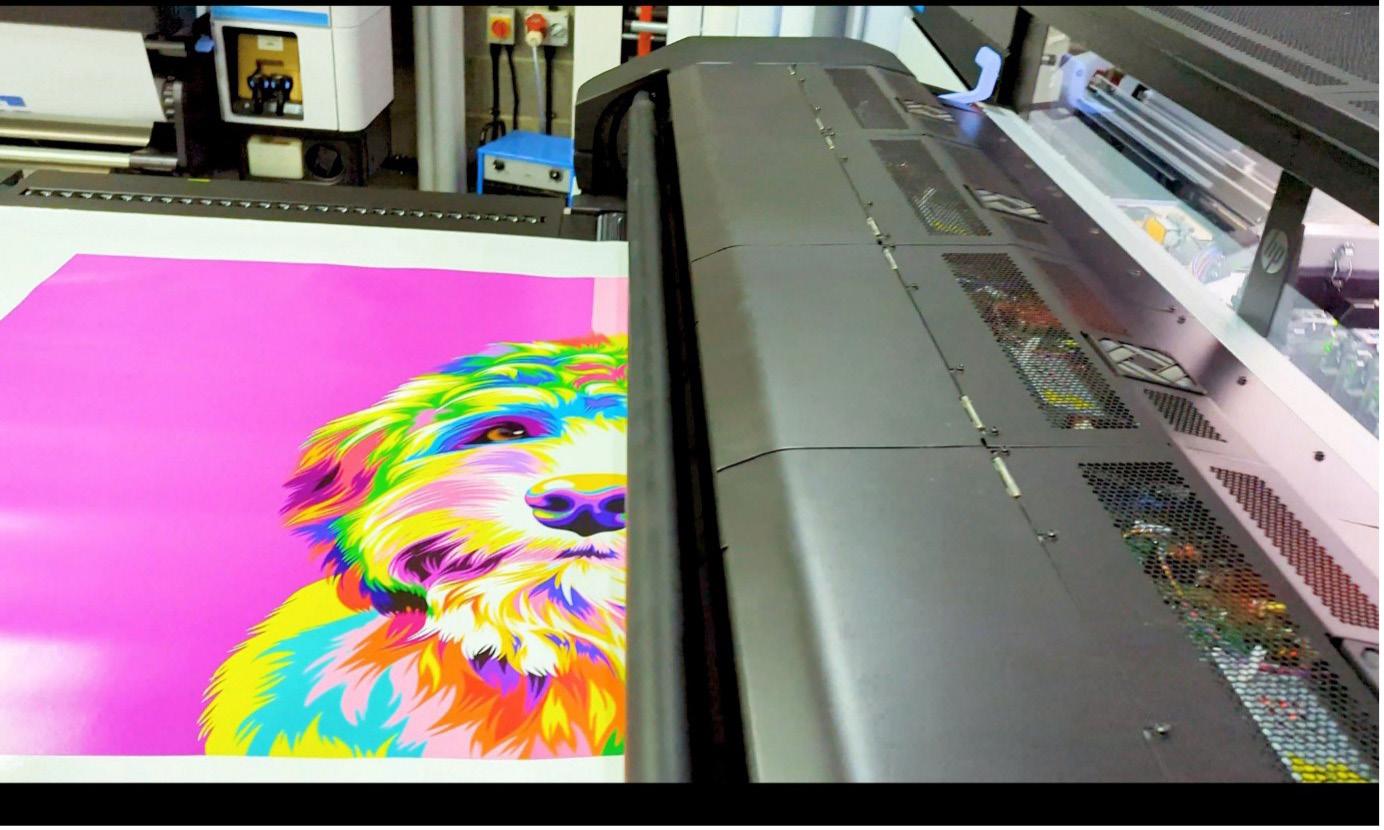
Meanwhile, Digiprint Group is showing how technology investment can tick both environmental and commercial boxes. By adopting HP Latex printing technology with water-based inks, the company has reduced VOC emissions while expanding its offering across signage, displays and graphics. It’s a reminder that greener printing doesn’t have to mean slower printing — or as one might say, sustainability shouldn’t be a drag (even if curing lamps sometimes are).
“This approval is a huge step forward for packaging sustainability as it effectively opens the door for brand owners to use highperformance UV-curable inks in recyclable PE packaging formats.”
“For us, environmentally friendly solutions were on our radar very early on. We have been a climate positive business for six years and being able to provide customers with an environmentally friendly solution is massively important.”
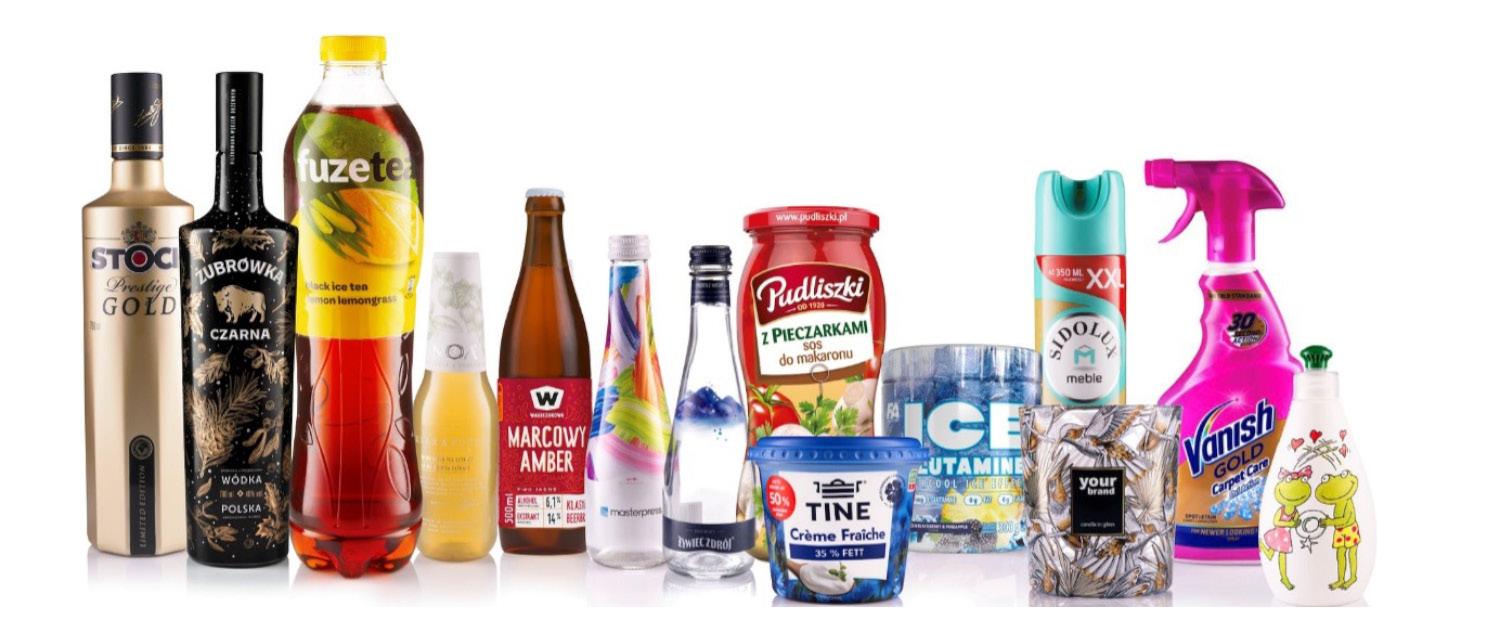
Capacity expansion also plays a role. Masterpress has invested in new printing and converting lines to meet growing demand for customised and e-commerceready packaging. These upgrades improve efficiency and flexibility, helping customers meet tight timelines — because nothing tests a printer’s patience quite like a “we needed this yesterday” email.
Together, these examples underline a simple truth: printing is no longer just a production step, it’s a competitive advantage. From colour management and coatings to cleaner technologies and smarter workflows, innovation in printing is helping the packaging industry meet sustainability goals — while still delivering sharp graphics and fewer late-night press checks. And if it can save a bit of ink, energy and sanity along the way, that’s a win for everyone.
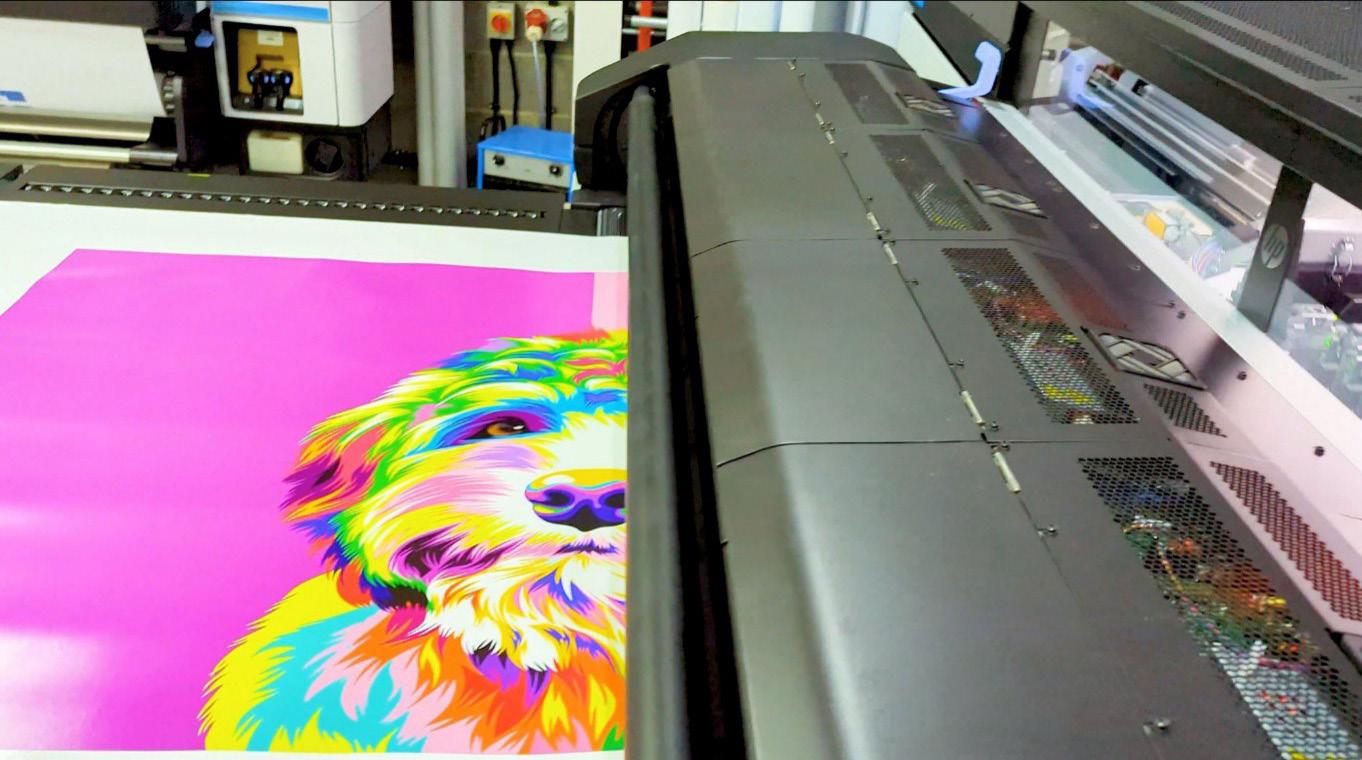
by ATS-Tanner Banding Systems AG
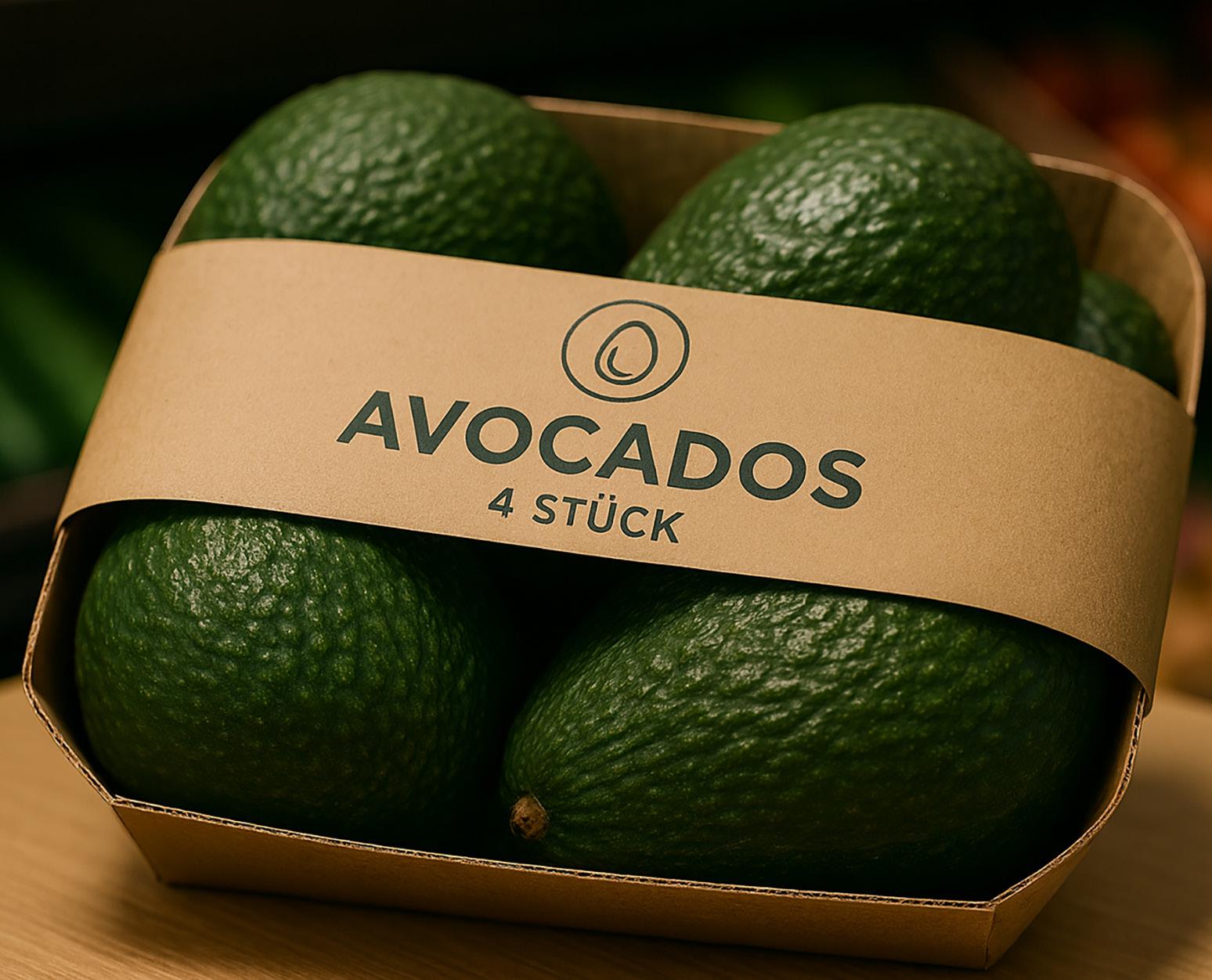
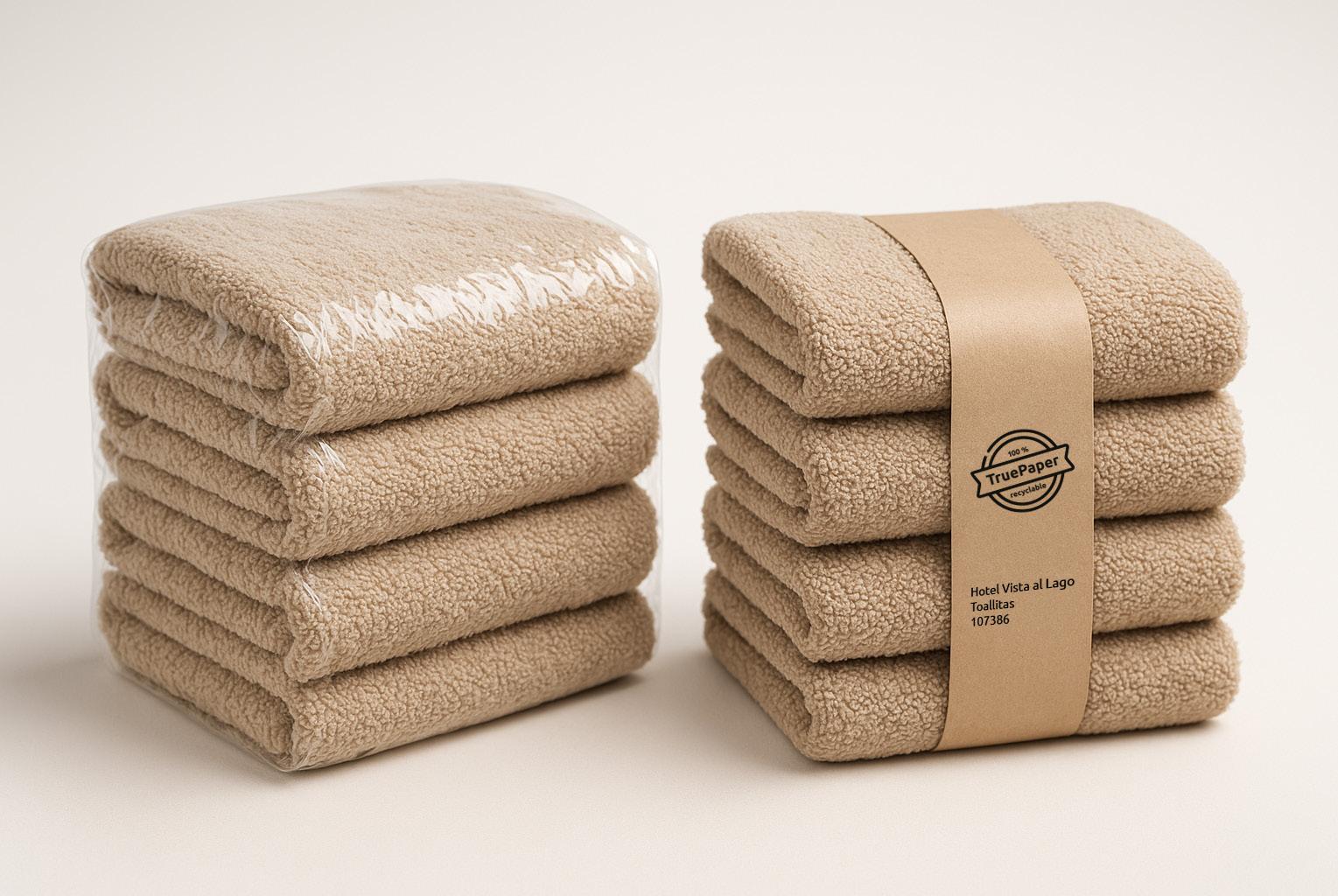
Banding at ATS-Tanner is a future-proof packaging solution that combines sustainability, efficiency, and strong branding in one smart process. Adhesive-free banding replaces conventional packaging such as shrink film, plastic bags, strapping, or cardboard sleeves, while using significantly less material. By switching from plastic to paper bands, companies can actively reduce their environmental footprint and achieve ambitious sustainability goals without compromising performance.
Banding fulfills multiple packaging functions at once: it bundles products, seals packaging, labels items, and communicates brand messages. Thanks to just-in-time printing, variable information such as barcodes, prices, lot numbers, or best-before dates is printed directly onto the band during the process, eliminating the need for additional labels. High-quality printed bands act as brand ambassadors at the point of sale, offering
up to 100 mm of space for storytelling and product information.
“Thanks to just-in-time printing, variable information such as barcodes, prices, lot numbers, or best-before dates is printed directly onto the band during the process, eliminating the need for additional labels.”
“At the same time, banding increases productivity by simplifying handling, improving logistics, and enabling transparent tracking throughout the supply chain.”
ATS-Tanner banding solutions are extremely versatile. They gently secure fragile goods, reliably hold together heavy products, and are suitable for applications ranging from food and fresh produce to textiles, construction materials, and luxury goods. At the same time, banding increases productivity by simplifying handling, improving logistics, and enabling transparent tracking throughout the supply chain.
With ATS-Tanner, banding becomes a smart, customerfriendly, and sustainable packaging choice. For more information, please visit https://www.atstanner.com/en
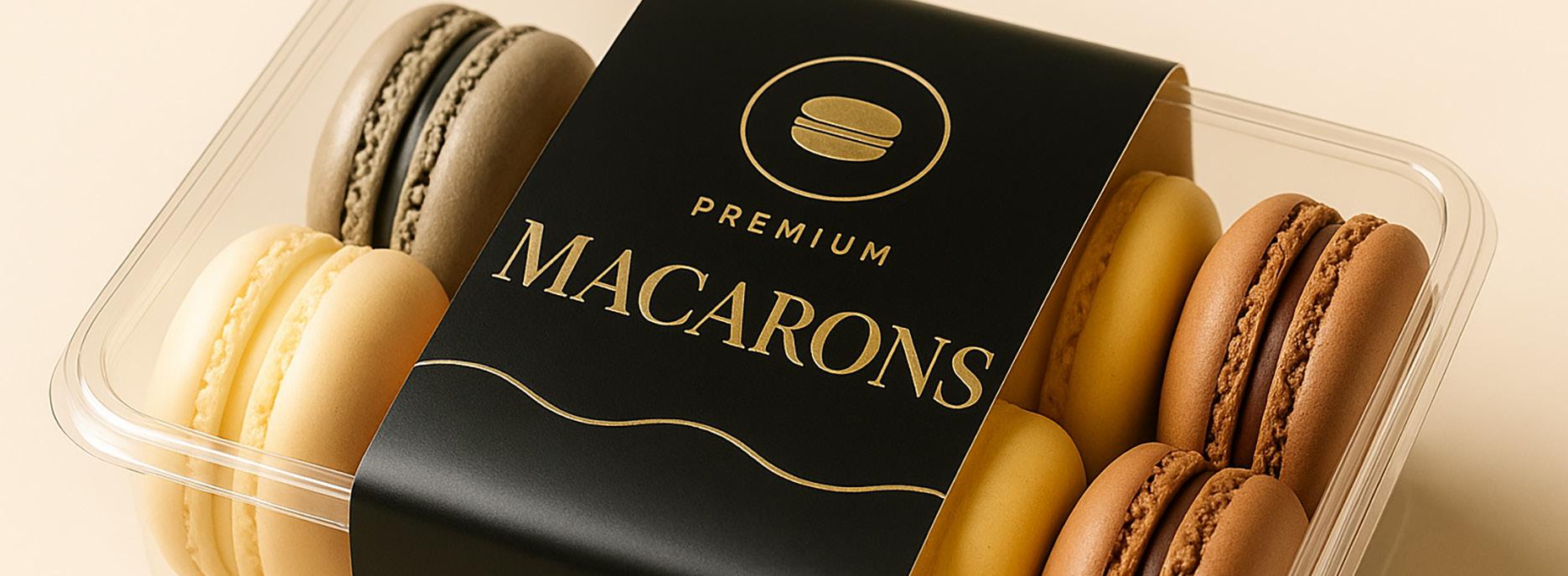
Plastic-free, edgeprotecting, highly efficient banding
by Dominy Jones
In conversations about the circular economy, “design for circularity” is more than a buzzword — it’s an actionable mindset that’s reshaping how many organisations approach packaging and product development. At its heart, it’s about moving away from the traditional “take, make, waste” linear model to one that keeps materials in play, maximises reuse and ensures end-of-life processing is smooth and cost-effective.
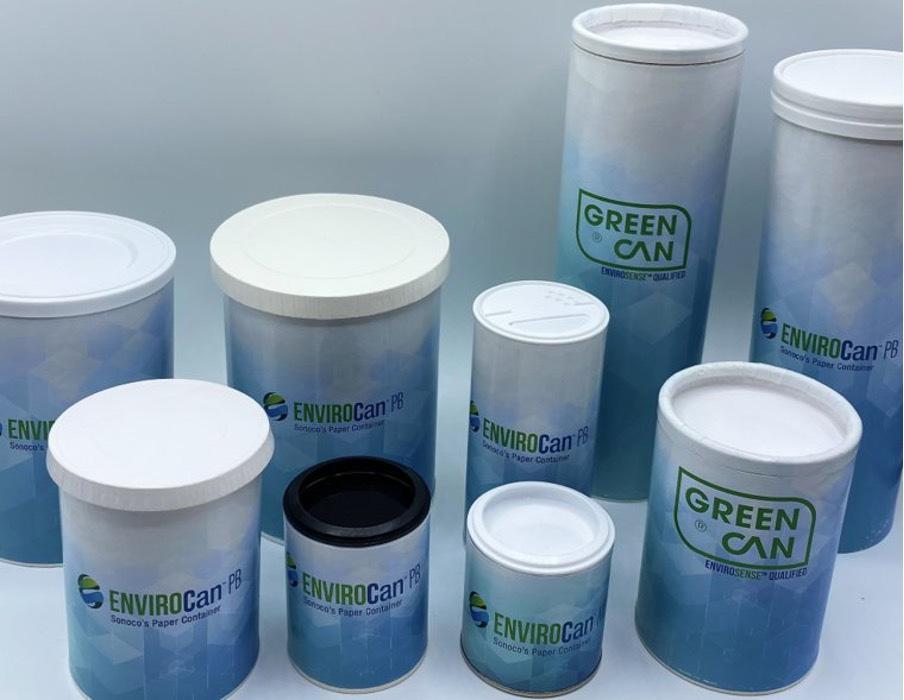
A strong example comes from Sonoco, a global packaging innovator that has embedded circular principles into its core product design. The company’s rigid paperboard solutions, such as EnviroCan® and GreenCan®, are engineered to work within established recycling streams, offering functionality and recyclability without compromise. Francesco Giannolo, Vice President & General Manager of RPC Europe at Sonoco, highlights that partnerships are crucial:
Similarly, the collaboration between Accredo Packaging and Fresh-Lock demonstrates how design change doesn’t always require radical new materials, but smart use of recycled content. Their new child-resistant stand-up pouch incorporates post-consumer recycled (PCR) components designed to work within circular systems. Jonathan Quinn, Vice President of Marketing and Sustainability at API Group and Accredo Packaging, emphasises this point:
“No single company can drive sustainability alone — it requires a collective effort from brands, recyclers and industry stakeholders.”
“The future of the circular economy hinges on incorporating recycled content and being able to do so across all consumer packaged goods markets.”
Innovation isn’t limited to material choices; Meadow and Ball Corporation are pushing the envelope in aluminium packaging with MEADOW KAPSUL™ technology. Awarded for excellence in the “Concept of the Year” category, this fully recyclable aluminium can solution pairs robust circular design with flexibility that appeals to brands across categories. Nora Milazzo, Senior Business Development Leader at Ball, explains that their collaboration “exemplifies our shared commitment to advancing sustainability in packaging and driving the circular economy forward”.
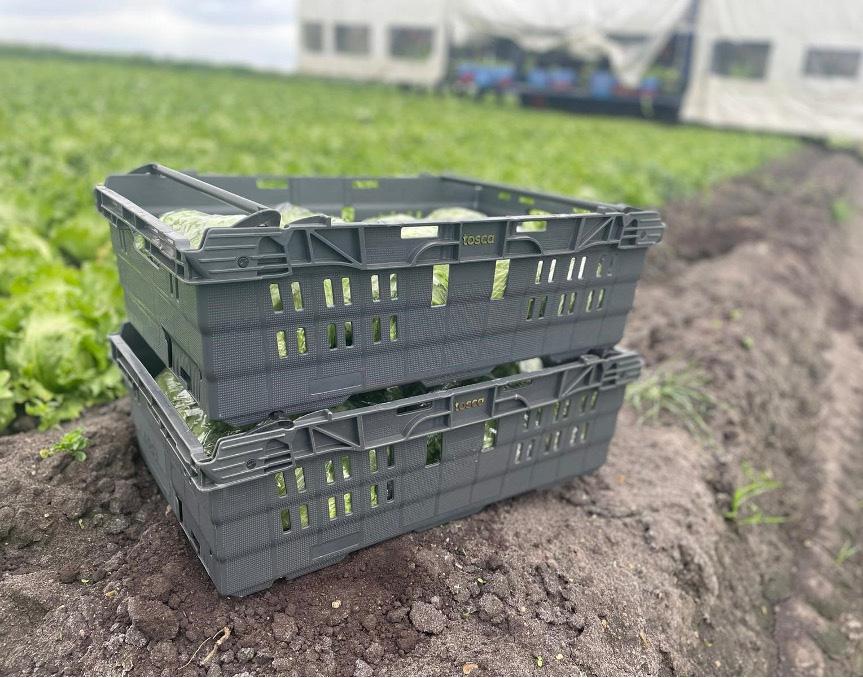
“This event offers a fantastic opportunity to connect with partners and customers across Europe, demonstrate how our end-toend solutions can transform supply chains, and emphasise our commitment to driving sustainability and efficiency in the fresh produce industry. We’re excited to share how Tosca’s expertise can help businesses navigate upcoming regulatory changes and achieve measurable value through our sustainable packaging systems.”
Finally, Tosca’s focus on reusables highlights how circular design can remove waste streams altogether. By developing tech-enabled reusable packaging strategies that align with operational goals and regulatory drivers, Tosca helps brands redesign systems rather than just tweak products.
Across all these examples, a clear theme emerges, design for circularity isn’t a one-off exercise but a strategic approach. It requires collaboration, deep engagement with supply chains and an openness to rethink traditional materials and processes. For industry professionals, the message is clear — embedding circularity in design today sets the foundation for resilient, future-ready business models tomorrow.
by goplasticpallets.com
If you manufacture packaging or fill it on a production line, how that packaging moves through the supply chain matters. Boxes, pots, tubs and trays need to arrive clean, undamaged and on time. Space, handling time and return transportation all impact cost.
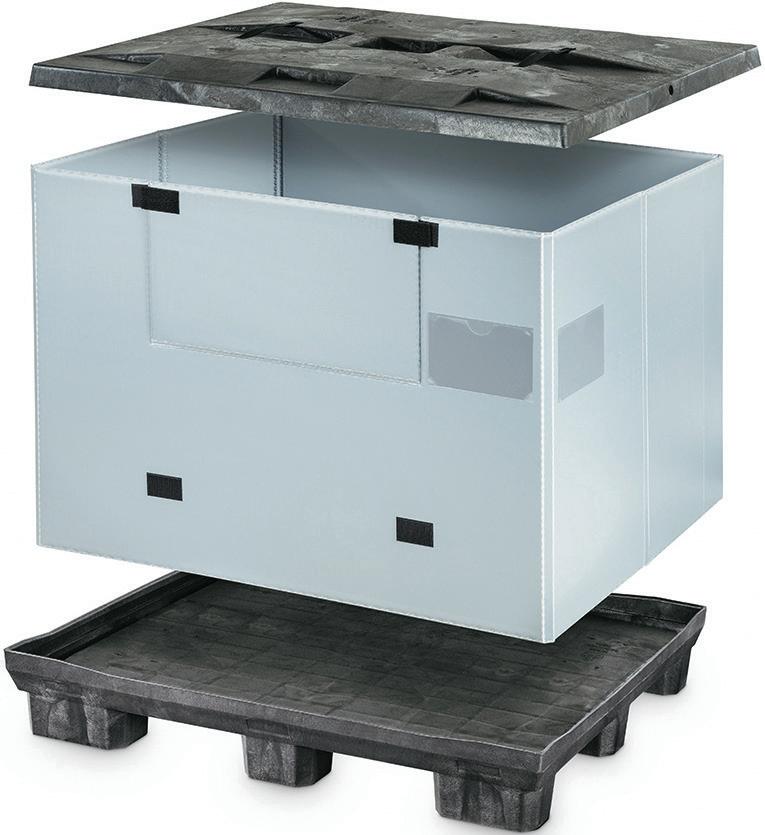
At goplasticpallets.com, we have seen more and more businesses - including several leading packaging manufacturers - looking for smarter, space-saving supply chain solutions, as they look to address these challenges. For many of our customers, foldable sleeve packs are now the go-to solution. They’re lightweight, strong and well-suited to moving primary packaging from the manufacturer to the production line.
One of the most popular models is the CabCube 1210 9F 2.0, designed for transporting items such as thermoformed plastic packaging. It measures 1210mm x 1010mm x 990mm and features an injection-moulded closed base and lid for added strength. The base is 100% recycled HDPE, with a virgin PP sleeve, meaning 66% of the unit is recycled plastic.
The internal capacity is 875 litres. Once collapsed, the height reduces by 75%, cutting return transport costs, emissions and warehouse space. A standard trailer can carry up to 384 collapsed units.
Feedback has been overwhelmingly positive, not just from management analysing productivity, fleet efficiency and space optimisation, but also from the warehouse floor.
Logistics and handling methods continue to change. Our team is well placed to support packaging manufacturers and supply chain managers looking for practical, efficient storage and transport solutions.
“If you manufacture packaging or fill it on a production line, how that packaging moves through the supply chain matters. Boxes, pots, tubs and trays need to arrive clean, undamaged and on time. Space, handling time and return transportation all impact cost.”
To discuss our foldable sleeve packs, call 01323 744057 or email sales@goplasticpallets.com.


On a personal level, what excites you most about expanding Ball’s footprint in India?
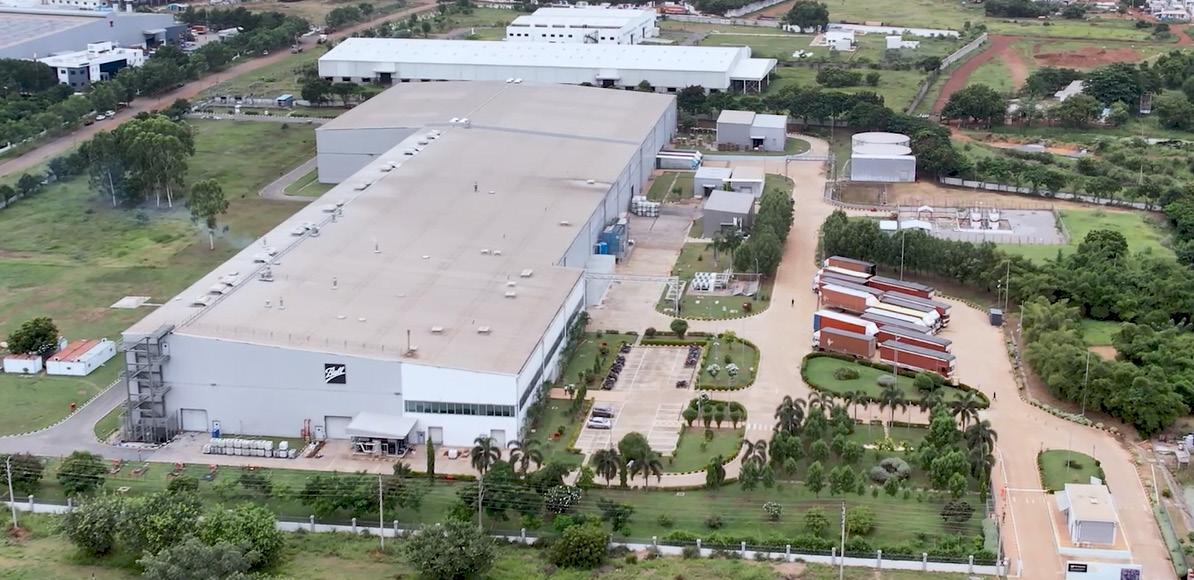
India is becoming a true cornerstone of Ball Corporation’s global strategy, and we now will have the scale on the ground to match the country’s ambition. With our recent and upcoming investments, we’re not only scaling operations but also deepening partnerships with both global key accounts and fast-growing local brands that are looking for modern, sustainable packaging solutions. It’s particularly motivating to see how our retort and sustainability technologies can support India’s dynamic beverage categories while creating high-quality jobs and contributing to “Make in India” objectives.
And ultimately, knowing that our expanded footprint can help advance circular, aluminium-based packaging in such an important market is exciting both professionally and personally. India is a very tangible example of how Ball’s purpose and promise come to life by unlocking the infinite potential of aluminum to advance a world free from waste, simplifying sustainability for our customers through scalable solutions, and winning together by creating enduring impact. Seeing these principles materialize in such a dynamic market is incredibly rewarding.
We’re seeing new categories like dairy and RTD beverages shift toward aluminum. What conversations have you been having with brands that convinced you this was the right direction?
The most convincing conversations have been with brands that are trying to do two things at once, protect the quality of sensitive products like dairy and RTD coffee, while also reaching more consumers in more places. Again and again, our partners have told us they need packaging that can deliver extended shelf life without compromising taste or nutritional integrity, and that’s exactly what our retort innovation technology in aluminium cans is designed to do.
When we worked with dairy and RTD players who were looking to move beyond traditional formats, those discussions led to change. For example, CavinKare shifting popular milkshake flavours into two-piece retort aluminium cans. Other global brand, available on the Indian market, have launched RTD coffee in retort cans to improve product quality, convenience and environmental performance.
We’ve seen similar dynamics in other fast-growing RTD categories, such as juices and energy drinks, where brands like Dabur have embraced aluminium cans to offer more portable, modern and sustainable options for on-the-go consumers.
Those experiences, and the results our customers are seeing in the market, have really confirmed that moving dairy and RTD beverages into aluminium is the right direction for both performance and sustainability.
“As the world’s largest producer of aluminium packaging, building a strong, long-term footprint in a market with this level of momentum is critical to how we support customers and advance circular, recyclable packaging worldwide.”
Ball’s retort technology is being described as a gamechanger for dairy. In simple terms, how would you explain the impact this innovation is having on product quality and shelf life?
In simple terms, our retort technology allows sensitive products like milk-based and ready-to-drink beverages to stay fresh and safe for much longer, without losing their taste or nutritional value.
By combining heat-resistant, aseptic-ready aluminium can designs with advanced processing, we can lock in flavour and nutrients while protecting the product from light, oxygen and contamination.
For dairy brands, that means they can offer shelf-stable milkshakes and RTD coffee that still taste fresh and high-quality, with the convenience of cans that are easy to store, transport and chill.
At the same time, extended shelf life helps reduce waste across the value chain, making aluminium cans a more sustainable choice as India’s dairy and RTD categories continue to grow.
Looking ahead, what future investments or innovations are you personally eager to explore to support India’s evolving packaging landscape?
Looking ahead, what excites me most is the opportunity to build on the foundations we’ve already put in place with Taloja and Sri City, and to support India’s projected strong annual growth in aluminium beverage packaging. I’m particularly keen to further scale the technologies that are already differentiating Ball in India, from advanced retort systems that enable shelf-stable dairy and RTD beverages, to heat pump solutions that improve our environmental performance.
At the same time, I see huge potential in continuing to innovate with our customers as new categories emerge, whether that’s dairy RTDs, juices or other functional beverages that benefit from modern, sustainable can formats, like we’ve seen with the beer and carbonated soft drink category growth, supported by premiumisation and a rise in at-home consumption. We’ll also keep investing in the broader circularity ecosystem, strengthening traceability, working more closely with recyclers and aligning with India’s EPR framework. Ball’s aluminium cans are designed for closed-loop recycling, helping reduce waste and conserve resources – fully aligned with India’s vision for a circular economy.
“What we’ve learned from India is that this market moves quickly, and brands, whether global or local, expect partners who can match that pace with innovation and reliable local execution.”
Ultimately, the goal is to combine smart, future-ready investments in capacity and technology with innovations that make sustainability simpler and more accessible for brands and consumers across India.
How smarter materials, mono-material formats and creative innovation are reshaping packaging recyclability. Written by Emily Gambrill.
Over the past decade, packaging sustainability has moved from a peripheral concern to a central business priority. Regulatory reform, evolving consumer expectations and growing pressure on resources have forced the packaging sector to rethink how products are designed, produced and recovered. Recyclability is no longer a future ambition but a present day requirement, influencing everything from material selection to labelling and decoration.
Across the value chain, businesses are responding with practical innovation. From simplifying material structures to aligning packaging with existing recycling infrastructure, the industry is increasingly focused on designing for circularity from the outset. Logistics providers, packaging technologists and ink specialists alike are demonstrating that sustainability gains can be achieved without compromising performance, aesthetics or efficiency.
Together, these developments illustrate a broader shift towards systems thinking, where packaging is viewed not as waste but as a valuable resource with multiple life cycles ahead.
Over the last ten years, packaging has become significantly more recyclable as a result of improved material choices, clearer labelling and stronger regulatory frameworks. Industry data shows that the UK recycling rate for plastic packaging has increased steadily, supported by the shift away from complex multi material formats towards mono materials that are easier to process. This evolution reflects a wider industry recognition that recyclability must be designed in from the outset rather than retrofitted later.
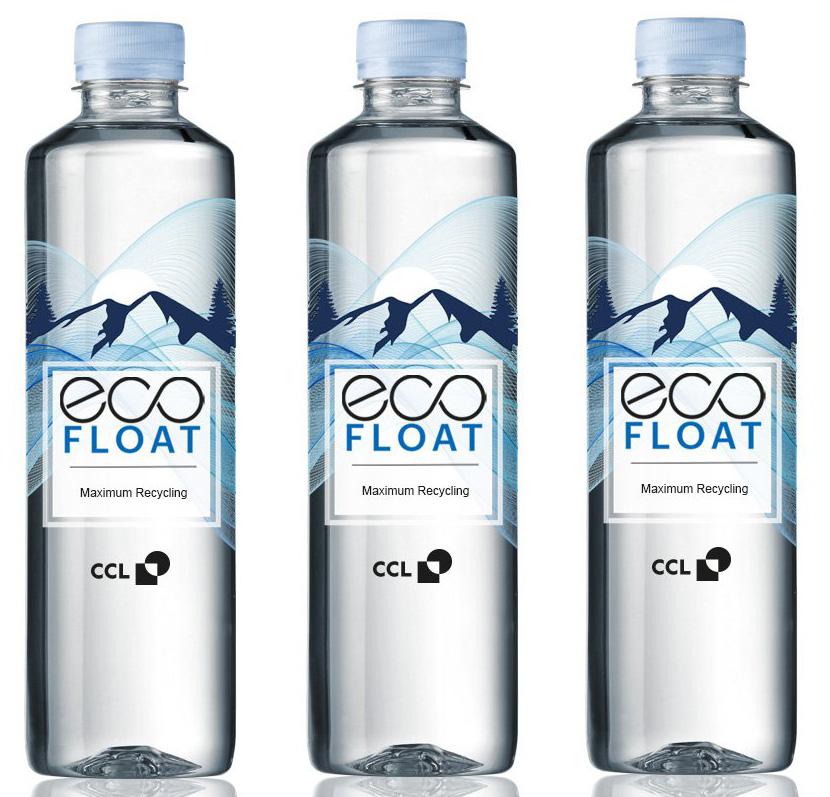
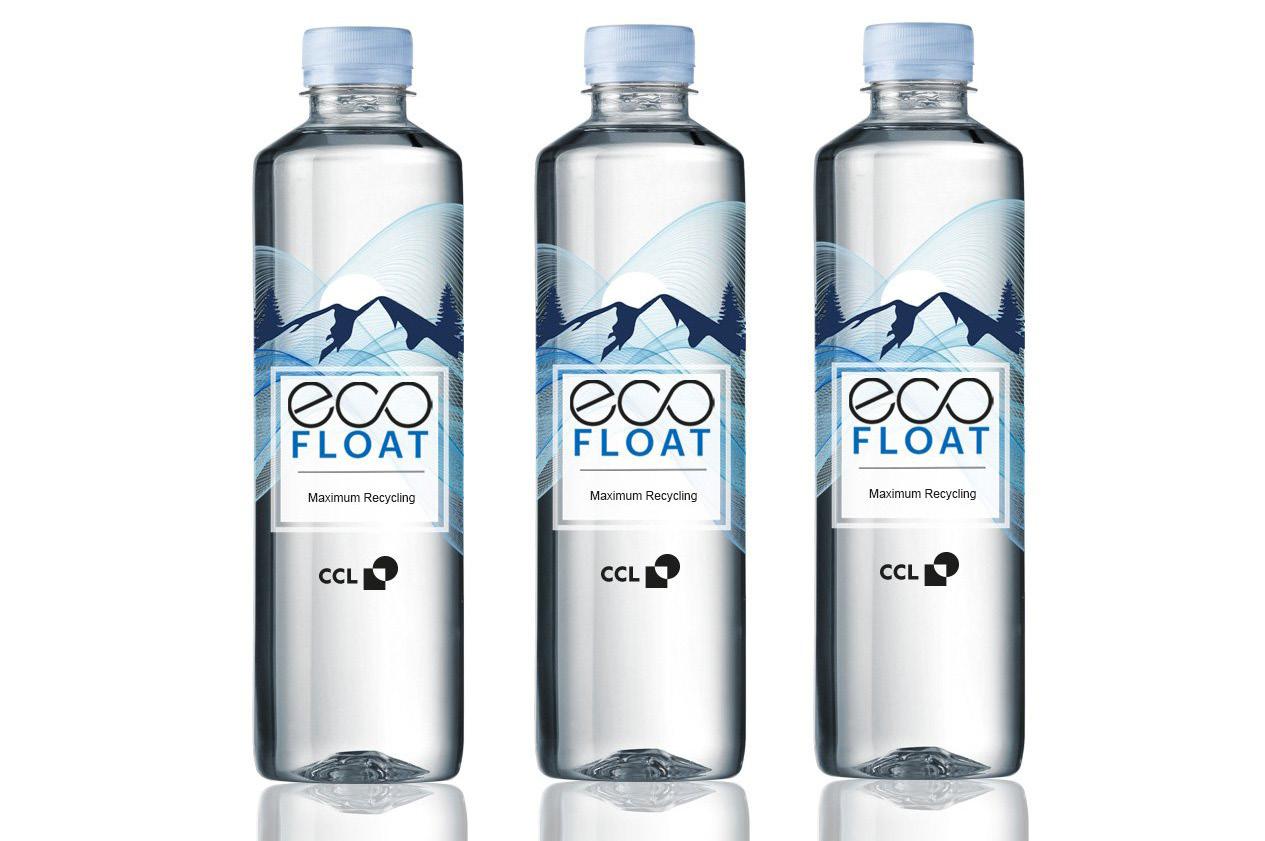
Forward thinking companies such as Prism eLogistics are playing a critical role in accelerating this progress. By supporting brand owners with data driven packaging decisions, the business has focused on optimising packaging components to align with existing recycling infrastructure. A key example is the transition to EcoFloat PET sleeves, which separate cleanly during recycling and enable full bottle recovery.
By adopting fully recyclable sleeving solutions, brands can achieve 100 per cent recyclability for PET bottles while also reducing future Extended Producer Responsibility fees. With EPR reforms set to reshape cost structures across the sector, businesses that act now are better positioned to manage risk, improve sustainability performance and lead the transition towards a truly circular packaging economy.
For more information, please visit: https://www.gov.uk/government/organisations/packuk https://www.gov.uk/guidance/extended-producerresponsibility-for-packaging-who-is-affected-and-whatto-do https://spnews.com/act-now/
In today’s sustainability landscape, material simplification is emerging as a core strategy for improving recyclability and supporting circular economy objectives. As reported in Sustainable Packaging News, the development of all-PET bottles with PET closures exemplifies how single-material packaging can deliver measurable gains in recycling performance by eliminating contamination from mixed-material systems where closures and bottles are made from different polymers. Mono-material packaging simplifies sorting and increases the yield of recycled PET, an outcome that is increasingly valued across global supply chains.
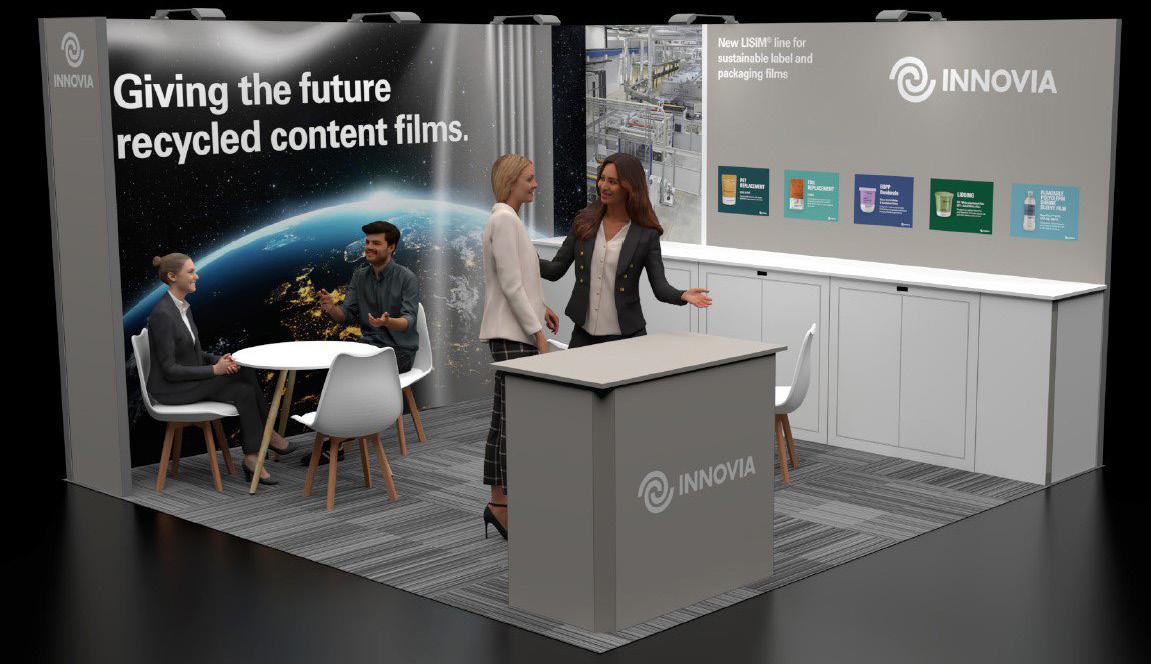
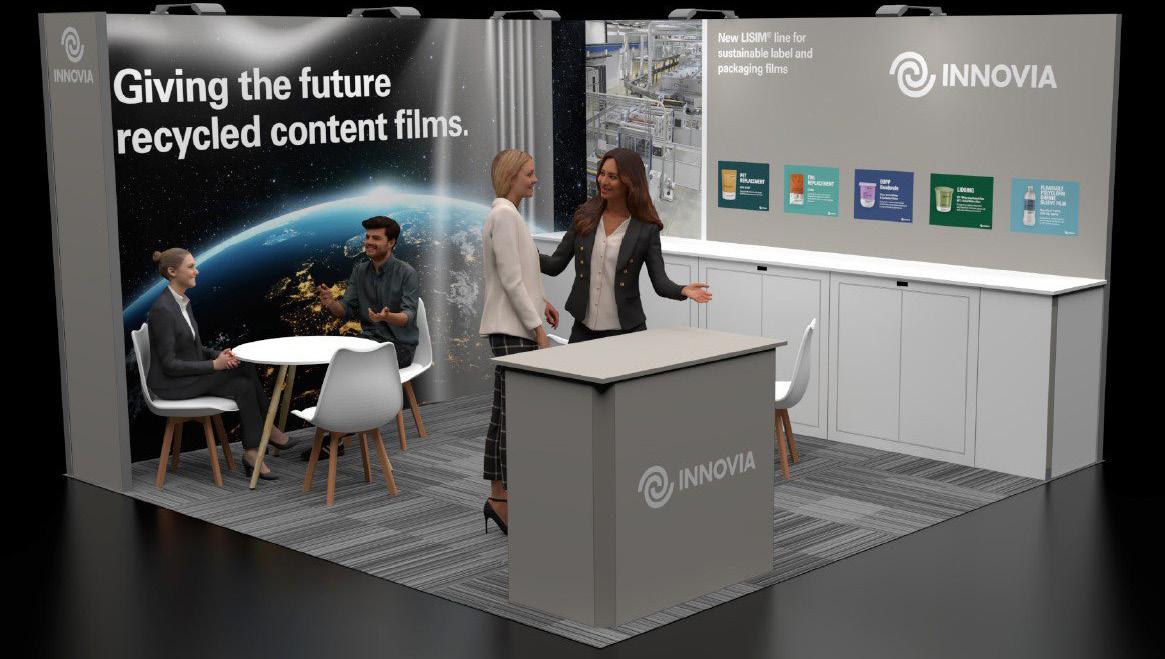
Over the past decade, Innovia Films has responded to growing sustainability expectations by prioritising recyclable packaging design at the material level. As flexible packaging has come under increasing scrutiny for its recyclability, the company has focused on simplifying film structures and aligning its innovations with established recycling streams. This approach reflects a wider industry shift towards designing packaging that performs effectively in use while remaining compatible with end of life recovery systems.
Innovia Films has expanded its range of mono material polypropylene and BOPP films to replace traditional multi material laminates. These solutions are engineered to deliver essential barrier performance and durability while enabling easier sorting and processing. By designing films that use a single polymer family, Innovia supports mechanical recycling and helps brand owners meet design for recycling guidelines.
Mono material flexible packaging can significantly improve recycling outcomes by reducing contamination and increasing recycled polymer quality. Industry data indicates that mono material structures improve sorting efficiency and material yield, supporting higher value recycled content. As Extended Producer Responsibility frameworks evolve, Innovia’s approach demonstrates how material innovation can reduce environmental impact while helping businesses prepare for stricter compliance and circular economy targets.
For more information, please visit www.innoviafilms.com and https://spnews.com/innovia-presents-mono/
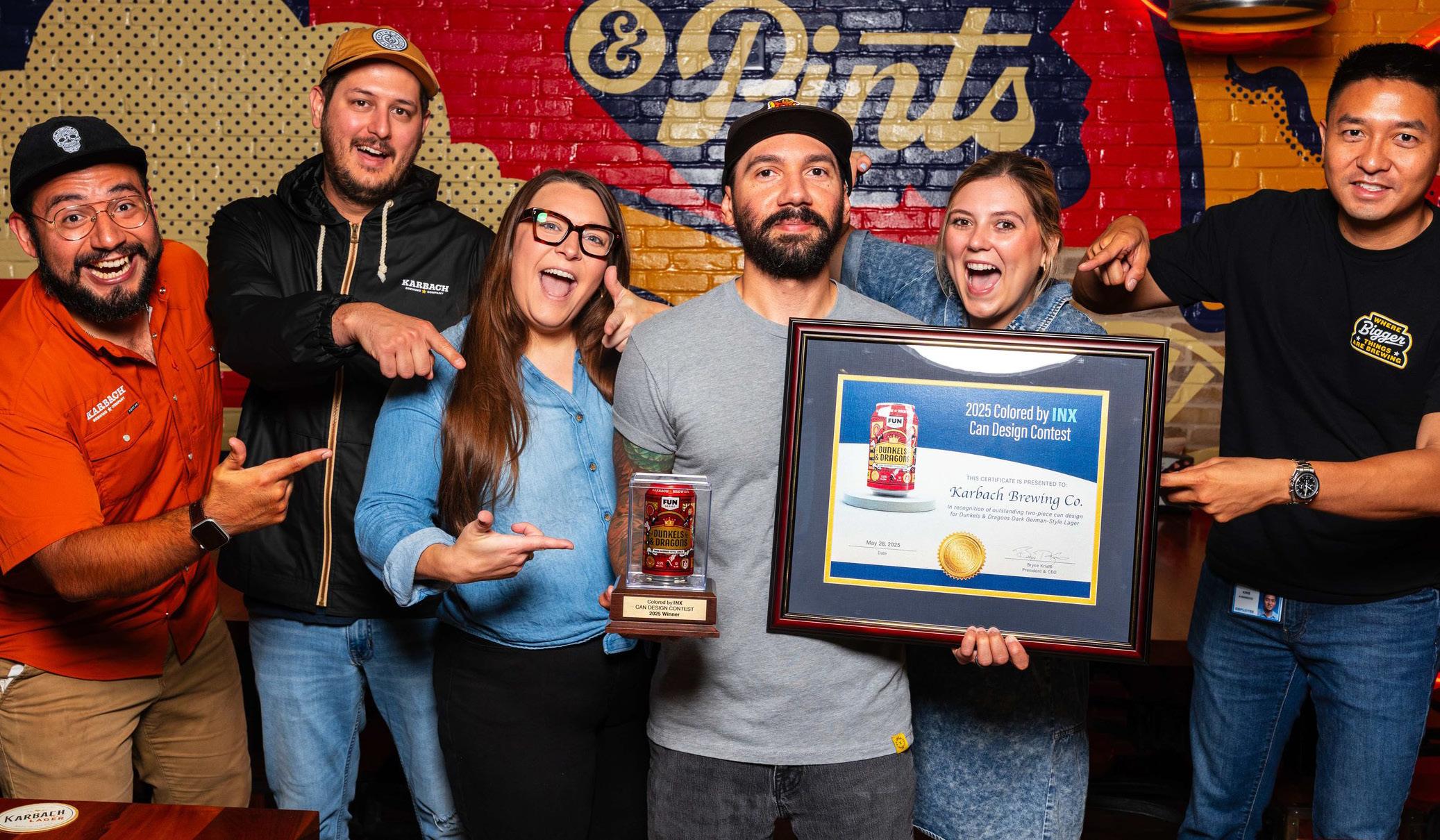
The seventh annual Colored by INX Can Design Contest once again highlights the power of visual creativity within the metal packaging sector. Beyond aesthetics, such initiatives provide brand owners and designers with a platform to tell meaningful stories through thoughtful colour application that drives consumer engagement and supports broader sustainability goals.
As organiser of this industry event, INX International has positioned itself at the intersection of design excellence and sustainable ink innovation. By requiring entries to use colours from the INX Metal Colour Catalogue, which is recognised as the only true colour standard for metal decorating, the programme helps streamline design-to-production workflows and encourages consistent application of high-quality, recycle-ready inks.
Last year’s contest winner, Karbach Brewing Company, clinched the top prize by the narrowest margin in the event’s history, emphasising the competitive progress in packaging decoration. Although primarily a design
contest, this programme dovetails with broader market shifts: sustainable ink solutions, such as eco-friendly and washable formulations, can reduce carbon footprint by up to 30 per cent compared with conventional UV systems, supporting circular economy objectives. By elevating both design and material performance, these initiatives reflect how premium packaging can balance visual impact with environmental responsibility.
For more information, please visit https://www. inxinternational.com/
Progress in packaging sustainability is being accelerated by collaboration, innovation and early action, with businesses demonstrating that design choices, from fully recyclable sleeving and mono-material bottles to recycle-ready inks, directly influence end-of-life outcomes. As Extended Producer Responsibility frameworks evolve, the financial and operational benefits of designing for recyclability will grow, reducing compliance costs while improving material recovery and supply chain resilience. At the same time, creativity remains essential: visual appeal and sustainability now work hand in hand to enhance brand value and circular performance. Ultimately, industry leaders will be those who combine technical expertise with creative thinking to deliver packaging solutions that meet both commercial and environmental demands.
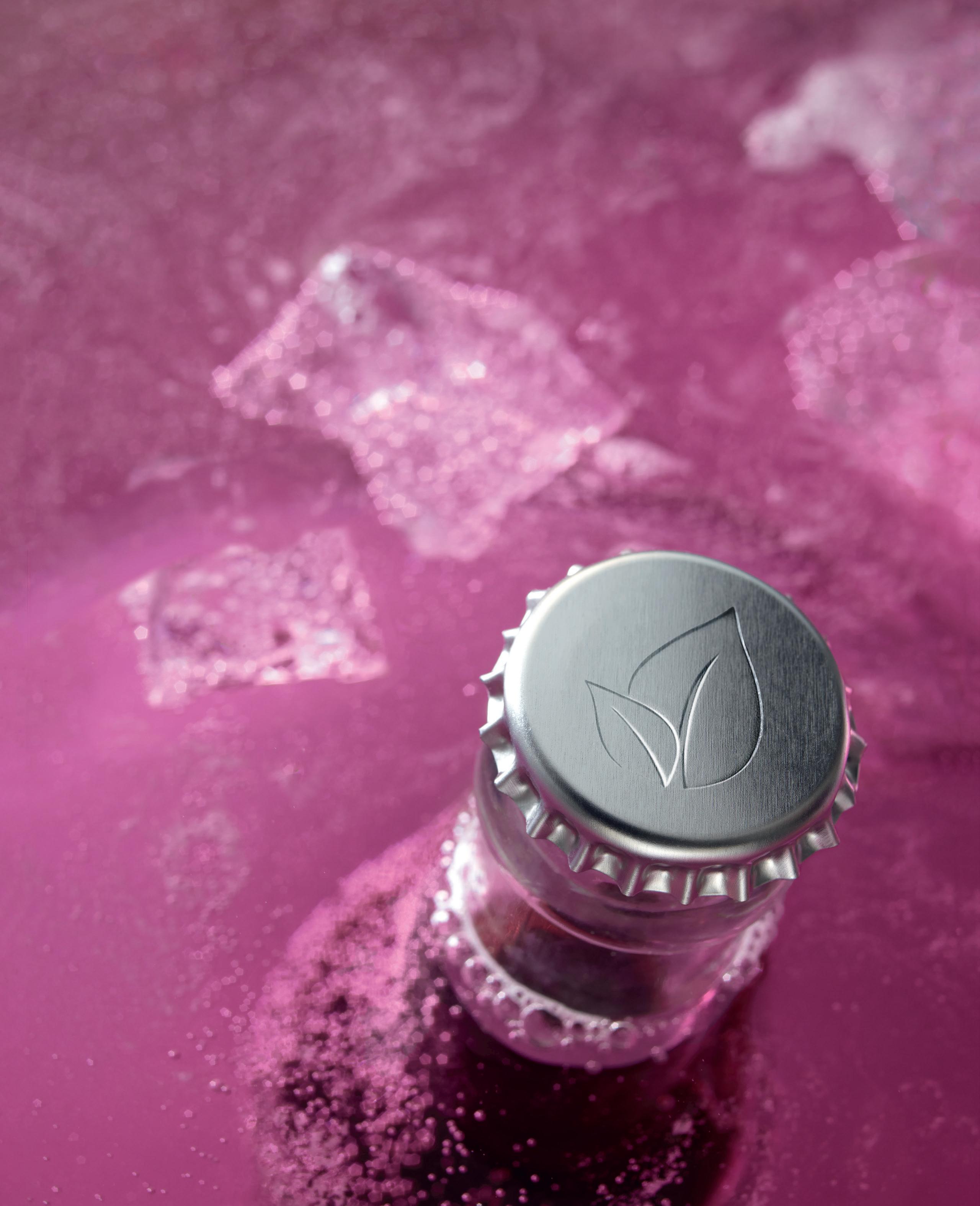
Looking for premium packaging that helps you achieve your CO2 reduction targets more easily?
Your perfect partner for packaging steel
by Husky Technologies
Revolutionizing beverage packaging with HyCAP
SecuRE+ technology
As sustainability targets accelerate across the beverage industry, packaging producers and brand owners face growing pressure to simplify materials, improve recyclability, and deliver performance without compromise. Husky’s HyCAP™ SecuRE+ technology represents a meaningful step forward by enabling a mono-material packaging, pairing PET closures with PET bottles.
This single-material approach eliminates contamination from traditional multi-material systems where PET bottles use HDPE or PP closures. With closures accounting for up to 15% of package weight, all-PET solutions deliver measurable improvements in recycled PET bale yield, increasingly critical across the MEA region’s expanding beverage market.
Enhanced security meets operational excellence SecuRE+ features a novel tamper-evident design that enhances consumer security while improving line performance. The tamper-evident band forms during molding, eliminating post-mold slitting for dust-free manufacturing and reduced contamination risk. The design enables stress-free capping, allowing tamper-evident bands to pass smoothly over pilferproof features without bridge stress. Results include improved capping reliability, lower reject rates, and greater consistency, essential for high-speed beverage operations.
PET’s increased rigidity unlocks lightweighting opportunities at the dispensing system level. PET’s
molecular structure delivers improved barrier performance, extending shelf life for oxygen-sensitive and carbonated beverages, crucial in MEA’s demanding climate conditions.
The technology maintains 100% compatibility with existing CETIE standard neck finishes, requiring no bottle modifications for seamless integration.
As circular economy initiatives gain momentum across the region, mono-material PET solutions demonstrate how thoughtful design simplifies recycling, improves rPET yield, and advances sustainability goals without sacrificing efficiency, safety, or consumer experience.
Ready to explore mono-material possibilities? Contact Husky to discuss implementation strategies. https:// www.husky.co/en/industries/consumer-goods/ closures/pet-closures/
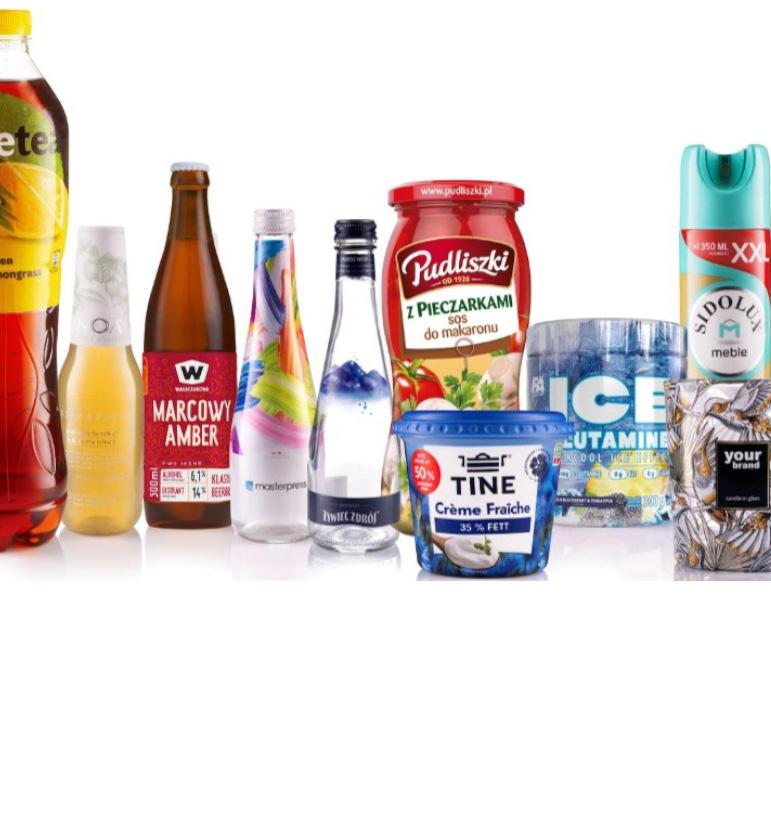
This year’s Interpack 2026, scheduled for 7th to 13th May at Messe Düsseldorf, is shaping up to be one of the most strategically important editions in the event’s history for sustainability professionals. With nearly 2,800 exhibitors from over 55 countries, the show will provide a deep dive into how the packaging sector is tackling circularity, material innovation, energy-efficient processes and responsible sourcing at scale.
Interpack’s sheer scale gives sustainability-focused visitors an unprecedented snapshot of who’s driving innovation across the value chain, from materials and equipment to digital solutions and operational services.
While the full official exhibitor directory is extensive, current provisional lists and industry sources reveal participation from many of the sector’s major global brands and specialised innovators — companies whose offerings intersect directly with sustainability goals.
These companies are critically important for sustainable packaging strategies — from recycled content and monomaterial solutions to resource-efficient substrates:
• Metsä Board Corporation PLC (FI) Hall 8A / D49 –sustainable fiber-based packaging materials.
• NatureWorks BV (NL) Hall 9 / G03 – biopolymers and compostable solutions.
• Greif Packaging Germany GmbH (DE) Hall 10 / B19 –industrial packaging with circular design focus.
• EcoPack S.p.A. (IT) Hall 7, Level 1 / E13– sustainable packaging materials solutions.
• PulPac AB (SE) Hall 8b / C53 – pulp-based and fiberforward packaging innovations.
• ProAmpac Flexibles GmbH (DE) Hall 10 / D21 –flexible packaging with recycled and bio-based focus.
For sustainability managers benchmarking materials innovation, seeing these companies side-by-side offers invaluable insight into market alignments, performance trade-offs and real-world application cases.
Hugo Beck

Machinery & Process Solutions Enabling Resource Efficiency
A significant portion of the exhibitors are specialized machinery and automation providers whose technologies can reduce energy use, minimise waste and support circular inputs:
• Brückner Group SE (DE) Hall 8a / C57 – film and flexible packaging machines.
• MULTIVAC (DE) Hall 5 / A23 – A45 and Hall 16 / A38 – packaging solutions with energy optimisation features.
• Krones AG (DE) Hall 13 / B75 – sustainable filling & processing technologies.
• GEA Food Solutions Germany (DE) Hall 6 / C27 –equipment focused on process efficiency.
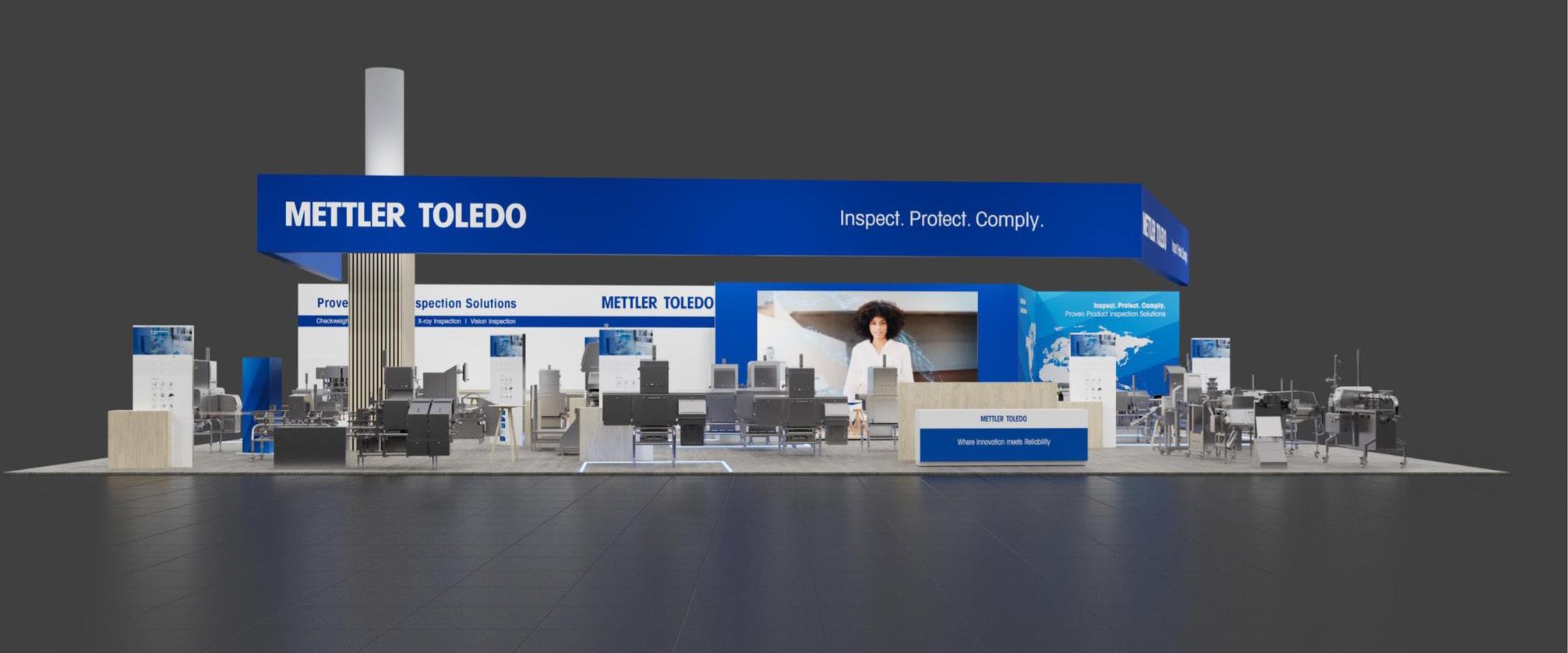
• Mettler-Toledo Garvens GmbH (DE) Hall 16 / A60 –precision inspection supporting quality & reduced scrap.
• Hosokawa Alpine AG (DE) Hall 4 / C60 – sustainable powder processing systems.
• Optima packaging group GmbH (DE) Hall 16 / F54 –F55 – modular process lines with reduced resource use .
For sustainability professionals focused on operational emissions, material efficiency and digital integration, these exhibitors illustrate how machine performance and sustainability outcomes are increasingly intertwined.
3. Digital & Automation Exhibitors Supporting Transparency
Sustainability doesn’t only come from materials — it
also comes from better data, traceability, process control and integration:
• Siemens AG (DE) Hall 6 / D27 – smart manufacturing and digital twin capabilities.
• Keyence Deutschland GmbH (DE) Hall 8b / F41 –sensor and automation systems for precision.
• B&R Industrie-Elektronik GmbH (DE) Hall 6 / E62 — automation platforms enabling efficiency gains. This cohort represents the digital layer that lets sustainability programs measure, manage and report performance effectively.
Beyond major global players, Interpack’s floor plan includes smaller or more niche companies — many of which are developing emerging materials, packaging approaches and recovery-focused innovations:
• Bionova Solutions (IN) Hall 7, Level 2 / E62–biodegradable polymers.
• Easy Green Eco Packaging Co., Ltd. (CN) Hall 9 / E11 –eco-friendly packaging materials.
• Greenkeeper Iberia S.L. (ES) Hall 7, Level 1 / D10 –sustainable packaging plant systems.
• CABKA Group GmbH (DE) Hall 10 / A22 – recycled plastic packaging solutions. These exhibitors often bring early-stage or differentiated solutions — ideal for sustainability scouting and pilot collaboration opportunities.
The exhibitor landscape reflects several dominant themes of interest for sustainability leaders:
Exhibitors are showcasing packaging that supports closed-loop recycling, recycled content integration, and mono-material optimisation — addressing regulatory pressures around EPR (Extended Producer Responsibility) and recycling infrastructure alignment.
The integration of digital technologies — from sensors to AI-enabled production lines — illustrates how companies are reducing energy use, material waste and defect rates in real time. Products from exhibitors such as Siemens, Keyence and B&R embody this shift.
Interpack’s exhibitor mix also encompasses end-toend solutions — from raw materials and machinery to complete process systems — enabling sustainability managers to evaluate entire systems, not individual products.
For professionals already familiar with Interpack’s format and value — but now focused through a sustainability lens — here’s how to ensure ROI from the show:
Interpack’s exhibitor list includes hundreds of relevant companies across categories (packaging machinery, materials, automation, inspection, process equipment). Pre-selecting exhibitors aligned with your sustainability KPIs ensures efficient targeting.
Rather than navigating halls randomly, plan visits around material innovation, resource optimisation, digital control systems and lifecycle tools.
Look beyond booths — roundtables, panels, and informal discussions often yield insights about regulatory direction, standardisation and partnership opportunities.
Securikett
While the final exhibitor catalogue is still being refined, existing lists and trends clearly show that Interpack 2026 will be one of the most important sustainability-oriented editions yet. With leading materials innovators, machinery OEMs pushing resource and energy efficiency, and digital technology providers focusing on optimisation and traceability, sustainability managers and partners have a unique opportunity to benchmark progress, identify emerging partners and drive strategic decisions informed by real market capability and direction.
Collaboration is becoming the critical driver of sustainable packaging progress. By Emily Gambrill.
The packaging industry is at a pivotal moment. Rising sustainability expectations, regulatory pressure and operational challenges are forcing businesses to rethink packaging as more than a functional necessity. It is increasingly a strategic lever for efficiency, resilience and environmental performance.
The collaborations between DS Smith Tecnicarton and ZICLA, Zeus Group and Engelmann & Buckham, and Unilever with Saica Group highlight a common theme. Strategic collaboration is proving essential to delivering packaging solutions that meet today’s performance demands while supporting long-term sustainability goals.

Lain Guio, Chief Operating Officer at ZICLA:
“Our new packaging solution represents an important step forward in ensuring the protection of our smart counting separators during transportation and in reinforcing our commitment to sustainability and the circular economy. Our commitment to reducing the environmental impact of our services is fully aligned with our values as a specialist in urban mobility solutions manufactured from recycled materials. Our collaboration with DS Smith Tecnicarton has been essential in achieving an efficient, safe and value-aligned solution.”
Antonio Cebrián, Sales Director at DS Smith Tecnicarton:
“Our collaboration with ZICLA demonstrates a clear example of how an innovative packaging design can turn a technical and logistical challenge into an efficient, sustainable and scalable solution. We have worked closely together to develop packaging that both protects a high value-added technological product and effectively optimises an entire supply chain. This project highlights DS Smith Tecnicarton’s ability to be a strategic partner in the development of our advanced and future-oriented packaging solutions”.
Collaboration as a Strategic Advantage in Sustainable Packaging
In an industry undergoing rapid transformation, sustainability is no longer a differentiator but a baseline expectation. Across sectors, businesses are being challenged to rethink packaging not simply as protection, but as a strategic asset in delivering circular value. The partnership between DS Smith Tecnicarton and ZICLA demonstrates how collaboration can act as a catalyst for meaningful innovation.
Faced with the challenge of transporting smart bike lane separators containing delicate electronic components, the two companies aligned early around purpose and expertise. By jointly replacing plastics, adhesives and metal fixings with a fully corrugated cardboard solution, they developed packaging that delivers robustness, recyclability and operational efficiency. The final design supports protection in transit while aligning with circular design principles.
The move towards fibre based packaging is more than a trend. It reflects a global market shift driven by sustainability targets and regulatory pressure to reduce plastic use. The fibre based packaging market is expected to grow significantly over the next decade, while in the UK more than 70 percent of paper and cardboard packaging is already recycled. This demonstrates that fibre solutions are not only scalable, but supported by mature infrastructure.
What sets this collaboration apart is not just a material change, but a shared mindset. As businesses navigate tighter regulations and rising sustainability expectations, those that collaborate early and intentionally will be best placed to deliver packaging solutions that perform today while supporting a more circular future.
For more information, please visit https://spnews.com/ ds-smith-tecnicarton-and-zicla/
In a business landscape defined by tightening margins, labour pressures and rising customer expectations, packaging operations can no longer be viewed as simply functional. They are fundamental to productivity, sustainability and competitive differentiation. The new collaboration between Zeus Group and Engelmann & Buckham exemplifies how joined-up thinking across automation and consumables unlocks value for UK manufacturers and supply chains.
Rather than forcing businesses to source machinery, consumables, installation and maintenance from disparate providers, this strategic partnership delivers a single, integrated service offering. Zeus brings a broad packaging consumables portfolio and national customer reach, while Engelmann & Buckham provides deep expertise in automation, materials handling and end-of-line machinery. Together they support site assessment, system design, installation and ongoing technical support under one operational framework, simplifying procurement and enhancing performance.
Automation adoption continues to accelerate across packaging and logistics sectors, driven by labour shortages, e-commerce growth and the imperative to cut costs without compromising quality or sustainability. According to industry analysis, investment in automated case packing, palletising and materials handling is seen as a key priority for manufacturers looking to boost efficiency and resilience. By aligning machinery and consumables under one solution, the partnership reduces operational complexity and downtime while enhancing long-term value.
This collaboration is not simply a commercial arrangement but a strategic response to systemic market needs. It reflects an understanding that sustainability and productivity are mutually reinforcing when approached holistically. For business leaders evaluating automation strategies, the message is clear: success increasingly depends on integrated solutions that reduce friction, accelerate performance gains and future-proof operations.
For more information, please visit https://spnews.com/ zeus-engelmann/
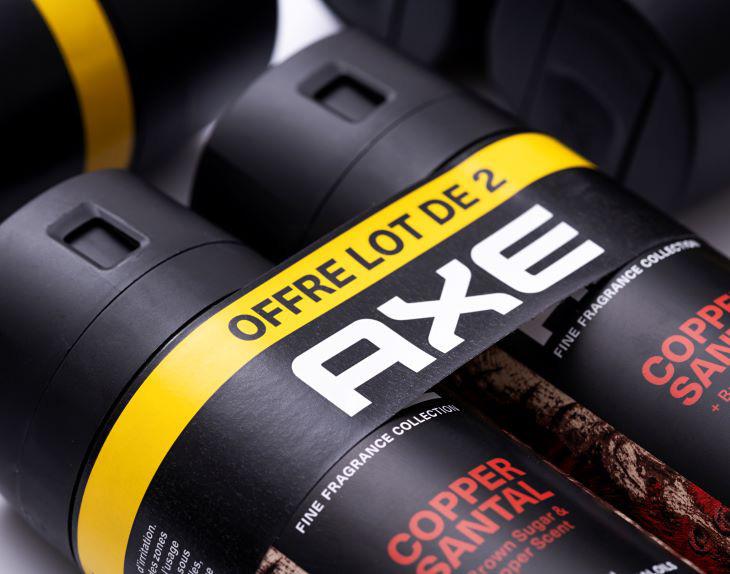
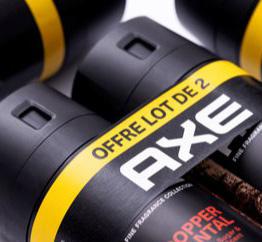
As global businesses respond to evolving regulatory frameworks and consumer expectations, packaging transformation is emerging as a critical lever for sustainability and resilience. The recent collaboration between Unilever and Saica Group illustrates how material innovation and strategic partnerships can accelerate tangible progress in reducing plastic use across fast-moving consumer goods.
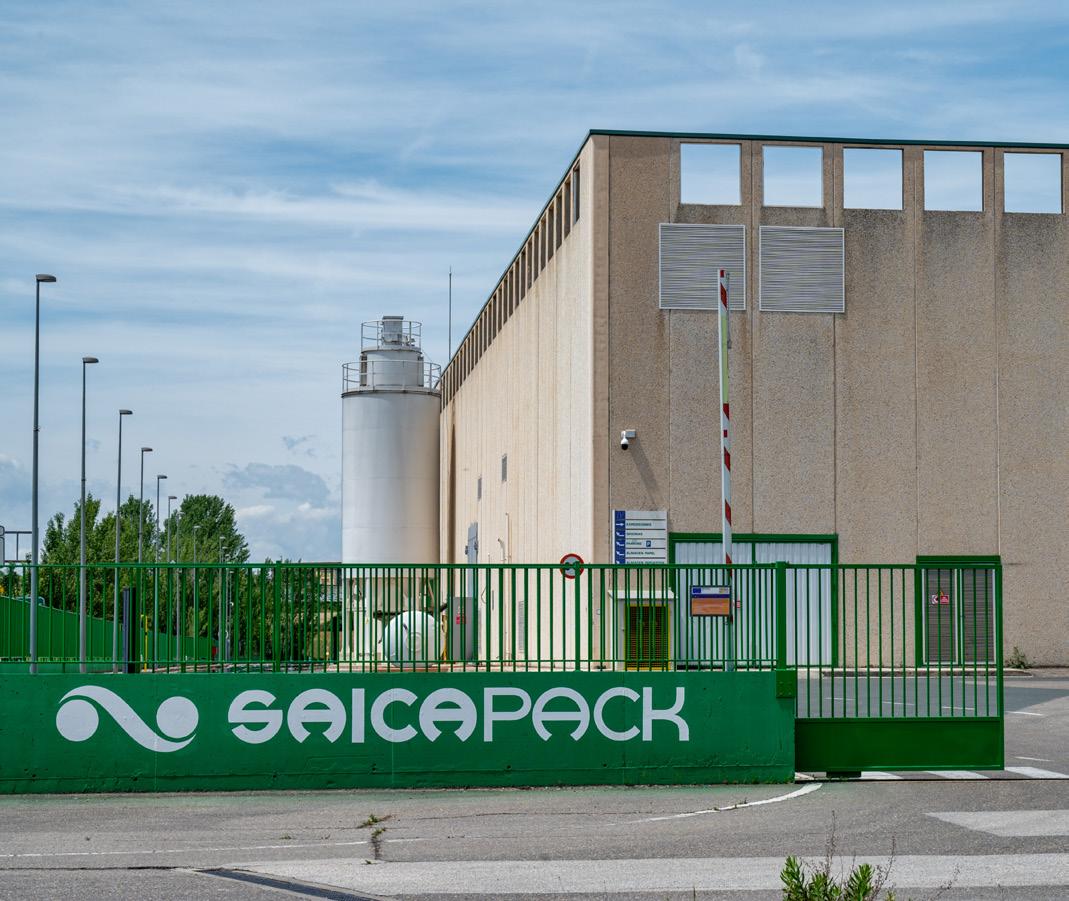
In this initiative, Unilever and Saica have replaced conventional plastic shrink film on Axe deodorant duopacks with a recyclable paper grouping band. The new solution has been rolled out in the French market since late 2025, anticipating regulatory changes and aligning with both companies’ sustainability goals. Unilever aims to reduce its virgin plastic footprint by 40 % by 2028 compared with 2019 levels, while Saica targets a reduction of up to 20 % in the plastic weight of packaging produced for its customers. The paper band is engineered for mechanical strength, transport durability and premium shelf appeal, while supporting recyclability and circular economy principles.
This collaboration also takes a forward-thinking approach to the upcoming European Packaging and Packaging Waste Regulation, which intends to restrict single-use plastics in promotional packaging bundles. By adopting a paper-based solution now, both Unilever and Saica are aligning with broader regulatory and circularity objectives.
The partnership underscores a lesson for business leaders: sustainability ambitions gain momentum when anchored in engineering expertise, process integration and shared strategic vision. As markets increasingly demand recyclable materials and lower environmental impact, shaping practical solutions today positions companies to meet tomorrow’s challenges with confidence and credibility.
For more information, please visit https://spnews.com/ unilever-and-saica/
Keith Ockenden, UK Group MD, Zeus, commented:
“This partnership significantly strengthens our automation strategy and enhances the value we deliver to customers. By combining E&B’s engineering and machinery expertise with Zeus’s national reach, packaging manufacturing and consumables portfolio, we are creating an efficient, competitive & integrated solution for UK clients. This collaboration is a natural next step in helping customers drive efficiency, productivity, reduce costs, and future-proof their operations.”
Iain Buckham, Chairman, Engelmann & Buckham, said:
“We are delighted to be partnering with Zeus. Our Packaging Process, Materials Handling & End of Line Automation Solutions align perfectly with Zeus’s extensive customer relationships and packaging consumables capability. Together, we can provide a seamless, end-to-end approach—from specifying the right machinery to maintaining it and ensuring optimal performance with the right materials. We look forward to a strong and successful 2026, and to setting high standards for automation solutions across the UK.”
Ibon Aznar, Sustainability Innovation Manager for Flexible Packaging, highlighted:
“Partnering with Unilever on this project shows how innovation and sustainability can come together to deliver real progress. With this paper-based solution, we’re helping anticipate regulatory changes while maintaining the technical performance and quality design the customer requires. At Saica Flex, we remain committed to supporting our customers in their transition toward truly circular packaging solutions.”
These examples collectively illustrate how the future of packaging innovation is being shaped through partnership. Whether improving fibre-based design, integrating automation or reducing plastic use, the most effective solutions emerge when expertise is aligned across the value chain.
For business leaders, the lesson is clear. Sustainability, productivity and resilience are no longer separate ambitions. They are achieved together through early collaboration, shared accountability and holistic thinking. As expectations continue to evolve, organisations that work strategically with partners will be best positioned to deliver packaging solutions that perform today and remain fit for the future.
by Brückner Group

“Our objective is to view growth not in isolation, but as part of a holistic strategic approach. By systematically bringing together a wide range of technologies, a high speed of innovation, and organizational excellence, we’re creating conditions that will allow us to continue supporting our customers worldwide with forward-looking solutions and maintain our position as a market leader over the long term.”
Siegsdorf, 2026. The Brückner Group has made longterm competitiveness the key focus of its strategic development. With the acquisition of the Hennecke GROUP, targeted expansion of its global innovation structures, and the establishment of central corporate services, the international Group is consolidating its portfolio, innovative power, and operational excellence. The ultimate aim is to further expand its own market leadership in global niche markets and create the conditions for sustainable growth.
With the acquisition of Hennecke, the Brückner Group is systematically expanding its portfolio to include key technologies in the processing of polyurethane (PUR and thus consolidating its material and technology expertise. System solutions for reactive plastics not only open up new areas of application and markets beyond the company’s core business activities, but also complement the existing range of services to include world-leading system and process expertise.
At the same time, the acquisition fits into a broader industry trend: Technological specialization, diversification, and industrial consolidation are increasingly important in the international field of mechanical and plant engineering.

“The acquisition of a leading PUR specialist with more than 2,600 machines in use around the world by another German machine manufacturer is a signal that we very deliberately want to send. The acquisition reflects our global, industrial entrepreneurship and our long-term prospects as a German family business.”
DR. AXEL VON WIEDERSPERG, CEO OF THE BRÜCKNER GROUP

“As a central component of our innovation strategy, our Customer Innovation Centers unite customers, technology, and applications and allow us to transform regional requirements into global solutions early on.”
DR. JENS GRÜNEWALD, HEAD OF GROUP STRATEGY IN THE BRÜCKNER GROUP

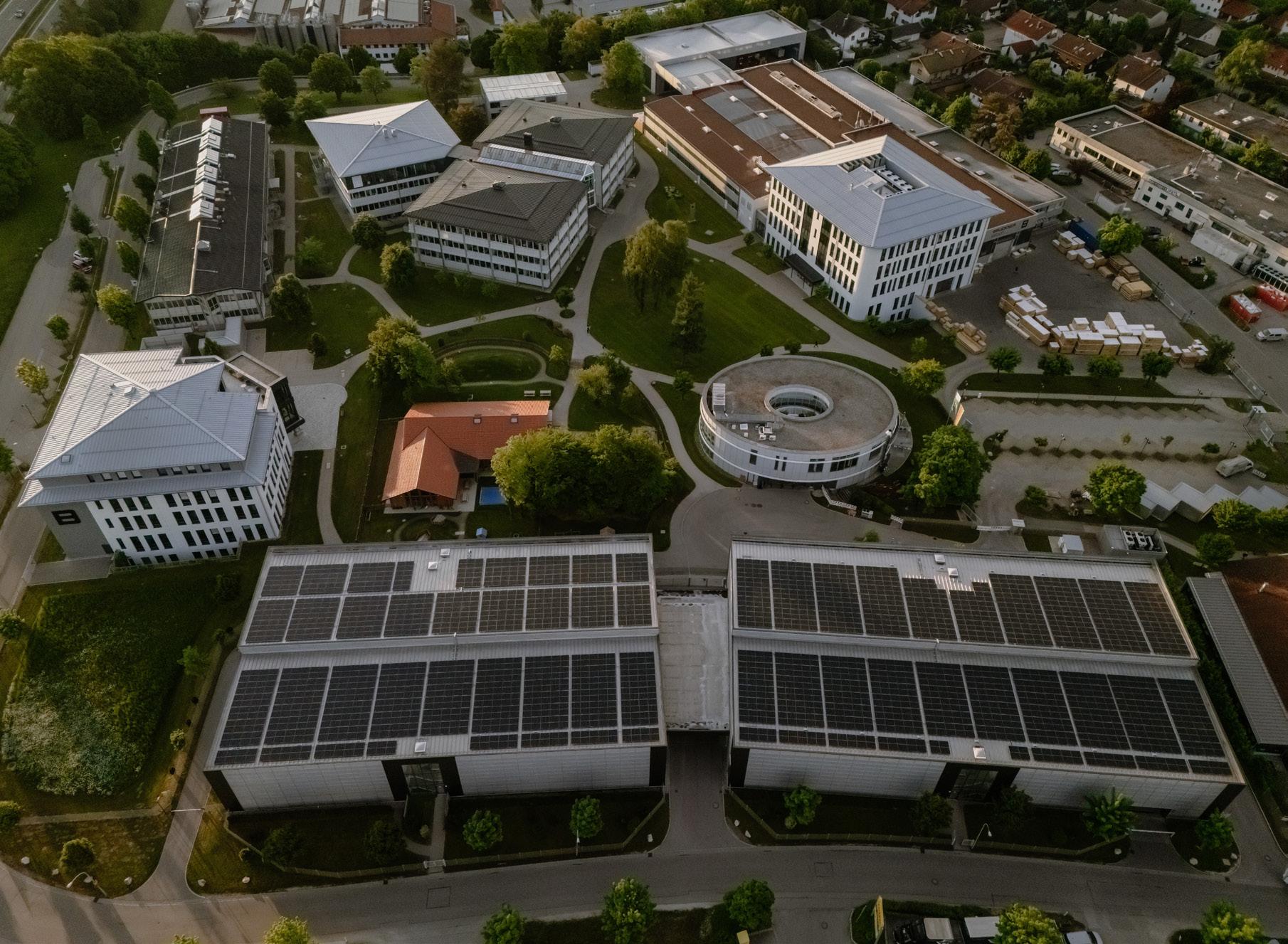
With the acquisition of Hennecke, the Brückner Group is adding another 650 employees to its existing 2,700 in twelve countries and more than €150 million to its annual sales of over €1.2 billion.
In addition to expanding its portfolio, the Brückner Group is also consistently aligning its innovation work with the requirements of global markets and regional customer needs, with a particular focus on global expansion of the Customer Innovation Centers (CIC). These centers allow us to develop innovations in collaboration with customers as well as implement specific applications in short development cycles. By continuously investing in technology, locations, and employee expertise, the Brückner Group is consolidating its ability to innovate in strategically important regions.
Planned measured to include:
• Opening a new Customer Innovation Center in Thailand in 2026.
• Kicking off expansion of the branch in Suzhoi, China, in 2027
• Expanding the technology center at the headquarters in Siegsdorf starting in 2029.
In order to ensure international growth on an organizational level, the Brückner Group is also introducing uniform standards and processes throughout the Group. By spinning off Brückner corporate services, the Group is consolidating central functions and establishing a high-performance service platform for the organization as a whole.
The aim is to increase efficiency, quality, and speed in administrative areas and, at the same time, align the operational companies more closely with their markets, customers, and technologies, with digital, integrated processes forming the framework for scalability and transparency in a globally oriented Group.
By combining strategic diversification, market-driven innovation, and operational excellence, the Brückner Group is pursuing a clear course with a long-term focus and therefore positioning itself as a resilient, globally competitive supplier of high-tech solutions in the field of mechanical and plant engineering – with a strong industrial foundation and a forward-looking technology portfolio.


For professionals already familiar with CHINAPLAS, the 2026 edition, held 20–21 April 2026 at the National Exhibition and Convention Center (NECC) in Hongqiao, Shanghai, China, is shaping up as a highly targeted opportunity to assess which companies are actively investing in sustainability, circularity and low-carbon manufacturing across the plastics and rubber value chain. Drawing on coverage from Sustainable Packaging News and official updates from the organisers, this year’s show places a strong emphasis on materials innovation, recycling technologies and smarter production systems.
At the materials level, global chemical and polymer producers are expected to play a central role.
Companies such as BASF (Hall 7.2 Booth No: 7.2C41), Dow, Covestro (Hall 7.2 Booth No: 7.2C38) and Kingfa (Hall 7.2 Booth No: 7.2C66) are closely associated with CHINAPLAS and are expected to showcase bio-based polymers, recycled-content resins and high-performance materials designed to support circular economy goals.
For sustainability managers, these exhibitors offer insight into how advanced materials are moving from pilot to commercial scale.
On the production side, machinery and processing specialists remain critical enablers of sustainable outcomes. Equipment suppliers such as ENGEL (Hall 5.1 Booth No: 5.1C41), Haitian (Hall 5.1 Booth No: 5.1F18, 5.1C32 and 5.1F28) and JWELL (Hall 8.1 Booth No: 8.1C27) are expected to highlight energy-efficient injection moulding and extrusion technologies, as well as systems capable of handling recycled and alternative feedstocks with greater consistency.
Recycling and circular manufacturing will also be prominent, with granulation, shredding and materialrecovery technology suppliers demonstrating how mechanical recycling can be better integrated into mainstream production. Complementing this, automation and digital-solution providers will show how data, monitoring and process control can reduce waste, energy use and variability.
For sustainability leaders, CHINAPLAS 2026 is less about discovery and more about validation—confirming which suppliers are genuinely aligning technology development with sustainability commitments, and identifying partners capable of supporting long-term environmental and regulatory goals in global markets.
For more information about this event, please visit https://www.chinaplasonline.com/
Why transparency, recognition and collaboration are redefining sustainable packaging. Emily Gambrill reports.
Net zero has rapidly shifted from a long-term aspiration to a defining measure of business credibility. For the packaging sector, where material use, energy demand and complex supply chains converge, progress must be practical, measurable and transparent. Increasingly, leadership is demonstrated not by pledges alone, but by independently verified performance, robust governance and industry collaboration. Companies that align climate ambition with operational change are setting new benchmarks for sustainable growth. By examining how leading packaging manufacturers are reducing emissions, earning external recognition and influencing wider industry standards, it becomes clear that net zero is not only achievable, but a catalyst for resilience, innovation and long-term value creation.
Achieving net zero requires organisations to fundamentally reduce greenhouse gas emissions rather than relying on offsetting alone. Globally, evidence shows that emissions must fall by around 45 per cent by 2030 to keep climate change within 1.5 degrees Celsius. For the packaging sector, this means transitioning to low carbon energy, designing out waste and addressing Scope 3 emissions across supply chains. Net zero is no longer a future ambition but a present-day benchmark
for credible climate leadership.
Trivium Packaging provides a strong example of how ambition can translate into measurable action. The company has earned a place on CDP’s Climate A List for the third consecutive year, a distinction achieved by only a small percentage of the more than 22,000 companies assessed globally. This recognition reflects Trivium’s commitment to transparency, governance and science-based climate targets.
Trivium has already reduced its Scope 1 and 2 emissions by 31 per cent and Scope 3 emissions by 19 per cent against a 2020 baseline. Its validated net zero target commits to a 90 per cent reduction across all scopes by 2050. This progress demonstrates that net zero is achievable today and that leadership in sustainable packaging delivers both environmental impact and long-term business resilience.
For more information, please visit www. TriviumPackaging.com and https://spnews.com/ trivium-packaging-earns-spot/
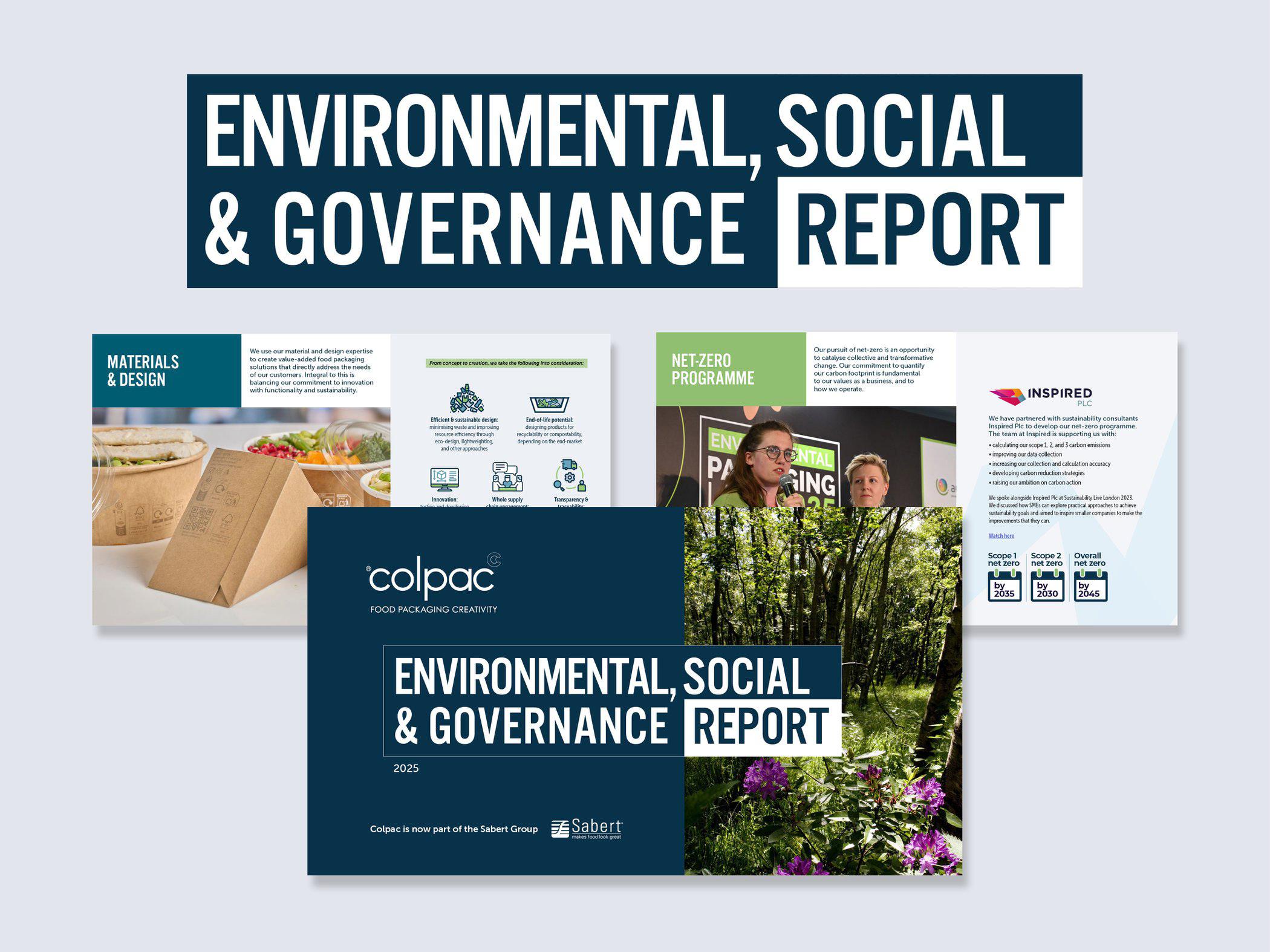
“2025 has been a fascinating year for ESG in the packaging industry. With Packaging Extended Producer Responsibility (pEPR) affecting the entire value chain, our focus on government engagement has felt more important than ever. Now as part of the Sabert group, we look to do even more to drive the food packaging industry forward and continue to use business as a force for good.”
Colpac Ltd has published its 2025 Environmental, Social and Governance report, showcasing tangible progress in its net-zero journey. The report highlights a 22 per cent reduction in carbon emissions in the third year of its net-zero programme, far exceeding the original annual target and underscoring the value of targeted actions such as transport optimisation, on-site energy improvements and more responsible purchasing practices.
Leading through advocacy and industry collaboration Beyond internal performance, Colpac’s leadership in industry-wide initiatives such as involvement with the BRCGS technical working group and the Alliance for Fibre-Based Packaging demonstrates how active advocacy can elevate sector standards and influence policy. Through transparent reporting and engagement, Colpac strengthens the collective drive towards sustainable packaging solutions.
Colpac’s 2025 ESG report affirms that strategic emissions reduction, robust collaboration and thought leadership will be key to embedding net zero across the packaging industry.
“Achieving an A rating from CDP is a significant milestone for us. It demonstrates that sustainability is not just a commitment but a core part of our business strategy. Transparency and climate action are essential for building trust with our customers and partners, and we will continue to innovate and invest in solutions that drive the future.”
Constantia Flexibles, the world’s third-largest flexible packaging manufacturer, has been recognised with a CDP A rating for climate change — placing the company among the top 4 per cent of more than 22 000 reporting organisations globally. This accolade highlights leadership in environmental transparency and robust climate action reporting, reflecting that sustainability is deeply embedded in business strategy rather than a peripheral aim.
Receiving an A score from CDP signals to customers, investors and supply chain partners that Constantia Flexibles is advancing beyond compliance towards measurable climate performance excellence. CDP’s independent evaluation assesses disclosure quality, risk awareness, environmental management and evidence of best practice — key criteria that increasingly inform procurement decisions and investment flows in the packaging sector.
Constantia Flexibles has committed to science-based net-zero targets aligned with the Science Based Targets initiative, aiming to reduce greenhouse gas emissions across Scope 1, 2 and 3 by 90 per cent by 2050. It also reports significant sustainability progress, including high proportions of electricity from renewable sources and ambitious recyclability and product design goals. This recognition reaffirms that transparent reporting and strong governance are essential in driving credible net-zero action and shaping the future of sustainable packaging.
The progress demonstrated by Trivium Packaging, Colpac and Constantia Flexibles shows that credible net zero action is already underway across the packaging industry. Measurable emissions reductions, transparent reporting and recognition from respected bodies such as CDP reinforce the importance of accountability in climate leadership. Crucially, these examples highlight that impact extends beyond individual organisations.
For more information, please visit https://colpacpackaging. com/download-esg-report/ and https://spnews.com/colpacpublishes-2025/
For more information, please visit www.cflex.com and https:// spnews.com/constantia-flexiblesrecognized/
Collaboration, advocacy and shared standards are accelerating progress across supply chains and markets. As sustainability expectations continue to rise, businesses that embed net zero into strategy rather than treating it as a compliance exercise will be best positioned to drive meaningful change and shape the future of sustainable packaging.
With growing pressure on food brands and packaging suppliers to balance performance, sustainability and food safety, packaging developers are being challenged to continuously enhance solutions to meet customer and consumer needs. As the UK packaging landscape continues to evolve in response to regulatory change, and Europe moves towards stricter Packaging and Packaging Waste Regulation (PPWR) requirements, fibrebased alternatives must now deliver even more.
The packaging industry is facing increased scrutiny across material selection and increasingly strict regulations. From 12 August 2026, PPWR will introduce new measures to introduce limits on the presence of per- and polyfluoroalkyl substances (PFAS), often referred to as ‘forever chemicals’ due to their persistence in the environment and the human body.
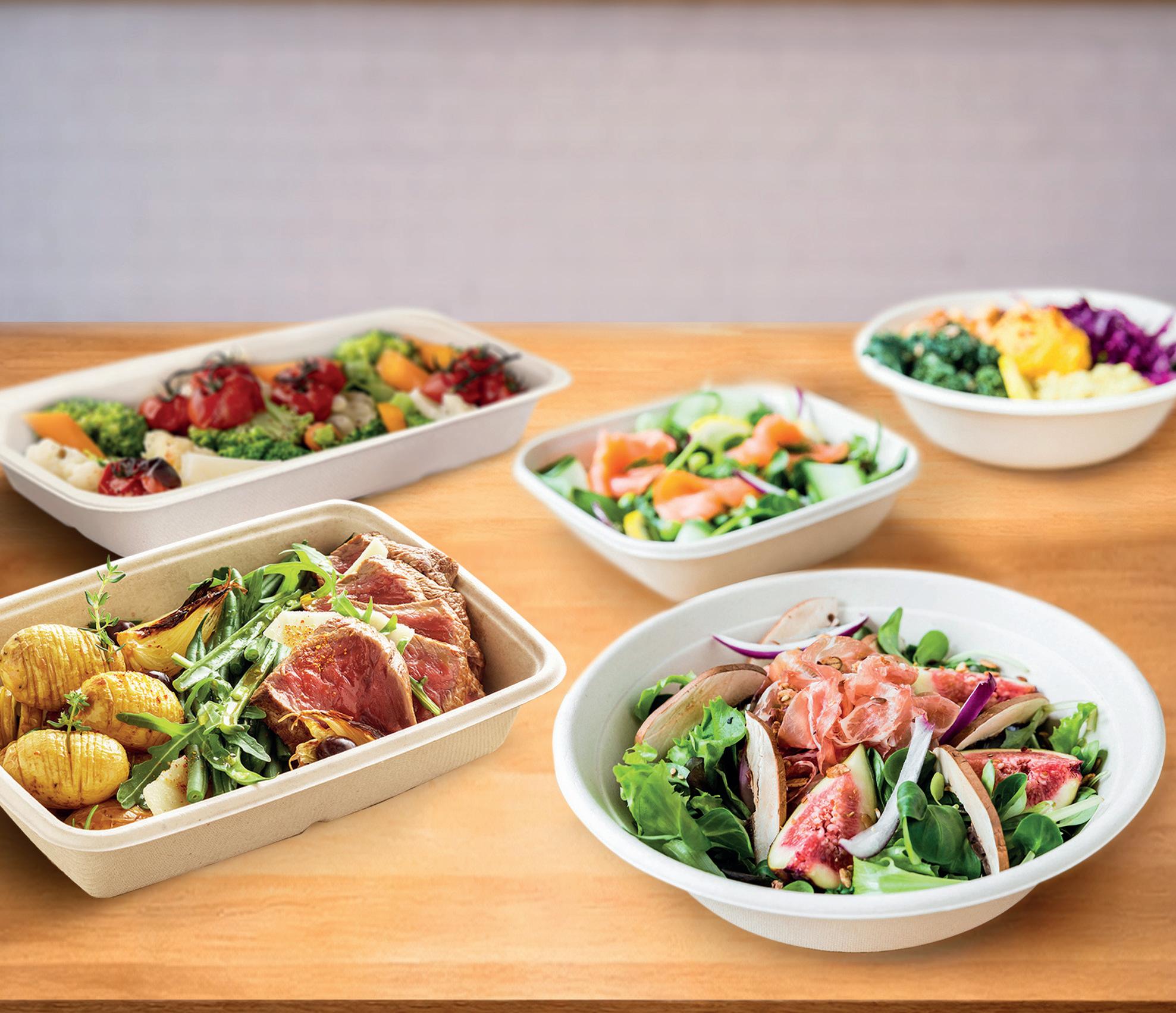
Anticipating such regulatory changes is becoming essential for future-proofing packaging solutions and maintaining competitive advantage. One recent example is Sabert’s launch of Pulp Ultra®, a moulded fibre packaging solution which is free from intentionally added PFAS. Made from over 95% bagasse fibres and treated with a barrier spray coating of less than 5%, the packs deliver strong Oil and Grease Resistance (OGR) permeation in direct contact, hot food applications while avoiding the traditional plastic laminates previously used in pulp packaging.
“Every product we make is rigorously tested to comply with food safety standards”, says Sabert’s Quality Environment, Health & Safety Manager Isabelle Ernotte. “Our Pulp Ultra® solution will help customers to stay ahead of these changes with products that already meet the next generation of sustainability standards.”
BOX: Pulp Ultra® performs across hot, chilled, and frozen applications. It is freezer-safe and able to retain frozen goods integrity, perishable goods freshness, and keep factory conditioned items intact. It is safe for
use in microwaves, conventional ovens, and MerryChef applications, and the material supports both single PET sealing and multi-welding, addressing operational demands in foodservice environments.
Alongside food safety and regulatory compliance, packaging must also be designed with circularity in mind to meet both legislative requirements and consumer expectations.
Pulp Ultra® was specifically designed for circularity, in the materials its derived from (waste sugar cane) and in its disposal. It is recyclable in accordance with the UK’s Recycling Assessment Methodology (RAM) and is certified as Compostable TÜV OK Compost Industrial, with home composability certification in progress. This reflects a broader industry shift away from extensive plastic laminates towards fibre solutions that provide equal or superior performance while incorporating circular design.
“Our customers work closely with our compliance and technical teams, who have extensive knowledge of evolving regulations,” says Frances Dickman, Head of Compliance at Sabert & Colpac. “This approach informs both our stocked ranges and bespoke developments, helping customers meet specific operational and sustainability goals.”
As regulation tightens and expectations rise, fibrebased food packaging is delivering more and more. Whilst legislation accelerates, sustainability claims will only carry weight if matched by real-world performance. Those investing now in compliant, high-functioning materials will help define the next benchmark for foodservice packaging.
For more information, please visit https://www.sabert. eu/ and www.colpacpackaging.com
Performance and versatility for your hot and cold products
Strong grease and moisture barrier
performance
Barrier coating without plastic lamination
One team, one offer, shared expertise.
Suitable for PET heat sealing films
See product details

You were recently appointed President of Consumer Packaging for EMEA and APAC. What is your vision for this new regional structure, and what goals have you set for the next 3–5 years?
By organising by region, we combine the strength of a global group with deep local market knowledge. This regional organisation reflects how we see the future of consumer packaging: global in strength, regional in execution, and holistic in its approach to materials and markets.
This new unified organisation, gathering paper and metal packaging, will give us a 360-degree understanding of our customers’ needs—across categories, markets and consumption occasions. The future of packaging is not about choosing one material over another, but about the right fit for purpose - understanding brands, consumers, markets and moments of consumption in their full complexity.
We are already the world leader in food packaging. The real challenge now is what we do with that position. Over the next three to five years, my ambition is to turn this unified organisation into a pioneer of futureready packaging—anticipating change, shaping new opportunities, and helping brands win with packaging that makes a difference.
Sustainability and innovation are key priorities for Sonoco. How do you plan to balance operational efficiency, innovation, and environmental responsibility in your markets?
For us, sustainability, innovation and operational efficiency are not in conflict—they work together. Operational efficiency and innovation are sustainability’s powerhouse. They both help us to decrease our carbon footprint and our customers’ scope 3.
Sustainability has to work on the factory floor as much as it does in strategy decks. The consumer goods industry moves at an astonishing pace, and brands need partners who can keep momentum without compromising responsibility. Our role is to make that possible—combining speed, scale and efficiency with packaging that meets sustainability targets and performs on the shelf. We design for recyclability, we work with circular materials, and we operate increasingly energy-efficient manufacturing processes.
We already start from a position of leadership, and we’re proud of that. Sonoco is the only metal packaging manufacturer to have achieved EcoVadis Platinum status with a perfect score of 100/100 in the environmental category, and our rigid paper containers have been recognised as Sustainable Packaging Business of the Year.
Ultimately, our role is to help customers move forward at their own pace, with practical solutions that reduce environmental impact while delivering performance, reliability and value. That balance is what will define successful packaging in the years to come.
We live in a global context marked by tariffs, trade barriers, and raw material fluctuations. From your position, how is Sonoco addressing these challenges in EMEA and APAC?
We are operating in a world that is clearly more fragmented and volatile than it was a few years ago. Tariffs, trade barriers and raw material fluctuations are now part of the daily reality for global businesses.
Our scale gives us a global view of market shifts and regulatory changes before they happen, while our local manufacturing footprint gives us the agility to act fast. This combination is what creates resilience. We anticipate challenges, manage risk and keep supply moving—so our customers can stay focused on growth.
Local manufacturing offers concrete benefits to our customers. Because we are on their doorstep, customers are not dealing with the challenges of a distant supplier. They are working with teams who know their business, speak their language and can walk the factory floor with them. This proximity reduces delays, cuts transport-related emissions and gives brands confidence that their packaging partner is both globally informed and locally committed. In short, our role is to make complexity simple for customers and help them navigate change without disruption.
If you had to highlight three key lessons learned throughout your professional career, what would they be, and how do you apply them in your current leadership?
The first lesson is that people drive transformation. You can have the best roadmap in the world, but without engaged, empowered teams, nothing really changes. In my current role, that means investing time in listening, creating clarity around direction, and giving people the confidence to take ownership and act.
The second lesson is that growth comes from courage, not comfort. The most meaningful progress in my career came from challenging established models and stepping into new spaces—whether launching new solutions or rethinking existing businesses. Today, I apply that by encouraging entrepreneurial thinking, experimentation and a willingness to move beyond incremental improvement.
The third lesson is that reinvention is not optional. Markets evolve, consumer expectations shift, and regulation accelerates change. Companies that succeed are those that adapt continuously while staying true to their values. As a leader, my role is to ensure we remain curious, agile and open to change—so that we don’t just respond to the future, but actively keep shaping it.
From smart factories to connected packaging, digital technologies are redefining efficiency, resilience and competitiveness. Emily Gambrill has her say.
The packaging sector is undergoing a profound transformation as robotics and Industry 4.0 technologies move from aspiration to necessity. Faced with labour shortages, rising costs and increasing complexity, manufacturers are rethinking how automation, data and connectivity can strengthen operations. From robotic palletising and flexible production lines to digitally enabled packaging that generates real-time insight, technology is reshaping both the factory floor and the wider value chain. Crucially, this shift is not just about machines replacing manual labour, but about creating smarter, more responsive systems that support productivity, sustainability and long-term competitiveness in a rapidly evolving market.
Automation Nation: Robotics at the Heart of Packaging’s Future
The UK packaging industry stands at a critical crossroads. As Mike Wilson, Chief Automation Officer at the Manufacturing Technology Centre (MTC), makes clear, robotics and automation are no longer optional enhancements but essential drivers of productivity and resilience in modern manufacturing.
Robotics Adoption
Wilson highlights that many UK manufacturers, especially SMEs, have traditionally shunned automation due to perceptions of cost and complexity. Yet today’s robotic systems are more affordable, user-friendly and capable than ever before, challenging outdated assumptions that they’re only for large automotive plants.
Rather than automating the most complicated process first, Wilson advises businesses to start with simple, repetitive tasks such as palletising and line loading. These applications deliver consistent performance and free skilled workers to focus on higher-value roles — a hallmark of effective Industry 4.0 implementation. Talent and Cultural Shifts
Demographic pressures compound the urgency: with the average age in UK manufacturing above 50, attracting younger, digitally skilled talent requires environments where technology is central. Wilson argues that automation redefines jobs rather than replaces them, opening opportunities in programming, process analytics and systems control.
Embedded AI and connected systems are already improving robot flexibility and usability, simplifying programming and enabling predictive maintenance. For a high-volume, labour-intensive sector like packaging, the message is clear: strategic automation is the lever that unlocks future competitiveness.
For more information, please visit https://spnews.com/ automation-nation/
“A robot might not be faster than a person, but it’s consistent. It doesn’t stop for lunch or lose focus at 3pm. That stability is where the gains come from.”
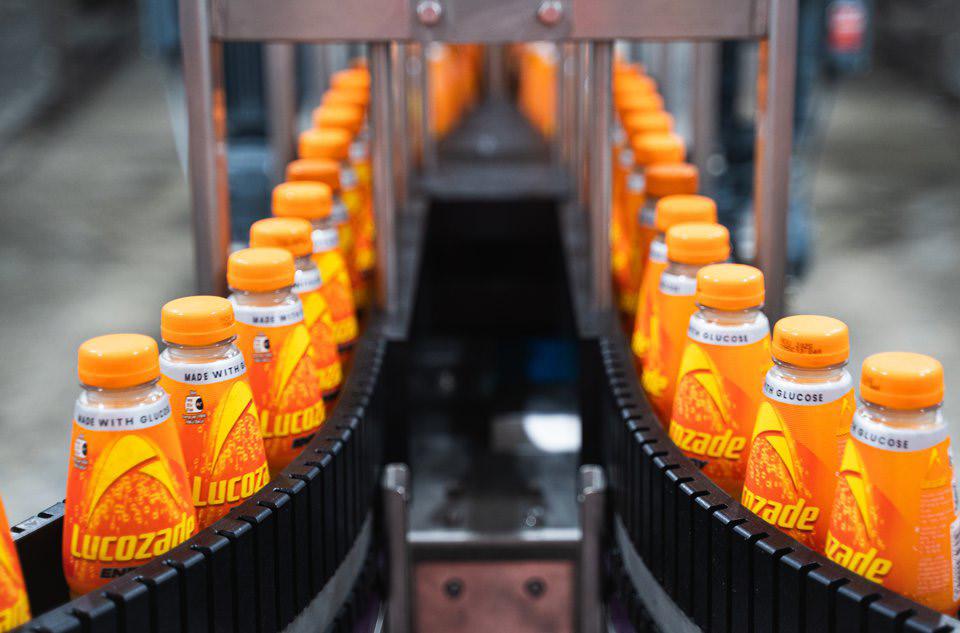
Suntory Beverage & Food Great Britain & Ireland (SBF GB&I), the producer of iconic drinks such as Lucozade and Ribena, is harnessing advanced digital technology to turn packaging into a dynamic business asset. The company has partnered with Polytag to deploy GS1compliant QR codes across its packaging, unlocking new capabilities in supply chain visibility and consumer engagement.
This initiative allows SBF GB&I to generate, manage and evaluate individual QR codes via an intuitive dashboard. Each code provides access to location-aware scanning data, campaign management tools and bespoke web content. This approach gives unprecedented insight into product movement and customer behaviour, enabling the company to respond more rapidly to market trends and personalise interactions at the point of purchase. Polytag’s platform equips Suntory with real-time analytics and brandable webpages, effectively transforming static packaging into an interactive interface between brand and consumer. This aligns with
broader trends in connected packaging, where digital touchpoints on physical products create richer, datadriven value streams throughout the lifecycle.
Initial rollout will focus on select drinks in the UK, with expansion guided by insights from scanning and engagement data. As packaging becomes smarter and more measurable, such digital strategies are reshaping how brands understand and serve their customers.
For more information, please visit https://spnews.com/ suntory-beverage-food/ and suntorybfe.com/gbi and polytag.io
At Packaging Innovations and Empack 2026, leading independent packaging line integrator Autopack put automation firmly in the spotlight, demonstrating how automated and semi-automated equipment can help manufacturers optimise efficiency and flexibility. The Hereford-based company showcased a curated selection of machinery designed to suit a broad range of formats and materials, from powders to liquids and solids.
Autopack’s exhibit included a suite of versatile machines such as a vertical continuous band sealer, a compact VFFS (Vertical Form Fill Seal) system paired with a multi-head weigher, a volumetric depositor with conveyor integration, a semi-automatic bucket unit and a mini auger for granular products. These systems are tailored to boost speed and reliability while reducing manual workload, demonstrating practical automation pathways for companies at various stages of their digital journey.
The company’s portfolio reflects an understanding that automation isn’t one-size-fits-all. Semi-automated options like the bucket machine provide a lower initial cost entry point for businesses exploring automation, while more advanced machines support higher throughput needs across food, beverage, chemical,
“Our expertise makes us well-placed to assist across a wide range of sectors. Whether it’s powders, liquids, solids, or something in between, we have the knowhow to provide bespoke solutions. Our aim at Packaging Innovations and Empack is to engage with the market and help them understand how Autopack can automate their packaging process to be smarter, faster and more efficient.”
Jonathon Stewart, Autopack UK Sales Director
pharmaceutical and personal care segments.
Autopack used the event to engage with both established brands and emerging start-ups, underlining its commitment to helping customers find solutions that are “smarter, faster and more efficient”, a succinct vision for automation’s role in modern packaging operations.
https://www.packagingbirmingham.com/en/exhibitors/ and https://spnews.com/autopack-highlights/
Taken together, advances in robotics, automation and digitalisation point to a more connected future for packaging. Strategic adoption — whether through incremental automation, workforce upskilling or data-driven packaging solutions — is proving more effective than one-off investments. What emerges is a picture of Industry 4.0 as an ecosystem, linking intelligent machinery with real-time insight and human expertise. For packaging businesses, the message is clear: embracing robotics and digital technologies is no longer about staying ahead of the curve, but about remaining relevant. Those that act now will be best positioned to adapt, innovate and compete in the years ahead.
You’ve invested significant time and capital developing innovative sustainable packaging solutions. You finally figured out the right balance between compostability and shelf life, perfected your PCR films for operational efficiency, or created innovations using breakthrough materials that no one thought could ever happen.
But here’s the reality: Your latest sustainable innovation does no good for the planet until it’s discovered (and sold). In a world of endless digital noise, brands that would want your solutions can’t find you and that’s affecting your bottom line.
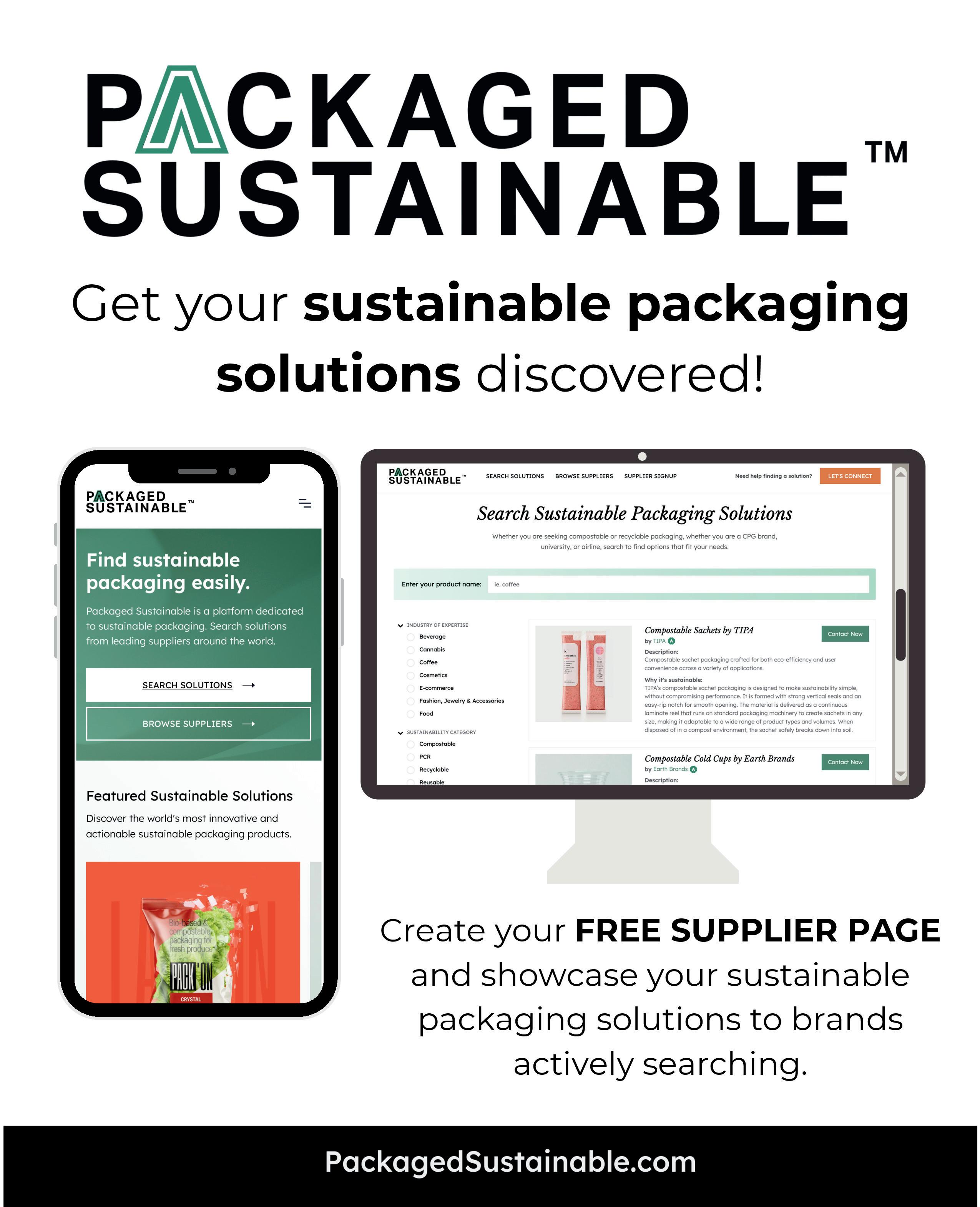
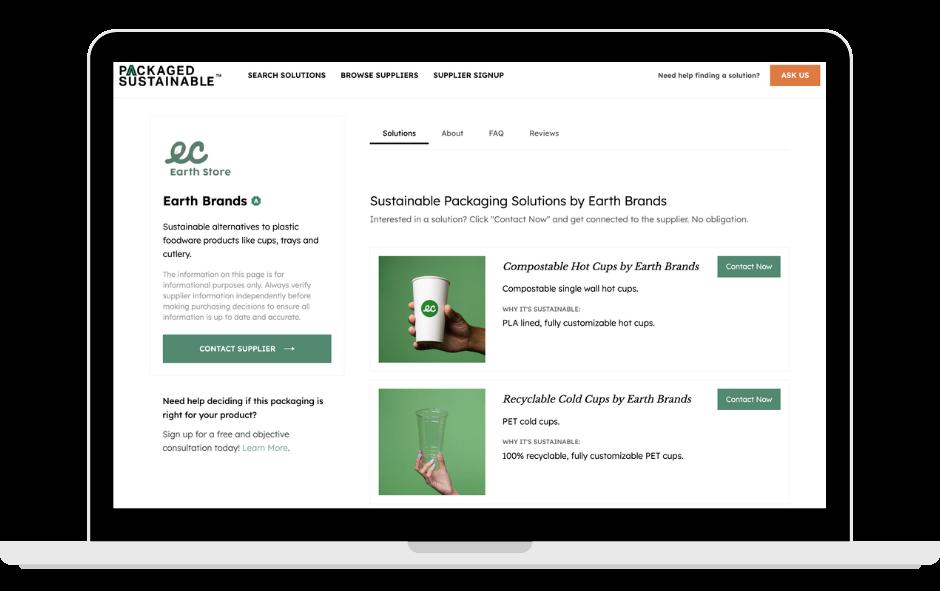
PackagedSustainable.com solves this discovery problem with a platform dedicated entirely to sustainable packaging -- where brands can find suppliers like you in minutes instead of months.
All over the world, brands are actively searching for sustainable packaging solutions. Whether it’s EPR or consumer demand, there is urgent pressure to find solutions that are viable and already in the market.
Packaged Sustainable functions as the “TripAdvisor for Sustainable Packaging” – just as travelers find hotels in minutes, brands can now discover your solutions instantly, searchable by product type (coffee, tea, cosmetics, etc) and sustainability preference (compostable, recyclable, PCR, etc).
On Packaged Sustainable, no more convincing buyers that sustainability matters. Searchers on the site are actively seeking sustainable packaging options. This gives you direct access to buyers who want exactly what you’re offering.
In the packaging industry, landing the right client can change everything overnight. One major CPG brand adopting your solution can mean exponential revenue growth.
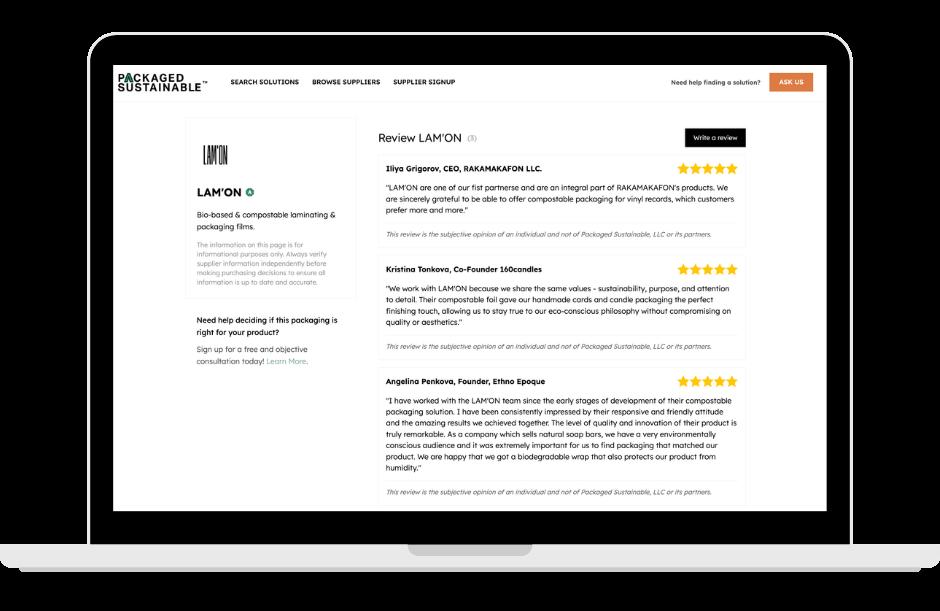
One supplier featured on the platform is Angela Ivanova, Co-Founder & CEO of LAM’ON® Compostable Films based in Sofia, Bulgaria, whose sustainable packaging solutions are now discoverable by brands and packaging teams around the world via Packaged Sustainable’s open, global ecosystem.
“Platforms like Packaged Sustainable play a vital role in accelerating the transition toward circular packaging. By giving visibility to companies that are rethinking materials and supply chains, they help bridge innovation with the brands and producers ready to act…”
Join the hundreds of suppliers already on Packaged Sustainable and get your sustainable solutions in front of packaging buyers today! Build your free supplier profile:
www.packagedsustainable.com/supplier-signup
• Fast & Free setup: Create your supplier profile in minutes.
• Showcase up to 3 solutions immediately to start attracting brands.
• Get found by motivated buyers actively searching for sustainable packaging.
• Cut through the noise with a platform designed specifically for sustainable packaging.
You already developed the sustainable packaging solutions brands need. The platform to connect you is now here - https://www.packagedsustainable.com/