



Suzuki, the “S” logo, and Suzuki model and product names are Suzuki Trademarks or ®. © 2026 Suzuki Marine USA, LLC. All rights reserved.











Suzuki, the “S” logo, and Suzuki model and product names are Suzuki Trademarks or ®. © 2026 Suzuki Marine USA, LLC. All rights reserved.
Cedar Creek Marina | 302.422.2040 100 Marina Lane, Milford, DE cedarcreekmarina.com
Fairwinds Marina | 410.216.0205 1000 Fairwinds Dr, Annapolis, MD 21409 fairwindsmarina.com
Tri-State Marine | 410.562.6247 222 Severn Ave #12, Annapolis, MD tristatemarine.com
Beacon Light Marina | 410.335.6489 825 Bowleys Quarters Rd, Baltimore, MD beaconlightmarina.com
Tri-State Marine | 410.867.1447 5861 Deale Churchton Rd, Deale, MD tristatemarine.com
Jim’s Marine, Inc. | 410.648.5106 96 East Cross St, Galena, MD jims-marine.com
Anchor Boats, Inc. | 410.287.8280 448 N Mauldin Ave, North East, MD anchorboat.com
Centerville Waterway Marina | 757.547.4498 100 N Centerville Turnpike, Chesapeake, VA centervillemarina.com
Jett’s Marine, Inc. | 804.453.3611 18477 Northumberland Hwy, Reedville, VA jettsmarine.com
Legasea Marine | 757.898.3000 821 Railway Rd, Yorktown, VA legaseamarine.com




Cedar Creek Marina | 302.422.2040 100 Marina Lane, Milford, DE cedarcreekmarina.com
Fairwinds Marina | 410.216.0205 1000 Fairwinds Dr, Annapolis, MD 21409 fairwindsmarina.com
Tri-State Marine | 410.562.6247 222 Severn Ave #12, Annapolis, MD tristatemarine.com
Beacon Light Marina | 410.335.6489 825 Bowleys Quarters Rd, Baltimore, MD beaconlightmarina.com
Tri-State Marine | 410.867.1447 5861 Deale Churchton Rd, Deale, MD tristatemarine.com
Jim’s Marine, Inc. | 410.648.5106 96 East Cross St, Galena, MD jims-marine.com
Anchor Boats, Inc. | 410.287.8280 448 N Mauldin Ave, North East, MD anchorboat.com

Centerville Waterway Marina | 757.547.4498 100 N Centerville Turnpike, Chesapeake, VA centervillemarina.com
Jett’s Marine, Inc. | 804.453.3611 18477 Northumberland Hwy, Reedville, VA jettsmarine.com
Legasea Marine | 757.898.3000 821 Railway Rd, Yorktown, VA legaseamarine.com






40
The Thunnus Among Us:
Catching Yellowfin Tuna, Part III
Artificial Sizzle: Who needs ballyhoo? Get in tune with fishing artificials for yellowfin tuna. presented by sirius XM Marine
By Staff
44
Bay Rocks
Tangier Sound to Bay Entrance
By Wayne Young
46
Fishing Frogs for Beginners
Toss a rubber Kermit into the right spot, and… KERPOW!
By Lenny Rudow
48
Cobia—and Then Some
You want to target cobia but hedge your multi-species bet? Here’s How.
By Lenny Rudow
50
An Angler’s Tribute
May all of you who loved Charlie find warmth in these words.
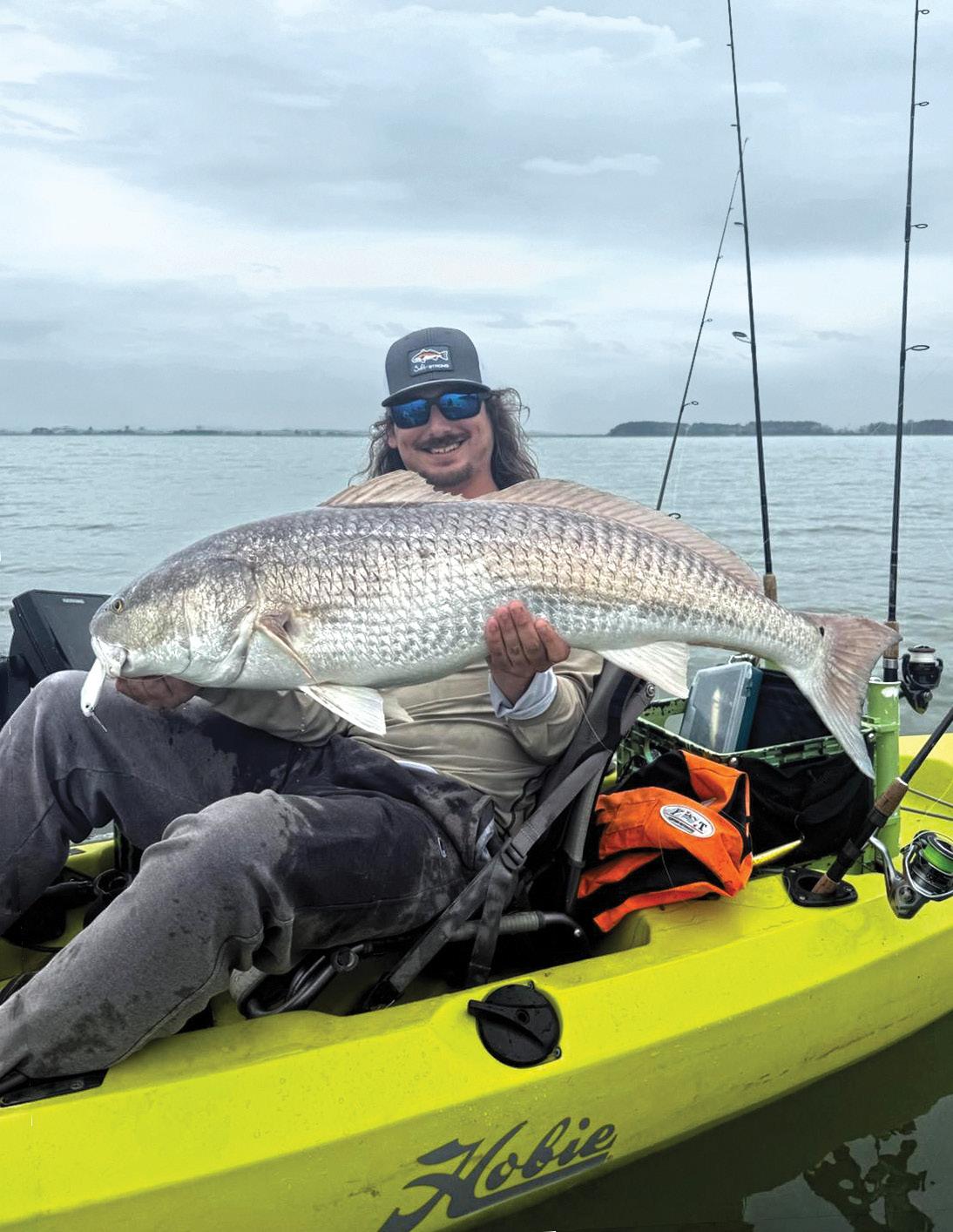
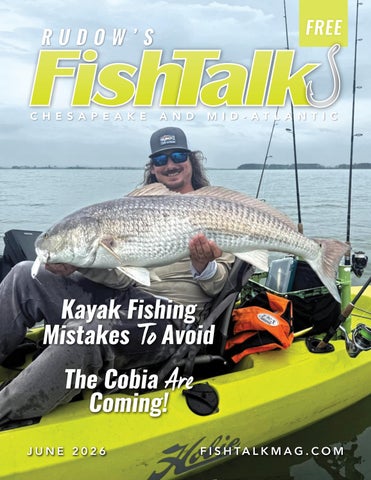
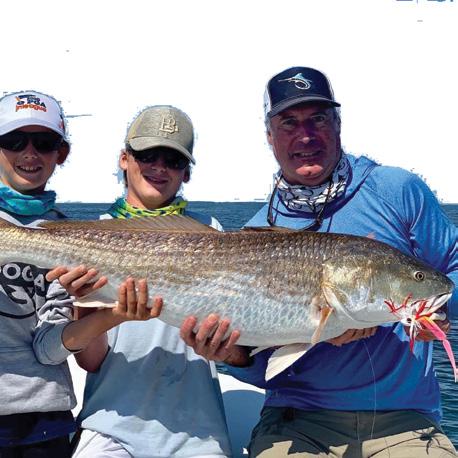
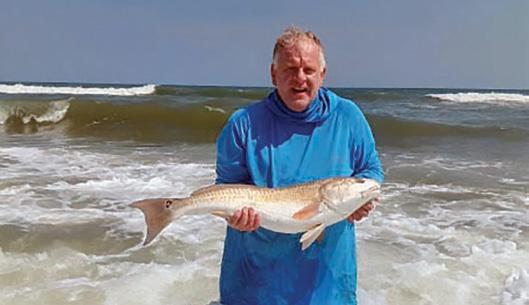
FishTalk contributor David Rudow (@reelinwithrudow) enjoyed a day of kayak fishing for big reds.





Maryland
Fairwinds Marina | 410.216.0205 1000 Fairwinds Dr, Annapolis, MD fairwindsmarina.com
PYY Marine | 410.255.1771
1132 Pasadena Yacht Yard Rd, Pasadena, MD pyymarine.com
Richardson’s Marine Repair | 410.745.9279 25145 Saint Michaels Rd, St. Michaels, MD 21663 richardsonsmarinerepair.com
Smith’s Marina | 410.923.3444 529 Ridgley Rd, Crownsville, MD 21032 smithsmarina.com
Thornes Marine | 410.957.4481 1237 Greenbackville Rd, Stockton, MD thornesmarine.com
Top Knotch Marine | 410.253.1299 1735 Little Creek Rd, Chester MD tkmsvc.com
Delaware
Carlisle’s Marine | 302.389.0100 49 Artisan Dr, Smyrna, DE carlislesmarine.com
Virginia
Legasea Marine | 757.898.3000 821 Railway Rd, Yorktown, VA legaseamarine.com
ANGLER IN CHIEF
Lenny Rudow, lenny@fishtalkmag.com
PUBLISHER
Mary Iliff Ewenson, mary@fishtalkmag.com
ASSOCIATE PUBLISHER
Chris Charbonneau, chris@fishtalkmag.com
MANAGING EDITOR
Molly Winans, molly@fishtalkmag.com
SENIOR EDITORS
Beth Crabtree, beth@fishtalkmag.com
Kaylie Jasinski, kaylie@fishtalkmag.com
COPY EDITOR
Lucy Iliff, lucy@fishtalkmag.com
FISHING REPORTS EDITOR
Dillon Waters
ADVERTISING SALES
Eric Richardson, eric@fishtalkmag.com
CUSTOMER SERVICE MANAGER
Brooke King, brooke@fishtalkmag.com
DISTRIBUTION / BROKERAGE / CLASSIFIEDS MANAGER
Beatrice M. Mackenzie, beatrice@fishtalkmag.com
ART DIRECTOR / PRODUCTION MANAGER
Zach Ditmars, zach@fishtalkmag.com
GRAPHIC DESIGNER / PRODUCTION ASSISTANT Royal Jackson, royal@fishtalkmag.com
COASTAL CORRESPONDENT EMERITUS
John Unkart
CONTRIBUTING WRITERS
Adam Greenberg, Jim Gronaw, Chuck Harrison, Capt. Monty Hawkins, Eric Packard, David Rudow, Wayne Young
DISTRIBUTION
Bob and Joann Bruffy, Martin and Betty Casey, Jennifer and Al Diederichs, Gregory and Dorothy Greenwell, Dave Harlock, Jim Persing, Mark Schlichter
Rudow’s FishTalk is a monthly magazine for and about Chesapeake and Mid-Atlantic anglers. Reproduction of any part of this publication is strictly prohibited without prior consent of the officers of Rudow’s FishTalk LLC. Rudow’s FishTalk LLC accepts no responsibility for discrepancies in advertisements.
Rudow’s FishTalk is available by first class subscription for $45 a year, and back issues are available for $4 each. Mail payment to Rudow’s FishTalk Subscriptions, 612 Third Street, Suite 3C, Annapolis, MD, 21403.
Rudow’s FishTalk is distributed free of charge at more than 850 establishments along the shores of the Chesapeake and the DelMarVa Peninsula. Businesses or organizations wishing to distribute Rudow’s FishTalk should contact the Rudow’s FishTalk office, (410) 216-9309 or beatrice@fishtalkmag.com.

612 Third Street, Suite 3C, Annapolis, MD 21403 (410) 216-9309 FishTalkMag.com © 2026 Rudow’s FishTalk LLC
Are you ready to embark on your next on-water adventure? Before you set sail, here are ve things to know about boat insurance.
1. Boat insurance isn’t just for accidents
With comprehensive coverage, you’ll also be protected nancially for theft, vandalism, and unexpected events like storms if you need repairs or replacements due to damage.
2. Accidents can happen to anyone
When accidents happen, boat insurance offers liability coverage for damages or injuries you cause while boating, up to speci ed limits. It can also cover lawsuit costs if you’re sued.
3. Boat insurance can cover medical payments
Boat insurance offers a range of optional medical payments coverage limits, helping to cover medical expenses if you’re in an accident or someone is hurt on your boat, regardless of fault.
4. Most lenders require boat insurance
If you nanced your boat, you’ll likely need boat insurance since most lenders require boat insurance to protect their investment. Additionally, some marinas or municipalities require proof of insurance for docking.
5. Progressive offers specialized boat coverages Ever worry about getting stuck on the water?
Progressive’s Sign & Glide® On-Water Towing coverage** can help. It’s an additional coverage that steps in if your boat is disabled or breaks down on the water, paying for on-water towing, jump starts, soft ungroundings, and fuel delivery. Fuel cost isn’t included.
Don’t let unforeseen circumstances disrupt your voyage. Cruise with con dence thanks to Progressive Boat insurance. Because when it comes to your boat, peace of mind is the ultimate luxury.
Progressive Casualty Ins. Co. and af liates. Product features are subject to policy terms and conditions and may not be available in all states or for all vehicles and coverage selections.
*No. 1 rating based on boat market share data from Rate lings.com.
**Sign & Glide® is an optional coverage you can add to any Progressive Boat policy and costs $30/annually ($50/annually in Florida). Prices are subject to change.
Scan to get a quote in as little as 4 minutes.
Go to progressive.com to learn more.



Could rockfish be managed with reason rather than rancor? The Striped Bass Initiative says yes.
By Lenny Rudow
It has been said that fisheries management is a marathon, not a sprint. But if it is, there are hordes of spectators along the route throwing tomatoes and eggs at the participants. Occasionally a rock goes sailing through the air, too. And all the while most of those much-maligned managers are genuinely focused on how to best utilize the resource without destroying it. Unfortunately they’re also running this marathon with their legs tied together, because often all they have to work with is dated science or sometimes, none at all. The current state of the striped bass fishery is a wonderful example of the result.
Meanwhile, recreational anglers, charter fishermen, and commercial fishermen are more or less in a perpetual state of war, often within their own ranks as much as between sectors. Fingers get pointed. Blame gets assigned. Preposterous assertions are made, as we saw in the recent battle over catch-and-release fishing during April in Maryland waters. During testimony to the state legislature one captain, who preferred there be no catch-and-release fishing in favor of a longer catch-and-harvest season, claimed that catch-and-release fishing in April was comparable to beating a pregnant woman with a golf club. Wow.
As crazy as some of the arguments become, we all know that solid scientific knowledge is the only way to silence nonsense from all sides. And for years many of us have been begging state and federal authorities to fund the science we need to better understand rockfish, their life cycle, and how human interaction impacts it. Unfortunately, this has not happened—despite the fact that the striped bass is the single most important gamefish on the East Coast. Despite the fact that these fish contribute between seven and 13 billion dollars to the economy annually and support over 100,000 jobs. Despite the fact that
rockfish are the most popular gamefish among coastal anglers from Maine to Virginia. And despite the fact that the striped bass is the official saltwater fish of seven different states. The economic, recreational, and cultural importance of these fish is astronomical, yet they’re still managed with best guesses and assumptions.
That may soon be changing.
Though few of us Chesapeake dwellers knew about it, a few years back while we
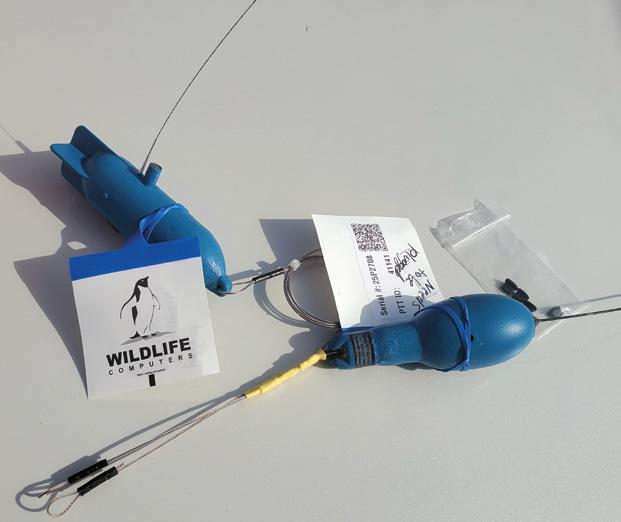
were arguing over our shrinking pieces of a shrinking pie, an outfit in Massachusetts was applying science to stripers in ways no one had ever thought to try before. The Striped Bass Initiative, a nonprofit research organization funded by the Edwin Barnaby Charitable Trust, tried tagging eight adult fish with pop-up satellite (PSAT) tags. These “archival” tags record the fish’s general location, depth, and activity for months at a time. They can’t send out that intel from beneath the water, but they eventually pop free from the
fish, float to the surface, and beam the stored data to a satellite.
SBI scientists learned reams of information, showing for the first time that striped bass do travel out to the edge of the Continental Shelf. They documented several complete north-south annual migrations. And they discovered that rockfish come very close to the surface far more often than we previously thought, for much of the year on a daily or near-daily basis.
Wait a sec—if they spend so much time near the surface, would it be possible to utilize tags normally applied to animals that breathe air, like dolphins and whales? Smart Position and Temperature (SPOT) tags can gather far more precise data and transmit it to satellites in milliseconds on a regular basis as these creatures breech. If only there was a way to bridge the gap between the striper’s close proximity to the water’s surface and a clear shot at those satellites…
Scientists aren’t always outside-thebox kind of people, but Dr. Brian Prendergast, Research Lead for the Striped Bass Initiative and a Professor for the University of Chicago, came up with an unconventional idea: he tried attaching a SPOT tag to a tether of sorts, which would allow the buoyant tag to bob up and transmit its data every time the fish came close enough to the surface. If the SPOT tag worked in this application, it would allow for monitoring the fish’s location and behavior with far more accuracy and frequency than ever before.
It worked.
By the end of 2025 the Striped Bass Initiative was looking for ways to harness their new tagging technique to generate the most impactful science. They linked up with the Maryland DNR, and asked fisheries managers a simple question: what do you need to know? What critical scientific information would do the most good for the fishery and its stakeholders? Immediately, the impact of spring catch-andrelease fishing on the open Chesapeake came up. Did it prevent large female striped bass from completing their spawning runs, or not?
This early spring fishery has tremendous value to guides who want to be
allowed to fish (and thus work) at a time when no other fisheries are available to them. It has tremendous value to recreational anglers who simply want to pursue their passion, which means it also has tremendous value to the countless businesses that cater to them: marinas, tackle shops, boat dealers, and more. But the value of a successful spawn is even greater—and any guide or angler worth his or her salt would be quick to agree that if this fishery had a significant negative impact on spawning behavior it shouldn’t take place. If SBI could catch, tag, and release egg-laden stripers and track their movements and behaviors with precision and frequency, many arguments could be laid to rest.
FishTalk was lucky enough to catch wind of SBI and this project, and in late March I joined the scientists to observe and report on their work as they headed out into the open Bay with Griffin’s Guide Service. I watched as Captains Drew Grahame and Gio Gargano caught rockfish between 39 and 45 inches (seven-inch ZMan DieZel Minnowz in Houdini and Mulletron on 1.5-ounce heads were the hot ticket), and Dr. Prendergast and SBI postdoctoral scholar Dr. Caroline Ianniello tagged them with PSAT tags, SPOT tags, and sometimes a combination of both.
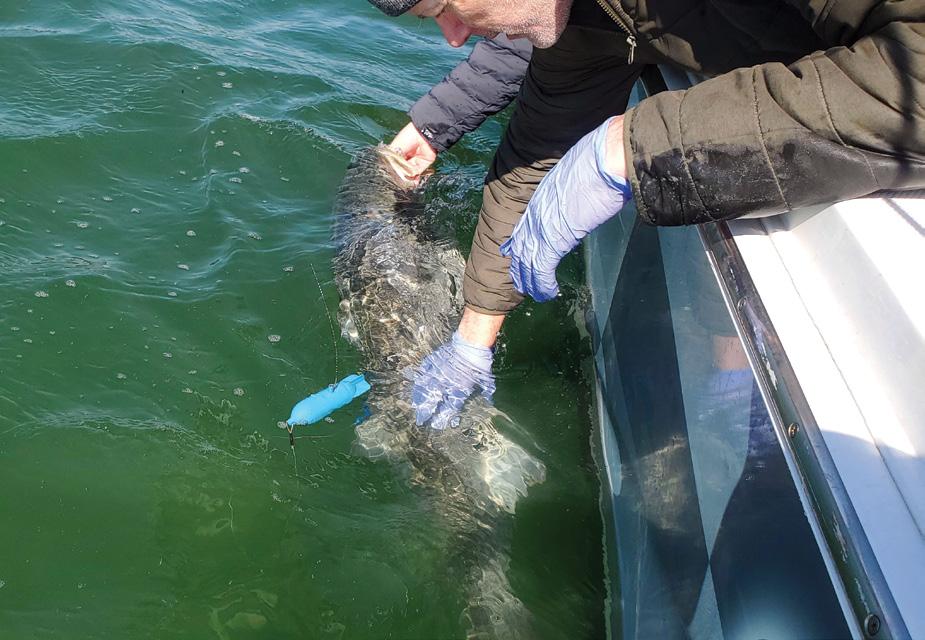
The tagging is quite intrusive as compared to a “regular” catch-andrelease encounter. First the fish is set in a large cradle-like bump-board ruler with one person controlling the tail and another holding a wetted chammy over its head and eyes, so the fish remains calm and doesn’t thrash or struggle. The scientists measure the fish’s length, confirm it’s gravid with eggs, and collect scales for aging the fish. Next, a surgical instrument called a trocar is inserted through the fish’s muscle
The Striped Bass Initiative is dedicated to providing scientific evidence to support data-driven management and conservation of striped bass. Their pioneering science goes beyond tagging and also includes chronobiology and energetics (we have no idea what that means and Googling it made us even more confused). They also study morphological anomalies (we’re pretty sure that means “weird fish”). Their work has been funded to date by the Edwin Barbey Charitable Trust, and we want to say thank you in a big way, EBCT, from we Chesapeake dwellers. But these high-tech tags are incredibly expensive and additional funding would allow SBI to expand and advance their efforts. Donations are accepted via their website and if you know any mega-donor types who love rockfish as much as we all do, we hope you’ll let them know about SBI and this rockin’ cool science. Learn more at stripedbassinitiative.org
below the dorsal fin, run through to the other side, then removed so a harness (trailing the tether and tag) can be run through the hole. Shockingly, none of the five fish I saw tagged seemed to so much as register the piercing; through the entire 90 to 120 second process they remained amazingly docile. With the tagging complete, one person holds the tag and leash while another carries the fish to the side of the boat and places it back into the water, maintaining a firm grip on the tail. The fish is pushed back and forth to pass water over its gills and revive it, but in every case I observed, within moments the fish kicked free and swam off trailing its new jewelry with aplomb.
The scientists were happy, but they wanted more—they wanted the biggest fish possible. And as luck would have it, your (ahem) ever-humble Angler in Chief was aboard. So, after much cajoling and coaxing I agreed to pick up a rod. After giving Drew a sharp elbow and then boxing out Gio, I got into casting position and… BOOM! A 47-incher who we would name Lily was soon aboard. (Well okay,
actually I asked permission to take a few casts. Can you imagine how tough it was to watch those guys catch fish while I stood there like some newspaper reporter?! Side note: why do these darn scientists have to measure and document everything? I could easily have claimed she was 50”!)
Several days later Lily exhibited pre-spawning behavior, stacking
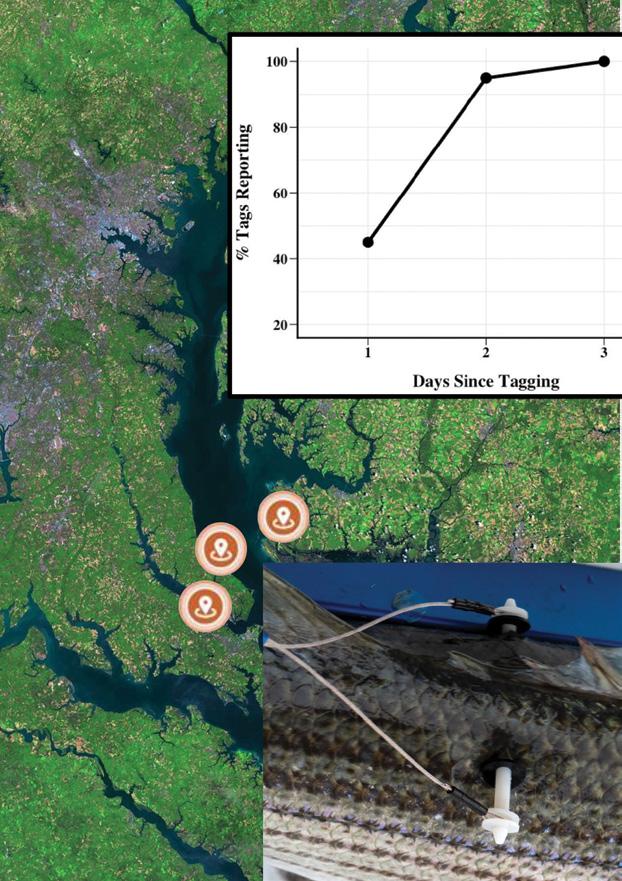
outside of a spawning river. Of the 20 fish that SBI tagged, all 20 demonstrated post-release movements and were signaling within two days of tagging, alive and (seemingly) well. Scientists are still processing the spawning season intel, a tedious task that requires careful parsing of satellite data, but in the coming months some or all will be tracked as they return to their summering
By Eric Packard
In 2024 I was invited to jump on a boat to catch striped bass—out of season. But then I learned it was to participate in a George Mason University Fisheries Ecology Lab study on the catch-and-release of striped bass, and I was all in.
The study was to determine catchand-release mortality of Chesapeake Bay striped bass in their natural environment. A fixed 9.0 percent catch-and-release mortality rate (CRM) is generally used by fisheries managers. This rate came out of a study conducted in 1996 in a saltwater pond in Massachusetts and a few other outdated studies, which don’t account for critical variables like water temperature.
The area of study was the Patuxent River between the Maryland Route 231 bridge and the mouth of the river where it meets the Chesapeake. By using acoustic telemetry tags and telemetry array receiver stations placed throughout the area to track the fish, scientists can determine if the fish survived. (This tagging system is most commonly compared with the way your EZPass works; the telemetry tags “ping” the receiver stations as the fish swim by.)
Two of the study’s primary objectives were to estimate CRM of Chesapeake Bay striped bass, and to determine the relationship of striped
grounds in Massachusetts, or Maine, or possibly even Canadian waters. Soon, the guesses will be replaced with science.
Fisheries managers: you can start breathing a little easier. SBI just brought a cooler of Gatorade to this marathon.
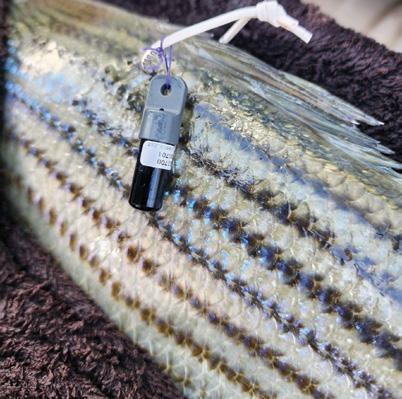
bass CRM with respect to water temperature. The first step was to catch striped bass for the study in spring, summer, and fall. We used light tackle gear rigged with jigs and plastics. The fish that were caught were measured and scales collected, then tagged with vinyl Floy tags (with printed information to report a catch to TAG Chesapeake). Innovasea V9 acoustic tags were attached with a dissolvable suture. We caught 50 fish in spring, 28 fish in summer, and 22 fish in fall, for a total of 100 striped bass.
Across all seasons on average there was a CRM rate of one percent within the first two weeks, and 7.7 percent at eight weeks. In the spring the CRM was 4.9 percent, summer was 11.3 percent, and fall was 7.0 percent.
It was found that as water temperatures reached 77 degrees Fahrenheit and above CRM increased. Mortality increased significantly at week four, which was when the study observed the highest mortality rate. Mortality could be caused by any number of factors, but similar patterns between spring and summer indicate that catch and release was the probable cause. Gear type could also influence mortality, so further studies with different gear types need to be done to validate this finding.
As a catch and release angler I found the study very enlightening. I learned first and foremost that CRM can occur up to eight weeks after catch and release. Second, that more accurate CRM numbers could be used to manage the species. Further studies are needed with a larger pool of fish, over all seasons, to refine these findings.
I am a catch and release angler, and I catch 250 to 300 rockfish in the Bay a year. So, with the finding that CRM is at or around 7.7 percent one could say that I unintentionally kill around 20 rockfish per year. But what I have learned from the study is that I can reduce that number by limiting my time on the water during the hottest days of the year and adjusting when I head out to go fishing. As yet another way to limit harming striped bass I’ll target invasive species to mitigate my striped bass CRM.
Dear FishTalk,
The article a while back on winter maintenance of our fishing gear was good. I learned to use a cotton ball to check the rod guides for cracks, and to use a section of rubberband to check the bail roller. But a big thing you left out was to check and tighten all the screws, especially the bail screws. I’ve been fishing for 70 years and had never had a bail screw come out—until this week. I cast, flipped the bail closed, and saw a tiny shiney silver thing jump into the water. Then, the line pulled the bail off and the bearing fell overboard. Now I’m trying to get new parts so I can fix my reel, a 13 Creed X 3000 reel and the best I ever had. I also have a cotton ball, rubberband, several screwdrivers, oil, sandpaper for the rod cork, new line, and lots of care.
-Al
H., via email
Dear Al: D’oh! That’s a new one to us, too… but at least the entire reel didn’t go over the side!
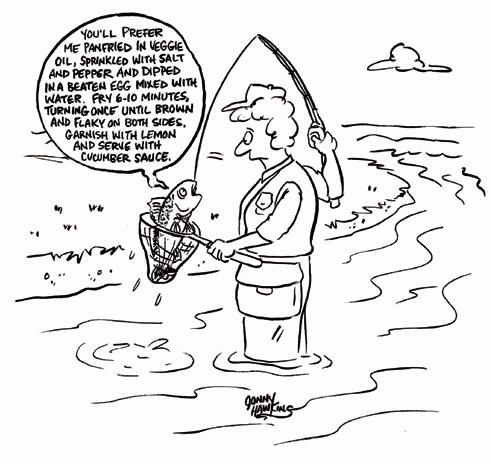
Q: Why did the angler throw his chatterbait into the trash? A: After getting skunked, he figured it was a total fail-lure. -Anonymous

Send your fish photos, questions, and comments to lenny@fishtalkmag.com



By Lenny Rudow
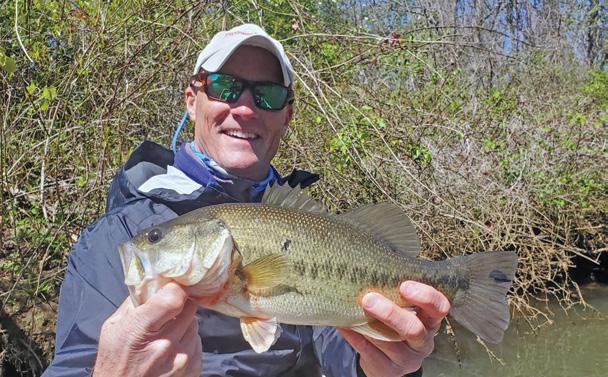
The 2025 annual review of bass in Maryland is out, with populations in the Upper Bay, Potomac River, and Choptank River holding at stable levels. The Gunpowder was listed as rebuilding and Middle River recorded the highest abundance in eight years. On the non-tidal side Conowingo Reservoir, Blairs Valley Lake, Prettyboy Reservoir, Seneca Lake, and Johnson’s Pond all showed robust abundance and highquality populations. However, Maryland waters face a threat from the invasive Alabama Bass, which have now made their way into Virginia. Studies have shown that the introduction of Alabama bass can lead to a decline in largemouth bass abundance, permanently altering the fishery.
Anglers wishing to support bass fishing in the state can now contribute to the Black Bass Conservation Fund, supporting bass enhancement projects considered by the Black Bass Advisory Committee. In 2024 the fund raised $5000 to purchase a bead filter which allowed a DNR hatchery to raise 3000 more bass per year for the purpose of stocking. Donations are an option in the Maryland Outdoors licensing portal merchandise section; for more information see the DNR Black Bass Conservation Fund webpage.
Three out of four bills to improve menhaden management were introduced in the 2026 Virginia legislative session this spring, with two failing to survive committee and one punted to 2027. Bills that were killed would have closed the Bay to industrial-scale reduction fishing, created seasonal quota periods, and required observers on 10 percent of reduction fishing trips. The lone surviving measure, Budget Amendment 145 #2h, appropriated $1 million per year for the next two years for menhaden research led by the Virginia Institute of Marine Science in collaboration with the Virginia Marine Resources Commission. The amendment states, “The fund shall be used for Atlantic menhaden research necessary to inform a scientifically defensible and ecologically meaningful Chesapeake Bay harvest cap.” Research priorities include seasonal abundance, movement rates between the ocean and Bay, impacts of predator demand and consumption, spatial and temporal patterns of commercial fishing effort, and the possibility of localized depletion in the Chesapeake Bay.
It’s time for the 4th annual Blues for DU tournament benefiting Ducks Unlimited June 5 to 7. Held out of Bahia Marina in Ocean City, MD, there are trophies and cash prizes for the first through third place heaviest bluefish, top junior angler, plus calcuttas. Anglers fish three out of three days in Inshore or Offshore divisions from 6 a.m. through 4 p.m. Visit duderby.com for the details.
he Hard Yacht Café Anchor Bay East Marina Chesapeake Open is a go for June 6 and 7. This should be quite an event, with the field completely sold out as of press time with cash awards for the three heaviest rockfish and one heaviest catfish. Fishing hours will run from 6:30 a.m. through 4 p.m.; the entire Bay is open to angling, and IGFA all-tackle rules apply; weight ties will be broken by total stringer length. The scales will be open from 3:30 p.m. to 6:30 p.m. every day, so swing by the Hard Yacht Café and then check out the weigh-ins.
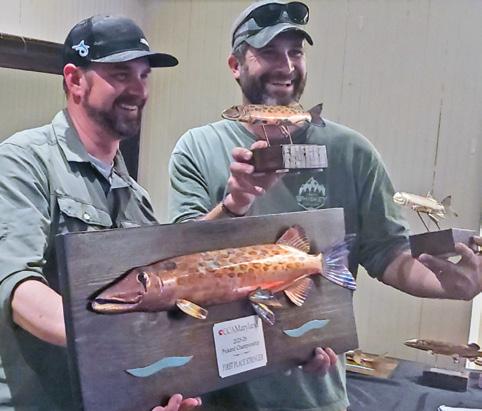
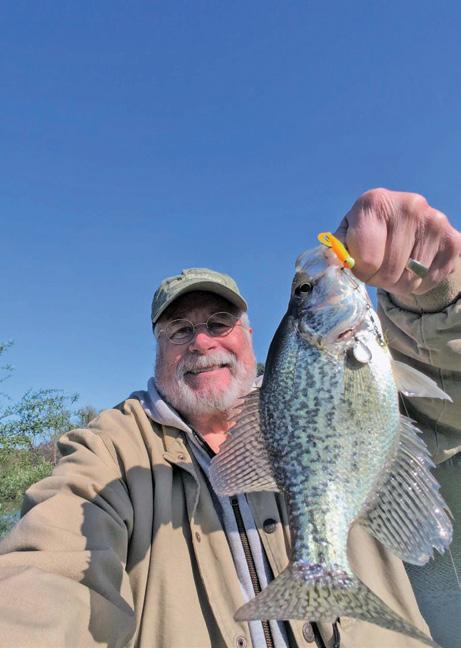
The CCA Maryland Winter Pickerel Championship normally provides a passel of prizes to a wide field of winners—but not this time. As the 2025/2026 angling competition drew to a close, four of the categories were swept by a single lone angler: FishTalk’s own art director/ production manager/kayak fishing sharpie Zach Ditmars. With a whopping-long 76.5-inch stringer of three pickerel including a 26.25-incher, Ditmars took first in overall stringer (followed by Carl Childers and Herb Floyd), largest fish of the tournament, and largest kayak pickerel. And in combination with additional fish caught during the competition he won the Slam category as well. However, Amy Fischer (what a cool name!) bested him for Top Lady Angler, and Conrad Maillard took the prize for the longest Youth pickerel. The Fly-caught category was won by angler Shawn Kimbro and the shoreline category by Kevin Williams. As for additional species: Herb Floyd won bass, Gary Simpson had the largest perch, and Rob Messick had the largest crappie. WTG Zach, and a big FishTalk congrats goes out to all the Winter Pickerel Championship winners!
he world’s only ladies tuna tournament, the Tuna and Tiaras, will happen June 12 and 13. Benefiting Women Supporting Women, a DelMarVa-based organization supporting those affected by breast cancer, the Tunas and Tiaras teams consist of up to six ladies, competing one of the two fishing days in a trolling-only format (no chunking or live baiting). All fishing takes place within 100 miles of the Ocean City sea buoy, and there are multiple categories and calcuttas. Get the full scoop at tunaandtiaras.com.
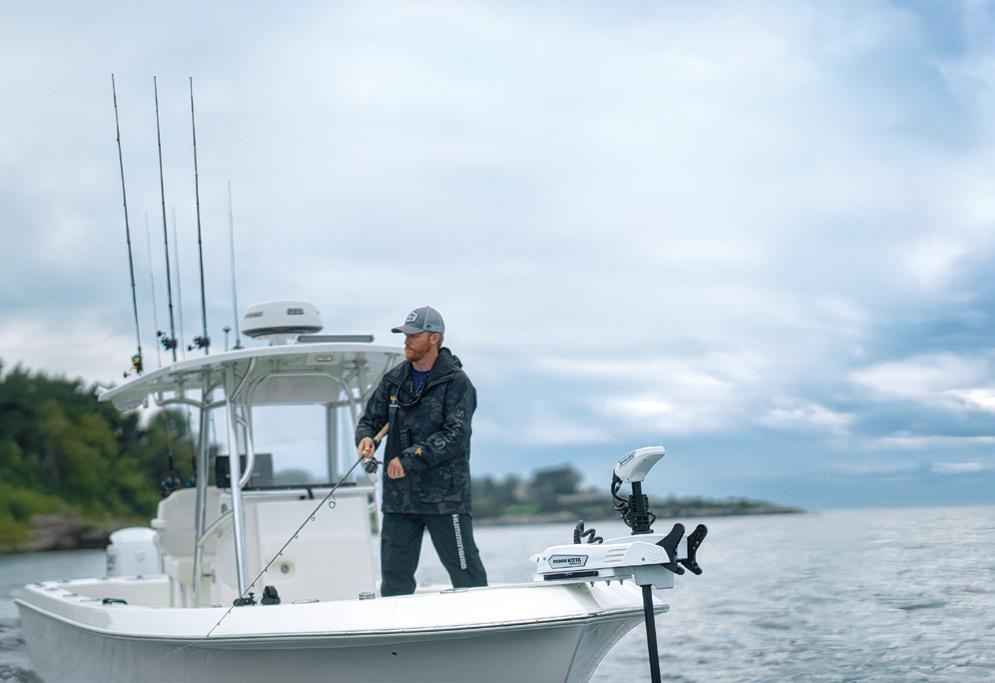
Imagine if all you had to focus on was fishing
Minn Kota® Riptide Terrova® trolling motors are built to deliver saltwater dependability, season after season, so you can own your spot and stay locked into the moments that matter.
On Saturday June 20 the Cobia East Coast Championship returns, following up on a big year in 2025 when over $90K was paid out. All Virginia waters are open to the competition, and the captain’s meetings (on Friday evening) and weigh-ins will take place at multiple locations on both sides of the Bay. There are payouts for first through fifth place, five Calcutta levels, a Lady Angler division, and a Kid Angler division. Catches are verified via recording video including a codeword (given at the captain’s meetings). Check out cobiaeastcoastchampionship.com to find out all the details.
The Virginia Beach Tuna Tournament will take place June 24 to 27, in Virginia Beach, VA. This one was a whopper last year, drawing in 115 boats and over 550 anglers, and paying out over $350,000 including a $105K top prize. Teams fish one of the three days in accordance with IGFA rules, trolling only, within 85 nautical miles of the Cape Henry buoy. Weigh-ins take place at the Virginia Beach Fishing Center in Rudee Inlet. Complete details can be found at vbtuna.com.
June 25 through 28 is the Battle for the Buckle in OCMD, which claims to be Maryland’s “first and only exclusive saltwater cowboy tournament.” Grab your boots and spurs and fish one of the three days for heaviest fish and heaviest stringer. This tournament benefits the Believe in Tomorrow Children’s Foundation. Check out the details at battleforthebuckle.com.
The Tappahannock Rotary Big Fish Tournament is scheduled for June 27, from 7 a.m. to 4:30 p.m. There are adult and youth divisions with prizes awarded for the heaviest croaker, catfish, snakehead, and spot. Fishing takes place anywhere on the Rappahannock and its tributaries between the Port Royal and Whitestone bridges. Proceeds benefit local charitable causes, so visit rotarybigfish.com. Added bonus: free burgers and dogs at the Moose Lodge weigh-ins!
Saturday June 27 and Sunday June 28 the Kids Catch-All unfolds at the Indian River Marina in Delaware. The event is for kids ages three to 18, and fishing is allowed from just about any venue including the jetties, private boats or charters, or from the beach. Kids fish wherever they’d like and then bring their catch to weigh-ins at the marina, where there’s a dinner for participants followed by an awards ceremony on Sunday. Trophies will be awarded in 14 different divisions, and registration fees provide a donation to the Lyme Disease Association of DelMarVa; visit kidscatchall.com to get the full scoop.

Editor’s Note: We wish we could personally test every item that appears on these pages, but that simply isn’t possible. So that you know the difference between when we’ve physically tested a piece of gear and when we’re writing about it because it’s newsworthy and we think you’ll want to know about it, we’ve developed this FishTalk Tested button. When you see it printed next to something in this section, it means we’ve personally run it through the wringer.
It’s summer out there—WOOHOO!! And if you’re looking for a cool new pair of fishing shorts, you’ll probably run across the Aftco Pinnacle. These come in Naval Camo, Steel Current Camo, Harbor Gray, and Sand patterns, and feature a polyester blend with elastomultiester for comfort and DWR stain resistance. They also have a pliers pocket, cargo pockets, a zippered cell phone pocket, and there’s even a bottle opener built into the belt loop. Price: $79. Visit aftco.com if you’re ready to stow those jeans away until November.
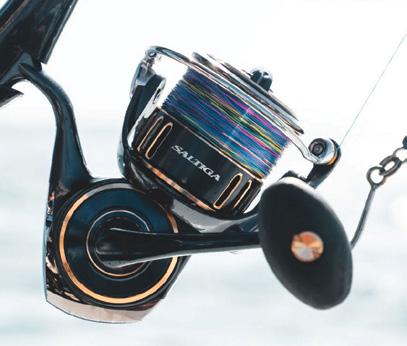
aiwa has a new Saltiga, and it’s all about conquering megamonster oceanic adversaries. The latest iteration of this reel lineup is the 25 Saltiga, released last year. Now they’ve expanded the collection to include the 25 Saltiga 30000-P. If you remain unimpressed, count those zeros one more time. The 30000-P is rated for line up to 120-pound-test, and can hold 440 yards of it. Max drag pressure is a shoulder-dislocating 66.1 pounds of pressure. The 30000-P weighs in at 37.4 ounces, has a 4.4:1 gear ratio, cranks in 49.4” of line with every rotation, and has a grand total of 15 bearings. Highlights include a single-piece metal monocoque body, magnetized sealed bearings, and a DRD metal rollers/plate drag system which Daiwa says is five times more durable than carbon washer drags. Price: $1,999.99. Visit daiwa.us before the bluefin come back to town.
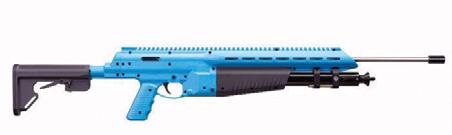
If you enjoy cooking your fish over a campfire, you might enjoy taking them home pre-skewered. That’s a distinct possibility if you’re armed with a Umarex Air Javlin FishR, a pneumatic gun designed for bowfishing without a bow. Is this thing even legal in our home waters? We have no idea. Be that as it may, a 155cc onboard air tank blasts out up to 65 shots with a 1248-grain arrow via 800 psi, propelling your piscatorial-puncturing projectile at about 100 fps. True, that’s less oomph than a decent bow would get you, but you’ll definitely look cooler than the average angler-archer toting this blue and black bad boy. Price: $499. Visit umarexusa.com and don’t blame us if you get arrested.






















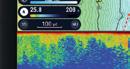
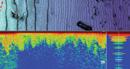



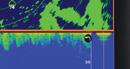







TZT16X | 22X | 24X 13X


TZT10X | 13X




TZT9E | 13E


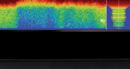












































When helm space is at a premium, the 9" and 13" TZtouchE MFDs give you maximum screen area to view their eye-popping TZ MAPS charts and builtin TruEcho CHIRP™ Fish Finder with Side-Scan.

Furuno... The reason to level up your helm!

Plus, TZtouchE is fully networkable with the TZtouchXL family of 10", 13", 16", 22", & 24" MFDs and a wide range of best-in-class sensors – legendary Furuno Radars, Sonars, Fish Finders, Autopilots, and more. Marine Electronics



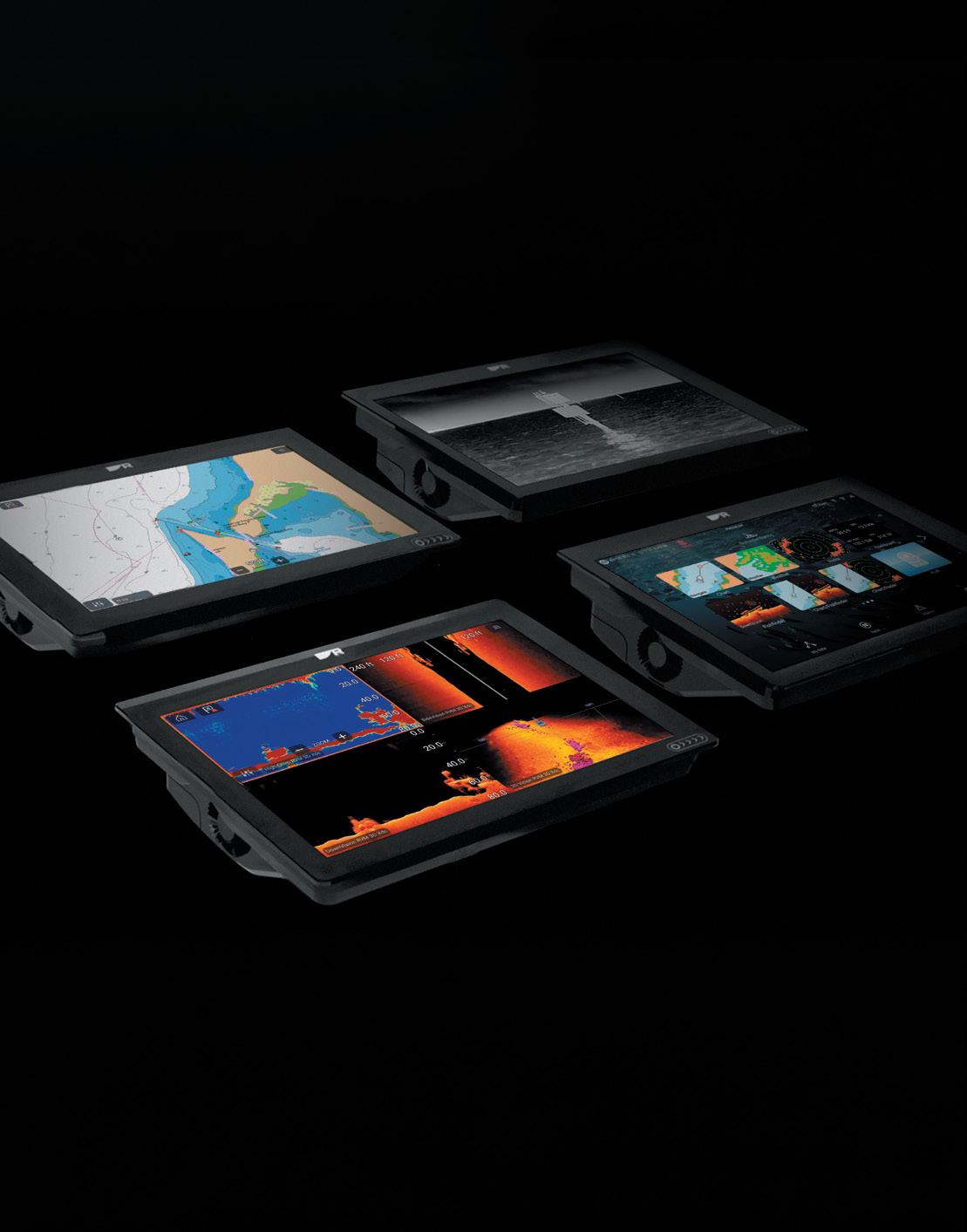
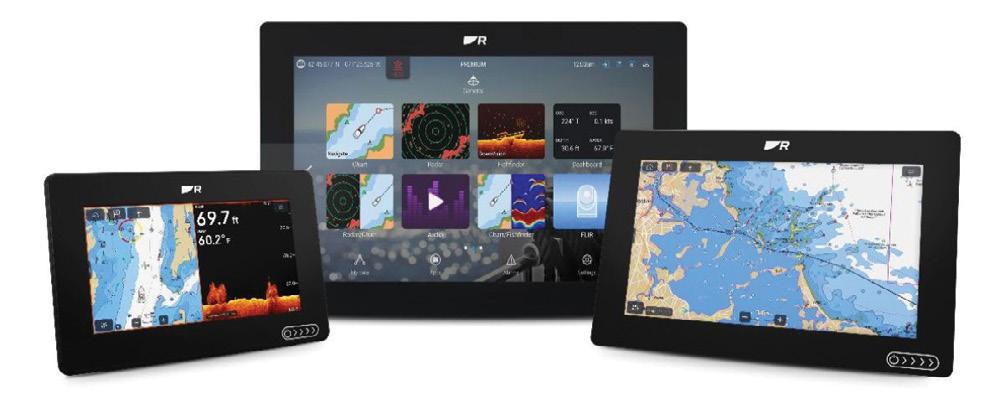
News Flash: Raymarine has announced a new MFD, the Axiom 2, which is faster and more potent than ever. At the heart of the tech upgrade you’ll find six-core processing power. That means the Axiom 2 starts up 10 percent faster and renders charts 30 percent faster, so you don’t have to stand there and wait while the screen redraws every time you pan or zoom. And those charts can come from any number of sources; the Axiom 2 comes with Lighthouse Charts Gen 2 already loaded up, which provides coverage for all of North America, but you can expand the chartography with Navionics, C-Map, CMOR, Strikelines, and additional specialty digital charts.
Enough about the charts—we want to know about the Axiom 2’s fish-finding prowess. Units tagged RV have Raymarine’s full suite of RealVision sonar with 600-watt 50/200 kHz standard sonar, high frequency CHIRP, 350 kHz SideVision side scanning sonar, 350 kHz DownVision down scanning, and RealVision 3D. And switching between views is a piece of cake, because the Lighthouse operating system is a simple icon-based interface that allows you to change from one to the other or split the screen with just a few taps and swipes of the touch screen.
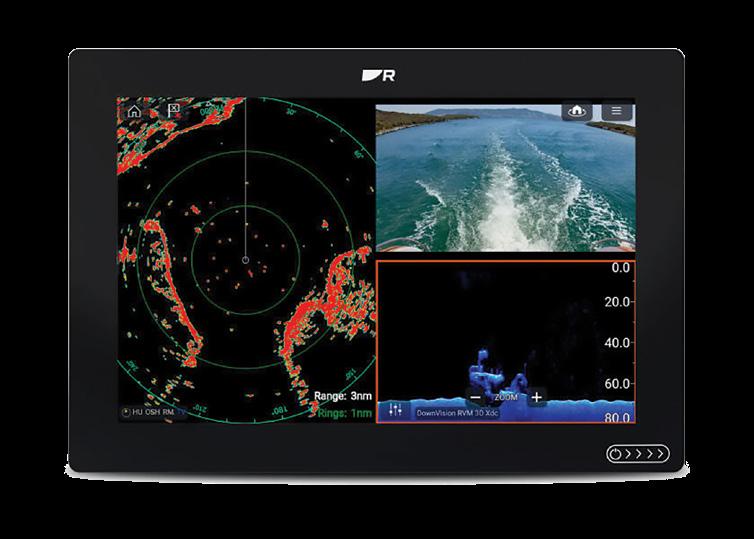
# The Axiom 2 can be expanded with goodies like radar, video feeds, and a whole lot more.
the helm. Better yet it’s treated with an oleophobic nano-coating called HydroTough, which repels both water and oil. That means your taps and swipes will continue working even when your hands are dripping with fish goo, and it also means the IPX6 waterproof screen has a smooth, silky feel when you touch it.
and more. The Axiom 2 can also run apps—lots and lots of apps—which you can use for everything from controlling the boat’s stereo system to streaming Netflix.
That screen itself is another high point for the Axiom 2. It’s an in-plane switching LCD that delivers vibrant views at wide angles, so you won’t lose sight of those fish when you’re off to the side of
Along with all the chart plotting and fish finding the Axiom 2 offers complete expandability via RayNet ethernet, NMEA 2000, Bluetooth, WiFi, and USB connectivity. It can link up with your engine to display monitoring data, see through the fog or darkness with Quantum 2 radar, display AIS when linked to a AIS700 transceiver,
Axiom 2 models are available in seven-, nine- and 12-inch displays and come with an unusually long three-year warranty; note that most competitors offer only one or two years of coverage. They can be flushor binnacle-mounted (hardware for both comes in the box) and match up with Raymarine’s RV transom-mount and through-hull transducers. Price: $1749/$2049.99/$3549.99. Visit raymarine.com to see what you’ve been missing beneath the water’s surface.
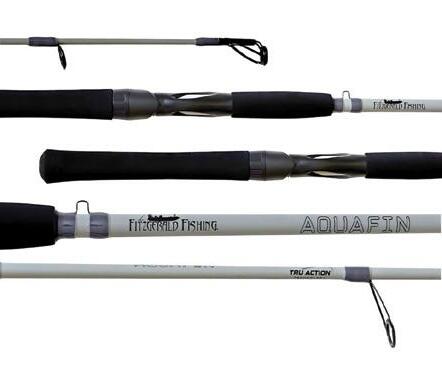
When it comes to fishing rods everyone has their favorite, and one that’s popular down south but we don’t see too much in Chesapeake Country is the Fitzgerald AquaFin Inshore. These fast-action rods are designed with specks and reds in mind, and come in 7’0” to 7’11” models ranging from medium light (for lures from 1/16th- to half-ounce) to extra heavy (for half- to three-ounce lures). All have eight guides plus the tip-top. A 7’0” medium light is the newest addition to this series, and it was designed specifically for something we’ve come to love on the Bay: tossing finesse baits to slot reds in the shallows. Price: $189.99 to $199.99. Visit fitzgeraldfishing.com to cast in a new class.
By Zach Ditmars
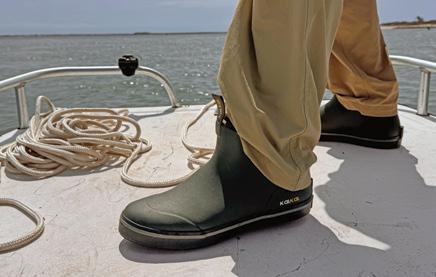
The Slip-On Deck Boots from Kalkal feature a 4mm thick neoprene waterproof upper and a moisturewicking breathable liner with an EVA arch-supporting insole. Their slip-resistant sole has a unique tread pattern and provides excellent traction on slippery, slimy boat decks. The heel of the boot features a reflective panel for increased visibility at night.
These boots fit true to size, but I’d recommend sizing up slightly if you like to wear thicker socks. If you are looking for an affordable deck boot that doesn’t break the bank, take a look at the Kalkal. Price: $57.99. kalkal-online.com
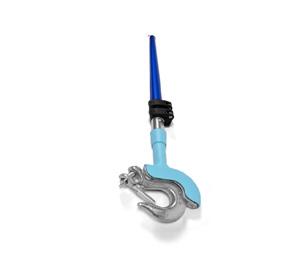
f you’re a trailer-boater, there’s no doubt that you’ve had the experience of driving home with wet feet.
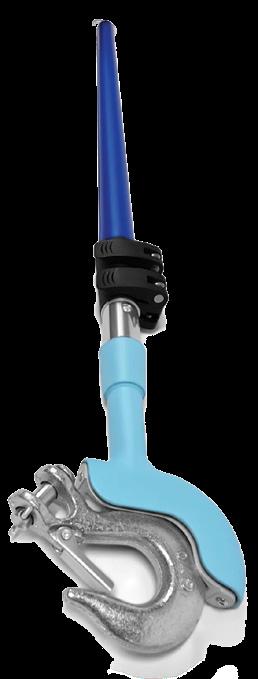
Trying to hitch the winch strap to the boat while doing a trailer balance-beam routine will inevitably one day lead to KER-SPLASH! If, that is, you don’t have a Behr Claw. This gem has a magnetic head that securely cradles the winch hook, mounted on an extending 7’3” anodized aluminum pole. We got ahold of one to shoot a video, and while testing out we were utterly gobsmacked—why hadn’t anyone thought of this before?! Collapsed to 3’0” we easily stowed it under the truck seat, and after pulling the boat onto the trailer grabbed the Behr Claw, used the flip-locks to extend it out to full length, walked down the ramp to the water’s edge, magnetically grabbed the hook, and clipped it onto the boat in about 30 seconds flat.
Behr Claw also has a winch hook with a quick-release sling built-in, which allows you to release the hook from the boat just as easily whether you’re standing on the boat or on dry land. It can also be used for picking up and dropping moorings from deck-level without any leaning or stretching. You can get just the magnetic head (which is powder-coated aluminum and N52 magnets) and spin the 3/4-5 threads onto your own pole, you can get the head and pole, or you can get a complete head/quick-release/pole package. After trying it out for ourselves we say go for the full package; the pole is light and easy to extend or collapse, and with the quick-release head on the end you can clip and un-clip the winch hook quickly and easily from just about any position— without doing a balance beam act. Price: $32/$97/$148. Visit behrclaw.com and never drive home with wet feet again.
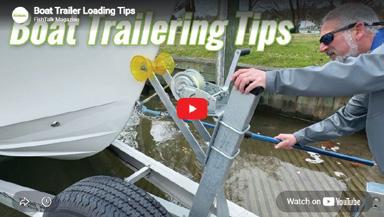
See the Behr Claw in action and get a look at just how easy it makes hitching and hauling your boat at the FishTalk YouTube channel.



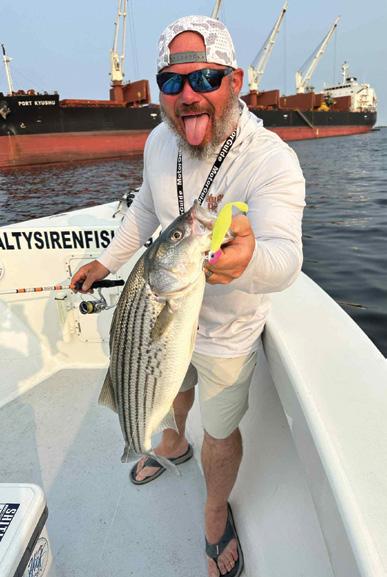
Let’s talk this month with Capt. Chuck Jones of Salty Siren Fishing . The topic: thinking like a guide the next time you leave the dock.
Q: Tell us a little bit about your mindset as a guide—what’s your number one mission?
A: The safety and comfort of my crew, absolutely. If we can’t run a trip safely and within a reasonable comfort level, we simply don’t go. Before every trip I’m checking weather and wind apps. My goto apps are Windy, Navionics, NOAA, and the Weather Channel radar. I’m watching wind speed and direction, tides, currents, precipitation, air temps, and water temps. I start checking several days out, then again the night before, and once more the morning of the trip. I also want to get key information from my network. I’m looking for patterns over spots—water clarity, depths people have been catching fish, what baits were working well, whether fish were scattered or schooled up, and even if someone got skunked. Any information is good information.
Q: Naturally you’ll go where the fish are, but beyond that, how do you decide on a destination for the day? Any special considerations as you map out the route?
A: Wind direction and tidal current are my biggest deciding factors. If the water isn’t moving, the chances of catching drop significantly. Current is everything. Wind direction also determines where we can fish comfortably. A hard south wind makes fishing a northern shoreline pretty miserable when it’s getting blasted by gusts. That goes back to client comfort—and the reality that trying to fish in three-foot waves in shallow water just isn’t productive.
As far as routes go, I try to make every move count. I’m hitting as many ledges, points, structures, and transitions as possible on the way out and back. If it doesn’t make dollars, then it doesn’t make cents.
Q: How does the weather forecast influence your decisionmaking?
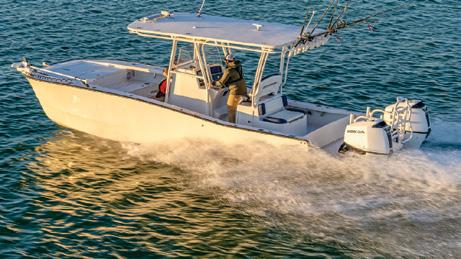
I run a topless, bare-bones 26’ Composite Yacht. It’s an absolute fish slayer, but weather definitely plays a role. I try not to run trips in the rain or unsafe winds. Over the last few years we’ve had a lot of windy conditions on the Bay, so adapting has become part of the job. On tough days, our trolling motor and protected shallow water become our best tools.
Q: How about the tides?
A: My favorite tide is a high outgoing tide for shallow-water fishing, while in open water almost any moving tide can produce. On the open Bay the current speed is often more important than the actual tidal stage, so paying attention to when the water really starts moving can make a big difference. When all those pesky skates show up in late spring and start crushing bait in your favorite spot, try waiting it out once and see what happens when the current speed changes a bit. You may be surprised. They may push out and be replaced by breaking fish.
Q: What if there’s been a spell of tough weather and intel is short?
How do you decide where to go?
A: I start by looking for clean water. Some areas get more runoff than others, and shorelines that have taken the brunt of heavy wind can get stirred up. Clean
water plus bait dramatically increases your chances of success. It also pays to watch where the bad weather hits while it’s happening, because that often tells you where the better water will be afterward.
Q: Open mic—what haven’t we talked about that anglers out there need to know?
A: Let me step on the soapbox for a second. Fishing should always be about having fun, challenging yourself, and learning something every time you leave the dock. Never lose sight of that and pass that mindset along to anyone who fishes with you. Being a good steward of the resource and helping the next generation of anglers is important. Catch-and-release is an ethical and sustainable practice, but there’s also nothing wrong with keeping a fish for the table. And if you really want to shorten the learning curve, book a trip with a local guide—you might be surprised at how much you can learn in a single day on the water.
Thanks, Capt. Chuck! To jump aboard the Salty Siren check out saltysirenfishing.com or give Capt. Chuck a text or call at (410) 353-0589.
Q: You run a lot of fishing trips with a lot of different people— are there any specific lessons or tips that regularly come up aboard your boat, which you hear folks say they’ve found really valuable?
A: I can’t begin to count how many folks have declared that learning to keep slack out of their line while working a lure has changed their catching success. I preach it on the boat every single trip when I see a slack line. My explanation is always basically the same: Slack line means you aren’t “in touch” with your bait and if a fish strikes while slack line is present you won’t feel it. Some fish will still get hooked, but not because you reacted to the strike. The fish got unlucky and hooked itself.
Q: Can you think of any lessons or tips you learned from a client, which proved to be so valuable that you incorporated them into your daily fishing routines?
A: I can and it happened in my first year guiding (2000), with an old timer friend, client, and life lesson teacher of mine. We were on a hot bite with surface plugs. I was doing all the hook removing and doing it very fast. Trouble is, I wasn’t in complete control of the top of the lure every time before reaching below to begin removing the hook. I was young, dumb, and full of ambition to make it happen fast! My buddy Pete Dressler, aka Superfish, warned me I was going to slip and catch a hook in my hand. My response was “Nah… I know what I’m doing.” Well, a few minutes later, you got it, I caught a
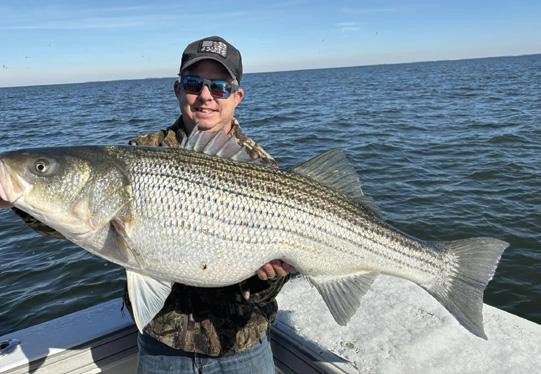
hook because I didn’t have complete control of the top of the lure. A quick wiggle and an unexpected waggle and BOOM— there was a treble in my hand. Not fun! NEVER reach below the hooks before you have complete control of the fish above the hooks.
Q: By this point in the season topwater should be in full swing. Tell us your favorite topwater lure and your favorite type of place to try it.
A: My favorite for Chesapeake Bay is a simple Storm Chug Bug. It has rattle, a great face to make a nice pop, it’s not too big, and it’s not too small. Stripers, specks, and reds will hit a Storm Chug Bug. I like to modify it by cutting some hooks off the trebles to help keep fish from getting a mortal injury. Maybe leave one hook on the front and two on the back, or just change out hooks to singles front and back.
I love using plugs early, late, or in overcast conditions. Submerged riprap, wrecks, submerged stump fields, and over grass beds are good areas. If the fish are there, they’ll quite often demolish these lures.
Q: It’s the middle of June, it’s the middle of the day, and the tide is totally dead… what do you do to get fish on the line?
A: I’m going to run eight to 15 miles up or down the Bay to get into the beginning of moving current. For
example: a dead low tide at Hoopers means running south to Holland, South Marsh, or Smith to get into the start of incoming current. The biggest factor to me is getting back into current. Current plus structure equals FISH, and I’m not known for conserving fuel, so running is what I do.
Q: Setting aside rods and reels, what’s the most critical tool on your boat for catching fish?
A: Currently in this age (of less fish in my opinion) on Chesapeake Bay the most critical piece of equipment is 100 percent my Humminbird Side Imaging. I’ve been running this technology since 2018, and the amount of structure I’ve found is unreal. This alone has assisted me in catching fish I never would have caught without it. Prior to this technology I was reading water, structure, and current, and catching plenty of fish, but Side Image eliminates a lot of time you’d spend covering every inch of fishy-looking water. And many times I’ve targeted structure to the starboard side but then see fish to port—it happens all the time, and prior to side imaging I just missed them. It’s a tool that has completely changed my game.
Thank you, Captain Pete! You can reach Walleye Pete at walleyepete.com, pete@walleyepete.com, or by calling or texting (703) 395-9955.
hether you like light tackle jigging, fly fishing, trolling, or bottom fishing, there’s a local expert who can lend a hand. If you’re just now trying to learn how to fish you can jump-start the learning process by stepping aboard a Chesapeake Bay or Mid-Atlantic fishing charter. For more information visit fishtalkmag.com/charter-fishing-guide










3 FSFF Club Meeting/ Fly Casting Clinic Bring your favorite rod, reel, and line setup and get expert casting critique and tips from our club experts. 7 to 8 p.m. at the Free State Fly Fishers Club House, Davidsonville Family Rec Center, 3789 Queen Anne Bridge Rd, Davidsonville, MD.
6 Extreme Boat Docking 11 a.m. to 3 p.m. at 468 Buzzards Point Rd. in Reedville, VA. Get your ticket at the gate. Free parking, food vendors, live music.
6 Youth Fishing Derby at Piney Run Park
7 to 11 a.m. at Piney Run Park in Sykesville, MD. Youth (15 years and under) cost $10 per child. All participants must be accompanied by an adult. Park gates open at 6:30 a.m. Vehicle entry fee waived for participants. $10 boat launch fee applies. To register visit ccrec.recdesk.com or call Recreation and Parks at (410) 386-2103.
6-7 Yorktown Battle of the Boats Watch as crews go bow to bow racing small, medium, and large workboats along the York River, all building to the can’t-miss King of the Bay showdown. At Riverwalk Landing in Yorktown, VA.
6-20 Hook, Line, and Habitat CCA Maryland invites you to join them for a virtual silent auction supporting the conservation of the Chesapeake Bay and the future of recreational fishing. The event features a curated selection of exclusive auction items, with every bid directly supporting CCA Maryland’s mission.
7 Heroes Fishing Event
The first annual Heroes Fishing Event Cast for Hope is a guided fishing experience on the Potomac River created for Veterans and First Responders carrying the invisible weight of PTSD. Hosted by Symbolisms for Resilience in partnership with Fish the Potomac Charters.
10 Frederick Saltwater Anglers Monthly Meeting
6:30 p.m. at 289 Willowdale Dr, Frederick, MD 21702. Speaker and vendor TBD.
12-13 Tuna and Tiaras Ladies Tuna Tournament
The world’s only tuna tournament exclusively for women. In Ocean City, MD. Benefits a local breast cancer support organization, Women Supporting Women.
13 Baltimore Floatilla Five-mile paddle across the Baltimore Harbor from Canton to the Inner Harbor and back. Kayaks, canoes, standup paddleboards, and rowboats are welcome. The purpose of the event is to advocate for better recreational water access and to highlight environmental issues on the waterfront.
13 Bands in the Sand
5:30 to 10 p.m. at the Philip Merrill Environmental Center in Annapolis, MD. All tickets include: unlimited food and drinks, access to the Atlas Restaurant Group Oyster Reef Complimentary shuttles from remote parking lots, a tax-deductible donation that supports CBF’s education and restoration efforts throughout the year.
16 Essex-Middle River Fishing Club June Monthly Meeting Speaker: Author and light tackle specialist John Veil will discuss shallow water fishing. 7:30 p.m. at the FOP Lodge 34 (730 Wampler Road in Middle River, MD 21220). Open to all. Food and drinks are available.
16 PSWSFA Monthly Meeting Peninsula Saltwater Sportfisherman’s Association. Regular monthly meetings are held on the 3rd Tuesday of the month at 7 p.m. at Peninsula Baptist Church (2605 Cunningham Dr, Hampton, VA). Meetings consist of an educational speaker, monthly tournament awards, and a discussion of fishing news and club business. Meetings are free and you do not need to be a member to attend.
17 Annapolis Anglers Club Monthly Meeting Speaker, food and drink, table raffle, and 50/50. Food starts at 6 p.m., followed by meeting at 7 p.m. At the American Legion Post 7, Crownsville Road, Annapolis, MD.
19-21 38th Annual Antique & Classic Boat Festival and Coastal Arts Fair Father’s Day weekend at the Chesapeake Bay Maritime Museum in St. Michaels, Md. One of the largest classic boat shows in the Mid-Atlantic region. Boating history talks Friday and Saturday, free boat rides on Saturday and Sunday, and maritime vendors, juried artists, nautical flea market, children’s activities, Field of Dreams (boats for sale), food vendors, and more throughout the weekend.
Do you have an upcoming event? Send the details to: kaylie@fishtalkmag.com
19-21 FSA Offshore Challenge Tuna Tournament
Frederick Saltwater Anglers. Details TBD. Location: 2246 Curtis Merritt Harbor Dr, Chincoteague, VA.
19-21 Norfolk Harborfest
At Town Point Park along the Downtown Norfolk waterfront, VA. Tall ships, parade of sail, fireworks, live music, artisan food and beverages, interactive family games, and more. America’s largest, longest-running, free maritime festival.
20 MVFD East Riverfest
Extreme boat docking contest with the Chesapeake Cowboys at Williams Wharf in Mathews, VA. Get tickets online or at the gate. Music 4:30 to 9 p.m. at fireworks over the East River at 9 p.m.
21 Father’s Day Take dad fishing!
24 FSFF “Beer Tie”
Eat, drink, tie, or just hang out. Bring your vise, tools, and materials and/ or fish stories. Not instructor-led, but everyone helps each other out. On the heated enclosed front porch area. Look for tying vises and FSFF hats. 6 to 8 p.m. at Killarney House Irish Pub, 584 W Central Ave, Davidsonville, MD.
24-30 Sail 250 Maryland and Air Show Baltimore
A global gathering of international tall ships, military ships, and aircraft celebrating the 250th Anniversary of the founding of the United States. Baltimore, MD.
26-28 11th Annual Kids
Catch-All
Out of Indian River Marina in Rehoboth Beach, DE. Open to all youth anglers ages 3-18. Fish one or both days. Weigh-ins at Hook’em and Coo’em Bait and Tackle. Mexican fiesta Saturday 6:30 to 8:30 p.m. Awards banquet Sunday 6 to 8 p.m. A portion of the proceeds benefit the Lyme Disease Association of Delmarva, Inc.
27 East of Maui EWE Spirit Chesapeake Stand Up Challenge 2026
This is an open water race set in Annapolis Harbor and the mouth of the Severn River. There will be three course options: plus a free kids race. A portion of your entry fee will be donated to the EWE Spirit Foundation. Register on Paddle Guru.
4
15th annual Solomons Fourth of July Boat Parade
Show your American pride and dress up your boat or you person and join in on the fun. The starting cannon will sound at 12 p.m. sharp on Mill Creek in Solomons at 38.331264 x 76.450065. There is no registration, just jump in behind the last boat and form a line. Stay on channel 68 for the duration of the parade. All are welcome to join, just please follow all navigational aids and rules of the road. Safety first.
5 Extreme Boat Docking
At Rock Hall Harbor in Rock Hall, MD. Tickets sold at the gate. Free parking, food vendors on site, live music, and lots of fun activities.
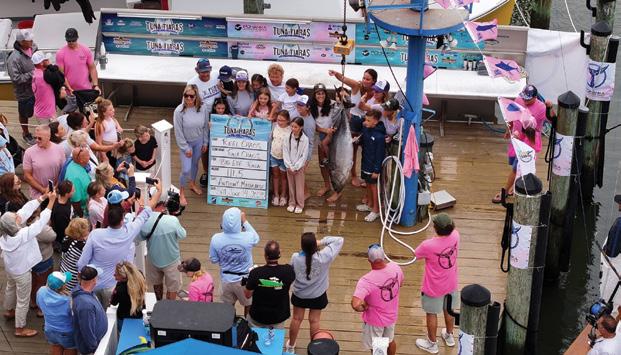
5 KCWA Watermen’s Day and Boat Docking
Presented by Kent County Watermen’s Association on the Rock Hall bulkhead in Rock Hall, MD. Celebrates the men and women of Rock Hall, who have and still do, make a living fishing local waters. Boat docking contest, food, music, and more.
8 Frederick Saltwater Anglers Monthly Meeting
6:30 p.m. at 289 Willowdale Dr, Frederick, MD 21702. Speaker and vendor TBD.
11 Anne Arundel County River Days
11 a.m. to 3 p.m. at Quiet Waters Park in Annapolis. All events are free and open to the public. Each festival will feature fun activities for all ages, including boat rides, water activities, environmental educators, live music, games, crafts, food trucks, and more. Boat rides are free, but capacity is limited and tickets will be available first come, first served.
11 Antique Outboard Motor Club Meet
8:30 to 2:30 p.m. at Flying Point Park (511 Kennard Ave) in Edgewood, MD. Everything vintage outboard motors and associated marine items. For more info contact Al Barnes (on_travel_2015B@ yahoo.com) or Lee at (410) 833-6152.
17-19 FSA Summer Slam Tournament Frederick Saltwater Anglers. In Cape Charles, VA. Details TBD.
21 Essex-Middle River Fishing Club July Monthly Meeting Speaker: Don Cocavitch on Upper Bay Fishing. 7:30 p.m. at the FOP Lodge 34 (730 Wampler Road in Middle River, MD 21220). Open to all. Food and drinks are available.
21 PSWSFA Monthly Meeting Peninsula Saltwater Sportfisherman’s Association. Regular monthly meetings are held on the 3rd Tuesday of the month at 7 p.m. at Peninsula Baptist Church (2605 Cunningham Dr, Hampton, VA). Meetings consist of an educational speaker, monthly tournament awards, and a discussion of fishing news and club business. Meetings are free and you do not need to be a member to attend.

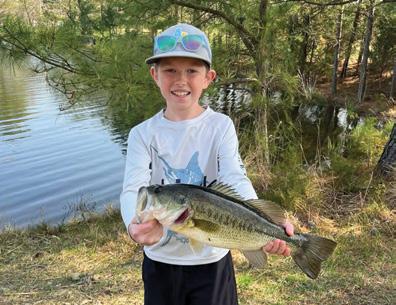
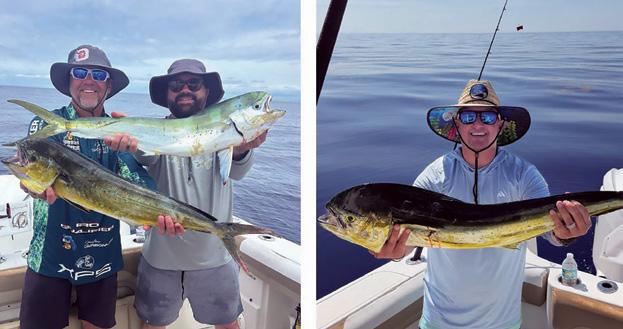
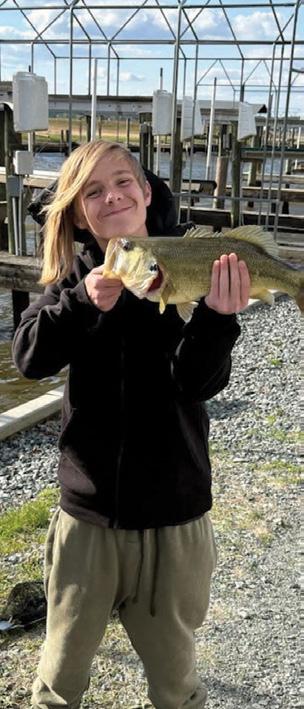
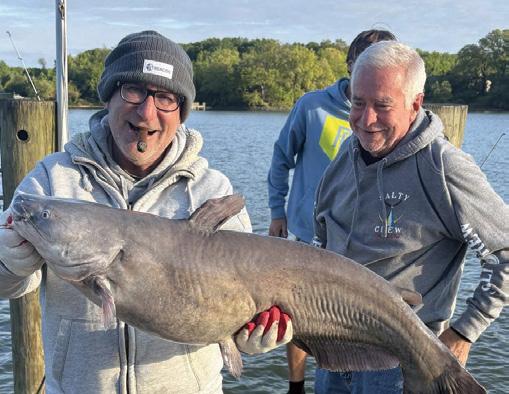
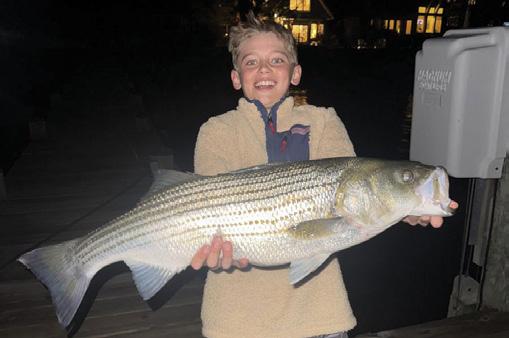
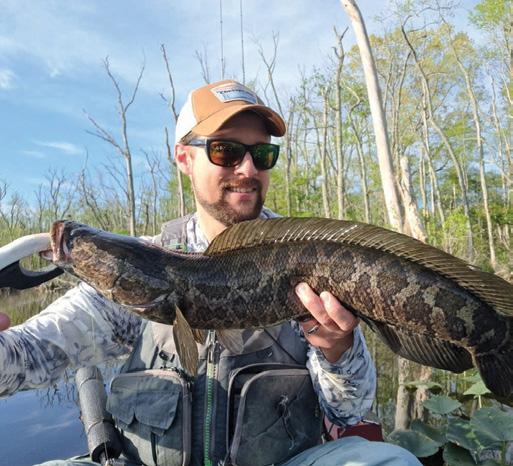
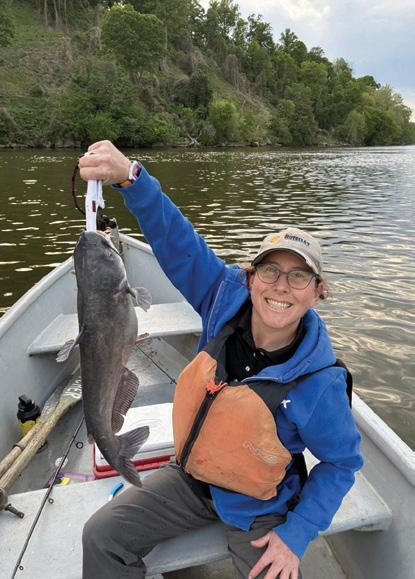
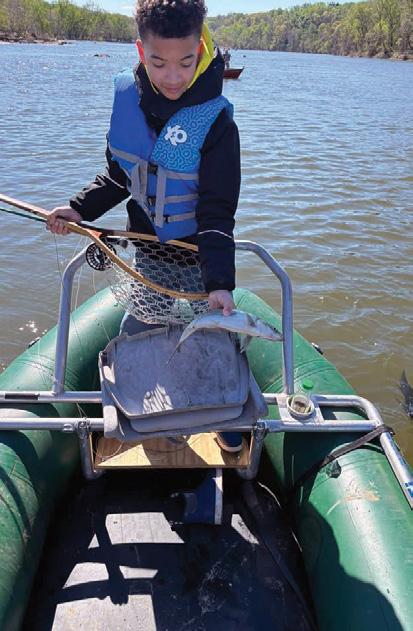
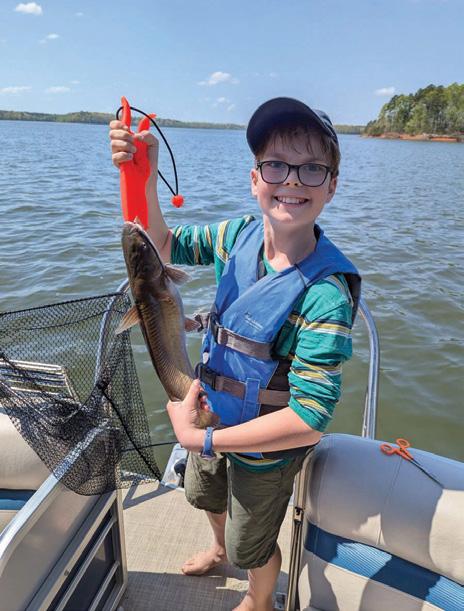
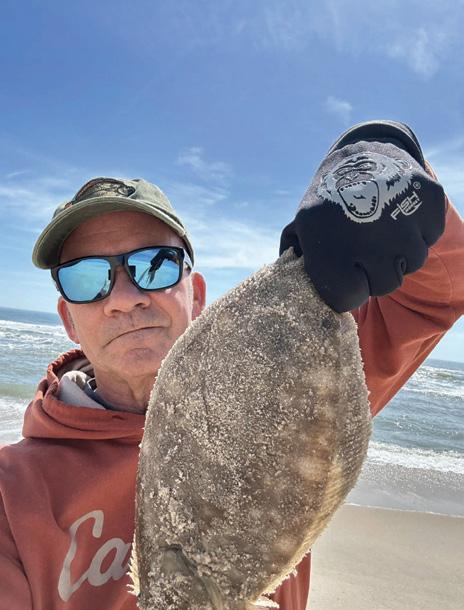
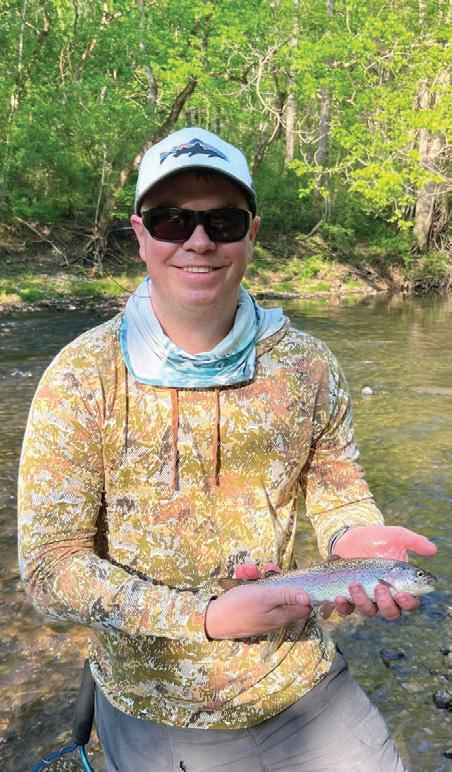
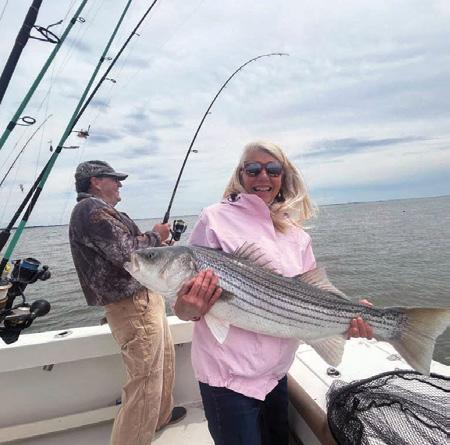
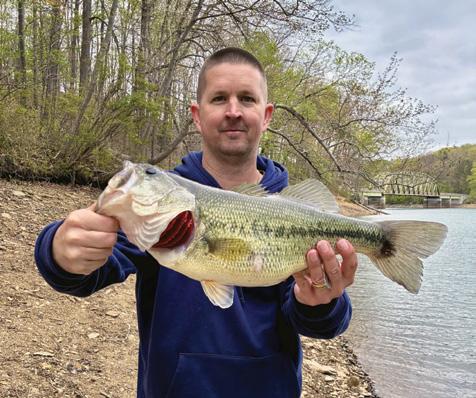
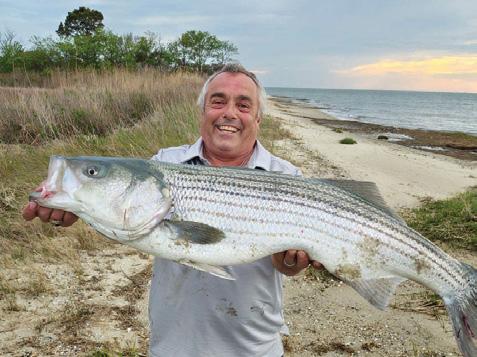
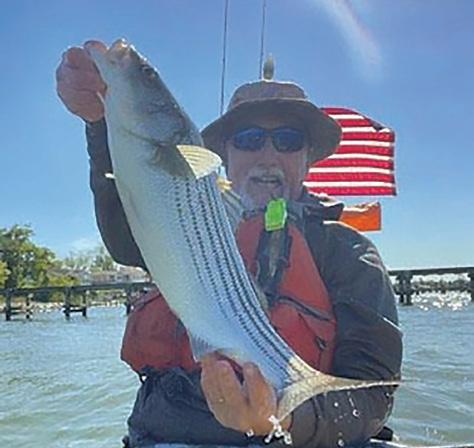
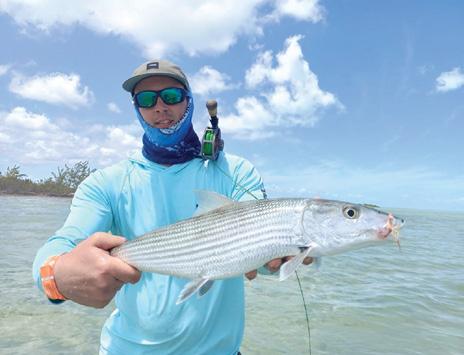
# Pete took a trip to Mexico and got a S-W-E-E-T bonefish on the fly.
By Lenny Rudow
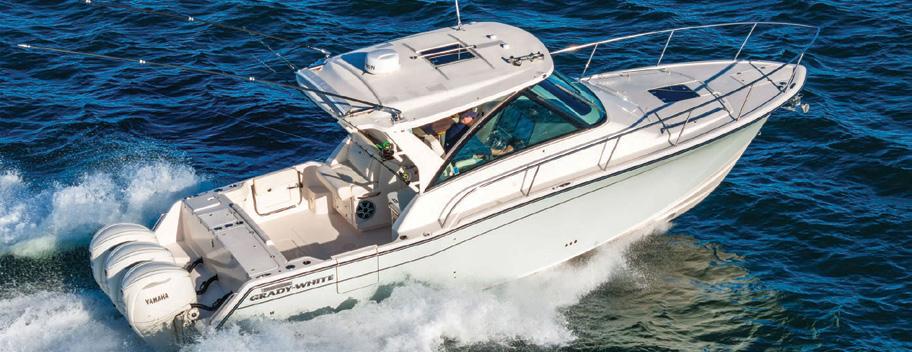
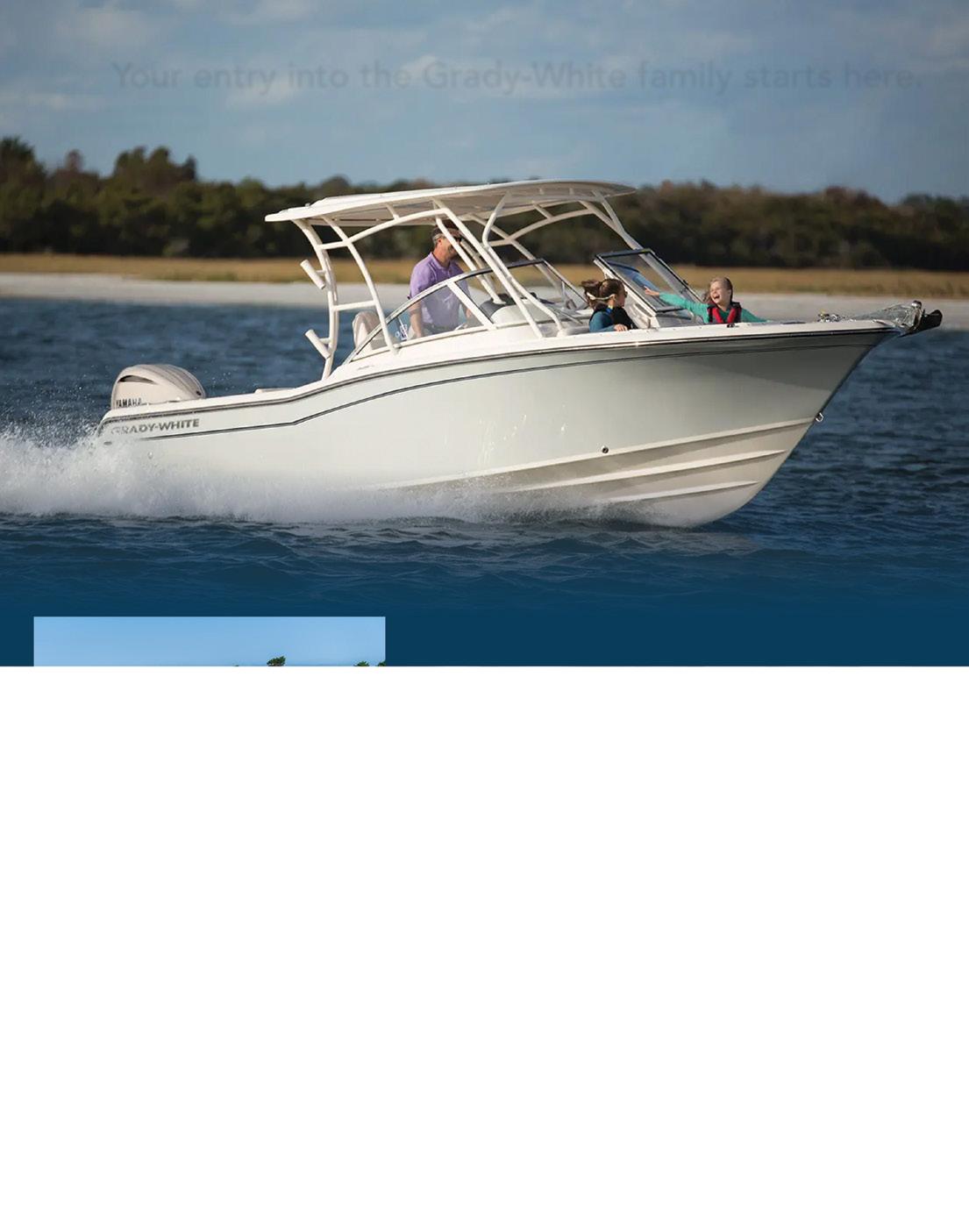
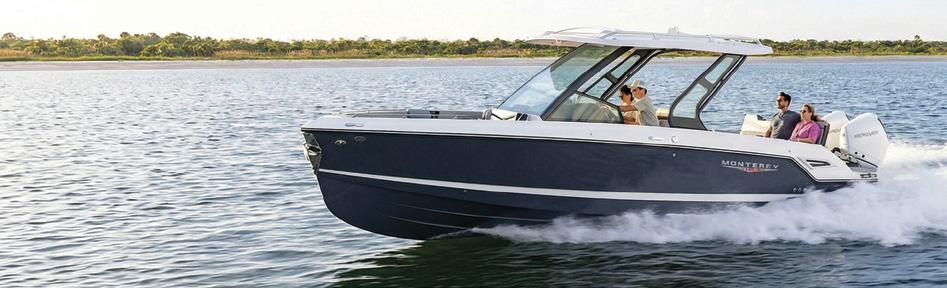
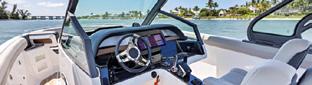
Let’s start out this boat review by stating the obvious: the Express 340 is a GradyWhite, so it’s top-shelf from stem to stern. Whatever you’re looking at—from the hull to the horn to the helm station—you’ll see excellent design, the best quality accessories and the longest-lasting hardware. You will spot exactly zero cornercutting. Of course, if you’ve been around fishing boats for more than a minute you already knew that, so let’s move on.
What you might not know about the Express 340 just yet is that it replaces the 330 Express, which was Grady-White’s first outboard powered express and was introduced over 25 years ago. For any boat model to stick around for that long is rather shocking (a decade is considered a long lifespan) and it’s a testament to the 330’s popularity. In the “if it ain’t broke don’t fix it” category, the hull of the 340 remains unchanged and rides on Grady-White’s exclusive variable-degree deadrise SeaV2 with 20 degrees of deadrise at the transom and 30 degrees amidships, to chop open the seas yet maintain maximum stability and efficiency. From the
rubrail up, however, this is an entirely different boat.
In the cockpit you’ll find a full complement of fish-catching accouterments including a 30-gallon livewell with a full-column inlet; four rodholders in the gunwales; four pipework rocket launchers; a tackle station in the mezzanine seat; 42- and 22-gallon fishboxes; and raw and freshwater washdowns. And since it’s a GradyWhite you can probably guess that you’ll also find a full complement of family and comfort accouterments, like hot/cold freshwater showers at the transom; a fold-out transom bench seat (which deploys and folds smoothly and easily); coaming bolsters all around; and an electrically deployed cockpit sunshade. The Express 340 also boasts side-opening doors on both sides for easy entry and egress, a wet bar with a sink, stowage drawers, and/ or if you opt for them, an electric grill and refrigerator.
Where luxury grabs you in a bear hug, however, is when you step up onto the helm deck—especially if it’s August and you’ve opted to have the 18,000 btu air conditioning system piped in. While poking and prodding the Express 340 we found the
port-side dinette to be the biggest helm deck upgrade from what was on the 330. Previously the boat had a centered helm, which only left room for some basic passenger seating on either side. On the new 340 the helm shifts starboard and opens up gobs of space to port, allowing Grady-White to incorporate a dinette with L-shaped seating plus an aft-facing lounger.
Comfort also gets a boost in the lower cabin. The mid-cabin berth used to be a bit cave-like on the 330, but is now much more open and easily accessible because with the cabin entry centered, there’s space to port for an elevated mid-cabin entry overhead. That provides more than sitting-height clearance as you duck in. The forward
LOA: 33’6”
Beam: 11’7”
Displacement: 12,870 lbs.
Draft (min.): 2’1”
Transom Deadrise: 20 degrees
Fuel Capacity: 290 gal.
Water Capacity: 60 gal.
Max. Power: 1050 hp
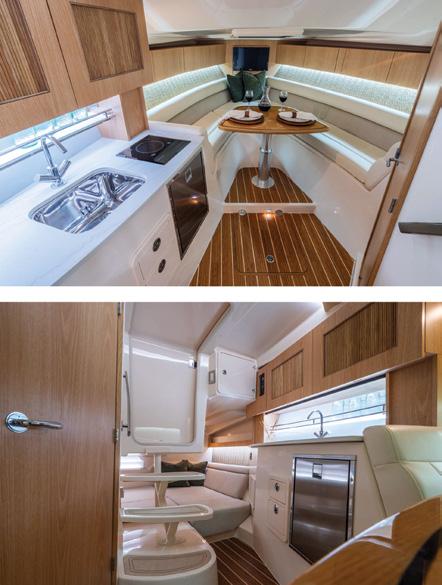
dinette area has also been redesigned and enlarged with a full-size oak table that drops down to convert the area into a V-berth. To starboard there’s a fully enclosed stand-up head compartment with shower, and to port a full galley with a single-burner cook-top, refrigerator, sink, microwave oven, and stowage drawers and cabinets.
The Express 340 is available with either twin Yamaha F450 XTO Offshore outboards or triple Yamaha F350s. With the 450s you’re looking at a cruise in the upper 30s at 4500 rpm and a wide-open speed in the low 50s. Jump up to max power and the 4500-rpm cruise is in the low 40s while top-end jumps up into the upper 50s. An interesting point to note is that the triple-engine rig enjoys slightly better fuel economy, with the 4500-rpm cruise clocking in at right around one mpg and the best cruise going just over 1.1 mpg at 30 mph and 3500 rpm.
If you’ve been looking for a 30-something express to troll for stripers on the Bay, tempt the tuna offshore, or take out the kids or grandkids for a pleasure cruise, it would have been tough to top the Express 330. But Grady-White just did it. Welcome to the Express 340. #
Remember when fishfinders flashed, transoms rotted out, and livewells were squared off inside? You won’t see stuff like that on modern boats, and one of the great things about today’s fishing machines is that they’re in a state of constant evolution as the builders—at least the good ones— work to make and equip each and every model better and better. One we were on recently that wowed us was a brand-spanking-new Pair Customs 24 Deep V, which you might remember we reviewed just a few years back. More recently we took this boat for a test run, shot a video (which you can check out at the FishTalk YouTube channel), and noted significant advancements. Some of that was due to tweaks and changes and some was due to the boat being optioned-out
For more information visit the Grady-White website or FishTalk supporter Tri-State Marine, Annapolis, Middle River, and Deale, MD, (410) 867-1447, MD, or tristatemarine.com Watch our video of the Pair Customs 24 DV at youtube.com/fishtalkmagazine
differently, but the bottom line is that we thought the new 24 Deep V we were on was an even better boat. So even though we don’t usually revisit a model until more time has passed, why wait?
The console and helm were where we first spotted some serious improvement, starting with the protection level when we opened up the throttles, because this boat had an integrated windshield rather than an add-on. And we loved the fact that there was a windshield vent we could swing open by hand. Yes, by hand—those fancy electric vents add cost, weight, and complexity to a fishing machine. All that, so you don’t have to burn the calories of… reaching up and pushing open a window vent? Um, please.
The forward console lounger with flip-down armrests was another stand-
out item, because it’s big, comfy, and underneath houses a large fishbox that… wait a sec! On this model the fishbox was also plumbed to serve as a second (and rather massive) livewell, in addition to the preexisting livewell centered in the transom. And there was more cool stuff on the other side of the console, too, beneath the leaning post. Where the last 24 Deep V we were on had a small tackle station with three boxes and two drawers, this one had a huge station with five tackle boxes including two double-sizers, two drawers, two larger drawers with dividers, and two bulk stowage shelves. You could quite literally load up your light tackle gear, trolling gear, inshore gear, and offshore gear, and have it all onboard and at your fingertips at all times.
Look up from that tackle station and you’ll see four rocket launchers on the back of the post and five lining the hard top, plus a pair of kingfish holders on either side. Look farther up to check out the upper station. It’s an exceptionally well thought out perch, with an easily opening access hatch that slides back without any fuss (some are a bear) and steps integrated into the side pipework (some require goat-like climbing skills). Once up there you’ll find space for a 12” MFD; a wheel, throttle, and trim tab controls; and full-size swing-up bolster seating for two.
One thing we noticed that hasn’t changed one bit is the boat’s uber-stout construction. You may remember that this is something we’ve raved about in the past, because Pair Customs are built with two-inch-thick core in the stringers, biaxial 24-ounce fiberglass, two-inch core in the transom, and a full bracket for the outboard. To really wrap your head around how tough these boats are built, however, you need to step aboard one. Don’t take our word for it, try banging and stomping for yourself.
Better yet, get it off the dock and feel the hull underfoot. We’ve been in previous Pair Customs 24 Deep Vs in rough stuff and walked away impressed. When we ran the new model the chop was minor league and less than a foot, yet in some ways we were still impressed. Blasting through the Miles River at full tilt the boat didn’t slap or even move up and down one iota. And when we turned beam-to and drifted it remained shockingly stable with zero rocking and rolling. No, it wasn’t rough, but it wasn’t glassy either, and most boats would at
LOA: 27’4”
Beam: 8’6”
Displacement: 4300 lbs.
Draft (min): 1’8”
Transom Deadrise: 22 deg.
Fuel Capacity: 150 gal.
Max HP: 450 hp
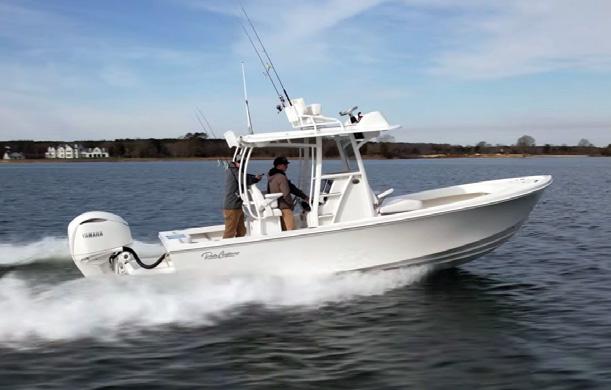
least bump and rock a bit. Not in this case. Again, this is a trait you need to feel for yourself to fully appreciate, so cast off the lines, go for a sea trial, and then make your own assessment—we’re pretty darn sure you’ll agree with ours.
Speaking of blasting through the Miles: with the single Yamaha F350 on the bracket (it’s also available with twins), we ran at a slow cruise of 26 mph while turning 3500 rpm, and at 4500 rpm galloped along at 38 mph. When we nailed the throttle we hit 5800 rpm and a wide-open speed of 48 mph. Yamaha has tested the boat with different conditions and load, turned an additional 200 rpm, and got it well over 50 mph. Mercury’s testing with a 400-hp Verado got a hair over 50. And with a pair of 200s or 225s the 24 Deep V has posted numbers pushing into the upper 50s.
Times change, boats change, and people change, too. If you’ve evolved to the point that you want a no-nonsense fishing machine that’s laid out and rigged for serious angling adventure, is built as tough as they come, and rides well above par, try checking out a Pair Customs 24 Deep V. There’s a good chance you’ll find that this boat has evolved right along with you.
For more information visit the Pair Customs website or FishTalk supporter Brown Dog Marine, in Cambridge, MD, (410) 310-8931 or browndogmarine.com. In Virginia, the local dealer is Fridays Malise Marine in Saluda, (804) 758-4131 and in Delaware, it’s Shorts Marine in Millsboro, (302) 945-1200.
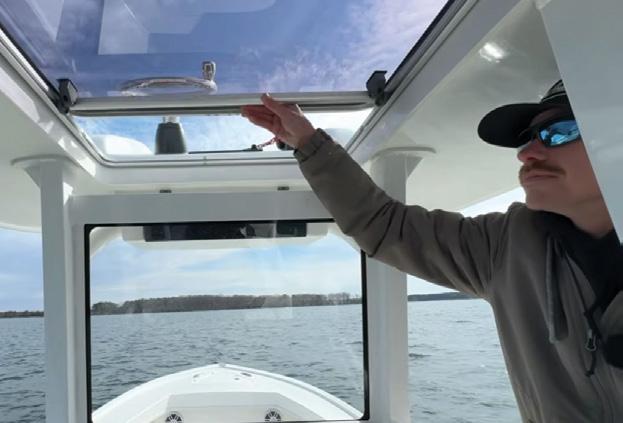
# Access to the cobia tower is much easier than you’ll find on most boats of this size and nature.
For more fishboat reviews, visit: FishTalkMag.com/fishboat-reviews
presented by

Behold, the BallyhooArtificial Sizzle: Who needs ballyhoo? Get in tune with fishing artificials for yellowfin tuna.
By Staff
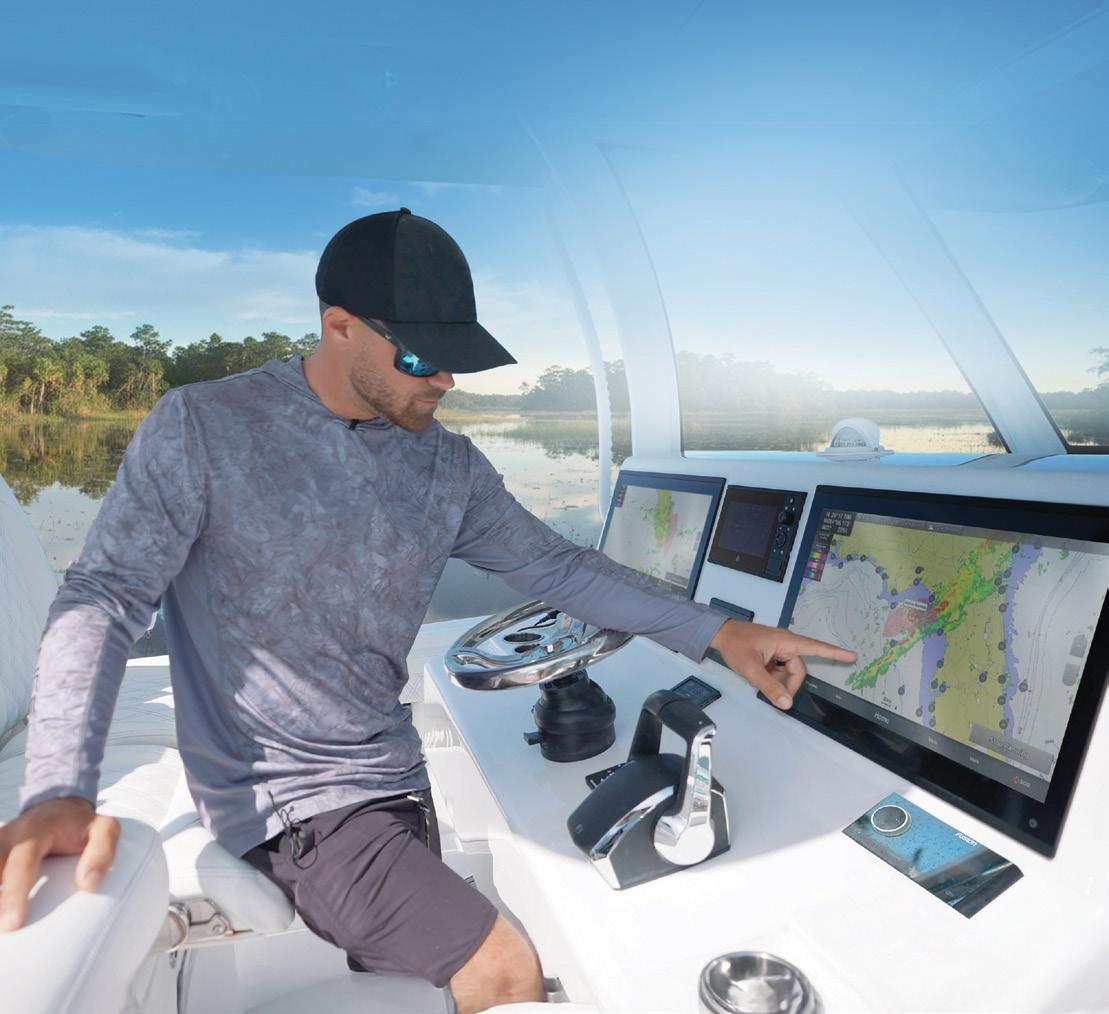
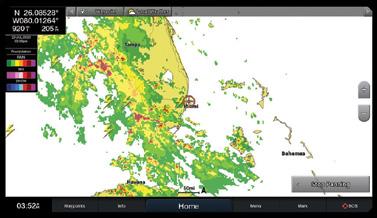
The weather was unsettled when you woke up in the dark of night but the forecast called for the wind to drop soon so you iced the cooler, filled the fuel tank, and stacked the rods in the rocket launchers. As the very first hints of daylight begin to paint the eastern horizon you and the crew prep the boat for departure, then huddle around the chartplotter and bring the SiriusXM weather overlay on-screen. You can see that the wind is falling off and will be on the transom for the ride out, the seas offshore have calmed to reasonable levels, and most importantly that the scattered thunderstorms they were calling for are tracking north and well away from your destination. You’re fully armed and ready for a day of offshore fishing—it’s time to pitch the lines and run the inlet.
Undoubtedly, you also have a pack or two of ballyhoo aboard the boat. For most of us, most of the time, ballyhoo is the dominant species in the spread. But there will be times when they don’t account for the catch, times when they’re hard to come by, and times when the use of artificials boosts their effectiveness. Last month in the second part of our “The Thunnus Among Us: Catching Yellowfin Tuna” series, we focused on rigging and trolling this small but critical bait. This month, we focus on the artificial lures you also need to have in the spread.
Lures fall in and out of favor with time, changing fisheries, and creative new developments made by people in the tackle industry. Through it all, however, there are some must-haves that produce wild explosions and bent rods decade after decade. Three perpetual top offerings include spreader bars and side-winders, Green Machines, and topwater plugs.
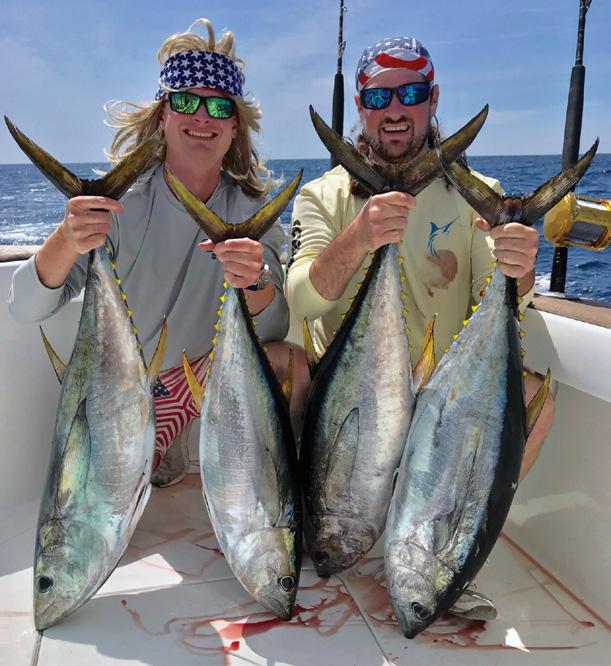
# Kevin and Jurassic Man make use of everything in the arsenal when yellowfin are the target, including plenty of artificials.
Spreader bars are those big rigs with a long arm trailing multiple daisy-chained soft plastics, usually squid. Side-winders (“Sidewinder” and “Side Tracker” are trademarked names) are a type of spreader bar with a hydrodynamic wing that pulls them off to one side of the boat or the other, helping to space out the offerings in your spread. And splash
bars have small birds attached which kick up a frenzy. All accomplish the same thing: presenting a large number of teasers mimicking a “school” of bait, with a hook-bait trailing the school. Just a decade or so ago side-winders wouldn’t have been on this list and two decades ago splash bars wouldn’t have been around yet, either, but their development is a testament to the effectiveness of the original spreader bars.

presented by
TIP: When running a spreader bar it’s best to pull it from a short rigger position to get some angle in the line, and set the lure’s distance depending on where it sits when running in the ideal position: with the bar held just above the water but the baits all dragging through it.
Which is best? Ask three anglers and get three different answers. That said, all are very effective at not only hooking yellowfin, but also at bringing them up to the surface from a distance. These lures kick up one heck of a fuss, splishing and splashing as they move through the water. Choose whichever you personally like the most, but make sure you have a few of these deployed at all times.
TIP: These rigs attract a lot of attention, but don’t always get hit. Towing a camera behind the boat proves that plenty of fish will eyeball a bar without taking a swipe. Take advantage of this by running a natural bait slightly behind it (10’ or 12’ back and slightly off to one side is ideal). Often a fish that isn’t fooled into eating the plastic will spot and attack the natural bait after being drawn close by the bar’s fuss.
Green Machines are a classic lure that’s withstood the test of time. There are many imitations from many brands, any of which can be effective. Essentially,
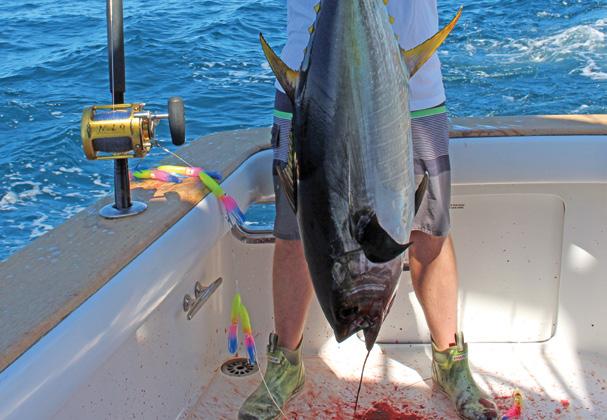
they’re green squid-like bullet-heads which are usually most effective when trolled bare. Yes there are other colors, and yes sometimes those other colors work best; yes sometimes people rig a ballyhoo on a Green Machine, and yes that sometimes catches fish. But as a general rule of thumb, lime green run bare rules.
TIP: Most anglers rig Green Machines on 150- or 200-pound test, which works just fine. However, always keep one rigged on 80-pound test handy. The lighter line allows the lure to dart and weave through the water with more action, and when the bite gets tough, if you deploy the light rig you’ll boost your chances
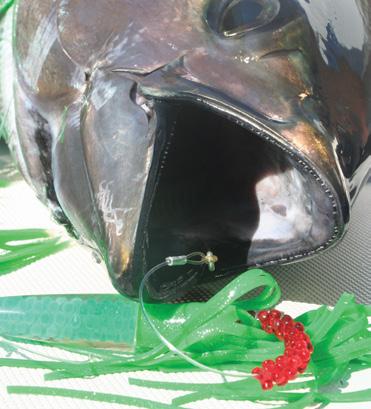
of tempting a fish into attacking. Just remember to adjust the drag accordingly.
Green Machines can be pulled all by their lonesome, and they work great. Many anglers like to rig them as the hook-bait on a spreader bar or daisy chain, which can also be fantastically effective. And many use them to tie up a Green Machine/Bird rig, where a bird trails three teaser Green Machines followed by a final hookbait.
TIP: Whenever longfin tunas are around deploy multiple Green Machines. Much of the time they will choose this lure over anything else in the water.
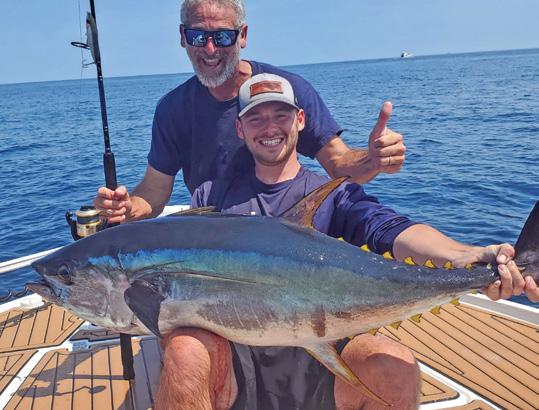
Wait a sec — you can’t exactly troll topwater plugs, can you? Well, you can, but it’s not likely to be effective and that’s not why we want these lures aboard. If and when you spot tuna busting water on relatively small bait, they can be hyper-focused and may completely ignore your trolled offerings. When this happens, the best way to get a fish on the line is to come within casting distance and hurl out a topwater plug.
TIP: Any old topwater will not cut it, because yellowfin will demolish most plugs designed for inshore gamefish. It has to be uber-beefy, with 4X or 5X hooks and through-wire construction. When you spot yellowfin busting water the natural inclination is to continue trolling around them, which may produce a strike. But when you’ve spent a few minutes asking yourself why you can’t buy a bite when those magnificent beasts are exploding to your left and to your right, wind those lines up posthaste and start flinging plugs.
TIP: Carry the heaviest castable rod you have, to go along with that lure. Pitch out a topwater on a 20-class rod you use for bailing mahi, and you’ll be in for an hours-long fight with a low probability of success. #
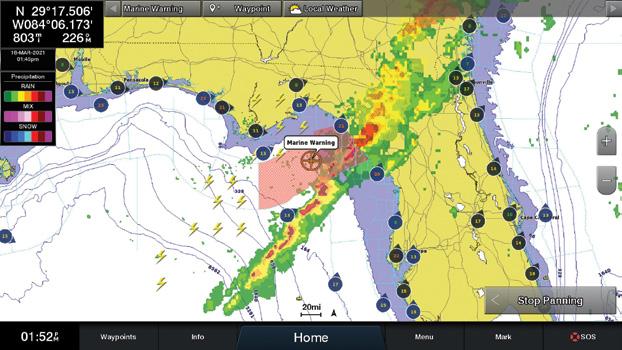
allow you to
at a much faster
whether you’re searching for that ideal temp break or moving out of the line of fire when storms are headed in your direction.
How will you know when and where to tilt your spread more towards artificials and less towards rigged baits? While trends and patterns should be given priority, every day on the ocean is a new day and it’s always smart to mix things up until you figure out what’s working best at any given time. That said, artificials have one advantage over rigged baits: you can troll much faster without worrying about them swimming funny or ripping apart. With a spread of artificials you can move along at eight or even nine knots, and most of the time can mix in a couple of rigged baits without working too hard. Try that with a full spread of naturals and you’ll be constantly replacing ballyhoo, if you can even get them to run right in the first place.
Let’s say you have SiriusXM Marine, so you already have all the weather intel you need to know when it’s safe to leave the dock and which way to head to dodge those thunderstorms. Add in Fish Mapping, and now you also have the most current sea surface temperature (SST) temp charts right on the chartplotter screen. That means you can run right to the edge of a break or eddy, but you’ll still probably want to hunt around for a bit to locate the strongest temp changes and water barriers. In this scenario setting lures is advantageous, because you can troll faster and cover more ground as you search. When you locate the peak break in the area you can slow up a bit and mix up the spread. Same goes for sticking with artificials when you locate fish that are moving fast, or are playing tag with a school of porpoises that’s being shadowed by yellowfin.
This is the final installment of The Thunnus Among Us, brought to you by SiriusXM Marine. They’ve sponsored this offshore angling section because these folks are anglers, too, and they believe (correctly) that we’d all be safer and better off with the latest weather data and sea condition intel on our chartplotters. We’ve used their systems for years at a time, and we agree. Having SiriusXM at the helm is a serious boost of the safety margin— and in the long run will help you catch more fish, too.
By Wayne Young
In this installment of our survey of natural formations in the Chesapeake, we’re going to take a look at three large natural anomalies on the east side of the Lower Bay. Each offers great bottom structure that draws multiple sportfish species. All are also close to welldeveloped artificial reefs.
On the east side of the Bay the area below Tangier Sound is not without prominent natural formations. A rather substantial outcropping is charted as an obstruction at the northwest corner of the Nandua-Pungoteague Fish Haven. The feature is a massive natural outcropping that resembles an irregular mountaintop ridgeline with a massive, deep, craggy ravine. The formation is within Bathymetric Attributed Grid (BAG) color shaded relief coverage and was also depicted using a CARIS 3D image in a National Ocean Service (NOS) report which is included in the illustration. This formation is on my old croaker list to check out. It’s a long run across the Bay from the Northern Neck and an even longer run from Point Lookout. Yet with structure like this beckoning, plus some really nice artificial structure immediately to the southeast, it’s definitely worth adding to your want-to-go to structure list.
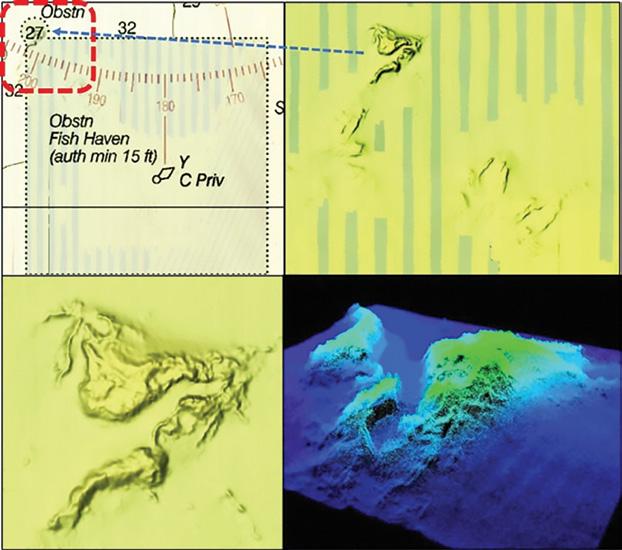
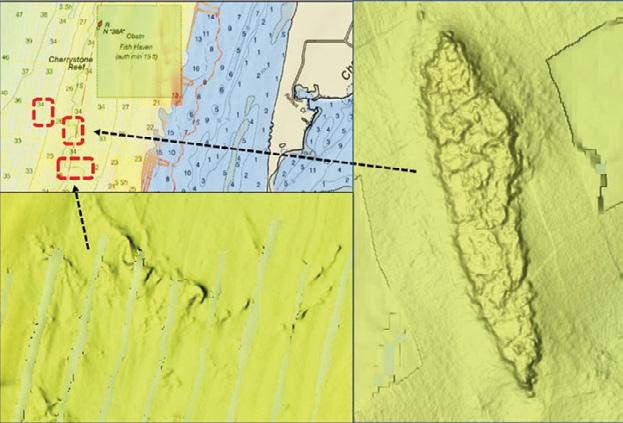
Two large natural formations further down the Eastern Shore are both features within BAG color shaded relief coverage. South southwest of Cherrystone Reef is a huge underwater formation. Charted contour lines don’t reveal the rugged character of this outcropping. As shown in the illustration, there are two additional outcroppings in the vicinity as well.
Southwest of the southwestern corner of Cherrystone Reef slightly over three nautical miles is the “Coral Lump.” This natural formation is 1200 yards northwest of Buoy R “36A” on the edge of the old bed of the Susquehanna outlet channel. Charted contour lines on the nautical chart don’t reveal the character of this rugged formation either. The Navionics sonar chart is somewhat more revealing, but the true character is shown by the BAG image. Although this formation may have corals, it gives the appearance of a natural rock outcropping. Regardless of its actual composition, the feature is massive, has a steep drop-off of over 20’, and has highly irregular texture on top. All of these eastside formations have made it onto my list as fishing destinations for Eastern Shore adventures.
The Chesapeake Bay holds many secrets, some of which are revealed by modern technology. Understanding natural formations is greatly facilitated by modern hydrographic surveys and imaging. This survey highlights much, but not all, of the hard structure that imaging has revealed to us in the area. Yet the majority of the Bay and its tributaries have not been fully mapped by modern sonar imaging. As more imaging becomes available, knowledge of heretofore unknown or little-known features may be forthcoming, along with previously uncharted wrecks and obstructions. In the meantime, there’s plenty of structure out there to explore with recreational sonars. When the screen lights up with arches or streaks showing feeding fish, it’s time to dip a worm!
As well as being a regular contributor to FishTalk, Wayne Young is the author of multiple books detailing wrecks and fishing reefs in the Chesapeake Bay, Delaware Bay, and beyond. All are available at Amazon.com, and you can find his Facebook page at “Chesapeake Bay Fishing Reefs.”
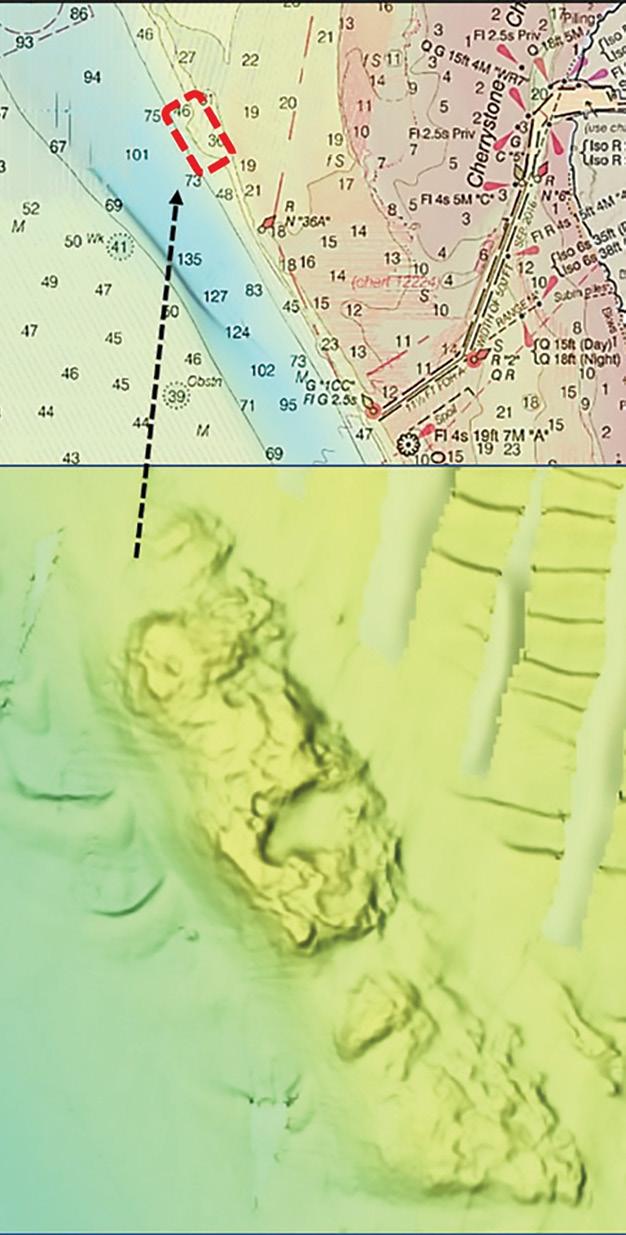
# The “Coral Lump.” Enhanced screenshots from NOAA Bathymetric Data Viewer.
Lenny Rudow
Toss a rubber Kermit into the right spot, and… KERPOW!
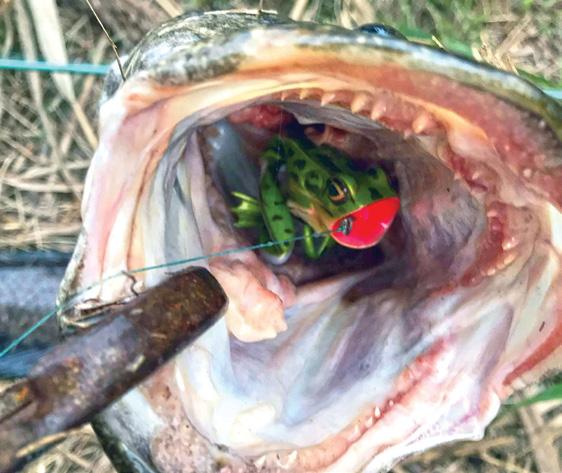
Frogs were always a bass lure, until they weren’t. Well, they do still catch plenty of bass. But these days in the FishTalk zone of coverage more people fish them because they’re an excellent snakehead bait. In fact, if you Google “what’s the most popular snakehead lure” the AI overview comes back with: “The most popular and versatile lure for snakehead is the hollow-body frog.”
Well, as usual AI gets it half-right. Frogs are indeed mega-popular, but they most certainly are not versatile. They’re best applied in very specific circumstances—and if you try using them in the wrong place at the wrong time, you’ll catch bupkis.
Frogs are hollow, flexible, rubbery plastic lures, often shaped like the real thing but sometimes in rather zany shapes and colors. Many have rubber skirt legs rather than molded legs, and a few have twisters, paddletails, or even spinner blades on the end. Some have concave faces that pop, while others are rounded or pointed. Almost all have a hook or hooks that come out the back and lie right up against the lure itself. This makes them very weedless (though not 100 percent),
so they can be pulled through lily pads, reeds, and other vegetation. Their flexible nature makes it easy to compress the hollow body, so when a fish grabs the lure it collapses, exposing the hook-point.
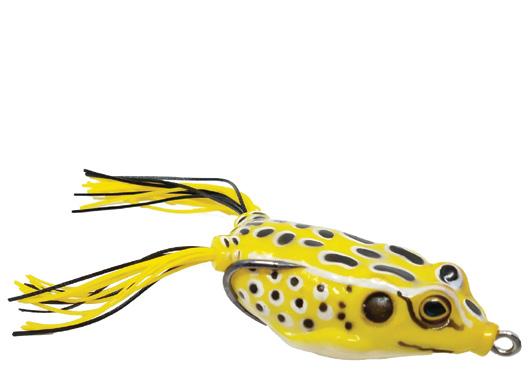
Just like the real thing, frogs are buoyant by nature. Since their bodies aren’t exactly watertight, however, some fill up with use and become less and less buoyant through the course of the day. When this happens you’ll want to give ‘em a squeeze or a shake every now and again so they float properly on the next cast.
Since frogs are topwater lures, they work best during the warmer months of the year when fish are feeding on the surface. Generally speaking, that means water temperatures are well over 60 degrees and fish are in just a couple feet of water or less.
The best time to reach for a frog is when fish are hitting topwater but are socked in deep cover where anything else would become hopelessly snagged. You can drop a frog into a tangle of deadfall and haul out a bucket-mouth
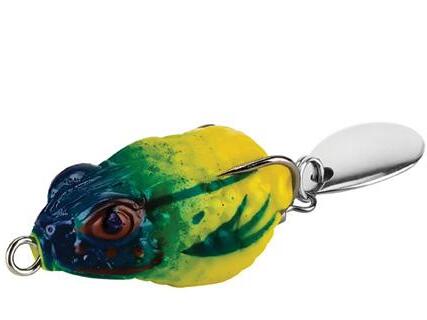

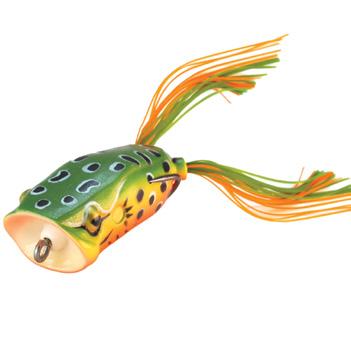
bass. You can pull one through a field of lily pads so thick that the lure spends more time dragging across greenery than it does going through the water— until a snakehead explodes on it from below. And you can cast one onto dry land then inch it out between the reeds and cattails right off the shoreline until a vicious attack ensues.
The first key to fishing a frog is casting accurately into the thick of the cover. If it plops down on something solid, like a lily pad, tree trunk, or the shoreline, immediately pull it just far enough to enter the water and let it sit for a second or two. Don’t worry, any nearby fish sensed the vibrations when it touched down and is likely looking in the right direction. Similarly, if it landed in open water let it sit for a few seconds before beginning a retrieve.
Assuming it doesn’t get blasted instantaneously, start reeling. Will they like it fast? Will they like it slow? Will they like it steady or erratic? These are all questions the fish will answer, not you, so vary your retrieve style until you start getting hits and then stick with what works on any given day. That said, remember that you’re trying to mimic the real thing. It’s usually best to go fast between lily pads and slow down when the lure reaches their edges, just as a real frog would. And if you see a fish waking towards the bait don’t stop reeling—that will look about as unnatural as it gets, because the real Kermit would be paddling for his life.
Now for a dirty little secret: it’s rare that I personally fish a frog. I’m just too dang excitable when a fish blows up on my lure, and most of the time I instantly rear back to set the hook.
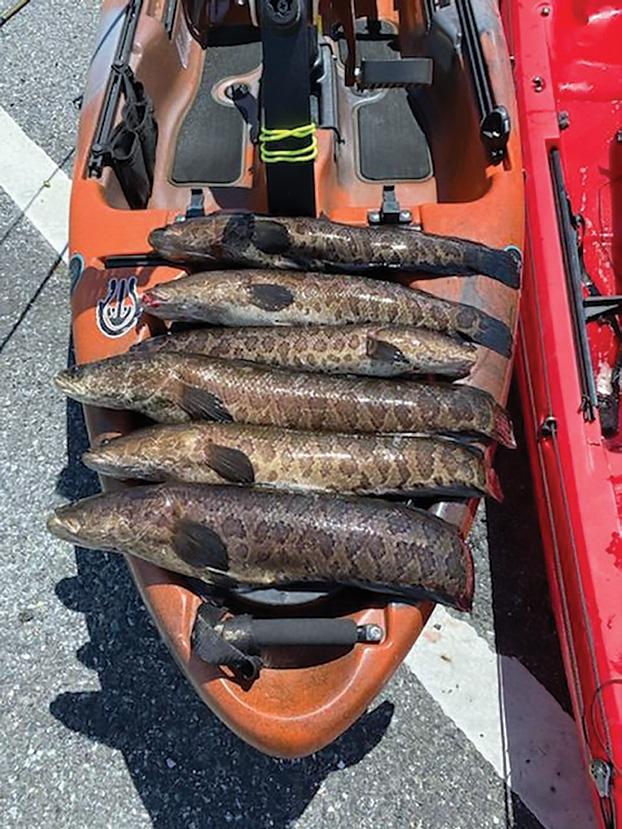
Half the time I send that frog flying and sometimes I have to duck my own lure as it goes zinging away from the fish. And herein lies the most critical part of becoming an effective frog angler: you need to wait for the fish to completely engulf the lure in its mouth and chomp down, so the hooks are exposed when you yank the rod back to set the hook. On the explosion, drop your rod tip towards the fish, pause for a second or two, and then set the hook.
That second or two feels like three years when the water is flying. I’m downright incompetent at forcing myself to wait, and I’ve had days where a friend and I fished frogs shoulder-to-shoulder, we both had a dozen snakehead strikes,
and he put 10 fish in the cooler while I only managed two. If you can learn some self-control and master fishing with a frog, however, you could be that angler who’s struggling to lift a heavy cooler at the end of the day. #
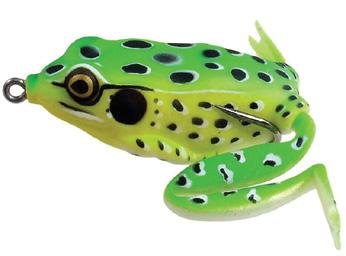
By Lenny Rudow
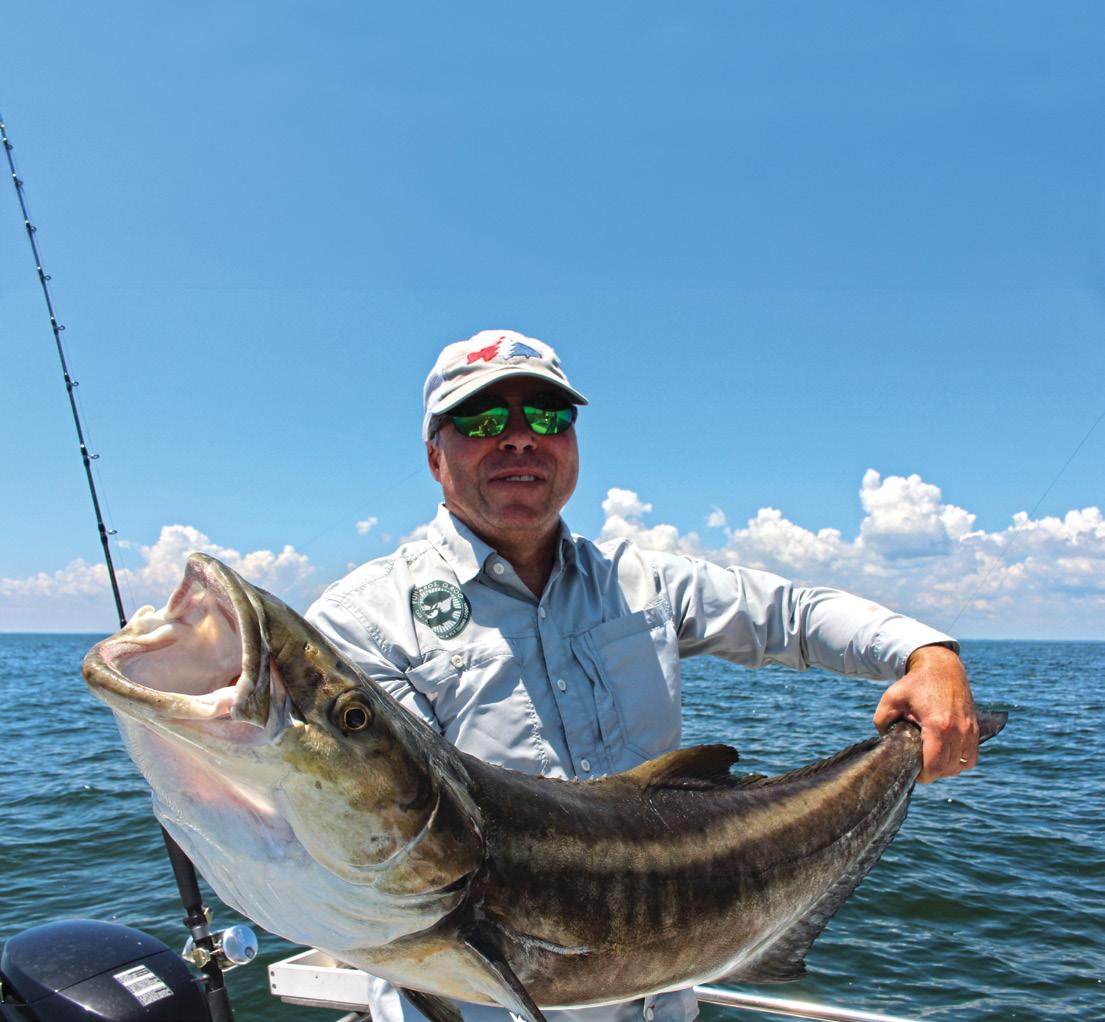
You want to target cobia but hedge your multi-species bet? Here’s How.
It’s June, people, and for countless Chesapeake and coastal DelMarVa anglers that means counting down the days until the opening of cobia season. Cobia are among the biggest, most powerful fish we can target in these here waters, and they taste fantastic to boot. There’s just one problem: there isn’t a cobia aficionado alive who hasn’t spent days at a time gazing across the water while sight fishing to no avail, or reeling in ray after
shark after ray while waiting for a cobia to bite while chumming. And unfortunately, when practiced at the ideal time and place for catching cobia, neither of those heroor-zero tactics commonly result in catching many other species of fish.
Lucky for you and me, there’s a solution to this cobia-centric conundrum: try trolling with hoses. Stacking the spread with rigs ideal for cobia, only, will produce other fish here and there, but with a little
tweaking and cajoling you can seriously boost your chances of catching cobia and then some.
For catching cobia and cobia alone you’d offer up only big 24” hoses, mostly in red. While greens, oranges, and whites do catch fish, most seasons red is the dominant producer. So if you’ll be towing six lines (two with #1 planers, two with #2 planers, and
This entire theory works in reverse, too. If you’re trolling a spread of spoons for mackerel and bluefish, sacrifice one line and put out a big red hose just in case some cobia are around. They often shadow mixed schools of marauding mackerel and bluefish, so this is always a smart move.
two with #3 planers, each about 20’ in front of the hose), five of those would be red and you’d mix in a different color here and there, changing which size planer it was on every hour or two to prospect differing depths with the oddball.
Now let’s juggle the mix a bit more than we otherwise might to try bringing some alternative species into the mix. Adding an additional color will boost your chances a chopper blue or a striper will take a swipe. Same goes for changing one of those whopping-big hoses for a 12” or 16” tube. So, maybe keep four cobia-centric rigs in the spread and try one line with a different color and a second line with a smaller size. You still have a shot at catching cobia on these rigs, too, but you’ve just significantly boosted the chances of catching a different species as well.
Wait a sec—you just read the FishTalk fishing reports, and learned that Spanish mackerel have showed up in your neck of the woods? Okay, catching a mack doesn’t really stack up to catching a cobia, but it’s a whole lot better than going home with a skunk in the box. Let’s sacrifice one additional line, and put a small spoon on the end. The mackerel will smack it along with the blues and rockfish, adding a little spice to the day. And if it gets hit while the other offerings go un-attacked, you could always trade off the small hose or the odd color and get another spoon into the mix.
With these other lures in the spread you now have a much better chance of catching fish, even if those fish aren’t the target species. The other factor we haven’t addressed, however, is trolling speed. Many anglers differ on what’s ideal for cobia; some say three knots is perfect, while others believe six is the way to go. And of course, plenty of people will advise four or five knots is best.
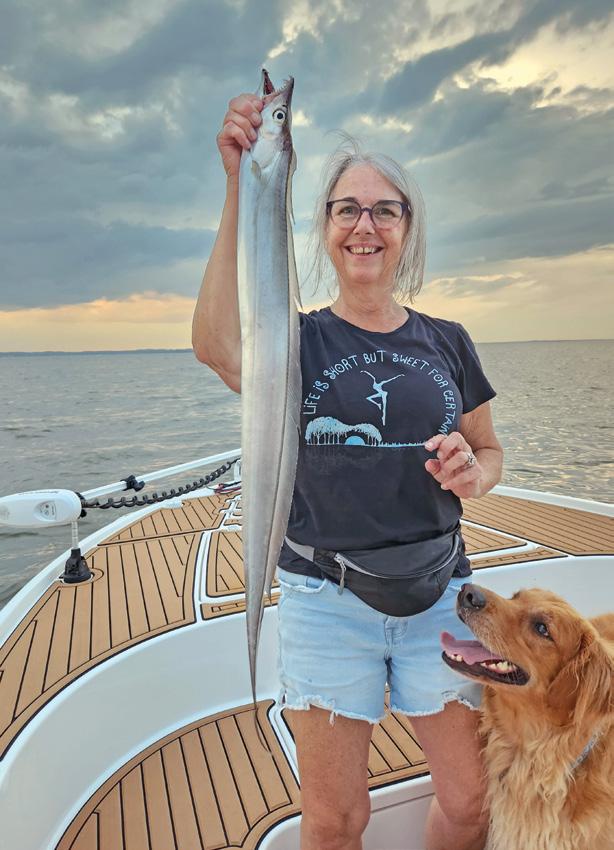
# You really never know what’s going to hit when you’re towing a spoon in the spread.
Truth be told, this is one of those things the fish dictate—not we anglers. Some days moving at a creep catches best, and other days they strike better when you’re moving at more of a clip. Many of us start slow and try bumping it up a bit here or there when the bites aren’t happening. Anywhere within this speed range tends to be fine for adding bluefish to the catch. But if rockfish are around and you want to pick some up, sticking with the slower end of the spectrum is the better move. Conversely, if Spanish mackerel hold more potential, then kicking speed up a notch is more likely to prove effective.
With all those goodies trailing behind the boat you might luck into other species as well—a bull redfish or black drum sometimes slams a hose, cutlassfish have been known to provide a spoon-eating surprise, and in areas where the planers
Never fail to tie a ball-bearing swivel midway in your leader and use a second ball bearing at the hoses’s attachment point. Otherwise, the line twist—and its resulting tangle—can be epic.
run close to bottom it’s not unheard-of for sea bass or weakfish to grab ahold. And while it’s true that you may be ever so slightly reducing your chances of bagging a cobia by taking this tact, you still have an excellent shot at the big man in the brown suit. And you have an even better shot at enjoying some action from one finned critter or another, whatever species it may turn out to be.
Charlie Ebersberger, longtime owner of Anglers Sport Center and beloved outdoorsman, passed away at the age of 69 on December 15, 2025. He was diagnosed with cancer and fought valiantly until his last breath. The following is a tribute to his life as told by friends and family. May all of you who loved Charlie find warmth in these words.
Anglers Sport Center has always been more than just a sporting goods store. It’s the heart of the Chesapeake Bay outdoors community, where many associate the smell of musk and alewife with the start of another adventure. At the center of it all for nearly four decades

was “Fishin’” Charlie Ebersberger, a man whose passion for the outdoors was rivaled only by his love for family and community.
Longtime Anglers employee Sammy Greene felt Charlie’s kindness from the very first moment he put on his blue shirt over ten years
ago. “Charlie made life fun for everyone around him,” Sammy said. He had a quiet way of mentoring through jokes, stories, and small acts of generosity. Once, when Sammy got a Perch Hounder stuck in his arm, Charlie didn’t scold him, but rather helped Sammy pull it out while playfully poking fun the whole time. When Sammy mentioned wanting to hunt whitetail during flintlock season, Charlie gifted him a muzzleloader. “It was unnecessarily generous,” Sammy recalls. But that was Charlie.
For Charlie’s children, Mike and Anna Ebersberger, Anglers was never just a store. It was their father’s heart made tangible. Mike, now the store’s operating owner, remembers his father as an avid outdoorsman as much as a people person. “He did the things he loved, and he did them with whoever came through the store,” he said. For Charlie, hunting and fishing were never about trophies or bragging rights. The competitions, the chest-pounding, the awards—they didn’t matter. “It was all about camaraderie, laughter, and connection,” Mike said. He learned early that for his father, being on the water or in the woods with a friend or family member was far more important than any record catch or kill.
Anna Ebersberger recalls her father as both parent and companion. “You can’t find a picture of him without him smil ing. He was my dad… but he was also my best friend.” His humor, patience, and ability to teach through storytelling shaped Anna and Mike into the people they are today. “Everybody knew Char lie… rich, poor, important, not important—none of it mattered to him,” Mike said. Every customer at Anglers felt it when Charlie was around: a sense of belonging, of being valued, of being part of something bigger than themselves.
Walking through Anglers, you can still see Charlie in every corner. The organized chaos, the dead squirrels in the beer room, the jackalope mounted on the wall—each piece a reflection of his personality. Anna laughs when she thinks of it: “Mike and I are the epitome of Charlie. We have a lot of Charlie tendencies, and we’re always ourselves.” Anglers was never about perfection or ego. It has always been about joy, connection, and sharing knowledge. Just as Charlie intended it to be.
Charlie’s mentorship extended beyond his family and employees. He loved watching people learn, helping them succeed, and celebrating it quietly. Mike remembers how his father would beam at someone mastering a new skill: “He did it because he loved seeing people happy. That was his greatest joy—helping some one else succeed.” In those moments when Charlie’s generosity, mentorship, and humor created a sense of community, people felt welcome, included, and capable. Every day in the store Charlie left playful traces of his personality everywhere, from mischievous remarks to perfectly timed jokes, but never at anyone’s expense. Anna remembers, “He loved being around people. He loved seeing them happy. That’s what he did best.” Mike echoes this, noting that Charlie’s laughter and warmth set the tone for every interaction in the store, teaching lessons without lecturing, giving guidance without pressure, and showing that the outdoors was best shared with others.
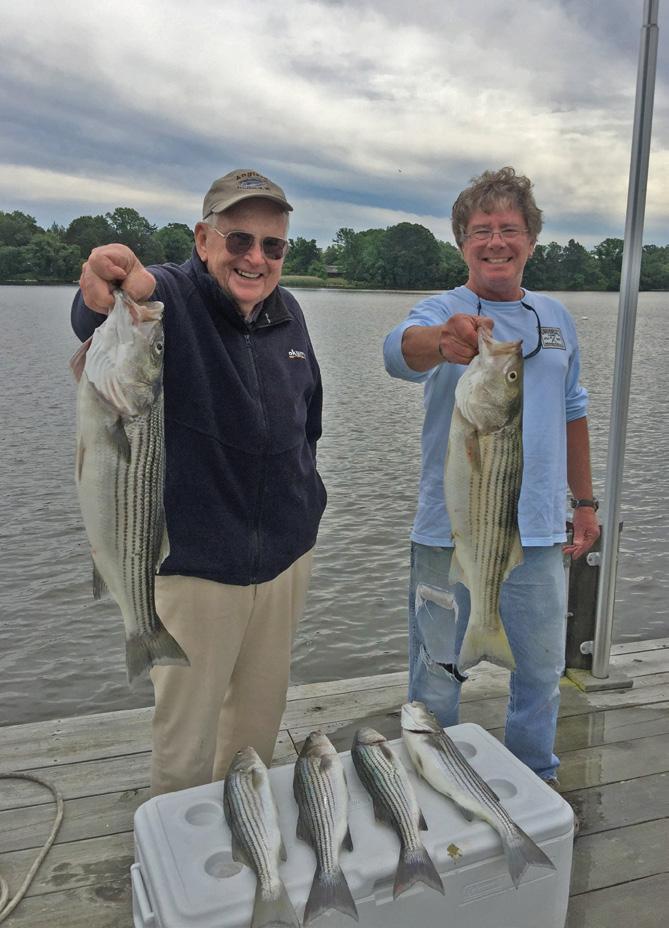
generosity, humor, and inclusivity. Anglers remains a gathering place where people of all skill levels can learn, laugh, and connect, echoing the spirit of the man who made it more than just a store.
Charlie Ebersberger’s greatest achievement wasn’t a 60” rockfish or a 12 point buck—it was the lives he touched, the community he nurtured, and the family and friends who carry
his spirit forward. In Mike and Anna, his warmth, humor, and authenticity live on. At Anglers, his laughter resonates in every story told, every lesson taught, and every moment of shared joy on the water or in the woods. Through his family and the community he built, Charlie’s heart still beats across the Chesapeake Bay, a testament to a life lived fully, loved deeply, and shared freely. #

Today, that legacy continues. Every event Anglers sponsors, every fishing trip, and every young hunter eager to down their first deer carries forward the principles Charlie lived by: mentorship,
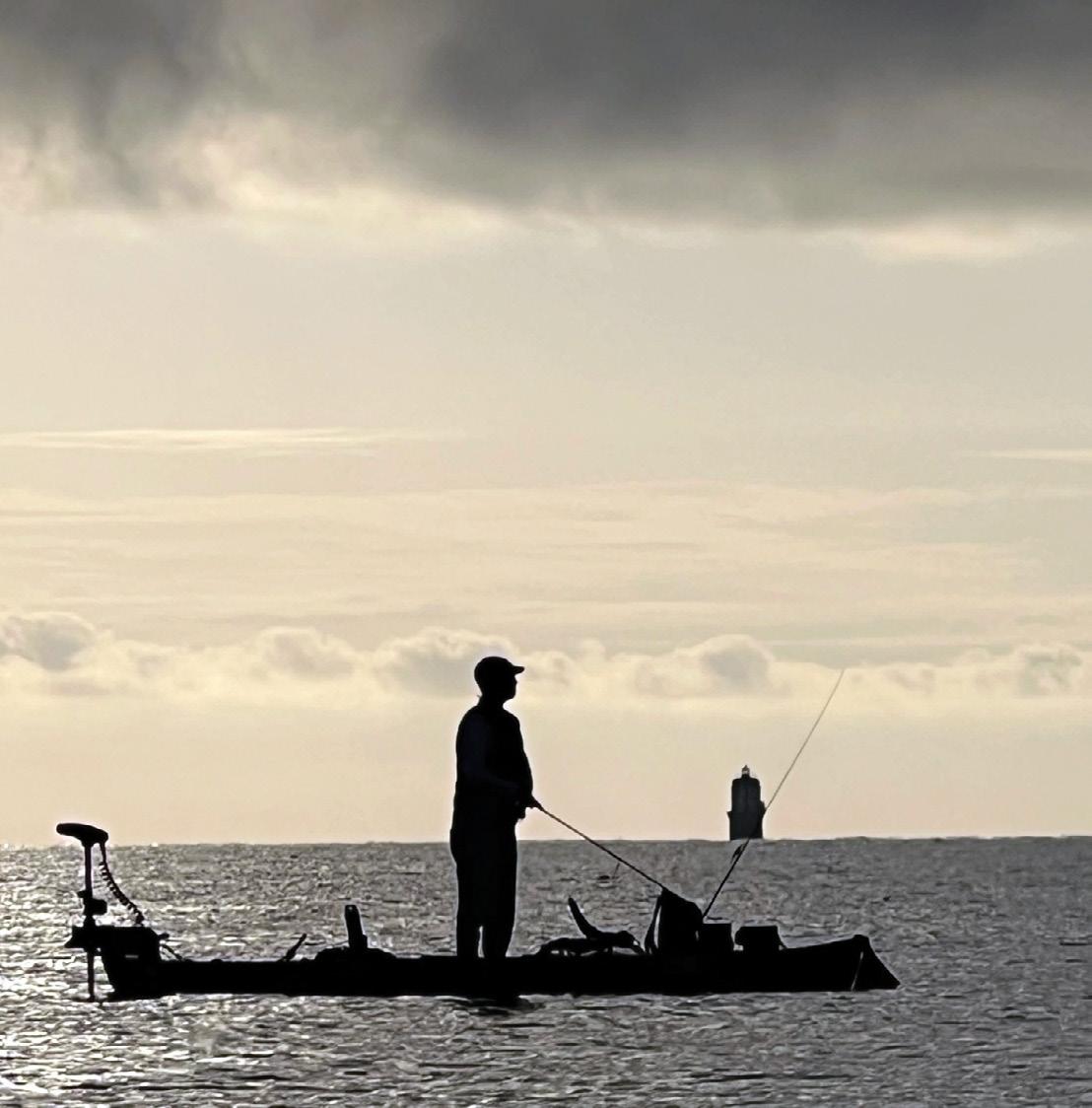
By Eric Packard
Mistakes? We all make them now and then. But picking the wrong movie on a Saturday night or making a mistake while out fishing on your kayak are two very different things. Picking the wrong movie may get you banned from choosing the next few and you’ll get stuck watching romcoms. But a wrong move while out casting on that prized fishery may cost you your life. Listed below are the top five biggest kayak fishing mistakes that I have seen while out on the water.
1. The number one mistake I see is when a kayaker is out paddling along without wearing their PFD (life jacket). Each year you hear of a kayaker who has fallen overboard or capsized and as a result died. Be smart, don’t drown, wear your PFD.
2. The second mistake I see is being unprepared for capsizing. Whether you believe me or not, you will at some point turn over or fall off your kayak. You need to understand your kayak and how to get back on board. Practicing with a buddy on a warm summer day in a controlled situation can save your life. A side note here, never wear waders while on your kayak. I had a friend who
went overboard at the Chesapeake Bay Bridge, and he knew how to get back on board because he had practiced in the event. But this time he was wearing waders and once they were full of water, he was unable to get back on board. His fishing partner on that day came to his rescue by cutting holes in the waders so the water could drain and he could climb back on board.
3. Falling overboard brings me to the third mistake a lot of people make, which is not being prepared for hypothermia. Winter fishing is a hazard on its own, and not wearing a dry suit is practically suicidal. But don’t think that only cold water can kill. Hypothermia will still kill you even with water temperatures in the 70s. Your body can’t regulate its normal temperature of 98.6 degrees when submerged in water. With a drop in your core body temperature you can experience drowsiness, confusion, or loss of consciousness.
4. The fourth mistake would be not having a float plan. My float plan is made up of my trip for the day, where I’ll be fishing, and when I’ll be back. Once I decide where and when I’ll be fishing I will inform my wife or, if she is traveling, one of my adult children. I’ll tell them my float plan and let them know when I’m off the water.
5. Failing to stay on top of the weather is the fifth common mistake I see. I don’t go out if the wind is over 13 mph. For me it becomes too uncomfortable having to adjust the placement of the kayak and casting in the wind. When the wind gets up over 20 mph I feel it’s hazardous; water can come over the gunnels, waves can swamp you, and when you consider any current that may be present it adds additional danger. Check the weather before you venture out, and check it again periodically during the day— storms can blow in in an instant.
Being prepared before you take that next cast is an essential part of every outing while out on the water. Safety always comes first, and that includes avoiding these five kayak fishing mistakes.
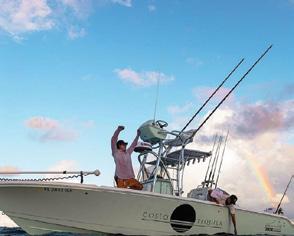

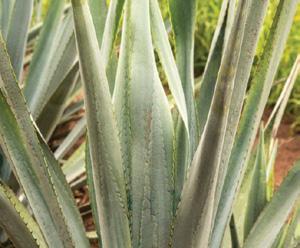


Gathered from our reports by Dillon Waters
We all know printed fishing reports are old news, so we don't include reports on these pages. Sign up for our email list and you'll get a weekly overview of the bites on the Bay, along the Mid-Atlantic coast, and in freshwater venues. Subscribe for Premium Access to FishTalk's fishing reports, and you'll get all the latest intel and location-specific info we can muster every Friday by noon. Visit FishTalkMag.com for details and in the meantime, here’s our monthly prognostication.
Offshore anglers will be pointing the bow east with visions of yellowfin tuna dancing in their heads. This is generally one of the strongest months of the year to tangle with these beasts, and by now there’s also a shot at hooking up with a billfish. Mahi will likely be around, too, in growing numbers as the month progresses. Meanwhile back at the beach, the coastal bays should be swarming with a solid mix of fish ranging from flounder to bluefish to redfish. Surf anglers can count on better numbers of panfish including kingfish to now be in attendance as well, so pony up for that bag of bloodworms.
As June begins bass will still be biting strong and crappie will, too, though by the end of the month if we have high temps the action may well begin to ramp down for summer. But you know what that means: it’s time to target those snakeheads! By now there will almost certainly be a strong topwater bite and enough weed growth that casting frogs into the pads and reeds leads to epic explosions. Late in the month spawning will likely begin (which temporarily makes for a tough bite) but after that we can start searching out fry balls. Also expect the blue cat action to remain strong through the month.
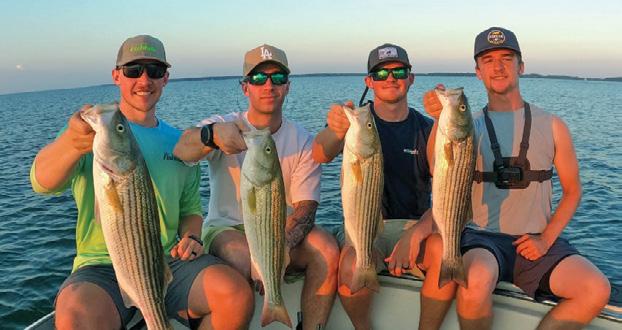
The arrival of June means rockfish are now in season here and the timing is awesome, because the bite on the Flats should transition from mostly bass to mostly stripers right about now. In the recent past it’s been a very strong fishery for those slinging plastics and topwater at daybreak or dusk, though it will likely slow up during the midday hours when temperatures start soaring. They’ll likely be hitting well in the dam pool, too, unless heavy rains cause a washout. In any case, you can depend on flatheads and blue catfish to be biting in the river.
You know what it’s all about, people: rockfish, rockfish, and ROCKFISH! If the past is any indication the mouth of the Patapsco, Love Point, and the Bay Bridge pilings will be top prospects. By mid-month white perch should start showing up in the rivers, too—cross your fingers for a better showing than last year, because for long stretches of time it was tough finding those perch in many areas.

Again, we shout ROCKFISH! June is generally an excellent time to visit Poplar and cast topwater to the rocks early or late, and sling jigs midday. Or head for the Bay Bridge pilings… or the shallows of the Choptank… or the shallows of the Pax. Hopefully the heat will hold off for a while because once it sets in expect the bite to become tougher with the better windows at dawn and dusk. Note that last year we enjoyed a relatively early run of big bluefish, too, particularly around Sharp’s Island where the trollers did well.
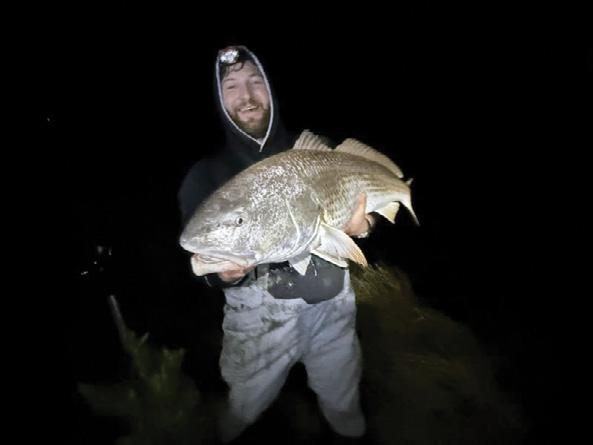
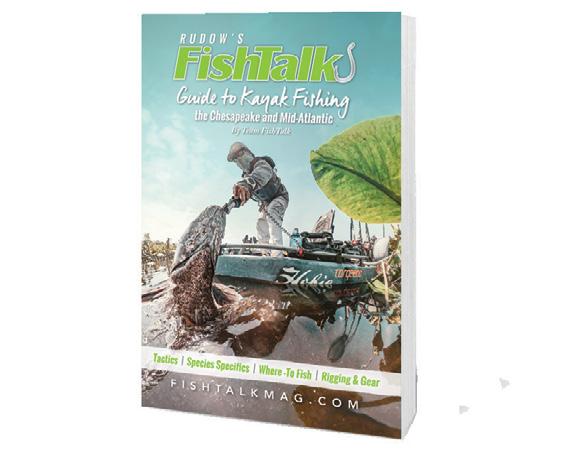
Virginia anglers will have the first half of June to go after rockfish (PRFC and Maryland waters remain open for the rest of the month) and specks remain offlimits in VA until July arrives, but we should have more than enough options to stay occupied in these waters for all of June. This is historically an excellent month for chasing puppy drum in the shallows of the tribs, croaker and spot should be around in full force, and bluefish could make a red-hot return to the Target Ship zone. All of this is, of course, slightly overshadowed by the opening of cobia season midmonth. For several years running by the time this date hit the fish were already up to Windmill Point and the Targets.


Rockfish will be the main game in the shallows and it remains to be seen how many specks show up after that tough winter; VA waters, of course, will remain closed for that species through the month. Fortunately there should be plenty of other species to keep anglers busy on the east side. If 2026 is like 2025 big blues will be patrolling around and willing to smash topwater, especially near wrecks and reefs. Bull reds will likely be a cruising the grassbeds (FishTalk contributor Adam Greenberg was getting them at night from shore for much of June last year). And of course everyone will have their fingers crossed for a strong return of cobia this year.
While the options in this zone are essentially endless, many area anglers will be counting down the days to June 15 and cobia season. The CBBT and the northern shoals are sure to be hot zones for sight fishermen, while chummers will undoubtedly be picking through rays while waiting for a “real” strike. Bull reds, meanwhile, can be counted on to be schooling up around the CBBT islands. Hopefully we’ll get a better run of Spanish mackerel, which was sub-par last year, as well as flounder along the channel edges. And note that sheepshead had a bit of a slow start last season, too, but if you go back to seasons past June should be a good month for them, especially if you get an early start because the first fish to arrive are usually the biggest.








Suzuki Marine has partnered with Fuel 1 to provide an opportunity for its dealer network to offer certified Sustainable Marine Fuels to its customers right from their facilities.
By teaming up with Fuel 1, a national retailer of advanced fuel delivery and portable fueling systems, Suzuki Marine is helping its dealers better serve their communities by meeting an important consumer need, maximizing the performance and reliability of their customers’ boats, and supporting sustainability goals important to Suzuki Marine and the entire recreational boating industry. This partnership provides dealers with important advantages, such as the ability to deploy a fully supported fueling ecosystem with zero capital investment.
Fuel 1 will provide free Micro-Station Deployment; fully branded portable fueling stations installed at participating dealer locations. In addition to direct fueling solutions, portable distribution systems including 20-gallon exchange pods and tote programs make it easy for customers to fuel their boats with PurFuels’s 93-octane, ethanol-free fuel that has been developed specifically for marine operating conditions. “Making sustainable marine fuels more accessible in different areas of the country is a great win for our dealers and customers alike,” said Brandon Cerka, Suzuki Marine vice president of sales and marketing.
“This partnership is also a major step in the company’s ongoing effort to reduce the environmental footprint of boating. We have long supported the industry’s efforts to educate the boating public about these cleaner burning, more sustainable fuels. Now, we are stepping up to the plate to help get this fuel to more boaters, using their trusted Suzuki Marine dealers as the source,” added Cerka. suzukimarine.com
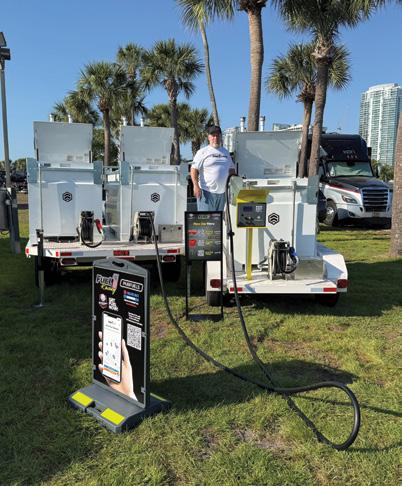
Let’s give a warm welcome to these new FishTalk distribution stops!
• Pusser’s Landing Restaurant in Baltimore, MD
• Three B’s Bakery and Grill in Pasadena, MD
• Chessie Marine in Elkton, MD
• Anchor Marina in North East, MD
Apex Marine Service, located in Herrington Harbour North in Tracys Landing, MD, announced that it became an authorized Volvo Penta dealer in late March. The company now carries the full line of Volvo Penta products, specializing in diesel and IPS systems. Additionally, owner and lead technician Aaron Bradley recently completed Seakeeper Master Technician training. Both milestones reflect Apex Marine’s continued commitment to better serving the community’s boating needs. apexmarineservice.com
Enter your boat in the Paul C. Dettor Captain’s Challenge, fish the Chesapeake Bay, and compete for top catches while raising critical funds.
Join
Partner with a trusted community hospital to make this event possible and bring the community together in support of patients and families.
Support your favorite boat or give to the cause. Every dollar helps fund care and critical resources for patients and families in our community.