PAGE 6
Indo-Pacific Summit 2023 –A Vision for Global Security

PAGE 6
Indo-Pacific Summit 2023 –A Vision for Global Security


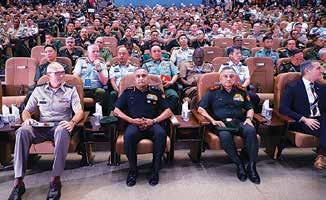
Indo-Pacific Armies Chiefs Conference (IPACC), Indo-Pacific Armies Management Seminar (IPAMS), Senior Enlisted Leaders form (SELF) – 2023 recently concluded in New Delhi, marking a significant milestone in international efforts to promote peace and stability in the Indo-Pacific region

Neetu Dhulia
PAGE 9
Advancements in Night Vision Devices
On Gunners Day, we look at India’s Artillery Evolution and Modernisation, paving the path to Strategic Autonomy
MAJOR GENERAL ATANU K. PATTANAIK (RETD)
Introduction


Two recent conflicts impart many significant military and geopolitical lessons. One is the Nagorno-Karabakh conflict which raged from September to November 2020 and has again flared up in September 2023 pushing over 70,000 Armenians residents in the enclave back into Armenia. The other is the ongoing Russian special operations launched in February 2022 that has largely devastated Ukraine.
Night vision devices are an essential tool for militaries around the world, providing soldiers with the ability to see and operate at night in any weather conditions

Rohit Goel
Azerbaijan’s combination of drones and artillery in its 2020 offensive effectively targeted Armenia’s high-value military assets, most notably in attacks on T-72 tanks and S-300 air defences. In particular, strikes on air defence units constrained Armenia’s ability to counter Baku’s UAVs, amplifying their effectiveness. They
illustrate that while individual weapons systems will not revolutionise the nature of warfare, the synchronisation of new weapons like drones, shoot-and-scoot long-range artillery and short-range tactical missiles makes the modern battlefield more lethal.
It is too early to take away any definitive lessons from the Ukraine war, but it is possible to start identifying and asking some key questions. One is the fallacy of ‘short and swift war’ that would be forced to a quick closure through international pressure and mediation. The Ukraine war continues through crests and troughs even after 20 months despite being under the most intense international glare and constant push by the west in all kinds of fora like the G7, G20 and the UN apart from periodic optimistic platitudes by the NATO
bureaucracy. This has brought to fore a hitherto well-established norm of maintaining robust war reserves which came under the scalpel using the ‘short & swift’ argument.
Ukraine was heavily militarised after 2014 by the NATO allies through variously obfuscating nomenclature programmes to take on Russia. It is therefore understandable that Ukraine continues to be fully dependent on the NATO for its tanks and guns, arms and munitions as well as air assets including F-16s and drones apart from intelligence. Hence the fact that it finds itself terribly short on military hardware and artillery munitions hardly raises an eyebrow. But more significant and surprising is the fact that Russia which initiated the war by launching the ‘special operations’ to protect its Russian speaking people in the Donbas region as well as the Black Sea Fleet in Crimea is also terribly
Regiment of Artillery celebrate their 197th ‘Gunners Day’ on September 28 and thus this issue is dedicated to the Artillery Corps of Indian Army.
The ongoing Ukraine war is providing great learning for the armies on what to expect from the enemy in the future and how to counter it. This war has also proved beyond doubt the lethality and prowess of Artillery in
short on munitions for which it has had to reach out to disparate allies like Iran and North Korea. Fundamentally, the course of the war establishes that indigenous production capabilities and a robust ‘war wastage reserves’ are non-negotiable notwithstanding the gravitas in the arguments put forth by strategic analysts.

Closer home, this important lesson was decisively delivered in India’s first televised war in Kargil (1999). Taken by surprise, the occupation of the frozen heights by Pakistan’s army and irregulars threw up a massive challenge as Bharat had focussed on economic recovery after its 1991 financial crisis and had been pursuing a peace agenda under the Vajpayee government. Stocks of ammunition and military hardware were low. The Chief of the Army Staff General V.P. Malik had to publicly accept that ‘we will fight with what we have’ while replying to a journalist who asked how Indian Army was going to fight in the face of its weapons and equipment shortages. Kargil War remains a watershed moment in India’s history.
Initial progress was slow and cumbersome due to the frozen heights and lack of adequate fire power to support. But almost the entire arsenal of Bofors medium guns and ammunition in the country was marshalled to turn the tide. The decision to purchase the Bofors 155mm howitzer was vindicated and its precise, lethal, and devastating firepower, along with that of Indian Air Force (IAF) changed the outcome of the war. Imagine the impact on the entrenched enemy when a hundred guns opened up unleashing their fire and fury on Tololing, Tiger Hill and Pt4150, a frozen lake on top was blown up and hardened bunkers were blown to smithereens. The Indian artillery fired over 2,50,000 shells, bombs and rockets during the Kargil conflict. Approximately 5,000 artillery shells, mortar bombs and rockets were fired daily from 300 guns, mortars and MBRLs while 9,000 shells were fired the day Tiger Hill was regained. During the peak period of assaults, on an average, each artillery battery fired over one round per minute for 17 days continuously. Such high rates of fire over long periods had not been witnessed anywhere in the world since the WW II.
The Kargil conflict once again established beyond doubt that artillery firepower plays a major part in achieving victory on the modern battlefield. Accurate artillery fire reduces the enemy’s defences to rubble. Sustained artillery fire gradually wears the enemy’s resistance and ultimately breaks
modern wars. Learning from the same, Indian Army has also put its Field Artillery Rationalisation Plan (FARP) on the fast track and pushing ahead with its modernisation.
The lead article in this issue by Major General Atanu Pattanaik (Retd) gives an overview on the ongoing modernisation of the Artillery with procurements both from the private and public sector. It started with the induction of the M777 Ultra Lightweight Howitzers for mountainous duty. Subsequently, orders have been placed for Dhanush, ATAGS, K9 Vajra, Sharang and now the Indian Army is looking for a TGS which weighs less than 15 tonnes.
In his article, Lt General P.C. Katoch (Retd), recounts the lessons learnt from the multi-domain in Ukraine war including the use of Drones, Artificial Intelligence,
Multiple Rocket Systems, Precision Ammunition, Missiles, Space and Cyber Combat, and the likes, as a part of the overall Artillery utilisation and the multiple challenges that the Indian Army and the Artillery will likely face in the next war with China. Drawing upon these lessons, the requirement is to review the changes required from doctrinal, organisational to the tactics, training and equipping, given the primacy of firepower as witnessed in Ukraine. Artillery is a key element and must squarely respond to the challenges of technology enabled hybrid warfare.
In line with the Field Artillery Rationalisation Plan (FARP) and modernisation, Indian Army is planning to procure 400 pieces of Towed Gun Systems (TGS). Covering this planned procurement, Ranjit Kumar analyses the
rationale behind and how it will fit into the overall modernisation of the artillery systems along with other planned inductions.
The growing importance of the Indo-Pacific region is evident from the fact that recently Army Chiefs, Vice-Chiefs and Delegates from nearly 30 countries met in New Delhi for the IPACC conference to promote ‘Peace and Stability’ in the Indo-Pacific region. A report by Neetu Dhulia on the event that brought together military minds from across the globe is included in this issue.
The ability to see at night can be a game-changer in battlefield and the side that possesses this capability will have a distinct advantage. In urban environment of counter-insurgency and counterterrorist operations its importance for security forces cannot be under
estimated. Continuous developments in technology have made it possible to develop military night vision devices (NVD) like cameras, goggles, binoculars and rifle scopes, which enable soldiers to see in the dark as well as under inclement weather conditions. Rohit Goel gives an overview on the various types of NVD and their leading manufacturers from across the globe. All this and with a lot more. Happy Reading!


l M777: 155mm/39 calibre Ultra Lightweight Howitzers (ULH). Manufacturer BAE Systems has partnered with Mahindra for assembling & testing the guns.
l Dhanush: 155mm/45 calibre Howitzer is manufactured by Advanced Weapons and Equipment India Limited (AWEIL), previously a part of Ordnance Factory Board.
l K9 Vajra-T: L&T version of Hanwha’s K9 Thunder 155mm/52 calibre gun customised for India’s Self Propelled Howitzer programme.
l ATAGS: 155mm/52 Calibre Advance Towed Artillery Gun System (ATAGS) is India’s first indigenous towed gun system developed by DRDO along with Tata Power SED and the Kalyani Group/Bharat Forge.
l Sharang: Gun has been upgraded from 130mm to 155mm by The Vehicle Factory Jabalpur (VFJ) and the Gun Carriage Factory, Kanpur.
l ATHOS: Elbit Systems and Adani are offering the long range 155mm/52 calibre Autonomous Towed Howitzer Ordnance System (ATHOS).
JAYANT BARANWAL Publisher & Editor-in-Chief
their will to fight. By systematically degrading the enemy’s fighting potential before a physical assault is launched, the artillery helped to reduce the casualties suffered by assaulting infantrymen.
The Imperatives of Indigenisation
One lesson that emerged from the Kargil war was the need to rationalise the artillery guns to 155mm. Thus, the Field Artillery Rationalisation Programme (FARP) was approved in 1999. It envisaged equipping/ standardising 169 Artillery Regiments with 155mm guns by 2027. By 2005, proposals were firmed up for progressing through the newly established Defence Procurement Procedures (DPP) after surveying the global arms marketplace as Bharat sorely lacked any capability to manufacture them at home. Import was the only mantra, for reasons not very difficult to guess. Arms dealers and middlemen ruled the roost, twisting policies and peddling influence in the corridors of power as was evident in the way the DPP was drafted after the Kargil war.
The procurement proposals hit many road-blocks due to some glaring drawbacks. One was that it envisaged importing a single type of 155mm/52 calibre gun system for the entire 169 regiments spread over 15 years starting 2012 by which time it was expected to have gone through the RFP, field trials, selection and cost negotiations stages followed by orders being placed as per the DPP. Taking into account the fact that only established gun systems which are already fielded in various armies could take part in the process, it would have meant technologies developed in the nineties which would have entered production at the turn of the century being fielded for trials. Imagine the last such guns would have been inducted by 2027. As such it gave little room for indigenous development and production. It is another matter that the then ruling dispensation was yet to exorcize the ‘Bofors Ghost’. By default, this indecision would later help artillery to embark on a path to develop a home-grown arsenal.
The years and decades of hesitation and vacillations are over. In its quest to emerge as a responsible and restrained power that strives to uphold the ideals of its pioneering leaders, Bharat has often been surprised by adversaries, both at the state and non-state levels. While moral dilemmas have often delayed military responses, developmental dilemmas have resulted in the creation of
Continued on page 10...

RUSSIA’S SPECIAL MILITARY OPERATIONS in Ukraine starting February 24, 2022, were the first large-scale act of aggression in Europe since World War II. The Ukraine war has brought many unexpected impacts and is different in many ways:
First, this is the first war between two global powers in the ‘modern’ era. The West terms it Russo-Ukrainian War but it actually is a US-led NATO war on Russia using Ukraine as proxy; having posed an existential threat to Russia that forced it to launch special military operations in Ukraine.
Second, it is a mix of 20th and 21st century warfare – hi-tech weaponry but holding the frontline as important as before.
Third, it has nixed the belief that technological advancements plus increased lethality and precision of weapons will force modern era wars to be short and swift.
Fourth, it reflects the changing character of war with high intensity multi-domain operations, heightened C4I2SR, employment of hitherto unseen AI-driven systems, hypersonic and advanced autonomous weapons inflicting unprecedented high level of casualties; necessitating changes in the methodology of warfighting.
Multi-Domain Operations
The war in Ukraine is five dimensional, aerospace, land, sea, Cyber and Electro-Magnetic (EM). Information Warfare includes Network Centric Warfare, C4I2 Warfare, Electronic Warfare (EW), Cyber Warfare and all other forms of operationalised Cyber Space; like hypersonic missiles. Space Combat, Cyber Space Combat, Robotic Combat and Nano-technology Combat are added forms of combat.
The war has seen a significant use of electronic warfare (EW) systems, which are used to disrupt communications, radar systems, and other electronics. EW systems are being used to jam enemy communications and GPS signals, ensuring own communications infrastructure remains protected to the extent possible.
AI and Drones
Ukraine is estimated to be losing about 10,000 drones in combat every month. Germany’s Rheinmetall is to supply LUNA reconnaissance drones to Ukraine having datalink range of up to 300 km and capability to loiter for 12 hours. Autonomous systems like the Phalanx close-in point defence gun and the Patriot surface-to-air missile have not performed well against Russian forces.
As the use of drones has become more prevalent in the conflict, both sides have also developed counter-drone systems to detect and neutralise enemy UAVs. The Ukrainian military has used anti-drone systems such as the Turkish-made KARGU drone, which can autonomously track and attack targets. News reports of June 13, 2023 stated Russia scored the first AI kill by using its AI-controlled S-350 Vityaz antiaircraft missile system by downing a Ukrainian aircraft autonomously. AI systems are also being used in combat for facial recognition to identify dead enemy soldiers.
AI-enabled voice transcription and translation services are processing intercepted communications and automatically highlighting information concerning enemy forces. AI could play a significant role in future conflicts with AI systems predicting enemy movements and analysing
large amounts of data to identify potential threats. Drawing upon the Ukraine war, the US Army is seeking AI help for continuous, real-time predictive visualisation of enemy actions, spurred by fears that human analysts won’t be able to keep up with complex warfare. The project ‘RealTime Threat Forecasting’ wants the system to predict what the enemy will do just minutes before the enemy actually does it and continuously update that forecast as adversaries change tactics. The Decision Centric Warfare currently being developed by the US Department of Defence (DoD) states that the role of AI will be to support human decision-making, for example, AI will create operational plans and propose them to the commander.
Artillery and Missile Systems
Ukraine is using an assortment of artillery systems. This included heavy artillery like the Poland-supplied ‘Krab gun, the turret of which license-produced in Poland. It is fitted with a 155mm/L52 howitzer, which is compatible with all standard NATO 155mm ammunition. The Krab has an automatic shell loading system and modular charge
system. Maximum range of fire is 30 km with standard HE-FRAG shell and 40 km with rocket assisted shell. Ukraine is also using the US-made M109 self-propelled 155mm howitzer, which has a range of 30 km. Ukraine, has been asking for longer range artillery from the West. The US has also supplied the Patriot missile system to Ukraine, with Germany and the Netherlands following suit.
Ukrainian air defence is no match to the Russian Kh-47M2 Kinzhal hypersonic ballistic missile, which has a range of 1500-2000 km, speed of Mach 10 and can carry a conventional HE warhead or a low yield 5-15 kt nuclear warhead. The Kinzhal can be launched by Tu-22M3 bombers or MiG-31K interceptor aircraft. In addition to the Kinzhal, Russia has been using an assortment of cruise missiles in the Ukraine war including newly produced ones. These include the Kh-22, Kh-29, Kh-31, Kh-101 and Kh-555 missiles, according to the Centre for Strategic and International Studies (CSIS).
Ammunition expenditure is extremely high in the Ukraine war. The global media has been periodically reporting that Western ammunition supplies are unable to meet the rate at which ammunition is being expended by the Ukrainian army. Ukraine President Volodymyr has been repeatedly crying for the West to speed up ammunition supplies. During his recent visit to Washington, the US has announced joint US-Ukraine ammunition production in order to step up ammunition supply to the Ukrainian army.
In contrast, Russia apparently has no shortage of ammunition with adequate production lines. The important issue, however, is to note that both Russia and Ukraine have
significantly used artillery, with 10,000 to 20,000 artillery rounds being fired on a single day; indicating employment of guns in role of destruction and not just neutralisation.
Lessons
The war in Ukraine indicates multiple challenges that the Indian Army and the Artillery will likely face in the next war with China. Drawing upon the lessons, the requirement is to review the changes required from doctrinal, organisational to the tactics, training and equipping, given the primacy of firepower as witnessed in Ukraine. The urgency to effect these changes needs no elaboration.
Command and Control
Traditional static headquarters and command post would be easily targeted by the enemy. The requirement now is of greater dispersed deployment with headquarters suitably divided into smaller functional entities, dug down and moved to another location frequently, preferably on mobile armoured vehicles. Same goes for mobile command posts. Command and Control systems and mobile command posts must enable continuous movement, allow distributed collaboration, and synchronisation across all warfighting functions.
Communications
Communications and electronic signals will be very easily picked up by enemy and targeted using electronic warfare (EW) sensors to scan own troops for detectable transmissions. Therefore, maximum reliance should be placed on ruggedised fiber optic cable. Advancing troops used to carry Cable JWD to set up telephone communications. Now there would need to move up ruggedised fiber optic cable. The use of cell phones in the battle zone would need to be discarded. Obviously, radio communication cannot be discarded altogether in the battlefield. But the requirement will be to minimise radio transmissions. Moreover, radio communications must be shut down periodically and only essential data should be transmitted, that too through encrypted cloud.
Lessons for the Indian Army are equally applicable to the Artillery. However, some specific issues relevant more to Artillery are as under:

Equipping: The Indian Army’s Field Artillery Rationalisation Plan 1999, envisaged of all artillery gun regiments to be converted to 155mm caliber for destructive effect on the target. This was modified in 2008 to have a mix of 155mm/39 calibre, 155mm/45 calibre and 155mm/52 calibre gun system. However, the progress has been extremely slow and the time-line of 2040 set to complete this artillery modernisation requires urgent review in backdrop of the three-year plus standoff with China, deteriorating India-China relations and fast changing geostrategic dynamics in the Indo-Pacific. Inductions in the artillery include: 145 x M777 Ultra Lightweight Howitzers; 100 x K9 Vajra-T guns with another order of 100 x K9 Vajra reportedly in the pipeline; one regiment of 155mm/45calibre Dhanush towed guns and order place for another 114 x Dhanush guns; four regiment of 130mm M46 towed artillery have been upgraded to 155mm/45-calibre guns. The Artillery has seven M777 ULH
Continued on page 11...

Addressing artillery ammunition production, stocking, and storage, regarding quality control and strategic resourcing is critical amid evolving conflict scenarios
Introduction
The Bofors Guns scandal in mid-eighties led to a very long three decades lull in Indian Army Artillery modernisation. However, since last few years, the Army seems to be sitting once again on the driver’s seat and giving a planned shape to its Field Artillery Rationalisation plan, which encompasses acquisition of all categories of artillery for widespread deployment on various geographic terrains bordering India-China and India-Pakistan region.
Under this plan the Indian Army will soon issue a tender for 400 155mm/52 calibre Towed Gun System (TGS) worth $750 million. During the last few years the Indian Army has seen sudden spurt in implementation of its artillery acquisition plan, which aimed to acquire almost 3,000 pieces of 155mm artillery guns by 2025. In spite of fast tracking of the process and successes in indigenisation, Indian Army seems to be far away from meeting this target.
But the lessons learnt from the Ukraine war are likely to give a push to this modernisation plan as the study conducted by the army on the lessons learnt is reported to have recommended the fast tracking of Artillery Guns acquisition process. After analysing the manner in which both, the Ukranian and Russian Armies faced each other, the Indian Army learnt significant lessons that artillery is the key to inflicting heavy toll on advancing enemy lines and weapons stores, hence the Indian Army has decided to go all out for acquiring the field artilleries. The lessons from Ukraine war has led Indian Army on how to advance it’s firepower, which lays greater thrust on mobility, precision attacks, range, quick strikes and survivability, in which artillery guns were found to be on top, though the army also plans to augment this firepower by acquiring more rocket systems and missiles. But, the rapid fire ability of the 155mm gun systems makes it more potent weapon.
Though Ukraine war seems to be the motivation behind fast tracking of the artillery modernisation plan, the Indian Army had begun inducting the 155 guns through import and domestic developments much before. These included four contracts for 155mm howitzers. These gun systems include – Dhanush, Sharang, the M777 Ultra Lightweight Howitzers (ULH) and K9 Self Propelled Vajra Guns. Dhanush Guns are the modified, upgraded Bofors Guns with some electronic upgrades. The Sharang Guns have
been up-gunned from 130mm to 155mm. The Seven and Five regiments have already been upgraded with new self-propelled guns. After three decades, the Bofors gun scandal jinx has thus finally been broken.
After 1987 the Army could not induct any fresh guns, leading to much anxieties among defence planners. Now, it has been decided that 155mm guns will be the standard calibre of all the guns in future with automated systems and assemblies. The army strategists are giving new thrust on development of new technologies in sighting systems, ammunition manufacturing, metallurgy and networking of guns.
Focus on Towed Gun Systems
Accordingly, the army now plans to induct 400 new Howitzers. This will promote Indian defence manufacturing, hence the Army has decided to go in for Indian private or public firms. Army has proposed that as part of the indigenously designed, devel oped and made (IDDM) in India weapon sys tems under the Buy Indian category. This includes the supply of towing vehicles also.

It is well known that the Indian Defence Headquarters has already issued a tender for 307 Advanced Towed Artillery Gun Sys tem (ATAGS) and is in the process of finding a mounted gun system for deployment on Sino-Indian and India Pak borders.

Army is proceeding according to the Field Artillery Rationalisation Plan and accordingly procured some Guns in vari ous designs like towed, tracked, wheeled and mounted on high mobility vehicles and ultra light air droppable i.e. Guns which can be dropped right on to the Army posts, which will take very less time, like an hour or so by helicopters, whereas the earlier mode of tak ing the guns to the posts by road was very difficult and time consuming. The Indian Army has been equipped with heavy lift heli copters which will also serve this purpose.
The Heavy lift helicopter acquired from US is indeed a versatile helicopter to move troops and weapon loads to high altitude peaks like on the heights of Eastern Ladakh. The light Guns are being acquired especially with this purpose hence the Army has decided to get more of these guns, which is to be fully Made in India. According to army officials the Indian Army also plans to acquire nextgeneration artillery guns with advanced fea tures from domestic manufacturers.
The 400 new TGS Guns that will be ordered is expected to be much lighter (less
than 15 tonnes) and versatile and capable of incorporating future technical advancements. The TGS will become the mainstay Gun of the Indian Artillery. The TGS can operate in all terrains of India-China and India-Pakistan borders like -mountains, plains, high altitude, desert and semi-desert. The proposal also includes acquisition of towing vehicles along with TGS under the Buy Indian IDDM category. This proposal would soon to be moved to Defence Ministry and the ministry is expected to take a call on this very soon, in view of the urgency of its deployment on mountains.
According to officials, the Artillery Regiment is getting ready to face all future challenges as the Artillery is undergoing huge transformation – from analogue to digital, manual to automatic and conventional to smart so as to meet any challenge. The lessons learnt from the RussiaUkraine war are being incorporated in the capability development plans and artillery doctrines. The Artillery regiment is also in the process of acquiring advanced cutting-edge technology including loitering munitions, swarm drones, and tactical remotely piloted aerial systems. Accordingly, the Artillery Combat, Command and Control Systems (ACCCS) is undergoing major upgrades.
As is well known the Army headquarters has already issued a tender for advanced towed guns systems (ATGS) and is in the process of finding a mounted gun system for deployment on Sino-Indian and India-Pak borders. Army’s regiment of artillery wants to develop and utilise the expertise of Indian industry and modernisation with indigenous guns, which is expected to be completed in next two decades. As there is continuous advancement in technology, the Indian army also desires next generation artillery guns with advanced features developed indigenously. SP
(The writer is a Senior Journalist and Strategic Affairs Analyst)
The Indian Army is swiftly transitioning from analogue to digital, manual to automatic, and conventional to smart, ensuring it’s ready to face future challenges with cutting-edge technology

ECONOMICALLY, THE REGION OF Indo-Pacific is a centre of global trade and commerce, and therefore of increasing strategic importance.
Recently, the Army Chiefs, ViceChiefs and Delegates from nearly 30 countries met in New Delhi met to brain storm, exchange ideas and views on security and other contemporary issues of mutual interest, with core efforts directed to promote ‘Peace and Stability’ in the Indo-Pacific region. The event, the Indo-Pacific Armies Chiefs Conference (IPACC), Indo-Pacific Armies Management Seminar (IPAMS), and Senior Enlisted Leaders Forum (SELF) for 2023 concluded on September 27, 2023, marking the end of a three-day event that brought together the military minds from across the globe. Representing 6 continents, 18 countries were represented by Chiefs of their respective Armies, and 12 countries were represented by Heads of Delegations. Organised by the Indian Army with the US Army as the co-host, this diplomatic extravaganza aimed to foster collaborative efforts for ‘Peace and Stability’ in the IndoPacific region.

The event commenced with a curtain-raiser on September 20, 2023, setting the stage for an extraordinary display of international cooperation. Guided by the theme ‘Together for Peace: Fostering Stability in the IndoPacific Region,’ the conference aimed to delve into crucial discussions on security matters transcending national boundaries.
The Global Significance of Indo-Pacific
Situated deliberately in the heart of the Indo-Pacific region, recognised as the
“nexus of global affairs,” the conference thoroughly explored the region’s profound importance. With a population encompassing 64 per cent of the world’s total and a substantial contribution of 63 per cent to the global Gross Domestic Product (GDP), it holds a pivotal role in world merchandise trade, accounting for 46 per cent. Additionally, the region commands 50 per cent of the world’s maritime trade, featuring coastlines abundant in maritime resources and coveted rare earth metals. Notably, it houses seven of the world’s largest armies, renowned for their effective collaboration across diverse realms, ranging from joint military exercises to humanitarian aid and disaster relief operations. India’s strategic geographical location, overseeing crucial sea lanes through which 90 per cent of trade and energy resources traverse, firmly establishes its integral role in the “India-Pacific.”
Three Pillars of Discussion
l IPACC (Indo-Pacific Armies Chief Conference): Bringing together Army Chiefs from the Asia Pacific region, IPACC focused on high-level dialogues. Topics included Enhancing Collaboration and Interoperability, Military Diplomacy, Self-Reliance, and Sustaining Peace in the Indo-Pacific Region.
l IPAMS (Indo-Pacific Armies Management Seminar): Attended by highranking Army Officers, IPAMS sought to enhance regional military interaction. Themes such as Partnering for Sustainable Peace, Cooperation for Interoperability, and Humanitarian Assistance were discussed.
l SELF (Senior Enlisted Leadership Forum): Fostering open dialogue among enlisted leaders, junior officers, and non-commissioned officers, SELF explored themes like Interoperability,
Grooming Junior Leaders, and Addressing Senior Enlisted Leaders’ Concerns.
The vision of India’s Prime Minister, Narendra Modi, echoed through the conference, reiterating the commitment to a free, open, inclusive, and rules-based Indo-Pacific. Emphasising shared concerns about stability in the region, leaders highlighted initiatives like the QUAD and the Indo-Pacific Partnership for Maritime Domain Awareness.
The curtain raiser on September 20 set the stage for this mega event, followed by a call-on between General Randy George, Chief of Staff of the US Army, and General Manoj Pande, Chief of the Army Staff, Indian Army, on September 25, 2023. This event marked General Randy’s maiden visit to the country after having taken charge as the 41st chief of staff of the United States Army on September 21, 2023. Subsequent days witnessed the laying of wreaths at the National War Memorial and a Joint Press Brief by COAS Indian Army and COS of the US Army. The sidelines of the event were adorned by showcasing rich cultural diversity and visits to heritage sites in Delhi.
A joint press conference was addressed by General Manoj Pande and General Randy George, showcasing a perfect example of what can be achieved when nations come together with a common purpose. The central theme for the deliberations was set, ‘Together for Peace: Sustaining Peace and Stability in the Indo-Pacific Region.’
The Joint Press Brief was followed by the Opening Ceremony graced by the presence of India’s Defence Minister Rajnath Singh. General Anil Chauhan, Chief of the Defence

Staff, was in attendance. During the ceremony, IPACC and IPAMS flags were trooped in followed by the National Anthems of the USA and India. COAS Indian Army and COS of US Army welcomed all participants. The Defence Minister emphasised the untapped potential of the Indo-Pacific, “India stands for a free, open, inclusive and rules-based Indo-Pacific.” He reiterated, “Our efforts to build robust military partnerships with friendly countries underscore our commitment to safeguard national interests and address global challenges.”
A Commemorative Journal was released to mark the occasion. During the ceremony, the Army Chief cited the vision for the Indo-Pacific, as Security and Growth for All in the Region (SAGAR), the essence of which can be found in the words of our Prime Minister, who said, ‘When the oceans are open, the seas are secure, countries are connected, the rule of law prevails and the region is stable, nations, small and large, prosper as sovereign countries.’ The Army Chief further stated, “Our commitment towards positively engaging all stakeholders in the Indo-Pacific has been unwavering and enduring, over the years. This finds reflection in our policy initiatives and participation in various regional strategic frameworks, be it BIMSTEC, IORA, India-ASEAN engagements, Indo-Pacific Oceans’ Initiative, SAGAR, QUAD and the Indo-Pacific Economic Framework, to name a few. The G20 presidency this year has further enhanced India’s role, engagement and outreach.”

Chief’s Round Table Conference and Bilateral Meetings
Under the theme “Together for Peace: Sustaining Peace and Stability in the


SOUTH KOREAN DEFENCE FIRM, Hanwha Aerospace has emerged as a major player in the global land systems market. “Aiming to become one of the top land systems solution provider in the world, we put a top priority on developing sophisticated technology.” said Son Jae-il, President & CEO of Hanwha Aerospace. “Aligned with the South Korean Government’s ‘K-Defence Globalisation Strategy, we will accelerate provision of advanced defence solution in the global market.”
In addition to highly successful artillery systems such as the K9 Self-Propelled Howitzer (SPH), Hanwha Aerospace also produces armoured air defence systems such as the K30 Hybrid BiHo Gun Missile System, as well as the Infantry Fighting Vehicle (IFV) such as the Redback, and Unmanned Ground Vehicle (UGV) such as Arion-SMET.
Australia recently has selected the Redback for its armoured vehicle modernisation program following the ongoing acquisition of the K9 SPH and K10 fully automated Armoured Ammunition Resupply Vehicle. Localised K9 SPH will be called the AS9 Huntsman by the Australian armed forces.
K9 Thunder Export
The 155mm/52-calibre SPH, K9 Thunder is the world’s best-selling artillery and nearly 1,800 units are in service with Turkey, Poland, Finland, Norway, India, Estonia as well as South Korea. The Korean built SPH has proven its operational capability in various environments, from deserts to snowy fields.
The K9 Thunder has also been selected by Egypt and Australia. Korea has offered longterm support and maintenance packages for the K9 deals. Also, one of competitive factors is collaboration with local partner. Hanwha
Aerospace is able to provide the solution for establishment of local production facilities, transferring manufacturing technologies.
K9 Thunder Upgrade
Under the K9 development roadmap, Hanwha Aerospace is now developing the K9A2, which is to be equipped with a fully automated loading system instead of the semi auto-loader for the existing variants. The fully automatic turret will allow K9A2 to fire with rate of nine+ rounds per minute and reduce the operating crews from five to three.
The autoloading K9A2 will be further upgraded to an AI-based A3 standard that can be operated autonomously, providing crewed and uncrewed teaming operations in the future battlefield. Fitted with an increased barrel of 58 calibre, the K9A3 is envisaged

to serve as a node to remote-control other crewed and uncrewed SPHs. The K9A3 will be operated optionally for fully automatic turret either with or without driver in assigned units, which will enhance tactical flexibility with reduced crew exposure.
K9 Vajra for India
100 units of ‘K9 Vajra-T’ which is modified system for India were supplied to the Indian Army and deployed on both its western and eastern borders. As per the MoD’s order on 2017 May, Hanwha Aerospace’s partner in India, L&T has successfully completed all deliveries ahead of schedule in February 2021.
K9 Vajra-T was largely made in India while L&T put in sustainable efforts and innovation in indigenisation. Fourteen
indigenously developed critical systems were applied to the prototype for user evaluation trials, including the Fire Control System, Direct Fire System, and the Ammunition Handling System.
The Gun is also equipped with other India specific modifications for desert conditions such as Auxiliary Power Pack (APU), Air-conditioning Systems, Fire Fighting Systems, and Nuclear Biological Chemical (NBC) Protection Systems which are being indigenously produced.
K9 Vajra-T systems delivered by L&T feature more than 80% indigenous work packages. L&T has painstakingly built supply chain of more than 1,000 partners. Then, the over 13,000 components needed per system, have been locally sourced from a supply chain spread across Gujarat, Maharashtra, Karnataka, and Tamil Nadu.
Indian Army is now progressing the procurement of additional 100 units of K9 Vajra-T SPH from L&T under Make in India. Currently the procurement case is progressing on fast-track basis and is expected to be finalised by end of this year. Hanwha and L&T are doing the modifications on K9 Vajra-T for operation on the high-altitude areas in India.
In terms of international politics, there are various factors. India is an important member of the Quad, which includes the United States. Although Korea is not an official member of the Quad, but they are a strong ally of the United States and actively participate as an observer or partner in military alliances like the Quad and AUKUS. Therefore, India is a valuable and strategic partner for South Korea. The strong foundation between Korea and India suggests that the defence sector holds significant potential for collaboration and growth. SP
INDIA OPTEL LIMITED (IOL) is a leading force in the realm of opto-electronics and vision devices, serving as a beacon of technological advancement and commitment to national security. IOL has carved a niche for itself as a trusted partner to India’s defence and paramilitary forces.

Becoming India Optel Limited (IOL)
In 2021, IOL emerged as a fully owned Government of India enterprise (DPSU) under the Department of Defence Production, Ministry of Defence.
Vision: To become a world-class enterprise in the Opto-Electronics and Communication business.
Mission: To establish itself as a leading manufacturer in Opto-electronics, Communication business, and other chosen areas through quality, technology, and innovation and emerge as a world-class sophisticated, State-of-the-art, global enterprise.
Units
IOL has 03 production units: Opto-Electronics Factory Dehradun (OLF) focuses on the domain of opto-electronics systems designed specifically for Indian tanks; Ordnance Factory Dehradun (OF Dun), whose primary focus is on military optical


instruments; and Ordnance Factory Chandigarh (OFCd) specialises in communication needs for India’s armed forces. Apart from its production units, IOL also oversees a training centre known as the Ordnance Factory Institute of Learning (OFIL). This institute is actively involved in providing
training and education in the domains of optics and electronics.
Diverse Product Portfolio
IOL’s product range is as diverse as it is advanced, catering to the intricate needs of defence & security. Some of our key products include:
l OPTO-ELECTRONICS SIGHTS (T-72, T-90, BMP-II, MBT-ARJUN)

l Infantry Weapon Sights (Day & Night (Passive & TI))
l Surveillance Sights (HR- Bino, Passive Night Vision Equipment)
l Communication Cables
Manpower
IOL has vibrant and technically skilled workforce in the specialised field of optoelectronics for defence applications.
Quality assurance is at the heart of IOL’s operations. We adhere to stringent quality standards, ensuring that every product bearing our name stands as a testament to excellence in manufacturing.
Innovation and R&D
Our commitment to innovation is unyielding. Collaborations with DRDO, IITs, and industry partners drive continuous advancements in technology. IOL is closely collaborating with academia and local industry to advance the mission of Atmanirbhar Bharat. In line with the Make-II scheme of Government of India, Product Sanction order with a potential value of around `270 crores have been issued to MSMEs. SP


NIGHT VISION TECHNOLOGY
HAS revolutionised the way armed forces operate in low-light or nocturnal environments. It has significantly enhanced situational awareness, target identification, and overall combat effectiveness. This article delves into the evolution of Night Vision Devices (NVDs), their applications, and the latest technologies being employed by leading armies worldwide.
The concept of night vision dates back to the early 20th century, with the introduction of infrared (IR) technology. Initially developed for military purposes during World War II, these early NVDs were large, cumbersome, and provided limited visibility. However, they marked a significant step forward in nocturnal operations.
Over the decades, night vision technol ogy underwent remarkable improvements. The transition from first-generation (Gen 1) to fourth-generation (Gen 4) NVDs brought about major leaps in image qual ity, range, and reliability. These advance ments were primarily driven by break throughs in optics, image intensifiers, and signal processing technologies.
Modern armies rely heavily on NVDs across a spectrum of operations. They are indispensable in scenarios such as covert reconnaissance, search and rescue missions, border patrol, and counter-terrorism opera tions. NVDs have also found crucial appli cations in civilian spheres like law enforce ment, wildlife observation, and security.
Night vision devices confer several advantages to military operations: Enhanced Situational Awareness: NVDs provide clear vision in low-light conditions, allowing troops to navigate, detect threats, and engage targets effectively.


Reduced Risk of Friendly Fire: By enabling accurate target identification, NVDs help minimise the risk of engaging friendly forces.
Extended Operational Hours: NVDs extend the operational window, allowing military personnel to conduct missions around the clock.
Latest Night Vision Technologies and Devices


Image Intensification: Image intensification is a fundamental technology in night vision. It involves amplifying existing light (including infrared) to create a visible image. Leading armies are now equipped with Gen 3 and Gen 4 NVDs that offer superior image quality, extended range, and reduced halo effects.
Gen 3 devices utilise gallium arsenide photocathodes and microchannel plate (MCP) amplification. These technologies result in exceptional image resolution, high signal-to-noise ratio, and an extended lifespan compared to previous generations.
Gen 4 takes the technology even further by using filmless photocathodes, which eliminate ion feedback and further improve image quality. These devices offer an even clearer and crisper view in low-light conditions.
Thermal Imaging: Thermal imaging operates on the principle of detecting heat signatures emitted by objects or organisms. This technology provides excellent visibility even in total darkness or adverse weather conditions. Modern thermal imaging NVDs can distinguish temperature variations with remarkable precision. Uncooled thermal imaging is more compact and powerefficient, making it suitable for portable and lightweight applications. Cooled thermal imaging, on the other hand, provides supe-
rior image quality and can detect fainter heat signatures.

Digital Night Vision: Digital night vision devices utilise image sensors and advanced processing algorithms to deliver high-resolution images. They offer versatile features like colour modes, digital zoom, and image/video capture capabilities. These devices are becoming increasingly popular due to their adaptability and cost-effectiveness. Digital NVDs can provide colour images, allowing for better
object recognition. They also often have built-in recording capabilities, enabling documentation of missions for debriefing and analysis.
Fusion Technology: Some advanced NVDs incorporate fusion technology, combining image intensification with thermal imaging. This results in a comprehensive view that seamlessly integrates the strengths of both technologies, Continued on page 11...


Night vision devices are an essential tool for militaries around the world, providing soldiers with the ability to see and operate at night in any weather conditions
suboptimal military capabilities. All that has been left behind as Bharat has decided to migrate from diffidence and excessive restraint to a more assertive and proactive response mechanism, evidenced by its robust and muscular response to antinational forces nestling in countries like Canada, the UK, Australia and New Zealand apart from firm and resolute dealings with China and Pakistan.
The change is starker in the field of defence production which languished for the better part of six decades after independence. The mantra now is Atmanirbhar Bharat. There is no substitute for ensuring a reliable, stable, and high-quality domestic supply chain system that can cater to the high demands of war. The Indian Artillery is at the forefront of this aspiration which is a prerequisite for strategic autonomy and can deliver us foreign policy leverage. The Ordnance Factories have been corporatised, the DPSUs revamped with set targets and a high-powered board constituted to reform the DRDO. A concerted action plan has been unleashed to achieve strategic autonomy through selfsufficiency in defence production involving both the public as well as private sector
Continued from page 2
through policy pronunciations such as elaborate negative lists.
After a long hiatus, modernisation of artillery got a shot in the arm with the induction of M777 Ultra Lightweight Howitzers (ULH) and the K9 Vajra tracked self-propelled gun system in 2019. Current plans include the upgrade of 130mm Russian guns to 155mm (Sharang) and upgrade of Bofors to the Dhanush version. The present profile of Artillery comprises guns, rockets (Smerch, Pinaka), and missiles (BrahMos). In line with our efforts to be self-reliant, the profile of Artillery will be further bolstered by the induction of Advanced Towed Artillery Gun System (ATAGS).
The entry of Bharat Forge and Tata into producing ATAGS is a step in the right direction. Capable private entities must be further encouraged and supported to produce our arsenal of guns, rockets, and their ammunition. Bharat Forge has just supplied Mounted Gun System (MGS) to a friendly country and is in process of test firing 155mm/52 calibre guns with soft recoil mounted on 6 x 6 HMVs soon. It has in its stable the IFG mounted on a 4 x 4 vehicle which is actually a Go-Anywhere system suited to our varied terrain profile. The first
... Continued from page 6
50 Mahindra Self-propelled Mortars have been just delivered to the Indian Army. The system consists of Spanish 120mm Alakran Mortar System on a Mahindra 4 x 4 chassis with excellent Shoot-and Scoot capability under 60 seconds with a range of 8 kms. This system is transportable by Mi-17 helicopters.
But it is naïve to expect that the international arms cartels will sit silent and let Bharat go on its own steam. For inexplicable reasons, the Indian Army has issued a fresh Request for Information (RFI) to acquire a 155mm/52 calibre Towed Gun System (TGS) that has opened up a new avenue for induction of an Israeli gun. The gun in question is the Autonomous Towed Howitzer Ordnance System (ATHOS) built by Israeli firm Elbit which has been vying for mega defence contracts with the Indian Army for the past two decades. The RFI sent out in December 2022 states helpfully that the weight of the gun system “be preferably less than 15 tonnes.” Given that the ATHOS weighs less than 15 tonnes while the indigenously produced ATAGS weigh well over 18 tonnes, industry sources see the new RFI as an opening tailored for the Israeli weapon system.
Coming back to the Ukraine war, what has emerged definitively is that TGS have become cannon fodder. Reaction time for enemy counter battery (CB) fire has been reduced from 7 minutes to 4 minutes with improvements in target acquisition and engagement by long range vectors especially rocket systems. Towed guns cannot get away in such a short time and are highly vulnerable. Since survivability has become such a dominant factor, the RFI for TGS is perplexing to say the least. Vigilance is the price we must be prepared to pay if the country aspires some degree of strategic autonomy. This is especially true for the Fourth estate.
As we celebrate the 197th Raising Day of the Regiment of Artillery which traces its origins to the Royal Indian Artillery (RIA) of the British Indian Army raised on September 28, 1827 as part of the Bombay Army and later renamed as 5 Bombay Mountain Battery, there is a resolute confidence that its arsenal will boast a range of guns and munitions which are home grown. The country and the Army must stay the course for an Atmanirbhar Bharat to rise majestically. SP
Indo-Pacific Region,” the Chief’s Round Table Conference featured discussions on Collaboration, Diplomacy, and Self-Reliance. Bilateral meetings between COAS Indian Army and Chiefs of participating countries further solidified collaborative efforts. The COAS Indian Army also held bilateral meetings with Chiefs of the armies of the participating countries. He held oneto-one discussions with General Morishita Yasunori (Japan), Lt General Simon Stuart (Australia), Lt General Mguyen Doan Anh (Vietnam), Lt General Peter Mbogo Njiru (Kenya), Prasiddha Prabal Janesewashree


General Prabhu Ram Sharma (Nepal), General Sheikh Md Shafiuddin Ahmed (Bangladesh), Major General John Boswell (New Zealand), General Sir Patrick Sanders (UK), Lt General Mao Sophan (Cambodia), General Jung Hwan Park, Republic of Korea, General Pierre Schill (France) and General Datuk Muhammad Hafizuddeain Bin Jantan (Malaysia). Lt General M.V. Suchindra Kumar, Vice Chief of the Army Staff, also held bilateral meetings with the heads of delegations of Brazil, Singapore, Mongolia, and Thailand.
Plenary Sessions and Themes at IPAMS
The 47th IPAMS saw plenary sessions covering themes like Partnering for Sustainable Peace, Cooperation for Interoperability, and HADR Mechanisms. Discussions emphasised the need for collective responses to strengthen Indo-Pacific nations against diverse challenges. It emerged during the discussions that nations need to work together to strengthen the collective responses. This collaborative effort is not built overnight, and therefore, IPAMS provided the platform to build a connect, confidence, and commitment for the future.
The 9th SELF delved into themes like Interoperability, Grooming Junior Leaders, and Addressing Senior Enlisted Leaders’ Concerns, offering a unique forum for functional-level discussions, sharing best practices, and idea exchange.
A special plenary for spouses was conducted
on the theme “Beyond the Barracks: Roles and Challenges in Fostering Military Communities and Sharing Best Practices”. The session highlighted the roles and challenges in fostering military communities. The event also showcased India’s rich culture through performances, a guided tour of Gandhi Samriti, National War memorial and an evening dedicated to the ‘Colours of India.’
An ‘Atmanirbhar Bharat’ Equipment Display showcased India’s capability to produce world-class military equipment indigenously. 31 corporates participated in the exhibition; the main highlights were Drones, CounterDrone Systems, Modular Firing Ranges, Small Arms, NAVIC based devices, Surveillance Systems, Protective Gear, Self-Propelled Artillery Guns, Military Vehicles, etc.

Closing Ceremony
The Closing Ceremony, held on September 27, featured Minister of State for Defence Ajay Bhatt expressing his gratitude to the delegates. The Flag Handing Over ceremony symbolised the collaborative
exchange between the Indian Army and the US Army.
Bonds Forged and Outcomes Achieved
The intense discussions and engagements between Chiefs, Heads of Delegations, Senior Officers, Junior Leaders, and spouses facilitated bonds between the Armies. The event achieved outcomes such as a shared vision for military cooperation, collective responsibility, sharing best practices, appreciating areas and communities vulnerable to climate change, and synergising the approach to HADR response. The importance of open and sustained dialogue was reinforced.
In a symbolic gesture, the concluding ceremony was conducted by the Indian Army Chief, Minister of State for Defence and General Charles Flynn from the US Army. As the flags changed hands, the event left an indelible mark on the shared journey toward peace and stability in the Indo-Pacific. The participating nations thanked the co-hosts for the warm hospitality, marking the end of a comprehensive and collaborative event. SP
and five K9 Vajra regiments operational with the latter likely to go to ten regiments. 300 advanced towed artillery gun system (ATAGS) are to eventually be inducted but will take considerable time. The overall shortfall in the guns in the artillery is evident with only 120 of the 1,580 towed, 100 self-propelled tracked, and 145 ultra-light guns inducted. All this demands a massive acceleration in artillery modernisation. This is also essential acknowledging that artillery systems would be prime targets of the enemy, causing attrition.
Ammunition: A serious review is required in context of: ammunition production; ammunition stocking, and ammunition storage. It is no secret that the quality of ammunition being produced in the country by the governmental defence-industrial complex is far from satisfactory. Just three years back, the Army wrote to the Ministry of Defence (MoD) that the amount of defective ammunition lying around could have funded procurement of 100 medium artillery guns. Ammunition stocking also needs serious review looking at the ammunition expenditure in the Ukraine war. We have scaled down the stocking of ammunition from the erstwhile 40 days (intense) to 10
Continued from page 4
days Intense. This would leave us without ammunition in a Ukraine-like war. Moreover, the requirement of artillery ammunition in the mountains will be much higher with China the main adversary. We must plan and create additional ammunition stocks. This
PHOTOGRAPH: AVNL
Sharang Gun was upgraded from 130mm to 155mm indigenously

implies fresh authorisation of holdings and requisite quality production lines. Finally, ammunition dumps will be prime targets for the enemy. This would need tunneling that cannot be easily targeted by missiles, air or accessed by loitering munitions.
Railgun: In February 2018, China successfully test-fired its electromagnetic (EM)
Continued from page 9
railgun prototype at sea using a 25 kg projectile, hitting a target 25 km away with a velocity of 2,575 metre per second. The US intelligence had predicted in June 2018 that China will have the world’s most powerful gun ready for war by 2025. A railgun projectile travelling on hypersonic velocity would be more effective than a short-range ballistic missile (SRBM) or anti-ship missile because it would be nearly impossible to shoot it down and has the ability to penetrate the latest armour materials. India needs to revive the nascent railgun experiment the Armament Research and Development Establishment (ARDE) under the Defence and Research Development Organisation (DRDO) undertook in 1994.
Conclusion
The arrival of artificial intelligence, autonomous and hypersonic weapons systems point to fundamental changes in the character of war and the way military forces fight. The Artillery will continue to play a major role in modern era wars, both by way of neutralisation and destruction of the enemy. The requirement is to draw lessons from the war in Ukraine and speedily adapt to ground realities. SP
L3Harris Technologies Goggles, sights
Elbit Systems Goggles, sights, cameras
AN/PSQ-31 Enhanced Night Vision Goggle (ENVG)
XACT Night Vision System
Thales Group Goggles, sights, cameras LUCIE Night Vision System
BAE Systems Goggles, sights, cameras AN/PVS-14 Monocular Night Vision Device
Excelitas Technologies Image intensifier tubes EPIC Gen III Image Intensifier Tube
Teledyne FLIR Thermal imagers
Collins Aerospace Goggles, sights, cameras
CNVS Night Vision Goggle
ANVIS-10 Night Vision Goggle System
Meopta Sights Meopta MeoStar R-2 Night Vision Sight
SATIR Goggles, sights, cameras Simrad KN-35 Night Vision Goggle
Safran Goggles, sights, cameras Safran JIM LR 2.2 Night Vision Goggle
ATN Goggles, sights, cameras ATN X-Sight 4K Pro Night Vision Goggle
Photonis Image intensifier tubes Gen III XD image intensifier tube
Trijicon Sights Trijicon IR Patrol Night Vision Sight
Pulsar Goggles, sights, cameras Pulsar Helion 2 XP50 Night Vision Monocular
providing unparalleled situational awareness. Fusion technology allows for a more detailed and context-rich view of the environment. It enables operators to quickly identify objects and threats in varying lighting conditions.
This table provides an overview of the leading manufacturers of night vision devices for military use. This is just a representative
Lightweight, high-performance ENVG with Gen III image intensifier tube, wide field of view, and digital signal processing for enhanced image clarity.
Modular night vision system that can be configured as a goggle, sight, or camera. Uses Gen III image intensifier tube with digital signal processing for enhanced image clarity and low-light performance.
High-performance night vision system that uses Gen III image intensifier tube with digital signal processing for enhanced image clarity and low-light performance. Also features a built-in thermal imager for all-weather night vision capability.
Lightweight, versatile monocular night vision device that can be used as a handheld device or mounted on a helmet. Uses Gen III image intensifier tube for enhanced image clarity and low-light performance.
High-performance image intensifier tube with enhanced image clarity and low-light performance. Used in a variety of night vision devices, including goggles, sights, and cameras.
High-performance night vision goggle that uses a thermal imager for allweather night vision capability. Also features a built-in image intensifier tube for low-light performance.
Lightweight, high-performance night vision goggle system that uses Gen III image intensifier tube with digital signal processing for enhanced image clarity.
High-performance night vision sight that uses Gen III image intensifier tube with digital signal processing for enhanced image clarity.
Lightweight, versatile night vision goggle that can be used as a handheld device or mounted on a helmet. Uses Gen III image intensifier tube for enhanced image clarity and low-light performance.
Lightweight, high-performance night vision goggle that uses Gen III image intensifier tube with digital signal processing for enhanced image clarity.
High-performance night vision goggle that uses a digital sensor for all-weather night vision capability. Also features a built-in 4K HD camera for recording and streaming video.
High-performance image intensifier tube with enhanced image clarity and low-light performance. Used in a variety of night vision devices, including goggles, sights, and cameras.
High-performance night vision sight that uses Gen III image intensifier tube with digital signal processing for enhanced image clarity.
High-performance night vision monocular that uses a digital sensor for allweather night vision capability. Also features a built-in HD camera for recording and streaming video.
example of the many companies that produce high-quality night vision devices and the specific needs of the user and the environment in which it will be used needs to be taken into account.
Conclusion
Night vision technology has come a long way since its inception, and the latest NVDs represent the pinnacle of innovation in this field. The leading manufacturers of night vision devices are constantly devel-
oping new and innovative technologies to improve the performance and capabilities of their products. Armed with these cutting-edge devices, leading armies around the world are gaining unprecedented advantages in nocturnal operations, ultimately contributing to enhanced national security and defence capabilities. As technology continues to evolve, we can expect even more remarkable advancements in the realm of night vision devices in the years to come. SP
Publisher and Editor-in-Chief
Jayant Baranwal
Deputy Managing Editor
Neetu Dhulia
Senior Editorial Contributor
Lt General P.C. Katoch (Retd)
Principal Correspondent
Ayushee Chaudhary
Contributors
India
Lt General Dushyant Singh (Retd)
Lt General Pradeep Bali (Retd)
Lt General R.K. Jagga (Retd)
Lt General J.K. Sharma (Retd)
Major General Atanu K. Pattanaik (Retd) Chairman & Managing Director
Jayant Baranwal
Executive Vice President (Planning & Business Development)
Rohit Goel
Manager – HR & Admin
Bharti Sharma
Deputy Manager – Circulation Rimpy Nischal
Group Research Associate
Survi Massey
Design
Sr. Designer: Vimlesh Kumar Yadav
Designer: Sonu Singh Bisht
Group Director – Sales & Marketing Neetu Dhulia
Director – Sales Rajeev Chugh
SP’s Website
Sr. Web Developer: Shailendra Prakash
Ashish
Web Developer: Ugrashen Vishwakarma
Published bimonthly by Jayant Baranwal on behalf of SP Guide Publications Pvt Ltd. All rights reserved. No part of this publication may be reproduced, stored in a retrieval system, or transmitted in any form or by any means, photocopying, recording, electronic, or otherwise without the prior written permission of the publishers.
Printed in India by Kala Jyothi Process Pvt Ltd © SP Guide Publications, 2023 Subscription/ Circulation
Annual Inland: `600 • Overseas: US$180 Email: subscribe@spguidepublications.com subscribe@spslandforces.com
Letters to Editor editor@spslandforces.com
For Advertising Details, Contact: neetu@spguidepublications.com rajeev.chugh@spguidepublications.com
SP GUIDE PUBLICATIONS PVT LTD
Corporate Office
A 133 Arjun Nagar, Opp Defence Colony, New Delhi 110003, India
Tel: +91(11) 24644693, 24644763, 24658322 Fax: +91 (11) 24647093 Email: info@spguidepublications.com
Representative MOSCOW, RUSSIA LAGUK Co., Ltd, Yuri Laskin Krasnokholmskaya, Nab., 11/15, app. 132, Moscow 115172, Russia. Tel: +7 (495) 911 2762, Fax: +7 (495) 912 1260 www.spguidepublications.com
www.spslandforces.com
RNI Number: DELENG/2008/25818












Hanwha Aerospace is the Global Defence leader providing the proven and reliable solutions with next-generation technologies for future battlefield

 K30 BiHo Hybrid
Redback
Artillery
K9 Thunder
K30 BiHo Hybrid
Redback
Artillery
K9 Thunder