


IN THIS ISSUE

LEAD STORY

P.C. Katoch (Retd)
APPOINTMENTS

Lt General Upendra Dwivedi, assumed the appointment of the Vice Chief of the Army Staff on February 19, 2024. Prior to taking over as the Vice Chief of the Army Staff, Lt General Upendra Dwivedi was tenanting the appointment of General Officer Commanding-in-Chief, Northern Command from 2022-2024 in extremely challenging operational environment.

Lt General J.S. Sidana, took over as the 33rd Director General of Electronics and Mechanical Engineers (DGEME) and Senior Colonel Commandant of the Corps of EME on April 1, 2024. Before his present appointment, he was holding the post of Commandant of Military College of EME for a duration of two years.
Indigenous Ammunition Production
MAJOR GENERAL ATANU K. PATTANAIK (RETD)
THE MOST VITAL LESSON from the Ukraine war, which has entered its third year, is that ammunition stocking and production are critical to a nation’s war fighting resilience. Lack of adequate storage, production capacity and heavy dependence on foreign sources can severely constrain strategic freedom and pose serious challenges in the battlefield.
The Lesson Learned Barely weeks into the war in February 2022, the European Union states pledged to deliver a million rounds of 155mm ammunition to Ukraine within a year. Two years later, at a critical moment in the war and with Ukraine running short of artillery shells to defend its 1,000 kms long front-
line having already lost nearly 20 per cent of its territory, experts, weapons manufacturers and even some government officials are expressing growing doubts. Europe’s shrunken military sector, they say, may simply be unable to ramp up production fast enough to achieve the million-shell goal. After 30 years of atrophy, experts say, Europe’s shrunken military industry will struggle to provide the Ukrainians with a million artillery shells.
Some specifics are in order, to bolster how critical ammunition supply is for Ukraine to sustain its defences. To date, the US has supplied Ukraine with more than 1 million 155mm shells, the NATO-standard artillery shell. The US army is planning to boost the current production rate of about 14,000 155mm howitzer shells per month to 20,000 by this spring and up to 90,000 by 2025.
For their part, EU countries have provided Ukraine with about 3,50,000
155mm shells in total. But these deliveries have come at the price of both the US and Europe’s own ammunition supplies. They’ve got to work out how much they’re willing to sacrifice their own stocks and defensive ability in order to help Ukraine. It is estimated that Russian forces fired about 50,000 rounds of artillery each day, compared to about 6,000-7,000 from Ukraine. Western officials estimate that Russia is on track to manufacture two million artillery shells a year, which is twice as many as Western intelligence originally estimated it could make before the war. That gap has to be narrowed down to give a reasonable fight to Russia.
Since their production lines were struggling to keep up with the rate at which Ukraine was using ammunition, the US has sent roughly 1.1 million bullets seized from Iran last year from a ship bound for Yemen in December to Ukraine.
ROUNDUP 1 2/2024 SP’s LAND FORCES WWW.SPSLANDFORCES.COM
US PAGE 3 Future of Battlefield Lethality A
Rohit
PAGE 4 Indigenous Might on Display
Edge Technology Manish Kumar Jha PAGE 5 Army
Lt General
PLUS News in Brief 7 SP’s AN SP GUIDE P UBLICA TION THE ONLY MAGAZINE IN ASIA-PACIFIC DEDICATED TO LAND FORCES Volume 21 No. 2 April-May 2024 AVAIL YOUR COPY NOW ! SP’s Military Yearbook 2021 –2022 SP’S MILITARY YEARBOOK 2021-2022 CONTENTS HEREWITH >>
The
look at the latest trends reshaping Land Warfare Munitions
Goel
Fortifying India’s Military Might with Cutting-
Establishes STEAG Signals Technology Evaluation and Adaptation Group (STEAG) is mandated to nurture technologies spanning the complete spectrum of wired and wireless systems
`100.00 (India-Based Buyer Only)
Meeting the critical need for ammunition by the Armed Forces requires rapid ramping up of indigenous production
FOR DETAILS, GO TO BACK COVER www.spsmilitaryyearbook.com
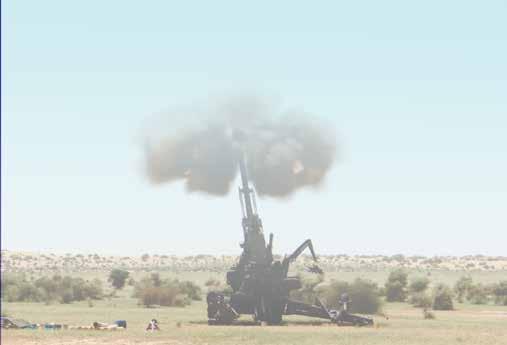
India is on track to achieve significant self-reliance in munitions, with both the private and public sector manufacturers collaborating to ensure a robust supply of ammunition for the armed forces PHOTOGRAPH: PIB

One of the biggest lessons coming out of the ongoing RussiaUkraine war is that no army can fight without adequate weapons and ammunition. And if you are relying on other countries to support you with these, you are inherently at a distinct disadvantage.
There was a time when India also faced critical ammunition
shortages with war wastage reserves as low as five to seven days, in some cases, relying on imports when required. However, a focus on Atmanirbhar Bharat to achieve a semblance of strategic autonomy has steered the Indian government to rework policy frameworks, tweak acquisition rules, open up the munition manufacturing to the private sector and make up long running ammunition and equipment deficiency. In this issue, our lead story by Major General Atanu Pattanaik (Retd) is on creating Atmanirbharta in Munitions.
Technology continues to be a game changer in all spheres of war fighting and newer and more lethal weapons and ammuni-
has already provided more than 200 million bullets and grenades.
It is a Hobson’s choice most nations face while making their strategic assessments and budgeting for defence. Very large stocking of ammunition may result in large quantities getting life expired if not used within their shelf life. Yet war demands that there be consistent and smooth flow of ammunition to the frontline. If the war stretches beyond a certain anticipated period, as has happened in the case of Ukraine war, domestic production ramp up, even by your staunchest allies, cannot happen overnight.
India’s Dire Situation India has not had a war since 1971, save an overseas deployment in Sri Lanka and the Kargil operations which was limited to a single sector. In peacetime, many armchair strategists and policy makers tend to negate possibilities of a war and hence begin to view large stockpiling of munitions, hovering around 30-40 days of war wastage reserves (WWR) as wasteful. Populism took precedence over pragmatism.
The Kargil war brought out many such shortcomings even though it was limited to one sector only. Ammunition management, especially 155mm variety for the large number of Bofors units which were marshalled from all theatres tested the ingenuity of logistics staff officers to the extreme. However, the ensuing ten years saw little concrete action other than knee jerk imports. When options were being weighed after the 2008 Mumbai terror attack directed and coordinated by Pakistan, it became crystal clear that there were no easy solutions to making up the gaping shortages of ammunition for the tanks, artillery guns of all calibre, small arms as well as air defence guns. In some cases, the holdings were as low as just five to seven days WWR. Faced with such embarrassing internal assessments, the government did what bureaucratic establishments are best doing at. It ordered a Committee under R.K.
India is on track to achieve a fair degree of self-reliance in munitions and that’s very assuring in the given global scenario where warring blocks are spinning apart with the threat of a WW III looming large
tions are no different. Continuous changes, lead by technological improvements, are creating more lethal munitions. This transformation extends beyond the established dominance of precisionguided munitions (PGMs). We are witnessing a paradigm shift, with entirely new weapon systems and functionalities emerging that promise to redefine the nature of combat. In an article in this issue, Rohit Goel delves into the cutting edge of land warfare munitions, exploring the trends that are reshaping the battlefield of tomorrow.
India continues to enhance its military capabilities to ensure sovereignty and national security. The recently held Bharat Shakti Exercise stands as a tes-
tament to India’s commitment to modernising its armed forces and leveraging advanced technology to safeguard its borders and interests. Prime Minister Narendra Modi witnessed the tri-service exercise ‘Bharat Shakti’ at the Pokhran field firing range in Jaisalmer, Rajasthan along with delegates from more than 30 nations. A report by Manish Kumar Jha on the exercise is also a part of this issue.
Indian Army has raised an elite unit that will undertake research and evaluation of futuristic communication technologies like 6G, Artificial Intelligence (AI), Machine Learning and Quantum Computing for military use to cope with the changing nature of the battlefield. The unit, called the
Mathur, then Additional Secretary Defence (later appointed first Lt Governor of UT of Ladakh), to study the situation and recommend concrete measures.
During its initial fact findings, the Mathur Committee was surprised to learn that there was a ‘Mutually Agreed Target Fixation’ between the MGO/DG Ordnance and the Ordnance Factories Board. At the end of each fiscal, it would reflect 100 per cent demands of the services were being met by the ordnance factories (OFs) (primarily because the demands were placed not as per services needs but as per OFs delivery capacities). In many instances, the targets were lowered (again mutually!) in mid-year reviews. The deficiencies built up to crisis levels over the years, severely impinging on operational preparedness.
In summary, India’s armed forces grappled with a critical ammunition dilemma, stemming from their heavy reliance on imported weapons posing a significant challenge due to its crippling dependence on whimsical global weapons manufacturers. India’s flawed firearms production-acquisition policy and inadequate research and development exacerbate the situation. The country’s armed forces heavily relied on imported small arms, which poses risks during times of tension with adversaries like China and Pakistan.
Foreign arms firms were prone to abruptly terminate contracts, even during national security crises, for various reasons—ranging from export clearance issues in their home countries to concerns about human rights violations in the purchasing nation or as suiting their own strategic interests or domestic compulsions. To give an illustrative example; Belgian small arms manufacturer FN Herstal (FNH) withdrew
from a contract to supply small arms to India’s covert paramilitary unit, the Special Frontier Force (SFF), during the Ladakh standoff with China. The SFF faced critical weapons shortages when FNH walked out on the deal.
Government Initiatives and Road Ahead
To address India’s ammunition requirements, a delicate balance is necessary between the potential of the domestic private industry and the role of OFs and defence public sector undertakings (DPSUs). Needless to state, both the private and public sectors must collaborate to ensure a robust supply of ammunition for the armed forces. In summary, India’s quest for self-reliance in defence must navigate the complexities of global arms markets, policy reforms, and strategic partnerships to bolster its national security.
India has moved on since and addressed some of the major issues concerning ammunition. Focus on Atmanirbhar Bharat to achieve a semblance of strategic autonomy has steered the Indian government to rework policy frameworks, tweak acquisition rules, open up the munition manufacturing to the private sector and make up long running ammunition and equipment deficiency. There has been a concerted effort to move away from import syndrome making the country vulnerable to meddling by the supplier countries at crucial times. This has also enabled private sector capital and resources into critical research and development in the field as well as enable exports befitting India’s regional and global aspirations.
Earlier, the Ministry of Defence had announced a scheme worth INR 498.8 crore ($67 million) over the next five years
Signals Technology Evaluation and Adaptation Group (STEAG) is mandated to nurture technologies spanning the complete spectrum of wired and wireless systems. In his article, Lt General P.C. Katoch (Retd) feels that this will be a game changer in fostering self-reliance in high-end communication technologies.
All this and a lot more. Happy Reading!

The
most vital lesson from the Ukraine war, which has entered its third year, is that ammunition stocking and production are
critical
to a nation’s war fighting resilience
to Innovations for Defence Excellence (iDEX) under the Defence Innovation Organisation (DIO). The latter is a not-for-profit company under India’s Ministry of Defence while iDEX is its executive arm responsible for creating an ecosystem to foster indigenous innovation and technology development in India’s defence and aerospace sectors by engaging with entities such as MSMEs, startups, innovators, academics, and R&D institutions among others. iDEX evaluates various technologies for scalability and works with all three wings of the Indian armed forces to enable their adoption.
This recent budgetary allocation will provide financial support to 300 MSMEs, startups and innovators, and 20 partner incubators. It also goes a long way in supporting a growing synergy between India’s innovators, the defence manufacturing industry and the country’s defence needs. It also speaks to government support of and demand for technologies developed in India by emerging Indian entities.
Achieving Self-reliance
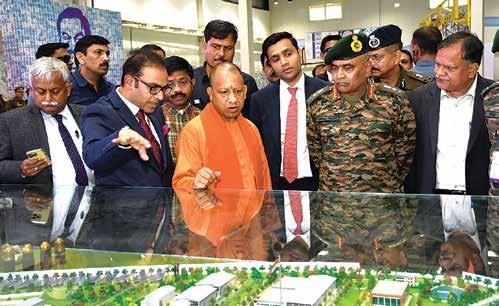
In a major initiative in India’s defence sector, two mega facilities to manufacture ammunition and missiles by Adani Defence & Aerospace, a part of the Adani Group, were inaugurated in Uttar Pradesh’s Kanpur on February 26 this year. The South Asia’s largest ammunition manufacturing complex is aimed at providing significant impetus to the nation’s self-reliance and technological advancement in defence. Chief Minister Yogi Adityanath and Chief of Army Staff General Manoj Pande inaugurated the facilities spread over 500 acres. Furthermore, the Defence Acquisition Council (DAC), headed by Defence Minister Rajnath Singh, will now also procure air defence guns and ammunition from domestic manufacturers, a first in India. India is on track to achieve a fair degree of self-reliance in munitions and that’s very assuring in the given global scenario where warring blocks are spinning apart with threat of a WW III looming large. SP
>> www.spslandforces.com 2 SP’s LAND FORCES 2/2024
LEAD STORY
EDITORIAL
JAYANT BARANWAL Publisher & Editor-in-Chief
ADVANCING ATMANIRBHARTA: Adani Defence & Aerospace inaugurates South Asia’s largest Ammunition & Missiles Complex that will manufacture a full spectrum of ammunition for the tri-services
PHOTOGRAPH: AdaniDefence / X
Future of Battlefield Lethality
R OHIT GOEL
THE LANDSCAPE OF LAND warfare is undergoing a metamorphosis driven by relentless technological innovation. This transformation extends beyond the established dominance of precision-guided munitions (PGMs). We are witnessing a paradigm shift, with entirely new weapon systems and functionalities emerging that promise to redefine the nature of combat. Here we delve into the cutting edge of land warfare munitions, exploring the trends that are reshaping the battlefield of tomorrow.
Loitering Munitions: The Rise of the “Kamikaze Drone”
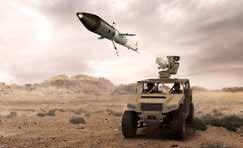
Imagine small, expendable flying bombs hovering in the air, silently stalking their targets before delivering a devastating blow. This is the reality of loitering munitions, often nicknamed “kamikaze drones,” and they are rapidly changing the way wars are fought. These unmanned aerial vehicles (UAVs) combine the destructive power of a missile with the extended loiter time of a reconnaissance drone. They can be launched from various platforms, including vehicles, ships, and even backpacks, offering troops unprecedented flexibility and firepower.
Two prime examples illustrate the impact of loitering munitions. The US-

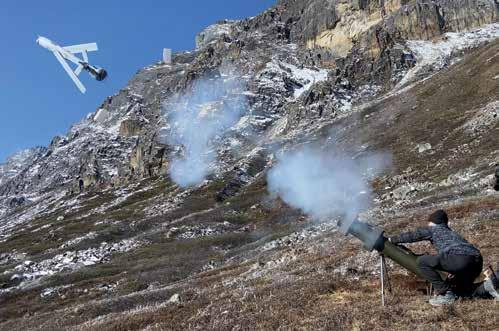
made Switchblade system comes in two variants: the Switchblade 300, a manportable option ideal for taking out tactical targets, and the larger Switchblade 600, designed to engage armoured vehicles. Israel’s HERO series offers a similar range of loitering munitions, with models like the HERO-30 perfectly suited for close-quarters combat due to its lightweight design, while the HERO-120 packs a heavier punch for neutralizing armoured vehicles.
Additionally, advancements in electric and hybrid propulsion could lead to quieter and more efficient loitering munitions.
Imagine silent, electric-powered drones capable of extended loiter times for covert surveillance or surprise attacks. Companies like Textron are already developing electric vertical take-off and landing (eVTOL) tactical UAVs that could be adapted for loitering munition applications.
The advantages of loitering munitions
We
witnessing a paradigm shift in land warfare, with entirely new weapon systems and functionalities emerging that promise to redefine the nature of combat
are numerous. Their affordability allows for a “disposable” approach to warfare, minimising the cost per target engaged. Additionally, their extended loiter time enables troops to positively identify high-value targets before striking, reducing collateral damage. Loitering munitions are particularly effective in urban environments where traditional airstrikes can be risky due to civilian presence. However, concerns remain regarding their proliferation in conflicts where proper training and targeting protocols might not be strictly followed.
Precision on Steroids: Next-Generation PGMs
Precision Guided Munitions (PGMs) have long been a mainstay in modern warfare, offering unparalleled accuracy and mini-
Continued on page 6...









>> 3 2/2024 SP’s LAND FORCES TECHNOLOGY / MUNITIONS
A look at the latest trends reshaping Land Warfare Munitions
are
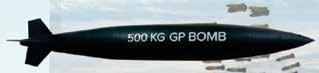
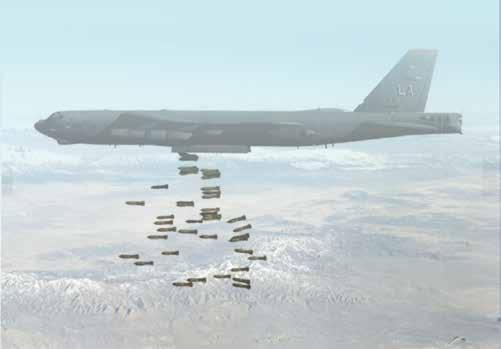
PHOTOGRAPH: UVision Medium Calibre Ammunition mil@munitionsindia.in exports@munitionsindia.in +91-20-67080400 / 414 / 440 = = Quantum leap in Expor ts Over 95% Indigenisation Strong tec hnological base = Aerial Bomb 1000 Lbs Aerial Bomb 500 Kg Guided Pinaka PinakaMK - II Pinaka MK - I 68mm Rocket HE/HC/ Pr actice High Altitude Ammunition Deliver y Dr one Lar ge Calibre Ammunition Please Scan Code or visit website :
HERO-120 Portable Anti-Tank Loitering Munition System
Indigenous Might on Display
Fortifying India’s Military Might with Cutting-Edge Technology

MANISH KUMAR JHA
IN A RAPIDLY EVOLVING global landscape marked by geopolitical tensions and emerging security threats, nations around the world are continuously enhancing their military capabilities to ensure sovereignty and national security. India, with its vast territorial expanse and diverse geopolitical challenges, has been steadfast in bolstering its defence prowess. The Bharat Shakti Exercise stands as a testament to India’s commitment to modernising its armed forces and leveraging advanced technology to safeguard its borders and interests.
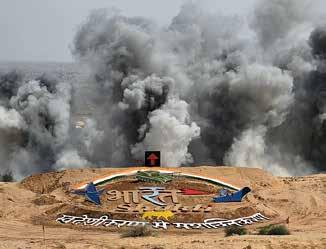
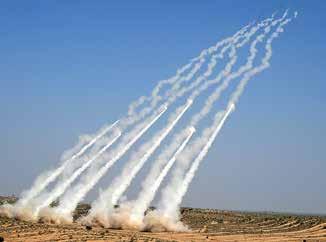
Prime Minister Narendra Modi witnessed the tri-service exercise ‘Bharat Shakti’ at the Pokhran field firing range in Jaisalmer, Rajasthan on March 12, 2024. The exercise was also witnessed by the delegates from more than 30 nations. In his statement, Prime Minister Modi recalled Pokhran’s historical significance as the site of India’s past nuclear tests andasserted, “This is Pokhran, where India showcased its nuclear capabilities, and today we witness the strength of ‘Swadeshikaran se Sashaktikaran’ (empowerment through indigenisation).”
Defence Minister Rajnath Singh, Chief of Defence Staff General Anil Chauhan, Navy Chief Admiral R. Hari Kumar, and IAF Chief Air Chief Marshal V.R. Chaudhari witnessed the tri-services firepower which marked it as India’s major military exercise of magnitude.
The Bharat Shakti exercise involved showcasing of calibrated tactical employment of niche technology in a tri-services environment against perceived threats.
The Essence of Bharat Shakti Exercise Bharat Shakti Exercise, an ambitious initiative of the Indian Armed Forces, encompasses a series of large-scale military drills, simulations, and technology showcases aimed at honing combat readiness, fostering interoperability among different branches of the military, and validating the effec-

tiveness of cutting-edge defence technologies. The exercise serves as a platform for synergising the efforts of the Army, Navy, Air Force, and other defence organisations towards achieving strategic objectives.
While showing the military prowess, the thrust remained on showing the indigenous capabilities. Prime Minister Modi highlighted his quest for indigenous tech for the Indian Armed Forces. In Pokhran, he said that in the past decade, the country’s defence production has more than doubled, exceeding `1 lakh crore. “Over the last 10 years, more than 150 defence startups have emerged, and the armed forces have committed orders worth `1,800 crore to support them,” Prime Minister said. Modi also emphasised that a self-reliant India in the defence sector instils confidence in the armed forces.
Bharat Shakti Exercise is designed to enhance combat readiness through simulate various combat scenarios, ranging from conventional warfare to counter-insurgency operations, thereby ensuring that the armed forces are well-prepared to tackle any potential threat with precision and agility.
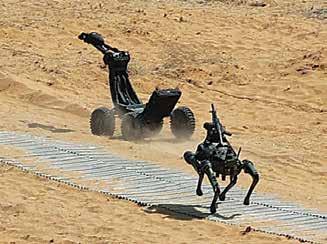
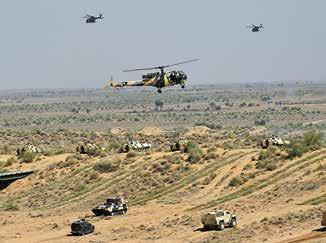
The Exercise displayed indigenous weapon systems including T-90 (IM) Tanks, Dhanush and Sarang Gun Systems, Akash Weapons Systems, Logistics Drones, Robotic Mules, ALH, and various unmanned aerial vehicles. Adding to the firepower, the triservices also showcased the mobile antidrone system, BMP-II and its variants.
The Bharat Shakti exercise involved showcasing calibrated tactical employment of niche technology in a tri-services environment against perceived threats
PHOTOGRAPHS: PIB
Indian Air Force demonstrated their aerospace prowess, displayingair superiority and versatility of indigenous aircraft like Light Combat Aircraft Tejas, Light Utility Helicopters, and Advanced Light Helicopters among other aerial platforms.
From the naval side, it displayed Naval Anti-Ship Missiles, Autonomous Cargo Carrying Aerial Vehicles, and Expendable Aerial Targets.
Bharat Shakti: Key Highlights
l Promoting Interoperability: In modern warfare, seamless coordination, and interoperability among different branches of the military are paramount.
Bharat Shakti provided an opportunity for joint training exercises, enabling personnel from the Army, Navy, and Air Force to collaborate effectively in diverse operational environments.
l Showcasing Indigenous Technological Advancements: A significant emphasis of the exercise was on showcasing the indigenous defence technologies developed by Indian defence research organisations and industries.
“This not only highlights India’s selfreliance in defence production but also fosters innovation and encourages the domestic defence industry to strive for excellence,” said a senior army officer who led the key planning for the exercise.
Indian Army Technology: Driving Force Behind Bharat Shakti
The Indian Army played a pivotal role in the Bharat Shakti, demonstrating the efficacy of the Integrated Battlefield Management System (IBMS). The IBMS is a state-ofthe-art command and control system that integrates various battlefield assets, including sensors, communication networks, and decision support tools, to provide realtime situational awareness to commanders. It enables faster decision-making and enhances the overall operational efficiency of the Indian Army.
Bharat Shakti also demonstrated emerging technologies —Artificial Intelligence (AI) and Machine Learning (ML) in analysing the data in the exercise. AI and ML algorithms were increasingly utilised to analyse vast amounts of data collected from sensors, drones, and surveillance systems, thereby facilitating predictive analytics, threat detection, and autonomous decisionmaking on the battlefield.
UAVs and drones have emerged as invaluable assets for reconnaissance, surveillance, and target acquisition purposes. They provide real-time aerial reconnaissance capabilities, enabling the Indian Army to gather vital intelligence and monitor remote areas effectively. During the exercise, the armed forces in conjunction, demonstrated a fleet of swarm drones that showcased remarkable precision striking capabilities throughout the exercise.
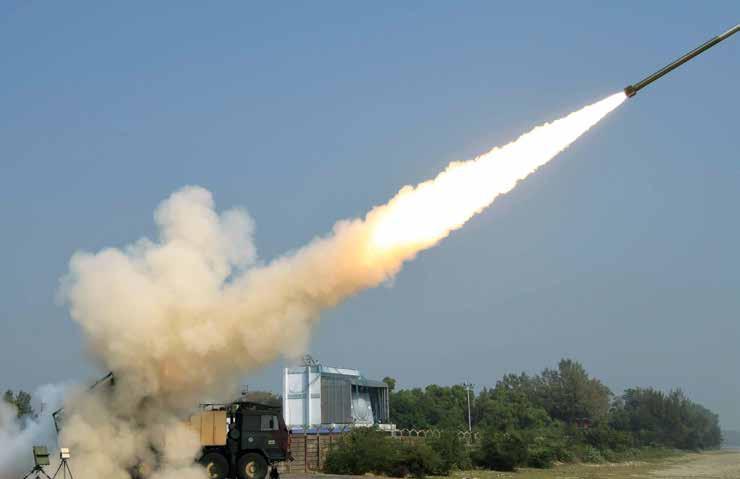
India has made significant progress in developing indigenous weapon systems, including tanks, artillery, missiles, and small arms. Projects like the Arjun Main Battle Tank, Pinaka Multi-Barrel Rocket Launcher System, and BrahMos supersonic cruise missile showcase India’s capability to design, develop, and produce cutting-edge military hardware.
The Bharat Shakti Exercise aimed to leverage advanced technologies, fostering interoperability among different branches of the military, and promoting indigenous defence production. The thrust on indigenisation has resulted in the development of fighter jets, aircraft carriers, and a series of combat helicopters. Most notably, India has geared to build the next-generation jet engine and manufacture 5th-generation fighter jets domestically. SP
Manish Kumar Jha is a Consulting & Contributing Defence Editor for SP’s Aviation, SP’s Land Forces and SP’s Naval Forces and a security expert. He writes on national security, military technology, strategic affairs & policies.
>> www.spslandforces.com 4 SP’s LAND FORCES 2/2024 EXERCISES / BHARAT SHAKTI 2024
(Clockwise from Top Left) Prime Minister witnesses ‘Bharat Shakti’ - a Tri-Services Firing and Manoeuvre Exercise; A remarkable display of India’s defence prowess at Exercise Bharat Shakti at Pokhran, Rajasthan.
Army Establishes STEAG
Signals Technology Evaluation and Adaptation Group (STEAG) is mandated to nurture technologies spanning the complete spectrum of wired and wireless systems
LT GENERAL P.C. KATOCH (RETD)
IN 2023, A STUDY by the Australian Strategic Policy Institute concluded that of the 44 technologies it considered critical, China leads the world in 37 of them, which included electric batteries and hypersonic missiles. It has become more than certain now that China’s Peoples’ Liberation Army (PLA) would use artificial intelligence (AI) to help develop plans at the tactical and operational levels of warfare with the aim of cutting through the fog of war and gaining advantage in making decisions. Chinese military experts are terming this as the “Command Brain”. Concurrently, the Chinese military has reportedly developed real-time monitoring and analysis of the electromagnetic spectrum, which grants it unprecedented information perception capabilities; a technology that allows them to swiftly detect and neutralise enemy signals, while ensuring uninterrupted communications for their own forces. Dominance over the electromagnetic spectrum has been part of the USChina tussle especially in the South China Sea (SCS) region. In recent times, there have been instances of mysterious interference with civilian weather radars in the SCS,
leading to speculation about covert confrontation between China and the US due to activation of the electronic battlefield. Chinese researchers now claim the enemy will have no place to hide; since the PLA has successfully developed a method for continuous, broad bandwidth; real-time monitoring and analysis of the electromagnetic spectrum, rendering enemy forces completely exposed during any conflict.
On March 7, 2024, the Indian Union Cabinet, chaired by Prime Minister Narendra Modi, approved the Artificial Intelligence (AI) Mission with an outlay of `10,371.92 crore for five years. Under the ‘India AI Mission’, private companies looking to set up AI computing capacity in the country will be subsidised through a fund. Seed funding will also be provided for AI startups. The approved corpus of `10,371.92 will be used to create a large computing infrastructure. Briefing reporters after the cabinet meeting, Union Minister Piyush Goyal said supercomputing capacity, comprising over 10,000 GPU, will be made available to various stakeholders for creating an AI ecosystem. Startups, academia, researchers and industry will be given access to the AI supercomputing infrastructure established under the India AI Mission.
Under the AI Mission, the government will focus on four key areas covering AI research, funding startups working on designing bespoke chips for AI use cases, offering viability gap funding (VGF) for private companies looking to set up data centres in India for AI use cases, and also creating computing capacity within the government. A National Data Management Officer will be set up under the mission that will coordinate with various government departments and ministries to improve the quality of data and make them available for AI development and deployment.
In 2021, the Indian Army had demonstrated an AI-enabled swarm of 75 aerial drones. Also, the Army used AI for intelligence, surveillance and reconnaissance purposes during the ‘Dakshin Shakti’ military exercise held in the same year. The use of AI in the Indian Army has since become more broad-based. At the inaugural ‘AI in Defence’ (AIDef) Symposium and Exhibition organised by the Ministry of Defence (MoD) at New Delhi on July 11, 2022, Defence Minister Rajnath Singh unveiled 75 newly created AI technologies. The Indian Military and the defence sector are currently using AI-based technologies for training, surveillance, logistics, cyber-security, UAV,
advanced military weaponry like LAWS, autonomous combat vehicles, and robotics.
Now news reports of March 18, 2024, have said that the Indian Army has raised an elite unit that will undertake research and evaluation of futuristic communication technologies like 6G, Artificial Intelligence (AI), Machine Learning and Quantum Computing for military use to cope with the changing nature of the battlefield. The unit, called the Signals Technology Evaluation and Adaptation Group (STEAG) is mandated to nurture technologies spanning the complete spectrum of wired and wireless systems. The setting up of STEAG is part of the Indian Army’s efforts to develop technologies in the backdrop of requirements of the fast changing futuristic battlefield. STEAG will focus on all upcoming critical technology domains including electronic exchanges, mobile communications, software-defined radios, electronic warfare systems, 5G and 6G networks, quantum technologies, AI, machine learning and the like; undertaking technical scouting, evaluation, development, management of core ICT solutions, and provide user interface support by maintenance and upgrading of contem-
Continued on page 7...

>> 5 2/2024 SP’s LAND FORCES
MODERNISATION / MAKE IN INDIA
Future
of Battlefield... Continued from page 3
mising collateral damage. However, the focus now is on pushing the boundaries of precision and lethality. Advanced guidance systems are being developed, incorporating sophisticated technologies like millimetre wave radar and electro-optical seekers. These systems allow missiles and artillery shells to not only lock onto a target but also adjust their trajectory in midflight for behind-cover strikes. Imagine a laser-guided missile that can manoeuvre around obstacles to take out an enemy entrenched in a fortified position.
Miniaturisation is another key trend in PGMs. Smaller, more affordable PGMs are making precision firepower more accessible. One such example is the APKWS (Advanced Precision Kill Weapon System), which essentially transforms unguided rockets into precision weapons by adding a laser guidance kit. This allows close-air support missions to be carried out with greater accuracy and reduced risk of civilian casualties.
AI Integration: The Rise of the “Thinking Bullet”
The integration of Artificial Intelligence (AI) into munitions is perhaps the most controversial and potentially transformative trend. AI algorithms can analyse data from sensors and cameras mounted on munitions, enabling them to identify and track enemy targets with superhuman precision and speed. Imagine a mortar round
The integration of Artificial Intelligence (AI) into munitions is perhaps the most controversial and potentially transformative trend
equipped with AI that can adjust its trajectory mid-flight based on real-time target identification from its onboard camera. While this promises unmatched accuracy and lethality, the ethical implications of autonomous weapons systems are a major point of discussion. The potential for unintended consequences and the blurring of lines between human and machine decision-making in the context of taking human lives raise serious concerns.
Another potential application of AI is in autonomous swarming tactics. Multiple loitering munitions equipped with AI could collaborate, sharing target data and launching coordinated attacks, overwhelming enemy defences. The concept of weaponised AI raises complex questions about accountability and the potential for arms races fuelled by autonomous weapon development. International regulations and clear guidelines will be crucial in mitigating the risks associated with AI-powered munitions.
Advanced Materials and Propulsion: Lighter, Faster, More Lethal
New materials science is leading to a revolution in munition design. 3D printing is emerging as a viable option for manufacturing complex and customised munitions. Imagine scenarios where soldiers in remote outposts, faced with unforeseen enemy defences, can download schematics for specific anti-tank rounds and print them on-demand using a portable 3D printer. This could revolutionise logistics and supply chains, allowing troops to adapt their arsenal based on real-time battlefield situations. The US military is already explor-
ing the potential of 3D-printed munitions, with ongoing research projects focused on developing printers capable of handling the high-strength materials needed for certain weapon components. Research into novel propellants is also underway. The focus is on cleaner burning options that reduce environmental impact and logistical burdens associated with traditional propellants. One area of exploration is the development of biofuels that could power loitering munitions, offering a more sustainable alternative to conventional fuels.
Networked Warfare: Munitions as Part of a Bigger System
The battlefield of tomorrow will be a web of interconnected systems, and munitions are being designed to seamlessly integrate with other platforms. This networked approach promises enhanced situational awareness, faster decision-making, and ultimately, a more decisive advantage.
l Drones and Unmanned
Ground
Vehicles (UGVs): Loitering munitions can receive real-time target data from overhead drones or UGVs. Imagine a scenario where a loitering munition equipped with AI receives a target designation from a reconnaissance drone, allowing it to strike with pinpoint accuracy without ever exposing itself or the launching platform to enemy fire. This collaborative approach between different unmanned systems can significantly reduce risk to manned troops.
l Artillery Systems: Imagine AIpowered artillery shells equipped with miniaturised radar seekers and onboard processing capabilities. These shells could receive target data from battlefield sensors or drones, mid-flight, allowing them to adjust their trajectory for course correction or even behind-cover strikes. This would significantly reduce the number of rounds needed to neutralise a target, minimising collateral damage and ammunition expenditure. For instance, BAE Systems’ Archer self-propelled howitzer system demonstrates the potential for integration of fire control systems and battlefield networks, paving the way for future AI-powered artillery munitions.
The Future: A Balancing Act
The trends outlined above paint a picture of a rapidly evolving landscape for land warfare munitions. New technologies promise unprecedented precision, lethality, and battlefield awareness. However, this progress comes with a responsibility to address the ethical considerations surrounding autonomous weapons and the potential for unintended consequences. International cooperation and clear regulations will be crucial in ensuring the responsible development and use of these advanced munitions. Finding the right balance between technological advancement and responsible use will be paramount in shaping the future of land warfare.
The land warfare landscape is on the cusp of a significant transformation. New and innovative munitions are blurring the lines between traditional categories, with AI, advanced materials, and network connectivity playing an increasingly important role. While these advancements promise greater efficiency and reduced casualties, the ethical considerations surrounding autonomous weapons and the potential for proliferation cannot be ignored. Moving forward, a commitment to responsible development and international cooperation will be essential in harnessing the power of these new technologies for a safer and more secure future. SP


>> www.spslandforces.com 6 SP’s LAND FORCES 2/2024 TECHNOLOGY / MUNITIONS THE GLOBAL EVENT FOR DEFENCE & SECURITY Get your badge 17•21 JUNE 2024 PARIS organised by a subsidiary of EUROSATORY.COM
ARMY COMMANDERS’ CONFERENCE CONCLUDES
The Army Commanders’ Conference concluded in New Delhi on April 2, 2024. The biannual event, held in a hybrid format, commenced with a virtual session chaired by General Manoj Pande, Chief of Army Staff (COAS), on March 28, 2024, and was followed by in-person discussions on April 1 and 2, 2024. The senior leadership of the Army brainstormed a wide array of security-related aspects, including ongoing transformation initiatives, leveraging technology and innovation for capability development, enhancing operational preparedness, addressing emerging security and HR-related issues. Rajnath Singh, Defence Minister appreciated the efforts of Indian Army in developing niche technologies in collaboration with indigenous industries and premier educational institutions.
DRDO CONDUCTS MISSION DIVYASTRA
Defence Research and Development Organisation (DRDO) conducted first successful flight test of indigenously developed Agni-5 missile with Multiple Independently Targetable Re-Entry Vehicle (MIRV) technology. The flight test named Mission Divyastra was carried out from Dr APJ Abdul Kalam Island in Odisha. Various Telemetry and radar stations tracked and monitored multiple reentry vehicles. The Mission accomplished the designed parameters.
DEFENCE EXPORTS TOUCH RECORD
`21,083 CRORE IN FY 2023-24
Defence exports have touched a record `21,083 crore (approximately $2.63 billion) in the Financial Year (FY) 2023-24, a growth of 32.5 per cent over the last fiscal when the figure was `15,920 crore. The recent figures indicate that the defence exports have grown by 31 times in the last 10 years as compared to FY 2013-14. The defence Industry, including the private sector and Defence Public Sector Undertakings (DPSUs), have made tremendous efforts in achieving the highest-ever defence exports. The private sector and the DPSUs have contributed about 60 per cent and 40 per cent respectively.
In addition, there has been a rise in the number of export authorisations issued to the defence exporters during FY 2023-24. From 1,414 export authorisations in FY 2022-23, the number jumped to 1,507 in FY 2023-24. A comparative data of two decades i.e. the period from 2004-05 to 2013-14 and 2014-15 to 2023-24 reveals that there has been a growth of 21 times in the defence exports. Total defence exports during 200405 to 2013-14 were `4,312 crore, which has gone up to `88,319 crore in the period from 2014-15 to 2023-24.
LIGHTEST BULLET PROOF JACKET
DRDO’s Defence Materials and Stores Research and Development Establishment (DMSRDE), Kanpur has successfully developed the lightest Bullet Proof Jacket in the country for protection against 7.62 x 54 R
AAPI (Level 6 of BIS 17051) ammunition. Recently, this bullet proof jacket was successfully tested at TBRL, Chandigarh as per BIS 17051-2018. This jacket is based upon new design approach, where novel material along with new processes have been used.
OVER `200 CRORE DEAL FOR INDIGENOUS ANTI-DRONE TECHNOLOGY
Big Bang Boom Solutions Pvt Ltd (BBBS), a defence sector startup, has secured a significant order worth more than `200 crores from the Indian Air Force and the Indian Army, for its cutting-edge anti-drone technology. This historic contract, the largest under the Indian Defence Exhibition (iDEX) initiative, is one of the largest signed by the Indian MoD. BBBS’s Vajra Sentinel System is a state-of-the-art solution designed to detect, track, and neutralise drones at extraordinary ranges. It utilises passive RF sensor technology to eliminate false alarms, and its sensor and jammer combination meets stringent military standard specifications for durability and reliability. It has a number of stateof-the-art tech improvements such as AESA radar and kamikaze drones which can be upgraded on demand by the user.
INDIGENOUS TECHNOLOGY CRUISE
MISSILE SUCCESSFULLY FLIGHT-TESTED
Defence Research and Development Organisation (DRDO) conducted a successful flighttest of Indigenous Technology Cruise Missile (ITCM) from the Integrated Test Range (ITR), Chandipur on April 18, 2024. During the test, all subsystems performed as per expectation. The missile followed the desired path using way point navigation and demonstrated very low altitude sea-skimming flight. This successful flight test has also established the reliable performance of the indigenous propulsion system developed by Gas Turbine Research Establishment (GTRE), Bengaluru.
SUCCESSFUL TRIALS OF INDIGENOUS
MPATGM WEAPON SYSTEM
Man Portable Anti-tank Guided Missile (MPATGM) Weapon System, indigenously designed and developed by Defence Research & Development Organisation (DRDO), has been field evaluated in different flight configurations several times with the objective of proving the technology with high superiority. The system consisted of the MPATGM, Launcher, Target Acquisition System, and the Fire Control Unit.
Adequate number of missile firing trials have been successfully conducted towards achieving compliance of complete operational envelop as stipulated in the General Staff Qualitative Requirements (Infantry, Indian Army). The Warhead Flight Trials were successfully conducted at the Pokhran Field Firing Range, Rajasthan on April 13, 2024. Missile performance and warhead performance were found to be remarkable.
NEW GENERATION BALLISTIC MISSILE AGNI-PRIME FLIGHT-TESTED Strategic Forces Command (SFC), along with Defence Research and Development Organ-
rmy Establishes STEAG... Continued from page 5 porary technologies available in the environment. An official told the media, “It (STEAG) will be a premier organisation, the first of its kind equipped with the capability to harness niche technology, leverage cutting-edge solutions and identify suitable cases for defence applications by fostering collaboration with academia and industry. Aligning itself with the tenets of Atmanirbhar Bharat and Startup India, STEAG will help bridge the divide between the Armed Forces on the one hand and industry and academia on the other.”
STEAG is expected to be a game changer in fostering self-reliance in high-end communication technologies, which have thus far been a monopoly of select countries
isation (DRDO), conducted the successful flight-test of New Generation Ballistic Missile Agni-Prime from Dr APJ Abdul Kalam Island on April 3, 2024. The test met all the trial objectives validating its reliable performance. The launch was witnessed by the Chief of Defence Staff, Chief of Strategic Forces Command and senior officials from DRDO & the Indian Army. Defence Minister Rajnath Singh has congratulated DRDO, SFC and the Armed Forces for the successful test. He stated that the successful development and induction of the missile will be an excellent force multiplier for the Armed Forces.
DRDO CARRIES OUT SUCCESSFUL FLIGHT TRIALS OF HEAT
Four flight trials of High-speed Expendable Aerial Target (HEAT) - ABHYAS were successfully carried out by Defence Research & Development Organisation (DRDO) from the Integrated Test Range, Chandipur in Odisha during January 30 to February 2, 2024. The trials were conducted with four different mission objectives in a revised robust configuration using a single booster designed by Advanced Systems Laboratory, Hyderabad to provide reduced launch acceleration. The objectives like safe release of booster, launcher clearance and attaining the required end of launch velocity were achieved. During the flight trials, various parameters like required endurance, speed, manoeuvrability, altitude and range were successfully validated.
MAIDEN TEST-FIRING OF INDIA’S FIRST INDIGENOUSLY-MADE MBT ENGINE
Defence Secretary Giridhar Aramane presided over the maiden test-firing of India’s first indigenously-made 1500 Horsepower (HP) engine for Main Battle Tanks at BEML’s Engine division in Mysuru complex on March 20, 2024. The achievement heralds a new era in the country’s defence capabilities, showcasing the technological prowess and commitment to self-reliance in defence technologies. The 1500 HP engine represents a paradigm shift in military propulsion systems, possessing cutting-edge features such as high power-to-weight ratio, operability in extreme conditions including high altitudes, sub-zero temperatures, and desert environments. Equipped with advanced technologies, the engine stands on par with the most advanced engines globally.
JD TAURUS BEGINS STATE-OF-THE-ART FIREARMS MANUFACTURING
In a bid to make India atmanirbhar in the critical areas of defence and security, Jindal Defence Systems Private Limited (JDSPL) have begun production in its state-of-theart firearms manufacturing plant in Hisar as part of a JV with Brazil-based global leader Taurus Armas S.A. Under the brand name JD Taurus, JDSPL is poised to transform the landscape of firearms manufacturing in India and reduce India’s reliance on imports. In the next Financial Year, the company aims to manufacture between 25,000 to 30,000 weapons. SP
Publisher and Editor-in-Chief
Jayant Baranwal
Deputy Managing Editor Neetu Dhulia
Senior Editorial Contributor
Lt General P.C. Katoch (Retd)
Principal Correspondent Ayushee Chaudhary
Contributors
India
Lt General Dushyant Singh (Retd)
Lt General Pradeep Bali (Retd)
Lt General R.K. Jagga (Retd)
Lt General J.K. Sharma (Retd) Major General Atanu K. Pattanaik (Retd)
Chairman & Managing Director Jayant Baranwal
Executive Vice President (Planning & Business Development) Rohit Goel
Manager – HR & Admin Bharti Sharma
Deputy Manager – Circulation Rimpy Nischal
Group Research Associate Survi Massey
Design
Sr. Designer: Vimlesh Kumar Yadav
Designer: Sonu Bisht
Group Director – Sales & Marketing Neetu Dhulia
Director – Sales Rajeev Chugh
SP’s Website
Sr. Web Developer: Shailendra Prakash Ashish
Web Developer: Ugrashen Vishwakarma
Published bimonthly by Jayant Baranwal on behalf of SP Guide Publications Pvt Ltd. All rights reserved. No part of this publication may be reproduced, stored in a retrieval system, or transmitted in any form or by any means, photocopying, recording, electronic, or otherwise without the prior written permission of the publishers.
Printed in India by Kala Jyothi Process Pvt Ltd © SP Guide Publications, 2024 Subscription/ Circulation
Annual Inland: `600 • Overseas: US$180 Email: subscribe@spguidepublications.com subscribe@spslandforces.com
Letters to Editor editor@spslandforces.com
For Advertising Details, Contact: neetu@spguidepublications.com rajeev.chugh@spguidepublications.com
SP GUIDE PUBLICATIONS PVT LTD
Corporate Office
A 133 Arjun Nagar, Opp Defence Colony, New Delhi 110003, India
Tel: +91(11) 24644693, 24644763, 24658322 Fax: +91 (11) 24647093 Email: info@spguidepublications.com
Representative
with advanced economies and research ecosystems. With communications being a vital component of military operations in the backdrop of fast-evolving technologies for the battlefield, the side with better communication technologies and the ability to connect the various constituents for information sharing will have an edge over its adversary. Modern warfare necessitates the induction of new equipment to provide seamless communication support to units and formations during operations.
Finally, STEAG is not a new raising; Army’s 21 Signals Group has been reorganised as STEAG to adapt to the emerging technologies in the field of communications,
in line with the Army’s vision of ‘On Path to Transformation’ in “adopting niche technologies towards becoming a future ready force. STEAG is a significant step in 2024, which has been declared as ‘Year of Tech Absorption’. Headed by a Colonel rank officer of the Army from the Corps of Signals, STEAG will be operational under the Directorate of Signals and based in Delhi. It will research and develop tailored technologies across the spectrum of wired and wireless systems, including electronic exchanges, mobile communications; software defined radios (SDR), electronic warfare (EW) systems, 5G and 6G networks, quantum technologies, artificial intelligence and machine learning. SP
MOSCOW, RUSSIA LAGUK Co., Ltd, Yuri Laskin Krasnokholmskaya, Nab., 11/15, app. 132, Moscow 115172, Russia. Tel: +7 (495) 911 2762, Fax: +7 (495) 912 1260 www.spguidepublications.com www.spslandforces.com
RNI Number: DELENG/2008/25818
>> 7 2/2024 SP’s LAND FORCES
NEWS



ALL NEW - SP’S MILITARY YEARBOOK 21-2022 • AN INDISPENSABLE REFERENCE DOCUMENT * MOST UPDATED INDIA’S WHO’S WHO IN DEFENCE, MOST UPDATED ASIA’S WHO’S WHO IN DEFENCE & MUCH MORE....
Military
2021 –2022 SP’S MILITARY YEARBOOK 2021-2022 CONTENTS HEREWITH GET YOUR COPIES, NOW: E-mail us at order@spsmilitaryyearbook.com WhatsApp us at +91 97119 33343 Call us on +91 11 24644693, 24644763, 24658322 Connect via : @SPsMYB www.spsmilitaryyearbook.com
SP’s
Yearbook
