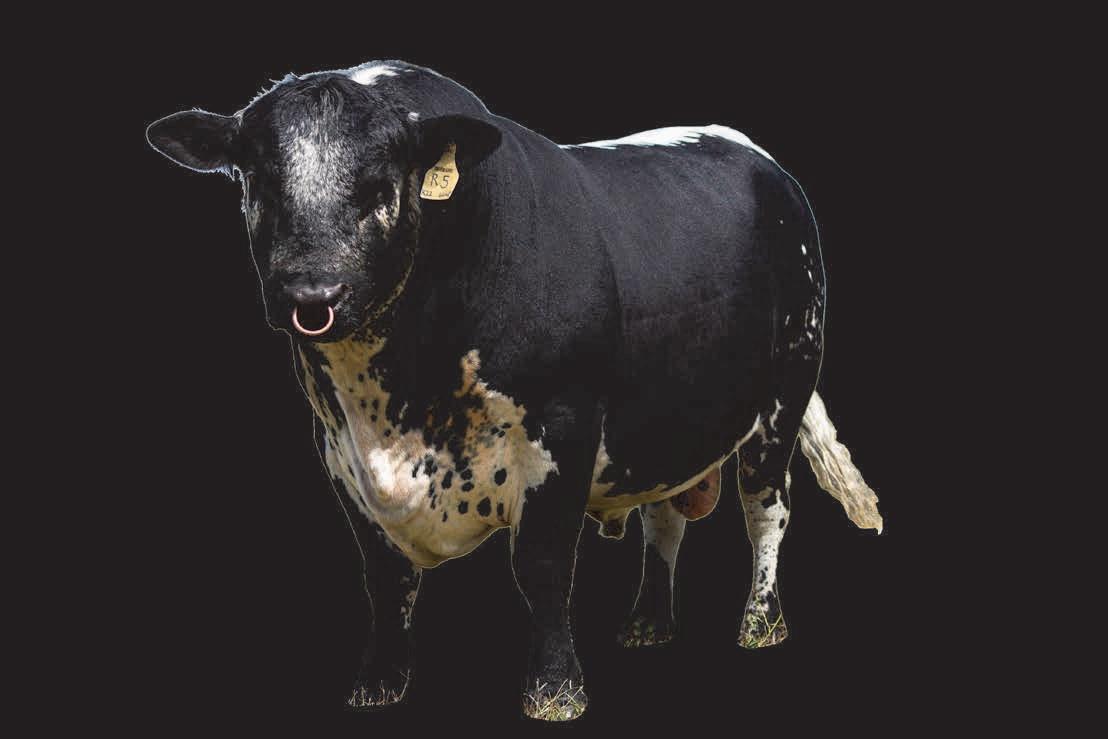
Two producers. One commercial value story Carcase data beyond the paddock
Signature Beef Challenge starts the proof
Rudders Creek Speckle Park for nearly a decade, has forged a herd where power meets purpose. We breed for premium carcase quality, resilience and real-world performance. Our cattle thrive, endure and stand out. Every animal is a testament to our passion and an unwavering belief in the breed’s future .
Disclaimer: While all reasonable care is taken, neither Speckle Park International Limited, its Directors, subcommittee members (collectively, ‘SPI’) or those involved in the production of this publication accept any responsibility for any errors or omissions or the contents of material prepared by third parties, SPI reserves the right to amend any part of this publication as it sees fit. The views expressed in the contents of this publication are not necessarily the views of SPI. SPI expressly disclaims liability for any loss or damage sustained by any person as a result of or in connection with, the information contained in this publication, including any errors or omissions. 24 19 14 11
04 Building the evidence, strengthening the breed 08 The paddock tells one story. The rail tells another 11 Dairy beef with another layer of value 13 Putting Speckle Park to the test 14 Speckle Park in the supply chain
19 How can the commercial register work for our herd?
22 Understanding MSA: turning carcase feedback into market opportunity
24 Doing more with less
27 Cut like butter: How SpeckleBeef backed up gold
29 Proof in the paddock, demand at the table
Publisher Speckle Park International Phone +61 2 5732 7166
Email communications@specklepark.org
Website SpecklePark.org
Editorial team communications@specklepark.org
Design / Advertising SquishCreative.com
Arley
Building the evidence, strengthening the breed
Chairman report
The past six months have been a period of genuine progress for Speckle Park International, strengthening our operational foundations, deepening our industry connections, and continuing to build the evidence base that underpins the breed’s commercial reputation.
This report reflects that progress and looks ahead to an important period for SPI, our members and the broader Speckle Park supply chain.
Strengthening our foundations
A key part of SPI’s ongoing development has been the continued refinement of our internal operations. Heather Apps has accepted the role of Finance Officer, bringing her considerable organisational knowledge and governance experience into a more focused financial role.
Heather has provided SPI with strong support across finance, governance, member services, constitutional guidance and operational continuity. As she transitions to reduced hours, her focus will move fully to financial management, reporting accuracy, compliance and longterm organisational sustainability. The Board sincerely thanks Heather for the role she has played in guiding SPI through important periods of change and helping place the organisation in a stronger position for the future.
Maddie Brockhoff has also stepped into the new role of Operations Officer, a position central to SPI’s day-to-day effectiveness. Maddie leads member services and registry administration, including registrations, DNA processing, transfers, permits and associated member services. She also supports Board and committee processes, meeting coordination, action registers, operational and stakeholder support, assisting with marketing materials, member communications, events and industry engagement.
Across all areas, Maddie’s commitment to member-focused service has strengthened SPI’s operational backbone.
Board and Youth Committee update
Treasurer transition
The Board is pleased to welcome Ian Holt as a casual appointment to the Board of Directors, with Ian also stepping into the role of Treasurer.
Ian brings more than 40 years of senior experience in finance, governance, risk management and strategic advisory roles across the NSW Public Service, including time as Chief Audit Executive for the NSW Environment Protection Authority.
Since joining SPI, Ian has reviewed the organisation’s financial position, strengthened oversight processes, and
begun developing KPI-driven financial reporting and budget requirements to support clearer decision-making. His experience and calm, strategic approach will be valuable as SPI continues to mature.
Brooke Paff has stepped down from the executive role of Treasurer but continues as a valued member of the Board. Brooke has made a significant contribution to SPI’s financial oversight, including during the transition of member services inhouse and through a period of important organisational change. She will continue to support the transition of responsibilities across finance and operations, working closely with Ian Holt and Heather Apps.
Brooke’s broader contribution across event organisation, the Youth Committee and the Marketing Committee has also helped strengthen SPI’s community presence and ensure key initiatives continue to progress.
Board farewell
The Board also acknowledges the resignation of Tim Bell and extends its sincere thanks for his service to SPI. Tim has been a steady and principled contributor, always bringing a thoughtful perspective and a genuine commitment to the breed and its members.
His willingness to put the interests of Speckle Park first has been greatly valued and his contribution to the association is deeply appreciated. We wish Tim all the very best for the future.
Youth committee
After six years of dedicated service to the Speckle Park Youth Subcommittee, including four years as Chairperson, Claudia Humphries has stepped down from the committee.
Claudia has been a passionate advocate for youth involvement in the breed. Her leadership has helped shape the direction and success of the program, including through her founding role in the Canadian Speckle Park Exchange. We thank Claudia sincerely for her contribution and wish her well in her continued Speckle Park journey.
We are also pleased to welcome Charlize Taylor as the incoming Chair of the Youth Subcommittee. Charlize brings enthusiasm and commitment to the role, and the Board looks forward to supporting her as she leads the next chapter of SPI’s youth initiatives.
Strengthening governance and Board capability
Governance remains a priority for SPI. As the organisation grows, it is important that our systems, processes and Board capability grow with it. In recent months, Ian Holt has led the development of SPI’s New Director Induction and Governance Package, drawing on his extensive experience in governance, financial oversight and strategic advisory roles.
This package provides incoming Directors with a clear understanding of SPI’s structure, responsibilities, constitutional requirements, operational processes and strategic priorities. It is an important step in supporting continuity, improving Board onboarding and reinforcing the professional standards expected of a modern breed association.
SPI Joins MLA’s Multibreed Genetic Evaluation
SPI is also proud to confirm its participation as a contributor to Meat & Livestock Australia’s Multibreed Genetic Evaluation, a national initiative aimed at strengthening genetic benchmarking across the Australian beef industry.
Under a royalty-free, non-exclusive licence agreement with MLA,
IAN HOLT - SPI TREASURER
Board member with 40 years’ NSW Public Service experience across finance, governance, risk and human resources, including as Chief Audit Executive for the NSW EPA.
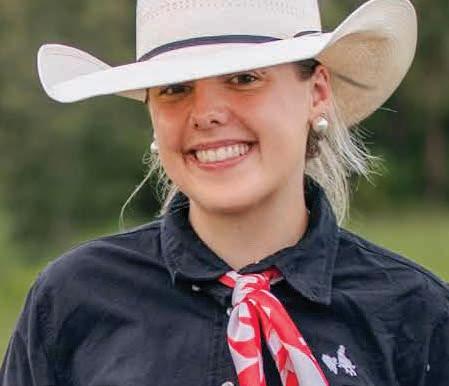
CHARLIZE TAYLOR - YOUTH COMMITTEE CHAIRPERSON
SPI Youth Committee Chairperson and Diamond Hill Speckle Park member from Kyogle, NSW, with hands-on experience across cattle showing, breeding programs, led steer competitions and youth engagement.
SPI has provided access to its within-breed genetic evaluation data to support development of a science-driven multibreed evaluation framework. SPI retains ownership of its intellectual property while gaining the opportunity to participate in consultation, review activities and future commercial services once the multibreed evaluation becomes available.
This work aligns strongly with SPI’s strategic priorities: improving data transparency, strengthening breed credibility and ensuring Speckle Park cattle are accurately represented within industrywide genetic tools.
Looking ahead
The next period will be an important one for SPI, with several major initiatives focused on genetics, data, member education and commercial industry engagement.
Across the AGM program, the Breed Audit and planning for Beef Australia 2027, the focus is consistent: strengthening the evidence base behind Speckle Park cattle and creating more opportunities for members to connect that information with practical breeding, marketing and commercial decisions.
WHERE DATA MEETS DIRECTION
Workshop and Annual General Meeting
Armidale, 6–7 November 2026
This year’s AGM in Armidale is shaping as one of the most substantive in recent memory, and we encourage all members to mark 6–7 November in their calendars.
The program begins on Friday 6 November with a guided tour of the University of New England’s Smart Farms, giving members the opportunity to see precision livestock management in action and consider what it means for the future of beef production, genetic progress and breed development.
WORKSH P & SPI AGM
SPEAKER LINE UP
Dr David
Principal Scientist, Animal Genetics and Breeding Unit, University of New England
That afternoon, a member workshop will bring together guest speakers with expertise across meat science, genetics and industry development.
Speaker line up includes:
Prof. Peter McGilchrist , Meat Science, University of New England
Dr David Johnston , Principal Scientist, Animal Genetics and Breeding Unit (AGBU), University of New England
Andrew Byrne, Program Manager, Genetics Commercial Services, Meat & Livestock Australia.
Additional industry representatives will be announced closer to the date.
The discussion around carcase data, genetic selection, market alignment and breed positioning sits at the heart of SPI’s current focus. Members are encouraged to attend, ask questions and take part in the conversation. Further details on the program, accommodation and registration will be communicated in the lead-up to the event.
AGBU Breed Audit and Member Education
SPI has engaged the Animal Genetics and Breeding Unit to undertake a Breed Audit, an independent assessment of the breed’s current genetic and performance landscape. This important body of work will help identify where the breed sits today, where further data is needed, and how SPI can support members in building the evidence base behind Speckle Park cattle.
The audit will help inform a series of member workshops and create a clearer feedback loop across the Speckle Park supply chain, from breeder to processor, butcher and plate. SPI is also working with industry and research partners to validate and build the evidence base that supports the breed’s commercial positioning.
Member involvement will be central to this work. If you have data, experience or insights to contribute, we encourage you to get involved. Details will be shared through member emails and the SPI website.
Beef Australia 2027
Looking further ahead, Beef Australia 2027 represents a significant opportunity for SPI to engage directly with the commercial beef industry. SPI will be represented at Stand E45 in the Exhibition Pavilion when the event returns to Rockhampton in May 2027.
As the breed continues to build its reputation for eating quality, carcase performance and adaptability, Beef Australia provides an important platform to connect with processors, feedlotters, commercial producers and industry decision-makers. We look forward to seeing members and industry contacts there.
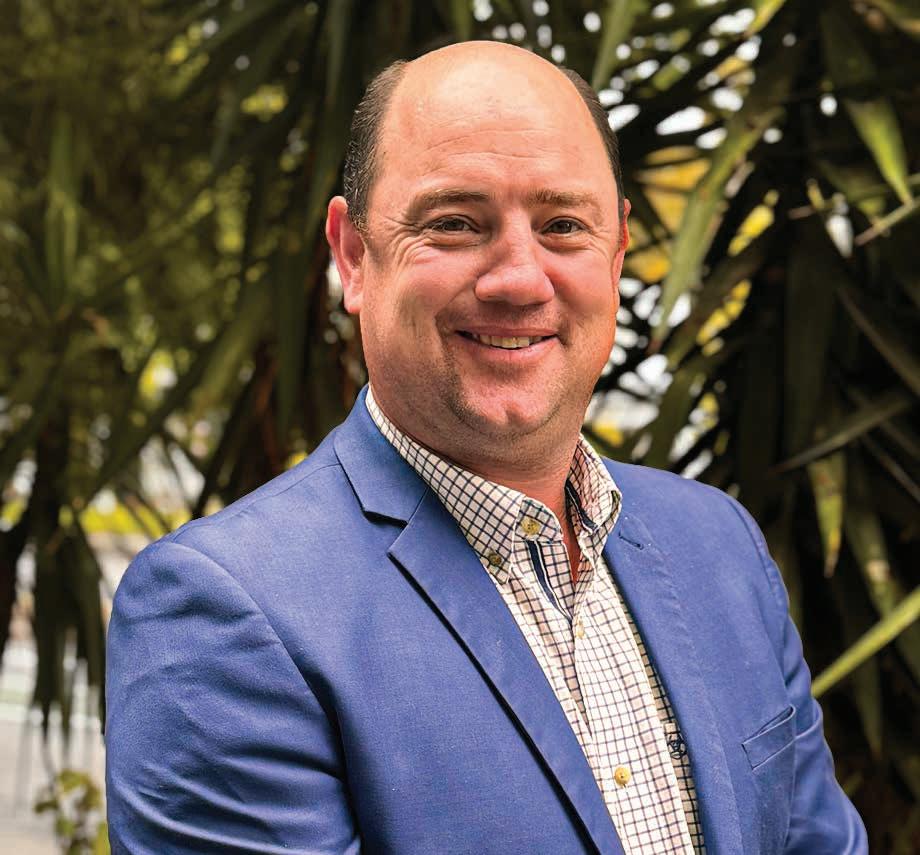
Vaughn Johnston Chairperson, Speckle Park International
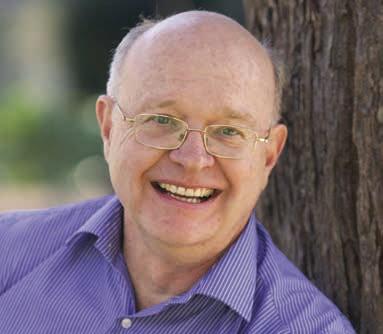
Prof. Peter McGilchrist Professor in Meat Science, University of New England
Johnston
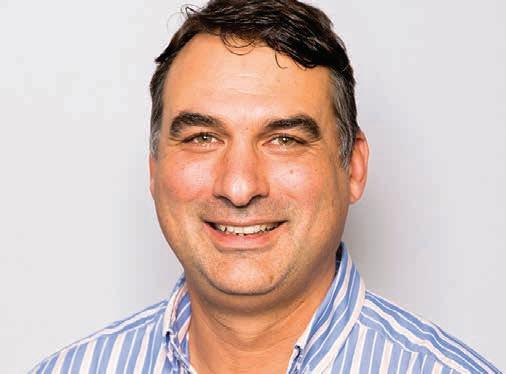
Andrew Byrne Program Manager, Genetics Commercial Services, Meat & Livestock Australia
2026 SALE DATES
Friday 17 July 2026
Friday 21 August 2026
Friday 18 September 2026
Friday 16 October 2026
Friday 20 November 2026
Friday 18 December 2026
2027 SALE DATES
Friday 15 January 2027
Friday 19 February 2027
Friday 19 March 2027
Friday 16 April 2027
Friday 21 May 2027
Friday 18 June 2027
The paddock tells one story. The rail tells another.
A livestock consultant and stock agent on market fit, carcase data and where Speckle Park genetics are delivering in commercial herds.
Tamworth-based livestock consultant and stock agent Andrew Hosken has spent decades moving cattle through saleyards and into feedlots and processing programs across the country. In that time, his view of Speckle Park genetics has been shaped less by breed loyalty than by what shows up on the kill sheet.
“The rail is particularly different to the paddock,” he says. “It’s lovely to have something that looks wonderful on grass, but the very best looking animal on grass is not necessarily the very best piece of steak.”
For commercial producers weighing up Speckle Park genetics, that distinction is the whole conversation.
“Know your market,” Andrew says. “Know what you’re targeting.”
In most cases, he says, Speckle Park genetics will be very suitable, but not always.
“It’s not going to suit a live export feeder to go to Indonesia. It’s not going to be suitable for a high-end Angus certified box. They’re specific.”
Where the breed comes into its own, he says, is at the better end of performance for meat-eating quality and MSA-focused markets, including high-end restaurant supply and premium eating experiences.
“Absolutely,” he says, when asked if Speckle Park genetics stack up in that space.
That distinction also explains what can look, at first glance, like inconsistent market signals. In open saleyards, cents per kilogram will often still favour straight black cattle and large lines. That is a function of established market access and brand recognition rather than carcase quality performance. But in direct, performance-assessed channels,
the picture changes. Andrew says he is happy to buy 350 to 420 kilogram mixed sex Speckle Park-cross cattle, including Speckle Santa, Speckle Hereford, Speckle Shorthorn and “Speckle anything”, virtually every week for feedlot programs.
“And there is not a discount on the breed,” he says.
The difference is not the cattle. It is which part of the market is doing the buying and what that market is targeting. His closing advice to producers on the fence is blunt: “Look at the options and don’t believe the hype.”
He has seen producers pay a premium for black steers destined for blackonly feeder programs, only to find the cattle may never reach the required weight or specification. In his view, that often happens when buyers follow the crowd rather than comparing cattle on performance and available markets.
“They’ve just got to compare like for like and know what they’re aiming at,” he says.
Once a producer knows their market, Andrew says the genetics back up the case and the data behind that confidence is no longer just anecdotal.
His observations are drawn from work with some of the country’s most established Speckle Park commercial programs, including Minnamurra Pastoral Company, JAD and Ron Potter Farms. Collectively, those programs
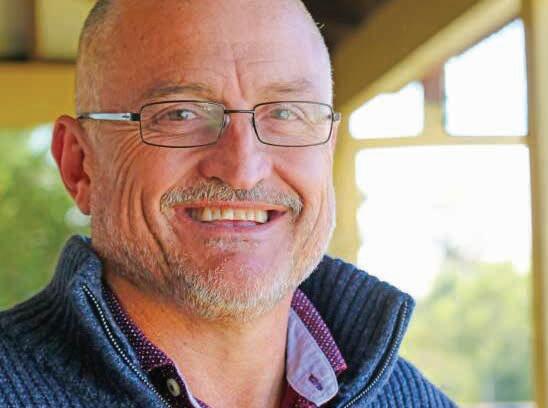
Andrew Hosken
represent thousands of cattle across seasons, processors and market types.
Reviewing MSA data from kill sheets across a number of processing plants and operators, Andrew has consistently seen yearling cattle grade close to 100 per cent. He has also often recorded 85 per cent to 90 per cent of cows in those groups grading MSA.
“Managed properly, you can actually get a large percentage of Speckle cross cows to grade most of the time,” he says.
The result, in his view, comes down to a combination of Speckle Park genetics, condition and good management.
The figures have not been cherry-picked from a single good year, either.
“I’ve seen it consistently across multiple kills and multiple seasons, good and bad,” Andrew says.
The eating quality results have been equally consistent, and Andrew says they
are now being reinforced by a growing body of breed discussion around what sits behind tenderness, flavour and juiciness.
Early University of Newcastle work has added another layer to that conversation, but for Andrew the practical point remains simple: the cattle are performing where it counts.
“There’s more to meat-eating quality than marbling,” Professor Aduli Malau-Aduli has said.
For commercial producers, Andrew says the value is in seeing that eating quality show up repeatedly across real cattle, real kill sheets and real market pathways.
It is worth noting what Andrew will not claim. Asked whether Speckle Parkinfused cattle command a price premium at the yards, he is straightforward: not really, at least in cents per kilogram liveweight terms. In the saleyard, black cattle will most of the time still be in
front. At this point, there is not yet the volume of Speckle Park cattle lines to greatly influence that.
“But on a kill basis that has such strong MSA and eating quality performance,” he says, “the Speckles certainly pull their weight.”
Andrew notes that MLA is making strong media representations about eating quality characteristics being factored into modern pricing grids.
“I think that will go very, very well for Speckle Park-cross commercial cattle,” he says.
Beyond the kill sheet, Andrew points to a quality that is harder to measure but, in his experience, just as commercially valuable: the ability of Speckle Parkinfused cattle to hold condition through genuinely tough conditions, raise a calf and rejoin.
“I liken a Speckle to a Dorper,” he says. “You never see a skinny cow.”
It is the kind of comparison that lands with anyone who has run sheep. Dorpers have built their own reputation on hardiness, easy-care management and doing ability. Andrew is pointing to the same trait in Speckle Park-infused cattle. A moderateframed cow with good foraging capacity lends itself to strong kilograms per hectare performance for the producer, rather than simply a big cow. He has seen it firsthand through drought.
“I know in the drought I’d see a paddock full of high-performing cattle, and they’d still have a damn good calf and do a really, really good job. But the cows would come out as skinny as crows and struggle to rejoin,” he says.
“You’d have the Speckle Park-infused cows with calves at foot and they’d come back out and the cows were still little bricks. The calves were very good and there were more of them.”
For Andrew, the commercial implication runs deeper than convenience.
“I have an opinion that their carrying capacity or their kilograms per hectare performance will prove to be very, very good,” he says. “They are very functional. They forage well and maintain their condition.”
It is a claim he is careful to flag as his own assessment rather than settled science.
“If and when there is a fair test across the board, I think they’ll measure up particularly well,” he says.
On fertility and longevity, Andrew does not claim anything extraordinary, but he does not need to.
“They get in calf, show longevity and perform particularly well on MSA and eating quality,” he says.
“All breeds have strengths and supporters. I definitely think Speckle Park have a positive place in our industry, with many attributes, particularly eating quality and carrying capacity leading to profitability. They certainly are productive all the way through the production chain.”
Andrew’s enthusiasm extends well beyond straight commercial cows. Asked about Speckle Park’s role in broader crossbreeding programs, he is careful with his language. It is a deliberate choice, given how large a share of Australia’s national breeding herd carries Bos indicus influence.
“ If you’re looking for functionality, economy and profitability, Speckles tick nearly all the boxes.”
Andrew Hosken
Rather than singling out any one breed base, his observation is a general one: introducing Speckle Park genetics over Bos indicusinfluenced cattle tends to make the resulting progeny better suited to higher-value markets, with a noticeable lift in MSA grading and eating quality driven by both the crossbreeding effect itself and improved carcase characteristics. It is not limited to one type of cross, either.
“It doesn’t matter what breed you put them over, they do a good job,” Andrew says. “They really do a very, very good job on improving meat-eating quality and MSA grading.”
Calves are born well, cows get back in calf reliably and the eating quality and MSA benefit, in his view, still has plenty of room to develop further as more data comes in.
As the industry looks to grow and improve after years of drought and difficulty, the huge northern cow base still offers opportunities for restocking producers to buy lines of females, join them to more market-suitable sires and benefit from the result. Speckle Park have proven highly successful in adding saleability and improved profitability to the progeny of northern females.
For commercial producers weighing up whether Speckle Park genetics belong in their program, Andrew’s view is straightforward: know the market you are actually selling into and judge the cattle on performance, not appearance.
The carcase data, reviewed across actual kill sheets and MSA results spanning thousands of cattle, multiple seasons and different processors, shows consistent, well above-average grading outcomes. The crossbreeding case delivers a clear, practical lift across a range of breed bases. The science on eating quality is adding weight to what producers, processors and chefs have been observing for years. The doability and fertility story, while still to be fully quantified at scale, is one experienced operators are seeing repeat season after season.
It comes back to one simple point: a beast on the rail is not the same as a beast in the paddock. For producers willing to judge cattle on what they deliver, and where they fit in the market, Speckle Park has a very good story to tell.
Dairy beef with another layer of value
How Speckle Park genetics are helping Dairy Adventures turn non-replacement calves into a stronger commercial and community story.
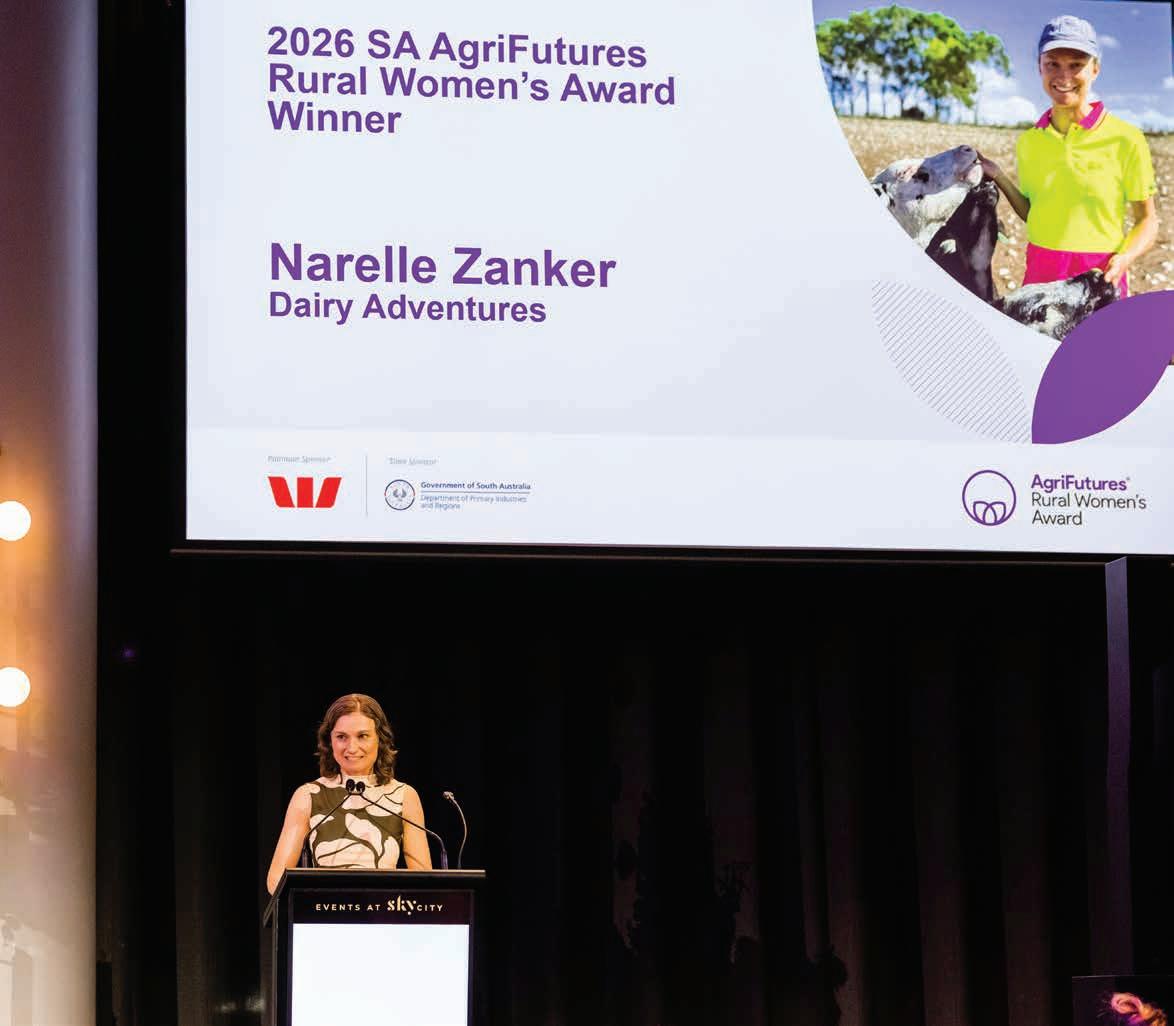
As fertility improves across the dairy herd, Dairy Adventures is using Speckle Park genetics to create more value from calves not required as dairy replacements. For Narelle Zanker and the team, beef-on-dairy has become a practical way to diversify the business, produce calves with growth and shape, and build a stronger story around animal care, education and connection.
Dairy Adventures began increasing the use of beef genetics over dairy cows to avoid producing more dairy heifers than the business needed, while creating a more valuable calf with a clear market pathway.
The brief was practical. They wanted a beef breed that could finish early, grow efficiently and suit premium grading markets.
“We were looking for a breed that could finish early and hit high premium grading markets,” Narelle says.
Having previously used Angus and Murray Grey genetics, including through Geoff Simons, Narelle’s father, the Speckle Park-cross calves quickly stood out. The difference was most noticeable in shape, thickness and meat yield.
“Speckle Park are certainly having more meat yield and display more thickness from our dairy cows when compared to Angus and Murray Grey,” she says.
Temperament has also been a major advantage, both in the bulls and their progeny. For a dairy business used to working closely with cattle, that matters.
“The temperament has been great on the progeny and, compared to other breeds, we have certainly noticed it being a pleasure to work with,” Narelle says.
The Speckle Park-cross calves have shown good frame, strong growth and the ability to carry more beef shape from dairy cows. More recently, Dairy Adventures has been taking greater numbers through to finished weights above 600 kilograms, targeting an MSA grid through Thomas Foods International.
Finishing beef cattle is still a relatively new part of the operation, but it fits naturally alongside the broader farming enterprise, which also includes broadacre cropping. As the program develops, nutrition has become an important part of the equation.
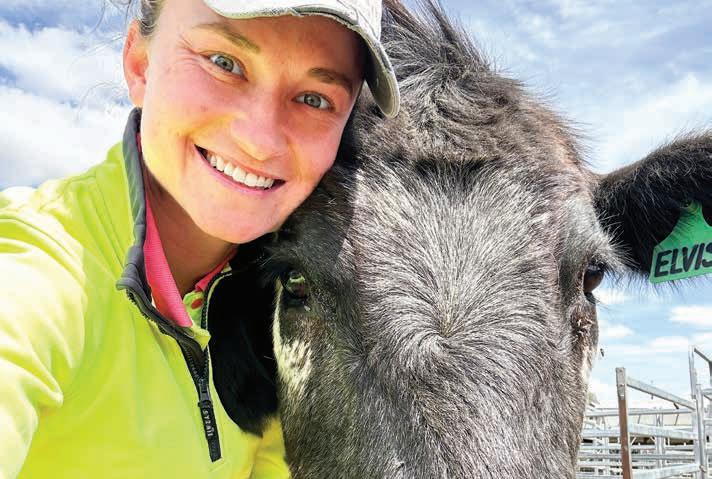
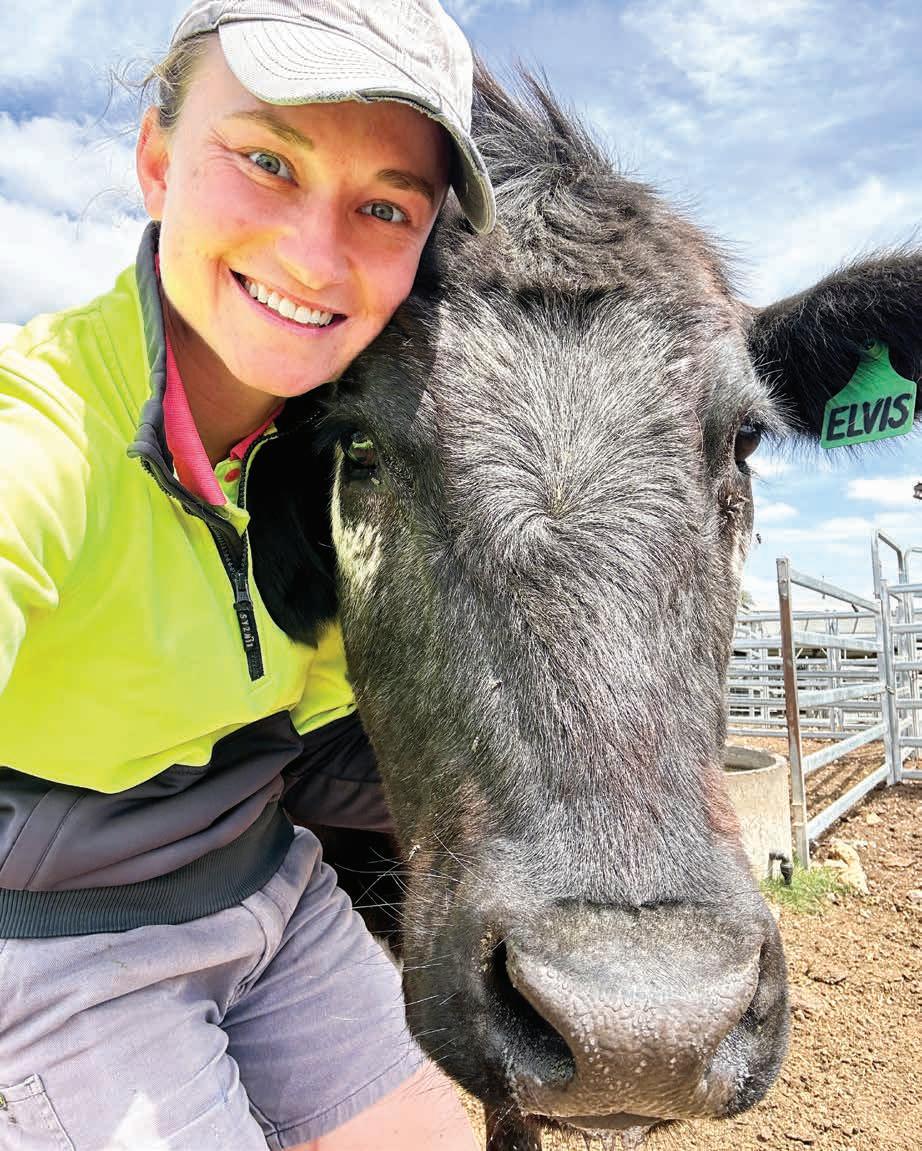
2026 SA AgriFutures winner Narelle Zanker with Elvis.
“Through this journey, we continue to fine tune our nutrition to achieve the best growth rate,” Narelle says.
For Dairy Adventures, Speckle Park genetics have added another layer of value to calves not required as dairy replacements. If the herd was joined only to dairy genetics, the business would produce more heifers than it needed, creating its own supply and demand challenge. Beef-on-dairy helps manage that while opening another income stream.
“When milk price is low, cropping can be good and beef adds another dimension,” Narelle says.
The long-term aim is to build the program further, with the potential to have more than 100 Speckle Park F1 calves available for feedlot markets, while also finishing a number on farm.
Records are kept from birth through to sale, allowing the team to track growth rates and better understand how the cattle perform. They are also beginning to learn more about MSA grading and how management decisions on farm flow through to carcase outcomes.
From Narelle’s experience, dairy farmers considering beef-ondairy need to look closely at temperament, calving ease, fertility, growth rates and carcase quality for high grading markets. For Dairy Adventures, Speckle Park has delivered strongly across those practical measures.
“Speckle Park have been the best calves to rear and are easy doing, both in nature and growth rates,” Narelle says. “It has been a great way to diversify our farming business with beef-on-dairy.”
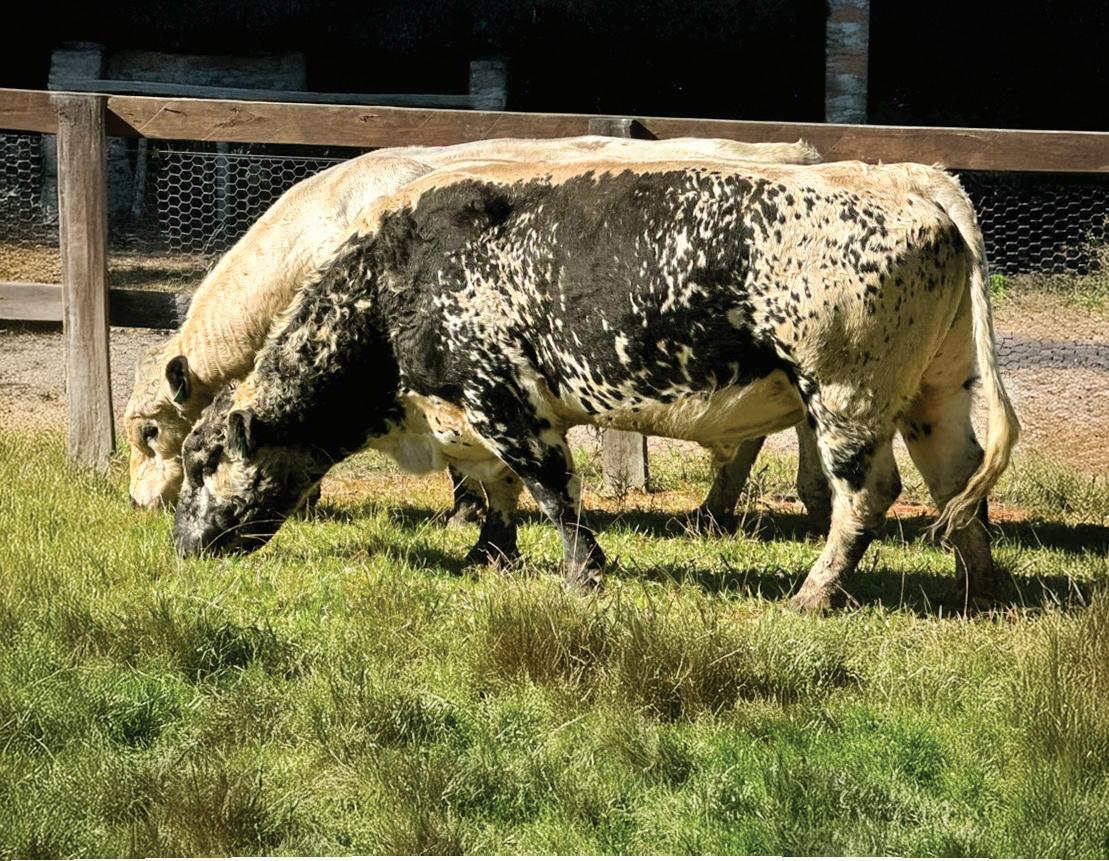
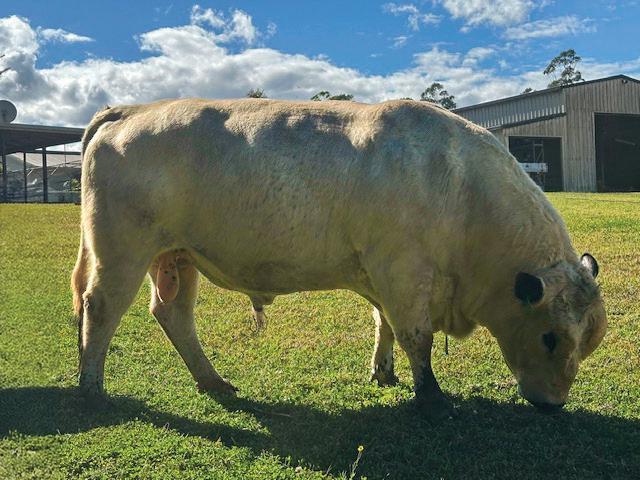
Elvis, one of the farm’s much-loved Speckle Park cattle, has become a powerful way to connect visitors with agriculture.
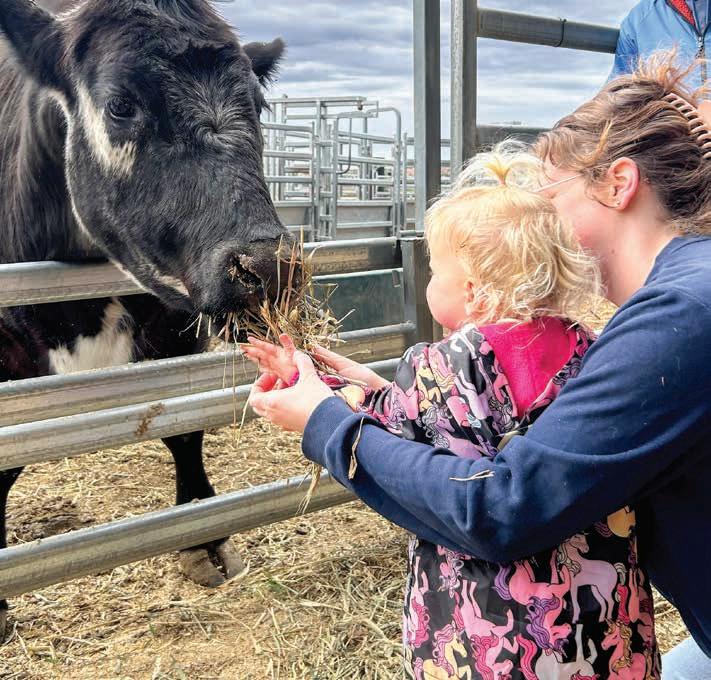
The value story also extends beyond the paddock. Elvis, one of the farm’s much-loved Speckle Park cattle, has become a powerful way to connect visitors with agriculture. His size, age, weight and diet all become natural starting points for wider conversations about cattle, dairy farming and the role animals play in the business.
Visitors are often surprised by how large cattle are up close, and the chance to meet Elvis gives them a memorable, real-life experience with livestock.
“Elvis provides an opportunity for people to have an interactive, fun and educational experience,” Narelle says. “People leave with lasting memories of how much we genuinely care for our cows and their health and wellbeing.”
In that sense, the Speckle Park story at Dairy Adventures is doing two things at once. It is creating stronger commercial value from non-replacement calves, while also helping people see the care, management and decision-making behind modern dairy and beef production.
2027 COMPETITION
Putting Speckle Park to the test CHALLENGE SPECKLE PARK
The Speckle Park Signature Beef Challenge 2027 will bring the breed’s genetics, production performance and eating quality together in the most tangible way possible: on the plate.
There is a moment every breeder knows well. A calf hits the ground, the numbers start being recorded, and somewhere down the track, a judgement gets made about whether the genetics behind it were worth the investment. Usually, that judgement happens in a saleyard or a show ring. From October 2026, Speckle Park breeders and producers will have another arena entirely: the plate.
The Speckle Park Signature Beef Challenge 2027 is a new competition built to do more than crown a winner. It is designed to sharpen the breed’s commercial story, arm breeders with credible performance data and help build stronger supply chains for Speckle Park beef across Australia and New Zealand.
For Speckle Park International, the Challenge creates a structured platform to benchmark the breed using consistent, comparable data. Just as importantly, it provides information that can be fed back into breeding decisions and future market development. That gives the competition value well beyond judging day. It becomes a practical way to better define the traits that set Speckle Park beef apart.
Speckle Park has a reputation for eating quality, early finishing and commercial performance. The Speckle Park Beef Challenge will put those strengths under a more formal lens, gathering evidence to inform decisions on what breeders select for in the paddock and what processors, chefs, retailers and consumers actually value at the plate, benchmarking cattle
for marbling, tenderness, juiciness and full beef flavour, alongside the production systems that shape the final product.
Crucially, the competition looks at the breed from multiple angles. It will run across Purebred and Speckle Park-Infused cattle, giving a broader picture of how the genetics perform across different commercial pathways, from grass-fed operations to grain-fed programs and crossbreeding systems.
The Speckle Park Signature Beef Challenge is structured around four classes, each set up to show a different part of the breed’s commercial story:
Purebred Speckle Park Grass-fed — natural flavour and tenderness, built without grain supplementation
Purebred Speckle Park Grain-Fed — cattle finished for up to 120 days on grain, with a focus on marbling, tenderness and soft-textured beef flavour
Speckle Park-Infused Grass-fed — open to cattle carrying at least 50 per cent Speckle Park genetics, grass-fed
Speckle Park-Infused Grain-Fed — the same infused genetics, tested through a grain-fed finishing system
The infused classes may prove to be the most telling of all. They capture the breed’s growing role in crossbreeding systems, where hybrid vigour, early finishing, carcase consistency and eating quality all come into play. For an industry increasingly built on composite genetics, this is where Speckle Park’s commercial value proposition will be
tested under real conditions.
Entries open in October 2026, with the inaugural Challenge judged in early March 2027. It is worth starting the conversation now, whether that means checking pedigree records, planning grain-fed timelines or pencilling in a decision about which cattle carry your best story. Full eligibility and entry details will be posted on the SPI website soon.
What breeders will need to supply is refreshingly simple: a single striploin from the animal they are backing. From there, the cut does the talking, judged for the tenderness, juiciness and flavour that Speckle Park has built its reputation on.
This is where the Speckle Park Signature Beef Challenge earns its keep long after judging day. Every result feeds into something bigger: sharper breeding decisions, stronger supply chain conversations and a growing body of evidence for Speckle Park’s place in premium beef markets. It is a chance to benchmark cattle, identify strengths and build confidence in consistency, while adding another proof point for the breed’s value across grass-fed and grain-fed pathways and crossbreeding operations.
The strongest genetics are the ones a breed can prove, repeat and back with data. From October 2026, Speckle Park has the platform to do exactly that. Keep an eye on the SPI website for entry details and updates as the countdown to the 2027 Speckle Park Signature Beef Challenge begins.
Speckle Park in the supply chain
Two supply chains, one clear signal
Speckle Park’s commercial story is being written at both ends of the supply chain. In Western Australia, Arley Speckle Park is choosing to own the chain outright. Breeding, finishing and placing beef directly into the hands of the butchers and chefs who are already among the breed’s loudest advocates. In South Australia, Graeme and Amanda Kroehn are proving the same breed performs inside one of the country’s largest commercial processing and retail systems, backed by hard numbers that reinforce what buyers and processors are already noticing on the hook.
Two paths, one destination: stronger demand, deeper relationships and growing proof that Speckle Park belongs on premium plates.
Arley Farms, Western Australia
Nestled among the rolling green hills of Western Australia’s South West, Arley Speckle Park was founded in 2019 by Ben and Victoria Murphy. In a region dominated by Angus cattle and with a blank canvas from which to build, Speckle Park offered a clear point of difference and the opportunity to help develop the WA market for a breed gaining recognition nationally and internationally, yet still relatively unknown locally.
The first few years required significant investment. Embryo transfer programs formed the foundation of the stud herd, with genetics introduced from Australia through Gin Gin Speckle Park and significantly from New Zealand and Canada, including a large proportion from the highly regarded Maungahina Speckle Park herd in New Zealand. As the herd expanded, additional sires and outcross genetics were sourced from across Australia.
To support their breeding decisions, Ben and Victoria travelled extensively throughout Australia and New Zealand, visiting leading breeders, reviewing operations and gaining insight into the breed’s commercial potential. Today, the
stud herd comprises around 80 breeding females, with up to 15 bulls sold annually through private on-farm sales.
As the stud herd grew, the commercial herd also began to take shape. All embryo recipients were subsequently joined to purebred Speckle Park bulls, creating a base of Speckle Park influenced cattle that quickly demonstrated the benefits of hybrid vigour. While weaner sales generated income, the Murphys found the South West market remained heavily aligned with black-coated Angus cattle.
The cattle, however, were telling their own story. The Angus x Friesian x Speckle Park calves showed clear performance, and placing third in the 2025 Gate 2 Plate
Challenge’s Processor division reinforced the Murphys’ belief that Speckle Park could improve eating quality across a range of breed types. The challenge was no longer simply to breed quality Speckle Park cattle, but to elevate the breed’s profile in Western Australia and build recognition for Speckle Park beef.
In 2025, farm manager Tim Elliott made the decision to expand the commercial enterprise and take cattle production through to processing and direct meat sales. High quality Angus breeding females were sourced from respected South West WA breeders and joined to purebred Speckle Park sires through AI and natural mating, allowing the commercial herd to scale quickly.
Arley Speckle Park was founded by Ben and Victoria Murphy.
Breaking into the supply chain proved more complex than expected. Coming from backgrounds outside agriculture, Victoria in accounting and Ben in transport, the Murphys had to navigate an industry built on long standing relationships, volume commitments and guarded access to kill space. Butchers were interested in the product, but reluctant to disrupt existing supplier relationships for a new producer who could not yet guarantee consistent supply. Abattoirs gave a similar response. Kill spots existed, but were largely reserved for those already supplying reliable volume into the domestic market.
Nobody questioned the beef. Everyone who tasted it was convinced. The barrier was volume and the willingness to invest ahead of demand.
Arley committed to producing 10 and then 20 bodies a fortnight through an 80 to 100 day grain finishing progra m,
Hawthorne Stud
Open Day and Timed Stud Cattle Auction
establishing small scale intensive feeding pens and building relationships with three butcher shops and a premium restaurant to create steady weekly demand. Over the past six months, significant investment in infrastructure has expanded that commercial output further and positioned Arley Speckle Park for its next stage of growth.
The commercial breeding herd now consists primarily of home bred Speckle Park Angus females, alongside purebred Angus females. Selection is strict, with fertility, structural soundness and temperament assessed first, followed by intramuscular fat, 400-day weights and calving ease as more progeny data becomes available. Once cattle are on the hook, the focus shifts to carcase yield and consistent fat cover of 8 to 12 millimetres.
Nobody questioned the beef. Everyone who tasted it was convinced. The barrier was volume and the willingness to invest ahead of demand.
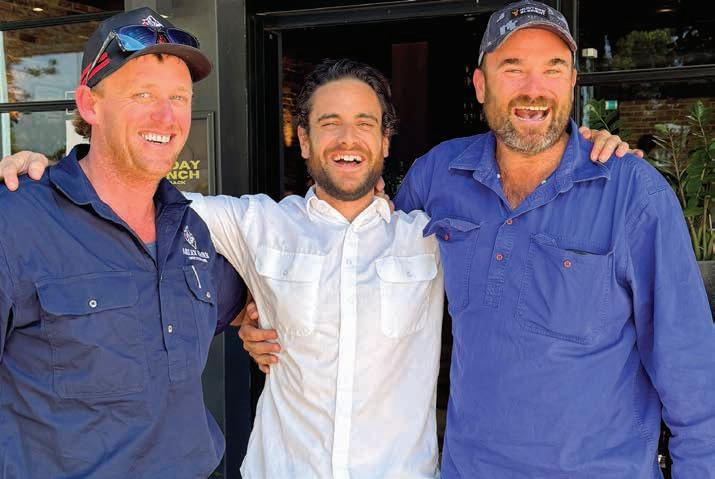
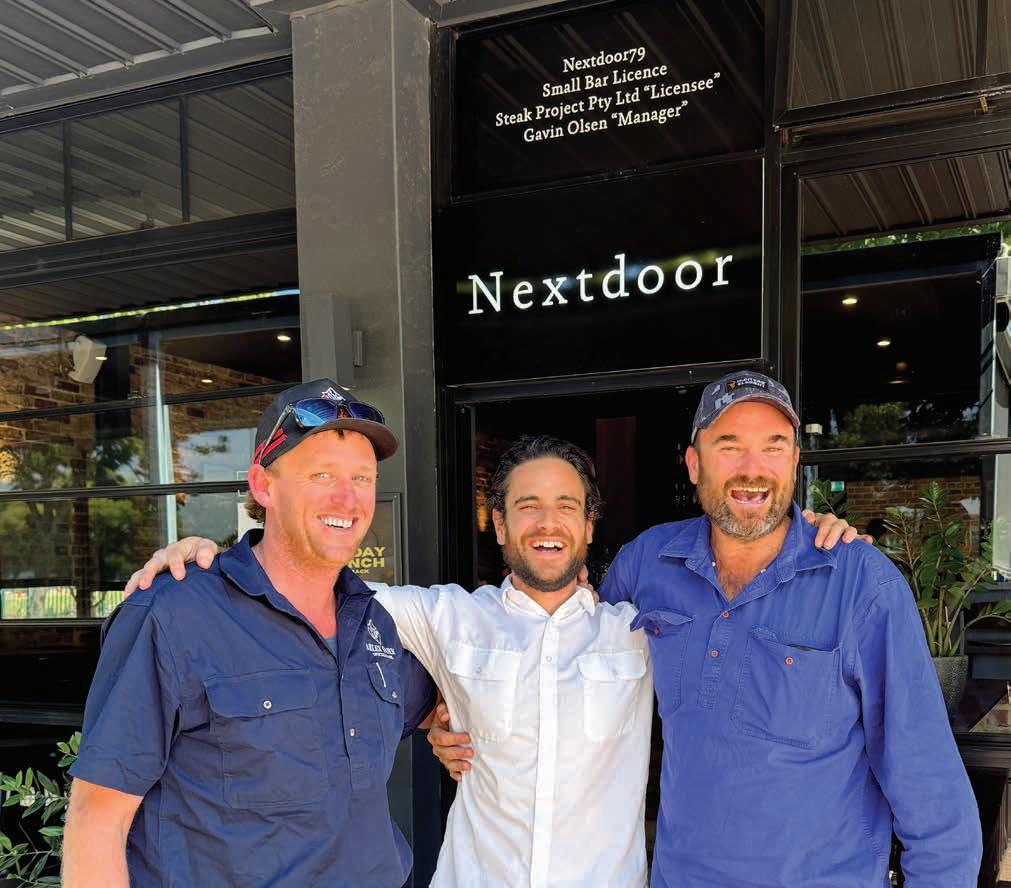
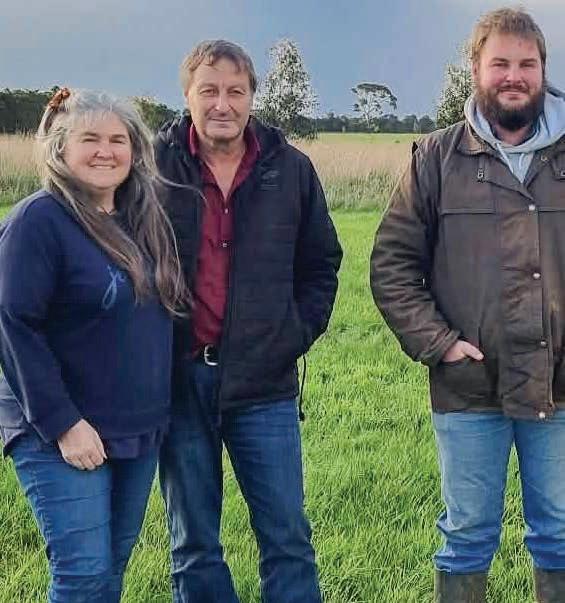
Ben Murphy of Arley Speckle Park with Nextdoor head chef Elliot Sawiris and Gavin Olsen of Olsen Butchers, who together share a commitment to provenance, transparency and premium local produce.
A key component of the grain feeding program is Arley’s relationship with producers who purchase its Speckle Park bulls. By providing a market for Speckle Park-infused steers, Arley creates a practical supply chain for its clients while maintaining consistency, traceability and a clear understanding of the origin and performance of every animal entering the feeding program.
All cattle are processed through Dardanup Butchering Company in Bunbury and graded under the Meat Standards Australia system. Consistent throughput has allowed the team to refine management of small groups of cattle, including appropriate backgrounding and socialisation before entry into the intensive feeding environment. Grain is sourced locally from Kojonup Feeds.
The customer relationships built around that program are now central to Arley’s commercial story. Jason McLachlan of Northern Valley’s Quality Meats in Bindoon required little convincing, having championed Speckle Park eating quality for years while sourcing beef from Tony Trainor at Gin Gin Speckle Park. Following Tony’s relocation to Tasmania, Jason became a valued supporter of Arley’s operation and his loyal customer base continues to embrace the consistency of the product.
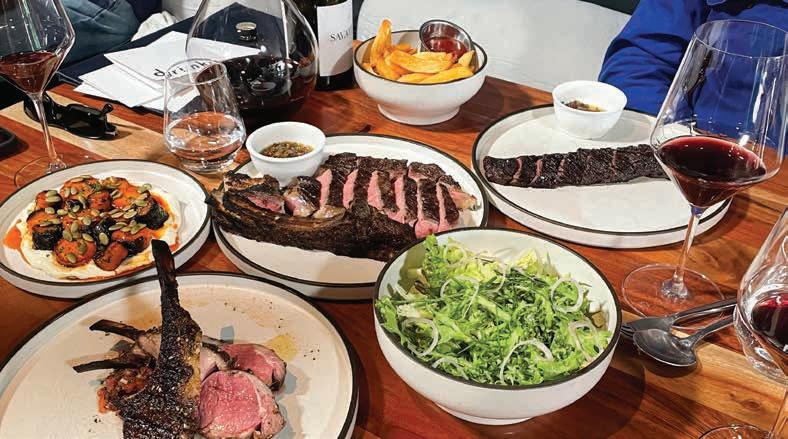
The relationship with Gavin Olsen of Olsen Butchers in South Perth began through a mutual industry contact. Today, Gavin promotes and distributes Speckle Park beef through his butcher shops in South Perth and Roleystone, as well as through his restaurant, Nextdoor. Together with Gavin, head chef Elliot Sawiris and the Nextdoor team, Arley shares a commitment to provenance, transparency and premium local produce.
Park beef before meeting Ben and quickly became one of Arley’s largest customers. His appreciation for consistency, carcase balance and optimal fat cover aligns closely with the outcomes Arley is targeting through its breeding and feeding program.
Across 119 head of Speckle Park-infused cattle processed year to date in 2026, Arley’s average MSA Index sits at 62.46, more than three points above the national average of 59.34 and clearly ahead of the WA average of 60.33. More telling still, 86 per cent of cattle have graded above the national top 25 per cent threshold of 61.18. These are not outlier results. They are consistent outcomes from a commercial grain finishing program.
Over the past 18 months, Arley Speckle Park has evolved from breeding and selling commercial cattle to finishing cattle specifically for premium meat markets. As Ben, Victoria and the team look to expand their market presence, the new undercover feeding shed, with its focus on animal welfare and quiet cattle handling, gives the business capacity to increase weekly throughput and continue bringing Speckle Park beef into the spotlight across Western Australia.
Paul McLoughlin of McLoughlin’s Butchers had also sampled Speckle
Grass, genetics and measurement are driving consistent Speckle Park performance at Belgrae.
Belgrae, South Australia
When Graeme and Amanda Kroehn purchased their first Speckle Park-infused cattle in 2017, they were not chasing a trend. They were dairy farmers who understood genetics, valued feed conversion and knew what a good cow looked like. What followed has been a quiet, methodical journey that the numbers are now starting to tell loud and clear.
Based at Brimbago, east of Keith in South Australia’s South East, the Kroehns run a 2,000-acre mixed farming enterprise known as Belgrae. The dryland operation spans a diverse range of soil types, from heavier clover and sub-clover country to sandy rises and limestone-based land suited to lucerne. It is a system built on selfsufficiency, careful pasture management and a clear understanding of what each paddock can produce. Graeme has been farming since leaving school, bringing more than 28 years of agricultural experience to the property. Amanda joined the business in 2008 after completing a degree in Agricultural Science, and together they have applied a dairy farmer’s discipline to their beef enterprise: measuring, selecting and constantly looking to improve.
“Coming from a dairy background, Graeme has always believed in making plenty of hay while conditions allow,” Amanda explains. “Dairy farmers tend to measure everything and place a strong emphasis on genetics, fertility, structure and feed conversion. We’ve brought that same philosophy into our beef enterprise.”
That philosophy extends to their pasture program. Producing all of their own hay and silage gives the Kroehns control over quality, timing and biosecurity. They introduced silage production in 2021 to better manage summer feed supplies, while lucerne provides valuable summer feed when many producers are under pressure. That feed base has allowed them to maintain herd numbers through challenging seasons without significant destocking.
The Kroehns’ introduction to Speckle Park came through Murray Grey cows in calf to a Speckle Park bull. They retained the resulting Murray Grey x Speckle Park heifers and joined them to their first Speckle Park bull, Ewyn Merrick N8, by Trade Secret. While they were happy with those calves, they did not quite have the vigour and growth rates the Kroehns were chasing, and the cows were eventually sold. The calves went through the saleyards or to a local butcher as vealers, until growing numbers and a tighter calving program meant supply outpaced local demand.
In 2019, they purchased their first stud Speckle Park bull from Ewyn Speckle Park. Having known Vaughn Johnston, the Kroehns trusted his understanding of genetics and breeding. That confidence carried over when they decided to invest more
seriously in the breed.
“What initially attracted us was the combination of growth, efficiency and temperament,” Graeme says. “As we’ve gained more experience with the breed, we’ve also become increasingly impressed with their ability to convert grass into quality beef while maintaining strong carcase performance.”
Today, Belgrae runs around 80 head of cattle, including Angus, Red Angus and F1 Speckle Park females joined to Speckle Park bulls. Calves are weaned between eight and ten months of age, with a target of reaching market specifications of at least 440 kilograms liveweight between 12 and 14 months. They are managed with a low-intervention approach across mixed autumn and spring calving groups.
As the first Speckle Park influenced calves came through, the Kroehns began retaining and building on the genetics that performed best, paying particularly close attention to the F1 females. True to their dairy background, they kept measuring, watching which cows were producing the best calves and using that information to guide future breeding decisions. Over time, they built a more consistent line of cattle suited to their grassfed program.
Finding the right market was a turning point. In some saleyard situations, the Kroehns felt their cattle were not fully recognised for their performance because they did not fit the traditional black Angus mould. Their livestock agent, Murray Jones from TDC, understood that challenge and worked with them to identify a market that placed greater emphasis on outcomes.
In 2024, the Kroehns sent their first load to Greenham, supplying into the Woolworths supply chain. Access to detailed processor feedback has provided a new level of confidence in their breeding and management decisions.
“Having access to detailed feedback and understanding exactly how our cattle are performing has provided confidence in the breeding and management decisions we’ve made,” Amanda says. “Knowing that our cattle are consistently achieving MSA specifications has certainly reinforced our decision to continue down this pathway.”
When MLA benchmarked the Kroehns’ Greenham kill data, the results reinforced what they had been observing on farm. Their average MSA Index of 60.90 places them very close to the top 25 per cent of all Speckle Park grass-fed carcase data collected by SPI to date. It is a strong result for a grass-fed system without grain supplementation.
“ We weren’t looking for a breed because of its appearance. We were looking for cattle that could efficiently convert grass into kilograms and deliver a quality carcase. The Speckle Park cattle have done exactly that.”
The distribution of MSA Index scores showed the majority of their cattle clustering between 61 and 63, with Hot Standard Carcase Weights peaking in the 245 to 260 kilogram range, well within domestic trade specifications. Ossification scores were predominantly in the 110 to 140 range, reflecting the young age at which the cattle are reaching market weight. MSA marbling scores were concentrated between 340 and 380, demonstrating the breed’s capacity to deliver eating quality on a grass-fed diet.
“We were certainly pleased with the results, but they weren’t entirely unexpected,” Graeme says. “Receiving positive feedback from processors and seeing that reflected in our MSA outcomes has reinforced what we have already been observing on farm. It’s always rewarding when the numbers confirm what you believe you’re seeing every day in your cattle.”
While bull selection is often the focus of breed conversations, the Kroehns are clear that the cow is equally important.
“A calf is 50 per cent its mother,” Graeme says, “so developing a strong maternal herd with sound structure, fertility, milk
production and temperament has been a major focus for us.”
Their system is built on deliberate purchasing rather than self-replacement. Instead of retaining heifers, the Kroehns source smaller, quality lines of PTIC cows or heifers, predominantly Angus or F1 Speckle Park, selecting stock they believe will perform within their grassfed program. Those females may already be joined to an Angus bull, are calved down at Belgrae and are then joined to a Speckle Park bull in a terminal program. The result is F1 and highercontent Speckle Park-infused calves that consistently hit target market specifications.
Compared to the straight Angus cattle they previously ran, the improvements in growth rates and carcase performance have been noticeable.
“We’ve often seen examples where an Angus calf walks through the scales looking impressive and weighing well, only to be followed by a Speckle Park cross calf that appears similar but actually weighs more than expected,” Graeme explains. “Their ability to convert feed into weight gain is extremely impressive.”
For producers considering Speckle Park genetics in a grass-fed system, the Kroehns have a straightforward message.
“I don’t think you’ll be disappointed,” Graeme says. “We weren’t looking for a breed because of its appearance. We were looking for cattle that could efficiently convert grass into kilograms and deliver a quality carcase. The Speckle Park cattle have done exactly that.”
Temperament has also helped cement their commitment to the breed.
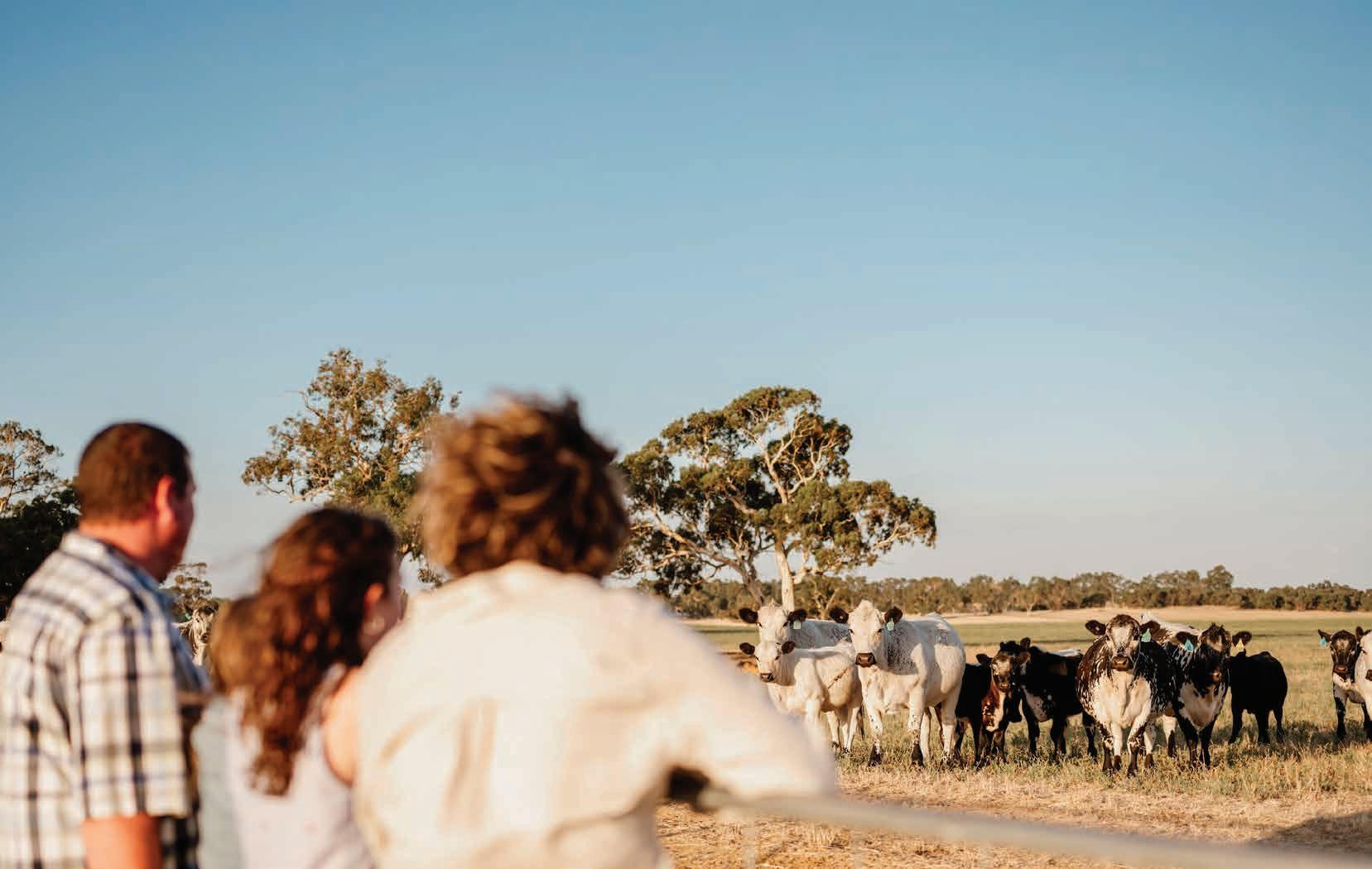
“We’ve had excellent experiences with temperament and find them enjoyable cattle to work with,” Amanda adds. “Just be warned, you may find yourself spending a bit more time than necessary standing at the fence watching them.”
At Belgrae, the plan is not to significantly increase cattle numbers, but to maintain the current breeding structure and continue refining the herd. The combination of Angus, Red Angus and F1 Speckle Park females joined to Speckle Park bulls works well within their production system. The data, it seems, agrees.
Image courtesy of the Rollin R Photo Co
Building the data the breed needs
Repeatability, consistency and quality are all key words in today’s cattle market. Globally, Australia and New Zealand are recognised as suppliers of high-end quality beef. We can’t compete with low-cost, high-volume markets such as South America; our niche is quality. Speckle Park is generating serious interest at the top end of the food service market, with buyers actively seeking it out as an elite, highend steak option.
Words by Tim Weller SPI Vice Chairman and Breed Development Board Liaison
SPI has seen dramatic growth over the past 15-plus years. It is now time to create supply chains for Speckle Park beef, and supply chains require repeatability, consistency and quality. The question is how we create lines of bulls to produce lines of steers that can reliably fill those supply chains. The answer is in data, or more importantly high-accuracy data. Our product is meat, and the best way to evaluate meat is a body on the rail.
As the breed has grown, purebred animals have been extremely expensive and sold as breeding stock. Finding contemporary groups of steers and heifers and having them processed on the same day has been unrealistic, so we have relied on ultrasound scan data and weighing scales to inform us of what is under the skin. This is where the commercial register comes into play. It allows us to identify commercial cattle with known Speckle Park pedigree and have those animals evaluated on the rail, providing highly reliable data on which bulls and pedigrees perform in the desired market.
Winners of RNA Paddock to Plate Carcase Awards every year 2016 to 2021, 2023. 2nd 2025
Purebred Herd of 160 Breeding Cows
15 Years of Breedplan Performance Recording Bull Sale each Year in September
BETTER CARCASES BETTER YIELDS FOR BETTER PROFITS
MPC PLUNDERER P196
Who uses the commercial register?
The SPCR is designed for commercial and stud producers to create high-quality contemporary groups. A high-quality contemporary group is one that is born, raised, finished and processed as a group. This is not always practical in a stud operation, where the primary goal is selling animals for breeding rather than turning them off for beef.
EXAMPLE FARM 1
The composite seedstock operation
A stud running a 50/50 split between registered Speckle Park Purebred Register (SPPR) females and Speckle Park Commercial Register (SPCR) females has a natural advantage when it comes to data capture. Some of those commercial females might carry embryo-transfer calves and some might carry calves to the SPPR mop-up bull. Either way, those calves are eligible for entry on the SPCR.
Take a realistic drop: 50 calves born through natural service or AI to SPPR-registered females, another 25 ET calves born to SPPR females and a final 25 calves sired by a SPPR bull out of SPCR cows. All 100 calves are weighed, managed and treated as one group from birth. The SPCR calves go through the same program as their SPPR contemporaries and later in life go to the kill floor together as a group.
This is where the value compounds. The carcase data captured from those SPCR animals flows back up the pedigree chain, lifting the accuracy of the Estimated Breeding Values (EBVs) of the sires and dams across the whole contemporary group, including the registered SPPR animals they ran with from day one. Data accuracy increases as the completeness and size of the contemporary group grows, so the larger and more intact that group is at slaughter, the more reliable the EBVs become for every animal connected to it.
The integrity of that data depends on whole-group management. Contemporary groups must be maintained from birth through to slaughter without selective drafting. The composite seedstock operation, by its structure, is already set up to do this naturally, making it one of the most powerful positions any SPI member can be in for building high-accuracy genetic data.
EXAMPLE FARM 2
The Purebred stud
A 100 per cent purebred stud operation has more opportunities to increase data capture than most producers realise and the Speckle Park Commercial Register (SPCR) is the tool that unlocks them. Some studs register every calf born, including all males regardless of whether they later become steers. It is a practice worth considering seriously, because every additional animal recorded strengthens the contemporary group and lifts the accuracy of every EBV the stud publishes. Higher accuracy EBVs are not just better data, they are a stronger selling proposition. Bull buyers looking at two catalogues will place more confidence in and potentially put more money behind the stud whose numbers they can trust.
Many studs make the call at marking time, registering only the bull calves they intend to keep for sale. That decision is made for perfectly good reasons: birth weight, growth or temperament for example. But calves that do not make the cut still carry genetic information that belongs in the analysis and the SPCR gives them a place in the dataset. What was previously walking out the gate as an unrecorded weaner can now contribute to the accuracy of every sale bull in the next drop.
Here is what that looks like in practice. Say a stud registers bull calves up to 48 kg at birth and the heaviest calves go elsewhere unrecorded. Entering those calves on the SPCR means BREEDPLAN sees the full spread of the contemporary group. The 47 kg bull calves are now ranked accurately within the true range of the drop, not artificially elevated because the heaviest animals were invisible to the system. That single change can shift where a sale bull sits in the breed percentile rankings, which are often what commercial buyers read first when they open a catalogue.
The same opportunity applies to surplus females and any calf that does not make the registered cut. Entering them on the SPCR rather than leaving them unrecorded means the stud is building the deepest, most complete genetic picture it can. Over time, that completeness compounds. Sire and dam EBVs lift in accuracy. Younger bulls in the program inherit a stronger data foundation. And the stud’s reputation for transparent, high-integrity data becomes a commercial asset in its own right, one that is increasingly difficult for buyers to walk past at sale time.
Better data turns EBVs from estimates into evidence, giving breeders and commercial producers the confidence to build cattle that perform repeatedly, consistently and profitably on the rail.
EXAMPLE FARM 3
The commercial terminal producer
A 100 per cent commercial operation might wonder what the Speckle Park Commercial Register (SPCR) has to offer them. The answer is straightforward and the upside is significant.
Commercial producers derive their income from selling weaners, feedlot entry cattle and finished beef. It is all beef. The business depends on repeat customers who get results and come back willing to pay as much as possible for the product. The single biggest lever a commercial producer can pull to improve that outcome is using better bulls and knowing which ones are actually working.
This is where the SPCR becomes a genuine business tool. When stud breeders work with their commercial clients to have progeny included in the register, something powerful becomes possible. A weaning weight submitted through the SPCR, combined with a kill sheet from an MSA-accredited processor, gives both parties access to data that has rarely existed at this level of accuracy for the Speckle Park breed. The commercial producer gets clear feedback on how each bull they used actually performed on the rail, not just at the scales. That feedback directly informs which bulls they invest in next cycle and what they are worth paying for.
The benefit flows just as strongly back to the seedstock supplier. A bull’s EBV accuracy can lift once progeny data starts coming in from commercial herds. That becomes a transformational shift. Traditionally, once a bull leaves the stud, the accuracy of his EBVs tends to stagnate because no new performance data is being captured on his progeny out in commercial country. The SPCR breaks that pattern. Real carcase data from MSA-accredited processors flows back into the BREEDPLAN analysis, lifting the EBV accuracy of the bull himself and of his sire and dam behind him.
For the seedstock breeder, that accuracy lift is a catalogue asset and a commercial advantage. For the commercial producer, it is proof of performance. Between them, they are building the kind of supply chain data the Speckle Park breed needs to back its reputation.
The opportunities for all SPI members to make use of the commercial register are endless. It is one of the most practical steps SPI members can take to strengthen both their own genetic program and the breed’s position in the supply chains it is working hard to fill.
The future of farming rewards those who make better decisions faster and better decisions start with better data. EBVs are estimates. With more actual data, their accuracy increases, so essentially, they become less of an “estimate”.
Understanding MSA: turning carcase feedback into market opportunity
Using the MSA Index enables you to maximise carcase performance, market access and financial returns
Strong MSA outcomes can support access to premium programs, better carcase feedback and stronger market signals for producers focused on eating quality. Understanding MSA helps producers identify where breeding, nutrition and management decisions can improve compliance, lift consistency and capture greater value at processing.
What is Meat Standards Australia?
Australia is one of the world’s leading producers of high-quality beef. Meat Standards Australia (MSA) was developed by the Australian red meat industry to give consumers confidence in a consistent eating experience and strengthen our reputation. The system was introduced to address variable eating quality, which had contributed to declining beef consumption in the early 1990s. Built on research from 250,000 consumer taste tests across 13 countries, MSA predicts tenderness, juiciness and flavour for each cut and cooking method. This science-backed approach provides consumers with a quality guarantee and producers with valuable carcase feedback through a standardised numerical score, adding value across the entire supply chain from paddock to plate.
Understanding the MSA Index
The MSA Index is a single number that reflects the overall eating quality
potential of a carcase. It ranges from 30.00 to 80.00. The higher the number, the stronger the expected eating quality outcome.
The score is influenced by factors including genetics, nutrition, animal management and pre-slaughter handling, making it a valuable benchmark for producers seeking to improve consistency. The MSA Index is consistent across processors and regions, giving producers a reliable way to compare performance over time.
Key carcase traits that influence the MSA Index include:
» HGP status
» MSA marbling
» Hump height
» pH
» Ossification Score
» Rib Fat
» Carcase Weight (HSCW)
» Sex
There are several on-farm factors producers can consider to positively influence MSA outcomes, including genetic selection, nutrition, pasture management and stress reduction.
While genetic selection plays an important role in eating quality, it is only part of the picture. Good management before processing is critical to improving compliance, lifting average scores and achieving more consistent grading outcomes.
Meat & Livestock Australia (MLA) has created a comprehensive MSA beef
information kit to help producers better understand the connection between carcase grading outcomes and onfarm management. MLA also provides short courses and events covering MSA performance, nutrition and livestock management. Registration for local events can be found through the myMLA dashboard at mla.com.au/myMLA.
Online resources
MLA’s online toolbox includes resources such as the More Beef from Pastures manual, a practical training tool covering:
» Pasture growth and utilisation
» Cattle genetics
» Cattle management
» Herd health and welfare
The More Beef from Pastures manual can also be accessed through the myMLA dashboard.
Producers can access carcase data through MLA’s myFeedback platform, processor feedback reports, or processor platforms such as Greenham Connect.
Greenham Connect allows producers to review carcase feedback and identify top-performing animals based on individual traits and overall MSA Index. Data can be viewed in graphs or tables and downloaded as a CSV file for use in business management tools.
Strong MSA outcomes can support access to brands and programs that reward consistent eating quality. Many beef brands set minimum MSA grading
Where to find more information
Scan the QR code to access MEAT STANDARDS AUSTRALIA BEEF INFORMATION KIT.
Tools to assist with MSA grading Face-to-Face training
requirements to protect product consistency and may offer additional premiums for higher outcomes.
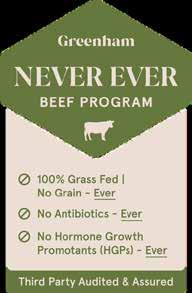
Greenham’s NEVER EVER Beef Program incorporates MSA grading alongside other raising claims, giving producers access to premium global markets and the opportunity to demonstrate their commitment to quality.
Obtaining MSA accreditation is the first step to accessing these opportunities. To find out more, visit myMSA.com.au.
Greenham NEVER EVER Beef Program
The cattle program with premiums
The Greenham NEVER EVER Program was established in 2012 to source, certify and promote premium quality natural grass-fed beef from producers across Australia.
Scan the QR code to LEARN MORE ABOUT GREENHAM CONNECT
Scan the QR code to LEARN MORE ABOUT THE NEVER EVER PROGRAM
Greenham
Doing more with less
Simon and Alex Menzel on breeding for resilience, efficiency and the long haul at Chalambra
At Chalambra, resilience is not a slogan. It is a stocking decision, a joining decision, a feed decision and, in a dry year, sometimes a hard line drawn through the cow herd.
Simon Menzel runs the 800-hectare property south of Hamilton in Victoria’s Western District with his wife Kylie and son Alex, who now manages the cattle and grazing side of the business day-to-day. It is productive country, but not without its challenges. Parts of Chalambra are flood-prone, so the Menzels have built flexibility into the system rather than chasing maximum numbers year-round. Breeders currently sit at around 350 head, including 120 Angus cows now joined to Speckle Park bulls to produce Speckle Park-infused replacements. The goal is a fully self-replacing Speckle Park herd within a total breeding herd of 500 to 600 head. The remaining balance, a couple of hundred trade heifers, is bought and sold as the season dictates, giving the business room to change its stocking rate quickly when conditions demand it.
The property has carried cattle in one form or another for decades, moving through bullock fattening, breeding and a long stretch of trading before Alex returned home six years ago and steered
the operation back into breeding, this time built around Speckle Park running to replace the family’s established commercial Angus herd. For Alex, the appeal came down to structure — the old-style, stocky, deep-bodied phenotype he wanted back in the herd, closer to the correct type cattle rather than the leaner, ranging frame he was seeing elsewhere.
That side-by-side comparison has become one of the most useful measures in the business. The past two seasons, the driest the property has recorded, have been a good test for Simon and Alex, who now have had a clear read on how Speckle Park females perform under the same paddock conditions, seasonal pressure and feed budget as their Angus cows.
For Chalambra, the case for Speckle Park is not built around novelty or colour. It is built around commercial cow efficiency.
On the same paddocks the Speckle Park cows have required around 20 per cent less feed than the Angus-based cows while holding condition noticeably better through the dry. Conception rates followed the same pattern through the drought: 95 per cent in the Speckle herd, against roughly 90 per cent for the Angusbased cows. Running the two together in the same mobs is where Alex sees the difference most clearly — some of the
Speckle Park-infused calves come out solid black rather than showing the classic speckle pattern, so colour alone doesn’t always separate the two groups, but the performance gap still shows: within days of birth, the Speckle Park calves are visibly thicker-set and better-conditioned than the calves out of the Angus cows, regardless of how they’re marked. When the season finally turned, the Speckle females recovered quickly, moving from condition score two to around three and a half within three to four weeks. For a selfreplacing herd, that matters. A cow that holds herself, gets back in calf and raises a calf without extra input is doing the job.
Alex pushed that resilience further earlier this year by putting Speckle Park cows into some of the toughest paddocks on the property. They were not being given the pick of the feed. They were being tested.
“They just put their heads down and powered through it,” he says.
Under similar pressure, the Angus cows were more inclined to back off and graze less aggressively. For Alex, the difference was practical and visible. The Speckle Park females kept using the paddock, kept working and kept holding together. That confidence was not there at the start, however.
Kylie, Simon and Alex Menzel at Chalambra, where Speckle Park genetics are being built into a flexible, self-replacing commercial herd.
Chalambra’s first Speckle Park joining nearly ended the program before it had begun. Simon and Alex joined 60 Angus cows to Speckle Park bulls, resulting in just one in calf. It was a bruising result, and one that forced them to stop and look closely at what had gone wrong. But rather than walk away from the breed, they treated the result as a genetics and management problem to solve.
Working back through the joining, they came to the view that the issue was not Speckle Park itself, but the fit between the bulls they had selected and the females they were joining them to. They needed better advice, stronger alignment and a clearer understanding of the genetic package they were bringing into their herd.
That led them to Justin and Amy Dickens of JAD Speckle Park, who understood both the Speckle Park and Angus sides of the equation. The following year, Chalambra moved its bull buying to JAD and rebuilt the program around bulls better matched to their cow base, country and commercial objectives.
Chalambra runs a largely self-replacing herd and culls hard on the same standard regardless of breed: feet first, then temperament, then the alignment through the pins, thurl and hip that flags calving-ease risk. What’s left is a herd built to look after itself.
The cattle are naturally docile and easy to work as adults, calm in the yards, straightforward to handle, with none of the flightiness that shows up elsewhere. Simon rates an extra calving year as worth far more than a heavier cow at sale: a cow that keeps calving for 12 to 15 years needs fewer replacements and delivers more calves over her lifetime than one culled early for the sake of extra frame.
The system at Chalambra is grass-based, with no grain. The grazing program is a time-controlled, multi-species pasture system. Hay and silage are cut to match what the paddocks need rather than a fixed annual target and stocking rate adjusted to match the season. Alex is clear on the principle behind it.
EXCELLENCE CONSISTENT TRUSTED
Ewyn Speckle Park breed premium, performancedriven cattle, combining superior genetics, carcase quality, and practical type for both commercial and stud programs. Trusted for consistency, fertility, and structural excellence.
BULLS, FEMALES & GENETICS AVAILABLE FOR PRIVATE SALE
Vaughn Johnston 0408 304 526
David Kerber 0400 726 294
On Property ‘JACKUNGAH’ Pine Lodge, Victoria PREMIUM DATA DRIVEN CARCASE QUALITY FIT FOR THE ENVIRONMENT, TRUSTED IN DELIVERING EXCELLENCE!
8th - 13th September, 2026 ROYAL ADELAIDE SHOW
Sunday February 7th, 2027
OPEN DAY
On property ‘BLACKWOOD PARK’ Balhannah, Adelaide Hills
May 2027
THE BLUEPRINT OPPORTUNITY SALE
“ Everyone worries about stocking rate. No one worries about carrying capacity. Match stocking rate to carrying capacity – number one rule.”
Alex Menzel
For him, buying feed to cover a shortfall is often a sign the system is already out of balance. It can start an expensive chain reaction, particularly if cow size, stocking rate and seasonal conditions are not aligned. “That starts a chain reaction that gets very expensive,” he says.
That is where the Speckle Park cows have made a strong commercial case. With lower feed demand and strong reproductive performance, Chalambra puts its overall cost of production on Speckle Park at around 20 per cent below the Angus.It is a margin built entirely on efficiency, without any increase in purchased inputs .
Building toward finishing
Turn-off so far has run through AuctionsPlus, which Simon rates highly for reaching a wider field of buyers than the local saleyards. The next step is building direct relationships with feedlots taking Speckle Park, with a partial finishing program on the cards as those relationships develop.
Simon is realistic about where the market sits. He is not assuming a premium will appear immediately simply because cattle are Speckle Park. Larger, more consistent lines still need to be built and feedlots and processors need confidence in how the cattle perform.
But he believes the breed has the commercial attributes to earn that recognition: feed efficiency, doing ability, carcase yield, eating quality and retail meat yield.
His advice to producers weighing up Speckle Park for the first time is simple: do the genetics homework before joining decisions, not after – it’s the one thing that would have saved Chalambra a wasted season. Beyond that, his message is patience. “The efficiency gains show up in the paddock straight away,” he says. The market recognition, he believes, is still catching up and worth waiting for.
At Chalambra, the market story is still being built. The paddock story is already clear.
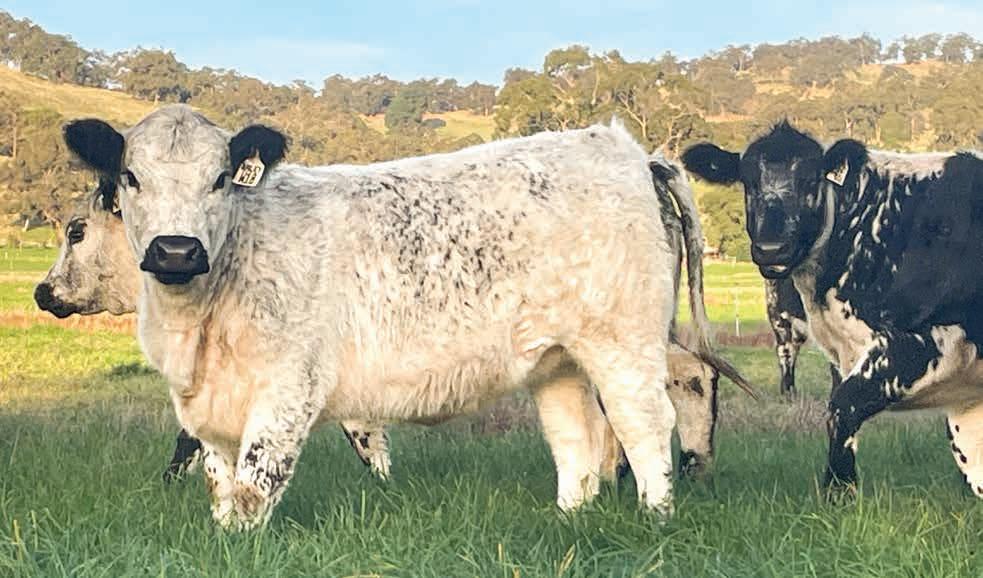
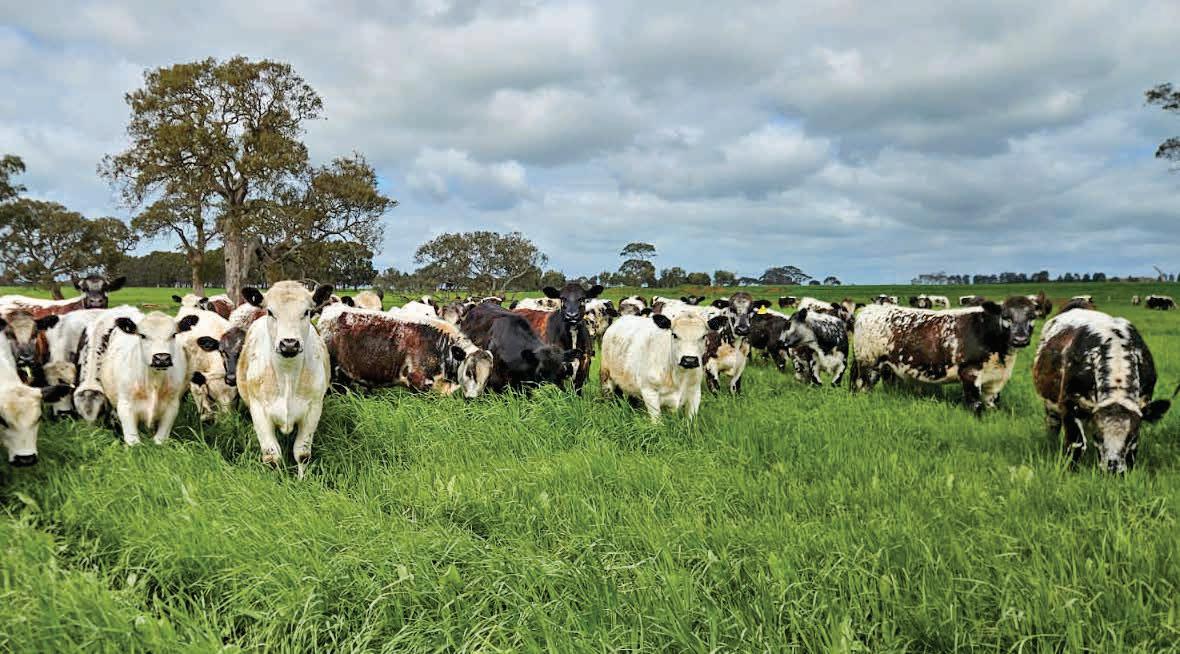
Speckle Park cattle running at Chalambra.
Cut like butter: How SpeckleBeef backed up gold
Grab the first sirloin out of the carton. Don’t pick. Don’t curate. Just enter it.
That’s how Neat Meat approached this year’s New Zealand Food Producer Awards and the result backed up last year’s success. SpeckleBeef returned with Gold for both Sirloin and Scotch, making the program a winner two years running. For Speckle Park producers, the result is more than a trophy. It’s a signal that consistent eating quality is being built through the supply chain, not found by chance at the end of it.
The judges weren’t shy about why. The Scotch, they said, was tender and juicy, cut like butter, with sweet fat and great mouthfeel. For a branded beef program built around consistency, that’s exactly the feedback that matters, says Simon Eriksen, CEO of Neat Meat.
Behind the result is a program increasingly shaped by data. SpeckleBeef runs every carcase through camera grading technology at processing, scoring marbling, fat cover and meat colour, then feeds those results back through the system to show which cattle are performing and where the next gains will come from.
The pattern emerging matters for the breed. According to Simon, Speckle Park’s strength lies in doing things differently. Rather than chasing a single number on a marbling scale, the program is built around a wider audience that wants consistency in tenderness first, with flavour and everything else layered in on top. It’s a different proposition entirely, and one that plays directly to the breed’s hand.
“Tenderness, flavour and juiciness are consistent in this breed from MB1 upward.”
That finding holds up across the program’s internal testing, supporting the view that tenderness, flavour and juiciness stay consistent across that range, not just at the top end of the scale.
The numbers coming through the system are about to get a lot bigger. Neat Meat has flagged SpeckleBeef growing from around 12,000 head next year toward as many as 45,000 within two years, with demand building in markets like Fiji, where high-end resorts are chasing quality beef with a clear provenance story.
Scale brings its own pressure. Producing a handful of excellent cattle is one thing; building consistent lines at commercial volume is another. That’s where known genetics, strong supplier relationships and tight grading feedback start to earn their keep. Breed enthusiasm alone won’t win the next stage. Programs like SpeckleBeef need cattle that perform on the hook, on the plate and across repeat consignments.
BREEDPLAN data, IMF scanning, progeny performance, carcase feedback and eating-quality evidence all carry more weight once they’re connected to a real, paying supply chain.
Speckle Park dairy-cross is shaping up as a genuine growth lane: hybrid vigour, efficient growth and promising eating quality, in a system built for volume. It’s the same model already proven by New Zealand’s leading Wagyu supply chains,
where dairy-cross production plays a major role. SpeckleBeef pays premiums linked to marbling outcomes, with further work underway to understand how lower-marbling cattle with strong eating quality should be valued. If the data keeps showing tenderness and consumer appeal at moderate marbling, there’s room to broaden how quality gets recognised and rewarded. The next stage comes down to proof: more data, more carcase feedback, tighter supply pathways and closer links between breeders, finishers, processors and brand owners.
The opportunity isn’t confined to the top-end cuts. Separately from the SpeckleBeef program, early-stage University of Newcastle research, led by Professor Aduli Malau-Aduli and featured on ABC’s Landline, has found Speckle Park carcases carrying higher levels of long-chain Omega-3s than most British breeds at similar marbling, work made possible by JAD Speckle Park, who funded and facilitated the testing. As Professor Aduli puts it, there’s more to eating quality than marbling alone. If that holds up, Simon sees a longer-term opportunity in mince and manufacturing beef, the more than 85 per cent of the carcase
“ Tenderness, flavour and juiciness are consistent in this breed from MB1 upward.”
that never sees a steak knife, rather than value sitting almost entirely in the premium cuts.
It’s part of a broader shift in how Simon talks about the breed. Quality alone isn’t the differentiator it used to be. Consumers want consistency and provenance and the lesson from established programs is the same one SpeckleBeef is living out: know your story and tell it properly. As Simon puts it, the days of producing commodity products and hoping for the best are probably behind the industry.
That’s the opportunity in front of Speckle Park producers now: not just standout animals, but repeatable, measurable eating quality across whole lines of cattle, backed by a brand that knows what it’s selling and why.
Branded programs turn that into a system, give producers a clearer target, and prove that when genetics, management and finishing align, Speckle Park beef delivers on the plate and beyond it.
Proof in the paddock, demand at the table
Three winter events gave Speckle Park three very different platforms, but one clear message. From breeding and feedlot performance to premium beef markets and consumer demand, the breed is building confidence where it matters most: in the paddock, through the supply chain and at the table.
Paddock to Plate Tour and BredWell FedWell Workshop SPI YOUTH EVENT. MURRAY BRIDGE REGION AND ADELAIDE
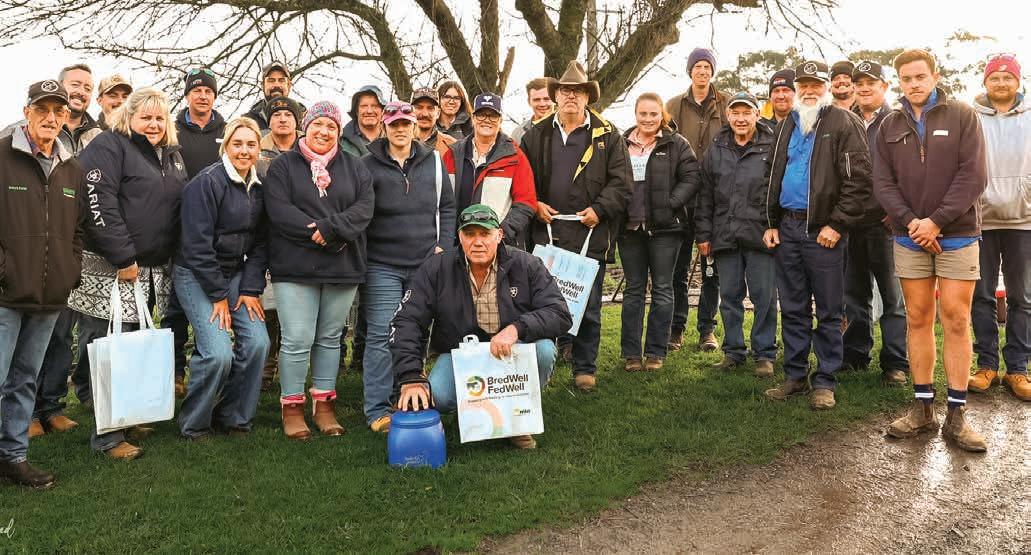
In June, SPI Youth ran a two-day program across South Australia’s Murray Bridge region and Adelaide Hills, connecting supply chain insight with practical breeding and feeding education. Day one gave 25 participants a firsthand look at the supply chain, from feedlot systems and farm gate decisions to the genetics that shape both. Around 15 participants stayed on for day two, joining commercial producers and industry attendees from SA, NSW and Queensland for an MLA BredWell FedWell workshop focused on how breeding and feeding decisions influence productivity, profitability and market outcomes.
Day One: From feedlot to farm gate
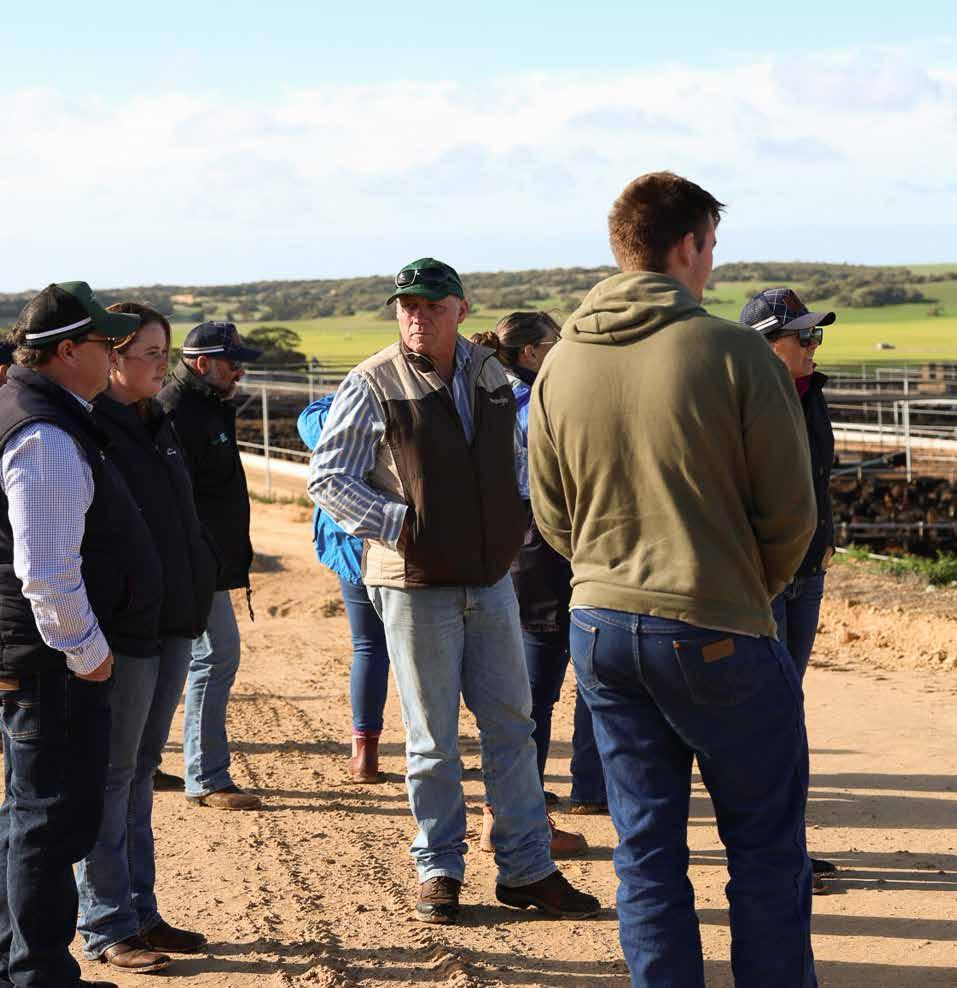
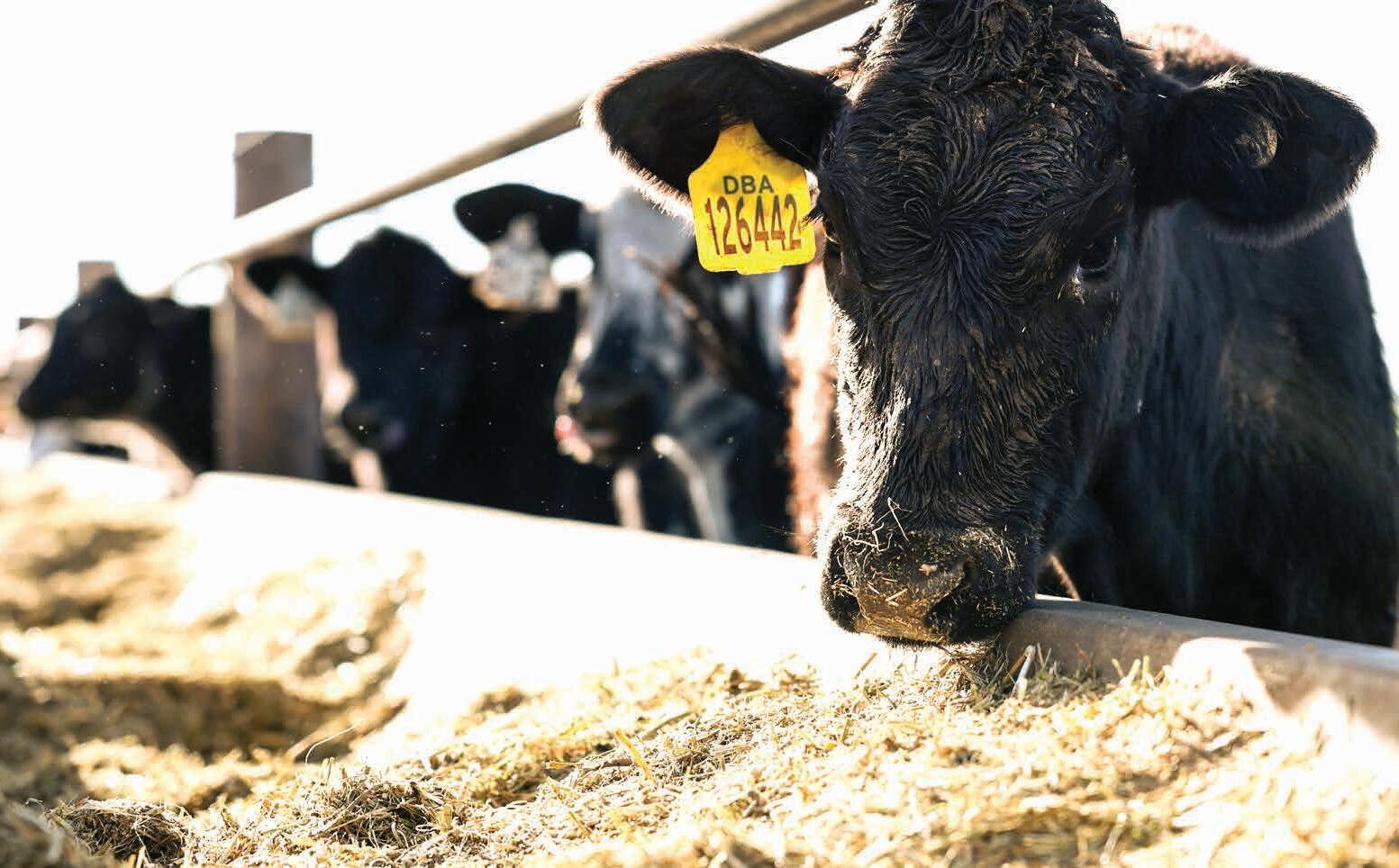
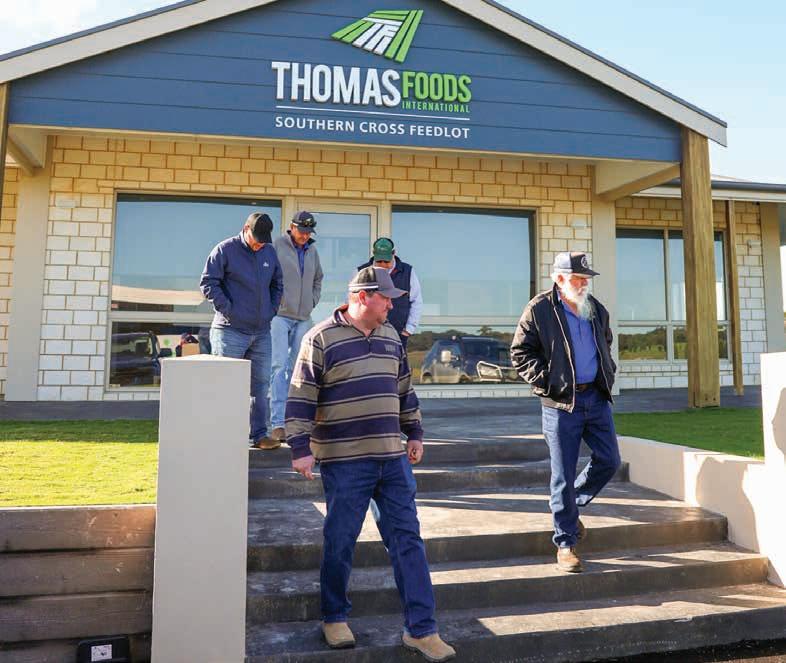
The tour opened at Thomas Foods International’s Southern Cross Feedlot in Tintinara, a major export focused operation in the region, where General Manager James Sage and Farm Assurance and Supply Chain Manager Mark Inglis hosted the group for a look behind the gate.
One message stood out. For many experienced producers, it reinforced a well-understood point: feedlot performance starts long before cattle
HILLS, SA
leave home. Weaning, handling and preparation all influence how cattle settle, transition and perform later in the supply chain. Genetics set the potential, but preparation helps determine how much of that potential is realised.
From there, the group travelled to Dakara Farms at Murray Bridge, where Jake Altmann walked participants through the family’s beef-on-dairy program. Winners of both the Overall Farmer of the Year and Dairy Farmer of the Year titles in The Weekly Times Coles 2024 Farmer of
Day two of the BredWell FedWell Workshop was held at Ewyn Speckle Park.
the Year Awards, the Altmann family are increasing their use of Speckle Park genetics as part of that program. It was a practical example of how Speckle Park genetics are finding a place beyond traditional beef herds.
Day Two: Breeding with the end in mind
Day two moved from supply chain insight to genetic decision making, hosted by Vaughn Johnston and family at Ewyn Speckle Park for MLA’s BredWell FedWell workshop, facilitated by industry consultant Jake Phillips.
His central message was simple: profitability starts with conception. Phillips introduced the 35-day window, the narrow period cows effectively have to get back in calf if they are to maintain a 365-day calving interval and worked through the losses that can quietly build between conception, pregnancy testing, calving and weaning.
“ Profitability starts with conception.”
The discussion then turned to fit-for-purpose breeding. Phillips encouraged producers to match genetics to the market they supply, because a bull suited to a long fed feedlot program will not necessarily be the same bull needed for a grass-fed paddock-to-plate system.
He also flagged a trend worth watching. Traits that are not directly rewarded today may become part of future pricing, compliance or supply chain preference. A live bull assessment put the theory into practice, sparking genuine discussion before the group moved on to EBVs, Speckle Park’s four selection indexes and the bigger question behind every breeding decision: what outcome are you actually breeding for?
Park beef took centre stage
Speckles on the Teviot
MEMBER EVENT. HOSTED BY KENT AND LIBBY WELLS OF HAWTHORNE SPECKLE PARK, SCENIC RIM, QLD
Each June, the Scenic Rim comes alive for Eat Local Month. Inspired by that spirit of provenance, Hawthorne Stud, together with Paul and Ally Arnaud from the Aratula Hotel, created Speckles on the Teviot, a long lunch launched in 2025 with one hero product at its centre, Speckle Park beef. Guests gathered among the cattle and firepits to enjoy beef yakitori, tataki, seared tomahawk and slow-cooked brisket before taking their seats at long tables styled for a relaxed country lunch.
In 2025, tickets were still available until a fortnight before the event. In 2026, the lunch sold out within a week of release, with a fastgrowing waitlist behind it. Guests travelled from across the Scenic Rim, Brisbane, the Gold Coast and the Sunshine Coast and throughout the day, one question kept coming up: where can we buy this beef?
That question matters because most of the people asking it were not producers. They were consumers who had responded to the product, the story and the eating experience. For breeders, the signal is important. When Speckle Park beef is presented well, people want to know where to find it next.
The message from winter was not complicated. Speckle Park’s commercial case is being built in the paddock, tested through the supply chain and recognised at the table. For breeders, the opportunity is to keep connecting the genetics to the outcome and to communicate that value with confidence.
Day one of the SPI Youth Paddock to Plate Tour opened at Thomas Foods International’s Southern Cross Feedlot in Tintinara.
Speckle
at Speckles on the Teviot, hosted by Kent and Libby Wells during Scenic Rim Eat Local Month.
SpeckFest 2026: Market Signals for Premium Beef
MEMBER EVENT. HOSTED BY DALE AND BELINDA HUMPHRIES OF WATTLEGROVE CATTLE COMPANY, GAROO, NSW
SpeckFest 2026 brought more than 150 breeders, commercial producers, industry leaders and beef enthusiasts together for a practical look at where the breed is heading. The value of the weekend was not simply in the speaker line-up, but in the way eating quality, reproduction, market demand and breed development were brought into one commercial conversation.
Eating quality gave the program its centre of gravity. Dr Rod Polkinghorne OAM brought the focus back to the consumer and the eating experience, reinforcing a message breeders can take well beyond the show ring. Premium positioning only matters if the beef delivers when it reaches the plate.
As global supply tightens, the opportunity is shifting toward beef that can deliver consistency, eating quality and a clear point of difference.
Simon Quilty’s market outlook widened the lens. His presentation pointed to record global beef prices, a US cattle herd at a 74-year low, strong demand for protein and a tightening global supply picture creating opportunity for Australian beef. For Speckle Park breeders, the message was not simply about producing more cattle. It was about producing cattle that can meet market expectations for consistency, eating quality and a clear point of difference. Premium markets are increasingly asking for quality, provenance and product integrity.
Reproductive technology gave the discussion a practical pathway. The Repro Hub team unpacked tools that can help breeders shorten the time between selection and improvement, while SPI’s own contribution added the breed development layer. Operations Officer Maddie Brockhoff spoke about registrations and SPI Youth, while Directors Justin Dickens and Jason Butt addressed the breed’s challenges and opportunities.
The industry panel, featuring Justin Dickens, SpeckFest host Dale Humphries of Wattle Grove, Roger Evans, Simon Quilty and Lincoln McKinlay of LINC’D, kept the conversation grounded in commercial reality. The Youth in Ag panel, featuring Claudia Humphries, Charlotte Nugent, Eden Kaminski and James Stephens, gave a clear reminder that the next generation is already learning to speak about Speckle Park in terms of data, markets and customer outcomes. SpeckFest 2027 preparations are already underway. Stay tuned for updates.
Youth in Ag Panel from SpeckFest 2026: (LtoR) Lincoln McKinlay, host, James Stephens, Charlotte Nugent, Claudia Humphries and Eden Kaminski. Co-host Dale Humphries is not pictured.
SpeckFest 2026 hosted by Dale and Belinda Humphries.