Queen Anne &Magnolia


We tend to gloss over the winter months as gardeners, thinking, “I the garden’s asleep, what is there to do?” There’s quite a lot actually.
As mentioned in recent columns, there’s ordering seeds [LINK?] and summer bulbs like dahlias from catalogs. It’s a time to take stock – how’s the garden looking right now? You can have a rich tapestry of color and texture with a little planning. If you’re not wowed by the view, now’s the time to think about what to add, and clear some room for new additions. Check that you have window views that inspire, privacy from unwanted vistas, and a host of ever-green, -blue, -gold, and -red foliage.

You can have an easier or more functional garden this year by taking on some projects now.
Winter is a great time to assess your water scheme. Hoses and sprinklers are notorious water-wasters, as a large percentage evaporates in the air. Perhaps this is the year you add some soaker hoses or drip irrigation?
Other projects to tackle now include making your own compost bin or worm bins, both of which will save you money from buying bagged compost, while preserving carbon on your property. Raised beds, a potting table, trellises, Adirondack chairs, and window boxes could all be acquired or made now.
To hunt for plant ideas, why not grab some vitamin D and walk outside? Take notes of the plants and gardens you enjoy. In addition to
By Spencer Pauley The Center Square
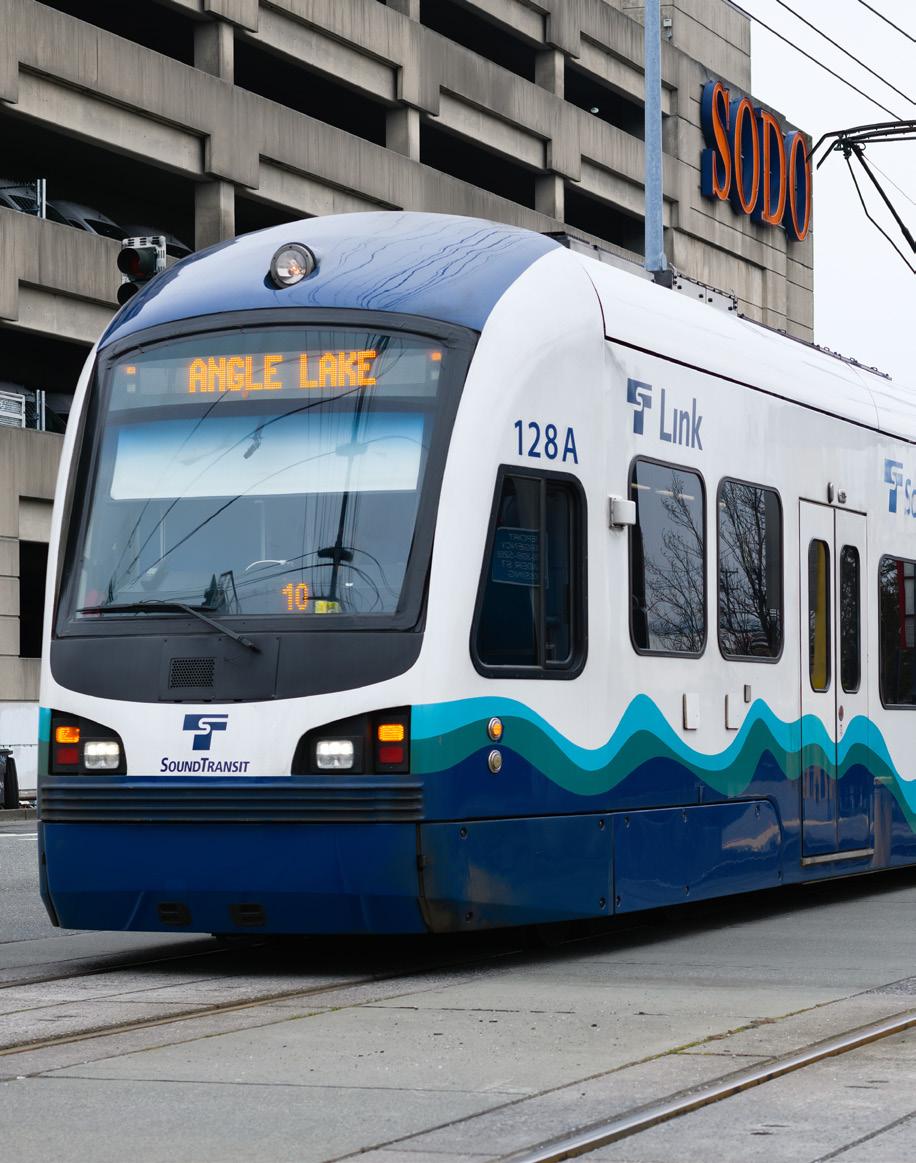
Long delays on Sound Transit’s 1 Line have ended after more than three weeks of construction.
From Jan. 13 through Feb. 4, Sound Transit’s trains ran on a single track approximately every 26 to 30 minutes between the University of Washington and Stadium stations on weekdays, while shuttle buses between the Capitol Hill and SODO stations replaced light rail service on weekends.
Construction included replacing 500 feet of northbound track between University Street and Westlake. According to a press release, these rails were worn and would have eventually become a safety hazard if they were not replaced.
Crews also replaced 58 bond boxes, which provide signal connections to the tracks.

Sunday Worship at 10am Live Streamed on our Facebook page and YouTube. Simply look for Magnolia Lutheran Church.
Twelfth Church of Christ, Scientist
In Person and Online Church Services
All are welcome & warmly invited to join these healing services
For best audio results, please join by clicking on the link from your computer or smartphone and choose “Call Over Internet”
All Zoom Services Meeting ID: 418 806 2637 https://us02web.zoom.us/j/4188062637
Sunday Services 11:00am – 12noon Pacific
Wednesday Testimonies 7:30pm – 8:30pm Pacific
Christian Science Quarterly Bible Lessons
Our weekly Bible Lesson Sermon may be found here: https://quarterly.christianscience.com/
Additional Healing Resources: ChristianScience.com CSWashington.com SeattleMetroReadingRoom.org
For additional assistance, please contact us at seattle12cs@gmail.com or 206.283.2300 ChristianScienceTwelfthSeattle.com
DENTISTS
Queen Anne Dental Group

Dr. Frank J. Calvo & Family
Cosmetic, Implant, & General Dentistry
400 Boston St. 206-284-7812 www.QADG.net
Chiropractic AND Massage Therapy
Disaster Preparation Classes, 30 minutes long on Wednesdays at 7 p.m. put on by the Queen Anne Communicty Council.
February 14: Making a Plan?/Get Home Bag
February 21: Preparing with Neighbors/Hubs!
Registration required at: https://signup. com/go/PPUBXVt
Every year, Queen Anne Helpline offers a bag of Thanksgiving groceries, including turkey, pumpkin, pie, stuffing, and more, to low-income seniors in our service area.
If you are a low-income senior (55+) living in zip-codes 98109, 98119, or 98199 and would like to have one of our Thanksgiving bags delivered to you, call our Resource Center at 206-2821540.
To donate or to help volunteer, go to https://www.queenannehelpline.org/ thanksgiving.html
Judgment-free technology tutoring and support. Set up your new device, and learn how to use your tech on your terms. Call 206-561-6356 or email info@ youngwhippersnapper.tech to learn more.


Darrell Gibson, D.C. • Sarah Gibson, D.C. Graeme Gibson, D.C.
David E. Goodall III, LMT
Sarah Rose Nottingham, LMT Lauren E. Traynor, LMT
SERVING THE FAMILIES OF QUEEN ANN E SINCE 1991 1905 Queen Anne Ave N • 206.282.8275 www.QueenAnneChiro.com



botanical gardens, scope out professionally-designed hotel, restaurant and corporate plantings for multi-seasonal appeal. At night, the internet is full of inspiration for planting plans and layouts. Some sites I like to browse for plants are:
• EGardenGo (www.egardengo.com) – Designer Darcy Daniels’ planting combinations site
• Great Plant Picks (www.greatplantpicks.org) – a curated collection of proven performers for the Pacific Northwest.
• King County native plants resources are here: https:// green2.kingcounty.gov/gonative/index.aspx
Another element to consider is shelter for birds – adding some shrubs and trees to a one-height landscape will add depth for humans and support wildlife.
Speaking of wildlife, if you are using bird feeders, they must be cleaned and water refreshed weekly. Water may need some heat to prevent freezing – some use heat lamps, Christmas lights, or even those hand-warming packets for gloves. When you add plants, consider adding ones that offer food in shoulder seasons of spring and fall – Mahonia and Ribes are two shrubs that kick off the spring season for hummingbirds, for instance, while bees will forage in hellebores.
Missing flowers? No need – add in perennial (and evergreen) hellebores, perennial or annual primroses, and potted blooming bulbs like snowdrops and daffodils. Many narcissus (daffodils) are scented, so let your nose do the shopping at the nursery. Another bonus of narcissus is that, unlike tulips, they are unappealing to squirrels, because they are toxic.
Scent is like the fifth dimension of garden planning – an unseen force that adds untold richness and romanticism. Winter and early spring offer many choices, like sarcococca (aka sweet box), with hidden flowers that throw vanilla scent down the street, daphnes and their cousins the edgeworthia. Edgeworthia is a little trickier in my experience, wanting sun but impeccable drainage without drying out too much – or temperatures that are too frosty.
Daphnes can take partial shade, and appreciate moisture, but bloom more reliably. They may however give up the ghost after a rough winter and dislike being moved after planting. If you have space, invite a witch hazel (Hammamelis spp.) into your life – some are more scented than others, but their spidery flowers in sunset colors are so welcome in February. A great place to see (and sniff) these is at the Joseph A. Witt Winter Garden at the Washington Park Arboretum (https:// botanicgardens.uw.edu/washington-park-arboretum/gardens/ joseph-a-witt-winter-garden/). They are not inexpensive, but their vase-shape, fall colors, and unusual flowers add a unique grace note to the garden I wouldn’t be without.
If you are itching to get moving, here are some garden tasks to jump on in additions to ordering seeds, plotting out your garden and adding winter color.
February through early March is a great time to:
• prune your roses;
• start microgreens indoors [link to microgreens article] and think about which tomatoes and warm-season crops you may want to start in March and April;
• begin winter-sowing cold-tolerant seeds [link to wintersowing article];
• consider planting sweet peas outside; and
• level up your skills with free classes from Cascade Water Alliance (https://cascadewater.org/water-efficiency/cascadegardener/) and the Garden Hotline (https://gardenhotline. org/).
That should keep you busy for a bit!
TRANSIT from Page 1Æ
Between 2009 and 2019, occasional signal failures and train delays resulted from the bond boxes getting damaged by buses over time.
During the service disruptions, the agency also repaired some sections of southbound rail and cleaned artwork.
Submitted
2024 is a leap year, and this means we all get one extra day on Thursday, Feb. 29.
Another Chamber in Florida came up with the idea years ago of using this extra day every four years to do something kind for others.
We would love to see Magnolia take on the challenge in 2024. What are some things you could do?
• Deliver breakfast or lunch to local first responders
• Take flowers or non-skid socks to a
local nursing home
• Collect clothes, food, or personal care items for a local shelter
• Send a thank you card to someone who means a lot to you
• Clean up a local park, playground, or trail
•If you own a shop or restaurant, donate a percentage of sales on Leap of Kindness Day to your favorite charity
• Bake cookies for teachers, school bus drivers, or crossing guards
What would you like to do? Share with us on social media and inspire others to action. You can find us on Facebook and Instagram under "DiscoverMagnolia."
By TJ Martinell The Center Square
As the Washington Interagency Electric Vehicle Coordinating Council contemplates its agenda for next year’s legislative session, the state Senate is on the verge of passing a bill based on some of its recommendations that would ban certain types of car tires as well as prohibit diesel-vehicle idling.
Last month, the EVCC submitted its Transportation Electrification Strategy, which included 86 policy recommendations related to transitioning away from fossil fuel vehicles and toward EVs.
Senate Bill 6304, sponsored by Senate Transportation Committee Chair Marko Liias, D-Mukilteo, would enact many of those recommendations. Among the bill’s provisions is a directive for the state Department of Commerce to ban the sale of replacement tires for passenger cars and light duty trucks that don’t meet California’s tire energy efficiency standards.
The bill would also allow direct sales from electric vehicle automakers to consumers and ban diesel vehicles from idling for more than five minutes any at location, while diesel-trucks would be prohibited from idling for more than five minutes within 100 feet of certain locations.
At a Feb. 1 public hearing, Liias said, “I have a longstanding belief that when the Legislature asks groups to
Sound Transit Media Relations Manager John Gallagher told The Center Square that the contract for the work totaled approximately $2.8 million.
“I want to thank all of our passengers for their patience during this extended maintenance interruption,”
dos extensive work on their behalf, we owe an obligation to consider the recommendations that they deliver to us.”
As first reported by KIRO Radio, the substitute version of SB 6304 ultimately voted out of committee on Monday through executive action replaced the section of the bill regarding tire sales with bill language from House Bill 2262, which failed to clear House Transportation Committee. The substitute bill also tacked on a $300 to $1,000 fine for any driver caught idling for more than five minutes.
Opposed to the no-idling policy at the bill’s Feb. 1 public hearing was Jeff DeVere with the Washington Trucking Association.
“It seems we’re just going to wholesale adopt those rules without consideration to the environment we have here in Washington," he said. "I think we really need to take a look at these, how this works here. We need to start looking past just putting this on the backs of trucks.”
Speaking against the bill before Monday's vote, Sen. Curtis King, R-Yakima, criticized how the bill would give Commerce discretion on how much an idling fee would be while noting the high cost of converting vehicle fleets to EVs.
“And that doesn’t include if you live in a cold climate and have to build a new facility,” he said. “I believe this bill isn’t ready for prime time.”
Sound Transit Deputy CEO Russ Arnold said in a statement. “We know that this hasn’t been easy for them, but the end result is a smoother ride and a more reliable system.”
The four light rail stations in downtown Seattle are nearly 20 years older than the Link Light Rail System
itself. The stations were built to accommodate both buses and trains when they opened for bus operations in 1990.
According to the agency, the four downtown stations require repairs that are more disruptive to Sound Transit services than more recently built stations.
It’s estimated we have 60,000 thoughts per day, and according to Forbes.com, 90% of them are repetitive ones (https://www.forbes.com/sites/ christinecomaford/2012/04/04/ got-inner-peace-5-ways-to-get-itnow/?sh=e70df1866727) . In other words, we are recycling the same thoughts we had yesterday.
WHO’S DRIVING THIS BUS?
Your thoughts trigger emotions and a cascade of physical reactions. Think about your child, a pet, or a very happy memory, and notice what happens in your body. Negative thoughts create very different reactions, like shortness of breath, constricted muscles, and spikes in adrenaline. Once that happens, you fear-alert brain goes into overdrive scanning our external environment for causes to explain the fear. Now you are in a perpetuating cycle of negative thoughts and emotions that validate and confirm each other. If most of our thoughts are automatic, nearly unconscious thoughts, then our subconscious is driving our daily experience. I’m guessing you would rather take back control, or at least take the steering wheel. My favorite way to start this process going from the subconscious is through meditation. Meditation means “to notice.” Rather than stopping thoughts, simply noticing them will interrupt those cycles. That’s actually the goal of most meditation – remember, it’s
normal to lose your focus a million times. By noticing your thoughts in a calm meditative state, it habituates your mind to being able to observe them during your active day. I found after about a month of regular practice my brain began to pause on its own during what would normally be moments of tension and question my next steps/reactions. Even five or 15 minutes can help – I prefer the morning, to start with a steady baseline, but you can also take a mini break on your lunch hour, or anytime you need one.
right now, or what are you feeling and where?
Can you identify any emotion attached to it. As therapists say, “name it to tame it.”
There are many apps to try to get started, from Headspace and Insight Timer to Waking Up most with free trials. A resource I enjoy for midday breaks is available on YouTube by searching “NSDR Andrew Huberman” (Non-Sleep Deep Rest).
Actively identifying your thoughts during your day is crucial to shaping your experience. I think meditation boosts this process, making it a little easier, but whether you meditate or not, it’s a skill worth mastering.
Learning it is simple – it’s making it a habit that can be challenging. If you notice any strong reaction, either physical or mental, take a beat. What are you thinking about
The act of labeling your thoughts can help take them off your inner hamster wheel that wants to process them. After a while, you’ll see patterns emerge because thoughts are 90% repetitive, remember. This is great, because you can get so bored with it, you’ll eventually defuse the emotional arousal around it. You’ll think, “Oh yeah, there I go obsessing about (my errands, my outfits, my job, etc.) No big deal.” It makes sense to me that telling your body it’s no big deal probably short-circuits the Fight-Flight response.
(There are other ways you can tell your body that, too – from long exhales, humming or singing, moving, laughing, putting your hand on your heart or hugging yourself to making “horse lips,” meaning blowing through closed lips to say “bbbbbrrrbbb.”) Bonus points if you hum a favorite theme song with horse lips.
If you are going to repeat thoughts, what if they were more positive ones? Spending time
putting some positive reactions and thoughts in your bank account feels great and is very helpful to course correcting any negative patterns you have. Take time periodically, in the morning or whenever you can, to reflect on someone you love or a happy memory, but really get into it. Revel in the sensations, the feelings, the sights and sounds of that experience to get your body’s senses involved.
In addition to checking your internal thoughts, it’s helpful to look at external influences too. Notice your emotional inputs. Pay attention to how much time you are spending in negative emotions, whether from passive outlets, like the news or violent films, or actively, like arguing or complaining (listening to someone else kvetch). While you’re at it, check in on your reactions while scrolling social media or online shopping. Is your heart racing? Are you holding your breath?
Consider lessening those inputs as much as you can to reset your reactivity baseline of stress response and hormones. Worrying is a big one – writing to-do lists can help, but sometimes you just need to distract yourself, and go take a walk, or watch something guaranteed to make you smile.
If you try this, I think you’ll find you are more aware of your common responses and “triggers,” which is valuable, but you’ll also likely find your days are trending calmer and happier.
By Spencer Pauley
The Center Square
King County Executive Dow Constantine is proposing significant increases to county Metro bus network spending amid a potential $50 million budget deficit next year. The RapidRide G Line is launching Aug. 31, and goes along Madison Street from downtown Seattle to the First Hill neighborhood. Constantine's proposed revisions and improvements are for routes 3, 4, 10, 11, 12, 47, 49 and 60.
A fiscal note shows that the proposed upgrades would see annual costs go from $3.4 million in 20232024 to $24.3 million in 2028-2029
for a total of approximately $60 million, a 614% increase in annual costs through 2029.
The proposed Metro upgrades comes as the county is dealing with a looming $50 million budget deficit in 2025. Constantine previously said he may be forced to make cuts to essential services unless a 1% cap increase on property tax revenue is lifted.
According to the county executive’s office, the RapidRide G Line–Madison Street project includes funding from the Seattle Department of Transportation and the voter-approved Levy to Move Seattle, as well as the Federal Transit Administration, Sound Transit, King
County Metro and Washington state.
The Levy to Move Seattle has a levy rate of 33 cents per $1,000 of assessed value, meaning a median homeowner in Seattle pays $256 annually.
The proposed upgrades include extending route 3 to the Capitol Hill neighborhood, shifting routes 11 and 12 near Madison Street, and increasing frequency on route 60 on weekdays and weekends between 6 a.m. and 7 p.m. for more frequent north-south bus service connecting Capitol Hill, First Hill, Beacon Hill, South Park and southwest Seattle.
“With these new additions we will deliver fast, safe, reliable service to tens of thousands of people each
day,” Constantine said in a news release. “Upgraded bus networks are a proven path for connecting communities quickly, getting people where they need to go, and opening doors to even greater opportunity.”
If Constantine's proposal is approved by the King County Council, changes would be implemented in phases.
Constantine’s office warns that some routes could be temporarily operating at lower levels of service than proposed until Metro is able to reliably deliver the new service changes.
The set of changes would be implemented in phases from 2024 through 2026.
$337,981.23, together with interest as provided in the Note or other instrument secured, and such other costs and fees as are due under the Note or other instrument secured, and as are provided by statute. V. The above described real property will be sold to satisfy the expense of sale and the obligation secured by the Deed of Trust as provided by statute. Said sale will be made without warranty, expressed or implied, regarding title, possession or encumbrances on February 23, 2024. The defaults referred to in Paragraph III must be cured by February 12, 2024, (11 days before the sale date) to cause a discontinuance of the sale. The sale will be discontinued and terminated if at any time before February 12, 2024 (11 days before the sale) the default as set forth in Paragraph III is cured and the Trustees’ fees and costs are paid. Payment must be in cash or with cashiers’ or certified checks from a State or federally chartered bank. The sale may be terminated any time after the February 12, 2024 (11 days before the sale date) and before the sale, by the Borrower or Grantor or the holder of any recorded junior lien or encumbrance by paying the entire principal and interest secured by the Deed of Trust, plus costs, fees and advances, if any, made pursuant to the terms of the obligation and/or Deed of Trust, and curing all other defaults. VI. A written Notice of Default was transmitted by the current Beneficiary, HSBC Bank USA, National Association as Trustee in trust for the registered Holders of ACE Securities Corp. Home Equity Loan Trust, Series 2007-WM1, Asset Backed Pass-Through Certificates or Trustee to the Borrower and Grantor at the following address(es): ADDRESS ANA E CARRILLO 3912 SW 337TH ST, FEDERAL WAY, WA 98023 ANA E CARRILLO C/O JUAN CARLOS DELGADO JDELGADO LAW PLLC, 707 S GRADY WAY STE 600, RENTON, WA 98057-3227 ISMAEL HURTADO 3912 SW 337TH ST, FEDERAL WAY, WA 98023 ISMAEL HURTADO C/O SERGIO ARMIJO, 917 N 2ND ST UNIT B, TACOMA, WA 98403-3909 by both first class and certified mail on September 8, 2023, proof of which is in the possession of the Trustee; and the Borrower and Grantor were personally served with said written Notice of Default or the written Notice of Default was posted in a conspicuous place September 8, 2023 on the real property described in Paragraph I above, and the Trustee has possession of proof of such service or posting. VII. The Trustee whose name and address are set forth below will provide in writing to anyone requesting it, a statement of all costs and fees due at any time prior to the sale. VIII. The effect of the sale will be to deprive the Grantor and all those who hold by, through or under the Grantor of all their interest in the above described property. IX. Anyone having any objections to this sale on any grounds whatsoever will be afforded an opportunity to be heard as to those objections if they bring a lawsuit to restrain the sale pursuant to RCW 61.24.130. Failure to bring such a lawsuit may result in a waiver of any proper grounds for invalidating the Trustees’ Sale. X. Notice to Occupants or Tenants. The purchaser at the Trustee’s sale is entitled to possession of the property on the 20th day following the sale, as against the Grantor under the deed of trust (the owner) and anyone having an interest junior to the deed of trust, including occupants who are not tenants. After the 20th day following the sale the purchaser has the right to evict occupants who are not tenants by summary proceedings under chapter 59.12 RCW. For tenant-occupied property, the purchaser shall provide a tenant with written notice in accordance with RCW 61.24.060. Notice to Borrower(s) who received a letter under RCW 61.24.031: THIS NOTICE IS THE FINAL STEP BEFORE THE FORECLOSURE SALE OF YOUR HOME. Mediation MUST be requested between the time you receive the Notice of Default and no later than 90 calendar days BEFORE the date of sale listed in the Notice of Trustee Sale. If an amended Notice of Trustee Sale is recorded providing a 45-day notice of the sale, mediation must be requested no later than 25 calendar days BEFORE the date of sale listed in the amended Notice of Trustee Sale. DO NOT DELAY. CONTACT A HOUSING COUNSELOR OR AN ATTORNEY LICENSED IN WASHINGTON NOW to assess your situation and refer you to mediation if you might eligible and it may help you save your home. See below for safe sources of help. SEEKING ASSISTANCE Housing counselors and legal assistance may be available at little or no cost to you. If you would like assistance in determining your rights and opportunities to keep your house, you may contact the following: The statewide foreclosure hotline for assistance and referral to housing counselors recommended by the Housing Finance Commission: Telephone: (877) 894-4663 or (800) 606-4819 Website: www.wshfc.org The United States Department of Housing and Urban Development: Telephone: (800) 569-4287 Website: www. hud.gov The statewide civil legal aid hotline for assistance and referrals to other housing counselors and attorneys: Telephone: (800) 606-4819 Website: www.homeownership. wa.gov Dated: October , 2023 MTC Financial Inc. dba Trustee Corps, as Duly Appointed Successor Trustee By: Alan Burton, Vice President MTC Financial Inc. dba Trustee Corps 606 W. Gowe Street Kent, WA 98032 Toll Free Number: (844) 367-8456 TDD: 711 949.252.8300 For Reinstatement/Pay Off Quotes, contact MTC Financial Inc. DBA Trustee Corps Order Number 96690, Pub Dates: 1/24/2024, 2/14/2024, QUEEN ANNE & MAGNOLIA NEWS
By Randy Bracht The Center Square
By state standards, should gray wolves in Washington be designated endangered, threatened or simply sensitive?
To weigh in on that question, the Washington Department of Fish & Wildlife this week opened a public comment period that continues through May 6.
Currently, gray wolves fall under two separate classifications. By state designation, they are considered endangered across Washington. However, under federal standards, the animals are considered endangered in the western twothirds of the state but threatened – a lower risk threshold – in the eastern third of Washington. And their numbers have been increasing over the past decade.
“Wolves in Washington have made significant progress toward recovery since their original state endangered listing in 1980, when there were no known breeding wolves in the state,” said Julia Smith, WDFW’s Endangered Species Recovery Section manager, in a news release Wednesday.
In its rule-making process, WDFW is proposing to change the wolves’ state conservation classification from “endangered” to “sensitive.”
“This recommended reclassification to sensitive reflects that progress and most accurately describes the current status of wolves in Washington, while also recognizing that wolves are not yet established in western Washington and should remain protected,” said Smith.
According to the department, the state’s wolf population has grown by an average of 23% annually since the agency conducted an initial survey in 2008. In 2022, WDFW and tribes counted 216 wolves in 37 packs, including 26 successful breeding pairs. Many of the animals are found in the timbered, mountainous northeast corner of the state.

The agency’s recommendation would not affect the wolves’ federal status in the western two-thirds of the state, where they would remain listed under the federal Endangered Species Act.
State administrative code defines endangered as “seriously threatened with extinction throughout all or a significant portion of its range within the state.” In contrast, sensitive is defined as “vulnerable or declining and likely to become endangered or threatened … without cooperative management or removal of threats.”
Under the proposed “sensitive” status, wolves would continue to be protected from hunting, harassment, and “unlawful take.” Regardless of status, state law requires non-lethal deterrents in development of any conflict mitigation guidelines.
Last month, Gov. Jay Inslee directed WDFW to begin a new rulemaking process to guide when wolves can be lethally removed for attacks on domestic animals. Inslee’s directive was in response to a group of wildlife and environmental advocates seeking more protection for the wolves. By law, the governor can’t prescribe specific policies to be
included in the rulemaking, but he recommended codifying a lethal removal protocol developed by the state’s Wolf Advisory Group.
Inslee’s order overturned a decision by the state’s Fish and Wildlife Commission, which rejected the group’s petition last fall. The commission felt WDFW already had appropriate management protocols in place and a new rule was not needed.
WDFW staff is scheduled to brief state Fish and Wildlife commissioners on the proposed rule change during their monthly meeting in March. The agency is also in the process of compiling its annual wolf conservation and management report for 2023. That data will be presented in April to commissioners, who will discuss whether the information should be considered in reclassifying the wolves – a decision tentatively slated for their June 19-20 meeting. Public comments will be accepted online at publicinput.com/sepa_ graywolf, by email at graywolf2024@ publicinput.com, via voicemail by calling 855-925-2801 and entering project code 6505, or by writing to: Washington Department of Fish and Wildlife, attn Wildlife Program, P.O. Box 43200, Olympia, WA 98504.