The Queen Anne & Magnolia News is looking for a Outside Advertising Representative in the Queen Anne & Magnolia markets. Do you enjoy developing relationships with your neighbors and helping them market their business to our local readers? This job is perfect for someone who wants to work in the community they live in. Contact Tammy at 206-461-1322 for
Queen Anne &Magnolia news Queen Anne &Magnolia
LOOKING UP
OAK VIEW GROUP CONSTRUCTION VP SAYS ARENA EXCAVATION WORK NEARLY COMPLETE
Excavation work is nearly finished under the iconic roof of the Seattle Center
By Brandon Macz QA&Mag News editor
Construction crews began pouring concrete for the first of many columns under the iconic Seattle Center arena roof. While 2019 was about digging down, 2020 is about building the arena back up, said Ken Johnson, executive vice president of construction at Oak View Group.
The developer behind the $930 million rebuild of the arena invited media to tour the site on Tuesday, Jan. 21. An October media tour showcased the raising of the original roof from 1962 on supports while crews began excavating the bowl of the new arena.
Johnson said crews, led by general contractor Mortenson Construction, are removing 600,000 cubic yards of dirt from
Assistant attorney general making House bid in the 36th
Sarah Reyneveld has background fighting for public education funding, climate action
By Brandon Macz
QA&Mag News editor
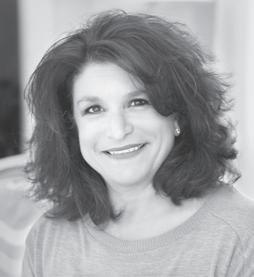
Washington Assistant Attorney General Sarah Reyneveld says her 15 years as a public servant inspired her to run for political office. The Ballard mother-of-two is running for a House seat in Washington’s 36th District currently held by Rep. Gael Tarleton, who is making a bid for secretary of state this year. Reyneveld said her three priorities during her cam-
paign will be creating affordable and healthy communities, making a bigger investment in public education — from early learning to higher ed — and tackling climate change through a clean energy model.
The 36th District candidate credits her father’s time on the California Solar Energy Commission as part of her early exposure to environmentalism. She’s served on the board of Washington Conservation Voters and advocated for climate Initiative 1631, which failed statewide
the site to double the arena’s original size. About three-fourths of the excavation has been completed, he said, with the rest expected to finish in February. The new arena bowl will be 53 feet below ground.
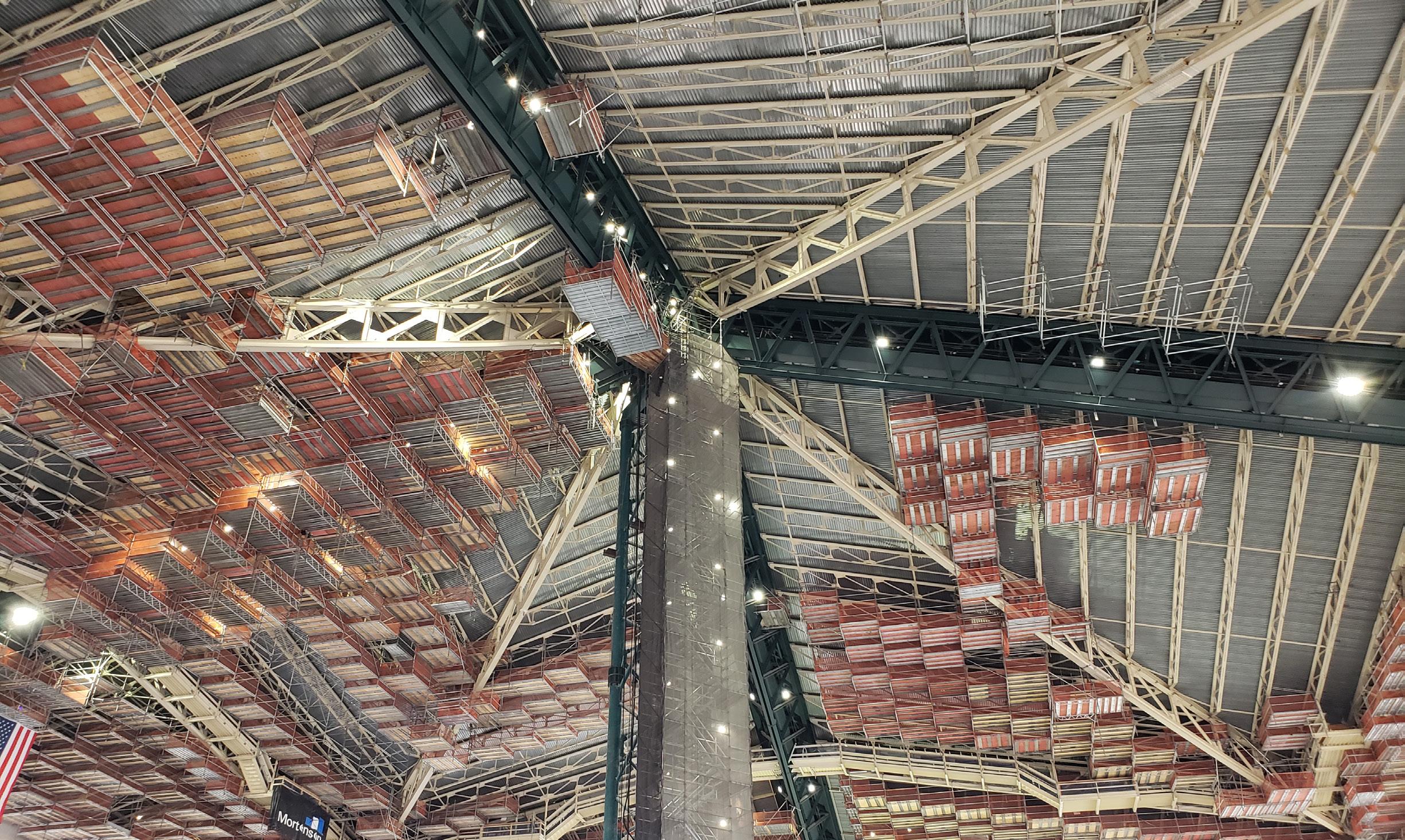
The 44-million-pound roof, designed by architect Paul Thiry for the Seattle World’s Fair, is being supported by 72 temporary steel columns and two “kickstands,” or
ARENA, Page 12
in 2018 but received nearly 58 percent support in King County. Reyneveld moved with
REYNEVELD, Page 11
Have a New Listing You would like to get Front & Center Exposure? For only $150 each week! (Reg $200) You can be on the front page in this space!! Contact Tammy for availability & reservation 206-461-1322
Photo by Brandon Macz
arena. Oak View Group plans to spend 2020 building the facility back up.
her family to Queen Anne when she was 16. She and her
Photo by Brandon Macz
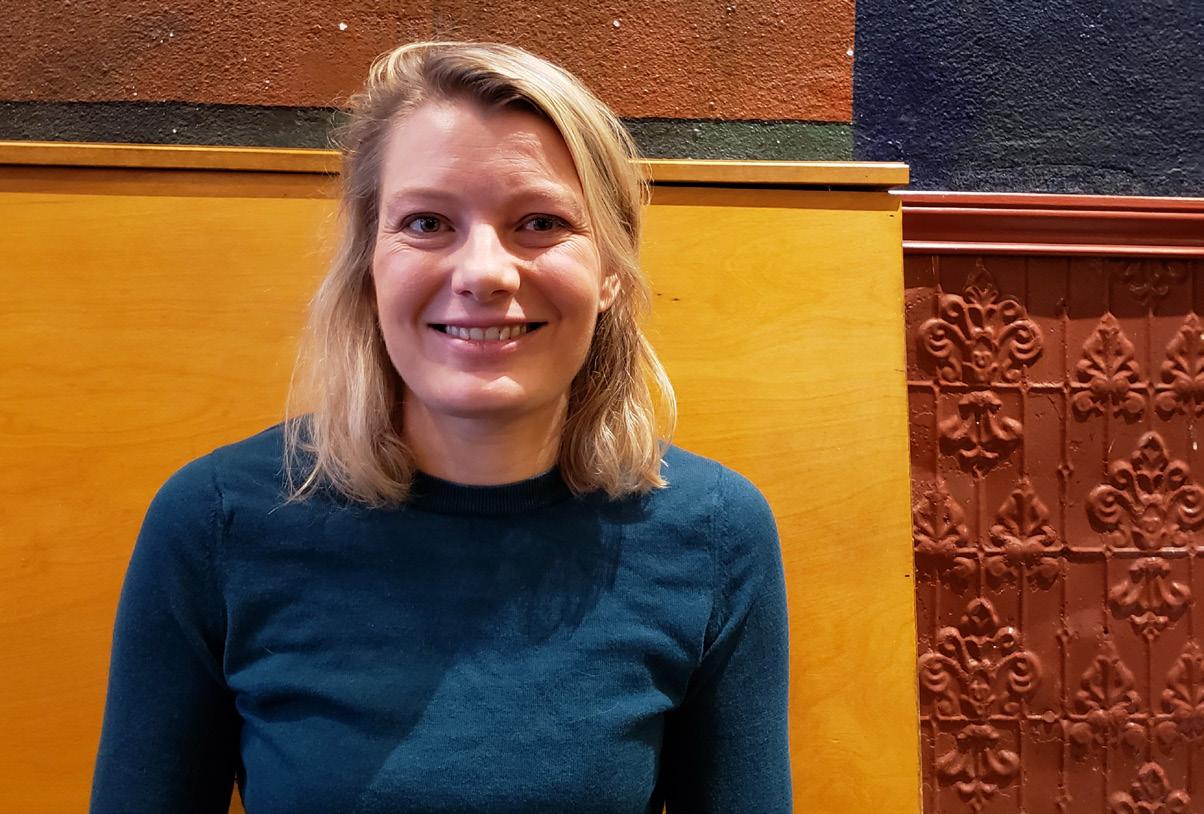
36th District House candidate Sarah Reyneveld is currently a state assistant attorney general focused on workers rights protection. She advocated for legislation that allowed assistant attorneys general to unionize in 2019.
Committee reviews tiny house expansion legislation, timeline for regional authority
Sawant highlights shelter model success; city, county homeless services staff on track to colocate by March
By Brandon Macz QA&Mag News editor
District 7 Seattle City Councilmember Andrew Lewis chaired the first Select Committee on Homelessness Strategies and Investments meeting of the year on Jan. 22. Councilmembers received a status update on the formation of a new King County Regional Homelessness Authority and were briefed about legislation that would allow up to 40 tiny house villages across the city.
Homelessness Authority
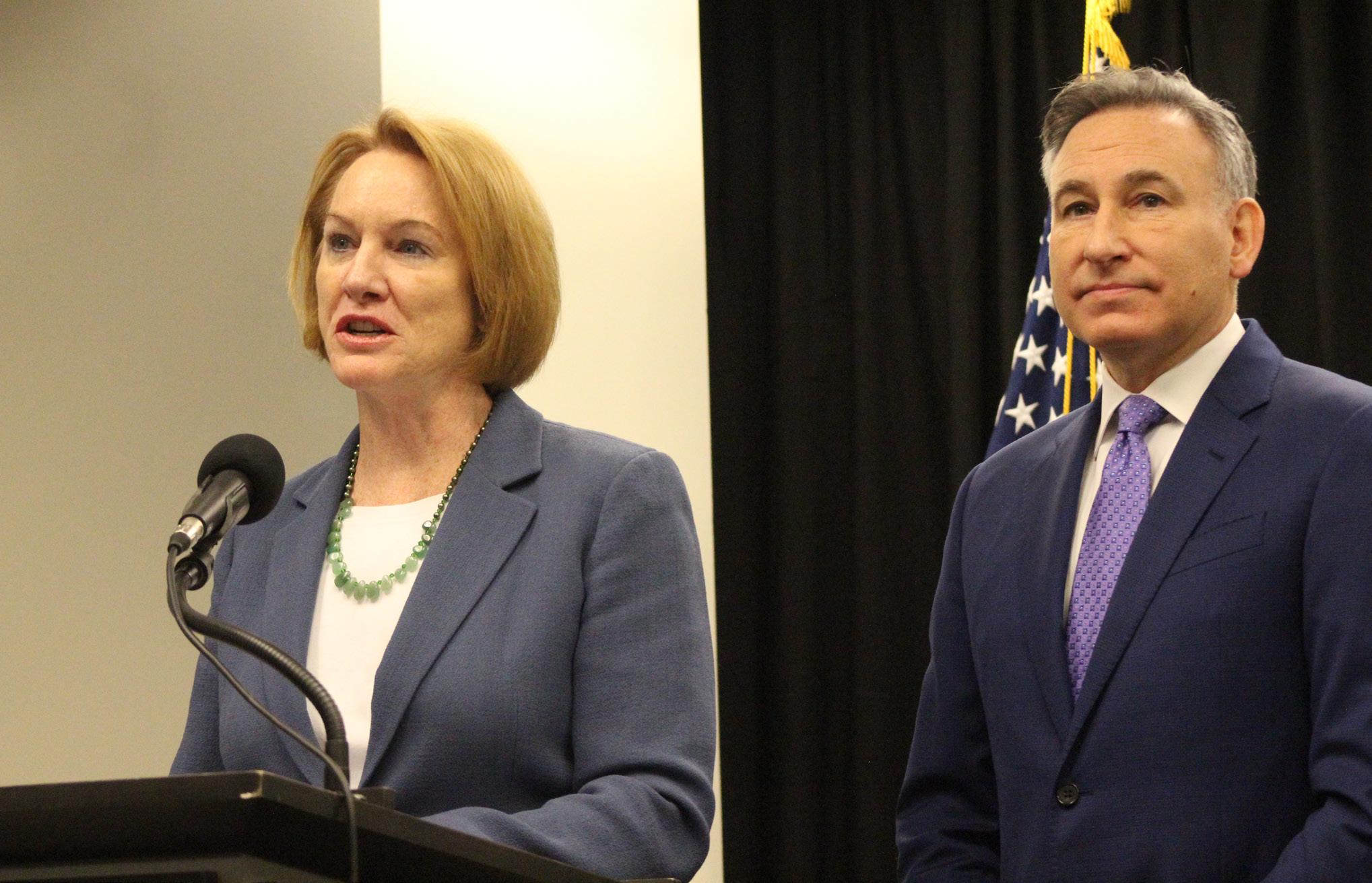
King County Executive Dow Constantine and Seattle Mayor Jenny Durkan signed an interlocal agreement in mid-December committing to the formation of a King County Regional Homelessness Authority to establish a coordinated effort in addressing the crisis of people living unsheltered.
While several members of the city council were concerned about the structural changes regarding the governing of the new authority that were made late in the process through the King County Regional Policy Committee, the legislation passed by a 5-1 vote on Dec. 16.
Part of the transition includes the colocation of Seattle’s Human Services Department and the King County Department of Community and Human Services to the county’s Yesler Building. Staff is currently spread across three office locations.
“We are still on time and planning for a March 2020 move to the Yesler Building,” said HSD interim director Jason Johnson.
The authority will have a two-tiered oversight system, with a governing committee of primarily elected officials charged with nominating and seating an implementation board, which will be its first action once formed, said Tess Colby, Durkan’s senior advisor on homelessness.
The 12-member governing committee will have three representatives each from King County, Seattle, the Sound Cities Association and those representing individuals with lived experience as determined by an advisory committee; the mayor and executive will make up one seat each for Seattle and King County, and one King County Council representative will have Seattle within their district. The federally mandated Continuum of Care Board will serve as the advisory committee to the regional homelessness authority.
Representing the governing committee will be Lewis, Councilmember Lorena González and Durkan. Colby said King County will have its representatives appointed soon.
“We are certainly feeling pressure and excitement about moving forward with the governance committee,” Colby said.
Durkan and Constantine will lead the first governing committee meeting, which Colby said she’s hopeful will occur within the 90 days recommended in the interlocal agreement (ILA) once it was approved. Leadership positions, the cadence of following committee meetings and the beginning of the process to identify potential implementation boards will be addressed during this inaugural meeting.
Colby said the Continuum of Care Board is working with various organizations to identify people with lived experience to serve on the governing committee.
“Governance Committee does not have a role in seating those members — folks with lived experience,” she said.
The governing committee will adopt bylaws for the authority and performance metrics, which can be accomplished with a simple majority. The 12-member committee will require a quorum of nine and 3/4 majority vote to establish goals, policies, a budget and to hire a CEO to lead the
SUBSCRIPTION FORM
new government agency. It will take nine votes to remove a CEO.
Councilmember Lisa Herbold said she wants to return to the issue of voting requirements when bylaws are established, as the city council had wanted to increase the threshold for making major budget or policy changes.
The implementation board will provide recommendations about a CEO, develop a funding allocation report and make budget and major plan recommendations to the governing committee; the CEO will also report directly to the implementation board. With the addition of two SCA-appointed seats, elected officials will make 10 of the 13 appointments, with the other three being made by the advisory committee.
The implementation board will have a first crack at assessing a draft budget, which would then go to the governing committee for approval, at which point the City Budget Office would include Seattle’s costs in the mayor’s budget.
It’s likely the 2021 budget process will look similar to previous years, unless a CEO is hired this year, Colby said. The council begins work on the following year’s budget in the fall.
Absent a CEO — and a fully formed govern-
HOMELESSNESS, Page 7
Photo by Brandon Macz
Seattle Mayor Jenny Durkan and King County Executive Dow Constantine signed an interlocal agreement to form a King County Regional Homelessness Authority on Dec. 18, 2019.
Queen Anne apartment developers gather feedback, criticism
Lack of parking, scale of 42unit project receives cold reception at land use review committee meeting
By Brandon Macz
QA&Mag News editor
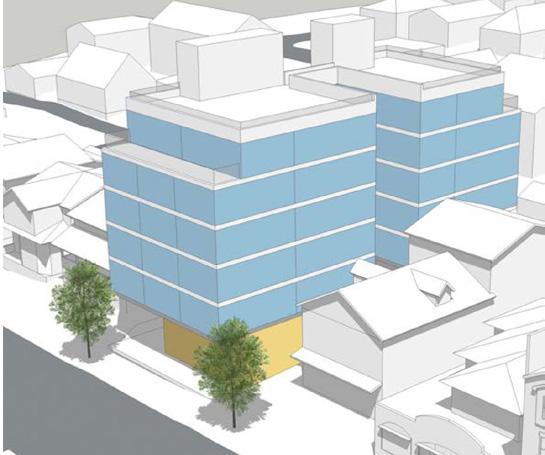
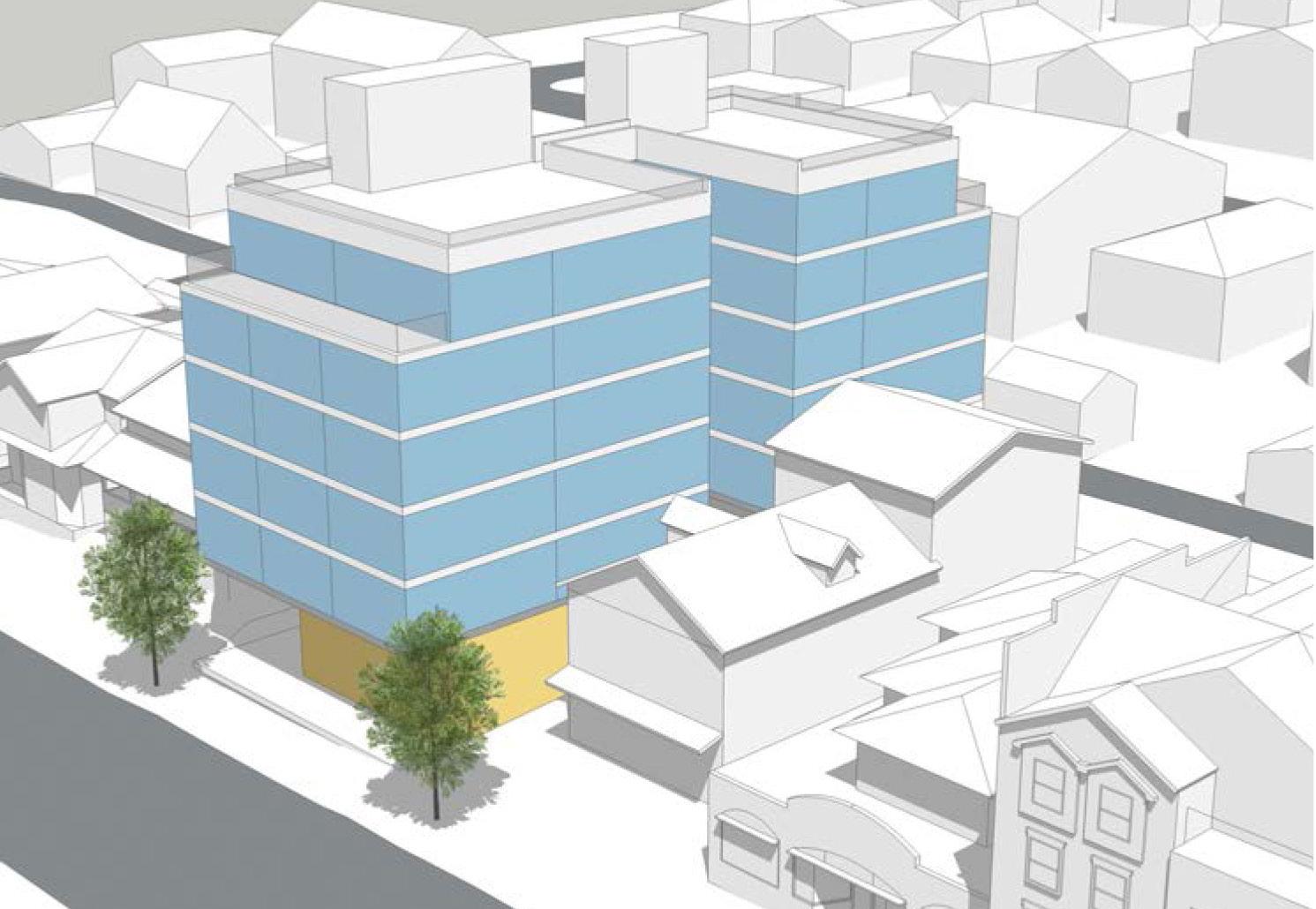
Developers with designs for a 42-unit apartment building on Queen Anne Avenue North shared those plans while fielding criticism from the audience during the community council’s land use review committee meeting last Wednesday night.
The six-story mixed-use development with ground-floor retail at 2220 Queen Anne Ave. N. is a joint project by Shilshole Development and Ironstone Real Estate, with Public 47 Architects leading the design. The block was rezoned last March to allow for a maximum height of 55 feet, and Public 47 architect Scott Carr said the scale will be minimized with setbacks on the top floor of the building’s front and back.
The project recently cleared Early Design Guidance, with the Seattle Department of Construction and Inspections supporting a preferred massing design that includes a central southfacing courtyard.
Unlike the massive Safeway redevelopment proposed down the street, the apartment project was small enough that its design could go through administrative review rather than be scrutinized by local architects on the
West Design Review Board.
Ironstone owner Mike Shields, whose offices are on the second floor of the existing single-family building on the site — the bottom half occupied by The Thai Kitchen restaurant — said he proposed to longtime friend and Shilshole Development principal Mike Yukevich acquiring the building when he saw it for sale during a jog. They purchased the property from a living trust for $2 million in July 2018.
Shields said the decision to make all 42 units studio apartments — each at a little less than 400 square feet — was based on market demand in the neigh-
borhood. He said the monthly rent for a unit will be around $1,800, and plans are to take advantage of the multifamily tax credit exemption (MFTE) program, he said, which would set affordability requirements for 20 percent of the units.
In response to concerns about only providing four parking spaces — code doesn’t require any — Shields said they expect fewer than eight future residents will own a car.
“They can’t afford it,” he said. “No one can afford it.”
Shields was referring to owning a car and paying for parking in Seattle,
Office building to replace McDonald’s across from Seattle Center
By Brandon Macz QA&Mag News editor
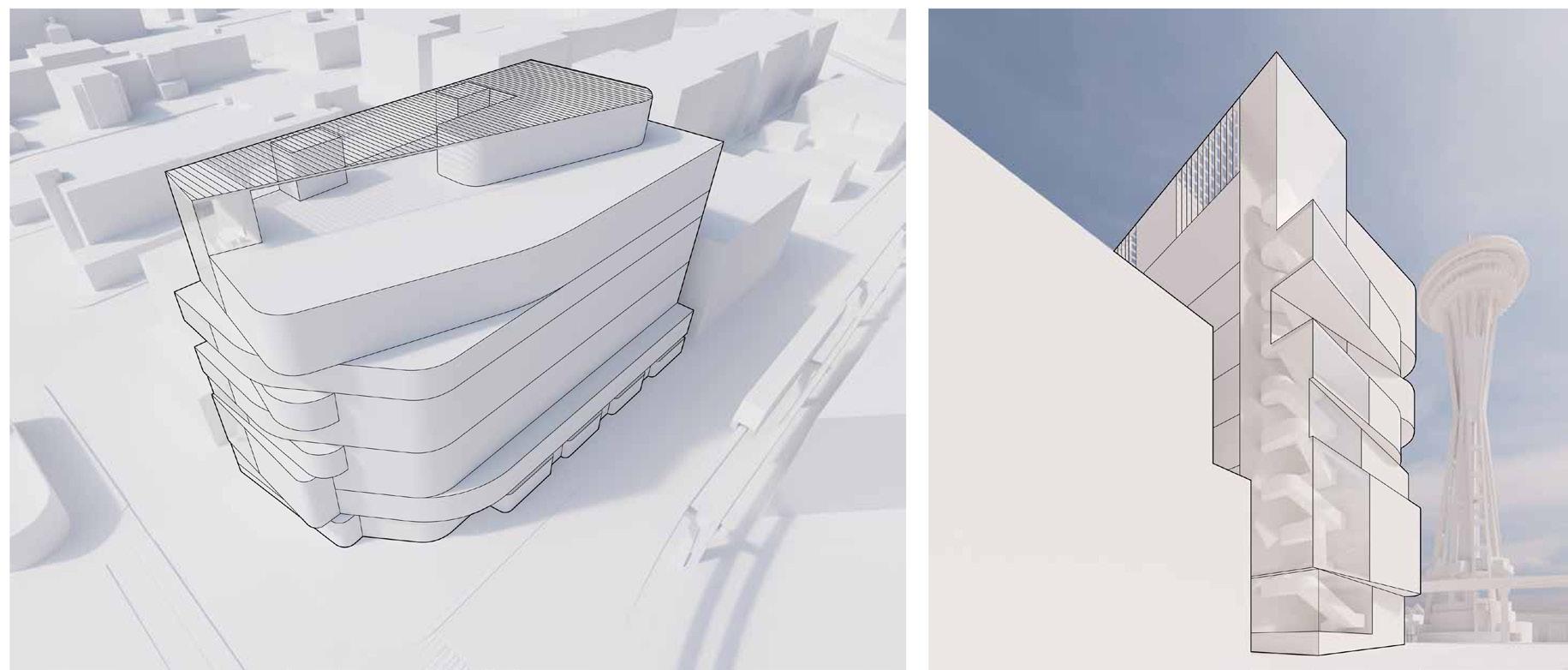
As Seattle Center experiences changes, so too will the McDonald’s site across the street on Fifth Avenue North. DA LI Development USA, LLC is proposing to replace it with an eight-story, 176,000-square-foot office building, with a cafe and retail on the ground floor. DA LI Development USA, LLC is an American subsidiary of a publicly traded Taiwanese company by the same name. Its first project in Seattle is the KODA Condominiums in Japantown, which broke ground last February.
The redevelopment project at 222 Fifth Ave. N. will go before the West Design Review Board for an Early Guidance (EDG) meeting at 8 p.m. Wednesday, Feb. 5, in Room 1 of the Queen Anne Community Center, 1901 First
Ave. W.
Plans are to add to the future Thomas Green Street that will connect to Seattle Center and a new skate park, according to the EDG packet, with small-scale retail fronting Fifth and a cafe on the Thomas Street corner.
“An interconnecting feature stair that links the vertical stack of amenities along Thomas Street will encourage physical movement within the building while providing views to the exterior,” according to the packet. “This feature stair embraces and reinforces health and well-being aspects of the green street.”
The preferred architectural concept is a “Vertical Village,” which includes dynamic massing at Thomas and an articulated ground floor, with rooftop amenities providing a a visual connection to the Space Needle.
Plans include 99 parking stalls in a belowground garage.
but one resident at the Queen Anne Community Council Land Use Review Committee said they were upset people would move in and take on-street parking existing residents are already using. ONe resident asked if they could make tenents sign a document confirming they don’t own a vehicle; they can’t. The project is required to provide bike parking for each unit (42 spaces).
Carr said there will be recessed balconies on the building, which will be constructed with cross-laminated timber. The exterior will include brick, Shields said, to match the neighborhood character.
“It’s not going to be one of these hermetically sealed Kleenex boxes,” he said. The 1,400-square-foot commercial space on the ground floor will also have a larger setback to allow for a restaurant or cafe to include outdoor dining, Carr said.
The most vocal opponent of the project at the Jan. 22 meeting was Bill Knowles, who gathered contact information from attendees for a new group he’s forming, called the Queen Anne Historical Architectural Preservation Association (QAHAPA). He argues the converted single-family building is among a number of historical structures in the neighborhood that should be preserved; Shields noted he’d seen the opposition flyers Knowles put up. Knowles tells Queen Anne News he is trying to require the developer to pay the cost of relocating the existing converted home, sparing it from demolition.
This is turning out to be quite the busy January, thanks to very low inventory, low interest rates and pent up buyers who want your home - NOW!
It’s been a week of many multiple offers. I’m sensing this will be the pace for what’s ahead.
If you’d like to talk about a game planI’d love to discuss your residential needs at your convenience.
With 99% of my business on Queen Anne, let 22 years of experience, expertise, professionalism and an outstanding proven track record work for you.
Image courtesy of Public 47 Architects
Developers shared plans for a six-story apartment building at 2220 Queen Anne Avenue North during the Queen Anne Community Council LURC meeting on Jan. 22.
CROSSWORD
1. Fall down
5. American TV company (abbr.)
8. Exclamation that denotes disgust
11. Gallantry
13. Chinese word signifying “doctrine”
14. Prefix meaning “beside”
15. Act of imitating
16. Tall, rounded vase
17. Sixth month of Jewish civil calendar
18. Rural Iranian village
20. Time zone
21. Military weapon (abbr.)
22. Gets rid of
25. Aggressive
30. Addressed one’s appearance
31. Affirmative
32. Denoting Indo-European languages
1. Surgical procedure of the heart (abbr.)
2. Northern Scandinavia indigenous person 3. Evergreen trees and shrubs
4. Meat from a domestic hog 5. State of insensibility 6. Herb
Annuity 8. San Diego-based ballplayer
Members of a Semitic people
Any physical damage
Woolen rug
Alsos Mission leader 19. Aromatic plant used as culinary herb 23. Where you sleep 24. Ruled Russia
25. Indicates density of data (abbr.) 26. Sea eagle 27. Type of light bulb
Wreath
33. French noble family
38. Shock therapy
41. Having characteristics of both sexes
43. Large suitcase
45. One who identifies God with the universe
48. Swiss river
49. Frequently
50. Wipe out
55. Invests in little enterprises
56. Waste
57. Resembles a large shrimp
59. Derogatory name for rural resident
60. Menswear accessory
61. Tropical American tree
62. Pitching statistic
63. Camera type
64. Cardinal number that is the sum of 5 and 1
29. Graduate with a degree
34. What thespians do
35. “Orange is the New Black” character
36. Comedienne Gasteyer
37. Romanian monetary unit
39. People treated as a group
40. Small European plant 41. First responder group
42. A person’s head 44. Giggle
45. Bura-__: Chadic language
46. Snout moth genus 47. Body part
48. Inspirational Wimbledon champ
51. Revolutions per minute
52. American software developer
53. Ancient Greek city
54. Female sheep
58. “The Science Guy”
Why are brains mushy?
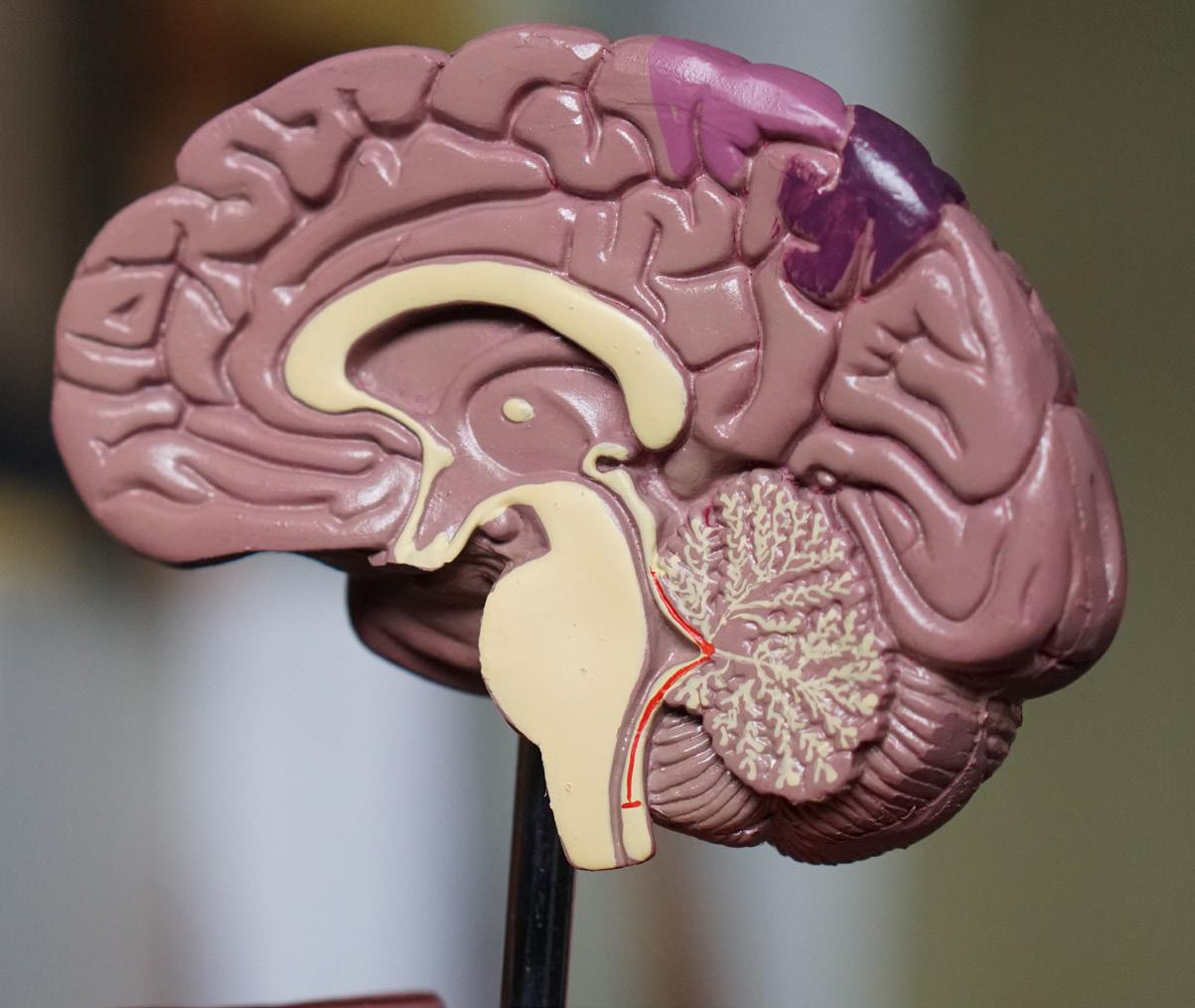
You’re right, brains are quite mushy. It turns out the threepound organ between your ears is mostly made up of water and fat.
I found out all about brains from my friend Jim Peters, a neuroscientist at Washington State University.
“It’s gooey. It really is squishy,” he said. “When it is warm, it is kind of like butter.”
Dr. Universe, a grey cat with a lab coat, looking up
The brain may be soft but it is surrounded by a tough layer called the dura mater to help protect it. I also found out the brain actually floats around in a kind of liquid. This liquid helps keep the brain from touching the bone of your skull.
The bones in your body are actually made up mostly of minerals, like calcium, which give them strength and hardness. If you bonk your head on something, the bone in your skull is a great material to help protect your squishy brain.
Still, bone can sometimes crack or break. That’s why it is so important to wear a helmet
when you are being an adventurous rock climber, bicyclist, or playing football. It protects both your tough skull and squishy brain.
Part of the reason it is so important for brains to be soft is because they need some flexibility to work. The brain can change itself—the actual connections and the way it functions—and helps us make different thoughts and memories throughout our lives.
The brain is actually made of lots of tiny parts called
neurons. When you were born, you had many more of these neurons than you do today. As you grow and learn your brain trims these neurons to make just the right connections and circuits.
These neurons that make up the brain communicate with each other to help your body do lots of different things— move, smell, see, touch, and sense the world around you. There are billions and billions of them.
Peters told me these cells are surrounded in a coat of
fat called the membrane. The membrane is like a wall that surrounds the cell and gives it a good structure. That way all the parts inside the cell can stay together.
When cells communicate, they use electricity to make it happen. That’s right— your brain is full of electricity. The fatty membrane helps direct the flow of electricity to the right spot so that it can release chemicals called neurotransmitters. So in a way, the squishiness helps brain cells make connections and pass those messages to other brain cells.
The brain is not only soft, but it has kind of bumpy, grooved, or wrinkly surface. If you were to unfold the brain, it would take up quite a bit of space. Some people have estimated it would cover an area the size of one to two pages of a newspaper. That’s a lot of brain tucked into your skull.
Our mushy brains do all kinds of things for us, including helping you read this very sentence and ask big questions about our world.
Sincerely, Dr. Universe
from Page 2
ing committee and implementation board to hire one — a leadership team and four work groups have been formed in the interim to assist with the colocation of city and county employees to the Yesler Building, as well as the departments’ respective information systems.
Councilmember Tammy Morales said she has concerns about a prevailing problem with people of color, particularly Native Americans, receiving fewer referrals for service than other homeless populations in the past. Johnson said that is an issue that HSD and DCHS are addressing in a data migration work group. Colby added the county’s Coordinated Entry team is working on improving the system for assessing those most vulnerable and in need of service after it was found to be racially biased.
Herbold was concerned about staff losses with HSD and DCHS employees being brought under the new King County Regional Homelessness Authority.
Johnson said a “loaned period” will start once a CEO is hired. The CEO will make day-to-day decisions, with lines of authority extending back to the city and county. Under the ILA, the CEO will have 60 days after their hiring to craft a full staffing plan, Johnson said. The longer the hiring of a CEO is delayed, he said, the longer staff will be uneasy about the future. Plans are to soon have a recruitment firm identified that can help identify potential candidates.
Tiny House Villages
The Select Committee on Homelessness will have another meeting to take a deeper dive into legislation proposed by District 3 Councilmember Kshama Sawant that would allow for more tiny house villages in Seattle.
“As long as we have this [homelessness] crisis, we should have a tiny house for everyone who doesn’t have a place to go,” Sawant said.
The Seattle Department of Construction and Inspections issued a Determination of Non-Significance (DNS) last August for Sawant’s ordinance, which would allow transitional encampments for people experiencing homelessness on property owned or controlled by a religious organization without having to first establish an accessory use; allow transitional encampments to be permitted on all public property; increase the number of allowed encampments — not associated with a religious organization — from three to 40; allow unlimited renewals of one-year permits for transitional encampments; authorize encampment on an interim basis in residential zones; remove a requirement that encampments be at least one mile apart from each other, and to make renewal of six-month temporary-use permits for existing encampments a Type 1 (nonappealable) decision.
The Willa Playschool
“W here child ren are free to become”
An existing ordinance on transitional encampments passed in 2015 is slated to sunset in March.
Durkan proposed $4 million in her 2020 budget to fund eight existing transitional encampments — some consisting only of tiny homes and others that include tents — but the council added $2 million to support two more tiny house villages. HSD is expected to propose potential locations by February, which it will determine through coordination with the Low Income Housing Institute, which runs the city’s existing transitional encampments. LIHI executive director Sharon Lee said the hope is to site one tiny house village in Seattle’s north end.
The Port of Seattle Commission unanimously approved a one-year lease extension for the Safe Harbor Tiny House Village to continue operating at the Tsubota site in Interbay last October.
“As long as we have this [homelessness] crisis, we should have a tiny house for everyone who doesn’t have a place to go.”
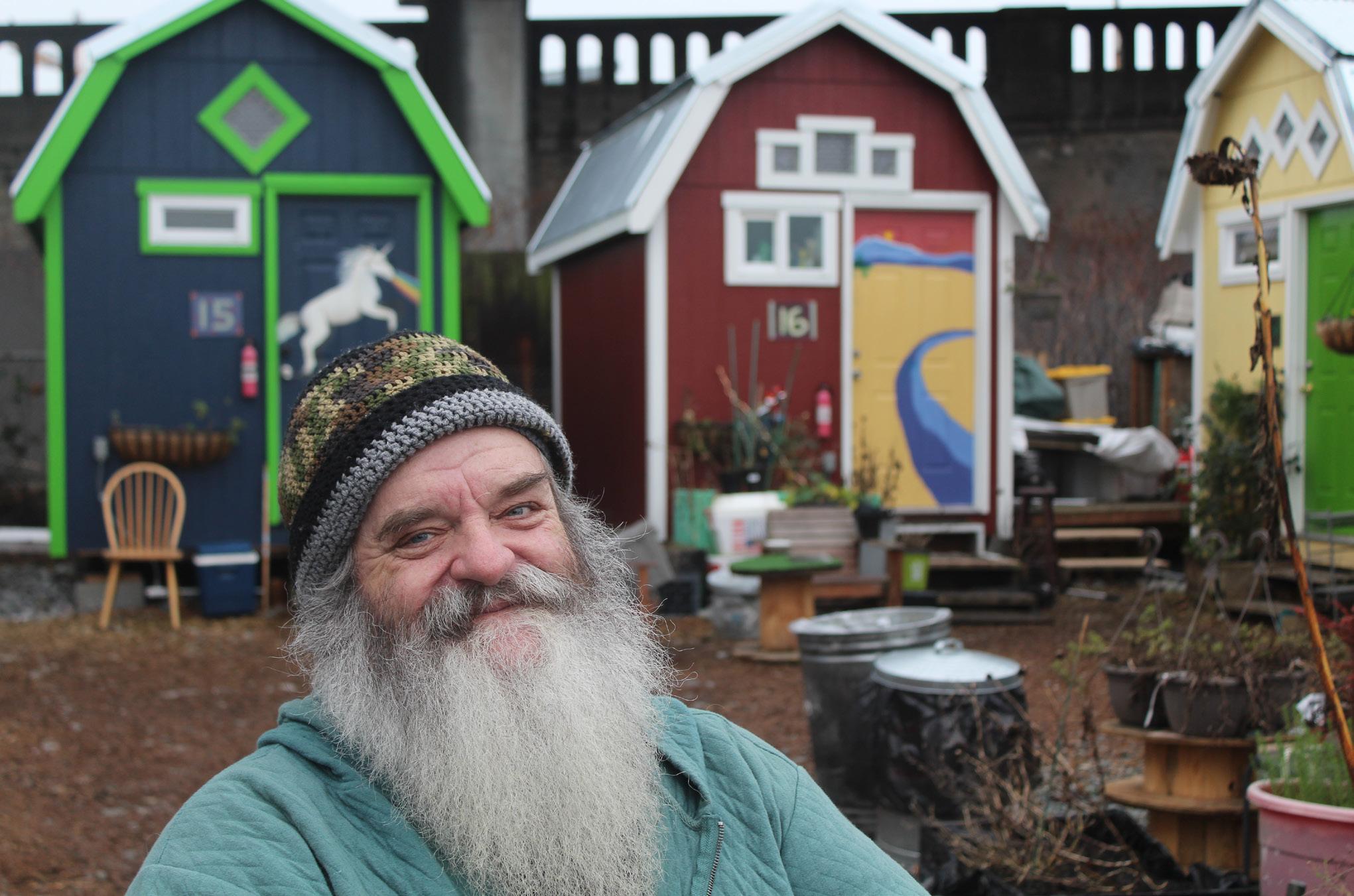
Procella had been with the group since it was Tent City 5 on Dravus Street, and remembered being excited when it transitioned to a tiny house village, because people had houses to live in and a place to keep their belongings, without worrying about them being taken during one of the city’s ongoing sweeps of unsanctioned encampments.
Procella, who has spent the past year in supportive housing, said there had been a number of businesses in Interbay that protested Safe Harbor coming into the community, but a year later many were voicing support for the tiny house village to continue and expand. Remaining tents at Safe Harbor were replaced with 23 more tiny houses in spring 2019.
Kshama Sawant, Seattle City Council, District 3
Port Commissioner Peter Steinbrueck offered his support for the tiny house village shelter model, saying it provides people experiencing homelessness with a sense of pride, dignity and hope. He applauded the work of Safe Harbor’s program manager and two case managers, as well as the residents’ ability to self-manage their community.
“This is a widely recognized — nationally — most successful model that we have today,” Steinbrueck said, pointing to a 46 percent exit rate compared with 4 percent for traditional shelter models.
Former Safe Harbor resident Joseph “Panda”
Queen Anne Farmers Market seeks vendors
Lee said 648 people were sheltered in tiny house villages last year, and 10 percent of the residents were children. Every village addresses different populations and needs, she said.
Councilmember Alex Pedersen said he was skeptical of the tiny house village model at the start, but came around when he saw exit rate data in 2018, however, he believes allowing up to 40 villages is too high. Herbold said she wanted to make sure that eliminating the one-mile separation requirement for transitional encampments doesn’t result in a disproportionate number of villages in certain neighborhoods, particularly communities of color.
The next Select Committee on Homelessness is scheduled for Wednesday, Feb. 26.
The Queen Anne Farmers Market is accepting vendor applications for its 2020 season, and will begin reviewing submissions on or by April 30.
This season opens May 28 and runs through Oct. 8, with each market running 3-7:30 p.m. Thursdays. Queen Anne Farmers Market director Matt Kelly says 2019 was the biggest season on record since its start 12 years ago.
QAFM recorded more than 112,800 market attendees last year, more than 2,100 volunteer hours and 82 farmers and food artisans. Kelly says QAFM is also looking for 2020 sponsors. More information for potential sponsors is available at https://
go.aws/2RF9npR and vendor applications can be found at https://bit.ly/2urxNed Kelly can be reached at director@qafm.org.
File photo
Former Tiny Cabins Safe Harbor community outreach coordinator Joseph ‘Panda’ Procella shared his experience with the tiny house village model in Interbay during this year’s first Select Committee on Homelessness meeting on Wednesday, Jan. 22.
GARY McMANN
SDOT hosting Ballard-Interbay Regional Transportation Study information sessions
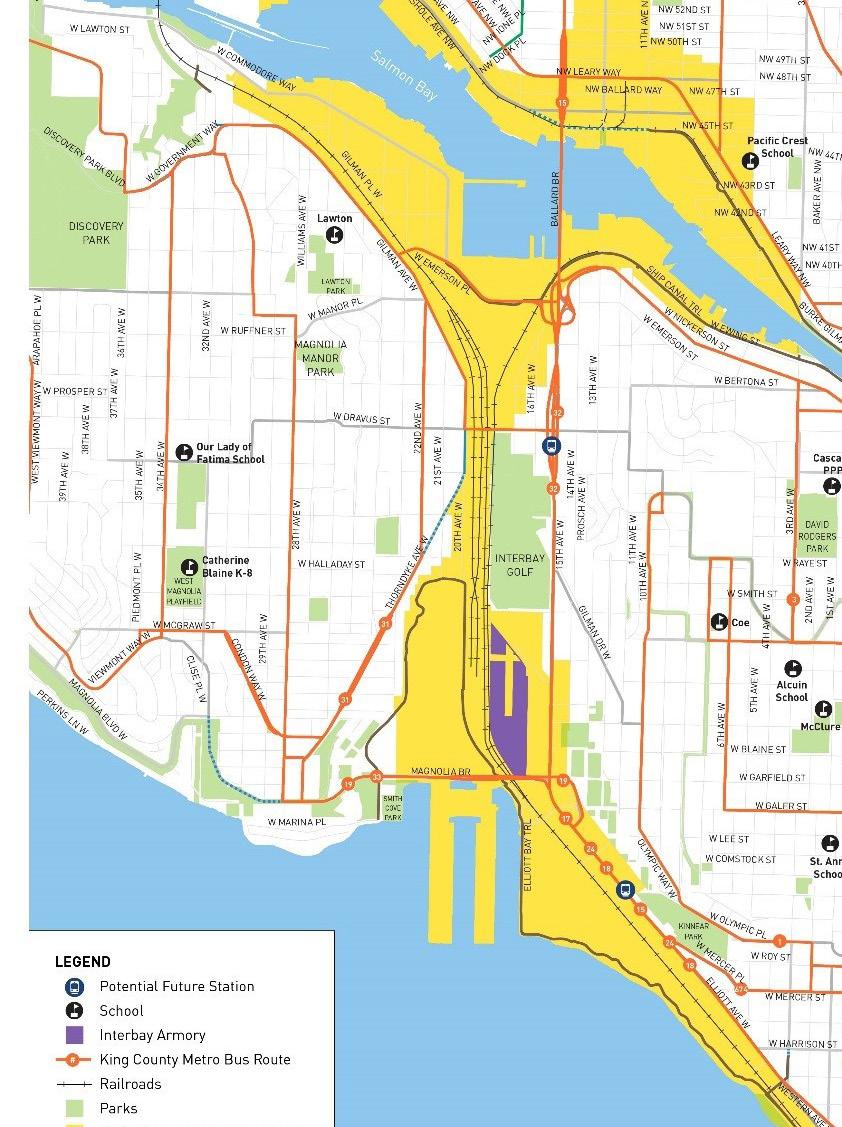
After the snow storm that didn’t happen, SDOT has rescheduled information sessions to discuss the year-long Ballard-Interbay Regional Transportation Study that started last fall and is due to the Legislature by Nov. 1. 36th District Rep. Gael Tarleton was able to get a $750,000 proviso passed last year for the BIRT study, which is a technical transportation evaluation of Ballard and Interbay neighborhoods that will produce recommendations for future system improvements. A final report will include a recommended timeline for replacing the Magnolia and Ballard bridges; there is currently no funding for design or engineering.
The first information session was on Tuesday and held at the Ballard Library, but another meeting is scheduled for 6-7:30 p.m. Monday, Feb. 3, at Magnolia United Church of Christ, 3555 W. McGraw St.
Staff at both sessions will share at 7 p.m. information regarding the Sound Transit 3 West Seattle and Ballard Link Extension project and solicit feedback.
“In analyzing future transportation demand for the Ballard-Interbay area, the project will take into consideration future residential growth in nearby neighborhoods and additional employment at sites such as the Armory, Expedia and the Port of Seattle’s Terminal 91,” according to SDOT. “It will also adjust to reflect the recommendations of the Mayor’s current Maritime and Industrial Lands Strategy.”
REYNEVELD, from Page 1
husband Joel Merkel, who is a King County deputy prosecutor, purchased their home in Ballard in 2013. She attended the University of Washington School of Law.
She said they bought a fixer-upper, and that addressing housing affordability is another issue she would champion if elected.
Reyneveld said zoning laws are primarily a city issue, but the Legislature can consider legislation that allows for more accessory dwelling units and other affordable housing options. She also wants to see more investment in the state’s Housing Trust Fund.
43rd District Rep. Nicole Macri introduced legislation this session that would end exclusionary zoning and allow for duplexes, triplexes and townhomes to be built in single-family neighborhoods statewide.
Reyneveld said she understands it’s unlikely the Legislature could pass rent control in the state this session, but she’s watching Macri’s push for rent stabilization. The lawmaker was unsuccessful in getting the rent control ban in Washington lifted previously.
Reyneveld said she wants the state to increase its investment in rental assistance and diversion programs, and also to help expand the number of shelter beds available to people living unhoused.
The 36th District candidate notes her endorsement from District 7 Seattle City Councilmember Andrew Lewis, who is chairing the city’s Select Committee on Homelessness. She said she’s looking forward to working with the city and county as they address the homelessness crisis through a new regional authority.
Reyneveld said she’s supportive of 36th District Rep. Noel Frame’s efforts on a House tax structure work group and upcoming engagement with communities across the state. She said she wants to see systematic tax reform that reduces the state’s reliance on sales taxes and alleviates the burden on working families and fixed-income seniors.
The 36th District candidate would support a personal income tax, if it ensures the wealthy pay their fair share, she said, and fixes to the business and occupation (B&O) tax.
Reyneveld said she wants a capital gains tax to fund early childhood learning, lamenting that early learning education currently represents 1 percent of the state’s budget. She said she was involved in the advocacy work that resulted in King County dedicating 52 percent of its Puget Sound Taxpayer Accountability Account revenue from Sound Transit toward early learning.
Reyneveld is on the board of the Washington’s Paramount Duty organization, which advocates for amply funding public education, smaller class sizes and a well-rounded curriculum, and worked on former Gov. Chris Gregoire’s Washington Learns study.
She said the state is currently not meeting its class-size reduction obligations mandated
by Initiative 1351, which voters passed in 2014. Schools also need to have more counselors and nurses, Reyneveld said, and a 13.5 percent cap on special education funding needs to be lifted.
Washington 36th District Sen. Reuven Carlyle told constituents in December that he is concerned about collection issues and revised revenue estimates for the Washington College Grant. Created through a workforce investment bill passed by the Legislature, the scholarship fund is meant to provide financial aid to more than 110,000 low- and middleincome Washington residents, making it so students pay little or no tuition.
Reyneveld is chair of the University of Washington Alumni Association Board of Trustees UW Impact, which advocated for the passage of the Workforce Education Investment Act that created the Washington College Grant; it was previously called the State Need Grant. She said she wants to see the grant not only protected from revenue shortfalls, but also increased investment in apprenticeship programs, including those that benefit the 36th District’s maritime industry.
The 36th District candidate said she ended up on multiple waitlists when looking for child care, and the reason she was able to eventually acquire it was because her mother and mother-in-law could fill the gap three days a week.
“The reality is that working families in this area, and particularly low-income families, can’t afford the cost of care,” said Reyneveld, who supports legislation to expand the state’s Working Connection Child Care program, so more families can qualify for subsidized child care.
The 36th District candidate has support from several past and present Port of Seattle commissioners, including Ryan Calkins, Courtney Gregoire and freshman Commissioner Sam Cho.
Reyneveld said it’s important to maintain industrial lands, which the port is pushing the City of Seattle to do as it assesses potential zoning changes. The port also wants the Washington National Guard’s armory site in Interbay to remain zoned industrial should the property become surplus and the National Guard relocates. The 36th District candidate said she’d like to see an industrial/housing hybrid model be further explored, as was one recommendation from the now-disbanded Interbay Public Development Advisory Committee, of which Tarleton and Gregoire were members.
Reyneveld said she supports clean fuel standard legislation and the port’s work on electrifying its fleet. While also pushing for cruise ships to plug in when docked at a port terminal, she said she’d like to see other ways the port can reduce the impact and number of cruise ships in the region.
If elected, Reyneveld said she would follow Tarleton’s leadership when it comes to working on a plan for funding the replacement of the Magnolia and Ballard bridges, adding coordinating light rail expansion into Ballard has to be part of the discussion in that corridor. Reyneveld is the second 36th District House Position 2 candidate to declare her candidacy, following Liz Berry, director of the Washington State Association of Justice, earlier this month. Both say they’re backing U.S. Sen. Elizabeth Warren for president, but will support whoever wins the Democratic nomination.
“I strongly believe in her vision for working families and tackling climate change,” Reyneveld said, “but I will of course support whoever the nominee is.”
People can learn more about the 36th District candidate at sarahreyneveld.com.
Get shorty
Bayview residents collaborate on filming during 48-Hour Movie Project
By Brandon Macz QA&Mag News editor
Filmmaker Scott Jackman has collaborated with the Bayview retirement community on a number of projects over the years, but never with as tight a turnaround as the 48-Hour Movie Project.
“This is the first time where we’re doing this, and I’m completely out of the equation,” Jackman said.
Aside from some technical assistance, the task of brainstorming and executing a film in just 48 hours was left to Bayview residents, some of whom were making their directorial debut.
“It sounded like a fascinating opportunity,” said resident Chris Cady. “SIFF is just right down the street, and I’ve seen what young people are able to put together in 48 hours, and it’s just amazing.”
Age doesn’t matter, said resident Jo Ferguson, who has worked with Jackman on previous Bayview film projects.
“Everyone at Bayview is capable of doing a film,” Ferguson said, adding they have a younger crop of residents moving in these days who can help.
ARENA,
from Page 1
spliced together steel reinforcement structures on the exterior, said Mortenson project executive Greg Huber.
“You’re never going to see something like this again,” Huber said of the engineering that went into supporting the massive roof.
The Seattle Landmarks Preservation Board required the roof and the arena’s original windows to be preserved. Johnson said the windows are catalogued and in a Kent storage facility.
Scaffolding has been erected under the roof, where crews are ensuring it will be able to support various equipment.
“It’s our one chance to check under the roof,” Johnson said, “so we’re making sure we do it right.”
While Jan. 21 marked the first concrete pour for the project, the total rebuild will include 37,000 yards of concrete for columns, slabs and footings, which is roughly 3,700 truck loads, Huber said. Johnson said the project remains on schedule to finish in summer 2021.
One benefit of preserving the roof has been the cover it provides from the rain and other elements, Huber said. It also limits the cranes and
The 48-Hour Movie Project took place from Monday to Tuesday, Jan. 2021, with the filmmakers sharing their work during a screening at Bayview last Wednesday.
“We had a lot of different ideas,” Cady said, “so we tried to think of something we could do with several shorts.”
Residents took turns running the camera, directing the filming, capturing sound and other aspects of the filmmaking process, with Jackman providing some technical assistance and editing.
Bayview resident Carolyn Urban was excited about the opportunity to learn more about the technology used in film production.
Urban said one short the Bayview film team worked on revolved around residents’ creative uses for the kitchens in their units, since so many prefer to
skip cooking and have the retirement community handle the meals.
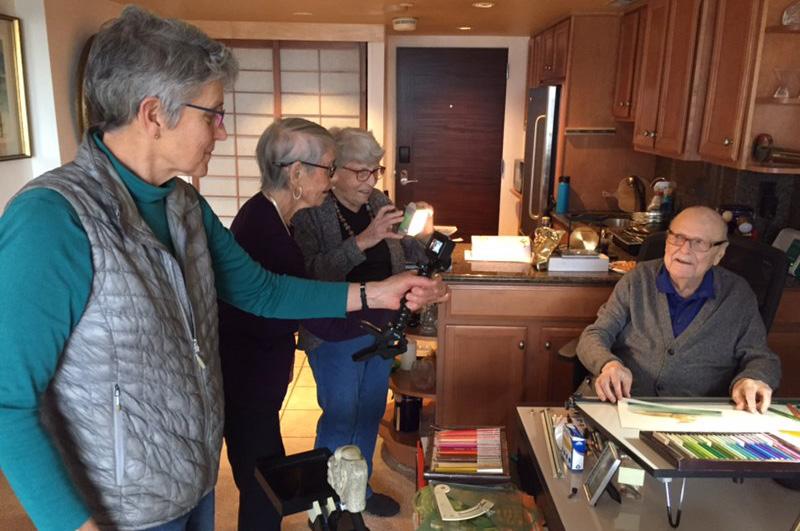
Artist Carol Herschman uses her kitchen to make wax models that are then sent to a foundry to be cast in bronze.
“They’re floating in the kitchen sink as we speak,” said Herschman during the first day of shooting on Jan. 20. “If you see the kitchen, you know not much can go on in there.”
Herschman counts five generations of artists in her family, but she’s the only one who chose sculpting. Her son does glass blowing while the rest were painters.
She said she likes trying new things and, having lived at Bayview for nearly a year, found the retirement community offers a lot more activities and programs than others she’s lived in previously.
“This one definitely had the most
other equipment that has to work around the temporary supports.
“This probably takes the cake in terms of times we’ve had to be creative with our pile-driving work,” Huber said.
As crews work back up from the bowl, the arena’s 20 permanent “Y” columns and four buttresses will be reconnected, the columns extending down to the base of the structure.
“How we build up and take things out is a very important part of how we do things in the next 6-8 months,” Johnson said.
Horizontal boring continues south of the Pottery Northwest building as an access tunnel is being worked on that will be used by delivery trucks
to reach the arena’s loading dock; access will be on First Avenue North, between John and Thomas streets. Huber said there will not be public parking under the arena. When completed, the Seattle Center arena will provide more than 18,000 seats for concerts and basketball games. Huber said seating is scheduled for delivery in spring 2021.
The summer 2021 opening will be ahead of the start of hockey season for Seattle’s new NHL team, which does not yet have a name. The arena also does not have new naming rights yet, and the KeyArena signage remains on top of the historic roof in the meantime.
stuff going on, and everyone seems nice,” Herschman said.
The documentary-style film ended up being 17 minutes long, and nothing was scripted, according to Jackman.
“It was amazing to see a great mix of residents from different backgrounds participating in this project,” said Heather Smith, director of resident services. “We asked before the screening, ‘How many people have held a camera or made a movie in the past?’ Only one person raised their hand. After watching the film, we asked the audience how many of you would like to be a filmmaker? Over 75 percent of people raised their hands. We could sense this 48-hour movie experience igniting a passion in the residents who may have thought or once considered pursuing filmmaking in the past but now willing to try something new.”
Jackman used to live in Seattle full time, but now balances his time here and at home in Arizona. He’d started a business working with children, and had run a musical theater program at Greenwood Elementary. After a musical film at a movie camp, Jackman showed it to Bayview CEO Nancy Weinbeck, who had been director of residential operations at the time, and pitched making legacy films with Bayview residents.
“She said, ‘Yeah, lots of people come and ask to do that,’” Jackman said. Rather than simply documenting residents and their lives, Jackman and Weinbeck agreed it would be better to have more fun with film concepts and let residents flex their creativity. He’s worked with Bayview on 14 short-film projects since 2012.
Catch those and the 48-Hour Movie Project film at youtube.com/RetireatBayview.
Photo by Brandon Macz
A ‘kickstand’ is seen assisting with supporting the roof around where a new arena atrium will be built.
Photo courtesy of Bayview
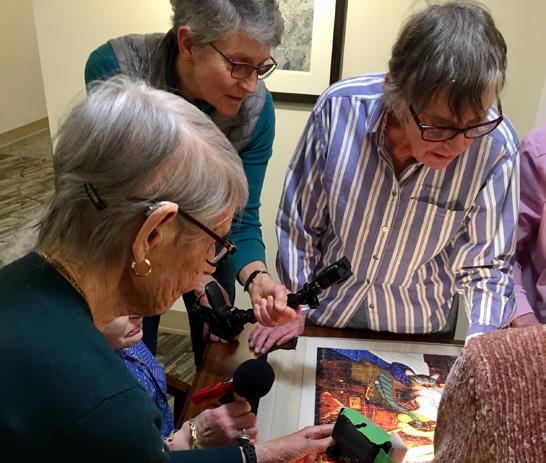
Residents of the Bayview retirement community in Queen Anne work on their 48-Hour Movie Project, which they finished between Monday and Tuesday, Jan. 20-21.