Queen Anne
give a shout

to
for only $25 (black and white) every week in the newspaper. The ads will all appear in a special THANK YOU

give a shout
to
for only $25 (black and white) every week in the newspaper. The ads will all appear in a special THANK YOU
By Jessica Keller QA&Mag News editor
The Reimagine Magnolia Village beautification campaign is ready to launch a new round of improvements after a February Love Match fundraising drive exceeded the desired goal.
Magnolia Beautification Committee organizers asked the community to contribute $25,000 during the month of February for Magnolia Village Love Match campaign. It started after a lifelong Magnolia resident approached them about anonymously donating $25,000 to the streetscape improvements in Magnolia Village, provided the community participated and matched that amount.
Cheryl McQuiston, chair of the Magnolia Beautification Committee, announced last week that Magnolia residents were generous during the February campaign, donating $40,000 during the Love Match drive. The anonymous donor was so pleased with the efforts, he agreed to match the entire amount donated by the community.
“He is over-the-top excited to know that his money worked in that way and that the community stepped up to the plate,” McQuiston said.
McQuiston said the $80,000 infusion of funds brings the phase 2 and 3 donations to $205,000, with $100,000 left of the $305,000
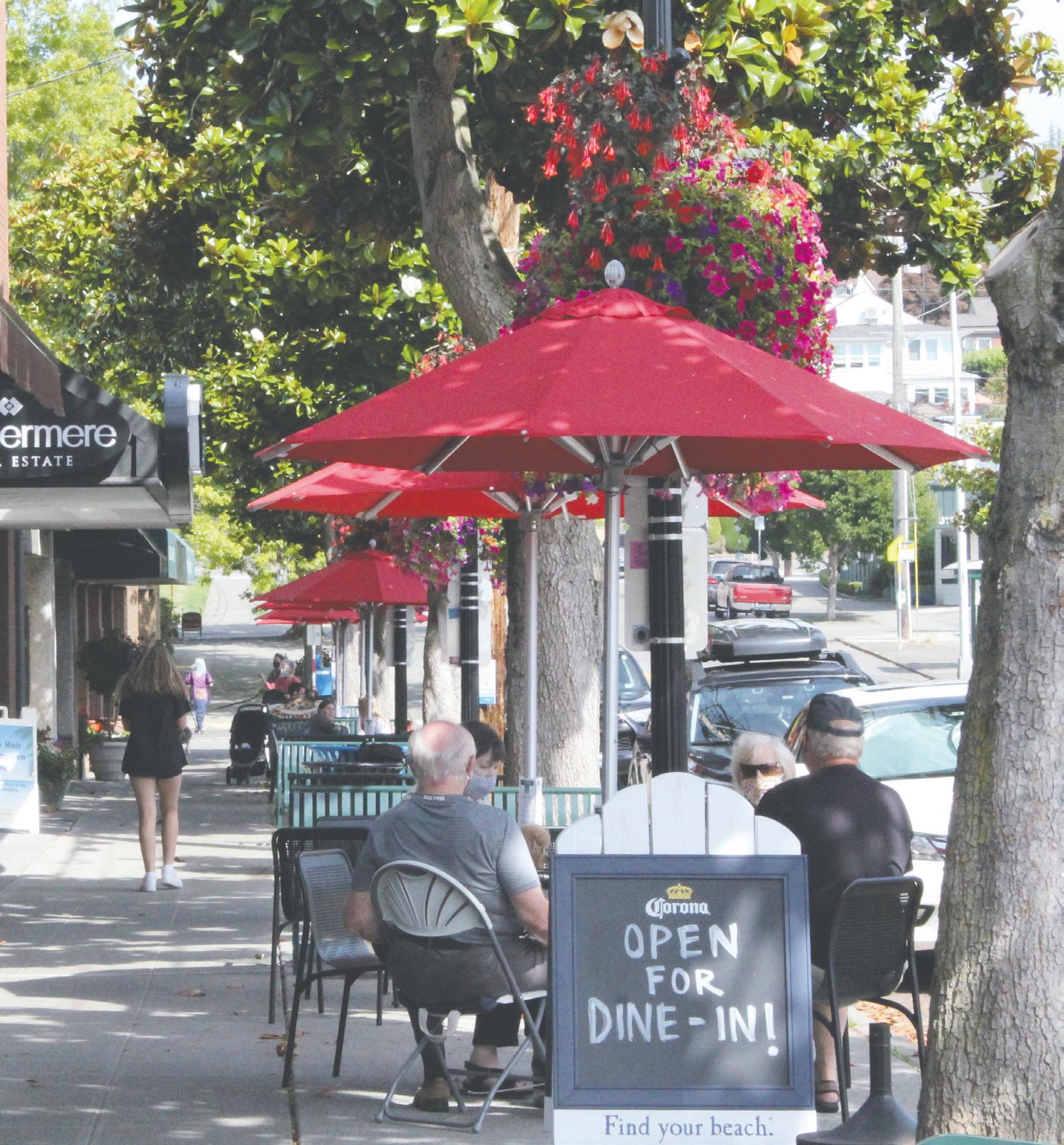
Residents take advantage of the sunshine and the outdoor seating and other improvements made along McGraw Street during Phase 1 of the Reimagine Magnolia Village campaign last summer. After a successful matching fund campaign in February, improvements for the village identified in phases 2 and 3 can begin next week.
By Jessica Keller QA&Mag News editor
District 7 Councilmember Andrew Lewis has started 2021 with two separate campaigns to provide additional housing for the city’s unsheltered, following through on efforts he began last year.
Last week, the Seattle City Council unanimously approved legislation Lewis sponsored to expedite and fast track permanent
Space deadlines are every Wednesday at 10am for the following week’s newspaper. Please email your request to ppcadmanager@nwlink.com or call 206-461-1322, leave us a message and someone will return your call to get the details. Have a New Listing You would like to get Front & Center Exposure? For only $150 each week! (Reg $200) You can be on the front page in this space!! Contact Tammy for availability & reservation 206-461-1322

supportive housing in Seattle.
Permanent supportive housing is housing primarily intended for very low-income households that are exiting homelessness and typically developed with on-site supportive services.
Council Bill 119975 amended the city’s land use code to include a new definition for permanent supportive housing; established new regulations and procedures for developing PSH; and modi-
fied existing regulations to remove barriers to PSH. According to the legislation text, half of the permanent supportive housing units in a development will be occupied by households with average median incomes of up to of 30 percent of Seattle levels and the other half occupied by households with average median incomes of up to 50 percent. The legislation also eliminates requirements to in-
clude space for bicycle storage and exempts permanent supportive housing sites from having to go through the design review board in favor of a community meeting.
“Throughout the drafting of this, I really wanted to make sure that this legislation was really targeted to the population of folks that we’re really trying to carve
SEE MAGNOLIA, PAGE 3 SEE LEWIS, PAGE 8

richard@weeksschoolofjazz.com 206-283-5928
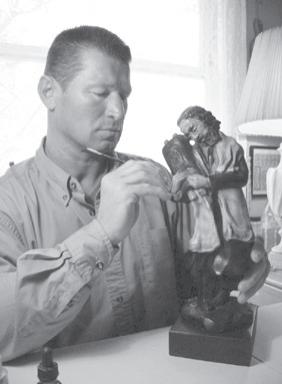
Certified Appraisals, Restorations, Always Looking to Buy
Seattle Decorative Art Restoration Services 206-313-0990
SeattleAntiqueRestoration.com








Queen Anne Dental Group
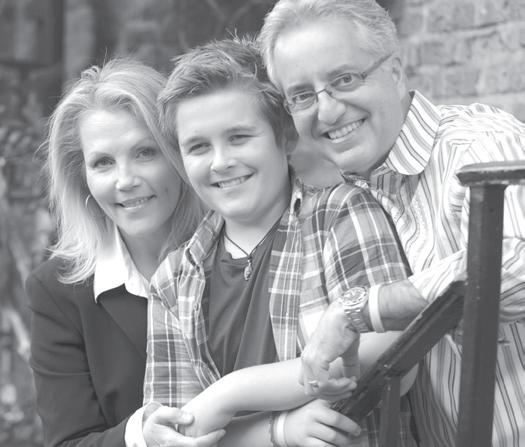
Dr. Frank J. Calvo & Family Cosmetic, Implant, & General Dentistry
400 Boston St. 206-284-7812 www.QADG.net
AND Massage Therapy
By Ruairi Vaughan Contributing writer
Darrell Gibson, D.C. • Sarah Gibson, D.C. Graeme Gibson, D.C.
David E. Goodall III, LMT
Sarah Rose Nottingham, LMT
Lauren E. Traynor, LMT
SERVING THE FAMILIES OF QUEEN ANN E SINCE 1991 1905 Queen Anne Ave N • 206.282.8275 www.QueenAnneChiro.com

Sunday Worship at 10am Live Streamed on our Facebook page and YouTube. Simply look for Magnolia Lutheran Church.
Twelfth Church of Christ, Scientist
In Person and Online Church Services
All are welcome & warmly invited to join these healing services
For best audio results, please join by clicking on the link from your computer or smartphone and choose “Call Over Internet”
All Zoom Services Meeting ID: 418 806 2637 https://us02web.zoom.us/j/4188062637
Sunday Services 11:00am – 12noon Pacific
Wednesday Testimonies 7:30pm – 8:30pm Pacific
Christian Science Quarterly Bible Lessons
Our weekly Bible Lesson Sermon may be found here: https://quarterly.christianscience.com/
Additional Healing Resources: ChristianScience.com CSWashington.com SeattleMetroReadingRoom.org
For additional assistance, please contact us at seattle12cs@gmail.com or 206.283.2300 ChristianScienceTwelfthSeattle.com
DEADLINES
News Submissions | Wednesday, Noon 206-461-1346 or QAMagNews@nwlink.com
Retail Display Advertising | Wednesday, 1:30 p.m. Tammy Knaggs, 206-461-1322 or ppcadmanager@nwlink.com
Legal Advertising | Friday, noon Jody Vinson, 206-461-1323 ppclegalads@nwlink.com
Classified Advertising | Friday, noon 206-461-1332 or class@nwlink.com
Editor: Jessica Keller, 206-461-1310
Art Department: Guy L. Jackson, Production Artist
Subscriber Services | Circulation: Chris Lemmen, 206-461-1337
The Washington State House of Representatives has passed legislation designed to protect the privacy and security of Washingtonians’ COVID-19 health data.
target left to be raised.
House Bill 1127 gives clear guidelines for organizations that collect and analyze data related to the spread of COVID-19.
Since the start of the global coronavirus pandemic a number of entities have become privy to such information, as governments
SEE COVID, PAGE 5
MAGNOLIA, FROM PAGE 1 “To think, this started three years ago, and we are already starting phases 2 and 3 in exactly the same time frame we hoped we would be starting this.”
During Phase 1, which was completed last spring, sidewalk seating, umbrella tables, hanging baskets and bistro lights were installed along West McGraw Street, from 32nd Avenue West to 33rd Avenue West.
Phase 2 will feature the same improvements along West McGraw from 33rd Avenue West to 34th Avenue West. Phase 3 entails improvements from West McGraw from 34th to 35th Avenue West.
McQuiston said, in response to residents’ requests, some of the funds raised this round will be used to purchase additional chairs for the tables already installed, so there are four instead of three. As well, some funds will be used to replace existing benches and maintain a project contingency fund for unexpected costs.
With the successful February
— Cheryl McQuiston,
Magnolia Beautification Committee chair
fundraising drive, McQuiston said preliminary work can begin on the next round of improvements.
Starting March 15, workers will ready the ground for post installation, redo cement and prepare the areas around tree wells.
“So, it pretty much takes care of a lot of the basics to get it all ready,” McQuiston said of the amount already raised.
McQuiston said the only thing the beautification committee cannot do is order the tables, chairs and benches because those must be paid for first. The committee won’t know if it received a Department of Neighborhoods grant
to help with the costs as it did last year until May.
McQuiston said it is exciting to see how far the beautification effort has come and how much residents from throughout the neighborhood appreciate the improvements to the Village.
“To think, this started three years ago, and we are already starting phases 2 and 3 in exactly the same time frame we hoped we would be starting this,” McQuiston said.
To learn more, or to donate to the Reimagine Magnolia Village campaign, go to www.discovermagnolia.org/mbc.
• Average home prices are on the rise.
• Demand for housing is greater than supply.
• Mortgage rates are


The world of plants is as vast, and in some respects, as uncharted as the ocean floor. We have cultivated them for thousands of years as food and medicine; we’ve shaped them through selection and breeding, but we are only now discovering some rather amazing physical abilities they have. You might call them superpowers.
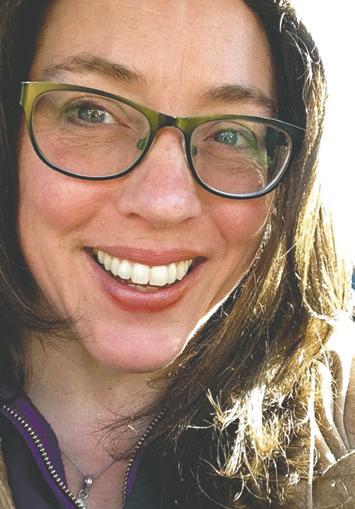
By Erica Grivas
Recent research has shown that plants can communicate. They warn neighboring plants of predator or drought, they share resources, form inter-species alliances, and species like sunflowers and black walnut trees even attack competitors. When a species is grown in a grove, elder trees will send nutrients to saplings, who don’t yet have the leaf mass to photosynthesize.
The youngsters may even remember, or at least respond in unison. Peter Wohlleben, author of the sleeper best-selling book “The Hidden Life of Trees,” tells a story of a beech tree stump he found in a German forest. The rings marking the massive girth indicated it had been felled at least 400 years ago. Yet when
Wohlleben scratched the surface, green chlorophyll glinted through. His conclusion: The surrounding trees were care-taking this forest elder.
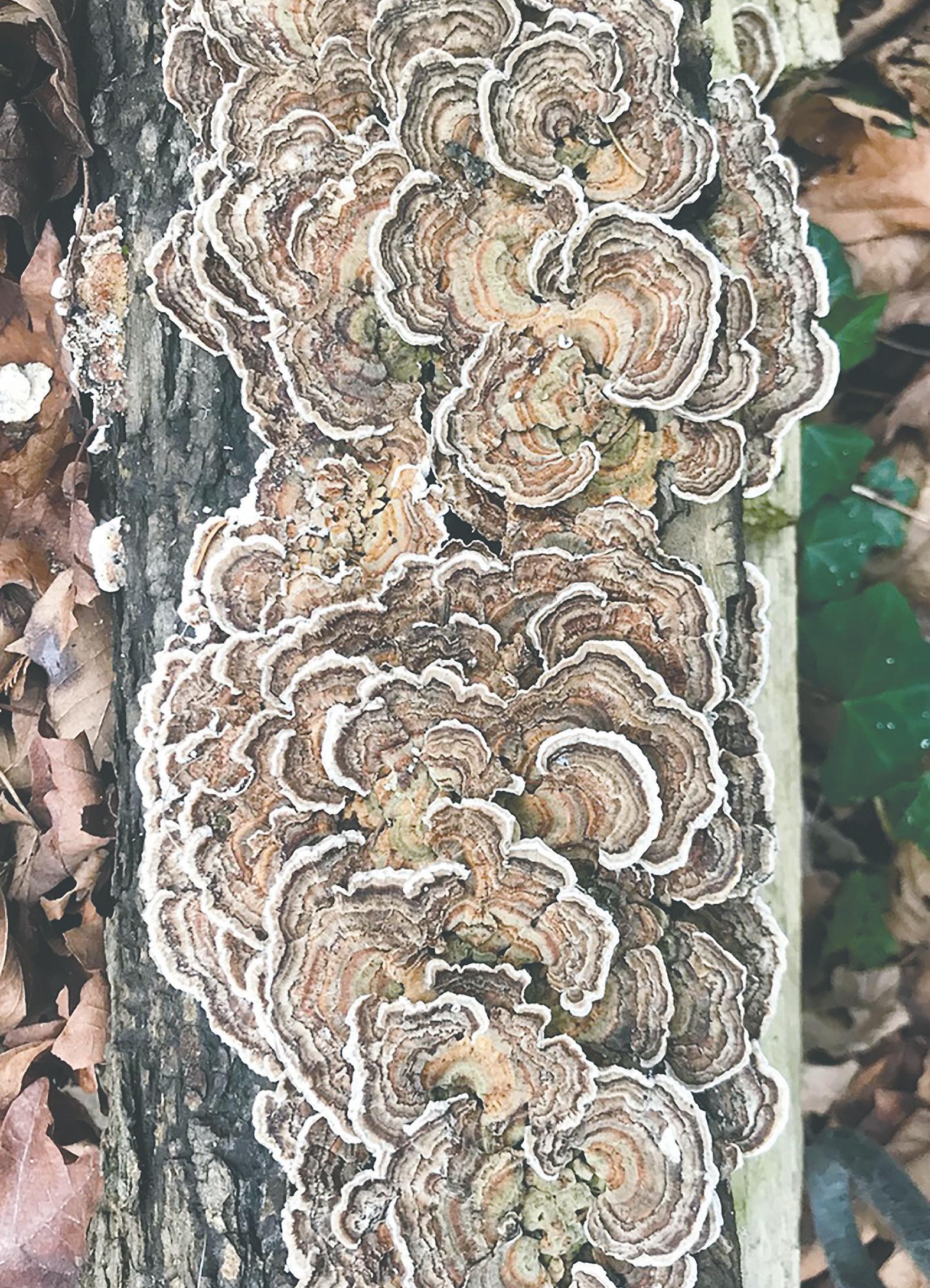
Plants have had internet tech for millennia before the dotcom boom — an underground webby network of mycorrhizal fungi — through which they send chemical signals of stress or well-being.
One study out of Germany indicates trees know if they’ve been grazed by a deer, due to the telltale saliva, or had a branch broken by accident. In the first case, they whip up a chemical cocktail that makes their leaves taste terrible. In the second, they begin healing. My first thought was: Do humans have such a healing response, and can we naturally trigger it?
A plant attacked by a predator will mount a chemical defense to strengthen itself, similar to an immune response. In one experiment, some bean plants were allowed to form such a network, and some were not. When predatory aphids were added to a few plants, the ones in networks formed the chemical response. The ones without networks did
not. Researchers suggested that this could be used to trigger responses only as needed, without over-stressing the plants continually, as can happen with plants genetically modified to resist an insect or disease, which triggers that stress response 24/7.
“Super plants” for climate change
We’ve known about plants’ ability to remove toxins from the air — thus those “top air-cleaning houseplant lists” online based on a 30-year-old NASA study that, unfortunately, doesn’t really extrapolate to home living. Your bedside snake plant will de-stress you, but it’s questionable whether it will convert your apartment into an alpine meadow. However, a new study from Britain’s Royal Horticultural Society shows one plant that may become the carbon-fixing future of our urban centers and highways.
The study, reported this month in The Guardian.com, compared the ability of various shrubs to absorb air pollution, including hawthorn, cotoneaster and red cedar. The hairy cotoneaster — a prickly, dense shrub with glossy leaves and red berries — was 20 percent more effective than the others, to the point that in seven
SEE GRIVAS, PAGE 5

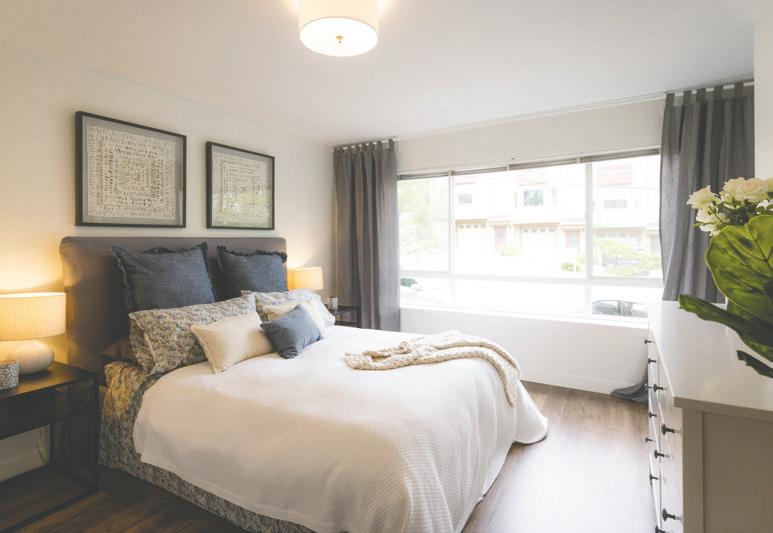
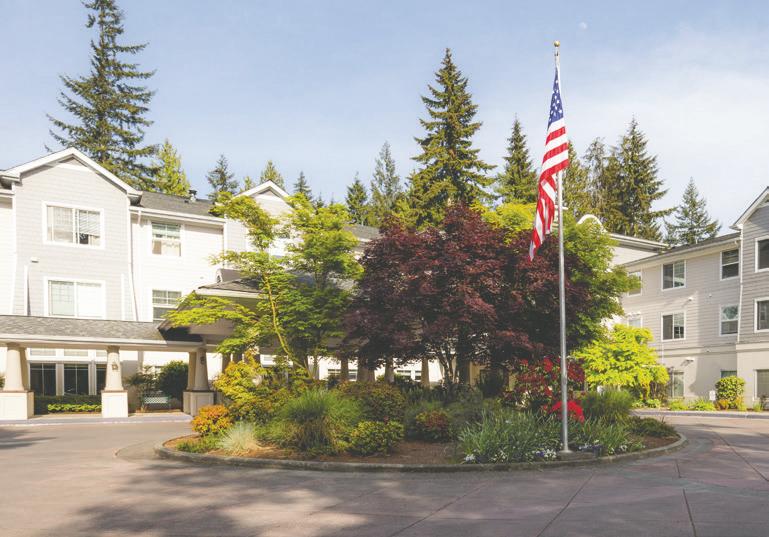
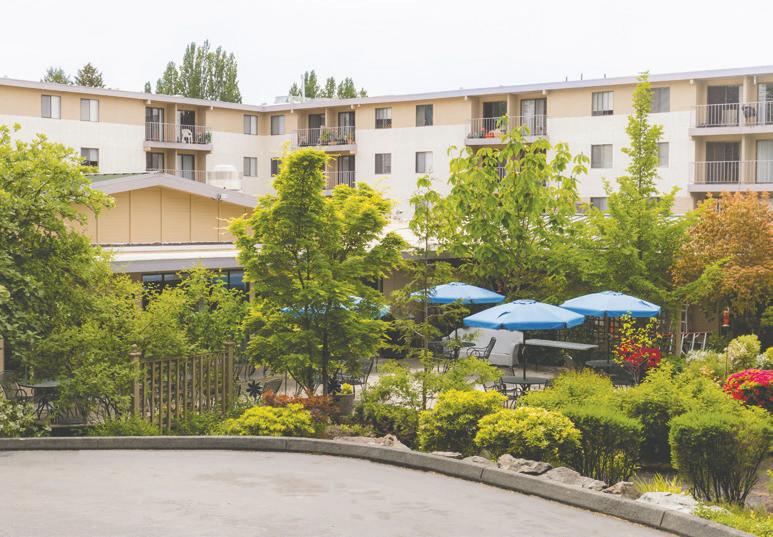
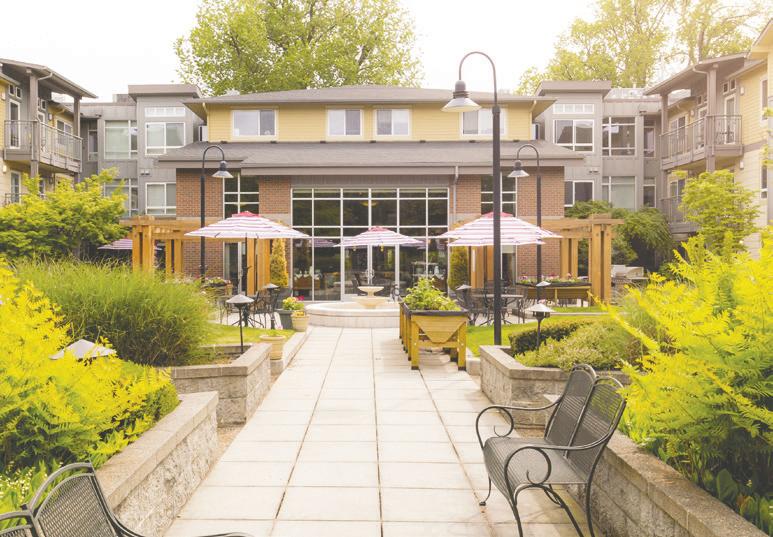
At Cogir Senior Living, we are resident-focused, safety-driven, and employee-centered. We believe in creating harmony by building a unique family bond between residents and staff. We demonstrate the Cogir Difference every day by living our mission of providing individualized, thoughtful care services, rich and entertaining programming and activities, and culinary deliciousness crafted by our experienced Chefs. Hurry, don’t wait! Tour one of our Seattle Communities, Cogir of Mill Creek, Cogir of Northgate, and Cogir of Queen Anne today and see for yourself why more people find Cogir Senior Living a place to call home.
Schedule your in-person or virtual tour today!

Schedule an orientation to see how Kumon can benefit your kids and get FREE Registration!*
Kumon Math and Reading Center of Seattle - Queen Anne kumon.com/seattle-queen-anne 206.216.4426
SEE COVID, FROM PAGE 3
When I got your question, I decided to do a little experiment. First, I tapped my paw on a tablet and sent a message to a friend. Next, I put on a pair of wool mittens and started typing, but the screen did not respond. Finally, I used a banana to see if I could use it to swipe the screen. It actually worked.
I wondered what exactly was going on here and decided to take our questions to my friend Praveen Sekhar. He’s an associate professor in the Washington State University School of Engineering and Computer Science.
Sekhar told me our touch screen devices use electricity to work and that different materials can impact how the electricity flows. Some materials called insulators keep electricity from flowing, such as the wool mittens. Then there are objects such as your finger or a banana that allow electricity to flow from one place to another. We call these conductors.
When your finger touches the screen, it creates a sort of pathway for electricity to flow from your finger to the device. You read that right: You have electricity in your body — from your toes to your fingers.
Sekhar said you can think of how these touch screens work sort of like a battery. If you look at a battery, you will see it has a positive charge end and a negative charge end. Electricity will start to flow if both ends are connected to your device.
A touch screen device on its own has a negative charge, he said. But once your finger connects with the touch screen it becomes positive.
The electrical charges can work together to help your device work. This kind electrical ability is called capacitive technology and is found in many touch screen phones, tablets and computers.
around the world have recruited outside organizations, including large technology companies such as Apple and Google, to build digital tools to help combat the virus. One of these tools are a variety of contact-tracing apps — such as Washington state’s WA Notify app — which use Bluetooth and other smartphone location technologies to work out whether a phone’s user might have been exposed to a COVID-positive individual, or exposed others, and notifies them and the relevant health authorities. This information helps public health experts map the spread of the disease, as well as letting people know if they need to be tested for COVID or seek treatment.
Contact-tracing apps have been helpful for fighting the pandemic, as they reduce the reliance of contact-tracing agencies on faulty human memories and labor-intensive methods such as interviews. However, concerns over privacy issues have grown in recent months, especially since tech companies like Google are known for spotty records on data privacy, both in the United States and other countries.
The bill passed by the House strictly limits the COVID-19 data collected by covered organizations to use for public health purposes. Any other use, including for commercial, advertising, policing or immigration enforcement, is strictly prohibited.

Sekhar also told me about another kind of touch screen. These are the kinds of touch screens we see at ATMs and in grocery stores. These screens aren’t quite as bright as your computer or phone. We call these resistive screens, and they are made of layers of glass and plastic with a chemical coating and a sheet of metal underneath them.
When you press these screens with your finger, you apply pressure to the material. Inside the material, the electrical charges start moving inside as they respond to pressure from your finger and allow the device to work.
Whether it is capacitive or resistive technology, touch screens have become part of many people’s daily lives.
Furthermore, the bill ensures a person’s right to stop organizations from collecting their data.
The bill also requires that organizations collect the minimum necessary amount of data for their work and destroy the data after 30 days. Public health agencies and health care providers are not included in the bill as they need to hold health data for longer stretches of time and are already governed by strict privacy regulations.
HB 1127 also creates an exemption in the Public Records Act for COVID-related data. The PRA requires state and local agencies to make their records available to the public, and the exemption ensures that private data collected in response to the pandemic does not become a matter of public record.
During debate over the bill on the House floor, discussion centered around its complexity. Representatives Jim Walsh, R-Aberdeen, and Vicki Kraft, R-Vancouver, argued that the complex language in the bill would lead to self-defeating loopholes that might actually undermine data privacy. The bill’s main sponsor, Rep. Vandana Slatter, D-Bellevue, drew from her years of experience as a clinical scientist and pharmacist to explain much of the bill’s language.
On March 1, HB 1127 went to a vote and passed with bipartisan support, 76-21. The bill will now go to the Senate for consideration. The legislative session is due to close on April 25.
With help from an adult, perhaps you can do a little investigation into touch screens, too. Collect a few small items from around the house to find out which ones are insulators and which ones are conductors.
Screens are quite fragile so you may want to use materials that will be gentle to your screen, like a cotton swab, an eraser or a banana. Touch the objects to the screen to see if they allow your device to respond. Make a list of which objects conduct, or allow electricity to pass through, and remember how electricity helps your phone do all kinds of amazing things.
Sincerely, Dr. Universe
FROM PAGE 4
days, a 3-foot dense hedge would “mop up the same amount of pollution a car emits over a 500mile drive,” according to the lead researcher.
The RHS director of science and collections says they are investigating more of these “super plants” to answer the challenges of climate change, from ivy walls cooling buildings to hedges of privet and hawthorn used to disperse heavy rains and reduce flooding.
A better pothos?
Meanwhile, here at the University of Washington, researchers are trying to engineer plants to be better air cleaners, by taking the popular pothos houseplant and injecting it with a protein from mammalian livers — because it’s the same type of protein we use to break down alcohol. Hmmm.
Emails from spinach
An emerging field of study called nanobionics involves using plants’ ability to photosynthesize
to turn them into living imaging systems, self-powered light sources and infrared communication devices. Nanoparticles inserted into the plant’s cellular structures accomplish these transformations. A recently published nanobionic experiment revealed spinach plants altered to become email-sending bomb detectors!
The plants were naturally able to detect certain chemicals in the ground, and this ability was used to set off a sensor, which triggered an e-mail.
As in all scientific expansion, the possibilities as to how we use our newfound knowledge of the powers of plants are limitless, but we have a responsibility to consider the consequences. Do we use the plants as a Band-aid for our car pollution, or do we preserve more car-free space and plant more trees? Will we learn from plant’s technologies or simply exploit them?
Seattle resident Erica Grivas is an avid gardener with a certificate in landscape design.
out more housing supply for,” Lewis said during a Select Committee on Homelessness Strategies and Investments in January.
To read more about the legislation, go to https://seattle.legistar. com/Legislation.aspx and type in Council Bill 119975 under search.
Lewis also gave an update to the Queen Anne Community Council March 3 about his “It Takes a Village” campaign to drum up financial support and donations for a plan to increase the number of tiny house villages in the city.
The idea behind his campaign is to scale the City’s existing tiny house village system. Lewis’s proposal would create a total of 800 tiny houses in 20 villages, which is an increase from the current 294 tiny houses in eight villages, in an effort to immediately reduce the number of tent encampments and instead offer people places to stay while they seek permanent housing.
According to a press release, the plan has two phases and would pair existing city resources already appropriated with matching private funds to establish six new villages with 40 tiny houses per phase.
The goal of the first phase of the “It Takes a Village” campaign is to raise $3.6 million in private funds. The city has already budgeted $4.2 million for the addition of a new village, but with the private matching funds, the city’s portion can be used for operational costs. In the second phase




of the campaign, another $3.6 million would be raised privately, and the city would provide an additional $4.2 million, which has yet to be budgeted, for operational costs.
At Wednesday’s QACC meeting, Lewis reported the campaign has garnered $2.5 million in pledges so far. He also answered questions from the QACC about the project, as well as the permanent supportive housing legislation that just passed.
Lewis said the city intends to build 600 units of permanent supportive housing this year, and the measures included in the legislation just passed are expected to save the cost of building by nearly $50,000 per unit.
To read more about the It Takes A Village effort, go to http://www.seattle.gov/council/ meet-the-council/andrew-lewis/ it-takes-a-village.
In other Community Council action:
• Debe Franz, owner of Queen Anne Olive Oil Co., and other merchants shared concerns with Lewis about escalating crimes they are experiencing in Upper Queen Anne. There was a suggestion that a special meeting be convened to focus on this.
• Mayoral candidate Andrew Grant Houston introduced himself to the Community Council.
The Queen Anne Community Council meets at 7:30 p.m. the first Wednesday of the month. Until it is safe to meet in person, all meetings take place via Zoom. Go to www.qacc.net for more information.
The Seattle Department of Transportation is hosting an online public meeting next week regarding parking changes in the Uptown area near Climate Pledge Arena prior to its fall opening.
The meeting will take place from 6 p.m. to 7:30 p.m. March 18 on Webex. People will be able to provide a two-minute public comment during the meeting.
According to a STP flyer, Seattle Department of Transportation is proposing expansion of the Residential Parking Zone 13 as part of its plan. Signs would be placed next to ground floor residential uses only. The restrictions would change throughout to allow two-hour parking for vehicles without parking zone permits between 7 a.m. to 10 p.m. every day. Most RPZs in the city allow two-hour parking to accommodate short-term
visitors. Event-goers would be discouraged from parking on the street.
Paid parking is also proposed to expand in designated areas to improve customer access to businesses. Paid parking would be in place from 8 am. to 8 p.m. Monday through Saturday, with event rates on event nights and for weekend events.
Blocks would be redesigned to optimize access for commercial and passenger-loading needs, as well. Loading zones are a priority, according to the SDOT website, and SDOT would work with businesses on loading needs. Designated disabled spaces may be added at block ends.
According to SDOT, with neighborhood input, its goals for the Uptown arena area are to:
1. Prioritize access for businesses, residents and visitors
in the quickly growing Urban Center.
2. Discourage arena eventgoers from using area on-street parking.
3. Prioritize transit, biking and loading, while also managing ride-hailing services “to support a sustainable and equitable transportation system.
To register for the meeting, sign up for public comment, get more information about the Uptown plan, including map changes and past survey results, go to https://www.seattle.gov/ transportation/projects-andprograms/programs/parkingprogram/community-accessand-parking-program/uptown.
SDOT is accepting comments on its plans through April 5. To comment, visit www.surveymonkey.com/r/UptownAccessProposal or email uptownaccess@ seattle.gov.
Queen Anne Helpline is accepting pre-packed bags of groceries for a food drive to rebuild supplies that are given out to clients in need. All donations should be pre-packaged at home and double bagged. They will be delivered to residents while the office is closed because of COVID-19.
Each bag should have the following: Five individual packets of instant oatmeal or box of cereal; two individual-serving cups of fruit or applesauce; one can of soup; one can of chili; a sleeve of crackers (like Ritz or saltines); three granola bars; a small jar of peanut butter or can of tuna; one package of pasta plus one jar/can of pasta sauce; one








box of Rice-a-Roni or similar; one can of beans (black, kidney or garbanzo); one can of corn; one can of fruit/fruit cocktail; one tube of toothpaste; one roll of toilet paper; one bar of soap.
In addition to the pre-packed grocery bags, the Helpline needs razors and deodorant.
The bags are being accepted from noon to 3 p.m. Mondays and Thursdays at the Helpline loading dock, 311 W. McGraw St. Call 206-282-1540 to arrange for drop-offs.
For more information about the Helpline or how to help, go to https://www.queenannehelpline.org/ support-us.html.