Midtown Center redevelopment fails to secure artistic license
Design review boards want to know more about heavy art component before clearing superblock project
By Brandon Macz Madison Park Times editor
Art may be subjective, but the number of unknowns about how it will work in the latest designs for redeveloping the Central District’s Midtown Center superblock resulted in two review boards shooting down those plans.
Responding to community complaints during a July presentation before the East Design Review Board that neither the mixed-use development nor the review board represented the interests of the black community, the EDRB sent developer Lake Union Partners and architecture firm Weinstein A+U back to the drawing board.
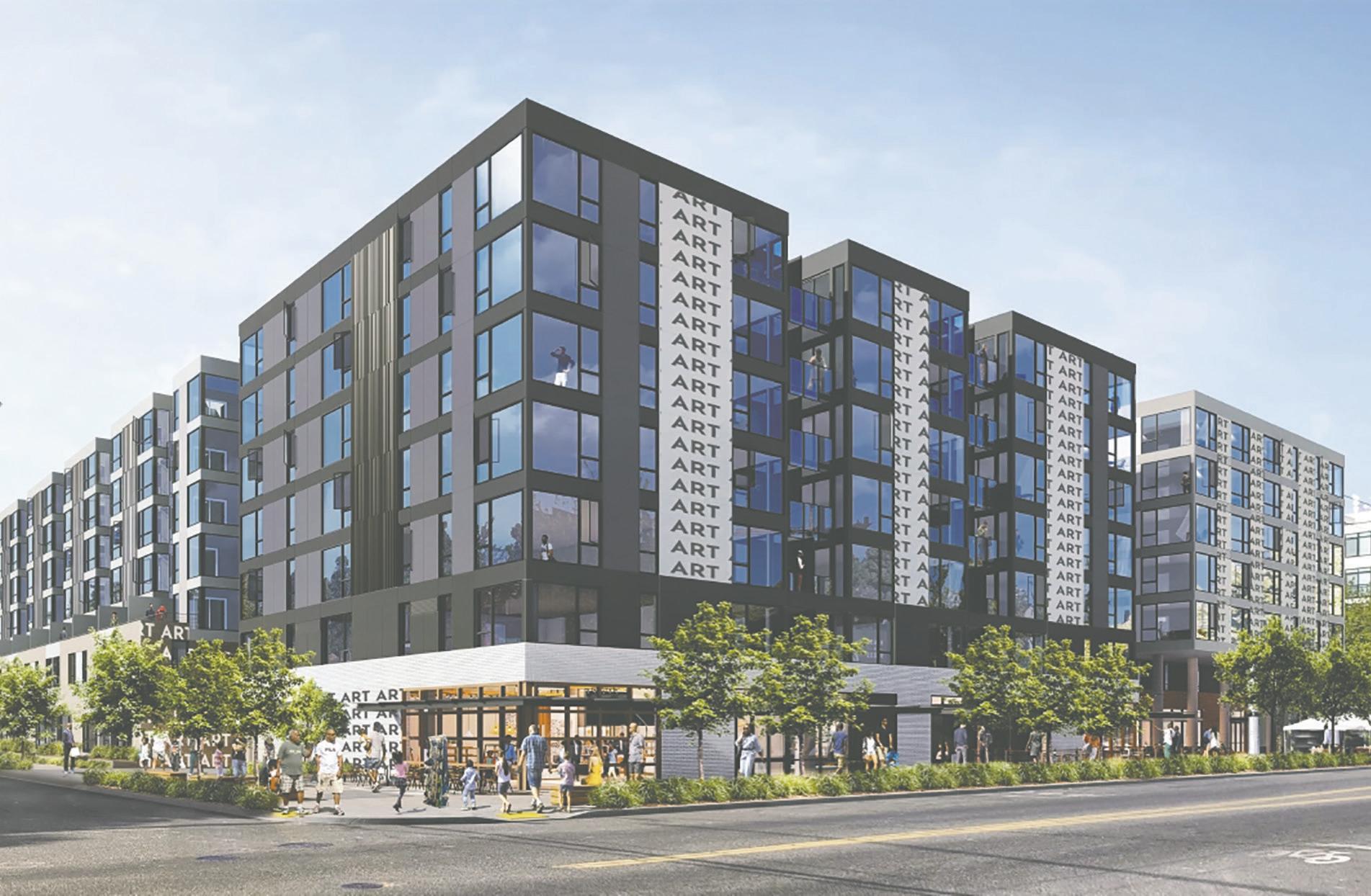
Lake Union Partners, which has developed The Central and East Union buildings on two other corners of 23rd and Union, plans to construct a seven-story mixed-use
development that would spread about 430 residential units across three buildings on the Midtown superblock. About half of those are proposed at affordable housing levels for incomes between $28,000 and $60,000.
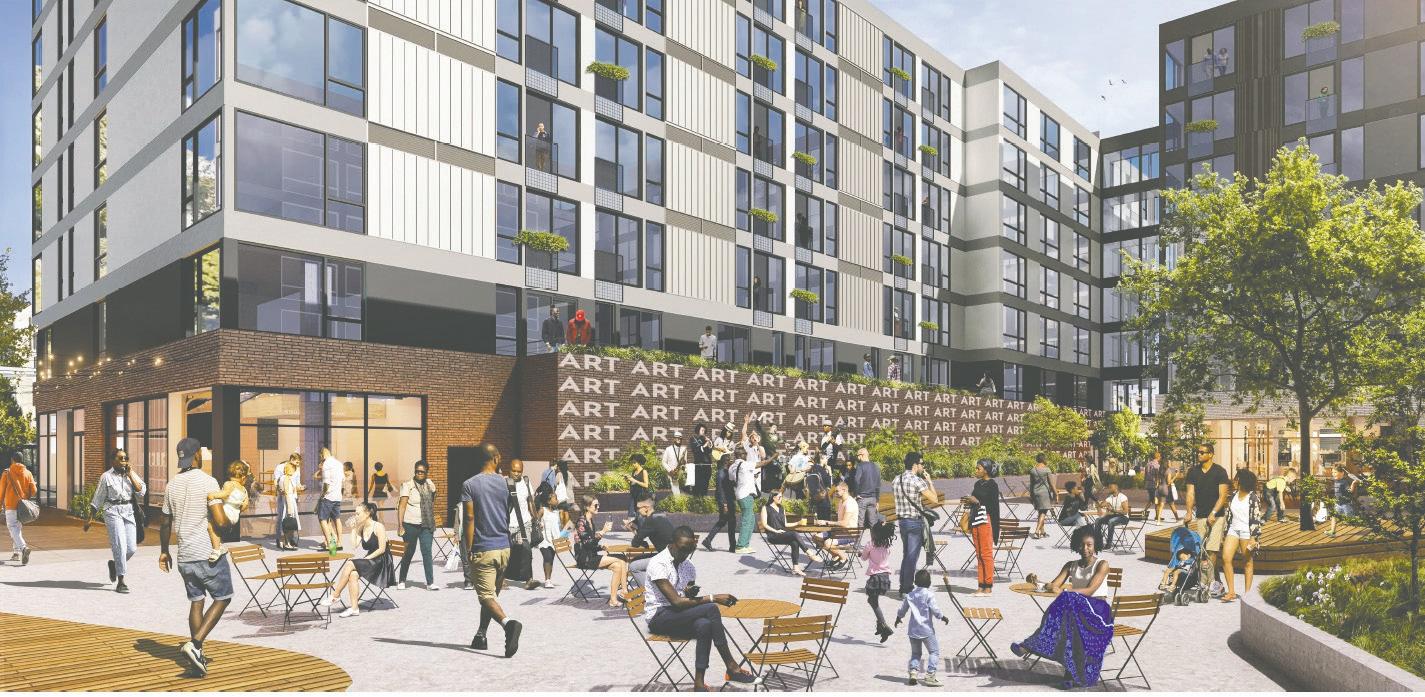
LUP hosted two community open houses in October and another in November, and came back with an art program expanded from three areas of the three apartment and retail buildings on its site to eight, including along the building facades at 23rd Avenue and East Union Street, a plaza at 24th and Union and the pedestrian portals leading into a 16,000-square-foot central square, where an originally planned 120-foot-long mural will remain.
The second recommendation meeting on Wednesday, Dec. 19, included members of the newly formed Central Area Design Review Board. LUP asked that the board be
The East and Central Area design review boards are making the
team come back for a third recommendation meeting.
included, which had been a request from the community during the last review.
While the Midtown Center design team made a lot of positive changes in response to feedback received in July, both boards agreed
that the latest design relied so heavily on art that more information is needed, not only about its context, but also how it functions
Image courtesy of Weinstein A+U
Midtown Center design
CAPITOL HILL
Seattle Center arena rebuild tips off
Groundbreaking signals start of two-year expansion
By Brandon Macz Madison Park Times editor
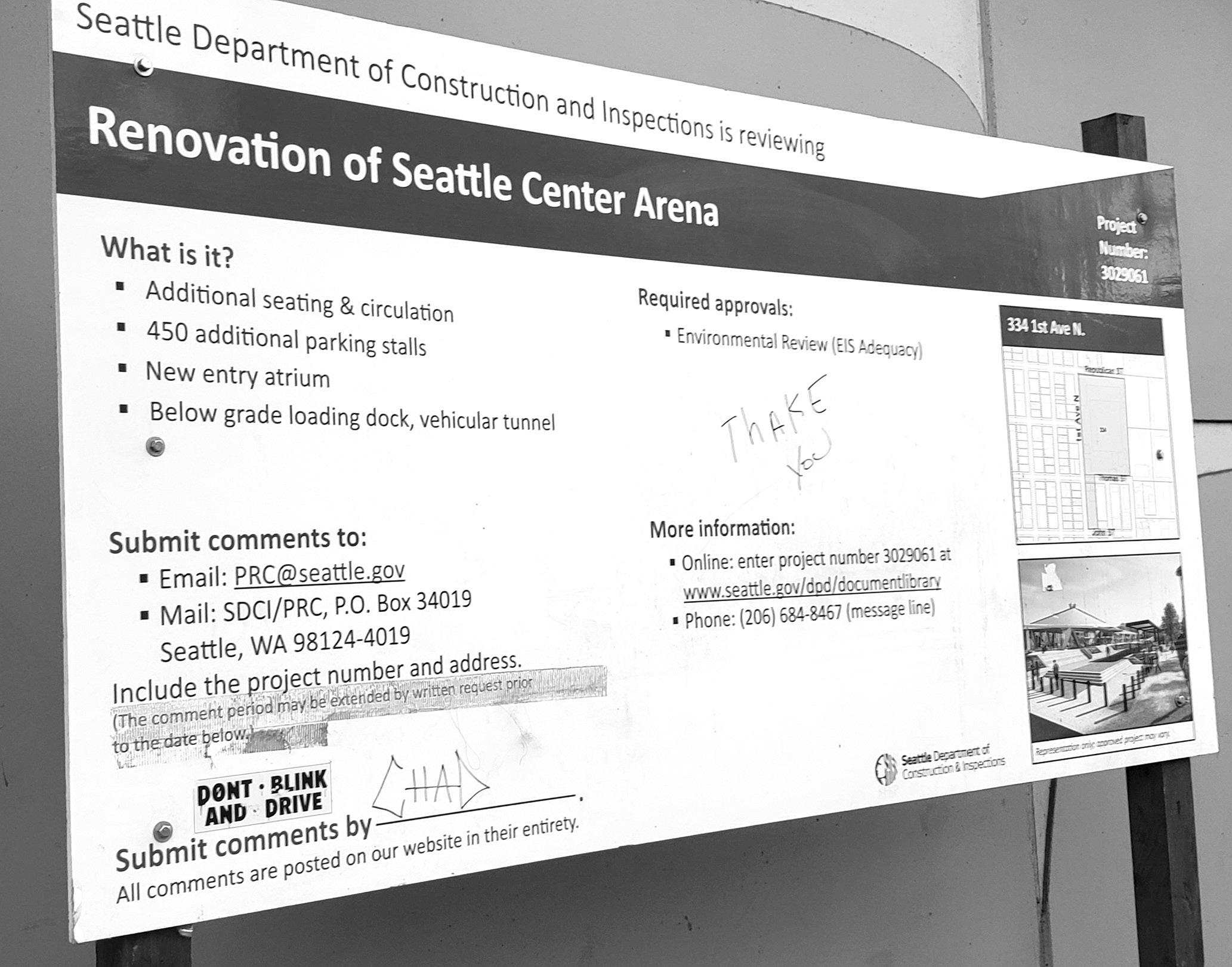
Seattle’s MVPs behind the KeyArena’s clearance for an $850 million expansion broke ground on the two-year project on Wednesday, Dec. 5, a day after hockey fans learned the city will once again be home to an NHL team.
The iconic roof to the KeyArena will be raised and preserved during construction, as developer Oak View Group expands the arena from 400,000 square feet to 750,000, which involves going an additional 15 feet down.
“It is not a renovation,” said Oak View Group CEO Tim Leiweke, “it is a brand-new arena.”
OVG was tapped to expand the arena in June 2017, and a joint venture of Skanska and AECOM Hunt was named as the general contractor this July. Skanska-Hunt was replaced a few days after the groundbreaking by Kirklandbased M.A. Mortenson Co. (See Page 9)
A final environmental impact statement was published in September was not met with any appeals.
While Tim Leiweke is redeveloping the arena to meet NBA and NHL standards, his brother Tod Leiweke has been working on getting together the teams that will play there. A former Seattle Seahawks CEO, he is now president and CEO of the Seattle Hockey Partners ownership group, which on Tuesday celebrated the NHL Board of Governors’ approval of Seattle becoming home to the 32nd NHL franchise team.
Tim Leiweke noted the 32,000 ticket deposits hockey fans placed in March. Tod Leiweke said 5,000 people added themselves to the waiting list on the day of the franchise announcement; the new arena will have about 17,400 seats for hockey and 18,600 for basketball.
The total investment as of Dec. 5 was roughly $1.6 billion in private funds, which includes a $75 million hockey training center in Northgate and the $650 million NHL franchise fee.
KeyArena, formerly the Seattle Center Coliseum, was the longtime home of the Sonics basketball team and several minor-league hockey franchises. The Sonics used the venue from 1967 until the team moved to Oklahoma City ahead of the 2008-2009 season, citing a lack of public funding to renovate the Key or construct a new arena to meet NBA standards.
Getting the Sonics back in Seattle has been a massive push by basketball fans, and Tim Leiweke assured them that getting an NBA team is still on the agenda.
“This ownership group has made a commitment to the city, to the sports fans of the Northwest, to the mayor and to all of the basketball fans,” he said. “We’re going to prove that we’re ready for the next one, and we’ll work diligently to get that here as well.”
The arena rebuild started as a $650 million project, but grew to $850 million, which Tim Leiweke said was due to a commitment to keep the original roof and honor the 1962 Century 21 World’s Fair, for which the arena — then the Washington State Pavilion — was originally designed.
“It takes more money, yes, in order to build a world-class
he Madison Park neighborhood is rich in community, and it is a place I am proud and grateful to call my home. I am delighted that I will be continuing my journey here as a founding member of the Realogics Sotheby’s International Realty office in Madison Park. I have been honored to work with this company for the past few years, and am amazed at their gold standard commitment to elevating local real estate to a global level. The Park House is an opportune location at the perfect time that further connects hopeful buyers with exceptional homes, and I could not be happier to play an integral role.
Managing Broker | Senior Global Real Estate Advisor Founding Member | 206.399.5842 Laura.Halliday@rsir.com
For more information I invite you to visit www.LauraHalliday.com
A CONTINUED LEGACY
RSIR ranks amongst the largest, most productive and fastestgrowing real estate companies in Washington with access to 22,000 brokers in 72 countries that generate US sales of $80 billion+ annually.
WHAT MY CLIENTS ARE SAYING
Laura is an incredible listener and is able to weave her expertise so that she is able to truly represent the needs of a seller. It was now time for us to shop for a home. We needed her support and she gave it 100%. This November, Laura negotiated on our behalf the purchase of our new family home. We could not have done this without her. We are so grateful that Laura was on our team and miss our daily and weekly interactions. We can’t wait to work with her again in the future!
JEREMY & JULIE FREISE
Sotheby’s Presents Finest & Rarest Wines at Auction this Winter.
Photo by Brandon Macz
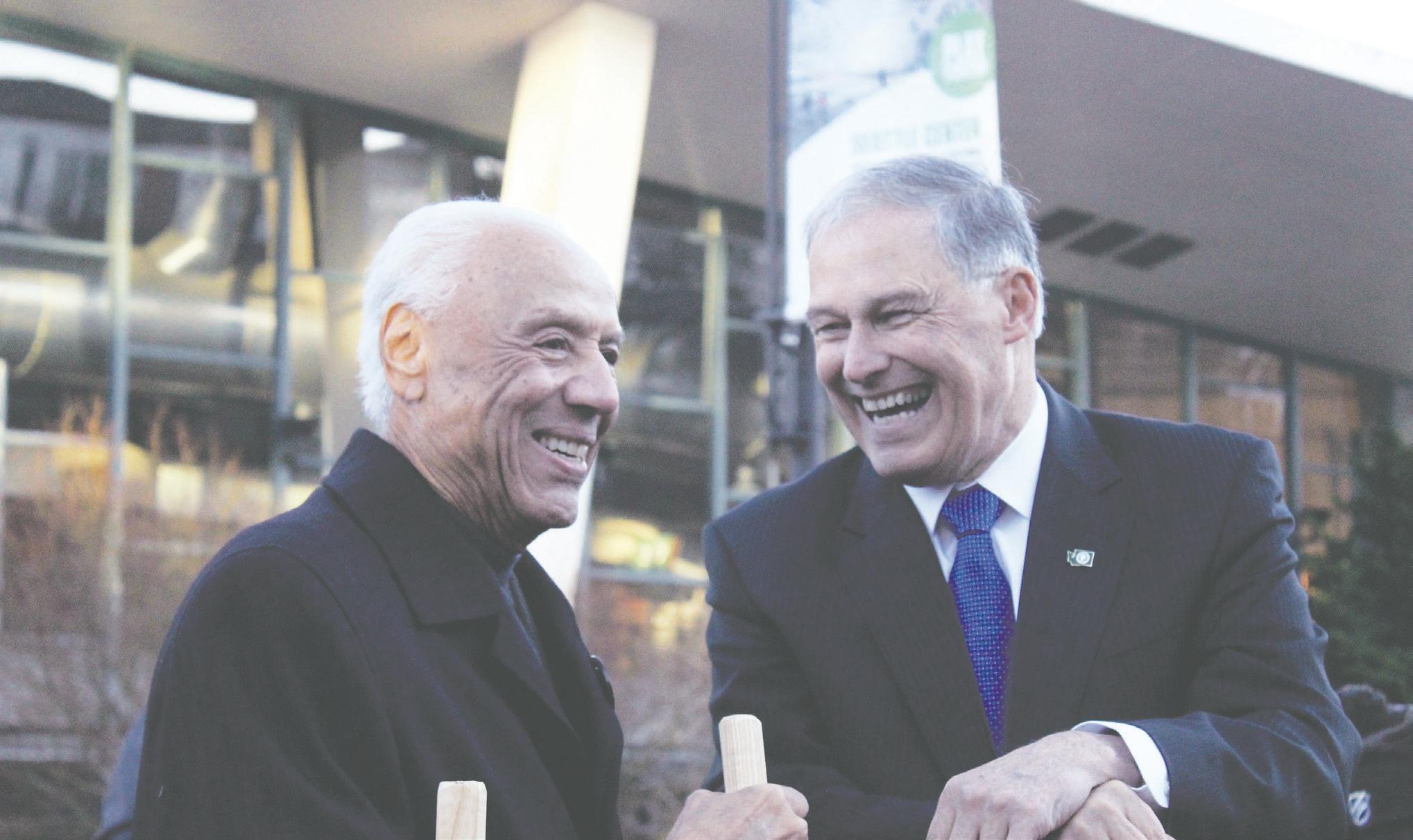
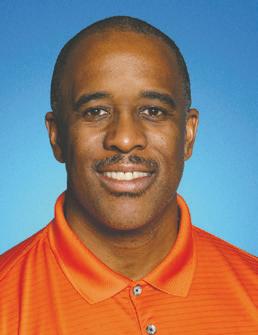
Former Sonics player and coach Lenny Wilkens has a laugh with Washington Gov. Jay Inslee during the groundbreaking ceremony for the Seattle Center Arena rebuild on Wednesday, Dec. 5.
The real estate sky is not falling
You can’t get away from it. In every newspaper, blog, or TV news broadcast, it’s the same story, in the scariest tone — the real estate market is falling.
It’s a manufactured narrative — the data tells a different story. The scary headlines, the voices of doom, are there to stoke fear and get you to read, click, or watch. That’s how they sell ads, by appealing to what scares you. And any homeowner, whether you’re actively selling or not, has a big investment in their home value.
The sky’s not falling. The Seattle real estate market has changed since the most recent height of insanity last spring, but it’s still on the positive side of what analysts say is a neutral market. In fact, the vast majority of real estate analysts predict transactions — home sales — in 2019 will equal those of 2017, which was an extremely good year.
Sure, we may not see the price escalations of 2018, but that only means the market is in transition to one that’s more moderate. There are many reasons for optimism during this correction: Seattle’s job market is still very strong, and December 2018 sales performed better than expected for this traditionally slow time of year. The key sales averages were:
• Forty-four days on market.
• Sales price was $1.275 million.
• List to sell percentage was 97 percent.
Close to home
Here in Madison Park, a new listing went on the market December 15. Within 24 hours, 40 business cards were collected from 40 agents who showed the
home, five pre-offer inspections were scheduled. It received six offers, with price escalations and all contingencies waived. That’s a really unusual situation at the end of the year. The sellers priced the home to sell right now — not last spring, and it did.
There is more inventory, and sellers are actively prepping their homes to sell in spring 2019. Buyers are coming back from off the bench, drawn by the increase in available homes. While prices have moderated, buyers will still see some sticker shock.
Getting expert advice
We’re in a market correction right now, but it’s a normal cycle. The disastrous crash of 2008 was caused by the real estate crisis, which was driven by horrible decisions, dirty loans and plainly illegal behavior. It wasn’t a normal fluctuation. This market seems to be trending that way — and in the last six normal market corrections, home values actually saw slight increases, just not as quickly as in the hot markets that preceded the transitions. If you’re looking to buy or sell in 2019, you need a broker who understands this.
I just went to a listing appointment at a home in arguably the most sought-after zip code in the country. The sellers had previously listed with a discount self-serve brokerage, and their home sat on the market for 120 days without selling.
This time, they did their homework, and brought in five high-producing brokers in the area to interview. As we talked, they asked me how many home transactions I had in the last 12 months. I told them the number; just about 70. It’s a good question, and almost the right question they should ask, I said. What they should care about, and what anyone who’s planning on buying or selling in 2019 should care about, is how many transactions a broker completed in a transitional or what the data would call a buyers’ market. Those are the brokers
Chris Sudore Property Views
Homes Closed in Madison Park, Madison Valley, Washington Park, Denny Blaine, Broadmoor, Leschi and Madrona from Novemer 18 - December
I don’t like your building, PCC
Fifteen years ago, I became a member of the Mad P P-patch, the community garden at 30th and East Mercer, just downhill from City People’s Garden Store. The Mad P is one of 88 community gardens in this city, and we are here, in part, because of you: it was PCC who helped start the City of Seattle’s P-Patch program back in 1973.
You may be our new neighbor, as the City People’s property at 2925 E. Madison St. is also the future home of PCC Community Markets. I read your full-page advertisement in the Seattle Times. I read your website. I learned that we have this in common: we value community. In fact, so much so, that your statement, “In everything, we strive to be an advocate for our community,” suits me as well.
I expect your inclination is to stop reading now, as you can guess what follows. I urge you to continue, as perhaps you have been understandably preoccupied with opening stores to pay much attention to the ruckus here in the Valley about your new building.
Did you know that your new building will shade the p-patch? We are 35 people who tend together the 21 plots we use to grow fruits, vegetables, herbs and flowers for our community. We gave 383 pounds of produce to the food banks last year. I can’t believe I have to tell you that shade doesn’t help us. You’re PCC.
Did you know that your new building will turn our neighborhood into a driveway for a parking garage? We’re on a cul-de-sac. It has the Mercer Steps, the Mad P, the woods above and Dewey Place East. It’s a nice place for people. The second garage entry makes the cul-de-sac a place for cars. I heard testimony before the Hearing Examiner in December 2018 that said the Dewey Place entry is a bad effort to fix motility issues in your East Madison Street parking garage, specifically, your shoppers are stuck on the exit ramp.
Let’s look at the trees and the grove on Dewey Place, which are going to be cut down for your store. This hillside has great birds, observed and recorded by us birders. Some birds we saw this year in the greenbelt are Wilson’s Warbler (Common Birds in Steep Decline) and Brown Creeper, dependent on big trees.
Now, in their own words, the Velmeir Companies. They said this to Capitol Hill Seattle, in May of this year:
“It’s their neighborhood, they have strong emotion and it’s their right,” said Geza de Gall. “But you know, the project is not going to be half the size because from an economic standpoint, it would not be viable.”
And this:
“If we are still in the review process a few months down the road, that gives us the opportunity to rethink and go in with an even larger project,” de Gall said.
On HALA and adding a floor to the building, in November, he [Geza de Gall] said Save Madison Valley’s “talking points are being diminished with every step of the process,” and it would be interesting to see the neighborhood group essentially oppose affordable housing.
Geza said this to the Mad P: bees, you don’t need them. In that ad in the Times, PCC, you said we share values. You said we share traditions. I think we have history, and I think you forget who you are. You’re PCC.
Wallis Bolz is a 23-year resident of Madison Valley. She is a Green Seattle forest steward associated with the Alder Creek Natural Area and a member of the Mad P P-patch. Her kids are Seattle Public Schools students who go to the Nova Project.
Wallis Bolz Guest column
Photo by Wallis Bolz
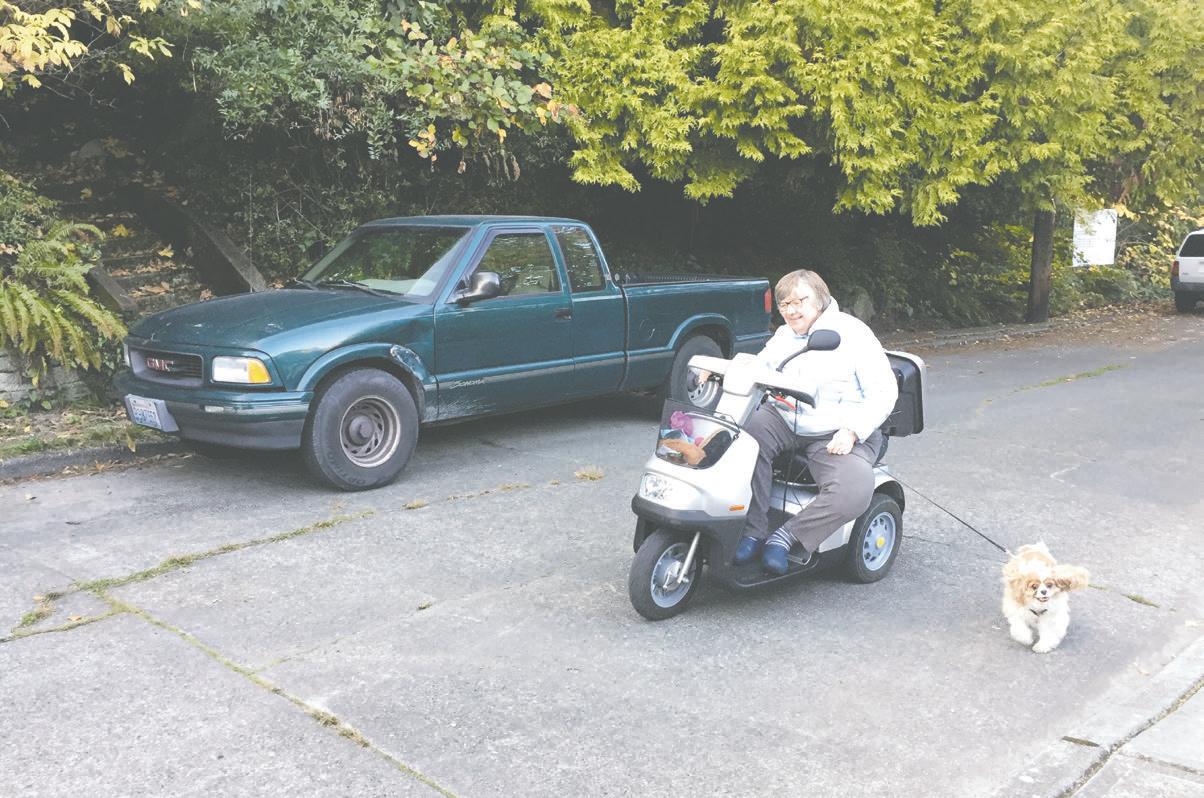
A neighbor walks her dog on Dewey Place East.
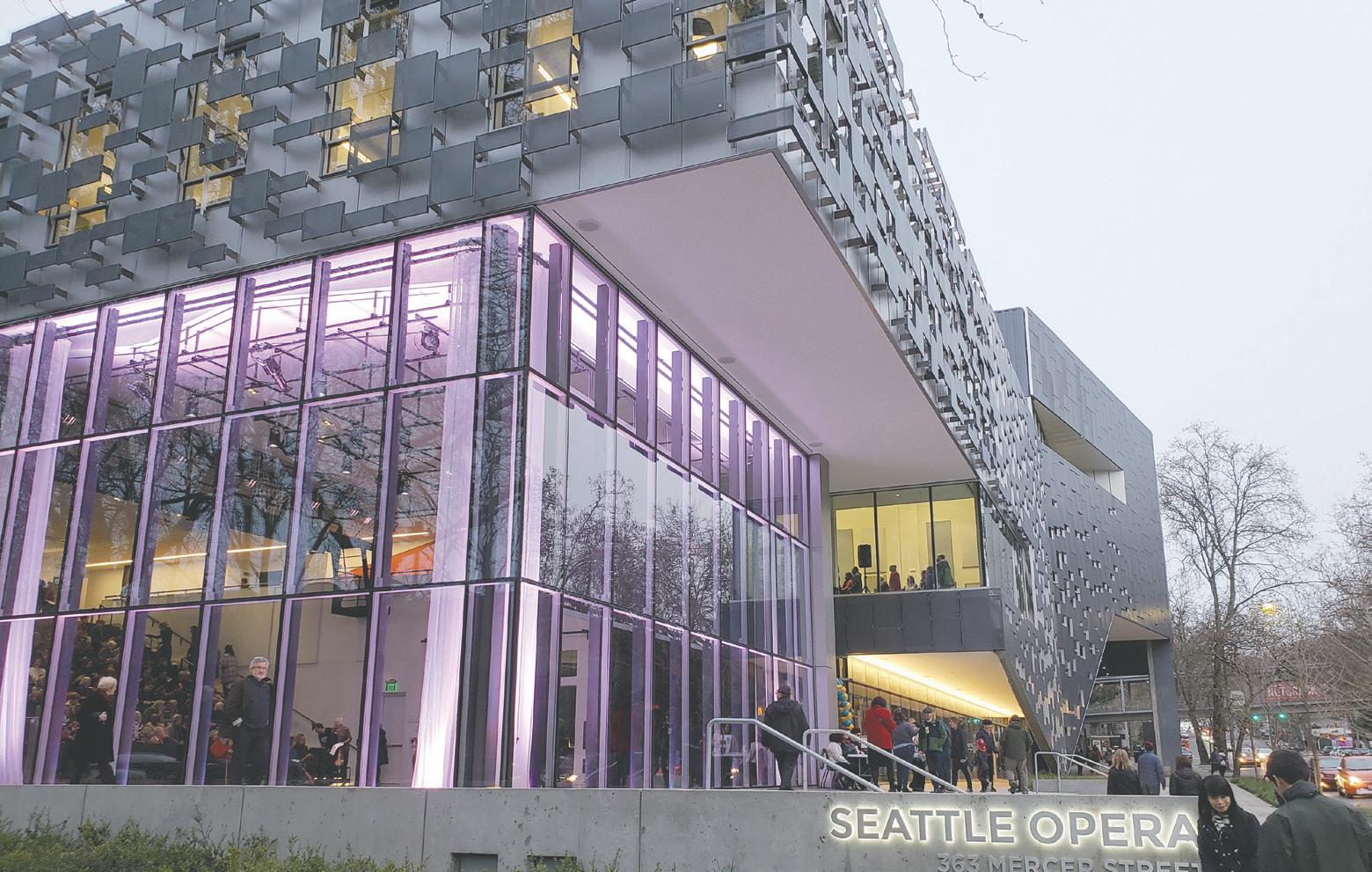
Seattle Opera Center makes public debut
Large crowds gather for grand opening of $60 million facility
By Brandon Macz
Park Times editor
The Seattle Opera played short performances to packed crowds during Saturday’s grand opening of the Opera Center next to McCaw Hall.
The $60 million facility was
funded through public and private donations generated during two capital campaigns, the first being put on hold following the 2008 Great Recession.
Seattle Opera long knew it would need to be out of the old South Lake Union carpet factory it kept its rehearsal and office spaces in by November 2018, said Maryanne Tagney, immediate past president of the Seattle Opera Board of Directors. She added she was thankful that the Rogers family made that property available until a new home could be found.
was reclaimed and used in the new building.
“They’re right next to Amazon in South Lake Union,” she said. “I’m pretty sure they will be happy to sell the building.”
The City of Seattle made the old Mercer Arena, constructed in Seattle Center back in 1928, available to Seattle Opera; that offer was set to expire at the end of June 2014.
“We put a team together in January 2014,” Tagney said. “We had our first meeting with Forterra.”
The old arena didn’t fit in with Seattle Opera’s plans for its new center, but fir lumber from the roof
The 105,000-square-foot LEED gold Seattle Opera Center was designed by NBBJ and constructed by Lease Crutcher Lewis, with the opera board raising more than half of the $28.5 million in private funding and the rest coming from major donors outside the board, Tagney said. The city, county and state chipped in about 25 percent, which funds the community and education portions of the new center.
Construction broke ground in June 2017, and the certificate of occupancy was granted earlier this month. A private opening was held on Dec. 8, and included the board,
• Jumbo loans for higher-priced properties
• Competitive interest rates
• Wide selection of conventional loan options
Let’s have a conversation today.
its grand opening on Saturday, Dec. 15.
donors, government officials and others who helped construct the opera center.
“It’s been a long time in the making this building, of course,” Seattle Opera general director Aidan Lang told Queen Anne News. “What I really like about it is already people have the feeling that this is an open place.” There is 20,000 square feet of community programming and education space, which the company has never had before. Lang said he didn’t think many people were even aware of Seattle Opera’s presence in the old SLU carpet factory.
Evergreen (gold) foliage like lace
When I see someone point to any evergreen conifer and call it a pine tree, I’m always slightly annoyed. The person making the statement is just not paying attention. It’s telltale of a lazy mind. As if there were only one genus in this family, one foliage form!
Pines have straight clusters of needles, some long and willowy, some short and stiff. Most firs and spruces have foliage that is uniform and dense as bristled brushes. Cedar greenery develops in shapes akin to flat fans. And within all these groups there are subtle variations.
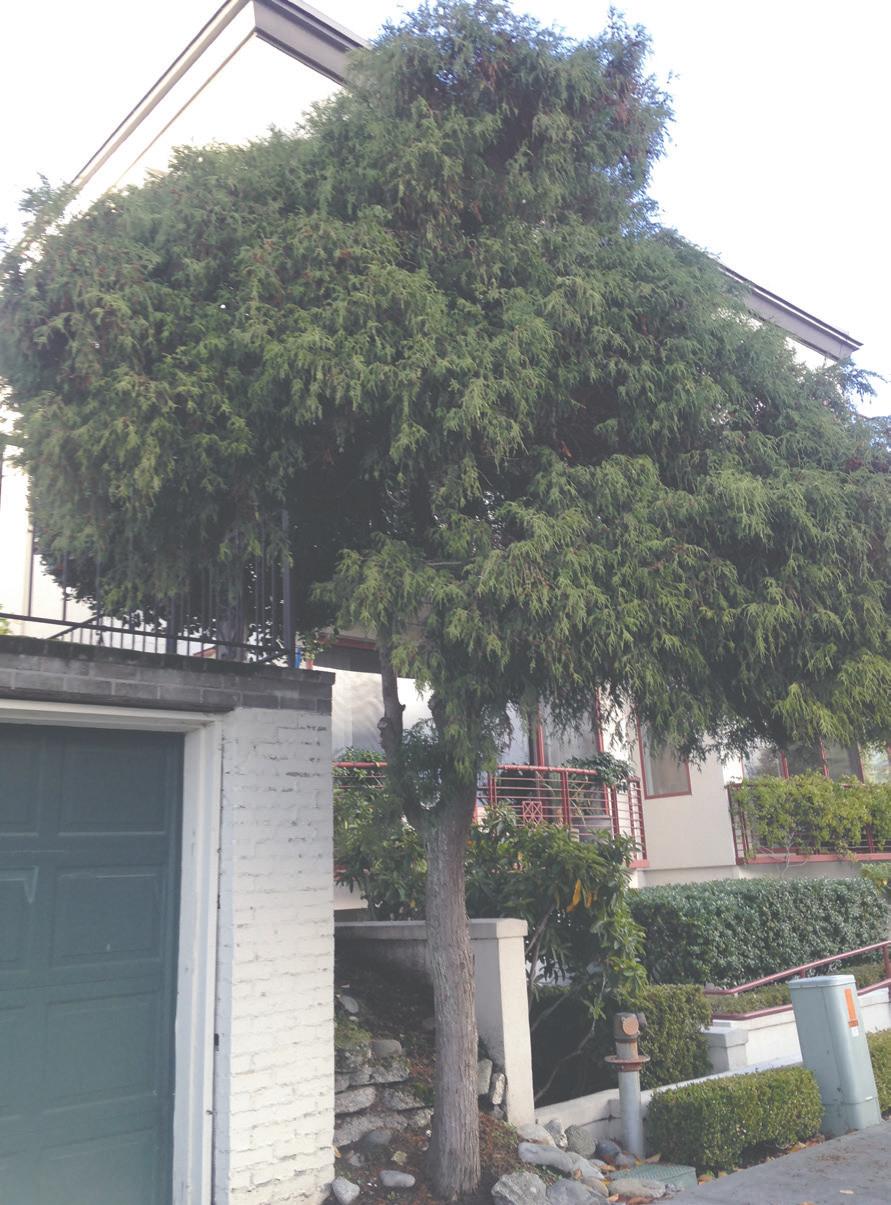
Threadleaf Cypress (Chamaecyparis pisifer) is pretty much in a class by itself. The threadlike branchlets droop like coniferous lace or, massed and hanging, produce a visual effect like cascading water. This is a beautiful plant, rarely seen and under used, especially in small urban gardens.
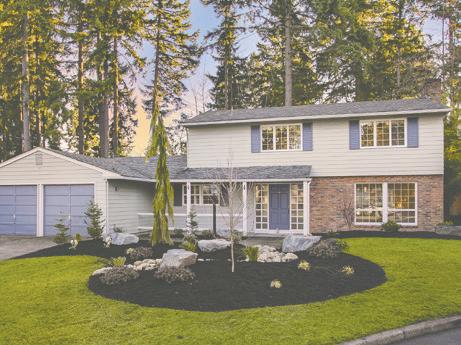
The tree in the photograph is one of a pair, flanking a garage door in Madison Park, a perfect choice for this location. It dresses the opening without taking up too much space. Likely these trees are 40 to 50 years old. They’ve grown relatively slowly, been pruned to the trunk and trained up as they’ve grown. Now the crown sits atop a handsome standard of rugged bark, a somewhat semi-formal sentinel at an entry that could not be more Pacific Northwest in spirit.
The straight, rich green genus and species is not easy to find. Native to Japan, it will eventually reach 20 feet, perhaps a bit more. I’ve grown one from a cutting and it has graced a container at my entry for 10 years now. At some point it will outgrow the pot, and go into the ground, perhaps when my grandchildren inherit the garden. For now, it’s a somewhat sprawling, totally inviting, bouquet of year-round greenery.
More common are the cultivated varieties of this Chamaecyparis. Prized for their greenish gold to yellow foliage, they mound up, 1-4 feet, then the branchlets arch out and spill down. The effect is one of a golden fountain. In a bed or container, this plant is an excellent focal point, for its near-symmetrical shape as well as its bright color, especially welcome
in the Winter garden. These gems are relatively easy to find in nurseries. Two to look for are Chamaecyparis pisifera ‘Golden Mop’ and C.p. ‘Filifera Aurea.’
Give these conifers loose, rich acidic soil in containers or in the ground. They’ll need good drainage, but are happiest in continuously moist soil. Two or three light feedings spaced throughout the growing season will ensure steady, robust growth. If a branch shoots out, cow-lick style, clip it off, take it inside and enjoy it in a vase in water.
You can dress it up with a single-cut blossom or two, changing the cut flowers out as they fade, but leaving the evergreen in place. It will last a very long time. And you may be surprised if, in time, roots emerge on the cut stem. That is how I got my cutting. When the roots are well developed, pot up the Threadleaf Cypress to embellish your garden with a bit of living lace or a dripping pot of gold.
Photo by Mary Henry
A threadleaf cypress in Madison Park.
The Seattle Opera Center had
Photo by Brandon Macz
Madison
City issues I-5 Lid Feasibility Study Request for Proposals
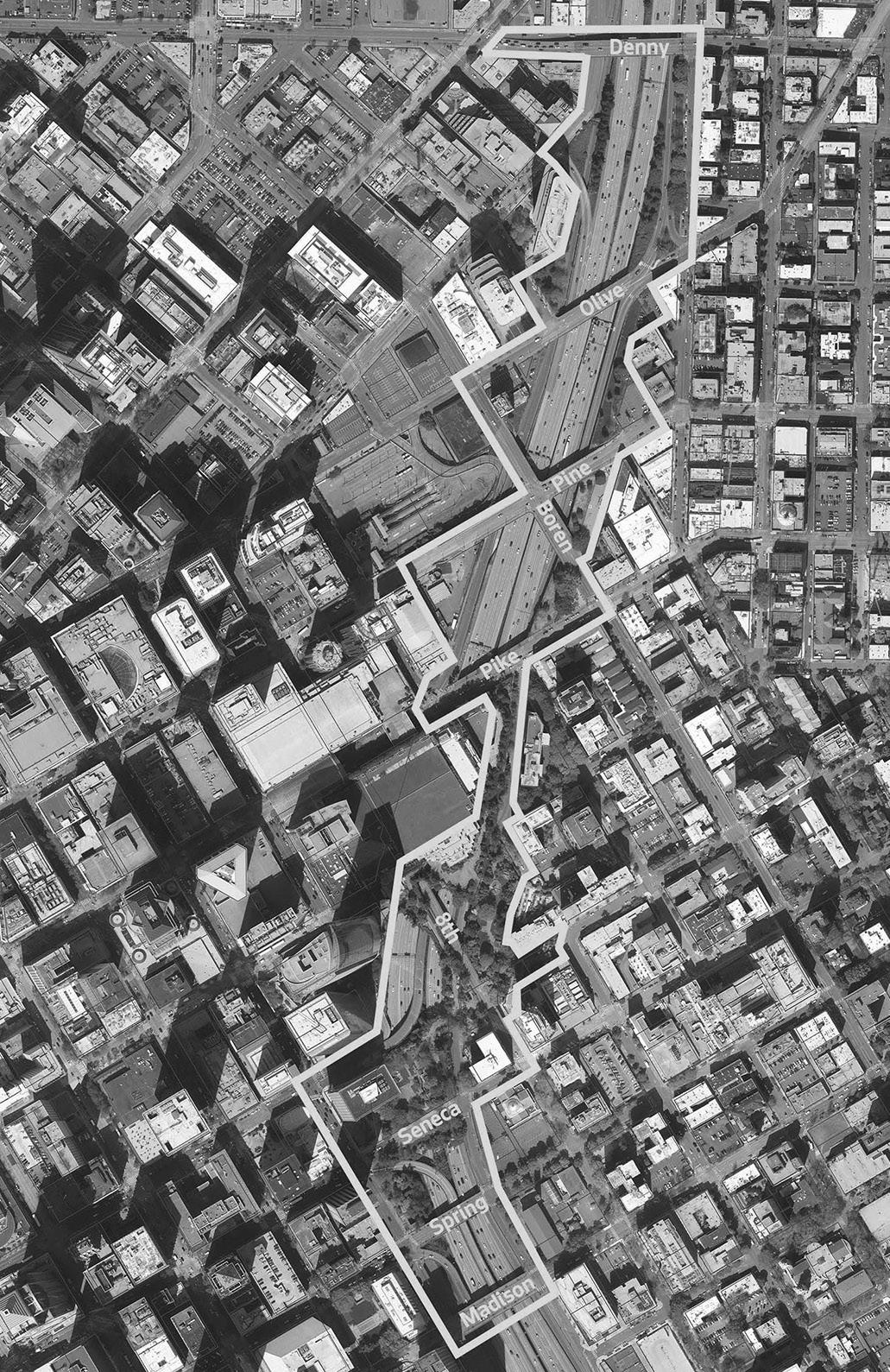
The City of Seattle has issued a Request for Proposal for a feasibility study that would analyze the logistics for reconnecting neighborhoods through a lid over Interstate 5.
Lidding I-5 to connect neighborhoods in Seattle’s core has been led for the past few years by a coalition of architects, urbanists and committed residents wanting to not only see a reconnected city, but also added surface for housing, urban parks, local businesses and improved transit.
The Lid I-5 group teamed up with other community organizations when the Washington State Convention Center Addition was going through the Seattle Design Commission, securing a $1.5 million commitment through a public benefits package to fund the study.
The I-5 Lid Feasibility Study would identify infrastructure limits, assess development opportunities for park space, affordable housing, commercial development and other community-serving uses, according to the city’s RFP.
The study would also identify environmental impacts from I-5, address safety conflicts regarding interstate exits, assess utilities opportunities and assess making a lid an equitable and welcoming space.
VIEWS, from Page 4
who can use their experience and connections they gained in those transitional times to get you the results you want. Deep diving into the numbers my team had in transitioning markets helped separate me from that of my competition. I was extremely honored to have signed the listing on the spot.
At the end of the day, we know those headlines. There are more active homes and some neighborhoods are seeing price reductions. Tell me something I don’t know. That said, no one is explaining what that means. If I am a buyer or seller, all I care about is what does that mean for me? That’s where aligning yourself with a trusted real estate expert
Proposals are due by Monday, Jan. 28. The full RFP is available at consultants.seattle.gov.
comes into play, even if it’s just to settle your nerves. Our role is to cool your jets and properly and calmly help interpret the data, so you can make an informed decision.
In 2019, buyers will have more options as prices moderate and more homes for sale come on the market. Options create action, and buyers will come off the bench. More inventory will also lead to more sellers coming into the market — the ones who wanted to sell last year, but couldn’t find a place to move to. Sellers, however, do have to be careful to price for where we are now, and find a broker who knows what a transitional market is, and what it takes to succeed in it. If you do that, it will be a very happy new year.
Chris Sudore is a Madison Park resident and managing broker at Coldwell Banker Bain | Global Luxury. Reach him at Chris@KingCountyEstates.com.
reopening, but declined to identify the band by name.
Tim Leiweke heaped praise on Seattle Mayor Jenny Durkan for her advocacy work before the NHL Commission, pushing for Seattle to be awarded a franchise.
Seattle Center Arena has new general contractor
Mortenson replaces Skanska-Hunt; OVG
plans to keep 2021 completion schedule
By Brandon Macz Madison Park Times editor
Oak View Group announced Tuesday it has switched its general contractor for the Seattle Center Arena project slated for completion in 2021.
Kirkland-based M.A. Mortenson Co., which provided OVG with preconstruction work for the arena rebuild, will replace Skanska-Hunt, the joint venture of Skanska and AECOM Hunt ducking out in response to market challenges and construction timing, according to a Dec. 11 news release.
The Seattle Times first reported on Dec. 8 that OVG was mulling a switch in general contractors after extending the arena rebuild timeline to 2021, and that Mortenson was the likely candidate.
“Mortenson’s local Seattle office spent five months leading pre-construction efforts on the arena project and is very familiar with our approach and goals,” said OVG senior construction executive Ken Johnsen in the news release. “Skanska-Hunt helped launch us, but I felt this project needed a dedicated single source team and we have mutually agreed upon a change. Mortenson is the nation’s pre-eminent arena builder and they are poised to complete this project in time for the Seattle Storm’s 2021 season.”
OVG had initially hoped to have the new arena — naming rights to be determined — finished by fall 2020, but pushed the timeline to spring 2021 in order for Seattle Hockey Partners to secure an NHL franchise (team name also TBD).
“Given the market challenges and shift in timing, it did not make sense for our joint venture to move forward
to the next phase of the project, so we recently came to a mutually agreed upon decision to end our joint venture’s involvement with the arena project,” said Skanska executive vice president and general manager Kevin McCain in the Dec. 11 news release.
“We are excited about the NHL coming to Seattle and we will provide full support to Oak View Group during this transition.”
The arena rebuild started as a $650 million project, but grew to $850 million, which Tim Leiweke said during the Dec. 5 groundbreaking was due to a commitment to keep the original roof and honor the 1962 Century 21 World’s Fair, for which the arena — then the Washington State Pavilion — was originally designed.
Mortenson’s sports arena work includes the U.S. Bank Stadium in Minneapolis, the upcoming Las Vegas Stadium that will be home to the NFL Raiders, a south end zone facility at University of Missouri’s Memorial Stadium and the Chase Center in San Francisco.
“We’re already deep into the transition process and look forward to assisting Oak View Group with its building of a world-class, landmark venue for our great city,” said John Nowoj, Mortenson’s senior vice president, in the news release. “Our company holds core to our mission: a commitment to excellence in economic inclusion and supplier diversity that will ensure we maximize the local impact and value of this tremendous project.”
OVG also announced on Tuesday it has brought on the Rockwell Group to design suite and club levels for the new arena, which will be 350,000 square feet larger than KeyArena.
arena that will be top-five in the world for music and sports,” he said. “It means we had to make the arena perfect. It will be perfect, it will be privatized, it will host the Storm, it will host the NHL, and it will be prepared to host the NBA when they’re ready to talk to us.”
Tod Leiweke recalled the arena “being left for dead” when the Sonics exited the city, while he was with the Seattle Seahawks.
“This building is historic,” he said. “It was such an important part of our community, and it deserves to be preserved, but as my brother said, this isn’t a renovation; this is an entire new building.”
Tim Leiweke told the Queen Anne News it’s important to get the new arena open by the time the WNBA’s Seattle Storm start their 2021 season in May, and he expects there to be about 50 music concerts that first year. He added he wants a certain famous Seattle band to play during the arena’s grand
“From the very beginning, they have been the partners that could actually get this done, and they did,” Durkan said of the Leiweke brothers.
The mayor also thanked former Sonics coach Lenny Wilkens for his contribution to making the arena a great place to come to for sports, the 13-time NBA All-Star having led Seattle to a 1979 championship victory. Wilkens sat up front during the Dec. 5 groundbreaking ceremony, and was later pulled up to shovel some dirt by Washington Gov. Jay Inslee.
The governor said the arena rebuild is a victory for the entire state, and confirmed there will be a rivalry with the Vancouver Canucks.
“I got into it with Premier (John) Horgan of British Columbia today,” Inslee said.
“We’re going to be in their face right for the first puck all the way to the finish, and I’m looking forward to that.”
Photo by Brandon Macz
The iconic roof to the KeyArena will be raised and preserved during construction, as developer Oak View Group expands the arena from 400,000 square feet to 750,000, which involves going an additional 15 feet down.
Map by City of Seattle
This map shows the study area for the I-5 Lid Feasibility Study.
SPS replacement levies on February ballot
Operations, capital levies to generate $1.5 billion for schools; area facilities to receive exterior, security, technology upgrades
By Danielle Chastaine Madison Park Times staff reporter
Seattle Public Schools is vying for approval of two levies totaling nearly $1.5 billion between 2020-25, which will be placed on the February ballot.
The Educational Programs and Operational (EP&O) Levy and the Building Excellence V (BEX V) Capital Levy are two replacement levies to keep the district’s budget at its current funding levels after two expiring levies expire at the end of 2019.
The ballot measures will appear on the Feb. 12 general election ballot.
Multiple requests for interviews to the district and district board of directors were unanswered by publication.
Every three years the district asks voters to support an education programs and operational levy. The district asks for a capital levy every six years.
“Washington state recently changed how it helps fund schools,” the district’s website states, referring to the McCleary decision, which created abrupt funding changes just before the 2018-19 school year. “Some school districts saw a large increase in state funding, while others, like Seattle, didn’t … the state still isn’t fully funding K-12 education. This creates a gap between what the state funds and what we need for our nearly 53,000 students.”
According to a board action report from Oct. 30, the BEX V Capital Levy will cost $1.4 billion over six years (2020-25). The EP&O Levy will cost $815 million over three years (2020-22).
The kicker is, while the district is asking to raise the EP&O Levy rate from $57 per $100,000 taxable home value in 2019 to $105 in 2020, the Legislature has capped how much a district can collect on local education taxes.
According to its website, the district is hoping the Legislature will make changes to the current education funding formula to allow the district to raise the rate proposed on the February ballot. If the Legislature does not raise the cap, the district will only collect $53 per $100,000 of assessed property value for the EP&O Levy in 2020 instead of the asked $105.
Information provided by the King County Assessor’s Office shows the total Seattle School District tax rate is $201 per $100,000 assessed property value.
If both the EP&O Levy and BEX V Levy are approved in February, the estimated tax rate will be $140 per $100,000 assessed property value in 2019. If the Legislature lifts the cap on funding, the total estimated tax rate in 2020 would be $226 per $100,000 taxable home value. “We are seeking additional funding authority from our voters to be able to collect at the higher dollar amount,” according to the district’s website. “This is a prudent and common approach other districts have and are using to
OPERA, from Page 8
Large productions will continue in McCaw Hall, including the upcoming Verdi’s “Il trovatore,” which runs Jan. 12–26. The Opera Center is connected to McCaw Hall, making it easy to roll over sets for performances.
“So there you go, we took a bunch of trucks off the road,” Tagney said.
The same goes for hauling costumes back and forth from SLU for multiple adjustments, Lang said, which often meant four trips with four carloads of outfits.
“It was not an easy operation, and some costumes are heavy,” he said.
The melodrama “Il trovatore” includes sword fights and a number of Spanish sol-
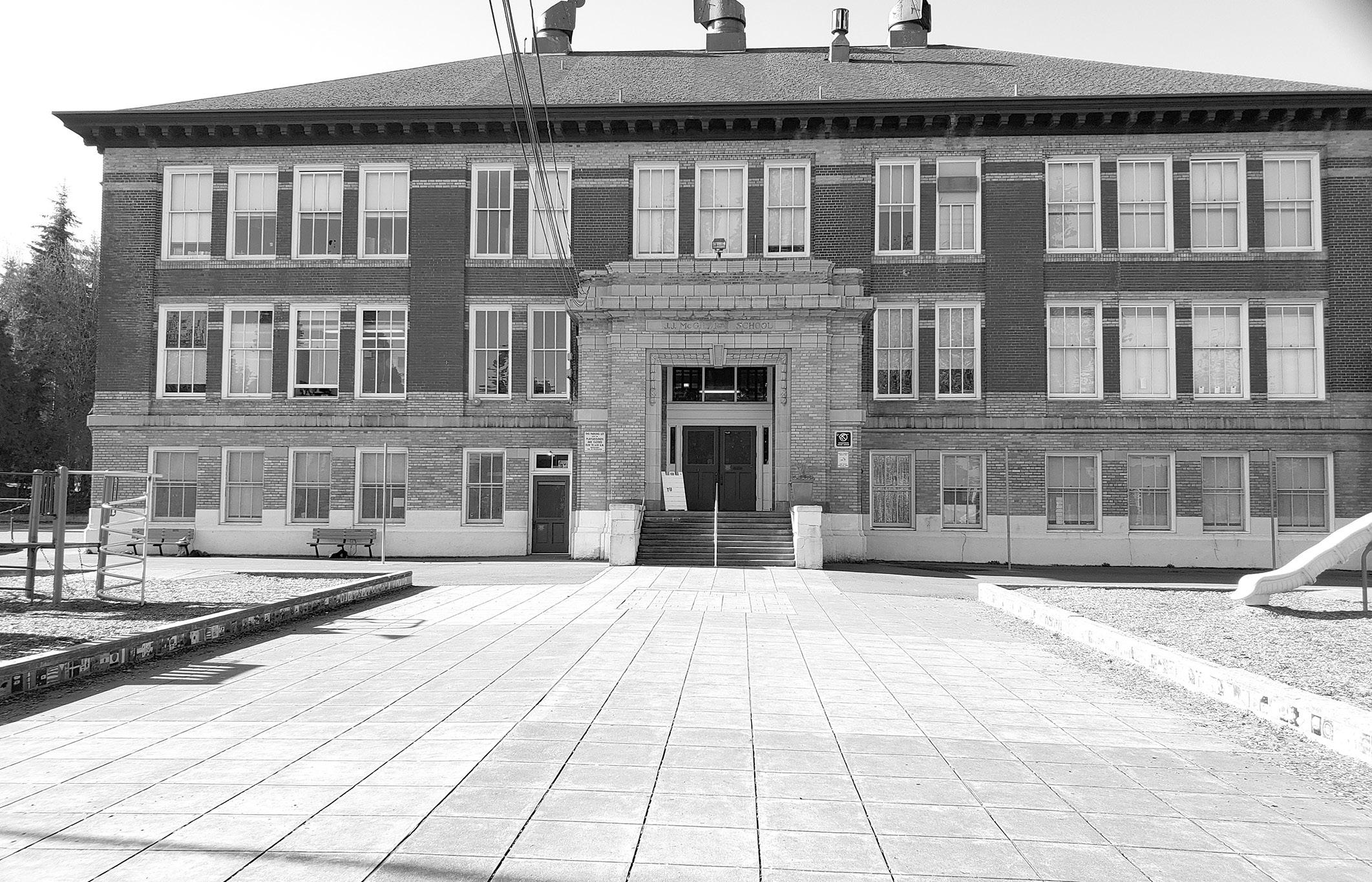
would receive exterior cladding, doors and window improvements. A 2018 facilities master plan considers the school eventuall being fully modernized and connected to the gym and cafeteria.
make sure that we are able to collect funding, if the state makes any changes in the 2019 legislative session.”
According to information from the Washington State School District Association, 94 school districts in the state failed to pass bond measures between 2011-17. While bonds require a supermajority on Election Day to pass, levies only require a simple majority of 50 percent and have a higher rate of approval, but more districts are facing narrow victories with a recent hike in property tax rates.
Voters have supported Seattle Public Schools levies for 40 years.
According to the board report, 19 percent of the district’s operating budget is funded by the EP&O Levy, which pays for day-to-day operations, teachers, additional staff, special education services, technology and more.
“Failure to pass (the EP&O Levy) would result in the district reducing the future general fund budgets by approximately 19 percent,” the report states.
The district plans to collect $271.3 million in 2020, $271.7 million in 2021 and $272 million in 2022 from the EP&O Levy.
Planning for the BEX V Capital Levy began in early 2016. A study of the district’s facilities names eight schools, which were aging and required the biggest updates:Rainier Beach High School, Mercer International Middle School, Alki Elementary, Kimball Elementary, Montlake Elementary, Northgate Elementary, John Rogers Elementary and Viewlands Elementary.
Here is what is on tap for schools in our area under the capital facilities levy:
• McGilvra Elementary would receive exterior cladding,
diers, each fashioned with heavy armor.
From the ground level of the new Opera Center, visitors looked down on the large Costume Shop; people outside could also look in from a viewing garden.
During the Dec. 15 grand opening, people were able to watch staff putting together costumes and admire the collection hanging on racks. Costume Shop manager Susan Davis talked about the space and designs for the costumes in “Il trovatore.”
The third floor provides office space for Seattle Opera’s 75 full-time administrative staff, and an additional space has been set aside to lease to another nonprofit, as outlined in Seattle Opera’s agreement with the city.
The opera center has three multipurpose studios, the West Studio as large as the one in McCaw Hall, so casts can rehearse on actual sets brought in through a large rollup door. Visitors on Saturday were able to
doors and window improvements, playground enhancements, additional computers, printers and teaching and learning technology. Safety and security improvements include card key readers at entries, video intercom systems and potentially more security fencing if a site assessment deems it necessary.
• Madrona Elementary would also receive technology improvements, plus enhancements that provide equitable access to technology for high-need schools, which could include professional development, software and hardware.
• Leschi Elementary would be provided with classroom projectors and screens, sound system, document camera and connecting devices. Security improvements for Leschi would be the same as listed for McGilvra, as would technology enhancements as listed for Madrona.
• TOPS K-8 is also slated to receive safety and security improvements and technology equipment and services that include computers, printers, peripherals and other teaching and learning technology.
• Meany Middle School is also set to receive safety and security improvements and technology equipment and services.
• Garfield High School would receive exterior cladding improvements, safety and security improvements, and technology equipment and services similar to the schools above.
All schools will receive funding for day-to-day operations, instructional materials, textbooks, staff salaries and special education support if the EP&O Levy passes, according to the district’s website.
watch cast members rehearse there, and there was sword-fighting being practiced in another studio.
Tagney said a number of smaller productions at the center will be offered at little to no cost.
“We don’t know yet how this is going to work; this is a completely new process,” she said. “We’ve never had the facilities before to offer this.”
Named in honor of Tagney and her husband David Jones, Tagney Jones Hall provides seating for more than 300 for performances and educational and community events. A “glass box performance hall,” its floor-to-ceiling glass exterior lets people outside see what’s happening inside.
Visitors lined up Saturday to get a seat in Tagney Jones Hall to hear performances at the start of every hour during the grand opening. The fir lumber from the old arena roof was used on the hall’s seating risers.
Lang said the open spaces in the Seattle Opera Center exemplify how theater has changed, offering behind-the-scenes previews of what’s to come rather than keeping everything quiet until after opening night.
“You’re denying your traction time to get the audience interested,” he said.
Lang said Seattle Opera has a four-year grant from the Wallace Foundation to research and develop a sustainable audience.
“They’re amazed by the way the statistics of our audience has changed,” he said, the grant in its third year.
Operas were always written for a local audience, Lang said, and having the Opera Center open to the public and making performances accessible is the right way to remain successful, the Seattle Opera director pointing to a line of visitors cued up outside as evidence of that.
Photo by Brandon Macz
Under the BEX V levy, McGilvra Elementary
MIDTOWN, from Page 1
in the neighborhood and draws people into the space.
“We need to understand how this wraps back into the concept,” said EDRB chair Melissa Alexander.
Multiple artists are anticipated to contribute to the various murals and art installations, and their selection and future work will be overseen by an art panel comprised of Central Area youth, elders, business owners, local artists and a member of the Africatown Community Land Trust, which has partnered with Capitol Hill Housing to develop 20 percent of the superblock to the south.
“Lake Union Partners would have one seat at the table,” said architect Rico Quirindongo with DLR Group, who was brought onto the project to help it meet the community’s vision.
But the current timeline doesn’t anticipate artist selections until July, which is also when community meetings about the art program would start.
CADRB member Sharon Khosla said it was harder to judge the project because there was so much art, and particularly because it was so heavily incorporated into the facade.
EDRB member TJ Taaca said he saw a missed opportunity by not placing murals closer to where the portals terminate at the central square, which he felt would make the space feel more inviting.
He also did not care for the placement of late artist James Washington’s Fountain of Triumph in the plaza at 24th and Union.
“If it’s a fountain, it should feel like a fountain,” Taaca said. “I still think it looks like a tombstone on that corner.”
The boards ended up deferring to the James & Janie Washington Foundation, which provided a letter of support for that corner, but wanted the foundation to be included in future decisions about additional art, paving and furnishings around the fountain.
Many community members had wanted to see the fountain celebrated in the central square, but what was designed in the center of that space also didn’t appeal to the review
Most members of the East and Central design review boards
16,000-square-foot central square.
boards — a large tree surrounded by a wooden deck, which landscape architect Todd Bronk with Berger Partnership said would be a gathering space and potential second stage to one planned along the western edge.
Alexander agreed the paving pattern — modeled after the ones painted in the parking lot of Midtown Center over the summer — does successfully draw people to the tree.
Khosla said she felt a large tree being in the center of the plaza could make it harder to host large gatherings and would prefer to see it moved elsewhere. If it were relocated, it would not be a tree of that size, said architect Heather Hargesheimer with Weinstein A+U.
The Midtown design team was able to increase the width of the three portals by five feet, removing a skybridge at 23rd and Union and on 24th Avenue, which the review boards appreciated. They did encourage looking at placing art along a skybridge on Union.
The boards also appreciated the increased space for the “living room” concept at the corner of 23rd and Union. The
northwest building will include a 12,000-square-foot drug store, which is expected to provide enough revenue to offer smaller retail spaces to minority business owners at belowmarket rates.
A seating area is planned to have wood decking along East Union, and Alexander encouraged making sure that treatment and furniture doesn’t create a feeling of separation in the plaza.
Between Union and the central square, a farmers market space could support about 24 tents, Bronk said.
The boards were supportive of all of the requested departures for the project, including a 55-foot curb cut on 24th Avenue, which the design team said is necessary in order to allow in vehicles to the below-grade parking garage and sanitation to collect recycling and garbage.
Because the boards couldn’t approve everything but the art on Dec. 19, nor could they craft enough conditions to address their concerns, the Midtown design team will have to come back for a third recommendation meeting sometime next year.
Image courtesy of Weinstein A+U
favored relocating a large tree designed in the center of a