Plan(t) for pollinators in fall and winter
id you know pollinators are responsible for one out of every three bites of food we take? According to the Pollinator Partnership website, pollinator.org, in the global landscape, somewhere between 75 to 95 percent of all plants need pollination, and the plants we don’t eat help support the ones we do.
Seattle made headlines some years ago with an art project called “Pollinator Pathway” on Columbia Street — a one-mile stretch of parking strips book ended by public spaces, inspiring communities around the world to create their own versions. Seattle City Light planted a pollinator “Green Line” in upper Rainier Beach’s Duwamish Corridor and the “Flight Path” at Seattle-Tacoma International Airport, which has increased overall bee populations by 70 percent.
With so many articles rightly decrying the loss of honeybee populations, people are happily more aware of the need to support pollinators, and many home gardeners are including “pollinator patches” in their yard, raised bed or community garden.
However, the imported European honeybee, the gorgeous butterfly and the enchanting hummingbird are only three segments of the intricate web made up of native birds, moths and insects
that needs our help. More than 200,000 species of pollinators co-garden with us to create the world’s food, including bats, native bees, moths and beneficial insects. Planting for some of these will enrich your yard’s ecosystem, boosting the health, beauty and productivity of your flowers and fruit.
With habitats and protected parkland decreasing worldwide, many people are realizing that the chance to save our declining pollinators is right in our home spaces. We can bring the wild space they need — even on a patio or rooftop.
There are several ways to support pollinators, from planting for food, nectar and habitat, to creating habitat and maintaining water sources. The best part of creating habitats is you get points for laziness! Beyond pre-made houses for bats, birds and bees you can — do nothing. Loosen up your grip on the clippers and leave some leaf litter, brush or rock piles in unobtrusive corners to create nesting spots, and skip the traditional
“fall cleanup” to leave seed heads of sunflower, echinacea, grasses, rosehips and edible berries to feed the birds.
It’s easy to remember to choose spring and summer-blooming flowers to enjoy while we are outside, but when fall wind and rains nudge us inside to our armchairs, non-migrating pollinators are still out in the weather needing food.
Some summer-blooming pollinator faves stretch their seasons into October, like agastaches (hyssops), echinaceas (coneflowers), salvias (sages), rudbeckias (black-eyed-Susans) and dahlias. But not any dahlia will do — in general, pollinators are more attracted to open, single flowers rather than tightly packed clusters (they might never find their way out). So single-flowering “Collarette” or novelty-style dahlias that look more like a daisy or coneflower are your best bet for a pollinator party.
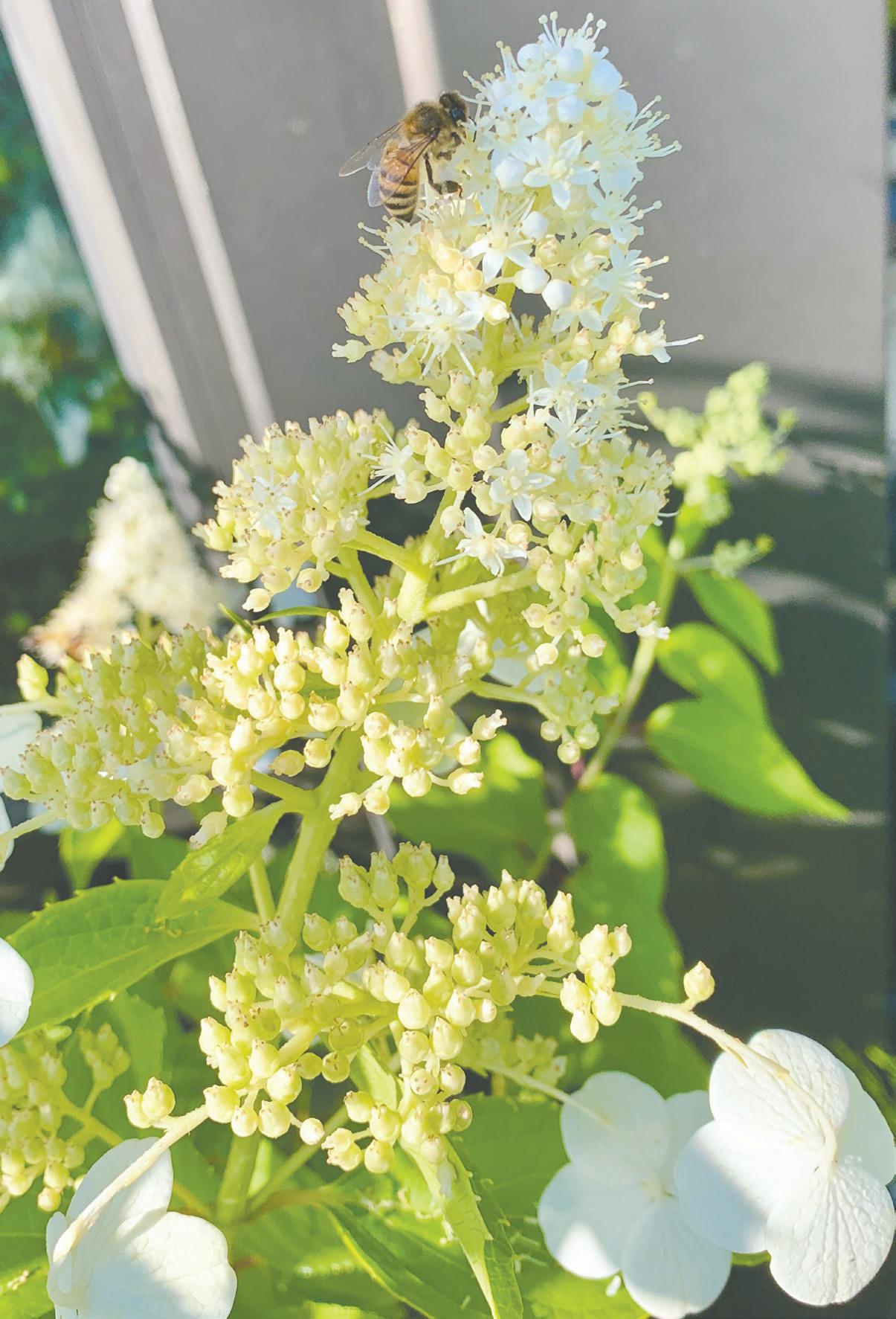
A surprise to me was how popular panicle hydrangeas, like the honey-scented Kyushu, were this summer — they were covered in a variety of bees. It turns out, although traditional mophead hydrangeas aren’t pollinator magnets, looser lacecap and panicleflowering varieties can be.
Native oakleaf hydrangea offers
GARDEN, PAGE 7
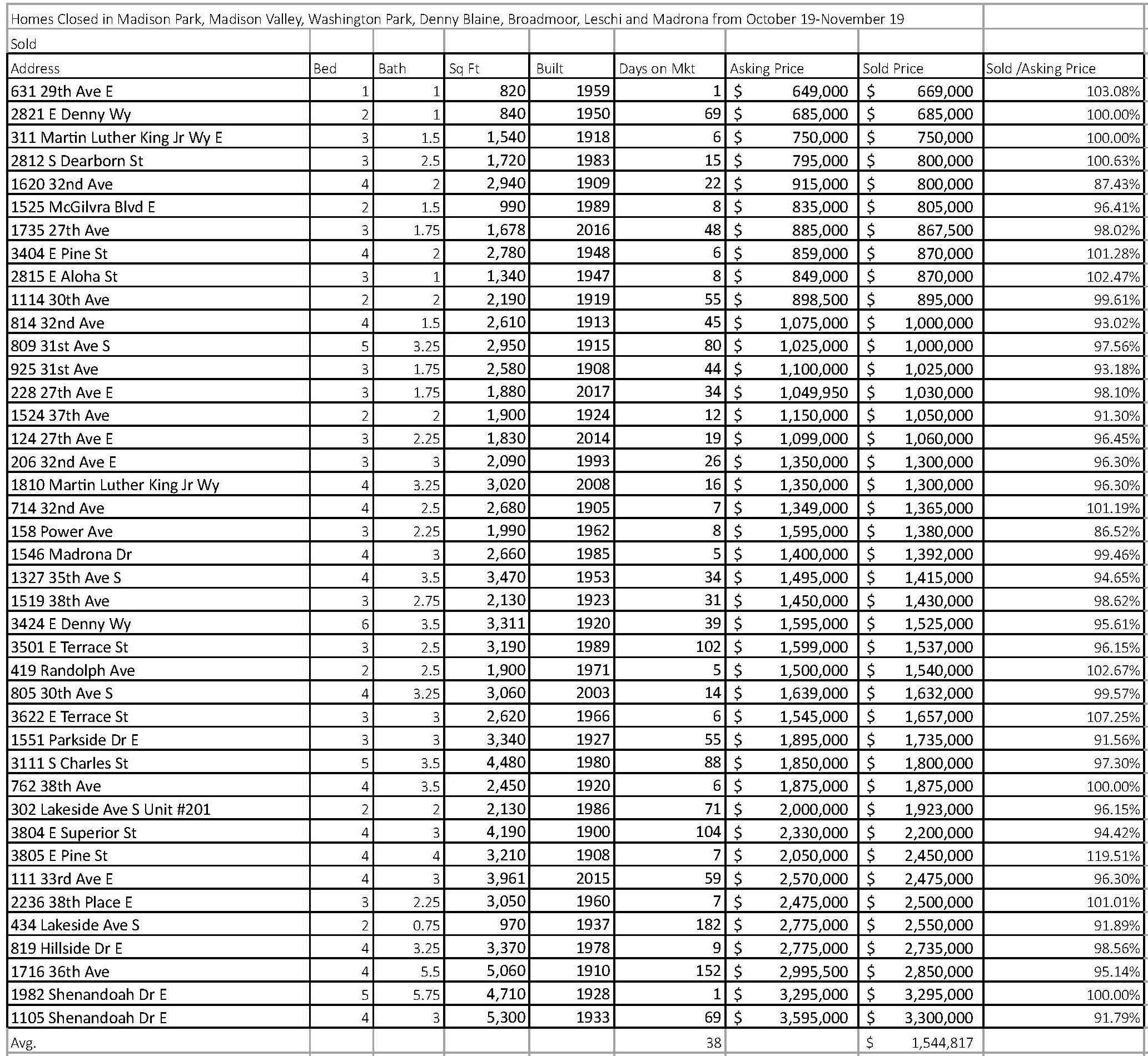
$1,550,000
Photo by Erica Grivas
A bee feeds on a hydrangea ‘Kyushu.’
Erica Grivas Get Growing
f there is one thing that may be said about 2020, it’s that it challenged us. We navigated the onset of a global pandemic, rode a wave of economic uncertainty, and faced a divisive presidential election, but most importantly, we came together as a community. I am so proud of the way that our Madison Park, Broadmoor, and Washington Park families, clients, and businesses coalesced to support one another and am grateful as ever for those I had the pleasure of assisting with their housing needs. I am so grateful for all your support and I look forward to continuing to bring the very best of my brand and my passion to our community in 2021. Here’s to a safe and healthy New Year!
PROVEN RESULTS
RSIR ranks amongst the largest, most productive and fastestgrowing real estate companies in Washington with access to 23,000 brokers in 70 countries that generate global sales of $114 billion annually.
WHAT MY CLIENTS ARE SAYING
Trust Laura to give you the advice you need if you are considering selling your home. After almost two decades of living in Broadmoor, our family wanted to
and on top of the market with her many years of experience. It was a joy to work with Laura. Her marketing materials were beautiful, with exquisite photography, impeccable staging, and a wonderful write up feature. We got lots of interest right away, and closed within two months. You can trust Laura to get the job done!.
Sotheby’s Auction House Presents The Weekly Edit: Fine Jewels | London, a collection of important jewels from several prestigious collections with aristocratic and historic provenance.
Lisa’s Top Sales in 2020
To see my other 2020 sales, as well as my active listings, please visit my website at lisaturnure.com
HAPPY HOLIDAYS LISA TURNURE REAL ESTATE
As we near the end of 2020 think that there is one thing that we can all agree on; it has been a year that we are happy to say goodbye to. The pandemic has been difficult for all of us and the losses we have experienced are heartbreaking. Our country and our city have experienced great challenges and division.
During this unprecedented time, I have done my best to try to look for silver linings, to stay positive and to look for joy in little things. I have always expressed that relationships and the people that I work with are the most important and meaningful part of this business to me. This year has further emphasized that truth for me. I have found that people still have a need to move and make changes in their lives despite what is going on in the world. It is challenging and scary for many to do this and I feel an incredible sense of responsibility in helping people through change during these times. I have done many Zoom listing presentations, videos, 3D Matterport tours and Facetime walk-through tours of homes, all to keep the experience as virtual yet professional as possible. I am grateful for the support of my brokerage and my wonderful assistant, Shawna who has helped me immensely. As many of us know, the angst of working during these times can be a lot, but the joy that I get from helping others makes it worthwhile.
One silver lining for me in 2020 was being named one of 20 Coldwell Banker Global Luxury Ambassadors worldwide. Global Luxury Ambassadors are tasked with sharing the advantages of Coldwell Banker’s unique luxury real estate marketing platform with the world through education and media interaction. This is a role and responsibility that I was honored to accept. I was also invited to join the International Luxury Alliance, a group of 80 brokers worldwide who collaborate and share ideas, as well as share a platform to market our listings through our national and international network of highly productive brokers. It has been incredible to work with this amazing group and share ideas regarding how to navigate and help our clients during this time.
As we close 2020, no matter how you celebrate the holidays and also for those that do not, I wish you and your families love, peace and healing. I pray for you to find creative ways to gather safely with your loved ones, even when that means in ways that are more virtual this year. I look to 2021 with hope for health and peace in our world. And of course, I thank my community for your support. Here is to a brighter future.
Warm regards, Lisa
Available for Purchase
The holidays look different this year, but one thing remains as important as ever—home is where our hearts live. To our clients who have bought or sold homes during this uncertain year, thank you for trusting us with one of life’s biggest undertakings. If you’ve been reevaluating what’s most important to you in the walls that surround you and your loved ones, let us guide you on your real estate journey. The 19 brokers who live and work in Madison Park and its surrounding communities are experts with hyper-local insight complemented by our brand’s vast global footprint, proudly represent all property types and price points while ensuring that every client receives white-glove service. No matter what your holidays look like this year, we wish you good health and hope you are surrounded by signs of love and cheer.
LADDERS FOR LIGHTS!
GARDEN, FROM PAGE 2
three-way pollinator support: nesting material and shelter with its leaf hairs and peeling bark, and long-blooming flowers delight a host of bee species. According to Proven Winners, its cultivar “Pinky Winky” repeats bloom into the fall.
Consider fall-blooming perennials like asters for butterflies and bees, and the long-blooming abelia shrub for bees, as well as for migrating butterflies and hummingbirds to load up for their trips south. Grevillea, with exotically spidery flowers shouting its Protea heritage, is a lesser-known shrub favored by birds including hummers, bees and other insects. I’ve recently planted “Murray Valley Queen,” with rounded sage-like leaves and orange flowers, because orange flowers jump in my cart, and “Noelli,” which I thought was orange, but is described online as pink and white.
Save space in partial shade for winter blooms like easy-to grow mahonia, whose abundant yellow blossoms and ink-blue berries will feed bees, hummingbirds and bees, letting them conserve energy by eating in one spot, and the long-blooming clan of hellebore varieties. In sunny spots, include some winter heath (Erica species), which feed bees in the lean season.
Here in Seattle, the green Anna’s Hummingbird sticks around
SUDORE, FROM PAGE 1
in the winter, while the Rufous Hummingbird takes a vacation south. Many bees and wasps are hibernating, but warm spells may tempt them to break dormancy and go hunting for blossoms.
I prefer planting if you have space to do so, but if you supplement for your hummingbirds with a feeder, the Seattle Audubon Society’s (Seattleaudobon.org) tips on winter feeding for hummingbirds include rotating two feeders, taping a hand-warmer packet to the feeder to keep it from freezing and cleaning the feeder at least weekly. For all birds, a pan of water refreshed with hot water occasionally, or with a heating pad under, ensures they’ll have a source despite freezes.
If you are shopping for springblooming bulbs right now, pick up some of these for pollinators — I’ll use common names first since that’s how they are primarily marketed. In rough order of bloom, look for snowdrop (Galanthus species), crocus, winter aconite (Eranthis), glory of the snow (Chionodoxa), iris reticulata, wood anemone (Anemone nemorosa), hyacinth, grape hyacinth (Muscari spp.), fritillaria, ornamental onion (Allium) and native Camassia. If you already have bluebells (Scilla spp.), congratulations: You are feeding the bees. If not, only plant if you want it everywhere.
Some beautiful early-flowering shrubs and trees that can comple-
Then the pandemic caused lockdowns throughout the spring. In 2020, the traditional market cycle shifted. All the shut-down activity in the early part of the year exploded as we all learned to navigate the new normal.
As we were able to return to real estate activities with restrictions in June, the traditionally slower months of July and August bustled with showings, offers, negotiations and closings. We recorded a record number of transactions last summer. Fall continued the trend, making for a busy September, October and November. In fact, I put a $4 million home into escrow three days after the November restrictions were announced.
Though many sellers are sitting out this holiday season, that’s not unusual. Every year, activity slows down as people want to relax, celebrate and concentrate on friends and family. The presidential election also spurred sellers to take their homes off the market or delay selling until next spring.
Looking forward
Though it’s difficult to predict anything with complete accuracy, next year will be better. I expect things to remain quiet through January. Then, after the inauguration, as COVID-19 vaccines get a timetable for distribution, and the dust settles on a difficult year, it’s reasonable to assume we’ll see a return to a more typically strong spring selling season.
From my own perspective, my team and I continue to be busy. I made more appointments for November and December to meet with sellers than I ever have before. Other experienced brokers say the same. Taken all together, there are a significant number of new listings in the pipeline.
Buyers and sellers adapted to the last shutdown. And, unlike last spring, we are still able to conduct business. There are limits — on how many people can see a property and by having to make appointments to show houses, and open houses are prohibited. But the industry has adapted, and there’s activity even now.
What to do now
For the real estate market, this month is a time to
ment your spring bulbs while feeding pollinators include elegant witch hazel (Hamamelis) with bonus fall color, showy red-flowering native currant (Ribes), and lovely multi-season serviceberries (Amelanchier spp.), who offer patterned bark and fall color as well as white flowers.
A few more tips: Maintain a water source in a birdbath or dish for both the birds and the bees, leave a few piles of brush or rocks, use organic amendments and pest control in your garden (take care to apply anything, even neem oil, at a time when insects are not active like evening or early morning) and include native plants as much as possible.
Lastly, converting your outdoor lights to motion-sensor, preferably LED lights that will be less attractive to insects is a simple move that can save lives. Author
Douglas Tallamy writes in his new book, “Bringing Nature Home,” that night lighting is deadly to many species, particularly moths, who are lured to the lights and are either picked off by predators or die of exhaustion.
After applying these tips, you can even get your yard certified as a wildlife habitat by the National Wildlife Federation (nwf.org) for a $20 donation that supports conservation efforts and education, and the NWF will send you a sign.
— Erica Browne Grivas is a Seattle resident and avid gardener.
reboot and reset. To prepare for 2021. If you’re going to list your home for sale, this is the time for painting (weather permitted), repairing and getting your place in turnkey condition. Interview brokers, and work with your choice to get a plan together to come to market in a strong position.
If you’re buying, get your financing in place if you need it. Interest rates for mortgages are crazy low, so get yourself approved with proper documentation available. If you’re looking at a cash purchase, make sure your funds are fully available by the time January rolls around. Get yourself in a mindset of being tough, nimble and able to move quickly. Find a broker with experience in the kind of fast-paced market we anticipate. Depending upon your price point, you’ll need a strong partner to negotiate through multiple offers, escalation clauses and how to navigate contingencies.
As for everything not related to real estate, take care of yourself and your family and friends. It’s been a hard and stressful year, with political unrest, uncertainty and a resurgent pandemic. It would be easy to be overwhelmed.
I’m trying to look on the bright side, and I encourage you to as well. Try to see this disjointed holiday season in terms of what we can have, rather than what we can’t. Being cozy at home rather than cooped up. Hunkering down to celebrate the season in a smaller, but no less significant way.
As always, my home, my office and my team is focused here in Madison Park.
If you’d like to set a time to talk through any matters involving buying or selling your home, my door is always open.
From all of us at King County Estates, we want to thank our devoted clients, families and community for the tremendous support during this time. I wish you and yours a happy holiday season. Stay smart, stay safe and stay healthy. Next year will bring new hope and a return to a more normal life, and we’ll enjoy it together.
Chris Sudore
KingCountyEstates.com
Chris@KingCountyEstates.com
Managing Broker Coldwell Banker Bain | Global Luxury