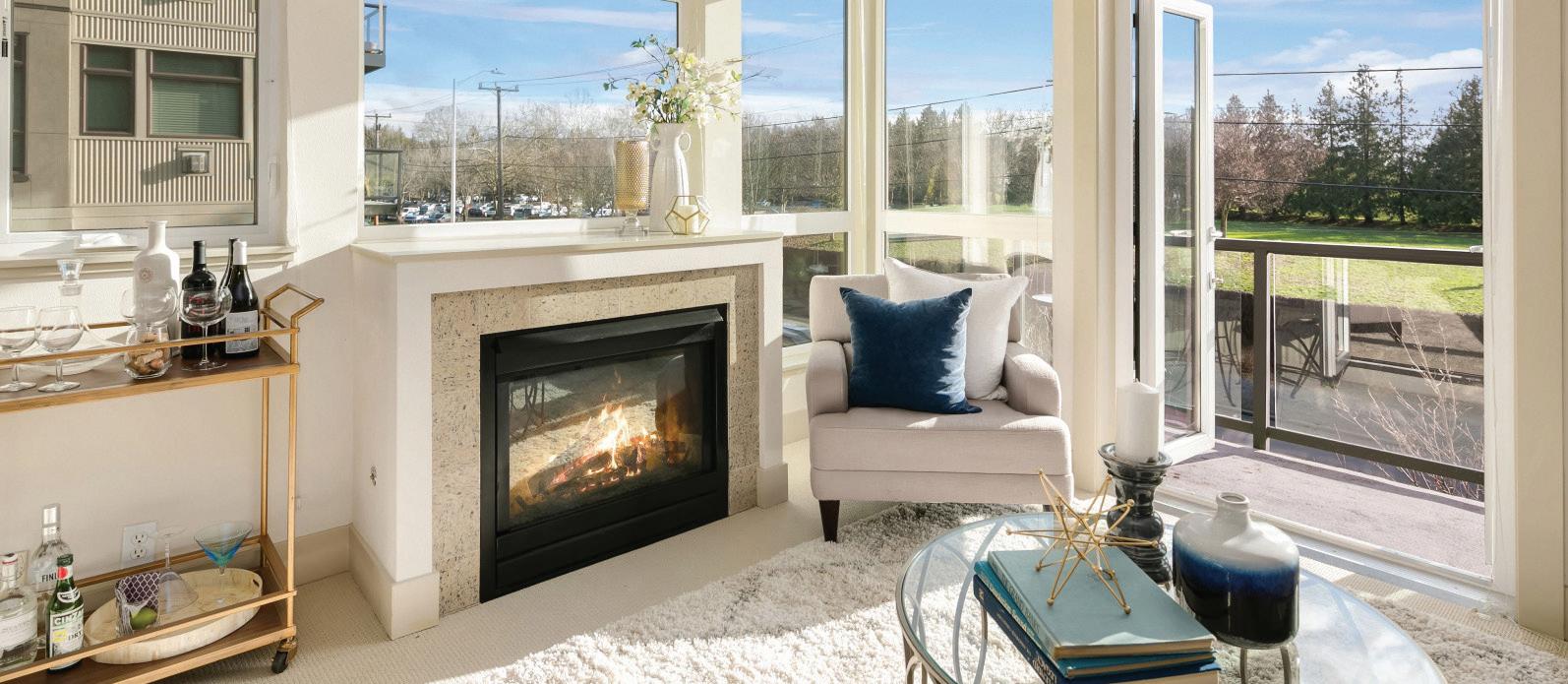
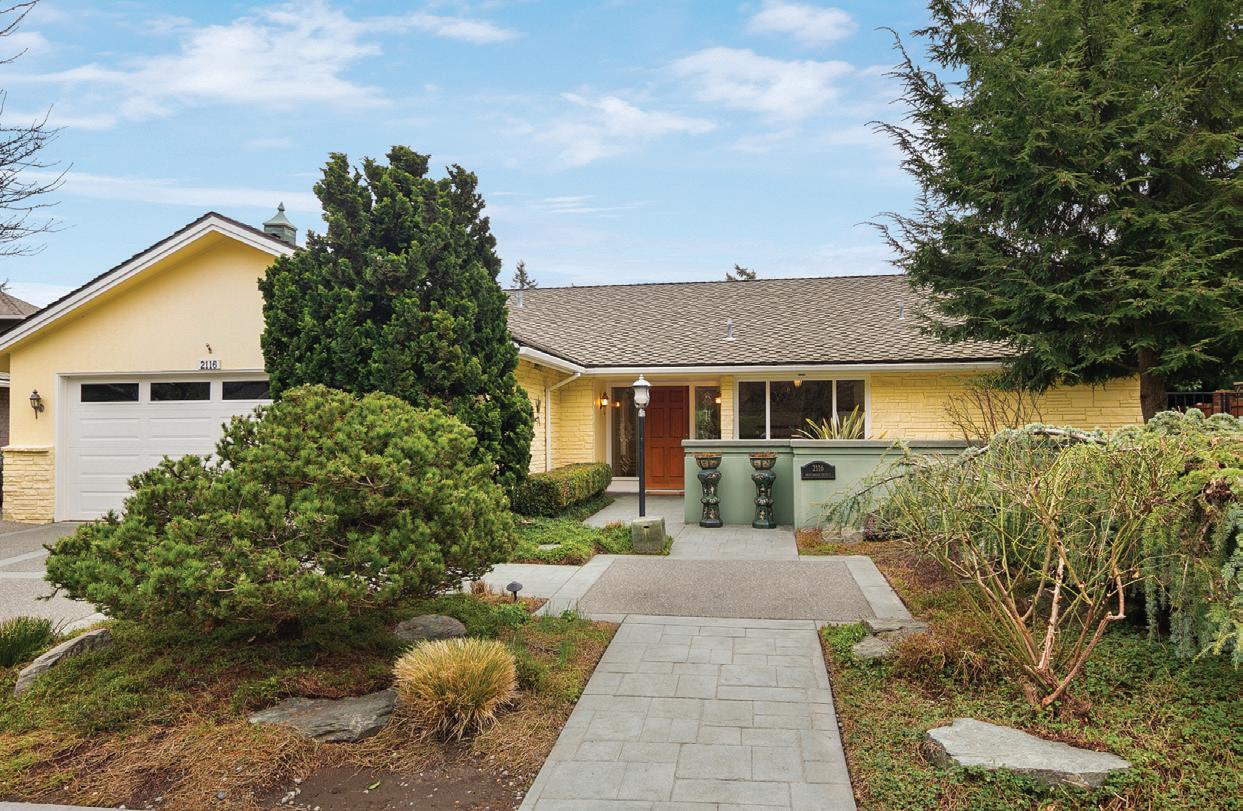
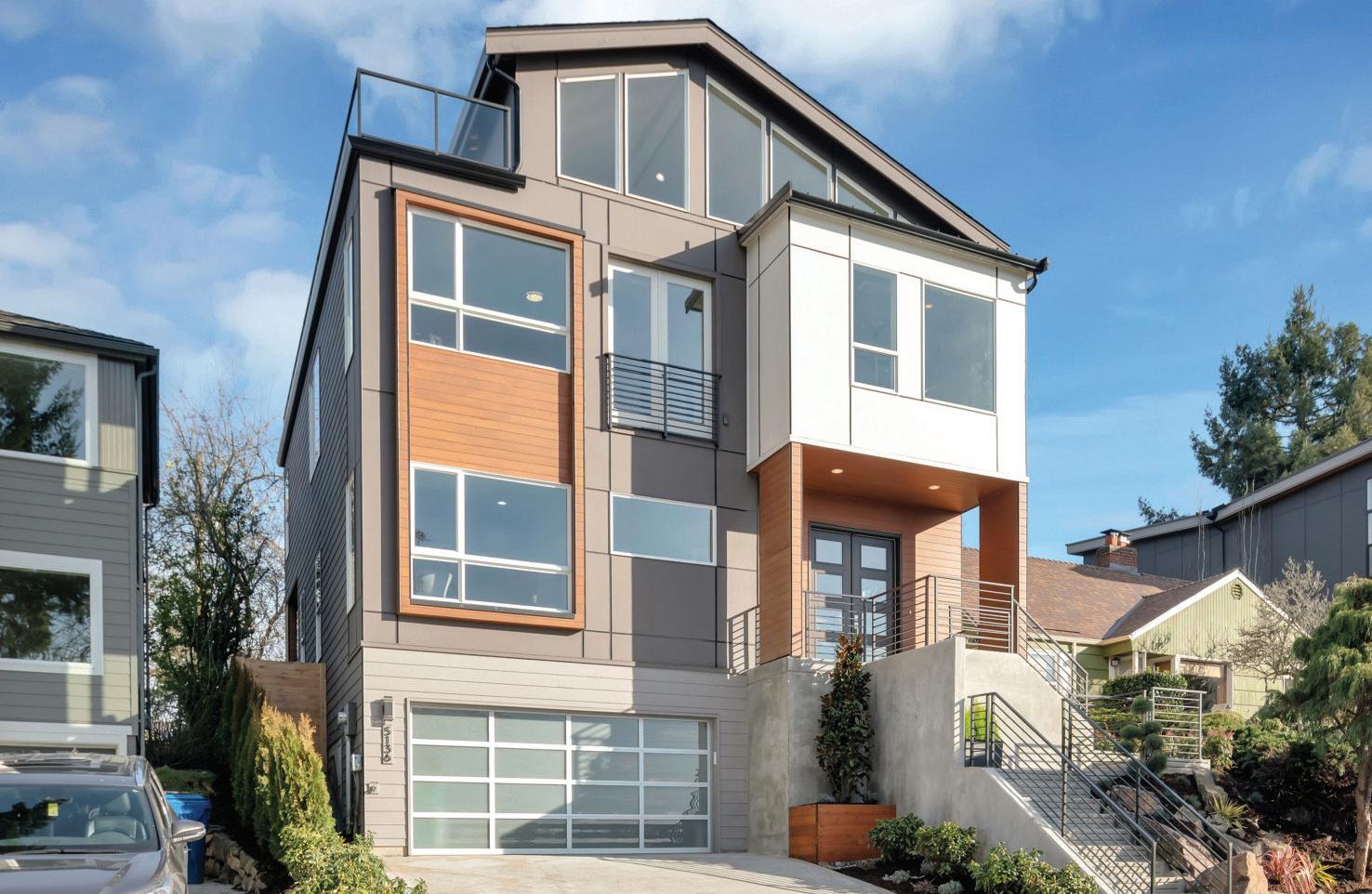
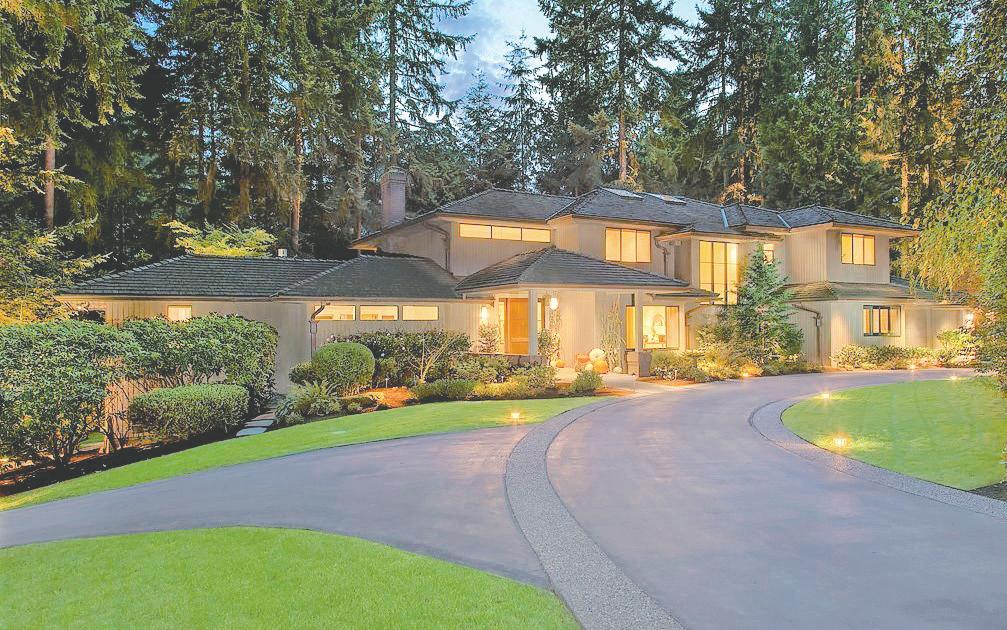
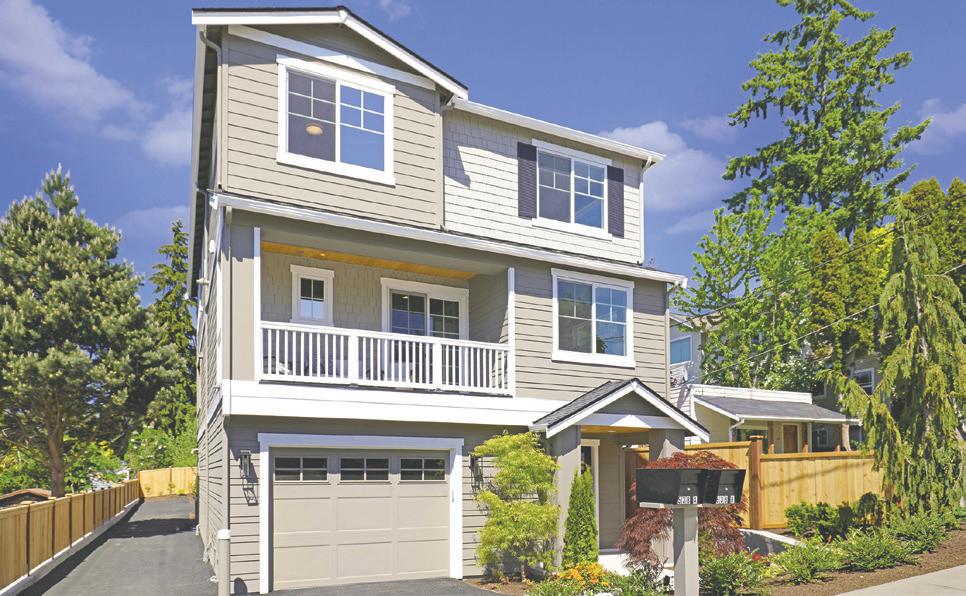
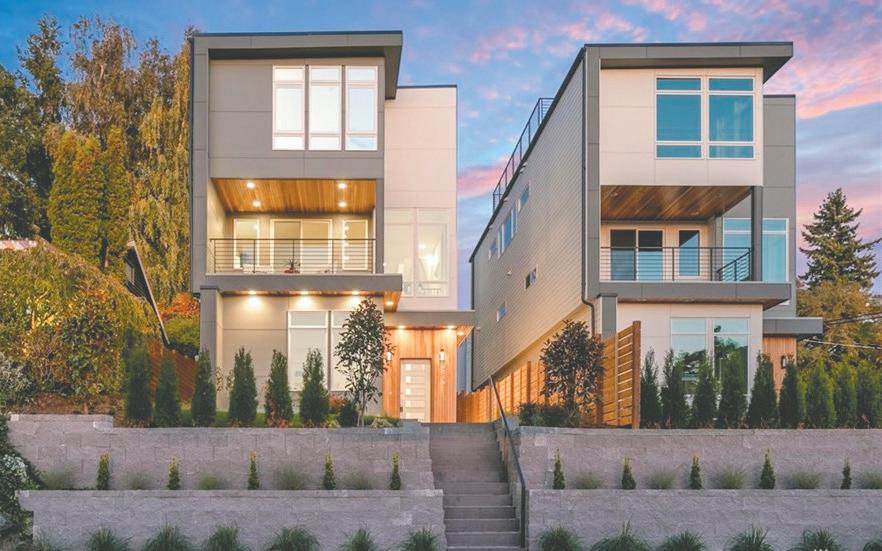
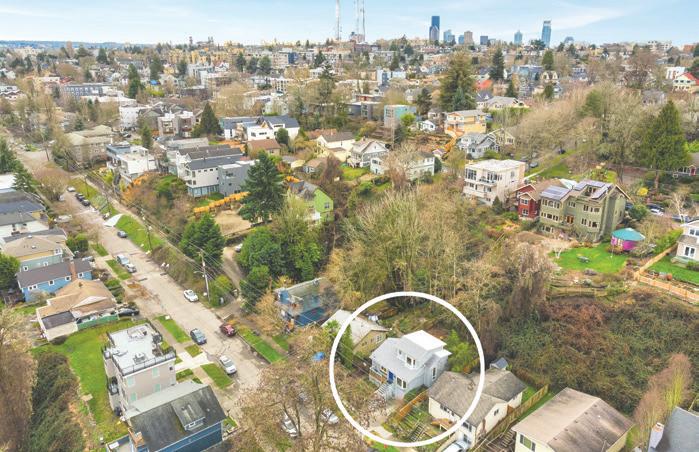
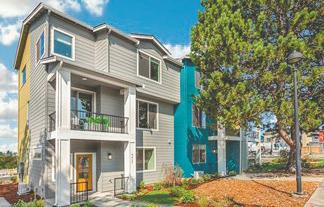
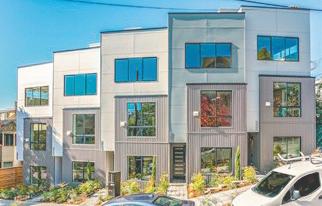
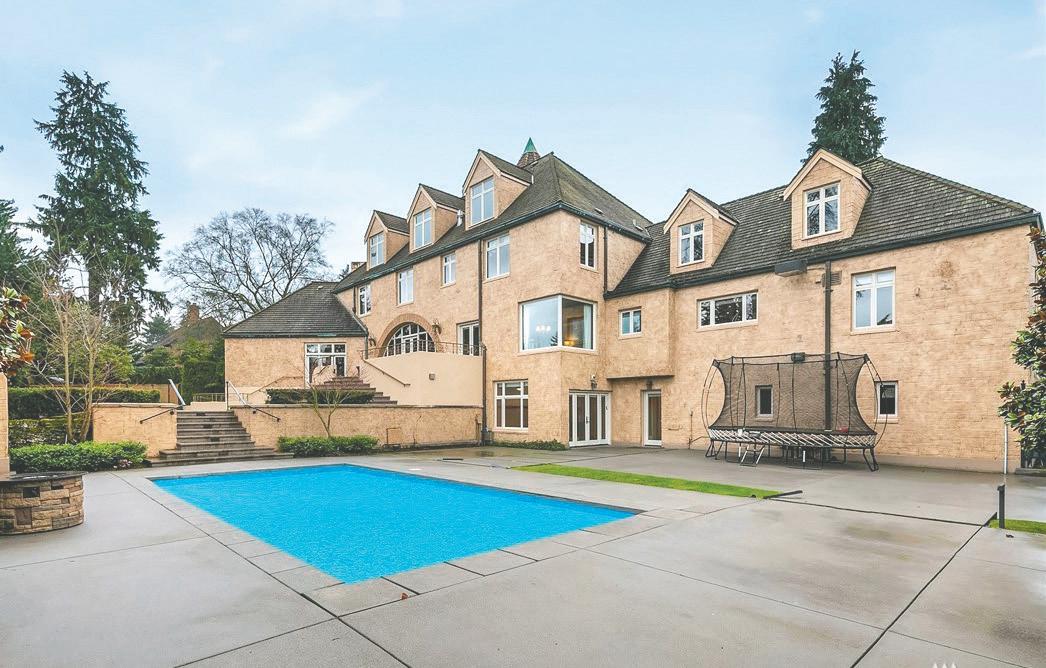
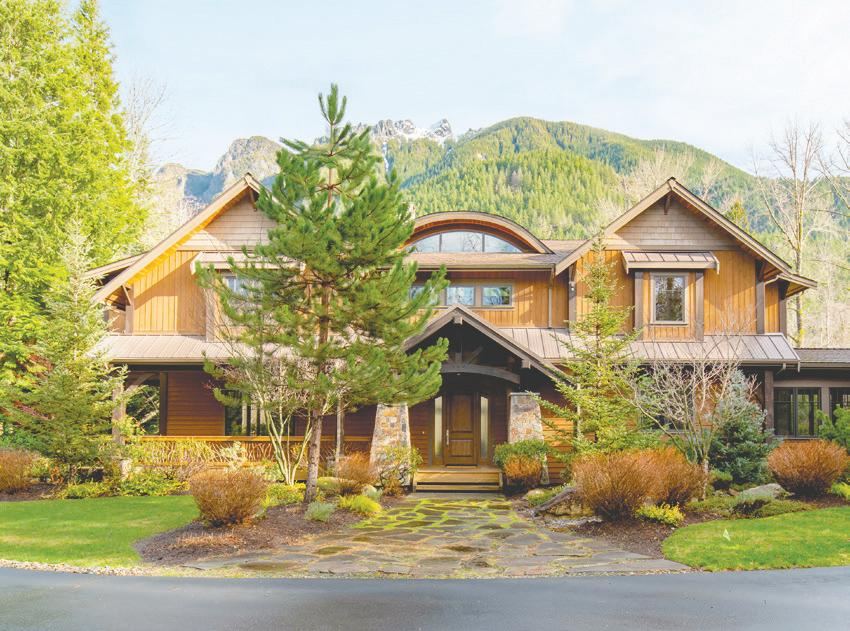
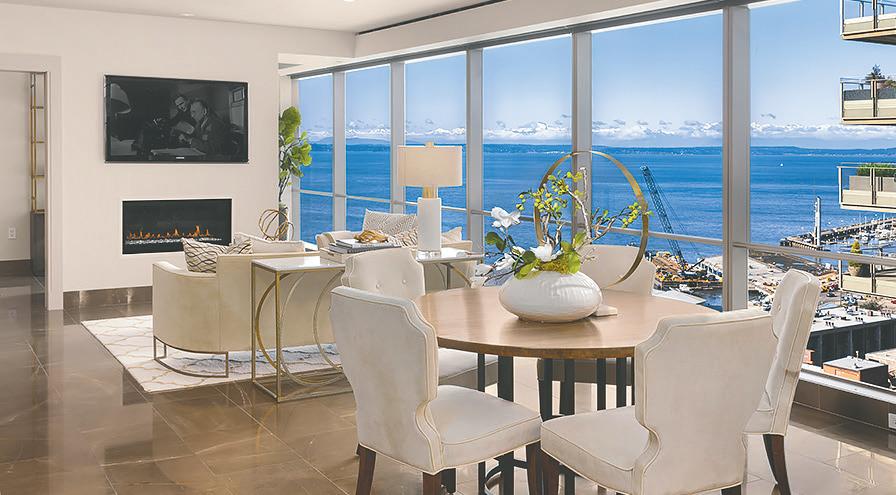
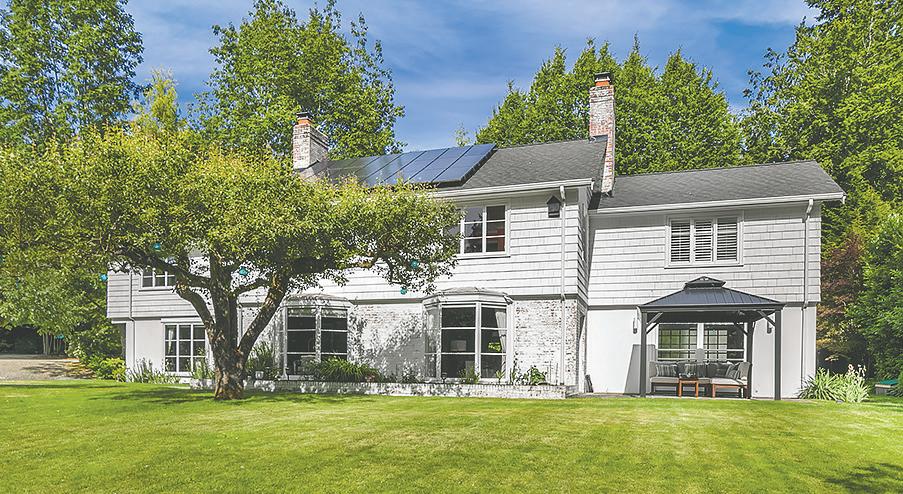
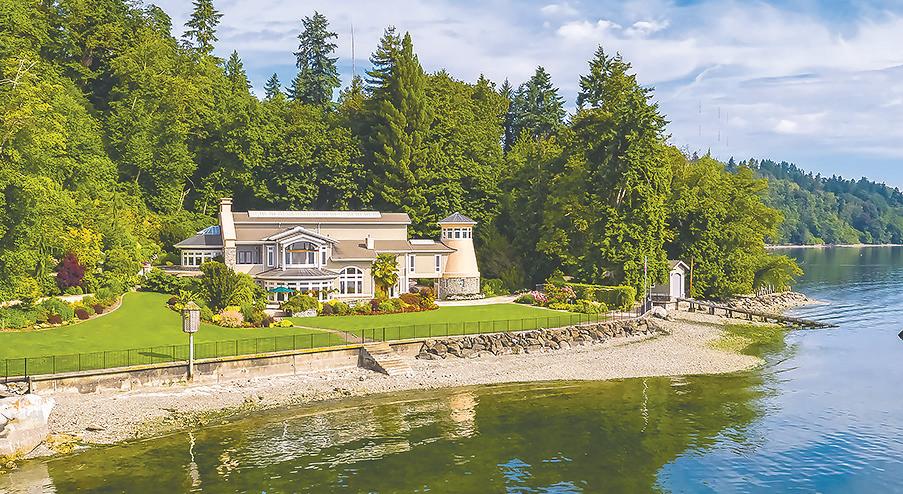
Spring may not quite be upon us here in Madison Park, but the real estate market kicked off the season early, with an uptick in home sales and growing median sales prices. Soon, we’ll be fully immersed in the blooms— and unavoidable showers—of springtime, with longer days leading us to what is historically the busiest time of year for our regional real estate market. As you consider whether you might make a move, here’s the latest from Central Seattle to Madison Park.
The Central Seattle region (Area 390) saw a sharp decline in the number of homes for sale as we shifted into the end of 2019, with inventory down over 20 percent on a quarterly basis. The number of sales moved in the opposite direction, growing from 189 in the fourth quarter of 2018 to 237 in Q4-2019—representing a 25.4% increase. Median sales price trends
in Central Seattle were on a steady incline as we finished out 2019 and have hovered between $900K and just over $1M into the first part of 2020.
Many of the trends that are impacting the Central Seattle area are also reflected in the Madison Park micro-market. In 2019, there were no more than nine homes for sale in any given month in Madison Park, a figure that gradually shrank to just two in the first month of 2020 (markedly lower than the nine homes we saw to start 2019). At this time last year, we were recovering from a bout of winter weather that contributed to a near halt in the market and with a hotter start to 2020, only time will tell if last year’s inventory trends will repeat themselves. In 2019, the number of homes on the market in Madison Park remained steady from February into the summer, when there were typically between five and seven homes available during any given month.
Median sales prices and the average price per square foot figures in the Madison Park market are generally higher than in Central Seattle as a whole. The median
sales price reached $1,791,000 in Madison Park for January 2020, which was higher than all but one month in 2019 (home prices topped out at $1,925,000 in May). As one would expect, the average price per square foot is also on an upward trajectory, reaching $605 per square foot in the first month of the current year. At the time of this writing, there are three condominiums listed for sale in Madison Park, ranging in price from $750,000 to $975,000. Just two single-family residences are currently on the market, priced at $1,800,000 and
$2,095,000.
Would you like to learn more about our local market fundamentals as you plan your approach to the spring real estate market? I would love for you to come visit me at Park House, the Realogics Sotheby’s International Realty office at 4031 East Madison Street. I am always happy to grab a cup of tea and talk trends! Here’s to a wonderful start to the season!
Neda Perrina is a broker of the RSIR Madison Park Office. She can be reached at (206) 218-8589 or Neda.Perrina@rsir.com. More at PerrinaRealty.com.
Instant Gratification – Spring Bloom
Somewhere along the way the term “instant gratification” took on a negative meaning. It seems to stand for greed, impatience, even superficiality. Guilt begone! I’m promoting some instant gratification this month in the form of spring flowering bulbs. So, last October, the big bulb planting month, rolled around and you neglected to get a bag of bulbs to dig in so that you’d enjoy the floriferous awakening of spring. Now, your beds are bare. Wave away your blues. Garden stores, groceries, even hardware stores, are filled with racks of bulbs which have been forced and are up, in bloom, ready to enjoy. Most of them staged in 4-inch plastic pots, like the ones in the photograph. Best of all, they’re inexpensive, usually three dollars or less per pot. Daffodils, snowdrops, crocus, hyacinths, even oxalis, are among the offerings. Buy them, bring them home to slip into decorative pots to grace your home, indoors or out. Or, plant them immediately in the ground. I particularly like the dwarf daffodils. They are clump forming, very easy to transplant and, being short and stiff, the foliage and blossoms do not flop in our seasonal rains and get flattened to the ground, often becoming slug salad. Our cool moist March,
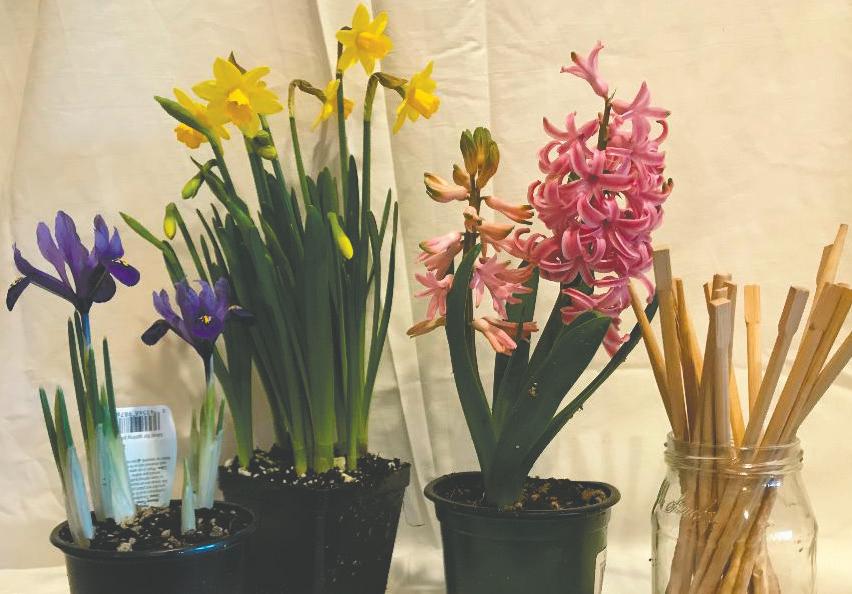
April, May climate makes pot-to-garden forced bulb planting easy. The blooming bulbs will go into place hardly missing a beat. There are a few tricks, however. If you place these forced bulbs indoors, they’ll last a week or more, given you keep them out of direct sunlight and away from heating elements. Do not let the soil in the pot dry out. Keep it evenly moist. You’ll notice white fleshy roots have crept out of the drain holes in the nursery pots. Don’t disturb them. They’ll even be happy standing in a bit of water at the bottom of the display container. Outdoors, these same flowering bulbs will last much longer, but in the house or outside, once blooms fade, cut
them off. You don’t want the bulbs to go into seed production. Leave the foliage in place. These leaves must fortify the bulbs below for next year’s flowers. In time this greenery will turn brown and limp. That’s when you cut the leaves off.
Planting these forced bulbs out in the garden is fairly simple. Choose a cool overcast day. Dig a generous hole. Put a bit of bone meal and some compost or a pinch of chemical fertilizer in the bottom of the planting hole and mix it into the bottom soil. Upend the pot of bulbs and slip them out of the plastic nursery pot. If a few roots break, don’t worry. You can put the bulbs in the ground as a cluster, or gently pry them apart and space them
a bit more generously. Get them out of the pot and into the ground quickly. Refill the planting hole gingerly, pushing the soil down and around the bulbs so that they stand up erectly, then water them in until the area encircling this new planting is soaked.
Before early summer the bulb foliage will disappear. This presents a problem for most gardeners. You forget where you planted them and often dig them up. So you need to mark their spot. I use the disposable chopsticks that are passed out in many Asian restaurants or come with carryout food. Push a chopstick into the planting, careful not to stab a bulb. It will stick up, marking the planting and will quickly weather and be inconspicuous, but still let you know where the bulb is. I’ve got quite a stash of these chopsticks. I collect them when we’re eating out or ordering in. Everyone at the table has to hand their used chopsticks to me. In restaurants, my family always gets nervous when I starting looking around at neighboring tables. In fact, I’ve been scolded and told I can’t ask other diners for their used chopsticks. I comply… but why? What’s the big deal? I should think I’d score points for being a dedicated recycler.
So there you have it. Your spring garden is a bit lackluster? Fill a flat with flowering bulbs and celebrate the impatient and gluttonous imp who dwells within all of us. Gratify yourself instantly with potted bulbs in bloom.
Steve Lorton Tree Talk
SDOT releases final North Downtown Mobility Action Plan
in the NODO area would be needed to account for the population increase.
By Brandon Macz QA&Mag News staff writer
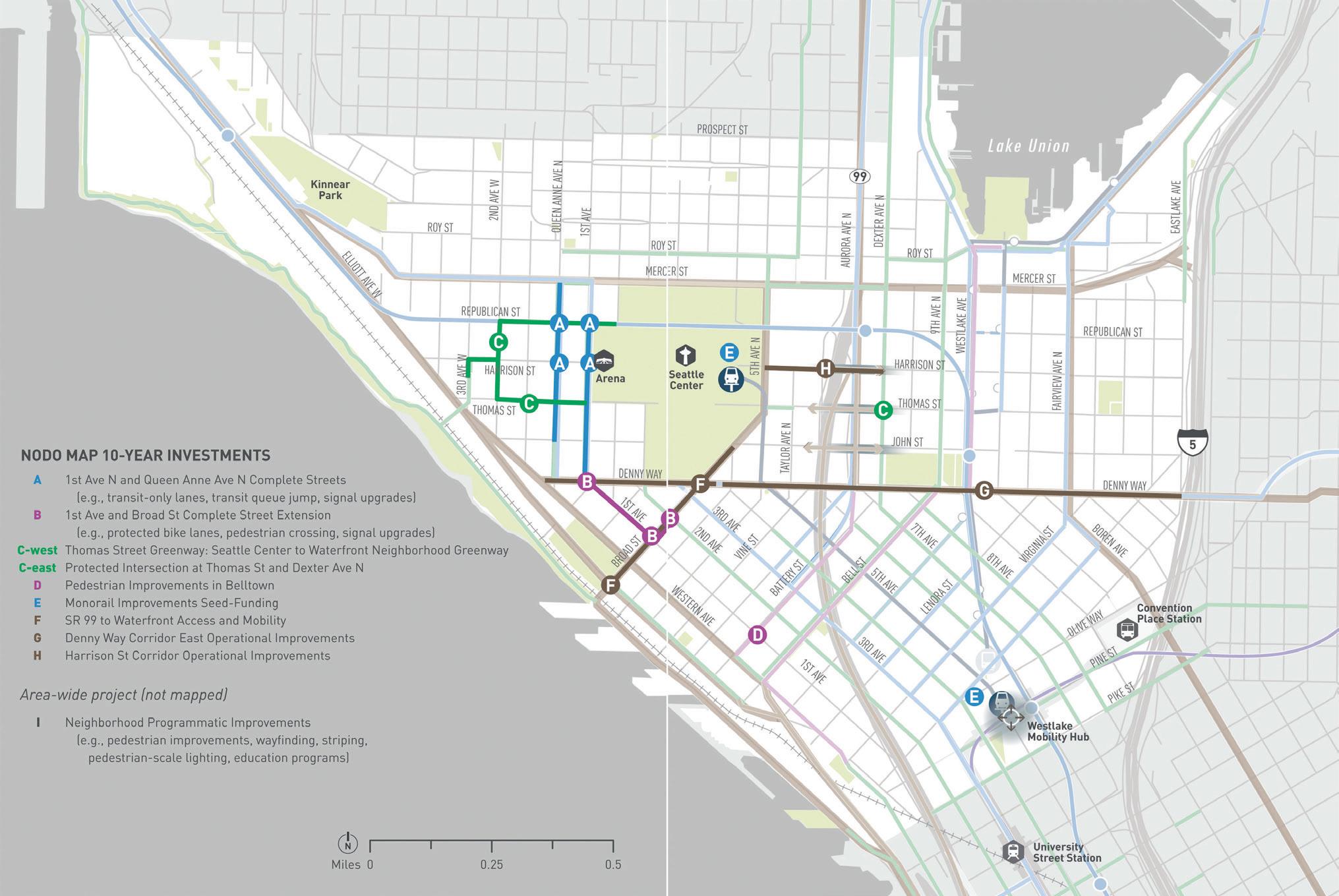
The Seattle Department of Transportation has published the final North Downtown Mobility Action Plan to guide the next 10 years of projects meant to address growth in Belltown, Uptown and South Lake Union, coupled with a future influx of people to the new Seattle Center arena.
The NODO MAP includes South Lake Union, Uptown and Belltown, an area that is estimated to add 15,000 households and 20,000 new employees by 2035.
Half of the new housing units and 15,000 jobs are anticipated in SLU while 3,000 new households and 2,500 jobs are expected to be created in Uptown in the next 15 years.
Even without the Seattle Center arena rebuild, which will double the facility’s size and provide more than 18,000 seats for certain events, SDOT says revisions
Arena developer Oak View Group has agreed to provide $40 million for mobility improvements over 39 years, and most of the tierone projects around Seattle Center will be carried out by OVG contractors.
“2020 is primarily going to be a development and design phase, so you won’t necessarily see any construction or improvements in the ground this year,” said NODO MAP manager Kay Yesuwan.
A key project that needs to be completed before the arena reopens in spring 2021 is the First Avenue North and Queen Anne Avenue North Complete Streets.
Revisions include adding transit-only lanes on First Avenue North — between Denny Way and Republican Street — and Queen Anne Avenue North — between Mercer and John streets. Both streets are used by King County Metro’s
RapidRide D line, which suffers from overcrowding at peak hours around Seattle Center. The city will also pay for increased bus service around arena events.
Traffic signals will be added on Queen Anne and First avenues north at Thomas Street. Once OVG completes the rebuild, the arena’s new front entrance will be on First.
The NODO MAP states several intersections around Seattle Center experience a high number of collisions involving pedestrians: Queen Anne and Mercer, First and Mercer, Terry Avenue and Mercer, Denny Way and Westlake Avenue North.
Signal upgrades will be made at Queen Anne Avenue North and Harrison
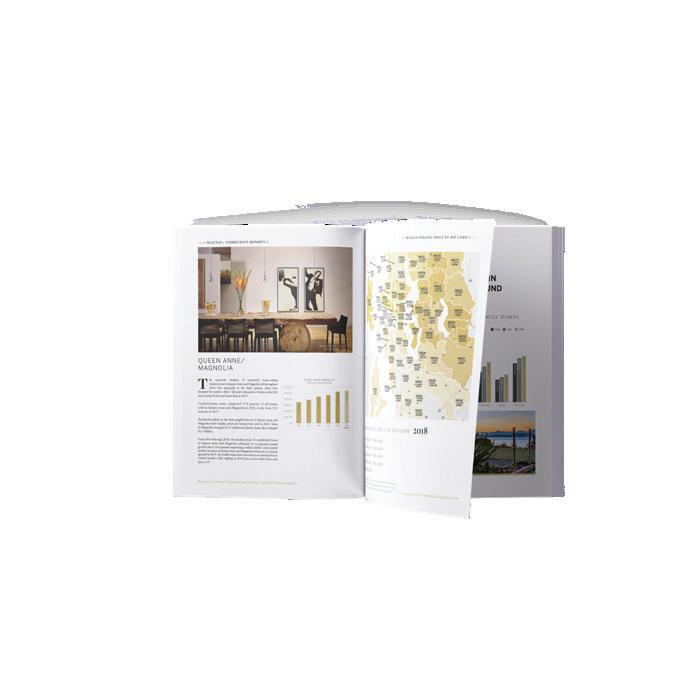
hether you’re planning to sell, purchase, or just want to know the trendlines in your neighborhood, the Realogics Sotheby’s International Realty 2019/2020 Annual Market Report is your resource for savvy market insights. The report includes a 2019 retrospect, Case-Shiller Index summary, trends by neighborhood and county, 2020 price predictions and a market fundamentals outlook. Would you like a copy? Shoot me an email and I can provide a digital magazine or hand-deliver you a copy of the report when it's released.
Managing Broker | Senior Global Real Estate Advisor Founding Member | 206.399.5842 Laura.Halliday@rsir.com
Street, First and Harrison, Queen Anne and Republican, and First and Republican, where a transit queue jump will be designed to give priority to buses. The NODO MAP calls out a lack of east/west connections for cyclists and transit, and a disconnected bike network in general.
PROVEN RESULTS
A CONTINUED LEGACY
RSIR ranks amongst the largest, most productive and fastestgrowing real estate companies in Washington with access to 22,700 brokers in 72 countries that generate US sales of $100 billion+ annually.
WHAT MY CLIENTS ARE SAYING
Laura is a wonder. She is kind, professional, had great ideas as to how to show the house to its best advantage (remove many, many things so that people can see the house), she is a wonderful advocate for you and she really is right on top of things. She is very honest which is such a wonderful gift and makes it so easy to work with her. She really knows a house and the neighborhood and can help you find your way—either in or out! Her negotiation skills are outstanding and she will do her very best for you—and her very best is terrific! I cannot say enough good things about her.
Sotheby’s auction house presents Art Impressionniste et Moderne, a selection of paintings and sculpture from French and European private collections.
There is currently no protected bike lane between Seattle Center and the Elliott Bay waterfront.
“For example, the Roy St protected bike lane does not connect to the Mercer St protected bike lane. The 2nd Ave protected bike lane does not connect across Denny Way to Seattle Center,” according to the plan. “The 5th Ave N protected bike lane does not connect across Denny Way to bike facilities into downtown.”
Yesuwan said Roy and Mercer are among the toughest blocks to figure out, and bike connectivity remains under design consideration.
The Second Avenue protected bike lane extension from Denny Way to Pike Street opened in February 2018, and connects all the way to Yesler Way. It is the most continuous protected bike lane (PBL) in the NODO area.
As reported by The Urbanist, SDOT plans to remove a section of the Second Avenue PBL before it reaches Denny Way, creating a second southbound receiving lane for post-event motorists leaving arena garages. Cyclists would have to use the sidewalk.
Uptown Alliance Transportation Committee chair Rick Browning has been a bicycling advocate for 40 years. While the organization is pleased to see this level of funding being made available for various projects meant to promote modes of transportation other than motor vehicles, he’s personally disappointed bicycle infrastructure wasn’t prioritized more in the NODO MAP.
“I must say, I personally have stood at that intersection — Second and Denny — at rush hour, and I was amazed how many bikes use that bike lane to connect on up to Seattle Center,” Browning said.
The bike advocate is also concerned about the gap in protections for cyclists at First Avenue North and Queen Anne Avenue North.
Part of the Complete Streets plan for Queen Anne Avenue North and First Avenue North is to construct two-way PBLs. First Avenue North will have them between Denny Way and Thomas Street, and Queen Anne will have them on the east side of the street, from Mercer to Thomas streets. Cyclists wanting to continue heading north of Thomas Street would have to take Thomas to Queen Anne Avenue North to access that protected bike lane. This allows SDOT to create a flex lane on First near the arena that can be either parking or an extra general-purpose lane. The First Avenue North PBL was shifted to the other side of the street when arena construction started last year.
Browning said state law allows cyclists to use any street, so he predicts many riding on First Avenue North will not make the jog over to Queen Anne Avenue North, and will instead continue on First.
“That’s what I’m going to do. I’m going to just continue riding up First,” he said. “That’s how I get home.”
The Queen Anne Avenue North PBL would cross Mercer Street slightly, pushing cyclists into a northbound general-purpose lane before reaching Roy Street, which has a protected bike lane there that stretches to Fifth. Yesuwan said that design is still being worked on and that it hadn’t been considered previously in OVG’s master use permit decision. Part of the discussion moving forward is how much parking should be preserved on Queen Anne Avenue North,
she said, adding the two-way configuration also creates concerns due to the number of turns available to motorists.
It would be nice if SDOT could find funding to connect the future Queen Anne Avenue North PBL to the one on Roy Street, Browning said, but he believes The Urbanist is correct that the next round of Bike Master Plan funding has already been dedicated for other projects.
Cyclists heading from Queen Anne to Downtown would take Queen Anne Avenue North to Thomas Street, at which point they could take the sidewalk to connect to First, which would provide a PBL down to Denny Way.
SDOT does not feel comfortable providing bike facilities on Denny Way, and so no bike or pedestrian crossings were designed at First, said Sara Zora, street use development review manager.
Zora said SDOT is still looking at how to make a PBL connection from First to Second, which NODO MAP identifies as a second-tier project.
The First Avenue and Broad Street Complete Street Extension also plans for a two-way PBL along Broad Street, between Second and First streets, which Yesuwan said will go through early planning this year and design in 2021. The extension project would also expand the First Avenue PBL further south to Broad Street to connect.
Browning said creating truly connected PBLs will result in more people choosing cycling over other transportation modes, but many will remain on the fence until then.
“I don’t think SDOT has been good — in fact, I think they’ve been terrible — about the public outreach for the planning for these bike facilities,” he said.
Oak View Group will need to finish the First and Queen Anne PBLs, Thomas Street traffic signals, sidewalk and curb bulb work, and bus-only lanes on First and Queen Anne prior to receiving a certificate of occupancy for the new arena under its master use permit, Zora said.
“So we have high hopes that they will build all this and be very successful in opening all of this at the same time,” she said.
OVG also has an Arena Access Management Plan (AAMP) in place with the city that commits it to pre- and post-event transportation management and monitoring. If the developer can’t meet performance standards, more traffic mitigation work would be required under the AAMP.
First-year monitoring events include two mid-season hockey or basketball games and two typical concerts at the area.
“By waiting until mid-season, travel patterns and behavior will have normalized so that a representative sample is collected,” according to the AAMP. “It also allows for the benefits of the initial event monitoring and any associated AAMP refinements to take effect.”
While Browning laments that bike infrastructure connectivity did not receive a higher priority, he said he is excited about the amount of funding being invested in transportation projects in the Uptown neighborhood.
He is particularly excited about the Thomas Street Redefined project, which includes a 36-foot-wide pedestrian and bicycle pathway from Fifth to Dexter, as well as the creation of a public plaza across from a new Seattle Center skate park. The Seattle City Council approved $1.1 million in funding on Jan. 6 to bring the Thomas Street Greenway to 100 percent design.
“I have faith in the goodwill of parties involved that there will be attempts to tweak things and make them work better as soon as we see what happens with the arena,” Browning said. “Certainly, no plan is going to be perfect right out of the box.”