Photo by Jessica Keller
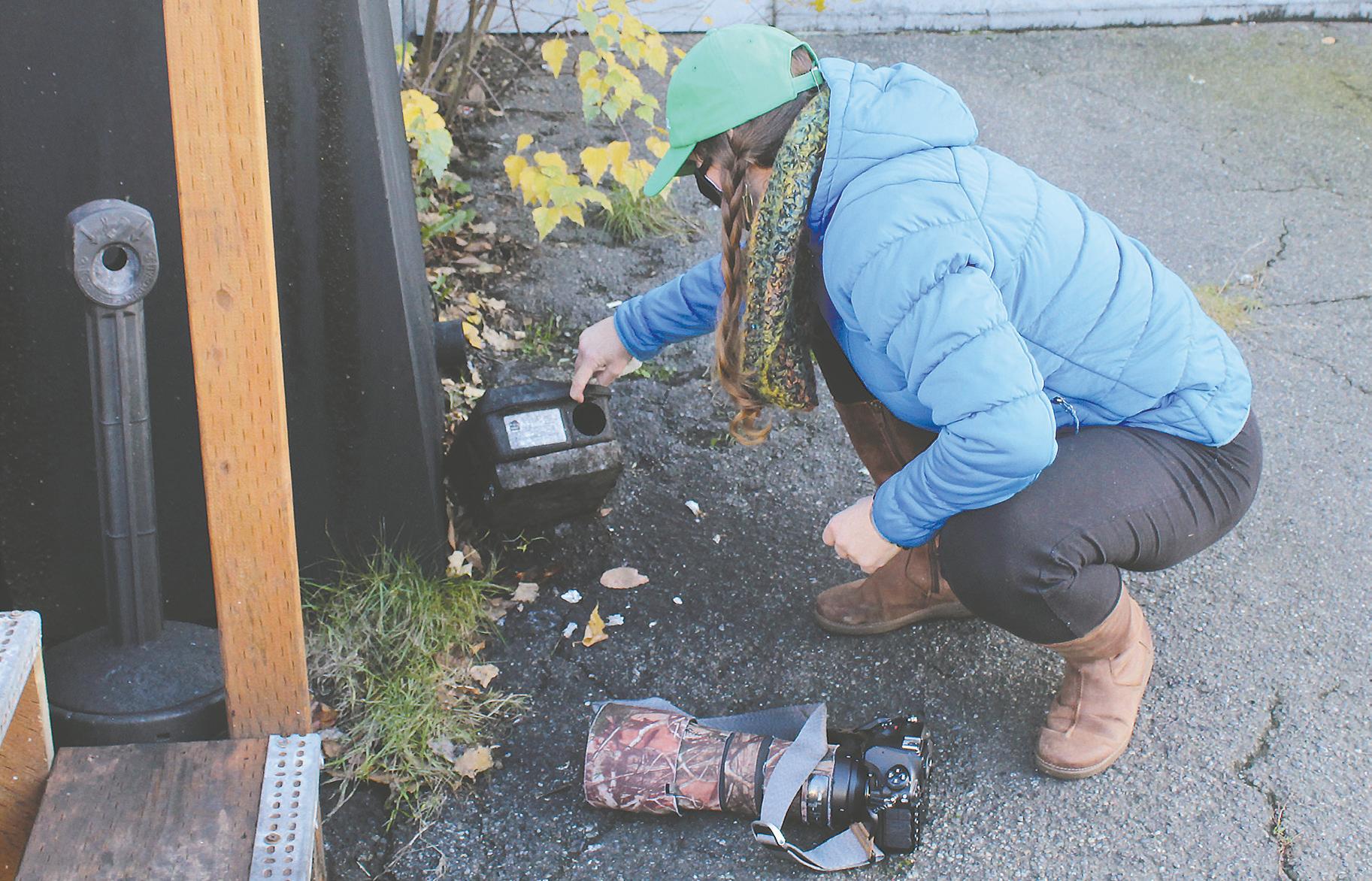
Kersti Muul, a wildlife conservationist from West Seattle and member of the Seattle Audubon Society Conservation Committee, examines a bait box placed in an alley in Queen Anne. Bait boxes contain rodenticides used to kill rats but can harm other animals that hunt them, such as a snowy owl that made Queen Anne its temporary home in November or other raptors. Just recently, conservationist found 45 bait boxes in a .2-mile stretch of Madison Park along Madison Avenue.
Snowy owl in QA facing urban threats
By Jessica Keller Madison Park Times editor
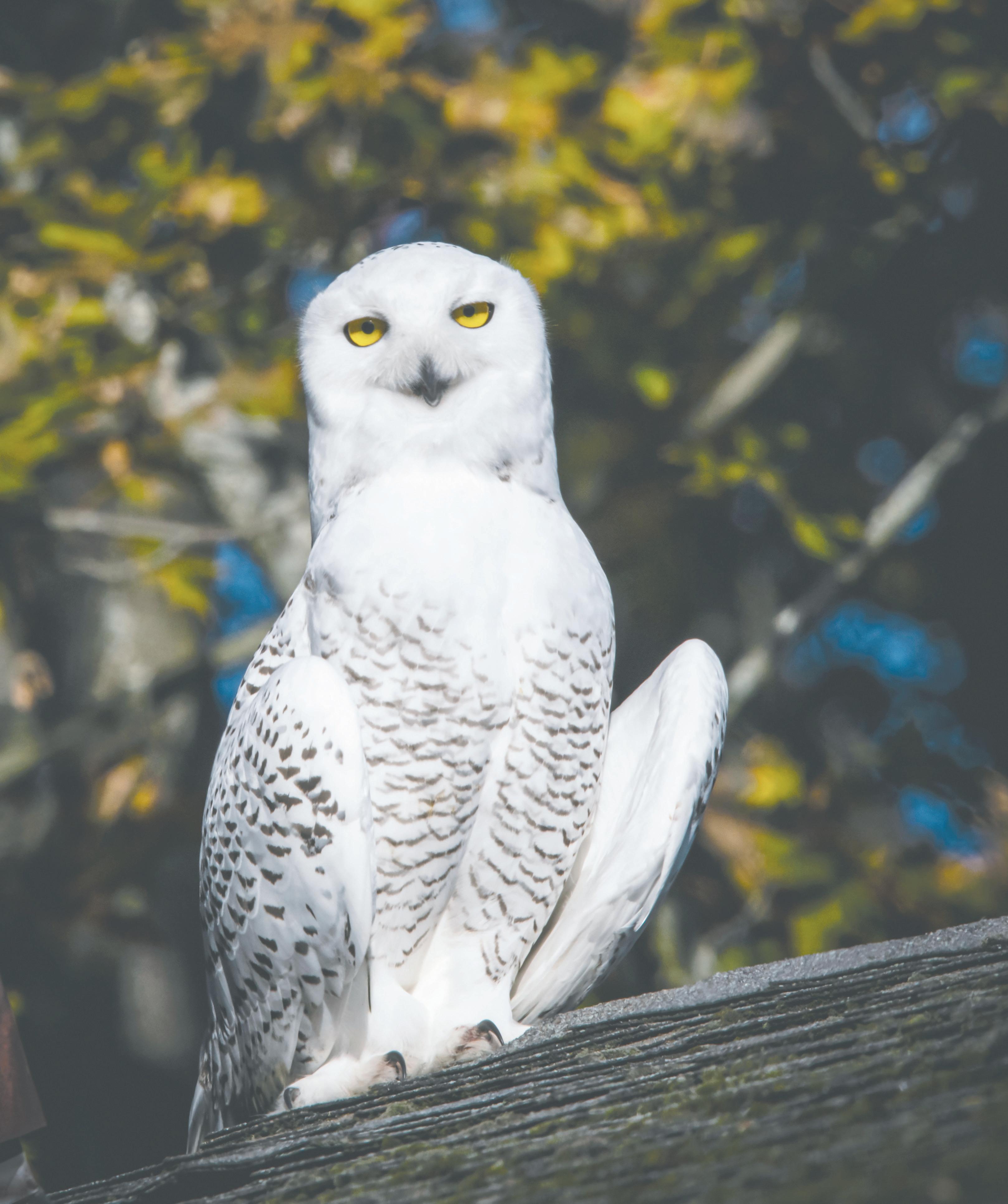
A snowy owl has become something of a local celebrity in upper Queen Anne, after moving into the neighborhood from cooler northern climes about a month ago.
Among the owl watchers, some with tripods and telephoto lenses, flocking to the side streets of Queen Anne Avenue North, are two conservationists, whose interest in the bird stems from concern.
Tanea Stephens, Washington State coordinator for Raptors Are The Solution and Queen Anne resident, and Kersti Muul, a conservation specialist, community naturalist and member of the Seattle Audubon Conservation
lisaturnure.com.
Committee from West Seattle, have been regularly checking up on the snowy owl since it has made Queen Anne its temporary home this fall.
“The environment makes it sometimes risky for her — the urban environment, as opposed to her natural environment,” Stephens said. Muul said the owl was briefly spotted in Burien and West Seattle in mid-October but moved on to Queen Anne in November, where it has stayed since. It is either a female or a juvenile male, based on the brown flecks in its feathers, and came south from its native Artic region of North America, either because prey was scarce or there were too many
SEE OWL, PAGE 2


snowy owls competing for food in the area. Since landing in Queen Anne, the snowy owl has settled into a regular routine of napping and ignoring its adoring fans and the crows and other birds intent on driving off the larger predator from its tree branch or rooftop. At around 4:30 or 5 p.m., it leaves to hunt rats and rabbits.
While Muul hasn’t been able to track the bird’s hunting grounds, she said the owl would likely choose an environment with wide-open spaces, so it can see the prey below.
What worries Stephens and Muul is the prey the snowy owl is consuming.
Through their organizations, Stephens and Muul are partnering on an anticoagulant rodenticide campaign to educate people about the dangers of poison bait boxes set out to kill rats, as well as track where bait boxes are set out throughout the city.
When Stephens learned about the snowy owl in her neighborhood, she conducted a preliminary survey looking for anticoagulant rodenticide bait boxes. Just in a two-block stretch of the eastside of Queen Anne Avenue North, Stephens found 30 bait boxes, including one next to a home where the owl had been perched. She and volunteers found 40 on the westside of Queen Anne Avenue North.
The problems with bait boxes are widespread, however. In her preliminary documentation of other neighborhoods in Seattle, Stephens visited Madison Park’s commercial area on Dec. 29 and found 45 rodenticide bait boxes placed by commercial bait box companies along Madison Avenue, from 43rd Avenue East to McGilvra, an approximately .2-mile stretch.
Stephens said snowy owls eat two small rodents a day, and she and Muul are concerned, while in Queen Anne or out hunting at night, the bird will inadvertently consume a poisoned rat, which take up to 10 days to die after eating the bait. A slowly dying rat might be considered an easy meal by the owl, regardless of where it is spotted.
As part of her work for Seattle Audubon, Muul is monitoring the bird for signs of anticoagulant rodenticide poisoning: lethargy, drinking lots of water, blood coming from its beak and mouth.
While bait boxes, set out by commercial pesticide companies, may seem like an easy solution, Stephens said people are often unaware of what is inside or that the poison can kill non-target wildlife, like the snowy owl and other raptors, as well as dogs, cats, songbirds that accidentally wander into a bait box and other animals. The poison is also harmful to humans, as well.
“The crazy thing is these rodenticides are showing up all throughout the food web,” Stephens said.
Part of what Stephens and Muul are trying to accomplish is educating people who are out looking at the snowy owl about the dangers of using rodenticides, when there are other solutions.
Even if the snowy owl doesn’t visit Madison Park, Stephens said in an email, the presence of so many bait boxes in such a small area should be of concern to residents.
“With all the tall trees lining the lakeside and Madison Park, there must be raptors that live and hunt in the area,” Stephens said in an email.
Muul said this is an environmental problem created by humans, and it is largely unnecessary. Both Stephens and Muul agree the best way for people to prevent rats from entering residences and businesses is by sealing off entries and keeping trash in containers.
“Sanitation is the biggest solution, I think,” Muul said.
“With
all the tall trees lining the lakeside and Madison Park, there must be raptors that live and hunt in the area.”
— Tanea Stephens, Seattle resident and Washington state coordinator for Raptors are the Solution
Stephens and Muul hope the interest in the snowy owl and other raptors in Seattle will generate awareness among residents about rodenticides.
Stephens said, on one hand, she understands people want some happy distraction, which the bird provides, but on the other hand, they need to be aware of the dangers the owl faces while snowbirding in warmer climes. She said she has left brochures informing people of the dangers bait boxes present near where the snowy owl has been seen, while Muul has been more direct, talking to people.
“People are just ignorant, and I don’t mean that in a bad way,” Muul said. “They just do not know. Education is the No. 1 solution.”
To learn more about Raptors are the Solution and safe alternatives to rodenticides, go to www.raptorsarethesolution.org.
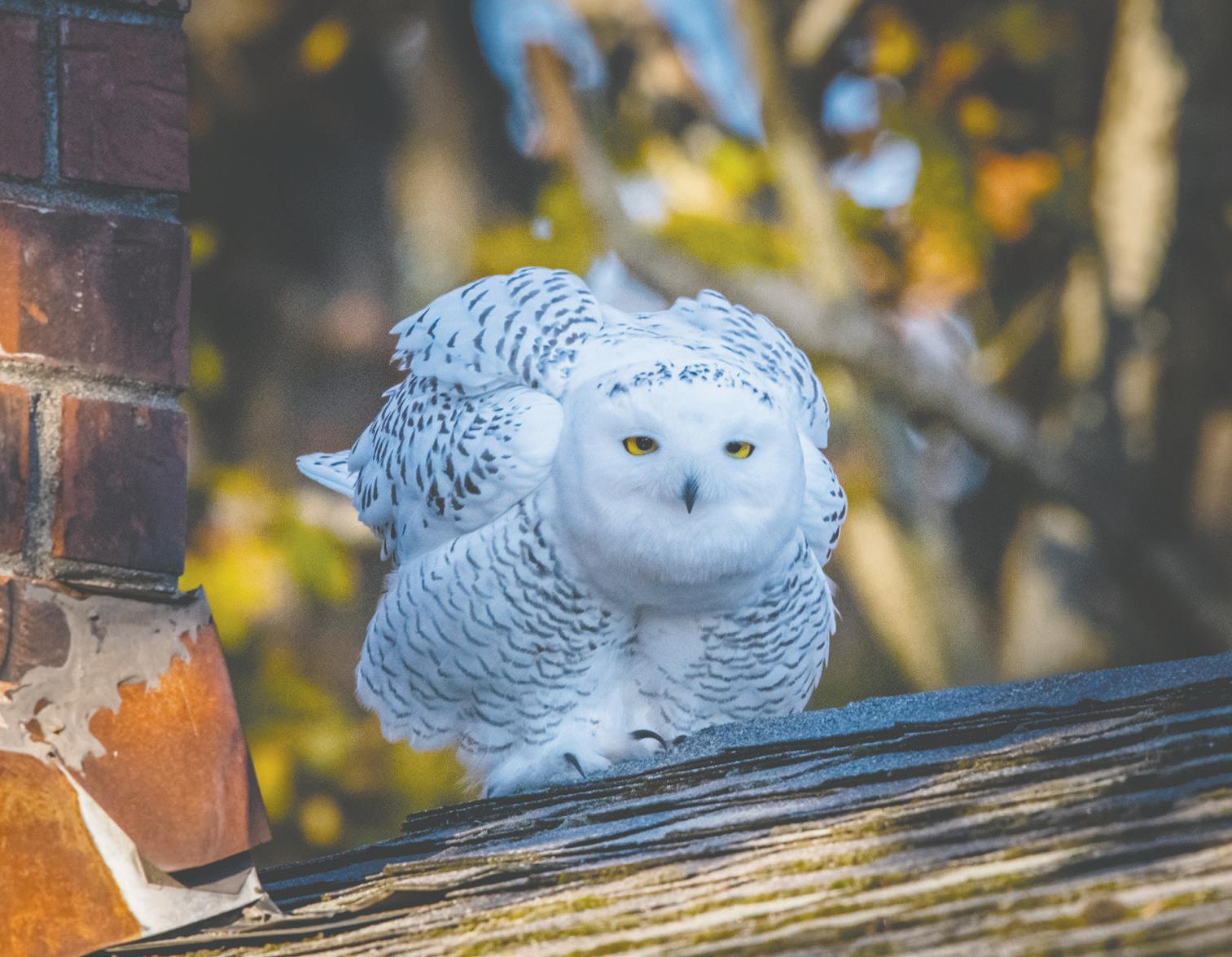
Local wildlife conservationists Tanea Stephens and Kersti Muul are closely monitoring the welfare of a snowy owl that moved to upper Queen Anne in early November, much to the delight of residents and the annoyance of local birds. Muul and Stephens are concerned about the dangers the country bird faces while visiting the city, specifically the owl killing and eating a a poisoned rat. As part of a joint effort between the Seattle Audubon Society and the Seattle chapter of Raptors are the Solution, volunteers are tracking the usage of bait boxes, which contain rodenticides dangerous to more animals than just rats. Recently, Stephens found 45 of the containers in .2 miles in Madison Park.





120 years!
BETSY Q. TERRY & JANE POWERS 206.322.2840 ewingandclark.com luxuryrealestate.com


f there is one thing that may be said about 2020, it’s that it challenged us. We navigated the onset of a global pandemic, rode a wave of economic uncertainty, and faced a divisive presidential election, but most importantly, we came together as a community. I am so proud of the way that our Madison Park, Broadmoor, and Washington Park families, clients, and businesses coalesced to support one another and am grateful as ever for those I had the pleasure of assisting with their housing needs. I am so grateful for all your support and I look forward to continuing to bring the very best of my brand and my passion to our community in 2021. Here’s to a safe and healthy New Year!
Managing Broker | Senior Global Real Estate Advisor Founding Member | 206.399.5842 Laura.Halliday@rsir.com LauraHalliday.com


PROVEN RESULTS

A CONTINUED LEGACY
RSIR ranks amongst the largest, most productive and fastestgrowing real estate companies in Washington with access to 23,000 brokers in 70 countries that generate global sales of $114 billion annually.
WHAT MY CLIENTS ARE SAYING
It was certainly a pleasure for me and my husband to work with Laura Halliday in the sale of our North Capitol Hill home. While these are challenging times for all of us, her professionalism, knowledge about our market, personal enthusiasm and good judgment led us to a successful sale to a young family we hope will find as much joy in our house as we did. Throughout the process, Laura was a good listener about our goals and preferences, and she offered suggestions which reflected her experience, elegance, and good taste. She maintained excellent contact every step of the way and responded immediately to questions or concerns, providing feedback with candor and grace. We highly recommend Laura if you are looking for a truly special professional who delivers.
- David & Fritz Rankin










for their clients, helping them with everything a house has become is in today’s climate. Along with Sotheby’s powerful global network and RSIR.com—recognized as the best real estate website by REAL Trends*—our brokers offer intelligent solutions to guide you through the real estate process. Your buying and selling journey is only a click away.