

Madison Park Times
Getting Kinnected
By Jessica Keller QA&Mag News Editor
Madrona entrepreneur Megan Haas’s idea for a holistic healthcare platform that allows people to manage their health while connecting with other people and practitioners began percolating 15 years ago.
The need for that platform became even more of a priority when her daughter started experiencing food texture aversions that became debilitating. Haas said wished she had a space where she could share her burdens with others facing similar situations because she felt alone, with no one to talk to. When she joined Twitter, she saw many people felt the same way as she did.
“We want to connect, but there are so few authentic places for us to do that,” Haas said.
So, Haas did what she has years of experience doing: taking an idea, making connections with the right people, collaborating and transforming those ideas into a reality. Haas, who co-developed the company Utilikilts, which specializes in making kilts, in 2000, is now focused on something even bigger: untangling the intimidating web of the healthcare system. With a skilled team of web designers behind her, Haas’s vision includes answering the questions of how do people build self knowledge around health, and how do they collaborate with others in the process?
For Haas, the answer to those ques-
KINNECTED, Page 6

platform into a reality with Kinnected.org, which is a
based, free service





Photo courtesy Megan HaasMadison
Brown Bear offering free car washes for veterans

As a way to thank members of the military, Brown Bear Car Wash will offer free washes to all current or former members of the military from 8 a.m. to 6 p.m. Veterans Day, Nov. 11. The free “Beary Clean” washes will be offered at 27 tunnel wash locations. See www.brownbear. com for a list of all participating tunnel locations.
The offer operates on an honor system and no verification or documentation is required. Drivers should identify
themselves as a current or former member of the military to the wash attendant upon arrival.
As it has for the past six years, Brown Bear Car Wash will again make generous donation to support Puget Sound Honor Flight and its mission of transporting western Washington war veterans to visit memorials in Washington, D.C.
For more information visit http://pugetsoundhonorflight. org/about/.
Seattle University soliciting public safety input
Seattle University is administering the sixth annual citywide Seattle Public Safety Survey, which is accessible at publicsafetysurvey.org, through Nov. 30.
It is available in Amharic, Arabic, Chinese, English, Korean, Oromo, Somali, Spanish, Tagalog, Tigrinya and Vietnamese. The purpose of the survey is to solicit feedback on public safety and security concerns from those who live and/ or work in Seattle.
A report on the survey results will be provided to the
Seattle Police Department to help them better understand residents safety and security concerns in their neighborhood.
More information on the Seattle Public Safety Survey can be found at http://www.seattle. gov/police/information-anddata/mcpp-about. Seattle University invites people to circulate this information to friends, family, coworkers and community members, as well as post the information on social media.
Seattle Public Library losing certain locations Nov. 3
To help ensure appropriate social distancing space at Seattle Public Library locations with ballot boxes, the Library will suspend services at five branches Election day, Nov. 3. These locations will not offer Library services that day — such as book returns, Curbside Service or restroom operations — to reduce crowding as a large turnout of voters is anticipated:
* Ballard Branch, 5614 22nd Ave. N.W., 206-684-4089
* Beacon Hill Branch, 2821
Beacon Ave. S., 206-684-4711
* Broadview Branch, 12755 Greenwood Ave. N, 206-684-7519
SPU lowering tuition next year

By Jessica Keller QA&Mag News Editor
Beginning next fall, Seattle Pacific University will decrease its tuition for undergraduates by 25 percent.
In addition to the tuition decrease, SPU is restructuring its scholarships and capping future tuition rate increases. The move is an effort to attract more students to SPU.
Nathan Mouttet, SPU vice president for enrollment management and marketing, said the university research and planning behind the move has been going on for approximately two years.
“This is not a trivial decision,” he said.
With the tuition rate reduction, the university will also cap future undergraduate tuition rate increases to no more than 4 percent annually for students enrolling in autumn 2021, according to an SPU press release. Typically SPU has averaged a 5 percent increase. The university will also offer “substantive scholarships that address financial need, faith and academic merit.”
“We are proud to be able to offer this now, particularly in a time in our nation when many families are facing increased financial pressures and economic uncertainty,” SPU President Dan Martin said in the press release. “Our Board of Trustees encouraged us to give students and their families greater opportunities to enroll at SPU and meet their educational dreams.”
“Our real competition is with the flagship state university here and in Oregon and the University of California-Berkeley and the University of Hawaii,” Grant added.
Students, he said, want the size, the connections and the faith base of SPU, but not the price tag.
Losing potential students to UW and UO especially was becoming untenable to SPU, Mouttet said.
“We know that rising costs are a consistent barrier to students accessing the college of their choice,” Mouttet said in the press release. “And we also know that future students see tuition as a barrier to consideration of private colleges in general, and Christian colleges specifically, and often don’t make it through the financial aid process.”
The drop in cost will bring SPU’s tuition back to 2014 prices.
Current students can also take advantage of the tuition cost reset for their remaining years at SPU. All students will receive one free additional course, up to five credits, after graduation, according to the press release.
Grant said the university is able to do this without having to make cuts elsewhere.
Students who depend on financial aid, scholarships or grants will still have a number of options available to them to help offset tuition costs even after the new rates take effect, Grant said.
* High Point Branch, 3411 S.W. Raymond St., 206-684-7454
* Lake City Branch, 12501 28th Ave. N.E., 206-684-7518
Curbside Service will still be available Nov. 3 at the Central Library, Douglass-Truth and Rainier Beach branches. Restrooms will be open at the Central Library, Capitol Hill and University branches.
Book drops will be open at Columbia, Green Lake, Greenwood, Northeast and Southwest branches.
Explore all services at spl. org/RoadtoReopening.
Currently, the tuition for undergraduate students is $46,728 per year. For students applying for Autumn Quarter 2021, tuition will be $35,100, which is a 25 percent decrease in the full tuition price and before financial aid. According to the press release, 95 percent of SPU students receive some form of financial aid.
Jordan Grant, SPU associate vice president for enrollment operations and student financial services, said private universities typically set prices higher and use some of those tuition funds to provide scholarships and grants for other students. That, however, has impacted the students and SPU.
While SPU’s tuition prices are comparable to other private universities, students are actually overlooking SPU in favor of bigger public universities when deciding where to attend college.
Mouttet said that has driven quite a bit of university officials’ thinking in terms of coming up with a more sustainable tuition model.
The tuition decrease only impacts tuition prices Grant said. Room, board and fees will still see some increases. Grant said historically, however, the university is “pretty competitive, if not lower,” than other universities in those areas.
Mouttet said, while the university began considering a tuition decrease long before COVID-19 became an everyday reality, the coronavirus pandemic reaffirmed SPU’s decision to unroll a new tuition plan as soon as possible.
“The question of COVID has, frankly, amplified everything,” Mouttet said.
While the university developed a campus-wide reopening plan over the spring and summer, SPU’s response to students’ needs in the COVID crisis has been personalized. Grant said, when it became apparent students would have to drop out of school without some financial assistance, the university responded where it could. More than 600 students benefited from $1.4 million in Coronavirus Aid, Relief, and Economic Security Act funds in the spring. SPU also spent about $20,000 to help other students who did not qualify for CARES Act funding, Grant said.




Now through November 3: Register to vote in person by 8 p.m. on Election Day at a County Elections Office.
Seattle schools will stay remote for semester
Seattle Public Schools students will continue their remote learning for at least the remainder of the current semester.
According to an SPS press release, with the exception of a small number of students who receive special education, the majority of students will continue to attend classes remotely though Jan. 28.
The decision was made because of the spike in COVID-19 cases in King County and in consultation with the district’s re-entry leadership team. The leadership team includes members of the School Board, the Seattle Education Association, the Seattle Council PTSA, the Principals’ Association of Seattle Schools as well as students.
According to the press release, the re-entry leadership team will regularly meet to talk about next
steps and “to consider several factors that impact increasing in-person instruction in SPS school buildings, including King County COVID-19 transmission rate data.”
The SPS School Board will hold a public work session about in-person learning from 4 p.m. to 5:30 p.m. Nov. 30.
People can watch the meeting on the following outlets:
SPSTV on YouTube
Comcast — channel 26 and channel 319
WAVE — channel 26 and channel 695
SPS will give residents with the chance to offer feedback to staff and the School Board. More information will be announced during the next couple of weeks.
Seattle Public Library offering virtual tutoring


Seattle Public Library is now offering free, oneon-one virtual tutoring for Seattle youth in grades kindergarten through 12th through Tutor.com.
Seattle students can connect through the library’s platform at spl.org/VirtualTutoring to get instant access to Tutor.com’s 3,000 highly vetted expert tutors, who can help with schoolwork, tutoring and academic coaching in a variety of subjects in am online classroom, according to a press release. Oneon-one help is available in math, writing, science, history, foreign languages, college essay writing, Advanced Placement courses and more.
To access virtual tutoring, go to spl.org/VirtualTutoring and log in with a library card or library link number and PIN to request a tutor. Any student enrolled in Seattle Public Schools can log in with their student ID number through Library Link; go to spl.org/LibraryLink to find out how. Youth can connect to virtual tutors seven days a week from 2 p.m. to 10 p.m. in English and Spanish and from 4 p.m. to 7 p.m. in Vietnamese.
Older adults and fraud prevention
By Sandra Cook Aegis Living
Seniors and their families may think they are safe while in quarantine at home, but, unfortunately, scammers have not taken a break, and, in fact, there has been an increase of scams and identity theft happening to our vulnerable population.
Coronavirus scams are spreading nearly as fast as the coronavirus itself. As of Oct. 1, the Federal Trade Commission had logged more than 214,000 consumer complaints related to COVID-19 and stimulus payments, two-thirds of them involving fraud or identity theft. Victims have reported losing $153.6 million, with a median loss of $300.
The FBI says con artists are advertising fake COVID-19 antibody tests in hopes of harvesting personal information they can use in identity theft or health insurance scams.
While the world is looking for hope, these scammers are using every opportunity to tap into it for their financial gain: from COVID contact tracing, to protective equipment, to lottery prizes and even grandchildren that need to be “bailed” out of jail; having a home has become almost as dangerous as leaving your wallet inside of an unlocked car.
“People are feeling very vulnerable and lost right now. Some seek out a therapist or religious
Virtual Webinar About Scamming
Hosted by Aegis Living and The Attorney General Office
Time: From 1 p.m. to 2:30 p.m.
Date: Nov. 10
RSVP at aegisliving.zoom.us/webinar/register/WN_ CjSGpVtDR7617ajeoburtQ
adviser; some turn to a vice, like drinking, gambling or shopping; and some look to a psychic,” AARP’s Fraud Programs Director Amy Nofziger said.
Here are two recent cases reported in our state through AARP:
— A 73-year-old man in Washington state lost big bucks to a psychic in hopes of winning back an ex-girlfriend.
The spiritualist not only took his money but also had him charge expensive jewelry that he gave the psychic to present to the man’s lost love. The woman never got the gifts, nor did she reconcile with him. Now practically broke, he’s saddled with the credit card bills for the jewelry.
— A 72-year-old woman in Seattle gave $20,000 to a psychic for information about a new relationship. When she complained to the police, they refused to follow up on her case, she said.
There is also a concern that many seniors are not reporting being part of a scam because of shame.
Aegis Living and The Attorney General Office are presenting a free webinar from 1 p.m. to 2:30 p.m. Nov. 10 to help families identify and prevent this. To RSVP, please go to https://aegisliving.zoom.us/webinar/register/WN_CjSGpVtDR7617ajeoburtQ.
The event will discuss current fraud and scammer tactics. It will share how to spot red flags that may indicate a fraudulent encounter; resources people can turn to in the event you or a loved one is targeted; steps you can take to help protect yourself and your loved ones.
For additional resources for seniors, contact a local Aegis Living community, or email Sandra. cook@aegisliving.com.
SPU Falcons to host 2022 NCAA DII Fall Festival
Seattle Pacific University has been selected as the host institution for the 2022 Division II Fall Championships Festival that will determine six national team title winners, the NCAA announced last week.
The SPU athletic department will work in conjunction with the Seattle Sports Commission, Starfire Sports and Chambers Bay to stage the championships at four venues in the Puget Sound Area.
The Fall Festival features competitions that will decide the NCAA Division II champions in men’s and women’s cross country, women’s field hockey, men’s and women’s soccer and women’s volleyball. The 2022 soccer championships will be played at Interbay Stadium in Seattle, the home of SPU soccer. The volleyball championship will be contested at Brougham Pavilion on the Seattle Pacific campus.
The men’s and women’s cross country championship races will take place at Chambers Bay in University Place, while the women’s field hockey championship will be conducted at the Starfire
Sports complex in Tukwila.
“We are beyond excited to host the D-II Festival here in Seattle,” SPU Athletic Director Jackson Stava said in a press release. “I know that the studentathletes will love their time in Seattle and the incredible beauty and hospitality of this region.”
More than 900 student-athletes will travel to the Seattle area in 2022 to compete for six NCAA fall championships.
Division II is the only NCAA division that conducts “Championship Festivals,” Olympic-style events in which a number of national championships are held in the same city over several days, according to the press release. There are also festivals for NCAA winter and spring championships.
The festivals are held on a rotational basis for the fall, winter and spring sports seasons, giving student-athletes an opportunity to experience at least one during their intercollegiate athletics career, according to the press release.
The 2022 edition will be the fifth Fall Championships Festival conducted by NCAA Division II.












The NCAA also announced the assignment of numerous other future championships.
This is the third time for this specific NCAA championship bid process, which created the largest host site announcement ever, spanning 86 championships across a four-year cycle. Previously, selection announcements varied by sport. This process now gives the NCAA and host sites more time to plan each championship experience, according to the press release.
Bidding for 86 of 90 NCAA championships began in August 2019, and more than 3,000 applications were ultimately submitted. Each sport committee, per division, selected the host sites it believed would provide the ultimate experience for the respective student-athletes, resulting in more than 450 total championship event sites being awarded, the press release said.
More than 54,000 studentathletes compete in NCAA championships each year. The four championships not


NEIGHBORHOOD MARKETPLACE










tions is her online health platform Kinnected.
In an email, Haas said, with Kinnected, she is creating “a culture and a community-based, free, global public health system that does everything that the current ones don’t,” for example, by “developing the action steps toward helping people feel seen, hear, inspired, acknowledged and celebrated for their health journeys.”
Haas also took some inspiration from two unlikely allies: Mr. Rogers and Wonder Woman.
“Because I really feel you need a helper and a fighter at the same time,” she said.
With Kinnected, Haas hopes to make healthcare more accessible and manageable for people by helping them take control of their own journey.
Through the different elements of her website, Haas said, people can engage in their health in “a kind and supportive way.” The name Kinnected combines all the elements Haas wants the platform to stand for: kin, kinship and kinetic.
“We don’t have anything that creates a sense of worldwide kinship,” Haas said.
By using Kinnected, Haas wants people to understand and
SPU, Page 6
manage their health in a nonthreatening way — by speaking with others and sharing their worries, experiences and successes, as well as keeping track of their own health history. In turn, people can go to practitioners informed and with better understanding of their healthcare options, thus reducing the guess work and burden placed on practitioners.
“It’s a gentle, non-threatening, non-clinical way at looking at healthcare,” Haas said.
Haas said all the tools on her site, current and coming, are meant to help people support themselves holistically. An important element to that is communication, and in the next month, Haas said members will be able to reach out to other people they believe might offer them valuable insight or help based on profile information people want to share.
“You don’t have to be helpless. You can walk someone through, or you can ask to be walked through,” Haas said.
Another tool is the timeline, which keeps track of all the interactions and entries people make using Kinnected. Similar to that is a tool of which Haas is especially proud: the Care Profile, which allows a user to set up a proxy timeline for someone else
included in the process due to preexisting site arrangements are: Division I baseball, Division I football, Division I softball and Division III women’s ice hockey.
Seattle Pacific will host the following championships:
• 2022 Men’s Cross Country National Championships
— ChambersBay, University Place
• 2022 Women’s Cross Country National Championships — Chambers Bay, University Place
• 2022 Women’s Field Hockey National Championship — Starfire Sports, Tukwila
• 2022
Men’s Soccer National Championship — Interbay Stadium, Seattle
• 2022 Women’s Soccer National Championship — Interbay Stadium, Seattle
• 2022 Women’s Volleyball National Championship — Brougham Pavilion, Seattle
that can be seen by other people granted permission. On the proxy timeline, people can enter in healthcare entries, including doctor’s visits and treatments, that others can see. Haas said the proxy timeline is ideal for parents who share children but perhaps don’t communicate because they are no longer together. The Care Profile is also ideal for people who have an elderly parent. By granting access to siblings, everyone can keep track of their parent’s health, even if they live far away.
“It levels the playing field,” Haas said. “This is really a way to strengthen and bond families. The whole point is to open them up, break down the walls.”
People can even create a proxy timeline for themselves and allow other people to access parts of their healthcare they don’t mind sharing with others, maybe even strangers.
“Sometimes you can have a truly deep conversation with a stranger that you can’t have with someone close to you,” Haas said.
Another tool lets people search for all types of health practitioners, who register sign up for the platform using a different, professional path. Only practitioners pay for their membership, but it’s on a sliding scale, Haas said. People can search for
practitioners using Kinnected, although they do not give advice. And, by signing up for Kinnected, practitioners can network with other professionals who specialize in their field or share similar interests, philosophies or practices.
While not all the elements on her website are live, Haas said she hopes people will be able to communicate with each other sometime in November, and the care profile and timeline will be ready by spring.
Haas said everything about Kinnected is aimed at making people feel safe and welcome. Members can share as much or as little of themselves as they wish, and everything is anonymous. No one is ever solicited, and within 24 hours, a person’s information is flushed out.
While Haas said everything she has done professionally has led her to this point, she is not rushing Kinnected. First, she does not have the funding to do so, she said.
“Another reason why it has taken so long is I have tried to put what is inside of me onto there,” Haas said.
She does, however, feel a sense of urgency as more COVID-19 cases sweep across the nation.
“I am truly hoping to make a difference as we go into this next
surge by offering a solution to this lethal combination of depression, anxiety and loneliness,” Haas said in an email, adding that so many now are suffering from long-haul COVID symptoms. “Our grief has been magnified and marginalized — so much death, but without a common cultural infrastructure around these aspects of life, we cannot move through death and grief properly.”
While she has immediate goals for Kinnected, Haas said she would also like to expand her vision even further if the site begins to make money: by setting up free wellness center and by giving back to other women who want to advance themselves or their careers but don’t have the means to do so.
“So I want to be able to encourage. I want to be able to fund other women who have such incredibly narrow pathways to funding,” Haas said.
To learn more about Kinnected or to sign up, visit https://kinnected.org, or follow Kinnected on Twitter at https://twitter.com/ KinnectedO. To make a donation, go to https://kinnected.org/ donate.
To hear a speech Haas gave at a summit in Amsterdam about her vision, go to https://vimeo. com/375023105.
Climate Pledge Arena to host NCAA basketball championships
Climate Pledge Arena and Oak View Group announced the arena will host multiple NCAA Championship events in both women’s and men’s basketball in 2023 and 2025, showcasing the soon-to-be-completed arena to sports fans from all over the country.
According to a press release, the arena was awarded the:
* NCAA Division I Women’s Basketball Regionals in 2023
* NCAA Division I Men’s Basketball first and second rounds in 2025
The bids and hosting are in partnership with the Seattle Sports Commission and partner institutions including the University of Washington and Seattle University.
“A key part of the vision behind the Climate Pledge Are-


na’s redevelopment was to secure world-class events like the NCAA Championships, and we are proud to see that vision realized with today’s announcement,” said Steve Mattson, executive vice president and general manager, Climate Pledge Arena. Ticket information will be announced at a later date by the NCAA.
The 18,100-seat multi-purpose venue located at Seattle Center is expected to host 200 events each year, including the NHL’s 32nd and newest expansion team Seattle Kraken, four-time WNBA world champion Seattle Storm, live music and entertainment from the world’s biggest stars and City of Seattle community events. It is currently undergoing a transformation to construct a brand-new arena under the landmark Paul Thiry-designed roof.
To learn more about Climate Pledge Arena visit www. ClimatePledgeArena.com.
Movement to protect your health
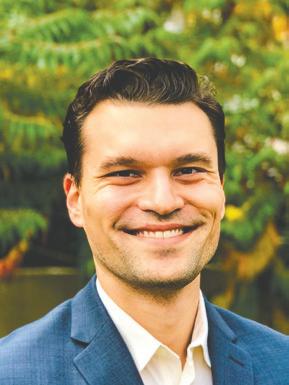
As we press on and into the fall and winter holiday periods, we must all consider our movement health as our daylight hours dwindle, temperatures crawl toward freezing, and our appetite for foods of tradition and comfort become a focal piece of our “new normal.”
Movement as your daily armor
Movement practices, some might say exercises, are often sequestered to certain days of the week, as many people view exercise or workouts as a kind of job that one must do to keep off weight gain, reduce blood pressure or achieve some other outcome that one “should do” for their health. Indeed, there is nothing inherently wrong with these sentiments, but much like sleeping, eating and drinking, movement is essential to our health and should be a daily practice that leaves us feeling, for the most part, better. How these movement practices should be structured are unique to each person and their goals, but whatever it is you decide is right for you, the result should be a human being who is more resilient to all types of stress and strain. Movement is truly your armor for life. How much movement do you need? The U.S. Department
Perhaps now more than ever, our physical health is under attack as we fight a biological war with a virus in our communities that has caused a drastic change for many of us from our normal movement patterns. Some have found new and effective ways to cope, others are still seeking, and surely some of us have given up and are resigned to accept the collateral damage of inactivity. Here I hope to share some of the immense benefits of engaging in a little bit of movement, even if it is small by comparison to your pre-pandemic self. Every little bit of movement counts, and you may not need as much movement as you think.
of Health and Human Services, Physical Guidelines for Americans second edition, states that adults need either 150 minutes of moderate intensity activity per week or 75 minutes per week of vigorous exercise, plus two days per week of strength and balance exercise. In a seven-day week, that’s just over 20 minutes per day of moderate exercise, which means doing an activity that raises your heart rate, gets you feeling warmer and breathing faster.
Habits build strength with time
By making the commitment to engage in some kind of movement practice every day that is appropriate for your unique circumstance, you are sending yourself a message that says, “This is important,” and “This makes me feel better.” Once you follow through with that commitment and time goes by, you eventually realize that you have formed a very good healthy habit that is difficult to break. Depending on the person, you may need as little as 21 days for the habit to stick. What should you do? Start small. With any new habit you want to form, motivation will be
an important criterion for follow through. When we make goals, our “eyes” are often bigger than our discipline to follow through for any length of time. So, by making the goal very small, it reduces your “entry fee” required to start forming a healthy habit, which acts like compounding interest that builds exponentially over time.
Benefits of healthy movement
It would be negligent not to mention mental health benefits of healthy movement, especially in these trying times. The brain and the body are physically connected by strands of nerves that send signals 24/7 from the brain to the body and back, and almost all of these signals are subconscious and automatic. In fact, some biologists even suggest that the sole purpose of the brain and central nervous system is for the purpose of movement. Indeed, it has long been proven that humans who move less show earlier signs of cognitive decline and evidence of brain atrophy. Whether you are stuck on solving a puzzle, training for a sports competition or fighting to maintain your independence, your daily healthy
movement habits will be a keystone habit for your success. The physical benefits of movement are far too many to mention, but one of the most surprising is the role of movement in pain management. When we move less, our bodies become more sensitive to pain signals that can arise simply from being sedentary. What else? For any health goal, there is a specific movement/exercise practice for whatever health goal you have. Even if you already have a health condition, there is an appropriate and effective strategy that is right for you. While those with complicating heath conditions may have less function than healthier individuals, the importance of the right kind movement becomes even more important. Ultimately, all of us should simply strive to make an achievable and individual daily goal, stick with it, and make healthy movement part of a healthier and happier life.
— Dr. Dan Michael is a chiropractic physician at NW Sports Rehab in Madison Park.
Dab Decoding
A budtenders guide to buying the best dabs

Buying the right pot can be tricky, and buying the right dabs (the yellow-brown gooey sticky sap-like concentrate that doesn’t even resemble weed) can be even trickier. As a daily dabber, I want to write a brief guide on what to look for when you’re choosing from a selection of dabs in the store.
The texture is often the first thing I notice with concentrate, as dabs will range in texture from wet and soupy, to dry and crumbly. Sometimes it’s like wax, other times it’s a translucent brick that shatters like peanut brittle, aptly called “shatter.” Dabs with noticeable crystals are at the top of the to-get list. If you notice a “shimmering” effect from the way the light reflects from the crystalline wax, it often indicates a high THC content. Top-shelf dabs will often be a crystalline sugar or a crystalline wax, or sometimes a fluffy earwax texture. Shatter is often high quality because the ability to literally “shatter” depends on having high levels of hardened THC crystals. If there’s not high-THC when the dabs are extracted, shatter cannot form. It’s possible to find high-quality dabs in a variety of textures, and you’ll quickly develop your preference for texture once you sample a few varieties.
Color is often an important indicator of quality. Black dabs are an immediate no. Excessively
dark coloring is from the plant pigmentation, called chlorophyll. Chlorophyll is the green color found in all plants, it’s essential for the plant, but it’s disgusting to smoke. Chlorophyll has a harsh plant flavor (think: lawnmower). Most dabs will carry a yellow to medium brown color, which is nice. A typical mid-grade dab option will have a light brown, semi-amber color, whereas lightyellow and especially clear or white dabs indicate the highest quality and tend to be most prevalent on the top-tier. Keep in mind that terpenes (the desirable aromatic compounds in cannabis) are sometimes yellow or brown, and appear more liquidy. Dabs with a vibrant yellow color or a sap coated crystalline are often especially tasty and high-quality.
In Washington State, where open cannabis packages aren’t even allowed in retail shops, it’s almost impossible to know what aroma the dabs will carry before purchase, so knowing how to visually identify quality dabs becomes even more important. Generally, look for the most crystalline “sugary” dabs with the lightest color. If you’re looking for high THC in particular, genuine shatter and anything with visible, shimmering THC crystals is a guarantee. If you’re going for all-around quality, look for the former plus a vibrant-yellow or sappy “terpene” portfolio that uses either a multi-phase extraction method or is live rosin/
resin (albeit these will often be the most expensive dabs at the store).
Live resin is simply a cannabis extract made from cannabis that hasn’t been cured, typically from flash-frozen buds. Because the cannabis material is fresh and uncured, the terpene content of live resin is very high, which will often result in a soupier or more sap-like consistency (like honey). Live resin dabs are delicious to smoke at a low temperature and don’t pack as high of a THC percentage as other dabs, which makes them great “appetizers,” or good options for those who are new to dabbing.
Rosin, is simply a solventless extract. So, while live resin is a cannabis extract made from fresh cannabis using a solvent like butane, propane, or CO2, live rosin is made without a solvent (usually by pressing).
Ultimately, the preference for different types of concentrates depends on the individual. While certain types of concentrate, like shatter and rosin, are regarded as being more desirable, they may not suit everyone the same. Exploring different brands, textures, and other characteristics are the best ways to get to know your personal preferences. Happy dabbing!
Cody Funderburk
Dr. Dan Michael NW Sports




Hunt
Jayne Williamson / Magnolia5Townhomes.com
720 Queen Anne Ave N Unit #506