Madison Park Times

(StatePoint) Unfortunately, during times of hardship, families are often targeted by fraud artists attempting to take advantage of those needing assistance. The COVID-19 crisis is no exception, with many scammers pretending to extend a critical lifeline to struggling homeowners through socalled “foreclosure rescue fraud.”
According to Freddie Mac, this scheme involves bad actors offering false promises of being able to save your home from foreclosure. Common elements of this fraud include the following:
• Requiring you to sign over the title to your home.
• Asking you to sign unfamiliar documents and/or share your pe sonal information.
• Charging you rent to stay in your home and/or potentially promising that you can purchase your home back when your financial situation improves.
Another common fraud involves a third party guaranteeing you a loan modification with a reduced mortgage payment. Such scams may operate similarly as foreclosure rescue fraud, as fraudsters collect an upfront fee and promise to work with your loan servicer on your behalf.
So what can you do to protect yourself?
• Don’t disclose. Never provide your information via phone or internet until after you have verified the caller or company’s identity.
• Be suspicious. If someone has co tacted you asking for personal or sensitive information, do your homework to verify the validity of the request before providing any information. Contact your servicer (the company listed on your mor gage statement) and confirm that they called you asking for information.
• Spot imposters. Scammers across the globe can make any name or number appear on your caller ID or email. Protect yourself from spoofing by letting calls go to voicemail first. If a call is important, the caller will leave a message. If you do answer and it is a robocall, don’t press any numbers. Just hang up.
• Report fraud. Freddie Mac will never reach out to offer a refinan ing opportunity or new loan over the phone. If you have been contacted by someone claiming to represent Fre die Mac, you can report it by visiting sf.freddiemac.com/working-with-us fraud-prevention/feedback.
While there are fraudsters out there offering false promises, know that there is real assistance on offer during this crisis, too. Contact your loan servicer to discuss your options. If Freddie Mac owns your mortgage and you are a homeowner unable to make you mortgage payments due to a decline in income resulting from COVID-19, you can learn more about available mortgage relief options by visiting MyHome.FreddieMac.com. Your family’s health is no doubt topof-mind these days. However, it’s also important to remember that fraudsters are out in full-force, making your financial vigilance a crucial priority as well.


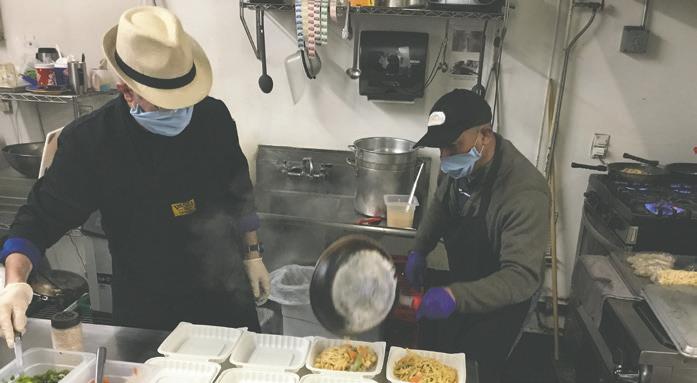
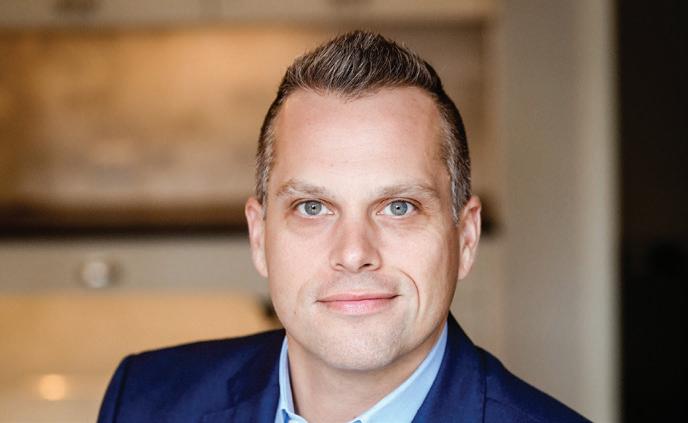
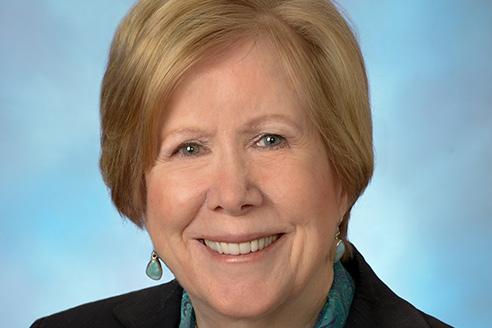

Photo courtesy Tero Vesalainen / iStock via Getty Images Plus
Using virtual healthcare to survive and thrive

From a young age, we are conditioned in such as way that, when we have an “ouchy,” we want mother or father to come in, scoop us up and “save the day” like the superheroes that they are to us in a seemingly desperate time of need. We are psychologically conditioned to seek an external intervention whenever something goes seriously wrong. Over time, we become more independent and learn how to soothe ourselves and tend to our own wounds. Some of us are better adapted to do this than others, but one thing remains: We must learn how to care for ourselves as best we can, and one of the most powerful tools that we have in doing this is virtual healthcare.
Washington state Gov. Jay Inslee’s orders to “Stay Home,
Stay Healthy” are important in keeping all of us safe from the spread of the virus, not only for our own safety, but for the safety of our friends, family and loved ones. However, the order to “stay healthy” isn’t limited to protecting yourself from infection of COVID-19, rather it goes for other illnesses and conditions, too. Keeping yourself mentally, physically and spiritually healthy are all part of “staying healthy” and “staying home.”
As an unfortunate but necessary consequence, however, our routines on a weekly, as well as monthly, basis have changed significantly, such that we no longer exercise regularly, meet up with friends or go to the doctor as regularly as we should. So, all the healthy habits and routines we once kept before, we are now no longer doing, simply because we are staying home.
You might recall my previous article where I outline some best practices to follow during this crisis:
• Focus on your health by treating yourself right.
• Get enough Vitamin D, especially if you are deficient.
• Exercise regularly, so long as
your doctor says it’s OK.
• Reduce your stress (mentally and physically) by finding your best routine and stick to it.
But what if you still aren’t feeling well? You are not alone. Many people, including those with serious conditions, are skipping doctor’s appointments to the detriment of their own health and safety. The Washington Post reported on April 20, in “Patients with heart attacks, strokes and even appendicitis vanish from hospitals,” that an alarming number of patients with heart attacks, strokes and appendicitis have gone absent from the healthcare system since the onset of COVID-19 quarantine measures. While we aren’t sure where these people have “vanished” to, or what their condition might be, could it be that they have simply avoided getting the care that they need?
Clinics around the country, including this one, are moving quickly toward offering virtual care options in lieu of in person visits to which we are all accustomed. As a chiropractor, I have one of the most “handson” intensive treatment strategies for combating a variety
of conditions, but I also know that frequently, self-care treatment is the best, as long as you know what to do and when to do it. The value of virtual healthcare is in the self-care treatment strategy. In a virtual setting, my role as a doctor changes from that of a superhero, to a teacher — one who helps make sense of the problem and the solution. Likewise, in a self-care treatment strategy, the role of the patient changes from that of someone bound by their condition to that of an active participant, equipped with the knowledge about their condition, and provided the tools required to navigate the recovery process. For example, several of my patients have come to me for virtual care with seemingly serious injuries that had started small in nature until it quickly turned into something serious. At the time, they weren’t sure if they needed to go to urgent care because of the severity, but after a taking their history and doing an exam, it was clear to me that their condition was benign and could be managed at home. By the end of the session, they were reassured and experienced significant relief and are on their way to recovery. While not all con-
Am I Dreaming?
This will not be another funtimes-in-Madison Park story due to the seriousness of the pandemic. The closest thing to our present-day nightmare was as third-graders at J.J. McGilvra when we became aware of World War II. It was a restrictive time, but we did go to school and were able to socialize a few short hours afterwards.
“Blackouts” were nightly. There was no light anywhere: The street lights were out, window shades were pulled, even cars had hoods over their headlights. Rationing was paramount in helping the war movement: powdered milk, Spam, rice or cut up bread with milk and sugar for breakfast, but we were lucky as my grandparents had a farm on Little Finn Hill in Kirkland, so we ate well some of the time. We were too young to understand what the war was about as we were shielded from the news. There was no TV and when the radio relayed the nightly Lowell Thomas news, the volume was turned down. We couldn’t even overhear what our parents were saying about it, and we rarely saw the daily paper.
Our childish musing was if two countries had such a mad-on for each other, why not settle it — winner take all — in a Monopoly match? Game over, shake hands, that’s it! No one makes big bucks on war toys, right?
The air raid drills were the worst, and the thought of balloons with bombs sent via water currents made us especially panic with the warning: If you see one, don’t touch it!
So how did we manage? We stood in the rain in a threeblock line to view a John Wayne war movie. On other Saturdays we loaded up our cap guns and played war in the Canterbury woods. I guess it was our way of dealing with life.
My dad was killed in airplane war maneuvers in California, which was a surreal experience beyond anything we ever knew. Mom and I stressed enormously with that for years upon our return to Madison Park in 1943. Life in my grandfather’s garage was severely confining with both my mom, my aunt and uncle and I having to wake up the grandparents to use their facilities. The folks in the alley struggled as well. There were
many locals lost in the war. Besides war there were other concerns, like catching the measles, chicken pox or the mumps! The worst health issue was during one sum-
mer when the beaches closed because of the polio epidemic. Magazines and movie news depicted people living in iron lungs. Not to be able to go swimming and play at Madison Park beach really hit us hard. If you contracted polio, you were separated from your family.
After World War II there was concern that there would be another war involving the atom bomb. Einstein was asked what weapons would be used in the next war. He
ditions can be helped at home, many of them can be, and it’s the role of the doctor to help make that determination. While we hold our hopes high for a vaccine and/or effective treatment for COVID-19, we should all do our part to help avoid the spread of the disease, as we are all potential asymptomatic carriers, and promote our own health and well being, which is equally important. And just because the rest of the world seems to be shutting down to contain the spread, doesn’t mean that you or I should also sacrifice our biggest ally that we have in this fight against the virus — our health and well being. By continuing your health journey by virtual means, you are helping to beat the virus and all its healthy living disruptions. With this pro-active approach, you will be investing in your health, by learning not only about what you have, but what you can do about it; and right now, getting some self-help might be just what you need.
Dr. Dan Michael is a chiropractic physician at NW Sports Rehab in Madison Park
answered that he didn’t know but the one that followed would be fought with clubs and stones.
Draft notice in hand, I reported to a building on West Marginal Way. After a quick once-over, I was sworn in. Next it was Fort Ord for a total of 10 weeks of basic training. We were offered a chance to go to an aboveground atom bomb site in trenches located a safe distance away with a two-week leave as reward. Those who volunteered were transferred to another unit. The rest us attended several weeks training about the effects of radioactivity. During that period of time, some men went through even more training, which seemed mysterious. Toward the end of all those weeks of training we were told to report in full field pack at 4 a.m. We had chow and then loaded on buses. Many hours later, we were told to disembark and begin digging holes with placements for two. We were ordered to sit in them and cover our heads with our shelter halves. It was super quiet when suddenly the ground shook a long while moving one direction and then
another. I don’t remember any particular noise. A whistle blew, so we loaded back onto the buses and left the desert. No one spoke on the way back to post, but we figured it was an underground detonation. We were examined and blood tested, and that was it!
During the early ‘60s was the missile race. I worked for a firm that monitored the status of missile sites. One of the sites with a constant problem was the firing order was not numerical. It had been locked in position but kept going out of order. No way this should happen. It took several codes to change it, and it still had issues. Two months into this problem, a newspaper article stated there had been unidentified flying objects over military installations. The question for us, who was scrambling the sites? After resetting several times, we set it to ready standby power off.
Very cryptic, what where “they” trying to tell us? Only the higher ups knew. Someone is still trying to tell us something. Only the higher ups know.
Dr. Dan Michael NW Sports
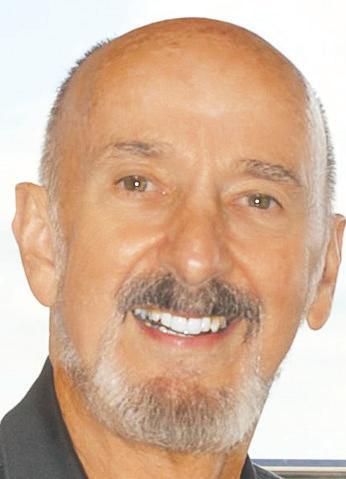
Richard Carl Lehman Revisiting the Park

International Village | 119 Picabo Street C2 Price: $595,000 | Bedrooms: 3 | Baths: 2.5 | SqFt: 1,060

Maureen Pressley Pressley@windermere.com Call or Text 208.720.4595

Feeding frontline workers
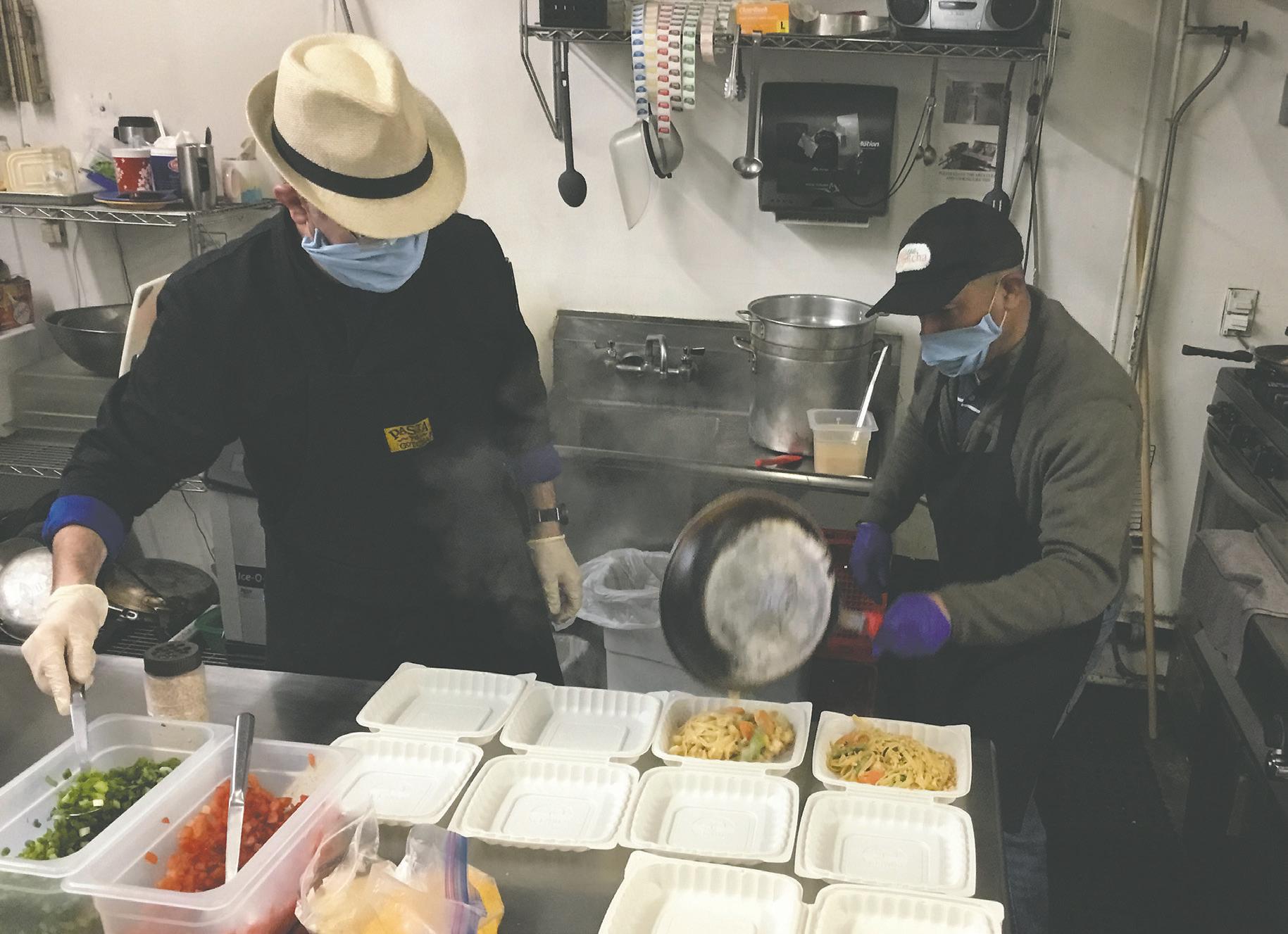
Pasta Ya Gotcha’s co-owner Daniel Murray, left, and brand manager Benjamin Gomez prepare hot lunches for Evergreen Health Totem Lake Geriatric Care and Sleep Services in Kirkland on April 15. Frontline Foods Seattle lead Larry Morris launched his chapter of the nonprofit because he wanted to help both frontline workers and local restaurants.
By Jessica Keller QA&Mag News editor
When Gov. Jay Inslee ordered that restaurants modify operations to help slow the spread of COVID-19 in Washington, Seattle resident Larry Morris wanted to do something to help.
With some help from a friend in San Francisco, Morris launched a Seattle chapter of Frontline Foods, a national nonprofit that raises money to pay for meals that are donated to frontline workers.


The program’s mission is two-fold: It supports local restaurants by hiring them to produce meals, and it supports the healthcare workers who are treating people in hospitals, including patients with COVID-19.
Morris said what appeals about this effort is it benefits both healthcare workers and the restaurants, who have been hit hard by the shutdowns.
“That is really integral to what our mission is: keeping our restaurants afloat,” Morris said. “It’s as much about the restaurant as it is about the hospitals.”
Morris said the idea of having restaurants deliver meals to healthcare workers appealed to him. First, he has many friends in the restaurant and wine business. Second, all his charity donations go to hospitals in support of family members with health problems, and he already had the right connections.
When restaurants shifted to curb-side takeout or delivery and it became apparent COVID-19 cases were spreading in Seattle, Morris could not order
foods from restaurants any longer because his daughter is immunocompromised, and it was unsafe to bring outside food into his home.
“It then switched to how can I provide the money to the restaurants, but we’ll give the food to someone else who can use it,” he said.
Frontline Foods Seattle chapter launched four weeks ago, and the efforts have moved fast.
Morris, who is a software engineering manager at Microsoft, recruited a few coworkers of his to help him. He said they did a lot of their preliminary fundraising by reaching out to people on Facebook and have only recently reached outside of their regular community.
“As I see that I have more money available, I’ll add a couple more restaurants and a couple more hospitals,” Morris said.
Right now, Morris has recruited five restaurants — Jack’s BBQ, Pasta Ya Gotcha, Nue, Raiz and The Box and Burgers Eatery — to provide meals. They are being distributed at Evergreen Hospital — Kirkland, Duval, Canyon Park and Redmond; Swedish Hospital — First Hill, Ballard and Redmond; Harborview Medical Center/University of Washington; and the Seattle Cancer Care Alliance.
Morris has received requests from 40 restaurants to participate in this program, but he said he has been very selective in his choices because if he used all 40 restaurants, he wouldn’t be routing enough business their way to benefit them. And if a restaurant had to bring back an employee to
help make the meals, it could actually cost them money.
“We’re very focused on making sure that we’re helping the restaurants,” Morris said.
He said when restaurants apply to work with Frontline Foods, owners are asked to indicate their average meal price, including tax, tip and delivery. The majority of restaurants fall in the $10 to $15 range.
“I do consider pricing when selecting restaurants, but a key part of our mission is to help keep our restaurants afloat, so I would never ask them to sell to me at a loss,” Morris said in an email.
When this first started, Morris was reaching out to restaurants where he knew the owner. Now, with a big restaurant pool from which to draw, he is enlisting restaurants partly based on region and partly by what they can provide. Morris said he is really looking at restaurants who can provide breakfast meals for the frontline workers ending the overnight shifts.
Where the meals are being sent to also depends. At the beginning of the outbreak, Evergreen Hospital needed the meals at its Kirkland location, which was the site of the nursing home that was hit so badly by COVID-19. Morris said now hospital administrators are reporting flare ups happening in different locations. Meals are sent to hospitals with the greatest need.
“Every week, I typically get a slightly different answer,” he said. “So we very much leave it to the hospitals to tell us where they are seeing the big-
Photo courtesy Deborah Drake
Selling real estate during a pandemic

Before the COVID-19 crisis, all signs pointed to 2020’s real estate market being one for the record books, with sales volume and asking prices surpassing the highs of 2017’s record-setting sales. To mirror that stat, my team had a record number of closings in March, and those were homes that went under contract in February and early in March.
Things were looking great.
But then we saw the virus cases grow, and there were a couple of weeks of uncertainty as to what was happening and what was to come. We kept working, but also made sure to get all of our coming listings photographed, staged when needed, and digitally mapped with 3D video for virtual walk-throughs.
When the official Stay Home, Stay Healthy order was instituted, everything stopped. Real estate offices were closed, brokers weren’t allowed to work, and open houses were banned. I advised my sellers to take their homes off the market, so they wouldn’t accumulate days while buyers couldn’t see them. As soon as real estate was added as an essential
service, we were able to conduct limited business, and things started to look up again. In fact, in the last seven days, Colwell Banker Bain brokers here in the area have added almost 200 new listings, written up 146 more transactions, and closed 132 sales. And the average sales prices are up an amazing 15 percent in the region year to date.
What to know now
In the greater Seattle area, there’s 5.8 months of inventory — Seattle’s absorption rate — as of this writing. Real estate analysts call this a neutral market (a neutral market is when there’s a home inventory of 4-6 months). In our micro-neighborhoods, it’s significantly less, with an inventory of 3.6 months on market, which is technically a seller’s market.
The data tells us houses on the market are selling. As properties were added back to the multiple listing service, buyers wanted to see them — and buy. My team brought our listings back on the market in mid-April, and in a short time, all those active listings were under contract. When talking with these buyers, they say they’re are cooped up in the rental or small apartment and want to get their family comfortable if this stay at home order is issued again later this year.




Selling and buying in the new normal
After we were able to start conducting limited business, the people we depend on for other services — our photographers, stagers, the 3D videographers — were gradually allowed back. We’re gearing up with all of those resources with homes coming on the market.
We’ve seen a lot of buyer interest and activity. These buyers may realize they need more room to comfortably shelter at home, or they find their dream home searching online and move quickly to secure it. That has translated into several full-price offers on turnkey homes.
For buyers who don’t want to pay full price, there are opportunities to find the diamonds in the rough that need polishing to become your dream scenario. It may be a house with good bones that’s not in your first-choice neighborhood or one that needs work in the area of your choice. Having an experienced broker working for you will help you find those hidden treasures easier and much faster.
We are booking appointments to show homes on the market, though we do have to abide by new


Chris Sudore Property Views

























o my lovely Madison Park neighbors, I hope you are staying well and healthy. During these difficult times, I am reminded that community means we’re all in this together. Though our togetherness has come in the form of social distancing and uncertainty as we navigate uncharted territory, one thing remains unchanged: I believe in my role and responsibility to serve as your trusted advisor. Realogics Sotheby’s International Realty recently released the 2019/2020 Market Report, which charts the impact of COVID-19, dives into our key market fundamentals, and analyzes data in 9 counties and 37 neighborhoods around the Sound. I’d be happy to provide you with a complimentary print or digital edition of the report and schedule a virtual cup of coffee to discuss the implication for homes in your neighborhood.



PROVEN RESULTS

A CONTINUED LEGACY
RSIR ranks amongst the largest, most productive and fastestgrowing real estate companies in Washington with access to 22,700 brokers in 72 countries that generate US sales of $100 billion+ annually.
WHAT MY CLIENTS ARE SAYING
We both give Laura our highest possible recommendation because Laura is an excellent listener and communicator. These qualities plus her candor and obvious market knowledge earned our trust early on. She was highly skilled, patient, and discreet while guiding us through what was, for us, a complex, lengthy, and trying process. She brings an ideal balance between professionalism, with laser focus, while being consistently personable and pleasant to deal with. She was ALWAYS prompt and ran the extra yard in exceeding our expectations. We both feel very fortunate to have had her on our side during this process.
Sotheby’s auction house presents Prohibition in America | 100 Years, a curated celebration of the beauty, ingenuity and design of antique and vintage barware.




Accentuating the positive


It was 1944. America was at war. Any end to the madness seemed far into the future.
Then Johnny Mercer penned these lyrics to a very upbeat song. Bing Crosby and the Andrew Sisters sang it to the nation:
“You’ve got to accentuate the positive Eliminate the negative And latch on to the affirmative Don’t mess with Mister InBetween”
There, in the face of the losses, the sacrifices and shortages and the uncertainties, bands struck up, radios blared and our parents and grandparents (who came to be known as The Greatest Generation) sang and danced their way out of darkness.


No doubt about it. This pandemic is a negative. We’ve got to accentuate the positive and latch on to the affirmative.
About week ago, I was walking down McGilvra Boulevard, in full accordance with social-dis-
come out in April and last for about
tancing policies. I spotted my neighbor and friend Michael.
“How you doin’?”
He beamed me a big smile from the far edge of his parking strip, a rake and a bucket of pruning tools close by. “My garden has never looked better!” There he was, hard and happily at work, eliminating the negative.
Another friend, Candace, is planting sunflower seeds all over her garden. Quick to come up, easy to grow, given ample sunlight and water, the huge flowers, she says, “affirm my faith in the bounty and goodness of nature.” There’s that word affirm, the root word of affirmative, onto which she had latched.
This is the month when the majority of rhododendrons explode in floriferous splendor. Mid-May is usually the peak. If you have blooming plants, gingerly cut blossoms to take indoors, removing the branches that you want off in order to shape the plants. A rhododendron blossom cluster on a table or counter is a real blues chaser. Once the flowers on outdoor plants fade, deadhead. The sticky petal-less blossom stems should come off before they develop into seed, sapping
energy from the plant. With your thumb and forefinger, snap them off, where they’ve emerged from the branch. Be careful not to rub off the new growth buds along the stem, just below. The flowers stimulate positive feelings. The hard work is life affirming. Mask yourself and walk the neighborhood, taking note of plants you might want to add to your garden. Smart phones make photographing easy. Once nurseries reopen, take the picture in and find out what it is you’ve fallen in love with and order it. That’s investing in the future.
As you walk, make an effort not to miss all the things that are not as attention grabbing as rhododendrons. There are surprises as you discover more subtly flowering shrubs and trees, all the early perennials that will open this month, plus clematis and other flowering vines. The list is enormous. I’ve grown culinary rosemary for years. I find the plant handsome. I like the herb for cooking. I’m slightly chagrined to admit that only this year, I noticed how beautiful it is in bloom, in fact, that it bloomed
TREE TALK , Page 10

Photo courtesy Mary Henry
In addition to being a valuable herb for cooking, the rosemary bush blooms light purple flowers, which
a month.
Steve Lorton Tree Talk



















NEIGHBORHOOD MARKETPLACE



Potter, 206-910-2262








at all. The generous chains of blue flowers up the ends of the dark green boughs are rhapsodic. The flowers come out in April and last well over a month.
Think about propagation to add plants to your garden. Nothing is quite as satisfying as harvesting a shoot, getting it to root, potting it up in sterile soil, nurturing it through the summer in a container, and carefully setting it out in autumn … to enjoy forever. I’ve cut sprigs of forsythia, fuchsia and sarcococca, stuck them in vases of water just for a spot of greenery on the kitchen table. I’ve kept the water changed and, to my utter delight, discovered roots in a month or so. My garden is full of these bonus plants. I have a special affection for them.
On Memorial Day, I’ll gingerly scatter the third of four annual applications of granular fertilizer around the garden. I’ll wet the garden thoroughly, lightly broadcast a 12-12-12 and then sprinkle the ground again. You can do the same with a top dressing of compost. As I’ve shared before, I fertilize by the holidays: Valentine’s Day, April Fool’s, Memorial Day and the 4th of July. I feed potted plants with a liquid plant food solution monthly or semi-monthly using the mixture at half strength.
FEEDING , from Page 7
gest problems.”
Morris said each week he and his team contact their hospital representatives and tell them how much money is available and let them know what restaurants have been available.
Hospital representatives know what meals each restaurant offers and the average meal price. They then give the Frontline Seattle representative a list of locations, times and quantities.
As of last week, the Seattle chapter has delivered about 1,500 meals. The volume varies by hospital and how many people are on during a shift.
When Morris first started Frontline Foods Seattle, he thought only to help the hos-
If days in May are chilly and soggy, use the time to get your garden tools in shape. Sand the metal parts. Paint the wooden handles. I like to use bright yellow enamel. Lay a tool on the ground while you’re working and it will hide, just for orneriness. But if the handle is a bright yellow (or red or orange) it’s quick to spot, and any frustration will be short. Once the paint dries, put some motor oil on a cloth and wipe the metal parts to slow rusting.
Take pictures of your garden and the discoveries you make on your strolls. Share these with friends. Do a bit of research in the evenings about the things you’ve seen and enjoyed and make your communications sing.
So there’s a start. There’s much to do, much to enjoy in this period of social isolation, which I’ve come to view as blissful solitude. But you must find and accentuate the positive, latch on to the affirmative and chase off the negative.
As far as Mr. In Between? Be gone with you! We’re the descendants of The Greatest Generation. We have no time for mediocrity, and we’re gardeners to boot! We’re gonna win this war!
pitals with frontline workers treating COVID-19 patients. He soon realized, however, that the COVID-19 outbreak has affected other hospitals, as well. Morris said he added the Seattle Cancer Care Alliance to the list of hospitals because he learned that when the outbreak hit Seattle, the restaurants and food vendors at the hospital had to shut down, leaving staff providing health care but without any onsite food options.
“It definitely opened my eyes to what are the different ways you can be impacted by COVID,” Morris said.
Morris said Frontline Foods Seattle is currently helping out as the first wave of COVID-19 cases wraps up and numbers level off. Work will not stop there, however.
While the Seattle chapter volunteers can choose to dial back fundraising efforts, Morris said they also have the option of diverting funds to benefit other areas of the country in great need, such as New York. Most likely, he said, they will continue their current course of action in case a second wave of infections springs up in the state.
“We are starting to plan our budget around what that spike would look like,” Morris said.
He said 100 percent of all donations made to Frontline Foods Seattle is used to pay restaurants for the meals made.
To learn more about how to help, to donate or sign up a restaurant or hospital, go to http://frontlinefoods.org/ Seattle.
Councilwoman working to help everyone stay informed
One of the things I’ve found most challenging during this unprecedented pandemic is how information is changing and evolving so rapidly. To be sure, the best thing we can all do during this time is stay informed and adhere to guidance and safety precautions put in place by government and public health.
That’s why I am sending out a daily COVID-19 e-news update that includes up-to-theminute information on what you can do to stay healthy. It also provides information on grants for small businesses, renters, laid-off workers, homeowners and more. Plus, the latest numbers from Public Health on cases and fatalities in King County. I also try to include messages of hope and amusing pieces which can be helpful, as well as what you can do to help others.
During this crisis I will be doing everything I can to keep you informed about what’s happening around the region and at the county-level related to COVID-19. The council, our staff and I are all working full-time remotely.
If you haven’t already, I encourage you to sign up for my updates by going to https://
public.govdelivery.com/accounts/WAKING/subscriber/ new?topic_id=WAKING_593. Together we are going to get through this. In the meantime, do not hesitate to contact my office if you need any assistance or have any questions or concerns, 206-477-1004 or Jeanne.kohl-welles@kingcounty.gov.
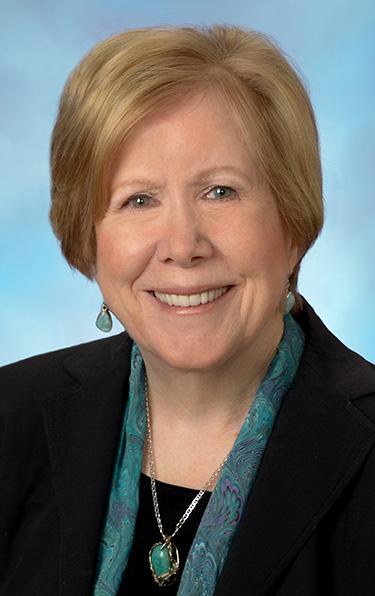
Jeanne Kohl-Welles King County council member, District Four









restrictions. All showings must be booked in advance, and only two people are allowed on the property at a time — that may be a buyer and broker, or the broker may stay on the sidewalk while two buyers tour the home. There may be added paperwork that needs to be signed to allow these visits. It’s a little more complicated, but it’s working.
What’s to come
What could have been a recordsetting spring market was interrupted. There are indications that the volume of business will simply be delayed until summer. As restrictions are lifted, we may see that the usual volume of listings, showings, and transactions come roaring back in June, July, and August, when health officials say cases of the virus may wane.
If you’re thinking of selling, get your house in order (literally) and contact an experienced broker so that you can take advantage of the market taking off again. Give your broker time to get the best photos taken, take staging advice, and have the 3D virtual showings shot and ready to go (Please contact me if you would like to see examples of what a 3D showing looks like).
On the buying side, act sooner rather than later — you may find exactly what you want quickly. Have your cash on hand and get your financing set up, especially since interest rates are at historic lows. Working with an experienced broker will boost your chances that you see a home that suits
your needs as soon as it’s listed, or will know about one that’s coming soon through an established network of other brokers.
It’s impossible to predict the future, of course. We’re learning that now. Scientists and health experts are currently forecasting the virus could spread more easily this fall and winter than during the warmer months. If that’s true, we will likely see a slowdown in the real estate market at that time.
I know many people have questions about what’s happening now and what to expect.
To that end, I’m scheduling 15-20 minute Zoom sessions online with clients, prospective buyers or sellers, or anyone interested in setting the record straight. We’ll discuss what’s happening on the ground, in real-time in real estate right now. Things are changing hour by hour, day by day.
When I want to know all things medical, I call my sister or neighbor — because both are physicians. When they want to know all things real estate, they call me. Please feel free to do the same as we navigate through these uncharted waters.
I’ve facilitated hundreds of real estate transactions. And not in the height of the market, but specifically during the last housing crisis. I know exactly what it’s like working through a transaction in uncertain and incredibly scary times. Give me a call on my cell at 206.799.2244 or email me at chris@ kingcountyestates.com.
I’m happy to schedule a video Zoom conference or a just simple phone call, whatever you’re comfortable with. Sometimes it’s nice to just talk it out, no pressure.
From all of us at King County Estates, we want to thank our devoted clients, families, and community for
the tremendous support during this time. Stay safe, stay healthy, and let’s stay together and work through this.
Chris Sudore
Madison Park Resident
KingCountyEstates.com
Chris@KingCountyEstates.com
Managing Broker Coldwell Banker
Bain | Global Luxury
Stoner Skills for Staying Home
The shelter-in-place ordinance imposed in many cities and states to address the coronavirus pandemic is crucial to prevent the spread of the virus. Now might be the only time in our lives that it’s socially responsible to stay home and get baked— why not take advantage of it?

Think about it: you can practically save lives by getting high in bed. Plus, thanks to FaceTime and video messaging apps, we can take advantage of virtual hangouts so that we can still enjoy the company of our friends. New York Magazine’s Brian Feldman makes a case for “Appointment Internet,” in which smaller groups of friends and family make deliberate plans to meet up in a virtual setting rather than posting to a broad audience on social media. This way, you can still be connected (and share a smoke) without the threat of loneliness or disease! How convenient.
Since the shelter-in-place ordinance started, I’ve used the extra at-home time and bountiful groceries I’ve stockpiled to brush up on my cooking skills. I forgot how wholesome and delicious a home-cooked meal is, and now is the perfect time to experiment with creating your own homemade weed edibles. It’s fun and cost-effectiveI promise! If you’re spending the day at home, there are a million edible recipes to choose from, depending on what you like to eat. Some of them are quite simple. Infusing decarboxylated cannabis buds in hot butter or coconut oil will make a powerful edible
ingredient that can be infused into literally anything, including desserts, soups, or even lasagna.
Decarboxylation is the process wherein cannabis buds are heated at a specific temperature, close to boiling, for about 30-45 minutes to activate the THC compounds. This process makes ordinary cannabis flowers edible via a chemical conversion of THC-A (the “A” stands for “acid”) into THC, the primary psychoactive ingredient in cannabis. Anyone can decarboxylate cannabis in a home oven or on a stovetop. A quick google search will yield specific instructions and plenty of creative recipes.
The benefits of making homemade edibles are that it’s fun, cost-effective (a little pot goes a long way), the high lasts longer than smoking, and homemade edibles can be much more potent than store-bought. In stores, the limit for THC is 10 milligrams per serving, which is relatively low unless you’re new to edibles entirely. At home, you can easily make 25-50mg edibles with little effort— just be careful, it’s easy to over-consume edibles because the onset is much slower than smoking or vaping.
Thankfully, cannabis dispensaries will remain open during the coronavirus pandemic in most legal states, including Washington, as they are deemed “essential businesses.” This decision inspires reflection on how far the cannabis legalization movement has come. Alia Volz, a lifelong medical cannabis
activist who recently published an article in Salon Magazine, writes, “During the ‘70s, my family baked and delivered more than 10,000 marijuana brownies per month in San Francisco. My mom dealt brownies out of my stroller in the Castro district, with weekly stops at Harvey Milk’s campaign headquarters and the home of the singer Sylvester. No one is suggesting cannabis as a treatment for novel coronavirus. But today’s marijuana-based products are taken for anxiety, insomnia, muscle spasms, arthritis, depression, and a plethora of other common conditions… Safe and legal access is a public health concern.”
Stories from activists like Alia demonstrate the incredible progress we’ve made in merely the last 40 years. She reminds us that the medical cannabis movement was born of pandemic responses of years past and that promoting access to cannabis in times like these is not only safe but also responsible.
So, whether you’re learning to roll your first joint or make homemade edibles, you can have fun and stay home while practicing a new skill. With any luck, we can overcome coronavirus quickly and with minimal suffering. The most important action we can collectively take is social
and we can certainly utilize
and
Funderburk

Windermere Real Estate is working to support local food banks, who are struggling to meet increased demand due to COVID-19. The Windermere Foundation has established Neighbors in Need, a fundraising drive to help keep food pantry shelves stocked. The Foundation is matching contributions up to $250,000 and our Seattle brokers and staff are generously rising to the challenge.
If you would like to join us in this effort, please go to WindermereFoundation.com and click the Donate button. Together we are All in, for our neighbors.