The superplants we need now
The world of plants is as vast, and in some respects, as uncharted as the ocean floor. We have cultivated them for thousands of years as food and medicine; we’ve shaped them through selection and breeding, but we are only now discovering some rather amazing physical abilities they have. You might call them superpowers.
Recent research has shown that plants can communicate. They warn neighboring plants of predator or drought, they share resources, form inter-species alliances, and species like sunflowers and black walnut trees even attack competitors. When a species is grown in a grove, elder trees will send nutrients to saplings, who don’t yet have the leaf mass to photosynthesize.
The youngsters may even remember, or at least respond in unison. Peter Wohlleben, author of the sleeper best-selling book “The Hidden Life of Trees,” tells a story of a beech tree stump he found in a German forest. The rings marking the massive girth indicated it had been felled at least 400 years ago. Yet when Wohlleben scratched the surface, green chlorophyll glinted through. His conclusion: The surrounding trees were care-taking this forest elder.
Plants have had internet tech for millennia before the dotcom boom — an underground webby network of mycorrhizal fungi — through which they send chemical signals of stress or well-being.
One study out of Germany indicates
trees know if they’ve been grazed by a deer, due to the telltale saliva, or had a branch broken by accident. In the first case, they whip up a chemical cocktail that makes their leaves taste terrible. In the second, they begin healing. My first thought was: Do humans have such a healing response, and can we naturally trigger it?
A plant attacked by a predator will mount a chemical defense to strengthen itself, similar to an immune response. In one experiment, some bean plants were allowed to form such a network, and some were not. When predatory aphids were added to a few plants, the ones in networks formed the chemical response. The ones without networks did not. Researchers suggested that this could be used to trigger responses only as needed, without over-stressing the plants continually, as can happen with plants genetically modified to resist an insect or disease, which triggers that stress response 24/7.
“Super plants” for climate change We’ve known about plants’ ability to remove toxins from the air — thus those “top air-cleaning houseplant lists” online based on a 30-year-old NASA study that, unfortunately, doesn’t really extrapolate to home living. Your bedside snake plant will de-stress you, but it’s questionable whether it will convert your apartment into an alpine meadow. However, a new study
from Britain’s Royal Horticultural Society shows one plant that may become the carbon-fixing future of our urban centers and highways.
The study, reported this month in The Guardian.com, compared the ability of various shrubs to absorb air pollution, including hawthorn, cotoneaster and red cedar. The hairy cotoneaster — a prickly, dense shrub with glossy leaves and red berries — was 20 percent more effective than the others, to the point that in seven days, a 3-foot dense hedge would “mop up the same amount of pollution a car emits over a 500-mile drive,” according to the lead researcher.
The RHS director of science and collections said they are investigating more of these “super plants” to answer the challenges of climate change, from ivy walls cooling buildings to hedges of privet and hawthorn used to disperse heavy rains and reduce flooding.
A better pothos?
Meanwhile, here at the University of Washington, researchers are trying to engineer plants to be better air cleaners, by taking the popular pothos houseplant and injecting it with a protein from mammalian livers — because it’s the same type of protein we use to break down alcohol. Hmmm.
Emails from spinach
An emerging field of study called nanobionics involves using plants’ ability to photosynthesize to turn them into living imaging systems, self-powered light sources and infrared communication devices. Nanoparticles inserted into the plant’s cellular structures accomplish these transfor-
mations. A recently published nanobionic experiment revealed spinach plants altered to become email-sending bomb detectors! The plants, naturally able to detect certain chemicals in the ground, now set off a sensor, which triggered an e-mail.
As in all scientific expansion, the possibilities as to how we use our newfound knowledge are limitless, but we have a responsibility to consider the consequences. Do we use the plants as a Band-aid for our car pollution, or do we preserve more carfree space and plant more trees? Will we learn from plant’s technologies or simply exploit them?
Further reading:
https://www.theguardian.com/ science/2018/may/02/plantstalk-to-each-other-through-theirroots#:~:text=Plants%20use%20their%20 roots%20to,own%20unique%20forms%20 of%20communication.&text=%E2%80%9CPlants%20can’t%20do%20that.
https://www.bbc.com/news/science-environment-22462855
https://www.nationalgeographic.com/science/article/houseplants-dont-purify-indoor-air#:~:text=New%20research%2C%20 however%2C%20continues%20to,the%20 air%20in%20your%20home.&text=It’s%20 a%20myth%20you%20almost,study%20 the%20air%20we%20breathe
https://www.smithsonianmag.com/sciencenature/the-whispering-trees-180968084/ https://pubs.acs.org/doi/10.1021/acs. est.8b04811
https://link.springer.com/chapter/10.1007/978-3-319-68717-9_14
Erica Grivas Get Growing
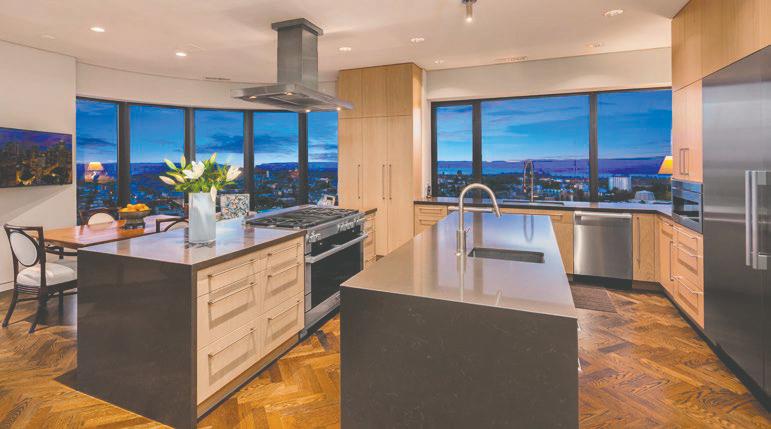
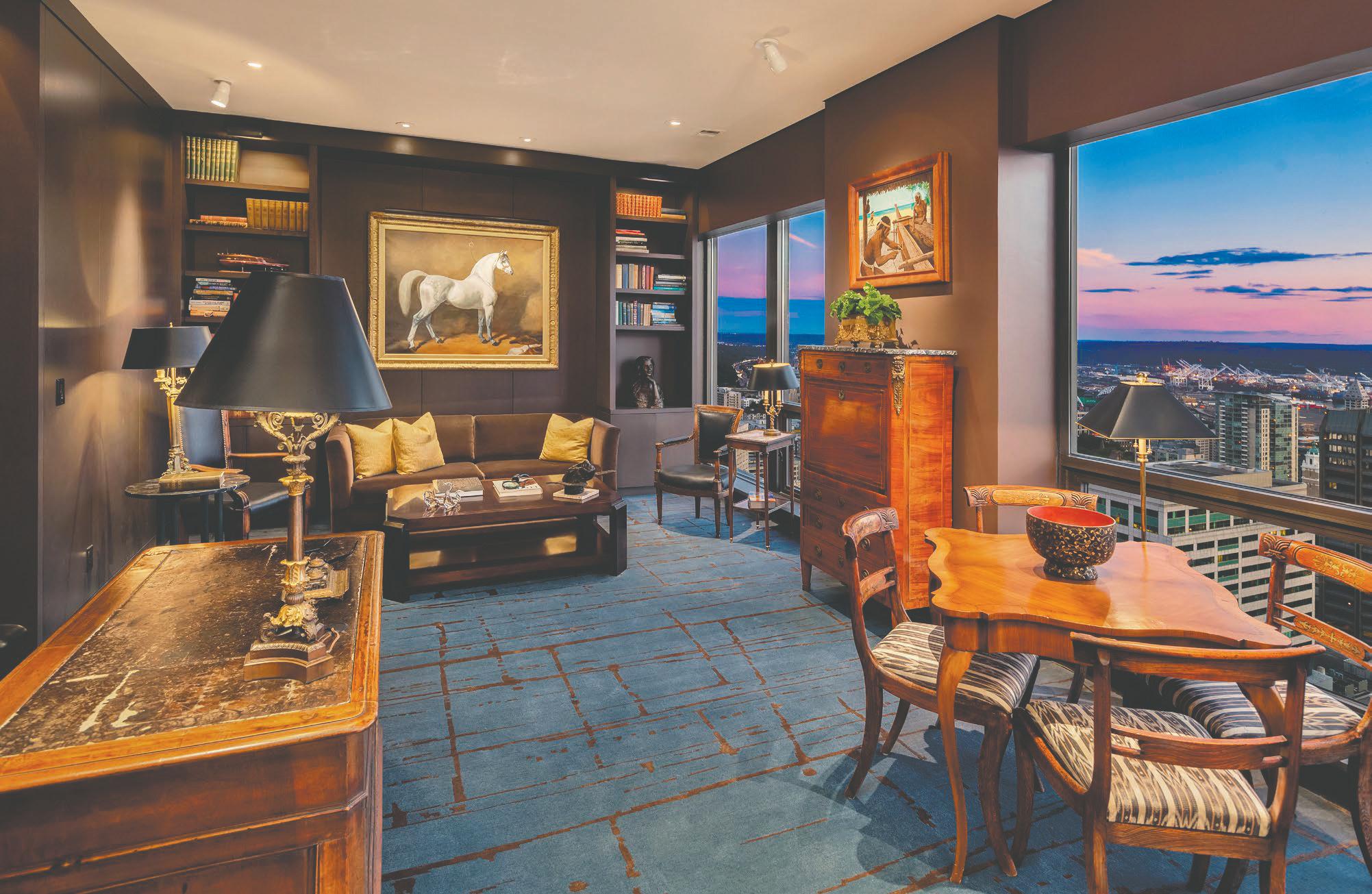
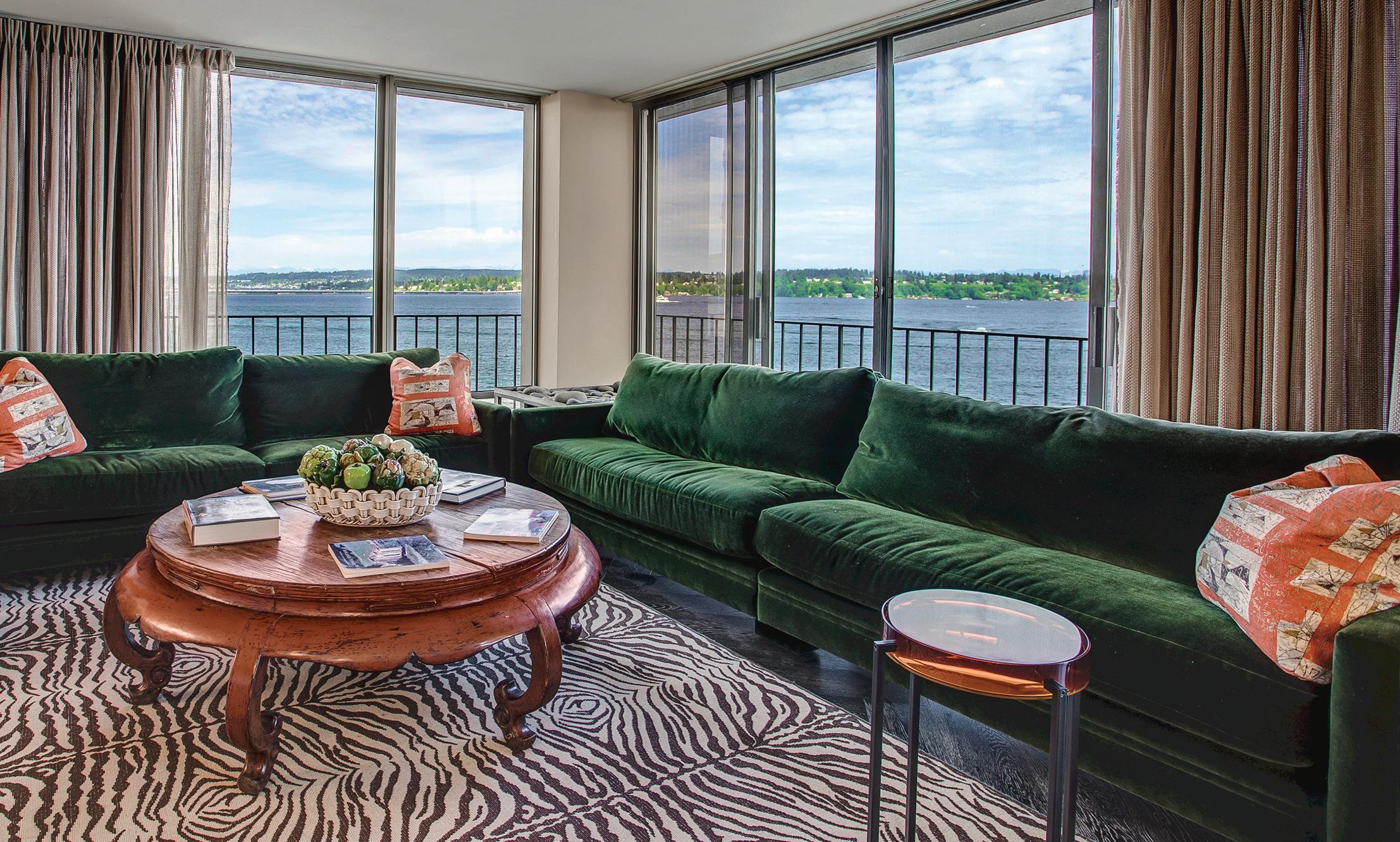
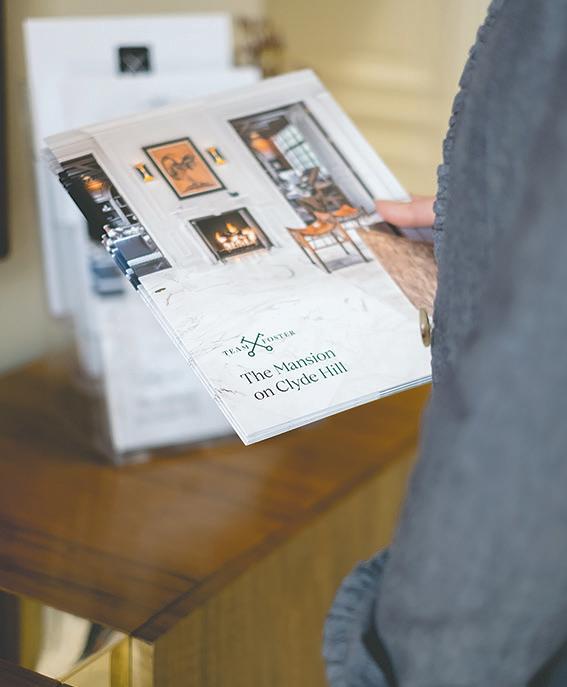
Seattle’s renowned 7,000 square foot Penthouse on First Hill is available for the first time following a complete, to-the-studs, award-winning
Iam so grateful to my clients for their support in 2020 and for helping me achieve a position among the five top producers for the Realogics Sotheby’s International Realty Madison Park office. The year 2020 was a benchmark for RSIR, with sales volume rising nearly 70 percent year-over-year to $2.8 billion. As we continue into 2021, I look forward to supporting my clients in their real estate needs with a foundation of unwavering loyalty, candor, dedication, and expert advisement.
PROVEN RESULTS
A CONTINUED LEGACY RSIR ranks amongst the largest, most productive and fastestgrowing real estate companies in Washington with access to 23,000 brokers in 70 countries that generate global sales of $114 billion annually.
WHAT MY CLIENTS ARE SAYING
Laura Halliday deserves the glowing accolades she earns. I would rate her skills in each category 10 stars if I could. Laura sold my Denny-Blaine home within a week for the asking price to the perfect buyers. She responds quickly, remains positive throughout the process, and provides actionable feedback. Laura is the best real estate representative with whom I have ever worked, by a massive margin. Invaluable to the sale of my home, Laura understands the product she represents and how to maximize its potential. My modern-style home had been heavily remodeled with quality finishes and high-tech features. Laura was quick to internalize those characteristics, identify the appropriate buyer population, and package the home in a way that created urgency in the marketplace. Laura is confidence-inspiring. Her guidance and input were on point, and her representation is effective and smooth. Finally, if the above were not enough, Laura is naturally delightful, funny, and refreshingly sincere.
-Joan Krajewski
Sotheby’s Auction House Presents Made in Britain a showcase of art and objects by the very best artists and makers working in Britain in the 20th and 21st centuries.
Good posture for the 21st century
Telling someone to “sit up straight, shoulders back and head up” might have been good enough for the Victorian era, but it has not done much for the likes of the modern 21st century desk worker who suffers from epidemic levels of lower back and neck pain.
As it turns out, neck and back pain is a difficult problem to solve, and, ironically, some people even give themselves a back injury by trying to work on their posture too hard, doing too much of the right thing and not enough of another. While antiquated posture advice might have gotten us this far, posture, like many things in nature, responds best to a balanced approach.
Dr. Dan Michael NW Sports Rehab
Good posture is truly a balancing act that thrives best when the right pieces get put in the right places, and here is how to do that.
Last month, I wrote about the importance of your core and the connection to your breathing. This month, you will get the opportunity to practice your newfound skill in the sitting position, and with good posture. Historically, posture advice from experts has focused almost entirely on what the back, neck and shoulder muscles are doing, and rightfully so. After all, it only makes sense that you would want to control these back muscles, but what about the front muscles?
When you sit or stand, your brain naturally activates your back muscles to put you in the upright position, often without any conscious effort, and thankfully we do not have to think about these muscles, otherwise it would be impossible to walk and carry on a conversation at the same time. But by focusing on your core and your breathing, you will be able to help your spine balance the tension from front to back, easing some of the stress that your back muscles place on the joints and discs of the spine. This is why, in some cases, people who try too hard to “sit up straight” and have “good posture,” without balancing the front-to-back equation with core and breathing tension, end up injuring themselves, causing even more back pain, and often leaving them wondering if they need space age technology to simply sit at their desk without experiencing pain. Unfortunately, many of these cases never learn to breathe and brace effectively with their posture and relegate their condition to increasingly more and more aggressive forms of medical management to ease their suffering.
While it is important to pay attention to where the muscles in your body should have tension, it is equally important to observe where there should not be tension.
Generally, having excessive tension where your natural spinal curves change direction is problematic. These include where your pelvis meets your lower back, where your lower back meets your lower ribs, where your upper back meets your neck, and where your neck meets the back of the head. In spinal anatomy, we call these “transitional junctions” because it is where the spine begins to curve the opposite direction (and the vertebra change shape, too). These junctions help form our natural spinal curves, but forming these curves to excess with strong spinal
muscle tension can cause injury.
Secondly, the muscles of our limbs (hips and shoulders) should never carry chronic tension on the front side of our body. For example, think about what happens when adults go into the “fetal position” as a self-protective mechanism from imminent threat; the hips become flexed to protect vital organs, and the shoulders cave in and elevate to protect the chest and neck. Carrying chronic tension like this leads to preventable chronic pain, muscle tension and fatigue.
Generally speaking, we can now see a trend begin to emerge as it becomes clear that our trunk area suffers from a lack of front-sided core tension, which ultimately makes our back muscles work harder. Conversely, our limbs suffer from a lack of back-sided, glute and shoulder blade tension that ultimately make our hips and shoulders work too hard. These two concepts tend to become more and more challenging as we age, as gravity takes its toll, and as our weaknesses give rise to the aches and pains that we encounter throughout our lives because of our poor posture.
Now you can have a 21st century approach to posture right now in your own home.
Start by sitting upright, with your head on top of your shoulders, eyes looking forward.
Your ear opening should fall at the level of the hip bone, not in front or behind a plumb line that would be seen from someone looking at you standing from the side.
The ends of your collar bones should also pass through that line as well, as a guide for where your shoulder blades should be positioned.
Your shoulders should feel like they are being lightly “shrugged down” away from your ears, but without any tension in your arms or forearms.
Your head should feel as if you are making a very slight “double chin” motion, not too hard, to help guide your neck into an elongated position.
There should be some, but not too much, tension in your core, and you should be noticing how the tension in your stomach increases with breathing in, and how your core muscles follow the air out as you breathe out. Generally, there should be enough tension to balance a glass of wine on your belly if you were laying down.
Your hips should be relaxed in the front, with your core doing all the balancing work needed to stay upright.
Set a timer to go off every 30 minutes to remind you to take a moment to be conscious of your body, where there may be tension, where there is lack of tension, and that you may need to breathe.
For older spines, some of these directives may be anatomically impossible to achieve due to the natural course of spinal aging, so do take precautions when doing these exercises, and, as always, for all readers, if you have any health concerns about any of these practices, do ask your doctor before performing them.
— Dr. Dan Michael is a chiropractic physician at NW Sports Rehab, 1929 43rd Ave. E., Madison Park. Call 206-328-5466 for more information.
Seattle Dances livestream event will benefit Plymouth Housing
Plymouth Housing presents the livestreamed event and fundraiser “Seattle Dances,” featuring nine local luminaries paired with professional dancers, March 13.
Tickets are not required, and everyone is invited to attend the event, which will benefit Plymouth Housing. It will be live streamed beginning at 7 p.m. at seattledances.org. General donations can be made at http://bit.ly/Donate2SD.
During the event, nine area residents, includ-
ing former Seahawk tight end Cooper Helfet, Alex Nordstrom and Scott Oki, will perform with professional dancers from local dance companies and The Century Ballroom.
The dancers are competing for People’s Choice, Judge’s Choice and Cyber Choice Trophies.
Each dancer has practiced for months with a professional dance instructor to show off new skills in breakdancing, tap dancing, Bollywood, jazz and modern pop.
17 sold homes
Average Sales Price: $2,238,561
Average Days on Market: 73
Average Price Per Square Foot:
$709
Lowest Sales Price: $440,000
Highest Sales Price: $4,625,000
Selling at 97.07 percent of last listed price
Over $2.5 million market time is 69 days, and there were 7 sales with an average price of $3,243,857
2020 through Feb. 22:
12 sold homes
Average Sales Price: $1,860,583
Average Days on Market: 82
Average Price Per Square Foot:
$628
Lowest Sales Price: $545,000
Highest Sales Price: $3,000,000
Selling at 97.25 percent of last listed price For 98112
2021 through February:
44 sold homes
Average Sales Price: $1,432,830
Average Days on Market: 56
Average Price Per Square Foot:
$627.16
Lowest Sales Price: $438,000
Highest Sales Price: $4,625,000
Selling at 101 percent of original listed price
6 of these are $2.5M+, and this market and the market time over $2.5M is 79 days
2020 through Feb. 22: 25 sold homes
Average Sales Price: $950,076
Average Days on Market: 55
Average Price Per Square Foot:
$556
Lowest Sales Price: $375,000
Highest Sales Price: $1,750,000
Selling at 101 percent of original listed price
In looking at the Seattle luxury market as a whole, during the period of Jan. 1, 2021, to Feb. 22, 2121, sales of homes over $2.5 million rose from seven sales in 2020 to 22 is 2021. The average price of these homes was $2,819,429 in 2020 and $3,283,276 in 2021, a 16.5 percent increase.
My takeaways:
• The Seattle-area housing market was very competitive before the coronavirus pandemic and has only gotten more competitive.
• Year-over-year real estate activity in our neighborhood remains strong and steady with sales up, prices up and days on market down.
• Overall, in 98112, a 51 percent average price increase year over year; it’s important to note that this a small sample, and the majority of the increase is under $2 million.
• The market time for homes over $2.5 million is over 40 percent longer those under that price point.
• We continue to see multiple offer situations at certain price points and with unique, show-ready homes.
• Historically low interest rates mean would-be home
buyers have more buying power, which is needed with the area’s price increases and is leveraged to bid higher in multiple offer situations.
A Feb. 23 article in The Seattle Times speaks to the price increases seen in the Seattle area and across the nation over the last several months.
“In December, home prices in the Seattle area continued to rise faster than the national average, according to the S&P CoreLogic Case-Shiller Home Price Index released Tuesday,” the article stated. “The index reports a threemonth rolling average of home prices and lags by two months. Prices for homes in the Seattle area were up 13.6% in December compared to a year earlier. Nationally, prices rose 10.4% year over year. That national jump in December was the first doubledigit increase since January 2014, according to CoreLogic Deputy Chief Economist Selma Hepp.”
Two takeaways from the last year that are making a significant impact on housing trends:
1. The emphasis on spaces for working and studying from home. Recent announcements in the tech industry and others tell us that the work-from-home lifestyle is here to stay. Homebuyers are juggling Zoom calls and home schooling; separate spaces to accomplish all of these tasks is a priority. We are finding that homebuyers also seek larger lots to give all members of the household room to play during the day
or when the work is done. Luckily, our neighborhood is less dense than in other Seattle areas; those seeking more space continue to be attracted to the 98112.
2. The desire for homes in resort-style settings. The ability to work from home and a desire for greater access to the outdoors, combined with lower mortgage rates, has resulted in a huge increase in second-home purchases over the last year. Some of these vacation homes may ultimately become primary residences — especially for those getting close to retirement — but many have opted to invest in that sanctuary now as a result of pandemic lockdowns and the desire to seek respite from urban areas.
One development you should know about since the last time I wrote this column: Open houses are back with up to 10 visitors socially-distanced (including the broker.) This return to some form of normal has been an optimistic development in the real estate market, and a welcome tool for buyers and sellers alike.
In closing, thank you to everyone who has remained committed to supporting our local Madison Park Village businesses and helping them through this unprecedented time. Having shops, coffee, cafés, fine dining and pubs within strolling distance is a valuable asset for our neighborhood, and we want as many of our small businesses to survive as possible. Please keep shopping small, and when you visit, post to social media and encourage your neigh-
“The Seattle-area housing market was very competitive before the coronavirus pandemic and has only gotten more competitive.”
bors to lend their support as well. #Shop98112
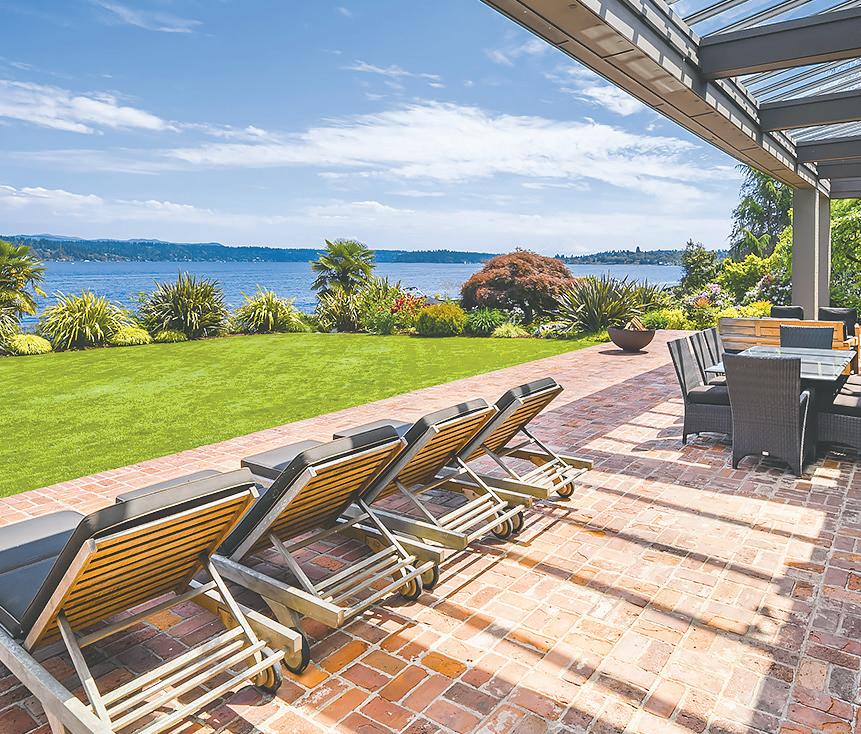
As of press time, there are 13 homes for sale over $2.5M in Madison Park, Washington Park, Broadmoor and Denny Blaine. Three of the residences are condominiums, and the highest priced single-family home for sale is a contemporary villa with 130 feet of Lake Washington waterfront. If you have given any thought to selling your home, there has not been a better time in recent memory. Our Compass experts have a long history in Madison Park and are ready to help you navigate this unique time with the latest technology, top-notch marketing and proven pricing strategies. Do you need help getting your home ready for sale? Ask about our Compass Concierge program! If you’re buying, our knowledgeable agents will help you achieve success in this still competitive market.
Evan Wyman Broker/Partner
The Wyman Group @ COMPASS