City animal shelter working with available space to provide rescue
BY BRANDON MACZ
The Seattle Animal Shelter has been operating in the same Interbay facility since 1982. It has managed to operate there for nearly 40 years by being creative with its existing space, reducing its intake through education and spaying and neutering programs, loyal volunteers and a boost in private funding through the Seattle Animal Shelter Foundation.
Ann Graves started at SAS as an animal care officer in 2000, then a field officer, and later as an enforcement supervisor and manager. She was tabbed as the shelter’s executive director in late 2017, after nearly a year serving in the role in the interim.
“You never know what’s going to happen,” Graves said about working at SAS. “Every day is dif-
SHELTERING SEATTLE’S
HOMELESS CRITTERS
ferent.”
The City of Seattle and King County formed their own animal control divisions in 1972, the first SAS facility opening further south on Elliott Avenue.
Fewer people were spaying and neutering their pets then, Graves said, and the population had peaked. Regional Animal Services of King County (RASKC) was
also formed at that time, and the Seattle Humane Society relocated to Bellevue.
By the time the new shelter opened in 1982, SAS was taking in around 15,000 animals a year.
“The dogs that were in the kennels weren’t here very long,” Graves said.
Through better education and offering low-cost spaying and
neutering, annual intake was hovering between 6,000 and 8,000 animals when Graves arrived at
➧ SHELTER, Page 4
Photo by Brandon Macz Cat-roaming rooms
among
at
Easy Guild Plantings for your Backyard
BY GEA BASSETT
The inspiration of summer gardening is upon us. Walk into just about any store and you’ll find an abundant array of plants to inspire your weekend activities. But if you’re like me, you may find that what you plant one summer doesn’t live long enough to make it to the next summer. We may forget to water (or forget to water enough). Once the novelty of summer wears off, we forget about the plants - they get covered up, stepped on or lawn-mowed over. Or maybe pests chomp them up before they have a chance to establish themselves.
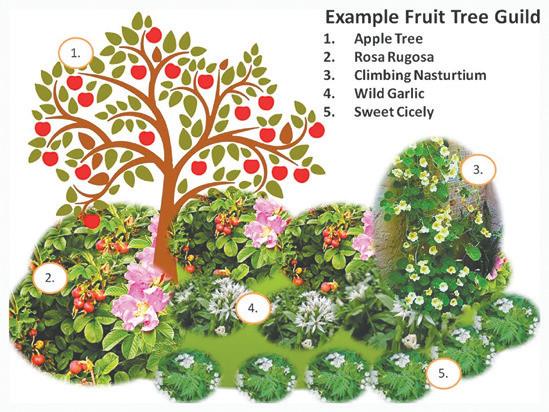
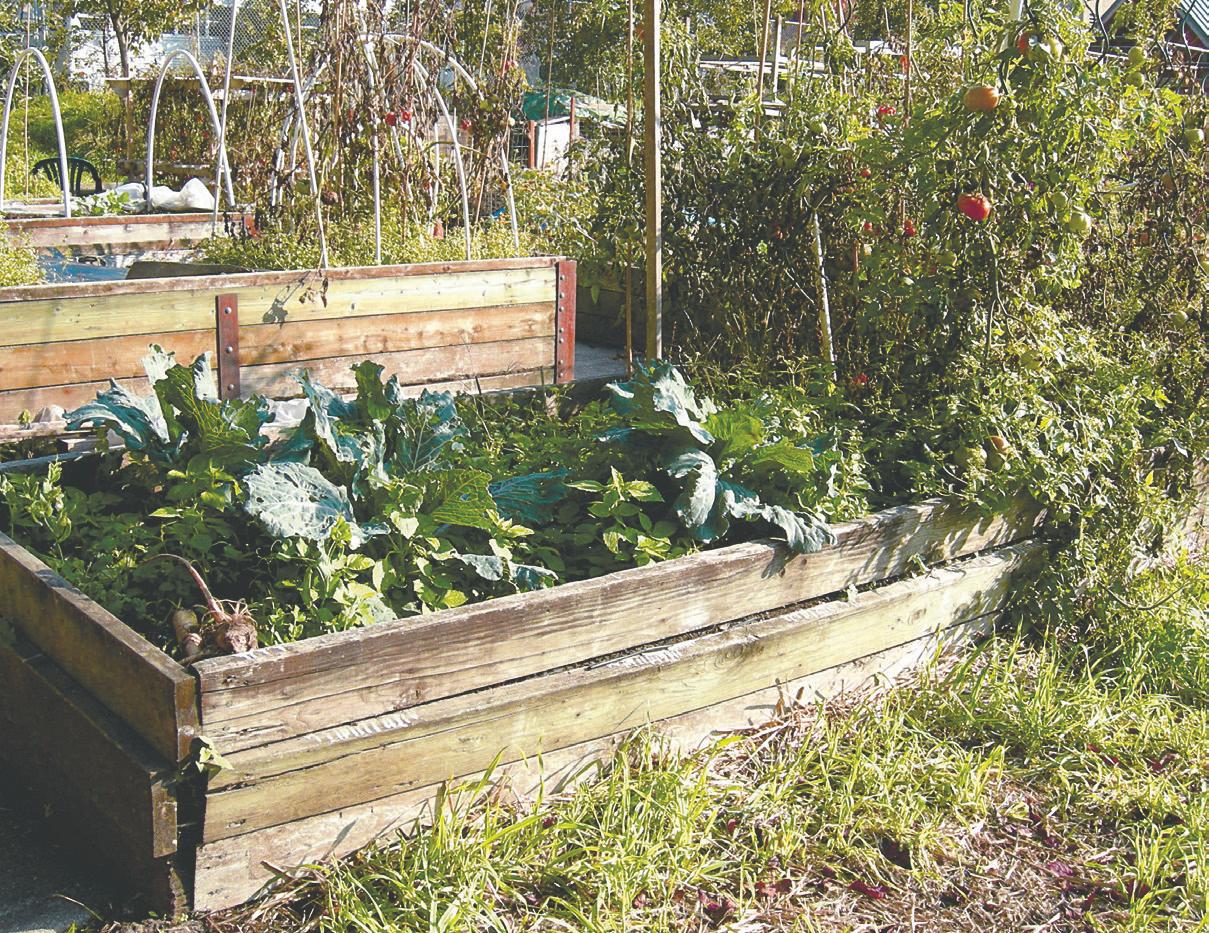
There is a better way to plant: a way that will help your garden continue to prosper and grow. A guild is a simple concept, and you don’t need to live on a farm or have a big green thumb to plant one. A guild is simply a group of plants that come together to support each other. Guild planting is a method that helps reduce how much watering you need to do and how much protection you need to provide your plants. Guilds also decrease the likelihood of pest invasions and increase soil fertility. In other words, guilds are great for lazy gardeners (like myself) because they are somewhat self-maintaining.
Why do plant guilds work? When we group plants together in a guild, the plants help to protect each other (think about how a clump of plants is more likely to be noticed whereas single plants are more likely to get stepped on or cut down). Guilds can also help create a habitat for bees (which help pollinate) and beneficial insects (to help eat up pest insects, such as aphids); and they can help generate compost (which, in turns, increases soil health and fertility). Instead of planting random plants here and there, we plant guilds with the intention that the plants in a guild will help each other grow.
The first known guild planting comes from various Native American groups in North America and is called “The Three Sisters” guild. The Three Sisters is made up 3 plants: corn, beans and squash. Corn is used as a trellis and for food; beans
are used to add nitrogen to the soil and for food; squash is used to create mulch and for food. The Three Sisters guild actually produces more food, with less water and fertilizer, than a similar area planted to any one of these three crops in isolation.
The Three Sisters is an easy guild to create. Choose a full sun spot and prepare your soil for planting. Mark out a series of planting holes about 5 feet apart. This is going to be your guild location and these are the holes that you will plant your corn in. You can make your guild as big or small as you want, but use at least a 10’x10’ area. Place 3-4 corn kernels
into each hole, cover with an inch of soil. After the corn sprouts, start mounding the soil up around the young stalks. Don’t cover the sprouts; rather, just build up earth around the base. Don’t thin the corn either; you want two or three stalks per mound. After 2 weeks, plant the pole beans (not a bush variety) and the squash or pumpkins. Plant 2-3 bean seeds into each corn mound. In between each corn/bean mound, create another mound (see diagram) and plant 3-4 squash seeds in each new mound. The Three Sisters guild
SAS in 2000.
There is no mandate in Washington to compel municipalities to provide animal control and shelters, Graves said, and the City of Seattle has supported SAS since 1972. But that funding does fluctuate, depending on economic factors and competing needs, she said, covering basic operations and staffing.
What has allowed SAS to be more progressive in its mission is the Seattle Animal Shelter Foundation, Graves said, which raises funds for equipment, programs and facility improvements.
“Because they laid the groundwork, it’s been able to really grow and expand,” said SASF president Sue Boivin of the volunteers that started the foundation seven years ago.
SASF hit its $1 million mark for foundational gifts to the shelter this year.
“The things that we help construct, just beyond the programs, there’s been a lot of physical improvements,” Boivin said.
The foundation provided funding to replace chain-link kennels with walls and glass doors, some of which are frosted on the bottom to reduce stress; pumping in classical music also helps. National Veterinary Association volunteers created scenic paintings on the backs of the kennels.
Several kennels were empty on April 25, which Graves said was a good thing.
SASF provided the funding to renovate the shelter’s cat and critter rooms in 2015.
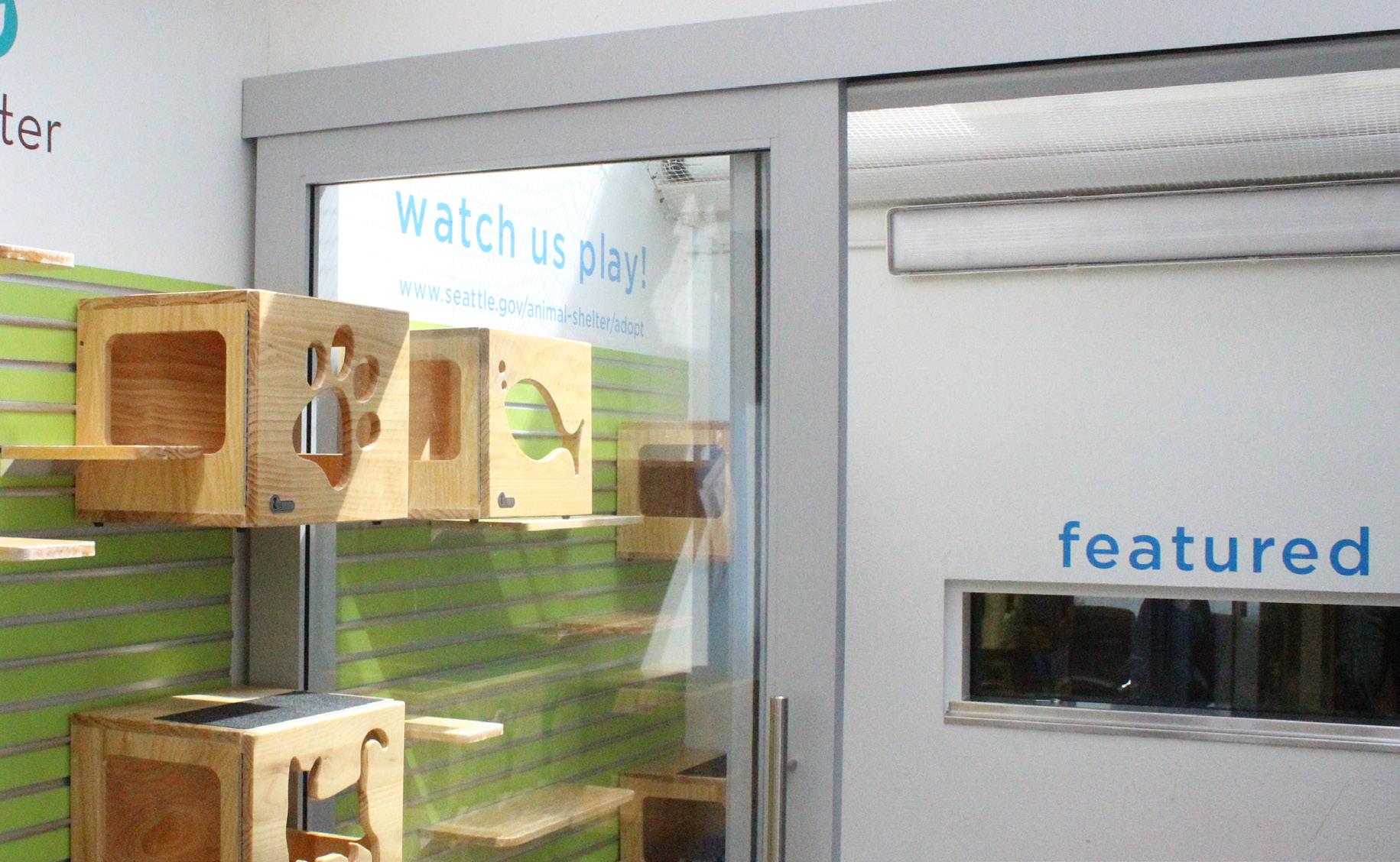
The cat adoption room was relocated and transformed from rows of cages to larger shelter spaces with windows instead of bars. Where the adoption room used to be there is now one of two cat-roaming rooms with climbing structures.
“Literally, on this wall was a rack of stainless-steel cages,” Graves said. “This is the next and best thing to being in a house.”
The added space has helped reduce stress for the cats, she said, and the shelter has seen a decrease in upper respiratory problems.
That same year SASF also provided funding to create a veterinary exam room.
“This used to be our euthanasia room,” Graves said.
SAS does still euthanize certain animals, but it’s usually due to behavioral issues or when an animal comes in with severe injuries, Graves said. A municipal shelter, SAS conducts numerous animal cruelty investigations every year.
Before someone surrenders an animal to SAS, it’s usually the first question they ask.
“The term ‘no-kill’ is a loaded term,” Graves said. “It’s a term that I think was weaponized in its early days, in its early uses.”
SAS has an 90 percent average
live-release rate, and its intake is now around 3,500 to 4,000 animals each year, Graves said, which is half what it was when she started at the shelter 19 years ago.
The shelter has 40 dogs runs and capacity for 75 cats. The amount of critters — birds, rodents and reptiles — depends on the species.
While spaying and neutering has helped lower the population of animals coming into SAS, fostering has helped save lives and provide more time for them to be rehabilitated and socialized, Graves said. When the shelter gets too full, SAS puts out a plea to its volunteers.
“If the animal is showing any kind of shelter stress, we send in the foster parents,” Boivin said. “These foster parents, they are the unsung heroes.”
Boivin said the foundation has helped save 180 animals from being euthanized since its inception.
“Sometimes it might take two weeks,” she said. “Sometimes it might take six months but, whatever it takes, we are dedicated to making sure these animals get into the right homes.”
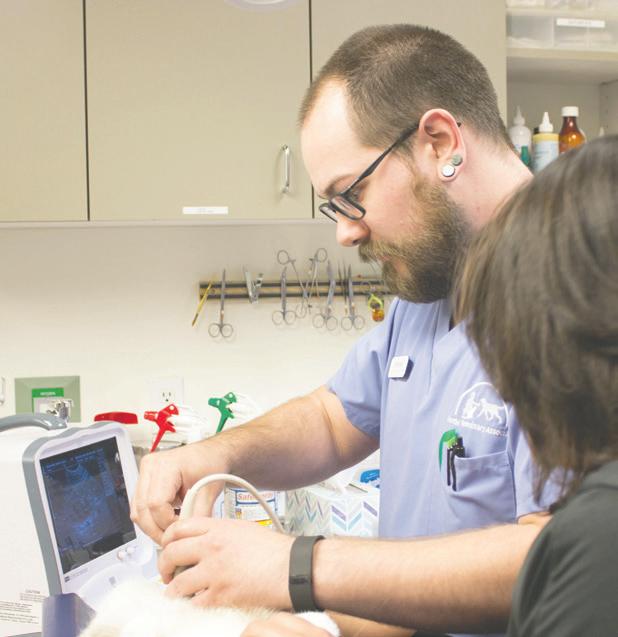
The foundation’s last major gift was a digital X-ray machine in 2017. An old closet became the X-ray room. It saves time when an injured animal comes in, and is also more cost-effective than taking the injured dog or cat to a private clinic.
“We investigate animal cruelty,” Graves said, “and a significant part of an animal cruelty investigation is going to include X-rays.”
The X-ray room was named in honor or Ziva, a recently retired Seattle Police K-9 officer. She and partner Officer Mark Wong were strong supporters of SAS, Graves said, helping to raise funds for the shelter over the years. Ziva now lives with Wong, who has a new K-9 partner, Katniss.
Boivin said the reason the foundation has been so successful in the last seven years is due in part to its board members bringing their own skill sets to the table — a marketer, attorney, recruiter and financial expert, to name a few.
“We’re boots on the ground. We actually do the work ourselves,” Boivin said, “and that helps with not spending our donors’ money, because we do it on a volunteer basis.”
SAS has been around for nearly 50 years, but its volunteer program didn’t start until 1997. SAS logged 62,890 volunteer hours in 2018.
“It was hard work to get it in place, and it’s the best thing we’ve ever done,” Graves said.
SASF is taking over the organization of this year’s Furry 5-K on Sunday, June 9, at Seward Park. This is the fun run/walk’s 20th anniversary, and it consistently brings in around $60,000 to $70,000 for the shelter’s Healthy Animals Fund.
“We’re very lean here,” Graves said, “so it takes a lot to organize and produce an event like that.”
“It’s a huge dog fest,” Boivin said. “It’s everyone here you’d want to meet, because everyone loves animals.”
Because this year’s event is not being organized by the city, the Furry 5-K will have a beer garden, Boivin said, which is being sponsored by Tito’s Vodka.
There will be donor opportunities and an open registration that day, which is where the event receives most of its profits, Boivin said. People can register now at furry5k.com.
When the Seattle Animal Shelter opened at 2061 15th Ave. W., Interbay was a quieter neighborhood.
“The area has definitely developed at a very fast clip,” Graves said.
The increase in activity has created more visibility for SAS, she said, which helps getting people in the door and animals adopted. It also makes it harder to walk the dogs. The once quiet alleyway behind the shelter is now more of a roadway, so additional safety measures have been put in place over the years.
There are volunteers like Carla Kotila who would like to see the city explore replacing the 37-yearold facility with a new shelter.
“It’s fine for the cats and critters,” Kotila said, “but the dogs could use more space.”
Kotila would like to see some of the Washington Army National Guard’s 26-acre armory site — south of SAS — dedicated for a new facility. Planning for the property’s future — should the National Guard relocate to North Bend — started last September.
“I’ve already sent in my blurb,” Kotila said of the Washington State Department of Commerce’s request for ideas. “I don’t really have a distinct proposal for it other than it would be a great place for the animal shelter.”
That decision would ultimately have to be made by the City of Seattle. Seattle Humane’s new 57,000-square-foot facility cost $28.5 million, and was all privately funded.
“The board is a separate entity,” Boivin said, “and we work together on figuring out how to grant funds, but the shelter usually initiates the cause.”
While not something that’s being looked at seriously at the moment, the facility’s future is an ongoing conversation, Graves said.
“We can only remodel so many times in so many ways.”
Find more information about SAS, visit seattle.gov/animalshelter. Find out more about SASF and ways to support the shelter at seattleanimalshelterfoundation.org.
JUNE:
Space & Copy Deadline: Weds, June 5 - noon
Publication Date: Jun 14 CR: Jun 11
JULY:
Space & Copy Deadline: Weds, Jul 3 - noon
Publication Date: Jul 12 CR: Jul 9
AUGUST:
Space & Copy Deadline: Weds, Jul 31 - noon
Publication Date: Aug 9 CR: Aug 6
SEPTEMBER:
Space & Copy Deadline: Weds, Sept 4 - noon
Publication Date: Sept 13 CR: Sept 10
OCTOBER:
Space & Copy Deadline: Weds, Oct 2 - noon
Publication Date: Oct 11CR: Oct 8
NOVEMBER:
Space & Copy Deadline: Weds, Nov 6 - noon
Publication Date: Nov 15 CR: Nov 12
DECEMBER:
Space & Copy Deadline: Weds, Dec 4 - noon
Publication Date: Dec 13 CR: Dec 10
Capehart Forest now open
Friends of Discovery Park making it official
BY DANIELLE CHASTAINE STAFF REPORTER
It took a few decades and a lot of tree saplings, but the latest part of Discovery Park is open for visitors.
Capehart Forest, which has been under restoration since the early 2000s, is now open to the public with new hiking trails, sidewalks and more. The 30-acre section of the park used to be filled with more than 60 military homes owned by the Navy before it was purchased for $13 million by the City of Seattle in 2010, according to Friends of Discovery Park president Philip Vogelzang.
“It’s been an ongoing process, but this was the biggest chunk we needed to become part of the park,” Vogelzang said. “It was stated in 1974 that it needed to become part of the park, but the Navy had a mortgage on it, so they had to buy it.”
Vogelzang said a conversation about purchasing the parcel from the Navy started in 2001.
“We had a $5.8 million fund from a settlement case … and that money was slated for improvements of the park,” he said.
Vogelzang and a few other Friends of Discovery Park members created a council that focused on purchasing Capehart and other improvement projects. The group sent out letters to city officials, Magnolia leaders and many local groups to gather support for the project. Many groups sent letters in support of purchasing the site to Sen. Patty Murray.
“The first million dollars we put down as good-faith money to purchase Capehart,” Vogelzang said. “Patty Murray helped put all the money together and helped get the parcel purchased from the Navy.”
Friends of Discovery Park spent another $1 million to demolish the homes and tear up the pavement, power lines and other remnants of the neighborhood.
Friends of Discovery Park member David Hutchinson then went to work designing the park space. Hutchinson led the work on planting more than 10,000 native trees and shrubs in the area with a few other volunteers.
Vogelzang worked to get a Neighborhood Matching Fund grant for around $100,000 in 2018, and a local family donated another large sum of money to tear down the fencing and rebuild the fence line, and create a new trail system and sidewalk.
The Lindsey Brown Trail is 1,600 feet long and the Willow Trail is 500 feet.
“Lindsay Brown was a local resident who wanted to see this part of the park happen,” Vogelzang said. “She worked with us, but she passed away a few years later, so then her husband donated some money in her name. We named the trail after her in memorial.”
The best part of the improve-
ments is the wildlife has returned, Vogelzang said.
“It’s been fun to watch that.
Volunteers were worried that residents wouldn’t stay on the trail and scare the wildlife,” he said, “but so far our visitors have stayed on the sidewalks.”
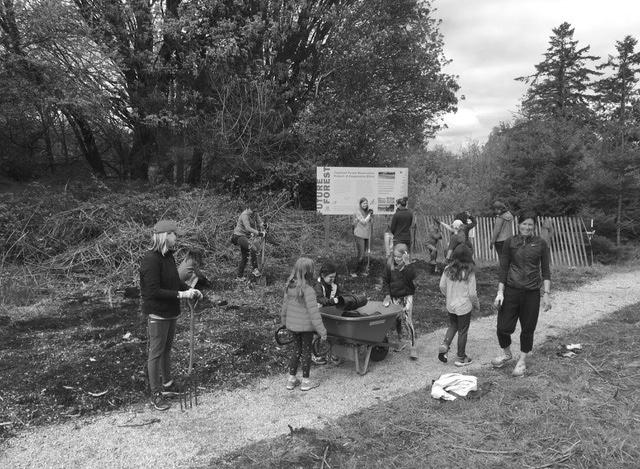
The last touches to the park were created by a local Magnolia Girl Scout troop, which planted perennials along the new entrance and helped finish the fence line near the southeast portion of Capehart.
“We rebuilt the whole entrance; it was pretty fun,” Vogelzang said. “These kids even pitched in their cookie money. They donated $400 to the plant fund and we planted some beautiful irises … all these beautiful flower plants.”
The spot used to be a triangle piece of concrete, the last bit of the old military home site.
Friends of Discovery Park is celebrating the opening of Capehart Forest at 10:30 a.m. Saturday, May 11. Volunteers, Friends of Discovery Park board members and city officials will present a few words and officially open the park.
The trails have been open since April 1, but Vogelzang said the celebration on May 11 is a way to honor the volunteers who put in the work to create a beautiful new space.
“The mayor may or may not be there,” Vogelzang said.
There will be an official ribbon cutting and refreshments for visitors.
• Is your direct mail post card in the trash with the rest of the junk mail?
• Is your advertising message lost inside all the digital clutter?
• Are your pop-ups blocked?
• Is your email sitting in an inbox with all the other spam?
Reach potential customers on their commutes, during lunch breaks, on weekend mornings, or at home in the evenings during their down time.
Print Advertising does NOT have all the issues the above marketing avenues do that you have been using.
In fact, it might just be the best investment you have made for your business!
Call today and let us help you target your market the right way.
PSE upgrading natural gas main
in Central District
Puget Sound Energy expects to begin replacing a Central District natural gas main from 1981 with corrosion-resistant plastic pipe this spring.
The project will be broken down into three phases to handle 22,000 feet of pipeline, the common two-inch DuPont pipe material to be replaced with new piping from 4-6 inches in diameter. The added capacity will help prevent potential outages during big draws on natural gas, said PSE project manager John Guay, such as during lengthy cold snaps. It will also increase capacity as new residential construction comes online along Martin Luther King Jr. Way.
The first phase of work will focus on 29th Avenue, between East Union and Marion streets, as well as a portion of East Spring Street between MLK Jr. Way and 30th Avenue.
The second phase is planned on 30th and 31st avenues, from East Union to East Marion streets, as well as East Spring and Marion between the avenues.
The third phase, expected to start in late summer, will stretch from 27th Avenue to 30th Avenue along East Columbia Street and include a portion of 29th Avenue.
Crews will trench portions of the streets to replace the service lines, and no road closures are planned, Guay said, though there will be traffic control flaggers and parking loss.
Once the work is completed, the sections of road will be temporarily patched over and later restored under SDOT requirements.
Work will occur 8 a.m. to 4 p.m. Monday-Friday.
Seattle landmarks board seeks real estate professional
The Seattle Landmarks Preservation Board is seeking a new member to fill its real estate position. The board make landmark designation recommendations and reviews landmark properties when alterations are requested.
Board meetings are held at 3:30 p.m. on the first and third Wednesday of each month, and the commitment is roughly 10 hours per month. The open position is for a three-year term.
Those interested in being considered are asked to send a resume and letter of interest to board coordinator Erin Doherty by Monday, May 27, at Erin.Doherty@seattle.gov.
SEATTLE HOME & REAL ESTATE
STAFF
Publisher
Pacific Publishing Company
Robert Munford, General Manager ppcprint@nwlink.com 206-461-1304
Advertising
Wednesday, June 5, Noon
Classified Advertising: Wednesday, June 5, 5 p.m. Tammy Knaggs Matt Wilemski PPCadmanager@nwlink.com 206-461-1322
Brandon Macz, Editor Danielle Chastaine, Editor Master Builders Association of King County
Circulation — Distribution Chris Lemmen ppccirc@nwlink.com 206-461-1337
Art and Production Team
Mark Falconer, Art Director Guy L. Jackson, Designer
Courtesy photo
A Magnolia Girl Scout troop helping plant flowers in the new entrance way at Capehart Forest.
Spring real estate market strong, but questions on the horizon
The spring real estate market in Seattle is traditionally the strongest of the year, and we’re in the middle of it right now. Past data tells us that the period from mid-March to June is when we record the highest sales of that given year.
This year is right on that trend. We’re in a seller’s market, and homes in good condition under $1 million are moving quickly. Homes priced above $2 million are sitting longer on market, especially if they’re not truly turnkey.
But there’s still some uncertainty as to what the rest of the year will bring.
We’re in great shape now
This spring, Seattle is averaging about two to three months of home inventory. In some neighborhoods, like Madison Park, it’s approximately two months. Real estate industry analysts define a neutral market as four to six months of inventory. So the data tells us we’re still in a robust seller’s market.
While we’re strong now, let’s not forget what happened last year. After that huge boom in the spring, the real estate market went completely wonky in August. It was as if someone turned off the light switch. Sales dried up, and everyone panicked.
I attribute that sag, in part, to extreme buyer fatigue. Buyers got beaten down by the pace, the prices and too many
➧ GUILD, from Page 3
failed bids. The other factor is that sellers were still pricing for the spring as if the arrow was still pointing up — and it made for a long and frustrating fall and winter. It takes about six months for consumers to realize the new normal.
The good news is the new normal is positive — our local economy and job growth is the biggest reason.
Learning the lessons
It would be foolish not to consider what happened last year and future-proof your own chances, whether you’re buying, selling, or considering selling. Because activity is high, we could again see the market take a toll on buyers, causing them to sit out for a while later in the year.
If you’re considering selling your home, now is the time to list it to get the most traffic, the best price, and the best terms for you.
I can’t stress enough the importance of finding an experienced broker to put you in a position for success, wherever you are in the market. Many new brokers flooded into the market over the past years, because there was so much business out there. But few of them have the skills, seasoning and connections to get you your best price and terms, whether you’re a buyer or a seller. Look for someone with a history of success, in good markets and bad.
A good negotiator can make or break your chances. If
will need to be watered regularly. After harvests, leave the stalks, vines, and other organic debris on the ground to compost. Doing this “quick compost” returns some of the extracted fertility back into the soil and protects the ground from erosion.
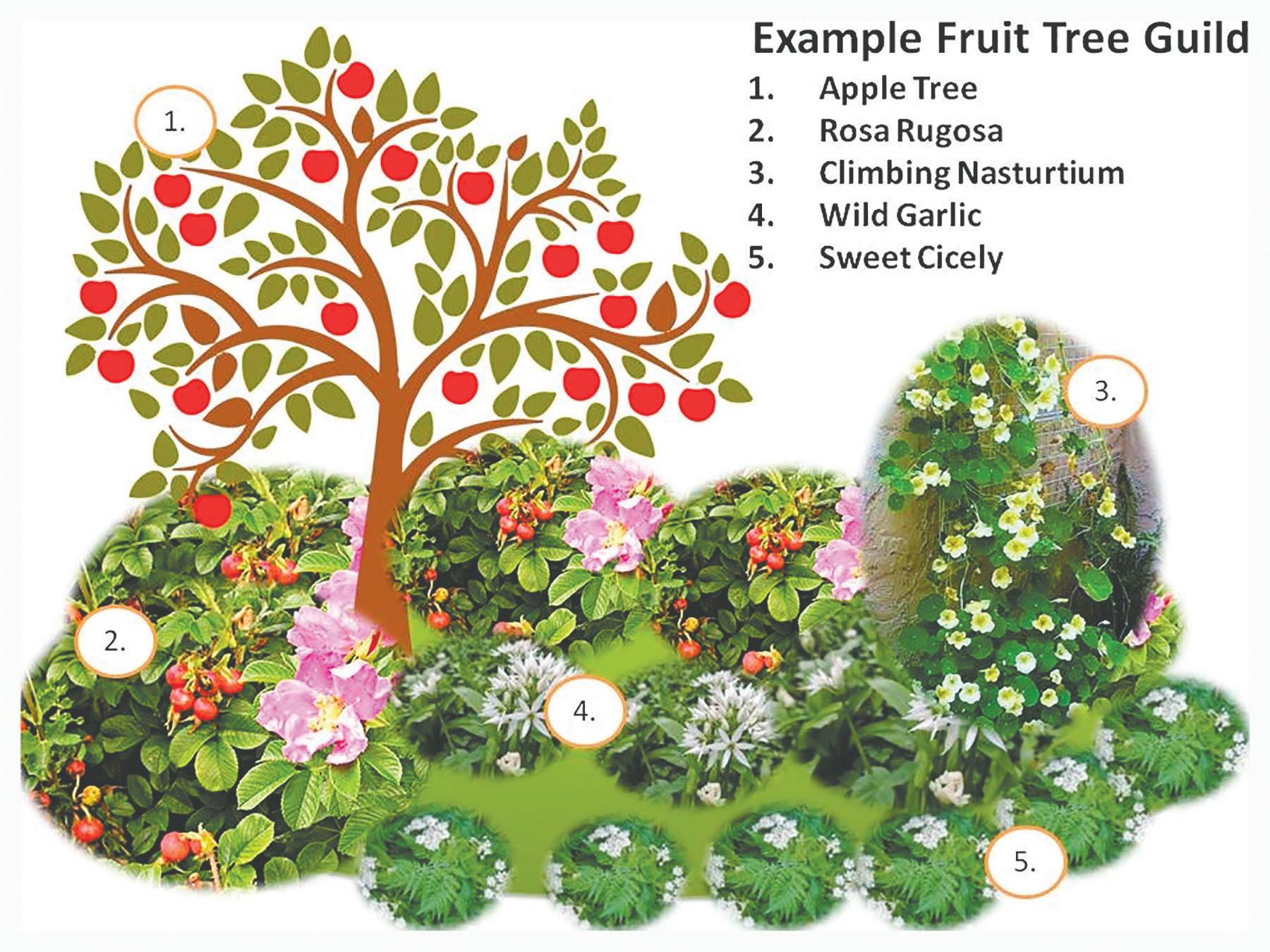
Go wild with guilds! There are many themes and ideas you can come up with in designing your guild. You can do a “Spaghetti Sauce Guild”. Central plants will be tomatoes and peppers and around them plant basil, oregano, parsley and chives. From this guild you can harvest everything you need to make a yummy tomato sauce. Or do a “A Bee & Tea Guild”. Central plant will be a Linden tree and around it plant echinacea, mint, lovage, rosa rugosa, and fennel. This guild will provide you with a wonderful bee habitat and produce many fine herbs that you can make tea with.
One last tip: we plant guilds not just because of beauty but because of beneficial relationships. There are 2 staple plants that add to the complexity and health of every guild, which I recommend adding no matter the type. These plants are: comfrey and crimson clover. Comfrey leaves can be cut down a few times each summer and are used to mulch the ground. Crimson clover is a ground cover that attracts beneficial insects and is cut down and used to mulch the ground after it flowers.
Gea Bassett is the founder and owner of Green Cleaning Seattle - OtiumMaid Services™ (GCS), an eco-safe home cleaning company in Seattle. She has an MA in Sustainable Education from Goddard College, a permaculture design certificate from PermacultureNOW. Her company’s mission is to continually expand and improve on what it means to be a “green business” by injecting a sustainable mission into every element, including using natural products, reducing carbon footprint, growing local, providing continuing education for her employees, and beyond - by being “Greener Than Just the Products we Use”™
you’re a buyer, you want someone who knows what contingencies to add or drop on an offer, and be able to leverage all that with the seller’s broker to get your best prices and terms. Negotiating is extremely important to the seller too. In today’s market, properties will see days on market. Instead of several offers you may only see one. If that’s the case, you’ll want to make certain you handle that buyer correctly. Most likely, you’ll have to negotiate the price and terms of the offer. Who you have at the helm of the listing will define your net proceeds once the transaction closes. Having an experienced broker capable of helping you price your home right for the market when you enter is paramount. If you try pricing six months ago or last year and not in the now, the outcome will not favor you.
If the home you want to sell is in that over-$2 million segment, the data says you will likely see 60 to 90 days of market time. Get the experienced broker, but also make sure your home is in the best possible condition to realize your best price in the shortest amount of time.
We can’t know what the next six months will bring, but you can take the right steps to make sure you’re in the best position to buy or sell in the now.
My home, office, team — my focus is here in this neighborhood. If you’ld like to set a time to talk through any of these matters involving buying or selling your home, my door is always open.
Chris Sudore is managing broker at Coldwell Banker Bain | Global Luxury and a Madison Park rsident. Reach him at Chris@KingCountyEstates.com.
Chris Sudore
PROPERTY VIEWS
BY BRANDON MACZ
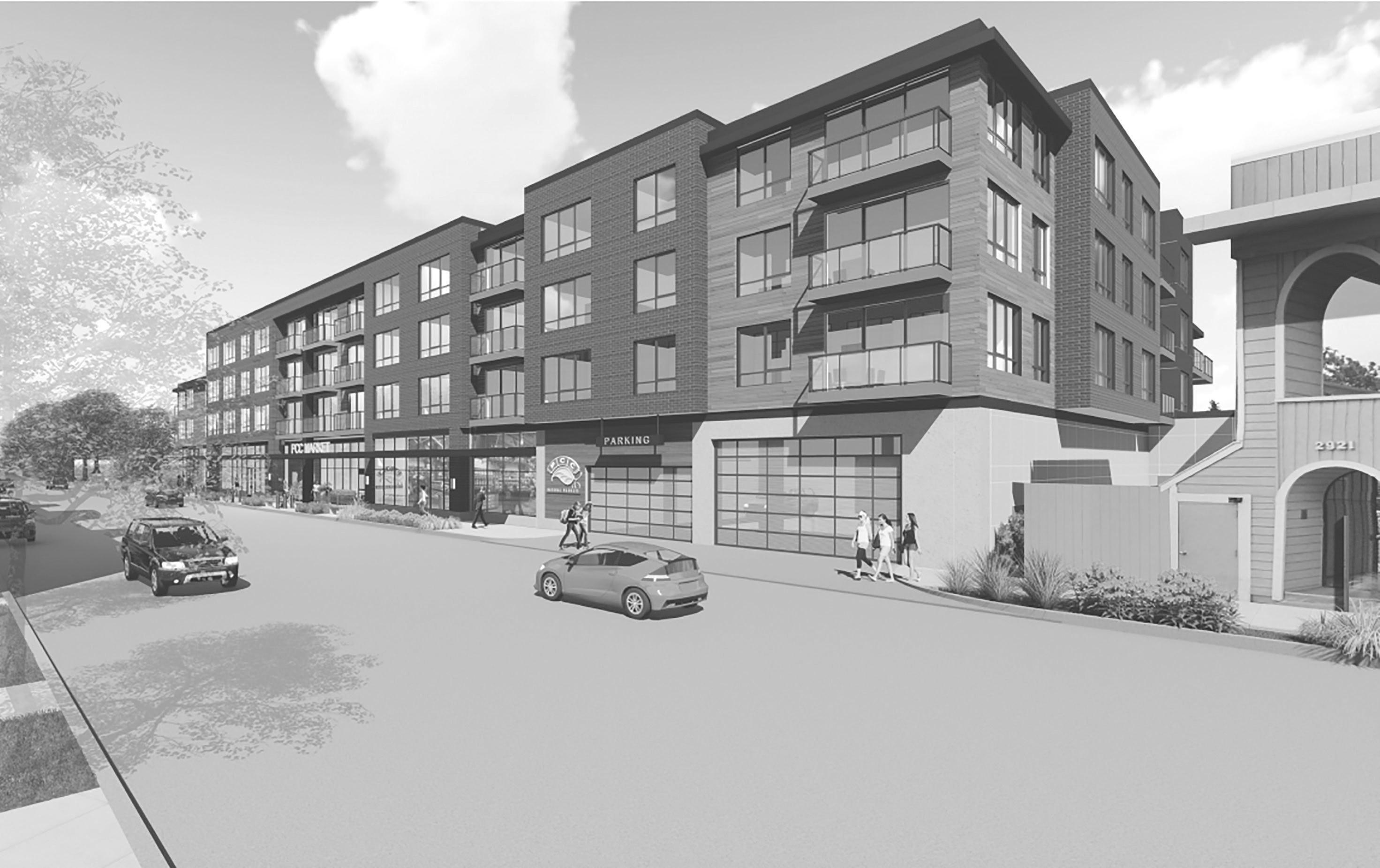
Save Madison Valley has filed a land-use petition in King County Superior Court, the neighborhood group’s latest attempt to scale back plans for The Madison mixed-use development.
The Seattle Hearing Examiner’s Office in February partially sided with the Department of Construction and Inspections director’s decision to allow construction of the six-story mixed-use development that will have a PCC Market as its ground-floor anchor tenant. It will replace the City People’s Garden Center at 2925 E. Madison St., adding 82 housing units in Madison Valley.
Plans took four meetings to pass the East Design Review Board in 2017, and ended up adding increased setbacks on East Madison Street, facade changes on East Dewey Place and the addition of townhouses on the residential street to the project.
The land-use petition filed against de-
veloper Velmeir Properties and the City of Seattle asserts Deputy Hearing Examiner Barbara Ehrlichman erred in her Feb. 26 findings and decision, which followed a seven-day appeal hearing that started in December and concluded in February.
Save Madison Valley is challenging the project’s height, bulk and scale, which the group claims will have adverse impacts on the neighborhood. It also means the loss of the tree canopy on the development property.
“The East Madison Street Proposal will completely and utterly change the character and aesthetics of the neighborhood,” the petition states. “It is an understatement to say that the aesthetic, height/bulk/scale, traffic and other impacts will be significant and adverse to the neighborhood.
“…The Proposal does not respond in a complimentary or supportive way to the built features of the Madison Valley neighborhood. Instead, it looms over the neighborhood like a fortress on a hill.”
The deputy hearing examiner found that Save Madison Valley failed to meet its burden of showing the project did not comply with applicable design review guidelines. She noted multiple modifications were made to the project as requested by the EDRB that addressed height, bulk and scale.
“The Hearing Examiner erred as a matter of law when she concluded that the appellant, Save Madison Valley, bore the burden of proving that the Director’s Decision, the approval of design review, and the determination of non-significance (DNS) were ‘clearly erroneous,’” the petition states. “The scope of review for issues presented in a Hearing Examiner appeal is de novo review, not clearly erroneous review.”
Save Madison Valley argues the design review process violated State Environmental Policy Act requirements because the East Design Review Board’s decision was not informed by SEPA review; it was not completed prior to EDRB approval in September 2017. This also limited alternative design
choices during the review process, the petition states.
The group argues the hearing examiner incorrectly interpreted the review board’s direction for a year-round landscape buffer of evergreen trees at the Dewey frontage, and that is not what is in the design.
Ehrlichman did find the DNS was erroneous in its threshold determination related to drainage, and that decision was reversed and remanded to SDCI for further action. The drainage report was determined to be outdated.
The deputy hearing examiner also denied a motion for reconsideration by SDCI regarding mitigating shade on the Mad PPatch adjacent to the property. The department argued an agreement between SDOT and the Department of Neighborhoods makes it clear P-Patch community gardens “are not permanently dedicated park or open
Image courtey of Studio Meng Strazzara Save Madison Valley filed a land-use petition
Create your own personal oasis with an outdoor living space
BY MIKE DUNN, DUNN LUMBER
I’d argue that quality time outdoors is more important in Seattle than most other American cities. While our surroundings are beautiful, we don’t often get to enjoy them because of dreary weather that dominates most of the year. We have a limited supply of sun, and we want to get the most out of it.
One of the best ways to enjoy the sun is with an outdoor living space. With so many decks, fences, screens, trellises, waterproof structures and raised flower beds to choose from, there’s no shortage of options. With the right concepts and materials, you can make a lovely spot in even the smallest of spaces. Here are some ideas to help turn your yard into an outdoor oasis.
Build a privacy screen planter
A privacy screen planter is a wonderful solution for small spaces. A classic privacy screen is great for creating a little solitude, but attaching the screen to a small planter box makes things interesting. It’s a perfect way to add a little green to your backyard or patio with a small herb garden or flower
bed while providing additional screening.
Design your dream deck
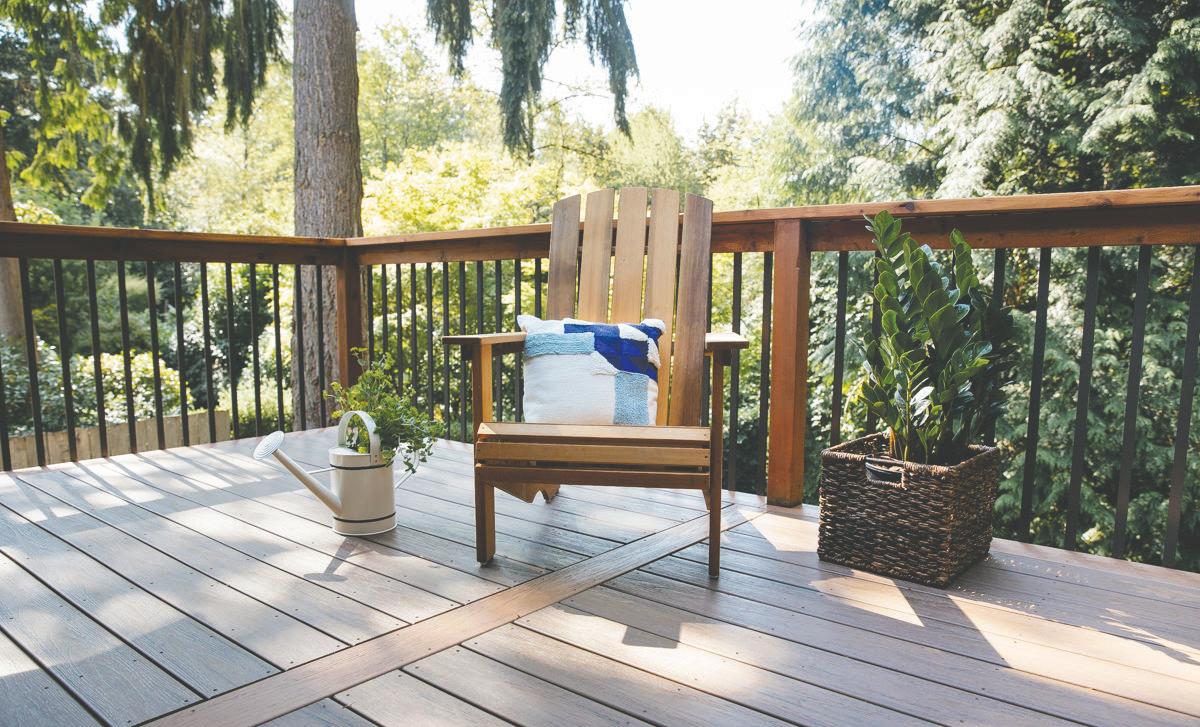
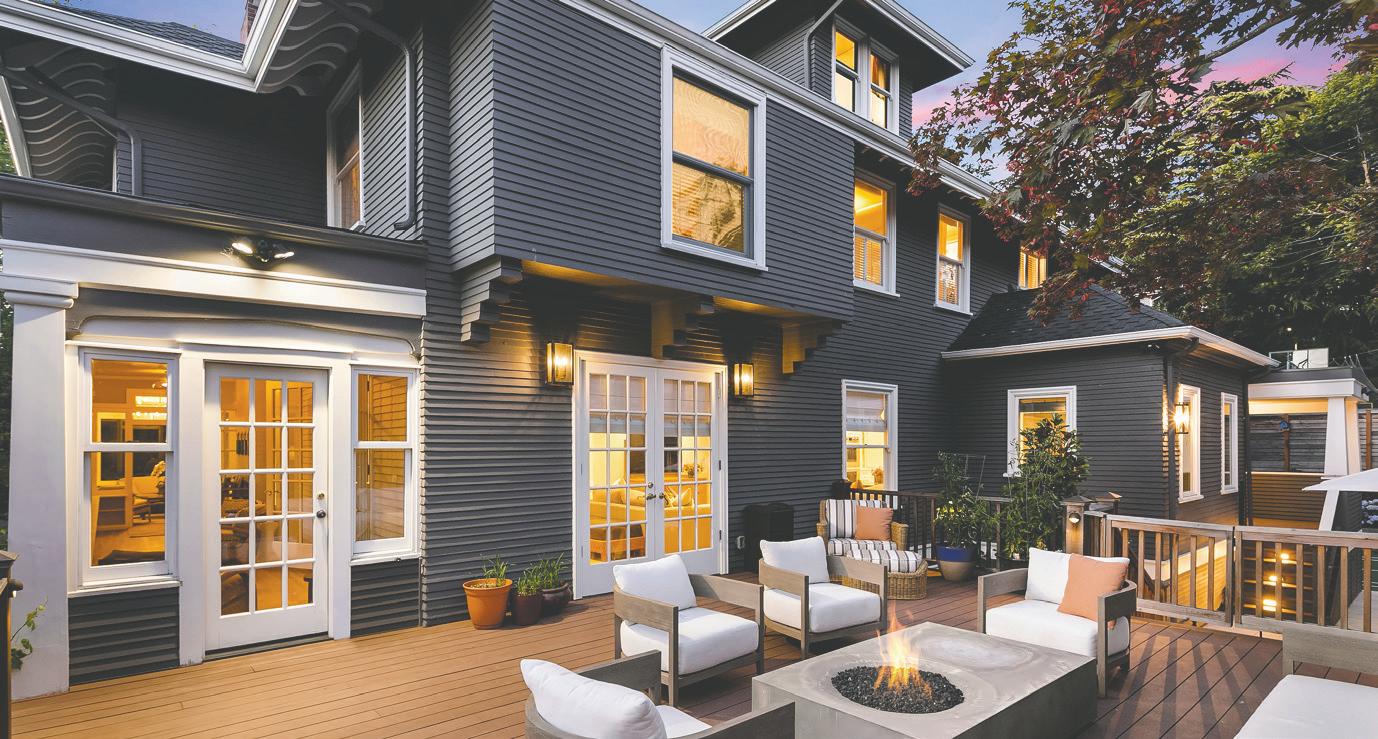
One of my favorite ways to spend a beautiful day is on a deck. Whether taking in your surroundings while hosting a dinner party or gathering around a tabletop firepit on a starry night, the deck is a prize. From simple decks that blend in with their surroundings to showstoppers that serve as backyard focal points, there are endless options when it comes to designing a dream deck that fits all your aesthetic, material and maintenance needs.
Create a dry space under your deck
Many homes have a second-story deck with usable space or a patio below. This can be a great shady spot to enjoy, but during the rainy season (or the occasional summer downpour), this space is no longer usable because of rain dripping through the boards on the deck above. Investing in a product that creates a ceiling for your underdeck area will allow you to reclaim this space and enjoy it all year long.
Add outdoor lighting to your
Think Magnuson Park
home
It’s important to ensure your house is well lit, not only for general ambiance but to help guests and delivery drivers see your home at night. Outdoor lighting is recommended for year-round safety by police and fire departments, too.
Consider adding some downlights to your landscaping for a little extra glow, or string lights around an outdoor dining table for late-night summer meals.
Upgrade windows or add skylights
Running low on outdoor space?
That’s okay! Upgrade to a beautiful new set of windows or add some skylights to let in light and enjoy views of the great outdoors 365 days a year. Modern windows allow you to experience your surroundings without losing energy because they’re made with high insulation factors to keep the cold out during the winter months and Low-E glass to block UV radiation on warm summer days. Crack them open for a little fresh air and the sound of chirping birds. Adding one or more skylights can transform a dark room into a sun-
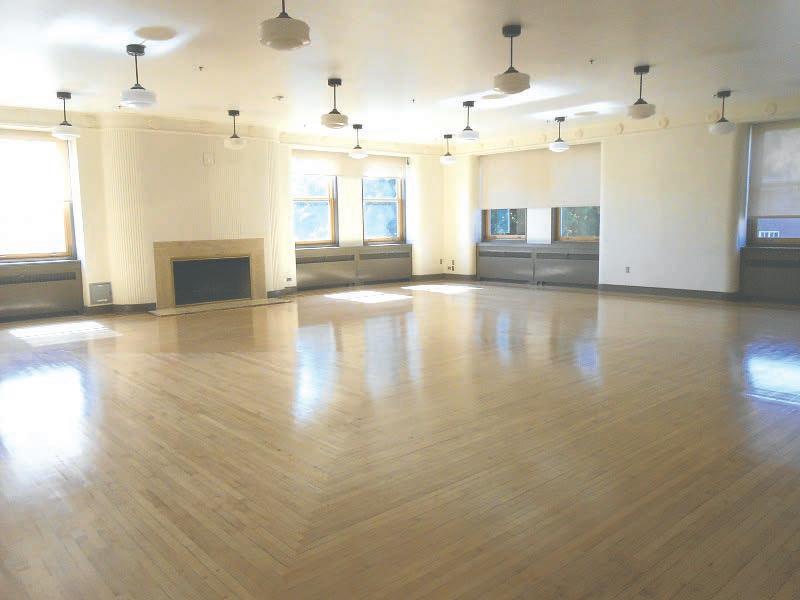
Magnuson Park is a 300-acre park located in the Sand Point neighborhood of Seattle, Washington. The park is the second largest in Seattle and is located on the former Naval Air Station Puget Sound. Magnuson has multiple indoor facility rental spaces. These spaces can accommodate anywhere from 20 to a maximum of 1,300 people and are priced substantially lower than comparable venues across the City.
See what we have to offer at: http://www.seattle.gov/parks/reserve/event-space-rentals/magnuson-park-event-space-reservations
room by letting in natural light year-round, and some even open to increase airflow.
Scandinavians often say the secret to a long life is being outside every day. In this fast-paced
world, we often forget how much we value nature. Then we spend a day outside or go on vacation and remember why we need it. With the time we work and the gray we endure, we must take ad-
vantage of all outdoor opportunities — for both health and peace of mind. Creating a special outdoor living space is a great way to enjoy the beauty of the Pacific Northwest while getting what we need
from nature.
Mike Dunn is president and CEO of Dunn Lumber, a member of the Master Builders Association of King and Snohomish Counties (MBAKS).
Caring for Aging Pets: Cognitive Dysfunction
As our pets move into their senior years, we begin to identify disorders associated with aging brains. Cognitive dysfunction describes a syndrome in pets which can have several common manifestations including loss of house training, pacing, wandering, staring into walls, and acting disoriented or lost both inside and outside of the home. Increasingly anxious behaviors - clinginess, barking, meowing, or whining are also commonly associated with this syndrome. Some pets begin to be wakeful and restless at night while sleeping peacefully during the daytime. Owners get concerned when behavior changes disrupt the perceived comfort of the pet and/or the quality of life of the household. First we must discover the stimulus for the new behavior; is it pain, or anxiety, or neurologic disease?
We have many drugs at our disposal to treat pain and most pets respond well to analgesic medications. Both the patient’s mobility and attitude improve when pain is treated effectively. Nonsteroidal anti-inflammatory drugs and nutraceuticals are the mainstays of treatment in pets. Veterinarians also utilize a number of human analgesic medications in our patients. It is sometimes challenging to discern how uncomfortable a pet is during a physical exam. Medication or supplement trials may be needed to determine whether a pet is experiencing pain. Because our pets are non-verbal, if a pet is suffering from anxiety we
must deduce from their behaviors what it is causing the issue. The loss of hearing and vision that occur with normal aging can result in anxiety. When the light and noise of daytime are absent, some pets have increasing difficulty orienting themselves.
difficult to determine if episodic abnormal behavior is actually a manifestation of unusual seizure activity or due to anxiety. Freezing in place, rigid limb movement, licking, stargazing- all of these behaviors can accompany seizures or occur as
Vocalizing, wandering, pacing, and altered interactions with family members are all commonly reported in pets with cognitive dysfunction or anxiety disorders. When these signs occur at night, the quality of life of the pet and the household are affected. Fortunately many of the anti-anxiety medications used by humans are now prescribed for cats and dogs. As with pain medications, a drug trial may be needed to discern whether an anxiety disorder is responsible for the behavior change. Seizure disorders can occur in geriatric pets as well. It is sometimes
manifestations of anxiety
One of the best ways to help your pet is by making a note of the time of day and circumstances in which the pet’s behavior has changed. With this information and a physical exam, you and your veterinarian can work together to figure out the cause of the issue and you can be sure your pet gets the most appropriate treatment to live a longer, happier life.
Dunn Lumber
Only With Us®
230 hand-selected real estate professionals with proven sales results and a network that spans the world.
Our firm’s agents serve as trusted leaders in the Madison Park real estate market. Their hyper-local insights are complemented by our brand’s vast global footprint, which opens the door to 990 Sotheby’s International Realty® offices spanning 72 countries and territories around the world. Our network generates impressive global property exposure—with over 31 million unique website visits in 2018—and ensures every client receives the white-glove service they have come to expect from our brand’s heritage, whether their next destination is around the corner or around the world.
audrey@windermere.com audreymanazanares.com
ealogics Sotheby’s International Realty is proud to present The Madison Park Home & Garden Tour on Sunday, June 9th, 2019, from 12 to 4 pm. A walking tour of distinct neighborhood homes and gardens will highlight a broad range of innovative, classic and stylish design. Tickets for the tour cost $25 for adults, with all proceeds benefiting McGilvra Elementary School. Buy yours at MadisonParkHomeTour.com or the Park House.
Managing Broker | Senior Global Real Estate Advisor Founding Member | 206.399.5842 Laura.Halliday@rsir.com WHAT MY CLIENTS ARE SAYING A CONTINUED LEGACY
I invite you to view a Comprehensive Year End Market Report at LauraHalliday.com. If you prefer, I can email it directly to you or hand deliver a printed copy to your front door—just let me know.
RSIR ranks amongst the largest, most productive and fastest-growing real estate companies in Washington with access to 22,500 brokers in 72 countries that generate US sales of $100 billion+ annually. PROVEN RESULTS
Laura represented me recently in both the listing and sale of my home, as well as the acquisition of a condo in the same area. Laura has a unique skill set including: market knowledge and evaluation, professional and fair negotiation advice, and excellent customer service standards. She is a true pro. Anyone who has the opportunity to work with her should consider themselves most fortunate.
Sotheby’s Presents Linework, a curated selection of 15 Contemporary artworks, this Spring.
The kitchen of the future is already here
Smart fridges and seamless cooktops are just a few of the tech trends transforming the contemporary kitchen.
DAVE GILTNER, BAUFORMAT
SEATTLE
For a generation that grew up with Transformers and video games, it’s no wonder we quickly fall in love with technology and want it everywhere, from the phones in our hands to the appliances in our kitchens. While a kid of the 1980s may have imagined how cool it would be for the kitchen to turn into a gleaming robot sentry, the reality is much more practical and, in many ways, even cooler.
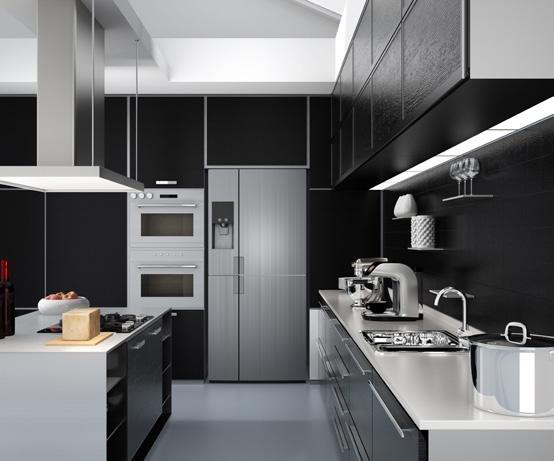
Smart fridge. We have been hearing about “smart fridges” for a while now. But science fiction has become science fact with French appliance manufacturer Liebherr, which has partnered with Microsoft for its latest leap forward. What if your fridge knew and could identify all the products it contained? What if your fridge could tell you what it was storing on request, or what the best storage temperatures and conditions might be for each food item? Liebherr’s fridge can do that. In fact, if you are missing ingredients, this refrigerator will even help you order them through your preferred shopping app or by voice command.
Integrated induction burner. By now, you’re probably already familiar with magnetic induction cooktops. Drawing on the power of electromagnetism, magnetic waves heat pans without heating surfaces, leaving cooktop surfaces cool to the touch and preventing cooking-related injuries and potentially deadly fires. While that function alone is astonishing, it’s just one facet. What if you didn’t even have to see a cooktop surface? What if you could set a pan on your countertop, and use a control off to the side or your phone to turn it on and set the temperature? Completely hidden cooking surfaces are already here, and cooktop surfaces are no longer the mandatory visual elements of kitchen design that they once were. By combining surfaces like Neolith (sintered stone) with undermount magnetic induction heating technology, you can be at the forefront of the kitchen cooktop revolution.
European independent gas burners. Since we’re already talking about cooktops, what if you were no longer confined to having your gas burners in a nice neat pattern too tightly spaced for your pans? Now you can decide which size burners to have based on your needs rather than what a product
space uses.”
The deputy hearing examiner found that there is no sensitive habitat within the development site, “such as a wetland or stream,” and “the isolated habitat on the site is not part of a habitat corridor, and there are no uncommon or exceptional species using the site.”
SMV argued in its appeal that there are at least 39 trees on the site that are significant by city standards.
“The evidence demonstrated that there would be significant adverse aesthetic impacts due to the loss of the mature tree canopy onsite,” the April 10 petition states. “The Examiner’s basis for denying petitioner’s challenge to the DNS relevant to this particular issue was that the applicant had made reasonable attempts to save the trees, but could not save them because the hillside was constructed of fill and the trees would not survive the development of the property. That is not a credible basis for concluding that the aesthetic impacts of removing the trees will not be sig-
designer thinks you might need. With European independent gas burner technology, you can set up the burners with any size or configuration you wish. If you have a long island and wish to have two burners on one end and four on the other, it’s not a problem. Placement of the burners is at your complete discretion.
Refrigerated compost bin. Composting is an important part of our sustainable future, but it’s not necessarily the part we love most. Many people who don’t keep their compost in closed ambient temperature bins keep them in the fridge, but neither option is optimal. What if you could be environmentally responsible (and legally compliant in some
nificant. Whether or not the trees could be saved is irrelevant to the issue of whether ultimately removing all of the trees will have a significant adverse aesthetic impact to the neighborhood.”
Engineers have estimated the residences and PCC Market will generate 1,230 daily vehicle trips, with 244 new p.m. peak hour trips and 51 a.m. peak hour trips. The Madison will have 140 parking stalls, 70 accessible for residents from East Dewey Place and 70 for retail customers on East Madison, which is also where delivery trucks will back into a loading bay with the assistance of traffic flaggers for the life of the project.
SMV argues the hearing examiner erred in her conclusion the SDCI director had mitigated traffic impacts in its decision.
The group wants all decisions in question regarding the project’s approval to be reversed and for a new, “proper design review” to be completed that is informed by the SEPA review.
Save Madison Valley has for years provided regular updates on its fight against the proposed proj-
jurisdictions) by composting your food waste while reducing or even eliminating some of our least favorite parts of the process” Your wish is granted. Compost refrigeration helps limit and eliminate unwanted odors, insects, vermin and other goopy unpleasantness without storing waste products alongside fresh ones in our refrigerators. It makes composting waste as simple and unobtrusive as using a recycling bin.
Dave
is with
ect at savemadisonvalley.org.
A hearing is tentatively set for Friday, May 31, at which point all jurisdictional or other preliminary
motions will be heard. The City of Seattle had not responded to the land-use petition as of press time, but this article will be updated at
madisonparktimes.com when it does.
Photo by Brandon Macz
The Central is proposed to include 82 housing units and a PCC Market, which requires the removal of a tree canopy stretching down a hillside from East Madison Street to East Dewey Place.
➧
Giltner
Bauformat Seattle, a member of the Master Builders Association of King and Snohomish Counties (MBAKS).
Neighborhood Marketplace
Improving shoreline street ends
SDOT plans two projects in Queen Anne, Magnolia this year
BY BRANDON MACZ
When the City of Seattle was platted in the late 1800s, there were 142 shoreline street ends created.
“Over the course of years, when we first became aware of them 30 years ago, there was no policy, no permit system, and basically the neighbors next to them would take them over,” said Karen Daubert, cofounder of the Friends of Street Ends.
FOSE was formed more than 20 years ago by residents who wanted to see the street ends opened up to the public to enjoy the shorelines, which include Lake Washington, Lake Union, Puget Sound and Elliott Bay.
The Seattle City Council designated 149 shoreline street ends
as for “public uses and enjoyment” in September 1996. Those private property owners who wanted to continue using the right-of-way as their own were required to pay a permit fee, which to this day is dedicated to supporting the opening and improving of shoreline street ends around Seattle.
Six street ends ended up being vacated by the council, and the Washington State Court of Appeals found another was no longer city right-of-way.
The Seattle Department of Transportation oversees the Shoreline Street Ends Program, and is solely funded by permit fees property owners pay to use the public right-of-ways.
“A lot of the marine-based industries like along the Duwamish use them as storage,” said program coordinator Omar Akkari.
These marinebased industries will likely keep their permits as long as they remain operational, but there are opportunities to open up more street ends when a property owner no longer wants to pay for the right to use it. Sometimes people will acquire a property and not realize they hold a street-end permit until it comes time to renew. Fees range from hundreds to hundreds of thousands of dollars, Akkari said.
“We’re constantly looking to see what’s coming in through these permits,” he said. “They don’t have to apply again, but they do have to
Get a Great Lawn in Less Time
(StatePoint) It’s no secret that your home’s exterior gets the spotlight during the summer. Once the weather warms up, neighborhoods fill with the sounds of yardwork. Expertly manicured grass and enviable curb appeal require maintenance and the right equipment. If “old reliable” isn’t cutting the lawn as well as it used to and you’re searching for a new mower, there are many makes and models to consider. One type you may be less familiar with is the zero-turn mower, which offers superior maneuverability and can get yard work done faster than a standard walk-behind mower.
“A high-quality zero-turn mower means getting back to relaxing in your free time faster,” says Adam Mullet, vice president of sales and new products at Hustler Turf Equipment, a leading brand of outdoor power equipment, and the originator of the zero-turn mower. When shopping around, consider the following tips and insights:
Don’t Shop With Your Wallet
As with any home appliance purchase, this is a big decision. You’ll want something that can withstand the test of time and is backed by warranty. Keep in mind engine size and horsepower. Powerful engines cut grass faster and last longer, but also cost more. Financing options offered by manufacturers can help you avoid compromising.
Size Matters
The size of the area you’ll be cutting matters most.
• A larger deck speeds up mowing and is ideal for big properties with wide open areas of grass.
pay again. The price goes up or down depending on the value of the property.”
Seattle Parks and Recreation partnered with SDOT in 2013 to improve 10 shoreline street ends, which included the end of McGraw Street in Magnolia.
The Shoreline Street Ends Program now relies on just permit fees, and Akkari is the first permanent position assigned to the program. He moved to Seattle in August from Spokane, where he worked as an urban designer for the city.
“We’d rather just keep this internally funded,” he said, “because it’s a nice closed loop, you never have to worry about the council removing funding.”
Marine-based industries receive a 50-percent discount on permit fees, Akkari said, because they provide public benefits in terms of jobs and neighborhood value.
SDOT evaluated every street end in 2016, and a matrix and ranking system was developed in the work plan. The first was drafted in 2009, and then revised in 2017.
“That’s what I use to do improvements,” Akkari said. “I try to target by opportunity also.”
There are two projects planned for this year in Queen Anne and Magnolia.
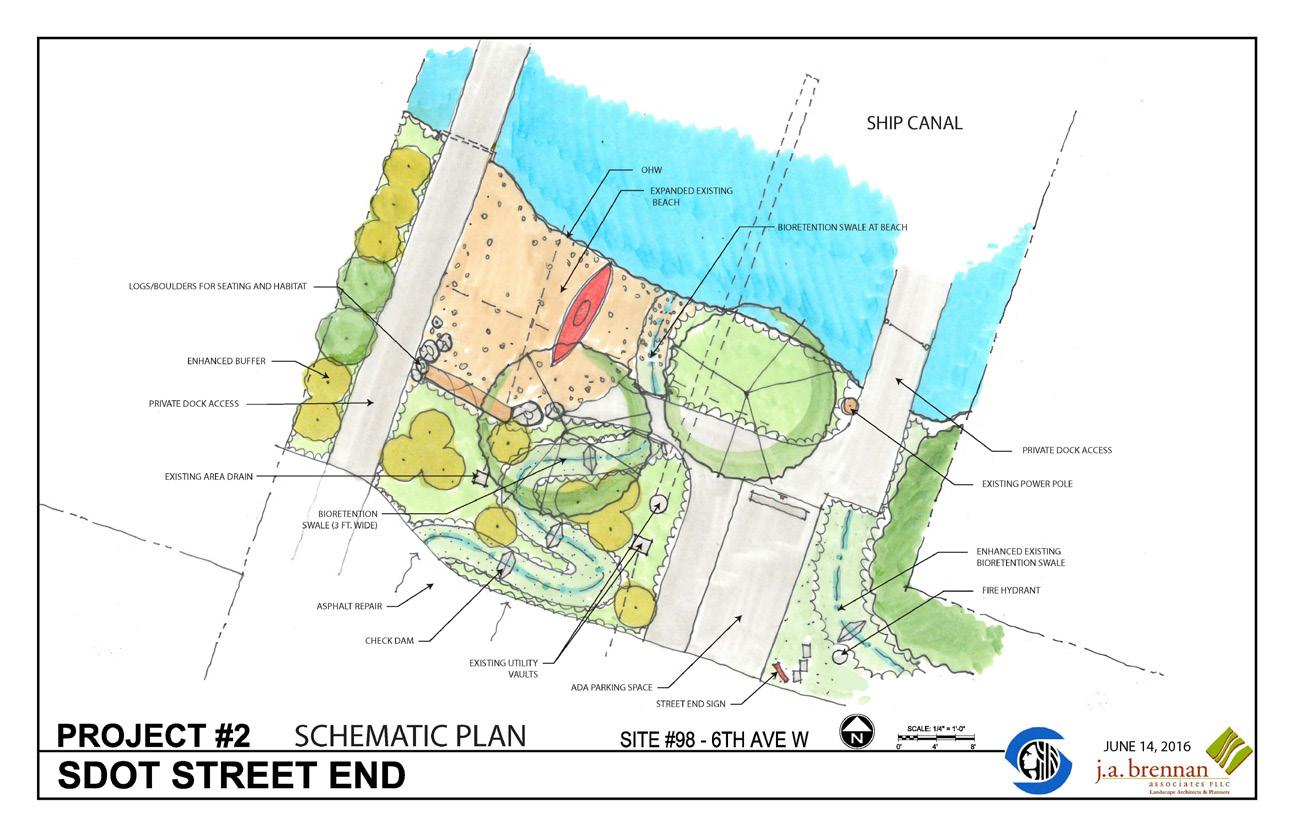
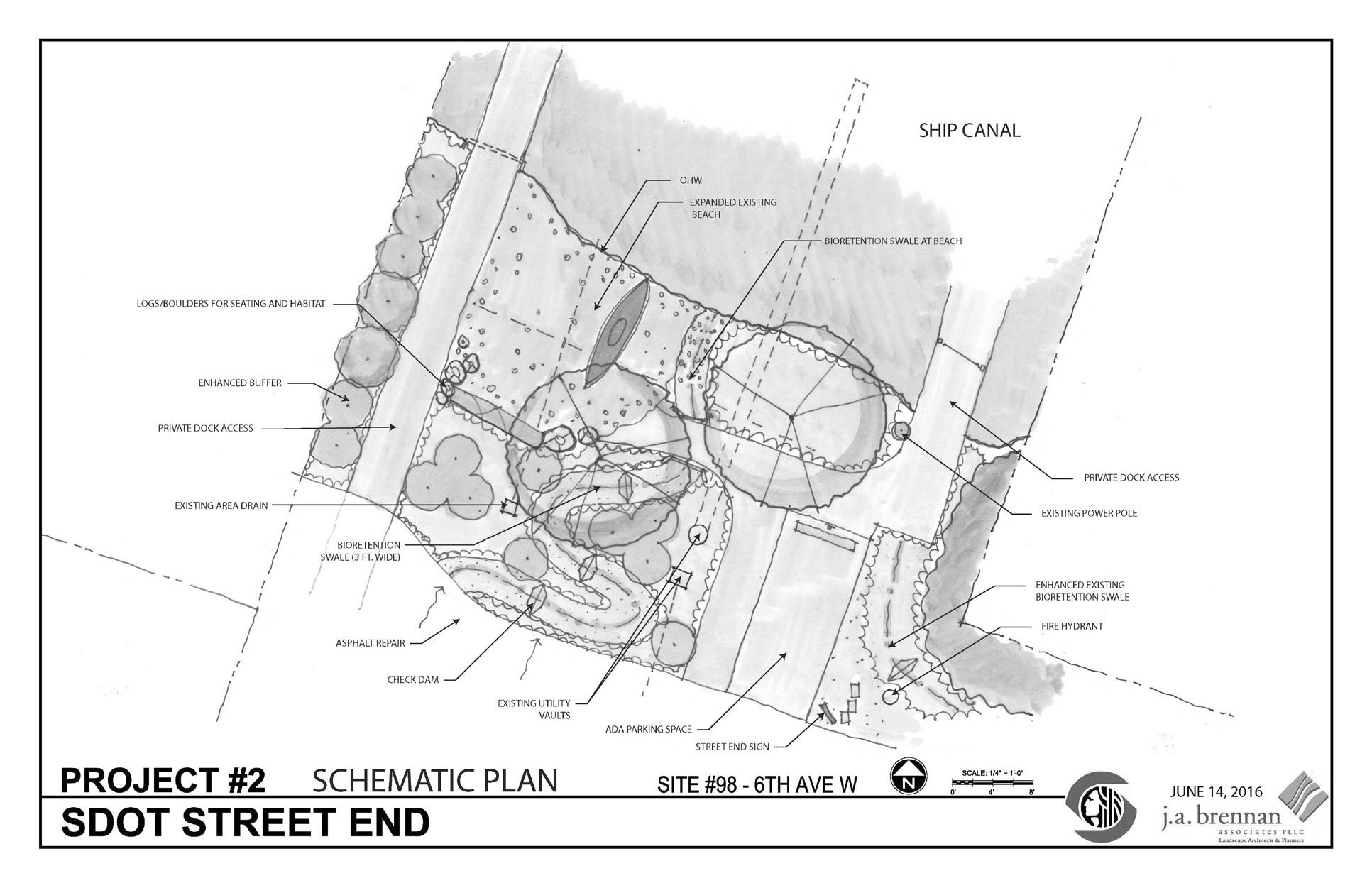
SDOT crews will develop the Sixth Avenue West street end in North Queen Anne using a concept design from J.A. Brennan Associates. The project involves expanding the existing beach, adding an ADA parking space, making asphalt repairs, putting in a bioretention swale, native shrub and tree plantings, and adding log seating. The street end has access to the Ship Canal.
Where West McGraw Street runs down to Elliott Bay in Briarcliff there will be railing installed along the steep portion of the gravel pathway. There are also plans for a wooden and earthen
• The wider the cutting deck, the more grass cut with each pass. If you need to maneuver through tight spaces or have a small yard, consider a machine with a condensed, more easily-controlled mowing deck.
• Zero-turn mowers made for residential use are typically much smaller than the average ride-on mower. For a compact option at a great value, consider the DASH by Hustler Turf. Built to the brand’s high standards, it has a patented automatic park brake, foot-operated deck lift and the ability to fit through most gates, making it a good choice for front and backyard mowing. Available in two welded, fabricated steel deck sizes – 34-inch or 42-inch – with a heavy-duty 1x2 fully tubular frame, it’s small enough for easy garage storage.
• For bigger yards and tougher terrains, consider options like Hustler Turf’s residential FasTrak. Boasting speeds up to 8 MPH, it features
➧ LAWN, Page 19
Image courtesy of J.A. Brennan Associates/ Photos courtesy of SDOT
(Above) Improvements to the Sixth Avenue West shoreline street end are planned for later this year. (Left) The West McGraw Street end was improved for public access in 2013. Plans now include adding hand rails to the path leading down to the beach.
Coast Silktassel’s monochromatic dazzle
Hear the word “spectacular” uttered in a garden, and you can expect your head to be turned to something that is wonderfully colorful.
But every rule has its exception.
The Northwest native Garrya elliptica is one of them. Commonly known as Coast Silktassel, one look at it at this time of year and chances are you’ll mutter “spectacular” as you take in its monochromatic splendor.
A robust shrub, reaching 10 to 20 feet tall, with an equal width, this plant can be easily trained as a small garden tree. The evergreen foliage is dense, dark green, leathery and somewhat crinkled. Elliptical in shape, the leaves reach about 2 1/2 inches in length. Both male and female members of this species are worth having.
In late winter to early spring, multiple clusters of flower tassels emerge in yellowish gray-green, dangling down as much as eight inches on the male of the species. These unusual flowers hang on well into summer. The effect is one of falling water.
The flowers of the female plant are shorter, rarely more than 3 1/2 inches, but turn into handsome fruit clusters that hang on all summer, unless the birds discover them.
Seattle’s legendary plantsman, Arthur Lee Jacobson, often leads tours of the Washington Park Ar-
boretum for youngsters. Ever the merrymaker, Jacobson has a favorite gag. As he tells it: “Squishing some berries in one’s fingers results in a striking blood-like juice squirting. When leading tours that involve children, I demonstrate this by pretending, ‘Oops, I cut my hand!’ Then I lick off the blood, which is sweet-tasting. Then I tell the kids, ‘If you do this, your mom will freak out.’” Jacobson goes on to suggest that most local cultivated Garrya specimens (ellipitica and hybrids) are male, because the floral catkins are prettier than the female. He suggests it is ideal to grow both sexes in order to get the berries. Yet another example of the fruits of true love.
I grow my plant in full sun, in our naturally rich acidic soil and give it little, if any, summer water. If I prune the plant, I do it when the catkins are at their peak, so as to enjoy the flowers in vases indoors.
I’ve grown mine as a shrub, but if you want it up as a small-scale tree for your Madison Park garden, select one or three main stems and, as the plant grows taller, prune off shoots that emerge along the trunks, encouraging the plant to stretch up.
A light application of a complete fertilizer in early spring, again late in the season and in early summer, will ensure strong growth and an abundance of blossoms. Paired to grow up and behind lower-growing shrubs that have colorful flowers, this dark green mass, with its cascading tassels, makes for a very dramatic combination.
When Shakespeare said, “All that glistens is not gold,” he might have said it differently had he been looking at a Garrya elliptical in full bloom when the muse struck. All that’s dazzling is not colorful. Here’s a plant that proves it.
Comment period opens for Smith Cove Park redevelopment master use permit
Seattle Parks plans phase one summer start
BY BRANDON MACZ
Seattle Parks and Recreation is awaiting approval of its master use permit to begin bidding for the first phase of redevelopment for Smith Cove Park.
“Summer would be a great time to start this project,” said SPR project manager Toby Ressler.
The 11.8-acre site is on the north end of Elliott Bay, between Queen Anne Hill and Magnolia Bluff, and is split by 23rd Avenue West.
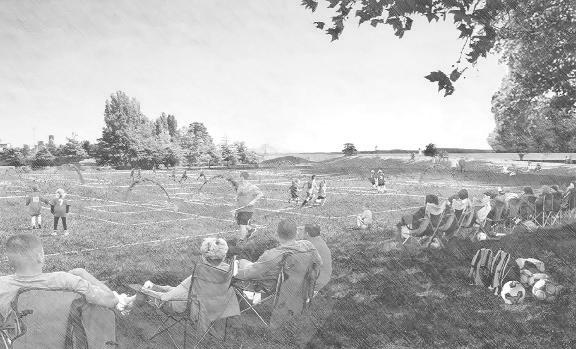
The first phase will improve athletic fields on the west end of the park, add a half-acre, fenced off-leash dog area, gravel pathways and a picnic perch. The fields will include improved greenwater infrastructure to provide better filtering of runoff that ends up in the Puget Sound. A bioretention basin will be developed to the south of the offleash dog park, which had originally been designed to be a full acre.
“The east side will come kind of as our phase two,” Ressler said.
The east side of the property is currently barren, save for the Magnolia Wet Weather Storage Facility and some vegetation.
The second phase will add kayak and beach access on the northeast end, a playground, beach grove, two sand volleyball courts, a parking lot, restroom facility and a beach stair. It will take longer to complete and be more expensive, Ressler said.
SPR strategic advisor David Graves told Queen Anne News last September that the department would seek more capital in the 2021 funding cycle.
A notice of application for the master use permit was published by the Seattle Depart-
ment of Construction and Inspections on April 25, initiating a 30-day public comment period. Those comments can be sent to PRC@seattle.gov or by mail: Seattle Department of Construction and Inspections,
ATTN: Public Resource Center, PO Box 34019, Seattle, WA, 98125-4019.
Photo by Mary Henry Tree Talk columnist Steve Lorton says the Garrya elliptical is a monochromatic beauty.
Steve Lorton
Image courtesy of Seattle Parks and Rec
The first phase of Smith Cove Park redevelop includes improving its athletic fields.
6 essentials for an inviting dining room
MIA HANNOM, IN FORM DESIGN
On the surface, dining rooms are straightforward, functional spaces. The layout is obvious, and the furniture selection basic — a table, chairs and some sort of sideboard. With so little to play with, why are some dining rooms inviting, comfortable and attractive, while others are, well, boring? How do you turn an ordinary dining room into something special?
The good news is you don’t need a huge budget to create a truly awe-inspiring dining room. But you may need to take a step or two out of your comfort zone. Here’s what you’ll need to do.
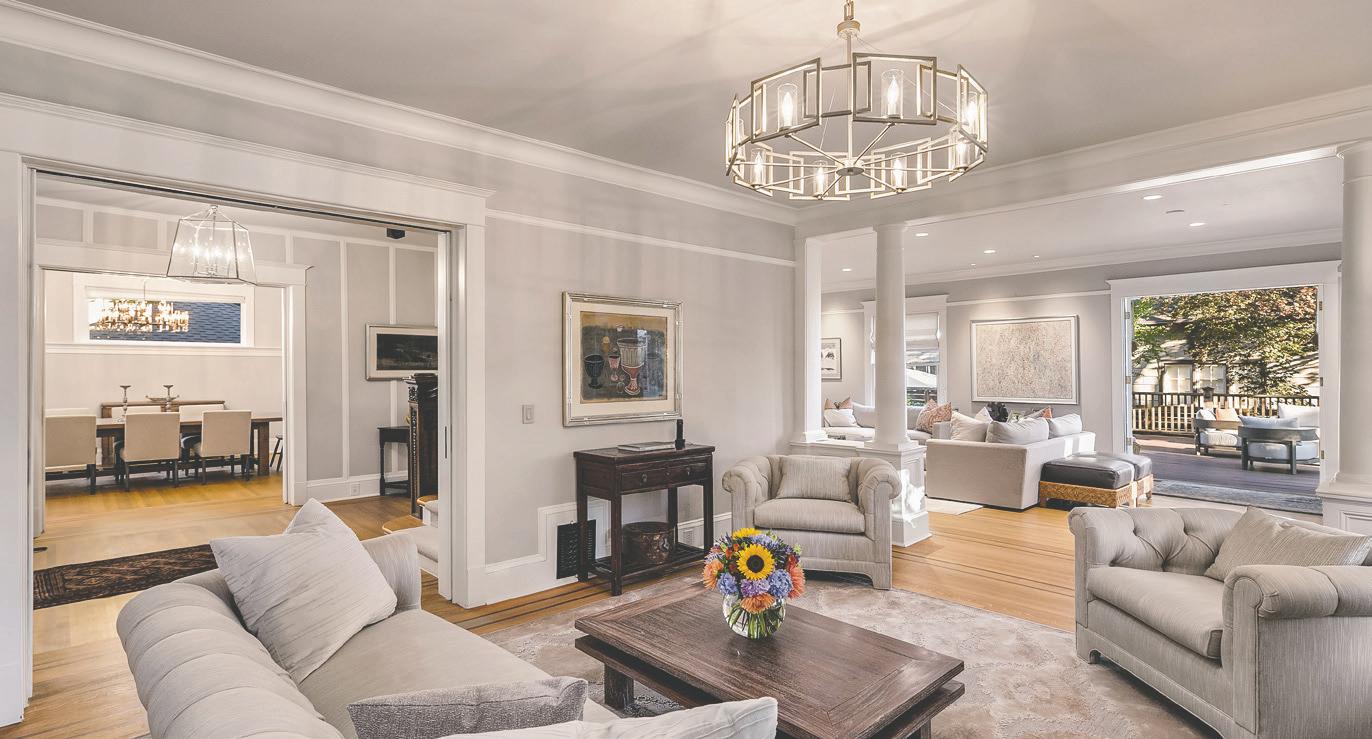
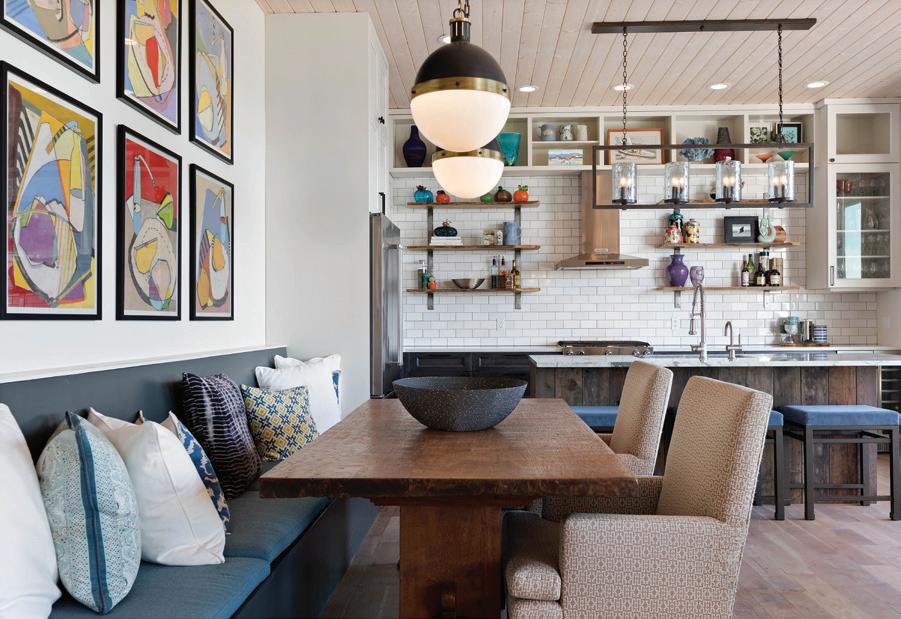
Go deeper with color. If there is one room in your house where you can embrace darker walls, it’s the dining room. Deeper tones lend a sense of drama and mystery and form a perfect backdrop for candlelit dinners and intimate
gatherings. When you select your wall colors, don’t be afraid to start on the dark end of the sample paint strip. Add an eye-catching element. Your dining room needs a focal point. Unless you have a spectacular view or large patio doors opening to an outdoor area, you should add a striking design element to draw the eye into the room. This could be a stylish bookcase, an oversized mirror, a large piece of artwork, or a collection of smaller artworks installed in a grid.
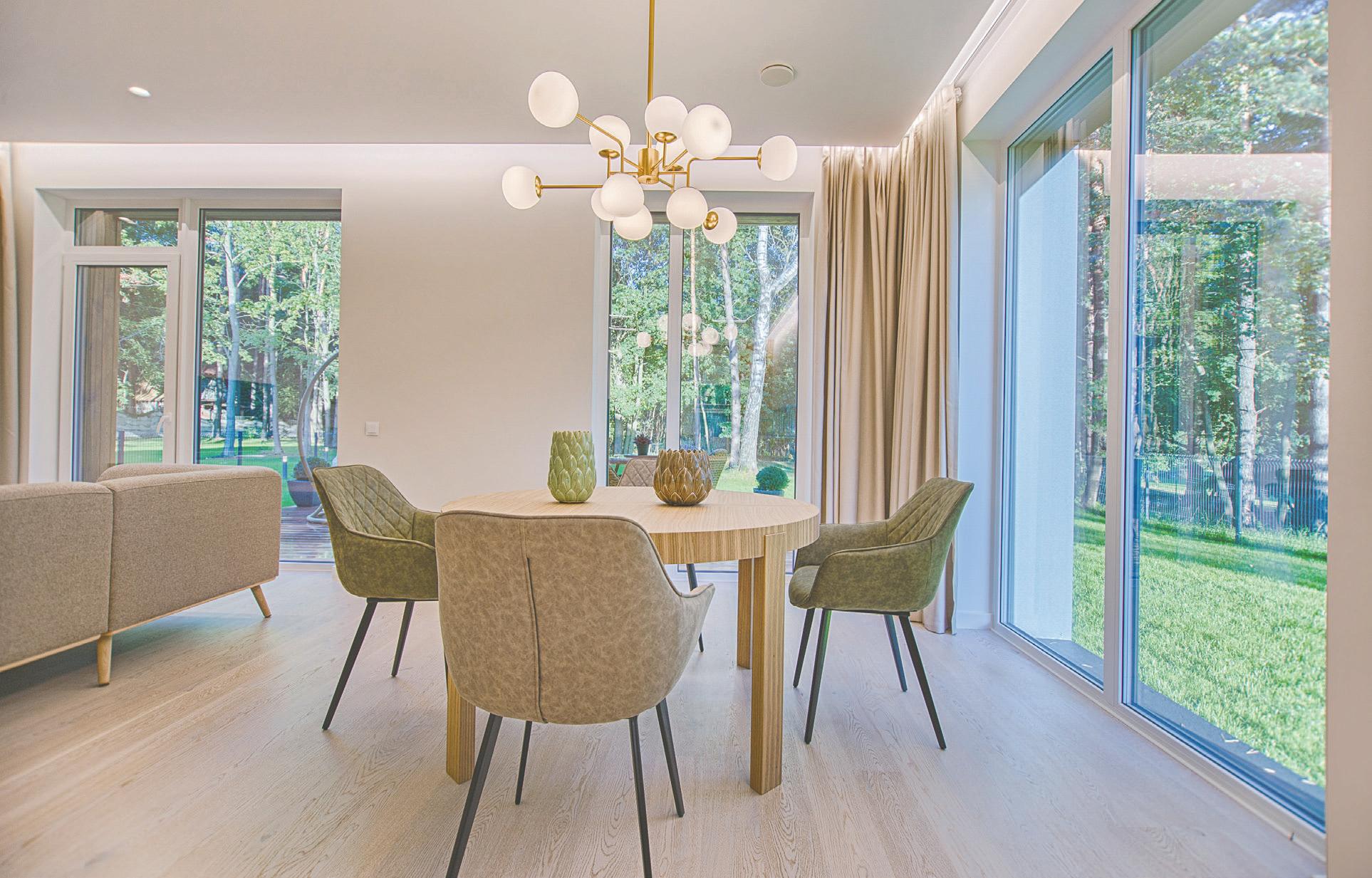
Hang a dramatic light fixture. The light fixture above the table is the key element in your dining room — it sets the tone and defines the personality of the space. Do something special here. This is your best chance to strike an adventurous chord with an exceptional light fixture, an oversized pendant, or a splendid chandelier. Remember to install a dimmer switch for complete control and flexibility. Mix up the furniture. Matched sets of furniture are a
thing of the past. The best dining rooms combine furniture from different sources. The fun part is that you don’t have to go out and buy everything new; you can play around with different styles and odd pieces. A set of contemporary dining chairs can look great with Grandma’s old table, or a used, repainted sideboard. These quirky pieces pique curiosity and can become great conversation pieces.
Bring it together with a rug. Rugs add color, texture and pattern. They also protect the floor, absorb sound, and in open floor plans define specific areas. Not everyone loves a rug in the dining room, but if you decide to use one, make sure it’s big enough for the chairs to pull out completely from the table without getting stuck on the edges. If you have hard flooring, the rug should be sized to act as a perimeter for the dining area.
LAWN,
Think Spring!
Think Spring!
a removable floor plan for easy maintenance, a fully welded, tubular frame available in sizes up to 60 inches, and 22-inch large drive tires. A 20-inch high-back seat with full mechanical suspension shields riders from bumps, and cushioning takes pressure off the tailbone and lower back.
Mow in Comfort
You’ll use this machine regularly for years to come, so prioritize comfort. Remember, the openconcept of a zero-turn allows you to get on and off easily. Be sure to sit on each mower and look at the seats and support offered.
Shop Local
Consider visiting locally-owned and operated lawn care centers, where dealers are deeply familiar with product lines, region-specific lawn care needs and ready to answer questions about mower performance and maintenance.
More information on zero-turn mowers can be found at hustlerturf.com.
When buying a mower, prioritize makes and models offering efficiency and comfort that meet your lawn care needs.
➧ SHORELINE, from Page 16
staircase that would help reduce erosion of the gravel path.
Akkari tells Queen Anne News more updates on these street-end improvements will be available later this summer.
Community groups wanting to adopt and maintain street ends that benefit the public are allowed to prioritize any areas they like that are technically open but maybe not improved. Less than a third of Seattle’s shoreline street ends are unimproved.
16 ➧ ESSENTIALS, from Page 18
Go for pairs. Because of the centrality of the table, dining rooms lend themselves to symmetry. This can be achieved by balancing different pieces with the same visual weight or height on both sides of the room. However, matching sets of two work particularly well: twin table lamps on the server, a set of well-spaced wall sconces or a pair of captain chairs on both ends of the table add a sense of stability, balance and comfort to the room.
With these tools at hand — and a bit of courage — you will be well on your way to transforming your ordinary room into a gorgeous, inviting space that will delight your family and guests. So, raise a toast to your new dining room and many wonderful meals to come.
Mia Hannom is the owner of In Form Design, which is a member of the Master Builders Association of King and Snohomish Counties (MBAKS).