Queen Anne & Magnolia News Real Estate - December 2017
As a residential broker who works in the Queen Anne & Magnolia markets, I encourage sellers to meet with their real estate brokers months or even years in advance to develop a game plan and strategies designed to prepare their property to receive a maximum return. Sometimes circumstances dictate a faster approach. In the Fall months, when I meet with sellers for the initial consultation, many say they’d like to do so the following Spring. This is understandable. Year after year, the peak of residential sales happens during Spring and early summer. However, some are surprised to learn that most years also see another spike in sales during December. The Holiday season can be a great time to successfully list a residential property for sale if a seller can’t or doesn’t want to wait.
While history shows that there tend to be fewer active buyers during the Holiday season, those that are looking may be more motivated buyers due to necessity. Corporate transferees continue to arrive in Seattle wanting to buy in the area and may not want to wait until Spring. Buyers may also want to take
advantage of a tax deduction for their closing costs. Adding closing costs to itemized deductions could be great incentive to finalize a residential purchase before the new year. Inventory of residential real estate listings remains tight. A healthy, balanced market is generally considered to be one with a three or four-month supply of listings. Residential supply in Queen Anne and Magnolia has hovered around a one-month supply all of 2017. The current shortage in inventory, particularly in the off-season, gives a competitive edge to those sellers who chose to list during the Holiday Season. It is also likely that there are qualified buyers taking time off work during the season allowing them to attend open houses where an otherwise busy work schedule might keep them from doing so. Residential real estate is the ultimate impulse buy for many, and it isn’t uncommon for people who attend open houses to ultimately purchase the property.
Ken Graff is a native Seattle REALTOR® named to Coldwell Banker Bain’s International President’s Elite for his exemplary record of success.
TOP TEN - Magnolia Residential
TOP TEN - Queen Anne Residential
Many creatures in the garden go to sleep in the winter–but not your soil. As autumn leaves start to fall and our Northern Hemisphere tilts away from the sun, it comes time to say goodbye to many annual vegetable friends and prepare the rest of the garden
for major soil building. Thanks to plentiful rainfall during the cool season, the soil reaps many benefits: many amendments are more easily distributed, the soil particles aggregate in more loamy ways, earthworms keep churning and building the soil profile, and microbes digest detritus into gold. So before going inside for wintertime, harness the natural processes outside to grow your garden’s capacity for an awesome season next year. Follow these nine steps:
1. Love Your Leaves Fallen leaves from deciduous trees are one of the greatest and least expensive resources out there for building soil.
Ken Graff COLDWELL BANKER BAIN
Laura Matter
GARDEN HOTLINE
Nine Steps, from Page 1
should be raked from the lawn anyway to keep it happy, your need for leaves is a win-win for you and your turfgrass! Bolster your stash from pesticide-free parks, neighbors’ yards, cemeteries and more. You can either generously spread leaves several inches deep over fallow vegetable plots and ornamental beds, or hoard them in compost bins to let them break down into leaf mold—a rich and dark black compost you’ll want to use everywhere. Just steer clear from mulching with black walnut (Juglans nigra) or Tree of Heaven (Ailanthus altissima) leaves around annual plants, as they are considered “allelopathic” meaning their chemical constituents may interfere with future plant growth.
2. Harvest and Tend
A little maintenance at this time of year goes a long way for disease prevention. Spend time in your vegetable garden and harvest all remaining warm season crops (corn, beans, tomatoes, squash, etc.), leaving only winter squash to cure on the vine if the weather is not too damp or close to freezing. Try your hand at saving seeds to plant next year, though be sure to do your homework first. Seed to Seed by Suzanne Ashworth is a great resource to get you started. Any pest-infested or diseased vegetable foliage
should go in the curbside yard waste bin. Same goes for diseased foliage, branches or fruit on perennial edible ornamental plants, including roses and fruit trees. The sooner you get this material out of the garden, the less time the disease will have to multiply and return next year! This is especially important if you’re hoping to reduce codling moth and apple maggot populations.
Avoid most pruning at this time of year, as the moisture can increase the likelihood of fungal or bacterial infection. Also, pruning can inspire new growth -- with frost approaching it’s best to steer clear and reduce the possibility of cold damage. Still, it’s a good time to remove dead or broken branches to prevent further injury by wind. Leave your ornamental grasses, less-weedy perennial flower seed heads and stalks that are still standing. This will provide valuable food, forage and habitat for wildlife during the winter— especially overwintering native bees who like to nest in stems and grasses.
Lastly, if you have semi-hardy or tender potted plants be sure to move them to a protected place, ideally next to the house under an eave and out of the wind. If frost or near-freezing temperatures are expected, be sure to water the soil to help your plants weather the cold more successfully. Some containers may also be damaged by cold. If you are worried about expensive ceramic pots, wrap
them in recycled bubble wrap or towels to protect from frost. Protect empty pots by moving them into a garage or storing them upside down and off the ground.
3. Tuck in Your Turf
Before first frost, mow one last time for the season, lower than usual (down to 1”). Spread a ¼”½” layer of compost over the lawn, raking it lightly in, and overseed any bare areas. Usually a grass seed mix consisting of mostly fescue works best in our area.
4. Weeds Be Gone
Bare soil in the fall makes for fertile weed breeding ground. Beat the weeds to it by mulching generously in your ornamental beds with arborist chips or leaves. In your vegetable beds, consider using leaves or pesticide-free straw. Another option is to “chop and drop” any non-diseased foliage that you remove from the garden, chopping it into 3-6” pieces with your pruners and using it as a mulch. Cover crop (see below) is another living option to outcompete many weeds in vegetable beds while building soil.
5. Sweeten the Soil
October is an ideal time to test your soil to get an accurate reading of nitrogen, phosphorus, potassium and other macronutrient levels, as well as acidity and organic matter. All this will help you determine what to do to help your garden grow the way you need it to next year. King Conservation District offers five free soil tests per lifetime to residents of King County. If heavy metals are a concern, contact the Garden Hotline and we’ll match you with a lab that fits your needs. If you already know your soil needs lime to bring its pH closer to neutral, fall is a great time to add it. Cool season rains will help activate or dissolve it and change the soil pH in time for plant growth next spring. Likewise, if you already know your soil texture profile is too clayey or sandy and needs compost, autumn is a great time to add it and get the soil particles aggregating to become more loamy. Top-dress with
compost and mulch over the top with leaves and/or burlap bags to keep down weeds.
To prepare the soil, or even sod, for future garden beds, try your hand at sheet mulching. Cover the desired area with cardboard or layers of newspaper, cover that with a layer of compost, and top it off with leaves and/or burlap as mulch. Over the winter, worms and soil microbes will break down the material into a bed of soil for you to plant directly into in the spring!
6. Grow Your Own Fertilizer
Cover crops are select plants grown in a vegetable garden to help build soil tilth, keep out weeds, reduce soil and nutrient erosion, and create nitrogen and organic matter to feed your soil and future plantings. Over the winter this is especially helpful, as some cover crops are hardy to freezing temperatures and are happy to grow when not much else can. In the spring, when about a third of the cover crop is starting to flower, chop it down into 2-3” pieces and either dig it into the soil or leave it on top as a mulch. A few examples of winter cover crops: cereal rye, crimson clover, field peas, vetch, fava beans and spelt.
As a general rule, hold off on fertilizing until spring. As many plants go dormant for the winter and slow down their growth in cool weather, they do not take up fertilizer as readily. This, plus rain, can make for high levels of macronutrients accumulating in important waterways like Puget Sound. Save your money and keep those nutrients where you need them by waiting until the weather warms up in April or May to apply fertilizer.
7. Protect Your Watering Supplies
Water plus frost means ice, so take time to store your watering system properly to keep them in working order next year. Disconnect and flush irrigation supplies before the cold sets. For drip irrigation, this means removing the main assembly pieces (timer, filter, blackflow preventer, etc.) to bring inside, and draining and
coiling all ¼” lines, securing them at the ends of your garden beds. The larger lines can be kept intact. Automatic irrigation systems like those with sprinklers need to be blown out at this time of year by yourself or an irrigation professional. All other garden and soaker hoses can be drained and stored. In case of heavy frosts, consider covering spigots with old towels or Styrofoam caps.
8. Tune Up Your Tools
Don’t let your trusty tools get rusty over the winter! Keep them in proper shape for a big season next year by cleaning off the soil, sharpening them if necessary, oiling hand tools and pruners and storing them in a dry place. For wood-handled tools, wet a rag with linseed oil and give them a good wipe. Be sure to dry your oil-soaked rags out in the open and soak in water before disposal, as linseed oil can combust in a closed container or if wadded up in a ball. Some gardeners choose to clean off their metal-bladed tools in a bucket of sand moistened with linseed oil—a handy resource to have in your tool shed to keep your shovels sleek yearround!
9. Write it Down
It is so easy to forget what we do in the garden from year to year. If you grew vegetables, make a map of what you planted in which bed so that you know where to rotate plant families next year. Note any problems such as plant diseases, pests and failure to thrive as well as successes. Keep track of what plant varieties did well and which ones did not so that you can remember what you might want to grow again in the future. If you planted new perennials that die back to ground, mark them or note them on a map so that you remember where you put them, especially if they are something that slugs and snails might like next spring.
To learn more about soil building or winterizing, contact the Garden Hotline at (206) 6330224 or visit us at www.gardenhotline.org. You can also find us on Facebook, Twitter, Pinterest and YouTube.
“Ask Sam”
QUEEN ANNE REAL ESTATE
Question: Is it better to use a Broker or a Bank for home mortgage?
Answer:
In a competitive market, this decision becomes an important part of the purchase process!
In some cases, it impacts the likelihood of an offer being accepted! My recommendation is dependent on the client’s unique situation.
Banks offer specific internal loan options with preset guidelines and pricing. Many banks have excellent loan products, so this isn’t necessarily bad! However if a buyer doesn’t fit the bank’s preset guidelines, the buyer may still qualify but pricing will suffer. Local versus national banks typically translate to better service, as the loan processing also remains local.
In contrast to a bank, mortgage brokers offer loans from multiple investors. Brokers match buyers’ specific scenarios to the best loan product. Because brokers are middlemen, they have less control over the loan’s process, since the lending occurs at the actual investor institution. Minor issues can create major problems or delays.
Alternately, mortgage bankers are a hybrid of the two. Bankers offer a wide array of investor loan products but fund and process loans internally. This often creates a more seamless process without sacrificing pricing. So if a buyer’s financial situation changes during the lending process, a mortgage banker could shift the investor without interrupting the loan’s progress.
Send your questions for “Ask Sam” to pacsales@nwlink.com
Think Like a Designer to Update Your Home Like a Pro
(StatePoint) Inspiration is everywhere. From a field of yellow sunflowers to unique geometric patterns in the tile of a train station, the littlest things can spark the innovation behind some of the world’s most iconic products and designs.
Over half of Americans (51 percent) say the inspiration for creating a product is important to them when purchasing an item for their home, according to a recent survey from Moen conducted online by Harris Poll among over 2,000 U.S. adults.
When updating your own home’s décor, you can garner inspiration by discovering the creative influences of professional designers.
Go Inside the Minds of the Pros
Designers find inspiration just about everywhere. Pebbles in a stream sparkling in the sunlight have inspired smartphone interfaces, while talking computers on “Star Trek” have contributed to the creation of voice-controlled speakers.
Sometimes designers are inspired by consumers themselves. For example, at Moen, a lead-
ing manufacturer of kitchen and bath fixtures, innovation is driven by what homeowners say they want and how they interact with products. When determining the sensor placement for new MotionSense Wave touchless faucets, their design team was inspired by the way hands move around the kitchen sink. The fixtures feature a single-sensor hands-free activation on the base’s left side, allowing users to turn the faucet on and off with the wave of a hand. “We also draw creativity from furniture, tools, architecture, music and museums,” says Steven Ward, Moen’s director of global design.
Seek Your Source of Ideas
Next time you’re updating your bath or restyling your kitchen, act like a professional by venturing outside the box to get your creative juices flowing, whether it’s turning to a favorite song or a piece of artwork. For example, 16 percent of Americans who have done a home design project look to the outdoors for inspiration when planning home design projects, while 15 percent look to architecture. Maybe you’re struck by the colors of the sunset in your
family’s summer beach vacation photos or the amazing brick pattern you saw wandering through a historic neighborhood. Consider what colors and patterns grab you and evoke the feeling you want to have within your space. And once you find them, snap a photo and reference it as you’re designing.
Curate Inspiration
Been a while since you took a vacation? Don’t live in an architecturally awe-inspiring locale?
Social media is a great proxy. In fact, of Americans who have done a home design project, 33 percent look to social media for inspiration. Just like the pros, create a design plan for your space, but make it easy by using a site like Pinterest. Create boards for color combinations, materials and textures that attract your eye, so you can define your ideal look. Many Pins are shoppable, making it simple to purchase your perfect home décor products with just a click.
While making design decisions, don’t worry about being “on-trend.” If you stay focused on what styles speak to you personally -- as well as the functionality your room needs to support
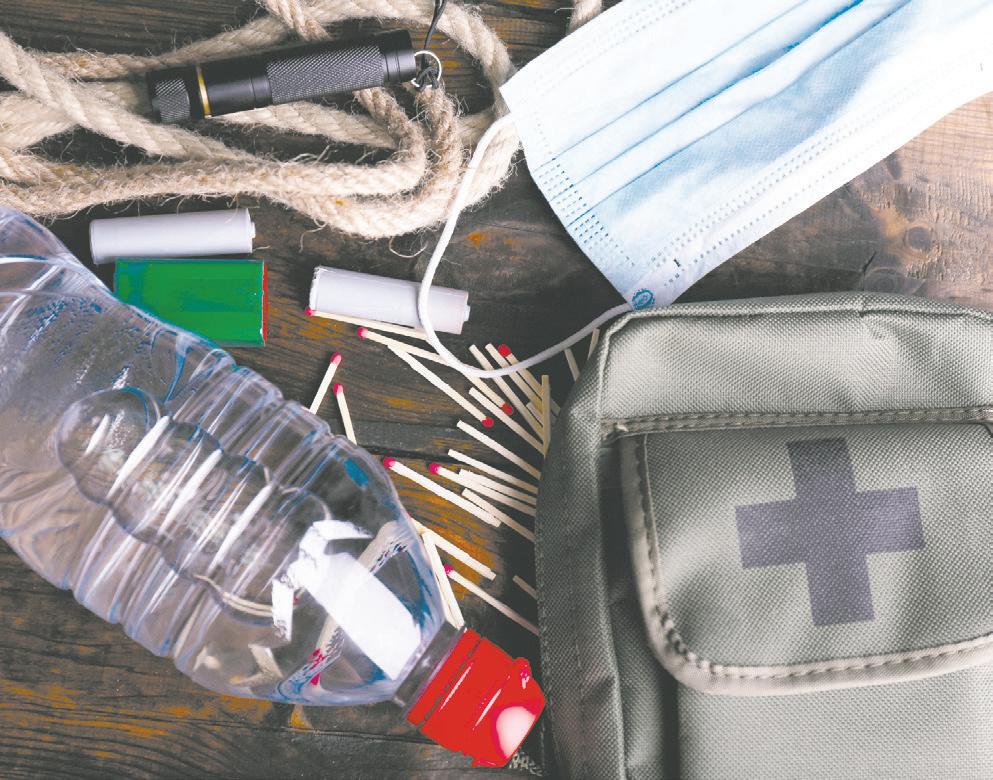
5 Overlooked Items for Your Family’s Emergency Supply Kit
(StatePoint) If you prepped an emergency supply kit for your family, you most likely have the basics covered: batteries, first aid and non-perishable foods. Here are five often overlooked items that can help keep your family safe, comfortable and informed should the unexpected occur.
• Water filter. Tap water is not always safe to drink in emergency situations. While you should have a store of bottled water on hand, you can be extra safe with a highquality water filter. Consider a portable model, so that if you have to relocate, you can have access to clean water on-the-go.
• Reliable Technology. In an emergency, you may require technology that doesn’t need information from cell towers and doesn’t have to be recharged constantly, such as Casio’s PROTREK PRG600Y-1, which features an altimeter, compass and barometer (great for staying aware of changes in temperature or air pressure). It also delivers this information hands-free, which can be useful any time, but extra valuable in an emergency. Additionally, it features Casio’s Tough Solar Power, allowing the watch to be charged in low or fluorescent light. After a full-charge and without further exposure to light, the timepiece has a battery life of approximately seven months, and a special power save feature conserves energy by enabling the timepiece to power down when not exposed to light.
• Back-up Generator. If the power goes out, a genera-
tor can keep you up and running, helping you protect against extreme weather conditions and keeping food from spoiling. Just be sure to operate your generator properly, following all the manufacturer’s safety measures. Never run a generator indoors or in an enclosed space.
• Something to do. The truth is, emergency situations often yield a lot of downtime. Don’t be caught with nothing to do. Find forms of entertainment that can be enjoyed without power, such as books, board games, musical instruments, pen and paper.
• Medication. Beyond first aid, your family likely has other medical considerations for which to prepare. Always have a several days supply of prescription medication for each member of the household. For those who wear glasses, keeping an extra pair handy will keep you seeing straight should your main pair break in an emergency.
To be truly prepared for any emergency, be sure your prep kit goes beyond the standard checklist to include these often-overlooked items.
Sam Konswa
Sam Konswa is a Real Estate Broker from Queen Anne Real Estate.
Give Yourself the Gift of a Smart Home this Holiday Season
(StatePoint) You can make this holiday season a bit merrier by giving your family the gift of a smart home. A gift that keeps on giving, connected devices can add security and convenience to your home easily. Start with a few basic smart home products and add to or change your tech over time as needed.
Start with the Basics
Get started with a hub that serves as the brain of your smart home, allowing the rest of your devices to communicate with one another and giving you control of your home wherever you are.
While you’re away, monitor your home and receive notifications on the status of things like “is the door locked?” “did the lights get left on?” and “who’s home?” through an app. Many Z-Wave hub options like Wink, SmartThings, and Nexia work with popular voice assistants like Google Home and Amazon Echo, so your family can easily control home devices with simple voice commands like, “Alexa, turn on the Christmas tree!” and “Hey Google, set dining room lights to 50 percent.”
offering you peace of mind and added convenience. Keyless smart locks like August or Yale give you remote access and control of who can enter your home. Door and window sensors, like options from Fibaro or Sensative, send you a notification whenever someone enters or exits. DIY security solutions, like Piper NV and abode monitor your home and can even provide video clips.
Boost Comfort, Save Energy
Manage smart lighting from your phone. You can also create scenes with smart lighting devices like Eaton’s light dimmer switch, Enbrighten’s smart bulb or Jasco’s wireless on/off switch to activate the lights when you wake up or turn them off when you leave and lock your front door. Smart thermostats ensure that you conserve energy by keeping your home comfortable when you’re there and efficient when you’re not.
Add Fun
Once you’ve selected a smart hub, mix and match any Z-Wave device you want to customize your smart home. Hubs also let you set customizable sequences called scenes, so you can do things like program your lights or music to turn on when you walk in the door.
Smart outlets make any device or appliance “smart” by adding the ability to be controlled from your hub’s app or by voice command. There are over 2,100 certified Z-Wave products from a variety of brands to choose from, so you can start with the basics and expand as you go.
Be Safe
Adding smart security devices protects your home,
Get festive this holiday season with voice control speakers, like Amazon Echo and Google Home. Smart speakers can activate smart home scenes and can also play music and videos with easy voice prompts. Set color-changing LED strips from Aeotec to activate in your favorite colors (or red and green!) when you play music, wake up in the morning, or even watch a movie. You can also plug your Christmas tree or other holiday lighting into an appliance module and easily turn them on or off via smart scenes or through your phone as you pull into the driveway.
With any budget, you can give your family a smart home this season, adding on more devices and capabilities as you go.
From Rome to Brindisi… and on to Seattle
One day in the early 1990s, when my son was not much past ten, we were walking down a Madison Park sidewalk and he spotted a tall, columnar evergreen tree, pointed to it and said, “Look Dad, the Via Appia.” He had identified an Italian or Mediterranean Cypress (Cupressus sempervirens), something of a rarity for Seattle in those days. These soaring, almost pencil thin and rigid trees are two of the most commonly seen along the fabled Appian Way connecting ancient Rome to the Southeastern part of the boot. Wow! He’d been in Italy with his mother and me the summer before. Still, his spot-on association was startling. When travel, liberal education, and what I like to think is a genetic love of plants, combine and pop out of one’s child, a parent’s chest puffs up like a pigeon’s, perched atop a statue of Caesar. Then again, these trees are like none other.
In America we see Italian Cypress mostly in California and Arizona, but in the 1970s a few intrepid gardeners planted them in Seattle. Those who did it right, have left us with what have become obelisks of dark green and blue-green that punctuate the skyline of urban gardens without consuming much space or demanding much of the gardener.
While I’ve seen old trees in Southern Europe that were 60 feet tall, I’ve never seen a Northwest transplant in excess of about 20 feet All the same, who knows what time and the shift toward hotter, drier summers will produce?
If you’re looking for a plant to put some punch in your garden, this is a good candidate, given the right location and soil. Two things that Italian Cypress must have to get through our moist, often dark winters are a spot in full sun and perfect drainage. With too little light and too much water, the branches get leggy, flop out and the tree loses the tight density of its needled branches that make it so distinctive. Keep plantings low around an Italian Cypress. In line with this tree’s value of what garden designers call “a vertical statement”
Steve Lorton TREE TALK
the Italian Cypress needs to stand alone, or in a cluster of three or so, allowing the soaring form to stop the eye and pull it skyward.
Plants are most often sold in 5-gallon to 15-gallon cans. If you buy one this month, slip the nursery tub into a larger, more decorative container. If you wrap the tree in small lights, or perhaps even metallic ribbon, it will say Merry Christmas and Happy Holidays with the best of the Season’s offerings. Get it into the ground early in the new year. When weather heats up and precipitation stops, give it a good soaking once or twice a week for the first two or three years you have it. After that, the plant will be well established and, like most Italians, will be happiest just doing its job, being admired, but not like being fussed over. If an errant branch stretches out and droops down, trim it back to retain the tree’s symmetrical, vertical form. When Summer comes, set out a table next to your Italian Cypress, throw on a red and white checkered table cloth, uncork a bottle of chianti and enjoy a moment in sunny Italy. Ah. There you’ll sit, hopefully with your own Sophia Loren or Marcello Mastroianni.
Photo by Mary Henry
The Italian Cypress harkens to Roman aesthetics.
Sam Konswa
Sam Konswa founded Queen Anne Real Estate in 2006 and has since been one of the most successful real estate brokers in Seattle. Sam’s foundation of integrity, professionalism, and service to his clients has proven integral to being named “Top 1%” in customer satisfaction by Seattle Magazine. Prior to moving to the Queen Anne/Magnolia area with his family, Sam graduated from New York University and spent sixteen years on Wall Street as an investment banker, where he negotiated over two billion dollars in transactions worldwide. Sam’s remarkable negotiation skills coupled with his incredible knowledge of local markets deliver proven success for his clients.
Maria Hewett has a degree in Business Administration with a Marketing focus from the University of Washington. As a Seattle native, Maria confidently navigates Seattle and its surrounding areas with expertise. Using her dedication, first-class customer service, strategic negotiating skills, and attention to detail, Maria walks clients through a comprehensive strategy to help them make informed decisions and obtain their goals.
craig@queenannerealestate.com
Craig Watson has a degree in Business Administration from the University of Washington and owns and manages a technology consulting practice. In parallel with his successful IT career, Craig has had several successful real estate development projects and continues to manage several projects here in Queen Anne. Craig provides the most comprehensive information to clients, helping them make informed decisions.
Charlotte Crockford
Charlotte Crockford has a degree in Real Estate from the University of the West of England. Charlotte is a British transplant by way of Hong Kong. Prior to moving to Seattle 5 years ago, Charlotte worked for 15 years in Hong Kong with leading international real estate service providers and relocation companies. Charlotte is energetic, personable, and thoroughly understands the complex emotional and financial intricacies of real estate.
jeff@queenannerealestate.com
Jeff Strand has a degree in Business Administration from the University of Washington, with a background in technology management and marketing. Jeff has been involved with the Seattle business community for over 15 years and he currently co-owns a small business. Jeff is a top-producer in software sales for the world's largest business management software company. Jeff's strengths are in deal negotiations, customer service, and customer follow-thru, where he has built a strong reputation within the local real estate community. Jeff specializes in the Queen Anne, Capitol Hill and South Lake Union neighborhoods.
Paul Crawford
paul@queenannerealestate.com
Paul Crawford has a bachelor’s degree in Psychology from Whitman College in Eastern Washington and additionally studied business at the University of Washington. Prior to real estate, Paul worked as a buyer at Amazon. Paul has developed a familiarity with Seattle and the surrounding area while living here for all of his life. Paul brings his commitment to customer service, organizational skills, and attention to detail to every real estate transaction.
brooke@queenannerealestate.com
Brooke Roberge has a degree in Business Administration with an emphasis in Marketing from Loyola Marymount University. Prior to real estate, Brooke worked in consumer banking and IT sales at Microsoft. Brooke's family has lived on Queen Anne her entire life; it holds a special place in her heart. At a very young age Brooke discovered her strong passion and love for real estate. Brooke’s career began in rental properties and now that passion is focused on helping her clients in all aspects of residential real estate. Whether you are buying or selling, rest assured that Brooke's attention to detail, ethics, charisma, and hard work will prove to be a winning combination.
Timothy Gaydos
timothy@queenannerealestate.com
Tim Gaydos was born and raised in the Greater Seattle area. Tim is passionate about the city of Seattle and has been intimately involved in starting non-profit organizations and bringing community engagement in the city of Seattle. Tim also serves as Chaplain for the Seattle Mariners and Seattle Sounders, and as a pastor at A Seattle Church. Tim also chairs the Denny Park Foundation. Tim has been married to his wife for 13 years and they have 4 young daughters.
Courtney Longhurst
courtney@queenannerealestate.com
Courtney Longhurst is passionate about people, food, and real estate. Courtney takes the time to understand her clients' priorities and helps them navigate the market to meet their goals. In addition to her positive attitude, high standard of ethics, and professionalism, Courtney brings a strong analytical background. Courtney holds a bachelor's degree in Mathematics from Brigham Young University and has worked as a high school math teacher and business analyst.
Sam Konswa was named one of the "100 Most Influential Real Estate Brokers in Washington State" by Real Estate Executive Magazine.
10 Year Winner Sam Konswa
Sam Konswa has won the Five Star Real Estate Award