Autism Support of Michigan https://autism-mi.org/ Behavioral Health and Developmental Disabilities Administration https://www.michigan.gov/mdhhs/keep-mi-healthy/ mentalhealth/procurement/welcome-to-behavioralhealth-and-developmental-disabilities-administration
269-345-1913
517-241-3740
800-605-6722
517-333-6655
616-732-7358
269-337-3600
800-75-SEALS
Michigan Foundation for the Blind and Visually Impaired Michigan Developmental Disabilities Council
Michigan Rehabilitation Services (MRS) Capital Area Down Syndrome Association www.cadsa.org
Deaf and Hard of Hearing Services (DHHS) www.deafhhs.org/
Disability Determination Bureau Easterseals MORC www.easterseals.com/MORC/
911
1-800-327-5966
833-633-5788
517-374-1171
517-241-3740
517-241-3740
517-241-3740
517-241-3740
833-808-7452
800-457-4584
313-446-4444 988
517-241-7004
517-284-7290
1-800-772-1213
1-800-772-1213
833-633-5788
517-203-1200
517-241-5324
Would you like to advertise in Uniquely You! to share valuable information and help support the community? Scan to grab some time to connect & learn more about being involved: https://calendly. com/jamie-mccabe/ special-needs-livingmagazine
Scan to view the past issues of Special Needs Living and Uniquely You!
Scan to view past digital copies, find resources, share a story or learn more about being involved.
Jamie Olson: Uniquely You! Magazine Area Director jamie.olson@n2co.com 248-882-8448
Emergency Early On Michigan
https://www.1800earlyon.org/directory.php
Michigan Department of Education: Office of Special Education https://www.michigan.gov/mde/services/ special-education
Michigan Family Forum
Michigan Family to Family www.f2fmichigan.org/
Michigan Department of Health and Human Services www.michigan.gov/mdhhs
Michigan Family and Social Services
Administration (FSSA) www.michigan.gov/mdhhs
Michigan State Department of Health www.michigan.gov/mdhhs
Michigan Statewide Independent Living Council (MSILC)
www.misilc.org/
Medicaid Disability
MI Choice Waiver Program
National Alliance on Mental Illness
Preschool & Out-of-School Time Learning https://www.michigan.gov/mileap/educationpartnerships/out-of-school-time-and-summer-learning Self-Advocates of Michigan (SAM)
Social Security Administration (SSA)
Social Security Disability Insurance (SSDI)
Special Education Questions
United Cerebral Palsy Association of Michigan ucp@ucpmichigan.org
DISCLAIMER: The articles and opinions expressed in this publication are those of the respective authors and do not necessarily reflect the views of The N2 Company d/b/a Uniquely You (“N2”). Advertisements appearing in this publication are paid placements and are not endorsed or recommended by N2. N2 is not responsible for the statements, opinions, or business practices of any authors, contributors, or advertisers featured herein. Portions of this publication may include content created with the assistance of artificial intelligence (AI) tools by authors or contributors and may not be independently verified by N2. We are proud to feature businesses that share our commitment to showcasing local connections. Please note that businesses profiled may have provided free products and/or services for the review. Uniquely You is for general informational and entertainment purposes only and is not intended to provide medical, therapeutic, educational, or legal advice. Always consult qualified professionals regarding the care and support of individuals with disabilities. NOTE: When community events take place, photographers may be present to take photos for the event, and they may be used in this publication.We are proud to feature businesses that share our commitment to showcasing local connections. Please note that businesses profiled may have provided free products and/ or services for the review. Uniquely You is for general informational and entertainment purposes only and is not intended to provide medical, therapeutic, educational, or legal advice. Always consult qualified professionals regarding the care and support of individuals with disabilities. NOTE: When community events take place, photographers may be present to take photos for the event, and they may be used in this publication.
TJ and Me
Beyond First Base
BY KRISTIN DILLON,
THE FIRST PLAYGROUND A CHILD enters is rarely made of slides or swings.
For many families, it happens in the doorway of a gym, at the edge of a sandbox or on the threshold of a classroom — the first public space where a child’s differences become visible and a parent’s heart is quietly tested.
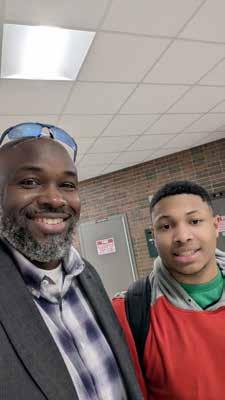
For Tarrance Price, one of those moments came when TJ was in Early Childhood. Tarrance arrived at school to pick him up and instead found him stretched out on the gym floor.
“He was hollering. He didn’t want to leave the gym,” Tarrance recalled.
TJ was overwhelmed by the transition. Tarrance watched his son struggle and felt something inside himself give way.
“When I got back to work, I went into the bathroom and just fell to my knees. I felt like I failed him as a father.”
These were the early years when TJ’s mom first began noticing signs. Tarrance wasn’t ready to hear it. He looked at his son and saw a little boy who would catch up.
Looking back, he sees that moment differently. At the time, it felt like failure. Now, it feels more like an invitation. The father he thought he was going to be could not help TJ off that gym floor. The father TJ needed would spend the next decade learning how to meet him there.
But beneath those stories runs a quieter one: a story about paternal love, belonging and the way a child can reshape a man’s heart.
When TJ was diagnosed with autism around age 3, Tarrance struggled to reconcile what he understood intellectually with what he felt emotionally.
He grew up as a church kid and an Army brat, surrounded by messages of resilience and faith: push through, he’s going to be fine. For a while, that was the only language he had.
“I knew about autism,” he says. “I thought he’d catch up. I couldn’t accept it for TJ.”
Like many parents, he tried to soften reality. “I’d tell people ‘He’s on the spectrum.’”
He now recognizes that avoiding the word autism created distance — a small space between himself and a diagnosis he was struggling to understand. But over time, his relationship to it changed. Not all at once, but in hundreds of ordinary moments: car rides, school meetings, field trips and football games. Now he says the word easily. His son is autistic.
The Quiet Ordination of Fatherhood
Fatherhood has a way of claiming a man long before he thinks he is ready.
Tarrance remembers cutting TJ’s umbilical cord, holding him in the first 30 minutes of his life, watching nurses take his footprints and celebrating the arrival of a son with bubble gum cigars and the nickname TP2. He remembers the overwhelming feeling of becoming a father.
But years later, when he talks about fatherhood, he returns to a simpler moment: TJ running toward him.
“He confirmed me as his father.”
Most people think of fathers shaping sons. Tarrance talks about a son shaping a father.
Over time, he settled on a word for that experience: ordained. Because 16 years later, his son still chooses him. Every unexpected hug feels like a kind of confirmation: Yes, you’re my dad.
Tarrance’s own father was 5 feet, 7 inches tall; Tarrance grew to 6 feet, 3 inches, towering over the man who had always been his bodyguard. Now he stands the same way for TJ, still learning what it means to protect someone you cannot shield from everything.
The child calls the father into being.
First Base
TJ is 15, about to turn 16, and a sophomore at Valparaiso High School in Indiana, where there are deep roots dating back to 1998. School was not always easy for him. Every transition brought new challenges, and Tarrance describes those early years as “first base.”
“We started on first base,” he says. “Right now, we’re on third base with TJ. He’s playing football, he’s independent, he’s maturing. He still struggles socially, but we’re blessed to be where we are.”
Then comes the line that catches in his throat.
“Some families never get past first base. Some don’t even get to first base.”
The Playground
For TJ, the playground has always been a sensory landscape — sand, noise, motion and unpredictability. As he grew, that landscape expanded too, stretching from the sandbox to the football field, from recess to e-sports.
For Tarrance, the playground expanded as well. He took TJ everywhere — to doctor’s appointments, therapies and activities — watching him struggle, adapt and blossom.
When TJ was little, a daycare facility began pricing them out, unwilling to meet him where he was. After that, a nanny cared for him most days, but Fridays belonged to Tarrance.
He would take TJ to the elementary school where he worked fixing kids’ glasses, then to McDonald’s PlayPlace for lunch, where TJ was usually too busy playing to eat, and then next door to Toys R Us, where payday often meant a new Thomas the Train engine. Week after week, it became their ritual.
“The bigger they grow, the bigger your heart grows for them,” he says.
He also learned to celebrate milestones differently, including the first time TJ cussed.
“I said, ‘Whoa, he’s talking!’” Tarrance laughs. “And you really put the IT in the SH!”
Football carried its own weight. Tarrance grew up loving the game, but he was too skinny to play it himself. I didn’t lay down the law with TJ for football, I calmly explained to him what it would take for him to play.
“We’re not quitting,” he told him. “Put in the work. You don’t get to use the diagnosis as a crutch. You earn your keep.”
Now TJ brags about the bruises on his arms.
The Silence of Fathers
There is a cultural script for mothers of disabled children — fierce, vocal, tireless, exhausted, heroic. Fathers often occupy a quieter place. Tarrance names that reality with rare honesty.
“There’s a hidden language men speak,” he says. “Silence. Silence in our emotions. Silence in our fears. Because for the first time, we’re not in control.”
Underneath it lies the fear of the future in its starkest form. When his own father died in 2020, Tarrance confronted his own mortality head-on.
“I had to look in the mirror and look at TJ,” he says. “If God’s plan is that he’s gonna bury me one day, what happens to him? Who’s going to fight for him?”
This is the part that rarely gets told: a father’s fear, grief, and silence — rooted in a care so deep he doesn’t know where to put it.
The Work of Belonging
Parks and recreation work gave Tarrance the flexibility to show up for TJ. He could leave for school, go on field trips or bring him into the office, where a thousand Hot Wheels cars waited in his desk drawer and TJ was always welcome.
But he also remembers the teachers who lacked patience. The teasing. The loneliness.
Part of what makes it hard is that TJ does not fit the picture people carry in their heads. With Autism you have to look beyond physical appearance. TJ looked like a regular kid. In many ways, he acts like one too. Tarrance, who grew up seeing the world through an athlete’s eye, knows better than most that not every struggle can be spotted at a glance.
“With autism,” he says, “you have to look beyond the eye.”
“You don’t want your child to feel different,” he continues. “You don’t want him to stand out because he’s different. You feel for him.”
A Father’s Legacy
Tarrance now works as a project manager for Unlimited Play, a nationally recognized nonprofit with more than 100 inclusive playgrounds nationwide and 10 new Michigan sites on the horizon. He builds the spaces he once prayed existed — the playgrounds he needed when TJ was small.
“You want those years to be full of amazing moments,” he says. “But if the playground isn’t accessible, those moments get taken away.”
He thinks about the families who leave playgrounds in tears, the parents who simply want their children to feel free and the hurt that comes with exclusion.
“If I have a wish, it’s that every moment they have to play is one they can cherish.”
This is the legacy he is building — for TJ, but also for every family standing at the edge of a playground, praying for a good day.
Still Evolving
“It’s therapeutic to talk about. I’m still evolving as a father. I’m grateful to be his dad. If I can help anyone, let me know.”
This is the quiet heroism of paternal love — a man ordained by love, building a world where his son, every child like him and every father walking a similar road can belong.
Somewhere, another father will walk through the gate of an inclusive playground with a child who has just been diagnosed.
He will not know Tarrance Price. He will not know about the gym floor, the Thomas the Train engines, the football bruises or the hidden language of fathers. He will not know about the years spent worrying whether a little boy named TJ would find his footing.
He will simply watch his child play.
He will stay longer than he expected.
He will make a memory.
And perhaps that is what it means to help another family reach first base.
We would love to share your story: https://form.jotform. com/202464921200140
Empowerment Through Supported Employment
MATT STAINES has been working at Chili’s for more than twenty years, but if you ask him about his ambitions, he isn’t interested in talking about retirement.
He’s thinking bigger than that.
“Maybe running for president one day,” he said with a grin. It wasn’t the first unexpected answer he gave. Earlier in the conversation, when asked what he hoped to accomplish when he first entered Judson Center’s Supported Employment program, he deadpanned, “World domination.”
The jokes come easily. So does the laughter.
Sitting in the restaurant where he has spent the last two decades, Matt filled hundreds of small condiment containers while answering questions. He never stopped working. Somehow, he managed to carry on a conversation, crack jokes, and stay focused on the task in front of him all at once.
The work is repetitive. Every day, he fills row after row of condiment containers, often preparing more than 200 before his shift is over. Before that, he polished menus, checked tables before opening, and handled other responsibilities around the restaurant.
For some people, those kinds of routines might become tedious.
Matt sees it differently.
“I just want to do what they tell me to do and get paid,” he said matter-of-factly.
Then he smiled.
After twenty years, it’s hard to argue with the strategy.
“It has changed my whole outlook on life. Because I feel wanted and needed here.”
Building a Career Through Supported Employment
Long before Chili’s, Matt had already developed a strong work ethic. He delivered newspapers as a kid, worked at a golf course, and later spent time at Walmart. But this job became something different.
This became home.
In fact, Matt has worked at the restaurant so long that he has outlasted nearly everyone around him. Managers have changed. Staff members have come and gone. Entire teams have turned over.
Matt stayed.
When that reality was pointed out during the interview, he seemed quietly proud of it.
He should be.
Twenty years is a remarkable accomplishment in any profession. In the restaurant industry, it’s almost unheard of.
Part of that success has come from the support system around him.
For years, Judson Center job coaches have worked alongside Matt, helping him navigate challenges and maintain the stability. One of those job coaches is Evelina Arnold, who has known Matt for years and now works with him regularly.
The two clearly enjoy each other’s company.
Matt described their relationship as being “like family,” and throughout the interview it was easy to see why. Their conversations bounced effortlessly between teasing jokes and genuine appreciation.
One of Matt’s favorite traditions happens every Monday.
He has lunch at the restaurant and always extends an invitation to his job coaches. Their schedules don’t always allow them to join him, but when they can, those lunches mean a lot.
“It means a whole lot,” he said.
The answer was simple and sincere.
More Than a Job
The longer the conversation went on, the more apparent it became that Matt doesn’t define his job by the tasks he performs. He defines it by the people connected to it.
When asked what he enjoys most about working at Chili’s, he didn’t mention the employee discount, though he admitted he enjoys that. He didn’t mention the paycheck either.
Instead, he talked about the people he works with.
“They treat me well here.”
For Matt, that matters.
And perhaps that’s why his answer to one question stood out above all the others.
Finding a Place to Belong
After discussing schedules, responsibilities, and twenty years of employment, he was asked how having a job had changed his life.
The joking stopped.
For a moment, he became reflective.
“It has changed my whole outlook on life,” he said.
Then he explained why.
“Because I feel wanted and needed here.”
There was no elaborate speech after that. There didn’t need to be.
The statement carried the weight of two decades spent contributing, building relationships, and becoming part of a workplace community.
Employment has provided Matt with a paycheck, certainly. It has helped him maintain independence and stability. Judson Center’s Supported Employment program has played an important role in helping him keep both his job and his benefits over the years.
But listening to Matt talk about his life, it becomes clear that the greatest value can’t be measured on a pay stub.
It’s found in the pride he takes in showing up every day.
It’s found in the coworkers who know him.
It’s found in the lunches shared with people who have supported him along the way.
And it’s found in knowing that when he walks through the doors each morning, he isn’t just filling condiment containers.
He’s Part of the Team
After twenty years, that’s still something worth looking forward to. In fact, near the end of the interview, Matt mentioned the 23-mile drive he makes to work.
“I look forward to driving these 23 miles out here every morning.”
For most people, that’s a long commute.
For Matt, it’s the road to a place where he belongs.
LEARN MORE ABOUT HOW JUDSON CENTER CAN HELP!
Connect with our Disability Program at judsoncenter.org/disability
Technology First Supports Increased Independence Through Systems Change
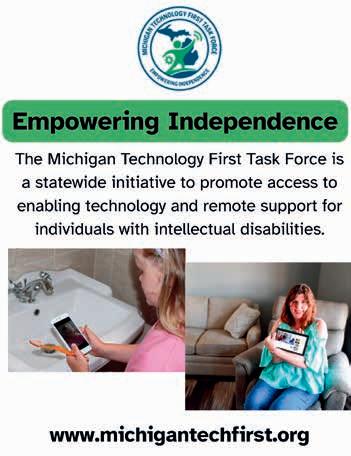
THE MICHIGAN TECHNOLOGY First Task Force consists of diverse stakeholders from across the State who are working on bringing Technology First to Michigan.
Technology First is a support approach that integrates enabling technology and remote support into Individualized Plans of Service for individuals with intellectual disabilities to promote increased independence.
Michigan has approximately 45,000 individuals with intellectual disability who are on Medicaid. The Task Force is working on a blueprint that will articulate strategies for statewide systems change that will lead to the incremental adoption of Technology First support strategies in order to increase independence among this population.
Incorporating Technology First into Michigan’s system of care for people with intellectual disabilities will require some key changes to the current system. One of the biggest ones will be changing Michigan’s Medicaid Waiver programs to include enabling technology and remote support as covered Medicaid services.
This would allow things like electronic medication dispensers and stove sensors that would alert if a stove is left on, to be covered under Medicaid. These types of enabling technology could then be included in a person’s plan of service to support greater autonomy while still maintaining safety.
Another key system change involves the use of remote support. This would allow an individual with an intellectual disability to use a combination of direct care staff and remote support to help them with daily tasks.
This would allow individuals with intellectual disabilities to have direct care staff on site with them for tasks where they need the most support.
However, at times when they need less support, they will have access to a remote staff person that they can contact when needed.
This change will help alleviate the nationwide direct care shortage by maximizing use of available direct care workers for individuals with the highest needs.
These changes will be supported with a broad-based training and education plan to educate individuals served, families, supports coordinators and providers on the types of enabling technology and remote support available, its benefits, and how to incorporate it into an individual plan of service to promote greater independence.
To learn more about the work of the Michigan Technology First Task Force, visit our website at www.michigantechfirst.org.
More Than Just Games
How The Special Olympics Became A Movement Toward Inclusivity
BY C.J BUTTS
Has anyone reading Uniquely You! ever felt excluded simply because of a disability or because they did not know where to turn for support and connection? As a Special Olympics athlete, athlete leader, Athlete Leadership Council member and health messenger, I know that feeling all too well. Before I joined Special Olympics as a ninth grader in 2011, I did not know where to turn either. At the time, I was only involved in one other sports organization within the disability community, and I had no idea how many opportunities were still out there waiting for me.
Before joining Special Olympics, I was involved with Clinton Valley Little League. While it was a great league to be part of, I still did not really know anyone there, so it was difficult to feel fully established.
That changed in ninth grade in 2011, when I first joined Special Olympics. For those who may not be familiar, Special Olympics is a nonprofit organization that began as a day camp founded by Eunice Kennedy Shriver for her sister, Rosemary Kennedy.
What began as a day camp eventually grew into the worldwide movement that Special Olympics is today. The first
Special Olympics World Games were held in Chicago in July 1968, and the organization has continued to expand ever since.
When I started competing in 2011, I began with track and field. I won the 50-meter dash, placed fourth in shot put and earned a silver medal in the 100-meter dash. I probably could have done even better in the 100 if I had realized I still had another 50 meters to go.
After that came bowling. I won gold in singles, but I still was not happy with my performance because I did not feel like I had bowled my best game. I remember thinking we probably would not win, but my teammate stepped up where I fell short and together we brought home another gold medal.
That same year, I also competed in the Special Olympics State Soccer Tournament, and three incredible things happened.
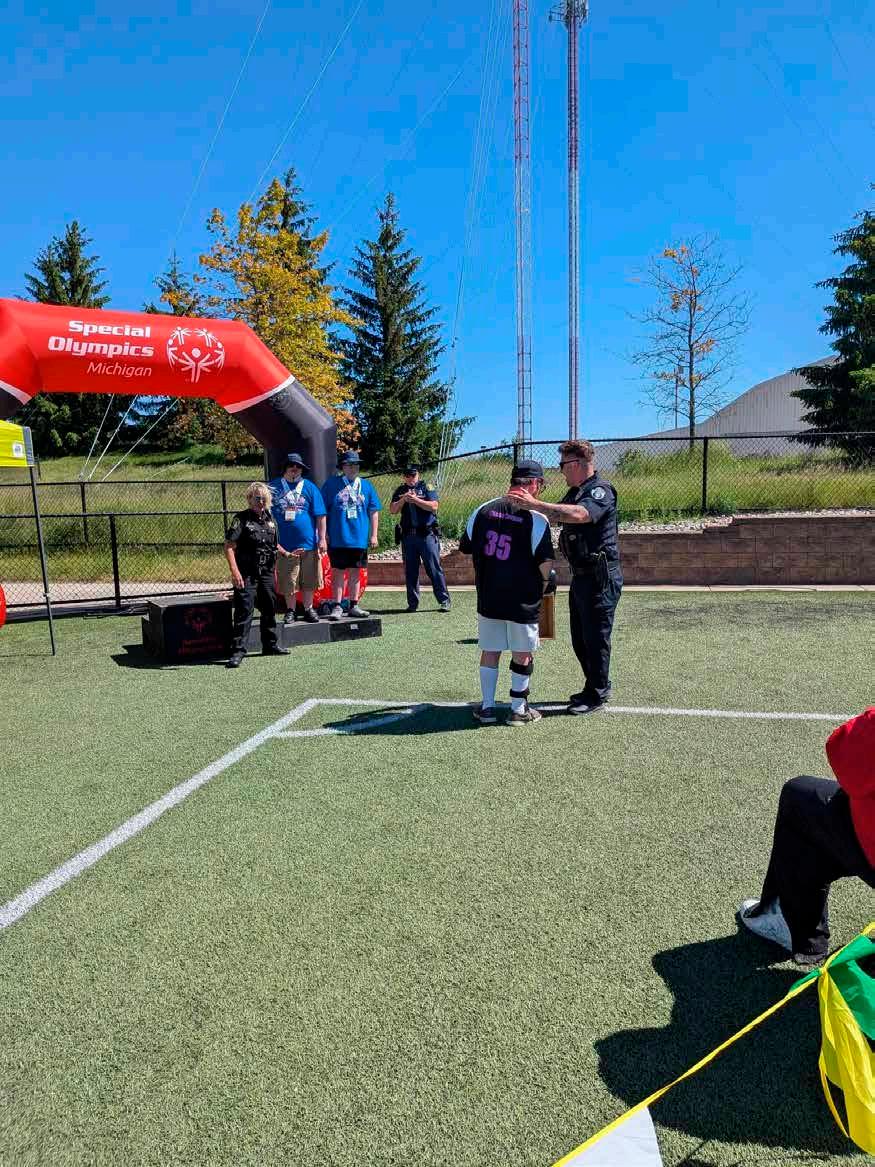
The first was that I had the honor of leading the crowd and the athletes in reciting the Special Olympics Athlete Oath: “Let me win. But if I cannot win, let me be brave in the attempt.”
The second was that I scored two goals, even though I was often placed on defense.
The third was that after the first game, I was interviewed. None of those moments were things I expected to happen. But something even more unexpected was still on the way.
It all started in 2013, when my friend Kayla Cornell introduced me to the Special Olympics Health Messenger program.
For those who may not know, a Special Olympics Health Messenger is one of the highest leadership roles a Special Olympics athlete can hold. Health Messengers serve as ambassadors for Special Olympics by teaching fellow athletes and others about the importance of health and wellness, including topics such as healthy eating, exercise and overall well-being.
There are also a variety of volunteer opportunities available to Special Olympics Health Messengers and athlete leaders. One of those opportunities allowed me to volunteer at the Special Olympics Unified Cup soccer tournament in Detroit, where I helped with hydration support for the athletes.
Then, over Memorial Day weekend from May 28–30, I competed in the Special Olympics State Summer Games in Mt. Pleasant, Michigan, this time in the sport of bocce.
For readers who may not be familiar with the game, bocce is somewhat similar to curling in that the goal is to get your ball as close as possible to the pallina, the small white target ball, while also placing it closer than your opponent’s.
The Special Olympics State Summer Games uses a target scoring system in which the first player or team to reach 12 points wins, or, if time runs out after 15 minutes, the player or team with the higher score is declared the winner.
This year, I competed in both bocce singles and bocce doubles. I won my singles match and finished as the runner-up in doubles after winning my first game but falling short in the second.
Although I was not able to do any interviews while I was there, the experience was still another memorable part of my Special Olympics journey.
I can personally say that without Special Olympics, along with the volunteers, coaches and fellow athletes who make it possible, I would not be the person I am today. The experiences, friendships and opportunities I have gained through this organization have helped shape me in ways I never could have imagined.
If you are interested in getting your child, or even yourself, involved with this incredible organization, I encourage you to consider filling out an athlete registration form or volunteering as a coach, official, awards presenter or scorekeeper. No matter how you choose to get involved, Special Olympics offers an opportunity to build friendships, have fun and be part of something truly meaningful.
To learn more about Special Olympics Michigan, visit SOMI’s website https://www.somi.org/ or follow them on Facebook at https://www.facebook.com/ SpecialOlympicsMichigan
I can personally say that without Special Olympics, along with the volunteers, coaches and fellow athletes who make it possible, I would not be the person I am today.
Creating Possibility Through Art
Empowering Individuals with Disabilities at Paint a Miracle
BY KATIE DION, CPRP COMMUNICATIONS OFFICER
PAINT A MIRACLE is a nonprofit organization and inclusive art studio dedicated to empowering individuals with disabilities through creative expression. Founded in 2002 and based in Rochester, Michigan, the organization was built on the belief that every individual deserves access to meaningful artistic opportunities, regardless of ability. Through thoughtfully designed programs, Paint a Miracle creates a space where people of all ages and backgrounds can explore the visual arts in an environment rooted in encouragement, dignity, and community.
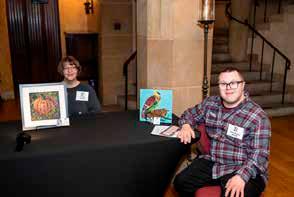
At its core, Paint a Miracle exists to “encourage creativity and promote dignity,” a mission that is reflected in every aspect of its programming and outreach. The organization provides individuals living with disabilities the opportunity to engage in painting, drawing, ceramics, fiber arts, and other creative mediums, fostering both artistic development and personal growth. Rather than focusing solely on technical skill, the studio emphasizes self-expression, independence, and the joy of the creative process, ensuring that each artist’s voice is valued and celebrated.
Paint a Miracle serves a diverse community of artists, from children and young adults to seniors, offering both in-studio and virtual opportunities. Its classes are
designed with flexibility and accessibility in mind, allowing participants to learn at their own pace and according to their individual abilities. Instruction is highly personalized, with staff developing adaptive curriculum and supports that ensure every artist can fully participate and thrive. This individualized approach allows participants not only to create art, but to build confidence, develop life skills, and experience a sense of accomplishment.
A defining aspect of Paint a Miracle is its commitment to fostering independence and meaningful connection. For many participants, the studio represents more than just an art class— it is a place of belonging. The organization has grown from a small group of four artists to serving nearly 500 individuals each year, highlighting the significant need for inclusive, community-based programs that address both creative and social engagement. Many artists who attend rely on Paint a Miracle as a consistent source of interaction, structure, and purpose, particularly those who may otherwise face isolation. Beyond its studio classes, Paint a Miracle provides artists with opportunities to exhibit and sell their work, reinforcing the value of their talents and contributions. Artwork created within the program is showcased in respected venues such as museums, libraries, and community exhibitions, giving
artists the chance to share their perspectives with a broader audience. These exhibitions not only elevate the voices of artists with disabilities but also challenge societal perceptions, demonstrating the depth of creativity and expression within the community.
The organization also hosts art sales throughout the year and operates an online store where artists can sell their work, including original pieces and notecards. These initiatives provides participants with income and a sense of ownership and pride in their accomplishments. By creating pathways for artists to earn income from their work, Paint a Miracle reinforces the idea that individuals with disabilities are not only capable of creating meaningful art, but also of contributing economically and professionally
Paint a Miracle’s philosophy is deeply rooted in the belief that art has the power to heal, connect, and transform lives. The organization views creativity not only as a skill, but as a pathway to personal peace, self-discovery, and resilience.
By engaging in the arts, participants are encouraged to navigate challenges, express emotions, and build a stronger sense of identity. This holistic approach positions art as both a therapeutic and empowering tool, supporting emotional wellbeing alongside creative growth.
Community partnerships and outreach are also central to Paint a Miracle’s impact. The organization collaborates with schools, rehabilitation programs, churches, and other community groups to extend its services beyond the studio walls. Workshops, private lessons, and art-based sessions are offered both onsite and offsite, ensuring that individuals in various settings can benefit from inclusive art education.
These partnerships help broaden awareness and create more inclusive environments across the community.
Financial accessibility remains a priority for Paint a Miracle. Recognizing that many participants come from lowincome backgrounds, the organization offers discounted class fees and scholarships to ensure that cost is not a barrier to participation.
This commitment reflects a deeper understanding of the systemic challenges faced by individuals with disabilities and their families, reinforcing the organization’s mission to create equitable opportunities for all.
Ultimately, Paint a Miracle is more than an art studio— it is a movement centered on inclusion, empowerment, and possibility.
By creating spaces where individuals with disabilities can explore their creativity, connect with others, and share their gifts with the world, the organization is redefining what it means to belong and contribute.
Through its programs, exhibitions, and community initiatives, Paint a Miracle continues to break down barriers and build a future where every individual is seen, valued, and inspired to create.
CONTACT INFORMATION
Paint a Miracle Address: 400 Water St., Ste LL4, Rochester, MI 48307
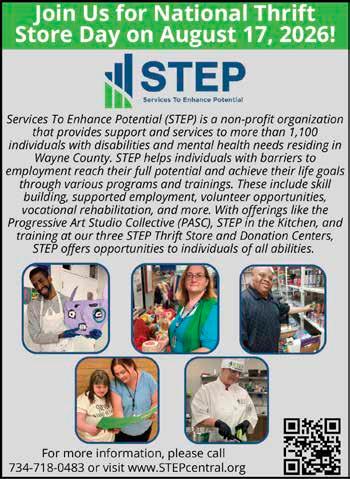
From Training to Thriving: How STEP Builds Job-Ready Skills
What does it really take to be job-ready?
For many individuals with disabilities and other barriers to employment, the answer goes far beyond filling out an application. It takes confidence. It takes hands-on experience. It takes support. And most importantly, it takes opportunity.
At STEP (Services To Enhance Potential), job readiness isn’t just a checklist - it’s a journey.
Building Skills That Matter
Employers consistently say they are looking for dependable, motivated individuals with strong communication skills and a willingness to learn. At STEP, we intentionally develop these skills every day through structured programming and real-world experiences.
Participants in STEP programs engage in hands-on training that mirrors real workplace expectations. Whether learning retail and customer service skills through the STEP Thrift Store & Donation Center, participating in culinary and food preparation activities, assisting with facility cleaning crews, or volunteering in the community, members are gaining practical, transferable skills.
But technical skills are only part of the picture.
The Power of Soft Skills
Showing up on time. Following directions. Working as part of a team. Communicating respectfully. Managing frustration.
These “soft skills” are often the most critical components of long-term employment success. STEP’s supportive environment allows individuals to practice these skills in a structured setting with encouragement, coaching, and constructive feedback.
STEP staff work side-by-side with members, helping them build workplace habits that increase independence and confidence. When challenges arise - and they inevitably do -members learn problem-solving strategies and resilience, both essential in today’s workforce.
From Practice to Paycheck
The ultimate goal is Competitive Integrated Employment (CIE) - meaningful, paid employment in community settings alongside individuals without disabilities.
Through supported employment services, STEP assists with resume development, interview preparation, job searching, and employer connections. Once employment is secured, job coaching continues to ensure a smooth transition and long-term success. This ongoing support can make the difference between simply getting a job and truly thriving in one.
Confidence Is the Foundation
One of the most transformative aspects of job training at STEP isn’t always visible on a resume. It’s confidence.
For individuals who may have faced rejection, limited opportunities, or low expectations in the past, having a place where they are encouraged, challenged, and believed in can be life-changing. Each new skill mastered, each task completed independently, and each positive workplace interaction builds self-esteem.
And confidence carries over - into interviews, into workplaces, and into life.
Strengthening Our Community
When individuals with disabilities gain meaningful employment, the impact reaches far beyond the individual. Families experience greater stability. Businesses gain dedicated employees. Communities become more inclusive and diverse.
As we move toward the fall season - a time often associated with fresh starts and new goals - it’s a powerful reminder that growth doesn’t stop after school ends. Adults, too, deserve opportunities to learn, develop skills, and pursue meaningful careers.
At STEP, we believe everyone has potential. With the right training, the right support, and the right opportunity, that potential turns into progress.
Join us for our 10th Annual STEPS To Success fundraiser on Thursday, October 22, 2026. Visit https:// stepcentral.org/10th-annual-steps-to-success/ for event information.
When School Starts, Some Children Carry Last Year’s Fear
BY JULIE CADMAN: HEALING COMPLEX KIDS
The new school year is almost here. For some children, it doesn’t feel like a fresh start. It feels like going back to the place where they were mocked, excluded, threatened, humiliated, or made to feel unsafe.
And as the first day gets closer, that fear may start showing up at home.
Maybe your child couldn’t explain what happened. Maybe they feared that speaking up would make things worse. Watch for stomachaches, sleepless nights, mood changes, withdrawal, or a sudden dread of going back.
Bullying is not just “kids being kids.” It can affect a child’s confidence, health, learning, behavior, and sense of safety.
What Parents Can Do Now
Start by writing it down. Create a simple bullying log:
YOUR BULLYING LOG
• What happened, and when and where.
• Who was involved or witnessed it.
• Which adult was told.
• How your child was affected afterward.
Also save the proof: screenshots, emails, photos, nurse visits, attendance and behavior records, or notes about anxiety, sleep, or school refusal.
Put your concerns in writing and request written responses.
Ask for a Safety Plan
Your child deserves a safety plan that covers the full school day, including the classroom, hallway, lunchroom, bathroom, playground, bus, recess, and transitions.
Before the year starts, ask what specific steps will be in place, who is responsible, and how concerns will be communicated if something happens again.
If your child has an IEP or 504 Plan, request a team meeting and ask:
“Is the bullying affecting my child’s ability to access their education?”
That question matters, and so does the answer.
At Healing Complex Kids®, we created a free Parent Action Checklist to help families know what to document, what to ask, and what steps to consider next.
Because when your child is being bullied, you don’t need vague reassurance. You need a plan. And you don’t have to do this alone.
This information is educational and does not replace advice from an attorney, advocate, medical provider, therapist, or other qualified professional.
FREE DOWNLOAD
Free Parent Action Checklist
Scan the QR code to receive the checklist, or visit HealingComplexKids.org/checklist-download
Follow us on social media for short, practical steps.
Instagram @healingcomplexkids
Facebook Healing Complex Kids
What Happened to You? by James Catchpole
BY REBECCA PARTEN
WHAT HAPPENED TO YOU? written by James Catchpole and illustrated by Karen George is a 2023 picture book published by Little, Brown Books for Young Readers. I found this to be a fun, easy to understand, and kid-
It’s about a little boy with a limb difference (he only has 1 leg) playing on the playground. He is simply trying to play his game when other kids come over and start asking questions about why he only has 1 leg. But, he’s not really in the mood to talk about and chooses not to answer their questions. The other kids try to guess what happened in ways that only kids would come up with; one suggesting it fell off in the toilet. The main character decides to reply with simple answers so that he can go back to playing.
Towards the end of the book he asks one of the kids if it still matters what happened to his leg, to which the other kid says “no!”. The main character is happy about this and the story ends. At the end of the book there are also some pointers for adults when talking about disability with kids. It talks about how answering questions simply is often best. Also, while it’s okay for them to be curious, it’s important to be polite and think about how the other person feels when asking them questions.
I like this book because of the illustrations, font styling, and phrasing choices. The illustrations are pretty; they remind me of watercolors. The colors aren’t overly bright or dull. They are calming. In other reviews I’ve mentioned how some picture books feature very small text. Or the text might be hard to read because of color contrast issues.
This book features large, black text in a clear readable font. Another criticism I’ve had with other picture books like this is that the story and actual writing isn’t relatable or appropriate for young kids. What Happened to You? is different: it’s written in a way that is very realistic to what a kid with a disability might experience on the playground.
This ties into a final thought I have: this book is nice because it shows that while it’s okay to be curious, it’s also okay for a person with a disability to not want to talk about their disability.
I like this book because of the illustrations, font styling, and phrasing choices.
NEXT MONTH
I’ll be reviewing The Art Therapy Way: A Self-Care Guide by Kendyl Arden.
Back-to-School Tips for Kids with Autism
BY EMILY CRANE
Back-to-school season can be both exciting and stressful, especially for children with autism spectrum disorder (ASD), ADHD, Down syndrome, or other developmental needs.
Just like adults, children can feel anxious about new situations. Think about starting a new job or meeting new people. Now imagine facing those challenges while also navigating difficulties with communication, learning, or social interactions.
As the new school year approaches, many parents are looking for ways to help their child transition successfully. Here are a few tips that can help make the start of the school year a little smoother.
Preparing Your Child
A little preparation can go a long way in reducing anxiety and building confidence.
• Talk about school regularly. Look through photos from previous school years, discuss favorite activities,
and reconnect with classmates through playdates when possible.
• Review important details, such as when school starts, what grade your child is entering, and who their teacher will be. Using a calendar countdown can be especially helpful for visual learners.
• Gradually adjust sleep schedules before school begins by waking your child a little earlier each day.
• If possible, visit the school before the first day. Seeing the classroom, locker, desk, or other important spaces ahead of time can help ease uncertainty.
• Purchase school supplies early and allow your child time to get familiar with them. Familiar items, such as a favorite backpack or lunch bag, can provide comfort during a period of change.
Preparing the School Team
Building a collaborative relationship with teachers and school staff can set the stage for a successful year.
• Meet with your child’s teacher before school starts to discuss strengths, challenges, accommodations, and any important details included in their IEP.
• If your child is attending a new school, request a tour and take photos to create a simple social story that can help them understand what to expect.
• Consider creating an “About Me” page that highlights your child’s strengths, interests, sensory needs, dietary restrictions, and motivators. Sharing this with teachers, therapists, and support staff can help everyone better understand your child.
• Encourage communication between previous and current teachers, as well as any therapists involved in your child’s care. Sharing successful strategies can help create consistency across environments.
• Ensure the school has updated medical information, medication details, and any dietary accommodations your child may require.
Preparing Yourself
Parents play an important role in helping children navigate transitions.
• Confirm emergency contacts and review your child’s IEP before the school year begins.
• If updates are needed, request a meeting with the IEP team early.
• Most importantly, try to stay calm. Children often pick up on their parents’ emotions, and your confidence can help them feel more secure.
With a little planning, communication, and collaboration, you can help make the transition back to school a positive experience for your child and your family.
To learn more about Healing Haven’s comprehensive services—ABA, Speech and Occupational Therapies, Autism Evaluations & Developmental Testing, and Counseling—visit healinghavenaba.com
BY MARIA GIANCOTTI, M.ED. - STUDENT ADVOCACY MICHIGAN
Back-toSchool IEP Checkup: Is Your Child’s IEP Ready for the New School Year?
As summer winds down and families prepare for another school year, many parents assume their child’s IEP is ready to go. However, the start of a new school year is the perfect time to take a closer look at your child’s IEP and ensure
One of the biggest mistakes parents make is waiting until their child begins struggling before addressing concerns. By the time failing grades, behavioral challenges, disciplinary issues, or school avoidance emerge, valuable instructional time has already been lost. A proactive review before school starts can help identify concerns and prevent problems before they occur.
Start with Your Child’s Current Needs
Children grow and change quickly. Ask yourself:
• Has my child’s academic performance improved or declined since the IEP was written?
• Have new challenges emerged?
• Has my child developed social, behavioral, communication, or executive functioning needs that are not being addressed?
• Evaluations & Eligibility
• Behavior & Discipline Issues
• School Refusal & Attendance Concerns
• Are there concerns with anxiety, attendance, organization, or self-regulation?
An IEP should address a child’s unique needs, not simply continue the same services year after year. What was appropriate last year may no longer be sufficient today.
Review the Goals
IEP goals should be specific, measurable, and meaningful. Ask yourself:
• Do the goals address my child’s most significant areas of need?
• Are they challenging enough to promote progress?
• Can I clearly understand how progress will be measured?
• Were last year’s goals achieved, and if not, why?
If a goal seems vague or fails to address a significant area of need, it may need to be revised. Goals should focus on the skills your child needs to make meaningful educational progress.
Evaluate Services and Supports
The services, accommodations, and supports listed in the IEP should directly connect to your child’s needs.
Consider:
• Does my child receive enough specialized instruction?
• Are accommodations appropriate and likely to be implemented consistently?
• Are behavior supports adequate if behavior impacts learning?
• Does my child need additional services such as speechlanguage therapy, occupational therapy, counseling, social work support, or assistive technology?
Services should be based on need, not convenience, staffing shortages, or scheduling limitations.
Think About the School Environment
A new grade level often brings new teachers, expectations, and routines.
Ask yourself:
• Will my child be successful in their current placement?
• Are transitions adequately supported?
• Does my child need additional support during lunch, recess, passing periods, transportation, or other unstructured times?
• Are there safety, sensory, social, or behavioral concerns that should be addressed before school begins?
Many challenges become predictable when parents take time to think through a typical school day from beginning to end.
Know Your Rights as a Parent
Many parents are surprised to learn they do not have to wait for the annual IEP review to address concerns. Under the Individuals with Disabilities Education Act (IDEA), parents are equal members of the IEP team and have the right to participate meaningfully in decisions regarding their child’s special education program.
If you believe your child’s needs have changed, services are insufficient, goals are inappropriate, or accommodations are not meeting your child’s needs, you may request an IEP team meeting at any time during the school year.
Parents should not feel they must “wait and see” if they already have significant concerns heading into a new school year. In many cases, addressing concerns early can prevent larger academic, behavioral, or emotional difficulties later.
If You Request an IEP Meeting
Before the meeting, take a few minutes to organize your thoughts. Consider bringing:
• A written list of concerns
• Recent report cards or progress reports
• Teacher communications or emails
• Private evaluations or medical reports
• Examples of classroom or homework difficulties
• A list of accommodations or supports you believe may help
Writing down concerns beforehand helps ensure important issues are discussed and documented during the meeting.
Take Action Before Problems Develop
The beginning of the school year provides a valuable opportunity to review your child’s educational program and make adjustments before concerns escalate. Even small changes to goals, accommodations, services, or supports can have a significant impact on a student’s success.
Remember, the purpose of an IEP is not simply compliance with special education requirements. The goal is to provide the individualized supports and services your child needs to make meaningful educational progress.
For assistance navigating special education, IEPs, Section 504 plans, evaluations, or school-related concerns, contact Student Advocacy Michigan at 248-372-9770 or visit studentadvocacymi.com.
3rd Annual Shine A Light
Autism Acceptance Community Day and Walk
COUNCILWOMAN
MELISSA SAMPEY COUNCILWOMAN • CITY OF WESTLAND CITY COUNCIL
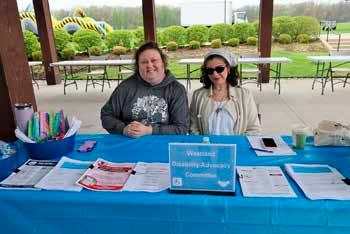
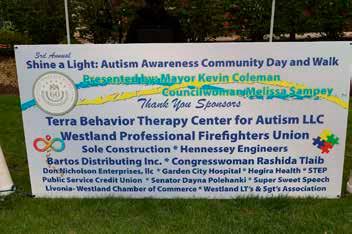
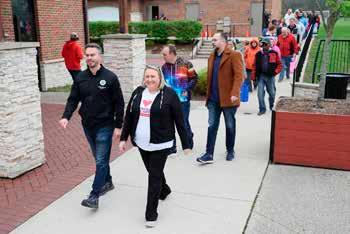
ON BEHALF OF EVERYONE INVOLVED in organizing the 3rd Annual Shine A Light: Autism Acceptance Community Day and Walk, thank you for your generous support in making this year’s event such a meaningful success.
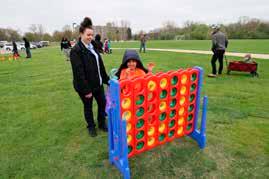
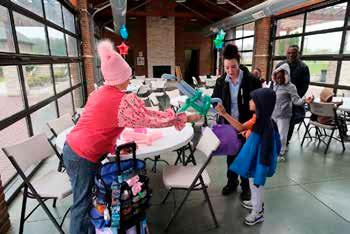
Thanks to your sponsorship and/or participation, we welcomed approximately 500 community members to Tattan Park for an afternoon dedicated to promoting awareness, acceptance, and understanding of autism. Your contribution helped create a vibrant, inclusive environment filled with engaging activities, valuable resources, and opportunities for connection among individuals, families, and community partners.
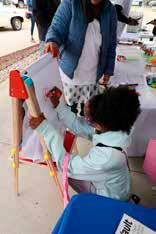
From the smiles on children enjoying face painting and bounce houses, to families accessing important support services, to the shared sense of unity throughout the day—your support made all of it possible.
A special thank you to our presenting sponsor, Terra Behavior Therapy Center for Autism, LLC, for making this event possible. We also extend our sincere gratitude to the Westland Professional Firefighters Local 1279 for generously providing the activities that helped make the day so memorable for everyone who attended.
Events like this truly make a difference, and we are incredibly grateful for your commitment to uplifting our community and supporting individuals and families impacted by autism.
This section is here to give our readers easier access when searching for a trusted neighborhood partner to use. Get to know the businesses that make this magazine possible. Please support them in return and thank them if you get the chance!