PHOTO BY












•
•
•
We



•
•
•
We













517-487-5426
877-463-2266
517-882-2800
517-241-3740
269-345-1913
517-241-3740
800-605-6722
517-333-6655
616-732-7358
269-337-3600
517-241-3740
Arc Michigan arcmi.org
Autism Alliance of Michigan
https/autismallianceofmichigan.org/ Autism Support of Michigan
https/autism-mi.org/
Behavioral Health and Developmental Disabilities
Administrationwww.michigan.gov/mdhhs/ keep-mi-healthy/mentalhealth/procurement/ welcome-to-behavioral-health-and-developmentaldisabilities-administration
Michigan Foundation for the Blind and Visually Impaired Michigan Developmental Disabilities Council www.michigan.gov/mdhhs/keep-mi-healthy/ mentalhealth/developmentaldisability
Michigan Rehabilitation Services (MRS) Capital Area Down Syndrome Association www.cadsa.org
Deaf and Hard of Hearing Services (DHHS) www.deafhhs.org/
Disability Determination Bureau Division of Aging www.michigan.gov/mdhhs/adult-child-serv/adults-andseniors/behavioral-and-physical-health-and-agingservices/aging-services
517-241-3740
800-75-SEALS
Division of Family Resources (DFR) www.michigan.gov/mdhhs
Easterseals MORC www.easterseals.com/MORC/
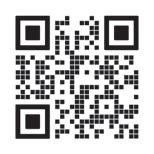
Would you like to advertise in Uniquely You! to share valuable information and help support the community? Scan to grab some time to connect & learn more about being involved: https://calendly. com/jamie-mccabe/ special-needs-livingmagazine
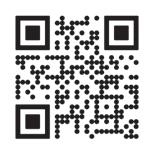
Scan to view the past issues of Special Needs Living and Uniquely You!
Scan to view past digital copies, find resources, share a story or learn more about being involved.


911
833-633-5788
833-633-5788
Jamie Olson: Uniquely You! Magazine Area Director jamie.olson@n2co.com 248-882-8448
517-374-1171
269-345-1913
517-241-3740
517-241-3740
517-241-3740 833-808-7452
800-457-4584 313-446-4444 988 517-241-7004
517-284-7290
800-772-1213
1-800-772-1213
833-633-5788 517-203-1200
517-241-5324
Emergency
Ealy On Michigan
https/www.michigan.gov/mde/services/earlylearners-and-care/special-ed-05/early-on-michigan
Michigan Department of Education: Office of Special Education https/www.michigan.gov/mde/services/ special-education-
Michigan Family Forum
Michigan Family to Family www.f2fmichigan.org/
Michigan Foundation for the Blind and Visually Impaired
Michigan Department of Health and Human Services www.michigan.gov/mdhhs
Michigan Family and Social Services Administration (FSSA) www.michigan.gov/mdhhs
Michigan State Department of Health www.michigan.gov/mdhhs
Michigan Statewide Independent Living Council (MSILC) www.misilc.org/
Medicaid Disability
MI Choice Waiver Program
National Alliance on Mental Illness
Preschool & Out-of-School Time Learning www.michigan.gov/mde/about-us/mde-divisions-andoffices/preschool-and-out-of-school-time-learning
Self-Advocates of Michigan (SAM)
Social Security Administration (SSA)
Social Security Disability Insurance (SSDI) Special Education Questions
United Cerebral Palsy Association of Michigan ucp@ucpmichigan.org
Vocational Rehabilitation Services (VR)
n2co.com
Celebrate. Connect. Impact. © 2026 The N2 Company, Inc.
DISCLAIMER: The views expressed in the articles and advertisements in Uniquely You are those of the authors and advertisers and do not necessarily reflect those of The N2 Company or the publisher. Inclusion of paid advertisements does not imply endorsement, and neither N2 nor the publisher is responsible for the business practices of advertisers. We are proud to feature businesses that share our commitment to showcasing local connections. Please note that businesses profiled may have provided free products and / or services for the review. Uniquely You is for general informational and entertainment purposes only and is not intended to provide medical, therapeutic, educational, or legal advice. Always consult qualified professionals regarding the care and support of individuals with disabilities. NOTE: When community events take place, photographers may be present to take photos for the event, and they may be used in this publication.
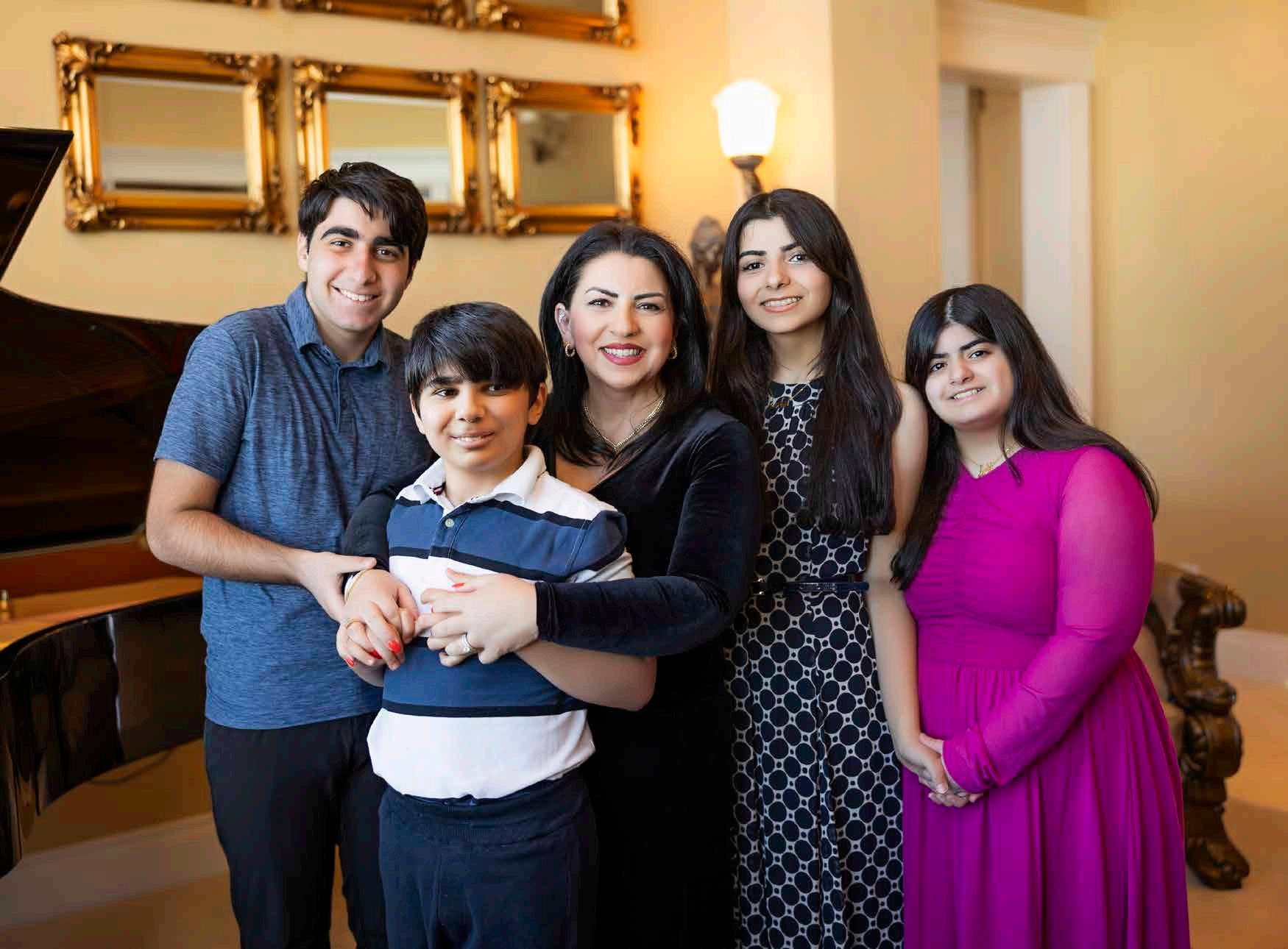
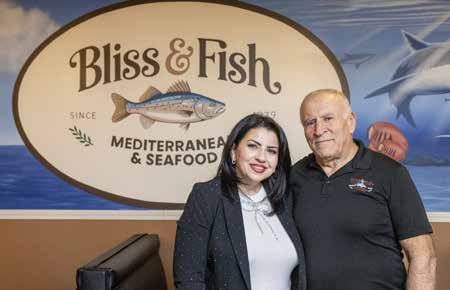
From diagnosis to devotion, this is the story of how one family transformed hardship into healing and built a table where hope is always served.
BY JENNI EIFLER
Every so often,
a story comes along that reminds us how powerful love, faith, and persistence can be, especially when it comes to advocating for our children. That’s exactly what happened when I first learned about Bliss & Fish and the woman behind it, Shadia Zamlut.
Walking into Bliss & Fish for the first time, I expected a beautiful meal. What I didn’t expect was to experience the heart of a mother’s promise woven into every dish. Shadia welcomed me like family. Within minutes, the table filled, creamy hummus crowned with liquid gold olive oil, crisp fattoush layered with herbs and citrus, and beautifully seasoned seafood that felt both vibrant and comforting.
But this isn’t just the story of a restaurant. It’s the story of a mother who refused to stop searching for answers.
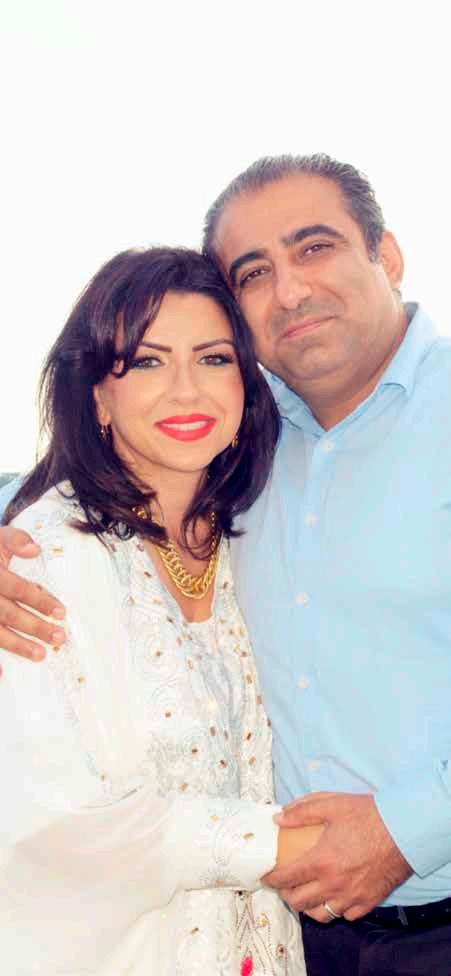
Shadia and her husband, Mahmud, met in 2008 in Dearborn and are now raising four children, Hassan (16), Laila (14), Lara (12), and Yusha (11). Each child carries unique gifts and passions, robotics, jazz piano, clarinet, curiosity, and creativity. And this past summer, they carried trays too, helping in the kitchen, greeting guests, and learning firsthand what family teamwork looks like.
But years earlier, their journey took an unexpected turn.
Shadia had built a meaningful career as a language teacher. She loved education. She loved her students. Then her youngest son was diagnosed with autism and IBS.
Everything changed. She stepped away from her profession without hesitation. Her classroom became research journals. Her evenings turned into study sessions. She read medical studies late into the night. She explored nutrition. She asked questions. She prayed. She advocated.
Her training as an educator sharpened her ability to investigate, analyze, and pursue solutions. But this time, the stakes were deeply personal.
During that season, her grandfather gently reminded her of something rooted in generations of tradition, the healing properties of the olive oil from their ancestral land in Lebanon. Their family owns olive groves in Aley, a mountain town just north of Beirut. For

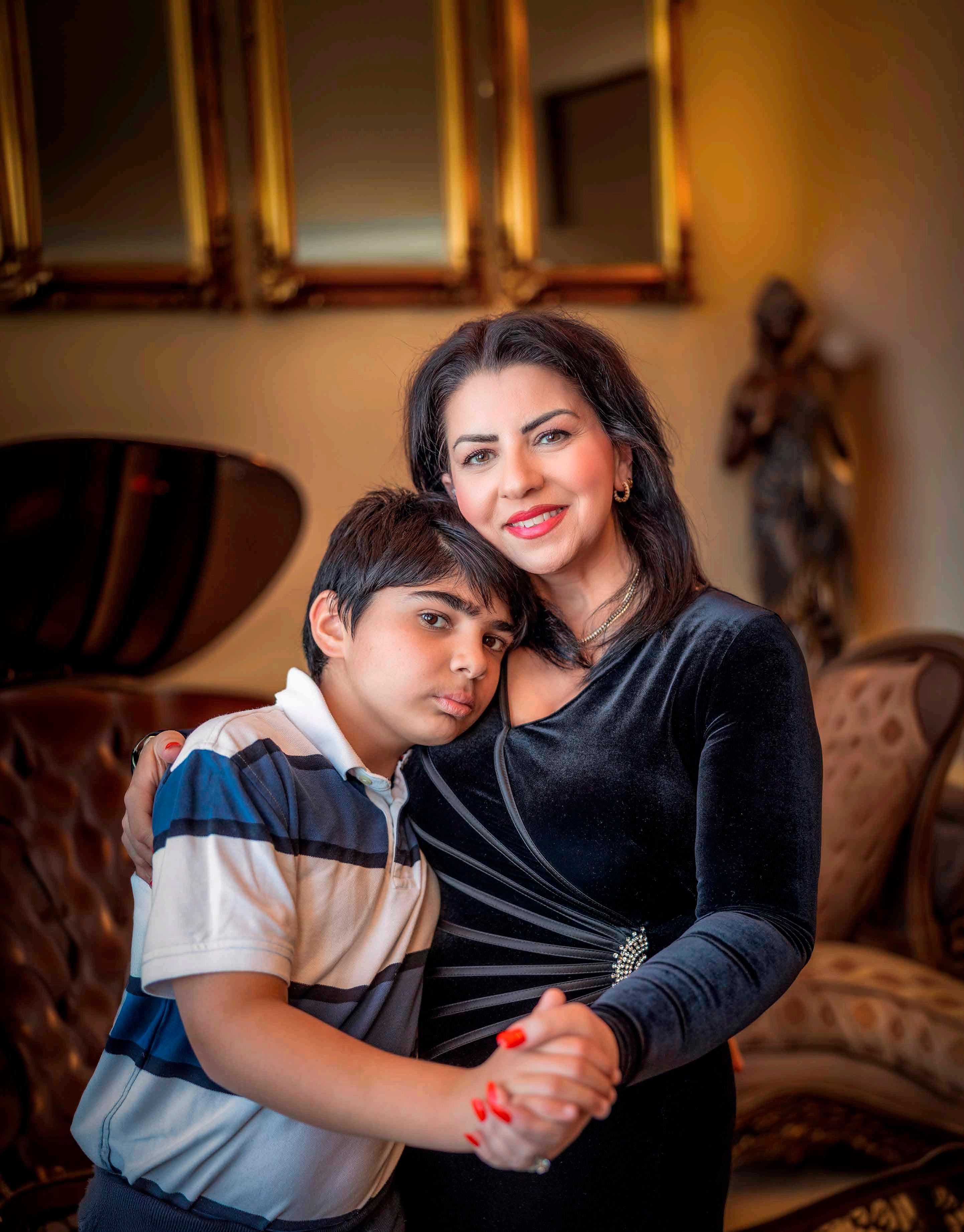
Photo by Partyfly Photography
“In
my prayers, I made a promise to God: if this olive oil helped heal my son, I would dedicate my life to sharing it with other families who were searching for answers, just like I was.”
decades, olive oil wasn’t just food, it was medicine, ritual, nourishment.
Trusting both science and ancestral wisdom, Shadia incorporated olive oil from their family’s land into her son’s diet.
“In my prayers, I made a promise,” she shared. “If this olive oil helped heal my son, I would share it with other families who were struggling.”
And slowly, miraculously, his IBS symptoms cleared.
For parents navigating autism, co-occurring conditions, or complex medical needs, moments like that feel monumental. What began as desperation became testimony.
Honoring her vow, Shadia began importing the olive oil from her family’s land and named it Liquid Gold, not to build a brand, but to fulfill a promise and create something her son could one day call his own.
But something beautiful unfolded. Families didn’t just want the olive oil, they wanted the story. They wanted to understand the heritage, the healing, the connection between faith, food, and family. Conversations about nutrition became conversations about resilience. Bottles of oil became invitations to gather.
Shadia realized the olive oil was never meant to stand alone. It was meant to be experienced.
“For every parent searching for answers, advocacy matters. Research matters. Faith matters. And hope, no matter how small it feels, is worth pursuing.”
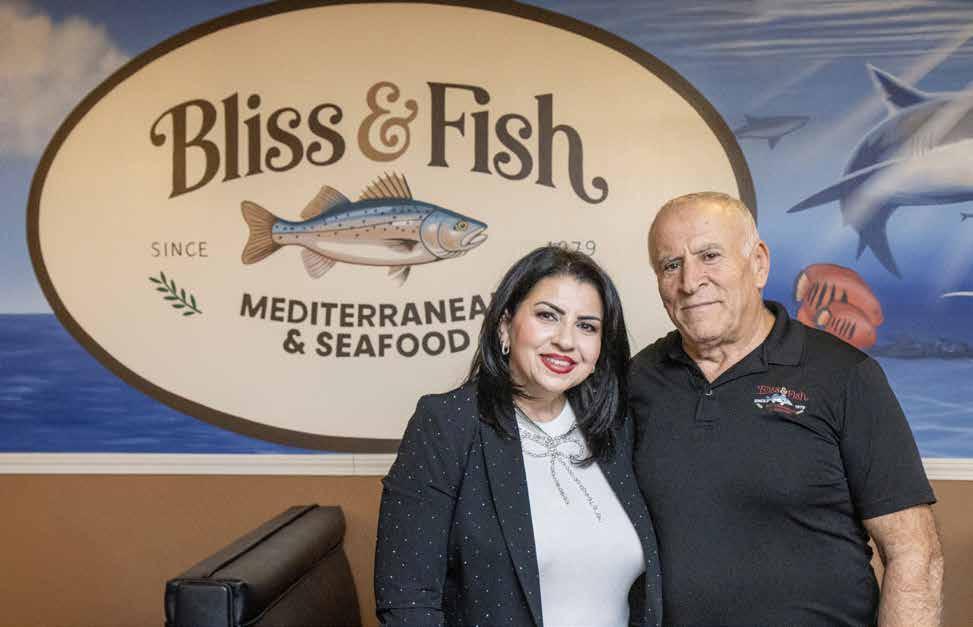
Food has always been central to her life. She grew up in the restaurant world, her family owned Bet & Jessie’s Fish and Chips in Redford from 1979 to 2013, where her father served his famous Scottish hand battered wild caught cod. She watched him serve with devotion and consistency. She learned early that food is an act of care.
For years, she believed that chapter had closed. “I never thought I would open a restaurant,” she admitted. “And my dad didn’t either. But we both felt this was where we were being guided.”
What emerged wasn’t just a business plan, it was a continuation of a promise.
In May 2025, Bliss & Fish opened its doors, a space where heritage, healing, and heart live under one roof. Every dish is prepared with the same olive oil that once supported her son’s health. Every plate carries a thread of Lebanon, a reflection of her father’s wisdom, and the courage of a mother who chose to trust both faith and action.
Running the restaurant has given Shadia renewed purpose after years devoted to caregiving. “It’s been challenging at times,” she shared, “but deeply rewarding. Every day I get to meet people, share our story, and serve food that comes from my heart and my heritage.”
Her heart led work has not gone unnoticed. Bliss & Fish was honored as Pinckney Business of the Year, recognized by the Greater Brighton Area Chamber of Commerce, and presented with a State of Michigan proclamation, affirmations of the impact this family is making.
But beyond the awards, what resonates most is her message to other parents and caregivers walking hard roads.
“First trust God. His timing is always perfect,” she said. “Success comes from heart, patience, and consistency. Surround yourself with good people, Shadia;

stay connected to your community, and never lose sight of why you started.”
For families navigating autism, gastrointestinal disorders, sensory challenges, or the many unseen layers that can accompany a diagnosis, Shadia’s story is a reminder, advocacy matters. Research matters. Faith matters. And sometimes, healing can emerge from places both ancient and unexpected.
Bliss & Fish is more than a restaurant.
It’s a testament to a mother’s devotion, a family’s resilience, and the powerful intersection of culture, faith, and fierce advocacy.
And for every parent searching for answers, it stands as proof that hope is worth pursuing.
We would love to share your story: https://form.jotform. com/202464921200140


EYE CONTACT IS often considered a key part of communication in neurotypical social interactions. However, for many autistic individuals, eye contact can interfere with their ability to connect, process information, and feel safe. This difference is not a sign of disinterest or defiance. It reflects how the autistic brain processes sensory and social information.
Research using brain imaging has shown that direct eye contact can activate the amygdala, the part of the brain responsible for emotional and threat responses. For some autistic individuals, this activation causes eye contact to feel intense, overwhelming, or unsafe rather than comforting. Instead of helping communication, eye contact may compete with cognitive resources needed for listening, thinking, and responding.


There are several welldocumented reasons why autistic individuals may avoid eye contact:
• Distraction: Maintaining eye contact can interfere with processing instructions, environmental information, or learning tasks. Looking away can help improve focus and comprehension.
Research using brain imaging has shown that direct eye contact can activate the amygdala, the part of the brain responsible for emotional and threat responses.
• Increased anxiety and cognitive load: Eye contact can feel like multitasking. The individual must listen, interpret facial expressions, manage social expectations, and formulate a response at the same time. This can increase stress and mental fatigue.
• Nonverbal communication challenges: Some autistic individuals must concentrate intensely to understand facial expressions and body language. Eye contact may actually reduce their ability to process these cues comfortably.
• Masking and burnout: Many autistic individuals feel pressure to follow unspoken social rules, such as making expected eye contact. Sustaining this effort over time can be emotionally exhausting and contribute to burnout.
• Sensory sensitivities: Bright lights, visual movement, noise, or busy environments can make eye contact uncomfortable or painful. Looking away can be a strategy for self-regulation and maintaining comfort.

just as well as non-autistic children. Communication differences do not mean communication deficits.
Autistic body language may include:
• Self-regulating movements (stimming): Repetitive actions such as rocking, hand movements, or pacing can help regulate emotions and manage sensory input.
• Facial expression differences: Expressions may appear limited or harder to interpret, even though emotions are present and meaningful.
• Unique movement or posture: Rocking, spinning, or unusual movement patterns may be calming or expressive rather than disruptive.
• Social cue challenges: Subtle facial expressions, tone of voice, or gestures may be difficult to interpret, making social interactions more effortful.
These behaviors are forms of communication and regulation, not a refusal to engage.
Forcing eye contact can increase anxiety and reduce a person’s ability to communicate effectively. Respecting alternative communication styles allows autistic individuals to participate in conversations in ways that feel safe and natural to them. Effective communication does not require eye contact. It requires understanding, patience, and respect for neurological differences.
Sources:
• Autism Speaks, “Reasons Why Eye Contact Can Be Hard for Those on the Spectrum.” Accessed February 2026. https://www.autismspeaks.org/ reasons-why-eye-contact-can-be-hard-those-spectrum
• Autism Speaks, “Autism and Eye Contact.” Accessed February 2026. https://www.autismspeaks.org/ autism-and-eye-contact
To learn more about Judson Center and the autism services we provide, please visit judsoncenter.org/autism.
Providing classes, coaching, and groups for neurodivergent individuals and their familes and caretakers.
Delivering training and consultation for practitioners, educators, and organizations to enhance neurodivergent-affirming practices in their service delivery and workplace.
help people communicate
ideas quickly and create shared understanding. In the autism community, symbols have long been used to promote awareness, signal support, and encourage conversation. Over time, as understanding of autism has expanded through research, advocacy, and lived experience, the symbols used to represent autism have also evolved.
Today, there is no single image that represents every individual or family. Instead, a variety of symbols are used across schools, clinics, community organizations, and digital spaces. Exploring autism symbol history helps provide context for why different images exist and how they are used today across different settings.
This blog explores the history of autism symbols, the most commonly used imagery today, and best practices for choosing symbols that reflect dignity, inclusion, and respect for individuals with autism and their families.
The use of symbols to represent autism developed alongside early public awareness efforts. In the mid20th century, autism was not widely understood, and outreach focused primarily on education and recognition. During this period, symbols were often used to introduce the public to autism and provide a visual reference point for learning and discussion.
As research advanced and diagnostic criteria became more clearly defined, autism awareness expanded beyond clinical settings. Symbols began appearing in educational materials, fundraising campaigns, and community events. Over time, these visuals became familiar to families, educators, and service providers and played a role in shaping early autism education efforts.
Understanding autism symbol history means recognizing that these images reflect the knowledge, language, and
priorities of the time in which they were created. As conversations around autism have continued to grow and change, new symbols and designs have emerged to reflect evolving perspectives on inclusion, accessibility, and quality of life.
The puzzle piece is one of the earliest and most widely recognized symbols associated with autism. First introduced in the 1960s, it became closely associated with early autism education and public awareness efforts at a time when understanding of autism was still emerging.
Over the decades, the puzzle piece appeared in informational materials, advocacy campaigns, and community programs, becoming a familiar autism awareness symbol for many families, educators, and service providers. For some, it represents early recognition and the growth of autism-related resources and services.
Today, the puzzle piece continues to appear in certain contexts, often paired with language that emphasizes respect, support, and inclusion. As with any symbol, its meaning is shaped by how it is used, the audience it serves, and the values communicated alongside it.
Key considerations when using autism symbols include:
• Familiarity: Some imagery is widely recognized and easy to identify.
• Audience: Interpretation may vary depending on community and setting.
• Intent: Symbols are most effective when paired with respectful, person-centered language.
In addition to historically recognized imagery, many other symbols are commonly used to represent autism and the autism spectrum. These designs often emphasize individuality, diversity, and connection.
The rainbow infinity symbol is frequently used to represent the wide range of experiences across the autism spectrum. Its continuous shape reflects lifelong identity, while its colors highlight diversity and individuality.
Gold imagery, based on the chemical symbol “Au,” is often used in autismrelated visibility efforts. Gold themes may appear in ribbons, pins, graphics, and educational materials and are commonly associated with recognition and community connection.
Abstract spectrum designs use gradients, flowing shapes, or geometric patterns to reflect variation and uniqueness. These visuals are often used in digital platforms and educational resources.
Heart symbols and community-focused imagery are commonly used to express care, support, and connection. These designs highlight relationships and shared understanding.
There is no single official autism awareness symbol. Many organizations and families choose imagery that aligns with their values, audience, and goals.
Symbols influence how messages are received and understood. In autismrelated education and outreach, they can help promote awareness, encourage conversation, and signal support.
Autism symbols are frequently used during awareness and recognition efforts—particularly in April—across social media, schools, clinics, workplaces, and community events. When an autism awareness symbol is paired with clear explanations and meaningful actions, it can reinforce messages of respect, accessibility, and inclusion.
Symbols are most impactful when they are supported by inclusive practices and real-world efforts to support individuals with autism and their families.
Choosing autism symbols thoughtfully helps ensure they communicate the intended message clearly and respectfully.
Engage Individuals with Autism and Families
Including individuals with autism and family members in discussions about imagery provides valuable insight and helps ensure materials are relevant and respectful.
Clarify Your Purpose
Determine whether your goal is education, awareness, or community support. Your purpose should guide symbol selection and messaging.
Use Respectful, StrengthsBased Language
Symbols should be paired with language that emphasizes dignity, strengths, and access to support rather than focusing on limitations.
Design for Accessibility
Ensure materials are accessible by using high-contrast colors, readable fonts, alt text for images, captions for videos, and clear layouts.
Pair Symbols with Action
Imagery should be connected to tangible efforts such as training, accommodations, educational resources, or partnerships.
Adapt to the Setting
Different environments—schools, clinics, workplaces, and digital platforms—may require different approaches to imagery and messaging.
Symbols are most effective when they are part of broader efforts to support understanding and inclusion.
Schools can introduce symbols alongside age-appropriate explanations and pair them with inclusive teaching strategies, sensory-friendly options, and staff training.
In clinical settings, autism symbols should align with respectful, familycentered care. Imagery can help create welcoming environments and support clear communication about services.
In workplaces, symbols can signal inclusive values when paired with flexible policies, clear communication practices, and accessibility accommodations.
Across all settings, explaining what a symbol represents and how it connects to meaningful support helps reinforce trust.
Symbols are only one part of how autism is represented. Language and visuals together shape understanding. Thoughtful wording helps ensure messages reflect dignity, autonomy, and respect.
• Center lived experience by including perspectives from individuals with autism.
• Be specific when describing supports and accommodations.
• Avoid stereotypes or fearbased narratives.
• Invite ongoing feedback from families and the autism community.
• Is there one official autism awareness symbol? No. Multiple symbols are used today, and choice often depends on audience, setting, and purpose.
• Why do different organizations use different symbols? Symbol selection reflects organizational values, goals, and the communities being served.
• What colors are commonly used in autism symbols? Rainbow palettes emphasize diversity, gold imagery is commonly used in awareness efforts, and high-contrast designs support accessibility.
• Can symbols be combined? Yes. Combining design elements can help personalize materials while remaining inclusive and clear.
• How can symbols support inclusion beyond awareness? When paired with education, accessibility, and supportive practices, symbols help promote understanding and meaningful inclusion.
• Autism symbol history reflects evolving understanding, advocacy, and community perspectives.
• Multiple autism symbols are used today, each with historical and contextual significance.
• Symbols are most effective when paired with respectful language and authentic support.
• Accessibility and community input should guide imagery choices.
• True inclusion is reflected in action, not just visibility.
By choosing autism symbols thoughtfully, society can communicate dignity, belonging, and meaningful support for individuals with autism and their families.

Looking for support that goes beyond awareness? At Total Spectrum, we believe inclusion is reflected in the care, partnership, and progress we build with families every day. Learn more about our compassionate autism care and how we support children and families across our communities.
Uniquely You Autism Symbols
BY DR. SARA GRIVETTI, STEP CEO
April is Autism Acceptance Month, a time to move beyond awareness and focus on what true inclusion looks like in our communities. At Services To Enhance Potential (STEP), inclusion is not a buzzword, it is the foundation of the work we do every day. We believe that people with intellectual and developmental disabilities (I/DD), including individuals with autism, deserve the same opportunities to live, work, and participate fully in community life as anyone else.
Acceptance means recognizing that disability is a natural part of human diversity. It means valuing different
ways of thinking, communicating, and problem-solving, and understanding that these differences strengthen our communities rather than limit them. When individuals with I/DD are supported and included, everyone benefits - from families and neighbors to employers and local businesses.
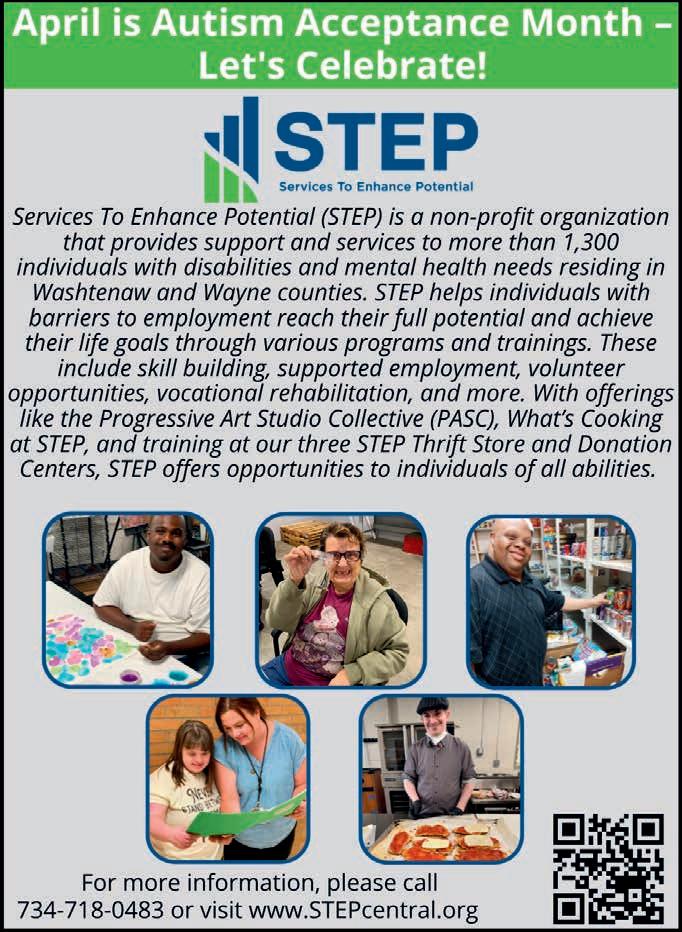
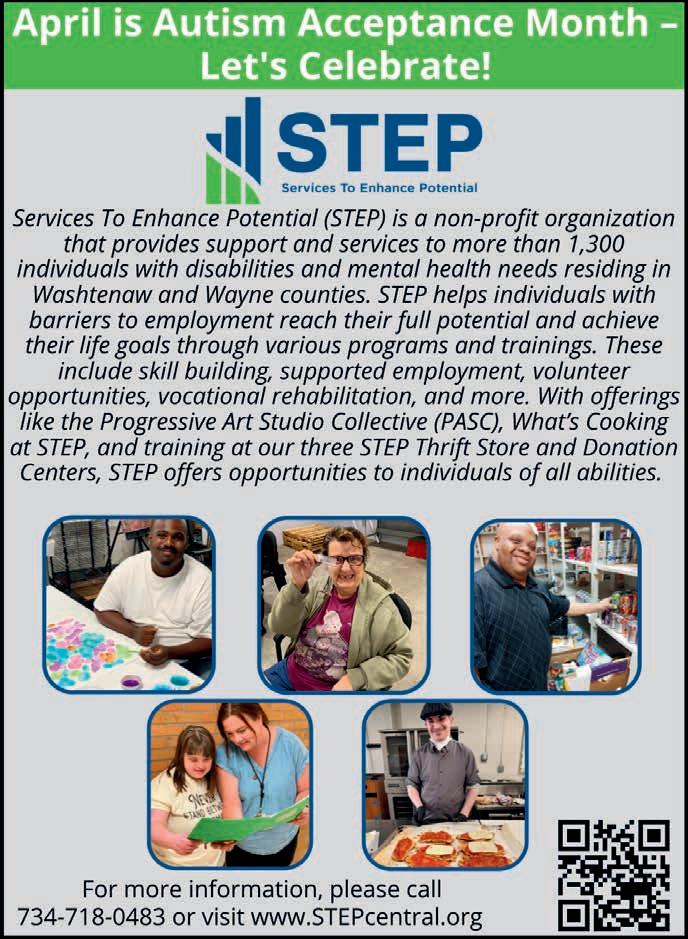
One of the most powerful ways in which inclusion shows up is in the workforce. Employment offers more than a paycheck; it provides purpose, independence, social connection, and dignity. At STEP, we work alongside individuals with disabilities to build skills, explore interests, and connect with meaningful employment opportunities. We also partner with employers to create inclusive workplaces where people are valued for their abilities, not defined by their diagnoses.
A diverse workforce that includes people with I/DD brings tangible benefits. Employees with disabilities are often highly dedicated, detail-oriented, and loyal. They contribute unique perspectives that improve problem-solving, team culture, and customer engagement. Inclusive workplaces foster empathy, collaboration, and innovation - qualities that benefit every employee and strengthen organizations as a whole.
Inclusion also extends beyond the workplace. STEP supports individuals in building relationships, engaging in their communities, and making choices about their own lives. Whether it’s participating in local events, volunteering, or pursuing personal goals, community inclusion helps ensure that people with disabilities are seen, heard, and respected.
During Autism Acceptance Month, we are reminded that acceptance is an action. It’s creating accessible spaces, offering flexible support, and listening to the voices of people with I/DD. It’s challenging assumptions and focusing on strengths rather than limitations.
At STEP, we envision communities where everyone belongs and has the opportunity to thrive. By embracing inclusion and valuing diversity in all its forms, we can build stronger, more compassionate communities - together.

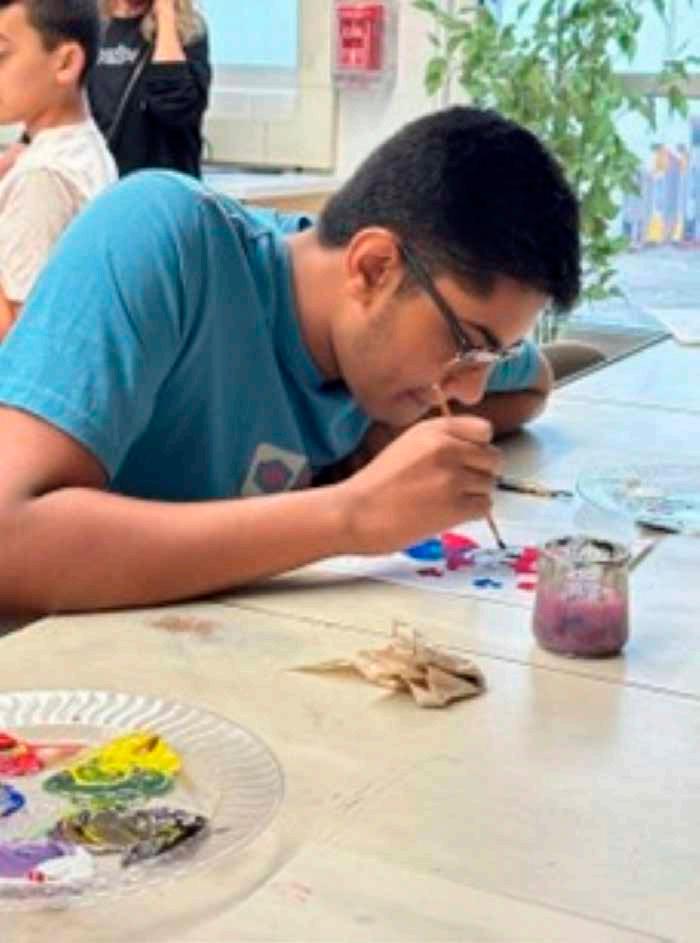
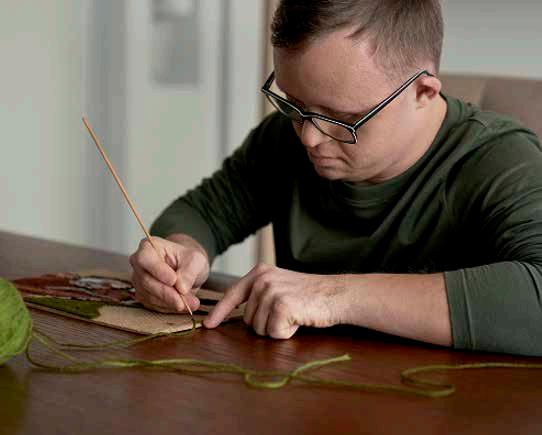
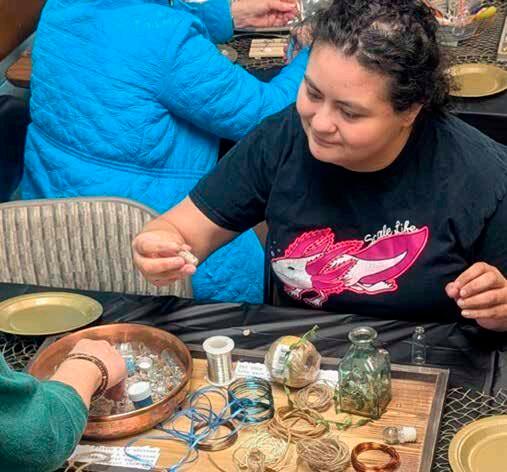
“It’s comforting to know there are others out there who share my interests and find joy in the same things I do. It makes me feel connected, even if we’ve never met,” said Arjun Reddy, another creator at Trove Market.

BY: CHARLOTTE BACHELOR
Trove Market is revolutionizing the way entrepreneurs with disabilities market themselves and find potential customers. The platform connects entrepreneurs to wider audiences to promote income, independence, and confidence through creative and business support. Trove regularly features artists, highlighting their creative journeys, and hosts community-driven initiatives that foster visibility, connection, and empowerment. “Our mission is to empower individuals with disabilities by expanding access to opportunities and championing purpose-driven shopping. We value dignity, equity, and community, and our goal is to help talented entrepreneurs build meaningful careers and share their work with the world,” shared Jayme Powell, CEO of Trove Market.

Trove Market provides a pathway to independence for entrepreneurs with disabilities
Trove Market helps break down barriers to financial independence, employment access, and creative visibility for individuals with disabilities. Many face limited options in traditional work environments or lack accessible channels to share their talent. Trove provides a safe, supportive space where creators can build entrepreneurial skills, generate income, gain recognition, and connect with a community that values their talents and potential.
Belle Meador, a Trove Market entrepreneur, shared her experiences with the platform, “I love being part of Trove Market because it helps me share my creativity with the world. It’s fun knowing my cards and drawings can make people smile. I’m proud to be a part of something that supports artists like me.”
“The best way to support Trove Market is by joining our community of creators. Individuals with disabilities who want to sell their products can sign up to be a Trove seller at TroveMarket. com, gaining exposure, support, and the opportunity to build income and independence,” shared Jayme.
She continued, “You can also help by referring friends or family members who may be interested in selling on Trove, or by shopping from and sharing the work of our creators to help them reach wider audiences. Following us on social media, partnering with us for community events, and supporting programs through donations or sponsorships all help expand training, outreach, and accessibility.” Every action, whether selling, referring, shopping, sharing, or contributing, helps create meaningful opportunities and lasting impact for creators with disabilities.
To stay connected with Trove Market, visit their website at TroveMarket.com and follow them on social media @trove_marketplace.


Therapy that helps your child succeed with a personalized care plan that works with your family’s schedule.
Individualistic Care
Flexibility
In the convenience of your home, we can provide your family relief through education and hands-on support in an environment where your child is most comfortable.
Through evidence-based and individualized ABA therapy practices, your child can be guided on their path forward to a successful and supported adulthood.
Communication & Social skills
Evidence-Based Practices
Hands-On Support
947.300.6700
benevolentbehaviortherapy.com
BY MITCH STEVENS
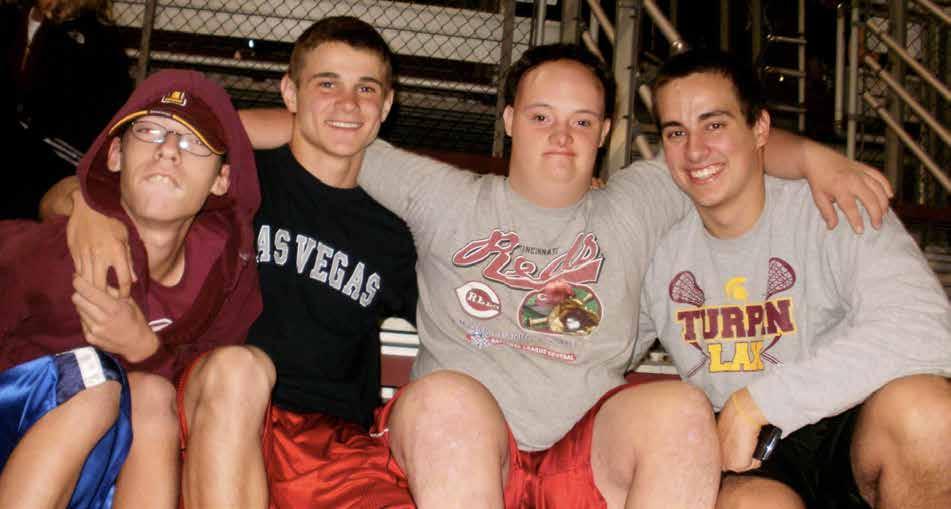
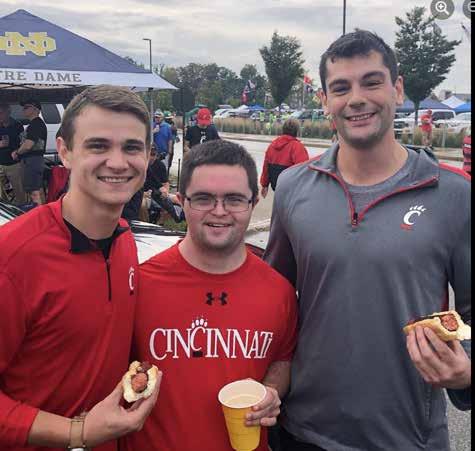
Sometimes a book is born not from a single moment, but from years of quiet learning—moments that linger, conversations that stay with you, and people who change the way you see the world. Transcending Labels by Mitch Stevens is one of those books.
The seed for Transcending Labels was planted long before Mitch ever considered himself an author. As a high school student, Mitch worked closely with students with special needs—an experience that shaped him in ways he didn’t yet have language for. Years later, after building a successful career in sales management, those early lessons never left him. Instead, they followed him, resurfacing again and again as reminders that true potential, dignity, and humanity are often hidden behind assumptions.
“I always knew I wanted to share these experiences,” Mitch reflects. “I just didn’t know when—or how.”
That clarity came through volunteering. Through coaching with Special Olympics of Indiana, participating in community 5Ks, and showing up alongside families, athletes, and volunteers, Mitch found himself in conversations that revealed a deep hunger for understanding. Many people were connected to disability as parents,
siblings, or caregivers. Others were encountering the disability community for the very first time. What united them was curiosity—and a desire to do better.
That was the moment Mitch knew the message could no longer stay internal. It needed to be shared.
At the heart of Transcending Labels is a simple but powerful idea: labels were never meant to be the lens through which we see one another. While diagnoses and classifications can provide access to services and support, they can also quietly limit expectations and connection. Mitch challenges readers to intentionally look beyond diagnoses, beyond assumptions, and beyond society’s often narrow definitions of success.
“Transcending labels,” he explains, “means refusing to let a label become the ceiling for someone’s humanity.”
One of the people who most shaped the heart of this book is Robert Hunt and his family. Through Robert, Mitch witnessed firsthand the depth of understanding, capability, and emotional intelligence that is so often underestimated. Robert’s family modeled advocacy, patience, and unconditional love—reinforcing the truth that labels rarely capture the fullness of a person’s lived experience.
Throughout the book, Mitch returns again and again to the theme of shared
humanity. Influenced by educators like special education teacher Cindy Gajus, Mitch emphasizes that disability is not separate from the human story—it is part of it. Disability does not diminish personhood; it deepens our collective understanding of empathy, resilience, and interdependence.
Mitch is honest about the reality of human nature. We all make initial judgments. But when those judgments go unchecked, they can prevent us from truly seeing the person in front of us—their personality, gifts, humor, and potential. Transcending Labels invites readers to replace assumptions with curiosity, and distance with connection.
That connection, Mitch believes, is transformational for everyone involved.
For readers without lived disability experience, the book offers a gentle but clear invitation: show up. Volunteer. Get involved. Say yes to opportunities that feel unfamiliar or uncomfortable. Whether it’s mentoring through programs like Best Buddies, volunteering at a Special Olympics event, tutoring, or simply building relationships in your own community, Mitch reminds readers that the disability community is known for its openness and warmth—and the need for volunteers has never been greater.
“The joy you receive is just as powerful as the support you give,” he
shares. “We were put on this Earth to live in community.”
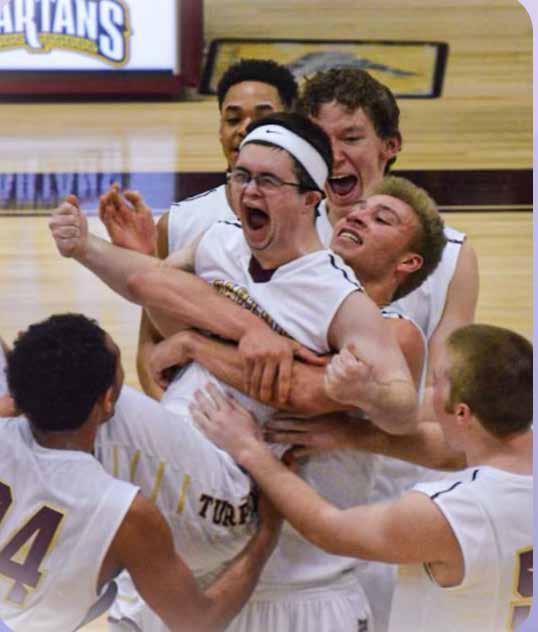
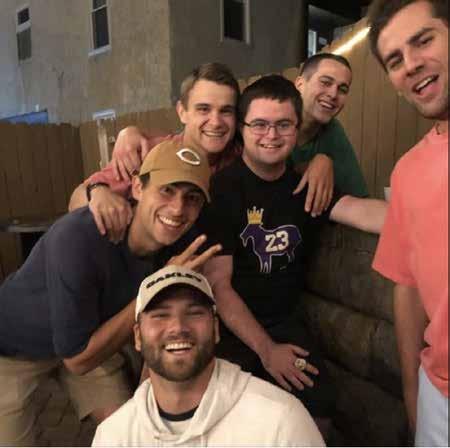
The book is filled with real-life examples that bring this message to life. One such story is Stephen Cornell, whose consistent joy and enthusiasm made a lasting impression on everyone around him. What stood out wasn’t a single moment, but the way Stephen showed up—fully present, genuinely excited for connection, every single day.
Listening, Mitch emphasizes, is foundational to transcending labels. Individuals like Robert Hunt often understand far more than people assume. Communication may take longer. Responses may come after pauses. But patience, presence, and the willingness to wait open the door to genuine understanding.
For families navigating disability, Mitch hopes this book offers reassurance—that they are not alone. He wants them to know there is a growing community of people, many without a familial connection to disability, who care deeply, advocate fiercely, and want to support them.
Educators and schools will find practical takeaways woven throughout the book as well. Mitch acknowledges the very real challenges teachers face— limited resources, large caseloads, and systemic constraints—while still offering ideas that foster independence, dignity, and growth. From intentional routines to meaningful IEP implementation, the focus remains on empowering students rather than limiting them.
Beyond schools, Mitch believes workplaces and faith communities need a renewed commitment to empathy.
True inclusion begins when we enter interactions aware that we do not know what someone else is carrying. One relationship at a time, cultures can shift.
When asked what one small action readers can take immediately after finishing the book, Mitch’s answer is simple: find one opportunity to volunteer.
Inclusion, he reminds us, doesn’t require grand gestures. It’s inviting the student who sits alone to join your table. Introducing yourself to someone new. Checking in on a friend who might need reassurance that they matter. It’s the daily practice of choosing presence over judgment.
“This should be required reading for every middle and high school student.”
Some of the most meaningful feedback Mitch has received so far speaks to the book’s reach:
“This should be required reading for every middle and high school student.”
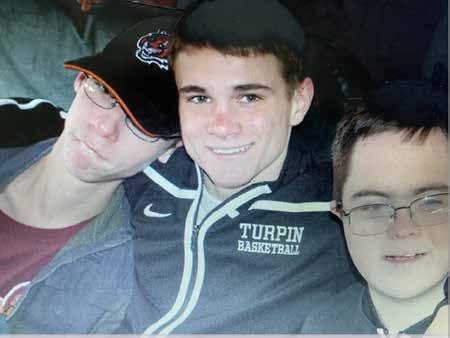
While every chapter carries personal meaning, one stands out most to Mitch—Chapter 3, “My Buddy Steve.” The relationship he formed while tutoring Steve during his senior year remains one of the most impactful experiences of his life. “He’s the sweetest and purest human being I have ever met,” Mitch shares. “I’ll always be grateful for that time.”
Looking ahead, Mitch has bold hopes for Transcending Labels. His goal is to reach one million people—through schools, classrooms, conversations, articles like this one, and speaking opportunities across the country. But at its core, the mission is not about numbers. It’s about people.
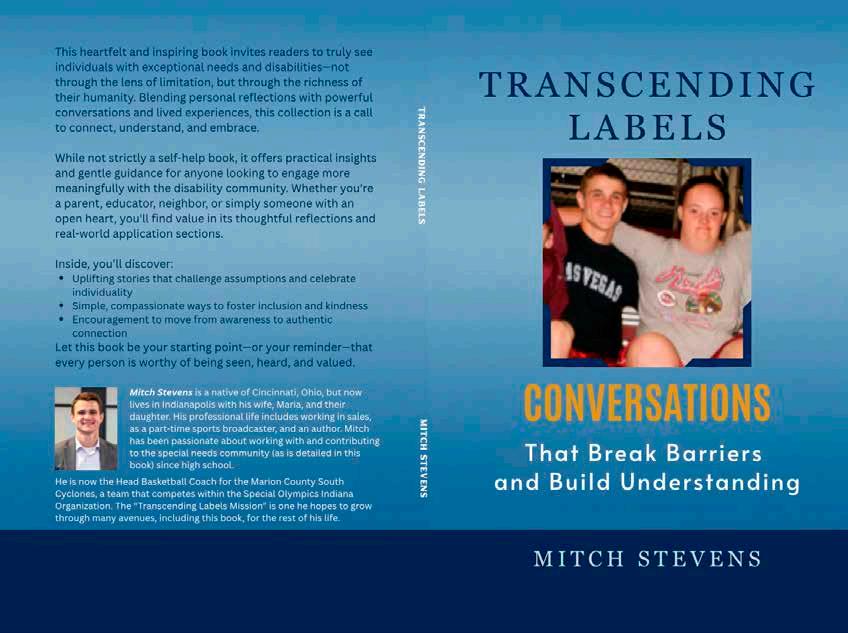
As Mitch reflects on what he hopes Uniquely You Magazine readers remember most, his message is clear: Connecting with others on a deep, personal level is why we are here. There are people—many without direct ties to disability—who are in your corner, committed to making individuals with disabilities feel seen, loved, and appreciated. With collective effort, that community will continue to grow.
Transcending Labels is more than a book. It’s an invitation—to slow down, to see differently, and to choose connection over assumption. And in a world that too often defines people by what it can easily name, that invitation feels both timely and necessary.
Learn more at www.mitchjstevens.com
Contact Information: mitch.stevens05@gmail.com

April is Autism Acceptance Month, a time to pause, reflect, and support autistic individuals and their families. Formerly known as Autism Awareness Month, the name officially changed in 2021 to reflect a deeper and more meaningful goal. While awareness helps people recognize autism, acceptance is what truly leads to understanding, inclusion, belonging, and positive change.
The shift from “awareness” to “acceptance” highlights the need to move beyond simply knowing about autism. Today, many people are already aware of autism, and increased awareness has contributed to a rise in diagnoses since the condition was first identified. According to the CDC, autism currently affects 1 in 31 children aged 8 and younger. However, awareness alone does not ensure that autistic individuals and their families feel understood, supported, or valued.
Acceptance goes further. It involves recognizing autistic individuals for who they are and supporting them in meaningful, respectful ways. During Autism Acceptance Month, the focus is on taking action, particularly actions that support those impacted by autism. And if that’s you, this is a great time to ensure you have support.
One often overlooked aspect of an autism diagnosis is the emotional impact it can have on parents and families. Receiving a diagnosis can feel isolating, overwhelming, and lonely. Many parents struggle to find others who understand their experiences, and support is not always easy to access. This is where community becomes essential. Finding a supportive community reminds parents that they are not alone. Community creates space to share experiences, ask questions, celebrate milestones, and speak honestly about difficult days. Whether through a formal support group or a
simple connection with another parent, community can be life changing.
Support groups are wonderful for families impacted by autism because they connect people with others who share similar experiences. They offer valuable resources, emotional understanding, and practical advice for navigating the unique ups and downs of raising a child on the spectrum. These groups also create opportunities to give and receive support, celebrate accomplishments, share challenges, and build lasting friendships for both parents and children.
Support options are available both online and, in some cases, in person for families seeking connection. Organizations such as the Autism Alliance of Michigan and Michigan Alliance for Families offer a wide range of local resources and information. Additional national resources include Parents Helping Parents, Healthline, and autism-focused Facebook groups. Families can also find support through their child’s autism-related services. BCBAs and therapists are often excellent resources for connecting parents with others who share similar experiences. Even a simple conversation with another parent at a clinic can lead to unexpected and meaningful connections.
An autism diagnosis does not define a child or their family. When parents find community and support, they are better able to accept their circumstances and model acceptance for others. And when we all live out autism acceptance, we help create more inclusive and understanding communities, making an impact that reaches far beyond autism itself.
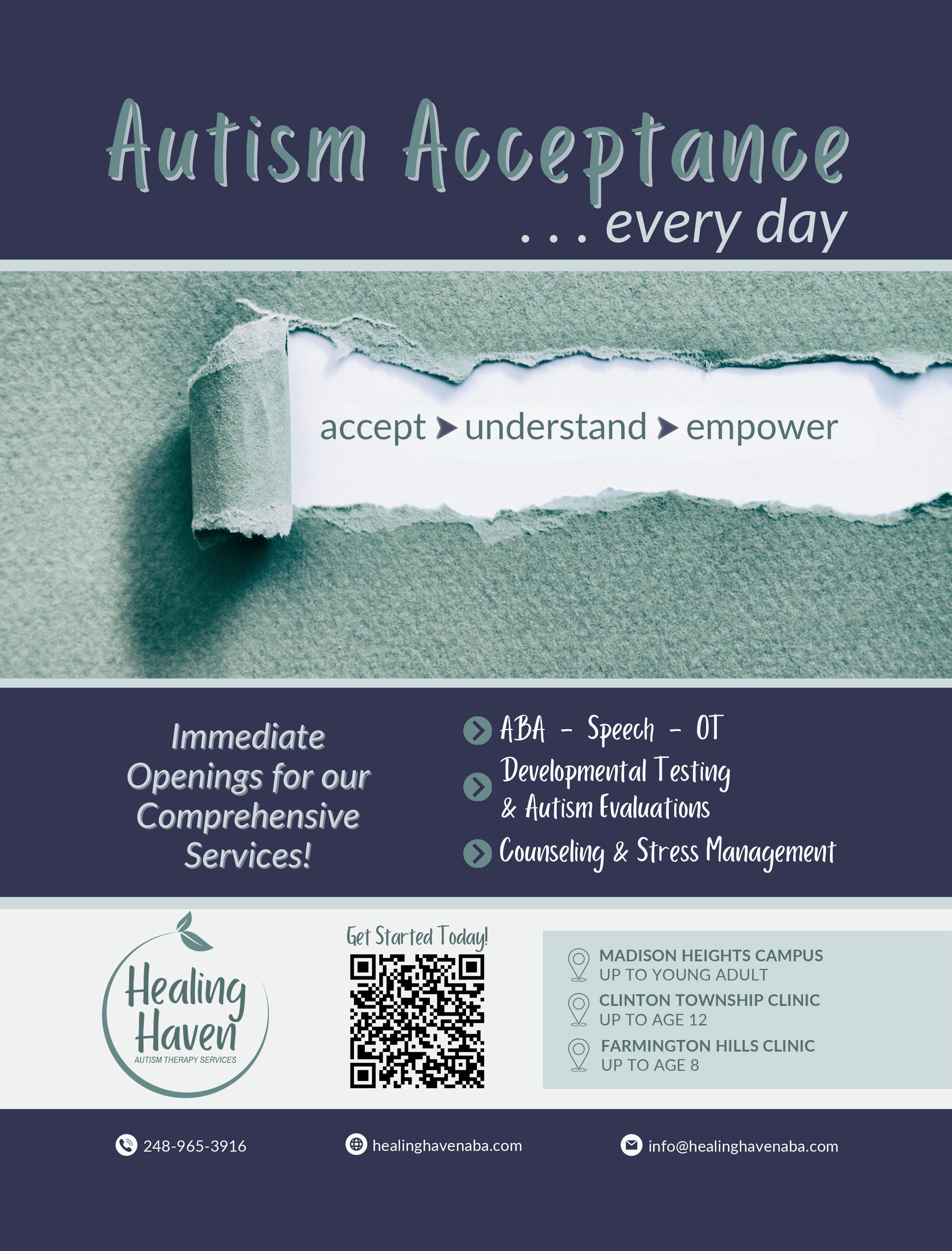
To learn more about Healing Haven’s comprehensive services – ABA, Speech and Occupational Therapies, Autism Evaluations & Testing, and Counseling, visit healinghavenaba.com.

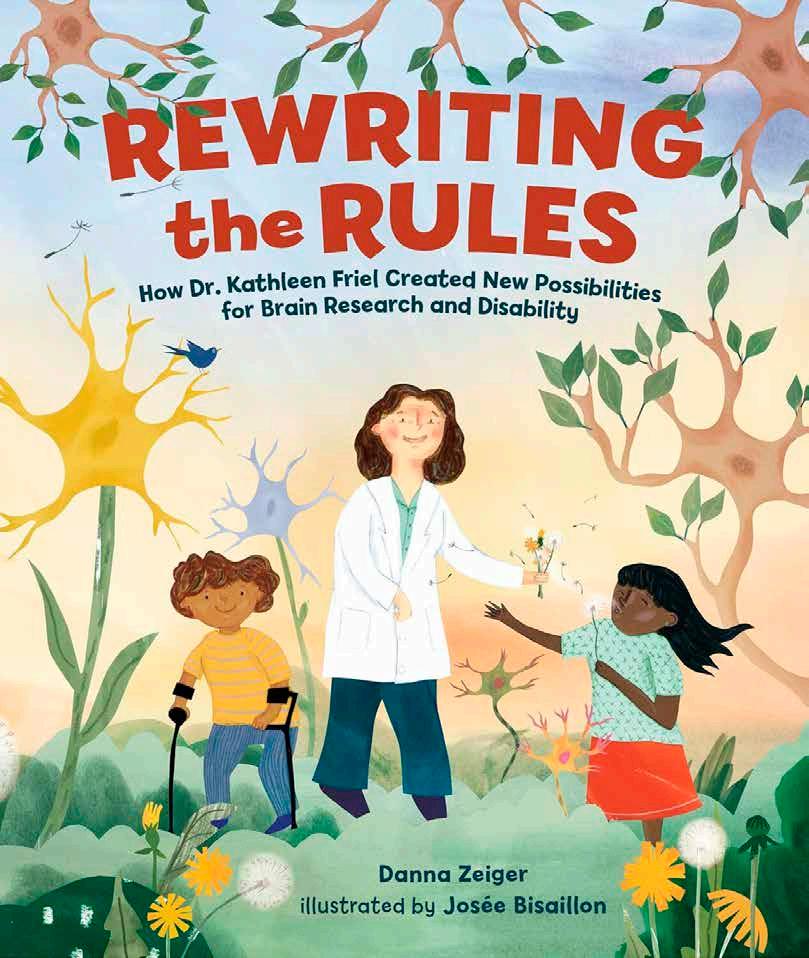
REWRITING THE RULES is a picture book written by Danna Zeiger and illustrated by Josée Bisaillon. With last month being Cerebral Palsy Awareness Month, I wanted to highlight this book about the life of Kathleen Friel, a scientist with Cerebral Palsy.
Overall, I liked the message of the book, that it’s okay to “rewrite the rules.” The author talks about Kathleen’s childhood and how she learned to do things her own way. She did not let what other people thought limit what or how she did things.
When Kathleen discovered she loved science, she chose to study the brain in college and beyond. She wanted to see if there was a way to teach the brain to do things differently and help children with Cerebral Palsy gain new abilities.
I was not a huge fan of the illustration style or the text formatting, including the capitalization and text size, but that is just my personal preference. I do love that the book puts a spotlight on a woman with a physical disability who has built a successful STEM career. That representation is inspiring for children with and without disabilities.
However, I think the actual content of the book is more meaningful for older children and adults. Younger kids may have difficulty following the story, as it reads much more like a biography than a light or playful picture book. I found the flow to feel a little abrupt at times.
Still, it offers a solid overview of Dr. Kathleen Friel’s life, both personal and professional. As a bonus, the back of the book includes additional information about the brain and suggested further reading. There is also a section written for adults explaining the author’s connection to Dr. Friel and providing more insight into her work.
By Rebecca Parten
I will be reviewing Warrior: A Patient’s Courageous Quest by Shannon Stocker.

With Presenting Sponsor:

Sign up to walk or donate here!

Resource Guides for 100 families. Sensory-friendly family activities. Adaptive playground access. 1.05-mile scenic walk.
Fire truck & first responder meet-and-greet. Fundraise. Earn prizes.
Event Highlights Saturday, April 25, 2026 | 1:00 PM - 3:00 PM
Innovation Hills | Rochester Hills, MI





BY MARIA GIANCOTTI, M.ED. - STUDENT ADVOCACY MICHIGAN

MANY CHILDREN STRUGGLE in school not because they don’t want to learn, but because their nervous systems interpret the world differently. Sensory integration/processing differences, the way the brain receives and organizes sensory information, can deeply impact a child’s ability to attend, regulate, communicate, and engage. Yet these challenges are often misunderstood, mislabeled, or missed entirely in school settings.
Does your child qualify for ESY (extended school year) through their IEP? Spring is the time to find out!

Children with sensory processing difficulties may over-respond (hypersensitivity) or under-respond (hyposensitivity) to sights, sounds, touch, movement, tastes, or smells. In the classroom this can look like:
• Distractibility or inability to stay seated in class
• Covering ears or refusal to participate in loud activities
• Fidgeting excessively, chewing on clothing or objects
• Avoidance of crowded hallways or gym/PE classes
• Meltdowns during routine transitions or unexpected noises
• Difficulty with fine motor tasks like writing or cutting
• Frequent seeking of intense movement (spinning, jumping)
These behaviors are not willful misbehavior; they are the child’s attempt to cope with overwhelming or underwhelming sensory input.
Educators and support teams often interpret sensory-based behaviors as “non-compliance,” “inattention,” or “behavior problems.” Without specialized understanding, sensory challenges may be overlooked in favor of disciplinary responses or general behavior plans. This means that the root cause, a sensory processing difference, is rarely addressed. Sensory challenges frequently co-occur with conditions like ADHD, Autism Spectrum Disorder (ASD), and executive functioning deficits. For example:
• A child with ADHD may be labeled inattentive when in fact loud classroom noise or fluorescent lights distract more intensely due to sensory sensitivity.
• A student with ASD may avoid physical contact, crowds, or noisy environments because of sensory overload, which can be mistaken for social refusal or defiance.
• Executive functioning challenges can be exacerbated when sensory overload prevents a child from organizing, planning, or shifting tasks.
Despite these overlaps, schools often do not evaluate for sensory processing unless parents explicitly request it, and even then, evaluations may be inconsistent.
Parents have the right under IDEA to request a comprehensive evaluation when they suspect a disability affecting their child’s education. If sensory concerns are present, parents should specifically request a comprehensive Occupational Therapy (OT) evaluation that includes standardized sensory processing assessments.
Common tools school OTs may use include the Sensory Profile 2 or Sensory Processing Measure (SPM), which gather information from parents and teachers about how a child responds to sensory input. Sometimes more in-depth assessments such as the Evaluation in Ayres Sensory Integration (EASI) or motor-based tools like the Beery VMI may be appropriate to examine how sensory processing impacts motor planning, handwriting, and classroom participation.
Parents should also request classroom observations during structured and unstructured times, and when behaviors are present, a Functional Behavior Assessment (FBA) that examines whether behaviors may be sensory-driven.
Under IDEA (34 CFR §300.304), evaluations must be sufficiently comprehensive to identify all of a child’s special education and related service needs, not just academic skills. If sensory processing concerns are impacting learning or behavior, they must be considered as part of the evaluation process.
When sensory integration challenges are identified and found to impact educational performance, schools can provide supports through an IEP. These may include:
• Occupational Therapy services targeting sensory modulation and motor planning skills
• Environmental accommodations (e.g., noise-reducing headphones, alternative seating, access to a “quiet corner”)
• Sensory breaks or scheduled movement opportunities
• Visual schedules and transition supports
• Behavior intervention plans that address sensory triggers
• Assistive technology as needed (e.g., fidget tools, weighted lap pad)
• Collaboration between OT, teachers, and support staff to adapt instruction
These interventions aren’t rewards; they’re researchbased supports that help students regulate and access the curriculum.
Under IDEA, schools must identify, locate, and evaluate all children suspected of having disabilities that affect educational performance. This includes sensory processing issues when they adversely impact learning and behavior. If a comprehensive evaluation isn’t provided after a parent request, the district must provide written notice explaining why and outline the procedural safeguards. Additionally, students with sensory integration needs may qualify under categories such as Other Health Impairment (OHI), Autism, or Multiple Disabilities if other conditions apply. If you need help navigating this or other IEP/504 plan related challenges, contact Student Advocacy Michigan at (248) 372-9770.
Are you tired of feeling… Buried under disorganized tasks? Stressed by constant demands? Unsure where to focus next?
The Strategic Hustle gives you the systems and tools to: Organize what matters most • Reduce daily stress and overwhelm Create time and space for what you love
Choose your path:
Entrepreneur Path Build a business that grows without chaos. Everyday Life Path Simplify routines so life feels lighter.
Find your path at thestrategichustle.com
THROUGH MUSEUMS FOR ALL , those receiving food assistance (SNAP benefits) can gain free or reduced admission to more than 1,000 museums throughout the United States simply by presenting their EBT card and a photo ID. Check here for participating museums. https:// museums4all.org/
Ella Sharp Museum
Sensory Time
Every Saturday at 9-10 a.m. 3225 4th Street, Jackson, Michigan 49203
During sensory-friendly-hours, the Ella Sharp Museum will open its galleries at 9 a.m., one hour before the museum opens to the public. Families with members who are neurodiverse, autistic or have other sensory processing disorders or cognitive disabilities, are welcome to visit for a quieter experience in a controlled environment. Designated quiet zones will allow visitors to decompress and explore the museum at their own pace. To ensure the most sensory-friendly environment possible, capacity during these special hours will be limited to 50 people.
More information is available at ellasharpmuseum.org/ classes-and-events/sensory-time/
Impression 5
Apr. 19 from 9:30-11:30 a.m.
Impression 5 Science Center, 200 Museum Dr., Lansing, MI 48933
Explore the Science Center during Sensory Friendly Hours, with select exhibits modified to reduce sounds, scents and lighting stimuli. Guests can expect limited building capacity, pop-up activities, and a map indicating the sensory experiences in each exhibit.
• Thanks to MiABLE for supporting Sensory Friendly.
• Admission is regular price; free for members.
More information is available at impression5.org/sensoryfriendly
755 Science Road, East Lansing MI 48824
Check website for list ing Apr. 19, 11:30 a.m.
The Little Star That Could Apr. 19, 1 p.m.
The story is about an average yellow star on a search for planets of his own to warm and protect. Along his way, he encounters other stars, learns what makes each star special, and discovers that stars can combine to form clusters and galaxies. Eventually, Little Star finds his planets, and each is introduced to audiences along with basic information about the Solar System. These shows will run with the lights up, the sound down and theater doors open so attendees can move around as needed. A “chill out” area is available in the lobby. All shows include a live star talk about what’s visible in the night sky. A short break will occur between the main show and the star talk. Information about what to expect will be provided when tickets are purchased.
• Cost: Adults, $5.50; students and senior citizens, $5; children 12 and under, $4.50.
• Friends of Abrams Planetarium members: free.
• Free with Museums for All (valid EBT, Medicaid or WIC card and photo ID required).
For more information, visit: abramsplanetarium.org/Programs/ Sensory.html
Grand Rapids Children’s Museum Sensory-Friendly Play
Check the website for upcoming events.
Grand Rapids Children’s Museum, 11 Sheldon Ave. NE, Grand Rapids, Michigan 49503
Together with Autism Support of Kent County, Grand Rapids Children’s Museum welcomes families to play in a calmer, quieter environment outside regular museum hours. Registration is required.
• Check the calendar for specific sensory-friendly event dates: grpm. org/visit
For more information, visit: autismsupportofkentcounty.org/newproducts/p/2024-night-at-the-grchildrens-museum.
CHALLENGER BASEBALL
Neil Reid Park/Norm Hott Field & McGivney Field/Clinton Township
• Playing fee $40
• Registration open for the 2026
• Season - contact Marilyn
• Mwitt26@msn.com
A Little League Baseball program for special needs children and adults. A safe and structured environment on two adaptive baseball fields. The playing season runs May thru August.
TheraplayYoga: Therapeutic
Playful Yoga for Diverse Abilities
Adaptive Yoga Studio, 2015 E. Michigan Ave. Lansing, MI 48912
Inclusive and Accessible Yoga for Diverse Bodies, Brains and Abilities
Check the website for the current schedule.
Email: gloria@theraplayoga.com
Website: theraplayoga.com
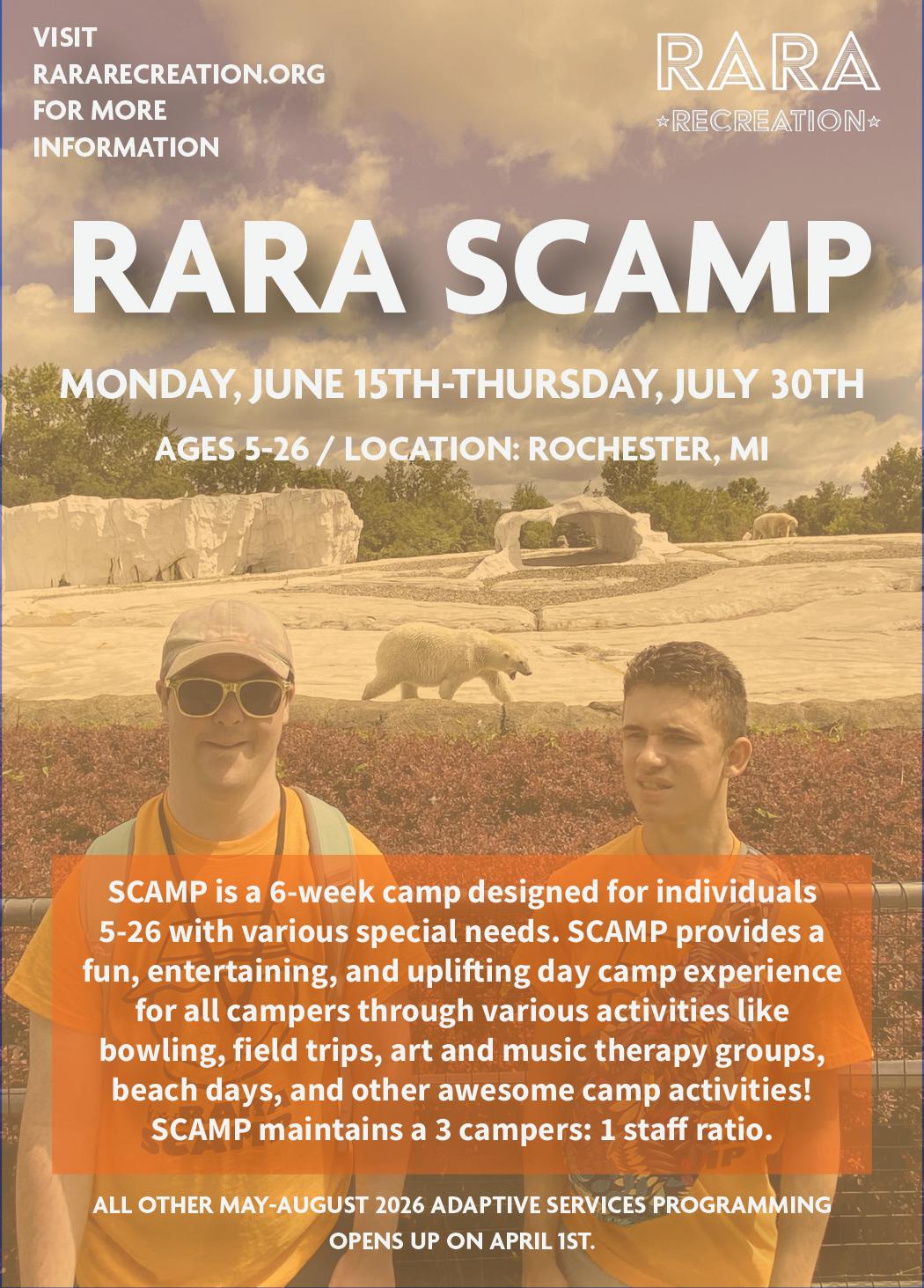
RARA Recreation Upcoming Events
Times and dates vary. Events fill-up fast so register early! Many more events available
500 E. Second Street Rochester, MI 48307
Youth
• Parents Night Out
• Middle School Lock-In
• Financial Reality Fair
• Late Night MS Dodgeball Tourney
• LEGO Speed Building Competition
Adult
• Puzzle Palooza
• Comedy Night
• Bowling Fundraiser
Family
• Daddy Daughter Dance
• Mother Son Date Night Dance
• 5K Races
For all events and registration please visit their website https://www. rararecreation.org/
Together Let’s Sing, Dance and Jam!!
Apr. 1, 6:30-7:30 p.m. Virtual
Please join us for our monthly “virtual” music therapy event!! Please RSVP to Cathy Blatnik at blatsie63@yahoo.com with your name, age, contact phone number and e-mail address.
Hezekiah Kidz Inc. presents Chat and Gaming with Hezekiah
Apr. 4, 12:00 pm to 1:30 pm 15400 Grand River in Detroit, MI
For more information, they can be reached at Hezekiahkidzinc@gmail.com
Sensory-Friendly Jump at Launch Lansing
Apr. 4 and Apr. 15, 4-8 p.m. $17
1982 W. Grand River Ave., Okemos, MI 48864
1st and 3rd Wednesday of every month**
Enjoy two hours of specially priced jump time during our sensory-friendly sessions. Additional discounts are available for families with more than one participant. Please note: SensoryFriendly Nights are paused during school and holiday breaks, including Christmas, spring and summer break.
While the park remains open to the public during these evenings, this time typically sees low attendance, providing plenty of space for all guests to enjoy.
Learn more or reserve your spot: launchlansing.centeredgeonline.com
High Caliber Karting –Sensory-Friendly Sundays Apr. 5, 11 a.m.-2 p.m. $50 High Caliber Karting and Entertainment, 1982 W Grand River Ave #800. Okemos, MI 48864
On the first Sunday of every month, High Caliber opens early from 11 a.m. to 2 p.m. for sensory-friendly hours. If someone in your life would love to drive a go-kart or
play arcade games in a quieter, more accommodating environment, this is the perfect time to visit. High Caliber is committed to creating inclusive experiences for all guests.
Learn more at highcaliberkarting.com/ sensory-hours.
Fascination Factory SensoryFriendly Play
Apr. 7, 2:30-5:30 p.m.
2295 E. Lincoln St; Suite 150, Birmingham, MI
What to expect in our new sensory-sensitive hours: Back door locked for safety, no music, noise cancelling headphones, and oral chews offered at check-in. Plus a calming corner tent. Minimized Capacity Families $30.00 https:// autismallianceofmichigan.org/events/ list/?tribe-bar-date=2024-10-01
DNR Outdoor Adventure Center Sensory Friendly Play
Apr. 12, 9:30-11:30 a.m.
Outdoor Adventure Center, Globe Trading Company Building, 1801 Atwater St, Detroit, MI
The DNR Outdoor Adventure Center welcomes individuals and families with sensory processing differences to enjoy special sensory-friendly hours. During this time, building sounds and ambient noise levels will be reduced to create a more comfortable environment.
A quiet room with sensory materials will be available, and building capacity will be limited to ensure a calm experience. Sensory-friendly hours end at noon, when the building opens to the general public and sound levels return to normal.
• All staff members are certified through KultureCity to provide the best possible experience for guests with sensory needs.
• Various activities are scheduled throughout the month of February. Visit michigan.gov/oac for details.
Zoo
Sensory-Friendly Evenings – Second Monday of Every Month
Apr. 13, 9 a.m.-Noon
Throughout 2026, the Detroit Zoo will host Sensory-Friendly Hours, monthly opportunities for guests to experience
the Zoo in a more inclusive, calming environment.
Held once a month from opening until noon, these hours are designed for individuals with sensory sensitivities or other sensory needs. The Zoo and its attractions remain open to all guests, with intentional adjustments to lighting and sound to create a more welcoming experience.
Modifications include reduced or altered volume and lighting throughout the Zoo and at select attractions, including the 4D Theater. Effects and lighting in the theater will also be adjusted. A designated indoor quiet space is located near the wolf habitat for those in need of a more secure and calming environment.
• Sensory-Friendly Hours are included with Zoo admission and free for members. No registration is required.
For more details, visit detroitzoo.org/ events/sensory-friendly-hours.
Apr. 24, 6-7:30 p.m.
Therapeutic Concepts, LLC 38257 Mound Road, Building D, Sterling Heights, MI
This event is designed for the whole family, with a focus on inclusion, safety, and enjoyment. The cost is $10 per family, and registration is available online at therapeuticconceptsllc.com.
MJR Digital Cinema SensoryFriendly Film
Check the website for movie times. 100 East Maple Road, Troy, MI, 48083, United States
https://www.mjrtheatres.com/sensoryfriendly-films?fbclid=IwAR1JnETT4LqVME0tv0TkWPiYH5lckEcSi4ou3EcdA4eyfbqJYLgmReJ00.
GiGi’s Playhouse
Monday through Thursday: 10 a.m.-6 p.m.
Friday: 10 a.m.-4 p.m.
19799 W. 12 Mile Road Suite L15, Southfield, Michigan
Various fun classes in art, dance, cooking, yoga and more are offered
virtually and in person throughout the month.
See the calendar at gigisplayhouse. org/detroit/sfcalendar
Come Join Scout Troop 1197! First All Inclusive Troop! 4920 Groveland Rd, Ortonville, MI 48462
The only troop of its kind in Michigan, Troop 1197 is currently meeting at O.A.T.S. (Offering Alternative Therapy with Smiles) in Ortonville for individuals with special needs ages 11 and older. Designed by experienced scout leaders, the troop offers typical scouting activities, including camping and outdoor skills.
For more information, email walkonoats@gmail.com.
RARA Recreation Zen Beatz
Themed GLOW Walks (All Ages Welcome) Resident $8 NonResident $10
Friday, April 10th, 2026 Theme: Kpop Demon Hunters 6:30-7:30 p.m.
Please meet in the lobby at RARA 500 East 2nd St. Rochester, MI 48307.
Join us for evening walks on the Clinton River Trail. Enjoy themed playlists and activities as we stroll down the Clinton River trail with glowing headphones.
To Register: https://rara.activityreg. com/selectActivity
RARA Recreation Zen Beatz Meditation Walks (All Ages Welcome) Resident $15 NonResident $18
Apr. 11, 1-2 p.m.
Innovation Hills Park 2800 W. Hamlin Rd, Rochester Hills, MI 48309
Looking for an escape after a busy week? Look no further! Join us on a meditative stroll through Innovation Hills Park. This walk is a great way to relax the mind while enjoying nature. Participants will be given headphones with different meditative sounds across 3 channels.
To Register: https://rara.activityreg. com/selectActivity
Eat Smart: Meals on a Budget
Apr. 13, 5:00 pm 6:00 pm Think eating healthy has to be expensive? Think again! Learn how to stretch your food budget, score deals on fruits and veggies, and find out if store brands really stack up to name brands. We’ll share simple tips to plan meals that save money and taste great — plus how to cook once and eat twice! Are you ready to leave for college or be out on your own? Are you prepared to do adult tasks and have skills to be successful? Michigan State University Extension’s Adulting 101 programs help teenagers and young adults demystify the obscure reality of being an “adult” through engaging educational sessions. Each FREE session is packed full of important life skills and tools necessary to live independently!
• Register at: https://www.canr.msu. edu/events/adulting-101-2026
• Contact: Kathy Jamieson –jamies13@msu.edu; Laurie Rivettorivettol@msu.edu; Janice Zerbe – rajzerj@msu.edu
• Add to calendar
Uniquely You Michigan -
Virtual Resource Fair for the Special Needs & Disability Community in Michigan
Apr. 15, 6:30 pm to 8:00 pm-Online Join us for an inspiring and informative virtual event created for individuals with special needs, disabilities, and their amazing caregivers.
• Discover local and statewide resources that can truly make a difference.
• Connect with others who understand your journey
• Live drawings & giveaways happening throughout the event— just for showing up!
• Get your questions answered in real-time
• Whether you’re looking for support, services, education, or just want to connect—you don’t want to miss this!
RSVP Today! https://buytickets.at/ uniquelyyou/2032044
Let’s grow, share, and support one another—together.
Join North Star Reach Spring Work Weekend!
Apr. 17 through Apr. 19
1200 University Camp Drive, Pinckney, MI, 48169
Work Weekends are a beloved North Star Reach tradition, and during the Year of Mooseness, they’re an opportunity to give back to the place that has created a decade of belonging, joy, and life-changing experiences. These weekends bring together members of our Campily to care for camp, tackle meaningful projects, and enjoy time together in a relaxed, joyful setting.
For more information: https:// www.northstarreach.org/ spring-work-weekend-2/
City of Westland Shine A Light Autism Event and Walk
Apr. 25, 3:00 pm to 6:00 pm
Central City Park, 1901 N. Carlson, Westland, MI 48185
Join the City of Westland for the Shine A Light Autism Event & Walk on Saturday, April 25, 2026. This event is free and open to all, aiming to celebrate community, acceptance, and fun while raising awareness and promoting understanding around autism.
Healing Complex Kids® invites you to the Pathway to HOPE Wellness Walk
Apr. 25, 1:00 pm to 3:00 pm
2800 W. Hamlin Rd, Rochester Hills, Mi 48309
This walk is a shared commitment to families facing complex challenges every day. Through connection, movement, and community, we raise awareness and strengthen support systems that matter. Walk with us and be part of the pathway to hope. Stroller-friendly & dog-friendly park
To Register: https:// healingcomplexkids.org/wellnesswalk
Is there a local event for the special needs community you would like us to promote in an upcoming issue? Email us at Jamie.Olson@n2co.com

This section is here to give our readers easier access when searching for a trusted neighborhood partner to use. Get to know the businesses that make this magazine possible. Please support them in return and thank them if you get the chance!
ABA Services
Budding Behavior Therapy (248) 622-5191 www.buddingbehavior.hi5aba.com
ABA Services - In Home
Benevolent Behavior Therapy (947) 300-6700 www.benevolentbehaviortherapy.com
ABA/ Behavioral & Autism Services
Healing Haven (248) 965-3916 www.thehealinghaven.net/
ABA/Comprehensive Services
Total Spectrum ABA (844) 263-1613 totalspectrumcare.com
Adaptive Bike Program
The Agape Project (586) 388-2110 www.theagapeproject.com
Adaptive Custom Equipment
3D3 Custom Solutions (248) 763-1367 3d3custom.com
Adaptive Sports Program
CVLL Challenger Baseball (586) 781-5547 www.midistrict6.org
Advocacy
Student Advocacy Michigan (248) 372-9770 www.studentadvocacymi.com
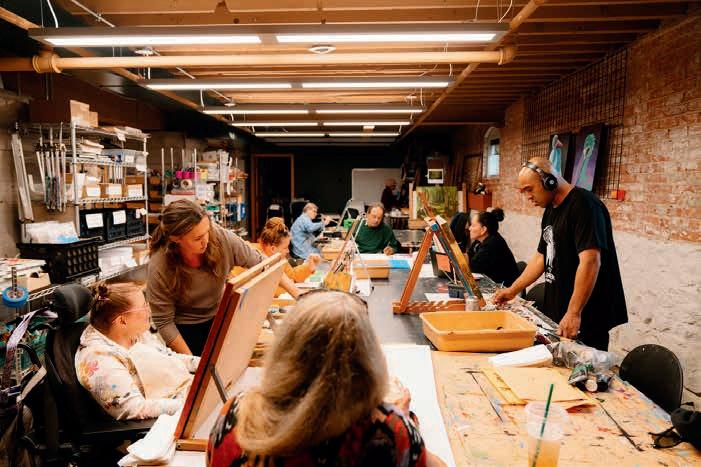
Art Studio
Paint a Miracle (248) 652-2702
www.paintamiracle.org
Attorney/Wills, Trusts, Estate Planning
Chalgian & Tripp Law Offices PLLC (248) 799-2711 www.Mielderlaw.com
Community Support
Judson Center (248) 837-2020 www.JudsonCenter.org
Employment and Training Services
Services To Enhance Potential (STEP) (734) 718-0483 www.stepcentral.org
Financial MIABLE (844) 656-7225 mi.savewithable.com
Photographer
Footprints Photography ®️ (248) 922-1802
www.footprintsphotography.com
Podcast
On the Verge Blog & Podcast (734) 780-6795 www.VergeTalks.com
Post Secondary Ed/Life Skills Ready For Life (616) 248-3775 rflnetwork.org
Print Solutions: Apparel & Beyond
POSSiBiliTEEs, LLC (616) 613-0386 www.POSSiBiliTEEs.shop
Private High School
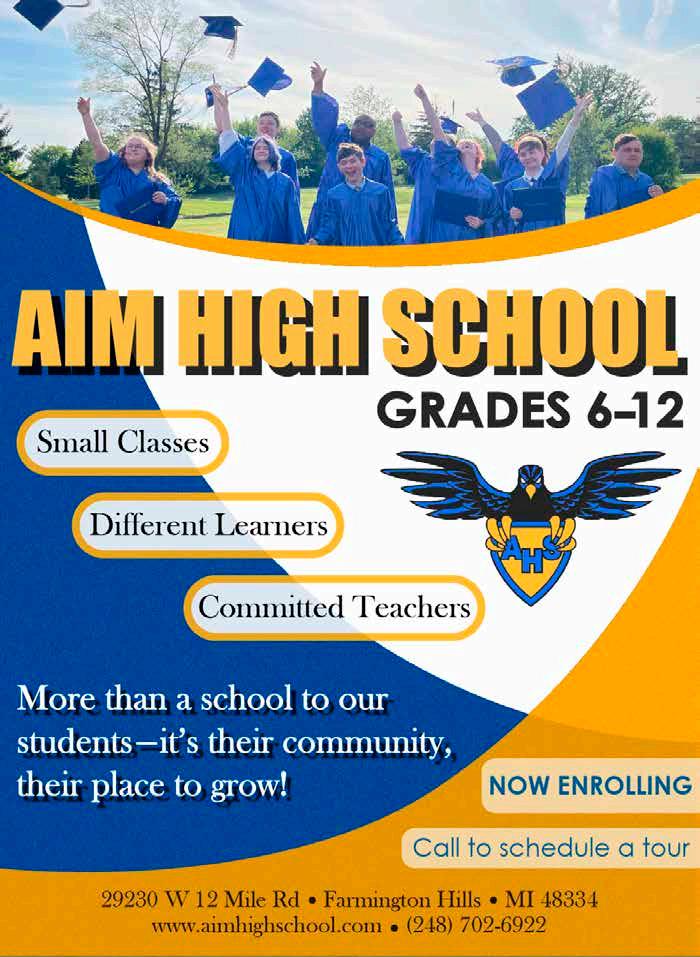
AIM High School (248) 702-6922 www.aimhighschool.com
Recreational support
Rochester Avon Recreation Authority (RARA) (947) 886-0084
www.rararecreation.org
Recreational/ Music/ Art Therapy
Advanced Therapeutic Solutions (734) 352-3543
www.advancedtherapeautic solutionsmi.com
Relationship Support/Sexual Health
My Relationships Project (313) 489-0043 www.myrelationshipsproject.com
Special Needs Trust
Springhill Pooled Accounts Trust (248) 269-1319 springhillpooledtrust.org
Summer Camps & Programs
North Star Reach (734) 680-8744 www.northstarreach.org
The Agape Project works with individuals with disabilities and their families to share racing experiences. Our mission is accomplished through teamwork and community.
Local race directors of running events accommodate our special needs.
Runners run alongside and behind to push participants in running chairs. Volunteers provide the race day experience.
April 25 - 1 Mile Walk at Innovation Hills
Learn more and sign up at https://healingcomplexkids.org/
May 6 - Hansons 5K Run in Utica
May 9 - Angels Place Race 5K in Clarkston https://angelsplacerace.org/
INFO@THEAGAPEPROJECT.COM
9151
Celebrating the Special Needs Community in Detroit Metro counties