Led by Experts. Crafted for Explorers.
Expert-led archaeological & historical tours
June - September 2026
Small groups
Guided by experts
SAVE up to £350pp £0 single supplements places
Rated EXCEPTIONAL with over 2,000 reviews
Led by Experts. Crafted for Explorers.
Expert-led archaeological & historical tours
June - September 2026
Small groups
Guided by experts
SAVE up to £350pp £0 single supplements places
Rated EXCEPTIONAL with over 2,000 reviews
Every year, the question we are asked most often is a simple one: ‘what makes Andante different?’ Part of that answer lies in the extraordinary range of what we offer. Within the pages of this brochure - and the departures that fill our summer programme from June through to mid-September - you will find that range expressed more vividly than perhaps ever before. From the sacred isle of Anglesey, where Neolithic tombs align with midsummer skies and Celtic druids once confronted the legions of Rome, to the imperial grandeur of China, where bronze-age civilisations gave birth to one of the ancient world’s most enduring cultures; from the Viking longship harbours of Scandinavia to the dynastic palaces of Turin and the medieval waterfronts of Gdansk - this is, quite literally, a world of discovery.
We are delighted to report that demand for our 2026 tours has been exceptionally strong. Several of our programmes have generated waitlists so swiftly that we have added extra departures to give more travellers the opportunity to join. The additional departures noted in this brochure are a direct consequence of your enthusiasm, and we are grateful for it. We hope that wherever in this summer’s programme you find your next adventure - whether it is the Neolithic silence of Bryn Celli Ddu at midsummer, a Viking prow carving through the waters of Roskilde, or the breathtaking scale of the Great Wall in China - it will be a journey to remember for a lifetime.
Mary Reynolds Head of Product
If you are interested in joining one of our tours and want to know more, please give our Specialist Travel Executives a call today. They are ready to help with all of your questions.
Unearth history's treasures with Andante, the pioneering British specialist on in-depth archaeological travels. Venturing beyond mere cultural excursions, we craft extraordinary journeys, granting you access to the world's most significant historical sites. With 24-hour support from our dedicated team and meticulously planned itineraries, rely on Andante for an unparalleled odyssey into antiquity.
Small groups with big insight - travel in a group of no more than 18, giving you deeper access to sites, stories and experts
Experience matters - with over 40 years of curating and innovating truly exceptional tours, you can be certain your experience will be something extraordinary
We uncover history, layer by layer - we make sure you're not rushed and have plenty of time at each site
Led by experts - guided by archaeologists, Egyptologists and historians, all specialists in their field
Tour Managers accompany most tours - allowing our Guide Lecturers to concentrate on what matters most... delivering extraordinary, expert-led discovery
Tours everyone can enjoy - all you need is enthusiasm and an enquiring mind
Every itinerary tells a story - our tours are carefully curated to follow an archaeological theme, designed by experts to bring deeper meaning and context to every site you visit
Expert travel with exceptional value - all local transport, meals and gratuities are taken care ofeven wine with dinner on most tours
Because you matter - we never treat you like a number. No name badges, no umbrellas in the air - just genuine connection and intelligent conversation
Expert service - our team are on hand to support, before, during and after your tour
Trusted by guests, recognised for excellence - we have been rated ‘Exceptional’ with over 2,100 reviews and are winners of Feefo’s 2026 Platinum Trusted Service Award
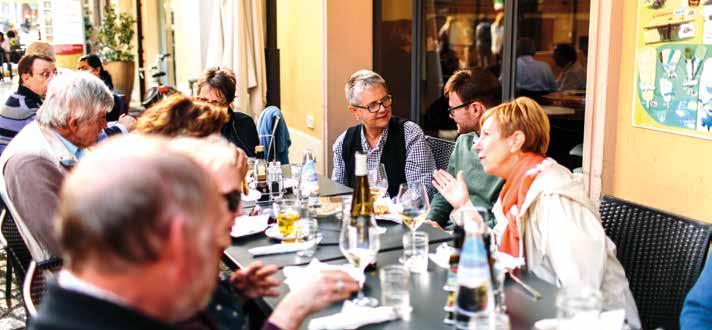
Our tours are inclusive, informal and fun and Andante Travels guests are some of the most interesting people you could care to meet. Travelling in a party of people who share your interests is an enriching experience. Friendships are quickly formed - and some last for decades with guests meeting up long after their tour has returned and arranging to travel together on future adventures.
We may travel as a group but we always respect the individual. There is no badge-wearing, roll-calling, umbrella-waving or whistle-blowing on Andante Travels tours. And, wherever possible, we build time into our site visits to allow our guests the freedom to explore and make discoveries of their own. So, if you want to spend some time sketching, writing, meditating on a mosaic or settling down for a chat and a coffee with new friends, we are the travel company for you. Choose to explore incredible sites in the company of our expert guides and you’ll see that our tours are well suited to solo travellers.
Experience matters. Our Guides are all experienced experts in their field and pass on their knowledge from start to finish.
What makes an Andante Travels tour a cut above the rest? One of the main reasons is our expert Guide Lecturers. They are not just guest speakers who rely on local guides to point the way. Our outstanding team of engaging presenters will lead you through the sites you see, focusing on the detailed indicators of the past, explaining how things work and what a miracle of human ingenuity they represent. They are your travelling companion, part of the group, there at all times to join in the laughter and chat, as well as your on-hand expert to converse with and put those all-important questions to. Guests who travel with us frequently tell us that it is not only the high quality of guiding they receive but also the informality and ease of travelling with an Andante Lecturer which keeps them coming back.
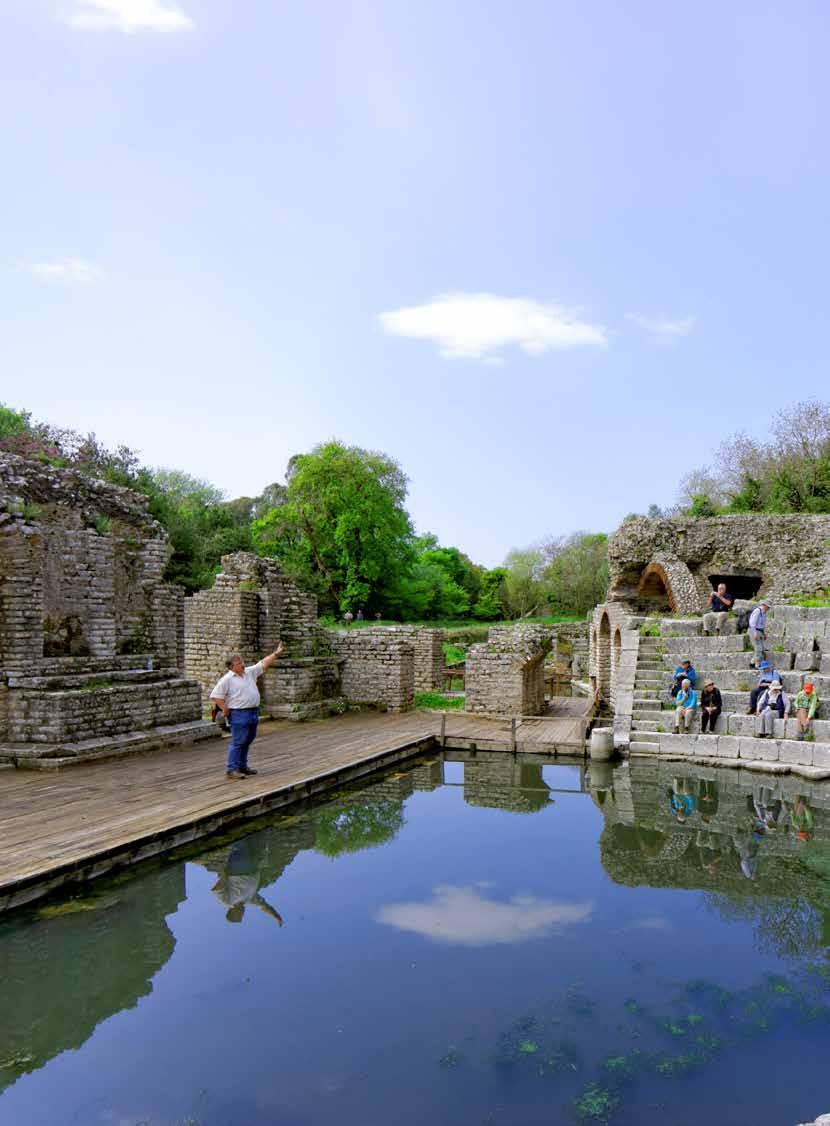
“ This was my first Andante tour, taken following a recommendation, and it proved to be the perfect introduction. I wanted a deeper understanding beyond the typical tourist experience, and the tour delivered on every level. Our Tour Manager and Guide Lecturer were outstanding, and Oliver’s encyclopaedic knowledge brought each site to life. The tour was well paced, with excellent restaurants throughout. ”
Andante
Travels guest on Rome - December 2025
Oliver is an archaeologist of eclectic experience. Currently he works as a freelance consulting archaeologist, and provides advice for Andante Travels on designing as well as leading a number of tour groups. Oliver began as a commercial archaeologist and museum curator in the UK. Join Oliver on the following tours, The Archaeology & Wildlife of East Anglia pg 6 and Ioaninna pg 28.
Ken Murphy is the Chief Executive Officer (soon to retire) of the Trust for Welsh Archaeology (until recently Dyfed Archaeological Trust) and is a field archaeologist with over 45 years’ experience. Join Ken on The Archaeology of Anglesey pg 8.
Dr Jamie Sewell has fifteen years’ experience supervising excavations in Britain, Germany, Romania and Italy, including Pompeii. He has authored books and articles on the archaeology of towns in Hellenistic Italy and in the broader Mediterranean region. Join Jamie on The Isle of Wight pg 9.
Tony O’Connor graduated from Manchester University, specialising in the Roman Empire and the Phoenicians. Leading tours for Andante for over 20 years to Syria, Northern Egypt, Libya, Lebanon, Italy, Pompeii, Algeria & Provence, his experience is extensive, and he is one of our most experienced and popular Guide Lecturers. Join Tony on Albania pg 32.
Dr Eireann Marshall is a Research Associate and Associate Lecturer with the Open University. Eireann has led tours for Andante for many years, including Ravenna, Venice, Pompeii, Sicily, Morocco and Tunisia and is bilingual in English and Italian.
Join Eireann on Turin & Genoa pg 21 and Cities on the Po pg 22
Dr Iain Shearer is an archaeologist working across the Middle East, Northern Africa, Central Asia, Caucasus, China, India, Pakistan, USA, Balkans, Europe and UK. With degrees from the Institute of Archaeology, University College London, he worked on excavations before becoming Sackler Scholar for Afghanistan and Iran at The British Museum in 2010. Join Iain on China pg 34.
Dr Christina Hatzimichael-Whitley is a lecturer at Cardiff University, where she teaches Greek art and archaeology. Join Christina on Wild Thrace pg 29 and Macedonia pg 30.
Tony Wilmott specialises in the Roman and Late Antique periods, with particular interests in the Roman military and frontiers, in Roman religion, and also in the late and post-Roman transition. Join Tony on A Grand tour of Roman Britain pg 10 and Relaxed Trier pg 16.
Diana Blumberg is an archaeological scientist at Newcastle University, specialising in the analysis of archaeological materials. She has worked on archaeological field schools in both Pompeii and Portus (the latter being one of the harbours of ancient Rome). Join Diana on Pompeii, Herculaneum & Classical Campania pg 24.
From the Broads to Sutton Hoo
8 DAYS FROM £2,990pp Moderate
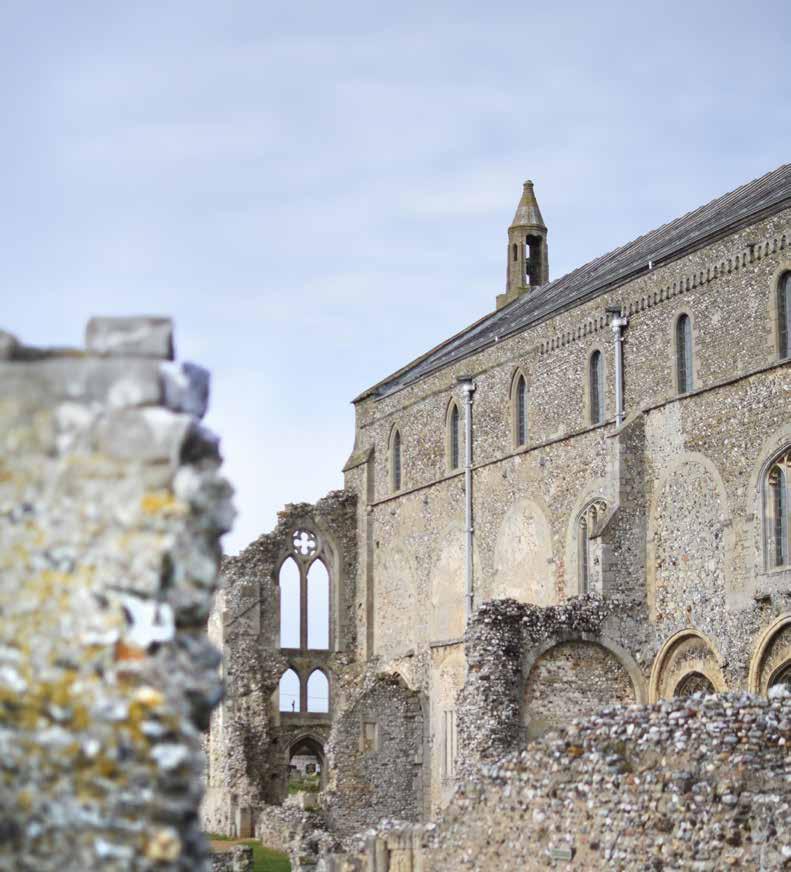
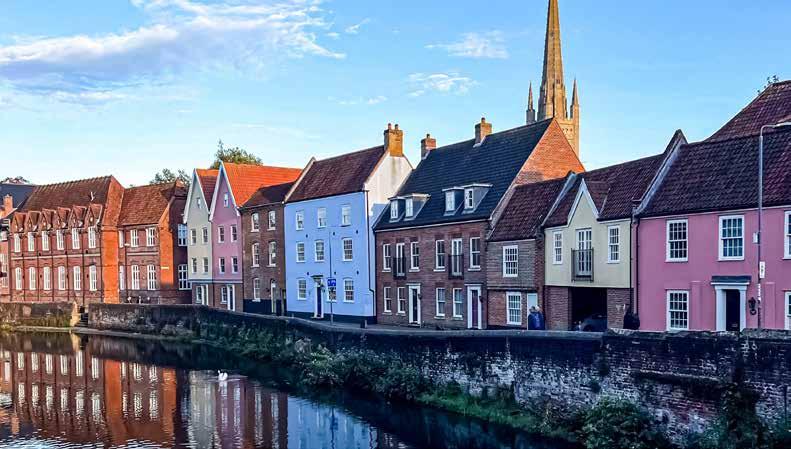
The distinctive character of East Anglia can be attributed to it geography – to the north, the sea, to the west, a vast wetland, and to the south, the forests which once occupied northern Essex. Famous for its vast flatlands punctuated by the occasional spire or windmill, its sweeping views, long beaches and abundant wildlife, we discover some of the area’s many delights from the watery Broads to the royal burial grounds at Sutton Hoo. Led by the infinitely knowledgeable Oliver Gilkes, an archaeologist and historian who has lived in the area for many years, this is a wonderful introduction to a historically rich and beautiful part of Britain.
Day One | Norwich
We meet at our hotel in Norwich before an introductory talk on local history and dinner together as a group.
Day Two | Norwich
Today is devoted to exploring Norwich, once one of the largest and wealthiest provincial medieval
cities outside of London. After the Norman Conquest in 1066, it became a major trading hub and at its centre, Tombland (an old Scandinavian word meaning open ground) was a hive of Viking activity with the trading of pottery, wooden and leather goods, furs from Scandinavia, herring from the North Sea and wool from Flanders. Its important stature was reflected in architectural
extravagance, examples of which can still be seen today. We will visit the Cathedral, a magnificent Norman structure which has dominated the Norwich skyline for the last 900 years and its equally solid Castle which now incorporates the city museum
Day Three | Little Walsingham & Blakeney Point
This morning we start with a visit Little Walsingham, a Medieval pilgrimage site which attracted thousands of pilgrims from Britain and Europe during the Crusades. Its unusual street pattern created to cater for these visitors is an interesting example of early town planning. Later we visit Binham Priory, once a wealthy Benedictine monastery and for over 400 years home to a
Sutton Hoo, one of Britain’s richest archaeological finds
Enjoy the unique flora and fauna of Europe’s most important wetlands
Investigate Binham Priory, a hidden gem in a quiet corner of North Norfolk
Discover the remarkable flint mines at Grime’s Graves, recently re-opened to the public after conservation work
community of monks. The Priory’s history is a colourful one with a succession of unscrupulous or unstable Priors, one ending his days buried in chains in the churchyard. In the afternoon we strike out to Blakeney Point, a four-mile-long sand and shingle spit with dunes, salt marshes and tidal mudflats. Designated a Site of Scientific Interest and an Area of Outstanding Natural Beauty, well known for its thriving seal colonies and abundant bird life, there is plenty of wildlife to see all year round. Tide and weather permitting, we will take a boat trip from Morston Quay.
A day in the Norfolk Broads. This watery jigsaw of rivers, lakes, meres and dykes originated in the 10th century when peat was discovered and for the next 2 centuries pits were dug to collect this useful fossil fuel. When tides began to rise, the pits were filled creating more than 200km of navigable Broads. It is one of Europe's finest and most important wetlands for nature conservation, a fact recognised by its designation as a National Park. We will visit Hickling Broad which supports a high percentage of the UK’s population of common crane as well as numbers of bittern, marsh harriers, barn owls, red deer and otters. Later we view Horsey Windpump, another of the Norfolk Broads most iconic landmarks. Whilst the Horsey windpump is one of the youngest mills in the area, it stands on a site which has been used for this purpose for more than 300 years.
Our first visit of the day is to Kings Lynn, an important port in the Medieval era and a town rich in maritime history. We will take a walking tour around its historic core and visit Lynn Museum to see ‘Seahenge’, the remains of an early Bronze Age
timber circle found on the north Norfolk coast. After lunch we wilk continue our archaeological exploration with a visit to Grimes Graves, an area of chalky grassland dimpled with over 430 prehistoric flint mine pits. Neolithic flint mines are the earliest industrial monuments in Britain. First dug into the chalk around 4000 BC, these shafts were cut in order to extract seams of flint, some reach a depth of 30 feet - a remarkable achievement for people using tools made of only bone and stone.
We spend the morning exploring the charming medieval market town of Bury St. Edmunds once known as Beodricsworth in the Kingdom of East Anglia. We will visit the abbey gardens where one of the largest and richest monasteries in England once stood, St. Edmundsbury Cathedral with its superb abbey gardens. We will also see St. Mary’s Church and its beautiful hammerbeam roof and the ornate tomb of Mary Tudor. After lunch we visit West Stow a multi-period site rich in information from the structures of Anglo-Saxon settlement to the production of Mesolithic flint and pottery in the Romano-British period. We shall visit the Anglo-Saxon Village to explore its reconstructed buildings and on site museum.
Day Seven | Sutton Hoo & Aldeburgh
Travelling into Suffolk, we spend the morning at the ‘royal’ burial complex at Sutton Hoo, one of the most significant sites in English archaeology. A series of eighteen burial mounds, have been identified and excavated, dating to the end of the 6th and beginning of the 7th centuries AD. The most famous of these, the ship in Mound 1, was originally excavated by Basil Brown and then Charles Philips of Cambridge University, at the behest of the owner, Mrs Pretty. They uncovered
Oliver Gilkes
One of our longest-standing Guide Lecturers, Oliver has worked as a field and museum archaeologist in the UK, Albania and Italy. Oliver is still involved in projects in Albania and is considered one of just a handful of experts on Albanian archaeology in the UK.

the slight remains of a 27m (89 foot)-long clinkerbuilt timber ship containing a burial which had never been touched by grave robbers and was found to contain a rich variety of high-status finds. We continue to the lovely seaside town of Aldeburgh, inspiration for many artists and writers from Turner to Wilkie Collins and M R James. We will walk to see the Martello Tower before taking some free time to explore the town independently
Day Eight | Norwich
Our tour comes to an end, and we make our journeys home.
• Expert Guide Lecturer & Professional Tour Manager
• Entries to all sites as per the itinerary
• Andante Field notes
• All taxes & gratuities to local staff (drivers, waiters, site custodians)
Included travel
• All local transport Accommodation
• 7 nights' in The Maids Head Hotel, Norwich Culinary inclusions
• 7 breakfasts, 6 lunches & 7 dinners
• Water with all meals, wine & tea or coffee with dinner
Dates & prices per person
Date Twin/Dbl Share SS 15th - 22nd Jun £2,990 £455
For full details of this tour visit andantetravels.co.uk/aeaw
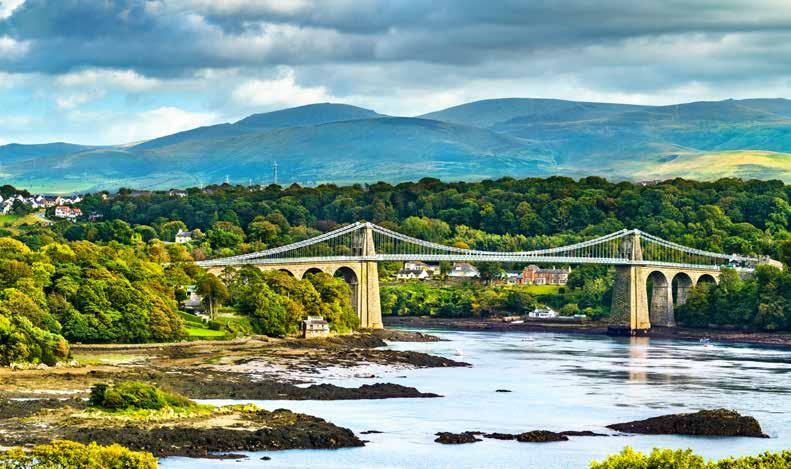
Anglesey, or Ynys Môn as it is known in Welsh, holds a significant position in the archaeological and historical narrative of Britain. Separated from mainland Wales by the narrow Menai Strait, this tiny island off the northwest coast boats significant concentrations of Neolithic burial chambers, Bronze Age standing stones, and Iron Age hillforts. It was also at the centre of the dramatic encounter between Celtic druids and Roman legions that Tacitus so vividly recorded.
Enjoy specially arranged access to Barclodiad y Gawres an impressive chamber tomb of a type rarely seen outside of Ireland
Visit Caernarfon Castle, one of Europe’s great medieval fortresses on the banks of the River Seiont
Explore Segontium the Roman fort founded by Agricola which controlled access to Anglesey
Ken Murphy
Ken Murphy is a field archaeologist with over 45 years of experience.

Day One | Bangor
We meet at our hotel in Bangor in time for an introductory talk before dinner.
Day Two | Bryn Celli Ddu & Caer Gybi
This morning, we drive across the Menai Bridge onto Anglesey and visit Bryn Celli Ddu. This impressive Neolithic passage grave continues to fascinate archaeologists because it is actually two monuments, one built on top of an earlier henge. Next, we have arranged access to Barclodiad y Gawres, a decorated chambered tomb. Its location in Anglesey makes it very unusual - tombs of this type are usually only found in Ireland. We continue to Ty Mawr stopping en route to view Llyn Cerrig Bach, an area of marshland (once a natural lake) and the location of the largest iron age hoard discovered to date in Wales. At Ty Mawr we see the remains of about 20 or so round stone houses, stores, and workshops. This site is remarkably well preserved, given that parts of it are 4,000 years old. After lunch we drive to Caer Gybi and view the remains of a small Roman fort. It is one of Europe's only three-walled Roman forts, the fourth side protected by the sea.
Day Three | Dina Dnille & Caernarfon
We visit some interesting fortifications today starting with Dinas Dnille Hillfort an Iron Age prehistoric coastal fort. The constantly eroding soft cliffs have long made it a challenging site to excavate but a monumental stone-built
roundhouse was discovered here a few metres from the cliff edge. Next, we visit Segontium Roman Fort which once formed a critical part of Roman control over the newly conquered Welsh tribes. Coins recovered from excavations show its remarkable longevity - it was garrisoned until around AD 394 and continued to play a part in the defence of the Welsh coast against Irish raiders and pirates. In the afternoon we explore magnificent Caernarfon Castle, one of the greatest buildings of the Middle Ages.
Day Four | Beaumaris Castle & Din Lligwy
We return to Anglesey this morning to visit Beaumaris Castle, the last of the royal strongholds created by Edward I. Designed to be even greater than Caernarfon with concentric rings of formidable defences, six great towers and hundreds of arrow loops, it was never completed. We continue to Penmon Priory established in the 6th century with the founding of a monastery by St. Seiriol, a prominent figure in Welsh history. There are well-preserved monastic remains, including a church that still serves as the parish, and a 10th-century cross with intricate carvings. Our last site visit of the day is to Din Lligwy, an excellent example of a fortified hut group, dating from the latter days of the Roman occupation.
Day Five | Bangor
Our tour comes to an and end and we check out of our hotel to make our way home.
He has worked on numerous field and desk-based projects since 1979, including large-scale excavation of prehistoric and later sites, topographic survey of sites of all periods and landscape analysis of large parts of southwest Wales.
• Expert Guide Lecturer & Professional Tour Manager
• Entries to all sites as per the itinerary
• Andante Field notes
• All taxes & gratuities to local staff (drivers, waiters, site custodians)
Included travel
• All local transport
Accommodation
• 4 nights' in The Management Centre Hotel, Bangor
Culinary inclusions
• 4 breakfasts, 3 lunches & 4 dinners
• Water with all meals, wine & tea or coffee with dinner
Dates & prices per person
For full details of this tour visit andantetravels.co.uk/aags
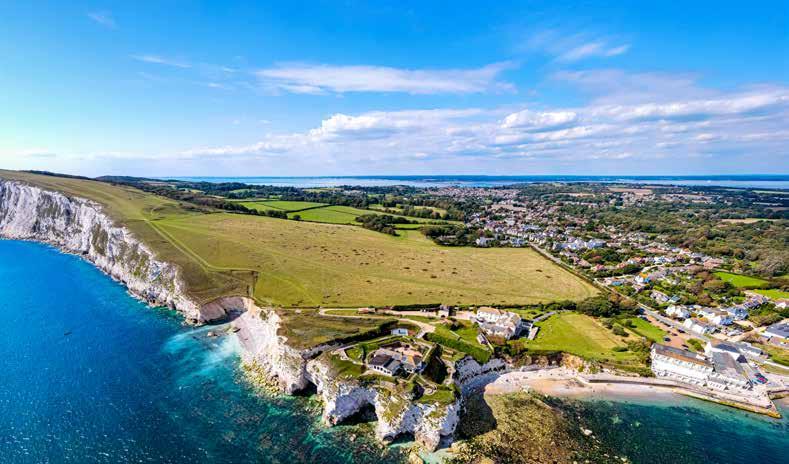
The Isle of Wight, separated from the Hampshire coast by the narrow waters of the Solent, offers a remarkably concentrated journey through millennia of human history and diverse cultural landscapes. Our tour, led by expert archaeologist and Isle of Wight native, Dr Jamie Sewell, will explore the island's strategic maritime importance, evident in its coastal defences, and reveal how its relative isolation has preserved not only prehistoric burial chambers and fossil-rich coastlines, but also a particular character of English life that developed somewhat apart from mainland pressures.
Admire the mosaics at Brading Roman villa which depict Orpheus, Bacchus and the goddess Ceres Hunt for cretaceous fossils amongst the soft cliffs and walk where dinosaurs once foraged
Explore the fully restored Grade 1 Farringdon house which once belonged to Alfred, Lord Tennyson
We meet at Southampton ferry terminal ready to cross the Solent to the Isle of Wight. Once on the island we transfer to our hotel in Ventnor. This evening there will be an introductory talk before dinner together.
Two | Brading & Compton Bay
Our site visit this morning is to Brading Roman Villa. The original modest farmhouse here was established in the late 1st century AD but evolved into a luxurious stone residence by the 3rd and 4th centuries AD. Today its most notable features are the exquisite mosaics, depicting mythological scenes (like Orpheus) and unique imagery whose meaning is still debated. After lunch we drive to Compton Bay, one of the best fossil hunting spots on the island. We will take a walk with an experienced palaeontologist and learn more about the island's geology, the types of fossils to he found and how to identify them.
We drive to the western tip of the Isle of Wight this morning to see the extraordinary chalk stacks famously known as the Needles and visit the Needles Battery, perched dramatically on the cliff edge. This important Victorian coastal defence surprisingly later played a part in the Cold War
space race. We continue to Carisbrooke Castle which was built to repel Viking raids c 1000 AD, later transformed into a formidable Norman motteand-bailey castle and further developed in the 13th and 16th centuries. Its most famous resident was King Charles I, who was imprisoned here during the English Civil War before his execution. Our last site visit is to the partially ruined Appuldurcombe House, a beautiful example of English Baroque architecture with grounds designed by Lancelot 'Capability' Brown.
We spend our morning at Faringford House. This elegant country house became forever linked with English literary history when Alfred, Lord Tennyson, made it his home from 1853 until his death in 1892. The house provided the Poet Laureate with the tranquil retreat he sought and during his time here he composed some of his most famous works, including "Maud," "Enoch Arden," and parts of "Idylls of the King." After lunch we visit Osborne House the private retreat of Queen Victoria and Prince Albert perched on the shores of the Solent with sweeping views across to the Hampshire mainland. This Italianate villa was designed by Prince Albert himself in collaboration with master builder Thomas Cubitt, creating a romantic seaside palace that served as the royal family's beloved summer home.
YOUR EXPERT GUIDE LECTURER
Dr Jamie Sewell
An author of books and articles on the archaeology of towns in Hellenistic Italy, Jamie has 15 years’ worth of experience supervising excavations in Britain, Germany, Italy and Romania.

Day Five | Ventnor – Southampton
Our tour comes to an end, and we transfer by ferry to the mainland arriving in Southampton around lunchtime.
YOUR COMPREHENSIVE EXPERT GUIDED TOUR PRICE INCLUDES
• Expert Guide Lecturer & Professional Tour Manager
• Entries to all sites as per the itinerary
• Andante Field notes
• All taxes & gratuities to local staff (drivers, waiters, site custodians)
Included travel
• All local transport
Accommodation
• 4 nights' in The Royal Hotel, Ventnor
Culinary inclusions
• 4 breakfasts, 3 lunches & 4 dinners
• Water with all meals, wine & tea or coffee with dinner
Dates & prices per person
Date Twin/Dbl Share SS 13th - 17th Jul £2,090 £540
For full details of this tour visit andantetravels.co.uk/aiow
12 DAYS FROM £5,490pp
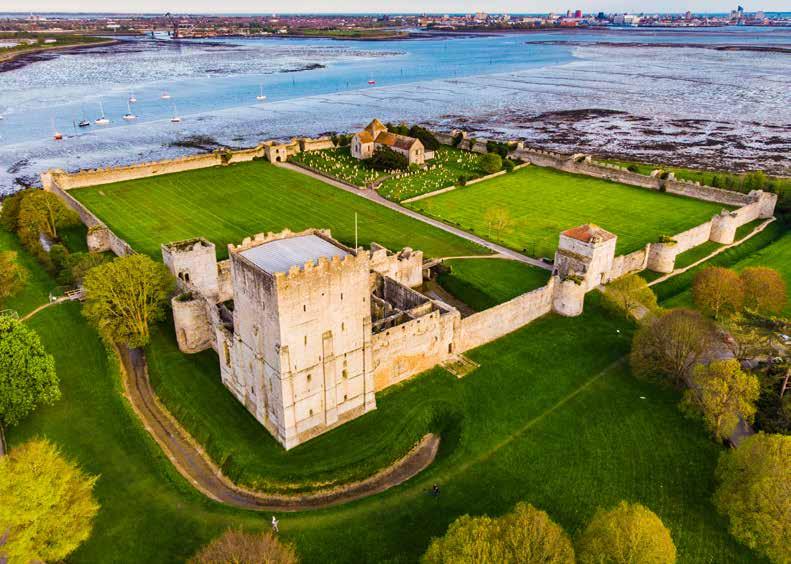
Roman Britain offers a fascinating window into nearly four centuries of history, from the Claudian invasion of 43 CE to the gradual withdrawal of Roman administration in the early fifth century. This unique tour visits major sites and museums along the length and breadth of the country to explore the process of Romanization—how Celtic Britain adapted to Roman rule through military presence, urban development, and cultural exchange, while local traditions continued to flourish alongside imperial customs.
We meet at our hotel in London in the early afternoon. Our tour starts with a visit to the British Museum where we visit the Roman Britain galleries which contain a wealth of material dating from the Roman occupation. Highlights include the Vindolanda tablets, which provide us with an extraordinary insight into life in a Roman auxiliary fort and the beautiful Bacchic silver platter from the Mildenhall treasure hoard.
We visit two fabulous Roman residences today starting at Bignor Roman Villa, a remarkable example of a large, wealthy Romano-British estate located on what was once the main thoroughfare between Chichester and London. We explore the well-preserved rooms and the bathhouse in the southeastern corner. These areas are home to some of England's finest surviving Roman mosaics. In the afternoon we visit Fishbourne Roman Palace a complex which covered nearly four acres and featured exquisite mosaic floors, sophisticated hypocaust heating systems, and formal gardens –marking it as a residence of someone of significant status. Its owner most likely Tiberius Claudius Togidubnus, a pro-Roman British king.
This morning, we continue west to visit Portchester Castle. Built in the 3rd century AD, it was a crucial part of the Saxon Shore forts, a series of coastal defences designed to protect Roman Britain from Saxon raiders. Next, we explore Maiden
Castle, a formidable Iron Age hill fort, a significant stronghold of the Durotriges tribe. Incredibly, after more than 2,000 years, the earthworks are immense, some ramparts rising to a height of 6 metres. The site is erroneously associated with a fierce resistance against the Roman invasion in AD 43 (more recent evidence suggests it had long been abandoned by then). Our last site visit today is to Dorset Museum to see the finds excavated by Sir Mortimer Wheeler in the 1930s.
Day Four | Blandford Forum - Bath
We visit another remarkable Iron Age hillfort this morning at Hod Hill. Likely to have been captured during Vespasian’s invasion in 43AD, the Romans removed part of the earlier settlement and built their own defences in the north-west corner. From here we continue north to the lovely city of Bath where we visit the Roman Baths complex. Built around the city's unique natural hot springs, which still flow with hot water at a remarkable 46°C (115°F) today, these springs were revered long before the Romans arrived, with the local Celtic tribe, the Durotriges, worshipping the goddess Sulis at the site.
This morning we cross the magnificent River Severn and drive into Wales. The Romans faced fierce resistance from Welsh tribes like the Silures and Ordovices but by around AD 90, most had been defeated. We visit Caerleon, one of only three permanent Roman legionary fortresses in Roman Britain which was occupied for over 200 years. We spend the morning at this extensive site and in the
afternoon drive to Wroxeter where we discover the remains of Viriconium, one of the largest cities in Roman Britain founded in the first phase of Roman occupation.
We spend our morning in Roman Chester, Deva Victrix, one of the most important legionary fortresses in Roman Britain and a key strategic outpost. It served as the permanent base for the Legio XX Valeria Victrix (the Twentieth Legion, Valiant and Victorious) for over two centuries. We see the remains of the large amphitheatre and visit Grosvenor Museum which has particularly strong collections of material relating to Roman life in Chester, including an internationally important collection of Roman tombstones which found in the 19th century. In the afternoon we continue north to Carlisle, stopping on the way at Ribchester Roman Museum in the picturesque Ribble Valley Day Seven | Vindolanda & Corbridge
The Stanegate (meaning stone road in the Northumbrian dialect) was the frontier pre-dating Hadrian’s Wall, and today we visit its key sites. We spend an entire morning at Vindolanda one of the best-known Roman forts in Britain, thanks to its continuing program of excavations. The site is justly renowned for its organic preservation, the high point being the wooden writing tablets. Examples of these, along with a small proportion of all the other finds, can be seen in the site museum. In the afternoon, we drive to the nearby Roman site of Corbridge with its fascinating museum.
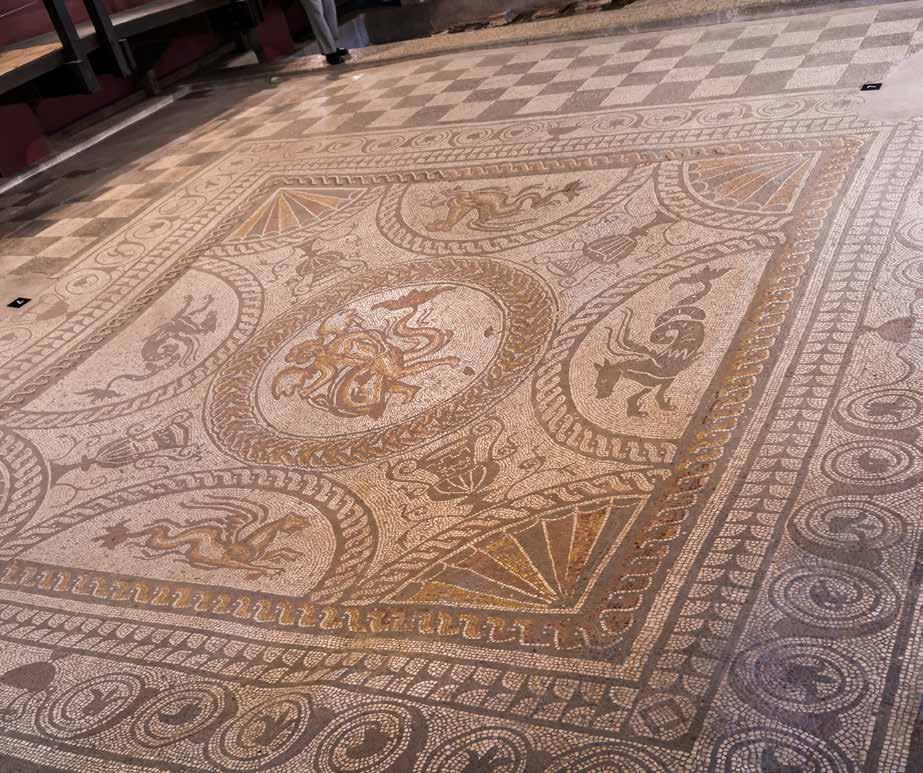
Admire two fabulous villa complexes at Bignor Roman Villa and Fishbourne Palace
Discover Maiden Castle where after more than 2000 years, the earthworks still impress
Visit Caerleon, one of only three permanent Roman legionary fortresses in Roman Britain
Explore sites along the Antonine Wall, the defensive turf and earth barrier north of Hadrian’s Wall
Today we view the iconic central sector of Hadrian’s Wall – a fortification that stretched for 73 miles from coast to coast guarding the wild north-west frontier of the Roman Empire. In the morning, we visit Housesteads Roman Fort and Museum. This is where the layout of a fort can best be appreciated, and the exposed structures include the wellknown latrine. We will also take a short walk along to Milecastle 37. Milecastles were built every mile along the barrier to control access through Hadrian's Wall. After lunch we will visit the Temple of Mithras at the fort of Carrawburgh and the fort of Chesters, the most complete Roman cavalry fort in Britain.
We journey further north this morning and cross the border into Scotland. For almost 400 years, much of what is now Scotland was either inside the Roman Empire or a disturbingly close neighbour Travelling to our final base in Edinburgh we make a stop on the way to Trimontium Museum Trimontium, meaning "place of the three hills," was a crucial Roman frontier post and one of the largest Roman sites north of Hadrian's Wall. While there are scant visible remains, a superb museum displays finds from excavations here and shares its history. We arrive in Edinburgh in time for lunch and in the afternoon visit the National Museum of Scotland.
This morning, we take a short drive to Cramond on the south shore of the River Forth. Two millennia ago, it was part of the Roman frontier, and the fort here acted as a supply port for the Roman Army in Scotland. Around 600AD a chapel was established on the site which was later developed into the current church. Returning to Edinburgh we have a free afternoon to relax or explore some of the many historical sites the city has to offer.
Today we explore sites along the Antonine Wall, the defensive turf and earth barrier which stretched between the Firth of Forth and the Firth of Clyde. We visit Callander Park and see a good example of a surviving ditch section and Kinneil for the only visible example of an Antonine Wall fortlet. In the afternoon we view Rough Castle, the best-preserved fort and the only known example of lilia defensive pits which contained sharpened stakes camouflaged to impale unsuspecting attackers. We end the day at Bar Hill, the highest fort on the Antonine Wall with good views in all directions.
Our tour comes to an end, and we transfer to the station to return to London by high-speed train.
YOUR EXPERT GUIDE LECTURER
Tony Wilmott
Senior Archaeologist with Historic England, Tony has directed many excavations, and published several books and many articles in archaeological journals. He specialises in the Roman periods, with a particular interest in the Roman military.

• Expert Guide Lecturer & Professional Tour Manager
• Entries to all sites as per the itinerary
• Andante Field notes
• All taxes & gratuities to local staff (drivers, waiters, site custodians)
Included travel
• All local transport Accommodation
• 1 night at a hotel in each of the following locations: London, Chichester, Blandford Forum, Bath and Chester, 3 nights at a hotel in Carlisle, and 3 nights' at a hotel in Edinburgh
Culinary inclusions
• 11 breakfasts, 10 lunches & 11 dinners
• Water with all meals, wine & tea or coffee with dinner
Dates & prices per person
Date Twin/Dbl Share SS
7th - 18th Sep £5,490 £995
For full details of this tour visit andantetravels.co.uk/agrb

In an era of warfare, raiders, ruthless kings and religious conflict, northern England occupied a place on an international stage that positioned it alongside the great powers of the continent. The kingdom of Northumbria dominated the north and under the Royal patronage of Kings Edwin, Oswald and Oswiu produced unrivalled cultural achievements in art, architecture, writing and learning. Our tour explores the key sites of its Golden Age and includes a trip to Inner Farne, home to remarkable seabird and Atlantic grey seal colonies.
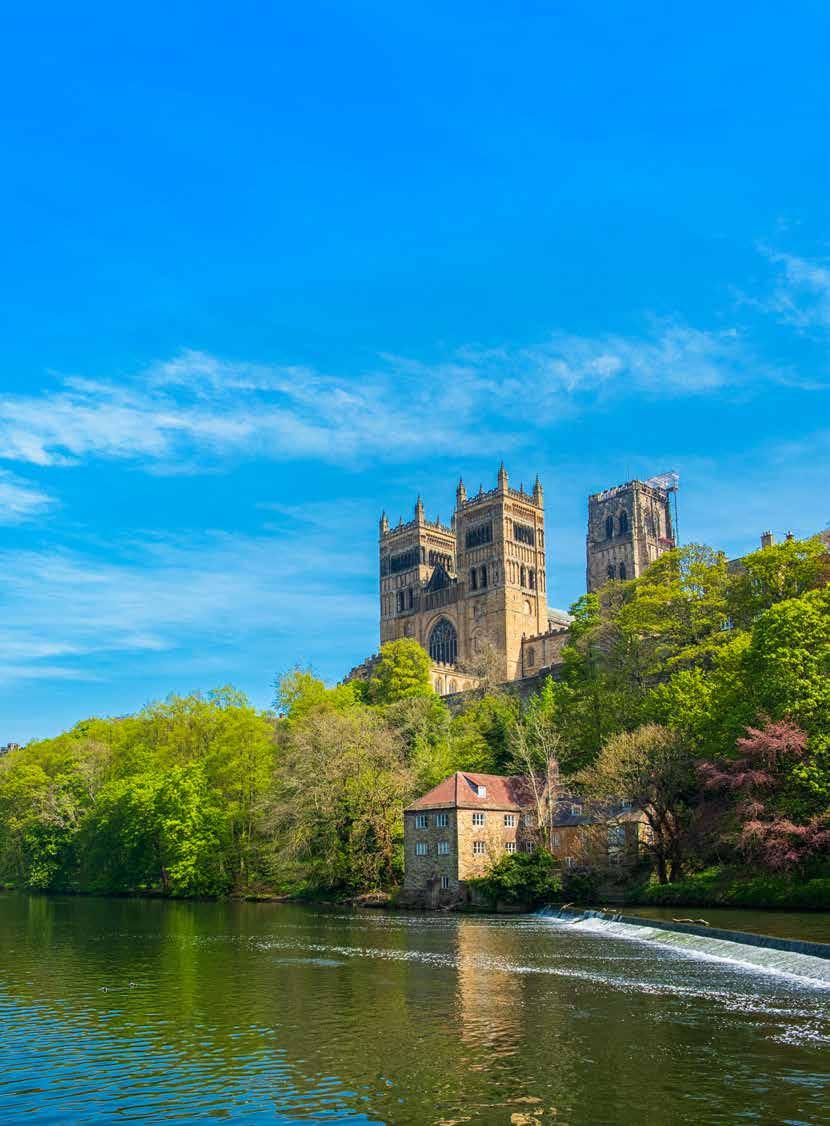
Explore magnificent Durham Cathedral in its dramatic setting above the River Wear
Sail to Inner Farne, where St. Cuthbert ended his days, and see the thriving bird colonies that occupy the island
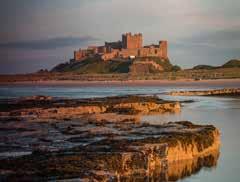
Cross the causeway and visit the famous monastery of Lindisfarne, where Viking longships once landed
Discover Escomb Church and Hexham Abbey, two of the oldest sites of Christian worship in the country
We meet at our hotel in Durham and gather for an evening lecture before dinner.
This morning, we visit the magnificent Durham Cathedral, one of the best-preserved Norman buildings in Europe. Perched dramatically on a rocky peninsula formed by a horseshoe bend of the River Wear, its imposing presence has dominated the Durham skyline for over 900 years. Inside the building, with its piers and towers, are the tombs of St. Cuthbert, Northumbria’s most revered Saint, and the Venerable Bede, ‘the father of English history’. In the afternoon, university business permitting, we visit both the exterior and the interior of Durham Castle, now a university college which sits across the quadrangle from the cathedral.
We drive south of Durham today to visit Escomb Church, one of a handful of complete Saxon churches in Britain. Built in the 7th century, it has a circular churchyard which suggests it had a Celtic foundation, and the masonry of large blocks and quoins is partly made up of Roman stones purloined from nearby Binchester Fort. After lunch we continue to Hexham Abbey, one of the oldest sites of Christian worship in the country, founded by St. Wilfrid as a Benedictine Abbey in 674 AD. It still retains its Anglo-Saxon crypt, constructed from re-used Roman stone and built by Wilfrid to evoke both the catacombs of Rome and the tomb of Christ. The abbey today is a fascinating amalgam of the many phases of its long history.
We drive to Jarrow to visit the remains of the Monastery of St. Peter and Paul, once Bede’s home monastery. Amazingly, some of the original buildings remain standing around the later church. This complex was a beacon of learning, art and innovation in 7th and 8th-century Northumbria, profoundly influencing both local and wider European Christian culture. We continue to the charming historic market town of Alnwick, where we have free time to explore at leisure. You may wish to visit Alnwick Castle, home to the Percy family for 900 years, or browse the independent shops in the town centre. Later we drive on to Bamburgh, where we stay for the next two nights.
Day Five | Inner Farne & Lindisfarne
Today we drive a short distance to the picturesque fishing village of Seahouses, the main departure point for all boat trips to the Farnes. From here we take a boat trip to Inner Farne, where St. Cuthbert spent the latter part of his life and died in 687 AD. The island is now a wildlife reserve and as we are there during the breeding season, we can expect to see thousands of Atlantic puffins, common guillemots, razorbills, kittiwakes, terns and eider ducks. In the afternoon, we cross the causeway to Holy Isle, Lindisfarne, the beautiful tidal island where St. Cuthbert’s community produced beautiful masterpieces like the Lindisfarne Gospels. Here we explore the ruins of the Priory and visit the small museum nearby.
Day Six | Bamburgh – Berwick-Upon-Tweed
Our tour comes to an end. Transfers can be arranged to nearby Berwick-upon-Tweed railway station for onward travel.
YOUR EXPERT GUIDE LECTURER
John Oxley
John Oxley is an independent archaeologist, and former York City Archaeologist 1989-2019. He is a Fellow of the Society of Antiquaries of London.

• Entries to all sites as per the itinerary
• Andante Field notes
• All taxes & gratuities to local staff (drivers, waiters, site custodians)
Included travel
• All local transport
Accommodation
• 3 nights' in the Hotel Indigo Durham and 2 nights' in the The Victoria Hotel, Bamburgh Culinary inclusions
• 5 breakfasts, 4 lunches & 5 dinners
• Water with all meals, wine & tea or coffee with dinner
Newgrange, Knowth and Inis Mor
8 DAYS FROM £3,545pp Easy
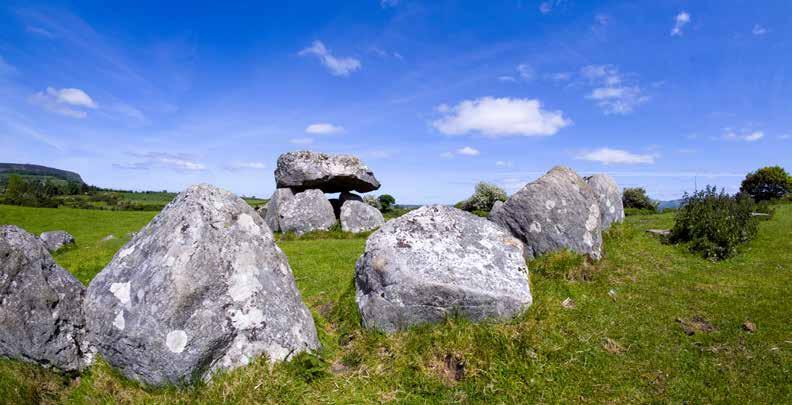
Experience the fascinating prehistory of Ireland on a tour which links two equally important regions of Ireland. From the Neolithic monuments in the fertile land of the Boyne Valley, we cross the island westwards to the wild landscapes of the Atlantic Coast and Galway.
Take a boat trip to the island of Inis Mor and visit Dun Aengus
View an an Irish Court Tomb at Creevykeel
Admire the collection of prehistoric artefacts at the National Museum of Dublin
Visit the Hill of Tara with over 30 visible monuments, including the Stone of Destiny
We take a flight from London Heathrow to Dublin Airport and transfer to Fourknocks, home to a remarkable example of a passage tomb. This ancient burial site is preserved under a concrete dome, with carefully placed lighting apertures to show the unusual decoration to good effect. The remains of at least sixty individuals were found here and grave goods included stone and bone pendants and beads, as well as bone pins. After exploring this site, we continue to our hotel in Dublin for one night.
Our journey in Dublin, rich in Viking history, begins at the Old Library of Trinity College, home to the 9th-century Book of Kells. We then visit the 12th-century St Patrick’s Cathedral, a key medieval landmark. After lunch, we explore the National Museum of Ireland, featuring Bronze Age gold, the 4,500-year-old Lurgan longboat, and preserved Iron Age bogland remains. The day concludes as we travel to our hotel in Drogheda.
Following breakfast, we head to Newgrange, a monumental Neolithic burial mound older than Stonehenge and the Pyramids of Giza. A distinctive feature is a stone box in the roof, allowing the winter solstice sun to illuminate the passage and rear chamber, showcasing the Neolithic builders' astronomical and engineering prowess. We then proceed to Knowth, a UNESCO-listed Neolithic site with two passage graves, one featuring a cruciform terminal chamber. Adorned with over three hundred decorated stones, Knowth is a significant repository of megalithic art, displaying spirals and serpentine forms. Later, we visit the Hill of Tara, historically the seat of Ireland’s High Kings, and view the Stone of Destiny, an emblem of ancient monarchy.
Our day begins at the passage grave cemetery at Loughcrew, or Slieve na Callighe, where we see Ireland's oldest monuments. Cairn T, aligned with equinox sunrises, features the Hag’s Chair, likely used for Catholic Mass during penal times. We continue to Sligo, a coastal town with a history as a bustling trade hub visited by Phoenicians, Greeks and Romans. Post-lunch, we explore Creevykeel, an excellent example of an Irish Court Tomb, designed for social events involving large gatherings.
Day Five | Carrowmore & Carrowkeel
Today's highlight is Carrowmore, Ireland's oldest prehistoric cemetery, notable for its monuments clustered around Listoghil, a chamber tomb containing inhumations. These tombs were reused for burials during the Bronze and Iron Ages. After lunch, we visit the Drumanone dolmen and proceed to the Carrowkeel megalithic complex. The scenic one-mile walk to this atmospheric site offers stunning views over Sligo Bay and Knocknarea Hill
Day Six | Sligo – Rathcroghan - Galway
Our journey to Galway, located at the mouth of the River Corrib, includes a stop at Rathcroghan, the former Connachta capital. This unique archaeological landscape, mentioned in early Irish manuscripts, spans from the Neolithic to the early medieval periods with burial mounds and ringforts. In Galway, we visit the Galway City Museum's Prehistoric collection.
Day Seven | Inis Mor
On our final full day, we ferry to Inis Mor, one of the Arran islands, where wild landscapes contrast with thatched cottages and stone walls. Among the archaeological sites, Dun Aengus stands out, a spectacular fort on Inishmore's cliff edge with
Dr Jeremy Bennett
A British archaeologist, Jeremy was awarded his PhD at Magdalene College, Cambridge.

a D-shaped plan and concentric defensive walls, dropping over 100 metres to the sea.
Day Eight | Galway - Shannon - UK
We say farewell to Galway and journey to Shannon Airport for our afternoon flight back to London Heathrow.
YOUR COMPREHENSIVE EXPERT GUIDED TOUR PRICE INCLUDES
• Expert Guide Lecturer & Professional Tour Manager
• Entries to all sites as per the itinerary
• Andante Field notes
• All taxes & gratuities to local staff (drivers, waiters, site custodians)
Included travel
• Return flights from London Heathrow, private group transfers to/from the airport and hotel and all local transport aboard a private air-conditioned coach Accommodation
• 1 night in The Trinity City Hotel, Dublin, 2 nights’ in the Boyne Valley Hotel & Country Club, Drogheda, 2 nights’ in the Sligo Park Hotel, Sligo and 2 nights’ in The Galmont Hotel & Spa, Galway
Culinary inclusions
• 7 breakfasts, 6 lunches & 7 dinners
• Water with all meals, wine & tea or coffee with dinner
Dates & prices per person
Date Twin/Dbl Share SS 25th Jul - 1st Aug £3,745 £3,545 £695
For full details of this tour visit andantetravels.co.uk/apir
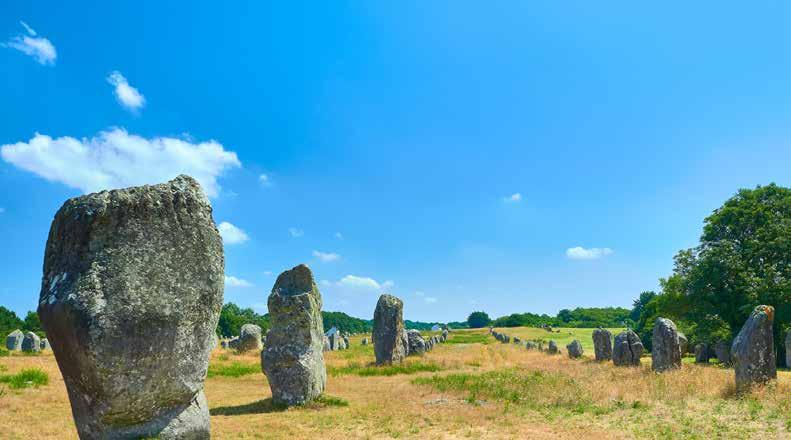
Brittany offers a prehistoric landscape filled with some of the world’s best megalithic monuments, from standing stones to chambered tombs. A whole day is rightly dedicated to Carnac, where stone rows stud the heather-clad countryside, and we explore passage graves with depictions of weaponry that mark the resting places of a selected few of the wider Neolithic population.
Come face-to-face with a selection of fascinating passage graves, chambered tombs and polished axes
Devote an entire day to the stunning monuments of historic Carnac
Take a ferry to the island of Gavrinis to visit its famous and elaborately decorated passage tomb
Day One | UK - Carnac
We travel by Eurostar and TGV to Carnac.
Day Two | Locmariaquer - Table des Marchands
The day unfolds in the fishing village of Locmariaquer, surrounded by megalithic monuments. We explore the Mané-Lud Carnac mound, a passage tomb with a central burial, and the Mané Rutuel passage-tomb. The giant Grand Menhir Brisé, once towering over 20 metres and weighing 280 tonnes, is a highlight. Our day concludes at the Table des Marchands, a passage grave with a large burial chamber capped by a decorated stone.
Carnac
A boat ride takes us to Gavrinis island in the Gulf of Morbihan, home to a significant passage grave dating back to 3500 BCE. The stones feature symbolic designs, showcasing prehistoric artistry. We also view the stone circle of Er-Lannic before returning to Lamor Baden. Our journey continues at the Carnac Prehistory Museum, renowned for its Megalithic culture artefacts, including Alpine jade axes, jewellery, and arrowheads.
Day Four | Plouharnel - Erdeven - Quiberon
We explore sites between Plouharnel and Erdeven, visiting Mané-Kerioned, a group of dolmens, and the Crucuno dolmen, partly within a farmhouse. We also see the passage graves of Mané-Groh and
Rondossec. Later, the Quiberon Peninsula reveals the Port Blanc Dolmens, where sandy conditions preserved around 50 bodies. We conclude at the Kerbougnec Alignment, visible at low tide.
Day Five | Carnac - Geant du Manio
Our exploration of Carnac reveals over 3,000 stones stretching across three kilometres. We examine tombs, tumuli, and dolmens, visiting alignments at Le Menec and Kermario. Post-lunch, we discover the Kercado passage grave and the menhir Le Géant du Manio, standing over six metres high in a forest clearing.
Day Six | Le Rocher - Petit Mont Cairn
We delve into the Le Rocher passage tomb and explore the Arzon peninsula, visiting the Petit Mont Cairn. Despite reconstruction, this impressive cairn from 4600 BCE reveals burial chamber phases. A bunker, part of the Atlantic Wall, was added in 1943, ironically uncovering the first dolmen chamber.
Day Seven | Carnac - UK
Our tour comes to an end today as we make our return journey by train back to the UK.
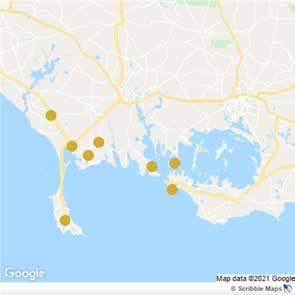
YOUR EXPERT GUIDE LECTURER
Dr Nick Thorpe
A lecturer in Archaeology, Nick has published books and articles on prehistoric Wessex, Britain and Europe, on burial practices, and on the origins of agriculture and the archaeological fringe.

YOUR COMPREHENSIVE EXPERT GUIDED TOUR PRICE INCLUDES
• Expert Guide Lecturer & Professional Tour Manager
• Entries to all sites as per the itinerary
• Andante Field notes
• All taxes & gratuities to local staff (drivers, waiters, site custodians)
Included travel
• Return train travel from London St. Pancras & all local transport
Accommodation
• 6 nights’ in the Thalazur Carnac Hotel
Culinary inclusions
• 6 breakfasts, 5 lunches & 4 dinners
• Water with all meals, wine & tea or coffee with dinner
Dates & prices per person
Date Twin/Dbl Share SS
7th - 13th Sep £3,640 £3,440 £555
For full details of this tour visit andantetravels.co.uk/abri
6 DAYS FROM £3,105pp
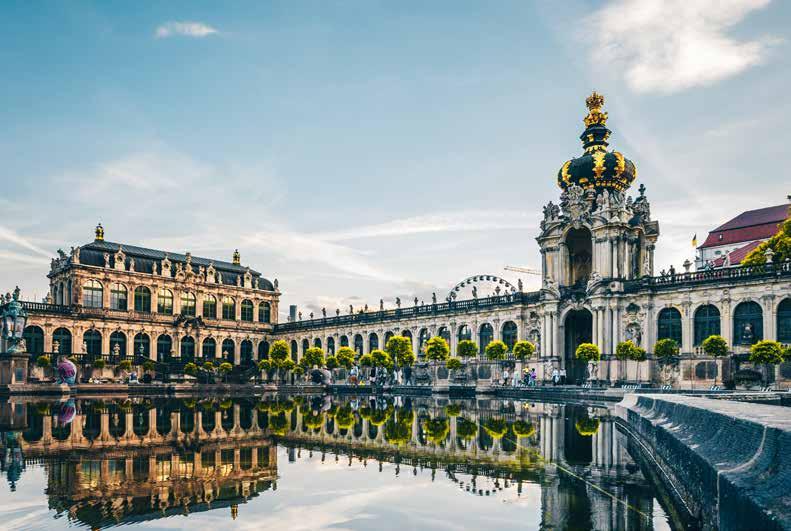
Discover the rich history and beauty of Saxony on this six-day tour, based in Dresden, the ‘Florence on the Elbe.’ Explore Dresden and Leipzig on guided walking tours, visiting historic churches, grand palaces and world-class museums. In Leipzig, we uncover the city’s role in history, from its grand churches to sites linked to the fall of the Berlin Wall. Visits to museums and galleries offer a deep dive into the region’s artistic and cultural achievements.
Visit the Meissen Cathedral and the Meissen Porcelain Factory
Discover Pillnitz Palace and Gardens in Dresden
Explore the incredible Zwinger Palace Complex
See the Church of Saint Thomas and Saint Nicholas in Leipzig
Day One | UK - Berlin - Dresden
We fly from London Heathrow into Berlin and transfer to our hotel in Dresden.
Day Two | Southern Suburbs of Dresden
Our morning in Dresden starts with a walk through Neumarkt Square, immersing us in the city's rich history. We visit the stunning Hofkirche and the iconic Frauenkirche, both symbols of resilience and architectural beauty. At the Gemäldegalerie Alte Meister, we admire masterpieces by Raphael, Rembrandt, and Vermeer. After lunch nearby, we journey to Dresden's Southern Suburbs to explore Pillnitz Palace and Gardens, a royal summer residence along the Elbe River, followed by the Baroque Gardens Großsedlitz, a testament to Saxony's regal past.
Day Three | Residenzschloss & Zwinger Palace Complex
Today, we delve into the grandeur of the Residenzschloss, a landmark reflecting Saxon royal history from the 15th century fortress to a lavish residence. Its museums, including the Historic Green Vault and New Green Vault, showcase extraordinary treasures. After lunch, we explore the Zwinger Palace Complex, particularly the Porcelain
Collection featuring Meissen and Asian porcelain.
A short walk takes us to the Albertinum, home to 19th and 20th-century art by Friedrich and Monet..
Day Four | Meissen & Moritzburg Palace
In Meissen, we visit the Gothic Meissen Cathedral and the Porcelain Factory, where lunch precedes a detailed exploration of porcelain production. The museum showcases the evolution of craftsmanship. Later, we visit Moritzburg Palace, a moated castle with baroque decor and French gardens, spending the afternoon before returning to Dresden.
Day Five | Liepzig
We explore Leipzig on a morning walking tour, highlighting the Church of Saint Thomas, connected to Bach, and the city's unique architectural courtyards. At the Museum of Fine Arts, we admire a diverse collection. After lunch, we visit the Church of Saint Nicholas, pivotal in the 1989 revolution, and the Museum of Antiquities
We then return to Dresden.
Day Six | Dresden - UK
Post-breakfast, we check out and visit the Dresden Book Museum in the State Library, home to the rare Dresden Codex. We then transfer to the airport for our flight back to London Heathrow.
YOUR EXPERT GUIDE LECTURER
Tom Abbott
An art and architecture historian whose expertise is wide ranging, from the Baroque and Rococo, to modern and contemporary.

YOUR COMPREHENSIVE EXPERT GUIDED TOUR PRICE INCLUDES
• Expert Guide Lecturer & Professional Tour Manager
• Entries to all sites as per the itinerary
• Andante Field notes
• All taxes & gratuities to local staff (drivers, waiters, site custodians)
Included travel
• Return flights from London Heathrow, private group transfers to/from the airport and hotel and all local transport aboard a private air-conditioned coach
Accommodation
• 5 nights' in the Romantik Hotel Bülow Residenz, Dresden
Culinary inclusions
• 5 breakfasts, 4 lunches & 5 dinners
• Water with all meals, wine & tea or coffee with dinner
Dates & prices per person
Date Twin/Dbl Share SS 19th - 24th Jun £3,255 £3,105 £295
For full details of this tour visit andantetravels.co.uk/adre
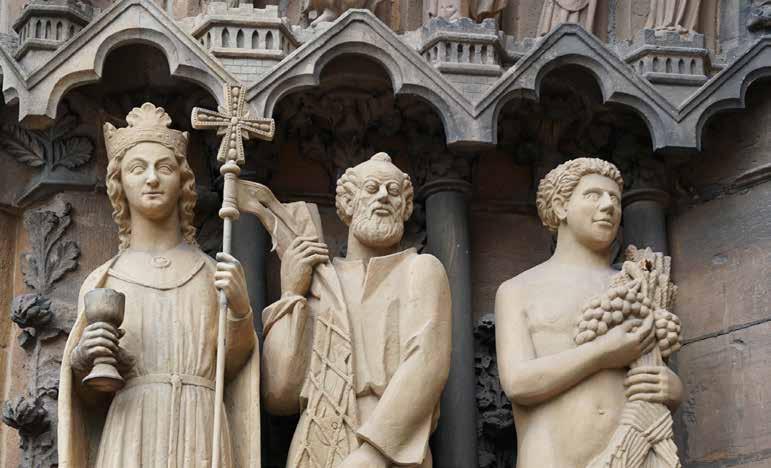
Nestled in the picturesque Moselle Valley, Trier was an important provincial capital in Roman times, known as Augusta Treverorum; it was the residence of emperors, a centre of trade and the largest market in an ancient wine-growing area. Today, still surrounded by vineyards, this ancient city boasts an extraordinary concentration of remarkably preserved Roman monuments, earning it UNESCO World Heritage status.
Explore the extraordinary Aula Palatina and Porta Nigra, late antique sites which are largely intact
Admire the gladiator mosaic at the Villa Nennig, which depicts bloody scenes from the arena
Discover the region’s Celtic origins at Otzenhausen, one of the largest Celtic hillforts in the world
We begin our journey, flying from London Heathrow to Luxembourg. En route to Trier, we stop at the recently re-opened villa near Echternach, a lavish Roman residence once boasting up to 70 rooms and featuring a reconstructed Roman garden. Upon arrival in Trier, we settle into our hotel and, if time permits, enjoy an exploratory walk.
Our day in Trier starts with the iconic Porta Nigra, the best-preserved 3rd-century Roman city gate north of the Alps, later transformed into two churches. Next, we visit the Cathedral, Germany's oldest church, and the Cathedral Museum, showcasing 4th-century ceiling paintings. After lunch, we explore the Aula Palatina, a vast basilica built by Emperor Constantine, originally heated by a hypocaust system.
This morning, we explore the Rheinisches Landesmuseum, home to Germany's finest ancient artefacts. Highlights include the Trier gold hoard depicting 29 imperial family members and the Neumagen wine ship, a funerary decoration for a wealthy wine merchant. In the afternoon, we visit the Imperial Baths and the amphitheatre, which once hosted 20,000 spectators for gladiatorial contests. We conclude the day with a wine tasting, savouring Moselle Rieslings renowned for their depth of flavour and light alcohol content.
Day Four | Nennig & Borg
Heading south of Trier, we pause at the Igeler Saeule, a 30-metre memorial to the Secundinii family of cloth merchants. At the Roman Villa at Nennig, we admire foundation walls, peristyle remains, and its striking mosaic depicting arena scenes. In the afternoon, we visit the Roman Villa at Borg, excavated in the 1980s and reconstructed in the 1990s.
Day Five | Trier
Today is at leisure to further explore Trier. Options include visiting lesser-known Roman sites like the Viehmarkt Baths or Barbara Baths, exploring the Karl Marx birthplace museum, or enjoying a boat trip on the Moselle.
We visit the Otzenhausen Hillfort, the largest Celtic hillfort of its kind, built by the Treveri tribe. We explore its ramparts and the replica Celtic village at Keltenpark. After lunch, we head to Otrang, a Roman manor complex featuring baths, a heating system, and a temple area.
Our final day takes us to the Luxembourg National Museum of History and Art, showcasing archaeological finds from Dalheim (Ricciacus) and Titelberg. After some free time exploring Luxembourg's historic Old Town, we return to the airport for our flight back to London Heathrow.
YOUR EXPERT GUIDE LECTURER
Tony Wilmott
Senior Archaeologist with Historic England, Tony has directed many excavations, and published several books and many articles in archaeological journals. He specialises in the Roman periods, with a particular interest in the Roman military.
YOUR COMPREHENSIVE EXPERT GUIDED TOUR PRICE INCLUDES
• Expert Guide Lecturer & Professional Tour Manager
• Entries to all sites as per the itinerary
• Andante Field notes
• All taxes & gratuities to local staff (drivers, waiters, site custodians)
Included travel
• Return flights from London Heathrow, private group transfers to/from the airport and hotel and all local transport aboard a private air-conditioned coach
Accommodation
• 6 nights' at the Hotel Park Plaza Trier
Culinary inclusions
• 6 breakfasts, 6 lunches & 5 dinners
• Water with all meals, wine & tea or coffee with dinner
Dates & prices per person
Date Twin/Dbl Share SS
7th - 13th Jul £3,445 £3,295 £335
For full details of this tour visit andantetravels.co.uk/arti
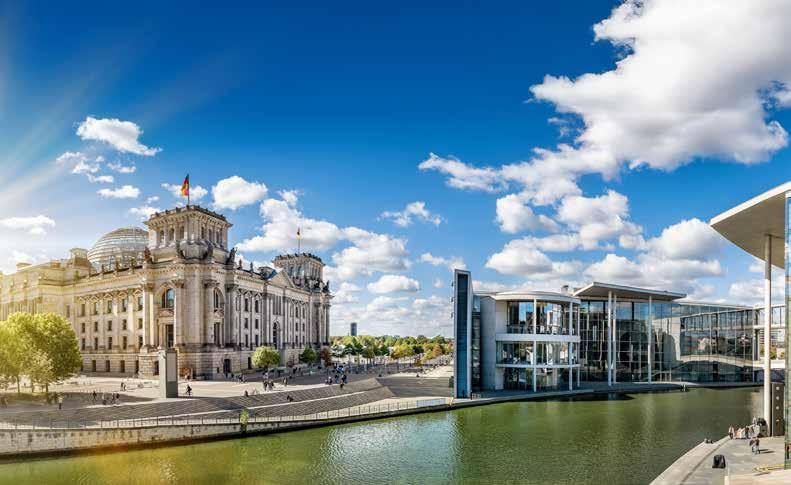
Enjoy the rich flavour of the region’s past and present, from its royal Prussian palaces to its place in Nazi fantasies, and explore its role as a hub of both socialist cultures and radical counter cultures. Berlin has been the nexus for so many pivotal moments in European history and its stories are simply fascinating. Join our expert Guide Lecturer on visits to the city’s most significant and historic sites and museums.
Explore the city with a long-term resident and experienced archaeologist
Pay a visit to Sanssouci, Frederick the Great’s Rococo summer palace
See Berlin’s iconic sites, including as the Reichstag, the Brandenburg Gate and Checkpoint Charlie
World-class museums await discovery, which are home to amazing artefacts from the ancient world
We fly to Berlin from London Heathrow. In the evening we take a stroll through the heart of Berlin to explore the Prussian city shaped in large part by Frederick the Great. We take in the Opera House, Humboldt University – founded by Frederick William III in the 19th century – and the Memorial at Bebelplatz
The highs and lows of a city divided and reunited YOUR COMPREHENSIVE EXPERT GUIDED
Cecilienhof, a very different royal palace built by the Hohenzollern during World War I, ironically in the form of an English Tudor manor house.
We spend the morning at Museum Island, the cultural heart of imperial Berlin where we explore innumerable treasures such as the famous bust of Nefertiti at the Neues Museum followed by a visit to PERGAMON, Masterpieces of the Ancient Metropolis and 360° Panorama (the Pergamon Museum is currently closed for refurbishment). After lunch we visit the Jewish Quarter where we see memorials such as the Stumbling Stones and Deserted Room and consider Otto Weidt, who employed blind and deaf Jews to make brooms and brushes, thereby saving them from deportation. The remainder of the afternoon is free to explore at leisure.
We spend the day in Potsdam and visit Sanssouci, Frederick the Great’s Rococo private residence that was built in the mid 18th century. We proceed to
We journey to Wittenberg today to visit a number of World Heritage Sites associated with Luther. These include the Lutherhaus, originally part of the University of Wittenberg, it became Martin Luther’s residence and is where he wrote his 95 theses. We also visit the Castle Church, or rather All Saints’ Church, where he allegedly nailed his 95 theses to the door and where he is buried. In this town steeped in the reformation, we visit the houses of other figures important to the movement, such as Melanchthon and the painter, Cranach.
Day Five | Berlin - UK
This morning we explore Berlin’s famous sites, including the Reichstag. We also visit Brandenburg Gate, modelled on the Propylaeum of the Athenian Acropolis and one of the most iconic sites in Berlin. We complete the morning with a visit to ‘Checkpoint Charlie’, the infamous crossing point between East and West so redolent of the city’s Cold War period. Our tour ends this afternoon and we transfer to the airport, where we catch our return flight back to London Heathrow.
Nick Jackson Nick is an archaeologist with wide-ranging excavation experience. He has lived and worked in Berlin for over 20 years and has an in-depth knowledge of his home city.

• Expert Guide Lecturer & Professional Tour Manager
• Entries to all sites as per the itinerary
• Andante Field notes
• All taxes & gratuities to local staff (drivers, waiters, site custodians)
Included travel
• Return flights from London Heathrow, private group transfers to/from the airport and hotel and all local transport aboard a private air-conditioned coach
Accommodation
• 4 nights' in the Park Plaza Wallstreet Berlin Mitte Culinary inclusions
• 4 breakfasts, 4 lunches & 4 dinners
• Water with all meals, wine & tea or coffee with dinner Dates & prices per person Date
11 DAYS FROM £7,130pp
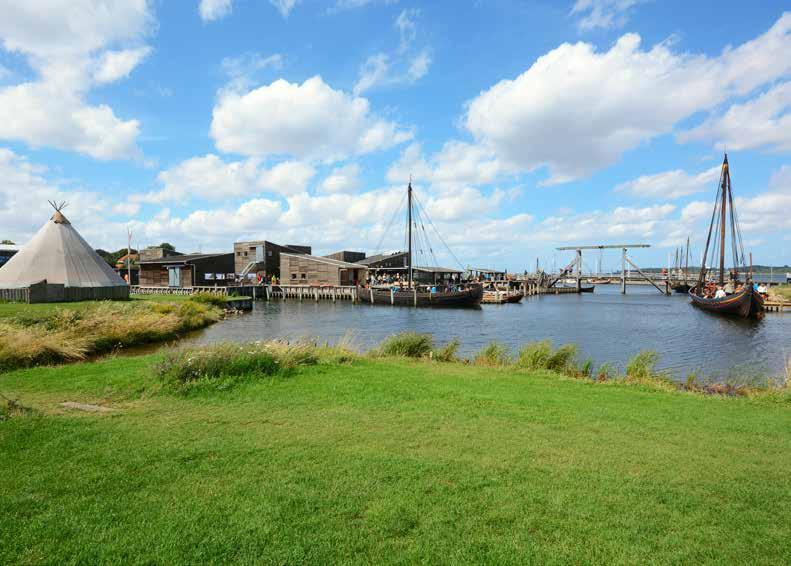
The Vikings were the greatest seafarers, raiders and traders of the Early Middle Ages. Far from being a race of unwashed barbarians, they presided over a trading network which extended from Greenland to Baghdad. Following in the Viking’s footsteps, we make our own epic voyage starting in Germany, travelling across Denmark and culminating in Sweden.
Day One | UK - Hamburg - Aarhus
We fly from London Heathrow to Hamburg and make our way to Aarhus in Denmark stopping on route to explore the UNESCO World Heritage sites of Hedeby and Danevirke. These important Viking trading towns are situated on the Schleswig isthmus, the narrowest strip of land between the Baltic and the North Sea, and they once secured the border area between Scandinavia and Central Europe. Excavations at both sites have revealed the Vikings international links. After our site visits we continue to Aarhus ,our base for the next three nights.
Two | Ribe - Jelling - Ravning Enge
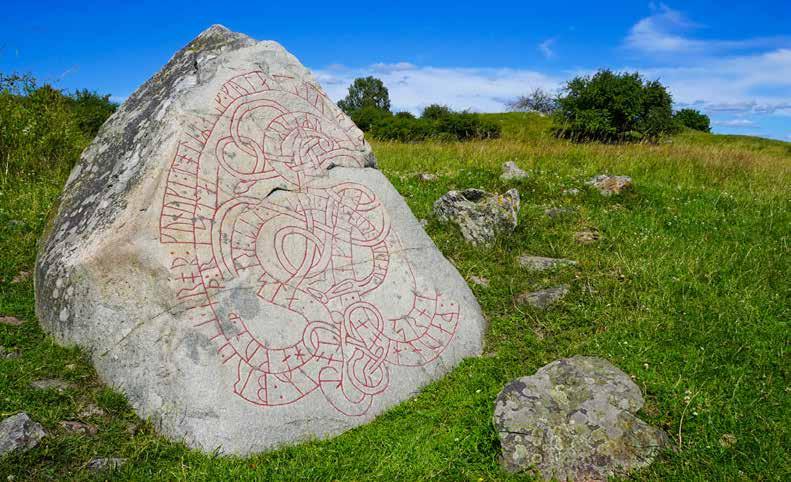
Our first visit this morning is to Ribe, another flourishing Viking settlement and Denmark’s oldest town, with remains dating back to the 8th century AD. We continue to Baekka and view the evocative stone ship setting where standing stones trace the outline of a 45m ship placed between two bronze age barrows. A local chieftain erected the monument in commemoration of his late mother, Vibrog. In the afternoon we visit Jelling, a UNESCO World Heritage site and one of the most extraordinary archaeological sites in Denmark. We see Gorm’s Stone and Harald’s Stone, both decorated and inscribed with runes and with two substantial burial mounds with a church between them. The Kongernes Jelling Visitor Centre provides a splendid view of the whole monument complex from its roof terrace. We end our site visits at Ravning Enge, where excavations have revealed the remains of a huge bridge, a
considerable feat of Viking engineering.
This morning we visit Fyrkat Fort, one of five Viking fortresses constructed in the late 10th century during the reign of King Harald Bluetooth. An earthen rampart marks the area where the fort once surrounded the original 16 farmhouses. The locations of these houses are now indicated by white stones. We also visit the Viking Centre, where the reconstructed village gives a real feel for everyday Viking life. After lunch we drive to Lindholm Hoje, an expansive Viking and Iron Age grave site which contains nearly 700 graves. These burials span an impressive 500-year period, primarily dating from the 8th to 10th centuries. Most are cremation burials, distinctively marked by stone arrangements in triangular, oval and ship-shaped formations. Excavations have yielded numerous grave goods, including personal possessions and everyday items. Some artefacts show evidence of being imported from distant lands, highlighting the site's connection to broader trade network.
We travel west to visit the famous Ladby ship burial, which has been preserved in situ beneath a reconstructed mound. Nothing of the timber has survived, but like Sutton Hoo, the clenching rivets remained in place, with an impression in the earth of the planking. The burial had been plundered but the skeletons of eleven horses, three or four dogs and many other grave goods escaped the robbers. It is thought to have been a rowing boat for 32
oarsmen, and dates to about 850-950 AD. We conclude our visit with the Ladby Museum before we cross the Great Belt Bridge to Zeeland and our site visit at Trelleborg. Our tour coincides with the annual Viking Festival when ‘The Battle of Trelleborg’ takes place fought by around 250 armed Viking warriors. Here we see the ring fortress, one of a number of extraordinary, well-planned circular forts built at the time of King Harald Bluetooth in the 10th Century.
This morning we visit Gammel Lejre, the site of a prosperous manor owned by the Danish crown in the Middle Ages. Its association with important literary material, including Beowulf, shows us that this was a particularly important Iron-age and Viking-period royal centre. We continue to Roskilde, where the Viking Ship Museum displays one of the best-preserved groups of Viking period ships from the Scandinavian world. They were excavated from Roskilde fjord, and they survived because they were deliberately sunk to block access, presumably to the harbour here. There is also an opportunity to sail in a replica Viking ship before we visit the cathedral, burial place of Danish royalty.
On our last morning in Denmark, we visit the excellent National Museum in Copenhagen with prehistoric and Viking artefacts, including the Gundestrup cauldron, the Trundholm chariot, an amazing series of Bronze Age coffined burials and a magnificent Bronze Age lur (a long natural blowing
Images: Roskilde Viking Ship Museum
Enjoy the Viking Festival at Trelleborg with its craft workshops, re-enactors and Viking battles
View the famous Viking longships at Roskilde, the best-preserved collection in Scandinavia
Explore Gamla Uppsala with its three huge royal burial mounds that legend attributes to kings Aun, Egil and Adlis
Discover the UNESCO-listed archaeological site of Birka, just a boat ride away from vibrant Stockholm
horn). This afternoon may either be spent at leisure or on an optional walk around Copenhagen’s historic centre.
We leave Copenhagen this morning and take the train to Stockholm. The route takes over the impressive Øresund Bridge, a magnificent engineering marvel that connects Denmark and Sweden across the Øresund Strait. This combined railway and motorway bridge transitions into a tunnel, offering unique views of the Baltic Sea. Throughout the journey we see the landscape transform from rolling countryside, characterised by traditional red farmhouses, to deep pine forests and lakes. The journey takes around 6 hours, and we arrive in Stockholm in the late afternoon.
Day Eight | Anundshög & Uppsala
Venturing out of the capital city, we head to Anundshög, the largest royal burial mound in Sweden where standing stones are arranged to represent two ships and a rune stone. Next, we move to Gamla Uppsala to view three huge royal burial mounds that legend attributes to kings Aun, Egil and Adlis. The beautiful Gamla Uppsala kyrka (church) stands over the site of a great temple, where it is believed that sacrifices to the Norse gods Thor, Frey and Odin took place. Legend and history intertwine as we visit tinghög (parliament hill) and the Gamla Uppsala Historical Centre, which displays the artefacts from the excavated mounds.
Day Nine Sigtuna & Stockholm
Today we drive to the shores of Lake Mälaren where we visit the old Swedish capital of Sigtuna
Founded in AD 980 by Erik the Victorious, this charming town boasts a remarkably well-preserved main street – 'Stora Gatan' – which still runs along its original route and its Viking heritage is everywhere to be seen. Returning to Stockholm after lunch, we explore the Historik Museum Highlights here include the Gold Room which displays an impressive collection of gold and silver artefacts dating from the Stone Age to the Middle Ages and the Viking exhibition, showcasing important archaeological finds that illuminate this fascinating period of Scandinavian history.
Day Ten | Birka
We take a boat to the island of Björkö (meaning ‘Birch Island’) to explore the UNESCO-listed Viking town of Birka. Founded in the year 750, it benefited from its strategic location and became an important Viking trading centre until 975, when Gotland and Sigtuna took over the RussiaByzantine trade. A silver ring from a Viking-era grave in Birka is the first with Arabic inscription from that era to be found in Scandinavia’s centre. 700 people lived at Birka when it was at its largest, and 3,000 graves have been found.
Day Eleven | Stockholm – UK
We visit the amazingly complex Vasa warship before taking a walk around Gamla Stan, the Old Town which occupies the island of Stadsholmen. It is not a Viking Age town, since it dates from the 13th century, but it retains its medieval street pattern with numerous narrow alleyways and staiths leading to the commercial waterfront. We then head to the airport for our flight home to London Heathrow.
YOUR EXPERT GUIDE
Dr Brian Ayers
An expert in medieval urban archaeology, Brian is Honorary Senior Lecturer at the University of East Anglia. He is interested in the origins and the development of towns on both sites of the North Sea during the early medieval period.

YOUR COMPREHENSIVE EXPERT GUIDED TOUR PRICE INCLUDES
• Expert Guide Lecturer & Professional Tour Manager
• Entries to all sites as per the itinerary
• Andante Field notes
• All taxes & gratuities to local staff (drivers, waiters, site custodians)
Included travel
• Return flights from London Heathrow, private group transfers to/from the airport and hotel and all local transport aboard a private air-conditioned coach
Accommodation
• 3 nights' in the Comwell Aarhus, Aarhus, 3 nights' in the Copenhagen Strand, Copenhagen and 4 nights' in the Hotel Kung Carl, Stockholm
Culinary inclusions
• 11 breakfasts, 11 lunches & 10 dinners
• Water with all meals, tea or coffee with dinner
Dates & prices per person
Date Twin/Dbl Share SS 4th - 14th Sep £7,480 £7,130 £1,105
For full details of this tour visit andantetravels.co.uk/aval
8 DAYS FROM £3,640pp
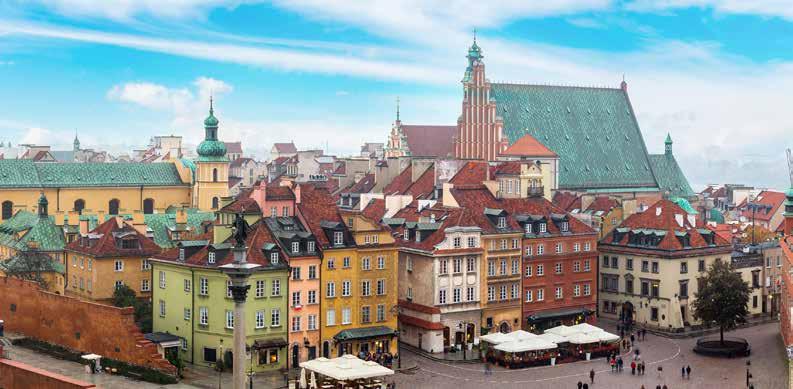
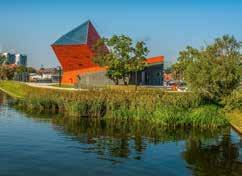
Join us on an escorted tour across Poland, from Warsaw to Danzig (Gdansk), exploring palaces, museums and the legacy of the Teutonic Knights. We start in Warsaw with a tour of the Old Town and key museums, then visit the medieval city of Toruń. In Gdansk, we discover Malbork Castle and the city’s rich history before enjoying Oliwa’s Basilica and its museums. A perfect blend of culture, history and stunning architecture awaits you on this unforgettable journey.
Discover Warsaw, a city where historical charm and cutting edge design converge Malbork Castle, the enormous structure built by the Teutonic Knights
Explore the extensive Maritime Museum in Gdansk on Otowianka Island
Day One | UK - Warsaw
We fly into Warsaw from London Heathrow and transfer to our hotel where we stay for the next three nights.
Day Two | Warsaw Old Town - Royal Castle Museum
In Warsaw, we start with a walking tour of the charming Old Town, a UNESCO site with colourful townhouses and cobbled streets. Highlights include the Market Square and Royal Square, showcasing grand architecture and historic landmarks. Later, we visit the Royal Castle Museum, former home of Polish monarchs, to admire its lavish interiors and artworks. We also explore St. John’s Archcathedral, a Gothic gem with historic royal tombs.
Day Three | National Museum - Jewish Museum
Day two in Warsaw explores its rich culture and history. The morning begins at the National Museum, showcasing Polish and European art, from medieval works to modern pieces like the Battle of Grunwald. In the afternoon, the POLIN Museum of the History of Polish Jews highlights Jewish history in Poland, celebrating their cultural contributions and resilience.
After breakfast, we leave Warsaw for Toruń, known for its medieval charm and Gothic architecture. In the Old Town, we explore landmarks like the 13thcentury Teutonic Castle, the Old Town Hall with Gothic design and great views, and the Town Hall Art Museum. The Cathedral of St John the Baptist and Church of St Mary provide serene spots for reflection.
Day Five | Malbork Castle - Gdańsk
Today, we explore Malbork Castle, a fortress built by the Teutonic Knights, revealing its strategic significance and historical role. The museum showcases medieval artefacts, offering a glimpse into the knights’ lives. In the afternoon, we drive to Gdańsk, our base for the next three nights.
Day Six | Guided Walking Tour of GdańskMaritime & World War 2 Museum
Our day in Gdańsk begins with a guided walk, exploring the historic Golden Gate and Long Lane. We visit the Artus Court Museum, reflecting Gdansk’s trading past, and the awe-inspiring St. Mary’s Basilica with its intricate interiors. The Uphagen House Museum offers a glimpse into 18th-century Gdansk. In the afternoon, we explore the Historic Crane and cross the river to the Maritime Museum, diving into the city’s maritime heritage. Our final stop is the World War Two Museum, offering a comprehensive account of Gdansk’s role during the war.
Day Seven | Solidarity Museum - Basilica Oliwa
We visit the Solidarity Museum, dedicated to the Solidarity movement, offering insights into the fight for freedom in Poland. Later, we travel to Oliwa to visit the Basilica Oliwa, renowned for its Gothic architecture and serene setting.
Day Eight | Amber Museum - UK
Our final day includes a visit to the Amber Museum, showcasing amber artefacts and offering a captivating end to our Polish journey. We then transfer to Warsaw Airport for our flight back to London Heathrow.
YOUR EXPERT GUIDE
Tom Abbott
An art and architecture historian whose expertise is wide ranging, from the Baroque and Rococo, to modern and contemporary.
YOUR COMPREHENSIVE EXPERT GUIDED TOUR PRICE INCLUDES
• Expert Guide Lecturer & Professional Tour Manager
• Entries to all sites as per the itinerary
• Andante Field notes
• All taxes & gratuities to local staff (drivers, waiters, site custodians)
Included travel
• Return flights from London Heathrow, private group transfers to/from the airport and hotel and all local transport aboard a private air-conditioned coach
Accommodation
• 3 nights’ in the Sofitel Victoria Warsaw, 1 night in the Hotel 1231, Toruń and 3 nights’ in the Hotel Gdańsk Boutique, Gdańsk
Culinary inclusions
• 7 breakfasts, 6 lunches & 7 dinners
• Water with all meals, wine & tea or coffee with dinner
Dates & prices per person
Date Twin/Dbl Share SS 24th - 31st Aug £3,640 £495
For full details of this tour visit andantetravels.co.uk/apol
8 DAYS FROM £3,695pp Moderate
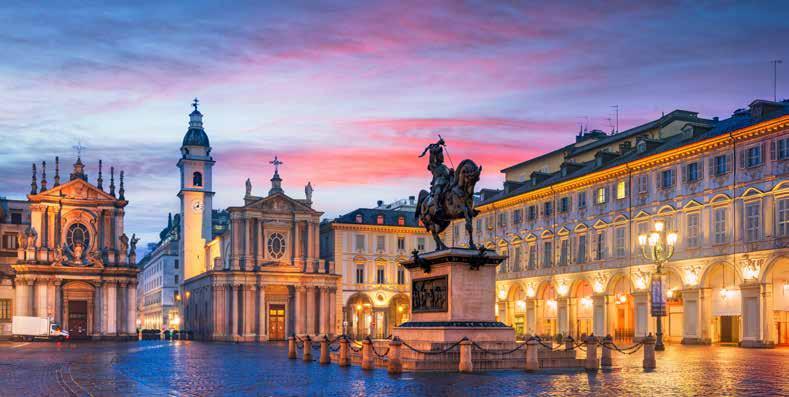
Discover two of northern Italy’s most captivating cities as we explore the artistic, architectural, and political legacy of two pivotal centres of Italian history: Turin, capital of the House of Savoy, and Genoa, the influential maritime republic known as La Superba
Explore Turin’s Egyptian Museum, home to one of the world’s most important collections of antiquities outside Cairo
Visit the Royal Residences of the House of Savoy, including the splendid Palazzo Madama and La Venaria Reale
Discover the art treasures of Genoa’s Strada Nuova Museums - Palazzi Rosso, Bianco and Doria Tursi
Day One | UK - Turin
We fly from London Heathrow to Milan, then transfer to Turin, capital of Piedmont and former seat of the House of Savoy.
Day Two | Turin
Our exploration of Turin begins with its Roman heritage at the Palatine Gate and Roman Theatre, remnants of Augusta Taurinorum. We visit the Cathedral of San Giovanni Battista, which houses the Chapel of the Holy Shroud, and Chiesa San Lorenzo, Guarino Guarini’s masterpiece of baroque spatial geometry with its extraordinary intersecting arches and inventive dome. In the afternoon, we examine the Galleria Sabauda, the ducal picture gallery featuring works by Van Dyck, Veronese, and Guido Reni, and the Archaeological Museum, with its important Roman material from Piedmont.
Day Three | Turin
We spend the morning at Palazzo Madama, the medieval castle transformed into a baroque residence, now housing Turin’s civic museum of ancient art with exceptional collections of ceramics, goldwork, and furniture. We also visit Palazzo Carignano, Guarini’s baroque façade concealing the birthplace of Italian unification. The afternoon takes us to the Pinacoteca Giovanni and Marella Agnelli, a fascinating hanging structure on the roof of the Lingotto in Turin, the first great Fiat factory. Here the private collection of works on display include paintings by Matisse, Balla, Severini, Modigliani, Tiepolo, Canaletto and Bellotto.
Four | Turin
Today we explore the Egyptian Museum which contains the world’s second-most important collection of pharaonic antiquities, established in 1824 with the acquisition of the Drovetti collection.
We examine statuary, papyri, tomb furnishings, and the remarkable finds from Deir el-Medina. In the afternoon, we visit the Villa della Regina, a hillside pleasure palace perched above the city. Recently reopened after extensive restoration, it is surrounded by Italian-style gardens complete with pavilions, water features, and newly revitalised agricultural terraces exemplifying the Savoy taste for villeggiatura.
Day Five | Turin - Genoa
Before leaving Turin, we visit La Venaria Reale, the magnificent hunting lodge and palace complex commissioned by Duke Charles Emmanuel II. Designed by Amedeo di Castellamonte and later enhanced by Juvarra, the palace demonstrates the Savoy dynasty’s emulation of Versailles, with its grand galleries, chapel, and restored gardens. After lunch, we make our way south to Genoa, the former maritime republic arriving late this afternoon.
In Genoa, we begin at Palazzo Reale, the seventeenth-century residence of the Balbi family. This spectacular estate overlooks the sea with terraces and gardens and decorated by the best artists of the time. Inside, a sequence of frescoed and decorated rooms culminates in the grandiose Hall of Mirrors and lavish picture gallery. Next we explore the Strada Nuova Museums: Palazzo Rosso, with its Genoese baroque interiors and paintings by Veronese, Dürer, and Van Dyck; Palazzo Bianco, housing Flemish and Italian masterpieces including Caravaggio’s Ecce Homo; and Palazzo Doria Tursi, the grandest of the street’s palaces, where we see Paganini’s violin and Genoese decorative arts.
YOUR EXPERT GUIDE
Dr Eireann Marshall
An Honorary Research Fellow for the Open University, Eireann has led many Andante tours. She won the Top History and Culture Guide prize at Wanderlust magazine’s 2019 World Guide Awards.

This morning we visit the extraordinary Cathedral of San Lorenzo, with its striking striped Gothic façade and treasury containing the Sacro Catino, once believed to be the Holy Grail. Begun in the 12th century and completed over several centuries, it reflects Genoa’s evolving artistic connections across the Mediterranean. Next we visit the nearby Basilica of Santa Maria del Castello perched on the ancient hill that once formed the heart of Genoa’s medieval settlement. This site offers a quieter but no less compelling counterpart to the city’s grander churches and inside lie refined fresco cycles by the Lombard masters and a notable wooden cloister that speaks to the site’s monastic past. The afternoon is free to explore Genoa’s historic centre independently.
Day Eight | Milan - UK
We transfer to Milan Airport for our return flight to London Heathrow.
• Expert Guide Lecturer & Professional Tour Manager
• Entries to all sites as per the itinerary
• Andante Field notes
• All taxes & gratuities to local staff (drivers, waiters, site custodians)
Included travel
• Return flights from London Heathrow, private group transfers to/from the airport and hotel and all local transport aboard a private air-conditioned coach
Accommodation
• 4 nights’ in the Hotel Concord Torino, Turin and 3 nights’ in the Hotel Bristol Palace, Genoa
Culinary inclusions
• 7 breakfasts, 6 lunches & 7 dinners
• Water with all meals, wine & tea or coffee with dinner
& prices per person
For full details of this tour visit andantetravels.co.uk/atag
From the Etruscans to the Great Renaissance Families
8 DAYS FROM £3,690pp
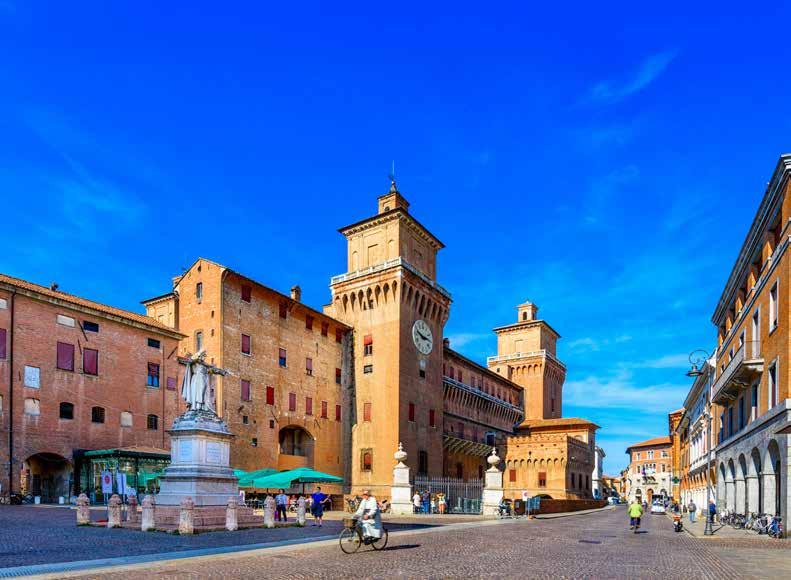
Embark on a journey through history along the mighty Po River, Italy's longest waterway which meanders across the country from the Cottian Alps to the sparkling Adriatic. Once playing a significant role in the development of Italy's economy and culture, its banks have witnessed the rise and fall of many different civilisations and therefore offers a real treasure chest of ancient relics. Learn about cities such as Spina that went undiscovered for thousands of years, uncover stories of power, including the Este family who dominated much of the region for centuries, and admire a range of fascinating items in a range of famous museums and sites.
Today fly from London Heathrow to Bologna and transfer to our hotel.
The delights of Bologna await today, beginning with the Archaeological Museum. Housed in the 15th-century Palazzo Galvani, it boasts an impressive collection of artefacts, spanning from prehistoric times to the Roman age. Highlights include the Etruscan and Greek collections along with significant Egyptian items, providing a comprehensive overview of ancient civilisations as well as Bologna's own history. Next, we head to the multimedia library of Salaborsa, a fascinating cultural space inside Palazzo d'Accursio, the former seat of the city's government. The transparent floor allows us to admire the ancient excavations, where two main Roman streets were unearthed in the 1990s along with remnants of Etruscan and Villanovan civilisations, indicating that Bologna was a significant settlement long before Roman times. Look out for ancient wells, cisterns and parts of a Roman basilica before we have lunch in Bologna. In the afternoon we visit Basilica San Petronio, a majestic example of an Italian Gothic cathedral that dates back to 1390, before continuing to Santuario Santo Stefano. Known as sette chiese (seven churches), the complex merges multiple buildings constructed in different eras and is also home to an art museum.
After breakfast we drive to pretty Ferrara, where we discover a whole host of treasures. First is the defining image of the city, the medieval moated fortress of Castello Estense. Originally built for the Este family who ruled Ferrara for centuries, it features four huge towers, drawbridges, prison cells and opulent rooms, including the Ducal Apartments, adorned with frescoes and lavish decorations. The stunning 12th-century Cattedrale San Giorgio is next, decorated with intricate sculptures and reliefs depicting biblical scenes and medieval life. There are also beautiful frescoes to admire inside, as well as an impressive altar and the tombs of notable figures from Ferrara's history. We continue to the National Archaeological Museum of Ferrara, set in Palazzo Costabili. It is renowned for its varied collection of artefacts from the Etruscan city of Spina, a significant settlement which flourished between the 6th and 3rd centuries BCE and was discovered by chance in 1922. While objects include pottery, bronzes and jewellery, the highlight of the museum is the collection of Greek vases, considered one of the most significant in the world. Following lunch, we make our last stop in Ferrara at the Renaissance Palazzo Schifanoia Built for the Estes to 'escape from boredom' as the name translates to, we learn more about the powerful family here. A testament to the artistic achievements of the Este court, the Salone dei Mesi (Hall of the Months) is a sight to behold,
adorned with some of Italy's most important 15th-century frescoes that depict the activities of each month, astrological symbols and mythological figures. We explore the charming garden and several rooms showcasing Renaissance décor before making our way back to Bologna.
Day Four | Comacchio
Today we head to the pretty town of Comacchio in the Emilia Romagna region, known as 'Little Venice' thanks to its picturesque canals and bridges. After a walk in the historic centre we visit the Museum of the Ancient Delta to learn more about the crossroads of the ancient world. The vast collection of artefacts helps to tell the stories of the civilisations that once thrived on the Po Delta, including the well-preserved Roman shipwreck from the 1st century BCE, with its cargo of amphorae and other goods, along with ancient fishing tools, pottery and household items. We enjoy lunch in Comacchio and drive back to Bologna, stopping at the 9th-century Pomposa Abbey, a Benedictine monastery famous for its Carolingian manuscripts and stunning Romanesque architecture. You can expect a tall bell tower, intricate Biblical frescoes, beautiful mosaics and ancient relics along with the cloisters, refectory, chapter house and scriptorium.
The lovely city of Modena is the focus today, nestled on the south side of the Po Valley. Our
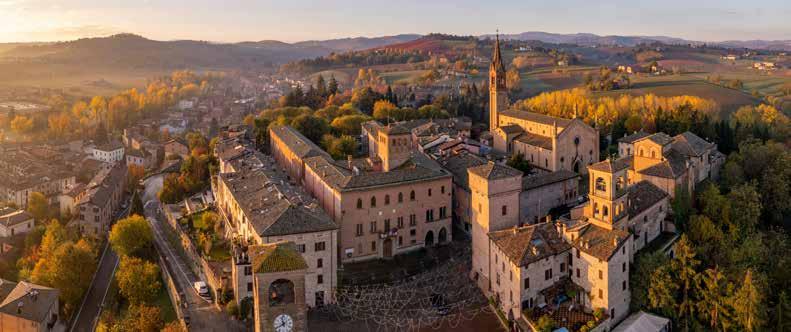
Uncover the remnants of Spina, once the most important port of the Adriatic which went undiscovered for centuries
Glimpse into the rich history and power of the Este family at Palazzo Schifanoia, home to some of Italy's most important 15th-century frescoes
Learn more about the crossroads of the ancient world at the Museum of the Ancient Delta, featuring a well-preserved Roman shipwreck
Admire the panoramic views from Ghirlandina Tower, adjacent to the Romanesque masterpiece of Modena Cathedral
first stop is the impressive cathedral, a UNESCO World Heritage Site. This Romanesque masterpiece, constructed in the 12th century, is famous for its stunning architecture and intricate sculptures, with the façade adorned with remarkable Biblical reliefs by Wiligelmo. Inside, the cathedral houses the relics of Saint Geminianus, the patron saint of Modena, and features a beautifully decorated crypt, impressive frescoes and a majestic rose window. The climb up to the top of Ghirlandina Tower is well worth it to see the panoramic views of the city and surrounding countryside. Next stop is the Baroque Ducal Palace, where a number of Este family members were born or died. Serving as the residence of the Este Dukes of Modena until 1859, it now houses the Military Academy of Modena. We explore the ducal apartments, decorated with exquisite frescoes, tapestries and period furniture After lunch in Modena, we head to the Mutina Archaeological Park. Remarkable discoveries took place here during the construction of the underground car park, including the remnants of roads and buildings from the Roman period. As almost all of the structures are in the exact position as they were found, the ancient city layout and various exhibits provide a fascinating insight into one of the main roads which once connected the northern provinces of the Empire with Rome. Afterwards we make our way back to Bologna.
This morning we visit Parma, known for its artistic masterpieces and culinary delights. We discover some of the city's highlights, including the Teatro Farnese, a spectacular wooden theatre built in the early 17th century. Originally constructed for grand ducal ceremonies, it was heavily damaged during World War II and has undergone a meticulous restoration process. We also explore the stunning Baptistery, one of Europe's most important medieval monuments as it marks a transition between Romanesque and Gothic styles. Made from pink Verona marble, the octagonal marvel was completed in the 13th century and boasts intricate bas-reliefs depicting biblical scenes, historic
frescoes and a magnificent dome showcasing the Last Judgment. The adjacent cathedral is also highly impressive, dating back to 1074 as a fire destroyed the previous early Christian basilica. Notable features include beautiful Renaissance art, a large marble pulpit, centuries-old statues of lions, the ancient Bishop's throne, the crypt and grand frescoes by Corregio, particularly the Assumption of the Virgin, which graces the dome with its dynamic and illusionistic style. After some lunch and a chance to sample Parma's local delicacies, we head to the National Archaeological Museum, one of Italy's oldest museums and a real treasure trove of ancient artefacts. Established in 1760 to house the items found during the excavation of Roman Veleia, the museum's extensive collection now spans several millennia, from prehistoric times to the late Roman period. Highlights include a remarkable array of Roman sculptures, mosaics and inscriptions, Etruscan and Greek items plus the Tabula Alimentaria, a large bronze tablet that details a Roman welfare programme for children.
After breakfast we drive to the Museum of Villanovan Civilisation, located in the town of Castenaso, and journey back to the early Iron Age. The museum is dedicated to the Villanovan culture and influence, considered to be the earliest phase of the Etruscan civilisation. Spanning the 8th to 6th centuries BCE, the artefacts here include pottery, bronze tools, weapons and jewellery along with funerary urns and grave objects that illuminate the burial practices of the Villanovans. Outside, there is also a fascinating reconstruction of a furnished Villanovan hut. Our second stop of the day is in Marzabotto, known for its tragic history during the Second World War and its Etruscan site, the ancient city of Kainua. Located on this site is the Pompeo Aria National Etruscan Museum, and a visit here offers a captivating glimpse into the life of Etruscans through its displays of unique artefacts and burial objects found in the necropolis, as well as ruins of temples, houses and streets. We drive to Montale after lunch and visit the Bronze
Dr Eireann Marshall
An Honorary Research Fellow for the Open University, Eireann has led many Andante tours. She won the Top History and Culture Guide prize at Wanderlust magazine’s 2019 World Guide Awards, and has also published a variety of articles on Roman North Africa.

Age site of Terramare di Montale. This open-air museum is a wonderful place to learn about the Terramare culture, which thrived in the Po Valley during the Middle Bronze Age. Stroll through the reconstructed village from 3,500 years ago with its defensive walls, hut and moat, based on the extensive excavations carried out in the area, and discover the tools, ornaments and other artefacts on show to further understand the technological and cultural advancements of the Terramare people. Afterwards we return to Bologna for our final evening.
We transfer to Bologna Airport for our return flight to London Heathrow.
YOUR COMPREHENSIVE
GUIDED TOUR PRICE INCLUDES
• Expert Guide Lecturer & Professional Tour Manager
• Entries to all sites as per the itinerary
• Andante Field notes
All taxes & gratuities to local staff (drivers, waiters, site custodians)
Included travel
• Return flights from London Heathrow, private group transfers to/from the airport and hotel and all local transport aboard a private air-conditioned coach
Accommodation
• 7 nights' in the Hotel Porta San Mammolo, Bologna Culinary inclusions
• 7 breakfasts, 6 lunches & 7 dinners
• Water with all meals, wine & tea or coffee with dinner
Dates & prices per person
Date Twin/Dbl Share SS 6th - 13th Jul £3,890 £3,690 £495
For full details of this tour visit andantetravels.co.uk/acop
Learn more about Pompeii at the recently excavated villas
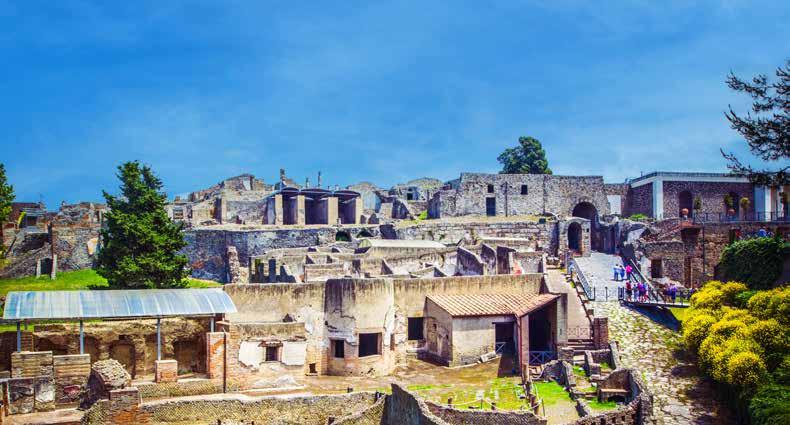
Nowhere in the world gives deeper insight into Roman life than the dramatic seaside towns of Pompeii and Herculaneum. Before the cataclysmic eruption of Vesuvius, these were thriving, lively seaside towns. Pompeii was a trading town, equipped with bars, shops and brothels, while neighbouring Herculaneum was an affluent and elegant town. All this came to an abrupt halt, one autumnal day in AD 79, when Mount Vesuviuswhich had done little more than rumble for years - erupted with incredible force.
Two thousand years later, the sites of the Bay of Naples confront the modern visitor with a vivid, haunting immediacy like nothing else in the ancient world. In some cases, we even know the names, professions and personal histories of the people who owned the villas and shops we visit. The preservation of Herculaneum, Pompeii and its surrounding sites is remarkable and the archaeology is beyond compare, which is why we have been leading tours here for nearly 40 years. This is an exciting time for visitors to these Vesuvian towns, as new discoveries are constantly being made, and new areas of excavation are opened up. Walk as the Romans did, from amphitheatre to baths to forum, as our Guide Lecturer conjures an evocative picture of the everyday life of these prosperous Roman towns.
Enjoy visits to off-the-beaten-track villas at Stabiae
Private access to the Cave of Sejanus (Grotta di Seiano) and the adjoining Villa of Pausilypon with its dramatic coastal views
Visit newly excavated houses in Pompeii
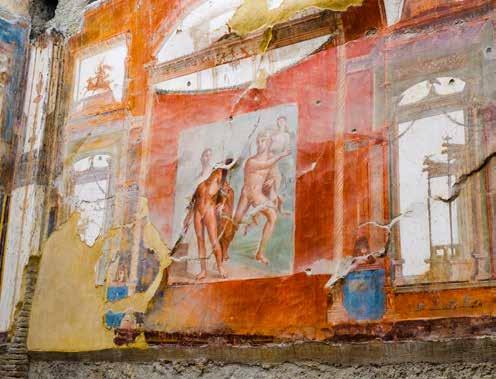
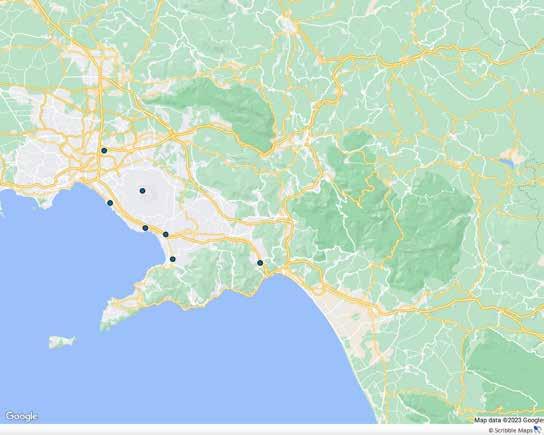
Today we fly from London Heathrow to Naples and then we transfer to our hotel on arrival.
Our day begins with a visit to the fascinating site at Paestum, ancient Poseidonia. Long before the Romans came, this was a thriving Greek city that was part of greater Greece from the 6th century BCE. After lunch, we discover glorious Greek temples here. We then visit the Paestum Museum, famed for its archaic metopes and painted tombs, including the wonderful Tomb of the Diver, dating to circa 480 BCE. We have also arranged special access to the magnificent Store Rooms of Paestum, where we see artefacts usually hidden from view.
Day Three | Pompeii
We devote the entire day to Pompeii. No other site compares in revealing details of daily life in a Roman
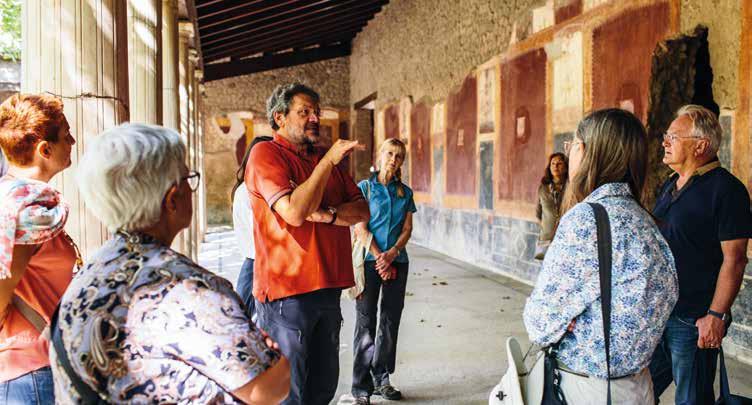
town. We visit some of the most well-preserved buildings and the amphitheatre, theatre, forum, bath-houses, bars and even brothels. Fountains in the street are worn from where countless people rested their hands to take a drink and Roman graffiti can still be seen on the walls. Travelling via the best routes to avoid the crowds, we visit some houses that are newly reopened to the public.
Our first visit of the day is to the National Archaeological Museum in Naples, home to an exceptional collection of artefacts and an essential complement to exploring the archaeological sites of Pompeii and Herculaneum. Highlights include the famous Alexander Mosaic, the Bronze Runners and the Farnese Bull, carved from a single block of marble, the largest ancient sculpture ever recovered. After lunch we move on to Pozzuoli where we explore the Flavian amphitheatre, one of Italy’s largest Roman arenas. Later, we have arranged private access to the Cave of Sejanus, a monumental tunnel dating to the age of Augustus, which leads to the lovely seaside villa of Pausilypon the summer house of an elite Roman, Publius Vedius Pollio. Much of the villa has been lost to the sea but its amphitheatre, odeon, gardens and other structures still are visible.
Today we venture off the beaten-track to the villas of Stabiae, an exclusive Roman resort for the very wealthy. The vast Villa San Marco, with its swimming pool and bath complex, is one of the most opulent along this coast and it remains impressive in its scale. We will also visit the Villa Arianna, with its wonderful frescoes and fabulous views over the Bay of Naples. After lunch, we visit the Archaeological Museum of Castellammare di Stabia Libero D’Orsi, which opened in September 2020 specifically for the exhibition of the many important items found in the region of Stabia. There are a large number of finds on display, some never before exhibited in Italy, including frescoes, inlaid floors, stuccoes, sculptures and tableware.
This seaside city was buried to a significantly greater depth than Pompeii - under 23 metres of pyroclastic to be exact - perfectly preserving everyday objects as well as houses up to their rooftops. In addition to the site, we explore the Antiquarium, newly opened after 44 years, which houses precious articles found along Herculaneum’s seafront, including a well-preserved boat. After lunch, we visit Boscoreale to explore Villa Regina, discovered in the late 20th century while digging for the foundations of council housing. In contrast to the opulent villas we have seen on other days, this is a modest small holding which provides us with evidence of how ordinary people lived. Boscoreale is a locality north of Pompeii located on the slopes of Vesuvius, identified by some with the Pagus Augustus Felix Suburbanus. With the inauguration of the Great Pompeii, in October 2023, the Antiquarium of Boscoreale was reopened with a room dedicated to the excavations underway in the suburban villa of Civita Giuliana, with the ceremonial chariot found there in 2021.
Day Seven | Vesuvius - Oplontis
Today, we ascend to the great volcanic crater of Vesuvius. The majority of our journey is by bus, but the final part requires a walk of around 30 - 40 minutes, which is well worth the effort. The walk starts at Monte Somma, the crater of the AD 79 eruption, where we grasp the scale of it. After the ascent and peering into the crater being forged since the ancient eruption, we see fumaroles and the layers of previous eruptions, while walking around the perimeter of the crater affords magnificent views over the Bay of Naples. On good days, you can even make out Pompeii. After lunch, we continue to the impressive villa at Oplontis, which boasts sumptuous frescoes, a bath complex, an enormous swimming pool and interesting slave quarters. This villa was supposedly owned by Emperor Nero and was destroyed and subsequently preserved by Vesuvius’ eruption.
Day Eight | Naples - UK
After breakfast, our tour ends, and we catch our return flight back to London Heathrow.
Dr Gillian Shepherd
Director of the Trendall Center for Ancient Mediterranean Studies at La Trobe in Australia, Gillian specialises in the Greek colonisation of Italy and Sicily. She is especially interested in the historiography of colonisation. Join Gillian on our 7th September departure. Diana Blumberg


Diana Blumberg is an archaeological scientist who specialises in the analysis of archaeological materials. She has worked on archaeological field schools in both Pompeii and Portus (the latter being one of the harbours of ancient Rome). Join Diana on our 28th September departure.
This morning, we head to Herculaneum, which perfectly complements a visit to Pompeii. YOUR COMPREHENSIVE EXPERT
• Expert Guide Lecturer & Professional Tour Manager
• Entries to all sites as per the itinerary
• Andante Field notes
• All taxes & gratuities to local staff (drivers, waiters, site custodians)
Included travel
• Return flights from London Heathrow, private group transfers to/from the airport and hotel and all local transport aboard a private air-conditioned coach
Accommodation
• 7 nights' in the Hotel Scapolatiello
Culinary inclusions
• 7 breakfasts, 5 lunches & 7 dinners
• Water with all meals, wine & tea or coffee with dinner
Dates & prices per person
Date Twin/Dbl Share SS
7th - 14th Sep £3,170 £3,020 £265
For full details of this tour visit andantetravels.co.uk/apom
Exploring Andalucía and the Algarve on a cruise
8 DAYS FROM £3,630pp Easy
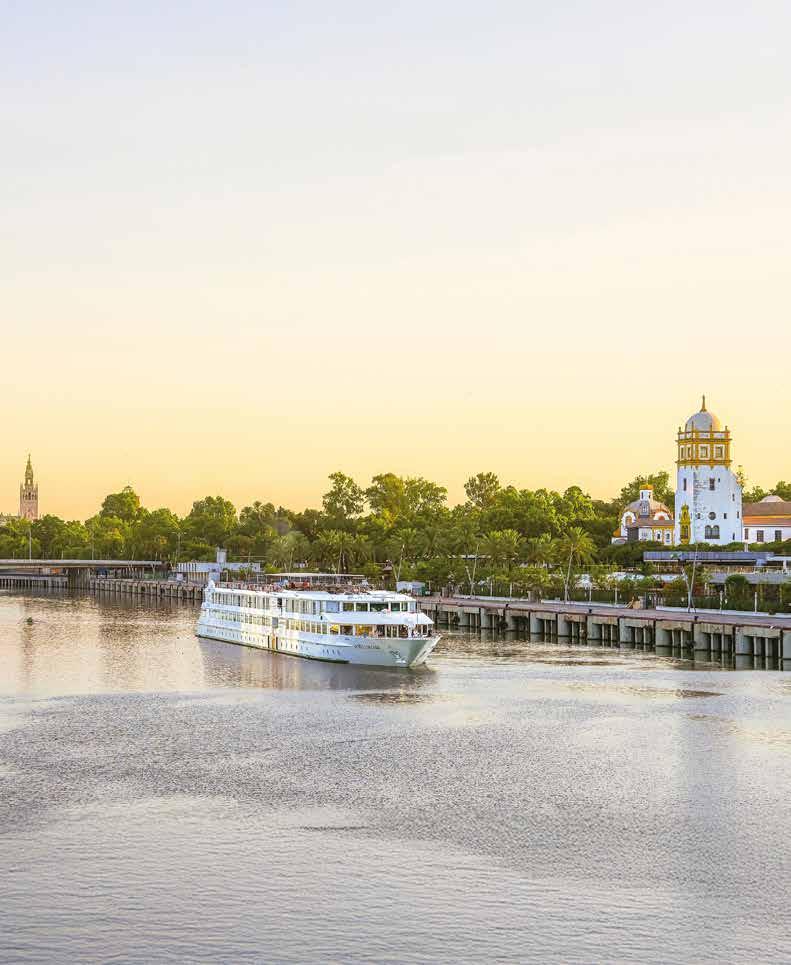
Called the Baetis in the Roman period, the Guadalquivir is the most important river in Spain, not just because it is the country’s only navigable river but because it flows through Andalucia, the heartbeat of Iberian history. The current name of the river derives from the Arabic wadi al kabir, or great river, bestowed on it by the Moors who settled in the area from the 8th century onwards. The river acted as a conduit of trade and culture over millennia of history, allowing great cities to flourish in the magnificent epochs which graced Andalucia. Originating in the mountains of the Jaen province, the Guadalquivir empties itself in the Gulf of Cadiz, through a plethora of cities which forged Spanish history, including those that were the homeland of Roman emperors and others which reached their peak when the region was known as Al Andalus. You will travel back as far as the Phoenicians, who founded both Cadiz, as well as the lesser-known city of Huelva, and will admire the wonderful site of Italica, which is famed not only for its remains but for its giving rise to the emperors Trajan and Hadrian. We will also explore the great Moorish cities of Seville, Cordoba and Granada to consider the period in which the rich cities of Andalucia were at the forefront of science and culture.
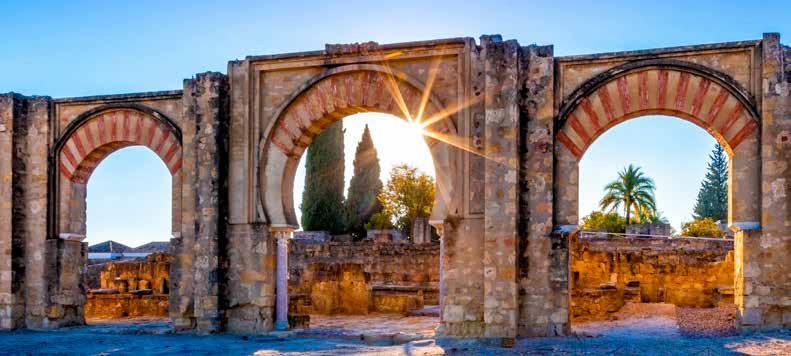
Explore Italica, the oldest Roman city outside of Italy, and home to stunningly preserved remains unencumbered by later periods
Examine the historic remains of Cádiz, including its extraordinary Phoenician and Roman remains
Visit unique Mosque-Cathedral of Cordoba, a colourful blend of Islamic and Renaissance architecture
We start our tour by flying from London Gatwick to Seville and, time permitting, visit the Metropol Parasol in the city. Afterwards, we join our ship, the MS Belle de Cadiz, in Seville.
We wake up in Seville, the capital of Andalucía, which was once the ancient city of Hispalis and later became enormously wealthy for its crucial role in the Transatlantic trade.
Exclusive Andante Excursion: Today, we explore Córdoba, a medieval European cultural hub and capital of the Umayyad Caliphate. We begin with the Mezquita, or Cathedral Mosque, built in the 8th century, retaining its Islamic essence despite later Catholic modifications. Next, the Jewish Quarter highlights the city’s multicultural past, linked to Maimonides and Averroes. Finally, we visit the Medina Azahara, a 10th-century palace-city.
We depart Seville this afternoon for the Isla Minima, set in the Marshlands of the Guadalquivir. Here we have a tour of an Andalucían hacienda before we sail to Puerto de Santa Maria.
Exclusive Andante Excursion: Today, we visit two UNESCO sites in Seville: the Real Alcazar, a 14th-century palace fortress showcasing mudejar architecture, and the Cathedral of Saint Mary of the See, the world’s largest Gothic cathedral, built to highlight the city’s significance after the Reconquista.
Day Four | Cadiz
This morning, we take a short drive to Cadiz, the important port which lays claim to being one of the oldest continuously inhabited cities in Europe. Located on a spit of land surrounded by sea, Cadiz retains an old quarter which bears the remains of its ancient past.
Exclusive Andante Excursion: Today, we explore the important city of Cadiz, founded by the Phoenicians in the 9th century BCE. We start with the archaeological museum , which contains an
important collection of artefacts from the city’s vast history, before proceeding to the Roman theatre, built in the 1st century BCE and once one of the largest theatres in the empire. We end the morning with a visit to the cathedral, built in the city’s heyday when the city was enriched by the Transatlantic trade. After lunch, we go back in time and visit the archaeological site, which contains the remains of the Phoenician settlement of Gadir, where we see remains of houses as well as a later Roman fish processing plant.
Day Five | Bay of Cadiz
We spend the day relaxing on board cruising on the Gulf of Cádiz towards Huelva.
Day Six | Huelva - Seville
We awake in Huelva, situated in the scenic Algarve, where we spend the day before sailing back to Seville.
Exclusive Andante Excursion: Called on’u ba by the Phoenicians who settled here and later renamed Onoba by the Greeks, Huelva was an important Phoenician trading post, exchanging precious metals and fish with cities throughout the Mediterranean. This morning, we explore this city’s important past at the important Huelva Archaeological Museum
Day Seven | Granada
We depart Seville this morning to take an excursion to Granada. This 9th-century fortress, later transformed into a 14th-century palace by the Emir of Granada, symbolises Andalucía’s rich Muslim heritage and cosmopolitan culture.
Exclusive Andante Excursion: After lunch, we explore the Archaeological Museum of Granada, which sheds light on the city and on Andalucían history.
Day Eight | Seville - UK
After disembarking the ship, we end our tour by visiting one of the most important Roman sites in Spain, Italica. The ancient city, founded in the 3rd century BC, is one of the best preserved in
Dr Doru Bogdan
A researcher and lecturer at the University of Alba Iulia in Romania, Doru is a specialist in Roman archaeology and has also supervised an array of fascinating excavations.

Spain and includes an amphitheatre, a number of elite houses, as well as a Traianeum, a shrine to the important emperor who was born there. The visible remains today derive from the Hadrianic period, when the city was enlarged and given the status of colonia. In the afternoon, we take our return flights to London Gatwick.
• Expert Guide Lecturer & Professional Tour Manager
• Entries to all sites as per the itinerary
• Exclusive Andante excursions with entry to all sites as stated in the itinerary
• An excursion to the Alhambra with Croisi Europe, shared with other passengers
• Andante Field notes and all taxes & gratuities to local staff (drivers, waiters, site custodians)
Included travel
• Return flights from London Gatwick, private group transfers to/from the airport and hotel and all local transport aboard a private air-conditioned coach Accommodation
• 7 nights’ aboard the MS La Belle de Cadix Culinary inclusions
• 7 breakfasts, 7 lunches & 7 dinners
• MS La Belle de Cadix: welcome cocktail and all on board drinks*, served in the restaurant and in the bar to include tea, coffee, soft drinks, beers, and a selection of wines, cocktails and long drinks.
*Premium branded drinks at own cost
Dates & prices per person
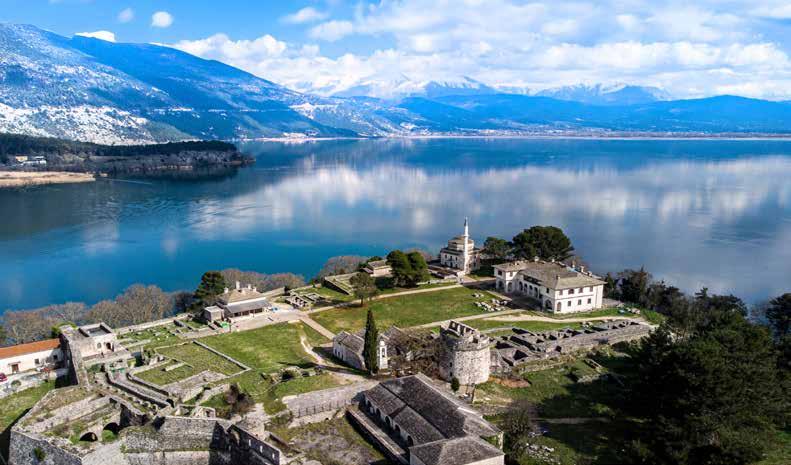
Positioned on the western shore of Lake Pamvotis and encircled by the impressive Pindus Mountains, we find Ioannina, capital of Epirus, and one of Greece’s most scenic towns. From this most excellent of bases, we explore a selection of extraordinary archaeological sites, each representing a different era of Greek history: Dodona, Greece's oldest oracle site (predating Delphi), the 4th-century city of Kassope with its impressive theatre, as well as Nikopolis, founded by Octavian in 31 BCE, and Arta, known for its outstanding Byzantine monuments.
Delight in a beautiful area of Greece that is still largely untroubled by masses of visitors
Discover the remarkable Church of Panagia Parigoritissia, a hidden gem of Byzantine architecture
Explore the ruins of Nikopolis, a city founded by Augustus to establish Roman dominion over Greece
Enjoy the quiet beauty of Kassope, where there are spectacular views of the Ambracian Gulf
We fly from London Gatwick to Preveza and transfer to our hotel in Ioannina.
We begin our exploration of Ioannina, a picturesque Greek town that once thrived as the medieval heart of Ali of Tepelena's realm, famously depicted in Byron's Childe Harold’s Pilgrimage Our walking tour includes the Castro and the Archaeological Museum, showcasing finds from Dodona, including pilgrim's questions and answers. In the afternoon, we visit Dodona, Greece's oldest oracle, where Zeus communicated through rustling oak leaves. The site hosts massive festivals and one of Greece's largest ancient theatres.
Our day is dedicated to Nikopolis, or 'Victory City', built by Augustus after the Battle of Actium in 31 BCE to secure Roman control over Western Greece. Nikopolis housed veteran Roman soldiers and forcibly relocated locals from towns like Kassope. We visit the Actian sanctuary, featuring an altar, theatre, stadium, museum, and ancient city centre remnants. On our return to Ioannina, we pause at the Haigos Giorgios aqueduct, which once supplied water to Nikopolis's Nymphaeum complex.
We journey south to Arta on the Ambracian Gulf, a significant Byzantine centre and capital of Pyrrhus of Epirus. Our visit includes the Archaeological Museum, the uniquely Byzantine Church of Panagia Parigoritissia, and the impressive Arachthos River bridge, an engineering marvel. Returning to Ioannina, we explore the fortified Hellenistic city of Orraon, featuring well-preserved houses, fortified walls with towers, and a strategic cistern, crucial for guarding the passage from the Amvrakikos Gulf to the Ioannina basin.
Day
We start at the Hellenistic city of Kassope, perched high in the hills with stunning views of the Ambracian Gulf, where the battle of Atrium occurred. Kassope is a model city, boasting an agora, theatre, and regular street grid, though abandoned for Nicopolis's population. In the afternoon, we visit the Nekromateion of the Acheron on the Ionian coast, a site shrouded in controversy, possibly linked to the oracle of the dead known from classical texts.
Day Six | Ioannina - Preveza - UK
We return to Preveza Airport for our return flight to London Gatwick.
Oliver Gilkes
One of our longest-standing Guide Lecturers, Oliver has worked as a field and museum archaeologist in the UK, Albania and Italy. Oliver is still involved in projects in Albania and is considered one of just a handful of experts on Albanian archaeology in the UK. Join Oliver on our 1st September departure
YOUR COMPREHENSIVE EXPERT GUIDED TOUR PRICE INCLUDES
• Expert Guide Lecturer & Professional Tour Manager
• Entries to all sites as per the itinerary
• Andante Field notes
• All taxes & gratuities to local staff (drivers, waiters, site custodians)
Included travel
• Return flights from London Gatwick, private group transfers to/from the airport and hotel and all local transport aboard a private air-conditioned coach
Accommodation
• 5 nights' in the SAZ City Life Hotel, Ioannina Culinary inclusions
• 5 breakfasts, 4 lunches & 5 dinners
• Water with all meals, wine & tea or coffee with dinner
Dates & prices per person
Date Twin/Dbl Share SS 1st - 6th Sep £3,255 £3,105
For full details of this tour visit
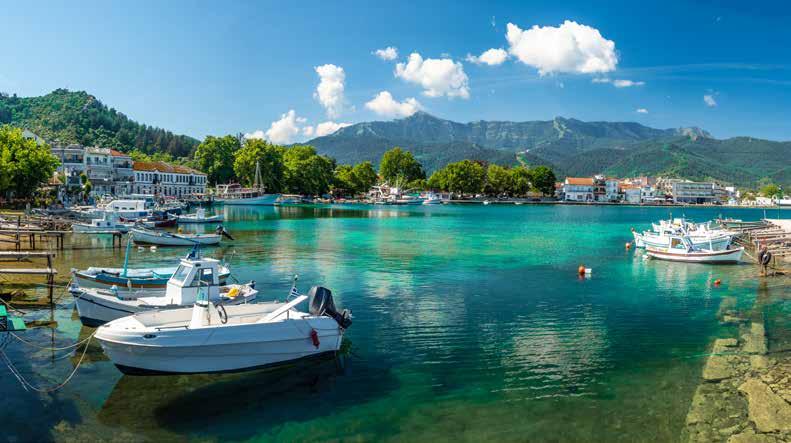
East of Thessaloniki are the mountains and plains of Thrace. Its ancient kingdoms were alternately at war and allied with Persians, Greeks and Macedonians. Discover the strategic cities that grew up in the wake of passing conquerors of Phillipi, explore Mesembria with its Romano-Thracian chariot burials and catch a glimpse of the city of Amphipolis. Thrace’s landmark archaeological sites and Byzantine, medieval and Ottoman monuments add to its rich cultural heritage. This wild land is notable for the peaceful coexistence of Christian and Muslim traditions.
Discover the traces of Roman, Medieval and Ottoman history which remain across the region
Take a short trip across the Thracian sea to the lovely unspoilt islands of Thasos and Samothrace
Explore the Sanctuary of the Great Gods built to honour fertility deities around 1000 BCE
Day One | UK - Thessaloniki – Kavala
This morning, we fly from London Gatwick we arrive in Thessaloniki and drive to Kavala visiting, en route, the great Athenian colony of Amphipolis, site of a battle between Athens and Sparta during the Peloponnesian war. We explore remains of a necropolis, a gymnasium as well as houses dating from the Roman period.
Day Two | Kavala – Philippi
Today we explore the Archaeological Museum in Kavala, which houses remains from Amphipolis and other ancient sites found nearby. We visit the UNESCO-listed Macedonian and Roman colony of Philippi and explore the forum and wellpreserved theatre. Later, we return to Kavala, where we see the Byzantine Castle
Day Three | Thasos
We make our way to Keramoti port and continue by ferry to the Island of Thasos, the most northerly of all Greek islands surrounded by the crystalclear waters of the Aegean Sea. We spend the day exploring the excavated remains of the classical city which once lay under modern-day Limenas and visit the Limenas Museum
Day Four | Abdera, Xanthi & Komotini
Take the day to explore the site of ancient Abdera, with links to Phoenicians and important scholars, including the Sophist Protagoras
and historian Hecataeus. We continue to Xanthi, known for its distinctive period architecture and then end the day with a visit to Komotini
Day Five | Kavala – Samothrace
On the island of Samothrace, we drive up to the Chora set high up on Mount Saos and visit its citadel built by the Galluzi family in the 14th century when Venice controlled large parts of the Aegean. After lunch, we check into our hotel with some free time to relax after our early start or you may wish to join an optional walk in Fonias Gorge.
Day Six | Samothrace – Alexandroupoli
We explore the famous classical ‘Sanctuary of the Gods,’ one of the most important religious complexes in Greece, set up in honour of the ‘Great Gods’. We visit the small site museum which presents exhibits from the Sanctuary.
Day Seven | Mesembria & Maroneia
Uncover the ruins at Mesembria, situated on the coast near the mouth of the stream Shabla Dere, now identified as the ancient Greek polis of Zoni Later, visit the Archaeological Museum containing more than 1,000 ancient objects excavated from the archaeological sites around Alexandroupoli, Evros and the wider region of Thrace.
Day Eight | Didymoteicho & Evros Delta
We travel north to Didymoteicho and explore some of the fortifications and remains of Byzantine
Dr Christina Hatzimichael-Whitley
A tutor in Greek archaeology at the Cardiff Centre for Lifelong Learning, Christina specialises in Minoan Crete and is Co-Director of the Praisos Survey.

houses as well as the small church of St Catherine. In the afternoon we take a boat trip on the Evros, a river associated with a number of Greek myths.
Day Nine | Alexandroupoli - Thessaloniki – UK
Our tour comes to an end, and we return to Thessaloniki to take our flight back to London Gatwick.
YOUR COMPREHENSIVE EXPERT GUIDED TOUR PRICE INCLUDES
• Expert Guide Lecturer & Professional Tour Manager
• Entries to all sites as per the itinerary
• Andante Field notes
• All taxes & gratuities to local staff (drivers, waiters, site custodians)
Included travel
• Return flights from London Gatwick, private group transfers to/from the airport and hotel and all local transport aboard a private air-conditioned coach Accommodation
• 3 night's in the Egnatia City Hotel & Spa, Kavala, 4 nights' in the Ramada Plaza by Wyndham Thraki, Alexandroupoli and 1 night in the Aiolos Hotel, Samothrace
Culinary inclusions
• 8 breakfasts, 8 lunches & 7 dinners
• Water with all meals, wine & tea or coffee with dinner
Dates & prices per person
Date Twin/Dbl Share SS 2nd - 10th Sep £4,175 £3,975 £530
For full details of this tour visit andantetravels.co.uk/athr
glories of northern Greece 8
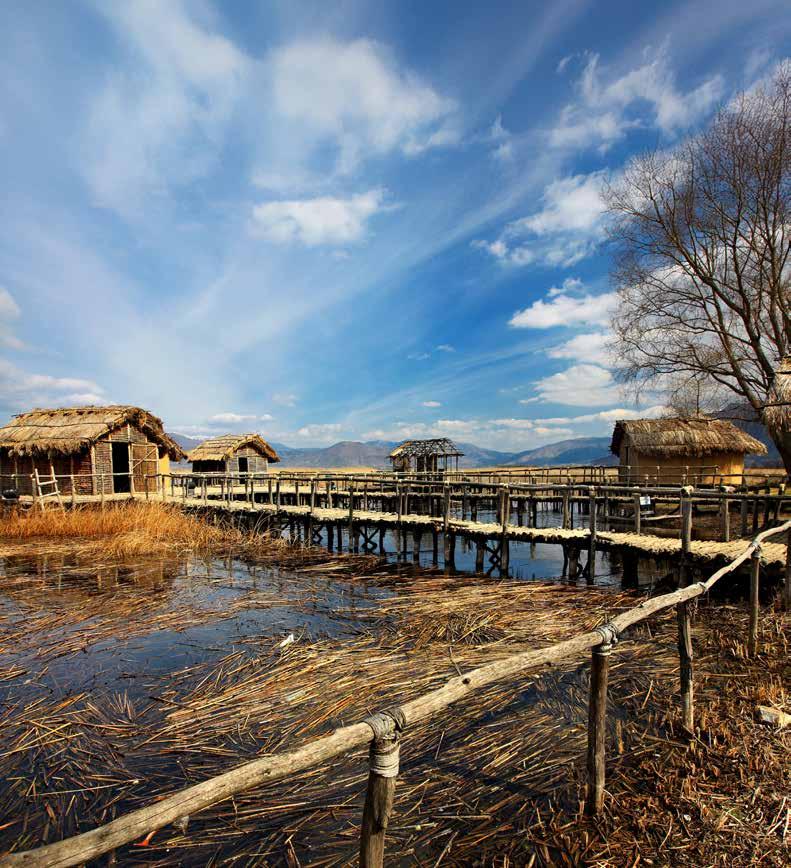
This tour of Northern Greece explores outstanding archaeological sites shaped by Macedonians, Thracians, Romans, Byzantines, Slavs and Ottomans. We journey through landscapes of canyons, lakes, waterfalls and rivers in a region dense with history. Discover sanctuaries, victory monuments, palaces, painted tombs and pebble mosaics at Verghina and Pella, and visit Kastoria’s beautiful lakeside setting and Thessaloniki, whose historical importance rivals Constantinople.
Admire the remarkable frescos which decorate the Byzantine churches of Kastoria
Discover the waterfalls at Edessa, a city defined by water
Enjoy the richest ancient burial ever found in Europe - the tomb of Philip II - and its museum
Explore ancient Pella, the capital of Macedonia and famous birthplace of Alexander
Today fly from London Gatwick to Thessaloniki and transfer to Kastoria, a beautiful lakeside town situated on a rocky isthmus on the shores of Lake Orestiada.
Aside from its picturesque charms, Kastoria boasts more than 70 Byzantine and post-Byzantine churches dating from the 9th to the 16th centuries scattered around the town. Many are sadly in a poor state of repair but distinguished by the frescoes which decorate them. The quality of the artwork is astonishing and we visit a small selection at Agios Stephanos, Taxiarchis Oikonomou and Archangel Michael, each concealing something unique behind their intricate brickwork. Later,
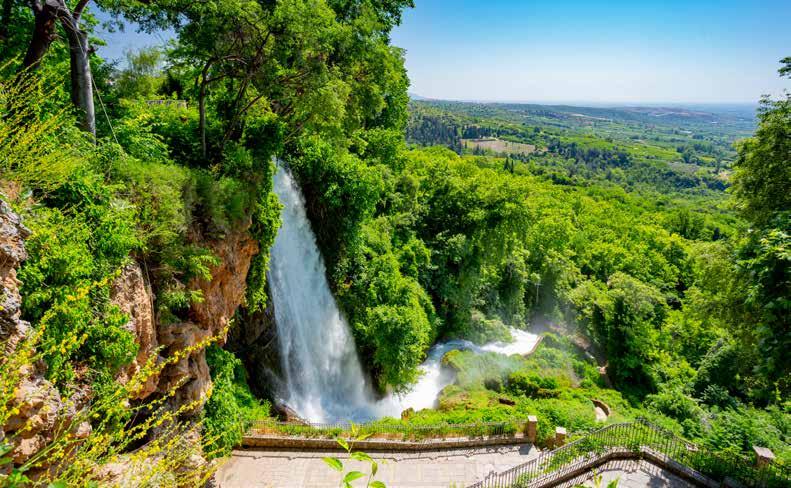
we explore Dispilio, the site of a large Neolithic settlement that once stood on stilts in the lake
Day Three | Kastoria - Edessa
Before we leave the region, we visit the Aigos Orestiko Archaeological Museum, which displays important finds from excavations in the region. Afterwards, we continue to Edessa, a city defined by the water which flows into it from the Pindus Mountains to the west. The waterfalls of Edessa are a striking natural wonder noted from the Roman Empire to the travel writing of Edward Lear. We admire their thundering beauty before we follow the road over the Ottoman bridge that carried the Via Egnatia across the river and explore the remnants of the ancient city. Later, we continue to Mezia and visit the Nymphaeum where Aristotle instructed the pupils of the Macedonian elite, Alexander the Great among them, in political discourse and philosophy.
Day Four | Edessa - Aigai - Thessaloniki
Today is dedicated to Verghina (ancient Aigai), the capital of the Macedonian kingdom before its move to Pella in the 4th century BCE. We see the remarkable painted tombs, displayed in the excellent site Museum of the Royal Tombs of Aigai, under the recreated mound which originally covered the burials. We also visit the newly opened Palace of Aigai, once one of the largest buildings in Classical Greece, as well as the new Polycentric Museum of Aigai. After our site visit, we continue to Thessaloniki for our first night in this fascinating city.
Day Five | Pella - Thessaloniki
Our first visit today is to Pella, where we explore Macedonia’s administrative capital and the birthplace of both Philip II and Alexander the Great. We see the monumental agora, houses and the exceptional mosaics made from carefully selected natural pebbles, now on display in the museum. These extraordinary mosaics were made mostly of carefully selected natural pebbles with occasional use of artificial tesserae, terracotta and
strips of lead; the eyes were inlaid with precious stones that have not survived. In the afternoon, we return to Thessaloniki to visit the Archaeological Museum with extraordinary finds from the city and its region, including the stunning Derveni bronze crater.
We travel south following the curve of the coastline to Dion at the foot of Mount Olympus, the religious capital of Macedonia. An evocative site with a magical setting, surrounded by trees in which nightingales sing and crisscrossed with a labyrinth of springs and streams. It is here that both Philip II and Alexander used to celebrate their victories by holding Olympic Games and magnificent receptions and where Alexander conducted sacrifices before his campaign into Asia in 334 BCE. We also visit the nearby small Archaeological Museum.
Day Seven | Thessaloniki
Today is devoted to Thessaloniki, founded by King Cassander as a new capital city. We explore the city on foot, taking in the Agora and Roman forum before heading to the Late Roman palace complex of Galerius to view the Rotunda and the Triumphal Arch of the emperor. We take a short walk along the promenade to see the White Tower, before stopping for lunch nearby. In the afternoon, we pay a visit to two of the city’s oldest churches, Aghios Dimitrios and Aghia Sophia, before we head to the Byzantine, UNESCO World Heritage-listed, Walls of Thessaloniki, or Kastra as they are known to those that live in the city. Over half of these fortifications, which once protected the city, are still standing today. Afterwards, a visit to the adjacent and equally superb Byzantine Museum completes our survey of the region's archaeology.
We transfer to the airport for our return flight to London Gatwick.
YOUR EXPERT GUIDE LECTURER
Dr Christina Hatzimichael-Whitley
A tutor in Greek archaeology at the Cardiff Centre for Lifelong Learning, Christina specialises in Minoan Crete and is Co-Director of the Praisos Survey.
YOUR COMPREHENSIVE EXPERT GUIDED TOUR PRICE INCLUDES
• Expert Guide Lecturer & Professional Tour Manager
• Entries to all sites as per the itinerary
• Andante Field notes
• All taxes & gratuities to local staff (drivers, waiters, site custodians)
Included travel
• Return flights from London Gatwick, private group transfers to/from the airport and hotel and all local transport aboard a private air-conditioned coach
Accommodation
• 2 nights’ in the Orologopoulou Mansion, Kastoria, 1 night in the Varosi 4 Seasons, Edessa and 4 nights’ in the Vanoro Hotel, Thessaloniki
Culinary inclusions
• 7 breakfasts, 6 lunches & 7 dinners
• Water with all meals, wine & tea or coffee with dinner
Dates & prices per person
Date Twin/Dbl Share SS
8th - 15th Sep £3,830 £3,630 £695
For full details of this tour visit andantetravels.co.uk/amcd
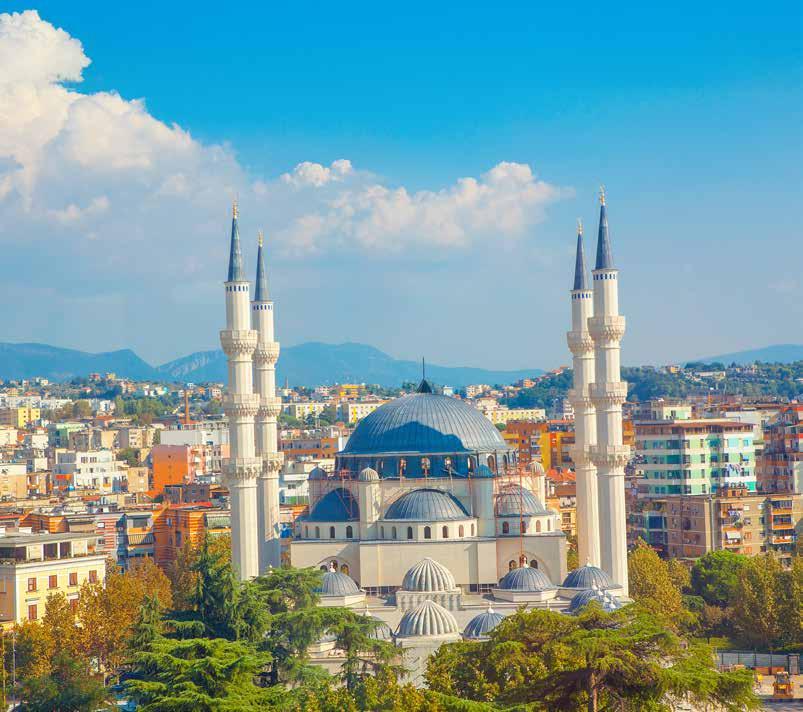
Geographically, and for 50 years culturally isolated during the post-war Stalinist regime, Albania is unlike any other country in Europe. Homeric landscapes, for the most part undisturbed by modern life, hold ruinous Classical cities which once vied in splendour with their neighbours in Greece and Italy. Greek coastal colonisation provided new stimulus to the native population, and recent excavations of their Illyrian hilltop cities, such as Byllis, have revealed the successful absorption of Hellenistic architectural ideas in their planned layout.
We fly from your London Heathrow to Tirana and transfer to our hotel.
We spend the morning in in Albania’s lively capital of Tirana and explore the city centre, a microcosm of Albania’s modern history. We visit the Ethen Bay Mosque and the National Historical Museum, which contains a large section on prehistory, including Neolithic painted pottery, weapons and jewellery from Bronze and Iron Age and Illyrian tombs, some of the best finds of sculpture, mosaics, pottery and figurines from Illyrian and classical sites. In the afternoon we head to the outskirts of the city where we explore Bunkart 1, an enormous bunker intended as a nuclear shelter for Enver Hoxha and his inner circle. Now converted into a museum and art centre, exhibits explore aspects of life under communist rule.
Today we drive to Apollonia Archaeological Park, site of the colony founded by the Corinthians in
588BCE, and one of the most important Greek cities on the Adriatic, the ruins of which cover an enormous area. Today the excavated remains are surrounded by olive and oak trees with grassy banks hinting at what may still lie buried underneath, while the evocative Byzantine monastery is now a museum. This afternoon, we drive along the ‘Mountains of Thunder’ down the beautiful Ionian coast, stopping for lunch in Vlora. We arrive in Saranda early this evening.
Day Four | Butrint
Our entire day is spent at Butrint, which achieved UNESCO World Heritage status in 1992 and remains Albania’s best-known site. It is one of the most striking in the Mediterranean and our guide lecturer Oliver Gilkes has directed excavations here for many years. The city lies in suggestive woodlands and contains remarkable monuments of all periods. After a picnic lunch at Butrint Castle, we visit the museum, before walking down to catch the ferry across the Vivari Channel. Here we explore the Venetian Triangular Fortress.
Today we leave the Ionian and cross the mountains to arrive in Gjirokastra. This amazing Ottoman city is also a UNESCO World Heritage Site, and we shall have the chance to visit the Gjirokastra Museum, the medieval Fortress and the National Museum of Arms. This afternoon we enjoy a special visit to the late Ottoman mansion, Zekate House. Built in
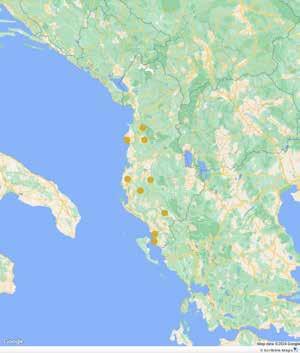
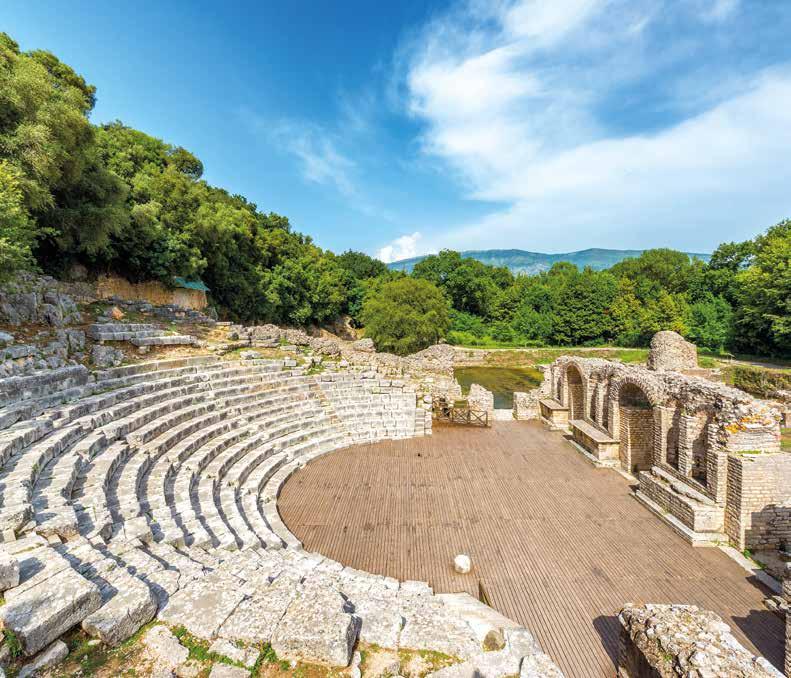
Uncover a story of the discovery of 2,000 years of untouched archaeological heritage
Spend a full day at the World Heritage Site of Butrint
Enjoy fantastic scenery, mountains, valleys and the dramatic Albanian Riviera
1812, Zekate is widely considered to be one of the grandest examples of its kind, providing us with amazing an insight into the upper echelons of Ottoman life.
Day Six | Gjirokastra - Byllis - Berat
We head northwards and along the valley of the mighty river Vjosa round to the ruins of Byllis According to legend, the city was founded by warriors led by Neoptolemus, the son of Achilles, returning from the Trojan wars. Archaeologists have yet to find evidence of Homeric heroes but have uncovered a Hellenistic-era stadium, theatre and fortifications as well as numerous later Roman churches. After lunch, we visit the excavated Byllis Cathedral, before continuing onwards to Berat and enjoy dinner at our hotel.
Day Seven | Berat - Kruja
Today we shift from classical to medieval times and focus on the attractive town of Berat, which is brimming with traditional architecture. The lower city along the riversides was the preserve
of the Muslim inhabitants, while by agreement the Christians held the citadel. Here we explore Byzantine churches, Ottoman mosques and the Onufri Museum, home to a spectacular collection of 16th-century religious artwork.
Day Eight | Durres
We visit Durres, Albania’s chief port and the starting point of the Via Egnatia. This was ancient Dyrrachium, a great imperial port on the Adriatic. Here we visit the 2nd-century amphitheatre, the largest in the Balkans, as well as sections of the mighty walls. After lunch we continue to Kruja, the mountain fortress of the Kastrioti family, and home of the National hero George Kastrioti Skanderbeg. We visit the Skanderbeg Museum and wander through the Ottoman bazaar; An eclectic last day to truly represent the many ages and influences of Albania.
Day Nine | Kruja - UK
This morning, we transfer from Kruja to the airport for our return flight to London Heathrow.
YOUR EXPERT GUIDE LECTURERS
Tony O’Connor
A specialist in the Roman Empire, Tony has excavated widely across Britain, Europe and North Africa.
He first led a tour for Andante over 10 years ago and he just gets better and better!

YOUR COMPREHENSIVE EXPERT GUIDED TOUR PRICE INCLUDES
• Expert Guide Lecturer & Professional Tour Manager
• Entries to all sites as per the itinerary
• Andante Field notes
• All taxes & gratuities to local staff (drivers, waiters, site custodians)
Included travel
• Return flights from London Heathrow, private group transfers to/from the airport and hotel and all local transport aboard a private air-conditioned coach
Accommodation
• 2 nights’ in the Hotel Opera, Tirana, 2 nights’ in the Hotel Brilant, Saranda, 1 night in the Hotel Kalemi, Gjirokastër, 1 night in the Hotel Onufri, Berat and 2 nights’ in the Hotel Panorama, Kruje
Culinary inclusions
• 8 breakfasts, 7 lunches & 7 dinners
• Water with all meals, wine & tea or coffee with dinner
Dates & prices per person
Date Twin/Dbl Share SS 5th - 13th Sep £3,120 £2,970 £355
For full details of this tour visit andantetravels.co.uk/aala
17 DAYS FROM
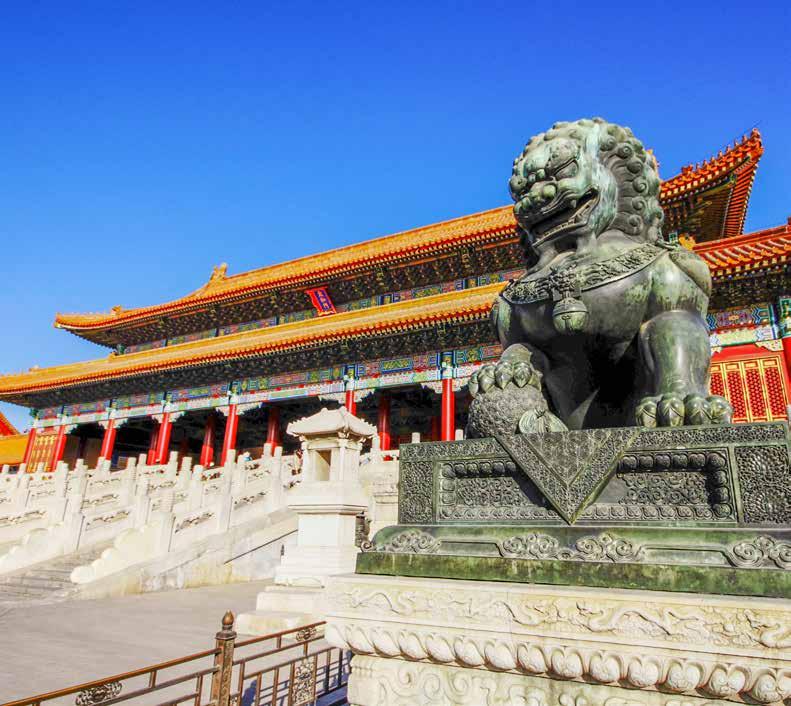
VISA-FREE TRAVEL
From 17th February to 31st December 2026, citizens from the UK, Canada, and numerous other countries can enter mainland China visa-free for up to 30 days for business, tourism, family visits, or transit.
From Buddhist temples to the gargantuan monuments of imperial ambition, to lesser-known prehistoric settlements, this tour is the story of not one but many Chinas through the ages. Over 17 days, we put the great sites we see into their historical context starting in Beijing, China’s capital. We see the Great Wall, Terracotta Warriors and Ming Tombs not just as grand relics, but as products of the time, people and places that led to their creation.
We embark on an overnight flight from London Heathrow to Beijing.
Upon our morning arrival in Beijing, we proceed to our hotel for an early check-in. After some rest, we regroup for lunch and head to the Forbidden City, or Palace Museum. Constructed between 1406 and 1420 during the Ming Dynasty, this grand imperial palace complex was home to Chinese emperors and the ceremonial and political heart of the Chinese government for nearly 500 years. We will traverse its halls and courtyards, admiring a remarkable collection of artwork and artifacts from China's imperial era. Tickets for the Forbidden City cannot be pre-purchased. If faced with any difficulty such as long queues, we will opt for a visit to the Imperial Palace.
This morning, we visit Tiananmen Square, the symbolic core of China and the site of many
significant historical events. We reflect on pivotal moments that have shaped the nation's path before moving to the National Museum, housing artifacts from Yuanmou Man, a fossil from 1.7 million years ago, to the last imperial dynasty, the Qing. After lunch, we explore the Temple of Heaven, a vast Taoist site built by the Yongle Emperor, serving as a sacred venue for Ming and Qing emperors' rituals.
Day Four | Beijing
We venture northwest of the city centre to visit the Summer Palace, originally built in 1750 during the Qing Dynasty by Emperor Qianlong as a gift for his mother. The palace spans about 3 km², featuring architecturally distinct buildings, bridges, gardens, and Kunming Lake, popular for boating. Later, we visit Fahai Temple at Cuiwei Mountain, known for its well-preserved Ming Dynasty frescoes.
Day Five | Beijing
We journey to Tianshou Mountain's slopes to visit the Ming Dynasty Tombs, the resting place of thirteen emperors. Three tombs are accessible, and we will explore these and The Sacred Way,
flanked by carved stone sculptures depicting imperial guards, officials, and mythical animals. In the afternoon, we visit the Great Wall at the Mutianyu section, known for its watchtowers and terrain.
Day Six | Beijing - Luoyang
We take our first high-speed train through the Wei Valley's fertile plains and hills, arriving in Luoyang in the afternoon. After lunch, we visit the Longmen Caves, carved into Yi River cliffs from 494 AD through seven dynasties, featuring over 1,300 caves and 100,000 Buddha statues.
Day Seven | Longmen Caves & Shaolin
Temple
We drive to Dengfeng, the cradle of Chinese Kung Fu, visiting the Pagoda Forest and Shaolin Temple, famous for its warrior monks and martial prowess. We will watch Kung Fu performances.
Day Eight | Luoyang – Xi’an
Before departing Luoyang, we visit the Ancient Tombs Museum. We then take the train to Xi’an, the Silk Road's starting point. After lunch, we

Discover China’s remarkable prehistoric archaeology at sites such as Jinsha and Banpo, which tell the story of ordinary people in ancient China
Admire the underground army of the life-sized Terracotta Warriors - one of the greatest archaeological discoveries in the world
Explore Luoyang - the cradle of Chinese civilisation - home to Buddhist temples from the 1st century at the outstanding Longmen Grottoes
Enjoy two of the stunning gardens at Suzhou, one of the oldest centres in the Yangtze basin
explore landmarks including the Drum Tower, Goose Pagodas, Muslim Quarter, and the City Wall.
Day Nine | Xi’an
We spend the morning with Xi’an’s Terracotta Army, crafted for Emperor Qin Shi Huang to guard his tomb. After lunch, we visit Banpo Neolithic Village, where a 6,500-year-old settlement was unearthed.
Day Ten | Xi’an
We visit the Han Jingdi Tomb, Emperor Jingdi's resting place, notable for its miniature terracotta figures. In the afternoon, we visit Shaanxi Provincial History Museum to view Tang Dynasty exhibits.
Day Eleven Xi’an | Chengdu
We travel by high-speed train to Chengdu, Sichuan Province's capital. After lunch, we visit Jinsha, an ancient Shu civilization site.
Day Twelve | Chengdu
We start at Sanxingdui, with artifacts from 1700-1150 BCE. After lunch, we visit Qingyang Palace, one of the oldest Taoist temples.
Day Thirteen | Chengdu – Wuxin - Suzhou
We fly to Wuxin and transfer to Suzhou, famous for its silk and stunning gardens. We visit The Garden of the Humble Administrator, a UNESCO World Heritage site.
Day Fourteen | Suzhou
We visit Suzhou Museum, showcasing 2,500 years of local history. In the afternoon, we visit Shi Zi Lin, or Lion Grove Garden.
Day Fifteen | Suzhou - Shanghai
We drive to Shanghai, exploring its contrasts with a boat trip along the Huangpu River.
Day Sixteen | Shanghai
We visit Shanghai Museum, renowned for its ancient art collection, followed by a tour of the French Concession
Day Seventeen | Shanghai - UK
We bid farewell to the East and fly home to London Heathrow from Shanghai.
YOUR EXPERT GUIDE LECTURER
Dr Iain Shearer
Iain is an archaeologist who works across the Middle East, Northern Africa, Central Asia, Caucasus, China, India, Pakistan, USA, Balkans, Europe and the UK..

YOUR COMPREHENSIVE EXPERT GUIDED TOUR PRICE INCLUDES
• Expert Guide Lecturer & Professional Tour Manager
• Entries to all sites as per the itinerary
• Andante Field notes
• All taxes & gratuities to local staff (drivers, waiters, site custodians)
Included travel
• Return flights from London Heathrow, private group transfers to/from the airport and hotel and all local transport aboard a private air-conditioned coach
Accommodation
• 4 nights’ at a hotel in Beijing, 2 nights’ at a hotel in Luoyang, 3 nights at a hotel in Xian, 2 nights’ at a hotel in Chengdu, 2 nights at a hotel in Suzhou, and 2 nights’ at a hotel in Shanghai
Culinary inclusions
• 16 breakfasts, 15 lunches & 15 dinners
• Water with all meals, tea or coffee with dinner
Dates & prices per person
Date Twin/Dbl Share SS
2nd - 18th Sep £6,710
For full details of this tour visit andantetravels.co.uk/acan
£810
No one does archaeological holidays quite like Andante, the first specialist UK operator to go beyond the surface of cultural travel, to dig deeper into the past and create unique explorations of some of the world’s most important sites. From the relationships we have with local custodians to the way travelling with an expert enhances the experience, and from 24-hour support from our team while you’re on tour to the careful thought that goes into each itinerary, trust Andante for your next ancient world adventure and travel with the best.
With maximum numbers of 18 on every tour, you can enjoy the sociability of travelling with people who share your interest but in a group small enough to allow for ease of access and quality time with your Guide Lecturer. We can travel with more flexibility and enjoy more of those spontaneous encounters which are simply not available to travellers on a typical group tour of 40 or more. Regardless of whether you are travelling with friends, with a partner or solo, rest assured you’ll find a happy, informal ambience on our tours.
The price you pay for your Andante Travels tour represents excellent value for money. With most aspects of your tour included, from return flights and entry to all sites as per the itinerary, from tips to treats and - more often than notwine with dinner. There is very little you will need to budget for on holiday except souvenirs and drinks at the bar.
If you are interested in joining one of our tours and want to know more, please give our Specialist Travel Executives a call today. They are ready to help with all of your questions.