


Table of Contents
Unscientific medical procedures:
Bloodletting Trepanation
Examples of Victims:
Victim of bloodletting
Victim of trepanation
Victim of lobotomy
The importance of transition from medieval biology to modern biology References P. 3 P. 5 P. 8 P. 11 P. 13 P. 16 P. 18
Unscientificmedicalprocedures
#1Bloodletting
by 4G (05) Chu Yan Ching (Stephanie) and by 4H (10) Lei Sydney
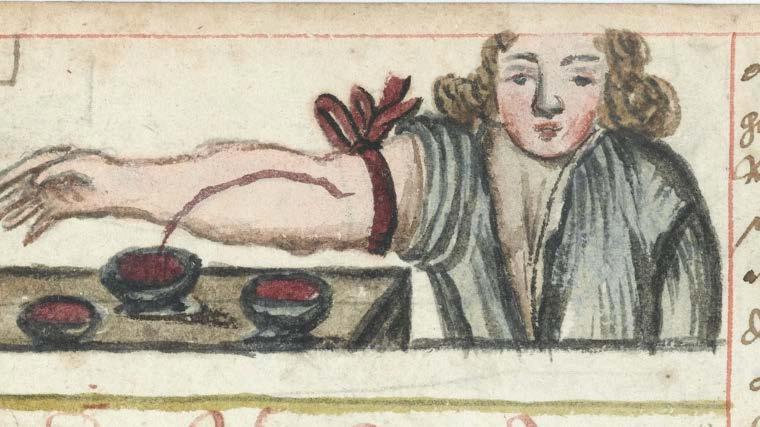
Fig1.Anillustrationofabloodletting,circa1675.
WhatisBloodletting?
Bloodletting, also known as phlebotomy, is the practice of withdrawing bloodfromaperson’sveins fortherapeuticreasons.Itwasbelievedtorid the body of impure fluids to cure a host of conditions. Originally, bloodlettinginvolved cuttingaveinorartery —typicallyattheelbowor knee—toremovetheaffectedblood.Today,however,thetermphlebotomy referstothedrawingofbloodfortransfusionsorbloodtests.
OriginofBloodletting
Bloodlettingisconsideredoneoftheoldestmedicalpractices,datingbackto ancient Egypt. From Egypt, it spread to Greece, where physicians like ErasistratusinthethirdcenturyB.C.believedthat all illnesses stemmed fromanoverabundanceofblood.ThispracticeflourishedinIndia,theArab world,andthroughouttheRomanempire,largelyduetotheinfluenceof Galen.BytheMiddleAges,bloodlettinghadbecomethestandardtreatment forvariousconditions,fromplagueandsmallpoxtoepilepsyandgout.
Why People Thought It Was Right
The principle behind bloodletting was to remove some blood in a controlled way so that the patient did not end up bleeding profusely. The practice was based on the theory of the four humors, which held that four fluids in the body—blood, phlegm, yellow bile, and black bile—were primarily responsible for a person's personality and health. Illness was believed to result from an imbalance in these humors. Bloodletting was seenasamethodto restorethisbalance.
Why It's Not Right
Despite its widespread use, bloodletting was often harmful to patients. Not only was there the risk of losingtoomuchblood, causing a dangerous drop in blood pressure and even cardiac arrest, but people who were alreadysicktooktheirchanceswith infection or anemia.Bythelate1800s, new treatments and technologies had largely edged out bloodletting, and studiesbyprominentphysiciansbegantodiscreditthepractice.
The Right Approach
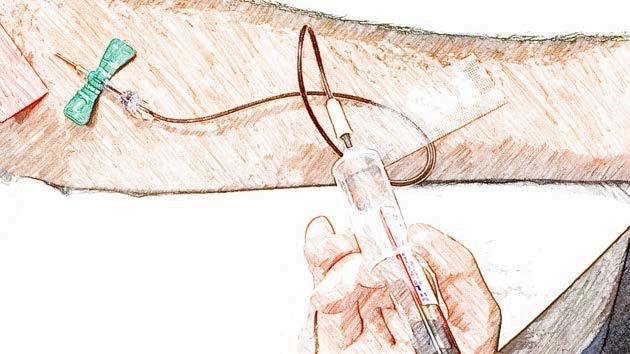
Today, the term phlebotomy refers to the drawing of blood for transfusions or blood tests. Therapeuticphlebotomy refers to the drawing of a unit of blood in specific cases like hemochromatosis, polycythemia vera, porphyria cutanea tarda, etc., to reduce the number of red blood cells. The traditional medical practice of bloodletting is today considered tobeapseudoscience.
#2 Trepanation
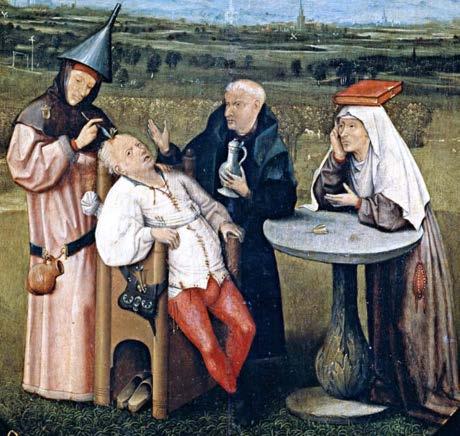
Fig 2. Detail from The Extraction of the Stone of Madness, a painting by Hieronymus Bosch depicting trepanation (c. 1488-1516)
What is Trepanation?
Trepanation, also known as trephination or burr holing, is one of the oldest surgicalproceduresknowntohumanityandreferstoasurgicalprocedurein which a circular piece of bone is drilled and excised, most commonly from the human skull, and in special cases, the fingernail or toenail. Trephination oftheskullcanbeperformedwhilethepersonis living or dead.
Origin of Trepanation
The oldest discovered skulls showing evidence of trepanation date back to the Mesolithic period — around 6000 B.C. They emerged in North Africa, Ukraine, and Portugal. They appeared in populations of hunter-gatherers distant from one another in time and space. Later on, the ancient Romans and Greeks, practiced trepanation in some form. This practice continued to carry on into parts of medieval Europe. Trepanation practices were also prevalentin South America, Africa and China.
Uses of Trepanation
1.
Treatment ofheadinjuries,includingwoundsandfractures
2.
Healing symptomsofdiseases,suchasepilepsyandheadaches
3.Ritualreasons
4.Spiritualreasons
6.
Letting out evil spirits in people who were thought to behave abnormally (mental disorders)
5. Increasing the blood flow and preventing the developing of degenerativediseases,suchasAlzheimer’s
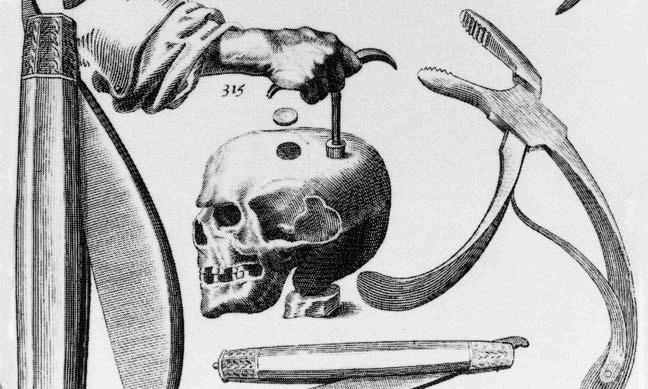
Methods of trephining
Acrosstimeandspace four mainmethodsoftrepanationwereused: Rectangularintersecting cuts (Peru,France,Israel,Africa)
1. Scraping withaflint(France)
2. Cutting acirculargrooveandthenliftingoffthediscof bone (Kenya)
4.
3. Theuseofacircular trephine ora crown saw (Rome)
Why People Thought It Was Right
Our early ancestors viewed trepanation as an extremely precise skill. Towards ancient Greek, the Hippocratic Corpus, a reference collection of ancient Greek medical texts, recommends trepanation for the prevention of complications related to skull fractures. Trepanation continued to be viewed as a necessary and well-tolerated medical procedurewellintothepre-moderntimes.
Why It's Not Right
The procedure comes with severe repercussions such as direct or indirect perioperative complications, which include increaseddamage to thebrain,infection,bloodloss,hemorrhage,and potentiallydeath dueto the trauma as the skull’s protective covering is compromised. Additionally, there is a high risk of infection if the operation is conducted with contaminated tools or improper sanitary wound care. After surgery, hyperemia and osteoclastic activity are seen on the necrotic bone surrounding the trepanation site, due to loss of blood supply.
The Right Approach
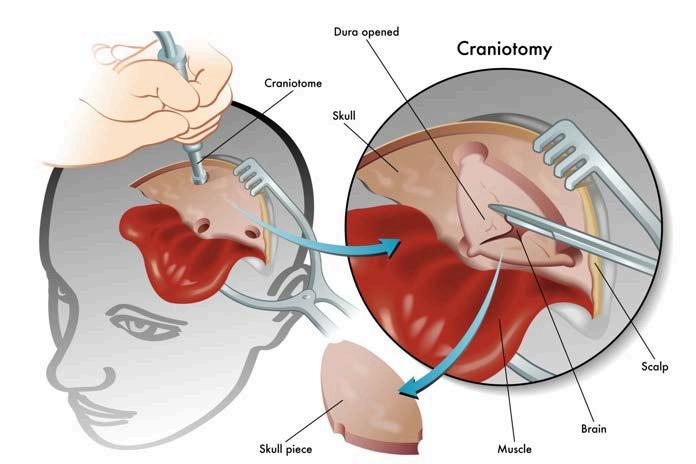
Trepanation is not used in neurosurgery for medical purposes now. However, another procedure, called a craniotomy, is done that involves temporarily creating a hole in the skull to remove fluids or release pressure,andthen closing theholeafteradefiniteperiod. Craniotomydoesnotinvolvemakingrandomholesintheskull. Instead, it uses a specialized surgical tool to remove a particular bone sectioncalledboneflap underasepticconditions. It is only done after analyzing magnetic resonance imaging and computedtomographyscansofthebrain.Itisregardedasa lastresort.
Victim of bloodletting #1 George Washington
By 4A(03) Joshua Cho
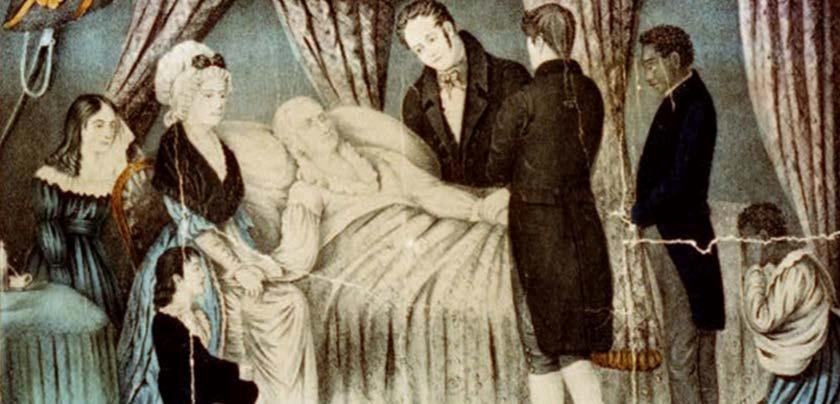
George Washington, the first President of the United States, was believed to have died due to epiglottitis, which was indirectly worsened by bloodletting. On the 14th of December, 1799, Washington woke up clutching his chest with shortness of breath. To heal him, 80 Ounces (2365 ml) of blood was removed from Washington's body, followed by a medicine called “blister of cantharides”, which was thought to be able to draw out the deadly humors causingthethroatinflammation.Unfortunately,hediedonthesameday.
Modern researchers have looked through medical documents and records of that time, and have come to the conclusion that Washington had most likely died of epiglottitis, which refers to the inflammation and swelling of the epiglottis, causing the President to be unable to breathe. This was most likely to have been provoked by bloodletting, which resulted in low blood pressure and shock, causing severe inflammation of the throat.
Victim of bloodletting #2 King Charles II of England
By 3G (12) Soo Pak Hei Cyrus
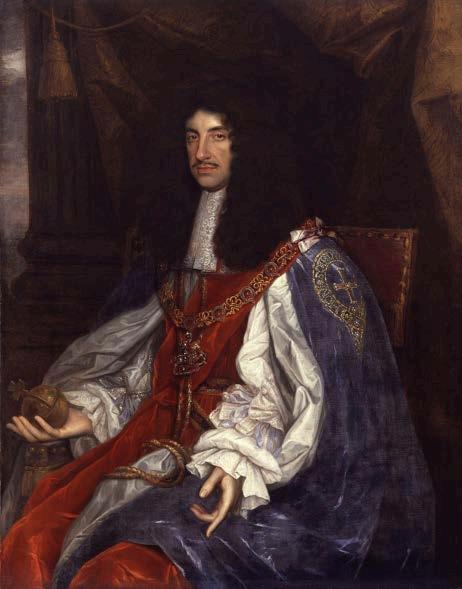
One notable victim of bloodletting was King Charles II of England (16301685). On the morning of February 2, 1685, he suffered a sudden seizure and immediately received treatment, which included the a total of 24 ounces of blood were extracted from his body. Over the following days, the king was subjected to various medical interventions, includng enemas and the consumption of different potions, including boiled spirits from a human skull. However, these methods were not helpful andheneverregainedconsciousness.
Change in Recognition of Bloodletting Over Time
By the time of the death of King Charles II, bloodletting had become a standardmedicalpractice.
In reality, bloodletting would rarely have been beneficial and often posed unsanitary and dangerous risks, sometimes even proving fatal. However, it is now understood that, with certain caveats, bloodletting mighthavehadsomehealthbenefitsforaselectgroupofindividuals.
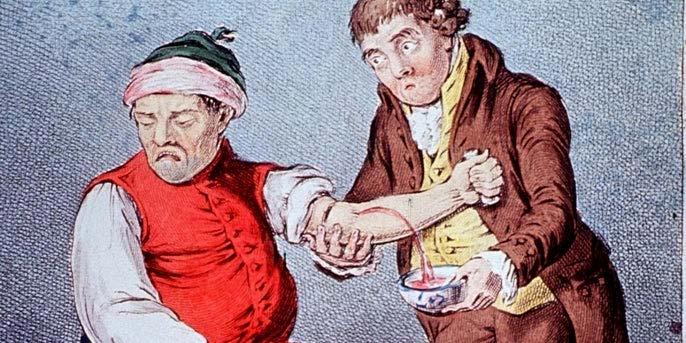
By the early eighteenth century, some physicians began to oppose excessive bloodletting, signaling a shift in medical opinion. Today, bloodletting is no longer considered a valid medical treatment. It is recognizedasanoutdatedpracticethatcanbeineffectiveandharmful.
Victimoftrepanation
By 4A(03) Joshua Cho
There are no records indicating the identity of people who have suffered due to trepanation. Still, many discoveries have been made regarding the skullsofpeoplewhohaveundergonetrepanationinancienttimes.
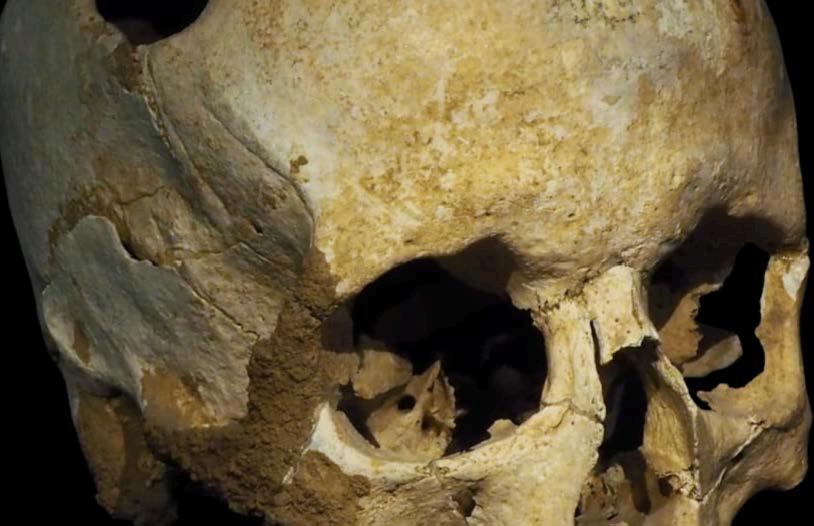
In November 2022, a 3200-year-old skull was discovered in Turkey’s eastern Van province. A clear man-made triangle-shaped hole was found on the skull. This suggests that the deceased person may have undergone trepanation. Archaeologists have also found trepanned skulls in Europe, the Americas, Africa and China.
There are no records indicating the identities of individuals who have suffered from trepanation. However, skulls dating back to ancient times have been discovered. Carl Lumholtz, a Norwegian ethnographer, conducted the earliest documented study of trepanated crania in the late 19th century. Subsequent studies have identified cases of trepanation from differentsitesin Oaxaca and centralMexico,includingTilantongo,Oaxaca, andtheZapotecsiteofMonteAlbán.
Particularly, two trepanated crania discovered in the territories of the Tlatilco civilization, which flourished around 1400 BCE, indicate that the practiceoftrepanationhadalong-standingtradition.Astudyconductedin 1999 examined seven trepanated crania from Monte Albán. The analysis revealed a combination of single and multiple elliptical holes drilled or wornintotheupperparietalbonesoftheskulls.
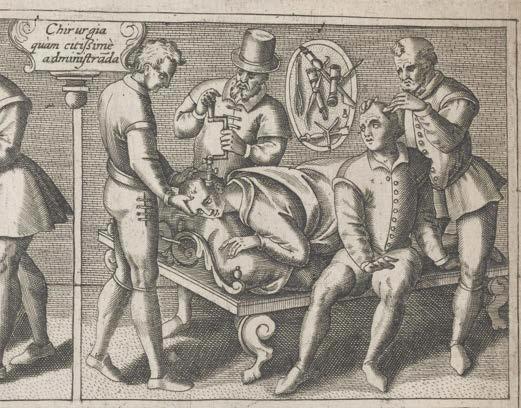
Overall, these archaeological findings demonstrate the widespread occurrence of trepanation in various ancient cultures, highlighting its significanceintheirmedicalandculturalpractices.
Victim of Lobotomy
By 5G (03) Henry Chu
#1 Rosemary Kennedy
RosemaryKennedywasbornasthethirdchildofJosephP.KennedySr.and Rose Fitzgerald Kennedy. She was the sister of John F. Kennedy (JFK), who wasthe35thPresidentoftheUnitedStates.
From an early age, Rosemary was diagnosed with intellectual disabilities. As Rosemary reached her early twenties, her behaviour became more unpredictable. She was reported to have mood swings, and occasionally have violent outbursts. Her father, Joseph Kennedy, sought a solution to manageherconditionandwasadvisedthata lobotomy couldhelp.
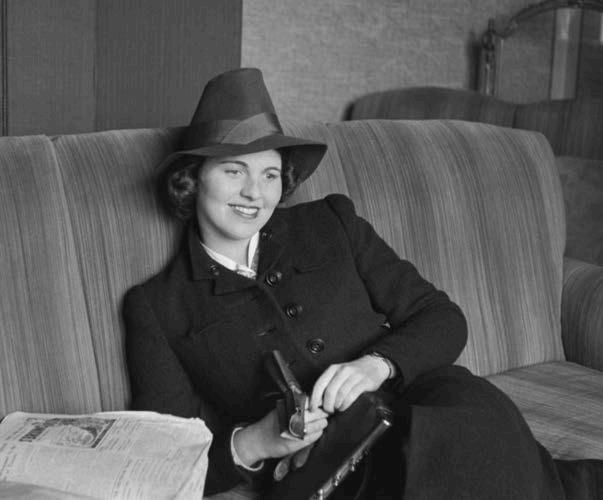
Lobotomy, a form of psychosurgery, involved severing connections in the brain's prefrontal cortex and was believed at the time to alleviate mental disorders. It was a controversial procedure, but it gained popularity in the UnitedStatesduringthemid-20thcentury.
A Tragedy Due to Ignorance
At the age of 23, Rosemary underwent a lobotomy. The operation was conductedwithoutherconsent,adecisionmadesolelybyherfather.
The results were catastrophic. The lobotomy left Rosemary permanently incapacitated. She lost a significant amount of her mental capacity and became unable to speak coherently or take care of herself. The vibrant, social young woman the family once knew was no more. Ashamed of the procedure'soutcome,theKennedyfamilysentRosemaryawaytoliveina privateinstitutioninJefferson,Wisconsin.
Impact on Awareness on Mental Health
Her sister, Eunice Kennedy Shriver, was deeply affected by Rosemary's condition and went on to found the Special Olympics in 1968, an organization that promotes understanding and acceptance for people with intellectual disabilities.

Impact on Awareness on Mental Health (Cont.)
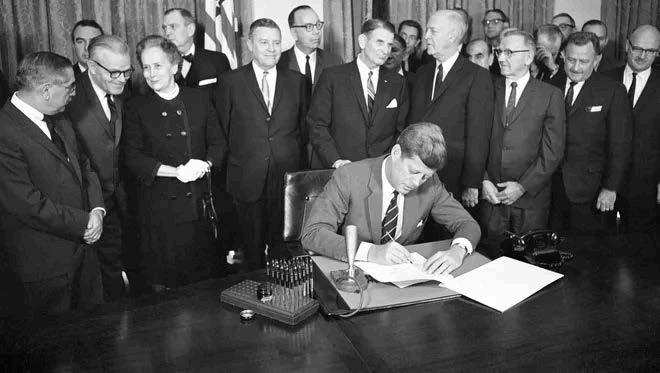
The story of Rosemary Kennedy's lobotomy had a profound and lasting impact on her brother, John F. Kennedy (JFK), both personally and in his political career. He had seen firsthand the challenges faced by individuals with special needs and the impact of those challenges on their families. In 1961, JFK established the President's Panel on Mental Retardation. This initiative aimed to study the condition of individuals with intellectual disabilities and make recommendations for policy action. It was the first significant federal commitment to addressing the needs of people with such disabilities.
The most significant piece of legislation influenced by JFK's personal tragedy was the Community Mental Health Act of 1963. This law aimed to deinstitutionalize the treatment of mental illness and replace it with community-centered care. It marked a move away from the isolation of peoplewithmentalhealthissuesorintellectualdisabilities.
The importance of transition from medievalbiologytomodernbiology
By Kristen Lo 5H (13)
Looking back at the medieval period, the last thing that would come to one’s mind is scientific progress and advancements. This is largely due to the caricature of the Middle Ages, which placed the word of religion over rational thinking. However, contrary to popular belief, scientific study continued during this period, leading to new insights into the phenomena oftheuniverse,inparticular,biology.
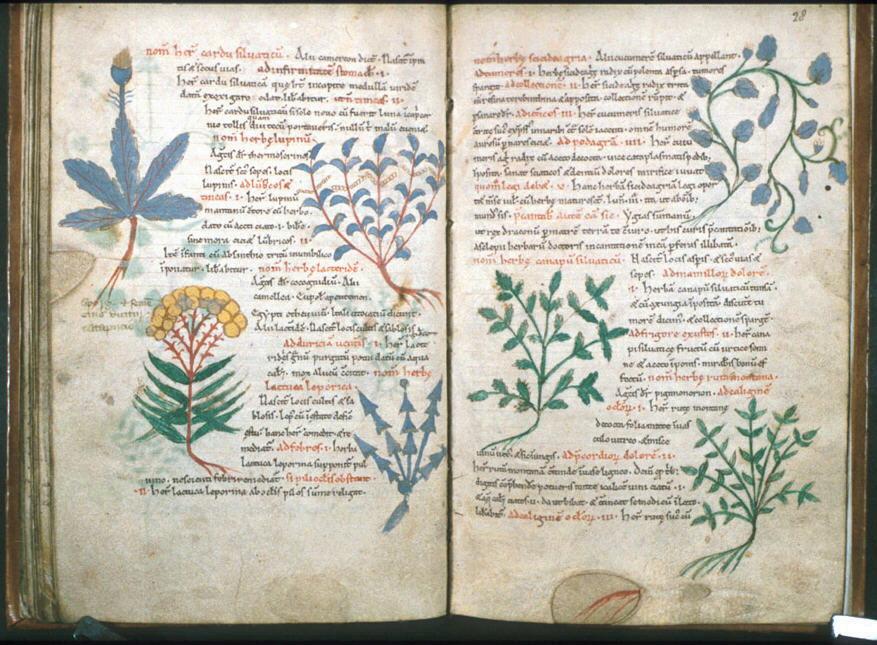
Although the decline of the Roman Empire led to the disappearance of much scholastic work in the field of biology, the medieval era acted as a bridge between the ancient world and the Renaissance, allowing for the preservation and transmission of invaluable biological knowledge. During this time, scholars translated and preserved classical texts, including those of ancient Greek and Roman philosophers such as Aristotle and Galen, that included classification of animal species, dissections and human anatomy. These texts formed the basis of medieval biological set the stage for the evolutionofmodernbiology laterduringtheRenaissance.
Unveiling the Secrets of Biology
Althoughtheirknowledgewaslimitedbyavailabletechnologyandresources, andanatomicalresearchwasoftenhamperedbysocialandreligioustaboos surrounding the disposal of human cadavers, scientists tried to solve the mystery. For example, Mondino de Luzzi was a medieval physician who reintroduced public dissection of human cadavers and wrote the first modern anatomical text, Anatomia, and is therefore often considered the restorerofanatomy.Throughobservationandclassificationoflivingthings, they created extensive catalogs of plants and animals, described their characteristicsandtriedtoclassifythemintodifferentcategories.
The Significance of Medieval Contributions
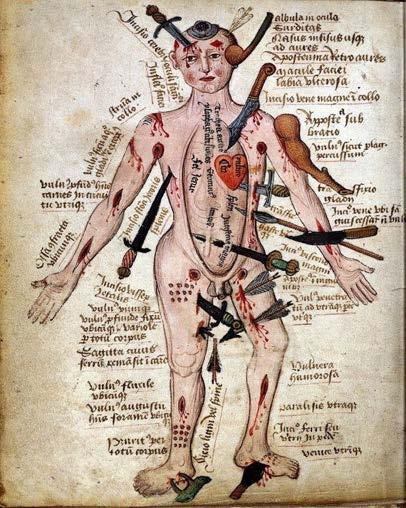
Whilemedievalbiologymaynotbeasrigor and scientific as modern biology, it undeniably planted the seeds for future scientific advancements. The preservation and transmission of ancient knowledge, the explorationofanatomyandphysiology, and the classification and description of organisms all contributed to the developmentofmodernbiology. By understanding the importance of medieval biology, we gain a deeper appreciationfortheprogresswehavemade and the vast potential that lies ahead to unravelthemysteriesoflife.
References
1.https://www.history.com/news/a-brief-history-of-bloodletting
2.https://en.wikipedia.org/wiki/Bloodletting
3.https://www.britannica.com/science/bloodletting
4.https://www.webmd.com/a-to-z-guides/what-to-know-history-bloodletting https://www.medicalnewstoday.com/articles/bloodletting-why-doctors-used-tobleed-their-patients-for-health 5.
6.https://www.healthline.com/health/bloodletting
7.https://www.singlecare.com/blog/bloodletting/ https://www.nationalgeographic.com/science/article/bloodletting-is-stillhappening-despite-centuries-of-harm 8.
9.https://www.osmosis.org/answers/trephination
10.https://thereader.mitpress.mit.edu/hole-in-the-head-trepanation/ 11.https://www.medicinenet.com/what_is_the_purpose_of_trepanation/article.htm 12.https://evonos.de/en/trepanation https://www.google.com.hk/url?
14.
sa=t&rct=j&q=&esrc=s&source=web&cd=&ved=2ahUKEwi8nYDYs9iEAxXAafUHHeacBd QQFnoECEQQAQ&url=https%3A%2F%2Fwww.ncbi.nlm.nih.gov%2Fpmc%2Farticles%2F PMC7704229%2F&usg=AOvVaw25iaZCZlQ2UxFGeVb__Ftb&opi=89978449 13. https://www.medicalnewstoday.com/articles/326281#The-early-origins-oftrepanation
15.https://en.wikipedia.org/wiki/Trepanning#Risks https://www.pbs.org/newshour/health/dec-14-1799-excruciating-final-hourspresident-georgewashington#:~:text=Back%20in%201799%2C%20Washington's%20physicians,blood%2 0vessels%20in%20the%20region. 16.
17.
https://www.labce.com/spg1960899_1600s_through1800s___famous_fatal_bleedin gs.aspx#:~:text=Perhaps%20the%20most%20remembered%20was,blood%20taken%20 over%2012%20hours.
18.https://www.jpost.com/archaeology/article-722304 19.https://brewminate.com/biology-in-the-ancient-and-medieval-eras/ https://www.britannica.com/science/biology/The-Arab-world-and-the-EuropeanMiddle-Ages 20.
https://expo.uoregon.edu/spotlight/history-biology/feature/medieval-andrenaissance-europe 21.
https://barabus.tru.ca/biol4141/essays/earlyHistory/scientists_in_the_middle_ages. html 22.
23.https://www.jfklibrary.org/learn/about-jfk/the-kennedy-family/rosemary-kennedy https://www.nps.gov/articles/000/rosemary-kennedy-the-eldest-kennedydaughter.htm 24.
25.https://www.britannica.com/biography/Rosemary-Kennedy
Thank you for reading!!
designed by: 5E (16) Tsoi Ka Yui (Katie) and 5G (8) Chan Wing Yan Candy
