Water pipe under construction
By Aaliyah Roman A&E EDITOR
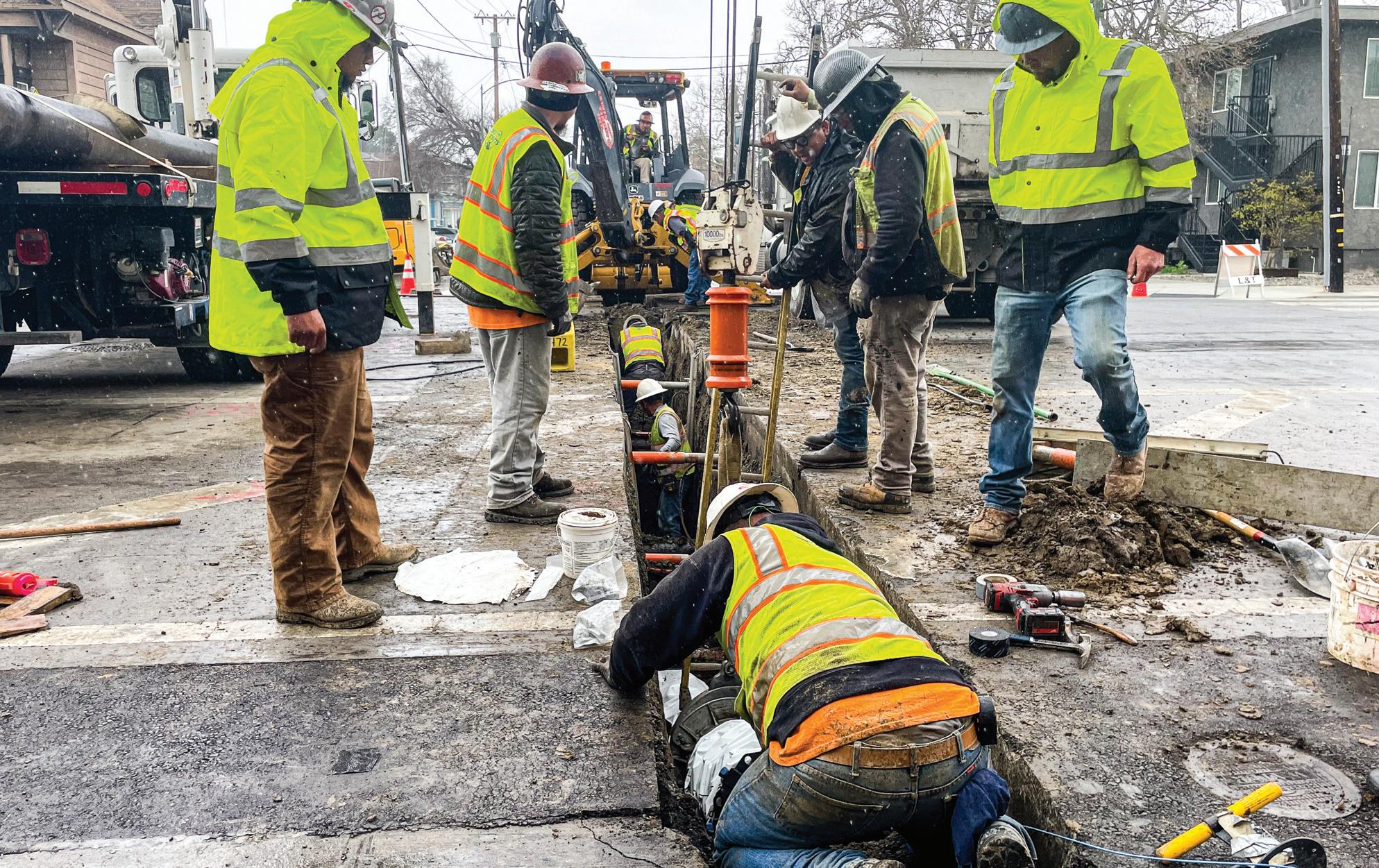
A 115-year-old water pipe is in the process of being replaced by Lewis and Tibbitts, Inc. contractors and public utility company San Jose Water at the intersection of Seventh Street and San Fernando Street on Tuesday afternoon.
San Jose Water construction supervisor Ernie Robles said the pipe had a few leaks and needed to be replaced to suit the amount of water local residents currently use.
Robles said the process of replacing the main pipe, following up on water services for nearby homes and repaving the cement will take about another month. He said Seventh Street will be closed for another couple of weeks.
“We’re here to help each other out,” Robles said. “This is definitely for the benefit of everybody.”
Robles said his team blocked off Seventh Street because they are working in a heavily trafficked area and have to take safety precautions for both the workers and the public.
Computer engineering lecturer Chao-Li Tarng said he teaches several classes at the Charles W. Davidson College of Engineering building close by the site
He said he wishes he would have been warned about the noise level or given an opportunity to teach elsewhere and avoid the loud sounds from disrupting classes.
Tarng said the construction has been going for the last month or two but he is trying his best to make it work in class.
“Obviously they’re doing something good for the street, for the school (and) for the city,” Tarng said. “I’m supporting them, but on the other hand, it’s been so long so I’m a little bit frustrated. My students are frustrated too.”
Tarng said he and his students have to speak louder to hear each other past the construction noise.
Accounting senior Taylor Luong said he lives a block away from the intersection, and walks to class. He said he doesn’t know what the construction is for, only that it’s been going on for some
time.
“The noise can get a little much depending on what they’re doing,” Luong said. “There was one day when they were making a lot of noise and I was just walking towards campus, and it was kind of disturbing.”
Luong said the construction has added an extra five minutes to his commute to campus and he finds it inconvenient when driving to places such as the grocery store or freeway.
He said it mostly affects people in the afternoon,
because that’s when campus is the most busy.
“The construction has been going on for quite some time, so it just shuts down this entire road,” Luong said. “I’m pretty sure commuters feel a little different (compared to me) when they have to park
on campus or just getting around places.”
Follow the Spartan Daily on Instagram @SpartanDaily
Students learn reproductive justice
By Kaya Henkes-Power STAFF WRITER
The San José State Gender Equity Center hosted a Lunch and Learn session that discussed how reproductive justice is racial justice on Tuesday afternoon.
Students ate free pizza and salad while a group of panelists discussed the intersections of reproductive justice and racial justice.
Gender Equity Center event coordinator intern Kayla Le led the session and asked questions to the panelists.
“(The Gender Equity Center focuses) on education, outreach and programming on gender equity issues,” Le said. “Specifically empowering the voices and experiences of historically marginalized genders and gender identities.”
Le said reproductive rights are a more individualist approach to reproductive rights and systems, whereas reproductive justice is a broader analysis of racial, economic, cultural and structural constraints on individuals and communities.
SJSU women, gender, and sexuality professor Tanya Bakhru opened the discussion by talking about the origins of reproductive justice.
“Reproductive justice is a term that was coined in the late ‘90s by black feminists who were looking at issues around reproductive autonomy and bodily integrity in an intersectional way,” Bakhru said.
The term reproductive rights initially started considering the issues of bodily autonomy intersectionality but was co-opted by the mainstream to mean abortion rights, she said. Panelist and associate professor for the Department of Justice studies Grace Howard said that the reproductive justice approach brings in a holistic view.
“Some people find themselves at the intersections of multiple kinds of oppression at the same time,” Howard said. “Instead of looking at oppression as racial oppression which is separate from sex and gender oppression, we can instead bring those two together.”
The contemporary framework for reproductive justice lies on three tenets; the right not to have a child, the right to have a child and the right to parent children in safe and healthy environments according to the library guide from the Fordham University Libraries.
“Some folks add a fourth tenant to the typical three,” Howard said. “It’s sort of implied in the three, but I like to say it out loud – and that is the right to separate sex from reproduction.”
During the women’s suffrage movement, people with marginalized identities were often excluded from the movement according to a National Park Service webpage.
Women, gender and sexuality studies assistant professor Susana Gallardo said that reproductive justice speaks to the concerns of mostly women of color.
“(Reproductive justice) takes and listens to those concerns that women-of-color activists and sexuality activists and so many others who said ‘hey what about all this other stuff,’ ” Gallardo said. She said reproductive rights is not just about abortions, but also the right to not have one and be able to afford to raise a child.
Challenges faced by women of color both historically and currently were discussed by panelists.
“(There) is this tug of war over who our society feels is legitimate to have children, and who isn’t legitimate to childbear,” Bhakur said.
Forced sterilization was discussed, this is when a person is involuntarily or coerced to remove their ability to
reproduce according to a webpage on the International Justice Resource Center.
Gallardo said the film “No Más Bebés” covers the case of Mexican American women who were forcibly sterilized at the USC County Medical Center in the 1960s and 1970s.
“All these women had gone into a C-section and been sterilized without their knowledge,” Gallardo said. “In many cases they actually signed but they were talked to when they were in labor.”
Bhakur said that there is a deeply racist white supremacist history in America around reproductive autonomy.
Just some examples of such were Africans being forced breeders, sterilization of women of color, and child removal from Indigenous and Native communities, Bhkaur said.
“The founding of modern-day gynecology is basically this guy who had black slaves and did experiments on them,” Bhakur said.
Gallard said there’s this sense that there are certain types of people that should have the right to have children and others the sense they should be controlling it.
“Very deeply entrenched legacies of forced family separation among enslaved Africans, Native Indigenous communities mourning the Indian boarding school system,” Bhakur said. “In contemporary society the foster care system, which is a result largely of poverty and surveillance.”
Howard said that the maternal mortality rate is a massive issue in the United States and has only risen.
Maternal mortality refers to death occurring from the complications of pregnancy according to data by UNICEF.
Black women in America have the highest maternal mortality rate, which is three times higher than the rates of maternal mortality of white women according to a 2023 article by the Associated Press.
“This is not physiological,”
Howard said “This is what happens when the healthcare system is racist.”
Bhakur said something that illustrates how society places different values on different bodies, which can be seen in the amount of money someone is offered for egg donation.
“(Egg donation is) incredibly medically risky to do this, we don’t even really fully understand the medical impact of doing this on our bodies,” Howard said
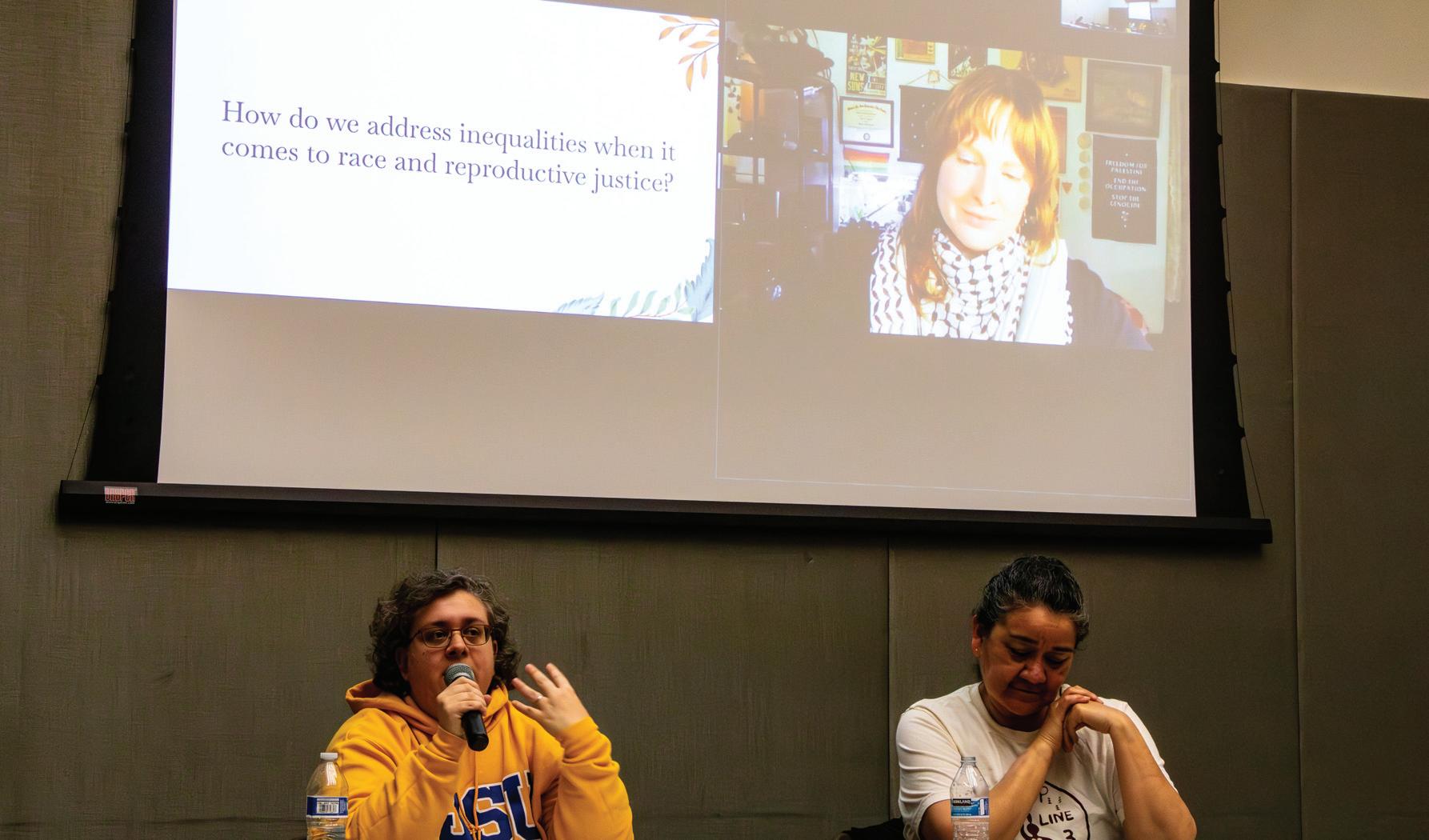
To wrap up the panel, Kayla Le asked panelists about how we as a society can address inequalities within race and reproductive justice.
“Reproductive justice is about reclaiming our lives, reclaiming sexuality (and) reclaiming our gender identity,” Gallardo said.
Follow Kaya on Instagram @kayuh.h

SERVING SAN JOSÉ STATE UNIVERSITY SINCE 1934 WWW.SJSUNEWS.COM/SPARTAN_DAILY Volume 162 No. 21 Wednesday, March 13, 2024 WINNER OF 2023 ASSOCIATED COLLEGIATE PRESS PACEMAKER AWARD, NEWSPAPER/NEWSMAGAZINE NAMED BEST CAMPUS NEWSPAPER IN CALIFORNIA FOR 2022 BY THE CALIFORNIA COLLEGE MEDIA ASSOCIATION AND CALIFORNIA NEWS PUBLISHERS ASSOCIATION KAYA HENKES-POWER | SPARTAN DAILY
Department of Justice Studies associate professor Grace
Howard
(left) and Gender Equity Center event coordinator Kayla Le lead a discussion about reproductive and racial justice on Tuesday.
ALINA TA | SPARTAN DAILY
Construction workers work on replacing a 115-year-old water pipe near the San José State campus on Tuesday.

5

#1:
#2:
#3:
#4:
#5:

sjsunews.com/spartan_daily WEDNESDAY, MARCH 13, 2024 ARTS & ENTERTAINMENT 2 Lowriders celebrate Women’s Heritage Day
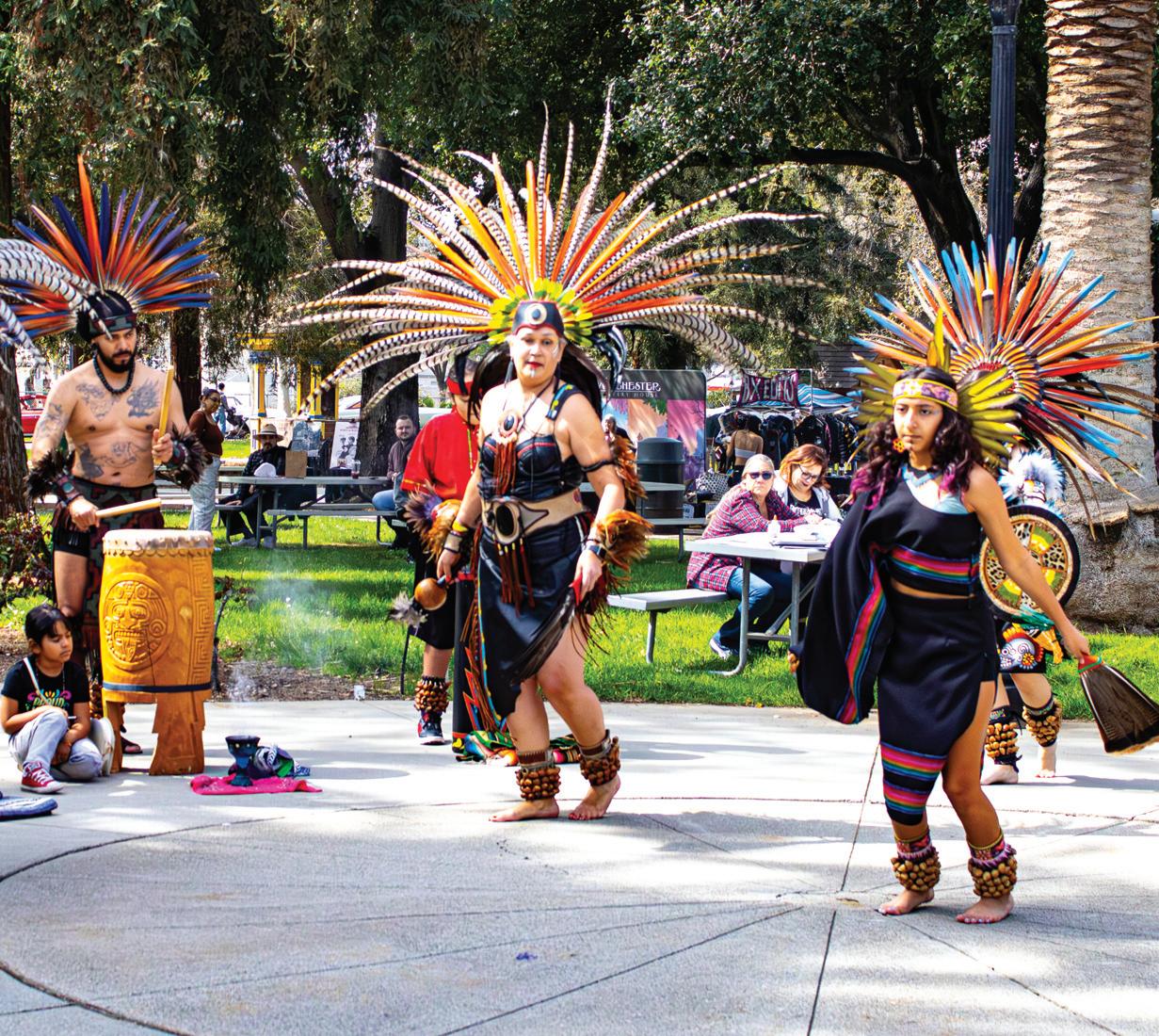
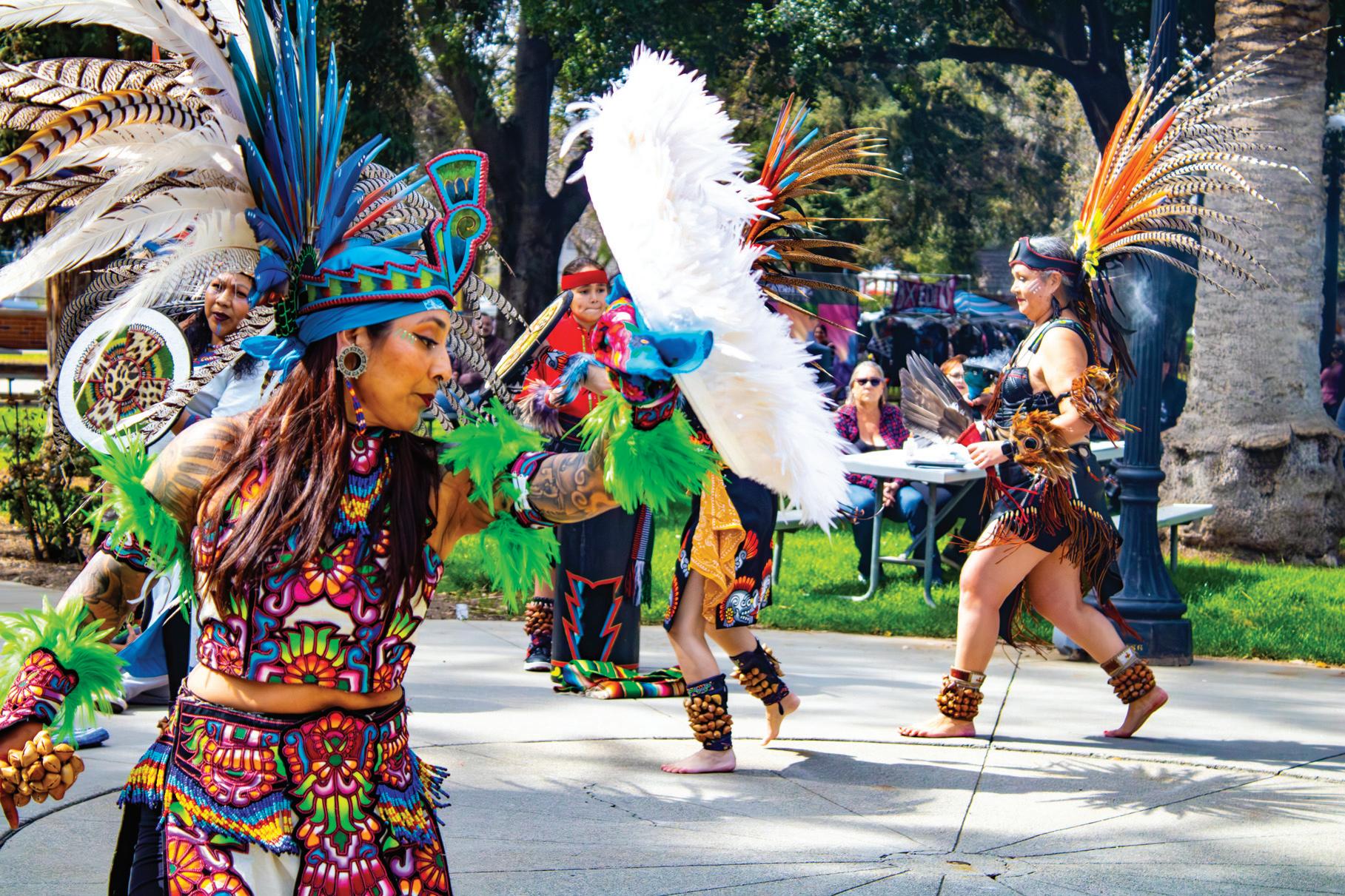
A group of Aztec dancers perform at the Women’s Heritage Day event.
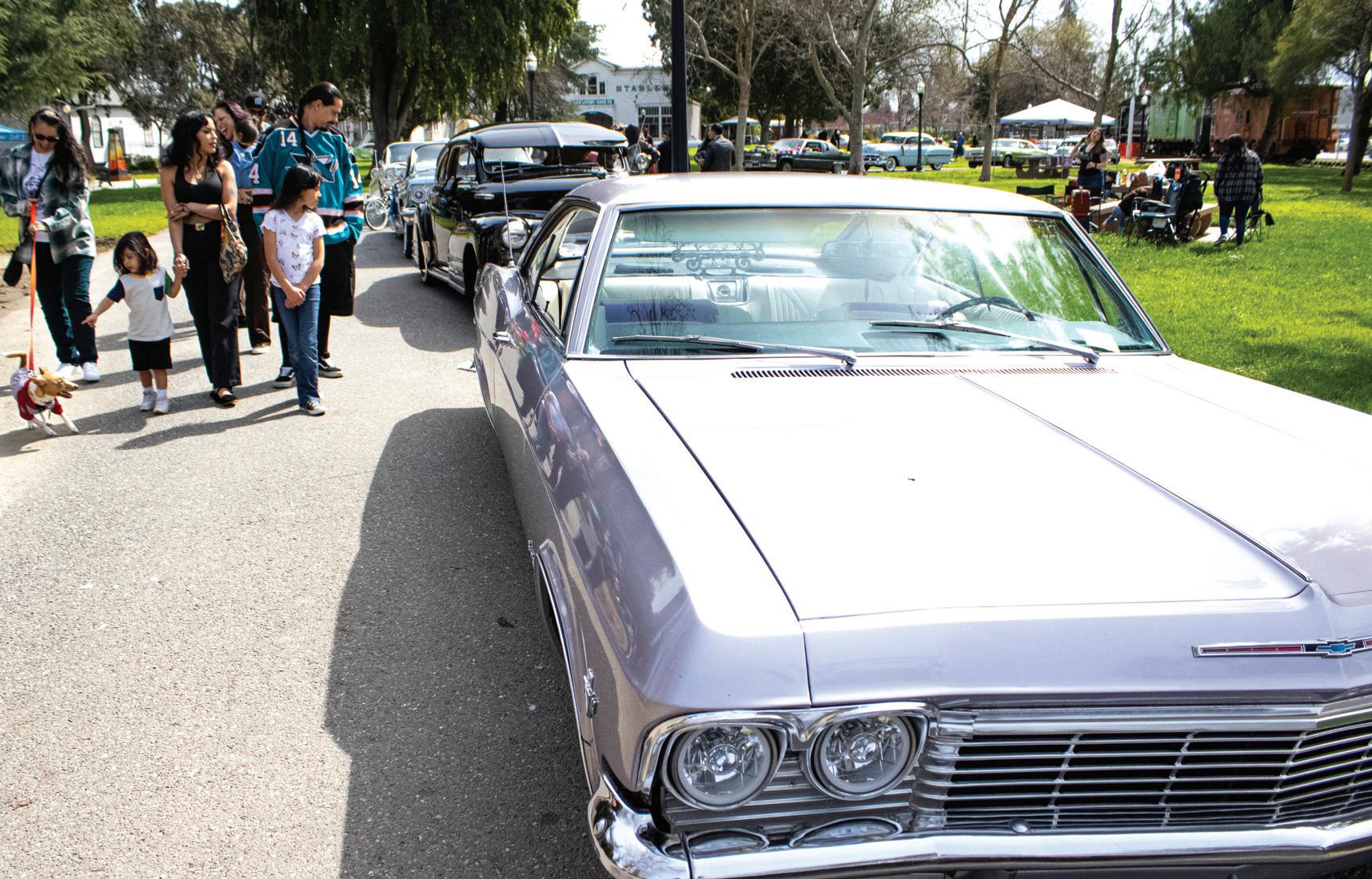
A family checks out the lowrider cars on display at History Park.
A lowrider car represents Aztlan Imperials Car Club on its back window and the city of San José on its license plate.
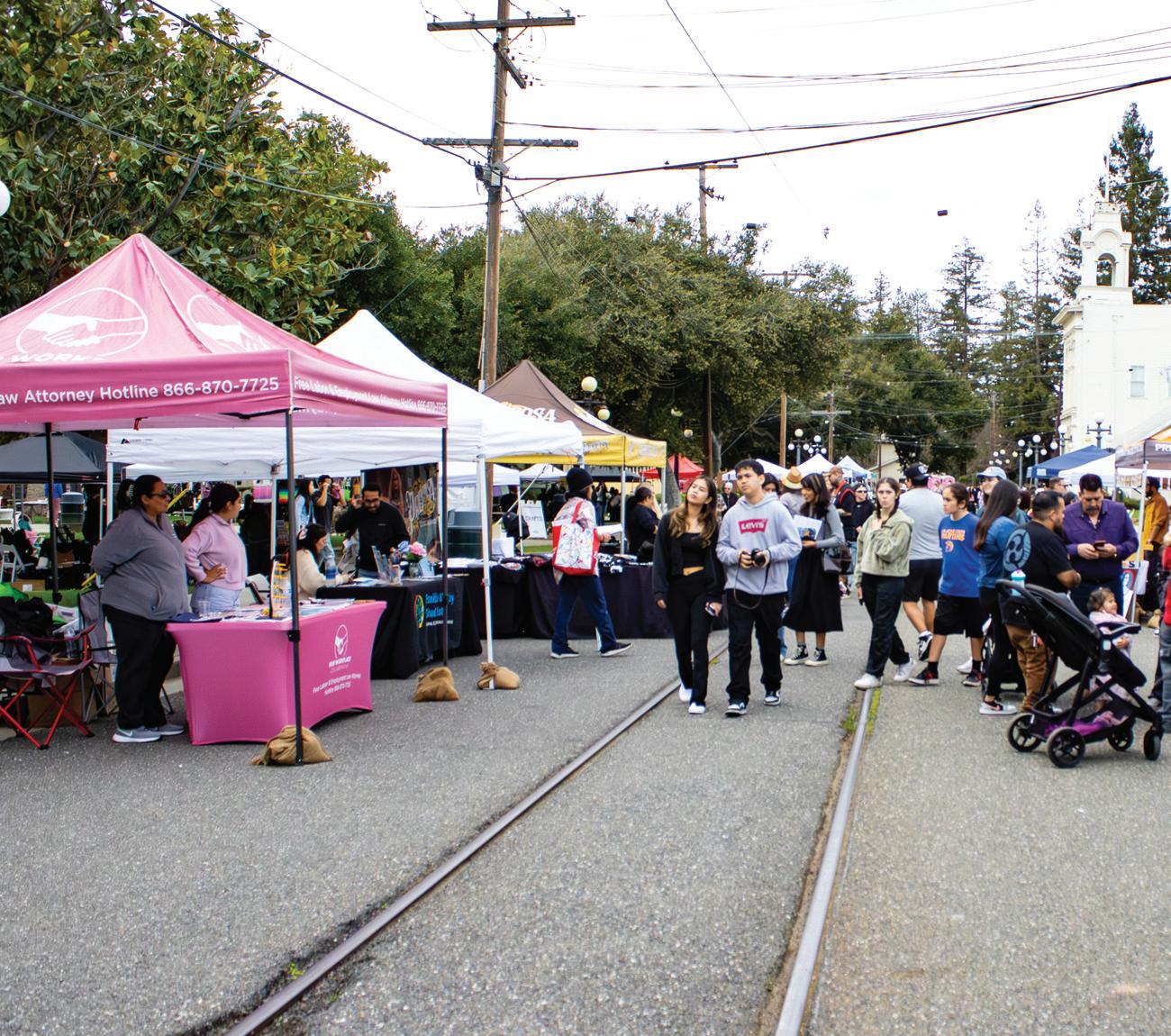
Event attendees walk around and visit vendors at the event on Saturday afternoon.
A ‘No Cruising Zone’ sign is displayed in front of a lowrider car.
#6: Angelica Iyeuani Mora dances with the other Aztec dancers.
4 6
2 PHOTOS BY ANGEL SANTIAGO
EDITORIAL STAFF EXECUTIVE EDITOR ALINA TA MANAGING EDITOR MELANY GUTIERREZ PRODUCTION EDITOR JULIA CHIE NEWS EDITOR ALEXIA FREDERICKSON A&E EDITOR AALIYAH ROMAN OPINION EDITOR MAYA BENMOKHTAR SPORTS EDITOR NAVIN KRISHNAN CONTACT US EDITORIAL –MAIN TELEPHONE: (408) 924-3821 6:00 PM - 12:00 AM MONDAY - WEDNESDAY EMAIL: spartandaily@gmail.com ADVERTISING STAFF ADVERTISING DIRECTOR GIULIA CRUZ ABOUT The Spartan Daily prides itself on being the San José State community’s top news source. New issues are published every Tuesday, Wednesday and Thursday throughout the academic year and online content updated daily. The Spartan Daily is written and published by San José State students as an expression of their First Amendment rights. Reader feedback may be submitted as letters to the editor or online comments. SOCIAL MEDIA EDITOR MAT BEJARANO OUTREACH EDITOR CHRISTINE TRAN COPY EDITOR JOAQUIN DE LA TORRE PHOTO EDITOR PRATHAM GILL PHOTOGRAPHERS PHU TRAN AIKMAN FANG ILLUSTRATORS CIA CASTRO CAMMY TAN SENIOR STAFF WRITER NIKITA BANKAR STAFF WRITERS KAYA HENKES-POWER MELISSA ALEJANDRES ETHAN LI JONATHAN CANOS PRODUCTION CHIEF MIKE CORPOS NEWS ADVISER RICHARD CRAIG TELEPHONE: (408) 924-3240 EMAIL: spartandailyadvertising@gmail.com CORRECTIONS POLICY The Spartan Daily corrects all significant errors that are brought to our attention. If you suspect we have made such an error, please send an email to spartandaily@gmail.com. EDITORIAL POLICY Columns are the opinion of individual writers and not that of the Spartan Daily. Editorials reflect the majority opinion of the Editorial Board, which is made up of student editors. LETTER TO THE EDITOR
1
3
Community embraces food hall
By Jonathan Canas STAFF WRITER
San Jose’s Downtown Food Hall officially opened its doors on Jan. 19 at 82 E. Santa Clara St., featuring 23 restaurants that range from finger food to full course meals.
Only a handful of restaurants are open at this time, including restaurants such as Herbivore, Azuma Japanese Sushi, Sunset Squares Pizza and Y-Linh Sandwiches, and offers Mexican, Indian, American, Halal, Japanese, Italian and vegan dishes.
“Imagine your son wants a burger, your daughter wants sushi and your wife wants Italian,” Shabana Serang said, owner of the Mercy Mediterranean restaurant, “This is one of the only spots in the Bay Area that has that option.”
Most food items in the San Jose’s Downtown Food Hall range from $6 to $20 depending on the restaurant.
Customers can purchase food at the kiosks set up in front of each restaurant. Past the front doors, restaurant workers can be seen helping customers who appear to be confused by how to use the kiosks.
Other designated workers help give food delivery drivers their
ordered meals.
The space was bought by Travis Kalanick, Uber Eats former CEO, and is now leading a firm called CloudKitchens, according to the SFGate.
CloudKictchen is a company where seamless delivery is prioritized in order to help people open up their own restaurants, according to its website.
“So this is also a GrubHub, DoorDash and Uber Eats center,” Serang said.
Even though “to-go” is one of the San Jose’s Downtown Food Halls slogans on its website, there are plenty of seating options for people to enjoy their meals.
Varun Aggarwal and Sachin Naik are the owners of Aroma Indian Cuisine, a restaurant that specializes in vegan options.
Aggarwal and Naik are the first ones to open their doors in the food hall at 9:30 a.m. while Mercy Mediterranean and SpicePulao are the last to close their doors at 10 a.m. according to San Jose’s Downtown Food Hall’s website.
“Eventually I want to be open from four in the morning to around 11 for students when they have finals,” Serang said, “I like this place


as a study hall.” Serang said San José State students may have another option to add to get their work done especially during finals.
Serang said her niece, Mariam Serang, also works at Mercy
Mediterranean when she gets the time and chance to help out her aunt.
“I enjoy Luna’s Halal Taqueria, but there’s a ton of options from pizza, Vietnamese sandwiches, boba and Indian food,” Mariam said.
She said she likes how the kiosks are designed, and believes it speeds up the waiting process, as she handled a barrage of customers during the peak lunch hours.
Nyea Noeun, a volunteer at the San Jose’s Food Hall, said the food hall can be the new “fast food” option as opposed to eating at a McDonald’s or a Burger King.
“It's quick and easy and you can sit comfortably here, or you can choose to go,” Noeun said.
Noeun said she lives in San Francisco and is currently attending the City College of San Francisco to study architecture designs.
She said San José is the perfect spot for this unique dining concept.
“San José downtown feels more
like a city than back home does,” said Noeun. “There’s still a lot of people and a lot of foot traffic.”
Noeun said the food hall has a different feel from the standard food court.
She said places like this may have been created due to the effects of COVID-19, when companies like Grubhub, Uber Eats and DoorDash were exploding in terms of business.
“Typically your traditional food court is taking up a lot of space, but with here there’s enough seating without having the customers waiting feel squished in line,” Noeun said.
“Imagine people coming from different cultures, backgrounds, religions, and faiths. The beautiful concept is to bring people together,” Serang said.
sjsunews.com/spartan_daily WEDNESDAY, MARCH 13, 2024 ARTS & ENTERTAINMENT 3 ACROSS 1. Fast dance 7. Close call 15. Hawks' homes 16. Conspiring together 17. Hot-dish holder 18. Animal 19. __ Percé 20. NFL Rookie of the Year in '61 22. Longest-serving ones 23. Quarks' homes 25. Sponsorship 27. Writer Hentoff 28. Cleaner scent 29. Group in a pack 30. Hunter's wear 31. Veal slices 33. Housing document 35. Shredded 36. Makes illegal 37. Some legislatures 39. Locket holders 43. Make (one's way) 44. Blew it 46. Real drag 47. Unusually bright 48. Censor 49. Idaho, slangily 50. Orange area 52. French film award 54. Jungfrau or Eiger 55. College age 57. Illusion 59. Dusk, to a poet 60. "Heat Wave" composer 61. Betrayed anger 62. Collar DOWN 1. Quick breaks 2. Doctrine rejecter 3. Spring-training locale 4. Not mil. 5. Listens to 6. Italian province 7. Small change 8. Rile up 9. Stein filler 10. Interprets 11. Partner 12. Exotic pets 13. Smith or Jones 14. Handles 21. Hosiery color 24. Gave in 26. Atlas dot 29. Bite 30. Kind of melon 32. Film studio 34. Quit 36. Hits a horn 37. Strip 38. Chanted 39. Admired oneself 40. Star 41. Vineyard device 42. Treacherous one 43. "Ring" creator 45. Abate 48. "For the Boys" name 49. More accurate 51. Market 53. "Fernando" band 56. Bonn article 58. Wintry cry 3 1 7 9 3 8 1 5 6 8 5 4 3 6 7 2 1 2 4 2 7 6 8 4 9 6 CLASSIFIEDS CROSSWORD PUZZLE SUDOKU PUZZLE Complete the grid so that every row, column and 3x3 box contains every digit from 1 to 9 inclusively. JOKIN’ AROUND My Grandpa had the heart of a lion... And a life time ban from the Zoo. PLACE YOUR AD HERE Contact our ad team via email for access to our media kit & any other advertising questions. SpartanDailyAdvertising @SJSU.edu SOLUTIONS 1 2 3 4 5 6 7 8 9 10 11 12 13 14 15 16 17 18 19 20 21 22 23 24 25 26 27 28 29 30 31 32 33 34 37 38 39 40 41 42 43 44 45 46 47 48 49 50 51 56 53 54 56 55 57 58 60 60 61 62 35 36 2 7 4 9 8 3 6 4 5 1 7 9 8 4 7 5 2 7 9 6 5 3 2 6 8 9 4 7 6 8 9 1 3 4 7 5 3 4 8 7 6 2 1 7 1 9 5 2 4 8 6 3 7 2 6 1 1 6 5 4 1 2 5 3 8 1 2 5 9 3 8 9 5 4 6 3 1 3 8 2 9 S E T S M A L T S P A R K T E R N E L I O T I R A N A R E A D A N T E N I N E R I N G B I N D E R S A G E R E D S E A A M N O T A T E D R A M A A N E W E L S E D I V A N M A D A T M A T S P O R T P I N T A O W N S E W E S S L A C K A C E H E A R T E L O P E D H O B O H O R D E T I N E O D O R E N T E R E N I D W E E D R E S A Y R T E S S L O W C H A I N S T O R E March 12
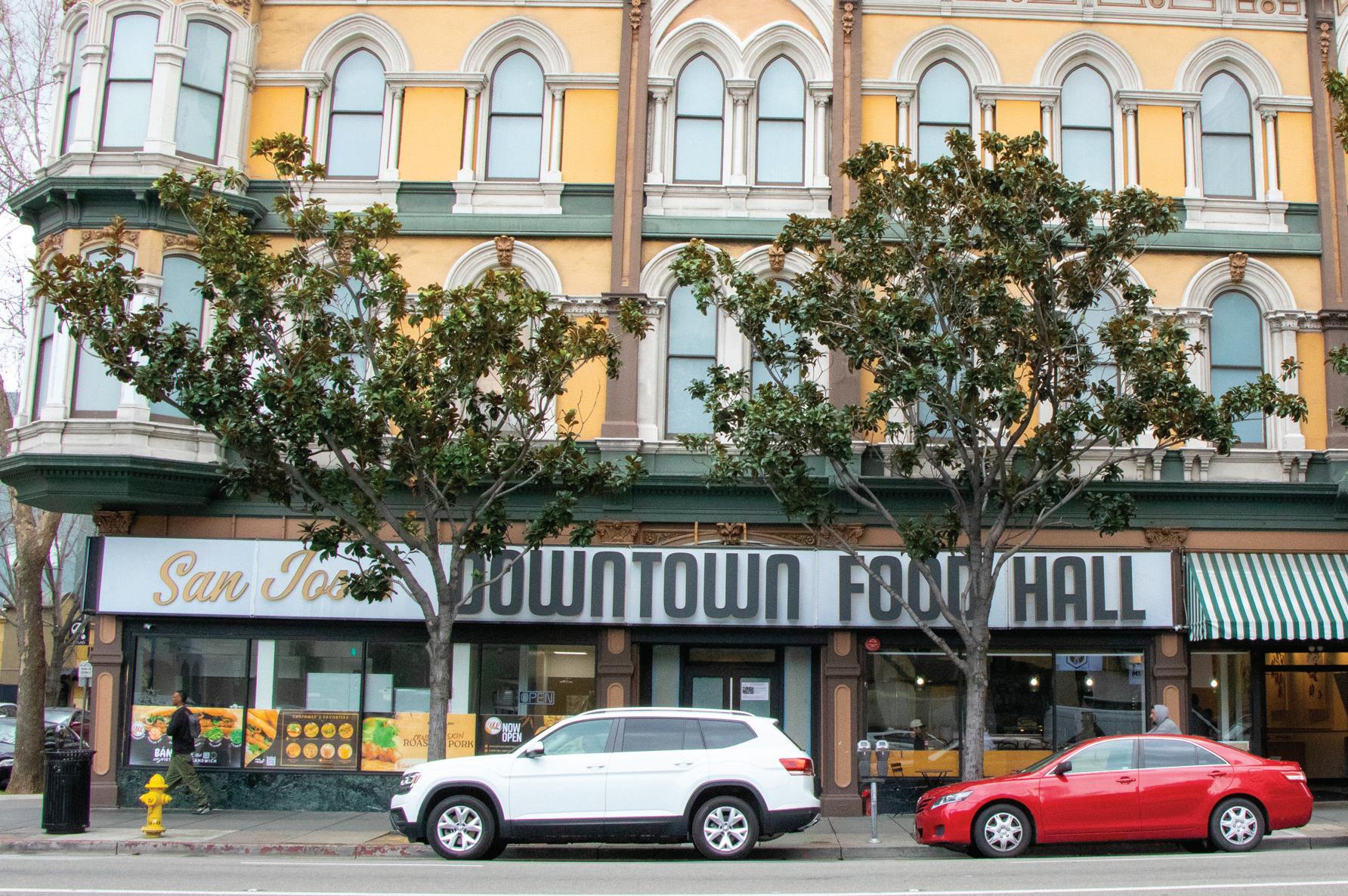
JONATHAN CANAS | SPARTAN DAILY San Jose’s Downtown Food Hall on 82 E. Santa Clara Street is located a block a way from City Hall.
Mercy
Follow Jonathan on X (formerly Twitter) @jonathancanas_ food finals, I
Open relationships are happy ones
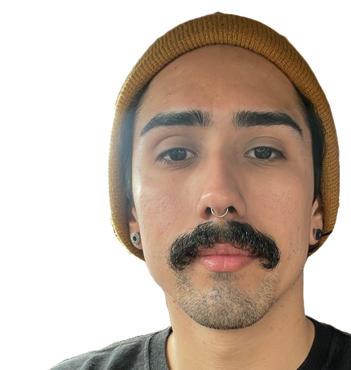
 Joaquin De La Torre COPY EDITOR
Open relationships are great. The naysayers just suck at communication and lack basic emotional intelligence.
Too often I am scrolling through TikTok when I swipe across one of those reporter-on-thestreet style interview videos – the ones that feel awkwardly staged and end with a “gotcha” moment.
The videos usually feature couples getting out of a nightclub before the interviewer asks the most taboo question: “What are your thoughts on an open relationship?”
This question often leads to one partner denouncing them entirely while the other “Ums” and “Mmms” their way to admitting that they are curious about the idea, to the absolute shock and horror of their partner.
The video’s subject matter incites a culture war in the comments full of, “He doesn’t love you! Get out!,” “Molly … you in danger girl” and of course “Red flag!”
This almost absolute rejection and triggered anxiety that people have towards open
relationships signals that people don't have an understanding of how they actually work.
According to an article published by Psych Central, “Creating a successful open relationship requires topnotch communication, trust, and clear boundaries.”
Unsurprisingly, these prerequisites for a strong open relationship sound like conditions that are equally important for a healthy, long-term monogamous relationship.
Yet, considering that three of the top 10 reasons marriages fail are “poor communication,” “marital infidelity” and “lack of intimacy,” according to a webpage published by Clagett Law.
I would imagine that a relationship style that champions open communication, consensual nonmonogamy and sexual exploration would be the direct answer to those issues.
Yet, people are still too afraid to try open relationships. Why?
Clearly, monogamy, a heteronormative style of coupling, isn’-t working out for most Americans.
The American Psychological Association found that 40-50% of marriages end in divorce.
Looking at the data for marriages in the U.S., the case that monogamy is the ideal relationship model is
slipping away, and along with it goes the idea that one person can satisfy all of your emotional, physical, social and sexual needs.
Which, by the way, asking one person to fulfill all of your needs is an insane, Sisyphean order.
We’re human and are constantly changing in different ways, even from our partners who also might grow in different ways.
Take differences in the bedroom for example.
Consider this situation: Partner A wants to explore a new sexual practice but partner B is not enthusiastically consenting to the idea. Is partner A just supposed to push their desire aside? That doesn’t seem very fair and sounds very frustrating.
While this is a hypothetical situation, this story is more common than you think.
According to the American Association for Marriage and Family Therapy, 15% of married women and 25% of married men have had extramarital affairs.
Juxtaposing the hypothetical situation and this statistic, one begins to see that when resentment and sexual frustration set in, people break promises and hurt one another.
But that is just one example. The cool thing about open relationships


is that they can look different for everyone.
Open relationships aren’t just for couples with a propensity for novelty – they can also be for people who align in every single aspect except sexually.
I know one married gay couple who are happily married but due to their sexual preferences, seek sexual satisfaction outside of their marriage and it works for them!
Open relationships are what you make them to be so what is it about open relationships that is so terrible that people still feel the need to avoid them?
Well, like I mentioned earlier, many people lack effective communication skills, especially when it comes to intense emotions
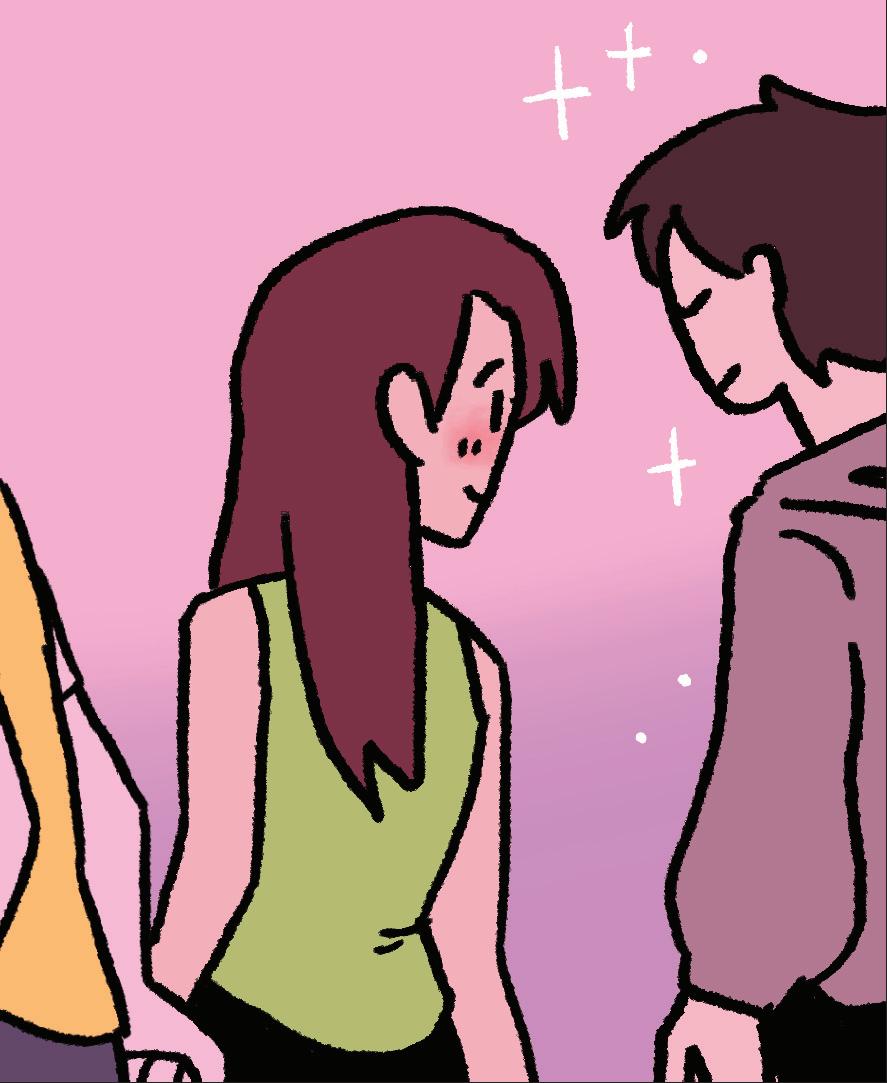
including the nastiest feeling: jealousy.
“Jealousy may be an expression of insecurity, fear of rejection, fear of abandonment, or feeling left out, not good enough, inadequate or awful,” say authors Janet W. Hardy and Dossie Easton in their seminal book on non-monogamous relationships The Ethical Slut.
Jealousy is a scary emotion, but with a little self-reflection and practicing emotional intelligence, any adult should be able to process that feeling and communicate what they need to say to feel better and connect with their partner.
Ironically enough, if the naysayers just gave open relationships a chance,
ILLUSTRATION BY CAMMY TAN
they might refine their skills in becoming more effective communicators, and emotional intelligence and potentially learn some new tricks that will dazzle their partner in the bedroom.
The only thing holding most people back is simply laziness.
Ultimately, open relationships are not for the faint of heart and take a lot of work, but if monogamous people put half the energy into their one partner, then perhaps they would understand how those in non-monogamous relationships could dedicate themselves to the concept of free love.
Follow Joaquin on Instagram @dovvaquin

sjsunews.com/spartan_daily WEDNESDAY, MARCH 13, 2024 4 OPINION
