
Expert Advice
Financial Services
Transitions

Roofing
Chuck Henrich President & Owner
Q: Can you contribute to an IRA if you already participate with a company retirement plan?
A: Yes. You certainly can. For 2025, the maximum contribution to an IRA is $7000. If you are 50 years of age or older, you can add an additional $1000.
Something to consider is whether you will be able to deduct your IRA contributions during tax season. If you or your spouse have a company retirement plan, or your income is too high, you may not be able to deduct your IRA contributions.
Southwest Michigan Financial, LLC
The Atriums • 4341 S. Westnedge #1201 Kalamazoo, MI 269-323-7964
Health Food

Q: What can I find at Sawall’s deli?
A: You can find a wide selection of salads, risottos, prepared meats, Panini, Tamales, Quesadillas, Lasagne, Hummus and much more at our DELI! All our food is prepared in-house with all natural ingredients. Vegan, vegetarian and gluten free options.
We also offer authentic Artisanal Italian Gelato & certified vegan Sorbets, Frappe’s and Sorbet Drinks.
Enjoy our Coffee Bar! Indulge in a variety of aromatic and finest quality coffee beverages from authentic Espressos to Lattes, Cappuccinos, Hot Teas, and Ice Teas. All organic freshly brewed coffees!
Deli Hours:
Mon-Sat: 10:30 am - 9:00 pm Sun: 10:00 am - 6:00 pm
Sawall Health Foods
Oakwood Plaza • 2965 Oakland Dr. at Whites Rd. • 343-3619 • www.sawallhf.com
Q: May I still travel if I live in an independent living community?
A: Many residents continue to travel after moving into senior living. In fact, some communities provide discounts on monthly service fees if you intend on traveling for a month or more. Contact your community’s resident liaison or other staff member to understand your community’s policies on travel.
Friendship Village
“Where Connections Matter” 1400 North Drake, Kalamazoo 269-381-0560 www.friendshipvillagemi.com
Funeral Services

Q: Why are funerals expensive?
A: Funerals often look simple on the surface, but they involve many moving parts working behind the scenes—often on very short notice. 24/7 Care and Staffing - Funeral homes are on call at all hours, every day of the year. Licensed staff are available nights, weekends, and holidays to respond immediately when a death occurs. Professional services and expertise - Funeral directors, embalmers, and support staff undergo specialized education, licensing, and continuing education. Their role includes death certificates, permits, obituaries, coordination with doctors and cemeteries, and guiding families through complex decisions during a difficult time.
Facilities and vehicles - Maintaining funeral homes involves significant overhead: buildings, preparation rooms, refrigeration, utilities, taxes, insurance, and specialized vehicles (hearse, transfer vehicles).
Preparation of a loved one—whether for burial, cremation, or viewing—requires training, equipment, supplies, and adherence to strict health and safety standards. This work is done with dignity, respect, and professionalism. Personalized Services - Visitations, ceremonies, printed materials, videos, memorial items, and coordination with clergy or venues all add to the overall cost—but they’re also what make a service meaningful and personal. A funeral isn’t just a product—it’s a service built around people, time, expertise, and care. Families aren’t paying for one hour, but for everything that happens before, during, and after the service to ensure their loved one is honored properly and their family is supported..
Compassionate care, meaningful memories
Adams - Redmond Funeral Homes & Cremation Services and Adams Funeral Homes & Cremation Services
3 locations to serve you
269.343.6156 Kalamazoo 269.349.7735 Parchment 269.657.6347 Paw Paw www.adamsredmond.com www.adamspawpaw.com
Justin Reynolds Manager
Q: Should we be concerned about the amount of snow and ice accumulating on our roof?
A: Since the first week of January, our total amount of snowfall has been significant. Since the weight of snow and ice is substantial, we recommend removing as much of the snow and ice as possible. However, safety should be your foremost concern. Emergency room personnel can tell you many stories of unfortunate homeowners injured while climbing a ladder or getting onto their roofs to remove snow and ice. Therefore, we recommend purchasing a ‘snow rake’, a long handled shoveling device, designed to pull snow and ice off the roof while you stand safely on the ground. Please be aware, however, since a snow rake is made from aluminum, you must kept it away from any electrical power lines on your roof.
Sherriff-Goslin Roofing Co. Since 1906 342-0153 800-950-1906
Member Home Builders Association of Greater Kalamazoo
Health

Q: Why should I be screened for colorectal cancer?
A: Colorectal cancer is the third most common cancer diagnosed in both men and women in the United States. It’s a serious disease that is highly treatable, and often curable, when caught early. That’s why early detection is so important. Due to the rising number of cases in younger adults, The American Cancer Society recommends that screening begin at age 45. Earlier screening may be needed if you have a family history of colorectal cancer or other risk factors. Talk with your primary care doctor about the best screening options and timing for you.
Bronson Colon & Rectal
(269) 441-1771
Mark Sawall Owner
Diana Duncan Director of Sales and Marketing
Michael Klingler, MD Colorectal Surgeon
Kyle Kutlik
Enjoy the Random Encounters That Come Your Way
Life constantly throws little curve balls at us. We have our normal day- to-day challenges, and then something out of the blue pops up that causes some consternation and work to get back to square one.
Once in a while, these difficulties can turn into a learning experience and can even bring a smile to our faces.
A few weeks ago, while lying in bed around 6am, I noticed a light outside my bedroom window. After getting up, I noticed a dark vehicle with a blue interior light on, near the end of my driveway and a car that looked to be sitting sideways, on my lawn.
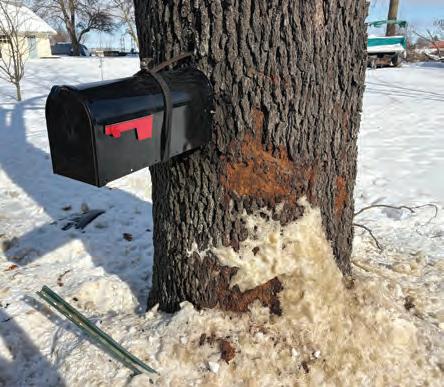
vehicle, along with my mailbox, which was a good 15 feet from where it was originally.
A tow truck soon showed up and towed away the damaged car and I needed to contact the post office to ask about getting my mail put inside my front door for a few days.
that with his job, he must get all kinds of crazy calls with mail and mailbox issues. He said that he had been doing this for 10 years and has heard just about everything.
He told me that back in his mailman days, he once emptied one of the large blue city boxes, where the mail goes into a large cloth bag inside the box. When he got back to the main building, he put his hand in the bag to pull the mail out and he felt something furry that was moving. He quickly removed his hand. Another guy next to him said, “Give me that,” and stuck his hand inside and pulled it out even faster. Finally, their boss put on a big thick glove and reached into the bag and pulled out a live possum.
We laughed and continued to chat for a bit. This random encounter made my day, and I hope it made his as well.

I put on my coat and walked out to the road and saw that the dark vehicle was a sheriff’s vehicle and that the other car was actually across the road in my vacant lot. I walked up to the sheriff’s vehicle and he explained that somebody called in an accident around 4:30am, and that, by the time he got there, the car was empty.
The car had hit a large tree on the far side of the road and tore off my mailbox attached to the tree. The airbag had exploded and a tire was torn off and sideways underneath the
No one answered the phone at my local post office. Upon dialing the 1-800 number, I was put through a series of prompts before receiving a pre-recorded message, “Due to the high volume of calls the wait is approximately 37 minutes.” I waited a few minutes before a message said that I could leave my phone number for a call back.
A half hour later, I received a call from the post office from a man named Ricky. I asked where he was located and he said a town called Paramount near L.A. California. I mentioned
Ricky’s job, along with many other service jobs, can be quite challenging. Having to deal with frustrated people calling in their problems and complaints all day long. Next time you need to call in a problem or complaint, take a few moments to lighten their mood, it will lighten yours too. Steve
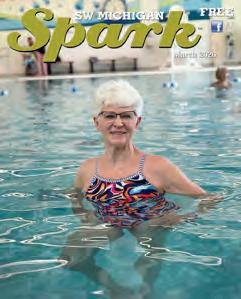


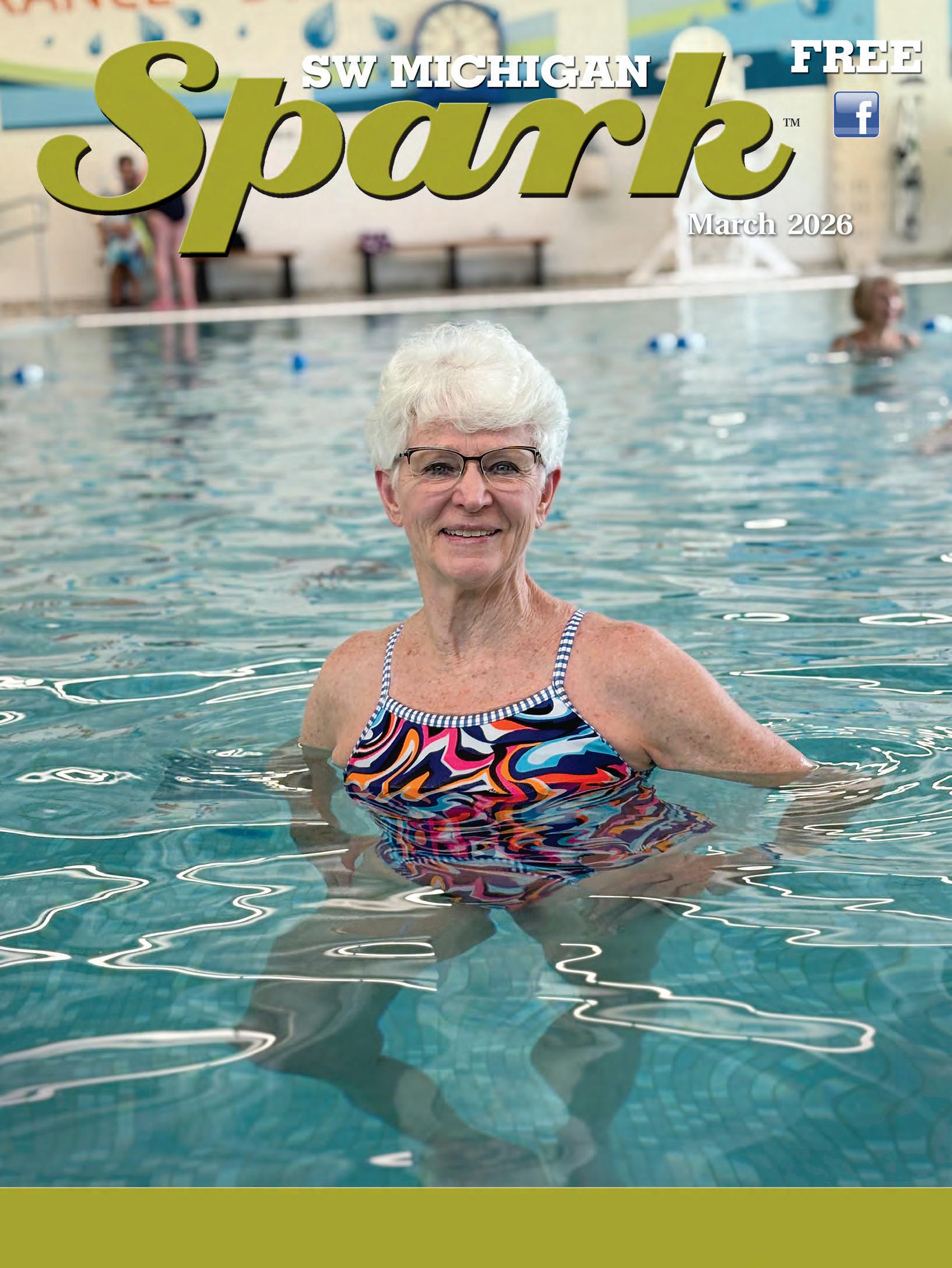
Glenda VanStratton in the pool at the Maple Street YMCA.
Photo by Steve Ellis
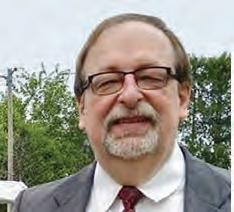
I’m just answering questions
Lee A. Dean screendoor @sbcglobal.net
Cabin fever is a malady that strikes me from Thanksgiving to opening day of baseball season. My major winter activity is waiting for pitchers and catchers to report to spring training, which is a ray of hope that better days are ahead. This winter, I have occupied my mind with answering questions, specifically the conversation starter types of queries found on social media. Some of the questions are either lacking in imagination or designed to grab your data. One example: name a street. This question’s degree of difficulty ranks right up there with, “Can you fog a mirror?”
Other questions ask you to name the worst, the most annoying, or the thing or person you hate the most. The last thing I need is another invitation to wallow in negativity.
Here are some of my favorite questions and my answers this winter. Many of them are specific to our state and are tickets to a trip down memory lane.
Q. Describe a Michigan winter using only one word.
A. Rude. I have other words, but they
are not suitable for publication.
Q. Which is the greatest Great Lake?
A. Michigan, only because that’s the one I have the most history with.
Superior is a close second, at least during summer. I have never been to the Upper Peninsula in winter and have no plans to make such a visit.
Q. Where did you learn how to handle driving in Michigan snow?
A. The back roads around Bloomingdale, which are in abundance, including the country road I grew up on. If you didn’t have sufficient winter driving chops you would never get out of your driveway.
Q. What Michigan place smells different the minute you arrive?
A. Fremont. Roll down your window and the air smells like whatever is being made at the Gerber plant that day. If you’re lucky, you’ll get a whiff of pear cinnamon with oatmeal. (Note to the comically challenged: this is a joke.)
Q. What Michigan trip do you never get tired of repeating?
A. The UP, but only in summer. Once I see the Mighty Mac, I get hungry for a pasty and a leisurely trek from DeTour Village to Ironwood.
Q. What Michigan business closing hurt the most?

A. If we’re measuring by economic impact, the 1999 closing of Fisher Body hit us the hardest.
Q. Where did you go on your first real Up North trip?
A. To Baldwin, to stay at my grandparents’ cottage. An associated question is, “where does Up North start?” I say the boundary is M-46, which runs from Muskegon east to Port Sanilac.
Q. Who’s your favorite Michigan athlete of all time?
A. Mr. Tiger, good old #6, Al Kaline.
Q. First mall you remember shopping at in Michigan.
A. If you’re of a certain vintage and grew up here, the only correct answer is the downtown Kalamazoo mall. My favorite haunt was Louie’s News. I was too young for their cigars, but I did snag many magazines from that great place.
Q. What Michigan town do you still pronounce wrong on purpose?
A. Ravenna, which I turn into “RaVANna.
Q. Name a club or bar in Michigan that you used to go to but is no longer there.
A. The Back Door, which fell prey to the 1980 tornado. A close second was the Pine Keg in Gobles.
Q. Name a gas station everyone in your area knew.
A. Hudson. The Westnedge Avenue location was the site of one of my summer jobs during college.
Q. What’s one Michigan store or restaurant you wish would come back?
A. The original Su Casa in Fennville, which fit both categories. I still have not seen a Mexican-themed grocery store to match it, and the restaurant food was muy bueno.
Q. What’s the most Michigan way someone has ever started a conversation with you?
A. “How’s by you?”
Q. Name a Michigan town so small it had only one stop light.
A. I grew up where it would be much more difficult to name a town that had any stop lights.
Q. Where did you go when you wanted quiet but still felt safe?
A. Then and now, Swan Creek trail in the Allegan State Game Area.
Q. What’s a Michigan view you’ll never get tired of seeing?
A. Looking at Lake Michigan while parked at North Beach in South Haven. How would you answer these questions? Are there any others you would suggest to guard against the winter doldrums? I am tempted to suggest you file these ideas away for next winter, but by the time you read this in early March the snow could still be waist deep to an NBA center.


Tap into Nature!
By Laura Kurella
I know it’s March in Michigan when I see my Hubby tromping through the woods tapping our different varieties of maple trees.
We started doing it after we learned pure maple syrup is loaded with beneficial nutrients, antioxidants, enzymes, and unique compounds that improve overall health, and helps trigger the satiation phenomena, which makes you feel both full and very satisfied. Providing natural anti-inflammatory benefits, an impressive supply of protective antioxidants (up to 24 different ones) and helping our bodies better manage blood sugar, pure maple syrup offers the same phenolic compounds found in a variety of plant foods, such as berries, nuts, and whole grains.
Studies have shown that pure maple syrup may have a lower glycemic index than sucrose, which may help
in the prevention of type 2 diabetes. Loaded with vitamins and minerals, including potassium and calcium, and zinc, as well as manganese, pure maple syrup helps improve our immune health and researchers are finding that pure maple syrup can help antibiotics work better in us, too. Having a natural, God-given pure syrup that offers us a lower glycemic score than sugar, protects us against cancer, inflammation, neurodegenerative diseases, and enhances antibiotic effects all while sweetening everything it’s poured on certainly makes pure maple syrup a heaven-sent blessing for all of us, thanks be to God!
One of the few wild foods still available in its pure form (if you read the labels) in stores to this today, you don’t have to buy pure maple syrup if you have any sap-producing trees in your yard. In fact, while most associate syrup with sugar maples, many other trees may be tapped as well, like butternut, white walnut, black walnut, heartnut, English walnut, paper birch, yellow birch, black birch, river birch, gray birch, European white birch, sycamore, ironwood and the hophornbeam, and more.
One single tree of twelve-inch diameter or greater is all that is needed to try your hand as maple syrup making. However, sap only flows on days when temperatures drop below freezing at night and rise above freezing during the day, which makes maple syrup season both unpredictable.
Laura Kurella is an award-winning home cook who loves to share recipes from her Michigan kitchen. She welcomes comments at laurakurella@ yahoo.com.
Sticky Pretzel Bites
Yield: 30 Bites
DOUGH
1 cup warm water
2 teaspoons yeast
1 cup mashed potatoes, plain
1 tablespoon sugar (or sub)
1 teaspoon unrefined (colored) sea salt
4 cups all-purpose flour
1/4 cup cornmeal
1 egg
Coarse flaked salt (optional)
BATH
6 cups water
2 tablespoons baking soda
STICKY DIP
8 ounces Neufchatel or cream cheese
8 ounces pure maple syrup
Preheat oven to 425 degrees. In a large bowl, mix water and yeast until yeast dissolves. Add mashed potatoes, sugar, and salt. Add flour 1 cup at a time until dough is tacky but no longer sticky.
Roll out onto a floured surface, dividing dough into 5 or 6 pieces. Using palms of hands, press dough against rolling surface and roll into ropes about 1-inch thick. Cut the ropes into 1-inch segments.
Line a baking sheet with parchment, if desired. S pray with cooking oil spray then sprinkle a light layer of cornmeal over it and set aside.
Bring 6 cups of water to a boil in a Dutch oven or wide pot. Stir in 2 tablespoons of baking soda then drop several pieces of the dough into the boiling water bath.
Allow them to cook until they float to the top, about 3 minutes. Using a slotted spoon, transfer cooked pieces to the prepared baking sheet. Repeat with remaining dough.
In a small bowl, beat egg then brush the tops of the dough pieces then sprinkle with coarse salt, if using. Place sheet into the oven and bake for 10-12 minutes, or until golden brown in color.
While pretzel bake, make sticky dip. In a small saucepan over low heat, warm cheese until smooth then, using a whisk, blend in the pure maple syrup. Hold warm. Drizzle over pretzels right before serving, saving some for dipping, too!

Celebrities Born In
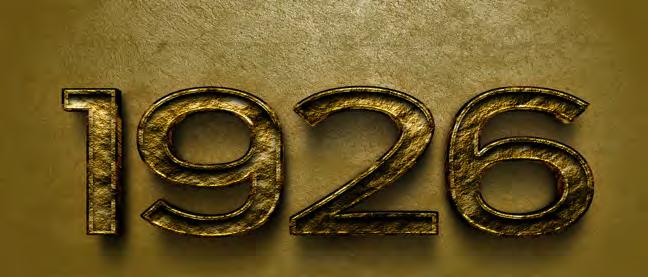
This is quite a list and a few shocked me, including Marilyn Monroe.
Marilyn passed away on August 4,1962 at the age of 36.
Mel Brooks and Gene Shalit are the only two still alive.
Mel Brooks
Marilyn Monroe
Fidel Castro
Hugh Hefner
Chuck Berry
Elizabeth II
Cloris Leachman
Jerry Lewis
Harper Lee


John Coltrane
Andy Griffith
Don Rickles
Leslie Nielson
Fred Gwynne
Tony Bennett
Gene Shalit
Patricia Neal



UPCOMING PRESENTATIONS National Parks
Tuesday, March 31, 2-4pm
$3 Members/ $5 Non-Members
Presented by: Steve Ellis
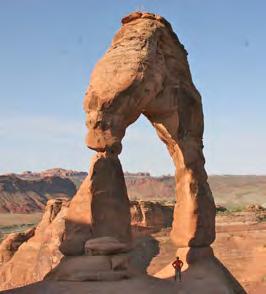
Steve will share highlights from his trips over the last several years to: The Grand Canyon, Yosemite, Glacier, Zion, Bryce, Canyonlands, Big Bend and Olympia National Parks. You will leave with plenty of inspiration for future travel ideas. Please call (269) 329-4555 to register.
Amazing Tales
Tuesday, April 30, 2-3:30pm
$3 Members/$5 Non-Members
Presented by: Steve Ellis
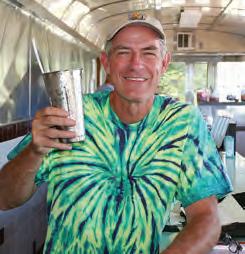
Spark Magazine publisher Steve Ellis, has spent the 25 years, accumulating hundreds of odd and unusual stories from around the area including: Goat in jail for butting cars, Bears escape from Milham Park, Burglars ransack home-steal 83 cents and Boy’s bicycle gobbled up by street sweeper. To register, please call (269) 329-4555.
Both presentations will take place at Portage Zhang Senior Center, 203 E. Centre St., Portage

THE WILD ONES Shattering Records!
Kalamazoo Area Wild Ones organizes monthly programs related to native landscaping, most of which we record and post to our YouTube channel. Our January 2026 program, Mike Weis’s presentation “Oak Savanna Garden Design: Going Beyond ‘Prairie Style’ Pollinator Gardens,” has shattered all previous audience records, with 1,700 views in the first week after we posted it!
Viewers’ comments indicate that folks all over the country wanted to understand more about native garden design. In-person attendance, at Portage District Library where we currently hold our programs, was large and enthusiastic as well. In the twenty-seven years since our local chapter was established, interest in landscaping with natives has risen nationwide. In the Kalamazoo area we are meeting this public desire to learn about native plants—why they matter, how to grow them—with a variety of free activities like talks, field trips, tours of local gardens, mentoring, plant exchanges, and community plantings.

Volunteers organize and run all of this, and we’d love to have more help! You can visit our website (https://kalamazoo.wildones.org/) or Facebook page (https://www.facebook.com/KalamazooAreaWildOnes) to connect with us.
And of course, check out the popular “Oak Savanna Garden Design” and our other programs on YouTube (https://www.youtube. com/@kalamazooareawildones3344).
Above: Monarch Waystation at Portage District Library (photo by Quyen Edwards)






Book Reviews
Book Reviews by the Portage District Library staff
An Unfinished Love Story: A Personal History of the 1960’s
Doris Kearns Goodwin

Doris Kearns Goodwin is known for her books on American history, focusing on presidents. She, along with her husband, had a front row seat for two presidential administrations: John F. Kennedy’s and Lyndon Johnson’s. In this book, she details the memories she and her late husband shared from the 1960s, including pivotal moments. Starting with JFK’s campaign for the presidency, the book goes through one major event after another, including the Bay of Pigs, the Cuban Missile Crisis, the assassination of JFK, the Civil Rights and Voting Rights bills under Johnson, the Vietnam War, and the moon landing. Along the way, they tell personal stories about both presidents as they navigated through turbulent times. The book is a love story, both about the 1960s and about the love these two remarkable people shared. It is highly recommended for anyone interested in history.
Ghost Business (Boneyard Key, 2)
Jen DeLuca

While Ghost Business is the second book in the series, you don’t necessarily have to read the first to enjoy this one. Boneyard Key, Florida, is the only home Sophie has ever known. Her love for its supernatural history has flourished into a career, as she guides the one and only ghost tour through the town’s haunted spots. But there’s a newcomer in town. The son of a Fortune 500 businessman, Tristan has grown his tours from a fraternity fundraiser to a multicity ghost tour conglomerate. When the two ghost tours clash, the rivals strike up a deal. Whoever has the most successful business by summer’s end stays, while the loser must ghost. But the more Tristan comes to appreciate Boneyard Key, the more Sophie comes to appreciate Tristan, and what starts as begrudging respect becomes something spicier. An enemy-to-lovers story that warms your heart.

“Kalamazoo” Hand-Made Trucks
by Keith Howard, Kalamazoo Public Library
M.H. Lane was among Kalamazoo’s most successful early entrepreneurs. He founded the Michigan Buggy Company, one of the nation’s largest carriage manufacturers. Lane built trucks and automobiles, ran railroads and a newspaper, developed neighborhoods, and directed numerous companies. The Lanes were pillars of society in Victorian-era Kalamazoo.
The shift from horse-drawn vehicles to the automobile brought an end to the Michigan Buggy Company and sent Lane into bankruptcy. Undaunted, Lane saw great promise in Kalamazoo’s heavy truck manufacturing business, and in 1916, he gathered enough capital to form the Lane Motor Truck Company.
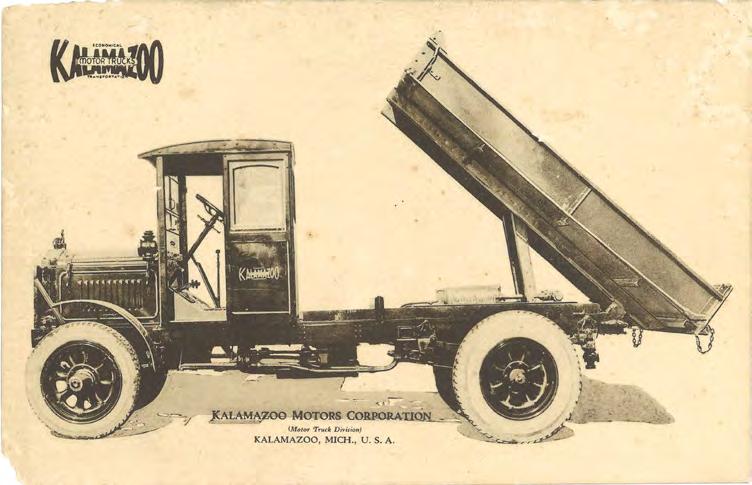
After the close of the First World War, innovations like pneumatic tires, larger and more powerful engines, and better transmissions allowed truck builders like Lane to create specialized models for a wide range of uses. Dump beds, fire trucks, buses, farm vehicles, tank trucks, and heavy-duty tractor trailer models were among the many possible options. Lane retired from the firm in March 1918. A year lat-
er, the Lane Motor Truck Company was absorbed by an ambitious new firm called the Kalamazoo Motors Corporation (KMC). With a new board of directors and $250,000 in capital (nearly $5.4 million today), the KMC would be restructured from the ground up with its primary focus on a new line of trucks to be known as the “Kalamazoo.”
KMC would continue to use the Lane Motor Truck Co. facilities on Fulford Street, while focusing on models designed by Lembert Coppock, the firm’s
chief engineer. The company’s goal was to produce 1,000 trucks during its first year.
Like many small vehicle builders at the time, KMC was an “assembled car” manufacturer. The company purchased major components like engines and drivetrains from outside suppliers, rather than producing them in-house. But building vehicles one-by-one made it difficult to compete against highvolume manufacturers that utilized more efficient assembly lines and standardized components.
After a period of highly leveraged production, mounting debt and unpaid wages brought an end to the firm. In 1923, the company was deemed insolvent and placed in receivership, citing foreclosure of a mortgage and outstanding bonds of $104,000.00 (nearly $2 million today). By then, the once promising Kalamazoo Motors Corporation, makers of “Kalamazoo” hand-made trucks, was but a footnote in the history of local manufacturing.
More at kpl.gov Images, courtesy WMU Archives & Regional History Collections and Kalamazoo Valley Museum.

Suseum Quality Art
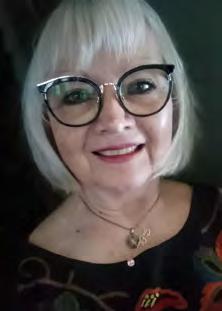
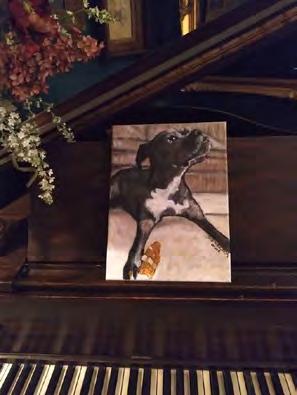
In this present age of digital image creation, I have found my own way of “capturing souls”with acrylics on canvas. After decades of giving my art away for free, I realized that I was actually devaluing my work, and was very disheartened by people’s lack of response to it.

The legendary economist Adam Smith explains it like this: “The real price of everything,what everything really costs to the man who wants to acquire it, is the toil and trouble of acquiring it.” In other words, when people have to pay for something, it has more value to them. I have learned important lessons in the difference between value and worth. It took a dear friend two years ago to commission and pay for a painting of her granddaughter’s dog for a Christmas gift, to give my art a whole new perspective and purpose. Now, people seek me out to do mostly pet portraits for them, but I have been asked to do people, as well as homes. I can replicate from a picture of most anything! I have done nearly 150 portraits, but while I now charge depending on size, 100% of the proceeds go to charity. Half of my fees go to the Sanctified Arts Fund at our local Plainwell 1st United Methodist Church, providing money for worship enhancement; the other half goes to UMCOR, the United Methodist Committee On Relief. 100% of all donations given to UMCOR go to the actual recipients who need help. Methodist members pay ALL administrative fees through their local churches. My donations have personally helped to fund relief efforts in Ukraine and Haiti. I am so very gratified to finally find a way in my retirement years to use my art to bring joy to others. At 75 years old, I hope that I might in some small way inspire you to continue to create in ways that inspire your spirit.


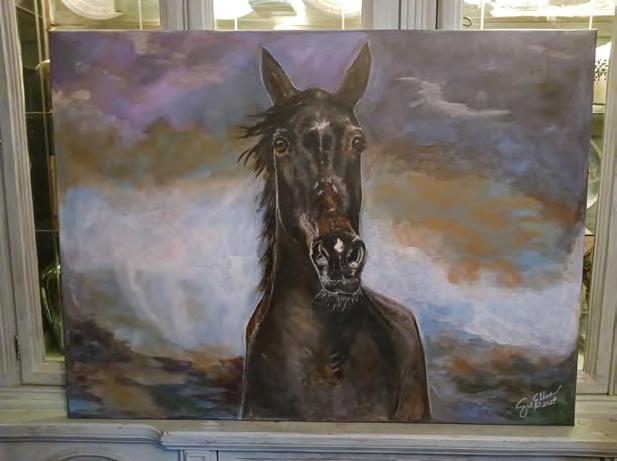

Sue Ellen Nelson Sue can be reached
“From Ledger to Toolbelt: A Lifelong Commitment” –Pete McWethy
By Jim Coppinger, Milestone Senior Services
Pete McWethy is a lifelong resident of Kalamazoo. He grew up in the Westnedge Hill neighborhood—the neighborhood he still calls home. Pete attended public schools and, after graduating from Loy Norrix High School, went on to Kalamazoo Valley Community College. It was there that he was introduced to accounting, a subject that proved to be a perfect fit. He later transferred to Western Michigan University, where he earned a Bachelor of Business Administration degree in accounting.
Growing up, Pete had a connection to the Kalamazoo Gazette, delivering papers and getting to know many of its employees. Fresh out of college, he was offered a position in the paper’s accounting department—an opportunity that led to a thirty-four-year career. Over time, Pete rose to oversee the general ledger, ensuring the paper’s finances were in top condition.
The Gazette also shaped his personal life. Pete met a fellow employee, Maureen, who worked in the circulation department, and the two have now been married for thirty-nine years. They have two grown sons, both married—one with two children and the other with their first. Pete and Maureen love being grandparents.
He’s always enjoyed working with his hands and tackling projects, and retirement gave him more time to do just that. His biggest home project was designing and building a patio deck off the back of the house.
“It’s probably what you’d call overbuilt,” he says, “but it’s still solid after 30 years.” When Pete retired, he knew sit-
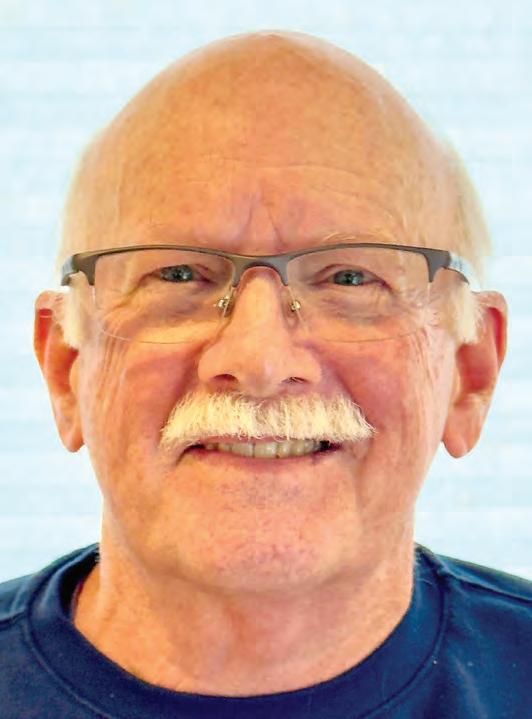
ting still wasn’t for him.
Community service has long been part of Pete’s life. He’s a longtime volunteer with Kalamazoo’s Loaves & Fishes, delivering food to homes and even driving the panel

truck to transport pallets of packaged goods to the organization’s network of pantries. That commitment was inspired by his father, who volunteered through his church building access ramps for people’s homes and helping with the church food pantry. Pete says that example stuck with him.
In honor of his father—and fueled by his own love of tools and hands-on work—Pete became a volunteer with Milestone Senior Services’ Access Construction Team (ACT). The group builds and installs home access ramps throughout the area. Pete says it’s something he always looks forward to, not only for the work itself but for the people. “It’s a wonderful group,” he says, adding that volunteers are always welcome—men and women alike—and no prior experience or tools are required. Equipment and guidance are gladly provided.
Two days a week, Pete also continues his volunteer work at Loaves & Fishes. He says every minute he spends volunteering—whether at Milestone or Loaves & Fishes—is rewarding beyond words. Putting our hands, minds, and hearts to work, he believes, is one of the greatest satisfactions life can offer.
To learn more about the AmeriCorps Senior Companion or RSVP volunteer programs, contact Milestone’s Volunteer Services department at 269-382-0515 or get started right away by applying on the Volunteer page of their website: www.MilestoneSeniorServies.org/ Volunteer.

WELLNESS IS HEALTH HEALTH IS INDEPENDENCE
By Dave Person david.r.person@gmail.com
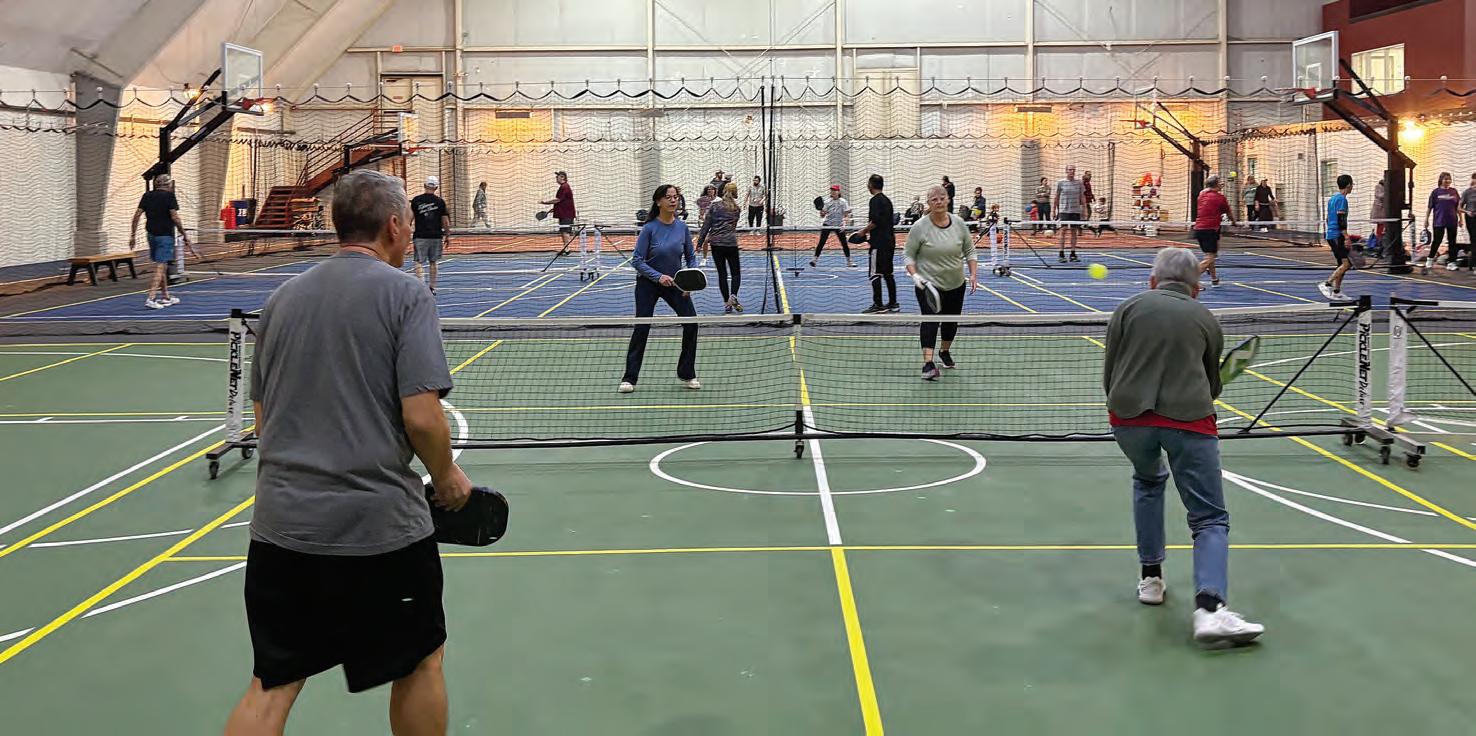
Glenda VanStratton remembers when the Young Men’s Christian Association in Kalamazoo was pretty much just that — a place where men could hang out, exercise and practice Christian principles. But it was changing, and the opportunities for women
at what is now the YMCA of Greater Kalamazoo were increasing.
“They had many more things for the men, as opposed to women’s programs,” recalls VanStratton, who joined the staff at the YMCA, 1001 W. Maple Street, in the fall of 1972.
VanStratton, who retired as the Y’s aquatics director in 2015, but continues to lead classes and serve as a personal trainer there, at first worked part time with the youth, playing board games and just hanging out.
“It was just a fun place to work, really,” she says. But that was just the beginning. She graduated to teaching fitness classes for women, and then was asked to become a lifeguard and teach swimming classes.
VanStratton says she was hesitant at first. She had graduated from Dordt University in Iowa with a physical education degree and her main interests were running and volleyball. She didn’t know much about swimming.
“I always thought I would be a physical education teacher, but God had other plans for me,” she says.
VanStratton, a South Dakota native who met her husband of 53 years, Paul, through a college roommate from Kalamazoo, and then moved to his hometown when they were married, dove into her new responsibilities with all her energy.
“I taught a lot of children’s swim classes back then,’ recalls VanStratton, who has two children of her own, now grown. “That was fun, working with the parents.”
“I also got involved in … teaching aquatics arthritis classes.”
She was named aquatics director about 1990 and stayed in that role until her retirement.
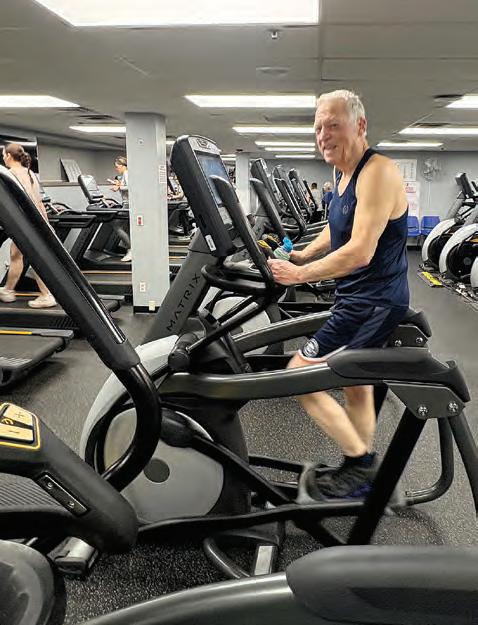
She currently leads two water exercise and two arthritis aquatic exercise classes a week, plus a “Moving for Better Balance” floor class, which incorporates tai chi, one of the many areas in which she is certified to teach.
In addition, she is a personal trainer and attempts to meet with those clients weekly.
Her focus these days is on improving the health of those with arthritis or other issues related to aging, illness or accidents, and she has gained a following.
“Some of these people have been coming to my classes
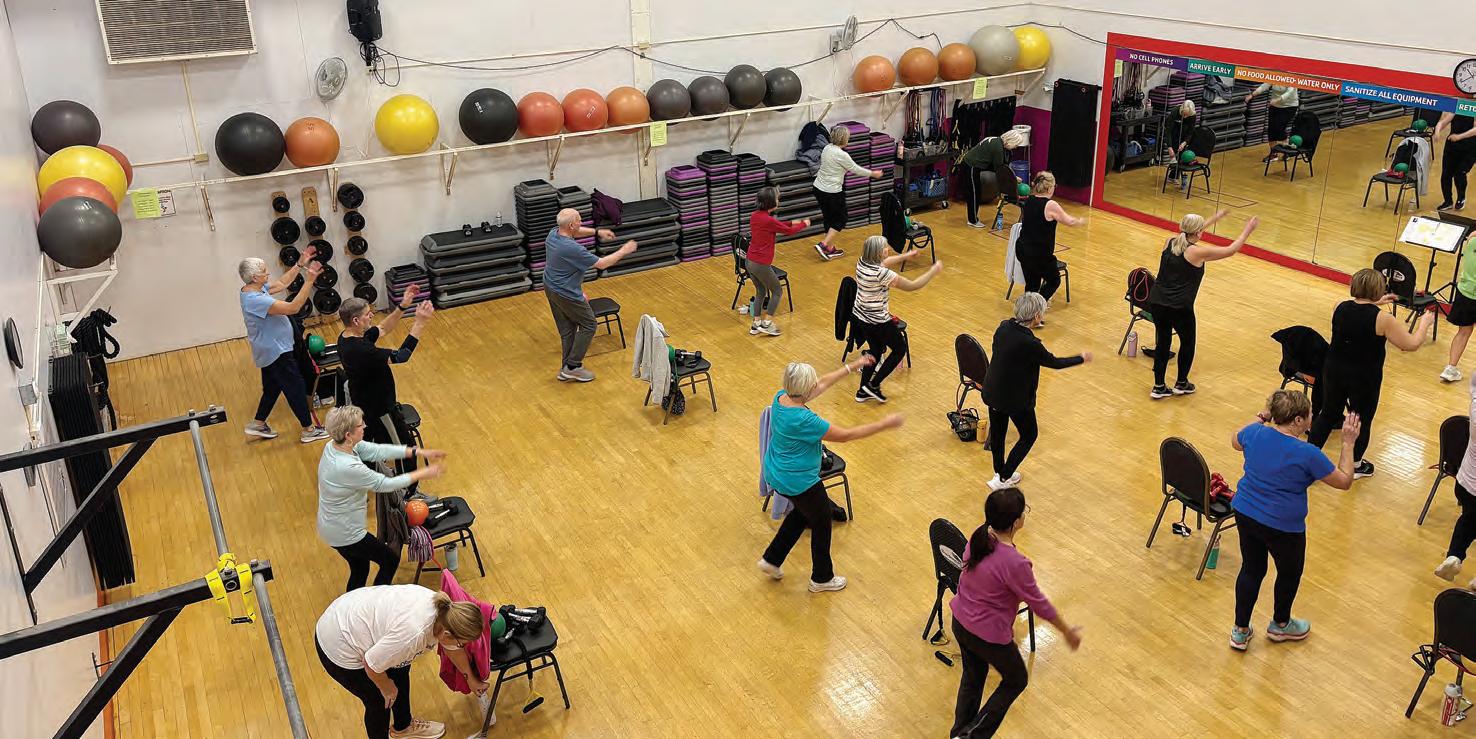
for 30 years,” she says.
She’s not the only one at the Y with an eye toward helping that demographic.
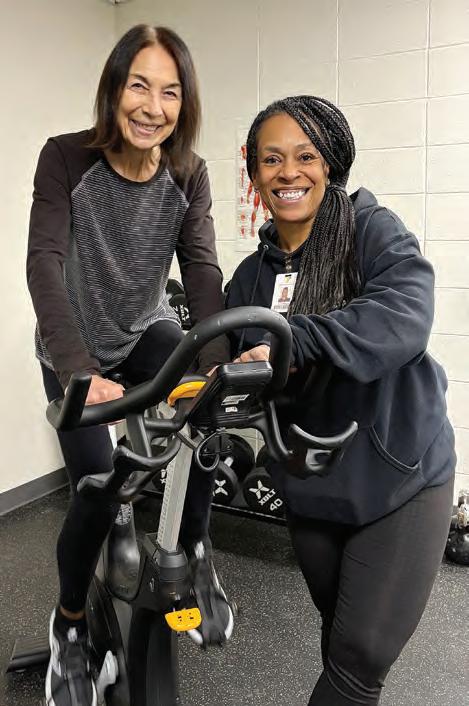
Shashu Baraka, active-for-life director and chronicdisease programs manager, also works with those who are seeking a healthier life.
As active-for-life director she teaches SilverSneakers exercise classes and also organizes outings for older Y members, from a monthly lunch gathering to charter bus trips to destinations such as Detroit, Chicago and Grand Rapids.
These activities help to keep people from slipping into a solitary or sedentary lifestyle.
“When you get out of the workforce, it’s like, uh-oh, now what am I going to do?’” says Baraka, who has been at the Y since 2013.
The chronic disease programs Baraka heads up include Livestrong cancer wellness, Total Parkinson’s and the recently introduced Diabesity Defense program. A Healthy Hearts program is being launched this spring.
All of those programs are for people who have received treatment for their chronic diseases and require medical clearance for participation, says Baraka, a Kalamazoo native who has a degree in health sciences with a holistic health background from Western Michigan University.
Baraka, the mother of an adult daughter, says she was caretaker for her father, who died from lung cancer and had a sister who succumbed to diabetes. Baraka herself has dealt with A1C issues, so she feels well-equipped to help people with these illnesses.
“I appreciate and respect the space they’re in,” she says.
Baraka says the reward comes from seeing changes in their lives.
“They go from being broken to being themselves again,” she says.
While the Kalamazoo YMCA is open to people of all ages, and with a variety of reasons for joining, Baraka and VanStratton are happy in the niches they have created there.
VanStratton says she has always tried to fulfill the
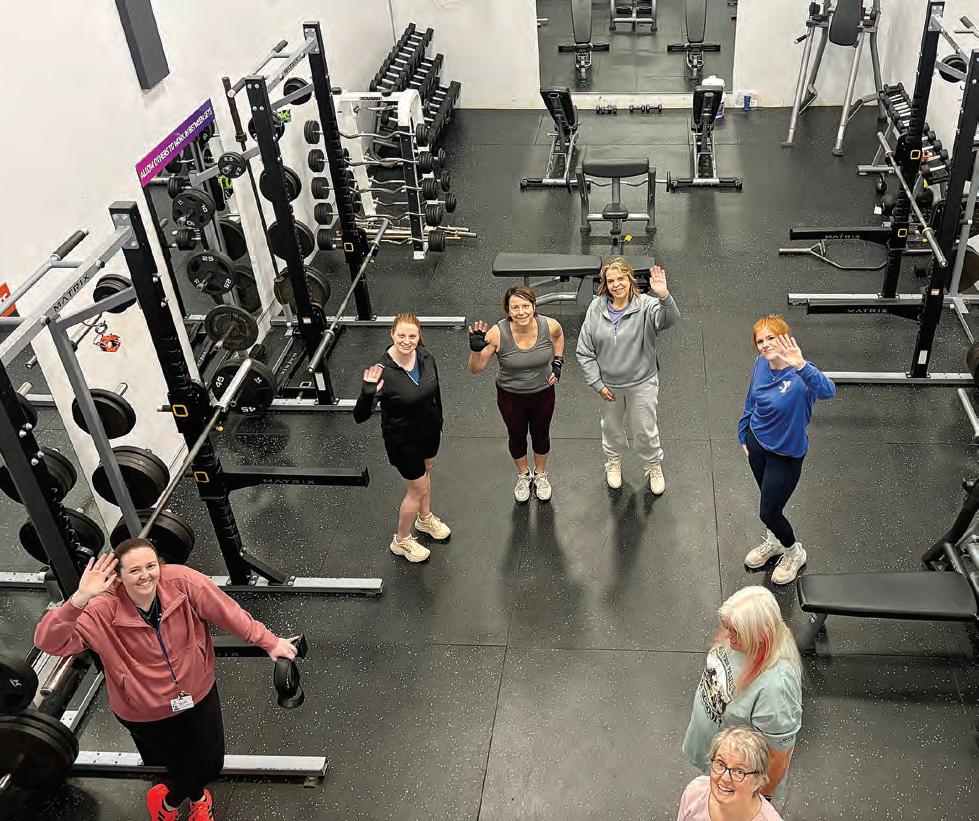
Y’s mission “to put Christian principles into practice through programs that build a healthy spirit, mind and body for all.”
“I felt I had to live that,” she says.
She also attempts to implement the Y’s original core values of caring, honesty, respect and responsibility in the classes she teaches. “Modeling those four words has meant a lot to me,” she says.
“My love is teaching, helping people become more confident in themselves. To see a frown turn into a smile is wonderful.”
Baraka says making a difference with those who have
chronic illnesses is a rewarding part of her job.
“I am the last stop on their wellness team,” she says. “The goal is helping them get their independence back.”
“My co-workers tell me it takes a special person to be in this position; I say, ‘Give them all to me. I love them; I’ll love on them.’”
Check out the fun YMCA History Facts on the next page!


• YMCA History Facts
The YMCA of Greater Kalamazoo is celebrating 160 years this year.
Founded in 1866 and occupying rooms at 111 W. Main Street, the local YMCA was established 22 years after the first YMCA was started in London, England, to keep young men off the streets, and 15 years after the first YMCA in the United States opened its doors to sailors and merchants needing a place to go after making landfall in Boston, Mass.
President William Howard Taft came to Kalamazoo to deliver an address at the dedication of a new Kalamazoo YMCA building at 341 W. Michigan Avenue at Park Street on Sept. 21, 1911.
From there, the Kalamazoo YMCA moved to its current home at 1001 W. Maple Street in 1970. The Portage Branch YMCA at 2900 W. Centre Avenue is also part of the YMCA of Greater Kalamazoo.
The YMCA in the United States has recorded several firsts, according to the ymca.org website.
In 1881, a staffer at the Boston YMCA coined the phrase “body-building.”
Three sports had their start at the YMCA:
Basketball was invented by a YMCA physical education teacher in Springfield, Mass., in 1891 as a result of a challenge from the director there, followed five years later, at the same location, by volleyball, which was created by a Y instructor who “considered basketball too strenuous for businessmen.”
The first YMCA group swim lessons were offered at the Detroit YMCA in 1909.
A volunteer at the Greenwich, Conn., YMCA invented racquetball in 1950 as an alternative to squash and handball.

Skunk Cabbage: The Sweet Stench of Spring
By Tom Springer, Vice President for Development
Whoever named the skunk cabbage should be commended for their honesty. There was no clever attempt to disguise its true nature (such as when the Chinese gooseberry was renamed Kiwifruit in the late 1950s for marketing purposes). With skunk cabbage, we can forego the semantic smokescreen. We get a tell-it-likeit-is plant whose rugged, odiferous beauty make it a welcome vanguard of spring in the Michigan woods.
While neither skunk nor cabbage, there’s much about this oddball plant that deserves a closer look. For one, it emerges from the wetland muck at a time when we assume it’s too cold for any green thing to survive. Then, what pokes up first resembles a people-eating pod from the cover of a 1950s pulp fiction thriller. It’s called a spathe, and it’s made of shiny, purple-green leaves that clasp around a central flower chamber. Although it looks sturdy enough to push through on its own, the spathe has a rare competitive advantage: it produces its own heat, enough to melt snow in a ring around the plant. Not just lukewarm heat, but fireplace-level coziness that can reach 95F!
Inside the spathe, there’s an oval spadix, studded with dozens of tiny yellow flowers without petals. To say that it smells skunky in there hardly does it justice. It’s strong enough that Carl Linnaeus, of the 9,000 plants that the legendary Swedish biologist named in his lifetime, deigned that skunk cabbage should have
foetidus as its species name. In Latin, that roughly translates as “stinks to high heaven.” But if nature
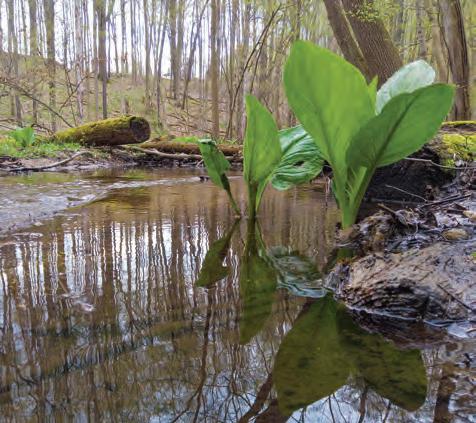
wants to make a flower smell like roadkill, it has its reasons. In this case, to attract flies, carrion beetles and other pollinators smitten by the odor of dead meat. Much as how a steaming bowl of Irish stew once lured me into a Limerick pub on a

raw March afternoon.
Personally, I don’t find the skunk cabbage smell offensive. Yes, it’s earthy, musky, dank and darkly alluring; but so is coffee, Guiness stout and some perfumes. Or some people for that matter. Later in the season, when marsh marigold flowers bloom shiny yellow in the wetlands, it’s the cabbage part that takes center stage. Its foot-long leaves look more like a Hosta to me. Break one off and you’ll be rewarded – or assaulted, depending on your scent preferences – by another bold smell. It reminds me of garlic and onion and horseradish; all the tonics of spring. The leaves are poison to eat, but a deep whiff will stir your senses like bright March sun after a cold rain.
Yet as much as the plant itself, it’s the season that makes skunk cabbage a harbinger of spring. If you see skunk cabbage, pat yourself on the back. It’s proof that you’ve found a high-quality wetland, because skunk cabbage doesn’t like disturbed ground. It’s also evidence that you’ve stretched your legs during a walk in the woods and likely heard robin song along the way. Farewell to the winter of our discontent. The sap’s running and the real skunks will soon be on the move.

Tom Springer is vice president for Development at the Kalamazoo Nature Center and the author “Looking for Hickories,” and “The Star in the Sycamore.”



The Sound of Music
An occasional feature on how we have listened to music
8-TRACK TAPES
By Dennis Martin

I only had an add on 8-track player for a few months. I had only two tapes: A Space in Time by Ten Years After and Golden Biscuits by Three Dog Night. Before the 8-track there was a simpler 4-track version. The 8-track tape, a magnetic tape format for consumer audio, was popular from the late 1960s to the early 1980s. The name comes from the 1/4-inch magnetic strip inside the cartridge, which could record up to eight channels. Each tape held four programs, each with two tracks for stereo sound. A metal strip in the tape signaled the end of a program, prompting the player to switch to the next. There were car and home players available. I really didn’t care for the concept and quickly switched over to cassettes.
Dennis is a lifelong Portage resident with a degree in Communications Arts and Sciences from Western Michigan University . His first radio job was as a student at WMU at WMUK. You may have heard him on the air on WQLR. He continued as Advertising Sales Manager for parent company, Fairfield Broadcasting and finally Midwest Communications. In retirement, he can be heard playing at area Open Mic nights and Farmers Markets, or fly fishing on a Michigan stream.


Zero: Non-Alcoholic Bar
By Richard Martinovich
During a recent trip to Prague, I wanted a nonalcoholic beer with my meal, but in a country that consumes twice as much alcoholic beer per capita than any other, I thought I would be out of luck. To my surprise, nonalcoholic beer is readily available in the Czech Republic. In fact, 85% of Czechs have reached for a nonalcoholic beer!
In the US, the nonalcoholic beverage market has exploded with sales projected to hit over four-billion by 2027, as people are becoming more health conscious. Nonalcoholic -- NA -- beverages don’t sacrifice taste, and have none of the side effects associated with alcohol.
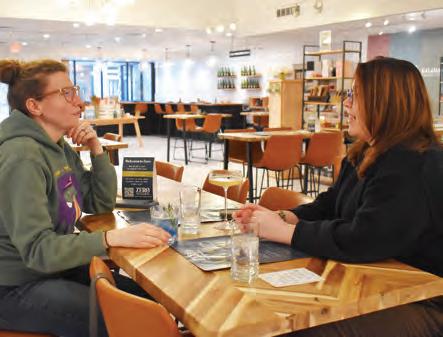
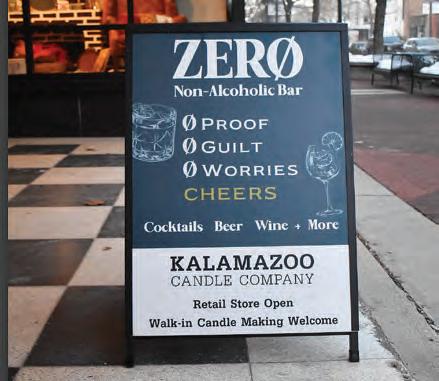
Zero: Non-Alcoholic Bar is Kalamazoo’s first nonalcoholic bar, and a welcome addition to the downtown mall, and Kalamazoo community. Located inside the Kalamazoo Candle Company, Zero offers a wide selection of nonalcoholic beers, NA wines and NA cocktails, or “mocktails.”
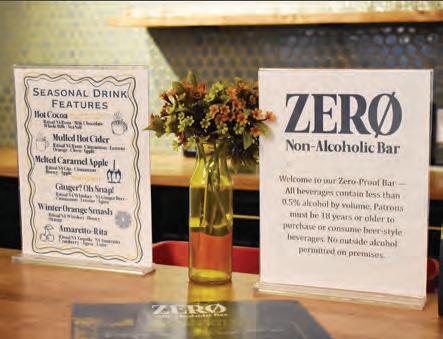
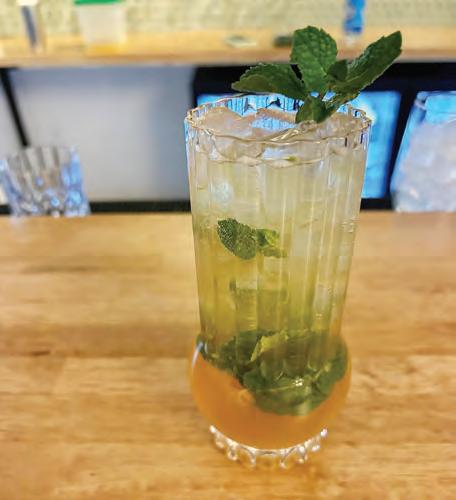
Zero nonalcoholic cocktails feature amazing concoctions like the Smoked Zero with nonalcoholic whiskey, bitters, and orange! Or the Salted Grapefruit Margarita; NA tequila, grapefruit, lime and agave!
Zero NA wines are flavorful delights such as the Seaglass Sauvignon Blanc -- crispy, zesty and tropical -- and the Fre Chardonnay that has a bright, fruity and smooth taste.
The beer selections are equally alluring; Try the Chocolate Dark Brew, described as rich, velvety and decadent! The Juicy IPA -- hoppy, citrus and tropical. American Gold -- crisp, classic, easy-drinking; Oktoberfest; malty, caramel, crisp.
Zero has live music Wednesday and Friday from 6-9pm. There is a dessert plate and Pop City Popcorn to compliment beverages, and a rotating dinner menu.
Other beverage offerings include bottled Kombucha: Namaste Nectar, Lavender Bliss, Triple Ginger; sparkling waters, and Fun Fizzies like a Shirley NonTemple, Seasonal Sangria, and Apple of My Eye: apple cider -- ginger beer.
Zero: Non-Alcoholic Bar is the future happening now in Kalamazoo! As articulated on their menu, it’s Zero Proof, Zero Guilt, Zero Worries. Cheers!
Photos
by Liliana Kiszka and Steve Ellis


HEALTHY LIVING
DEPRESSION HATES A MOVING TARGET
We are often told to stay active as we age to protect our hearts or our joints. We watch our blood pressure and our bone density like a hawk. But we are missing the most urgent reason to keep moving: Our brains depend on it.
There is a biological truth that every adult over 50 needs to hear: Depression hates a moving target.
The Stillness Trap Depression thrives in the quiet. It loves the empty nest, the retirement chair, and the closed door. It feeds on the stillness that life naturally invites as we get older. When we stop moving, our brain chemistry follows suit.
The “feel-good” neurotransmitters dry up, and the brain’s natural ability to repair itself slows down. This creates the “Stillness Trap.” You feel heavy, so you stay still.

Because you stay still, the heaviness gets worse. Before you know it, you aren’t just resting—you’ve become a stationary target for a low mood to latch onto.
The Biological Counter-Attack If you are struggling right now, hear this: Seeking professional help is the most vital step you can take. It is the foundation of your recovery. But once you have that support in place, you have a second weapon available to you: your own momentum.
Science shows that even moderate movement acts as a biological “reset” for the brain. When you move, you trigger an upward spiral. You push oxygenated blood into the areas of the brain that regulate your emotions. You spark the production of proteins that act like “Miracle-Gro” for your neural pathways, repairing

the damage caused by stress and isolation.
Movement isn’t about fitness; it’s about making your brain a moving target that depression can’t catch. Break the Stillness Today You don’t need to train for a marathon to
change your chemistry. You just need to break the stillness.
• Move First, Motivate Later: Don’t wait until you “feel like it.” Motivation is the result of movement, not the cause of it.
• Small Bursts: A ten-minute walk, tending to the garden, or even tackling household chores is enough to signal to your brain that the “engine” is starting.
• Change the Scenery: Stillness is reinforced by the same four walls. Stepping outside forces your brain to process new data, breaking the cycle of negative thoughts.
The Bottom Line
Whether you are dealing with seasonal blues, situational grief, or a clinical diagnosis, remember that your hands and feet are tools for your healing.
Professional help gets you on the path, but movement keeps you on it. Don’t be a still target.
Keep moving. You are worth the fight.
Submitted by Vicky Kettner, Association Director of Marketing, Community Relations, and Member Engagement at YMCA of Greater Kalamazoo.

Celebrities that came to Kalamazoo
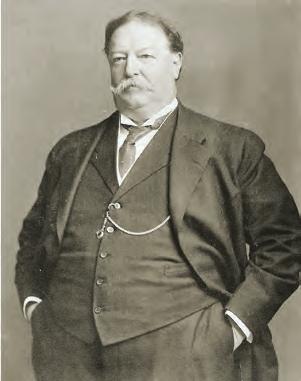
William Howard Taft
Story by Steve Ellis
William Howard Taft was the 27th President of the United States, in office from 1909 to 1913.
Taft was the first sitting president to visit Kalamazoo. Although Abraham Lincoln (1856) and Teddy Roosevelt (1900) visited Kalamazoo, neither were president at the time. In later years, George H. W. Bush (1992), Bill Clinton (1996), George W. Bush (2001, 2004), and Barack Obama (2010) visited Kalamazoo. Dwight Eisenhower (1952), John F. Kennedy (1960), and Gerald R. Ford (1974) came to Kalamazoo but not as president.
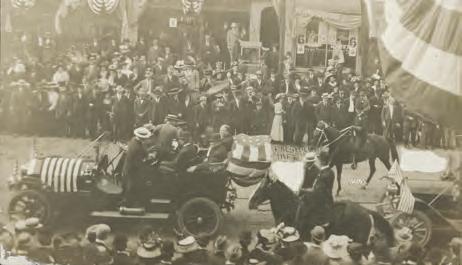
Pierce Arrow automobile, bowing and smiling, graciously acknowledging every ripple of applause and waving his silk tile in answer to the thousands of handkerchiefs which fluttered from the windows of office buildings along the route.
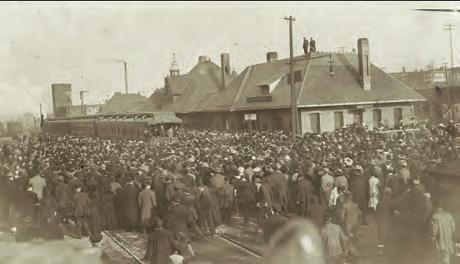
By the time the president had reached the site of the new Y. M. C. A. building, where he spoke briefly and laid the corner stone, Main Street from Church to Park was a seething mass of humanity.
Mayor Charles H. Farrell mounted the platform and shouted in a booming voice, “Citizens of Kalamazoo, this is your supreme opportunity. You shall hear his excellency, the president of the United States, William Howard Taft, who will now address you.”
Taft began by saying,”I am proud

In 1911, Taft embarked on a massive 13,000-mile, 24-state tour across the U.S., intended to reassure the American public that the country was in good hands.
Taft’s tour took him to Michigan in September, stopping in Pontiac and Detroit on Sept 18, Marquette on September 20 (12,000 people saw him speak), Jackson, and Battle Creek on Sept 21 (over 40,000 heard him speak along with Dr Kellogg and C.W Post-the crowd was larger than Battle Creek’s population).
In Kalamazoo, on Thursday, September 21, despite threatening weather, thousands lined the streets before noon. By 5:20 in the afternoon, when Taft’s train arrived from Battle Creek, the streets along the route of the parade were jammed from the station to the site of the new Y. M. C. A. building, where the first stop was made. The crowd was reported as not less than 50,000 and possibly as high as 60,000. This was by far, the largest crowd ever assembled in Kalamazoo.
As the parade passed up Rose Street, between long lines of school children extending the length of the street from Kalamazoo Avenue to Main Street, President Taft stood in his
baths and in its gymnasiums, it supplies the things that the young men need.”
The speech ended and the president stepped from the platform to take a trowel and spread the mortar for the laying of the cornerstone.
to visit Kalamazoo at a time when I can participate in the dedication of a new building for such a worthy institution as the Y. M. C. A. It provides to the young man who comes to the city from the country and from the village the home influence. The youth of our country are crowding into the cities. It is a part of the work of the Y. M. C. A. to supply the influences, and in some instances the comforts of the home to those who come to the city. In its classes, in its

The small silver trowel used in the ceremony was presented to the Y. M. C. A. by the Henderson-Ames Co. The flowers used in the decorations were from Van Bochoves.
Taft picked up the small ceremonial trowel carefully, looked at its inadequacy for the task and smiled. “Give me a man’s trowel,” he said, pushing back his sleeves and smiled.
The ceremonies ended at 5:30 and the president and his party sped out West Main street to greet the students of Kalamazoo College. His stop at Bowen Hall was welcomed by Acting President Herbert L. Stetson, college faculty and students, with rousing cheers and college yells.
Taft was then escorted up Michigan Avenue and up the hill to the Western State Normal School where the road was brilliantly illuminated and the banners of Yale, the president’s alma mater, were part of the decorations. President Dwight B. Waldo and the Normal faculty were assembled on the lawn to greet him.
From there he went to Nazareth Academy out Gull Road for a short speech.
Taft returned to downtown for a short rest before arriving at the opening of the fabulous new New Burdick Hotel, at 7:30pm for a banquet and speech. The banquet was attended by 800 guests who gave Taft a several minute standing ovation upon his arrival.
The Kalamazoo Gazette gave the names of all of the guests, a virtual Who’s Who of Kalamazoo’s “rich and famous.”
From looking at the names it appears that only men were in attendance at the dinner. A list of reporter notes mentions that “nearly 100 of Kalamazoo’s prominent women were not to be defeated in their desire to get a sight of President Taft at close range and were allowed to occupy parlors on the banquet hall floor to view him as he passed.”
After the banquet, Taft was escorted back to the train station, departing at 10:30pm for Joliet, Ill., his next stop.
Taft later returned to Kalamazoo in 1921 in his new role as U.S. Supreme Court Justice. William Howard Taft passed away in 1930 at age 72.

Crowd scenes of Kalamazoo are from September 21, 1911. President William H. Taft in Pontiac (above, far left) was on September 18, 1911.
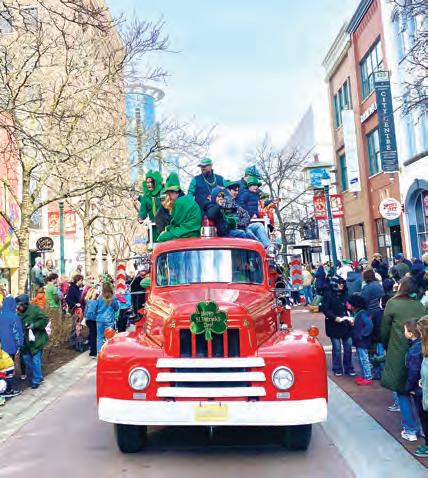
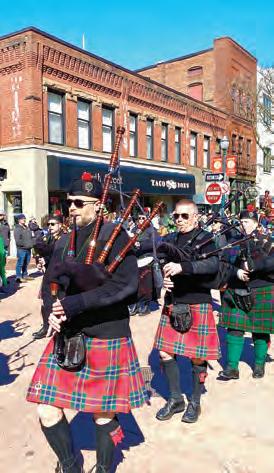
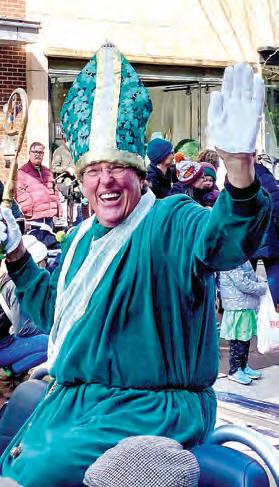
24th Annual
St. Patricks Day Parade
Saturday, March 14
11:00 am


Moon (2023)

Released in October of 2023, Killers of the Flower Moon is Martin Scorsese’s latest literary adaptation, based upon the David Grann nonfiction title by the same name. Starring Scorsese favorites Leonardo DiCaprio and Robert De Niro, and joined by Lily Gladstone (Billions, Reservation Dogs) and a murderers’ row of supporting performers ranging from John Lithgow to Jack White, Killers of the Flower Moon is the classic Scorsese crime drama formula transmuted. De Niro is William “King” Hale, a cattle baron who utilizes his position to pull the strings of both the Osage and the white populations of rural Oklahoma in the 1920s. DiCaprio is Ernest Burkhart, Hale’s nephew recently returned from the battlefields of France and looking to make himself useful. The Osage, previously removed from their ancestral lands by the US government, were forced onto reservation land later discovered to contain rich oil deposits. Students of American history ought not to be shocked by the events which follow: one by one the Osage begin to turn up dead – either murdered outright or appearing to be victims of strange illnesses. Generating quite a bit of buzz and nominated for ten Academy Awards, the film has spent the last two years locked up on the Apple+ streaming platform but is now receiving the Criterion Collection treatment with a physical release date scheduled for March 26th. – Submitted by Patrick J.
Spinal Tap II: The End Continues (2025)

The late, great Rob Reiner began his film directing career with the 1984 mockumentary This is Spinal Tap, which brought together actors Christopher Guest, Michael McKean, and Harry Shearer as members of a British rock act in mid-life, struggling to stay relevant and maintain their friendships. Its sendups of heavy metal cliches of the era garnered a cult following which has grown in number
Movie Reviews
becoming an especially iconic quote). Guest, McKean, and Shearer are all fine musicians, responsible for writing the ridiculous yet catchy numbers from the original film, which they performed to live audiences as Spinal Tap in the following years. Clips of those performances appear in Reiner’s 2025 sequel Spinal Tap II: The End Continues, but the context of the band as fictional remains the new movie’s focus. Set in New Orleans, where they have scheduled a return engagement after years of not speaking, their rehearsals and conversations find them at a more reflective juncture. Jamming on blues influences and songs from their pre-metal days, the group slowly warms up to each other, though old wounds are hard to patch. There are plenty of unexpected laughs here, especially during a couple of surprise appearances from rock royalty. Though familiarity with the original picture helps, Spinal Tap II is a joy to view in its own right, riding that “fine line between stupid and clever”. – Submitted by Karl K.
Koko: A Talking Gorilla (1978)

Perhaps, Koko is not as recognizable as King Kong or Curious George, but unlike those two fictional characters of the silver screen and book page, Koko was a real, flesh and blood gorilla whose captivating life was chronicled in this 1978 documentary. Directed and filmed by two accomplished figures of cinema, Barbet Schroeder and Nestor Almendros, Koko: A Talking Gorilla tells her story, as a young primate adopted by Dr. Penny Patterson, and then studied at Stanford University for her aptitude for learning American Sign Language. And while the story certainly has its lighter moments, so too does it examine the more sober questions about the ethics of experimenting on captive animals. The film ultimately works on multiple levels, from depicting Koko’s human-like ability to communicate her thoughts and feelings to Penny, to a grappling with the philosophy and ethics of scientific inquiry, if not of documentary filmmaking itself. – Submitted by Ryan G.

Get ready to strum, jam and groove at the ultimate celebration of Kalamazoo’s stringed-instrument legacy and musical heritage. Don’t miss a beat — mark your calendar now!
Go to https://kalamazoomuseum.org/events for a complete listing of activities and performances.



By Steve Ellis
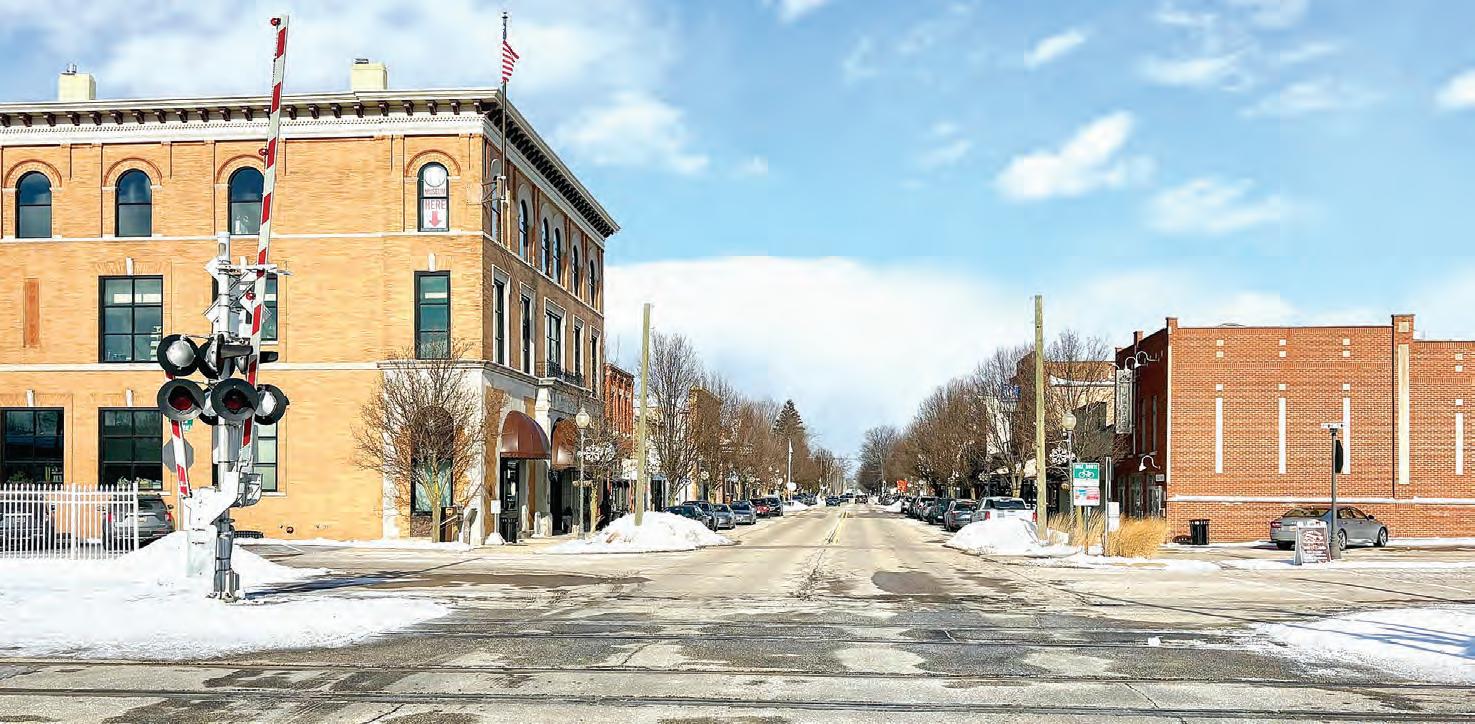
Three Oaks is a sleepy little village tucked into the southwest corner of Michigan, only five miles from Lake Michigan and two miles from the Indiana border.
It was first settled in 1850 by Henry Chamberlain and was originally called Chamberlain’s Siding. The name was quickly changed to Three Oaks because of three oak trees that stood at the
Tales road FROM THE three oaks, michigan
train stop and acted as a guide for train engineers.
The “Dewey Cannon” put Three Oaks on the map in 1899. The cannon, captured in the Spanish–American War by Admiral Dewey, was presented to Three Oaks when its citizens raised fourteen hundred dollars for a memorial to the men of the battleship Maine. In a nation-wide contest, this was the largest contribution, per capita, of any community in the nation. The cannon and park were dedicated on October 17, 1899, by President William McKinley.
The Warren Featherbone Factory was built over a century ago by Edward Kirk Warren and was a major employer in the area. The company would strip turkey feathers of their quills and use them in women’s garments of the era, such as corsets. This replacement for the “whalebone” material was much
more comfortable for women and was welcomed by the garment industry in the late 19th century, making Warren a rich man. The factory still stands and now houses the Journeyman Distillery, and the Acorn Theater.
The Journeyman Distillery is worth a stop, even if just to see this historic building. They offer tours, special events, have great food and specialize in handcrafted artisan whiskey. During our visit in January, we saw that they now offer wine and beer, made at their new Valparaiso, Indiana location.
The Acorn Theater is the perfect place to see regional and national acts in a cozy, intimate setting.
Three Oaks has a great downtown, chock full of art galleries, antique shops, great restaurants and the Vickers Theatre. The Vickers shows independent, documentaries, foreign and foreign language films.
We’ve had breakfast at the Viola Café and the Elm Street Bistro and both are very good. Viola Cafe was closed on our visit last fall, but we are happy to report that it is now up and running again and under new ownership. Our friendly, young server told us of her recent trip to Vietnam and her upcoming move to Australia.

One street over is the Dewey Cannon Trading Company, the spot for tourist and cycling information, bicycle rentals and T-shirts. Attached is the Three Oaks Bicycle Museum, which is free and houses a few dozen vintage

bicycles.
The annual Apple Cider Century bicycle tour through the local countryside brings over 5,000 cyclists to the area for the one-day race (on September 27 this year). Cyclists can ride a variety of distances ranging from 15 to 100 miles. Jackie and I chose the 25-mile route a few years back and had a great time.
In late 2025, the town held a 25-year celebration of the movie and some of the original folks connected to the film came back to Three Oaks.
Trilogy Antiques and Design is always a must stop when in town. It is packed with one-of-a-kind colorful folk art pieces, antiques, furniture and much more. They have a sister location, Alchemy Arts and Antiques in Harbert (about five miles away) that is also worth a visit.
Jackie loves Alapash New Home with its eclectic collection of prints, ceramics, global art and more. She picked up
restaurant, deli, liquor store, retail and pantry with homemade preserves and sauces. Jackie and I have both found great gifts for friends and relatives here. Their original location across the street has a great selection of pastries, cookies, pies and cakes. Both were closed in January.
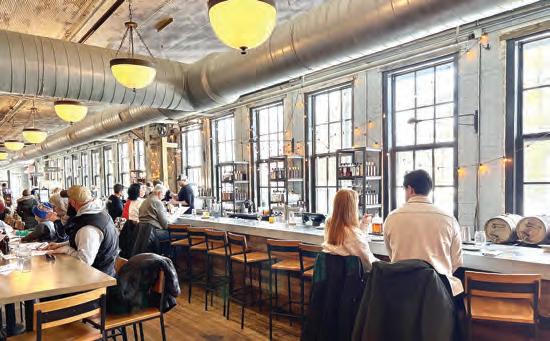
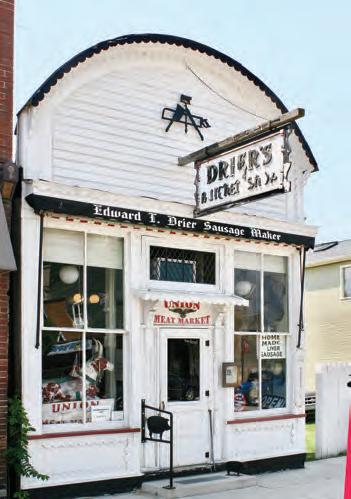
A trip to Three Oaks is not complete without stopping into Drier’s Old Fashioned Meat Market. Drier’s, originally opened in 1875 and is reminiscent of butcher shops that our grandparents would have frequented. There are pictures on the wall of Carl Sandburg and Larry Hagman, who were once regular customers.
The movie Prancer, was filmed in Three Oaks. While having breakfast in town a few years ago, we spoke with the folks at the table next to us and asked if they were in town when Prancer was being filmed. The ladies’ eyes lit up and told us of how exciting it was to have real live movie stars in town (Sam Elliott, Cloris Leachman and Abe Vigoda) and how nice they were. She also mentioned that practically everyone in town was in the movie or had some connection to it.
a great glazed pot for her living room. Alapash has a second store nearby called Alaspash Mercantile, located in one of the original Featherbone buildings. It is packed with indoor plants, planters, rustic antiques and more. Unfortunately, we were told that they will be closing and this group of buildings across from Journeyman Distillery will be turned into a boutique hotel.
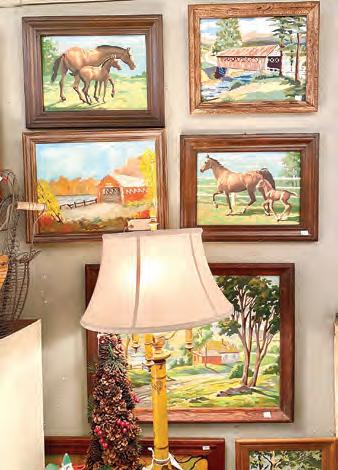
If you like antique stores with a great design and flair for staging, Poppy Hill Vintage is about as good as it gets. The two connected buildings offer small staged vignettes of vintage kitchen accessories, industrial, jewelry, large random letters on the walls, crazy thrift store oil paintings, re-purposed cottage decor and much more. The owner is very friendly, down-to-earth, fun to talk to and has an infectious laugh.
Froelich’s Kitchen and Pantry is a great
Another of my favorite stops is the Three Oaks Township Public Library. The library is housed in the historic E.K. Warren building, built in 1905. It was the home office of the Warren Featherbone Company from 1905 until 1928. From 1928 to 1952 the building was the Chamberlain Memorial Museum, honoring the memory of the founder of Three Oaks, Harry Chamberlain. In 1952, the museum was donated to MSU and the library was moved to a smaller structure and the building fell into disrepair. In 1982, it was purchased by the Bank of Three Oaks and over one million dollars was spent in restoration. After the restoration was complete, the building was placed on the National Register of Historic Places. The building housed various banks until 1999 when the library purchased the building from Fifth-Third Bank.
The library building is like going back in time. The massive main floor vault and thick metal door houses the library’s DVD collection. The upstairs includes historic Three Oaks treasures on the walls and in display cases. I always pick up a few books in the large used book room.
The front room on the second floor is the home to the “Biggest Little Baseball Museum.”
Their motto is “So big you can’t see it all in one visit, and so little you can’t get lost”. Exhibits and stories with a local flair take visitors back to a time when baseball was a big part of the area. Museum founder Garry Lange
says, “At one time, every town had a team at the early part of last century. Three Oaks had the Greens, they were a very good team.”
Pictures of the Three Oak’s Greens, New Troy Grays and Lakeside Aces hang on the wall to remind people of the area’s pioneers.
The museum is much more than just cards, bats and mitts. QR codes are scattered throughout the room, allowing visitors to see and hear more about many great baseball highlights.
“You can see the House of David playing their pepper game. You can see Ernie Banks’ 500th home run.You can see an interview with Eddie Gaedel,” Lange says. Weighing 60 pounds and standing 3 feet 7 inches tall, Gaedel became the shortest player in the history of the Major Leagues. Lang has a large display case dedicated to him.
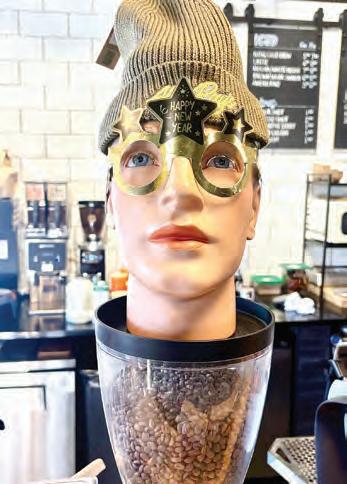
Our last stop in Three Oaks was at the recently renovated downtown building at 105 N Elm that includes the Handmade Studio and Alan Rays Coffee and tea. The comfortable building has relaxed seating, tables and a fireplace where many folks were reading and working on laptops.
Jackie and I love spending a few weekends in the area each year, exploring the small towns in this part of the state and Three Oaks is one of our favorites.