SPAN

https://spanmag.state.gov
Editor in Chief
John S. Brown
Editor
Deepanjali Kakati
English Associate Editor
Charvi Arora
Hindi Associate Editor
Giriraj Agarwal
Urdu Associate Editor
Syed Sulaiman Akhtar
English Copy Editor
Krittika Sharma
Urdu Copy Editor
Zahoor Hussain Bhat
Art Director/ Production Chief
Hemant Bhatnagar
Deputy Art Directors/ Production Assistants
Qasim Raza, Shah Faisal Khan
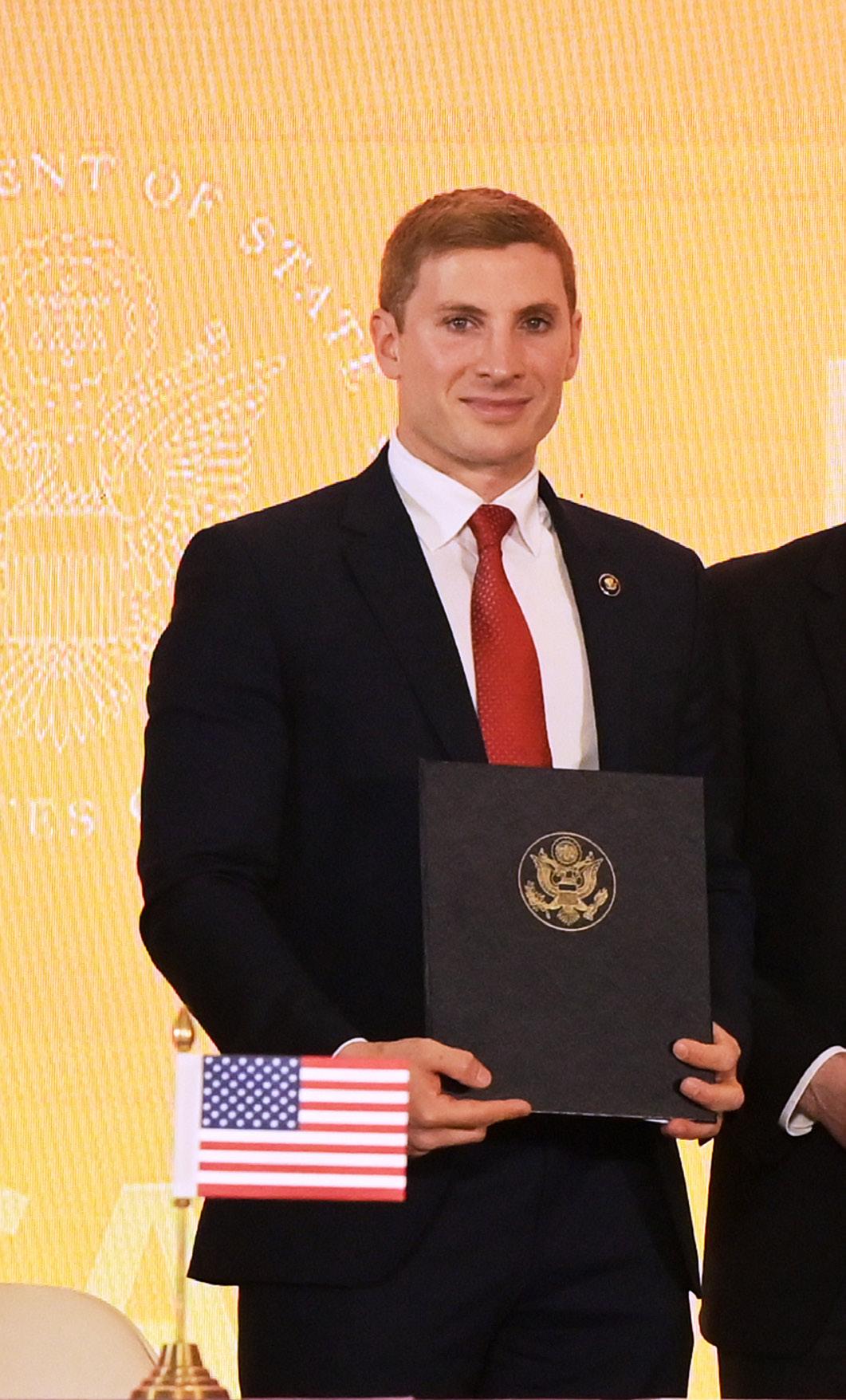
Above / U.S. Under Secretary of State for Economic Affairs Jacob Helberg (from left), Director of the White House Office of Science and Technology Policy Michael Kratsios, Ambassador Sergio Gor, Minister for Electronics and Information Technology Ashwini Vaishnaw, and Secretary of the Ministry of Electronics and Information Technology
S. Krishnan at the signing of the Pax Silica Declaration in New Delhi.
U.S. Ambassador Sergio Gor on shaping the U.S.-India relationship into the defining strategic partnership of the 21st century and delivering tangible benefits for both nations.
Turning Limitless Potential into Real Results
BY CHARVI ARORA
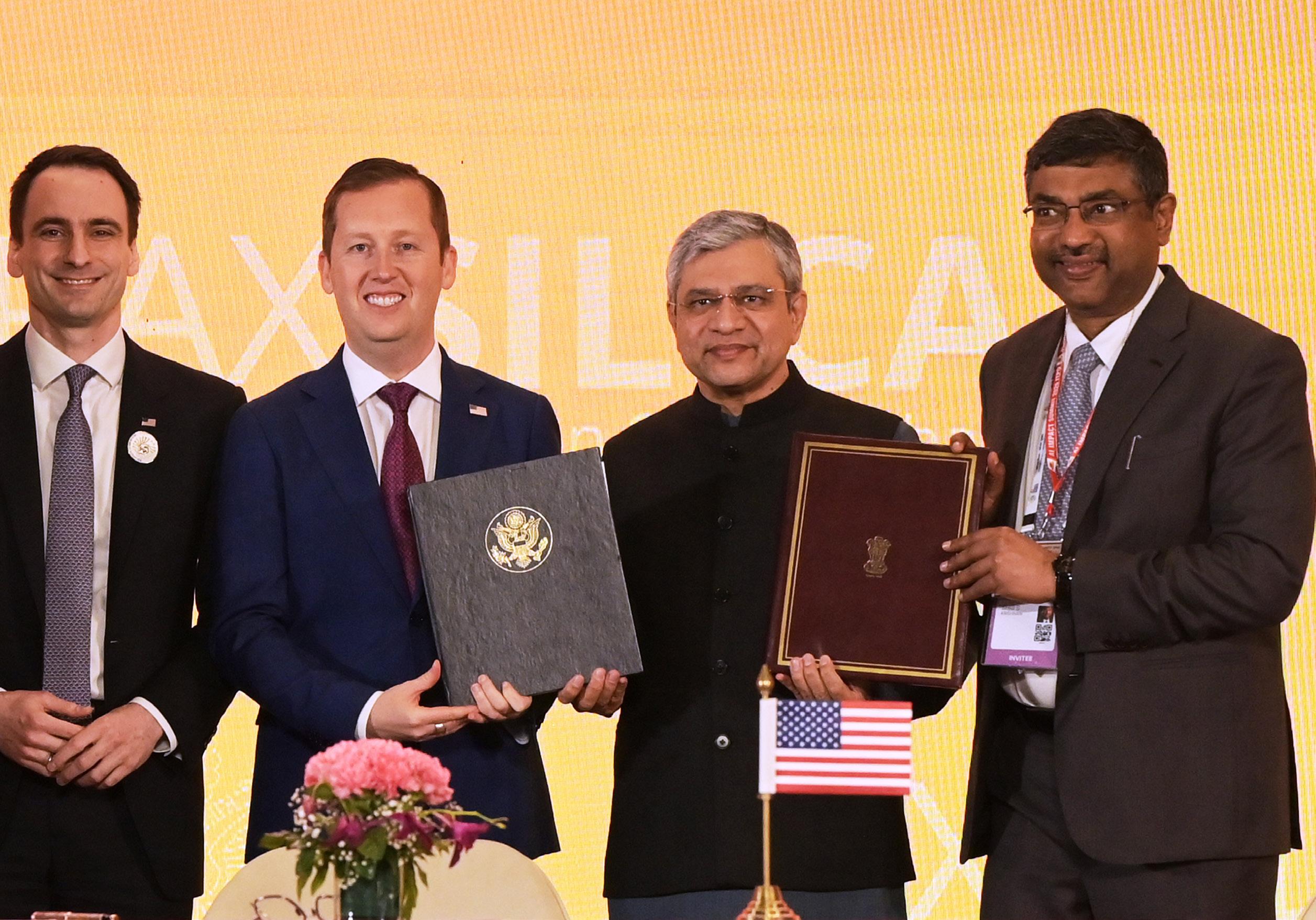
Ambassador Sergio Gor is the 27th U.S. Ambassador to India. He brings to the role a background in public service, political communications, and strategic leadership in Washington. Previously, he served as Assistant to President Donald J. Trump and Director of Presidential Personnel at the White House, where he oversaw the rapid hiring of thousands of political appointees across the federal government. A graduate of George Washington University, Ambassador Gor’s experience in leadership and public engagement shapes his approach to advancing one of America’s most consequential strategic partnerships. In New Delhi, Ambassador Gor brings his results-driven approach to strengthening U.S.-India ties across defense, trade, and critical technologies—areas central to both countries’ long-term strategic goals. In this conversation with SPAN, he reflects on his early impressions of India and outlines his priorities for deepening cooperation between the two nations.
What are your initial impressions of India, and which aspects of this assignment are you most excited about?
I first visited India with my family almost 15 years ago. Since then, the impact of that trip never left my mind. The culture, history, colors, and the incredible story of India, combined with the potential for our two nations to take our bilateral relationship to the next level, is truly what makes this assignment appealing to me. However, it was the warmth and kindness of the people that left its deepest impression on me. I can say as I return to India so many years later, and under such different circumstances, the friendliness of the Indian people has not faded one bit.
That friendliness also extends to the highest level of leadership between the United States and India. President Trump considers Prime Minister Modi a true friend, and their genuine relationship strengthens the already important bond between our two nations. The ability to deepen our ties and work towards mutually beneficial goals is a great privilege.
Having worked closely with President Donald Trump, how has your experience under his leadership informed your approach to advancing U.S. priorities in India?
President Trump is the hardest working man in politics. He moves fast and demands results. His results-oriented style means I come into the embassy every morning with one goal in mind—how can I deliver something tangible and positive for the American people? Every
call I have and every meeting I take is in furtherance of closing a deal or securing a win for the United States, which is exactly how the President operates. We have a simple task—deliver results for the United States, while enhancing our bilateral relationship to new heights.
In your view, which areas of U.S.-India cooperation hold the greatest potential to drive innovation, economic growth, and technological progress?
Defense and security cooperation represents our most strategically significant area of collaboration. The U.S.-India Major Defense Partnership continues to deepen, with a new 10-year framework and enhanced defense industrial cooperation, science and technology collaboration, and operational coordination.
Economic investment and trade expansion also offer equally transformative potential. President Trump’s goal is to facilitate bilateral trade in a way that creates unprecedented opportunities for American businesses and workers. India’s growing economy and massive infrastructure needs align perfectly with American expertise in energy, aviation, advanced manufacturing, and digital infrastructure. These investments benefit both of our nations, while strengthening the economic foundation of our long-term strategic partnership. Simply put, we have a win-win situation in front of us.
How do you envision the future of U.S.-India defense and maritime cooperation, and what steps can both countries take to further strengthen these ties?
India is a Major Defense Partner, and defense cooperation is one of the brightest spots in our bilateral relationship. We also strengthen U.S.-India military interoperability through participation in military exercises such as Malabar, Tiger Triumph, and Cope India.
Both of our nations are also part of the Quad, a strategic partnership that keeps our security interests
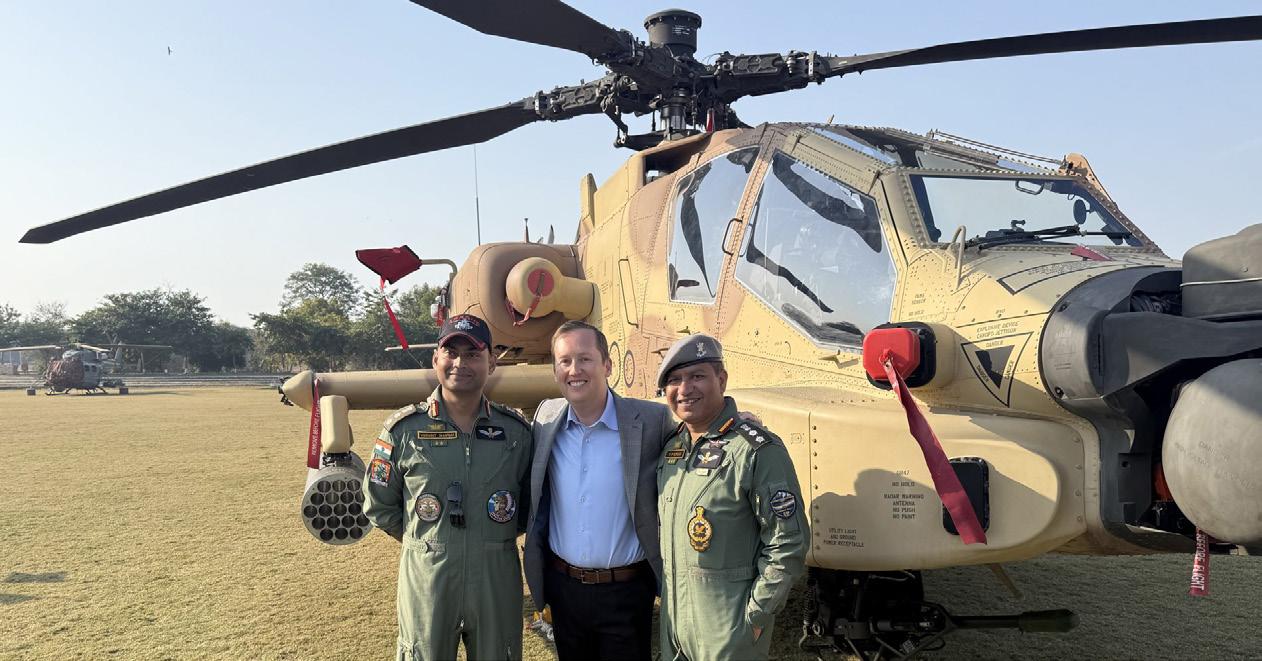
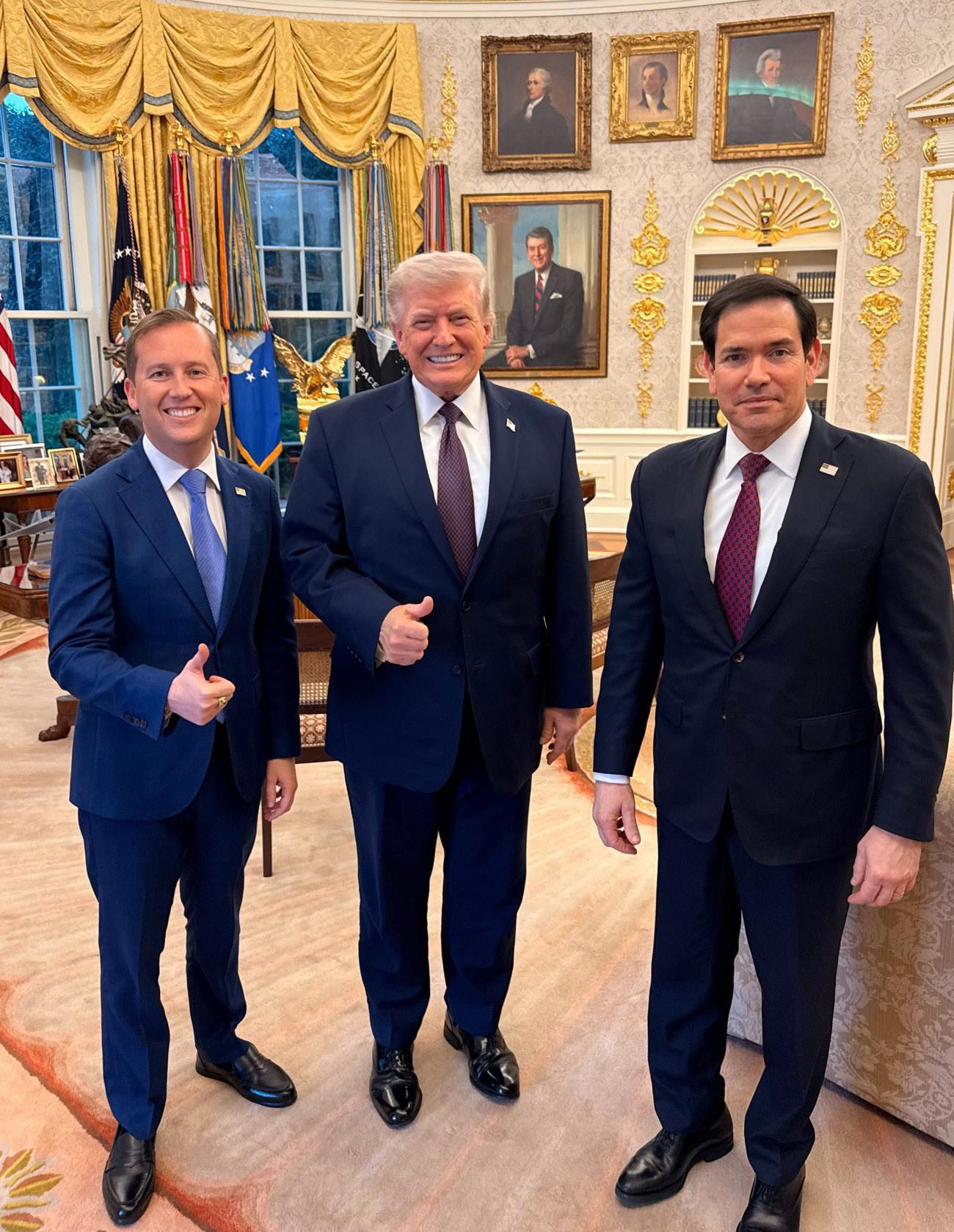
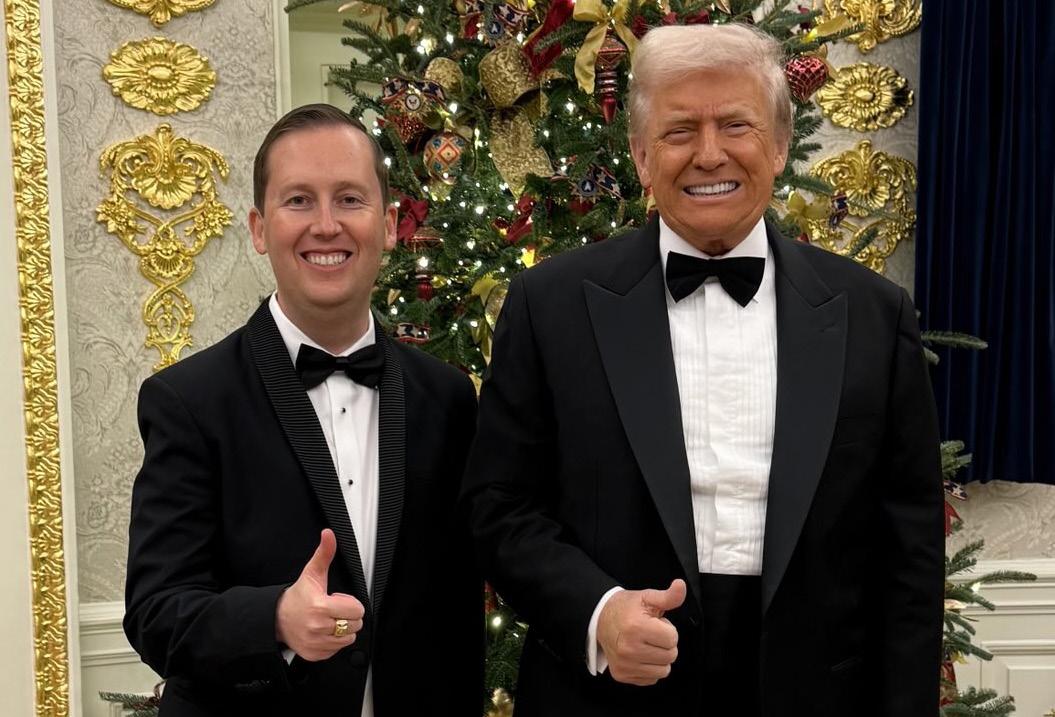
Below / Ambassador Sergio Gor (left) with President Donald J. Trump at the White House. / Below right / Ambassador Gor visits an AH-64E Apache in January 2026.
robust and aligned. These three core aspects—diplomacy, defense exercises, and military sales—ensure strong, continued defense cooperation. If these aspects are maintained, I predict a natural strengthening of our defense ties.
What are the prospects for the United States and India to collaborate on securing critical mineral resources and building resilient advanced manufacturing supply chains?
I’m pleased to report that these prospects are exceptionally strong. For example, the U.S.-India COMPACT framework prioritizes building resilient supply chains for semiconductors, critical minerals, and pharmaceuticals. Most recently, on the final day of the AI Impact Summit, India became the tenth signatory to our Pax Silica Declaration. Pax Silica is focused on further aligning U.S.-India economic and national security interests through partnerships on critical mineral processing capacity and AI infrastructure investments.
This combination of political and financial commitments ensures our supply chains are not dominated by one source, which drastically reduces risk.
As strategic dynamics evolve across South and Central Asia, what role do you see the United States playing in promoting regional stability, economic connectivity, and long-term security?
The United States is uniquely positioned to serve as the main facilitator of economic growth across both regions. In Central Asia, Kazakhstan and Uzbekistan have committed to significant investment deals with American companies, helping develop critical minerals, digital infrastructure, and energy resources while supporting American jobs. In South Asia, our revamped trade deal with India creates a powerful anchor for regional economic integration.
Regarding security, the U.S. remains focused on working with partners to combat terrorism, violent
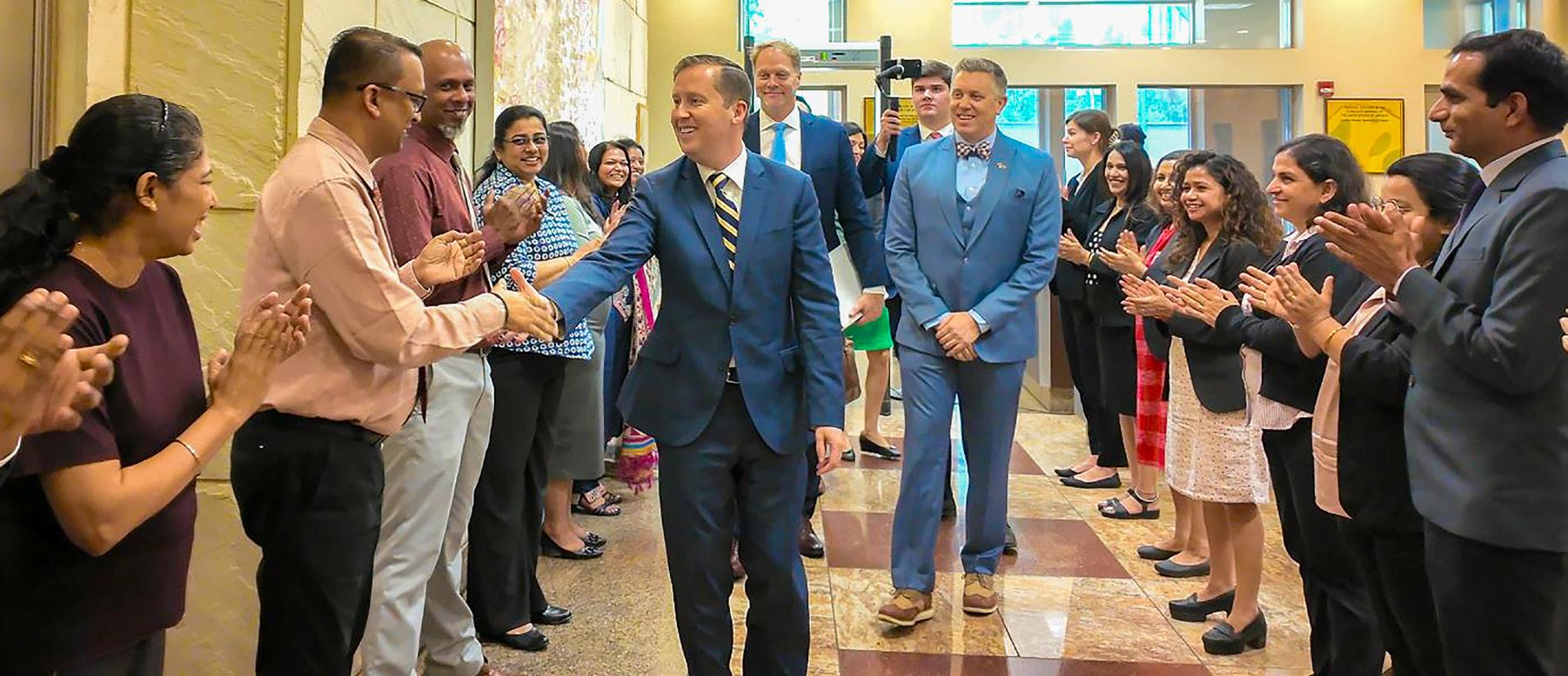
Left / Ambassador Sergio Gor meets the staff at the U.S. Consulate General Mumbai during his first visit to the city in January 2026.
radicalization, and transnational crime. We understand that security and economic prosperity are intertwined. Stable nations attract investment, and legitimate financial opportunities reduce the appeal of criminality and extremism.
Artificial intelligence is rapidly reshaping economies and societies. How do you see the United States and India working together to harness the benefits of AI while addressing its challenges?
Just a few weeks ago, I saw first-hand the limitless potential of the U.S. and India partnering on AI innovation. New Delhi hosted the AI Impact Summit, which was an incredible forum for public and private sector stakeholders to chart the future of AI. The fact of the matter is that AI is here now, in our daily lives. So, how do we use it for our benefit? The answer is certainly not to have some global governance board based out of the UN determine what you can and can’t use AI for. It’s a nuanced and evolving issue that requires open communication between the U.S. and India.
Looking ahead, what is your vision for the U.S.-India partnership over the next several years, and what key milestones would you like to see achieved during your tenure?
My vision is to transform the U.S.-India relationship into the defining strategic partnership of the 21st century, one that delivers tangible benefits for both our nations. I want the positive outcomes of our partnership to be felt by ordinary citizens—American farmers selling more to Indian markets, joint research breakthroughs in energy and medicine, and both nations’ militaries operating seamlessly together to ensure a safe and secure Indo-Pacific. The U.S.-India relationship is rooted in shared democratic values, mutual prosperity, and common security interests that will shape the global order for generations.
The Framework for the U.S.-India Major Defense Partnership will accelerate U.S. security cooperation, enhance interoperability, and connect industries.
Operationalizing the U.S.-India Defense Partnership
BY CHARVI ARORA

From maritime security in the Indian Ocean to joint development of advanced defense technologies, U.S.-India defense cooperation is expanding in both scope and ambition. The recently signed Framework for the U.S.-India Major Defense Partnership sets the course for the next decade of operational and industrial collaboration.
Renewed every 10 years, the Framework serves as the foundation for defense cooperation between Washington and New Delhi and serves as the anchor document for the relationship. It reflects the two countries’ strategic convergence and their intention to deter conflict in the region. It provides vision and direction for the Major Defense Partnership, benefiting both the U.S. and Indian systems.
Advancing regional security
Regional and global security remain central to the partnership. Bilateral defense cooperation increases interoperability at the tactical, operational, and strategic levels, which, in turn, enhances multilateral efforts like those led by the Quad and Combined Maritime Forces.
Maritime cooperation is especially significant. U.S. engagement with India stretches from East Africa to the Strait of Malacca and beyond. U.S. cooperation with India’s navy, the only resident blue water navy in the Indian Ocean, supports the national security objectives of both the United States and of India to ensure freedom of navigation and reliable supply chains for all. The Indian Ocean supports two-thirds of the world’s oil shipments and one-third of its bulk cargo traffic.
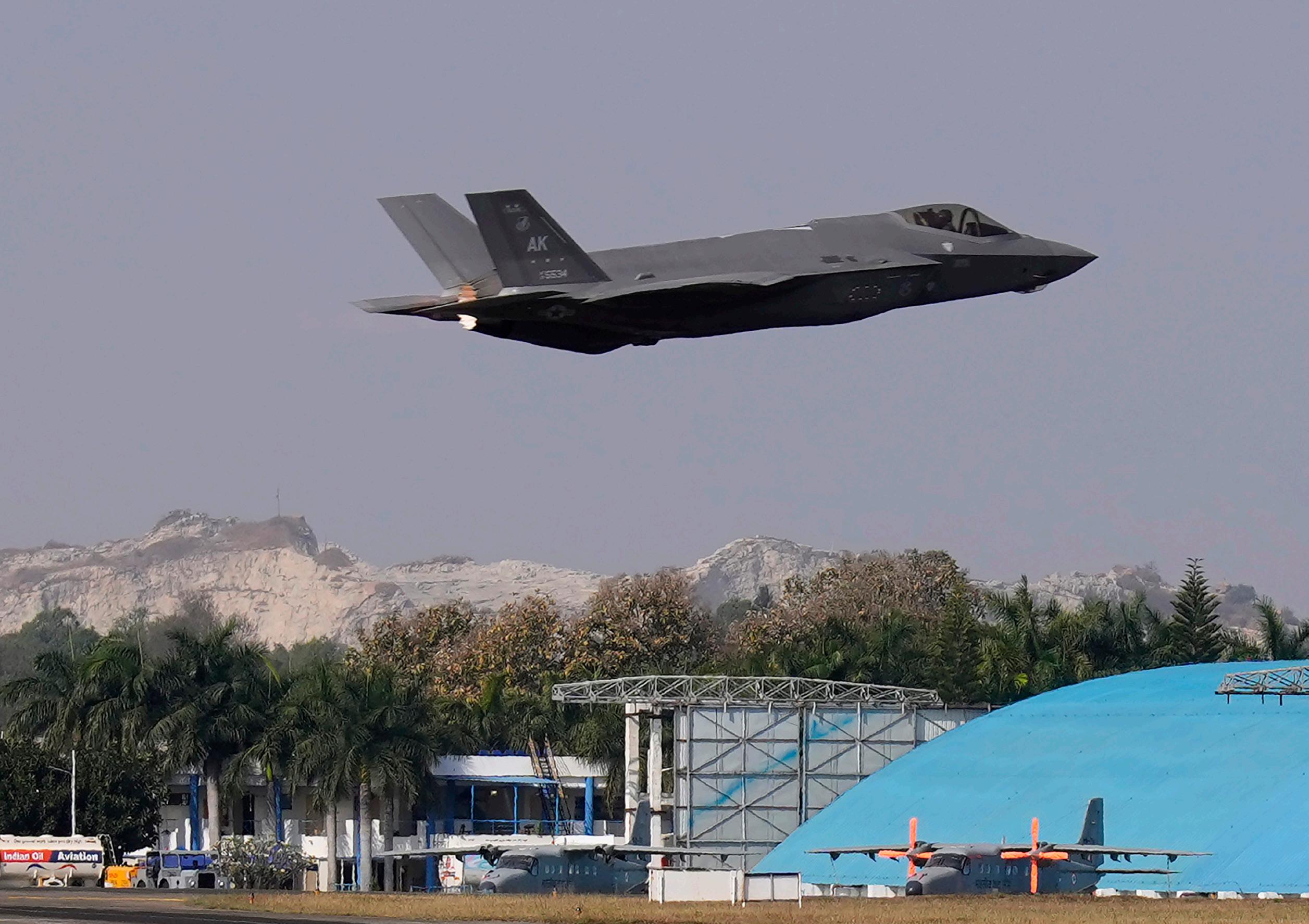
Far left / U.S. Air Force F-35 fighter aircraft at Aero India 2025 in Bengaluru. / Left / U.S. and Indian aircraft conduct a coordinated flyover above the Bay of Bengal during Exercise Tiger Triumph 2025, as seen from aboard the Whidbey Island-class dock landing ship USS Comstock (LSD 45).
Interoperability in action
The Framework emphasizes operational interoperability across domains. Exercises such as Yudh Abhyas, Malabar, Tiger Triumph, and Cope India integrate land, maritime, air, space, and cyber components, strengthening the ability of U.S. and Indian forces to operate together. Logistics cooperation further enhances that coordination. Expanded use of shared airlift, air refueling, and replenishment at sea enables faster and more efficient responses to regional challenges and humanitarian crises.
Information sharing is equally critical. Secure communications and data exchange help create a shared operating picture, and the Framework emphasizes better information exchange at all levels to enable greater situational and domain awareness. Existing agreements, including the Communications Compatibility and Security Agreement (COMCASA) and the Basic Exchange and Cooperation Agreement (BECA), support this coordination and ensure that U.S. and Indian forces can coordinate effectively during peacetime, crises, and contingencies.
Technology and industrial cooperation
Beyond operational coordination, the Framework deepens defense trade and industrial cooperation. The Framework’s senior-level direction provides a key impetus for expanded defense sales and co-production, strengthening alignment between the two militaries. But the emphasis goes further than expanded trade. The Framework signals a structural shift in how the two countries collaborate and represents a significant evolution in bilateral defense ties transforming defense

industrial cooperation between the two nations from a traditional buyer-seller relationship into a genuine partnership that leverages the technological strengths and manufacturing capabilities of both countries.
Advanced and emerging technologies are central to that evolution. Collaboration in artificial intelligence, human-machine teaming, advanced materials, and manufacturing reflects a shared effort to maintain technological advantage.
The Framework envisions joint development and production across critical areas including intelligence, surveillance, and reconnaissance; undersea domain awareness; air combat and support; air and space do-
U.S. cooperation with India’s navy, the only resident blue water navy in the Indian Ocean, supports the national security objectives of both the United States and of India to ensure freedom of navigation and reliable supply chains for all.
main awareness; munitions; and mobility. It also supports developing India as a regional hub for logistics, maintenance, repair, and overhaul, promoting market access for defense equipment, and reviewing export control restrictions.
Private-sector engagement is central to these efforts. The U.S.-India Defense Technology and Trade Initiative (DTTI) and the India-U.S. Defense Acceleration Ecosystem (INDUS-X) will continue facilitating private sector partnerships among American and Indian companies, investors, and researchers. These initiatives strengthen supply chains and support industrial resilience.
Building trust through training
Beyond platforms and technology, the Framework invests in people. It provides opportunities for more integrated, operationally relevant training by linking education more closely with joint exercises.
Professional Military Education (PME) remains a central pillar. The Framework reinforces the current robust bilateral Professional Military Education engagement through International Military Education and Training (IMET). Expanded exchanges and institutional partnerships are designed to build familiarity and trust over time, because institutionalizing personnel exchanges supports long-term professional relationships and strengthens cooperation at the tactical, operational, and strategic levels.
Left / U.S. Marines traverse Kakinada Beach in a Light Armored Vehicle–Anti-Tank (LAVAT) during a large-scale amphibious landing drill as part of Exercise Tiger Triumph 2025 in Andhra Pradesh.
U.S. Navy photo by Chief Mass Communication Specialist Leonard Adams
U.S.-India “Dual Horizons” challenge winner Digantara is strengthening space security with a satellite tracking system that eliminates “blind spots” in the Indo-Pacific.
Tracking the Unseen in Low Earth Orbit
BY KRITTIKA SHARMA
In the silent, vacuum-packed expanse of Low Earth Orbit (LEO), a high-stakes game of hide-and-seek is unfolding. Today, more than 24,000 objects, ranging from multibillion-dollar satellites to jagged shards of space junk, hurtle through the void. Within five years, that number is expected to reach 70,000. For countries, the challenge is no longer just managing congestion and collision risk, but ensuring their assets are protected from intentional interference by hostile or rogue actors.
In a contested environment, it is essential not only to see an object on radar but to understand its intent. When a satellite does not want to be found, or when it performs an unpredicted maneuver, traditional ground-based tracking often fails. To bridge this gap,
the U.S. Department of War’s Defense Innovation Unit (DIU), in partnership with the U.S. Space Forces-Indo-Pacific and the Space Domain Awareness Tools, Applications, & Processing Lab , with support from India’s Innovations for Defence Excellence (iDEX), launched the “Dual Horizons: U.S.-India Satellite Tracking Challenge ”—a bilateral effort to advance the next generation of space-domain awareness.
Solving the congestion crisis
To understand the problem, imagine operating a self-driving vehicle in a desert with no cameras or GPS. The only way to verify its location is to wait for it to pass a specific, static checkpoint. Now, add thousands of other vehicles moving at 17,000 miles per hour. If
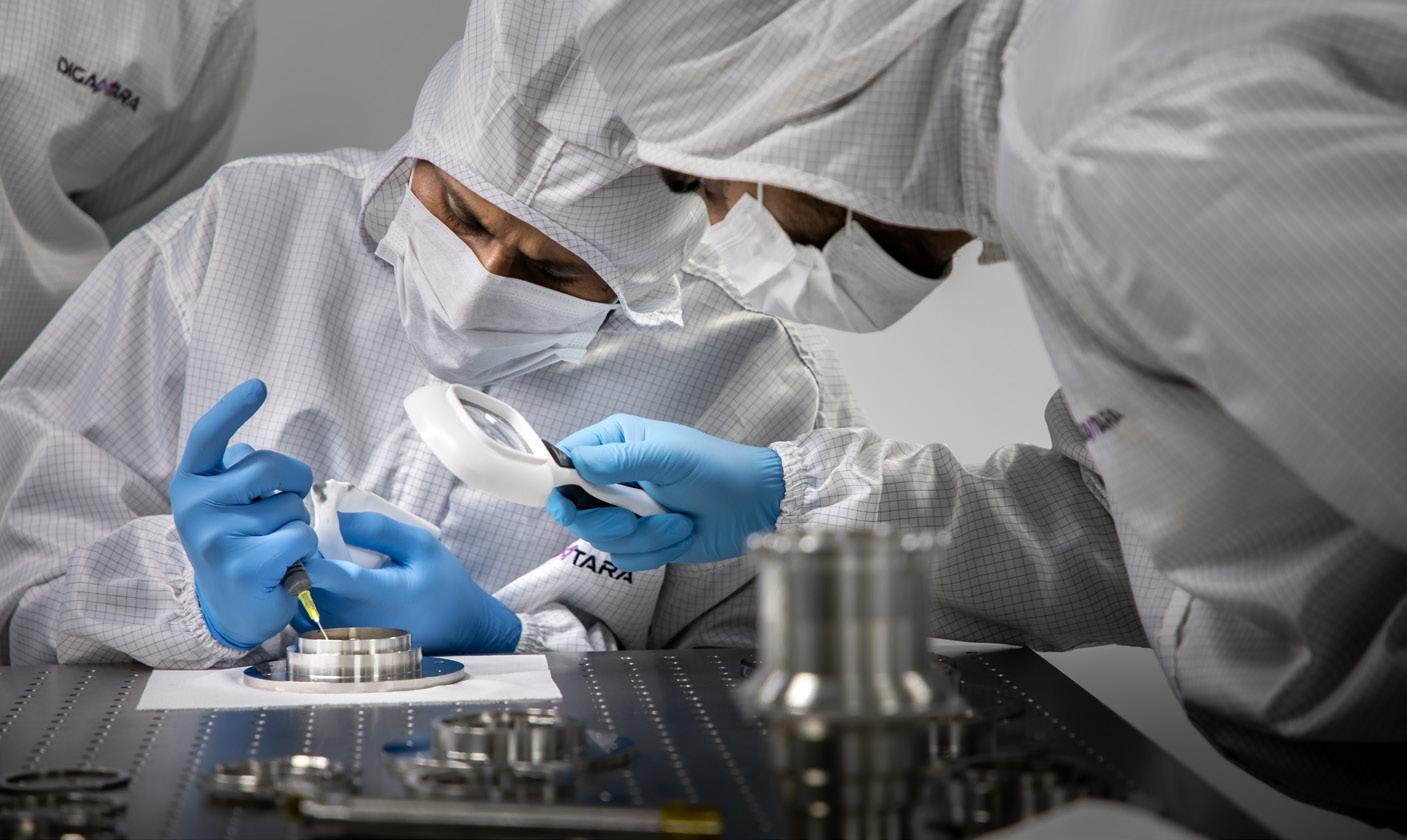
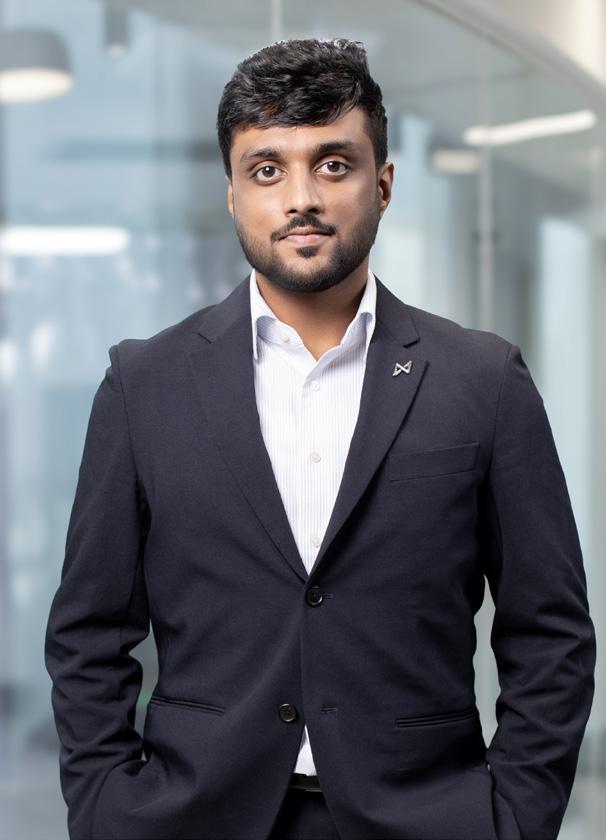
Above / Digantara, founded by IVLP alumnus Anirudh Sharma (above left), uses a moving platform in space, which is monitored from Earth and offers a persistent “visual” on assets, allowing for more frequent data collection and a much higher degree of accuracy.
Right / Digantara’s winning technology, SPECTRE, enables maneuver planning and optimization to support timely and efficient collision-avoidance decisions.

one vehicle swerves unexpectedly, it is effectively “lost” to the system.
This is the reality of traditional space situational awareness. Standard methods rely on predictable orbital math; if a satellite moves according to the “script,” we know where it is. But modern adversaries use camouflage and deceptive maneuvers to vanish. Once a satellite deviates from its predicted path, reacquiring it can take hours or days, leaving critical infrastructure vulnerable.
Anirudh Sharma, founder of Digantara, a Bengaluru-based start-up and one of the winners of the Dual Horizons challenge, points to a massive geographic vulnerability. Currently, the United States maintains primary sensors in Australia and South Africa. “In between, there’s a huge gap,” Sharma notes, adding that Digantara is working with U.S. agencies to track satellite activity in this region.
Digantara’s winning solution, SPECTRE (Surveillance and Persistent Evaluation for Characterising and Tracking), aims to light up these blind spots. By shifting the perspective from the ground to the sky, SPECTRE tracks space objects from orbit.
“Traditionally, systems are ground-based—radars or telescopes,” explains Sharma. “Our solution tracks from orbit, meaning we bypass atmospheric distortions and range issues.” By utilizing a moving platform in space, Digantara achieves a persistent “visual” on assets, allowing for more frequent data collection and a much higher degree of accuracy.
Strengthening the bilateral shield
While most commercial firms rely on the U.S. De-
partment of War “catalog” to know what is in the sky, Digantara is building its own independent repository. Its sensors can detect objects as small as a softball, providing a unique layer of intelligence.
This independence has not made the start-up a competitor but a vital partner. Digantara currently operates under a data-sharing agreement with the United States, effectively merging its unique blind-spot data with the existing U.S. military catalog.
Interoperability is the “plug-and-play” secret to its success. SPECTRE is designed to integrate seamlessly into existing mission networks, allowing commanders to access real-time data without needing to rebuild their software from scratch. With offices now in the United States and deep ties across the Indo-Pacific, Digantara is positioned as a systems integrator.
The new frontier: Beyond tracking
The success of Digantara is a case study in U.S.-India synergy. Sharma’s path was forged through U.S. Department of State programs like the International Visitor Leadership Program, which helped him build connections to embed his team within the American defense ecosystem.
“We plan to invest further in our U.S. office as part of our expansion into the U.S. market. We are building a dedicated team and facility that will focus on satellite and payload assembly, as well as missile defense applications,” says Sharma. “Our recent selection for a U.S.-based program has given us the confidence and foundation to make that investment and launch this initiative.”
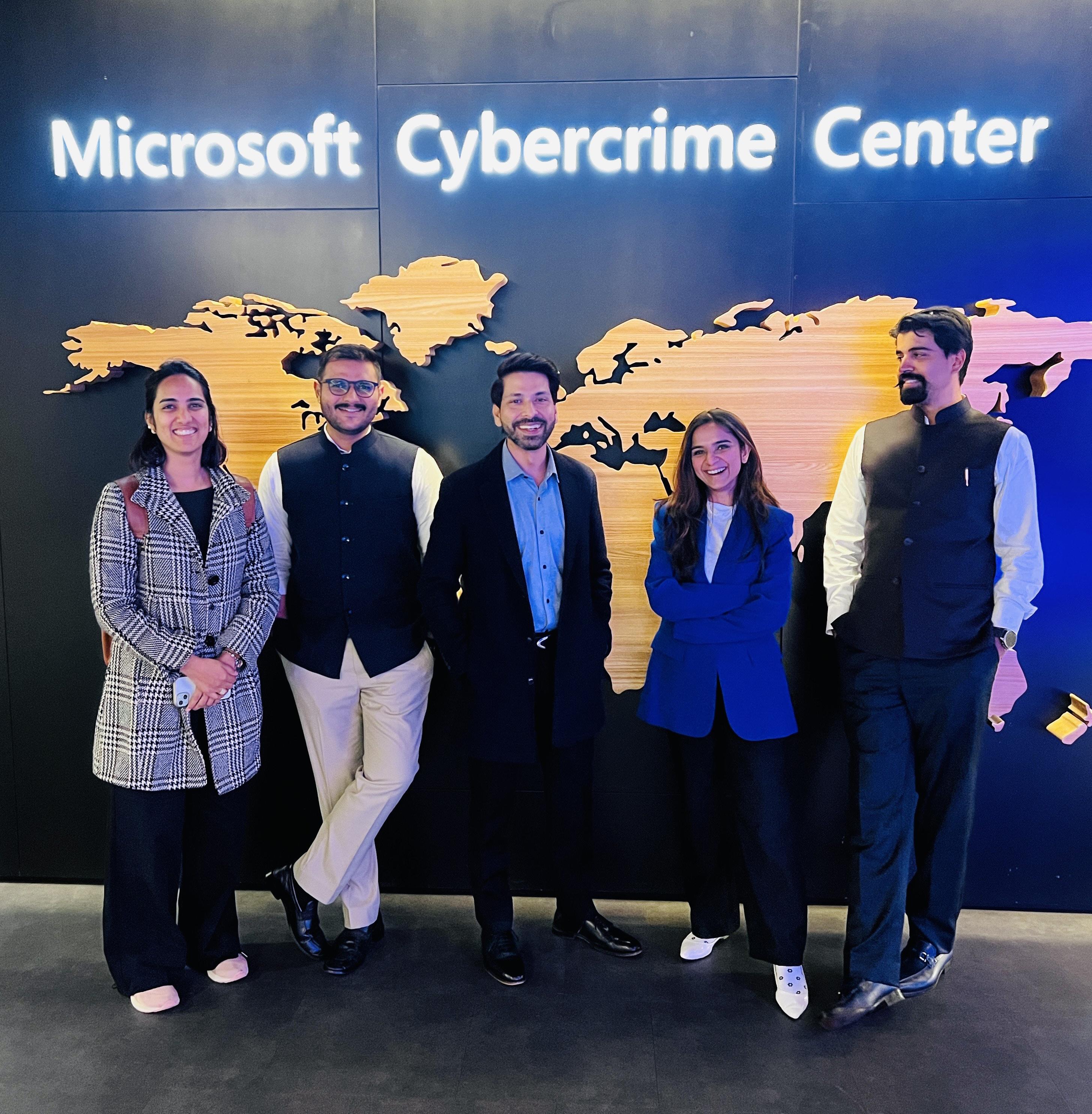
Through the International Visitor Leadership Program, Indian professionals explore how the United States combines innovation, education, and security to strengthen cybersecurity and guide AI development.
Building a Secure Digital Future
BY KRITTIKA SHARMA
Courtesy Swati Kumari
Above / Pragya Singh (left), Swati Kumari (second from right), and Kazim Rizvi (right) with the IVLP cohort members.
How do countries protect digital infrastructure and citizens when artificial intelligence (AI) and cyber threats evolve faster than regulation? Securing cyberspace is complex because malicious actors operate across borders and vulnerabilities in vast networks keep emerging. Beyond individual precautions, governments and industry depend on multi-layered strategies to protect critical infrastructure. A key part of the answer is international cooperation that leverages U.S. technological leadership and practical security models.
In May 2025, a group of Indian professionals visited the United States through the State Department’s International Visitor Leadership Program (IVLP) to study U.S. approaches to cyber defense and incident response and explore potential collaborations to strengthen India’s cybersecurity capacity. They engaged with officials from the Departments of State, Commerce, War, and Homeland Security, as well as experts from think tanks, educational institutions, and local governments.
Exploring the U.S. model
Kazim Rizvi, founder of The Dialogue, a tech policy think tank; Pragya Singh, who leads strategic alliances and wellness operations at her start-up Raha Fintech; and Swati Kumari, vice president for operations at QpiAI in Chennai, describe the program as a practical study of U.S. approaches to AI and cybersecurity and
their applicability in India.
Their trip to Washington, Seattle, San Antonio, and Orlando offered insight into how innovation thrives through a combination of culture and structure. “They can fund a research project and not worry if it fails,” says Rizvi. “Even failure is a success because it shows what doesn’t work.” He was particularly impressed by the openness to test ideas and co-create policy across sectors.
Kumari was struck by the strong collaboration between industry and academia. “What makes the U.S. stand out is its deep research base anchored in academic institutions,” she says. “Research follows industry needs, and education evolves to build skills that will be needed five to ten years down the line.”
During the IVLP, Singh observed how U.S. policies integrate citizen rights into the design of technological systems. “The important point that stood out was the intent—the data belongs to the citizen, and not the government,” she says.
Her key takeaway was how the United States builds an integrated model connecting innovation, governance, and security. “U.S. agencies actively engage with the private sector and academia in real time, whether it’s developing cybersecurity frameworks or shaping guidelines on responsible AI,” she explains.
Complementary strengths and shared goals
Beyond individual precautions, governments and industry depend on multi-layered strategies to protect critical infrastructure. A key part is international cooperation that leverages U.S. technological leadership and practical security models.
Rizvi highlights the synergy of U.S. capital and technology with India’s market and talent. “The United States is the world’s largest economy, and India is the fastest-growing major economy,” he says. “They complement each other in many ways.” He believes collaboration should focus on practical goals like preventing AI misuse, embedding safety into systems, ensuring interoperability, and opening markets for developers.
Kumari adds a practical point, highlighting structural safeguards like zero-trust architecture, a system built on the principle of “never trust, always verify.”
“The U.S. has invested heavily in zero-trust architectures and continuous verification models, which reduce risks from insider threats and compromised credentials. Adopting such models in India, especially in critical sectors like banking and health care, could make a significant difference,” she notes.
Another U.S. practice that serves as a strong model for emulation is public-private threat intelligence sharing. For example, the U.S. Cybersecurity and Infra-
Below / Participants met with U.S. counterparts during the IVLP to explore approaches to cybersecurity, AI governance, and cross-sector collaboration.
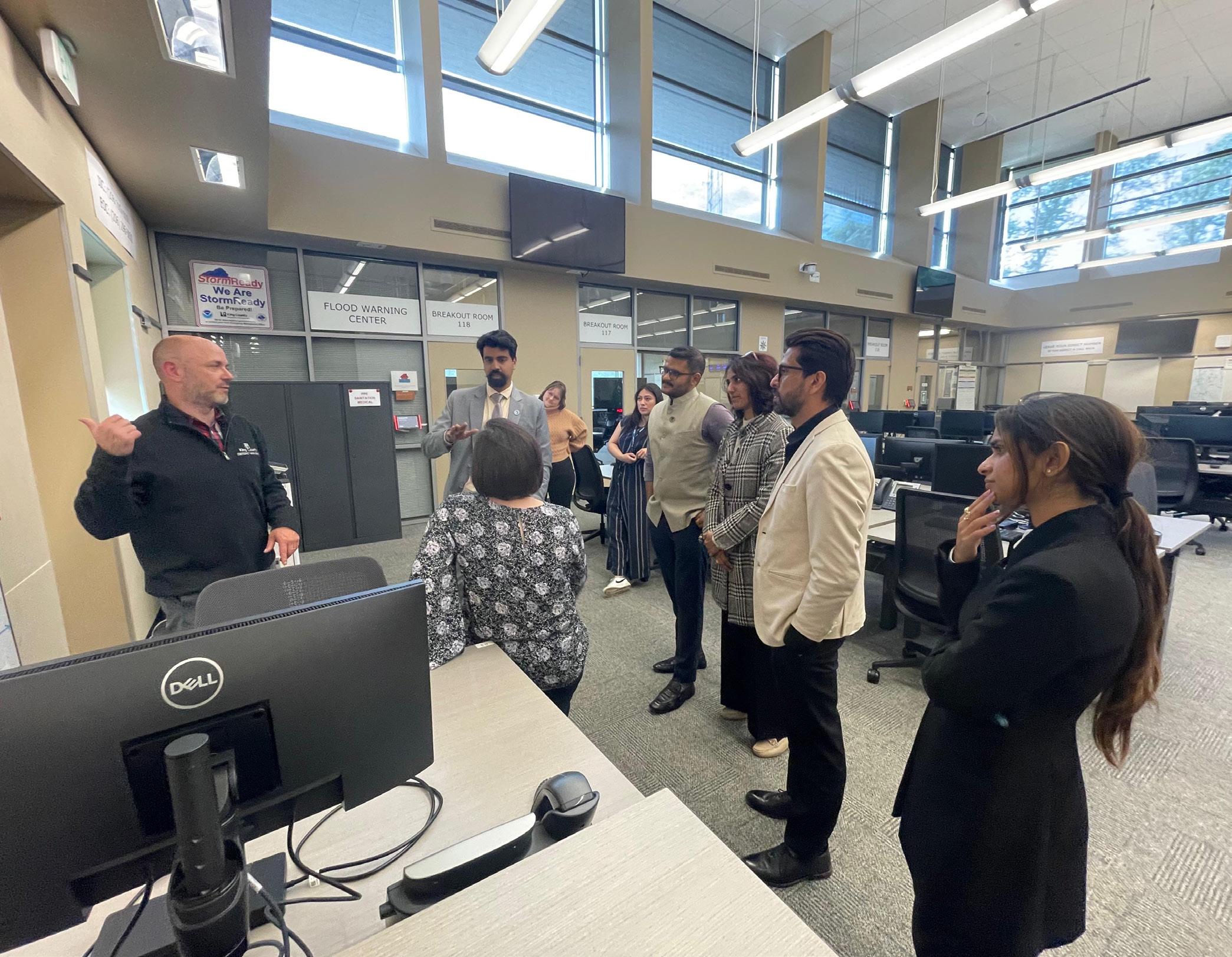
structure Security Agency enables real-time sharing of vulnerabilities and threat signatures. “I visited a county with a ‘war room’ setup,” Kumari says. “If there was an alert, teams would immediately activate and respond in shifts. In India, we need a similar model, potentially in partnership with U.S. agencies.” Her key takeaway is that cybersecurity is strongest when treated as a collective defense effort.
Translating innovation into action
Rizvi notes that such practical models depend on stable policy environments. “You need a predictable environment to innovate,” he says, adding that agreed-upon technical standards can create that stability. He also links U.S.-India collaboration to interopera-
ble frameworks that support economic growth. “India and the United States should champion AI in ways that advance both economic and social development,” he says.
Singh highlights how local policy pilots can inspire broader change, citing Seattle’s data-rights policy as an example of city-level innovation shaping information use and rights. These initiatives show how small-scale experimentation can inform larger-scale policy adoption.
Kumari underscores the international dimension, noting that U.S.-India collaboration should translate into tangible initiatives like talent exchanges and joint research hubs. These efforts could accelerate secure scaling of technology and knowledge sharing.
Courtesy Swati Kumari
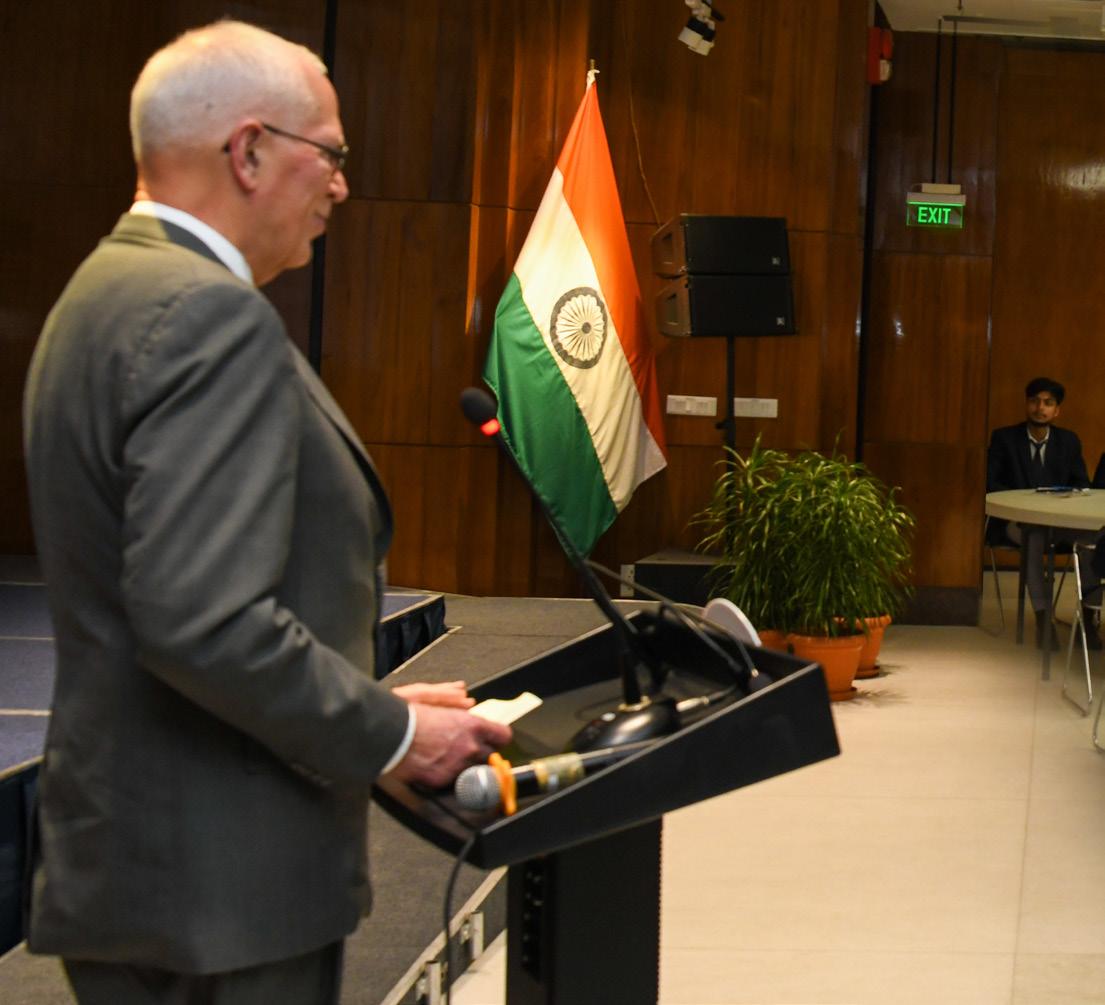
U.S. speaker James E. Lerums outlines how digital literacy and strong cybersecurity safeguard innovation, businesses, and critical infrastructure.
Securing the Digital Foundations of the Future
BY KRITTIKA SHARMA
As the United States and India deepen ties across digital infrastructure, supply chains, financial systems, and artificial intelligence (AI) platforms, cybersecurity no longer stops at national borders. A vulnerability in one ecosystem can ripple across the other, and protecting these systems is as much a matter of economic resilience as technical defense.
For cybersecurity expert James E. Lerums, who visited Kolkata and Hyderabad under the U.S. State Department Speaker Program, the issue begins with trust.
“We need to feel comfortable that when we use our credit card, there’s no chance that anyone between us and the vendor or our bank can intercept details about our accounts and make money go away digitally,” Lerums says.
That confidence, he explains, rests on encryption capable of withstanding even the most powerful computers available today. As quantum computing advances, researchers are already working to ensure future systems remain secure.
Cybersecurity as economic infrastructure
Many people still see cybersecurity as a technical specialty, but Lerums challenges that view.
“If we didn’t have computers, we wouldn’t have cybersecurity problems, would we?” he says. The point, he explains, is that cybersecurity exists because digital systems now underpin daily life.

At Purdue University, where he works as a graduate faculty member, cybersecurity is treated as an interdisciplinary field. Engineers design chip firmware, policy experts examine privacy standards, and even philosophers weigh in on ethical questions around data use. “Cybersecurity is a team sport, and it cuts across many disciplines,” says Lerums.
The risks extend far beyond bank accounts. Modern agriculture relies on GPS-guided tractors, and water treatment plants depend on internet-connected controls. If these systems are compromised, food supply could be disrupted or water and sanitation services could fail, showing how cybersecurity affects everyday life.
As economies digitize, protecting these systems becomes a part of maintaining economic stability. To stay ahead of emerging threats, Lerums tests new standards known as post-quantum cryptography, designed to remain secure even as quantum computing advances. The goal is to ensure future protections are strong without disrupting everyday life or slowing innovation.
Shared security framework
Lerums describes today’s AI environment as “kind of like the Wild West,” where innovation is moving faster than governance. That pace creates opportunity, but also risk.
For India and the United States, cybersecurity

cooperation is a practical necessity. Both countries are rapidly digitizing critical infrastructure and expanding collaboration in advanced technologies. Strengthening standards, research, and training helps reduce exposure while reinforcing economic resilience on both sides.
The cooperation, Lerums says, “comes down to relationships and mutual benefits, whether it’s between institutions or individuals.” Exchanges between U.S. and Indian universities allow partners to begin with focused, achievable projects. “In some of these areas, we need to start small and make those successful, because nothing sells like success,” he adds.
These early collaborations reveal complementary strengths. U.S. institutions may contribute specialized expertise or research capacity, while Indian partners offer scale and rapid implementation. Joint student projects and shared research agendas translate academic insight into operational impact, preparing the next generation of cybersecurity professionals.
Cybersecurity in everyday life
Even the strongest security systems rely on individual behavior. Simple habits like questioning unexpected emails and avoiding unsecured networks build collective resilience when practiced consistently.
Lerums notes that the rapid integration of AI into daily life creates new challenges, especially for young-
er users. “Younger generations have to have enough discernment, because AI isn’t always going to be correct,” he explains. “In some cases, it is going to be hard for them to look at an answer and say there is something that does not feel right about it.”
As AI tools become embedded in education, workplaces, and public services, the ability to question outputs and recognize limitations becomes part of cybersecurity itself.
During his engagement in Kolkata, Lerums encountered a practical example. “I saw an interesting solution in a school that teaches ethical hacking,” he recalls. “They pass out this neat calendar with tips every month on things you should do for your own cybersecurity hygiene.” The reminders are simple: do not connect to unknown networks, use non-obvious passwords, and avoid leaving devices unlocked. “These are very basic things,” he says, “and I think people need to be reminded or learn about it the first time, if nothing else.”
These small habits reflect a larger truth: cybersecurity culture begins at the individual level but scales to institutions and nations. For countries like the United States and India, increasingly linked by digital infrastructure and research partnerships, cybersecurity is a sustained collaboration across sectors and borders, strengthening trust, innovation, and economic stability.
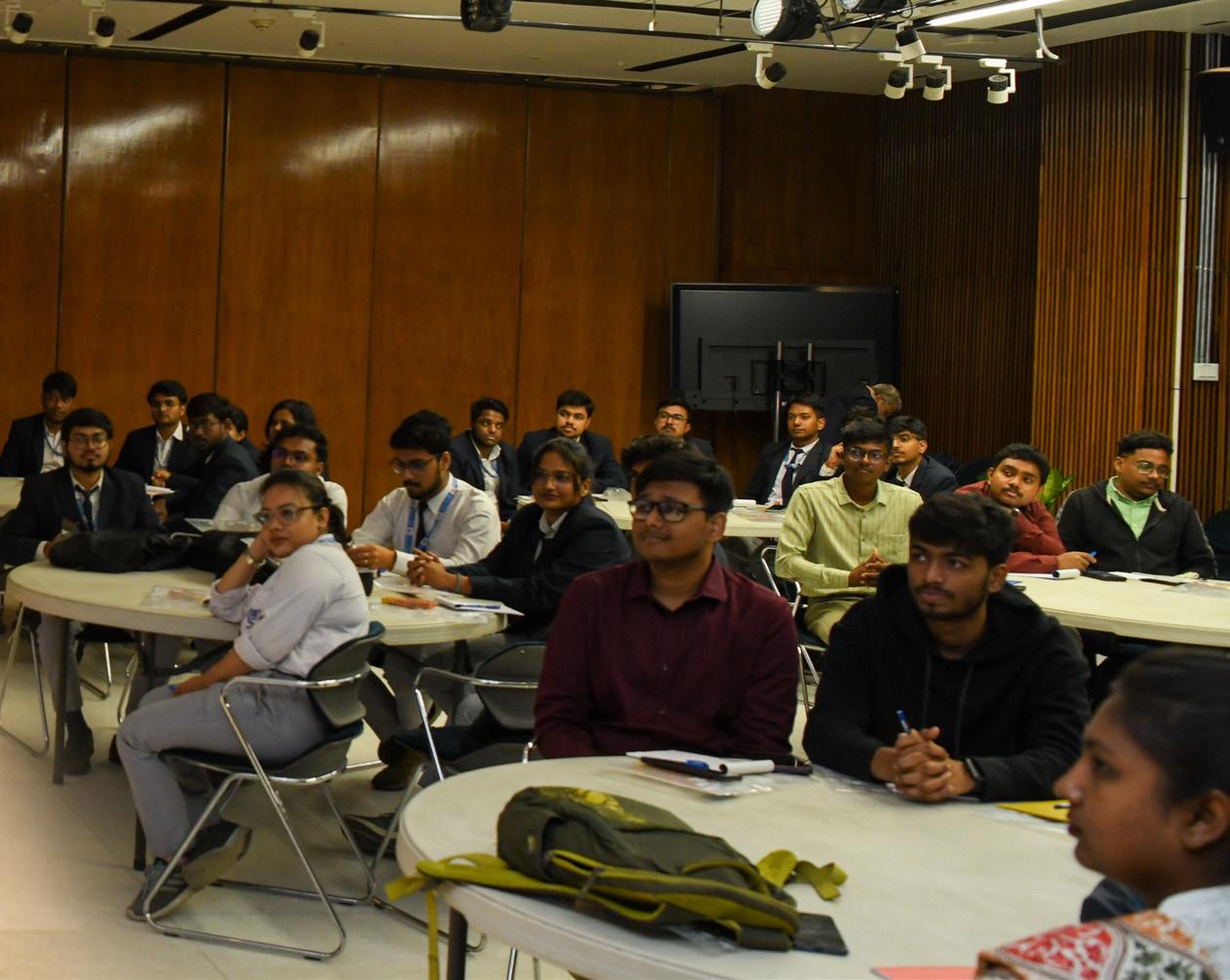
Left / Cybersecurity expert James E. Lerums visited Kolkata and Hyderabad under the U.S. State Department Speaker Program.
Courtesy U.S. Consulate General Kolkata
Vitalii Gulenok / iStock / Getty Images
An inside look at how American innovation, strong institutions, and practical collaboration drive growth at home and influence global markets.
The U.S. Model for Prosperity in Action
BY GIRIRAJ AGARWAL
The United States continues to shape global economic policy through strong financial markets, robust export promotion, and cutting-edge innovation that drive national prosperity. The recent International Visitor Leadership Program (IVLP) on “America First: Trade, Development, and Finance” offered international policy professionals an inside look at how U.S. economic strategy is designed and implemented, showing how American systems create opportunities for businesses and workers alike.
Among the participants was New Delhi-based public policy professional Aditi Sharma, whose career spans government service, diplomatic missions, and the development sector. “The program showed how the United States aligns trade, finance, and development policy to strengthen its domestic economy while remaining globally competitive,” she says.
Economic policy in action
Participants examined how the U.S. federal system shapes economic strategy, from policymaking processes to trade and export promotion initiatives that support regional growth. The program also provided opportunities to discuss international economic issues and explore
how U.S. policies influence global markets.
For Sharma, the program offered insight into how economic policies move from strategy into action. “Personally, I wanted to understand how the ‘America First’ policy translates from intent into real institutions, incentives, and outcomes on the ground,” she says. She was particularly interested in how global economic shifts affect American businesses and in gaining “a deeper sense of U.S. thinking on bilateral trade relations with India.”
The program reinforced that U.S. trade policy is closely tied to domestic priorities such as jobs, innovation, supplychain security, and regional growth.

A key takeaway was the decentralized and pragmatic nature of the U.S. economic system. “Economic strategy is not driven solely from Washington. States, cities, universities, and business groups play a powerful role in shaping outcomes,” says Sharma. This system allows economic policy to stay grounded in local realities while remaining aligned with national priorities. This decentralization was evident during visits to state-level institutions. The New Mexico Chamber of Commerce and the state’s Economic Development Department demonstrated how advocacy, workforce development, and trade policy work together in a coordinated, hands-on way. Equally notable was the Small Business Development Center network, which showed “how sustained, local support can meaningfully prepare small
GoldenDayz

firms to engage in exports and global markets,” she explains.
The program also highlighted the role of policy research and advocacy in shaping U.S. economic strategy. Think tanks like the Atlantic Council and the Information Technology and Innovation Foundation demonstrated how trade, technology, and geopolitics are closely connected. Sharma was impressed by city and state economic development offices for their practical, problem-solving approach to supporting businesses, investment, and exports.
Insights into U.S. competitiveness
These experiences deepened her understanding of U.S. competitiveness. “The program reinforced that U.S. trade policy is closely tied to domestic priorities such as jobs, innovation, supply-chain security, and regional growth,” she says. Instead of treating competitiveness as an abstract concept, the U.S. approach builds it through skills, productivity, and strong institutions at every level of government.
Another defining feature of the U.S. system, Sharma notes, is the role of advocacy groups and industry associations. “I saw how actively advocacy groups, chambers of commerce, and industry associations engage with policymakers,” she says. Their influence lies in translating broad policy goals into practical, business-focused inputs, particularly for small businesses and exporters, ensuring trade policy reflects real-world economic needs. The program also offered insights into U.S. financial governance through discussions with trade law experts, policy institutes, and economic research organizations. As Sharma notes, “I gained indi-
Left / U.S. innovation and strong institutions in trade, development, and finance shape policies that influence global markets. Through the IVLP, Aditi Sharma (below left) examined how these policies strengthen the United States’ domestic economy.
rect but useful insights into how U.S. financial markets operate and are regulated.” These exchanges highlighted the role of strong institutions and regulatory frameworks in sustaining economic stability. Innovation emerged repeatedly as a cornerstone of U.S. economic strength. “Universities and innovation hubs act as connectors—linking research, capital, talent, and markets,” Sharma says. Public-private partnerships, she adds, ensure that innovation is translated into viable products, start-ups, and regional economic opportunities.
Looking ahead
Sharma sees strong potential for deeper U.S.-India cooperation. “There are strong opportunities in advanced manufacturing, digital trade, energy, and startup ecosystems,” she says, highlighting the value of collaboration at the state level and between universities and innovation hubs to build resilient and mutually beneficial economic ties.
Several lessons from the IVLP are directly relevant to her policy work in India. “The emphasis on empowering local economic institutions, strengthening industry-government dialogue, and building integrated support systems for small businesses and exporters is highly transferable to the Indian context,” Sharma reflects.
One particularly notable takeaway was the U.S. focus on early career awareness through initiatives like “Be Pro Be Proud,” which aims to elevate vocational and technical careers from a young age.
Together, these lessons illustrate how the U.S. approach to economic leadership is both resilient and globally influential.
From ingredients training to retail shelves, American agricultural products are finding new roles across Indian kitchens and markets.
Prosperity, One Recipe at a Time
BY CHARVI ARORA

Above / At the retail cook-off at Food Stories, four participants created original dishes using U.S. ingredients, showcasing how American agricultural products fit naturally into Indian kitchens.
Food choices shape more than what ends up on the plate. In India, they increasingly reflect how chefs and consumers think about reliability, sourcing, and performance in the kitchen. Questions of where ingredients come from, how they behave when cooked, and whether they deliver reliable results are shaping everyday decisions. That shift is visible in Indian kitchens, where familiar techniques are now paired with new accents. American ingredients, long present in Indian markets, are being seen in a new light. Cranberries simmer in orange juice. Pecans fold easily into paneer. Duck crisps slowly
Courtesy
Nikita Singla
Imtiaz Imam
in its own fat. Together, these combinations point to a broader story, one in which culinary choices also shape markets and trade relationships.
Through two culinary initiatives, the Taste of America ingredients training at the American Community Support Association (ACSA) and a U.S. food cook-off at Food Stories, a retail outlet in New Delhi, the U.S. Embassy showcased how American agricultural products fit naturally into Indian kitchens. Led by the U.S. Department of Agriculture (USDA) , these initiatives aimed to do more than inspire recipes. They focused on expanding markets, building professional confidence, and supporting long-term economic growth for U.S. farmers and exporters.
Training the table
The Taste of America ingredients training brought together ACSA members, hospitality students, and food and beverage professionals for hands-on cooking paired with guidance on sourcing, storage, and preparation. Chef Neha Deepak Shah, who led the training, says the session was designed to go beyond recipes, using U.S. agricultural products already available across Delhi-NCR.
“The session focused on building a deeper understanding of these ingredients, their unique characteristics, and how to incorporate them thoughtfully into both everyday and professional kitchen applications,” she says.
The menu blended familiar Indian formats with American inputs. For example, paneer tikka was reimagined with U.S. cranberries and pecans. Samosas featured Oregon hazelnuts. Duck and turkey were presented using techniques familiar to Indian kitchens.
“What truly stood out was the remarkable consistency and reliability in quality across every ingredient,” Shah adds. “They give chefs and home cooks the confidence to experiment and innovate while delivering consistent, high-quality results.”
Sayan Dowari, a hospitality student, called the session “an eye opener.” “I got to know about different American flavors, nuts, and berries,” he says. “I can use those berries as an infusion as well.”
Another participant, Mansanjam Singh Bhatia, a bartender and student at the CII Institute of Hospitality, emphasized reliability. “For me, what matters is consistency,” he explains. “U.S. ingredients mean we get the same size, same shape, and same taste throughout the year. Quality and consistency make our job much easier.”
Cooking for consumers
At the retail cook-off at Food Stories, four participants created original dishes using U.S. ingredients in front of an audience of chefs, buyers, and consumers. The format allowed them to test how these ingredients perform in Indian-inspired cooking.
Osheen Bansal drew on Kashmiri flavors for her Noor-e-Kashmir zaffrani pulao, using U.S. cranberries as a central element. “Before today, I was somewhat familiar with cranberries but had mostly seen them used in desserts and beverages,” she says.
Mallika Banati’s winning creation, cranberry-glazed turkey with pecan pilaf and pistachio butter, placed American pecans at the center of the dish. What stood out to her was the flexibility of American pecans. “How versatile they can be, lending themselves to both sweet and savory preparations, from curries to pies,” she notes, adding that U.S. cranberries were “the key ingredient providing that oomph.”
For Mehak Asif, the cook-off marked her first experience cooking turkey. Her dish, a stuffed turkey roulade with a pecan-walnut sauce and cranberry accents, paired U.S. poultry with nuts and fruit.
There are three big pillars: quality, food safety, and consistency of supply. What is available to a customer in the United States is exactly what reaches a customer in India.
Deepshe Saluja took a plant-forward approach with chickpea kebabs, using U.S. chickpeas alongside pistachios, walnuts, blueberries, and cranberries. “What surprised me most was how versatile the berries were,” she says. When paired with Indian spices, she explains, they “shifted from a typically sweet ingredient to something sharp, savory, and deeply flavorful.” Saluja adds that the berry gel “works beautifully as a modern alternative to tamarind chutney.”

Chef Ajay Chopra, who moderated the cook-off, explains why U.S. products work well in India. “The exciting part of working with U.S. ingredients is the versatility, the counter-seasonality, and the high quality,” he says.
“If I’m cutting a classic Red Delicious apple , it’s juicy, it’s crunchy, and it delivers on its promise. If it’s an American pistachio, the grading is so perfect that every pistachio is a similar size.”
Why scale matters
Behind the scenes, scale and safety drive sourcing decisions. Sumit Saran, a longtime promoter of American foods in India, explains why chefs trust U.S. products.
“There are three big pillars: quality, food safety, and consistency of supply,” he says. “U.S. products are USDA certified. What is available to a customer in the United States is exactly what reaches a customer in India.”
This matters in a large market. “We can start small,” he adds. “But once demand increases, the United States has the capacity and consistency to meet that demand.”
Those numbers are already visible. “Cranberry im-
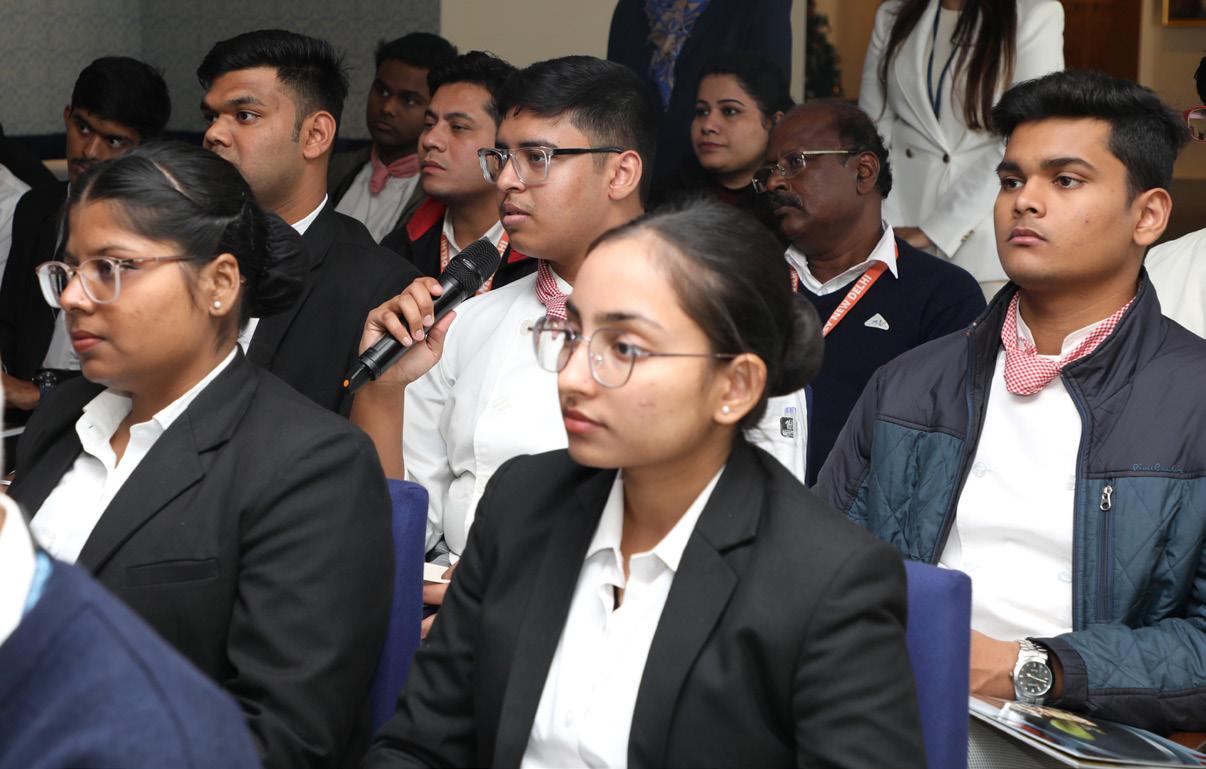
Left / Chef Neha Deepak Shah (right) leads a Taste of America ingredients training, where hospitality students and industry professionals (above) explored U.S. agricultural products in Indian recipes.
ports were around 60 to 70 tons five years ago,” Saran says. “In 2025, we touched 5,000 tons.” He adds, “Washington apples are the gold standard. Imports today are close to 500,000 tons.”
Retail proof
Indian brands are responding to this demand for high-quality produce. Dinika Bhatia, founder of the snacking brand Nutty Gritties, shares how U.S. ingredients drive growth. “About 35 to 40 tons per month of what we consume is U.S. ingredients,” she says. “The growth of U.S. ingredients is 40 percent.”
She ties this directly to standards, pointing to “the quality, the consistency, the crunch, and the flavor.” Her experience studying and visiting processing plants in the United States reinforced that trust. “The standardization, the mechanization, the quality control, and the hygiene are the best I’ve seen,” Bhatia explains.
This confidence is translating into demand. Pecans, once unfamiliar, are now among her fastest-growing products. “Last month, we saw growth of 100 percent in pecans,” she says.
As more chefs, retailers, and consumers work with these ingredients, familiarity is turning into confidence. What begins as experimentation in kitchens is translating into steady demand, reliable supply chains, and long-term commercial relationships. In that sense, the story of American ingredients in India is not only about flavor or technique, but about how everyday food choices quietly support trade, growth, and shared economic interests.
Photographs by Ruchi Kumar
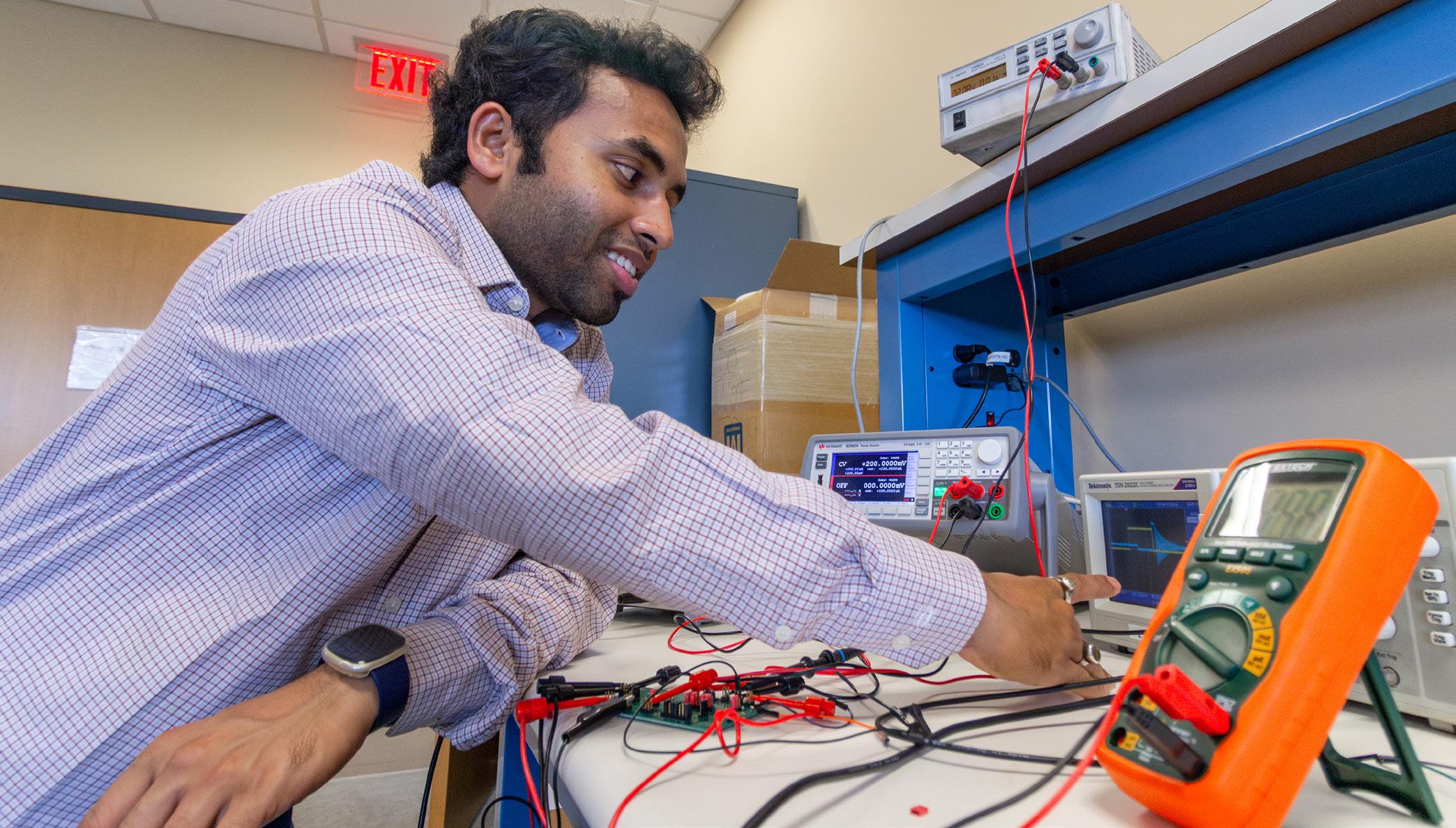
A partnership between Ohio State University and IIT Bombay expands educational exchange in advanced manufacturing, semiconductors, and materials to build a world-class workforce.
Developing U.S.-India Tech Leaders
BY KRITTIKA SHARMA
For Shambhavi Singh, director of the Ohio State University (OSU) India Gateway , the bridge to the world’s most advanced education systems is more than a metaphor—it’s her daily reality. Singh, who completed her Fulbright-Nehru Master’s Fellowship in 2023 at the Harvard Graduate School of Education in education policy and analysis, embodies what a successful educational exchange between the United States and India can achieve. She oversees the cross-pollination of academic rigor and research culture at the IIT-Bombay-Ohio State Frontier Center, a partnership between the two universities supported by the U.S. Consulate
General Mumbai.
The Frontier Center’s flagship scholar program enables doctoral students to conduct research projects that are co-developed and co-advised by faculty members from both institutions, complete a semester at the partner institution, and work directly with faculty across both campuses. The goal is to create a community of researchers, students, and industry that will build on the strengths of the universities in materials, devices, components, and systems through joint workshops and webinars, faculty exchanges, and seed funding to researchers.
Michael Huson / Courtesy
The Ohio State University
The primary areas of research are advanced manufacturing, electronics, photonics, emerging materials, and quantum information and technology.
Interoperable workforce
The center’s most powerful contribution is its ability to prepare a world-class workforce for the semiconductor and materials industries.
The OSU-IITB partnership’s newly launched dual doctoral degree program offers Ph.D. candidates an opportunity to earn degrees recognized by both OSU and IIT Bombay through the Frontier Center in microelectronics and artificial intelligence.
For Indian students, this is a career-defining opportunity. “Students will get global exposure that will definitely add to their research portfolio,” says Singh. American students get an opportunity to work in a very different academic context. “These researchers gain experiences and go back to their countries, adding value to their own ecosystems,” Singh adds, calling it a “force multiplier” for both countries.
The center does not stop at equipping students and facilitating research. Singh explains that it actively addresses the challenge of translating high-level research into real-world applications by bringing together major industry leaders from both countries and using their expertise to shape research projects and curriculum development. When institutions are informed by commercial requirements and employment perspectives, they channel a highly educated workforce directly into high-growth sectors.
Mature expertise
Through the Frontier Center, the United States and India work together to translate U.S. expertise into opportunities in priority fields like semiconductors, strengthening talent pipelines in both countries.
The Ohio State University’s role in shaping those opportunities is critical. “The state of Ohio is very much
at the heart of the semiconductor and the chips revolution,” says Singh. “Intel, one of the largest chip manufacturers, has a plant in Columbus, and a very strong partnership with OSU,” she explains.
The Institute for Materials and Manufacturing Research (IMR), a multidisciplinary institute that supports materials-allied research at OSU, is the birthplace of the Frontier Center. The IMR, which works closely with Intel Corporation on advancing semiconductor fabrication, offers Frontier Center researchers unprecedented access to materials expertise guided by industrial giants.
“The opportunities for Indian researchers are huge as learning from a mature context and system [at OSU] will enable them to enter India’s developing workforce,” she says.
The origin story
The OSU Office of International Affairs India Gateway in Mumbai, established in 2012 with support from the U.S. Consulate General Mumbai, laid the groundwork for closer academic and industry collaboration. Intensive exchanges from 2014 to 2019—including joint grants and reciprocal faculty visits driven by Ardasher Contractor, an OSU professor with roots at IIT Bombay—culminated in the launch of the Frontier Center in 2019. Since then, the center has supported 23 research projects spanning semiconductors, photonics and imaging, power electronics and systems, and quantum science.
Singh believes this collaboration holds huge potential for academic and research progress for both the United States and India. As a passionate believer in the power of education to strengthen ties between the two countries, she believes the IITB-OSU Frontier Center represents a crucial step in realizing that potential, ensuring that the next generation of researchers, on both sides of the globe, can tackle shared challenges together.
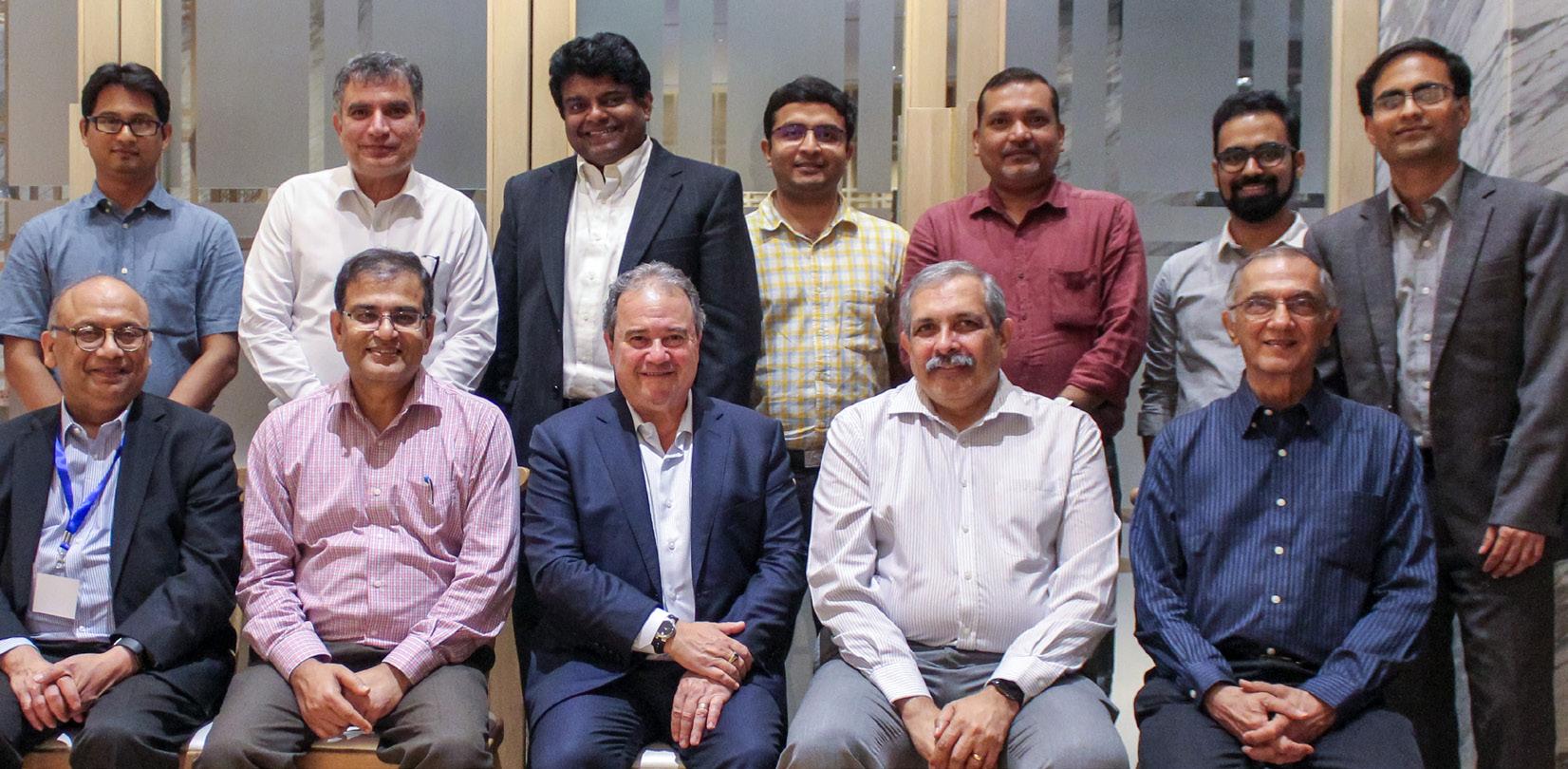
Left / Collaborators from The Ohio State University and IIT Bombay at the Frontier Center signing ceremony in Mumbai.
Michael Huson / Courtesy
The Ohio State University
A Purdue-IIT Hyderabad initiative aligns research, talent development, and industry collaboration as the United States and India deepen cooperation in a strategically vital sector.
Connecting Research and Strategy in Semiconductors
BY ZAHOOR HUSSAIN BHAT
From smartphones and medical equipment to data centers and defense systems, semiconductors underpin modern economies. As global demand rises and supply chain vulnerabilities persist, both the United States and India are reassessing how they design, manufacture, and secure advanced chips.
This shared focus led Purdue University and the Indian Institute of Technology (IIT) Hyderabad to establish the U.S.-India Center of Excellence in Semiconductors. The initiative connects research, workforce development, and industry engagement in support of broader national semiconductor priorities in both countries.
“The United States brings leadership in advanced semiconductor research and innovation, while India brings scale, talent, and bold ambitions in manufacturing,” says Professor Vijay Raghunathan, a vice president at Purdue University and the university ambassador to India.
The center is designed to connect those com-
plementary strengths. For U.S. institutions, it offers a platform to expand research collaboration and workforce development with a large and growing talent base. For India, it supports efforts to move beyond chip design toward deeper participation in manufacturing and advanced packaging.
A long-term vision
Raghunathan notes that semiconductor leadership increasingly depends not just on transistor scaling but on how integrated systems are designed and manufactured. That shift places greater emphasis on coordination across design, materials, packaging, and system integration—areas where collaboration across institutions and borders becomes critical.
Professor B.S. Murty, director of IIT Hyderabad, emphasizes the center’s role in strengthening the talent base. “The Center of Excellence is envisioned as a one-stop solution for talent development and for collaboration between Indian and U.S. academia and
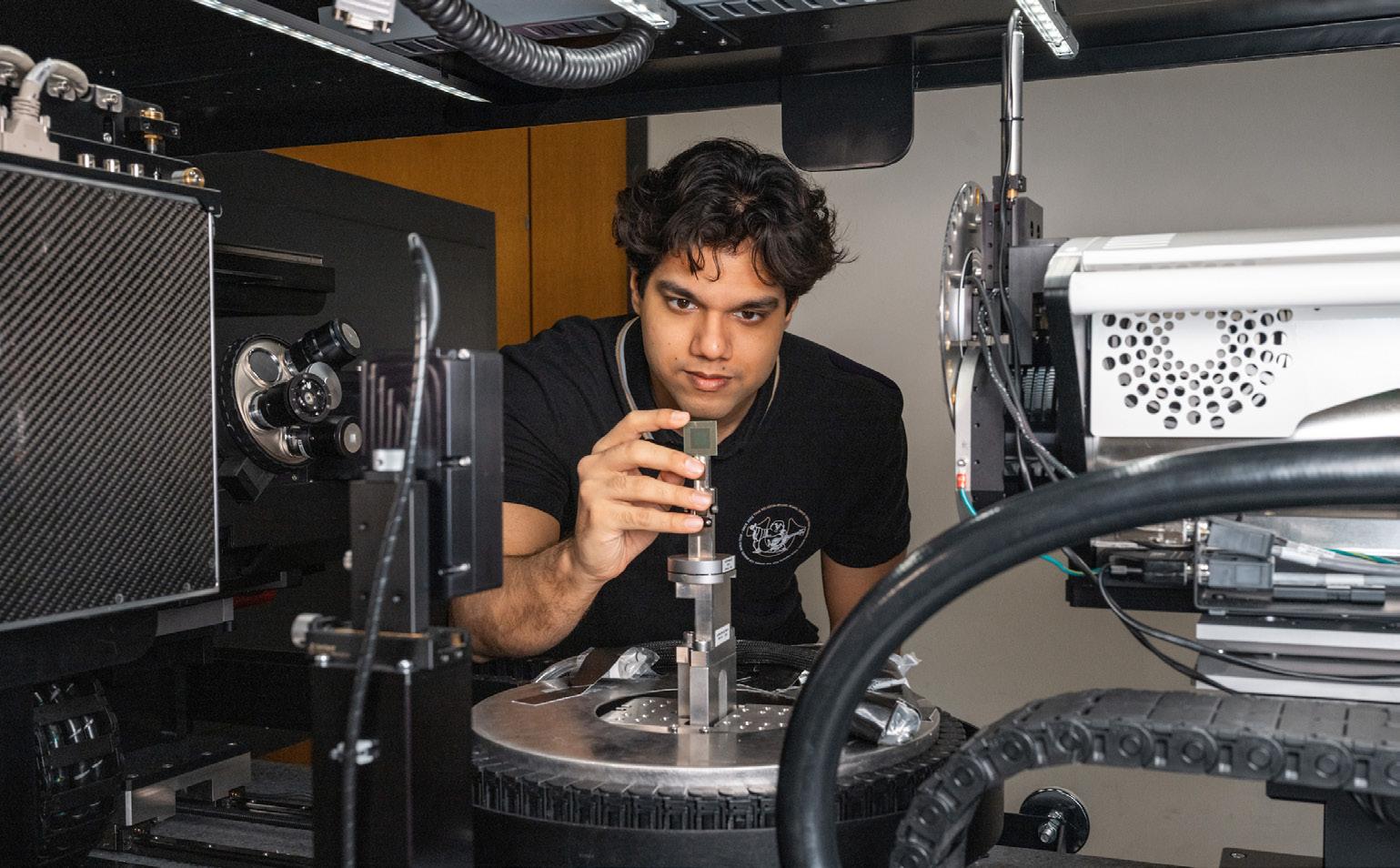
Left / Researchers at Purdue University contribute to the U.S.-India Center of Excellence in Semiconductors, a joint initiative with Indian Institute of Technology Hyderabad linking research, talent development, and industry collaboration.
industry,” he says.
He adds that India contributes nearly 20 percent of the world’s semiconductor design workforce while the United States remains a leader in advanced semiconductor technology. “The center connects those strengths in a structured way,” he notes, operating as a consortium linking universities, industry partners, and government stakeholders in both countries.
Over the past few years, IIT Hyderabad has developed specialized programs in chip design, manufacturing, packaging, and materials, aiming to prepare engineers for roles across the semiconductor value chain.
Training for impact
Before the establishment of the Center of Excellence, IIT Hyderabad ran an international workforce development program under the Scheme for Promotion of Academic and Research Collaboration (SPARC) initiative of India’s Ministry of Education, in collaboration with Purdue University.
The three-phase program started with a foundational workshop, continued with hands-on training at IIT Hyderabad, and concluded with advanced sessions at Purdue’s Birck Nanotechnology Center. Across two iterations, 39 students completed the program. Many joined the semiconductor industry, while others pursued higher studies.
Both Raghunathan and Murty see the success of this initiative as a foundation for the center’s broader mission: scaling talent development while tying it more closely to research and industry needs.
Purdue has also expanded its semiconductor workforce initiatives into policy and governance topics like export controls, intellectual property protection, and responsible technology use in ways that complement the center’s mission. “These courses, developed with support from a U.S. Department of State grant, help semiconductor engineers and industry leaders navigate compliance and responsible technology development in a global setting,” says Raghunathan.
Industry and policy integration
Industry engagement supports the center’s strategic goal of aligning U.S.-India semiconductor research and workforce initiatives. Leading American semiconductor and design automation companies, including Intel, Qualcomm, NVIDIA, AMD, and Synopsys, have R&D operations in India, many based in Hyderabad.
“The center aims to work closely with these companies to align research, workforce training, and pathways for moving ideas into practice,” says Raghunathan.
Murty notes that the consortium approach helps create a continuous pipeline from research to prototyping and product realization, reinforcing the importance of U.S.-India cooperation in the global semiconductor ecosystem.
“Purdue’s partnership with the Government of India’s Semiconductor Mission naturally extends through the center,” Raghunathan adds. “When done well, collaborations like this make cooperation easier to sustain over time and form the backbone of a broader U.S.-India semiconductor partnership.”
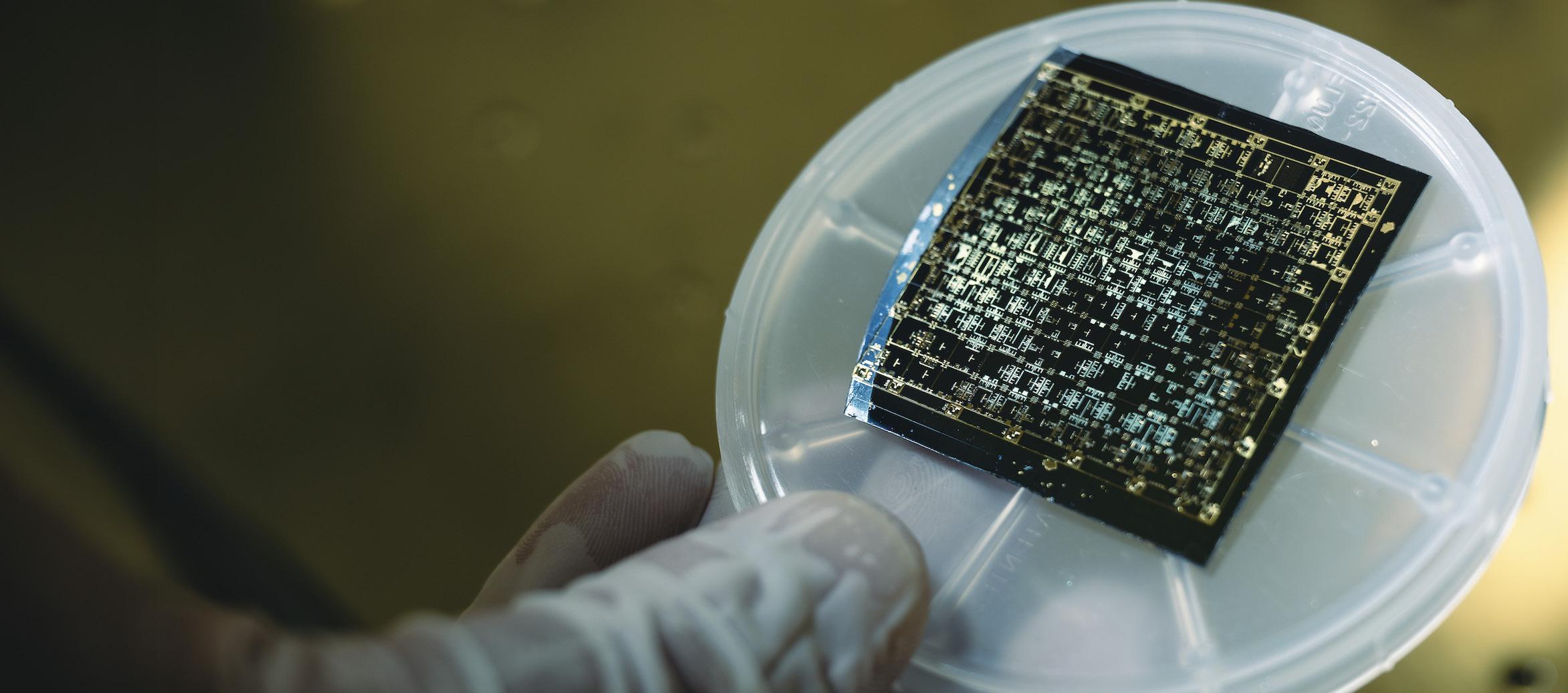
The United States brings leadership in advanced semiconductor research and innovation, while India brings scale, talent, and bold ambitions in manufacturing.
Courtesy Purdue University
How the Drug Enforcement Administration fights the diversion of precursor chemicals that threaten public safety.
Fighting Synthetic Drugs at the Source
BY CHARVI ARORA
Synthetic drugs do not begin on the street. They begin much earlier, inside factories, warehouses, and shipping containers that move chemicals across borders every day. Many of these chemicals are legal and widely used across the pharmaceutical and other industries. However, when traffickers divert them, these substances become the building blocks for synthetic drugs that harm communities and public health.
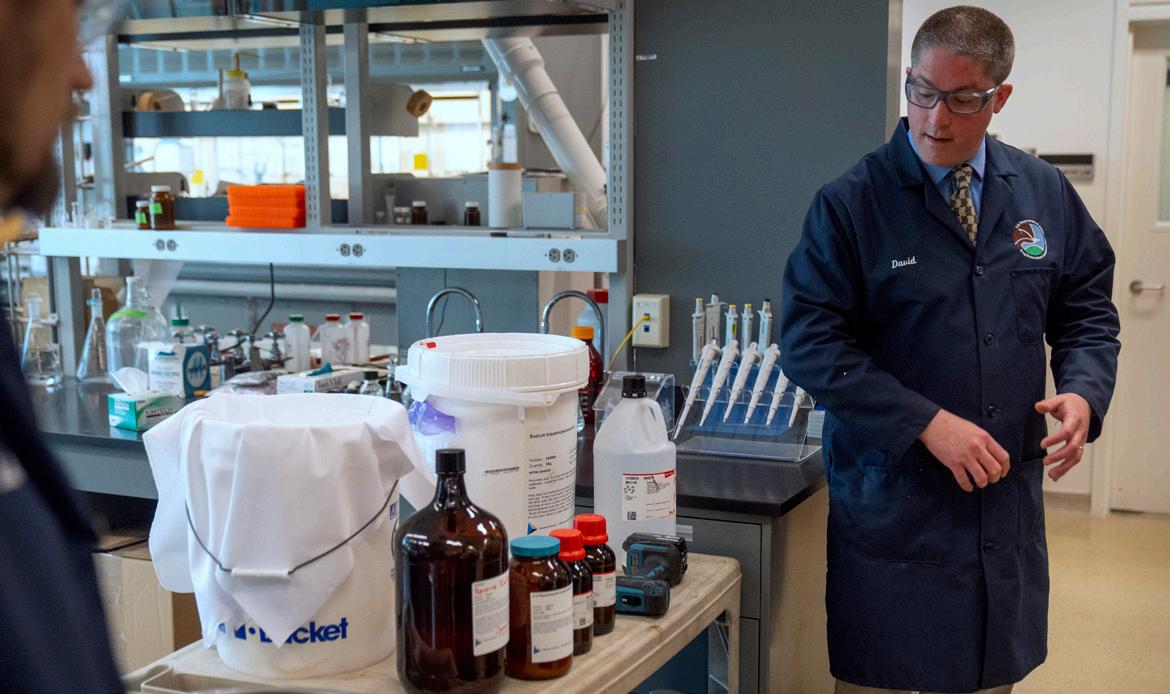
Katie Dorais, an assistant special agent in charge at the Drug Enforcement Administration (DEA), explains why controlling precursor chemicals is a priority for the U.S. government. The DEA, a federal law enforcement agency, works to prevent traffickers from turning these chemicals into harmful narcotics.
What are precursors?
“Precursor chemicals are the essential ingredients used to manufacture controlled substances like methamphetamine and fentanyl illegally,” says Dorais, adding that many of these chemicals also serve legitimate purposes.
The scale of the problem is enormous. “In 2024, the DEA seized more than 60 million fentanyl-laced counterfeit pills and nearly 8,000 pounds of fentanyl powder,” she says. “These seizures are equivalent to more than 380 million lethal doses of fentanyl.” These numbers underscore why the U.S. government treats
precursor control as a public safety issue, not just a regulatory one.
In late 2025, the DEA launched a campaign called Fentanyl Free America, aimed at reducing both the supply and demand of fentanyl. “The DEA has a commitment to protecting American lives and communities from the devastating impacts of fentanyl. A Fentanyl Free America is about prevention, education, and partnership,” says Dorais.
Breaking the chain
Because these chemicals also have legal uses, traffickers often hide in plain sight. Dorais points to a common method known as transshipment. “There are import/export loopholes in this system that are difficult to combat,” she says. Criminal groups move chemicals through ports with weaker oversight, then ship them onward. “This process makes the paper trail appear clean to the initial exporting country,” she adds.
For the DEA, stopping diversion at this stage is critical. “The DEA prioritizes the control of precursor chemicals, making it harder for drug traffickers to obtain raw materials to make narcotics,” Dorais says.
Another common tactic, mis-declaration, involves hiding the true nature or destination of a shipment. “Precursor chemicals are purchased online and mis-declared during import/export,” she explains.
Above / The DEA’s laboratory system in the United States analyzes seized chemicals, such as powders, liquids, and pills.
Courtesy Adhiraj
Bhagat
To address this risk, the DEA works with companies on Know Your Customer (KYC) practices. “The principle of KYC relies on a chemical company or pharmaceutical company to implement policies to limit sales of known precursors to clients regarded as bona fide,” Dorais explains.
Scientific analysis also plays a critical role in identifying emerging risks. “The DEA’s laboratory system in the United States is leading the fight against synthetic drugs,” Dorais notes. “It analyzes seized chemicals, such as powders, liquids, and pills. Over the years, the DEA has built a tremendous database of precursor signatures, synthesis routes, impurity profiles, and emerging analogues.”
Governments need to adapt as traffickers change tactics. “AI and data analytics are powerful tools in detecting diverted precursor chemicals,” she says. Data analytics allows any agency to identify anomalies like volume of chemical purchases, shipping information, import and export data. These tools can help investigators place real-time alerts on high-risk shipments or identify a company selling large amounts of precursor chemicals to an unusual destination.
Working with India
The DEA emphasizes the importance of cooperation with India. “India is one of the world’s largest producers of legitimate precursor chemicals, so partnership is essential,” Dorais says, noting that the DEA is working with India’s Central Revenues Control Laboratory (CRCL) on identifying precursor chemicals and synthetic opioids.
The DEA’s New Delhi office also works closely with India’s Narcotics Control Bureau, Directorate of Revenue Intelligence, and the Central Bureau of Narcotics to share information and support joint investigations.
In August 2025, the DEA brought two chemists from the Special Testing and Research Laboratory in Sterling, Virginia, to discuss chemical analysis and best practices with counterparts in India. The DEA anticipates additional events with CRCL in 2026 to continue monitoring evolving drug trends and sharing information.
This collaboration, backed by U.S. government programs and diplomatic engagement, strengthens oversight while supporting lawful trade. By focusing on prevention, monitoring, and partnerships, the DEA aims to stop dangerous drugs before they reach American communities.
Through the Humphrey Fellowship, Dr. Kaustubh Sharma explored prevention, treatment, and communitybased strategies to address substance abuse and strengthen public-health responses.
Substance abuse is a global challenge that affects families and communities, and governments increasingly recognize that long-term solutions require more than law enforcement. Prevention, treatment, and rehabilitation must work together to help people rebuild their lives.
Within this broader effort, Dr. Kaustubh Sharma, a law-enforcement professional and public-health advocate, joined the U.S. Department of State’s Hubert H. Humphrey Fellowship Program. “The main objectives of my fellowship were to harmonize the work of various agencies involved in controlling substance abuse, develop multi-agency coordination mechanisms, and understand the role of prevention, treatment, and rehabilitation,” Dr. Sharma explains.
Learning from U.S. approaches
During his year at Virginia Commonwealth University in 2018, Dr. Sharma studied how U.S. institutions address substance abuse across prevention, treatment, and recovery. He observed how U.S. schools conduct biannual anonymous surveys that track patterns in youth substance use. “Collecting this data allows policymakers to intervene at critical points in the trajectory of substance use,” he says.
A major insight for him was the role of Adult and Juvenile Drug Treatment Courts, which connect first-time offenders with treatment, provide subsidized care for those in need, and bring together health authorities, correctional services, and local governments. “Law enforcement alone cannot solve this problem,” Dr. Sharma says. “It requires a multi-layered effort.”
He also examined peer-support models such as Alcoholics Anonymous (AA), Narcotics Anonymous (NA), and SMART Recovery—a program grounded in Rational Emotive Behavioral Therapy
Bridging Borders Against Substance Abuse
BY GIRIRAJ AGARWAL

and Cognitive Behavioral Therapy—noting how community institutions, including churches and university campuses, provide meeting spaces for these groups.
During his fellowship, Dr. Sharma deepened his exposure to community-based responses through professional affiliations with the Richmond Adult Drug Court and the Community Anti-Drug Coalitions of America (CADCA) in Alexandria. “I learned how U.S. organizations engage policymakers and legislators to support reforms, expand treatment for the underserved, and address the availability of substances, including alcohol and vapes, among youth,” he notes.
Visits to national agencies, including the National Institute on Drug Abuse and the Drug Enforcement Administration, offered a broad view of how research, public health, and enforcement align at the national level.
Applying insights in India
After returning to India, Dr. Sharma began adapting several U.S. approaches in ways that suit local needs.
He introduced the SMART Recovery program, which uses evidence-based tools to help individuals manage their own recovery. A pilot project trained government psychiatrists as facilitators. “I completed the certification course myself and created standardized forms to support implementation,” he says.
He also supported the development of community coalitions inspired by CADCA. Through the Com-
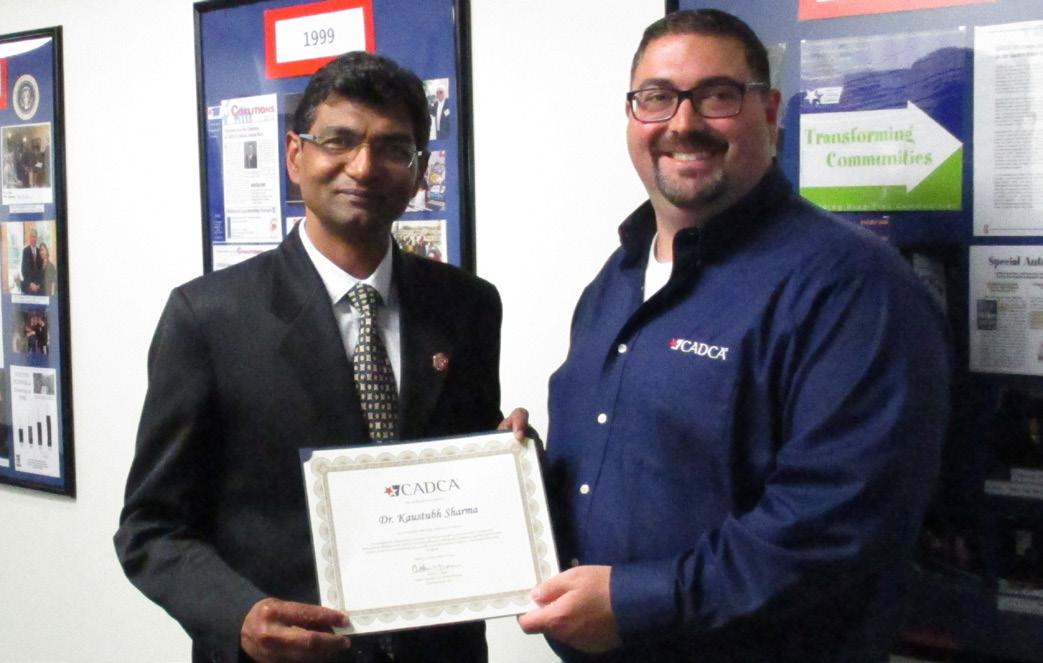
munity Policing wing, outreach created safe avenues for women and children to share concerns, enabling timely interventions. Across these initiatives, Dr. Sharma highlighted early-warning assessments and community participation—practices central to the Strategic Prevention Framework he studied in the United States.
Strengthening U.S.-India collaboration
Dr. Sharma emphasizes that international cooperation is vital to addressing the trafficking of semi-synthetic opioids. “The U.S. and India face a similar onslaught of semi-synthetic opioids, especially heroin, since the area of the Golden Crescent is responsible for 80 percent of the heroin production,” he says.
He notes that active collaboration between the two countries is crucial. Strong border and customs controls, guided by risk profiling, can limit trafficking syndicates that mask the origin of goods or mislabel shipments. He adds that maritime cooperation to track suspicious vessels, and dismantling financial networks that fund trafficking operations, could further reduce the flow of illicit drugs.
Reflecting on his experience, he notes that while law enforcement plays an important role in controlling substance availability, lasting change depends on coordinated prevention, treatment, and rehabilitation. “The most important message is to focus on prevention and invest in it,” says Dr. Sharma. “Children who can be guided now and made resilient are more likely to remain protected from trying substances, and as a society, that is the best outcome we can hope for.”
Left / Indian Police Service officer and alumnus of the Hubert H. Humphrey Fellowship Program, Dr. Kaustubh Sharma (left), studied U.S. approaches to substance abuse prevention, treatment, and recovery.
Courtesy Dr. Kaustubh Sharma
Candra Ritonga / iStock

The FBI and Indian law enforcement work together to dismantle financial fraud networks targeting Americans.
Fighting Cybercrime Across Borders
BY CHARVI ARORA
Criminals use phone calls, texts, and trusted branding to impersonate government agencies and businesses, tricking victims, even from thousands of miles away, into giving up money or sensitive information. As these cyber-enabled fraud networks increasingly target Americans, cooperation between the United States and India has become a critical line of defense.
Suhel Daud, the Federal Bureau of Investigation’s Legal Attaché at U.S. Embassy New Delhi, says countering these networks depends on close international coordination.
“The FBI works closely with Indian law enforcement through established legal and operational partnerships,” he says. “Our cooperation includes intelligence sharing, joint investigative coordination, capacity
building, and technical exchanges.”
A rising threat
The FBI’s Internet Crime Complaint Center (IC3) reports that losses from cyber-enabled crime and fraud reached $16.6 billion in 2024, up 33 percent from the previous year. As criminals earn more illegal profits, they expand their operations across borders.
Technology fuels this growth. “Criminals adapt quickly,” Daud explains. “They use new technologies, social media platforms, artificial intelligence (AI), and current events to make scams more convincing.” Today, some fraudsters use AI to create fake images, emails, and voices to dupe victims. “This is not a minor nuisance,” Daud emphasizes. “It is organized crime operating in the digital space.”

Muhammad Saad / Pixabay
Because victims, evidence, and perpetrators often span multiple countries, investigations demand close coordination.
Busting fraud networks
Many cyber fraud schemes operate from organized overseas call centers. Some even “contract” services, such as buying contact lists or hiring companies to create fake websites.
Because victims, evidence, and perpetrators often span multiple countries, investigations demand close coordination. Daud illustrates a typical case: “A call center gets busted in India, but the victims are U.S. citizens, and the financial trail lies in the United States. Indian law enforcement reaches out to the FBI, and the FBI reaches out to the victims and prepares for testifying in Indian courts. The FBI also helps Indian law enforcement finish the financial chain of evidence as the losses are in the United States.”
This cooperation ensures accountability. “This evidence and victim testimony ensure that call center
operators in India are held accountable in court. Without this cooperation, the case cannot be prosecuted,” says Daud.
One recent success shows the impact of U.S.-India collaboration. A joint investigation by the FBI Baltimore Field Office, the Montgomery County Police Department, and the Montgomery County State’s Attorney’s Office traced fraud schemes targeting Maryland residents and hundreds of other Americans to organized scam call centers in India.
India’s Central Bureau of Investigation (CBI) dismantled the call centers in December 2025, arresting six Indian nationals who led the criminal syndicates responsible for stealing almost $50 million from Americans.
“There have been numerous such examples of success recently. This is all possible due to FBI and Indian law enforcement working hand in hand as partners,” Daud notes.
Beyond individual cases, these efforts build longterm disruption by weakening criminal ecosystems— cutting off financial channels, digital infrastructure, and recruitment pipelines that sustain fraud operations.
Why awareness matters
Cyber fraud affects people of all ages and backgrounds. “One common misconception is that cyber fraud only targets people who are not tech-savvy,” Daud explains. “People often believe they would never fall for a scam. These scams exploit human psychology, not technical weakness.” Cyber fraud is not a victimless crime. It affects retirees, families, and small businesses. In many cases, the emotional impact equals the financial loss.
“Awareness is one of our strongest defenses,” Daud emphasizes. Even a brief pause can help people recognize a scam and avoid financial or emotional harm.
Reporting scams is also critical. “Even if money has already been lost, reporting helps law enforcement identify patterns and disrupt criminal networks,” he explains.
“Because of the location of bad actors and the ease with which money can be moved globally, cooperation between all law enforcement agencies has never been more important,” Daud says. “Collaboration allows law enforcement to extend across borders, apprehend subjects, and secure justice.”
Technology evolves rapidly, and ongoing engagement ensures that investigators stay ahead of criminal tactics. “This partnership,” he adds, “is about building durable institutional strength, not just solving isolated cases.”
Reader Survey
We’re conducting a short survey to learn more about readers’ experiences with the SPAN print edition. The survey takes about 2–3 minutes and includes a few quick questions, with an option to share additional feedback if you wish.
Your responses will be anonymous and used only to help inform our internal planning.
Please fill out the survey, take a photo with your phone, and email it to editorspan@state.gov
If you wish to complete the survey online, please visit https://bit. ly/span-english-survey or scan the QR code on the back cover
Thank you for taking the time to share your feedback.
Location (State/UT)*
Which language edition(s) of SPAN do you receive or read in print? (Select all that apply)*
English
Hindi
Urdu
Which category best describes you or your organization? (Select one)*
Student
Academic or researcher
Media or communications professional
Government or policy professional
Educational or other institution
Private sector or industry
Civil society or nonprofit
Other:
In the last 3-4 print issues of SPAN you received, which of the following have you done? (Select all that apply)*
Read one or more full articles
Read parts of articles
Browsed photos or captions
Looked through headlines or section titles
* Indicates required question
Which topics do you remember reading or browsing in recent print issues? (Select all that apply)*
U.S.–India relations and diplomacy
Science, artificial intelligence, technology, or space
Business, start-ups, or innovation
Defense or security issues
Educational collaborations and professional exchanges
I don’t recall specific topics
Which topics would make you more likely to spend time with the print edition? (Select all that apply)*
U.S.–India relations and diplomacy
Science, artificial intelligence, technology, or space
Business, start-ups, or innovation
Defense or security issues
Educational collaborations and professional exchanges
How do you usually come across the print copy you receive? (Select one) *
Addressed and delivered to me
Available in my office or institution
At my college, library, or other shared space
I’m not sure / varies
Do you pass your print copy of SPAN to someone else after reading or browsing it? (Select one)*
Often
Sometimes
Rarely
Which of the following best describes how you use SPAN? (Select one)*
I read it regularly
I refer to it for specific articles or topics
I browse it occasionally
Please share additional feedback, if any